DJ Support: Glenn Underground, Leo Mas, Sean Johnston / ALFOS, Massimiliano Pagliara / Panorama Bar, Al Mackenzie / Field of Dreams, Shane Johnson / Fish Go Deep, Flash Atkins / Paper Recordings, Pete Gooding, Mark Broadbent, Max Essa and plenty more.
2026 has been a particularly busy year for Visions of Light, the Balearic/ambient/dub trio founded by Freebooter Records’ Simon Sheldon alongside Muzka and Dan Dub Lounge. Following the Dedications EP – their warmly received collection of Balearic dub reinterpretations of White Isle-friendly club classics – the trio return with ‘Mycelium Bloom’, the follow-up to their 2025 debut LP The Mandela Vortex. Mycelium Bloom sees Visions of Light expand their signature sound, blending downtempo dub grooves and sunbaked Balearic soundscapes with hallucinatory electronics and psychedelic touches. Layered guitars, deep bass, immersive textures and dreamlike melodies run throughout an album designed for both sunset listening and deeper late-night excursions.
Opener Split The Scene sets the tone with acidic electronics circling languid beats, heavy bass and spacious pads, while All The Best Thing taps into the spirit of early ’90s chill-out rooms, adding desert blues influences to its hazy, enveloping atmosphere. Holding Jupiter pushes further into psychedelic territory, built around low-tempo rhythmic drift, effects-laden guitars and expansive chords. Elsewhere, the trio reconnect with their rootsier dub foundations. B Town delivers a warm, summery skank, while Radiant Flux shifts towards Balearic dub dancefloor territory. Perfect You, featuring words written and performed by Richard Dormer alongside flute from Luis Vilca, is a gorgeous sunset-ready highlight, while Let Go closes in on pure Balearic bliss through gentle melodies and slow-burning atmosphere.
Daydream: 30th Anniversary Edition is a 2-CD set featuring the original multi-platinum-certified album Daydream, which includes the smash hits “Fantasy,” “Always Be My Baby” and “One Sweet Day." Disc 2 collects remixes and rare B-sides, including a brand-new remix, “Underneath The Stars (Eric Kupper Klassic Club Mix) (Radio Edit).” The second disc also features a writing session demo for “I Am Free.”
Trumpeter, rapper and sonic wanderer Pan Amsterdam has carved out one of the most distinctive voices operating at the intersection of jazz and hip-hop today.
Pan Amsterdam is a musical enigma wrapped in an enduring riddle. His creator is a jazz musician from Houston who’s found fame working with Detroit punk rock God, Iggy Pop, and British indie royalty, Metronomy, and now makes shapeshifting, adventurous hip hop out of the music’s spiritual home, New York.
He’s an irreverent character born out of frustration and named after a misunderstanding, yet one who’s on the verge of releasing his fifth album of truth-slaying, genre-crossing rhymes and beats. The result is a catalogue that feels both deeply rooted in Black American musical tradition and completely untethered by convention.
Pan Amsterdam returns with ‘Panarama’, his fourth full length album and a bold reassertion of his hip hop identity, released via Def Pressé. Created by Houston-born, New York-based musician and composer Leron Thomas, the record finds Pan Amsterdam embracing the harder edges of his sound while continuing to blur the lines between jazz improvisation, abstract rap, punk attitude, and experimental production
Written as a response to contemporary life and the endless cycle of information, conflict and distraction that defines modern culture, ‘Panarama’ unfolds as a stream of consciousness journey through hyper-normalised realities. Across sixteen tracks, Thomas navigates social commentary, personal reflection, absurdist humour, and cultural critique, delivering his observations with the same spontaneity and freedom that have become central to the Pan Amsterdam project
Lead single ‘Szechuan Beef’, produced by acclaimed collaborator 1FS, serves as one of the album’s defining statements. Built around Thomas’ signature free-flowing delivery, the track explores the overwhelming nature of contemporary life, where domestic conflict, social division, entertainment scandals and political discourse become flattened into a constant stream of content.
In Thomas’ own words: “My stream of consciousness style comes quite naturally to me due to the conditioning of scroll down culture where everything, no matter how minor or extreme, is hyper normalised.”
Elsewhere, the track ‘Vanilla Ice’ was written in response to widely publicised ICE killings and the speed at which tragedy is absorbed and forgotten within online culture. Thomas channels the anxiety and emotional disorientation of endlessly consuming information, allowing his thoughts to unfold in real time as social commentary collides with everyday digital noise. The result is both deeply personal and sharply observational, reflecting the fragmented reality of modern life. Other album highlights include the cinematic, Interpol-esque opener - ‘Old Friend’ complete with shimmering guitar lines and an far-reaching introspective, no-filter vocal as Thomas teams up with Nick Zinner (Yeah Yeah Yeahs) and Brad Truax (Interpol) across multiple tracks, often the production traverses left-field indie territory, but always maintaining Pan Amsterdam’s unique musical identity throughout. For the hip hop purists and beats lovers there are plenty of riches to discover from the clever nostalgic sample flips of ‘Cutlery’, the sleepy lofi of ‘Shuriken’ and the wonky LA beat scene / early Flying Lotus era beats of ‘Drunken Noodles’ - all boasting quick witted lyricism. ‘Deep Fried Shiney Things’ explores early electro and industrial sonics while album finisher is an upbeat new wave / indie band cut which sees Thomas take a break from rapping, but of course never letting up on the sharp observations nonetheless
While his previous record explored more alternative territory, ‘Panarama’ marks a deliberate return to rap, as Pan Amsterdam explains:
“I just wanted to do a rap album again.I enjoyed making my last album, but I felt like rapping again. I like to have the freedom to move in between musical worlds that suit the current state I’m in. Frequency accommodating frequency.”
This philosophy runs throughout the album. Tracks move effortlessly between jazz-inflected arrangements, experimental beats, punk energy and underground hip hop aesthetics, allowing ideas to evolve organically rather than conforming to traditional structures. Thomas describes himself as an improviser first and foremost: “I think like an improvisor. That’s how my albums pretty much move. It’s improvisation.”
Featuring additional contributions from Spice Programmers, AnOtter and Mr. Shn, ‘Panarama’ presents a wide-ranging cast of collaborators while remaining firmly rooted in Thomas’ singular creative vision. The record embraces contradiction, humour and unpredictability, capturing fleeting thoughts and observations with the same freedom and spontaneity that define jazz improvisation itself.
A musical enigma wrapped in an enduring riddle, Pan Amsterdam has built a reputation as one of contemporary music’s true outsiders. The project emerged from frustration, experimentation and artistic freedom, with Thomas drawing equally from his background as a jazz musician and his collaborations with artists including Iggy Pop and Metronomy. Operating from New York while carrying the spirit of Houston’s musical heritage, Pan Amsterdam has developed a distinctive voice that sits comfortably between avant-garde jazz, underground hip hop and experimental music.
Reuniting with Def Pressé for ‘Panarama’, Thomas explores what he describes as the more hardcore side of his artistic identity:
“They let me do anything and everything I wanna do so long as it’s on audio, and I need that freedom. What may verbally be perceived as vulgar to one group of people may be very thoughtful and a poignant description of the times that we’re presently in, so I’m glad that I’m part of a label home that understands that.”
SIGNUM REGIS was founded in 2007 and stands for finest melodic Power Metal with both progressive and symphonic elements. Their upcoming new and eighth studio album „Beyond Spacetime“ will be released on October 9th through Fireflash Records and will feature different vocalists. Among them their current singer Mayo Petranen, who just returned to the band, his successor Jota Fortinho as well as top class names, such as Ripper Owens (ex-JUDAS PRIEST), Matt Smith (THEOCRACY), Ralf Scheepers (PRIMAL FEAR), Johnny Gioeli (HARDLINE, AXEL RUDI PELL), Tasos Lazaris (STEEL ARCTUS, WHITE WIZZARD), David Åkesson (SYMPHONITY; QUANTICE), but also Victor Smolski (ALMANAC, ex-RAGE), with a guitar solo on the first single-release „Throne Of Gold“.
„We are so satisfied and proud of it! Even though the last 3 years were not easy for the band, this is definitely not just a ""next"" Signum Regis"" album, we are a band, we are always aiming to create something special - for us and for fans“, comments guitarist Filip Koluš, who also mixed and produced the album.
„Beyond Spacetime“ is rounded up by an excellent artwork from Uwe Jarling, known for his work for acts like HEAVEN’S GATE, GRAVE DIGGER or recently FRONT ROW WARRIORS. „The result is awesome! We are definitely a band that considers the artwork a very important part of our artistic vision. Over the years this approach has only grown stronger, so having a real cover artist has become an absolute must for us“, comments Tommy.
SIGNUM REGIS will celebrate their 20th anniversary next year. „Beyond Spacetime“ already feels like kind of a best-of journey through their past, present and future. „We grew up on the values of traditional melodic metal - this focus will most probably never change“, says Filip Koluš and explains: „At the same time, we are also a group of great friends, who have a common goal - to make the best quality metal music together.“
New York's contemporary deep house guardian Fred P has a smoky, spiritual sound that is always inescapably immersive and evocative. For this new EP on Base, he kicks off with something brighter and more extroverted: 'Pardon Me' has long been a staple of his sets and balances his signature musicality with a more playful sax lead and bold rhythm that will get floors bumping. 'Freedom Fam' has one of his classic spoken word monologues drifting next to starry cosmic keys like a voice from the heavens. 'In The Light (Still Wanting)' rewires soulful house in his own vision - deep, insular, brilliantly humid. 'Factory Sound (Edit 1)' is as peak as Fred gets - a driving, musical house rhythm that twists and turns freely as sustained chords layer in some of that trademark emotional pull. Superb.
Swedish visionary Boko Yout is releasing their long-awaited debut album GUSTO, out via Hoopdiggas Recordings.
GUSTO is Boko Yout’s debut album – a kaleidoscopic journey through memory, trauma, humour and healing. Framed as a fictional therapy programme led by the eccentric Dr. Gusto, each track represents a confrontation with a different shadow of the self: unspoken fears, inherited burdens, or unresolved inner conflicts. But GUSTO is not just about darkness – it’s also about hope, longing and the light that makes those shadows visible in the first place.
Boko Yout weaves together raw emotion, spiritual symbolism and bold experimentation. Referencing vodun philosophy, Jungian archetypes and post-genre production, they draws inspiration from artists like Yves Tumor, Odd Future and LCD Soundsystem. The result is a debut that feels more like a sonic manifesto – driven by love, intention and a deep commitment to artistic freedom.
On My Way is a forthcoming photo memoir that follows Larry Heard to over 30 countries across 40 years, performing in Fingers Inc, The It, Mr. Fingers, and Larry Heard Live. Published independently by Alleviated Records, this 380 page book draws from Mr. Heard's extensive archive of thousands of photographs, event flyers, and historical documents, many of which have never been seen before. On My Way contains excerpts from over 8 hours of interviews, but the journey is primarily visual: the photographs taken by Mr. Heard and his collaborators serve as a personal and artistic odyssey, documenting almost every single one of the over 350 gigs Mr. Heard has performed in his career. On My Way also presents a history of technology in the arts. We see music equipment evolve, become sleeker, sexier, the studios housing the gear more grandiose. Personal cameras transition from 35mm to digital, first declining in quality as the world embraced the freedom of lightweight yet low resolution lenses, eventually arriving at the contemporary DSLR. The designs of rave flyers begin with photocopied images and hand drawn text, evolving with the genre through the 90s and 00s to take on a futuristic, utopian quality. We watch trends in fashion and art become referential as the 21st century embraces nostalgia. Institutions rise up to support this scene, most notably Red Bull Music Academy, a significant patron of electronic music in the 2010s that sought to connect new musicians to their roots by hosting visionary global festivals and panel discussions. Along this journey we see familiar faces: singers, DJs, club kids, and music industry professionals, as well as the enigmatic gaze of the man whose work has inspired millions.
There's a moment during every great dance floor experience when the music takes over and everyone becomes part of something bigger. "SHOUT!", the latest release from 2SoulFusion Presents Ascension, captures that feeling in its purest form. Featuring the powerhouse voices and ad-libs of Dames Brown and Dawn Tallman, along with an all-star ensemble of master vocalists including Josh Milan, Rahsaan Patterson, Lisa Fischer, Cindy Mizelle, Audrey Wheeler, Ramona Dunlap, and Lea Lorien, this joyful anthem is an invitation to let go, lift your spirit, and celebrate through music.
Produced, written, arranged, and mixed by 2SoulFusion—Louie Vega and Josh Milan—"SHOUT!" draws inspiration from the communal spirit of gospel while embracing the energy and freedom of house music. Driven by simple yet powerful affirmations—"Shout," "Sing," "Move," "Love," "Get Up On Your Feet," "Listen Up," and "Let This Music Take You Higher"—the song transforms into an experience where every voice becomes part of the celebration. It's a journey of anthemic hooks, soaring harmonies, infectious grooves, and unforgettable melodies designed to ignite dance floors, uplift hearts, and remind us that music has the power to unite people through rhythm, joy, and love.
The inspiration for "SHOUT!" was born from a creative exchange between Louie Vega and Charaf Tajer, founder and creative director of the internationally acclaimed fashion house Casablanca. Introduced by longtime friend Joseph Capriati, Charaf shared a bold vision—to bring together the worlds of fashion, gospel, and house music for one unforgettable Casablanca runway presentation in Paris.
Louie Vega recalls: “Charaf was introduced to me by my friend Joseph Capriati, who said Charaf was looking to meet me about an idea he had. His vision was to marry fashion, gospel, and house music within Casablanca's collection. At first, he wanted me to DJ and play gospel house music. I said, 'Instead of playing existing music, why don't I create an original song with a gospel house flavor?' I immediately got together with my 2SoulFusion partner Josh Milan, and together we came up with 'SHOUT!'”
That vision came to life during Casablanca's spectacular Paris presentation inside a breathtaking cathedral, where Louie Vega premiered the original twelve-minute and nine-second composition live. As the music echoed through the cathedral, Dames Brown joined the London House Gospel Choir in a soul-stirring performance while the models walked the aisle on Casablanca's carpet made of their signature green color and a dashing vibrating giant mirror echoing the runway visually. Renowned DJs Luciano and Chloé Caillet were among those who walked the runway, while friends of Charaf Tajer and special guests—including Jaden Thompson, Folamour, Dimitri From Paris, Kapela, and many others—were in attendance, making it an unforgettable gathering where music, spirituality, fashion, and culture merged into one extraordinary experience.
Inspired by that magical evening in Paris, Louie Vega and Josh Milan returned to the studio to expand the original composition into the powerful recording heard today. Built around rich live musicianship, Josh Milan's keyboards, organ, piano and synth bass provide the foundation alongside Axel Tosca's expressive grand piano recorded live, Sherrod Barnes' soulful guitar, and Gene Perez's unmistakable bass groove. Together they create an infectious, organic driving sound that allows the vocals to soar while delivering the unmistakable musical depth and musicianship that define 2SoulFusion.
Leading the celebration are Dames Brown and Dawn Tallman, whose commanding performances are elevated by an extraordinary choir of world-class vocalists. Dames Brown's spirited sermon and ad-libs, and Dawn Tallman’s powerful ad-lib vamping out together with the soaring harmonies of Lisa Fischer, Cindy Mizelle, Audrey Wheeler, Rahsaan Patterson, Ramona Dunlap, Lea Lorien, and Josh Milan, recreate the feeling of a joyful gospel congregation—not confined to four walls, but alive on dance floors around the world. Every chorus encourages listeners to get up, listen up, feel it, sing, move, love, and become part of the experience. Recorded between Honeycomb Studios in Pennsylvania, The Hub Ibiza and Manhattan Center Studios, New York City, and mixed at The Hub Ibiza, "SHOUT!" reflects the continuing vision of the Ascension project, where spirituality, musicianship, community, fashion, and dance music become one.
With his last three records all landing within a calendar year (2024-25), enigmatic Swedish producer Civilistjävel! (aka Tomas Bodén) is on a hot streak of releases, his singular vision increasingly ambitious and expansive. There are few artists working at this level so consistently right now, reinventing, revising and continually developing their language. Following on from 2025’s radically re-worked ‘Versions’ (of Mayssa Jallad’s ‘Marjaa…’), Bodén returns to break further fresh ground with his new album, ‘Älvgång’. Featuring contributions from Soccer Committee, Carrier and guest (aka Jabu’s Jasmine Butt), ‘Älvgång’ foregrounds a more brittle and insistent rhythm-based sound, whilst comprising his most broad-ranging collection of material to date.
‘Älvgång’ grew out of a series of sketches made from late ‘24 and throughout the whole of ‘25 at Stockholm’s renowned EMS Studios, which gave Boden free rein to its extensive collection of vintage analogue equipment and rare modular synthesizers such as the Serge and Buchla systems. As a loose framework of tracks began to take shape, so did a reflection of sorts, on family and foundations, underpinned or influenced by sounds that drifted into Tomas consciousness around this time - ancient Swedish pastoral music, Georgian lithurgical chants, gongs, chimes. An idea settled into place, a dedication to his Grandfather, as the earlier release Fyra Platser (tr. ‘Four Places’) was to his Grandmother. Älvgång is grounded with the sense of time and place of an old family photograph, with the tracks over each side bearing one of two names that are more or less the same location - Strinne was the old name for a this loose collection of villages. These days it is more commonly known as Bjärtrå. Metaphorically speaking, the river runs through both.
Civilistjävel! conjures so many adjectives and descriptors, ‘glacial’ and ‘ambient’ frequently among them - but while not altogether untrue, such terms belie the tension and drama so often present in Tomas’ music. Listening to ‘Älvgång’ is not a passive experience. The eight tracks here feel like a patchwork of memories that bathe in the same ethereal, otherworldly glow of Tarkovsky’s polaroids’.
The machine pulses that dominate this landscape are reigned in and tempered by a human hand; lithe, untethered coils, breathing in and out. ‘Strinne Ett’ sets out with purpose, sensing awe and wonder through the murk, but as the final tone unfurls like a question mark, another chapter begins, unfolding/building like a Tarjei Vesaas novel. These lyrical, abstract miniatures combine to reveal a wider context, fragile humanity standing alone against nature.
Guest appearances on Civilistjävel! records have become a regular occurrence (including recent collaborations with Mayssa Jallad, Laila Sakini, Cucina Povera, Thomas Bush, Eldon + Withdrawn), but are used sparingly and with increasing precision. On ‘Strinne Tre’ Mariska Baars’ (Soccer Committee) voice feels like a balm, a clearing. But as her simple, three-word incantation drifts further into fog, the meaning changes, and her words seem to curdle. Carrier’s beats widen the parameters on ‘Strinne Fyra’, a skittering promise that builds tension then refuses to release it; all false starts, Photek gongs, and trinkling modulars. Jabu’s Jasmine Butt pulls all the threads together for the final track, Thomas Tallis’ ghost walking over offset machine impulses, that work against their own symmetry.
Side two begins inquisitively, scanning bleached, alien surroundings, its sparse pads recalling Aphex Twin’s ‘Selected Ambient works Vol 2’. 'Bjärtrå Två’ picks up the baton from ' Strinne Fyra’ with a ruptured Simmons SDS200 analogue drum synth set free from its shackles, the rhythm eventually slotting into the spaces that were hiding in plain sight. What follows seems like an epiphany; ‘Bjärtrå Tre’ is achingly beautiful, a euphoric, winding ascent that leads to devotional plainsong. ‘Bjärtrå Fyra‘s final unheralded shift feels both tragic and haunting.
Erasmo Carlos’ Carlos, Erasmo is a landmark of early-’70s Brazilian rock, where Tropicalia, fuzzed-out psych, soul, funk and Brazilian pop meet in brilliantly adventurous form. Produced by Manoel Barenbein with arrangements by Rogério Duprat, it also features Os Mutantes players Sérgio Dias, Dinho Leme and Liminha, plus guitarist Lanny Gordin.
Opening with De Noite na Cama, written for Erasmo by Caetano Veloso, the album moves with real freedom between sensual pop, hard-edged psych and off-kilter grooves. Erasmo’s partnership with Roberto Carlos sits alongside songs by Jorge Ben and Marcos Valle, making this a genuine meeting point for some of Brazil’s most inventive voices.
Tracks like Maria Joana, Agora Ninguém Chora Mais, 26 Anos de Vida Normal, Ciça Cecília, Mundo Deserto, Sodoma e Gomorra and Masculino Feminino show just how wide Erasmo’s vision was: raw, playful, soulful and beautifully unruly.
“Simply put, it’s unlikely we’ll encounter a mix that leaves a cultural footprint and defines the sound of a generation quite like Northern Exposure again. Both mixes are absolutely 100% astoundingly brilliant”
DJ Mag
“Their best-loved mix CD is a trippy traipse through the verdant world of progressive house, a genre with one foot in the rave and the other somewhere in the great beyond” Rolling Stone - The 30 Greatest EDM
Albums Of All Time
Originally released on 27th September 1996, ‘Northern Exposure’ is widely regarded as one of the greatest mix compilations ever made. Thirty years on, it sounds as vital as ever - a testament to the fearless vision that went into its creation.
At a time when DJ culture was still writing its own rules, Sasha and John Digweed pushed against the grain. Drawing on sounds discovered during early trips to America - from Rabbit in the Moon to Future Sound of London - they built something that prioritised atmosphere over dancefloor convention. DJ Mag panned it on release. History changed their tune.
Northern Exposure Redux marks the 30th anniversary with a definitive reissue of both original mixes. The CD version also includes a newly created ambient mix. Shaped by the spirit of Bill Laswell and Mad Professor, it explores the deeper, more hypnotic DNA that always ran beneath the surface. Northern Exposure Redux North includes classic tracks by Keiichi Suzuki, The Future Sound Of London, and Banco de Gaia. Northern Exposure Redux South includes classic tracks by Dope On Plastic, Pete Lazonby, and a newly recreated version of ‘Dark And Long (Dark Train)’ by none other than Darren Emerson himself. Both vinyl versions also include a download code for both the North And South mixes, as well as the individual tracks.
"After a couple of years shaping her sound in the studio, Budino lands the "Signal EP", a record that grew out of the desire to make music for her own sets. Citing the journey she aims to create in the club as a key inspiration, she certainly put in the mileage, with a booking schedule tirelessly spanning all points of the compass. Although this is her first label-released original record, it's no novice effort: ALT027 shows a confident artist, fully in control, with a distinct vision and the technical expertise to bring it to life. On opener "Stay More", a trippy trance rendition, the sturdy kick and distorted sines leave ample room for mid-bass acid lines to roam freely. In its company, a myriad of risers, gated white noises and delayed fills appear - signifiers within the artist's palette, as will become apparent. "Wireless" features similar crafty sub movement, but this time the drums are infused with conga patterns and other exotic slices of battery. Because of the zest these rhythms bring, the track can keep building for several minutes until a synthesised lead emerges. When that finally happens, the affair really takes off. On the other side, "Alpha 7" rides the call-and-response dynamics between different formant and deep-vibrating leads, its shimmering arpeggios and atmospheric pads adding colour. Closer "1031" provides an organic touch with its live guitar bass pulse and enigmatic, eerie vocals. Amidst ever-evolving micro-frills, a sturdy square lead thrusts it forward. The groove, again, is endlessly seductive. This characterizes Budino's skilled approach: it's often so hypnotic it feels unclear whether the themes materialise from the surrounding, seemingly fluid compositions - or dissolve into them. In any case, these are multi-dimensional cuts you will love getting lost in on a nearby dancefloor."
BATTISTINO, the artistic alias of Marco Battistini, is an Italian musician, songwriter, producer and DJ. His project is rooted in the meeting point between Italo Disco, French Electro, late-’70s Disco Music and Italian pop culture, reinterpreted through a contemporary vision that avoids nostalgia in favor of a distinctive sonic identity. His main influences include the aesthetic vision of Daft Punk, the musical freedom of Daniele Baldelli’s Cosmic Sound, the international disco movement of the late 1970s, and the golden era of Italian Italo Disco, with a special admiration for Righeira. His productions combine driving synth grooves, pulsating basslines and immediate melodies. Gritty electronic drums, saturated synthesizers and subtle harmonic distortion deliberately break away from the polished sound traditionally associated with classic Italo Disco. The result is a more physical and textured sonic palette that preserves the melodic elegance at the heart of the project. BATTISTINO’s visual identity follows the same philosophy. Elegant, reserved and almost bureaucratic, he prefers to remain behind the scenes rather than at the center of attention. More than a performer, he acts as the curator of a sonic archive, where every track represents a fragment of a larger story.
“Il Segreto” is the opening chapter of a conceptual trilogy inspired by an affair that was never revealed, set on the Italian Riviera in the early 1980s. Rather than telling the story itself, the project explores what remains: silence, forgotten details, invisible traces and memories suspended in time. Music, visual design and imagery all become chapters of the same narrative. Every release is a new file, every track a recovered document, every production another fragment of a story that will never be fully disclosed. BATTISTINO doesn’t tell stories. He preserves them. And, from time to time, he allows part of them to surface.
'Palle Mikkelborg (b. 1941) - a spiritual jazz legend, acclaimed composer, trumpet player and electronic music pioneer - is back in the studio recording his first solo album in more than 25 years. Working with him as a producer is Jakob Bro, with whom he has recorded the great ECM albums Returnings with Jon Christensen and Thomas Morgan, and Strands with Marilyn Mazur.
'"When Palle decided to stop touring and performing live, I suggested that we sit down together and listen through the many MiniDiscs and DAT tapes he had tucked away, hoping we might find a new direction for making music together. We went through everything - recordings of orchestras and choirs, soundscapes, and so on - material he had worked on throughout his career,” says Jakob Bro. “I can still remember the first time we said it out loud. Suddenly, it made perfect sense in my mind: a solo album. An album devoted entirely to Palle - his sound, his vision, his voice. It felt like something the world truly needed.”
'This final opus sees Palle Mikkelborg re-interpret and record his own orchestral works and two pieces by Per Nørgaard and Thomas Laub as 'meditations' on solo piano, trumpet and flugelhorn mixed with soundscapes and guest performances by longtime collaborators Helen Davis, Jakob Bro and Thomas Li.
'As a soloist his sound on trumpet and flugelhorn is both much loved and familiar after decades at the forefront of Nordic Music, but on Light one is struck by the weight Palle Mikkelborg has given his soundscapes and the grand piano. Forever curious on what's ahead, the album underlines his spiritual and ever-seeking approach to free improvisation, classical composition, choral works and experimental sound landcapes.'
Space Ghost returns with Back From Reality, his first solo album since 2022. Blending ambient, downtempo and house, the LP explores themes of escapism, introspection and the search for moments of calm in an increasingly overwhelming world. Out October 9th, 2026 via Space Ghost’s own Peace World Records.
Drawing influence from late '90s and early 2000s ambient and electronic music, the record channels the nostalgic atmosphere of PS2-era video game soundtracks, console startup screens, and save menus. “I used to play games like Spyro, Crash, Ape Escape, Gran Turismo. It's fun for me to reimagine songs that could have lived in games from that era. ” The project reveals Space Ghost's interest in writing music for video games, with tracks such as "System Reset" reimagining an alternate PS2 startup screen or “VGM” visualizing a stage selection screen for an imaginary game.
Visually, the project emulates the minimalist design trends of album artwork from the same era: sparse industrial landscapes paired with minimal type. Space Ghost took the cover photo himself while driving around the quiet, empty Oakland ports at night. Tracks like “Sugar Cube” and “Back From Reality” mimic these late night environments and create a downtempo zone for listeners to get lost in. “One of my favorite things to do after writing songs, is to drive around Oakland listening to them. It's almost like the final test for the songs, to see if their emotion holds up.
”
Written over the course of five years, Back From Reality reflects Space Ghost’s experience of balancing everyday life with the desire to be creative. “This album is me coming home from my day job and returning back to the place where I feel the joy and freedom in making my music. If I could, I would work on my music full time, but for now it's part time and often a form of escapism. ” Beneath its calming surface, the LP quietly wrestles with larger questions. Against the backdrop of global conflict, environmental decline, and economic uncertainty, the album searches for small moments of optimism through creativity and introspection. Back From Reality holds a moment of space away from these overwhelming times, allowing listeners to pause and recharge.
Back From Reality releases on Peace World Records October 9th, 2026
*Originally pressed in 2021 - this is a brand new master and cut.**
In partnership with Analogue Foundation, Oshu Records is proud to present the exclusive vinyl repress of "Laroyê" in a thick cardboard tip-on gatefold jacket on 2x 180g vinyl.
Acclaimed Hungarian, Berlin-based producer, composer and pianist Àbáse (AKA Szabolcs Bognár) returns, sharing a special, 5 anniversary remaster of his breakthrough project 'Laroyê'. Releasing on Friday 1 May via Bridge The Gap & Oshu Records, this sensitive exploration of Afro-Brazilian culture originally began as an audio diary, documenting Szabolcs’ travels and collaborations in Brazil through a collection of voice memos, fragmented beats, sketches and field recordings. As his journey progressed, and his collaborations and research deepened, the music project started to take on its own life:
"Laroyê evolved through weeks and months of research and collaborations into the album that it is now. That means that all the sessions were done in different apartments, small studios, often with borrowed equipment, which all adds to the character, but makes the creation of a coherent sound a challenge. Benjamin Tierney, Erik Breuer and Analogue Foundation did an incredible job with the mixes and with this new remaster. I truly believe that we are able to hear the tracks in a new light, with even more depth and clarity."
Coming from the West African Yoruban language, Àbáse stands for "collaboration" – a key element of the music perfectly encapsulated on 'Laroyê'. Recorded in Rio de Janeiro and Salvador, Àbáse spent five months working with diverse artists, from young talents to veterans of the Brazilian scene including Letieres Leite, Luciane Dom, Dofono d'Omolu, Afrojazz and more. The album explores the rich heritage of afro-brasilian culture through samba, MPB and Candomblé, mixing these with broken beat, hip hop and afrobeat, creating a contemporary homage to the classic Brazilian sound. Szabolcs shares:
"Despite already leading and managing musical projects that are close to my hearth, I always felt that one day I would like to start a solo project, where I could take full responsibility for the artistic direction and the music would reflect a truly personal vision. In 2017, I decided to take five months to fulfil a childhood dream and travel to Brazil to expand my creative horizon and expose myself to new influences."
An album standout is the bass-heavy, afro-brazilian ‘Agangatolú, which Àbáse describes as "best exemplifying the story and concept of Laroye as a collaborative effort - a research project exploring the rich heritage of Afro Brazilian culture through my own lens." The track features singers and percussion players Jadson Xabla and Gabriel Santana - two artists based out of one of the oldest terreiros (houses of worship) in Bahia, whilst drummer Jorge Dubman is an integral part of one of the most famous afrobeat bands from Salvador IFA. The contributions of one of Szabolcsoldest collaborators - Hungarian flautist Fanni Zahar - also made the track a full-circle moment.
On a quest for cosmic grooves of unity, Àbáses music pulls from an eclectic blend of global reference points, including modal jazz, Hungarian folk, West African, Brazilian, hiphop and underground electronic music. His work has drawn widespread critical acclaim from the likes of MOJO, Songlines, Soulection and The Guardian, and been supported by key tastemakers including Gilles Peterson, Jamz Supernova and BAMBII. As a keyboard player, Szabolcs has also collaborated with the likes of Wayne Snow, Dele Sosimi, Patti Smith, Emmanuel Wilkins, Gulty Simpson and Zeitgeist Freedom Energy Exchange.
'Laroyê' (2026 Remaster) will release on Friday 1st May via Bridge The Gap & Oshu Records.
Limen brings together two artists whose musical paths converge around a shared sensitivity to listening, resonance, and the evocative power of sound.
Recorded at Ritmo e Blu Studio during a five-day residency between spring and summer 2025, the album emerged from a series of spontaneous encounters free from predetermined structures. The pieces preserve their original form, retaining the immediacy and temporal flow of the dialogues as they first unfolded.
Subsequent interventions were conceived not as revisions, but as an exploration of the open spaces already present within the recordings—deepening what remained unspoken and extending resonances without altering the music's natural evolution.
The title, derived from the Latin word for “threshold,” reflects the nature of the project itself: a place of passage between improvisation and composition, silence and vibration, memory and imagination. Limen inhabits a suspended territory where listening becomes an experience of openness, presence, and transformation.
---
Lino Capra Vaccina
Lino Capra Vaccina is one of the most distinctive voices in Italian experimental music. A percussionist, composer, and pioneer of minimalist and meditative sound practices, he first emerged in the early 1970s as a founding member of the influential group Aktuala, whose visionary fusion of ancient traditions, improvisation, and contemporary research anticipated what would later become known as world music.
Over a career spanning more than five decades, Vaccina has cultivated a unique artistic language centred on vibration, resonance, and the transformative power of sound. His landmark 1978 album Antico Adagio remains a touchstone of European minimalism, while his collaborations have included figures such as Franco Battiato, Juri Camisasca, Markus Stockhausen, Keith Tippett, Paolo Tofani, and many others.
Whether working with percussion, piano, electronics, or voice, Vaccina's music seeks a state of suspension and contemplation. His compositions unfold as immersive sonic environments whereancient echoes and contemporary sensibilities meet, inviting listeners into an experience that is at once intimate, spiritual, and timeless.
---
Luca Formentini
Luca Formentini is an Italian composer, sound artist, and improviser whose work unfolds at the intersection of experimentation, atmosphere, and deep listening. Active since the late 1990s, he has developed a highly personal language in which guitar, voice, field recordings, and electroacoustic processes become tools for exploring memory, perception, and the expressive potential of sound itself.
His music resists easy categorization, moving freely between ambient, contemporary composition, improvisation, and sound art. Throughout his career he has released numerous solo works and collaborated with a wide range of internationally acclaimed musicians, including Holger Czukay, Robert Rich, Markus Stockhausen, Steve Jansen, Theo Travis and Steve Lawson.His recordings have appeared on labels across Europe, Asia, Australia, and the United States.
Rooted in a practice of attentive listening and sonic exploration, Formentini creates evocative musical landscapes that invite reflection rather than certainty, opening spaces where silence, texture, and resonance become as meaningful as melody itself.
If Sylvie’s New Season were a movie, Ben Schwab would be the auteur, screenwriting and directing the vision, articulating his story through a cast of actors. In truth, New Season is a record of the freewheeling country-rock variety, Sylvie’s first with Ghostly International, and it finds the Los Angeles-based artist at the helm of a rotating ensemble, arriving at pure, joyous expression and renewed faith in the face of hardship. It’s a rare and refined kind of musical gesture, both intimate and all-embracing, self-produced, penned singularly, delivered collectively. An invitation to find beauty in life's trials and to trust that even the longest winters can give way to a new season. Like Sylvie’s self-titled effort, New Season still rings of the sunny, lighthearted, and smooth 1960s and ’70s pop, rock, and country sonics that have become the project’s signature. While Schwab constructed that 2021 project mainly with friends in his orbit, stemming from his time playing in Drugdealer’s band and other peripheral projects, he has broadened the scope tenfold for his full-length debut, New Season. The shapeshifting collective executes on an alluring mix of nostalgic and modern sensibilities, recalling the free-spiritedness of Laurel Canyon and bohemian-era Nashville with a contemporary sheen.
Adepta Editions launches its new FuoriSerie series with catalog number AE/FS-01, a 6-track EP titled Tetsudo by Pauk (Pau Cabruja), a pivotal figure in Barcelona's experimental electronic music and modular synthesizer scene. FuoriSerie is a dedicated series that grants invited artists complete creative freedom, handing over full control of both the musical vision and the visual aesthetic. Within this framework, Adepta Editions operates purely as a platform, empowering artists to build and express their world without constraints. In Tetsudo (Japanese for railway / iron road), Pauk unfolds his signature sonic language through a 6-track journey: a complex architecture built on modular synthesizers, deconstructed glitch rhythms, dense ambient soundscapes, and intricate patterns of friction and inertia. AE/FS-01 stands as an essential release for avant-garde electronic collectors and aficionados of analog-driven, conceptual IDM.
'Within the current Finnish jazz scene’s colourful embrace of ear pleasing and spiritual-leaning ensembles, Fågelbörs have felt a bit like an anomaly. They’re a lean quartet adhered to a virtuosic puritanism and a stern belief that every gesture serves the whole.
'A combo composed entirely of underground veterans, they belong to what could be described as the third wave of Finnish improvised music; several of whom helped shape that movement in the early 2000s. Elsewhere their collective lineage wends a bendy path through recent years of Finnish free jazz, experimental music, and dub. They’ve been alternately affiliated with projects such as Rauhan Orkersteri, Jooklo Quartet, Mohel, Kemialliset Ystävät, Odd Funk Records, Muumiot, Pascal & Baya Rays, and more.
'As Fågelbörs they’re configured like the four cardinal directions, a dynamic and cosmos-scaled unit capable of summoning elemental blasts of chaos and ecstatic, life-affirming joy. On Bagelfårs, they expand the unique vision of entropy and melody they introduced with their brilliant debut Marjassa (Ultraääni, 2022). Together, Matti Luokkanen (sax), Jaakko Tolvi (percussion), Tuure Tammi (trumpet), and Tero Kemppainen (bass) lock as an Aylerian helix, where effervescent free improv is always counterbalanced with key moments of gleeful, marching band-like reverie and mournful dissolves into passages of narcotic blues.'
Coming in hot on Berlin's Toy Tonics label: a new EP by the talented duo ALMA NEGRA!
Founded in 2013, Alma Negra is a Swiss collective centered around the brother duo Dersu and Diego Figueira, whose diverse roots in Switzerland and Cape Verde inform their sound. The project was launched with the ambitious vision to explore the world's diverse rhythms and drive musical innovation by mixing different styles. Their work is anchored in a process of digging and sampling, skillfully blending traditional sounds-from Fela Kuti-influenced Nigerian afrobeat and Angolan Lamento to Caribbean Zouk and the Maloya sound of Réunion-into a contemporary dance music context.
The Figueira brothers' eclectic DJ sets embody this ethos, peppering disco and house with salsa, samba, jazz, and Afro-Caribbean carnival rhythms, all under their guiding motto: "As long as it's Funky."
Since 2014, Alma Negra has made an important contribution to intercultural exchange in their hometown of Basel. Their international presence began in 2015 with their first shows abroad in countries like France, the Netherlands, and Portugal. From 2016 to 2019, their reach expanded significantly, with performances in major hubs like London, Paris, and Berlin, as well as Istanbul, Tel Aviv, and Tunisia. Highlights from this period include sets at the Montreux Jazz Festival, Dimensions Croatia, and Fuse Club in Brussels. Their standing is further cemented by releases on respected labels like Heist Recordings, Sofrito, and Basic Fingers, alongside remixes from an elite group of peers, including Soulphiction, Kuniyuki, and Yuksek.
Parallel to their studio and DJ work, the project expanded into the Alma Negra Live Band, formed with jazz musicians from Basel. While the band is currently on hiatus, this collaboration made live instrumentation increasingly central to their productions, creating a dynamic they feel is essential for any dancefloor. The live band has performed in cities like London and Hamburg and has led to collaborations with artists such as French singer Pat Kalla and jazz trumpeter Bodo Maier.
Initial Interface opens its catalogue with II001, a four-track vinyl compilation bringing together Flits, Justyn Nell, Alessandro and label founder Justine Perry.
Born from years of touring and exchanges within the global underground scene, Initial Interface is an independent techno label dedicated to timeless music shaped by depth, emotional intensity and artistic freedom. Its first release reflects this vision through four distinct contributions, each offering a personal interpretation of deep, hypnotic and driving techno.
From the rolling, immersive grooves of Flits and Justyn Nell to the deep and hypnotic explorations of Alessandro and Justine Perry, II001 moves between subtle tension, rhythmic depth and dancefloor energy. A carefully curated introduction to the label's identity, connecting different voices through a shared commitment to underground techno.
This autumn sees the release of ‘En de stilstaande tijd voor (elektro-)akoestisch ensemble’ (And Stationary Time for (electro-)acoustic ensemble), the new album by composer and musician Sietse van Erve. With this release, Van Erve marks a definitive turning point in his artistic career: bidding farewell to his long-standing pseudonym Orphax to continue under his own name.
From Rewire to the Studio
The foundations for this album were laid during a memorable live performance at the Rewire Festival 2025 in Den Haag (The Hague). There, Van Erve presented the composition for the first time with an ensemble featuring Anne La Berge (flute), Gareth Davis (bass clarinet), and Dario Calderone (double bass). The leading Dutch newspaper De Volkskrant praised the performance as "incomprehensibly still", drifting on a single, drone-like tone through which the instruments softly float.
Van Erve recalls the intensity of that debut: “I don’t think I’ve ever been as nervous for a performance as I was for Rewire. A packed hall in Amare, during such a major festival”. Following a second successful performance at Festival Musica in Strasbourg, the decision was made to capture the work permanently in the studio.
A New Vision of Nostalgia
The composition originates from Van Erve’s fascination with time and nostalgia, inspired by a 1960s postcard of a Spanish village where time seemed to freeze. While based on a solo piece from 2020, the (electro-)acoustic instrumentation provides a completely new interpretation. The transition from solo electronics to an ensemble brought unique challenges. Van Erve explains: “Certain effects can be triggered with a single knob on a synthesizer, but they result in almost unplayable parts for other instruments. In those situations, I presented the challenge to the group and we searched for a solution together.’’
Identity and Evolution
The album also marks a personal transition for the artist. Regarding the departure from his moniker, he states: “I was looking for the right moment, and now it feels right. With this project, I have finally been able to do what I’ve had in my head for a long time... I feel I have achieved something, and that is why I think it is a good time to initiate the name change."
Realisation through Crowdfunding
Recorded in the spring of 2026 at Studio 150—located in a former church in Amsterdam-Noord known for its exceptional acoustics—the album was captured by Joeri Saal. The production of the deluxe vinyl LP and CD was made possible through a successful crowdfunding campaign via Dutch platform Voordekunst, where supporters contributed to the studio and production costs.
Gilles Peterson has partnered with Jean-Paul “Bluey” Maunick to reinvigorate the loose, protean energy of the early-80s Brit-funk scene. STR4TA sees them mine new musical possibilities outof that shared formative era. On “Aspects”, they revisit that
important period and the spirit that guided it: self-taught, DIY vitality, and a raucous energy built on live performance. Bringing a fresh slant to a sound first developed by groups like Atmosfear, Hi-Tension, Light of the World and Freeez – with Maunick, it should be noted, also a member of the latter two bands – it’s the first material that Maunick and Peterson have released together in over a decade.
It’s an idea that had been in the works for a while, but which was encouraged by a surprising catalyst: the award acceptance speech by Tyler, the Creator at the 2020 Brit Awards, where he shouted out the influence of “British funk from the 80s”. It was an acknowledgement of the particular sound that Maunick and his peers had honed, where their US influences were reoriented through their own circumstances. “Like everybody else who plays music, we tried to emulate our heroes,” Maunick says. “But we didn’t have the tools, we hadn’t studied music: were all playing by ear, and we were coming off bits and pieces that we liked off certain records.” This record is guided by the same ethos. An array of musical touchpoints have fed into the album’s direct, no-frills entries: each track’s parts are cut back to the bare bone. In writing and recording the album, the pair of them would work together to strike upon the point of departure – more naive, less considered – that had produced that killer Brit-funk sound. Peterson would dig out records that showed particular flashes or moods as jumping off points, and Maunick would then work with collaborators to build new directions out of those prompts or suggestions.
It’s the latest chapter in a story that started with Peterson interviewing Maunick in his parents’ garden shed, the first interview that the former had ever conducted. Later, they would reconnect to put out a string of celebrated Incognito albums on Peterson’s pioneering, now-defunct Talkin’ Loud imprint. Now, linking up once more, they unpick an under-appreciated flashpoint in a vital musical lineage, one which each of them has been instrumental in shaping.
Paul Pèrrim returns with Arati – a raw, expeditionary palindromic companion to his 2025 debut, Itara.
Exploring a rawer, harsher, and more rugged landscape than its predecessor, Arati pushes deeper into the wilderness. The anthropologist- musician continues to guide listeners down paths trodden by akaleidoscope of cultures, offering a sound that is profoundly singular, primal, and timeless.
The album’s surreal compositions weave together an eclectic arsenal of textures: mutant maqams, Africanist sound collages, acid Eastern free-folk improvisations, weird droney guitar, cosmic exotic ambient, and re-wired finger-picking. It is music engineered to forge an immediate, visceral connection.
Arati evokes place and memory—conjuring the scent of Persian leopard dung and Kurdistan saffron, dusty Afghan rugs, or the phantom sound of a camel being milked in the desert while a lone musician plays nearby. It stands proudly as an homage to timeless field recordings and visionary crossover albums reminiscent of the Deben Bhattacharya school. Arati is an unrushed journey— and with both albums, Paul Pèrrim establishes himself as a cultural wanderer crafting unorthodox traditional-futuristic soundscapes for contemporary, open-minded listeners.
Astro’, the new double LP by Donato Dozzy, is in many ways a culmination and intersection of life-long interests, and Tresor Records is delighted to announce that it will launch into the cosmos on November 20, 2026.
Donato Dozzy is beloved for his way of blending synthesised sounds into seamless, deep, hypnotic works, whether as a DJ or in the studio. So it might come as a surprise that at the root and source of Dozzy’s musical inspiration, we find Japanese children’s cartoons and toys.
In the late 70s into the 80s, Italian youngsters, including Dozzy, were captivated by a wave of Japanese cartoons featuring Jumbo Machinders, awe-inspiring robots on adventures beyond our solar system. Every episode came dubbed into Italian, and had its own specially written Italian theme song, each pressed onto a 7inch single. This was the launchpad for two lifelong obsessions: vinyl records and vinyl figurines, and still kept in his home today in immaculate, carefully tended collections.
In 2025, Dozzy took a sample from the first of the Japanese themes he ever owned, Astro Robot Contatto Ypsylon. Marking the first time he had directly sampled a song for his own work, later to become the track ‘Astro’, this created an impulse to begin a series of new music, sparked by the robots in his collection.
Dozzy’s meticulous respect for his collections is reflected in the precision of these tracks. Elements within each track are harmoniously organised together while ever retaining a sense of space that reflects the cosmic subject matter. Explorative tracks like ‘Raydeen’, and ‘Himika (M Song)’ exemplify this with powerful yet gentle arpeggios, while ‘Pegasu’ brings forth visions of robots assembling for a deep-space mission launch.
Much like the human characters in the cartoons who piloted the Jumbo Machinder robots, on ‘Astro’, Donato takes control of mighty machines such as the EMS Synthi AKS to create sonic journeys for us all to embark on. ‘Jumbo Crack’, written on the AKS, is a soaring beatless piece built of rising bass tones and white noise that combine to conjure taking off from earth or a long journey through space. The whole collection is rounded out with ‘Ryoma (Lò Song)’, a gigantic trance anthem that could easily be the closing credits of your favourite childhood cartoon.
With ‘Astro’, Donato Dozzy pulls together threads in his life: the warp of music and synthesisers intertwining with the weft of childhood memories. A tribute to that freedom to dream, and to the sounds that, from the turntable of his childhood, led him toward alien and technological musical territories.
DJ Koze unveils a spiritual and surprising journey into rapturous spheres with Wespennest EP. The visionary artist and master of electronic sound, presents his first own release after 2018's global club hit "Pick Up".
"Candidasa" and "Wespennest" are the result of DJ Kozes inspiring stay in a secluded Benedictine monastery on the enchanting island of Sulawesi. Amidst this idyllic setting, he found the perfect environment to unleash his musical vision. He composed all of the music of "Candidasa" while lying on his stomach, in an act of deepest devotion and self-reflection. In doing so, he fed exclusively on so-called heroin kebabs to immerse himself in a trance-like state of creative flow. The result is a soundscape of unimagined depth and beauty that enchants the senses and transports listeners to another dimension by massively increasing the frequency of flicker fusion.
On "Wespennest” the wonderful Sophia Kennedy takes the stage and breathes a new dimension into the music with her impactful lyrics and vocals. With generous dedication, Sophia has provided exclusive excerpts of her yet unreleased songs, giving this track a radiant psychedelic power. The combination of DJ Kozes musical genius and Sophia Kennedy's glorious vocals creates a club track full of wonderment, opening up a mystical rapturous world for listeners. Already an instant classic of German dance music.
With "Candidasa" and "Wespennest" DJ Koze has once again pushed the boundaries of electronic sounds and created a spiritual journey that touches the soul and frees the mind. This EP is the first harbinger of his highly anticipated new album, which will be released in 2024. The time until the release can be wonderfully bridged with the magical album "Hit Parade", which DJ Koze has produced for the British legend Róisín Murphy and on which we can be carried away into the world of musical brilliance.
Black Truffle is pleased to present Even Colder Spring, the latest release from the mysterious and wildly prolific Cities Aviv (a.k.a. Wilbert Gavin Mays, who also records as African-American Sound Recordings), a rare appearance from the artist outside his own D.O.T. Audio Arts label. For over a decade, Cities Aviv has twisted hip-hop conventions into the most skewed and splayed forms, layering and lacerating twitching loops, extreme production techniques and his mercurial vocal stylings into hermetic décollage. Across 16 tracks, Even Colder Spring charts Mays’ restlessly experimental approach: what sound like fully formed productions are interrupted suddenly after seconds; interjections of field recordings cue unexpected shifts; details drown under layers of fuzz. His vocal delivery takes in rhythmically intricate rap, barely articulate murmurs and freely melodic song, the latter often with a disorientating lack of connection to the track’s harmonies. The lyrical shifts are as paratactical as the musical movements. Apocalyptic visions of social and cultural uniformity alternate with reflections on mortality, glimpses of everyday life and head-scratching one-liners: ‘Maybe Mars is bougie?’ His reference points are as surprising as ever, the Dante quotes of previous releases joined here by a track named after Henri Bergson’s idea of the élan vital. Australian listeners, in particular, might be especially taken aback to hear ‘Closing Door’ open with the phrase ‘the tyranny of distance’.
While Mays’ work can sometimes be claustrophobically bleak, the productions here are often sparkling, at times touching on the shimmer of private-issue New Age sounds and the more playful end of krautrock. The instrumental ‘Martine Drift’ could almost be a snatch of Cluster’s Zuckerzeit caught through dial-up internet. The distant echoing drums of ‘L_area’ cross Persona’s Som with lo-fi IDM, while closer ‘Final Heaven’ dissolves a cloud of loops across almost seven minutes into ecstatic, rippling distortion. The graphic design, at the artist’s request closely modelled on the format of Corwood Industries, offers as good a clue as any to what awaits the listener on Even Colder Spring: a world at once impossibly opaque and intensely personal.
SHORT INFOS
Because Music celebrates the 50th Anniversary of Cerrone's debut album "Love In C Minor (Cerrone I)" .
A record which is one of the mots important of its time. It brought French Disco to the World and established Cerrone as the French King of Disco.
- Pressed in exclusive 2026 Apple Green Crystal Clear vinyl
- Original 1976 artwork - Digitally remastered from original tapes.
BIOG
Cerrone I
Love in C Minor (1976)
The story behind Cerrone's first album could be summarised in the libertarian atmosphere and the creative energy of the 70s, inherited from the 60s revolutions, spiritual, aesthetic or sexual. Looking back now, this record is one of the most important of its time. It helped creating the sound of an era and brought French disco to the world. It is also, and this is fundamental to understand its success, the result of a man's vision: Marc Cerrone, a free spirit inhabited by music, who ended up with a major work of art. With this album, Cerrone accumulated the main elements that make a record timeless, even bigger than its creator: the pure originality, the madness of a vision without compromise, a sense of the market and a great dose of luck too. To some extent, this is the perfect record to start a career, even though Cerrone's one already existed in an implicit way. He actually began in a rather popular band, Kongas, signed by Barclay. Between 1972 and 1974, the band was famous and made it abroad, particularly in Japan, where people loved its sound. Despite this success, probably fed up with the music and not ready to follow the orders of a label that wanted the band to sound more pop, Cerrone disbanded Kongas. He had the sound of his instrument in mind and mostly its central element: the bass drum. The idea of this first solo album came to him after a detour via selling records. Wishing to forget about the studios, he took the head of a small chain of stores, selling records imported from the States. That's when he discovered a daring new sound coming from New York: disco music. This energy inspired him to record again. He then remembered the crazy reaction of the audience when, during the Kongas' concerts, he used to hit his bass drum hard. Cerrone felt like going back into the studio but to make something different. He decided to record a sixteen minutes long track, driven by its beat, that would fit on its own on one side of a LP (during these vinyl days, musicians used to think in terms of sides…), with girls' voices simulating sex. This concept of musical and physical orgasm was recorded at Trident Studios in London (where pop stars used to record at the time… ) with Don Ray, of Kongas, man in the shadows and brilliant arranger who'd follow Cerrone during his whole career. Obviously, like always in pop music (it happened to the Beatles), record companies started by turning this weird track down, convinced that radios would never play sixteen minutes of beats and moaning. Cerrone, a born fighter, decided to trust his instinct (a mix of ego and business sense) and chose to believe that if the radios wouldn't play the track, people would dance to it in the clubs. He released the record himself, with a sexy cover a bit provocative where he wore a black bathrobe, a young short-haired girl leaning on him. Being played here and there, thanks to Cerrone's own network, the record started to work a bit in France. But luckily, things really happened in the States. Due to a mistake, a box of "Love In C Minor" albums were sent to the States via Cerrone's record shop instead of some unsold American LPs. Once in New York, the box was opened and the record with its intriguing cover was instantly loved and passed through the hands of radio and club DJs. All of a sudden, and unknown to its creator, the track that was turned down by every French label, became a hit on the New York disco scene. Casablanca, the US disco label, released a cover recorded by an ad hoc band because nobody knew Cerrone of how to find him. Once he discovered what was happening in the States, Cerrone flew to New York. He realised he had a hit, one of the biggest then, that opened the doors to every record company and especially Atlantic. He was welcome by Ahmet Ertegun, one of the main visionaries of the American music who, among other artists, signed Aretha Franklin and John Coltrane. It's believed that Ertegun understood that the French young musician, like some Atlantic artists, was about to define the sound of his time and that his work would live long after its birth date. "Love In C Minor" was the first step, adamant and successful.
London based Reposition Records return with ‘Electric Dream Romance’ - celebrating a brand new beautiful piece of braindancing house music from trailblazer Kim Cosmik. DMX Krew, dBridge, El Prevost and Kim herself all provide 4 distinct remixes.
With deep roots in UK soundsystem free party culture as a member of the legendary Spiral Tribe, Kim remains a fixture in the underground regularly DJing in spaces from London's FOLD to The Advent's Technoclub. Past releases across 20/20 Vision and her own label Cybersoul have explored the harder, industrial edge of techno. Electric Dream Romance turns toward the more heartfelt side of her production, finding a feel for classic dancefloor house, tantalising vocals and seductive chords wrapped around playful acid lines and Kerrier District-esque synth work.
The unique remixes then glide from DMX Krew's patient electro workout through to an off-kilter shuffling dnb remix from Exit Records boss Dbridge, an emblematically stripped back workout from Reposition co-founder El Prevost, and finally a broken techno interpretation from the EDR innovator herself, Kim Cosmik.
Gathering of Rebels I marks the beginning of a new vinyl-focused chapter for REBELSKIN Records. Bringing together ten artists with distinct identities and artistic visions, the project explores the idea that electronic music can be approached from multiple perspectives without losing coherence or purpose. Featuring Cravo, Conrad Van Orton, Elisa Bee, DAST, Gianmarco Silvetti, Fireground, D-Leria presents KONGAS, Backlogs & Estern Moog, XQTE and CV1, Gathering of Rebels I is not simply a Various Artists release, but a curated dialogue between different voices united by a shared commitment to individuality and creative freedom.
Curió Curió came to flight by chance. Two artists, Rio-born, Austria-based singer and actress Luiza Monteiro and German producer Dustin Braun, had separately reached a fork in their journeys. An opportune encounter soon blossomed into an uplifting, heartfelt Brazilian MPB-groove project shaped by psychedelic disco and studio experimentation. In their own words Curió Curió’s sonic vision “is not straight disco, not straight samba, not strictly old-school but inspired by all of them, creating something contemporary but still nostalgic”.
A modern fusion influenced as much by Gal Costa and Jorge Ben Jor as Say She She and Bala Desejo, their sound deftly plots a course all of its own. A celebration of freedom, movement, love and life, intertwined with introspective moments of reflection. Treating tradition as something alive, migratory and unresolved, the album is not simply bound by a shared love of Brazilian music, but by a deeper question that runs through every track; where does one belong when home becomes plural? As a Brazilian living in Europe, Luiza's lyrics explore themes of identity, culture, and existence. The tracks move between cities and emotional registers without settling, tracing a sense of identity that shifts rather than resolves. Songs like ‘Amor Doente’ and ‘Mar sem Dar Pé’ circle around relationships that resist clarity, while ‘Menina Passarinho’ captures the fear and necessity of committing to music as a path. For Luiza, deepening her commitment to music alongside years in theatre was both inevitable and difficult. Braun’s production follows a similar logic. Initial ideas were often built without obvious reference points, only later incorporating rhythmic and vocal elements that hint at Brazil without reproducing it. Analogue techniques, tape, ribbon microphones and live ensemble recording bring a tactile quality that reflects the duo’s interest in process as much as outcome. Highlights include ‘Bem Querer’, built on an authentic samba street vibe with a super-catchy sing-along chorus, and ‘Vem pra Casa’ with its cosmic-tinged Brazilian boogie flavour. The album closes with ‘A Cor do Meu Sonho’, a quiet act of insistence. A refusal to shrink in unfamiliar environments, and a belief in the strength of difference. It is less a conclusion than a continuation, leaving the central question open. “I started to understand that I can belong to many places at once”, Luiza reflects. “And that can be something to embrace”. Lyrics from the song ‘Raiz’ translate in English to “I value a burning sun and the cold in the air. Constant change is my companion”. With Curió Curió, that idea is lived through sound, story and collaboration. A debut that feels both searching and assured, grounded in heritage yet shaped by distance.
Curió Curió came to flight by chance. Two artists, Rio-born, Austria-based singer and actress Luiza Monteiro and German producer Dustin Braun, had separately reached a fork in their journeys. An opportune encounter soon blossomed into an uplifting, heartfelt Brazilian MPB-groove project shaped by psychedelic disco and studio experimentation. In their own words Curió Curió’s sonic vision “is not straight disco, not straight samba, not strictly old-school but inspired by all of them, creating something contemporary but still nostalgic”.
A modern fusion influenced as much by Gal Costa and Jorge Ben Jor as Say She She and Bala Desejo, their sound deftly plots a course all of its own. A celebration of freedom, movement, love and life, intertwined with introspective moments of reflection. Treating tradition as something alive, migratory and unresolved, the album is not simply bound by a shared love of Brazilian music, but by a deeper question that runs through every track; where does one belong when home becomes plural? As a Brazilian living in Europe, Luiza's lyrics explore themes of identity, culture, and existence. The tracks move between cities and emotional registers without settling, tracing a sense of identity that shifts rather than resolves. Songs like ‘Amor Doente’ and ‘Mar sem Dar Pé’ circle around relationships that resist clarity, while ‘Menina Passarinho’ captures the fear and necessity of committing to music as a path. For Luiza, deepening her commitment to music alongside years in theatre was both inevitable and difficult. Braun’s production follows a similar logic. Initial ideas were often built without obvious reference points, only later incorporating rhythmic and vocal elements that hint at Brazil without reproducing it. Analogue techniques, tape, ribbon microphones and live ensemble recording bring a tactile quality that reflects the duo’s interest in process as much as outcome. Highlights include ‘Bem Querer’, built on an authentic samba street vibe with a super-catchy sing-along chorus, and ‘Vem pra Casa’ with its cosmic-tinged Brazilian boogie flavour. The album closes with ‘A Cor do Meu Sonho’, a quiet act of insistence. A refusal to shrink in unfamiliar environments, and a belief in the strength of difference. It is less a conclusion than a continuation, leaving the central question open. “I started to understand that I can belong to many places at once”, Luiza reflects. “And that can be something to embrace”. Lyrics from the song ‘Raiz’ translate in English to “I value a burning sun and the cold in the air. Constant change is my companion”. With Curió Curió, that idea is lived through sound, story and collaboration. A debut that feels both searching and assured, grounded in heritage yet shaped by distance.
Gabu Records returns with its fourth vinyl release, a four-track EP drawn from the label's catalogue.
Side A opens with Foehn & Jerome's "Emser." The Berlin-based Austrian duo have been active in the city's underground since 2011 and host the Perfumed Freedom nights at Club der Visionäre. "Emser" layers 80s funk-inflected grooves with shimmering piano, melodic drums and floating vocals. Baloo & Carlosthings follow with "Vera," a Berlin production built on warmth and understated funk.
Side B turns inward. Omar Fayyad, the Egyptian producer based in Dubai and known for a spacious, dubby take on minimal house, contributes the title track of his EP Rhythm & Chord. It is patient, harmonic music with room to breathe. Zone+ closes with "Madvillain," a deep, hypnotic piece from a producer whose sets have taken him from Cercle in Bali to Sunwaves.
Together the four tracks make a record for the long stretch of the night, from the first warm-up groove to the last quiet hour.
"This album is created over the past years with my brother Alfred. This period has been spiritually transformative for me. it reflects the playfulness and authenticity that comes out of releasing deep traumas and healing wounds. this music comes from a deep place of joy and connection with my brother and with the essense of being a child. being filter free and in contact with the most uncomplicated and loving parts of ourselves, still emphasizing magic and mystery, like childhood does without asking for permission or confirmation.
It took me a while to actually see the music as an interconnected piece. i have been taking in and out material, re mixing, removing, rearranging, re producing and regretting all along the way. but suddenly when we mastered this selection on a cassette tape recorder, the meaning started to reveal itself and drawing threads back in time.
Bivabippalukka is playfulness, intuition, transition and myths. the page of cups. the ideas rising, the energy flowing, flowers, stars and jumping creatures on the verge of dimensions. fortune telling, magic cards, secret caves and things that disappear right in front of you.
many talented guests playing with me and my visions on the album.
Bossa nova is the most comforting genre for me. and we need comfort in these times. we need comfort to heal and feel joy to be able to keep dreaming and manifesting - and transmuting the world.
I am not gonna play this music live in the form it appears. i will still continue playing spiritual ambient music. this work is something else. it is pocket of joy, a cup with a fish. it is a step on the journey, like everything else. "
Curió Curió came to flight by chance. Two artists, Rio-born, Austria-based singer and actress Luiza Monteiro and German producer Dustin Braun, had separately reached a fork in their journeys. An opportune encounter soon blossomed into an uplifting, heartfelt Brazilian MPB-groove project shaped by psychedelic disco and studio experimentation. In their own words Curió Curió’s sonic vision “is not straight disco, not straight samba, not strictly old-school but inspired by all of them, creating something contemporary but still nostalgic”.
A modern fusion influenced as much by Gal Costa and Jorge Ben Jor as Say She She and Bala Desejo, their sound deftly plots a course all of its own. A celebration of freedom, movement, love and life, intertwined with introspective moments of reflection. Treating tradition as something alive, migratory and unresolved, the album is not simply bound by a shared love of Brazilian music, but by a deeper question that runs through every track; where does one belong when home becomes plural? As a Brazilian living in Europe, Luiza's lyrics explore themes of identity, culture, and existence. The tracks move between cities and emotional registers without settling, tracing a sense of identity that shifts rather than resolves. Songs like ‘Amor Doente’ and ‘Mar sem Dar Pé’ circle around relationships that resist clarity, while ‘Menina Passarinho’ captures the fear and necessity of committing to music as a path. For Luiza, deepening her commitment to music alongside years in theatre was both inevitable and difficult. Braun’s production follows a similar logic. Initial ideas were often built without obvious reference points, only later incorporating rhythmic and vocal elements that hint at Brazil without reproducing it. Analogue techniques, tape, ribbon microphones and live ensemble recording bring a tactile quality that reflects the duo’s interest in process as much as outcome. Highlights include ‘Bem Querer’, built on an authentic samba street vibe with a super-catchy sing-along chorus, and ‘Vem pra Casa’ with its cosmic-tinged Brazilian boogie flavour. The album closes with ‘A Cor do Meu Sonho’, a quiet act of insistence. A refusal to shrink in unfamiliar environments, and a belief in the strength of difference. It is less a conclusion than a continuation, leaving the central question open. “I started to understand that I can belong to many places at once”, Luiza reflects. “And that can be something to embrace”. Lyrics from the song ‘Raiz’ translate in English to “I value a burning sun and the cold in the air. Constant change is my companion”. With Curió Curió, that idea is lived through sound, story and collaboration. A debut that feels both searching and assured, grounded in heritage yet shaped by distance.
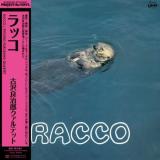
Powerful, exhilarating, and refreshing. Whether exploring deep modal jazz or basking in the warmth of calypso-infused jazz, every note is delivered with uncompromising conviction. Here, the essence of Ryojiro Furusawa reaches its fullest expression.
From the 1970s through the 2010s, drummer Ryojiro Furusawa was an active force not only in jazz but across the broader Japanese music scene. His music, marked by unmatched individuality and overwhelming power, is free-spirited yet unwavering, rugged yet inviting, and endlessly captivating.
Among his many achievements, his masterpiece Racco stands as the most complete representation of his artistry. Every composition on the album is an original by Furusawa, yet each piece reveals a distinct musical character. One moment, he delivers a beautifully crafted ballad; the next, he unleashes a dynamic burst of funky jazz. Just as the listener settles into a deep modal jazz groove, he effortlessly shifts gears, wrapping the music in the gentle warmth of calypso rhythms.
The album is eclectic, but never unfocused. Its diverse musical elements are tied together by Furusawa's unwavering vision, with every idea pursued boldly and to the fullest. The result is a listening experience that feels consistently invigorating and rewarding.
Powerful, exhilarating, and refreshing. Few musicians, and few albums, embody such a joyful sense of freedom and vitality. Racco is where the artistry of Ryojiro Furusawa reaches its peak.
Bruno Berle is a singer, songwriter, producer, multi-instrumentalist and figurehead of a contemporary Brazilian music movement. With a quiet mastery of songwriting and an astonishing voice, his music has won hearts around the world. Since the release of his debut album No Reino Dos Afetos (2022), Berle has performed across the UK, Europe, Japan, South Korea, and China, only leaving his home country for the first time in 2023. Shaped by these journeys, Berle’s third studio album, Sem Fronteiras (Without Borders), reflects a utopian vision of a unified world.
Recorded across London, São Paulo, Minas Gerais, Germany, and Maceió, the album–co-produced alongside his longstanding musical partner Batata Boy–is the most expansive canvas Berle has worked on to date. Shot through with the imagery that has always animated his songwriting: open skies, morning light, vivid colours and the magic of human connection, Berle’s carefully crafted poetics and warm, delicate instrumentation drive this vivid body of work.
“I came from nothing”–Berle doesn’t take his rise to global prominence for granted.
Born to a working class family from Brazil’s northeastern Alagoas state, one of Brazil’s most economically deprived, Bruno moved frequently in his youth to follow any job opportunities his parents could find, before eventually settling in the coastal capital of Maceió. “I used to travel to Caruaru, Santa Cruz, Recife, Garanhuns, Arapiraca, which I loved and feel it made me ready to be in this rhythm i’, but at the same time I think not having friends from childhood and being in constant change made me a little numb to the constant upheaval”. On Sem Fronteiras, there is a similar duality at play. The album celebrates the collective joy and human connection that live touring brings, but it also sits with the darker realities of crossing borders. While music moves more freely around the world than ever before, our bodies are not granted the same privilege.
Though he’s never lacked self-belief, Berle recognises that talent alone doesn’t guarantee opportunity. “Before my second album No Reino Dos Afetos 2 everything I had ever recorded was made with the help and kindness of people who believed in my ability”. Determined to pay that kindness forward and help others from the sharp end of Brazil’s desperately unequal society, Berle produced and featured on the recent self-titled albums by his northeast Brazilian compatriots, Nyron Higor and Phylipe Nunes Araújo (both 2025), helping propel both onto the international stage. In turn, following the successes of Nyron & Phylipe’s albums alongside his own, Bruno finds himself at the forefront of a thriving community of artists now based in São Paulo, but primarily originating from northeastern states like Alagoas and Pernambuco.
Much like the famed Clube Da Esquina movement that spawned in 1970’s Minas Gerais, they operate with a free-exchange of ideas, writing songs with and for each other, performing on each other’s albums and on the live circuit together. Lead single ‘Manha’ flows from this ethos. It was written by Berle’s friend and fellow Alagoan João Menezes (writer of ‘Ate Meu Violao’ and ‘Te Amar Eterno’ from Bruno’s previous albums) and Marvin Viera, and originally recorded on their 2018 album Areia e Mar.
Sem Fronteiras opens with ‘Você Já Sabe Que Eu Te Amo’, just six beats of one nylon guitar chord ring out before changing key, paving the way for the gentle strike of fender rhodes and the arresting call & response duet between Berle and Higor. On ‘Amor Inteiro’, the album reaches a celebratory burst of catharsis, with the punch-packing drums of Pedro Lacerda and Nina Maia’s joyous backing vocals encapsulating the live energy that Berle and his band bring to the stage.
With the abundant talents of this musical community at its heart, Sem Fronteiras releases 10th July 2026 via Far Out Recordings, supported by a summer tour across Europe. Bruno Berle will perform in a four-piece band alongside Nyron Higor, Phylipe Nunes, and Batata Boy, culminating in an appearance at Roskilde festival, Berle’s biggest live show to date. He’ll continue to carry a hopeful vision of a world where artists and musicians can move as freely as their music flows.
Tracklist:
A1 “Você Já Sabe Que Eu Te Amo”
(Nyron Higor / Bruno Berle)
Nyron Higor – drums, bass, acoustic guitar, electric piano, synthesizers, vocals
Bruno Berle – piano, vocals
Batata Boy – piano
Jorik Bergman – score preparation and conducting
Klara Gronet – violin
Ségolène de Beaufond – violin
Cristina Ardelean Montelongo – viola
Ilektra Stevi – cello
A2 “Não Posso Viver Sem Você”
(Batata Boy / Bruno Berle)
Batata Boy – electric piano, organ, synthesizer
Bruno Berle – drums, bass, synthesizer, vocals
Jorik Bergman – score preparation and conducting
Klara Gronet – violin
Ségolène de Beaufond – violin
Cristina Ardelean Montelongo – viola
Ilektra Stevi – cello
A3 “A Noite de Estrelas”
(Nyron Higor / Bruno Berle)
Nyron Higor – synthesizers
Bruno Berle – bass, drums, vocals
A4 “Outra Noite”
(Bruno Berle)
Nyron Higor – drums
Bruno Berle – acoustic guitar, bass
Felipe Berle – congas
Lucca Francisco – guitar, vocals
B1 “Amor Inteiro”
(Bruno Berle)
Pedro Lacerda – drums, choir
Nyron Higor – bass, choir
Batata Boy – guitars, organ, electric piano, choir
Nina Maia – choir
Bruno Berle – guitars, acoustic guitar, congas, vocals
B2 “Ideias Mágicas”
(Batata Boy / Bruno Berle)
Heloisa Alvino – trombone
Batata Boy – synthesizers, beats, electric piano, organ, bass
Bruno Berle – synthesizer, vocals
B3 “Vim Dizer”
(Batata Boy / Bruno Berle)
Batata Boy – electric piano, organ, synthesizer
Thomas Stankiewicz – synthesizer
Nyron Higor – synthesizer
Bruno Berle – acoustic guitar, bass, vocals
B4 “Tô Assim”
(Bruno Berle)
Bruno Berle – acoustic guitars
Batata Boy – synthesizer
Nyron Higor – bass, synthesizer
B5 “Manhã”
(João Menezes / Marvin Silva)
Bruno Berle – acoustic guitar, vocals, congas, shaker
Batata Boy – piano, shaker, electric piano, vibraphone, synthesizers
Nyron Higor – drums, bass
B6 “Sem Fronteiras”
(Bruno Berle)
Filipe Mariz – guitar
Bruno Berle – acoustic guitar, vocals, bass
Jennifer Souza – vocals, acoustic guitar
Rudson França – drums
Credits:
Produced by Bruno Berle and Batata Boy
Mixed and mastered by Bruno Berle, Batata Boy and Felipe Berle
Audio engineering:
Nyron Higor (track 1 – production; track 4 with Felipe Berle)
Joe Osborne (tracks 7 and 9)
Victor Gelling (strings on tracks 1 and 2)
Filipe Mariz (track 10)
Photography: Claudio Virgínio
Design: Minchai
Recorded in:
Maceió, Alagoas, Brazil
Tamandaré, Pernambuco, Brazil
Belo Horizonte, Minas Gerais, Brazil
São Paulo, São Paulo, Brazil
London, England
Cologne, Germany
Featuring rare- and first-on-vinyl tracks from beloved producers such as 2000 And One, Stasis, and CiM. Remastered by DMX Krew and with an accompanying online essay by Oli Warwick.
Across eight carefully selected slices of starry-eyed machine soul, Cold Blow presents an exquisite tour through backroom techno and downtempo electro. With a focus on thematic flow and an immersive listening experience, the London-based label explores works from leading lights of the 1990s and previously unreleased cuts that celebrate the human heart that can be discovered in synthetic sound practices. The development of techno in the 1990s saw the music evolve in different directions across the world. From the expressive blueprint laid out by the Detroit pioneers, a wide range of tempos and energies emerged. Techno's evocative synthesis and intricate drum machine programming was especially potent for deeper explorations away from the dancefloor. Documents Of A Different Reality casts back to when technology was steering quantum leaps in communication and creativity and the future was shot through with naive optimism. It was also a time when the media and industry hadn't caught up with the music to box it into distinct categories. As such, there's a sense of creative freedom that informs the older tracks on the album, from 2000 And One and Sandy Huner's sparkling example of early Dutch techno to London-based LA Synthesis' detailed take on braindance and the majestic night sky vision of cult legend Stasis. There's also space for rare, late 90s machine funk from Icelandic outlier Thor alongside Connective Zone's charmingly fractured bleep dream and a more contemporary offering from Barcelona-based duo Permutation. Meanwhile Mind Control and CiM both capture the spirit of stylistic fusion with twitchier rhythms that take influence from hardcore and jungle as much as techno. With an atmospheric through-line of melancholic pads and harmonious leads, this small but perfectly formed collection naturally follows on from previous, equally thought-out compilations on Cold Blow, and adds a distinct perspective on the history and continuing legacy of pioneering early ambient techno.
Connecters Vol. 1: Original Recordings, 1992-1999 ist die erste Veröffentlichung von Larrison, dem Pseudonym des bildenden Künstlers und Musikers Larrison Seidle aus dem Mittleren Westen. Larrison komponierte, programmierte und nahm alles komplett auf einem Casio CZ-5000 auf, während der guten alten Zeit der selbstgemachten Experimente und Entdeckungen in den frühen 90ern. Er lebte in einer Traumwelt, die er selbst erfunden hatte, mit Soundtracks aus Space-Age-Pop-Vignetten, gespickt mit hypnotischen, überschwänglichen, vielschichtigen Synthesizer-Melodien. Mit 26 Tracks, die alle neu restauriert und aus den Originalquellen gemastert wurden, erfindet sich Connecters Vol. 1 Song für Song neu, überwindet die Zeit und trotzt der vorbestimmten Vergessenheit dieser brillanten, diskreten Musik, die vor drei Jahrzehnten entstanden ist. Larrison Seidle wuchs in den 70er und 80er Jahren in Greenwood, Indiana, einem Arbeitervorort von Indianapolis, auf. Er stammte nicht aus einer Musikerfamilie, aber aus einem Haushalt, in dem Musikalität gefördert wurde. Sein Vater kaufte eine elektrische Orgel, in der Hoffnung, dass Larrison und sein älterer Bruder das Instrument lernen würden. ,Am Ende saß mein Vater einige Abende an der Orgel, improvisierte und spielte immer wieder dieses eine Lied, von dem ich mich noch an die ersten Takte erinnern kann", erinnert sich Larrison. Möglicherweise war es in diesem Moment, in dem es zwar keine formale Ausbildung gab, aber viel Ermutigung und Entdeckungsfreude, dass der Künstler seine ersten musikalischen Experimente machte. Diese Erlaubnis, sich auszuprobieren, sollte seine kreative Arbeit in den folgenden Jahren deutlich prägen. Während in Larrisons Elternhaus klassische Rockplatten leicht zugänglich waren, lieh sich sein Vater 35-mm-Dokumentarfilme aus der Bibliothek aus, um sie im Wohnzimmer zu zeigen, die alle mit skurrilen Instrumentalstücken unterlegt waren. Als Teenager nahm er John Carpenters und Alan Howarths Endthema aus ,Die Klapperschlange" mit einem kleinen Kassettenrekorder neben dem Fernsehlautsprecher auf und liebte Tangerine Dreams Beiträge zu Ridley Scotts düsterer Fantasy ,Legend". Seine Faszination für diese weitgehend textlosen, synthesizerbasierten Kompositionen führte zu einem eigenwilligen Verständnis davon, wie Musik nicht nur das ergänzt, was wir vor uns sehen, sondern auch das, was wir in den Tiefen unseres Bewusstseins erleben. 1985, als er dreizehn Jahre alt war, überzeugte Larrison seinen Vater, ihm ein Casio CZ-5000-Keyboard zu kaufen. Wie zuvor die Orgel war auch dieses Instrument eine Neuheit im Haushalt der Seidles. Erst nach seinem Highschool-Abschluss 1991 und dem Beginn seines Studiums an der Herron School of Art in Indianapolis entdeckte er den in das Casio integrierten Sequenzer und begann, seine Kompositionen auf Band aufzunehmen. ,Das CZ-5000 und sein 8-Spur-Sequenzer sind die einzigen Musikinstrumente, die ich benutzt habe. Es hat eine fast unbegrenzte Funktion zur Erzeugung neuer Klänge", erklärte Seidle. Während seiner Zeit an der Herron School of Art freundete sich Larrison mit seinem Kommilitonen und Klangkünstler Michael Northam an, den er bei einem Konzert auf dem Campus kennengelernt hatte. Nachdem Northam Larrison für die Musik von Severed Heads, Throbbing Gristle und Roger Doyle begeistert und damit seine Zuneigung und sein Vertrauen gewonnen hatte, überredete er ihn, nach Austin, Texas, zu ziehen, das in den frühen 90er Jahren für seine lebendige Kunst- und Musikszene bekannt war. Die beiden wohnten zunächst bei Northams Freund Daniel Plunkett, dem Herausgeber und Verleger von ND, einem einflussreichen Magazin, das sich von 1982 bis 1999 mit DIY-Musik und Tape-Trading beschäftigte. In seiner Blütezeit hatte ND Tausende von Lesern, und Plunkett verschickte die Ausgaben weltweit. In den letzten Monaten des Jahres 1993 und Anfang 1994 schrieb und nahm Larrison mit begrenzten Mitteln und grenzenloser Intuition eine Reihe von Songs mit seinem CZ-5000 in einer kleinen Wohnung nördlich der Innenstadt von Austin auf, bastelte eine farbenfrohe, illustrierte Beilage, in der einige Songtitel durch Linien oder Pfeile dargestellt waren, und gab sie an Plunkett weiter, damit er sie für ND rezensieren konnte. Diese einzelne Kassette mit dem Titel Connecters sic war eine von 1200, die im Laufe des Bestehens der Publikation bei ND eingereicht wurden und die Jed Bindeman, Mitbegründer von Freedom To Spend, 2020 erworben und fast wie durch ein Wunder entdeckt hat. ,Ich hatte große Schwierigkeiten, mir die Kassetten in dieser Sammlung anzuhören", gibt Bindeman zu. ,Aber dann legte ich Larrisons Connecters ein und dachte sofort: ,Wow! Was höre ich da?' Die Kassette war von Anfang bis Ende einfach fantastisch." Mit Musik von genau dieser Kassette und anderen Aufnahmen aus Larrisons Experimenten in den 90er Jahren ist Connecters eine Übersicht über Instrumentalmusik, die sowohl durch vielfältige konzeptionelle Strategien als auch durch spielerische Neugierde geprägt ist. Seidle arbeitete unter Bedingungen, die viele Musiker als Einschränkung empfinden würden, und entwickelte technisch innovative Ansätze, um die Klänge und integrierten Effekte des CZ-5000 zu modifizieren. Das Gerät ermöglichte es ihm, die Wellenform, die Hüllkurve und die Tonart von Klängen mithilfe der Phasenverzerrungssynthese zu verändern und so im Grunde genommen Instrumente zu schaffen, während er Songs komponierte. Die Tracks zeichnen sich durch eine durchdachte impressionistische Vielfalt aus, die mal lo-fi, mal symphonisch klingt. Inmitten der Zerlegung und Verstärkung der Fähigkeiten des CZ-5000 gibt es auch einen geschmackvollen Rückgriff auf eine kindliche Interaktion und Erfahrung von Klang. Vielleicht ist es diese Erfahrungsqualität, die es so schwierig macht, Larrisons Projekt einfach als Ambient oder Elektronik zu verstehen. Sein Wille, die ihm zur Verfügung stehenden Werkzeuge zu transformieren, hebt die daraus resultierenden Kompositionen auf eine persönliche Ebene und verleiht der Musik einen bezaubernden Sinn für Mystik. Connecters ist ein Beweis für eine künstlerische Vision, die sich nicht durch Grenzen einschränken lässt und keine Angst vor Informalität hat. Diese Aufnahmen, die dreißig Jahre nach ihrer Dokumentation auf magische Weise an die Oberfläche kommen, zeigen, wie personalisierte Produktionsmittel die Zeit ausdehnen und verkürzen können. Larrison lädt die Zuhörer ein, sich auf die Wunder der auditiven Vorstellungskraft einzulassen - eine Brücke zwischen visueller Erinnerung, emotionaler Resonanz und der grenzenlosen Möglichkeit, mit den uns zur Verfügung stehenden Mitteln Musik zu machen. Larrison's Connecters Vol. 1: Original Recordings, 1992-1999 wird am 3. April 2026 von Freedom To Spend als Vinyl- und Digitalausgabe veröffentlicht.





















![Various - II001 - VA [Printed Sleeve]](https://www.deejay.de/images/l/2/2/1267922.jpg)