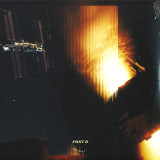
Here at last is the reissue of the most sought-after track by French New Beat band French Theory. Originally released in 2008, this tribute to Boccacio (the revered temple of New Beat and EBM, located in Belgium) struck at the heart of the movement’s soul. It quickly gained cult status for its gloomy atmosphere, heavy industrial beats and catchy melodies that propelled the classic New Beat sound into the 21st century.
Out of print since then, it’s back in a limited edition, with the added energy of a powerful remaster by cult techno and acid master Thomas P. Heckmann (Trope, Drax, etc.), plus a brand new diversion exclusive to this vinyl on the flip. Get ready to wave the white glove again, and get lost in the music!
French theory is the New Beat alias of Guillaume U. Chifflot, one of the few French techno veterans in the New Beat & Techno-house genre, who started releasing tracks in the early 90s on his own multimedia label n9. Relaunched in the mid-2000s, the label releases techno and electronica, while pioneering an upgrade of New Beat in the wake of the Techno Body Music movement.
Buscar:french theory
- 1
66 pages, 175 x 129mm paperback w/ litho printed cover & french flaps.
The second outing for our short run book publishing imprint, The End books, takes the form of a reprint of Spanish Cante Jondo and Its Origin in Sindhi Music, originally published in Spanish in 1955 under the name Cante Jondo: Su Origen y Evolución and later in this English translation.
Aziz Balouch here presents his theory on the roots of flamenco's 'deep song' in modern-day Pakistan, a cultural journey that mimics the routes of his own life, having been brought up among the Islamic mysticism and devotional songs of Sindh before travelling to Gibraltar in the early 1930s and becoming transfixed with the cante jondo across the border in southern Spain. Positing this concept through personal accounts rather than solid theoretical backing, this text provides a valuable account of an extraordinary existence that crossed remarkable geographical, musical, and spiritual boundaries. Issued here with a new introduction from anthropologist of sound, the senses and Islam, Stefan Williamson Fa.
"It would be easy to place Balouch on the fringes, as an eccentric footnote in flamenco history. But that misses the shape of his life and work. He was a figure who moved intuitively across boundaries that our present categories of nation, genre, discipline tend to fix in place. His work predates the founding of the academic discipline of ethnomusicology, the global circuits of world music, and the marketplace logic of fusion projects by decades. He was not an ethnographer or a proto–world musician, but someone for whom the deep song of Andalusia and the devotional song of the subcontinent resonated along the same fault lines of feeling, and who spent his life trying to trace them.
This book is one of the few surviving traces of that attempt. To read it now is to encounter a perspective that resists tidy narratives of influence or origin, despite its title and what he claims to do. It stands instead as evidence of an idiosyncratic musical imagination, one that relied less on proof than on listening, and on the belief that certain echoes carry farther than history can easily explain."
— Stefan Williamson Fa
- A1: Boston 168 - Feeling You (06 00)
- A2: Tigerhead - Alice Trough A Looking Glass (04 31)
- A3: Sina Xx - Rock This Place (04 24)
- B1: Endlec - Panther (05 47)
- B2: Theo Nasa - Sex & Acid Pleasure (04 02)
- B3: Shaleen - Vernalagnia (04 56)
- C1: Öspiel - Bygone (04 36)
- C2: Raho - Panic On Acid (04 32)
- C3: Diana May - Just Shut The F__K Up (04 28)
- D1: (Krtm) - Küss Mich Jetzt (04:05)
- D2: Vuuduu - Vuuduu - Snax (04 35)
- D3: Madwoman - Chaos Theory (04 46)
BPitch präsentiert die nächste Ausgabe ihrer WE ARE NOT ALONE Compilation-Reihe - ein vielfältiges Paket mit Sounds, die den Geist der WE ARE NOT ALONE-Partys widerspiegeln und einen Einblick in eine Szene von Künstlern geben, die sich dem Underground verschrieben haben. WE ARE NOT ALONE pt. 8 bietet zwölf unverzichtbare Tracks für DJs, Raver und Musikfans, die eine breite Palette an Genres abdecken und dabei nie den Dancefloor aus den Augen verlieren. Die neue Compilation spannt die Fäden zwischen den Genres und dokumentiert mit der gewohnten Qualität des Berliner Labels das nächste Kapitel in seinem stetig wachsenden Beitrag zur Kultur.
WE ARE NOT ALONE pt. 8 zeigt, dass das Label keine Pläne hat, die Hitze zu drosseln, mit einer weiteren Runde reinstem Hedonismus für die Ewigkeit.
BPitch present the next iteration of their WE ARE NOT ALONE compilation series - a diverse package of sounds reflecting the spirit of the WE ARE NOT ALONE parties, and offering a glimpse into a community of artists that have committed themselves to the underground.
Touching on a wide range of genres whilst never losing sight of the dancefloor, WE ARE NOT ALONE pt.8 offers twelve essential cuts for DJs, ravers, and music heads alike. Tying the threads between genres, and with the mark of quality expected from the Berlin label, this new compilation documents the next chapter in its ever-growing contribution to the culture.
Returning to the label appearances on both BPitch and its accompanying label UFO Inc. - Turin-based duo Boston 168 open the club doors with a masterful fusion of trance build-ups and stripped back pointillism on ‘Feeling You’. Another member of the BPitch roster having just released an EP on the label, Tigerhead steps up with heavy kickdrums and uncanny pads on the aptly-titled ‘Alice Through The Looking Glass’. Stepping into more minimal territory, Sina XX - founding member of the Paris rave collective Subtyl - offers a warm, bouncing cut that teeters between the dark and euphoric with a masterful balance. Taking a swift 180 into the darkest industrial spaces, Endlec serves up a gritty percussive workout on the formidable ‘Panther’.
Theo Nasa - a South London-based purveyor of weird, melodramatic techno - moves into hazier spaces on ‘Sex and Acid Pleasure’, an eccentric dose of acid for the senses. Shaleen - a resident of the WE ARE NOT ALONE event series - continues into the warmth with a headspin of analogue sounds and modular experimentalism with ‘Vernalagnia’. Öspiel, the French-Korean producer and label head known for his cinematic sounds weaves together angular rhythms underpinned by a strong sense of minimalism. In hot pursuit, Puglia’s Raho comes through with a cyclone of bouncing kicks and harsh leads.
Diana May, a Berlin-staple and resident at KitKat offers us a welcoming spiral on ‘Just Shut The F*** Up’. Plunging into deep industrial caverns, KRTM ’s ‘Küss Mich Jetzt’ is a pounding glitch of hardcore techno for the biggest speakers. VUUDUU’s ‘SNAXX’ shifts the speed up a gear with an expansive gothic rave banger. Rounding things off is madwoman’s ‘Chaos Theory’, a sparse but unrelenting cut of atmospheric techno from deep inside a warehouse.
WE ARE NOT ALONE pt.8 shows the label have no plans on lowering the heat in 2024, with another round of pure hedonism for the ages.
j d1 | KRTM - Küss Mich Jetzt (04 05)
For the 7th release Theory Of Swing welcomes the French duo Groove Boys Project to join the catalogue with their “The Manhattan Soul EP “. Lucas and Alexandre are two talented and devoted guys towards the 90’s house sound. In collaboration with some of their mates Rawaï and Dusty Fingers they created this pure NY house 4 tracker EP that respect at full the concept of the label. “Bring back that magic feel “ .
Written and Produced in the Parisian "Studio 937"and Mastered from St. David at "TOW Records Studio".
2026 Repress
French talent Hyden makes label debut on Mutual Rytm with conceptual new techno EP, 'To Whom It May Concern'. Hyden is a potent force in the French underground, creating powerful techno with dense percussion, immersive grooves and subtle nods to classic influences - all through his own unique lens. Having delivered standout releases in recent years, here he offers up sounds "anchored in psychoanalysis, time, and emotional residue" as he makes his mark on SHDW's Mutual Rytm imprint, delivering influences of dream logic and surrealism as the palette moves between brutality and introspection. "It's hypnotic music for moments of rupture where something breaks or breaks through". Opener 'Manifest Content' is inspired by Freudian theory and explores the surface illusions of thought and dream. It's about the dissonance between what we perceive and the deeper meaning that slips away beneath and is a deep and dubby techno track with flashes of unsettling melody. 'Bruises' is emotional trauma made sonic. This piece delves into invisible scars and traumas, residues of past conflict or intimacy - it's slow-burning, heavy and raw. 'Jikan' is a meditation built on time and its erosion. Inspired by the Japanese concept of impermanence, it reflects fleeting moments, decay and the tension between stillness and motion with jacked up but warm drums and turbulent bass. Next, 'Free Will' is born from inner conflict and plays with deterministic rhythms and evolving layers, questioning whether we are truly in control or just passengers in a prewritten sequence. The vocal mentions, "creatures, you're out of time" to bring darkness to the intense but sleek rhythms. The streamlined physicality of 'Swarm' channels the primal force of collective movement and is a nod to the loss of individuality in group behaviour. In addition, the package is loaded with digital bonus cuts. 'Yumehara' is a dive into surreal dream-states and evokes subconscious landscapes where logic dissolves and emotion reigns, while 'Lu Bu' is brutal and warlike and named after the legendary Chinese general that captures impulsive violence, betrayal and reckless glory with relentless energy and rhythm. Lastly, 'Neon Pale' is a synthetic dreamscape about fading beauty under artificial light - a melancholy ode to cities at night and the loss of warmth in modern life.
Blend Mishkin & Soul Sugar - Theory of Mind
Cultural Collaboration Sparks New Sound:
Athens and Paris Unite for Soulful Jazz-Reggae Fusion Album.
A collaboration between two creative musical minds, Blend Mishkin from Athens meets Parisian Soul Sugar to co-create a genre-bending album titled “Theory of Mind”
This album features nine compositions which uniquely fuse vibes of jazz, soul, reggae, afro-beat and even some 70’s b-movie soundtrack all brought to life through the warm tones of vintage keyboard instruments such as the Hammond Organ, Clavinet and Fender Rhodes electric piano, played by virtuoso keyboardist Soul Sugar aka Guillaume Metenier paired with flawless orchestration, arrangements and production by Blend Mishkin.
Soul Sugar, a disciple of jazz master Dr. Lonnie Smith on the Hammond organ, known for his
intricate reggae-jazz masterful improvisation, brings a distinctive mellowness and complexity to the album. His use of the Hammond organ, Clavinet and Fender Rhodes electric piano adds a layer of depth and authenticity that transports listeners back to the golden age of soul and reggae. Blend Mishkin, a versatile artist, who has mixed and moved across reggae, dub, soul, as well as world music, introduces elements of funk and reggae rhythms to the mix. His production techniques, combined with the rich, analog sound of the vintage instruments, creates a sonic landscape that is both timeless and inspired.
Guest vocalists are featured in four out of nine tracks. Greek-French funk powerhouse Georges Perin delivers a heavy soul tune called “I Miss Those Days” , Fae Simon from London lays a velvety vocal on an old school steppers groove, Thaliah from Athens brings her smokey jazz flavour with “Moonlit Letter” and Jeffrey Diop from Senegal adds the perfect chant in “Big Boss in a Small Town”.
The recording sessions, split between Athens and Paris, were as much about cultural exchange as they were about musical experimentation. The result is a collection of tracks that resonate with the energy of live performance, while also echoing the rich musical background of both artists.
"We wanted to create something that felt organic and real," says Guillaume. "Using these incredible vintage instruments allowed us to tap into a sound that feels both timeless and brand new."
Blend adds, "This album is about mixing our roots, our sounds, and our experiences. It's a celebrationof music that transcends borders and eras."
“Theory of Mind” it's a cross-cultural journey. The project emerges from the vibrant, sun-soaked melodies of Athens with the sophisticated, urban grooves of Paris, resulting in a sound that is both nostalgic and refreshingly modern.
Welcome into the world of scarse music for the ultimate connoisseurs, fine taste beatmakers and holy grails collectors.
You made a step close to The Edge.
From cult Italian soundtrack and 80's iconic anime, English and French library music, to tunes that made Hip Hop iconic anthem, Medline picked 10 compositions to cover, among his favorite crate diggers treasures.
With a 30 years Dj's culture, he unite on vinyl a collection of underground classics.
When other musicians sample, as former beatmaker, he found his fulfillment by playing the entire tracks, as homage to these composers.
In 2018 Solstice has set the corner stone of this unique artwork at the cross road of Jazz, Funk, Soul and Hip Hop worldwide culture.
With The Edge, the out of boundaries producer, placed the level even more higher.
The whole work is incredible, for a man alone, without music theory knowledge but playing flutes, horns, keyboard, guitar and many more instruments... creating in his little home studio the sound of a 70's orchestra.
Challenging and epic:
Epic for covers like A Day In The Life, Beatles cover by Les Demerle, took by Buck Wild for O.C. Time's Up and of course the eponym David Axelrod's The Edge on David McCallum album.
Challenging, for library anthem like Hot Dog, Ghetto or Keep Quiet by Jacky Giordano, sharp and definitely audacious.
Despite the variety of the ten themes, the man's touch is present each time, into the texture, sound taste and balance. Like a chef bringing up to date magical recipes.
The archetypal type of records My Bags loves to release, "The Edge" is built as a crate digger paradise, a timeless record linking past and present into a highly concentrate of divine grooves.
While 1995's Washing Machine LP moniker was a thinly-veiled jab at the corporate aesthetic ("no, you cannot turn Sonic Youth into a household appliance brand", the band even considered changing its name to Washing Machine but settled on the album title instead), their major label relationship was indeed a curious buzzpoint of talk on the street after their intake to DGC in 1990. It wouldn't be fair to say that this state of existence propelled the band to reinforce its independent mindset by releasing a series of opaque-looking, French-language-dipping, highbrow-looking releases on their own that focused on the more abstract improv/compositional side of the band; in all truths they had been heavily steeped in self-releasing spillover material prior to that. But after a pressure pot of the early 90's indoctrination into a new operational mode for the band and its visibility, and the forces around it attempting to shape their direction, it seemed like a good time to create a strong show of radical concept.
The Anagrama EP became the first in a series of the SYR label's Perspective Musicales releases seemingly cementing Sonic Youth's connectivity to an increasing public awareness in experimental composers of the 20th century (French or otherwise). The irony was that many of those original avant composers being rediscovered by the indie audience (Partch, Neuhaus, Reich, Messaien) often found themselves on major labels anyway! So, perhaps this reverse approach was a necessary concept/comment given the music biz climate of the 90's. Regardless of how apples and oranges fell in Xenakian probability/theory, it was clear that both Sonic Youth's stature in progressive music, aided by now unlimited taperoll time thanks to a home base studio downtown established after their Lollapalooza stint, gave the band plenty of trailblazing time for their self examination of untraveled avenues.
"Anagrama" unfolds into nine minutes of delicate textures, starting with thick drone segueing into moments reminiscent of the post-crescendo flutter/comedown of "Marquee Moon's" trail-out; Thurston, Lee and Kim's guitars all circling round each other taking delicate pokes and stabs before drifting into some post-rock rhythmic moves tapered with delicate percussive guidance from Steve Shelley. "Improvisation Ajoutée" reaches further out into dissolve with whirring oscillations, guitars hissing and clanking radiator-style in a short blast format that continues into "Tremens" and a spooked-out landscape of gelatinous notes snaking up slowly. The sparseness of attack is colorful, textures emit and linger, silent spots shine, all flanked by tasteful drumming that provides the thread to all the abstraction. Shelley's approach here is interestingly sideways to any kind of usual rock action, it's tempered, mutant and metronomic simultaneously. The finale track "Mieux: De Corrosion" is a real pedal-palatte showcase. Here, Plutonian guitar wash flanges upwards to buoy a myriad of colorful eruptions of amp-spuzz, chopped up tone blasts and general confusion. Out of the blue, some metallic one-note choogle kicks in and threatens to explode into some Judas Priestly motion, before it all sputters into aural glass showers, clang, and finally a ferocious wave of more flange hiss that crashes down on a dime.
This initial foray into SY's Perspectives Musicales series continued onward with releases featuring other co-conspirators, peaking with the ambitious 2CD Goodbye 20th Century that finally connects the band into full-on interpretations of other composers' pieces (as well as displaying their own new ones). The whole series is not so much an outlet for another "side" of the band, but a run that went hand in hand building new approaches of songcraft onto their own, more overground direction which included Jim O'Rourke (who hopped on during SYR3), adding additional density to A Thousand Leaves and other LPs of his era. Fans of the '86 Spinhead Sessions as well as the recently-exhumed later jams of In/Out/In will take in the sounds of SYR1 with glee.
ora’s most innovative modern exponent bathes in communion with a re-imagined classical guitar, unveiling a new and previously unsuspected musical universe. In a meeting between instruments, not traditions, these maestros emerge from quite different and distant musical worlds. Ballaké Sissoko’s kora tradition and lineage traverse the once powerful West African empire known as Kaabu. South African Derek Gripper’s roots are in European classical guitar but infused with a unique jeli music mastery that takes guitar’s modern history in a captivating new direction.
But we are not hearing these traditions in dialogue: these masters meet on the sonic groundings of the kora, instrument of the griots, resonant vessel of the sacred and profane, sound carrier of history and wisdom. Through two decades of commitment and study, it is to this terrain that Gripper brings his guitar to meet its multi-stringed cousin.
The two men do not share a spoken language, but if it is true that music speaks universally, then they were already involved in profound dialogue long before they met for the series of London concerts which yielded this recording session – a session which matches deep communion with sparkling improvisation, which pushes a living tradition into brand new sonic spaces, and opens a live and direct channel of communication between kora and guitar. In the complex web of theme and variations spun by Sissoko’s twenty-two strings and Gripper’s six, a new African string theory is elaborated.
“Musically we tested each other,” says Sissoko, explaining that the most magical aspect of their encounters are spontaneity. “We have the mastery of our instruments, the technique and a good ear. Derek is very curious, that’s very important.”
“He’s just such a good listener,” says Gripper about Sissoko. “It’s not what he plays, it’s how he plays it. He’s an amazing interpreter, the prime master of timbre.”
Recording by Taylor Pollock at Platoon Studios, London.
Mixed, edited and produced by Derek Gripper.
Mastered by Murray Anderson at Milestone Studios, Cape Town.
Produced for vinyl by Chris Albertyn and Matt Temple at Matsuli Music.
Mastered for vinyl and lacquers cut by Frank Merritt at The Carvery, London.
Vinyl pressed at Pallas GmbH, Germany.
Sleeve notes by Francis Gooding, French translation by Paulo Goncalves.
Cover design by Toby Attwell at Twoshoes, Cape Town.
- A1: Garden Of Eden (Feat. Charlotte Savary) - 3’38
- A2: Middle Of Nowhere (Feat. Charlotte Savary) - 4’22
- A3: Insomnia - 3’46
- A4: The Trip (Feat. Charlotte Savary) - 3’44
- A5: Andy’s Dream - 4’27
- B1: Game Over (Feat. Charlotte Savary) - 3’43
- B2: Around The Corner - 2’58
- B3: Stranger Night - 3’19
- B4: One Day (Feat. Charlotte Savary) - 3’30
- B5: Last Call From Earth - 3’29
The Trip is the first solo album by N'Zeng, better known as Sébastien Blanchon. It has to be said that he hid behind his (hollow) nose to sniff out the right projects (ex Le Peuple de l'Herbe, member of Entourloop). His nose is hollow, but not for the trumpet, and yet it's with this instrument that he started out. And he reinvents it, giving it a subtle place on this musical road trip we call The Trip.
A journey open to all, with no tolls and no filters, apart from the cinematic filter of this lover of original soundtracks and trip hop. Beautiful images flash before our eyes, and in our ears, the smooth voice of Charlotte Savary (Wax Tailor). An album, a very good trip for lovers of Portishead, Gorillaz, and well-felt scratches in the form of controlled skids.
He's making a name for himself as N'Zeng, with his smooth arrangements.
N'Zeng's father played trumpet with his grandfather in the Feurs brass band in the Loire department. When he arrived in Saint Etienne, young Sébastien started out with a cornet à pistons at the Conservatoire. His teacher at the time, Marcel Heyte, had won a prize in Paris at the same time as a certain Maurice André.
His father took lessons in orchestral conducting, accompanying the offspring's budding musical career, which included a course at the Festival de Cuivre in Monastier-sur-Gazeille, where he met the soloists of the Radio France orchestra. A new awareness, a new confidence: off to Lyon, not for a soccer derby, but to "beef up his game". In 1997, he was awarded a gold medal for trumpet by a unanimous jury at the Conservatoire National de Lyon.
Lyon, capital of the Gauls, was the starting point for N'Zeng, who went on to become a member of the group Le Peuple de l'Herbe. 15 years later, with several successful records to his credit, a concert in 2003 at the Transmusicales with Beth Gibbons (Portishead), and a Victoire de la Musique award, it was time for N'Zeng to move on to other things.
Arrival in the City of Light, the place where dreams come true. Nzeng's dreams are not only sonic, but also visual, for Sébastien is not only a friendly presence and a talented musician, but also a cinephile. His knowledge of music theory, acquired during his years at the conservatory, enables him to tackle music for pictures.
He created a soundtrack for the cult film Alien - The 8th Passenger, and worked with musician Rone (collaborating with Baxter Dury) and his bandmates from Le Peuple de l'Herbe, composing 2 tracks for the soundtrack of Virginie Despentes's hard-hitting film "Baise-moi". On the album "Hollywood Hustlers", with the group "Mustang Force", he pays tribute to the soundtracks of Lalo Shiffrin, Ennio Morricone... The album is also well received by the critics. He conducts the arrangements and orchestrations for the Degiheuga Orchestra, and composes the original music for the Hôtel Bellevue dance show, another success!
2019 sees the birth of "The Trip" project. On this record, no masks, but a female voice, that of Charlotte Savary (Wax Taylor), laid on a carpet of strings. With this musical voyage, trip hop takes pride of place, with a balance between the body of the instruments and the mechanics of beatmaking.
There's no getting off track on this well-balanced record, with its silky orchestrations. N'Zeng accompanies us elegantly, with his trusty trumpet as GPS, here used subtly. The album cover is a photograph taken by Sébastien Blanchon's mother, in 1973, a year when Saint Etienne was about to become French champion for the 7th time.
Danielle Boutet’s P »Pièces« is a mysterious artifact of Quebecois marginalia, self-released in 1985. Moving from languid ennui to high drama, »Pièces« is a dreamy gestalt, an album that borders Chanson, spoken-word, jazz noir, and minimalism, conjured from the chasm between acoustic and electronic realms. »Pièces« allows us a window into the highly intimate songcraft and compositional skill of an artist who longed to linger not in the public eye, but in relation with others and the world around her.
Born in Quebec City, Boutet studied music at the University of Montreal, where she focused on composition and percussion, before becoming involved in Montreal’s feminist and lesbian art scene. Primarily written, performed, and recorded by Boutet, with voice, guitar work, and technical assistance by Sylvie Gagnon, Pièces was created during a paradigm shift in home recording. Originally composed for the piano, Boutet and Gagnon utilized a consumer-friendly Tascam 4-track Portastudio and versatile Yamaha DX-7, alongside guitar, bass, marimba, and the human voice, to expand and contemporize the original composition’s scope.
Inspired by prog rock and British poet and musician Anne Clark, »Pièces« translates Boutet’s influence by moving between sunny, wistful fairytale and dark, wintry dirge. Filled with longing marimba, vertiginous, startling synth pads, and folk guitar, each track on Pièces offers a wholly unique proposition. Some are modal and rife with the ethereal psychological tension of a sci-fi soundtrack, while others are more like entering a smoke-laced lounge, the entertainer embodying seduction.
With the sprechgesang of artists like Serge Gainsbourg, there is an intense intimacy to Boutet’s delivery, sometimes as if she is performing for an audience of one. As one lyric goes, translated to English from French: “Like holograms/ Images from a world/ That inhales souls/ And exudes drama.” Another song contains an excerpt from The Tao of Physics: “The eastern sages specify clearly that they do not identify an ordinary void, but rather, a void having an infinite creative potential.”
To English-language audiences, the album’s title, »Pièces«, might seem to simply refer to the eleven different pieces. The title can also, of course, refer to parts of a larger whole, but Boutet is keen to point out that there is also another meaning: In French, a pièce is a room. On the cover of the original cassette, Boutet is seen sitting on a chair, alone in an empty apartment, a cable snaking at her feet. Listening to »Pièces« is like entering eleven different rooms: whether a study encased in shadow, a greenhouse left to wither in an eternal frost, or a divine nave.
Boutet sold a few dozen copies around Montreal, a scene mostly occupied by the new wave explosion de rigueur, but the inclusion of Pièces in the 1987 issue of Ladyslipper—the North Carolina-based mail order catalog that championed women musicians of all calibers and careers—led to more exposure throughout North America. “In the catalog,” Boutet says, “they included it in the New Age section, but I was, and still am, aware that this album is relatively unclassifiable.”
Boutet would release one more album, titled Musiques Urbaines, before getting pulled in the direction of interdisciplinary art and theory. “Although I never stopped making music, I lost all interest in public diffusion or performance,” Boutet says. Despite her departure from performance and publicly releasing music, she left behind a strange and enthralling document of Montreal’s 1980s feminist fringe, an aural document of the historic moment when self-recorded music and its practical potential became a prismatic reality.
Danielle Boutet’s Pièces arrives February 16, 2024 as part of uncommon¢ (“uncommon sense”), an open-ended, serialized endeavor from Freedom to Spend that provides new meaning for rarefied recordings from music’s outermost fringe.
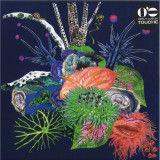
O’o share many of the musical characteristics of their ornithological namesake. The Kaua’i O’O produced the most exquisite birdsong before its extinction in Hawaii in the late 1980s. The beauty and character of its voice was delicate and mysterious, tuneful and surprising. You can experience it with just a cursory websearch, a haunting cri de coeur from the last century. If the poor O’O is consigned to history, then life is just beginning for this French duo, based in Spain, who’ve won plaudits and awards already in their short musical lifespan.
O’o are about to release their sublime debut album Touche. This is not an endling, it’s just the beginning: “I found the name on a website of weird English language words, and I loved the way the letters were arranged like a pair of glasses,” says O’o singer Victoria Suter. “Afterwards, I went onto YouTube and started listening to the last bird of its species, calling for a mate that would never come. I thought: ‘Oh my God, that’s so sad’. Then we talked about the name and we thought it could be a nice thing to honour it and keep it alive in some way.”
Suter met her musical partner Mathieu Daubigné at college in Agen, South West France, when the pair were studying music theory in their teens. Victoria moved to Barcelona in 2010; Mathieu followed six years later. Their debut EP, Spells, appeared in 2018 a beautifully crafted patchwork of vocals and samples that is redolent of the uncanny vocalese of Laurie Anderson. The bird makes an appearance at the beginning of the EP: “Sweet tooth beak. Soft melody peak / Oh O’o, go round and round in circles / Looking for a honeydrop, til you vanish, til you drop”.
That sense of profound longing for something lost is carried over to Touche, as well as the same heightened sensory awareness of the world around them. What has developed in spades is the creative process. O’o have blossomed organically, augmenting their pop sensibilities. Avant-garde techniques have been brought to heel as the pair create off-kilter pop music that warms the heart and nourishes the brain. The catalyst that enabled this bold pop transformation came with the song ‘Touche’ itself, a saucy chanson at the heart of the album. Suter’s wry narrative about a botanical femme fatale is inserted into a lithe and skittish song with reggaeton beats and an inviting, balmy atmosphere.
“The song is about a flower which attracts male insects, producing the very same smell as the female of the species,” explains Victoria. “The poor male is fooled by the sex-appeal of this botanical trap, and gets so excited that he exhausts himself and wastes all his other chances of ulterior mating and having any offspring. The flower entices the insect in in mermaid-like fashion, to come nearer and touch her. It’s the hot track!”
‘Touche’ reaches into hitherto unexplored areas of pop, while the rest of the album is accessible in the way that James Blake, Radiohead or Kate Bush are accessible, and it always challenges, in a way that pop isn’t supposed to. Suter writes playful, poignant, observational songs that tell stories as well as tell us something about ourselves. Songs like ‘Dorica Castra’ are built upon the voice as an instrument, centrifugal and layered from its core.
Complimentary to this method is Daubigné, who brings startling innovation with found sounds, samples and clever vocal manipulations—creating unique, otherworldly sonic flourishes. A guitar whirs like a musical spinning top on ‘Spin’, created in Ableton; an Ondes Martenot appears to make a guest appearance on the title track, though it’s the ingenuity of the Prophet 8 synthesiser. “I’ll often say to Mathieu, ‘what’s that?’” says Suter, He’ll reply, ‘that’s your voice’.”
O’o found their own voice when they won a competition held by the legendary festival organisers Primavera Sound. Victoria entered the band into a competition she saw on Instagram, sending off rough demos on the final day of entry, thinking little more about it other than the fact Mathieu might be annoyed. Soon they would have to build a live set from scratch and figure out how to present their music for the first time. At stake was seventy hours of recording time at Aclam studios, used by Rosalía and Kendrick Lamar, and for the winner a coveted spot at the festival. A pool of 350 acts were whittled down, and then O’o triumphed at a Battle of the Band style face off.
The O’O might be extinct, but O’o the band have learned how to fly. Just watch them go.
First Fragment was founded in 2007 by Phil Tougas (Chthe'ilist, Atramentus, Funebrarum) & brothers Gabriel Brault-Pilon and David AB. From day one, the trio sought to create a brand of extreme technical death metal that combined counterpoint-based riffing, neoclassical lead guitar work, power metal-inspired passages as well as flamenco & swing sections in a desire to branch out and establish their own unique voice in the Quebec scene. Their critically-acclaimed 2016 debut album "Dasein", released through Unique Leader, built upon the foundation established with the band's notorious EP "The Afterthought Ecstasy", self-released in 2010, Dasein was the culmination of almost 10 years of hard work and dedication to their craft. First Fragment have since honed their craft and perfected their sound through expanding upon their extensive musical influences, further blurring the line between flamenco-inspired technical death metal and neoclassical power metal. The result is "Gloire Éternelle" - an ambitious conceptual album that is unmistakably First Fragment, yet at the same time, impossible to categorize and pigeonhole. Boasting baroque-influenced guitar counterpoint, flamenco sections, unique slap-bass-driven swing grooves (which the band trademarked by name as "swingdowns"), face-ripping lead guitar work and bombastic drumming. Add a highly aggressive dual vocal approach and a lyrical approach soaked in abstract poetry (sung all in french), sprinkle with a ton of fretless bass solos and the result is the ultimate shredfest. A word which may be perceived positively or negatively depending of the listener, but nevertheless, a shredfest with soul, memorability, identity, purpose and conviction. For fans of : Yngwie Malmsteen, Cacophony, Racer X, Spawn of Possession, Capharnaum, Theory In Practice & Necrophagist
Somewhere in Berlin during a cold and foggy winter: Hyboid is recording his album “Sequencing the Apocalypse” directly to a 2-track recorder, using analog synthesizers and a couple of old effects units. Raw and no-frills. Influenced by the great French and German pioneers of the 70s, this is a soundtrack for dystopian minds in dystopian times!
Cuernavaca / Stateville / Frankincense And Myrrh / Apsara / Ancestral / Spin / Zincali
Approaching his eighty-fifth birthday, sharp and lean, Phil Cohran lives a couple of blocks from the lake on the north side of Chicago. His modest apartment is filled with a palpable richness. His cornet and trumpets, zithers, French horn, harp and frankiphones (an electric kalimba of his own invention); his beloved telescope; African art; a mural of the Chinese monastery where Muslim monks bestowed on him the name Kelan ('holy scripture'); hand-printed posters from the culture wars of 1960s Chicago; all reflect a life dedicated not just to music, but also to science and astronomy, to history and activism. In its range of subject matter the track-list of Kelan Philip Cohran & The Hypnotic Brass Ensemble embodies this invigorating and all-embracing curiosity: a Mexican hill-town filled with perfume and flowers... an Illinois state prison where Cohran taught inmates in the 1960s... heavenly dancers in the temples of Cambodia... a tribute to a sixteenth-century Venetian musicologist. Welcome to the musical world of Kelan Philip Cohran.
Cohran was born in Mississippi and grew up in St Louis. In the immediate post-war years St Louis was a jazz heartland, home of stalwarts like Clark Terry and Oliver Nelson (both of whom he played with), not to mention a genius called Miles Davis. In 1950 Cohran moved to another heartland, Kansas City, where he played trumpet in one of the hardest swinging swing-groups, led by Jay McShann (who famously had given Charlie Parker his first job). With McShann he spent 'the best year of my life', touring as far as Mexico and playing proto-rock'n'roll in Texas with the likes of Big Mama Thornton on vocals. Back in St Louis Cohran led his own group, the Rajas Of Swing, whose show involved wearing red jackets, grey slacks, blue suede shoes and turbans.
Then in the mid-50s he moved to Chicago. He had a small group with a friend, the legendary tenor saxophonist John Gilmore, whose regular gig was to play at Sarah Vaughan's weekly 'birthday' parties, an excuse for the Sassy One to splash the cash and have some fun. ('What, Sarah Vaughan would sing with you and John Gilmore' 'No way, Sarah didn't sing, she was too busy partying.') And in 1959, through Gilmore, he was invited to join Sun Ra's Arkestra, at a crucial period in the evolution of that extraordinary group. Effortlessly wrapping traditions as divergent as boogie-woogie and electronica in an Afro-centric, intergalactic mythology of his own making, Sun Ra casts a huge shadow across conventional narratives of jazz history. 'With Sunny', Cohran simply says, 'I found my own voice'.
You can hear the emergence of this voice on the LP Angels And Demons At Play, recorded in 1960 - Sun Ra's masterpiece from the period. On the track Music From The World Tomorrow, against the urgent whipped and chopped percussion of the Arkestra, it is Cohran's zither, initially bowed and then plucked and strummed, which is the track's magic ingredient. More profoundly it was Sun Ra's example - his defiant self-confidence and sense of purpose - that set Cohran on his own (to quote another Ra composition) 'pathway to unknown worlds'. Indeed this spirit of self-belief led Cohran to turn down the invitation to accompany the Arkestra when Sun Ra moved east in 1961.
Staying in Chicago, Cohran founded the Affro-Arts Theater and performed with the Artistic Heritage Ensemble, recording the group for his own Zulu Records imprint. (Co-members went on to become Earth Wind & Fire; Cohran taught the group's leader Maurice White the mysteries of the frankiphone). The AACM, a musicians' collective of immense influence and importance, had its first meeting in Cohran's front room. With Oscar Brown Jr and Gene Page he wrote and performed in a show celebrating the nineteenth-century Afro-American poet Paul Lawrence Dunbar. He taught music tirelessly in schools and prisons. His studies into music theory and history led him to the discovery of a key book in his life, Gioseffo Zarlino's treatise on harmony, published in Venice in1558. Astronomy is another passion and another area of expertise. One of the gems of the Cohran discography is African Skies, with its lovely harp playing, commissioned by the Chicago Planetarium in 1993.
In Chicago he also raised a large family. Many of his children have gone on to become professional musicians; eight of them are the Hypnotic Brass Ensemble. For each of them, their first teacher was their father, who famously insisted on giving them music lessons not just for several hours after school, but for several hours before school as well. Their father's music was all around them as children; they all vividly remember lying in bed at night not being able to sleep because their father was rehearsing with the Jazz Workshop downstairs.
For the Hypnotic Brass Ensemble, the voyage to where they are now - whether tearing up festivals from Glastonbury to Melbourne, or touring with Gorillaz, or recording their first album on Honest Jon's - has involved a necessary stepping away from their father's shadow. Phil Cohran is the first to recognise this, happily allowing their sound - heavy on the funk, with the urgency of hip hop never far away - to blossom.
But likewise this album is for all of them a natural step. Recorded in Chicago in June 2011, the idea was beautifully simple - 'my music and their band' as Phil puts it, 'we don't have to rattle on more than that'. Only to point out perhaps that here - in the majestic surge of Zincali, for instance, or in the sheer verve and bounce of Cuernevaca - is music not just filled with the warmth of home. This is music that plumbs the depths and rings with joy.
'Cuernevaca is a town in the mountains south of Mexico City. I was there in 1950 when I was on the road with Jay McShann's band. It's a place close to paradise, a city filled with the fragrance of flowers. I always wanted to go back... In 1974 I taught workshops at the prison in Stateville, the Big House where Al Capone spent time. There's a huge wall around the prison, and once I took Hypnotic there - ha - to see what the future holds for them... Makeda, the Queen of Sheba, sent a caravan of gifts to King Solomon - a caravan that took more than a day to pass one point - and the main gifts were Frankincense And Myrrh... I wrote Apsara in 1967, when Jackie Kennedy was in the news with her visit to the temple of Angkor Wat in Cambodia. Apsara were celestial beings, dancers who brought forth the civilization of ancient Cambodia, by dancing in the holy nectar called Amrita... Ancestral is a meditation drone written for my Friday-night residence at the Ethiopian Diamond Restaurant in Chicago's Rogers Park... Spin is the latest of these compositions. Everything in the cosmos spins, from the smallest objects we can see in a microscope to the largest galaxies. Spin is the motion of all things whether it looks like it or not... Zincali is a name Spanish gypsies call themselves. 'Zin', East Africa; 'cali', the people. One of the offshoots in my research into Moorish Spain has led me to Gioseffo Zarlino, the sixteenth-century master of music at St Mark's in Venice. It's said that Bach lost his sight reading Zarlino's treatise on counterpoint. His greatest composition is his setting of the Song of Songs - 'Nigra Sum', 'I am black'. This is my tribute to Zarlino and to the zincali.'
‘Banane Bleue’ (French for blue banana), the brand new album from Frànçois & The Atlas Mountains, is a nomadic and truly European record, hailing from rented workspaces in some of the continent’s key cities - Berlin, Athens and Paris - and recorded with instruments that were often borrowed from likeminded musicians.
Written solely by Frànçois Marry himself, close collaborator and Weird World artist Jaakko Eino Kalevi was enlisted for production duties whilst Renaud Letang (Feist, Gonzales, Connan Mockasin) mixed the album.
The title of the album is taken from the ‘blue banana’ concept, a geographical theory that groups together a corridor of Europe’s biggest cities, originally conceived in the 1980s. The theory states that the blurring of these cities’ boundaries has resulted in the formation of one massive, interconnected megalopolis.
Expanding on the theory, Frànçois poetised it, picturing a luminescent blue banana shape that you can see from space with vibrant, ethereal currents that surround and bind us. It explores common cultural and romantic ground, creating an album full of missed meetings and misunderstandings.
CD into printed inner wallet and 8-page booklet.
Vinyl into printed inner sleeve with digital download card.
- A1: Number Nine - Dead Bodies Ecstasy (Edit)
- A2: Number Nine - Zim Boom
- A3: Orbit 48 - Rave On!
- B1: Number Nine - Dodecadarian
- B2: Jean Bruce - Build The Future (French Theory Reshape)
- B3: Men At Werk - A Spanner In The Werk
- C1: French Theory - 2006=1988
- C2: French Theory - 2006=1989
- D1: French Theory - Kids In Belgium
- D2: French Theory - (Lost On The Way To) Destelbergen
- D3: French Theory - Acid Reprise (Edit)
At last, a vinyl re-press of the hard-to-find Classic New Beat tracks from N9 !
For years, the vinyl 12 inches from the French Techno-house & New Beat label N9 were nearly impossible to find, and devoted Oldschool Fans kept asking for represses.
Thanks to a joint venture with fellow Belgian label Fenix Fire Records, the wait is over!
Here’s a deluxe 2x12' compilation, on 180g marbled red vinyl in a beautiful gatefold package.
With 11 tracks spanning from the origins in 1990 to the rebirth since 2005, N9's most wanted releases are here, remastered by French sonic wizard André Dalcan, ready to get turntables at the right 33+8 mood, and get the white glove raised again!
- A1: Un Amour Si Grand Qu'il Nie Son Objet Moise Contre Les Idoles/Le Vent Do Large Souffle Sur Paris/Tempete A Nagazaki/Moralite
- A2: La Vie Et La Mort Legendaire Du Spermatozoide Humuch Lardy
- A3: La Berlue Je T'aime
- A4: Casimodo Tango
- A5: Reviens
- B1: La Fin Du Prologue
- B2: Ouverture Fragile
- B3: Rien Qu'au Soleil
- B4: Mourir Un Peu
- B5: Rien N'est Assez Fort Pour Dire
- B6: Une Voix S'en Va
Originally recorded in 1977, following a limited release in 1979, Ghédalia Tazartès debut album, Diasporas, introduced listeners to the surreal, mysterious and truly unclassifiable statement of Tazartès and his out-of-time place in the French avant-garde canon. Born in Paris in 1947 to Judaeo-Spanish parents of Greek descent, Tazartès spent his early career as an autodidact utilizing his knowledge of repetition and collage, coupled with his Ladino linguistic heritage, to create some of the most unique recordings of the late 20th century. Interest in the works of Tazartès truly sparked when artist Steve Stapleton included his follow up album, Tazartès' Transports, in his famed "Nurse With Wound List," thus adding endless curiosity to the folklore behind Tazartès and his mystical entrée.
From the onset of Diasporas, looping incantations seemingly pile up at the behest of Tazartès. In almost a prayer-like decree, Tazartès chants to the gods in an undefined whail that is both haunting and spiritually divine. Tazartès unique use of tape loops to capture the disappearing traditions of his family's past creates an atmospheric texture that unexpectedly complements his cut-up, manipulated vocal experiments. While contemporaries within the French avant-garde maneuvered academic theory and rigid tradition, Diasporas strays away from these boundaries, working in Tazartès' invented practice of 'impromuz', a method in which he endlessly records for hours and edits only the moments that display any sense of spontaneous enlightenment. Further emboldening the obtuse nature of Diasporas are the seemingly random recitation of poet Stéphane Mallarmé and the traditional 'Parisian-style' piano accompaniment of experimental composer Michel Chion.
Since its initial release over 40 years ago, both Dais Records and Alga Marghen have released reissues of Diasporas in various formats, all of which quickly fell out of print. Dais Records presents an official reissue, newly remastered by Josh Bonati, utilizing the original artwork of Diasporas in its sole album form, for the first time in over four decades.
Originally recorded in 1977, following a limited release in 1979, Ghédalia Tazartès debut album, Diasporas, introduced listeners to the surreal, mysterious and truly unclassifiable statement of Tazartès and his out-of-time place in the French avant-garde canon. Born in Paris in 1947 to Judaeo-Spanish parents of Greek descent, Tazartès spent his early career as an autodidact utilizing his knowledge of repetition and collage, coupled with his Ladino linguistic heritage, to create some of the most unique recordings of the late 20th century. Interest in the works of Tazartès truly sparked when artist Steve Stapleton included his follow up album, Tazartès' Transports, in his famed "Nurse With Wound List," thus adding endless curiosity to the folklore behind Tazartès and his mystical entrée.
From the onset of Diasporas, looping incantations seemingly pile up at the behest of Tazartès. In almost a prayer-like decree, Tazartès chants to the gods in an undefined whail that is both haunting and spiritually divine. Tazartès unique use of tape loops to capture the disappearing traditions of his family's past creates an atmospheric texture that unexpectedly complements his cut-up, manipulated vocal experiments. While contemporaries within the French avant-garde maneuvered academic theory and rigid tradition, Diasporas strays away from these boundaries, working in Tazartès' invented practice of 'impromuz', a method in which he endlessly records for hours and edits only the moments that display any sense of spontaneous enlightenment. Further emboldening the obtuse nature of Diasporas are the seemingly random recitation of poet Stéphane Mallarmé and the traditional 'Parisian-style' piano accompaniment of experimental composer Michel Chion.
Since its initial release over 40 years ago, both Dais Records and Alga Marghen have released reissues of Diasporas in various formats, all of which quickly fell out of print. Dais Records presents an official reissue, newly remastered by Josh Bonati, utilizing the original artwork of Diasporas in its sole album form, for the first time in over four decades.
Following up on the release of his first album in eight years, Agoria has collaborated with enigmatic French musician Jacques on new EP ‘Visit’, out 14th June.
The two-track offering pairs electronic elements with organic, real-world sounds to masterful effect. Title track ‘Visit’ is the best example of this, with a wonky beat trudging through a plethora of immersive sounds. Meanwhile ‘Jardin’, with a grooving bassline, has a greater dancefloor focus.
“The first time I met Jacques, we were sitting at the same table but we didn’t exchange any words,” Agoria explains. The second time, a year later, we started speaking. A lot. During hours. About Vipassana, a technique of meditation that you practice in silence. The third time, I thought I should share his words and breaths, delivering the untold. So I offered him to record a Sapiens Talk. The fourth time, we both agreed it was finally time to record music together.”
Jacques is a musician who pushes back the border between music, sound and noise, using music as a medium of expression on his quest of transversality. Invited to several TEDx conferences to talk about his obsession with the idea of infinity, he has also revealed his new theory called “Vortex”, which he created with Alexandre Gain in 2015.
His first album in eight years, Agoria described Drift as “sitting on your sofa between your guilty pleasure and your tasteful opinion”. The deeply melodic 10-track LP came off the back of a much-lauded Essential Mix for Pete Tong’s BBC Radio 1 show, which was later nominated for Essential Mix Of The Year.
The new release comes amidst Agoria’s first ever Ibiza residency, which kicked off on 31st May at the Blue Marlin. Named after the new album and featuring everyone from DJ Harvey and Gerd Janson to Groove Armada and Idris Elba, the unique day-to-night parties will take place every Friday until 27th September. He will also take his all new live show on tour this summer, with dates including Barcelona’s Primavera Sound, Belgium’s Pukkelpop and Lowlands Festival in Amsterdam.
Next on the DDQ series, Sébastien Michel, best known as UVB, presents his Elements of Joy alias where the French producer explores post punk, industrial and wave influences across 4 rugged tracks. First released as a cassette on his own Body Theory label and now remastered for vinyl on a limited edition of 300 copies.
Simbad (aka SMBD) is a stalwart of the underground music scene in UK and because of his vast arrays of releases it's very hard to put him into any box or music category. Since his 2007 album Supersonic Revelation & his worldwide acclaimed dancefloor hit Soul Fever, the London based frenchy has been constantly travelling the five continents entertaining delighted clubbers with his super energetic dj skills or producing and recording various artists from many different genres including deeper Dubstep don Mala (DMZ), UK Hip Hop star Roots Manuva, Cuban songstress Dayme Arocena, Detroit House producer Kai Alce, Berlin based deep Techno artist Fred P, Seun Kuti from Afrobeat's most famous family, Brazilian superstar artist/actor Seu Jorge and being production mentor for the king of cool, radio DJ Gilles Peterson (who made him one of the resident at his Worldwide Festivals). With the Moon Theory EP Simbad demonstrates his talent on some deep analog frequencies for the very solid & ever growing label that is Apron Records. As the music wizard puts it himself : 'im just trying to make some timeless shhhhh man, soul in all forms really, trying anyway ! And I guess that the best is yet to come.
Up and coming Belgium-born activist Philippe Petit, operator of the Knotweed and Decision Making Theory labels, returns to Figure SPC with a delightfully versatile four tracker. Spanning cold-wavesynth electronics, purist club techno and up-building melodic zones, its perhaps Petits strongest effort yet. Capturing a neo-classical, archaic mood in >Mist Solaris Negative Zone Suspended< closes the EP with a joyful, above the clouds journey, lifting up weightlessly into the ether.
Long-serving French talent Philippe Petit is welcomed to Figure SPC with this dextrous and inventive four-track EP. Petit is the owner of the Knotweed and Decision Making Theory labels, enjoying a busy schedule as a fine purveyor of edgy, melodic and classic Techno stylings. We look forward to more to come from Mr. Petit!
- 1