- A1: In The Mood 3:51
- A2: Tuxedo Junction 3:30
- A3: Chattanooga Choo-Choo 3:30
- A4: Pennsylvania 6-5000 3:15
- A5: Bugle Call Rag 2:37
- A6: (I've Got A Gal In) Kalamazoo 3:17
- A7: Moonlight Cocktail 3:21
- B1: Moonlight Serenade 3:25
- B2: American Patrol 3:36
- B3: Little Brown Jug 2:58
- B4: Begin The Beguin 3:29
- B5: Indian Summer (Vocal) 3:16
- B6: Now I Know 3:32
- B7: Lady Be Good 2:56
Buscar:glenn miller
- 1
- A1: In The Mood
- A2: Moonlight Serenade
- A3: Chatanooga Choo Choo (Vocals: Tex Beneke)
- A4: (I’ve Got A Gal In) Kalamazoo (Vocals: Tex Beneke & Marion Hutton)
- A5: Moonlight Cocktail (Vocals: Ray Eberle)
- A6: That Old Black Magic (Vocals: Skip Nelson)
- A7: Pennsylvania 6-5000
- B1: A String Of Pearls
- B2: Tuxedo Junction
- B3: Little Brown Jug
- B4: The Woodpecker Song (Vocals: Marion Hutton)
- B5: Don’t Sit Under The Apple Tree (With Anyone Else But Me) (Vocals: Marion Hutton & Tex Beneke)
- B6: Juke Box Saturday Night (Vocals: Marion Hutton & Tex Beneke)
- B7: A Nightingale Sang In Berkeley Square (Vocals: Ray Eberle)
Glenn Miller, leader of the best-loved dance band of all time
enlisted in 1942 in a personal crusade to entertain Allied
troops with his own distinctive brand of music. Whether
delivering ballads or setting the dancefloor moving with
‘Pennsylvania 6-5000’ and ‘The Woodpecker Song’, Miller
and his merry men set the mood of not only his fellow troops
but whole nations. He, and they, will never be forgotten.
- Dean Martin - You're Nobody Till Somebody Loves You
- Tony Bennett - Rags To Riches
- The Ink Spots - Whispering Grass (Don't Tell The Trees)
- The Shirelles - I Met Him On A Sunday (Aka "Da Doo Ron
- Robert & Johnny - You're Mine
- Howlin' Wolf - Smokestack Lightning
- The Cramps - The Creature From The Black Leather Lagoon
- Jimmy Smith - Walk On The Wild Side
- Jimpson & Group - The Murderer's Home
- Santo & Johnny - Sleep Walk
- Lonnie Johnson - Tomorrow Night
- Glenn Miller & His Orchestra - Moonlight Serenade
- Muddy Waters - Hoochie Coochie Man
- The Berlin Radio Symphony Orchestra - Radetzky March
- The Harptones - Life Is But A Dream
- Bing Crosbywithvictor Young's Orchestra - Just One Mo
- Charlie Parker - I'll Remember April
- Johnnie Ray - Cry
- Benny Goodman - Moonglow
- Lavern Baker - Tweedlee Dee
- Frankie Carle - I Want A Girl (Just Like The Girl)
- Ray Charles - Come Rain Or Come Shine
- Bo Diddley - Road Runner
- Brenda Lee - I'm Sorry
- The Marvelettes - Please Mr. Postman
- Jackie Gleason - Melancholy Serenade
- The Hot Club Of France Withdjango Reinhardt&Stéphane
- The Danleers - One Summer Night
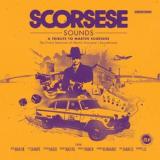
Scorsese Sounds - A Tribute To Martin Scorsese - The Finest Selection of Martin Scorsese"s Soundtracks Martin Scorsese ist nicht nur ein Meister des Films, sondern auch ein Virtuose der Musikauswahl. Mit "Scorsese Sounds" erleben Sie die unverwechselbare Klangwelt seiner größten Werke - von epischen Gangster-Sagas bis hin zu psychologischen Dramen und zeitlosen Klassikern. Diese exklusive Doppel-Vinyl vereint die Essenz der Soundtracks, die Scorseses Filme zu Kult gemacht haben. Jeder Track ist sorgfältig ausgewählt, um die Atmosphäre und Emotionen der legendären Szenen einzufangen - von der rauen Energie des New Yorker Untergrunds bis zur eleganten Nostalgie vergangener Zeiten. Ein Muss für Cineasten, Vinyl-Liebhaber und alle, die die Magie von Bild und Ton schätzen. Tauchen Sie ein in die musikalische DNA eines der größten Regisseure unserer Zeit.
- A1: Dean Martin - You're Nobody Till Somebody Loves You
- A2: Tony Bennett - Rags To Riches
- A3: The Ink Spots - Whispering Grass (Don't Tell The Trees)
- A4: The Shirelles - I Met Him On A Sunday (Aka "Da Doo Ron Ron")
- A5: Robert & Johnny - You're Mine
- A6: Howlin' Wolf - Smokestack Lightning
- A7: The Cramps - The Creature From The Black Leather Lagoon
- B1: Jimmy Smith - Walk On The Wild Side
- B2: Jimpson & Group - The Murderer's Home
- B3: Santo & Johnny - Sleep Walk
- B4: Lonnie Johnson - Tomorrow Night
- B5: Glenn Miller & His Orchestra - Moonlight Serenade
- B6: Muddy Waters - Hoochie Coochie Man
- B7: The Berlin Radio Symphony Orchestra - Radetzky March
- C1: The Harptones - Life Is But A Dream
- C2: Bing Crosby With Victor Young's Orchestra - Just One More Chance
- C3: Charlie Parker - I'll Remember April
- C4: Johnnie Ray - Cry
- C5: Benny Goodman - Moonglow
- C6: Lavern Baker - Tweedlee Dee
- C7: Frankie Carle - I Want A Girl (Just Like The Girl)
- D1: Ray Charles - Come Rain Or Come Shine
- D2: Bo Diddley - Road Runner
- D3: Brenda Lee - I'm Sorry
- D4: The Marvelettes - Please Mr. Postman
- D5: Jackie Gleason - Melancholy Serenade
- D6: The Hot Club Of France With Django Reinhardt & Stéphane Grappelli - What Is This Thing Called Love
- D7: The Danleers - One Summer Night
The Éthiopiques series returns! Essential archive recordings from an extremely fruitful period in Ethiopian music.
Before “Swinging Addis” took over the world, there was Moussié Nerses Nalbandian — the Armenian-born composer who shaped modern Ethiopian music. Mentor, arranger, and pioneer, he laid the foundations of Ethio-jazz.
This Éthiopiques volume revives his forgotten legacy, recorded live by Either/ Orchestra First issue ever with new exclusive photos and in depth liner 8-page insert.
“Ethiopian jazzmen are the best musicians that we have seen so far in Africa.
They really are promising handlers of jazz instruments.”
Wilbur De Paris
(1959, after a concert in Addis Ababa)
አዲስ፡ዘመን። *Addis zèmèn* **A new era.**
The time is the mid-1950s and early 1960s, just before "Swinging Addis" bloomed – or rather boomed – onto the scene. Brass instruments are still dominant, but the advent of the electric guitar, and the very first electronic organs, are just around the corner. Rock’n'Roll, R’n’B, Soul and the Twist have not yet barged their way in. Addis Ababa is steeped in the big band atmosphere of the post-war era, with Glenn Miller's *In the* *Mood* as its world-wide theme song, neck and neck with the Latin craze that was in vogue at the same period. Life has become enjoyable once again, with the return of peace after the terrible Italian Fascist invasion of Ethiopia (1935-1941). The redeployment of modern music is part and parcel of the postwar reconstruction. *Addis zèmèn* – a new era – is the watchword of the postwar period, just as it was all across war-torn Europe.
The generation who were the young parents of baby boomers** were the first to enjoy this musical renaissance, before the baby boomers themselves took over and forever super-charged the soundtrack of the final days of imperial reign. Music is Ethiopia's most popular art form, and very often serves as the best barometer for the upsurge of energy that is critical for reconstruction. Whether it be jazz in Saint-Germain-des-Prés or the *zazous* who revolutionised both jazz and French *chanson* after the *Libération*, be it Madrid's post-Franco Movida, or Dada, the Surrealists and *les années folles* that followed World War I, the periods just after mourning and hardship always give rise to brighter and more tuneful tomorrows. Addis Ababa, as the country's capital, and the epicentre of change, was no exception to this vital rule.
**Two generations of Nalbandian musicians**
Nersès Nalbandian belonged to a family of Armenian exiles, who had moved to Ethiopia in the mid-1920s. The uncle Kevork arrived along with the fabled "*Arba Lidjotch*", the** "*40 Kids*", young Armenian orphans and musicians that the Ras Tafari had recruited when he visited Jerusalem in 1924, intending to turn their brass band into the official imperial band. If Kevork Nalbandian was the one who first opened the way of modernism, pushing innovation so far as to invent musical theatre, it was his nephew Nersès who would go on to become, from the 1940s and until his death in 1977, a pivotal figure of modern Ethiopian music and of the heights it. Going all the way back to the 1950s. Nothing less. And it is Nersès who is largely to thank for the brassy colours that so greatly contributed to the international renown of Ethiopian groove. While the younger generations today venture timidly into the genealogy of their country's modern music, often losing their way amidst a distinctly xenophobic historiographical complacency, many survivors of the imperial period are still around to bear witness and pay tribute to the essential role that "Moussié Nersès" played in the rise of Abyssinia's musical modernity.
Given the year of his birth (15 March 1915), no one knows for sure if Nersès Nalbandian was born in Aintab, today Gaziantep (Turkiye/former Ottoman Empire) or on the other side of the border in Alep, Syria... What is certain is that his family, like the entire Armenian community, was amongst the victims of the genocide perpetrated by the Turks. Alep, the place of safety – today in ruins.
Before Nersès then, there was uncle Kevork (1887-1963). For a quarter of a century, he was a whirlwind of activity in music teaching and theatrical innovation. *Guèbrè Mariam le Gondaré* (የጎንደሬ ገብረ ማርያም አጥቶ ማግኘት, 1926 EC=1934) is his most famous creation. This play included "ten Ethiopian songs" — a totally innovative approach. According to his autobiographical notes, preserved by the Nalbandian family, Kevork indicates that he composed some 50 such pieces over the course of his career. This shows just how much he understood, very early on, the critical importance of song as Ethiopia's crowning artistic form. Indeed, for Ethiopian listeners, the most important thing is the lyrics, with all their multifarious mischief, far more than a strong melody, sophisticated arrangements or even an exceptional voice. (This is also why Ethiopians by and large, and beginning with the artists and producers themselves, believed for a long time — and wrongly — that their music could not possibly be exported, and could never win over audiences abroad, who did not speak the country's languages).
Last but not least, one of Kevork's major contributions remains composing Ethiopia's first national anthem – with lyrics by Yoftahé Negussié.
Nersès Nalbandian moved to Ethiopia at the end of the 1930s, at the behest of his ground-breaking uncle. Proficient in many instruments (pretty much everything but the drums), conductor, choir director, composer, arranger, adapter, creator, piano tuner, purveyor of rented pianos,... he was above all an energetic and influential teacher. From 1946 onwards, thanks to Kevork's connexion, Nersès was appointed musical director of the Addis Ababa Municipality Band. In just a few years, Nersès transformed it into the first truly modern ensemble, thanks to the quality of his teaching, his choice of repertoire, and the sophistication of his arrangements. It was this group that would go on to become the orchestra of the Haile Selassie Theatre shortly after its inauguration in 1955, which was a major celebration of the Emperor's jubilee, marking the 25th anniversary of his on-again-off-again reign.
At some point or other in his long career, Nersès Nalbandian had a hand in the creation of just about every institutional band (Municipality Band, Police Orchestra, Imperial Bodyguard Band, Army Band, Yared Music School…), but it was with the Haile Selassie Theatre – today the National Theatre – that his abilities were most on display, up until his death in 1977. To this must be added the development of choral singing in Ethiopia, hitherto unknown, and a sort of secret garden dedicated to the memory of Armenian sacred music, and brought together in two thick, unpublished volumes. Shortly before his death (November 13, 1977), he was appointed to lead the impressive Ethiopian delegation at Festac in Lagos, Nigeria (January-February 1977).
His status as a stateless foreigner regularly excluded him from the most senior positions, in spite of the respect he commanded (and commands to this day) from the musicians of his era. Naturally gifted and largely self-taught, Nerses was tirelessly curious about new musical developments, drawing inspiration from the very first imported records, and especially from listening intensely to the musical programmes broadcast over short-wave radio – BBC *First*. A prolific composer and arranger, he was constantly mindful of formalising and integrating Ethiopian parameters (specific “musical modes”, pentatonic scale, and the dominance of ternary rhythms) into his “modernisation” of the musical culture, rather than trying to over-westernise it. It even seems very probable that *Moussié* Nerses made a decisive contribution to the development of tighter music-teaching methods, in order to revitalise musical education during this period of prodigious cultural ferment. Flying in the face of all the historiographical and musicological evidence, it is taken as sacrosanct dogma that the four musical modes or chords officially recognised today, the *qǝñǝt* or *qiñit* (ቅኝት), are every bit as millennial as Ethiopia itself. It would appear however that some streamlining of these chords actually took place in around 1960. It was only from this time onward that music teaching was structured around these four fundamental musical modes and chords: *Ambassel*, *Bati*, *Tezeta* and *Antchi Hoyé*. A historical and musical “details” that is, apparently, difficult to swallow, especially if that should honour a *foreigner*. Modern Ethiopian music has Nersès to thank for many of its standards and, to this day, it is not unusual for the National Radio to broadcast thunderous oldies that bear unmistakable traces of his outrageously groovy touch.
- A1: L'etang (2 44)
- A2: Moonlight Serenade (3 22)
- A3: Full Moon & Empty Arms (2 53)
- A4: Quand Tu Dors Pres De Moi (3 53)
- A5: New York Herald Tribune (3 02)
- A6: Where Are You (2 43)
- B1: Two For The Road (3 00)
- B2: Y The Time I Get To Phoenix (3 43)
- B3: I Spend My Days (3 44)
- B4: Stranger In Paradise (3 40)
- B5: Lonely Town (3 08)
Der Begriff 'Nuit Américaine' (Day for Night) erinnert an François Truffauts legendären 1973er Film und bezeichnet die Technik, Tagesaufnahmen so aussehen zu lassen, als wären sie nachts aufgenommen worden. Diese Stimmung vermittelt auch das gleichnamige Album des französischen Jazztrompeters Robin Mansanti, der zusammen mit einer Rhythmusband, unwiderstehlichem Charme und poetischer Sensibilität zeitlose Jazzklassiker und -Balladen von Glenn Miller über Henry Mancini bis Leonard Bernstein neu interpretiert.
- A1: Steely Dan– Fm; Written By – Donald Fagen, Walter Becker
- A2: Bob Seger And The Silver Bullet Band– Night Moves; Written By – Bob Seger
- A3: Steve Miller Band– Fly Like An Eagle; Written By – Steve Miller
- A4: Foreigner– Cold As Ice; Written By – Lou Gramm, Mike Jones*
- A5: Tom Petty And The Heartbreakers– Breakdown; Written By – Tom Petty
- A6: Randy Meisner– Bad Man; Written By – Glenn Frey, John David Souther
- B1: Eagles– Life In The Fast Lane; Written By – Don Henley, Glenn Frey, Joe Walsh
- B2: Steely Dan– Do It Again; Written By – Donald Fagen, Walter Becker
- B3: Boz Scaggs– Lido Shuffle; Written By – Boz Scaggs, David Paich
- B4: Boston– More Than A Feeling; Written By – T. Scholz
- C1: Linda Ronstadt– Tumbling Dice; Written By – Jagger-Richards
- C2: Linda Ronstadt– Poor Poor Pitful Me; Written By – Warren Zevon
- C3: Jimmy Buffett– Livingston Saturday Night; Written By – Jimmy Buffett
- C4: Dan Fogelberg– There's A Place In The World For A Gambler; Written By – Dan Fogelberg
- C5: Billy Joel– Just The Way You Are; Written By – Billy Joel
- D1: The Doobie Brothers– It Keeps You Runnin'; Written By – Michael Mcdonald
- D2: James Taylor (2)– Your Smiling Face; Written By – James Taylor (2)
- D3: Joe Walsh– Life's Been Good; Written By – Joe Walsh
- D4: Queen– We Will Rock You; Written By – Brian May, Freddie Mercury
- D5: Steely Dan– Fm(Reprise)
- A1: Crazy Out There (Feat Little Violet)
- A2: (Hey, Brother) What Have You Done? (Feat Lyre Le Temps)
- A3: Highway Romance (Feat Alanna Lyes)
- A4: Take The Night (Feat Octavia Rose)
- A5: Fire (Feat Emma Lea)
- A6: Follow Me (Feat J Fitz)
- B1: Feel Good (If It Was Easy)
- B2: Take A Chance (Feat Sarah Myers)
- B3: Our Game Is Over (Feat Loredana Grimaudo)
- B4: Come On! (Feat Ashley Slater)
- B5: The Little Man Who Wasn&Apos;T There (Bonus Track)
3 years in the making and dynamic young ELECTRO SWING producer, New Zealand's ODD CHAP, finally presents his COLLABORATIONS album, available for the first time on Limited Edition green vinyl!
A 10 track album featuring an incredible selection of special guest vocalists including Little Violet, Elle & The Pocket Belles and Loredana Grimaudo (as well as one bonus track with Glenn Miller). What could have become an omni-shambles in less skilled hands has instead become a showcase for the distinctive and immediately recognisable production style of ODD CHAP.
- Enrico Caruso & Gaetano Donizetti - Una Furtiva Lagrima
- Bunny Berigan & His Orchestra - Caravan
- Irving Aaronson & His Commanders - Let's Misbehave
- Eddy Howard & His Orchestra - Till We Meet Again
- Duke Ellington - Take The 'A' Train
- Fats Waller - I've Got A Feeling I'm Falling
- Sidney Bechet - Si Tu Vois Ma Mère
- Johnnie Ray & The Buddy Cole Quartet - Walkin' My Baby
- Stan Getz & Charlie Byrd - Desafinado
- Harry James & The Rhythm Section - Limehouse Blues
- Al Jolson - Toot, Toot, Tootsie! (Goo' Bye!)
- Stéphane Grappelli & Django Reinhardt - Out Of Nowhere
- Tommy Dorsey - Sleepy Lagoon
- Jackie Gleason - Serenade In Blue
- Erroll Garner - Lullaby Of Birdland
- The Modern Jazz Quartet - Bags' Groove
- Billie Holiday & The Teddy Wilson Orchestra - Easy To L
- Stephane Wrembel - Big Brother
- Fred Astaire & The Leo Reisman Orchestra - Cheek To Che
- Liberace - I'll Be Seeing You
- Glenn Miller & His Orchestra - Moonlight Serenade
- Hal Kemp & His Orchestra - With Plenty Of Money And You
- Leo Reisman & His Orchestra - What Is This Thing Called
- The Dave Brubeck Quartet - Take Five
Le jazz homme is the 2nd album of Black To Comm related entity Mouchoir Ètanche. This time heavily influenced by French Jazz (?) as well as the usual suspects: Nurse With Wound, Luc Ferrari, JG Ballard, Surrealism. The human entity has finally been replaced.
"Program music, instrumental music that carries some extramusical meaning, some “program” of literary idea, legend, scenic description, or personal drama. It is contrasted with so-called absolute, or abstract, music, in which artistic interest is supposedly confined to abstract constructions in sound. It has been stated that the concept of program music does not represent a genre in itself but rather is present in varying degrees in different works of music." (Encyclopædia Britannica)
Prompt 1: Pascal Comelade's toy piano falling down the stairs , Hector Zazou pushing from behind, laughing
Prompt 2: Cool jazz played on antique mellotron, low in fidelity, and sad, Glenn Miller‘s grandma crying silently
Prompt 3: A hippie commune version of jazz as played by a cheap computer fed by Chat GPT with medieval buisine fanfare information and samples, trained on the entire Amon Düül II history, heavily looped yet unsynchronized
Prompt: 4: Same, but flutes and synths and trance and chants
Prompt 5: French female artist philosophizes about Shirley Temple, mysterious atmosphere, insensitive homme laughing nervously, heavily looped, hynotic 18th century orgue de salon underneath
Prompt 6: Cool jazz, Echoplex, strange rhythm, Blue Note daydreaming
Prompt 7: Hammond jazz with fake Cyro Baptista loop, Madagascar indri indri lemurs chanting fake sax solos in Malagasy language, electronic bells
Prompt 8: German jazz and artificial prayers, and Shirley Temple returning, with defect Publison recorded at GRM, destroying the voice recording
Prompt 9: Andrei Tarkovsky's moustache meets Johann Sebastian Bach's wig, a well gently lapping in the background, fifths, car crashing into a poor violent onsen geisha
Marc Richter records as Black To Comm for Thrill Jockey and under the Mouchoir Ètanche and Jemh Circs monikers (and solo) for his own Cellule 75 imprint. He collaborated with visual artists such as Ho Tzu Nyen, Jan van Hasselt and Mike Kelley. He also produces soundtracks and acousmatic multichannel installations for institutions such as INA GRM Paris, ZKM Karlsruhe and Kunstverein Hamburg.
A fascinating blend of jazz and contemporary classical influences, How Time Passes is the debut album from the envelope pushing trumpeter and composer Don Ellis Known for his extensive musical experimentation, particularly in the area of time
signatures, Ellis began his long career in the New York City's post bop and avantgarde jazz scenes of late 1950s. Most notably he appeared on Charles Mingus'
Mingus Dynasty, and albums by George Russell and Maynard Feguson. But he
also worked with, among others, the Glenn Miller Orchestra, Lionel Hampton, and
Woody Herman. On subsequent albums, Ellis would take an even wilder direction.
Here, on his first recoding date as a band leader, the experimentation begins. Ellis
stretches the boundaries of bop-based jazz playing with time, tempo and meter. It
is the start of his exploration of Third Stream - a fusion of jazz and contemporary
classical music. The album title itself - How Time Passes - was taken from an
article written by the controversial German composer Karlheinz Stockhausen on
the "function of time." The exceptional section features Ron Carter on bass, the
underrated Jaki Byard on piano and saxophone, and Charlie Persip on drums. The
LP includes extraordinary liner notes by Candid A&R man and producer Nat
Hentoff, and noted musician, historian and writer Gunther Schuller - the originator
of the term "Third Stream" - giving a context and insight that adds to the
experience of hearing these extraordinary performances.
Die gesellschaftliche Relevanz vieler Songs von Udo Lindenberg ist bis heute eine wahre Besonderheit. Allen voran sein Erfolgs-Hit ”Sonderzug nach Pankow” aus dem Jahre 1983.
In eben jenem Lied - basierend auf der Melodie von Glenn Millers Swing-Klassiker ”Chattanooga Choo Choo”- befasst sich Udo Lindenberg textlich auf ironisch-satirische Weise mit Politiker Erich Honecker, dem ehemaligen Staatschef der DDR.
Er sinniert über dessen angebliche Vorlieben heimlich Lederjacken
zu tragen und in seinem Land verbotene westdeutsche Radiosender auf der Toilette zu hören.
Auch wenn der Song dort vermutlich eher weniger auf Anklang stieß, wurde die am 2. Februar 1983 veröffnetlichte Single ”Sonderzug nach Pankow” ein voller Erfolg und gelangte direkt in die Hitparade der
BRD, wo sie Platz fünf erreichte und für vier Wochen blieb - seine bis dahin beste Hitparadennotierung!
Nun, ziemlich genau 40 Jahre später, erscheint über Universal Music die Neuauflage der geschichtsträchtigen Hit-Single erstmals auf farbig-transparentem 7“ Vinyl (nummeriert und limitiert auf 1983 Exemplare) um dieses historische Musikjubiläum gebührend zu feiern und zu ehren.
2023 ist ohnehin DAS Jubiläumsjahrbei Udo: Sein Panikorchester wird 50 Jahre alt!
Der Vorverkauf startet am 13.01.2023, offizieller Release ist für den 24.02.2023 angesetzt.
- 1: Clifford Brown & Max Roach Quintet - Yesterdays
- 1: 2 Bob James - Sign Of The Times
- 1: 3 Herb Alpert & The Tijuana Brass - The Lonely Bull (El S
- 1: 4 Doris Day - Que Sera, Sera (Whatever Will Be, Will Be)
- 1: 5 Nina Simone - Rags And Old Iron
- 1: 6 Billie Holiday - God Bless The Child
- 1: 7 Ella Fitzgerald With Paul Weston & His Orchestra - Russ
- 1: 8 Burners Feat. Kylie Auldist - This Girl
- 1: 9 Little Willie John - I'm Shakin
- 1: 0 Dinah Washington With Quincy Jones & His Orchestra - Is
- 1: Harry Belfonte - Jump In The Line
- 1: 2 Frank Sinatra - High Hopes
- 1: 3 Chris Connor - Time Out For Tears
- 1: 4 Thelonious Monk - Black And Tan Fantasy
- 2: 1 Ella Fitzgerald - All Through The Night
- 2: Johnny Mathis - Someone
- 2: 3 Cal Tjader - Walk On By
- 2: 4 Gil Scott-Heron - Home Is Where The Hatred Is
- 2: 5 Mongo Santamaria - Watermelon Man
- 2: 6 Peggy Lee - I'ts A Good Day
- 2: 7 Ferrante & Teicher - Theme From Exodus
- 2: 8 Quincy Jones - Soul Bossa Nova
- 2: 9 Ahmad Jamal - Angel Eyes (Live At The Alhambra)
- 2: 10 Charlie Parker & Miles Davis - A Night In Tunisia
- 2: 11 Les Brown Feat. Doris Day - You Won't Be Satisfied (Unt
- 2: 1 Cab Calloway - The Hi-De-Ho Man (That's Me)
- 2: 13 Glenn Miller - Doin' The Jive
- 2: 14 Louis Armstrong & His Hot Seven - Weary Blues
Jazzrausch Bigband has more or less invented a new art form,
techno jazz, and has become well-known for performances of it. But
the band also has another, different story to tell. It has invented its
own tradition of hitting the road and touring at the end of each year
with a programme consisting of Christmas music, and has been doing
this ever since the band first emerged eight years ago. Bandleader
and founder Roman Sladek explains: “Whereas our regular projects -
the most recent album, ‘Emergenz’, is a good example - are all about
working through a specific theme and finding new ways to reinvent
ourselves, our Christmas thing is something we do for one reason
alone: to have fun. It was our very first programme, we still love it, and
we’re still nurturing, developing and growing it. Being able to devote
one month a year entirely to the big band tradition is something we’re
all really passionate about.”
Some bands might have been tempted just to throw together an
album of Christmas chestnuts any old how, but the Jazzrausch way of
doing things is not like that at all. Unlike any other album by the band,
for the first time we hear purely instrumental music. Furthermore,
Kuhn has taken ten classic Christmas songs - each one of them
rarely heard in jazz, and tunes which can often come across as a bit
staid in their original settings - from ‘Tochter Zion, freue dich# to
‘Adeste fideles’ or ‘Ihr Kinderlein, kommet’. The title track, ‘Alle Jahre
wieder!’ (based on the 1830s carol to music by Silcher which is very
familiar to children and adults in the German-speaking world) appears
here in completely new orchestral garb.
Sometimes the listener will recognise the kind of swing typical of
Glenn Miller. At other moments it is the incomparable big band
elegance of, say, Artie Shaw. ‘Es wird scho glei dumpa’ (an Austrian
carol) is given the full extra high pressure Tijuana brass treatment.
‘Maria durch ein’ Dornwald ging’ gets the touch of the Thad Jones /
Mel Lewis Orchestra after a Henry Mancini-like intro, and ‘Ich steh’ an
deiner Krippe hier’ recalls more of the great swing heritage.
Once again Jazzrausch Bigband has succeeded in a way that only
very few in the jazz field can, notwithstanding the openness of the
genre: they have brought young and old together, tradition and
revolution, the familiar and the new. Which is why it feels so
completely natural and right that they should continue to do this
‘again every year’, as the album title tells them: ‘Alle Jahre wieder’.
A1. Clifford Brown & Max Roach Quintet - Yesterdays
A2. Bob James - Sign Of The Times
A3. Herb Alpert & The Tijuana Brass - The Lonely Bull (El Solo Toro)
A4. Doris Day - Que Sera, Sera (Whatever Will Be, Will Be)
A5. Nina Simone - Rags And Old Iron
A6. Billie Holiday - God Bless The Child
A7. Ella Fitzgerald With Paul Weston & His Orchestra - Russian Lullaby
B1. Cookin' On 3 Burners Feat. Kylie Auldist - This Girl
B2. Little Willie John - I'm Shakin'
B3. Dinah Washington With Quincy Jones & His Orchestra - Is You Is Or Is You Ain't My Baby
B4. Harry Belfonte - Jump In The Line
B5. Frank Sinatra - High Hopes
B6. Chris Connor - Time Out For Tears
B7. Thelonious Monk - Black And Tan Fantasy
C1. Ella Fitzgerald - All Through The Night
C2. Johnny Mathis - Someone
C3. Cal Tjader - Walk On By
C4. Gil Scott-Heron - Home Is Where The Hatred Is
C5. Mongo Santamaria - Watermelon Man
C6. Peggy Lee - I'ts A Good Day
C7. Ferrante & Teicher - Theme From Exodus
D1. Quincy Jones - Soul Bossa Nova
D2. Ahmad Jamal - Angel Eyes (Live At The Alhambra)
D3. Charlie Parker & Miles Davis - A Night In Tunisia
D4. Les Brown Feat. Doris Day - You Won'T Be Satisfied (Until You Break My Heart)
D5. Cab Calloway - The Hi-De-Ho Man (That's Me)
D6. Glenn Miller - Doin' The Jive
*Repress*
Robert Rental is an artist as influential as he is overlooked. An anchor of the early British DIY and post-punk scene, his name is most frequently uttered alongside illustrious collaborators such as Thomas Leer and Daniel Miller. Dark Entries and Optimo ally to illuminate some of Rental’s early solo works with an expanded reissue of his debut 7” Paralysis /A.C.C.. Both labels have previously excavated Rental’s catalog; we reissued the collaborative LP with Glenn Wallis in 2017, and Optimo released a collection of demos in 2018.
The double A-side Paralysis /A.C.C. 7” was self-released on Regular Records in 1978, around the same time as Leer’s Private Plane/International 7”. The record is a perfect document of the DIY ethos. It was recorded with the assistance of Leer in the council flat that Robert lived in, using an assortment of budget electronics: a Roland drum machine, a Stylophone, an Electroharmonix DrQ, and a TEAC A3440 4-track recorder. The record’s sleeves were surreptitiously photocopied after hours at the offices of Virgin Records by Robert's partner Hilary Farrow, and the labels were hand-stamped The initial print run was a scant 650 copies. With its prominent notes of Krautrock, prog, dub, and ambient, Paralysis /A.C.C. points to a then-emergent musical form. “Paralysis” makes its four and a half minute runtime feel like an eon, an endless morass of processed vocals and mournful melodies underpinned by the static whirrings of synthesizers. “A.C.C.” is an angular pop song that is at once both fractured and droning, like a skipping record that sounds incrementally more warped with each iteration. The original 7” material is joined here by three previously unreleased tracks. Instrumentals “G.B.D.” and “Ugly Talk” evidence Rental’s outre-prog and melodic electronic sides, respectively. Sitting between the instrumentals is “Untitled”, a sparse gem that layers Rental’s gently processed vox with guitar and drum machine, beautiful in its simplicity.
The Paralysis EP has been remastered for vinyl by George Horn at Fantasy studios. The record comes in a sleeve with the original xeroxed 7” artwork. Also included is a four page booklet with lyrics, photos, and archival press material.
- 1: Fender Iv - Everybody Up
- 2: The Sonics - Marlene
- 3: James Mask - Hootchie Coochie Gal
- 4: John Worthan - The Cats Were Jumpin
- 5: Vince Maloy - Hubba Hubba Ding Ding
- 6: Don Wade - Gone, Gone, Gone
- 7: Billy Wayne - I Love My Baby
- 8: Wally Willette And His Globe Rockers - Pink Elephantssi
- 1: Darrell Rhodes And The Falcons - Four O'clock Baby
- 2: Arlie Miller And The Bullets - Lou Ann
- 3: Cruisers - Betty Ann
- 4: Joe D. Johnson - Rattlesnake Daddy
- 5: Bobby Mcdowell - Lonely
- 6: Jerry Arnold And The Rhythm Captains - Can't Do Without
- 7: Gene Terry - The Woman I Love
- 8: Glen Glenn - Blue Jeans And A Boys' Shirtside C
- 1: Red Moore - Crawdad Song
- 2: Maylon Humphries And His Tri-Seniors - Worried 'Bout Yo
- 3: Van Brothers - Servant Of Love
- 4: Sonny Fisher - Sneaky Pete
- 5: Benny Cliff Trio - Shake Um Up Rock
- 6: Gene Norman - Snaggle Tooth Ann
- 7: Tommy Nelson - Hobo Bop
- 8: Lloyd Mccollough - Gonna Love My Babyside D
- 1: Don Ellis And Royal Dukes - Blue Fire
- 2: Sonny Wallace - Black Cadillac
- 3: Floyd Mack - I Like To Go
- 4: Rod Morris - Alabama Jailhouse
- 5: Carl Trantham And The Rhythm Allstars - Where There's A
- 6: Jim Oertling - Back Forty
- 7: Hodges Brothers - I'm Gonna Rock Some Too
- 8: Lonesome Drifter - Eager Boy
Nach Crazy Rhythms Of Mata Hari, Shake Your Bones, dem Cool Cat Club und Born To Hula! Folgt nun der 5. Teil der DJ-Set Serie auf Stag-O-Lee. Wie auch bei den Vorgängern handelt es sich hier um einen auf 80 Minuten eingedampftes DJ-Set von einem verdienten Recken der Zunft - Keb Darge. Gaz Mayall folgt direkt mit Volume 6. Linernotes: Rockabilly didn't cross my world until the early nineteen eighties at a Dirtbox weekender in Bournemouth, until then I was a pure northern soul boy. I didn't really get stuck into collecting the stuff until a decade later, but when I did what a wonderful world of tunes opened up to me, and I went wild on it. I was very lucky to be doing a record stall in Camden market at the time just across from Boz Boorer and Neil Scott's stall. They along with other serious collectors Dave Vickers, Barney Koumis, Cosmic Keith, Jim Fox, Dave Crozier, and many others taught me all I needed to know. I only ever made one great rockabilly discovery which none of them knew, "Little Bit Lonesome" by Charles Ross, but I was happy enough buying all their recommendations as they were all new and exciting for me. I have done several rockabilly comps before, but sadly the Philippines typhoon in 2013 destroyed my village and forced me to sell the bulk of my collection. Here are some of my favourites that I never got round to putting out before that happened. Two of the aforementioned collectors are no longer with us. I therefore dedicate this comp to Dave Vickers and Cosmic Keith who both had a huge influence on my life and my musical taste.
Factory Benelux presents a limited edition vinyl album by Tunnelvision, the youthful Blackpool band who released cult single Watching the Hydroplanes on Factory Records in 1981. Just 500 copies of have been pressed on clear vinyl, matching the original Factory release.
Formed in 1980, the sombre post-punk quartet were mentored by Section 25 before impressing Rob Gretton and Tony Wilson at an early New Order gig in Blackpool in September 1980. Two songs from their first demo were mixed by Martin Hannett at Britannia Row and released as a 7-inch single (Fac 39) in June 1981, sleeved by Martyn Atkins in an opulent sleeve referencing dictionaries and leather-bound books. After several more gigs with New Order and other Factory artists Tunnelvision taped a second strong demo, mixed for release by Peter Hook. However the turbulent teenage band disintegrated before a second single emerged.
Newly remastered from the original analogue reels, Watching the Hydroplanes features includes all 8 tracks from their two Cargo demos, including the Hannett mixes of the title track and Morbid Fear. The set also features Emotionless, recorded live at Bristol Trinity Hall in March 1981.
The outer sleeve is printed using silver PMS with a matt varnish. The printed inner bag features new liner notes and an attractive facsimile flyer for a gig with New Order at the Forum, London, in May 1981.
Back after a short break, Bass Cadet Records' Orbit series continues with a 3 tracker from US legend Alton Miller. On the A-side lays 9 minutes of pure Detroit House bliss, with a version of his classic track "When Morning Comes" that has only seen light on a japanese special limited edition until now. The flip offers two brilliant club crafts that sparkle Chicago soulful Deep House in the vein of Ron Trent, Glenn Underground and co.
- 1