What do notions of freedom and movement mean to us as we experience unprecedented restrictions on travel, culture and socialisation? Henry Keen’s Freedom In Movement offers a soundtrack to both remember and look forward to freedom through music, movement and community.
The memory and feeling of the Plastic People dancefloor were often in Henry Keen's thoughts as he produced the tracks on this new LP. Inspired by the London club nights he frequented – Balance, CDR, and CoOp – Freedom in Movement is Henry’s first vinyl self-release, an embodiment of self-expression that compliments his contributions to projects Electric Jalaba and Soundspecies.
The soulful tracks on the album pick up where Henry Keen’s 70's Baby (Maddjazz Recordings, 2017) record and EPs as The Room Below on the Don't Be Afraid label left off, bringing a range of tempos to get heads nodding while hips and feet work out. Lovingly made, the collection of songs offer meditations on questions evoked by the record's title and respite from the heaviness of challenging times.
The lead single from the album is Dexter’s Breakfast, featuring London-based woodwind expert, and previous collaborator Ben Hadwen on baritone/tenor saxophone, and flute.
Dexter’s Breakfast was released digitally on 25th June 2021 and gained support from the likes of Adam Rock (Jazz Re:freshed), Kev Beadle (Mind Fluid), Simon Harrsion (Basic Soul), Psycut (Music Is My Sanctuary) and Laani and Papaoul (Worldwide FM) amongst others
Cerca:henry keen
- 1
Debuting under his given name for Maddjazz Recordings' second offering, is DJ, producer and synth enthusiast Henry Keen.
Henry's music was discovered after a long night of online digging, and after several exchanges, it was apparent that Henry was making music that defined exactly what Maddjazz is striving to achieve; honest music that's free of form and not constrained by any genre or tempo.
Henry has been making music as Soundspecies alongside brother Olly since 1998 and the duo are also members of London-based experimental Gnawa band, Electric Jalaba. He also produces solo under the alias, The Room Below, initially reworking close friend Paul White's 'Rapping With' album but more recently exploring dance floor territories with releases on UK imprint 'Don't Be Afraid'.
70's Baby is a raw and honest record. A collection of uptempo grooves written in various locations around hectic inner London. It's spirit is born out of the freedom of the CDR sessions at the now defunct club Plastic People, where many of Henry's productions were first shared, and where tempo and genre were irrelevant. It references Henry's love for the instrumentation, recording techniques and sounds of the 1970s, the decade of his birth. Featuring a tasteful blend of worldly and otherworldly sounds, It owes itself to modern and ancient dance themes alike.
We are so pleased and honored to be presenting this mini LP to the world!
Who is Isabelle Lewis, anyway?
What kind of music does she make? Is she an opera singer? Does she write pop songs? Does she compose ethereal ambient soundscapes? Does she play chamber music on the violin? Is she producing dark, electronic beats?
Well… yes. But Isabelle Lewis is not so much a person as a project. Isabelle’s debut album, Greetings, credits a trio of composer–performers at its heart: producer Valgeir Sigurðsson, vocalist Benjamin Abel Meirhaeghe, and violinist Elisabeth Klinck. The sound of the elusive Isabelle Lewis is heard most clearly in the push and pull between them, the three-way tension that gives the album its musical and emotional drive.
Each of the three brings more to the collaboration than those epithets might imply. Elisabeth’s solo performance practice incorporates composition, improvisation, live electronics, and a close command of bowing and fingering techniques that make her fiddle sing, whisper or whistle as required. Benjamin is a self-taught countertenor - keening, crooning, and swelling to a voluptuous sensuality—but also an interdisciplinary stage director and performer. Well known for his work as a producer and studio collaborator, and as a composer of scores for film and stage, Valgeir’s solo discography interweaves meticulously crafted electronics, drones, noise, and other digital elements with acoustic instruments and vocals recorded with naked, unflinching clarity.
But the extravagant theatricality Benjamin brings to the aptly titled “Drama”—also featuring a heroic violin solo from Elisabeth—grapples against the thudding bass of the implacable digital backdrop. On “Mother, Shelter Me” Valgeir’s austere and detailed production throws the hushed violin and vocals into stark relief. The result is an exquisitely uncanny juxtaposition of past and present, human and mechanical, like a Rococo treasure viewed under cold fluorescent lights, or an 18th-century automaton slowly opening its clockwork eyes.
Even the lyrics seem somehow out of time. On “O Solitude,” Benjamin goes so far as to quote an entire song by the first great English opera composer, Henry Purcell, verbatim. No stranger to Purcell’s music, which has made its way into Benjamin’s theatrical productions as well, here Isabelle Lewis removes Purcell’s melodies and harmonies and sets the text, Katherine Phillips’s 17th century translation of a poem by Antoine Girard de Saint-Amant, to new music whose heightened, archaic character nevertheless seems haunted by Baroque ghosts.
Throughout the album, the outsized emotions and timeless archetypes of Benjamin’s lyrics feel like relics from some half-forgotten past—from the neatly rhymed couplets of “Fisherman,” a seemingly straightforward (but still somewhat askew) character study, to the abstraction of “Moonshell,” whose words seem like the fragments of some ancient, lost lament. It is just another of many ways in which Isabelle Lewis carefully distorts the listener’s notions of time. On a more micro level, time can stop for a moment of weightless, drifting ambience, and then plunge forward as the cloud of harmonies suddenly lock into tempo with the drop of the bass or the change of a chord. Or else that weightless moment is allowed to be, as in the aptly named prologue and epilogue to these Greetings (“Voicemail”/“…and farewell”), or in the interstitial tracks that bind the album together, connecting its dramatic peaks with expanses of meditative stasis.
The album as a whole is elegantly shaped, swelling from an intimate, interpersonal statement into something deeper and more spacious. The first half of the album leans slightly towards self-contained pop songcraft and ticking beats, while side B jumps off from “O Solitude” into the almost symphonic grandeur of songs like “Moonshell” or the instrumental “Not the water, air, or the dirt.”
But as it progresses, the contrasts only grow more sublime: antique and postmodern, human and machinelike. The ominous weight of the droning sub-bass and trombone (guest player Helgi Hrafn Jónsson) only makes the interplay between vocals and violins (guest player Daniel Pioro joining Elisabeth) seem more delicate and vulnerable. The ethereal string tremolos of “Moonshell” seem to pull against the heavy, shuddering electronics and layers of crooning vocals.
And that, in short, is where you will find Isabelle Lewis. Like an ancient stone archway, or a delicate house of cards, the architecture of Greetings is held together by the tension between opposing forces. Not just in Elisabeth’s playing, Benjamin’s singing, or Valgeir’s arrangements and production but in the conflict and contrast that generates the synergy between them.
Oh—Isabelle says hi, by the way. She’s looking forward to meeting you.
- A1: Barry Woolnough - Great Father Spirit In The Sky
- A2: David Holmes & Steve Jones - The Reiki Healer From County Down
- A3: The Children Of Sunshine - It's A Long Way To Heaven
- A4: Spark Sparkle - Slythtovery
- A5: Alain Maclean - Talking Judgement Day Blues
- A6: David Crosby - Orleans
- A7: Buddy Holly - Love Is Strange
- B1: After Dinner - Paradise Of Replica
- B2: Lullaby Movement - Ru-Ru (Sleep Little Baby)
- B3: Jeff Bridges & Keefus Ciancia - It's In Every One Of Us
- B4: Song Sung - I'm Not In Love
- C1: Neo Maya - I Wont Hurt You
- C2: Bp Fallon & David Holmes - Henry Mccullough
- C3: Documenta - Love As A Ghost (Produced By David Holmes)
- C4: Keith Fullerton Whitman - Stereo Music For Acoustic Guitar, Buchla Music Box 100 Hewlett Packard Model 236 Oscillator, Electric Guitar And Computer Part I
- D1: Eat Lights Become Lights - Into Forever
- D2: Geese - Andrew Parsnip
- D3: Die Hexen - Gloomy Sunday
- D4: Jon Hopkins & David Holmes Feat Stephen Rea - Elsewhere Anchises
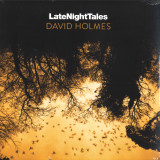
DJ and producer David Holmes is welcomed to the Late Night Tales fraternity with an evocative collection of personal songs and music, peppered with exclusive new material and rare gems. By now, I think we all know David Holmes, right There's acid house Holmes, with bone-rattling Chicago jams and Detroit destroyers, break-digger Holmes responsible for the grittily shaking 'Let's Get Killed' and seminal Essential Mix compilation (which brought Sixto Rodriguez to people's attention, and then there's soundtrack Holmes. His most enduring and vital source of musical inspiration - cinema - plugged into David's rst solo record 'This Film's Crap, Let's Slash the Seats' and inspired 2000's 'Bow Down to the Exit Sign', created as the soundtrack to a not-yet-made movie. Ofcial soundtracks have been bountiful, including scores for Soderbergh's Out Of Sight and Ocean's trilogy, '71, Hunger and Good Vibrations. In a series of personal songs sung by himself, David's last solo album 'The Holy Pictures' explored inuences of La Düsseldorf, The Jesus and Mary Chain and early Brian Eno. His Unloved collaboration with Keefus Ciancia and Jade Vincent then took us on a musical journey full of raw 60s pop-noir, psychedelia and French Ye Ye with a contemporary twist. Somehow he's also found time to produce records by Primal Scream and Jon Spencer Blues Explosion. Unsurprisingly, for someone au fait with matters cinematic, this Late Night Tales conjures up its own mindmovies. It's not only packed with the judiciously selected nuggets for which his mixes are noted but also stuffed with original material, including collaborations with BP Fallon and Jon Hopkins and an amazing new reading of 10cc's 'I'm Not In Love' by Holmes-produced Song Sung. In fact, there's a Celtic thread running through the whole journey with Stephen Rea's reading of an extract from Seamus Heaney's AENEID BOOK VI - Elsewhere Anchises. Among the other gems included here are David Crosby's lush 'Orleans', Buddy Holly's celestial 'Love Is Strange' and the Children Of Sunshine's 'It's A Long Way To Heaven'. David Holmes loves music. It's a way of expressing the sometimes inexpressible or the inconsolable, a questing desire to nd out just what is over the next hill. It's no surprise to learn he's a keen walker. Always on the move, headphones on, lost in some reverie or piece of music, the soundtrack to his life, the stuff that feeds his imagination. I walk a lot. It's amazing for listening to music: your phone or your emails aren't going and you're just in the forest listening to music. It's so intimate. Anyway, I was listening to the KLF's Chill Out album, which still sounds amazing, but it triggered an idea with concrete sounds through travelling and movement. And one of the things I was trying to do was to use this idea not just break up the moods but also as a metaphor for moving through life and arriving in different destinations or arriving at different stages in different parts of your life. Memory, Love, Living, Family, Friendship, Healing, Death and The Afterworld are some of the themes I wanted to explore within this record. Although these strong themes and tracks are personal to me, I also wanted it to be a great listen that was unpredictable yet had a seamless ow - a journey that was personal to me yet to the listener a great compilation of music that they may or may not have heard before. I hope I've succeeded in the later.' David Holmes 2016
The Pheromoans are tenants of an unruly domain. Over the last 18 years the group have evolved from garage rock primitivists to auteurs of their own curious sound; a frothy brew of loose electronics, refractory rock and humdrum musing. Their songs are mutable, capricious, unreliable narrations, often withholding as much as they reveal. Russell Walker’s understated vocal has always been the band’s unifying focus, it is wry, unsparing and wilfully honest. Walker’s lyrics are an observational tour de force, sometimes droll, yet often tipping over into unlikely pathos. With previous releases on Upset The Rhythm, Convulsive and Alter, 2024 will witness The Pheromoans return with lucky album number 13, entitled ‘Wyrd Psearch’ (out March 1st on Upset The Rhythm).
‘Wyrd Psearch’ was recorded in Lewes throughout 2023. This was undertaken by founding member James Tranmer, his keen instinct for how the band should sound shaping many of the creative decisions. Joined by new guitarist Henry Holmes, the five piece doubled down on a decidedly breezy, melodic approach. Scott Reeve’s drumming is ever brisk, whilst Daniel Bolger explores AOR peripheries on keyboard and bass. “Wyrd Psearch finds us on relatively zestful form” affirms Walker “whether it be merrily recalling the Jason Williamson / Tim Lovejoy Covid summit, or mentally bathing in the pleasures of lunch hours spent strapped to a listening post in Borders.” With The Pheromoans there is always a familiarity at play, only broken and reassembled, like a bygone sitcom gone rogue in your memory. This contributes to the group’s peculiarly British outsider perspective, one that shouts from the sidelines, but never goes unnoticed.
Subjects covered lyrically on ‘Wyrd Psearch’ include “mid-life crises, male pattern baldness, and thwarted artistic and personal ambitions” according to Walker himself. “Nothing is off limits for scrutiny, even rural arts communities” he concludes. Lead single ‘Downtown’ swings with chiming guitars and finds Walker mid-breakdown trying to persuade a loved one to accompany him into the town centre to collect controlled medication and wind back the clock to happier times. “I want to keep you in cotton wool until pay day” he confides. ‘Cropped to Death’ and ‘Father Austin’ are ruminative and more relaxed in nature, whilst ‘Twibbon Wife’ is a more energetic effort, all jabbed synth chords, circuitous basslines and rampant drum fills. ‘Faith in the Future’ similarly bounds along with reverie.
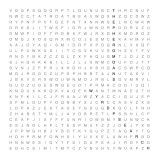
Walker claims that the album’s title is an expression of his frustration at the ubiquity of people claiming things are eerie or weird / wyrd in the present cultural milieu. The artwork for the record is designed as an actual word search too, a knowing nod to how we all grapple for meaning amongst the absurdity of each day. Leaning into ‘weird’ as a coping mechanism is not on The Pheromoans’ agenda however. This album holds little sway with the supernatural, it’s not enough. The overriding impression given by ‘Wyrd Psearch’ is of a band renewed with ideas. There’s no trouble finding the right words, they’re hitting their mark, keeping up with the commentary. ‘Wyrd Psearch’ is a document of The Pheromoans mastering their unquiet moment.
- A1: Incarnate
- B1: Ultimate
LTD SOLID WHITE Vinyl[27,94 €]
Fully remastered edition of the classic rarities collection from The Obsessed, plus new tracks and new liner notes! A historic document of the stoner/doom godfather's original and best-known band. This new version is Black.Blues Swirl Vinyl! 2020 is the 40th anniversary of the formation of The Obsessed, one of the preeminent bands in the worldwide stoner/doom scene. Led by Scott "Wino" Weinrich, a heavy music lifer admired and acclaimed by the likes of Dave Grohl, Pepper Keenan, Henry Rollins and Phil Anselmo, The Obsessed has been releasing milestone albums for decades on labels like Hellhound, Columbia and Relapse, with Wino himself playing and performing with members of Sleep, Neurosis, Foo Fighters, Judas Priest, Black Sabbath and more. Since their earliest days, The Obsessed accumulated dozens of demos, b-sides, covers and alternate recordings, many of which were issued in various limited releases and an early-2000s collection called Incarnate. Long out of print, Blues Funeral Recordings' new ultimate edition of The Obsessed 'Incarnate' is completely remastered, features the addition of 4 new tracks, and is packaged with all new artwork, photos, and extensive new liner notes with Wino himself telling stories behind each long-lost gem. Fully remastered, new tracks, new artwork, new photos, new liner notes! Press Quotes: 'The career of Wino is a rich and fabled one, and his tentacles of influence weave throughout the arenas of rock, punk and metal.' _Alternative Press 'Wino, what a fucking guitar player, and one of my favorite singers, nothing to prove, just soul-felt vocals.' _Phil Anselmo (Down, Pantera) 'Wino's music has always been so serious, that's the only thing he knows, and he's gonna do it whether or not he makes a million dollars or ten bucks... he means it.' _Pepper Keenan (Corrosion of Conformity) 2020 is the 40th anniversary of the formation of The Obsessed, one of the preeminent bands in the stoner/doom scene worldwide for nearly 40 years. Led by Scott ""Wino"" Weinrich, a heavy music lifer admired and acclaimed by the likes of Dave Grohl, Pepper Keenan, Henry Rollins and Phil Anselmo, The Obsessed has been releasing milestone albums for decades on labels like Hellhound, Columbia and Relapse, as well as Wino himself playing and performing in bands with members of Sleep, Neurosis, Judas Priest, Black Sabbath and more. Since The Obsessed's earliest days, the band accumulated dozens of b-sides, covers, alternate takes and demos, many of which were issued on a variety of compilations and an early-2000s collection called Incarnate. Long out of print, Blues Funeral Recordings' new ultimate edition of The Obsessed 'Incarnate' is completely remastered, features the addition of new tracks, and is packaged with all new artwork, photos, and all-new extensive liner notes written by Wino himself to tell the stories behind each long-lost gem.
- Yen Sleep (Remastered)
- Concrete Cancer (Remastered)
- Peckerwood Stomp (Remastered)
- Inside Looking Out (Remastered)
- Mental Kingdom (Remastered)
- Sodden Jackal (Remastered)
- Iron And Stone (Remastered)
- Indestroy (Remastered)
- Mourning (Remastered)
- Spirit Caravan (Remastered)
- Skybone (Remastered)
- On The Hunt (Remastered)
- No Blame (Remastered)
- Neatz Brigade (Remastered)
- Hiding Mask (Remastered)
- Endless Circles Live (Remastered)
- Streetside (Remastered)
- Climate Of Despair (Remastered)
- Decimation (Remastered)
- Fears Machine (Remastered)
- Field Of Hours (Remastered)
Black/Blue Swirl Vinyl[31,72 €]
Fully remastered edition of the classic rarities collection from The Obsessed, plus new tracks and new liner notes! A historic document of the stoner/doom godfather's original and best-known band. This new version is Black.Blues Swirl Vinyl! 2020 is the 40th anniversary of the formation of The Obsessed, one of the preeminent bands in the worldwide stoner/doom scene. Led by Scott "Wino" Weinrich, a heavy music lifer admired and acclaimed by the likes of Dave Grohl, Pepper Keenan, Henry Rollins and Phil Anselmo, The Obsessed has been releasing milestone albums for decades on labels like Hellhound, Columbia and Relapse, with Wino himself playing and performing with members of Sleep, Neurosis, Foo Fighters, Judas Priest, Black Sabbath and more. Since their earliest days, The Obsessed accumulated dozens of demos, b-sides, covers and alternate recordings, many of which were issued in various limited releases and an early-2000s collection called Incarnate. Long out of print, Blues Funeral Recordings' new ultimate edition of The Obsessed 'Incarnate' is completely remastered, features the addition of 4 new tracks, and is packaged with all new artwork, photos, and extensive new liner notes with Wino himself telling stories behind each long-lost gem. Fully remastered, new tracks, new artwork, new photos, new liner notes! Press Quotes: 'The career of Wino is a rich and fabled one, and his tentacles of influence weave throughout the arenas of rock, punk and metal.' _Alternative Press 'Wino, what a fucking guitar player, and one of my favorite singers, nothing to prove, just soul-felt vocals.' _Phil Anselmo (Down, Pantera) 'Wino's music has always been so serious, that's the only thing he knows, and he's gonna do it whether or not he makes a million dollars or ten bucks... he means it.' _Pepper Keenan (Corrosion of Conformity) 2020 is the 40th anniversary of the formation of The Obsessed, one of the preeminent bands in the stoner/doom scene worldwide for nearly 40 years. Led by Scott ""Wino"" Weinrich, a heavy music lifer admired and acclaimed by the likes of Dave Grohl, Pepper Keenan, Henry Rollins and Phil Anselmo, The Obsessed has been releasing milestone albums for decades on labels like Hellhound, Columbia and Relapse, as well as Wino himself playing and performing in bands with members of Sleep, Neurosis, Judas Priest, Black Sabbath and more. Since The Obsessed's earliest days, the band accumulated dozens of b-sides, covers, alternate takes and demos, many of which were issued on a variety of compilations and an early-2000s collection called Incarnate. Long out of print, Blues Funeral Recordings' new ultimate edition of The Obsessed 'Incarnate' is completely remastered, features the addition of new tracks, and is packaged with all new artwork, photos, and all-new extensive liner notes written by Wino himself to tell the stories behind each long-lost gem.
- 1: Connais Tu L'animal Qui Inventa Le Calcul Integral?
- 2: Evariste Aux Fans
- 3: Les Pommes De Lune
- 4: La Chasse Au Boson Intermédiaire
- 5: Dans La Lune
- 6: La Faute À Nanterre
- 7: Ma Mie
- 8: Wo I Nee
- 9: Si J'ai Les Cheveux Longs C'est Pour Pas M'enrhumer, Atchoum!
- 10: La Révolution
- 11: Je Ne Pense Qu'a Ça
- 12: Je Chante Pour Vous Faire Marcher
- 13: Je Ne Suis Pas Simple
- 14: Si Les Étoiles Pouvaient Parler
Évariste is one of the rare specimens of artist-cum-scientists. Among his kind stand others like Pierre Schaeffer, a Polytechnique graduate (an engineer but also the father of musique concrète) and the eccentric Boby Lapointe (graduate of the École centrale and inventor of the Bibi-binaire system, patented in 1968). Évariste's songwriting, joyful and full of energy (albeit extremely critical), shrouds an original tragedy: born in 1943 among résistants, Joël Sternheimer (aka Évariste) grew up without a father, lost to Auschwitz. Although he makes little reference to Jewish culture in his music, his origins leave their mark: in 1974, he sings a Hebrew song on television. In 1966, the young Joël sports Princeton's colourful paraphernalia - that's because he's freshly returning from the US, where he was sent to pursue his research on "particle mass and the interpretation of observed regularities, such as the effects of a wave" (will understand who may). When he gets there the country's in the midst of the Vietnam War. With McNamara keen to find an alternative to the nuclear weapon and calling upon the country's biggest brains to undertake the task, there's a "fund shift" within the university - a diplomatic way to give notice to whoever may not be disposed to follow the government's scheme. Joël, who's under the supervision of a rebellious physician, is dismissed. He regardless keeps following the prestigious seminaries of the Institute for Advanced Study, chaired by Oppenheimer, inventor of the atomic bomb. Likely inspired by the hippie movement and music, Joël buys a guitar and starts playing in Washington Square - after all, Bob Dylan himself started there. He blithely skips Oppenheimer and receives a warm (though surprised) welcome from a crowd thoroughly unfamiliar with French. When the ageing physicist questions him about his decreasing attendance, Joël explains how drawn he is to music, and how he thinks it could help him in self-financing his research. Évariste recalls seeing the sickened man, his face torn by remorse, lighten up to his words and say: "What's keeping you - go for it! If I was still young that's exactly what I'd do." The student takes these words as a testimony from his professor - and it's enough to convince him . And so he takes the leap during the Christmas vacations he spends in Paris. A journalist friend he often sees around the Sorbonne introduces him to the artistic director of Disques AZ. The latter passes the tapes on to the label's boss, Lucien Morisse, also program manager on Europe N°1. Morisse is blown away - and signs him onto the label right away. Michel Colombier, arranger for Serge Gainsbourg and co-author of "Psyché Rock", with Pierre Henry, contributes some of his original ideas to the 7 inch "E=mc2": Évariste's preoccupation with the percussion sound on the track "Le calcul intégral" is that it goes "poom poom" and not "tock tock" - Colombier is aware of the issue and records Évariste's guitar like a percussion in an isolated booth. The organist Eddy Louis, who is to participate, in 1969, to the success of Claude Nougaro's "Paris mai", also appears on the record. It's 1966 and the Antoine phenomenon (signed on Vogue) storms through France. The two singers share similarities: Antoine is an engineer of the École centrale, gifted with a great originality in his song-writing. A godsend for the two labels who turn this resemblance into a commercial strategy, setting them out as rivals. To this day though, Évariste still denies what was little more than slushy tabloïd gossip. Success comes around swiftly and in 1967 Évariste launches into a second 7 inch, "Wo I nee", again arranged by Michel Colombier. Quantum mechanics fans finally get their anthem with "La Chasse Au Boson Intermédiaire" (or the "Intermediary Boson Pursuit"). To sum up what's a boson, say he's a close pal of the meson, photon and other gluons. A few months later, it's May 68 and everything's turned upside down. Évariste writes a series of songs inspired by the events, which he immediately submits to Lucien Morisse. When the man behind "Salut les copains", once married to Dalida, hears the song "La révolution" - a father and son dialogue - he can't take any more: AZ simply cannot release this. But there and then Lucien Morisse makes a gesture which will remain engraved in French music's history: sorry to be unable to officially stand by the singer, he encourages him to self-produce the record, but with his tacit support. He calls the pressing factory and asks they apply the same rate for Évariste as they would for AZ. The singer and his musicians use the same studio as for the previous record, all of them playing for free awaiting a return on investment. Évariste keeps singing at the Sorbonne with "Jussieu's gang" and "the young Renaud" he nicknames "le p'tit gavroche" (or "street urchin"). Renaud volunteers to type the lyrics of the song "La révolution" so that the chorus can be sung and recorded. A boy in the group is related to Wolinski and introduces them. The two get along so well that Wolinski ends up drawing the cover for the record "La révolution", for free. The self-released 7 inch "La révolution / La faute à Nanterre" is sold under the table and door-to-door for half the price of a standard record, on and around the boulevard Saint-Michel; and it runs out fast. In the end, there will be 6 releases of the record, and 25000 copies sold. When the theatre director Claude Confortès decides to adapt Wolinski's drawing series titled "Je ne veux pas mourir idiot" ("I don't want to die a fool"), he asks Évariste to write the original soundtrack. His friend, now cartoonist for Hara-Kiri Hebdo, often promotes him in accordance with a principle dear to him by virtue of which he gives a special place to his friends. Dominique Grange (writer of the song "Nous sommes les nouveaux partisans") soon joins the team. After 150 performances, Évariste leaves his place to Dominique Maurin (brother of Patrick Dewaere). Évariste composes the songs for Claude Confortès' next play, "Je ne pense qu'à ça" ("That's all I think about"), co-wrote with Wolinski in 1969. The comedians of the play record the songs on a 7 inch, with a cover signed, again, by Wolinski. In 1971, French television produces the documentary "Évariste et les 7 dimensions", but doesn't air it. Indeed, the scientific sub-comity of the programming comity (sic) censors the show. The given justification is that "Évariste dangerously mixed science with science-fiction, numerology and other non-scientific disciplines". The underlying motive might have been a will to censor the singer-mathematician's political discourse. In the documentary and among other things, Évariste discusses hierarchy, alienation and revolution. Half a century later the documentary remains invisible, though some excerpts resurfaced in 1992 in the cult show "L'oeil du cyclone", on Canal +. Though flourishing, Évariste's career is nearing its end. 1970 is the beginning of a decade in the course of which he is to make a decisive discovery in the musical and scientific domains. Following this breakthrough, he moves away from self-produced music and gaucho magazines to focus on science. He keeps Oppenheimer's encouraging words in mind, now freely pursuing his research thanks to the sales of his records. Joël realises that when decoding protein sequences, one finds musical sequences recognisable to humans. He names them "proteodies". If, when listening to a proteody, one responds by being so sensitive as to finding it beautiful, then it reveals a deficiency of the related protein - and this peculiar music may be the cure. We could trace back the music history in light of proteins lacking in a given artist, or within a public's majority. You always thought these hysterical groupies who'd throw their underwear with passion and faint in the pit had miraculously appeared because they had never heard anything as wonderful as the Beatles? Make no mistake! For Évariste, it all boils down to an intro's protein content. Indeed, the beginning of their first hit "Love Me Do" corresponds to dopamine, the neurotransmitter linked to compulsive buying. An intro like this could only unleash the fervour of groupies, victims of fashion and biology. Évariste's success is such that the income from his sales gives him the autonomy to which he had aspired when confiding to Oppenheimer. It made it possible for him to pursue his research without any institutional constraints. He now devotes himself to his proteodies, sat in the offices of the European University for Research, just around the corner from the Sorbonne he knew so well. Évariste is no more. Joël regained control of this strange and comical beast.
- A1: Money Won't Change You
- A2: It's Bad
- A3: Good Thing
- A4: Best Of Luck To You
- A5: That's What I Get
- A6: That's The Sound Of My Heart
- A7: How Long Must I Wait For You
- B1: Foxy Mama
- B2: Look A Little Higher
- B3: I Take What I Want
- B4: She's Got To Be Loved
- B5: Just A Dream
- B6: To Love Me Like You Do
- B7: There's Gonna Be A Better Day Coming
Perhaps the best Soul / Funk LP Athens of the North has ever released and you know we have high standards, not one filler and mostly unreleased tracks – Essential LP
The Up Tights were formed by Henry Bradley in Forrest City, Arkansas in March of 1967 while most of the band members were attending Lincoln High School.They took their name from the Stevie Wonder song "Uptight - Everything's Alright." Playing at school functions, they quickly branched out to playing bigger shows and headlined the 1968 St. Francis County Fair in Forrest City.
The Up Tights first recorded for Action Records in Memphis as Noble and the Up Tights. The 45 featured an original song by singer, Izear "Ike" Noble Jr. titled "Don't Worry About It."
Henry Bradley was drafted into Vietnam in 1968. He served in the 1st Squadron, 11th Armored Cavalry Regiment. While he was away, the Up Tights continued with Henry's brother, Arthur, taking over all the guitar duties. The band also hired a manager named John Mitchell. In 1968, the band met Joe Lee, who owned Variety recording studio in Jonesboro, Arkansas.
For the band's first recordings at Variety, Lee chose two originals by Noble titled "Look a Little Higher" and an updated version of "Just a Dream" which Lee released on his Alley Records label in 1968. Lee continued to record the band over the next several months. He liked to experiment in the studio and produced many versions of the group's original songs, adjusting the mix and adding elements to each unique take.
For the group's second Alley release, they appeared simply as Ike Noble on the record label. Lee brought in a local songwriter named Charles "Jamie" Holmes, who had previously written for Alley records and Joe Keene's studio in Kennett, Missouri
The resulting 45 from this collaboration was "It's Bad" backed with "That's What I Get," two Holmes originals. Another Holmes original was unreleased at the time, but available here titled "There's Gonna Be a Better Day Coming." Stax Records was interested in signing the group and wanted to re-cut "It's Bad" at their studio, but ultimately the label passed since they generally had a policy of working with Memphis based groups.
As the band grew in popularity, they began appearing with and competing with Memphis legends, the Bar-Kays. The group's biggest show in Arkansas was an opening slot at Barton Coliseum, one of the largest venues in the state, in Little Rock in mid-1969. As a result, the band was offered a spot on George Klein's "Talent Party" television show on WHBQ in Memphis in July of 1969..... Further Sleeve notes on back of the LP
Electric Jalaba comprises six accomplished musicians with an empathy thatfeels telepathic and a groove that immerses. In Arabic, the mother tongue ofMoroccan-born singer and guimbri player Simo Lagnawi, a leading practitionerof Gnawa music in Britain, they call this indefinable quality, "El Hal" - "Thefeeling". "It's the feeling that comes when we're playing and totally forgetting where weare," says producer and bassist Olly Keen. "The feeling of being grabbed by themusic and lost in the groove." 'El Hal / The Feeling' is the new third album fromElectric Jalaba and their first release in five years. It's a multi-faceted work thatfinds the band tighter than ever, deploying a vast cache of influences across ninetracks improvised and developed in their south London studio then deftlyproduced by Keen. Some tracks pay homage to the origins of Gnawa music,whose repertoire of Arabic-language praise songs contains remnants of WestAfrican dialects - Bambara from Mali, Fulani and Hausa from the Sahel region -that point to a centuries-old migration. "The trance-inducing effect of Gnawa was what hit us first. It was visceral, heartstopping," continues Olly, whose siblings - producer / keys player Henry Keen,guitarist / multi-instrumentalist Nathaniel Keen and singer / multi-instrumentalistBarnaby Keen - make up Electric Jalaba alongside revered Anglo-Italian kitdrummer Dave De Rose and Simo on vocals, krakeb and guimbri. "Simoselected the chant from the traditional song suites and, as a band, we extendedthese short pieces of ceremonial music and experimented with sound andstructure," explains Olly. Tracks include the Juno-led dancefloor single 'CubailiBa', 'Agia Hausa', a multi-layered wig-out that partly takes its inspiration fromSenegal's fiercely percussive mbalax rhythms and 'Daimla', a gloriously dubbyode to Allah and iconic maalems including the late Mahmoud Guinea. "There's avery strong rhythmic element within the band but because of our differentperspectives but the melodic components are really unique as well," says Henry.That feeling of being outside of yourself but totally within yourself at the sametime... That's what all of us, collectively, are striving for."
Cool Ghouls - a band fledged in San Francisco on house shows, minimum wage jobs, BBQ's in Golden Gate Park and the romance of a city’s psychedelic history turns 10 this year. What better a decennial celebration than the release of their fourth album, At George's Zoo!
How did San Francisco's fab four arrive at George's Zoo? The teenage friendship of complimentary spirits Pat McDonald (Guitar/Vox) and Pat Thomas (Bass/Vox) serves as square one. The Patricks were munching on Eggo-waffle-sandwiches and downing warm vokda in suburban Benicia (San Francisco bay) years before McDonald would hear George Clinton address his fans as "Cool Ghouls". The boys played their debut gig as Cool Ghouls at San Francisco's legendary The Stud in 2011, but there's no doubt the musical moment cementing the band's trajectory was much earlier at the 18th birthday party for boy-wonder Ryan Wong (Guitar/Vox) - at the Wong household.
You might remember the Ghouls' earliest days... McDonald’s hair hung luxuriously past his waist, Thomas dreamt of no longer having to crash on friends' couches to call SF home and Wong looked forward to turning 21. Cool Ghouls' Pete Best, Cody Voorhees, thrashed wildly – but briefly - on the drums and Alex Fleshman (Drums), who still claims he's not really "a drummer", turned out to be a really good drummer. Thomas would sleep pee on tour. Those were golden days!
Flash forward to today and everything is up in flames. No shows, parties or bars. Cool people are streaming out of SF. It's been 2 years since the last time Cool Ghouls have even played. The STUD is gone, The Eagle Tavern is for sale and The Hemlock has been demolished for condos. Your boss is an app. Fascism is no-knocking down the door. There's a pandemic.
Fortunately for us, the Ghouls got an album in before it all went to shit, and they made it count. At George's Zoo includes 15 of the 27 tunes they managed to eke out while simultaneously working through major life moves. It was a 5-month, all out, final sprint down the homestretch (to Ryan's moving day) with affable engineer Robby Joseph, at his makeshift garage studio in the Outer Sunset (pictured on the cover). Instead of recording the entire album over a few consecutive days - like they'd done with Tim Cohen, Sonny Smith and Kelley Stoltz for the first three LPs - the band took it slow by working through a few songs each weekend after rehearsing them the week before. Robby would cue up the tape, McDonald would throw some steaks on the grill and they'd get to work - much to the neighbor, George's, chagrin.
These guys have a real commitment to elevating as songwriters, musicians and ensemble players. It's always been for the music with Cool Ghouls and this long-awaited self-produced outing is a track by track display of the ground they've covered and heights they can achieve. Their vocals and trademark harmonies are front and center and out-of-control-good. Ryan's guitar solos are incredible. The horns by Danny Brown (sax) and Andrew Stephens (trumpet) hit in all the right places. Maestro, Henry Baker (Pat Thomas Band / Tino Drima), plays keys throughout. There's even a mesmerizing string section ("Land Song") by sonic polyglot, Dylan Edrich.
None of this growth is to the detriment of the fun, natural, feeling that fans have come to expect from the band. This is a fully realized Cool Ghouls album. It paints a remarkable portrait of SF's homegrown heroes and the many corners they've explored over the last decade. The songwriting, harmony and playing are nothing if not solid. The lyrics are keen. Robby's recording and mixing sound great start to finish and even better after mastering by Mikey Young. It's a triumphant addition to their catalogue. Recommended for Stooges and Beach Boys fans alike. Listen and see!
Yes, many things have changed since 2011. Who knows what the 20's will have in store for life on Earth, let alone the Cool Ghouls? We at least know that 2021 has At George's Zoo for us, a beautiful keepsake from the Before Times when we used to stand in living rooms together while bands played.
- 1