
pre-ordina ora30.06.2024
dovrebbe essere pubblicato su 30.06.2024
12,19 €
dovrebbe essere pubblicato su 30.06.2024

dovrebbe essere pubblicato su 15.06.2024
I hope you will enjoy it as much as I do!
Jonah Ellis came to the Drifters as a guitarist but was soon singing with the group and acting as their musical director.
This multitalented musician/ songwriter hailed from DC where he was born on 25 August 1947 and grew up to graduate from Springarn, Senior High in Washington.
He went on to study further at Morris Town Junior College in Morris Town, Tennessee.
Then he received a BA degree in Music from Knoxville College in Knoxville, Tennessee, and a Master of Arts in Music from Michigan State University in East Lansing, Michigan.
His first move into recording came with his group Jonah and the Whales and ‘Savannah Sun’ which sold well locally by didn’t chart nationally.
Jonah’s second single ‘I Get Hot/ Popcorn Cellar’ on Viking Records in 1970 had similar results but he was writing great songs and creating a lot of interest. In addition to penning Yarbrough and Peoples big hit ‘Don’t Stop The Music’ in 1980 which hit platinum.
Jonah was writer/ producer at Total Experience Records where he found time to cut a single under his own name ‘Christmas Won’t Be Christmas Without My Baby’ and also wrote hits for the Gap Band the biggest hit being ‘Desire’. Jonah only stayed a Drifter for about a year between 1986-87.
A short time later he joined the Temptations as their lead guitarist but didn’t stop writing songs for other artists (sometimes in his pen name Lonnie Simmons) like Alicia Keys ‘Gangsta Lovin’, Puff Daddy ‘Soul Food’, Evelyn ‘Champagne’ King ‘Shame’, Billy Paul ‘Fire In Her Love’and so many more including Aretha and sister Carolyn Franklin, Esther Phillips, Rose Royce and Burt Bacharach.
Jonah continued to write and perform internationally until his untimely death from a stroke on 22 February 2010.
dovrebbe essere pubblicato su 09.10.2026
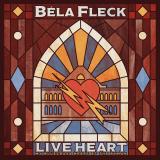
“I marvel afresh at Béla’s extraordinary vision, his indefatigability as a creator, his galvanizing presence as a bandleader, and of course, his freaking banjo playing. Live Heart will reverberate through and energize the bluegrass community forever.” – Chris Thile Live Heart: My Bluegrass Heart at the Ryman is a 3LP set that captures one legendary night in bluegrass. On January 8, 2022, in the aftermath of a Nashville blizzard, Béla Fleck was joined by three generations of renowned players who together brought the fire: Sam Bush, Michael Cleveland, Jerry Douglas, Stuart Duncan, Sierra Hull, Edgar Meyer, Justin Moses, Mark Schatz, Billy Strings, Bryan Sutton, Tony Trischka, and Molly Tuttle. The celebrated banjo virtuoso and musical adventurer has both dug deep into his instrument's complex global history and unlocked the breadth of its possibilities. He has earned 19 Grammy awards, and his acclaimed studio album My Bluegrass Heart, was a homecoming in sound. The music Fleck composed for his GRAMMY-winning My Bluegrass Heart is the third chapter in a decades-spanning trilogy that began with 1888’s Drive and the Bluegrass Sessions in 1999. This live record encompasses bluegrass in its core – the intergenerational passing down of music – and is nothing short of a masterpiece in sound, artistry, and community.
dovrebbe essere pubblicato su 16.10.2026

In the evolving landscape of modern Southern hip-hop, the pairing of Starlito and Bandplay stands out as a unique bridge between street-level authenticity and refined, calculated musicality. Their collaborative project, Not The Country You Know, functions less like a standard release and more as a manifesto—a masterclass in the chemistry between a seasoned, introspective lyricist and a producer who possesses an intuitive grasp of the region's pulse. It is an exploration of legacy and adaptation, capturing the tension between where they came from and where the culture is currently headed.
Bandplay, long recognized for sculpting the sonic identity of Memphis icons, brings his signature, trunk-rattling 808s to the project, yet he manages to pivot here. The production feels remarkably expansive, masterfully blending the raw, stripped-back aesthetics of classic Tennessee rap with forward-thinking textures that refuse to be confined to a single sub-genre. Complementing this, Starlito operates with his trademark mix of cynical observation and genuine vulnerability. He navigates these beats with the weary grace of an artist who has weathered the music industry's relentless cycles, treating every bar like a necessary piece of a larger, ongoing story.
The album’s title serves as a direct commentary on these shifting tides. Across the tracklist, the duo investigates the growing disparity between the romanticized South and the cold realities of the streets, alongside the inevitable evolution of the music business itself. There is no frantic chasing of streaming-era trends or algorithmic bait here; instead, the project remains a stubborn, confident assertion of artistic identity. By weaving together Starlito’s "voice-of-reason" flow and Bandplay’s evolving, genre-bending sound, Not The Country You Know challenges the listener to abandon their preconceived notions of the region, offering instead a complex, urgent vision of a South that is as haunting as it is vibrant.
Disponibile in Stock e pronto per la spedizione

Old-time and traditional music stay exciting for their contrasts. Exacting instrumentation honed through mentorships and late-night jams at fiddler's conventions tangles with a community-sourced inventiveness that influences variants and new sounds. Joseph Decosimo is a master of this genre for this very reason, blending deep technique with an openness and curiosity that keep his music crackling with life. A "marvelous fiddler" (No Depression) and banjo player who braids "exultation and veneration" (INDY Week) into his music, on his third solo album Fiery Gizzard Decosimo gathers a close-knit ensemble of friends from his musical career to infuse his interpretations of fiddle and banjo pieces with a contagious communal joy. As an artist working with traditional music from the South and Appalachia, Decosimo chooses songs based not only on historical significance and lineage but also his own sensory approach. For Fiery Gizzard, his ear was tuned to otherworldly tones and mystery, sourcing from field recordings such as Virginia fiddler Luther Davis' hypnotic version of "Shady Grove" while amping up the music's psychedelic potential. On the middle Tennessee banjo composition "Flowery Girls," a VHS of bluesman Abner Jay inspired Decosimo to rig up a pickup inside a fretless banjo and play it thr ough a tube amp to capture some of Jay's edge and funkiness. But to round out the sound and keep it kinetic meant galvanizing a genre-eschewing crew to jam out - and not in a "spaced-out drooly" kind of way, he laughs, but as a sort of "responsive conversation." Decosimo has always been a community-minded artist. He began playing as a seventh graderin Tennessee, fostering relationships with older players at jams and in homes, a learning mode natural to his inquisitive nature and desire for musical connection. A folklorist by intuition, he later became one by profession, studying with old-time legend Clyde Davenport, teaching in East Tennessee State University's renowned bluegrass program, and receiving his PhD at the University of North Carolina with a dissertation titled "Catching the `Wild Note': Listening, Learning, and Connoisseurship in Old-Time Music." In North Carolina, Decosimo kicked about in the verdant environment of Durham and Chapel Hill's folk and indie scenes, collaborating with artists including Alice Gerrard, Hiss Golden Messenger, and Jake Xerxes Fussell. This community has influenced his own music, including his "sublime and strangely heartening" (Bandcamp Daily) 2022 release While You Were Slumbering and Beehive Cathedral, Decosimo's 2024 "Appalachian mountain music treasury" (New Commute) trio album with Luke Richardson and Cleek Schrey for Dear Life Records. Continuing on this path, Fiery Gizzard is home base for a loose outfit of mostly Tarheel-based musicians from within and beyond traditional music. Inspired by a tour with fiddler Stephanie Coleman (Nora Brown), guitarist Jay Hammond, and synth builder and multi-instrumentalist Matthew O'Connell, Decosimo assembled studiomates based on close friendships and comfort. Coleman, O'Connell, and Hammond contribute to Fiery Gizzard, along with bassist and producer Andy Stack (Helado Negro, Wye Oak), horn player Kelly Pratt (Beirut, David Byrne), Mipso and Fust's Libby Rodenbough, Joseph O'Connell (Elephant Micah), and trad/experimental artist Cleek Schrey. Decosimo's fiddle and banjo work is virtuosic, intricate and simple simultaneously, a testament to his many years of study. On some tracks, his playing or lovely, plain-hearted singing is the centerpiece, such as on his interpretations of Texan street preacher Washington Phillips' 1929 recording "I Had a Good Father and Mother" or the Eastern Kentucky fiddle barn-burner "Glory in the Meetinghouse," famously played by Luther Strong for Alan Lomax. But there's also a trusting open-door policy, like where Southern Appalachian tune "Ida Red" relaxes into Coleman's sweet, confident fiddling and Hammond's loping guitar. As a bandleader, Decosimo's confidence and enthusiasm for the music reveal the heart of traditional music and how it can come to life through community. Fiery Gizzard is Joseph Decosimo as a powerful champion of traditional music - a sponge who soaks up as much as he squeezes out, a responsive artist who makes his genre accessible, and a magnet who can bring musicians of all sorts into his orbit with his same passion.
dovrebbe essere pubblicato su 14.11.2025
Requiescat Record is the new EP by New Brutalism, a minimal rock quartet formed in Knoxville, Tennessee, in 1998. The band comprises vocalist Shane Elliott, guitarist/vocalist Matt Hall, bassist/vocalist David Basford, and drummer Carey Balch. The three-track release - "088," "087" and "089," in keeping with their strict numerical naming convention - was recorded in 2021 by the late, great Steve Albini at Electrical Audio, and mastered by Bob Weston at Chicago Mastering Service in 2025. For the band, "less is more" became a guiding principle - channeled through an unwaveringly raw, direct, and honest approach to sound. Out of partly sound, partly aesthetic, mainly a thirst to build, New Brutalism performs on aluminum instruments built by the band members. They chose the material because itE¼s lighter than steel, more consistent than wood, and easy to machine. Above all, itE¼s precise - and thereby, can produce precise music. In 2021, New Brutalism entered Electrical Audio to record Requiescat Record. Named after a Latin term meaning a prayer for the repose of a dead person, Requiescat Record retroactively became a dedication to AlbiniE¼s memory. The band acknowledges that so much of the aesthetic, interests and sounds they admired are a product of his influence and the circle of artists around him. His death instigated a state of urgency. A desire to act became more pressing, to strike more often, and usher in a new era of productivity. Shattered and kinetic, forgedby time and tragedy, with god-given sonicquality, Requiescat Record may acknowledge the dead, but this music feels ever so alive.
dovrebbe essere pubblicato su 12.09.2025

DELUXE EDITION[26,01 €]
Requiescat Record is the new EP by New Brutalism, a minimal rock quartet formed in Knoxville, Tennessee, in 1998. The band comprises vocalist Shane Elliott, guitarist/vocalist Matt Hall, bassist/vocalist David Basford, and drummer Carey Balch. The three-track release - "088," "087" and "089," in keeping with their strict numerical naming convention - was recorded in 2021 by the late, great Steve Albini at Electrical Audio, and mastered by Bob Weston at Chicago Mastering Service in 2025. For the band, "less is more" became a guiding principle - channeled through an unwaveringly raw, direct, and honest approach to sound. Out of partly sound, partly aesthetic, mainly a thirst to build, New Brutalism performs on aluminum instruments built by the band members. They chose the material because itE¼s lighter than steel, more consistent than wood, and easy to machine. Above all, itE¼s precise - and thereby, can produce precise music. In 2021, New Brutalism entered Electrical Audio to record Requiescat Record. Named after a Latin term meaning a prayer for the repose of a dead person, Requiescat Record retroactively became a dedication to AlbiniE¼s memory. The band acknowledges that so much of the aesthetic, interests and sounds they admired are a product of his influence and the circle of artists around him. His death instigated a state of urgency. A desire to act became more pressing, to strike more often, and usher in a new era of productivity. Shattered and kinetic, forgedby time and tragedy, with god-given sonicquality, Requiescat Record may acknowledge the dead, but this music feels ever so alive.
dovrebbe essere pubblicato su 12.09.2025

"Sun" ist das erste Album der aus Tennessee stammenden Baritonsaxophonistin Zoh Amba für das in Oslo ansässige Label Smalltown Supersound - und ihr zweites Album nach "Oh Sun", das 2022 auf dem Label Tzadik erschienen ist. Auf "Sun" stellt Amba eine neu zusammengestellte Gruppe mit einer Reihe von Kompositionen vor, die die Grenze zwischen Performance und Prozess verwischen - wobei sich sowohl die Musik als auch der Akt ihrer Aufnahme in Echtzeit entfalten, teilweise geleitet von improvisatorischen Aufnahmetechniken. Als Bandleaderin bewegt sich Amba an den Rändern eines improvisatorischen Deltas, in dem spiritueller Jazz und Free Folk nicht als getrennte Genres auftreten, sondern als Nebenflüsse derselben Strömung, die beide aus einem gemeinsamen Glauben an die Musik als heilige Kraft entspringen. Die Entscheidung, "Sun" auf Smalltown Supersound zu veröffentlichen, entstand aus einer gemeinsamen Verbindung zum verstorbenen deutschen Saxophonisten Peter Brötzmann, der sowohl ein spiritueller Mentor für Amba war als auch mehrere Platten auf dem Label veröffentlicht hat. Und während das Album in amerikanischen Folk-Traditionen verwurzelt ist, ist es Brötzmanns furchtloser Geist - selbst ein immenser historischer Katalysator für den europäischen Free Jazz -, der wie ein roter Faden durch die musikalische Zusammenarbeit des Ensembles und seine experimentellen Aufnahmetechniken verläuft. Für Amba war es jedoch wichtig, dass das Ensemble - bestehend aus Caroline Morton (Bass), Lex Korton (Piano) und Miguel Marcel Russel (Percussion) - vor den Aufnahmen eine tiefere musikalische Verbindung aufbauen konnte: ,Wir haben tagelang einfach nur zusammen gespielt, und ich habe versucht, mir mental Notizen zu machen, was in dieser Band ganz natürlich vorhanden war - bevor ich Anweisungen gab oder Noten austeilte. Ich wollte sehen, wo wir alle in diesem Moment in unserem Leben standen. Von dort aus begann ich, mit ihnen den Prozess zu gestalten. So entstanden die Struktur der Band und der Ansatz für das Album."
dovrebbe essere pubblicato su 22.08.2025

The Bar-Kays were originally formed in Memphis, Tennessee, 1966, as a sextet backing group for Stax Records. They had a promising career in front of them as a session band & recording outfit before the backbone of the group was killed, along with Otis Redding who had hired them as his backing band for a tour, in a plane crash. Only Ben Cauley survived the crash and went on to form what could be dubbed Bar-Kays Mark II. James Alexander (Bass) was also one of the original members but was not aboard the plane because of limited seats on Redding's plane. For Alexander and Cauley and new members Michael Toles, Willie Hall, Ronnie Gordon and Harvey Henderson, the track 'Sang & Dance' was one of the first tracks from the new group, cut in late 1969. They recorded steadily for Mercury records in the 70s & 80s, the two tracks on this 7” among their best loved and sought after. “Open Your Heart” only previously a 7” B-side in Spain
Ordina ora e ordineremo l'articolo per te presso il nostro fornitore.

SEAWEED GREEN VINYL[22,27 €]
Old-time and traditional music stay exciting for their contrasts. Exacting instrumentation honed through mentorships and late-night jams at fiddler's conventions tangles with a community-sourced inventiveness that influences variants and new sounds. Joseph Decosimo is a master of this genre for this very reason, blending deep technique with an openness and curiosity that keep his music crackling with life. A "marvelous fiddler" (No Depression) and banjo player who braids "exultation and veneration" (INDY Week) into his music, on his third solo album Fiery Gizzard Decosimo gathers a close-knit ensemble of friends from his musical career to infuse his interpretations of fiddle and banjo pieces with a contagious communal joy. As an artist working with traditional music from the South and Appalachia, Decosimo chooses songs based not only on historical significance and lineage but also his own sensory approach. For Fiery Gizzard, his ear was tuned to otherworldly tones and mystery, sourcing from field recordings such as Virginia fiddler Luther Davis' hypnotic version of "Shady Grove" while amping up the music's psychedelic potential. On the middle Tennessee banjo composition "Flowery Girls," a VHS of bluesman Abner Jay inspired Decosimo to rig up a pickup inside a fretless banjo and play it thr ough a tube amp to capture some of Jay's edge and funkiness. But to round out the sound and keep it kinetic meant galvanizing a genre-eschewing crew to jam out - and not in a "spaced-out drooly" kind of way, he laughs, but as a sort of "responsive conversation." Decosimo has always been a community-minded artist. He began playing as a seventh graderin Tennessee, fostering relationships with older players at jams and in homes, a learning mode natural to his inquisitive nature and desire for musical connection. A folklorist by intuition, he later became one by profession, studying with old-time legend Clyde Davenport, teaching in East Tennessee State University's renowned bluegrass program, and receiving his PhD at the University of North Carolina with a dissertation titled "Catching the `Wild Note': Listening, Learning, and Connoisseurship in Old-Time Music." In North Carolina, Decosimo kicked about in the verdant environment of Durham and Chapel Hill's folk and indie scenes, collaborating with artists including Alice Gerrard, Hiss Golden Messenger, and Jake Xerxes Fussell. This community has influenced his own music, including his "sublime and strangely heartening" (Bandcamp Daily) 2022 release While You Were Slumbering and Beehive Cathedral, Decosimo's 2024 "Appalachian mountain music treasury" (New Commute) trio album with Luke Richardson and Cleek Schrey for Dear Life Records. Continuing on this path, Fiery Gizzard is home base for a loose outfit of mostly Tarheel-based musicians from within and beyond traditional music. Inspired by a tour with fiddler Stephanie Coleman (Nora Brown), guitarist Jay Hammond, and synth builder and multi-instrumentalist Matthew O'Connell, Decosimo assembled studiomates based on close friendships and comfort. Coleman, O'Connell, and Hammond contribute to Fiery Gizzard, along with bassist and producer Andy Stack (Helado Negro, Wye Oak), horn player Kelly Pratt (Beirut, David Byrne), Mipso and Fust's Libby Rodenbough, Joseph O'Connell (Elephant Micah), andtrad/experimental artist Cleek Schrey. Decosimo's fiddle and banjo work is virtuosic, intricate and simple simultaneously, a testament to his many years of study. On some tracks, his playing or lovely, plain-hearted singing is the centerpiece, such as on his interpretations of Texan street preacher Washington Phillips' 1929 recording "I Had a Good Father and Mother" or the Eastern Kentucky fiddle barn-burner "Glory in the Meetinghouse," famously played by Luther Strong for Alan Lomax. But there's also a trusting open-door policy, like where Southern Appalachian tune "Ida Red" relaxes into Coleman's sweet, confident fiddling and Hammond's loping guitar. As a bandleader, Decosimo's confidence and enthusiasm for the music reveal the heart of traditional music and how it can come to life through community. Fiery Gizzard is Joseph Decosimo as a powerful champion of traditional music - a sponge who soaks up as much as he squeezes out, a responsive artist who makes his genre accessible, and a magnet who can bring musicians of all sorts into his orbit with his same passion.
dovrebbe essere pubblicato su 15.08.2025

Ben Nichols is best known as the frontman and songwriter for the long-running Memphis rock band Lucero. Now, at age 50, he is releasing one of his most personal pieces of work, a rare solo album titled In the Heart of the Mountain.
The album features Nichols on acoustic guitar and vocals, as well as the occasional electric guitar solo and percussion. He is accompanied by Morgan Eve Swain (The Huntress and the Holder of Hands, The Devil Makes Three, Brown Bird) on violin and backing vocals, Cory Branan on electric and acoustic guitars, and Todd Beene (Chuck Ragan, Glossary) on pedal steel and electric guitars. It was recorded at Southern Grooves studio in Memphis, Tennessee with Matt Ross-Spang as the recording and mixing engineer.
Says Nichols 'I'd say In the Heart of the Mountain is the closest I've come to making an album completely on my own terms. I had help from a great engineer and great friends who also happened to be amazing studio musicians, but it was self produced. I wrote it without input from anyone else. There were no band members to negotiate parts and approaches with. It wasn't based on a novel or a theme. The only inspiration was that desire to create something that lived in my memories of those rivers, fields, and mountains,
in that mythological Arkansas my family called home, where I grew up. I haven't been able to get back there nearly as often as I would like."
dovrebbe essere pubblicato su 25.07.2025

compiled by tsunaki kadowaki
artwork by yoshirotten
mastering by kuniyuki takahashi
Tsunaki Kadowaki, a staff member at Kyoto’s record store Meditations, the supervisor of "New Age Music Disc Guide", and the founder of Sad Disco, curates the fourth installment of "Midnight in Tokyo" themed around Ambient Kayō.
The Midnight in Tokyo series by Studio Mule focuses on Japanese music, serving as a soundtrack for Tokyo nights—whether for home listening, club play, or as a driving BGM, transcending location and space. After a six-year hiatus, the fourth volume takes "Ambient Kayō" as its new perspective, compiling genre-defying tracks released between 1977 and 1999 to explore the intersection of Japanese ambient and pop music.
For this long-awaited fourth installment, selections were made regardless of record label status (major or independent), era, format (vinyl or CD), original release price, or prior reissues. Instead, the focus was on music that deeply moves the listener, is open-minded and evocative, brims with inspiration and spiritual insight, and embodies the "utagokoro" (singing heart) of Japanese artists.
Opening the compilation is "Umi e Kinasai" by Yōsui Inoue, a legendary Japanese singer-songwriter whose works have recently gained renewed interest as hidden gems of Walearic and ambient pop
Composed and arranged by Katsu Hoshi—who is also known for his arrangements on Inoue’s masterpiece Ice World—the track features renowned players such as Masayoshi Takanaka, Hiroki Inui, and Shigeru Inoue. The song embodies a yearning for Balearic horizons, tinged with youthful vibrancy and sentimentality.
Next, "Oritatamu Umi", compiled from Keiko Nosaka, a 20-string koto player, and George Murasaki, a pioneer of Okinawan rock, is an instrumental track from their album "Niraikanai Requiem 1945". As the title suggests, it carries themes of requiem and remembrance, conveying poetic lyricism even without words. Blending Ryukyuan/Okinawan harmonies and indigenous elements, it unfolds as an intimate and nostalgic piece of progressive rock.
Also featured is "Natsu no Kowareru Koro" by Higurashi, a folk-rock band led by Seiichi Takeda, formerly a guitarist of The Remainders of The Clover, the predecessor of RC Succession. Like the opening track "Umi e Kinasai", this song was also produced by Katsu Hoshi. It stands as a folk/new music piece that takes a step into an "otherworldly" realm, recommended for fans of Twin Cosmos and Masumi Hara.
From the enigmatic Blue, the only work left by the mysterious composer S.R. Kinoshita, comes "Mangrove", a hidden treasure of Japan's ambient/new age scene from the CD era. With an oriental and enigmatic atmosphere, the track evokes a mystical world of deep, uncharted jungles, unfolding as an otherworldly New Age Kayō.
"Yaponesia Sakura", selected from Rehabilual’s sole album New Child, is a masterpiece of Japanese new age music. Produced by Swami Dhyan Akamo, a disciple of Indian meditation teacher Osho and a renowned balafon player, the track features Michio Ogawa (Chakra) and Atsuo Fujimoto (Colored Music). Their collective artistry creates an exquisite spiritual ambient pop sound.
"Asa no Hitoshizuku", the opening folk song from Sachiko Kanenobu’s album Sachiko, is also included. Known for her legendary folk album Misora, produced by Haruomi Hosono, Kanenobu’s fourth album after resuming her career was inspired by her experiences living in San Francisco and revolves around the theme of "love." This track carries the same intimate poetic world as Misora, imbued with a pure, crystalline innocence.
From the synth-pop band E.S. Island, known for the Haruomi Hosono-produced *Teku Teku Mami", comes "Yume Fūrin ", selected from their long-lost new age classic Nanpū from Hachijo. Created while the band’s core duo was living in Hachijō Island, the album aimed to sonically capture "the high and happy vibrations of everyday island life." This track offers a dynamic, tribal-infused New Age Kayō experience.
Dubbed "the world's first Min’yō House Mix" "Esashi Oiwake (Maeuta) " comes from Kanazawa Akiko HOUSE MIX Ⅰ, a collaboration between Japanese house music pioneer Soichi Terada and Akiko Kanazawa, a renowned min’yō singer. Through the prism of club music, Hokkaido's Esashi Oiwake, one of Japan’s most iconic folk songs, is transformed into a futuristic ambient pop piece with intricate sound design.
The compilation also includes "Sweet Ong Choh", a track from Voice From Asia, a group active between 1989 and 1992 featuring vocal artist Shizuru Ohtaka. Taken from their imaginative minimal work Voice From Asia, released under Aoyama Spiral’s music label Newsic, the song presents a tranquil, tribal-minimal soundscape enriched by ethnic instruments.
Hailed by Haruomi Hosono as having “a shaman residing in her voice,” singer-songwriter Nami Hōdatsu also appears in the selection. Known for her collaborations with Henry Kawahara, her debut album featured "Asa-Hikari-Ame-Yume", a track that now stands as a precursor to modern vocaloid/synthesized vocal music—a hidden gem of post-choir aesthetics that deserves rediscovery.
Likewise, "Tennessee Waltz", from Naomi Akimoto’s album One Night Stand, supported by members of Mariah, serves as another early prototype of vocaloid/synthesized vocal music. The track weaves fragmented vocal samples, pastoral yet sweetly minimal synth sounds, and mechanical beats into a strikingly unconventional piece in the history of Japanese music.
Closing the compilation is "Heaven Electric", a track from Nav Katze’s album Gentle & Elegance, which featured remixes by Autechre, Seefeel, and Sun Electric. Merging elements of IDM, ambient techno, and chillout, the song embodies an optimism reminiscent of space music while seamlessly blending a mystical Japanese aesthetic—an ambient pop masterpiece.
---
The album presents 12 exquisite pop tracks infused with an ambient feeling, resonating deeply with the evolving landscape of the mid-2020s—a time of post-hyperpop and Y2K revival.
Tsunaki Kadowaki (Compiler)
Born in 1993 in Yonago, Tottori, Tsunaki Kadowaki is a staff member and buyer at Kyoto’s Meditations record store. He is the editor of New Age Music Disc Guide (DU BOOKS) and a contributor to Music Magazine, Record Collectors' Magazine, ele-king, and more. Kadowaki has written liner notes for multiple Japanese releases (Brian Eno, Masahiro Sugaya etc.) and runs the Sad Disco music label under Disk Union. He also curates Spotify’s official New Age Music playlist and performed as a DJ at YCAM’s Audio Base Camp #3 in 2024.
Ordina ora e ordineremo l'articolo per te presso il nostro fornitore.

“We all grew up playing heavy music. For me personally, listening to artists like Swans, Godflesh, Neurosis and Kiss It Goodbye in my 20s was cathartic in a lot of ways. Identifying with people that have a similar world perspective, who are channeling their angst and frustration into the creative outlet of art and music — that was important.”
Josh Graham isn’t just talking about his decades-long career in heavy music, which has included A Storm of Light, Battle of Mice, and many years as the one-man visual department for Neurosis. He’s also talking about the formation of Guiltless, his new band with bassist Sacha Dunable (Intronaut), drummer Billy Graves (Generation of Vipers) and guitarist Dan Hawkins (A Storm of Light).
Guiltless released their debut EP, Thorns, via Neurot Recordings in early 2024. Crushing and cheerless, it seemed to welcome the apocalypse looming on our collective horizon. “The EP had a pretty narrow focus starting from my ideas,” Graham explains. “With this record, my main goal was to really collaborate with Sacha and Dan and Billy because those guys are great songwriters. The new album is meant to open up the sonic palette and explore more territory.”
That new album is Teeth to Sky, the band’s first full-length. Even more pulverizing and focused than its predecessor, the album’s collaborative songwriting approach was paired with an adjustment to the lyrical content.
You can hear it on “One Is Two,” which channels a tightly controlled Meshuggah churn through the more visceral lo-fi approach of Kiss It Goodbye or Swedish noise rock legends Breach. On “In Starless Reign,” Guiltless blend dissonant black metal and thundering doom while Graham invokes humanity’s inability to see the forest through the trees. Then there’s the bruising title track, which combines the gnarled sensibilities of The Jesus Lizard, Cherubs and Barn Owl into a rumination on Mother Nature’s revenge.
Teeth To Sky was recorded remotely by the members of Guiltless—except for the drums, which were recorded by Travis Kammeyer (Generation of Vipers) at Fahrenheit Studios in Johnson City, Tennessee. The album was mixed by Kurt Ballou at God City in Salem, Massachusetts, and mastered by Brad Boatright at Audiosiege in Portland, Oregon.
dovrebbe essere pubblicato su 07.03.2025
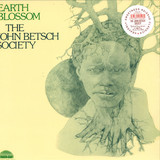
2024 Repress
180 Gram, Tip On Sleeve RSD version of this classic. One of the rarer records of the mythical Strata East albums is finally reissued for the first time on Heavenly Sweetness!
The recording of Earth Blossom, the John Betsch Societys one and only album, seems something of an enigma nowadays. For even though Nashville is clearly one of the towns in the US with the highest number of recording studios, who would have thought that the capital of country music would give birth to one of the forgotten masterpieces of 1970s spiritual jazz. The path leading to the album starts in 1963 when John Betsch, originally from Jacksonville in Florida, arrives in Nashville to study at Frisk University. He is a young drummer and joins Bob Holmes trio. Holmes is one of the towns major jazz organists and pianists; he becomes Betschs mentor and, over the space of two years, John will play alternately with him and with the trumpeter Louis Smiths group. However, in 1965, John leaves town to go to the prestigious Berkeley University in Boston and do a two-year course along with his fellow debutants with names like John Abercrombie, Ernie Watts and Alan Broadbent. Two years later, he is invited by a pianist friend, Billy Chilf, to join the legendary singer/songwriter Tim Hardins group. Just after Woodstock, John Betsch and Tim record a psychedelic album Columbia will never release together with the members of the future group Oregon: Colin Walcott, Glen Moore, Paul McCandles and his friend Billy Chilf. But he soon leaves this group to return to Nashville where he hooks up again with his friend Bob Holmes. Two years later, he is accepted on Archie Shepp and Max Roachs famous course at the University of Massachusetts Amherst (UMASS) and for the next four years he participates in this collective of intellectuals and musicians under the aegis of the two masters.
During this period he returns to Nashville to form his Society whose music is obviously influenced by the Afrocentric ideas of the UMASS student and political movement. However, the album, recorded in one day and in one take, also bears the hallmark of their generations psychedelic experiences, and in the themes and playing of the musicians we can hear a less violent form of music than the radical free jazz of New York or Chicago. Nature and environmental themes are the inspiration behind tracks touched by the spirit of Coltrane but also of Flower Power.
After Amherst, John Betsch joins Marion Browns group in 1976, leaves Tennessee for good and makes his home in New York over the next ten years or so. He plays and records with Dollar Brand, Kalaparusha Maurice McIntyre and many others, before heading off to France. He has lived in Paris for the last twenty years and played in Steve Lacy, Mal Waldron and Archie Shepp bands, as well as forming groups of his own. He now lives in Paris and plays with many musicians/bands.
Ordina ora e ordineremo l'articolo per te presso il nostro fornitore.

THE 1968 ALBUM ON WHICH JOHNNY CASH BECAME A LEGEND: AT FOLSOM PRISON AMONG THE MOST IMPORTANT AND POTENT STATEMENTS OF THE 20TH CENTURY
Johnny Cash already knew his way around Folsom Prison when he and his band stepped inside the institution’s forbidding walls on the morning of January 13, 1968 to record At Folsom Prison. He’d played there two years prior. But this time was different.
Cash took the stage that day for two shows amid a darkening sociopolitical atmosphere and a raging war in Vietnam, as well as the knowledge his career and health hung on by a thread. The Arkansas native shared many of the long odds and abject failures of the inmates for which he performed. The songs he chose, and the conviction with which he delivered them, say as much. The point at which Cash transformed from a country star into a legendary artist, and a bold statement about the American prison state and its commitment to rehabilitation, the triple-platinum At Folsom Prison remains one the most important, potent, and fabled records of the 20th century.
You can hear it echo off the walls of the room; pulse through the itchiness of the Tennessee Three’s acoustic-based boom-chick rhythms; crackle in the announcements conveyed over the intercom; ring in the comedy of the off-cuff remarks and pair of novelty tunes; sense it in palpable energy that wells up within Cash and his audience. And you can experience it like never before via Cash’s knockout singing. The bedrock foundation of all his music, the singer’s baritone resonates with profound degrees of depth, pliability, and passion that underscore how much this appearance meant to him — and the extent he was living the narratives.
Indeed, every song on At Folsom Prison serves a purpose and speaks to the conditions — mental, emotional, physical, geographical, legal, social — the inmates confronted on a daily basis. Beginning with the explicit messages of the opening “Folsom Prison Blues,” Cash makes it clear he understands and shares many of their plights. Not for nothing did the myth of Cash having done hard time persist for decades once this record hit the streets. That’s how real it is, and how dedicated Cash remains to conveying every note with the same truth he invests in the impromptu comments he makes between and amid songs.
Listen to the sorrow, regret, pity, and loneliness of Merle Travis’ “Dark as the Dungeon,” Cash pulling syllables til they threaten to break and inhabiting the mood of bleak phrases such as “pleasures are few” and “the sun never shines.” Witness the isolation, dejection, and sadness punctuating the walking-blues “I Still Miss Someone,” matched in gravity by a solemn reading of “The Long Black Veil” — a traditional dirge that involves murder, cheating, and deception. Cash cuts even deeper on a heartbreaking solo rendition of “Send a Picture of Mother” and plainspoken version of Harlan Howard’s “The Wall,” detailing a suicide disguised as jailbreak through cliched-jaw deliveries that softly curse the impossible situation.
In chronicling temptations, mistakes, mortality, punishment, and life “inside” — for better or worse, the stories of the disenfranchised, forgotten, written-off, and unrepentant — At Folsom Prison also has a blast playing the outlaw role. Cash captures wild-eyed craziness and out-of-control mayhem on a revved-up take of “Cocaine Blues,” taking extra satisfaction in its dastardly tales by way of voice that shifts into character for the sheriff and judge. The gallows humor and racing drama of “25 Minutes to Go”; quicksilver accents and resigned acceptance of “I Got Stripes”; train-whistle blare and twangy locomotion of “Folsom Prison Blues” — all fight the law only to see the law win.
Cash remains deeply committed at every moment, and inseparably connected with the tortured souls removed from the goings-on of the outside world. No wonder all but two songs here stem from the day’s first performance that saw Cash, Luther Perkins, Marshall Grant, and company give everything. As does the Man in Black’s soon-to-be-wife, June Carter. The couple’s fiery duet on “Jackson” scorches; their combination of surrender and fortitude “Give My Love to Rose” puts us in the dying protagonist’s shoes.
And with the closing “Greystone Chapel,” famously penned by convict Glen Sherley, who watched it all happen under the watchful eye of guards, Cash separates the corporeal from the spiritual, relaying lessons about salvation and survival. Heady themes to which he’d return for the remainder of his illustrious career.
dovrebbe essere pubblicato su 31.05.2024

After dark country trio Lost Dog Street Band released its 2022 album Glory, bandleader Benjamin Tod decided it was time to retire the project. Tod, alongside his wife Ashley Mae (fiddle), had been working together as a band since 2011. “I came to terms with letting go of Lost Dog completely, which is how I evaluate a lot of things in general,” explains Tod. “Oftentimes when I'm trying to make a really hard decision, I go ahead and go through the process of mourning its death and accepting that I am going to lose it.” But just a month after recording a solo project in January of 2023, Tod felt an urge to revisit the project one more time. “I thought I was done with Lost Dog, but after recording my solo album, I looked over all the songs that I had ready for a new record. These were songs for my band. I had to admit to myself that I wasn't done with Lost Dog.” Though there was heartbreak at the prospect of the project coming to an end, its resurrection has meant all the more in this new context. “Benjamin and I, both individually and together, have been through some professionally grinding and demoralizing personal times over the past five years,” Ashley Mae explains. “To take a step back from that over the past year and realize, ‘Wow, we held it down and withstood that, and we survived that,’ was a really good, bright, shining moment. It was the high point during a demoralizing time.” As such, Survived is a saving grace, a phoenix rising from the ashes. “This record means everything,” adds Tod. “It just feels like salvation.”
dovrebbe essere pubblicato su 26.04.2024

Blonde on Blonde: A double album that transcends time, defies space, suspends reality, and looks through the human soul and tells the listener characteristics about themselves they didn't know. Professor Sean Wilentz, historian-in-residence for Bob Dylan's Web site, comes as close to summing up its brilliance in his superb Bob Dylan In America as any who've tried: "The songs are rich meditations on desire, frailty, promises, boredom, hurt, envy, connections, missed connections, paranoia, and transcendent beauty – in short, the lures and snare of love, stock themes of rock and pop music, but written with a powerful literary imagination and played out in a pop netherworld." No lie.
As part of its Bob Dylan catalogue restoration series, we are thoroughly humbled to have the privilege of mastering the iconic LP from the master tapes and pressing it on 45RPM LPs at RTI. We feel that the end result is the very finest, most transparent edition of Blonde on Blonde ever produced. Forever renowned for what the Bard deemed "that thin, that wild mercury sound," the album's famed aural character lives and breathes on this superb version, with wider and deeper grooves affording playback of previously buried information and lifelike presentation of the studio sessions.
Prized for a unique sound that cultural critic Greil Marcus tagged "the most glamorous record imaginable; listening you can see the chequered jester's suit Dylan had worn on stage for the nine previous, furious months," Blonde on Blonde is to music, production, prose, and performance as what hydrogen is to water. The secret to its inimitable aural character partially stems from Dylan's request in Nashville to producer Bob Johnston to remove the baffles from the studio room, allowing the musicians to interact as well as the music to assume a more organic quality that drifts from one microphone to another.
The story of Blonde on Blonde is almost as compelling as the music within. Dylan, frustrated with how initial attempts fared in New York, relocating to Tennessee and pairing with Nashville's top session players as well as members of what would become the Band, feverishly chasing perfectionism while also arriving at an on-the-fly feel that remains a reference point for recorded music. The Bard sweated over lyrics, demanded his band get the exact sounds he heard in his head, and limited most takes to a handful at most. A majority of songs were recorded long after midnight, the post-A.M. vibe reflected in the nocturnal aura, woozy optimism, inversion of intervals, and spiritual soulfulness of the playing.
dovrebbe essere pubblicato su 31.08.2023

Back when Eddie Bond recorded Talkin' Off The Wall for his first ever disc
in 1955, he was indeed caught up in a musical moment that was 'off the
wall' – in other words seen as highly unusual, strange, eccentric, bizarre
It was the time of the emergence of rockabilly and white rock and roll. Briefly, the
'rockin daddy from ding dong Tennessee' was hot stuff, playing shows with
Presley, Perkins, Cash and all the other singers from Memphis whose music
talked off the wall to a whole new generation. Today, it does so again.
• A rocking 14-track LP on Bear Family Records® from one of the original
Memphis rockabillies, Eddie Bond, backed up by a 25-track CD featuring original
and cover versions of some of Eddie's songs.
• Mostly from the mid-1950s, these tracks sparkle with the life and excitement of
the new rocking music.
• Eddie started and finished as a country singer, but he embraced the new
rockabilly music and he soon became the Rockin' Daddy described in his bestselling disc from 1956.
• Eddie's backing bands include two of the best guitarists of all time – Reggie
Young and Hank Garland – and they don't disappoint.
• The ten-inch LP contains one song from Eddie's first label, Ekko, six from his
rockabilly heyday on Mercury, two from his originally unissued sessions at Sun in
1958, and five tracks from local Memphis labels in the 1960s.
• The bonus CD contains also a further 11 tracks by other artists, providing
fascinating other versions of songs Eddie recorded. Artists include Sonny Fisher,
Lattie Moore, Ray Charles, and Elvis Presley.
dovrebbe essere pubblicato su 04.08.2023

Active since 2013, Paisley Fields is a singer, songwriter, and bandleader
splitting time between Brooklyn, New York and Nashville, Tennessee.A
touring member of the newly reformed Lavender Country, Paisley also
played keyboard on their album "Blackberry Rose"
On his new album, "Limp Wrist", he draws inspiration from queer icon Andy
Warhol and the myriad drag artists with whom he's collaborated. His years of
experience in Manhattan piano bars did not diminish his love for country music,
and he released two albums that pay homage to the music of his youth.
"Limp Wrist" is an exploration of where rural queerness intersects religion.
Paisley's family were devout Catholics, and he served as the official church
pianist in his parish throughout his teens, playing every Sunday.
The songs on the album are deeply personal, and often touch on what it was like
to grow up closeted and queer in rural Iowa in the early 2000s. "Black Hawk
County Line" tells the story of Paisley being outed by a former friend his senior
year in high school, "Dial Up Lover" is about logging on to gay AOL chat rooms to
find other queers in the area, and "Plastic Rosary" recounts the experience of
being told he'll never get into heaven while praying the rosary.
The most personal and biographical moment comes during "Iowa", which
recounts the tragic murder of Matthew Shepard, and the visceral fear he had to
wrestle with since he was already aware of how different he was.
The album ends on an uplifting note, sharing a message of friendship and hope
with "Tomorrow Finds a Way".
The stories are his, but the feelings they convey - love, loneliness, lust, fear - are
still universal.
Pressed on Red color vinyl.
dovrebbe essere pubblicato su 14.10.2022

Steve Earle has been creating intimate and personal music for well over
four decades now
His songwriting has wound itself along a path from Texas to Tennessee and his
education came in the form of learning from the best. 2009's Grammy-nominated
record, TOWNES was a tribute to his dear friend and mentor, Townes Van Zandt.
Ten years later Earle released, GUY. An album concentrated on paying homage to
the late Guy Clark and the indelible friendship that they had formed in stories told
through song. 2022 welcomes the release of JERRY JEFF. A 10-song collection of
songs written by the gypsy songman, Jerry Jeff Walker. Featuring hits like, "Mr
Bojangles" and "Gettin' By", Earle & The Dukes honor the late Texan by amplifying
the concept and sound of each song with a full-band recording.
dovrebbe essere pubblicato su 14.10.2022

Will Stewart's new full length 'Slow Life' is a collection of songs that
capture his unique blend of varied styles and interpretations
From Montgomery's river region, up through west Alabama and over to
Birmingham, a brief stint in Tennessee and tumbling back over Red Mountain to
settle back in east Birmingham. You might call Will Stewart's sound "Central
Alabama Music." A little south of Nashville, some might say. In our current rapid
fire consumer culture of "brands" and "influencers," Slow Life invites people to
take a seat and relax for a while.
While past releases County Seat (2018) and Way Gone (2020) drew from a more
internal and reflective mood, 'Slow Life' approaches the music in a more
immediate and whimsical spirit.
Armed with his core band, Ross Parker (bass) and Tyler McGuire (drums) and
Janet Simpson (vocals) and help from Daniel Raine (keys), Stewart churns
through 10 songs of guitar driven folk rock. Recorded in the heart of east
Birmingham and engineered by Brad Timko, it's a sound that is uniquely central
Alabama.
dovrebbe essere pubblicato su 29.07.2022

Recorded under a loft bed in the guest bedroom of his Nashville home, Michael Ruth aka Rich Ruth’s “I Survived, It’s Over” starts in a humble space. And while many contemporary music projects are produced in such an environment, “I Survived, It’s Over” sets itself apart in its transformative properties as well as its transparency. What we have here is honest sound exploration, session musician-level instrumentation, and a true love for nature run through the fingers of a dude who can channel some acute and undeniable magic. This music goes deep. "I conceived much of this record amidst the quiet and tumult of 2020 in my neighborhood that had recently been ravaged by a tornado," Ruth recalls, "I spent most of my days working on these pieces between bicycle rides - watching the beautiful Tennessee ecosystem flourish in Shelby Park, listening to Keith Jarrett’s The Koln Concert and John Coltrane’s Ascension." Underneath the swell of the strings and the shredding of the guitars, this record has hard working, rustbelt, drum-heavy roots all over it (which makes sense as Ruth hails from outside of Toledo, the album was mixed by John McEntire from Chicago band Tortoise). Many of the flutes, saxophones, pedal steel, and other instruments were recorded remotely because we live in the future, but this only adds to the collage of sampled and sample-able material that Rich Ruth has to offer. The organic relationships between the artist and other musicians on the album is evident even in the compilation style sampling that needs to occur in putting such a project together. "Working on this music is a daily meditation," says Ruth. "I constantly experiment with sound until it reflects the way I am feeling and attempt to sculpt something meaningful from it. Through years of being a touring musician, it is a constant inspiration and privilege to collaborate with the individuals that graced this record with their voices." And those relationships pay off, because “I Survived, It’s Over” is a sonic meal. It’s rich (no pun intended) with massive instrumentation that’s usually reserved for more symphonic delights. But at the same time it’s simple and leaves space to breathe–space you didn’t know you needed. In his own words; "I Survived, It’s Over is a meditation on healing, confronting trauma, surrendering, and finding peace. I wanted to encapsulate the tranquility and disarray found within this process." Ruth’s heart and the peace that his presence produces is all over this album. And despite his midwestern humility and willingness to brush off any praise, he’s put together something really special that carries its own weight. It's the kind of record that only comes around every once in a while and it's worthy of all the head-bobs, acclaim, and celebratory potlucks that Mike and the gang have coming their way. “I Survived, It’s Over” is a record you should buy for your friend, your foe, and yourself. It’ll sit perfectly on your shelf between Alice Coltrane and Hiroshi Yoshimura.
dovrebbe essere pubblicato su 29.07.2022

Last October, when Bernard Allison returned to his old haunt of Bessie Blue Studios, Tennessee, to be greeted by fabled producer and career- long collaborator Jim Gaines, it felt like coming home. And when Allison fired up the amps, counted in the band and embarked upon his latest studio album, Highs And Lows, everything felt right with the world. “Just to be able to create music again after the pandemic,” he says of that long-awaited rebirth, “was incredible.”
For 56 years, music has been Bernard Allison’s essence. As the youngest son of the much- missed Chicago bandleader Luther Allison, he was a bluesman from birth. One week after graduating high school, Bernard cut his teeth on the road with Koko Taylor’s Blues Machine lineup – and ended up staying for most of the ’80s. By the close of the decade, however, he assumed a twin identity, leading and
writing for his father’s band, while forging a solo career that exploded in Europe off the back of early albums like The Next Generation (1990), No Mercy (1994) and Funkifino (1995).Now, released in February 2022 on Ruf Records, Highs And Lows sees Bernard acknowledge his lineage through two classic songs by his
father – Gave It All and Now You Got It – while offering nine originals. Try the irresistible groove of Hustler: a funk gem written by Bernard with Andrew Thomas, whose horn-and-harp groove evokes the strut of the title character. Or the masterful Last Night, which shifts tempo from an upbeat chop to a weeping slow- blues, capturing the changing moods of a man chasing his runaround woman. As for the title track, Bernard says it speaks for anyone left bemused by life’s rollercoaster: “It’s a part of life, the ups and downs that everyone deals with.”Right now, with a new album of stellar material to take out on his New Year tour, Bernard Allison is back in the ascendency – and the man can’t wait to return to his natural habitat. “The song So Excited is basically about the excitement of being able to be back on the road again,” he says. “I think everyone can relate to that.”
dovrebbe essere pubblicato su 25.03.2022

Red hot Modern Soul 45 recorded in Memphis, Tennessee in 1985. Big thanks to Robert Garcia @mrbighappy & Daniel Mathis @quartzwatches for the research and words on this one!!
Brotherhood Band was started by Ernest Coleman(EC) and Clint Hyson, who met thorough a US Navy band called "Mid-South", which was the US Navy's premier musical organization operating out of Millington, Tennessee (20 min outside of Memphis). The group initially played as an instrumental jazz band. In keeping up with the times, they shifted gears towards a more contemporary sound. Shortly after, they decided to cut a single. Enter "Nicci's Theme", which is the B-side here and it's a beautiful jazz tune EC wrote for a girl he fell in love with. This song was supposed to be his door way in, but he actually never opened the door with her.
A few weeks later Clint called EC and played this syncopated bass line for him over the phone. And then EC being the ladies man that he was wrote the lyrics to "Leather Pants" to it. Part of the lyrics read "The pants they stretch, but they don't bust. Enough to make a blind man cuss", but it originally read as, "The pants they stretch, but they don't bust. Enough to make a PREACHER cuss". The song was ready, but they needed to find a singer. That's when member Richard Owens mentioned that he had a young cat back in Atlanta named Taji. In a gamble Taji drove up to Memphis for the Sunrise recording studio session to record the track. According to EC when Taji laid the vocals down he took the song to the next level. In fact it was so impactful that EC, who is now a Grammy producer, still references Taji's sessions when working with new artist.
After the single dropped the group played at Memphis hot spots, Bills Twilight Lounge and Club No Name. EC even had an idea to host a local leather pants contest as a way to promote the song. This lead to a frenzy of women seeking to be "Miss Leather Pants".
Ordina ora e ordineremo l'articolo per te presso il nostro fornitore.

Red hot Modern Soul 45 recorded in Memphis, Tennessee in 1985. Big thanks to Robert Garcia @mrbighappy & Daniel Mathis @quartzwatches for the research and words on this one!!
Brotherhood Band was started by Ernest Coleman(EC) and Clint Hyson, who met thorough a US Navy band called "Mid-South", which was the US Navy's premier musical organization operating out of Millington, Tennessee (20 min outside of Memphis). The group initially played as an instrumental jazz band. In keeping up with the times, they shifted gears towards a more contemporary sound. Shortly after, they decided to cut a single. Enter "Nicci's Theme", which is the B-side here and it's a beautiful jazz tune EC wrote for a girl he fell in love with. This song was supposed to be his door way in, but he actually never opened the door with her.
A few weeks later Clint called EC and played this syncopated bass line for him over the phone. And then EC being the ladies man that he was wrote the lyrics to "Leather Pants" to it. Part of the lyrics read "The pants they stretch, but they don't bust. Enough to make a blind man cuss", but it originally read as, "The pants they stretch, but they don't bust. Enough to make a PREACHER cuss". The song was ready, but they needed to find a singer. That's when member Richard Owens mentioned that he had a young cat back in Atlanta named Taji. In a gamble Taji drove up to Memphis for the Sunrise recording studio session to record the track. According to EC when Taji laid the vocals down he took the song to the next level. In fact it was so impactful that EC, who is now a Grammy producer, still references Taji's sessions when working with new artist.
After the single dropped the group played at Memphis hot spots, Bills Twilight Lounge and Club No Name. EC even had an idea to host a local leather pants contest as a way to promote the song. This lead to a frenzy of women seeking to be "Miss Leather Pants".
dovrebbe essere pubblicato su 25.02.2022

All Them Witches are an American rock band from Nashville,
Tennessee. The band consists of drummer Robby Staebler,
vocalist / multi-instrumentalist Charles Michael Parks Jr.,
guitarist Ben McLeod and keyboardist Allan Van Cleave.
The band’s musical style incorporates elements from multiple
genres, such as hard rock, stoner rock, psychedelia, neopsychedelia, blues, folk and southern rock; however, Julian
Marszalek of The Quietus noted that: “... this isn’t blues of the
‘woke-up-this-morning’ variety but one of malaise, anxiety and
fear brought on a by world seemingly dead set on destruction;
nor is this an escapist variant of psychedelia wherein one form
of reality is jettisoned in favour of another for reasons of cheap
thrills.”
Ordina ora e ordineremo l'articolo per te presso il nostro fornitore.

After the very successfull "JIMMY WIDENER" first issue on the label dedicated to Hillbilly musice: "RED BARN Record", We had dig a little more into our personnal shellac collection to offer you the complete BULLET sessions, 1950-52 of this obscure but very talentful "proto" rockabilly band. Two year before Elvis recordings at SUN, you already feel the wind of musical change' a coming!
dovrebbe essere pubblicato su 06.08.2021

With Bending the Golden Hour, the third album from Memphis, Tennessee’s Aquarian Blood, husband and wife team J.B. Horrell (Ex-Cult) and Laurel Horrell (formerly of the Nots) continue the gorgeously stripped-down and atmospheric direction set on their critically acclaimed previous effort A Love That Leads to War.
While Aquarian Blood has roots as a chaotic punk rock six-piece, the band shifted gears after two raucous cassette-only releases on ZAP Cassettes, a pair of seven-inches, and 2017’s Last Nite in Paradise, released on Goner Records. After drummer Bill Curry broke his arm, the Horrells redefined
Aquarian Blood, reemerging in early 2018 as the more intimate, mostly acoustic balladeers behind the staccato, fever dream sound of A Love That Leads to War. Like its immediate predecessor, Bending the Golden Hour was recorded at the Horrell's Midtown Memphis home. The band turned over 43 tracks to Goner co-owner Zac Ives, who handpicked 17 songs for the album.
The final result is shimmering and hopeful; as beautiful and sparse as a Rockwell Kent snowscape. Bending the Golden Hour begins ominously with “Channeling,” which sounds like an outtake from Paul Giovanni’s soundtrack to 1973’s pagan nightmare The Wicker Man. Then the band upshifts for “Time in the Rain,” a sweet duet set to a rigid snare beat. From there, Aquarian Blood zigs to country and zags to psychedelic folk, brooding on one song and soothing listeners with the next. And while the music, feel, and experience is different, Aquarian Blood naturally brings to mind some legendary musical partnerships: Richard and Linda Thompson, Lee Hazlewood and Nancy Sinatra, Johnny and June Carter Cash, Gram Parsons and Emmylou Harris; not to mention similarly-bent-but-beautiful luminaries like Roy Harper, Pentangle circa 1967 -1973, and Jackson C. Frank.
There’s a big middle ground, like folk-psych, or weirder country music,” he says, reeling off names like Skip Spence and Syd Barrett as stepping stones between the genres of punk and folk.
Inspirations for Bending the Golden Hour come from myriad sources that document the milestones and minutiae in a family’s full life. Some lyrics name a time or a place; others reflect the fleeting moments that elapse unnoticed. “Come Home,” which is sung by J.B. and his daughter Ava, was written the day Ava got her driver’s license. “Ava took the car out by herself afterwards, and I wrote the song immediately—she sang her part when she got home that evening,” J.B. recalls. Whether or not the listener knows the backstory, the song rings sentimental, with subtle, supportive instrumentation that underscores guitar and vocals. The bewitching “Rope and Hair,” on the other hand, is less sketched out, with lyrics that are simply a recitation of the talismen found on a silver sabertooth charm that J.B. purchased for Laurel at a Latin strip mall in southeast Memphis. That’s all to be said. “Sometimes when you know too much about what the song is about, it takes away the magic,” says J.B. “Alabama Daughter,” says Laurel, is about a place where a childhood friend lived called Castleberry Holler. “It was really rural, just a lot of shacks without electricity—the kind of place you didn’t go to unless you were invited,” she says. “Probable Gods” is a hazy reflection on the struggle of such a strange year. “It’s been very cathartic to put all of this into words and not have it live
dovrebbe essere pubblicato su 04.06.2021

Built on a foundation of authenticity, passion and innovation, Archie Lee Hooker & The Coast to Coast Blues Band is a spearheading group that has established itself in the world of music. Formedby Archie Lee Hooker, the nephew of John Lee Hooker, Archie and his leading handpicked team arehighly recognised for creating compelling, soul-enriching productions that leave their audienceswanting more.
Archie was born on Christmas Day of 1949 in Lambert, Mississippi, just 20 miles from thecrossroads where Robert Johnson supposedly sold his soul to the devil. He was the son of a sharecropper, and up until age thirteen, that was the life he was accustomed to. That all changed when he headed up north and found himself standing in the big city of Memphis,Tennessee.
The paved roads and city lights felt like a new world to Archie, one that was filled with opportunities. Inspired by the Memphis music scene, it didn’t take long for Archie to begin singing with his first gospel group called The Marvellous Five. However, December of 1989 was when hispassion for Blues started to surface. During this time, Archie lived with his uncle, John Lee (the Boogieman himself) until his death in 2001. Being surrounded by him and other committed, talented, and influencing musicians is what became the catalyst for Archie to crave sharing his own life experiences through music and leave his lasting impression.
Though Archie left for France in 2011 to join Carl Wyatt & The Delta Voodoo Kings to tour Europe, he eventually chose to seek the right musicians to have on his side. He wanted a team that resembled family, chemistry, and a bond unlike any other. Once he found them, Archie founded the Archie Lee Hooker & The Coast to Coast Blues Band, which was specially named after the late John Lee’s Coast to Coast Blues Band. Since then, the crew has done nothing but thrive and impress.
They released their first album called ‘Chilling’ under the French label Dixiefrog in 2018, which received a 5-star review in Rolling Stone Magazine. Fast forward to today, they have recorded a new 12 song CD called ‘Living in a Memory’, and this all-original playlist of storytelling art is set to be released through Dixiefrog worldwide on April 16th, 2021. In the end, every song and performance that Archie Lee Hooker & The Coast to Coast Blues Band creates paints an incredible picture that inevitably provokes uplifting emotional influences and invested attraction.
They are entirely passionate about delivering remarkable music, and continuously provide fully authentic productions that have shaped them to become what they are today. With their immense drive and determination, it is exciting to see what they will launch next.
dovrebbe essere pubblicato su 16.04.2021

For fiends of: Cursed, HIs Hero is Gone, Tragedy.
Formed in 2008 in South Florida, Centuries current lineup now includes members based in Pittsburgh, Pennsylvania and Nashville, Tennessee, and in the UK from Manchester.
Since their 2013 debut Taedium Vitae (Southern Lord), the group have refined their sound into something more focused, and intense, and The Lights Of This Earth Are Blinding surges with ten new tracks of the band's harrowing, metallic, punk/crust-influenced hardcore, delivered with a calculated, very deliberate approach.
The album was recorded in February 2017 by Kris Hilbert at Legitimate Business (Catharsis, Torch Runner, The Body), mastered by Brad Boatright at Audiosiege (Integrity, Black Breath, Halshug), and completed with artwork by Phil Trona.
About the new album the band remark..."The Lights Of This Earth Are Blinding is a dark album that carries a theme of constant self-doubt. It follows how we choose to accept our loses and the reaction to life, as well as the journey we take to make peace with the demons we've made.' The new track 'Bygones' is streaming below.
dovrebbe essere pubblicato su 26.01.2018
