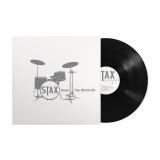
The Bar-Kays were originally formed in Memphis, Tennessee, 1966, as a sextet backing group for Stax Records. They had a promising career in front of them as a session band & recording outfit before the backbone of the group was killed, along with Otis Redding who had hired them as his backing band for a tour, in a plane crash. Only Ben Cauley survived the crash and went on to form what could be dubbed Bar-Kays Mark II. James Alexander (Bass) was also one of the original members but was not aboard the plane because of limited seats on Redding's plane. For Alexander and Cauley and new members Michael Toles, Willie Hall, Ronnie Gordon and Harvey Henderson, the track 'Sang & Dance' was one of the first tracks from the new group, cut in late 1969. They recorded steadily for Mercury records in the 70s & 80s, the two tracks on this 7” among their best loved and sought after. “Open Your Heart” only previously a 7” B-side in Spain
Suche:the bar kays
- 1
- 01: Can't You See
- 02: Sunshine
Inspiriert von Vorbildern wie Earth, Wind & Fire, The Bar-Kays und Kool & the Gang erwarb sich die 1975 in Mississippi gegründete Formation Freedom im gesamten Süden einen Ruf als kraftvolle Live-Funk-Band. Die Debütsingle "Can't You See/Sunshine" (1977) klang unglaublich souverän, ausgefeilt, pulsierend und voller Potenzial. "Can't You See" mit seinem modernen Soul-Boogie-Sound und "Sunshine" mit knackigen Bläsern, treibenden Rhythmus und ausgelassener Energie. Tolle Reissue auf Miles Away mit türkisgrünen Labels und originalgetreuem Fotocover.
- A1: Mieko Hirota - Soul Lady
- A2: Shinji Maki &Amp; Black Jack - Nabeyoko Soul
- A3: Tan Tan - Happy Day
- A4: Kenji Niinuma - Airenki
- A5: Hatsumi Shibata - Furui Fuku Nanka
- B1: Strawberry Jam - Arimasen
- B2: Mieko Hirota - Anata Ga Inakute Mo
- B3: Akira Yasuda &Amp; Beat Folk - Kaeroka Kaeroka (Single Version)
- B4: Miki Hirayama - Hatachi No Koi
- B5: Masaaki Sakai - Baby, Yuki Wo Dashite
At the start of the 60s, a new wave of gospel-influenced jazz started to emerge, with hits such as Art Blakey & The Jazz Messengers' "Moanin'" and Cannonball Adderley's "Work Song" epitomizing this evolution in the genre. The terms "soul jazz" and "funky jazz" were coined as a way to describe this new sound that was making an impact in the US and also on the other sides of the Atlantic and Pacific oceans.
In 1964, Ray Charles made his first visit to Japan. Then, in 1968, Martha & The Vandellas and Stevie Wonder set foot in the country, followed by Sam & Dave in 1969, Ike & Tina Turner in 1970, and B.B. King in 1971. The TV show "Soul Train" also began airing in Japan in the early 1970s. A watershed moment happened in 1973 when Sammy Davis Jr. was cast in a TV commercial for Suntory whisky — and the influence of the US Black entertainment world had really landed, with soul, jazz, and funk artists becoming household names.
Nippon Columbia played a pivotal role during this turning point. The company had contracts with Buddah Records and Blue Thumb Records, releasing notable works by artists such as Gladys Knight & The Pips, Curtis Mayfield, The Crusaders, and The Pointer Sisters. At the same time, the label was also releasing several Japanese soul, jazz, and funk projects under the lead of music director Jiro Inagaki. Inagaki, a saxophonist who began his professional career in the early 1950s, honed his skills at U.S. military camps, where he shared his love of music with the Black servicemen. In the 1960s, he played with drummer Hideo Shiraki's band, which was widely considered to be Japan's representative group of the funky jazz movement. Later, Inagaki went on to pursue more cutting-edge sounds with his Soul Media project, including being a pioneering figure in the "jazz rock" genre. By working closely with Inagaki and his various musical projects, Nippon Columbia really placed the company at the center of an exciting and important period in Japanese music.
In 1965, Nippon Columbia opened a recording studio in Tokyo's Akasaka neighborhood. Akasaka was also home to the first ever discotheque in Japan, the legendary MUGEN, which ran from 1968 to 1987 and where many acts performed, including Con Funk Shun, the Bar-Kays, Ike & Tina Turner, B.B. King, Sam & Dave, Three Degrees, and Edwin Starr, as well as many local Japanese singers and musicians. This melting pot of creativity in the area led to the recording of many singles and albums by Japanese artists that were infused with the sounds of soul and funk. Most of these recordings were not available outside of Japan and remain rare and unknown musical gems. The selection you are holding in your hands is an explosive collection of 10 essential tracks released by the legendary Nippon Columbia label between 1969 and 1977, capturing the raw, unapparelled energy that was flowing through the air of the Akasaka streets at this electrifying time. Enjoy!
---
180GWALP07 - Manufactured and distributed by 180g.
- Pretty Sister
- Crazy Town
- Copacetic
- Here Comes
- Pop Loser
- Living Well
- A Chang
- Audrey's Eyes
- Lisa Librarian
- 57: Waltz
- Candy Apples
- Catching Squirrels
- Warm/Crawl
- Creepy
- Stupid Thing
- Even Die
- Here Comes (Peel Session Version)
- Always (Peel Session Version)
- Crazy Town (Peel Session Version)
- 57: Waltz (Peel Session Version)
- Copacetic (Peel Session Version)
Doppel-LP auf rotem Vinyl, limitiert auf 2000 Stück. Das lange vergriffene Debütalbum der beliebten Indie-Rock-Band Velocity Girl aus dem Jahr 1993 ist wieder erhältlich, mit einem neuen, von der Band genehmigten Mix und einem kompletten Album mit Bonustracks, das Singles, Outtakes und die Peel Session der Band von 1993 enthält. Velocity Girl gründeten sich etwa 1989 an der Universität von Maryland außerhalb von Washington DC und setzten sich kurz darauf aus Gitarrist Archie Moore (Black Tambourine), Gitarrist Brian Nelson (Black Tambourine), Schlagzeuger Jim Spellman (Starry Eyes, Foxhall Stacks, High Back Chairs, Julie Ocean, Piper Club), Bassist Kelly Riles (Starry Eyes) und Sängerin Sarah Shannon (Starry Eyes, The Not Its) zusammen. Die Band kombinierte englisch inspirierten lärmenden Shoegaze-Fuzz mit rauem US-Indie-Rock und klassischem 60er-Jahre-Pop-Songwriting. Eine Killer-Single auf Slumberland und pausenloses Touren erregten die Aufmerksamkeit der damaligen Indie-Rock-Kenner, und nach einem hitzigen Werben, das sowohl Abendessen als auch Nachtisch beinhaltete, unterzeichneten Velocity Girl in Hoboken, New Jersey einen Vertrag auf einer Motorhaube, und machten Sub Pop zu ihrer Heimat. 1992 begann die Band mit der Arbeit an ihrem Debütalbum "Copacetic" in den Easley Studios in Memphis - einst Heimat der Bar-Kays und anderer klassischer Soul-Bands - unter der Leitung von Bob Weston (Volcano Suns, Shellac), und mischte das Album anschließend mit Weston in Chicago. Obwohl das Album starke Songs enthielt - Popsongs wie "Audrey's Eyes", "Pop Loser" und "Living Well" neben ehrgeizigen Erkundungen wie "Pretty Sister" und "Here Comes" - hatte die Band wenig Erfahrung mit der Produktion und es fehlte ihr an den Fähigkeiten, im Studio "das Boot zu steuern". Infolgedessen war das Album eine eher schlichte Angelegenheit, der es an der Üppigkeit der früheren Aufnahmen mangelte. In den Ohren der Band war das ein Schock, und sie merkten bald, dass dies nicht die Platte war, die sie zu machen hofften. Bob Weston hatte genau das getan, was von ihm verlangt wurde, und die Klänge eingefangen, aber die Band hatte nicht ihren Teil dazu beigetragen, eine klare Vision zu formulieren. Aber die Zeit der Band im Studio war vorbei, und Polvo war gerade aufgetaucht, um an ihrem Album zu arbeiten, also machten sich Velocity Girl auf, um das Video zu Audrey's Eyes" zu drehen. "Copacetic" kam 1993 auf den Markt und die Leute schienen es zu mögen, aber innerhalb der Band gab es ein Gefühl der Enttäuschung bis zu dem Punkt, an dem die meisten Mitglieder es nicht mehr ertragen konnten, die Platte zu hören. Seitdem hat die Band viel über Aufnahmen gelernt, und Archie Moore eine Karriere als Tontechniker eingeschlagen, so dass die Band schließlich beschloss, sich mit "Copacetic" nochmal auseinanderzusetzen. Nach umfangreichen Ausgrabungen tauchten die 2"-Bandspulen im Haus der Mutter von Jims Ex-Frau auf, und im Frühjahr 2023 begann Archie mit der Arbeit an einem Remix. Song für Song entstanden die neuen Abmischungen genau so, wie die Band sie sich vorgestellt hatte. Der erhabene Gesang von Sarah (die am College Oper studiert hat), die klingende Leadgitarre, die saftigen, verwaschenen Rhythmusgitarren und das klare, stampfende Schlagzeug. Die Popsongs sind viel poppiger. Der Klang ist kraftvoller, und die Platte ist ein zusammenhängendes Werk, das von Song zu Song fließt. Der Ansatz war nicht, ein Album zu machen, das nach 2024 klingt, sondern sich auf das Jahr 1992 zurückzubesinnen und das Album zu machen, das die Band damals hätte machen sollen. Das Ergebnis, "UltraCopacetic (Copacetic Remixed and Expanded)", ist eine spannende alternative Geschichte von "Copacetic". Und während sie dabei waren, hat die Band den Rest ihres Studiomaterials aus dieser Zeit ausgegraben und aufgefrischt: "Ultracopacetic" enthält "Warm/Crawl" von der Velocity Girl/Tsunami Split 7", ,Creepy' von der Crazy Town 7", "Stupid Thing" von der Audrey's Eyes 7" und die unveröffentlichte Albumauskopplung ,Even Die'. Abgerundet wird das Ganze durch die komplette John-Peel-Session der Band aus dem Jahr 1993 mit fünf Liedern, darunter zwei Tracks, die seit der ursprünglichen Sendung nicht mehr zu hören waren. "UltraCopacetic" ist wirklich die definitive Version von Velocity Girls erstem Album.
Session Victim need little by way of introduction having been releasing on Delusions consistently for the last 10 years and becoming the undisputed poster boys for the label in the process. Despite their regular appearance however, it’s always a real treat to announce a new record from the German duo and we have to say, the Screen Off EP may well find them in their finest form to date! Coming hot off their latest downtempo LP entitled Low Key, Low Pressure for Night Time Stories, you can tell Hauke and Matthias were ready to take things back to the dance-floor and have delivered an EP which looks set to become a future classic and no doubt big in the box of discerning DJ’s the world over.
Screen Off is really it’s own thing, living somewhere on the long and winding road between the Bar Kays and the Bad Brains, suffice to say that what it lacks in easily definable attributes it makes up for in sheer energy and raw attitude. Hauke and Matthias re-invite Jamaican poet and vocalist Ras Stimulant, who contemplates our screen addictions and urges us to disconnect and be present in the moment. Matthias’ rolling bassline provides the backbone, whilst hints of crunchy Moog and chopped guitar samples all bring a sense of urgency to the track.
Light The Way acts as an antidote, bringing a sense of calm melancholia in contrast to the title track’s low-end, funked-up fervour. A soft focus and almost distant drum groove draws us in whilst arpeggiating synths add a sense of optimism, reinforcing the tracks title.
Closing out the release we have Session Victim’s studio partner, good friend and all-round top producer Iron Curtis in for a remix of Light The Way. Johannes takes an interesting approach for his Illuminati interpretation, enhancing the breakbeat feel and mixing up chopped samples with classic 808 drums. A muscular bassline adds extra weight to his remix but without losing the subtle musicality and positive vibe of the original.
Being the vinyl purists they are, Session Victim and Iron Curtis top up the physical 12“ EP with the exclusive Screen Off Acapella and an additional Iron Curtis Remix Reprise.
Analogue Productions (Atlantic 75 Series) Celebrating the 75th Anniversary of Atlantic Records! 180-gram 45 RPM double LP Mastered by Bernie Grundman from the original analog tape Contains Otis Redding's posthumous hit "Sittin' On the Dock Of the Bay" Appeared on Rolling Stone's 500 Greatest Albums of All Time, rated 161/500! Pressed at Quality Record Pressings Gatefold old-style "tip-on" jacket by Stoughton Printing Hybrid Mono SACD Mastered directly from the original master tape by Bernie Grundman The guts of the story are this: While on tour with the Bar-Kays in August 1967, Otis Redding's popularity was rising, and he was inundated with fans at his hotel in downtown San Francisco. Looking for a retreat, he accepted rock concert impresario Bill Graham's offer to stay at his houseboat at Waldo Point in Sausalito, California. Inspired, Redding started writing the lines, "Sittin' in the morning sun, I'll be sittin' when the evening comes" and the first verse of a song, under the abbreviated title "Dock of the Bay." He had completed his famed performance at the Monterey Pop Festival just weeks earlier. While touring in support of the albums King & Queen (a collaboration with female vocalist Carla Thomas) and Live in Europe, he continued to scribble lines of the song on napkins and hotel paper. In November of that year, he joined producer and esteemed soul guitarist Steve Cropper at the Stax recording studio in Memphis, Tennessee, to record the song. Cropper remembers: "Otis was one of those the kind of guy who had 100 ideas. ... He had been in San Francisco doing The Fillmore. And the story that I got he was renting boathouse or stayed at a boathouse or something and that's where he got the idea of the ships coming in the bay there. And that's about all he had: 'I watch the ships come in and I watch them roll away again.' I just took that... and I finished the lyrics. If you listen to the songs I collaborated with Otis, most of the lyrics are about him. ... Otis didn't really write about himself but I did. Songs like 'Mr. Pitiful,' 'Fa-Fa-Fa-Fa-Fa (Sad Song)'; they were about Otis and Otis' life. 'Dock of the Bay' was exactly that: 'I left my home in Georgia, headed for the Frisco Bay' was all about him going out to San Francisco to perform." Redding and Cropper completed the song in Memphis on Dec 7, 1967 with tragedy, unknowingly, looming. Just two days later Redding lost his life on a routine commute to a performance when the small plane he was in crashed. The other victims of the disaster were four members of the Bar-Kays — guitarist Jimmy King, tenor saxophonist Phalon Jones, organist Ronnie Caldwell, and drummer Carl Cunningham; their valet, Matthew Kelly and pilot Fraser. Cropper and bassist Donald "Duck" Dunn completed the music and melancholic lyrics of "(Sittin' On) The Dock of the Bay' which was taken from the sessions — Redding's final recorded work. Cropper added the distinct sound of seagulls and waves crashing to the background. This is what Redding had wanted to hear on the track according to Cropper who remembered Redding recalling the sounds he heard when he wrote the song on the houseboat. One of the most influential soul singers of the 1960s, Redding exemplified to many listeners the power of Southern "deep soul" — hoarse, gritty vocals, brassy arrangements, and an emotional way with both party tunes and aching ballads. At the time of his tragic death he was 26. ‘(Sittin’ On) The Dock of the Bay’ was released just a month following Redding’s death and became his only ever single to reach number one on the Billboard Hot 100 in January 1968. The album, which shared the song's title, became his largest-selling to date, peaking at No. 4 on the pop albums chart. "Dock of the Bay" was popular in countries across the world and became Redding's most successful record, selling more than 4 million copies worldwide. The song went on to win two Grammy Awards: Best R&B Song and Best Male R&B Vocal Performance. With the album, Redding confirmed himself as a talent lost far too soon. All the hallmarks of a top-notch Analogue Productions reissue are here for you to savor: Mastered directly from the original master tape by Bernie Grundman and cut at 45 RPM. Pressed on 180-gram vinyl at Quality Record Pressings, and housed in tip-on old style gatefold double pocket jackets with film lamination by Stoughton Printing.
Miles Away Records are extremely proud to introduce our latest single by the incredible Howard Lemon Singers. You Are Somebody and For The Children are two blinding tracks cherry-picked from the incredibility rare 1977 album Seasons released on the legendary TK Records subsidiary Gospel Roots.
Both sides of this 45 are oozing with positivity and good sentiment, a fine example of the harmony between sacred and secular sounds, and the experimentation taking place, during the late 1970s as gospel artists were modernizing the soundtrack, and lyrical content of gospel music..
You Are Somebody is a gorgeous modern soul heater. Accomplished vocalist Esther Smith's sublime voice delivers her vocal lines with such confidence and assurance that the words seem to strut over the funky basslines and drumming support. Flip it over and For The Children is a more mid-tempo burner, but don't let this fool you - it's "stop-you-in-your-tracks" good. Smith's vocals once again shine brightly and are delightfully accompanied by the Nile Rodgers-esque 'wacka-wacka' guitar of Lester Snell throughout. Musicianship is of the highest quality as Howard Lemon, group leader, called upon some of the best musicians from STAX Records – Willie Hall and the aforementioned Lester Snell were key components of such groups as the Isaac Hayes Movement and the Bar Kays.
These two nuggets are presented here for the first time on a 45 and complete in our customary teal green labels and sleeve. Remastered and cut by Timmion.
- A1: I Like What You’re Doing (To Me)
- A2: Oh La De Da
- A3: I Like The Things About Me
- A4: Gee Whiz
- B1: I Have A God Who Loves
- B2: Respect Yourself
- B3: The Breakdown
- B4: I’ll Take You There
- C1: Do The Funky Chicken
- C2: Knock On Wood
- C3: Lay Your Loving On Me
- D1: Do The Funky Penguin
- D2: I Don’t Know What This World Is Coming
Wattstax war ein Benefizkonzert, das von Stax Records in Verbindung mit dem Watt Summer Festival organisiert wurde, um den siebten Jahrestag der Watts-Unruhen von 1965 in Los Angeles zu feiern.
Das Konzert, das von mehr als 100.000 Menschen besucht wurde und 7 Stunden dauerte, fand am 20. August 1972 im Los Angeles Memorial Coliseum statt und bot eine Mischung aus Soul, Funk und Gospel. Auf dem Programm standen Auftritte der größten Künstler von Stax, darunter Isaac Hayes, die Staple Singers, Rufus Thomas, Johnnie Taylor, die Bar-Kays und viele andere. Rev. Jesse Jackson trat bei der Veranstaltung als Moderator auf und eröffnete die Veranstaltung mit seiner oft zitierten ”I Am Somebody”-Rede.
Ein 2-LPSoundtrack mit den Höhepunkten des Konzerts wurde einige Monate später veröffentlicht. 1973 folgte der von Mel Stuart inszenierte Konzertfilm ”Wattstax” mit Richard Pryor als Moderator des Films, der 1974 für einen Golden Globe als bester Dokumentarfilm nominiert wurde.
- A1: Introduction
- A2: Saturday Night / Blue Note / Backroom
- A3: Introduction
- A4: Lift Every Voice And Sing
- B1: Lying On The Truth
- B2: Ain’t That Loving You (For More Reasons Than One)
- B3: Someone Greater Than You And I
- B4: Can’t See You When I Want To
- B5: Reach Out And Touch
- C1: Old Time Religion
- C2: Peace Be Still
Zur Feier des 50. Jahrestages des kultigen Wattstax-Events, das am 20. August 1972 im L.A. Memorial Coliseum stattfand, veröffentlicht Stax Records ”Wattstax” neu: The Living Word”.
Diese beiden LPs wurden von den Originalbändern von Chris Muth geschnitten und enthalten Auftritte von Isaac Hayes, The
Staple Singers, The Bar-Kays, Rufus Thomas, Carla Thomas, Albert King und anderen.
Repressed !
Fuzzed out and psychedelic covers of rare and classic tracks performed by San Francisco's Monophonics.
Monophonics are back with a six-song EP that fuses the complimentary and explosive soul, rock and funk influences, proving themselves to be the rightful inheritors of the Bay Area’s impressive psychedelic soul sound. Mirrors is comprised entirely of cover tunes, except that I doubt you’ve ever heard of half the deeply funky and soulful originals that inspired these soulful, tastefully produced, and timeless Monophonics treatments. “We wanted to do a couple songs that were more familiar to people and then shine some light on groups we’re big into,” lead singer, keyboardist and co-producer Kelly Finnigan explains. It takes a lot of guts to cover your favorite songs, your van jams, that song you play as a shot of inspiration to break-up a marathon studio session. “Not only are these great songs, but these are artists that we listen to and are influenced by.”
“It’s not about making records that sound old, it’s about making records that sound cool,” Kelly says. Not that he and the other five members of Monophonics mind if you confuse their albums for classic-era recordings. Even musician friends regular mistake a sweaty and greasy Monophonics original for an unheard Bar-Kays’ side, or a deep soul cover tune might pass for an original to a novice ear, except that Kelly makes sure to give credit where credit is due, which is what they do explicitly on this EP, Mirrors.
Even the familiar tunes, iconic, better said, receive a fresh treatment as instrumentals, despite their ubiquity as vocal songs. The EP opens with a ‘tip of the cap’ to The Main Ingredient’s version of “Summer Breeze” before the band unfolds a hazy, mellow-funk opus worthy of inclusion on a Bob James CTI album. The next four songs, all featuring vocals, range from the lowrider soul ballad, a cover of the The Invicibles’ “My Heart Cries” with a pleading and plaintive vocal by Nicole Smith, to the psychedelic blues stomp, “Lying,” originally by the archetypical psychedelic soul band nearly signed to Motown, Black Merda. Add in Kelly’s monster vocal take on Frankie Valli and the Four Seasons Northern Soul classic, “Beggin” (to be released as a 7” single with an instrumental version on the b-side), and the deep-funk pop-soul of Nu People’s “I’d be Nowhere Without You” with back-up vocals by Jeanine Jones and Veronica Johnson, and you have a highly-entertaining, toe-tapping, backbone-slipping, masterclass in deep funk and soul.
The final tune is the band’s singular take on the Mamas and the Papas hippie standard, “California Dreaming,” as an explicit and heartfelt tribute to their fans in Greece. The discerning music lovers of Greece fell in love with Monophonics after their 2012 hit “Bang Bang” resulting in multiple tours of the Mediterranean, where these native Californians imbibed on the fine ouzo, good vibes, and Grecian hospitality. Gifted a prized bouzouki (a traditional Greek guitar) by a local fan, Monophonics’ guitarist Ian McDonald and band infused this classic pop song with a soulful cinematic air and Mediterranean flavor, evoking a tune from an imagined Fellini film with a soundtrack by David Axelrod.
Catch the band on the road this Spring to hear some of these songs, favorites and new tunes from their forthcoming LP.
- A1: Money Won't Change You
- A2: It's Bad
- A3: Good Thing
- A4: Best Of Luck To You
- A5: That's What I Get
- A6: That's The Sound Of My Heart
- A7: How Long Must I Wait For You
- B1: Foxy Mama
- B2: Look A Little Higher
- B3: I Take What I Want
- B4: She's Got To Be Loved
- B5: Just A Dream
- B6: To Love Me Like You Do
- B7: There's Gonna Be A Better Day Coming
Perhaps the best Soul / Funk LP Athens of the North has ever released and you know we have high standards, not one filler and mostly unreleased tracks – Essential LP
The Up Tights were formed by Henry Bradley in Forrest City, Arkansas in March of 1967 while most of the band members were attending Lincoln High School.They took their name from the Stevie Wonder song "Uptight - Everything's Alright." Playing at school functions, they quickly branched out to playing bigger shows and headlined the 1968 St. Francis County Fair in Forrest City.
The Up Tights first recorded for Action Records in Memphis as Noble and the Up Tights. The 45 featured an original song by singer, Izear "Ike" Noble Jr. titled "Don't Worry About It."
Henry Bradley was drafted into Vietnam in 1968. He served in the 1st Squadron, 11th Armored Cavalry Regiment. While he was away, the Up Tights continued with Henry's brother, Arthur, taking over all the guitar duties. The band also hired a manager named John Mitchell. In 1968, the band met Joe Lee, who owned Variety recording studio in Jonesboro, Arkansas.
For the band's first recordings at Variety, Lee chose two originals by Noble titled "Look a Little Higher" and an updated version of "Just a Dream" which Lee released on his Alley Records label in 1968. Lee continued to record the band over the next several months. He liked to experiment in the studio and produced many versions of the group's original songs, adjusting the mix and adding elements to each unique take.
For the group's second Alley release, they appeared simply as Ike Noble on the record label. Lee brought in a local songwriter named Charles "Jamie" Holmes, who had previously written for Alley records and Joe Keene's studio in Kennett, Missouri
The resulting 45 from this collaboration was "It's Bad" backed with "That's What I Get," two Holmes originals. Another Holmes original was unreleased at the time, but available here titled "There's Gonna Be a Better Day Coming." Stax Records was interested in signing the group and wanted to re-cut "It's Bad" at their studio, but ultimately the label passed since they generally had a policy of working with Memphis based groups.
As the band grew in popularity, they began appearing with and competing with Memphis legends, the Bar-Kays. The group's biggest show in Arkansas was an opening slot at Barton Coliseum, one of the largest venues in the state, in Little Rock in mid-1969. As a result, the band was offered a spot on George Klein's "Talent Party" television show on WHBQ in Memphis in July of 1969..... Further Sleeve notes on back of the LP
- A1: Love Makes The World Go Round ~ Deon Jackson
- A2: I’ve Arrived ~ Steve Flanagan
- A3: There’s Nothing Else To Say ~ The Incredibles
- A4: A Slice Of Pie ~ Jewel Akens
- A5: Girl Watcher ~ The O’kaysions
- A6: Hey Girl Don’t Bother Me ~ The Tams
- B1: Exit Loneliness, Enter Love ~ Tommy Mosley
- B2: The Snake ~ Al Wilson
- B3: Love Makes A Woman ~ Barbara Acklin
- B4: Lucky Is My Name ~ Bruce Cloud
- B5: The Duck ~ Jackie Lee
- B6: It’s Your Voodoo Working ~ Charles Sheffield
This collection is drawn from throughout the 60's, though it does not
entirely fit the commonly held belief that Northern Soul records are all
ultra-rarities, because half of the tracks here actually were major hits in the US, and four of them were top twenty entries! Included among the twelve artists are people who maintained long careers, some who had great success as writers, and one who went on to have a major No 1 in the seventies. We finish with Charles Sheffield (aka Mad Dog or Prince Charles) and his 1961 gem It’s Your Voodoo Working. A well known track among some classic hits and some perhaps lesser known songs, which is the nature of this must-have collection.
New York City 4-piece deliver a modern blues rock masterclass on their feisty debut album.
“A timeless classic rock sound that revels in lean riffs and raw emotion.” – Afropunk
In an age where artistic merit is awarded to those who shout the loudest, Dakota Jones pride themselves on an unwavering ability to leave a lasting impression. Spearheaded by Tristan Carter-Jones fierce and unashamedly uncensored songwriting, the band’s fast-growing reputation as formidable live act has stamped Dakota Jones with the hell-hath-no-fury power of Chaka Khan, the wild spontaneity of Janis Joplin, and the honey-dripping sensuality of Marvin Gaye. Their debut album’s message of proud black heritage and triumphant queerness manifests itself in Carter-Jones’ ability to challenge norms of adulthood and femininity as she takes a deep dive into some of life’s most visceral emotions.
Tristan Carter-Jones: “I’m a black, queer woman expressing myself through love and music. Some folks still find that to be a transgressive act in and of itself. I work to fight that idea. I write a lot about my
Continued over…
sexuality and the ways in which I express it. Songs about sex and love bounce back and forth between songs about heartache, hangovers and self-medication, and the pleasure and pain of truly finding yourself. I don’t think we get to hear these things from a woman’s mouth as often as we should.”
Serving as an instant tone setter, the album opens with the line "Stretch marks from growing pains" with Carter-Jones lamenting the woes of adjusting to adulthood on lead single ‘Did It To Myself’ - her husky and commanding vocal instantly asserting its place in the spotlight. The atmosphere soon turns steamy on the flirtatious title track ‘Blacklight,’ whilst fantasising over a modern-day Bonnie & Clyde love affair the funk-laden ‘We Playin Bad Games’ packs a punch with its tale of free spirits entwined in a haze of late-night revelry.
Elsewhere, stories of caustic heartache twist the knife into wounded blues guitar riffs on ‘Like That’ and ‘Black Magic (That Power)’, in which Carter-Jones’s stoical voice never once faulters as she mourns the memories of a previous flame. Personal prayer ‘Lord Please’ recites empowered words of reassurance, and solidarity in the face of injustice erupts into a rallying cry for change on the classic sounding ‘Noise’ – written as a reaction to the 2016 US election. “I woke up after the election feeling pure panic and fear in my body,” remembers Tristan. “I wanted people in a place of privilege to stand up for what I was feeling, stand up for injustice, stand up for all of the things we need to change as a country. I wanted their rage, and I wanted their noise.”
Finally, the band’s tender tropes of togetherness eventually boil into gritty, guitar-slung balladry on hidden bonus track, ‘California,’ where, knees buckling under the weight of past trials and tribulations, Carter-Jones sets out on one final journey of self-discovery, hastily pulling out from reality and leaving only a dust cloud in her wake.
Production comes courtesy of the Grammy-winning John Wooler, ex Virgin Records A+R and founder of the Blues label Pointblank who has worked with everyone from John Lee Hooker and John Hammond to Isaac Hayes and Van Morrison. The album also features a wealth of hugely talented and accomplished musicians, including backing vocalist Kudisan Kai, former backing vocalist for the likes of Elton John, Chaka Khan, Anita Baker, Natalie Cole, Beck, Sting, Mary J. Blige and Jill Scott. Also present; Grammy winning keyboardist Jon Gilutin, who has spent years working with some of the industry’s most respected and iconic artists including Linda Ronstadt, James Taylor, Lady Gaga, Willie Nelson, Aretha Franklin, Diana Ross, Jackson Browne, Celine Dion, Bonnie Rait and Carole King. You’ll also hear the talents of acclaimed guitarist Michael Toles. Most well-known for being a part of the Stax Records group The Bar Kays, and for his contributions on famous records by Issac Hayes, Al Green, BB King, Johnny Taylor, Rufus Thomas, Albert King to name just a few.
Dakota Jones are a rising funk, soul and blues rock band from Brooklyn, New York City. Comprising of Tristan Carter-Jones (vocals), Scott Kramp (bass) Steve Ross (drums), and acclaimed musician Randy Jacobs (guitar) - former member of Was(Not Was) who has recorded for Seal, Bonnie Raitt, Tears for Fears, Elton John and many others. Though Carter-Jones and Ross first met in 1999 whilst at primary school, the band formed years later following a series of home jam sessions in 2016. The band’s collective alias originates from Carter-Jones’s middle name, ‘Dakota’. Dakota Jones have since released a string of acclaimed singles and EPs as well as received international attention for their track, ‘Have Mercy’ after it featured on Netflix’s 2019 film, Always Be My Maybe starring Ali Wong and Randall Park – and now after years of hard work and determination, the band are finally set to reveal their long awaited debut album. “We’d been regularly releasing EPs, waiting for our chance to come, and wondering what that would look like,” says Carter-Jones. “We didn’t realise until we started making this record that we needed to stop waiting for some break to come along, and just do it ourselves, independently.”
“Black Light really dives into a place of funk soul and everything that comes with it. There’s joy and dancing, sleek guitar licks and funky bass slaps. There’s pain and longing, and there’s the feeling of relief when you come out of that place and find your joy and purpose again. Black Light is my story.”
Pressed On Limited Edition Black And White Vinyl! Available on 2LP, with the look of a silk-screened jacket we are excited to bring to you these Liquid Swords Instrumentals. There are many reasons why Wu-Tang Clan rapper GZA's second solo album Liquid Swords is considered one of the greatest hip-hop records of all time. Critics and historians point to GZA's raw, and starkly poetic lyrics which featured references to chess, crime and philosophy, as well as superb guest performances from his Wu-Tang Clan contemporaries. One can't comment on Liquid Swords' brilliance however without touching upon the production, courtesy of Wu-Tang's own mastermind RZA. Behind a hazy and murky backdrop of rare samples and classic boom-bap beats, RZA crafted a bleak atmosphere of urban dystopia for GZA's esoteric rhymes to flourish in,cribbing from a wide panoply of sources ranging from the dusty soul of The Bar-Kays and Ohio Players, the nostalgic jazz of Cannonball Adderley and Willie Mitchell, and even the experimental weirdness of Mothers Of Invention. In a retrospective 5-star AllMusic review of Liquid Swords, writer Steve Huey said of RZA’s production: “The Genius' eerie calm is a great match for RZA's atmospheric production, which is tremendously effective in this context; the kung fu dialogue here is among the creepiest he's put on record, and he experiments quite a bit with stranger sounds and more layered tracks.” These instrumentals, peppered with frequent interludes of dialogue from the classic samurai flick Shogun Assassin, became the core of the GZA’s acclaimed sophomore LP. The full Liquid Swords instrumentals are now available in a white and black vinyl pressing, a nod to the chessboard art synonymous with the album’s cover art. All tracks have been restored, with re-mastered audio from the original source tapes.
- 1