Sweden's HUMANITY'S LAST BREATH have returned with their heaviest full length offering yet...'ASHEN'. Having long been regarded as the act that sets the bar on anything Down Tempo and Blackened, HLB remains one of the most influential bands to emerge from the 'post Meshuggah movement'. The Swedes have established a sound and dynamic that is truly their own, with multi instrumentalist Buster Odeholm cementing himself further as one of his generation's brightest trailblazers. Like a one way trip into the vortex of a black hole, the claustrophobia sinks in thick and fast with every song.
Поиск:humanity s last breath
Все
- 1
- Land Of Eternal Delight
- Teleportation
- Black Hole In, White Hole Out
»Cosmogonical Ears« is Amosphère's first album for Hallow Ground. Following her contribution to the Swiss label’s »Epiphanies« compilation and her 2021 full-length debut »More Die of Heartbreak« on 33-33, it features three expansive pieces. The Paris-based composer and multidisciplinary artist delves deeper into themes of time, space, cosmology, human perception, and psycho-physical effects, crafting profound sonic meditations. Drawing on a minimalist approach while blending electronic and acoustic elements, Amosphère’s long-form compositions are living, breathing entities whose sonic richness and evocative power unfold gradually over time, putting »Cosmogonical Ears« in direct kinship with previous Hallow Ground releases by artists such as Kali Malone and FUJI|||||||||||TA.
The album opens with its longest piece, »Land of eternal delight,« composed for the Buddha10 exhibition at the Museo d'Arte Orientale in Turin. Written during three years of isolation—a period in which Amosphère explored meditation practices and diverse belief systems—it merges mythology with personal transcendental experiences, reflecting on a challenging time for humanity. »By blending Buddhist philosophy and sculpture with my own meditation practices, I sought to explore a way for people to transcend the boundaries of space and time—not as a believer, but as an observer,« she explains. Featuring handmade ceramic instruments and recorded by Thomas Lefevre, the piece combines Amosphère’s electronic organ with Marc Lochner’s flute contributions, creating a sound that is simultaneously minimalist and expansive.
The concept of teleportation and how it challenges traditional notions of time and space serves as the foundation for the second piece. »Recent advances in quantum physics suggest that teleportation might be possible through quantum entanglement,« Amosphère notes. »What if science fiction is becoming reality—or has already existed in ancient times?« Drawing inspiration from theories proposed by physicists such as Roger Penrose, Amosphère again worked together with flutist Lochner, this time using her VCS 3 synthesizer. »Teleportation« weaves single notes into intricate, non-linear patterns that defy conventional logic, creating a complex auditory tapestry. The last piece »Black hole in, white hole out« was recorded on Corsica and features Miao Zhao’s bass clarinet drones alongside Amosphère’s church organ. It imagines the possible sound of crossing a black hole while also suggesting the study of its theoretical exit and its potential applications for large-scale time and space travel.
The questions posed by »Cosmogonical Ears« do not yield straightforward answers. Instead, Amosphère’s restrained yet intricately layered compositions require full immersion and concentration from the listener. As expressed by the album’s title—which envisions the birth of a new universe through listening—»Cosmogonical Ears« offers an experimental approach to auditory perception as a tool for seeking truth, freedom, and harmony between the outer world and the inner self.
- A1: Dog Stream Connects
- A2: All For Nothing
- A3: The Emperor's Lapdog Part 1 - The Sultan's Pavillion
- A4: The Emperor's Lapdog Part 2 - Venusian Vip
- A5: The Emperor's Lapdog Pt 3 - The Bold Dragoon
- A6: Nothing Is Dead
- B1: Rise In A Thicket Of Thorns
- B2: The Shriek Of Pan
- B3: We Are The Asteroid
- B4: The Creak Of Insects' Knees
- B5: Dream In A Collapsing Sun
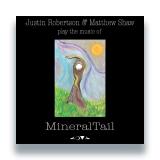
Renowned producer, dj, artist and author Justin Robertson fresh from the success of his Five Green Moons project joins forces with composer and Stone Club co-founder Matthew Shaw on their tribute to mythical band MineralTail. An 11 track cosmic trip through krautrock, weird ambience and loose-limbed grooves that accompanies the story contained in Justin's new novel of the same name. Expect hypnotic electronics and ritualistic rhythms, swirling melodies and glorious riffs.
'Critics agree that the greatest album ever recorded is the self-titled debut by the MineralTail. Recorded after the extinction of humanity by the combination of a Megalithic stone and two dogs, the record remains peerless in its ingenuity, passion and inventiveness. An album that consistently remains at the top of all rankings and charts. Though all such accolades are meaningless, nonetheless its enduring appeal is obvious. Here, at last is the first reliable account of how that record was made. The recording techniques, the creative disputes, the true source of the sound. It is a story of sublime inspiration, skulduggery, time travel, beauty and conflict. But most importantly it is the story of music itself. Because held within the grooves of the MineralTail's breathtaking debut is the voice of God's most dazzling accident. Music.'
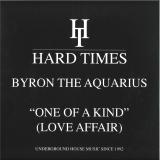
There’s a rare tenderness to the way Byron The Aquarius makes house music. Across every release, the Alabama-born producer brings a deep sense of humanity - chords that breathe, basslines that sway, and melodies that seem to remember. On 'One of a Kind (Love Affair)', his debut for Hard Times, that emotional clarity shines through once again.
A master of the keys with a discography that spans Eglo, Signature, Apron, Axis, and more recently Skylax and Star Creature, Byron has long blurred the boundaries between jazz, soul, and machine groove. Here, he builds four tracks that each glow with feeling and finesse.
‘A New Life' opens with uplift and propulsion - crisp kicks and fluid sax lines circling around tender vocal refrains. 'The Last Mile of the Way' drifts inward, its spoken-word cadence and pulsing rhythm turning reflection into hypnosis. On the flip, 'I Be Like Dat' pushes forward with a tougher, more percussive edge. A laser-guided club moment that still hums with soul. Finally, '4 Mike Huckaby' closes the record as both elegy and celebration: shakers, muted horns, and shimmering keys floating in quiet reverence for a lost friend and inspiration.
As its title suggests, One of a Kind (Love Affair) is less about romance and more about devotion.
- A1: That Musician Thats Dead
- A2: Preference Is A Good Friend, Mind
- A3: No One Can Sing That Well
- B1: Last Herald
- B2: Mo**Real
- B3: Things Keep Happening
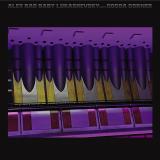
OOOOH! by Alex Bad Baby Lukashevsky with Cocoa Corner (2025)
Celebrated veteran of Toronto’s music scene, known for his boundary-pushing approach to folk and avant-garde music, twists rock music into strange and brilliant new shapes with the help of young jazz players, U.S. Girls, and his own immensely talented son.
OOOOH! is hard on the outside and soft on the inside. Made in the spirit of unity,
humanity, and poetry — disobediently renouncing the glory of personal triumph for the
generosity of an honest experiment. On the last track of the album you’ll hear “Or do you only ever never want to make a single enemy? / That’s not freedom or humility / It’s nothing, honestly.” Oooh, that's a bad baby!
A celebrated Toronto songwriter and performer, Alex Lukashevsky has always been disobedient. Which simply means, nothing is off the table when he’s looking for his
poetic voice; when trying to find the realest I of the teller. As he sings on the lead track “that musician that’s dead” The musician is radical/ it’s the world that’s demented/ listening with their eyes, the music looks dented/ they’re over-represented.
OOOOH! was recorded in January 2024 at Sound Department in Toronto, engineered by Patrick Lefler (ROY), mixed by Grammy-nominated producer Matt Smith. All the songs were tracked live off the floor in two days, with one extra day for recording vocals, to keep the recording fully alive and breathing. As leader of Deep Dark United, as a solo performer, and a sideman in Brodie Wests’ Eucalyptus and Luka Kuplowsky’s Ryokan Band, Alex has been an outsized influence on the Toronto music scene that spawned acts like Broken Social Scene and Owen Pallett. (Pallett, who has toured with Lukashevsky, went so far as to record an entire album’s worth of Alex’s songs, backed
by a full orchestra.)
Lukashevsky has approached each of his albums and projects as something completely new, using only the musical boundaries he creates with each song. Even when he
has recorded songs with nothing but his voice and his own acoustic guitar accompaniment, the results are never “stripped down” or “back to basics,”
Gong! How do you get to heaven / have fun! have fun!
It’s cool to approach music as a game of “spot the influence”; Burt Bacharach-meets-Black Flag; Lana Del Rey-meets-LCD Soundsystem etc. Glorified mash-ups are promising because of their conversational nature. But they can turn us into hyperboreans; blowing cold air beyond ourselves while doing what we can to remain warm. To devise a game or a narrative is to have a winner and a loser, but we all know that just as you win/ so you lose. And does anything really change? Alex Lukashevsky and Cocoa Corner are more at ease drawing blind contours or playing an old game like consequences. They let things add up without knowing particularly how. Cognition is recognition.
Lukashevsky, in addition to writing all the songs, plays guitar and sings on OOOOH!, doing both in ways that are soulful and spikey at the same time. Joining him on guitar and vocals is his oldest child, Charlie Lukashevsky, who, at 23, is already a talented performer and songwriter in his own right. Cocoa Corner also includes Aidan McConnell, an in-demand drummer and composer, Jack Johnston, a jazz bassist and Barry Harris acolyte, and percussionist Evan Cartwright (The Weather Station, U.S. Girls, Cola, Tasseomancy), who plays steel pan and marching drum.
Working with his son and with other younger musicians is central to the album’s
unpredictable aesthetic. It reinvigorated the sound in unexpected ways. Lukashevsky says, “I had to reconsider my own instincts. I had to deal with being 99 years old.”
In addition to these performers, the album includes a tasty contribution from Meg
Remy, the visionary musician and producer who is the leader of the critically acclaimed
project U.S. Girls. Remy duets with Lukashevsky on the imagistic and sprawling album
closer “things keep happening.”
About that album title: OOOOH! is taken straight from “that musician that’s dead” an
arch and unhinged comment on the exertion required to navigate a lifetime of music making.
Lukashevsky’s delivery of that one emotive word is a kind of cultural posture, but also a
hundred percent primitive expression. The impact is never less than visceral. His vocal
delivery ranges through rich baritone blues to keening falsettos to a kind of sprechstimme that periodically steps out from the music to grab the listener’s shirt. He
doesn’t sound too nice, but he is sincere. When life gives you lemons lament.
For OOOOH! his first official full-length album since 2012’s Too Late Blues, (a collection of knotty-yet-effervescent tunes built upon the enchantingly serpentine harmonies of Lukashevsky and his vocal collaborators, Felicity Williams (Bahamas, Bernice) and Daniela Gesundheit (Snowblink, HYDRA)), Alex has once again broken apart and rebuilt his own approach to music. Or rather (because that sounds too over-determined), he
has allowed his music to build itself into strange new shapes that only fleetingly and
coincidentally, but happily, resemble anything that might be called rock and roll. There is some editorializing within the song’s lyrics— Lukashevsky even cheekily contributes to the “spot the influence” game with the line “Muddy Waters, Rite of Spring!” a funny preemptive strike against anyone already reaching for some variation of avant-blues to describe what the song is up to here. In fact there are many names checked on this record (literally and in spirit); they are the lily pads that trace the path of this expression! Palestrina, Peter Pears and Benjamin Brittain, Andrés Segovia, Stravinsky, Lotte Lenya, Alice Coltrane, Skip James, Chuck Berry, D’Gary, Betty Carter, Mukhtiyar Ali, Chuck D, Yoko Ono, Hailu Mergia, David Bowie, Jane Siberry. rhythm is a skeleton mansion / haunted by melody / feckless prodigy / the world is under a spell / cast by some demon angel / Practice day and night / Try as hard as hell / no one can sing that well Musicians are often worried by the way in which they are prepared to fail rather
than how they would like to succeed; it’s such a deep concern that it tempers their creativity and shackles their process. Current cultural proclivities, tend to comfort a certain kind of artistic failure and abnegate another kind. How many testimonials, full of heartfelt care and investment, have you heard for Taylor Swift, and yet a craftsman like Chris Weisman is often dismissed easily as though he’s doing something anti-social. what’s throwing itself in my ears and my eyes / arrogant devil ad hominem christ.
The music you will hear on this recording veers off in multiple directions at once,
and features a rock and roll spirit with a divergent heart. This is no sclerotic clomp of the Average Rock Song, but in fact a flood of humanity in all its darkness and moodiness and unpredictability. If most performers make songs that are like sports cars or pickup trucks to drive around, Lukashevsky has built something more akin to a rowboat in a tree: it’s weird and beautiful.
ORBIT CULTURE läuten eine neue Ära ein. Das Century Media-Debüt des schwedischen Quartetts, "Death Above Life", ist nicht nur ein Statement, wie weit sie es gebracht haben, sondern es ist der Sound von Metal in seiner modernsten Form. "Das Album steht für einen Neuanfang", sagt ORBIT CULTURE-Gitarrist, Sänger und Songwriter Niklas Karlsson. "Es ruft positive und negati-ve Emotionen hervor, aber insgesamt bedeutet es eine Veränderung zum Besseren. Es fühlt sich an wie eine Wiedergeburt." Vom Opener "Inferna" über den stampfenden Titeltrack bis zum melancholischen Schlussstück "The Path I Walk" ist klar: ORBIT CUL-TURE sind in Bestform.
Neben ihrem DIY-Ethos und ihren kompromisslosen Dark-on-Dark-Visuals prägt laut Karlsson seine Vorliebe für Soundtracks und cineastische Soundscapes ihren Sound und Vision. Komponisten wie Hans Zimmer (Dune, Interstellar) und Howard Shore (Der Herr der Ringe) hätten einen großen Einfluss auf die Band. "Wahrscheinlich deutlich mehr als aktueller Metal", sagt Niklas. "Jeder von uns würde sich lieber den Soundtrack von 'Inception' anhören, weil er zeitlos ist. Wenn ich beim Schreiben nicht wei-terkomme, bieten mir z.B. Cello oder Klavier neue Möglichkeiten. Wir schreiben einfache Riffs und Strukturen, und wenn wir uns dabei von einem Künstler wie Hans Zimmer inspirieren lassen, kommt ein Song wie 'Inferna' heraus, weil wir den Chorus größer und cineastischer machen."
Produziert von der Band und gemixt von Buster Odeholm (Vildhjarta, Humanity's Last Breath, Thrown), ist "Death Above Life" ein Statement für den Metal, seine Gegenwart und Zukunft. Es ist ein entscheidender nächster Schritt für ORBIT CULTURE, da sie sich selbst und Metal als Ganzes frischer definieren. "Wir spielen Metal", sagt Karlsson. "Wir haben Einflüsse von Djent, von Me-talcore und melodischem Death Metal. Wir bleiben uns selbst treu, und ich denke, die Leute sind genau danach hungrig."
"Death Above Life" ist erhältlich als: Ltd. CD Digipak, Gatefold 2LP, Digital Album.
'Quiet Pieces' initiates Abul Mogard’s personal imprint Soft Echoes with a definitive self-portrait of calm, contemplative, and discreet inner landscapes made audible. It is the first solo album on vinyl in four years. RIYL Alessandro Cortini, William Basinski, The Caretaker.
While sifting through archived material left idle from earlier projects, a chance encounter with a late uncle’s trove of beloved 78rpm classical and opera records prompted the reworking and completion of what would eventually become the album. Spinning dusty records at 33 and 45rpm, Abul Mogard recombined their enduring spectres with unfinished sketches from his archive. The resulting soundscape blurs distinctions between his memories and those of another, exquisitely short-circuiting the senses with its waking, dream-like lucidity.
This was a process I hadn’t explored in my earlier works. I began sampling brief moments from these records, altering them with studio effects and playing them at slower speeds. In many cases, I wasn’t entirely sure how the original music sounded. These fragments, once further processed, became a source of inspiration for my new compositions. Over time, I realised that the old pieces from the archive and the new material derived from the samples naturally complemented each other.”
The resulting pieces hover over a threshold, a liminal space that harmonises the old and older material. Voluminous waves of quiet and loud undulate between consonance and dissonance, conjuring imagery of a decaying grandeur that humanity’s decadence has surrendered to the elements. Abul Mogard’s seemingly abandoned yet vast landscapes are nevertheless intimate with timbral frissons of red-lined distortion. Elusive, yet as tangible as sea spray or smog, they affect the olfactory senses with a rarified, synesthetic quality that modestly engages one’s emotional register – a hypnotic, distinguishing feature long hailed as one of the hallmarks of his work. A fidelity to memory and dream recall is sensitively probed in the journey from the stately symphonic stasis of 'Following a dream' to the almost industrial, untethered brutality evoked by a looming silhouette that’s never fully visible in 'Constantly slipping away', culminating in the foreboding coda of 'Like a bird'. Those pieces appear to shield the album’s sentimental core, where the tempestuous play of light and shadow of 'In a studded procession' escalates to breathtaking, panoramic climax, while 'Through whispers' evokes an out-of-body-like experience encountered with visceral poignancy.
Looking back, Mogard notes an unexpected influence: “I realise being inspired by Phill Niblock, whose work I had barely known at the time but explored after his passing in 2024. His album 'Boston Tenor Index' changed the way I approached dissonance. It encouraged me to push my sound further, to the edge of a space where I began to feel uncomfortable.”
The album artwork, created by longtime collaborator Marja de Sanctis, features a photograph taken at the Temple of Jupiter Anxur, an archaeological site overlooking the Mediterranean Sea. Captured with an iPhone, the image traces the residual presence of construction techniques and architectural forms of the Romans, where material history is transcribed through contemporary tools. The convergence of ancient and modern technology aims to reverberate the site’s lasting spiritual presence – an echo persisting in what is now perceived as a quiet, emptied space. The spiral gestures towards infinity and light. Past and present dissolve into one another, reflecting 'Quiet Pieces' meditation on sound, memory, and time.
RIYL Alessandro Cortini, William Basinski, The Caretaker
"This is the time that we, who have benefitted from the Last Poets shouldbe able to say, 'it's the Last Poets. It's them we should be honouring, because we did not honour them for so many years_"
KRS One wasn't just addressing the hip hop fraternity when he uttered
those words by way of introducing the video for Invocation - a poem
written thirty years ago, around the time of the Last Poets' last significant comeback. He was speaking to everyone who's been affected by the word, sound and power issuing from the most revolutionary poetry ever witnessed, and that the Last Poets had introduced to the world outside of Harlem at the dawn of the seventies.
In 2018 the two remaining Last Poets, Abiodun Oyewole and Umar Bin
Hassan, embarked on another memorable return with an album -
Understand What Black Is - that earned favourable comparison with theirseminal works of the past, whilst showcasing their undimmed passion andlyrical brilliance in an entirely new setting - that of reggae music. Trackslike Rain Of Terror ("America is a terrorist") and How Many Bullets demonstrated that they'd lost none of their fire or anger, and their essential raison d'etre remained the same.
"The Last Poets' mission was to pull the people out of the rubble o f their lives," wrote their biographer Kim Green. "They knew, deep down that poetry could save the people - that if black people could see and hear themselves and their struggles through the spoken word, they would be moved to change."
Several years later and the follow-up is now with us. The project started when Tony Allen, the Nigerian master drummer whose unique polyrhythms had driven much of Fela Kuti's best work, dropped by Prince Fatty's Brighton studio and laid down a selection of drum patterns to die for. That was back in 2019, but then the pandemic struck. Once it had passed, the label booked a studio in Brooklyn, where the two Poets voiced four tracks apiece and breathed fresh energy, fire and outrage into some of the most enduring landmarks of their career. Abiodun, who was one of the original Last Poets who'd gathered in East Harlem's Mount Morris Park to celebrate Malcolm X's birthday in May 1968, chose four poems that first appeared on the group's 1970 debut album, called simply The Last Poets. He'd written When The Revolution Comes aged twenty, whilst living in Jamaica, Queens. "We were getting ready for a revolution," he told Green. "There wasn't any question about whether there was going to be one or not. The truth was many of us still saw ourselves as "niggers" and slaves. This was a mindset that had to change if there was ever to be Black Power." He and writer Amiri Baraka were deep in conversation one day when Baraka became distracted by a pretty girl walking by. "You're a gash man," Abiodun told him. The poem inspired by that incident, Gash Man, is revisited on the new album, and exposes the heartless nature of sexual acts shorn of intimacy or affection. "Instead of the vagina being the entrance to heaven," he says, "it too often becomes a gash, an injury, a wound_" Two Little Boys meanwhile, was inspired after seeing two young boys aged around 11 or 12 "stuffing chicken and cornbread down their tasteless mouths, trying to revive shrinking lungs and a wasted mind." They'd walked into Sylvia's soul food restaurant in Harlem, ordered big meals, then bolted them down and run out the door. No one chased after them, knowing that they probably hadn't eaten in days. Fifty years later and children are still going hungry in major cities across America and elsewhere. Abiodun's poem hasn't lost any relevance at all, and neither has New York, New York, The Big Apple. "Although this was written in 1968, New York hasn't changed a bit," he admits, except "today, people just mistake her sickness for fashion." Umar is originally from Akron, Ohio, but had arrived in Harlem in early 1969 after seeing Abiodun and the other Last Poets at a Black Arts Festival in Cleveland. That's where he first witnessed what Amiri Baraka once called "the rhythmic animation of word, poem, image as word- music" - a creative force that redefined the concept of performance poetry and stripped it bare until it became a howl of rage, hurt and anger, saved from destruction by mockery and love for humanity. When Umar's father, who was a musician, was jailed for armed robbery he took to the streets from an early age where he shined shoes and raised whatever money he could to help feed his eight brothers and sisters. By the time he saw the Last Poets he'd joined the Black United Front and was ready to join the struggle. Once in Harlem, Abiodun asked him what he'd learnt in the few weeks since he'd got there. "Niggers are scared of revolution," Umar replied. "Write it down" urged Abiodun. That poem still gives off searing heat more than fifty years later. In Umar's own words, "it became a prayer, a call to arms, a spiritual pond to bathe and cleanse in because niggers are not just vile and disgusting and shiftless. Niggers are human beings lost in someone else's system of values and morals." And there you have it. It's not just race or religion that hold us back, but an economic system that keeps millions in poverty and living in fear - a system born from political choice and that's now become so entrenched, so bloated on its own success that it's put mankind in mortal danger. It was many black people's acceptance of the status quo that inspired Just Because, which like Niggers Are Scared Of Revolution, was included on that seminal first album. Along with their revolutionary rhetoric, it was the Last Poets' use of the "n word" that proved so shocking, but it would be wrong to suggest that they reclaimed it, since it never belonged to black people in the first place. There's never any hiding place when it comes to the Last Poets. They use words like weapons, and that force all who listen to decide who they are and where they stand. Umar's two remaining tracks find him revisiting poems first unleashed on the Poets' second album This Is Madness! Abiodun had left for North Carolina by then where he became more deeply enmeshed in revolutionary activities and spent almost four years in jail for armed robbery after attempting to seize funds related to the Klu Klux Klan. Meanwhile, the 21 year old Umar was squatting in Brooklyn and had developed close ties with the Dar-ul Islam Movement. A longing for purity and time-honoured spiritual values underpins Related to What, whilst This Is Madness is a call for freedom "by any means necessary," and that paints a feverish landscape peopled by prominent black leaders but that quickly descends into chaos. "All my dreams have been turned into psychedelic nightmares," he wails, over a groove now powered by Tony Allen's ferocious drumming. Those sessions lasted just two days, and we can only imagine the atmosphere in that room as the hip hop godfathers exchanged the conga drums of Harlem for the explosive sounds of authentic Afrobeat. Once they'd finished, the recordings and momentum returned to Prince Fatty's studio, since relocated from Brighton to SE London. This was stage three of the project, and who better to fill out the rhythm tracks than two key musicians from Seun Anikulapo Kuti's band Egypt 80? Enter guitarist Akinola Adio Oyebola and bassist Kunle Justice, who upon hearing Allen's trademark grooves exclaimed, "oh, the Father_ we are home!" Such joy and enthusiasm resulted in the perfect fusion of Nigerian Afrobeat and revolutionary poetry, but the vision for the album wasn't yet complete. He wanted to create a new kind of soundscape - one that reunited the Poets with the progressive jazz movement they'd once shared with musicians like Sun Ra and Pharoah Sanders. It was at that point they recruited exciting jazz talents based in the UK like Joe Armon Jones from Mercury Prize winners Ezra Collective, also widely acclaimed producer/remixer and keyboard player Kaidi Tatham, who's been likened to Herbie Hancock, and British jazz legend Courtney Pine, whose genius on the saxophone and influence on the UK's now vibrant jazz scene is beyond question. The instrumental tracks on Africanism are in many ways as revelatory and exciting as the Last Poets' own. It's important to remember that the kaleidoscope of styles and influences we're presented with here aren't the result of sampling but were played "live" by musicians responding to sounds made by other musicians. That's where the magic comes from, aided by Prince Fatty's peerless mixing which allows us to hear everything with such clarity. Music fans today have grown accustomed to listening to all kinds of different genres. Their tastes have never been so broad or all- encompassing, and so the music on this new Last Poets' album is as groundbreaking as their lyrics, and perfectly suited to the era that we're now living in. John Masouri
Solid White Vinyl[26,26 €]
Special Splatter Vinyl[26,26 €]
Splatter Vinyl[26,26 €]
Das brandneue, schwedische Quartett "Thrown", um Sänger Marcus
Lundqvist und Schlagzeuger / Produzent Buster Odeholm (Vildhjarta,
Humanity's Last Breath), hat gerade erst ihre aƽressive 5-Track-EP
namens "Extended Pain" veröffentlicht, da kommt schon das Debütalbum "Excessive Guilt" um die Ecke.
Die Band kann trotz ihrer kurzen Karriere eine unglaubliche Followerschaft nachweisen. Das neue Album wird heiß erwartet und wird für
große Furore sorgen.
Marbled w/ Red+Black Vinyl[26,26 €]
Special Splatter Vinyl[26,26 €]
Splatter Vinyl[26,26 €]
Das brandneue, schwedische Quartett "Thrown", um Sänger Marcus
Lundqvist und Schlagzeuger / Produzent Buster Odeholm (Vildhjarta,
Humanity's Last Breath), hat gerade erst ihre aƽressive 5-Track-EP
namens "Extended Pain" veröffentlicht, da kommt schon das Debütalbum "Excessive Guilt" um die Ecke.
Die Band kann trotz ihrer kurzen Karriere eine unglaubliche Followerschaft nachweisen. Das neue Album wird heiß erwartet und wird für
große Furore sorgen.
Marbled w/ Red+Black Vinyl[26,26 €]
Solid White Vinyl[26,26 €]
Splatter Vinyl[26,26 €]
Das brandneue, schwedische Quartett "Thrown", um Sänger Marcus
Lundqvist und Schlagzeuger / Produzent Buster Odeholm (Vildhjarta,
Humanity's Last Breath), hat gerade erst ihre aƽressive 5-Track-EP
namens "Extended Pain" veröffentlicht, da kommt schon das Debütalbum "Excessive Guilt" um die Ecke.
Die Band kann trotz ihrer kurzen Karriere eine unglaubliche Followerschaft nachweisen. Das neue Album wird heiß erwartet und wird für
große Furore sorgen.
Zweite Auflage des "Downer" Albums als Vinyl in neuen Farben Rot und Gelb! ten56. stehen kurz vor der Veröffentlichung ihres ersten Full-Length-Albums "Downer", das aus zwei Teilen besteht, die bereits als EPs veröffentlicht wurden. Ihre Musik ist die perfekte Porträtierung von brachialer Aggression, dystopischer Weltsicht und einem erdrückenden Gesamtsound mit Aaron Matts beeindruckenden Vocals.
Bouncy-Aspekte auf Tracks wie "Yenta" oder dem "Diazepam" (der bereits fast 3 Millionen Streams auf Spotify erreicht hat) sorgen unvermeidbar für Headbang Momentum. Einflüsse von Trap-Musik und andere Einflüsse kulminieren in einem hochmodernen Sound, der gleichzeitig die besten Trademarks des 2010er Deathcores einbaut. Ähnlich bedrückend wie Korns „Selftitled“ Album oder Slipknots „Iowa“ präsentieren ten56. ihren beängstigenden Sound in Tracks wie "Boy" oder "Traumadoll", während stampfende Grooves, knallende Riffs und aggressive Drums kombiniert mit Rap-Elementen "Saiko" zu einem weiteren Brecher werden lassen, der (im guten Sinne) fast schon unangenehm klingt.
Kurze Blast-Beat-Passagen sorgen für noch mehr Härte, als ob "Downer" nicht schon heavy genug wäre. Als Bonus gibt es mit "Choky" einen exklusiven Track auf dem Album, der mit Downtempo-Grooves einmal mehr ten56.s faszinierenden Nu-Metal-beeinflussten Deathcore-Sound aufblitzen lässt. ten56. verstehen sich als moderne Interpretation der frühen Emmure, kombiniert mit Nu-Metal der goldenen Ära, eingängigen Grooves und einer zerstörerischen Soundwand, wie man sie von Humanity's Last Breath kennt - das Ergebnis ist mit Sicherheit deine neue Lieblings-Deathcore-Band!
Canto Ostinato is the new volume of classical minimalism from musician and producer Erik Hall. Written for four pianos in 1979 by Dutch composer Simeon ten Holt, the piece is freshly framed as an intimate, hour-long solo performance consisting of multitracked grand pianos, electric piano, and organ. Modern yet warm, ethereal yet tangible, Hall's Canto Ostinato expertly bridges a revered piece of meditative concert repertoire with a tactile and highly personal studio setting. Chicago-born and Michigan-based, Erik Hall is known as a multi-instrumental pillar for the groups NOMO, Wild Belle, and his own songwriting moniker In Tall Buildings. He has composed music for feature films, and as a producer/engineer he has shaped records for Natalie Bergman and Western Vinyl labelmates Lean Year. In a 2020 creative pivot, he chose to reinvent composer Steve Reich's monumental contemporary classical masterpiece Music for 18 Musicians as a solo undertaking, applying the piece's score to the familiar keyboards, guitars, and synthesizers in his studio. "At the time I think I was working through my identity as a musician and an artist," Hall explains, "and on a level there was some sort of exorcism of a long held pop spirit." The album was celebrated for being "freshly thrilling" and "legible in history but assertive of the moment" (Pitchfork) and "beguiling, meditational, and magical" (Electronic Sound). It won the 2021 Libera Award for Best Classical Record, and it quickly joined the canon of the piece's quintessential recordings. "There is a pseudo-meditational benefit to working on a longform piece that's built on repetition," Hall says. "Every stage- from internalizing the music, to executing the performance, to editing and mixing the record- requires deep and sustained presence of mind. I've always been drawn to a hallucinatory combination of harmony and repetition, and I found the entire process addictive." An apt second chapter, Canto Ostinato is inherently vast, and its score gives great creative license to the performer. Comprising 106 sections, complete freedom is given to repeat each one as many or as few times as desired. Additional leeway is given with regard to dynamics, articulation, and even instrumentation. On the heels of his previous, rather maximal arrangement, Hall chose to limit this album's palette to three foundational keyboards of his studio: a 1962 Hammond M-101 organ, a 1978 Rhodes Mark I electric piano, and his family-heirloom 1910 Steinway grand piano. "This particular piece brought the added challenge of rekindling my dexterity as a pianist, something I haven't maintained in earnest since I was a teenager," he admits. The ensuing five-note rhythmic motif- the piece's primary building block- is steady and workmanlike, forgoing virtuosic flare for depth, texture, and resonance, and eventually giving way to the stunning gratification of a gorgeously lyrical left turn. As with Music for 18 Musicians, Hall employed no loops nor quantization nor any programmed or sequenced instruments of any kind. Every part was performed live in a room and captured with microphones, one at a time, each informed by, and reacting to the last. In this way the record breathes with interplay and an organic humanity, complete with flaws, noise, and the faint sound of turning pages. The recording quality is nonetheless toneful and saturated, characteristic of Hall's production style and straying from the usual transparency of classical albums by using gear with tubes, transformers, and various stages of compression in the signal path. Always there is unmistakable realism and the feeling of being present in the room, sitting among the keys, hammers, and tines. Ten Holt said: "Time, patience and discipline are the prerequisites for making a genetic code productive." His landmark composition provides Hall once again with a wondrous space in which to reverently embody this sentiment and deftly convey the elegant beauty of this music.
- 1: Shadow (Forte)
- 2: Dagger (Forte)
- 3: Eternal Golden Monk (Forte)
- 4: Benblåst (Forte)
- 5: Östpeppar (Forte)
- 6: Traces (Forte)
- 7: Phobon Nika (Forte)
- 8: Måsstadens Nationalsång (Forte)
- 9: When No One Walks With You (Forte)
- 10: All These Feelings (Forte)
- 11: Nojja (Forte)
- 12: Deceit (Forte)
- 13: The Lone Deranger (Forte)
With a decade between releases, VILDHJARTA remain as inscrutable and as close to anonymity as a band can be. Their down-tuned, staccato riffs and pulverizing grooves are the sound of music stripped to its essence. Formed in 2005 in Hudiksvall, Sweden, VILDHJARTA has become an institution of omission. From their origins, they were unafraid to embrace the untraditional. Since dropping a minute of new live music in 2016, the band's focus has almost entirely been on the new album, “måsstaden under vatten” that was finally released October 15th, 2021, with drummer and now noted producer, Buster Odeholm (also known for his work with Born of Osiris, Shadow of Intent and guitar for Humanity’s Last Breath amongst others) heavily involved in the production, mixing and mastering of the music. While working on “måsstaden under vatten” the band also revamped their two first releases. Buster Odeholm comments: "Before I joined VILDHJARTA they were my favourite band. However, I always felt the production could be a lot better and serve the songs a lot more. After joining I asked for the files from those albums to be able to try my own approach. I’ve re-programmed/produced bass and drums from scratch. For producing the drums on ‘Thousands of Evils (forte)’ I got some help from Chris George from Sworn In. I've also remixed and remastered both albums. This has been going on a long time and a lot of remixing has been done as the years have gone by, but now it’s finally time to release it.". Don’t miss the chance to check out classic VILDHJARTA tunes in all their up to date glory, now entitled ”måsstaden (forte)” and “Thousands of Evils (forte)”. Both are available as Ltd. Gatefold marbled LP, Ltd. CD Edition and Digital Album.
- 1: Lavender Haze
- 2: Brännmärkt
- 3: När De Du Älskar Kommer Tillbaka Från De Döda
- 4: Den Helige Anden
- 5: Passage Noir
- 6: Kaos 2
- 7: Toxin
- 8: Måsstadens Nationalsång (Under Vatten)
- 9: Heartsmear
- 1: Vagabond
- 2: Sunset Sunrise
- 3: Sunset Sunrise Sunset Sunrise
- 4: Mitt Trötta Hjarta
- 5: Penny Royal Poison
- 6: Detta Drömmars Sköte En Slöja Till Ormars Näste
- 7: Phantom Assassin
- 8: Paaradiso
With a decade between releases, VILDHJARTA remain as inscrutable and as close to anonymity as a band can be. VILDHJARTA's down-tuned, staccato riffs and pulverizing grooves are the sound of music stripped to its essence. Yet, the Swedish collective’s long-awaited album, måsstaden under vatten, is far more than a recitation of djent values. Clocking in at 80 minutes, it thematically picks up where the dark Swedish fable of 2011’s Måsstaden left off and delivers on the promise that record hinted at. Tracks like the recently released “när de du älskar kommer tillbaka från de döda” (“When the Ones You Love Return From the Dead.”) suggest a newfound subtlety and sophistication amidst the bombast and beauty in the breakdown.
Since dropping a minute of new live music in 2016, the band's focus has almost entirely been on the new album with drummer and now noted producer, Buster Odeholm (Born of Osiris, Shadow of Intent, Humanity’s Last Breath) heavily involved in the production, mixing and mastering of the music. Visual artist Rickard Westman, who did art for VILDHJARTA's debut as well as their Thousands of Evils EP in 2013, has also returned to the equation to reprise his disturbing visual iconography. Says the band: “Art happens when art happens.”
The sound of music is rarely this challenging, unforgettable and worth the wait.
- 1