
pre-ordina ora06.10.2025
dovrebbe essere pubblicato su 06.10.2025
29,20 €
dovrebbe essere pubblicato su 06.10.2025

From Jagjaguar: “Somewhere along the way, I got the idea
that Richard Youngs’s ‘Sapphie’ was all about a dead dog.
“I don’t know if someone insinuated this idea in front of me
or if I psychologically tethered the title to the tenderly
printed dog paw on its cover. Either way, I’ve gone over a
decade thinking this remarkable, windswept album of torch
songs was about a dearly departed pet.
“And yet, as we approached a reissue of this Jagjaguwar
classic and a new, reimagined version by artists Hypnotic
Brass Ensemble, Moses Sumney, Sharon Van Etten, and
Perfume Genius, Richard Youngs was straightforward and
unsentimental about its meanings. ‘The lyrics are not
about anything in particular,’ Youngs wrote.
“The paw prints on the cover are, in fact, that of a friend’s
dog (‘The first dog I ever loved,’ Richard said), but there is
no devastating loss at its center.
“And so, I want to tell Richard how this album has become
a centering album for a great many of us, a transcendent
and meditative piece of art.
“‘What does ‘the mindfulness drill’ have to do with it?’
Richard asks me dryly in a note.
“It’s about being relentlessly present, Richard. It’s how
when we listen to your album, we feel like a lonely traveler
in a foreign country. How everything has a newness to it
and there’s no one to share it with but the you inside of
you. And that fine, fine line is where ‘Sapphie’ lives,
Richard. Thank you for this, Richard.”
A reimagining of Richard Youngs’ ‘Sapphie’ with
instrumentals from Hypnotic Brass Ensemble and vocal
contributions from Moses Sumney, Perfume Genius and
Sharon Van Etten.
Available on Opaque Black & White Explosion vinyl.
dovrebbe essere pubblicato su 25.06.2021

Disponibile in Stock e pronto per la spedizione
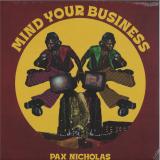
Pax Nicholas is one of the last living veterans of Fela Kuti’s Africa 70. Born in Accra, Ghana, he joined Africa 70 as conga player and backing vocalist in 1971, appearing on landmark recordings including Lady Shakara.
In 1978, he left Africa 70 at the Berlin Jazz Festival alongside drummer Tony Allen, and settled in Germany, where he built a remarkable second chapter — leading the twelve-piece Afrobeat ensemble Ridimtaksi, collaborating with Finnish jazz maverick Jimi Tenor, and reuniting with the African diaspora in Berlin for Ebo Taylor’s celebrated 2012 album Appia Kwa Bridge released on Strut Records.
In 2009, Daptone Records reissued his 1973 cult classic Na Teef Know De Road of Teef, earning him long-overdue global recognition.
Now signed to Paris-based Afrobeat imprint Comet Records, Pax Nicholas returns with his new single “Mind Your Business” — a heavyweight dancefloor Afrobeat cut built on thundering brass, interlocking percussion and a razor-sharp guitar riff. The release features an exclusive remix by Gabriel Belabbas, producer, DJ and co-founder of Parisian label Positive Future, who recasts Mind Your Business in deep, minimal territory — a sparse, tension-laced groove that channels the hypnotic darkness of Moodyman and Ricardo Villalobos. Stripping the arrangement back to its percussive skeleton, he lets the Afrobeat elements — brass, rhythm, heat — surface and recede like smoke, leaving just enough space for the tension to build and the dancefloor to fall. Slow-burning and devastating on a proper soundsystem.
Disponibile in Stock e pronto per la spedizione

James Brown wants to know one thing before he and his band begin Sex Machine. “Can I get into the thing, really?,” he asks. His cohorts enthusiastically respond in the affirmative. And for the next hour and change, Mr. Dynamite gets into it and more, turning in a sweat-soaked, feet-moving, hip-swiveling, emotion-purging, in-the-red, drop-everything-you’re-doing-and-dance performance for the ages. Ranked by Rolling Stone among the 500 Greatest Albums of All Time, the sweeping 1970 effort towers as a testament to Brown’s inimitable legacy as well as the peak powers of his voice, vibrancy, and bands.
Sourced from the original master tapes, pressed at Fidelity Record Pressing, and housed in a Stoughton gatefold jacket, Mobile Fidelity’s numbered-edition 180g 33RPM 2LP set presents Sex Machine in audiophile sound for the first time. It explodes with the energy the lightning-strike music demands. Dynamic, immediate, present, airy: Everything from the brassiness and fluidity of the horns to the snap and decay of the snare to the swell and carry of the organ comes across in full-range perspective.
Then there’s Brown’s superhuman singing, which here emerges with a purity, naturalism, and transparency that ensure you feel everything. Screeching, shouting, pleading, moaning, preaching, stinging, commanding, testifying, crooning, humming: The Godfather of Soul contributes one of the finest vocal performances known to man. This definitive 55th anniversary reissue of Brown’s monster funk statement further exhibits a combination of clarity, solidity, separation, and imaging that helps bring to light what he and his crack ensembles committed to tape. Both in the studio and on the stage.
Just how lifelike does this reissue sound? Senior Mobile Fidelity Sound Lab engineer Krieg Wunderlich, who handled the remaster, notes: “There were some artifacts that sounded a bit like mistracking. But they turned out to be breath blasts on the vocal microphone. That is part of history. JB was workin' hard, and breathin' hard. And there was an edit the timing of that was truly strange. Again, a part of history.”
Originally marketed as a live album, Sex Machine contains six songs recorded in the studio and later overdubbed with canned crowd noise and reverberation. Save for “Low Down Popcorn,” the tracks on the latter half stem from a phenomenal performance captured in October 1969 at Bell Auditorium in Brown’s adopted hometown of Augusta, GA. The special relationship between the singer, the audience, and the location is palpable.
As the 1960s gave way to a new decade, Brown experienced immense success and dealt with unexpected change. Soul Brother Number One soon expanded his idea for an official live album captured in Augusta when the ensemble that backed him on that date morphed into the original version of the world-famous J.B.’s just months after the show. The virtuosic abilities, sticky chemistry, and rhythm-forward nature of the J.B.’s prompted him to book a one-off session in Cincinnati, OH, on a late July night.
Anchored by brothers William “Bootsy” Collins and Phelps “Catfish” Collins, the group — as well as two different drummers — laid down a nearly 11-minute rendition of “Get Up I Feel Like Being Like a Sex Machine” and a thrilling medley of “Bewildered,” “I Got the Feeling,” and “Give It Up or Turnit a Loose.” A pair of then-recent studio singles cut in separate locations in 1969, “Brother Rapp” and “Low Down Popcorn,” each featuring his prior group, took care of the second LP worth of material that complements the originally planned live set.
Complicated? Somewhat. Unusual? Definitely. But just as he elevated the expectations for all present and future R&B artists, Brown not only makes it all work. He makes it positively electrifying.
“Get Up I Feel Like Being Like a Sex Machine” is alone deserving of a dissertation on the art of funk music, seeing it moves up and down akin to an oil derrick, witnesses Brown unleashing a trademark series of grunts, squeaks, and “good god” asides, and glides to a hypnotic groove that won’t quit. Or look to the syncopated rhythms of “Brother Rapp (Part I and Part II),” one of multiple pieces here that signify the point where Brown began viewing every instrument as a percussive tool. Brown closes the three-song medley with his new band with a skedaddling “Give It Up or Turnit a Loose,” which provides jolts on the order of sticking your finger into a socket.
Not that the actual live material falls short in any way. Setting an insistent tempo for the vitality that follows, “I Don’t Want Nobody to Give Me Nothing” positions Brown as a role model, leader, and self-sufficient entrepreneur. All simmer and boil, the short and sweet “Licking Stick” dares you to keep pace. The floating, almost comforting “Spinning Wheel” spotlights the instrumental prowess of Maceo Parker and company, and functions as a seamless segue into the tender, horn-saluted “If I Ruled the World.”
And Brown and his mates still aren’t done. Just try to resist the one-two closing punch of “I Can’t Stand Myself (When You Touch Me)” and “Mother Popcorn.” Mercy.
Ain’t it funky? Sure ‘nuff.
Ordina ora e ordineremo l'articolo per te presso il nostro fornitore.

Souldynamic swings back onto the Samosa label with the mesmerizingly rhythmic West-Side Of Afrika Vol. 2.
We kick off the A-Side with ‘Touma’ – a truly hypnotic tribal afro vapour that entices you into the fire-lit night. A heavy dub-style bass just about dominates above the rhythmic ensemble, whilst the haunting chanted vocals elevate the track to ethereal levels. Stunning. No wonder Ron Trent has been spinning this one in his sets for the past few weeks – it’s right in that spiritual zone where deep house meets ancestral ritual.
Second track on Side A is the happiness trip that is ‘M.I.L’. Rolling drums, marimbas and a killer bassline merge with the flighty guitar riffs and smiling vocals. You could be in a bar listening to the music live in the room, smoke filling the spaces and dim lights offering a glimpse of good times.
Heading over to Side B and you find the enchanting ‘DJA’ awaiting. A deep roller of a tune, Souldynamic shifts the gears whilst serving the entrees. A truly magnificent slice of West-African vibes, ‘DJA’ has it all from the gorgeous vocals to the chugging, hypnotic beat.
Track 2 on Side B is the sultry ‘N.T.F.P’. The BPMs are touched down a notch for this one but don’t let that fool you. ‘N.T.F.P’ is a musical celebration of joyous beats, slaps, claps, brass and Afro vocals. You don’t get it much more authentic than this.
West-Side Of Afrika Vol. 2 is like a shapely hand in the perfectly fitted glove that is the Samosa label. A truly stunning piece of vinyl with every track as strong as the last. A sure-fire winner.
Ordina ora e ordineremo l'articolo per te presso il nostro fornitore.

WOW. Daniel O'Sullivan's transcendent new album, Eros, is one of the greatest things we've ever heard. A simply stunning song cycle of hypnotic, experimental contemporary chamber music composed for a 14-piece ensemble. Combining minimalism, complex syncopation, detailed acoustic textures, weird intervals and samurai precision, this record will elegantly blow your mind. When Daniel first sent us this, he pitched it as “Liquid Swords meets Michael Nyman”. Trust us, he wasn't wrong. A "unique hybrid orchestral music", it presents a confluence of Daniel's longstanding fixations; indeed, there's elements of Nyman, Antonio Carlos Jobim, Magma, Aaron Copland and RZA. But this is wholly O'Sullivan's. Originally commissioned for the Sonoton Music Library in Munich, Eros now receives a deluxe vinyl release courtesy of Be With Records, bringing this meticulously crafted work to a wider audience. Limited to just 500 copies for the world, these are gonna fly.
An English composer and multi-instrumentalist, Daniel O'Sullivan’s career has been marked by versatility and innovation. In addition to his work with Sonoton, he has composed extensively for the legendary KPM music library, contributing to its storied legacy of production music. As a deep virtuoso and collaborator, O'Sullivan has also played in a number of influential projects, including Ulver, Sunn O))), This Is Not This Heat, Grumbling Fur and Miracle (with Steve Moore), leaving an indelible mark on the contemporary experimental music landscape.
O’Sullivan’s first foray into classically informed chamber music, Eros is a culmination of his long-standing fixations and expansive musical influences. The album features arrangements that are as detailed as they are emotionally resonant, showcasing his unparalleled ear for intervals and mastery of counterpoint. The music brims with complex rhythmic syncopation and a sensitivity to texture and space, resulting in a soundscape that is both intoxicating and dauntingly precise.
Recorded June 2023 and February 2024, in Brussels, London and Carmarthenshire, Wales, Eros features members of Echo Collective (Neil Leiter and Margaret Hermant), Thighpaulsandra (from seminal post-industrial band Coil), and jazz pioneer Oren Marshall. Daniel's sonic weapons of choice, in his own inimitable words, were "Big Bad Drum, Pee Anne Oh, Low End Brass, Willowy Winds & Samurai Strings." You get the picture. As a cyclical suite, this is a record that really needs to be heard in its entitreity, from start to finish, to truly appreciate the genius at work here.
A jaw-dropping statement of intent, the minimalist "Golden Verses" sets the tone with its complex cue which has your neck snapping right when it feels like it needs to. Listen and you'll understand. A syncopated tangle of sharp strings, crunchy bass, drums percussion and bright piano and mallets vie for position with French horn and woodwind melody in the most compelling and unexpected ways. Quite simply, it's one of the finest album openers I've ever heard. It's followed by the atmospheric rippling minimalism of "Lyre Lyre", a gorgeous gem with shimmering chimes, bright melody, human percussion and syncopated pizzicato strings. It kinda comes on like a less-abstract Boards Of Canada, bursting with typical wonderment. The piano and string-drenched "Dolorous Stroke" effortlessly builds its warm, pastoral orchestration with flowing piano arpeggio, steadfast drums, expressive string quartet, rich low brass, woodwind and lyrical flute. Just sublime.
The insistent frenetic propulsion of "Plain Paper" is utterly beguiling, featuring a determined string motif, urgent drums and percussion, driving low brass and breathless, energetic flute. The haunting, interweaving string arpeggios that propel "Grapes Draped" presents a claustrophobic minimalism for chaos and darkness, with growling low woodwind and brass, spiky harpsichord, skittering flutes and tight drums. Up next, "Xanix Annum" is a stately minimalist waltz with expressive lyrical string quartet and delicate woodwind, anchored by drums and percussion. "Painting Rose" is a bouncy stop-start track with angular syncopated strings and a piano pulse underneath bright harpsichord and flutes. "Rotunda Garden" presents ethereal textural minimalism for landscapes and reflection with flowing string arpeggios, warm, low woodwind drones, floating choir and cymbal swells. Closing out this extraordinary side of music, the glowing, flowing minimalism of "Flowry Orb" features urgent organ, piano and woodwind arpeggios, half-time drums with shimmering cymbals, a soaring, beautiful violin solo and hypnotic vocal chant.
Side 2 opens with "Theia Mania" a determinedly off-kilter, angular track featuring low wind, brass and drum stomp in dialogue with lively string trio, woodwind and solo horn. The light, airy minimalism of "Painting Percy" is built around an interplay of rhythmic motifs for piano, low brass, bassoon, fluttering flutes, urgent strings, drums and percussion whilst "For Archetypes" is a delicate, gently syncopated chamber cue for nostalgia, nature, reflection and moments of calm, with steady piano motif, intimate woodwind and French horn, and warm, graceful strings. The urgent Ars Memoriae is a propulsive march for progress, processes and industry, underpinned by driving tuba, with determined strings, resolute drums, and vivid, expressive flute, clarinet and French horn.
The syncopated energetic minimalism of "Mirrored Seven" presents layers of melodic and cyclical piano, drums, low brass, harp, flute and strings. "Pure Ornament" follows, a slowly evolving chamber cue with flowing clarinet, string and harp arpeggio, plodding tuba and percussion, fluttering flute and graceful, lyrical solos. Stunning! Up next, "Brave Boy" moves from its tender, warm, lullaby-like intro with lyrical flute, clarinet and strings before opening into a playful backend driven by a bouncy tuba riff and syncopated piano, woodwind, string trio, and drums and percussion. Rounding out this astonishing piece, "Waxen Waned" is a warm, pastoral chamber cue with light lyrical woodwind, tender French horn and subtly pulsing string trio.
The album's title is a reference to Plato’s conception of Eros, which is more than romantic or physical desire. It is a dynamic and creative force that drives individuals to seek perfection whether in art, relationships, philosophy or the pursuit of truth. Wholly appropriate, here, we think. When asked what his influences were in making this astounding record, he answered thusly: "Non-musical: Householding, Pythagoras, Goethe, Grail romances, Hermeticism, Doctrine of Signatures (Parcelsus, Bohme, Pliny), Eric Rohmer, John Stezaker, Yasujiro Ozu. Musical: Duke Ellington (late suites), Smile-era Brian, early RZA, Wagner (Parsifal Overture), Magma, Mancini, Axelrod, YMO, Hildegard, Nyman, Penguin Cafe Orchestra, Jobim (Stone Flower), Alessandro Alessandroni, Tavener, Moondog, Orthodox Music, Secular Music." That's some pretty deep shit. Makes you want to dive in, no?
Mastering for this vinyl edition was overseen by Be With regular Simon Francis, and it was cut by the esteemed Cicely Balston at Abbey Road Studios to be pressed in the Netherlands by Record Industry. Truly, Eros is a work of extraordinary depth and sophistication. It invites listeners to immerse themselves in its intricate layers, to lose themselves in its hypnotic rhythms, and to marvel at the precision of its execution. With this release, O’Sullivan reaffirms his position as one of the most inventive and uncompromising voices in contemporary music. Do. Not. Sleep.
dovrebbe essere pubblicato su 23.05.2025

It is with great pleasure that we announce Mitchum Yacoub's debut album Living High in the Brass Empire_ a showcase in unique stylings of tropical funk, afrobeat, cumbia, and soul; a musical patchwork threaded by a heavy, hypnotic rhythm section and powerfully vibrant horn lines. What sounds like a 12-piece ensemble was actually mostly recorded and performed by Yacoub at his home in San Diego, featuring a few close friends from local groups Sure Fire Soul Ensemble and Boostive. The horn section is comprised of Travis Klein, Bradley Nash, and Wesley Etienne (featuring Todd Simon on "Los Muñequitos"), each with distinguished performances that send the music to higher heights. Nuanced vocalist Divina Jasso lends humanity and introspection throughout the head-nodding soul sounds of "Never Knew", latin dance anthem "Cumbia Divina", and the syncopated funk of "Empire". You'll hear rhythms from Colombia, folkloric percussion of Cuba, interlocking grooves à la Fela Kuti, 70's r&b influence, and something in between it all. Drawing many inspirations into a refreshing and unified record, we think you'll enjoy Living High in the Brass Empire.
dovrebbe essere pubblicato su 20.09.2024

A thrilling immersion into FM synthesis and a puzzle of MIDI data, the Los Angeles based multi-instrumentalist Gregg Kowalsky returns to Mexican Summer with Eso Es, his sophomore outing for the label and first new music since 2017’s L'Orange L'Orange. Representing a significant creative leap for the veteran composer, Eso Es unfolds as a hypnotic journey into Kowalsky’s inner world, laced with a depth of emotiveness and vulnerability that’s rarely encountered in the electronic music realm. Raised in South Florida and trained at Mills College under Fred Frith and Pauline Oliveros, Kowalsky first came to prominence during the mid-2000s as a member of the thriving experimental music scene in the Bay Area, issuing a series of stunning albums on imprints like Kranky and Root Strata and contributing to a reinvigoration of American made Minimalist and electroacoustic music. In an addition to composing solo works, pieces for large ensembles, film soundtracks, dance performances, and site-specific installations over the past twenty years, during the 2010s Kowalsky concentrated his energies as one half of the critically acclaimed duo Date Palms, performing extensively and releasing three hypnotic albums, including 2011’s Honey Devash on Mexican Summer.
Ordina ora e ordineremo l'articolo per te presso il nostro fornitore.

It is with great pleasure that we announce Mitchum Yacoub's debut album Living High in the Brass Empire a showcase in unique stylings of tropical funk, afrobeat, cumbia, and soul; a musical patchwork threaded by a heavy, hypnotic rhythm section and powerfully vibrant horn lines. What sounds like a 12-piece ensemble was actually mostly recorded and performed by Yacoub at his home in San Diego, featuring a few close friends from local groups Sure Fire Soul Ensemble and Boostive. The horn section is comprised of Travis Klein, Bradley Nash, and Wesley Etienne (featuring Todd Simon on "Los Muñequitos"), each with distinguished performances that send the music to higher heights. Nuanced vocalist Divina Jasso lends humanity and introspection throughout the head-nodding soul sounds of "Never Knew", latin dance anthem "Cumbia Divina", and the syncopated funk of "Empire". You'll hear rhythms from Colombia, folkloric percussion of Cuba, interlocking grooves à la Fela Kuti, 70's r&b influence, and something in between it all. Drawing many inspirations into a refreshing and unified record, we think you'll enjoy Living High in the Brass Empire.
dovrebbe essere pubblicato su 14.07.2023

It is with great pleasure that we announce Mitchum Yacoub's debut album Living High in the Brass Empire a showcase in unique stylings of tropical funk, afrobeat, cumbia, and soul; a musical patchwork threaded by a heavy, hypnotic rhythm section and powerfully vibrant horn lines. What sounds like a 12-piece ensemble was actually mostly recorded and performed by Yacoub at his home in San Diego, featuring a few close friends from local groups Sure Fire Soul Ensemble and Boostive. The horn section is comprised of Travis Klein, Bradley Nash, and Wesley Etienne (featuring Todd Simon on "Los Muñequitos"), each with distinguished performances that send the music to higher heights. Nuanced vocalist Divina Jasso lends humanity and introspection throughout the head-nodding soul sounds of "Never Knew", latin dance anthem "Cumbia Divina", and the syncopated funk of "Empire". You'll hear rhythms from Colombia, folkloric percussion of Cuba, interlocking grooves à la Fela Kuti, 70's r&b influence, and something in between it all. Drawing many inspirations into a refreshing and unified record, we think you'll enjoy Living High in the Brass Empire.
dovrebbe essere pubblicato su 14.07.2023

For Fans Of... The Budos Band, Antibalas, The Sure Fire Soul Ensemble, Ikebe Shakedown. Sophomore LP out on Colemine Records in Fall of 2023. Debut LP 'Undying Thirst' charted on Billboard's Jazz Charts. Recently celebrated 10 years of the band. Black Market Brass are back with two new heavy hitters. With a fresh take on afrobeat fused with heavy, hypnotic, and sci-fi sounds, BMB gears up for their forthcoming LP, set to release in Fall of 2023 on Colemine Records.
Ordina ora e ordineremo l'articolo per te presso il nostro fornitore.

For Fans Of... The Budos Band, Antibalas, The Sure Fire Soul Ensemble, Ikebe Shakedown. Sophomore LP out on Colemine Records in Fall of 2023. Debut LP 'Undying Thirst' charted on Billboard's Jazz Charts. Recently celebrated 10 years of the band. Black Market Brass are back with two new heavy hitters. With a fresh take on afrobeat fused with heavy, hypnotic, and sci-fi sounds, BMB gears up for their forthcoming LP, set to release in Fall of 2023 on Colemine Records.
Ordina ora e ordineremo l'articolo per te presso il nostro fornitore.

Nucleus's Elastic Rock is undisputedly a milestone in Jazz-Rock. A beautiful and vital debut album, it was first released on Vertigo in 1970. Original copies are now very tricky to score and, like all the Nucleus records, it’s aged ridiculously well. This Be With re-issue, re-mastered from the original analogue tapes, shows off just why this deserves to be back in press.
Genius trumpeter and visionary composer Ian Carr was one of the most respected British musicians of his era. He was a true pioneer and saw the potential in fusing the worlds of jazz with rock, just as Miles Davis and The Tony Williams Lifetime did in the US. In late 1969, following the demise of the Rendell-Carr quintet, and tiring of British jazz, Carr assembled the legendary Nucleus. Regarding music as a continuous process, Nucleus refused to “recognise rigid boundaries” and worked on delivering what they saw as a “total musical experience”. We can get behind that.
Under bandleader Carr, Nucleus existed as a fluid line-up of inventive, skilled musicians. This constant evolution and revolution was all part of the continuous musical exploration and discovery that took jazz to new levels. And the music has kept relevant. To steal a line from a review of our re-issue of Roots, when it comes to anything Nucleus “it’s basically already hip-hop”.
The very title Elastic Rock could be regarded as the group's MO, describing a melting point between their rock and jazz impulses. Indeed, housed in a memorable gatefold jacket designed by Roger Dean, the die cut molten teardrop shape on the front sleeve opens to reveal a fiery volcanic crater. On the back, Dean's drawing has Carr with saxophonist Brian Smith, guitarist Chris Spedding, drummer John Marshall, bassist Jeff Clyne and sax, oboe and pianist Karl Jenkins in a circle, the central core of a movement and the basis for its activity.
Recorded over four days in January 1970, Elastic Rock didn't sound like any other British jazz album. Exploding out the gate, "1916" opens with Marshall's frantic pounding before melancholic horns enter. The smooth title track, "Elastic Rock" is just a gorgeous electric blues track. Light drums, gentle melodic horns, piano and a solid bassline serve as the perfect bed for Spedding's graceful bluesy guitar melodies. The serene "Striation", a Clyne and Spedding collaboration, is led by bowed bass and is the epitome of calm before the late night laid back vibe of "Taranaki" breezes along sweetly and smoothly with great trumpet and tenor.
The truly emotional "Twisted Track" is elegant with horns, while guitar is gently played with drums and bass. Initially deeply soothing, it gradually builds with various solos and duets. "Crude Blues (Part 1)" features an excellent oboe part by Jenkins with laconic guitar helping out. "Part 2" is livelier, with a heavy backbeat and great wind parts. "1916 (Battle Of Boogaloo)" features a steady bassline and great call and response parts from the horn section.
The highly-charged centrepiece of the record, the mesmeric epic "Torrid Zone" features an hypnotic bassline and hi-hat with some of the ensemble's best soloing. Brilliantly encapsulating the jazz fusion aesthetic so desired by the group, the rhythm section is rock-influenced but magically retains a laid-back jazz vibe. Just perfection. Spacey jazz in the style of In a Silent Way, the semi-ambient "Stonescape" features smooth, muted brass, warm, smokey keys and a barely-there rhythm section. Heavenly.
The bubbling, fragile restraint of "Earth Mother" partially utilises the "Torrid Zone" bassline but takes the energy in a different direction with Marshall's frenetic drumming and Spedding's unpredictable riffing. Next comes the very idiosyncratic drum solo track by Marshall in the appropriately-titled "Speaking for Myself, Personally, in My Own Opinion, I Think." The album closes with the raucous "Persephones Jive", a track that ends the album frantically, riotously, just as it began.
This Be With edition of Elastic Rock has been re-mastered from the original Vertigo master tapes, Simon Francis’ mastering working together with Cicely Balston's cut at AIR Studios to weave their usual magic with these wonderful recordings. The stunning die-cut gatefold sleeve has been restored in all its molten glory.
Ordina ora e ordineremo l'articolo per te presso il nostro fornitore.

Yellow Vinyl[37,52 €]
2023 Repress On Vertigo Days, the first album in seven years for The Notwist, one of Germany’s most iconic independent groups are alive to the possibilities of the moment. Their music has long been open-minded and exploratory, but from its engrossing structure, through its combination of melancholy pop, clangorous electronics, hypnotic Krautrock and driftwork ballads, to its international musical guests, Vertigo Days is both a new step for The Notwist, and a reminder of just how singular they’ve always been. Most importantly, the core trio of Markus and Micha Acher and Cico Beck are reaching out: as Markus reflects, “we wanted to question the concept of a band by adding other voices and ideas, other languages, and also question or blur the idea of national identity.”
It’s been seven years since The Notwist’s last album, Close To The Glass, and in that time the various members of the group have been busy with side projects (Spirit Fest, Hochzeitskapelle, Alien Ensemble, Joasihno), guest appearances, a record label (Alien Transistor), movie scoring, helping organise the Minna Miteru compilation of Japanese indie pop & running a festival (Alien Disko). Those divergent paths feed back into Vertigo Days in surprising ways, from its structure, built from group improvisations, with songs flowing and melting into one another in a collective haze, to its spirit, which feels refreshed and alive. There’s something cinematic about Vertigo Days too, reflective of the group’s time working on soundtracks, and reflected in the rich, moody photographic artwork by Lieko Shiga that adorns the cover.
The first sign of this newfound openness was the album’s lead single, “Ship”, where the group were joined by Saya of Japanese pop duo Tenniscoats, her disarmingly hymnal voice sighing over a propulsive, Krautrocking beat. Elsewhere, American multi-instrumentalist Ben LaMar Gay sings on “Oh Sweet Fire”, also contributing “a love lyric for these times, imagining two lovers in an uprising hand in hand.” American jazz clarinettist and composer Angel Bat Dawid adds clarinet to the spaced-out dream-pop of “Into The Ice Age”, while Argentinian electronica songwriter Juana Molina gifts some gorgeous singing and electronics to “Al Sur”. Saya also reappears as a member of Japanese brass band Zayaendo, who guest on the album. Throughout, The Notwist also capture the openness of their live performances, too, where they mix and link their songs in unexpected ways.
Indeed, what’s most impressive about Vertigo Days is the way it sits together as one long, flowing suite, the album conceptualised as a whole entity – it’s perfect for the long-distance, dedicated listening experience. This is also captured by the album’s lyrics, which Markus states, “feel more like one long poem.” The dimensions of that poem are multi-faceted, something intensified by the geopolitical weirdness of its times: “As the situation changed so dramatically, while we were working on the record, the theme of ‘the impossible can happen anytime,’ more about personal relationships in the beginning, became a global and political story.” But it also works at a level of poetic abstraction, such that each song gestures in multiple directions – the deeply private pans out to the global. The one certainty is that there is no certainty. “It’s maybe mostly about learning and how you never arrive anywhere,” Markus concurs. To sit within uncertainty is brave, but it’s also where we feel most alive, and Vertigo Days is an album that is brimming with life, with enthusiasm and love for music and for community, all wide-eyed and dreaming.
Ordina ora e ordineremo l'articolo per te presso il nostro fornitore.

Black Vinyl[26,85 €]
2023 Repress on Yellow Vinyl
On Vertigo Days, the first album in seven years for The Notwist, one of Germany’s most iconic independent groups are alive to the possibilities of the moment. Their music has long been open-minded and exploratory, but from its engrossing structure, through its combination of melancholy pop, clangorous electronics, hypnotic Krautrock and driftwork ballads, to its international musical guests, Vertigo Days is both a new step for The Notwist, and a reminder of just how singular they’ve always been. Most importantly, the core trio of Markus and Micha Acher and Cico Beck are reaching out: as Markus reflects, “we wanted to question the concept of a band by adding other voices and ideas, other languages, and also question or blur the idea of national identity.”
It’s been seven years since The Notwist’s last album, Close To The Glass, and in that time the various members of the group have been busy with side projects (Spirit Fest, Hochzeitskapelle, Alien Ensemble, Joasihno), guest appearances, a record label (Alien Transistor), movie scoring, helping organise the Minna Miteru compilation of Japanese indie pop & running a festival (Alien Disko). Those divergent paths feed back into Vertigo Days in surprising ways, from its structure, built from group improvisations, with songs flowing and melting into one another in a collective haze, to its spirit, which feels refreshed and alive. There’s something cinematic about Vertigo Days too, reflective of the group’s time working on soundtracks, and reflected in the rich, moody photographic artwork by Lieko Shiga that adorns the cover.
The first sign of this newfound openness was the album’s lead single, “Ship”, where the group were joined by Saya of Japanese pop duo Tenniscoats, her disarmingly hymnal voice sighing over a propulsive, Krautrocking beat. Elsewhere, American multi-instrumentalist Ben LaMar Gay sings on “Oh Sweet Fire”, also contributing “a love lyric for these times, imagining two lovers in an uprising hand in hand.” American jazz clarinettist and composer Angel Bat Dawid adds clarinet to the spaced-out dream-pop of “Into The Ice Age”, while Argentinian electronica songwriter Juana Molina gifts some gorgeous singing and electronics to “Al Sur”. Saya also reappears as a member of Japanese brass band Zayaendo, who guest on the album. Throughout, The Notwist also capture the openness of their live performances, too, where they mix and link their songs in unexpected ways.
Indeed, what’s most impressive about Vertigo Days is the way it sits together as one long, flowing suite, the album conceptualised as a whole entity – it’s perfect for the long-distance, dedicated listening experience. This is also captured by the album’s lyrics, which Markus states, “feel more like one long poem.” The dimensions of that poem are multi-faceted, something intensified by the geopolitical weirdness of its times: “As the situation changed so dramatically, while we were working on the record, the theme of ‘the impossible can happen anytime,’ more about personal relationships in the beginning, became a global and political story.” But it also works at a level of poetic abstraction, such that each song gestures in multiple directions – the deeply private pans out to the global. The one certainty is that there is no certainty. “It’s maybe mostly about learning and how you never arrive anywhere,” Markus concurs. To sit within uncertainty is brave, but it’s also where we feel most alive, and Vertigo Days is an album that is brimming with life, with enthusiasm and love for music and for community, all wide-eyed and dreaming.
dovrebbe essere pubblicato su 10.02.2023
“We Da People” follows Emanuel's recent EP “Funk La Soul” and will be released via London tastemaker label and analogue specialists Gearbox Records (Binker Golding, Roland Kirk, The Cookers, Abdullah Ibrahim). Alongside the announcement, Harrold has shared a new single titled “I Think”, which features two-time GRAMMY-winner, Gregory Porter. Having made a name for himself both live and record collaborating with the likes of Damon Albarn, Keyon Harrold, Hypnotic Brass Ensemble, De La Soul, and Gregory Porter, “We Da People” marks a new chapter in Harrold’s solo career. The LP is a positive combination of uplifting messages and improvisational sounds that transcend R&B, jazz, soul, gospel, and funk. The release also sees Harrold bring in a number of estimable guest musicians including Gregory Porter, Charles Ransom II & Crystal ‘Crissy’ Ransom, Jahmal Nichols, Carlos “Scooter” Brown, Tivon Pennicott, Joel Holmes, Brian Owens, and more. Featuring lead vocals from his long-time friend and collaborator Gregory Porter, the new single and album opener “I Think” perfectly encapsulates the sound of the album by combining gospel-tinged soul vocals, with jazz-funk inflected guitars, uplifting orchestral strings, groove heavy bass that is interweaved with Harrold’s precise, high energy drumming.
dovrebbe essere pubblicato su 20.01.2023

Fantastic Oakland, California-based ensemble ORCHESTRA GOLD offers up a kaleidoscope of sound deeply rooted in the Malian tradition while introducing a genre-bending nod to the future through their rare and artful fusion of African Psychedelic Rock. Spearheaded by the dynamic MARIAM DIAKITE, whose raw and hypnotic vocal stylings deliver heartfelt and thought-provoking lyrics in the highly symbolic Bambara language. While paying homage to Malian musical traditions, this fierce new sound is supported by heavy swinging rhythms, a funky fresh brass section and cosmic guitar licks.
dovrebbe essere pubblicato su 07.10.2022

A soundtrack of Sudan's revolution and the first ever international release of the Beja sound, performed by Noori and his Dorpa Band, an unheard outfit from Port Sudan, a city on the Red Sea coast in eastern Sudan and the heart of Beja culture.
Beja Power! is a living archive of the finest, most heartfelt Beja songs—a six-track portal to another time and place, of melodies long forgotten and never before interpreted by an electric and brass-driven ensemble. Few older Beja recordings were produced. Even fewer, if any, remain.
Electric soul, blues, jazz, rock, surf, even hints of country, speak fluently to styles and chords that could be Tuareg, Ethiopian, Peruvian or Thai—all grounded by hypnotic Sudanese grooves, Naji's impeccable, airy tenor sax, and of course, Noori's tambo-guitar, a self-made unique hybrid of an electric guitar and an electric tambour, a four-string instrument found across East Africa.
A truly ancient community, Beja trace their ancestry back millennia. Some say they are among the living descendants of Ancient Egypt and the Kingdom of Kush. They are even depicted in the hieroglyphics. Beja melodies—nostalgic, hopeful and sweet, ambiguous and honest—are thousands of years old. Yet their sounds are also reminiscent of Dick Dale's 1963 "Misirlou" and jazz great Charlie Rouse's 1968 "Meci Bon Dieu". This album could be 6,000 years, 60 years, or 6 months old.
Along with his Dorpa Band, formed in 2006, Noori's instrumental Beja music forms the latest link in an unbroken chain of an inherited, arresting sound that is local as it is global, a gift of a storied past and the exchanges of the well-traveled Red Sea.
Ostinato Records is honored to bring the nearly forgotten Beja sound in all its nostalgia, sweetness, honesty, and power, recorded and mastered to maintain the warmth of Sudan's signature aesthetic, to your sound system.
Ordina ora e ordineremo l'articolo per te presso il nostro fornitore.
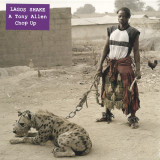
Ordina ora e ordineremo l'articolo per te presso il nostro fornitore.

Far Out Recordings is delighted to present Mora!, and for the first time ever on vinyl Mora! II. Mexican-American percussionist and former member of the Sun Ra Arkestra, Francisco Mora Catlett originally recorded and released his debut solo LP as a private press in 1987, but the sequel he recorded over the course of the next few years with an expanded Detroit jazz brass section was shelved for decades to follow. A pan-American melting pot of hypnotic afro-cuban rhythms, frenetic batucadas and fiery sambas, Mora I & II are holy grails of latin jazz, masterminded by an unsung hero of the genre.
Born in Washington DC, 1947, Francisco Mora Jr is the eldest child of two highly prominent Mexican artists, Francisco Mora Sr and Elizabeth Catlett, to whom this project was dedicated. Being born into a mixed heritage bohemian family provided Mora Jr with what he called a “creative, progressive, and healthy arts environment”, building the foundations for a fascinating career journey ahead. Mora grew up in Mexico City where he began working as a session musician for Capitol Records in 1968, before moving to study at Berklee Music College in Boston, MA in 1970. Once he’d completed his studies in 1973, he very briefly returned to Mexico City with the best intentions of cultivating an avant-garde movement in the city, but when the Sun Ra Arkestra came to perform, Mora ended up leaving with the band to tour the world for the next seven years, a decent innings within a group famous for its constantly evolving line up.
Settling in Detroit after his years with the Arkestra, Francisco set to work on his self-titled debut, gathering an ensemble of musicians that included keyboardist Kenny Cox, founder of the legendary Strata Records, esteemed bassist Rodney Whitaker of the Roy Hargrove Quintet and percussionists Jerome Le Duff, Alberto Nacif, and Emile Borde. The album openly embraces and unites the broad spectrum of improvisation, rhythm, and jazz that has thrived throughout the American continents for centuries. In Mora’s own words the album intended to “manifest the African heritage presence in the American continent.” Epitomising this outlook, album opener ‘Afra Jum’ deploys a melody based on Haitian, African and Native American motifs, which is expanded upon by the soulful excellence of the Detroit veterans Cox and Whitaker, amidst a backdrop of afro-cuban inspired percussion.
The sequel Mora II was recorded shortly after with an expanded line up that included trumpet legend Marcus Belgrave, famed for his work with Ray Charles, Charles Mingus, Hank Crawford, Eddie Russ and Wendell Harrison. Continuing the concept of the first album, the follow up moves deeper into South America with the samba jazz dance belter ‘Amazona’, led by the rich vocals of Francisco’s wife Teresa Mora. The ‘Afra Jum’ concept is further explored, with the original motifs beefed up by the additional horns, and interspersions of Sun Ra inspired rumbling free improvisations. This follow up album remained shelved until 2005, when Mora put it out as a now obscure CD titled River Drum, but only now has it been given the high quality vinyl treatment it so deserves, presented as the sequel to Mora! as originally intended.
Through the 90s and into the the 21st century Mora would continue his Pan-American explorations, moving toward a more electronic afro-futurist direction as part of Detroit techno pioneer Carl Craig’s Innerzone Orchestra. Mora also worked with Carl Craig, moog synth wizard Craig Taborn, and his former Arkestra colleague, the legendary Marshall Allen, to form the Innerzone Orchestra spin-off Outerzone, released in 2007 on Premier Cru Records. Mora I & II will be out as two vinyl LPs, CD and digitally 16th April 2021.
Ordina ora e ordineremo l'articolo per te presso il nostro fornitore.

Powerful new spiritual jazz from Chile on Soul Jazz Records!
This album comes as a very limited one-off unique pressing of 1000-edition vinyl, limited editon CD and digital release.
Enrique Rodríguez and the Negra Chiway Band group have an instantly powerful and unique sound that is reminiscent of the ensembles of Sun Ra and his Arkestra as well as Horace Tapscott and his Pan-Afrikan Peoples Arkestra, one that channels the righteous spirits of Alice Coltrane, John Coltrane, Pharoah Sanders, Archie Shepp and McCoy Tyner together with a stunning Latin rhythmical and new consciousness and percussive energy. Added to this are elements of the Samurai film soundtracks of Akira Kurosawa, Popol Vuh’s musical spirituality (especially their work with film director Werner Herzog), Tibetan Buddhism and over-blowing chants, that all combine to give a truly unique new sound.
Enrique Rodríguez is a composer, percussionist, keyboardist, and producer from Santiago, Chile, whose work shows many similarities with the music featured on Soul Jazz Records’ recent collection ‘Kaleidoscope - New Spirts Known and Unknown’, featuring new forward-looking jazz artists including Mathew Halsall, Theon Cross, Emma-Jean Thackray and Makaya McCraven.
Like all these artists, Rodríguez’s work is a progressive and experimental fusion of earlier influences that combine into a new and definitely 21st century ground-breaking sound that, on account of its South American setting, give the group its truly unique feeling. Hypnotic modal piano riffs, powerful brass and flutes, an army of Latin percussion instruments, and addictive vocal chants all combine in this powerful mix of radical 60s Afro-centric jazz, eastern spirituality and cosmology, and Latin American rhythmical movement.
Ordina ora e ordineremo l'articolo per te presso il nostro fornitore.

A trio of guitar, bass and drums, Elektro Guzzi overcome the boundary between analogue versus digital, performing techno live with the drive of a machine and the sonic detail of an instrument - without any computers or loopers. For their upcoming album Polybrass, Elektro Guzzi have drastically expanded their sonic repertoire: both in the studio and on stage, they are joined by an ensemble of three trombonists, opening up a whole new realm of possibilities. With Hilary Jeffrey, Daniel Riegler and Martin Ptak, the band are joined by three brass heavyweights, each of them well renowned for both their solo ventures as well as projects such as The Kilimanjaro Darkjazz Ensemble, Sand and Zeitkratzer. By treating the three trombones not simply as a set of extra instruments but rather as one coherent body of sound on its own, Elektro Guzzi dissociate the brass instruments from their conventional use and repurpose them into something completely different: a modular synthesizer, with each trombone representing one oscillator. In doing so, Elektro Guzzi add new layers of depth to their music, emphasizing a more cinematic side of their music: like the soundtrack for a movie, Polybrass is bigger, darker, more dramatic, more intimate. Warm and fuzzy textures float weightlessly above fragile soundscapes and complex sonic fragments. At the same time, the band's signature sound runs distinctly through the entire album: solid percussive grooves, stripped down to the absolute minimum it takes to make your body move. Hypnotic repetition, building tension and suspense up to a point where the energy of the music gets so intense you feel like you can physically touch it with your hands, interlaced with organic patterns of sound, constantly changing and evolving, pulsating and oscillating. Vinyl: heavy sleeves + heavy printed inner sleeves, 180g vinyl with download code.
Ordina ora e ordineremo l'articolo per te presso il nostro fornitore.

Bristol based Afro-beat band, Matuki are releasing their debut 7 single on December 2nd via Stutter & Twitch, featuring an exclusive remix by Shunya. As each side of the record paints a juxtaposing image, Matuki drives forward as they make a name for themselves as Bristol's most engaging afro-funk band. Side A 'Sanimenteren' showcases fiery horn melodies and liquid guitar riffs, whereas Side B 'INJO' changes direction completely, as Manchester producer Shunya takes the reins. By morphing Matuki's steadfast rhythm into a lucid downtempo glitch, Shunya creates a unique and mesmerizing new perspective towards the urban band's signature style. Likened to the legends Fela Kuti and Afro Manding the authentic Afro band punctured Bristol's music scene after an exceptional debut performance at Glastonbury's Glade Stage, blending jazz & psychedelic influences with urban-funk. The result Mesmerizing tracks and heavyweight horn lines that reflect on how the 12-piece collective are never afraid to venture out of their comfort zone, to create something special.Turbo-boosted grooves and fusing Afro Manding with intoxicating Fela Kuti horn lines, Matuki creates a rhythm so deep and hypnotic, it takes you on a journey' - Rhythm Passport'Matuki mix the classic ingredients - brass, beats, vocals and electricity - into something suitably hot'n'spicy..., If Bristol's Afrobeat scene gets any hotter we might as well move to Lagos' - Canteen Bristol. Fronted by master drummer and vocalist, Abraham Ebou Sanyang (Savanna, Magoma), Matuki mixes traditional afro-beat sounds with heavy doses of contemporary urban funk, into an exciting concoction of world music. The ensemble recently expanded after merging their sound with the Bristol Jazz Student ensemble Jamba Horns, and has previously collaborated with an array of versatile musicians including the Bristol Samba community. After the success of their debut performance, Matuki saw airplay from Bristol based DJ Hiphoppapotamus, and Miles Chambers of Lyrical Minded as well as BCFM, Bristol City Radio, Radio Ujima and Radio Helsinki, as an energizing sound bled into the airwaves. Touring the UK festival circuit, performing at Secret Garden Party, Green Man, Farmfest, Kendal Calling, Glastonbury to name a few, saw Matuki turn unassuming audiences into dancing frenzies, wherever they play.
Ordina ora e ordineremo l'articolo per te presso il nostro fornitore.
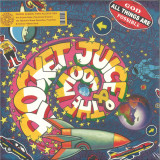
Up and away / To your journey to the sun / Drink your rocket juice / Fly away (Hey, Shooter).
High up in the skies, amongst the clouds, Rocket Juice & The Moon was born. Literally. It happened back in 2008, when Damon Albarn, Flea and Tony Allen convened on the same Lagos flight, to play and exchange musical ideas in that city as part of the Africa Express collective. Relishing a shared enthusiasm for one another's work, and bonding immediately, there and then the triumvirate laid down the blueprint for Rocket Juice.
Still, more than a year passed before conditions were set for three weeks together at Albarn's West London studio, recording and refining two-dozen startlingly out and deeply funky instrumental grooves. The next stage was to invite onboard some extremely talented friends, with further sessions in Dallas, New York, Chicago and Paris... Erykah Badu, no less, queen of contemporary soul. Three companions from Africa Express: Malian singer Fatoumata Diawara, whose debut album has topped World Music charts since its release last Autumn; her multi-talented compatriot Cheick Tidiane Seck, whose prodigious keyboardism has lit up releases by artists ranging from Youssou N'Dour to Hank Jones; the young, Ghanaian rapper M.anifest, quizzically existential, switching seamlessly between Twi and English. And the Hypnotic Brass Ensemble, long-time stalwarts in the Honest Jon's set-up — since one of the team discovered them busking near the shop in Portobello Road, on his lunchbreak — with a second album for the label due in May... Finally, the tracks were dispatched for mixing to Berlin, to be meticulously honed, polished and envenomed by Mark Ernestus, one half of the legendary Basic Channel and Rhythm & Sound partnerships.
The result is Rocket Juice & The Moon — out March 26, 2012, on Honest Jon's Records — a triumphant exploration and proliferation of kinetic Afro-funk rhythms: organic, exuberant, communal music-making, evidenced by the project's live debut on stage as part of the Honest Jon's Chop Up in late 2011, which hit London, Marseille, Dublin, and Cork to such great acclaim (witness the flurry of smart-phone film-clips uploaded in the days thereafter).
From the inaugural bars — that absurdly funky slice of instructional timekeeping, 1-2-3-4-5-6 — the liquid pulse of Fela Kuti's classic recordings drives the action through a suite of 18 shape-shifting compositions. The greatest drummer in the world has never sounded so good as he does here. His intricate cross-patterns jostle and lock with Flea's nimble, rumbling bass riffs. Joined by Seck on There and Extinguished — 'when you dispose of something burning, be sure it's out' — Albarn's keyboards spray synth fusillades up top, over, and under... splicing into the mess of wires running between the freaked Afro-disco of William Onyeabor and the space-jazz-moog of Sun Ra. The HBE brings extra intensity and drama to Leave-Taking — likewise Flea's trumpet to Rotary Connection — teasing out the haunting melody coiled in the mix.
Where the best of vintage Afrobeat sides sustained their concentrated energies over the course of sprawling, marathon jams, RJ & TM manages something altogether different: the group bottles the idiom into capsules of funk... and real songs. Beautifully buoyed by Erykah Badu's unmistakable vocals, Hey, Shooter brilliantly traverses metaphysical spaceways sans any semblance of noodling. Lolo and Follow-Fashion — featuring the open-hearted sensuality of Diawara's singing, M.anifest's quick, brawny science, and more brass blasts — play like its musical cousins or codas. Indeed, the album's shrewd sequencing creates the composite effect of tracks working both individually or within the context of an extended song-cycle.
The lovely ballad, Poison, is bittersweet and ruminative: 'If you're looking for love, beware the signs / They will paralyze you one by one / Poison, it will only break your heart.' Down-tempo and dubby, Check Out and Worries amplify the range of styles and moods. And by the time of Fatherless — a chugging Afro blues that evokes John Lee Hooker lost in Lagos, one gets the sneaking suspicion there's very little outside the reach of this collective's inventive musical grasp.
There is, in fact, a palpable openness pervading Rocket Juice & The Moon — the sense of a limber willingness to follow creative impulse — right down to how the group acquired its name. When Ogunajo Ademola — the Lagotian commissioned to do the album's cover artwork — dubbed his submission 'Rocket Juice & The Moon', it quickly morphed into the formal name of the project, like trying to hold onto mercury.
Surely, the stars above also approved.
Ordina ora e ordineremo l'articolo per te presso il nostro fornitore.
