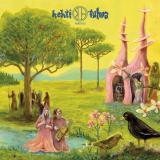
Saithara were a leading traditional Lanna music group in the Chiang Mai area, led by Chansom Saithara who was named a National Artist in 1996.
Chansom's son, Thepthara Panyamana, fronted the related Saithara "Combo", who explored a range of international pop styles to craft their light-hearted parody tracks in the local "kam mueang" dialect. The lead single here, from 1985, makes use of a well-known German synth-pop song which had become a surprise smash a few years earlier, while the b-side snags a similarly notable power-pop tune from the USA.
Thepthara was also a songwriter and instructor for the child musical group Nok Lae, a Chiang Mai area youth band who became mainstream crossover stars nation-wide. Thepthara passed away in 2017, and Baa Records has teamed with his brother Komsan to license this re-issue in his memory.
Search:ko tune
- 02: Hurriya (We Must Resist)
- 01: Nyama
- 03: Yagé
- 04: Cumana Dub
- 05: Sabir
- 06: Tropikal Halal
- 07: Yallah! (Feat. Merve)
- 08: Sahra Azul
Auf ihrem zweiten Album erweitern Psyché ihre einzigartige Mischung aus Groove und Psychedelia um eine subtile politische Dimension. In Psychés Vision dient ihre Heimatstadt Neapel als pulsierender Schmelztiegel, in dem Klänge aus Nordafrika und dem Nahen Osten auf die Echos ferner Küsten wie Brasilien und Kolumbien treffen. Ihr Sound bewegt sich zwischen Cosmic Funk und Desert Blues, Cumbia, Dub und Jazz und wird durch den Einsatz analoger Synthesizer und treibender Basslines getragen. Die LP gewinnt dank der Zusammenarbeit mit dem tunesischen Sänger Ziad Trabelsi und der türkischen Sängerin MERVE (Altın Gün) an internationaler und politischer Bedeutung. Psyché II ist die Essenz einer Reise durch Kulturen und Identitäten: ein Album, in dem die gegenseitige Befruchtung und ein nomadischer Geist die Grundpfeiler eines zeitgenössischen Sounds bilden – verwurzelt im Mittelmeerraum und gleichzeitig weltoffen.
b 02: Hurriya (We Must Resist) feat. Ziad Trabelsi
b 02: Hurriya (We Must Resist) [feat. Ziad Trabelsi]
[b] 02: Hurriya (We Must Resist) [feat. Ziad Trabelsi]
[b] 02: Hurriya (We Must Resist) [feat. Ziad Trabelsi]
Official reissue of a German under-the-radar disco tune. The original from 1979 is a bubbling dancefloor stomper with freewheeling synth lines. For the flipside of this 7" Korkut Elbay created a spaced out balearic dub rework. Picture sleeve with a funky painting by Holger Kurt Jäger that picks up on the original.
The melody of 'Butterfly Dance' came to Dieter Bührig's mind as a butterfly floated through the recording studio during a session break. The resulting track landed on a compilation with mostly cover versions of disco hits. Now, more than 45 years later, the tune found its well-deserved single release on funkscapes.
Korkut Elbay is a fixture of Cologne's electronic music scene for over 20 years. He's part of the Cómeme camp and with remixes and edits for labels like Permanent Vacation or funkscapes he prooves his sensitive feel for the dancefloor. So does he on this rework, giving the orginal space to breathe and calm down without leaving the dancefloor.
Dieter Bührig studied electrical engineering and sound recording in Berlin. Afterwards he worked several years as a sound engineer for the music industry and as a producer. Later on he worked as a teacher for physics and music, trained trainee teachers for secondary schools and wrote articles and publications on musical education, choir and band arrangements. Nowadays he's writing, among other things, musical crime stories.
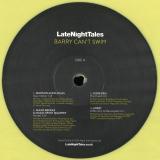
- A1: Jackson Mico Milas - Sea, Interior
- A2: Majid Bekkas & Magic Spirit Quartet - Annabi
- A3: Jesse Bru - The Coast
- A4: Loket - Afternoon At Barenquell
- B1: Superpitcher - Yves (Exclusive Lnt Edit)
- B2: Scott Orr - Scott B3 Barry Can't Swim - Sometimes I Feel So Alone
- B4: Marigold Sun - Here Lies Love
- B5: Barry Can't Swim - Chala (My Soul Is On A Loop)
- B6: Freddy Da Stupid - Back To Pangea Part Ii (Jazzapella Version)
- C1: Factory Floor - How You Say(Daniel Avery Remix)
- C2: Ronald Langestraat - Lowdown
- C3: Lance Desardi - The Power Of Suggestion
- D1: O'flynn - Kola
- D2: Accelera Deck - This Bliss
- D3: Pépe - Goma (A-Mix)
- D4: This Mortal Coil - The Lacemaker
- D5: St Francis Hotel - Dawn
- D6: Barry Can't Swim - Ferdinand Magellan (Exclusive Felt Cover Version)
- D7: Seamus - Ultrasound (Exclusive Lnt Spoken Word Track)
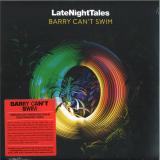
In the last two years, Barry Can’t Swim has released two albums – When Will We Land? and Loner. The debut was nominated for a Mercury Music Prize, winning 2024’s Best Dance Act on BBC Radio 1 and being nominated for Best Dance Act at the BRIT Awards in the same year. The latest album, 2025’s Loner, hit the top ten in the UK charts and was number one in the dance charts. This summer, Barry Can’t Swim cemented his position as one of the most singular new voices in electronic music with a gangbusting performance as a headliner at All Points East in London’s Victoria Park, building on his back-to-back performance with Bonobo at Coachella in 2024. Barry’s Late Night Tales mix brings together disparate styles and forms them into a coherent narrative. The powerful house tracks, like Lance DeSardi’s ‘Power of Suggestion’ and Daniel Avery’s remix of Factory Floor, intertwine with the abstract grooves of Freddie Da Stupid or Ronald Langestraat’s leftfield reading of Boz Scaggs’ ’70s smash ‘Lowdown’. There are exclusive tracks from Barry Can’t Swim himself (in the form of new single ‘Chala’ and an exclusive edit of Superpitcher’s ‘Yves’) and from friends and contemporaries, like Ninja Tune labelmate O’Flynn. Leaving aside the obvious quality of the mix, with its serpentine twists and dramatic turns, you can tell Josh is a fan of this series by bringing in his own personal poet, the brilliant Seamus, for the spoken word section right at the end. He’s a one-man Late Night Tales programmer.
No-one could have predicted the success of The 88, the first album from Minuit
(minwee), or how warmly it would be received. Equally no-one could have predicted that the band would return to the live arena a decade after their final fling or consider pressing their debut on vinyl for the first time.
Formed in Nelson, NZ in 1997, the trio cut their teeth playing regularly around the South Island’s underground club and festival scene. After a hiatus overseas, they began recording The 88 in 2002 in Ryan’s home studio. The lyrics were influenced by their travels around Europe and Ruth's time working for the UN in Kosovo and East Timor; the beats by The Prodigy, Portishead and the UK’s trip-hop and breakbeat scenes.
Signed to indie label Tardus, their tunes were eagerly picked up by the bNet student radio network, which then ballooned into high rotates on TV station C4, helped along by Alyx Duncan’s stunning video for Except You. A busy summer playing live every weekend for three months and seemingly universal praise from the music press led to them swiftly gaining gold sales.
Now 22 years later, with live shows looming, the trio have decided to revisit their debut, completing two previously unfinished tracks from the period to add a bonus to this inaugural vinyl release.
Finally, it's time to get these classic tunes out on vinyl for the very first time. The support from DJs has been off the charts, and the list is long - including Carl Cox, Dave Clarke, Ben Sims, Kolsch, Deadmau5, Armin van Buuren, Lilly Palmer, Radio Slave and Laurent Garnier, just to name a few. The support spans a wide spectrum, from DJs with very different musical profiles - yet they all play these tracks. Proud to bring SWAY back on vinyl!
Cult reissue label Sticky Buttons returns with ‘Sweet Edits’, their first official foray into dancefloor edits featuring 4 remixes of Nigerian boogie legend Dizzy K by a hand picked set of superstar producers specially designed to get the party moving.
Starting with a bang, the A Side features a double hit of remixes to Dizzy K’s 80’s sleeper hit “Afrikan Jamboree”. First up is Clive From Accounts, frequent contributor to Razor-N-Tape and hot off the heels of his 2025 debut full length LP, Clive’s edit has gifted us a complete foot stomper, filled with popping synths and squelchy baselines the track has already been getting big plays by the likes of Optimo over the past 18 months. On track A2, well known dance floor magician Lipelis takes the reins, creating his Disco Dub version, expertly layering traditional african drums and vocal loops from the original to build a wonky club track laden with energy and soul as come to be expected from the artist.
Over on the B Side, South London based duo Make A Dance (M.A.D) take the formula from their own widely popular house inspired edits imprint to take apart Dizzy K’s “I’ll Never Love Again”, stripping it down into a teetering, chugging acid sprinkled weapon overlaid with a ferocious drum pattern destined to move even the stiffest hips. Last but not least, Japanese producer Mayurashka brings her signature subversive style to Sticky Buttons, flipping Dizzy’s K’s “Konga Mama” into a hypnotic tribal masterpiece, pulsating with a psychedelic techno edge ripe for blending in smokey club venues and dark mainrooms.
Four heaters not to be slept on. Hearing is believing and on this limited edition vinyl release the legend of Dizzy K sings again, finely tuned for 2026 dancefloors but always carrying the raw spirit of the original.
Mastered by Submarea Estudio
Cover Art Illustration by Alex Ram
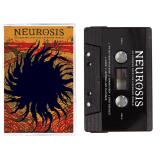
‘An Undying Love For A Burning World follows Converge’s Love Is Not Enough this year as a pivotal metal album about acknowledging the darkness for what it is and trying to accept it.’ - the QUIETUS
‘Neurosis Know You’re Hurting. Their Stunning New Album Is a Life Preserver.
An Undying Love for a Burning World, the band’s first album with new member Aaron Turner, is a reminder of how even the darkest music can be a guiding light’ - 9/10 ROLLING STONE
Evolution can be ugly and beautiful, painful and euphoric. An Undying Love For A Burning World is the first new release from Neurosis in a decade, and a potent statement of intent and rebirth - one that marks the first new steps of resolve and resilience.
An Undying Love For A Burning World is an epic album of colossal hypnotism - beautiful, fearsome and utterly compelling in a way that only Neurosis can be. Aaron Turner (Sumac, Isis) joins the band on vocals and guitar, a name whose legacy is intertwined with the band’s own and a true kindred spirit.
“From the moment I first heard Neurosis over 30 years ago, I felt this was the music my heart and mind had been seeking but not yet heard. Now after many years travelling along various musical paths of my own, the singular sound and spirit embodied by Neurosis continues to speak to the depths of my being. It is an honor and a true pleasure to have been welcomed so warmly into a band that not only shaped my perspective on the limitless possibilities of music - but has lived and exemplified the necessity of upholding creative integrity and camaraderie above all else.” - AARON TURNER
Neurosis have never been afraid of change, and here they embrace endless regeneration, surrendering to the emotional exorcism through heaviness and distortion that their music incites. Just as the universe tends towards balance, Neurosis’cacophony of noise, rhythm and dissonance always resolves towards moments of beauty. The addition of Turner's powerful vocals and wildly creative and unhinged approach to guitar proves to be a vital force as Neurosis find themselves again at the mercy of evolution and expression.
On every song in the band’s history, Neurosis shifts restlessly between tension and relief, invoking a feeling both feral and transcendent in listeners. The band describe their songwriting process as an inescapable impulse to create with each other - a need rather than a choice. Indeed, the band insist that their return is “not a reunion - we never broke up.”
The album was recorded by Scott Evans (Kowloon Walled City, Sumac, and Great Falls) at Studio Litho in Seattle during three weekends this winter, and mixed in three days just six weeks before release at Evan's Antisleep Audio in Oakland.
Neurosis will play their first show in seven years on the traditional lands of the Blackfeet Nation in Montana as part of Fire in the Mountains festival by special invitation of Firekeeper Alliance, a non-profit dedicated to reducing youth suicide in Indian Country.
FITM, is a unique festival known for bringing epic music to epic landscapes with the intent of reconnecting and immersing oneself with the natural world, and strengthening our ancestral roots as human beings - an aim which aligns directly with Neurosis’ deep-rooted power.
Stay tuned for further news over the coming months.
PREVIOUS PRESS:
‘In less skilful hands, this relentless sonic oppression would be gruelling, but by expressing human frailty with such visceral abandon, Neurosis have once again turned darkness into euphoria.’ - 4/5 THE GUARDIAN
‘The Oakland band has evolved from gritty metallic punk to harrowing post-hardcore prog to the majestic doom of their current phase’ - 7.9 PITCHFORK
‘It’s not often an album of such stature exceeds one’s anticipations, but Honor is too astounding to not be revered.’ - The QUIETUS
“Fires Within Fires is the summation of thirty years of experimentation in tonality and texture. Yes, NEUROSIS are firmly positioned within the extreme metal underground yet their music, with its ability to generate images of beauty akin to those many of us have experienced in our own lives – not to mention the loss that accompanies them – challenges this categorization. ‘’ - WIRE MAGAZINE - FULL PAGE REVIEW.
"Their intensity remains undimmed on Fires Within Fires...The already converted will take heart from the evidence that age is unable to wither the fury of this heaviest of bands." - KERRANG! 4K REVIEW
"Every monstrous sludge riff gnashes menacingly for the right amount of time and every delicate moment of folk-inspired drift is emotionally exacting. Neurosis continue to create art without equal, and Fires Within Fires is another worthy addition to an awe-inspiring canon containing a number of truly pioneering and timeless albums." - METAL HAMMER - 8/10 LEAD REVIEW
‘An Undying Love For A Burning World follows Converge’s Love Is Not Enough this year as a pivotal metal album about acknowledging the darkness for what it is and trying to accept it.’ - the QUIETUS
‘Neurosis Know You’re Hurting. Their Stunning New Album Is a Life Preserver.
An Undying Love for a Burning World, the band’s first album with new member Aaron Turner, is a reminder of how even the darkest music can be a guiding light’ - 9/10 ROLLING STONE
Evolution can be ugly and beautiful, painful and euphoric. An Undying Love For A Burning World is the first new release from Neurosis in a decade, and a potent statement of intent and rebirth - one that marks the first new steps of resolve and resilience.
An Undying Love For A Burning World is an epic album of colossal hypnotism - beautiful, fearsome and utterly compelling in a way that only Neurosis can be. Aaron Turner (Sumac, Isis) joins the band on vocals and guitar, a name whose legacy is intertwined with the band’s own and a true kindred spirit.
“From the moment I first heard Neurosis over 30 years ago, I felt this was the music my heart and mind had been seeking but not yet heard. Now after many years travelling along various musical paths of my own, the singular sound and spirit embodied by Neurosis continues to speak to the depths of my being. It is an honor and a true pleasure to have been welcomed so warmly into a band that not only shaped my perspective on the limitless possibilities of music - but has lived and exemplified the necessity of upholding creative integrity and camaraderie above all else.” - AARON TURNER
Neurosis have never been afraid of change, and here they embrace endless regeneration, surrendering to the emotional exorcism through heaviness and distortion that their music incites. Just as the universe tends towards balance, Neurosis’cacophony of noise, rhythm and dissonance always resolves towards moments of beauty. The addition of Turner's powerful vocals and wildly creative and unhinged approach to guitar proves to be a vital force as Neurosis find themselves again at the mercy of evolution and expression.
On every song in the band’s history, Neurosis shifts restlessly between tension and relief, invoking a feeling both feral and transcendent in listeners. The band describe their songwriting process as an inescapable impulse to create with each other - a need rather than a choice. Indeed, the band insist that their return is “not a reunion - we never broke up.”
The album was recorded by Scott Evans (Kowloon Walled City, Sumac, and Great Falls) at Studio Litho in Seattle during three weekends this winter, and mixed in three days just six weeks before release at Evan's Antisleep Audio in Oakland.
Neurosis will play their first show in seven years on the traditional lands of the Blackfeet Nation in Montana as part of Fire in the Mountains festival by special invitation of Firekeeper Alliance, a non-profit dedicated to reducing youth suicide in Indian Country.
FITM, is a unique festival known for bringing epic music to epic landscapes with the intent of reconnecting and immersing oneself with the natural world, and strengthening our ancestral roots as human beings - an aim which aligns directly with Neurosis’ deep-rooted power.
Stay tuned for further news over the coming months.
PREVIOUS PRESS:
‘In less skilful hands, this relentless sonic oppression would be gruelling, but by expressing human frailty with such visceral abandon, Neurosis have once again turned darkness into euphoria.’ - 4/5 THE GUARDIAN
‘The Oakland band has evolved from gritty metallic punk to harrowing post-hardcore prog to the majestic doom of their current phase’ - 7.9 PITCHFORK
‘It’s not often an album of such stature exceeds one’s anticipations, but Honor is too astounding to not be revered.’ - The QUIETUS
“Fires Within Fires is the summation of thirty years of experimentation in tonality and texture. Yes, NEUROSIS are firmly positioned within the extreme metal underground yet their music, with its ability to generate images of beauty akin to those many of us have experienced in our own lives – not to mention the loss that accompanies them – challenges this categorization. ‘’ - WIRE MAGAZINE - FULL PAGE REVIEW.
"Their intensity remains undimmed on Fires Within Fires...The already converted will take heart from the evidence that age is unable to wither the fury of this heaviest of bands." - KERRANG! 4K REVIEW
"Every monstrous sludge riff gnashes menacingly for the right amount of time and every delicate moment of folk-inspired drift is emotionally exacting. Neurosis continue to create art without equal, and Fires Within Fires is another worthy addition to an awe-inspiring canon containing a number of truly pioneering and timeless albums." - METAL HAMMER - 8/10 LEAD REVIEW
Kompakt is ringing in the New Year in style! ‘Freeze’ is a collaboration between Joyce Muniz and Andre VII, a beacon of Mexico City’s nightlife . This powerful hi-NRG track is reminiscent of Bobby Orlando’s finest moments and would have set ‘80s dancefloors in Rimini alight. A collaboration that celebrates diversity, friendship, and the power of music as a bridge between cultures and communities.
With Greta Levska, Kompakt is welcoming a fresh new artist to the fold. Her sound is hard to pinpoint, which is an attribute we’re traditionally attracted to. ’Who’s Here’ is one of these late night tunes that take their sweet time to cast their spell – but when it does there’s no holding back. With ‘Lizard Lick’ Greta ventures in quirky Electro waters… When that proverbial elevator door opens we see Superpitcher and Mr. Oizo sharing a laugh and some Mezcalitos, obviously.
Sindh presents the Vagali EP, a striking continuation of his tunnelling, futuristic take on techno. Growling synths, driving basslines, alien atmospherics and finely tuned percussion define a sound that feels unmistakably his own.
Following his Komudo series — which has built a devoted following since its debut in 2024 — this latest release leans further into his signature sound design, pairing hypnotic sequences and menacing synth lines which feel right
- A1: Jackson Mico Milas - Sea, Interior
- A2: Majid Bekkas & Magic Spirit Quartet - Annabi
- A3: Jesse Bru - The Coast
- A4: Loket - Afternoon At Barenquell
- B1: Superpitcher - Yves (Exclusive Lnt Edit)
- B2: Scott Orr - Scott B3 Barry Can't Swim - Sometimes I Feel So Alone
- B4: Marigold Sun - Here Lies Love
- B5: Barry Can't Swim - Chala (My Soul Is On A Loop)
- B6: Freddy Da Stupid - Back To Pangea Part Ii (Jazzapella Version)
- C1: Factory Floor - How You Say(Daniel Avery Remix)
- C2: Ronald Langestraat - Lowdown
- C3: Lance Desardi - The Power Of Suggestion
- D1: O'flynn - Kola
- D2: Accelera Deck - This Bliss
- D3: Pépe - Goma (A-Mix)
- D4: This Mortal Coil - The Lacemaker
- D5: St Francis Hotel - Dawn
- D6: Barry Can't Swim - Ferdinand Magellan (Exclusive Felt Cover Version)
- D7: Seamus - Ultrasound (Exclusive Lnt Spoken Word Track)
In the last two years, Barry Can’t Swim has released two albums – When Will We Land? and Loner. The debut was nominated for a Mercury Music Prize, winning 2024’s Best Dance Act on BBC Radio 1 and being nominated for Best Dance Act at the BRIT Awards in the same year. The latest album, 2025’s Loner, hit the top ten in the UK charts and was number one in the dance charts. This summer, Barry Can’t Swim cemented his position as one of the most singular new voices in electronic music with a gangbusting performance as a headliner at All Points East in London’s Victoria Park, building on his back-to-back performance with Bonobo at Coachella in 2024. Barry’s Late Night Tales mix brings together disparate styles and forms them into a coherent narrative. The powerful house tracks, like Lance DeSardi’s ‘Power of Suggestion’ and Daniel Avery’s remix of Factory Floor, intertwine with the abstract grooves of Freddie Da Stupid or Ronald Langestraat’s leftfield reading of Boz Scaggs’ ’70s smash ‘Lowdown’. There are exclusive tracks from Barry Can’t Swim himself (in the form of new single ‘Chala’ and an exclusive edit of Superpitcher’s ‘Yves’) and from friends and contemporaries, like Ninja Tune labelmate O’Flynn. Leaving aside the obvious quality of the mix, with its serpentine twists and dramatic turns, you can tell Josh is a fan of this series by bringing in his own personal poet, the brilliant Seamus, for the spoken word section right at the end. He’s a one-man Late Night Tales programmer.
- A1: Jackson Mico Milas - Sea, Interior
- A2: Majid Bekkas & Magic Spirit Quartet - Annabi
- A3: Jesse Bru - The Coast
- A4: Loket - Afternoon At Barenquell
- B1: Superpitcher - Yves (Exclusive Lnt Edit)
- B2: Scott Orr - Scott B3 Barry Can't Swim - Sometimes I Feel So Alone
- B4: Marigold Sun - Here Lies Love
- B5: Barry Can't Swim - Chala (My Soul Is On A Loop)
- B6: Freddy Da Stupid - Back To Pangea Part Ii (Jazzapella Version)
- C1: Factory Floor - How You Say(Daniel Avery Remix)
- C2: Ronald Langestraat - Lowdown
- C3: Lance Desardi - The Power Of Suggestion
- D1: O'flynn - Kola
- D2: Accelera Deck - This Bliss
- D3: Pépe - Goma (A-Mix)
- D4: This Mortal Coil - The Lacemaker
- D5: St Francis Hotel - Dawn
- D6: Barry Can't Swim - Ferdinand Magellan (Exclusive Felt Cover Version)
- D7: Seamus - Ultrasound (Exclusive Lnt Spoken Word Track)
In the last two years, Barry Can’t Swim has released two albums – When Will We Land? and Loner. The debut was nominated for a Mercury Music Prize, winning 2024’s Best Dance Act on BBC Radio 1 and being nominated for Best Dance Act at the BRIT Awards in the same year. The latest album, 2025’s Loner, hit the top ten in the UK charts and was number one in the dance charts. This summer, Barry Can’t Swim cemented his position as one of the most singular new voices in electronic music with a gangbusting performance as a headliner at All Points East in London’s Victoria Park, building on his back-to-back performance with Bonobo at Coachella in 2024. Barry’s Late Night Tales mix brings together disparate styles and forms them into a coherent narrative. The powerful house tracks, like Lance DeSardi’s ‘Power of Suggestion’ and Daniel Avery’s remix of Factory Floor, intertwine with the abstract grooves of Freddie Da Stupid or Ronald Langestraat’s leftfield reading of Boz Scaggs’ ’70s smash ‘Lowdown’. There are exclusive tracks from Barry Can’t Swim himself (in the form of new single ‘Chala’ and an exclusive edit of Superpitcher’s ‘Yves’) and from friends and contemporaries, like Ninja Tune labelmate O’Flynn. Leaving aside the obvious quality of the mix, with its serpentine twists and dramatic turns, you can tell Josh is a fan of this series by bringing in his own personal poet, the brilliant Seamus, for the spoken word section right at the end. He’s a one-man Late Night Tales programmer.
After a series of successful outings alongside sidekicks Ofofo and Zongamin, studio wizard MYTRON turns in his debut solo full-length for Multi Culti World Records. With contributions on Invisible Inc, Calypso, Bongo Joe, Kalahari Oyster Cult, LYO, Codek Records and Earthly Measures, Mytron has carved out a name for himself in a carefully-curated left-field quadrant of the indie-dance galaxy. Tuning his oscillators to myriad sounds — from dub and disco to krautrock — the London-based producer perhaps most notably channels the pristine compositional style of Kraftwerk. While most apparent in the use of vocoder, there’s a consistent efficiency of arrangement that recalls the man-machine in effervescent, idealistic fashion. Mytron manages to keep it simple, funky and musical — whimsical tunes that bop along with analog grit, wilderness, and wonk. There’s a warmth and wit that shine through every synth line, an understated confidence that speaks of years spent tangled in wires and waveforms, with an inclusive sonic eclecticism that flattens hierarchies between genres, geographies, and generations. Each influence is invited to the table, treated not as pastiche but invited to dine and dance in a space where kosmische dub disco and Afro rhythms can coexist without borders. The sleeve design echoes this philosophy: video-feedback patterns hinting at our modern screens, both portals and filters — coloured, distorted intermediaries through which we perceive the world. In the trippiest sense, the record is both reflection and refraction — a sonic mirror held up to an interconnected, glitchy reality. Tailored equally for DJ use and home-listening head trip, the album is meticulous, mischievous and merry.
BanBanTonTon review:
On Mytron’s debut long-player for Multi Culti groovy 21st Century leftfield house gear collides with Daniele Baldelli and Beppe Loda’s hugely influential `80s afro / cosmic. The 9 tracks are chunky, chugging and full of funky, funny noises. Old school B-lines mixing with eccentric electronics. Spinning, spiralling sounds.
Sugar is an electro-pop, vocoder confection, cut from the same sonic cloth as cult classics like Codek’s Tam Tam. Created from tough trap drums, splashing effects and a mutant Giorgio Moroder bass arpeggio. The title track, Propellor, pits Kraftwerk-esque hardware harmonised vocals against a bongo loop and a whistling hook. Playground has simian shrieks surround tumbling tom-toms. Highway Maintenance adds kosmische synths to a dance of woodblocks and buzzing bottom end. Keep On Dubbing is an organ-led, clip clopping percussive canter.
Tracks such as Speaker Can Talk, shot through with disco lasers blasts and recalling Curt Cress’ Dschung Tek, also lift the tempo up, but the bulk of the music here is a mid-tempo, techno drum circle. Squelchy sequences gurgling in and out of programmed percussion. On Quasar, spiky acid edges in and slowly takes over.
Key references that come to mind are Baldelli’s own turn-of-the-2000s Cosmic Sound Project productions, and Wolf Müller’s scene shaking sides on Themes For Great Cites, from around a decade later.
Repressed!!
Peggy Gou is proud to announce the launch of her own independent record label, Gudu Records. The label's first release will be the Moment EP - a two-track 12' featuring the tracks 'Starry Night' and 'Han Pan'.
'Moment' sees Gou continue to explore the charismatic facets of her musical and personal identity, drawing on her Korean heritage and language and her love for house & disco's Eighties heritage, with particular nods to the output of labels such as Prelude and West End Records in the decade's nascent years.
Gou's own singing voice, known to so many from last year's 'Once' EP, returns here to confidently guide the rhythm on 'Starry Night'. Mixing both Korean and English vocals over a tumbling cascade of percussion and piano house keys, the track builds to incorporate layers of instrumental samples and subtle acid lines. Romantic, anthemic and timeless in its feel, it reaffirms Gou's skill as a songwriter with appeal that resonates beyond crowded dancefloors, not to mention language barriers.
'Han Pan' follows as an instantly rhythmic affair that draws energy from a memorable and delicately tuned pan-drum. Alongside some expert and understated arrangement, as well as another, contrasting vocal performance, 'Han Pan' transmits a different but equally powerful energy.
I first found out about Dope On Plastic from a remix they had done of a track by Ontology (who has released previously on this label) & then later found out more about them when they had been sending tunes to Pete Dev/Null, which I would hear him playing on our radio show on Jungletrain.
Soon after that, whilst touring North America, I'd meet Dope On Plastic in person whilst I was in New York, get to hang out with them and visit their home studio. They showed me a tune at the time they were working on (which ended up being Odyssey) and it sounded sick, like something that I would definitely release on Future Retro London.
When they finished it and sent it over to me, along with some other music they had made around that time, there was more than enough to work with for a full EP & Life Energy is a collection of my favourite tracks of theirs of what they had sent me. Big up to Luca (Dope On Plastic) for their work on this EP, keep an eye out for more music from them in the future!
VNL - "In ViNyL we trust"
Even before the launch of the Concorde MkII, we have always studied the feedback of our customers and how they utilize our products.
Skilled DJs demand specialized tools that can help them push their creativity to the edge – consistently testing the boundaries in the realm of performance.
Understanding this and reflecting our extensive experience in industrial design and technological know-how, we present the Ortofon VNL cartridge – a model tailored uniquely to the unrelenting demands of modern turntablists and portablists.
The VNL features and improvements
? Extra resistance to hardcore scratching and back spinning
? High tracking performance for both DVS usage and real vinyl
? Optimal balance of output and of sound quality
Technological improvements have been applied for the benefits of all users:
- Ultrasonic welding of the components ensures high rigidity and freedom from resonances.
- Robotic assembly of stylus assembly offers high precision and uniformity of industrial production.
VNL Premounted
Expertly paired and premounted on our popular black SH-4 Headshell, the VNL Single cartridge is compatible with any standard DJ turntable and tonearm.
The quality of the SH-4 headshell is sturdy and rigid, with high quality tonearm terminal connections. One of the standout features of the VNL Premounted cartridge is its versatility. The universal mount fitting allows it to be used with a wide range of S-shaped tonearms, making it a great option for DJs who use multiple setups. The ergonomic design of the headshell includes a long finger lift that is easy to pick up and use, making it ideal for busy DJ sessions. And with its plug and play design, the VNL Premounted cartridge is ready to go right out of the box!
Features:
?Premounted on Ortofon SH-4 Black headshell
?Universal mount fitting a wide range of S-shaped tonearms
?Correct Baerwald alignment with the major part of tonearms with universal mount
The VNL Premounted is supplied with the stylus VNL II premounted on the VNL cartridge body.
3 different feels to fine-tune your performance
To match the multiple applications of modern DJs, the VNL is interchangeable with 3 different styli with suspension types of varying feel and rigidity:
- Stylus VNL I compliance, dynamic lateral 16 μm/m N - Flexible
- Stylus VNL II compliance, dynamic lateral 15 μm/m N - Rigid
- Stylus VNL III compliance, dynamic lateral 14 μm/m N - Firm
DJs can easily identify which stylus type best suits their individual DJ style and enables their absolute best performance capability.
All three VNL styli variants are available separately.
The VNL SINGLE PACK is supplied with the stylus VNL II premounted on the VNL cartridge body.
Output voltage at 1000Hz, 5cm/sec. - 6 mV
Channel separation at 1kHz - 20 dB
Frequency response 20 Hz - 20 kHz -2/+4 dB
Tracking ability at 315 Hz at recommended tracking force:
VNL I 100 μm
VNL II 90 μm
VNL III 90 μm
Compliance, dynamic lateral:
VNL I 16 μm/m N
VNL II 15 μm/m N
VNL III 14 μm/m N
Tracking force range - 3 - 5 g
Tracking force recommended - 4 g
Internal impedance, DC resistance - 750 Ohm
Internal inductance - 450 mH
Recommended load resistance - 47 kOhm
Recommended load capacitance - 200-600 pF
Cartridge weight - 6,5 g
Replacement stylus units: VNL I, VNL II, VNL III
Antiskating: for best backcueing performance use “0”
- A1: Sergio De Prado - Determination Father's Message (Ragebound Version) 01:20
- A2: Ryuichi Nitta - On The Way To The Moonlight Duel 02 20
- A3: Kaori Nakabai - Find Your Inner Peace 02 38
- A4: Sergio De Prado - Burning Again 02 45
- A5: Kenji's Theme 02 08
- A6: Sergio De Prado - Lurking In The Forest 02 06
- A7: Sergio De Prado - Finding Your Way Up 01 40
- A8: Sergio De Prado - Up In The Cedar Trees 02 30
- A9: Ryuichi Nitta - Monster Attack! 01 51
- B1: Sergio De Prado - Black Spider Clan Hq 02 59
- B2: Sergio De Prado - Kumori's Theme 03 35
- B3: Sergio De Prado - The Tamashi Kunai 01 37
- B4: Sergio De Prado - Infernal Ride 03 31
- B5: Sergio De Prado - Kû No Tani's Theme 03 23
- B6: Sergio De Prado - Entwined Fates 02 51
- B7: Keiji Yamagishi - Ragebound 02 10
- C1: Sergio De Prado - Unbreakable Determination (Ragebound Version) 03 03
- C2: Sergio De Prado - Into The Caves 02 22
- C3: Sergio De Prado - Chase! 01 10
- C4: Sergio De Prado - Odawara Castle 01 55
- C5: Sergio De Prado - Fighting Rhyvashi! 02 51
- C6: Sergio De Prado - Slice And Crush! 03 01
- C7: Sergio De Prado - Isolated Battleship 02 04
- C8: Sergio De Prado - Mysterious Woman (Ragebound Version) 01 27
- C9: Keiji Yamagishi - Monstrosity! 02 17
- D1: Sergio De Prado - Lies - Truth 02 20
- D2: Sergio De Prado - More Than Humans 02 37
- D3: Sergio De Prado - Bravery On The Clutches (Ragebound Version) 01:58
- D4: Sergio De Prado - Jagäzk's Battle 04 10
- D5: Sergio De Prado - Requiem (Ragebound Version) 02 44
- D6: Sergio De Prado - Homesickness 01 41
- D7: Hitomitoi - Kaze No Chronicle 05 14
Kid Katana Records teamed up with Dotemu, The Game Kitchen and KOEI TECMO GAMES, to bring you the highly anticipated NINJA GAIDEN: Ragebound OST on vinyl.
The physical edition is a 2LP designed in close relationship with the game's creative team:
- 2 colored vinyls: transparent blue & magenta, matching the cover art & the color-code of the two protagonists
- exclusive poster with extended credits & liner notes giving insights from the game’s creative team and featured artists
This album illustrates the incredible return to the saga's origins, embodied by Ryu Hayabusa's disciple Kenji Mozu and The Black Spider Clan Kunoichi Kumori, both united to repel the sudden onslaught of demons. It takes players back to its roots: a side-scrolling, brutally precise action-platformer set between the events of the first three episodes of the NINJA GAIDEN 8-bit era. The game’s OST blends different genres: rock, retro tunes and action-packed arcade music that respect the IP music legacy while modernizing it.
There is some real mystery around this new 12". Even Google has no clues as to the artist or the tune. 'By The Way I Like Your Pants' could be brand new or 40 years old - it's a funky disco cut with great instrumentals and a serious vocal that rides the great basslines and hip-swinging clapping, but one thing is for sure, it's a real edit master who has set to work on it. A dub version is included with extra fat bass and then the instrumental takes it back to the irresistible groove.
Break 3000 - Human Nature EP
A special collaboration with Partout records from Paris. Break 3000 digged deep in the archives for this one and found some old unreleased music on his dusted DAT tapes ranging from 1993 to 2002.
Now released for the first time ever on vinyl 12” and digital.
“Human” and “Komputerok were produced in the same project in his Maastricht bedroom studio back in 2002 and reflect to great influence artists like David Caretta and The Hacker had on his sound back then, a mix of banging Electro Clash meets EBM, 80s Proto House.
“Overdrive” opens the B-side and a window to the late 90s. This track was produced together with his classic “Plastique People” around 98/99 and was an instrumental track luckily found again, Break 3000 added a new vocal and made a fresh shorter Edit. Thanks to the excellent mastering by Salz Music this one is back in todays sound standards.
The next pearl from the past is a real favourite and is the oldest track featured on this EP. “Ambizone” was recorded back in 93/94 and marks the transition from his first musical project Amazone to becoming Break 3000. Recorded in an amazing analog studio in Venray Netherlands where Break 3000 worked on a full album.
More music will follow from these old sessions! Stay tuned.
Closing out with “Nature”, a true hommage to the early Rephlex sound and produced around 97/98. Acts like Bochum Welt, D’arcangelo and µ-Ziq had an immense influence on Break 3000 and are a reason why he started to make more electro orientated music.
All tracks mastered by Salz Mastering in Cologne.
Das Avant-Rock-Sextett aus Beirut verschmilzt auf diesem großartigen Nachfolger seines gefeierten 2023er Debüts "Mais Um" Psych/Kraut, Improv/Skronk, Elektronik, Gothic und Jazzelemente mit traditionellem ägyptischem Gesang und moderner arabischer Poesie. Produziert von Radwan Moumneh (Matana Roberts, Sarah Davachi, Jerusalem In My Heart). Der Titel des zweiten SANAM-Albums ist ebenso vielversprechend wie die Musik der libanesischen Band. "Sametou Sawtan" bedeutet aus dem Arabischen übersetzt "Ich habe eine Stimme gehört". Spukhaft oder spirituell, wie auch immer man die Phrase liest, sie spricht von der Fähigkeit von Klang und Sprache, innezuhalten, Aufmerksamkeit zu stehlen und uns für den Moment zu öffnen. In ähnlicher Weise vermischt die Musik von SANAM zarte Rasereien und feuerverbrannte Balladen, indem sie frei fließende Rock- und Jazzgerüste mit der tief verwurzelten arabischen Tradition verbindet. Sie in vollem Flug zu hören bedeutet, in der Gegenwart gehalten zu werden und sich neu zu orientieren, um einen offenen Horizont zu eröffnen. Die Arbeit an "Sametou Sawtan" begann im Frühjahr 2024. Die ersten Ideen, die in den Tunefork Studios in Beirut entstanden, wurden im April während eines Aufenthalts in Beit Faris, einem mittelalterlichen Haus in der Küstenstadt Byblos, weiter ausgearbeitet. Das Sextett: Sandy Chamoun (Gesang), Antonio Hajj (Bass), Farah Kaddour (Buzuq), Anthony Sahyoun (Gitarre, Synthesizer), Pascal Semerdjian (Schlagzeug) und Marwan Tohme (Gitarren), wurde vom Produzenten Radwan Ghazi Moumneh (Jerusalem In My Heart) unterstützt. Die letzten beiden Tracks des Albums sind Aufnahmen aus den Beit Faris-Sessions, während der Rest in den La Frette Studios in Paris während der Europareise der Band im Sommer 2024 aufgenommen wurde. Die Platte verarbeitet Gefühle der Distanz und der Entwurzelung. "In den letzten fünf Jahren hatte ich das Gefühl, dass jeder den Libanon verlässt", erklärt Chamoun. "Das Album handelt nicht wortwörtlich davon, sondern von der Vorstellung, dass dich etwas verlässt. Eine Distanz zu den Ereignissen, obwohl du in ihnen lebst, eine Distanz zu deinem Haus, obwohl du in ihm wohnst." Ob in der sehnsüchtigen Ballade "Goblin" oder dem langsam brennenden, autotune-überladenen Freakout von "Habibon", Sametou Sawtan fängt das Streben nach festem Boden in einer Welt ein, die diesen nur selten bieten kann . Das Album hat die hypnotisierende Intensität des SANAM-Live-Erlebnisses, während es der Musik Nuancen, Tiefe und eine enorme dynamische Bandbreite verleiht. Wie bei ihrem Debüt sind die Texte vieler Tracks entliehen, Worte, die in neue Kontexte gestellt werden, um die Gegenwart zu verarbeiten. "Hamam" interpretiert ein ägyptisches Volkslied neu. In "Hadikat Al Ams" treibt der krachende Hardrock-Stampfer den Text des zeitgenössischen libanesischen Schriftstellers Paul Shaoul an. Und sowohl "Sayl Damei" als auch der Titeltrack verwenden Gedichte des iranischen Dichters und bahnbrechenden Mathematikers Omar Khayyam aus dem zwölften Jahrhundert. "Wenn man etwas von Omar liest, fühlt man eine Verbindung zur Gegenwart", sagt Chamoun. "Das Gefühl, dass es keinen klaren Weg gibt." "Sametou Sawtan" enthält auch zwei Lieder mit Chamouns eigenen Texten, darunter den Opener "Harik". Es war die Keimzelle des Albums, geschrieben von Chamoun im Februar 2024, wobei die Band den Track um ihre Worte herum aufbaute. Es beginnt mit einem Schauder, zerfetzter Elektronik und einer keuchenden Stimme, die das Schlagzeug durchdringt, bevor sich die Band zu einem triumphalen Aufstieg aufschwingt. Es geht um Eintauchen in "ein unendliches Feuer", verrät Chamoun. Den Text zu "Tatayoum" schrieb sie allein, bevor sie ihn der Band vorlegte. Er spiegelt eine andere Art von Intensität wider, "eine Schleife, eine Besessenheit", wie sie sagt. Buzuq webt durch schwebende Elektronik und drängende Trommeln, während Chamoun arabische Worte rezitiert, die die Liebe beschreiben. Die unaufhörlichen Energien, die in diesen Tracks erforscht werden, sind nicht unbedingt negativ. Sie vergleicht deren Intensität mit der eines Schriftstellers, der in einem Gedankengang gefangen ist, im Guten wie im Schlechten. "Es geht nicht darum, deprimiert oder traurig zu sein", sagt Chamoun. "Es ist eine Falle, aber sie kann auch magisch sein." "Sametou Sawtan" wurde von Farah Fayyad mit ikonischen Grafiken und Design versehen.
Devilish Affair returns with a heavyweight four-tracker from David Heine & Konstantin Kost, delivering two original cuts that move between dub-infused grooves and deep house warmth. Both tracks carry a timeless flow - subtle, detailed, and designed for heads who appreciate depth over flash.
On remix duties, the label calls in two heavyweights: Andre Kronert contributes a bright, deep housey tune that shines with warmth and clarity, while label head Eric Louis adds his own touch of refined deepness, balancing dancefloor drive with immersive textures.
A versatile EP that captures the essence of Devilish Affair - deep, timeless, and crafted with care.
"Reasons" is a compilation by four Japanese artists. It includes the debut track by Tokyo-based Miki — an energetic house tune with a strong sense of momentum, a sublime peak-time cut by Jori, dubby, atmospheric house from Daisuke Kondo, and a driving bass music track by Yomni, the alternate alias of Jomni.
Harry Romero and Samaran remix Radio Slave and Kameelah Waheed’s ‘All Rize’ on Rekids It follows the release of the original single in May 2025, arriving this October. NYC House legend Harry Romero and respected Paris DJ, producer, and sound designer Samaran step up to remix Radio Slave and Kameelah Waheed’s ‘All Rize’, arriving via the label 24th October 2025. Originally released in May ‘25, ‘All Rize’ was dubbed a ‘perfect moment’ tune by Mano Le Tough, with support from the likes of Bradley Zero, Call Super, Sean Johnston, and more.
“Glad to be working a lot closer with Radio Slave on his label and projects. It’s just one of those brands that put out quality. So before I even heard what I was asked to remix for Matt, my answer was yes. My idea was to put a completely different twist on the original and make a new version that was peak time. So glad I took a chance!” - Harry Romero
“I wanted to create a darker club vibe for All Rize, adding another bassline, just keeping the vocal elements that have a strong character and some percussion to keep some organic groove to it. The idea was to keepa minimal idea as the original and make it Rize for darker clubs.” – Samaran
Founded in 2006, Radio Slave’s Rekids has since launched the Techno-focused Rekids Special Projects in 2017 and its latest sublabel, REK’D, in 2024. With Matt Edwards as the sole A&R, Rekids has been instrumental in developing emerging artists and remains a trusted home for House and adjacent sounds, recently featuring names such as Hilit Kolet, Tal Fussman, Frankey & Sandrino, Mathias Kaden, Huxley, and many more.
This is the story of an artist in search of sound and breath: an artist who dares to question the rhythm of silence—an invitation to rethink music, sound, and musical collaboration. This is the story of a journey that, after opening countless paths, has finally found its vessel—and its messengers. Three artists of profound musical truth and radical freedom, merging into an exceptional trio that crosses genres and transcends words in a journey toward pure emotion.
Le Rythme du Silence is the culmination of this long search. Yom delivers it here with violinist Théo Ceccaldi and cellist Valentin Ceccaldi—kindred spirits in sound. “I’ve been working on this idea of the ‘rhythm of silence’ for years,” Yom explains. “I first heard the phrase from a Sufi master, describing the foundation of meditation. It struck something deep in me. I’ve practiced meditation for a long time, and we often think of it as a kind of stillness—opposed to noise and life. But in truth, the rhythm of silence enables meditation. It means accepting that the world continues to move and live around you, even as you try to be still. I wanted to compose from that place. To imagine sound as vibratory matter—the primal substance of creation. That required letting go of fixed structures: forgetting melodies, abandoning the idea of a constructed solo. I needed to leave behind music as a system, and touch sound as a living, breathing entity. It took years. Many projects led me elsewhere. But with the Ceccaldi brothers, I finally found the right resonance. Working with them was simply obvious—it was indredibly powerful.”
Yom first rose to prominence reimagining Jewish traditional music with his 2008 debut New King of Klezmer Clarinet. Since then, his path has led through rock (With Love, 2011; You Will Never Die, 2018), electronic utopias (The Empire of Love, 2013), meditative and sacred soundscapes (Prière, 2018), and countless unclassifiable hybrids (Unue, 2009; Green Apocalypse, 2010). It was inevitable that he would eventually cross paths with the free-spirited Théo and Valentin Ceccaldi—two artists who also place collaboration and genre-blurring at the heart of their artistic development. Their projects are always bold, demanding, and full of life (Kutu, Tricollectif, ONJ, Velvet Revolution, Grand Orchestre du Tricot, Lagon Noir, Constantine, etc.). And so, when the three met within the iXi string quartet, something clicked.
“I was seated between the two of them in the quartet,” Yom recalls, “and I could feel their energy flowing from both sides—it was wild! They’re so tuned into each other, they don’t need words. It’s like they’re connected by musical Wi-Fi. The groove happens instantly. They’re precise when they want to be—thanks to their experience in pop-influenced projects —but they can also let go completely, diving into pure sound. That’s exactly what this project needed.”
Without a single rehearsal, the trio formed instinctively. They began performing Yom’s compositions live, unfolding them into a single continuous piece, where clarinet and strings stretch the limits of sound and breath.
Bowed, plucked, or prepared with clothespins, the Ceccaldi strings engage in a playful and intense dialogue with Yom’s custom B-flat clarinet. Through their imaginative listening and fearless invention, air and space open into a vast new soundscape—one that lies somewhere between meditation and healing music.
“When Yom shared the concept of the rhythm of silence, we were immediately drawn in,” says cellist Valentin Ceccaldi. “There’s a deep intensity and spiritual commitment in his music that really spoke to me. With this trio, we’re trying to dive into the core of sound—but also to create a kind of communion with the audience. It’s like gradually turning up the volume on silence, and realizing it’s made of countless tiny sounds—the music of particles in motion" This stripped-down intensity demands full presence—body and mind—of these three musicians, vibrationally connected in a state close to trance. With them, we enter a journey - not religious, but sacred nonetheless.
The Rhythm of Silence becomes an echo of our most intimate, most distant inner landscapes.
An album—and a trio—to return to without end.
- 01: Leela Chitnis, Ashok Kumar & Chorus - Chal Chal Re Naujawan
- 02: Zohra Ambala - Ankhiyan Milake
- 03: Shamshad Begum - Ek Kali Nazon Ki Pali
- 04: Ashok Kumar & Sitara - Jalja Jalja Patange
- 05: Noor Jehan - Badnam Mohabbat Kaun Kare
- 06: Noor Jehan, Kalyani, Sohrabai &Amp; Chorus - Aahen Na Bharin Shikve Na Kiye
- 07: Suman Kalyanpur & Shamshad Begum - Dil Gaya To Gaya
- 08: Roshanara Begum - Desh Ki Pur Kaif
- 09: Ameerbai - Ghar Ghar Mein Diwali Hai
- 10: Raj Kumari - Pardesi Ghar Aaja
- 11: Noor Jehan & Surendra - Aawaz De Kahan Hai
- 12: H Khan Mastana - Panghat Pe Ek Chhabili
- 13: K L. Saigal - Hat Gai Lo Kaali Ghata
- 14: Suraiya - Chale Dil Ki Duniya
- 15: Parul Ghosh & Suresh - Tum Ko Mubarak Ho
Death Is Not The End release a second part collecting pre-partition film music, compiled by Gary Sullivan of Bodega Pop.
As the 1940s began, South Asian cinema entered a transformative phase. Playback singing, still a new idea in the previous decade, quickly became standard practice. Actors no longer had to sing, and singers no longer had to act, opening the door to a wave of dedicated vocal talent that redefined the sound of the industry.
Voices like Noor Jehan, Shamshad Begum, and Suraiya rose to prominence, becoming household names across the subcontinent. Behind them, composers like Naushad, Anil Biswas, and Ghulam Haider were expanding the sonic palette of film music, blending ragas with Western orchestration, folk tunes with jazz-era instrumentation. Harmoniums, sarangis, violins, accordions, and clarinets filled out increasingly complex arrangements, while ghazals and qawwalis continued to influence mood and structure.
Although the post-Partition years are often considered to be Bollywood's "Golden Age," thanks to filmmakers like Raj Kapoor, Bimal Roy, and Guru Dutt, the music started its peak just before the divide. By 1947, Naushad and others were producing some of the most emotionally rich and musically intricate work in the industry's history, compositions that would prove challenging to surpass in the decades that followed.
Yet this high point came during a time of immense upheaval. The Second World War, the Bengal famine, and the crumbling of colonial rule all loomed large. Film songs often reflected the uncertainty, sometimes mournful, sometimes romantic, sometimes defiant. And when the Partition finally came, it fractured the world that had created this music. Artists became refugees, studios were split, and careers were thrown into flux. Noor Jehan, who would go on to become Pakistan's most iconic singer, recorded many of her most beloved songs in Bombay. Khursheed, another major star, faded from public life after migrating. K.L. Saigal, a towering figure of the 1930s and '40s, died in Lahore just months before the split.
This collection spans those final years before Partition, a time of creative flowering and looming catastrophe. Like Part 1, these songs were sourced from immigrant-run music shops in New York and New Jersey. They are fragments of a vanishing world, each one a snapshot of the art, longing, and resilience that defined this extraordinary era.
- A1: กรองทอง ทัศนพันพั ธ์ - มิมี่มิ วัมี่ นวั Krongthong Thatsanaphan - Mi' Mi Wan ("The Day Will Never Come")
- A2: อัจจิมจิ า ทีฆวาทิน - วัยวั สาว Atchima Thi-Khwathin - Wai Sao ("Girlhood")
- A3: ภัทรา ทิวานนท์ - วุ่นวุ่ วายนะเนี่ยนี่ Phatra Thiwanon - Wun Wai Na Nia ("What A Mess!")
- A4: เดอะฮ็อทเปปเปอร์ ซิงซิเกอร์สร์ - รักรั ก็บอก The Hot Pepper Singers - Rak Ko Bok ("If You Love Me, Say So")
- A5: แอน รัตรั ติยา - สนม๊ะม๊ Ann Rattiya - Son Ma ("Want Some?")
- B1: ทานตะวันวั - แล้งในออก Thantawan - Laeng Nai Ok ("Drought Of The Heart")
- B2: เดอะฮ็อทเปปเปอร์ ซิงซิเกอร์สร์ - ฉันกับวันวั นี้ The Hot Pepper Singers - Chan Kap Wan Ni ("Me Today")
- B3: ซันซั เดย์บย์ อย - รักรัเธอมิคมิ ลาย Sunday Boy - Rak Thoe Mi' Khlai ("Love You Without End")
- B4: เกษรา สุดสุ ประเสริฐริ - เงา Ketsara Sutprasoet - Ngao ("Shadow")
- B5: กรองทอง ทัศนพันพั ธ์ - ครั้งรั้เดียดี วไม่เม่ คยพอ Krongthong Thatsanaphan - Khrang Diao Mai Khoei Pho ("Once Is Never Enough")
Southern Thailand, Songkhla-based Baa Records takes you on a guided tour of the grooviest tracks to come out of the
Golden Sound studios! From their headquarters on Bangkok's Sukhumvit Road, GS were pioneers of Thai studiocraft and
electronization, bridging the gap between the nightclub disco showbands of the '70s and major-label pop idols of the '90s.
Collected here are 10 rare and glorious cuts introducing you to this highly influential yet little-remembered scene.
All of the music that emerged from the studio, though, shared an unmistakable signature production sheen: like the
producers of Japan's city pop scene, Golden Sound was influenced by Southern California's "West Coast sound", an
amalgam of smooth soul, jazzy R&B and tight disco sounds, with an emphasis on both high-calibre musicianship and
adventurous incorporation of electronic gadgetry.
This excellent selection of tunes from the folks at Baa Records highlights some of the most vibrant and danceable of the
label's output, with an intriguingly synthesized sonic palate.
Die „Volver“ EP ist Sofia Kourtesis’ erste neue Musik seit „Madres“, ihrem Debütalbum, das im Oktober 2023 erschien. Sofia Kourtesis hatte bereits mit einer Reihe von Singles und EPs den Durchbruch geschafft und die Veröffentlichung von „Madres“ markierte einen großen Moment für sie, der sich seither stetig weiterentwickelt hat: das Album wurde von Pitchfork als „die Art von Musik, die jede Kälte auftaut und dich an deine Lebendigkeit erinnert“ beschrieben und rangierte hoch in den Jahresendlisten von MSN, taz, Berliner Zeitung, Deutschlandfunk, Kulturnews, Plattentests und anderen.
Die Aufnahme der EP selbst beschreibt sie - passend zum Titel - wie einen Pedro-Almodóvar-Film: eine chaotische, schmerzhafte, aber letztlich freudige Erfahrung, da sie an ihren beiden Wohnsitzen in Deutschland und Peru arbeitete und sich dabei ständig dramatische Veränderungen ergaben. Während dieses Prozesses tourte Sofia Kourtesis durch die Welt, spielte immer größere Shows, arbeitete mit lokalen Gemeinschaften in Deutschland und Südamerika, kümmerte sich um die Pflege ihrer Mutter und beschloss sogar, ein Medizinstudium aufzunehmen. Das hat Sofia Kourtesis schon immer zu einer ganz besonderen Künstlerin gemacht - es steckt so viel Leben in jedem Zentimeter ihrer Musik. Auf der neuen EP baut sie genau darauf auf, ihr mitreißender Geist ist präsenter denn je.

A previously unissued post-bop document from 1970, Jyväskylä Workshop Band 1970 assembles American saxophonist Charlie Mariano, Norwegian bassist Arild Andersen and Finnish luminaries Heikki Sarmanto, Eero Koivistoinen, Paroni Paakkunainen, Seppo Ranniko, Pekka Pöyry, Edward Vesala and Matti Koskiala. Professionally captured in concert, the album delivers a vibrant set of groovy, exploratory and subtly exotic tunes that helped assert Finland’s place on the international jazz map.
- A1: I Can't Wait
- A2: Rock A Little (Go Ahead Lily)
- A3: Sister Honey
- B1: I Sing For Things
- B2: Imperial Hotel
- B3: Some Become Strangers
- C1: Talk To Me
- C2: The Nightmare
- D1: If I Were You
- D2: No Spoken Word
- D3: Has Anyone Ever Writen Anything For You
Looking back on her career in the early 90s, Stevie Nicks described the first track of Rock a Little as “the most exciting song that I had ever heard.” This coming from a superstar who was already closely affiliated with several bajillion-selling Fleetwood Mac albums — to say nothing of her own benchmark solo debut. Her remarks attest to the enthusiasm and effort she invested in her third record, a 1985 work that quickly furthered Nicks’ profile and cemented itself as a piece of 80s pop lore.
Mastered at MoFi’s California studio, pressed at Fidelity Record Pressing in California, strictly limited to 4,000 numbered copies, and housed in a Stoughton gatefold jacket, Mobile Fidelity’s 180g 45RPM 2LP set presents Rock a Little in audiophile sound for its 40th anniversary. Helmed by a cadre of producers and engineers, and recorded for a reported one million dollars, the platinum-certified album teems with a head-spinning array of colors, tones, dreamscapes, and accents. This reference-grade reissue marks the first time they are all brought to light and conveyed with proper balance, dimensionality, and positioning.
Though Rock a Little doubtlessly has period characteristics of a mid-80s LP, Nicks and company spare no expense when it comes to distinguishing the music with expansive sonics distinguished with lush melodies, high-tech percussion, echoing vocals, sampled keyboards, and layers of sophisticated accents. The degrees of spaciousness, headroom, and dynamics are nothing less than inspiring, while the newly enhanced detail, texture, and clarity make the songs sing like never before. As for Nicks’ voice? Wait ’til you experience the transparency and depth.
Those advantages extend, of course, to the aforementioned “I Can’t Wait,” a statement-making opener shot through with modulating synthesizers, splashy drums, metallic guitars, and serious drama. Holed up in a massive studio, Nicks required just one take to nail her part, which she called “magic and simply not able to beat.” The singer-songwriter also distilled the reverberating emotional essence of the Top 20 tune, stating “when I hear it on the radio, this incredible feeling comes over me, like something really incredible is about to happen.”
The same can be said for nearly all of Rock a Little. Crafted by the likes of Songwriters Hall of Fame multi-instrumentalist/producer Rick Nowels, Heartbreakers organist Benmont Tench, bassist Bob Glaub, jack-of-all-trades Greg Phillinganes, and session-pro guitarists Waddy Watchel, Les Dudek, and Danny Kortchmar — along with another two dozen or so participants — the record spills with diverse ideas, shapes, and moods. Everything is in the right place, as evidenced by the swirling glide and sensual undertow of the slightly funky title track to the snapping rhythmic pace and big hooks of “Imperial Hotel,” one of Nicks’ standout moments.
“What was it she wanted?” Nicks queries on “No Spoken Word,” continuing a theme of contemplation that runs through the narratives. Nicks never lands on a definite answer, but hearing her explore loneliness, love, and the secrets we keep to ourselves proves continuously rewarding. Take her passionate performance on a cover of Chas Sanford’s “Talk to Me,” a Top 5 smash furthered by tasteful saxophone lines and understated folk elements. Immersive yourself in the grand sonic corridors of “If I Were You,” laden with Nicks’ signature mysticism.
Moreover, surrender to the gravitas of the closing “Has Anyone Ever Written Anything for You,” a piano ballad composed about the death of Joe Walsh’s three-year-old daughter. As Nicks asserts earlier on the album, she sings for things money can’t buy.
So, rock a little, yes, but dare to feel even more.
- A1: Design - Premonition
- A2: Vision - Lucifer’s Friend
- A3: Richard Bone - Alien Girl
- A4: John Howard - I Tune Into You
- A5: Ian North - We’re Not Lonely
- A6: Selwin Image - The Unknown
- B1: Harry Kakoulli - I’m On A Rocket
- B2: Rich Wilde - The Lady Wants To Be Alone
- B3: Billy London - Woman
- B4: Alan Burnham - Science Fiction
- B5: The Microbes - Computer
- B6: The Goo-Q - I’m A Computer
- C1: Gerry & The Holograms - Gerry & The Holograms
- C2: The Warlord - The Ultimate Warlord
- C3: Die Marinas - Fred From Jupiter
- C4: Dee Jay Bert & Eagle - I Am Your Master
- C5: Peta Lily & Michael Process - I Am A Time Bomb
- C6: Sole Sister - It’s Not What You Are But How
- D1: Alasdair Riddell - Do You Read Me?
- D2: Karel Fialka - Armband (The Mystery Song)
- D3: John Springate - My Life
- D4: Incandescent Luminaire - Famous Names
- D5: Disco Volante - No Motion
- D6: Dream Unit - A Drop In The Ocean
Compiled by Philip King
“And then came the rise of synth pop : blokes with dodgy haircuts hunched over keyboard-operated
machines stuffed with wires and do-it-yourself tone oscillators making sounds like a brood of geese
passing gas in a wind tunnel. Whoopee! This is the way the ‘70s ended : not with a blood-curdling bang
bang but with a cheap, synthesized, emasculating whimper.”
NICK KENT, NME.
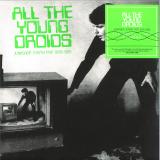
All The Young Droids: Junkshop Synth Pop 1978-1985 is a new compilation that charts the
underbelly of the epoch-defining sound of the synthesiser in 80s popular music. Compiled by Philip
King (previously seen compiling All The Young Droogs, Glitterbest and Boobs - The Junkshop
Glam Discotheque), the music here connects the dots between DIY synth enthusiasts grappling with
new, cheap synthesisers at the tail-end of punk and wannabe, jobbing songwriters enthral to the new
music pioneered by Gary Numan, Depeche Mode and Daniel Miller’s Mute Records. Featuring rare
tracks of auto-didactic progressive pop music, proto-techno punk, shoot-for-the-stars-land-in-the-gutter
chart flops and heralded, underground synth classics, School Daze paints a picture of beautiful failure.
Complete with extensive sleeve notes written by King and never before seen imagery, all 24 tracks
were remastered by RPM in-house engineer Simon Murphy, many from vinyl copies due to lost master
tapes. The story told on All The Young Droids is one of the dawning opportunity presented by both the
emergence to the market of cheaper analog synthesisers and the distribution networks plus indie labels
that exploded with the advent of punk music in 1976. While the music that sprouted out all over the
globe in the wake of these factors was decried as fake, plastic, a refutation of punk’s guitar-led
revolution, it’s telling that much of the music on All The Young Droids.. was created in bedrooms,
ramshackle studios and home-made set ups with often borrowed equipment. In the era of record labels
jumping to capitalise on the success of The Sex Pistols, The Clash (both on major labels, of course)
these artists struggled to stand out from a new gold-rush with next to no budget or PR team. With radio
and labels desperate for the new Yazoo, what resulted was a testament to necessity being the mother
of invention.
At the time, the synthesiser was the music of the future, a shiny new machine that could paint like an
orchestra with a single finger and a 4-track. In the hands of Manchester avant-pranksters Gerry & The
Holograms it’s a pulsing, sardonic weapon.. the only instrument on the Messthetics classic lampooning
of New Wave fashion. In Hamburg, a 16 year old Andreas Dorau used it to write and record (with his
female classmates on vocals) a global smash in Fred Vom Jupiter (later licensed to Mute Records).
The hard-to-find English version (Fred From Jupiter, natch) is included here. Many artists with alreadystoried careers caught the bug and recorded synthesiser-fuelled peons to space, computers, the future
and, of course, love-interests. Harry Kakoulli, late of Squeeze, recorded a solo album in 1979 that
included the incredible power-synth-pop smash-that-never-smashed I’m On A Rocket. Similarly, Ian
North of Neo and American Power Pop stalwarts Milk ’n’ Cookies bought a Korg MS20 and used a
tape machine to record We’re Not Lonely, an absolute lost-classic of minimal synth pop. We’re Not
Lonely also features on the Junkshop Synth Pop sampler 7” twinned with John Howard unreleased
track You Will See, released April 12th 2025.
There are plenty of compilation debuts in evidence. Sole Sister were a mysterious trio who were
featured on the Scaling Triangles compilation of female-fronted, queer-adjacent post-punk /
underground music that also featured The Petticoats. Selwin Image were from San Francisco and
featured members of the recently defunct power pop/punk group The Pushups. Their stupidly catchy
The Unknown fizzes with New Wave energy - think XTC to Sparks but remains unreleased until now.
Dream Unit’s A Drop In The Ocean is an early synth wave cut, positively teaming with Joy Division
instrumentation, previously only released on a long-forgotten and super rare, self-released EP.
Incandescent Luminaire’s Famous Names belies an archetypal struggle of a small-town trying to
make it in a cruel industry but is a thrilling New Romantic-Synth Wave cross over with a OMD
gloominess that’s a joy to hear. Feminist Minimal Wave track I Am A Time Bomb by performance artist
Peta Lilly and Michael Chance is a revelation destined for new found cult status. It was released on 7”
and lost until now.
The flipside to the subterranean, never-made-it synth pop mentioned above are the ambitious, even
fruity attempts at success that have a perennial elegance to their confidence. New Jersey-ite Billy
London (real name Ed Barth) tried to cash in on the synth boom with Woman, released by a major
label, a lurching new wave track built on the Louie Louie rhythm and a wonderfully camp Lou Reedstyle sleazy vocal before exploding in the synthesised chorus. The song bombed but with a chorus like
this, you have to wonder why? Ex-Glitter Band member John Springate’s My Life is truly epic, with
doomed chord progressions and massive sounding drums turning into at least 3 different songs in the
course of the track. Before you wonder what’s going on the song resolves with a glorious return to the
main refrain.
The dry-ice-dressed dance floor is well catered for too. Design’s Premonition and Vision’s Lucifer’s
Friend are stone-cold minimal synth bangers, well loved but given a new lease of life here. The
Warlord’s The Ultimate Warlord was released in 1978, a homespun proto Hi NRG banger that was
later re-recorded by The Immortals in Canada who had a club hit with it. One-man- band Disco
Volante’s No Motion was re-issued by Synth wave label Medical in 2012 but makes its first vinyl
compilation appearance here. Close your eyes and you can imagine what Lawrence of Felt would have
sounded like with some cheap Korgs a little earlier in his career. Gibraltar-based trio The Microbes
imagined a computer programming people to dance - how prescient - and ended up with a propulsive,
robo-funk track with splendid rubbery bass playing over a tectonic drum machine. Previously picked up
by Belgian label Stroom TV, Dee Jay Bert & Eagle’s heavily Euro-accented I Am Your Master
demands the listener to “come to paradise!” In a frankly terrifying manner.
All The Young Droids is the first compilation to peel away from the narrative that dour, Minimal Synth
and Cold Wave were the only musical children of the first rush of synth pop. Philip King and School
Daze Records describe a much more complicated world: along with the austere, Brutalist children of
Daniel Miller (who produced Alan Burnham’s Bowie-Low-influenced Science Fiction here) was a
plethora of desperate cash-ins, accidental mainstream hits, ambitious pop dramas and major label
punts that went nowhere. Crucially, the compilation blurs the line between junk and treasure. What if the
two things are interchangeable. What if it’s all science fiction?
Jens Brachvogel & Tilo Ciesla aka Studio 54, aka Dole & Kom is probably the most productive producer duo of German underground House Music. They did Disco House with heavy 808 & 909 beats in the mid 90s already – long before it stormed the German dance charts. They've remixed legends like Green Velvet, Black Box or Mateo & Matos or even pope heroes like Marc Almond. Their tunes came out on top tier labels like Nervous, Relief Records, Force Tracks and of course local Formaldehyd and BCC Music from Berlin.
Their Studio 54 project started in 1997 and quickly became their most popular moniker.
Due to copyright restrictions they had to rename it „Studio 45“, a name they're still using today. On their „Vol. 2“ record in 1997 they were inspired by Disco and Boogie tunes of the 70s and early 80s that indeed were popular at the famous New York night club.
What makes their tunes unique to this day is their hypnotizing, druggy approach to the original tunes. You never get a cheap, commercial copy, you'll get a mesmerizing mind trip back to the glory days of Disco, seasoned with the best classic drum machines got in them.
180 G. BLACK VINYL WITH LINER NOTES IN CREOLE, FRENCH, ENGLISH
Originally released in 1979, "Spiritual Sound" lives up to its name, a soaring, triumphant album, six tracks of spirit magic from Guadeloupe.
Telluric, intense, terribly alive, the gwoka drums of Guadeloupe carry the identity of a painful and fervent island. Marked forever by the crime of slavery, Guadeloupe's créolité cherishes the ka drums and their natural environment: the low-pitched boula drum with male goatskin, the high-pitched soloist makè drum with female goatskin, the chacha, ti bwa, triangle, calabash and other percussion instruments that surround them, and the voices - the fiery, proud, timbred, urgent voices of the gwoka.
This album is also a legend for its voices: in his then dazzling youth, singer Lukuber Séjor was one of the first gwoka artists to largely feminize the chorus of répondè, who converse with his text delivered in a straight and powerful voice.
And everything here sets new standards. In 1979, Mizik Filamonik - Spiritual Sound proclaimed a spiritual patriotism of ferocious intensity. The album by Lukuber Séjor - whose spelling alone is a battle - sets out to give Guadeloupe the intangible weapons of self-respect and self-knowledge, through a singular practice of traditional music.
The genesis of gwoka music is less straightforward than one might imagine... The drums performed the servile task of accompanying the work of slaves in the fields and during the “corvées” imposed by the administration, before being freely practiced by the common people after the abolition of 1848. At the heart of the conviviality of the Guadeloupeans furthest from the cities - geographically and socially - the gwoka drums come out for carnival, funeral wakes and neighborhood celebrations, but also during strikes, fits of anger and armed vigils of the riots and revolts that have punctuated the island's history. For generations, governors of the colony and then the prefects of the overseas department of Guadeloupe have been viewing the gwoka as a potential for turbulence and a threat to public order.
But as the Beatlesmania, “chanson engagée” and rock revolutions unfolded in Europe, young people turned to the drums of mizik a vié nèg (“bad negro music”, in Creole), which Guadeloupeans had learned to despise by following the “assimilation” process advocated by the school system and most of the political class. At the end of the sixties, in a Guadeloupe mourning the deadly repression of the May 1967 social movement, they played traditional music, refusing to wrap it up in tourist prettiness and madras folk costumes. Instinctively, they played a rough and contemporary gwoka, led by the incendiary Guy Konkèt. This was the era of decisive 45 rpm records such as Robert Loyson's Kann a la richès, which brought to light the fieriest words of union rallies.
At his home in Sainte-Anne, Lukuber Séjor played with flautist Olivier Vamur and his brother Claude Vamur, who cobbled together a drum kit from tin crockery and became, a few years later, the most influential drummer in Kassav'.
These were the years of the Bumidom program, when young Guadeloupeans were encouraged to emigrate to mainland France. At the age of twenty, Lukuber Séjor embarked on the liner Irpinia, disembarking at Le Havre and taking the train to the Gare Saint-Lazare - the route taken by thousands of young West Indians who went on to study or looked for work, all the while trying to maintain a link with their homeland. In this case, it's at the Antony university residence, where Lukuber played the drum and participated in a thousand gwoka updates and aggiornamentos, while exile reinforced the need for a spiritual link with the native land.
In 1978, Guy Konkèt played at the Salle Wagram, a historic event for West Indian music. After serving as répondè - i.e. backing vocalist - on one of his home-recorded albums, Lukuber joined his live band. Little by little, he became one of the key artists on a circuit parallel to French show business. At a student party in Caen, he met a young woman from Martinique who, at the time, was more motivated by her ambitions as a visual artist than by her vocation as a musician. Her name was Jocelyne Béroard and, a few years before she plunged into the Kassav' adventure and became the greatest West Indian singer of her generation, she designed the cover of Lukuber Séjor's LP.
This ambition was obvious and imposed its will. A more or less regular band was formed, with Roger Raspail, Rudy Mompière and Éric Danquin on ka drums, Claude Vamur on ti bwa, Olivier Vamur and Françoise Lancréot on flutes and Annick Noël on keyboards. Lukuber Séjor is set on wanting to extend the gwoka palette to other instruments, as the jazz-rock revolution opens a thousand new doors. Annick Noël will play a wide range of timbres and textures on electric piano and synthesizer. Another novelty: the répondè are two men and two women, Roger Raspail, Olivier Vamur, Françoise Lancréot and Maryann Mathéus ...
Mizik Filamonik - Spiritual Sound is a self-production in which the singer and leader sank all his savings, allowing him no more than a single day in the studio. The first side is more of a musical manifesto, with the first two tracks, Éritage and Penn é plézi, being instrumentals. The third, Son, forcefully celebrates the need for Guadeloupeans to connect with the gwoka. In fact, Jocelyne Béroard's cover shows a tambouyé in the shadow of a cloudy sky, against which a radiant sun is rising and whose light will soon flood the entire landscape. The silhouette and face of this man strongly evoke the immense Vélo, master of the ka, rejected at the time on the fringes of society.
The second side of the LP is surprising. Formally, three tracks are explicitly linked like the three parts of a triptych. Primyé voyaj evokes the appalling tribulation of Africans deported as slaves to Guadeloupe; dézyèm voyaj speaks of the Bumidom program and the economic, political and social forces driving young Guadeloupeans towards the mirage of prosperity in France; twazyèm voyaj closes the cycle with the emigrants' return from Europe after years away from their island...
This gwoka, obsessed with the need to save Guadeloupe spiritually, appeals far beyond the politicized audience. Mizik Filamonik - Spiritual Sound instantly became a classic, although Lukuber Séjor never really made a career for himself as a musician.
After all, the album was released in 1980, with no promotional resources in France or Guadeloupe - and therefore no concerts. The thirty-two-year-old author, composer and performer made his own third trip back to Guadeloupe. He set up a small woodworking business, which he lost in Hurricane Hugo in 1989. His other activity, teaching in a medical-educational institute, became the core of his professional life. He continued to be an active campaigner - a campaigner for the Creole language, a campaigner for the reawakening of identity, a campaigner for special education, a campaigner for a thousand causes that he ignited with his generous and perceptive enthusiasm, such as the defense of breadfruit fries...
The echoes of his 1979 album have not died down. Of course, the use of Penn é plézi as the theme tune for Radio Guadeloupe's funeral notices from 1980 to 1992 kept him in the collective memory, but he continues to sing and compose sporadically, as with his all-female
vocal group Vwapoulouéka... Still convinced that music is a means of liberating the spirit, he continues the journey of a young man eager to deploy the power of Creole music and language.
Bertrand Dicale
From the same recording sessions as Bézier's first EP on Körperspannung records 'Negative Velocity', 'Contraption' channels a few moods and scenarios.
On the a-side 'Contraption' is an insignificant droplet darting through the sky. Soon it joins a disarray of objects positioned above the atmosphere, maneuvers in formation to reveal randomized, decentralized nodes packed for mayhem.
On the b-side Bézier shows a slice of his lived experience. Back in 2004 he used to go to house parties around East LA with friends they grew up with every weekend to listen to music. Winding through the Southern Californian roadway sprawl they'd drive 1/2 an hour to 1 hour on the I-10 (sometimes diverting to Route 60 if gridlock is expected) to get to the location, usually in a residential neighborhood. Being respectful of the communities and the struggle of the progenitors of this music, Bézier presents 'Blue Halo' as an homage to that sound with a twist: Cumbia-Synth to provide a little sauce for your ears. Dave Easlick joins the milieu to provide a percussive framework for this tune.
Lastly, 'Bit by an Electric Wire' showcases Easlick's drumming with an overlay from Bézier. As Dave rips and shreds through his drum kit the OCD machine living inside Yang's brain switches on and organizes, collates and files that dataset into a hardcore rhythm track.
Modernized disco boogie cover of Klique's 80s classic tune, with vocals by Boston's own Saucy Lady and UK's legendary talent Omar, all masterfully crafted by Yuki Kanesaka as the musical director and producer alongside Saucy Lady on the arrangement. The track not only features a full live brass section and strings with talents from Japan and Boston, it also features Curtis Williams of Kool & the Gang on alto, while David Frank of the mega duo The System on the Oberheim and Moog adding the authentic boogie spice.
Piano overdubs recorded by another production and engineering legend Carl Beatty known as the studio pioneer of all the major label R&B performers of the 70s, 80s, and 90s including Luther Vandross, Aretha, Melba Moore, Mass Production and more. All of which create the melange of groove that the funk universe desperately needs.
On the flip side, French Producer and DJ heavyweight Young Pulse brings a whole new take on the original mix with added vocal layers by Young Pulse himself he brings a more broken beat, house flavor to the classic tune which will undeniably electrify the dance floors.
2025 Repress
2019 is mule musiq’s 15 years anniversary. we’re going to release twelve 12inchs with our friend artists and stefan marx make the collectable artwork. last release of the series is swedish house maffia axel boman.
first track,”chestnut hearts” is super emotional no beat club banger,axel played at his latest boiler room,”slave to the vibe” is slow mo cosmic tune,”paid by the rhythm” is axel’s signature floating house,”copacabana dub” is epic brazilian affair deep house anthem, “don’t bug me” is dubby rasta tune,”konoba boba” reminds little bit early border community sound.
thank you so much for supporting us 15 years!
Repress!
Olver Chesler, John Selway : there are people keep going on !!!
And they were there since before you were born maybe ?
Musicians, electronic music, enjoying sound...
Recorded at Selway studio this EP is perfect...
Ninetynine dot ninetynine...
Or not perfect ?
Somehow it's never perfectly one hundered... Whatever it is... Not Techno, not Hardcore, not trance...
A superb repress, and remastered EP, with some re-organisation of the tunes (that's voluntary to get an optimal sound on each side...
And bringing a locked groove for 99.9...99.9...99.9...99.9 infinite effect !
Red sleeve (not the same red at IST17...) in the original Hub color respect.
BIG UP !