Cerca:late of the pier

Generi
Tutto
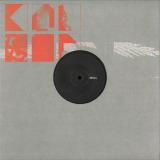
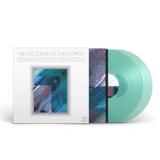
Late Of The Pier - Fantasy Black Channel (limited Lenticular 10y Anniversary Edition)

Limited Lenticular 10y Anniversary Edition w/ heavyweight vinyl, printed inner sleeve + digital companion album of unreleased demoes and outtakes from the album

Late of the Pier announce a special 10th anniversary edition of their cult debut album Fantasy Black Channel, produced by Erol Alkan and released in 2008 to great acclaim. Fittingly, the reissue - released on a limited lenticular sleeve, pressed on to heavyweight vinyl and accompanied by a digital companion album of unreleased demoes and outtakes from the album recording sessions. It's set for release through Alkan's Phantasy Sound label, landing in stores on January 18th, 2019.

LOTP (Sam Eastgate, Andrew Faley, Ross Dawson and Sam Potter) were a band of inter-dimensional musicians who landed in the late noughts, whose wild journey took them from the quiet North West Leicestershire countryside to the stages of Coachella, Tokyo and beyond, touring with the likes of Soulwax and Justice. Their music was a mutant take on pop that described the chaos of being a teenager by looking forwards and backwards over and over again until the present moment started to make sense. Following the release of Fantasy Black Channel they put out singles 'Blueberry' and 'Best In The Class' in 2010, picking up fans from Mike Skinner to Dave Grohl along the way. Talking in a 2014 interview, Grohl exclaimed, 'They blew my fucking mind. They're called Late of the Pier. They made one record and disappeared. They use crazy computers and then they rock and it sounds like dubstep for one minute, then it's a crazy prog thing, and it's like, 'Wow'.'

non in magazzino

Ordina ora e ordineremo l'articolo per te presso il nostro fornitore.

42,82 €
PIERO UMILIANI - A Tempo Di Jazz LP

Sonor Music Editions proudly presents "A TEMPO DI JAZZ" by Maestro Piero Umiliani. This lost gem captures the formative years of Modern Jazz in late 1950s Italy - alongside the legendary Basso-Valdambrini recordings in the early 1960s, as well as the early years of Piero Umiliani's long and prolific career as a composer with over 190 soundtracks, 40 library albums, and 35 TV title themes recorded.

A TEMPO DI JAZZ includes seven original compositions by Piero Umiliani recorded in 1959. Here, at the age of 33, he lays a perfect ground with himself as a pianist, accompanied by some of the best Italian soloists at the time: Marcello Boschi on alto saxophone and flute, Ivan Vandor on tenor saxophone, Peppe Carta on bass, and the American trombonist Bill Gilmore. With plenty of room for improvisation, the sextet fuses Big Band moods with West Coast experimentation of Latin American rhythms and Modern Jazz ballads that sit perfectly between his soundtracks for the films "I Soliti Ignoti" (Big Deal on Madonna Street) from the same year that attained him international recognition, and his masterpiece "Smog" (featuring Chet Baker and Helen Merrill) from 1962.

Five compositions are outtakes from Piero Umiliani's mega-rarity "Tempo Jazz", released on RCA Custom in 1960, while 'Tema In Blues' has been published on the two - impossible to obtain - 45 releases "Moderato Swing" (RCA Camden 45CP 112) and "Tema In Blues" (RCA Custom 45 R3) from 1960 as well as the previously unreleased track 'Mezza Cottura.'

The music has been transferred and remastered from the original master tapes and lacquer cut in MONO, preserving the original sound of the recordings.

pre-ordina ora28.09.2026

dovrebbe essere pubblicato su 28.09.2026

39,08 €
Miles - Vault LP

Miles

Vault LP

12inchSHORT15
Short Span
30.09.2026

The unconscious element to the conscious process.

The practice of dub techno and its tendrils is a fundamental for me, both aesthetically and from an engineering perspective.

I start every recording session with a dub inspired jam, the first piece I ever recorded in 1996 was an effort to recreate Phylyps Trak with only a Korg X3 and an Ibanez PUE5 (borrowed from Gary Howell). It was an awesome introduction to jamming, and the footing stones of noise, delay and saturation were explored with my foot hard on the enthusiasm pedal.

These practice jams are in some sense cathartic, the first step taken again & again, which helps me move forwards each session and additionally helps to 'warm the circuits' both of myself and the machines.

After realising the genius of Basic Channel is akin to the genius of peasant food, using every ingredient with nothing left to waste, (up to and including the oft maligned working noise of the machines themselves), this was a watershed moment for my own subjective progression. No longer tied to just emulation of something inspiring, but taking these learned tools into other areas of music helped to break free from a strong current of influence and also to progress into other areas with the new toolbox.

Dub:

The importance of the dub pioneers should never be understated, in modern music and my own practice. Yet with my initial inspiration being two german dudes issuing extreme techno variants with obscured label designs, who then signposted their listeners to their own inspirations (via their Wackies re-issues or nodded to on their Rhythm & Sound/Burial Mix sub-labels), meant that I started late and travelled backwards.

Learning to notice the live mixing of Mikey Dread or Lee Perry when the faders are bleeding through even when turned down, (echoed in BC's Quadrant Dub), or the brash send effects literally thrown into the mix also taught me that 'rough' mixing can inject a recording with life, uniqueness and the most right wrongness. Looking back Basic Channels very few elements helped me realise that the rules to be understood, are also the best ones to be broken.

Push the mixer into the red.

Amp that noise up from the tape delay cos it sounds sick.

Pseudo side-chain effects cos the kicks are way too loud and the mixer can't sum it nicely.

Spam the send knob into the delay units now, now and now.

Carelessness.

Noise:

Once I wrapped my head around the intrinsic 'noise' element that set those records apart, this became a torchlight into the alt noise movements which I was tentatively exploring at the time, and also is evidently a connection or thread into them.

Whether the Industrial/Post Punk UK scene (This Heat, TG, A Tent, F.E.) or the prolific output of the US Noise scene (Wolf Eyes, Live & Shave in LA, and subsequently following the lineage all the way back to Chrome's Alien Soundtracks), I had finally discovered a connection from techno to this 'free for all' corner of music.

This input from the Noise arena of sound is, in my experience, an all important step for a sonic artist, taking it's roots and extending out from Stockhausen/Pierre Henry and utilised/warped/mangled by thousands of adventurous pioneers ever since, I now see the line separating the high brow and the low brow is actually an artery carrying information from the head to the heart.

Vault is a selection of these jams that precede each of my solo recording sessions, for 30 years I've recorded hundreds of these 'workouts'. They are never intended as serious statements, just moments of naive enjoyment, yet most importantly they are time & space captured as practice.

The objective is always a warm up exercise, but sometimes those exercises turn a different corner, with a certain focus or direction dependent on what random samples are left in my machines from the previous session, instead of conscious choices, these unconscious elements can facilitate those 'positive mistakes' that make a piece of sound retain a different feel or colour and thus become special, or at least special to the creator.

I am quite conscious that the 'record everything' aspect of my ethos has been invaluable in cataloguing and saving these jams, while the attitude of carelessness during this process (after all, it's only a warm up jam) invites more enjoyment than seriousness ever could. Even if you don't feel the piece at the time, record it, because some years later it may well fit, or become relevant in a way you never intended.

-Miles

pre-ordina ora30.09.2026

dovrebbe essere pubblicato su 30.09.2026

Last In: 12 days ago
24,58 €
Alwin Nikolais - Electronic Dance Music, 1966-1989 (Tape)
  • 01: Revels: Dance III (1986)
  • 02: Ten Legs: Dance I (1989)
  • 03: Mechanical Organ: Dance II (1980)
  • 04: Mechanical Organ: Dance IV (1980)
  • 05: Frail Demons: Dance I (1984)
  • 06: Tribe: Dance I (1975)
  • 07: Pierrot: Dance II (1986)
  • 08: Blank on Blank: Excerpt I (1987)
  • 09: Pierrot: Dance III (1986)
  • 10: Aviary: Dance I (1978)
  • 11: Aviary: Dance II (1978)
  • 12: Graph: Overture (1984)
  • 13: Chimera: Dance I (1966)
  • 14: Styx: Excerpt (1976)
  • 15: Gallery: Overture (1978)
  • 16: Frail Demons: Dance II (1984)
  • 17: Aviary: Dance III (1978)
  • 18: Graph: Dance III (1984)
  • 19: Contact: Excerpt (85)
  • 20: Blank on Blank: Excerpt II (1987)
  • 21: Crucible: Excerpt (1985)
disponibile anche

2x12"[30,21 €]


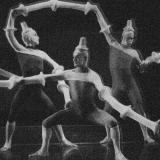
Often credited as the father of multi-media theatre, Alwin Nikolais (1910-1993) took complete creative control over his productions - including cutting-edge approaches to lighting and costume that transformed human bodies into shifting sculptural shapes, while also composing wildly innovative electro-acoustic and synth-based audio as accompaniment.

After initially experimenting with musique concrète and tape manipulation (as demonstrated on the 1959 LP Choreosonic Music of the New Dance Theatre of Alwin Nikolais) Nikolais became the first owner of Robert Moog's synthesizer at the Audio Engineering Society convention in New York in late 1964. Relying heavily on the Moog and later the Synclavier synth/sampler, these 21 tracks document Nikolais' highly-prescient compositions across the mid 1960s through to the late 1980s - existing not only as extensions of his other-worldly choreographic productions, but standalone pieces of foundational mid-century American electronic and experimental music.

"Born in Southington, Connecticut in 1910, Nikolais’s early years and early career were in acting, music and puppetry. It was not until the late 1930s that he began his work as dancer/choreographer in Hartford, Connecticut, where he was commissioned by the Avery Memorial Theatre, a part of the Wadsworth Atheneum, to create an evening-length work to the music of Ernst Krenek. Previously his work and study as a pianist-organist found him accompanying silent films. This sort of accompaniment required from the musician not only a playing skill but also a versatility in improvisation, matching movement to sound, and evoking mood to situation.

Nik was drawn initially to dance by his involvement with the percussion scores used by the illustrious early twentieth century German dancer Mary Wigman. In trying to learn more about percussion, he was lured into dance class and thus his career began. His development of music and dance occurred simultaneously. His introduction to the twelve-tone technique opened his mind to the expanding areas of atonal music, and his dealing with music as sound per se. In 1948, after being appointed director of the Henry Street Playhouse in New York, Nikolais formed the Playhouse Dance Company, later known as the Nikolais Dance Theater, and began his aesthetic orientation toward dance as a study of motion. By the 1950s, he had ceased creating literal dances and began his explorations and eventual milieu as an abstractionist.

Sound became an important part of his abstract theatre. For his first dances, which involved his new thinking of dance as both a visual and kinetic art, he used live percussion scores in which he directed his dancers to play instruments of all nature. There was a combination of children’s toy instruments as well as harsh and resonant automobile brake drums, and other pitched auto parts which he also used to accompany classes. Once he installed his own tape recording machines, he quickly used the limited range these instruments provided in a new way, slowing and increasing speed and reversing sound. He also made the sounds adhere to the choreographic structure (not the other way around), thereby giving the dance its independence from the musical phrasing. But the real need remained: the search for new sound. Nik made a sound library, recording noises and percussion and vocal sounds, which the French aptly called musique concrète. Needless to say, he became a master at splicing bits and pieces.

From 1956 to 1962 Nikolais composed eleven major scores for his theatre pieces using such techniques. In 1963, James Seawright, who at the time was assisting Nik in his productions and also working at the Columbia-Princeton Center for Electronic Music, recorded a sound bank for the production Imago (1963). With this material, Nikolais created his first synthesizer score. Imago won the Paris Grand Prix in 1968 and launched the Nikolais Dance Theatre towards its national and primarily international acclaim.

During the same period, Seawright came to Nik and told him of a young man who had invented and constructed a simplified synthesizer and insisted that Nik visit the electronic fair currently being held in New York. Nik did so and met Robert Moog. He was completely taken by the new machine and after making some suggestions to Moog, (which Moog made), Nik bought the inventor’s first machine with the aid of a Guggenheim Fellowship. Moog himself was astonished by what his machine could produce for Nik. This machine was later acquired by the Museum of Musical Instruments at the University of Michigan at Ann Arbor as the first Moog synthesizer. The Synclavier was Nik’s next source of sound and since the mid-1970s remained the major instrument in the Nikolais soundroom.

Alwin Nikolais has been honored and awarded throughout the world. He has received the French Legion of Honor, the Kennedy Center Honors, National Medal of the Arts, two Guggenheim Fellowships, as well as Mellon, Ford, and Rockefeller grants. He has been a recipient of NEA grants since 1966, been awarded five honorary doctorates, all for his remarkable achievements in Dance Theater. His genius has influenced several generations of artists."
—Murray Louis

pre-ordina ora05.10.2026

dovrebbe essere pubblicato su 05.10.2026

16,60 €
Pierre Mariétan - Musique d’été

Pierre Mariétan (1935–2025) was a prolific Swiss composer, sound artist, and pioneer in acoustic ecology who spent most of his life working in France. Over his long career, he composed more than 300 instrumental, orchestral, vocal, and electronic pieces. Mariétan studied under avant-garde legends like Pierre Boulez, Karlheinz Stockhausen, and Bernd Alois Zimmermann. In 1966, he founded GERM (Groupe d’Étude et de Réalisation Musicales), a music collective that blurred the lines between strict composition and free improvisation. In 1969 the French BYG label released a GERM album and the same year GERM played at the legendary 5-day Festival in Amougies, Belgium, sharing stage with Pink Floyd, The Soft Machine, Frank Zappa, Don Cherry,…

In 1979 Mariétan founded the Laboratoire d'Acoustique Urbaine (Urban Acoustics Laboratory) to bridge environmental sounds, urban architecture, and musical composition. Mariétan was also a professor at the University of Paris where he taught the relationship between sound and space. Later in life, he remained active as a director for the Movement of Environmental Sound and continued developing permanent, immersive sound installations across the globe. His album Musique d’été was originally released on cassette back in 1983 by Éditions Salabert and Costin Miereanu’s Poly-Art International, and it has been slightly tweaked for this LP reissue. The record splits his vision of "Summer Music" into two different vibes. Side A is a deep dive into an electronic, synthesizer-driven landscape, while Side B features raw acoustic field recordings of forests and traditional Swiss alphorns.

Adjust the intensity of the sound at the same level, if not just above the background noise specific to the place of diffusion.

pre-ordina ora09.10.2026

dovrebbe essere pubblicato su 09.10.2026

26,68 €
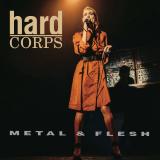
HARD CORPS - METAL & FLESH (2x12")

“When the flesh gets cut off the soul, it’s not the end.”

More than forty years after hardCORPS emerged from a Brixton basement, ‘Metal & Flesh’ returns in a new expanded edition on double vinyl and CD, newly remastered with the full involvement of surviving members Rob Doran and Clive Pierce. Born from the collision of punk, analogue synthesisers, sequencers, disco, reggae and experimental studio techniques, hardCORPS created electronic music that was as physical and emotional as it was mechanical. The arrival of French vocalist Regine Fetet gave the group its defining identity, placing her raw, uncompromising voice against the dense machinery of Hugh Ashton, Clive Pierce and Rob Doran. Working mainly with a Roland System 100, several Roland MC4 sequencers and later an additional MC500 and Atari ST 1040 computers, etc. pp., hardCORPS always transformed limitations, accidents, distortion and human imperfection into part of the music itself. Although rooted in the early 1980s, ‘Metal & Flesh’ refuses easy nostalgia, retaining the tension, space and character that made hardCORPS unlike their contemporaries. Yet, shall we eventually mention Kraftwerk, maybe let’s quote Ian Shirley from Record Collector magazine: „’Je Suis Passée‘ was not only a love letter to Kraftwerk but penned with such verve, passion and precision that Ralf and Florian probably would have accepted a blind date at a Düsseldorf cocktail bar (…).“ And as Martin Rushent famously said in 1990: “Hard Corps were ignored in their time. Perhaps it is the burden of the adventurous and the innovative to be ignored in their time, which is sad. Don’t ignore them now.”

This new edition has been carefully remastered to preserve that character and dynamics rather than simply making the recordings louder or more ‘modern’, while the artwork has likewise been developed to reflect the band’s original identity. Metal & Flesh’ is not merely an artefact of the 1980s, but a rare and fiercely individual document of four people discovering what happens when human instinct and machines collide.

Remastered by Martin Bowes. Graphic design by hard CORPS and Steve Lippert.

Gatefold sleeve gloss lamination, printed inner sleeves with lyrics, two double-sided hand-numbered.

pre-ordina ora09.10.2026

dovrebbe essere pubblicato su 09.10.2026

31,51 €
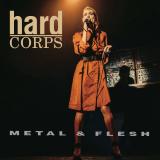
HARD CORPS - METAL & FLESH (2x12")
  • 1: Metal & Flesh
  • 2: Sacred Heart
  • 3: Bravo
  • 4: Porte Bonheur
  • 5: Dirty
  • 6: For Pleasure
  • 7: The Bell
  • 8: Respirer
  • 9: Desolation Land
  • 10: Rain In The UK
  • 11: Je Suis Passee
  • 12: Lovers And Strangers
  • 13: Porte Bonheur (Long Mix)
  • 14: Des Hommes
  • 15: C'est Pas Moi
  • 16: Tu Te Trompes
disponibile anche

colored vinyl[31,51 €]


“When the flesh gets cut off the soul, it’s not the end.”

More than forty years after hardCORPS emerged from a Brixton basement, ‘Metal & Flesh’ returns in a new expanded edition on double vinyl and CD, newly remastered with the full involvement of surviving members Rob Doran and Clive Pierce. Born from the collision of punk, analogue synthesisers, sequencers, disco, reggae and experimental studio techniques, hardCORPS created electronic music that was as physical and emotional as it was mechanical. The arrival of French vocalist Regine Fetet gave the group its defining identity, placing her raw, uncompromising voice against the dense machinery of Hugh Ashton, Clive Pierce and Rob Doran. Working mainly with a Roland System 100, several Roland MC4 sequencers and later an additional MC500 and Atari ST 1040 computers, etc. pp., hardCORPS always transformed limitations, accidents, distortion and human imperfection into part of the music itself. Although rooted in the early 1980s, ‘Metal & Flesh’ refuses easy nostalgia, retaining the tension, space and character that made hardCORPS unlike their contemporaries. Yet, shall we eventually mention Kraftwerk, maybe let’s quote Ian Shirley from Record Collector magazine: „’Je Suis Passée‘ was not only a love letter to Kraftwerk but penned with such verve, passion and precision that Ralf and Florian probably would have accepted a blind date at a Düsseldorf cocktail bar (…).“ And as Martin Rushent famously said in 1990: “Hard Corps were ignored in their time. Perhaps it is the burden of the adventurous and the innovative to be ignored in their time, which is sad. Don’t ignore them now.”

This new edition has been carefully remastered to preserve that character and dynamics rather than simply making the recordings louder or more ‘modern’, while the artwork has likewise been developed to reflect the band’s original identity. Metal & Flesh’ is not merely an artefact of the 1980s, but a rare and fiercely individual document of four people discovering what happens when human instinct and machines collide.

Remastered by Martin Bowes. Graphic design by hard CORPS and Steve Lippert.

Gatefold sleeve gloss lamination, printed inner sleeves with lyrics, two double-sided hand-numbered.

pre-ordina ora09.10.2026

dovrebbe essere pubblicato su 09.10.2026

30,46 €
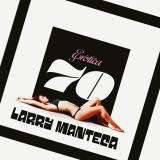
Larry Manteca - Erotica 70 LP

Larry Manteca

Erotica 70 LP

12inchFLIES86
Four Flies
16.10.2026
  • 01: Amore tropicale
  • 02: Firenze Bahia
  • 03: Celluloide
  • 04: Lando
  • 05: Bijoux Bijoux
  • 06: Morbido sogno
  • 07: L'insegnante di ginnastica
  • 08: Dannata balera
  • 09: Sirene
  • 10: Hotel Supersex
  • 11: Erotica

Plush shag carpeting, jazz flutes, analogue synths, funk grooves, exotica, and sultry, Italian-style vocalising: Erotica 70 is the new album from Larry Manteca, known for their inventive, tongue-in-cheek reimaginings of classic Italian soundtrack aesthetics.

This time around, the Milanese collective sets its sights on the distinct sonic landscape of 1970s commedia sexy—a film genre that, for better or worse, defined an era and fed richly into the cinematic education of Larry Manteca’s members.

Through this lens, Erotica 70 also becomes a way of celebrating Piero Umiliani in his centenary year—a composer whose name is closely linked to the erotic comedies of the time.

The nod to Umiliani is baked right into the details, starting with the choice of vintage gear like the Eminent synth and the Wurlitzer electric piano. These instruments deliver that particular blend of jazz, groove, electronics, and sensual charm that made the golden age of Italian film music so unique.

Standout track “Lando” is a joyful, playful homage to actor Lando Buzzanca, who starred in numerous films scored by Umiliani, including the iconic 1973 comedy La schiava io ce l’ho e tu no (My Darling Slave).

Larry Manteca is spearheaded by multi-instrumentalists Alessandro Paiola and Riccardo Danieli, flanked by the cinematic flute of Carlo Pelsa, the swinging drums of Andrea Quattrini, and the magnetic vocals of Valentina Castelli and Alessandra Maria Manzoni.

Recorded across various studios in Northern Italy, Erotica 70 is the imaginary soundtrack to an Italy that no longer exists, recreating its atmosphere while rendering it in full, vivid colour. It’s a record whose music seems to come straight out of a provincial cinema, a smoky late-night club, or a long-lost 70s film. But while it looks back to a bygone era, it does so only to bring it straight into the present, making the past sound surprisingly fresh and contemporary.

pre-ordina ora16.10.2026

dovrebbe essere pubblicato su 16.10.2026

29,62 €
Tia Blake And Her Folk-Group - Folksongs & Ballads LP

2026 Repress

Folksongs and Ballads by Tia Blake & Her Folk-Group, is more than just a “lost classic”. As clear and honest as can be, Folksongs and Ballads is a magnetic record, a refuge like only Nick Drake, Nico, and a few others have been able to create. A graceful, delicately minimalist approach to classic Appalachian and British folk songs.The perfect balance between melancholy and daydream. Originally released only in France in 1971, Ici Bientôt is very pleased to present the first-ever reissue on vinyl.

When she recorded her only album, Tia Blake was nineteen years old and had just arrived in Paris a year and a half beforehand. She spent most of her time at Disco’Thé, a record shop in the Latin Quarter, a free space, peaceful and inspiring, a hub for students as well as the local artistic community.

There, Tia would occasionally sing—when she managed to overcome her shyness. Two young guitarists who were passionate fans of folk music and regulars at the shop began to accompany her, forming “Her Folk Group.” One year later, they cut 11 tracks at Pierre Barouh’s Studios Saravah.

Folksongs and Ballads is composed of traditional tunes that have been covered many times, but they’re not the best-known folk standards. A collection of stories ranging from the Middle Ages to the 1960s, bringing together sublimely doleful ballads, lamentations for a lost lover, and an unexpected, brilliant version of the road anthem “Plastic Jesus.”

Tia Blake's haunting, unaffected voice captivates and comforts us, wrapping us in its cool embrace. Meanwhile, the tasteful, stripped-down, mellow acoustic arrangements provided by the guitarists, reminiscent of Bert Jansch and John Renbourn, occasionally supported by a kena flute, have created the space Tia Blake needed to reinvent these traditional songs.

Folksongs and Ballads is a timeless record, deep and unique, a longtime companion for repeated listening, in the vein of works by Sibylle Baier, Bridget St. John and Vashti Bunyan.

pre-ordina ora16.10.2026

dovrebbe essere pubblicato su 16.10.2026

23,11 €
TALLAC - TESSITURA EP

Following on from his electric appearance on Diamonds in the Night, Tallac returns with a four‑tracker of low‑orbit elation. Tessitura blends floor‑facing energy with sleek space synths, elegant undercurrents washed in bold bars to produce a one‑of‑a‑kind sound. Drums hit hard on “Carbon Copy,” driving percussion providing the launchpad for synthlines to swoop and soar. Tempos are taken down a notch for the analogue embrace of “Kiss Me Quick.” Notes bend and flow in this smoky dreamscape, samples pulling the listener ever deeper. The rumbling kicks and hissing hi‑hats of “Pythia” are punctured by a throbbing beat; gliding above the rolling snares and luxurious breaks is a melody that thrums with palpable intensity and unbridled joy, a track made to ignite audiences. Never adhering to genre tags or style pigeonholes, Tessitura closes with “Cybersyn.” Touches of cosmic melt into late‑night glow‑stick energy, dawn’s light piercing the warehouse windows while the speakers continue to bounce blissfully.

pre-ordina ora19.10.2026

dovrebbe essere pubblicato su 19.10.2026

13,66 €
Brigitte Fontaine - Comme à la Radio (2x12")
  • A2: Tanka II
  • A3: Le Brouillard
  • A4: J'ai 26 Ans
  • B1: L'été L'été
  • B2: Encore
  • B3: Léo
  • B4: Les Petits Chevaux
  • B5: Tanka I
  • B6: Lettre À Monsieur Le Chef De Gare De La Tour De Carol
  • C1: Comme À La Radio – English Version
  • C2: J’ai 26 Ans – English Version
  • C3: Le Goudron – 7’’ Single
  • C4: Le Noir C'est Mieux Choisi – 7" Single
  • D1: Les Beaux Animaux – 7’’ Single
  • D2: L'été L'été – Early version
  • D3: L'été L'eté – Instrumental Version
  • D4: Tanka I – Instrumental Version
  • D5: Tanka II – Instrumental Version with Flute
  • D6: Le Brouillard – Instrumental Version
  • D7: Lettre À Monsieur Le Chef De Gare – A Cappella English Version
  • A1: Comme À La Radio
  • LP2: Non LP singles, Alt. and Inst. Versions

Wewantsounds is delighted to reissue Brigitte Fontaine’s landmark 1970 Saravah album Comme à la Radio, recorded with Areski Belkacem (who sadly died last June), Wadada Leo Smith and the Art Ensemble of Chicago. This deluxe 2-LP edition pairs the original album with a second LP of rare bonus material. The release is accompanied by a lavish 24-page bilingual booklet featuring an introduction by journalist Andy Beta, essays by Wadada Leo Smith, Brigitte Fontaine biographer Benoît Mouchart and Benjamin Barouh, plus a recent interview with Brigitte Fontaine and the late Areski Belkacem. The booklet also includes complete lyrics and a selection of rare archival photographs by Jean-Pierre Leloir and Philippe Gras. The reissue is announced alongside its companion, the deluxe 2-LP set Comme à la Radio "On Air", featuring previously unreleased ORTF live recordings and additional studio rarities.


Wewantsounds pursues its Brigitte Fontaine reissue program with Comme à la Radio, originally released in 1970 on Pierre Barouh’s cult Saravah label, fusing Fontaine’s radical lyricism with Areski Belkacem’s minimalist compositions and the fearless improvisations of the Art Ensemble of Chicago + Wadada Leo Smith. Its title track has since become a cult classic in jazz and groove circles.
The album has been newly remastered from the original tapes and is reissued in a deluxe 2-LP edition featuring 11 bonus tracks. The first LP presents the original album in restored clarity, while the second gathers rare non-album singles, English-language takes, alternate versions and previously unreleased instrumental recordings showcasing the Art Ensemble's artistry, including the elusive English version of Comme à la Radio, and a striking early version of L’été L’été.
Also included is a 24-page bilingual booklet featuring rare archival photographs by cult photographers Jean-Pierre Leloir and Philippe Gras, complete lyrics, and contributions by Andy Beta, Wadada Leo Smith, Benoît Mouchart and Benjamin Barouh, plus a recent interview with Brigitte Fontaine and the late Areski Belkacem. The reissue is announced alongside its companion Comme à la Radio "On Air", a deluxe 2-LP set presenting previously unreleased ORTF live recordings and additional studio rarities.
Comme à la Radio stands as a visionary landmark of French music and a defining statement in Brigitte Fontaine’s career. This expanded edition confirms its enduring influence more than fifty years after its original release.

a A1. Comme À La Radio 8.03
[b] A2. Tanka II [2.04]
[c] A3. Le Brouillard [3.24]
[d] A4. J'ai 26 Ans [3.04]
[e] B1. L'été L'été [3.56]
[f] B2. Encore [1.34]
[g] B3. Léo [3.50]
[h] B4. Les Petits Chevaux [0.43]
[i] B5. Tanka I [1.45]
[j] B6. Lettre À Monsieur Le Chef De Gare De La Tour De Carol [6.04]

[l] C1. Comme À La Radio – English Version [8.08]
[m] C2. J’ai 26 Ans – English Version [3.56]
[n] C3. Le Goudron – 7’’ Single [4.12]
[o] C4. Le Noir C'est Mieux Choisi – 7" Single [5.03]
[p] D1. Les Beaux Animaux – 7’’ Single [3.16]
[q] D2. L'été L'été – Early version [4.38]
[r] D3. L'été L'eté – Instrumental Version [4.23]
[s] D4. Tanka I – Instrumental Version [1.47]
[t] D5. Tanka II – Instrumental Version with Flute [1.40]
[u] D6. Le Brouillard – Instrumental Version [3.57]
[v] D7. Lettre À Monsieur Le Chef De Gare – A Cappella English Version [2.46]

[a] A1. Comme À La Radio [8.03]
[b] A2. Tanka II [2.04]
[c] A3. Le Brouillard [3.24]
[d] A4. J'ai 26 Ans [3.04]
[e] B1. L'été L'été [3.56]
[f] B2. Encore [1.34]
[g] B3. Léo [3.50]
[h] B4. Les Petits Chevaux [0.43]
[i] B5. Tanka I [1.45]
[j] B6. Lettre À Monsieur Le Chef De Gare De La Tour De Carol [6.04]

[l] C1. Comme À La Radio – English Version [8.08]
[m] C2. J’ai 26 Ans – English Version [3.56]
[n] C3. Le Goudron – 7’’ Single [4.12]
[o] C4. Le Noir C'est Mieux Choisi – 7" Single [5.03]
[p] D1. Les Beaux Animaux – 7’’ Single [3.16]
[q] D2. L'été L'été – Early version [4.38]
[r] D3. L'été L'eté – Instrumental Version [4.23]
[s] D4. Tanka I – Instrumental Version [1.47]
[t] D5. Tanka II – Instrumental Version with Flute [1.40]
[u] D6. Le Brouillard – Instrumental Version [3.57]
[v] D7. Lettre À Monsieur Le Chef De Gare – A Cappella English Version [2.46]

[a] A1. Comme À La Radio [8.03]
[b] A2. Tanka II [2.04]
[c] A3. Le Brouillard [3.24]
[d] A4. J'ai 26 Ans [3.04]
[e] B1. L'été L'été [3.56]
[f] B2. Encore [1.34]
[g] B3. Léo [3.50]
[h] B4. Les Petits Chevaux [0.43]
[i] B5. Tanka I [1.45]
[j] B6. Lettre À Monsieur Le Chef De Gare De La Tour De Carol [6.04]

[l] C1. Comme À La Radio – English Version [8.08]
[m] C2. J’ai 26 Ans – English Version [3.56]
[n] C3. Le Goudron – 7’’ Single [4.12]
[o] C4. Le Noir C'est Mieux Choisi – 7" Single [5.03]
[p] D1. Les Beaux Animaux – 7’’ Single [3.16]
[q] D2. L'été L'été – Early version [4.38]
[r] D3. L'été L'eté – Instrumental Version [4.23]
[s] D4. Tanka I – Instrumental Version [1.47]
[t] D5. Tanka II – Instrumental Version with Flute [1.40]
[u] D6. Le Brouillard – Instrumental Version [3.57]
[v] D7. Lettre À Monsieur Le Chef De Gare – A Cappella English Version [2.46]

pre-ordina ora23.10.2026

dovrebbe essere pubblicato su 23.10.2026

38,45 €
Alwin Nikolais - Electronic Dance Music, 1966-1989 (2x12")

Often credited as the father of multi-media theatre, Alwin Nikolais (1910-1993) took complete creative control over his productions - including cutting-edge approaches to lighting and costume that transformed human bodies into shifting sculptural shapes, while also composing wildly innovative electro-acoustic and synth-based audio as accompaniment.

After initially experimenting with musique concrète and tape manipulation (as demonstrated on the 1959 LP Choreosonic Music of the New Dance Theatre of Alwin Nikolais) Nikolais became the first owner of Robert Moog's synthesizer at the Audio Engineering Society convention in New York in late 1964. Relying heavily on the Moog and later the Synclavier synth/sampler, these 21 tracks document Nikolais' highly-prescient compositions across the mid 1960s through to the late 1980s - existing not only as extensions of his other-worldly choreographic productions, but standalone pieces of foundational mid-century American electronic and experimental music.

"Born in Southington, Connecticut in 1910, Nikolais’s early years and early career were in acting, music and puppetry. It was not until the late 1930s that he began his work as dancer/choreographer in Hartford, Connecticut, where he was commissioned by the Avery Memorial Theatre, a part of the Wadsworth Atheneum, to create an evening-length work to the music of Ernst Krenek. Previously his work and study as a pianist-organist found him accompanying silent films. This sort of accompaniment required from the musician not only a playing skill but also a versatility in improvisation, matching movement to sound, and evoking mood to situation.

Nik was drawn initially to dance by his involvement with the percussion scores used by the illustrious early twentieth century German dancer Mary Wigman. In trying to learn more about percussion, he was lured into dance class and thus his career began. His development of music and dance occurred simultaneously. His introduction to the twelve-tone technique opened his mind to the expanding areas of atonal music, and his dealing with music as sound per se. In 1948, after being appointed director of the Henry Street Playhouse in New York, Nikolais formed the Playhouse Dance Company, later known as the Nikolais Dance Theater, and began his aesthetic orientation toward dance as a study of motion. By the 1950s, he had ceased creating literal dances and began his explorations and eventual milieu as an abstractionist.

Sound became an important part of his abstract theatre. For his first dances, which involved his new thinking of dance as both a visual and kinetic art, he used live percussion scores in which he directed his dancers to play instruments of all nature. There was a combination of children’s toy instruments as well as harsh and resonant automobile brake drums, and other pitched auto parts which he also used to accompany classes. Once he installed his own tape recording machines, he quickly used the limited range these instruments provided in a new way, slowing and increasing speed and reversing sound. He also made the sounds adhere to the choreographic structure (not the other way around), thereby giving the dance its independence from the musical phrasing. But the real need remained: the search for new sound. Nik made a sound library, recording noises and percussion and vocal sounds, which the French aptly called musique concrète. Needless to say, he became a master at splicing bits and pieces.

From 1956 to 1962 Nikolais composed eleven major scores for his theatre pieces using such techniques. In 1963, James Seawright, who at the time was assisting Nik in his productions and also working at the Columbia-Princeton Center for Electronic Music, recorded a sound bank for the production Imago (1963). With this material, Nikolais created his first synthesizer score. Imago won the Paris Grand Prix in 1968 and launched the Nikolais Dance Theatre towards its national and primarily international acclaim.

During the same period, Seawright came to Nik and told him of a young man who had invented and constructed a simplified synthesizer and insisted that Nik visit the electronic fair currently being held in New York. Nik did so and met Robert Moog. He was completely taken by the new machine and after making some suggestions to Moog, (which Moog made), Nik bought the inventor’s first machine with the aid of a Guggenheim Fellowship. Moog himself was astonished by what his machine could produce for Nik. This machine was later acquired by the Museum of Musical Instruments at the University of Michigan at Ann Arbor as the first Moog synthesizer. The Synclavier was Nik’s next source of sound and since the mid-1970s remained the major instrument in the Nikolais soundroom.

Alwin Nikolais has been honored and awarded throughout the world. He has received the French Legion of Honor, the Kennedy Center Honors, National Medal of the Arts, two Guggenheim Fellowships, as well as Mellon, Ford, and Rockefeller grants. He has been a recipient of NEA grants since 1966, been awarded five honorary doctorates, all for his remarkable achievements in Dance Theater. His genius has influenced several generations of artists."
—Murray Louis

In Stock

Disponibile in Stock e pronto per la spedizione

Last In: 32 days ago
30,21 €
Various - Pavilion 12”s Volume 2 (New Beat & Electro Industrial)
  • A1: ) A Split Second - Flesh
  • A2: ) L&O – Even Now
  • B1: ) Nitzer Ebb – Join in the Chant
  • B2: ) Front 242 – Headhunter (V1.0)

Two Piers / Pavilion Records bring you the second instalment in a new series of 12” EPs called ‘Pavilion 12”s’ showcasing different genres and scenes. Put simply 4 x Killer cuts from the scene on Limited Vinyl pressings

‘Pavilion 12”s Volume 2’ features four cuts from the New Beat, EBM and Electro Industrial explosion of the late 1980s and is pressed on ‘Neon Acid’ coloured vinyl (limited 350 only pressing)


The Vinyl EP opens with the classic EBM track ‘Flesh’ by A Split Second, who were one of the pioneers of the Belgium New Beat underground explosion of 1987. Fellow Belgian New Beat exponents L&O deliver ‘Even now’, a staple in the Underground Electronic scene of the late 1980s. On the flip things take a more Electro Industrial turn with UK electronic industrial collective Nitzer Ebb’s seminal ‘Join in the Chant’, before Front 242 close things off with their EBM dancefloor monster ‘Headhunter (V1.0)’ – 4 Classic and hard to find New Beat & Electro Industrial Dancefloor bangers on one slab of 12” vinyl

pre-ordina ora27.11.2026

dovrebbe essere pubblicato su 27.11.2026

26,47 €
SHDW & Obscure Shape - Basic Instinct

SHDW & Obscure Shape

Basic Instinct

12inchMR-012RP
Mutual Rytm
21.07.2026

2026 Repress

SHDW & Obscure Shape are back with their second EP for 2023, following their debut release on their mothership label From Another Mind. The German duo's latest release, 'Basic Instinct', is a collection of five dancefloor anthems that provide the perfect soundtrack for any moment in a set. The EP features their signature die-cut cover and includes a digital bonus track.

'Basic Instinct' is the 12th installment of their Mutual Rytm label and showcases the pair's exceptional production skills and innovative approach to electronic music, with a mix of old and new school flavors, vivid drum programming, organic percussion and captivating melodic elements. The A-side kicks off with their signature track 'Eraser', which blends crisp drums with warm sub-bass and piercing synth stabs.

"Dancer in the Dark" takes a deeper dive into late-night territory, combining lush dub-influenced synths with a rolling acid bassline. "Disturbing Behaviour" closes the A-side and shows why the 303 has become an iconic tool for producers. Despite the sirens dominating around the breakdowns, the simple two-tone acid stab is the defining element of the track, complemented by amen-break leaning drums that hint at a UK rave direction.

The B-side goes in a different direction, with 'Memories of Nobody' taking a filtered and less aggressive approach, as echoing dub pads gather around a growling bassline and kick drum combination, topped off by brushed hats. The EP concludes with 'The Last Seduction', a track that reveals the full organic breadth of the previously hinted at Amen break. The fusion of said amen break with the warmth and familiarity of waxing and waning pads is reminiscent of the golden days of electronic music. With its expertly crafted soundscapes and diverse range of styles, 'Basic Instinct' is yet another stunning release from SHDW & Obscure Shape.

In Stock

Disponibile in Stock e pronto per la spedizione

Last In: 10 days ago
12,56 €
Ewan Jansen - Bodywash EP

A decade into life, Secret Society marks this notable milestone year with a release that stays true to its ethos of depth and groove. Ewan Jansen started producing in the early 90s in Perth, often with the same hardware he used in his live shows. He's back on the label with two driving cuts built squarely for the dancefloor: 'Hydroid' is bright mid-tempo techno with pixelated synth charm, and 'Bodywash' is a deeper, more syrupy sound for late-night cruising. Alongside them sits a more introspective collaboration with Italian producer Luca that trades peak-time punch for texture and restraint. On remix duties, John Dimas adds his trademark crisp momentum and understated flair, a fitting choice given his long-standing connection to the camp.

In Stock

Disponibile in Stock e pronto per la spedizione

Last In: 41 days ago
16,18 €
Ezéchiel Pailhès - SOL (LP)

For his sixth solo album, Ezéchiel Pailhès returns with a new collection of songs infused by a sunny wandering spirit.
Within each of the twelve songs on SOL is a thread of melancholic happiness that has permeated much of Pailhès’ music and songwriting. He addresses love, the passing of time, hope, lost illusions, fleeting moments of grace, the temptation of forgetting, a need to escape, and desire. All this is
insulated by understated orchestrations that blend acoustic and electronic instrumentation with deft confidence.
The Portuguese and Brazilian concept of saudade—a form of melancholic longing and nostalgia— pervades, thanks in part to Pailhès decision to record the album in Rio de Janiero and to reinterpret some of the finest works of Música Popular Brasileira (MPB). In particular, he revisits a handful of
lesser known classics from the mid-century samba and bossa nova era—originally written or performed by talents including Vinícius de Moraes, João Gilberto, Tom Zé, Dorival Caymmi, João Donato, Os Tincoãs, and Ataulfo Alves.
The shift from Brazilian Portuguese to French and the decision to adapt rather than perform a straightforward cover versions, allows Pailhès to invent a form of prosody and euphony (the musicality and harmonious combination of words) that feels vibrant and unlike anything else in today’s French
chanson landscape.
“Some lyrics are simple translations from Portuguese, in what I’d call an expanded version. For others, I started from a single word or a single phrase and embroidered an entirely new text that carried me elsewhere,” explains Pailhès. “I allowed myself great interpretive freedom, while preserving the humanist dimension of the original songs. I’ve always been deeply moved by the way Brazilians transfigure reality through heightened emotion. I love this visceral and spontaneous country, which always seems to live through emotion. And above all, I love its music both popular and unifying,
bringing together all social classes. In that sense, it’s very political music, but even more so utopian, made by the people and for the people.”
On this new album, however, the French artist was keen to avoid cliché. Each song is therefore built around a carefully balanced interplay between Pailhès’ piano and synthesizers, alongside restrained arrangements of percussion, brass, bass, and cavaquinho (a small four-string plucked guitar). These parts were recorded in Rio de Janeiro with two musicians who regularly perform alongside the legendary Caetano Veloso—Kainã Do Jêje and Alberto Continentino—joined by Thomas Harres, Antônio Neves, Eduardo Neves, and Gabriel Loddo.
Since the 1960s, France and Brazil have shared a long-standing cultural and musical relationship. Some Brazilian artists, most famously Gilberto Gil, took refuge in France during the dictatorship years (1964–1985). But above all, French chanson quickly fell in love with the richness and ingenuity of
bossa nova and samba, translating and reinventing them in the language of Molière. Throughout the 1960s and 1970s, albums and hits by Henri Salvador, Georges Moustaki, Pierre Barouh, Pierre Vassiliu, and Claude Nougaro all drew from the MPB repertoire.
Fifty years later, with SOL, Ezéchiel Pailhès reinvents this rich Franco-Brazilian musical legacy, bringing to it a personality and modernity that stand confidently alongside those of his forbears.

In Stock

Disponibile in Stock e pronto per la spedizione

Last In: 3 months ago
21,81 €
Banda Maje - Costa Sud LP

Banda Maje

Costa Sud LP

12inchFLIES76
Four Flies
10.06.2026

Five years after their radiant debut Ufo Bar, Italian cinematic funksters Banda Maje are back with Costa Sud to take us deeper into their land of ‘Salifornia’—a Southern province of sun-drenched coastlines and decaying buildings where dreams of exotic escapism sprout and bloom.

Once again, behind the eight tracks in the album—and behind the wheel of the fiery red Alfasud on the cover—is composer and keyboardist Peppe Maiellano. He has meticulously tailored each piece to his virtuoso partners in crime: a 'family' of exuberant musicians spread between Salerno and Naples, all bound by deep-rooted ties to the region and a shared belief in the grit of independent artistry.

The Costa Sud (South Coast) imagined by Banda Maje is a shimmering ribbon of sun-baked asphalt stretched between the sea and the ancient pine forests of the Gulf of Salerno. It is a land of enchanting but wounded places, where the grace of Ancient Greek civilization sits in a restless silence alongside the scars of rampant building and neglect. “But if truth is beauty and beauty is truth,” Maiellano explains, inverting Keats’s famous line, “with the right eyes, you can find beauty and poetry even under a layer of moral and material filth."

Conceived and recorded entirely in the South, the album nevertheless looks beyond the horizon. While Neapolitan funk and golden-age Italian soundtracks remain the double helix of the band's DNA, this album welcomes new influences from across the ocean, weaving Italy, Brazil, Africa, and contemporary sounds into its unique vision of the 'global South.'

Side A is an immersion into Salifornian territory and its myths: from the carefree instrumental disco-funk of the title track, which sublimates local contradictions into enveloping cinematic atmospheres, to the mellow groove of “Baia”—a fusion of Neapolitan funk, afrobeat, and disco that pays homage to Salerno’s famous beach, squeezed between millennia-old sea rocks and mountains of shipping containers. The band’s heartfelt sense of belonging shines in their fresh soul-disco version of “Mo…” (a 1981 cult classic by Neapolitan legend Peppino di Capri) featuring Maiellano’s own vocals, while the reimagining of Tonico 70's “Jet Lag” celebrates a fraternal partnership with the Salerno-based rapper/producer, charting a musical itinerary that unites Brazil, the States, and Salifornia through evocative grooves, sharp synths, and Gianfranco Campagnoli’s exquisite trumpet.

On Side B, the sound becomes even more eclectic with the samba-funk warmth of “Samba Maje”, where Mediterranean melodies and lush vocal harmonies marry jazz-funk arrangements and disco-inflected Brazilian rhythms. The next track, “Africana”, is dedicated to a legendary dolce vita nightclub on the Amalfi Coast (and its founder Luca Milano); here, a rhythmic mantra incorporating tribal African elements blends with synths that evoke RAI television themes of the late 70s. The journey concludes under the sign of the silver screen: the disco-funk elegance of “Black Glamour Girl” (from the early-80s road-trip comedy In viaggio con papà), a tribute to the compositional genius of Piero Piccioni, and “Lovebossa”—an easy-listening homage to the "Cine Bossa" atmospheres that characterized so many Italian soundtracks of the 60s and 70s, finally carrying the listener ‘ncopp’ ‘e nuvole (above the clouds—which is basically Salifornian for "somewhere over the rainbow").

Available on LP and Digital from 15 May 2026.

In Stock

Disponibile in Stock e pronto per la spedizione

Last In: 12 days ago
29,20 €
Various - SALÒ OR THE 120 DAYS OF SODOM LP

Available for the first time on any format, the soundtrack of Pier Paolo Pasolini's controversial 1975 vision of the Marquis De Sade's 120 Days Of Sodom, featuring beautiful and discordant classical compositions, in stark contrast to the shocking and cruel events unfolding onscreen.
Three weeks before the scandalous release of "Salò, or The 120 Days Of Sodom", Pasolini was brutally murdered in Ostia, Italy. In the wake of the tragedy, legendary composer Ennio Morricone wrote 'Addio a Pier Paolo Pasolini' (Goodbye to Pier Paolo Pasolini) for the late filmmaker, included in the final edit.

Following the narrative of one of Pasolini's defining cinematic moments, the soundtrack opens with Ennio Morricone's "Son Tanto Triste", descends into the melancholic minor chords of Bach, Chopin, Orff, Puccini, and Graziosi, incorporates sinister renditions by the cast, and includes Morricone's own sombre tribute to the director.

Disgusted by the flood of crass sexploitation movies which filled the space opened up by his "Trilogy Of Life", Pasolini turned to the most nihilistic thinker in European history for what became his final film. His version of De Sade's 120 Days Of Sodom, amplified with motifs from Dante's Inferno, confronts the ultimate implications of fascism in a series of sexual and moral atrocities. "The only true anarchy is power".

The LP / CD will be released on Friday 13th February 2026, exactly 249 years since the Marquis de Sade was arrested and imprisoned in the dungeon of the Vincennes fortress for charges of "debauchery and immoderate libertinage" that scandalised his contemporaries.

In Stock

Disponibile in Stock e pronto per la spedizione

Last In: 3 months ago
23,49 €
Various - Bridges Towards Open Spaces:  Circadian Rhythms 1967-2025 (2x12")
 
8
disponibile anche

Limited Glacier Green[42,23 €]


Two Piers proudly announces the upcoming release of Bridges Towards Open Spaces: Circadian Rhythms 1967–2025.

This new collection brings together a wide range of artists and styles, weaving immersive sonic landscapes that explore a connection between natural cycles and the rhythms within.

Featuring artists such as Brian Eno, Moebius, Roedelius, Meat Beat Manifesto, Fun Boy Three, Daniel Avery, and Spectrum, the compilation moves fluidly between shimmering ambient textures and raw, straight-ahead garage rock.

Bridges Towards Open Spaces: Circadian Rhythms 1967–2025 follows in the footsteps of Two Piers acclaimed previous releases, Night Train: Transcontinental Landscapes 1968–2019 and Music for the Stars: Celestial Music 1960–1979, continuing the label’s exploration of expansive, time-spanning musical journeys.

“I wanted once again to shape a compilation around a time period, this collection is a nod to my days behind the counter of a record shop, the people I met and the styles of music that was played and I was introduced to. Some are from that time, some are of the style/feeling, that I can associate & with the friends I met there; from the early shift to the late shifts as the tempo rose throughout the day and the neons of London started to buzz”

The album will be available on Limited Vinyl and CD in May, arriving just in time for the longer, warmer days and the shifting light of the Seasons Sun.

In Stock

Disponibile in Stock e pronto per la spedizione

Last In: 3 months ago
42,23 €
Collettivo Immaginario - Oltreoceano

Italian jazz trio Collettivo Immaginario announces the release of their second full-length album, 'Oltreoceano'.
Known for their slick sound and energetic live performances, their style is firmly rooted in the jazz tradition of collective improvisation, through which they have developed an agile, kaleidoscopic sound. The trio’s unique fusion of funk, jazz, and 70's electronica continues in the trio’s latest release, forging connections across oceans through the universal language of music.

Consisting of founder Tommaso Cappellato on drums and percussion, Nicolò Masetto on electric bass, and Alberto Lincetto on rhodes, piano, and synths, Collettivo Immaginario have become rising stars in the Italian festival scene, from the streets of their hometown in Italy to the diverse audiences in Los Angeles, London and Milan.
Subtly paying homage to genre-bending giants like Azymuth, Lonnie Liston Smith, Herbie Hancock, and Hermeto Pascoal—alongside Italian film music legends Piero Piccioni and Piero Umiliani—their sound moves effortlessly between the heat of the club and the cinematic allure of evocative film scores, infused with touches of spiritual jazz.

In Stock

Disponibile in Stock e pronto per la spedizione

Last In: 6 months ago
19,29 €
FJAAK - FJAAK012

FJAAK

FJAAK012

12inchFJAAK012
Fjaak
31.07.2025

German duo FJAAK remain one of techno's most distinct and uncompromising acts. Their new four-track EP is a raw, intense journey that feels more like a series of live jams than polished studio tracks. This release, FJAAK012, fully embraces their signature analogue sound, delivering four powerful tracks designed to own both big and underground stages and the most demanding dancefloors on the globe. The EP opens with 'Inside Out', a stripped-back groove loaded with industrial energy. It blends breakbeats, jungle influences and hardcore licks, fusing genres and eras while keeping that unmistakable FJAAK intensity front and centre. Next, 'Rekorder' delivers intricate beats with a raw, live-jam energy, dropping rigid sequencing for pure groove. Its coarse percussion and shifting melodic layers create a dynamic flow packed with attitude and character. Flip the record and 'Don't Give A F' steps up the pace with racy rolling grooves and relentless drive. The track's multi-genre beats and piercing analogue tones build a warehouse-ready sound that commands attention. Closing the EP, 'Leave A Message' is a special, one-of-a-kind slice of groove-heavy individuality, standing out with its truly unique sound. It combines hard-hitting rhythms with raw, textured layers and sharp transitions that keep you moving from start to finish. Based in Berlin, Felix Wagner and Aaron Robig have crafted their sound since childhood, pushing boundaries since the late 2000s. Known for their rebellious spirit and hardware-only live shows, they've revitalised the club scene with electrifying performances and DJ sets. In 2024, their genre-defying album FJAAK THE SYSTEM merged UK breakbeat, techno, d'n'b, jungle and more, featuring collaborations with Modeselektor, Skee Mask, Red Eye and Spandau20 co-founder J.Manuel. It marked a bold new chapter for the duo. Now, in 2025, FJAAK build on that momentum with fresh music, global tours, and expanding label rosters. They continue to challenge club music norms and maintain their place at the forefront of electronic music innovation.

In Stock

Disponibile in Stock e pronto per la spedizione

Last In: 38 days ago
14,08 €
Alex Puddu - Professione Reporter LP

It was less than a year ago that Italy-born but Denmark-based musical artist Alex Puddu released his latest album Deliria, an enticing blend of erotic disco, soulful grooves and electronica inspired by Italian pop music of the late 70s / early 80s, which went on to enjoy extended radio play across the globe including on BBC 6, NTS, KCRW, and national Spanish station Radio 3, to name a few.

But it wasn’t long thereafter that indefatigable groove purveyor Puddu travelled back to Rome for a new musical adventure, heading straight to The Sound Work Shop, the recording studio of legendary Italian composer Piero Umiliani, where he recorded the 10 new tracks that are included in his latest musical opus, Professione Reporter, another funky and soulful adult-oriented disco-pop album entirely sung by himself in Italian.

Professione Reporter tells the story of a photo reporter who travels the world following and stalking rich recently-widowed women whose husbands died in mysterious circumstances. Attracted by their charm and wealth, our protagonist transforms himself into a gigolo, becoming a dedicated lover-boy to these rich sugar mamas and a slave to the sweet life, going so far as to become an accomplice in their criminal plans to ensure the inheritance of their dead husbands.

Once again Alex Puddu has hit the mark with a collection of polished and ear-friendly grooves that tell the alluring story of a private eye embroiled in a web of love affairs, wealth and deceit, evoking images of satin sheets, champagne and dim lights set against the backdrop of one of the most hedonistic decades so far.

In Stock

Disponibile in Stock e pronto per la spedizione

Last In: 16 months ago
23,11 €
Shard View - Tunnel LP 2x12"

The Shard: A colossal feat in engineering, savagely piercing the London skyline with zero f**ks.

Shard View: An uncompromising moment in Boylan’s bass engineering, piercing the London soundscape with even fewer f**ks.

It’s 2025. We’ve officially moved a second closer to extinction and Boylan’s wasting no time. After years of releasing noxious missives on the most influential likes of FWD>>, Artikal, Deep Dark & Dangerous, Sentry and Mean Streets, he finally launches his own label - Shard View.

A brand new vehicle for the potent strain of ice cold apocalyptic breakbeat he and his closest allies are currently making, Shard View is inspired by the vista he and the likes of Slimzee, Trends, D.O.K, U.S.F and Youngsta see every time they’re cooking up a darkness in his Peckham studio.

Coated in visual armor from Simon Oil Gang, Shard View is London, Detroit and Berlin wrapped up in one. It’s bass, it’s techno, it’s tribal, it’s No U-Turn, it’s Virus, it’s Horsepower, it’s warehouse raves. It’s timeless. And it starts with ‘Tunnel’, an extensive 10 track trip into instrumental, full physical, heavily percussive unapologetic breakbeat music. Boylan is the main consistency throughout but all the above-mentioned names are involved and always will be. Like the great collectives of past bass epochs, the energy here is molten as the friends inspire each other with this fresh take on a classic sound.

Two more EPs should follow later this year. And as the world continues to ramp up the turbulence, so will Shard View. This is not a drill.
Any questions about any of these products feel free to get in touch and we'll help you out!
albert.preston@sequence.cc

In Stock

Disponibile in Stock e pronto per la spedizione

Last In: 16 months ago
27,52 €
Fidelio & Luca Piermattei - SPOOR4

Get on track with Fidelio and Luca Piermattei.

Fidelio’s triple-vision A-side gives a taste of the unorthodox, blending 90s acid rawness with the timeless elegance. This is where baroque drama meets warehouse ecstasy.

Fidelio unleashes an avant-garde fusion of classical organ melodies and razor-sharp acid basslines, echoing through your spleens. Each track oozes groove, driven by punchy kicks and hi-hats that sizzle like sparks on steel.

Fidelio’s mix pulses with a sense of urgency, like a techno odyssey through a neon-drenched dystopia.

Luca Piermattei will catch you on the flippity-flip. ‘Gas’ feels like a transmission from a synthetic consciousness trying to breach the uncanny valley. The track opens with a pulsating bassline that wobbles like liquid mercury, creating a sense of disorientation. A warped robotic voice enters, glitching and stuttering, its eerie attempt at human inflection both captivating and unsettling.

The groove is undeniable—polyrhythms weave through intricate layers of percussive clicks, offbeat hats, and swelling synth stabs. Just as you think you’ve found the rhythm, the track bends your mind with unpredictable shifts, like machinery spiraling into controlled chaos.

Enter Luca’s wormhole with ‘Third Rec. With Tascam 122’: Meet the captivating 4×4 electro groover that pulls listeners into an otherworldly soundscape. Anchored by pulse-driven basslines, the track delivers a surprising and dynamic arrangement that keeps you guessing.

The sections are seamlessly divided with intricate, pinball-like percussion, creating a playful yet precise rhythm. Perfect for late-night explorations, this track balances hypnotic grooves with unexpected twists, making it a standout on the dancefloor.

In Stock

Disponibile in Stock e pronto per la spedizione

Last In: 2 days ago
11,98 €
Severed Head - OP-5 Story

Severed Head

OP-5 Story

12inchPANO01
PanaVision
06.12.2024

Panavision was born from the shared passion for music of Akaj, Pierro, and Brassac. After years of playing as DJs, they came together in 2023 to create a space that goes beyond dance music — a platform where producers and artists can explore creativity, freedom, and in novation.

Rooted in a diverse range of genres, we are committed to discovering and nurturing talent, both from the past and present. Our mission with this label is to bring stories to life through music that is authentic and dedicated. For our first releas e, we are thrilled to present a mini - album from S evered Heads titledOp5.

This record marks the official launch of our label, which operates between Brussels and Ljubljana — two cities that embody our ambition to explore diverse creative landscapes and push the boundaries of contemporary music. This first release is a t ribute to one of the pioneering forces in electronic music. The OP Series is one of many innovative projects S evered Heads h as produced since the late1970s.

For this special release, we’ve carefu lly selected six original tracks out of fifty from the Op Series releases of the early 2000s and curated them into a thoughtful sequence to form this mini - album

In Stock

Disponibile in Stock e pronto per la spedizione

Last In: 21 months ago
14,71 €
Pankoff & DJ Varius Trax - Early Zeros

TRANCE ATLANTYK is dropping some serious heat with the upcoming release of EARLY ZEROS, the latest EP from label founders PANKOFF & DJ VARIUS TRAX. After experimenting with some polish vocals on their “Sound of Poldon” debut EP, the duo serves us this time a modern high-energy tribute to the early 2000s—an era when progressive house and trance ruled the dance floors.

The EP kicks off with "Early Zeros," a track that’s pure nostalgia wrapped in a slick, modern package. Think of it as a sonic time machine, zooming you back to those legendary nights when the bass was thumping, and the vibe was electric. It’s got that uplifting, feel-good energy that’s impossible to resist.

Next up is "Schemes," a track that’s as deep as it is groovy. This one’s all about the journey, with layered beats and hypnotic rhythms that build and evolve, taking you on a ride through the trippy side of progressive house and early trance music. It’s got that classic, boundary-pushing vibe that’ll have you lost in the music.

On the B side the duo slows down the tempo with the track “We Can Rebuild Him” that pays homage to the 6 Million Dolar Man, one of Pankoffs favourite TV series. Piercing cascading synths, a driving bass line and some breakbeat percussion thrown into the mix make this one a great choice for the eclectic dj’a out there.

And just when you think it couldn’t get any better, Bliss inc steps in with a remix of "We Can Rebuild Him" that flips the script in all the right ways. This remix increases the tempo of the chuggy original and transfoms the track into a stomping peak time banger that some might label as furious progressive tech trance.

EARLY ZEROS isn’t just an EP—it’s a party, a flashback, and a forward leap all rolled into one

In Stock

Disponibile in Stock e pronto per la spedizione

Last In: 6 months ago
13,03 €
ENDRIK SCHROEDER & KITTIN - THE HOPE

In 2021, we welcomed Endrik Schroeder to the Bordello family with his Second Breath 12”. The memorable hooks and attention to detail that characterised his first appearance run deep in his latest. The Hope sees the French producer accompanied by a true legend of electronics, Caroline Hervé aka Kittin. Hervé’s penchant for combining brighter tones with darker shades is evident from the needle. Industrial hiss pierces swirling vocals. Clean claps, warm bass and crystalline chords give way to woe-streaked lyrics, lyrics that ascend into an arc of pulsating synthwave pain. Schroeder takes the reins on the flip. A beam of light is cast over throbbing arpeggios and a slicing snare, notes drifting ever higher as “The Dogs” takes hold. Strings swim as a spread of sounds grow, a palpable energy building under Schroeder’s watchful ear and hand in this seven minute plus odyssey into his

In Stock

Disponibile in Stock e pronto per la spedizione

Last In: 7 months ago
13,87 €
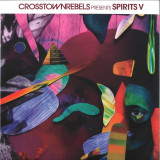
Various - Crosstown Rebels present SPIRITS V (2x12")

Repress!

The release of Crosstown Rebels’ SPIRITS compilation is always a bastion moment for the label. The first edition came to prominence in 2017 and we’ve been graced with an annual compilation ever since, showcasing a consistent habit to champion established artists and breakthrough ones alike. Now, Crosstown Rebels’ lauded SPIRITS series will see the light of day once more in June, with the release of SPIRITS V.

NYC-native Layla Benitez leads proceedings with Fides, a progressive-leaning, introspective number that retains an inherent danceability throughout. It kicks off the compilation with a driving energy, one that’s perfectly matched by Trabajar - the Crosstown Rebels debut of recent Hot Creations inductee Mr.Diamond.

A techy-inspired cut, punchy four-four drum patterns create a distinctive late-night feel, as UK-talent Denney soon arrives with Kill The Soundboy. Showcasing the groove-laced house sound with which he’s become best known, the near seven-minute piece is sure to light up many a club setting this year, paving the way for Talk To Me. It’s a collaborative venture between Munich-based artist ASK:ME and El Muerto, with Soulfoot featuring on vocals. Retaining a vintage Detroit style, the fast-paced tempo creates a natural excitement before Romanian-born mainstay GruuvElement’s gifts us the minimal-toned Boom Room.

Building with tribal-like percussion and salsa-inspired instrumentals, it’s a playful excursion into dance music’s outer realms, paving the way for young Peruvian producer Chinonegro with My Moment. Whether it be the pluck of a guitar string or a jazzy trumpet solo, there’s an inherent authenticity to the six-minute piece, as a mid-track breakdown gives way to whispering hats and a rhythmic underlying backbone.

The penultimate offering comes from French-born, London-based regular Maglia, who serves up the enchanting Rayiys. The chirping of birds resides atop an ever-changing bassline, leaving us open and ready for the VA’s closing saga: Thanks Moon, by Spain’s I AM JAS. A heady combination of beautiful lyrical contributions combines with softly moving electronic elements, to leave us in a state of calm, inward reflection. Rounding off proceedings on a note of quietude, it reminds us of the final moments in clubland, transporting our psyche to sunrise, fond memories and everything in between.

Over a period of nineteen years, Damian Lazarus’ Crosstown Rebels has evolved into a world-renowned institution, garnering global audiences thanks to a consistent schedule of quality releases. In years since it’s earliest beginnings, the likes of Maceo Plex, Art Department, Seth Troxler, Ali Love, Mathew Jonson, Pier Bucci, Acid Pauli, Dennis Kurtel, Francesca Lombardo, Glimpse, Aphrohead, Fur Coat and a plethora of other figureheads have all found their home on the label.

The roster is international, showcasing how Crosstown has shaped a truly global scene. Releases are born in different continents by artists who hail from different countries, resulting in a sound that resonates worldwide. Perhaps most pivotal to the label’s success is its musical output: no part is governed by boundary or genre. It’s underpinned by a truly eclectic sound, one that reflects the diversity of Damian’s love for music itself. An album from drum and bass icon DJ Krust here, a maiden LP from Audiojack there… traversing genres has been Damian’s forte for decades - and Crosstown epitomises that as a result.

In Stock

Disponibile in Stock e pronto per la spedizione

Last In: 3 months ago
25,17 €
Mr. K - Funky Music / Giving Up

Most Excellent Unlimited is happy to announce the next release in its series of collaborations with master DJ and editor "Mr. K". Two exceptional deep classic album gems skillfully cut down to a maximum 7" 45rpm format, Luther’s “Funky Music (Is a Part of Me)” and Zulema’s “Giving Up.”

Long before “Never Too Much” and his other solo hits, Luther Vandross was an in-demand backup singer and vocal arranger, working with luminaries like Carly Simon, Bette Midler, and Donna Summer, along with his stand out performances in Change, Bionic Boogie, & so many more. Perhaps his most significant role, however, was backing David Bowie on the 1975 Young Americans album. It was during these sessions that Bowie heard Luther’s song “Funky Music (Is a Part of Me)” and re-tooled it to become the Bowie/Vandross joint composition “Fascination,” which went on to become a successful Bowie single.

For the latest edition of Most Excellent Unlimited’s series of edits, Mr. K has gone back to the original source, credited to the group (not the solo artist) Luther (which also features Christine Wiltshire). Mr. K's technique on this edit is cleverly subtle, in the process giving us the first opportunity to get almost the entire full-length song on compact 7-inch wax, keeping that irresistible building energy that places the track firmly on dancefloor-friendly territory.

“Giving Up” was the opening track on Zulema’s second LP, and given the drama of the intro, with its rolling piano, string ensemble, and piercing guitar, it’s not hard to hear why it was effective in that role. Mr. K’s edit benefits from a crystal clear remastering in which each element of the band is distinct in the soundfield, led by Zulema’s gutsy vocals upfront. Originally a 1964 Gladys Knight tearjerker that crept along at a tango’s pace, Zulema’s 1973 cover gives the song a new, powerfully soulful arrangement, championed by such disparate eras and tastemakers as Nicky Siano at the Gallery in the ’70s and breakbeat hunters the Beatnuts in the ’90s that has easily found favor with a wide variety of listeners and DJs, and this new issue should solidify that position. Never before available on 7-inch, “Giving Up” is a bonafide funk and proto-disco classic —

In Stock

Disponibile in Stock e pronto per la spedizione

Last In: 19 months ago
10,88 €
Ray Mono - As The World Turns

Ray Mono

As The World Turns

12inchTRMNL004
TRMNL
25.04.2023

Ray Mono steps up for the fourth release on Birmingham-based imprint TRMNL, with Meander boss DeWalta accompanying on remix duties.

With an increasing number of global shows across Europe, Australia, and North and South America, UK-based DJ/producer Ray Mono is crafting his warm and rich sound in one that is steadily becoming his own. Fresh from music on MOXY MUZIK, Politics Of Dancing, LOCUS, and hedZup Records, he makes his first appearance on TRMNL Records with a trio of slick groove-led cuts spanning minimal and house spheres, backed by a hazy and warping late-hours roller provided by DeWalta to close the show.

DJ Support:

Jamie Jones
Archie Hamilton
Raresh
Joseph Capriati
Franky Rizardo
IULY.B
Jean Pierre
Sakro
Ben Jones

In Stock

Disponibile in Stock e pronto per la spedizione

Last In: 16 days ago
16,18 €
Philippe Maté & Jef Gilson - Workshop

In October 1974, the first number of “L'Indépendant du Jazz”, a small self-produced magazine DIY -before punk supposedly invented the concept- was launched by Jef Gilson, Gérard Terronès, Jean-Jacques Pussiau and a few other specialists of a different kind of jazz in France, it looked at the already long career of Jef Gilson and in detail at the album with saxophonist Philippe Maté:
“The ‘Workshop’ is, with Philippe Maté (alto-sax), an undeniable success. Maté is genuinely ‘the’ most inventive French saxophonist since Michel Portal burst onto the jazz scene (who has also worked with Jef Gilson on both “Enfin” and “Gaveau”).”

Even though the author of the article is a mysterious I.H. Dubiniou, and it is difficult to know if it is a real person or a pseudonym used by one of the merry bunch, it is also tempting to hear it as what Jef Gilson really thought about his new discovery. Even more so as the two men would work together over a long period, as Maté became one of the key figures of Gilson’s Europamerica orchestra up until the 1980s.

Philippe Maté had started to make a name for himself with the Acting Trio when they released an album on the BYG label in 1969, and he was also one of the regular sidemen for the Saravah studios (he can notably be heard on albums by Higelin, Fontaine or his cult duo album with Daniel Vallancien).

The album was recorded on 4 February 1972, at the Foyer de Montorgueuil, where Gilson had set up his studio, with more or less the same team found on “La Marche Dans Le Désert” by Sahib Shihab + Gilson Unit (recorded ten days later). This was drummer Jean-Claude Pourtier and pianist Pierre Moret (regular Gilson accomplices since “Le Massacre Du Printemps”), alongside Maurice Bouhana and Bruno Di Gioa on various percussions and/or wind instruments. On bass is Didier Levallet, of the now mythical Perception, (Jean-François Catoire would replace him with Shihab) and Philippe Maté who took top billing, rather than the American saxophonist afterwards. The two albums are however quite different. This “Workshop” is more abrasive, more free. Made up of two long improvisations each of over 22mn, “L'Œil” on side A and “Vision” on side B (Gilson specialists would recognise the nod to one of his albums from the 60s), the album plunges you into the depths, attempting to drown you in electronic waves, dragging you back to the surface by the collar, giving you a good shakedown, before showing you the light, leaving you breathless on the shore after 46mn of the most intense music French has to offer. “An undeniable success”, they said. (by Jérôme "Kalcha" Simonneau)

In Stock

Disponibile in Stock e pronto per la spedizione

Last In: 3 years ago
17,02 €
Veerus - Hypnosis

Veerus

Hypnosis

12inchDC203
Drumcode
14.05.2019

Veerus makes his Drumcode debut, after an impressive contribution to Truesoul's VA EP in 2017.

The Italian has built up an impressive discography over the last decade, dropping records on labels including Terminal M, Octopus, Filth on Acid and his own Le Club imprint. His collaborative with Maxie Devine 'My Train' was a highlight of Solomun's classic Boiler Room in Tulum, which has clocked 37 million views. In late 2017 he linked up with Brits OC & Verde for the fantastic 'Naaki' that featured on Truesoul's first Various Artists EP, ensuring he was an artist well and truly in Adam Beyer's sights.

His maiden outing for Drumcode mines 20 years of history, taking inspiration from classic trance and acid from the '90s, which he distils to create powerful modern techno works. 'Hypnosis' was a huge highlight of Beyer's Awakenings show at Gashouder during ADE. It's characterised by an engrossing call-and-response dynamic Veerus builds between the 303 acid warbles and the melodic stabs that run throughout. A track custom made for big moments. 'Apocalypse', like its name, is more menacing. Veerus constructs the work to mimic the dramatic theatre of a gladiatorial scene in a film, as heart-fluttering chord progressions, a piercing synth line and dystopian melody mark this memorable track.

In Stock

Disponibile in Stock e pronto per la spedizione

Last In: 5 months ago
14,50 €
De-bons-en-pierre - Crepes Ep

De-Bons-en-Pierre is a project from Beau Wanzer & Maoupa Mazzocchetti. Beau Wanzer spends the majority of his days sifting through paraffin embedded animal tissues and reading old issues of Fangoria, occasionally breaking his monotonous routine to record in various fits and bursts. As well as solo material, he is also in numerous projects including Streetwalker, Mutant Beat Dance, Civil Duty, and Corporate Park. He's released on many labels including; Diagonal, L.I.E.S, Cititrax, Nation, Rush Hour, and Light Sounds Dark. Maoupa Mazzocchetti is the pseudonym of Florent Mazzocchetti, a French producer based in Brussels. Florent is strictly devoted to a DIY mentality around music production and his sound revives the electro-industrial aesthetic of the late 70s and early 80s. He's released notable productions on labels such as Unknown Precept, PRR! PRR!, Knekelhuis and Mannequin Records.

While Beau was visiting Brussels he stopped by Maoupa's house to jam for a bit. All songs were recorded on April 4, 2016 between 11:00am and 11:00pm, as single live takes.'Crepes' is a 6-track EP, titled so because they ate crepes the majority of the session. Beau says, "There was a bit of a language barrier. We'd mostly just laugh and nod when something sounded cool to us." The equipment set up included a Roland TR-808, TR-606, SH-101, CR-78, CR-8000, two Syncussions and effects. Over 23 minutes of garbles, sludgy synths and leviathan rhythms. Surfing the slippery slope between industrial and electro, but never quite falling in, just a dip of your pinky toe to to test the temperature.

All songs are mastered by George Horn at Fantasy Studios in Berkeley. Housed in a sewage green/blue jacket featuring a crepe-masked duo reminiscent of pulpy VHS covers. Designed by Eloise Leigh and Florent Mazzocchetti. Each copy includes a 2-sided postcard with a photo taken during the recording session.

In Stock

Disponibile in Stock e pronto per la spedizione

13,66 €
Cadentia Nova Danica - Mc Gub Gub / Ode To Skt. John / Pladepip

John Tchicai (1936 – 2012) was one of the most important free improvising saxophonists of the 20th Century: an artist of rare vision and aptitude whose lines soared and stood out even in the most hallowed company, and whose body of work as a leader / composer is among the most singular and distinct within the entire canon of that music. But Tchicai’s importance doesn’t end there. Born in Copenhagen, Denmark, to a Danish mother and a Congolese father, his life and career represent a crucial bridge between the European and American traditions of free jazz. Initially trained on violin as a child, Tchicai shifted his focus to the clarinet and alto saxophone during his mid-teens, and began touring Europe as a professional musician by his early 20s, which landed him at a socialist youth festival in Helsinki, Finland, where he met the trumpeter Bill Dixon and saxophonist Archie Shepp. Impressed by what they heard, Dixon and Shepp encouraged the young saxophonist to move to New York, and in so doing changed the history of jazz forever.

Tchicai’s arrival in New York marks the rare occurrence of a European player joining the intimate circle that was first wave of American free jazz. Following his landing in the city in November of 1962, in addition to regularly sitting in with Don Cherry’s group, Tchicai began playing with Bill Dixon's band alongside Archie Shepp and Roswell Rudd, forming the nucleus of the foundation of the New York Contemporary Five - one of the most important groups of the era - which counted Tchicai, Shepp, Cherry, Don Moore, and J. C. Moses as its members. From the ashes of this group, Tchicai would go on to found the legendary ensemble, New York Art Quartet, with Roswell Rudd, Milford Graves, and Lewis Worrell, as well as working within Albert Ayler's band, recording “New York Eye and Ear Control”, Shepp’s band, recording “Four for Trane”, the ensemble that recorded John Coltrane's “Ascension”, and the Jazz Composer's “Orchestra”.

By the time he decided to return to Denmark in 1966, had Tchicai chosen to record little else, his legacy within the history of music would have been ensured. Incredibly ambitious, his arrival home marked the beginning of an incredible period of activity which saw him radically expanding his creative explorations, which by the end of the decade would include becoming a founding member of Amsterdam's Instant Composers Pool and helping to record John Lennon and Yoko Ono's “Unfinished Music No.2: Life with the Lions”. This, however, was proceeded the formation of a new orchestra, Cadentia Nova Danica, led by Tchicai, dedicated to radical cross-disciplinary exploration. Remaining together between 1966 and 1971, the group and its shifting membership regularly fell into collaboration with artists and composers, notably Musica Elettronica Viva, who existed beyond the realms of jazz, as well as participating within multi-media events that incorporated the visual realms.

Cadentia Nova Danica’s only two LPs - “Cadentia Nova Danica” (Polydor, 1968), and “Afrodisiaca” (MPS, 1969) - are effectively Tchicai recorded efforts as a leader, and are legendary. There’s little mystery, once heard, why the later landed on Thurston Moore’s iconic “Top Ten from the Free Jazz Underground”, published by Grand Royal in 1996. Sadly, despite playing extensively during their five year run, with exception of a CD documenting a performance at Jazzhus Montmartre, in 1966, until now there has been no other publicly available recordings that allow us to capture a glimpse of this astounding band at work. Alga Marghen / Formalibera’s vinyl pressing of a never before released body of recordings, made in Copenhagen between 1969 and 1970, changes that in the most exciting of ways.

Comprising three pieces - “Mc Gub Gub, (I–VIII)”; “Ode to Skt. John”; and “Pladepip” - the material on this stunning LP comes from two specific events. The first, which encompasses the first side, “Mc Gub Gub, (I–VIII)” was recorded by Cadentia Nova Danica - in this instance, Tchicai, Sune Weimar, Theo Rahbek, Christian Kyhl, Niels Holt, Jørgen Thorup, Michael Schou, Morgens Bollerup, Allan Gregersen, Ole Matthiessen, Pierre Dørge, Willy Jaegert, Anthony Barnett, and Jon Finsen - on May 29th, 1969, at the ABC-Theatre in Copenhagen. Penned by Tchicai, the piece is a sprawling, evolutionary composition at the outer reaches of free jazz, rooted in large blocks of colliding tonality and rhythm - a sound only accessible to larger ensembles - that push territories explored by Charles Mingus to previously unimagined heights, threaded by moments of hard blown fire. Writhing like a stormy sea - skronking and devilish - “Mc Gub Gub, (I–VIII)” is a work of profound complexity that singlehandedly illuminates not only Tchicai’s singular vision as a composer, but also the power and uniqueness of Cadentia Nova Danica during the band’s most vital period.

The two pieces - “Ode to Skt. John” and “Pladepip” - taking up the flip side, were recorded on February 21st, 1970, at the Danish Broadcasting Corporation’s Radio House, and are the outcome of Cadentia Nova Danica’s extended residency there between 1969 and 1970. In many ways, these two recordings offer some of the best insights into the broad collaborative approaches that defined the band, in this case encountering them working with Danish experimental composer, Svend Erik Werner, who was among the earliest in his country to embrace stylistic pluralism and the use historical forms within a modern context. “Ode to Skt. John” - based on aspects of Gregorian music - was penned by Werner, incorporating heady improvisation by the members of Cadentia Nova Danica, this time made up by Tchicai, Sune Weimar, Hugh Steinmetz, Theo Rahbek, Christian Kyhl, Michael Schou, Morgens Bollerup, Ole Kühl, Torben Enghoff, Mauritz Tchikai, Kjeld Ipsen, Willy Jaegert, Ole Matthiessen, Ole Thilo, Pierre Dørge, Steffen Andersen, Jon Finse, and Clause Bøje. The piece is a fascinating binary of the composed and improvised, utilising the band’s large scale to introduce a remarkable sound within its slow progressions and furious, driving free moments, in this incredible meeting of worlds.

The album’s final piece, “Pladepip”, is arguably its most historically significant: an entirely singular piece, unlike anything in Tchicai’s recorded canon as his foray into musique concréte. Drawing upon two recordings of full-band improvisations by Cadentia Nova Danica, for its creation Tchicai also gouged the surfaces of 78rpm records in his collection to skip and create repeated phrases and patterns, creating a stunning sound collage of hard angles and abrupt phrase, that creates a striking counterpoint to the band’s flowing improvisations that bookend those passages. The result is an engrossing listen and easily one of the most unique and culturally important gestures in the entire history of musique concréte.

Truly incredible, Alga Marghen / Formalibera’s vinyl pressing of this never before released body of recordings, made by John Tchicai’s Cadentia Nova Danica, in Copenhagen between 1969 and 1970, offers an unprecedented window into one of the most important groups working in Europe during that period, significantly expanding their rare and slim discography to date. Accompanied by extensive exploratory liner notes by veteran jazz writer, Ed Hazell, this is easily one of the most historically important archival releases of the year and is impossible to recommend enough. Absolutely essential on every count.

pre-ordina ora28.08.2026

dovrebbe essere pubblicato su 28.08.2026

28,15 €
Dinosaur Jr. - I Bet On Sky LP

Dinosaur Jr.

I Bet On Sky LP

12inchJAG228LP
JAGJAGUWAR
14.08.2026
  • 1: Don't Pretend You Didn't Know
  • 2: Watch The Corners
  • 3: Almost Fare
  • 4: Stick A Toe In
  • 5: Rude
  • 6: I Know It Oh So Well
  • 7: Pierce The Morning Rain
  • 8: What Was That
  • 9: Recognition
  • 10: See It On Your Side

I Bet on Sky is the third Dinosaur Jr. album since the original trio – J Mascis, Lou Barlow and Murph – reformed in 2005. And, crazily, it marks the band’s 10th studio album since their debut on Homestead Records in 1985. Back in the ‘80s, if anyone has suggested that these guys would be performing and recording at such a high level 27 years later, they would have been laughed out of the tree fort.

The trio has taken everything they’ve learned from the various projects they tackled over the years, and poured it directly into their current mix. J’s guitar approaches some of its most unhinged playing here, but there’s a sense of instrumental control that matches the sweet murk of his vocals (not that he always remembers to exercise control on stage, but that’s another milieu). This is head-bobbing riff-romance at the apex. Lou’s basswork shows a lot more melodicism now as well, although his two songs on I Bet on Sky retain the jagged rhythmic edge that has so often marked his work. And Murph…well, he still pounds the drums as hard and as strong as a pro wrestler, with deceptively simple structures that manage to interweave themselves perfectly with his bandmates’ melodic explosions.


After submerging myself in I Bet on Sky, it’s clear that the album is a true and worthy addition to the Dinosaur Jr. discography. It hews close enough to rock formalism to please the squares. Yet it is brilliantly imprinted with the trio’s magical equation, which is a gift to the rest of us. For a combo that began as anomalous fusion of hardcore punk and pop influences, Dinosaur Jr. have proven themselves to be unlikely masters of the long game.

pre-ordina ora14.08.2026

dovrebbe essere pubblicato su 14.08.2026

28,15 €
Various - Tchic Tchic: French Bossa Nova 1963-1974  Colored Edition LP 2x12"
 
22

Ever since the late 1950s bossa-nova revolution, Brazil’s influence on French music has been undeniable. Pierre Barouh, Georges Moustaki and a vast array of lesser known artists, all made the Musica Popular Brasileira (MPB) an axis of promotion at the service of a cool and metaphysical, modern and mixed Brazilian lifestyle. Some were seduced by the poetic languors of the bossa, some were looking for fun, and others just loved the American hybridization of jazz-bossa, jazz-samba.


What is bossa nova? One of its creators, Joao Gilberto said: "Its style, cadence, everything is samba. At the very start, we didn't call it bossa nova, we sang a little samba made up of a single note - Samba de uma nota so .... The discussion around the origins of bossa nova is therefore useless”. It is nevertheless useful to remember that these magnificent Brazilian songs, which the guitarist describes as samba, were shifted and balanced around improbable chords. "I like things that lean, the in-betweens that limp with grace," said Pierre Barrouh, quoting Jean Cocteau.


With emotion, arrangements for violin and supple guitar licks, bossa nova rapidly changed. A transformation that can be heard in the Tchic, tchic, French Bossa Nova 1963-1974 compilation, the result of a cultural reappropriation, which traveled through the United States and supplemented itself in France.

A musical revolution that has remained significant, bossa nova was born in Rio. From 1956 to 1961, Brazil lived through its golden years. In five years, the country had invented its modernist style. Elected president in 1956, Juscelino Kubitschek de Oliveira, an elegant man with a broad forehead, brandished a promising slogan: "Fifty years of progress in five years". He quickly got to work. Not worried about increasing debt, he launched the project for a new federal capital, Brasilia, designed by the communist architect Oscar Niemeyer. Volkswagen opened state-of-the-art factories and created the “fusquinha”, the Beetle. In Rio, the Vespa made its first appearance. The Arpoador Surf Club crew run into the “girl” from Ipanema, Helô Pinheiro - the tanned garota ("chick"), between a flower and mermaid, who at 17 walked by the Veloso bar, where the fiery author and composer, Tom Jobim and Vinicius de Moraes, were getting drunk on whiskey. From then on, bossa symbolized cool.

In 1958, Joao Gilberto recorded Chega de Saudade, which the directors of Philips denied, calling it "music for fagots". The marketing director, who believed in it, secretly pressed 3000 78-inch vinyls and distributed them at schools around Rio, creating a tidal wave.

American jazzmen then took over. In particular, trumpeter Dizzy Gillespie and guitarist Charlie Byrd. In November 1962, the Brazilian Ministry of Foreign Affairs funded a "Bossa-Nova" concert at Carnegie Hall in New York, inviting the genre’s pioneers. Unprepared, the show soon turned to disaster. But the troupe was invited to the White House by Jackie Kennedy. The first lady loved "the new beat" and in particular Maria Ninguem, a song by Carlos Lyra, later covered by Brigitte Bardot.

In Brazil, the 1964 military coup quickly ended this euphoria. The destructive atmosphere that ensued pushed many Brazilian musicians to leave, if not to exile. Thus, Tom Jobim, Sergio Mendes and Joao Gilberto arrived to the United States. In New York, Joao Gilberto met saxophonist Stan Getz. At the time, he was married to the Bahianese Astrud Weinert Gilberto, who had a German father. She had never sung before, but she knew how to speak English. Getz therefore asked her to replace her husband on The Girl From Ipanema. The Getz/Gilberto record with Tom Jobim on piano, was released in March 1964. Phil Ramone, the "pope of pop" was in charge of sound.

Bossa nova arrived in Paris through the classic “guitar-voice” channel (Pierre Barouh, Baden Powell, Moustaki…) But France loved jazz and Paris had already welcomed its American contributors. All these good people were to pass through Saint-Germain-des-Prés. The cabaret l'Escale became the Mecca of Latin American sound where one could find Pierre Barrouh and his friends, such as the Camara Trio, samba-jazz aces, whose only record was published by the Saravah label. With a band strangely called Les Masques (a band that included Nicole Croisille and Pierre Vassiliu, among others), the Camara Trio recorded an interesting Brazilian Sound, including the track Il faut tenir which is present on this tasty compilation of rarities.

Other enlightened musicians can also be found on the compilation, such as Jean-Pierre Sabar (songwriter for Hardy, Auffray, Leforestier ...) and the French pop rock organist Balthazar. In 1975, Sabar recorded Aurinkoinen Musiikkimatka on a Finnish label, which featured the crazy Vai, Vai, included on this record. We are now following the footsteps of Brazilian electronic musicians such as Sergio Mendes, Eumir Deodato or Marcos Valle who created funk and disco sounds on their keyboards and synthesizers. A style that influenced Véronique Sanson when she wrote Jusqu’à la Tombée de la nuit in 1969 for Isabelle de Funès, the niece of Louis and a great friend of Michel Berger - Sanson did end up singing this track on her 1992 Sans Regret record.


The pinnacle of exoticism and travel, Sylvia Fels’ Corto Maltese includes bongos, sea mist and ocean sounds. The title was taken from Jacky Chalard’s concept album written in 1974, Je suis vivant, mais j’ai peur (I am alive, but I am scared), based on Gilbert Deflez’s science fiction novel.


However, bossa nova extended the scope of popularity. "In the 1970s, I was a fan of Sergio Mendes, Getz / Gilberto. I fell in love with this music that I knew because I had been an orchestral singer, " explained Isabelle Aubret, who in 1971 delivered a composite record of covers by the very funky Jorge Ben, Orfeu Negro, Tom Jobim, Vinicius de Morais and Jean Ferrat. "I recorded this album for Meys Records in Paris, far from Brazil, with wonderful musicians, François Raubert, Roland Vincent, Alain Goraguer...". The latter wrote the arrangements for Casa Forte, a very percussive title borrowed from Edu Lobo, one of the initiators of the bossa who spent time in California. "Jazz and bossa came together and produced very rhythmic music. I love singing, it allows me to dream, to have fun, to feel a high on stage, and these songs brought me joy, made me swing, my singing felt like a dance.”


The world tours of French singers and their desire for the tropics, often brought them to Rio with its hills, forests, caipirinhas and tanned bodies. There are surprises though, like this Iemenja (Iemenja is the goddess of the sea in the Afro-Brazilian candomblé religion). Not unlike the composer and musician Jean-Pierre Lang, based in Sao Paulo, Claire Chevalier taught Brazil to Brazil. In 1970, the singer and painter published a 45-inch vinyl, Mon mari et mes amants (My husband and my lovers), under the improbable pseudonym of Clarinha (little Claire). She was then living in Rio, with her husband, Joël Leibovitz, who founded a band called Azimuth, and who owned a record label specialized in "sambas enredos" songs for samba school parades.


For its B side, she asked Pierre Perret to come up with lyrics for a song composed by Carlos Imperial: "Oh goddess of the sea, o goddess Iemenja, I bring a white rose to adorn your long hair ..." . "Perret came to see us, and we had fun, remembers Joël Leibovitz. We wrote Lemenja for fun, we recorded it at the Havaí studio, behind the Central do Brasil the central station. Erlon Chaves, the arranger who worked with Elis Regina, joined us" adding his share of Afro-Brazilian percussions and funky brass to the mix.

There is a common misunderstanding in Franco-Brazilian history: that bossa, admittedly hedonistic, is perceived as funny, even though the poets who wrote the texts are often philosophizing on the human condition. Its French interpreters pull it towards a carnival inspired universe, far removed from its fundamental essence. Thus, Jean Constantin covered the famous Samba da minha terra, an ode to the art of samba written by the classic Bahian composer Dorival Caymmi, renaming it with the enticing title of Pas tant de tchi tchi pompon: "On your pier there is no tchi tchi / when you arch your back, you know everything is alright ”(lyrics by Gérard Calvi). This expedited bossa aims for the absurd, but retains a certain elegance.

Indeed, Jean Constantin was not an idiot, the rather large man had a huge mustache and liked fantasy, (Les pantoufles à papa, Le pacha, inspired by cha-cha-cha-cha, salsa and jazz) but he was also the lyricist of Mon manège à moi interpreted by Edith Piaf, the composer of Mon Truc en plume by Zizi Jeanmaire and the soundtrack of François Truffaut’s 400 Blows. Le Poulpe, published in 1970, from which this bossa is extract, was arranged by Jean-Claude Vannier, an accomplice of Serge Gainsbourg’s Melody Nelson. In short: "There is enough of samba / By looking at the parasol / Because my poor cabeza / Is going to die in the sun".

Even the American actress Marpessa Down, who was at the heart of the bossa nova revolution with her role as Euridyce in Marcel Camus’ film Orfeu Negro, winner of the 1959 Cannes Palme d'or, fed the clichée with Je voudrais parler au petit cuica - "Tell me how you manage to always make people want to dance / It's true, I must admit that I cannot resist your magic" - in consequence, once can hear the cuica, a little drum inherited from the Bantu.


But bossa nova had many angles. Societal, of course, pushing actresses who were symbols of women's liberation like Brigitte Bardot, Jeanne Moreau, or Sophia Loren to engage in the exercise of accelerated bossa. In February of 1963, Sophia Loren made a record in French in Rome, Je ne t'aime plus, featuring the song De jour en jour, a bossa written by two Italians, Armando Trovajoli and Tino Fornai, which was released a little later by Barclay. Bossa accompanied the 1960s, a decade of moral liberation. Ann Sorel, who interpreted La Poupée des favellas, caused a sensation with L’amour à plusieurs, a provocative song written by Frédéric Bottom and Jean-Claude Vannier. As for the actress Andrea Parisy, she displayed her bourgeois cheekiness in Marcel Carné's Les Tricheurs before interpreting Les mains qui font du bien. And Magalie Noël, the friend of Boris Vian, who sung Johnny fais-moi mal, was hired to sing Une énorme Samba, composed by Alain Goraguer (arranger to Gainsbourg, Bobby Lapointe and Jean Ferrat) with lyrics by Frédéric Botton.

But in the end, of what wood is bossa nova made of? The answer is given by Christianne Legrand, daughter of Raymond the conductor, and sister to Michel the composer: "With me, with jà" - jà means "immediately" in Portuguese. In 1972, the singer, an expert in vocal jazz and a member of the Double Six, published Le Brésil de Christianne Legrand. Two songs included on the Tchic Tchic compilation that demonstrate how bossa, jazz, funk, rock, etc. work like a swiss army knife: the music is used to denounce broken systems, or miracles, HLM et ciné roman, Cent mille poissons dans ton filet, two songs from the O Cafona soundtrack, a successful telenovela broadcast, at the time in black and white, on TV Globo. The first was adapted in French by the fighter and friend of the Legrand tribe, Agnès Varda. The second is content with a play on words, jostling them into a summer fun.


Véronique Mortaigne

non in magazzino

Ordina ora e ordineremo l'articolo per te presso il nostro fornitore.

Last In: 80 days ago
27,31 €
Synapson - 15 ans à l'Olympia LP 2x12"
  • A1: Intro + Colors (Feat. Nic Hanson) (Live à L'Olympia)
  • A2: Love on Me (Feat. Later.) (Live à L'Olympia)
  • A3: Tiger Teeth (Feat. Nic Hanson) (Live à L'Olympia)
  • B1: Djon maya maï (Feat. Victor Démé) + Bensema (Feat. Lass) (Live à L'Olympia)
  • B2: Danse (Feat. Sirius Trema) (Live à L'Olympia)
  • B3: Nuit Blanche (Feat. Clou) (Live à L'Olympia)
  • B4: Les hommes c'est pas des mecs bien (Feat. Clou) (Live à L'Olympia)
  • C1: Intemporel (Live à L'Olympia)
  • C2: Manyé (avec David Walters)(Synapson Remix)(Live à L'Olympia)
  • C3: Toujours (Feat. Tim Dup & Lass) (Live à L'Olympia)
  • C4: Breathe (Feat. Thaïs Lona) (Live à L'Olympia)
  • C5: Guess What (Feat. Nic Hanson) (Live à L'Olympia)
  • D1: All in You (Feat. Anna Kova) (Live à L'Olympia) + Going Back to My roots (Feat. Tessa B) (Live à L'Olympia)
  • D2: Between The Lines (Dub Version) (Live à L'Olympia)
  • D3: Together (Feat. Beat Assailant) + Superfinal (Feat. TBOW, Thaïs Lona, Sirius Trema, Pierre Mirabeau) (Live à L'Olympia)

On October 16, 2025, Synapson took over the Olympia for a sold-out anniversary concert, celebrating 15 years of their career. A symbolic night in an iconic venue, in front of a crowd that came to relive the tracks that shaped their journey.

Today, the duo unveils “15 ans à l’Olympia”, a live album recorded during this unique show, a vibrant testament to their stage energy and the evolution of their project.

pre-ordina ora26.06.2026

dovrebbe essere pubblicato su 26.06.2026

30,21 €
Kercha - Open The Door LP 4x12"

Kercha’s debut album ‘Open The Door’ arrives this April via DNO Records. The Black Sea artist’s mystical, disorienting style has set the tone for the label since he dropped the inaugural release six years ago. Now, across 16 tracks — including collabs with Mystic State, Congi, NST, Khromi and Finnoh — his smoky sampledelic dubstep is tighter, heavier, and more curious than ever, with a new sense of danger and bubbling rage that feels fit for our chaotic times.


Themes of movement and change course through the LP. On the opening gambit ‘A Path Into The Unknown’, twinkling arpeggios emerge from the gloom like stars lighting the way. Tracks like the eponymous ‘Open The Door’ and ‘Mind Extraction’ deliver that classic Kercha sound, where left-field samples dart in at right angles. ‘Dangerous Road’ weaves between the call and response action of grotty stabs and devilish subs. ‘Take A Break’, featuring Mystic State, goes on the attack with searing acid. ‘Can’t Wait For Today’, though lethargic in its pace, sees San Francisco-based rapper Finnoh deliver stream-of-consciousness bars that skewer our present and nudge us to revolution.

Work took place over the course of several years, during which Kercha relocated with his family from Russia to Georgia, where he now resides in the capital, Tbilisi. “Sometimes I wrote music while travelling on a bus, sometimes late at night while my family was asleep, sometimes just sitting on the grass in a park, and of course in my home studio as well,” he says. “By the time the album was finished, it included music from different periods, and it may vary in sound and concept.”

Any major upheaval in life will result in moments of hardship, but also hope. Both can be found throughout ‘Open The Door’. There’s times when the darkness threatens to envelope everything: during the cold, crackling ‘Disclosed’ and the eerie, dystopian ‘Infection Of Lies’; on ‘Trigger Activation’, with its grunting lows and broken glass hook, and ‘Ballistics’, where a wall of sub-bass is pierced by shrapnel stabs.

The balancing light comes on ‘4 AM’, featuring Nottingham duo Congi, when clashing swords and cinematic strings, meet a soft Rhodes piano — the juxtaposition between heavy low-end and floaty keys and vox reflecting those moments of transcendence often found in the early hours. From the injection of garage energy on ‘Bubs’, with Edinburgh’s Khromi. And on with ‘My Feeling’, featuring South Russian vocalist NST, which closes the album on a deep but expansive note, bookending the experience with more starlight synth tones.

“It’s a reflection of my life journey and the changes connected with emigration and overcoming various difficulties,” explains Kercha. “This period means a lot to me, which is why the album includes tracks from the time of preparing to leave up to adapting to a new country.”

Still, he wants listeners to be able to derive their own understanding. “I think the essence lies in the ability to contemplate, not in any predetermined meaning,” he says. “I can only say one thing: thank you for appreciating what I do and for your support. I hope it inspires you to make the same firm decisions to change for the better as it did for me.”

Out via 4 x 12” vinyl, ‘Open The Door’ is a captivating artistic statement, showcasing the journey of an artist with a truly original signature sound — a rarity that should be treasured and celebrated.

Rhythms of postmodern realism at the very bottom of the DNO.

In stock dal30.09.2026

Last In: 13 days ago
79,41 €
Iron Kobra - Eternal Dagger
  • 1: Trembling Dungeons
  • 2: Forbidden Fruits
  • 3: Fliehen
  • 4: Shibuya Nights
  • 5: Silver Strings and Iron Wings
  • 6: Eternal Dagger
  • 7: Unchained & Untamed
  • 8: Treacherous Tyrant
  • 9: Mountains of Madness
disponibile anche

Cassette[9,66 €]


DYING VICTIMS PRODUCTIONS is proud to present IRON KOBRA’s highly anticipated third album, Eternal Dagger, on CD and vinyl LP formats. Additionally their two previous albums will be re-released at the same time. Formed in 2008, Germany’s IRON KOBRA began with a noble mission: to bring heavy metal back to its unpolished, rough, and weird roots. Influenced by heroes of old like Iron Maiden, Cirith Ungol, Living Death, Manowar, and Tank with a sprinkle of punk, the band brewed up a venomous concoction of catchy-yet-speedy heavy metal with maximum potential for engagement – whether it was singing along to, banging your head, and / or raising your fist! Their first few years were busy, releasing the Cult of the Snake demo in 2009 and the Battlesword EP the year after. After playing extensively all throughout Europe and earning a reputation for being a force to be reckoned with live, IRON KOBRA teamed up with DYING VICTIMS in 2012 for the release of their momentous debut album, Dungeon Masters, and three years later for their more refined second album, Might & Magic.

The years after – especially those around the pandemic – brought the band’s external momentum to a crawl. But behind the scenes, they were still writing and playing select shows, even venturing as far as Japan. Now, at very long last, IRON KOBRA return to stake their claim as kings of swords & sorcery metal with Eternal Dagger! Granted, the characteristically amazing cover artwork suggests a sci-fi bent, but the timeless HEAVY METAL the Germans unleash here is vintage IRON KOBRA: immediately recognizable as them, but still reflecting on (and refining) their past, incorporating influences from their favorite bands to result in something that will be YOUR favorite soon enough! Aided by the gleaming & glorious production of Stefan Castevet (Vulture, Luzifer), Eternal Dagger explodes with excitement at every turn, its nine songs ranging speed metal tracks like “Trembling Dungeons” to NWOBHM-fueled rockers like “Shibuya Nights” and epics like "Mountains of Madness.” It goes without saying that IRON KOBRA’s arsenal here offers a wide variety of pure metal gold, evoking the likes of Exciter, Brocas Helm, Diamond Head, and early Running Wild but, of course, with their undeniable personality and panache. So strap yourselves to your seats, maniacs: the Cult of the Snake is back, bringing you heavy hymns that will pierce your eardrums like a heavy metal drill

pre-ordina ora19.06.2026

dovrebbe essere pubblicato su 19.06.2026

22,65 €
Piero Pirupa & Shield Feat. The Egyptian - Lover & Paris Brightledge I Like

Born from a demo session originally recorded in 2011, “I Like” finally came to life when Daniele “Shield” Contrini and Piero Pirupa reunited in late 2025 to complete the track, transforming an early idea into a powerful new collaboration featuring two legendary voices of house music: The Egyptian Lover and Paris Brightledge.

Daniele “Shield” Contrini, founder and creative force behind Rebirth Records, joins forces with globally respected DJ and producer Piero Pirupa to deliver a record designed to fire any dancefloor.

Blending Italo disco influences, classic house grooves and a powerful bassline, “I Like” carries a warm, uplifting energy while paying tribute to the golden era of club music. The track is driven by the unmistakable vocal presence of The Egyptian Lover, the pioneering American artist, producer and DJ Greg Broussard. Widely recognized as one of the architects of West Coast electro and early hip-hop, he helped shape the sound of 1980s Los Angeles electronic music through his groundbreaking use of the Roland TR-808.

Adding further depth to the record is the distinctive voice of Chicago house legend Paris Brightledge, whose haunting and melodic tone became iconic through classics such as “It’s Alright” and “Paris Dub 1”. Over the years he has collaborated with some of the most important names in house music including Joe Smooth, Frankie Knuckles, Marshall Jefferson, Ron Hardy, Mike Dunn, Farley “Jackmaster” Funk and Byron Stingily, while also appearing on projects with Pet Shop Boys, Paranoid London and Groove Armada.

With its blend of electro heritage, Chicago house soul and contemporary club production, “I Like”connects different generations of dance music in a single record, a collaboration that bridges eras, styles and scenes. Set for an official release on 22nd May, the track marks another chapter in the label’s ongoing story and its commitment to celebrating the roots of club culture while pushing it forward.

In stock dal30.09.2026

Last In: 3 months ago
13,87 €
Articoli per pagina:

Language

N/ABPM
Vinyl