
nicht am Lager
Bestelle jetzt und wir bestellen den Artikel für dich beim Lieferanten.
Last In: vor 3 Jahren
12,82 €
Bestelle jetzt und wir bestellen den Artikel für dich beim Lieferanten.

Sonor Music Editions proudly presents "A TEMPO DI JAZZ" by Maestro Piero Umiliani. This lost gem captures the formative years of Modern Jazz in late 1950s Italy - alongside the legendary Basso-Valdambrini recordings in the early 1960s, as well as the early years of Piero Umiliani's long and prolific career as a composer with over 190 soundtracks, 40 library albums, and 35 TV title themes recorded.
A TEMPO DI JAZZ includes seven original compositions by Piero Umiliani recorded in 1959. Here, at the age of 33, he lays a perfect ground with himself as a pianist, accompanied by some of the best Italian soloists at the time: Marcello Boschi on alto saxophone and flute, Ivan Vandor on tenor saxophone, Peppe Carta on bass, and the American trombonist Bill Gilmore. With plenty of room for improvisation, the sextet fuses Big Band moods with West Coast experimentation of Latin American rhythms and Modern Jazz ballads that sit perfectly between his soundtracks for the films "I Soliti Ignoti" (Big Deal on Madonna Street) from the same year that attained him international recognition, and his masterpiece "Smog" (featuring Chet Baker and Helen Merrill) from 1962.
Five compositions are outtakes from Piero Umiliani's mega-rarity "Tempo Jazz", released on RCA Custom in 1960, while 'Tema In Blues' has been published on the two - impossible to obtain - 45 releases "Moderato Swing" (RCA Camden 45CP 112) and "Tema In Blues" (RCA Custom 45 R3) from 1960 as well as the previously unreleased track 'Mezza Cottura.'
The music has been transferred and remastered from the original master tapes and lacquer cut in MONO, preserving the original sound of the recordings.
erscheint voraussichtlich am 12.10.2026

2026 Repress
A gift to the overthinkers and overworked. Those who are over-concerned and always preoccupied. This is an invitation to hang up the bootstraps, take a load off, and visit a place in the mind where the sun is shining, the breeze is soft and the waves lap softly at your feet. Vacation From My Mind is a sonic realignment of melancholic soul, breezy soft rock, & mellow jazz-funk.
This album is a thoughtfully curated collection of 12 rare and obscure tracks from 1973 to 1981. From Jeanette Baker’s hypnotic 70’s soul title track “Vacation From My Mind” to the Latin rhythms of David Buckland’s jazz-funk “Celia”, this compilation was lovingly crafted to ease the stresses and worries of modern life. The Care Package’s song “The Storm” is a larger-than-life production of dreamy harmonies not often found on privately released 45s. Utopia’s “Lejos De Mi” is a slow-burning slice of Bolivian psych that will have you searching for similar sounds. Whatever your preference, we hope that this album will give you a vacation from your mind.
Bei uns am Lager und sofort versandfertig

Repress!
Before the Khmer Rouge took power in 1975, unleashing a horrifying genocide, Cambodia had one of the most vibrant and exciting music scenes in Asia. With a mixture of traditional Khmer music and a myriad of western genres (from French and latin music, to rock-and-roll , rhythm-and-blues, surf, psychedelia, soul and many more) the few pre 75 Cambodian recordings that survived -most of them were destroyed- are enough to make anyone with a taste for good music shocked by the amazing quality of the sounds created during those golden years. Gathered in this amazing album are some of the most talented and unique musicians from that amazing era with an explosive collection of tracks sure to blow the mind of the listener. A celebration of some of the best music ever made.
Bei uns am Lager und sofort versandfertig

Now-Again Records presents catalog-wide reissues of Latin music propellant Joe Bataan’s legendary Ghetto Records. Next up in the series - La Fantastica. This brash, big band Latin orchestra from Brooklyn debuted on Ghetto Records with an underground Salsa album which also contains the beguiling, English-language Psychedelic Soul of "Latin Blues." Ghetto Records was Joe Bataan’s way to get over on “The Man” and out of the ‘hood, a bold move by an artist looking for independence and creative control in an industry that had exploited his talents and treated him like chattel. As Bataan puts it today, “Ghetto Records was part of my journey, a stepping stone to everything else that I’ve done. I learned enough that it enabled me to get out of the box with my thinking, it showed me how to deal with adversity.” Like many dreams and schemes born of the street, this one was audacious, perhaps even reckless to a fault. Hatched from desperation yet full of hope Ghetto Records came crashing down shortly after its inception. The seven albums in its discography languished out of print - until now. These are the definitive reissues of these albums, licensed from Joe Bataan, with his oversight and input into a 16 page oversize book by Pablo Yglesias that details Bataan’s larger-than-imagination life and his little Latin label that could.
Bei uns am Lager und sofort versandfertig

Héritage Mélodies is the meeting point between saxophonist and composer Jean Vernhères and Black Stamp Music, brought together by a shared passion for the warm colors of music, groove, and the beauty of sound.
Nurtured from an early age by jazz and African-American music—from blues and soul to hip-hop—Jean Vernhères also ventured into Highlife, Afrobeat, and Funk, exploring the fertile “Black Atlantic” that runs throughout his musical journey.
For his first album as a bandleader, he brings together Pierre Bauzerand on Steinway piano, Laurent Vanhée on double bass, Guillermo Roatta on drums, and, as a special guest, Alfio Origlio on Fender Rhodes and piano. Six original compositions where Soul Jazz, Latin Groove, Afro-Caribbean rhythms, spirituality, and intimate melodies come together.
Recorded at Bernard Estardy’s legendary Studio CBE and mastered in Berlin at East Side Mastering, Héritage Mélodies embraces a true audiophile aesthetic: from the breadth and spaciousness of Haumea City, a nod to CTI Records, to the delicacy of Marion.
More than a jazz record, Héritage Mélodies is a story of lineage, travel, and transmission: a personal tribute to all those who have carried forward a musical heritage that transcends time.
erscheint voraussichtlich am 10.09.2026

Reissue of the debut album by Laghonia, one of the most important bands of Peruvian rock. Originally released in 1960, "Glue" will be cherished by lovers of Latin American rock, pop and psychedelia as practiced by other similar classic bands such as Traffic Sound, We All Together, Black Sugar and Telegraph Avenue. After four brilliant singles, in 1969 the Peruvian band New Juggler Sound, formed by Saúl Cornejo (guitar), David Levene (lead guitar), Ernesto Samané (bass), Carlos Salom (organ) and Manuel Cornejo (drums), changed their name to Laghonia and released their debut LP "Glue" on the MAG label. The album included those previously released tracks, which were very influenced by the British rock scene of those years, to which they added fiery guitars bursting with fuzz and wah-wah, the ever present and hypnotic Hammond organ sound and Latin American percussion and rhythms. The result was a wonderful mix of mid-60s British beatmelodies, Jimmy Hendrix's intense rock, Cream's heavy blues and Santana's Latin rock. "Glue" is regarded as one of the key albums of Latin American psych and garage rock and is an essential record for any fan of those genres. Deluxe edition: 180g vinyl LP in tip-on jacket and insert with liner notes.
erscheint voraussichtlich am 10.07.2026
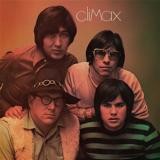
Second EP (1970) by the legendary Bolivian band Climax, recorded during their hard rock period, before evolving their sound toward progressive rock a few years later with the release of their well-known album "Gusano Mecánico". Includes a new funky version of 'Born to Be Wild' by Steppenwolf, as well as three original compositions by the band. On October 7, 1974, the now-historic "Gusano mecánico" was released - the only full-length album by the legendary Bolivian rock band Climax. Founded in 1968 from the remnants of the disbanded Los Black Byrds and the unrealized project The Turtles, Climax was formed by guitarist José "Pepe" Eguino and bassist Javier Saldías, who developed a strong bond with drummer Alvaro Córdova, cemented by their shared passion for rock. Together, they embarked on a journey of self-discovery, spending several months in the United States during a crucial period straddling the end of the Summer of Love and the lead-up to Woodstock. This period, perhaps the most significant of the 1960s Bolivian countercultural movement, saw an explosion of artistic expression driven by dissatisfaction with the society that the youth had inherited from their parents. Within this context, the influence of iconic bands such as The Jimi Hendrix Experience, Cream, Blue Cheer, and Emerson, Lake & Palmer played a pivotal role in their decision to return to Bolivia and form the country's first 'power trio'. Their early EPs paid tribute to their musical heroes. Their second EP "Born to Be Wild II" was released in 1970, it featured a new funky version of the Steppenwolf original. It also introduced the band's first original compositions and their new influences: 'Ritmo de la Vida,' an instrumental chord-driven melody with Latin jazz overtones where we begin to hear the influence of Santana; 'El Abrigo Café de Piel de Gallina,' a standard blues number that recalls 'All Your Love' by Otis Rush; and 'The Seeker,' with a Latin vibe and lyrics that include the first reference to drug use in Bolivian music. First time vinyl reissue.
erscheint voraussichtlich am 10.07.2026
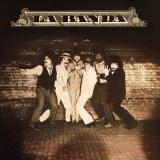
Soul, jazz-rock, candombe and funk blend in the cocktail of La Banda's first and sole album. Often regarded as Argentina's first supergroup, the ensemble built a reputation on their explosive live performances during a time of political repression. Short-lived but unforgettable, the six-piece brought together top-tier jazz musicians—five Argentinians alongside Uruguayan icon Rubén Rada—to deliver a deep, hard-hitting sound that resonates far beyond its era.
Rada arrived in Buenos Aires bruised — a romantic disaster and a string of empty concert halls back in Montevideo had pushed him to start over at 35. Behind him lay a remarkable journey: from inventing candombe beat with El Kinto, to leading the Latin rock powerhouse Tótem, to recording cosmic jazz with Opa alongside the Fattoruso brothers. Trumpeter Benny Izaguirre, the band's architect, gathered around him a cast of heavyweights: pianist Jorge Navarro, an essential figure in the Buenos Aires jazz scene since the 1950s; saxophonist Bernardo Baraj, forged in Alma y Vida, Argentina's jazz-rock champions; and the irresistible rhythm section of bassist Ricardo Sanz and drummer Luis Ceravolo, both veterans of Astor Piazzolla's quintet. All three — Baraj, Sanz and Ceravolo — were simultaneously part of Banda Spinetta, the jazz-oriented project of Argentine legend Luis Alberto Spinetta.
The sessions also drew in two guests who needed no introduction: guitarist David Lebón — veteran of Pappo's Blues, Pescado Rabioso, Color Humano and Serú Girán, one of Argentine rock's true giants — and guitarist and producer Daniel Homer, a quietly indispensable figure across Buenos Aires' jazz and rock scenes.
Recorded in 1979 and gone almost as soon as it arrived — La Banda's brief existence and this sole album are what Buenos Aires sounded like when it was allowed to breathe. Between raids, between disappearances, in the stolen hours when music was louder than fear.
erscheint voraussichtlich am 26.06.2026

Anfang der 1960er Jahre, als der Vibrafonist Cal Tjader von Fantasy Records zu Verve Records wechselte, befand er sich in einer seiner produktivsten Phasen. Zwischen 1961 und 1968 nahm er unter der
Regie der Produzenten Creed Taylor und Esmond Edwards fünfzehn Alben für Verve auf, auf denen er sich
künstlerisch freier entfalten konnte denn je zuvor. Auf “The Prophet”, seinem letzten Album für Verve,
schöpft der Vibrafonist aus einer breiten Palette von Jazz-, Latin- und Blues-Einflüssen. Das Programm
besteht je zur Hälfte aus eigenen Kompositionen und Stücken des brasilianischen Keyboarders João Donato,
die von Don Sebesky orchestral arrangiert wurden. Das von Donato geschriebene Stück “Aquarius” wurde
1993 von der Hip-Hop-Band A Tribe Called Quest für das Album “Midnight Marauders” gesampelt.
erscheint voraussichtlich am 19.06.2026

Welcome to a kaleidoscopic picnic where you can feast on a music scene that was rich, sparkling, multi-colored, ground-breaking and it'll blow your mind. A prodigious soundscape that blends the Caribbean and the Amazon sophistication and flavors; raw yet delicate textures. "Joropop. Psych Pop & Folk in Venezuela, 1968-1976" features infectious Latin rock rhythms and timeless folk melodies across 15 ultra-rare tracks-most of which have never been reissued until now. Let's set off together to discover the magic of Caracas in the late '60s! DESCRIPTION Welcome to a kaleidoscopic picnic where you can feast on a music scene that was rich, sparkling, multi-colored, ground-breaking and it'll blow your mind. A prodigious soundscape that blends the Caribbean and the Amazon sophistication and flavors; raw yet delicate textures. "Joropop. Psych Pop & Folk in Venezuela, 1968-1976" features infectious Latin rock rhythms and timeless folk melodies across 15 ultra-rare tracks-most of which have never been reissued until now. The golden age of Caracas pop started in 1965. It replaced the wave of cloyingly romantic song writing as fresh talents leant into richer and more complex styles: folk-rock, psychedelia, soul, hard blues, symphonic pop, Latin rock etc. Singer-songwriters, experimental electric guitars and jam sessions all appeared on the scene, creating music that became increasingly refined and free. The industry took a while to catch on to this new trend and leave behind the teen idols and dream lifestyles. By the late 60s, there was a long list of new bands in the capital city. Young people finally found their voice. Let's set off together to discover the magic of Caracas in the late '60s!
erscheint voraussichtlich am 05.09.2025

Friday Night in San Francisco is a live album by Al Di Meola, John McLaughlin, and Paco de Lucía.
It was recorded live at the Warfield Theatre in San Francisco,
on December 5 in 1980. The album is considered an iconic recording and was described by jazz author Walter Kolosky as
"a musical event that could be compared to the Benny Goodman Band's performance at Carnegie Hall in 1938...
it may be considered the most influential of all live acoustic guitar albums."
Al Di Meola is an acclaimed Italian American jazz fusion and Latin jazz guitarist, composer, and record producer.
He experienced a celebrated career that has spanned four decades and earned him critical accolades,
three gold albums and more than six million record sales worldwide.
Di Meola has amassed over 20 albums as a leader while collaborating on a dozen or so others.
John McLaughlin, also known as Mahavishnu, is an English guitarist, bandleader, and composer.
He is a pioneer of jazz fusion, combining elements of jazz with rock, world music,
Indian classical music, Western classical music, flamenco, and blues. He received multiple "Guitarist of the Year"
and "Best Jazz Guitarist" Awards from magazines such as Downbeat and Guitar Player and was ranked 49th in Rolling Stone
magazine's list of "100 Greatest Guitarists of All Time". Jeff Beck called him "the best guitarist alive".
Paco de Lucía was a Spanish virtuoso flamenco guitarist, composer, and record producer.
He was one of the first flamenco guitarists to branch into classical and jazz. De Lucía was noted for his fast and fluent fingerstyle runs
and gained popularity outside Spain after collaborating with McLaughlin and Di Meola. Richard Chapman and
Eric Clapton described de Lucía as a "titanic figure in the world of flamenco guitar."
Friday Night in San Francisco is available as a limited edition of 1000 individually numbered copies on purple coloured vinyl and includes an insert.
erscheint voraussichtlich am 05.09.2025

Santana Bridges the Divide Between Live and Studio Material on Moonflower: 1977 Double Album Features Extraordinary Performances, Soulful Vibes, and Dynamic Mix of Latin, Rock, Funk, and Blues
Sourced from the Original Master Tapes and Strictly Limited to 3,000 Numbered Copies: Mobile Fidelity’s 180g 33RPM 2LP Set Plays with Audiophile-Quality Detail, Balance, and Imaging
1/4” / 15 IPS original analogue non-Dolby master to DSD 256 to analogue console to lathe
Though it may seem strange now, Moonflower stood for nearly 15 years as Santana’s first and only live record released in the United States. This despite the fact that roughly half of the double album consists of new studio songs, including a zesty cover of the Zombies classic “She’s Not There” that reached the Top 30 of the singles charts.
However unconventional, the “split” strategy went over like gangbusters. Moonflower reached the Top 10 of the Billboard Top 200 and achieved double-platinum status — feats the group would not again replicate for 22 years. These, and the beautiful quality of the program itself, are among the reasons why the 1977 effort remains viewed by critics and fans alike as must-have Santana.
Sourced from the original master tapes, pressed at Fidelity Record Pressing in California, housed in a Stoughton jacket, and strictly limited to 3,000 numbered copies, Mobile Fidelity’s 180g 33RPM 2LP set of Moonflower presents the record in audiophile sound for the first time on a domestic reissue. Part of the MoFi’s Santana catalog restoration series, this collectible version features quiet surfaces and black backgrounds that expose the critical details, liquid tones, and dynamic interplay central to Santana’s music.
The enhanced sonics extend not only to Carlos Santana’s six-string wizardry, but to the rhythmic, melodic, and vocal elements that course throughout both the studio and live cuts on Moonflower. The grip and depth of the bass lines; the wash of the organ; the scope and carry of the vocals; the extension and weight of the low-end frequencies; the rich textures of the guitars, percussive devices, and keyboards: all appear amid wide, balanced soundstages and image with right-sized dimensionality.
Significantly rooted in the styles and approaches that inform the group’s first three records, Moonflower captures the final appearances of iconic percussionist Jose “Chepito” Areas and go-to keyboardist Tom Coster on a Santana album. As he did during the preceding five-year stretch, Coster inhabits a large role here, sharing songwriting credits on a majority of the new cuts and helping steer the arrangements toward spiritually minded albeit concise directions that encompass vibrant Latin, rock, and blues themes that began to escape the ensemble shortly after his departure.
Close your eyes and feel the warmth of the sun on the R&B-kissed “I’ll Be Waiting,” anchored by Carlos Santana’s gliding fretwork and Greg Walker’s creamy vocals. Enter the cosmic universe of “Zulu,” on which Coster’s nimble phrasing opens the gate to polyrhythmic beats, knotty grooves, and interlocking funk. Grab the album cover and drift off to paradise amid the equally evocative “Flor d’Luna (Moonflower),” a romantic slow dance that Carlos Santana ensures tiptoes en route to its blissful destination. Channeling a different spirit animal, the guitarist later lets loose on the hard-hitting “El Morocco,” on which he seemingly engages in a shootout with himself and wades into the rippling psychedelia that elevated the band’s early material.
Speaking of the past, Moonflower triumphs on that level as well. In more ways than one, the live selections — and the caliber of the performances — chosen for inclusion represent an abbreviated greatest-hits survey of the band up to that point. And, at the very least, a convincing argument about why Santana had progressed into one of the most formidable bands you could hope to see on a stage in the mid ‘70s.
Simultaneously representative and illustrative of the group’s breadth, tracks stem from the collective’s eponymous debut, Abraxas, and Santana III as well as the then-more recent Amigos and Festival. Whether you fall for the sidewinding spell of a spicy rendition of “Black Magic Woman/Gypsy Queen,” lose your head to the positively epic momentum of “Soul Sacrifice/Head, Hands & Feet,” or keep dropping the needle on the savory grace of the brilliant reading of “Europa (Earth’s Cry Heaven’s Smile),” this pressing of Moonflower puts you — and Santana’s first-chapter legacy — in good hands.
erscheint voraussichtlich am 30.06.2025

Hell Yeah have been busy making musical connections and reaching out to like-minded beatmakers once again. This time, it is Pier Paolo Polcari aka Polcari, a founding member of cult Italian band Almamegretta, who steps up with the magnificent new album I Will Try To Imitate The Birds. The eight-track record also features Adriano Viterbini, another Italian music icon and guitarist with the revered Bud Spencer Blues Explosion and I Hate My Village as well as Ubjk, San Ignacio and Sergio Dileo.
Label head Marco first got in touch with Polcari after he remixed Italian cultural hero Sergio Messina's cover of 'Fly Away' back in 2021. The pair began sharing music, discussing their favourite records and, eventually, the natural next step was to work towards the album now served up here.
The multi-talented Polcari is a master of downtempo sounds and as well as several solo projects that fuse trip hop, folk, dub and world music, he made a global mark as part of Almamegretta. The revered Naples band formed in the late 80s and has worked with greats like Massive Attack and Adrian Sherwood across more than 15 albums and are currently on a special 30th anniversary tour. Also playing on the album are Adriano Viterbini, a composer and member of blues-rock outfit Bud Spencer Blues Explosion, San Ignacio who is a downtempo and cumbia innovator behind the much sought-after albums like La Identidad Es Una Trampa and Sergio Dileo, sax player in the much-loved Naples band Nu Genea as well as being a busy jazz collaborator.
Opener 'Jardino' Feat. San Ignacio sets a laidback vibe from the off with gently breaking drums topped with whimsical melodies. 'Vita Nova' is cavernous dub with more lush instrumentals, xylophones and wispy synth motifs making for a world escape and 'Mundo' (Feat. Ubjk) has an air of Eastern melody with delicate pads and glowing keys floating above the pillowy drums. 'The Birds' (Feat. Adriano Viterbini) has fluttering harp strings that bring real beauty to a downtempo groove packed with vocoder vocals, synth smears and organic percussion.
'Orcos Ou Fadas' carries on with a rich blend of strings and percussion, shuffling rhythms and curious moods, 'Raifuki' lurches on moody drums and introverted melodies and 'Ligea' Feat. Sergio Dileo brings some romantic Latin rhythms and seductive clarinet while 'Superluna' completes the odyssey with more wavy dub and magnificent collages of melody and percussion.
I Will Try To Imitate The Birds will lift you off your feet and carry you away to a lush world of cathartic, sun-kissed musical pleasure.
Bestelle jetzt und wir bestellen den Artikel für dich beim Lieferanten.

"Irrepressible, off-the-wall and utterly unique - the late 70s/early 80s Latin jazz-funk and leftfield electronic boogie of Japanese composer and pianist Izumi ‘Mimi’ Kobayashi collected for the first time.
A star in Japan, she moved to Europe to record global hits with Depeche Mode and Swing Out Sister, toured the world with the Reggae Philharmonic Orchestra and made beats with Attica Blues’ Tony Nwachukwu. Now based in London, Mimi currently fronts Tokyo Riddim Band - the intergenerational live Japanese Reggae outfit born from Time Capsule’s acclaimed 2023 compilation of the same name - playing live shows and releasing a trio of recordings.
Choice Cuts 1978-1983 collects eight recordings from four of Mimi’s first five albums – Sea Flight (1978) recorded with her group Flying Mimi Band, and Coconuts High (1981), Nuts Nuts Nuts (1982) and Tropicana (1983) under her own name.
The compilation opens with a syncopated electro-funk cover of Sergio Mendes’ ‘Mas Que Nada’ (Tropicana) and the crisp and stripped back techno-pop of ‘Coffee Rumba’ (Nuts Nuts Nuts) with a keyboard bass line that would have made Stevie Wonder weep.
Alongside the off-beat synth jam ‘Quiet Explosion’ (Nuts Nuts Nuts) and piano samba of ‘Espresso’ (Tropicana), there’s two low slung soul-jazz numbers, ‘Naze’ and ‘Angel Sky’, from Sea Flight (1978) that recall the collaborations between Herbie Hancock and Kimiko Kasai. But it is around the two tracks from Mimi’s 1981 album Coconuts High that this compilation revolves (and from whose cover shoot it borrows).
Released on legendary guitarist Takanaka’s Kitty Records label, Coconuts High was recorded in LA with a jazz fusion backing band, including Alex Acuña, Abraham Laborial, Harvey Mason and the Tower of Power horns. A riot of playful Latin-tinged jazz, funk and fusion with the off-beat spirit of Kid Creole & and the Coconuts, the album became a cult hit. Here it’s the sultry, Minnie Riperton-esque ‘Crazy Love’, with its addictive groove and bittersweet melodies that makes the cut, alongside the steel drum-infused carnivalesque bounce of ‘Palm St’.
Choice Cuts 1978-1983 will introduce the idiosyncratic energy and playful verve of this under-the-radar pioneer to a wider audience for the first time. Welcome to the world of Izumi ‘Mimi’ Kobayashi."
Bestelle jetzt und wir bestellen den Artikel für dich beim Lieferanten.

Legendary Latin jazz percussionist Poncho Sanchez returns with his 31st recording, Live at The Belly Up Tavern. Recorded at the iconic venue in Solana Beach, California, this electrifying live album captures the raw energy and passion that have defined Sanchez’s storied career.
A GRAMMY Award winner for Latin Soul (Best Latin Album, 1999), Sanchez has spent decades honoring and expanding the Latin jazz tradition. With a discography that includes classics like Soul of the Conga, Latin Spirits, Out of Sight!, and Psychedelic Blues, his music bridges Afro-Cuban rhythms, hard bop, and soul, bringing the spirit of legends like Dizzy Gillespie and Chano Pozo to a new generation.
Following his tribute album Chano y Dizzy! and the dynamic Live in Hollywood, Sanchez once again delivers a masterful live performance, full of infectious grooves, rich storytelling, and blazing solos. Live at The Belly Up Tavern is a must-have for jazz lovers and fans of high-energy, soulful Latin music.
erscheint voraussichtlich am 16.05.2025

Vintage-Pariser Jazz. Vintage-Pariser Ambiente. Paris hat schon immer Jazzmusiker aus aller Welt in seine Clubs & Cafés gelockt. Paris ist insbesondere die spirituelle Heimat des Gypsy-Jazz, wo viele Jazzmusiker in der ersten Hälfte des 20. Jahrhunderts in den Bals-Musettes der Stadt spielten. Django Reinhardt machte sich in den 1930/40ern mit dem Geiger Stéphane Grappelli und seinem Quintette du Hot Club de France einen Namen, ebenso wie mit den Bands von Alex Renard, Alix Combelle, Ray Ventura, Claude Bolling und Jerry Mango. Dieser LP-Sampler gibt einen hervorragenden Überblick über die damalige Szene, als kurz nach dem Krieg die Viertel Saint-Germain des Prés und Latin zahlreiche berühmte Jazzclubs beherbergten. Alle Tracks wurden remastert.
erscheint voraussichtlich am 31.01.2025

This Is DJs Choice Vol. 4 brings you a great selection of Funk, Soul, Latin and Hip Hop.
Five years after the last installment of the series, Volume 4 is compiled by Gu, a long-time friend and DJ partner of Unique label founder Henry Storch, and the tracks represent the two decades they have known each other and played records together, as well as the music they enjoyed.
All choices are originally 7 Inch records from Gu's crates put together like a DJ-Set for you to enjoy: The Soul of The Sweet Vandals and Carlton Jumel Smith, the Deep Funk of Naomi Davis & The Knights Of Forty First Street, The Supersonics and Sharon Jackson & The Soul Destroyers, the Latin sounds of Diesler and Eli Goulart E Banda Do Mato and the Hip Hop grooves of Jay Are (aka J.Rawls and John Robinson), The Bamboos featuring Ohmega Watts and Daddy-O of Stetsasonic.
This compilation is a celebration of music from beginning to end.
About This Is DJs Choice:
The series started as a friendship project by Henry Storch, who wanted to immortalise friends and allies from the DJ scene, who picked vinyl as their format of choice. The genre didn't matter, as long as the vibe was right. In 2008 Vol. 1 featured a selection of organic Club Sounds and Break Beats put together by Soulinus & Pun, followed by Keb Darge & Lucinda Slim and their favorite Rhythm & Blues, Rockabilly and 60s Soul tunes on Vol. 2 in 2009. In 2019 Les Intouchables aka Marc Hype and DJ Suspect presented a variety of funky and soulful music with an addition of the occasional Boogie, Reggae and Hip Hop track.
About Gu:
Gu is a DJ, musician, label owner, producer, writer and producer from Northern Germany. His dedication to music started in his pre-teens in the late eighties and he is playing vinyl ever since. Over the years he has worked with a number of his favorite DJs and artists like Keb Darge, Andy Smith, Snowboy, The New Mastersounds, Osaka Monaurail, The Sweet Vandals, The Allergies, Andy Cooper of Ugly Duckling, Daddy-O of Stetsasonic and Chuck D of Public Enemy to name a few. His DJ career took him all over Europe again and again.
In 2005 he started Our Label Records with his brother Tom to release new Funk music on 7 Inch vinyl and added the Hip Hop 45 imprint Origu in 2015. Since 2009 and he is on air every week with his radioshow Home Diggin', which was also picked up by Chuck D's Rapstation in 2019. Additionally he is lead singer/rapper for the Songcore duo Sorry We're Closed and the Hip Hop outfit Alder Ego. He also does readings of his book of one-liners and competing on Slam Poetry stages.
Bestelle jetzt und wir bestellen den Artikel für dich beim Lieferanten.

Upon its release, Big Band Bossa Nova by the renowned American music producer, conductor, arranger, and composer Quincy Jones, released in 1962 received favorable reviews from critics, who praised its innovative arrangements and the seamless integration of bossa nova into big band jazz
It was noted for its lively and fresh sound, appealing to both jazz enthusiasts and fans of Latin music. Over the years, the album has been recognized as a classic in the realms of both jazz and Latin music. It continues to influence musicians who seek to explore the fusion of different genres. The album played a crucial role in popularizing bossa nova in the United States, introducing many listeners to Brazilian music. It paved the way for future collaborations and crossover projects between jazz and Latin music. It is often cited by contemporary artists and arrangers who are inspired by its innovative blend of styles. Its influence can be seen in various genres, including jazz, pop, and world music and is a testament to Jones's ability to adapt and innovate throughout his career. It solidified his status as a pioneer in the music industry, influencing countless artists across genres and generations. Big Band Bossa Nova not only captures the essence of its time but also continues to resonate with audiences today, highlighting the enduring appeal of both big band features contributions from several talented musicians.
erscheint voraussichtlich am 29.11.2024

One of the Most Exhilarating Live Albums Ever Released: Santana’s Lotus Documents 1973 Performances Distinguished by Passionate Soulfulness, Chemistry, and Inventiveness
Mobile Fidelity’s 180g 33RPM 3LP Set Features Reference Sound and Deluxe Trifold Packaging Faithful to That of the Original Japanese Import: Strictly Limited to 5,000 Numbered Copies, Includes Four Photo Inserts and Two Fold-Out Posters
The bizarre legacy of Lotus transcends its status as both the definitive onstage document of Santana’s career and one of the most spectacular live albums ever released. Originally issued in 1974, the triple LP contains exhilarating performances of the band recorded at two shows in early July 1973 at the 2400-seat Osaka Kosei Nenkin Kaikan concert hall. It bears witness to the eight-piece collective playing with a chemistry, inventiveness, cohesiveness, and soulfulness no other Santana lineup would ever surpass. Featuring seven previously unreleased tracks as well as remarkable renditions of material from Santana’s first four albums and the Carlos SantanaJohn McLaughlin collaboration Love Devotion Surrender, Lotus simultaneously suggests and inspires, dreams and delivers.
Transferred by original engineer Tomoo Suzuki, strictly limited to 3,000 numbered copies, and housed in deluxe trifold packaging faithful to that of the original pressing, Lotus benefits from reference audiophile treatment on Mobile Fidelity’s 180g 3LP set. Featuring rich tones, smooth dynamics, excellent separation, deep soundstages, and involving presence, this reissue pays tribute to both the virtuosic lineup and the magnetic fusion of Latin- and Afro-Cuban-influenced jazz, rock, psychedelia, R&B, and blues. The complexity of the spiritual passages, demands of the crescendos, delicacy of the calm transitions, electricity of the solos: everything is rendered with superb balance and free of the harshness, compression, and fatiguing peaks that would otherwise distract from the presentations at hand. Black magic, indeed.
erscheint voraussichtlich am 15.11.2024

Amputechture Beneath the technical flash, the fury, the fearless creative brinkmanship of the first two Mars Volta albums lay a potent seam of the blues, an existential vexation that powered every twist and turn of Omar and Cedric’s imaginations. That mournful vibe would come to the surface of the group’s third full-length Amputechture, a simmering/blistering set that was unquestionably the group’s darkest yet. There was no overarching theme here, no interlinking concept binding the songs together, though Cedric concedes that, lyrically, the album was influenced “by a lot of stuff I was going through, a really bad break-up and a lot of other crazy stuff, and trying to put that feeling into the record.” But Amputechture – its name another of the late Jeremy Michael Ward’s invented words – was no downbeat bummer. Opener Vicarious Atonement might’ve been a deliciously gloomy, slow-burning thing, capturing Cedric in delirious duet with Omar’s swooning guitar lines, accompanied by squalling saxophone by Adrian Terrazas-Gonzales and dream-frequency fuckery by the group’s new sonic manipulator, former At The Drive- In member Paul Hinojos. But second track Tetragrammaton swiftly set pulses racing, an epic-in-miniature and containing more ideas within its 16 minutes than most bands manage over an entire career, its proggy, complex guitar figures tessellating in infinite configurations and converging as if conforming to mathematical formulae from another reality. The raw material Amputechture was hewn from started life on the road. Omar now travelled with his own mobile recording studio – a little Neve ten-channel tape recorder and an array of microphones – and was able to work on new ideas on tourbuses, in hotel rooms and during soundcheck (and, occasionally, after the show was done). After touring for Frances The Mute was complete, Omar relocated to Amsterdam, staying with his photographer friend Danielle Van Ark and her partner, Nils Post. It’s here that he demoed Amputechture, flying in engineer Jon DeBaun, drummer Jon Theodore and his brother, Chino, to work on these raw sketches. He later returned to Los Angeles, where the album was finally recorded. Omar ceded guitar duties to his dear friend and kindred spirit John Frusciante, instead assuming the role of musical director. “I wanted to hear the sound of the band,” he says. “I thought, I’ll be able to sit at the console, feel the air of the speakers moving, the unified sound of everything, and not feel distant from it. It was fun, but it was also challenging.” Part of Omar’s new method was to teach the musicians their parts only moments before the tapes rolled. “To keep things fresh, and to keep everyone on edge,” he says, before chuckling. “No, not on edge – on their toes. Amputechture would prove The Mars Volta’s most diverse set yet, drawing into the group’s tornado of influences moments of fiery jazz spirituality and esoteric folk introspection, finding space for passages of devastating subtlety and also their most fierce and full-on moments to date. The aforementioned Vicarious Atonement found its meditative mood echoed by Asilos Magdalena, an intimate, acoustic piece that invoked traditional Latin folk music, as Cedric sang in Spanish a sorrowful tale of a lost soul’s quest for sanctuary within a Magdalen Asylum, a refuge set up by the Catholic church for “fallen women”. The shadowy, sinister closer El Ciervo Vulnerado, meanwhile, tapped into the darker side of spiritual jazz to further explore the album’s themes of redemption and religious myth and magick. Elsewhere, the interplay between guitar and clarinet on Viscera Eyes created complex, unsettling counter-melodies, while the coiling, ornate Meccamputechture – Cedric’s wild fusion of sacred texts, occultism and dystopian science fiction – proved a great showcase for Ikey Owens’ swarming, infernal organ runs, in concert with Frusciante’s arcane guitar-play. But it was Day Of The Baphomets that would prove Amputechture’s most ambitious and most defining epic. Cedric’s lyrics tore into the hypocrisy of religious cant and myths of sin and punishment. “I wanted to make a song that was like the movie The Believers, where this cabal stole kids and did some occult shit with them,” he explains. “But I wanted it to be like, ‘What if the people you hire to do jobs you don’t wanna do rise up one day and then pull some shit like that?’ Like it was the guerrilla warfare, them taking over – wouldn’t that be some fucked up shit? And the music just lent itself to that – the big intro, the bass solo, and all of the ruckus that occurs.” That ruckus was some of the most thrilling Mars Volta music yet, as Omar directed his musicians to rumble through fiery modes of wild tribal groove, ransack-the-palaces riot- rock and supreme progressive experimentalism. Amputechture, then, is the sound of The Mars Volta in imperial mode: fearless, insatiable, unstoppable.
erscheint voraussichtlich am 04.10.2024

Black Vinyl[30,88 €]
The records is released in two options. Both hvae 180g vinyl records. The first version has two black vinyls and the second limited edition (numbered 100 pieces) has one turquoise vinyl and the other red.
Over the last three decades, Auckland, New Zealand, has given birth to several generations of musicians, DJs, and producers who operated within the interzone between jazz, blues, soul, funk, Latin music, hip-hop, house, boogie, and broken beat. Across two slow-cooked albums that sit at the intersection of machine funk and vivid live instrumentation, Odyssey (2016) and their forthcoming sophomore release Long Road (2024), After 'Ours - the group project of pianist and composer Michal Martyniuk and drummer, guitarist and producer Nick Williams - have comfortably located themselves within this antipodean tradition.
Born and raised in Auckland, Nick Williams grew up surrounded by music from a young age. At home, his mother, Mary Anne, a record collector and DJ with deep, diverse vinyl crates, kept his ear sharp. By the time he was eight years old, he was regularly joining his musician father on stages across Australia in his blues rock band Slippery Sam. In his early twenties, Nick began leading the eleven-piece Auckland Latin-dub-funk fusion big band Tangent, who performed regularly until the late 2000s.
Michal Martyniuk, on the other hand, grew up on the opposite side of the world in Szczecin, Poland. After playing classical music for twelve years and attending jazz school, he relocated to New Zealand with his family in his teens. While studying at Auckland University Jazz school, Michal came into the orbit of the legendary New Zealand saxophonist, composer, producer, and band leader Nathan Haines, who brought him into the same world as future collaborators like Tama Waipara, Batacada Sound Machine, Sola Rosa and Nick.
Inspired by the rich stories of jazz, neo-soul, electronica, and dance music from both sides of the Atlantic Ocean and the open-eared Auckland scene they emerged from, After 'Ours formed in 2011. Born out of a friendship cultivated through playing together at bars and nightclubs around town and home studio sessions. "Nick had family and work, so I had to wait all day," Michal says. "We'd come to the studio at 10 PM and go till 3 AM. That's how we came up with the name.
Session by session, After 'Ours revealed itself to be a creatively fertile meeting of minds. "We both have our angles, but it works well in the end," Nick reflects. "It takes the music to a place we can't get to by ourselves."
Between 2011 and 2016, they wrote and recorded Odyssey with a cast of musical collaborators that included KP, Sharlene Hector & Kevin Mark Trail (UK), Matt Nanai, Nathan Haines, Jakub Skowronski, Nick's partner Ange Williams (nee Saunders) and British producer Mike Patto from the lauded UK future jazz group Reel People. Influenced by the smooth yacht rock of Steely Dan and Donald Fagan, the warm midtempo bounce of A Tribe Called Quest and J Dilla, and the complex jazz/RnB bop of Robert Glasper, Odyssey was a labour of love that emphasised community, warm-hearted hospitality, and care.
Seven years on, they're finally ready to return with Long Road, an album that contains some of their best work yet. As well as reconnecting with past collaborators Kevin Mark Trail and Ange Williams, Long Road sees After 'Ours calling on assistance from Louis Baker, Jakarta-based saxophone player Kuba Skowroński, bassist Dan Antunovich, Los Angeles-based drummer Chris Bailey and the journeyman British soul artist Omar Lyefook.
Across ten songs that plot a stargazed course through their antipodean spin on UK broken beat, jazz, modern soul, and blues rock, Nick and Michal build on everything they learned while writing and recording Odyssey. In the process, they take their joyful musical visions to sublime new heights.
Bestelle jetzt und wir bestellen den Artikel für dich beim Lieferanten.
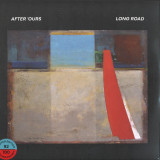
Color Vinyl[35,71 €]
The records is released in two options. Both hvae 180g vinyl records. The first version has two black vinyls and the second limited edition (numbered 100 pieces) has one turquoise vinyl and the other red.
Over the last three decades, Auckland, New Zealand, has given birth to several generations of musicians, DJs, and producers who operated within the interzone between jazz, blues, soul, funk, Latin music, hip-hop, house, boogie, and broken beat. Across two slow-cooked albums that sit at the intersection of machine funk and vivid live instrumentation, Odyssey (2016) and their forthcoming sophomore release Long Road (2024), After 'Ours - the group project of pianist and composer Michal Martyniuk and drummer, guitarist and producer Nick Williams - have comfortably located themselves within this antipodean tradition.
Born and raised in Auckland, Nick Williams grew up surrounded by music from a young age. At home, his mother, Mary Anne, a record collector and DJ with deep, diverse vinyl crates, kept his ear sharp. By the time he was eight years old, he was regularly joining his musician father on stages across Australia in his blues rock band Slippery Sam. In his early twenties, Nick began leading the eleven-piece Auckland Latin-dub-funk fusion big band Tangent, who performed regularly until the late 2000s.
Michal Martyniuk, on the other hand, grew up on the opposite side of the world in Szczecin, Poland. After playing classical music for twelve years and attending jazz school, he relocated to New Zealand with his family in his teens. While studying at Auckland University Jazz school, Michal came into the orbit of the legendary New Zealand saxophonist, composer, producer, and band leader Nathan Haines, who brought him into the same world as future collaborators like Tama Waipara, Batacada Sound Machine, Sola Rosa and Nick.
Inspired by the rich stories of jazz, neo-soul, electronica, and dance music from both sides of the Atlantic Ocean and the open-eared Auckland scene they emerged from, After 'Ours formed in 2011. Born out of a friendship cultivated through playing together at bars and nightclubs around town and home studio sessions. "Nick had family and work, so I had to wait all day," Michal says. "We'd come to the studio at 10 PM and go till 3 AM. That's how we came up with the name.
Session by session, After 'Ours revealed itself to be a creatively fertile meeting of minds. "We both have our angles, but it works well in the end," Nick reflects. "It takes the music to a place we can't get to by ourselves."
Between 2011 and 2016, they wrote and recorded Odyssey with a cast of musical collaborators that included KP, Sharlene Hector & Kevin Mark Trail (UK), Matt Nanai, Nathan Haines, Jakub Skowronski, Nick's partner Ange Williams (nee Saunders) and British producer Mike Patto from the lauded UK future jazz group Reel People. Influenced by the smooth yacht rock of Steely Dan and Donald Fagan, the warm midtempo bounce of A Tribe Called Quest and J Dilla, and the complex jazz/RnB bop of Robert Glasper, Odyssey was a labour of love that emphasised community, warm-hearted hospitality, and care.
Seven years on, they're finally ready to return with Long Road, an album that contains some of their best work yet. As well as reconnecting with past collaborators Kevin Mark Trail and Ange Williams, Long Road sees After 'Ours calling on assistance from Louis Baker, Jakarta-based saxophone player Kuba Skowroński, bassist Dan Antunovich, Los Angeles-based drummer Chris Bailey and the journeyman British soul artist Omar Lyefook.
Across ten songs that plot a stargazed course through their antipodean spin on UK broken beat, jazz, modern soul, and blues rock, Nick and Michal build on everything they learned while writing and recording Odyssey. In the process, they take their joyful musical visions to sublime new heights.
Bestelle jetzt und wir bestellen den Artikel für dich beim Lieferanten.
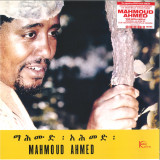
Repress.
The re-release series of original Ethiopian classic vinyl continues -- the finest Ethio jazz by Mahmoud Ahmed and his band from 1975 plus two tracks from 1978.The liner notes: 'Melancholy blues, piercingly minimalist country airs, brassy, danceable urban jazz, heart-wrenching, off-key crooners: a rich and stirring patchwork of sounds, crossing Afro-beat, Latino-swing moves and Eastern arabesques (Ana�s Prosa�c).' Such were the first -- informed and enthusiastic -- opinions of the music press when the first strains of modern Ethiopian music sounded on our shores. This was in 1984-1985. Such a positive note, struck about such a country at such a time, created plenty of reverb. The country had been so thoroughly trashed by the media's feeding-frenzy, which spewed out a mix of horror and pious pity, bitter denunciation and humanitarian appeals, wallet-tickling clich�s and refusal of identity. In one brutal swoop, TV-reality transformed Ethiopia into a cursed nation, forsaken by God and by man. In contrast to these tragedies, but in the same hackneyed tones, Mahmoud Ahmed's life resembles an edifying fairy-tale where destiny, talent and achievement combine to triumph over poverty, fate and the evil eye. Biography, history and legend, with the help of God, infallibly weave the lesson of merit rewarded. But who can argue, in spite of the mockery that celebrities invariably draw, when faced with one of the greatest voices in all of Africa? Once upon a time, there was a street urchin in Addis Ababa, who started off as a shoe-shine boy and went on to become one of his country's biggest stars, opening the door to Ethiopian music to Western audiences. --Francis Falceto
Bestelle jetzt und wir bestellen den Artikel für dich beim Lieferanten.

INSIDE is the third album (and second in a row on Brixton Records) by the respected ten-piece group from Barcelona that fuses Jamaican music and jazz. DROP COLLECTIVE bravely faces the so-called third album syndrome and makes a sincere declaration of principles, a public manifestation of their musical identity. The two sides of the album are clearly identified. Side A is Inside-Out, displaying five own-penned compositions, including three songs sung in Catalan and two in English, in which DROP COLLECTIVE make it clear what they like to do and what they are capable of offering. The album opens with "Com Estimo Jo" (The Way I Love), a reggae ballad composed by Andreu Domènech (baritone sax) that is dedicated to the growth and learning we do when we love. It is followed by "Let Us Dance", a fluid ska with Latin airs and an invitation to dance, which recaptures the sound of some of the most celebrated passages from their previous album. "Estel" (Star) is a melancholic reggae song, sung in Catalan, in homage to someone who is no longer here - "now you are the star that watches over us from up there, bright, bright". Prior to the release of this LP, four advance tracks have been published on digital platforms, but "Life's Too Short" is, perhaps, the album's single. This resounding reggae with a powerful brass section could have easily taken more elaborate instrumental and studio developments, however, the band has preferred to produce a compact track brimming with strength and lasting less than three minutes. “Ombra" (Shade) closes this side of the album with solemn roots sonorities. The B-side is Outside-In, four reinterpretations of jazz classics that DROP COLLECTIVE internalize, make their own and, therefore, also form part of their identity. The choice of pieces is hair-raising, because of the risks they take. "Yearnin'" is a cover of the song originally included in one of the most epic albums in the history of jazz, "The Blues and the Abstract Truth", by saxophonist Oliver Nelson. DROP COLLECTIVE take the song to their own territory with the skill and freshness of expert ska-jazzers and with the special collaboration of trumpeter Joan Mar Sauqué, they make one of the most famous riffs in jazz sound unashamedly contemporary and... Caribbean. "Day by Day" is an adaptation of the standard from the late forties of the last century that was part of the regular repertoire of, among others, Frank Sinatra. The result is a swinging ska love themed, sugary and romantic, with an exquisite interpretation. And to close the album, two extraordinary trials by fire for Maria del Rio, the band's vocalist, which she solves with total ease and mastery of the situation. "What a Little Moonlight Can Do", a composition by Harry Woods that the legendary Billie Holiday recorded in 1935 and which, after 90 years, still sounds fresh in up tempo ska mode, and "Sinnerman", a traditional spiritual from the early 20th century made popular worldwide by Nina Simone, becomes a lively ska-jazz with soulful touches and an infectious organ solo by Daniel Ferruz. INSIDE is an album with a compact, solid, and synchronous sound, but full of details, which gives a total sense of permanence and singularity to their skareggae- jazz mastery, in which many universes fit.
erscheint voraussichtlich am 12.07.2024

Vecchio's Afro-Rock is one big horn-heavy, bass-blasting, Latin groove funk-rock party. Only now, you're all invited because this, ladies and gentleman, is officially...a grail no more. With copies currently starting at 400 Euros for an original, this beautifully presented reissue, part of Be With's fresh campaign with Music De Wolfe, is well overdue. A magnificent and somewhat obscure library set that's just a total, cohesive joy from start to finish, this here is the soundtrack to all your smokin' summer BBQs and communal cookouts.
Afro-Rock is the debut album by Argentine keyboardist Luis Vecchio. Recorded for the sound library label De Wolfe, the album is frequently mentioned in hushed reverence among the beat digger DJ collecting crowd. It features fiery brass charts, funky bass lines, fluttering flute, choppy organ and additional hand tribal percussion. The band let loose too and jam hard; yet there's a certain thread of solidity that runs throughout, the tracks just belong together, not disparate sound and rhythm experiments like some library records; this is just straight up, no messin', consistent funk-rock FIRE! Hips will sway, heads will nod to the steady vibes. It's insanely good.
The humid, building funk of the appropriately titled "Megaton" is a dramatic explosion of swirling, dazzling organ lines, ferocious beats and heavy horns throughout. It just don't stop. The tempo slows slightly for the deep and deeply addictive "Renegade". It's all heavy jazz horn refrains, always triumphant, coupled with devastating percussive breakdowns and killer guitar riffing. It's an insistent organ-led juggernaut. The frenetic "Facade", up next, is no less driving, horns high up in the mix over rattling percussion and brilliant organs lines. Just sensational. The bright "Chabati" is another glorious extension of the optimistic Vecchio sound, the organs wilder than ever before. The moody "Green Hell" is a real highlight and closes out the A-Side with some outrageously funky refrains - be it horns, organ or guitars - and is complimented by gorgeous flute work that galvanises the piece, elevating it to downright heavenly status.
Knowing full well that he's on to a surefire thing, Vecchio opens the flipside in much the same vein. Indeed, "Boss" is yet another uptempo highlight, a sensual orgy of proud horns, hand percussion and melodic flute playing over driving organ and guitars. It's followed by "Nsambei", which is rightly adored for its briefly open drum break, fantastically propulsive percussion breakdowns throughout and the jazzy, loose organ and guitar shreds. The bright "Waboco" ups the tempo and the pressure, hanging on one hell of a guitar hook and infectious horn refrain. Perhaps foreseeing how this album would come to be viewed, the aptly-titled "Cult" is possibly the finest song on the record. Which is saying something, because this record is insanely good. Riding a steady, confident organ groove straight out the gate, the kinda melancholic flute line over the top serves as a beautiful counterpoint which the horns often come in and imitate/riff off. Goddamn this is so so good, it needs to be played everywhere. The overwhelmingly mighty 7-minute jam "Ngoma-ku" rounds out this quite staggering record brilliantly in its heavy, mid-tempo blues with countless extended solos.
The audio for Afro Rock has been meticulously remastered by Be With regular Simon Francis, ensuring this release sounds better than ever. Cicely Balston's expert skills have made sure nothing is lost in the cut whilst the records have been pressed to the highest possible standard at Record Industry in Holland. The original, iconic sleeve has been restored here at Be With HQ as the finishing touch to this long overdue re-issue.
Bestelle jetzt und wir bestellen den Artikel für dich beim Lieferanten.
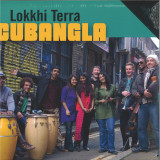
Funkiwala Records presents CUBANGLA - the sixth album by London fusionistas LoKkhi TeRra.
Following on from their hugely successful collaboration with UK afro-beat ambassador Dele Sosimi on 2018's "Cubafrobeat"(mixing afrobeat and Cuban Rumba/Timba), this album sees them return to their Bangla-Afro- Latin-Jazz-Roots.
8 tracks of 21st century London groove – from Sufi Samba to Baul Blues to Bengali folk-Son to Bangla Roots Reggae to London Descargas - recorded in between tours, sessions and collaborations – a true celebration of traditions taking on new forms as they travel and co-exist. In these divided times, their collective musical journey has never been so relevant.
Background
Kishon Khan's Lokkhi Terra have been blending the musical traditions that surround them in London, for many years now.
"Stunning Headliners... A majestic multi-cultural blend of sounds... effortlessly builds bridges between rolling Indian raga rhythms, Afro-Cuban grooves, Acid Jazz/funk and free flowing improvisation" (Timeout London).
The band is composed of musicians who take seriously the different languages of the different genres they mix. Each in their own right play with calibre purist outfits. Members have collaborated with the likes of Hugh Masekela, Tony Allen, Ibrahim Ferrer, Johnny Clarke, Orlando Poleo, Africa Express, Jazz Jamaica, Ska Cubano, Giles Peterson's Havana Cultura, Kyle Eastwood, Bellowhead, Akram Khan to name a very few.
The tracks on this album were gigged for a number of years before being recorded, with the exception of the last 2 tracks which were recorded in 2015 just before performing at Womad and Songlines Encounters.
With CUBANGLA the band has come round full circle – a journey that started a decade ago with their debut No Visa Required (2010). An urban London view on the musical world.
Bestelle jetzt und wir bestellen den Artikel für dich beim Lieferanten.

"In the early 1960s, the great composer, arranger, and bandleader Gerald Wilson began recording a series of spectacular albums for Pacific Jazz that stand as the most significant of his lengthy career. The second of those albums, 1962’s Moment of Truth, features Wilson’s dynamic big band on an action-packed nine-song set (seven of which were composed by Wilson) with highlights including the swaggering blues of the title track, the irrepressible Latin groove of “Viva Tirado,” and a fleet-footed version of “Milestones” by Miles Davis.
This stereo Tone Poet Vinyl Edition was produced by Joe Harley, mastered by Kevin Gray from the original analog master tapes, pressed on 180g vinyl at RTI, and packaged in a deluxe tip-on jacket."
erscheint voraussichtlich am 17.08.2023
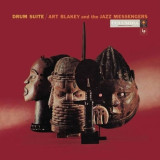
One of the inventors of the modern bebop style of drumming, Blakey is known as a powerful musician and a vital groover; his brand of bluesy, funky hard bop was and continues to be profoundly influential on mainstream jazz.
For more than 30 years his band, Art Blakey & The Jazz Messengers included many young musicians who went on to become prominent names in jazz. Recorded in 1956, Art Blakey's Drum Suite is a wonderful hybrid of African, Latin, and hard bop rhythms that prefigures the concept of Afro-beat by at least a decade. The sheer energy, not to mention its very special and fresh-sounding intimacy, make it especially astounding.
Even more amazing is that the three parts of the suite -- Blakey's "The Sacrifice," Ray Bryant's "Cubano Chant," and Oscar Pettiford's "Oscalypso" -- were recorded straight through live, and were only intended to be a pre-take run-through. As is obvious here, Blakey and company nailed the whole thing right out of the box.
Groundbreaking for its time, and still sounding vital, powerful, and visionary, the Drum Suite album is somewhat of a lost masterpiece that deserves a fresh audience.
"Art Blakey's first release for Columbia Records is essentially two records. Side one is a percussion ensemble playing what would, ten years later, be called Afro-Cuban drumming. Side two is the mid-fifties version of the Jazz Messengers featuring Jackie McLean on saxophone. Side one features Blakey, Jo Jones and Charles Wright on drums, Candido and Sabu on bongos, and Oscar Pettiford and bass and cello. The group plays three compositions, one by Blakey, one by Pettiford and one by Ray Bryant, fusing African, Cuban, and calypso percussion into a well-integrated suite.
"The group recorded a run through and it was so perfectly executed that they used the practice run for the release, unedited except to add some Swahili chants by the percussionists during a few passages. One cannot help but think of Olantunji's Drums of Passion, another Afro drumming landmark, here. Blakey's drum suite was recorded at Columbia's 30th Street studios in New York in 1957 and is in mono. The almost stereoscopic image is truly remarkable. Mastered by Kevin Gray and pressed at RTI, Drum Suite is a valuable record of one of the most important figures in jazz history. Recording: 9/10. Music 9/10." - Dennis Davis, Hifi+
"...The three-part suite was laid down in one take with no arrangements, and begins with a few tympani thwacks followed by an African chant. Soon the ensemble kicks in and the group takes off an a sweaty Afro-Cuban-bop journey that will leave you breathless, as the thing crackles with terrific energy. Side Two is more conventional hard bop, but given this group's mastery of if not invention of the style, these tracks are extremely satisfying. Kevin Gray's remastering is detailed and immediate, with plenty of bit and air, if not the widest dynamic range. For anyone interested in percussion of this genre, this is not to be missed." - Wayne Garcia, The Absolute Sound
erscheint voraussichtlich am 14.08.2023

VOL 1[28,15 €]
erscheint voraussichtlich am 21.07.2023

VOL 2[28,15 €]
erscheint voraussichtlich am 21.07.2023

Santana's self-titled debut album announces the arrival of a new Guitar God. Made during the legendary bandleader's most fruitful and creative period, the classic 1969 set functions as an accessible entry point into the tangy worlds of Latin music by way of an intoxicating blend of Afro-Cuban percussion, jazzy tempos, exotic leads, bluesy riffs, and psychedelic accents.
Indeed, separation between Carlos Santana's fluid fills, spicy solos, and broiling grooves and pianist Gregg Rolie's soulful Hammond organ runs allows the music to come alive with a newfound freshness and radiance. Songs simmer, with each passage bursting forth with vibrant colour. Just like the equally essential follow-up Abraxas, Santana also lays claim to one of the biggest (and unfortunate) production gaffes in music history.
For nearly four decades, copies were produced with the left and right channels reversed, meaning that everything was placed in a backwards manner. This even extended to compilations on which individual songs from Santana were included. Rest assured that, in addition to boasting reference audiophile sonics, this 180g 45RPM 2LP set gets all the specifications exactly right. And with a record of this magnitude, you want everything to be perfect.
Bound by natural chemistry and earthy spirituality, the record's innovative synthesis of myriad styles goes beyond anything that came before – as well as nearly everything that's followed. Playing with the finest band that the iconic guitarist ever had, Santana doesn't water down any exotic roots or simply incorporate mainstream Western styles into a Latin framework. This is a true hybrid, responsible for opening up borders, transcending cultural divides, and, most importantly, exhilarating the senses.
Released just weeks after the band blew minds at Woodstock, the groundbreaking record stands alongside Miles Davis' Bitches Brew and Jeff Beck's Beck-Ola as a pillar of rock fusion. Featuring the Top Ten radio smash "Evil Ways" and jam favorite "Soul Sacrifice," it hasn't aged a day. Hear like never before why Rolling Stone says Santana is #149 on its list of the Greatest Albums of All Time.
erscheint voraussichtlich am 30.06.2023

After Joao Selva, Dowdelin, The Bongo Hop, Underdog Records continue their exploration of the Black Atlantic with IREKE.Ecstatic brass, 70’s keyboards, elastic guitars, round bass and world percussion: from this sonic heritage, Ireke makes a unique fusion, enhanced by the audacious contribution of his dub science, and a few electronic touches
IREKE
Ireke? Sugar cane in Yoruba. Like her, the duo loves tropical climates and intoxicating rhythms, quick to liberate the bodies gathered on a dancefloor. Afrobeat urgency, funk suppleness, dub alchemy, highlife jubilation: with Tropikadelic, Ireke summons the heritage of the masters and the audacity of machines to give life to new sonic territories. At the crossroads. For the love of groove.
From the West, with their ears to the Black Atlantic, Julien Gervaix and Damien Tes- son are both children of the collective and of improvisation, playgrounds for these complete multi-instrumentalists.
The first one puts his talents of arranger-saxophonist at the service of the Nantes collective Soulshine and of numerous formations - in turn funk or rhythm’n blues - where swinging is the rule.This is notably the case of the afrobeat group Walko, in which Julien Gervaix had the honour of sharing the stage and the studio for several years with Kiala Nzavotunga, guitarist extraordinaire for Fela Kuti and Egypt 80. Meanwhile, Damien Tesson was being trained as a dubmaster-guitarist-arranger at the reggae roots school with the digital option of the Vendée collective Shi Fu Mi Temple.This initiation led Damien Tesson to join, among others, the Nantes-based group BIBA (Bingy Band) and then to collaborate with Jideh High Elements, a key figure on the international dub scene, Roberto Sanchez and the team of his Lone Ark Studio, as well as Sana Bob, a famous reggae singer from Burkina Faso.And then, life being well done, the paths of Julien Gervaix and Damien Tesson ended up crossing within the jazz-funk combo Playtime, before meeting again in the Vendée a few years later.
With an obvious tropism for Afro-Latin grooves, tropical colours, electronic tricks and furious swaying, the two musicians create Ireke like a glass of well arranged rum. Here’s to us, here’s to you! As if guided by the spirit of the plant, Ireke toasts the immense richness of these danceable rhythms, true generators of life, connection and energy.
Like Legba, the Yoruba orisha of intersections and crossroads, Ireke thrives in the between worlds.Aware of the lineage of goldsmiths who preceded them, Ireke
knows his classics and humbly draws inspiration for Tropikadelic from the musical genius of Pat Thomas, Poly-rythmo Orchestra, King Tubby,Tony Allen, Fela Kuti, Maître Gazonga, Ernesto Djédjé or the Vikings of Guadeloupe. Ecstatic brass, 70’s keyboards, elastic guitars, round bass and world percussion: from this sonic heritage, Ireke makes a unique fusion, enhanced by the audacious contribution of his dub science, and a few electronic touches patiently flushed out in the studio - which the duo considers as an instrument in its own right.
Finally, to give voice to his compositions, on Tropikadelic, Ireke calls upon an army of serious enthusiasts, each member of which has come up with his or her own lyrics. Thus, alongside Ireke, we find the groove griot Pat Kalla (“Femme qui Danse”,“Love Is Jokin”), the Franco-Laotian reggaeman Amatah Keo (“Man Bo Diak”), the Vendée- based Agnès Hélène (“Petit à Petit”,“Oh Ma Chérie”) and Charly Sanga (“Bas Les Masques”,“Oh Ma Chérie”), the Burkinabè lion Sana Bob (“Métissage”) as well as the Nantes soulman Jy Cooly (“Kinkeliba”).
For the duo, music is above all a collective practice, an active liberation, a rhythmic approach to letting go, a source of communicative joy... In short, groove is the weap- on! And Ireke knows how to use it.
Bestelle jetzt und wir bestellen den Artikel für dich beim Lieferanten.

Wganda Kenya was ahead of its time, anticipating current contemporary Afro-Latin-funk trends in a prescient way that has inspired a legion of fans across the globe. As part of that legacy, "Africa 5.000" (1975) has a legendary reputation as one of Discos Fuentes' best hard-to-find Afro Caribbean funk records and is a highly prized collector's piece. This LP features several classic dance floor gems as well as some lesser-known nuggets and a non-album bonus cut, plus informative notes. "Africa 5.000" (1975) has a legendary reputation as one of Colombia's best hard-to-find Afro-funk records and is a highly prized collector's piece today. The epic 'La torta' ('The Cake') kicks things off with a lively Colombian interpretation of Haitian compas. The tune is still remembered as a big picó (amplified sound system) hit at the verbenas (outdoor dance parties). 'Fiebre de lepra' ('Leprosy Fever') was also released as a 45 single and is certainly one of Wganda Kenya's wilder tracks. Funky wah-wah guitar, makossa style bass, manic organ, and feverishly insane vocals (from Wilson "Saoko" Manyoma and Joe Arroyo) indicate that Fruko and his pals were having a ball goofing around in the studio. If for no other reason, "Africa 5.000" is sought after for being the album containing Fruko and Javier García's outrageously funky and off-kilter 'Tifit hayed', which has become a tropical dance floor favorite in recent years. Again the "kitchen sink" approach is employed, including massive Latin bass lines, tasty Farfisa organ stabs, a bluesy, jazzy piano solo, and plenty of humorous vocal sound effects (including animal noises and lip burbling). However, it's the stomping break beats and cowbell counterpoint that has kept dance floors busy. Side B leaps out of the speakers with the heavy, strutting 'El caterete', which was the flip side to the 'Fiebre de lepra' single and is based on the 1970 song 'Cateretê' by Brazilian singer/songwriter Marku Ribas. Like its sibling Fuentes studio band Afrosound, Wganda Kenya was ahead of its time, anticipating current contemporary Afro-Latin-funk trends in a prescient way that has inspired a legion of fans across the globe, and this reissue of "Africa 5.000" will only serve to further cement the band's growing reputation amongst today's diggers of tropical psychedelia. First time reissue.
Bestelle jetzt und wir bestellen den Artikel für dich beim Lieferanten.

Legendary American musician Brian Jackson announces his first solo album in over 20 years,
‘This Is Brian Jackson’, produced by Phenomenal Handclap Band founder Daniel Collás and
released on BBE Music.
Brian Jackson earned mythic status among music fans thanks to his pioneering work with Gil
Scott-Heron in the 70’s, where his flute and electric piano performances on ‘Pieces of a Man’
and ‘Winter In America’ virtually defined the sound of an era. From the 80s onwards he went
on to record with Kool & The Gang, Will Downing (whose debut album he produced), Roy
Ayers and Gwen Guthrie among many others, and while many veteran musicians tend to
stick with the sounds they know best at some point in their careers, Jackson remains an
unusually adventurous, vital and broad-minded artist to this day.
When the Phenomenal Handclap Band’s Daniel Collás first met Brian Jackson at a
performance in New York, right off the bat he said “I think I could produce you”. “I wasn’t
sure why he thought that,” says Jackson “but I considered it a challenge to find out. Turns
out that he was right.”
Early on in their friendship, Brian mentioned that he’d embarked on a solo project right
around the time he recorded ‘Bridges’ with Gil Scott-Heron in 1976. There were even some
unfinished demos, but the album had never materialised. Daniel leapt on the idea, asking
“what would a Brian Jackson album sound like if the 21st century Brian were to complete
that 1976 album today?” Completed in a series of twice weekly sessions over 11 months in
Daniel’s Williamsburg studio, ‘This Is Brian Jackson’ provides the answer.
“We sketched out musical ideas, drank way too much coffee, consumed way too many
tacos and sampled perhaps a few too many exotic whiskeys while talking about things that
were important to both of us personally. The lyrics for the songs are a result of those
conversations” says Jackson.
Contributors to the album range from Jackson’s guitarist, bassist and longtime friend Binky
Brice (Billy Ocean, Evelyn Champagne King, Roy Ayers), Collás’s occasional writing partner
Morgan Phalen, Latin Grammy-winning flautist Domenica Fossati, drummers Moussa Fadera
and Caito Sanchez, and Phenomenal Handclap Bandmates Juliet Swango and Monika
Heidemann.
And the music? Vintage, soul-stirring Brian Jackson, with the great man’s warm vocals,
distinctive flute and lyrical keys taking centre stage. The songwriting feels timeless, the
arrangement effortless, the production human and analogue. From golden-era soul-funk
opener ‘All Talk’, through soaring Afrobeat-inspired dreamscape ‘Mami Wata’ to compact
groover ‘Little Orphan Boy’ which closes the album, ‘This Is Brian Jackson’ is simply some of
the veteran artist’s best work yet, subtly and lovingly framed by Daniel Collás.
Bestelle jetzt und wir bestellen den Artikel für dich beim Lieferanten.

A new 6-track mini album from a musician with a long list of credits including South African trumpet legend Hugh Masekela, afrobeat co-creator Tony Allen and Ethiopian jazz originator Mulatu Astatke as well as many Brit-jazz and international roots artists. "It's Time" blends spiritual Afro-jazz groove with free improv, spoken poetry and other-worldly atmosphere, with lyrics and titles hinting at unorthodox takes on reality and the times we live in.
Phil Dawson is a top London guitarist who has worked and schooled himself extensively in many different African, Latin and Brazilian music traditions together with styles that more typically cross the radar of someone with a similar British background: roots reggae, punk rock, blues, soul, R'n'B, jazz and funk. As a sideman, he's played with a host of living legends of Afro-fusion music including South African jazz trumpet giant Hugh Masekela, Nigerian afrobeat co-creator Tony Allen, Ethiojazz pioneer Mulatu Astatke, the Algerian "king of rai" Khaled, and London based Ghanaian afro-rock dons Osibisa. Heavy company for sure.
Now he's releasing a new mini 6 track album of original compositions under his own name and band - Phil Dawson ٤-tet - and he's joined by a stellar cast of London's finest players who include Rowland Sutherland (flutes - Airto Moreira, David Murray, Carla Bley), Khadijatou Doyneh (spoken word - The Heliocentrics, Danny Keane), Gaspar Sena (drums - Alfa Mist, Maria Chiara Argiro), Marius Rodrigues (drums - Oriole, Hermeto Hermeto Hermeto), Lekan Babalola (percussion - Cassandra Wilson, Ali Farka Toure) and Matheus Nova (bass - Antonio Forcione, Ed Motta, Jazzinho). Phil himself features on guitars, Fender Rhodes and piano.
'This is great' - Gilles Peterson, BBC Radio 6 (on 'It's Time)
'Beautiful' - Kassin (producer Caetano Veloso, Sonzeira etc) (on 'It's
Time')
'Rapid-fire guitar work with variety and energy' – The Guardian, UK
'A great guitarist' – Tony Allen
'An absolute killer - irresistible' - Snowboy (on 'Gnostic Hilife')
'Phil Dawson and his (quintet) are really smoking at the mo. No wonder the London jazz young guns are ripping it up with bands
like this leading the way. Miss them at your peril' – Russ Jones (Future World Funk)
Jazzwise Review
The British guitarist Phil Dawson is a fixture of a plethora of Brit-jazz bands and international roots outfits; his nuanced stylings have graced the work of A-listers from Ethio-jazz guru Mulatu Astatke to such late African greats as Tony Allen and Hugh Masekela. Like any an in-demand session player worth his chops Dawson also fronts his own trio/quartet/quintet, all of which allow him to stretch out and do his own thing, which – with his quintet - he does to pleasing effect here.
Buoyed by flute, bass and percussion, It's Time is a six-track brew combining free improv and spoken word with Afro-spiritual groove and a far-out esotericism befitting these strangest of times. Opener 'It's Time (Radio Edit)' is a psychedelic romp through a beneficent cosmos where ringing chords and woodwind trills underpin Khaditjatou Doyneh's pathos-laden musings on love and the universe and one of three variations on a theme. Over three minutes longer at 9:34, 'It's Time (aka Ougama)' is a freewheeling instrumental made dazzling by Dawson's silver-fingered guitar work; Doyneh resumes her pronouncing on the more dissonant but equally mind expanding 'It's Time (Fully Spoken)'. Then there's 'Gnostic Hilife', whose three interpretations each juxtapose the structures of this West African lingua franca in ways tight, spacious and inventive
erscheint voraussichtlich am 20.05.2022

Calexico's Joey Burns and John Convertino return in 2022 with their luminous 10th studio album, El Mirador; a hopeful, kaleidoscopic beacon of rock, bluesy ruminations and Latin American sounds, to be released on April 8.
Convening at longtime bandmate Sergio Mendoza's home studio in Tucson, Arizona, the ensemble recorded throughout the summer of 2021, crafting one of their most riveting and whimsical productions to date. Convertino, who now resides in El Paso, and Burns, who relocated to Boise in 2020, channeled cherished memories of Southwestern landscapes and joyful barrio melting pots into an evocative love letter to the desert borderlands that nourished them for over 20 years.
Bestelle jetzt und wir bestellen den Artikel für dich beim Lieferanten.

Red Vinyl[23,24 €]
Calexico's Joey Burns and John Convertino return in 2022 with their luminous 10th studio album, El Mirador; a hopeful, kaleidoscopic beacon of rock, bluesy ruminations and Latin American sounds, to be released on April 8.
Convening at longtime bandmate Sergio Mendoza's home studio in Tucson, Arizona, the ensemble recorded throughout the summer of 2021, crafting one of their most riveting and whimsical productions to date. Convertino, who now resides in El Paso, and Burns, who relocated to Boise in 2020, channeled cherished memories of Southwestern landscapes and joyful barrio melting pots into an evocative love letter to the desert borderlands that nourished them for over 20 years.
erscheint voraussichtlich am 04.04.2022

Outernational Sounds very proudly Presents The Mallory-Hall Band "Song of Soweto" & "The Last Special".
Limited, fully licensed digital and vinyl reissues of two crucial South African sessions led by Charles Mallory and Al Hall, Jnr., featuring Kirk Lightsey, Marshall Royal, Rudolph Johnson, Billy Brooks and more! Essential companion pieces to Kirk Lightsey’s legendary ‘Habiba’.
Featuring tracks:
Song Of Soweto: Side A – ‘Song of Soweto’, ‘Hamba Samba’; Side B – ‘Cape Town Blues’, ‘Moroka Rock’, ‘The African Night’
The Last Special: Side A - ‘The Last Special’, ‘Princess of Joh’Burg’; Side B - ‘Amafu (Clouds)’, ‘Blue Mabone’
Never released outside South Africa, and out of print since 1974, Outernational Sounds presents two long-lost Johannesburg sessions from the Mallory-Hall Band – an all-star review of West Coast jazz stars who toured apartheid South Africa in the mid-1970s.
Sanifu Al Hall, Jnr. is a musician’s musician. During a storied career stretching across six decades, Hall has recorded with the greats of the music including Freddie Hubbard, Doug Carn, and Johnny Hammond, and leads his own Cosmos Dwellerz Arkestra. But until recent years, the only records on which he had appeared as leader were a brace of rich, funky LPs, Song Of Soweto and The Last Special, issued only in South Africa under the moniker of The Mallory-Hall Band (named for Hall and his co-leader, guitarist Charles Mallory – musical director for Martha Reeves and the Vandellas, Mallory was conductor for Dusty Springfield touring bands, and had worked with John Lee Hooker, Stevie Wonder, and many others). Neither LP had any wider release, and both have remained out of print since 1974. How did a young stalwart of the Los Angeles jazz scene end up in a recording studio in apartheid South Africa?
Al Hall, Jnr. and Charles Mallory had arrived in South Africa as part of the touring band for the singer Lovelace Watkins. Sometimes billed as ‘the Black Sinatra’, the Detroit-born Watkins sang standards and ballroom classics on the Las Vegas circuit. He never made it big in the US, but in his 1970s heyday he was a huge star in southern Africa, and 1974 he hired a jazz big band to accompany him on a tour of South Africa – Hall and Mallory were part of the line-up, alongside Mastersounds bassist Monk Montgomery, pianist Kirk Lightsey, tenorist Rudolph Johnson, drummer Billy Brooks, and Marshall Royal, musical director of the Count Basie band. The tour was a huge success, and during downtime from performing, members of the group managed to independently record no fewer than three albums. Lightsey and Johnson’s stunning Habiba was the first (reissued as Outernational Sounds OTR.013), and it was followed by two crucial sessions led by Hall and Mallory – Song of Soweto and The Last Special, issued on the local IRC imprint.
Visiting apartheid South Africa in 1974 was a controversial choice for any artist. Numerous artistic and cultural bodies around the world had already announced that their members would boycott the country in solidarity with the struggle against apartheid, and working in South Africa was severely frowned on by anti-apartheid activists everywhere. For a Black band, touring the country to play to mostly white audiences could have been seen by many both inside and outside South Africa as a questionable decision. ‘It was a batch of mixed reactions when I choose to visit South Africa whilst apartheid policies were in place,’ Hall recalls. ‘To me the choice was a simple one – “I wanna see for myself!” I also wanted to be a part of breaking down racial barriers, having been down some of the same roads in my own country.’
The albums were recorded by a twelve-piece band at Johannesburg’s Video Sounds Studios in December 1974, and feature the legendary pianist Kirk Lightsey, Black Jazz recording artist Rudolph Johnson, and the rest of the touring band. Both records are superbly arranged slabs of peak 1970s funky big band soul jazz, with tasteful Latin inflections and more than a nod to South Africa’s upful township jazz sound. They are the sonic traces left by a seasoned African American band who were touring South Africa in the depths of the apartheid era, and who immediately moved beyond the segregated hotels and ballrooms to build links with local South African players and audiences.
Never previously available outside South Africa, Outernational Sounds’ new editions of Song of Soweto and The Last Special (alongside our edition of Kirk Lightsey’s Habiba) represents the first time these albums have been in print for nearly fifty years. Fully licensed from Gallo Records and pressed at Pallas in Germany from Gallo’s original masters, they feature new sleeve notes from Francis Gooding (The Wire) based on interviews with Al Hall, Jnr., and a reminiscence from pianist Kirk Lightsey.
Bestelle jetzt und wir bestellen den Artikel für dich beim Lieferanten.

Horace Tapscott's Pan-Afrikan Peoples Arkestra (P.A.P.A.) was one of the most transformative, forward-thinking and straight-up heavy big bands to have played jazz in the 1960s and 1970s. If P.A.P.A. doesn't have the interstellar rep of that other famous Arkestra, and if the name Tapscott doesn't ring bells like Monk or Tyner, there's a reason why: in an industry dominated by record labels, a band that doesn't record doesn't count. And the Pan-Afrikan Peoples Arkestra didn't record for nearly twenty years. But recording success was never their concern -- they weren't about that. First formed as the Underground Musicians Association in the early 1960s, Tapscott always wanted his group to be a community project.
From their base in Watts, UGMA got down at the grassroots. The group was renamed the Pan-Afrikan Peoples Arkestra in 1971, and soon after they established a monthly residency at the Immanuel United Church of Christ which ran for over a decade, while still playing all over LA and beyond. But they never released a note of music. It was the intervention of fan Tom Albach that finally got them on wax. Determined that their work should be documented, Albach founded Nimbus Records specifically to release the music of Tapscott, the Arkestra, and the individuals that comprised it. The first recording sessions in early 1978 yielded enough material for two albums, and the first release was Flight 17. The album commences with the magnificent title track. It is effectively in three parts. It begins with unaccompanied pianos. Then the ensemble embark on a dense, circular and mechanical movement, a platform for horns and pianos to swoop and dive. We return to Earth with a beautiful solitary flute. The second track, the piano-centric, ‘Breeze’ is different to ‘Flight 17’ in intensity and also brevity but it is quietly as daring as the title track. It concludes with a moving lush wash from the full Arkestra, which sound almost like strings only more substantial. These first two tracks take full advantage of the texture of the unusual mix of the various instruments. Next though, it’s a significant change with ‘Horacio’, which is an exuberant Latin infused jingle. It’s unlike anything else on the album. I like to think it was named after the conductor’s Cuban alter-ego! ‘Clarisse’ gracefully switches between slow blues and bop and is bookended with a grand vaguely East Asian theme. The busy bass line introduces ‘Maui’. As with the previous track, it moves between a number of contrasting melody lines and rhythms but there’s still space for a tuneful sax solo.
This is a must-have album. I think the first two tracks on their own make this release essential. Kevin Ward/UK Vibe/Boomkat
erscheint voraussichtlich am 08.10.2021
