
vorbestellen29.10.2021
erscheint voraussichtlich am 29.10.2021
21,39 €
erscheint voraussichtlich am 29.10.2021
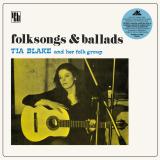
2026 Repress
Folksongs and Ballads by Tia Blake & Her Folk-Group, is more than just a “lost classic”. As clear and honest as can be, Folksongs and Ballads is a magnetic record, a refuge like only Nick Drake, Nico, and a few others have been able to create. A graceful, delicately minimalist approach to classic Appalachian and British folk songs.The perfect balance between melancholy and daydream. Originally released only in France in 1971, Ici Bientôt is very pleased to present the first-ever reissue on vinyl.
When she recorded her only album, Tia Blake was nineteen years old and had just arrived in Paris a year and a half beforehand. She spent most of her time at Disco’Thé, a record shop in the Latin Quarter, a free space, peaceful and inspiring, a hub for students as well as the local artistic community.
There, Tia would occasionally sing—when she managed to overcome her shyness. Two young guitarists who were passionate fans of folk music and regulars at the shop began to accompany her, forming “Her Folk Group.” One year later, they cut 11 tracks at Pierre Barouh’s Studios Saravah.
Folksongs and Ballads is composed of traditional tunes that have been covered many times, but they’re not the best-known folk standards. A collection of stories ranging from the Middle Ages to the 1960s, bringing together sublimely doleful ballads, lamentations for a lost lover, and an unexpected, brilliant version of the road anthem “Plastic Jesus.”
Tia Blake's haunting, unaffected voice captivates and comforts us, wrapping us in its cool embrace. Meanwhile, the tasteful, stripped-down, mellow acoustic arrangements provided by the guitarists, reminiscent of Bert Jansch and John Renbourn, occasionally supported by a kena flute, have created the space Tia Blake needed to reinvent these traditional songs.
Folksongs and Ballads is a timeless record, deep and unique, a longtime companion for repeated listening, in the vein of works by Sibylle Baier, Bridget St. John and Vashti Bunyan.
erscheint voraussichtlich am 16.10.2026

The Éthiopiques series returns! Essential archive recordings from an extremely fruitful period in Ethiopian music.
Before “Swinging Addis” took over the world, there was Moussié Nerses Nalbandian — the Armenian-born composer who shaped modern Ethiopian music. Mentor, arranger, and pioneer, he laid the foundations of Ethio-jazz.
This Éthiopiques volume revives his forgotten legacy, recorded live by Either/ Orchestra First issue ever with new exclusive photos and in depth liner 8-page insert.
“Ethiopian jazzmen are the best musicians that we have seen so far in Africa.
They really are promising handlers of jazz instruments.”
Wilbur De Paris
(1959, after a concert in Addis Ababa)
አዲስ፡ዘመን። *Addis zèmèn* **A new era.**
The time is the mid-1950s and early 1960s, just before "Swinging Addis" bloomed – or rather boomed – onto the scene. Brass instruments are still dominant, but the advent of the electric guitar, and the very first electronic organs, are just around the corner. Rock’n'Roll, R’n’B, Soul and the Twist have not yet barged their way in. Addis Ababa is steeped in the big band atmosphere of the post-war era, with Glenn Miller's *In the* *Mood* as its world-wide theme song, neck and neck with the Latin craze that was in vogue at the same period. Life has become enjoyable once again, with the return of peace after the terrible Italian Fascist invasion of Ethiopia (1935-1941). The redeployment of modern music is part and parcel of the postwar reconstruction. *Addis zèmèn* – a new era – is the watchword of the postwar period, just as it was all across war-torn Europe.
The generation who were the young parents of baby boomers** were the first to enjoy this musical renaissance, before the baby boomers themselves took over and forever super-charged the soundtrack of the final days of imperial reign. Music is Ethiopia's most popular art form, and very often serves as the best barometer for the upsurge of energy that is critical for reconstruction. Whether it be jazz in Saint-Germain-des-Prés or the *zazous* who revolutionised both jazz and French *chanson* after the *Libération*, be it Madrid's post-Franco Movida, or Dada, the Surrealists and *les années folles* that followed World War I, the periods just after mourning and hardship always give rise to brighter and more tuneful tomorrows. Addis Ababa, as the country's capital, and the epicentre of change, was no exception to this vital rule.
**Two generations of Nalbandian musicians**
Nersès Nalbandian belonged to a family of Armenian exiles, who had moved to Ethiopia in the mid-1920s. The uncle Kevork arrived along with the fabled "*Arba Lidjotch*", the** "*40 Kids*", young Armenian orphans and musicians that the Ras Tafari had recruited when he visited Jerusalem in 1924, intending to turn their brass band into the official imperial band. If Kevork Nalbandian was the one who first opened the way of modernism, pushing innovation so far as to invent musical theatre, it was his nephew Nersès who would go on to become, from the 1940s and until his death in 1977, a pivotal figure of modern Ethiopian music and of the heights it. Going all the way back to the 1950s. Nothing less. And it is Nersès who is largely to thank for the brassy colours that so greatly contributed to the international renown of Ethiopian groove. While the younger generations today venture timidly into the genealogy of their country's modern music, often losing their way amidst a distinctly xenophobic historiographical complacency, many survivors of the imperial period are still around to bear witness and pay tribute to the essential role that "Moussié Nersès" played in the rise of Abyssinia's musical modernity.
Given the year of his birth (15 March 1915), no one knows for sure if Nersès Nalbandian was born in Aintab, today Gaziantep (Turkiye/former Ottoman Empire) or on the other side of the border in Alep, Syria... What is certain is that his family, like the entire Armenian community, was amongst the victims of the genocide perpetrated by the Turks. Alep, the place of safety – today in ruins.
Before Nersès then, there was uncle Kevork (1887-1963). For a quarter of a century, he was a whirlwind of activity in music teaching and theatrical innovation. *Guèbrè Mariam le Gondaré* (የጎንደሬ ገብረ ማርያም አጥቶ ማግኘት, 1926 EC=1934) is his most famous creation. This play included "ten Ethiopian songs" — a totally innovative approach. According to his autobiographical notes, preserved by the Nalbandian family, Kevork indicates that he composed some 50 such pieces over the course of his career. This shows just how much he understood, very early on, the critical importance of song as Ethiopia's crowning artistic form. Indeed, for Ethiopian listeners, the most important thing is the lyrics, with all their multifarious mischief, far more than a strong melody, sophisticated arrangements or even an exceptional voice. (This is also why Ethiopians by and large, and beginning with the artists and producers themselves, believed for a long time — and wrongly — that their music could not possibly be exported, and could never win over audiences abroad, who did not speak the country's languages).
Last but not least, one of Kevork's major contributions remains composing Ethiopia's first national anthem – with lyrics by Yoftahé Negussié.
Nersès Nalbandian moved to Ethiopia at the end of the 1930s, at the behest of his ground-breaking uncle. Proficient in many instruments (pretty much everything but the drums), conductor, choir director, composer, arranger, adapter, creator, piano tuner, purveyor of rented pianos,... he was above all an energetic and influential teacher. From 1946 onwards, thanks to Kevork's connexion, Nersès was appointed musical director of the Addis Ababa Municipality Band. In just a few years, Nersès transformed it into the first truly modern ensemble, thanks to the quality of his teaching, his choice of repertoire, and the sophistication of his arrangements. It was this group that would go on to become the orchestra of the Haile Selassie Theatre shortly after its inauguration in 1955, which was a major celebration of the Emperor's jubilee, marking the 25th anniversary of his on-again-off-again reign.
At some point or other in his long career, Nersès Nalbandian had a hand in the creation of just about every institutional band (Municipality Band, Police Orchestra, Imperial Bodyguard Band, Army Band, Yared Music School…), but it was with the Haile Selassie Theatre – today the National Theatre – that his abilities were most on display, up until his death in 1977. To this must be added the development of choral singing in Ethiopia, hitherto unknown, and a sort of secret garden dedicated to the memory of Armenian sacred music, and brought together in two thick, unpublished volumes. Shortly before his death (November 13, 1977), he was appointed to lead the impressive Ethiopian delegation at Festac in Lagos, Nigeria (January-February 1977).
His status as a stateless foreigner regularly excluded him from the most senior positions, in spite of the respect he commanded (and commands to this day) from the musicians of his era. Naturally gifted and largely self-taught, Nerses was tirelessly curious about new musical developments, drawing inspiration from the very first imported records, and especially from listening intensely to the musical programmes broadcast over short-wave radio – BBC *First*. A prolific composer and arranger, he was constantly mindful of formalising and integrating Ethiopian parameters (specific “musical modes”, pentatonic scale, and the dominance of ternary rhythms) into his “modernisation” of the musical culture, rather than trying to over-westernise it. It even seems very probable that *Moussié* Nerses made a decisive contribution to the development of tighter music-teaching methods, in order to revitalise musical education during this period of prodigious cultural ferment. Flying in the face of all the historiographical and musicological evidence, it is taken as sacrosanct dogma that the four musical modes or chords officially recognised today, the *qǝñǝt* or *qiñit* (ቅኝት), are every bit as millennial as Ethiopia itself. It would appear however that some streamlining of these chords actually took place in around 1960. It was only from this time onward that music teaching was structured around these four fundamental musical modes and chords: *Ambassel*, *Bati*, *Tezeta* and *Antchi Hoyé*. A historical and musical “details” that is, apparently, difficult to swallow, especially if that should honour a *foreigner*. Modern Ethiopian music has Nersès to thank for many of its standards and, to this day, it is not unusual for the National Radio to broadcast thunderous oldies that bear unmistakable traces of his outrageously groovy touch.
Bei uns am Lager und sofort versandfertig
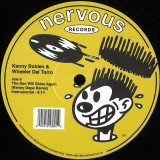
The original track came back in February and proved an immediate hit. Next to the original, versions from the likes of DJ Spen & Gary Hudgins also helped make this a breakout tune in the first quarter of 2021. Now comes the turn of Kenny Dope, one half of Masters at Work, the most seminal house duo of all time. Kenny Dope is an obsessive record collector, studio wizard and all-round musical encyclopedia whose influence on the scene cannot be overstated. He has been involved with numerous projects, from The Bucketheads to running his Dopewax label and never fails to impress.
This new remix from the Brooklynite is a glorious one baked in the sun's warming rays. It's built on a loose, Latin-tinged beat with big chords, expressive xylophone stylings and plenty of irresistible syncopation. The buttery smooth vocals bring the soul up top and help make this a timeless tune that will unite all dance floors. An instrumental mix is also included that strips things back, shows off the track's effortless musicianship, and draws out the beats for extra dance floor impact.
These two vital versions are the sort of life-affirming, and feel-good house sounds the world is desperate to hear right now.
Bestelle jetzt und wir bestellen den Artikel für dich beim Lieferanten.

BANGER MAKE MY BODY SHAKE MAKE THE SPEAKERS SHAKE
It was two and a half years ago when a conversation took place between Sal Carmona and Dj Producer Jovonn Armstrong; talks of which planted a seed in Sal Carmona's ear, which years later would manifest what was once a dream into a reality. No stranger, nor a newcomer in the world of dance music, Sal's experience in the club scene goes way back to the days when his sisters, to whom he credits for helping shape the person he is today, took him to Dave Mancuso's The Loft. An experience that he recalls being nothing short of magical. It was a spiritual encounter that immediately took over thus steering him towards the direction of clubs such as The Paradise Garage, Bentley's, Underground, Red Parrot, Latin Quarters, Roseland, Studio 54, just to name a few. Years later, Sal decided to take on the role, of which he became quite successful at, of promoting his own events in New York City; throwing regular parties at venues such as Park Circle & USA roller skating rinks, Red Parrot, The Palladium, The Copacabana and many others, soon becoming one of the premier go to promoters in NYC. Taking a long and well-deserved hiatus from the club scene, in 2012 Sal decided to make his return back to what he loves. It was around this time that he began thinking what it would be like to venture into creating his very own record label. Envisioning his first release being a bona fide House Music Album, one that would include some of his favorite producers. Not one to let dreams drift into the ether, while recollecting on that conversation with Jovan way back, Sal set out to make that vision manifest into a reality and thus emerged this dope compilation titled Banger "Make My Body Shake" "Make the Speakers Shake"
A great idea which brings together an interesting mix that includes highly sought out and respected veteran producers in the scene, such as Timmy Regisford, Ron Trent, Dj Jovonn, and Joe Claussell. Alongside with up and coming DJ producers who are garnering their own adulation of fans, in the likes of Vick Lavender, Mark Francis, Conway Kasey, and DJ Punch. With valuable directional contributions from friend Joe Claussell, this, to say the least, has become far more than just a seriously dope compilation that consists of a unique coming together of serious dance music. More than the aforementioned, Sal Carmona has manifested a dream into a game changing music scripture that is one of a kind, especially in this day and age where it seems where things are thrown together hoping for something to stick. On the contrary, this is well planned and thought out dopeness at A higher level consisting of all new house music that hasn't been brought together like this in a very long time and probably not for a while afterwards.
Bestelle jetzt und wir bestellen den Artikel für dich beim Lieferanten.

El Nido: a welcoming embrace in uncertain times. The world changed forever in the second quarter of 2020. The life we were used to ceased to be, as we were overcome by constant fear, distrust in all that surrounded us and a fatalist attitude towards the world we lived in. With the pandemic came lockdown, mandatory isolation for months, empty streets, face masks, hand sanitizer, the fear of going out, an absurd roll call of Covid fatalities, the daily tension of not knowing when it would all end and the urge to "get back to normal," something that certainly never happened. Out of that pandemic saturation and that urge for "normality" came El Nido ("The Nest"), the third album by Italy-based Colombian producer Montoya, who describes this record as "becoming virgins of destiny again, facing up to that fatalist world and creating that longing for tranquility. Savoring that moment prior to the pandemic, that instant when the most important thing wasn't the immediate reality or the global situation." Montoya sees El Nido as that quiet place that you think of when you close your eyes; it is a beach or a mountain, a sunrise or a sunset, a wave in the sea refreshing your body, or an almost-whispering wind that immediately silences everything around you. On his previous records, Iwa in 2015 and Otún in 2019, his work as a producer prevailed, feeding the growing wave of Latin American electronica, fusing IDM and techno with indigenous root music, Andean folklore and rhythms from the tropical Caribbean coast and ancestral Pacific in terms of instrumentation. But on El Nido Montoya splits the balance, offering us five merely instrumental tracks and six collaborations with Latin American artists, including Colombians Nidia Góngora on "Soñé," Montañera on "Sierra" and Pedrina on "Nubecita." It also features Mexican artist Pahua on "Flor del Mar," the Peruvian Lara Nuh on "El Faro" and the Franco-Venezuelan La Chica on "Palosanto." Starting from the name itself ("The Nest"), an evocation of home, El Nido is also a Filipino municipality on the island of Palawan, a place that turned out to be Montoya's last live experience before the pandemic. That place with crystal clear seas and white sand became the scene and starting point for this work, reflecting on the abstraction of a chaotic world and proposing blurred destinations with each song, like places that exist within memories when we close our eyes, letting us inhabit them, for a couple of minutes at least. On the other hand, it's a record that approaches love; as a yearning and a refuge, as a guide and an anchor, but also as a rhetorical figure that makes us vibrate and elevates us, while at the same time keeping us grounded and letting us settle in the place that we can use as our shelter.
Bestelle jetzt und wir bestellen den Artikel für dich beim Lieferanten.
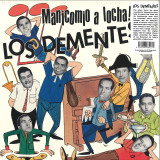
This album marks the debut recording for Venezuela's Velvet label by pianist Ray Pérez and his trombone-led salsa band Los Dementes. Heavy dance numbers and the distinctive vocals of Perucho Torcat make this historic 1967 rarity a sought-after collector's item. Now the LP has been lovingly restored, mastered from the original tapes, with its original artwork intact, preserving the legacy of Los Dementes for today's generation of salsa lovers everywhere. First time reissue. Salsa pianist, vocalist, composer and arranger Ray Pérez, acquired his nickname "Loco" by being a free, independent spirit, an innovator and iconoclast who was initially branded as "crazy" for the freshness and audacity of his sound. Amazingly, he is not that well known in the US, where he spent some time in the late 1960s and salsa was king during the 1970s. Yet he was quite popular in his home country from the beginning, especially amongst the working class of Caracas and Maracaibo, who adopted Cuban music played by New York Puerto Ricans as their own and called it "salsa" years before the term was employed by US labels like Fania as a marketing tool. Pérez is revered in Venezuela, as well as in Mexico and Colombia, and his storied career, which spans seven decades and thousands of concerts, has yielded more than 35 albums recorded by his various bands, including Los Dementes, Los Kenya, and Los Calvos, all of which are collector's items today. At the start of 1967 Pérez debuted Los Dementes, with vocalists Claudio Zerpa and Perucho Torcat backed by an ace band featuring only trombones in the brass section. Titled "¡Alerta mundo! Llegaron los 'The Crazy Men'" the record was released on the small Venezuelan label Prodansa. Soon after, Prodansa folded and Los Dementes were left without representation or much compensation for their efforts, being paid only in records. In the end of February of that year, Pérez returned to Caracas from a stint in Maracaibo in order to finish his first LP with the well-established and larger Velvet label, entitled "Manicomio a locha". In the first quarter of 1967, Velvet unleashed a trilogy of salsa records in order to compete with rival label Palacio and their recent success with Federico y su Combo Latino: "Porfi '67 Salsa & Boogaloo" by Porfi Jiménez y su Orquesta, "Guasancó" by Sexteto Juventud and lastly "Manicomio a locha". The LP begins appropriately with the boisterous title track, written by the band's conguero Carlos "Nené" Quintero, who would become a legend in coming years. Torcat describes a jam session in mental institution and introduces the band, with tasty solos by trombonist Rufo García followed by Ray on piano. Already you can hear something was different about Ray and his "Crazy Men"-a sound as wild and innovative as what was happening in New York with Eddie Palmieri, but with a more unhinged, raw feeling in line with Willie Colón and other younger Nuyorican bands. Next up is an intriguing track sung in a mix of Italian, English, Spanish and Papiamento by Pérez himself, performed in the complicated rhythm of the mozambique, an Afro-Cuban carnival beat developed in the early 1960s. This is followed by the heavy dancer 'Rico guaguancó', penned by Angelito Pérez, which changes from the guaguancó to the mozambique rhythm mid-way through, proving that Los Dementes were "different from the rest" as the lyrics say. 'Puerto Libre', sung by Torcat, is dedicated to the Venezuelan island of Margarita in the Oriente region, and the independent spirit of its working people. The rhythm changes from guaguancó to guajira and back again but remains danceable all the way through. The side closes out with a "3 in 1" medley inspired by the popular formula of the mosaicos of Billo's Caracas Boys, seamlessly knitting together several different tempos, rhythms, moods and compositions. Side two starts strong with the fierce yet satirical 'Corte e' patas', then 'Alma Cumanesa', a typical folk song refashioned as a guaguancó. This is followed by the funky 'Guajira con Boogaloo'. The tune echoes the sound of young Latin New York, pointing out the connection between Cuban and African American soul music. The pace picks up again with 'Fiesta de trombones', a hot descarga and then the album closes with another medley. Though this marks the end of a rather short album, it also signaled the emerging success of Los Dementes and their involvement with the salsa boom in Venezuela, quickly selling out of its initial run of 1000 records and making for a memorable debut on the Velvet label. Now this rare and sought-after LP has been lovingly restored, mastered from the original tapes, with its original artwork intact, preserving the legacy of Los Dementes for today's generation of salsa lovers everywhere.
Bestelle jetzt und wir bestellen den Artikel für dich beim Lieferanten.
