- A1: The Heart Of Noise, Pt. 1 - Jean-Michel Jarre & Rone
- A2: The Heart Of Noise, Pt. 2 - Jean-Michel Jarre
- A3: Brick England - Jean-Michel Jarre & Pet Shop Boys
- A4: These Creatures - Jean-Michel Jarre & Julia Holter
- A5: As One - Jean-Michel Jarre & Primal Scream
- A6: Here For You - Jean-Michel Jarre & Gary Numan
- A7: Electrees - Jean-Michel Jarre & Hans Zimmer
- A8: Exit - Jean-Michel Jarre & E.s
- A9: What You Want - Jean-Michel Jarre & Peaches
- B1: Gisele - Jean-Michel Jarre & Sébastien Tellier
- B2: Switch On Leon - Jean-Michel Jarre & The Orb
- B3: Circus - Jean-Michel Jarre & Siriusmo
- B4: Why This, Why That And Why - Jean-Michel Jarre & Yello
- B5: The Architect - Jean-Michel Jarre & Jeff Mills
- B6: Swipe To The Right - Jean-Michel Jarre & Cyndi Lauper
- B7: Walking The Mile - Jean-Michel Jarre & Christophe
- B8: Falling Down - Jean-Michel Jarre
- B9: The Heart Of Noise (The Origin) - Jean-Michel Jarre
Search:leon switch
- 1
- 1: Gypsy Woman
- 2: Little Anna Mae
- 3: I Can't Be Satisfied
- 4: I Feel Like Going Home
- 5: Train Fare Home
- 6: Sittin' Here And Drinkin
- 7: You're Gonna Miss Me (When I'm Dead And Gone)
- 8: Mean Red Spider
- 9: Streamline Woman
- 10: Muddy Jumps One
- 11: Little Geneva
- 12: Canary Bird
- 13: Screamin' And Cryin
- 14: Where's My Woman Been
- 15: Rollin' And Tumblin' Part 1
- 16: Rollin' And Tumblin' Part 2
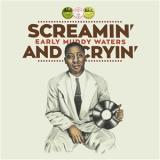
The Definitive Origins of the Chicago Electric Blues. Witness the birth of a legend. This essential collection captures Muddy Waters at the most pivotal moment of his career: the transition from a Mississippi Delta traveler to the "King of Chicago Blues." Muddy Waters was an ambitious young man who saw little future in Mississippi. In 1943, he headed for the bright lights, big city of Chicago, where he soon connected with blues giant Big Bill Broonzy, who began featuring Muddy as an opening act at his club dates. Within a year, Muddy had switched to electric guitar and formed his first blues combo, quickly becoming an established figure on Chicago's club scene. In 1947, Muddy came to the attention of the fledgling Aristocrat Records, just as Leonard Chess-then running a nightclub called the Macomba Lounge-invested in the company. Working frequently with pianist Sunnyland Slim, Muddy recorded a split session with him for Aristocrat in December 1947. This collection begins there: eight Aristocrat 78 rpm releases (sixteen sides), recorded between 1948 and 1950 and presented here in chronological order of release. Just three years later, Leonard and his brother Phil Chess would buy out Aristocrat's remaining partners and rename the label Chess Records-ushering in a new era of Chicago blues that would reverberate around the world. Includes extensive liner notes by Muddy Waters expert Fred Rothwell.
Red Laser Records switches on the smoke machine and strobe light, dishes out the high grade poppers and continues with the most unprofessional approach in the biz as they celebrate their FIFTIETH fuckin' release - a double disc photon torpedo diving into the label's roster and featuring all new tracks from RL stalwarts across the ages.
Marking this half century milestone, their in-house graphics team have been on a strict diet of kryptonite and engine oil, conjuring up one of the most lavish (and budget destroying) gatefold sleeves to date; alongside personal insights (and an in-depth cigar review) on their 13 year journey from label heads Il Bosco and Pharaoh Brunson.
Eight, sizzling, white hot MANCTALO jams that'll have knickers dropped, shirts lifted, fists pumping and your room stinking of fried circuit boards quicker than you can say #inabiteveryoneelse.
In 2007 an Italian film festival invites Mouse on Mars to score a film of their choice. The organizers claim to be able to clear the rights for any movie the band chooses. Werner Herzog’s fictional documentary Fata Morgana, which merges footage of several desert explorations by Herzog and his team into one continuous association, has long been a band’s favorite. The film comes with a soundtrack by Mozart, Leonard Cohen, Third Ear Band and field recordings. Andi Toma and Jan St. Werner are sent a DVD to Düsseldorf and start working. The idea is to score the film in real time so instrumentation has to be readily at hand: guitar, percussion, electronics, mouth harp, pedals, software, tapes, samplers. Once the arrangement for the three-part film is sorted Mouse on Mars bring their score to stage. Herzog Sessions is performed twice: first when the band still thought the rights had been cleared, and a second time at London’s Southbank Center knowing that Herzog would have never approved a new score.
--
Mouse On Mars – London Queen Elizabeth Hall soundtracking Werner Herzog.
By Mike Diver, 24.04.2009
Filmed in 1971, Fata Morgana is perhaps not one of Herzog’s best-known works (think Grizzly Man, Rescue Dawn, et cetera…), but then Mouse on Mars have never been ones to embrace the mainstream, quietly letting their modern, experimental take on krautrock do the talking over the years, thus producing some quietly brilliant electronica that far outweighs their modest profile.
The film itself is not altogether dissimilar to the wonderful, Phillip Glass-scored Koyaanisqatsi, with sweeping landscape shots and no obvious plot or narrative, though Fata is concentrated purely in one place – in and around the Sahara Desert, switching from images of barren wasteland to desert tribes and dead, skeletal cattle.
The obvious thing to do when soundtracking such powerful imagery is to vie for dreamy electronic soundscapes which can be sustained for a long period, and whilst this ambient shoegaze approach was present and correct (also carefully constructed and highly effective), Mouse on Mars added a human element to the performance, incorporating a live dimension by using and looping guitars, harmonicas, processed vocals and even a live horn player (quite possibly a flugelhorn. Look it up if you don’t believe me) for the final section of the film.
Some of the most interesting points arose when the duo suddenly switched from solemn, ambient tones to glitchy, bouncing electro (reminiscent of their more upbeat work) whilst on the same film shot – causing the audience mood to flick from tripped-out bliss to attentive semi-wired, utterly subverting any idea of a narrative the film may have possessed. Clever stuff.
Ranging from sinister to surreal to humorous, all the moods portrayed in Fata Morgana were successfully matched by Mouse on Mars’ live rescore – no mean feat. The duo also went above and beyond the call of duty with their own soundtrack, adding a fascinating personal signature to an already unique film.
After taking time out from working together to focus on separate musical projects, maverick composer Alan Roberts (Jim Noir) and crowd-rousing vocalist Leonore Wheatley (International Teachers of Pop / The Soundcarriers) have re-joined forces to introduce Co-Pilot. Each the other’s wing person, they’re plotting an escape through Manchester’s claustrophobic grey skies with the pencil case colour of a hand-sewn multi-coloured primary school patchwork quilt. “We are both the creators in charge of navigating Co-Pilot’s overall sound which changes from track to track,” Leonore hints at what to expect. “There are about 6 different genres on one album, it's a pick n mix record!”
Happy in the haze of many boozy hours the album was recorded over just a few months whilst holed up and hanging out in Al’s city centre Dookstereo studio. The former Mill allowed the pair to relax, laugh and create without constraint. Armed with their original demos and vocal recordings from Al’s flat, they’d nip by the offie to pick up some Dutch courage before setting to work: building arrangements from a drum beat and basic chord pattern, the pair were so in tune they rarely spoke, allowing only the music to lead the way. “We’d communicate through nods of agreement or grimaces of dismay,” Leonore recalls. “Using the instruments with Al in production mode, we let the sound dictate the process whilst being drunk enough to follow it.”
The sound of life coming full circle after honing their separate crafts, Leonore had previously played keys and vocals in Jim Noir’s live band before moving on to front International Teachers of Pop for two critically lauded albums of joyous dancefloor filling bangers - their self-titled debut (2019) and Pop Gossip (2020). During that time Al would further expand Jim Noir’s universe with AM Jazz, which was celebrated as the no.1 album in Piccadilly Records’ ‘End of Year Review’ (2020), followed by the Deep View Blue E.P. (2021) cementing his status as one of Manchester’s finest songwriters.
As Leonore added her vocal magic to Al’s early demos of what would eventually become Co-Pilot’s ‘Spring Beach’ and a crooked original version of closing track ‘Corner House’, the vibe was prophetic “like the ending of Grease as Danny and Sandy take flight through the clouds”, letting their imaginations fly. The songs were the catalyst to spark a new phase of the pair working together, picking up where they left off. “From messing about with sounds during rehearsals in the very beginning it was always clear we liked the combination of sounds we made,” Leonore recalls.
Powered by a ‘try anything’ approach, Co-Pilot blends the musical DNA of what you’ve come to expect from each of the pair’s previous flight paths. “Whatever is switched on or nearby gets used. There's no 'correct' for us. If it sounds good, record it,” Al tells. United through typically turbulent wonky pop and lurking samples, whether culled from 70s TV themes or recreations of past and found sounds (see Al’s 60s tropicalia guitar on ‘Brick’, or the innocent ‘Swim to Sweden’ which opens with an ice cream van jingle Al recorded from his bedroom window) their process offers up a bucket load of Easter eggs. The album even features snippets from dearly departed pal Batfinks whilst ‘Motosaka’ is perhaps the most expensive 2-minutes on the album, featuring a Columbia Records Japan-cleared sample of Ryuichi Sakamoto’s ‘Thousand Knives’. Its synth squelches and Tom Tom Club funk also received the blessing of Haroumi Hosono, Godfather of Japanese Electronica, who agreed to being sampled in an original version of the song. “We just kept listening back and hitting gold,” Al recalls. “I was thinking ‘yeah, not sure what this is but I like it! We were buzzing with what we had made.”
But the sound wouldn’t come without self-imposed instrumental challenges. Thanks to an old mellotron sample on ‘Move To It,’ the moog riff and nautical accordion breaks on ‘Swim To Sweden’ and the 6/8 and 7/8 jaunt of ‘Brick’, time signatures were lovingly skewed to create Co-Pilot’s unique mood. “It was a bastard getting the drums right,” Leonore reveals, “but I like the wonkiness”. Levelling up through the lyrics, the words of smoky and evocative ‘She Walks In Beauty’ are based on a Lord Byron poem, with the sentiment of remembering Leonore’s late grandparents. “I wanted to see how much I could get away with just singing on one note, and how I could harmonically change everything else around it vocally,” she says. Elsewhere ‘Can You See’ was written from the perspective of a concerned sister to a brother which tells of keeping someone safe. “The lyrics are quite metaphorical about day-to-day happenings, people loved and lost. Others are rhythmic nonsense! It’s up to the listener to figure out what’s true.”
It’s clear from Al’s productive production techniques and Leonore’s knack for vocals and lyricism, Co-Pilot’s course is engineered by two aeronautically adept sonic storytellers. “We share a pretty similar sense of humour,” Al tells, “It is funny listening to this quite serious album but knowing we were giggling as we recorded it all. It’s been great to have another brain to bounce off.” Their destination might be unknown, but the clouds are about to part for a sound that is light years ahead. “You'll like at least one song,” Leonore suggests, “and hopefully them all.”
There has always been a Reggae inuence in the music of El Michels Affair. From their cover of "Hung Up On My Baby" done in a Reggae style, to the general sound and approach that permeates Leon's production style. While recording Bailey's 2020 Ekundayo album, they did some straight forward reggae tunes inspired by different eras alongside some modern R&B tracks that would t more comfortably next to Frank Ocean than Jacob Miller. It is this same notion that old and new can live so comfortably together that birthed the idea of Ekundayo Inversions. Traditional dub came out of reggae in the late 60s and early 70s when pioneers like King Tubby and Lee Perry started taking the multi track recordings of songs and running them back through the board adding effects and additional instrumentation. These recordings are called "dubs" or "versions" and are typically instrumentals with ourishes of vocals from the original tracks. El Michels decided to use the blueprints left behind and make something using the inuences of today. He wound up straying so far from the traditional format that it didn't seem right to use the word `Dub', hence Ekundayo Inversions. All the songs are tied together by WhatsApp messages between Leon and Liam that perfectly narrate the story of this record and their working relationship. One of the highlights on Ekundayo Inversions is a guest appearance from the legendary Lee "Scratch" Perry on the "Ugly Truth" version. L$P switches between singing and talking, proclaiming his powers one minute and playing with the track's title the next. On "Awkward take. 2" Leon takes one of the most experimental songs from Ekundayo and actually straightens it out. A track that once seemed to be oating in space has now been anchored by the addition of drums and bass. "Faded", a version of "Paper Tiger", is given the full EMA treatment with the addition of emotive horns over an uncomfortably sparse rhythm track peppered with Liam's voice drenched in delay and echo. "Champions" features a verse from Black Thought of The Roots and halfway through, El Michels sends the rhythm section 50 years back. At the end of the day, Ekundayo Inversions is a testament to how strong the original songs are. Whether they're in a R&B style, reggae style, stripped down to their bare bones, or loaded with production, the songs will move you.
Liam Bailey follows up his 'Ekundayo' album with this heavy hitting remix 7" featuring two absolute legends. The A side is a remix of Champion featuring Black Thought of The Roots. Black Thought kills the first verse finding the pocket over the Leon Michels produced reggae banger designed to bust up woofers and blow out dance floors. Liam and Thought combine to sing praises to a woman worthy of all the admiration they can muster, and in doing so, they take what was already a classic to another level. The B side is straight from the far flung corners of outer space. Producer Leon Michels strips down and revamps the album cut Ugly Truth, making room for the most special of guests, the one and only, Mr. Lee "Scratch" Perry. The Upsetter switches between singing and talking, one minute proclaiming his powers and the next playing with the title of the original tune. Some proper Lee Perry business alongside the already unstoppable chemistry of Liam Bailey and Leon Michels...An absolute Big Crown Surehot.
- A1: Laurel Halo - Public Art
- A2: Parris - Puro Rosaceaes
- A3: Rrose - Cricoid Pressure
- B1: Machinewoman - Just Made Some Jazz Music
- B2: Fit Siegel - Penny Rut
- B3: Siete Catorce - Canto
- C1: Ikonika - Bodied (Og Mix)
- C2: Panda Lassow - Lachowa
- C3: Nick Leon - Pelican Dub
- D1: Stefan Ringer - Lust
- D2: Laurel Halo - Sweetie (Dj-Kicks)
- D3: Group A - Ketabali
The 68th edition of the DJ-Kicks mix series is another landmark one, withexperimental producer Laurel Halo taking the reins. The American's adventurous28 track trip features seven exclusives, including two of her own plus thosefrom Rrose, Machinewoman, FIT Siegel, Nick LeoIün and Ikonika. An electronic outlier, Halo hails from Ann Arbor, Michigan, but has been basedin Berlin for a number of years. Landing on labels like Hyperdub, Honest Jon'sand Latency, Halo has released a body of work ranging in style, yet cohered byproduction and compositional tendencies that sound distinctly her own. Herstudio work tends to be a multi-layered mix of the electronic and theacoustic, the organic and the synthetic. As a DJ, meanwhile, she lays downmore floor focussed mixes of techno, bass and worldly drum rhythms, and herlive sets are similarly visceral and direct. Halo's DJ-kicks packs a lot in to just 60 minutes. It kicks off with the firstof two of her own exclusives, 'Public Art', a tactile piano loop that sets themelodic tone of the mix in focus. Crunchy drums soon take over and begin whatis a blistering ride through electro, trippy minimalism and textures thatrange from icy and dubby to steel plated and sharp from the likes of Red Axes,Parris and an exclusive from Rrose. Another exclusive, rough and ready cut from Machinewoman follows, before themid section twists and turns on surging drum patterns, frantic industrialtextures and spaced out gqom sounds from the likes of Griffit Vigo, DarioZenker and Final Cut. This is a mix forever on the move: one minute itstightly coiled and kinetic, the next it's loose and joyful before switchinginto more cerebral and insular passages that keep you intrigued. Fusing together so many disparate sounds and textures is no mean feat, butlike everything Halo does, here they all add up to something as thrilling andedgy as it is unpredictable and compelling.
Warehouse Find!
Helsinki-based producer Saine makes his Delusions debut following amazing output on such revered labels as Voyage Recordings, Odd Socks, Omena and Fina. A producer who can flit from hazy instrumental hip hop through to raw, dusty house at the flick of a switch, Saine has built a solid following amongst lovers of left field leanings we've come to expect from the likes of Max Graef, Glenn Astro, Henry Wu and Leon Vynhall.
On lead track Act Natural we find Saine in perhaps his heaviest mood to date, delivering a crunchy uptempo house jam which retains his unique sound despite being aimed firmly at the dancefloor. A speaker wobbling eighth note bassline locks down the groove whilst familiar, much-loved frag- ments from the rave days punctuate the crackling beats. Add to this some simple syncopated chords and you have a winning formula for a timeless track which looks to the future whilst respectfully doffing it's cap to the past.
Jus Right continues in a deeper, more musical fashion with Saine getting busy on his synths, building up layers of warm pads and soloing Moog lines. A prominent vocal brings a soulful touch whilst the minimal, almost hihat-less groove adds an original and fresh feel to this blissful track.
Flipping over we have Low Key, a shuffling deep house number loaded with sliced Rhodes samples, echoing vocal hits, clipped percussion and sublime bass. As the atmosphere thickens, everything falls away to silence before rebuilding, creating some nice tension in the arrangement.
Finally we have Pontchartrain offering up an excellent remix of Jus Right. The Detroit native responsible for some mighty fine releases for the likes of Rocksteady Disco, Lovedancing, Soul Clap, Kolour LTD and Whiskey Disco takes things in a more straight-up house direction with heavier beats, 909 hats pushed to the fore and a distinctively old school feel to the mix.
- 1