
Search:lucky tapes
- 1

- A1: Conway The Machine, Goosebytheway, 7Xvethegenius, Sk Da King, Lucky Seven & Kndrx - Hov Numbers
- A2: Jae Skeese, 7Xvethegenius, Sk Da King & Lucky Seven - Lonely
- A3: Conway The Machine & Benny The Butcher - Lalo (Feat. 38 Spesh)
- B1: Jae Skeese, 7Xvethegenius & Goosebytheway - City Grill
- B2: Jae Skeese, 7Xvethegenius & Rory - Rory Joint
- B3: Jae Skeese, Goosebytheway & Shots Almigh - Blue Glass
- B4: Goosebytheway, Sk Da King, 7Xvethegenius & Lucky Seven - Take It Back
- C1: Conway The Machine, Goosebytheway, Sk Da King - Elephant Man (Feat. Heem B$F & Rome Streetz)
- C2: Jae Skeese, Goosebytheway, Kota Savia, Lucky Seven & Sk Da King - This Is War
- C3: 7Xvethegenius & Kota Savia - Crown For Queens
- D1: Conway The Machine, D Smoke & 7Xvethegenius - Andre 3000 (Feat. Bangladesh)
- D2: Conway The Machine, Shots Almigh & Goosebytheway - Sudan (Feat. Lo Profile)
- D3: Conway The Machine, Elcamino & Shaun 2X - Far Away
13
As a torchbearer of gritty lyricism and unapologetic authenticity, Conway The Machine takes the helm to introduce the world to the burgeoning talents that make up the Drumwork roster, a powerhouse assembly of artists ready to reshape the landscape of rap music.
At the forefront of the album stands Conway The Machine, delivering blistering verses and commanding attention with his trademark grit and authenticity. But "Drumwork Collective" is more than just a solo endeavor; it's a collaborative effort featuring guest appearances by Rome Streetz, Benny The Butcher, 38 Spesh, and others. Each artist brings their unique perspective to the table, adding layers of depth and complexity to the project.
Behind the boards, producers like Beat Butcha, Graymatter, Trizzy Williams, and more craft a sonic landscape that's as gritty as it is innovative. From soulful samples to hard-hitting drums, the production on this compilation sets the stage for the lyrical onslaught that follows, blending traditional boom-bap aesthetics with a modern edge. Together, these elements form a cohesive tapestry that captures the essence of hip-hop's underground renaissance, proving that the beat truly does strike back.

14
2025 Repress
It's rare that a certain sound is entirely an artist's own. Although undeniably a stew of impeccable influences - from blues to folk to Latin to dusty funk, soul and hip-hop - one cannot hear a Tommy Guerrero song without immediately recognising it as his - and his only.The cult skater from San Francisco is globally renowned as one of the original members of the legendary "Bones Brigade" team. And as an accomplished multi-instrumentalist, his laid-back soul is beloved by all who've basked in its blissful glow.There's something elemental about this music that really stirs the soul. Strikingly beautiful and instantly addictive, it's a kind of funk-fuelled, melody-driven, groove-based magic. There's a serenity and heart in the playing that radiates warmth and splendour, as if crafted for endless sunsets. His albums that surfaced on Mo Wax at the turn of the century have been treasured since their release and it's two of his most vital LPs that we're honoured to reintroduce.The originals were quietly pressed on to a single piece of vinyl so we've worked closely with Tommy this year to bring you these fresh, limited editions. They have been lovingly remastered, cut nice and loud on to heavyweight double vinyl and presented in deluxe gatefold jackets.A Little Bit Of Somethin' is a quietly majestic gem. Brimming with Guerrero's horizontal "loose grooves", these brief but innovative instrumentals demonstrate a rich variety and, as such, comprise an LP that is aptly titled. An enchanting start-to-finish listen, it was instantly regarded as essential upon release via Mo Wax in 2000. It has aged remarkably well.Throughout this inspired collection, simplicity is key. In deploying it, Guerrero presents a beautifully crafted melodic soundscape. The distinctive, mellifluous approach of his guitar style, blending Brazilian, Cuban, Mexican, soul and jazz motifs, is at once startlingly new and tantalisingly familiar. Set against unrushed percussion, the music releases a crystal clear stream of healing frequencies to create a fragile, hypnotic atmosphere.Each track clocks in at around three minutes and, with a lack of studio polish or commitment to traditional song structure, it's a wonder how this enigmatic record demands your attention. However, through its gentle dynamism and impressive playing, it does just that. Whilst resolutely low-key, this lo-fi aesthetic feels genuinely organic and remarkably personal, its powerful intimacy truly connects. It's what makes this album so beloved of those lucky enough to be already familiar with it. From Margaret Kilgallen's truly iconic cover artwork to the music contained within, it's all brilliantly effortless.Guerrero's musical ideas are consistently compelling throughout, making it impossible to select highlights. The album's laconic drift touches upon jazz-fusion workouts and slow-mo hip-hop drums, Tortoise-style experimental post-rock and cinematic sound textures. It's at once hazy, light and bouncy yet sombre and bluesy. The Latin soul of El Chicano blends with the breezy jazz of Grant Green. By employing guitars and drum machines to create a stripped down rhythmic tapestry of spellbinding, addictive songs, there are even traces of The Durutti Column. A little bit of country, a little bit of rock & roll. A Little Bit Of Somethin', indeed.

- A1: Another Thought (02:16)
- A2: A Little Lost (03:18)
- A3: Home Away From Home (05:12)
- A4: Lucky Cloud (02:16)
- B1: This Is How We Walk On The Moon (04:42)
- B2: Hollow Tree (02:30)
- B3: See Through Love (04:46)
- C1: Keeping Up (06:20)
- C2: In The Light Of The Miracle (06:05)
- C3: Lucky Cloud (Return) (03:00)
- C4: Just A Blip (03:42)
- D1: Me For Real (04:55)
- D2: Losing My Taste For The Night Life (04:34)
- D3: My Tiger, My Timing (05:41)
- D4: A Sudden Chill (02:45)
15
2026 Repress
Another Thought was the first collection of Arthur Russell’s music to be released after his death in 1992. Released in 1993 on Point Music it marked the beginning of nearly 30 years of work to let the world hear the enormous archive of unreleased recordings Arthur left behind. Be With revisits this first compilation for a new gatefold double vinyl version and a triple-fold digipak CD reissue.
Both versions of Be With’s 2021 reissue of Another Thought have been mastered by Simon Francis and the vinyl cut by Pete Norman. The original artwork has been restored and tweaked at Be With HQ for the gatefold sleeve and the triple-fold digipak, with the essential help of Janette Beckman. Each version comes with an insert reproducing the liner notes and lyrics from the original CD release.
Together with Calling Out Of Context, Soul Jazz’s World of Arthur Russell, and much of the ongoing work of Audika, Another Thought is absolutely essential for even the most casual Arthur Russell collection. In fact we’d argue it’s essential for any fan of non-obvious pop music. This is the only place where you can hear some of Arthur’s most recognisable tunes and it’s an album that absolutely deserves to be kept in press.
We’ll assume that by now you’re all at least a little familiar with the story of Arthur Russell, the farm boy from Iowa who moved to 1970s New York. Arthur Russell the genuine musical genius who died just 40 years old, leaving behind a wealth of music that dwarfed the few 12"s and LPs that were released during his short life.
Although Arthur had been working on an album for Rough Trade during his last years, with the label no-longer operating it was Point Music (Philip Glass and Michael Riesman’s label set up together with Philips) who stepped in to help Arthur’s partner Tom Lee start working out exactly what Arthur had left behind.
Tom suggested that Arthur’s friend Mikel Rouse was the right person to make the first catalogue. Working in Tom and Arthur’s apartment he had only two weeks to go through what turned out to be around 800 tapes.
As Tom explained “at the end of each day he would generally wait for me to come home and I would, to the best of my knowledge, name and identify pieces in question from that day’s work. As he worked Mikel compiled about a dozen cassettes that he thought would present the most finished sounding songs for Don/Point to use. As Don listened he would then suggest and ask me and thus we collaborated on the choices.”
Don is Don Christensen, Another Thought’s producer. With a final selection of songs from recordings made between 1982 and 1990, including sessions with some of Arthur’s regular collaborators Peter Zummo, Steven Hall, Mustafa Ahmed, Elodie Lauten, Julius Eastman, Jennifer Warnes and Joyce Bowden, it was then Don’s job to turn these into a finished album.
Another Thought is a little different from the compilations of Arthur’s music that came out since. In our conversations with Steve Knutson (who founded Audika Records and who manages Arthur’s estate together with Tom), he explained that “more than any project released by Arthur during his lifetime or posthumously by Audika, ‘Another Thought’ is the most worked over. The material was significantly edited and rearranged from the original source tapes”.
If the aim was to release a comprehensive exploration of every facet of Arthur’s music, from the most avant-garde of his avant-garde compositions through to the most disco-not-disco of his disco-not-disco tunes then the project was a spectacular failure. But as a coherent album of non-obvious pop music Another Thought is wonderful.
Starting with the sparse voice-and-cello of the title track, A Little Lost adds some guitar along with the sneaking suspicion that we’re listening to something nowhere near as simple as it first sounds. By the time we get to This Is How We Walk On The Moon - it could be the moment you notice the congas, or the percussion that’s been building behind them, or maybe it’s that blast of trumpet and trombone - we realise we’ve gone from splashing around to being completely submerged in the musical world of Arthur Russell.
From here the album heads off on its journey around the sounds of the left-field contemporary classical music of the time, re-directed towards pop ears, with minor detours through the swirling woozy disco of the half-remembered night before on In The Light Of The Miracle and My Tiger, My Timing. Whether it’s just Arthur, his cello and some bleeps on Just A Blip, or whether he has some vocal help as he does on the bounding Keeping Up, this is difficult music made so, so easy. And through it all is Arthur’s voice and cello. Sometimes drowned in distortion and sometimes clear as a bell, but always there somewhere.
A Sudden Chill finally returns us to the calmer waters we started in and this last track closes the album with a melancholy that’s not surprising given how soon after Arthur’s death the album was put together.
Whilst Another Thought holds together with the consistency of a proper album, there’s still no getting away from the fact that this was put together from audio recorded in different ways, in different places, with different people at different times. Those with keen ears will hear traces of tape hiss, the occasional blown-out note and some digital fuzz, all fingerprints of those original recordings as well as of the 1990s digital equipment that was used to piece Another Thought together.
Add to this Arthur’s obvious pleasure in making music from the sort of sounds that can make microphones, speakers and ears uncomfortable, it’s no surprise that Another Thought isn’t glossy and pristine. Don Christensen’s productions have been careful to not scrub up those original recordings so much that they lose their original vibe, understandable given that Arthur wasn’t around as a guide. We’ve applied a similarly light touch with the mastering for these Be With versions, just working to make sure they sound like they should on both the vinyl and the CD.
Despite the Discogs rumours, Another Thought was never originally released as an LP. So when it came to the sleeve for this Be With vinyl version we took the original CD artwork as a starting point to come up with something that looks like it could have been in the record racks back in 1993.
We have to thank Janette Beckman for helping us reproduce her iconic photograph of Arthur in his newspaper boat hat. One of many photographs she took of Arthur, Janette shot this in her New York studio back in 1986 for a short article in the January ’87 issue of The Face Magazine. Those with eagle-eyes will notice we’ve used an ever-so-slightly different shot from the one that appeared in The Face and then again on the original cover of Another Thought. The original has long since been lost so we’ve worked with what is left in Janette’s archives. And we also have to thank Tom Lee for giving us permission to reproduce his liner notes from the original CD booklet, together with Arthur’s lyrics.

- A1: Intro Plus Minus Absurdio
- A2: Love Is A Rodeo
- A3: The Switch
- A4: Kill Me (Ce Soir)
- B1: Tons Of Time_X0009
- B2: Daddy's Gonna Save My Soul
- B3: Troubles & Hassles
- B4: The Lonesome D.j
- C1: Lucky Number
- C2: Action Alice & Bow-Tie Basil (Previously Unreleased)
- C3: Kill Me (Ce Soir) (7-Inch Single Version)
- C4: The Switch (7-Inch Single Version)
- C5: Troubles & Hassles (Rough Mix)
- D1: Intro Plus Minus Absurdio (Rough Mix)
- D2: Love Is A Rodeo (Rough Mix)
- D3: The Switch (Rough Mix)
- D4: Tons Of Time (Rough Mix)
- D5: Love Is A Rodeo (Instrumental Rough Mix)
Switch is the tenth studio album by Dutch rock band Golden Earring, released in 1975 as the follow-up of the band's international
breakthrough album Moontan and their bona fide classic track Radar Love.
All tracks have been 24 bit/192 kHz remastered from the original master tapes.
Last but not least: the original IBC Studios master tapes of Switch reveal the legendary ’50 Hz roll off’ note.
On request of executive producer Freddy Haayen, the cutting engineer @ IBC was commissioned to cut all frequencies below 50 Hz,
which meant that a large chunk of low-end frequencies was eliminated from the final mixes during vinyl cutting.
So, for the very first time, on LP1 of this remastered issue,
Switch finally sounds as it was recorded and mixed – with all (full range) frequencies intact.
Switch (remastered & expanded) is available as a limited edition of 2000 individually numbered copies on white coloured vinyl,
it's housed in a gatefold sleeve, 2 printed innersleeves and includes a lyric sheet.

- 01: Grotesque (Chapter 2)
- 02: Duo + 1
- 03: Night Out (Theme From Early Snow In Munich)
- 04: Paraphrase Sw (Theme For Stevie Wonder)
- 05: Feat. Zdenka Kovacicek - Peep Show (Theme From Early Snow In Munich)
- 06: Love Experiment (End Credits From Whatever You Can Spare)
- 07: Video Games (Theme From Early Snow In Munich)
- 08: Whatever You Can Spare (Orchestral Version)
- 09: Early Snow In Munich (Opening Credits)
- 10: The Forrest Date (Theme From Whatever You Can Spare)
- 11: The Graduates (Theme From The Graduates)
- 12: Oberhausen (Theme From Way To Your Neighbour)
- 13: Winter's Wish (Theme From Winter's Wish)
13
A new release from Fox & His Friends Records, Chapters (Screen & Stage Dancefloor Jazz from Yugoslavia 1971-1984) by Ozren Depolo brings to light a trove of previously unreleased music spanning more than a decade of his work in film, theater and television. This gatefold audiophile 180g LP, including a 12-page booklet with archival photos and detailed liner notes, offers for the first time a full album composed exclusively of Depolo's own authorship, drawn from master tapes held in private and institutional archives. Mastering and cutting was done by Frank Merritt from The Carvery Ozren Depolo rarely pursued opportunities to record original material, in part due to a general lack of interest among local publishers in jazz discography. Yet he was more than a gifted composer: he was also an accomplished saxophonist, clarinettist, flutist, pianist, arranger and occasionally, a jazz journalist who contributed articles to specialized programs on Radio Zagreb. Depolo also played in international big bands alongside jazz greats such as Clark Terry, Oliver Nelson and Gerry Mulligan, as well as in formations led by Bosko Petrovic, including the Nonconvertible All Stars and the B.P. Convention Big Band. He was a member of ensembles including The Alfi Kabiljo Orchestra, The Dragutin Diklic Ensemble, Jugoslovenska Pop Selekcija, The Stipica Kalogjera Octet, Vaclav Zahradnik & His East All Stars Band and the Zagreb Jazz Quintet. As both composer and arranger, he produced a significant body of work for large jazz orchestras and small ensembles. He was deeply engaged in jazz improvisation and avant-garde classical music, recording numerous chamber pieces for saxophone. A long-standing member of Acezantez, Zagreb's renowned contemporary music ensemble, he also collaborated with international figures such as Ted Curson, John Lewis, Johnny Griffin, Art Farmer, Leo Wright, Art Taylor, Slide Hampton and Lucky Thompson. This selection also includes his collaboration with Igor Savin and jazz vocalist Zdenka Kovacicek who were played on Karl Lagerfeld's fashion shows. The release demonstrates how Depolo was able to shift fluidly between idioms: from driving big-band passages to intimate chamber-like arrangements, from funk-tinged motifs to lyrical, impressionistic soundscapes. This stylistic breadth, always anchored in his deep jazz and funk sensibility, gave his music an adaptability perfectly suited to the hybrid world of stage and screen. The LP highlights that versatility while also presenting the coherence of his artistic voice, one that had gone unrecognized precisely because it was dispersed across so many contexts.

10
"Astral Americana hymns hovering somewhere between the dirt and the stars" Pitchfork
"Mood music for moments of solitude, best experienced without distraction" The Times
"Overwhelmingly effective and ravishingly beautiful" The Wire
American Dust is an ode to the beauty of the American Southwest, where vast desert landscapes hold stories both stark and tender. Eve Adams’ characteristic folk noir weaves a vivid tapestry of love, sacrifice and quiet revelation, conjuring images of dust storms, stray dogs and far off trains.
The high desert of California is a vast and confounding place. Equally inspiring as it is punishing, it’s a landscape that carries magic in its deep dark nights, holding stories both tender and stark in the coarse layer of dust that settles upon everything. It’s long been a source of inspiration for musicians, writers, and painters, each of them adding to the same current, carried forward over time, through hope and hardship and the passing years.
Somewhere out there in that broad and boundless landscape, Eve Adams has been living her own desert life, quietly writing the follow-up to 2021’s Metal Bird LP. Where that album sang of liminal space, the dream-like turbulence of Hollywood’s golden age, American Dust is far more rooted in traditional storytelling; a eulogy for the American Dream channeled through that sweeping part of the country that holds such power and mystery. Slipping into different and varied costumes throughout its ten songs, it finds Eve not just observing the people around her but stepping into their shoes and peeling back the layers of their quiet lives.
Adams writes from within. A few years ago she moved out there, to “the middle of nowhere”, finding a slowness that didn’t exist in the city, and she knows only too well about the mystical nature of the land and those who live within it. Weaving together themes of grit and romance, American Dust holds its focus on the bittersweet poetry of lives lived in solitude, most notably the women who sustain life at the center of it all. “There’s something very radical about domestic life,” Adams says of this thread. “So many women live their entire lives behind closed doors, completely in the shadows. Within those lives is such sacrifice, devotion, and love. I wanted to honor that: the poetry in the mundane, the longing in the repetition. The way love survives boredom and dust and time.”
Eve is joined on American Dust by Canadian musician Bryce Cloghesy, aka Military Genius of Crack Cloud, who plays throughout and also helped produce the album. Musically bold and vivid, it’s an ambitious and detailed stride forward from what’s come before, the scope of the LP’s narrative reflected in the radiant sweep of the playing. On top of gentle piano and guitar, gorgeous strings drift through the album, lending the songs a woozy sense of romanticism; a collaboration with Gamaliel Traynor (Cello) and Caroline’s Oliver Hamilton (Violin).
For all the drama that’s coiled around these songs, it’s the recurring notion of love and hope fighting against everything that holds true throughout American Dust. Musically it’s lush and vibrant, intimate and cinematic side by side, and always bursting with warmth. But it’s what it holds in its weary bones that elevates it to something truly special, something more than just a collection of songs penned in the heart of the desert. The characters it speaks of, and from, feel shadowed but wholly real, like they’re bursting to share their stories that have remained hidden for years and years and they allow Eve Adams to grow as a songwriter right in front of our eyes.
“The same swirling dust that clung to the covered wagons of my ancestors as they crossed the Great American Desert is the same dust my great-great-grandmother swept off her porch during the Dust Bowl of 1936 in Oklahoma, is the same dust that blows in through the cracks in my windows here in the desert, carrying stories from a time long gone,” Eve says, reflecting on the personal narrative that runs through her new album.
“It’s not just dust—it’s American Dust, the kind that settles into the bones of a family and never leaves. I think about that dust as a symbol of the passage of time. I hope this album will be part of that same current, carrying forward for the next generations of my family to find. I’ve been lucky enough to have journals and poetry from my ancestors that documents their lives during times of pure hope and pure hardship. I’d like to think of this album as a contribution to that family history.”

Lou Bond only made one album but what an album it was. Politically charged, deeply introspective, and wonderfully lyrical, 1974’s Lou Bond is reminiscent of the Eugene McDaniels releases Headless Heroes of the Apocalypse and Outlaw (both out previously on Real Gone) in its outspoken, idiosyncratic social commentary. But there is a sensitivity here that’s devastating; Bond’s falsetto soaring over his strummed acoustic guitar brings to mind Bill Withers (whose “Let Me into Your Life” he covers) at his most affecting, while the orchestrated arrangements summon What’s Going On vibes. With comparisons like those, you know this record is special, but Lou Bond is a one-of-a-kind album that really defies comparison (despite our best efforts). For this ALLANALOG reissue, we had our friends at Well Made Music cut lacquers directly from the original tapes, and pressed the record at Gotta Groove Records. Available either in black vinyl or clear yellow. Both Outkast and Mary K. Blige sampled Lou Bond…that’s because it’s one of the lynchpin albums of Memphis soul.

- 1: Lucky Me
- 2: Why Must Our Eyes Always Be Turned Backwards
- 3: To The Establishment
- 4: Let Me Into Your Life
- 5: That S The Way I Ve Always Heard It Should Be
- 6: Come On Snob
also available
Black Vinyl[46,01 €]
Lou Bond only made one album but what an album it was. Politically charged, deeply introspective, and wonderfully lyrical, 1974’s Lou Bond is reminiscent of the Eugene McDaniels releases Headless Heroes of the Apocalypse and Outlaw (both out previously on Real Gone) in its outspoken, idiosyncratic social commentary. But there is a sensitivity here that’s devastating; Bond’s falsetto soaring over his strummed acoustic guitar brings to mind Bill Withers (whose “Let Me into Your Life” he covers) at his most affecting, while the orchestrated arrangements summon What’s Going On vibes. With comparisons like those, you know this record is special, but Lou Bond is a one-of-a-kind album that really defies comparison (despite our best efforts). For this ALLANALOG reissue, we had our friends at Well Made Music cut lacquers directly from the original tapes, and pressed the record at Gotta Groove Records. Available either in black vinyl or clear yellow. Both Outkast and Mary K. Blige sampled Lou Bond…that’s because it’s one of the lynchpin albums of Memphis soul.

- Apartment Life
- The Machinist
- The Men Are Fighting
- Lakeland
- Seven And Seven
- Over & Over, Pt. 1
- Bells And Bells
2
Fit for Consequences: Original Recordings, 1984–1987 is the first ever archival release from Repetition Repetition, the “two-man electric minimalist band” consisting of Ruben Garcia and Steve Caton hailing from Los Angeles in the mid 1980’s. Repetition Repetition’s unique blend of cosmic art-rock minimalism / maximalism was self-released across a series of cassettes produced in micro editions, and while garnering the attention and participation of luminaries such as Harold Budd, remained under the radar during the band’s existence. Fit for Consequences: Original Recordings, 1984–1987 collects select material from across the duo’s catalog.
It was over a plate of Mexican breakfast food when Ruben Garcia and Steve Caton first told Harold Budd of Repetition Repetition and the worlds they intended to explore by respective way of synthesizers and guitars --- a rendezvous instigated by the former’s fan mail to the legendary composer. If the upstarts entered this restaurant from a one-way street of admiration, they would leave with not only Budd’s interest but, sometime later, a blessing in the wake of many hours shared by the three in Garcia’s Los Angeles home recording studio: “This is going to be difficult, but God help them, I think they’re great,” noted Budd in a USC lecture in 1985. Now several degrees removed from prior rock music aspirations, the real game was afoot.
Between 1984 and 1988, Repetition Repetition operated within something akin to the underground of the experimental underground, although even that designation perhaps overstates the case. The duo’s sparse output consisted of three cassettes self-released on Garcia’s Third Stone Music label: Repetition Repetition (1985), Lakeland (1987), and The Machinist (1987). Their songs would also be included during this period on Trance Port Tapes’ vital scene-scanning compilations assembled by A Produce. Live performances occurred with similar infrequency, but Garcia and Caton counted converts in quality over quantity, numbering among them the aforementioned Budd, a Chambers Brother, and, judging by a memorably drop-jawed reaction following a rare Repetition Repetition gig, Jackson Browne.
Likewise, critical support materialized in the form of KCRW deejays Brent Wilcox and Dean Suzuki, whose steady airplay positioned Repetition Repetition’s music amidst fearless company like Jon Hassell, Hiroshi Yoshimura, and Richard Horowitz. Yet, to hear fellow Trance Port featured players like Tom Recchion and Bruce Licher of Savage Republic tell it, Garcia and Caton moved as ghosts --- a notion more vexingly endorsed by the silence of record companies that failed to come knocking --- and therein lies an overarching truth to the work itself.
Journey to the heart of Repetition Repetition and one discovers a collective ear impossibly attuned to the hypnotic possibilities of stylistic convergence, the resulting music possessed of seamless multimodalities which beckon to a glimmering plane of the disembodied. Where Caton sought his artistic fixes at an intersection of popular genres, Garcia zoned in on the sonically spare, drawing from the same wellspring as the Enos and Rileys of his personal avant-garde pantheon, and in their coming together the two tapped into a deeper cosmic source. Synthetic walls of keyboard sound in forever states of reprise met waves of shimmering --- and at times even punishing --- guitar in reply, their soundscapes hovering convincingly between, as suggested in fittingly dualistic fashion in a press kit assembled by Garcia, such disparate sensations as bird flight in one song and oil drilling in the next.
But don’t call it a push-pull dynamic, as this was a creative partnership founded upon fluidity and organicism by way of, naturally, repetition. In contrast to, say, the Bressonian ideal of repetitive motion as a great stripping away, the concept in the hands of Garcia and Caton equated to ascendancy via continuous unfolding, a maximal route to minimalism. To be sure, their recording philosophy morphed over the course of the act’s short history, and what started as a process defined by consistent in-person interplay developed into a more isolated method formulated by Garcia, who eventually took to his own one-man bedroom-studio sessions in order to fully chart any and all potential ostinato-loaded paths which he could travel down, the Tascam-captured resonances subsequently provided to Caton as blueprints from which to take flight himself, adding layer upon layer of steel to the proceedings.
If the practice and execution changed, however, the evidence certainly didn’t rest in the results: The seamlessness remained, and, despite the brevity of their time together, so has Repetition Repetition. With this finely calibrated collection of songs in Fit for Consequences: Original Recordings, 1984–1987, Freedom To Spend sees to it that the private worlds of Garcia and Caton can now be visited by all rather than just the count-‘em-on-both-hands lucky few whose musical endeavors or collector vocations carried them into this once-distant dimension.
Repetition Repetition’s Fit for Consequences: Original Recordings, 1984–1987 will be released on Freedom To Spend in vinyl and digital editions on May 30, 2025. The collection includes extensive liner notes from Bill Perrine, and wil be offered alongside Over & Over, a supplemental collection of music available exclusively as a mail order cassette from Freedom To Spend and RVNG Intl.

Pierre Bujeau is an expert at creating temporary escape zones—musical structures to evade the everyday. Sometimes he works collectively as part of the mysterious French groups Omertà and Tanz Mein Herz. But it’s when he’s on his own, performing as Megabasse, that he offers the most complete break from reality. His kit is simple: a few bottles of cheap lager, twin Fender amps, and his double-necked guitar. An instrument like this normally signals maximum rockist excess—think Jimmy Page, Geddy Lee, or that dude from the Eagles. In Pierre’s hands, it becomes more like a zither or a dulcimer, producing soft chiming patterns that build against themselves until the sound of the room, passed back and forth between his two amps, starts to blur everything, and we are away in another world. Wait, though—let down your yoga bun and don’t light the palo santo yet. The new space he creates has nothing to do with smug wellness. It’s a rough, do-it-yourself psychedelia, scuffed but hopeful. Not a perfect blank space to be your best self in, but instead a communal dreaming, an uncanny place where all are welcome.
Until now, without catching him live, the Megabasse experience has been difficult to find: CD-Rs, short-run tapes, and one blink-and-you-missed-it LP. Thankfully, this record on Efficient Space, a reissue of some pieces that were previously only available on a small cassette edition, will put that right. Here are two long, intricate pieces, and something new—a shorter track that hints at a move toward beautiful, burnt-out guitar soli.
Unless you are very lucky, wise, or rich, life imposes its structures on you. Maybe a record of shimmering, tranced guitar is all you need to get out from underneath?

- A1: Walkin
- A2: Blue N' Boogie
- B1: Solar
- B2: You Don't Know What Love Is
- B3: Love Me Or Leave Me
Released in 1957 on Prestige Records, Walkin’ features a collection of songs that were originally released in 1954. With Davis on trumpet and as band leader, the recordings also feature Horace Silver, Lucky Thompson, J.J. Johnson, Percy Heath and Kenny Clarke. This new edition of the album is released as part of the Original Jazz Classics Series on 180-gram vinyl pressed at RTI with all-analogue mastering from the original tapes at Cohearent Audio and a Stoughton Tip-On Jacket.

14
2024 Repress
The Aggrovators were one of Jamaica’s finest session bands, many of the tracks you know and love from the 70’s Reggae scene probably featured this group of musicians in some shape or form.
The band were put together by Bunny’Striker’Lee , one of Jamaica’s formidable producers, who with no studio of his own had to rely on buying studio time from the existing establishments, such as Randy’s Studio or Channel 1.
The updating of Studio 1 classic’s which in some cases were reworkings of American R&B tunes was common practice. The rhythms were much loved favourites and with the added incentive that the musicians knew the tracks inside out.
This set of dubs are straight from the master tapes of such sessions orchestrated by the man Bunny Lee himself, no one knew better…you can’t keep a good tune down never mind a great one..
So sit back and enjoy The Aggrovators in fine Studio 1 style….RESPECT
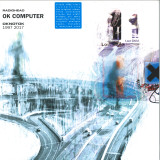
- A1: Airbag (Remastered)
- A2: Paranoid Android (Remastered)
- A3: Subterranean Homesick Alien (Remastered)
- B1: Exit Music (For A Film) (Remastered)
- B2: Let Down (Remastered)
- B3: Karma Police (Remastered)
- C1: Fitter Happier (Remastered)
- C2: Electioneering (Remastered)
- C3: Climbing Up The Walls (Remastered)
- C4: No Surprises (Remastered)
- D1: Lucky (Remastered)
- D2: The Tourist (Remastered)
- E1: I Promise
- E2: Man Of War
- E3: Lift
- E4: Lull (Remastered)
- E5: Meeting In The Aisle (Remastered)
- F1: Melatonin (Remastered)
- F2: A Reminder (Remastered)
- F3: Polyethylene (Parts 1 + 2) (Remastered)
- F4: Pearly* (Remastered)
- F5: Palo Alto (Remastered)
- F6: How I Made My Millions (Remastered)
23
also available
2x LP[31,89 €]
Rescued from defunct formats, prised from dark cupboards and brought to light after two decades in cold storage... OKNOTOK will be issued on June 23rd through XL Recordings, coinciding (roughly) with the original 1997 release date(s) of Radiohead's landmark third album OK COMPUTER.
OKNOTOK features the original OK COMPUTER twelve track album, eight B-sides, and the Radiohead completist's dream: 'I Promise,' 'Lift,' and 'Man Of War.' The original studio recordings of these three previously unreleased and long sought after OK COMPUTER era tracks finally receive their first official issue on OKNOTOK. All material on OKNOTOK is newly remastered from the original analogue tapes.

10
Gombloh’s forgotten masterpiece
What if you have Brian Wilson and Bruce Springsteen rolled into one? And what if he came of age as an poor buskers in in Surabaya, Indonesia, but then summoned enough strength to record six albums that flew in the face of everyone in the country’s rock scene back in the early 1980s?
Genius, be they Brian Wilson or Soedjarwoto “Soemarsono” Gombloh, don’t conform to rules written for us mere mortals. They have their own way of doing things and in the case of Gombloh, writing music, conducting recording session and spending cash from his music, must be conducted on his own terms and his terms only. Studio time was expensive back in the early 1980s, yet Gombloh could be three-hour late for his session, and while engineers, session musicians and producers were jittery about the prospect of another botched session, Gombloh took his time for a nap before the recording begun.
Yet, some of his greatest works came into being in the wake of this napping session. Recording session for Sekar Mayang is no exception, despite the fact there’s foreboding sense of doom with Gombloh being unsure about the possibility of selling enough units to help his label break even. This is, after all, this is his last record with his band Lemon Tree’s. No one knew that Gombloh was operating with all his cylinders running and what came out of this Indra Record session, in the waning days of 1980, were some of the best compositions ever committed to magnetic tapes (to wax, if now you’re holding this on vinyl).
This is Gombloh at the peak of his creative genius. You can argue that his debut album Nadia & Atmospheer (what’s with the spelling mistake?) is the most sprawling and complex album (both sonically and thematically), but Sekar Mayang certainly had the best songs and I can make the argument that this album’s 10 songs are strong contenders for biggest hits in blues, country, psychedelic rock charts. “Prahoro & Prahoro” is one of those impossible song which appears to have sprung from a bottomless well of inspiration, encompassing King Crimson’s sprawling epic, Deep Purple’s deepest blues and Genesis’ most progressive tendencies. Or “Sekaring Jagat”, which begins as Lennon-McCartney lullaby before launching a thousand ships traveling to the end of the rainbow with children choir singing heavenly melodies backed by droning harpsichord and synclavier, while a buzzing Hammond B3 tightly locks with Gombloh’s guitar strumming.
For many of his fans, Gombloh is known as generous man of the people. A Robin Hood type if you please. He spent his royalty checks to buy foods for beggars and buskers and dish out some more to buy undergarments for Surabaya’s prostitutes. In Sekar Mayang, Gombloh went full Springsteen mode in “Mitra Becakan,” a social commentary that cut so deep you can end up with tears in your eyes and lump in your throat (even if you don’t understand any of its Javanese language lyrics). This is one the most devastating social commentary ever recorded for a pop song, and even if you discount the greatness of its musical composition, you chalk this up as a great social-realism poetry. His years of hanging out with pedicab drivers, street vendors and street-bound prostitutes certainly gave him enough insight into their (in)human condition.
Yet, a record this stellar was largely forgotten. First, this record was a flop upon its release in 1981. Indra Records reportedly only did one pressing on cassette tape and be done with it. For those who were lucky enough to have come across one of songs from this album on the radio were likely growing up in East Java, where Gombloh had a massive cult following early in the 1980s. Nothing was heard from this record again.
There were only a handful of cassette tapes from the first pressing found on second-hand market and I recently stumbled upon one online with a price tag of Rp 50 million (US$3,500). It’s no longer available now.
In Sekar Mayang, Gombloh harbours an obsession for a long-lost utopia, Java’s distant past, where farmers have their barn full of rice and corn, where blacksmith working around the clock making tools and children singing and dancing in their seminaries. Or the fact that he opens the song with stanza from Serat Weddhatama, arguably the most monumental poem in neo-classic Javanese literature, could be his pledge of allegiance. The question for him is should a modern-day Indonesia, rife with poverty, corruption and environmental degradation not be an anathema to that utopia?
In the end, you don’t need to be someone fluent in Javanese to enjoy this majestic record. And if this record turns out to be the last in Elevation Records catalogue and we shut down this label tomorrow, we will be very happy. Mission accomplished!

11
The lush psych-pop sound of Copenhagen's Halasan Bazar returns with their ambitious third album, "Burns". After numerous shows, recording sessions, a powerful collaboration LP and tours, "Burns" finds the band even more seasoned and impressive, giving the record a breezy naturalism from these gurus of their psychedelic craft.
Recorded in the French mountains, armed with a magical unending bag of weed, Halasan Bazar laid down these tunes mostly live - all vocals, acoustic guitars, drums and piano. This immediacy emphasizes their blissed out sonics, buoyant melodies and kaleidoscopic composition, each moment purposefully placed creating their rich sonic tapestry. Inspired by the greats of Greenwich Village's '60s folk, the lavish production of Lee Hazlewood, vocal harmonies of yesteryear and hallucinogenic day tripping. Some surf-y guitar vibes and plenty of driving piano jams too.
Tunes like "Freak" wave that Halasan flag proudly atop infectious guitar melodies and layered vocal harmonies creating a sing-a-long anthem for the misfits and the weirdos out there. "Get Sick and Die" incorporates swelling strings for an unexpectedly dreamy passage alongside sophisticated rock 'n' roll. One of many highlights, "Burns My Mind" has a driving, catchy groove and the entire band firing on all cylinders crafting a bombastic party atmosphere.
A beautiful and vivid album from an unapologetic band of freaks and dreamers, Halasan Bazar effortlessly leave their mark with "Burns".
Steve Rosborough, Moon Glyph Records

6
'Malombo music is an indigenous kind of music. If you listen to it, you can feel that it can heal you, if you’ve got something wrong. It’s healing music.'
Lucky Ranku
"Lucas ‘Lucky’ Madumetja Ranku (1941-2016) was one of the greatest African guitarists of his generation. He first made his name with the Malombo Jazz Makers – the successor group to the legendary Malombo Jazzmen, formed in Mamelodi township by guitarist Philip Tabane, drummer Julian Bahula and flautist Abbey Cindi. When Tabane left the Jazzmen in 1965, Bahula and Cindi called on Lucky to replace him, and the Malombo Jazz Makers were born. Building on the popularity and success of the original Malombo Jazzmen, the Malombo Jazz Makers become immensely popular, touring widely, winning numerous jazz competitions, and recording two successful albums for the Gallo label.
The deep and hypnotic Down Lucky’s Way was their third album. Recorded in 1969, it was the first Malombo Jazz Makers album to feature additional instruments, and the first to feature Abbey Cindi on soprano saxophone as well as flute. But more than anything else, Down Lucky’s Way is a transfixing showcase for Lucky Ranku’s sui generis guitar virtuosity. Quite different from their previous recordings, the album shifted the Jazz Makers’ sound toward hypnotic, extended compositions, layered by organ bass and guitar overdubs. Of all the Malombo Jazz Makers recordings, Down Lucky’s Way is the deepest of mood, and the richest of vision.
However, through one of the erasures that are ubiquitous in South African musical history under apartheid, it seems that the record may not ever have been properly issued. Original copies are outrageously rare – only a few are known among collectors. When we asked Lucky about the album, he was unaware it had ever been released, and had never seen a copy. Perhaps it was pulled; perhaps it was pulped; perhaps Gallo simply took their eye off the ball. Nobody knows, but it is not impossible that the apartheid authorities were involved, for by 1969, the Malombo Jazz Makers were well known to them.
Julian Bahula’s introduction of malopo drums to the music of the original Malombo Jazzmen was a moment of crucial political and cultural radicalism for South African jazz. Traditionally used by BaPedi people for healing, the malopo drums of Malombo music re-centered jazz
around indigenous sounds and culture, and over the next decade, the Malombo Jazz Makers became deeply involved in political opposition to apartheid. Their recovery of indigenous sounds made them the musical standard bearer for the Black Consciousness movement, and they toured South Africa clandestinely with the writer and anti-apartheid activist Steve Biko. They also broke apartheid laws by playing with the white rock group Freedom’s Children, sometimes appearing on stage in masks or made up with UV paint to avoid detection by the authorities; they appeared regularly at the rule-bending Free People’s Concerts organized by David Marks, where Marks’ clever exploitation of a loophole – mixed audiences were prohibited from attending ticketed concerts where anyone was being paid, but the law said nothing about private functions played by artists for free – meant people could come together in defiance of apartheid laws. The notorious Special Branch would raid their concerts; Lucky remembered police storming an auditorium, throwing smoke bombs.
Eventually the political situation became too dangerous, and the band were being actively sought by the police. Though Abbey Cindi remained in South Africa, both Julian Bahula and Lucky Ranku went into political exile in the UK, where Bahula founded the group Jabula with Lucky and former members of Cymande, Steve Scipio and Michael ‘Bami’ Rose. With Jabula, Julian and Lucky worked tirelessly for the anti-apartheid movement, raising funds and awareness all over Europe and in the US. They played with Dudu Pukwana’s Spear in the joint formation Jabula-Spear, and worked together in Bahula’s Jazz Afrika formation, and Bahula organized the first Concert for Mandela in 1984 (it was Jabula that supplied the chorus for The Special A.K.A.’s hit single ‘Nelson Mandela’). Lucky also played and recorded with Chris McGregor’s South African Exiles Thunderbolt group. After the fall of apartheid, they both remained living and working in the UK. In 2012 the South African government awarded Julian Bahula the Gold Order of Ikhamanga for his cultural work during the struggle against apartheid.
Until his death in 2016, Lucky continued to play with countless groups and musicians. putting together the band Township Express with Pinise Saul, and leading his own African Jazz Allstars. The influence of his playing on the international perception of South African township music was immense, and he was held in the highest regard by his peers – ‘Lucky was a guitarist who could bring any house down’, said Michael ‘Bami’ Rose.
But despite his continuous presence on the UK live circuit over four decades, Lucky Ranku never recorded an album as leader. And so as well as restoring an important lost piece of South African musical heritage, Down Lucky’s Way is a precious opportunity to hear one of Africa’s foremost guitarists stretching out, in focus and in his element."
First issue since 1969 of the Malombo Jazz Maker’s unknown third album.
Liner notes featuring interviews with Julian Bahula and Lucky Ranku.
Fully licensed from Julian Bahula.

- A1: Have Horn, Will Blow
- A2: The Chef
- A3: But Beautiful
- B1: In The Kitchen
- B2: Three Deuces
- C1: The Rev
- C2: Stardust
- D1: Skillet
- D2: I Surrender, Dear
- D3: The Broilers
- E1: I'm Just A Lucky So & So
- E2: Heat 'N Serve
- E3: My Old Flame
- F1: The Goose Hangs High
- F2: Simmerin
- F3: Strike Up The Band
- G1: High Fry
- G2: Smoke This
- G3: Pennies From Heaven
- H1: Pots & Pans
- H2: Jaws
- H3: It's A Blue World
- H4: Blue Lou
23
Released to celebrate tenor jazz saxophonist Eddie “Lockjaw” Davis’ Centennial, “Cookin’ with Jaws and the Queen” showcases the influential soul-jazz partnership of Eddie “Lockjaw” Davis and Organist Shirley Scott. Bringing together the Prestige albums “Cookbook, Vol. 1-3,” “& “Smokin’”.
This 4-LP set is pressed on 180-gram vinyl at RTI and newly remastered from the Original Analog tapes by Bernie Grundman. The package also features new liner notes by journalist Willard Jenkins.

Time for some rare late 70s soul royalty out of Memphis, Tennessee, a top rung rarity on the collector scene, Coco & Ben - Good Feelin'. Ben Robinson was recently tracked down by friends of the label Daniel Mathis and Robert Garcia, lucky for the world he was still sitting on the tapes for this slightly longer take (as well as some unreleased tracks) allowing us to cut this disco floater as a nice loud 12" for the first time, now sounding better than it ever has, don't sleep on the flip either. Utterly essential record.

- B1: Undercover Agent - Oh Gosh! (Daz '95 Dubplate)
- C1: M.t.s - Baad Boy Sound ('95 Vip)
- D2: M.t.s. - Hard Disk (Dj Zinc Remix Vip Dubplate)
- E2: Undercover Agent - Five Tones (97 Daz Vip Mix)
- F2: Undercover Agent & The Kriminal - Jah Works (Exclusive '95 Alternative Studio Mix)
- A1: Splash - Babylon (Original 94 Studio)
- A2: Splash - Babylon (Dj Trace Remix Part 2)
- B2: Splash Collective - Rebels (Studio Master Dat Source)
- C2: M.t.s. - Brothers & Sisters ('95 Original Remastered)
- D1: M.t.s. - Inspiration ('95 Original Remastered)
- E1: Undercover Agent - Dub Plate Circles ('96 Original Remastered)
- F1: Undercover Agent & The Kriminal - World Mash Up (Original '95 Studio Master)
- G1: Undercover Agent - Rougher Pt.3 ('94 Original Remastered)
- G2: Undercover Agent - Bass Kick Mix 2 ('96 Exclusive Unreleased Version From Dat)
- H1: Undercover Agent - Dangerous ('96 Original Remastered)
- H2: M.t.s. - Revolution ('96 Original Remastered)
16
A truly incredible collection of foundation Jungle / Drum & Bass from these ground-breaking labels. Splash aka Undercover Agent aka Daz has been with SubBase since the start, having signed to Suburban Base Publishing (including the iconic track Babylon) back in the 90's and remained with us ever since. As part of the SubBase Family we’ve collaborated once again to deliver a perfect package of in-demand classics and unearthed dubplate specials.
Daz Ellis, most commonly known as Undercover Agent, was a true pioneer of the emerging jungle scene back in the early 90’s. He was heavily involved in the pirate radio scene, setting up the infamous Cyndicut FM to transmit breakbeats & basslines across the airwaves of the South East of England, noted for having one of the strongest and widest reaching broadcast signals of the period.
Under various aliases he produced music that defined the sound of the dancefloor. Early releases featured on the genre-defining Suburban Base & Lucky Spin labels.
As Splash his seminal track Babylon set the standard for how amens and ragga infused samples should sound, a format that has stood the test of time and can still be heard today regularly getting played by the world’s biggest drum & bass DJ Andy C! This compilation includes the 2 most in demand versions of this foundation anthem.
In 1994 off the back of his success he launched Splash Recordings, then the year after Juice Records came into fruition. Under the guises of DAZ, M.T.S. and various releases as Splash Collective, all on his own Juice & Splash imprints he gained an army of dedicated fans, demand from whom has led to the creation of this special vinyl box set!
For this exclusive compilation project Undercover Agent went searching back through his original studio master tapes from his impressive back catalogue to find both the original recordings, and some of the alternative edits that never made it to vinyl back in the day. There were also a handful of special versions made exclusively for DJ’s to play on dubplate that are now available for the first time ever.
Exclusive to this collectors box set are 6 never before released versions of classics such as Oh Gosh, Five Tones, Jah Works, an alternative mix of DJ Zinc’s remix of Hard Disk & Bass Kick that were unearthed from the original session DAT’s!
This album features 16 of his most legendary tracks, remastered & pressed across 4 slices of vinyl.
c B1. Undercover Agent - Oh Gosh! (Daz '95 Dubplate) Unreleased
e C1. M.T.S - Baad Boy Sound ('95 VIP) Unreleased
h D2. M.T.S. - Hard Disk (DJ Zinc Remix VIP Dubplate) Unreleased
j E2. Undercover Agent - Five Tones (97 Daz VIP Mix) Unreleased
l F2. Undercover Agent & The Kriminal - Jah Works (Exclusive '95 Alternative Studio Mix) [Unreleased]
[c] B1. Undercover Agent - Oh Gosh! (Daz '95 Dubplate) [Unreleased]
[e] C1. M.T.S - Baad Boy Sound ('95 VIP) [Unreleased]
[h] D2. M.T.S. - Hard Disk (DJ Zinc Remix VIP Dubplate) [Unreleased]
[j] E2. Undercover Agent - Five Tones (97 Daz VIP Mix) [Unreleased]
[l] F2. Undercover Agent & The Kriminal - Jah Works (Exclusive '95 Alternative Studio Mix) [Unreleased]

Clear Vinyl repress
1987... for those lucky enough visiting a decent import shop in that year could have seen a US import record with pink label showing a darts board with small text next to the picture saying "Target records" and "Joe R Lewis". Pretty sure nobody at that time would be alarmed by this... reading further it said....1. Love Of My Own... Written and produced by Joe R Lewis... in even smaller text the label info continued; mixed by Larry Heard! And even that, at that time that would not have ringed a bell, except for maybe a couple of dj's who only just in the last couple months picked up copy of a Mr Fingers record and memorised the writter credits. We're talking the very early days of House music, the pre-internet era where new music and info didnt spread all over the globe within a couple of seconds.... Now more then 30 years later this is a holy grail for worldwide record collectors and house aficionados, still not all info is clear. Rumors go that this record was produced after a recording sessions of Larry Heard and he helped Joe Lewis with the mixdown... but like all good stories there is a cloud of mystery covering up the details!. On the flip side there is one of the best tracks ever produced by Joe Lewis,.... Life Immoreal... a track so elegant and beautiful that it hurts!! Two of the best tracks Chicago House music has to offer in remastered versions taken from the original master tapes on this latest outing of Clone Classic Cuts!!

- A1: The Lonely Guys
- A2: Little Danny
- A3: Iedereen Is Zot
- A4: Mani Meme
- A5: Lits Jumeaux
- A6: Take A Cigarette (Edit 2018)
- B1: Rendez-Vous
- B2: A Million Miles
- B3: Cardiocleptomanie
- B4: Instant Karma!
- B5: Cold Turkey
- C1: Rendez-Vous In München
- C2: Rendez-Vous (French Version)
- C3: Rendez-Vous (Mix)
- C4: Rendez-Vous (English Version)
- C5: Rendez-Vous (Instrumental)
16
Best known for their participation in the 1983 Eurovision Song Contest, Belgian synth pop band Pas De Deux present their complete collection. These songs were made in 1982 and 1983, including the cult hits 'Cardiocleptomanie', 'Mani Meme' and various versions of 'Rendez-Vous'. These songs were never together on one album. Some of them were only released as a single or on some special compilations made in Spain and Germany after their much discussed participation to the Eurovision Song Contest (ESC) in 1983.
The 2LP vinyl compilation is a tangible thing, a must-have for the fans with some new photos from the band's first video and all the info, credits and lyrics of the songs. Remastered & compiled on this deluxe 2LP with a special etched D side. The inner sleeves include some reactions triggered in the national printed press at that time. Are we lucky that it was before the social media took over?
Highlights of the release:
"RENDEZ-VOUS IN MÜNCHEN", for the first time on vinyl!
"At the ESC we performed Rendez-Vous, a 'minimalistic synth-pop song', accompanied by the Dieter Reith Orchestra, directed by Freddy Sunder, on a backing track with synthesizers and drum machines. Apart from the Eurovision broadcast on 23 April 1983, this (mono!) recording was never released before. We've put it on this compilation, together with 4 other alternative versions of the original song."
CARDIOCLEPTOMANIE, MANI MEME
"Cardiocleptomanie was part of the compilation 'The Hidden Tapes' by Minimal Wave in 2011. It was also the title of a personal compilation of our songs by Veronica Vasicka of Minimal Wave (sold out vinyl). It became our N°1 digital track (thank you Lieven De Ridder)."
"On our mini-LP Des Tailles (Parsley, 1982) we covered Mani Meme, an unreleased song by DE NOTA. To our happy surprise, the song was chosen by the GUCCI Epilogue collection 2020 for their campaign video. It boosted our audience internationally."

- A1: New Memories Of Machines
- A2: Before We Fall
- A3: Beautiful Songs You Should Know
- B1: Warm Winter
- B2: Lucky You Lucky Me
- B3: Change Me Once Again
- C1: Something In Our Lives
- C2: Lost & Found In The Digital World
- C3: Schoolyard Ghosts
- D1: At The Centre Of It All
- D2: Dreamless Days (Outtake)
- D3: Someone Starts To Fade Away
12
THE 10TH ANNIVERSARY EXPANDED EDITION OF TIM BOWNESS &
GIANCARLO ERRA'S 2011 ALBUM 'WARM WINTER' - NOW ISSUED AS
MEMORIES OF MACHINES
An expanded & remixed 10th Anniversary version of Tim Bowness & Giancarlo
Erra's 2011 album 'Warm Winter' (now issued as 'Memories Of Machines', the
original project name).
Featuring contributions from Robert Fripp, Peter Hammill, Julianne Regan, Jim
Matheos, Colin Edwin, Huxflux Nettermalm, Peter Chilvers, Aleksei Saks &
members of Nosound & Tim Bowness's live bands, the album contains 10
sweeping & majestic songs (culminating in the epic "At The Centre Of It All").
The 2 disc - CD/DVD-A/V version includes hi-res stereo & 5.1 Surround mixes in
addition to two 2020 recordings - an album outtake & a new version of the
Nosound piece "Someone Starts To Fade Away" - created especially for this
release.
Featuring a 2021 remix from the original tapes by Giancarlo Erra, this new edition
emphasises the textural nature of the music & restores the pieces to their original
arrangements & track lengths (resulting in a different listening experience).
The artwork has also been overhauled for this release by Giancarlo Erra &
Caroline Traitler.

Take the freaked-out punked up soul of The Stooges and MC5 mix that with 60s garage trash, blend in Sabbath, AC/DC and heavy rock n roll and then hot wire that sound to a handful of freaks located in Fredericton, New Brunswick. Here it is that The Angered Wrecks were located - in an old Victorian style house in downtown Fredericton. It was here they set up a permanent rehearsal space on the main floor taking up the dining room and living room area with a full P.A. system and the long parties would begin as the Angered Wrecks cranked out an unholy primal serving of mind-numbing, eyeball-popping guttural pure rock and roll.
Lucky for us the Angered Wrecks had a primitive DIY recording set up as they recorded live off the floor with one cardioid mic taped to the ceiling to capture the entire room sound and straight into a cheap Alpine cassette deck. The results of these previously unheard recordings capture the essence of trashy rock’n roll at it’s finest, delivered with pure dereliction, and always a side of extra sleaze.
Keeping warm in the winter at another old salt box style house they would later rehearse and play gigs in, a large circle was cut in the floor so that the rising heat from the pottery kiln downstairs would (along with the right mixture of beer and ‘Purple Jesus’, weed and often speed and hot dogs) keep these boys fuelled long enough in sub zero temperatures to keep pumping out the rock’n roll savagery.
The last show they played was in the fall of ’81 at the Bug Shack after the household was served an eviction noticed with the house to be entirely demolished (just like Stooge Manor aka The Fun House).
They got a gig together the weekend before demolition, packed the bottom floor and played a blazing set. At the very end, walls were kicked apart, old cans of paint strewn about, general wanton destruction to furniture, doors, windows etc…insane. The bug shack had come to an end and shortly thereafter, The Angered Wrecks.
That these tapes have survived to this day is all thanks to John Westhaver’s archival hoarding (even though the loss of a 90 minute session of the Angered Wrecks still haunts John to this day).
So CRANK these tracks as loud as you can – these audio tapes are not for the faint of heart

8
Fools Meeting is an album by Carol Grimes with the British blues/progressive rock band Delivery, founded in the late 1968. The band was one of the wellsprings of the progressive rock Canterbury scene.
"Delivery was formed during the British blues boom of the late '60s. However, its sound is jazzier and more progressive than most of the music that emanated from that era. Rhythm & blues serves as a springboard for forward-looking tracks like "Blind to Your Light" and "Harry Lucky." Singer Carol Grimes is frequently compared to Janis Joplin. While Grimes has a powerful voice, she does not reach the level of histrionics that were a showcase of Joplin's. It should come as no surprise that Delivery members joined Canterbury related bands upon Delivery's demise. The reissue CD of Fools Meeting features several live bonus tracks, as well as a post-breakup demo recording featuring Caravan bassist Richard Sinclair. That demo session, one of the highlights of the collection, spurred the musicians to form Hatfield and the North. Fools Meeting is an essential part of any Canterbury collection, and should also appeal to progressive jazz fans." (Jim Powers / All Music Guide)

11
Long before John Brannon of Negative Approach cemented himself as a USHC icon, you
would hear rumblings about his pre-NA glam group, STATIC. Only a handful of people were
lucky/brave enough to see them live. Scenesters spoke of a tape but never seemed to have
one. Their most well-remembered song, Toothpaste and Pills, allegedly featured smashing
beer bottles against John’s mom’s basement wall as a percussion instrument. Could this be
real?
Fast forward to 2020 and a few months into the covid-19 lockdown, Brannon came across a
bunch of tapes he dug out of a box in his Mom’s closet - STATIC “DEMOS ‘78”, STATIC
“LIVE AT GROSSE POINTE SOUTH H.S.”, STATIC “LIVE AT PLEWA HALL”. Holy shit! The
legend is true! And best of all, STATIC rule!
John Brannon grew up in Grosse Pointe Park just a few blocks from the Detroit border. John
was always into music, but as soon as he heard T-Rex, The Stooges and Alice Cooper, he
was obsessed (and still is) and had to start a band to channel his obsessions. With the help
of neighborhood kid and collaborator Billy Daniels and a local drummer simply known as
“Red”, STATIC was born.
Before Negative Approach changed the face of punk and hardcore, before Laughing Hyenas
scared the world silly and blew everyone else off the stage and before Easy Action started
melting minds all over the world, there was STATIC. STATIC was real. STATIC was real as
shit.
Third Man Records is beyond ecstatic to be providing this long-missing piece of the
American Underground Music puzzle. We worked closely with John Brannon and Warren
Defever, one of Third Man Mastering’s resident wizards, to put together this essential
collection of demos and live recordings.

- A1: The Anatomy Of Clouds
- A2: Breaking The Horizon
- A3: Reflected In The Waves
- A4: In Spite Of The Weather (Bill Ryder-Jones Re-Imagining)
- A5: Breaking The Horizon (Eluvium Broken Mix)
- B1: The Warmth Of The Sun (Peter Gregson Duet)
- B2: The Anatomy Of Clouds (Yann Tiersen Remix)
- B3: The Anatomy Of Clouds (Malibu Sweet Hereafter Remix)
8
FEATURING REWORKINGS BY YANN TIERSEN, BILL RYDER-JONES, MALIBU, ELUVIUM and
PETER GREGSON.
140g black vinyl with lacquers cut by Alchemy, printed inner sleeve, limited to 500 copies.
Michael Price has announced a new album, The Hope of Better Weather - part reissue, part reworks - due out onThe Control Room on 15 October 2021.
The new album takes his 2012 EP, The Hope of Better Weather, originally recorded by Price alone in a room with a
piano improvising, and brings it fully to life with the addition of a series of reworkings by Yann Tiersen, Bill
Ryder-Jones, Malibu, Peter Gregson and Eluvium.
He explains, “I wasn't trying to control what anybody else was doing. Everybody that joined in with the project gives
their own little piece of freedom. I was really interested in what freedom we all give ourselves, as well as being
fascinated to see what a little germ of an idea can mean to somebody else.”
Listen to Yann Tiersen’s rework of ‘The Anatomy of Clouds’: LINK
Listen to the original version of ‘The Anatomy of Clouds’: LINK
The five pieces, alongside these new reworkings capture a stark beauty, tenderness and delicacy in their tone. But
they are also wind-like in their shifting, expansive and elemental essence - capturing an exploration of the natural
world. “Nearly 10 years ago when I recorded these improvisations, I felt like I was missing the natural world - things
like the weather, the beach at Scarborough and all those kinds of visceral things.”
When Price revisited the work in recent months - at a time when many of us found ourselves more aware of the
natural world - he reconnected with it in a way that looks to connect with his next artistic steps. “You start off with
listening to 10 year old piano recordings and then you go through the reinterpretations of people looking at that
material now through their own lens. The fixation with weather, coastlines and with people connected with nature, is
really strong all the way through this project. Coming out the other side of it, it's kind of like a Northern weather feeling
- coming out with your collar turned up with a hat on, a bit drizzly and shit outside, but with a kind of determination
that is the route forward.”
Most musicians, if they are lucky, will master one craft or field within their career. For Michael Price, he’s managed
three, with his music spanning across piano, orchestral and soundtrack work. The soundtrack work - for TV shows
such as Sherlock, Dracula, and Unforgotten, and films such as Eternal Beauty, Cheerful Weather and Just Jim - has
seen Price win an Emmy, as well as receive countless nominations (including a BAFTA nomination). His work as a
solo artist takes the form of beautiful improvised piano works, such as Diary (2017), or via lush, grand, hyper-detailed
orchestral work, as heard on critically acclaimed releases via Erased Tapes such as Entanglement (2015) and Tender
Symmetry (2018). His latest release, The Hope of Better Weather, is rooted in the piano world but also exists as a
bridge crossing into new terrain..
The process of putting together the release has been an emboldening and liberating one for Price, and he finds
himself feeling buoyant about the possibilities of what lies ahead – which includes a new solo orchestral album. “It is
super freeing and liberating,” he says. “There's these little green shoots of a freedom emerging.”

7
You have never heard of Janet Beat. She has been making beautiful electro acoustic work since the early 1960s. Loads of people tried to stop her making music, people like her parents and male musicians who probably felt threatened by a talented woman in their post war male dominated electronic field. Her music has not been issued before. It’s here now, you lucky people. And no, I have not made her up.
Janet Beat does not make beats. She makes sublime electro acoustic music, much of it sounds like the music from Forbidden Planet, or maybe music just beamed in from another planet. Her early 1960s tape work was all destroyed by her father when he used her tapes to hang up his tomato plants. What a bastard. Anyway, her late 1970s and 1980s work has survived, and here it is for the very first time. And before you start asking questions about the title of this LP, I asked Janet Beat if it was OK. I spent ages trying to think of a good title, but then looked at the superb photo of her in her front room (the one on the LP front) and my mind was made up.

The Goalie’s Anxiety at the Penalty Kick hail from the City of Brotherly Love, better known as Philadelphia. They boast six members (sometimes seven, if you believe their Facebook page), decorated with strings, keys, guitars, and drums. Dual vocalists weave enchanting lines over a lush landscape of sound that feels like a score of a movie. For a band of such large size it’s not a surprise they know how to fill space, but most impressive is they also know when to leave the space empty.
The debut release from Philadelphia’s The Goalie’s Anxiety at the Penalty Kick. 10 songs that make use of every instrument in their repertoire- strings, keys, drums, guitars, and bells. Dual vocals pepper throughout, playing off each other and weaving through the music to create a beautiful tapestry

Matasuna Records has once again unearthed two Latin gems for its latest release: two rare tracks by Argentina-born musician Enrique Lynch. Lynch moved from Argentina to Peru in the 1960s and became artistic director and producer of the Sono Radio label. He released an astonishing amount of albums with his various bands over the span of nearly three decades.
The two songs will be available together on a vinyl single for the first time - and the track from the flipside will also be released on a 7inch for the first time. For this official reissue Matasuna was lucky enough to have access to the original master tapes. The tracks were carefully restored and remastered in Lima (Peru).
African Bump is one of Enrique Lynch's greatest tracks and the original 7inch is much sought after by collectors and DJs alike. The song immediately captivates the listener as the Wah Wah guitar begins to play and enters into perfect harmony with organ and brass. A thrilling disco funk beat, rhythmic percussion elements and a hypnotic hookline spice up the track and show what great musical treasures South America has to offer.
On the flipside there's a great cover version of the Soul and Funk anthem K-Jee by American band The Nite-Liters, which had a hit with this song in 1971 and even entered the billboard charts. Enrique's version adds some extra grooves with killer beats and breaks, a heavy bassline and wild percussion parts. A distinctive horn section meets funky guitar riffs and deep organ sounds. A fantastic funk tune that will set any dance floor on fire!

"The art of the future, therefore, will not be poorer, but infinitely richer in subject-matter. And the form of the art of the future will also not be inferior to the present forms of art, but infinitely superior to them. Superior, not in the sense of having a refined and complex technique, but in the sense of the capacity briefly, simply, and clearly to transmit, without any superfluities, the feeling which the artist has experienced and wishes to transmit." - Leo Tolstoy, "What is Art"
This statement can be made of Lucky Brown's attempt to "briefly, simply, and clearly" capture the feeling of the sound, soul, smoke and soil of the Texas Hill Country with his upcoming album "Mesquite Suite".
A little more than one year after the release of his firebrand "Mesquite Beat/Justice" single on imprint "Tramp Tapes" (TR-1040) Lucky Brown offers us here another glimpse into the sound and concept of the Mesquite Suite.
Saints & Beggars is a rustic pentatonic horn-led 6/8 anthem that builds upon a simple primitive melody assembled from two opposing figures set against two repeating figures. Brown conceived the motif while in meditation in a yoga-turned-composition studio in San Marcos, Texas. He later delicately draped the parts around it like woodsmoke. The overall effect of the composition is one of economy and restraint - nothing could be added or taken away. The horns, guitar and vintage electric combo organ begin in unison and then the figure brazenly explodes like a flock of white winged doves from a pecan tree in humid dusk. Here are featured extemporizations from Jason Cressey - trombone, Peter Daniel - saxophone, Colin Higgins - guitar, and drummer Ollie Klomp, with an exposition of open horns in the climax. The tune is drenched in shitty reverb which engenders a mysterious dimension begging the record diggers' favorite questions: "...when is this from", "...where is this from".
'Bout To Blow, remaining uncompiled in the upcoming "Mesquite Suite" (exclusively released on this single only), is a specimen of the generic Deep Funk on 45 that lit a fire in Lucky's heart more than 20 years ago. The use of the word generic here is not meant to be derogatory. Rather, it is to transmit the sense that this tune falls squarely within the confines of the so-called Deep Funk canon. 'Bout to Blow offers classic dancefloor essentials: driving bassline, hard drum beat, chanky guitar, and outrageously distorted horns fiercely executing a devastatingly primitive horn line. Also, for devout followers of Lucky Brown's recorded work, there is hidden in the bridge an easter egg in the form of a self-referential quote: the bridge of 'Bout To Blow is also the head of T.D. & The Jimmy James 3's "Jalapeño Pep" (TR-1025)!
It has been Lucky Brown's aim to paint for the world a picture of the vernacular jazz that America's neighborhoods once crafted as their own homegrown cultural heritage. Lucky Brown's music is a rejection of the elitism, classism, and status of the music industrial complex and is an antitoxin to it's resultant homogeneity. He wants with his heart and his art to transmit an everyday people's sound, made by everyday people, dedicated to the upliftment of all people. Could this be the "art of the future" that Tolstoy wrote of in 1904
Key-selling points:
- "Bout To Blow" is available on this 7" release only
- "Saints & Beggars" is taken from the forthcoming album "Mesquite Suite" (out september 2018)

The mysterious Cecil Moses & The S.G.'s (Oliver Klomp - drums, Colin Higgins - guitar, Bob Heinemann - bass, and Marc Hager - keys) unite with deep funk pioneer Lucky Brown to interpret Lucky's original "Mesquite Suite," a collection of spiritual folk/jazz modal melodies fused with earthy and arcane rhythms composed in the summer of 2015 in an ashram in the Texas Hill Country.
The S.G.'s, who specialize in their own brand of great quartet instrumental soul ala Booker T. & The M.G.'s and The Meters, adapted quickly to Lucky's experimental, rudimentary, vernacular, and minimalist approach. One thing you will notice in these tunes is that the vast space created by the musicians and the composition is what allows the FEEL to filter through, and for Lucky Brown, FEEL is what it is all about.
This first single presents the themesong of their collection, a deep tribal shuffle, "Mesquite Beat," upon which Jason Cressey - trombone, and Thomas Deakin - sax, offer their own explorations. The flip is an upbeat and minimal pentatonic anthem entitled "Justice," featuring Lucky Brown himself on funk flute.
With this release, we are proud to introduce the first installment of the "Mesquite Suite" collection on Tramp's own special limited imprint: "Tramp Tapes," a suite of original, raw deep funk inspired as much by Mulatu Astatke as it is James Brown.
11
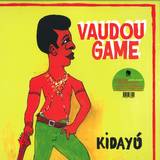
When faced with the decision to take a different direction at the risk of getting lost in a synthetic sound or to further explore the same musical path, Vaudou Game didn't need to consult the oracle for very long when putting together their new album. Since their first acclaimed album, Apiafo and its irresistible single "Pas Contente", these Lyon natives never turned down the heat on over 130 stages across Europe, Africa, America and Asia. Peter Solo has displayed his amulets, charisma and yellow pants around the globe.When time came for them to harness their Afro-Funk sound for the second time, they turned their attention once again to their analog strengths. Vintage material, instruments produced in the 70's and cassette tapes were the "grigris" (or lucky charms) which proved most effective to ward off digital corruption of their music and return them to a tight-knit group with a solid groove.This unbeatable trance rhythm, inherited from James Brown and Fela, icons of Funk and Afrobeat, becomes trident when joined by Mawu, the creative voodoo divinity hidden in each of the group's notes. This inspiration transcends their spirit of communion, plunges them deeply into Mother Earth and results in the telepathic trance which is directly connected to Togo Peter's native Togo.Each song then becomes a celebration where the listener becomes the group's voodoo doll, embraced by the rhythm, submitting itself to the mercilessly metronomic cutting of guitars, struck by the copper-colored flashes of lightning forged by the African voodoo deity Hevioso, pierced by the psychedelic visions generated by the organs and a six-string guitar, cheerful songs, and hypnotic incantations.KIDAYU means "sharing" in Kabye, the language spoken in northern Togo. Sharing, is the philosophy of Vaudou Game - both in their recorded music and on stage.Vintage African funk tinged with voodoo chanting: Togolese Peter Solo and his fellow musicians from Lyon electrify us in a frenzied ceremony" - Télérama
- 1
Items per Page:
