
out of Stock
Order now and we will order the item for you at our supplier.
9,03 €
Order now and we will order the item for you at our supplier.

Order now and we will order the item for you at our supplier.
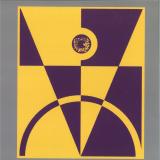
Efficient Space honours trailblazing Australian imprint Volition Records with Volition Cuts Vol. 1. Evolving from Andrew Penhallow’s time at GAP Records, which smuggled Cabaret Voltaire, The Fall and the Factory catalogue into the region, Volition shifted focus to homegrown talent over imported sounds. Echoing its precursor’s blend of indie friction and electronic curiosity, the label wired itself into the pulse of club and rave culture, linking city scenes and amplifying them for the mainstream. With retina-scorching design, uncompromising packaging and top-tier remixes, Volition consistently bent the major label machine to its will.
No Volition retrospective would be complete without Sisters Underground’s intergenerational anthem ‘In the Neighbourhood’. Otara teenagers Brenda Makamoeafi and Hassanah Iroegbu brought their Pasifika perspective to Proud (An Urban-Pacific Streetsoul Compilation), a commercial success that platformed NZ rap and R&B with a clarity that outshone its overseas counterparts. The quiet architect of Volition’s sound, producer prodigy Robert Racic flipped the classic as a hip-house dub before his untimely passing in 1996.
Its A-side companion comes from Brisbane synth-pop unit Boxcar, who signed to Volition after frontman Dave Smith handed a cassette to Tom Ellard of Severed Heads during a school newspaper interview. That unlikely handoff led to their 1990 debut Vertigo. Here, their ritual-laced, body-jacking industrial is retooled by Miami freestyle maverick Tony Garcia.
Further cherry-picking from the VOLT vaults, Sexing The Cherry unleash a bleep-addled meltdown from Brisbane’s Edwin Morrow and Cherryn Lomas. ‘This Is A Dream’ was recorded exclusively for High (A Dance Compilation), the first all-Australian V/A to top the ARIA charts, propelling the local movement into national consciousness.
Closing the sampler, Sydney’s Single Gun Theory joined Volition as they moved from post-punk abstraction and electronic collage toward downtempo, sample-based mysticism. Their 1994 ambient-pop reverie ‘Fall’ is reimagined by Stuart Crichton and Apollo 440’s Norman Fisher-Jones as full-throttle Goa trance, a final surge that channels the label’s relentless push into new terrain.
Volition Cuts Vol. 1 is dedicated to the loving memory of Volition’s visionary founder Andrew Penhallow, and key contributors Robert Racic and Edwin Morrow.1
On Stock and ready to ship

The official soundtrack of the 2021 'Rumba Rules, New genealogies' documentary movie by Congolese artist Sammy Baloji and Quebec filmmaker David Nadeau-Bernatchez. A deep dive into Kinshasa’s vibrant Rumba scene, including remastered classics by Brigade Sarbati, Werrason, Papa Wemba, Franco & le Tout Puissant O.K. Jazz
Rumba Rules, New genealogies is about contemporary rumba in Kinshasa, but this music has deep historical roots nevertheless. Born in the interstices of the colonial world and thriving during the three decades of the Mobutu era in Zaïre, Congolese rumba has been iconic and popular all over Africa for decades. The roots of Rumba are even deeper, and the many paths it evokes trigger the imagination. The story goes that this music came with the migration of the ‘Kumba’ drum and dance in previous centuries, African slaves having carried it all around the Americas and giving birth to Cuban ’Rumba’, Colombian ‘Kumbia’ and many others. With its varied rhythms, guitars and horns, through LPs and radio stations, Rumba came back to (re)conquer Africa throughout the 20th century, paving the way for new practices. One could say this music is a sort of palimpsest, a memory in itself of Atlantic migrations and histories.
Rumba is nowadays discussed all around the world, igniting many debates among the Congolese diaspora. Being the constant talk of the town sometimes overloads public debate, and many people get tired of this broken record. Thus, over the last decade, enterprising producers have worked hard to promote Kinshasa’s musical diversity and tried to emulate new sounds to reach worldwide attention. But Kin’ locals and urban dwellers will not be fooled : new shoots cannot hide the forest. Despite some difficulties to innovate, despite the pastoralist sermons and the diaspora fighters pushing for concert cancelations, rumba is still at the core of the Congo today. Talented artists such as Fally Ipupa, Ferré Gola, Brigade Sarbati and others are leading the fifth generation, and the religious world has also proven to be a nurturing environment for the cultural and economic dynamism of this music.
Focusing on the music of Brigade Sarbati and his Orchestra, this record offers a deep dive into Kinshasa’s rumba scene. Halfway between professional studios and Zoom H4 field recordings, the rumba herein is about today’s youth: dense, full of energy and breakdowns, insights and name-dropping. The cavacha rhythm, the solo and bass guitar’s playing style, the singing style and numerous dedications all resonate with the history of Rumba. In an era where digital sound is taking over, it is interesting to highlight the instrumental and live performance compositions of this music. Digital technology is indeed used during the recording and mixing phases, but Congolese rumba still relies strongly on instrumental playing. There is all that but also, many other things to hear on this record… It’s time to let it be. A big thanks to Étienne Tron for making it possible: it is on his initiative and through his patience that this album is in your hands today. (David Nadeau-Bernatchez, december 2021)
On Stock and ready to ship

Vinyl LP[22,65 €]
A collection of spellbinding, melismatic vocal improvisations taken from 78s cut between the mid 1920s to mid '30s - a period defined by the aftermath of the Ottoman Empire’s partition, the Greco-Turkish War and the compulsory population exchange that followed.
This same period also represented a time of intense efforts, following the establishment of the Republic, to westernise the new nation's music - coupled with a ban on traditional music education in schools, and later a complete ban on broadcasting Ottoman-Turkish classical music on the radio. As such these performances seem shrouded in an even more distant past, and feel quite intimately connected with forms of Greek amanes and rebetiko - having stemmed from the same Ottoman makam system, both with a subject-matter focussed on heartbreak, yearning, and pain.
expected to be published on 12.06.2026

Tape[16,39 €]
A collection of spellbinding, melismatic vocal improvisations taken from 78s cut between the mid 1920s to mid '30s - a period defined by the aftermath of the Ottoman Empire’s partition, the Greco-Turkish War and the compulsory population exchange that followed.
This same period also represented a time of intense efforts, following the establishment of the Republic, to westernise the new nation's music - coupled with a ban on traditional music education in schools, and later a complete ban on broadcasting Ottoman-Turkish classical music on the radio. As such these performances seem shrouded in an even more distant past, and feel quite intimately connected with forms of Greek amanes and rebetiko - having stemmed from the same Ottoman makam system, both with a subject-matter focussed on heartbreak, yearning, and pain.
expected to be published on 12.06.2026

'In collaboration with the children of Nico Kasanda, better known as Docteur Nico, Planet Ilunga proudly presents an anthology dedicated to African Fiesta Sukisa, available as a 3LP set and a digital release with bonus songs. This release is the result of many years of preparations and was realized in close partnership with Liliane Kasanda, Nico’s eldest daughter. Marking forty years since his passing, we felt that the year 2025 was the right time to honor Docteur Nico’s legacy with this original collection.
'Almost all of the African Fiesta Sukisa songs were released on Nico’s Sukisa label which translates in Lingala for “the final accomplishment”. The music on Sukisa, crafted by Nico and legendary vocalists such as Chantal, Sangana, Apôtre, Mizele, Lessa Lassan and Josky, embodies the essence of that powerful phrase with genius, class and depth. The label ran between 1966 and 1975 and released approximately 280 songs. Ngoma also issued the group between 1967 and 1971 and, in addition, reissued material from the Sukisa label. Many of these songs have become part of the collective memory of Congolese society and are still heard, discussed, and analyzed daily across digital platforms worldwide, as well as on numerous Congolese radio and TV stations.
'The album we put together features some of Nico’s signature songs alongside never before reissued tracks from the Sukisa catalog. It furthermore contains a large booklet with song commentary, testimonial interviews from well-known musicians, journalists, fans and Nico’s entourage, besides never before published photography about his personal and musical life.
'Alastair Johnston, author of the book ‘A Discography of Docteur Nico’ and longstanding Planet Ilunga collaborator, designed a stylish booklet and cover using all our collected material. Audifax Bemba, longtime admirer, compiler and connoisseur of Nico’s music, and the author of most of the song commentary in our accompanying booklet, offers his portrait of Docteur Nico:
“After displaying technical virtuosity with African Jazz, expert and accomplished guitar with African Fiesta, which musicologist Sylvain Bemba described as a dream guitar, Nico Kasanda was consecrated ‘dieu de la guitare’ by the public in the late sixties. With his band African Fiesta Sukisa, Docteur Nico displays his wide palette of unusual sounds. While exploring the Hawaiian guitar with its clear, airy, plangent, psychedelic effluvia, he continues to replicate the piano comping technique, and adds two missing strings to his bow: a simulation of the sanza (likembé or thumb piano), whose sounds he reproduces right down to the noisemakers of the tiny tin rings, on the one hand, and the sounds of the Luba balafon on the other. The right note, in the right place, at the right time, is the triptych on which Nico Kasanda’s playing is based, a note dressed in the perfect sound. A guitar of pure emotion. With African Fiesta Sukisa, his playing takes a ‘Chopin-esque’ turn, sending out more notes in a sublime adagio. The true artist is the one who simplifies everything. Docteur Nico is a genius of our time, whose style makes him the supreme exponent of the most important guitar school in Congolese music. He is recognized by his peers as the greatest African solo guitarist of all time. Sculpting sound in a tireless quest for beauty, Nico Kasanda has sublimated the guitar throughout his career.”
[xd] Kamulangu [Outro] (Dr. Kasanda – Sukisa 135) Folklore Baluba
expected to be published on 05.12.2025

expected to be published on 05.12.2025

Soolmaan is a sextet led by Belgian oud player and composer Tristan Driessens, accompanied by Nathan Daems, Christos Barbas, Annemie Osborne, Andrea Piccioni, and Levent Yildirim. Together, they create sound tableaus that float freely between the Bosphorus and India, with flute, sax, ney, cello, piano and tamburello igniting an imaginary folklore infected by jazz. Releasing their second album ‘Kashgul’ on the 24th of January with Zephyrus Records. (Vinyl / CD)
Driessens began his career immersed in the classical music of the Ottoman court, founding the Lâmekân Ensemble in 2011. After training under oud virtuoso Necati Çelik in Istanbul, he returned to Belgium in 2016 to form Soolmaan, an ensemble that reflects his multi-faceted identity. Rooted in Eastern modal traditions, Soolmaan’s music bridges jazz, folk, and classical influences, creating a unique and contemporary sound.
Their 2017 debut album, ‘Letters to Handenberg’, was described as "oriental chamber jazz," with Istanbul serving as a common thread. With Kashgul, their latest release, Soolmaan explores Ottoman makam, Indian raga and Anatolian halk muzigi, blending these traditions with a contemporary modal language. Created during Driessens' artist residency at the Concertgebouw of Bruges, the album features original compositions alongside reimagined works by Ravi Shankar, Amjad Ali Khan, and Art Pepper.
With improvisation as a connecting factor, Soolmaan’s music invites listeners into rich, boundary-crossing soundscapes where tradition and innovation meet. Kashgul exemplifies the ensemble’s ability to craft an immersive musical experience that resonates deeply with diverse audiences.
Upcoming concerts
December 8, 2024
Begijnhofkerk, Sint Truiden, BE
December 12, 2024
De Bijloke, Ghent, BE
December 14, 2024
De Bijloke, Ghent, BE
expected to be published on 24.01.2025

lp wiBola’s music melds sheer force of spirit with a sound not often heard by ears outside the remote Upper East Region of Ghana. This man who grew up herding livestock in the savannah, far away from the tropical coast and cosmopolitan cities of Accra and Kumasi, has aligned himself with national and international means of expression to transform his hometown sound into something downright avant-garde. His bold fury stems from the kologo—a two-stringed lute with a calabash gourd resonator—and Frafra language vocals, emitted in raspy bursts.
Traditionally, kologo performances occur at pito (local beer made from fermented millet or sorghum) bars, weddings, funerals, festivals or spontaneous jams on the street, which are the environments where Bola honed his craft as a solo musician. In recent years, he came into contact with people like his mentor Guy One who helped him get into the studio to document what is some of the most dynamic music to come out of Ghana since the emergence of hiplife in the mid-'90s.
Volume 7, which came out in 2009, is just one entry in a brilliant series of recordings Bola has released on CD and cassette. Although he employs a traditional instrument and the age-old mode of griot story-telling, Bola embraces elements of up-to-the-minute mainstream Ghanaian music—drum machines, synths, bone-shaking bass. Inspired by pioneering kologo greats like King Ayisoba, Bola has taken a dynamic instrument used by traditional healers and herbalists to sing to god in search of advice and taken it to futuristic heights.
expected to be published on 20.10.2024

Zakmina presents a commanding dark disco release for Minimood with two spellbinding originals filled with unique and captivating sounds. The EP is complemented by compelling remixes from Curses and Rude 66. “Makam” comprises of an alluring array of instruments that create a mesmerizing atmosphere with an oriential mood to it. Curses retains this atmosphere in his remix, albeit with a deeper and darker tone. Unfolding a massive EBM vibe, “Mental Syndicate” forms a dancefloor destroyer that is driven by a vigorous kick and snare. The reimagining from Rude 66 features intergalactic vocals, raw electro sounds, as well as a truly addictive hookline.
Order now and we will order the item for you at our supplier.

- Panda Bear, Voice of the Seven Woods, Mammane Sanni Abdoulaye. File under: Jazz / Electronic. Titi Bakorta almost didn't make it. Born in and raised in Kinshasa, the Congolese multi-instrumentalist was on his way to Uganda when he fell off the boat as it traversed the mighty Congo River. Unable to swim, Bakorta was saved by a friend who dragged him to the closest city Kisangani, where he was unexpectedly acquainted with local singer Dancer Papalas. Soon they were performing in bands together, traveling across the continents and settling in Tanzania, South Sudan and Dubai - they even appeared in front of General Defao, the beloved Congolese vocalist who fronted legendary soukous bands Grand Zaiko Wawa, Choc Stars and Big Stars. Now based in Kampala, Bakorta offers his own unique take on Congolese pop and folk sounds, weaving traditional elements through a psychedelic lattice of guitar loops, mangled voices and eccentric beatbox rhythms on his debut full-length. He bends woodblock snaps on 'Kop' into stuttered blurs, wailing emotionally over twanging riffs and bizarre, theatrical xylophone twinkles. It's still pop music on some level, but curved around Bakorta's unwieldy personal narrative - there's a sense that everything could unravel at any time but it all hangs together, strengthened by Bakorta's confident, contemporary production smarts. 'Elles Vais' is more airy, with celestial soukous vocals that float above tight, electronic drums. Tangled guitar echoes overlap each other like dense, weaved tapestries, contrasting perfectly with Bakorta's urgent, driving pulse. Occasionally, he transcends completely, like on 'Molende' where his chants and phrases neatly flutter between praise music and contemporary R&B. "Hustling, hustling, hustling, everyday I'm hustling," an angelic voice coos over phased electric guitar plucks and looped, AutoTuned chorals. It makes perfect sense that Bakorta should team up with Metal Preyers' Jesse Hackett on the album's final track, the aptly-titled 'Titis Haunted House'. The two artists share a similar obsession with moonlit, carnivalesque soundscapes, and Hackett's eerie synths provide a suitably eccentric foundation for Bakorta's ghostly wails and fuzzy guitar sounds.
expected to be published on 03.09.2023

When Rey Sapienz was eight years old, the Democratic Republic of Congo was plunged into the Second Congo War. The conflict last five years and was the bloodiest since World War II, leaving an indelible mark on East Africa and creating mass displacement and loss of life. But Sapienz endured, cutting his teeth as a young rapper at twelve, first performing to celebrate Congo's independence day. When he finished school, he headed to nearby Kampala to hone his craft and collaborate with local producers. But civil war broke out back home and he was forced to extend his stay in Uganda. Since then, Sapienz has established himself as a force to be reckoned with, co-founding the Hakuna Kulala label, teaching his Ableton Live skills to Kampala's young producers and releasing two acclaimed EPs. For his debut album, Sapienz embarks on an ambitious project that travels beyond the avant beatscapes of his early material. Alongside traditional percussionist, vocalist and dancer Papalas Palata and rapper Fresh Doggis, he has formed The Congo Techno Ensemble, utilizing their skills and experience to offer a statement that speaks to the past, present and future of the DRC. On "Eza Makambo", the trio channel rich musical traditions and historic tension, evolving electronic and traditional forms into boundless sci-fi mutations. The track breaks open the stories all three artists accumulated in the DRC, augmenting radioactive techno-dancehall beats with radical, open-hearted words and rhymes. "Eza Makambo" is a heady cocktail of stylistic futurism and harsh reality that could be compared with Zizou Bikaye's seminal "Noir et Blanc or Danis Mpunga & Paul K.'s genre-breaking electronic experiments. But marked by the DRC's recent scars, it's a critical work that stands painfully alone.
Order now and we will order the item for you at our supplier.

Having already unearthed three collections of archival ‘70s recordings by Catherine Christer Hennix, Blank Forms continues their annual illumination of the visionary Swedish composer’s music by turning to more recent work with this first-time vinyl edition of Hennix’s “Blues Alif Lam Mim in the Mode of Rag Infinity/Rag Cosmosis,” a 2014 piece first released as a CD in 2016 (Important Records).
The double album captures the April 22, 2014 premiere of Hennix’s composition by by the Chora(s)san Time-Court Mirage, her expanded just intonation ensemble, featuring a brass section of Amir ElSaffar, Paul Schwingenschlögl, Hilary Jeffery, Elena Kakaliagou, and Robin Hayward; live electronics by Stefan Tiedje and Marcus Pal; and voice by Amirtha Kidambi, Imam Ahmet Muhsin Tüzer, and Hennix herself. Intended to reveal the blues’ origins in the eastern musical traditions of raga and makam, “Blues Alif Lam Mim in the Mode of Rag Infinity/Rag Cosmosis” has its roots in Hennix’s 2013 realization of an “Illuminatory Sound Environment,” a concept developed in 1978 by anti-artist Henry Flynt on the basis of Hennix’s own “The Electric Harpsichord.”
As Hennix explains in Other Matters, Blank Forms’ 2019 collection of her writings:
“Rag Infinity/Rag Cosmosis presents fragments of ‘raga-like’ frequency constellations following distinct cycles and permuting their order, creating a simultaneity of ‘multi-universes.’ When two such ‘universes’ come in proximity of each other and begin unfolding simultaneously along distinct cycles, there is a kaleidoscopic exfoliation of frequencies as one universe is becoming two, but not separated—the effect of cosmosis is entrained, binding two or more frequency universes into proximity where their modal properties interact and blend, creating in the process entirely new microtonal constellations in an omnidirectional simultaneous cosmic order with phenomenologically ‘transfinite’ Poincaré cycles (cyclic returns to initial conditions).”
As with Hennix’s best work, the organic unfolding of this quivering drone belies a precision that opens onto the infinitesimal. Upon its mesmerizing ebb and flow, the vocalists incant a devotional poem written in Arabic by Hennix and featuring quotations from the Quran. Also reproduced on the album’s gatefold jacket, Hennix’s reduction of the sacred text to its most elegant formulation invites the contemplator to bring their inner knowledge to the composition for use as a prompt for meditation. Yet the piece offers depth to even the most secular listener willing to immerse themselves in music brimming with such serene intensity.
Catherine Christer Hennix (b. 1948) started her creative life playing drums with her older brother Peter, growing up in Sweden where she heard jazz luminaries, such as John Coltrane, Eric Dolphy, Dexter Gordon, Archie Shepp, and Cecil Taylor perform from 1960 to 1967. Directly after high school, Hennix went to work at Stockholm’s pioneering Elektronmusikstudion (EMS), where she developed early tape music, incorporating computer generated speech done at the Royal Technological University (KTH), where she was an undergraduate student. After traveling to New York In 1968, she met artists Dick Higgins and Alison Knowles who invited her to stay at the Something Else Press Town House where she had the opportunity to meet, among others, composers John Cage, James Tenney, and Phil Corner. During the following years she developed fruitful collaborative relationships with many composers in the burgeoning American avant-garde, including, most significantly, Henry Flynt and La Monte Young. Young introduced Hennix to Hindustani raga master Pandit Pran Nath and she would later study intensively under him as his first European disciple. While Hennix continued to make music performing alongside Arthur Russell, Marc Johnson, Henry Flynt, and Arthur Rhames, she also served as a professor of Mathematics and Computer Science at SUNY New Paltz and as a visiting Professor of Logic (at Marvin Minsky’s invitation) at MIT’s Artificial Intelligence Laboratory. In recent years Hennix has led the just-intonation ensemble the Chora(s)san Time-Court Mirage, which has featured musicians Amelia Cuni, Amirtha Kidambi, Chiyoku Szlavnics, Hilary Jeffrey, Amir El-Saffar, Benjamin Duboc and Rozemarie Heggen. She currently resides in Istanbul, Turkey pursuing studies in classical Arabic and Turkish makam.
expected to be published on 23.07.2021

When Rey Sapienz was eight years old, the Democratic Republic of Congo was plunged into the Second Congo War. The conflict last five years and was the bloodiest since World War II, leaving an indelible mark on East Africa and creating mass displacement and loss of life. But Sapienz endured, cutting his teeth as a young rapper at twelve, first performing to celebrate Congo's independence day. When he finished school, he headed to nearby Kampala to hone his craft and collaborate with local producers. But civil war broke out back home and he was forced to extend his stay in Uganda. Since then, Sapienz has established himself as a force to be reckoned with, co-founding the Hakuna Kulala label, teaching his Ableton Live skills to Kampala's young producers and releasing two acclaimed EPs. For his debut album, Sapienz embarks on an ambitious project that travels beyond the avant beatscapes of his early material. Alongside traditional percussionist, vocalist and dancer Papalas Palata and rapper Fresh Doggis, he has formed The Congo Techno Ensemble, utilizing their skills and experience to offer a statement that speaks to the past, present and future of the DRC. On "Eza Makambo", the trio channel rich musical traditions and historic tension, evolving electronic and traditional forms into boundless sci-fi mutations. The track breaks open the stories all three artists accumulated in the DRC, augmenting radioactive techno-dancehall beats with radical, open-hearted words and rhymes. "Eza Makambo" is a heady cocktail of stylistic futurism and harsh reality that could be compared with Zizou Bikaye's seminal "Noir et Blanc or Danis Mpunga & Paul K.'s genre-breaking electronic experiments. But marked by the DRC's recent scars, it's a critical work that stands painfully alone.
expected to be published on 16.07.2021

When Rey Sapienz was eight years old, the Democratic Republic of Congo was plunged into the Second Congo War. The conflict last five years and was the bloodiest since World War II, leaving an indelible mark on East Africa and creating mass displacement and loss of life. But Sapienz endured, cutting his teeth as a young rapper at twelve, first performing to celebrate Congo's independence day. When he finished school, he headed to nearby Kampala to hone his craft and collaborate with local producers. But civil war broke out back home and he was forced to extend his stay in Uganda. Since then, Sapienz has established himself as a force to be reckoned with, co-founding the Hakuna Kulala label, teaching his Ableton Live skills to Kampala's young producers and releasing two acclaimed EPs. For his debut album, Sapienz embarks on an ambitious project that travels beyond the avant beatscapes of his early material. Alongside traditional percussionist, vocalist and dancer Papalas Palata and rapper Fresh Doggis, he has formed The Congo Techno Ensemble, utilizing their skills and experience to offer a statement that speaks to the past, present and future of the DRC. On "Eza Makambo", the trio channel rich musical traditions and historic tension, evolving electronic and traditional forms into boundless sci-fi mutations. The track breaks open the stories all three artists accumulated in the DRC, augmenting radioactive techno-dancehall beats with radical, open-hearted words and rhymes. "Eza Makambo" is a heady cocktail of stylistic futurism and harsh reality that could be compared with Zizou Bikaye's seminal "Noir et Blanc or Danis Mpunga & Paul K.'s genre-breaking electronic experiments. But marked by the DRC's recent scars, it's a critical work that stands painfully alone.
expected to be published on 16.07.2021

With 'BREAKOUT', Echoes of Zoo push their adrenaline fueled jazz sounds to thrilling new levels. Rarely did one single word capture an entire musical atmosphere this accurately: the gates of the cages fell open and won't ever be shut again. 'BREAKOUT' celebrates breaking loose and is constantly
seeking for unexpected and exciting encounters - both culturally and musically. Infused with an eclectic range of western, oriental and African influences, Echoes of Zoo let their psychedelic and energetic jazz roam the streets in all freedom - much like an animal that has just stepped out of his cage and looks you straight in the eye. Meeting is direct, barriers are gone, the adrenaline and energy are rushing high. The band takes a deep dive into the musical melting pots which the world's biggest cities are today:
Balkan ornaments meet Brazilian rhythms
Gipsy scales meet fuzz guitars
Beninese grooves meet Turkish makam
Bass guitars meet Sufi rhythms
Rage riffs meet Kurdish trance
Indian raga meets western guitars
Romanian drums meet swing riffs
Tallava meets drum 'n bass
...
Echoes of Zoo are profoundly inspired by the endless variety of animals and musical genres. Join them on their trip through the city in all diversity, victory and freedom. BREAKOUT.
Echoes of Zoo is a band with a unique sound, under the high tension of Middle Eastern rock music with the striking complexity of West African percussion and a few Dub flavors, all in the service of psychedelic jazz played with a punk attitude. For this project, Nathan Daems (sax) is accompanied by Bart Vervaeck (electric guitar), Lieven Van Pee (electric bass) & Falk Schrauwen (drums), musicians you probably know from other projects they are part of such as Black Flower, De Beren Gieren, Sylvie Kreusch or Compro Oro.
After releasing a first self-produced EP - 'First Provocations' - in January 2019, the group was well received by both the audience and professionals in the sector. Supported and followed by some pioneering organisations and festivals, Echoes of Zoo has already been invited to Brussels Jazz Festival, BRDCST Festival (AB), Brosella Festival (carte blanche guesting Pantelis Stoikos), Leuven Jazz Festival, Amok Festival (KAAP), Recyclart, ...
expected to be published on 02.04.2021

Azumah was the coming together of a group of talented young dancer-musicians from Soweto (South Africa) with musician and instrument-maker Smiles Mandla Makama of eSwatini (formerly Swaziland). Long Time Ago is the surprising and enticing, resultant album from 1985, recorded in the house of theatre stalwarts Des and Dawn Lindberg in Johannesburg.
Produced by David Marks (3rd Ear Music, Hidden Years Music Archive Project), Des Lindberg and Smiles Makama, this album takes us back to a priceless musical moment in the dark and wild eighties of apartheid South Africa. Smiles Makama is a gifted and visionary music-maker. He was born in South Africa but grew up in eSwatini, the small kingdom enveloped by South Africa and Mozambique on each side. He tells the story of the process leading to the recording of this remarkable album: “I was invited from Swaziland by a Soweto-based group, Azumah. … One of the members knew that there was a wizard in the mountains in Swaziland, building instruments. As I was in the mountains in my hut and then I saw people arrive. They found me. It all started there.”
Instead of simplistic images of a generic ‘Africanness’ or ‘South Africanness’ and pictures of constructed and exotic ethnic identity, a contemporary, fresh listen to this album encourages an appreciation of the composition and musical skill at play in this music. Few people speak about the individual innovation and experimentation involved in the creation of this music (or the music of Amampondo for instance). “Woza Moya” sticks out as a dark and melancholy creation, different tonally to what has come before, evoking the work of Naná Vasconelos or Don Cherry. One thing that remains the same decades later is that encouraging deeper listening to the sounds of the mbira, the nyunga-nyunga, the uhadi or makhoyane bows is still challenging. Discouraging the superficial, short-lived acknowledgement of this ‘unchanging’, ‘African cultural expression’ is the everlasting hurdle. This is made so much easier by albums like Long Time Ago: when artists create music to be loved and entangled with, to be challenged by, derived from the musical roots and structures of these instruments and then expanded upon with creative freedom, risk, humour and funk.
Azumah did this in 1985 and we have this album again today, newly released, to remind us of that moment and the moments since when musicians have urned inward and done similar. As Smiles has it: “Indigenous music doesn’t fade out. It’s just waiting to be discovered, all the time.”
Order now and we will order the item for you at our supplier.

Unbegrenzt is the third in an ongoing series of archival records of the unheard music of Swedish composer Catherine Christer Hennix, co-released by Blank Forms Editions and Empty Editions. It follows Selected Early Keyboard Works and Selections from 100 Models of Hegikan Roku (named the #1 archival release of 2019 by The Wire), in addition to a two-volume collection of Hennix’s writing titled Poësy Matters and Other Matters.
Recorded in February of 1974 and featuring Catherine Christer Hennix (recitation, percussion, and electronics) and Hans Isgren (bowed gong), Hennix’s realization of Karlheinz Stockhausen’s “Unbegrenzt” (German for “unlimited”) from Aus den Sieben Tagen is an elaboration both rigorous and radically different from the canonical 1969 recording issued by Shandar. The collection of 15 text pieces written in Paris during May of 1968, Aus den Sieben Tagen, denies its performers notated direction and instead provides poetic cues that hinge upon Stockhausen’s conception of “intuitive music,” a Eurocentric perspective on improvisation antithetical to the vernacular forms Hennix had engaged with as a young drummer performing in Stockholm jazz clubs with musicians like Bill Barron, Cam Brown, Hans Isgren, Lalle Svenson, Allan Vajda, Bo Wärmell, and many others. While both Hennix and Isgren saw the formal prospect of Aus den Sieben Tagen as a productive development of and beyond La Monte Young’s event scores, she here steadfastly counters his rationalization of intuition with the Principle of Sufficient Reason. (Cf. Brouwer’s Lattice.) Eschewing the busy, conservatory-addled lapses into idiomatic citation of Stockhausen’s 1969 recording, Hennix’s alternative realization of the “Unbegrenzt” score’s instructions to “play a sound with the certainty that you have an infinite amount of time and space” is based on her concept of Infinitary Compositions, the trademark of her ensemble The Deontic Miracle which, at one time, considered adding Stockhausen, La Monte Young and Terry Jennings scores to its repertoire. Taking a mature, minimal iteration of Stockhausen’s compositional method of “moment-forming” to heart, her version’s dark, controlled feedback and amplified bowed gong subtly shift through an immanent sequence of formative moments, step by step. Its bubbling computer noise, percussion, and repeated ominous transient sounds of temple blocks over the bowed gong terminate with the integrated recitation of exotic text fragments from Hevajra Tantra which faithfully take Stockhausen’s score into deeper vistas of the unconscious and a more devastating opening to the unlimited time and space of a dreaming mind.
Audio restoration and mastering by Stephan Mathieu, with an essay by Bill Dietz.
Catherine Christer Hennix (b. 1948) started her creative life playing drums with her older brother Peter, growing up in Sweden where she heard jazz luminaries, such as John Coltrane, Eric Dolphy, Dexter Gordon, Archie Shepp, and Cecil Taylor perform from 1960 to 1967. Directly after high school, Hennix went to work at Stockholm’s pioneering Elektronmusikstudion (EMS), where she developed early tape music, incorporating computer generated speech done at the Royal Technological University (KTH), where she was an undergraduate student. After traveling to New York In 1968, she met artists Dick Higgins and Alison Knowles who invited her to stay at the Something Else Press Town House where she had the opportunity to meet, among others, composers John Cage, James Tenney, and Phil Corner. During the following years she developed fruitful collaborative relationships with many composers in the burgeoning American avant-garde, including, most significantly, Henry Flynt and La Monte Young. Young introduced Hennix to Hindustani raga master Pandit Pran Nath and she would later study intensively under him as his first European disciple. While Hennix continued to make music performing alongside Arthur Russell, Marc Johnson, Henry Flynt, and Arthur Rhames, she also served as a professor of Mathematics and Computer Science at SUNY New Paltz and as a visiting Professor of Logic (at Marvin Minsky’s invitation) at MIT’s Artificial Intelligence Laboratory. In recent years Hennix has led the just-intonation ensemble the Chora(s)san Time-Court Mirage, which has featured musicians Amelia Cuni, Amirtha Kidambi, Chiyoku Szlavnics, Hilary Jeffrey, Amir El-Saffar, Benjamin Duboc and Rozemarie Heggen. She currently resides in Istanbul, Turkey pursuing studies in classical Arabic and Turkish makam.
Order now and we will order the item for you at our supplier.
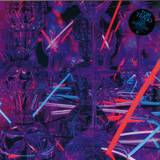
There are many ways to move forward as an artist. You can reinvent yourself, keep track of fashions, or try bold new things. Tom Trago has spent the best part of 10 years pushing his sound in impressive new directions. Yet on his new album, the well-regarded Amsterdam-based producer has done things slightly differently. This time round, his influences come from much closer to home, and he has admitted to being inspired by the dancefloor-focused style with which he made his name.
Welcome to The Light Fantastic. We're sure you'll enjoy the trip.
Trago is an old hand at this kind of thing. Back in 2009, his debut album, Voyage Direct, impressed with its warm, disco-centric blends of full-throttle deep house and boogie-influenced synthesizer funk. He cast his net wider on 2011's Iris, choosing to work with a wide variety of international collaborators on an album that laid bare his myriad of musical influences.
On the Light Fantastic, he's decided to 'step back to move forwards' with a warm, involving set that puts the simple pleasures of the best dancefloor moments at its heart.
'I tried to go a bit back towards the style I was doing on Voyage Direct, so dancefloor beats with deeper impact,' Trago admits. 'I was trying to male tracks that work on the dancefloor, but also move your heart.'
In some ways, The Light Fantastic is Trago in 'back to basics' mode. Partly inspired by his ever-increasing travels around the world to DJ, it melds together a range of influences - deep house, vintage synthesizers, classic boogie, disco, Chicago jack, acid house, and even a dash of full-throttle rave revivalism on the raw funk of 'The Elite' - on a set that sounds like it was painted in vivid colours by an artist at the top of his game.
'I'm like a professor in a lab, trying to make little ideas work,' Trago enthuses, warming to the theme. 'The tracks are all there in my head, like a puzzle, and I have to make all the pieces fit together.'
The 'back to basics' theme extended to his choice of collaborators. Whereas Iris was notable for featuring an impressive cast list of international singers, musicians and producers, The Light Fantastic is more of a homegrown affair. While plenty of people lent a hand during the recording process, they were trusted locals from the Dutch electronic music scene, rather than outsiders.
'This time, I thought 'whoever walks in the studio can get involved',' he says. 'If they walked in, they could sing, play some synths or do some mixing. A lot of people came to hang out and ended up lending a hand. It's a much more fun way of working than sending your track to somebody across the other side of the World.'
There are many collaborations on The Light Fantastic, but listen out for contributions from Steffi, Ben Westbeech, 'studio neighbour' San Proper, Makam, vocalist Holly Wood and, most surprisingly, a local club owner who just happened to swing by the studio. 'Using my friends was a big part of the process,' Trago admits. 'One of the points of the album was using people who were close to home, part of the family almost.'
It's an approach that definitely paid dividends. Certainly, this celebration of Amsterdam's blossoming electronic music scene adds a little extra frisson of excitement to The Light Fantastic's impressive vibrancy.
By the time the rush-inducing positivity of 'The Wrong Right' gives way to the mutant alien funk of album closer 'Desire', you'll be ready to listen to it all over again. That's the thing with The Light Fantastic - it's a trip you'll want to take again and again.
Order now and we will order the item for you at our supplier.

..another one! this time it's SKUDGE SKUDGE SKUDGE VS SAN SAN SAN PROPER PROPER PROPER..... BIG 12"! TIP
Skudge - Silent Running
Swedish duo Skudge ends Dekmantel's compilation the way we expected them to
do: with a fierce jacking and hypnotizing techno monster. Lights off and strobes on please, this is for the heads (do people still say that!)
San Proper - Rattle (Station2Station)
Like the earlier mentioned Juju & Jordash and Makam, San Proper has been involved in Dekmantel's activities from the very beginning as well. It seems that the notorious Dutchmen is getting better with every release. Rattle is an exiling piece of house music, that will shake up dance floors easily.
Order now and we will order the item for you at our supplier.