The first in a new collaborative series between Theo Parrish & Prime Direct Distribution unearthing some of Theo’s most sought-after edits, backed with the fully licensed original, both remastered and cut loud on either side of a 12 inch. Kicking things off we have one of Theo’s most treasured cuts, his ‘Ugly Edit’ of Made In USA - Never Gonna Let You Go, bootlegged endlessly in the past and racking up prices of up to £144 on Discogs it’s a high time an official reissue came around.
As iconic an edit as they get, ‘Never Gonna Let You Go’ encompasses everything great about Theo’s energy behind the decks - extending grooves for longer than anyone else even dare, working the EQ’s like a god and throwing in a bit of that raw magic that only he knows how. Taking the original’s sumptuous breakdown, Theo works it into a spirited, high energy disco workout looped into a near 10-minute stomper, big on the bass and brass fire whilst keeping the vocals to short and sweet snippets.
On the B side the original ’77 Made In USA version is laid out in all it’s glory. Funk powered, horn-laden disco goodness with breath-taking vocals from the Stateside troupe.
Cerca:made in usa
Timeless and built by one of the legends who helped define the language of house music. Huge support by Ricardo Villalobos. KBMV001 is not just a debut catalogue number on Shelby own label, it is a foundation stone. Authentic, timeless and built by one of the legends who helped define the language of house music. Klassik Blueprint Muzic opens its catalogue with a statement. Widely regarded as one of the pioneers of the Chicago house sound, Shelby?s history reaches back to the formative years of the culture, with early milestones including ?Essence Of A Dream? under his Risqué III alias in 1987 and ?All For Lee-Sah? on Derrick May?s Transmat in 1989.
That legacy is exactly what gives ?OMG (Oh My God)? / ?Who Wants It DEEP?? its force. This is not nostalgia packaged as heritage, it is a living connection to the raw machinery, groove science and emotional depth that made Chicago house a global language in the first place. Shelby has long been associated not only with classic Chicago house, but also with the tougher edges where acid, techno and Detroit-inspired futurism meet, a cross-current reflected throughout his discography and in the way later reissue culture continues to treat his catalogue as foundational. Pressed on 180g vinyl and coming straight from Chicago, USA, this is a release that connects past, present and future in one gesture: authentic house music from a genuine architect, still speaking with authority.
- A1: Facts
- A2: Fuck It
- A3: Royalty
- A4: Both Ways
- A5: How Could
- B1: Usa
- B2: Let Me See
- B3: Get Paid
- B4: On My Way
- B5: It’s Goin Down
- B6: Real Life
Ten years ago, Adolph Robert Thornton Jr. planted his flag. Released on February 19, 2016, King of Memphis wasn't just a debut studio album; it was a bold declaration of independence and a flawless blueprint for self-made success. To celebrate a decade of this foundational Southern rap masterpiece, Paper Route Empire is honoring Young Dolph’s legacy with a series of exclusive, limited-edition 10th Anniversary vinyl variants.
Before King of Memphis, Dolph had already built a massive underground following through a relentless run of mixtapes. But this official debut elevated him from a local hero to a national powerhouse.
By bypassing the major label system and releasing the project entirely through his own Paper Route Empire (PRE), Dolph proved that undeniable talent, relentless hustle, and business savvy were all you needed to take the crown. The album peaked in the Top 50 of the Billboard 200, an incredible feat for a fiercely independent artist at the time, and cemented his status as a CEO who called his own shots.
King of Memphis is all killer, no filler. Over 11 tracks, Dolph's signature slow-flow delivery and larger-than-life charisma glide over heavy-hitting, trap-defining production from a legendary lineup of producers, including Mike WiLL Made-It, Zaytoven, TM88, and Cassius Jay.
With zero guest features, the project relies entirely on Dolph’s magnetic presence. From the motivational hustler's anthem "Get Paid" to the menacing confidence of "Let Me See It" and "Royalty," the album plays like a victory lap for a self-made king.
2025 Repress
The breakthrough dance collective of the year bar none! Having made a name for themselves creating the evilest drum&bass music the world has ever seen, in recent months Noisia have been seen DJ-ing at house clubs, releasing singles with prominent house labels and most recently remixing for the likes of Robbie Williams! However, it wasn't long before they decided to go back to the dark side and join forces with good friend Mayhem (USA) to come with something more disgusting than ever, oh and they got KRS-One to provide the vocal!
A truly breathtaking intro bursting with evil foreboding sets the scene, before Noisia and Mayhem unleash the darkness with their signature drum programming alongside futuristic never heard before beats and breaks. Be sure to wait for the hip-hopesque interlude that features the immense vocal talents of none other than KRS-One. If you're not nodding your head by that point, you best check your neck isn't broken!
Comes in standard full colour Vision Recordings repress sleeve.
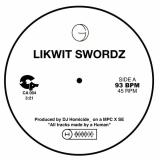
American DJ Homicide aka Craig Anthony Bullock is best known as the former DJ for Sugar Ray but also does a fine line in club-ready hip-hop jams and remixes. 'Likwit Swordz' kicks off his latest on the small but well-formed CA label out of the USA. It's got nimble drums that have a clipped bounce and vamping chords, vocal grit that echoes Cypress Hill and an infectious roll. On the flip, 'Day Coastin'' is more deep and smooth - the bars as silky as BIG and the drums rolling with crisp boom-bap style. Both have been made on an MPC and that sampler's famous textures elevate the final jams no end.
Alice Deejay was the Eurodance project founded and produced by Wessel van Diepen, Dennis van den Driesschen, Sebatiaan Molijn,
Eelke Kalberg and vocals by female singer Judy. Their 1999 single "Better Off Alone" reached charts worldwide, hitting #2 in the UK,
cracking the Billboard Hot 100 in the USA and dominated dance floors across Europe. Follow-ups "Back In My Life", " Will I Ever",
"Celebrate Our Love" cemented their place as one of the Netherlands' successful dance acts of the early 2000s.
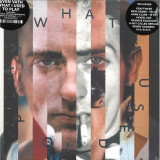
Their debut albumWho Needs Guitars Anyway? was released in 2000 and also made strong impact across international charts, including the United Kingdom where it peaked at #8. Celebrating it's 25th Anniversary, the album is now available on vinyl for the first time, featuring their chart toppers
"Better Off Alone", "Back In My Life" amongst others. Who Needs Guitars Anyway? is available as a limited edition on purple coloured vinyl, and includes an insert.
Welcome to the first release on Acid Lamour
A sub label for Lamour Records started in 2018 with a focus on techno and acid dedicated DJs. Releases are limited to 303 vinyls, no re-press.
Anders Ilar and John H are no newcomers to the electronic music scene.
Born in 1973, Anders Ilar began his explorations of electronic music in the mid 80s. Growing up in the small town of Ludvika in Sweden, Ilar spent all of his spare time playing with synthesizers, drum machines, keyboards and sequencers, learning the ins and outs of analogue and digital sound and music creation. Inspired by the early industrial and EBM wave he formed several bands with friends, started playing live shows
at smaller local parties, and released several demo tapes in very limited quantities. In the 90's he gradually shifted his creative influences towards ambient techno and acid and also started to DJ. He started using computer software to produce his music around 1999 and his first vinyl EP was released in 2001 on the german label Plong!, soon to be followed by
many more releases on labels such as Shitkatapult, Audio.nl and Echocord.
Developing his own flavor of deep minimal dub techno and ambient he gained critical acclaim with his album Nightwidth (2006) for Narita Records in the USA. Followed by highly appraised album Sworn on the german label Level Records in 2008. Ilar has also made remixes for celebrated artists such as Apparat, Mikkel Metal and Ripperton and has
appeared on numerous compilations and DJ-mixes. He's performed live on stage through-out most European countries and Japan, as well as doing a small tour with Notch Festival in China in 2008.
Up to 2018 Anders Ilar has produced 13 albums and 25 vinyl EP's and performed in over 15 countries.
Born in 1984 and based in Gothenburg. John H has been DJing, as well as producing tracks, since the late 90s, with Anders as his mentor and teacher, giving John early musical influences spanning across a wide range of genres, from Swedish techno to IDM, Cologne acid craziness and
the sound of Chicago house tracks. The musical output of his DJ-sets usually varies between techno, house, acid, electro and everything in between, depending on the time and location. John has performed on several locations all around Sweden, but also done appreciated gigs in other European countries at clubs like Tresor and Culture Box, and his music has been featured in sets by DJs such as Sven Väth, Adam Beyer,
Joris Voorn, Dense & Pika, Cari Lekebusch, Alan Fitzpatrick, Karotte,
Gregor Tresher, The Hacker and many more.
Coming For Your Tongue EP is Anders and John's 4th collab release, after
acclaimed releases on Flight Recorder and New York Haunted, recorded
during a jam session at John's studio in Bergsjön outside of Gothenburg,
Sweden, using a small setup of analogue synths and drum machines such as
the Roland TR-606, TR-808, a Devil Fish modified TB-303, Minimoog Voyager
and the Arturia Microbrute. After recording Anders spiced things up by
cutting and puzzling loops as well as adding extra effects and drums.
Limited edition of 303, no repress. Vinyl exklusive for 3 months
- A1: Amedeo Tommasi - Brasilia (The Sound)
- A2: Max Rocci & His Friends - Colorombo (Il Mondo Dei Giovani, Vol 4)
- A3: Max Rocci & His Friends - Niagara Falls (Il Mondo Dei Giovani, Vol 4)
- A4: Alessandroni E Il Suo Complesso - Via Mare (L'ora Del Cocktail)
- A5: Joël Vandroogenbroeck - Electronic Jungle (Images Of Flute In Nature)
- A6: Kema - Pescatori (Canto Femminile) (La Natura E L'uomo)
- B1: Desert - Leaving (Desert)
- B2: The Swingers - Depressione (Jazz Video)
- B3: Latrudi - Feeling (Teleobiettivo)
- B4: Narassa, Amedeo Tommasi Trio - Lalo (Made In The Usa)
- B5: The Swingers Feat Marco Di Marco - Meditazione (Il Mondo Dei Giovani, Vol. 1)
- B6: The Swingers - Nostalgia (Il Mondo Dei Giovani, Vol 3)
Blue note / Schema / Far Out recordings artist shares a new compilation of golden age italian library music.
Following his acclaimed five-part Viagem compilation series celebrating Brazil's forgotten bossa nova and samba jazz, Far Out, Blue Note and Schema recording artist and international DJ Nicola Conte turns his curatorial attention homeward with Viaggio, an extraordinary exploration of Italy's library music renaissance 1970-79.
The 12-track compilation spotlights the remarkable creative explosion that occurred during the seventies: when some of the greatest yet most historically overlooked composers, including Amedeo Tommasi, Alessandro Alessandroni and Max Rocci, were composing and recording huge amounts of original music for film and television libraries.
Unlike commercial releases designed for mass consumption, library music was created specifically to accompany images on screen. This meant creative freedom for composers who imagined scenarios, feelings and worlds to soundtrack. Pressed in limited quantities, these recordings were distributed only to internal circles of music supervisors, journalists, and television professionals – making them virtually invisible to the general public for decades.
"This is a journey through a largely forgotten world," explains Conte. "While major jazz recording opportunities were scarce, an incredible network of small labels owned by publishing companies – often created by the composers themselves – began to flourish. This created an open space where musicians could express more experimental and free thinking sounds."
At the heart of Viaggio stands Amedeo Tommasi, the sophisticated jazz pianist who emerged in 1960 backing international stars like Chet Baker, Bobby Jaspar, and Jacques Pelzer. Tommasi was among Italy's earliest artists to introduce Black US modal jazz influences, and when traditional recording opportunities dwindled, he pivoted to soundtrack and library music, helping define a distinctly Italian sound that bridged experimental jazz with the emerging possibilities afforded by developments in synthesizer and recording technologies.
The compilation features rare gems from small label outputs, namely the Cenacolo and Rotary label catalogs. Tommasi's contemporaries include the great Alessandro Alessandroni and his vocalist wife Giulia De Mutiis (Kema), Stefano Torrosi (under the alias Farlocco - meaning fake/phony), and Belgian composer Joël Vandroogenbroeck. The recordings capture the technological evolution of the era as beguiling synthesis often combines with global influences spanning Brazilian rhythms, jazz-funk explorations, and Middle Eastern scales.
"You can hear both the haunting melodies and sun-kissed atmospheres so typical of Italian culture from that era," Conte observes. "Some of these albums could have been proper artist releases, while others were specifically designed for accompanying images on screen, yet all were crafted with exploratory creativity that still resonates powerfully today."
- A1: Born In The Usa (Lp1 Nebraska Outtakes Demo Version 1982)
- A2: Losin' Kind
- A3: Downbound Train
- A4: Child Bride
- B1: Pink Cadillac
- B2: The Big Payback (Single B-Side 1982)
- B3: Working On The Highway
- B4: On The Prowl
- B5: Gun In Every Home
- C1: Nebraska (Lp2 Electric Nebraska)
- C2: Atlantic City
- C3: Mansion On The Hill
- C4: Johnny 99
- D1: Downbound Train
- D2: Open All Night
- D3: Born In The Usa
- D4: Reason To Believe
- E1: Nebraska (Lp3 Nebraska)
- E2: Atlantic City
- E3: Mansion On The Hill
- E4: Johnny 99
- E5: Highway Patrolman
- F1: State Trooper
- F2: Used Cars
- F3: Open All Night
- F4: My Fathers House
- F5: Reason To Believe
- G1: Nebraska (Lp4 2025 Remaster)
- G2: Atlantic City
- G3: Mansion On The Hill
- G4: Johnny 99
- G5: Highway Patrolman
- H1: State Trooper
- H2: Used Cars
- H3: Open All Night
- H4: My Father's House
- H5: Reason To Believe
Bruce Springsteen's statewide ode Nebraska '82 is given ample extra space with a new expanded edition, as his 1982 acoustic masterwork is cast in renewed light by its use the forthcoming biopic Deliver Me From Nowhere, which documents the conception of the original album. Now with an extra 17 solo outtakes, including demos of 'Born In the USA' , 'Pink Cadillac', and 'Downbound Train', as well as the fabled Electric Nebraska sessions with the E Street Band, the new dubs illuminate the breadth of Springsteen's vision for a reconciled America, where Springsteen found much inspiration in the folk, literature and short stories of the heartland, particularly in those of Flannery O'Connor, childhood and young-adult memories. Notably, it was deemed by PopMatters to beo one of the first every DIY records made by a major artist, and soon sparked a DIY revolution by folk musicians the globe over.
Following the vinyl release of Delfonic's reworks of Roy Ayers tracks taken from the BBE Music compilation Roy Ayers-Virgin Ubiquity, it's now Osunlade's turn to add his production and remix enchantment to the music of the master craftsman with these remixes of Brand New Feeling. Featuring the exceptional vocal talents of Merry Clayton, perhaps best known for her blistering performance on the Rolling Stones' Gimme Shelter and her own Webster Lewis penned hit Emotion, alongside Jazz vocalist and Earth, Wind & Fire, Ubiquity and Harvey Mason collaborator Silvia Cox, Osunlade's Yoruba Soul remixes have added new dimensions to this track. Hailing from St Louis, USA Osunlade's CV includes writing music for Sesame Street to working with and producing artists as varied as Patti Labelle, Freddie Jackson, Eric Benet, Martha Wash, Salif Keita, Nadirah Shakoor and Cesaria Evora. He started the Yoruba Soul project and label after his move to New York because of 'the continued need to create the music I wanted' and it is this musical freedom that has made him one of the most distinctive music makers, producers, DJs and remixers around today. Brand New Feeling is released as a vinyl EP featuring two tracks, the Yoruba Soul Mix Parts 1 & 2.
The undisputed king of Disco House Purple Disco Machine returns to his club roots with retro-inspired release ‘Ghost Town’ ft. Rertosonix. Fresh off reworking the Hurts classic ‘Wonderful Life’ and delivering a huge remix for ‘Born Again’ (Lisa ft. Doja Cat & RAYE), the Dresden-born producer is once again ready to conquer the dancefloor with his signature sound. Tailor-made for that insatiable desire to dance, it’s a release engineered for movement, locking straight into the pulse of late-night energy and crowd euphoria. As such, the track is unsurprisingly becoming a favourite in Purple Disco Machine’s sets already, where dates in Mexico, the USA, and Spain have left the dancefloors anything but a ‘Ghost Town’. Armed with a dancefloor weapon, Purple Disco Machine drops the release early for DJs on Beatport.
A master of channelling the nostalgia of dance music’s beginnings and blending it with a modern-day flair, Purple Disco Machine has expertly crafted a record reminiscent of throwback disco cuts. The soulful vocals come courtesy of Retrosonix, successful songwriters who have come together to specialise in retro disco vocals that ingeniously feel straight from the archives. You’ll be sonically transported back to a time when disco was heard on every corner. Tactfully letting the powerful hooks and provocative lyricism lead the rhythm for the tune, Purple Disco Machine’s iconic groove-driven beats and mesmerising synths lay the foundation for a dancefloor classic. Crafting breakdowns dripping with funk, the disco maestro builds to a crescendo that will undoubtedly be a crowd pleaser for his many shows in 2025.
On the release, Purple Disco Machine said: “While a number of my recent records have referenced the more electronic 80s disco sound, I never lost the love for the classic funky disco of the 70s - which in many ways was the original blueprint - and so it has been equally inspiring and enjoyable to work with this palette again. I'm hoping that the listeners are as haunted (in a good way…) by Ghost Town as I am !”
The duo of DJ producers DJ Marrrtin and Deheb reunite after a five-year hiatus, during which they each pursued solo
projects. Deheb released the LP Jazz Mirrors, while Marrrtin put out a Disco Funk EP titled Aktshun, a hip-hop album La
Pie Bavarde in collaboration with Dayton, Ohio rapper Tino, and his third solo project Cyclothymix.
They return with a new 11-track album steeped in Jazz-Funk flavor, blending heavy breakbeats—recalling their earlier
albums that have been featured at major international breakdance events—with nods to their shared influences: Jazz, Latin
Funk, Hip Hop, Psychedelic Groove, Library Music, and Blaxploitation soundtracks. The record plays like an imaginary film
score, a sonic illustration of a relentless chase scene—picture The J.B.'s jamming with Piero Piccioni, accompanied by
Mongo Santamaria.
The album features a lineup of international collaborators, including:
Saucy Lady (USA) on Tambourine,
Felix (Fusik, USA) on Payback Run,
Roma Scotch (True Flavas Band, Russia),
Leo Debroise (Namas Trio, France),
Medline (My Bags, France),
Louise Chavanon, an incredible 18-year-old flutist from France,
and Antoine Laloux (The Selenites Band).
This album further develops the duo’s signature sound—a perfect blend of powerful grooves and deeply soulful musicality.
500 Copies , Covers hand made screenprinted and Hand Numbered
400 white with Black ink
100 with various colours
- A1: Suite Judy Blue Eyes 00:28
- A2: On The Way Home 03:52
- A3: Teach Your Children 03:04
- A4: Triad 06:50
- A5: The Lee Shore 04:35
- A6: Chicago 03:22
- A7: Right Between The Eyes 03:33
- B1: Cowgirl In The Sand 04:01
- B2: Don't Let It Bring You Down 03:30
- B3 49: Bye Byes - America's Children 06:33
- B4: Love The One You're With 03:22
- B5: Pre-Road Downs 03:03
- B6: Long Time Gone 05:59
- C1: Southern Man 13:36
- C2: Ohio 03:33
- C3: Black Queen (Bonus Track) 06:41
- D1: Carry On 13:28
- D2: Find The Cost Of Freedom 03:12
- D3: Medley - The Loner - Cinnamon Girl - Down By The River (Bonus Track) 09:36
4 Way Street is the second and live album by David Crosby, Stephen Stills, Graham Nash, and Neil Young. It was released in 1971 with the live recordings taken from the band's shows during their 1970 tour around the USA. The album reached No. 1 on the Billboard 200 and was awarded a gold record. This is the first 2LP reissue since 1986 and it contains two bonus tracks on sides C and D: the at-the-time unreleased "Black Queen" from Stephen Stills and a medley made up of “The Loner - Cinnamon Girl - Down By The River” performed by Neil Young.
- A1: Montego Bay - Everything (Paradise Mix) 04 59
- A2: Atelier - Got To Live Together (Club Mix) 06 06
- A3: Golem - Music Sensations 04 56
- B1: The True Underground Sound Of Rome Feat. Stefano Di Carlo - Gladiators 05 26
- B2: Eagle Parade - I Believe 04 26
- C1: Dj Le Roi - Bocachica (Detroit Version) 05 28
- C2: Green Baize - Synthetic Rhythm 01 41
- C3: M.c.j. Feat. Sima - Sexitivity (Deep Mix) 05 30
- D1: Kwanzaa Posse Feat. Funk Master Sweat - Wicked Funk (Afro Ambient Mix) 06 31
- D2: Progetto Tribale - The Bird Of Paradise 06 29
- D3: Mbg - The Quite 06 59
Vol 1[28,99 €]
Googling “paradise house”, the first results to pop up are an endless list of European b&b’s with whitewashed lime façades, all of them promising “…an unmatched travel experience a few steps from the sea”. Next, a little further down, are the institutional websites of a few select semi-luxury retirement homes (no photos shown, but lots of stock images of smiling nurses with reassuring looks). To find the “paradise house” we’re after, we have to scroll even further down. Much further down.
It feels like yesterday, and at the same time it seems like a million years ago. The Eighties had just ended, and it was still unclear what to expect from the Nineties. Mobile phones that were not the size of a briefcase and did not cost as much as a car? A frightening economic crisis? The guitar-rock revival?! Certainly, the best place to observe that moment of transition was the dancefloor. Truly epochal transformations were happening there. From America, within a short distance one from the other, two revolutionary new musical styles had arrived: the first one sounded a bit like an “on a budget” version of the best Seventies disco-music – Philly sound made with a set of piano-bar keyboards! – the other was even more sparse, futuristic and extraterrestrial. It was a music with a quite distinct “physical” component, which at the same time, to be fully grasped, seemed to call for the knotty theories of certain French post-modern philosophers: Gilles Deleuze, Félix Guattari, Paul Virilio... Both those genres – we would learn shortly after – were born in the black communities of Chicago and Detroit, although listening to those vinyl 12” (often wrapped in generic white covers, and with little indication in the label) you could not easily guess whether behind them there was a black boy from somewhere in the Usa, or a girl from Berlin, or a pale kid from a Cornish coastal town.
Quickly, similar sounds began to show up from all corners of Europe. A thousand variations of the same intuition: leaner, less lean, happier, slightly less intoxicated, more broken, slower, faster, much faster... Boom! From the dancefloors – the London ones at least, whose chronicles we eagerly read every month in the pages of The Face and i-D – came tales of a new generation of clubbers who had completely stopped “dressing up” to go dancing; of hot tempered hooligans bursting into tears and hugging everyone under the strobe lights as the notes of Strings of Life rose up through the fumes of dry ice (certain “smiling” pills were also involved, sure). At this point, however, we must move on to Switzerland.
In Switzerland, in the quiet and diligent town of Lugano, between the 1980s and 1990s there was a club called “Morandi”. Its hot night was on Wednesdays, when the audience also came from Milan, Como, Varese and Zurich. Legend goes that, one night, none less than Prince and Sheila E were spotted hiding among the sofas, on a day-off of the Italian dates of the Nude Tour… The Wednesday resident and superstar was an Italian dj with an exotic name: Don Carlos. The soundtrack he devised was a mixture of Chicago, Detroit, the most progressive R&B and certain forgotten classics of old disco music: practically, what the Paradise Garage in New York might have sounded like had it not closed in 1987. In between, Don Carlos also managed to squeeze in some tracks he had worked on in his studio on Lago Maggiore. One in particular: a track that was rather slow compared to the BPM in fashion at the time, but which was a perfect bridge between house and R&B. The title was Alone: Don Carlos would explain years later that it had to be intended both in the English meaning of “by itself” and like the Italian word meaning “halo”. That wasn’t the only double entendre about the song, anyway. Its own very deep nature was, indeed, double. On the one hand, Alone was built around an angelic keyboard pattern and a romantic piano riff that took you straight to heaven; on the other, it showcased enough electronic squelches (plus a sax part that sounded like it had been dissolved by acid rain) to pigeonhole the tune into the “junk modernity” section, aka the hallmark of all the most innovative sounds of the time: music that sounded like it was hand-crafted from the scraps of glittering overground pop.
No one knows who was the first to call it “paradise house”, nor when it happened. Alternative definitions on the same topic one happened to hear included “ambient house”, “dream house”, “Mediterranean progressive”… but of course none were as good (and alluring) as “paradise house”. What is certain is that such inclination for sounds that were in equal measure angelic and neurotic, romantic and unaffective, quickly became the trademark of the second generation of Italian house. Music that seemed shyly equidistant from all the rhythmic and electronic revolutions that had happened up to that moment (“Music perfectly adept at going nowhere slowly” as noted by English journalist Craig McLean in a legendary field report for Blah Blah Blah magazine). Music that to a inattentive ear might have sounded as anonymous as a snapshot of a random group of passers-by at 10AM in the centre of any major city, but perfectly described the (slow) awakening in the real world after the universal love binge of the so-called Second Summer of Love.
For a brief but unforgettable season, in Italy “paradise house” was the official soundtrack of interminable weekends spent inside the car, darting from one club to another, cutting the peninsula from North to centre, from East to West coast in pursuit of the latest after-hours disco, trading kilometres per hour with beats per minute: practically, a new New Year’s Eve every Friday and Saturday night. This too was no small transformation, as well as a shock for an adult Italy that was encountering for the first time – thanks to its sons and daughters – the wild side of industrial modernity. The clubbers of the so-called “fuoriorario” scene were the balls gone mad in the pinball machine most feared by newspapers, magazines and TV pundits. What they did each and every weekend, apart from going crazy to the sound of the current white labels, was linking distant geographical points and non-places (thank you Marc Augé!) – old dance halls, farmhouses and business centres – transformed for one night into house music heaven. As Marco D’Eramo wrote in his 1995 essay on Chicago, Il maiale e il grattacielo: “Four-wheeled capitalism distorts our age-old image of the city, it allows the suburbs to be connected to each other, whereas before they were connected only by the centre (…) It makes possible a metropolitan area without a metropolis, without a city centre, without downtown. The periphery is no longer a periphery of any centre, but is self-centred”.
“Paradise house” perfectly understood all of this and turned it into a sort of cyber-blues that didn’t even need words, and unexpectedly brought back a drop of melancholic (post?)-humanity within a world that by then – as we would wholly realise in the decades to come – was fully inhuman and heartless. A world where we were all alone, and surrounded by a sinister yellowish halo, like a neon at the end of its life cycle. But, for one night at least, happy."
The album SATO was made by the Ukrainian Crimean Tatar pianist and composer Usein Bekirov.
SATO was created during the difficult wartime for Usein’s motherland Ukraine and for the author himself.
Despite circumstances, the compositions of SATO express the ideas of the beauty and revival of Ukrainian music, a part of which is Crimean Tatar folklore.
The uniqueness of the release is caused both by the concept of the album and by the performers' star crew.
The jazz sound of the compositions of SATO is directed to the stylistic course of ethno-jazz and world music.
Rhythms and melodies of colorful Crimean Tatar folk music became the main source of inspiration in the creation of the album.
We can find both Usein's original author's themes, skillfully stylized to the oriental sound,
and referenced to the classic jazz vocabulary in its juicy riffs and grooves with features of fusion and funk music.
The name of the album reflected the inheritance of generations through music.
Sato is not only a folk instrument but also the name of the first Crimean Tatar jazz band, which made the first jazz arrangements of Crimean Tatar songs.
The music of this band became the basic musical experience of Usein Bekirov, because one of the members of the group was his father Riza Bekirov, to whom the album is dedicated.
The author and producer of the album is Usein Bekirov - Ukrainian pianist, composer, arranger, sound producer, and author of music for a number of films and theater performances.
Usein Bekirov cooperates with both foreign and Ukrainian musicians of the highest rank.
This is evidenced by the participants of the album Sato: Dennis Chambers, Randy Brecker, James Genus, Mike Stern, Ada Rovatti (USA), Hadrien Feraud (France), and Cenk Erdogan (Turkey).
Each performer reinterprets the author's material of Usein Bekirov through the prism of his own experience, character, and manner of performance, which was expressed in the daring stylistic combinations within a jazz style.
A special role in the creation of the album was taken by the participants of the recordings, especially, legendary jazzmen Dennis Chambers, Randy Brecker, James Genus, Mike Stern.
Their ideological and creative support became an important part of the creativity process.
Musicians expressed their impressions in small addresses for the audience.
One of the reviews of the musicians:
"The process of recording compositions was really exciting! This music reflects Usein's national origin and sense of his native culture.
It is full of real emotions. Actually, this music is quite difficult, but it is very well written and produced!
I sincerely hope you will notice this album, which also took part in Dennis Chambers, James Genus, Mike Stern, Ada Rovatti, and others.
I think it's going to be a really special album, can't wait to hear the final version.
When you hear about the premiere, I highly recommend listening to this new album created by Usein Bekirov.
It will be great!" Randy Brecker
UEVPD - Usage/Efficiency/Variance/Platform/Domain - is the solo project of Dominic Goodman, a former member of Mosquitoes and currently one half of Komare.
The self-titled UEVPD debut LP, released on 22nd November via World of Echo, consists of eight sequentially numbered electro-acoustic tracks made over approximately five years, living recordings that have morphed in shape over time, each systematically stripped back to their elemental form before being deemed complete. From the outset, Goodman purposefully deployed a relatively limited array of equipment and adopted a determinedly minimalist approach to composition, a practice in restraint that privileges detail and nuance. Field recordings, made using a combination of dynamic, condenser, contact and electret microphones, geophones and hydrophones, were allied to a basic modular/analogue synth setup, allowing for little in the way of excess or indulgence.
The results are markedly defiant, displaying an expert exercise in control and restraint that lets in little light but plays a great service to space and time. This is patient, claustrophobic sound design that bears out the value in attentive listening, a meditation on the acceptance of passing time, change, growth, death and regeneration. As such, listeners might connect associative lines with the likes of Pan Sonic and Mika Vianio’s solo work, Emptyset and Civilistjavel (who’s Tomas Bodén shows up on mastering duties here), though this remains distinctively Goodman’s vision, a continuation of his interests shown in Mosquitoes and Komare that further pushes out into the murky unknown.
Rzee Jackson, also known by his stage names Esso Jaxxon and Castro Pink, has been a transformative figure in the reggae music scene, both in Jamaica and Canada. Originally from Clarendon, Jamaica, Jackson's musical journey began in earnest when he moved to Canada in 1975 after a cultural exchange program in the United States. Toronto's reggae scene was vibrant with legendary figure such as Jackie Mittoo of Studio One fame, and Rzee Jackson was at the forefront, contributing to the city's unique Jamaican vibes.
Leroy Sibbles, the lead singer of The Heptones, recognized Jackson's talent and brought him into the Ital Groove Band, where Jackson sang harmonies, played Gong Bap/Congos, and engineered. The Ital Groove Band became one of Canada's most prolific reggae bands, with Jackson touring extensively. With The Ital Groove Band, Rzee Jackson quickly made his mark, collaborating with renowned producer Oswald Creary of Half Moon Records.
Through his own indie labels : Ital, BeeZee Sounds Production, and Radio Plus, Rzee Jackson has recorded and distributed music with CC Records and Jet Star in the UK. His records have resonated on radio stations across Canada, the USA, Europe, Africa, and Brazil.
On this new Jamwax release, you will play two standout tracks from the "New Beat" album, originally released in the mid-80s in Canada on Ossie Records, the label owned by Oswald Creary.
The reissue features on A-Side "Row Fisherman Row," a timeless classic from Cedric Myton & The Congos, "Blackheart Man" the iconic song from Bunny Wailer and on the B-Side "Long Long Time" a deep extended 12-inch roots track with dubwise elements reminiscent of King Tubby's style. All songs, produced by Rzee Jackson, were recorded at Half Moon Recording Studio in Toronto, Canada, under the expert engineering of Oswald Creary.
This reissue also boasts new sleeve artwork by Ras Mykha, capturing an Ethiopian-inspired scene that depicts Rzee Jackson, Jackie Mittoo, and Cedric Myton in a fisherman boat, celebrating the unity and legacy of these reggae legends.
In recent years, Rzee Jackson has been collaborating with Cedric Myton and The Congos. As a producer, engineer, singer, and songwriter, Rzee Jackson continues to contribute to the rich tapestry of reggae music, bringing authentic Jamaican and Rasta vibes to audiences globally.
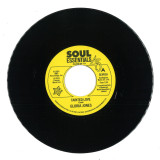
New on Outta Sight, an official reissue of the Gloria Jones classic “Tainted Love”. The song originates from 1964, then made a household favourite from 1981 when made a hit by Soft Cell. Gloria’s 1965 release in the USA was originally a B-side to a non-hit, and it took ten years for it to be discovered in the UK where it was played on the Northern Soul scene. It’s the Motown-like rhythms and arrangements that made it relevant. Gloria re-recorded it herself in 1976, and while still not a hit, the song in NME’s Top 500 greatest of all time and Gloria dubbted ‘The Queen Of Northern Soul’. She was in a relationship with Marc Bolan at the time of his fatal accident. This single is coupled with another northern soul favourite, the Holland/Dozier/Holland song “There’s A Ghost In My House” by Motown artist R. Dean Taylor. It was originally recorded in 1966 and reached No.3 in the UK Charts (1974)
"Niagara's third LP Afire is the rarest one from kraut drummer, formerly of Sunbirds, Klaus Weiss' band. An astonishing album which returns to the minimal sounds based on percussion and rhythm of their first album, yet retaining a feel of harmony all through it - this time not provided by the brass instruments that had been added in S.U.B., but though to the high emphasis put on combining a variety of drums each tuned to their perfect pitch, and the contribution of Embryo's bass player Dave King. Also present on the sessions were percussionists George Brown, Sabu Rex and Norman Tolbert. The phenomenal rhythms contained on this LP have made it a very sought after piece among those looking for cool samplers to mix.
Klaus Weiss is considered one of the best drummers of the German jazz scene, he was always very active and played with a lot of USA jazzmen travelling Germany like Hampton Hawes, Herbie Mann, Mal Waldron or Johnny Griffin, as well as with German greats as Klaus Doldinger, George Gruntz, Friedrich Gulda, etc. "
In Mr Bongo’s opinion, 'Imprevisto' is one of the most unmistakable Brazilian jazz records ever made. Dramatic intro and hypnotic piano line, decorated with panned percussion before the hats come in. Then the upright bass. A true classic.
Bossa Três formed in 1961 in Rio. They spent most of their early years touring jazz clubs in the USA, before the original line up and their pianist (and perhaps most well-known band member) Luis Carlos Vinhas, returned to Brazil. This is the final track on their Em Forma! LP from 1965, released on Forma. The original pressing of this Brazil 45 was the first time ‘Imprevisto’ had been released on a 7”.
We know very little about Ana Rosely. She released four 7” 2-track records between 1975 and 1984, the latter featuring the brilliant ‘Skim Dum Dum Dum’. The original version was released by RGE Discos in 1984, which came as a surprise to us given the sound. It is very difficult to find an original copy in good condition and they are, as ever, increasing in price.
Love Love host a collaborative release by two of the freshest contemporary Avon producers, Best Pest and Kursa. Kursa (also one half of S.Murk) has built a notable following in the UK as well as in the USA, playing out often at big stateside events with his own style of tight, maximalist bass music - think Tipper, Eprom, Noisia etc… Ben Pest is no stranger to Love Love with 2 previous solo releases under his belt, best known for his crunchy techno & electro and ripping hardware live-sets. Here they come together for a 5 track genre-hopping EP, each flexing their respective production sensibilities, splicing elements of dubstep, grime, hardcore & garage together, along with a healthy dose of multi-dimensional sound design, to make some of the noisiest modern dance music going.
Early support from: Clouds, Giant Swan, Rob Hall, A Made Up Sound, Om Unit, Nikki Nair, Luke Sanger, Deft, Warlock, Second Storey...
Hailing from Normandy (France), YOU SAID STRANGE offer an indie rock sound made up of psych pop-rock, shoegaze and proto-grunge. The band's music is the work of passionate musicians, combining the dazzling power of their instruments and the union of their voices to create a fusion of melancholy and energy. The band recorded their 1st album, Salvation Prayer, in 2018 in Portland (USA), with Peter G. Holmstrom from The Dandy Warhols. Seduced, the iconic Kevin Cole invites them to perform live in the studios of the prestigious KEXP radio, where their next project will emerge. At the end of 2021, Thousand Shadows Vol.1 is released. Then, after defending it on European and American stages, comes its sequel Thousand Shadows Vol.2 in 2023.
"TRADE YOUR SOUL" plunges us into the complex exploration of human relationships, love, trust and disillusionment, addressing several universal themes in an introspective way. This post-rock tale unfolds as a metaphorical journey of spirituality through life's most intense and intimate emotions and experiences.
YOU SAID STRANGE continues to combine abstract and concrete indie rock with psych-rock, post-punk, shoegaze and indus, inviting listeners to reflect ever more deeply. Nevertheless, "TRADE YOUR SOUL" marks a significant milestone for the band, with a more striking musical approach and a number of innovations, while remaining the work of passionate musicians who combine the dazzle of instruments and the union of voices to fuse melancholy and energy.
- A1: Billy Boomer - I Like What She’s Doing
- A2: P.j. City - Straight Forward (Non-Stop)
- A3: Maxwell - Realize
- A4: Cecil Lyde - I’ll Make It On My Own
- B1: Mixed Generation Enterprize - Take To The Sky
- B2: Mark Meadows - You And Me
- B3: Alice Cohen & Fun City - Save The Best ‘Til Last
- C1: Banda 22 - A Luz Que Brilha Meu Viver
- C2: Zé Da Lata - Mistério Brilhante
- C3: Rogers Mitchell - Dame Solamente Amor
- C4: The Eleventh Commandment - Then I Reach Satisfaction (Vinyl Only)
- D1: Billy Boomer - You Can’t Hide
- D2: Freedom - High On You
- D3: The Lost Family - Blow My Mind
- D4: The Family Tree – As
Pink Vinyl[30,04 €]
Compiling the follow-up to a very successful first album is always a tricky task, but just 12 months since the release of volume one in the 'With Love' series, miche has excelled himself once again with another glorious, deep dive into the world of rare soul. 15 tracks of independently released music, created by magnificent artists with stories to tell and primed for rediscovery.
The ambition to celebrate under-the-radar artists has remained, but instead of a facsimile of volume one, what we have here is a selection shaped by life changes. Volume two is for the dancers; still soulful, still ultra-rare and slept-on records from the USA, Chile, Brazil and beyond, but the dynamics of the collection have shifted slightly. It represents a move from being immersed in a week in week out environment of beautiful, soulful music in a cosy, dimly lit hi-fi bar to playing livelier, more energetic, dancefloor-focused music in nightclubs. This volume will get you on your feet, make you move and unleash whatever it is that makes you get down.
One of the jewels in the crown of this compilation is a joyous, anthemic gospel version of Stevie Wonder's 'As' by The Family Tree (a project produced by the fantastic Julius Brockington). We are also treated to a rare and sought-after Pennsylvanian funk / AOR bomb by Maxwell, a stunning modern soul tune 'High On You' by Freedom, and self-released Brazilian 45s by Banda 22 and Zé Da Lata. P.J. City's 'Straight Forward (Non-Stop)' is gospel-disco perfection, and we also have 'Dame Solamente Amor’, a sublime, soul beauty from Chile by Rogers Mitchell. Many of these artists featured in this compilation aren't household names, but they deserve their moment to shine, to be heard, loved and appreciated for their artistry.
As Miche says it, “I hope this compilation helps in some way to keep this glorious music alive and play a part in connecting generations of music lovers from the worldwide soul family. As always, it has been made ‘With Love’.”
- Tongue
- Pain
- Can't Feel It
- Longer
- Onenine-Eight-Zero
- Eclipse
- Skem
- I.d.c
- Beal Feirste
- Ache
The beauty, confusion, complexity, and intensity of their youth - lived under the shadow and around the scars of conflict - are entangled in the industrial dance-punk hybrid encoded in the record's DNA, aptly entitled Crystalpunk. "This record is us waving a flag for that generation -- the ones who inherited confusion, resilience, and a fractured sense of self." They're waving that flag as intensely as possible too. For the uninitiated, Chalk mainlines the reaction between genres, eras, and cultures, commuting this collision into their sound. The Belfast group could comfortably power an underground warehouse party after-dark, incite a mid-day festival mosh-pit, or shake an arena on any given evening.
Their power has seamlessly translated to the stage with the group packing venues and delivering alternately sweaty and electrifying performances to a growing rabid fan base. As a group, they've sold out shows across the UK, EU and USA, notched festival performances such as Glastonbury, SXSW, BBK, Trans Musicals and more across 11 countries and were handpicked to tour alongside IDLES and Fontaines D.C.. Coming from dissimilar backgrounds and rallying together naturally, Ben and Ross first crossed paths in film school. As the story goes, Ben had noticed a framed poster of Dublin disruptors Gilla Band in one of Ross's Instagram photos and felt a kinship before ever actually speaking to him.
"Nobody else at our school was into experimental noise guitar bands, so that was all I needed to see," laughs Ben. Emerging in 2022, Chalk initially made waves with songs like "Them," "Velodrome," and "Static." Ultimately, they come-of-age and tell a story that resonates beyond borders. Not just a portrait of the band, but one of their home, a complicated place where the sacrifices made and risks taken by activists, artists, ravers and punks created the only environment that a band like Chalk could emerge from. Crystalpunk is not about choosing a side, it's about choosing the future.
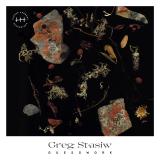
Experimental musician Greg Stasiw presents his debut album of radiant, free-flowing electronics ‘Guesswork’. Music for psychoactive exploration made over a four year period, incorporating ambient, minimalism, intricate sound design & Japanese environmental music. An exceptional listening experience of wonder, tranquility, melancholy & discovery, contemplating the relationship between sound & space.
Greg Stasiw is an experimental musician, visual artist and writer from New England, Northeastern USA. An itinerant polymath, Stasiw has spent time living, working and traveling in New York, Tokyo, Toronto, Paris, Boston, and Bratislava. As well as studying anthropology, animation and illustration, Stasiw has always had a close connection with music.
His earliest musical involvements started with ambient music on Sunday drives, microcassettes, the Windows 98 Sound Recorder and free play with Casio keyboards. Then came a formative procession of piano lessons, orchestras, choirs, taiko, metal, indie rock, tinnitus, and ultimately; the acquisition of music production software.
With his debut album ‘Guesswork’, the aural and visual inspirations that underpin Stasiw's creative life intersect, in a pure, radiant soundworld of space, depth and immaculate clarity. Futuristic, pellucid soundscapes incorporating ambient, minimalism, intricate sound design, and Japanese environmental music are deftly arranged with evanescent chimes, serene tone float, suspended organ notes and curious sci-fi resonances.
Like stepping into some space age meditation garden, if soundtracked by the likes of Hiroshi Yoshimura, Harold Budd, Norman McLaren, and Pauline Anna Strom, the thirteen tracks of ‘Guesswork’ create an exceptional listening experience of wide-eyed wonder, sleek tranquility, gentle melancholy, and singular discovery.
Swan Song
The vinyl LP at the heart of this éthiopiques 31 tracks 2 to 11 was one of the very last vinyl records ever released in Ethiopia. But above all it represents, we felt, the absolute masterpiece of the Ethiopian Groove – the Swan Song of Swinging Addis. The album leaves a clear idea for posterity of the level of sophistication and mastery that modern Ethiopian music had achieved, before being crushed under the Stalino-military heel of the Derg – as the bloody revolution that was unfolding came to be called.
Ethiopia1976.
The Revolution that broke out in February 1974 rolled on in a ruthless march. The whole of Ethiopian society was utterly stunned. The bouquets of flowers handed joyfully to the first tanks of the coup d'état were to wilt very rapidly. From September 1976 to February 1978, 18 months of Red Terror (the name given by the junta itself) spilled blood throughout the country. This fratricidal conflict took its heaviest toll among students and youth. The shift from feudalism to a cruel and primitive Stalinism left the country's citizens deeply traumatised, and snuffed out any pretence of activism, whatever the sector of society. This ice age was to last for seventeen long years.
ሙሉቀን፡መለሰ Mulukèn Mellèssè Muluqän Mälläsä
It was three tracks by Muluken that served as the opener for éthiopiques-1 more than 25 years ago. Seven more tracks appeared on éthiopiques-3 and 13, all accompanied by The Equators, which was soon to become the Dahlak Band.
The first track, Hédètch alu, also the very first piece that Muluken ever recorded, left audiences both unsettled and amazed. Reflecting the singer's extremely young age (he was just 17 at the time), this angelic voice mystified many, who thought they were in fact listening to a feminine voice. He was not yet 22 when he released his last vinyl record in 1976 with Kaifa Records (KF 39LP), one of the very last to be issued in Ethiopia, before the cassette tape became the dominant medium for music distribution – and before the new revolutionary regime put a stop to all independent musical life, via an unspeakable barrage of prohibitions and other persecutions.
Mulu qèn, literally, “A well filled day”. This tender maternal intention wasn't enough to ward off the cruelty of fate. His mother's premature death drove Muluken to leave his native Godjam, in northeast Ethiopia, to live with an uncle in Addis Ababa. Born Muluken Tamer, he took his uncle's last name – Mèllèssè.
The spelling Muluken appeared in his administrative records. Transcription of Amharic to the Latin alphabet, both in Ethiopia and for scholars, gives rise to controversies and quibbles that can never be neatly settled. French allows for a closer approximation of the original pronunciation, thanks to its battery of accent marks, confusing as they may be to anglophones.
Between rather accommodating administrative record-keepers and the various versions that pop up in interviews given by the artist, Muluken's year of birth oscillates between 1953 and 1955…
1954? One thing is certain: the artist's talent made itself known very early indeed, because he got his start in 1966-67, at the age of 13 or 14. Photos from the period attest to his extreme youth. It's a strange sort of initiation for a very young teenager to become a sensation in the heart of Addis's nightlife at the time, Woubé Bèrèha – the Wilds of Woubé. And what's more, in the club of the Queen of the Night, the Godjamé Assègèdètch Alamrèw herself, the very same that was portrayed by Sebhat Guèbrè-Egziabhér in his novel-memoir Les Nuits d’Addis Abeba2… The legendary female club owner who is remembered to this day by the capital's ageing boomers.
Muluken first tried his hand at the drums, before he grabbed the microphone. He emigrated briefly to the Zula Club, across the street from the old Addis Post Office, one of the ground-breaking bars of the burgeoning musical scene, before joining the Second Police Band in 1968, for around three years. He spent a few months with the short-lived Blue Nile Band founded by saxophonist Besrat Tammènè. As the musical scene grew increasingly successful, and pulled slowly but decisively away from its institutional ties, Muluken released his first 45rpm single in February 1972 (Amha Records AE 440). It was included in two LP Ethiopian Hit Parade compilation albums in September of the same year. All in all, Muluken released eight two-track 45s and the same number of original cassette tapes between February 1972 and 1984, the year that he departed for permanent exile in the USA. After converting to Pentecostalism in 1980, Muluken gradually abandoned all secular musical activity. In 1985, at the end of a concert in Philadelphia, he decided to quit concerts and recording for good. Mèlakè Gèbré, the historic bass player from the Walias band who was playing with him that night, recalls that everything appeared so irredeemably diabolical in Muluken's eyes, that it was to be the end of his contribution to Ethiopian Groove.
The end of the story, the beginning of a legend.
Dahlak Band, forgotten by History
Aside from his personal history and vocal talents, it must be remembered that Muluken Mèllèssè was one of the biggest names in the musical innovations that marked the end of the imperial period. These éthiopiques aim to convince those who are just discovering this hidden gem... As for Ethiopians themselves, they are to this day captivated by this singular and atypical figure in the Abyssinian pop landscape – even though he withdrew from public life some 40 years ago. Incorrigible devotees of poetic twists, of more or less hidden meanings, Ethiopians appreciate above all the care Muluken took in choosing his lyrics and the writers who penned them, such as Feqerte Haylou, Alemtsehay Wodajo and, here, Shewalul Mengistu (1944-1977). Love songs, written by women, a far cry from the conventional drivel that pleases sappy sentimentalists.
Muluken is equally acclaimed for his perfectionism when it came to music, the opposite of the overly casual approach that is all too common. He remained a faithful partner of musicians who came from a lineage that borrowed from several inventive and pioneering bands (Venus, Equators, Dahlak). Amongst them were certain artists who began their musical lives with Nersès Nalbandian at the Haile Sellassie Theatre and who come of age in around 1973 – at just the wrong time, you might say. Among them were the pillars Shimèlis Bèyènè (trumpet), Dawit Yifru (keyboards) and Tilayé Gèbrè (sax & flute). Most notably Tilayé Gèbrè, certainly one of the most important musicians, composers and arrangers of his generation, of the end of the imperial era, and of the early years of the Derg.
It was only in 1981 that a miraculous opportunity arose for Tilayé to escape the Stalinist paradise of the dictator Menguistou Haylè-Maryam. Once again it was Amha Eshèté (1946-2021) who provided a solution. The spirited and courageous producer, who had been in exile in Washington since 1975, succeeded, thanks to his incredible perseverence, in bringing the Walias Band to the USA. It was, in fact an extended Walias Band comprising ten musicians3, six of whom chose to slip away after a few concerts and the recording of an LP (The Best of Walias, WRS 100). Tilayé Gèbrè was one of these. He has been living in the USA ever since. There he joined the then-nascent Ethiopian diaspora, which lived largely unto itself, and was making only very modest headway in the American musical market. It seems unfair that Tilayé Gèbrè and the Dahlak Band were not able to benefit earlier from the public recognition that they do deserve.
A similar draining away of the top-rate talents would lead to the reorganization of the major groups of the “Derg Time”. The remaining artists spread themselves around between Ibex Band (renamed Roha Band), Ethio Star Band and a remodeled Walias Band. That spelled the end of the Dahlak Band.
With this record, produced by the essential Ali Abdella Kaifa a.k.a. Ali Tango, we can appreciate everything that the Derg not only destroyed, but also prevented from flourishing. This gem of Ethiopian-style afrobeat came out in 1976 (and, by way of a parenthesis, before the FESTAC 1977 in Lagos, which was attended by an impressive delegation of Ethiopian musicians — although Fela was already personna non grata in his own country). Despite everything that might distinguish this ethio-groove from Fela’s music – no colonial axe to grind, no question of political confrontation with the authorities, no claims to negritude or Africanism for the Ethiopian musicians, and less extrovertion! –, this LP fits beautifully into the saga of intense and electrified soul of the new “African” groove that Fela and Manu Dibango embodied so well from that point onwards.
In restoring this record to its place in the afrobeat epic, it can be seen that, if nothing else, the timeline bestows a legitimate pedigree and a historical primacy to works that had no international impact when they were originally released.
Warning! Masterpiece!
As genre conventions continue to morph and blur, there's a wealth of stunning
new music being made wherever groups of musicians have the imagination
and ingenuity to transcend the old boundaries and just play whatever comes
naturally
Sun Speak are such a group and their album Probiotic Orchestrations is full of music
that's urgent, powerful, accessible and humorous, pulling together sounds and
textures from the worlds of rock, jazz, electronica, Americana and the outer reaches of
progressive music into compelling whole. Guitarist Matt Gold and drummer Nate
Friedman first came together as Sun Speak ten years ago amid the white heat of the
Chicago experimental scene, where they'd worked with such luminaries as Makaya
McCraven and Patricia Barber.
On this, their sixth release, they continue to develop their own distinctive sonic world
with the aid of fellow Chicagoan Daniel Pierson who joined as engineer/ sound
sculptor and now increasingly takes a collaborative role as a third member of the
band on keyboards. Now the trio are dispersed and live in different corners of the USA,
but in 2024 they came together in a remote seaside cabin in New Hampshire, writing
and recording every day in an intense undisturbed whirlwind of creativity. Probiotic
Orchestrations is the result - a dazzling mix of improvisation and composition,
exploring rhythm, colour and texture with the directness of rock and the fearless
improvisatory flair of jazz.
Available on heavyweight black vinyl + 6-panel digipak CD editions.
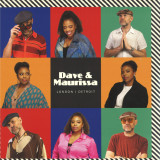
During the 35 years of making music, Dave Lee has constantly been searching for new singers and writers to work with. A search that’s ended up with many fantastic collaborations and releases with the likes of Thelma Houston, Taka Boom, Dianne Charlemagne and Seal. More recently this quest led him to Maurissa Rose and the creation of their album ‘London / Detroit’. After hearing Maurissa's voice on a Theo Parrish record Dave reached out to her and after a few long phone conversations and mp3 swaps they both agreed a visit to London would be much more fun than trying to work together remotely. Maurissa made the journey from her home in Detroit to write and record an album with Dave at his studio in March 2022 - as they both feel that creating music together in the same room is always better. The fruits of their labour yielded 11 brand new songs (and 1 cover) tapping into their collective love of Soul, Disco and R&B, with a sprinkle of Soulful House. This album is a special one for Dave Lee as it’s the first time in his career he’s recorded an entire album with same singer on every track.
In the album’s liner notes Dave talks of how Maurissa is a naturally creative person, full of ideas, warm & unpretentious which is reflected in her vocal performances throughout ‘London / Detroit’. Dave’s expertly crafted music is backed up with a deeply passionate yet effortless delivery from the Detroiter, a marker of someone who has honed and perfected their art. When it comes to the music side of this LP, Dave Lee is once again proving he’s still at the top of his game and shows no sign of relenting. Drawing from his encyclopaedic knowledge of all things Soul/Funk/Disco, we are treated to a range of styles, BPMs and influences from 95bpm street soul to more uptempo disco and boogie flavours. Be it the rippling synth voyage opener of ‘You Decide’, taking the Johnnie Taylor classic ‘What About My Love’ into a modern Boogie realm, upping the tempo on the soulful houser ‘I Feel the Sun” or bringing the tempo back down to the bassy acidic chug of ‘You’re Giving Me Life’. Mr Lee is truly adept at creating a modern disco soul sound without the usage of samples.
London and Detroit might be two very different cities on opposite sides of the Atlantic but this album is proof that creative synergy knows no distance.
Out everywhere on Feb 28th on Gatefold Vinyl, CD and Digital/Streaming.
In the two years since Parallel Minds’ Juno-Award-winning 5th release Homesick by label co-founder Ciel, we have taken our time reassessing our next moves as the larger dance music scene experienced a paradigm shift. What does it mean to release music made by underground artists from lesser-known scenes like Toronto at a time when bookers and A&Rs are taking fewer risks than ever before? How do we truly celebrate the musical diversity of electronic music when the bottom line threatens to reduce any and all forms of risk-taking?
You just do it, of course.
In truth, few artists have come to represent the music scene in the Big Smoke more than Phèdre, and having seen the duo’s progression from indie weirdo-pop to live hardware act to breakbeat wunderkind in the last decade has been nothing short of amazing. It’s really artists like these that inspired us to start the label in 2018, and we are super elated to usher in PM006 with their long-awaited album, Liquid Constancy.
On its face, Liquid Constancy is a breakbeat record. There are housier joints, to more bassy Baltimore club bangers, to breakneck footwork and jungle steeped in sunshine. All of them share a distinctly syncopated, dubwise rhythm that grounds the album’s tracks. With some having been developed as early as seven years ago, these tracks had their genesis in Phèdre’s mostly improvised live hardware sets from some of Toronto’s most notorious warehouse raves. Primarily powered by two Korg Electribe ESX-1s and the semi-modular Moog Mother-32, the jams found new life in the studio when the duo began recording them as tracks, which demanded a mindfulness of their permanence that Daniel Lee and apè Aliermo at first found intimidating.
Over time, the pair developed a synergistic workflow that pulls from Daniel’s background in drums and apè’s keen ear for texture and movement. They sourced samples featuring voices of BIPOC and feminist icons, drew from their shared love of sci-fi and kung fu movies, and from their Filipino, Chinese, German, and Surinamese backgrounds. Samples were manipulated via techniques like lowering bit rates and adjusting speed to maximize usage due to the Electribe’s limited sample time, which was a subtle way of injecting their interests into their music without being too on the nose. Growing up in the melting pot of the GTA, going to raves as teens, bumping post-punk, industrial, electro, hip-hop and 90s R&B — these experiences all had an undeniable influence on Liquid Constancy. As kids of immigrant parents, equally informed by both their adopted and native cultures, Phèdre makes music informed by sampling and defined by cultural hybridity. In times like these, what is more feel-good than believing in music as a universal language that brings our different backgrounds together?
- A. Twist With Ossie Lee
- B. She's My Baby
★A rare reissue from obscure R&B singer Oscar Boyd
★First time reissued on vinyl in more than 60 years" "Oscar Boyd made his debut in 1959 with a single on Checker Records (featuring backing vocals by The Calvaes,
a Chicago doo-wop group who released two singles on Cobra Records), but he remains a relatively obscure singer with little widely known about him. His 1962 release
on the Hermes label is also a gem, and that same year he released this single on USA Records.
The B-side, She’s My Baby, is an absolute highlight—a thrilling rockin’ R&B track with a catchy melody, Boyd’s aggressive vocal delivery, and an outstanding backing performance.
The A-side, Twist With Ossie Lee, lives up to its name as a lively and danceable tune featuring a female vocalist—likely Anita, who also recorded a single
on USA Records in 1962 under the name Oscar & Anita.
The Modulator, AKA Freddy Fresh is back in town !
LTD 100 COPIES !!!
To share this event in the best way i asked him a few questions...
Official Interview now begins :)
Tool : The last Analog Records USA was in 2000... Why did you stop it and why do you wish to realese vinyls again ?
Mr Fresh : Ii actually never stopped I just made alot of other styles of music that I do not think were proper for my Analog and E.M.F. labels (Analog is now run by Mike McLure of SAuto Kinetic we work together on that label and Electric Music Foundation is all my label.. we did some great digital releases on E.M.F. recently with ADSX / Scott Radke/Dave Olson / Poor Boy Rich etc.. and can be found here
for me my last Techno Analog vinyl 12” Release was in 1997 Quiver 12"
But I did release a few Techno/Electro style tracks on my Electric Music Foundation labels as 12” singles
in 2003 I made these
Black Out
Orange Krush
I always continue to make music and have hundreds of unreleased songs that I think some are not worth putting on 12” single as I fear to weird, experimental etc.. I try to isolate myself and make unique music hopefully not sounding like what others are making but try to be my own self
Tool : What are you favourite machines or software to make music these days ?
Mr Fresh : I still use many vintage synths like my Jupiter 8, Arp 2600, Roland System 100M, 303’s etc.. but now I also use some Eurorack Modules E950, Clouds, Metropolis Sequencer etc.. also TR8, Twisted Electrons Acid 8, Teenage Engineering Factory, PO Calculators, Korg Volca Sampler, Electrix Filter Factory, Space Echo (Boss) and MPC 4000 controlling Hardware and I usually record random ideas to a flash recorder and sometimes import into ableton tracks etc.. then use Reaktor or some other soft synths but I always start Analog. I also use Critter and Guitari Looper to record organic sounds to use for percussion.
Tool : What are your forthcoming projects on vinyl in the near future ?
Mr Fresh : I have a remix electro style for New Zealand Independent Cardboard and Computers soon on 12” single
I have COMACID EP coming out of Belgium on 12” single very soon which features some older tracks (Binder, Scared, Slow Death, Spacefunk) mainly re-release of Techno/Acid stuff all analog of course
Then I have two releases with Toolbox Records and possible new stuff with Acid.Paris and hopefully we start a nice relationship with Toolbox for a long term ha ha! My daughters start school next month so I am preparing new Eurorack Modules and getting Syncussion to really hit it and spend some serious time in the studios. I am really inspired to do the more electronic vibes now and feeling the A.C.I.D. alot lately with the newer technology
- A1: Intro 1’06”
- A2: City Is Dead 1’58”
- A3: Bloody Belgium ’1”22
- A4: Do You Wanna Now 2’55”
- A5: For The Fret 2’35”
- A6: I’ll Get You 1’18”
- A7: Rock Over Belgium 1’41”
- A8: Fascist Cops 2’41
- A9: I Wanna Get A Job In The City 3’33”
- A10: I Feel Allright 1’41”
- A11: No Monarchy 2’35
- B1: Sex Queen 1’47”
- B2: Baby That’s Alright 1’48”
- B3: Dead Industry 2’48”
- B4: Razor Blades For Sale 1’46”
- B5: This Is Rock And Roll 2’21”
- B6: Do You Love The Nazis 3’39”
- B7: If The Kids Are United 4’47
- B8: Blitzkrieg Bop 2’00”
- B9: 12Xu 3’52”
The Belgian leading punk band The Kids, founded by Ludo Mariman, made their debut in 1978 with their landmark titleless album, surely deserving to be part of the global top list of great seventies punk albums. After another four studio albums, the band called it a day... only to resurface a good ten years later, at the end of the 1990s. Since then, The Kids have become an international cult punk band, much in demand in Belgium and abroad (USA, Germany, France, Italy, Japan…), mainly focusing on their initial seventies punk repertoire, with many classic songs that have effortlessly survived the ravages of time.
The Kids are still the most angry Belgian band, which says a lot about the eagerness and sharpness of Ludo Mariman and his mates. The Kids, for sure, still are an absolute top band!
"Flabbergasted" was recorded early 2001 at the AB Club in Brussels and released the following year on CD, which sold out quickly. Starman Records issued the album in 2015, making it available on vinyl for the very first time, with restored audio and entirely new artwork. Sold out long ago, it was followed by a second print run in 2023 on limited colored vinyl. An album you can’t miss—sharp as a razor blade and containing many of The Kids' classics, along with a couple of contemporary punk covers. The band still tours actively and will celebrate, in 2026, their 50th anniversary.
Last summer, after living across the country from each other for several years, the four members of Anamanaguchi decided to try something new. Their label Polyvinyl had rescued the famed American Football house from potential destruction, so the band took the opportunity to move in and write together. Over the course of a month, Anamanaguchi – pioneers of hyper-melodic 8-bit rock, whose extraordinary ascent has led them to topping charts with virtual pop star Hatsune Miku and scoring Scott Pilgrim vs. the World: The Game and Netflix’s Scott Pilgrim Takes Off – flipped their typically meticulous digital process on its head. Anyway, the result, is the most personal record of their career. And it's a rock record for the ages.
Recorded straight to tape by Grammy-winning rock producer Dave Fridmann (The Flaming Lips, MGMT, Sleater-Kinney), Anyway united the members around live instruments and lyrics sung by everybody in the band. As Anamanaguchi has always been an instrumental band, the decision to sing suddenly confronted them with the question of what the band’s voice would ultimately be. They explore this newfound power in every song, making it their most emotionally resonant work yet.
Anyway captures a band creatively and personally energized by the experience of four best friends reviving their connection in a disconnected world. On “Rage (Kitchen Sink),” the band confront loneliness and boredom, two epidemics of the digital age that seem to be humanity’s only common bond. The power-pop ballad “Darcie” finds inspiration in small gestures from a local unsung hero, who brightens their lives and allows unforeseen amounts of fun to happen. Taut and dynamic, “Buckwild” is a rock sing-along that serves as the album’s genesis story: a band making an effort to do something new, while accepting the risks that may bring.
USA, Anamanaguchi’s critically-acclaimed second album and debut for Polyvinyl, anticipated a crucial cultural shift in moving from escapist, nostalgic fantasy to a more introspective exploration of digital identity. Described by Pitchfork as the band’s “most emotionally grounded record,” USA laid the foundation for the openness and honesty that defines Anyway. Where USA made sense of life online, their third album Anywayventures into the world outside the front door.
Milton Wright's perfect deep Soul classic "Keep It Up" has always been a top shelf record, everything about it is almost flawless! Whether it's Milton's silky vocal delivery, the incessant guitar driven back beat or the total space Funk vibe of his omnipresent ARP-2600 synthesizer this record has it all. Originally released on TK Disco's more Soul and Funk orientated Alston label which was home to many legendary artists and records, this 1975 sunshine classic never fails to make people move. A classic rare groove indeed. "The Silence That You Keep" takes up side-B, a jazzy, flute driven love song that again features Milton's perfect voice and some fantastic arrangement. A real gem of a record, with the original 45 changing hands for over £100 a time in used condition.
This is the first time "Keep It Up" has been re-issued in it's original 45 rpm format with the original Alston label artwork. It's been re-mastered, re-pressed and made available again with the permission of TK Disco / Alston Records, Miami Florida, USA.
"The restorations of The Lost Recordings are worthy of those devoted to master paintings." — Le Journal du Dimanche
"We discovered these previously unpublished tapes in the archives of the RBB — the Berlin radio. This discovery is absolutely major because these two incredible musicians had recorded too little together and because this recording offers us the possibility to listen to them in works that were unpublished so far in their discography — notably an extraordinary sonata by Prokofiev! And what can we say about this Bach sonata, with an Andante that brought tears to the eyes of everyone present in the studio at the time." — Frédéric D'ORIA-NICOLAS, Musical treasure seeker
János Starker, cellist, and György Sebok, pianist, were both born in Hungary early in the 20th century. They were welcomed into the formidable Franz Liszt Academy of Music in Budapest, and emigrated to the USA, where they both held the title of Distinguished Professor at the Indiana University School of Music in Bloomington. Both heavy smokers and sometimes reputed — unjustly — to be harsh, austere and insensitive to trends, they were drawn to music in all its varieties and fascinated by its many colours. They had one aim only, one noble objective: to showcase the works all composers, as evidenced by this recording made in the legendary Studio 3 of Berlin Radio on 24 October 1963.
Starker and Sebok were fully imbued with the aesthetics that Prokofiev proclaimed: "I cultivate melody and strive to introduce feeling and emotion into my works. No matter that some call me a cubist, adding that I systematically avoid any emotional or romantic elements in my quest to reach only objectivity."
Next, and at the opposite end of the spectrum, is the Spanish passion of the two pieces by Granados and De Falla, pieces that nevertheless also convey melancholy. Starker and Sebok launch into the works with enthusiasm and intensity.
The last piece, Bach's Sonata in G Major, BWV 1027 for Viola da Gamba and Keyboard, is one of three he composed, probably in Köthen. Because they may have originally been written for other instruments, they can easily be transcribed for the cello and piano. They reveal the rich influences that pervaded the German region during the first half of the 18th century. The two musicians give us a sublime interpretation of the beauty of the counterpoint in this Sonata.
These recordings attest to the importance that the two superb musicians attached to working in the service of the composers. We wonder if, in that enchanted studio in Berlin in 1963, they knew how much further they went to bewitch us and touch us so profoundly.
NON EXCL LP , Black Vinyl
The Soulful Trio, a band from Barcelona made up of three musicians with an international background (Spain, Holland, Argentina, USA, France) after playing their repertoire live in different venues for several months, with their songs well shot, have decided to record "Said & Done", in one of the best studios of Barcelona, nine original compositions of Soul-Jazz with derivations towards funk and blues.
Music reminiscent of the classics of the Hammond B3 organ trio such as Jimmy Smith, Jack McDuff, Lonnie Smith, Richard “Groove” Holmes or Big John Patton, reinventing the sound and bringing it closer to today with their vibrant fusion of genres full of energy.
Enjoy this instrumental Soul-Jazz album with these young veterans Homero Tolosa (drums), Pablo Sánchez (guitar) and Lucas Herrera Fernández (Hammond B3) in all their splendor with their respective instruments including the exciting & dynamic sounds of the Hammond B3, the great electric guitar groove of solos and huge variety of rhythms, playing a music that is always intense and made from their hearts.
- A1: Kisk - I Wanna Dance With You
- A2: Osunlade - Cucumber Sweat
- A3: Tuccillo - Stray
- A4: Hnqo, Collateral Lab - Whisper
- A5: 2Ks - Saynomore
- B1: Ghosten - Iii Steps Ii Ecstazi Feat Francesca Touré & Izzy Nu
- B2: Marcel Vogel & Lyma - Keep The Lid On
- B3: Eduardo - Wdac
- B4: Erin Buku & Inkswel - Find Your Way Feat Leon And Charles
LP - First Pressing in White Color Vinyl - Limited to 150
Includes: Gatefold. stickers + poster (60cm x 60cm) + download code
5 Years, All Ears, All Heart. Fifteen years ago there wasn't a grand plan, no vision board or 10-year strategy. It wasn't about fame and acclaim, it has always been about feelings and encounters. Meeting people who made music, loved music, were music. Fast forward a bit and the family just kept expanding. It wasn't just producers and DJs anymore, designers, writers, random hype people, "vinyl faced" ones... Everyone brought something different to the table and somehow, through our filter, it took us here. House, Jazz, Techno, Experimental, it didn't matter. The only rule was that the music had to feel alive, with a Jazzy twist, where "Jazzy" means a propensity to improvisation, not just music. This is not a story about numbers or streams. It's about people and places. Every track has a face behind it: the producer who turned a three-note loop into gold, the designer who nailed an album cover in one chaotic night, the heads who spun the story for the release and the friends who supported and listened. That is the soul of Apparel Music and that's why the cover for this "B-Day15" isn't gleaming or shiny, it's real. It's a celebration of encounters. The messy, magical moments when people connect and make something bigger than themselves. It's a big THANK YOU to all the characters who hopped on this ride. This record, dropping in both vinyl and digital formats and featuring artists from all over the world, is the symbol of the Apparel Music essence. From the USA with Osunlade to Australia with Erin Buku & Inkswel; from Denmark with Ghosten (featuring Francesca Touré and IZZY NU) to Italy with 2KS and Kisk; Argentina and Brazil with Eduardo and HNQO (with Collateral Lab), Spain with Tuccillo, Germany and The Netherlands with Marcel Vogel & LYMA. It's about exploring genres, diving into far-off worlds, being curious about other places, other people and figuring out how to make them all feel comfy under the same roof, chilling in the same room. A room we've been furnishing for a while with our little treasures, some fancy furniture, some not-so-fancy, but always with passion. There's more music to make, more stories to discover, more people to meet. Apparel Music is not just a label anymore, it's a big, instinctive, unplanned love letter to everyone who's been and who'll be a part of it. 15 Years, All Ears, All Heart.
Carwyn Ellis & Rio 18 release their new album "Fontana Rosa". Possibly the world's only musical group to fuse Latin music of all kinds with the Welsh language, this time Rio 18 draw inspiration from slightly different musical corners, including Chicano Soul, Nuyorican pop, and Salsoul disco plus Latin sounds filtered through the cultural spectrum of the USA.
Most significantly though, the album was among the last ever to be recorded by the acclaimed producer Liam Watson at his legendary studio and shrine to all things analogue, Toerag Studios - a huge inspiration and influence on Rio 18's Carwyn Ellis. The "Fontana Rosa" sessions saw Ellis draw together an all-star band at the fabled studio which is perhaps best known through its place in the White Stripes history.
Talking about the story and gestation of the album, Carwyn said:
"I was in Mexico City with Baldo Verdú when I heard that Toerag Studios in London was going to close. It came as a shock - Toerag and Liam Watson, its owner and resident producer had been a massive influence on me. Liam, along with Edwyn Collins, had taught me much of what I know about recording, had hired me as an instrumentalist on countless sessions and had helped me to get started when I began my own solo career. And over the years, I'd still go in to record with Liam whenever the opportunity arose. When I heard that Liam was shutting up shop, I took it upon myself to try and ensure he went out with a musical bang. I rounded up the best band I could get: the aforementioned Venezuelan percussion wiz and singer, Baldo Verdú: American drummer, multi-instrumentalist and producer Shawn Lee: the Isle of Wight's finest drum and percussion master, producer and composer Rupert Brown (whom I'd originally met at Toerag many moons ago): Elan Rhys, one of Wales's finest voices and long term collaborator with Rio 18, as well as being one third of the wonderful folk group, Plu: and Kassin - my Brazilian brother from Rio de Janeiro, bassist and producer with artists such as Jorge Ben, Caetano Veloso, Gilberto Gil and a multitude of others, including Carwyn Ellis & Rio 18.
So this was my dream team, assembled to make beautiful music one more time at Toerag (I have to add at this point that Shawn and Rupert hit it off so well at our sessions that they booked their own session shortly afterwards! Look out for the brilliant Shawn Lee's Toerag Orchestra 'Percussion Discussion' album). Toerag, if you're not familiar with the place, made its name as London's foremost analogue studio for some 30 years, recording directly to tape which in essence means musicians playing live, together in a room until they get it right. And the sound? Oh the SOUND!! And this is all Liam Watson's doing, his sonic aesthetic - a real master engineer. The studio is perhaps best known as the place where the White Stripes recorded their monster hit album 'Elephant' but for me it's where I got to record with James Hunter, Lay Low (from Iceland), Quruli (from Japan), Fabienne Delsol (from France) and made many lasting friendships, learnt a great deal about popular music, as well as making a bunch of my own best recordings with Colorama.
Over the course of five days we laid down as much music as we could. We had some visitors too: guitar slinger Little Barrie (Primal Scream, The The and Liam Gallagher among other things, but also my dear bandmate in Edwyn Collins's band): sax and flute maestro Jim Hunt (Amy Winehouse, Primal Scream, Duffy and very many others): and Diego Laverde Rojas, the Colombian Latin harp virtuoso.
This time the music had a slightly different edge - although we still maintained our Brazilian/Welsh connection on 'Deffro'r Dydd' (written with and sung by Elan Rhys), our Cumbia vibe and some Merengue ('Mariposa' and 'Te Adoro', sung by Baldo Verdú) and even a traditional Afro-Venezuelan tune ('La Quichimba', again sung by Baldo) - the main influence for me this time was Latin music as recorded in the USA, both new and old. 'No More Secrets' is a straight up slice of Salsoul disco, while 'Hei Ti' is a punky funky but of Nu Yorican pop somewhere between ESG and the Beastie Boys. But one of my main influences in the last couple of years has been the current wave of Chicano Soul coming from California, particularly via the Penrose and Big Crown labels. I was turned on to this music when I was in Japan in early 2023 - Takashi-san at Pleased To Meet Me Records in Nara played me the Altons' 'Float' and I was hooked!
And that music has a similar aesthetic to Toerag: music recorded live to tape by excellent engineers, performed by fine musicians and singers. So our songs 'Impossible', 'Heartbreaker' and 'Lovesick' are very much in this vein. And that just leaves the title track, 'Fontana Rosa'."
- Viva La Revolution
- Let’s Go
- Tango
- England
- Hurt
- Put Yourself In My Hands
- Change Joker In The Pack
- Just Like Me Rockers In Rags
- Chinese Takeaway
- Odd Couple
- Steamroller
- Numbers
- Bad Boy
- Ode To Joy
- Crazy
- Sensitive
- Rocking Wrecker
- Na Na Na
- She’s A Rocker
- Easy Way Out
- Shake Rattle Bang You
Limited edition milky-clear 2LP of The Adicts’ only official live album for RSD2025.
First time on vinyl for 35 years; now with bonus disc with 13 additional tracks!
Remastered, and with improved packaging with previously unseen photos.
The Adicts came from Ipswich on the east coast of England, dressed in white in an amalgam of The Joker and Clockwork Orange imagery. Their previous studio albums had made a big impact in the UK, with singles entering the lower reaches of the national charts on Sire Records – (who insisted they change their provocative punky name to ADX or The Fun Adicts for children's TV!).
With catchy, glam-punk singalong tunes and theatrical shows, they were dramatic and exciting live – the best way to experience them. The Adicts still continue to grow their audience and regularly tour the USA, UK and Europe.
Recorded live at the Alabama Halle, Munich, Germany. Mixed from multitrack by The Adicts.