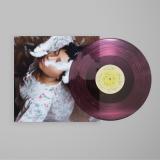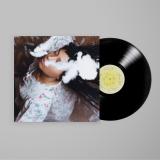
For her new and most radical album »Electroacoustic Works for Halldorophone«, Martina Bertoni used the electronic instrument at EMS Stockholm to create four pieces that are massive in scale and incredibly intimate, sonically restrained and emotionally overwhelming—almost ambient and always demanding your full attention.
Martina Bertoni returns to Karlrecords with »Electroacoustic Works for Halldorophone,« her most radical album yet. The foundation for the four electroacoustic pieces was laid during a residency at Stockholm’s legendary Elektronmusikstudion (EMS) that the Berlin-based cellist and composer used to explore the curious instrument, originally designed by Halldór Úlfarsson in 2008, as an algorithmic system in order to examine tunings and the mathematical relationships between Aiming to analyse and understand their interaction beyond the composer’s control, Bertoni sought to engage more deeply with the concepts of time, tuning, and, most importantly, control. Accordingly, her four »Electroacoustic Works for Halldorophone« seem both massive in scale and incredibly intimate, sonically restrained and emotionally overwhelming— almost ambient and always demanding your full attention.
While the halldorophone—famously used by Hildur Guðnadóttir for her »Joker« score—roughly resembles a cello and can be played like one, it is an electronic instrument. The vibration of its strings is being picked up, amplified, and then routed through a speaker. This creates a feedback loop that becomes increasingly complex depending on how much gain is added to individual strings. Úlfarsson gave Bertoni a carte blanche for how to handle the instrument, but she stresses that she relied on »minimal interventions—some string strumming and plucking« that set the interactions of different sounds and frequencies into motion. »I decided to not approach it like a cellist would,« she explains. »Instead I used it as a kind of generative organ by turning it into a feedback machine, with tuned feedback triggering more feedback depending on the tuning, which was based on tetraphonic scales that I could apply on the four main strings as well as the sympathetic group of strings.«
Bertoni recorded the material in the EMS studio, later composing and arranging the four complex pieces in her home in Berlin, after which they were mixed and mastered by Ciaran O’Shea. While this can be considered a compositional abstraction process, traces of her concrete work as a performer are firmly ingrained in the music. »The halldorophone doesn’t have a line output, just a double set of speakers, which is why I recorded all sounds with two microphones in the EMS studio,« she explains. »That’s why there’s plenty of breathing sounds here and there—label owner Thomas Herbst and I jokingly refer to the album as my ›chamber music record‹.« And indeed, there is a striking sense of intimacy to these four pieces throughout which individual sounds, harmonic frequencies, and even subtle rhythmic figures seem to move both on their own accord but also according to a underlying vision that steers their interplay.
Indeed, »Electroacoustic Works for Halldorophone« is an album built on and marked by contrasts. The soothing polylogue of single sounds in the higher register on opener »Omen in G« is counterpointed by massive bass drones, while the second piece, »Nominal in D,« plays a cunning game of repetition and difference by combining thick textures with all kinds of rhythmic elements. »Fades in C«—the longest of the four pieces, clocking in at 17 minutes—unlocks the emotional potentials of the sonic qualities of the halldorophone, sounding at once serene and anthemic, and »Organon in D« closes the album by underscoring how Bertoni’s unconventional approach allows her to seamlessly transform simple, quiet tones into complex, towering walls of sound.
Поиск:music for speakers
Все
RareTwo Inc. aka DJ Sneak and Tripmastaz are back together for 33 chambers EP, the next Respect The Craft release.
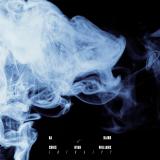
Words by Sneak:
"On a hot Ibizan summer the Rare Two fellas spent a period of 33 days on the island making tracks in a house garage with a couple of pieces of affordable gear and a whole lot of talent. We managed to create 33 tracks often burning them on CD to take to djs like Ricardo Villalobos at Amnesia and seeing the instant reaction of the crowd. We are a mega team of same mentality dudes who create from the heart breaking all rules and getting music done for a purpose. The Tripmastaz and Sneak Team is one to expect many great dance floor killers. As we call them Guttah Styles!
Words by Tripmastaz:
Recently I found these projects and since they were done on just a laptop and cheap small speakers, I gave them proper analog mixing and mastering.
All tracks remain exactly the same form and arrangement as they were originally done, including track Aww Lawd, that was featured on R. Villalobos BBC Radio 1 Pete Tongs mix back in 2018.
Mike Grinser at Mandmade Mastering did the lacquer cut and made it sound very crisp and loud a lot like it would've been cut in the 90s.
Warehouse Find!
Introducing Red D, the Belgian DJ and producer, one half of FCL (alongside San Soda), long standing club promoter (since 1992), owner of We Play House and general all round good guy. With releases on Ferrispark and Delusions Of Grandeur (with MCDE), remixes on Eskimo, regular sets at the likes of Panorama Bar and an RA Mix under his belt you could say things are falling into place nicely. On top of all this his FCL project continues to go from strength to strength with a new
EP dropping soon on Kai 'KZR' Alce's highly regarded NDATL label. When he sent over two originals for Freerange it was love at first listen as the simple, warm beats and emotive chord stabs of title track Chez oozed from the speakers. This sounded to me like house music in it's purest form, from the days when the focus was on a feeling rather than complex sounds or technological
trickery. And the proof is in the pudding with this one as you can feel the dance floor go into some kind of collective bubble of love whenever you play it. The second original follows drawing you into a false sense of security with familiar 707 beats and gentle pads before taking a left turn. Appropriately titled Into Darkness the blissful vibes of the intro begin to fall away as the
track reaches a breakdown and we're treated to the rudest of Chi-Town basslines taking us down a somewhat less wholesome path. Flipping over we're treated to two Jacob Korn remixes, one of each of the originals and if the A side is the good cop, we can trust the Uncanny Valley regular to deliver some pure badness on the flip. His Remix of Chez is clearly inspired by his studio hardware as you can hear the improvised and 'live'
sounding arrangement, the machines taking on a life of their own as things twist and turn in a spontaneous and unpredictable way. A rattling white noise pulse drives the rhythm whilst bubbling synths add some lightness to the pummeling
kick. Into Darkness gets the Korn treatment next and here he puts it right through the sonic mangler, tape saturation distorting the mix to within an inch of it's life. Jacob puts the focus on the bassline of the original, keeping things simple at
first before winding in layers of Juno chords and the bleepiest of synth lines resulting in the finest of raw, bassment house jams.
Concrete City's two residents re-emerge with 'Serious Coin', the second long-player from label head DJ Superherb and long-time collaborator Ten Years Lost. Where their 2023 debut basked in heat-hazed hedonism, this follow-up sharpens the focus. At times deeper, and consistently drawing from the pair's shared language, Serious Coin is an unmissable entry in the Full Dose catalogue.
Across eight tracks, the duo lean further into their soulful instincts, balancing weighty low-end pressure with a distinctly human emotional warmth. Vocoded vocals, coalescing with dungeon synths, being carried by heavily swung rhythms represent a new strand in the pair's musical DNA.
The album captures the stillness of early morning city streets, yet still manages to push rhythmic elements forward. Barely-present samples and subtly detuned synths give the tracks a lived-in feel, as if they’ve already soundtracked a hundred late nights before reaching your speakers.
Like the first, this album has one foot firmly in dancefloor utility and the other in headphone introspection. Don't miss this dustier and deeper evolution to the Full Dose sound!
In spring 2025, Abul Mogard and Rafael Anton Irisarri created the source material for their second album, Where Light Pauses in the Silence of the Sun, during a three-day residency at Morphine Raum in Berlin. Functioning as both recording studio and performance venue, the space has no stage, with the audience gathered around the performers. Working within an open framework, the duo reshaped the music each evening while recording the performances live to multitrack. Rotary speakers, modular synthesizers and bowed guitar formed the core of their sonic language, captured through a 1970s mixing console and microphones placed around the room.
Back in Mogard’s studio in Rome, the material was further crafted as motifs were stretched, fragments isolated, and tempos dissolved. Irisarri recorded additional guitar textures and treatments in New York, while passages recorded by Martina Bertoni and Andrea Burelli in Berlin reinforced the harmonic centres and brought breath, refinement and a new sensibility to their compositions. The process continued as Mogard’s layering and subtraction reassembled everyone’s parts into the final arrangement.
The album opens with “In the Eastern Wild,” building from a sparse outline into a monumental formation of low-frequency weight, its internal motion shaped by the rotating Leslie speaker. “Over the Domes” widens into a broader acoustic field, where sustained modular tones meet waves of softly plucked guitar. The music then turns inward with “A Blue Descent,” centred on Bertoni’s cello, whose growling timbre introduces a melancholic depth.
At the album’s centre, “In a Quiet Radiance” unfolds around a slow guitar ostinato, its luminous stillness opening into a more expansive and reflective state. Across its ten-minute span, Burelli’s violin lines and Bertoni’s lower cello phrases gradually surface, weaving through the harmonic field. Mogard brings Burelli’s processed voice to the fore, its emotive, operatic presence becoming one of the record’s pivotal moments. “Of Blessed Ages” suspends the sonic flow, shifting between parallel major and minor chords as lingering, slowly decaying melodies shape the music’s internal drift. The closing “Among Shadows” settles into a darker resonance as layered textures recede.
Mogard and Irisarri’s shared language balances restraint and maximalism. UK magazine Crack describes the music as “a tidal wave held in suspension,” while Dutch newspaper de Volkskrant writes, “What a colossal sound, and how this music strikes at the emotions.” Reflecting on the residency sessions, Irisarri recalls: “At moments I genuinely couldn’t tell if a sound was coming from me or from Abul. It stopped feeling like two people making decisions and began to feel like we were inside a system moving on its own."
Marja de Sanctis’ cover artwork revisits the vessel sculpture from the duo’s first album, Impossibly Distant, Impossibly Close. There it appeared as raw, unfired clay. Here it has been fired in the kiln and finished with a glaze. Light gathers on its polished surface and spills into the surrounding space. As she explains, “I wanted to convey the idea of continuity within the duo, and the vessel became a kind of container for that idea. However, their music felt different this time, and with the collaboration of Martina and Andrea, I felt it should have a sleeker, softer, more glamorous look, very distant from the first raw appearance.” The transformation of the vessel from raw clay to fired form suggests a passage from immediacy toward permanence, mirroring the music’s gradual expansion.
In spring 2025, Abul Mogard and Rafael Anton Irisarri created the source material for their second album, Where Light Pauses in the Silence of the Sun, during a three-day residency at Morphine Raum in Berlin. Functioning as both recording studio and performance venue, the space has no stage, with the audience gathered around the performers. Working within an open framework, the duo reshaped the music each evening while recording the performances live to multitrack. Rotary speakers, modular synthesizers and bowed guitar formed the core of their sonic language, captured through a 1970s mixing console and microphones placed around the room.
Back in Mogard’s studio in Rome, the material was further crafted as motifs were stretched, fragments isolated, and tempos dissolved. Irisarri recorded additional guitar textures and treatments in New York, while passages recorded by Martina Bertoni and Andrea Burelli in Berlin reinforced the harmonic centres and brought breath, refinement and a new sensibility to their compositions. The process continued as Mogard’s layering and subtraction reassembled everyone’s parts into the final arrangement.
The album opens with “In the Eastern Wild,” building from a sparse outline into a monumental formation of low-frequency weight, its internal motion shaped by the rotating Leslie speaker. “Over the Domes” widens into a broader acoustic field, where sustained modular tones meet waves of softly plucked guitar. The music then turns inward with “A Blue Descent,” centred on Bertoni’s cello, whose growling timbre introduces a melancholic depth.
At the album’s centre, “In a Quiet Radiance” unfolds around a slow guitar ostinato, its luminous stillness opening into a more expansive and reflective state. Across its ten-minute span, Burelli’s violin lines and Bertoni’s lower cello phrases gradually surface, weaving through the harmonic field. Mogard brings Burelli’s processed voice to the fore, its emotive, operatic presence becoming one of the record’s pivotal moments. “Of Blessed Ages” suspends the sonic flow, shifting between parallel major and minor chords as lingering, slowly decaying melodies shape the music’s internal drift. The closing “Among Shadows” settles into a darker resonance as layered textures recede.
Mogard and Irisarri’s shared language balances restraint and maximalism. UK magazine Crack describes the music as “a tidal wave held in suspension,” while Dutch newspaper de Volkskrant writes, “What a colossal sound, and how this music strikes at the emotions.” Reflecting on the residency sessions, Irisarri recalls: “At moments I genuinely couldn’t tell if a sound was coming from me or from Abul. It stopped feeling like two people making decisions and began to feel like we were inside a system moving on its own."
Marja de Sanctis’ cover artwork revisits the vessel sculpture from the duo’s first album, Impossibly Distant, Impossibly Close. There it appeared as raw, unfired clay. Here it has been fired in the kiln and finished with a glaze. Light gathers on its polished surface and spills into the surrounding space. As she explains, “I wanted to convey the idea of continuity within the duo, and the vessel became a kind of container for that idea. However, their music felt different this time, and with the collaboration of Martina and Andrea, I felt it should have a sleeker, softer, more glamorous look, very distant from the first raw appearance.” The transformation of the vessel from raw clay to fired form suggests a passage from immediacy toward permanence, mirroring the music’s gradual expansion.
In spring 2025, Abul Mogard and Rafael Anton Irisarri created the source material for their second album, Where Light Pauses in the Silence of the Sun, during a three-day residency at Morphine Raum in Berlin. Functioning as both recording studio and performance venue, the space has no stage, with the audience gathered around the performers. Working within an open framework, the duo reshaped the music each evening while recording the performances live to multitrack. Rotary speakers, modular synthesizers and bowed guitar formed the core of their sonic language, captured through a 1970s mixing console and microphones placed around the room.
Back in Mogard’s studio in Rome, the material was further crafted as motifs were stretched, fragments isolated, and tempos dissolved. Irisarri recorded additional guitar textures and treatments in New York, while passages recorded by Martina Bertoni and Andrea Burelli in Berlin reinforced the harmonic centres and brought breath, refinement and a new sensibility to their compositions. The process continued as Mogard’s layering and subtraction reassembled everyone’s parts into the final arrangement.
The album opens with “In the Eastern Wild,” building from a sparse outline into a monumental formation of low-frequency weight, its internal motion shaped by the rotating Leslie speaker. “Over the Domes” widens into a broader acoustic field, where sustained modular tones meet waves of softly plucked guitar. The music then turns inward with “A Blue Descent,” centred on Bertoni’s cello, whose growling timbre introduces a melancholic depth.
At the album’s centre, “In a Quiet Radiance” unfolds around a slow guitar ostinato, its luminous stillness opening into a more expansive and reflective state. Across its ten-minute span, Burelli’s violin lines and Bertoni’s lower cello phrases gradually surface, weaving through the harmonic field. Mogard brings Burelli’s processed voice to the fore, its emotive, operatic presence becoming one of the record’s pivotal moments. “Of Blessed Ages” suspends the sonic flow, shifting between parallel major and minor chords as lingering, slowly decaying melodies shape the music’s internal drift. The closing “Among Shadows” settles into a darker resonance as layered textures recede.
Mogard and Irisarri’s shared language balances restraint and maximalism. UK magazine Crack describes the music as “a tidal wave held in suspension,” while Dutch newspaper de Volkskrant writes, “What a colossal sound, and how this music strikes at the emotions.” Reflecting on the residency sessions, Irisarri recalls: “At moments I genuinely couldn’t tell if a sound was coming from me or from Abul. It stopped feeling like two people making decisions and began to feel like we were inside a system moving on its own."
Marja de Sanctis’ cover artwork revisits the vessel sculpture from the duo’s first album, Impossibly Distant, Impossibly Close. There it appeared as raw, unfired clay. Here it has been fired in the kiln and finished with a glaze. Light gathers on its polished surface and spills into the surrounding space. As she explains, “I wanted to convey the idea of continuity within the duo, and the vessel became a kind of container for that idea. However, their music felt different this time, and with the collaboration of Martina and Andrea, I felt it should have a sleeker, softer, more glamorous look, very distant from the first raw appearance.” The transformation of the vessel from raw clay to fired form suggests a passage from immediacy toward permanence, mirroring the music’s gradual expansion.
2026 Repress
One of the leading names in contemporary underground music, Guy J, embarks on a new journey. As a dedicated futurist and sound enthusiast who pushes boundaries akin to science fiction, Guy delivers the first track on his new label with an abstract vision of the layered future of sound. This 15-minute preview of Guy J's forward-thinking, innovative work indicates a promising future for his label. Experience the birth and transformation of a new era in sound from day one!
Every beginning carries excitement and unpredictability, requiring something extraordinary. Whether rooted in creationism, biblical narratives, or the Big Bang Theory, both theological and scientific origin stories resonate with events echoing millions of years into the future. One of the leading names in contemporary underground music, Guy J, embarks on a new journey. As a dedicated futurist and sound enthusiast who pushes boundaries akin to science fiction, Guy delivers the first track on his new label with an abstract vision of the layered future of sound.
From the opening patterns till the end, A Million Years From Now offers an adventure, blending moments of free-flowing thought with a perfectly engineered audio collage that evokes a spectrum of abstract emotions-from melancholia and psychedelia to breathless excitement and, ultimately, pure euphoria.
The layered creativity transcends realism, leading listeners into a state of trance. The second piece, Just Rain, kicks off with a bass-heavy, pumping kick drum that vibrates speakers on any sound system.
However, Guy J transforms this from a rhythm-based track into a melodic epic. Its power lies in the seamless transitions and manipulation of effects and in the compositional structure that evolves over the eight-minute arrangement. Despite its subtle atmosphere, the melody culminates in an explosion of emotions that stimulate every frequency of the audible sound spectrum.
This 15-minute preview of Guy J's forward-thinking, innovative work indicates a promising future for his label. Experience the birth and transformation of a new era in sound from day one!
2026 Repress
WRWTFWW Records is extremely excited to announce the first ever vinyl release for Pizza Hotline’s brilliant 2022 full-length Level Select, originally only released on cassette and digital. The liquid drum & bass meets Y2K era video gaming aesthetics monster is now available in a limited edition transparent vinyl double LP with a glorious 45rpm cut, packaged in a heavyweight 350gsm sleeve.
Entirely written and composed by UK producer Pizza Hotline (apart from "GLACIER ZONE", a collaboration between Pizza Hotline and DJ Total 90), the stellar 8-song album was initially released as a limited cassette in January 2022 and quickly gained cult status - making a full-on vinyl release quite the necessity. It’s here now with the the previously unreleased track "POLYGON DREAMSCAPE" (which sounds as magical as its title) and 45rpm cut for louder, bigger, deeper bass rumbling.
Spellbinding, atmospheric, and beautifully melodic, Level Select is a large scope dreamy adventure of liquid DnB filled with ambient escapades, ethereal jungle, high vibe breaks, and a heavy loving dose of late 90s / early 2000s video game influences. Hypnotic late night hype and pensive chill moods mesh with ease in a cinematic soundscape that re-contextualizes and gives a new life to a beloved music genre - LTJ Bukem, Peshay, the Wipeout OST or Soichi Terada's Ape Escape come to mind, and sounds and soundtracks from the Sony Playstation, the Nintendo 64, and the Sega Saturn resonate from the speakers. It’s all fresh with a subtle nostalgia and so much heart. An instant classic.
With Dominik Eulberg and Arne Schaffhausen (of EXTRAWELT) we welcome back two longtime Cocoon heroes to the label. The two were featured in a VICE Magazine special last year for a 'field recording' documentary. you-need-to-hear-this/dominik-eulberg-westerwald-extrawelt-zurich-lost-and-found) which marked the beginning of a new collaboration. Dominik and Arne checked their fresh recorded sounds in the studio and found out that there have a common base and musical understanding. They started to work on new tracks and it looks like this joint venture will continue for a longer time. The first results of their mutual work is 'A Little Further' which will be released in three different versions on Cocoon Recordings in the next weeks (COR12117). So let's start with 'Not On A Map' version: This one seems to be tailor made for the next afterhour and the rising sun. Dominik and Arne create the perfect mood for those special moments on the floor with a nice mix of energetic beats, interesting sounds and an emotional bass- and synth-programming. So many layers and different levels however the overall picture never gets overcharged or too demanding. Coming up next is the '37 Routes' version which quite stands out with the used breakbeats and no standard 4/4 kick drum. The synths are more scratchy and louder and the bassline seems to jump out of the speakers, this is a massive wall of sound production. The direction here is clear. However the two incorporated some cool and magic breaks that seem to refer to the deeper Eulberg sound which forms a great mix of two different techno-visions. Last but not least there's the 'Imaginery Escort' version which appears a bit like the dub edit of 'A Little Further".
- A1: Prologue (Feat Malik Ameer Crumpler)
- A2: Nighthawks
- A3: Play Dead (Feat Malik Ameer Crumpler &Amp; Mark Millington)
- A4: Queen Of Cats
- A5: The City Is Beautiful (Feat Malik Ameer Crumpler &Amp; Mark Millington)
- A6: Nightbus 3Am
- A7: Organ / Lucid (Feat Malik Ameer Crumpler)
- A8: Apres Minuit (Feat Mark Millington)
- A9: West (Feat Malik Ameer Crumpler)
- A10: Chapter 1 - A Boy
- B1: Ghouls
- B2: North
- B3: Chapter 2 - A Party
- B4: Chapter 3 - A Girl
- B5: A Ghost&Apos;S Lament (Feat Malik Ameer Crumpler)
- B6: Chapter 4 - A Monster
- B7: Moonlight
- B8: Chapter 5 - A Home
- B9: Orca / Burial
First Word Records are very proud to bring you 'Ghouls', the 6th studio album from Bastien Keb.
Through the reflective and introspective multi-mood journey of its 19-tracks, this album spans psychedelic-chamber-funk, warped anti-ballads, cinematic instrumentals, Ethio-jazz & ethereal ambience.
Part soundtrack, part beat-tape, part memoir, this is a dreamlike soundscape sewn together from half-forgotten memories & late night breakdowns.
Entirely sample-free, this album is full to the brim with musical experimentation, with Keb's compulsion to make all the individual pieces of music independently; combining strings, harps, saxophones, theremins, clarinets, flutes and trumpets.
He signals to the fuzzy, nostalgic nebulous of mid '90s skate videos, as well as harking back to the scores & moods of movies like The French Connection, Taxi Driver, The Warriors and La Haine. There are whispers of sounds in the air from jazz clubs, street preachers & Turkish restaurants.
Keb describes the sonic experience of this album simply as this… "You're half awake, and half asleep, but you're warm…"
For this 19-track opus, Keb is joined extensively by Malik Ameer Crumpler; a poet, composer, editor and professor based in Paris, who's been involved in numerous albums while writing for various forms of experimental media.
A multi-instrumentalist originally from the Midlands, Bastien Keb (aka Sebastian Jones) previously released his highly-acclaimed album '22.02.85' on First Word back in 2017; this new album being a very welcome return to the Worldwide Award-winning UK independent label.
His music has been widely supported across BBC Radio in the past by DJs including Gilles Peterson, Huey Morgan, Huw Stephens, Jamie Cullum, Lauren Laverne, Mary Anne Hobbs, Nemone and Tom Ravenscroft. This is in addition to glowing press reviews from the likes of Pitchfork, The Guardian and The Line Of Best Fit.
He's built up a steady fanbase through his extensive catalogue over the years, with material for labels like Def Pressé, Gearbox, One-Handed Music and most recently for Shabaka Hutchings' Native Rebel Recordings imprint, on a collaborative project with South London's Confucius MC (Speakers Corner Quartet).
Keb concludes "this record is for anyone feeling lost in a world that seems to have lost itself without knowing it. It's for the people who know that the world is missing the beauty of the lights in the distance, whilst being distracted by new shoes and flashy phones..."
'Ghouls' is due to be released on vinyl & digital worldwide, November 14th 2025.
Oliver Dollar presents part four of his Contemporary series on Rekids. The EP precedes his upcoming album on the label, enlisting Seven ‘Sev’ Davis Jr. and Nils Ohrmann, alongside dub reinterpretations by La Boix and Sev.
Germany’s Oliver Dollar returns to Radio Slave’s Rekids with Contemporary Part Four, Parts one through three featured collaborations with Austin Ato, Brillstein, Harvard Bass, Hazmat Live, Boogs, and many more, winning support from the likes of Nightmares on Wax, Anja Schneider, Laurent Garnier, Carista, Jennifer Cardini, Dam Swindle, and others.
For this next chapter of Oliver Dollar’s ‘Contemporary’, elements of Dub serve as the unifying thread, opening part four with ‘Speakers Bleed’, a jazz-inflected House cut from Oliver and Classic Music Company and Ninja Tune artist Seven ‘Sev’ Davis Jr. Hypnotic vocals swirl through deep, groove-laden rhythms, setting the tone for the EP’s fluid, atmospheric feel before Oliver reunites with Golden Gate club resident and long-time collaborator Nils Ohrmann for the Hallelujah Dub of ‘The New Is Here’. The track features the soulful voice of Detroit songwriter and Contemporary series regular APROPOS while gospel-tinged background vocals and rich textures sit over an infectious percussive rhythm. On the flip, Oliver Dollar & Brillstein’s ‘Pill Popper’ from Contemporary Part Two is reworked by La Boix, the duo of LA”s Thee Mike B (aka Brillstein) and producer Salva, whose credits include work with RL Grime, Kurupt, E-40, and the Grammy-nominated album of ScHoolboy Q, as well as remixes for Rihanna, Boys Noize and Nelly Furtado. Their version is a late-night, low-slung trip, with echoing keys and vocals drifting through deep basslines. Closing the EP, Seven Davis Jr. returns for a dub of ‘Before You’, Oliver’s collaboration with ADMN from Contemporary Part One. Retaining APROPOS’ heartfelt vocal from the original, Sev layers bright, soul-drenched synths over rolling drums, delivering an irresistible, feel-good finale.
Balearic sounds and Mediterranean warmth are the inspirations for Bruno Belissimo’s Bordello A Parigi debut. Drawing on disco, house and funk, Ottimo! is a four tracker of electronic exuberance with Belissimo’s musical ability and range immediately spilling from the speakers. Guitar strings curve around synthlines in the title piece, percussive textures giving way to the mantra-like refrain of “Ottimo!” Thick bass echoes into beaming keys for “Meduse.” Bright notes cascade, grooves melting with vocoder lyrics as classic disco tones are reimagined in this modern mirrorball medley. Organic rhythms introduce the flip. “Mirage” opens to ripples of bongos and toms as a loose structure takes hold. Hedonistic chants rise to a shimmering chord, kicks and snares funnelling the building energy as bold blasts and samples shriek with delight. “Las Piramides De Ibiza” brings the quartet to a close. Clean drum patterns support joyous notes, a machine dipped voice calling time.
- A1: She's Getting Married In August
- A2: Evenin' Rain
- A3: Les Papillons
- A4: Zeena
- A5: Virgin Morn
- A6: Seeds
- B1: Crystal Blue
- B2: Lady Carole
- B3: Lotus Child
- B4: Last Prayer
- B5: Hymn For Today
- C1: Boston
- C2: Blackbird Charlie
- C3: My Sun
- C4: Closer To The Truth
- C5: Strange News
- D1: Moonchild
- D2: Red Shoe Truckin
- D3: Beautiful
- D4: Opal Blue Sunday
First time vinyl reissue, expanded and deluxe double gatefold 140g double vinyl, remastered audio with restored artwork and fresh liners written by Paul Hillery (Folk Funk & Trippy Troubadours)
Alan James Eastwood's glorious Seeds is a certified folk-funk lost-classic.
But who was Alan James Eastwood? He had never hit the big time and commercial success eluded him. By the mid-1970s, his musical career was pretty much over and he was almost unknown except among deep heads, amongst whom he would gain cult status.
Original copies of the 1971 vinyl release of Seeds exchange hands for high sums, if you can find one. This expanded 2LP contains an extra record, collecting 9 rare non-album singles and is presented in a gatefold sleeve complete with freshly commissioned liner notes courtesy of Paul Hillery (Folk Funk & Trippy Troubadours).
With the long overdue deluxe reissue of this prized artefact, we hope to finally shine a light on the unheralded genius of Alan James Eastwood. RIYL Nick Drake, Rodriguez, Richie Havens.
Alan James ‘Bugsy’ Eastwood was a renowned musician and singer who came to prominence in the late 1960s with The Exception, an unsung but excellent band from Birmingham. The Exception released many singles, the first featuring friend Robert Plant on tambourine, before an album, The Exceptional Exception. However, by this time, Bugsy was feeling constrained and restless; he left the band within weeks of the release.
Having vanished from the scene, he was honing a deeper, introspective edge to his songwriting. His demos found their way to the sound engineer and producer Mike Cooper at Pan Music Studios in Denmark Street. Loving what he heard, Eastwood soon entered a recording session with Cooper. The session was just Alan, his guitar and harmonica and - by all accounts - it was remarkable. With the songs, the voice and such an exceptional talent, it was hard to go wrong. Says Mike: "We had John Hawkins do the big string arrangements and Richard Hewson arranged the string quartet. We overdubbed the orchestrations on Alan's original session recordings, adding Chris Karan on tabla and various percussion. We considered re-recording the vocals but found that the magic on that original session was so exceptional overdubbing would not be as good as the atmospheric 'live' performance."
Mike and Alan viewed each track as a different entity, giving the album a diverse sonic palette. Assessing each song individually, they decided which would be suitable for each arranger. Top-flight session musicians were added to the roster to complete the sound, with Byron Lye Fook (father of musician Omar) on drums, bassist Mike Ward, Brian Pickles on marimba and jazz drummer Chris Karan on tabla and percussion. Recorded in a matter of days in Pan's small 8-track studio, they carefully added overdubs, rhythm sections and four string sessions arranged by Hawkins, with Hewson's arrangements recorded at Trident Studios.
Seeds was Alan James Eastwood's debut solo album – indeed, his only solo album - and was originally issued on President in 1971. It melded Eastwood’s impressive rock sensibilities with a folk thread to superb effect. His arresting voice - its deep, rough-hewn soulfulness - coupled with gorgeous string-drenched backing, make this a phenomenal listen. It really is a great 70s singer-songwriter record - with touches of acid-folk and folk-funk throughout.
It opens with "She's Getting Married In August", a mellow tune with Richard Hewson's strings arranged around Alan's straightforward guitar structure. Up next, the joyous, sun-dappled guitar and strings workout "Evenin' Rain" glides by before the fragile, accordion-enhanced "Les Papillons" breezes out of the speakers. The bluesy "Zeena" follows, featuring vocals and acoustic guitar and showcasing Eastwood's effortless harmonica. Starting out as a ballad, "Virgin Morn" builds with soaring strings and gospel-tinged backing vocals from Marilyn Powell and jazz singer Josephine Stahl. The A-side closes with the title track, "Seeds". With a chugging mid-tempo beat, soulful vocals and a beautiful Bacharach-esque string arrangement, it truly is stop-you-in-your-tracks spectacular.
Side B opens with "Crystal Blue", gilded by Lye Fook's marimba, lush gospel-esque backing vocals and handclaps. Eastwood's acoustic guitar begins "Lady Carole", which starts as a bluesy ballad and builds with more string arrangement, lifting the track to another height. A towering highlight of epic proportions, "Lotus Child" is a true masterpiece of arrangement. It opens with simple yet stunning do-do-dah vocal harmonies blended with John Hawkins's strings, bass lines and rhythmic beats, forming a vibe very much in conversation with the sounds coming from LA's Laurel Canyon. Next up, the heartwarming "Last Prayer", dedicated to Alan's first and last love, contains a melancholic vocal with a wistful string-drenched arrangement that would sit comfortably in a Federico Fellini score. Bringing the album to a close, "Hymn For Today" is a melodic raga with tabla, strings and a soft-psych feel. Eastwood's prophetic whisper - "I am real. At last, I am real" - profoundly hits home.
Kicking off the extra disc is the sparsely funky and country-tinged "Boston", released as the flip to the astonishing "Seeds". Next up are the two tracks that comprised Alan’s debut solo 7" single from 1968. The laconic, Bobby Charles-esque "Blackbird Charlie" evidences a real depth and charm in Eastwood's songwriting whilst the starkly brilliant flip, "My Sun", was a horizontal, atmospheric folk-tinged soundtracky precursor to his later work on Seeds.
In 1972, two further standalone singles followed. The first was the evergreen flute-driven folk-funk bomb, "Closer To The Truth", backed by the funky blues of "Strange News". The second, a deeply moving Havens-inspired "Moonchild" - rightly fawned over to this day - was flipped with "Red Shoe Truckin'", a groove-infused track. Eastwood also paired up with Marilyn Powell for a single produced by Powell's partner, Mike Cooper. Under the name Eastwood & Powell, they released their staggering rendition of "Beautiful", a rock-blues-pop song arranged by Ivor Raymonde and written by Carole King. Over on the flip, a funky Eastwood original "Opal Blue Sunday" lurked. This is not to be overlooked.
Over the years, Alan remained active on the music scene, but problems with alcohol and health complications from diabetes severely impacted his career. He spent his latter years living in London until his untimely death from heart failure on 25 October 2007, just one day before his 62nd birthday and without his music having received the real acclaim it so dearly deserved.
This deluxe reissue, spellbinding from beginning to end, should hopefully go some way to rectifying this tragic fact. Mastering for this special double vinyl edition was overseen by Be With regular Simon Francis and it was cut by the esteemed Cicely Balston at Abbey Road Studios to be pressed in the Netherlands by Record Industry. The original artwork has been lovingly brought back to life at Be With HQ, with the addition of passionately written liner notes specially for this landmark reissue by none other than Paul Hillery.
- A1: Boston 168 - Feeling You (06 00)
- A2: Tigerhead - Alice Trough A Looking Glass (04 31)
- A3: Sina Xx - Rock This Place (04 24)
- B1: Endlec - Panther (05 47)
- B2: Theo Nasa - Sex & Acid Pleasure (04 02)
- B3: Shaleen - Vernalagnia (04 56)
- C1: Öspiel - Bygone (04 36)
- C2: Raho - Panic On Acid (04 32)
- C3: Diana May - Just Shut The F__K Up (04 28)
- D1: (Krtm) - Küss Mich Jetzt (04:05)
- D2: Vuuduu - Vuuduu - Snax (04 35)
- D3: Madwoman - Chaos Theory (04 46)
BPitch präsentiert die nächste Ausgabe ihrer WE ARE NOT ALONE Compilation-Reihe - ein vielfältiges Paket mit Sounds, die den Geist der WE ARE NOT ALONE-Partys widerspiegeln und einen Einblick in eine Szene von Künstlern geben, die sich dem Underground verschrieben haben. WE ARE NOT ALONE pt. 8 bietet zwölf unverzichtbare Tracks für DJs, Raver und Musikfans, die eine breite Palette an Genres abdecken und dabei nie den Dancefloor aus den Augen verlieren. Die neue Compilation spannt die Fäden zwischen den Genres und dokumentiert mit der gewohnten Qualität des Berliner Labels das nächste Kapitel in seinem stetig wachsenden Beitrag zur Kultur.
WE ARE NOT ALONE pt. 8 zeigt, dass das Label keine Pläne hat, die Hitze zu drosseln, mit einer weiteren Runde reinstem Hedonismus für die Ewigkeit.
BPitch present the next iteration of their WE ARE NOT ALONE compilation series - a diverse package of sounds reflecting the spirit of the WE ARE NOT ALONE parties, and offering a glimpse into a community of artists that have committed themselves to the underground.
Touching on a wide range of genres whilst never losing sight of the dancefloor, WE ARE NOT ALONE pt.8 offers twelve essential cuts for DJs, ravers, and music heads alike. Tying the threads between genres, and with the mark of quality expected from the Berlin label, this new compilation documents the next chapter in its ever-growing contribution to the culture.
Returning to the label appearances on both BPitch and its accompanying label UFO Inc. - Turin-based duo Boston 168 open the club doors with a masterful fusion of trance build-ups and stripped back pointillism on ‘Feeling You’. Another member of the BPitch roster having just released an EP on the label, Tigerhead steps up with heavy kickdrums and uncanny pads on the aptly-titled ‘Alice Through The Looking Glass’. Stepping into more minimal territory, Sina XX - founding member of the Paris rave collective Subtyl - offers a warm, bouncing cut that teeters between the dark and euphoric with a masterful balance. Taking a swift 180 into the darkest industrial spaces, Endlec serves up a gritty percussive workout on the formidable ‘Panther’.
Theo Nasa - a South London-based purveyor of weird, melodramatic techno - moves into hazier spaces on ‘Sex and Acid Pleasure’, an eccentric dose of acid for the senses. Shaleen - a resident of the WE ARE NOT ALONE event series - continues into the warmth with a headspin of analogue sounds and modular experimentalism with ‘Vernalagnia’. Öspiel, the French-Korean producer and label head known for his cinematic sounds weaves together angular rhythms underpinned by a strong sense of minimalism. In hot pursuit, Puglia’s Raho comes through with a cyclone of bouncing kicks and harsh leads.
Diana May, a Berlin-staple and resident at KitKat offers us a welcoming spiral on ‘Just Shut The F*** Up’. Plunging into deep industrial caverns, KRTM ’s ‘Küss Mich Jetzt’ is a pounding glitch of hardcore techno for the biggest speakers. VUUDUU’s ‘SNAXX’ shifts the speed up a gear with an expansive gothic rave banger. Rounding things off is madwoman’s ‘Chaos Theory’, a sparse but unrelenting cut of atmospheric techno from deep inside a warehouse.
WE ARE NOT ALONE pt.8 shows the label have no plans on lowering the heat in 2024, with another round of pure hedonism for the ages.
j d1 | KRTM - Küss Mich Jetzt (04 05)
Australia's world-renowned cinematic soul outfit Surprise Chef return with new album Superb. A record that represents a change in their creative approach and turns up the heat in their music. Trading in their meticulous writing and recording techniques for a looser and less planned approach with the intentions of bringing more levity to the process, and it comes through in spades. The high caliber musicianship is still front and center, but they push their sound into a more energetic and fun place on this album. Album opener "Sleep Dreams" is the closest thing to a Surprise Chef tune one would come to expect but then lead single "Bully Ball" comes on and you get the picture that they came to kick in the door on this one. The song's gritty drums thunder through the speakers and get covered with percussion, keys, bass, and guitar chanks that stay in the pocket and bring the funk with them. The band pushes the boundaries of arrangement with tunes like "Body Slam" that starts off like a sweet soul track then pulls a 180, turning dark and haunting, centering on a sound they created by tucking a timpani into a bathroom two doors down from the mixing board. That same sense of experimentation comes up again on "Fare Evader" where they pepper another neck breaking rhythm track with synth notes that sound like robot sound effects from a 70s sci-film. The fellas turn up the tempo for the dance with tunes like "Consulate Case" and "Tag Dag"; the former pulling influence from afro-funk and the latter from jazz-funk. They take us deep into the beautiful world of Surprise Chef ballads on "Websites" and double down on their abilities to make beautiful and ethereal tracks with "Dreamer's Disease". With their new album Superb, their new approach, and plans to tour the world, we are about to see Surprise Chef take the step from the underground's most beloved to a household name and we are definitely here for it.
- A1: Belle Vie
- A2: Ahh-Haa Ft Lamine Sonko
- A3: Asskin For More Ft Sampa The Great
- A4: Aunty Modu
- A5: Vibe Breaktion Interlude
- A6: Ohellyeh Ft Bilalli & Vida Sunshyne
- B1: Kingdom | Come Ft Lamine Sonko
- B2: Sa Udade (Interlude)
- B3: Lions
- B4: Sankofa
- B5: Slow Down Learn Fast Ft Bilalli
- B6: Heal Up Ft Lamine Sonko
- B7: Ancestors (One Love)
WE ARE EXCITED TO PRESENT THE NEXT RELEASE ON THE NORTHSIDE LABEL, COURTESY OF MELBOURNE HIP HOP / AFROBEAT GROUP : COOL OUT SUN.
Melbourne's Afro Hip Hop veterans, Cool Out Sun are releasing their sophomore LP 'A LION IS A LION' October 4th.
Spearheaded by the duo of Nfa Jones and Sensible J (known for their work across 1200 Techniques, REMi, Sampa The Great & solo projects) are joined by a star studded line up of guests. These include Sampa The Great, Lamine Sonko, Immy Owusu, Vida Sunshyne, Bilalli and more as COS aim to shine light on on their local circle of creatives and inspirations.
Cool Out Sun creates music bridging the traditions of classic Hip Hop with the traditions of Afrobeat, Afro soul & roots music blending West African language and culture with modern sonics that jump out the speakers. Beats are built on the MPC & refined with all live instrumentation & vocals recorded in their lofi indie label, House of Beige studio in the middle of nowhere.
The group's explosive live show has them performing consistently, and their music has been getting a lot of Australian airplay as well as spins across the US, EU and the UK radio.
Cool Out Sun songs go deep into social subjects and storytelling with historical and cultural messaging hidden in catchy hooks and heavy grooves. This collection of songs continues this theme while leaning into the more vibrant side of what Cool Out Sun cooked up in the studio in the creation of this album, 'A LION IS A LION.
To order copies at the WHOLESALE RATE of $25 comes with a minimum of 3 units with each order. Shipping can be arranged and also records can be picked up from here in Fitzroy at Northide.
Since the first releases of ECHT!, one question has been on everyone's lips: does this act belong on a live stage, or is their music best experienced through a set of powerful speakers in a packed, sweaty club? With their third album, 'Boilerism', the band finally settles the debate, diving headfirst into the heart of club culture and bringing the ecstatic energy of the dance floor to the live stage.
Since their debut with the EP DOUF (2019), followed by the full-length albums Inwane (2021) and Sink-Along (2023), ECHT! has consistently been building a reputation for redefining their musical standards, blending deep grooves and adding raw textures. With 'Boilerism', they pick up the pace, exploring genres like acid, drum & bass, footwork, and UK garage. all while retaining their signature love for the unexpected. The album features tracks filled with sudden shifts and twists that keep listeners on their toes. Known for transforming electronic, hip-hop, and jazz influences into live-performed compositions, ECHT! continues to deliver a fresh perspective on electronic music that feels both innovative and uncompromising.
The album's title, a nod to the underground club scene and its unifying energy, captures the album's spirit: music that challenges limits, encourages experimentation, and unites through its intensity.
Opening with tracks like Boilerbeek, Wacky Wave, and the single Highed, the band builds upon the foundations of their two previous albums. However, it's with Mtwk Parts 3 & 4, a direct continuation of earlier chapters, that the energy kicks into higher gear. Midway, the album ventures into harder, more intense territory, showcasing the band's confident evolution. A brief but intricate interlude, Black Sablon, offers a layered moment of respite before the intensity returns. From there, ECHT! fully embraces their club-oriented sound with acid-infused bangers like Klaas Rescue and the provocatively titled BK-hole. These tracks leave no doubt about their intent, delivering straight-up, relentless dancefloor energy that captures the essence of their live performances.
The album concludes with Penguin Alfred, a thoughtful and emotive finale that seamlessly transitions between ambient soundscapes and delicate breakbeats, highlighting the band's dynamic range and creative depth.
It's been three years since ECHT!'s debut album Inwane, followed by their second LP Sink-Along in 2023, both released on Sdban Ultra. Their music has garnered acclaimfrom notable outlets such as Mixmag, DJ Mag, and Tsugi while earning support from respected DJs including Lefto, Gilles Peterson, and Jamz Supernova on BBC Radio 6. ECHT! has performed at iconic venues such as the Jazz Café (London), AB (Brussels), Melkweg & Paradiso (Amsterdam), and Gretchen (Berlin). Their most recent tour spanned 14 countries, including Mexico and India.
- A1: Vajolet (Feat Lukas Lauermann, Wolfgang Pfistermüller & Flip Philipp)
- A2: Autostrada Del Brennero (Feat Diggory Kenrick)
- A3: Latzfonser Kreuz (Feat Mamadou Diabate & Hamidou Koita)
- A4: Lago Di Garda (Feat Roger Robinson)
- A5: Alfa Romeo 145 (Feat Kwame Yeboah)
- A6: Feltuner Hütte (Feat Osman Murat Ertel)
- A7: Avrupa Köprüsü (Feat Osman Murat Ertel)
- A8: Europabrücke (Feat Susanna Gartmayer)
- B1: Ancient Atoll (Feat Reinhilde Gamper, Martin Mallaun & Flip Philipp)
- B2: Latemar (Feat Reinhilde Gamper & Martin Mallaun)
- B3: Brennerautobahn (Feat Taka Noda)
- B4: Echoes Part I (Feat Flip Philipp)
- B5: Echoes Part Ii (Feat Flip Philipp)
- B6: Transit Tribe (Feat Didi Kern)
- B7: Latemar (Reprise)
12"[23,49 €]
Ulrich Troyer has been producing music now solidly for over twenty years within a largely genre free framework, but whilst navigating forms such as avant-garde, techno, leftfield, field recording, electronica, glitch and ambient it is the aesthetics of dub that guide his creative direction. Not really recognisable in an orthodox form as remixed versions of roots reggae songs but in the way sonics are manipulated with space, the application and layering of delay, reverb and echo that fixes his output well within the scope of what might be called futurist dub.
The nearest comparisons to his new album TRANSIT TRIBE can only be established by a synthesis of some of the more adventurous explorations in modern music such as African Head Charge, Jon Hassell, Pole (Stefan Betke), Bill Laswell or even Miles Davis; featuring a diverse selection of artists and friends not only from Vienna and environs but also from around the world, sounds are not so much fused but allowed to float along the continuous flowing tide of warm waves of bass.
Rather than to allow the names of Ulrich Troyer's collaborators be merely listed in the album credits, what they bring to this joyful affair needs to be outlined, albeit briefly: Co-producer credits go to Osman Murat Ertel from Istanbul, who employed a variation on the old foolproof Nick Lowe method for checking out the impact quality of his own sound productions by playing tracks through his car sound system speakers!
Murat is a member of the electro-psych-folk group Baba Zula where he plays electric saz, oscillators and theremin and played a key part in the creative development of the album. Mamadou Diabate, the balafon master originally from Burkina Faso and now resident in Vienna, has developed his own unique technique of playing solos that replicate the sound of three instruments playing in unison; however the multi-talented Mamadou is engaged here on singing and playing the talking drum. From South Tyrol Reinhilde Gamper is a member of the experimental trio Greifer who are bringing the sound of the zither into the twenty-first century using new playing techniques and electronic gadgets. Susanna Gartmayer is an Austrian composer and bass clarinetist specialising in improv and multimedia sound research. Diggory Kenrick has been engaged with creating new dub fusions and also re-energising classic rocksteady and roots reggae classics, renowned for his interventions on flute. Didi Kern is an electronic dance musician and drummer from Vienna with a focus on free improvised music. Hamidou Koita, a singer and multi-instrumentalist, is from a traditional Griot family in Burkina Faso but now resident in Vienna and a regular musical partner of Mamadou Diabate playing drums and calabash. Austrian Lukas Lauermann is both a studio and live musician playing cello, also working on electronic sound design and writing string arrangements. He has recorded extensively and appeared on stage with both Mark Lanegan and Hans-Joachim Roedelius. Martin Mallaun is a Tyrol-born specialist in both the development of the zither in modern music and also as a researcher in the effects of climate change on the vegetation of Alpine ecosystems. Mystica Tribe is the musical alias of Tokyo-based dub/techno producer Taka (Takafumi) Noda. He collaborated with Vienna's own Vegetable Orchestra on 2020's "Transplants (Mystica Tribe Version)". After studying classical percussion Flip Philipp is now a jazz vibraphone player and member of the Vienna Symphony Orchestra. Wolfgang Pfistermüller is a member of the Vienna Trombone Quartet and the developer of the incredible bass-trombone Aurora with its uniquely warm and resonant sound. Roger Robinson is a renowned British poet, winner of many contemporary poetry prizes and member of the experimental music group King Midas Sound. Kwame Yeboah is a Ghanaian born UK based keyboard wizard who tours regularly with Yusuf / Cat Stevens, Ms. Dynamite and Pat Thomas.
So contained on the album is an astonishing mix of musicians and instruments: sounds of cowbells recorded in the South Tyrolean alps processed by modular synthesizers and heavy analogue bass synths combined with instruments such as zither, bass-zither, electro saz, flute, talking drum, trombone, cello, vibraphone, marimba, djembe, contra-alto clarinet, melodica, Farfisa - all bound together by organic live-drums and dub effects.
Liner notes by Steve Barker
- A1: Vajolet Feat Lukas Lauermann, Wolfgang Pfistermüller & Flip Philipp
- A2: Autostrada Del Brennero Feat Diggory Kenrick
- A3: Latzfonser Kreuz Feat Mamadou Diabate & Hamidou Koita
- A4: Lago Di Garda Feat Roger Robinson
- A5: Alfa Romeo 145 Feat Kwame Yeboah
- B1: Feltuner Hütte Feat Osman Murat Ertel
- B2: Avrupa Köprüsü Feat Osman Murat Ertel
- B3: Europabrücke Feat Susanna Gartmayer
- B4: Ancient Atoll Feat Reinhilde Gamper, Martin Mallaun & Flip Philipp
Cassette[14,92 €]
Ulrich Troyer has been producing music now solidly for over twenty years within a largely genre free framework, but whilst navigating forms such as avant-garde, techno, leftfield, field recording, electronica, glitch and ambient it is the aesthetics of dub that guide his creative direction. Not really recognisable in an orthodox form as remixed versions of roots reggae songs but in the way sonics are manipulated with space, the application and layering of delay, reverb and echo that fixes his output well within the scope of what might be called futurist dub.
The nearest comparisons to his new album TRANSIT TRIBE can only be established by a synthesis of some of the more adventurous explorations in modern music such as African Head Charge, Jon Hassell, Pole (Stefan Betke), Bill Laswell or even Miles Davis; featuring a diverse selection of artists and friends not only from Vienna and environs but also from around the world, sounds are not so much fused but allowed to float along the continuous flowing tide of warm waves of bass.
Rather than to allow the names of Ulrich Troyer's collaborators be merely listed in the album credits, what they bring to this joyful affair needs to be outlined, albeit briefly: Co-producer credits go to Osman Murat Ertel from Istanbul, who employed a variation on the old foolproof Nick Lowe method for checking out the impact quality of his own sound productions by playing tracks through his car sound system speakers!
Murat is a member of the electro-psych-folk group Baba Zula where he plays electric saz, oscillators and theremin and played a key part in the creative development of the album. Mamadou Diabate, the balafon master originally from Burkina Faso and now resident in Vienna, has developed his own unique technique of playing solos that replicate the sound of three instruments playing in unison; however the multi-talented Mamadou is engaged here on singing and playing the talking drum. From South Tyrol Reinhilde Gamper is a member of the experimental trio Greifer who are bringing the sound of the zither into the twenty-first century using new playing techniques and electronic gadgets. Susanna Gartmayer is an Austrian composer and bass clarinetist specialising in improv and multimedia sound research. Diggory Kenrick has been engaged with creating new dub fusions and also re-energising classic rocksteady and roots reggae classics, renowned for his interventions on flute. Didi Kern is an electronic dance musician and drummer from Vienna with a focus on free improvised music. Hamidou Koita, a singer and multi-instrumentalist, is from a traditional Griot family in Burkina Faso but now resident in Vienna and a regular musical partner of Mamadou Diabate playing drums and calabash. Austrian Lukas Lauermann is both a studio and live musician playing cello, also working on electronic sound design and writing string arrangements. He has recorded extensively and appeared on stage with both Mark Lanegan and Hans-Joachim Roedelius. Martin Mallaun is a Tyrol-born specialist in both the development of the zither in modern music and also as a researcher in the effects of climate change on the vegetation of Alpine ecosystems. After studying classical percussion Flip Philipp is now a jazz vibraphone player and member of the Vienna Symphony Orchestra. Wolfgang Pfistermüller is a member of the Vienna Trombone Quartet and the developer of the incredible bass-trombone Aurora with its uniquely warm and resonant sound. Roger Robinson is a renowned British poet, winner of many contemporary poetry prizes and member of the experimental music group King Midas Sound. Kwame Yeboah is a Ghanaian born UK based keyboard wizard who tours regularly with Yusuf / Cat Stevens, Ms. Dynamite and Pat Thomas.
So contained on the album is an astonishing mix of musicians and instruments: sounds of cowbells recorded in the South Tyrolean alps processed by modular synthesizers and heavy analogue bass synths combined with instruments such as zither, bass-zither, electro saz, flute, talking drum, trombone, cello, marimba, djembe, contra-alto clarinet, Farfisa - all bound together by organic live-drums and dub effects.
The Chronics is co-manager of the respected Bipolar Disorder and Primal Instinct labels along with Chlar and Alarico, and is known for his mastery of straight-up and compelling grooves and evocative anthems. He has been releasing for over a decade now and shows his versatility again here. This new release makes a debut vinyl offering from the Anglo-Australian Transition label, following millions of digital plays since its inception last summer and support from DJs like FJAAK, Anetha, Daria Kolosova, VTSS and Boys Noize.
Opener 'By My Soul' is a techno pumper with inescapable euphoria built into the diva vocals and the smart synth loops that rise up and up through the mix. It's lean and linear but packed with feelings that burst out of the speakers and hook in your heart. Dublin's Tommy Holohan is blazing an exciting path as a fine new talent who is part of Samba Boys with Kettama and has released on SCDD, Monnom Black and more. His remix is even more maximal, with happy piano stabs dropped in and a funky bassline that brings an all-new vibe.
The Chronics then serve up 'Body Harmony', a slamming but playful cut with a colourful lead synth motif and unrelenting drums. It's warm and energising while also hitting hard, especially during the epic jungle breakdown. Acclaimed techno producer and live artist Obscure Shape recently split from his long-time partner SHDW but is already making waves as a solo talent with a huge batch of unreleased music, including this remix. It's a turbocharged and nimble loop techno offering enriched with Detroit-style machine soul and precision percussion that keeps you hooked.
- A1: Oriana Ikomo - Never Forget
- A2: Moodprint - Eartha
- A3: Kin Gajo - Exit, Gajo!
- A4: Adja - Told You So
- A5: Bodies - Brioche
- B1: Orson Claeys - Conversations
- B2: Bodem - Kleine Mars
- B3: Honey - Bossa Dolce
- C1: Azmari - Sheep Party
- C2: Le Ministère - De L'amour
- C3: Ciao Kennedy - Parcifal Pt. I
- D1: Echofarmer - Beginning Would Have Been Outside
- D2: Kassius - Escapism
- D3: Bruno X Soet X Moene - Ott
Vol. 1[22,27 €]
Vol.2 Black Vinyl[24,79 €]
Vol.2 Limted Red Vinyl[26,01 €]
Vol. 3 Transparent Violet Vinyl[27,52 €]
Standard version on 2LP black vinyl in gatefold sleeve. ‘Lefto presents Jazz Cats' is back with volume 3 and still doing what it does best: putting you in the front row of what the thriving Belgian jazz scene currently has to offer and revealing a melting pot of the musical talent.
'Lefto presents Jazz Cats' is back with volume 3 and still doing what it does best: putting you in the front row of what the thriving Belgian jazz scene currently has to offer and revealing a melting pot of the musical talent coming out one of the smallest countries in Europe. Never change a winning team they say, so we're happy to have Belgian DJ and eclectic connoisseur Lefto on board again.
Although you expect thecompilation to be talking jazz, volume 3 explores a broader array of styles, genres, and sounds than ever before, arriving at a point where the 'young cats' of today don't bother no more. It may focus on the Belgian scene, but let's face it, seeing the influences, this one could be compiled from all over the world. From the empowering and bittersweet voices of Oriana Ikomo and Adja, over the more acoustic-electronic productions of Moodprint, Ciao Kennedy, Kassius and echofarmer. It's even expanding the Jazz Cats universe to dub and bass-heavy tracks with Kin Gajo and Le Ministère, Ethio-jazz from Azmari, while sending you back to earth with bodies' swirling sax and drums. That saxophone still rings in your ears when you end up in the orbit of the march-like drums of Bodem, Orson Claeys' piano testing your ability to follow him, slamming the breaks to go smooth cruisin' with HONEY (Morricone meets Khruangbin, anyone?), to crashing in a raging tempo on that last track of Bruno x Soet x Moene. And there you are, back with us.
2018's 'Lefto presents Jazz Cats' included tracks from some of Belgium's biggest hitters, including Black Flower, STUFF. De Beren Gieren and Glass Museum who have all gone on to receive global acclaim. The album was given the accolade of 'Album of the Week' on Worldwide FM and also received further radio support from Jazz FM in addition to numerous glowing reviews. The 2022 follow-up 'Jazz Cats volume 2' paved the way for a new generation inspired by its peers, entering another era of very talented individuals and collectives. Maybe even more so than 4 years before. It uncovered a beautiful balance of more established but also obscure musicians and artists. Opening up to electronics and dance, enter bands like ECHT!, Stellar Legions and TUKAN. Thrilling innovative soundscape grooves and jazz fusion with Bandler Ching and L?p?GangGang, not to forget about the weaving musical odyssey that is M.CHUZI. In addition, there's the balanced unease of One Frame Movement, the laidback 'acoustic electronica' of Boombox Experiments, the classic funky jazz stylings of Cargo Mas and cinematic The Brums, all of these have set volume 2 on the map as an essential release for any jazzhead with a passion for new sounds.
Tastemaker, selector, curator, DJ and producer, these words often get mentioned when Lefto's name pops up in discussions. And rightly so. If you've ever had the pleasure to listen to one of his incredible Boiler Room sets or one of his many radio shows, you'll know why. Famed for his gloriously eclectic taste on the decks, he switches effortlessly between hip hop, funk, breaks, neck-snapping beats, future bass, South-American influences, bruk riddims, some wild African rhythms and of course, jazz.
Growing up as a child, his father would have the sounds of jazz flowing through the speakers. Which led him to bars around town to hear the latest jazz ensembles. Falling in love with the genre, he would later refine his knack for record digging and fine ear for music working at Belgium's legendary Music Mania record store in his hometown Brussels. Which makes that Lefto is consistently a couple steps ahead. He doesn't wait for the next thing to land in his lap, but actively seeking it out.
Lefto on Jazz Cats volume 3:
"Another release in less than two years! I am very impressed by the amount of creative "jazz" talent we've managed to compile over the last couple of years. Thanks to the internet, young musicians find inspiration from around the globe and incorporate diverse influences into their work. Given the history and heritage of jazz in this country, it has managed to create a healthy jazz scene supported by festivals, venues, press, and labels. Therefore, I am very proud to present to you the thirdinstallment of Jazz Cats. This compilation is dedicated to the young and hardworking musicians who are the present and the future of Belgium's jazz scene."
Shipwrec have delved into the underbelly of electronics for their latest discovery. Fake Youth Cult is the brand new project of Richard van Kruysdijk, an artist who has been integral to the Dutch music scene. Following releases on Delsin, as well as founding his own Music for Speakers label, this latest undertaking explores the darker hues of Kruysdijk's audio creations. Across six tracks, a realm of shadows and steel is constructed. From the murky tones of "Visitor" to the industrial and blackened "Scorched", a towering sound of punishing percussion looms over the listener. Techno is central message. Despite this, the piercing coldness of electro rises in the incising and stark "Messing." The influence of punk comes to the fore in racing rhythms and lean strings that make up "Smear." BPMs drop in the slow burning EBM stained "Management." The machines take control for the finale. A relentless kick is the motor that drives this seven minute juggernaut to the close. Broad and brutish brilliance from a prodigious talent.
We are proud to release first full length album on the series by FAKK, the boss of “under.time”, a label and event series running in Rosario, Argentina. The album is named “El cementerio de las maquinas parlantes” which translates to “The graveyard of speakers” and have a mystical, ghostly feel to it. This project was a while in the making with an idea to be full club ready release with 8 tracks ranging through a specific spectrum of electronic music through the worldview of the artist resulting in this 2x12”. This marks an official pathway for more albums on the label in the future but that’s another topic. It is a joy to see it turn out how it did with a super high chance sending some speakers to beyond repair state in the world that we are living in.
- A1: Introduction & Scene
- A2: Valse
- A3: Pas De Trois/Intrada/Allegro Semplice/Moderato/Allegro & Coda
- B1: Sujet & Danse Des Coupes
- B2: Scene
- B3: Scene
- B4: Danse Des Cygnes/Tempo Di Valse
- B5: Andante Non Troppo
- C1: Allegro Moderato
- C2: Temo Di Valse
- C3: Moderato Assai
- C4: Coda
- C5: Allegro Giusto/Scene Et Valse
- C6: Scene
- C7: Danse Neapolitaine
- D1: Mazurka
- D2: Danse Hongroise
- D3: Pas De Deux/Intrada/Andante/Tempo Di Valse/Coda
- D4: Scene/Scene Finale
Here is a true delight for all ballet fans and music-lovers. This recording of what is probably Tchaikovsky’s most popular ballet, Swan Lake, by Ernest Ansermet and his orchestra in a masterly performance is now available as a new pressing in vinyl. The Russian composer’s first ballet is offered here on a double LP and although not a complete recording, this compilation (with a minimum of cuts) certainly comprises the most beautiful and expressive scenes, losing nothing in the process. “Ballet specialist“ Ansermet and his wonderfully balanced Orchestre de la Suisse Romande offer here a recording which you’ll want to hear again and again for it captures both the tragic moments of the fairy tale and the festive dance scenes. The precise winds in, for example No. 4, provide a marked contrast to the lively and exciting tutti (No. 5), while the gentle woodwinds blend charmingly with the dreamlike cantilena of the strings (No. 11). The various characteristics of the festive national dances (Polkas, Mazurkas, Hungarian Dance etc.) are performed with temperament, verve and rhythm, but it is the waltzes with their sweet dreaminess which invite the listener most of all to put on their dancing shoes and join in the dance.
Having been re-discovered as a groundbreaking slice of proto-grime from 1994, Dylan Beale’s legendary soundtrack for the SNES game Wolverine: Adamantium Rage finally gets the reissue treatment it deserves via Sneaker Social Club.
When the game came out in 1994, Beale’s soundtrack for the SNES edition stood out from the pack for its gritty beats, deceptively weighty low end and edgy orchestra stabs, but few would have guessed how certain tracks would predict the shape of music to come. Around 2016, the ‘Tri-fusion’ track in particular was picked up on by London-based producer Sir Pixalot as a mind-blowing slice of Eski beat coldness. To prove his point, Pixalot ran an acapella from J-Wing over the track and the results spoke for themselves.
While ‘Tri-Fusion’ is a straight-up accidental grime sheller, there’s scores more heat packed away in Beale’s soundtrack for Adamantium Rage. The limitations of the space on the game cart meant Beale had to get creative with the most limited samples. Fortunately his background producing UK hardcore and jungle in Rude & Deadly and Stuck To Your Lips meant he knew his way around the restrictions of an Akai s950. Fuelled by the inspiration of jungle and West Coast rap, he worked on the game soundtrack with a similar spartan attitude, limited to 200kb with which to load up the music engine for the game, samples and all.
Given the importance of minimalism in the effectiveness of soundsystem music, it’s not surprising tracks like ‘Cyber’ and ‘Dark Queen’ pack a punch which could absolutely set a dance off. Watch out for ‘Weapon X Lab’ too - another stand out bomb creating a deadly machine funk out of the tightly clipped bass samples and weird animal groan loops. Alongside the full, original soundtrack, this first issue of Wolverine: Adamantium Rage OST comes with additional tracks never used in the original game which widen out the styles Beale was exploring within the shockingly limited means at his disposal.
“I vividly remember when we first played the soundtrack on a bigger set of speakers to the boss,” Beale recalls, “his initial reaction was one of amazement that we had created something so ‘real’and different in comparison to everything else out there in terms of video game music, which I remember with great pride and fondness. Comparing to everything out there, it was totally unique- a moment in time.”
At times where technology inexorably infuses into humankind, Ammar808’s next adventures lays within the realms of Stambeli’s invisible creatures, an old genuine Tunisian tradition that has roots spreading out within the depths of the African continent.
Stambeli is a Tunisian musical therapeutic ritual that was implanted by afro-descendant communities. During the ceremonies, music, dance and chants are blended so as for some participants to reach the alternate state of trance while they are possessed by super natural entities. It is a syncretism between Islam and animist Yorisha religion’s voodoo beliefs, that has been disseminated during slave trade by Yoruba populations originating from current Benin’s gulf. Stambeli is a precious legacy the symbolizes the outstanding diversity and complexity of the North-African identity.
Using drum machines and analog synthesizers, he summons super natural creatures to visit our material world and taste human incarnations, form the audience’s collective experience. The album features vocals and gumbri from Bellassan Mihoub, who inherited his father’s knowledge and mastery, and currently embodies the avant-guarde of Stambeli’s revival. Two additional choristers round off the stage band, also playing the krekebs: these are pairs of large castagnet-like instruments oscillating in the limbo between binary and ternary rhythmic patterns. They breathe life and motion into this pagan communion, blessed by VJ Sia original visuals synchronized to the thundering music.
Super Stambeli is a contemporary interpretation of the Stambeli traditional repertoire, processed through a time-travel washing-machine, a parallel-dimension earthquake portal, that aims to echoes ancestral ceremonies through sub-harmonic speakers. It’s a dialogue between the wailing of the gombri, known to call for the spirits to descend into the bodies of the participants, but this time AMMAR808 directs them straight into the digital circuits of his clockwork-crafted machineries.
Berlin based Millhouse has been bangin' out the tunes for over 20 years, playing in venues across Europe alongside many of the world’s top DJ’s, continuously demonstrating energetic musical dynamics in mixing and producing the machine based techno he’s become so well-known and respected for.
Continuing with the ‘Limited As Fuck’ series of releases, on our fiercely independent techno label based in Scotland, we’re absolutely going to cause outrageous arm waving behaviour on the dance floors with this scandalous techno due to the despicable nature of the notoriety it’s going to make for itself. Full of driving kicks, bass lines and sinister synth stabs, this release will set off a series of events that’ll shock your speakers with outrageous consequences.
WARNING: TUMULTUOUS TECHNO OF SUCH MAGNITUDE CAN ONLY LEAD TO A DANCE FLOOR DISASTER SHOW
repress !
First vinyl slice of the year and a brand new act onboard: El Joven Prisionero. We have been told that this project is made by two well known experts: Oscar Mulero and Another Machines.
About the music, three cuts on vinyl and four on digital, all named in Spanish to add more confusion for the non speakers.
El Joven Prisionero opens the EP in a gymnastic mode, solid kicks, an energized raw sequence setting things up and a mutant structure. A proper bullet for the post restricted dancefloors when ready.
Agitate incides directly on the most sensible parts of your mind and sound receivers, hysterical synth lines running over a shuffled beat and random resonant bleeps. Another physical exercise of abstract dancefloor weaponry.
Extrano Mundo follows, an elastic beat runs alone on the first bars, soon joined by martian and asymmetrical sequences growing from below. Additional percussive layers complete the equation, that as always is wisely administered on an intelligent arrangement.
"A Place For Love" is a captivating electronic house music endeavor, expertly crafted by the synergistic partnership of San Proper and Figi, hailing from the vibrant city of Amsterdam. The project boasts an impressive roster of guest contributors, including Tom Trago, Seth Troxler, and the esteemed label heads of Guti & David Gtronic, each imbuing the compositions with their signature style. The project exudes a funky, charming, and inviting energy, inviting listeners to fully embrace their individuality and lose themselves in the hypnotic beats. Whether it be the electrifying dubby techno, the shimmering and ethereal twists, or the razor-sharp edges injected into the club-ready tracks, "A Place For Love" offers a diverse array of auditory delights. It is truly a sanctuary for those seeking to indulge in the boundless beauty of electronic music and the euphoria of self-
"A Place For Love" is a captivating electronic house music endeavor, expertly crafted by the synergistic partnership of San Proper and Figi, hailing from the vibrant city of Amsterdam. The project boasts an impressive roster of guest contributors, including Tom Trago, Seth Troxler, and the esteemed label heads of Guti & David Gtronic, each imbuing the compositions with their signature style. The project exudes a funky, charming, and inviting energy, inviting listeners to fully embrace their individuality and lose themselves in the hypnotic beats. Whether it be the electrifying dubby techno, the shimmering and ethereal twists, or the razor-sharp edges injected into the club-ready tracks, "A Place For Love" offers a diverse array of auditory delights. It is truly a sanctuary for those seeking to indulge in the boundless beauty of electronic music and the euphoria of self-expression.
Holly Lester’s Duality Trax Label has quickly become synonymous for its blend of future facing sonics and mind-warping melodies, served together with a healthy dose of nostalgia. A label just as focused on making dancefloor destroyers as it is exploring left-leaning, personal projects, it’s within this duality where the label has found its success, never afraid to shy away from b side oddities or tracks edging more towards good-old-fashioned-fun.
DUALITY5 steers towards the latter, with Manchester based DJ & producer Aiden Francis providing the serotonin on tap with three lively dancefloor cuts, including a huge remix from Italy’s Matisa. Aiden had a big 2022, releasing music on Magic Carpet, Gestalt and beloved music platform and label Houseum, solidifying himself as one to watch in the euphoric unity of house, trance and techno.
Title track ‘Plastic Fantasy’ is the star of the show, a suitably sassy roller that places everyone's favorite blonde icon front left of the speakers. Subtle old school strings contrast with alien electronics, providing familiarity in an otherwise unfamiliar world. A bubble-gum vocal then rolls in cheekily over a driving bassline and dynamic percussion - used in a way I’m not sure the original creators had in mind. ‘Future Proof’ meanwhile demonstrates Aidens’ knack for contemporary progressive house music. With warm pads, swirling sonic textures and moments of blissful euphoria, it’s energetic enough to move a dancefloor, but gentle enough for home listening too.
The record comes to a close with ‘Aquamarine’, with Aiden opting in favour of free flowing breakbeats and mind expanding synths, together radiating a feeling of warmth and hope for days to come. Italian DJ and producer Matisa is on hand to round the EP off with a bass-heavy rendition of ‘Plastic Fantasy’ a no-holds-barred speed garage licked stomper, with the power to lure smokers back inside the club with their feet firmly planted on the dancefloor.
Brazilian artist Bruno Furlan is the next to make his mark on the famed Hot Creations imprint. The two-track release, The Speakers Pump Like This, is set to bring the heat and make serious waves on dancefloors this year.
Title track The Speakers Pump Like This transports you straight to the club, with its peak-time pace, sonic synth stabs and prominent vocal cuts. On the flip, Moving gets to work with a sharp kick-drum and infectious vocals, as subtle builds and drops move throughout the track, whilst retaining the solid, rolling groove.
Hailing from the diverse and electric city of Sao Paulo in Brazil, Bruno Furlan started his DJ career while still a teenager and quickly became a highlight in the Brazilian electronic music scene, capturing the attention of artists such as Claude VonStroke, Chris Lake, Solardo, Green Velvet and Amine Edge & Dance. Always driven by a great love for his art, Bruno has created his own unique way of approaching music production, resulting in a standout discography and performances throughout the world. In addition to his own record label Whistle Records, Bruno has released on labels such as Dirytbird, Relief, , Sony Music, SOLA, Nervous, and more.
Sam Interface (formerly known as SNØW) returns to the seminal R&S Records following the success of last year’s R&S Presents: More Time Records Vol 1, which was a 4 track compilation featuring Ahadadream, Bala Bala Boyz, Bryte & SNØW.
He is the co-founder of London’s More Time Records, on which he has released much of his own music as SNØW (including collaborations with Zed Bias, Fox, Dread MC & more) and can also be found monthly on Rinse FM and Reprezent Radio playing a range of percussive genres including UK Funky, GQOM, Kuduro, Afrobeats and more.
The name change takes him closer to his first alias Interface, under which he had DnB hits with the likes of DJ Die and more, he explains: “When i first released music back in my early DnB days I used the alias “Interface” and so many people still call me Sam Interface - it feels like the most natural name for me.”
The lead track “Underground” (which samples an announcement from the tube) references a range of London-centric genres, combining polyrhythmic percussion with an extremely upfront bass sound which draws influence from and exxagerates recent drill productions.
“Finally”, a collaboration with an old friend & prolific DnB producer Break follows, bringing frantic motion to the release. The third track “Crud” utilises Sam’s signature gully bass production, flooding the speakers with low end on the drop. The EP wraps up with “Pink Dolphins” - a euphoric dancefloor moment which channels the energy and emotion of jungle, drawing on some of Sam’s earliest rave influences.
Italian Duo Souldynamic have been turning the heat up considerably over the last couple of years. Releasing a steady stream of original track, remixes and their well loved disco reworks they have popped up on some of the most respected labels out there from King Street and Tribe to BBE. Consequently their remixes have adorned the releases of some of the most legendary performers from across the electronic scene including Louie Vega and Dennis Ferrer.
Their latest release the ‘West Side of Afrika’ EP see’s them land on the irrepressible Samosa Records. They are having a glorious couple of years with one sell out chart topping release after another so it’s a well made match.
Comprising four tracks of afro centric house music it’s a wonderfully warm and inviting release if you love your percussive African disco.
Lead track Guinée fuses easy going percussion with an effervescent bassline and a wonderfully expressive vocal. It’s a track which is easy to get lost in, one for those communal loved up dancefloor moments.
Faranah is a more laid back affair again leading off with layers of percussion its swirling dual vocals and brass stabs give it tons of feel-good zest
Over on the flip Bamako is the deepest cut on the release. It’s pounding bassline cuts through the speakers, creating immeasurable straight to the dancefloor energy. Wonderfully succinct playing and a ridiculously hooky vocal top matters off perfectly..
Final track Beyla is the perfect way to see the release out. Energetic brass stabs power the track. Couple those with some brilliant looped up percussion and it’s a track which will fit a variety of situations from the more laid back to the peak time. Indeed the percussive break down midway through is worth buying two copies for.
Another powerful release from the Samosa stable!
UILTY RAZORS, BONA FIDE PUNKS.
Writings on the topic that go off in all directions, mind-numbing lectures given by academics, and testimonies, most of them heavily doctored, from those who “lived through that era”: so many people today fantasize about the early days of punk in our country… This blessed moment when no one had yet thought of flaunting a ridiculous green mohawk, taking Sid Vicious as a hero, or – even worse – making the so-called alternative scene both festive and boorish. There was no such thing in 1976 or 1977, when it wasn’t easy to get hold of the first 45s by the Pistols or the Clash. Few people were aware of what was happening on the fringes of the fringes at the time. Malcolm McLaren was virtually unknown, and having short hair made you seem strange. Who knew then that rock music, which had taken a very bad turn since the early 1970s, would once again become an essential element of liberation? That, thanks to short and fast songs, it would once again rediscover that primitive, social side that was so hated by older generations? Who knew that, besides a few loners who read the music press (it was even better if they read it in English) and frequented the right record stores? Many of these formed bands, because it was impossible to do otherwise. We quickly went from listening to the Velvet Underground to trying to play the Stooges’ intros. It’s a somewhat collective story, even though there weren’t many people to start it.
The Guilty Razors were among those who took part in this initial upheaval in Paris. They were far from being the worst. They had something special and even released a single that was well above the national average. They also had enough songs to fill an album, the one you’re holding. In everyone’s opinion, they were definitely not among the punk impostors that followed in their wake. They were, at least, genuine and credible.
Guilty Razors, Parisian punk band (1975-1978). To understand something about their somewhat linear but very energetic sound, we might need to talk about the context in which it was born and, more broadly, recall the boredom (a theme that would become capital in punk songs) coupled with the desire to blow everything off, which were the basis for the formation of bands playing a rejuvenated rock music ; about the passion for a few records by the Kinks or the early Who, by the Stooges, by the Velvet mostly, which set you apart from the crowd.
And of course, we should remember this new wave, which was promoted by a few articles in the specialized press and some cutting-edge record stores, coming from New York or London, whose small but powerful influence could be felt in Paris and in a handful of isolated places in the provinces, lulled to sleep by so many appalling things, from Tangerine Dream to President Giscard d’Estaing...
In 1975-76, French music was, as almost always, in a sorry state ; it was still dominated by Johnny Hallyday and Sylvie Vartan. Local rock music was also rather bleak, apart from Bijou and Little Bob who tried to revive this small scene with poorly sound-engineered gigs played to almost no one.
In the working class suburbs at the time, it was mainly hard rock music played to 11 that helped people forget about their gruelling shifts at the factory. Here and there, on the outskirts of major cities, you still could find a few rockers with sideburns wearing black armbands since the death of Gene Vincent, but it wasn’t a proper mass movement, just a source of real danger to anyone they came across who wasn't like them. In August 1976, a festival unlike any other took place in Mont-de-Marsan – the First European Punk Festival as the poster said – with almost as many people on stage as in the audience. Yet, on that day, a quasi historical event happened, when, under the blazing afternoon sun, a band of unknowns called The Damned made an unprecedented noise in the arena, reminiscent of the chaotic Stooges in their early adolescence. They were the first genuine punk band to perform in our country: from then on, anything was possible, almost anything seemed permissible.
It makes sense that the four+1 members of Guilty Razors, who initially amplified acoustic guitars with crappy tape recorder microphones, would adopt punk music (pronounced paink in French) naturally and instinctively, since it combines liberating noise with speed of execution and – crucially – a very healthy sense of rebellion (the protesters of May 1968 proclaimed, and it was even a slogan, that they weren’t against old people, but against what had made them grow old. In the mid-1970s, it seemed normal and obvious that old people should now ALSO be targeted!!!).
At the time, the desire to fight back, and break down authority and apathy, was either red or black, often taking the form of leafleting, tumultuous general assemblies in the schoolyard, and massive or shabby demonstrations, most of the time overflowing with an exciting vitality that sometimes turned into fights with the riot police. Indeed, soon after the end of the Vietnam War and following Pinochet’s coup in Chile, all over France, Trotskyist and anarcho-libertarian fervour was firmly entrenched among parts of the educated youth population, who were equally rebellious and troublemakers whenever they had the chance. It should also be noted that when the single "Anarchy in the UK" was first heard, even though not many of us had access to it, both the title and its explosive sound immediately resonated with some of those troublemakers crying out for ANARCHY!!! Meanwhile, the left-wing majority still equated punks with reckless young neo-Nazis. Of course, the widely circulated photos in the mainstream press of Siouxsie Sioux with her swastikas didn’t necessarily help to win over the theorists of the Great Revolution. It took Joe Strummer to introduce The Clash as an anti-racist, anti-fascist and anti-ignorance band for the rejection of old-school revolutionaries to fade a little.
The Lycée Jean-Baptiste Say at Porte d’Auteuil, despite being located in the very posh and very exclusive 16th arrondissement of Paris, didn’t escape these "committed" upheavals, which doubled as the perfect outlet for the less timid members of this generation.
“Back then, politics were fun,” says Tristam Nada, who studied there and went on to become Guilty Razors’ frontman. “Jean-Baptiste was the leftist high-school in the neighbourhood. When the far right guys from the GUD came down there, the Communist League guys from elsewhere helped us fight them off.”
Anything that could challenge authority was fair game and of course, strikes for just about any reason would lead to increasingly frequent truancy (with a definitive farewell to education that would soon follow). Tristam Nada spent his 10th and 11th unfinished grades with José Perez, who had come from Spain, where his father, a janitor, had been sentenced to death by Franco. “José steered my tastes towards solid acts such as The Who. Like most teenagers, I had previously absorbed just about everything that came my way, from Yes to Led Zeppelin to Genesis. I was exploring… And then one day, he told me that he and his brother Carlos wanted to start a rock band.” The Perez brothers already played guitar. “Of course, they were Spanish!”, jokes their singer. “Then, somewhat reluctantly, José took up the bass and we were soon joined by Jano – who called himself Jano Homicid – who took up the rhythm guitar.” Several drummers would later join this core of not easily intimidated young guys who didn’t let adversity get the better of them.
The first rehearsals of the newly named Guilty Razors took place in the bedroom of a Perez aunt. There, the three rookies tried to cover a few standards, songs that often were an integral part of their lives. During a first, short gig, in front of a bewildered audience of tough old-school rockers, they launched into a clunky version of the Velvet Underground's “Heroin”. Challenge or recklessness? A bit of both, probably… And then, step by step, their limited repertoire expanded as they decided to write their own songs, sung in a not always very accurate or academic English, but who cared about proper grammar or the right vocabulary, since what truly mattered was to make the words sound as good as possible while playing very, very fast music? And spitting out those words in a language that left no doubt as to what it conveyed mattered as well.
Trying their hand a the kind of rock music disliked by most of the neighbourhood, making noise, being fiercely provocative: they still belonged to a tiny clique who, at this very moment, had chosen to impose this difference. And there were very few places in France or elsewhere, where one could witness the first stirrings of something that wasn’t a trend yet, let alone a movement.
In the provinces, in late 1976 or early 1977, there couldn’t be more than thirty record stores that were a bit more discerning than average, where you could hear this new kind of short-haired rock music called “punk”. The old clientele, who previously had no problem coming in to buy the latest McCartney or Aerosmith LP, now felt a little less comfortable there…
In Paris, these enlightened places were quite rare and often located nex to what would become the Forum des Halles, a big shopping mall. Between three aging sex workers, a couple of second-hand clothes shops, sellers of hippie paraphernalia and small fashion designers, the good word was loudly spread in two pioneering places – propagators of what was still only a new underground movement. Historically, the first one was the Open Market, a kind of poorly, but tastefully stocked cave. Speakers blasted out the sound of sixties garage bands from the Nuggets compilation (a crucial reference for José Perez) or the badly dressed English kids of Eddie and the Hot Rods. This black-painted den was opened a few years earlier by Marc Zermati, a character who wasn’t always in a sunny disposition, but always quite radical in his (good) choices and his opinions. He founded the independent label Skydog and was one of the promoters of the Mont-de-Marsan punk festivals. Not far from there was Harry Cover, another store more in tune with the new New York scene, which was amply covered in the house fanzine, Rock News (even though it was in it that the photos of the Sex Pistols were first published in France).
It was a favorite hang-out of the Perez brothers and Tristam Nada, as the latter explained. “It’s at Harry Cover’s that we first heard the Pistols and Clash’s 45s, and after that, we decided to start writing our first songs. If they could do it, so could we!”
The sonic shocks that were “Anarchy in the UK”, “White Riot” or the Buzzcocks’s EP, “Spiral Scratch” – which Guilty Razors' sound is reminiscent of – were soon to be amplified by an unparalleled visual shock. In April 1977, right after the release of their first LP, The Clash performed at the Palais des Glaces in Paris, during a punk night organised by Marc Zermati. For many who were there, it was the gig of a lifetime…
Of course, Guilty Razors and Tristam were in the audience: “That concert was fabulous… We Parisian punks were almost all dressed in black and white, with white shirts, skinny leather ties, bikers jackets or light jackets, etc. The Clash, on the other hand, wore colourful clothes. Well, the next day, at the Gibus, you’d spot everyone who had been at this concert, but they weren’t wearing anything black, they were all wearing colours.”
It makes sense to mention the Gibus club, as Guilty Razors often played there (sometimes in front of a hostile audience). It was also the only place in Paris that regularly scheduled new Parisian or Anglo-Saxon acts, such as Generation X, Siouxsie and the Banshees, the Slits, and Johnny Thunders who would become a kind of messed-up mascot for the venue. A little later, in 1978, the Rose Bonbon – formerly the Nashville – also attracted nightly owls in search of electric thrills… In 1977, the iconic but not necessarily excellent Asphalt Jungle often played at the Gibus, sometimes sharing the bill with Metal Urbain, the only band whose aura would later transcend the French borders (“I saw them as the French Sex Pistols,” said Geoff Travis, head of their British label Rough Trade). Already established in this small scene, Metal Urbain helped the young and restless Guilty Razors who had just arrived. Guitarist for Metal Urbain Hermann Schwartz remembers it: “They were younger than us, we were a bit like their mentors even if it’s too strong a word… At least they were credible. We thought they were good, and they had good songs which reminded of the Buzzcocks that I liked a lot. But at some point, they started hanging out with the Hells Angels. That’s when we stopped following them.”
The break-up was mutual, since, Guilty Razors, for their part, were shocked when they saw a fringe element of the audience at Metal Urbain concerts who repeatedly shouted “Sieg Heil” and gave Nazi salutes. These provocations, even still minor (the bulk of the skinhead crowd would later make their presence felt during concerts), weren’t really to the liking of the Perez brothers, whose anti-fascist convictions were firmly rooted. Some things are non-negotiable.
A few months earlier (in July 1978), Guilty Razors had nevertheless opened very successfully for Metal Urbain at the Bus Palladium, a more traditonally old-school rock night-club. But, as was sometimes the case back then, the night turned into a mass brawl when suburban rockers came to “beat up punks”.
Back then, Parisian nights weren’t always sweet and serene.
So, after opening as best as they could for The Jam (their sound having been ruined by the PA system), our local heroes were – once again – met outside by a horde of greasers out to get them. “Thankfully,” says Tristam, “we were with our roadies, motorless bikers who acted as a protective barrier. We were chased in the neighbouring streets and the whole thing ended in front of a bar, with the owner coming out with a rifle…”
Although Tristam and the Perez brothers narrowly escaped various, potentially bloody, incidents, they weren’t completely innocent of wrongdoing either. They still find amusing their mugging of two strangers in the street for example (“We were broke and we simply wanted to buy tickets for the Heartbreakers concert that night,” says Tristam). It so happened that their victims were two key figures in the rock business at the time: radio presenter Alain Manneval and music publisher Philippe Constantin. They filed a complaint and sought monetary compensation, but somehow the band’s manager, the skilful but very controversial Alexis, managed to get the complaint withdrawn and Guilty Razors ended up signing with Constantin with a substantial advance.
They also signed with Polydor and the label released in 1978 their only three-track 45, featuring “I Don't Wanna be A Rich”, “Hurts and Noises” and “Provocate” (songs that exuded perpetual rebellion and an unquenchable desire for “class” confrontation). It was a very good record, but due to a lack of promotion (radio stations didn’t play French artists singing in English), it didn’t sell very well. Only 800 copies were allegedly sold and the rest of the stock was pulped… Initially, the three tracks were to be included on a LP that never came to be, since they were dropped by Polydor (“Let’s say we sometimes caused a ruckus in their offices!” laughs Tristam.) In order to perfect the long-awaited LP, the band recorded demos of other tracks. There was a cover of Pink Floyd's “Lucifer Sam” from the Syd Barrett era – proof of an enduring love for the sixties’ greats –, “Wake Up” a hangover tale and “Bad Heart” about the Baader-Meinhof gang, whose actions had a profound impact on the era and on a generation seeking extreme dissent... On the album you’re now discovering, you can also hear five previously unreleased tracks recorded a bit later during an extended and freezing stay in Madrid, in a makeshift studio with the invaluable help of a drummer also acting as sound engineer. He was both an enthusiastic old hippie and a proper whizz at sound engineering. Here too, certain influences from the fifties and sixties (Link Wray, the Troggs) are more than obvious in the band’s music.
Shortly after a final stormy and rather barbaric (on the audience’s side) “Punk night” at the Olympia in June 1978, Tristam left the band ; his bandmates continued without him for a short while.
But like most pioneering punk bands of the era, Guilty Razors eventually split up for good after three years (besides once in Spain, they’d only played in Paris). The reason for ceasing business activities were more or less the same for everyone: there were no venues outside one’s small circuit to play this kind of rock music, which was still frightening, unknown, or of little interest to most people. The chances of recording an LP were virtually null, since major labels were only signing unoriginal but reassuring sub-Téléphone clones, and the smaller ones were only interested in progressive rock or French chanson for youth clubs. And what about self-production? No one in our small safety-pinned world had thought about it yet. There wasn’t enough money to embark on that sort of venture anyway.
So yes, the early days of punk in France were truly No Future!
4/5 Mojo review: ‘Sparse, hypnotic big-room techno that builds from the bass drum up
Double LP is released on 140gm black vinyl in a transparent gloss foil sleeve, artwork and design by Ian Anderson for Designers Republic. Circuitry Electronic launches with a release that stands as a statement of intent - an artist with few true peers within English electronic music, with an album that jumps out of the speakers and slaps you around the chops. G-Man is Gez Varley - one half of Sheffield pioneers LFO, and thirty years into his solo career, with his first vinyl album release since Avanti on Force Inc way back in 2002. Speaking to DJ magazine in 2014 Gez recalled his early days working with Mark Bell as LFO: “We were influenced by groups like 808 State. Unique 3, Nightmares On Wax and also stuff like Kraftwerk, Detroit techno and early electro. So when we first hooked up and made tunes together we just wanted to rock the dancefloor at our local club The Warehouse”.
Their eponymous track ‘LFO’ – a classic of the bleep and bass techno movement – was one of the first releases on the Warp label, gate- crashing the UK’s Top 20 whilst annoying Simon Mayo along the way. Having worked with the likes of Richie Hawtin, Karl Bartos, Laurent Garnier, Art of Noise, Radiohead, YMO and Alan Wilder, in addition to the LFO output, you'd expect Gez to know his way around a techno dancefloor rhythm and drum pattern, and this is an inventive funk-filled journey that never veers too far into experimental territory yet avoids the cliches and generic tropes that too often lose the listener when techno manifests in album form.
Steve Bug and Pornbugs team up on Behind The Glass / On The Swing with remixes from Mihai Popoviciu and Markus Homm.
Unsung House hero, Steve Bug has been there and done it all. Arguably Germany’s most important pioneer, his label Poker Flat has been an epoch-defining imprint. Celebrating 20 years of Bondage Pornbugs are mixing in different circles with recent releases for Selador and Acker Dub, showcasing their crossover appeal with a new generation of DJs.
Opening with ‘On The Swing’ we are delighted by classic deep vibes with a modern twist. Grooevsome and warm, this will get the floor going anywhere in the world. On remix duties, Mihai Popoviciu drops his trademark style, smoothing out the bumps for a deeper ride.
Next up, ‘Behind The Glass’ takes a similar path. Soulful warmth exudes from the speakers as the bumpy bass and echoing keys mark time. Reaching a crescendo with muted acid undertones in the second half keeps attention high and the dancefloor full and happy. For his remix, Markus Homm takes it deeper with shades of Detroit. Liquid cool for the later floors.
HATIHATI - a new signing to DEEWEE, the record label founded by David & Stephen Dewaele of Soulwax/2manydjs.
Picture a burning car at the roadside in southern Crete, speakers held together with tape, playing records that survived sun, dust, and metallic sunrises, loud enough to make mountains sweat and clouds blush in hyper hue. HATIHATI lives somewhere between fragmented muscle memory and long walks through the Cretan mountains. The project formed on the move: buses, ferries, borrowed rooms, missed connections. Music made with travel still in the body. This is HATIHATI.
- Phonè
- Turenas
- Stria
- Sabelithe
Dr. John Chowning (b. 1934) is a pioneering computer musician, composer and professor who, in 1967, discovered the FM synthesis algorithm. This breakthrough in electronic music allowed for simple, yet rich timbres described as sounding "real." With this discovery, Chowning composed singular, dramatic electronic music and changed the timbre of music forever.
Chowning utilized the potential of computers to synthesize sounds according to programmed instructions. The composer's use of his own FM algorithms, digital synthesis with computers and the new compositional concepts offered by a programmable musical structure combine to create some of the most original and unique electronic music ever created.
The compositions on this LP were realized between 1966 and 1981 and the music on this LP, with the exception of Stria, was originally released on CD in Germany (Wergo, 1988). The version of Stria included here contains a section not included on the Wergo CD. Thus, this version of Stria is complete. This is the first time these purely digital recordings have been released on an analog medium. The original dynamics of these groundbreaking compositions have been preserved on this LP. As a result, listeners are advised to increase volume with caution.
In 1975, John Chowning founded the CCRMA - Center For Computer Research In Music and Acoustics at Stanford University. Through Stanford, Chowning licensed his groundbreaking algorithms to Yamaha resulting in numerous new instruments including the iconic DX series of keyboards. In 1972, his composition Tureens which is included on this LP, was the first to create the illusion of continuous 360-degree space using four speakers.
Technical Notes:
All pieces on this LP are originally quadrophonic. The illusion of moving sound sources is thus projected from the surrounding environment given by four loud-speakers on the stereo-basis.
STRIA was composed using Chowning’s own program to compile the musical structure into note-lists and MUSIC 10 (by D. Poole/Tovar) to generate the sounds in software-synthesis. The original quadrophonic version utilized 12 bits, two different sampling rates being used to accommodate the enormous amount of data on the magnetic disc-packs available at that time. The original sound-data was processed by sampling-rate conversion and digital mixes to achieve the stereo version presented on this LP.
SABELITH and TURENAS were synthesized originally using Smiths’ SCORE and MUSIC 10. However, their format was changed from direct sound-samples to a command stream for a special purpose computer, the System Concepts Digital Synthesizer, designed by Peter Samson, one of the first large-scale digital synthesizers for real-time sound processing - one was designed for CCRMA in the late seventies. For this recording the sounds were recorded directly from the synthesizer computing the samples in real-time.
PHONÈ was realized with the System Concepts Digital Synthesizer using again Chowning’s own program to create the note list.
The master tape of this LP was made directly from the computer system at CCRMA which generated and stored the sound data in digital format. No analog recording was involved at any stage of the production and editing process.
Following her acclaimed 2023 release Flood City Trax, a dreamy, lo-fi take on footwork inspired by the crumbling rust-belt city she calls home, Nondi returns to Planet Mu with her second self-titled album, Nondi…While Nondi… retains some of the hazy, nostalgic atmosphere of Flood City Trax, it pushes her sound in bold new directions. “I made this album to capture the sense of freedom I used to get from music when I was first discovering it all,” Nondi says. “It’s meant to be cute, fun, kinda weird and emotional — but most of all, it’s a presentation of some of the prettiest tracks I’ve made.” Though she hasn’t really experienced club culture where she lives, her impressionistic productions evoke the surreal, lingering sounds of a night out — the melodic haze that hums in your ears as you drift off to sleep. Lo-fi and melodic, yet fluid and free, her music carries a sense of flight and intuitive logic. Nondi’s influences range widely — Actress, Aphex Twin, footwork, and the stranger edges of dub techno are all felt, yet she hallucinates them through her own weathered, dreamlike lens. Her tracks often build from clashing loops that evolve and transform organically, or from familiar genre elements reshaped by her instinct for misty, heart-wrenching melody. Some moments stay closer to genre, like Broken Future 175, a drum-and-bass tear-out that dissolves into lush, blurred chords, or Just Hanging Out, a bruised and beautiful take on 2-step. Lead single Tree Festival feels like a blown-out fusion of rave energy and sped-up new-age bliss, while Death Juke drifts through off-beat vocal samples, pulsing drums and 8-bit FX, reminiscent of early Steve Reich reimagined through a Game Boy. Nondi… is a uniquely moving and exploratory album that expands her sonic world even further. Lo-fi yet luminous, playful yet profound.
- A1: Another Thought (02:16)
- A2: A Little Lost (03:18)
- A3: Home Away From Home (05:12)
- A4: Lucky Cloud (02:16)
- B1: This Is How We Walk On The Moon (04:42)
- B2: Hollow Tree (02:30)
- B3: See Through Love (04:46)
- C1: Keeping Up (06:20)
- C2: In The Light Of The Miracle (06:05)
- C3: Lucky Cloud (Return) (03:00)
- C4: Just A Blip (03:42)
- D1: Me For Real (04:55)
- D2: Losing My Taste For The Night Life (04:34)
- D3: My Tiger, My Timing (05:41)
- D4: A Sudden Chill (02:45)
2026 Repress
Another Thought was the first collection of Arthur Russell’s music to be released after his death in 1992. Released in 1993 on Point Music it marked the beginning of nearly 30 years of work to let the world hear the enormous archive of unreleased recordings Arthur left behind. Be With revisits this first compilation for a new gatefold double vinyl version and a triple-fold digipak CD reissue.
Both versions of Be With’s 2021 reissue of Another Thought have been mastered by Simon Francis and the vinyl cut by Pete Norman. The original artwork has been restored and tweaked at Be With HQ for the gatefold sleeve and the triple-fold digipak, with the essential help of Janette Beckman. Each version comes with an insert reproducing the liner notes and lyrics from the original CD release.
Together with Calling Out Of Context, Soul Jazz’s World of Arthur Russell, and much of the ongoing work of Audika, Another Thought is absolutely essential for even the most casual Arthur Russell collection. In fact we’d argue it’s essential for any fan of non-obvious pop music. This is the only place where you can hear some of Arthur’s most recognisable tunes and it’s an album that absolutely deserves to be kept in press.
We’ll assume that by now you’re all at least a little familiar with the story of Arthur Russell, the farm boy from Iowa who moved to 1970s New York. Arthur Russell the genuine musical genius who died just 40 years old, leaving behind a wealth of music that dwarfed the few 12"s and LPs that were released during his short life.
Although Arthur had been working on an album for Rough Trade during his last years, with the label no-longer operating it was Point Music (Philip Glass and Michael Riesman’s label set up together with Philips) who stepped in to help Arthur’s partner Tom Lee start working out exactly what Arthur had left behind.
Tom suggested that Arthur’s friend Mikel Rouse was the right person to make the first catalogue. Working in Tom and Arthur’s apartment he had only two weeks to go through what turned out to be around 800 tapes.
As Tom explained “at the end of each day he would generally wait for me to come home and I would, to the best of my knowledge, name and identify pieces in question from that day’s work. As he worked Mikel compiled about a dozen cassettes that he thought would present the most finished sounding songs for Don/Point to use. As Don listened he would then suggest and ask me and thus we collaborated on the choices.”
Don is Don Christensen, Another Thought’s producer. With a final selection of songs from recordings made between 1982 and 1990, including sessions with some of Arthur’s regular collaborators Peter Zummo, Steven Hall, Mustafa Ahmed, Elodie Lauten, Julius Eastman, Jennifer Warnes and Joyce Bowden, it was then Don’s job to turn these into a finished album.
Another Thought is a little different from the compilations of Arthur’s music that came out since. In our conversations with Steve Knutson (who founded Audika Records and who manages Arthur’s estate together with Tom), he explained that “more than any project released by Arthur during his lifetime or posthumously by Audika, ‘Another Thought’ is the most worked over. The material was significantly edited and rearranged from the original source tapes”.
If the aim was to release a comprehensive exploration of every facet of Arthur’s music, from the most avant-garde of his avant-garde compositions through to the most disco-not-disco of his disco-not-disco tunes then the project was a spectacular failure. But as a coherent album of non-obvious pop music Another Thought is wonderful.
Starting with the sparse voice-and-cello of the title track, A Little Lost adds some guitar along with the sneaking suspicion that we’re listening to something nowhere near as simple as it first sounds. By the time we get to This Is How We Walk On The Moon - it could be the moment you notice the congas, or the percussion that’s been building behind them, or maybe it’s that blast of trumpet and trombone - we realise we’ve gone from splashing around to being completely submerged in the musical world of Arthur Russell.
From here the album heads off on its journey around the sounds of the left-field contemporary classical music of the time, re-directed towards pop ears, with minor detours through the swirling woozy disco of the half-remembered night before on In The Light Of The Miracle and My Tiger, My Timing. Whether it’s just Arthur, his cello and some bleeps on Just A Blip, or whether he has some vocal help as he does on the bounding Keeping Up, this is difficult music made so, so easy. And through it all is Arthur’s voice and cello. Sometimes drowned in distortion and sometimes clear as a bell, but always there somewhere.
A Sudden Chill finally returns us to the calmer waters we started in and this last track closes the album with a melancholy that’s not surprising given how soon after Arthur’s death the album was put together.
Whilst Another Thought holds together with the consistency of a proper album, there’s still no getting away from the fact that this was put together from audio recorded in different ways, in different places, with different people at different times. Those with keen ears will hear traces of tape hiss, the occasional blown-out note and some digital fuzz, all fingerprints of those original recordings as well as of the 1990s digital equipment that was used to piece Another Thought together.
Add to this Arthur’s obvious pleasure in making music from the sort of sounds that can make microphones, speakers and ears uncomfortable, it’s no surprise that Another Thought isn’t glossy and pristine. Don Christensen’s productions have been careful to not scrub up those original recordings so much that they lose their original vibe, understandable given that Arthur wasn’t around as a guide. We’ve applied a similarly light touch with the mastering for these Be With versions, just working to make sure they sound like they should on both the vinyl and the CD.
Despite the Discogs rumours, Another Thought was never originally released as an LP. So when it came to the sleeve for this Be With vinyl version we took the original CD artwork as a starting point to come up with something that looks like it could have been in the record racks back in 1993.
We have to thank Janette Beckman for helping us reproduce her iconic photograph of Arthur in his newspaper boat hat. One of many photographs she took of Arthur, Janette shot this in her New York studio back in 1986 for a short article in the January ’87 issue of The Face Magazine. Those with eagle-eyes will notice we’ve used an ever-so-slightly different shot from the one that appeared in The Face and then again on the original cover of Another Thought. The original has long since been lost so we’ve worked with what is left in Janette’s archives. And we also have to thank Tom Lee for giving us permission to reproduce his liner notes from the original CD booklet, together with Arthur’s lyrics.
- A1: Family (Intro)
- A2: The Gate
- A3: Utopia
- A4: Arisen My Senses
- B1: Ovule
- B2: Show Me Forgiveness
- B3: Isobel
- B4: Blissing Me
- C1: Arpeggio
- C2: Body Memory
- C3: Hidden Place
- C4: Mouth's Cradle
- D1: Victimhood
- D2: Fossora / Atopos
- D3: Features Creatures
- D4: Courtship
- E1: Pagan Poetry
- E2: Losss
- E3: Sue Me
- F1: Tabula Rasa
- F2: Notget
- F3: Future Forever
i am so thrilled to share the film for my concert cornucopia with you . this has been a long journey with hundreds of people helping out . i am so beyond enormously grateful to every single one of them .
i feel the modern concert film is a matriarchially friendly construct , welcomed in the current climate . where female musicians can share their worlds uncorrupted . in cornucopia , i was joined by musical director and multi instrumentalist bergur þórisson , percussionist manu delago , flute septet Viibra , harpist katie buckley and the hamrahlid choir .
i spent last decade working with 360-degree sound and visual software in virtual reality and animation, creating Biophilia and later Vulnicura as a VR album . i was deeply inspired by the idea of a fully-immersive experience spreading Utopia and Fossora into fully surround speakers . my intention was to bring what we had created for 21st-century VR into a 19th-century theatre - taking it from the headset to the stage .
this vision was realised with 27 moving curtains that captured projections on different textures and LED screens , creating a digitally animated show : a "modern lanterna magica" for live music . i also wanted to feature bespoke instruments: a magnetic harp , an aluphone , a circular flute , and a reverb chamber , specially built with an audio architect to enhance the most intimate version of a performance—in a personal chapel .
throughout this tale, there is a subplot woven in : a second story of an avatar—a modern marionette who alchemically mutates , from puppet to puppet , from the injury of a heart wound to a fully healed state . i hope you enjoy it . warmness , björk
A chopped-and-screwed love letter to the sounds of rebajada – half-speed cumbia, pioneered by Sonido Dueñez in the 1990s, and born from an overheated turntable motor that didn’t make the crowd stop dancing. With Debit’s treatment, rebajada becomes an ethereal, at times intense ambient tapestry that’s also a history lesson.
Spend any amount of time pacing the streets of Monterrey, the bustling city in the north of Mexico where Delia Beatriz, aka Debit, grew up, and you’ll be sure to catch traces of cumbia echoing from Bluetooth speakers, DIY soundsystems, or car stereos. An Afro-Latin dance form and »practica cultural« originating in Colombia in the early 19th century, cumbia evolved rapidly in the early 1900s, as a localised sound played on drums and flutes quickly modernised to integrate European instrumentation like the accordion. When it reached Mexico in the 1940s, the sound shifted again, fusing with mariachi styles and integrating further vallenato folk elements. Eventually, cumbia spread across the entirety of Latin America, splintering into a spectrum of different musical styles such as chicha in Peru, and cumbia villera in Argentina. And over in Monterrey, cumbia inadvertently found its own idiosyncratic groove.
From the 1950s to the 1970s, waves of immigrants from across Mexico and Latin America headed to Monterrey to find work, making a home in Colonia Independencia. Colombian cumbia records, shipped in from Mexico City, Houston, and Miami, became the soundtrack of the neighbourhood, relaying familiar stories to a rural working class adjusting to their new industrial reality. The sound struck a chord with locals, and huge street parties hosted by ramshackle soundsystems known as sonideros unified the diverse community. So when cumbia rebajada materialised serendipitously in the 1990s, it emphasised and highlighted the memory distortions at the heart of the immigrant experience. Local record collector, selector, and sonidero Gabriel Dueñez had been playing cumbia for hours one night when disaster struck: his turntable’s motor overheated and slowed down, turning the music into a warped groan, with half-speed voices echoing over wobbly accordion drones and splashy drums. But the crowd kept dancing, and Sonido Dueñez realised he’d struck gold – cumbia rebajada was born.
Over the next few years, he dubbed a popular series of mixtapes, hawking them at the flea market on the dried-up Santa Catarina riverbed beneath El Puente del Papa, the bridge that links downtown Monterrey with Independencia. These woozy archives became the stuff of legend, poetically but subconsciously shadowing DJ Screw’s series of epochal cassettes that appeared over the border in Houston. Beatriz uses Sonido Dueñez’s first two tapes as the starting point for »Desaceleradas«, entering into a dialogue with time, culture, and geography as she recalls the sonic ecosystem that surrounded her decades ago, long before she emigrated to the USA. If 2022’s acclaimed »The Long Count« was an attempt to recover concealed pre-Columbian history in the face of colonisation, »Desaceleradas« jumps forward, figuring out how memory and shared celebration can resist a more contemporary form of cultural erasure. As AI systems scrape, blend, and decontextualise culture around us, leaving vapid slop, »Desaceleradas« proposes a slower, more careful, and ultimately more human kind of engagement. It’s an archive with a pulse.
Axel Boman’s critically acclaimed double album LUZ/Quest for fire from 2022 gets a remix & dub treatment from one of Scandinavia's finest reggae-and-beyond soundsystems, Trensum Tribe.
”Great, now they sound better that the originals” said Axel when he heard the remixed versions for the first time, excitedly starting to collect the best ones for an album. Having been heavily inspired by Mad Professor’s work for Massive Attack since a young age (listen to No Protection for example), a project like this had been a dream of Axel Boman's for decades.
There is a certain freedom that comes with remixing, where you can step outside yourself as a producer and take risks and chances you might not in your own work, and Trensum Tribe really took an adventurous new path when they approached this music. On this homage to soundsystem and rave culture, jungle, dub, disco and house all become best friends in front of a huge stack of homemade speakers, standing tall on fresh dew in a Swedish forest on a cold summer night.
- A1: (Part I)
- B1: Prelude (Part Ii)
- B2: Maiysha
- C1: Interlude
- C2: Theme From Jack Johnson
The capstone of Miles Davis’ electric period, Agharta reigns as a funk-rock fireball — a blazing comet streaked energy and elan, a fearless organism feasting on adventure and freedom, a seven-headed Godzilla stomping its way through Osaka, Japan. Recorded on February 1, 1975 at Osaka Festival Hall at the first of a two-show stand, the double album offers an endless abundance of surprises and shifts — as well as a road-proven ensemble whose chemistry and abilities equal that of any of Davis’ celebrated bands. If the true measure of jazz is the capacity to adapt to the moment and challenge perception, Agharta is consummate.
Sourced from the original master tapes, housed in a Stoughton gatefold jacket, and pressed at Fidelity Record Pressing in California, Mobile Fidelity’s numbered-edition 180g 33RPM 2LP set of this epic live release presents it in audiophile sound on a domestic pressing for the first time. Offering greater degrees of separation, detail, and richness than the compressed CD editions and more clarity, openness, and presence than older vinyl copies, this version of the 1975 release helps bring the concert stage to your home. Just make sure your turntable and speakers are up to the challenge of Davis and Co.’s explosive performances — and producing the decibels they demand.
Teeming with vibrant colors, tones, and pace, Mobile Fidelity’s reissue captures the hear-it-to-believe-it flow, sweep, and moodiness of the music. Though the group honors looseness and freedom with religious verve, the specificity and scale rendered by this remaster allows you to detect methods behind the alleged madness that are often otherwise harder to discern. This insight extends to the understated changes in volume, harmonics, and phrasings. In many ways, you can listen as Davis himself did that early February evening as he helped coordinate the overall direction and decided on whether to blow his wah-wah-wired trumpet or take a turn on the organ.
Tellingly, Agharta would likely never have been made if not for Davis’ ventures overseas and, specifically, to the Land of the Rising Sun. Having for years faced a backlash on his native soil for his choices to experiment and blow past all known borders, Davis was welcomed with open arms in Japan. The concert documented on Agharta — as well as the day’s later show, captured on the equally exciting Pangea — stemmed from a sold-out three-week tour that would ultimately mark Davis’ final public appearances for years, as he soon settled into semi-retirement and nursed the wounds connected to an unprecedented stretch of restless and relentless output.
For all the band-fueled merit of Agharta — and there’s plenty, given the cast of saxophonist Sonny Fortune, bassist Michael Henderson, drummer Al Foster, percussionist James Mtume, and guitarists Reggie Lucas and Pete Cosey seemingly blasts off to outer space and travels distant galaxies by the time this minimally edited record runs its course — Davis’ own playing often remains overlooked. As critics Richard Cook and Brian Morton observed, it is “often fantastically subtle, creating surges and ebbs in a harmonically static line, allowing him to build huge melismatic variations on a single note.” He attacks like a man on a mission, out to prove naysayers wrong and bent on trailblazing another new path forward. Convention and skeptics be damned.
Noisy and furious, dark and discordant, abstract and off-balance, radical and intense, abrasive and atmospheric, strangely beautiful and hypnotically eccentric: Agharta evades simple description, and refuses to be pinned down in any established category — rock, jazz, punk, ambient, prog, avante-garde, or otherwise. Shot through with trench-deep grooves, screaming riffs, scalding solos, and free-improv leads, its cosmic thrust comes on as the equivalent of an animated pointillist painting comprised of millions of textured dots, dashes, and dabs that hold your attention so raptly you want to revisit the ideas again and again.
Always steps ahead of everyone else, Davis knew what he was doing even when Agharta debuted in Japan before later hitting U.S. markets. Though “Maiysha” and “Theme from Jack Johnson” are identified in the track listing, the record contains a number of uncredited references to other Davis works, including a nod to “So What.” This decision to bypass labels only adds to the art of the reveal — the rare black magic in which Agharta expertly deals.
For the first time, Endrik Schroeder and The Hacker have joined forces. Their unique sounds and styles have combined seamlessly to produce a 12” that draws on their own musical histories. The title track pulls the listener into a darkened sweaty basement, a space where neon lights leer and quivering speakers vibrate. Melting elements of new beat and rave revelry, the track is bawdy and bold. Robotic samples cut through siren blasts, clean snare rolls skidding in thick basslines and creamy breaks.
Two remixes follow, both care of fellow French producer: Back From The Wave. First up is the “Breaky Remix”. Adhering to the club origins of the source material, this remake sends melodies ever higher as drums lift elated lines to the stern refrain of “Emergency”. The “Indie Remix” closes. The glowsticks are sheathed in this version, instead it is the soaring keys that are given the limelight with beats bolstered for extra bite. Three tracks set to delight and ignite dancefloors.
- 1: Sodomizing The Lamb
- 2: Helvete
- 3: I-10
- 4: Unholy Paragon
- 5: Lord Of Terror
- 6: Ghoul
- 7: Mouth Of Madness
- 8: Sacrifice (Bathory Cover)
- 9: Primeval Fear
- 10: Beyond The Grave
- 11: Malignant Coronation
- 12: Eriphion Epistates
- 13: Morbid Lust
- 14: Malignant Coronation
- 15: Eriphion Epistates
- 16: Born For Burning (Bathory Cover)
- 17: Beyond The Grave
Red Vinyl[35,08 €]
Just when you thought you'd heard the final word on Norwegian black metal's golden age, Sevan Mater erupts from the underground with a breathtaking reissue of TSJUDER 's Norwegian Apocalypse - now unleashed in a deluxe triple gatefold 2LP edition, pressed on stunning 500 Gold and 500 Red vinyl. Originally released as a live DVD in 2006, Norwegian Apocalypse captures TSJUDER at their most primal and ferocious. Recorded in Oslo and Sandnes in 2005, this live document is a raw testament to the unrelenting, chainsawing riffage and relentless blastbeats that made TSJUDER legends. From the first crackle of the needle, the remastering breathes new fire into tracks like "Sodomizing the Lamb" and "Helvete."
The guitars slice sharper, the drums hit harder, and Nag's vocals tear through the speakers like a storm of razors. The live energy is palpable, preserved in glorious analog fidelity that towers over previous editions. But let's talk presentation - because Sevan Mater has outdone themselves. The triple gatefold cover is a work of dark art: blood- red visuals drenched in shadow, with exclusive liner notes and rare live photos from the original shows. This is not a reprint for casual listeners. It's a statement piece, a collector's treasure, and a monument to the uncompromising spirit of true black metal. Whether you're a longtime disciple of TSJUDER or just stepping into the abyss, this reissue of Norwegian Apocalypse is absolutely essential. It's not just an album. It's a summoning.
- 1: Sodomizing The Lamb
- 2: Helvete
- 3: I-10
- 4: Unholy Paragon
- 5: Lord Of Terror
- 6: Ghoul
- 7: Mouth Of Madness
- 8: Sacrifice (Bathory Cover)
- 9: Primeval Fear
- 10: Beyond The Grave
- 11: Malignant Coronation
- 12: Eriphion Epistates
- 13: Morbid Lust
- 14: Malignant Coronation
- 15: Eriphion Epistates
- 16: Born For Burning (Bathory Cover)
- 17: Beyond The Grave
Gold Vinyl[35,08 €]
Just when you thought you'd heard the final word on Norwegian black metal's golden age, Sevan Mater erupts from the underground with a breathtaking reissue of TSJUDER 's Norwegian Apocalypse - now unleashed in a deluxe triple gatefold 2LP edition, pressed on stunning 500 Gold and 500 Red vinyl. Originally released as a live DVD in 2006, Norwegian Apocalypse captures TSJUDER at their most primal and ferocious. Recorded in Oslo and Sandnes in 2005, this live document is a raw testament to the unrelenting, chainsawing riffage and relentless blastbeats that made TSJUDER legends. From the first crackle of the needle, the remastering breathes new fire into tracks like "Sodomizing the Lamb" and "Helvete."
The guitars slice sharper, the drums hit harder, and Nag's vocals tear through the speakers like a storm of razors. The live energy is palpable, preserved in glorious analog fidelity that towers over previous editions. But let's talk presentation - because Sevan Mater has outdone themselves. The triple gatefold cover is a work of dark art: blood- red visuals drenched in shadow, with exclusive liner notes and rare live photos from the original shows. This is not a reprint for casual listeners. It's a statement piece, a collector's treasure, and a monument to the uncompromising spirit of true black metal. Whether you're a longtime disciple of TSJUDER or just stepping into the abyss, this reissue of Norwegian Apocalypse is absolutely essential. It's not just an album. It's a summoning.
Going through his music files from the past fifteen years, LFU found some unfinished and long forgotten projects. One particular track caught his attention, made by former 'Pantoffeldiertjes' VJ Bas Klompmaker, now known as Pantov. This track, called 'WannaBe', was remixed at some time by LKRT and LFU, but was never finetuned and stayed on the shelf for a long time. When you listen to the original 'Pantov - WannaBe' theme, it feels like you get caught in a magic spell. A boost of freedom and positive energy flows from the speakers straight into your brain. Pantov & Casa Meganika polished up the original track, while LKRT and LFU re-created the remixes. You simply cannot sit still when listening to LFU's catchy and mesmerizing punchy breakbeat remixes: a 7inchMix and a full version boasting even more breakbeats (how many breaks do you want?). The LKRT RMX has a trippy progressive - four to the floor - energetic feel: keep moving straight ahead!
- A1: Do What You Gotta Do
- A2: Looking For A Fox
- A3: Slippin' Around
- A4: I'm Qualified
- A5: I Can't See Myself
- A6: Wind It Up
- B1: Part Time Love
- B2: Thread The Needle
- B3: Slip Away
- B4: Funky Fever
- B5: She Ain't Gonna Do Right
- B6: Set Me Free
Clarence Carter, blind from birth, was a blues singer with lascivious wit, a talented guitarist, a songwriter with a twinkle in his eye, and a champion of down-to-earth soul grooves who taught himself to play the guitar.
He sang in a gospel choir, completed a degree in music, and grounded the duo Clarence & Calvin but was not however very successful.
After a car crash involving Calvin Scott, Carter started on a solo career and signed a contract with Rick Hall and the Fame label as a soloist.
Among the earliest singles recorded at the Muscle Shoals studio were a few hits. After leaving Fame for Atlantic, he managed to enter the Top 20 of the R & B charts with "Looking For A Fox". His breakthrough came with "Slip Away", which sold a million copies and was awarded a Gold Record.
The legendary Fame Studios in Muscle Shoals remained the home basis, as it were, for Carter during his career with Atlantic. "This Is…" begins with a contemplative, soft sound. "Do What You Gotta Do", written by Jim Webb, is a lovely, melancholic mid-tempo ballad, saturated with Barry Beckett’s keyboard and smothered by lush, plaintive winds.
But the man is primarily funky here … as three danceable, finger-snapping tracks prove; "Wind It Up", with further witty improvisations and a fervid organ solo, the highly syncopated, playful "Thread The Needle", and the smoky, irresistible "Funky Fever" – all written by Carter himself.
Dan Penn’s and Spooner Oldham’s "Slippin’ Around" has an unorthodox bossa nova-like beat that is reminiscent of Ray Charles’s "What’d I Say", while Carter’s unmistakable chuckle is to be heard for the first time on the riotous funk-rock number "I’m Qualified", which has the very same unique, infectious groove as was to be heard on Wilson Pickett’s "In The Midnight Hour". "She Ain’t Gonna Do Right", composed by the same man, brings more Alabama Country to the mix, whereby Beckett contributes a catchy, persistent organ riff in the refrain.
- A1: W.r.u
- A2: T. & T
- B1: C. & D
- B2: R.p.d.d
Remastered using pure analogue components only, from the master tapes through to the cutting head.
Ornette Coleman, who died in June 2015 from cardiac arrest, must be counted as one of the most influential musicians in the jazz genre. His importance does not only lie in his ground-breaking recordings in the late Fifties and early Sixties, but lies more significantly in the educational effect of his work – in the fact that he always went beyond himself to the very end.
Just a little more than a month after his ground-breaking release "Free Jazz", Coleman recorded the present album, in which he perhaps distanced himself somewhat from the conceptual idea, but still guided his quartet to ever more richness of detail and creativity. "Ornette!" was the first recording with bass-player Scott LaFaro and Coleman, and the difference in approach between LaFaro and Charlie Haden is noticeable from the very first note of "W.R.U.". His playing is more direct and agile, and one can hear how he drives Coleman and Don Cherry actively onwards and more aggressively than Haden’s warm, languid phrasing.
The tracks, with titles that are taken from the works of Sigmund Freud, are all gems and serve as a wonderful starting point for the musicians’ improvisations. By now, Coleman felt himself comfortable in lengthy pieces, and neither he nor his fellow musicians had trouble in filling out time, never once lacking for new ideas. Ed Blackwell deserves a special mention – he shows himself here at his very best. "Ornette!" is a superb release and an absolute must for all fans of Coleman and creative, improvised music in general.
Acclaimed Belgian duo Poor Isa - comprising banjoists Ruben Machtelinckx and Frederik Leroux - returns with their third album, marking a significant evolution in their musical journey. Departing from their established duo format, this release introduces collaborations with two luminaries of the improvisational music scene: British saxophonist Evan Parker and Norwegian percussionist Ingar Zach. Known for their minimalist aesthetic, characterized by prepared banjos, Poor Isa continues to explore these textures while blending traditional and experimental approaches.
Evan Parker, a pivotal figure in European free improvisation, brings his distinctive soprano and tenor saxophone sound to the collaboration. Renowned for pioneering extended techniques, Parker's dynamic and energetic improvisations introduce a compelling contrast to Poor Isa's introspective sound world.
Ingar Zach contributes his innovative percussion work, using the Gran Cassa and vibrating speakers to create resonant textures. His approach adds depth and color, enhancing the album's exploratory nature.
Poor Isa provides a flexible framework, allowing Parker and Zach to imprint their unique voices while maintaining the duo's core identity.
- A1: Ransum Records - Soca Panda Riddim
- A2: Viral Riddims - Smash Or Pass Riddim
- A3: Shazdown Mmw - Bouyon Beam Riddim
- A4: Dj Demafidem - On Di Road Riddim
- A5: G6 Productions - 2 Stroke Riddim
- A6: Bad Sound, Dj Marfox - Both Twanche Riddim Refix
- A7: Veaygel Productions - Dirty Lows Riddim
- B1: Krome Productions - Tic Tac Toe Riddim
- B2: Lmt Mafia - Daf Riddim
- B3: Viral Riddims - Heat Wave Riddim
- B4: Veaygel Productions - Fire Ball Riddim
- B5: Slaughter Arts Media - Bad Weather Riddim (Part 2)
- B6: Ransum Records - Walk It Riddim
- B7: Scarnx - Midnight Fever Riddim
New Generation Carnival Riddims from St. Lucia and Dominica A hurricane of turbo-charged, body-buzzing tracks collide on Road Fever, a compilation of razor-produced, road-tested instrumental riddims from St. Lucia, Dominica & Guadeloupe that showcases the producers forging the future of Caribbean music in 2025. Road Fever draws together instrumental Dennery Segment and Bouyon riddims originally made for vocalists, presented for the first time as stand alone pieces of music. Distilling carnival riddims down to the bare bones, producers push minimal 150+bpms, FL-percussion packs, DJ/vox samples & synth riffs, bridging trap, drill, dancehall, sped-up Haitian konpa & Angolan kuduro. Ricocheting at the intersection of TikTok culture, best heard blasted through walls of speakers travelled by stage-sized carnival trucks or via bluetooth car speakers, St.Lucia"s "Dennery Segment" sound, (as iconic producer, G6 described in an interview), "sparks your inside; a sound you can"t hear and not move". Amsterdam-based, Curaçao-raised compiler Rozaly echoes G6: "Once you hear it, you can"t unhear or unfeel it. This is a musical movement with an entire history with so many relevant reasons why it still exists, and why it exists the way it exists right now". Rozaly concludes, "there is nothing more simple, let the artists speak."
Tone Def were one of the original batch of artists to sign to Moving Shadow back in 1991, who brought there early demos into the studio with label head honcho Rob Playford, releasing 4 records on the label between 91-92. At the same time Rog from the band was also building speakers and installing club and free party sound systems. His skills were unchallenged and he soon went on to be one of the top speaker/system makers in the UK, if not the world with his company Void Acoustics.
But not all the band’s music from back then ended up on Moving Shadow … some of it was lost to ¼” tape and forgotten about until 2019 when Vinyl Fanatiks reached out to the band, being that we are all Bournemouth based. Rog dug out the tapes and went through them, finding many tracks which have been released on Vinyl Fanatiks and sister label Acid Boom.
This is the final chapter of the lost tapes – two tracks written in 1992, finally getting a release after 31 years!
Big Love for Big Music!
- A1: Mamehy - Je Mitsiko Ro Mokotse (“Those Who Talk Dirty Behind Your Back Tire Themselves Out For Nothing”)
- A2: Drick - Sinjake Panambola (“Dance Of The Rich”)
- A3: Befila - Eka Ndao (“Let's Go”)
- A4: Behaja - Marolinta (Name Of A Village On The South-Western Tip Of Madagascar)
- B1: Mahafaly Mihisa - Fanoigna (“Heated Debate“
- B2: Meny & Ando - Ka Tseriky Iha (“Don't Be Surprised”)
- B3: Rebona - Zana-Konko
- B4: Mirasoa & Mahapoteke - Bleu Bleu (“Blue Blue“)
Wild ecstatic vocals, distorted electric guitars, rocket bass, and the amphetamine beat! // Unlike anything else, this is THE high life music you've always wanted // Ceremonial music played with abandon and extreme intent, honoring the living and dead alike // Recorded on location in SW Madagascar by Maxime Bobo // “Tsapiky music from Southwest Madagascar features wild ecstatic vocals, distorted electric guitars, rocket bass, and the amphetamine beat! Unlike anything else, this is THE high life music you've always wanted - ceremonial music played with abandon and extreme intent, honoring the living and dead alike. In Toliara and its surrounding region, funerals, weddings, circumcisions and other rites of passage have been celebrated for decades in ceremonies called mandriampototse. During these celebrations – which last between three and seven days – cigarettes, beer and toaky gasy (artisanal rum) are passed around while electric orchestras play on the same dirt floor as the dancing crowds and zebus. The music, tsapiky, defies any classification. This compilation showcases the diversity of contemporary tsapiky music. Locally and even nationally renowned bands played their own songs on makeshift instruments, blaring through patched-up amps and horn speakers hung in tamarind trees, projecting the music kilometers away. Lead guitarists and female lead singers are the central figures of tsapiky. Driven as much by their creative impulses as by the need to stand out in a competitive market, the artists distinguish themselves stylistically through their lyrics, rhythms or guitar riffs. They must also master a wide repertoire of current tsapiky hits, which the families that attend inevitably request before parading in front of the orchestra with their offerings. This work, a constant push and pull between distinction and imitation, is nourished by fertile exchanges between various groups: acoustic and electric, rural and urban, coastal or inland. What results during these ceremonies is a music of astonishing intensity and creativity, played by artists carving out their own path, indifferent to the standards of any other music industry: Malagasy, African or global. Recorded live on location by Maxime Bobo, this vinyl LP includes a 4-page full-color insert with detailed liner notes plus photos of the musicians and surroundings.”
Night Keeper is a collaborative album by New York City-based artist Aaron Landsman and former Swans guitarist Norman Westberg that is based on the former's eponymous play. Westberg recorded it together with performer Jehan O. Young for the Swiss Hallow Ground label, with Landsman serving as the record’s producer. The original piece was first performed in the Spring of 2023 at The Chocolate Factory Theater in Queens and filled the stark industrial space with spoken text, choreography, projections, and music in dim light and, occasionally, complete darkness. Westberg and Young afterwards brought it to the studio to record it as a two-part
album in whose course his textural sounds, based on loops and samples, set the stage for her soothing, sonorous vocal performance. »Night Keeper« is a performance inspired by sleeplessness and the wanderings of the human mind at night—about time and memory.
Westberg and Young elegantly capture its essence in these roughly 44 minutes with a somnambulic album, letting sound and meaning flow into each other. The initial spark for Night Keeper was a run of almost sleepless nights in different neighbourhoods of a city that is perpetually insomniac. Instead of trying to force himself to go back to sleep by any means necessary, Landsman started writing down his thoughts. As he explains in the liner notes—accompanying the music along with drawings made by audience members during the performances—he started listening to the particular way in which the voice in his head navigates time and language. Accordingly, the texts that Young reads on the record form a diverse collection of specific moments, imagining different speakers and evoking different
situations. Westberg complements, accentuates, and juxtaposes these with different means. Ominous drones, soaring melodies, rhythmic bass sounds: the guitarist, whose latest release for Hallow Ground was 2021’s First Man In The Moon with Polish double bassist Jacek Mazurkiewicz, conjures up distinct sound worlds in which Young can let Landsman’s scenes unfold to gripping effect.
Landsman makes it clear that »Night Keeper« was intended as an invitation to »stay up, look out the window, let what’s happening outside spark reveries or predictions« or even take it on a stroll through the neighbourhood—at night, of course. Much like the original piece, this album is then one dedicated to wandering around, both mentally and physically.
Warm welcome to the label this time comes to the duo of producers from Netherlands called pH Project. The musical union formed by Pelle and Herra that are both have been doing what they do for many years and played alongside as well many admirable artists which you can find on the archives of the internet if the curiosity will get the best of you. The maestros of the project have provided us with 3 ready to tremor up the speakers cuts with their signature groove and knowledge that they have acquired in the trenches of rave during their activity on the scene. Finalising this 12” vinyl cut is Levat, the producer who doesn’t need introduction as his persona and non-stop dedication for music speaks for itself. Taking non-standard approach of taking stems from all the originals hence the name of the work is “Thritrakk”, combining the elements of all three tracks we have this dark electro monster audio gracing the B2 side. The work of a collaboration of styles and sonically dedicated minds have resulted into this EP “Obvitrip” coming to life for us to enjoy.
DOVS are the duo of Vienna’s Johannes Auvinen, aka Tin Man, and Mexico City’s Gabo Barranco, aka AAAA. Psychic Geography is their second album together, but it differs considerably from both their respective solo work and their 2019 debut LP together, Silent Cities: Where that album’s hardware-based acid kept its gaze focused squarely on the dancefloor, Psychic Geography is a strictly ambient affair.
The album has its roots in a trio of beatless tracks that peppered Silent Cities; this time, the duo decided to try making an entire album with no drums. “It opened up the chance to make a different, more narrative style of music with more complex structures,” Auvinen says. Ambiguity and uncertainty are key watchwords for their music, which moves with eerie, liquid grace. Untethered from 4/4 kicks, their music drifts and morphs; familiar acid sequences give way to surprising shifts in tone and mood. And with no drums to distract the ear, the seeming simplicity of their silvery synth lines opens up to reveal remarkable depth and dynamism.
Barranco and Auvinen recorded the album together in the studio utilizing machines like the Roland TB-303, Juno G, Prophet 5, Elektron Octatrack MKII, Make Noise DPO and René, Mutable Clouds, Roland SH-101, Behringer TD3, and Sherman Filterbank. Listen on good speakers or headphones, and you can tell: Their gear yields a tonal richness that recalls the ambient and cosmic music of decades earlier. You can practically feel the heat from their circuits warming the air.
The meaning behind the name DOVS is as ambiguous as the duo’s music. (Dig, if you will, the picture of Picasso’s dove of peace—or, perhaps, the outline of a bird pressed into a small white pill.) But Psychic Geography needs little explanation. DOVS’ album is a collection of mental maps of imaginary places. Set your coordinates for the mirage on the horizon and prepare to dissolve.
- 01: King Of Rock And Roll
- 02: Hey, Hey, Hey, Hey
- 03: Spreadin' Natta What's The Matter
- 04: Shake A Hand
- 05: Dew Drop Inn
- 06: True Fine Mama
- 07: Great Gosh A'mighty
- 08: Poor Dog
- 09: Send Me Some Lovin
- 10: Slippin' And Slidin
- 11: Bama Lama Bama Loo
Black Vinyl[22,65 €]
Diamond Dogs may be a bunch of renaissance rockers deeply rooted in the early 70s British rock and roll, but just like our forerunners, we owe
almost everything to Little Richard, the architect of it all! It's impossible to even imagine rock and roll without him.
Little Richard is the soul, spirit and passion of the Diamond Dogs lifestyle, and I was six years old when I first heard 'Rip It Up' with love at first feel.
The raw energy and the blood screaming lyrics over that manic hammering piano embodied everything I craved in music, straight from the speakers to my young heart. Even if I discovered a lot of other influences later on in life, I always kept Little Richard close to where he once hit me. One of Diamond Dogs' early tunes is called 'Lunatic Eye-Rolling Delivery' which is a line nicked from a concert review of Little Richard, and we believe it sums up the essence of his greatness pretty well. He was much more than a rock pioneer, the way he dressed up and spoke was something the world had never experienced before.
Little Richard got Paul McCartney to write 'I Saw Her Standing There', got James Brown a new haircut, and put a silly little mustache on Prince!
So, the idea of recording a homage to the true king of rock and roll had been with all of us for many years when Chris Spedding one day called me
and asked if we should record something together. Of course, I immediately said yes, and then asked him to join Diamond Dogs in the upcoming
studio session to record some well selected Little Richard gems for an LP. All said and done, and Chris was extra thrilled that his favorite 'Send Me
Some Lovin'' was among the songs we picked.
And on a cold and windy January day we gathered the Dogs and the new old puppy in the sweet premises of Dog Pound Studios, along with our
beloved friend and engineer Jonas Åhlén.
So, when the room is geared up, we do our melodies as we normally do it, no rehearsals, all live, straight to tape. One hour per track is usually a
good thing! An amazing energy and swagger filled the atmosphere as Diamond Dogs and Chris fulfilled my dream.
Now that I'm listening through the vinyl, I must say that I've never been prouder of anything we've achieved with this shady bunch so far. It's like
walk the full circle, like I've been graduating from the 12-bar rock and roll academy.
Sulo, Stockholm/Sweden, 2024
Sound Like: The Faces, Rod Stewart, Frankie Miller, Elton John, Mott
The Hoople, J Geils Band, The Rolling Stones, Steppenwolf, Little
Richard
Diamond Dogs may be a bunch of renaissance rockers deeply rooted in the early 70s British rock and roll, but just like our forerunners, we owe
almost everything to Little Richard, the architect of it all! It's impossible to even imagine rock and roll without him.
Little Richard is the soul, spirit and passion of the Diamond Dogs lifestyle, and I was six years old when I first heard 'Rip It Up' with love at first feel.
The raw energy and the blood screaming lyrics over that manic hammering piano embodied everything I craved in music, straight from the speakers to my young heart. Even if I discovered a lot of other influences later on in life, I always kept Little Richard close to where he once hit me. One of Diamond Dogs' early tunes is called 'Lunatic Eye-Rolling Delivery' which is a line nicked from a concert review of Little Richard, and we believe it sums up the essence of his greatness pretty well. He was much more than a rock pioneer, the way he dressed up and spoke was something the world had never experienced before.
Little Richard got Paul McCartney to write 'I Saw Her Standing There', got James Brown a new haircut, and put a silly little mustache on Prince!
So, the idea of recording a homage to the true king of rock and roll had been with all of us for many years when Chris Spedding one day called me
and asked if we should record something together. Of course, I immediately said yes, and then asked him to join Diamond Dogs in the upcoming
studio session to record some well selected Little Richard gems for an LP. All said and done, and Chris was extra thrilled that his favorite 'Send Me
Some Lovin'' was among the songs we picked.
And on a cold and windy January day we gathered the Dogs and the new old puppy in the sweet premises of Dog Pound Studios, along with our
beloved friend and engineer Jonas Åhlén.
So, when the room is geared up, we do our melodies as we normally do it, no rehearsals, all live, straight to tape. One hour per track is usually a
good thing! An amazing energy and swagger filled the atmosphere as Diamond Dogs and Chris fulfilled my dream.
Now that I'm listening through the vinyl, I must say that I've never been prouder of anything we've achieved with this shady bunch so far. It's like
walk the full circle, like I've been graduating from the 12-bar rock and roll academy.
Sulo, Stockholm/Sweden, 2024
Sound Like: The Faces, Rod Stewart, Frankie Miller, Elton John, Mott
The Hoople, J Geils Band, The Rolling Stones, Steppenwolf, Little
Richard
So 2020 was going to be the year of Van Weezer -- the big riffs rock album Weezer made as an homage to the metal bands they loved growing up -- until, thanks to the global pandemic, it suddenly wasn't. The entire time, however, Weezer frontman Rivers Cuomo was busy at the piano, writing a very different album that referenced another vital musical touchstone of his youth: The Beach Boys' Pet Sounds.
Throughout the summer of Covid-19, he and the band -- along with a 38 piece orchestra -- chipped away at masked recording sessions until the record was complete. The result is an album called OK Human -- a cheeky nod to Radiohead's technophobic future-trip OK Computer, but sounding nothing at all like that record. Taking the listener bit by bit through parts of Cuomo's every day, it's a Technicolor symphonic spree that meditates on how over-and-under-connected we all are, particularly in a year where we can see each other with greater ease, but actually can't physically be near each other at all.
OK Human is also packed to the brim with some of the best, most personal songs Cuomo has written in the last decade, all of which shine brighter and bolder with splashes of string and horn arrangements courtesy of album producer Jake Sinclair and arranger Rob Mathes. It's hard to imagine any other band who came up in the alt haze of the 90s creating a simply perfect orchestral pop album, but that is exactly what Weezer's done; OK Human is a testament to the excellent, enduring melodies Cuomo has written since Weezer's inception, and the ones he continues to write today.
Pressed at Quality Record Pressings. Tip-on old style gatefold double pocket jacket by Stoughton Printing
Donny Hathaway's second album, released in April 1971, can be considered the antithesis of a "sophomore slump." The collection of cover songs found the artist not only spotlighting his talent, but his tastes. Among the songs he chose to cover on the LP was Leon Russell's "A Song for You," taken from Russell's debut album which was barely a year old at the time. Hathaway's impassioned version is so strong that many listeners are still shocked to discover that the song is indeed a cover.
With songs by Billy Preston ("Little Girl"), Mac Davis ("I Believe in Music") and Van McCoy (Gladys Knight and the Pips' 1964 hit, "Giving Up"), the record didn't exactly ignite the charts, peaking at No. 73 for the week of July 24, 1971 (the No. 1 album in America that week: Carole King's Tapestry). Hathaway's second LP is so much more than its chart performance.
Atlantic producer Jerry Wexler took over most of the production duties, with Hathaway producing one track, the self-penned "Take a Love Song." One of just three solo studio albums Hathaway recorded before his tragic death in 1979, Donny Hathaway is a truly timeless classic that will never go out of style.
Pressed on 180-gram vinyl at Quality Record Pressings, and housed in a tip-on old style gatefold double pocket jacket by Stoughton Printing.
On Hardcore, James Mapley-Brittle (GRRL) and Nick Sanborn (Made of Oak), meld their love of late-night club music to make mind-bending high-energy dance music. GRRL is one of the brightest emerging stars in the underground arts space and a regular collaborator with PC Music, NTS, and more; Sanborn is better known as one half of the Grammy-nominated electronic pop duo Sylvan Esso. First sparked during DJ sets in North Carolina basements, the duo's unique creative chemistry has grown exponentially since the 2022 release of their debut EP, Inertia. GRRL x Made of Oak's glitched-out sounds have been featured on Adult Swim, Fortnite, and with their own sample pack on Splice. Finding new fans in the likes of Björk, Arca, AG Cook, Porter Robinson, Barker and DJs across the world, GRRL x Made of Oak is an exhilarating experience that will shake the speakers and get any after-hours dance floor moving.
Bass music royalty Bushbaby joins the Time Is Now family with his Roll To The Rhythm EP, delivering three colossal bass-driven rollers that are sure to shake the dancefloor.
Once again, Bushbaby proves why he's at the forefront of bass music, consistently pushing boundaries and setting the standard for the genre. His unique ability to blend raw, infectious UKG rhythms with cutting-edge sound design makes this EP a standout in the current UKG revival-original, unforgettable, and destined to make waves. With support already rolling in from bass heavyweights like Interplanetary Criminal and Bakey, this 3-track banger is primed to dominate club sound systems and sounds absolutely massive on big speakers.
Whether you're digging through your record bag or prepping your USB for the next club night, Roll To The Rhythm is a must-have record.
- A1: Satta Massa Gana-Ken Booth
- A2: Guiding Star-Horace Andy
- A3: Shame&Pride-Leroy Smart
- A4: Stick By Me-Dennis Brown
- A5: Can’t Get Me Out-Cornell Campbell
- A6: Riding For A Fall-John Holt
- A7: Once Upon A Time-Delroy Wilson
- A8: The Village-Gregory Isaacs
- B1: Ride On Girl-Johnny Clarke
- B2: Mighty King -Freddie Mcgregor
- B3: Whip Them King-Linval Thompson
- B4: Lead Us Jah Jah-Barry Brown
- B5: Everybody Needs Love-Pat Kelly
- B6: Alton Ellis - Play It Cool
- B7: Count Prince Millar - Mule Train
- B8: Owen Grey - Natty Bongo
The Sound System has become part of today’s musical/cultural heritage, playing the people’s favourite hits or just as important, breaking some new tunes.
But perhaps less known are the roots of the Sound System, which began way back when…in Kingston….
Around the late 1940’s the Sound System began to overtake the big bands that usually played at the dances in Kingston.
The American Rhythm and Blues records that were so popular at the time would find their way to Jamaica via the merchant sailors and migrant workers returning from their stints in America. For economical reasons alone it would pay to have a DJ on hand to play these hits rather than a 10 piece band that could eat and drink the promotor out of the house and on curried goat!!
The early Sound Systems were basic affairs built around a single record deck, a valve amp and a speaker.
But by the 1950’s they had grown to purpose built speakers the size of wardrobes that could be heard blocks away.
Record producer Bunny ‘Striker’ Lee would remember the time ‘Sound Systems was like our radio station…not many people on the island would own a wireless, so it was the way for the people to hear their music.
So this selection of Lovers, Ballads, Root’s classic’s made the Sound Sytems of Jamaica the place to be.
So sit back and enjoy the ride….SOUND SYSTEM ROCKERS …one and all
- A1: Rollin' Feat Kirby
- A2: Camera Feat Girl Named Golden
- A3: Deep Sea Feat Hether
- A4: Now That It's Over Feat Hether & Flikka
- A5: Racecar Driver Feat Kirby, Hether, And Girl Named Golden
- A6: So Get Up! Feat Minova & Michael Rault
- B1: Wishing Well Feat Girl Named Golden
- B2: Hide It Behind The Light I'm Shining Through Feat Girl Named Golden
- B3: Start Select Feat Hether
- B4: Forever And Ever And Ever And Ever Feat Hether
- B5: Goldie Feat Dave Guy
Homer Steinweiss has an incredibly storied career in music that started when he was just a teenager. He's drummed for nearly every "retro soul" group that mattered and his distinctive stickwork helped blend the raw-but-receptive soul sound back into the mainstream via the likes of Amy Winehouse & Sharon Jones. He's now one of the most in demand drummers in the world, playing with Jonas Brothers, Clairo, Solange, Adele, and Bruno Mars to name a few.
With his debut solo release Ensatina, Homer is stepping to the forefront as both musician and producer. His new record is a reection of who he is now and a testament to how struggle often brings about a needed change. In 2020 Homer had to reckon with considerable emotional turbulence; at the same time that his band Holy Hive broke up, a personal relationship of 20+ years fell apart putting Homer in an uncertain place mentally. The fallout was signi‑cant enough for him to seek professional help. "I was going through these super manic highs and then very depressive lows," Homer describes. "And being in all that, it's just so tough to imagine that the other side is there, that it'll be ok." But, with time, professional help, and support from friends and family, Homer made it through and has been forever changed. This album is a product of that period of his life. The ‑rst song from these sessions, "Now That It's Over" perfectly sums up Homer's triumph through those tough times. It's a song of changing perspective and contemplation with haunting vocals from Hether and Flikka. "Paul (Castelluzzo_ aka, Hether), as a friend, saw me through these highs and lows," Homer points out. "I only had the one line, 'Now that it's over, I'm alright,' but he felt that lyric so much that he wrote all these sections and lyrics and basically completed the song. It was like he was writing to me." Hether also features on album standouts "Deep Sea", a modern love song, "Start Select", a juxtaposition of inspiration and melancholy, and "Forever and Ever and Ever and Ever" which is an incredible contemporary take on the B side soul ballad. Homer uses his innate gift for bringing seemingly opposing energies together on "Racecar Driver", pairing the vocals of Hether & long time friend and collaborator KIRBY to make a genre challenging banger. KIRBY also graces the album opener "Rollin'", an airy, warm-weather invoking song that her raspy voice perfectly compliments. He puts his drumming front and center on "So Get Up!", a bottom heavy infectious track that MINOVA's vocals turn into an instant hit that is sure to smash speakers. On "Wishing Well" & "Hide It Behind the Light I'm Shining Through" Homer is joined by girl named GOLDEN, who's unique voice effortlessly ‑nds the pocket in each tune. The man on trumpet, and fellow Big Crown label mate Dave Guy, puts his incomparable playing on the album closer "Goldie" which Homer says is the part of the movie where the credits roll.
Making this album was a refuge for Homer and it put him back on track. Ensatina is a glimpse into the different energies and inuences that make Homer tick. To say he was always much more than a drummer would be an understatement, and this ‑rst solo offering is just the beginning of his next chapter.
MANOWAR is an American heavy metal band from Auburn, New York. Formed in 1980, the band is known for lyrics based on fantasy and mythology . The band is also known for a Loud and Bombastic sound. In 1984 the band was included in the Guinness Book of World Records for delivering the loudest performance, a record which they have since broken on two occasions. They also hold the world record for the longest heavy metal concert after playing for five hours and 1 minute in Bulgaria (at Kavarna Rock Fest) in 2008. MANOWAR have also been known for their slogan "Death to false metal » and have maintained a very strong following with dedicated fans worldwide as referred to by the band as "Metal Warriors", "Manowarriors", "Immortals" or "Brothers of Metal". The band signed with Atlantic Records in 1987. Via Atlantic, they released 'Fighting the World', which enjoyed more extensive distribution and increased the band's prominence in the international heavy metal scene. Album art was designed by Ken Kelly. In 1988, MANOWAR released the album 'Kings of Meta’l, which is the band's best known work. Songs like "Heart of Steel", "Kings of Metal" and "Hail and Kill" are performed regularly in concerts. 'Kings of Metal' is MANOWAR's highest-selling album worldwide. A new musical unit after the recent changes, MANOWAR released The Triumph of Steel in 1992. It gained some great success and was particularly famous for the presence of a suite lasting no less than 28 minutes entitled "Achilles, Agony and Ecstasy in Eight Parts", inspired by the events of the Iliad and the hero Achilles. After this release, the band went on a world tour for two years. Those MANOWAR’s album have become legendary and are still must have in any metal fan record collection . Vinyls formats Having been very rare and reaching high prices online, those three albums are now being made available again in quality coloured vinyls; Grab them now while you can !!
Trawling the net for sounds of a different fashion two humans encountered each other and their mutual taste for exotic rhythms, heavy sonics and all things dub.
Based in Scotland and Kazakhstan, drawing influences from ghetto music cultures from around the globe. They broke through barriers, political and language, to collaborate and create. Announcing their sound under the banner ‘Illuminations’ in a hope to shine the light away from the algorithms of corporate greed and control, bringing it back to individuals with creative souls.
Released under scopeotaku’s DiY tape label, this is a limited edition of 50 hand-stamped and numbered cassettes feat 15 tracks by the duo that drag future dystopian soundscapes into bass laden rhythms best heard in dark spaces through large speakers.
A Bold New Direction from Kyoto's Finest
Kyoto-based dance music label NC4K's boss, Stones Taro, delivers a daring new EP in the third installment of the NC4KWAX series. Known for his dance-floor-focused beats and impeccable sound quality, Stones Taro pushes the boundaries of his sound on this release.
The EP kicks off with "Clutch," a track that immediately captivates with its addictive vocal chops and signature Stones Taro breakbeats. The up-and-down bassline provides a solid foundation, ensuring that your speakers get a workout. "Busy Lip" follows suit, with its chaotic mix of vocal samples and percussion creating a sense of euphoria. The clap on the third beat adds a challenging yet rewarding twist to the track. The third track is pure Stones Taro, featuring a ravey breakbeat sound with trance-like elements that elevate the track to new heights. Finally, Roman producer Christopher Ledger delivers a stunning remix of the fourth track, transforming it into a tech-house masterpiece with intricate arrangements and a deep, bass-driven groove.
Naoki Zushi. Perhaps best known for his stellar guitar contributions to psych folk group, Nagisa Ni Te, Zushi has had a parallel career, for several decades, slowly releasing solo albums that spotlight his exultant guitar playing. Originally released to CD only by Shinji Shibayama of Nagisa Ni Te’s Org imprint in 2018, IV has Zushi playing and writing at a peak, its six songs slowly unfurling with a kind of paradoxical understated grandeur. This is psychedelic guitar music at its most paced and considered, yet given to flights of inspiration, and in this respect, Zushi sits within a lineage of guitarists who’ve used their instrument both as textural anchor and improvisatory tool – think of figures like Phil Manzanera and Robert Fripp, but also Roy Montgomery, Liz Harris of Grouper, even Tom Verlaine on his instrumental solo albums. Like those artists, Zushi locates moments of deep emotional resonance amidst luxuriant textural and melodic exploration. Zushi’s history stretches back to the mid 1970s. While for many, he first appeared on the scene as a founding member of noise legends Hijokaidan, alongside Jojo Hiroshige, his musical contributions predate that encounter. He started out playing progressive rock and improvised music, making home recordings of when he was in high school. He was a member of Rasenkaidan (Spiral Staircase) alongside Hiroshige and Idiot (Kenichi Takayama), the group that soon mutated into Hijokaidan (Emergency Staircase). Zushi and Takayama would soon form Idiot O’Clock, in 1982; Zushi also led his own Naoki Zushi Unit, starting in 1983. But for many, Zushi’s first significant appearance on record was as a member of Shinji Shibayama’s mid-eighties psych-pop group, Hallelujahs, whose sole album was recently reissued on vinyl. That group mutated into Nagisa Ni Te, and Zushi has played a significant role as their lead guitarist for several decades. His own solo music has appeared sporadically – Paradise (1987), Phenomenal Luciferin (1998), III (2005) and IV, with a few recent, meditative offerings, For My Friends’ Sleep (2021) and Nocturnes (2022). With IV, though, Zushi achieved something remarkable, a kind of extended exploration of the time-altering properties of echoplexed, hypnotically spiralling guitar interplay. The opening ‘Mirror’, “a song about the mirror inside me,” Zushi explains, starts out as a lush psych-folk song, slow and gentle, but soon takes to the skies with a cat’s cradle of Fripp-esque guitars, before thick, droning chords sweep the song to a drowsy coda. ‘Nocturne’ weaves silver skeins of guitar melody around a cyclical chord pattern; it gathers energy and quiet intensity through insistent repetition. The rest of the album explores the nuance Zushi can draw out of simple elements, building on what ‘Mirror’ and ‘Nocturne’ offer – the profundity of a chord change; the melancholy of a few quietly sighed words; the exhilaration of a guitar solo bursting out of the speakers; the subtle shifts in emotional register offered by tone and touch. Throughout, there’s something quiet, yet ineffable, shading the contours of the songs, such that it makes perfect sense when Zushi says, “What I want to express through music may be ‘sense of mystery’.” A few of the songs had their basic parts recorded at LM Studio and Studio Nemu with Shibayama and Masako Takeda joining on bass and drums, respectively; much of the album, however, was tracked at Zushi’s home studio. That seems appropriate for a collection of songs that are expansive in their intimacy. Asked what drove the sessions, Zushi answers, “I thought I’d make IV an album that particularly focuses on the guitar play.” And focus it does, as Zushi’s sky-scraping, soaring, elemental tone is front and centre throughout. But these are no guitar heroics; rather, Zushi uses the guitar as conduit and diviner, a tool for spirit location, and IV is his most eloquent expression yet of such singular magic.
- Rejection Letter Sample
- No Network
- Contactless
- Gift Shop
- Every Elevator
- A4:
- Bad Deal
- Ketchup
- Brainfog
- Covfefe
- Homework
- Tennis
- Portal
Dischi Fantom’s Sussurra Luce series, blurring the boundaries between text, music and voice, returns with their fifth instalment, an expanded version of Hanne Lippard’s “Talk Shop”. Sculpting a fascinating bridge between radically experimental sound practice, conceptual art, and sound poetry, across its two sides the Berlin based multidisciplinary artist taps an almost dada sensibility, delivering a suite of poems and texts where singular words and sentences are looped and repeated creating a sensory experience of the efficiency and stress found in our private as well as public life.
Roughly a year ago, we had the pleasure of exploring the first two releases from Dischi Fantom’s emerging Sussurra Luce series, Ginevra Bompiani, Caterina Barbieri, and Tomoko Sauvage’s “Il Calore Animale” and Francesco Cavaliere’s “Zoomachia Disc 1”. An extension of the Milan based cultural platform Fantom’s broad and diverse activities (exhibitions, installations, performances, etc.) across numerous artistic disciplines, the series, curated by Francesco Cavaliere and Massimo Torrigiani, delves into the “science of imagination”, working with contemporary authors to explore and blur the boundaries between text, music and voice. Now the brilliant series returns with its latest entry, the Berlin based multidisciplinary artist Hanne Lippard’s “Talk Shop”. Released in a limited edition of 200 copies and coming with an LP-sized booklet, it combines orality and textuality with the idea of loop and repetition to explore the notion of time, and it’s a stunning gesture of performative poetics that plums a startling range of subjects through its sonorous forms.
Working across the fields of text, vocal performance, sound installation, printed objects and sculpture, for more than a decade Hanne Lippard has deployed language as the raw material for her work. Working within a practice that rests at the juncture of the spoken and written word, drawing upon content appropriated from the public sphere (found text) intertwined with her own words, Lippard’s work investigates how the rise in digital communication and mediation reprograms our relationship to language, presenting the subsequent fragility of language - its flaws, oddities, and potential for misinterpretation - and its attempts to convey meaning and sense.
“Talk Shop”, the fifth instalment of Dischi Fantom’s Sussurra Luce series and Lippard’s third recorded release - building upon the ground of 2020's “Work”, issued by Collapsing Market, and 2021's “PigeonPostParis”, released by Boomkat Editions - began as a live performance. Combining orality and textuality with the idea of loop and repetition to explore the notion of time, its relationship with the world of work today, and its personification through the experience of the human body - anonymity as the spearhead of the digital economy - the conceptual underpinnings of the piece depart from the notion that the human voice has become commodified by the ubiquitous nature of contemporary productivity, and intertwined with the mechanics of capital - the voices of satnavs, smart speakers and voicemail systems - while the written word has become increasingly anonymous online.
Addressing vocal anonymity as a spearhead of the digital economy, Lippard’s “Talk Shop” - regarded by the artist as “a compilation of poems and texts where singular words and sentences are looped and repeated creating a sensory experience of the efficiency and stress found in our private as well as public life” - taps an almost dada sensibility through its unexpected layers of meanings drawn from a maximalized approach to the potential of the human voice, creating an engrossing and challenging listen from the first sounding to the last, that continues to reveal itself and unfold with every return.
Sculpting a fascinating bridge between radically experimental sound practice, conceptual art, and sound poetry, it culminates as one of the most strikingly singular creative gestures we’re likely to encounter this year. Highly recommended and not to be missed.
Hanne Lippard (Milton Keynes, 1984) explores the social forms that govern discourse. Her artistic practice, which mainly takes the form of reading and sound installations, investigates the voice as an instrument of emancipation and alienation in times of hyper-connectivity. By mixing personal thoughts and appropriating texts from advertising, slogans and newspaper articles, the text becomes a mix of private and public that regains inventiveness and authorship through the use of the voice, becoming a body of its own. Her recent artistic research has focused on the use of the female body as a container of sounds, on the conscious and unconscious automation of speech and language.
- Rollin' Feat. Kirby
- Camera Feat. Girl Named Golden
- Deep Sea Feat. Hether
- Now That It's Over Feat. Hether & Flikka
- Racecar Driver Feat. Kirby, Hether, And Girl Named Golden
- So Get Up! Feat. Minova & Michael Rault
- Wishing Well Feat. Girl Named Golden
- Hide It Behind The Light I'm Shining Through Feat. Girl Named Golden
- Start Select Feat. Hether
- Forever And Ever And Ever And Ever Feat. Hether
- Goldie Feat. Dave Guy
Homer Steinweiss has an incredibly storied career in music that started when he was just a teenager. He's drummed for nearly every "retro soul" group that mattered and his distinctive stickwork helped blend the raw-but-receptive soul sound back into the mainstream via the likes of Amy Winehouse & Sharon Jones. He's now one of the most in demand drummers in the world, playing with Jonas Brothers, Clairo, Solange, Adele, and Bruno Mars to name a few. With his debut solo release Ensatina, Homer is stepping to the forefront as both musician and producer. His new record is a reection of who he is now and a testament to how struggle often brings about a needed change. In 2020 Homer had to reckon with considerable emotional turbulence; at the same time that his band Holy Hive broke up, a personal relationship of 20+ years fell apart putting Homer in an uncertain place mentally. The fallout was signi‑cant enough for him to seek professional help. "I was going through these super manic highs and then very depressive lows," Homer describes. "And being in all that, it's just so tough to imagine that the other side is there, that it'll be ok." But, with time, professional help, and support from friends and family, Homer made it through and has been forever changed. This album is a product of that period of his life. The ‑rst song from these sessions, "Now That It's Over" perfectly sums up Homer's triumph through those tough times. It's a song of changing perspective and contemplation with haunting vocals from Hether and Flikka. "Paul (Castelluzzo_ aka, Hether), as a friend, saw me through these highs and lows," Homer points out. "I only had the one line, 'Now that it's over, I'm alright,' but he felt that lyric so much that he wrote all these sections and lyrics and basically completed the song. It was like he was writing to me." Hether also features on album standouts "Deep Sea", a modern love song, "Start Select", a juxtaposition of inspiration and melancholy, and "Forever and Ever and Ever and Ever" which is an incredible contemporary take on the B side soul ballad. Homer uses his innate gift for bringing seemingly opposing energies together on "Racecar Driver", pairing the vocals of Hether & long time friend and collaborator KIRBY to make a genre challenging banger. KIRBY also graces the album opener "Rollin'", an airy, warm-weather invoking song that her raspy voice perfectly compliments. He puts his drumming front and center on "So Get Up!", a bottom heavy infectious track that MINOVA's vocals turn into an instant hit that is sure to smash speakers. On "Wishing Well" & "Hide It Behind the Light I'm Shining Through" Homer is joined by girl named GOLDEN, who's unique voice effortlessly ‑nds the pocket in each tune. The man on trumpet, and fellow Big Crown label mate Dave Guy, puts his incomparable playing on the album closer "Goldie" which Homer says is the part of the movie where the credits roll. Making this album was a refuge for Homer and it put him back on track. Ensatina is a glimpse into the different energies and inuences that make Homer tick. To say he was always much more than a drummer would be an understatement, and this ‑rst solo offering is just the beginning of his next chapter.
- Rollin' Feat. Kirby
- Camera Feat. Girl Named Golden
- Deep Sea Feat. Hether
- Now That It's Over Feat. Hether & Flikka
- Racecar Driver Feat. Kirby, Hether, And Girl Named Golden
- So Get Up! Feat. Minova & Michael Rault
- Wishing Well Feat. Girl Named Golden
- Hide It Behind The Light I'm Shining Through Feat. Girl Named Golden
- Start Select Feat. Hether
- Forever And Ever And Ever And Ever Feat. Hether
- Goldie Feat. Dave Guy
Homer Steinweiss has an incredibly storied career in music that started when he was just a teenager. He's drummed for nearly every "retro soul" group that mattered and his distinctive stickwork helped blend the raw-but-receptive soul sound back into the mainstream via the likes of Amy Winehouse & Sharon Jones. He's now one of the most in demand drummers in the world, playing with Jonas Brothers, Clairo, Solange, Adele, and Bruno Mars to name a few. With his debut solo release Ensatina, Homer is stepping to the forefront as both musician and producer. His new record is a reection of who he is now and a testament to how struggle often brings about a needed change. In 2020 Homer had to reckon with considerable emotional turbulence; at the same time that his band Holy Hive broke up, a personal relationship of 20+ years fell apart putting Homer in an uncertain place mentally. The fallout was signi‑cant enough for him to seek professional help. "I was going through these super manic highs and then very depressive lows," Homer describes. "And being in all that, it's just so tough to imagine that the other side is there, that it'll be ok." But, with time, professional help, and support from friends and family, Homer made it through and has been forever changed. This album is a product of that period of his life. The ‑rst song from these sessions, "Now That It's Over" perfectly sums up Homer's triumph through those tough times. It's a song of changing perspective and contemplation with haunting vocals from Hether and Flikka. "Paul (Castelluzzo_ aka, Hether), as a friend, saw me through these highs and lows," Homer points out. "I only had the one line, 'Now that it's over, I'm alright,' but he felt that lyric so much that he wrote all these sections and lyrics and basically completed the song. It was like he was writing to me." Hether also features on album standouts "Deep Sea", a modern love song, "Start Select", a juxtaposition of inspiration and melancholy, and "Forever and Ever and Ever and Ever" which is an incredible contemporary take on the B side soul ballad. Homer uses his innate gift for bringing seemingly opposing energies together on "Racecar Driver", pairing the vocals of Hether & long time friend and collaborator KIRBY to make a genre challenging banger. KIRBY also graces the album opener "Rollin'", an airy, warm-weather invoking song that her raspy voice perfectly compliments. He puts his drumming front and center on "So Get Up!", a bottom heavy infectious track that MINOVA's vocals turn into an instant hit that is sure to smash speakers. On "Wishing Well" & "Hide It Behind the Light I'm Shining Through" Homer is joined by girl named GOLDEN, who's unique voice effortlessly ‑nds the pocket in each tune. The man on trumpet, and fellow Big Crown label mate Dave Guy, puts his incomparable playing on the album closer "Goldie" which Homer says is the part of the movie where the credits roll. Making this album was a refuge for Homer and it put him back on track. Ensatina is a glimpse into the different energies and inuences that make Homer tick. To say he was always much more than a drummer would be an understatement, and this ‑rst solo offering is just the beginning of his next chapter.
Did you know there are horses on the cover of Earth 2: Special Low Frequency Version? There are at least three in the right hand corner, gathered inexplicably near a white canvas tent, a human possibly perched among its folds. As widescreen and vast as the cover may seem, those little details-the horses, the possible human, the faint wisp of white clouds-give it depth and wonder, something to which the imagination can return. Did you know that the music on Earth 2-repressed now for its 30th anniversary, back in its original artwork, and accompanied by a riveting set of remixes that demonstrate the reach of what Dylan Carlson long ago called "ambient metal"-works much the same way? The surface is massive and obvious, the meatpaw riffs of Carlson and bassist Dave Harwell pounding and swiping and pawing at the speakers, a true bludgeon in three-dimensional sound. Listen, though, for the details in the corners, for the finesse beneath the force, and Earth 2 reveals new levels of depth and wonder. The widespread impact of Earth 2 suggests that others have indeed been leaning in, listening to these minutiae and making something new of them. A masterpiece without many genre precedents, Earth 2 surely helped send doom metal down its more modern drone, ambient, and avant-garde avenues. Those descendants are obvious. Perhaps more surprising and gratifying are the ways it has influenced electronic music, modern composition, and even hip-hop by realigning our senses of tempo, time, and texture. Earth 2 engendered a rearrangement of expectations, regardless of preferred form.
- A1: New Hook - Lebenskonzept Perfektion
- A2: Innere Tueren & Map Ache - Xxii (The Goodbye)
- A3: Curses - In Disarray
- A4: Mano Le Tough - Keep Noddin’
- B1: Skelesys - Synesthetic Serenade
- B2: Rebolledo - Alright Pingüino Rodriguez
- B3: Moderna Y Theus Mago - Amor De Verano
- C1: Massimiliano Pagliara - Get Moving
- C2: Man Power - Unbekannt
- C3: Dj Oyster - House Of Bookla (Gerd Janson Remix)
- D1: Lydia Eisenblätter - It Doesn’t Stop
- D2: Alinka - Light Tunnel 8
- D3: Dc Salas - A Journey
- E1: Llewellyn - High5, Twenty5
- E2: Benjamin Fröhlich - Perfectly (Version Pour Offenbach)
- E3: Peter Invasion & Gregor Habicht - Kasalina
- F1: Kalexis - Pulsar Radio Star
- F2: Adana Twins - Neue Realitä
- F3: Oskar Offermann - Live Forever
- G1: Robert Dietz - Deny The Flaw
- G2: Cromby - Lost Tool
- G3: Odopt - Gristlecut
- H1: Kadosh Feat Tony Y Not & Common Occupation - Wake Up
- H2: Ali Schwarz - Tougana
- J1: Ludwig A F. - Sky
- J2: Shubostar - First Children
- J3: Jennifer Touch - Shiver (Robert Johnson)
- H3: Current Location - Terrace Dub Tool
- I1: Hcl - Riv
- I2: Irakli - Infinite Errors
- I2: Rkjvk - Memory Lane
In the heart of Offenbach, where the city's pulse synchronizes with the beat of the night, stands the illustrious Robert Johnson Club. For a quarter of a century, it has stood as a bastion of sonic exploration, a sanctuary for those who seek solace in the rhythm, and a beacon of inspiration for the global electronic music community. As it proudly raises its glass to toast 25 years of unrivaled musical excellence, the echoes of countless memories reverberate through its storied halls. To honor this landmark anniversary, „Live at Robert Johnson“ presents a kinda like masters blueprint of sound: "Tell Me Something Good - 25 Years of Famous When Dead!" This compilation, aptly named after the club's mantra, serves not only as a celebration of its rich history but also as a testament to the enduring legacy of the artists who have graced its stage. Crafted with meticulous attention to detail, each track on the compilation is a sonic journey unto itself—a symphony of beats and melodies that weave together to tell the story of Robert Johnson's evolution over the past quarter-century. From the pulsating rhythms of underground techno to the ethereal melodies of deep house, the compilation encapsulates the club's eclectic spirit and unwavering commitment to pushing the boundaries of electronic music. But beyond the music lies something deeper—an intangible energy that permeates every aspect of Robert Johnson's existence. It's the sense of camaraderie that binds together the club's patrons and artists alike, the shared experience of losing oneself in the music, and the profound sense of belonging that transcends language and culture. As the compilation reverberates through the speakers, it serves as a rallying cry—a call to arms for all who have ever felt the transformative power of music. It's a reminder that, even in the darkest of times, there is beauty to be found in the simple act of coming together and losing oneself in the rhythm of the night. So let us raise our voices in celebration of Robert Johnson Club and the indelible mark it has left on the world of electronic music. Here's to 25 years of passion, of creativity, and of "something good" that will echo through the ages for generations to come.
2024 Reissue
The syndicate manifests its sonic potential in full glory. Giving rise to this collection of colossal heavyweights, Sentry demonstrates its spotless record of selecting certified heavyweights for the discography once again, twenty-fold. Stepping into the ring are some of the scene's most prolific artists alongside a plethora of promising, choice newcomers.
Boasting more than an hour of supercharged sound system pressure with names like Caspa, Truth, Bukez Finezt, Nomine and Youngsta himself on the controls - the subsequent inferno proves to be an authoritative display of quality bass music, that is sure to reach roaring stacks of speakers all around the globe for years to come."
"Vintage flavours transmute into fiery low-end excursions in 'Sun Ra' as Onhell reigns with fire and brimstone and makes way for what's to come. Rolling on, Taso lays waste with dimly lit half-time flows as we enter the smoke-filled mansion of Argo's meticulously crafted 'Since Then' - a prime cut of hip-hop infused breakbeats and bass.
Abstrakt Sonance & Substance set the heater into overdrive and blunts aflame as we proceed into the shelling of 207's 'Gypsy Dub' - then promptly being crunched to bits by 'Crocodile' - encapsulating Dayzero's cold-blooded dance floor armaments. Brace yourself for battle as we step to the drums of Caspa's tribal warfare, full-frontal assault engineered for the club.
Unrestrained power surges propelling us onwards in Coltcut & Ourman's decidedly high-grade collaboration as listeners march through Khiva's haunting sound system belter 'Teeth' and a zealous dosage of Dubstep as envisioned by Truth. Led through eerie alleys and pressure-ridden environments with LSN on the buttons, the onslaught proceeds with the relentlessly driving 'R U Broke' in Mr. K's signature style.
Opus merciless injects straight fury in an auditory form in the spiked 'Lime Pickle' - Bukez Finezt keeping pace with a murderous Cembalo-ridden thug anthem, lunacy! Minimal instrumentation to its fullest effect, Sukh Knight's 'Modulate' keeps it spicy - as does the claustrophobic sub-bass chiming by Leftlow. Thanom ignites what's left of the residual air in 'Tumble It' - dangerous goods.
The subsequent time bomb armed by A:Grade & Feonix, cast into the abyss that is Nomine's space-bending 'Judas' - big speaker business. The clock strikes its final hour - Youngsta & Cimm finish off the survivors with a no-holds-barred showdown, the 'Last Judgement' executing its massive verdict.
Nothing But Net presents “Perceptions”, the debut LP from Los Angeles producer/beat maker Jamma-Dee aka Dyami O’Brien. Jamma-Dee has been a figure in the west coast modern funk and boogie scene, both as an accomplished DJ and music producer, having released records under his own name and producing for the likes of Joyce Wrice, Mndsgn and others.
From a musical upbringing in Los Angeles, Dyami’s adolescent obsession with record digging and beatmaking eventually led him to Dam-Funk’s renown Funkmosphere parties where he built friendships with key players in the LA funk scene and began to make a name for himself as a DJ and producer. In the second half of the 2010’s he released a series of EPs on Arcane and hosted the legendary Soul In Paradise show on NTS radio.
His first full-length, “Perceptions” is a long time in the making. Beginning with studio experiments nearly a decade ago, a version of the album found its way to producer and Nothing But Net label boss Onra, who helped guide the project to completion. The album artwork was created by outsider soul music conceptualist and painter, Mingering Mike, whom O’Brien felt compelled to reach out to after discovering his work years earlier. Thematically, the artwork, record, and its title touch on very modern themes: the alienation of life in a world of instant-gratification, an overly-connected society of masks, distorted realities and shifting identities.
Musically, “Perceptions” is the culmination of a life lived under the groove. Featuring a long list of collaborators, including Benedek, Mndsgn, Koreatown Oddity, the legendary Craig T. Cooper and fellow NBN labelmate, Devin Morrison, the double album touches on all of O’Brien’s musical influences. Album opener “Up N Down” sets the scene with it’s syrupy g-funk impressionism, before “Jamma’s Jam” bounces out of the speakers through an auburn-colored sunset haze of lush Rhodes chords and sparkling vibraphones. “It Takes A Freak” and “Datafile Groove” shuffle westward, re-imagining New Jack Swing grooves through a distinctly Californian lens. Elsewhere, the album touches on classic deep house rhythms (“Tic Toc” and “Silly”) and crystalline, downtempo R&B and UK street soul (“Joy”, “Saturday”).“U.R.” features legendary L.A. guitarist Craig T. Cooper laying down a network of stunning, silken guitar lines with absolute class.
Over the course of these 15 tracks, Jamma Dee consolidates, renovates and perpetuates the sound of his influences. “Perceptions” is a masterclass in modern funk and soul production.
Jason Kolàr (Stroom) returns to Dauw on this collaboration with Japanese musician Fumitake Tamura (Leaving Records). 'Ōki-sa' documents the duo's encounters during Kolàr's Japan tour in September 2023.
Fumitake Tamura and Jason Kolàr met in Tokyo during Kolàr’s Japanese tour in September 2023. Sharing a mutual admiration for their previous works, they decided to meet at Soundbar Patrol in Sangenjaya for a series of improvisational sessions.
The album contains a chronological sequence of ideas recorded on those summer afternoons, seamlessly connected by raw textures, lo-fi synths, and abstract beat-filled sound collages.
The title Ōki-sa was Kolàr's idea, a phonetic form of the Japanese word for 'size.' Fumitake found the Japanese phonetics of macrons and hyphens, which are not usually used in Japan, so visually interesting that they were adopted for the title.
Language communication is always subject to misreading and misunderstanding, even between speakers who share a mother tongue. Communication using sounds, which have no clear meaning, is even more prone to misreading and misunderstanding than language. Acknowledging this, they engaged in an intuitive process, with no prior discussion about references or guidelines, freely exchanging ideas and allowing the music to evolve organically.
This record aims to capture a three-day intersection of language and musical miscommunication, while also reflecting personal bonding and human connection.
Amputechture Beneath the technical flash, the fury, the fearless creative brinkmanship of the first two Mars Volta albums lay a potent seam of the blues, an existential vexation that powered every twist and turn of Omar and Cedric’s imaginations. That mournful vibe would come to the surface of the group’s third full-length Amputechture, a simmering/blistering set that was unquestionably the group’s darkest yet. There was no overarching theme here, no interlinking concept binding the songs together, though Cedric concedes that, lyrically, the album was influenced “by a lot of stuff I was going through, a really bad break-up and a lot of other crazy stuff, and trying to put that feeling into the record.” But Amputechture – its name another of the late Jeremy Michael Ward’s invented words – was no downbeat bummer. Opener Vicarious Atonement might’ve been a deliciously gloomy, slow-burning thing, capturing Cedric in delirious duet with Omar’s swooning guitar lines, accompanied by squalling saxophone by Adrian Terrazas-Gonzales and dream-frequency fuckery by the group’s new sonic manipulator, former At The Drive- In member Paul Hinojos. But second track Tetragrammaton swiftly set pulses racing, an epic-in-miniature and containing more ideas within its 16 minutes than most bands manage over an entire career, its proggy, complex guitar figures tessellating in infinite configurations and converging as if conforming to mathematical formulae from another reality. The raw material Amputechture was hewn from started life on the road. Omar now travelled with his own mobile recording studio – a little Neve ten-channel tape recorder and an array of microphones – and was able to work on new ideas on tourbuses, in hotel rooms and during soundcheck (and, occasionally, after the show was done). After touring for Frances The Mute was complete, Omar relocated to Amsterdam, staying with his photographer friend Danielle Van Ark and her partner, Nils Post. It’s here that he demoed Amputechture, flying in engineer Jon DeBaun, drummer Jon Theodore and his brother, Chino, to work on these raw sketches. He later returned to Los Angeles, where the album was finally recorded. Omar ceded guitar duties to his dear friend and kindred spirit John Frusciante, instead assuming the role of musical director. “I wanted to hear the sound of the band,” he says. “I thought, I’ll be able to sit at the console, feel the air of the speakers moving, the unified sound of everything, and not feel distant from it. It was fun, but it was also challenging.” Part of Omar’s new method was to teach the musicians their parts only moments before the tapes rolled. “To keep things fresh, and to keep everyone on edge,” he says, before chuckling. “No, not on edge – on their toes. Amputechture would prove The Mars Volta’s most diverse set yet, drawing into the group’s tornado of influences moments of fiery jazz spirituality and esoteric folk introspection, finding space for passages of devastating subtlety and also their most fierce and full-on moments to date. The aforementioned Vicarious Atonement found its meditative mood echoed by Asilos Magdalena, an intimate, acoustic piece that invoked traditional Latin folk music, as Cedric sang in Spanish a sorrowful tale of a lost soul’s quest for sanctuary within a Magdalen Asylum, a refuge set up by the Catholic church for “fallen women”. The shadowy, sinister closer El Ciervo Vulnerado, meanwhile, tapped into the darker side of spiritual jazz to further explore the album’s themes of redemption and religious myth and magick. Elsewhere, the interplay between guitar and clarinet on Viscera Eyes created complex, unsettling counter-melodies, while the coiling, ornate Meccamputechture – Cedric’s wild fusion of sacred texts, occultism and dystopian science fiction – proved a great showcase for Ikey Owens’ swarming, infernal organ runs, in concert with Frusciante’s arcane guitar-play. But it was Day Of The Baphomets that would prove Amputechture’s most ambitious and most defining epic. Cedric’s lyrics tore into the hypocrisy of religious cant and myths of sin and punishment. “I wanted to make a song that was like the movie The Believers, where this cabal stole kids and did some occult shit with them,” he explains. “But I wanted it to be like, ‘What if the people you hire to do jobs you don’t wanna do rise up one day and then pull some shit like that?’ Like it was the guerrilla warfare, them taking over – wouldn’t that be some fucked up shit? And the music just lent itself to that – the big intro, the bass solo, and all of the ruckus that occurs.” That ruckus was some of the most thrilling Mars Volta music yet, as Omar directed his musicians to rumble through fiery modes of wild tribal groove, ransack-the-palaces riot- rock and supreme progressive experimentalism. Amputechture, then, is the sound of The Mars Volta in imperial mode: fearless, insatiable, unstoppable.
Swedish duo LOW-RES are no strangers to grim, almost decadent darkness. Their explosive mix of krautrock, indie rock, and psychedelia has captivated audiences all around the world. Their third album ”Happiness” explores topics of abuse, destructive relationships, but to a slightly clearer and more pop soundscape. The two poles shapes a background for an captivating listening experience with out worldly melodies and choruses. Produced together with musician and producer Daniel ”Fagge” Fagerström (Viagra Boys, Kite). LOW-RES has previously been picked up by BBC Radio 6 and praised by the likes of Swedish magazine GAFFA who described their debut album as “oceans of creativity pumping out of the speakers”.
Jeffrey Lewis’s 2015 masterpiece ‘Manhattan’ in random-colour reground vinyl. “Lewis’s catchiest and finest album” - (Grade: A) Vice. Blang Records are thrilled to announce they’ll be bringing the wild streets of Manhattan to the UK and Europe this autumn with the vinyl re-release of Jeffrey Lewis’s 2015 masterpiece ‘Manhattan’. The LP sold out of its first pressing and has been impossible to buy anywhere for years…until now. Out on exclusive Random Mix Colour Reground EcoVinyl in record shops from 20th September. Blang Records and Jeffrey Lewis have history: before Blang was a label, it started life as a live night at the 12 Bar Club in Denmark Street, hosting many a set of the NY Antifolk artists over on UK shores, including Jeffrey Lewis. Now 20+ years since Jeffrey first played Blang, it feels fitting that tour support comes from UK antifolk linchpins, Blang Records mainstay, and arguably one of the UKs most criminally underrated bands, David Cronenberg’s Wife (“A mix of 80’s fall and the Velvet Underground” - NME). Native New Yorker Jeffrey Lewis is a comic book writer/artist and a musician. A cult hero birthed from the now infamous antifolk movement that sprung up on Manhattan’s Lower East Side in the 90s, Jeffrey has released dozens of albums showcasing his unique blend of bleakly witty observations, scratchy, lo-fi punk and croaky folk/anti-folk, all firmly rooted in a strong DIY sensibility. Jeffrey and his band have toured the world multiple times over, released albums on Rough Trade, Moshi Moshi and Don GIovanni Records, and have been featured by NPR, The History Channel, The NY Times and more. ‘Manhattan’ was mixed by John Agnello (Dinosaur Jr., Phosphorescent, War On Drugs) and recorded by Brian Speaker at SpeakerSonic Studios NY, produced by Brian Speaker and Jeffrey Lewis. “We’ve been fans of Jeffrey Lewis since seeing him at the Sidewalk Cafe in 2001, so we’re really really pleased to be really-re-releasing the excellent album ‘Manhattan’ just in time for his September UK Tour. This all started when Jeffrey asked for help looking after his merch after his UK tour finished last year and we said we’d help him press some records in Europe from a UK address as the postage costs from the US were way too much. This ultimately led to us re-releasing his classic album (and respectful nod to Lou Reed's New York) ‘Manhattan’. It's beyond a dream come true. Blang is the home of fantastic lyricists and that's exactly what Jeffrey is - this is a perfect fit.” - Blang Records. “Jeffrey Lewis is an amazing musician, and if you don’t know his songs you probably have a hole in your heart that can only be filled by his words… I did!” – Regina Spektor. “Jeffrey is the best pure songwriter I know of… ‘Sad Screaming Old Man’… is one of my favourite songs ever written.” – David Berman, Silver Jews. Tour Dates: Jeffrey Lewis & The Voltage, w/ support from David Cronenberg’s Wife - Aug 29th Hertford – Corn Exchange, 30th Coventry – The Tin Music & Arts, Sept 1st Stockton-on-Tees – Georgian Theatre, 2nd York – The Crescent, 3rd Stirling, Scotland – The Tolbooth, 4th Birkenhead – Future Yard, 5th !SOLD OUT! – Halifax – The Grayston Unity, 6th Norwich – Norwich Arts Centre, 7th Northampton – The Black Prince, 8th Carmarthen – CWRW, 9th Nottingham – The Old Cold Store, 10th Southampton – The Joiners Arms, 11th Hastings – The Pig // Jeffrey Lewis solo: 12th London – West Hampstead Arts Center, 13th London – West Hampstead Arts Center
They say you should never meet your heroes, but for Mike, meeting the legendary Adrian Sherwood has been a transformative experience, leading to creative collaborations that have benefited both of them.
Nearly 30 years after first being mesmerized by OnU Sound’s releases, a cheeky bit of radio ripping serendipitously led to Mike helping Pats Dokter, the label’s official archivist, with his work restoring master tapes, and eventually to him creating visual content for Adrian’s live shows.
A while after this collaboration began, Adrian offered to remix some of Mike’s music, either by his solo project @misledconvoy or our tunes, and it’s four cuts by us that grace this heavyweight platter.
From the dreamy dub of Transient Transmission to the rolling rhythms of A Doubtful Sound, our originals have been re-arranged and dubbed to $%># in Adrian’s signature style, with fluid melodies, pounding basslines and vocal samples awash in a wall of effects.
Trumpets by David “Ital Horns” Fullwood bookend the release, haunting in the first track and celebratory in the last, while Doug Wimbish (Tackhead) added an extra bassline to the heaving version of 1000 Mile Drift, which also features the voice of the iconic Lee “Scratch” Perry.
Reflecting on the collaboration, Mike says, “the whole experience has been slightly unreal, from working on Adrian’s videos to being in the OnU studio and watching him dub-mixing the tracks I’ve made, something I could never have imagined happening!”
Mike isn’t the only OnU fan, as a pivotal moment for Paddy was “watching Adrian mixing Tack>head at the Powerstation in 1995 and seeing the cause-and-effect of what he was doing and hearing the unbelievable sounds coming out of the speakers. It was the first time I’d ever seen somebody dub mix like that.”
The cover of Echoes of the Night is based upon an original artwork by Hamish Macaulay, while the vinyl has been pressed using a 100% recycled compound known as eco-mix, making each record totally unique as the colours subtly change across the pressing run.
Ever wondered what music would sound like if it was ripped from the space directly preceding sleep? The tracks within this album are your gateway to discovery. These recordings, which were laid down especially for the USA radio stations WFMU and WGXC, will melt your speakers and your mind. Released on the ever excellent Feeding Tube Records (USA) & Cardinal Fuzz (UK). BHAJAN BHOY (aka Ajay Saggar) symbolises boundless creative freedom in all the music he has produced to date. This LP is no exception to that rule….in fact, this album showcases an even wider spectrum of sounds and ideas than could ever be imagined. From heavy lysergic guitar excursions, to dub inflected guitar pedal pop, to nu-age minimalism, to electronic experimentalism….all the terms and descriptions in the world don’t do justice to the originality that lies within. When USA radio station WFMU asked Ajay to contribute tracks to a session for the show “Feelings” (co-hosted by Michele and Creamo Coyl), he turned in 5 tracks that received tremendous feedback from around the world on the station’s live chatline when broadcast. In addition, a session for WGXC further showcased the songwriting talent of Ajay. The ensuing 3 week tour of the USA cemented BHAJAN BHOY’s status as one of the most innovative musicians around. This LP marks another giant leap forward in BHAJAN BHOY’s musical development. He’s brimming with ideas and the imagination runs wild. This music is for the listeners who want to follow a path of discovery and be mesmerised and blown away by what they hear. Be sure to be one of the listening party. Presented in a high gloss outer sleeve with 2 sided insert.
For over a decade, COHN has been crafting his unique blend of house music. The DJ and producer, from London, combines crisp beats and rich synth lines to ignite speakers and dancefloors with his disco and Italo-infused creations. Now, he arrives at Bordello with a new EP, “Kafka in the Sheets”, featuring four tracks.
The EP kicks off with “Margiela in the Streets”. Driven by a steady snare and a pulsating arpeggiator, a soaring melody of analogue arcs sails skyward.“Balearic Sun” awakens the listener with birdsong and bongos. A relaxing, revitalising and re-energising experience, guiding hearts and minds through an audio oasis of light wind instruments and soothing samples.
The energy ramps up with the powerful “Uptown and Queens”. A HI-NRG-inspired rhythm is set to a steady march, delivering a workout of wry smiles and bold builds. The EP concludes with “Let’s Groove On,” a track that welcomes the dawn. Classic hi-hats and toms are garnished with a low whistle while juddering vocals push the track forward, making it the perfect last dance before sunrise.
Veyl is pleased to welcome Velvet May for his debut LP on the label. Enchanted By The Muse marks a new and exciting direction for the Italian-born, Berlin-based artist whose aesthetic focuses on post-punk, techno and industrial music. This album embodies May’s exploration and experimentation of various musical directions, reflecting a fusion of industrial, rock and electronic elements. It also symbolizes a new approach, spanning genres and styles and exploring his sound from every angle.
Conceptually, the album reflects a realm of emotional dissonance in an industrial desolation - where harsh electronic textures mingle with gritty industrial and rock elements. Also present are echoes of punk's raw energy and adrenalinic drive, a musical journey through shifting moods and atmospheres, serving as a soundtrack to different aspects of life and capturing the essence of its high and lows.
From the opening track, “Now That You Have Left It All”, we are lured into a thrilling sonic dimension with a shot of energy that sets the stage for journey ahead. “Keep On Falling” injects a dose of rock which we find throughout the record fused with the artist’s signature blend of postpunk, industrial and techno strains. Tracks like “The Outsider” and “Slithering Serenade” conjure raw, distorted rhythms and a menacing fuzz which bleeds out of the speakers while “Scales of Gold” traverses back through infectious body and wave. “Illusion In Control” is the perfect climax, a musical assault that shatters boundaries and blurs the lines between reality and fantasy.
Originally released on two tapes on Stucco, now available on vinyl. Ferocious, manic Punk via Austin, Texas. Overpublicised rock hack/full-time gobshite Charles Shaar Murray said of The Clash that they were ‘the sort of garage band who should be speedily returned to the garage, preferably with the motor running’. Now that’s all well and good, but what if I told you there was a band that sounded like they’d taken this to heart and replaced the petrol fumes with all the gnarliest uppers and the cheapest booze? Meet Texas’ Insane Urge, a band for whom no fidelity is too low, no riff is too snotty, and there’s no hook that wouldn’t sound better being crushed into the dirt by a combination of velocity and curled-lip, devilish delirium. This is their ‘Two Tapes LP’, compiling their (you guessed it) two tapes for Down South Tapes - and what a compilation it is! Rattling through 15 songs in 18 minutes, it condenses the primal chords of The Sonics, the dumb thrills of the Oblivians and the smash’n’grab speed of hardcore punk to create something that sticks to your synapses like paste. Almost feels like someone should call Bomp!, Sympathy For The Record Industry and Crypt to check this hasn’t leaked out of their archives - that classic raw vibe is unmistakeably here and it’s an instant winner. From the opening instrumental that shares its name with the band to the minute-long thrill ride of ‘Job’, ‘Two Tapes LP’ is rock’n’roll at its stoopid best (and trust me, you’ve gotta be smart to play this stoopid). It’s a record that’ll cement its place on your speakers, its brevity only serving to make you demand another immediate fix - which you’ll do again and again and again. If the band moniker reflects anything, it’s the fact that you don’t make music like this because you wanna. You do it cos you can’t see any other choice. Listen and love.
Repress.
Back in print and just in time for summer relaxation. It's hard to believe this album came out over 10 years ago. Back then we thought it was too rough for consumption, were we wrong! Today, “Songs” can be heard on hundreds of playlists around the world and still attracts listeners with its unique sonic grit. It became a template for LOFI producers and has even been featured in multiple Thrasher skate videos. Its appeal continues to cross genres and remains entirely random, but unmistakably Dwight. If you missed out on this album the first time, it's your chance to get that first PPU restoration of Dwight's solo songs from the 80s. This is the restoration that took over 2 years and included; phones held up to speakers, cassette to 1/4 reel transfers, Tascam manipulations, scotch tape, and a pair of scissors.
Dwight Sykes aka Sporty Cat, was born February 27, 1956 in Nettleton, Mississippi. At the age of two Dwight and family moved to Kalamazoo, Michigan where he would remain for most of his younger years. At the age of nine Dwight started his musical career singing background vocals with a spiritual group, Airs of Harmony, Jr., now known as the Michigan Nightingales. After three years of signing, Dwight started playing guitar. He joined his first r&B band, The Kenyatahs, at age thirteen and then played for five years with the group. Following the break up of the group and the death of his mother, Dwight enlisted in the U.S. Army. During that time he played guitar and drums for the band 100% Pure Poison. They played throughout Germany for 18 months. After being honorably discharged, and back in the states, Dwight started playing in numerous local Michigan bands including Domain, and Chaos. Eager to write his own material, Dwight created the group Jahari. They toured for a couple of years in the Michigan area until another break-up. Still under the Jahari alias, Dwight wrote "Situations" which received respectable air-play on Michigan local radio stations, WKMI, WQXC, WRDR, WKZO and WKDS. Dwight now resides near Atlanta, Georgia. He continues to write and produce songs on his Tascam 464 four track console. Although he uses other avenues to provide for the upkeep of himself and son, his love of music keep the hope alive that he will one day get that big break in the music business. Dwight Sykes - Songs Volume One is a collection of material written, produced and recorded by Dwight Sykes on 4-Track Cassette, in his home studio L.U.S.T. Productions.
A bit more than half a decade on from his widely acclaimed debut Vanishing Points from 2018, Swiss guitarist, composer, and improv musician Manuel Troller releases his new record Halcyon Future. A rhythmically dense and ambiguous, yet joyful ride for unstable times, a plea for warmth and hopeful resistance.
Troller’s mode of incorporating, zooming in, and expanding on small elements from improvised sessions creates a multilayered work of driving rhythms and abstract, vibrating textures. Opening with Halcyon Future I’s distinctive open pulse, this first piece guides us through subtle harmonic shifts that are almost unrecognizable as they take place over extended time, overlapping and creating a sense of ambiguity until the piece reaches an almost optimistic level with Mario Hänni’s unexpected introduction of driving acoustic drums. Relentlessly and with increasing excitement, heavy electronic 80s bass drums and an armada of layered hi-hats push them on, leading to the all-incorporating melodic finale.
The two long pieces Halcyon Future I and Halcyon Future II focus on forward momentum. In between them stands DNA, a purposely directionless contemplation on emotion as such. It is raw, naked, and confrontational, with a tender and subtly changing chord progression creating intimacy and proximity, abstraction and warmth, like a beautifully vibrant hologram for the listener to walk around in.
The B-side with its 20-minute Halcyon Future II features playful futuristic guitars, enhancing and challenging the stereo image that Troller is already well-known for. As it’s given time to develop and take root, the ever-varying guitar interactions densify and the staccato patterns jump out of the speakers with joy, creating excitement and building momentum. Compared to Side A, things turn to a slightly more complex rhythmical, melodic, and harmonic feel here. There are easy references, such as Manuel Göttsching’s E2-E4 or Pat Metheny performing Steve Reich’s Electric Counterpoint, but Troller goes a different and very much more concrete way. Although the piece has been recorded in various places and through a long process of overdubbing, there is an astonishingly strong live feel to it, from beginning to the end, from the slow rise to the full spectrum and the almost krautrock-like finale. Improvisers Hans Koch on soprano saxophone and Michael Flury on heavily fuzzed trombone join in, while Troller and Mario Hänni on many guitars, bass, drum machines, and acoustic drums provide a joyous driving entity, not giving up until it all breaks down again. There is overkill and brute force, though never without depth and a vision of future.
In the musical scope of Halcyon Future, there is no need for an absolute definition of things. A continuously changing interpretation of repetitive and variable elements fading in and out of focus tells a story of an excited sense of acceptance. Feelings of transcendence stem from Troller’s layering of constantly shifting rhythmic structures with unforeseen improvised harmonic changes. Drum machine parts overlayed with acoustic drums shift between musical modes, anchoring the album on the verge of a jazz-influenced, motorik, post-ECM balearic plateau. Abstract textural elements gently swirl around and behind all that is rhythm, providing a submissive counterpoint. As with much of Troller’s work, Halcyon Future is an album that unfolds slowly, revealing more of its richness, detail, and subtle beauty at each listen.
Halcyon Future is a joint release by three:four records and meakusma.
The Telescopes Radio Sessions collects together the essence of three live session recordings in 3 different countries over a three year period between 2016-2019. This is the third in a series of radio session releases from Tapete Records that have so far included The Monochrome Set and Comet Gain. More session releases are being lined up for the rest of the year and beyond - enjoy the sonics and stay tuned. Over the years I have read a lot on people’s impressions of The Telescopes. Some folk think it’s a collective, others imagine it used to be a band and feel nostalgia towards what they consider to be the original line-up (even though many had come before, during and since) and some people refer to it as currently a solo career. In a way this is all true and none of it is. When faced with these kind of questions, along with questions about the style of music that The Telescopes make I often say The Telescopes house has many rooms, which explains things perfectly for me but for people on the outside looking in it only serves to increase their confusion. For me, confusion isn’t such a bad thing. Everything is born into confusion, the sense we try and make of that chaos is interesting and excites me. The universe often disorientates, it sends me a jumble of thoughts and impressions coupled with a feeling of something I need to express… if I could only decipher the encryption. This is how The Telescopes music comes to be and it is also how The Telescopes came to me. I regard The Telescopes as an entity of it’s own that introduced itself in my darkest hour and I was chosen as its vessel. From the second it arrived I was obsessed to the point where there was nothing else. A bit like having an imaginary friend. As the obsession grew it began to infect others, everybody loved my imaginary friend and wanted a piece of it. As its success grew however, so did the corruption, until one day the entity fell silent. The silence lasted for years, I tried everything to reconnect but it was having none of it. I had been a bad caretaker, I had let the house become infested and I had lost my way. This epiphany served to remind me of simpler times when anything felt possible with this entity by my side. It had trusted me with something so simplistically profound and I had let it down. The realisation of this was a eureka moment. I am not The Telescopes, I never was and never will be, I am the caretaker, the lighthouse keeper and if a job is worth doing it is worth doing well. With this dawning, I felt a crack open up in the cosmic egg and a familiar confusion in my head. The entity had returned. It was time to start untangling its tangled threads once more, to make sense of what it was saying, this time without corruption. It’s all about listening. I listen to what my cosmic friend sends me and channel this expression into what you hear through your speakers. It may take one person to achieve this, it may take more. There is no set line up or instrumentation that can hold The Telescopes. Whatever it takes to hit the zone, whatever is available, absolute focus is imperative. Sometimes it takes sabotage to keep that line of vision intact, there is no room for preconceptions or complacency in making the music. The Telescopes music is the now
incarnate and a state of total being is necessary to achieve. From the outside looking in... again, it’s all about listening. What comes through your speakers is the only thing that matters. The music either reaches you or it doesn’t. Everything else may seem interesting or confusing but ultimately it is corruption. So if you’ve bought the record, read the sleeve notes and bought a ticket to see a live show, don’t be surprised if the line-up is or isn’t the same as the recording. The only thing that is for sure is that The Telescopes as an entity is speaking to you in its own voice in every scenario.
Of course the difference between albums and live shows is that you can play the record over and over again to the point where you know every line and every note that was played. Whereas with live events you are left with an impression that can only be replayed in your mind. It can be frustrating at times. When you are touring with a great line-up and feel like something exciting is happening, you want everyone to hear it, not just the people at the shows but the people that couldn’t make it on the night as well. There is no guarantee that there will be the same line-up at a live show as there is on the album. This is why live sessions are important, they document a side of things that is often fleeting. Here we have three sessions, all different people transmitting The Telescopes sound on each. Some are regulars, some dip in and out and some were just passing through. In each case The Telescopes chose them as their vessel and as the lighthouse keeper I did everything I could to help them on that journey while trying to be a good caretaker to the house of many rooms. The Telescopes have been invited in for many sessions over the years, the first two were for John Peel on BBC Radio 1. We also recorded a session for Marc Riley and Mark Radcliffe before their
celebrity when they had a show on BBC Radio Manchester. We could have compiled this album from those sessions, it was certainly considered but Tapete and myself believe this selection gives an exciting glimpse into that fleeting side of The Telescopes in a constant state of flux that is left mostly to myth and imagination. For those who listen to the records but have never had the chance to take in the live experience, welcome to the other side. For those that follow us live, here’s a little reminder and a keepsake. Infinite suns. Stephen Lawrie February 2024.
- A1: Conway Kasey - Gassed
- A2: Ron Trent - Star Strut
- B1: Vick Lavender - Daylight
- B2: Dj Punch - Make My Body Shake
- C1: Timmy Registford - Tuna (Instrumental)
- C2: Vick Lavender - Mjs Revenge
- C3: Joe Claussell - A Deeper Grace (Lp Version Edit)
- D1: Jovonn - Latin Deep
- D2: Dj Punch - Afro Traxx
- D3: Mark Francis - Love U More
- D4: Conway Kasey - A Comino Espiritual
BANGER MAKE MY BODY SHAKE MAKE THE SPEAKERS SHAKE
It was two and a half years ago when a conversation took place between Sal Carmona and Dj Producer Jovonn Armstrong; talks of which planted a seed in Sal Carmona's ear, which years later would manifest what was once a dream into a reality. No stranger, nor a newcomer in the world of dance music, Sal's experience in the club scene goes way back to the days when his sisters, to whom he credits for helping shape the person he is today, took him to Dave Mancuso's The Loft. An experience that he recalls being nothing short of magical. It was a spiritual encounter that immediately took over thus steering him towards the direction of clubs such as The Paradise Garage, Bentley's, Underground, Red Parrot, Latin Quarters, Roseland, Studio 54, just to name a few. Years later, Sal decided to take on the role, of which he became quite successful at, of promoting his own events in New York City; throwing regular parties at venues such as Park Circle & USA roller skating rinks, Red Parrot, The Palladium, The Copacabana and many others, soon becoming one of the premier go to promoters in NYC. Taking a long and well-deserved hiatus from the club scene, in 2012 Sal decided to make his return back to what he loves. It was around this time that he began thinking what it would be like to venture into creating his very own record label. Envisioning his first release being a bona fide House Music Album, one that would include some of his favorite producers. Not one to let dreams drift into the ether, while recollecting on that conversation with Jovan way back, Sal set out to make that vision manifest into a reality and thus emerged this dope compilation titled Banger "Make My Body Shake" "Make the Speakers Shake"
A great idea which brings together an interesting mix that includes highly sought out and respected veteran producers in the scene, such as Timmy Regisford, Ron Trent, Dj Jovonn, and Joe Claussell. Alongside with up and coming DJ producers who are garnering their own adulation of fans, in the likes of Vick Lavender, Mark Francis, Conway Kasey, and DJ Punch. With valuable directional contributions from friend Joe Claussell, this, to say the least, has become far more than just a seriously dope compilation that consists of a unique coming together of serious dance music. More than the aforementioned, Sal Carmona has manifested a dream into a game changing music scripture that is one of a kind, especially in this day and age where it seems where things are thrown together hoping for something to stick. On the contrary, this is well planned and thought out dopeness at A higher level consisting of all new house music that hasn't been brought together like this in a very long time and probably not for a while afterwards.
In one sense, it’s easy for artists—songwriters, specifically—to express their feelings in their work. After all, that’s what the lyrics are for! But it’s much harder to convey emotional energy in how you play, slash at the guitar, and the structure of the music itself. That’s precisely why Girl and Girl’s Sub Pop debut, Call A Doctor, feels like such a vital, electrifying shock to the senses. Not since the early work of Car Seat Headrest or Conor Oberst’s widescreen emotional brutality as Bright Eyes has indie rock managed to come across as this intimate and grandiose, as the Australian quartet led by Kai James lay a lifetime’s worth of woes—mental health, the human race’s planned obsolescence if you’ve been living on this cursed rock you know what we’re getting at—across a canvas of indie rock that feels both timeless and in-the-moment.
An audacious and aggressively tuneful blast of a record, Call A Doctor is an unforgettable first bow from Girl and Girl, whose origins lie in James and guitarist Jayden Williams jamming in his mother’s garage in the afternoon after school. One afternoon, James’ Aunty Liss headed down to their practice space after walking her dog and asked if she could sit in on drums. “It sounded really great,” James recalls. “We begged her to stay, and she said, ‘I’ll stay until you find another drummer.’ We wore her down, and she eventually became a permanent member.”
After bassist Fraser Bell joined to round things out, Girl and Girl hit the road and began to make a name for themselves beyond the Australian bush, eventually signing to Sub Pop off the strength of word of mouth. Call A Doctor came together quickly soon after, largely recorded in marathon sessions in a two-story industrial complex over the course of two weeks. “That added to the intensity of the album,” James says about the frenzied creative process overseen by producer Burke Reid. “I can hear the stress in the record, which is good because that’s what it’s about—being tense, tied up, and in your own head.”
Call A Doctor’s eleven songs—spanning sweeping guitar epics and wry acoustic shuffles to spiky punk maneuvers and the type of raw, adoringly unvarnished indie-pop associated with legendary PacNW label K Records—are literally plucked from James’ personal history, as he reworked older recordings with newer lyrics reflecting his past struggles as well as new anxieties that emerged prior to the album’s recording. “I’ve struggled with mental health for a lot of my life,” he explains, “and I went through a particularly difficult patch when we were making the album; the band had started to get some attention, and I felt an enormous amount of pressure to live up to it.”
Far from the sound of collapsing under pressure, Call A Doctor finds James and Co. stepping up with their entire collective chest. This is a record that’s so out-and-out alive that you nearly feel like you’re in the same room with Girl and Girl as you listen to it; lead single “Hello” practically bursts through the speakers, amplified by Aunty Liss’ unbelievable stickhandling duties. “‘Hello’ is all about romanticizing your own misery. Letting those deep, dark, dirty thoughts take over. Understanding that even if you could pull yourself out, you wouldn’t because the constant stress and worry is far too familiar and comfortable.”
“Mother” pogos on a spiky groove that’s reminiscent of the geographically close New Zealanders who make up the legendary Flying Nun label, while “Oh Boy” draws from the Shins’ own jangly sound, injected with James’ wonderfully nervy vocals. Then there’s Call A Doctor’s sorta-centerpiece “Maple Jean and the Anthropocene,” a five-minute epic offering a new perspective on climate change and the notion of what it means, in a personal sense, to suffer: “I live in the bushland, and I was driving home one night and hit and killed a wallaby with my car,” James recalls while discussing the song’s lyrical inspiration. “My first thought was, ‘What is the universe trying to tell me?’ No remorse, no guilt, just total self-centeredness. Which was like, Woah, you fucking psychopath! This wallaby wasn’t put on this earth to send you a message. That’s what the song is about, our egocentric species - thinking you’re the main character and that everything that happens is somehow about you.”
“This record is about an individual who’s too far in their head, trying to get out,” James continues while discussing Call A Doctor’s overall outlook—specifically the snapshot it offers of its creator. But even though this record deals with uneasy topics we all know well from within ourselves, it’s important to emphasize how teeming with life Girl and Girl’s music is. There’s a brazen, bold sense of humor to this stuff, an undeniable brightness to the darkness that makes it impossible not to be drawn in as a listener. Feeling down never sounded so goddamn good.
December 2012 I showed up totally exhausted in Vancouver BC after touring stupidly and relentlessly for however many straight months and got a job at a call centre raising money for the Red Cross. It was a scent free office but one time this woman cooked a piece of fish in the microwave for 10 minutes on low and hot boxed the whole office - we got sent home early no pay. There was the other woman I named the Call Centre Coltrane because her pitch and routine usually involved improvised flights of fancy that went off in both directions at once somehow landing back down with a credit card number and a donation. I used to sleep under the desk. I was there a few months and at the time I reconnected with John Brennan who I had played with briefly in Montreal at the Mutek Festival. In Montreal John was running an experimental music night at a burrito shop downtown called Garbage Night. While in Vancouver I began connecting with the music scene there and would go hang out with the Shearing Pinx lads who I think lived with Sydney the bass player at the time. I knew Nic and Jer from an AIDS Wolf Tour and was so stoked to get to know them both better. I really fell in love with that era of Vancouver's music scene.
Fast Forward to today. 2024
Actually it was the dying days of 2023 but you get it and John asks if I'll sit in with Earth Ball and I keep thinking about Earth Balance, the vegan butter everyone eats here. I brought my aching bones and my ipads on the beautiful ferry named the Queen of Oak Bay and out to Nanaimo BC, home of the nanaimo bar (a dessert treat - special to this region - that seems to be more popularly found under the weird glass sneeze guards in office building deli's out east in Ontario.... anyhoops ). No one in Nanaimo wants to talk to me about the famous treat. I asked a couple of people. Silence. Nanaimo is like London, Ontario but more fried and by the sea. The town is filled with blown out old sea dawgs with tin coffee pots and loose leaf tobacco, then there's the usual streetfolk you find in this part of the Canadian Pacific Northwest and a bunch of bohemians who I guess have left Vancouver behind - that fine city having become uninhabitable for those not making over 100k a year. And then up the way are all the retirees.
Yup Nanaimo is a strange one. They mined the shit out of this region and Nanaimo is surely haunted by those buried in mining shafts or maimed by the heavy machinery or blown up by accident in the explosives store house. And when Earth Ball fire up the amps in Izzy and Jer's basement you can hear the voices of the ghosts hum through electrical lines and out the speakers, Kellen's hued feedback, Izy's sturdy basslines, Jer's paperbag guitar tone and rumble pack zaps, Liam's (aka the Kid) sheets of sound and Brennen's multidirectional drums.
You wouldn't guess Earth Ball was auto-composing and from what my rat brain can tell - the lyrics are improvised too...Improvising lyrics and singing them is the hardest thing to do in all of music.. Izzy and Jer are pros. And their attitudes are pro too.
The live show is scorched and without naming names they've been known to make headliners nervous. Lucky ones will get to see them live as they tour this beast of a record entitled ‘It’s Yours’ (out May 17th on Upset The Rhythm) and I hope I'm one of them.
But now you, fan of fun but totally fucked up music, have the opportunity to Ball with them thanks to Upset The Rhythm. Enjoy
-Alex Moskos, Montreal QC, Feb 2024
- A1: Oriana Ikomo - Never Forget
- A2: Moodprint - Eartha
- A3: Kin Gajo - Exit, Gajo!
- A4: Adja - Told You So
- A5: Bodies - Brioche
- B1: Orson Claeys - Conversations
- B2: Bodem - Kleine Mars
- B3: Honey - Bossa Dolce
- C1: Azmari - Sheep Party
- C2: Le Ministère - De L'amour
- C3: Ciao Kennedy - Parcifal Pt. I
- D1: Echofarmer - Beginning Would Have Been Outside
- D2: Kassius - Escapism
- D3: Bruno X Soet X Moene - Ott
Vol. 1[22,27 €]
Vol.2 Black Vinyl[24,79 €]
Vol.2 Limted Red Vinyl[26,01 €]
Vol. 3 Black Vinyl[24,16 €]
Limted version on 2LP transparent violet vinyl in gatefold sleeve, 300 copies! ‘Lefto presents Jazz Cats' is back with volume 3 and still doing what it does best: putting you in the front row of what the thriving Belgian jazz scene currently has to offer and revealing a melting pot of the musical talent.
'Lefto presents Jazz Cats' is back with volume 3 and still doing what it does best: putting you in the front row of what the thriving Belgian jazz scene currently has to offer and revealing a melting pot of the musical talent coming out one of the smallest countries in Europe. Never change a winning team they say, so we're happy to have Belgian DJ and eclectic connoisseur Lefto on board again.
Although you expect thecompilation to be talking jazz, volume 3 explores a broader array of styles, genres, and sounds than ever before, arriving at a point where the 'young cats' of today don't bother no more. It may focus on the Belgian scene, but let's face it, seeing the influences, this one could be compiled from all over the world. From the empowering and bittersweet voices of Oriana Ikomo and Adja, over the more acoustic-electronic productions of Moodprint, Ciao Kennedy, Kassius and echofarmer. It's even expanding the Jazz Cats universe to dub and bass-heavy tracks with Kin Gajo and Le Ministère, Ethio-jazz from Azmari, while sending you back to earth with bodies' swirling sax and drums. That saxophone still rings in your ears when you end up in the orbit of the march-like drums of Bodem, Orson Claeys' piano testing your ability to follow him, slamming the breaks to go smooth cruisin' with HONEY (Morricone meets Khruangbin, anyone?), to crashing in a raging tempo on that last track of Bruno x Soet x Moene. And there you are, back with us.
2018's 'Lefto presents Jazz Cats' included tracks from some of Belgium's biggest hitters, including Black Flower, STUFF. De Beren Gieren and Glass Museum who have all gone on to receive global acclaim. The album was given the accolade of 'Album of the Week' on Worldwide FM and also received further radio support from Jazz FM in addition to numerous glowing reviews. The 2022 follow-up 'Jazz Cats volume 2' paved the way for a new generation inspired by its peers, entering another era of very talented individuals and collectives. Maybe even more so than 4 years before. It uncovered a beautiful balance of more established but also obscure musicians and artists. Opening up to electronics and dance, enter bands like ECHT!, Stellar Legions and TUKAN. Thrilling innovative soundscape grooves and jazz fusion with Bandler Ching and L?p?GangGang, not to forget about the weaving musical odyssey that is M.CHUZI. In addition, there's the balanced unease of One Frame Movement, the laidback 'acoustic electronica' of Boombox Experiments, the classic funky jazz stylings of Cargo Mas and cinematic The Brums, all of these have set volume 2 on the map as an essential release for any jazzhead with a passion for new sounds.
Tastemaker, selector, curator, DJ and producer, these words often get mentioned when Lefto's name pops up in discussions. And rightly so. If you've ever had the pleasure to listen to one of his incredible Boiler Room sets or one of his many radio shows, you'll know why. Famed for his gloriously eclectic taste on the decks, he switches effortlessly between hip hop, funk, breaks, neck-snapping beats, future bass, South-American influences, bruk riddims, some wild African rhythms and of course, jazz.
Growing up as a child, his father would have the sounds of jazz flowing through the speakers. Which led him to bars around town to hear the latest jazz ensembles. Falling in love with the genre, he would later refine his knack for record digging and fine ear for music working at Belgium's legendary Music Mania record store in his hometown Brussels. Which makes that Lefto is consistently a couple steps ahead. He doesn't wait for the next thing to land in his lap, but actively seeking it out.
Lefto on Jazz Cats volume 3:
"Another release in less than two years! I am very impressed by the amount of creative "jazz" talent we've managed to compile over the last couple of years. Thanks to the internet, young musicians find inspiration from around the globe and incorporate diverse influences into their work. Given the history and heritage of jazz in this country, it has managed to create a healthy jazz scene supported by festivals, venues, press, and labels. Therefore, I am very proud to present to you the thirdinstallment of Jazz Cats. This compilation is dedicated to the young and hardworking musicians who are the present and the future of Belgium's jazz scene."
Repress!
It's five years since we first released Yosi Horikawa's 'Vapor' album. To commemorate the occassion, we're releasing the album on vinyl for the very first time, also including a previously unreleased bonus track, 'Yoggo'.
The devil is in the details. And Yosi Horikawa understands this perhaps better than most musicians from his generation, crafting compositions with broad appeal that also withstand the most intricate scrutiny. Originality has always been a rare currency in the creative arts, and having honed his voice over the years Yosi has plenty of it to give to those willing to listen.
The RBMA graduate has collaborated with artists such as Jesse Boykins III, Dorian Concept & Daisuke Tanabe, performed at Glastonbury, Sónar, Mutek, Dimensions, Low End Theory, Ninja Tune's Solid Steel & Boiler Room, featured in Time Out Tokyo, XLR8R, Dummy & more, and received acclaim and support from the likes of Benji B, Tom Ravenscroft, Fulgeance, DJ Food and Gilles Peterson, with whom he has worked with on several projects since the release of 'Vapor', for Brownswood, Worldwide Festival & Worldwide FM respectively, producing a regular feature, 'Soundscape with Yosi Horikawa'.
Besides writing and producing music, Yosi is a highly skilled sound engineer, working with prestigious architects, fashion brands, and technology firms as well as designing speakers for bars and clubs. He's also composed numerous jingles and theme songs for radio stations to science exhibitions. Such is his diversity and originality, he was the subject of an RBMA film documentary in 2014, 'Layered Memories'.
Following his debut EP on Eklektik Records, two EPs were released on First Word prior to this, his debut album, 'Vapor'. 17 tracks from the Japanese sound designer and producer that weave together diverse field recordings and sample sources, with rhythms and melodies, creating something that defies stylistic boxing. Echoes of dance music, hip hop and musique concrete can all be found amid the sounds of nature and everyday life that underpin the grooves of the music. 'Vapor' is an album in the old-fashioned sense, a tightly-woven sonic journey that benefits from repeat listens.
'Vapor' was named amongst 2013 Albums of the Year lists in Fact Magazine and The Japan Times.
"A sonic masterpiece and an entirely new pathway in to the matrix of emerging electronic creativity. Every piece on the album sounds boundless and full of texture & colour imaginable"
Earmilk: "A serendipitous mishmash of electronic, hip hop beats, and a litany of genres that fall in that spectrum with a liberal dose of acoustic magic
Big Crown Records is proud to present the debut full length offering from Les Imprimés, Rêverie. The stirring and ethereal sounds of Les Imprimés have been making fans of anyone who hears them since their first 7" single hit the speakers. Morten Martens is the man behind the band. Born, raised, and working in Kristiansand, Norway, he keeps a low prole while making his heart felt, highly infectious, and unique music. This album is a long time coming for Martens and it is sure to make him a name to be reckoned with. The first thing you notice listening to Les Imprimés is the high level of musician-ship. Martens plays nearly every instrument on the recordings and handles the production and arranging. He has been making records for decades, winning a Spellemann Award (aka, the Norwegian Grammy) in 2006 for producing a HipHop album as well as getting nominations across three other genres. While awards and accolades speak to the level of his talent, this new album really shows who he is an artist on his own terms. Moving away from being a hired gun on the touring scene naturally led him to start doing more studio work. Slowly collecting gear and getting more experi-ence behind the boards he built his own studio on the island of Odderoya and was making a living playing with and recording other people's music. As the story goes, after those sessions would end he would work on his own project into the wee hours of the night. From these late night sessions, Les Imprimés was born and Rêverie began to take shape. However, "it wasn't until COVID, when things locked down, that I was really able to nd the time to focus on Les Imprimés" Morten says about creating and leading his own solo project. "It was a scary time. But I knew I had to do something with it." He took the sum of his inuences, combined them with his own vibe and got busy writing the music, playing the instruments, and singing the songs. "It's soul music, but I don't exactly have the soul voice," Morten explains humbly. "But I do it my own way, in a way that's mine. "It is his sound, his fingerprint, his sensibility, that makes his music hard to put in a box. The album showcases both Martens' range and his ability to make a cohesive album. The lead single "Falling Away" starts with a raw drum break and turns into a lushly arranged tune that paints the picture of love when it slips away. On "Still Here" he professes his resilience through life's twists and turns over a thundering track that puts a new spin on the B side ballad genre. Songs like "You" and "Our Love" mix tones from 60s and 70s Soul with arrangement nods to Doo Wop records while Martens' lyrics and delivery leave you singing the melodies long after they finish. "Love & Flowers" finds Martens in a moment of clarity with a song that ts the niche sub genre of happy break up tunes, the four on the floor track will move the dancefloor or while the message will resonate with anyone who put too much effort into the wrong situation in their lives. However, it is songs like "Muse" and "Chess" that really encapsulate the uniqueness of Les Imprimés as they push the boundaries of genre, one a profession of love for music and the other a cover of an electronic record respectively. Martens' lyrics, emotion, and delivery truly make the whole thing come together and stand out from any of his peers. There's an infectiousness and a pop sensibility in the writing that is done with the utmost class and taste giving Les Imprimés the rare quality of immediate attraction that only deepens the more you listen.
The king of Colombian Bass is back on another low-end adventure!
In the vein of his previous work "Colombian Party", "Sendero" is another homage to the diversity of Colombia’s musical cultures and the artist's all-time favorite genres such as bass music, Hip-Hop and Dancehall. The album was entirely recorded between Bogotá and Sunka’s countryside farm, where the artist has been living for the past few years, growing all kinds of fruits and vegetables, Sunka’s new album “Sendero”, featuring Medellin-based hip-hop and reggae singer Raspapulaman, rising stars La Bembera and Zam El Caribean, Bogotá-based hip-hop and punk singer Jacob DMC, hip-hop maestros Kontent Thug and Santacruz Medina of Kartel Pacifico, is not your typical tropical album.
As accustomed , Sunka delivers a perfect blend of sub frequencies, heavy electronic drums and organic elements. Sweet and sharp at the same time,"Sendero" will make you
whine your waist at home and in the club, and will certainly go heavy on your speakers!
Montenegrin born in Istanbul, precocious pianist growing up in an embassy, brilliant musician. Prolific composer speaking eight languages, he arranged music for jazz, pop music, adopting multiple identities.
For one label, he is Andy Loore; for another, Emiliano Orti. For others, he is called Alan Blackwell or Johnny Montevideo, but behind all these aliases, there is only one man: Janko Nilovic.
Exploring the shelves of musical production, venturing into the less-illuminated corners of library music, Janko Nilovic's name lights up dozens of shelves on which his soundtracks, his records for Editions Neuilly or Sforzando, but above all his twenty albums for Editions Montparnasse, are stored. A considerable and imposing work, rich in orchestrations of keyboards, strings and brass instruments, themes, atmospheres and melodies. A repertoire in which the cinema, television and advertising have come to find their delight ...
Subjected to the sharp blades of samplers, reduced to a few effective seconds, joined with rhythmic beats, some of his tracks have infiltrated hip hop for a long time , leading the most curious to go back to the source to get the complete albums from which the precious loops had been taken.
Almost unknown to the general public, Janko Nilovic is a master for the initiated, whether they are at his side in the studio or comfortably seated in their armchair savouring the final result on their turntable. His discretion combined with his long years of silence on the record could lead one to believe that he had cleverly arranged his disappearance from the radar to make Janko Nilovic a mystery that has never been completely solved.
Until this message from The Soul Surfers.
A few miles away, in their studio fired up by analog funk, the Muscovites had been put back on the Nilovic track by multi-instrumentalist Shawn Lee. A few passionate discussions later, and the desire for a joint album was already lighting up the amps, making the bass strings shiver and the drum skins tighten.
Initiated by the coming and going of scores, the collaboration finally continued in studio for a real exchange, instantly bouncing off proposals, developing ideas in a live group dynamic that distance would have made impossible.
To feel the vibrations accumulated for decades at the CBE studio (like Chatelain Bisson Estardy), a mythical place founded in 1966, in which many albums, especially library, were immortalized. A place where consoles, equipment and instruments were kept as they were, accumulating in their wiring, meters and speakers, endless hours of experimentation and recording.
A place that Janko knew well and where an old acquaintance was waiting for him. A Hammond organ with a Leslie booth whose keys he had already flattered in the past and behind which an improvisation and a single take were enough to complete the eponymous title.
Together, Janko Nilovic and The Soul Surfers have built Maze Of Sounds, a musical labyrinth paved by the master's keyboards where the soul-funk groove of the fiery Russians is the listener's thread, his point of reference in this maze of atmospheres and emotions, at once cinematic, nostalgic, dancing, dreamlike and contemplative.
An album where, however, nothing is compartmentalized. Where, blown by the whirlwind strung by a violin quintet, the barriers move preparing the entrance of a Slavic choir, letting a screaming guitar come and go alongside the crystalline liveliness of the Fender Rhodes, organize some rhythmic aerations at the disposal of the samplers.
A fusion between the cleverly blackened scores, between the science of precisely written arrangements and the soul-funk feel of The Soul Surfers. An album such as Janko Nilovic has been dreaming of making for years.
Gently Down Your Stream marked a creative zenith within the Columbus, Ohio, soul scene, at the juncture of the 1960s and '70s. The Four Mints were one of the most influential local group harmony outfits of their era and - with assistance from Columbus doyen and Capsoul purveyor Bill Moss - among the few to release a full length LP. The roster of backing musicians hired to provide aural landscaping reads like a Midwest super-group, with surprising appearances from Indianapolis-based vibraphonist Billy Wooten and drummer Bobby Allen of the Fabulous Originals from Dayton, Ohio. And though most of the material on 1973's Gently had been previously released as 45s, the collection - five singles and one priceless track saved from the scrap heap - gives witness to a world-class vocal quartet at its professional and intuitive peak. Under the watchful eye of arranger and mega-talent Dean Francis, the Four Mints pour forth from your speakers soulful, faithful and clear, but perhaps more importantly, intrinsically homegrown and utterly honest.
Having been part of the family for quite some time now, Lauren Bush aka re:ni joins the Timedance roster with an incredibly potent quartet of Techno infused bass-bin weaponry.
« BeautySick » sees re:ni plunging into a world of intoxicating serpentine grooves. Spectral vocal slabs chime like echoes of a distant hallucinatory trance, while industrial drumworks find a mesmerizing counterpoint in eerie dubwise atmospheres.
These four compositions not only showcase re:ni's sonic evolution but also explore the transient moments where darkness converges with light. They stand as a testament to the sonic prowess of one or favorite dancefloor sorceress.
Picture Hakime Sorayama’s ‘Sexy Robot’ in front of an unreasonably large stack of speakers at a dimly lit sound-system dance; this is the soundtrack.
Press + Tour highlights :
DJ Mag, Resident Advisor, XLR8R, BBC6 Music (Sweatbox Mix for Sherelle), First Floor, The Quietus, Phonographe Corp + more TBA
Upcoming tour dates for Q1-Q2:UK, Switzerland, Netherlands, Germany, Sweden, Belgium, Slovenia, Ireland, Australia, Croatia, USA
The music of Atlanta trio Omni has always swung fast and hit hard. And Souvenir, their fourth album and second for Sub Pop, packs their biggest punch yet. Inactive during the majority of the pandemic-the longest downtime in their history-they approached this recording with lots of pent-up energy. Guitarist Frankie Broyles, singer/bassist Philip Frobos, and drummer Chris Yonker converted their creative fuel into sharp, driving songs that land immediately, sporting chopping riffs, staccato beats, and wiry melodies. Why does Souvenir sound so sharp? Because each track is a compact unit that stands on its own, reflecting the time and place in which it was created. That's why Omni called the album Souvenir: it's a collection of audio objects, a stash of musical miniatures. Think of it as a family photo album, a binder of rare playing cards, a shoebox holding precious gems. Take "Plastic Pyramid," the first song Omni wrote after coming out of lockdown. Filled with twists and turns, it's a journey unto itself, charged by clanging chords, spinning rhythm, and Frobos trading lines with Izzy Glaudini of Automatic, with whom Omni toured with last fall. (Glaudini sings on two other Souvenir tracks, the first guest vocalist the band has collaborated with). Or take opener "Exacto," a slicing web of intertwined guitar and bass. Its razor-fine notes and syncopated beats perfectly match pointillist Frobos lyrics such as "Exacto, de facto, concise, quite right"-a line that could well be an Omni mantra. The precision and clarity of Souvenir comes from some new Omni developments. For one, this is their first album with Yonker as their full-time drummer, and his forceful playing adds exclamation points to every pointed moment on Souvenir. In addition, the trio worked with Atlanta-based engineer Kristofer Sampson for the first time. Sampson pushed the band to a higher degree of power, with Frobos's vocals more upfront in his pulsing mix and the rest of the music leaping out of the speakers. You might notice that Frobos' singing is a bit more emotional and even nostalgic this time around. In crafting his vocals, he was inspired by the early college radio rock of formative favorites like REM, the Cure, and Big Audio Dynamite-the kind of bands whose melodies could have been top 40 hits in an alternative universe. The lyrics on Souvenir are also by turns funny, absurd, and even cryptic. A wry humor has always coursed through Omni's songs, and this time, it comes in shades of both dark and light. In "Granite Kiss," an "astronomical" love story concludes with the hope that "we can decay together," while in "PG," a romantic walk in the park includes a rose-colored mugging. Immediacy rushes throughout every moment of Souvenir, making it the band's most powerful album to date. Omni has truly crafted a musical keepsake-a set of songs that you'll want to keep close, an aural memento you'll cherish for the rest of time.
Remix package deluxe! Ede & Deckert feat Sargland’s catchy new wave post punk hit Immer gets the special treatment. Their tale of lover’s grief or delight is being put through the mangle by a varied bunch of remixers. Literally taking the advance party its Berlin’s Narciss with two different takes. Known to be without fear of emotional peaks and blessed with the usual sense of delight, they manage to hit the nail on its head. The Venice Remix is a master class in vintage sounds coming through new speakers: primed for the prime time, while the Salford version does exactly what the name implies: for lads and lovers.
Followed up by the simplicity of grass roots house music. Cinthie channels her inner DJ Duke and choreographs the indie dance steps back to basics. The Curses Vocal keeps the instrumental, stays in the original vibe, but switches the vocals – and the language. Finally, Kid Simius takes us on a bumper car ride somewhere between Miami Sound Machine and Yazoo.
Immer works its magic in every way for everyone and now on almost any dance floor.
Arto Lindsay's 7 Types of Ambiguity - A Parade is a stereo mix of an original sound installation that was installed at ECAL / University of Arts and Design, Lausanne, Switzerland, in 2022 as part of a research project led by Thibault Walter and Stéphane Kropf called Phantom Power. The idea was simple, and yet the process and level of collaborative work implied was enormous: how to recreate a carnival parade -of the kind Arto had witnessed in the streets of Bahia in Brazil numerous times- inside a white cube and using only sound. How to replicate the complex intrications of those stories, heard or fantasized, the smaller blocos of musicians crossing the path of blasting sound systems mounted on trucks, those religious rythmes mingling with popular traditions, class and race struggle at street level " prime example of the proximity of sexuality and religion, of tradition and novelty and a place for true social innovation " and the effect it all has on the bystanders that are completely part, or even become the subjects of the whole?
Arto went to Salvador de Bahia with a narrative of a parade in his mind, and recorded excerpts in a terreiro, a temple of Afro-Brazilian religion, with four musicians leader of blocos, three of which he had previously worked with. Those mixed tracks were crafted into a sound sculpture directly in the room in Lausanne on a 27 channels immersive installation, adding layers of meaning within the room itself, hallucinations, weather patterns or places, like when the parade stops during a rain shower or gets so close to the ocean as to lose the sound of the percussions in waves.
This 26'30'' composition was later remixed, the spiral of speakers on the floor of the room engraved on a vinyl, and the position of the listener defined for your experience of this record, Arto Lindsay 7 Types of Ambiguity - A Parade, out on February 2nd 2024 on No Salad Records.
- A1: Vibronics - Rising High
- A2: The Disciples - Backyard Dub
- A3: Freedom Masses - Reason
- B1: Iration Steppas - Foot & Mouth
- B2: Iration Steppas - Foot & Mouth Dub
- B3: Jah Warrior - Definition Of Dub
- C1: The Bush Chemists - Righteous Dub
- C2: Vibronics - One Drop
- C3: Nucleus Roots - Long Road Dub
- D1: The Bush Chemists - Higher Dub
- D2: Freedom Masses - Truth & Rights
- D3: Iration Steppas - Fuel Crisis
2001, Yorkshire, England. SUBDUB is in full strength shaking down Leeds' city walls with regular parties, community events & sound system sessions. Active since 1998, the devoted crew push UK Dub music forward, inviting key players of the scene to play at their events powered by the mighty Iration Steppas sound system. Session after session, the SUBDUB imprint nurtures a loyal community of skankers while building close ties top artists in the field. A solid reputation that resonates amongst dub-heads around the globe. After 3 years of existence and having already put out 3 singles on their Tandori Space Records label, the idea of putting out a SUBDUB compilation album sparks. Producers get involved and the ‘Digital Africa’ project takes shape! But when the test presses finally arrive, the difficult financial situation and bleak state of the vinyl market at the time force the project to get shelved…
22 years on, while on a pilgrimage to SUBDUB and stopover at the Tribe Records HQ, the Dubquake team see the dusty test presses emerge from the record store vaults and get a taste of the incredible music through the shop's speakers… Unreleased & exclusive tracks by Iration Steppas, Jah Warrior, D.BO General, Vibronics, The Disciples, Tena Stelin, Nucleus Roots, The Bush Chemists & Freedom Masses. 12 undiluted UK Dub cuts from the 90s pressed on to 2x12” vinyl discs, with a 13th bonus digital track. Pure sound system business, raw dubs inna vanguard style!
‘Digital Africa’ is finally coming out on Dubquake Records in time to celebrate SUBDUB’s 25th birthday. A forgotten compilation full of history, curated by Simon Scott & Mark Iration. Guaranteed to bring back sweet memories to veterans of the dance, a great piece of dub music education for the rest of us!
As with all albums on Shabaka Hutchings' Native Rebel Recordings the plan was the same: the musicians gather at the RAK Studios for three days, without rehearsal and consider the rehearsals part of the recording, with Shabaka producing
The performers featured here are Jas Kayser who has performed with Alfa Mist, Nubya Garcia and Jorja Smith among others, Alexander Hawkins of the Convergence Quartet and Decoy, Daisy George, and Ross Harris of Speakers Corner Quartet.
The features on the album are incredible too, and highlight the eclectic nature of Native Rebel. We have billy Woods on album opener “Apothecary", TS Elliot prize winning poet Anthony Joseph on "By Now", Confucius MC of Speaker's Corner Quartet and Con & Kwake on "Flowers In The Dark", Elucid on "Show Me", ganavya on "Increase Awareness", and Siyabonga Mthembu of The Brother Moves On and Shabaka and The Ancestors on “Aim".
As always with Native Rebel releases, the physical product is on double heavyweight vinyl, in high quality sleeves with printed inner sleeves and with side D on this release featuring etched artwork.
There can be no doubt about it, when it comes to making speakers move, Leo Cap is something of a scientist; lurking around the Deep, Dark & Dangerous realms. Following a number of EPs and track features on DDD, ‘Underground Business’ is his debut full-length album. 11 slices of audio genius, the kind of tracks that make you question your very sanity when they drop.
Leo Cap’s style is well represented across this release, and as an album is the perfect showcase of his sound. One which is known for pushing the physical boundaries to which you can exert sound systems and speakers. Literally pushing insane amounts of air when these basslines drop.
The album tells the story of Leo Cap the artist, creating beautiful things only to destroy and break them. Not only is the music a parallel for his life, it is also a form of armour, pieces collected from here and there. A protection from a paranoid existence in the dark and murky underground.
This music is his kind of Undergound Business, “it’s really deep, it’s really dark and it’s really fucking dangerous man”. All the demons, all the darkness, and also all the fun. But there are no mistakes, this is how things are meant to be, life is is both dark and light, with music as it’s abstraction.
You can turn on the music and feel these things, this is real, this is Underground Business
Big Crown Records is proud to present the debut full length offering from Les Imprimés, Rêverie. The stirring and ethereal sounds of Les Imprimés have been making fans of anyone who hears them since their first 7” single hit the speakers. Morten Martens is the man behind the band. Born, raised, and working in Kristiansand, Norway, he keeps a low profile while making his heartfelt, highly infectious, and unique music. This album is a long time coming for Martens and it is sure to make him a name to be reckoned with.
The first thing you notice listening to Les Imprimés is the high level of musicianship. Martens plays nearly every instrument on the recordings and handles the production and arranging. He has been making records for decades, winning a Spellemann Award (aka, the Norwegian Grammy) in 2006 for producing a Hip Hop album as well as getting nominations across three other genres. While awards and accolades speak to the level of his talent, this new album really shows who he is as an artist on his own terms.
Moving away from being a hired gun on the touring scene naturally led him to start doing more studio work. Slowly collecting gear and getting more experience behind the boards he built his own studio on the island of Odderøya and was making a living playing with and recording other people's music. As the story goes, after those sessions would end he would work on his own project into the wee hours of the night. From these late night sessions, Les Imprimés was born and Rêverie began to take shape.
However, "it wasn't until COVID, when things locked down, that I was really able to find the time to focus on Les Imprimés" Morten says about creating and leading his own solo project. "It was a scary time. But I knew I had to do something with it." He took the sum of his influences, combined them with his own vibe and got busy writing the music, playing the instruments, and singing the songs. "It's soul music, but I don't exactly have the soul voice," Morten explains humbly. "But I do it my own way, in a way that's mine."
It is his sound, his fingerprint, his sensibility, that makes his music hard to categorize. He has crafted an album of songs with different energies that all fit together to make one gorgeous record. The lead single “Falling Away” starts with a raw drum break and turns into a lushly arranged tune that paints the picture of love when it slips away. On “Still Here” he professes his resilience through life’s twists and turns over a thundering track that puts a new spin on the B side ballad genre. Songs like “You” and “Our Love” mix tones from 60s and 70s Soul with arrangement nods to Doo Wop records while Martens’ lyrics and delivery leave you singing the melodies long after they finish. “Love & Flowers” finds Martens in a moment of clarity with a song that fits the niche sub genre of happy break up tunes, the four on the floor track will move the dancefloor while the message will resonate with anyone who put too much effort into the wrong situation in their lives. However, it is songs like “Muse” and “Chess” that really encapsulate the uniqueness of Les Imprimés as they push the boundaries of genre, one a profession of love for music and the other a cover of an electronic record respectively. Martens’ lyrics, emotion, and delivery truly make the whole thing come together and stand out from any of his peers. There’s an infectiousness and a pop sensibility in the writing that is done with the utmost class and taste giving Les Imprimés the rare quality of immediate attraction that only deepens the more you listen.
Considered one of the most innovative groups on the Colombian musical circuit in 1973, Columna de Fuego forged its sound by creatively and organically mixing elements of heavy rock with rhythms rooted in the music of the Pacific and Caribbean coasts of the country. Columna de Fuego, the first Colombian rock band to tour outside South America, was the supporting act for Leonor González —La Negra Grande de Colombia— for months and featured members of Los Young Beats, Los Speakers and Siglo Cero. Their only LP, recorded in Spain and released in Colombia only in 1974, was a turning point in the history of Colombian rock, an album full of funk, soul, cumbia and currulao that maintains a fast pace from start to finish. After unsuccessful attempts to establish themselves in Europe, the group parted ways; some members returned to Colombia and others stayed in Europe as part of La Banda Salsa, a vibrant and little mentioned chapter in the history of Latin rock. Roberto Fiorilli, the stand-out drummer of Colombian rock, returned to his native Italy. Over the following five decades, the myth of Columna de Fuego, that wonderful Bogota rock band that dared to experiment with the music of the Colombian coastline, grew. The curiosity of musicians interested in the traditional music and folklore of the coasts since the late 80's, the consequent mixture of different musical genres (modern and roots) at the end of the 20th century and the almost impossible desire of collectors to find a copy of the album or one of the band’s singles, gave it the status it should always have had as a pioneer, milestone and beacon. After remaining unavailable for five decades, we are proud to now present the first-time reissue of this obscure gem with its original artwork, including an insert with notes and rare photos. Sleeve
Color Vinyl[20,97 €]
In the decade or so that hard-working New York quartet Sunwatchers have operated, the group has steadily & subtly refined their sound - a brain-blasting mixture of jazz, psychedelia, krautrock, punk, noise, & Saharan blues - into something that is avant-leaning enough to appeal to the discerning jazz & experimental music fan & weird & wooly enough to get the true heads' toes tapping. "Music Is Victory Over Time" is the band's 5th album, and fourth for Chicago-based Trouble In Mind Records, seeing the long-running lineup of Peter Kerlin (bass guitar), Jim McHugh (guitars), Jason Robira (drums), and Jeff Tobias (alto saxophone and keyboards) in prime form. Album opener "World People" is a classic Sunwatchers number whose title expresses their Anarcho-Internationalist ideology (and the atypically multi-culti make up of their crowds), with an underlying melodic resonance to New Orleans funeral marches à la Albert Ayler _ a triumphant call to arms to all peoples. Live fave "Too Gary"'s gang vocal shout punctuates a motorik rager named for a phrase often uttered by a badass eight year old skateboarder McHugh knew with a speech impediment (it means "that's too scary"). "T.A.S.C." (or "Theme For Anarchist Sports Center") is inspired by Sonny Sharrock's maligned 80's output & sounds exactly like a wrathful, mutant version of a prime-time athletic show theme, replete with the requisite "sitcom ending." The sun- scorched "Foams" - a longform piece intended to depict natural stuff like tides, nightfall, and time slowly passing, ancient, peaceful and slightly gross all at once - practically jumps out of the speakers, its palpable intensity crackling in your eardrums. The title of "Tumulus" might reference an ancient burial mound, but the music itself might be the group's most high-tech song to date, complimented by an arpeggiating sequencer, three different forms of tape delay and an electric saxophone; ecstatic, fiery & deeply spiritual. "There Goes Ol' Ooze" is a smoky creeper that lets Tobias & Kerlin take a walk for a while, with respectful nods to the Stones and Steve Reich. "Song For The Gone" closes out the album, showcasing a sincerely tender moment for the gang, as an expression of love and resolve for dear friends who had recently, tragically died. Its cascading, bluesy melody attuning itself to our own collective unconscious grief. Having the distinct pleasure of being the first band to record in John Dwyer 's new LA-based recording studio Discount Mirrors, "Music Is Victory Over Time" boasts a beefed up sound. The band worked closely with in-house engineer Eric Bauer - facilitator, troubleshooter, sonic obsessive, a legendary freak and a DIY lifer. The band also had full access to the studio's epic armory of gear: amps, axes (it's Dwyer's Eddie Harris model electric sax), synths, a bass guitar once belonging to Klaus Flouride of the Dead Kennedys. Crucial for the sounds and the vibe. The album art was created by Josh MacPhee, the activist artist, author, archivist and founding member of both the radical artist collective Just Seeds and Interference Archive, a public collection of materials from social movements based in Brooklyn. MacPhee's participation in the project works as a statement of Sunwatchers' progressive utopian intentionality, and organically underscores their involvement in revolutionary projects within and without of their hometown. Listening to "Music Is Victory Over Time", Sunwatcher's rebellious spirit & unbridled enthusiasm remain fully intact, but the secret sauce is their infectious irreverence in the face of the horrors of this world. Much of our best cultural commentary is Trojan-horsed to the general public via humor & satire & the band has a knack for lacing the ridiculous with the radical. It's good to have them back. "Music Is Victory Over Time" is released worldwide digitally via most DSPs, on CD, black vinyl & a limited "Sunflare" blue/red splatter vinyl while supplies last.
Black Vinyl[20,97 €]
In the decade or so that hard-working New York quartet Sunwatchers have operated, the group has steadily & subtly refined their sound - a brain-blasting mixture of jazz, psychedelia, krautrock, punk, noise, & Saharan blues - into something that is avant-leaning enough to appeal to the discerning jazz & experimental music fan & weird & wooly enough to get the true heads' toes tapping. "Music Is Victory Over Time" is the band's 5th album, and fourth for Chicago-based Trouble In Mind Records, seeing the long-running lineup of Peter Kerlin (bass guitar), Jim McHugh (guitars), Jason Robira (drums), and Jeff Tobias (alto saxophone and keyboards) in prime form. Album opener "World People" is a classic Sunwatchers number whose title expresses their Anarcho-Internationalist ideology (and the atypically multi-culti make up of their crowds), with an underlying melodic resonance to New Orleans funeral marches à la Albert Ayler _ a triumphant call to arms to all peoples. Live fave "Too Gary"'s gang vocal shout punctuates a motorik rager named for a phrase often uttered by a badass eight year old skateboarder McHugh knew with a speech impediment (it means "that's too scary"). "T.A.S.C." (or "Theme For Anarchist Sports Center") is inspired by Sonny Sharrock's maligned 80's output & sounds exactly like a wrathful, mutant version of a prime-time athletic show theme, replete with the requisite "sitcom ending." The sun- scorched "Foams" - a longform piece intended to depict natural stuff like tides, nightfall, and time slowly passing, ancient, peaceful and slightly gross all at once - practically jumps out of the speakers, its palpable intensity crackling in your eardrums. The title of "Tumulus" might reference an ancient burial mound, but the music itself might be the group's most high-tech song to date, complimented by an arpeggiating sequencer, three different forms of tape delay and an electric saxophone; ecstatic, fiery & deeply spiritual. "There Goes Ol' Ooze" is a smoky creeper that lets Tobias & Kerlin take a walk for a while, with respectful nods to the Stones and Steve Reich. "Song For The Gone" closes out the album, showcasing a sincerely tender moment for the gang, as an expression of love and resolve for dear friends who had recently, tragically died. Its cascading, bluesy melody attuning itself to our own collective unconscious grief. Having the distinct pleasure of being the first band to record in John Dwyer 's new LA-based recording studio Discount Mirrors, "Music Is Victory Over Time" boasts a beefed up sound. The band worked closely with in-house engineer Eric Bauer - facilitator, troubleshooter, sonic obsessive, a legendary freak and a DIY lifer. The band also had full access to the studio's epic armory of gear: amps, axes (it's Dwyer's Eddie Harris model electric sax), synths, a bass guitar once belonging to Klaus Flouride of the Dead Kennedys. Crucial for the sounds and the vibe. The album art was created by Josh MacPhee, the activist artist, author, archivist and founding member of both the radical artist collective Just Seeds and Interference Archive, a public collection of materials from social movements based in Brooklyn. MacPhee's participation in the project works as a statement of Sunwatchers' progressive utopian intentionality, and organically underscores their involvement in revolutionary projects within and without of their hometown. Listening to "Music Is Victory Over Time", Sunwatcher's rebellious spirit & unbridled enthusiasm remain fully intact, but the secret sauce is their infectious irreverence in the face of the horrors of this world. Much of our best cultural commentary is Trojan-horsed to the general public via humor & satire & the band has a knack for lacing the ridiculous with the radical. It's good to have them back. "Music Is Victory Over Time" is released worldwide digitally via most DSPs, on CD, black vinyl & a limited "Sunflare" blue/red splatter vinyl while supplies last.
What are the differences and similarities between human and artificial sound, between oscillations generated by vocal cords and synthesizer voices, voltage amplified by speakers? On Silencio, his latest album for Tresor Records, Moritz von Oswald works with a 16-voice choir to explore this concept.
Drawing from the ensemble works of long-standing inspirations Edgard Varèse, György Ligeti and Iannis Xenakis, von Oswald and Vocalconsort Berlin delve into the space between sounds, creating a deeply textured collection that shifts between light & ethereal and
dark & dissonant.
As masterfully demonstrated in the early work of von Oswald and Mark Ernestus’ influential Basic Channel project, repetition and reduction are key elements here, much in the tradition of techno and minimalism. The vast dynamism of the human voice adds to the
profound weight of electronics while offering up a rhythmic source and sonic noise palette unexplored in von Oswald’s repertoire. In Silencio, von Oswald dredges a dank murk, pulling clouds over a distant pulse. It hangs, ready to take on new forms.
The compositions were written in von Oswald’s Berlin studio on classic synthesizers, such as the EMS VCS3 & AKS, Prophet V, Oberheim 4-Voice and the Moog Model 15. These abstract recordings were transcribed to sheet music for choir by Berlin-based Finnish composer and pianist, Jarkko Riihimäki and performed by Vocalconsort Berlin in Ölberg church in the city’s Kreuzberg district, only few metres down the road from where Dubplates & Mastering and Hard Wax opened their doors for music enthusiasts for many years so long. The recordings of the choral versions were then incorporated into the synthesized parts of the album and brought into anew electronic context; in Silencio, the focus is not on using one means to imitate the other, but to sonically discuss the tensions and harmonies between the two worlds and create a dialogue between them.
The relationship between von Oswald and Tresor Records goes back thirty years, all the way to Blake Baxter’s Dream Sequence in 1991 - which von Oswald engineered alongside Thomas Fehlmann. The collaboration with Fehlmann lived on, seeing the duo team up as 3MB with Eddie Fowlkes or Juan Atkins. More recently, the Detroit-Berlin connection continued as Juan Atkins & Moritz von Oswald present Borderland.
For von Oswald, Tresor Records and also the participating guest musicians of the choir, this release brings together audiences from other musical areas, cross-pollinating; Silencio is an album that stands for itself beyond the musical genre boundaries.
If there’s a secret to time travel, Kool Keith owns the patent. Even a flying DeLorean seems too
conventional for the Bronx legend. He’d more logically orbit throughout the galaxy in a gleaming
chrome spaceship, teaching the stars and aliens new forms of originality. He is too weird to live, too
rare to die, too uniquely ultra-magnetic to be accurately mimicked. Released on Mello Music Group,
Time? Astonishing! is the latest dimensional warp from hip-hop’s premiere astral traveler. His union
with MMG producer L’ Orange finds him exploring uncharted terrain: choppy volcanic rock planets, ice
glacier moons, new surgical procedures, and fresh rappers to toss into the ether. The scalpel remains
eternally sharp. The beats glow with radioactive grit. Hard enough to knock from your car speakers,
cinematic and plutonium-propelled enough to transport you to strange terra firma. Buck Rodgers
movie serials meet boom-bap. And along for the odyssey are a cast of the best underground MC’s of
the last decade: Blu, Open Mike Eagle, Mr. Lif, J-Live, and more. These are space symphonies and
occult odysseys, fuel for wanderers, wonderers, and all the a-likes. Welcome to the new world, even
more sinister and suspenseful than the last one. We live in astonishing times: abstract, absurd, and
indelibly Kool.
Did you know there are horses on the cover of Earth 2: Special Low Frequency Version? There are at least three in the right hand corner, gathered inexplicably near a white canvas tent, a human possibly perched among its folds. As widescreen and vast as the cover may seem, those little details-the horses, the possible human, the faint wisp of white clouds-give it depth and wonder, something to which the imagination can return. Did you know that the music on Earth 2-repressed now for its 30th anniversary, back in its original artwork, and accompanied by a riveting set of remixes that demonstrate the reach of what Dylan Carlson long ago called "ambient metal"-works much the same way? The surface is massive and obvious, the meatpaw riffs of Carlson and bassist Dave Harwell pounding and swiping and pawing at the speakers, a true bludgeon in three-dimensional sound. Listen, though, for the details in the corners, for the finesse beneath the force, and Earth 2 reveals new levels of depth and wonder. The widespread impact of Earth 2 suggests that others have indeed been leaning in, listening to these minutiae and making something new of them. A masterpiece without many genre precedents, Earth 2 surely helped send doom metal down its more modern drone, ambient, and avant-garde avenues. Those descendants are obvious. Perhaps more surprising and gratifying are the ways it has influenced electronic music, modern composition, and even hip-hop by realigning our senses of tempo, time, and texture. Earth 2 engendered a rearrangement of expectations, regardless of preferred form.
A Dream Team of folclóricas covering the wide spectrum of African-American influenced 1970s dance music spiced with flamenco. The hits of Isaac Hayes, Billy Preston or The Temptations in the charts showed the way to go. An almanac for 20th Century Rosalías headed by Lola Flores, Isabel Pantoja, Rocío Jurado and a bunch of female singers, copleras, cantaoras and rumberas. A black and white lysergic dream amidst post-Franco’s Spain. Stick your ears to the speakers. Here comes an emotional rollercoaster!
Antes de presentarte esta novedad, hay que entender que en la segunda mitad de los años setenta, algo estaba cambiando en la escena musical. Los grupos musicales estaban en su auge hasta que llegó la llamada al servicio militar obligatorio. Entonces, todo el mundo volvía de él sin sus largas melenas y sin dinero. Los baladistas sin personalidad tomaban el control de la música, según lo dictado por las discográficas. Es entonces cuando las copleras, cantaoras y rumberas se convierten en la respuesta necesaria para combatir la insípida melosidad. A pesar de un contexto sociocultural desfavorable, arreglistas y productores invertían horas de sueño para revivir un sonido que estaba al borde de la extinción. A pesar de los cambios que haya podido haber desde entonces, el más significativo es que ahora la inmediatez digital dicta el rumbo.
Es por toda esta importancia que finalmente ha llegado un álbum que reúne a un elenco de folclóricas en una combinación única, fusionando el concepto del groovy funk; con canciones que abarcan todo el espectro afroamericano de la música de baile de los setenta, con toques de gritos y susurros aflamencados que le dan un giro impresionante. Podríamos considerarlo el álbum destacado de las Rosalias del siglo XX, una especie de viaje lisérgico en blanco y negro a la España de la posfranquista. Con su hiperrealismo revolucionario, este disco nos ofrece a una una estirpe de artistas sin igual.
En este encontrarás las joyas ocultas de artistas como Flores, Pantoja, Jurado, Polaca, entre otras. Aunque se mantuvieron fieles a sus estilos, todas ellas fueron famosas por otras facetas de sus extensas discografías, y muchas incluso aparecieron en la portada de Interviú en más del cincuenta por ciento de los casos, como las feministas de los años setenta según Francisco Umbral.
You will definitely be blown away by RAVE IN FIRE and their album "Sons Of A Lie". Featuring a stellar production and a classic '80s vibe, "Sons Of A Lie" sets RAVE IN FIRE as one of the most promising acts in the Spanish Metal scene. Let's be honest: if they sound like this now, imagine how they will sound in 4 or 5 years!
Put some fire in your speakers and get lost in the atmosphere of this incredible album. A unique musical journey comprising a total of eight songs, "Sons Of A Lie" will be available in an ultra limited edition on vinyl LP, with all the extras our followers are used to.
Betamax of The Comet Is Coming and Pete Bennie of Speakers Corner Quartet are Coma World. They have come together again to produce a further batch of rhythmically enlightened Dystopian Jazz, alongside illustrious graphic and sound artist Raimund Wong (Floating World Pictures) for this record - 'Coma Wong' (out 6 October 2023 on Byrd Out). The storm clouds are gathering at sea, with the white horses dancing ever faster on the waves. Coma World chose to ride out the tempest, sail up, speeding along together towards who knows what… Expect drums precision engineered with just the right degree of insouciance, drone-bathed sounds rippling and depth charge bass that explodes beneath the surface across 12 tracks. The Wire on their first album, the self-titled ‘Coma World’: “a bold drum ‘n’ bass affair, a nervy meeting between dub and jazz experimentations with new channels explored track by track”. Tom Ravenscroft on BBC 6 Music on ‘Calamari’ from the new album: “I think this is like my favourite track right now… Love it.”
Wolastoqiyik Lintuwakonawa is the debut album by Canadian composer and tenor, Jeremy Dutcher – which involves post-classical rearrangement of his Wolastoq First Nation traditional music. Granted access to the Canadian Museum of History, Jeremy discovered wax cylinders from 1907 of his ancestors singing forgotten songs and stories that had been taken from the Wolastoqiyik Nation generations ago. The album is Jeremy’s contribution to his heritage and community in attempts to revitalize the Wolastoq language to the world, which has less than 100 speakers alive today. This collection of ground breaking post-classical arrangements is truly one of a kind and recalls the mood of Rufus Wainwright's operatic performance or the haunting pop of Anthony & The Johnsons.
In our little history, the number 7, besides a kind of esoteric fascination, has marked important milestones in our evolutionary journey. This is why Raw Culture has decided to pay homage in grand style to its seventh year as an independent sound guarantor. To do so, it weaves a co-production with Oderso Rubini, historical memory of the Italian New Wave and head of Italian Records in the 80s. Out of this synergy comes our 24th release, Ping Pong, a dancefloor of dissonant bounces, where free-form suggestions, electronics and rhythmic improvisation find synthesis in a high-intensity competitive match. Starting from the sampling of Korean ping pong matches and the voices of the speakers, Renzini and Passini build a framework where the sound or voice of the electronically harmonised hoover amalgamates with powerful and syncopated drumming, a sound experiment poised between improvisational heavy jazz and Korean-style electronics.
The record is ideally divided into two converging visions highlighting the duplicity of the game, side A or Master Ping collects the first improvisations made by the duo in 2018 leaving almost unchanged the improvisational spirit close to a kind of degenerate free jazz. Side B or Master Pong made later explores more musical forms, with influences of the krautrock and electronic disco matrix, and sees the collaboration with other musicians from Bologna’s historic rock scene such as Gianluca Patini (Surprize, Slava Trudu, Volkwerk Folletto) on guitars, Giorgio Lavagna on vocals (Gaznevada, Stupid Set) and Enrico Serotti on electronic samples (Confusional Quartet, Stupid Set).
Out on 6 October, the music for Certainty of Tides was initially recorded with the Norwegian Broadcasting Orchestra with Nils Petter Molvaer as a soloist in 2020. He had asked several wonderful Norwegian composers to arrange a set of music from his back catalogue. “Have a listen to the recordings I did with the orchestra and tell me what you think” he told Norwegian composer, musician, and producer Jan Bang. Since the original recording was close mic’ed for broadcasting purposes, Bang saw an unfulfilled potential in the material due to lack of space in the initial recordings.
Bang came up with the idea of re-amping the mixes playing the music through speakers in a concert house followed by re-recording of the result through distant microphones. With 76 speakers (one per instrument) carefully placed exactly like the orchestra would have been seated onstage, Certainty of Tides was recorded from microphones strategically placed in the large hall of Kilden Concert House with phenomenal acoustics.
The re-amping and re-recording produced astonishing results. Some of the pieces needed additional color. Bang invited two of his highly talented electronic music students at the University of Agder (Kristian Isachsen and Even Sefenias Sigurdsen Frodesønn Røsstad). Both given freedoms to create their own sound based on their own personal taste.
The final mixes were put together by Øyvind Kurszus at Kilden Studios supervised by both students, Molvaer and Bang. Helge Steen has mastered the recording. Knut Sævik has re-sampled the drum track (played by Peter Baden) on “Simply so” and mixed the Song as well.
The most potent memories I have of music are from my early childhood listening to the oldie's station, riding in the back of my Pops' 1975 Cadillac Seville to work alongside him moving plants in Sacramento at the now long gone Capitol Nursery during white hot summer afternoons, and then the drives back home in the purple twilights and oily blue-oranged nights. I'm talkin' The Temptations, War, Earth Wind and Fire, Al Green, Sly and the Family Stone, The Delfonics, Stevie Wonder, Chaka Khan...soul music. I loved the melodrama of it all. The world outside refracted and transmuted through the crackling speakers past Pops' thumping thumb and my tiny whirring mind and left whatever road behind us fundamentally changed in our wake. Through the years other sounds too left its imprint well before I picked up a guitar. Rap, Punk, hardcore, dub, R&B--and a little later in middle school, blues, folk and country. But those early Cadillac memories always remained the bedrock. With folk and blues music, I fell in love with the immediacy of it and found the acoustic guitar economical for all the solitary roaming of my early 20's. All the while I knew that one day, when I had something I felt like I could add, I wanted to incorporate the sound of those early Cadillac memories. But only after I felt established as a songwriter in its most simple form, banging on a wooden guitar and yodeling up some melody did I feel comfortable exploring other sounds and only recently did I find the time and space to do that. The pandemic trapped all the world in their rooms. While recording my last record in the height of it and at the behest of my friend and You, Yeah, You producer Brad Cook and his friend Justin Vernon, I bought my first keyboard. A Roland Juno DS. I started tinkering on it throughout the past couple of years and as I became more stationary started writing songs on different instruments that I accumulated. Layering sounds on garageband in my apartment writing bass and horn parts, making drum loops, adding synth... I became pretty obsessive with the endless possibilities it brought and got quicker and quicker at making songs that way. It was just so fun and limitless.
Aurora Records proudly presents Temporal Gardening, featuring
composer and performer Stephan Meidell and the baroque ensemble
Bergen Barokk
The new album will be available on vinyl and digital platforms on15th of
September 2023.
Temporal Gardening was originally a commission written in 2020 for Bergen
Barokk. The idea was to explore using early music instrumentation in dialogue
with new electro-acoustic technology. The unique and remarkable ecology grew
from pseudo- baroque music playfully reimagined, reinterpreted, disassembled,
remixed, and resampled.
The trio has been expanded with drums, functioning as speakers for the
electronic manipulations of the ensemble. A double-bass recorder vibrates a subwoofer speaker mounted inside a bass drum, and a live sampled harpsichord
sounds through cymbals, gongs, and a snare drum. Meidell himself part takes as
a musician in the performance, doing live sampling and electronic contributions.
Musician-composer Stephan Meidell is a musical adventurer who, in a nomadic
fashion, improvises his way through a plentitude of styles. Meidell's music exists
where genres dissolve into fragments that canbe picked apartand combined in
new ways. He frequently combines sounds from electronic, acoustic, and
electromechanical instruments and machines and then recontextualises them
with his finely tuned intuition and sense of detail. Meidell has a plentitude of
releases and commissions, including with Erlend Apneseth Trio, Strings &
Timpani, Cakewalk, and TRIGGER on labels such as Hubro, Clean Feed, Playdate,
and Ideophone.
Bergen Barokk was established in 1994 and is today one of Norway's leading
early- music ensembles. The group has concertized and appeared in radio
broadcasts in Europe, Russia and USA. Their recordings on Simax Classics, BIS,
Bergen Digital Studio and Toccata Classics include German, English, Italian and
French repertoire. Bergen Barokk has collaborated with several ensembles
through the recent years, some of them are Pratum Integrum (Moscow),
Norwegian Soloists' Choir and Barokksolistene (Norway). Bergen Barokk has
performed in festivals like Festspillene i Bergen, Bach Festival of Philadelphia,
Moscow Early Music Festival and Janacek International Music Festival (Czech
Republic).
As for the music: no sophomore slumping to be
found here. Back then Matador wrote, “With
impossibly huge hooks and an innate
understanding of every pop trick in the book, this
follow-up to 2000’s breakthrough ‘Mass Romantic’
is the most exciting pop record we’ve heard in a
long while.”
For once, tastemakers of the day shared the
label’s enthusiasm: “The New Pornographers mix
the pop purism of the Beach Boys, the power
charge of Cheap Trick and the gentle psychedelia
of Syd Barrett,” wrote the New York Times, who
labelled ‘Electric Version’ “Some of the best pop of
the year.”
- Rainy Day Women #12 & 35
- Pledging My Time
- Visions Of Johanna
- One Of Must Know (Sooner Or Later)
- I Want You
- Stuck Inside Of Mobile With The Memphis Blues Again
- Leopard-Skin Pill-Box Hat
- Just Like A Woman
- Most Likely You Go Your Way (And I'll Go Mine)
- Temporary Like Achilles
- Absolutely Sweet Marie
- 4: Th Time Around
- Obviously 5 Believers
- Sad Eyed Lady Of The Lowlands
Blonde on Blonde: A double album that transcends time, defies space, suspends reality, and looks through the human soul and tells the listener characteristics about themselves they didn't know. Professor Sean Wilentz, historian-in-residence for Bob Dylan's Web site, comes as close to summing up its brilliance in his superb Bob Dylan In America as any who've tried: "The songs are rich meditations on desire, frailty, promises, boredom, hurt, envy, connections, missed connections, paranoia, and transcendent beauty – in short, the lures and snare of love, stock themes of rock and pop music, but written with a powerful literary imagination and played out in a pop netherworld." No lie.
As part of its Bob Dylan catalogue restoration series, we are thoroughly humbled to have the privilege of mastering the iconic LP from the master tapes and pressing it on 45RPM LPs at RTI. We feel that the end result is the very finest, most transparent edition of Blonde on Blonde ever produced. Forever renowned for what the Bard deemed "that thin, that wild mercury sound," the album's famed aural character lives and breathes on this superb version, with wider and deeper grooves affording playback of previously buried information and lifelike presentation of the studio sessions.
Prized for a unique sound that cultural critic Greil Marcus tagged "the most glamorous record imaginable; listening you can see the chequered jester's suit Dylan had worn on stage for the nine previous, furious months," Blonde on Blonde is to music, production, prose, and performance as what hydrogen is to water. The secret to its inimitable aural character partially stems from Dylan's request in Nashville to producer Bob Johnston to remove the baffles from the studio room, allowing the musicians to interact as well as the music to assume a more organic quality that drifts from one microphone to another.
The story of Blonde on Blonde is almost as compelling as the music within. Dylan, frustrated with how initial attempts fared in New York, relocating to Tennessee and pairing with Nashville's top session players as well as members of what would become the Band, feverishly chasing perfectionism while also arriving at an on-the-fly feel that remains a reference point for recorded music. The Bard sweated over lyrics, demanded his band get the exact sounds he heard in his head, and limited most takes to a handful at most. A majority of songs were recorded long after midnight, the post-A.M. vibe reflected in the nocturnal aura, woozy optimism, inversion of intervals, and spiritual soulfulness of the playing.
- A1: Anna Gréta - Home (From The Album: Nightjar In The Northern Sky)
- A2: Cécile Verny Quartet - As Soon As They Have All Aligned (From The Album: Fear & Faith)
- A3: Dominique Fils-Aimé - Birds (From The Album: Fear & Faith)
- A4: Jamie Woon - Sharpness (From The Album: Making Time)
- B1: Friends'n Fellow - Time (From The Album: Lady)
- B2: Imaginary Future - Hey Jude (From The Album: Yesterday)
- B3: Josefine Cronholm - Blackbird (From The Album: Ember)
- C1: Martin Lechner - The Masquerade Is Over (From The Album: Somethin' Old & Somethin' New - Somethin' Else)
- C2: Thorsten Goods - Work Song (From The Album: Thank You Baby!)
- C3: Wolfgang Bernreuther - Can't Get Rid Of (From The Album: Still A Fool)
- D1: Vanessa Fernandez - Here But I'm Gone (From The Album: Use Me)
- D2: Julia Werup - The Thrill Is Gone (From The Album: The Thrill Of Loving You)
- D3: Mike Andersen - Over You (From The Album: Echoes)
There are different ways to celebrate an anniversary. We can look back and reflect on where we've been and how far we've come. Or we can look forward towards future possibilities. Alternatively, we can simply pause for a moment and be present - right here, right now. Rather like we are aware and mindful of what is happening at this very moment when we're enjoying superb music, excellently recorded and played.
That's how Clearaudio is celebrating its 45th anniversary. To mark the occasion, Clearaudio are delighted to present an album of music that embodies their passion for perfection, for nuanced and detailed sound, and for an intimate marriage of creativity and technical finesse. In other words, an album that reflects the key principles by Clearaudio.
"Take the best, make it better - only then it is just good enough." This well-known quote is as valid today as it was 45 years ago, and has inspired a host of colleagues and collaborators along the way. Ever since the release of Delta and Sigma speakers in 1978 and the development of the first moving coil cartridges, not a day has passed when Clearaudio didn't strive to set new standards for higher fidelity. This mindset continues to underpin their work to this day.
No matter where you've come from or where you are going, if your heart beats to the drum of truly authentic sound, then you'll find Clearaudio spirit, will and drive in every single one of their products - from the most towering turntable to the smallest cable.
While some creators may be content with merely looking closely, Clearaudio has always looked and listened closely. Very closely - and at both ends of the spectrum, from top-quality record engineering to excellent playback. So the early stages of every Clearaudio musical recording begin with questions like: "Does it sound exactly like in a concert hall?" and "Does the music feel as was intended when it was written and composed?"
In addition to their own recordings, a number of their favourite legendary productions from Deutsche Grammophon have also found their way onto this album. So why not take a pause, "take five," and enjoy these moments of exceptional music, lovingly produced? And join Clearaudio in celebrating 45 years of loving music!
Deena Abdelwahed's first album is shifting the epicenter of contemporary electronic music south: 'Khonnar' will be released on November 16, 2018 by InFiné. Pronounced 'Ronnar' (an essential detail so as to avoid facile misinterpretation by French-speakers) it is a term that makes the most of Tunisia's cultural and linguistic spectrum. It evokes the dark, shameful and disturbing side of things, the one we usually seek to hide, but which Deena instead sticks our noses in with her debut. It is a testament to Deena's coming into her own as a world citizen, and as an artist. A self-construction made of frustrations and constraints, borne of retrograde mindsets, which are not the prerogative of either the East or the West, and which she tirelessly strives to expose and break. Throughout the 45 minutes of 'Khonnar", Deena breaks down the codes of bass, techno and experimental music, and writes the manifesto for a generation that does not seek to please or to conform, taking back control of its identity - with all the attendant losses and chaos. A new creative world order is taking shape, a new tilting point between north and south, the response of a connected and liberated youth who takes the control of the new decolonization. About Deena Abdelwahed A Tunisian producer and DJ, Deena Abdelwahed arrived in France at the age of 26 after earning her stripes on the Tunis scene and as part of the Arabstazy collective.
Das französische Label Infiné ist dafür bekannt, elektronische Musik jenseits ausgetretener Pfade zu veröffentlichen - hier wird Techno und House neu definiert. So passt es ganz gut, dass die aufstrebende tunesische DJ und Underground-Produzentin Deena Abdelwahed bei dem Lyoner Imprint eine Veröffentlichungsplattform gefunden hat. Abdelwahed performte in den letzten Jahren zwischen Boiler Room und Berghain in allen namhaften Clubs und hinterließ bei der globalen Dance-Gemeinde mehr als staunende Münder. Nach der im Frühjahr 2017 veröffentlichten EP "Klabb" präsentiert die Tunesierin mit "Khonnar" jetzt ihr sehnlichst erwartetes Debütalbum.
Was beide Tonträger vereint: sie verbinden nordafrikanische Klangelemente mit elektronischen Sounds, haben jedoch mit Weltmusik nichts am Hut.
Big Crown Records is proud to present the debut full length offering from Les Imprimés, Rêverie. The stirring and ethereal sounds of Les Imprimés have been making fans of anyone who hears them since their first 7" single hit the speakers. Morten Martens is the man behind the band. Born, raised, and working in Kristiansand, Norway, he keeps a low prole while making his heart felt, highly infectious, and unique music. This album is a long time coming for Martens and it is sure to make him a name to be reckoned with. The first thing you notice listening to Les Imprimés is the high level of musician-ship. Martens plays nearly every instrument on the recordings and handles the production and arranging. He has been making records for decades, winning a Spellemann Award (aka, the Norwegian Grammy) in 2006 for producing a HipHop album as well as getting nominations across three other genres. While awards and accolades speak to the level of his talent, this new album really shows who he is an artist on his own terms. Moving away from being a hired gun on the touring scene naturally led him to start doing more studio work. Slowly collecting gear and getting more experi-ence behind the boards he built his own studio on the island of Odderoya and was making a living playing with and recording other people's music. As the story goes, after those sessions would end he would work on his own project into the wee hours of the night. From these late night sessions, Les Imprimés was born and Rêverie began to take shape. However, "it wasn't until COVID, when things locked down, that I was really able to nd the time to focus on Les Imprimés" Morten says about creating and leading his own solo project. "It was a scary time. But I knew I had to do something with it." He took the sum of his inuences, combined them with his own vibe and got busy writing the music, playing the instruments, and singing the songs. "It's soul music, but I don't exactly have the soul voice," Morten explains humbly. "But I do it my own way, in a way that's mine. "It is his sound, his fingerprint, his sensibility, that makes his music hard to put in a box. The album showcases both Martens' range and his ability to make a cohesive album. The lead single "Falling Away" starts with a raw drum break and turns into a lushly arranged tune that paints the picture of love when it slips away. On "Still Here" he professes his resilience through life's twists and turns over a thundering track that puts a new spin on the B side ballad genre. Songs like "You" and "Our Love" mix tones from 60s and 70s Soul with arrangement nods to Doo Wop records while Martens' lyrics and delivery leave you singing the melodies long after they finish. "Love & Flowers" finds Martens in a moment of clarity with a song that ts the niche sub genre of happy break up tunes, the four on the floor track will move the dancefloor or while the message will resonate with anyone who put too much effort into the wrong situation in their lives. However, it is songs like "Muse" and "Chess" that really encapsulate the uniqueness of Les Imprimés as they push the boundaries of genre, one a profession of love for music and the other a cover of an electronic record respectively. Martens' lyrics, emotion, and delivery truly make the whole thing come together and stand out from any of his peers. There's an infectiousness and a pop sensibility in the writing that is done with the utmost class and taste giving Les Imprimés the rare quality of immediate attraction that only deepens the more you listen.
Big Crown Records is proud to present the debut full length offering from Les Imprimés, Rêverie. The stirring and ethereal sounds of Les Imprimés have been making fans of anyone who hears them since their first 7” single hit the speakers. Morten Martens is the man behind the band. Born, raised, and working in Kristiansand, Norway, he keeps a low profile while making his heartfelt, highly infectious, and unique music. This album is a long time coming for Martens and it is sure to make him a name to be reckoned with.
The first thing you notice listening to Les Imprimés is the high level of musicianship. Martens plays nearly every instrument on the recordings and handles the production and arranging. He has been making records for decades, winning a Spellemann Award (aka, the Norwegian Grammy) in 2006 for producing a Hip Hop album as well as getting nominations across three other genres. While awards and accolades speak to the level of his talent, this new album really shows who he is as an artist on his own terms.
Moving away from being a hired gun on the touring scene naturally led him to start doing more studio work. Slowly collecting gear and getting more experience behind the boards he built his own studio on the island of Odderøya and was making a living playing with and recording other people's music. As the story goes, after those sessions would end he would work on his own project into the wee hours of the night. From these late night sessions, Les Imprimés was born and Rêverie began to take shape.
However, "it wasn't until COVID, when things locked down, that I was really able to find the time to focus on Les Imprimés" Morten says about creating and leading his own solo project. "It was a scary time. But I knew I had to do something with it." He took the sum of his influences, combined them with his own vibe and got busy writing the music, playing the instruments, and singing the songs. "It's soul music, but I don't exactly have the soul voice," Morten explains humbly. "But I do it my own way, in a way that's mine."
It is his sound, his fingerprint, his sensibility, that makes his music hard to categorize. He has crafted an album of songs with different energies that all fit together to make one gorgeous record. The lead single “Falling Away” starts with a raw drum break and turns into a lushly arranged tune that paints the picture of love when it slips away. On “Still Here” he professes his resilience through life’s twists and turns over a thundering track that puts a new spin on the B side ballad genre. Songs like “You” and “Our Love” mix tones from 60s and 70s Soul with arrangement nods to Doo Wop records while Martens’ lyrics and delivery leave you singing the melodies long after they finish. “Love & Flowers” finds Martens in a moment of clarity with a song that fits the niche sub genre of happy break up tunes, the four on the floor track will move the dancefloor while the message will resonate with anyone who put too much effort into the wrong situation in their lives. However, it is songs like “Muse” and “Chess” that really encapsulate the uniqueness of Les Imprimés as they push the boundaries of genre, one a profession of love for music and the other a cover of an electronic record respectively. Martens’ lyrics, emotion, and delivery truly make the whole thing come together and stand out from any of his peers. There’s an infectiousness and a pop sensibility in the writing that is done with the utmost class and taste giving Les Imprimés the rare quality of immediate attraction that only deepens the more you listen.
"Released in May 1986 on SST Records and Blast First! in the UK, EVOL was the third studio album by Sonic Youth and showed the first signs of the band transforming their No Wave past into a greater alt-rock sensibility. “EVOL … marks the true departure point of Sonic Youth’s musical evolution,” noted Pitchfork, “In measured increments, Thurston Moore and Lee Ranaldo … bring form to the formless, tune to the tuneless, and with the help of Steve Shelley’s drums…, impose melody and composition on their trademark dissonance.” ""If Daydream Nation is Sonic Youth’s opus, EVOL was crucial research. There’s a directness that makes everything feel close. It is pure tension with little release. The entire record is a shadow." Stereogum likewise praised the album as one, “full of suspense…, the cornerstone Nico-evoking monotone [by Kim Gordon]. ‘In The Kingdom #19,’ featuring Mike Watt on bass and … vocals [by Ranaldo]…, is a harrowing story of a highway wreck over a suitably edgy instrumental backing punctuated by … live firecrackers in the vocal booth.” For Popstache, “EVOL slithers into the unconscious. Once the....detuned melodies and haunting riffs and final whispers of feedback depart from the speakers… the music [leaves] a faded footprint, forever reeling the listener back for another strange trip.” // “The seeds of greatness…” Pitchfork (who placed the album #31 of the Top 100 Albums of The 1980s) // “A near-masterpiece.” Trouser Press // “A stunningly fluent mixture of avant-garde instrumentation and subversions of rock’n’roll.” All Music Guide"
RAR001 was featured in Resident Advisor's Best music of July list
RANT & RAVE
An enigmatic new sound is oozing out of your speakers. Seemingly self-tasked with reviving the essence of the techno rave style, Rant & Rave Records presents the world with an updated vision that sounds exactly like it should. Based in Berlin, the techno epicenter, It's a dangerous new label, unafraid to stir things up and break the rules. Run by Tresor resident and Sonic Groove recording artist Maedon, the label intends to inject some hard-hitting fun back into the techno underground. About to be revealed; EPs from Maedon, Lady Starlight, JoeFarr (of Turbo fame), and veteran industrial techno guru Mark Crumby, (aka Codex Empire, Konstruktivitis). Look for Rant & Rave records this summer at all fine record shops.
RAR 001
Berlin-based American expat Maedon (Tresor, Sonic Groove) ushers in the arrival of Rant & Rave Records with a slickly produced debut EP entitled 'Cease and Desist'. '1989' opens with booming kicks, driving mechanical percussion, and hallelujah samples interspersed throughout. The droning rave synths sound eerily akin to kamikaze dive bombers heading directly for your brain. 'Grandstand' and the title track 'Cease and Desist' continue in this direction, abundant with hypnotic electronics and relentless energy. On 'The Worlds So', Maedon shares her thoughts on the state of world current events with looped vocals 'The worlds so fucked... all we can do is dance'. Gritty, dark rave tracks for peak time workout that provide a nice blueprint of what to expect from this label. No prisoners taken.
Fourth release for the London-based E2-E8 Records. Whilst continuing on the path set by Orphic’s widely acclaimed “Shelter EP”, this one marks a return to the label’s beginnings. Music comes from rapture wizard Miro Sundaymusiq, who featured on E2-E8’s first release and previously appeared on Carl H’s Animals On Psychedelics. And the Animals On Psychedelics sound is very much what’s channelled here with ITWT (we’ll let you figure out what the acronym stands for!). A suspended number with plenty of tension in the first minutes, with a change in atmosphere when you least expect it.
On the B-side we are delighted to have S.O.N.S providing his interpretation of ITWT. One for peak times and booming speakers, a sea of low and high frequencies blending together. This one will appeal to discerning dance floors while firmly standing the test of time.
One of Japan’s most riveting artists follows that KAKUHAN mindmelt from last year (our number 5 album, 2022) with an engrossing suite of wild field recordings and polymetric percussion featuring a whole raft of additional players weaving drums, wind and brass instruments, cello and electronics into a bewildering Acousmatic matrix. Highly recommended listening if you’re into Marginal Consort, Beatrice Dillon, Will Guthrie, Mark Fell, François Bayle.
Having made his mark on these pages over the last few years with appearances as part of Japan’s cult entities Goat and YPY, Koshiro Hino’s turn last year as KAKUHAN took things to a whole other level with an album that felt like some alchemical mix of elements borrowed from Autechre, Photek, Arthur Russell and Mica Levi - a complete stylistic futureshock that worked as well in the club as it did fuelling extended flights of the imagination.
For 2023, Hino takes us into a completely different headspace, assembling a cast of 11 players - the mighty Joe Talia and KAKUHAN’s other half Yuki Nakagawa among them - for a suite of untamed field recordings, clanging percussion, brass and synthesis that are about as far removed from the diaristic ambient de jour as you could possibly imagine. Instead, the ensemble conjure vibrant sound ecologies teeming with detail, mirroring the natural world and communal traditions to form shapeshifting, organismic soundworlds.
‘Geist II’ was written for 20 speakers, referencing François Bayle’s acousmatic music and David Tudor’s electro-acoustic environments. It paints a richly detailed scene of a nocturnal rainforest, replete with avian hoots and a skin-crawling patina of insectoid chatter that moves around the soundfield, stealthily growing in density with a more “musical” presence of super low end drone and drums converging form the peripheries to a ritualistic climax. In the second part, focus shifts to remarkably pure percussion-like tropical rain, invaded by swarms of scuttling and winged invertebrates that give way to a water music-like polymetric slosh, resolving to ringing tones and more mellifluous gestures that hark back to GRM’s most poetic, romantic urges.
It's a deeply psychedelic experience that harmonises tiny electronic fluctuations with bird calls and scraped, resonant drones that phase in-and-out of the mix. It's sound you can practically chew, and another crucial despatch from the contemporary Japanese avant-garde.
Cory Hanson"s third solo LP follows upon 2020"s luminescent Pale Horse Rider, upping the heat to molten levels, six strings at a time. In search of further adventures, Cory draws with vampiric glee from the madness coursing through the world outside; a spiraling shitshow that"s reawakened a compulsion in him - an old ambition, even! - to crush brutality and elegance together into a fresh set of rocks to hail down upon us. Western Cum is a high-stepping, hard-dancing, first love/heartbreak, tonight"s-the-night, future nostalgia kind of good time - the sound of guitars through the speakers of luxury cars. Like the dream you had once, alone, asleep in an amplifier, blasting Guns N" Roses through every last orifice in your body. And it"s coming through! Western Cum"s map to the treasure is less about pastiche, though; more toward executing the songs by executioner"s axe, rolling their decapitated rhythm heads and soaring melodies, the panoply of Cory"s melodic impulses with guitars, guitars, guitars. Harmony leads are just the tip of the iceberg, but be quick - the guitars like to melt everything in their path! The eight songs of Western Cum are driven by the stalwart bass of brother Casey Hanson and the drums of Evan Backer with a few passing acoustics from Cory and the intermittent spirit-moans of Tyler Nuffer"s steel guitar. The quartet sound - two guitars, bass and drums - acts as beat-making principle/phrasing device, as well as template for Cory"s layers of six-string and vocal textures. From the rooftop of their musical safe house - the band in their makeshift hut and Cory ensconced in an outhouse - they let loose with a blast both face-melting and mind-blowing: a social service that gives constipation a good name.
Fredfades is finally ready with his second album as a solo artist. The producer and DJ and has remained active as a musician ever since his debut single in 2008. Since he released his debut solo album 'Warmth' six years ago he's ben diving into a bunch of different genres and cross-ing musical landscapes such as ambient, hip-hop and house, which has led to releases and productions across labels like his own Mutual Inten-tions imprint, as well as bigger labels like Stones Throw, Fresh Selects and Jakarta Records. This sonic voyage has resulted in ‘Caviar’ - an album that tells the story of a producer who's ready to let go of his youthful love and indulge himself to electronic music.
Fredfades name is more often seen on foreign club posters than back home in Norway. This has colored the musical expression of the Oslo-born multi-artist, and on ‘Caviar’ he is gathering inspiration from every corner of the world where he has traveled. You can clearly hear the inspi-rations from the sounds of Rome, Manchester, South-Africa, Detroit, New York, Berlin, Paris and the Balearic ocean, which are all well repre-sented throughout the album's eight tracks. If you close your eyes and put your ears close to the speakers you will hear loons, running water, African percussion instruments, roaring saxophones, bit-crushed samples, moaning women, TB 303’s, bottom-heavy basslines and recordings of whales communicating at the bottom of the ocean. Everything seamlessly put together for Fredfades’ own sonic world view. The album features a bunch of talented friends of Fred, such as Telephones or the vocalists MoRuf and Kristian Hamilton.
Despite being known as more of a progressive and edgy DJ that haunts down a lot of indie and private press electronic music, Fredfades has cultivated a more elegant and controversial output in his own music. His progressions often consist of dwelling jazz chords from electric pianos or mellow sub-filtered synth patches that creates space where he can unleash rowdy basslines, rhythm sections and leads just as confident and captivating as the man himself. On the jazzy ‘Tenerife 1994’ you can hear a tribute to one of Fred’s greatest heroes in music: Pharoah Sanders, while on ‘My Heart Is On The Edge’ and ‘Summer of Love’ the energy and euphoria is boiling over and directs your mind towards the summer raves which Fredfades is known to throw down in Oslo.
On the LP covers backside Fredfades is posing with a Korg Wavestation in front of the block where he grew up in the suburbs outside Oslo, while the front cover is showing an airbrushed illustration of Caviar from sturgeon - ‘From block to Beluga’. The black vinyl contains magic grooves created by an electronic musical convertite, with the power to transport the listener from a perpetual winter to the 90s warm dance floors and the 'Second Summer of Love’.
Black vinyl pressing 2022! "Funny to think there was a time not so long ago when Stiff Richards was a name that required explanation - but not to you, of course, o punk connoisseur. This is your territory, after all. Music is your oxygen and the sound of the underground is your clarion call. You can explain the distinction between 'Know Your Product' and 'No, You're Product'. Hey, you're probably pretty good-looking too. You know your shit, either way. So no wonder you're drawn to this relative holy grail of modern garage rock - the 2017 self-titled debut album by the aforementioned Stiff Richards. Originally released on their own Stiff Records (and again by Legless in 2020), it lays down all the elements that made last year's mighty 'State of Mind' LP such an instant classic. OK, we've established you know the drill, but let's recap: scintillating Aus-punk that recalls the heroic high-speed riffs of their countrymen The Saints and Radio Birdman. It sounds like Royal Headache covering Motörhead, or maybe the other way around. It's a full-on riot in 30 minutes - the rawest of rock'n'roll bleeding into the grimiest of power chords with hooks for days. You already know you're gonna love it. Whether going full-throttle and aiming straight for the nerve receptors that get your head a-nodding and your toes a-tapping - like on sub-three-minute highlight 'Strung Out' - or sludgin' their way through groovier cuts like 'Bustin' Out', they're never less than a treat that's guaranteed to get your serotonin flowing and your speakers up to 11 (or beyond). As a certain similarly-named record label once said, if it ain't Stiff, it ain't worth a fuck. Frightfully rude, but that's rock music for you, I suppose. Get it in your ears." - Will Fitzpatrick.
Their masterpiece? With breaks for dayyyyyys and an almost ambient, heavy jazz atmosphere throughout, *this* is the apex of British jazz-rock fusion. We'll Talk About It Later was first released on Vertigo in 1971 and original copies are now very tricky to score. Like all the Nucleus records, it’s aged ridiculously well and this Be With re-issue, re-mastered from the original analogue tapes, shows off just why this deserves to be back in press.
Genius trumpeter and visionary composer Ian Carr was one of the most respected British musicians of his era. He was a true pioneer and saw the potential in fusing the worlds of jazz with rock, just as Miles Davis and The Tony Williams Lifetime did in the US. In late 1969, following the demise of the Rendell-Carr quintet, and tiring of British jazz, Carr assembled the legendary Nucleus. Regarding music as a continuous process, Nucleus refused to “recognise rigid boundaries” and worked on delivering what they saw as a “total musical experience”. We can get behind that.
Under bandleader Carr, Nucleus existed as a fluid line-up of inventive, skilled musicians. This constant evolution and revolution was all part of the continuous musical exploration and discovery that took jazz to new levels. And the music has kept relevant. To steal a line from a review of our re-issue of Roots, when it comes to anything Nucleus “it’s basically already hip-hop”.
We'll Talk About It Later is arguably Nucleus's best album. Not only that, it's in the top 5 of all fusion albums. By the time Nucleus entered Trident Studios in September 1970 to record Elastic Rock's successor, they had already won a best group award at the Montreux Jazz Festival. Once again presented in a Roger Dean designed die-cut gatefold sleeve it continued to demonstrate the chemistry and interplay that worked so brilliantly on Elastic Rock; Carr's sumptuous trumpet and flügelhorn lines, Karl Jenkins's funk-filled electric keyboards, Chris Spedding's wah-wah guitar, Brian Smith's sax and the rhythmic foundation of drummer John Marshall and bassist Jeff Clyne.
The group work and insane musicianship Nucleus were famed for is in evidence from the off. The intensely funky "Song for the Bearded Lady" is absolute FIRE, blasting out the speakers to leave listeners floored. Counterpoint riffing segues into a spacious groove and a Carr trumpet solo demonstrating the influence of electric Miles from the period. The stop-start funk of "Sun Child" would appeal to Soft Machine devotees whilst the genuinely touching "Lullaby for a Lonely Child" is a lovely downtempo ballad. Featuring an understated, reflective horn line from Carr and Smith and atmospheric, shimmering bouzouki from Spedding, there's an exotic flavour which contributes to the bliss. The ominous, sleazy title track retains a swaggering menace and is not the only track to lend a sort of heavy stoner rock atmosphere. The guitars and bass are deep and low throughout, conjuring heavy psych moments to go with the actual jazz and even funk. To say this album was in conversation with Bitches Brew would not be overstating the sheer brain-frying brilliance.
The Weather Report-adjacent "Oasis" opens Side B, a colossal track featuring nearly 10 minutes of steadily building melodic horns, keys and choppy guitar riffs. So ace, it could easily go on for another 10. Mesmeric. Spedding adds unique vocals to the undeniable groove of "Ballad of Joe Pimp" whilst saxophonist Smith's duet with drummer Marshall at the conclusion of "Easter 1916" - inspired by the Yeats poem about the Irish nationalist uprising in Dublin - adopts the wildness of the most incendiary free jazz.
This Be With edition of We'll Talk About It Later has been re-mastered from the original Vertigo master tapes, Simon Francis’ mastering working together with Cicely Balston's cut at AIR Studios to weave their usual magic with these wonderful recordings. The stunning die-cut sleeve has been restored with the original gatefold window pane depicting the Irish uprising in 1916. Incredible, timeless, guaranteed spine-chills.
Birds chirp through a tape-hiss breeze atop a bed of airy pads, and a cleareyed, forlorn guitar springs forth: this is the beginning of the debut album from Sans Merit, a new rock project from Griffin James, otherwise known as Francis Inferno Orchestra.
For over a decade, the Melbourne-raised—and now L.A.-based—producer has been indulging his indie and alt interests, and this fuzzed-out bedroom janglepop and shoegaze LP, Early Grave, is his first extensive deliverance.
The album represents a gestalt of sorts: years of approaching different genres and songwriting styles, and producing not “in the box,” with soft synths and
samples, but with live instruments (and sometimes a band), has led to this focused and succinct thirteen-track musical journey.
In pursuit of a pure and low-key aesthetic, James recorded demos on phones and chose to rely heavily on budget instruments, clapped-out synths, and
crappy amps, and would often cut tapes live in bedrooms, lay down vocal takes in closets and put microphones to broken speakers, all in part of the quest of using limited resources to create a truthful body of work. The finishing touch is a thick coating of nostalgia ooze; soundbites from internet clips flitter throughout the record, and goofy sound effects flicker above like dying incandescent bulbs.
A dream-pop album for our times: its lyrics are off-kilter romantic musings, sarcastic self-loathing mumbles, reflections on the unrealness of real life.
Gatefold Green Vinyl Double LP with design by Dian Vandermeulen, the popular Canadian visual artist
(limited edition cassette version will be released by Not Not Fun).
Between December 2018 and 2019, Stefana Fratila embarked on a series of research trips across North America (including to NASA Jet Propulsion Laboratory and NASA Goddard Space Centre), meeting with astronomers and scientists in order to address a complex question: “If each planet in our solar system were a different room, what would each room sound like?”
Her ongoing creative research culminated in Sononaut, eight open-source VST plug-ins created for digital audio workstations (DAWs) that emulate the atmospheric conditions of the planets in our solar system (made in collaboration with artist and coder Jen Kutler, using calculations by NASA astronomer and planetary scientist Dr. Conor Nixon).
Her forthcoming album I want to leave this Earth behind is the sonic extension of her creative research.
In her own words: “The album is conceptual, in that it centres on outer space exploration and my understanding of 'Crip futurity'. My vision is for the album to engage listeners in an exercise of imagining the sounds of interplanetary atmospheres– conditions which are inherently unlivable, unbreathable, converting all human body-minds into disabled-bodied-ness. Since I identify as Crip, or disabled, this idea deeply resonates with me. I am the first artist (a disabled producer/musician, no less) to have worked with NASA researchers on a sonic imagining of the solar system’s atmospheres that incorporates real scientific data. If we are all 'disabled' in (or by) outer space, my music is concerned with propelling all listeners into space, leaving Earth behind them, through my music.”
The solar system’s planetary bodies are inherently prohibitive even in regards to Earth’s most ‘able-bodied’ subjects. Her project seizes upon a form of radical agency and science-fictive ambition, placing all human subjects within new worlds, into the interplanetary bodies of our solar system, through her own sonic imaginings.
The album will be released by Toronto-based label Halocline Trance (Casey MQ, myst milano, ACT!).
During a 2019 residency at CMMAS (Centro Mexicano para la Música y las Artes Sonoras) in Morelia, Mexico, Fratila began writing the album on an octophonic sound system (8 planets = 8 speakers).
Afterwards, from her home studio in Toronto, she recorded additional synthesizer parts, finalized arrangements, and incorporated Sononaut (her 8 solar system VST plug-ins) into the album’s production. The album was recorded, written, and produced by Fratila. She worked with mixing engineer Jeremy Greenspan (Jessy Lanza, Caribou, Junior Boys), as well as mixing engineer Lisa Conway and mastering engineer Sage Kim.
Underlining each track is a five-minute soundscape representing the weather on that planet, based on Fratila’s research at NASA. The weather patterns are interwoven with layers of synths and time-stretched samples.
There are very few disabled femme electronic artists gaining exposure in Canada today.
Summer Forever And Ever succeeds Blue Gene Stew, 2019’s debut by the Wolfmanhattan Project, a collective unit co-starring three musicians familiar to In The Red listeners: singer-guitarist Mick Collins, front man of the seminal Detroit-bred garage units the Dirtbombs and the Gories, singer-guitarist Kid Congo Powers who played in such legendary bands as the Gun Club, the Cramps, and Nick Cave and the Bad Seeds, and drummer-vocalist Bob Bert, whose skin work has distinguished albums by Sonic Youth, Pussy Galore, Lydia Lunch’s Retrovirus, and Jon Spencer and the HITmakers. The group was founded as a studio project by three musicians who are kept busy by their primary bands. Blue Gene Stew was written and recorded quickly. Powers says, “I think that the new record was much more a group effort. I think there’s more of a group kind of sound, as eclectic as it is. I feel like we all played together, as opposed to playing on each other’s songs.” Bert notes that the band’s music is grounded in spontaneity: “Me and Mick went in and had a couple of rehearsals, and I would come up with a beat, he would come up with a riff. I still have a cassette Walkman, believe it or not, and we’d put it down on that. It wasn’t even a full song. We’d just put down a bunch of ideas. When it came to recording we’d lay down the basic tracks and work out different things, and a lot of it was made up on the spot. It really is a great collaboration.” Recorded and engineered by Mark C. of Live Skull at his studio, Summer Forever And Ever finds Powers playing piano and the Kaoss touch-pad effects unit and Collins playing synthesizer, in addition to their usual instruments. The album reflects the same eclectic mix of musical styles heard on the debut. References and sometimes even direct quotes from sources as diverse as the Andrea True Connection, Captain Beefheart, the Count Five, and Eurythmics leap out of the speakers.
Swing Family's Music Force is dramatic mid-80s synth-funk. From the maverick mind of Sauveur Mallia, it's a thrilling and uniquely brilliant album from start to finish. It's undoubtedly known and revered for its unbelievable standout track, "Mission Africa". Those that know, know. And if you don't know, get to know. It's the reason this record has been hugely sought-after for the best part of two decades. Originally released on Tele Music in France in 1985 but now tear-inducingly rare, this is the definition of "a welcome reissue."
Swing Family is basically a supergroup of French Funk royalty. Led by French disco lord and Arpadys maestro Sauveur Mallia, they were augmented by trombonist Alex Perdigon from legendary French funk rock collective Godchild, trumpeter Kako Bessot from funky fusion group Synthesis and saxophonist Pierre Holassian, a member of Giant, Janko Nilovic's French jazz orchestra. So, about as heavyweight as it gets for funky French goodness. Mallia handles, of course, bass duties throughout, as well as utilising his arsenal of synths including his E-mu, Yamaha Dx7, Roland MSQ 700, Mini Moog and Oberheimm.
The maximalist disco fusion of "Exorcistor" is perhaps a bit too 80s French cheese for most tastes, so either linger on its singular style or head straight to the soundtracky typo-funk of "Greewich Boulevard". A deep, swaggering powerhouse, it comes on like mid-80s Chic jamming on the set of Beverly Hills Cop with Kashif. Yes, *that* good. It's followed by the vital "Music Force", a synthy, sleazy instrumental full of sax and flute and those 80s drum fills. Just the right side of acceptable.
OR! You can even choose to forget all the rest and just stick "Mission Africa" straight on. A rumbling, strutting, afro-cosmic low-profile banger. The slick drums hit hard, the synth strings warm things up, overlapping horns add swagger whilst electric guitar flourishes and a chanted refrain sit in the mix quite perfectly. A track that's almost impossible to describe and do justice to. You just need to hear it. Preferably as you saunter into your favourite after-hours club, after spotting all your friends at once, as you cut a swathe to the bubbling dance floor. A track quite like no other, it makes you sit up within its first bars and, to us at least, sound like something you'd have heard on a Print Thomas mix from the mid 00s. Basically, it's cosmo-galactic.
The B Side opens with "Musical Stars", an oh-so-80s funk-lite track which, at times, sounds like something Daft Punk may have left on the cutting room floor during their Discovery sessions. Another unimpeachable favourite of ours is the druggy brilliance of "Gentleman & Musician". You can almost hear the white powder through the speakers, as soaring, acidy synths, slick, heavy beats and the irresistible interplay of the primo horn players create a real sleazy wonder. "Film Action" follows, a galloping horn-heavy synth romp with moments of extreme bass breakdown brilliance before the drama-synths of "Episode Double" take things up another notch as it oscillates between gorgeous funky horns and urgent bleepy magic. Super tense, super funky and super stylish. Just ace. The elctro-tinged horn workout "Fatal Lady" closes things out majestically.
The audio for Music Force has been remastered by Be With regular Simon Francis, ensuring the punch of Sauveur's bass and those sick drums come through to the fullest. Pete Norman’s expert skills has made sure nothing is lost in the cut whilst the original and iconic sleeve - complete with perky Liberty Belle - has been restored here at Be With HQ as the finishing touch to this long overdue re-issue.
Roadburn festival is arguably the world's most cutting edge boutique music festival out there, and has been a fertile breeding ground for innovative acts from a broad spectrum of musical genres for many years. Last year saw the unique collaboration of Danish electro-industrial duo John Cxnnor and Hungarian doom-folk artist The Devil's Trade take the stage to deliver a sonic journey into the void of deep space. Today, we are ex- cited to release this iconic set on vinyl to immortalise this one-time convergence of three akin artistic minds. John Cxnnor is made up of one half of Danish sci-fi-sludge metal juggernaut LLNN and sees the brothers Rasmus G. and Ketil G. Sejersen collaborating with numerous fellow artists to explore the synth side of their main project. Inspired by the Terminator-franchise and the scores of other sci-fi movies, the Sejersen brothers have been creating menacing industrial electronic opuses, the frst of which a crushing rendition of a The Devil's Trade track. "We've been enjoying the music from The Devil's Trade for quite some time now," commented the duo on the release of «Dead Sister Merope», describing it as "an interesting match of musical expressions formed by the same DNA." Indeed, the haunting atmospheric folk compositions of The Devil's Trade mastermind Da'vid Mako' carry a similarly cavernous quality which, when taken to the stage of Roadburn, is only reinforced by the sonic violence of John Cxnnor. Unlike many other live records, this set is captured and excellently produced down to the finest level of detail. On centrepiece «Lullaby», the trio seem to have perfected their definition of heaviness, with heavy bass blasts beyond anything you've heard before booming from the speakers. Together John Cxnnor and The Devil's Trade reach new heights in their respective trades capturing both the pressing darkness that gathers `round a bonfire at night as well as the void darkness of deep space. FOR FANS OF Author & Punisher, Godfesh, Lustmord, LLNN, The Devil's Trade, The Body, Uniform Ltd Gold (single colour) edition!
Liberation is the latest evolution by David West, a dedicated underground dweller and traveler with his groups Rat Columns and Rank/Xerox and previously spotted in Lace Curtain and Total Control. Many familiar elements of West's songwriting creep out from the speakers this time around, albeit in a sonically more adventurous and personal manner. Swathed in analogue and FM synths, pinned down by near-funk drum machines, and with a vision expanded into the past and future. While in previous incarnations, West's alienated and fragile vocal has battled with jangling guitars and distortion, Liberation sets free his woes and ruminations into space. Taking inspiration from the heyday of Mute Records, the beginnings of electronic dance music's rudimentary sampling, broken and sound art, Liberation's debut LP is 10 songs of the road, about the nameless ghosts on the highway, accidental lovers, the alienation of the stranger in a strange land, the unbearable weight of freedom.
Beginning with a curveball, Liberation's first vocal sets out the position of the forever-cuckold, the sad lover hanging on: Looking For A Lover combines a Roland 707's loping mid-tempo with creeped-out synth lines as West intones his intentions close to the ear. Continuing in a more baroque manner, Move Me makes astounding use of string samples and space, with esteemed engineer Mikey Young's (Total Control / Eddy Current Suppression Ring) production prowess making for a distilled yet inviting loneliness. Forget is the night-drive centerpiece of the album, a 7 minute that erupts into a nihilistic sub-disco darkness. A constant theme of Liberation is the friction between West's characters: a frustrated love in victim-status paired with a menacing intent. The adorable, fragile stalker in the moonlight, illuminated by Whatever You Want, a
subjugated protagonist offering they have while the city burns. The brightest pop moment of the album has this in abundance: Cold And Blue, a classic synth pop jam to be played on repeat til the end of time, like New Order played by one man in his bedroom, with no drugs for a cushion, coming down the stairs, she looks like a perfect fear and Im a monument to your existence. But West has moments of touching sincerity that speak direct to the listener, as in album highlight Leaves Falling; a sparse string arrangement frames his vocal, "why do I keep falling for you I must just really like to be alone." Liberation is the freedom from attachments, about how sometimes they're what you want most.
- A1: Radikal Guru Feat Vale - Riddim One
- A2: Radikal Guru Feat Tenor Youthman - Radical
- B1: Radikal Guru Feat Marina P - Do The Right Thing
- B2: Radikal Guru Feat Troy Berkley - Higher Frequency
- B3: Radikal Guru - Melody Dub
- C1: Radikal Guru Feat Junior Dread - Together We Shall Overcome
- C2: Radikal Guru Feat Baptiste - Beyond The Borders
- D1: Radikal Guru - Ready Fi War
- D2: Radikal Guru Feat Lady Skavia - Lost And Found
- D3: Radikal Guru - The Dreamer
Repress
One of Moonshine Recordings' flagship artists, Radikal Guru is going from strength to strength for more than a decade and 2020 is a further proof of it. With the fourth full-length LP release on the horizon, the outstanding
Polish talent ascertains his status as one of he most relevant figures in the international Dub and Dubstep scene once more.
The new project including vocal talents like Junior Dread, Marina P, Troy Berkley or India's up and coming vocalist Lady Skavya encapsulate the musical versatility and collaborative spirit of the sound system veteran alongside spirited instrumentals in various levels of intensity - ranging from meditative bass lines to apocalyptic turbosteppers.
Radikal Guru's digital dub sound signature presents itself in a variety of musical forms in his latest project 'Beyond The Borders' - a testament to his years of experience in lighting up dancefloors around the world. Music with a message nested on monumental heavyweight foundations, his fourth LP deals uplifting and conscious anthems to a set of speakers near you with a high-grade set of vibrations.
Ten meticulous productions designed to make you move as well as to reflect, a journey for body, mind and soul - features a multinational list of guest artists from India, Germany, Italy, Russia, Brazil and France.
Electronic sounds come to life, infused with gratuitous amounts of soul warmed by live instruments and murderous arrays of echo chambers and 808's. Perfectly placed drum fills and vocal fragments to top it all off in style, a masterclass in modern dub production seeking its equal. Bridging both physical and mental borders, Radikal Guru's latest LP release is sure to be heard, felt and enjoyed for time to come
The compilation "Get Together" enters a new round and gathers four artists to take a journey into electronic music together again. Maxie König opens the gathering with warm basses and sparkling
chords in her track "TenTen".
The unmistakable groove immediately carries us away and drives us straight onto the dance floor, where the no less deep track "Dezest" by Dip resounds through the speakers. Here we float on the smooth strings of the recurring sound waves, which one can hardly resist. Ana Antonova takes up this beautiful flow in her fascinating track "Naked Neighbour" and adds jazzy melodic elements that are interwoven with original sounds to create a fabulous, versatile sound story.
Finally, Cie picks up the bass and groove again and reflects the wonderful atmosphere of this gathering with the harmonic strings in "Haus Im Turm", making you want to put this record on „again“ and „again“.
London based imprint High Praise are proud to announce the last addition to their roster. Having released a slew of heralded 12”s on Capitol K’s Faith And Industry Records, Darker Than Wax & XVI Records, London based producer & sound designer Dampé prepares to release his expansive and head-spinning new 12” ‘Glow’. With previous support coming from the likes of Tom Ravenscroft, Dummy, Bandcamp, Boiler Room, Mixmag, DJ Mag and Keep Hush, Dampé showcases why he’s making a name for himself as one to watch in the UK’s vibrant Electronic music scene.
Opening with the hypnotic arpeggio of title track ‘Glow’, the EP launches headfirst into a spinning world of driving rhythms and grainy synth textures. ‘Ravey Emo Tool (Like Me)’ provides a welcome moment of cloud parting serenity. ‘Twenty Two Savanna’ utilizes twisting, contorted breakbeats colliding against trance-like euphoria inducing synth patterns and shuttered vocals. On the flip, second single ‘Clay’ brings a dose of 2-step bounce to the proceedings, with an off-kilter but rock-steady groove. Atmosphere builds steadily as the gated notes and industrial effects of ‘Through The C10’ spill out of the speakers, before ‘King Tide’ brings the 12” to a powerful close with its rippling keys and avalanching waves of low end pressure. A truly impressive offering with incredible attention to detail.
- 1: Intro
- 1: 2 Become The Warm Jets
- 1: 3 Desire
- 1: 4 My Spotless Mind
- 1: 5 Don't Hurt Anyone (Interlude)
- 1: 6 Blondie
- 1: 7 The Breakfast Club (I'm Feeling Wild With You)
- 1: 8 Neon Hell
- 1: 9 Symphonia Ix
- 1: 0 The Unbearable Lightness Of Being
- 2: 1 Broke A String On That One (Interlude)
- 2: New Flesh
- 2: 3 One Minute (Interlude)
- 2: 4 Kids
- 2: 5 My Legs (Interlude)
- 2: 6 In A Year Of 13 Moons
- 2: 7 My Motorcycle
- 2: 8 A Different Age
- 2: 9 One More Song (Interlude)
- 2: 10 Altered States
Back in print for the first time since its initial release during lockdown in 2020!
The music of Current Joys has captured the imagination of millions through headphones and laptop speakers across the world. Rattigan's deeply emotive and commanding songwriting feels built for solitary walks or contemplative nights in one's bedroom, and that is why a Current Joys live performance is a whole different experience altogether. On Live At Kilby Court, the band rips through a stacked setlist of fan-favorites transforming these bedroom ballads into adrenaline-pumping anthems, creating an overwhelming feeling of togetherness.
Experience the upbeat, feel good music from village to town, and town to village. A beautiful excursion through a landscape of memories lived and futures imagined with electronic rhythms, soulful vocals and Ndebele chants from the heart of Zimbabwe.
Traditional chiming guitars and gorgeous male harmony voices meet the toughest of drum machine kick drums and juddering synths to create something that is both reminiscent of 1980s ‘Jit’ music and a classic electro sound with heavily compressed 808 drums gut-punching through the speakers
Gondwana Records announces 'Goodbyes' the debut album from Estonian pianist and composer, Hanakiv, a deeply beautiful, meditative piano album featuring special guest Alabaster dePlume
"This is an album about healing. It is about saying your goodbyes to everything that doesn't serve you anymore. Each of these songs has a little goodbye in it. So, these are very beautiful and necessary goodbyes".
Hanakiv is a young composer and musician from Estonia (now based in London) who creates meditative piano-based ambient music with elements from classical and electronic music. 'Goodbyes' is her debut recording and draws on influences as diverse as Tim Hecker, Björk "Vespertine", Kara-Lis Coverdale, Arvo Pärt, Erkki-Sven Tüür and Aphex Twin as well as her own cultural heritage. Music has an important part in Estonian culture, especially choir music and its traditions, but Hanakiv also draws on her love of nature – the beautiful Estonian seaside and forests - and on her time in Iceland. However, it was moving to London that gave her the freedom to make her own music: "London gave me the freedom and courage to really be who I am (as a person and musically)" and her heritage and her new home both offer inspiration to Goodbyes, as Hanakiv moves between these two opposite places, a bustling metropolis and a small country full of nature, drawing inspiration from both as she sculpts her own voice.
Hanakiv had an unconventional music education – she started studying music at a school for handbells when she was nine and was part of a handbell ensemble for eight years. Starting on piano at the same time she went on to study composition at high school, and later at the Estonian Academy of Music. Eventually switching to electroacoustic composition, she studied in Reykjavik, and did internships in Malmö, and again Reykjavik before moving to London. She grew up in a musical family and her grandmother was a piano teacher and choir conductor.
"I would always ask her to take me to her choir rehearsals. I remember sitting under the grand piano, listening to the choir and just being mesmerised by the sounds. She also teaches in a local music school in the south of Estonia with about ten pianos, and I'd spend a lot of time there as well. I believe this was the starting point for me to get to where I am now. The last two pieces on the album (Home II and Home I) are composed in this same music school, so it feels like a full circle.
An early influence was Regina Spektor "the first artist who made me really want to play piano" alongside dream pop and Sigur Rós' as well as Estonian contemporary composers such as Erkki-Sven Tüür and Arvo Pärt. Later her studies took her to Reykjavík: "There is this amazing record shop called 12 Tónar in Reykjavik where you can drink espressos and listen to all their vinyls. I spent quite a lot of time there. There is something about Icelandic music that really excited me (the mixture of contemporary electronic sounds with melancholy, emotionality). This is when I started getting more into electronic music, and experimenting outside of classical music". Following a year long break from studying and inspired by making an electroacoustic soundtrack for a friend's abstract video, she was inspired to complete a masters in electroacoustic composition, diving fully into the worlds of sound recording and mixing and focusing on surround sound and how to position and move sounds in space, eventually doing an internship with composer Kent Olofson in Malmö, who works with multi-speaker systems for theatre productions. "I learnt a lot from him and he introduced me to some of my favourite plugins I've used a lot on this album as well."
Hanakiv moved to London just as the pandemic hit and found herself trapped, in a big new city, without any network or family and so just concentrated on making music. "I stayed in my room with my basic equipment - keyboard, Korg minilogue, SM 58 and Rode nt1-a microphones, laptop and speakers. I was reading about mixing, and trying out different things and listening to a lot of music to get the sense of the mixes and production and finishing a commission piece for 5.1 multi speaker system at that time so I set up four speakers for quadrophonic surround sound in my room!". She also found her way back to piano - my instrument – and started practicing again, playing the pieces she used to play, but also just improvising, and this was the beginning of what would become her debut album, 'Goodbyes'.
"I started appreciating everything about music again (even melody!), and everything just came together naturally, and I arrived to a point where I finally found my voice, and I had something that I wanted to say and share. I composed "Meditation I" first and started with "Goodbye", and all the other pieces are derived from that. Without "Meditation I" there wouldn't be this album. If you listen closely, "Meditation I" starts where "Goodbye" ends; "Meditation II" is born from "Meditation I".
But it was meeting Fi Roberts, a sound engineer based at the legendary Strongrom Studios in Shoreditch, London in December 2020 that really brought the album into focus. The pair bonded over an interest in prepared piano and a similar approach to production ideas (a balance of not overdoing it, and letting the songs speak for themselves, but being open to explore) and Fi became a friend but also a confidant and eventually co-producer
"Fi has a big impact on this record but I don't know how to really explain that properly. Of course, this album is sonically stunning thanks to her amazing mixes and recording skills, but she also believed in this music so much and it created something very special - that's difficult to measure with words. She just works with heart, and I really appreciate that"
This then is 'Goodbyes', the first offering from a major new voice, who offers us a meditative work full of space and tranquillity but also life and friendship and meaning. And we are very proud to welcome her to the Gondwana family.
Brazil’s Bruno Furlan returns to Hot Creations with his fresh two-track EP, ‘Bongoloco’.
A DJ and producer whose recent studio endeavours have seen him release material on Black Book Records, Fool’s Gold and Material, Bruno Furlan is an artist at the centre of Brazil’s recent explosion of names within the house and tech house landscape. Based in São Paulo, the bubbling talent has built on his early experiences within the Brazilian electronic music scene to make appearances at global events such as Dirtybird Campout and AMF Festival. Following
an impressive debut on the label with his two-track ‘The Speakers Pump Like This’, late January brings a return to Jamie Jones’ Hot Creations imprint as he serves up two fresh dancefloor-leaning cuts across his ‘Bongoloco’ EP.
Title track ‘Bongoloco’ takes cues from its name and showcases a skittering percussion-driven production built for peak-time hours as warped drum fills and vibrant vocal calls inject an abundance of energy. Keeping things moving, the rolling ‘Vai’ delivers a slick accompaniment to the package, serving up an anthem built for bustling terraces worldwide.
- A1: Suahn - Glowsticks 03 23
- A2: Chark - Athame 04 57
- A3: Kryptt - Fourfold (Berserk) 03 09
- A4: Phydra & Tobacco Rat - Rabid 03 14
- A5: Flix - Click Clack 03 14
- A6: Moniker - Solitude 03 13
- B1: Styl & Niceotope - Demolition 03 24
- B2: Low Poly - Whiplash 02 51
- B3: Unitled
- B4: Mahsiv - Coast 03 09
- B5: Dead End - Grind 03 39
- B6: Subtle - Don't Play 02 28
HALFTONE The future of heavy bass music has always found its portal via SATURATE! Records, and now alongside WAVECRAFT, we have another glimpse into infinity in the form of HALFTONE! From the onset of this compilation, you can feel the ominous bass ballast even before it first hits you…. Swelling up like a tsunami to engulf your brain with grinding terror. The heaviness is abundant across these tracks, with contributions from synth destroyers like Suahn, Kryptt and Low Poly melting your speakers and eardrums alike. Dark atmospherics rule the day here, which effectively sets the tone for the rabid roughness on display when the bass morphology takes hold of each track so mercilessly. Slow knuckle draggers and upbeat head bangers both hold dominion in this realm, leaving no sonic stone unturned. Always at the crest of the future music wave, HALFTONE shows you just how deep this rabbit hole can get.
The relationship between Bryn Jones’ music as Muslimgauze and the track/abum titles he would provide (sometimes right on the tapes he would send in for release, but often determined later, sometimes even giving two different pieces months apart the same title, accidentally or not) has always been a little mysterious. Jones himself can no longer be asked, and as we continue to investigate the swathes of material he provided, you hit sources like the DAT or DATs that make up the contents of the new double LP »Turn On Arab American Radio«. Nine tracks, the first LP/four tracks titled »Turn On Arabic American Radio,« and the other LP/five tracks labelled only »Arabic American Radio.« None of them sound particularly radio-esque, although given the simultaneous vastness and ornate focus of Jones’ Muslimgauze work that gap between name and sound is far from atypical.
Instead here the de rigeur percussion loops that underpin this particular set of tracks, while occasionally clipping into the fierce distortion that Jones either loved to use or couldn’t get away from, steer away from both the more consistent application of that distortion as well as the Middle Eastern and Asian influences he often used. It’d be a stretch to call anything here basic boom-bap production but they come closer to it than a lot of Muslimgauze production. And while those loops are, as always prominent, they’re not actually the focus; settling into steady vamps as structures for Jones to pursue an extended and often more gentle exploration of the other sample sources he has here. There are stringed instruments, the sound of water, but most prominently or strikingly the human voice. Nothing is in English but tone and the occasional word ('familia', 'passport') still provide guides. There are ululations, snatches of melody; but most often speech, dialogue, often tense and harried sounding. Is this what Jones was thinking of or referring to with his Arabic American Radio?
As with so many other questions about Muslimgauze, we’ll never know the answer to that one. (Most pertinently in this case we might wonder who appears here, and what the context of these recordings is. But Jones never provided that with his submissions.) Here, even though those inexorable loops pound on, indefatigable, that emphasis on some of the people Jones chooses lends a measured gentleness to much of »Turn On Arabic American Radio«, at least within the context of his body of work. The last thing you hear at the end of the second LP is one last question from one of the many speakers on this peculiar Muslimgauze radio, echoed away into infinity. We may never have answers, but those questions continue to resonate.
"Web of Lies / Death Won’t Even Satisfy is the vinyl debut from this hardcore band from New Jersey, and it is a full-bore scorcher. Ammo plays ferocious US-style hardcore with a lunging, unhinged style that reminds me of groups like early Agnostic Front, Void, and Eye for an Eye-era Corrosion of Conformity… not so much in style, but in the way Ammo sounds like they’re maniacs who might materialize out of your home speakers in order to slash your throat. It’s a rare enough feat to capture this sort of wild energy on tape, but Ammo fuses this crazy energy with memorable songwriting, with tracks like “Black Site,” “Slam Slam Slam,” and “Ethnostate” hitting even harder because they’re so damn catchy. Sounding fast and crazy is Ammo’s forte, but their secret weapon is their ability to play at mid tempo, like on the crushing NYHC-style mosh part in “Known Unknown” and the singalong during the breakdown to the epic “All You Do (Is Want Me to Die).” I love music that expands hardcore’s boundaries, but Ammo isn’t that… they distill hardcore its essence, their sound ground down to the sharpness of a knife’s edge. This is not a record to sleep on."
The American heavy metal band Manowar is known for their loud and bombastic sound, having set the Guinness Book of World Records for delivering the loudest performance. Their fifth studio album Fighting The World came out in 1987 and includes the track “Defender”, which features a speech by Orson Welles, and the single “Blow Your Speakers”. The album was Manowar’s first album of many to feature artwork by Ken Kelly. Death To False Metal!
Fighting The World is available as a limited edition of 1500 copies
on yellow flamed coloured vinyl and includes an insert.
The liner notes for "The Inner Mounting Flame" were written by the guru Sri Chinmoy – now that’s a real sales point! The music too burns right from the very first note to the last as though it were licked by the flames of hell fire. The wealth of ideas, sheer vitality and supreme soloistic virtuosity of the five top-notch musicians from four different countries is absolutely first class.
In addition there is their truly dreamlike interplay; one could say they were born and grew up with the same 'spirit'. "Meeting Of The Spirit", "The Dance Of Maya" and "You Know You Know" are the highlights of this first Mahavishnu Orchestra. Aspiration – struggle, hope and desire – is seen as an inner mounting flame which takes man towards 'divine perfection'. Well, opinions differ of course. But what is certain is that this music from 1971 is still amazingly fresh and creative even 36 years later – and luckily it is available once again in the form of a vinyl disc.
A new entity has made musical contact with Shipwrec. Alpha Vistor. The newly minted moniker of musician and sound designer Ivan Zapico, this four tracker debut is steeped in the traditions of electro. In the ghostly "Ciudad Fantasma" threats lurk in the murky shadows of basslines and beats, an unsettling atmosphere of menace penetrating speakers from the outset. Clinical percussion and an overarching unease introduce "20202020." Dark undercurrents of melody brood below shimmering glass chords in this foreboding work. The flip comes to life with "Malos Tiempos para la Guerra," an ominous prescience coming to bear in the track title. A hi-hat haze is broken by sweetened strings, a kick drum maintaining the intensity. When a snare arrives, it is accompanied by greasy acid basslines; brightness countered with shadow. The final encounter comes with "Templo de Cova." A soaked beat surfaces amid stabbing sythlines and twilight tones that break to triumphal highs, a reflective culmination to this ruminative record.
Volker Bertelmann and Hildur Guðnadóttir hardly need an introduction - their distinct styles have graced the speakers of pretty much anyone enamored with experimental music in the last decade, and between them the two have chalked up an enviable canon of successes. Bertelmann, under the Hauschka moniker has explored the extremities of prepared piano improvisation, and Guðnadóttir has taken cinematic, explorative cello music into a new era of depth and passion, so to hear them both together is a rare and unexpected treat. Rare is putting it lightly even - „Pan Tone“ is a recording of a single concert which the duo performed on the 26th of February 2010 as part of Arctic Circle - Bubbly Blue and Green festival at Kings Place in London, and documents an event that would truly never be repeated. Sure, they could attempt to re-create the event, but the spontaneity and glorious serendipity in this particular recording is a pleasure to behold.
Bertelmann and Guðnadóttir decided to create a set of compositions which based on the idea of the ocean, and took a book of Pantones to extract exact references to the specific colors of the sea. These watery tones form the backbone of the performance and inform the direction of the collaboration, guiding us through rich blues, glassy greens and frothy whites. In listening to the music it seems incredibly appropriate that the artists should choose blue as the middle ground in their work; the ineffable lightness that Bertelmann brings to the table is a stark contrast to Guðnadóttir's sinking darkness, and as the two styles collide we witness a plethora of tones, shades and hues. It sounds as if the two artists have been playing together for decades, and their sound is so perfectly matched you might wonder why it's taken them this long to collaborate. All that's left for us to do is to soak in the tidal beauty of this very exclusive body of music, to listen to it sing, bubble and crash through its duration before settling in total silence. When the record reaches its conclusion there is an unsettling calm, a sense that you have witnessed something very special indeed, and that is a feeling to prize amongst all else.
Los Angeles Free Music Society (LAFMS) formed in the mid-1970s as a loose-knit experimental music collective and multimedia publishing vehicle. Founded by teenage Le Forte Four members Chip Chapman, Joe Potts and Rick Potts and soon joined by Tom Recchion of Doo-Dooettes, LAFMS incorporated free improvisation, modular synthesizers, tape music, sampling, musique concrète, homemade instruments, noise, mail art and avant-rock in permissive and anarchic sessions at the Raymond Building and Poo-Bah Record Shop in old Pasadena. Inspired by The Residents, LAFMS self-released records and periodicals, organized performances and connected with fellow outsiders via post in the years before punk. Their uninhibited, egalitarian ideal of music-making and DIY distribution would influence generations of underground musicians.
Live At The Brand documents the second performance of newly formed LAFMS core groups Le Forte Four and Doo-Dooettes on July 8, 1976 at the recital hall of the Brand Library in Glendale. Le Forte Four (now joined by Tom Potts) did not actually perform live, but rather created 44 pyramid-shaped headphone helmets with internal quadraphonic speakers and countless wires in order to share their latest tape assemblages with showgoers deprived of sight. The recordings delivered in this Fluxus-inspired manner feature the Buchla synthesizer at nearby CalArts, radio interpolations, group improvisations, addled outbursts and splices from source material lost to time. Doo-Dooettes – Tom Recchion, Harold Schroeder, Juan Gomez, Dennis Duck and Fredrik Nilsen – performed a series of alternately droning and chaotic duets with guitar, percussion, piano, tape loops and synthesizer, all improvised around loosely structured compositions and culminating in a spontaneous group composition at the end of the program. Originally released in 1976, the double LP would be LAFMS' third release.
This first-time vinyl reissue is limited to 500 numbered copies. Comes with inserts.
Freude am Tanzen is back for a very special occasion. In 2022, three Various Artists EPs will be released, celebrating the 24th anniversary of the label from Thuringia. Whilst occasions like this would
normally be celebrated on the quarter century, this release makes sense not only on the mathematical level. 3 compilations with 4 tracks provide the half of 24.
The release however also makes sense in terms of history. Freude am Tanzen is showcasing a broad range of electronic music, never neglecting their history but also looking into the future.
The second Edition of the Compilation features tracks from Caldera, Freund der Familie, Gathaspar and Front Left. The A-Side focusses on Dub-House. Calderas Track ‚30 Friends‘ gets a smooth yet groovy vibe across. Freund der Familie contributes a hypnotic production, which would suit well incorporated in a warm up or on the home speakers.
The flip side goes deeper into the minimalistic region of electronic music. Gathaspar has produced a trippy journey, featuring the vocals of Anna Partini. One for the morning hours on the dance floor.
Front Left praises the groove with his track ‚AM3N‘. Very playful and delicate and a lovely selection of percussion. Do not miss!5.