
No en stock
Haga su pedido ahora y le encargaremos el artículo en nuestro proveedor.
Ültimo hace: 5 Meses
12,56 €
Haga su pedido ahora y le encargaremos el artículo en nuestro proveedor.

Haga su pedido ahora y le encargaremos el artículo en nuestro proveedor.

A key figure in Chicago’s second wave of influential house and techno producers, Mystic Bill returns to Classic Music Company with ‘Body Moves’, a release with serious club credentials and drenched in authentic NYC, New Jersey and Chicago influences. This 12” package is becoming a firm favourite of in-the-know selectors, no doubt thanks to its party-starting qualities that are sure to captivate floors. Featuring four versions of the track, Bill navigates various different analogue moods, kicking off with the vibing house of the original, as euphoric synth arpeggios and a warm, groovy bass blend for dancefloor magic. The Reprise Mix is another juicy club cut, with a full-throttle bassline that rips through the newly looped vocal. On the B-Side the NYC Mix demonstrates Mystic Bill’s trademark deepness, headsy enough for the darkest recesses of the dancefloors but with buckets full of energy for peaktime sets. The NYC Dub closes out, an essential club tool for any discerning selector. A perfect fit for Luke Solomon’s imprint, Mystic Bill’s ‘Body Moves’ is not one to be slept on.
Haga su pedido ahora y le encargaremos el artículo en nuestro proveedor.

Parisian DJ, producer and emerging fashion icon Kiddy Smile embodies the lifeblood of house music past and present. His music flashes with nostalgia for those mid-80s New York basements where house music first came alive. 'Teardrops In The Box' pulses with the intoxicating energy of a Ball in Kiddy's native Paris, with its deep-rooted traditions but its intensely forward-focussing culture.
Following up on his fearsome debut 'Let A B!tch Know' on Defected, Kiddy Smile has deployed the well-established remixing capabilities of Mystic Bill, a house champion from the underground schools of Detroit and Chicago. His 'Jersey Dub' eases back on the tempo for a syncopated strut to The Garden State, while the 'Vocal Mix' is a bulkier prospect, emphasising Kiddy's growling vocal with some serious attitude bass. Finally, his vinyl-exclusive 'Acid Mix' is specifically designed for getting twisted on dark, underground floors. Cowbell and raw synths give 'Teardrops In The Box' unadulterated dancefloor credentials but this is more than a club record; the layers to this track run deep.
Haga su pedido ahora y le encargaremos el artículo en nuestro proveedor.

Cyclo is relaunching with an absolute classic track from its extensive back catalogue. Produced by Derrick Carter & Chris Nazuka the Chicago house classic Rednail Kidz "Do My Thing" was an underground smash when it was first released at the end of the 90's. Clubs nights such as Space at Bar Rhumba rocked hard to the incessant groove of this track. We have included a remastered original with 3 remixes:The Nacho Marco remix takes "Do My Thing" into big room territory. Nacho works closely with Roland and on this remix you can witness Big 303 lines and huge bass that will rock most discerning floors.Hallo Halo (Jon Dasilva & Jonas Nilsson) remix the track superbly and add their trademark warm tech sound.Mystic Bill creates a stunning, deep, Chicago inspired, sonic journey of a remix where less is, most certainly, more. Your Only Friend (AKA Tres Manos) adds some warm acid lines and some extra synths for his remix (digital edition only).
We hope you will enjoy these tracks as much as we are !
Haga su pedido ahora y le encargaremos el artículo en nuestro proveedor.

Repress!
Just when you think that the well of obscure music from around the world has run dry, Analog Africa returns to put the record straight. Pop-Makossa shines a light on a glorious but largely overlooked period in the story of Cameroonian makossa, when local musicians began to replace funk and highlife influences with the rubbery bass of classic disco and the sparkling synth flourishes and drum machines of electrofunk. The resultant compilation, which apparently took eight years to produce, is packed full of brilliant cuts, from the heavily-electronic jauntiness of Pasteur Lappe's "Sanaga Calypso" and horn-totin' Highlife-disco of Emmaniel Kahe and Jeanette Kemogne's "Ye Medjuie", to the dense, organ-laden wig out that is Clement Djimogne's "Africa".
Haga su pedido ahora y le encargaremos el artículo en nuestro proveedor.

“Sacred Aeolian music capturing and harnessing the divine power of the wind”
Aeolian Harp is somewhere between a string instrument and a receiver. Its strings are agitated by the wind without any human interference, producing tones entirely of its own volition. Archer toured the British Isles setting up his harp in various sacred and loosely mystical locations. Where he let the Devaharp transmit an otherwise unknown sacred music that has ALWAYS existed around us.
Listening to the natural swells of the strings and their unusual tonalities, the billowing wind and bird song overhead, it feels divinely calm and comforting. Something like tapping into the natural resonance of Mother Gaia or being back inside the womb.
DELUXE 2LP REISSUE
Housed in it’s original gatefold sleeve with original inserts, 2 new special colour inner sleeves, a new 2026 insert and a BONUS UNRELEASED album recorded in 1983 on Robert’s previously UNHEARD pyramid-shaped Aeolian harp the DEVAHARP 2.
debe ser publicado en 09.10.2026
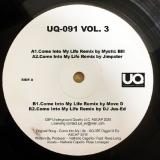
The third and final volume of remixes of 'Come Into My Life' by Nathalie Capello and Rose Lonegran is yet another doozy for lovers of emotive, meaningful deep house. Another bunch of heavyweights step up, starting with Mystic Bill who teases out a steamy-hot lead and builds a vibe around it. UK mainstay Jimpster plays with a dubby and bubbly low end, while Move D finds jazz-funk in the squelchy bass. Last of all, Underground Quality head DJ Jus-Ed steps up with his remix and explores more dusty textures, a slightly unsettling synth vibe and roomy, hypnotic grooves for late-night dancing.
debe ser publicado en 30.10.2026

Vibe Ride is the sixth release of Adam Rudolph's Hu Vibrational project and marks his 60th release as a leader or co-leader. Comes with insert and download code.
“With every record, the goal is to explore new creative territory,” explains Rudolph. Vibe Ride continues a deeper exploration of a trance-like groove and a conceptual framework known as Sonic Mandala. This album marks the most complete realization of that idea, partly due to the group's experience touring beforehand. That time on the road helped to refine ideas and strengthen musical chemistry. The recording process unfolded organically—likely due to the long-standing collaboration within ensembles like Go: Organic Orchestra and Moving Pictures, where the musicians have developed a deep familiarity with the shared musical language.
Sonic Mandala refers to a musical approach distinct from traditional linear structures of theme and development. Found in cultures across the globe, it may represent one of the oldest forms of musical expression—predating written history by tens of thousands of years. Today, it is most vividly preserved in the music of the Ituri Forest peoples (Aka, Baka, Ba Benzele, Mbuti), whose sound traditions revolve in cyclical, orbit-like patterns. Vibe Ride seeks to bring that ancient sense of circularity into a contemporary—and perhaps even futuristic—context.
The ensemble of Vibe Ride—Alexis Marcelo, Jerome Harris, Harris Eisenstadt, Neel Murgai, Tim Kieper, and Tripp Dudley—brings exceptional creativity and skill to the project. While grounded in the sonic languages of today, their performance channels an ancient vibrational lineage, connecting with ancestral sound makers who were attuned to the rhythms of the sun, moon, stars, and seasons. Human beings have always been deeply responsive to natural cycles.
Like a mandala, where the circle reveals itself as a spiral—always returning, but never to the exact same point—the Sonic Mandala musical experience spirals through motion. Refined signal patterns emerge through overtone-rich instrumentation. The groove becomes a threshold, shifting the listener from passive observation into active, even transcendent, participation. With open ears and an open mind, the sound spirals inward—toward a primal center—and outward into the cosmos. When this elevated state is shared among participants, it creates what mystics describe as resonance.
Vibe Ride thrives on the distinctive sonic voices of its players, interwoven with care and nuance into the compositions. Hu Vibrational merges elements of world music, electronica, and improvised jazz into something both funky and spiritual, intense and soothing.
Using signature techniques of organic orchestration, layered arrangement, and electronic processing, the compositions are sculpted from percussion, electronics, and ethereal textures. Rhythmic foundations drawn from diverse traditions serve not as endpoints, but as building blocks. As the saying goes, “Orchestration is the key.” In shaping the sound, the aim was to discover fresh ways of balancing structure and sonic color. As Don Cherry once said: “The swing is in the sound.”
The audiophile LP was carefully recorded, mixed, and mastered by James Dellatacoma—longtime engineer for both Bill Laswell and Rudolph—at Laswell’s Orange Studio.
“This crew artfully blends together to create a seamless tapestry of rhythm… the end results are mesmerizing. Hu Vibrational is all about communing with the groove spirits and creating worlds where earthy rhythms and other-worldly sounds are one.”
— Dan Bilawsky, All Music Guide
“You can be sure that when Adam Rudolph and an ensemble of breathtaking drummers get together mystical and wonderful things will happen.”
— Raul da Gama,
“A stunning effort, enjoyable and grows with repeated listening.”
— Stefan Wood, Freejazzcollective
En el almacen y preparando para el envío

Originally released in 1995, Message From Home is a captivating fusion of hip-hop grooves, African rhythms, and spiritual depth, showcasing the unparalleled artistry of jazz saxophonist Pharoah Sanders. Produced by the legendary Bill Laswell, this album brings together a remarkable ensemble of musicians, including kora virtuoso Foday Musa Suso, keyboardist and vocalist Bernie Worrell, acoustic bassist Charnett Moffett, electric pianist and vocalist William Henderson, guitarist Dominic Kanza, and keyboardist Jeff Bova. Tracks include the mystical jazz hypnotic groove “Our Roots (Began in Africa)” plus five more mesmerizing soundscapes.
Now, for the first time since its original 1995 release, Message From Home is reissued on Music On Vinyl.
En el almacen y preparando para el envío
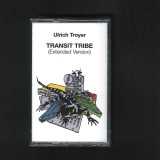
12"[23,49 €]
Ulrich Troyer has been producing music now solidly for over twenty years within a largely genre free framework, but whilst navigating forms such as avant-garde, techno, leftfield, field recording, electronica, glitch and ambient it is the aesthetics of dub that guide his creative direction. Not really recognisable in an orthodox form as remixed versions of roots reggae songs but in the way sonics are manipulated with space, the application and layering of delay, reverb and echo that fixes his output well within the scope of what might be called futurist dub.
The nearest comparisons to his new album TRANSIT TRIBE can only be established by a synthesis of some of the more adventurous explorations in modern music such as African Head Charge, Jon Hassell, Pole (Stefan Betke), Bill Laswell or even Miles Davis; featuring a diverse selection of artists and friends not only from Vienna and environs but also from around the world, sounds are not so much fused but allowed to float along the continuous flowing tide of warm waves of bass.
Rather than to allow the names of Ulrich Troyer's collaborators be merely listed in the album credits, what they bring to this joyful affair needs to be outlined, albeit briefly: Co-producer credits go to Osman Murat Ertel from Istanbul, who employed a variation on the old foolproof Nick Lowe method for checking out the impact quality of his own sound productions by playing tracks through his car sound system speakers!
Murat is a member of the electro-psych-folk group Baba Zula where he plays electric saz, oscillators and theremin and played a key part in the creative development of the album. Mamadou Diabate, the balafon master originally from Burkina Faso and now resident in Vienna, has developed his own unique technique of playing solos that replicate the sound of three instruments playing in unison; however the multi-talented Mamadou is engaged here on singing and playing the talking drum. From South Tyrol Reinhilde Gamper is a member of the experimental trio Greifer who are bringing the sound of the zither into the twenty-first century using new playing techniques and electronic gadgets. Susanna Gartmayer is an Austrian composer and bass clarinetist specialising in improv and multimedia sound research. Diggory Kenrick has been engaged with creating new dub fusions and also re-energising classic rocksteady and roots reggae classics, renowned for his interventions on flute. Didi Kern is an electronic dance musician and drummer from Vienna with a focus on free improvised music. Hamidou Koita, a singer and multi-instrumentalist, is from a traditional Griot family in Burkina Faso but now resident in Vienna and a regular musical partner of Mamadou Diabate playing drums and calabash. Austrian Lukas Lauermann is both a studio and live musician playing cello, also working on electronic sound design and writing string arrangements. He has recorded extensively and appeared on stage with both Mark Lanegan and Hans-Joachim Roedelius. Martin Mallaun is a Tyrol-born specialist in both the development of the zither in modern music and also as a researcher in the effects of climate change on the vegetation of Alpine ecosystems. Mystica Tribe is the musical alias of Tokyo-based dub/techno producer Taka (Takafumi) Noda. He collaborated with Vienna's own Vegetable Orchestra on 2020's "Transplants (Mystica Tribe Version)". After studying classical percussion Flip Philipp is now a jazz vibraphone player and member of the Vienna Symphony Orchestra. Wolfgang Pfistermüller is a member of the Vienna Trombone Quartet and the developer of the incredible bass-trombone Aurora with its uniquely warm and resonant sound. Roger Robinson is a renowned British poet, winner of many contemporary poetry prizes and member of the experimental music group King Midas Sound. Kwame Yeboah is a Ghanaian born UK based keyboard wizard who tours regularly with Yusuf / Cat Stevens, Ms. Dynamite and Pat Thomas.
So contained on the album is an astonishing mix of musicians and instruments: sounds of cowbells recorded in the South Tyrolean alps processed by modular synthesizers and heavy analogue bass synths combined with instruments such as zither, bass-zither, electro saz, flute, talking drum, trombone, cello, vibraphone, marimba, djembe, contra-alto clarinet, melodica, Farfisa - all bound together by organic live-drums and dub effects.
Liner notes by Steve Barker
En el almacen y preparando para el envío

Renowned US producer Maceo Plex releases his highly anticipated third album, ‘’93', a homage to his three-decade journey through the realms of electronic music. Marking both a passion and a prolific career, the maestro presents a tantalising body of work that masterfully blends House, Hip Hop, Global Bass, Techno, Breaks, and Electronica. This audacious fusion delves into historic and modern influences, crafting an audio journey that transcends time, rich in history yet boldly future-facing.
‘’93' is a cross-genre exploration, seamlessly balancing emotion with hard-hitting beats. Maceo Plex collaborates with a stellar lineup of artists, including Diplo for his contribution on ‘You Don’t Have To Wait’ with Cubicolor, Oscar and the Wolf, Perry Farrell (Jane’s Addiction), Johnny Jewel and Desire, Kirsty Hawkshaw, Mystic Bill, AVNU, Giovanni, Ishi, and Tyler Hill, resulting in a diverse and dynamic musical affair.
This album narrates the story of a highly esteemed artist at a pivotal juncture in his career, consistently evolving towards new directions. Departing from the early deeper house sound that initially defined him, Maceo Plex intentionally ventures into new territory, steering away from his famed melodic and techno direction in recent years. Nevertheless, '93' retains the essence of Maceo Plex's signature style, transcending various sounds and genres in a manner reminiscent of his electrifying DJ sets, meticulously curated for the dancefloor and the crowds.
‘93’ vinyl LP by Maceo Plex is available on Lone Romantic from 17th May 2024.
Key Feedback Quotes:
Pete Tong - Maceo is such a talented producer. A sonic juganaut. An inspiration to so many aspiring music makers. He's a master of analogue and digital in the studio. He's a total 'one of'.
Kolsch - Incredible album!!!!
Artbat - “Very cooooool album!
Gregor Tresher - Wow, now this is what I call an album! Extraordinary stuff, I love it! Big up, Eric!
Hot Since 82 - Nothing short of sensational. My fav producer and DJ who consistantly sets the bar far too high and we all play catch up. Love it.
Rodriguez Jr - Awesome album. LOVE IT. Such a wide spectrum of influences here. Respect!
Laurent Garnier - Very cool. Will play these
Hernan Cattaneo - This is a really good album!
Wehbba - happy to finally see the album coming out, lots of gems, Nasty, Just You and I, Get out Of Here and You're My Desire are my main picks.
Eelke Kleijn - Already listened to the whole album on Spotify. Fantastic. Miles ahead of everyone else. Thanks for sending this, will play many of these for sure.
AFFKT - all tracks are amazing
Ida Engberg - Loooove this release! Stop that and Serpent jazz for me, can't wait to play them. Lone Romantic killing it!
Victor Ruiz - Honestly, you’re a genius! 10/10 productions always.
Pig&Dan - Great to hear new tunes from one of my favorite producers out there
Oliver Huntemann - some real gems on here
Fideles - wow, love it all
Peter Kruder - Love 'em all! Thanks for sending my way!
Yotto - Sick Sick Sick work!
Jody Wisternoff - Insane tracks from Maceo!!!
Terr - Amazing music as always, thx!
Nicolas Masseyeff - Solid release! Full Support!
Paige - Nasty is an absolutely mind-blowing track!!
Braxton - Incredible Album. .
Dense & Pika - Wicked stuff from Maceo.
Eli Brown - Always great music from Maceo Plex.
Anden - Congrats on the album! Love it!
Sergio Muñoz / Fur Coat - Great work from Eric! Congratulations.
La Fleur - So many gems in there, looking forward to having a proper listen from start to end! Thx
Captain Mustache - Big work here from Maceo, congratz!
Alex Kennon - This is a masterpiece!
Timo Maas - Clickbait is a cool track, I like the deep funk.
Martin Eyerer - This is a great album!! I love nasty most, but all great.
Nick Warren - This is such a great album.
Laurent Garnier - Very cool EP. Will play these.
Jonas Rathsman - Stop That sounds interesting
En el almacen y preparando para el envío

Ed Sheeran’s brand-new album Autumn Variations will be available for pre-order on the 24th August at 5pm before a worldwide release on the 29th September. It will be available to stream on all platforms as well as purchase physically as a CD or various limited Vinyl editions.
Ed Sheeran is an era-defining artist who has sold over 52 million albums and 150 million singles across the world. Through his fusion of thought-provoking songwriting, universal pop and multi-genre influence, his rich tapestry is not only perfectly suited to his audience but it’s something that transcends generations.
Since surfacing on the UK circuit in 2010 with his ‘No.5 Collaborations Project’ – an eight-track EP featuring his favourite grime artists of the time – the Suffolk-raised recording artist has resonated with fans across the world through his peerless songcraft and versatility. And now, with six consecutive UK No.1 albums to his name – ‘+’ (2011), ‘x’ (2014), ‘÷’ (2017), ‘No.6 Collaborations Project’ (2019), ‘=’ (2021) and ‘-‘ (2023) – Sheeran continues to reaffirm his status as one of the most in-demand pop stars on the planet.
Prior to the release of ‘=’ (October 2021) – an album that’s now surpassed five million global sales - Sheeran secured two UK No.1 singles in the UK with ‘Bad Habits’ and ‘Shivers’, which sat atop the UK’s Official Singles Chart for a combined total of 15 weeks. Moreover, the LP saw him take home 2 x EMA’s for ‘Best Artist’ and ‘Best Song’; an American Music Award for ‘Favourite Male Pop Artist’; British GQ’s ‘Solo Artist of the Year’; 4 x Los40 Awards; a BRIT Award for ‘Songwriter of the Year’ alongside a nomination for ‘Song of the Year’ at the 2022 GRAMMY’s.
Sheeran’s most recent album, Subtract, secured Ed his sixth No.1 album. Produced by Aaron Dessner, the album was anchored in his love of singer/songwriter compositions and written against a backdrop of personal grief and hope. Ed’s most critically-acclaimed album to date, it housed the heart wrenching UK No.1 single ‘Eyes Closed’ – a song about his late friend, Jamal Edwards.
But it’s not just his recorded music that’s seen the former Glastonbury headliner become one of the sought-after artists of the 21st century. Possessing a mystical ability to turn 90,000 capacity venues into the pub back-rooms that he first started playing in, Ed made history in 2015 after becoming the first-ever artist to play Wembley Stadium solo - without a band, just with his guitar and loop pedal - over three, consecutive sold out nights. Move forward to the summer of 2019 and Ed would re-enter history books after the completion of his mammoth two-year Divide tour, officially becoming the most-attended tour of all time after it culminated with special homecoming shows in Ipswich, Suffolk. Beginning last summer, Ed is currently travelling the world on his ‘+ - = ÷ x Tour’ (pronounced ‘The Mathematics Tour’), which saw him return to Wembley Stadium for a five-night run last June.
Ed Sheeran, who was awarded an MBE for his services to music and charity in 2017, is the proud recipient of 1 x IFPI Award (best-selling global artist of 2017); 4 x Grammys; 4 x Ivor Novello’s; 7 x BRIT Awards (including two consecutive wins for ‘Global Success’ in 2018 and 2019); 7 x Billboard Awards + more. Moreover, to this day, his blockbusting third studio album ‘÷’ remains the fastest-selling album, ever, by a male artist in the UK, while the LP’s lead single, ‘Shape of You’, maintains its status as the most-streamed song in Spotify’s history.
At the end of 2019, Sheeran was presented with the Official Chart Company’s first-ever ‘No.1 Artist of the Decade’ award following a host of accomplishments in his native UK including the most No.1’s across the UK’s Official Singles and Albums chart from the years 2010-2019. Most recently, Ed scored two more feats with the OCC after becoming the first British Solo Artist to claim 52 weeks – an entire year – at No.1 on the Official UK Singles Chart, with only Elvis Presley and The Beatles achieving more overall weeks at the top, as well as becoming the first-ever artist with four albums spending an entire year or more in the UK Top 10.
En el almacen y preparando para el envío

Immersed in the early days of the 90s midwest rave scene, Bill Converse began DJing at a young age in Lansing, Michigan. Luminaries such as Claude Young, Traxx, and Twonz were key early influences. Since moving to Texas in 1998, he has experimented with analog techniques in varied studio bunkers. Early techno, noise, ambient, tape, and paranormal processing are all part of his uncanny sound palette. Warehouse Invocation' is Converse's debut 12 release, collecting material from a cassette release on Obsolete Future plus a new unreleased song. Three of the tracks, Warehouse Invocation', Senys Magick' and Consulted Acid', were recorded in Austin TX between 2012-2013 at home and direct to tape with no overdubs or multi-tracking. Riverbank' was also recorded at home in early 2014 in one take with a mic placed outside of the window to record the the sounds of the river late at night. Bill is informed by his surroundings, influenced by scenes of desolation in nature, the sea, the desert, and places of industry, like power stations, old factories, and warehouses. The songs on this EP length reveal a sublime influence from Detroit techno, early Chicago house, and Acid. The album was recorded and mixed by Bill at his home studio in Austin and mastered by Dave Alex. All songs were EQed for vinyl by George Horn at Fantasy Studios in Berkeley. A custom-made jacket designed by Eloise Leigh features a mystical collage by Josua Dorje Ngodup with acid yellow hues on a deep blue-purple background. Each copy includes a postcard with notes and a Buddhist mandala
En el almacen y preparando para el envío
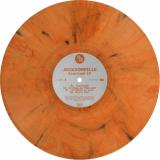
Nightcode EP finds UK deep-house craftsman Jacksonville in full control, lacing warm chords, swinging drums and basslines built for red-lit basements. Across “Nightcode”, “Ecstasy in Starlight”, “Octobers in Love” and “Blind Spot”, he fuses classic Detroit/UK house textures with his own emotional, story-telling touch—timeless deep house for DJs who play past sunrise.
Feedbacks:
Laurent Garnier : Octobers in Love <3 <3 <3
Nick Holder : dope
Gina Breeze (Classic / Get Up / Homoelectric) : Feeling the deepness! Look forward to playing.
Nightmares On Wax (Warp Records) : Ecstasy in starl;ight and Blind spot are my jams !
Josh Wink (Ovum) : Deep, old old school flavored with new school production.
Alexkid (Rawax / FUSE / NG Trax) : Lovely
Lauren Lo Sung (LOLiFE records, e1even records) : Octobers in love is nice!
Dj Hutch (Ambers / Rinse FM) : grooves
Louise Chen (NTS) : This is so so sooo good! Can't wait to play on the radio!
Rob Pearson (Evasive Records / Sine 102.6fm) : Nightcode is the standout for me, will play tonight on Evasive
Eviltron / Paul Donton (Bombis / Triangle) : Blind Spot and Ecstasy in Starlight are the ones on the
D'Julz (Bass Culture) : feeling night code and blind spot . merci!
Junior Sanchez (Strictly Rhythm / Cube Recordings) : Really Cool EP!
DJ Three : this is all very high quality house that feels very much a
nd_baumecker (Ostgut Ton) : Nightcode and Octobers In Love for me. Quality as usual.
Sasha (Last Night On Earth) : Downloading for Sasha
William Kiss (Rekids) : very nice!
Monty Luke (Rekids / Black Catalogue) : thx for this...
Mystic Bill (Classic / Trax / Relief) : Will try some of these out, thanks!
Carista : beautiful
Crackazat (Freerange / Local Talk) : Sick sick sick
Jhobei (Bizarre Trax / FUSE / Felon 5) : Nice smooth deep
Khadija (Rek'd / Rafiki Collective) : Danke
Ben Sims : Now downloading - will check asap!
DJ Bone (FURTHER) : Very nice tunes here, thanks
Bake (All Caps/Rinse FM) : thank you!
Dj Deep (Deeply Rooted) : very nice tracks!
Oliver $ (Classic Music Company / Play It Down) : nice one!
Tripmastaz (Plant 74) : Nightcode is tight
Harvey Sutherland (MCDE / PPU / Voltaire Records) : couple of nice tunes here!
Anthony Collins (Frank & Tony / Scissor & Thread) : super nice deep tunes
Marcel Dettmann : thx
Voigtmann (Subsequent) : Ecstacy in Starlight is the one!
Gerd (4Lux / Clone) : dope house trax from the phonogramme crew once again!
Groove Armada : Great EP - Love Nightcode, Ocotber is love so good too±
Harri (Sub Club) : nice, will play and support
Jorkes (Freeride Millenium) : ecstasy in starlight..yes yes yes yes
DJ Minx (Women On Wax Recordings) : Every one of these...top tier! I'm on 'em!
DJ Rocca (Nang Records, Mantra Vibes) : Great EP. Nightcode is great, super bassline indeed
Jacques Renault : Ectasy In Starlight for me here!
Geir Aspenes (G-Ha (Sunkissed)) : Thank u
Mark Farina : dig it
Âme (Innervisions) : thanks
Djebali ( ( djebali ) / INFUSE / Freak n Chic) : Love it ! thanks for sharing. Blind Spot is my fav
Jaye Ward (Dalston Super Store / Netil Radio) : wicked release!! night code is a belter!!! thx
Iron Curtis (Mule Musiq, Morris Audio) : thank you!
Haga su pedido ahora y le encargaremos el artículo en nuestro proveedor.

For his last solo record ‘Through a Room’, Bill Nace shifted his usual saturated guitar sound and added tapes, hurdy gurdy, doughnut pipe, bird calls and the mysterious Japanese taishōgoto. Setting up for the final night of his three day residency at OTO with only the taishōgoto soundchecked, Nace hoped that Parker would arrive with his small soprano as its opposite. “I’ve been interested in state change, you know, playing until there’s a shift in time.” Known for his development of multiphonics to produce a constantly shifting pattern, Evan Parker has evolved an instantly recognizable sound - his work the soprano most distinct. Happily, it was the soprano Evan brought with him and as soon as the two start to play they entwine - taking off in a double helix of keys and reed primed for endless reconfiguration. Space warps under the velocity of playing, the pitch rising unrelentingly. It felt like unending lift off in the room, sheer energy until the last note makes remember your feet have been on the floor the whole time. Total time bending shredding.
–
"They had never played together before. They had never even met each other before this springtime 2024 concert at London’s Café Oto.
Evan Parker, circular breathing maestro of the saxophone, a legend in the universe that is Free Improvisation since the late 1960s and Bill Nace, one of the most intriguing experimental “noise” guitarists of the 1990s/2000s underground scene.
For those of us who have been enamored by the live and documented work of both these gents, this Café Oto duo was a must-hear event. It could have gone anywhere musically and that would have been totally fine. Particularly with Evan having a history of being thrown into a variety of challenging collaborations throughout his career, employing the learned elegance of trust in his own sensitivity to listening, responding, leading, following, sparring, intertwining, dialoguing, creating in the instant and, essentially, dignifying the non-hierarchical grace of chance.
The aesthetics of socialist consideration in Evan Parker’s playing, in his community of expanded and personal technique, for a younger player such as Bill Nace, strikes an exemplary model. This notion of respect would be entirely the reason Nace, when offered a residency at the most critical “new music” room in England, would request to play in duo with Parker.
Bill Nace came to prominence mostly during the apex of experimental music activity in and around Western Massachusetts in the early days of the aughts, with a focus on visual art and free improvisation guitar action. He could be found in the daytime hours, his head hanging down over a notepad, penning fine-tuned illustrations and abstract line drawings, while in the evenings he’d be attending any number of basement noise gigs, many of which he’d be participating in. His guitar style came across as being informed as much as by the physicality of his writing utensils in friction to the page as it was to his hearing and redefining of radical recordings ranging anywhere from the Black Unity Group to Black Flag.
Utilizing various metal files and other small cylindrical objects Bill would allow his guitar and amplifier to be in tandem with the improvisatory movements of his body as the instrument balanced, intentionally and, at times, precariously, upon his lap. The performances came across thrilling and daring and they would be mostly in the context of venues nothing more than a low-ceilinged damp and dank New England basement, a clutch of people hanging onto rusty pipes or sitting up on dilapidated washer/dryer machines, the shards of Bill’s “file guitar” sounds ringing out like the most alive music on Earth.
By the time Bill reached Café Oto in early 2024 he had relocated to Philadelphia all the while releasing a succession of collaborative LPs on his Open Mouth label to present his developing progression of solo and collaborative work. He also would find himself considerably engaged with playing the electric taishōgoto, a keyboard-activated string instrument from Japan which can exist as a one, two, four, five, or six string oblong sound object. Bill’s approach to the taishōgoto would not be too unlike his approach to the traditional electric guitar, though no outboard implements such as files, sticks, and rocks are utilized. The similarity would lie wholly with Bill’s full immersion of high velocity action-playing where, with the taishōgoto, an electric drone beauty occurs. The flurry of sonics and resultant harmonics emanating from the amplifier (which Bill opts to dial into with borderline loud-as fuck volume settings) furthers the meta-mantra properties of the instrument in an astounding display of drone dynamism.
This sound world of Bill’s two-stringed taishōgoto on this Café Oto night worked beautifully with Evan Parker’s improvisatory saxophone conceptions. The duology achieved instant lift off at ground zero only to find it’s eventual finale as if it were organically ordained. Time seemingly morphed from its ancient human construct of control, rendered inconsequential to the torrential transcendence of the room wildly activated by the magic resonance of the multi-directional pan-spatial sonance of the music as if it were some beatific blessing. It was one of those nights where art as a liberating force of spirit gifted the listeners with an offering of exaltation and joy. It was entirely mystical and mind blowing. A night of Total Music."
Thurston Moore, London, 2025
debe ser publicado en 21.11.2025

Daniele Baldelli
Considered one of the first DJs in Italy, Daniele Baldelli began his career in 1969 mixing vinyl at the Tana Club in Cattolica (his hometown),
predating the birth of the modern DJ by several years. In the following years, he solidified his talent and technique at histor such as the Tabù Club, Baia degli Angeli, and Cosmic. From 1979 to 1984, Baldelli created his unique and eclectic style, blendi ic clubs ng seemingly distant sounds and musical styles, complementing them with tempo adjustments (bpm) and deliberately extreme equalization,
creating a truly distinctive sound, known as "Afro Disco." Soundscapes and tribal percussion blend with early electronic music experiments, and Baldelli's sets become truly mystical experiences, where, for the first time, the temples are replaced by the dance floor.
The documentary film "A Cosmic Life" has just been released, starring Daniele Baldelli alongside other illustrious guests from the nightclub scene, recounting the history and formation of this movement from the 1970s to the present.
Gaudi
A producer/musician among the most highly regarded on the international dub/electronic scene, over the past 30 years Gaudi, from his
London studio, has contributed significantly to expanding the boundaries of musical genres with high-profile releases and innovative
music production techniques. Recently nominated for a Grammy Award with 'Mass Manipulation', the album he produced for the reggae
band Steel Pulse, and also nominated for a World Music Award with his album 'Dub Qawwali' with Pakistani singer Nusrat Fateh Ali
Khan, Gaudi has collected a series of number 1s on the international charts: Billboard - with the album 'Heavy Rain' by Lee "Scratch"
Perry, 'Vessel of Love' by singer Hollie Cook and with 'Mass Manipulation' by Steel Pulse -, UK Chart n.1 with the album 'Prism' by the
band The Orb (with whom he has collaborated as a producer and keyboardist since 2008), with 'Blue Monday' - by Gaudi himself with
the band Dub Pistols -, UK Dance Chart n.1 with 'Jus Come rmx' produced with DJ Angelino for Cool Jack. He also reached no. 41 the UK charts with the album ‘Midnight Rocker’ by reggae singer Horace Andy (known to the general public for his hits with Massive in
Attack), no. 13 with the album ‘Dubwise 2’ by the band Dreadzone and no. 5 in the Italian charts with the song ‘Lasciala Andare’, written
by him for Irene Grandi. With 19 solo albums and 350 remixes and productions under his belt, Gaudi, with his artistic versatility, has
worked with Groove Armada, UB40, Simple Minds, Brian Ferry, Devo, Big Audio Dynamite, Damian Marley, Seun Kuti, Mad Professor,
Trentemøller, Grandmaster Flash ft KRS-One, Lamb, Don Letts, The Beat, Deep Forest, African Head Charge (in which Gaudi is a keyboardist and dubmaster), Elisa, Scientist, Dub FX, Roedelius, Caparezza, Caravan Palace, EMF, Sizzla, Jovanotti, Sly & Robbie, Piero Pelù, Youth of Killing Joke, and Maxi Priest, to name just a few. Capleton,
Daniele Baldelli & Gaudi
DJ Daniele Baldelli and producer Gaudi first met three years ago at the Jazz Cafe in London. Mutual respect and an innate need to
create new stylistic fusions were the catalysts for Baldelli and Gaudi, leading to a series of subsequent meetings that inevitably culminated in the need to create music together. The project began at Gaudi's Metatron Studio in London using analog equipment and later
moved to Baldelli's studio in Cattolica, where the two organically defined their sound, also inspired by Baldelli's precious record collection. The duo consolidated a powerful compositional symbiosis, and the project, born from a simple initial groove, later transformed
into an entire EP consisting of four original tracks and a highly innovative sound, featuring fusions of psychedelic-funk, tribal-dub,
electronic-disco, and, of course, "Afro-Cosmic"! Daniele Baldelli and Gaudi began their sonic collaboration without setting any stylistic
direction and with the intention of not creating pre-established goals to achieve; it is a project of pure artistic freedom guided by their
compositional instinct and their experience. Constantly active with their evenings and live concerts, Baldelli and Gaudi have performed
individually in many of the best international clubs and festivals.
Haga su pedido ahora y le encargaremos el artículo en nuestro proveedor.
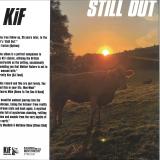
2025 Repress!
Recorded in a remote cabin on the Devon coast, STILL OUT is an album-length collaboration between musician-filmmakers – and childhood friends – Will Cookson and Tom Haverly. A reflection on friendship, landscape and the passing of time, it inspired a road trip from North Yorkshire to North Devon they took together in the summer of 2024, and forms the soundtrack to a film of the same name which had its premiere screening as part of Stroud Film Festival in March 2025.
Like the film, STILL OUT is also an oblique homage to The KLF’s iconic 1990 album Chill Out, which the Gloucestershire-based pair revisited after it turned up unexpectedly a few years back in Tom’s dad’s record collection. Inspired to create their own recording using a similarly free-spirited process, Will and Tom relocated to the Devon coast in late summer 2023, splicing together a 40-minute mix from their personal archive of recordings and found sounds in a remote cabin with no electricity or mobile reception.
"It came together using cut-and-paste techniques, with ongoing shifts and tweaks,” says Will. “The final result was an audio collage that felt like something legendary hip hop producers The Bomb Squad might make - if ambient music was the only material in their sample library."
Using ‘ambient’ as a starting-point rather than an end in itself, they took inspiration from across the musical spectrum – classic-period Brian Eno, Philip Glass, Bill Evans, plus outliers such as 80s singer-songwriter Virginia Astley and the late DJ-producer Andrew Weatherall. The connections, though, are anything but obvious as the audio shifts seamlessly from field recordings and spoken-word interludes to mood pieces and snatches of vintage pop.
Edited and assembled using freely available open source programs, the source material was often radically altered using tools such as “PaulStretch”, a digital sound-morphing algorithm that allows users to stretch audio files to extreme lengths.
"When we found ourselves in a creative slump or unsure how to navigate a tricky part, we'd say, ‘Let's put some syrup on it and slow it down,’” says Tom. “That always helped us get back on track during late-night recording sessions at the cabin."
Part-soundtrack, part-meditative experiment, STILL OUT is intended as a reflection on the mental and emotional shift that occurs when stepping away from the routine of daily life – an album that forms a celebration of our ever-changing relationship to the world around us and the mystery of what it means to pass through time and space.
“The true follow up, 35 years later, to The KLF’s ‘Chill Out’”.
JD Twitch (Optimo).
An ambient journey reflecting on friendship, the British landscape - and The KLF’s landmark album Chill Out
"This record and film are just lovely. You need this in your life. Moo-Moo!” Balearic Mike (Down To The Sea & Back)
"The album is a perfect companion to the KLF classic, utilising the British countryside as the setting, occasionally reminding you that Mother Nature is not to be messed with.” Strictly Kev (DJ Food)
"A beautiful ambient journey into the landscape, taking the listener from reality to dream state and back again. A mystical realm full of mysterious chanting, rattling trains and sounds from the very depths of the earth."
Lally MacBeth & Matthew Shaw (Stone Club)
Haga su pedido ahora y le encargaremos el artículo en nuestro proveedor.
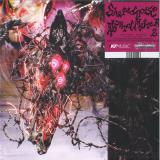
Arriving two years after the first chapter, Absurd Matter 2 isn’t just a sequel, it’s an evolution, redrawing the boundaries established by its acclaimed predecessor. The Berlin-based Italian producer tempers his confrontational sonics with rare moments of introspection, shifting seamlessly between blown-out noise, warped hip-hop, mutant club experimentation, and weightless ambience. Textures disintegrate and reassemble, rhythms flex and crumble, and every detail balances on the edge of fantasy. It’s a poetic, layered response to Nino Pedone’s changing physical reality: the gradual hearing loss and perceptual renegotiation triggered by Ménière’s disease, which struck him in 2022. At first, the experience felt like betrayal, a brutal disconnection from the very sense that had shaped his life. But over time, the disorientation turned into a strange kind of focus. The silence between sounds became as expressive as the sounds themselves.
The first Absurd Matter was a visceral reaction to trauma; the second is more reflective – an ambiguous chronicle of sensory recalibration. Pedone doesn’t represent his altered inner reality through extremes, but through depth, zooming in on illusory distortions, tense rhythmic fluctuations, and fragmented sonics. Dense, immersive, and mystical, the album mirrors Pedone’s evolving relationship with perception itself.
Tinnitus-like feedback wails and noir-ish strings introduce “Repeater”, making it immediately clear that Pedone is painting a more delicately finessed image this time around. Fleshed out by raps from cult MCs billy woods and E L U C I D, the track is marked by subtle, sophisticated contrasts: the blurred, inverted rhythms that couch Armand Hammer’s haunted back-and-forth, and the glitchy interference that offsets the lavish orchestral phrases. Backwoodz associate Fatboi Sharif lends his Lynchian drawl to “Bandage Chipped Wings”, grounding Pedone’s lysergic rhythmic distortions with syrupy, horror-inspired couplets. Pedone also invites discomfort into “Crash Landing”, with droning, metallic tones that contradict South Central rapper ICECOLDBISHOP’s elastic flow. “Bitch, I don't give a fuck about anybody,” he squawks over Pedone’s incongruous rasping textures and time-warped beats, “cash out at any party.” Working alongside London’s Loraine James on production, Pedone reunites with Moor Mother on “I Saw The Light”, blending James’ soft-focus atmospherics with soundsystem-damaging, overdriven bass hits and rusted percussive snips. Moor Mother’s assertive words hover over the wreckage, tightening Pedone’s themes of overstimulation and altered awareness as they stutter and veer off course, vanishing into the backdrop.
Contrasting his more pensive experiments, Pedone’s dancefloor deviations are more concentrated on Absurd Matter 2 than ever before. He torches a stuttering dembow structure on “X”, obfuscating the rhythm’s familiar energy with disturbing audio hallucinations. On “Splintered”, he reunites with Kenyan prodigy Slikback, mangling neon-lit trance arpeggios with dissociated trap rhythms. He sharpens his skills to a fine point on “Oblivion Step”, observing 2- step through a lens of distortion and personal abstraction, shaking blipping synth leads over neck-snapping drums and counteracting the momentum with airless sci-fi soundscapes.
Perhaps the album’s most surprising moment arrives with “Viel”, which features vocals from Los Angeles-based composer Kaitlyn Aurelia Smith. Together, Pedone and Smith chance upon their notion of dub techno, fogging synth stabs and ghostly vocal traces into eerie harmonic distortions. On some level, it’s almost pop music, a far cry from the bleak dissonance of Absurd Matter and a hopeful way to reframe turbulence as transformation. Absurd Matter 2 doesn’t simply document a process; it enacts one. It doesn’t offer clarity; it invites disorientation. It’s not a map of the labyrinth, but a foghorn piercing the darkness.
Haga su pedido ahora y le encargaremos el artículo en nuestro proveedor.

Destruction marks something of a new direction for Reuben Sawyer as he fuses clear, direct vocals with ambient textures. This latest album from the musician and visual artist meditates on destruction and rebirth while reflecting on the tension between enduring natural forces and fleeting human constructs. It opens with themes of nature's resilience and humanity's relentless desire for novelty, then gradually explores the collapse of civilisation and is inspired by Bill Fay's Who Is the Sender. It serves as a mystical, non-Christian take on transcendence across a trio of escapist ambient gems.
Haga su pedido ahora y le encargaremos el artículo en nuestro proveedor.
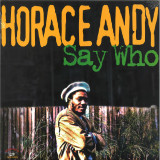
Horace Andy has always commanded a place high on the list of Reggae singers from Jamaica. His distinctive haunting vocal style stands strong on any rhythm,song or style he chooses to cover. Of the singers on that long list, he has managed more so than any other, to crossover to a new generation of listeners due to his individual style, helped also by his collaborations with the likes of Massive Attack. Horace Andy (b. Horace Hinds,1951,Kingston Jamaica) like many otherJamaican singers began his musical career at Coxsonne Dodd's Studio One. So impressed with the youth, Coxsonne decided on a name change for theyoung artist and called him after his top songwriter of the time Bob Andy. So Horace Hinds became Horace Andy. His first tune for Coxsonne 'Something On My Mind' was a slow burner in Jamaica, but his belief in his young protégé paid off when followed later by 'Skylarking' a tune that burst the singer all overthe radio and sound systems of Jamaica. After numerous singles and two albums worth of material, Horace moved on to work with many of the topflight Jamaican producers, among them Keith Hudson, Augustus Pablo and Niney the Observer, but it was his work with producer Bunny Lee in the 70's that he cut most of his hits for and from this stable of work, that we have compiled this set. Some of his late 60's classics were recut in the popular1970's style, working with the rhythm kings themselves, Sly Dunbar andRobbie Shakespeare. They have added some shine to the tracks, 'SomethingOn My Mind' and 'Skylarking' and made them hits all over again. Such wasHorace's delivery to the covers he sang like Delroy Wilson's version of theTams 'Riding For A Fall', the Heptones 'My Guiding Star', John Holts'Man Next Door' and Bill Wither's 'Ain't No Sunshine', that these finetunes were made his own. The roots end of his musical style was covered by
Andy originals such as 'You Are My Angel', 'Zion Gate','Money Money'and the cut which we have taken our edited title, the timeless 'Just SayWho'.A bass heavy cut to Bob Marley's 'Natural Mystic' works so well inthis style also. Another nickname Horace acquired was the affectionate title of Sleepy, as he was always hanging around the yards and studios of Jamaica waiting his turn, sometimes so long he would fall asleep. His enthusiasm to get back in the studio to work some more of his magic, to a catalogue of material that has developed into one of the finest in Jamaica. I hope you will agree, this fine set of 1970's classics will sit alongside.
O B8 | AIN'T NO SUNSHINE
Haga su pedido ahora y le encargaremos el artículo en nuestro proveedor.

José James just can’t leave the ’70s alone. Or maybe it’s the other way around. The singer, songwriter, bandleader, and producer was born in 1978, after all, but over his past 17 years of fundamentally forward-looking, blessedly mercurial music, he keeps getting pulled back in. His 2013 Blue Note breakthrough No Beginning No End revisited the hooky, funky, jazz-streaked songcraft of the time through a modern crate-digger’s ears. On 2020’s No Beginning No End 2 — James’ debut on his own Rainbow Blonde Records — he went back through the portal with a small army of fellow celebrated eclecticists. Just last year, there was the album 1978, a richly layered love letter to said year that felt deep, luxe, and cool. It’s as if — vested with the restless fluidity of jazz, the tuned-in sensitivity of soul, and the revisionist grit of hip-hop — he is trying to play his way into the exact moment when, culturally speaking, everything was about to change.
“I'm still so fascinated by the tension in that era of all these seemingly clashing things happening at once,” says James. “The loft scene, the jazz scene, Elton and Billy, Bob Marley, the Isleys, Funkadelic, disco being this behemoth in a way I don't think we even understand today… And then there’s where everybody went from there — into hip-hop, into punk rock, exploding jazz. It's like a summation of the ’70s, and it's about to transform. It's the peak of the rollercoaster.”
Literally breaking into history is impossible, of course, but James’ new LP, 1978: Revenge of the Dragon, does feel like breaking through or bursting out. In loving contrast to its predecessor, the fresh set plays hot, like a Friday night out at the Mudd Club in its prime. Though he’s dreamt up albums with collaborator counts approaching the dozens, James gathered a tight crew for this one. Himself and Taali on vocals. BIGYUKI on keys and analog synth. Jharis Yokley on drums. Bass split between David Ginyard (Blood Orange, Terence Blanchard) and Kyle Miles (Michelle Ndgeocello, Nick Hakim). And an all-star brass lineup: Takuya Kuroda on trumpet, young lion Ebban Dorsey on alto sax, and genre-spanning ronin Ben Wendel on tenor sax. They set up in Dreamland Studios near Woodstock, a restored 19th century church, and recorded live to tape, two tracks, drums pushed to the max — “a small homage to the rise of punk,” says James.
In that place out of time, the band laid down a handful of choice covers and some wild originals, like the single “They Sleep, We Grind (for Badu),” a decades-collapsing cut powered by an ugly groove. Steeped in dub, funk, and sampledelia, James chants an artists’ mantra (“They sleep, we grind / Man, f--- your nine to five”), makes lyrical callouts to Marley and Nas, and channels everything from George Clinton to J Dilla, not to mention the earthy mysticism of Erykah Badu. In 2023, James released and toured his Badu covers LP, On & On. “Living in her musical house for a year was transformative,” he says. “This is my summary of everything I learned through her, tying it to this idea that artists move differently. We are in society but we are outside, too, looking out and in at the same time. Our hours are different, our schedules are different.”
To that point, James and co. actually began each day in the woods, filming the album’s visual companion piece, Revenge of the Dragon, an honest-to-God kung-fu short complete with bad overdubs, training montages, camera tricks, and plot twists. The film pays tribute not only to the genre’s greatest year (1978, of course), but also its cinematic exchange with Blaxploitation, plus James’ own recent Shaolin training and admiration for Bruce Lee as a culture-bridging force (the LP’s cover recreates an iconic shot of Lee). On top of that, says James, “We had this immediacy in the studio. Live, one take, no overdubbing. I feel like that's where the martial arts piece comes in, where it's about being relaxed but also aware, and there's immediacy in your movements.”
Across the project, tribute takes that refracted, multifaceted form. From his personal late-’70s playlist, James chose four covers reflecting the era’s disco-fied churn: the MJ-meets-Quincy dancefloor masterpiece “Rock With You”; Herbie Hancock’s prescient vocoder fever dream, “I Thought It Was You”; and a pair of Black-radio hits from two bands whose fans typically wouldn’t have been caught dead in the same stadium: “Miss You” by the Rolling Stones and the Bee Gees’ “Inside and Out.” All of it gets filtered through a contemporary Black (and beyond) lens, coming out loud, free, funky, and buzzing — dynamic, yes, but also of a joyous piece.
1978: Revenge of the Dragon transports you to a crowded room where all this is playing out in real time. That feeling is helped out by opener “Tokyo Daydream,” a bass-driven swan dive into a neverending night of boutique bar-hopping and neon revelry. Later, “Rise of the Tiger” finds James bringing rare braggadocio to a propulsive track with growling synth lines and a hunger for whatever comes next. And then there’s the closer, “Last Call at the Mudd Club,” which with its upbeat energy and string of Stevie-inspired pickup lines, evokes the sort of unabashedly elated track the DJ throws on at 3:56 a.m. before everyone is kicked out. “I wanted to leave the album on that note,” says James. “If this was a night out in New York, this would be the last thing you hear before you get in that taxi and go back to your apartment.” Or, perhaps, back to 2025.
Haga su pedido ahora y le encargaremos el artículo en nuestro proveedor.

Townes Van Zandt’s eighth studio album, released in 1978, from one of the most influential figures in country, folk, and Americana music, returns with a new analogue mastering on a limited edition blue vinyl — complete with a color insert featuring sleeve notes, a rare Townes Van Zandt interview, and the full lyrics.
This reissue celebrates the album’s enduring legacy and its importance as Townes’ debut release on Tomato Records – the label run by his long-time manager Kevin Eggers. Originally recorded at Nashville’s famed American Studios and produced by Chips Moman, Flyin’ Shoes features some of Van Zandt’s finest work, including standout tracks like the heartfelt ‘Loretta’, the haunting ‘No Place to Fall’ the mystical title track, and the standout ‘Rex’s Blues’. The album also introduces ‘Pueblo Waltz’, a song that, alongside others, solidified Van Zandt’s reputation as a master of blending poetic lyricism and melancholic storytelling. In addition to its timeless tracks, Flyin’ Shoes has a unique history. Indeed, the album includes material from a previously abandoned 1973 project, 7 Come 11, that would be released years later under the title The Nashville Sessions in 1993, also available on Charly Records. Many of the songs from that unfinished album were re-recorded for Flyin’ Shoes, and these fresh takes represent Van Zandt’s growth as an artist while staying true to the raw authenticity that fans have come to cherish
debe ser publicado en 09.05.2025
Heavy, mind-warping techno built for the late-night sessions. Kosh delivers deep, rolling basslines and spaced-out textures with pure underground energy. A must-have for selectors who like it deep and driving.
Radio Slave (Rekids) : Feeling "Whiplash"...
Laurent Garnier : cool EP
Ben Sims : Now downloading. Will check asap!
Marcel Dettmann : thx
Enzo Siragusa (FUSE) : Really nice EP!
Raresh (ar:pi:ar) : thanks
Archie Hamilton (Microhertz / FUSE) : Lovely stuff
Dorian Paic (Raum Musik) : No Exit is the one for me. Thx for the promo.
Truncate : Nice cuts
KT (Space Dust / Sisu) : Belter EP
Jerome Sydenham (Ibadan) : Downloaded for Jerome Sydenham
Domenic Cappello (Subclub) : nice release
Chloé Caillet (Smile Records) : love this!
Italojohnson (Italojohnson) : No exit for me
Darko Esser / Tripeo (Balans / Clone) : Kosh always delivers. Straight in the bag!
Mystic Bill (Classic / Trax / Relief) : Great release here, thanks!
Fred Everything (Lazy Days Music / 20:20 Vision) : Enjoying the dubby Whiplash, thanks!
Ame (Innervisions) : thanks
Ryan Elliott (Faith Beat) : Whiplash!!
Bill Brewster (NTS) : Lost in change is v good.
Harri (Sub Club) : nice, will play and support
Tal Fussman (Survival Tactics / Innervisions / Cod3QR / Drumpoet / Rekids) : nice one!!
Greg Gow (Restructured / Transmat / KMS) : great vibes will play out
Bake (All Caps/Rinse FM) : sick. thank you!
Enrica Falqui (ERIS, Plexus 4) : Love it!
Haga su pedido ahora y le encargaremos el artículo en nuestro proveedor.

“I saw a literal manifestation of the sacred feminine, and had this profound sense that I was meant to embody it,” recalls celebrated singer-songwriter Lindsay Lou after journeying through a hallucinogenic ritual that would inform the way she processed waves of grief in the sea of change ahead of her. The loss of her grandmother, the end of her marriage, and the overwhelming turmoil of the last few years found the Nashville-based artist on a spiritual journey of self-knowledge and healing with this gift from the mystic swirl. On her new album Queen of Time (due September 29th from Kill Rock Stars), Lou explores that quest across ten tracks of tender, heartbreakingly beautiful music. Featuring a gamut of guests including GRAMMY® Award-winners Billy Strings and Jerry Douglas, Queen of Time celebrates love and loss, but above all, the art of living as an unattainably—a vibrant, powerful woman who can share herself with the world, and yet define a mighty sense of inner self as well.
debe ser publicado en 28.03.2025
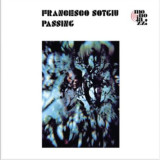
Francesco Sotgiu has forged a unique and very swinging project of songs. With a quintet consisting of Luigi Bonafede on piano, Emanuele Cisi and Riccardo Luppi on woodwinds, Salvatore Maiore on bass, Francesco on drums, and with special guest Paolo Fresu on trumpet to cap off this heartfelt collection. There is also a nice diversity of groups within this larger collection. A nice trio piece called “Calm” featuring Paolo Birro sitting in with Marco Micheli and Francesco. And one called “Lotus Blossom” where Francesco shows his considerable skills and soul on violin. But the bulk of the material is straight-ahead jazz and is totally swinging and soulful, proving that jazz has no borders and is a worldwide language to which Francesco has added to that tradition with this project and all the great voices he has included here. Bravo maestro.
This is the comment of Gil Goldstein, American accordion player who won 5 Grammys and collaborated with giants such as Gil Evans, Wayne Shorter, and Michel Petrucciani.
This record was recorded in the middle of the pandemic times, and most of the work for preparing this record took place via the telephone: the selection of the songs on paper, the exchange of ideas on arrangements, staff and instruments, a sort of “phone rehearsal” of the structure of the songs, with the choice of a solo; everything else, everything that will happen in the recording sessions, is the result of a controlled improvisation, a jam session masterfully captured in the studio through the use of well-positioned ribbon microphones.
This is why “Passing,” literally “passing” or “crossing”: because the musicians have gone through listening to these songs as teenagers, and find themselves today, as a mature meeting of old friends who create an informal game made of nostalgic fun, great personality, confrontation, and deep spirituality. In the classic “Caravan” by Ellington and Tizol or “Afro Blue” by Mongo Santamaria, Coltrane toning, the Latin accent of the rhythm section supports the interpretation of the theme and the interplay in the solos between the soprano and tenor saxophones by Cisi & Luppi, and the piano by Bonafede.
A certain elegance in the execution distinguishes pieces such as Duke Ellington’s “Sound of Love,” yet another tribute by Mingus to the Duke, with a calibrated solo on the double bass of Maiore and the flute by Luppi, the immortal “Take Five” by Paul Desmond, with the highlighted soprano by Cisi, “Wishes,” “7th Street,” and the eponymous “Passing,” all pieces composed by Sotgiu, characterized by the precise medium/fast drive of the drums and a certain “cinematic” taste of the main themes.
In songs such as “Black Bats and Poles,” composed by trumpeter Jack Walrath for the Mingus Orchestra, and in “Stranatole,” an original piece in which Sotgiu writes a theme of Monk’s influence and enjoys overturning the traditional “Anatole Jazz” structure, the quintet opts for an effective hard bop language, with exciting moments of dazzling virtuosity in Bonafede’s solo. While in Coltrane’s “Wise One” and McCoy Tyner’s “Ballad for Aisha,” we enter a modal, mystical, and ceremonial jazz, of a cosmic depth, which seems to hover in the sweet volume of the great hall of the recording studio. These are truly magnificent interpretations.
A special separate mention for two classics such as “My Foolish Heart” by Victor Young, performed in trio by Sotgiu, Maiore, and the unmistakable trumpet by Paolo Fresu, and the (unfortunately very short) “Lotus Blossom” by Billy Strayhorn and Duke Ellington, which in the piano-violin duo of Birro and Sotgiu, in a minute gives a suspended momentary magic, sums up the roots of African-American jazz music, and also referencing an old-fashioned Italian musical sensitivity, typical of Nino Rota’s music for Federico Fellini’s films.
debe ser publicado en 21.03.2025

Eine Zusammenstellung sorgfältig ausgewählter Tracks, von Alternativ-Versionen zu den in den 1970er Jahren veröffentlichten Originalversionen, sowie einige unveröffentlichte Stücke, die den Geist der klassische T.Rex-Besetzung zur Schau stellen. Mit Anmerkungen des Schlagzeugers Bill Legend. Limitierte Pressung auf farbigem Vinyl, in Orange und Blau. Verpackt in einem farbigen Gatefold-Sleeve mit bedruckten Innentaschen.
debe ser publicado en 17.01.2025

For the first time in their diverse second act, they allow themselves to be a rock band, freed of adornment and embellishment. As much as Carlson’s guitar has always been the focal point of EARTH’s music, it’s been surrounded by consistently diverse instrumentation. Here the dialog between Carlson and Davies drumming remains pivotal, underpinned by the sympathetic bass of Bill Herzog (Sunn O))), Joel RL Phelps, Jesse Sykes and the Sweet Hereafter) and thickened by additional layers of guitar from Brett Netson (Built To Spill, Caustic Resin) and Jodie Cox (Narrows). Perhaps the largest left turn on Primitive And Deadly, though, is the prominence of guest vocalists Mark Lanegan and Rabia Shaheen Qazi (Rose Windows) who transform the traditionally free ranging meditations of EARTH into something approaching traditional pop structures.
On “Rooks Across the Gates,” a song stylistically the closest to the folk inspired modality of Angels Of Darkness, Carlson stretches out into some of his most lyrical playing to date, creating an almost symbiotic relationship between his performance and the vocals of old friend Mark Lanegan. “From the Zodiacal Light,” meanwhile, takes the late 60s San Franciscan/freaked-out jazz-rock transcendence of The Bees Made Honey In The Lion’s Skull and quickly re-appropriates that sound into a musky torch song for the witching hour.
This contradictive tension between a band pushing itself ever-forward whilst surveying their history is reflected in the albums twin recording locales. The foundation of the record was laid in the mystic desert highlands of Joshua Tree, California where EARTH recorded hour after hour of meditations on each track's central theme at Rancho de la Luna. Upon returning to Seattle these were edited, arranged and expanded upon at Avast with the help of long-term collaborator Randall Dunn (who was previously at the helm for the Hex, The Bees Made Honey In The Lion's Skull and Hibernaculum sessions).
Haga su pedido ahora y le encargaremos el artículo en nuestro proveedor.

This soundtrack LP features songs that were all included in the 1986
coming-of-age film "Stand By Me", which was directed by Rob
Reiner. The film is based on Stephen King's novella The Body, with
the title deriving from the song of the same name by Ben E. King.
The film is set in the fictional town of Castle Rock, Oregon, in 1959,
and stars Wil Wheaton, River Phoenix, Corey Feldman, and Jerry
O'Connell, as four boys who go on a hike to find the dead body of a
missing boy. The movie's success sparked a renewed interest in
Ben E. King's song "Stand by Me", with the song re-entering the US
Billboard Top 10 chart in 1986. The soundtrack is crammed with
great, early rock & roll hits. The movie may have been nostalgic, but
the music on this soundtrack still sounds alive, decades after it was
originally recorded.
debe ser publicado en 15.11.2024
Camelot, the legendary seat of King Arthur's court in Early Middle Ages Britain, was probably not a real place. A corruption of the name of a real Romano-Briton city, the word "Camelot" accumulated symbolic, mythic resonances over centuries, until achieving its present usage as a near-synonym of "utopia." In the mid-20th century alone, Camelot inspired an explosion of representations and appropriations, among them the violent, affectless Arthurian court of Robert Bresson's 1974 film Lancelot du Lac and the absurdist iteration of Monty Python's 1975 Holy Grail, both of which feature armored knights erupting into fountains of blood; the mystical Welsh world of novelist John Cowper Powys's profoundly weird 1951 novel Porius, with its Roman cults, wizards and witches, and wanton giants; and the nationalist nostalgia of President John F. Kennedy's White House. Unsurprisingly there are fewer Camelots in more recent memory. Camelot, Canadian songwriter Jennifer Castle's extraordinary, moving 2024 chronicle of the artist in early middle age, charts a realer, more rooted, and more metaphorical place than the fabled Camelot of the Early Middle Ages (or its myriad depictions), but it too is a space more psychic than physical. In Castle's Camelot, the fantastic interpenetrates the mundane, and the Grail, if there is one, distills everyday experience into art and art into faith, subliming terrestrial concerns into sublime celestial prayers to Mother Nature, and to the unfolding process of perfecting imperfection in one's own nature. Co-produced by Jennifer and longtime collaborator Jeff McMurrich, her seventh record is at once her most monumental and unguarded to date, demonstrating a mastery of rendering her verse and melodies alike with crisply poignant economy. For all their pointedly plainspoken lyrical detail and exhilarating full-band musical flourishes, these songs sound inevitable, eternal as morning devotions. "Back in Camelot," she sings on the lilting, vulnerable title track, "I really learned a lot / circles in the crops and / sky-high geometry." The album opens with a candid admission of sleeping "in the unfinished basement," an embarrassing joke that comes true. But the dreamer is redeemed by dreaming, setting sail in her airborne bed above "sirens and desert deities." If she questions her own agency_whether she is "wishing stones were standing" or just "pissing in the wind"_it does not diminish the ineffable existential jolt of such signs and wonders. This abiding tension between belief and doubt, magic and pragmatism, self and other, sacred and profane, and even, arguably, paganism and monotheism, suffuses these ten songs, which limn an interior landscape shot through with sunstriped shadows of "multi-felt dimensions" both mystical and quotidian. The epic scale and transport of "Camelot," with its swooning strings, gives way dramatically to "Some Friends," an acoustic-guitar-and-vocals meditation in miniature on Janus-faced friends and the lunar and solar temperatures of their promises_"bright and beaming verses" versus hot curses_which recalls her minimalist last album, 2020's achingly intimate Monarch Season. (In a symmetrical sequencing gesture, the penultimate track, the incantatory "Earthsong," bookends the central six with a similarly spare solo performance and coiled chord progression, this time an ambiguous appeal to _ a wounded lover? a wounded saint? our wounded planet?) Those whom "Trust" accuses of treacherous oaths spit through "gilded and golden tooth"_cynics, critics, hypocrites, gurus, scientists, doctors, lovers, government, the so-called entertainment industry_sow uncertainty that can infect the artist, as in "Louis": "What's that dance / and can it be done? What's that song / and can it be sung?" Answering affirmatively are "Lucky #8," an irrepressible ode to dancing as a bulwark against the "tidal pools of pain" and the "theory of collapse," and "Full Moon in Leo," which finds the narrator dancing around the house with a broom, wearing nothing but her underwear and "big hair." But the central question remains: who can we trust, and at what cost faith, in art or angels or otherwise? Castle's confidence in her collaborators is the cornerstone of Camelot. Carl Didur (piano and keys), Evan Cartwright (drums and percussion), and steadfast sideman Mike Smith (bass) comprise a rhythm section of exquisite delicacy and depth. This fundamental trio anchors the airiness of regular backing vocalists Victoria Cheong and Isla Craig and frames the guitars of Castle, McMurrich, and Paul Mortimer (and on "Lucky #8," special guest Cass McCombs). Reprising his decennial role on Castle's beloved 2014 Pink City, Owen Pallett arranged the strings for Estonia's FAMES Skopje Studio Orchestra. On the ravishing country-soul ballad "Blowing Kisses"_Pallett's crowning achievement here, which can be heard in its entirety in the penultimate episode of the third season of FX's The Bear_Jennifer contemplates time and presence, love and prayer_and how songwriting and poetry both manifest and limit all four dimensions: "No words to fumble with / I'm not a beggar to language any longer." Such rare moments of speechlessness_"I'm so fucking honoured," she bluntly proclaims_suggest a state "only a god could come up with." (If Camelot affirms Castle as one of the great song-poets of her generation, she is not immune to the despairing linguistic beggary that plagues all writers.) Camelot evinces a thoroughgoing faith not only in the natural world_including human bodies, which can, miraculously, dance and swim and bleed and embrace and birth_but also in our interpretations of and interventions in it: the "charts and diagrams" of "Lucky #8," a daydreamt billboard on Fairfax Ave. in LA in "Full Moon in Leo," the bloody invocations of the organ-stained "Mary Miracle," and all manner of water worship, rivers in particular. (Notably, Jennifer has worked as a farmer and a doula.) The album ends with "Fractal Canyon"'s repeated, exalted insistence that she's "not alone here." But where is here? The word "utopia" itself constitutes a pun, indicating in its ambiguous first syllable both the Greek "eutopia," or "good-place"_the facet most remembered today_and "outopia," or "no-place," a negative, impossible geography of the mind. Utopia, like its metonym Camelot, is imaginary. Or as fellow Canadian songwriter Neil Young once sang, "Everyone knows this is nowhere." "Can you see how I'd be tempted," Castle asks out of nowhere, held in the mystery, "to pretend I'm not alone and let the memory bend?"
debe ser publicado en 01.11.2024

. For Fans Of: The Weather Station, Weyes Blood, Adrianne Lenker, Phoebe Bridgers, Joan Shelley, Lana Del Rey, Cass McCombs, Angel Olsen & Neil Young. Camelot, the legendary seat of King Arthur’s court in Early Middle Ages Britain, was probably not a real place. A corruption of the name of a real Romano-Briton city, the word “Camelot” accumulated symbolic, mythic resonances over centuries, until achieving its present usage as a near-synonym of “utopia.” In the mid-20th century alone, Camelot inspired an explosion of representations and appropriations, among them the violent, affectless Arthurian court of Robert Bresson’s 1974 film Lancelot du Lac and the absurdist iteration of Monty Python’s 1975 Holy Grail, both of which feature armoured knights erupting into fountains of blood; the mystical Welsh world of novelist John Cowper Powys’s profoundly weird 1951 novel Porius, with its Roman cults, wizards and witches, and wanton giants; and the nationalist nostalgia of President John F. Kennedy’s White House. Unsurprisingly there are fewer Camelots in more recent memory. Camelot, Canadian songwriter Jennifer Castle’s extraordinary, moving 2024 chronicle of the artist in early middle age, charts a realer, more rooted, and more metaphorical place than the fabled Camelot of the Early Middle Ages (or its myriad depictions), but it too is a space more psychic than physical. In Castle’s Camelot, the fantastic interpenetrates the mundane, and the Grail, if there is one, distills everyday experience into art and art into faith, subliming terrestrial concerns into sublime celestial prayers to Mother Nature, and to the unfolding process of perfecting imperfection in one’s own nature. Co-produced by Jennifer and longtime collaborator Jeff McMurrich, her seventh record is at once her most monumental and unguarded to date, demonstrating a mastery of rendering her verse and melodies alike with crisply poignant economy. For all their pointedly plainspoken lyrical detail and exhilarating full-band musical flourishes, these songs sound inevitable, eternal as morning devotions. “Back in Camelot,” she sings on the lilting, vulnerable title track, “I really learned a lot / circles in the crops and / sky-high geometry.” The album opens with a candid admission of sleeping “in the unfinished basement,” an embarrassing joke that comes true. But the dreamer is redeemed by dreaming, setting sail in her airborne bed above “sirens and desert deities.” If she questions her own agency whether she is “wishing stones were standing” or just “pissing in the wind” it does not diminish the ineffable existential jolt of such signs and wonders. This abiding tension between belief and doubt, magic and pragmatism, self and other, sacred and profane, and even, arguably, paganism and monotheism, suffuses these ten songs, which limn an interior landscape shot through with sunstriped shadows of “multi-felt dimensions” both mystical and quotidian. The epic scale and transport of “Camelot,” with its swooning strings, gives way dramatically to “Some Friends,” an acoustic-guitar-and-vocals meditation in miniature on Janus-faced friends and the lunar and solar temperatures of their promises—“bright and beaming verses” versus hot curses which recalls her minimalist last album, 2020’s achingly intimate Monarch Season. (In a symmetrical sequencing gesture, the penultimate track, the incantatory “Earthsong,” bookends the central six with a similarly spare solo performance and coiled chord progression, this time an ambiguous appeal to … a wounded lover? a wounded saint? our wounded planet?). Those whom “Trust” accuses of treacherous oaths spit through “gilded and golden tooth” cynics, critics, hypocrites, gurus, scientists, doctors, lovers, government, the so-called entertainment industry sow uncertainty that can infect the artist, as in “Louis”: “What’s that dance / and can it be done? What’s that song / and can it be sung?” Answering affirmatively are “Lucky #8,” an irrepressible ode to dancing as a bulwark against the “tidal pools of pain” and the “theory of collapse,” and “Full Moon in Leo,” which finds the narrator dancing around the house with a broom, wearing nothing but her underwear and “big hair.” But the central question remains: who can we trust, and at what cost faith, in art or angels or otherwise? Castle’s confidence in her collaborators is the cornerstone of Camelot. Carl Didur (piano and keys), Evan Cartwright (drums and percussion), and steadfast sideman Mike Smith (bass) comprise a rhythm section of exquisite delicacy and depth. This fundamental trio anchors the airiness of regular backing vocalists Victoria Cheong and Isla Craig and frames the guitars of Castle, McMurrich, and Paul Mortimer (and on “Lucky #8,” special guest Cass McCombs). Reprising his decennial role on Castle’s beloved 2014 Pink City, Owen Pallett arranged the strings for Estonia’s FAMES Skopje Studio Orchestra. On the ravishing country-soul ballad “Blowing Kisses” Pallett’s crowning achievement here, which can be heard in its entirety in the penultimate episode of the third season of FX’s The Bear Jennifer contemplates time and presence, love and prayer and how songwriting and poetry both manifest and limit all four dimensions: “No words to fumble with / I’m not a beggar to language any longer.” Such rare moments of speechlessness “I’m so fucking honoured,” she bluntly proclaims suggest a state “only a god could come up with.” (If Camelot affirms Castle as one of the great song-poets of her generation, she is not immune to the despairing linguistic beggary that plagues all writers.) Camelot evinces a thoroughgoing faith not only in the natural world including human bodies, which can, miraculously, dance and swim and bleed and embrace and birth but also in our interpretations of and interventions in it: the “charts and diagrams” of “Lucky #8,” a daydreamt billboard on Fairfax Ave. in LA in “Full Moon in Leo,” the bloody invocations of the organ-stained “Mary Miracle,” and all manner of water worship, rivers in particular. (Notably, Jennifer has worked as a farmer and a doula.) The album ends with “Fractal Canyon”s repeated, exalted insistence that she’s “not alone here.” But where is here? The word “utopia” itself constitutes a pun, indicating in its ambiguous first syllable both the Greek “eutopia,” or “good-place” the facet most remembered today and “outopia,” or “no-place,” a negative, impossible geography of the mind. Utopia, like its metonym Camelot, is imaginary
debe ser publicado en 01.11.2024

repress !
Following acclaimed singles from Powell, Blood Music, Shit & Shine and Prostitutes, the next release from Diagonal is a landmark. It marks both the London label's first full-length album release, and the return of abrasive and furiously funky hip-hop deconstructionists Death Comet Crew, one of the most quietly influential underground acts to emerge from the creative melting pot of 1980s New York.
Ghost Among The Crew documents the group's return to studio operations for the first time since the 80s, as well as their first ever full-length studio album. It's a remarkable trip: a consolidation of their early feral disassemblies of hip-hop and electro, but also broader in scope, chewing up and spitting out fragments of soul, jazz fusion, punk and industrial music.
Death Comet Crew were founded in New York City in 1983 by Stuart Argabright, a founder member of post-punk/industrial mavericks Ike Yard and the mind behind Dominatrix and later Black Rain. Their sound, then as now, was a singular proposition: urban in mood, exploratory, often compellingly danceable, yet confrontational. It emerged from the interweaving talents of the group's varied members: guitarist Michael Diekmann (of Ike Yard), bassist Shinichi Shimokawa (later of Black Rain) and Nick Taylor aka DJ High Priest, frequently joined by the late, great hip hop artist and graffiti writer Rammellzee. Having recorded two studio EPs - 1985's At The Marble Bar (featuring Rammellzee) and its follow-up Mystic Eyes - the group disbanded barely a year after forming. They left behind a reputation for their incendiary live performances, several recordings from which were gathered on crucial 2004 compilation This Is Riphop.
The musical climate that first birthed Death Comet Crew was one of fertile cross-pollination of styles. In the late 1970s and early 1980s, the seeds of modern day urban musics - hip hop, punk and post-punk, no wave - were taking root in the streets of recession-struck New York City. Argabright recalls dancing at the downtown Mudd Club around 1980 to a bold mixture of styles, with DJs cutting from synth-pop and post-punk to funk, soul and early hip-hop: Bowie and James Brown next to Run DMC, Ultravox and Gary Numan. Indeed, the names of his New York contemporaries operating around the same time - the likes of Liquid Liquid, Run DMC, Afrika Bambaataa, Arthur Russell, ESG, Swans, Sonic Youth, Bill Laswell and more - have since been inscribed in modern music history.
With previous projects Dominatrix and Ike Yard having recently become inactive, in 1984 Argabright formed Death Comet Crew as a means of exploring new sonic avenues. He'd been experimenting with tape, recording and procesing the sounds of his surrounding environment and dialogue from films and TV. Joined by Shimokawa, Diekmann and Taylor, and using drum machines, turntables, spidery guitar and bass, the group assembled a scrambled collage of rhythms and sampled voices. Their live performances were, in Argabright's words, "aurally violent, sharp-edged, downright lacerating", hacking gleefully away at hip hop and electro's rhythmic frameworks. Rammellzee joined the group to vocal 1985 debut EP At The Marble Bar; his MC turn on highlight 'Exterior Street' is all the more remarkable for having been entirely freestyled in the studio. When Death Comet Crew reformed in 2003 for a string of live shows, he continued as an active member of the group, touring and working with them during the recording of Ghost Among The Crew, until he sadly passed away in 2010.
After reforming, Death Comet Crew began writing and recording new material. Now, following on from their just-released Galacticoast 12" through Citinite, Ghost Among The Crew - its title a homage to Rammellzee - hones the group's abrasive early experimentations while tripping into bold and astrally minded new territory. Alongside the core quartet of Argabright, Diekmann, Shimokawa and Taylor are new voices, including Rapscallion (a friend of Rammellzee's), Jessica 6/Hercules & Love Affair singer Nomi Ruiz, and Carolyn 'Honeychild' Coleman. Its eight tracks are steeped in the impulsive spirit of electric Miles and the deep space romances of Sun Ra, and possessed of an enigmatic yet undeniable pop edge. But equally they're pricked with urban paranoia and dread, traits that have long been hallmarks of Argabright's musical projects.
'Me Czar Of The Magyars' opens the album in a twist of tension like the turning of a ratchet. Its taut electroid shudder is paired with machine gunned cymbal hits and a voice telling of "wormwood and opium dens" - the sound of being teleported from everyday city streets into the astral plane, where every sensory input is heightened and the promise of danger or pleasure lurks unseen around every corner. Later, Coleman's lyrics pay tribute to Rammellzee on the sci-fi funk of 'Deep Space Woman'. 'Let The Clubs Ring' melts lounge bar organs and frazzled guitar into freakishly unstable shapes, while 'Drag Racing' matches its title, rocketing along frantically atop clattering drums. 'Moons On Titan's Seas' is halfway interlude pause for rest, like an exotic cocktail in a bar orbiting some as-yet-undiscovered new world. These varied strands are somehow all summarised in album closer 'Ignition Spark', which sets Ruiz's vocals alongside Taylor's and Argabright's. The zone the trio inhabit in this final track exists in perpetual push-pull between contemplation, memory, intrigue and violence, a decisive opening of a new chapter in Death Comet Crew's history.
As with all Diagonal releases, the initial vinyl pressing will be packaged in unique, specially designed artwork.
Haga su pedido ahora y le encargaremos el artículo en nuestro proveedor.

Purple Vinyl[27,52 €]
Out of print as a stand-alone release for decades since its original 1974 issue. Produced by George Harrison, Shankar Family & Friends is an almost-forgotten masterwork – an emotional and sonic pact between two like-minded souls to both advance their spiritually minded bond and unite musical styles, cultures, and sounds in wondrous fashion Contributions from Ringo Starr, David Bromberg, Billy Preston, Nicky Hopkins, Jim Keltner, Klaus Voorman, and a host of virtuosic Indian musicians add to a diverse album that melds Eastern and Western traditions; encompasses jazz, funk, bhajan, Indian, and pop; and represents the spirit and breadth of Harrison's Dark Horse Records imprint.
Memorable contributions from an A-list of American and English musicians — Ringo Starr (drums), David Bromberg (electric guitar), Billy Preston (organ), Nicky Hopkins (piano), Jim Keltner (drums), Klaus Voorman (bass), Robert Margouleff (Moog), Malcolm Cecil (Moog), Tom Scott (saxophone) included — add to the richness of a set that melds Eastern and Western traditions. These “names” mesh with a host of Indian virtuosos — Alla Rakha, Ashish Khan, Kamala Chakravarty, Hariprasad Chaurasia included — who turn Shankar Family & Friends into a journey laced with percussive, string, and vocal components that aren’t soon forgotten.
Throughout, Shankar Family & Friends remains true to its title — a mesmerizing record named to reflect the group participation approach of its creators. The idea started when Shankar told Harrison about a ballet he wrote. The Beatle, who first met Shankar in June 1966 — roughly a year after Harrison became interested in Indian music after overhearing it in a restaurant while filming Help! — immediately was convinced they needed to record it. Harrison’s staunch admiration of Shankar and serious approach to Eastern styles are reflected throughout the album.
Indeed, for Harrison, Shankar Family & Friends marks the culmination of a years-long effort to master the sitar, study Hinduism, and incorporate elements such as drones, unusual chords, and expressive picking into his own songs. The seeds of this unique collaboration can be heard in Beatles works such as “Norwegian Wood,” “Love to You,” and “Within You Without You.” Both musicians were also fresh from performing at the 1971 Concert for Bangladesh shows. Yet Shankar Family & Friends remains entirely unique in each visionary artist’s history — and ultimately, led to a collaborative tour Harrison and Shankar staged across North America.
Encompassing jazz, funk, bhajan, Indian, and pop, Shankar Family & Friends is thematically split into halves. Side One reveals Shankar’s uncanny ear for melody — even when applied to Western forms. The lead-off “I Am Missing You,” the first single ever released by Dark Horse Records and reportedly the first pop composition Shankar completed, underscores his skills as a composer and global ambassador. Beautifully sung across three octaves by his sister-in-law, Lakshmi Shankar, the devotional song features multiple drummers and production that mirrors Phil Spector’s Wall of Sound approach. Harrison plays autoharp and guitar; Starr sits in on drums; Scott handles flute and soprano saxophone. It’s the inviting start of a musical adventure teeming with color, majesty, and mysticism.
A second version of the track — designated with a “(Reprise)” tag — appears minutes later. Unfolding in different ways, it follows a folk ballad structure stitched together with Indian instrumentation. Here, according to Shankar, the musicians “attempted to convey the sounds and atmosphere of Vrindavan, the ancient holy place where Krishna grew up.” Both renditions speak to the cross-continental fusion that came so naturally to Harrison and Shankar, whose oversight on the side’s other vocal tracks ensures listeners familiar with Western methods gain easy access to the hypnotic allure of his native country’s music.
Nowhere is this more evident than on Dream, Nightmare & Dawn (Music for a Ballet), the side-long piece that served as the genesis for Shankar Family & Friends. Launched with an airy overture and unfolding across three movements, the mostly wordless suite features everything from call-and-response interplay and classical lyricism to uptempo dance figures, stacked rhythms, and intoxicating grooves. Blurring the lines between contemporary and traditional, and Western and Eastern, the inspirational work is the exclamation point on a record that defined “world music” well before the term became co-opted as a catch-all genre.
debe ser publicado en 31.03.2024

Red Vinyl
For the first time in their diverse second act, they allow themselves to be a rock band, freed of adornment and embellishment. As much as Carlson’s guitar has always been the focal point of EARTH’s music, it’s been surrounded by consistently diverse instrumentation. Here the dialog between Carlson and Davies drumming remains pivotal, underpinned by the sympathetic bass of Bill Herzog (Sunn O))), Joel RL Phelps, Jesse Sykes and the Sweet Hereafter) and thickened by additional layers of guitar from Brett Netson (Built To Spill, Caustic Resin) and Jodie Cox (Narrows). Perhaps the largest left turn on Primitive And Deadly, though, is the prominence of guest vocalists Mark Lanegan and Rabia Shaheen Qazi (Rose Windows) who transform the traditionally free ranging meditations of EARTH into something approaching traditional pop structures.
On “Rooks Across the Gates,” a song stylistically the closest to the folk inspired modality of Angels Of Darkness, Carlson stretches out into some of his most lyrical playing to date, creating an almost symbiotic relationship between his performance and the vocals of old friend Mark Lanegan. “From the Zodiacal Light,” meanwhile, takes the late 60s San Franciscan/freaked-out jazz-rock transcendence of The Bees Made Honey In The Lion’s Skull and quickly re-appropriates that sound into a musky torch song for the witching hour.
This contradictive tension between a band pushing itself ever-forward whilst surveying their history is reflected in the albums twin recording locales. The foundation of the record was laid in the mystic desert highlands of Joshua Tree, California where EARTH recorded hour after hour of meditations on each track's central theme at Rancho de la Luna. Upon returning to Seattle these were edited, arranged and expanded upon at Avast with the help of long-term collaborator Randall Dunn (who was previously at the helm for the Hex, The Bees Made Honey In The Lion's Skull and Hibernaculum sessions).
debe ser publicado en 08.12.2023

The album was initially released by GoodVibe Records on June 19, 2001, with rights to the album eventually being acquired by Dreamworks Records. The label intended to re-release the album with five new songs, but Interscope Records consumed the label and all plans of re-releasing the album were shelved. On August 2, 2011, the album was re-released by Universal Music Group, to celebrate the album's tenth anniversary.
The album’s lead single "The Life" spent three months on the Bubbling Under Hot R&B/Hip-Hop Singles chart, where it reached number 9. It also peaked at number three on CMJ New Music Report's Hip-Hop airplay chart, and topped Billboard's Pacific Heatseekers chart.
Eventually, the album earned Mystic several accolades and award nominations. In 2001, Kludge magazine ranked it at number seven on their list of best albums of the year. In 2002, the album earned Mystic a nomination for Best Female Hip-Hop Artist at the BET Awards, where she lost to Missy Elliott. That same year, the album cut "W" was nominated for "Best Rap/Sung Collaboration," a new category, at the Grammy Awards; the song lost to Eve's "Let Me Blow Ya Mind," a collaboration with Gwen Stefani.
debe ser publicado en 01.12.2023

Mystical and moving, Wish Queen (aka Cleveland-based singer/ songwriter Grace Sullivan) takes the intangible feelings of desire and yearning (wishing), and transforms them into gorgeous melodies, ranging from danceable pop to deliciously introspective ballads you'd love to sit alone and cry to Blending her rich classic vocals and long hidden poetry with layered reverb and synth-based production styles, Wish Queen transports her listeners to a myriad of times and places all at once. Drawing inspiration from various Queens that came before her, including Billie Holiday, Joni Mitchell, Fiona Apple, Lana Del Rey, Weyes Blood, and Ethel Cain, Wish Queen has created a unique sweet spot that is all her own, and invites you to immerse yourself in her dream world. A hypnotic blend of dream pop, art pop, and indie folk, Wish Queen's debut album, "SATURNALIA," explores earthly cycles, heartbreak, and coming of age via Saturn Return. Recorded mostly in a garage in the summer of 2022, "SATURNALIA" is a true diamond in the rough, complete with breathtaking layers of synths, powerfully intuitive vocal harmonies, and a meticulously crafted hidden narrative. If you're looking for a sound that's been compared to Stevie Nicks meets Beach House, this music is for you. Make a wish!!
debe ser publicado en 30.11.2023

“Incident At a Free Festival” is a tribute to the mid-afternoon slots at Deeply Vale, Bickershaw, Krumlin, Weeley, and Plumpton – early 70s festivals that don’t get the column inches afforded the Isle of Wight or Glastonbury Fayre, but which would have been rites of passage for thousands of kids. Bands lower down the bill would have been charged with waking up the gentle hippies and appealing to both the greasy bikers and the girls in knee-high boots who wanted to wiggle their hips. And the best way to do that was with volume, riffs and percussion.
Compiled by the venerated Bob Stanley and Pete Wiggs of Saint Etienne, this is the heavier side of the early 70s they summarised on the acclaimed “English Weather” collection. There’s an air of menace and illicit thrills among tracks by Andwella, Stack Waddy and Leaf Hound (whose “Growers of Mushroom” album is worth well over £1,000). Bigger names include the rabble-rousing Edgar Broughton Band and kings of the festival freakout, Hawkwind. They are represented by their rare version of ‘Ejection’
For every mystical Tyrannosaurus Rex performance there was something like Atomic Rooster’s Tomorrow Night or Curved Air’s Back Street Luv to capture the spirit of the day and stir the loins of festival goers; the tracks on “Incident At a Free Festival” were inspired by both Chicago’s percussive wig-outs and the Pink Fairies’ anarchic spirit. The sounds were heavy and frequently funky, with a definite scent of danger. Their message was clear and simple: clap your hands, stamp your feet, hold on to your mind.
So, put on your wellies in your living room, drop the needle and enjoy...
debe ser publicado en 24.11.2023

180-gram 45 RPM double LP
Mastered by Ryan K. Smith at Sterling Sound from the original analogue master tape
Pressed at Quality Record Pressings and RTI
Gatefold old-style "tip-on" jacket by Stoughton Printing
In The Right Place is the sixth, and biggest-selling album of the late iconic music legend, six-time Grammy-winner, and Rock And Roll Hall of Fame inductee, Dr. John. Dr. John, the stage name of Malcolm John Rebennack, Jr., was one of the most original, distinctive and influential voices to ever come out of New Orleans. His career spanned six decades as a songwriter, composer, producer and performer. His unique blend of music carried his hometown of New Orleans at its heart.
His colorful musical career began in the 1950s when he wrote and played guitar on some of the greatest records to come out of the Crescent City, including recordings by Professor Longhair, Art Neville, Joe Tex, Frankie Ford and Allen Toussaint. Dr. John headed west in the 1960s, where he continued to be in demand as a session musician, playing keyboards on records by Sonny and Cher, Van Morrison, Aretha Franklin and The Rolling Stones' Exile On Main St. During that time he launched his solo career, developing the charismatic persona of Dr. John The Nite Tripper. A legend was born with his breakthrough 1968 album Gris-Gris, which introduced to the world his unique blend of voodoo mysticism, funk, rhythm & blues, psychedelic rock and Creole roots.
1973's In The Right Place contained the chart hits "Right Place Wrong Time" and "Such A Night." In addition to his six Grammy wins (1989, 1992, 1996, 2000, 2008 and 2013), he has received six other Grammy nominations over the years. In 2007 he was nominated for "Sippiana Hericane," his Hurricane Katrina benefit disc.
AllMusic says that with In The Right Place, Dr. John struck mainstream paydirt, especially with his hit single "Right Place Wrong Time" bounding up the charts and initiating listeners into New Orleans-style rock (the song hit No. 9 in 1973 on the Billboard Hot 100 songs chart).
Also including Allen Toussaint's "Life," and a funky little number entitled "Traveling Mood," which shows off the good doctor's fine piano styling, and with able help from the Meters as backup group, In the Right Place is still a fine collection to own.
With mastering by Sterling Sound's Ryan K. Smith direct from the original tape, and two sides of premium 180-gram vinyl (pressed by the best — Quality Record Pressings and RTI), our 45 RPM edition of In The Right Place emphasizes Dr. John's gravelly bayou drawl and sonically creates the hoodoo-infused stage persona he brought to his performances.
After Hurricane Katrina Dr. John immediately stepped up to the plate with generous relief fund-raising concerts and recordings. In 2007 he was inducted into the Louisiana Music Hall of Fame and Blues Hall of Fame. In 2008 he released City That Care Forgot, winning him a Grammy for Best Contemporary Blues Album.
His numerous other awards included the Louie Award from the Louis Armstrong House Museum and the Jazz Foundation of America's Hank Jones Award, presented in October 2016 at "A Great Night in Harlem" which pleged $1 million to help musicians recovering from the 2016 Louisiana flood.
We are so pleased to bring you this deluxe 180-gram 45 RPM 2LP Analogue Productions (Atlantic Series) reissue of the timeless Dr. John classic In The Right Place. Cue it up and prepare to be transported.
debe ser publicado en 16.11.2023

Ed Sheeran’s brand-new album Autumn Variations will be available for pre-order on the 24th August at 5pm before a worldwide release on the 29th September. It will be available to stream on all platforms as well as purchase physically as a CD or various limited Vinyl editions.
Ed Sheeran is an era-defining artist who has sold over 52 million albums and 150 million singles across the world. Through his fusion of thought-provoking songwriting, universal pop and multi-genre influence, his rich tapestry is not only perfectly suited to his audience but it’s something that transcends generations.
Since surfacing on the UK circuit in 2010 with his ‘No.5 Collaborations Project’ – an eight-track EP featuring his favourite grime artists of the time – the Suffolk-raised recording artist has resonated with fans across the world through his peerless songcraft and versatility. And now, with six consecutive UK No.1 albums to his name – ‘+’ (2011), ‘x’ (2014), ‘÷’ (2017), ‘No.6 Collaborations Project’ (2019), ‘=’ (2021) and ‘-‘ (2023) – Sheeran continues to reaffirm his status as one of the most in-demand pop stars on the planet.
Prior to the release of ‘=’ (October 2021) – an album that’s now surpassed five million global sales - Sheeran secured two UK No.1 singles in the UK with ‘Bad Habits’ and ‘Shivers’, which sat atop the UK’s Official Singles Chart for a combined total of 15 weeks. Moreover, the LP saw him take home 2 x EMA’s for ‘Best Artist’ and ‘Best Song’; an American Music Award for ‘Favourite Male Pop Artist’; British GQ’s ‘Solo Artist of the Year’; 4 x Los40 Awards; a BRIT Award for ‘Songwriter of the Year’ alongside a nomination for ‘Song of the Year’ at the 2022 GRAMMY’s.
Sheeran’s most recent album, Subtract, secured Ed his sixth No.1 album. Produced by Aaron Dessner, the album was anchored in his love of singer/songwriter compositions and written against a backdrop of personal grief and hope. Ed’s most critically-acclaimed album to date, it housed the heart wrenching UK No.1 single ‘Eyes Closed’ – a song about his late friend, Jamal Edwards.
But it’s not just his recorded music that’s seen the former Glastonbury headliner become one of the sought-after artists of the 21st century. Possessing a mystical ability to turn 90,000 capacity venues into the pub back-rooms that he first started playing in, Ed made history in 2015 after becoming the first-ever artist to play Wembley Stadium solo - without a band, just with his guitar and loop pedal - over three, consecutive sold out nights. Move forward to the summer of 2019 and Ed would re-enter history books after the completion of his mammoth two-year Divide tour, officially becoming the most-attended tour of all time after it culminated with special homecoming shows in Ipswich, Suffolk. Beginning last summer, Ed is currently travelling the world on his ‘+ - = ÷ x Tour’ (pronounced ‘The Mathematics Tour’), which saw him return to Wembley Stadium for a five-night run last June.
Ed Sheeran, who was awarded an MBE for his services to music and charity in 2017, is the proud recipient of 1 x IFPI Award (best-selling global artist of 2017); 4 x Grammys; 4 x Ivor Novello’s; 7 x BRIT Awards (including two consecutive wins for ‘Global Success’ in 2018 and 2019); 7 x Billboard Awards + more. Moreover, to this day, his blockbusting third studio album ‘÷’ remains the fastest-selling album, ever, by a male artist in the UK, while the LP’s lead single, ‘Shape of You’, maintains its status as the most-streamed song in Spotify’s history.
At the end of 2019, Sheeran was presented with the Official Chart Company’s first-ever ‘No.1 Artist of the Decade’ award following a host of accomplishments in his native UK including the most No.1’s across the UK’s Official Singles and Albums chart from the years 2010-2019. Most recently, Ed scored two more feats with the OCC after becoming the first British Solo Artist to claim 52 weeks – an entire year – at No.1 on the Official UK Singles Chart, with only Elvis Presley and The Beatles achieving more overall weeks at the top, as well as becoming the first-ever artist with four albums spending an entire year or more in the UK Top 10.
Haga su pedido ahora y le encargaremos el artículo en nuestro proveedor.

IF THERE WAS A PLACE WHERE FINO ALL THE BEST EROTIC MUSIC, WHAT ELSE COULD IlBE IF NOT AN "EROTEQUE" ? WELL DEAR FRIENDS, HERE WE HAVE A FANTASTIC DOUBLE VINYL THAT CONTAINS EXACTLY THAT MOOD, WITH A SELECTION OF 15 SONGS THAT WAS CERTAINLY NOT MADE BY CHANCE, BUT WITH A REFINED SELECTION OF COLLECTABLE SONGS.
Haga su pedido ahora y le encargaremos el artículo en nuestro proveedor.
