
- Elnadaha
- Kaabi Aali
- Banit
- Eid
- Enti Fi Neama
- Dafaa Robaai
- Labkha
- Laini Tani
- Ghorzetein
pre-order now06.06.2025
expected to be published on 06.06.2025
29,62 €
expected to be published on 06.06.2025

LP + insert with extended liner notes and download code including extra bonus track 'Movements of The Mind'.For his second album on the Belgian leftfield imprint Cortizona, Devin Brahja Waldman gathered a group of insanely gifted and talented musicians to start a new and highly moving musical chapter titled 'Nebulizer'.
From the first moment the pulsating tone of Devin's synth blends with the whispering voices of Earth, Wind and Choir and the menacing bells Naima Karlsson set in motion this record you just know and feel immediately 'Nebulizer' will be a soul-searching journey, soaking you deep into an unknown and very personal musical world.
Devin Brahja Waldman is a New York saxophonist, drummer, synthesizer player and composer who leads the group BRAHJA. He has performed with Patti Smith, William Parker, Nadah El Shazly, Malcolm Mooney, Thurston Moore, Godspeed! You Black Emperor, Charles Hayward, Luke Stewart and Yoshiko Chuma. Waldman is also a member of NYC's Heroes Are Gang Leaders (led by poet Thomas Sayers Ellis and saxophonist James Brandon Lewis), of Sam Shalabi's Land of Kush, and of the Norwegian hardcore group MoE.
In 2022 BRAHJA released the critically acclaimed album 'Watermelancholia' on the Belgian leftfield imprint Cortizona. For his second album on the same Cortizona label, Devin Brahja Waldman gathered a group of insanely gifted and talented musicians to start a new and highly moving musical chapter titled 'Nebulizer'.
Together with Adam Kinner, Georgia Wartel Collins, Earth, Wind and Choir, Luke Stewart, Kenichi Iwasa, Naima Karlsson, Alexis Mercelo, Janice Lowe, Watson and Damon Hankoff, Devin forms a slow-burning fireball unity.
A devotional séance channelling unknown powers proving music is a healing force of the universe.
Rejoicing the Holy Jazz Spirit.
Ready to nebulize the world and bring light out from the darkness. Head cleaning the world in 4 musical parts: Geological Drum, Nebulizer, Bushido and Movements of The Mind. Nebulizer is an elevating meditation on our estrangement of nature.
Interstellar sonic stardust from a mindblowing collective that will leave you flabbergasted.
Be prepared and hear it to believe it.
For fans of: Art Ensemble of Chicago, Archie Shepp, Pharoah Sanders, John & Alice Coltrane, Kamasi Washington, Shabaka Hutchings, SAULT, Ill Considered, Jamie Branche, Angel Bat Dawid, Mackaya Craven, Matana Roberts, Sun Ra and other good music.
On Stock and ready to ship
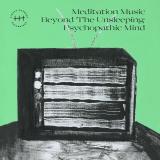
'Meditation Music Beyond The Unsleeping Psychopathic Mind' — a raw, deep free-jazz exploration where synth, voice, saxophone, and percussion dissolve into a single, unfiltered sound world. No boundaries, no polish — just presence and freedom for sonic expression.
Music spontaneously composed (improvised) by all members of the group. Recorded at Threshold Studios in Hamilton, Ontario, Canada. Produced by our good friend Devin Brahja Waldman and wrapped in hypnotic cover artwork specially crafted by renowned Vancouver-based artist Boone Naka.
Annie Shaw - keys/synth/vox
Sarah Good - keys/synth/vox
Nadah El Shazly - keys/synth/vox
Adam Kinner - tenor saxophone
Connor Bennett - soprano saxophone
Devin Brahja Waldman - synth, alto saxophone
Vicky Mettler - guitar
Alexei Orechin - guitar
Daniel Gélinas - drums, percussion
Philippe Melanson - drums, percussion
expected to be published on 27.02.2026

Black Vinyl[28,95 €]
Algiers haben sich eine Crew zugelegt: Für ihr viertes Album "SHOOK" versammelte die Band eine Schar gleichgesinnter Künstler um sich herum. Der Nachfolger zum gefeierten Album "There Is No Year" (2020) ist ein musikalischer wie inhaltlicher Blitzableiter in bewegten Zeiten und mit seinen 17 eindringlichen Songs schon jetzt eines der aufregendsten Alben aus 2023. Das komplette Album entstand, als Fisher und sein Bandkollege Ryan Mahan für einige Monate in ihre Heimatstadt Atlanta zurückkehrten, wo sie unter dem wachsenden Druck litten, was schließlich in einem Burnout gipfelte. Eine extreme Zeit für die Band und für die Freundschaft der beiden Musiker, in der sie schließlich auch persönlich wieder zueinander fanden. Sie hörten viel alten Hiphop und eine Neuauflage von DJ Grand Wizard Theodores 1970er Punk-beeinflusstem New Yorker Rap-Meisterwerk "Subway Theme" diente als spirituelles und thematisches Moodboard für das Album. Während Gemeinschaft und Zusammenarbeit schon immer ein wesentlicher Bestandteil der Arbeitsweise von Algiers war, kommt dies bei "SHOOK" nun voll zum Tragen. Die Liner Notes lesen sich wie ein Who is Who der zeitgenössischen Underground-Musik, mit Zack de la Rocha, Big Rube (The Dungeon Family), Billy Woods, Samuel T. Herring (Future Islands), Jae Matthews (Boy Harsher), LaToya Kent (Mourning A BLKstar), Backxwash, Nadah El Shazly, DeForrest Brown Jr. (Speaker Music), Patrick Shiroishi, Lee Bains III, und Mark Cisneros (The Make-Up, Kid Congo Powers). Dank ihrer Beiträge wird "Shook" aus verschiedenen Blickwinkeln neu geformt und kontextualisiert. "Es vertieft und erweitert die Welt von Algiers", so Schlagzeuger Matt Tong. Atlanta, der Ort, an dem die Platte entstanden ist, steht schließlich im Mittelpunkt. Das Album beginnt mit einer robotergesteuerten Zugdurchsage vom Hartsfield Airport, die vielen Einwohnern von Atlanta ein Begriff ist und Fisher als Kind immer eine Heidenangst gemacht hat. "Wir haben in einer Umgebung gearbeitet, an die wir gewöhnt waren", sagt Gitarrist Lee Tesche. "Es fühlt sich an wie die beste Algiers-Platte, die wir je gemacht haben." Dass diese Platte überhaupt entstanden ist, grenzt an ein kleines Wunder, da die Band immer wieder vor der Auflösung stand. Algiers haben jedoch Reibung in Energie umgewandelt und mit "SHOOK" ein außergewöhnliches und kraftvolles Album produziert, das am Ende von seiner starken Gemeinschaft lebt. "Ich glaube, mit dieser Platte haben wir unser Zuhause gefunden", sagt Mahan, und Fisher fügt hinzu: "Es war eine ganz neue, positive Erfahrung - eine erneuerte Beziehung zu der Stadt, aus der wir kommen, und Stolz dafür zu haben. Mir gefällt der Gedanke, dass diese Platte uns auf eine Reise mitgenommen hat, die aber in Atlanta beginnt und endet."
Order now and we will order the item for you at our supplier.

Algiers haben sich eine Crew zugelegt: Für ihr viertes Album "SHOOK" versammelte die Band eine Schar gleichgesinnter Künstler um sich herum. Der Nachfolger zum gefeierten Album "There Is No Year" (2020) ist ein musikalischer wie inhaltlicher Blitzableiter in bewegten Zeiten und mit seinen 17 eindringlichen Songs schon jetzt eines der aufregendsten Alben aus 2023. Das komplette Album entstand, als Fisher und sein Bandkollege Ryan Mahan für einige Monate in ihre Heimatstadt Atlanta zurückkehrten, wo sie unter dem wachsenden Druck litten, was schließlich in einem Burnout gipfelte. Eine extreme Zeit für die Band und für die Freundschaft der beiden Musiker, in der sie schließlich auch persönlich wieder zueinander fanden. Sie hörten viel alten Hiphop und eine Neuauflage von DJ Grand Wizard Theodores 1970er Punk-beeinflusstem New Yorker Rap-Meisterwerk "Subway Theme" diente als spirituelles und thematisches Moodboard für das Album. Während Gemeinschaft und Zusammenarbeit schon immer ein wesentlicher Bestandteil der Arbeitsweise von Algiers war, kommt dies bei "SHOOK" nun voll zum Tragen. Die Liner Notes lesen sich wie ein Who is Who der zeitgenössischen Underground-Musik, mit Zack de la Rocha, Big Rube (The Dungeon Family), Billy Woods, Samuel T. Herring (Future Islands), Jae Matthews (Boy Harsher), LaToya Kent (Mourning A BLKstar), Backxwash, Nadah El Shazly, DeForrest Brown Jr. (Speaker Music), Patrick Shiroishi, Lee Bains III, und Mark Cisneros (The Make-Up, Kid Congo Powers). Dank ihrer Beiträge wird "Shook" aus verschiedenen Blickwinkeln neu geformt und kontextualisiert. "Es vertieft und erweitert die Welt von Algiers", so Schlagzeuger Matt Tong. Atlanta, der Ort, an dem die Platte entstanden ist, steht schließlich im Mittelpunkt. Das Album beginnt mit einer robotergesteuerten Zugdurchsage vom Hartsfield Airport, die vielen Einwohnern von Atlanta ein Begriff ist und Fisher als Kind immer eine Heidenangst gemacht hat. "Wir haben in einer Umgebung gearbeitet, an die wir gewöhnt waren", sagt Gitarrist Lee Tesche. "Es fühlt sich an wie die beste Algiers-Platte, die wir je gemacht haben." Dass diese Platte überhaupt entstanden ist, grenzt an ein kleines Wunder, da die Band immer wieder vor der Auflösung stand. Algiers haben jedoch Reibung in Energie umgewandelt und mit "SHOOK" ein außergewöhnliches und kraftvolles Album produziert, das am Ende von seiner starken Gemeinschaft lebt. "Ich glaube, mit dieser Platte haben wir unser Zuhause gefunden", sagt Mahan, und Fisher fügt hinzu: "Es war eine ganz neue, positive Erfahrung - eine erneuerte Beziehung zu der Stadt, aus der wir kommen, und Stolz dafür zu haben. Mir gefällt der Gedanke, dass diese Platte uns auf eine Reise mitgenommen hat, die aber in Atlanta beginnt und endet."
expected to be published on 27.02.2023

Gold Vinyl[28,95 €]
Algiers haben sich eine Crew zugelegt: Für ihr viertes Album "SHOOK" versammelte die Band eine Schar gleichgesinnter Künstler um sich herum. Der Nachfolger zum gefeierten Album "There Is No Year" (2020) ist ein musikalischer wie inhaltlicher Blitzableiter in bewegten Zeiten und mit seinen 17 eindringlichen Songs schon jetzt eines der aufregendsten Alben aus 2023. Das komplette Album entstand, als Fisher und sein Bandkollege Ryan Mahan für einige Monate in ihre Heimatstadt Atlanta zurückkehrten, wo sie unter dem wachsenden Druck litten, was schließlich in einem Burnout gipfelte. Eine extreme Zeit für die Band und für die Freundschaft der beiden Musiker, in der sie schließlich auch persönlich wieder zueinander fanden. Sie hörten viel alten Hiphop und eine Neuauflage von DJ Grand Wizard Theodores 1970er Punk-beeinflusstem New Yorker Rap-Meisterwerk "Subway Theme" diente als spirituelles und thematisches Moodboard für das Album. Während Gemeinschaft und Zusammenarbeit schon immer ein wesentlicher Bestandteil der Arbeitsweise von Algiers war, kommt dies bei "SHOOK" nun voll zum Tragen. Die Liner Notes lesen sich wie ein Who is Who der zeitgenössischen Underground-Musik, mit Zack de la Rocha, Big Rube (The Dungeon Family), Billy Woods, Samuel T. Herring (Future Islands), Jae Matthews (Boy Harsher), LaToya Kent (Mourning A BLKstar), Backxwash, Nadah El Shazly, DeForrest Brown Jr. (Speaker Music), Patrick Shiroishi, Lee Bains III, und Mark Cisneros (The Make-Up, Kid Congo Powers). Dank ihrer Beiträge wird "Shook" aus verschiedenen Blickwinkeln neu geformt und kontextualisiert. "Es vertieft und erweitert die Welt von Algiers", so Schlagzeuger Matt Tong. Atlanta, der Ort, an dem die Platte entstanden ist, steht schließlich im Mittelpunkt. Das Album beginnt mit einer robotergesteuerten Zugdurchsage vom Hartsfield Airport, die vielen Einwohnern von Atlanta ein Begriff ist und Fisher als Kind immer eine Heidenangst gemacht hat. "Wir haben in einer Umgebung gearbeitet, an die wir gewöhnt waren", sagt Gitarrist Lee Tesche. "Es fühlt sich an wie die beste Algiers-Platte, die wir je gemacht haben." Dass diese Platte überhaupt entstanden ist, grenzt an ein kleines Wunder, da die Band immer wieder vor der Auflösung stand. Algiers haben jedoch Reibung in Energie umgewandelt und mit "SHOOK" ein außergewöhnliches und kraftvolles Album produziert, das am Ende von seiner starken Gemeinschaft lebt. "Ich glaube, mit dieser Platte haben wir unser Zuhause gefunden", sagt Mahan, und Fisher fügt hinzu: "Es war eine ganz neue, positive Erfahrung - eine erneuerte Beziehung zu der Stadt, aus der wir kommen, und Stolz dafür zu haben. Mir gefällt der Gedanke, dass diese Platte uns auf eine Reise mitgenommen hat, die aber in Atlanta beginnt und endet."
expected to be published on 24.02.2023

expected to be published on 24.02.2023

LP including booklet with extended liner notes. Channeling wild seventies Impulse vibes, even resonating the guts of early Art Ensemble of Chicago and the tempering spirit of Max Roach's 'We Insist' era: BRAHJA is soul searching their spirit on 'Watermelancholia'.
Devin Brahja Waldman is a New York saxophonist, drummer, synthesizer player and composer who leads the group BRAHJA. Waldman has accompanied his aunt, poet Anne Waldman, since the age of ten. Waldman is a co-founding member of Radical Reversal, Diva of Deva Loka, and Notable Deaths. He has performed with Patti Smith, William Parker, Nadah El Shazly, Malcolm Mooney, Thurston Moore, Godspeed! You Black Emperor, Charles Hayward, Luke Stewart and Yoshiko Chuma. Waldman is also a member of NYC's Heroes Are Gang Leaders (led by poet Thomas Sayers Ellis and saxophonist James Brandon Lewis), of Sam Shalabi's Land of Kush, and of the Norwegian hardcore group MoE.
As a youngster, Waldman was taken under the wing of avant-garde giant Paul Bley. Along with Anne Waldman and cousin Ambrose Bye, Waldman is a co-producer for Fast Speaking Music -a NYC poetry and music label which has released recordings with Amiri Baraka, Meredith Monk, William Parker, Laurie Anderson, Eileen Myles, CAConrad, Fred Moten, Daniel Carter, Clark Coolidge, Thurston Moore, Joanne Kyger and many others.
Ancient to the future 2.0
Watermelancholia is about the law of Karma:
a law so obvious that it often goes unspecified and ignored.
Neglecting this law invites a world of chaos.
It's been articulated in endless ways.
Some have called it Cosmic Law or Natural Law.
Others translate it as Do No Harm.
(liner notes excerpt)
The moment the first bass note of Luke Stewart kicks in on 'Watermelancholia', followed by the swelling drum roll of Malick Koly and the lush leading voice of Janice Lowe you feel Devin Brahja will take you on a deep mind-blowing spiritual journey.
Channeling wild seventies Impulse vibes on 'O.P.K' or, could we say, even resonating the guts of early Art Ensemble of Chicago and the tempering spirit of Max Roach's 'We Insist' era: BRAHJA is soul searching their spirit on 'Watermelancholia'.
A poetic stream of consciousness, backboned by top-notch musicians, transcending the cosmic universe, trying to find answers and musically connecting.
Watermelancholia is a meditation on healing the inner schism between the sense of self - the ego - and the inner being. It is about bringing the ego to justice; putting it on trial, as it were.
Order now and we will order the item for you at our supplier.

2022 Repress On Elephantine, Cairo-based Maurice Louca guides a 12-piece ensemble through a 38-minute masterwork that might best be described as panoramic. Elements of free improvisation, Sun Ra's cosmic jazz, gorgeous Arabic melody, trancelike African and Yemeni music and minimalism meet in his wholly unique compositional vision. Louca also makes vital contributions on guitar and piano, and inspires stirring performances from a global lineup.
One of the most gifted, prolific and adventurous figures on Egypt's thriving experimental arts scene, Louca has in recent years garnered a global reputation through two previous solo albums and an expanding, evolving lineup of genre-defying collaborations. The Wire called his 2014 sophomore solo effort, Salute the Parrot, "remarkable music-dense, driven and splashed with colour." In 2017, the self-titled debut by Lekhfa, the trio of Louca and vocalists Maryam Saleh and Tamer Abu Ghazaleh, was praised as an "edgy triumph" in The Guardian and picked by BBC Radio 3's Late Junction as one of the very best 12 albums of 2017.
For Louca, 36, Elephantine serves as both the pinnacle of his wide-ranging experience and a bold next step in his development as a composer, arranger and bandleader. The celebrated Egyptian visual artist Maha Maamoun has created the album cover art, following her contribution to Salute the Parrot. "There was a blessed thing about the process of making this record," Louca says of the sessions, held last year in Stockholm and featuring the leader on guitar and piano. "The dynamic between us musically but also as people ...What these musicians delivered was really more than I could ask for, Everyone played their hearts out on this record."
The music-from its pensive lulls through its stretches of hard-grooving hypnosis and moments of avant-jazz catharsis-testifies to that rapport. Best absorbed as a continuous performance, Elephantine's six individually named tracks nonetheless present striking self-contained landscapes. "The Leper" entrances through a deft use of repetition that Louca gleaned from cosmic jazz, African and Yemeni music and other transcendental modal traditions. (Those who've followed Louca's work might be reminded of the Dwarfs of East Agouza, his mesmeric unit with Shalabi and Sun City Girls' Alan Bishop.)
"Laika" manages to evoke the minimalists, though on the combustible terms of '60s and '70s free jazz; "One More for the Gutter," on which Louca ingeniously pits one half of his ensemble against the other, albeit in a synergistic way, mines similarly fiery terrain. "The Palm of a Ghost" distills the band to a Cairo-rooted core, featuring stirring spontaneous melodies from oud player Natik Awayez, violinist Ayman Asfour and vocalist Nadah El Shazly. The album's title track follows, and it too blurs the border between composition and improvisation with gorgeously atmospheric results. "Al Khawaga," with its colossal ensemble riffs, beautifully dirty swing and impassioned blowing, is an ideal finale.
Order now and we will order the item for you at our supplier.

Zwerm is a Belgian-Dutch electric guitar quartet (with a backyard rehearsal shed located in Antwerp) that operates along the borders between styles and traverses traditions that are typically not convergent. Zwerm rhymes Larry Polansky with Nadah El Shazly and are galvanized by the likes of guitars pioneers like The Velvet Underground and Sonic Youth, the microtonal DYI-er Harry Partch, Middle Eastern sonorities and the prog-madness of Kind Gizzard & the Lizard Wizard. ‘Musical adventure’ is not just a hollow cliché for this quartet, but a genuine commitment. Zwerm calls itself a ‘guitar quartet’, but that can be interpreted broadly as well as with a pinch of salt: “If we want to do something on instruments we don’t really master, we’ll just figure out a way to make it work.”
Toon Callier, Johannes Westendorp, Kobe van Cauwenberghe and Bruno Nelissen all met in 2007 while working on a project with Glenn Branca. A new guitar quartet was born and it became clear rather quickly that staying in the strictly contemporary compositions lane was not for this quartet-with-five-to-six-members (an organizational chart is available upon request).
An appetite for new and lasting collaborations has been a constant theme throughout their artistic parcours. The group has shared stages with theatrical producers like Walpurgis and Post uit Hessdalen, dancers such as Ecce and with the musicians Fred Frith, Stephen O’Malley, Shiva Feshareki, Rudy Trouvé, Mauro Pawlowski, Larry Polansky, Eric Thielemans, Yannis Kyriakides, François Sarhan, Serge Verstockt and Stefan Prins. These projects have not always translated into records, but they have been decisive in creating a unique musical approach. In 2015, when Zwerm was asked by De Handelsbeurs to collaborate with Fred Frith, they proceeded to pen a few new musical sketches over which Firth sublimely improvised. In 2018 ‘Badminton in Tehran’ was released, their first record that was made up completely of only the group’s compositions.
“a basket full of buttons here
and if you push the wrong one: fear
and if you push the right one: love
or maybe none of the above”
The route that Zwerm has taken is often defined by the question “What if... ?” - like a dart thrown at a musical map, not quite blindly, but naive enough to lead to unexpected endings.
“What if we play Renaissance pieces written by John Dowland, but instead of playing lutes we play these tunes with a Telecaster – and then jam it through effect pedals and an amplifier?”
“What if we connect one hundred guitar pedals and just leave our guitars at home?”
“What if we record a record with ten different one-page-pieces that we found on the Internet?”
In 2020 our metaphorical dart landed on “What if we tried microtonality?”.
‘Microtonality’ sounds a bit creepy, but actually there is nothing to be afraid of: there are no out-of- tune notes, just alternate notes. On the continents where Western musical theory is less stringently applied, microtonality is the rule, and has become the subject of many deep and thoughtfully written theories. However for Zwerm, this phenomenon occurs in many, often surprisingly lighthearted forms. A dilapidated piano that has settled into a beautiful microtonal tuning of its own accord, enthusiastic choral singing, a guitar whose three strings are tuned a quarter-tone higher, a saz (Turkishquarter-tone lute), a maddening guitar pedal, ...
"the dreams they were convicted for telling only lies reality came after for claiming to be wise what you don’t see is what you get just never light a spark I’m a crow in the dark”
“And… what if we work with a drummer?” Enter Karen Willems - dummer, extraordinaire, and ardent player in groups, projects and collaborations galore. One chance meeting and the deal was done. It was obvious before the start that Willems was the versatile and creative percussionist-in-a-toy-store necessary for this project. And in the studio, to our delight, she demonstrated an easy dexterity when switching quickly from one idea to the next.
At the reins behind the scenes was producer Rudy Trouvé, who – during previous sessions for ‘Badminton in Terhran’, when the classically trained guitarists went completely off the rails, staring deeply and forlornly into their scores, looking for answers – was able to pinpoint the problem and get the wagons rolling in the right direction again. Completing the team were Mark Dedecker (recording)and Joris Calluwaerts (mixing).
The results are in and it’s called ‘ Great Expectations’ – a title that, in several ways, fits perfectly with these strange times.‘Great Expectations’ goes wide! Zwerm is at its best when it can run along the borders between style and across traditions that otherwise would not necessarily intersect. The most straightforward rockers have a proggy tinge while the dreamy psychedelic songs lean more toward Richard Youngs. And if a nice melody dared come to close to becoming a ‘Kit-Katjingle’, then barbs-a-la-Pere-Ubu were trailed, tracked, found and promptly embedded. ‘Heavy Machinery’ sits neatly somewhere between Captain Beefheart and Richard Wagner, and ‘On My Way To Aguno’, set to an Iranian folk song chord progression, grew into a hyper-personal lullaby. Zwerm used the saz (Turkish lute) and the sinter (Moroccan gnawa bass instrument) without falling into pastiche psychedelia, but you can still sense the orient.
expected to be published on 02.04.2021
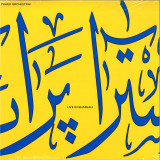
3 x LP - Live in Sharjah Box Set + Booklet. designed by Lorenzo Mason Studio.
If you’ve ever travelled to Egypt and wandered through its crowded streets, you probably ended up buying a cassette or a CDR of popular synth based music heard in most cabs, cabarets, or alleys around town: the almighty Shaabi.Raed Yassin and Paed Conca based their project PRAED on research between Shaabi and Mouled (traditional trance music from Egypt) and the hypnotic structures of both these genres. Repetitive beats, loud Mizmar and loads of energy, with a strong influence from psychedelic rock, free jazz and electronica.
During the years in which the duo produced 4 albums and performed on an endless number of stages around the globe, PRAED started working on anambitious expansive project: an orchestra that could transpose this study of rural and popular culture into an immense, iconic work. In autumn 2018, supported by the Sharjah Art Foundation, PRAED Orchestra! premiered “Live in Sharjah”, interpreting new material merged with some of the band’s iconic pieces. The composition process started with the choice of musicians: the line-up consisted of some of the most innovative artists coming from a wide spectrum of musical practices. Each musician was chosen for a defined role, and the common denominator was their capacity to interpret written material, and their ability to improvise effortlessly. Each role was clearly set to work in unison with the rest of the group, while simultaneously sustaining a centrality in the choir. Solo parts masterfully drawn over the structure as a fil rouge connecting every piece of the entire concert; massive and powerful orchestral sections leading to a breathtaking trance-like state of mind; all of this material ultimately coalescing into an Egyptian Operette that narrates the sorrow, love, and deeply rooted culture of this urban music called Shaabi.
Paed Conca: Clarinet, Electric Bass, Electronics
Raed Yassin: Synthesizers, Vocals, Electronics
Alan Bishop: Alto Saxophone, Vocals
Nadah El Shazly: Vocals, keyboard, Electronics
Christine Kazarian: Electric Harp
Hans Koch: Bass Clarinet, Soprano Sax
Martin Kuchen: Tenor Saxophone, Baritone Sax
Maurice Louca: Keyboard, Organ
Radwan Ghazi Moumneh: Buzuk, Vocals, Modular Synthesizer
Sam Shalabi: Electric Guitar, Oud
Ute Wassermann: Vocals, Mouth Harp, Whistles
Khaled Yassine: Drums, Percussion, Darbuka
Michael Zerang: Drums, Percussion
Recorded live at Calligraphy Square on November 3rd, 2018 in Sharjah, UAE by: Sudish Suman & Shuaib Ahmad Poonthala
Edited by: Rabih Beaini at Morphine Studio, Berlin, Germany
Mixed by: Radwan Ghazi Moumneh at Hotel2Tango Studio, Montreal, Canada. Mastered by: Harris Newman at Grey Market Studio, Montreal, Canada.
Artwork by Lorenzo Mason Studio.
Project manager : Simsara Music
Order now and we will order the item for you at our supplier.

Genre: Electronic, World (Arabic). 180gram vinyl includes 12'x24' art print poster + 320kbps DL card. RIYL: Matar Mohammad, Pauline Oliveros, Nadah El Shazly, Lucrecia Dalt, Chino Amobi, Sote, Arca, Fatima Al Qadiri, Tacita Dean, Stan Brakhage. Jerusalem In My Heart (JIMH) returns with Daqa'iq Tudaiq, the third full-length album from the Montréal-Beirut contemporary Arabic audio-visual duo, following the acclaimed 2015 release If He Dies, If If I f If If If (ye ar-end li sts at The Wire (#39), The Quietus (#24) and A C loser Listen (Top 10), among other accolades).
Featuring voice, electronics, buzuk and other instrumentation from composer-producer Radwan Ghazi Moumneh (Matana Roberts, Suuns, Big Brave) and abetted by the 16mm analog film work of Charles-André Coderre in live performance, JIMH continues to expand the horizons of its profound conceptual and aesthetic engagement with Arabic/Middle-Eastern traditions. Daqa'i q Tudaiq translates as 'minutes that bother/oppress/harass'—which presumably needs no further explanation—and features two distinct album sides of music. Side One realizes a long-held dream of Moumneh's to record a modern orchestral version of the popular Egyptian classic 'Ya Garat Al Wadi' by the legendary composer Mohammad Abdel Wahab. JIMH assembled a 15-piece orchestra in Beirut, enlisting the celebrated Montréal-Cairo composer Sam Shalabi (Land Of Kush) as arranger and musical director for the session. Anchored by the stately hypnotic pace of mallet and percussion instruments (riq, santur, derbakeh, kanun), the piece unfolds with lush, languid, reverb-drenched manoeuvrings through virtuosic Maqam shifts (Oriental scales). Moumneh's melismatic lead vocals and electronic production sensibility pay homage to the genre's documented historical recording traditions, while pushing things subtly and respectfully into new territories of sonic distortion and noised, artefact-laden transmission.
The song's original title (with lyrics penned in 1928 by the poet Ahmad Shawqi) translates as 'Oh Neighbour Of The Valley', but JIMH takes a different line from the original lyric as the new title for its orchestral-electronic re-interpretation. 'Wa Ta'atalat Loughat Al Kalam' (' The Language Of Speech Has Broke Down') is an expression of wordless love and transcendent communication between two lovers' eyes in Shawqi's poem; JIMH re-titles the song with this line, exploding the sentiment with more complexity, tragedy and socio-political meaning - also prefiguring the formal aesthetic ruptures JIMH bring to the piece itself. Love in a time of politics, politics in a world conspiring against love, and the specificity of Arab diasporic experience in our brutish 21st century. Side Two comprises four tracks of non-ensemble 'solo' material by Moumneh which push rupture and decomposition/recomposition of tradition further into avant-garde territory - voice, buzuk and electronics take the lead on a suite of emotive and evocative songs, including the percussive loopdriven instrumental 'Bein Ithnein' ('Between Two' ) and the stunningly unsettling processed vocal track 'Thahab, Mish Roujou', Thahab' ('(The Act Of) Departing, Not Returning, Departing'). Daqa'iq Tudaiq is a masterful, mesmerizing artistic statement and confirms Jerusalem In My Heart as one of the most engaged and forward-looking avant-Arabic projects at work in contemporary music today. Thanks for listening.
Order now and we will order the item for you at our supplier.
