
pre-order now07.02.2025
expected to be published on 07.02.2025
28,36 €
expected to be published on 07.02.2025
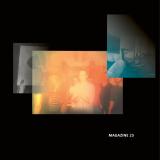
Cologne based DJ and producer Barnt has been bottling his own weather system since 2010: captivating techno where melodies flirt, rhythms evaporate, and structure is something to tease rather than obey. An attitude, that pierces the average definition of techno. With an album and endless EP’s, he turned club orthodoxy inside out. Barnt has sent his tracks out via labels like Cómeme, Mule Musiq, Hinge Finger, Hivern Discs, Kompakt, or Magazine from Cologne, the enterprise he co-runs with a bunch of friends.
After his 2014 debut album on Magazine, that came out as catalogue number 13, Barnt is back with number 25, a new album, titled “After completing the Hex”. Eleven tracks, each grinding lowkey skewed. This is techno for dramatic entrances. Dance music for confusion. Freely played chords oscillate with intention. Alluring melodies glide across stoic beats. Peaktime vibes stripped to the bone. An album that provides Barnt’s most complete release until today, displaying his unique sound world effortless assembled. Mastered by longtime accomplice, producer Matt Karmil, it features playful, seemingly unintentional, meandering club spirits. There are melodies made from 100 notes and hooklines fashioned from just one. In-between calmer electric enchanters, minimal, free-spirted, tempting. His slinky madness occasionally presents sublimely embedded environmental sounds or oral samples, taken from sources like Torn Hawk’s “Trustfall” TTT cassette album. There is a touch of sadness, that veils the recordings at times, always defied by lightness and optimism. A record made with true inspiration, that overrides all fears. Drawn frankly from emotions, bringing the ultimate flow state, that unlocks a new techno gate.
On Stock and ready to ship
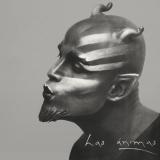
With one foot in the Mexican underground rock scene and the other one in the global tape trading circuit, Las Ánimas del Cuarto Obscuro found themselves in the middle of a crossroad after their first LP. México wasn´t the same country as when the band first started. Even though access to non-commercial music still was a difficult task in the late eighties, the fringes of culture had way more resources thanks to the stubbornness of certain anonymous heroes: dwellers of El Tianguis Cultural del Chopo, niche record stores, illegal underground parties and hosts of late night Mexican public radio shows.
Ubiquitous social unrest expressed itself in every way possible. The aftermaths of the 1985 earthquake weren’t the only matters on the table. Protests erupted after a rigged presidential election and a student strike hit Mexico’s biggest public university. This was just the tip of the iceberg of issues PRI’s perfect dictatorship was or wasn’t addressing. The clash of the authoritarian regime against new and fresh ideas.
If the first record was about the loneliness of self-destructive youth and it’s urban phantasmagories, LACO’s second LP dealt with change as the axis of human existence. Las Ánimas is just the beginning of the sonic metamorphosis Toño Sánchez went through until this very moment.
The departure of former bandmembers set a different approach towards more experimental and atmospheric sounds. As the project’s only member, Toño Sanchez took an alchemical trip aiming for more mysterious horizons.
Despite the fact that we can still find conventional dark pop and catchy songwriting, the record rests on sound landscapes closer to Jorge Reyes or Tuxedomoon and This Heat than the orthodox ways of so called post-punk, seasoned of course with the lack of music gear and the economic reality prevalent in Mexico of those convulsed times.
Las Ánimas is a goodbye letter to underground but not because the next move is the mainstream. Far away from it, it’s a farewell to traditional rock and a the first steps down into the depths. From now on, Toño Sánchez will dedicate his musical efforts to weirder sounds and scarcer audiences in the search of the arcane, possessed by a mania of constant change that infects the soul after crossing the black door’s threshold.
expected to be published on 30.10.2026

After a longtime interest in the beguiling music of Nathan Dawidowicz, Hell Yeah now hooks up with the leftfield downtempo producer for their second full-length album, FLUFF. The immersive record features three long, winding and mystical soundscapes that blend trance and experimental into spiritual and ritualistic escapes.
Dawidowicz was born in Milan to a Polish-Lithuanian mother and a Cameroonian father, but grew up in an ultra-Orthodox Jewish community in Jerusalem. Because of that, their sound is deeply rooted in childhood experiences playing the piano at religious ceremonies, as well as taking inspiration from their father’s DJing throughout the '80s and '90s. Now based in Berlin, Dawidowicz has explored expression through music on labels like Luspoderosa, where they released their debut solo album, Sanctuary of Ideas.
It was when Calm and David Holmes started playing the epic, 23-minute 'Capricorn Rising Over Jerusalemite Temple' from that album that Hell Yeah founder Marco was encouraged to get in touch with Dawidowicz. A few months later, talk turned to releasing this new album, which comes with artwork by Spain's Alicia Carrera.
'Skeptic Afro Jr.' kicks off and soon sinks you into slinky, ever-evolving rhythms. It's a slowly evolving work of sound where the focus shifts from snaking basslines to lumpy drums, cosmic leads to life-affirming chords. 'Scintilla (Feat. Hannah Schraven)' is a deep and downtempo trip into dub and techno, with undulating drums and exotic melodies that escort you into otherworldly realms of spiritualism. Last of all are 'Deep Fluff' and a hidden track (Feat. Leo Börger), two cinematic explorations of deep space where acoustic frequencies and molten synths rewire your brain and connect you to a higher power.
FLUFF is another deeply personal and inward journey packed with transcendental experiences.
DJ FEEDBACK:
"That's such an outstanding piece of work - played two at the beginning on Saturday. Probably my favourite release of the year so far!" Sean Johnston ALFOS
"this is great! 3rd repeat. It’s so nice" Vladimir Ivkovic
"Just listened to Nathan's record and it really sounds amazing... Probably the best thing you've put out to my ears ;-) I love the way he bridges the sounds of the past with contemporary storytelling, taking you on a very long trip which you never want to leave!" Alexis Le Tan
"yeah Fluff is a wonderful weird one!" Axel Boman
"I love him" David Holmes
On Stock and ready to ship

Housewives, househusbands, ladies, gentlemen, and everyone in between… Avril A is ready for relaunch.
A - V - R - I - L
Never released Hi-NRG, synth-pop, wonky rock n' roll from a queer Manchester underground icon of the 80s and 90s.
By day, Avril Eventhal was a housewife in North Manchester's Orthodox Jewish community. By night, she was the fabulous Avril A, a larger than life cabaret performer who found a loyal audience in gay venues across the country and was adored for her outrageous live shows.
With her signature leopard print dress and feather duster in hand she delivered an unforgettable song and dance routine - as it was billed, “an audio-visual assault on the audience”.
She celebrated her unconventional style, finding joy and space for creative reinvention with the queer community.
Avril died in 2017, leaving behind a massive archive of material documenting every aspect of her career in songwriting and performance. For two years, Memory Dance has been working with Avril's niece and family on a digitisation and restoration project bringing these audio recordings back to life.
On Stock and ready to ship
12"[23,49 €]
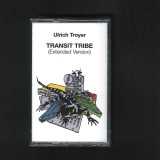
Ulrich Troyer has been producing music now solidly for over twenty years within a largely genre free framework, but whilst navigating forms such as avant-garde, techno, leftfield, field recording, electronica, glitch and ambient it is the aesthetics of dub that guide his creative direction. Not really recognisable in an orthodox form as remixed versions of roots reggae songs but in the way sonics are manipulated with space, the application and layering of delay, reverb and echo that fixes his output well within the scope of what might be called futurist dub.
The nearest comparisons to his new album TRANSIT TRIBE can only be established by a synthesis of some of the more adventurous explorations in modern music such as African Head Charge, Jon Hassell, Pole (Stefan Betke), Bill Laswell or even Miles Davis; featuring a diverse selection of artists and friends not only from Vienna and environs but also from around the world, sounds are not so much fused but allowed to float along the continuous flowing tide of warm waves of bass.
Rather than to allow the names of Ulrich Troyer's collaborators be merely listed in the album credits, what they bring to this joyful affair needs to be outlined, albeit briefly: Co-producer credits go to Osman Murat Ertel from Istanbul, who employed a variation on the old foolproof Nick Lowe method for checking out the impact quality of his own sound productions by playing tracks through his car sound system speakers!
Murat is a member of the electro-psych-folk group Baba Zula where he plays electric saz, oscillators and theremin and played a key part in the creative development of the album. Mamadou Diabate, the balafon master originally from Burkina Faso and now resident in Vienna, has developed his own unique technique of playing solos that replicate the sound of three instruments playing in unison; however the multi-talented Mamadou is engaged here on singing and playing the talking drum. From South Tyrol Reinhilde Gamper is a member of the experimental trio Greifer who are bringing the sound of the zither into the twenty-first century using new playing techniques and electronic gadgets. Susanna Gartmayer is an Austrian composer and bass clarinetist specialising in improv and multimedia sound research. Diggory Kenrick has been engaged with creating new dub fusions and also re-energising classic rocksteady and roots reggae classics, renowned for his interventions on flute. Didi Kern is an electronic dance musician and drummer from Vienna with a focus on free improvised music. Hamidou Koita, a singer and multi-instrumentalist, is from a traditional Griot family in Burkina Faso but now resident in Vienna and a regular musical partner of Mamadou Diabate playing drums and calabash. Austrian Lukas Lauermann is both a studio and live musician playing cello, also working on electronic sound design and writing string arrangements. He has recorded extensively and appeared on stage with both Mark Lanegan and Hans-Joachim Roedelius. Martin Mallaun is a Tyrol-born specialist in both the development of the zither in modern music and also as a researcher in the effects of climate change on the vegetation of Alpine ecosystems. Mystica Tribe is the musical alias of Tokyo-based dub/techno producer Taka (Takafumi) Noda. He collaborated with Vienna's own Vegetable Orchestra on 2020's "Transplants (Mystica Tribe Version)". After studying classical percussion Flip Philipp is now a jazz vibraphone player and member of the Vienna Symphony Orchestra. Wolfgang Pfistermüller is a member of the Vienna Trombone Quartet and the developer of the incredible bass-trombone Aurora with its uniquely warm and resonant sound. Roger Robinson is a renowned British poet, winner of many contemporary poetry prizes and member of the experimental music group King Midas Sound. Kwame Yeboah is a Ghanaian born UK based keyboard wizard who tours regularly with Yusuf / Cat Stevens, Ms. Dynamite and Pat Thomas.
So contained on the album is an astonishing mix of musicians and instruments: sounds of cowbells recorded in the South Tyrolean alps processed by modular synthesizers and heavy analogue bass synths combined with instruments such as zither, bass-zither, electro saz, flute, talking drum, trombone, cello, vibraphone, marimba, djembe, contra-alto clarinet, melodica, Farfisa - all bound together by organic live-drums and dub effects.
Liner notes by Steve Barker
On Stock and ready to ship

Cassette[14,92 €]
Ulrich Troyer has been producing music now solidly for over twenty years within a largely genre free framework, but whilst navigating forms such as avant-garde, techno, leftfield, field recording, electronica, glitch and ambient it is the aesthetics of dub that guide his creative direction. Not really recognisable in an orthodox form as remixed versions of roots reggae songs but in the way sonics are manipulated with space, the application and layering of delay, reverb and echo that fixes his output well within the scope of what might be called futurist dub.
The nearest comparisons to his new album TRANSIT TRIBE can only be established by a synthesis of some of the more adventurous explorations in modern music such as African Head Charge, Jon Hassell, Pole (Stefan Betke), Bill Laswell or even Miles Davis; featuring a diverse selection of artists and friends not only from Vienna and environs but also from around the world, sounds are not so much fused but allowed to float along the continuous flowing tide of warm waves of bass.
Rather than to allow the names of Ulrich Troyer's collaborators be merely listed in the album credits, what they bring to this joyful affair needs to be outlined, albeit briefly: Co-producer credits go to Osman Murat Ertel from Istanbul, who employed a variation on the old foolproof Nick Lowe method for checking out the impact quality of his own sound productions by playing tracks through his car sound system speakers!
Murat is a member of the electro-psych-folk group Baba Zula where he plays electric saz, oscillators and theremin and played a key part in the creative development of the album. Mamadou Diabate, the balafon master originally from Burkina Faso and now resident in Vienna, has developed his own unique technique of playing solos that replicate the sound of three instruments playing in unison; however the multi-talented Mamadou is engaged here on singing and playing the talking drum. From South Tyrol Reinhilde Gamper is a member of the experimental trio Greifer who are bringing the sound of the zither into the twenty-first century using new playing techniques and electronic gadgets. Susanna Gartmayer is an Austrian composer and bass clarinetist specialising in improv and multimedia sound research. Diggory Kenrick has been engaged with creating new dub fusions and also re-energising classic rocksteady and roots reggae classics, renowned for his interventions on flute. Didi Kern is an electronic dance musician and drummer from Vienna with a focus on free improvised music. Hamidou Koita, a singer and multi-instrumentalist, is from a traditional Griot family in Burkina Faso but now resident in Vienna and a regular musical partner of Mamadou Diabate playing drums and calabash. Austrian Lukas Lauermann is both a studio and live musician playing cello, also working on electronic sound design and writing string arrangements. He has recorded extensively and appeared on stage with both Mark Lanegan and Hans-Joachim Roedelius. Martin Mallaun is a Tyrol-born specialist in both the development of the zither in modern music and also as a researcher in the effects of climate change on the vegetation of Alpine ecosystems. After studying classical percussion Flip Philipp is now a jazz vibraphone player and member of the Vienna Symphony Orchestra. Wolfgang Pfistermüller is a member of the Vienna Trombone Quartet and the developer of the incredible bass-trombone Aurora with its uniquely warm and resonant sound. Roger Robinson is a renowned British poet, winner of many contemporary poetry prizes and member of the experimental music group King Midas Sound. Kwame Yeboah is a Ghanaian born UK based keyboard wizard who tours regularly with Yusuf / Cat Stevens, Ms. Dynamite and Pat Thomas.
So contained on the album is an astonishing mix of musicians and instruments: sounds of cowbells recorded in the South Tyrolean alps processed by modular synthesizers and heavy analogue bass synths combined with instruments such as zither, bass-zither, electro saz, flute, talking drum, trombone, cello, marimba, djembe, contra-alto clarinet, Farfisa - all bound together by organic live-drums and dub effects.
On Stock and ready to ship
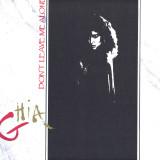
One of those tracks you simply can't forget - perhaps because it's a hard one to put in any specific genre category - laying somewhere in between the realms of synth pop and italo disco with hints of even new beat, this Austrian diggers delight has been haunting Discogs want-lists for years. Aesthetically smooth and sexy (as it shares chord changes with non other than “Careless Whisper”) but with accents of less orthodox production techniques in the “Wunderbar” mix emphasize a uniquely charming playfulness. Originally released as a 7” single, THANKYOU brings it back to your record collections now in a 12” format with an additional extended cut by Castro for those of you who might have thought the original was just a little too short. Remastered by Man Made Mastering.
On Stock and ready to ship
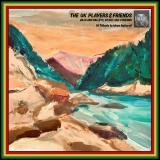
The UK Players & Friends Hills and Valleys, Rivers and Streams (A Tribute to Idren Natural) 9 brand new tracks by The UK Players. Voiced by Singers and Poets who knew Idren Natural personally. Recorded and Mixed by Supa Yout’ at Earth Works Studio, Amsterdam. Sleeve artwork and written testimonials from close friends and associates. Idren Natural aka Ras Natural aka InI Oneness, DJ, Singer, Chanter, Musician, was a pivotal player and pillar of UK/European Roots, Reggae, Dub, Sound System Culture. A humble Rastaman who did so much for so many, inasmuch as inspiring, encouraging, and connecting. He selflessly helped those less fortunate than himself. A strong advocate of the culture and philosophy of Rastafari. He was a commanding presence who lit up the stage, giving JAH all the glory. His passing was a great loss to the community. The UK Players Dub Band formed in 1996. They teamed up with Ras Natural/InI Oneness to record their debut 7” single ‘Further’ for Jah Works with Producer Jah Rej. This single gained exposure via Jah Shaka, Abashanti, and King Shiloh Sound Systems, even the famous Radio 1 DJ ‘John Peel’ played it. More recordings with Jah Rej at Seventh Sense Studio led to the debut album ‘Take Heed’. During the halcyon days of InI Oneness & The UK Players (1997-2004) they toured the UK and Europe, clocking up over 250 gigs in that time. Amongst brethren within the Rastafari community, the band became affectionately known as Ras Naturals band. Friends of Natural like Ras Iyah, Tony Roots, Sister Aisha, Wayne McArthur, and Barry Isaacs (among others) performed with them during this time. Members of InI Oneness & The UK Players never split up, throughout the years they branched out into other projects, reconvening for specials and one offs. Following Idren Naturals passing in 2022, the band stepped up to play his memorial show, where the idea formulated of making a tribute album to him. Ben King offered the use of Earth Works studio to help realise the vision. Work began with longtime live sound engineer Supa Yout’ in March 2024. Jah Rej assisted production on a number of these recordings, and sadly passed during the making of it, the last album he worked on. Various vocalists who were close to Natural, submitted vocals across the following year. The album was mixed and dubbed in March ‘25 at Earth Works by Soupa Yout' & Kingsway. Artwork and written memories/testimonials were then assembled. Everyone involved in the creation of this album knew Idren Natural personally. This album shines a spotlight on his spirit. Carrying songs of tribute, and messages for the times. ALPHA DUB: Every time the band played a gig, Natural would insist on starting with a dub. In that tradition, this album is no different. ‘Mandlion’ passing through the studio, headtopped a Melodica cut on it. Dubbed to the max by Supa Yout! NATURAL VIBE: The ‘Forward Fever’ crew from Belgium were one of the first collectives that Natural affiliated with in Europe. Here, Ras Cloud cleverly weaves all of Naturals song titles into the lyrics, creating a song in itself. WORD & FLESH: Fellowdread was born and raised in Kingston, Jamaica. Now living in Bristol, England, residing with Natural in his last days. His Poetry is rich in inflection, knowledge and wisdom, teachings that spark up the divine. ALL ABOUT LOVE: A pause for contemplation, this one stills the listener. Rootsman Rak’s words warn against complacency, and encourages action. A completely (natural) acoustic track featuring the skilled percussionist Jonah Dan. REMEMBER HIM: Inna Dubplate style, Barry Isaacs toasts to Idren in personal remembrance, reminding us all of the man he was. The track also features snippets of a phone call from Naturals oldest friend ‘Fergie Greenspears’ recounting memories. RISE UP RASTA CHILDREN: The legendary Tony Roots, graces the album with his unique delivery. Natural, The Players, and Tony go back a long way. A song of strength to affirm the soul, and rally against Babylon. Livicated to the one (Natural) SONG FOR THE RIVER MAN: During those halcyon days, many stages were shared with Albaroot, whom the band met whilst on tour in Scotland. Clark Innes (lead singer/songwriter) reminisces about the force of nature that was Natural, times shared, and that knowing, to never meet again. ONE STEP AHEAD: An interpretation of the ‘Look Inside’ riddim by Reuben Addis. Built for Sound System, it is the only track on the album that rolls into a dub. Lyrical Benjie literally entered the studio, rode the riddim without hearing it first, cutting his vocal in one take! A message for the times that sends shivers up your spine. THE PRAYER: Iman Onedub AKA Iman Gebre Iyesus, member of the Ethiopian Orthodox Tewahedo Church, met Idren Natural at Fairfield House in Bath. Here he seals the album with a recital of the Lord's Prayer in English, with Amharic. His rich textural tones elevated with a one away riddim to carry the listener home.
expected to be published on 09.10.2026

Emerging from the Ukrainian darkness in 2011, Kaosophia blend the raw energy of black metal with dissonant tones and emotionally resonant melodics. Their music is a sonic tapestry woven with intricate guitar riffs, powerful vocals, and haunting arrangements.
The band recorded their first demo “Towards The End” which was self-released by them in 2012 on a limited edition cassette.
2013 saw their first album “The Origins of Extinction” released on CD and cassette and the band followed up with many shows across Europe. 2017 saw Kaosophia expand and deepen their abyssal sounds even further with the monumental “Serpenti Vortex”, with lavish cover art produced by occult master artist Dávid Glomba, it rose Kaosophia to the upper echelons and forged their name as one the best and most formidable black metal acts in the scene at the time.
After a long period of silence, bloodletting and transformation, Kaosophia return with their darkest, most mature and powerful work to date. 2025 sees the return of Kaosophia with their new album “Beyond The Black Horizon”.
A dark and malevolent opus that explores themes of darkness, existentialism and the human condition. Delving deep into the complexities of the mind, the fragility of existence and Death itself.
Kaosophia preach orthodox ideas of Satanism in the most straightforward and ruthless form - total unconditional worship. Self-destruction as the overcoming of human essence and the cognition of pain to gain access to another level of reality's perception.
It is time to enter the end of days and venture beyond the Black Horizon…
expected to be published on 06.02.2026

After spending much of the last years focusing on the evolution of his own instrument, the drummophone, the release of ZERO,999… reveals a new paradigm in La Foresta's work and career.
In this album he collects fragments of live performances and site-specific installations conducted over the last decade, with and without the drummophone — reimagining and repurposing them as compositional elements that he has interwoven with recent studio recordings and collaborations to form eleven viscerally powerful pieces of overwhelming rhythmic and textural density.
La Foresta weaves together these captured moments in time, while employing combinatory strategies inspired by Italo Calvino's tarot stories in "Il castello dei destini incrociati," forging relationships and connections between recordings from the collaborators and his own. In approaching accompanying and augmenting these recordings, Riccardo, in the role of percussionist and composer explores the tension between his personal and academic focus on rhythmic structures and his fascination with repurposing the drum as a durational instrument.
Contributions from collaborators include the synthetic textures of Valerio Tricoli, Anthony Pateras, Aleksandra Słiż, and Renato Grieco, the vocalizations of Antonina Nowacka and Sara Persico, and the guitar experimentations of Ale Hop and Stefano Pilia, bringing together a distributed ensemble of musicians pulling apart the orthodoxies of their own instruments and techniques. Through the interaction of these elements, La Foresta imagines a causal network that binds, integrates and informs fragmented contexts, performers and performances, exploiting new possibilities of the drummophone.
ZERO,999… is conceived as a suite where sound and time are communicated simultaneously at different orders of scale, a single strike of a drum is a drone if slowed down one thousand times, an hour-long drone is a brief tick in the clock of geological time. A seemingly static object, such as the number 1, can both be defined by its fixedness, and as a process in which eternally approaching (0,999...) is the same as arriving.
k 11: EyeContact (Nereo`s) feat. Stefano Pilia
Order now and we will order the item for you at our supplier.
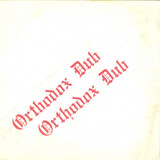
repressed !
Miraculously rare and seriously obscure killer dubs..., one of the very few hard core seventies dub albums mixed by Errol Brown.
A selection of solid dubs originally recorded by BB Seaton at Duke Reid's legendary Treasure Isle studio and mixed in-house by the Duke's nephew Errol Brown. A radical departure for all concerned this bold dub album was never officially released although a few clandestine copies reputedly did the New York rounds at the time
Order now and we will order the item for you at our supplier.

Limitierte Vinyl-Auflage des 2021er Tapes ""Brooklyn Pirates: Neighbourhoods In The Sky, 2014–2021"" (Death Is Not The End), einer Recherche in den Archiven des Radiomoderators David Goren aus Brooklyn, New York. Seit mehreren Jahren erforscht dieser die Piratensender-Community in NYC und produziert Sendungen & Podcasts für BBC World Service und KCRW. In jüngster Zeit katalogisiert Goren seine Streifzüge durch die lokalen Frequenzen mithilfe der Brooklyn Pirate Radio Sound Map (BPRSM) und spürt so den noch immer bestehenden Verbindungen zwischen nicht lizenziertem Rundfunk und der lokalen Nachbarschaftskultur Brooklyns im digitalen Zeitalter nach.
Vorliegende Sammlung vereint Cut-Up-Aufnahmen von wilden Soca-Jams, Kompas über Wahlnachrichten aus Grenada, haitianischen Traueranzeigen und Werbung für jamaikanische Patty-Shops und spirituelle Heiler – samt Sendungen türkischer, orthodoxer und sephardisch-jüdischer Piratensender. Die B-Seite deckt den Zeitraum von Mitte der 2010er bis Anfang 2021 ab und fängt insbesondere die einzigartig eigenwilligen und hyperlokalen Reaktionen der Brooklyn Pirates auf den globalen Zerfall der frühen 2020er Jahre ein – Coronavirus-Pandemie, George Floyd, Biden-Wahl, u.a. – und dient als wichtiges Dokument der Sozialgeschichte, das den Wert von DIY-Community-Sendungen in einer Zeit weltweiter Lockdowns und des völligen Zusammenbruchs der Politik demonstriert.
Tracklisting:
expected to be published on 21.11.2025

"Paloma mensajera" (featuring members of New Juggler Sound / Laghonia) shows the shift that was taking place within Peruvian rock away from psych and hard rock which had predominated during the early 70s. The style adopted by Grupo Amigos (and other bands and artists during this period) highlights the influence of soft rock, UK, US and Latin American folk rock and, above all, the desire to keep the melodic greatness of The Beatles alive. This reissue includes bonus tracks and extensive liner notes. DESCRIPTION "Paloma mensajera" (featuring members of New Juggler Sound / Laghonia) shows the shift that was taking place within Peruvian rock away from psych and hard rock which had predominated during the early 70s. The style adopted by Grupo Amigos (and other bands and artists during this period) highlights the influence of soft rock, UK, US and Latin American folk rock and, above all, the desire to keep the melodic greatness of The Beatles alive. The positive reception albums by artists such as We All Together, Telegraph Avenue and Zulu garnered between 1972 and 1975, marked a change of paradigm and in preferences within the Peruvian rock scene. Eclecticism gained new ground, to the detriment of the sectarian and orthodox, while melody grew more present and visible, moving away from the progressive experimentation that typified underground Peruvian rock up to the beginning of the 70s. For their first single on MAG, included on this reissue, the band adopted a formula in which Beatles harmonies converged symmetrically with folk motifs. 'Dirty Girl' was a hit on the radio. A full album followed but only a fairly small number of copies of the album were pressed, which seems to have been the main reason for omitting it from the historical accounts of Peruvian rock music from the late 90s onwards. In "Paloma mensajera" all compositions were penned by the group, after several years during which cover versions were a staple. Some of the musical resources that the band had at their disposal in terms of composition and arrangements are striking and even surprising, considering that they were a debut band, whose members were under the age of 20. The arrangements included the clever use of a Moog synthesizer which had just arrived at the MAG studio. The success achieved by the Beatles tribute performances played by the members of Grupo Amigos for decades have eclipsed the songs that Edmundo, Andrés Da Ros and Simón Ames composed with youthful enthusiasm and energy between 1972 and 1973 to the point where they have almost been forgotten. This re-release of "Paloma mensajera" should help rectify this major injustice. It includes bonus tracks and extensive liner notes.
expected to be published on 05.09.2025

Originally published by Tomlab in 2001, “Seleya” is the second full- length issued by Kristian Peters’ Novisad project. Twenty-four years after its initial release, the album’s thirteen loop-based arrangements continue to resonate with striking clarity. Keplar presents Seleya with a previously unreleased bonus track from 2004 and a fresh vinyl cut by LUPO.
These evocative miniatures feel haunted with the passage of time, bearing traces of the exploratory studio workflows, tactile imperfections, and emerging technologies that would have given birth to them: plain DAW manipulations, aliasing digitalia, the tones and timbres of the “misused” equipment ambient musicians utilized before Ableton, Eurorack, and the rise of the boutique electronics that have streamlined electronic music production.
In our present epoch, these compositions feel almost eerily nostalgic, documenting the sort of trembling, wide-eyed spirit and enviable naivety that characterizes cultural production as it ventures into new waters, unfettered by the sediments of established methodology and trend. This tendency to avoid aesthetic orthodoxy results in music that refuses to settle into predictability. Subtle frequencies drift and collide, counterpoint loops run in quiet opposition, and elegant dissonance gives rise to unexpected harmony. The album’s emotional power lies in these tensions, in the way it balances melancholy with beauty and familiarity with complexity.
Order now and we will order the item for you at our supplier.

WOW. Daniel O'Sullivan's transcendent new album, Eros, is one of the greatest things we've ever heard. A simply stunning song cycle of hypnotic, experimental contemporary chamber music composed for a 14-piece ensemble. Combining minimalism, complex syncopation, detailed acoustic textures, weird intervals and samurai precision, this record will elegantly blow your mind. When Daniel first sent us this, he pitched it as “Liquid Swords meets Michael Nyman”. Trust us, he wasn't wrong. A "unique hybrid orchestral music", it presents a confluence of Daniel's longstanding fixations; indeed, there's elements of Nyman, Antonio Carlos Jobim, Magma, Aaron Copland and RZA. But this is wholly O'Sullivan's. Originally commissioned for the Sonoton Music Library in Munich, Eros now receives a deluxe vinyl release courtesy of Be With Records, bringing this meticulously crafted work to a wider audience. Limited to just 500 copies for the world, these are gonna fly.
An English composer and multi-instrumentalist, Daniel O'Sullivan’s career has been marked by versatility and innovation. In addition to his work with Sonoton, he has composed extensively for the legendary KPM music library, contributing to its storied legacy of production music. As a deep virtuoso and collaborator, O'Sullivan has also played in a number of influential projects, including Ulver, Sunn O))), This Is Not This Heat, Grumbling Fur and Miracle (with Steve Moore), leaving an indelible mark on the contemporary experimental music landscape.
O’Sullivan’s first foray into classically informed chamber music, Eros is a culmination of his long-standing fixations and expansive musical influences. The album features arrangements that are as detailed as they are emotionally resonant, showcasing his unparalleled ear for intervals and mastery of counterpoint. The music brims with complex rhythmic syncopation and a sensitivity to texture and space, resulting in a soundscape that is both intoxicating and dauntingly precise.
Recorded June 2023 and February 2024, in Brussels, London and Carmarthenshire, Wales, Eros features members of Echo Collective (Neil Leiter and Margaret Hermant), Thighpaulsandra (from seminal post-industrial band Coil), and jazz pioneer Oren Marshall. Daniel's sonic weapons of choice, in his own inimitable words, were "Big Bad Drum, Pee Anne Oh, Low End Brass, Willowy Winds & Samurai Strings." You get the picture. As a cyclical suite, this is a record that really needs to be heard in its entitreity, from start to finish, to truly appreciate the genius at work here.
A jaw-dropping statement of intent, the minimalist "Golden Verses" sets the tone with its complex cue which has your neck snapping right when it feels like it needs to. Listen and you'll understand. A syncopated tangle of sharp strings, crunchy bass, drums percussion and bright piano and mallets vie for position with French horn and woodwind melody in the most compelling and unexpected ways. Quite simply, it's one of the finest album openers I've ever heard. It's followed by the atmospheric rippling minimalism of "Lyre Lyre", a gorgeous gem with shimmering chimes, bright melody, human percussion and syncopated pizzicato strings. It kinda comes on like a less-abstract Boards Of Canada, bursting with typical wonderment. The piano and string-drenched "Dolorous Stroke" effortlessly builds its warm, pastoral orchestration with flowing piano arpeggio, steadfast drums, expressive string quartet, rich low brass, woodwind and lyrical flute. Just sublime.
The insistent frenetic propulsion of "Plain Paper" is utterly beguiling, featuring a determined string motif, urgent drums and percussion, driving low brass and breathless, energetic flute. The haunting, interweaving string arpeggios that propel "Grapes Draped" presents a claustrophobic minimalism for chaos and darkness, with growling low woodwind and brass, spiky harpsichord, skittering flutes and tight drums. Up next, "Xanix Annum" is a stately minimalist waltz with expressive lyrical string quartet and delicate woodwind, anchored by drums and percussion. "Painting Rose" is a bouncy stop-start track with angular syncopated strings and a piano pulse underneath bright harpsichord and flutes. "Rotunda Garden" presents ethereal textural minimalism for landscapes and reflection with flowing string arpeggios, warm, low woodwind drones, floating choir and cymbal swells. Closing out this extraordinary side of music, the glowing, flowing minimalism of "Flowry Orb" features urgent organ, piano and woodwind arpeggios, half-time drums with shimmering cymbals, a soaring, beautiful violin solo and hypnotic vocal chant.
Side 2 opens with "Theia Mania" a determinedly off-kilter, angular track featuring low wind, brass and drum stomp in dialogue with lively string trio, woodwind and solo horn. The light, airy minimalism of "Painting Percy" is built around an interplay of rhythmic motifs for piano, low brass, bassoon, fluttering flutes, urgent strings, drums and percussion whilst "For Archetypes" is a delicate, gently syncopated chamber cue for nostalgia, nature, reflection and moments of calm, with steady piano motif, intimate woodwind and French horn, and warm, graceful strings. The urgent Ars Memoriae is a propulsive march for progress, processes and industry, underpinned by driving tuba, with determined strings, resolute drums, and vivid, expressive flute, clarinet and French horn.
The syncopated energetic minimalism of "Mirrored Seven" presents layers of melodic and cyclical piano, drums, low brass, harp, flute and strings. "Pure Ornament" follows, a slowly evolving chamber cue with flowing clarinet, string and harp arpeggio, plodding tuba and percussion, fluttering flute and graceful, lyrical solos. Stunning! Up next, "Brave Boy" moves from its tender, warm, lullaby-like intro with lyrical flute, clarinet and strings before opening into a playful backend driven by a bouncy tuba riff and syncopated piano, woodwind, string trio, and drums and percussion. Rounding out this astonishing piece, "Waxen Waned" is a warm, pastoral chamber cue with light lyrical woodwind, tender French horn and subtly pulsing string trio.
The album's title is a reference to Plato’s conception of Eros, which is more than romantic or physical desire. It is a dynamic and creative force that drives individuals to seek perfection whether in art, relationships, philosophy or the pursuit of truth. Wholly appropriate, here, we think. When asked what his influences were in making this astounding record, he answered thusly: "Non-musical: Householding, Pythagoras, Goethe, Grail romances, Hermeticism, Doctrine of Signatures (Parcelsus, Bohme, Pliny), Eric Rohmer, John Stezaker, Yasujiro Ozu. Musical: Duke Ellington (late suites), Smile-era Brian, early RZA, Wagner (Parsifal Overture), Magma, Mancini, Axelrod, YMO, Hildegard, Nyman, Penguin Cafe Orchestra, Jobim (Stone Flower), Alessandro Alessandroni, Tavener, Moondog, Orthodox Music, Secular Music." That's some pretty deep shit. Makes you want to dive in, no?
Mastering for this vinyl edition was overseen by Be With regular Simon Francis, and it was cut by the esteemed Cicely Balston at Abbey Road Studios to be pressed in the Netherlands by Record Industry. Truly, Eros is a work of extraordinary depth and sophistication. It invites listeners to immerse themselves in its intricate layers, to lose themselves in its hypnotic rhythms, and to marvel at the precision of its execution. With this release, O’Sullivan reaffirms his position as one of the most inventive and uncompromising voices in contemporary music. Do. Not. Sleep.
expected to be published on 23.05.2025

Born Xavier Amin Dphrepaulezz, by now much has been made of Fantastic Negrito's own unique story--his early years growing up in an orthodox Muslim household, the doomed major label deal that turned him off of the music industry altogether, the near-fatal car crash that permanently damaged his guitar playing hand--as well as the remarkable redemption arc that began in 2015, when he won the first ever NPR Tiny Desk Contest. In the years that followed, Negrito would go on to take home three consecutive GRAMMY Awards for Best Contemporary Blues Album, tour with everyone from Sturgill Simpson to Chris Cornell to Bruce Springsteen, collaborate in the studio with the likes of Sting and E-40, launch his own Storefront Records label, perform at Lollapalooza, WOMAD, Glastonbury, Newport Folk, Byron Bay Blues, and nearly every other major festival on the map, and found the Revolution Plantation, an urban farm aimed at youth education and empowerment. Son of a Broken Man sees Fantastic Negrito encapsulating the inimitable elements of his celebrated body of work to date, from hard-hitting distorted guitar riffs to melodic and expressive ballads, all fueled by the unexpected twists that have become his trademark. The album stands as perhaps Fantastic Negrito's most personal thus far, exploring family, deception, and the human desire to hide the true self as he dives deep into one of the oldest conflicts in human history, the struggle between father and son. Beginning at a young age, Negrito was served untruths by his father. A made-up last name, a fabricated ancestry, and a fake Somali accent. Why lie? Why create this false narrative? Those are the questions Negrito had to ask himself and the questions that lie at the heart of Son of a Broken Man.
expected to be published on 08.11.2024

Repress!
** Now available on vinyl* Steve Reich remains one of the most important figures in
20th century music. Though he studied at the prestigious
arts institutions Julliard and Mills College, by the mid-
1960s Reich set about dismantling the very orthodoxy that
he had been trained in. Forming a new musical language
based on repetitive processes, Reich became established
as part of the so-called 'Big Four' of New York minimalists
(along with La Monte Young, Terry Riley and Philip
Glass). Reich's influence can easily be seen today in both
the classical world and contemporary pop music.
'Four Organs' is the ultimate minimalist composition.
Performed by Reich, Glass, Art Murphy and Steve Chambers,
four identical Farfisa organs strike a single chord and
gradually lengthen each note to produce polyrhythms between
the players. Anchored by Jon Gibson's stoicallysteady
pulse on maracas, the piece deconstructs its opening
burst to a sustained mass of sound - stretching the tones to
create (in Reich's words) 'slow-motion music.'
Inspired by Reich's early training on drums, 'Phase Patterns'
treats the keyboards like tuned percussion instruments:
a basic rhythm pattern is played in unison and almost imperceptibly increases tempo to move out-of-sync.
Each progressive cycle emphasizes unique figures that are
not generated by an individual alone, but rather emerge
from the communal expression of the group.
Originally released on Shandar in 1971, Four Organs /
Phase Patterns is one of most highly regarded avant-garde
recordings in the past 45 years. This CD release features
cover photography by artist Michael Snow and is recommended
for fans of Neu!, Glenn Branca and Tim Hecker.
expected to be published on 12.07.2024

Steve Reich remains one of the most important figures in 20th century music. As part of the so-called "Big Four" of New York minimalists (along with La Monte Young, Terry Riley and Philip Glass), Reich influenced both the classical world and contemporary pop music.
Back in print ! Steve Reich remains one of the most important figures in 20th century music. Though he studied at the prestigious arts institutions Julliard and Mills College, by the mid-1960s Reich set about dismantling the very orthodoxy that he had been trained in. Forming a new musical language based on repetitive processes, Reich became established as part of the so-called "Big Four" of New York minimalists (along with La Monte Young, Terry Riley and Philip Glass). Reich's influence can easily be seen today in both the classical world and contemporary pop music."Four Organs" is the ultimate minimalist composition. Performed by Reich, Glass, Art Murphy and Steve Chambers, four identical Farfisa organs strike a single chord and gradually lengthen each note to produce polyrhythms between the players. Anchored by Jon Gibson's stoically-steady pulse on maracas, the piece deconstructs its opening burst to a sustained mass of sound – stretching the tones to create (in Reich's words) "slow-motion music."
Inspired by Reich's early training on drums, "Phase Patterns" treats the keyboards like tuned percussion instruments: a basic rhythm pattern is played in unison and almost imperceptibly increases tempo to move out-of-sync. Each progressive cycle emphasizes unique figures that are not generated by an individual alone, but rather emerge from the communal expression of the group. Originally released on Shandar in 1971, Four Organs / Phase Patterns is one of the most highly regarded avant-garde recordings of the past 50 years. This first-time vinyl reissue features cover photography by artist Michael Snow and is recommended for fans of Neu!, Glenn Branca and Tim Hecker.
expected to be published on 10.07.2024

Scruff Gilder and Nick `Manasseh’ Raphael and featuring the voice of roots singer Tena Stelin.
* A sound system anthem – particularly fot Jah Shaka - from the late 80’s / early 90’s alongside the original dub mix `New Style’ and dubplate cuts which are featured on Side B.
Order now and we will order the item for you at our supplier.

*REMASTERED ROUGH TRADE 4 TRACK E.P LIMITED TO JUST 500 COPIES*
Everything on “Up Home!” is bigger, richer; the guitars are huge, as though they’re being played through the clouds, massive gusts of blue-green noise that move across the stereo spectrum like weather systems. “Baby Milk Snatcher” is built around face-flattening dub bass, with glinting piano and shards of guitar ricocheting through the song. “W.O.G.S.” is delirious to the point of expiration; “One Way Mirror” is their attempt at weird, lopsided ‘anti-funk’, the song’s melody crushed by avalanches of six-string interference. And the closing “Up” is AR Kane’s masterpiece, a disembodied thud pulsing at its heart as a six-note guitar melody spirals ever onward, Ayuli’s voice lost in its own reverie, hymning escapism via references to Jamaican political activist Marcus Garvey’s ‘black star line’.
• Jon Dale, lead review in Uncut Magazine
who grew up together in Stratford, East London. From the off the pair were outsiders in the culturally mixed (cockney/Irish/West Indian/Asian) milieu of the East End, with Alex and Rudy’s folks first generation immigrants from Nigeria and Malawi, respectively. The two of them quickly developed and fostered an innate and near-telepathic mutual understanding forged in musical, literary and
artistic exploration. Like a lot of second-generation immigrants, they were ferocious autodidacts in all kinds of areas, especially around music and literature. Diving deep into the music of afro-futurist luminaries such as Sun Ra, Miles Davis, Lee Perry and Hendrix, as well as devouring the explorations of lysergic noise and feedback from contemporaries like Sonic Youth and Butthole Surfers, they also thoroughly immersed themselves in the alternate literary realities of sci-fi and ancient history (the fascination with the arcane that gave the band their name), all to feed their voracious cultural thirsts and intellectual curiosity.
It was seeing the Cocteau Twins performing on Channel 4 show the Tube that spurred A.R. Kane into being - “They had no drummer. They used tapes and technology and Liz Fraser looked completely otherworldly with those big eyes. And the noise coming out of Robin’s guitar! That was the ‘Fuck! We could do that!
The duo debuted with the astonishing ‘When You’re Sad’ single for One Little Indian in
1986. Immediately dubbed a ‘black Jesus & Mary Chain’ by a press unsure of WHERE to put a black band clearly immersed in feedback and noise, what was immediately apparent for listeners was just how much more was going on here – a tapping of dub’s stealth and guile, a resonant umbilicus back to fusion and jazz, the music less a conjuration of past highs than a re-summoning of lost spirits.
The run of singles and EPs that followed picked up increasingly rapt reviews in the press, but it was the ‘Up Home EP’ released in 1988 on their new home, Rough Trade that really suggested something immense was about to break. SimonReynolds noted the EP was: Their most concentrated slab of iridescent awesomeness and a true pinnacle of an era that abounded with astounding
landmarks of guitar-reinvention, A.R. Kane at their most elixir-like.
If anything, the remastered ‘Up Home’ is even more dazzling, even more startling than it was when it first emerged, and listening now you again wonder not just about how many bands christened ‘shoegaze’ tried to emulate it, but how all of them fell so far short of its lambent, pellucid wonder. This
remains intrinsically experimental music but with none of the frowning orthodoxy those words imply. A.R. Kane, thanks to that second generation auto-didacticism were always supremely aware about the interstices of music and magic, but at the same time gloriously free in the way they explored that connection within their own sound, fascinated always with the creation of ‘perfect mistakes’ and the possibilities inherent in informed play.
Order now and we will order the item for you at our supplier.

Black Truffle is thrilled to present the first vinyl reissue of David Rosenboom’s unique Future Travel, originally released on the short-lived Detroit label Street Records in 1981 and here presented in an expanded edition with an additional LP of wild, previously unheard live and studio material from the same period.
Future Travel emerged from the confluence of two important streams in Rosenboom’s work at this time. First, his exploration of ‘propositional music’, defined as ‘complete cognitive models of music’ that start from the radical question, ‘What is music?’ In this case, the music belongs to the universe of Rosenboom’s In the Beginning (1978-1981), in which proportional relationships determine the material available to the composer in all musical parameters (harmonic relationships, melodic shapes, rhythmic subdivisions, dynamics, and so on). Second, the work documents a key moment in Rosenboom’s long collaboration with synthesizer pioneer Don Buchla. Having played a role in developing concepts for some of the modules of the Buchla 300 Series Electric Music Box (an innovative analogue modular system controlled by micro-processors), Rosenboom went on to write the software for Buchla’s hybrid analogue-digital keyboard synthesiser, the Touché, the instrument heard most prominently here.
In a way that no purely analogue synthesizer could, the 300 Series and Touché allowed Rosenboom to work with the In the Beginning algorithms in real time, the synthesizers becoming ‘intelligent instruments’ that actively collaborate with the performer. Developing the open structures of the electronic pieces from In the Beginning, Future Travel explored the possibilities of simply ‘playing the system’, recording live at Francis Ford Coppola’s Zoetrope studio in San Francisco. Working from loose sketches, Rosenboom added acoustic instruments to the electronic sounds and, on some pieces, the processed voice of Jacqueline Humbert. Like Rosenboom’s collaboration with Humbert on the abstracted synth-chanson of Daytime Viewing, this music set out deliberately to challenge the ‘stratified and illusorily coagulated identities in the musical culture of the time,’ refusing distinctions between ‘serious’ and popular music. But where Daytime Viewing achieves this in part through genre references, Future Travel is bracingly sui generis, existing in a unique universe where radical formalisation à la Xenakis spontaneously gives rise to expressive jazz harmonies and old-timey folk melodies.
The crystalline quality of many of the Touché sounds gives Future Travel a sparkling, immediately enticing surface, its layers of shifting ostinato patterns pulsating outside conventional meter, rippling like waves on the surface of water. On opener ‘Station Oaxaca’, ping-ponging synth arpeggios and hand percussion accompany a sentimental violin melody, abruptly overtaken by layered keyboard runs, before the entry of tinkling marimba-like sounds reframe the scene as sci-fi Martin Denny exotica. ‘Time Arroyo’ begins as an austere study in staccato synth sounds in multiple overlapping tempi, reminiscent of Ligeti’s famous ‘clock’ rhythmic effects. Before long, it opens up into a melodic passage with the gentle heroism of classic Roedelius, which proves to be only a brief interlude before the layers of rhythmically distinct synthesiser patterns begin to build and accelerate into an increasingly dense cacophony. The wildest twists and turns are saved for the epic closer ‘Nova Wind’, where the arrangement focuses on Rosenboom’s virtuoso piano playing, perfectly embodying the project’s radical disregard of stylistic orthodoxies as he moves from hyperactive pointillistic flurries to a kind of space-age gospel.
At several points throughout the record, the distinctive voice of Jacqueline Humbert is heard reading passages from the text component of In the Beginning, a dialogue between The Double (an embodiment of humanity’s timeless desire to replicate itself in spiritual and technological copies) and two Spirit Characters. Fittingly, as all are conceived as embodiments of a future form of techno-human collective consciousness, distinctions between the three characters are not immediately evident in Humbert’s delivery, just as the music blurs the boundaries between intelligent computing and human spontaneity. Adorned with a striking retro-futurist cover (and here accompanied by extensive new liner notes and archival images), Future Travel is a time capsule of radical imaginings at the birth of our digital age, reminding us of utopian possibilities of which our own present seems so often to fall short.
Order now and we will order the item for you at our supplier.

Panoram makes soundtracks for daydreams gone sideways. Picture the scene: an afternoon nap with the television on, quietly, in the corner; snatches of conversation drift in through the open window. Wandering, half-formed thoughts take unexpected detours; before you know it, there’s a movie playing out against closed lids, the colors bright, the characters unfamiliar. Accidental rhythms, incidental melodies, imitations of life, messages in code.
Across 17 fragmentary, sketch-like tracks, Panoram carves a labyrinthine path in which nothing is what it seems: a fantasy world of breathy vox pads, faux guitar, detuned synths, bursts of flute and orchestral percussion, and even the occasional cheeky cartoon sample. It’s chillout music with a chilly edge, ambient with a darkly ironic undertone. (The briefest glance at your news outlet of choice should be enough to confirm that the title—Great Times—ought to be taken with a healthy dose of skepticism.)
Panoram has been making music under his principal alias for more than a decade now, releasing albums on labels like Firecracker, Running Back, and his own Wandering Eye. (He has also performed and recorded with Amen Dunes, and has co-production credits on Amen Dunes’ forthcoming Sub Pop album Death Jokes.) Panoram’s output has ranged widely, taking in abstract pop, classical composition, twisted takes on library music, and cyborg funk. One record of “bio-acoustic transmissions” came with a cannabis leaf pressed in clear wax; his 2021 album Pianosequenza Vol. 1 gathers his experiments on the Yamaha Disklavier. But Great Times offers the truest picture yet of a project that has never been easy to pin down.
Loath to overshare details about his personal life, Panoram instead lets the music do the talking, using his cryptic tracks to express the slipperiest sorts of ideas—the thoughts that take root where anxiety, distraction, and the most fleeting traces of grace commingle. Panoram’s approach flies in the face of contemporary ambient orthodoxy, with its emphasis on immersion and uplift. Great Times expresses something thornier, more difficult to translate, yet also more tantalizing to contend with. Its 17 tracks offer a chance to get lost—and an invitation to remain in the maze as long as you like.
Order now and we will order the item for you at our supplier.
The Debut album from Finnish band Graven Sin is a modern classic of godly, Doom-laden Heavy Metal. Veil of The Gods is etched in granite via Svart Records on November 2023 Pristine new Finnish band Graven Sin stomp proudly on the shoulders of giants with their ravishing debut album, Veil of The Gods. Immaculate Heavy Metal, expertly delivered with stunning finesse and elegant Doom perfection, Veil of The Gods is a classic in the making. Rarely has a new band sounded so timeless, serving up a godly platter of first-class Heavy Metal, that Graven Sin seem chiselled in granite to sit side by side at a table with the greats from the very get go. From the galloping charge of opening barn-stormer Morrigan, with jaw dropping solo guitars courtesy of riff master Ville Pystynen, the epic and anthemic She Who Rules Niflheim with soaring vocals from Greek vocalist Nicholas Leptos to the formidable double bass canter of Ville Markkanen’s drums on songs like Beyond Mesopotamia, Graven Sin knows the true riddle of steel. Throughout Veil of The Gods’ eleven cast-iron tracks, we can trace veins of recent Finnish greats such as Sentenced, Amorphis, Reverend Bizarre or their nordic counterparts Grand Magus from Sweden, but there is much more at play here. Graven Sin offers up heavy, doom laden orthodox Heavy Metal in the true, chugging, monumental sense of the term. The knowledge and prowess of Heavy Metal craft on display in Veil of The Gods is second to none, from the Maidenesque command of melody to the swarthy Manowar rhythms, herculean Deep Purple keys and Messiah like Candlemass-rich voice of astonishing vocalist Leptos, these are songs to be inscribed into stone tablets. Where pitch dark mythical themes and occult leanings of the lyrics bring to mind the Heavy Metal running through Black Metal bands like Dissection, the song arrangements swing from gallop to thundering, head-banging mid-sections with such magnificence, you would think you were in the hands of a band with decades of heritage behind their backs. A “where have you been all my life moment” awaits Heavy Metal fans of all shades when Graven Sin hits the speakers, delivering a sound that cuts glass and steel. A refreshing tour–de-force through everything Heavy Metal is loved for, not shrinking from the dark but embracing it with gusto and fierce bravado. Veil of The Gods shows us that real metal lives forever, if crafted with true spirit and belief. Hear the cry of the seer of doom, by heeding Morrigan’s call now: Ville Pystynen - guitar, bass Nicholas Leptos - vocals Ville Markkanen - drums
expected to be published on 03.11.2023

The Debut album from Finnish band Graven Sin is a modern classic of godly, Doom-laden Heavy Metal. Veil of The Gods is etched in granite via Svart Records on November 2023 Pristine new Finnish band Graven Sin stomp proudly on the shoulders of giants with their ravishing debut album, Veil of The Gods. Immaculate Heavy Metal, expertly delivered with stunning finesse and elegant Doom perfection, Veil of The Gods is a classic in the making. Rarely has a new band sounded so timeless, serving up a godly platter of first-class Heavy Metal, that Graven Sin seem chiselled in granite to sit side by side at a table with the greats from the very get go. From the galloping charge of opening barn-stormer Morrigan, with jaw dropping solo guitars courtesy of riff master Ville Pystynen, the epic and anthemic She Who Rules Niflheim with soaring vocals from Greek vocalist Nicholas Leptos to the formidable double bass canter of Ville Markkanen’s drums on songs like Beyond Mesopotamia, Graven Sin knows the true riddle of steel. Throughout Veil of The Gods’ eleven cast-iron tracks, we can trace veins of recent Finnish greats such as Sentenced, Amorphis, Reverend Bizarre or their nordic counterparts Grand Magus from Sweden, but there is much more at play here. Graven Sin offers up heavy, doom laden orthodox Heavy Metal in the true, chugging, monumental sense of the term. The knowledge and prowess of Heavy Metal craft on display in Veil of The Gods is second to none, from the Maidenesque command of melody to the swarthy Manowar rhythms, herculean Deep Purple keys and Messiah like Candlemass-rich voice of astonishing vocalist Leptos, these are songs to be inscribed into stone tablets. Where pitch dark mythical themes and occult leanings of the lyrics bring to mind the Heavy Metal running through Black Metal bands like Dissection, the song arrangements swing from gallop to thundering, head-banging mid-sections with such magnificence, you would think you were in the hands of a band with decades of heritage behind their backs. A “where have you been all my life moment” awaits Heavy Metal fans of all shades when Graven Sin hits the speakers, delivering a sound that cuts glass and steel. A refreshing tour–de-force through everything Heavy Metal is loved for, not shrinking from the dark but embracing it with gusto and fierce bravado. Veil of The Gods shows us that real metal lives forever, if crafted with true spirit and belief. Hear the cry of the seer of doom, by heeding Morrigan’s call now: Ville Pystynen - guitar, bass Nicholas Leptos - vocals Ville Markkanen - drums
expected to be published on 03.11.2023

A.R. Kive collates the three most astonishing works from that most miraculous of duos - A.R. Kane - comprising the ‘Up Home’ EP from 1988 that signified the band’s dawning realisation of their own powers and possibilities, their legendary debut LP ‘sixty nine’ (1988) and its kaleidoscopic, prophetic double-LP follow up ‘i’ (1989).
In founder-member Rudy Tambala’s new remastering, the music on these pivotal transmissions from the birth of dream pop, have been reinvigorated and re-infused with a new power, a new depth and intimacy, a new height and immensity. Vivid, timeless and yet always timely whenever they’re recalled, these records still force any listener to realise that despite the habits of retrospective myth-making and the
safe neutering effects of ‘genre’, thirty years have in no way dimmed how resistant and dissident to critical habits of categorisation A.R. Kane always were. Never quite ‘avant-pop’ or ‘shoegaze’ or ‘post-rock’ or any of those sobriquets designed to file and categorise, A.R. Kive is a reminder that those genres had to be coined, had to be invented precisely to contain the astonishing sound of A.R. Kane, because
previous formulations couldn’t come close to their sui generis sound and suggestiveness. This is music that pointed towards futures which a whole generation of artists and sonic explorers would map out. Now beautifully repackaged, remastered and fleshed out with extensive sleeve notes and accompanying materials, ‘A.R. Kive’ reveals that 35 years on it’s still a struggle to defuse the revolutionary and inspirational possibility of A.R. Kane’s music.
A.R. Kane were formed in 1986 by Rudy Tambala and Alex Ayuli, two second-generation immigrants who grew up together in Stratford, East London. From the off the pair were outsiders in the culturally mixed (cockney/Irish/West Indian/Asian) milieu of the East End, with Alex and Rudy’s folks first generation immigrants from Nigeria and Malawi, respectively. The two of them quickly developed and fostered an innate and near-telepathic mutual understanding forged in musical, literary and artistic exploration. Like a lot of second-generation immigrants, they were ferocious autodidacts in all kinds of areas, especially around music and literature. Diving deep into the music of afro-futurist luminaries such as Sun Ra, Miles Davis, Lee Perry and
Hendrix, as well as devouring the explorations of lysergic noise and feedback from contemporaries like Sonic Youth and Butthole Surfers, they also thoroughly immersed themselves in the alternate literary realities of sci-fi and ancient history (the fascination with the arcane that gave the band their name), all to feed their voracious cultural thirsts and intellectual curiosity.
It was seeing the Cocteau Twins performing on Channel 4 show the Tube that spurred A.R. Kane into being - “They had no drummer. They used tapes and technology and Liz Fraser looked completely otherworldly with those big eyes. And the noise coming out of Robin’s guitar! That was the ‘Fuck! We could do that! We could express ourselves like that!’ moment”, recalls Tambala - and through a mix of
confidence, chutzpah, ad hoc almost-mythical live shows and sheer innocent will the duo debuted with the astonishing ‘When You’re Sad’ single for One Little Indian in 1986. Immediately dubbed a ‘black Jesus & Mary Chain’ by a press unsure of WHERE to put a black band clearly immersed in feedback and noise, what was immediately apparent for listeners was just how much more was going on here - a
tapping of dub’s stealth and guile, a resonant umbilicus back to fusion and jazz, the music less a conjuration of past highs than a re-summoning of lost spirits.
The run of singles and EPs that followed picked up increasingly rapt reviews in the press, but it was the ‘Up Home EP’ released in 1988 on their new home, Rough Trade that really suggested something immense was about to break. Simon Reynolds noted the EP was: Their most concentrated slab of iridescent awesomeness and a true pinnacle of an era that abounded with astounding landmarks of guitar-reinvention, A.R. Kane at their most elixir-like.
If anything, the remastered ‘Up Home’ that forms the first part of ‘A.R. Kive’ is even more dazzling, even more startling than it was when it first emerged, and listening now you again wonder not just about how many bands christened ‘shoegaze’ tried to emulate it, but how all of them fell so far short of its lambent, pellucid wonder. This remains intrinsically experimental music but with none of the frowning orthodoxy those words imply. A.R. Kane, thanks to that second generation auto-didacticism were always supremely aware about the interstices of music and magic, but at the same time gloriously free in the way they explored that connection within their own sound, fascinated always with the creation of ‘perfect mistakes’ and the possibilities inherent in informed play.
‘sixty nine’ the group’s debut LP that emerged in 1988 had
critics and listeners struggling to fit language around A.R. Kane’s sound. As a title it was telling - the year of ‘Bitches Brew’, the year of ‘In A Silent Way’, the erotic möbius between two lovers - and as originally coined by the band themselves, ‘dream pop’ (before it became a free-floating signifier of vague import) was entirely apposite for the music A.R. Kane were making. Crafted in a dark small basement studio in which Tambala recalls the duo had “complete freedom - We wanted to go as far out as we could, and in doing so we discovered the point where it stops being music”. There was an irresistibly dreamy, somnambulant, sensual and almost surreal flow to ‘sixty nine’s sound, but also real darkness/dankness, the ruptures of the primordial and the reverberations of the subconscious, within the grooves of remarkable songs like ‘Dizzy’ and ‘Crazy Blue’. Alex’s plangent vocals floated and surged amidst exquisite peals of refracted feedback but crucially there was BASS here, lugubrious and funky and full of dread, sonic pleasure and sonic disturbance crushed together to make music with a center so deep it felt subcutaneous, music constructed from both the accidental and the deliberate, generous enough to dance with both serendipity and chaos. ‘sixty nine’ remains - especially in this remastered iteration - ravishing, revolutionary.
The final part of this ‘A.R. Kive’ contains 1989’s astonishing double-LP ‘i’ which followed up on ‘sixty nine’s promise and saw the duo fully unleash their experimental pop sensibilities over 26 tracks, plunging the A.R. Kane sound into a dazzlingly kaleidoscopic vision of pop experiment and play. Suffused with new digital technologies and combining searingly sweet and danceable pop with perhaps the duo’s strangest and boundary-pushing compositions, the album did exactly what a great double-set should do - indulge the artists sprawling pursuit of their own imaginations but always with a concision and an ear for those moments where pop both transcends and toys with the listeners expectations. Jason Ankeny has noted that “In retrospect, ‘i’ now seems like a crystal ball prophesying virtually every major musical development of the 1990s; from the shimmering techno of ‘A Love from Outer Space’ to the liquid dub of ‘What’s All This Then?’, from the alien drone-pop of ‘Conundrum’ to the sinister shoegazer miasma of ‘Supervixens’ — it’s all here, an underground road map for countless bands to follow.” Perhaps the most overwhelmingly all-encompassing transmission from A.R. Kane, ‘i’ bookended a three year period in which the duo had made some of the most prophetic and revelatory music of the entire decade.
After ‘i’ the duo’s output became more sporadic with Tambala and Ayuli moving in different directions both geographically and musically, with only 1994’s ‘New Clear Child’ a crystalline re-fraction of future and past echoes of jazz, folk and soul, before the duo went their separate ways. Since then, A.R. Kane’s music has endured, not thanks to the usual sepia’d false memories that seem to maintain interest in so much of the musical past, but because those who hear A.R. Kane music and are changed irrevocably, have to share that universe which A.R. Kane opened up, with anyone else who will listen. Far more than other lauded documents of the late 80s it still sounds astonishingly fresh, astonishingly livid and vivid and necessary and NOW.
expected to be published on 08.09.2023

In the days before “landfill” indie, and in rebellion against a developing Britpop orthodoxy, there were some weird but melodic bands coming of age outside London that drew inspiration from the US underground and the sparkly retro-futurism of Japan. Primitive guitar noise with art rock leanings, post punk DIY and fanzine culture. The best known of these bands was maybe Urusei Yatsura; “noisy stars”, named in honour of Rumiko Takahashi, legendary manga creator.
Back in 1996, after several increasingly well-received 7’s, the band travelled to Leamington Spa to record their debut album with John Rivers, producer of Swell Maps and Glasgow scene godparents, The Pastels. The resulting album won the group legions of new fans and gained them their first Independent #1 chart placing, alongside peers Ash and Super Furry Animals.
“These were fertile years in Glasgow, a scene with no name, no single sound, where the magic thread tying everyone together was words and works so personal, they couldn’t be mistaken for anyone else’s. ‘We Are Urusei Yatsura’ is a cascade of ‘why not?’ thinking. The way ‘Phasers on Stun’ spirals into ‘Sola Kola’; the sunburned 23-second improv at the end of ‘Pachinko’; the slack-echoing strings of the outro to ‘Road Song’ sprayed with the shrapnel of toy electronics. Pure pop magic, Ren & Stimpy on upstairs, ray-guns, Ian’s homemade walkie-talkie speaker, a beatbox, all sealed with a “Talking Tina” doll’s emphatic endorsement: “I love it”” – Nick Soulsby
expected to be published on 26.05.2023

Born in Milan to a Cameroonese father and a Polish/Lithuanian mother, Nathan Dawidowicz moved at the age of 6 to Jerusalem. He was spending his childhood in a Jewish ultra-orthodox environment playing the piano and dreaming of being a Fashion designer and musician. After waking up from the reality he was raised in, he moved to Venice and started to explore the "outside world" of the mental barriers of religion. Music and fashion were his medicine, and he quickly became addicted to musical textures and vinyl. His love for music brought him quickly to Berlin, where he currently lives and loves.
Sanctuary Of Ideas is a very personal and optimistic journey by Nathan Dawidowicz. His first solo album is a spiritual path, as cosmic and adventurous as Nathan`s trajectory, with beautiful twists and psychedelic twirls into Dawidowicz personal rabbit hole. A record full of memories and positive affirmations, filled with Jazzy yet psychedelic Cosmic and Krautrock elements. A fusion of inspiration - and a perfect reflection of Dawidowicz heritage.
Idea`s Eve is a stargate to our ancestral power. The source of our inspiration is connected to our past - to the spirits of our ancient memories. Dawidowicz leaves a lot of space to breathe in this magical opener. Enchanting melodies and bubbling sounds surround the listener while his voice keeps repeating a mantra of an ancient love spell. A track where you feel your DNA spiraling up the ladder of evolution. Yet so natural and healing.
Full Moon Dance is the spiritual continuation of the first track. A swirl of magical melodies, yet jazzy but truly cosmic walking up the ladder to another dimension, where warm moon rays and fluffy clouds surround love. The synth lines represent the playful and smooth moon rays reflected on a rhythmical heart-beating ground where tears can be joyfully spent to honor the emotions we usually oppress.
To close the EP, Nathan Dawidowicz worked a half a year to finalize the last track in full detail. 23 Minutes and 18 Seconds long is the Capricorn Rising Over Jerusalemite Temple. This story is where the listener is brought to a higher level of consciousness. Against the rules of our consumerist world, Nathan Dawidowicz focuses on a dramaturgy full of patience for our own lifetime. Acidic lines come and go, powerful synth solos trigger unknown brain parts, and an epic melody accompanies the listener and lets dark emotions melt in a brass-filled part where a voice tells us that time is on our side. The song ends with an epic twist and promises a new start, where our most lovely memories stay in a vortex of light. Beam me up Nathan.
Order now and we will order the item for you at our supplier.

Taka Noda AKA Mystica Tribe has been releasing deep music on vinyl since 2011 on labels including SD Records, Solar Phenomena, Silent Season, and his own Mystica Tribe Records. Working in the dub/techno continuum, he is one of only a handful of artists who creates brilliant tunes at both ends of the spectrum, from heavy, psychedelic warehouse techno to beautifully orthodox reggae-infused dubwise. For his first ZamZam, he leans hard into the latter.
Noda describes his approach to these tunes as a “virtual live band,” and while “the only real live instrument is the melodica, I wanted to capture the energy of a live band with this song.”
A master of both melody and rhythm, Noda does exactly that with “Ido” (which means a well for water). The mood hits immediately with a loose & confident groove built from impossibly-live sounding drum work, a perfect orthodox bassline, and achingly beautiful interplay between piano, clav, and melodica. Somehow both melancholy and bright, it captures that moment when winter gives way to the first hint of spring, sun finally breaking through clouds after months of rain and darkness.
Rather than a simple dub of the A side, the version is a complete rebuild of the tune. “Ido - Renren Version” (which means flowing like tears, or a river) drops the tempo down to 120 but goes harder rhythmically in spite of its slower tempo. Opening with a stark, dark, and menacingly driving bassline and warped dub siren, the vibe is completely transformed from above-ground to below. Hard percussion, new melodica parts, and 4-4 hats & kick take it into that full post-punk dub territory that the world needs more of. Much more!!
Order now and we will order the item for you at our supplier.

Remastered reissue of “We Are Urusei Yatsura” (originally released in 1996), with bonus vinyl of unreleased demos and B-sides
Celebrating the 30th Anniversary of the founding of Glasgow “Geek Rock” band Urusei Yatsura
– Double Clear-Vinyl Reissue of 1996 Album
In the days before “landfill” indie, and in rebellion against a developing Britpop orthodoxy, there were some weird but melodic bands coming of age outside London that drew inspiration from the US underground and the sparkly retro-futurism of Japan. Primitive guitar noise with art rock leanings, post punk DIY and fanzine culture. The best known of these bands was maybe Urusei Yatsura; “noisy stars”, named in honour of Rumiko Takahashi, legendary manga creator.
Back in 1996, after several increasingly well-received 7’s, the band travelled to Leamington Spa to record their debut album with John Rivers, producer of Swell Maps and Glasgow scene godparents, The Pastels. The resulting album won the group legions of new fans and gained them their first Independent #1 chart placing, alongside peers Ash and Super Furry Animals.
“These were fertile years in Glasgow, a scene with no name, no single sound, where the magic thread tying everyone together was words and works so personal, they couldn’t be mistaken for anyone else’s. ‘We Are Urusei Yatsura’ is a cascade of ‘why not?’ thinking. The way ‘Phasers on Stun’ spirals into ‘Sola Kola’; the sunburned 23-second improv at the end of ‘Pachinko’; the slack-echoing strings of the outro to ‘Road Song’ sprayed with the shrapnel of toy electronics. Pure pop magic, Ren & Stimpy on upstairs, ray-guns, Ian’s homemade walkie-talkie speaker, a beatbox, all sealed with a “Talking Tina” doll’s emphatic endorsement: “I love it”” – Nick Soulsby
The vinyl-only double LP set comprises the original 1996 album recorded by John Rivers, accompanied with an extra disk of unreleased demos, rare singles and B-sides which have not been available since the 90’s. It documents the time leading up to the release of the LP and the singles that came from it, capturing the development, lost pop moments and essential experiments from the eccentric and joyful Glasgow band. The cover has been completely remixed using archive
photos and artwork from the time, with new interviews and extensive notes. The release marks 30 years since the official birthday of the band, 9/3/93.
“When I drove the transit van that took them down to Leamington Spa to record their first proper LP, there was a sense of quiet, assured anticipation. I couldn’t wait to hear it and when I came back a couple of weeks later to pick them back up, I remember so clearly when they played it from the van’s tape deck. Fergus and Graham were hunched over, focusing intently on what they wanted to change about the mix. The reverb wasn’t right or something. Maybe they didn’t like how high the vocals were in the mix. I said to them, you’re listening to the details, but missing what is most important–this is a fantastic record! It was. It is. It is a fantastic record. They were a brilliant live band and I am so lucky to have been able to have been there to see their formation.” – Alex Kapranos.
expected to be published on 03.03.2023

The increasingly vital Jorkes makes a big step up to the acclaimed Live at Robert Johnson label with her standout Sweet Dreams EP. As with all Jorkes EPs, the artwork features photography shot by Daniel Rajcsanyi.
Jorkes has been making big and bold moves recently. She is the co-founder of the unique Freeride Millenium label which is a hotbed for queer dance music. German-born but Austria based, she has an influential residency at Radio 80000 alongside ParisBöhm and is a resident at Stuttgart's Romantica where she plays a thrilling mix of disco, house, techno and everything in between. She is someone who always serves to highlight the importance of the dance floor as a place of sexual and cultural liberation and this new EP is another innovative statement that comes as she rides a wave of high profile radio, DJ and media support for recent outings on her own label.
Opener 'You Will be Mine' is a song about obsessing after an unattainable stranger on the dance floor who disappears into the night. It's a silky disco house sound with chords that sing and a floating bassline that lifts you off your feet. The melodic motifs bring charm and cosmic energy and the whole track has a lush, musical feel. The equally excellent 'Robot Lover' muses on human detachment in this technological era of internet porn, dating apps and screen obsessions and how a robotic lover might be a better fit than a real life partner. It is another elastic and disco-tinged rhythm, with elegant chords and dancing keys over a suspensory bassline. Intimate vocal whispers bring tenderness to this timeless track.
On the flip side, 'Sweet Dreams' layers up infectious claps and tinny percussion over an irresistible deep house groove. It's a widescreen, symphonic sound that brings very real but subtle joy and closer 'CDEvaLo' is the name of a crossdressing male-to-female and sex-worker friend of Jorkes. She sings the introduction lyrics in Greek and they translate as "It was a very beautiful day, while we were sitting at the park we thought of going out for a coffee and realized we have no money and are absolutely broke. So we discussed about who is gonna put the wig on to "go and make a visit“ Greek slang for sex work so we'll have money again." It is a comment on the number of young people who arrived in Athens over the years to do cross-dressing sex work after being kicked out by their Orthodox Christian homes. The track flips the script with a more playful disco sound, characterful vocoder vocals and glossy synths over a jacked house beat.
This is an expansive EP that shows off the different sides to Jorkes's unique sound.
Order now and we will order the item for you at our supplier.

Repress!
Originally released in 2011 with a limited pressing and repressed once a few years later in 2016. “Right now in cities across the globe, there are plenty of great Afrobeat revivalist bands aping the sound and groove of Fela Kuti’s legendary sound. Yet, surprisingly few of the new groups have strayed from an orthodox interpretation of the genre or done much real innovation. ..Ikebe Shakedown is here to change that. The band takes signature Afrobeat elements—big unison horns, slinky bass lines, tight little guitar licks—and blends them with tasty grooves culled from '70s-style horn-driven funk”. -Marlon Bishop, WNYC
Ikebe Shakedown, the self-titled album and Ubiquity Records debut from the Brooklyn-based band, plays with elements of Cinematic Soul, Afro-funk, Deep Disco, and Boogaloo in all the right ways. Pushing their globally-informed sound and eclectic approach to tune-writing into new territory, “Self-titling the album is a way to introduce the audience to the many facets of the band -- to provide a more complete understanding of what we do,” bassist Vince Chiarito says. “Our sound has grown to incorporate our influences without overtly representing any one in particular. It just sounds like us," he adds.
Order now and we will order the item for you at our supplier.

Black Truffle is pleased to announce a major archival discovery from the wildest outer fringes of the FMP universe, the Bergisch-Brandenburgisches Quartett’s Live ’82. The Bergisch-Brandenburgisches Quartett (BBQ) was formed in 1980 in Rostock, East Germany, when three of the most radical and riotous members of the West German free music scene—reedist/accordionist Rüdiger Carl, percussionist Sven-Åke Johansson and Hans Reichel on violin and his modified ‘strange guitars’ — first played as a quartet with East German saxophonist Ernst-Ludwig Petrowsky. A rare example of a working band with members from both sides of the wall, during its lifetime the BBQ left only one recorded document, a studio LP on Amiga, the pop and jazz sublabel of the GDR state-run Deutsche Schallplatten Berlin. Neither pure fire music nor orthodox free improvisation, the four members of the BBQ shared an all-embracing aesthetic where quotes and jokes sat comfortably alongside radical extended techniques and sonic experiments. Beautifully recorded at the 1982 Moers festival, the music presented here is a kaleidoscopic demonstration of what Johansson has called the BBQ’s ‘free postmodernism’. Beginning with a fractured landscape of clarinet flourishes from Petrowsky, Johansson’s spacious drums accents, banjo-esque plucks from Reichel’s handmade guitar and the groans and squawks of Carl on cuica, the music lurches between flowing melodicism and stunted locked grooves, settling after a few minutes into a lyrical clarinet and bass clarinet duet accompanied by shimmering guitar chords and some inexplicable percussive rotations. When Petrowksy starts to unfurl long, flowing flute lines accompanied by hand percussion, the music suddenly recalls Don Cherry’s global fusions, but this turn to the folkish quickly takes on a more European character when Carl and Johansson pick up accordions for the first of several comical but oddly moving duets. The more frantic second half of the set takes in a raucous digression into honking R&B, an Ayler-meets-Schlager romp with almost rockish chordal accompaniment from Reichel and an outrageous free jazz blowout with Carl on accordion, not to mention episodes of Johansson’s signature improvised Sprachgesang and antics with his expanded percussion set up, including items such as shoe stretchers and the Berlin yellow pages, which more than once cause the audience to burst into laughter. Arriving in a beautifully designed sleeve with copious archival photographs and flyers from Johansson’s collection and extensive new liner notes from Francis Plagne, Live ’82 is a major historical document that remains both musically challenging and immensely entertaining forty years on.
Order now and we will order the item for you at our supplier.

"We Are Power", Galaxian's first album in over a decade, cuts a new path. On this Foul-Up and Shipwrec joint release, Kastner presents a rumination on the confrontation and power clash between humankind, nature, the spiritual and mechanistic industrial growth societies. What is authentic power? What is granted power? What is innate natural power? How is power accessed, wielded, utilised, felt? On this album the blistering beats and razor-edged rhythms that characterise the Glaswegian's productions have been softened, the menace melted, the angst soothed (well almost.) Across eleven tracks, distinct audio vistas are surveyed. The human form takes centre stage from the opening monologue of "Out of Balance" with the entire record searching for balance between humankind, nature, orthodox culture & the machine. At times the machine wins. "We Are Power" is a corruption of voice, samples chopped, sliced and fed into controllers and sequencers to produce a dense decibel wall. That wall grows ever higher in the terrifying drone of "Anatomy of a Modern Lie." At other points, a perfect symmetry between artist and tool is found. The racing interchanges and pulses of "Universal Truths" give rise to dawning reprises and warmth. For those after an electro fix, Galaxian abides. The speed snares of "Messianic Delusions" or dripping drums of "Fields of Meaning" are soaked in the history of machine music, yet they are grander in their delivery and more nuanced in their composition. Fresh territories are explored, the playful solar dreams of "Without Form" or the cinematic grandeur of "In Reverse". This album is unmistakable Galaxian, it marks a high-point and brings with it a culmination of intense expression.
Order now and we will order the item for you at our supplier.

By the power of darkness and the might of black-hearted will no two Mayhem albums have been or will be the same. Over the course of Mayhem’s storied and groundbreaking 35-year career—from De Mysteriis Dom Sathanas (1994) through Esoteric Warfare (2014)—the Norwegians have continuously challenged the orthodoxy of the genre they helped create. Originally informed by greats Hellhammer, Venom, Bathory, and Sodom, the Norwegians eventually imbued their damnable attack with influences from all over the music extreme spectrum, indicated first on the harsh and angular Wolf’s Lair Abyss (1997) EP and foremost on the enterprisingly brutal and revolutionary Grand Declaration of War (2000). In 2019, Mayhem yet again reinvent on new album, Daemon. “Mayhem will always be Mayhem,” says guitarist/songwriter Teloch (aka Morten Bergeton Iversen) says. “If we put the genre game aside a bit, no one else sounds like Mayhem. Even when De Mysteriis came out, it was not at first considered to be a black metal album, if my memory serves me right. Tricky to label this band, metal would be the most fitting; it’s not pure black metal in my opinion. Not sure it has ever been actually, despite what the general opinion is. People can call it whatever they want. If it’s black metal to them, then fine. We don’t really care. But to me it’s important to keep some sort of black metal vibe at least
expected to be published on 29.04.2022

It was obvious from the first riff on the first song from their very first album: MASS WORSHIP were born fully-fledged, utterly unique and magnificently destructive. Emerging from Scandinavian shadows like an unstoppable, shape-shifting bulldozer, they have swiftly become one of the most praised and talked-about bands in the metal underground. Despite spending a big part of 2020-2021 locked inside, writing and recording new material, MASS WORSHIP did complete a highly successful tour in support of Polish death metal legends Vader. Meanwhile, MASS WORSHIP are primed and ready to unleash their second full-length assault. Due for release in 2022, “Portal Tombs” is a terrifying but electrifying exploration of the gloomy depths of human nature: a monolithic manifestation of the musical force that is MASS WORSHIP. Drawing inspiration from bands such as At The Gates, Mastodon and Meshuggah, MASS WORSHIP could be likened to many bands, but somehow forge their musical identity into something exceptionally distinctive and transcendent, and with enough confidence and conviction to win over even the most orthodox fans of the genre. “Portal Tombs” will once again proclaim MASS WORSHIP’s one-of-a-kind potency with maximum force. A triumph for both style and substance, “Portal Tombs” is the kind of metal record that shatters epochs, audaciously redefining what it means to be heavy. MASS WORSHIP continue to lead the charge for individuality and verve, while still delivering a never-ending tsunami of life-affirming, spine-shattering riffs. Lyrically, too, “Portal Tombs” takes the path less trodden, exploring the dark recesses of humanity’s past, its present and, darkest of all, its future. As we spiral towards an abyss of our own making, MASS WORSHIP’s soundtrack will resonate loudest of all. “Portal Tombs” is available as: Ltd. CD Digipak, Gatefold LP, Digital Album
expected to be published on 04.02.2022

MUSAR is honoured to revive the electronic-synth legend, MANASYt, with a new five-track EP as part of a three-EP series. 'Reality Defense Department' will be the Bulgarian's first material since 2012, set to release via MUSAR on December 8, 2017.
Petar Tassev aka MANASYt, hails from the twilight zone. Growing up with the blacks swans in the forest of communist Bulgaria, listening to metal and hardcore music then interpreting the moody, roughness together with inspirations from electronic new-wave music to a raw, pure and dark adventure bubbling with madness.
'Reality Defense Department' is a future horror movie soundtrack. The first track 'Memory Imprints' is a pure psychedelic-trip into the mental clinic for clockwork orange droogs. The second track 'Mobile Pharmacy' can be described as what the aliens would listen to while attacking Earth. The last original track 'Orthodox Spanking' is a dark, wayward electro track full of post-punk elements, perfect for a fetish party.
A pair of remixes by Brooklyn's wonder girl 'Via App' with a deep, dark and gothic techno rework for the late dazed hours of the morning and Norwich's kept secret, Wax Stag (an occasional collaborator with Bibio and Clark) that delivers a dreamy, cosmic twist that will linger in your consciousness for a long, long time to come.
Order now and we will order the item for you at our supplier.

COS might not be the first genre defying progressive music group you’ve heard who share both wordless onomatopoeic vocals and a snappy three letter title (complete with philosophical leanings and alchemic penchants) but on listening to this first ever custom Cos compendium you might have just discovered a new favourite!
Perhaps it’s no coincidence that COS share close spiritual, stylistic or social connections to the aforementioned bands, as one of the few long-withstanding single-syllable ensembles to remain utterly idiosyncratic and incomparable within their hyper-focussed and impenetrable creative bubble. But as a 1970s group that effortlessly MIX head-nod prog, synth-driven jazz, cinematic sound-designs, dislocated disco, arkestral operatics and high-brow conceptual anti-pop grooves, it’s easier to remember the name COS than thumb the vast amount of genre-dividers in your local record shop which COS COULD occupy. With the crème de la crème of Belgian jazz/prog/psych/funk within their ranks, their combined idea-to-ability ratio litters the Cos-ography with concepts that aficionados, future fans, collaborators and critics still haven’t began to unravel.
With their earliest roots in the compact jazz group Brussels Art Quintet the group spent their sapling years creating art-school prog under the name Classroom, this flourishing collective, cultivated by multi-instrumentalist mainstay Daniel Schell, would soon shed its leaves, dropping band-members and typographics reducing its moniker to simply COS (a multi-purpose, globally recognised word, with links to Alchemy and philosophy, with a hard phonetic delivery to suit the groups heavier rhythmic approach). In it’s new skin COS also shed all forms of orthodox language to find its true exclusive voice. Fronted, in the conventional sense, by the daughter of author and part-time jazz player Jean De Trazegnies, the bands wordless singer changed her name to Pascale SON, to accentuate the French word for “sound”. Drawing comparisons with sound poets like Polish jazz legend Urszula Dudziak or Hungarian Katalin Ladik, but retaining the crystalline femininity (and funk) of Flora Purim, while effectively sharing an imaginary lyric book of non-words with Damo Suzuki, Magma or a future Liz Fraser... To use the word “unique” would, by COS academic standards, be lazy journalism.
expected to be published on 16.07.2021

Clive Phillips, Dominic Goodman, Peter Blundell are Mosquitoes, a somewhat inscrutable London-based outfit in operation for something close to seven years now, and have released music across a host of celebrated and broad-minded underground labels. Give or take the occasional interview in the less-straight parts of the music press, this is as much formal biography as their music has thus far allowed, for there's something essentially unknowable at the centre of what makes Mosquitoes what they are. So murky is their early history in fact, the first two self-released Mosquitoes records seemed to disappear from sight before really becoming visible. As more records have emerged, those first communications accumulate new meanings, acting as vital documents in tracking the evolution of a band who stand at the vanguard of contemporary British music.
The second of these records, recorded to tape in summer 2016 and first released as a single-sided 12" under the name MOS-002, is arguably the first true iteration of Mosquitoes. Now fittingly renamed Mosquitoes for its reissue as a dubplate-style 10" on World of Echo on 5th March, these five cryptically titled, shape-shifting tracks, see the trio embrace a near-genre-less fluidity, and in doing so express a unique combination of both freedom and intent. By design or instinct, Mosquitoes stand at their own inverted rock nexus, presenting a music that's turned inside out, and in doing so, music that twists the listener the same way.
In that sense, Mosquitoes plug into a long lineage of DIY savant iconoclasts, those outliers who would deny orthodoxy in order to excavate new languages and ideas - The Dead C, This Heat, the anti-formalism of No Wave, David Toop's General Strike. As such, Mosquitoes rely on a musical pluralism in order to take it apart - you must know how something is made before you reassemble it anew. Labelling this an EP may possibly underplay the breadth and ambition of what's on show. Later records would arguably be more cohesive, but what stands as particularly startling with this early work is their fearless and all-encompassing dive into the avant garde. Consider the anti-rockism of the scorched earth 90s re-imagined through a distinctly avant filter of free jazz and dub aesthetics. And it's the latter which perhaps shapes Mosquitoes most, dub the perfect vehicle for the articulation of such wilful anti-formalism. Make no mistake, this is music that's unafraid to be tough, to demand something of the listener and to not ask permission. And to bear witness to a rejection of formalism so aggressively pursued is to be reconciled.
Order now and we will order the item for you at our supplier.

NEP was a loose multimedia collective formed in 1982 Zagreb, ex-Yugoslavia. The founder Dejan Krsic collaborated with various artists in a quest of re-thinking the stale concepts of art history, position of the author and the barriers between pop and elitist high culture. Heavily influenced by Walter Benjamin and Andy Warhol in theory and Brian Eno and Kraftwerk in music, Krsic created NEP as an umbrella term (meaning Nova Evropa or New Europe) of diverse rule-breaking activities, covering graphic design, music, photography, video, news-media and theoretical work. Musically NEP focused on experiments in ambient and tape-music, self-released and hard to find compilation tapes like "The Cassette Played Poptones" (1988). Deeply immersed in pop-culture, politics and art theory Krsic's search for perfect pop music with cutting critical edge peaked in 1989, the year 'Decadance' track was conceived in studio. Fox & His Friends published the single in 2017 with Snuffo Remix on B-side. It received rave reviews in music press like MixMag and DJ Mag and it is still played on dance-floors around the world. But the story around the NEP is musically (as well as artistically) much wider: for the first time Fox & His Friends team compiles best cuts from unreleased and rare NEP tapes, covering the period from 1985 to 1989 on POP NOT POP abum. Dejan Krsic is now famous graphic designer and art historian in Croatia. Other collaborators include Laibach and Borghesia photographer Jane Stravs, artist and TV director Gordana Brzovic, Jovan Culibrk, now Bishop at The Serbian Orthodox Church and Anja Rupel, singer of cult Yugoslavian synth-pop group Videosex as well as the other members of Videosex, Iztok Turk and Janez Krizaj who produced some of the tracks. Other collaborators were talented producers Robert Logozar and Davor Daga Devcic, singers Linda Cooper, Natalija, Alexx Kovacs... The list of collaborations is long. Some of the memorable moments on POP NOT POP album are early demo version of Decadance 'How Do I Dance To This Music?' with blue movies samples and drum machine experiments like early Cabaret Voltaire, then Krsic's reinterpretation of legendary Kraftwerk's Trans Europe Express anthem as 'Transcendance', or 'Radical Chic', where Dejan himself and Anja Rupel from Videosex make lovely couple of dandy-esque fashionistas, singing chart-friendly radio synthpop tune that contrasts the A-side (The 'NOT POP' side) - full of experiments, dark wave and industrial nods to Test Department and Cabs. B-side is 'THE POP' side that will surprise most of the NEP followers from their early experimental cassette days. Sunny, danceable, joyfull pop that reveals the many faces of NEP. As Kraftwerk today is more of a concept than a band, NEP does the same by re-writing its products (musical, graphical, theoretical, activist) and constantly puts them in permanent state of change or re-mix. In the future, only NEP logo will be enough to consider something an art piece, and NEP will be everybody who wants to, as their Art Manifest claims. Until that day comes, 'POP NOT POP' is a document of how the vivid and creative were art-scenes in socialist Yugoslavia. Some of the graphic work, cut-ups from theory and Manifesto are also included on this LP, designed by Dejan Krsic aka NEP himself. This release is made from the original master tapes and published for the first time on vinyl.
Order now and we will order the item for you at our supplier.