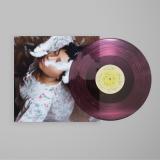
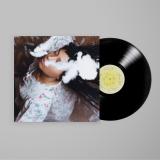
Bristol duo Pume Orenge unspool a world of spectral electronica from cassette loops and instrumental improvisation on their debut album Angel By Milo for Odda Recordings.
It is a world that opens draped in ferric hiss. A fog of sound, dense and yet not quite there, catching the light in strange shades and ambient drifts. Looping and receding, looping and receding, as pucks of static burst like faraway fireworks on a cold winter’s night. Sound sources obscured, ambiguous, not quite what they seem.
Angel By Milo takes its lead from the analogue process and textures by which it was made. Percussive and melodic loops were established, manipulated and responded to with instrumental improvisation, in a give-and-take with the materiality of the medium.
Across these seven intricately developed tracks, the sound fluctuates between the cinematic and the introspective, at times melancholy, at others verging on a kind of restrained anger, before the calm sets in once more. It is music for the small hours, awash with the grainy stuff of memory.
Embedded within Bristol’s independent scene, Pume Orenge’s quiet debut also speaks to the duo’s shared roots in the area, and like many of Odda’s previous releases, contains a sensitivity to place and atmosphere, even when these are no more than implied.
Angel By Milo builds on the DIY ethos of Pume Orenge's 2023 self-titled debut EP, whose tracks were recorded live in single takes, now honing a more intentional, purposeful approach to music making. It is one in which layers of meaning are allowed to reveal themselves, a way of composing that makes a virtue of its labour and the chance occurrences that can arise in the process.
This is music in praise of shadows. Of the things we can’t quite see, the feelings we can’t quite grasp. Heard through the haze, or maybe not at all.
quête:one more angel
DJ Support: Garnier, Opolopo, Worldwide FM, Marcia Carr, Bill Brewster, Timeout Moscow, Craig Smith, Delfonic, Tony Nwachukwu, Marcel Dettmann, DJ Rocca, Shuya Okino, Borrowed Identity, Titonton Duvante, Alex Attias, Rainer Truby, Sol Power All-Stars, Kyri R2, Robert Luis, Severino Panzetta, Lars Behrenroth, Kassian, Alkalino, Getdown Edits, Moodymanc, Gerd, Lea Lisa, Young Pulse, Mark de Clive-Lowe, Mark Grusane, Alex Barck….
International dance music heavyweight, producer and DJ Alexander Lay-Far returns with a powerful new chapter - Lay-Far Dance Orchestra (LFDO) - a fully-fledged live band project that reconnects him with his jazz-funk and fusion DNA while pushing dance music forward with unmistakable groove, musicianship and emotional weight. Formed in early 2024, LFDO is no nostalgia exercise. With Lay-Far at the helm as bassist, bandleader, composer, arranger and sound engineer, the orchestra has already been turning heads with explosive live performances, reinventing classic Lay-Far cuts, and now unveil their first album “Skybreak” with all new and original material written and produced by Lay-Far together with his bandmates and star guests, including Lipelis, Antoha MC and Seven Davis Jr. This work shows the departure from the predominantly electronic sound of Lay-Far's previous solo albums in favour of live instrumentation recorded to analogue tape and effortlessly bridging the gap between Jazz, Library Music, Disco-Funk, House, Broken Beat and Drum’n’Bass. “Skybreak” is dynamic, passionate, spiritual, cinematic, playful, heartfelt, life-affirming, dreamy and deeply romantic. Ultimately, there’s something profoundly romantic in recording and releasing such music in this day and age!
“Take Flight (Part 1)” is opening the album with style. It takes us on a beautifully orchestrated journey, blending the sensuality of Library Music with high-octane Jazz-Funk and raw b-boy breaks, propelled by breathtaking flute and Rhodes solos of Timur Nekrasov and Maxim Glonti. This aural symbiosis of “beauty and the beats” will become more and more prominent as the album unfolds.
It’s time for “Aquarius Love” created with the inimitable artist and vocalist Seven Davis Jr. (Secret Angels, Ninja Tune). In this composition cinematic soul and heavy jazz meet the restless energy of live drum & bass with deep and heartfelt vocals - timeless sound combined with a timeless message about love and life!
Next is “Head In The Clouds” - a theme for an imaginary rom-com, an ode to all the dreamers - sweet, light, naive and heartwarming. Space-Disco-Funk at its best!
“Where You From” is a fiery Soulful House number with heavy Afro-Latin influences recorded in collaboration with Lipelis. It’s full of Sun, joy and passion. Its irresistible rhythm is emphasised by funky octave bass, wah-wah guitar, catchy piano riffs, guitar solo by Lipelis and seemingly light conscious message delivered by Lay-Far and Maryag. Summer is here!
Now the album takes an unexpected twist in the form of “The Harp of Boom” which at first glance appears to be a classic-sounding Boom-Bap banger. Yes, It’s loud, raw, and gritty, yet it gradually evolves into something delicately-touching and deeply-soulful thanks to a memorable flute melody and lush string arrangement. Definitely recorded with tongue in cheek.
Next is “Feel The Moment” a remarkable collaboration with one of the most recognisable and distinctive Russian artists, singer, trumpeter and cultural icon Antoha MC. It’s a feel-good song, hopeful, life-affirming and bittersweet. A stylish excursion into Brit-Funk and Soviet Jazz-Fusion sound, drawing inspiration from the likes of Atmosfear, Light Of The World or Soviet Jazz bands like Allegro and Arsenal, but reimagining the influences through the modern West London broken beat lens.
The spectacular music journey continuous with “Take Flight (Part 2)” - it’s all about the deep infectious jazz-funk groove, heavy beats, rolling percussion and the glory of the soloing instruments - saxophone and flute by Timur Nekrasov, demonstrating the wide range of emotions from thoughtful and lyrical to restless and borderline vicious. One for freestyle dancing!
As the album draws to an end a vibrant musical triptych “Soul Constant” awaits, mixing together the deep and sensual mood of spiritual jazz with heavy syncopated drum’n’bass rhythms by Michail Fotchenkov, lush orchestration, expressive saxophone solos and the ending which can simply be described as “aural bliss”. It’s breath-taking!
A pleasant bonus is the exclusive version of “Where You From” by Lipelis himself, who is taking it into dub territories, further enhancing the rhythm section and enriching the song with his trademark playful synth flourishes and dreamy guitar solos for maximum effect (and appeal).
The album “Skybreak” by Lay-Far Dance Orchestra is the work of real artistry and craftsmanship with timeless sound that’s not only deeply-rooted but also forward-thinking.
The album opens with the ominous guitar-driven Hollow Sky, accompanied by its haunting music video's verdant vistas. The song, with Iceglass ghostly vocals, shimmers with that sounds like an Omnichord flittering like sonic firefly lights and brooding bass. This perfectly scores the less traveled wanderings through the dark wooden path of Dante's perdition, leading to the titular well that graces the album cover. The Crater opens with an unsettling riff and bass, with low, repetitive frequencies on the synth create a sense of unease. Here, Iceglass recounts a fatalistic requiem for the king of romance that is cataclysmic and leaves a scar upon the earth. With Fall Industrial Wall, once again, Iceglass channels a silky and Nico-like emotive deadpan; against a dirgelike melody backed by minimal synth, bass, and drum. Almost medieval and plaintive, with its folk droning horns, deep and shallow in their resonance. This song is anachronistic, setting the scene of ruins centuries-old with crumbling edifices strewn about like memories lost in time. With the poetic lyrics of The Chamber do we find the eponymous abyss. Here, dualities are laid bare; besides love, there is heartbreak, and without this sorrow, what meaning would there be to love if one knows not what it is to lose? This song encapsulates the idea that love is heartbreak, and love lost is reaching the deepest chamber of the heart. This is carried through a sombre horn, minimalist drum machine, and deliberate bassline overlaid with Iceglass german and english lyrics. The Well is led in with a softly distorted bassline overlaid with eerie banshee howls give way to Iceglass otherworld vocal refrain, echoing through time as if emanating from a hole in the ground, and encircling that hole is a garden of woe and despair. The sinfully seductive song The Moor features a captivating SAX SOLO courtesy of Perseas; a welcome shift in tone, juxtaposed well with the intensity of Iceglass tenebrous vocal purr. This hitherto unexplored foray into dark sensuality takes the song into sordid mid 80s territory, bringing to mind a dusky drive along a serpentine road, with equally haunting instrumentations straddling time with icy fire. Broken Characters is an acoustic folk interlude featuring Selofan's Dimitris Pavlidis on guitar. Here we find a more gentle approach with its earnest and romantic lyrics. The song's melodic hook is a soft caress along with the forlorn horn elements highlighting Iceglass at her most Nico-sounding vocal yet, singing the sorrowful truth that most artists are indeed broken characters. Chimerical opens with dirgelike synth organs. The chill of winter has befallen the lamentations sung by Iceglass carried by haunting chord progressions and minimal percussion, plaintively beseeching the song's subject to remain elusive, idealistic, and a dreamer. After an album highlighting more Jill than Jack, our male protagonist finally makes his ascent in the sonorous and breathtaking Dark Hill, a masterful march of sweeping synth horns, and trepidatious drum machine with William Maybelline's bellowing voice cracking like thunder, rattling the atmosphere like his heart against his ribs. Spirals swirls in a cautionary knell of cathedral-esque droning synth dirge, with Icarian lyrics shining like a sombre ray of hope; like the sun's rays creeping into the darkest of places. The song, minimalist in its tight percussion, echoes with the solace of Larissa Iceglass vocal litany; invoking elements of the supernatural, almost like a Casio preset sequenced to the beating of an angel's wings.
Singer-songwriter and multi-instrumentalist Son Little expands his musical palette on his upcoming album, Cityfolk. Blending elements of soul, folk, and blues, Son Little captures his signature sound along with expressive yet personal lyrics. Cityfolk is a reflection on love, loss, and finding peace in the chaos. It"s about holding on, letting go, and learning to breathe again when the world feels heavy. Born Aaron Earl Livingston to a preacher and a teacher in Los Angeles, Little"s collaborations with The Roots and RJD2 helped him make a name for himself in his adopted hometown of Philadelphia. Critics were quick to recognize the unique power of Little"s solo recordings, which stripped the past for parts that could be reconstituted into something wholly new and original. NPR hailed Little"s "impeccably crafted songs" as "honest and unpretentious," while The Independent proclaimed him "a formidable talent." Since then, his catalog has racked up over 250 million streams, and Little has toured with everyone from Leon Bridges and Kelis to Shakey Graves and Mumford & Sons alongside festival appearances at Bonnaroo, Newport Folk, and more. Never one to rest on his laurels, Little also earned a GRAMMYî for his work helming Mavis Staples" acclaimed "See That My Grave Is Kept Clean."
REPRESS ON SILVER VINYL . COMES WITH 24”x24” POSTER + DOWNLOAD CARD + GATEFOLD JACKET.
On The Beths’ album Expert In A Dying Field, Elizabeth Stokes’ songwriting positions her somewhere between being a novelist and a documentarian. The songs collected here are autobiographical, but they’re also character sketches of relationships – platonic, familial, romantic – and more importantly, their aftermaths. The shapes and ghosts left in absences. The question that hangs in the air: what do you do with how intimately versed you’ve become in a person, once they’re gone from your life?
The third LP from the New Zealand quartet houses 12 jewels of tight, guitar-heavy songs that worm their way into your head, an incandescent collision of power-pop and skuzz. With Expert, The Beths wanted to make an album meant to be experienced live, for both the listeners and themselves. They wanted it to be fun -- to hear, to play -- in spite of the prickling anxiety throughout the lyrics, the fear of change and struggle to cope.
Most of Expert was recorded at guitarist Jonathan Pearce’s studio on Karangahape Road in Tāmaki Makaurau, Aotearoa (Auckland, New Zealand) -- and sometimes in the building's cavernous stairwell at 1am -- toward the end of 2021, until they were interrupted by a four-month national lockdown. They traded notes remotely for months, songwriting from afar and fleshing out the arrangements alone, the first time they’d written together in such a way. The following February, The Beths left the country for the first time in more than two years to tour across the US, and simultaneously finish mixing the album on the road. That latter half felt more collaborative, with everyone on-hand to trade notes in real time, until it all culminated in a chaotic three-day studio mad-dash in Los Angeles. There, Expert finally became the record they were hearing in their heads.
Expert is an extension of the same skuzzy palette the band has built across their catalog, pop hooks embedded in incisive indie rock. The album’s title track “Expert In A Dying Field” introduces the thesis for the record: “How does it feel to be an expert in a dying field? How do you know it’s over when you can’t let go?” Stokes asks. “Love is learned over time ‘til you’re an expert in a dying field.”
The rest is a capsule of The Beths’ most electrifying and exciting output, a sonic spectrum: “Your Side” is a forlorn and sincere love song, emotive; while “Silence is Golden,” with its propulsive drum line and stop-start staccato of a guitar line winding up and down, is one of the band’s sharpest and most driving. “When You Know You Know” skews a bit groovier, pure pop and a natural addition to the band’s live set. “Knees Deep” was written last minute, but yields one of the best guitar lines on Expert. There’s a certain chaos across the 12 tracks, the palpable joy of playing music with long-time friends colliding with the raw nerves of pain.
Stokes strings it all together through her singular songwriting lens, earnest and self-effacing, zeroing in on the granules of doubt and how they snowball. Did I do the wrong thing? Or did you? And are we still good people at the end of it? She isn’t interested in villains, but instead interested in just telling the story. That insecurity and thoughtfulness, translated into universality and understanding, has been the guiding light of The Beths’ output since 2016. In the face of pain, there’s no dwelling on internal anguish - instead, through The Beths’ music, our shortcomings are met with acceptance. And Expert In A Dying Field is the most tactile that tenderness has been.
- 1: Reichpop
- 2: Lady Blue
- 3: A Woman's Wisdom
- 4: Japanese Alice
- 5: Life Of Pause
- 6: Alien
- 7: To Know You
- 8: Adore
- 9: Tv Queen
- 10: Whenever I
- 11: Love Underneath My Thumb
White vinyl. Signed Print Edition. When Jack Tatum began work on Life of Pause, his third full-length to date, he had lofty ambitions: Don't just write another album; create another world. One with enough detail and texture and dimension that a listener could step inside, explore, and inhabit it as they see fit. "I desperately wanted for this to be the kind of record that would displace me," he says. "I'm terrified by the idea of being any one thing, or being of any one genre. And whether or not I accomplish that, I know that my only hope of getting there is to constantly reinvent. That reinvention doesn't need to be drastic, but every new record has to have its own identity, and it has to have a separate set of goals from what came before." What came before: a rightfully acclaimed, much beloved display of singular pop craftsmanship. Tatum's dreamy, unexpected 2010 debut, Gemini, was written while he was still a student at Virginia Tech University. Its equally disarming follow-up, 2012's Nocturne, marked the first time he'd been able to bring his bedroom recordings into a studio, to be performed and fully realized with the help of other musicians. There has been a set of wonderfully expansive EPs in between_each hinting at new directions and punctuating previous ideas_but with Life of Pause, Tatum delivers what he describes as his most "honest" and "mature" work yet, an exquisitely arranged and beautifully recorded collection of songs that marry the immediate with the indefinable. "I allowed myself to go down every route I could imagine even if it ended up not working for me," he says. "I owe it to myself to take as many risks as possible. Songs are songs and you have to allow yourself to be open to everything." After a prolonged period of writing and experimentation, recording took place over several weeks in both Los Angeles and Stockholm, with producer Thom Monahan (Devendra Banhart, Beachwood Sparks) helping Tatum in his search for a more natural and organically textured sound. In Sweden, in a studio once owned by ABBA, they enlisted Peter, Bjorn and John drummer John Ericsson and fellow Swedish Radio Symphony Orchestra veteran Pelle Jacobsson, to contribute drums and marimba. In California, at Monahan's home, Tatum collaborated with Medicine guitarist Brad Laner and a crew of saxophonists. From the hypnotic polyrhythms of "Reichpop" to the sugary howl of "Japanese Alice" to the hallucinogenic R&B of "A Woman's Wisdom," the result is a complete, fully immersive listening environment. "I just kept things really simple, writing as ideas came to me," he says. "There's definitely a different kind of `self' in the picture this time around. There's no real love lost, it's much more a record of coming to terms and defining what it is that you have_your place, your relationships. I view every record as an opportunity to write better songs. At the end of the day it still sounds like me, just new."
Irlam's dastardly duo are back with another bonza bucket of bass, breaks and badness as they fire up Studio Krust for another high octane session.
Sure to top the Fairground charts and further enrage the Hell's Angels, 'Synthetic Stupidity' sees the pair unleash their full force unabashed, as they hit a purple patch full of new found and frankly quite surprising productivity (rumours of a European-wide sputnik shortage are the likely catalyst).
Fractionally distilling their many collective years of dance music experience into 12 refined pieces of advanced club kinetics that skirt between the syncopated intricacies of breakbeat science and maxed-out 4/4 propulsion.
More hyped-up vox & frantic sampling, more tension, tons of one-finger keyboard melodies, and - as usual - moments of sonic tomfoolery to flummox the assumers.
With their drug debts paid off and a forced clarity of mind, 'Synthetic Stupidity' is a more expansive, deeper and unhurried project; allowing Bosco and Metrodome the space and time to truly deliver the zenith of their sound.
This, is DJ ABSOLUTELY SHIT!!!
BLUE & WHITE COLOUR IN COLOUR VINYL
In the culinary arts, it’s easy to overcomplicate the final product. Theme, presentation, texture…they’re important but should work to complement the raison d'etre of any food. At the end of cooking a dish, it should taste good and feed people. Some dishes, like barbeque or provoleta, resist the tendency towards hollow showmanship. One of their expressions can be more or less aesthetic, but the first purpose is to be simple and tasteful. Argentinian provoleta goes so far as to blur the line between ingredient and dish. It relies on the inherent flavor of provolone being heated at the right speed for the perfect amount of time. You can add garlic or chives or red pepper to the slice, but ultimately they serve to bring out an essence that’s already there.
Los Angeles’ Cousin Feo has developed his rapping acumen in the five years since releasing Provoleta, but returning to the project today shows that he always had the penmanship, grit and delivery that christens an emcee worthy of remembrance. Like the bubbles rising up in the appetizer that is the album’s namesake, Feo showed that true profundity is found in the simple gestures.
Since dropping the project in 2019, Cousin Feo has expanded his vision of a world where hip-hop and football, two proletarian art forms, mingle in creative and compelling ways. He has collaborated across multiple continents, chronicled football histories, aided in canonizing legends, kept the flames high in age-old rivalries and constantly forced his audience to search for the last time they heard bars this hard. In anyone else’s hands it would be too great a task.
The maturity he showed on Provoleta wasn’t nascent, it was an inherent quality forcing itself to the surface. The songs refract his experience as a working class Angeleno through the archetypes of Argentinian football legends. The kernel that unites the two worlds is hustle. When Feo was coming up, missteps had greater consequences than crashing out in the group stage and street deals had the weight of a Boca-River Plate match.
Each track uses slightly different ingredients to let Feo’s underlying talent shine. “Maradona” feels salvific, fitting for a football legend canonized from the Andes to the Alps and a Los Angeles rapper looking to inspire similar hope in the neighborhoods that raised him. On “Di Stefano” Feo massages the instrumental with the same composure of the late forward, until he pierces through the headphones like one of Di Stefano’s arrows. It’s also refreshing to hear a song celebrating Messi before his meme-ification, focusing on the universal truths contained in his footballing talent instead of using number 10 as a stand-in to make a point in a fruitless argument. And he still finds space to show deference to Batistuta, Kempes and other members of the Argentinian pantheon who’ve been erased from the popular imagination by the national team's contemporary success.
Real ones know that true players, true rappers, and true artists will always stand the attacks of time and consensus. In Provoleta’s first verse, Cousin Feo says he moves with the hand of God. Maybe one day he’ll tell the whole truth and let us know how he was able to wrestle the pen away too. Limited edition of 300 hand-numbered copies.
Saxophonist, producer and composer Brian Allen Simon explores darker hues, transposing waking and altered states under his studio veil Anenon. On the deeply evocative new album 'Dream Temperature', he shifts electronic processing to the foreground, introducing digitized wind instruments and unworldly atmospherics, not heard since his innovating mid-late 2010s output.
A longtime Los Angeles resident, born and raised, Brian Allen Simon has expressively operated under the moniker Anenon, releasing the highly revered 'Petrol' (2016), 'Tongue' (2018) and the viscerally beautiful 'Moons Melt Milk Light' (2023), in a line of unwavering musical dialogues. While the penultimate album was a deliberate, reductive, entirely acoustic detour that was born out of a want to unplug, 'Dream Temperature' sees Brian primed with a newly discovered wind synthesizer as his central compositional tool, alongside acoustic piano and tenor saxophone. The entirety of the album's electronics are triggered by Brian's lungs, generating otherworldly synths modulated by expressive breath control, channelled through the laptop as the core processing chamber for added textural components and field recordings.
A free floating and heavy emotional resonance marks 'Dream Temperature' from beginning to end, invoking the feeling of waking up, still heavy from a night of half-remembered dreams, and continuing one's day in this state. Simon maps out the album's spatial voice early on the statement title track, a deep, yet compact cut, generated from digital saxophone rasps that whistle by in close proximity, along with haze filled textures and sub bass. There is a sonic oscillation of urban grit and pastoral drift throughout as tracks pass by like introspective thoughts, fueling both a tense and ethereal quality that underpins the album. Interluding solo and part-solo piano improvisations 'Last Sun 1' and '2' are positioned adjacent to the buffering digital soundscapes. Their softer, still processed timbres pierce the melancholic exterior, offering a contrasting tenderness that could echo the grace of Ry?ichi Sakamoto, the spiritualist rigor of ECM's Keith Jarrett and a touch akin to Aphex Twin's piano miniatures. 'Nulle Part 1+2' signals the first appearance of an acoustic wind instrument, as tenor saxophone flourishes are juxtaposed against noisy drones, all shouting at the void, with notes resurfacing like lost digital data.
The album was recorded at home during either sunset or nocturnal hours between September of 2024 and October of 2025, a period in which Brian found himself craving more lengthy and intimate studio time as he searched for more pronounced textural qualities amidst his new sonic ambitions. 'When The Light Appears, Boy' shows further evidence of this deeper universe, revealing a grittier edge as the album's essential blueprint is sonically inked. A sprawling expanse of wind synths rhythmically encircle the listener before a dreamy, ghostly ambience blankets 'Toyama'. The sound is evocative of the productions of post dubstep era luminaries such as Burial or the productions of HTRK's Nigel Yang. More isolating and enveloping than the previous all acoustic record, this is music both disorienting and yet warmly inviting all at once. A sonic diarist at heart, personal field recordings were also taken from Sardinia, Japan, Big Sur and LA which intersect at unexpected moments throughout the album's 31-minute play time.
'Dream Temperature' is a vital coalescence of both Simon's electronic and acoustic practices with repositioned electronics akin to earlier works, both haunting and elegant, yet still profoundly personal. Simon continuously resonates as an experimental outlier treading an enthralling, non-linear musical path. This music resolutely glows with an unknowing aura, like an untapped energy source waiting to be discharged.
Tip on sleeve.
Latin Grammy-Winning Producer Pupillo Unites Global
Artists on his new album
Co-produced by Mario Caldato Jr. (Beastie Boys), featuring collaborations with Rodrigo
Amarante, Carminho, Adrian Younge, Gaslamp Killer, Cut Chemist, Hervé Salters, and more
Drummer, percussionist and producer Pupillo, one of the most influential figures in Brazilian
music and a four-time Latin Grammy winner, releases his first original album through the Los
Angeles–based label Amor in Sound. The record brings together an impressive and diverse
group of collaborators from Brazil and abroad. Amor in Sound is run by Samantha Caldato,
the project’s executive producer and creative director, and Mario Caldato Jr. (Beastie Boys),
who co-produced the album alongside Pupillo. The project was developed in a free,
experimental environment, allowing the artist to explore the many rhythmic and sonic
territories that have shaped his career — from Northeastern Brazilian traditions to jazz, hip
hop, and cinematic soundscapes. Listen here.
The album features special appearances by Brazilian artists such as Céu, Rodrigo Amarante,
Agnes Nunes, Amaro Freitas, Davi Moraes, Alberto Continentino and Pedro Martins,
alongside a strong roster of international collaborators, including Carminho, Gaslamp Killer,
Loren Oden, Adrian Younge, Cut Chemist and Hervé Salters (known for his work with
General Elektriks). The album’s 12 tracks were further enriched by contributions from
Jeremy Gustin, Roberto Schilling, and other musicians who make Amor in Sound Studios in
Los Angeles a place of creative exchange.
Beyond his work as the drummer of Nação Zumbi, Pupillo has built a prolific career as a
producer and collaborator with some of the most important names in Brazilian music,
including Gal Costa, Nando Reis, Erasmo Carlos, Céu, and Otto, helping to shape the sound
of multiple generations. This trajectory has earned him four Latin Grammy Awards.
From Pernambuco, Pupillo is also an acclaimed composer for cinema, having written
soundtracks for films such as Arido Movie and Blue Blood (directed by Lirio Ferreira), The
Assailant (directed by João Daniel Tikhomiroff), among others. This cinematic sensibility
permeates the album, which unfolds like a film, moving through richly textured soundscapes
that cross continents and musical traditions.
- 1: From The Air
- 2: Good Evening
- 3: Cloud
- 4: Let X=X
- 5: It Tango
- 6: Drum Solo
- 7: Teachers
- 8: Story To No One
- 9: Gravity’s Angel
- 10: Ramon
- 11: New Angels
- 12: Walk The Dog
- 13: Looking At The Moon
- 14: Church Of Panic
- 15: Dog Show
- 16: Junior Dad
- 17: O Superman
- 18: The Lake
- 19: Swimming
- 20: It’s Not The Bullet That Kills You
- 21: Only An Expert
- 22: What Are Days For?
- 23: How To Feel Sad Without Being Sad
Nonesuch Records releases Let X=X, by Laurie Anderson with Sexmob. This triple-LP/double-CD set was recorded live during a 2023 tour by Anderson and the jazz band Sexmob – Steven Bernstein and Briggan Krauss on brass, Kenny Wollesen on percussion, Douglas Wieselman on winds and guitar, and Tony Scherr on bass. Its cover and interior packaging feature paintings by Anderson. The album features 23 songs, including many favourites from throughout Anderson’s career, performed in new arrangements – plus one by Lou Reed and Metallica, ‘Junior Dad’. Anderson and Sexmob play more US and international dates this spring and summer (details below).
The New York Times said Anderson and Sexmob’s concert at the Brooklyn Academy of Music (BAM) ‘wasn’t a historical recreation of past recordings; Sexmob’s sound is a beefier one than on Anderson’s albums. With musicians who can double on electric guitar and bass clarinet, its members offered a rich range of textural variation throughout the evening.’
Laurie Anderson is one of America’s most renowned – and daring – creative pioneers. Her work, which encompasses music, visual art, poetry, film, and photography, has challenged and delighted audiences around the world for more than 40 years. In a recent 60 Minutes profile, Anderson Cooper said she ‘is a pioneer of the avant-garde, but... that doesn’t begin to describe what she creates... It’s experienced by audiences who come to see her perform: singing, telling stories, and playing strange violins of her own invention... she blends the beautiful and the bizarre, challenging audiences with homilies and humor. She blurs boundaries across music, theater, dance, and film.’ The Washington Post has said she ‘doesn’t just tell stories; she draws out every word with a kind of physical pleasure, tasting its flavor as she probes the everyday mysteries of life.’
Anderson released her first album with Nonesuch Records, the critically lauded Life on a String, in 2001. Her subsequent releases on the label include Live in New York (2002); Homeland (2010); the soundtrack to her acclaimed film Heart of a Dog (2015); and her Grammy-winning collaboration with Kronos Quartet, Landfall (2018). Nonesuch released a re-mastered edition of Big Science in 2007 for its 25th anniversary, followed by a vinyl LP re-issue in 2021; the album includes Anderson’s beloved, surprise hit, song, ‘O Superman’, which also is featured on Let X=X. Her recent Nonesuch release was 2024’s Amelia, about renowned female aviator Amelia Earhart’s tragic last flight.
Anderson’s virtual-reality film La Camera Insabbiata, with Hsin-Chien Huang, won the 2017 Venice Film Festival Award for Best VR Experience, and, in 2018, Skira Rizzoli published her book All the Things I Lost in the Flood: Essays on Pictures, Language and Code, the most comprehensive collection of her artwork to date. Recent exhibitions and installations of Anderson’s work include Habeas Corpus at New York’s Park Avenue Armory; her largest exhibition to date, The Weather, at Washington, DC’s Smithsonian’s Hirshhorn Museum of Modern Art; and Looking into a Mirror Sideways at Stockholm’s Moderna Museet, which was her largest European exhibition to date.
Laurie Anderson was awarded the 2024 Stephen Hawking Medal for Science Communication, along with Christopher Nolan and David Attenborough, and the International Astronomical Union named a minor planet in her honour: Asteroid 270588, Laurieanderson. That same year, she was awarded a Grammy Lifetime Achievement Award.
- A1: Orphans
- A2: Timejump
- A3: In Captivity Of Soldiers
- A4: Way To America
- A5: Filmset
- A6: Way To Kurdish People
- A7: With Kurds
- B1: Meeting Shepard And Way To Uncle
- B2: Uncle First Part
- B3: Uncle Second Part
- B4: Leaving Cousin
- B5: Hotel Lamar
- B6: Jump To Freedom
- B7: Mother's Death
- B8: Swimming
- B9: Train To Tbilisi
- C1: Newspaper Brother
- C2: Shepard
- C3: Betrayal
- C4: Aurora In School
- C5: Devastation
- C6: Aurora's Theme Gathering For Brother
- C7: Finding The Gun
- C8: River
- D3: Memories Train
- D4: Aurora's Piano Theme Silk Cocons
- D5: Aunt's Killing
- D6: Stage Collaps
- D7: Crucifixion
- D1: House Mrs. Harrimann
- D2: Memories Jump
WRWTFWW Records is proud to announce a super limited vinyl release of Christine Aufderhaar and City of Prague Philharmonic Orchestra's original soundtrack for the critically acclaimed, multiple award-winning 2022 animated-documentary film Aurora's Sunrise. The release comes as a 45rpm double LP in a heavyweight sleeve with inside out print.
Aurora's Sunrise is directed by Inna Sahakyan, and tells the extraordinary true story of Aurora Mardiganian, a survivor of the Armenian genocide who later became an actress in the United States. The film combines animated storytelling, archival footage, interviews, and rediscovered scenes from the 1919 silent film, and one of Hollywood's first blockbusters, Auction of Souls, in which Aurora starred. Aurora's Sunrise was Armenia's official submission for the 95th Academy Awards for best international feature film. It has won over 20 international prizes.
The composer, Christine Aufderhaar, is an accomplished German composer based in Berlin and Los Angeles, with over 20 years of experience and more than 50 films to her name. Her background spans classical, jazz, film scoring, and contemporary orchestral work, and she has been the recipient of numerous awards for her work.
The soundtrack performed by the City of Prague Philharmonic Orchestra is deeply emotional, blending intimate melodies and majestic orchestral work, and weaving together themes of memory, survival, loss, and hope. A perfect fit for collectors of film scores, contemporary classical music, and limited vinyl releases.
The second chapter after “neverlost”, “closer” blends samplebased production with classic songwriting – like a sonic mosaic of warmth and groove. Lyrically “hippiesque,” Sepalot explores natural beauty, unity, equality, and self-determination. Guest features shine: Blu delivers sharp lyricism, and Illa J surprises
with soulful vocals on “My Own Way.” For fans of The Avalanches, Caribou, and Madlib – Closer is lush, human, and unforgettable.
Sepalot is one of those rare artists whose sonic palette refuses to be boxed in. His music exists in the fertile space between multi-layered sophistication and playful unpredictability – a quality rooted in his eclectic upbringing. From skate-punk beginnings to soul all-nighters, from obsessive vinyl digging to
deep immersion in hip-hop’s golden era, Sepalot has carried the art of sampling like a badge of honor. His beats are mosaics – meticulously pieced together fragments of sound forming an intricate whole. Beyond the studio, he’s explored these influences as DJ, producer, and live performer, leading the
Sepalot Quartet across Europe’s jazz festivals, and more recently with his experimental band Tikhet alongside Angela Aux
With “closer”, the upcoming second chapter following his 2023 album “neverlost”, Sepalot distills his broad musical world into a sample-based yet song-driven statement. The production feels warm and tactile – think needle-on-vinyl crackle meeting modern songwriting clarity. Lyrically, it’s “hippiesque” in the best
way: themes of natural beauty, unity, democratic awareness, equality, and spiritual introspection weave through the tracklist.
The guest list is just as inspired: legendary wordsmith Blu delivers razor-sharp verses, while Illa J – brother of the late J Dilla – steps away from his signature rap to surprise with soulful vocals on “My Own Way.” Together, they amplify the album’s humanist core, balancing groove-heavy production with
lyrical depth.
Fans of artists like The Avalanches, Caribou, DJ Shadow, or Madlib will find plenty to love here, but Closer carries its own unique fingerprint – a testament to Sepalot’s ability to merge hip-hop grit with songwriting grace. If “Neverlost” was a map, “Closer” is the destination: lush, thoughtful, and deeply human.
Highly recommended for anyone ready to hold hands, open their mind, and let the beat guide them.
Belgian techno tastemaker Charlotte de Witte is back with the brand new Sanctum EP containing vocals of Marion Di Napoli. The release arrives the week after this year's Amsterdam Dance Event from October 16th - 20th and just ahead of her return to LA on November 2nd, where she will play a much anticipated all night long set at City Market.
Thanks to her truly distinct sound, de Witte sits at the frontline of the global electronic music scene. She is a DJ, producer and label head who has reshaped the underground with her blend of hard, dark and driving beats and trance tinged synths. Because of this, she is in demand on all the world's biggest stages, has picked up millions of global streams, established her label and its events art as a leading source of cutting edge sounds, and hosted her own KNTXT Turbo Club during Amsterdam Dance Event this year having already played across Europe, the US, UK all summer long.
Her own productions continue to stand out with fresh ideas and spectacular sun designs defining each one. She proves that once more with this new EP which features the alluring vocals of French singer, DJ and producer Marion Di Napoli. "I fell in love with Marion's voice years ago”, Charlotte explains. “She adds a very mystical touch to all her productions that have the power to bring you in a certain trance on the dance floor. I'm beyond excited about this release, on which every track her angelic voice is present.”
Sanctum kicks off with hard and heavy drums that will rattle warehouse walls as the searching synths add a futuristic feel next to twisted acid lines and the spell bound vocals of the angelic Marion. Fourth Dimension is a moody and driving techno roller with the vocals worked into hypnotic, soulful loops that add human warmth to the hypnotic drums and icy hi-hats. It's a warm and mystical world of sound then Fugato is an evocative ambient piece with soothing and exotic vocal coos and great cinematic tension.
This is another innovative EP from the one and only Charlotte de Witte.
- A1: Mark Barrott - Coming Up For Air
- A2: Earthtones - Letting Go, Letting Flow
- A3: Ocean Moon - Glass Bamboo
- A4: Alex Albrecht - Sundial
- B1: Daniel O'sullican - Crystal Palace (Feat Rose Keeler)
- B2: Lord Of The Isles - Night Blooming Jasmine
- B3: Chihei Hatakeyama - Angels & Ambergris
- B4: Steve Roach - In The Light Of Night
Good ambient will always been a comfort blanket during harsh times. Whether from a global or more personal perspective. This collection on Secrets of Sound brings together some real dons of the genre, from Mark Barrott - to Steve Roach, and sequences them into one soothing, calming trip that touches son all different sub-sound and styles from New Age to celestial. A spoken word intro from long-running ambient radio Jaroslav Kovaracek sets the scene before you're then cast adrift in supreme sonic lushness.
- A1: Hurts And Noises
- A2: Wake Up
- A3: I Don't Wanna Be A Rich
- A4: Terrorist Bad Heart
- A5: Provocate
- A6: Lucifer Sam (Pink Floyd)
- B1: Happy!?
- B2: So Lazy
- B3: I Feel Down
- B4: Stupido
- B5: Guilty
- B6: Caroline Says (Loo Reed)
UILTY RAZORS, BONA FIDE PUNKS.
Writings on the topic that go off in all directions, mind-numbing lectures given by academics, and testimonies, most of them heavily doctored, from those who “lived through that era”: so many people today fantasize about the early days of punk in our country… This blessed moment when no one had yet thought of flaunting a ridiculous green mohawk, taking Sid Vicious as a hero, or – even worse – making the so-called alternative scene both festive and boorish. There was no such thing in 1976 or 1977, when it wasn’t easy to get hold of the first 45s by the Pistols or the Clash. Few people were aware of what was happening on the fringes of the fringes at the time. Malcolm McLaren was virtually unknown, and having short hair made you seem strange. Who knew then that rock music, which had taken a very bad turn since the early 1970s, would once again become an essential element of liberation? That, thanks to short and fast songs, it would once again rediscover that primitive, social side that was so hated by older generations? Who knew that, besides a few loners who read the music press (it was even better if they read it in English) and frequented the right record stores? Many of these formed bands, because it was impossible to do otherwise. We quickly went from listening to the Velvet Underground to trying to play the Stooges’ intros. It’s a somewhat collective story, even though there weren’t many people to start it.
The Guilty Razors were among those who took part in this initial upheaval in Paris. They were far from being the worst. They had something special and even released a single that was well above the national average. They also had enough songs to fill an album, the one you’re holding. In everyone’s opinion, they were definitely not among the punk impostors that followed in their wake. They were, at least, genuine and credible.
Guilty Razors, Parisian punk band (1975-1978). To understand something about their somewhat linear but very energetic sound, we might need to talk about the context in which it was born and, more broadly, recall the boredom (a theme that would become capital in punk songs) coupled with the desire to blow everything off, which were the basis for the formation of bands playing a rejuvenated rock music ; about the passion for a few records by the Kinks or the early Who, by the Stooges, by the Velvet mostly, which set you apart from the crowd.
And of course, we should remember this new wave, which was promoted by a few articles in the specialized press and some cutting-edge record stores, coming from New York or London, whose small but powerful influence could be felt in Paris and in a handful of isolated places in the provinces, lulled to sleep by so many appalling things, from Tangerine Dream to President Giscard d’Estaing...
In 1975-76, French music was, as almost always, in a sorry state ; it was still dominated by Johnny Hallyday and Sylvie Vartan. Local rock music was also rather bleak, apart from Bijou and Little Bob who tried to revive this small scene with poorly sound-engineered gigs played to almost no one.
In the working class suburbs at the time, it was mainly hard rock music played to 11 that helped people forget about their gruelling shifts at the factory. Here and there, on the outskirts of major cities, you still could find a few rockers with sideburns wearing black armbands since the death of Gene Vincent, but it wasn’t a proper mass movement, just a source of real danger to anyone they came across who wasn't like them. In August 1976, a festival unlike any other took place in Mont-de-Marsan – the First European Punk Festival as the poster said – with almost as many people on stage as in the audience. Yet, on that day, a quasi historical event happened, when, under the blazing afternoon sun, a band of unknowns called The Damned made an unprecedented noise in the arena, reminiscent of the chaotic Stooges in their early adolescence. They were the first genuine punk band to perform in our country: from then on, anything was possible, almost anything seemed permissible.
It makes sense that the four+1 members of Guilty Razors, who initially amplified acoustic guitars with crappy tape recorder microphones, would adopt punk music (pronounced paink in French) naturally and instinctively, since it combines liberating noise with speed of execution and – crucially – a very healthy sense of rebellion (the protesters of May 1968 proclaimed, and it was even a slogan, that they weren’t against old people, but against what had made them grow old. In the mid-1970s, it seemed normal and obvious that old people should now ALSO be targeted!!!).
At the time, the desire to fight back, and break down authority and apathy, was either red or black, often taking the form of leafleting, tumultuous general assemblies in the schoolyard, and massive or shabby demonstrations, most of the time overflowing with an exciting vitality that sometimes turned into fights with the riot police. Indeed, soon after the end of the Vietnam War and following Pinochet’s coup in Chile, all over France, Trotskyist and anarcho-libertarian fervour was firmly entrenched among parts of the educated youth population, who were equally rebellious and troublemakers whenever they had the chance. It should also be noted that when the single "Anarchy in the UK" was first heard, even though not many of us had access to it, both the title and its explosive sound immediately resonated with some of those troublemakers crying out for ANARCHY!!! Meanwhile, the left-wing majority still equated punks with reckless young neo-Nazis. Of course, the widely circulated photos in the mainstream press of Siouxsie Sioux with her swastikas didn’t necessarily help to win over the theorists of the Great Revolution. It took Joe Strummer to introduce The Clash as an anti-racist, anti-fascist and anti-ignorance band for the rejection of old-school revolutionaries to fade a little.
The Lycée Jean-Baptiste Say at Porte d’Auteuil, despite being located in the very posh and very exclusive 16th arrondissement of Paris, didn’t escape these "committed" upheavals, which doubled as the perfect outlet for the less timid members of this generation.
“Back then, politics were fun,” says Tristam Nada, who studied there and went on to become Guilty Razors’ frontman. “Jean-Baptiste was the leftist high-school in the neighbourhood. When the far right guys from the GUD came down there, the Communist League guys from elsewhere helped us fight them off.”
Anything that could challenge authority was fair game and of course, strikes for just about any reason would lead to increasingly frequent truancy (with a definitive farewell to education that would soon follow). Tristam Nada spent his 10th and 11th unfinished grades with José Perez, who had come from Spain, where his father, a janitor, had been sentenced to death by Franco. “José steered my tastes towards solid acts such as The Who. Like most teenagers, I had previously absorbed just about everything that came my way, from Yes to Led Zeppelin to Genesis. I was exploring… And then one day, he told me that he and his brother Carlos wanted to start a rock band.” The Perez brothers already played guitar. “Of course, they were Spanish!”, jokes their singer. “Then, somewhat reluctantly, José took up the bass and we were soon joined by Jano – who called himself Jano Homicid – who took up the rhythm guitar.” Several drummers would later join this core of not easily intimidated young guys who didn’t let adversity get the better of them.
The first rehearsals of the newly named Guilty Razors took place in the bedroom of a Perez aunt. There, the three rookies tried to cover a few standards, songs that often were an integral part of their lives. During a first, short gig, in front of a bewildered audience of tough old-school rockers, they launched into a clunky version of the Velvet Underground's “Heroin”. Challenge or recklessness? A bit of both, probably… And then, step by step, their limited repertoire expanded as they decided to write their own songs, sung in a not always very accurate or academic English, but who cared about proper grammar or the right vocabulary, since what truly mattered was to make the words sound as good as possible while playing very, very fast music? And spitting out those words in a language that left no doubt as to what it conveyed mattered as well.
Trying their hand a the kind of rock music disliked by most of the neighbourhood, making noise, being fiercely provocative: they still belonged to a tiny clique who, at this very moment, had chosen to impose this difference. And there were very few places in France or elsewhere, where one could witness the first stirrings of something that wasn’t a trend yet, let alone a movement.
In the provinces, in late 1976 or early 1977, there couldn’t be more than thirty record stores that were a bit more discerning than average, where you could hear this new kind of short-haired rock music called “punk”. The old clientele, who previously had no problem coming in to buy the latest McCartney or Aerosmith LP, now felt a little less comfortable there…
In Paris, these enlightened places were quite rare and often located nex to what would become the Forum des Halles, a big shopping mall. Between three aging sex workers, a couple of second-hand clothes shops, sellers of hippie paraphernalia and small fashion designers, the good word was loudly spread in two pioneering places – propagators of what was still only a new underground movement. Historically, the first one was the Open Market, a kind of poorly, but tastefully stocked cave. Speakers blasted out the sound of sixties garage bands from the Nuggets compilation (a crucial reference for José Perez) or the badly dressed English kids of Eddie and the Hot Rods. This black-painted den was opened a few years earlier by Marc Zermati, a character who wasn’t always in a sunny disposition, but always quite radical in his (good) choices and his opinions. He founded the independent label Skydog and was one of the promoters of the Mont-de-Marsan punk festivals. Not far from there was Harry Cover, another store more in tune with the new New York scene, which was amply covered in the house fanzine, Rock News (even though it was in it that the photos of the Sex Pistols were first published in France).
It was a favorite hang-out of the Perez brothers and Tristam Nada, as the latter explained. “It’s at Harry Cover’s that we first heard the Pistols and Clash’s 45s, and after that, we decided to start writing our first songs. If they could do it, so could we!”
The sonic shocks that were “Anarchy in the UK”, “White Riot” or the Buzzcocks’s EP, “Spiral Scratch” – which Guilty Razors' sound is reminiscent of – were soon to be amplified by an unparalleled visual shock. In April 1977, right after the release of their first LP, The Clash performed at the Palais des Glaces in Paris, during a punk night organised by Marc Zermati. For many who were there, it was the gig of a lifetime…
Of course, Guilty Razors and Tristam were in the audience: “That concert was fabulous… We Parisian punks were almost all dressed in black and white, with white shirts, skinny leather ties, bikers jackets or light jackets, etc. The Clash, on the other hand, wore colourful clothes. Well, the next day, at the Gibus, you’d spot everyone who had been at this concert, but they weren’t wearing anything black, they were all wearing colours.”
It makes sense to mention the Gibus club, as Guilty Razors often played there (sometimes in front of a hostile audience). It was also the only place in Paris that regularly scheduled new Parisian or Anglo-Saxon acts, such as Generation X, Siouxsie and the Banshees, the Slits, and Johnny Thunders who would become a kind of messed-up mascot for the venue. A little later, in 1978, the Rose Bonbon – formerly the Nashville – also attracted nightly owls in search of electric thrills… In 1977, the iconic but not necessarily excellent Asphalt Jungle often played at the Gibus, sometimes sharing the bill with Metal Urbain, the only band whose aura would later transcend the French borders (“I saw them as the French Sex Pistols,” said Geoff Travis, head of their British label Rough Trade). Already established in this small scene, Metal Urbain helped the young and restless Guilty Razors who had just arrived. Guitarist for Metal Urbain Hermann Schwartz remembers it: “They were younger than us, we were a bit like their mentors even if it’s too strong a word… At least they were credible. We thought they were good, and they had good songs which reminded of the Buzzcocks that I liked a lot. But at some point, they started hanging out with the Hells Angels. That’s when we stopped following them.”
The break-up was mutual, since, Guilty Razors, for their part, were shocked when they saw a fringe element of the audience at Metal Urbain concerts who repeatedly shouted “Sieg Heil” and gave Nazi salutes. These provocations, even still minor (the bulk of the skinhead crowd would later make their presence felt during concerts), weren’t really to the liking of the Perez brothers, whose anti-fascist convictions were firmly rooted. Some things are non-negotiable.
A few months earlier (in July 1978), Guilty Razors had nevertheless opened very successfully for Metal Urbain at the Bus Palladium, a more traditonally old-school rock night-club. But, as was sometimes the case back then, the night turned into a mass brawl when suburban rockers came to “beat up punks”.
Back then, Parisian nights weren’t always sweet and serene.
So, after opening as best as they could for The Jam (their sound having been ruined by the PA system), our local heroes were – once again – met outside by a horde of greasers out to get them. “Thankfully,” says Tristam, “we were with our roadies, motorless bikers who acted as a protective barrier. We were chased in the neighbouring streets and the whole thing ended in front of a bar, with the owner coming out with a rifle…”
Although Tristam and the Perez brothers narrowly escaped various, potentially bloody, incidents, they weren’t completely innocent of wrongdoing either. They still find amusing their mugging of two strangers in the street for example (“We were broke and we simply wanted to buy tickets for the Heartbreakers concert that night,” says Tristam). It so happened that their victims were two key figures in the rock business at the time: radio presenter Alain Manneval and music publisher Philippe Constantin. They filed a complaint and sought monetary compensation, but somehow the band’s manager, the skilful but very controversial Alexis, managed to get the complaint withdrawn and Guilty Razors ended up signing with Constantin with a substantial advance.
They also signed with Polydor and the label released in 1978 their only three-track 45, featuring “I Don't Wanna be A Rich”, “Hurts and Noises” and “Provocate” (songs that exuded perpetual rebellion and an unquenchable desire for “class” confrontation). It was a very good record, but due to a lack of promotion (radio stations didn’t play French artists singing in English), it didn’t sell very well. Only 800 copies were allegedly sold and the rest of the stock was pulped… Initially, the three tracks were to be included on a LP that never came to be, since they were dropped by Polydor (“Let’s say we sometimes caused a ruckus in their offices!” laughs Tristam.) In order to perfect the long-awaited LP, the band recorded demos of other tracks. There was a cover of Pink Floyd's “Lucifer Sam” from the Syd Barrett era – proof of an enduring love for the sixties’ greats –, “Wake Up” a hangover tale and “Bad Heart” about the Baader-Meinhof gang, whose actions had a profound impact on the era and on a generation seeking extreme dissent... On the album you’re now discovering, you can also hear five previously unreleased tracks recorded a bit later during an extended and freezing stay in Madrid, in a makeshift studio with the invaluable help of a drummer also acting as sound engineer. He was both an enthusiastic old hippie and a proper whizz at sound engineering. Here too, certain influences from the fifties and sixties (Link Wray, the Troggs) are more than obvious in the band’s music.
Shortly after a final stormy and rather barbaric (on the audience’s side) “Punk night” at the Olympia in June 1978, Tristam left the band ; his bandmates continued without him for a short while.
But like most pioneering punk bands of the era, Guilty Razors eventually split up for good after three years (besides once in Spain, they’d only played in Paris). The reason for ceasing business activities were more or less the same for everyone: there were no venues outside one’s small circuit to play this kind of rock music, which was still frightening, unknown, or of little interest to most people. The chances of recording an LP were virtually null, since major labels were only signing unoriginal but reassuring sub-Téléphone clones, and the smaller ones were only interested in progressive rock or French chanson for youth clubs. And what about self-production? No one in our small safety-pinned world had thought about it yet. There wasn’t enough money to embark on that sort of venture anyway.
So yes, the early days of punk in France were truly No Future!
- A1: 5 More Minutes
- A2: Waiting To Begin
- A3: House Of Sin
- A4: Momentary Bliss
- A5: Escape Heaven
- B1: Angel Of Apocalypse
- B2: Enter The Void
- B3: Ruru
- B4: Ultraviolet Willows
- B5: Dogma
- B6: Believe
DOGMA marks a new beginning for Coloray. As the name suggests, the project explores the endless search for meaning in a world that does not always offer one. Across 11 tracks, the artist reflects on queer romance, grief, youthful hope, and melancholic joy. Emotional, chaotic, and imperfect, DOGMA mirrors both the artist and the messy reality of a life unfolding. Rather than forcing rigid structures, the album embraces looseness and human presence. Live recordings and improvised songwriting take center stage- every lyric was written in the moment, and the tracks remain intentionally raw to preserve their imperfections.
In this way, the album is both personal and political. It calls for belief in keeping humanity alive and for dismantling the societal dogmas that push artists away from the core of their creative identity. DOGMA is an honest journey of self-authorship, unfolding through the sounds of new wave, disco-punk, electro, and ambient music.
MOb return this November with their second album on Veego Records, continuing the adventurous journey they began with their 2023 debut MOb 1. Hailed by the press as one of the boldest and freshest statements in the Greek scene, their first record moved seamlessly between jazz, punk, and electronic forms, creating a sound often described as “an entire orchestra played by just three musicians.”
On their new release, Marios Valinakis (saxophone, effects, synthesizers), Alexandros Delis (bass, double bass), and Panagiotis Kostopoulos (drums) construct an even more intricate and ambitious sonic universe. The compositions range from the explosive energy of “Tipping Point” and the dark atmospheres of “Utu and Sin”, to the radical reimagining of Wayne Shorter’s “Fall” and the polyphonic outburst of “The Listener”, featuring the Kos Choir.
Guest appearances further expand the palette: Phillip “Felipe MC” Manev lends his voice to “Tipping Point” and “Encounters”, while Angelos Polychronou enriches “Encounters” and “The Listener” with his percussions.
The album was produced and recorded by MOb themselves, with Bruno Ellingham handling mixing and mastering for most tracks, while “Utu and Sin” was mixed by Malcolm Catto at the Quatermass Sound Lab. The cover artwork is designed by Apostolos Mitrelis, and the back cover features a photograph by Maciej Moskwa.
If MOb 1 revealed a band capable of fusing free improvisation with rhythm-driven “bangers” that reached audiences beyond Greece, the new album confirms their evolution: more intense, more diverse, and more imaginative. With one foot rooted in tradition and the other firmly in the present, MOb deliver a work that breaks boundaries and builds bridges across genres and audiences, solidifying their reputation as one of the most exciting groups in today’s Greek music scene.
MOb return this November with their second album on Veego Records, continuing the adventurous journey they began with their 2023 debut MOb 1. Hailed by the press as one of the boldest and freshest statements in the Greek scene, their first record moved seamlessly between jazz, punk, and electronic forms, creating a sound often described as “an entire orchestra played by just three musicians.”
On their new release, Marios Valinakis (saxophone, effects, synthesizers), Alexandros Delis (bass, double bass), and Panagiotis Kostopoulos (drums) construct an even more intricate and ambitious sonic universe. The compositions range from the explosive energy of “Tipping Point” and the dark atmospheres of “Utu and Sin”, to the radical reimagining of Wayne Shorter’s “Fall” and the polyphonic outburst of “The Listener”, featuring the Kos Choir.
Guest appearances further expand the palette: Phillip “Felipe MC” Manev lends his voice to “Tipping Point” and “Encounters”, while Angelos Polychronou enriches “Encounters” and “The Listener” with his percussions.
The album was produced and recorded by MOb themselves, with Bruno Ellingham handling mixing and mastering for most tracks, while “Utu and Sin” was mixed by Malcolm Catto at the Quatermass Sound Lab. The cover artwork is designed by Apostolos Mitrelis, and the back cover features a photograph by Maciej Moskwa.
If MOb 1 revealed a band capable of fusing free improvisation with rhythm-driven “bangers” that reached audiences beyond Greece, the new album confirms their evolution: more intense, more diverse, and more imaginative. With one foot rooted in tradition and the other firmly in the present, MOb deliver a work that breaks boundaries and builds bridges across genres and audiences, solidifying their reputation as one of the most exciting groups in today’s Greek music scene.
- A1: Shahrokh - Man Va Tou ("Me And You")
- A2: Shahram Shabpareh, Shohreh Solati - Ghesmat ("Fate")
- A3: Farzin - Eshgheh Man ("My Love")
- B1: Aldoush - Vay Az In Del ("Woe To This Heart")
- B2: Fataneh - Mola Mamad Jan ("Mola Mamad Jan")
- B3: Ebi - Kolbeh Man ("My Cottage")
- C1: Sattar - Khaak (
- C2: Susan Roshan - Nazanin ("Sweetheart")
- C3: Delaram - Gharibeh ("Stranger")
- D1: Black Cats - Rhythm Of Love
- D2: Leila Forouhar - Hamsafar ("Fellow Traveler")
- D3: Hassan Shojaee - Nazi Joon ("Dear Sweetheart")
Discotchari is delighted to release a first-of-its-kind various artists compilation: Tehrangeles Vice (Iranian
Diaspora Pop 1983–1993), fully licensed from Taraneh Enterprises. The album is a groundbreaking exposé of
the vibrant subcultural hub of Tehrangeles (portmanteau of Tehran + Los Angeles), and the action–packed, true
story of the Iranian diaspora music industry. Featuring 12 tracks remastered by award–winning Osiris Studio,
lyrics and translations to all featured songs, original cassette covers, a 20+ page album note booklet by Dr.
Farzaneh Hemmasi and more! Sprawling from Westwood to Glendale across the San Fernando Valley, the
Tehrangeles scene was cultivated by the same producers and artists who industrialized the “golden age” of
entertainment in pre–revolution Iran and fled from the 1979 Islamic Revolution along with millions of Iranian
citizens. Through music and visual media, Iranian producers and artists working out of Tehrangeles have
engaged in what the Iranian government calls a “cultural attack” against the Islamic Republic for over 40 years.
The album title Tehrangeles Vice underscores the illicit nature and daring circumstances from which
Tehrangeles pop music was born and compares its legacy within Persian media to one of the most significant
crime–drama TV shows of all time. In the same manner that Miami Vice and its aesthetics had a dynamic
impact on sonic, visual and cultural trends in the United States and around the world, Tehrangeles media was a
shock to the systems of Islamic Republic ideology and Iranian expatriate communities. Listening to these songs
in hindsight, the contribution of Tehrangeles can be better understood as a triumphant effort to preserve Iranian
identity by realizing it in conjunction with prevailing music genres of the ‘80s and ‘90s, and to rebel against the
oppressive regime of the Islamic Republic of Iran through the most seductive of means: dance music.
g C1. Sattar - Khaak ("Home Land")
Updated remixes of two big Balearic classics on Best Record! "Describing Linda Di Franco is no easy task: a reserved, sometimes elusive artist with a career that is difficult to define. From an early age she was interested in various artistic fields. Working as a DJ in clubs, then on the radio, she took the opportunity to record her first musical demo, Stage, obtaining international recognition which quickly took her to England and to the States, where she recorded her first compositions, My Boss and T.V. Scene. The songs are of great value and achieve unexpected success, also included in The Rise Of The Heart, a milestone in the nascent revolution of club culture, a Balearic classic supported by DJs in love with the indefinable sound of Ibiza. But Linda is extraordinarily ahead of her time and despite the enormous fame has gained with her songs she is already oriented towards a career as a music video director. For this reason the Turin singer-songwriter turns out to be one of the least fruitful artists of her time, while her CV in Hollywood is impressive in various roles which she holds, in addition to that of actress and director, that of impeccable sound technique. Intelligent artist, full of good and positive feelings and certainly also ambitious, but extremely scrupulous by subjecting sounds in cinema to careful review. Yes! The "sound" is an investigative tool for her, a way of understanding art. Linda Di Franco is - willy-nilly - still the undisputed queen of the Balearic sound today. So, she decided to produce Redux, a limited edition album published by Best Record, in which her most intrepid and famous songs are re-proposed in the jazz versions edited by her friends from Turin and Los Angeles. Then she had to give in to the boundless passion of Danilo Braca, the Italian DJ based in New York, who deserves credit for the successful combination of refined and ethereal songs with the disco genre. TV. Scene - Epic Remix, TV. Scene - Costa del Sol Mix and My Boss - Remix are Danilo's pearls, created with the help of excellent international musicians who with more defined and current sounds have added their art to that of Linda."
Arriving two years after the first chapter, Absurd Matter 2 isn’t just a sequel, it’s an evolution, redrawing the boundaries established by its acclaimed predecessor. The Berlin-based Italian producer tempers his confrontational sonics with rare moments of introspection, shifting seamlessly between blown-out noise, warped hip-hop, mutant club experimentation, and weightless ambience. Textures disintegrate and reassemble, rhythms flex and crumble, and every detail balances on the edge of fantasy. It’s a poetic, layered response to Nino Pedone’s changing physical reality: the gradual hearing loss and perceptual renegotiation triggered by Ménière’s disease, which struck him in 2022. At first, the experience felt like betrayal, a brutal disconnection from the very sense that had shaped his life. But over time, the disorientation turned into a strange kind of focus. The silence between sounds became as expressive as the sounds themselves.
The first Absurd Matter was a visceral reaction to trauma; the second is more reflective – an ambiguous chronicle of sensory recalibration. Pedone doesn’t represent his altered inner reality through extremes, but through depth, zooming in on illusory distortions, tense rhythmic fluctuations, and fragmented sonics. Dense, immersive, and mystical, the album mirrors Pedone’s evolving relationship with perception itself.
Tinnitus-like feedback wails and noir-ish strings introduce “Repeater”, making it immediately clear that Pedone is painting a more delicately finessed image this time around. Fleshed out by raps from cult MCs billy woods and E L U C I D, the track is marked by subtle, sophisticated contrasts: the blurred, inverted rhythms that couch Armand Hammer’s haunted back-and-forth, and the glitchy interference that offsets the lavish orchestral phrases. Backwoodz associate Fatboi Sharif lends his Lynchian drawl to “Bandage Chipped Wings”, grounding Pedone’s lysergic rhythmic distortions with syrupy, horror-inspired couplets. Pedone also invites discomfort into “Crash Landing”, with droning, metallic tones that contradict South Central rapper ICECOLDBISHOP’s elastic flow. “Bitch, I don't give a fuck about anybody,” he squawks over Pedone’s incongruous rasping textures and time-warped beats, “cash out at any party.” Working alongside London’s Loraine James on production, Pedone reunites with Moor Mother on “I Saw The Light”, blending James’ soft-focus atmospherics with soundsystem-damaging, overdriven bass hits and rusted percussive snips. Moor Mother’s assertive words hover over the wreckage, tightening Pedone’s themes of overstimulation and altered awareness as they stutter and veer off course, vanishing into the backdrop.
Contrasting his more pensive experiments, Pedone’s dancefloor deviations are more concentrated on Absurd Matter 2 than ever before. He torches a stuttering dembow structure on “X”, obfuscating the rhythm’s familiar energy with disturbing audio hallucinations. On “Splintered”, he reunites with Kenyan prodigy Slikback, mangling neon-lit trance arpeggios with dissociated trap rhythms. He sharpens his skills to a fine point on “Oblivion Step”, observing 2- step through a lens of distortion and personal abstraction, shaking blipping synth leads over neck-snapping drums and counteracting the momentum with airless sci-fi soundscapes.
Perhaps the album’s most surprising moment arrives with “Viel”, which features vocals from Los Angeles-based composer Kaitlyn Aurelia Smith. Together, Pedone and Smith chance upon their notion of dub techno, fogging synth stabs and ghostly vocal traces into eerie harmonic distortions. On some level, it’s almost pop music, a far cry from the bleak dissonance of Absurd Matter and a hopeful way to reframe turbulence as transformation. Absurd Matter 2 doesn’t simply document a process; it enacts one. It doesn’t offer clarity; it invites disorientation. It’s not a map of the labyrinth, but a foghorn piercing the darkness.
It's time for a new compilation in our house and we have some good music to fill it up. This collection of talent is going to be served in two flavours, the physical one a four cut vinyl EP featuring previously only digital tracks and the second one a ten track selection from our back catalogue featuring some of the best producers in our family.
Asier Morillas ( A4 ) is probably one of the most original sci fi specialists out there and he's been part of our sound since his first steps into production. His track Kynosoura is a perfect example of hi tech jazz.
David Reina is also a science fiction specialist, also featured with a full length work in our catalogue, our pick for this collection is Autoscopy, a mental and complex sonic voyage into the best outer space techno.
From Mod 21 we have selected one of his most played tools, Escalation of Violence, the perfect hypnotic drill to boost your mixes properly.
Vertical Spectrum brings us to hyperspace in BALN006 combining a distorted groove with floating alien bleeps in a sci-fi techno masterpiece.
This four cuts will be pressed on wax, let's talk about the next eight:
From his Idle Ep we have chosen Temudo's Spiritual Song, a merciless floor weapon heavily tested on the best clubs and big stages out there.
Next comes BiiBii by Null Forms approaching a more abstract and sci-fi terrain, maintaining the danceable pulse and well-managed distortion. The result is more mental and synthetic. A kind of controlled chaos.
Axial Rotation from Translate starts with a fast paced groove, heavily bass fuelled with a continuous synth line moving across the basement. All sound elements are constantly mutating and evolving although the mood is linear and loopy.
Eight cut comes from Dutch veteran Dimi Angelis, the third from his
A Journal of Impossible Things EP from 2023. The hypnotic bleep penetrates your mind while the dirty sound of the old drum machine sets the pace for your feet. Special mention to the occasional resonant sweep that appears from time to time creating the required tension.
On the ninth, Ruman's Lizard from Where The Ring Ends LP, mental and hypnotic, perfect for adding tension to a mix, again heavily tested on the best dancefloors extensively.
Closing the release, CONCEPTUAL with Red Sun a magnificent closing anthem, no more words needed here.
With this collection you get a tiny snapshot of the sonic palette of Warm Up Recordings sound. Check our full catalogue to get the proper picture.
Australia's powerhouse Hammond Organ trio Cookin' On 3 Burners serve up a heavy double-sider, offering DJs and collectors a taste of what's to come from their first studio LP in six years, due October 2025. With a 27-year legacy in the global funk and soul scene, CO3B have earned praise from the likes of Dusty Groove, Wax Poetics, and Rolling Stone Australia, and boast over 2 billion streams worldwide — thanks in part to their breakout hit "This Girl" (Kungs remix).
Side A – Cookin' The Books
A gritty, upbeat Hammond-led instrumental cooked low and slow in the heart of Melbourne's funk scene. It's all business up front — deep pocket drums, greasy organ licks, and guitar work that snaps and struts. No vocals, no fat — just a raw funk workout that's ready for the crates.
Side B – Give a Little Bit More (feat. Stella Angelico)
A classic-feeling, mid-tempo soul joint with a message that cuts deep. Longtime collaborator Stella Angelico delivers a powerful vocal performance about generosity, empathy, and turning things around when it matters. With uplifting lyrics, smooth horns, and a groove that nods to vintage 45s, this one lands straight in the heart — timeless, spiritual, and soul-drenched.
Captured live to tape at Soul Messin' Studios using vintage gear, the record oozes warmth and authenticity. Supported with airplay from Craig Charles (BBC6) and limited to just 500 copies on black vinyl in a Soul Messin' Records disco sleeve, this 45 is a must-stock item for funk, soul, and groove-focused retailers.
FFO: The Meters, El Michels Affair, Menahan Street Band, Quantic, Daptone Records
- A1: Wulomei – Takoradi
- A2: Conjunto Ana N’gola – Puxa Odoette
- A3: Zeal Onyia & His Music – Egbe Ne Lueli
- A4: Los Corraleros De Majagual – Remanga
- A5: Aquí Suena – Abel Llinas
- B1: Peacocks International Highlife Band – Igbala Oso
- B2: Pedro Lima Et L’orchestre Os Leonenses – Philomene
- B3: The Shoe Laces – Isitha Somunthu
- B4: Claudio Y Su Combo – Como Sea
- B5: Pa’ Entro Mi Gente – Ángelo El Auténtico
- C1: Zaire – I’m Tired Of Living In The Shack
- C2: Afous - Anavdhou (Edna Martinez Extended Edit)
- C3: Zaïko Langa Langa – La Tout Neige (Edna Martinez Edit)
- C4: Erick Cosaque Et Les Voltage 8 – Ajaccio (Edna Martinez Remix)
- C5: Picó Sin Fronteras – Abel Llinas
- D1: La Calandria – Como Duele Una Traición
- D2: African System International – Amina
- D3: Carlos Díaz Y Su Orquesta – Tres Meses De Vida
- D4: No Puedes Conmigo – Ángelo El Auténtico
Berlin-based Colombian DJ, producer, and curator Edna Martinez presents a sonic journey into the electrifying world of Picó—the vibrant and dynamic sound system culture that has defined the streets of Cartagena and Barranquilla for decades. More than just a musical movement, Picó is a way of life, a bold expression of identity, community, and resistance. From its roots in the working-class neighbourhoods of Colombia’s Caribbean coast to its deep connections with Africa and the Caribbean, this compilation captures the pulse of a culture where music is played at full volume, rhythms travel across oceans, and dance is both a form of celebration and storytelling. For those unfamiliar, Picós are hand-painted sound systems, often adorned with dazzling colours and striking imagery, each with its own name and sonic identity. These mobile discos became the heart of neighbourhood bailes, where the sounds of champeta, highlife, soukous, mbaqanga, zouk, soca, and cumbia would turn every street corner, market, and terrace into a dancefloor. Initially built by local craftsmen using modified speaker components, Picós became legendary for their powerful bass and exclusivity, with DJs sourcing rare vinyl from African and Caribbean ports and rebranding them with unique piconemas—new names adapted to local slang, making the tracks instantly recognisable within the community.
This compilation brings together a carefully curated selection of these rare and sought-after tracks, tracing the deep-rooted musical exchanges between Colombia, West and Central Africa, and the Caribbean. Featuring artists like Los Corraleros De Majagual, Peacocks International Highlife Band, Pedro Lima, Zaïko Langa Langa, and more, the album also includes edits by Edna Martinez, reimagining these timeless rhythms for contemporary audiences while staying true to their original spirit.
Strut presents ‘Picó! Sound System Culture From The Colombian Carribbean’ across 2LP Vinyl, 1CD & Digital focusing on a celebration of the raw, undiluted energy of Picó culture. Through Edna Martinez’s curation, and extensive liner notes, this compilation offers a powerful and authentic glimpse into one of the most vibrant musical traditions of the Colombian Caribbean
- A1: Lovetempo - Same Ole Love (365 Days A Year) (Extended Summer Breeze Mix)
- A2: Nicholas Cangiano - Falling Behind
- A3: Poolside - Ventura Highway Blues (Monsieur Van Pratt Dub)
- B1: Prep & Eddie Chacon - Call It (Turbotito Rem
- B2: Moi Je - Découvre
- B3: Turbotito - Time Starts Moving Slow
- C1: Young Gun Silver Fox - Curious
- C2: B U.m.p. - Give A Little Love A Lot
- C3: Woolfy Vs Projections - Seeds
- C4: 1-900 - Breakin' 84
- D1: Goodvibes Sound - Stay For One More Night (Matt Hughes Remix)
- D2: Moods & Nic Hanson - Music Never Looked So Good Good
- D3: Bowaswell - Over When The Night Is Gone
- D4: Joel Sarakula - Hands Of Love (Phil Martin Remix)
- D5: Kimchii - Do You Ever
lim. 2xLP colored yellow and oxblood vinyl with Poster, Sticker & Mp3 Download!
We are back with another chapter in our ongoing series of unearthing smooth vibes from all over the world, this time we go back to the FUTURE for you with: THE SUNSET MANIFESTO Volume 2. After a five year break mainly concentrating on the late 70s/early 80s Westcoast Soul/Yacht/AOR sound, we finally dive deep into the modern world of our beloved sister-label Too Slow To Disco NEO (for the third time after 2018s TSTD NEO - En France and 2020s The Sunset Manifesto excursions). But of course it wasn't a real 5 year break since the first Sunset Manifesto compilation, as in the meantime we also released a few digital TSTD Neo singles, and - more importantly - our "Too Slow To Disco NEO - FM" playlist on spotify (handcurated by Dj Supermarkt every week and now hosting more than 1500 tracks of mellow, modern sunshine vibes) was growing steadily and becoming a new, important fixpoint in the TSTD musical universe. TSTD NEO is the outlet Dj Supermarkt is using to unearth modern laidback, smooth, sunny slow disco vibes with a soulful Westcoast/Balearic touch. For him TSTD always has been about a laidback vibe/feeling, not a certain time period in musical history. And that sunny Westcoast vibe we dug out on those traditional TSTD compilations has become a huge influence to so many modern artists. So it makes sense that we present the cream of new slo/mo NuDisco/Sunset Disco/Daytime Disco acts in the TSTD format, a luxurious compilation, with artists from all across the globe: Not only from the two homelands of that modern slow disco sound, Los Angeles/California and France, but also from Beijing, Montreal, Mexico, London, New York, Stockholm, Rotterdam… the moon, you name it! This music is more a state of mind, a feeling, then a geographical thing. We are happy and really excited to annouce the following passengers are on board with exclusive tracks: Poolside, Woolfy, Prep & Eddie Chacon, Turbotito, Young Gun Silver Fox, Lovetempo, Kimchii, Goodvibes Sound a.m.m.
The Vessel Recordings Group label is headed up by Ira James who has shown he has great taste when it comes to tapping into global house sounds. This new EP is another standout with Toronto talent Demuir behind the beats. He brings his signature mix of influxes to this one starting with 'Conversing With Angels' which has disco-tinged loops and soulful, feel-good vibes that liven up any party. 'Everynight' has a deep cut and funky groove that is made all the more arresting and emotive with the vocals and smart synth filters, while 'Mizz Hunni' comes as a hefty tech stomper and also as a dub.
- Hotel California
- New Kid In Town
- Life In The Fast Lane
- Wasted Time
- Wasted Time (Reprise)
- Victim Of Love
- Pretty Maids All In A Row
- Try And Love Again
- The Last Resort
The moment the instantly recognizable intertwined guitar passage on the title track to the Eagles' Hotel California begins, the record's genius becomes obvious all over again. Ranked the 118th Greatest Album of All Time by Rolling Stone, certified by RIAA as the third best-selling LP in history, and considered the foundation on which the Golden State's mid-‘70s music scene was built, the 1976 landmark is a music staple immune to shifts in trends, eras, and styles. Fearlessly addressing the chaos and consequences of American life, its songs remain strikingly prescient and gain creedence with each passing day.
Mastered from the original analogue master tapes, pressed on MoFi SuperVinyl, and limited to 17,500 numbered copies, Mobile Fidelity's UltraDisc One-Step 180g 45RPM 2LP vinyl box set ensures you will want to permanently check into and never leave this particular Hotel California. Up to the herculean task of standing head and shoulders above all prior reissues, this collectible edition plays with extreme clarity, organic richness, tube-like warmth, massive dynamics, and microscopic levels of detail. You'll be able to practically smell the colitas and feel the breeze in your hair. Songs come across with an epic sweep and feature immersive, front-to-back soundstages that allow the music unprecedented air, roominess, and separation. As for the noise floor? It's basically as invisible as the spirits that waft in the corridors of the unforgettable title song.
Aesthetically, the premium packaging and presentation of the UD1S Hotel California pressing befit its esteemed status. Housed in a deluxe box, it features gorgeous foil-stamped jackets and faithful-to-the-original graphics that illuminate the splendour of the recording. From every angle, this UD1S reissue exists as a curatorial artefact meant to be preserved, touched, and examined. It is made for discerning listeners that prize sound quality and production, and who desire to fully immerse themselves in the art – and everything involved with the album, from the renowned cover art to the meticulous finishes.
Indeed, the opportunity to zero in on all the particulars of the 26-million-selling Eagles record dubbed "a legitimate rock masterpiece" by vaunted Los Angeles Times scribe Robert Hilburn has never been better. A global phenomenon that marked the band debut of guitarist-singer Joe Walsh, Hotel California continues to resonate and connect with listeners of all generations taken by its narrative depth, stark directness, picturesque melodies, daring majesty, and ardent emotionalism. Adorned with a breathtaking exterior photograph of the Beverly Hills Hotel that serves as the simultaneously haunting and alluring cover art, and rounded out by a rear-cover shot of the Lido Hotel lobby that reinforces a notion that teeters between permanence and transience, Hotel California is brilliantly tied to a specific place that functions as a universally understood metaphor for the American Dream.
Confronting the darker undercurrents and oft-ignored constructs attached to that romantic notion, the record's songs revolve around a host of shared themes: excess, mobility, stability, illusion, fame, destruction, and idealism included. Notably, Hotel California appeared at a crucial junction in American history: During the country's bicentennial and amid escalating controversies related to the Vietnam War, energy crisis, and governmental corruption. That the Eagles manage to channel such cultural, social, and economical matters into a cohesive, stately, big-picture statement is alone a stupendous feat. That the album's reach, boldness, vitality, accessibility, and understated intensity have never waned make it a marvel.
Reflecting on Hotel California 40 years after its original release, and indirectly explaining its enduring appeal and increasing relevance, singer-songwriter Don Henley confirmed the record pertains to the "loss of innocence, the cost of naiveté...the difficulties of balancing loving relationships and work, trying to square the conflicting relationship between business and art; the corruption in politics, the fading away of the Sixties dream of ‘peace, love and understanding.'"
It can be argued that Henley and company squarely hit on and drove home those ideas in the surreal title track, chart-topping "Life in the Fast Lane," and grand "The Last Resort" alone. But that would miss the forest for the trees. Experienced as an unbroken whole, complete with the pristinely shot imagery and physical grooves, Hotel California unfolds like a geography-conscious saga by James Michener and plays like colour-saturated movie shot on 70mm film by Martin Scorsese. It's about our collective and individual decisions – and the shape of our past, present, and future. And, just like that conjured by our imaginations, Hotel California continues to take on a life of its own.
More About Mobile Fidelity UltraDisc One-Step and Why It Is Superior
Mobile Fidelity Sound Lab's UltraDisc One-Step (UD1S) technique bypasses generational losses inherent to the traditional three-step plating process by removing two steps: the production of father and mother plates, which are created to yield numerous stampers from each lacquer that is cut. For UD1S plating, stampers (also called "converts") are made directly from the lacquers. Since each lacquer yields only one stamper, multiple lacquers need to be cut. Mobile Fidelity's UD1S process produces a final LP with the lowest-possible noise floor. The removal of two steps of the plating process also reveals musical details and dynamics that would otherwise be lost due to the standard multi-step process. With UD1S, every aspect of vinyl production is optimized to produce the best-sounding vinyl album available today.
MoFi SuperVinyl
Developed by NEOTECH and RTI, MoFi SuperVinyl is the most exacting-to-specification vinyl compound ever devised. Analogue lovers have never seen (or heard) anything like it. Extraordinarily expensive and extremely painstaking to produce, the special proprietary compound addresses two specific areas of improvement: noise floor reduction and enhanced groove definition. The vinyl composition features a new carbonless dye (hold the disc up to the light and see) and produces the world's quietest surfaces. This high-definition formula also allows for the creation of cleaner grooves that are indistinguishable from the original lacquer. MoFi SuperVinyl provides the closest approximation of what the label's engineers hear in the mastering lab.
Finally a repress of one of the most selling club records of the late 90s and early 00s! Timeless 12 minute long Nalin & Kane remix. Number one of the German Dance Charts. Supported by Joris Voorn, M.I.K.E. Push, Paul Oakenfold, John Digweed, Dave Angel, Umek, Mark Knight, Paul Thomas and many more.
- A1: Banchee - Evolmia
- A2: The Dirty Filthy Mud - Forest Of Black
- A3: Wool - Love, Love, Love, Love, Love
- A4: Spencer Mac - Ka-Ka Baya Mow-Mow (Sing A Little Love Song)
- B1: Trifle - One Way Glass
- B2: Brainticket - Black Sand
- B3: Emma De Angelis - Trip
- B4: Blonde On Blonde - Castles In The Sky
- C1: The Braen's Machine - Fall Out
- C2: Eddie Warner & Roger Roger - Shut Up
- C3: Köy Karde?Ler - Shürük
- C4: The Children - Beautiful
- D1: Moebius & Beerbohm - Doppelschnitt (Richard Norris Edit)
- D2: Demon Fuzz - Past, Present & Future
"Throughout all my time as a musician and producer, ever since Jack the Tab, I've been focused on developing a single idea: Blending psychedelic sounds and effects with rhythm." Richard Norris, Strange Things Are Happening White Rabbit 2024
Over the past few years Eskimo Recordings have invited some of the best crate diggers around to curate compilations that don't just reveal the hidden contents of their record bags but something about themselves too. Now, following in the footsteps of the likes of Bill Brewster and Psychemagik, producer, musician, DJ, writer and more, Richard Norris, takes us on a globetrotting psychedelic journey with the epic 42 track collection, Mr Norris Changes Brains.
For over forty years Richard has played a part in many of the UK's most important music subcultures. Whether sharing stages with the likes of Tracey Thorn as a pubescent punk in St. Albans, or running freakbeat nights in Liverpool and working at the pioneering psychedelic label Bam Caruso, co-producing the UK's first acid house inspired LP with Throbbing Gristle's Genesis P. Orridge or riding the wave of creativity that the second summer of love unleashed all the way to the Top of the Pop studios as The Grid, Richard's career has continually seen him work to expand both his own and the public's musical horizons.
With Mr Norris Changes Brains it's the most recent part of his mercurial career that he's focused on. Drawing inspiration from his post 2006 adventures as one half of Beyond the Wizard's Sleeve, alongside Trash's Erol Alkan, this compilation shows how a more connected world has blown the dust off a paradoxically sometimes straightjacketed scene. The result is a dizzyingly wide-ranging collection that explores the further out there reaches of worldwide psychedelia and dancefloor mayhem.
"A lot of these tracks are fairly recent discoveries, things that I've discovered from around the time I started working with Erol and going right up to today," Richard explains. "Whether that's from going out to play and finding new records in places like Istanbul or just connecting with people online from all around the world. Psych can sometimes be a sort of narrow-minded field, with everything having to sit in its specific niche, but more and more people are open to new sounds and that's allowed for a much broader selection."
Despite their disparate origins what does unite these tracks is that they aren't just there to zone out to on a bean bag as projections of swirling coloured oils and psychedelic patterns wash over you. Mr Norris may change brains but his DJ sets also move feet, and whether it's their killer guitar riffs, oscillating synths floor shaking drums or soulful Hammond organs these are all cuts that from festival tents to underground clubs have proven time and time again to get people dancing.
"With a lot of these tracks there's a kind of fun element in them," says Richard. "It's still psychedelia, but they've also got these solid, funky grooves. They sound phenomenal on the dancefloor and as much as these records might excite old psych heads, this compilation is also for a new generation out there who might have never heard anything like this before and, just like when I was 18 and heard The 13th Floor Elevators for the first time, think 'Oh, my God, what on earth is this and more importantly what else is out there?'"
When SW. AKA, Stefan Wust, first established SUED in 2011, their compelling, cosmic and anonymous material struck a rare chord, emanating far beyond the freeform Berlin underground in which it was written. Unknowingly, Los Angelean Oliver Bristow had
established a parallel musical universe, founding the hyper-specific label Acid Test, inviting pioneering artists such as Donato Dozzy, Tin Man and Pepe Bradock to indulge in glorious interpretations of 303 control. Without compromise, these were records that quietly
reinvigorated electronic music.
Some years later, a new label, SWOB, unites Wust and Bristow in a very different landscape. And while it would be easy to transform the purity and integrity of this special alchemy into something like nostalgia, yearning for an alternative culture before
influencers and against algorithms, SWOB endeavours to find inspiration in arguably tougher truths.
“By the mid-90s, the techno scene had already reached a breaking point”, recalls Wust.
“Today, the scene is so highly professionalized that it barely resembles what was once called the "underground. But "underground" was never more than the simple reality that music circulated on cassettes among friends or that dubplates were played at illegal
parties... The consequence of today’s professionalization is the death of the original movement.”
Still, no one can kill an idea. Here, inspired by the “Outside Tekno” or “Outkast Techno” that emerged to subvert even back in the day, SWOB are proud to introduce the tekkNOthing trilogy, a new project from SW. beginning on cassette and culminating later
on vinyl. Some years in development, tekkNOthing first began to take shape during the 2020 global pandemic, when ‘the underground’ quickly began to mean something radically different once again.
“I noticed how everything was accelerating while simultaneously spinning in circles – existing in a kind of creative limbo on a global scale”, recalls Wust. “And that’s where true freedom lies: for artists – in any sense – to consciously engage with this necessity. In
other words, irrationality or nonsense can eventually generate meaning.” While hardly capitulating to the contemporary hammering of techno’s most recent developments, tekkNOthing’s first chapter quickly establishes a frenetic pace; tracks like ‘nuclearFALLoutX’ and ‘paslolESmess’ interlock and unfold at a tempo removed from that typically associated with SW. while ‘euroBSS’ and ‘viscousHEAT’ successfully experiment with a more guttural palette, veering far into a rejuvenating and previously uncharted leftfield.
A resolutely human endeavour, the music of SW. is nonetheless written and recorded in the looming shadow of AI, whose free-form adoption of pop culture, hip-hop and techno reminds Wust of “when photography emerged in the 19th century... painting was no
longer bound to naturalism. Similarly, music today is no longer bound to fixed standards – through AI, it can become truly free.”
If not in competition, than taking inspiration from this landscape of new opportunity, tekkNOthing diversifies further with eight unpredictable tracks across part II, taking in stuttering machine-funk on ‘crAMPDUNK’, a freeform organ jam via ‘sonicENdo’ and the
inexplicable piston-percussive, post-punk exotica heard on ‘poorTENOOR#a#01’ DJs with dual cassette decks skills might even find function in the more overtly floor-focused ‘DU ¨NEhowSE#1takeÄ’ or ‘lookLOOK’.
The times may have changed, but the promise remains simple; more music, more freedom.
"Kindred spirits and loyal soldiers on the frontlines of the dub war Detroit's 2Lanes and Los Angeles' Cromie link up to present to the world, Destiny Cloud. With a project name inspired by a mystical vacant storefront in Cromie's neighborhood of Altadena (still standing after the fires, bless), the guys formed like a storm after being intro'd by a notorious LA promoter and hotboy producer matchmaker. Funnily enough, the first session was foiled by a missing cable, so it wasn't until the sexy summer of 2023 that the cloud seeds that went on to become Sun Phase/Moon Phase were planted. From the jump, their vision was lucid and their objective collective: lock in at the stu(s) to make the most jiggy, psychedelic, tripped out club shit they could muster. Fast forward to today, Destiny Cloud is proud to bring you the latest missive on 2Lanes' Auto Shop imprint.
On the A side, Sun Phase sets it off with searing stabs from the hands of session killer Ji Hoon on a heavenly Jupiter-8 (sorry not sorry, the real thing does sound better) before a bassline straight off the Adriatic's Argonaughty comes in to funk up the flow over a bed swung hi-hats and drum circle conga lines the Wickedest west coast house heads can appreciate (no hippy shit, but we ARE on Hipp-E's dick). A keep-it-simple-stupid *muah' organ line plays nice with a gang of embellishments to take this one through its duration (Joey pressed record and said "ooh-wah" into the vocoder; no lie, I was there). With his Toxic Love remix, NYC upstart DJ John Brooklyn injects the tune with the highest grade octane to up the revs. The aforementioned organ becomes a timeless trance lead, and new pipes are inserted reminding us all that house music is forever.
Day turns to night on the B Side with Moon Phase, where booming kicks let you know off the rip that this is some real deal late night trunk funk. We're talking dualities here y'all; Cromie's deep-as-the-Pacific bassline meets Joey's frozen-lake-cold Detroit stabs as the drums speak in tongues with those on the other side of the slab. Reverb ghosts and rhythmic acid have this one veering more psychedelic without losing the jiggy factor, while diving proggy synths will have the Global Underground saying, "yea this is our shit, for real." With a run time that allows for maximum fun time, the ambient outro gives you a kiss on the forehead to put that ass to sleep. The iconic DJ Miss Parker takes the wheel on the remix, taking this one straight down the Tunnel with new-school/true-school Tenaglia-isms that wouldn't sound out of place in 2000, 2005 or 2025.
Like all the work we do, this one's a team effort. Salar Ansari put's his deft touch on the mixdowns and Jack Anderson blesses the center of both sides of the disc. Out mid-May, just in time for when things start heating up
'Stephen Sanchez is a troubadour from Nashville, TN. His breakout single "Until I Found You" is 2x-Platinum and earned him a top 10 T40 radio, top 3 AAA + #1 Billboard Hot Rock and Alternative chart. A star on the rise, Stephen has already garnered 1B+ global streams + nearly 40M ML - his new single "Be More" will launch alongside the pre-order of his debut album Angel Face coming this September!
Liner Notes by Martyn Pepperell
A collection of ten hypnotic guitar renditions that dive deeply into the traditional compositional musicality that underpins Harakami’s hallucinatory beatscapes before reconsidering them under a fresh, innovative and engaging new light. River: The Timbre of Guitar #2 Rei Harakami signals a new level of awareness and understanding of both Rei Harakami’s significance and Ayane Shino’s undeniable talent.
VITAL SALES POINTS:
In 1996 Tokyo-based label Sublime Records received a cassette demo from Rei Harakami, a 26-year-old Japanese experimental filmmaker, and musician. Within one year Harakami’s debut LP ‘Unrest’ was released. As the 21st century dawned, Harakami was becoming a critically acclaimed figure, and there was a feeling in Japan that Harakami would be an inevitable successor to such luminaries as Haruomi Hosono and Ryuichi Sakamoto. Sadly Harakami passed away at age 40 in 2011, leaving behind a musical legacy that seemed to deserve more recognition. A fitting tribute now comes from the incredibly gifted classical guitarist Ayane Shino. Continuing her album series ‘The Timbre of Guitar’ (the inaugural release of which was ‘Sakura’ - a cover album of Susumu Yokota's seminal album, released through the Swiss label, Mental Groove Records in 2021), she now presents ‘River ???? : The Timbre of Guitar #2 Rei Harakami’. Ayane has reworked some of Harakami’s standout tracks into an album of tranquil yet complex compositions helping to build a new level of awareness and understanding of Rei Harakami’s significance. A collection of ten hypnotic guitar renditions that dive deeply into the traditional compositional musicality that underpins Harakami’s hallucinatory beatscapes before reconsidering them under a fresh, innovative and engaging new light.
In the years that followed Harakami’s untimely passing, Sublime Records continued to sign and support new artists emerging from Japan’s rich and fertile electronic music scene. This eventually led to a meeting with gifted classical guitarist Ayane Shino in 2020. Although a new name within electronica, Shino’s classical resume is impeccable. She has performed with a range of prestigious orchestras in concert halls and at music festivals across Japan, Europe, and South America while playing classical guitar for numerous animations, movies and television commercials and holding various educational roles. These days, she also hosts the Tokyo Harmonics radio show, which is syndicated through Hyogo prefecture’s Ashiya Radio and TJS Radio in Los Angeles.
During her time completing a masters at Tokyo’s University of the Arts, Shino became fascinated by Brian Eno, Aphex Twin, Oneohtrix Point Never, Steve Reich, and, closer to home, Harakami and Susumu Yokota. ”I found myself in an environment where I was surrounded by fellow students who produced computer music, live electronics, and installations,” she explains. Following her meeting with Sublime, Hideoki Amano, the producer and owner of Musicmine, the parent company of the label, asked Shino if she would be open to transcribing and recording an album of covers of the late, great composer, producer and DJ Susumu Yokota’s music in incorporate into then-upcoming events commemorating the 5th anniversary of his death and reissues of his past works. “Yokota made music with the Roland TB-303 bass synthesizer and samplers, not in a way like a conventional instrumentalist, so I was aware it might be more of a challenge for her,” Amano explains. Fittingly, Shino was up for his suggestion, leading to ‘Sakura: The Timbre Of Guitars #1 Susumu Yokota’. Song by song, Sakura highlighted Shino’s free-flowing playing and prowess at translating electronic music into classical guitar shapes.
After considering Harakami’s background as an instrumentalist, Amano felt revisiting his catalogue should be the next step for Shino. Well-versed in how often classical versions of electronic music tend to fall flat, he asked her to examine Harakami’s songs closely, select the musical phrases suitable for guitar and create arrangements that would sound interesting to music listeners with a deep engagement with ambient, techno and electronica. In Harakami’s discography, Shino discovered “a sense of simplicity, warmth, moisture and a floating sensation.” “I was gripped by his songs, which had an array of sounds that gave me a sense of mystery but also coexisted with a sense of familiarity,” she explained. Moving beyond his official releases, Shino began digging through YouTube to find live recordings, radio appearances and obscure outtakes. Within her mind’s eye, imagining playing his songs on guitar was effortless. On her approach to the album, Ayane explains: “For this album, I succeeded in spinning some exquisite, silk thread like delicate tones, interwoven with human warmth, gentleness and simplicity. And I was also able to rework Rei Harakami's distinctive sound with a floating feel to it and transform it into a very classical guitar sound. I hope many people will be able to receive this group of sounds that I created in this album that I played with all my heart.” A record of limitless innate beauty, ‘River ???? : The Timbre of Guitar #2 Rei Harakami’ is a delicate and thoughtful body of work. A true masterclass in deconstruction and subsequent rebuilding, and an eternal lesson in how the art that we leave behind can outlive us all.
- A1: Montego Bay - Everything (Paradise Mix) 04 59
- A2: Atelier - Got To Live Together (Club Mix) 06 06
- A3: Golem - Music Sensations 04 56
- B1: The True Underground Sound Of Rome Feat. Stefano Di Carlo - Gladiators 05 26
- B2: Eagle Parade - I Believe 04 26
- C1: Dj Le Roi - Bocachica (Detroit Version) 05 28
- C2: Green Baize - Synthetic Rhythm 01 41
- C3: M.c.j. Feat. Sima - Sexitivity (Deep Mix) 05 30
- D1: Kwanzaa Posse Feat. Funk Master Sweat - Wicked Funk (Afro Ambient Mix) 06 31
- D2: Progetto Tribale - The Bird Of Paradise 06 29
- D3: Mbg - The Quite 06 59
Vol 1[28,99 €]
Googling “paradise house”, the first results to pop up are an endless list of European b&b’s with whitewashed lime façades, all of them promising “…an unmatched travel experience a few steps from the sea”. Next, a little further down, are the institutional websites of a few select semi-luxury retirement homes (no photos shown, but lots of stock images of smiling nurses with reassuring looks). To find the “paradise house” we’re after, we have to scroll even further down. Much further down.
It feels like yesterday, and at the same time it seems like a million years ago. The Eighties had just ended, and it was still unclear what to expect from the Nineties. Mobile phones that were not the size of a briefcase and did not cost as much as a car? A frightening economic crisis? The guitar-rock revival?! Certainly, the best place to observe that moment of transition was the dancefloor. Truly epochal transformations were happening there. From America, within a short distance one from the other, two revolutionary new musical styles had arrived: the first one sounded a bit like an “on a budget” version of the best Seventies disco-music – Philly sound made with a set of piano-bar keyboards! – the other was even more sparse, futuristic and extraterrestrial. It was a music with a quite distinct “physical” component, which at the same time, to be fully grasped, seemed to call for the knotty theories of certain French post-modern philosophers: Gilles Deleuze, Félix Guattari, Paul Virilio... Both those genres – we would learn shortly after – were born in the black communities of Chicago and Detroit, although listening to those vinyl 12” (often wrapped in generic white covers, and with little indication in the label) you could not easily guess whether behind them there was a black boy from somewhere in the Usa, or a girl from Berlin, or a pale kid from a Cornish coastal town.
Quickly, similar sounds began to show up from all corners of Europe. A thousand variations of the same intuition: leaner, less lean, happier, slightly less intoxicated, more broken, slower, faster, much faster... Boom! From the dancefloors – the London ones at least, whose chronicles we eagerly read every month in the pages of The Face and i-D – came tales of a new generation of clubbers who had completely stopped “dressing up” to go dancing; of hot tempered hooligans bursting into tears and hugging everyone under the strobe lights as the notes of Strings of Life rose up through the fumes of dry ice (certain “smiling” pills were also involved, sure). At this point, however, we must move on to Switzerland.
In Switzerland, in the quiet and diligent town of Lugano, between the 1980s and 1990s there was a club called “Morandi”. Its hot night was on Wednesdays, when the audience also came from Milan, Como, Varese and Zurich. Legend goes that, one night, none less than Prince and Sheila E were spotted hiding among the sofas, on a day-off of the Italian dates of the Nude Tour… The Wednesday resident and superstar was an Italian dj with an exotic name: Don Carlos. The soundtrack he devised was a mixture of Chicago, Detroit, the most progressive R&B and certain forgotten classics of old disco music: practically, what the Paradise Garage in New York might have sounded like had it not closed in 1987. In between, Don Carlos also managed to squeeze in some tracks he had worked on in his studio on Lago Maggiore. One in particular: a track that was rather slow compared to the BPM in fashion at the time, but which was a perfect bridge between house and R&B. The title was Alone: Don Carlos would explain years later that it had to be intended both in the English meaning of “by itself” and like the Italian word meaning “halo”. That wasn’t the only double entendre about the song, anyway. Its own very deep nature was, indeed, double. On the one hand, Alone was built around an angelic keyboard pattern and a romantic piano riff that took you straight to heaven; on the other, it showcased enough electronic squelches (plus a sax part that sounded like it had been dissolved by acid rain) to pigeonhole the tune into the “junk modernity” section, aka the hallmark of all the most innovative sounds of the time: music that sounded like it was hand-crafted from the scraps of glittering overground pop.
No one knows who was the first to call it “paradise house”, nor when it happened. Alternative definitions on the same topic one happened to hear included “ambient house”, “dream house”, “Mediterranean progressive”… but of course none were as good (and alluring) as “paradise house”. What is certain is that such inclination for sounds that were in equal measure angelic and neurotic, romantic and unaffective, quickly became the trademark of the second generation of Italian house. Music that seemed shyly equidistant from all the rhythmic and electronic revolutions that had happened up to that moment (“Music perfectly adept at going nowhere slowly” as noted by English journalist Craig McLean in a legendary field report for Blah Blah Blah magazine). Music that to a inattentive ear might have sounded as anonymous as a snapshot of a random group of passers-by at 10AM in the centre of any major city, but perfectly described the (slow) awakening in the real world after the universal love binge of the so-called Second Summer of Love.
For a brief but unforgettable season, in Italy “paradise house” was the official soundtrack of interminable weekends spent inside the car, darting from one club to another, cutting the peninsula from North to centre, from East to West coast in pursuit of the latest after-hours disco, trading kilometres per hour with beats per minute: practically, a new New Year’s Eve every Friday and Saturday night. This too was no small transformation, as well as a shock for an adult Italy that was encountering for the first time – thanks to its sons and daughters – the wild side of industrial modernity. The clubbers of the so-called “fuoriorario” scene were the balls gone mad in the pinball machine most feared by newspapers, magazines and TV pundits. What they did each and every weekend, apart from going crazy to the sound of the current white labels, was linking distant geographical points and non-places (thank you Marc Augé!) – old dance halls, farmhouses and business centres – transformed for one night into house music heaven. As Marco D’Eramo wrote in his 1995 essay on Chicago, Il maiale e il grattacielo: “Four-wheeled capitalism distorts our age-old image of the city, it allows the suburbs to be connected to each other, whereas before they were connected only by the centre (…) It makes possible a metropolitan area without a metropolis, without a city centre, without downtown. The periphery is no longer a periphery of any centre, but is self-centred”.
“Paradise house” perfectly understood all of this and turned it into a sort of cyber-blues that didn’t even need words, and unexpectedly brought back a drop of melancholic (post?)-humanity within a world that by then – as we would wholly realise in the decades to come – was fully inhuman and heartless. A world where we were all alone, and surrounded by a sinister yellowish halo, like a neon at the end of its life cycle. But, for one night at least, happy."
- A1: Yves Deruyter - The Rebel (40 Years Yves Deruyter Rework)
- A2: F.u.s.e. Vs Lfo - Loop
- B1: Two Pieces - Magic Bells (Final Mix)
- B2: Channel X - Rave The Rhythm
- B3: Master Techno - My Noise
- C1: Circuit Breaker - Overkill
- C2: Dj Misjah - Karin's Paradox
- D1: Technicida - Purgatorio
- D2: Meng Syndicate - Sonar System
- D3: Epilepsia - Epilepsia
- E1: Insider - Destiny
- E2: Symphony Of Love - Quantum Leap
- F1: Ramin Feat. 2 Stripes - Brainticket
- F2: Peyote - Alcatraz
- G1: A.paul - Juice
- G2: The Effect - Green Angel (Angel Mix)
- H1: Cybersonik - Technarchy
- H2: Dna - La Serenissima
- H3: Tronikhouse - The Savage & Beyond (Savage Reese Mix)
- I1: Yves Deruyter - Back To Earth (40 Years Yves Deruyter Rework)
- I2: Dream Concept - Shy Kid (In Rhythm Mix)
- I3: All In One - Mama's Kick
- J1: F.u.s.e. - Substance Abuse
- J2: Dj Bountyhunter - The Bountyhunter
- L2: The Wavecatcher - Flight Dh2126
- M1: Yves Deruyter - Feel Free (40 Years Yves Deruyter Rework)
- M2: Methadon - Synthetic Fruits
- N1: Edge Of Motion - Set Up 707
- N2: Reese & Santonio - Rock To The Beat
- N3: Mechanical Soul Saloon - Punos
- O1: Plastikman - Panikattack
- O2: Reese - Funky Funk Funk
- P1: The Prodigy - Charly (Alley Cat Mix)
- P2: Phantasia - Inner Light
- P3: Second Chance - In Paradise
- Q1: Final Exposure - Vortex
- Q2: Quazar - Dragonfighters
- R1: Ecstasy Club - Jesus Loves The Acid
- R2: Quadrophonia - Quadrophonia
- S1: Illuminatae - Tremora Del Terra
- S2: Josh Wink - Higher State Of Consciousness (Tweekin Acid Funk Mix)
- T1: Phuture - Rise From Your Grave (Wild Pitch Mix)
- T2: Black Scorpion Aka Steve Rachmad - Empyrion
- J3: Cybersonik - Backlash
- K1: Robert Armani - Circus Bells (Full Length Original Mix)
- K2: Photon Inc. Feat. Paula Brion - Generate Power (Wild Pitch Mix)
- L1: L.s.g. - Netherworld (Dj Randy's Smoke Free Remix)
Celebrating 40th anniversary of Yves Deruyter's musical career with this 10 x 12" Vinyl Box Set. Including tracks from F.U.S.E. vs LFO, Tronikhouse, Robert Armani, L.S.G., Edge Of Motion, Plastikman, The Prodigy, Ecstasy Club, and the master himselfYves Deruyter.
Yves Deruyter - 40 Years at the Pinnacle of the Night
Forty years. A rollercoaster of a musical career, meandering through five decades, leaving timeless marks on the collective dancefloor memory. Yves Deruyter is the exception that proves the rule. An icon behind the decks, celebrated far beyond national borders for his legendary sets, impeccable musical choices, and the anthems released under his name. The result of collective effort, where Yves, with his vision and unique touch, consistently left his mark-transforming good tracks into inescapable bombs that still resonate through time.
If you've spent forty years living to the pulse of music, the night is in your DNA. Yves Deruyter, a DJ to the core-the real deal. The man who bent the night to his will, dragging weekend vibes into the workweek like a warrior, a true master behind the turntables who made his people dance. His beats: the oxygen that generations lived on.
Yves sharpened his musical weapons in the early '90s within the iconic afterparty scene of Barocci and The Globe-places that became sanctuaries in Belgium's endless night. Here, die-hard dancefloor warriors, cutting-edge music lovers, and night owls from the four corners of the globe gathered. They willingly followed Yves' masterful mixing and his razor-sharp set construction. Clubs with a more conventional timeframe were the next step, with the iconic Cherrymoon as his home base for years-alongside endless guest DJ spots and global gigs. From there, the underground pulsed through Yves' hands and crates, reaching ever-larger crowds-without ever compromising for commercial or crossover sounds. Yves stayed true to his choices, lifting his audience to euphoric heights like a craftsman, armed with his hits, hidden gems, and freshly unearthed nuggets.
From the pounding energy of Rave City to the flippy, epic flashes of Calling Earth-tracks that not only captured the spirit of the times but conquered dancefloors worldwide. This isn't just music; it's a time capsule-a connection between generations and a reminder of the energy from a golden era.
With musical partners like Roel Butzen, Frederico Santini, M.I.K.E. Push, and more recently, Insider, Yves forged a sound that etched its place into rave and dance history. From The Rebel to The House of House, parts of Yves' musical taste have become immortal pillars of dance music heritage. In the early rave days, he topped Belgium's DJ rankings year after year, elevating every club he played to the highest echelons of popularity. The same held true for the records where his name appeared like a badge of honor.
From The Globe to the globe itself-it seemed almost written in the stars. Yves, thestar DJ, became one of the instigators of the electronic music storm that put Belgium on the global map-a storm that never subsided. Festivals like Love Parade, Mayday, I Love Techno, Nature One, and Tomorrowland saw Yves as a trusted force, effortlessly commanding crowds and turning dancefloors inside out. Forty years later, that storm still ignites partygoers, vibrates through dancefloors, and keeps entire generations moving.
Even today, Yves still holds a steady residency with Yves Deruyter and Friends at Club Moustache, where his concept always sells out. Here, both fresh talent and seasoned DJs deliver a killer blend of modern electronic dance music and timeless classics, creating an atmosphere that hooks the crowd every single time.
Because partying doesn't need an excuse. But forty years? That deserves the spotlight-not as a mere milestone, but as a showcase of timelessness. Music mutates, reinvents itself for new generations, yet retains the same impact as that very first time. Yves proves that forty is just a number, and relevance isn't about trends-it's about vision, energy, and an unmistakable touch. His sets? Indestructible. His sound? A heartbeat echoing through time.
And Yves? He doesn't live in the past. Today, Yves distills those four decades into a compilation capturing the essence of his career. Belgian beats, interpreted and refined into a sound that powered raves around the world. Ten vinyls featuring not just a fiercely curated selection that contextualizes the magic of his early days, but also new versions of three unbeatable anthems-potent hits designed to turn dancefloors upside down in wonder, without losing a shred of their soul. Yves remains a beacon in the night, a searchlight for that one perfect beat-always relevant, always chasing that magical moment.
Yves Deruyter-a name spoken in the same breath as the greats of the scene. A ten-vinyl compilation is more than a celebration; it's a well-earned trophy. As unique, indestructible, and uncompromising as the man himself.
Repress!
Techno phenomenon Charlotte de Witte today announces her brand-new EP “Power Of Thought”, out October 19 on her own KNTXT label. The trio begins with the title track “Power Of Thought” - which immediately erupts into a hypnotic techno beat interspersed with spoken mantras of mindfulness. This is followed by “Pria”, a pulsating journey featuring hypnotic, mantra-like vocals. The EP ends with ambient track “Abada”, punctuated with the occasional drum and chanting vocals before it quickly strips away to silence.
“For ‘Power Of Thought’, I wanted to create an EP that touches deeper emotions and captivating the meditative trance you have when you let go on the dance floor,” says de Witte. “‘Pria’ has already brought me a lot of joy over the last few months when I have played it during my sets. It offers a moment of reflection and a chance to catch your breath during the rougher, more peak time tracks I play. ‘Abada’ is a track that I really enjoyed making. I discovered these magical chanting vocals and I just knew I wanted to use them in a track. Though this track is maybe less playable in one of my sets, I feel that Abada found its home on this EP and completes the ‘Power Of Thought’ circle.”
Best known for her “dark and stripped-back” brand of techno and crossover to other sounds of the underground, Charlotte de Witte pushes the boundaries of the electronic genre with music that has a distinct and unforgettable sound that is uniquely her own. De Witte’s innovative ability allows her to seamlessly blend genres and styles that
have won her a dedicated fan base and critical acclaim.
“Power Of Thought” is the followup EP to de Witte’s “Overdrive” EP, campaign and tour, which recently wrapped with a Los Angeles takeover last month and included performances at Brooklyn Mirage, Primavera Sound, Rock Werchter, Super Bock Super Rock, Lowlands and Rock En Seine. The “Power Of Thought” release will include an exclusive apparel drop as well and will coincide with the opening day of KNTXT Turbo Club, de Witte’s epic 3-day pop-up event series taking over Amsterdam Dance Event (ADE) from October 19 - 21, 2023.
With a different “KNTXT” each day, the turbo-charged pop-up will feature a massive lineup of performances, a dedicated KNTXT shop, immersive music experiences and other surprises at an undisclosed location in Amsterdam. Capacity will be very limited and tickets can be purchased now at https://kntxt.be/events/ade.
Following ADE, de Witte will embark upon the KNTXT Latin America Tour on October 26, which will take her to Mexico City, Buenos Aires and São Paulo.
Since 1982 'Looking Up To You' has become one of the signature tracks of the modern soul world and played out regularly at events to this day. It is co-written by Leon Ware with Zane Grey (of Grey & Hanks) and produced by Webster Lewis, all giants in this music genre. The song has also been much sampled, most notably by Zhane (Hey Mr. DJ), Ortega Cartel (Miami Vice), Yusher (Gorodskie Uzory) and three this year alone by Skule Toyama (To You), Jericho Jackson (Seventeen) and Saint Duck (Bamboo). This 7' version has also become more in demand, as too the B side 'Tell Me Why', both condensed to four minutes. Michael Wycoff was from Los Angeles and worked with Stevie Wonder on 'Songs In The Key of Life' prior to his three albums for RCA
- A1: World Is Dog
- A2: Cctv (Feat Creature)
- A3: Yottabyte
- A4: Bad Pollen (Feat Billy Woods)
- A5: Slum Of A Disregard
- A6: Rfid
- A7: Instant Transfer (Feat Billy Woods)
- A8: Ikebana
- B1: In The Shadow Of If
- B2: Skp
- B3: Hushpuppies
- B4: 14 4 (Feat. Skech185)
- B5: Voice 2 Skull
- B6: Xolo
- B7: Zigzagzig
Black Vinyl[35,08 €]
We’re teaming up with ELUCID and Fat Possum for a limited edition of 300 copies of a Rush Hour black ice coloured edition.
E L U C I D, one half of the illustrious duo Armand Hammer, is here with the full-length follow-up to 'I Told Bessie'. Further experiments in the sonic, expanding on the 'live' side of music paired with the embracing of chaos. Something you haven't heard, or not so for a very long time. E L U C I D is here to reveal the bleakness of reality.
---------------------------------------------------------------------------------
''There is never time in the future in which we will work out our salvation. The challenge is in the moment; the time is always now.''
James Baldwin
A raw, crackling urgency runs through rapper-producer ELUCID’s new album REVELATOR like an underground power line. There is no space here for sepia-toned reminiscences or indulgent self-mythologizing. Intellectual rabbit holes have been filled in with concrete and rebar ; there is nowhere to hide and no off ramp from the audio Autobahn that ELUCID has fashioned—a renegade Robert Moses with gold fronts, bulldozing the homes of the powerful and the complicit. REVELATOR brims with the energy of now, with a refusal to look away. Carpe diem in a murder one mask.
Born in Jamaica, Queens, ELUCID has been on the cutting edge of New York’s underground scene since the mid-2000s. From the beginning, he has defied both convention and expectation. He ran with Okayplayer darlings Tanya Morgan, but his own music eschewed their throwback charm for glitchy noise experiments and bass-swamped culture jamming. His 2016 debut studio project Save Yourself (re-released in a deluxe edition last year) announced him in earnest. But in recent years, his Armand Hammer releases with partner-in-crime billy woods have received significant attention and acclaim. Serving as a followup to his last solo album—2022’s comparatively balmy I Told Bessie—ELUCID hoped to “re-distinguish” himself with REVELATOR, setting himself apart amidst the increasing attention around the music he and his friends are making together.
For ELUCID, this meant setting bold new challenges for himself. One of these was diving further into live instrumentation than ever before—”getting my Quincy Jones on,” as he puts it. The testing ground for this approach was Armand Hammer’s most recent project, 2023’s We Buy Diabetic Test Strips’ Möbius strip soundscapes, warmed with instrumental flourishes and skin-shedding beat progressions. With REVELATOR, though, ELUCID strove to create an atmosphere of chaos, embracing experimental electronics and atonal sample bursts. He worked on much of the album with co-producer Jon Nellen, who comes from a background in avant-garde and Indian classical music. “I wanted to get as freaky as I could at this moment. I wanted people to hear things, maybe for the first time, or in a way they haven’t for a long while,” the rapper explains.
ELUCID arrived at the studio with a collection of noise sources: non-referential samples, glitches and noises. Together he, Nellen, and others created forms out of them and, as ELUCID recalls, “just started playing drums with it.” Their fried, distorted sound was directly inspired by Miles Davis at his most uncompromising—specifically, the tone-clustering funk track “Rated X” from his 1974 double LP Get Up With It. At times, the pairing of rap with avant-fusion sounds also brings Emergency! from The Tony Williams Lifetime to mind, perhaps in an alternate timeline where the late drummer was listening to Ice Cube’s AmeriKKKa’s Most Wanted.
“The World is Dog,” REVELATOR’s lead single, functions as the album’s aesthetic thesis statement. Like the Davis track, the textures are punishing, the tonality is in free-fall, and the driving breakbeat of a groove cuts in and out unceremoniously. Avant-jazz bassist Luke Stewart, who appears throughout the record, holds the whole thing together just long enough for ELUCID to tightwalk over the beat. This tension is exactly where REVELATOR sets itself apart; in a time of drumless loops, and safe soul samples, this is a high-wire act with no safety net. Similarly, the song announces the themes of the album within just a few phrases, evoking the way societies accept and adjust to new levels of debasement and brutality while suffocating under the weight of history: “Can’t clock the kill, all a mystery/Forced past will eating everyone eventually/The world is dog.”
Many of the songs on REVELATOR grapple obliquely with dissolution and disenfranchisement in America and across the world—the grim realities of our domestic sociopolitical climate and our involvement in foreign conflicts. “Much of my artistic and political sensibility comes from the Black arts movement here in New York,” ELUCID explains. “Recognizing the interconnected global struggles against oppression, artists and thinkers created works and actions in solidarity with freedom movements in South Africa and Palestine.” ELUCID cites intellectuals like Amiri Baraka, Kwame Nkrumah, Audre Lorde, Sonia Sanchez, and Nikki Giovanni among his heroes. (One track on the album is specifically inspired by Lorde’s work, “SKP,” citing the scholar’s paper “Uses of the Erotic: The Erotic As Power.”) Songs like REVELATOR’s insistent closer “ZIGZAGZIG,” find ELUCID applying up-to-the-minute messaging, making explicit reference to the conflict in Gaza: “Feed a war machine…from river to sea, in lieu of peace.”
Despite ELUCID’s preference for cacophonous system overload here, the rapper also provides moments of respite. Recorded at The Alchemist’s Los Angeles studio, the laid-back, wheezing “INSTANT TRANSFER” is a collaboration with billy woods, which crystallizes their shared sense of creative determination. “With much momentum behind us and even more on the horizon, I knew a purpose, and that every step was ordered to that purpose,” ELUCID said of the experience. Meanwhile, the jittery “HUSHPUPPIES” is a playful anomaly on the track list, providing a snapshot of ELUCID watching his grandparents in the kitchen while preparing for Friday night fish fry dinners.
“Love still rules over on this side,” ELUCID says. ”I’m raising a family. We are making meaning and finding joy in the midst of all the fucked up-ness of everything around us because the alternative is cowardice and slow death. We remain rooted. We celebrate our people and our wins. Struggle is necessary.”
“IKEBANA” is one of ELUCID’s strongest statements of purpose on the record, blending the record’s heaviest themes with its most hopeful sentiments. supported by a shoutalong refrain and an urgent prog-funk groove. Breaking away from images of dissolution and crumbling societal systems that populate REVELATOR, ELUCID notes that the only way to navigate life’s bleakest landscapes is to cling to love and believe in those around you—to look forward toward something better that may or may not be possible. For the rapper, one of the album’s most trenchant lines comes during a centerpiece of a beat drop: “Being alive/I must look up.”
“The lyric ‘being alive I must look up’ is important especially in the context of this album. Much of the album imagery is harsh and reflects the actual doom some of us experience. But still I/we exist,” ELUCID explains.
Every artist is, in one way or another, the product of their time, bound by life’s leaden gravity to operate within the space of that which is already known. But there are some who are able to shake free of these ties, to shape the culture as it unfolds, to make the present their own.
Revelation, as a concept, points to the scales falling from people’s eyes—something that has been hiding in plain sight becoming clear. “The revelator relates to things that have been talked about, things that have been forecasted,” ELUCID adds. “And now they’re really here, and everyone sees it. And there’s no escaping.” REVELATOR plays out with the unmitigated power of those storms, laying waste to any genre conventions in pursuit of a certain physicality. Here, ELUCID develops a wholly distinctive musical language to explore our fractured modernity.
REVELATOR's packaging was designed by longtime Armand Hammer / Backwoodz art director, Alexander Richter.
CMDRPX and RPX16035 present the first various artists in collaboration and unite the two souls that were already traveling on the same vibrations, opening the v.a is an iconic figure from the underground world, @francescofarfaofficial who with his "Soul Engineering" drags you into his world hypnotic, a fusion track that combines his unique style that looks to the future with bleep and acid sounds with a non-invasive groove that encompasses everything and makes the track one of a kind.
Also on side A we find @niki_ilb with his "Acid lover" track which focuses on an IDM sound and which opens the doors to a conceptual acid and Deep style.
@gianluca.pellerano opens the B side with "Stanza di musica", a record projected onto the dancefloor with hypnotic voices, sounds and textures that will drag you towards new musical horizons.
The B2 side was entrusted to @giuseppe__angeloro with his track "Mentalism dance" with a raw sound reminiscent of the 90s, an acid texture and present percussions that make the track evolve in a more introspective direction.
Lastly we find the duo @gianluca.pellerano & @caciotechnology with their "Mango bet" the two combine their styles perfectly the track has an Electro base with a texture projected into the future experimentation in this track is the key word.
Happy listening everyone.


![WILD NOTHING - LIFE OF PAUSE (LENTICULAR SLEEVE) [SIGNED PRINT ED]](https://www.deejay.de/images/l/9/4/1227394.jpg)