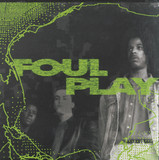
Composer Ori Barel rolls up the playful aestheticism of ‘90s electronica, taught pointillism of Rock in Opposition, dada collage of Krautrock, and the heavy lushness of Jack Nitzsche arrangements into a seamless sci-‑ fantasia.
Cerca:ori barel
- A1: Part 2
- A2: Part 1
- B1: Part 4
- B2: Part 3
Formed in 1992, Boris boldly explores their own vision of heavy music, where words like "explosive" and "thunderous" barely do justice. Using overpowering soundscapes embellished with copious amounts of lighting and billow smoke, Boris has shared with audiences across the planet an experience for all five senses in their concerts, earning legions of zealous fans along the way. This is the first-ever and particularly-anticipated official vinyl release of Boris's essential 2000 album, Flood. The album was originally released in Japan, only on CD. Delivered in four equally important movements, Flood is simultaneously delicate, dense, undulating, devastating, emancipating, hypnotic and triumphant. Each season of the album has its own sense of place, best revealed listen-by-listen. With the album, Boris broaden their vision of musical possibility, with a notable and imaginative influence from visionary American minimalist Steve Reich, weaving in prog, drone and slowcore into a multifaceted symphony. There simply has never been another piece of music like Flood.
In a sharp-angled, fiercely inventive reflection on the nature of club culture and digital fatigue, Simo Cell and Abdullah Miniawy reunite to deliver their new album, Dying is the internet, to Dekmantel's UFO series.
French producer Simo Cell has blazed a singular path from his dubstep-influenced origins to become a leading light in contemporary leftfield club music, twisting up adventurous rhythms and flamboyant production in pursuit of a perpetual freshness for the floor. Egyptian singer, poet, producer and composer Abdullah Miniawy has become equally omnipresent in the past 10 years, straddling the arts world and leading with his piercing Arabic lyricism while maintaining an eternally curious spirit that leads into open-ended, experimental music from the abstract to the propulsive.
Following up on their 2020 EP for BFDM, Kill Me Or Negotiate, Miniawy describes their sharply focused new album as "a playful prophecy about the triggers of a new global revolution." Cell considers the title, Dying is the internet, to be a mantra about "how the internet lost its soul," becoming "less about sharing ideas and more about surviving in a digital business ecosystem." Deliberately at odds with the reel-ready two-minute attention span of the average social media surfer (i.e. everyone), the pair set out to make an album that takes its time to reveal nuanced ideas and expressions. Rather than one-note despair for the modern malaise, Cell and Miniawy offer a philosophical reminder that this present moment in the human experience is a temporary phase, no matter how overwhelming it feels.
Dying is the internet finds Miniawy experimenting with auto-tune across the record, while Cell has developed his voice design chops and compositional instincts, moving closer to fully realised song structures without losing the fundamental 'clubbiness' of each track. The result is a cohesive, wildly original kind of heavyweight dance music that slings out hooks left right and centre, from Miniawy's laconic trumpet looming through low-slung 'Reels in 360' and 'Travelling In BCC' to the persistent handclaps that bring 'Living Emojis' to life. Miniawy's poetry explores the power of insistent, repeated phrases in a break from his more typically structured form.
Kenyan powerhouse Lord Spikeheart adds extra snarl to stripped-back, slow-burn opener 'I See The Stadium', but otherwise Dying is the internet is purely the work of Miniawy and Cell casting their considerable chops out into unexplored territory. The results are electric, bound together by a consistent economy of sound that burrows into a shroud of bass-heavy minimalism barely masking Cell's incredibly detailed studio flex. Even the beatless flourish of the Miniawy-produced 'Tear Chime' comes loaded with physicality — a sensory rush at the mid-section of the album bookended by some of the most idiosyncratic club music in recent memory.
Both Simo Cell and Abdullah Miniawy have already proved themselves as fearless innovators across different fields. The strength of their partnership lies in their ability to make space for each other while letting their distinctive sonic identities ring loud and true. Dying is the internet has immediacy and physicality to translate over a soundsystem, but its intricacies are purpose-built for repeat visits and contemplation, unveiling hidden dimensions the deeper you dive into it.
Gatefold Sleeve
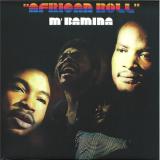
M’Bamina – African Roll (1975)
The story of an album born between Africa, Italy, and the nightclub culture of the 1970s
In the heart of 1970s Italy — a country undergoing profound social change and a music scene just beginning to open itself to distant sounds and cultures — an extraordinary, almost improbable story took shape. It is the story of a group of young African musicians who found their way to Europe, of a Turin nightclub that became a crossroads for communities and experimenters, and of an album which, released in small numbers and largely unnoticed at the time, is now considered a rare jewel of Afro-fusion.
The band called themselves M’Bamina — an ensemble of musicians from Congo, Cameroon, and Benin, who arrived in Italy in the early Seventies. Settling between northern Italy and the Pavia area, they began performing in small clubs and community events, bringing with them a vibrant rhythmic heritage: African polyrhythms, call-and-response vocals, funk-infused bass lines, and Caribbean or Afro-Latin colours absorbed along their musical journeys. Their raw, contagious energy on stage quickly drew attention.
Meanwhile, in Turin, another story was unfolding. There was a venue becoming almost legendary: Voom Voom, one of the city’s liveliest nightclubs, run by Ivo Lunardi. The club attracted an eclectic crowd — students, artists, foreigners, night owls — and Lunardi quickly understood that the dancefloor wasn’t just a place for music, but a melting pot for a new kind of cultural energy. Out of this vibrant atmosphere came his idea: to turn the club’s name into a small independent record label, Voom Voom Music, capable of capturing the spirit of those years and giving voice to unconventional projects.
When Lunardi heard M’Bamina, he immediately sensed that this was the sound he had been searching for: fresh, different from anything circulating in Italy at the time, and capable of blending African tradition with funk and European sensibility. He brought them into the studio.
Production was handled by Lunardi along with Christian Carbaza Michel, while the engineering was entrusted to Danilo Pennone, a young sound technician with a sharp, intuitive ear.
The recording sessions — held in Turin in 1975 — produced a remarkably warm and direct sound. The music feels almost live: grooves rooted in African tradition, but open to funk-rock structures and modern arrangements. It is a natural fusion, never forced. Tracks move between tribal rhythms, funk basslines, light electric guitars, congas and Afro-Latin percussion, with call-and-response vocals and melodies that echo both Congolese tradition and the lineage of Latin jazz. Not by chance, one of the album’s most striking tracks, Watchiwara, reinterprets a Latin standard through M’Bamina’s own rhythmic language.
The album was titled African Roll — a name that was already a statement of intention. It is African music that “rolls,” that moves, adapts, transforms within a new geographic and cultural setting. It is not strictly Afrobeat, nor Congolese rumba, nor Western funk: it is a spontaneous, hybrid blend, shaped more by lived experience than by any calculated aesthetic program.
When African Roll was released, the world around it barely noticed. Distribution was limited, and 1970s Italy had yet to develop a cultural framework for receiving such music. The national music press rarely paid attention to African or “world” productions. The album slipped into silence — though the band’s own story did not.
M’Bamina continued performing across Europe and Africa, even sharing a stage in Cameroon with none other than Manu Dibango. By the late Seventies, they moved to Paris, signed with Fiesta/Decca, and recorded a second LP, Experimental (1978). Meanwhile, the peculiar record they had made in Turin began to resurface quietly among vinyl collectors, Afro-funk enthusiasts, and DJs hunting for forgotten grooves.
That is when the album’s fate began to shift.
Over the decades, African Roll emerged as an almost unique document: a snapshot of an intercultural Italy before the word “intercultural” even existed, a fragment of migrant history, a spontaneous experiment in musical fusion born far from major industry circuits but rich in authenticity. Original copies began commanding high prices on the collector’s market, and the album became recognized as one of the hidden classics of European Afro-fusion from the 1970s.
Today, more than fifty years later, this reissue finally restores visibility and dignity to a project that deserves to be heard, studied, and celebrated. It is not simply an album: it is the testimony of a rare cultural encounter, born in an Italy unaware of how fertile such exchanges would one day become.
It is the story of a visionary producer, an extraordinary band, and a fleeting moment in which music, migration, and nightlife came together to create something genuinely new.
African Roll is — now more than ever — the sound of a bridge: between continents, between eras, between cultures. A record that, after rolling far and wide, has finally come home.
Long considered a "Holy Grail" of Latin vinyl, The Booga Mambo Beat (1967) by Steve Hernández y Su Orquesta Latinoamericana returns.
This LP has puzzled collectors for decades: who was Steve Hernández, the shadowy figure behind this powerful orchestra including top Puerto Rican and New York musicians?
Arranged by Ray Santos and featuring vocalist Vitín Avilés, the album delivers a unique mix of mambo, boogaloo, descarga, proto-salsa and 1950s big-band swing. A rare bridge between the Palladium sound and the emerging salsa era. Originally self-released and barely promoted, the record became a cult favorite among DJs and collectors.
Sourced directly from the original master tapes, discovered in outstanding condition, this edition is pressed on 180-gram vinyl and includes extensive liner notes by Pablo E. Yglesias (DJ Bongohead).and a digital download code.
A must-have archival release for collectors, DJs, and anyone fascinated by the hidden corners of Latin music history.
Originally released in 1994.
The legendary album from South Africa’s House and Kwaito master Doctor House being reissued for the first time with a full remaster from the original DAT tapes. Nelson Phetole Mohale released a series of albums as Doctor House. Cutting his teeth in the 80s as a session player for a host of big names like Volcano, Senyaka and Obed Ngobeni, he moved on to programming for acts like La Viva and Jivaro, also contributing to Carlos Djedje and others. Still barely out of his teens he became one of South Africa’s first rappers as part of PT House, co-written and produced by Danny Bridgens. Their debut album Big World was released in 1991 and followed by Big City Taste a year later.
Stepping up for Punctuality number 8 is the dynamic duo of Ciel and Matthis Ruffing. Needing little introduction, both artists are prolific producers and collaborators across tempos and genres. Toronto-based Ciel has released music on labels like NAFF, Peach Discs, and !K7, while Berliner Matthis Ruffing’s work can be found on International Chrome, Infinite Drift, and Strictly Strictly, to name just a few.
Bonding over a shared love for the techno stylings of Claude Young and early 2000s tech/prog house from labels like Future Groove and Slide, the duo’s collaboration began with a spontaneous jam in Ruffing’s Berlin studio during the summer of 2022. With an organic studio chemistry, the pair continued to jam over the following years. Hot Squid is the result of these studio experiments: five tracks of sleek, muscular, contemporary tech house that fluidly distill the creative visions of both artists—slick, shimmering grooves, heavily weighted for the dancefloor.
The title track, Hot Squid, weaves dubbed-out waves of FX and low-end sonics around metallic, staccato drum bursts, sci-fi pads, stuttered vocals, and syncopated snares that flit and flicker around a rolling bassline reminiscent of golden-era UK tech house from the late ’90s. Roza Terenzi’s remix flips the original into a modern, low-stepping tek roller—a mind-bending re-fix that puts more focus on the snaking vocal groove and a sparser percussion arrangement, filled out with lustrous textures and razor-precise sound design.
On Little Voice, glossy synths and spiraling atmospherics cascade around a mesmeric vocal line, while tightly wound, minimal drum loops give way to a swaggering bassline that barely relents throughout the track. The result is a satisfyingly boshy, groove-driven roller, fit for the dancefloor at any time of day.
Late Summer maintains the EP’s high-grade production standard in the form of a dreamy, electro-leaning tech house number, resplendent with deep, pummeling kick drums, woozy low-end, and organic sonics. Its plucked melody and introspective pads nod to halcyon-era IDM and the Detroit techno that inspired the duo in creating Hot Squid.
The release culminates in Bong Bong—a meditative dancefloor tool suffused with ASMR-like nature documentary samples that lend the track a psychedelic intimacy. Careening percussion lines and swooning chord stabs anchor the rhythm, while the title’s “Bong Bong” mantra hums beneath the surface, carried along by barely perceptible sub fills and ultra-processed percussion. A cohesive, unique, and enduring take on seminal tech house and Detroit techno from Ciel and Matthis Ruffing.
Gap Mangione's monumentally influential Diana In The Autumn Wind. AKA BEWITH200LP. And, without question, Be With's White Whale.
They said it could never be done. And with good reason.
We've spent the past 12 years trying to license this legendary 1968 recording from Gap and, after much work, it's finally here. Remarkably, this is the first ever vinyl reissue of Gap Mangione's Diana In The Autumn Wind, produced with the full and extensive participation of Gap. An exceedingly rare album, it's been coveted by funk, soul, jazz and hip-hop sample fiends for decades.
It's unarguably *the* most sought after album for J Dilla / Madlib sample collectors. It has also been brilliantly sampled by A Tribe Called Quest, Large Professor, Ghostface Killah, Kendrick Lamar and Talib Kweli.
But this record is so much more than a sample-spotters curio. It's solid gold throughout. Bursting with killer funky-jazz grooves and tracks adorned with warm electric piano, the release is notable for featuring some extremely significant players at the very outset of their careers; Tony Levin, at 21, whose superb playing on both acoustic and electric bass was the harmonic mainstay of the trio and Steve Gadd, at 23, one of the greatest drummers of his generation.
With acceptable copies of this holy grail changing hands for $400, to call this reissue "much-needed" underplays just how vital it is. Gap's story is told in his words alongside rare photos across a sumptuously designed 2-page insert and, to augment this deluxe edition further, its all wrapped up in a beautiful, no-expense-spared luxury tip-on sleeve, as per the original hens-teeth release. And, while we're talking packaging, just take a look at that cover - a work of art in and of itself.
The tracks are short but complex, with that extraordinary rhythm section backing the beautiful piano, organ and electric piano work of Gap. It's like the best ever library funk breaks record you never heard - but all your favourite golden age rap producers were all over it, long ago. It's a stunning blend of the vibrant, driving music of the Gap Mangione Trio coupled with the sensitive composition and superb orchestration of Gap's legendary brother, Chuck Mangione, who helmed an amalgam of seemingly disparate elements – rock, big band jazz, solo improvisation and "classical" music - into a spectacularly cohesive whole that has aged wonderfully well. As Gap himself notes in the liners, "with this group I was able to explore and add new and exciting elements from rock, Brazilian and then-current pop music."
Opener "Boy With Toys" triumphantly swaggers out the gate, all big band horns, flutes and dextrous organ work. The synthesis of everything going on is nothing short of stunning. When one wise YouTube commentator called this tune "old school superhero music", Gap agreed. Rap luminaries did, too, amongst them Talib Kweli, who rapped over DJ Scratch's chopped up intro for "Shock Body" on his Quality album back in 2002.
You've barely recovered from that incredibly affecting opener when you get hit over the head with the exquisite title-track. And now you see how two of the greatest beats of all time emerged from one single track produced nearly 50 years earlier. Unforgettably utilised by Dilla for Slum Village's heartbreakingly good "Fall In Love" and then Madlib for his "Official" beat for Dilla to rap over, on the Jaylib record. Regardless of the records it went on to spawn, this is just a staggering tune in its own right. Be beguiled by the flutes and the flutter tonguing, the counter-melody from the trombones, the soprano sax solo. All of it. Simply beautiful.
The questing organ and horn workout "Long Hair Soulful" deserves a lot more attention, overshadowed somewhat by the opening two monsters but no less fantastic. It swings, it grooves and Gadd and Levin truly cook. Up next, Gap's wonderfully percussive, mellifluously piano-heavy cover of "Yesterday" by some fellas called The Beatles. It's a subtly arresting gem. "The XIth Commandment" is damn fine, with thick, gorgeous electric piano and snappy drum work underpinning chaotic soundtracky horns. To close out the side, "St. Thomas" showcases the "fourth" member of the Gap Mangione Trio, conga drummer Dhui Mandingo. Having performed with the Trio since 1965, Dhui‘s African-based and jazz-latin-influenced style amazed listeners and its way to hear why.
Opening the B-Side, standard "You're Nobody Till Somebody Loves You" breezes along in the late-night jazz club fashion before things get super deep with the outstanding and - up to now - un-sampled "Pond With Swans". It's simply heavenly, and how its moody, melancholic intro has yet to be pilfered is anybody's guess. It oscillates between gentle, sombre movements and bombastic grooves, equally hypnotic and joyous. The rendition of "You Are My Sunshine" is yet another showcase for Gap's virtuoso playing and Gadd's mastery of the pocket. Indeed Gadd's drumming on "Free Again" is nothing short of neck-SNAPPING! Ghostface took it for not one but two "Iron's Theme" tracks across his seminal Supreme Clientele. It's got that Galt MacDermot "Coffee Cold" feel. Suuuuuper cool. The frantic "Dream On Little Dreamer" hurtles along and must've surely had the whole room absolutely swinging from the chandeliers back in Rochester in the late 60s. The album closes with the magnificent Graduate Medley, featuring memorable renditions of "Scarborough Fair", "The Sounds of Silence" and "Mrs. Robinson". The warm electric piano lines of the former were sampled by The Ummah (Dilla again!) for Tribe's "Pad & Pen" from their reappraised final album, The Love Movement, as well as by Large Professor on his much-loved "The LP (For My People)".
Under the watchful eye - and extremely attentive ears - of Gap Mangione himself, the audio for Diana In The Autumn Wind has been carefully remastered by Be With regular Simon Francis, with a few much needed tweaks here and there, according to the artist's wishes. At the prestigious Abbey Road Studios, Cicely Balston's expert skills have made sure nothing is lost in the cut whilst the records have been pressed to the highest possible standard at the always stellar Record Industry in Holland. The artwork restoration has taken place here at Be With HQ and has that drop-dead gorgeous cover artwork popping like new. Buy on sight!
CER009 finally brings Pumphouse Gang – “Welcome Back Into My Life” back to the 7inch format, a killer slice of Irish modern soul perfection from 1979. Originally pressed in tiny quantities and barely escaping dublin, it’s one of those records that rarely becomes available. A favourite of label boss miche, it’s in his words “an unbeatable soul track, that really fills a dancefloor with smiles”
On the flip, Medlar steps up once again, this time sending his mix straight from the Cayman Islands — a dubbed-out, Part 2-style reprise that stretches the groove, teases the rhythm, and gives the track a second life for late-night dancefloors.
As always, Celestial Echo digs deep into the overlooked corners of soul and disco, unearthing some of the best soul records and giving them a new lease of life. Each release is remastered with care and presented with the respect these recordings deserve.
Synaptic Cliffs is barely able to contain the excitement for the release of the 4-track EP "Maximalism" where pdqb collaborates with DJ Sotofett in the most effective way. pdqb's sleek and melancholic electro originals carry a sexy 1980s reminiscing vibe, not too unknown from classic US electro disco-styled pop music. They meet warehouse remixes from DJ Sotofett, known for his top-notch electro productions on Clone and Tresor, as well as funky breakbeat, afro-dub and all-things-house on his own labels Wania and Sex Tags Mania. The remix of pdqb's electrocognition-beauty 'Giallactrus' has heavier, almost p-funk styled electro beats, live scratching complementing the block party approach while retaining the vibe of the original. Elysiaamore, pdqb's sonic love letter to Tangerine Dream, gets a bit of melodic menace treatment by DJ Sotofett, turning it into an intensified breakbeat juxtaposition with Junglized B-Boy elements... again without taking away the energy from the original. The vinyl version was cut by DJ Sotofett with optimal club sonics at Manmade Mastering, Berlin.
- A1: From Darkness 01 18
- A2: Disappearance 04 34
- A3: Past Into Presence 02 32
- A4: Search Party 02 58
- A5: Forest Manipulations 03 22
- A6: Miscarriage 01 17
- A7: Who’s There? 00 59
- A8: The Pond 02 02
- A9: Mindfuck 01 20
- A10: I'll Take Noah 00 55
- A11: Wall Paintings 02 45
- B1: Death And Confusion 04 23
- B2: Visions 01 20
- B3: The House 03 55
- B4: What Have You Become? 01 41
- B5: Alone In The Dark 01 50
- B6: Ritual 02 07
- B7: Theo 02 29
- B8: Reunification 03 58
- B9: Open Eyes 02 25
- B10: Past Darkness 04 11
Erik K Skodvin summons his alter ego Svarte Greiner for a dive into the dark, wintery Swedish forest with the score to the psychological thriller/horror film “From Darkness” (orig: Ur Mörkret).
The film is director Philip W. Da Silva's debut and is set largely at night, deep in a Swedish nature reserve where mining used to take place. Loss, mental health and Nordic mythology come together in a story that revolves around the search for a missing woman. The score follows an eclectic and atmospherical path throughout the narrative with an uneasy underlaying vibe; although one with occasional points of refuge in the otherwise vast darkness. There is a gloomy, barely tangible sound of Nordic folk tradition buried in the music, even if it comes across in a different, more abstract way, where the various instruments are often used more as sound sources that are improvised (and abused) into becoming their own element. Skodvin performed and recorded the majority himself. In addition, he commissioned free improviser Axel Dörner to participate with his unique, custom-built electro-acoustic interface, which, along with Claudio Puntin's processed reeds and additional electronics, has been built into the elaborate backdrops to create an entire world that balances on the border between the approachable and the elusive - not unlike the journey of the protagonists. Skodvin's partner in Deaf Center, Otto A Totland, appears on piano in the stand out piece “What have you become?”.
The result is a harrowing yet deeply melancholic journey through the human psyche. One that echoes through the dark forests, cabins and lost mines of the desolate Swedish woodlands.
“It is presumed that as humans mined ore in the 1800s, they had many mishaps and dug too deep, leading them to assume they had unleashed some evil spirit that was guarding the ore. She was referred to as "Cave Wraith". It was said that she employed darkness to lure miners to their deaths. They prohibited villagers from visiting during the darkest months of the year. Some used sacrifices to subdue the evil entity.”
The vinyl is released in an edition of 150 numbered copies, with screenprinted artwork on black cardboard inside a screenprinted PVC sleeve, incl. Riso-printed insert with liner notes by Mike Lazarev, 180g vinyl.
In 2047, amidst the deafening yet oh-so-familiar soundscape of the Movement Festival in Detroit, we met again: I, pdqb, and Scape One, known as two of the most respected electronic music composers worldwide. The air pulsed not only with the latest beats but also with a barely perceptible energy only the two of us knew. We hadn't simply flown in; we'd arrived with our fantastic "Diskmind" time-travel machine, an incredible invention, capable of effortlessly catapulting us through the centuries.
"It's unbelievable, isn't it?" I shouted over the bass, eyebrows raised. "A machine that lets us travel through all of history, and there isn't a single song that honors it! Not one!"
Scape One nodded vigorously, his gaze sweeping over the stage lights. "That's absurd! How can such a revolutionary invention remain unsung? It's almost an insult to music history itself."
We looked at each other, a silent understanding in our gazes. The mission was clear: The "Diskmind" needed its anthems. And who, if not us, who used and loved it, should create them?
And so, we decided to become the musical chroniclers of the "Diskmind," ready to tell the story of our time machine across four different eras...
For Synaptic Cliffs, it's an extraordinary honor to present these three Scape One variations of the original song 'Diskmind' (first released on The Electrifying Dojo, 2025). Each masterpiece was recorded in different future decades of the 21st century (of ourse with the help of the Diskmind time travel machine) and reflects the corresponding trend in electronic music. A1: A timeless, pristine Electro composition from the year 2035. A2: An IDM marvel from late summer 2075, recorded in the Zero gravity of Space Station 775. B: An Experimental Electronica symphony recorded at pdqb's Studio 577 on Mars Outpost 47A. Only musical equipment that doesn't currently exist was used for this release
Eko, or Eko Roosevelt, is a Cameroonian composer, pianist & vocalist. He was born in Kribi in 1946, the son of a local Tribal Chief. Eko developed his love for music at church, later pursuing his growing passionwith music studies abroad, first in Dakar and then in Paris. After concluding his studies in France he went on to a recording career and between 1975 - 1982 released a number of full-length LPs, 7" singles and albums on cassette, before returning to Kribi to take over the role of Tribal Chief from his father, a role he holds to this day.
While the name "Eko" may not be immediately familiar to all, his music will be well known to many, from the DJs to the dancers, the heads to the home listeners. Evergreen classics like “Kilimandjaro My Home”, have remained a mainstay in the record bags & USB crates of disco jocks since its release in the late 70s, while numerous of his other crossover Afro-disco gems have been bootlegged, edited and remixed by a seemingly endless number of both greater & lesser-known producers who have all paid tribute to his work. Eko Roosevelt’s position in the ranks of Cameroon’s great musicians cannot be overstated. As a composer, songwriter, pianist and singer he has influenced generations of musicians both in Cameroon and France and further abroad, while he has written & arranged for many of the Cameroonian musical community.
Here Canopy, with the benediction of Eko himself, officially reissues two of his works that have not been rereleased since their first outings. Stylistically the two songs straddle the line between Afro-disco, funk and pop, with a slightly Balearic, almost AOR sensibility.
“Phone Me Tonight” is taken from a 7” record that has barely resurfaced since it was self-released in 1981 on the “Eko Music’ imprint. The song is an uplifting opus that demonstrates Eko’s deftness for creating catchy songs that succeed in their songwriting prowess and melody crafting, both on and off the dance floor. It is a stripped back composition that employs the key elements to great effect. The groovy bass line is underpinned by a tight Afro-disco beat as Eko’s unmistakeable voice draws us in and with a masterful use of repetition and hooks, creates a song that feels familiar from the outset, while being brand new to almost all listeners. As the song develops, the synth lines lift the song higher and higher, culminating in a euphoric transcendence perfect for elevating the mood of any dancefloor.
“Take Me As I am Now”, is sourced from Eko’s first album, “Nalandi” which originally came out in 1975 on Dragon Phenix. Here we have another fine example of Eko’s ability to hone compositions that blend thelines between pop song writing and more loopy dance floor orientated structures. The vocal hook repeats throughout the song, with only minor variations, making the song feel comfortingly familiar from its early bars. An instantly appealing bass line sets the stage for the sleek guitars and taut horn arrangements. The end result is a feel-good balance of melody and groove that makes for a timeless feel with a positive message!"
INDEPENDENT RECORD SHOP AND LABEL KLANG TONE RECORDS RE-ISSUE DEBUT ALBUM BY 8 PIECE INSTRUMENTAL EHTIOPIAN JAZZ/AFRO-BEAT/PROG COLLECTIVE;
TEZETA
“Absolutley gorgeous from start to finish…”
- Deb Grant, BBC 6 Music
“An instant obsession. Impeccable rhythms and hypnotic melodies—Tezeta crafts a spellbinding fusion of Addis and Avon that takes you on a journey."
- Don Leisure
“Gorgeous mood music with more than a nod to Addis. Lovely tapestries and textures”
- Matt Temple, Matsuli Music
'Formed in Bristol back in2014 Tezeta were an experimental 8 piece instrumental group effortlessly combining Ethiopian jazz, Afrobeat, prog and improvisation. The band spawned out of the much loved Bloom Collective - a collective of musicians and friends from an experimental corner of the city’s buzzing music scene.
Led by composer, pianist and bandleader Daniel Inzani (Spindle Ensemble, Cosmo Sheldrake) the band also featured tenor saxophonists Andrew Neil Hayes (Run Logan Run) and Lorenzo Prati (Count Bobo, the Evil Usses, Itchigo Evil), Harriet Riley (Spindle Ensemble, Paraorchestra) on Marimba, vibraphone and percussion, Pete Gibbs (Count Bobo) on bass, Conrad Singh (Alabaster dePlume, the Evil Usses) on electric guitar and finally two(!) drummers Matthew Jones (The Brackish, Slate Trio) and Daniel Truen (Yama Warashi, The Evil Usses, Rozi Plain, Count Bobo).
They initially got together to play music from ‘The Ethiopiques Volumes’, in particular, the work of Mulatu Astatke, hence the name Tezeta (Ethiopian for nostalgia) but quickly evolved into their own style with all original material, incorporating many other influences along the way. Their much loved, debut album 'Seventh Place' was released in Sept 2016.
“We at Klang Tone have been admirers of Daniel Inzani’s work with Spindle Ensemble and I was fortunate to catch Tezeta perform before they disbanded. I bought one of the last available copies of their home released cdr at their gig at local Stroud venue The Prince Albert. It became a firm favourite - a recording I keep playing and never got tired of. It’s such a beguiling mix of styles - always evolving and resolving in different ways to what you might expect - some thrilling ensemble playing rhythmically propelled by two drummers and a percussionist with Daniel’s evocative melodies at the centre. I was convinced this was a recording that deserved a bigger audience and felt it needed to be heard on vinyl so I started a conversation with Daniel about releasing it on Klang Tone as it perfectly encapsulated the raison d'être of the shop and label. We didn’t want this recording to languish online barely listened to - I felt it was in danger of becoming a lost classic. I hope that this vinyl release is a worthy testament to this great band and helps draw attention to the creative genius of composer Daniel Inzani and the talented ensemble of players featured on the recording.” - Sean Roe, Klang Tone Records
Tezeta had a cult following among other musicians and were known for their wild group solo wig outs, virtuoso musicianship and creative use of unusual rhythm, harmony and melody. They toured across the UK at various venues and festivals including Glastonbury, Shambala and Green Man, and subsequently released an EP named ‘Curious Bubble’ in 2020.
In 2023 Tezeta performed a sold out final show at Strange Brew, Bristol as Inzani decided to pursue solo releases, notably his critically acclaimed triple vinyl album ‘Selected Worlds’ released on Hidden Notes Records which landed in the Guardian Top 10 Contemporary Albums of the Year in 20204. The third disc ‘Play’ was a clear continuation and development of the music Inzani had developed with Tezeta and featured many of the same musicians.'
The cover image is from ‘Project Rewind’, a double exposure photography collaboration between Karen Dews and Paul Blakemore.
Graphic design by Adam Hinks.
When SW. AKA, Stefan Wust, first established SUED in 2011, their compelling, cosmic and anonymous material struck a rare chord, emanating far beyond the freeform Berlin underground in which it was written. Unknowingly, Los Angelean Oliver Bristow had
established a parallel musical universe, founding the hyper-specific label Acid Test, inviting pioneering artists such as Donato Dozzy, Tin Man and Pepe Bradock to indulge in glorious interpretations of 303 control. Without compromise, these were records that quietly
reinvigorated electronic music.
Some years later, a new label, SWOB, unites Wust and Bristow in a very different landscape. And while it would be easy to transform the purity and integrity of this special alchemy into something like nostalgia, yearning for an alternative culture before
influencers and against algorithms, SWOB endeavours to find inspiration in arguably tougher truths.
“By the mid-90s, the techno scene had already reached a breaking point”, recalls Wust.
“Today, the scene is so highly professionalized that it barely resembles what was once called the "underground. But "underground" was never more than the simple reality that music circulated on cassettes among friends or that dubplates were played at illegal
parties... The consequence of today’s professionalization is the death of the original movement.”
Still, no one can kill an idea. Here, inspired by the “Outside Tekno” or “Outkast Techno” that emerged to subvert even back in the day, SWOB are proud to introduce the tekkNOthing trilogy, a new project from SW. beginning on cassette and culminating later
on vinyl. Some years in development, tekkNOthing first began to take shape during the 2020 global pandemic, when ‘the underground’ quickly began to mean something radically different once again.
“I noticed how everything was accelerating while simultaneously spinning in circles – existing in a kind of creative limbo on a global scale”, recalls Wust. “And that’s where true freedom lies: for artists – in any sense – to consciously engage with this necessity. In
other words, irrationality or nonsense can eventually generate meaning.” While hardly capitulating to the contemporary hammering of techno’s most recent developments, tekkNOthing’s first chapter quickly establishes a frenetic pace; tracks like ‘nuclearFALLoutX’ and ‘paslolESmess’ interlock and unfold at a tempo removed from that typically associated with SW. while ‘euroBSS’ and ‘viscousHEAT’ successfully experiment with a more guttural palette, veering far into a rejuvenating and previously uncharted leftfield.
A resolutely human endeavour, the music of SW. is nonetheless written and recorded in the looming shadow of AI, whose free-form adoption of pop culture, hip-hop and techno reminds Wust of “when photography emerged in the 19th century... painting was no
longer bound to naturalism. Similarly, music today is no longer bound to fixed standards – through AI, it can become truly free.”
If not in competition, than taking inspiration from this landscape of new opportunity, tekkNOthing diversifies further with eight unpredictable tracks across part II, taking in stuttering machine-funk on ‘crAMPDUNK’, a freeform organ jam via ‘sonicENdo’ and the
inexplicable piston-percussive, post-punk exotica heard on ‘poorTENOOR#a#01’ DJs with dual cassette decks skills might even find function in the more overtly floor-focused ‘DU ¨NEhowSE#1takeÄ’ or ‘lookLOOK’.
The times may have changed, but the promise remains simple; more music, more freedom.
- A1: Michel Cleis Feat. Totó La Momposina - La Mezcla (Paul Kalkbrenner Remix)
- A2: Freaks - Where Were You When The Lights Went Out (Extended 12" Version)
- B1: Undercatt - Britannia
- B2: Juliet - Avalon (F*** Me I'm Famous Remix By David Guetta & Joachim Garraud)
- C1: Lustral - Everytime (Nalin & Kane Mix)
- C2: Walter One - Startrack
- D1: Markus Schulz Presents Elevation - Clear Blue
- D2: Sander Kleinenberg - Sacred
- E1: Whirlpool Productions - From Disco To Disco (Extended Disco Mix)
- F1: Smoke City - Mr. Gorgeous (And Miss Curvaceous) (Mood Ii Swing Vocal Mix)
- F2: Tony Di Bart - The Real Thing (Original 12" Dance Mix)
- G1: Binary Finary - 1998 (Paul Van Dyk Remix)
- G2: Delegate - Want You To Stay (Remix)
- H1: Cevin Fisher - Loving You (When It Comes To) (Cevin Fisher's 2001 Summer Mix)
- H2: Dj On - Super Sexy Girl (Deeper Discomix)
- I1: Michael Forzza & Dimitriandreas - Kahana
- I2: Fanny Cadeo - I Want Your Love (Mr. Marvin Mix)
- J1: Jason Downs Feat. Milk - Cherokee (John Creamer & Stephane K Remix)
- J2: Wishmountain - Radio
- K1: Soma - Soma Romanz
- K2: Didier Sinclair - Lovely Flight
- L1: Kosmas Epsilon - Innocent Thoughts
- M1: Maria Nayler - Angry Skies (Terrestrial Vox Mix)
- M2: Nikolai - Ready To Flow
- O1: Tomcraft - Prosac
- O2: Paragliders - Oasis
- P1: Josh One - Contemplation (King Britt Funke Remix)
- P2: Sarah Mclachlan - Fallen (Gabriel & Dresden Anti-Gravity Mix)
- Q1: Perry O'neil - Wave Force
- R1: Corvin Dalek - Pornoground (Mr Sam's Acid Pornstar Remix)
- S1: Travel - Pray To Jerusalem (Incisions Remix)
- T1: Jamnesia - My Memory Is Back
- T2: Reckless - Still In The Groove (Def Offenders Remix)
- N1: Dj Buzz - Situations
- N2: Aerosoul - Celebrating Life In Independance
Limited Edition! The "LaBush - Temple of House" Volume 2 Vinyl Box Set for the 30th Anniversary of the Legendary Club!
Barely six months after the phenomenal success of the first box set, La Bush - Temple of House makes history once again, celebrating its 30th anniversary with the release of Volume 2 in a limited edition 10x12" vinyl box set. A true must-have for collectors and electronic music enthusiasts!
This exclusive box set features no less than 35 tracks, an incredible number for a vinyl collection, offering unparalleled pressing quality that guarantees an exceptional listening experience, perfectly suited for any turntable. Each track has been meticulously remastered, preserving the essence of the original versions while enhancing every sonic detail.
The deluxe packaging of this box set is a work of art in itself, designed to captivate the most discerning vinyl lovers. Moreover, with tracksfrom legendary artists like Paul Kalkbrenner, Paul van Dyk, David Guetta, Tomcraft, Oliver Lieb, Matthew Herbert, and La Bush resident Mr. Sam, this box set is an essential treasure.
For those who already own the first box set, this new volume is the perfect opportunity to complete your collection in the best possible way, adding a new centerpiece to your La Bush ensemble.
Don't miss this unique opportunity to add a masterpiece to your vinyl collection. Order now before it's too late!
One-off electronic disco project of 1984 for the unmistakable sounds of the Yamaha DX7 - especially the notorious "tubular bells" during the verses - introduced at the end of '83, but which didn't catch on in Italo-Disco until the following year. "Dancing Dode" has the strangest spelling ever. Whoever created this truly amazing super theme barely knew English as the word "dode" does not exist in English. This explains why some Italo-Disco songs have obvious grammatical errors even on the original records. The artist or the authors thought that du:d would be written "dode" in English, but in reality it's "dude"... which means a meticulous and elegant man, potentially homosexual, in short a gay type, "King /Queen" of disco dancing like in that film with J.T.. The role of disco in the 80s was a ground for negotiating rights throughout history, so most people didn't care too much about choosing and hating someone's sexual orientation, but dancing, listening to music and this song with a beautiful melody is perhaps the rarest Italo-Disco song ever made.
Jackie Mittoo is one of the most important artists in the history of Jamaican music. As founding member of the legendary Skatalites, as in-house arranger/producer at Studio One and as a solo artist in his own right leading groups such as The Soul Brothers, Sound Dimension and Soul Vendors.
These classic and rare recordings were made in the mid 1960's at Studio One. The Soul Brothers bridged the gap between Ska and the arrival of Rocksteady mixing it all up with Funk, Jazz and Latin styles. The Soul Brothers recorded at Studio One between 1965-1967. This was the transitionary period between Ska and Rocksteady where the music was a mixture of Funk, Latin and Jazz sometimes with a reminder of Ska and the hint of Rocksteady.
The previous era of Ska had been dominated by the Skatalites, the first in-house band at Studio One who created classic hits such as "Guns of Navaronne", "Man in the Street", "El Pussy Cat" and many more. Unfortunately the strong personalities in the group meant that The Skatalites stayed together for less than two years. It was also around this time that the mentally unwell Don Drummond was arrested for the murder of his girlfriend, the dancer Margerita.
In August 1965, barely a week after the demise of the original Skatalites, The Soul Brothers (featuring ex-Skatalites members Jackie Mittoo, Roland Alphonso, Johnny Moore and Lloyd Brevitt) were up and running as the new house band at Studio One.
The Soul Brothers were essentially a collective, releasing material under their own name or under a nominal leader (usually Jackie Mittoo or Rolando Alphonso). The group line-up changed over time with Bobby Ellis (trumpet), Bryan Atkinson (bass), Dennis Campbell (Sax), Harry Haughton (guitarist) and Joe Isaacs (drummer) replacing various members alongside the ever present Jackie Mittoo.
REVIEWS
"Jackie Mittoo was a true star of Jamaican music; a founder member of The Skatalites, a prolific composer and the keyboard powerhouse behind many a classic tune. His simple, often hypnotic approach, to ska, rocksteady and reggae made him one of the most distinctive sounding musicians of the era." BBC.
"Jackie Mittoo was one of the great names in Jamaican music, manning the keyboards for the Skatalites, the Soul Vendors, and Sound Dimension-- three of the greatest house bands of the 60's
(and I mean anywhere, not just in Jamaica)." PITCHFORK.
Kinn turns the Post-Rock continuum inside out with his sophomore album, Dogtooth.
Shifting focus between his present self and his misled teenage years, 'Dogtooth' sees London born and raised sound art graduate Fred Lomas contemplate the vulnerability of youth, addiction and suicide as Kinn. Unabashed in their creative ambition, Kinn's tongue-in-cheek 'dread-voyeurism' is underpinned by a palpably sincere vulnerability that seeps through their dynamic and rewardingly dense records.
An insight into Fred's formative years can be unraveled from his nickname "Dread", originally given to him by his parents. Growing up in North London as a 'constantly out of the house' youth, Fred only had eyes on any counterculture he could find to defy the city's notorious empty capitalist centric mainstream culture, skateboarding, graffiti, and terrible punk bands which would only last 1-3 rehearsals (max). As a teenager he experienced the notorious 2011 Tottenham riots, which is often referenced in the artist's output and greatly informed their sensibilities. Barely an adult, he was confronted first hand with concepts of constant hostility and corruption which were seemingly welded to his surroundings, corruption formed by high rises and international political scandals taking place only a short journey away.
Even today, Dogtooth reflects on this contrast of community and anger and surmises it to be part and parcel of modern metropolitan life, looking to peel away the bad looking for meaning, comfort and ways of goofing off amidst oppressive forces, sirens and snake oil salesmen everywhere.
Cremation Lily’s »Dreams Drenched in Static« exists at the horizon of consciousness and heavy experimental music. Through the use of frenetic vocal melodies, tape degradation, and guitar noise, the album documents the liminal moments at the edge of sleep, and the distressing thoughts that often accompany late-night R.E.M. disturbances. The lyrics were largely written at three in the morning and serve to evoke the depression and meditations on death that seem to haunt these early hours.
Based in London, England, Cremation Lily is the project of Zen Zsigo. Like many Flenser artists, the work of Cremation Lily is difficult to classify. The project began in 2009 as sample-based ambient music, but has evolved to incorporate more rock-oriented guitar instrumentation and influence from a wide range of genres such industrial, shoegaze, tape loops, noise, and power electronics.
Although rooted in electronic music, Cremation Lily shares similarities with Flenser artists like Planning For Burial and Have a Nice Life, as well as black metal. »Dreams Drenched in Static« is the first Cremation Lily album to rely primarily on guitar and vocal-based contributions, and is the project’s most intentional and developed work to date.
- Kyle
- Being A Man
- An Angry Man
- Mood 01
- Fight A
- The View
- Rage
- Fight B
- Fight C
- Safe Zone
- Mood 02
- Chase 03
- Chase 04
- Mood 03
- Fight E
- Chimera 01
- Mood 04
- The Exiles
- Mood 05
- Timer 01
- Chimera 03
- Timer 02
- The Beast
- Mood 06
- Revenge
- A Changed Man
Double LP pressed on transparent red vinyl with black marbles. In Dying Light: The Beast, you step back into Kyle Crane's skin, but he's no longer the man he once was. Years of experiments have left him torn between fragile humanity and a monstrous power that he can barely control. Every light, every shadow, every choice feels dangerous. The forests and ruins of Castor Woods don't just set the stage, they breathe, they watch, and they punish the reckless. This is survival stripped to the bone, where horror is not just outside, but inside you. Olivier Deriviere's powerful and capturing score for Dying Light: The Beast doesn't just accompany Crane's journey, it is his voice. Sometimes it whispers in empty rooms, fragile and broken, sometimes it roars with distorted rhythms and pounding drums when the Beast takes over. Between silence and sound, the music pulls you deeper into Kyle's fractured soul, making every step and every heartbeat part of the story. It's not just a soundtrack, it's the echo of a man losing, and maybe finding, himself.
- A1: Original
- B1: Dub Version
Killer Naggo Morris from 1982, voiced on a raw cut of Pablo's "Don't Stay Away Too Long" rhythm. This tune only originally appeared on Park Heights' "Unity Is Strength Vol. 2" compilation album, and has long been one of our favorite barely known gems hidden on an LP and ripe for 45 release. Backed with rugged Tubby's dub cut.
- A1: At The Shore
- A2: Morning Glory ~ River
- B1: My Story
- B2: The World Of The Sun
- B3: Her Story
- C1: Kind Japanese
- C2: Elegy Of Betrayal
- C3: Me On The Shore
- D1: The Mystery Of Union
In March 2025, "On the Love Beach" completed a highly successful solo concert in Shanghai and Beijing with Toushi Naoki.
In 2025, marking the 30th anniversary of their memorable debut album, "On the Love Beach," the band's first three albums will be reissued on CD and vinyl!
All three albums use the original master tapes, and each has been thoroughly remastered under the supervision of Shinji Shibayama for high-quality sound!
This is Nagisa Nite's second album and only live recording, released in 1998. Featuring an acoustic arrangement featuring acoustic guitar and djembe,
the band's imaginary concept is "A Tyrannosaurus Rex from Osaka." This is a realistic documentary of a solo performance held in a dilapidated wooden
apartment building in Tokyo during a scorching heat wave in July 1997, a space that was barely a free space. The band performed in the scorching heat
of July, with the venue lacking air conditioning, forcing them to play with the windows open. This resulted in "ambient music" that occasionally blended with
the sounds of the outside world and the barking of dogs. The band's determination to never perform in a place like that again led them to believe that this
unique and intriguing experience was what made this album so unique.
The environment forced the band members and the audience to remain unwavering, creating an undeniable tension in the small venue, creating a literally
"hot" groove despite the entire performance being acoustic. This experiential live album, the polar opposite of the '71 Nippon Genya Festival, is impossible
to recreate, even for the band members themselves, including the immersive recording.
The 1998 album was only available on CD, but this time, the album is available on vinyl for the first time on a 2LP!
Remastered using the original master DAT tape, it recreates the "hot" and "ambient music" atmosphere even more realistically. T
akeda's cover of Midori Mako's "Yasashii Nipponjin" is also a must-listen!
An electrified meeting of minds, Candy Girl is a lost 1975 session by jazz pianist Mal Waldron, recorded in Paris with core members of the mighty Lafayette Afro Rock Band, the American funk unit who had made France their home and whose deep grooves would later be mined by generations of hip-hop producers.
By 1975, Waldron was a decade into his self-imposed exile from the United States—a transformed musician who had reassembled his sound in Europe and Japan after a devastating breakdown in the early '60s. His post-1969 output had stripped jazz down to its core elements: modal intensity, locked grooves, and hypnotic repetition. Candy Girl doesn’t interrupt this trajectory—it extends it, wrapping Waldron’s minimalist mantras around the funked-up chassis of the Lafayette rhythm section.
Originally released in microscopic quantities on the Calumet label and long shrouded in obscurity, Candy Girl was recorded spontaneously in the studio of French producer Pierre Jaubert, whose Paris HQ had become the workshop for both avant-garde jazz (Archie Shepp, Art Ensemble of Chicago, Steve Lacy) and psychedelic funk (Lafayette Afro Rock Band AKA Ice). This session finds Waldron jamming freely with bassist Lafayette Hudson, drummer Donny Donable, and keyboardist Frank Abel on clavinet, Moog and more—laying down raw, unfiltered instrumental funk with an experimental edge.
Highlights include the low-slung vamp of “Home Again”, the crisp, break-laden groove of “Red Match Box”, and the mesmeric swirl of the title track “Candy Girl” —a minor-key electric piano waltz with hints of cosmic soul. There's even a deep cut for the crate diggers: the somber yet meditative “Dedication to Brahms”, where Waldron deconstructs the Romantic composer’s third symphony into a sparse jazz reverie.
Unlike his polished sessions for Japanese labels or the avant-garde swing of his earlier Prestige work, Candy Girl feels more spontaneous, even accidental — and that’s part of its power. It’s a document of Waldron as bandleader, collaborator, and explorer, captured in the midst of a vibrant, cross-cultural scene in mid-70s Paris. Never officially issued with a cover and barely released at all, Candy Girl is a rare convergence of two underground traditions: Waldron’s Euro-exile electric jazz and the raw, sampled-future funk of the Lafayette Afro Rock Band. Now finally resurfaced, it deserves its rightful place in both stories.
The Sator Arepo, or Sator Square, is an ancient word puzzle comprising five palindromes that's etched on various historical sites throughout the Western world. Its origins are unknown, but the square has long been thought to hold magical properties, used as a charm against illness and evil, to cure insanity or to determine whether someone was guilty of witchcraft. Self-styled "punk ethnomusicologist", acoustician and musician Julien Hairon uses this mystical symbol as the starting point for his debut Judgitzu album in an attempt to reconnect with his Celtic heritage, exploring how its hallowed messages might harmonize with contemporary Tanzanian dance music.Hairon has been traveling across the world for over a decade, collecting field recordings from countries such as Indonesia, Australia, Cambodia, China and Bangladesh, and presenting them on his Les Cartes Postales Sonores label, re-issuing any curious cassettes and CDs he came across on the PetPets' TAPES imprint. It was during this time that he became fascinated by rituals that involved spirits, prompting him to examine his own ancestry when he returned to Brittany. "Many artifacts in the landscape remain," Hairon explains, "and the power of spirits is still palpable." He represents this Celtic mysticism on 'Sator Arepo' with murky drones and magickal synth tones, using xenharmonic scales (tuning outside of standard 12-tone equal temperament) that reach back to the ancient world. These sounds are augmented with fast-paced, sci-fi rhythms informed by his time in Tanzania; "Singeli has contaminated me," admits the producer.The most astonishing example of this is 'Miracle', a thrusting soundsystem experiment that layers serpentine, bagpipe-esque electronic wails over extravagant clusters of blocky percussion. Driven by the frenetic 175BPM pulse that echoes through the streets of Dar Es Salaam - popularized globally by forward-thinking producers like Sisso, Duke and Jay Mitta - Hairon opens up a rare conversation, seeking to draw parallels between today's most urgent dance forms and the archaic rituals of antiquity. On 'Vitalimetre', Hairon drives his sonic palette into the red, harmonizing with Dutch hardstyle and gabber, and splaying distorted drones over maddeningly blown-out kicks and ratcheting percussion. 'L'or Des Fous' takes a more meditative route, prioritizing Hairon's eccentric tonality with expressive sheets of pitch-warped sound that ghost walk across energized, rattling beats.If you heard Hairon's last Judgitzu release 'Umeme / Kelele', described by Boomkat as "one of 2019's deadliest dancefloor sessions," then you'll know how mindboggling this material can be. And with 'Sator Arepo', the French producer deepens his reach, grasping a world that we've almost forgotten and juxtaposing it with a landscape most of us barely comprehend.
- Flying North
- Commercial Breakup
- Weightless
- Europa And The Pirate Twins
- Windpower
- The Wreck Of The Fairchild
- Airwaves
- Radio Silence
- Cloudburst At Shingle Street
"The Golden Age of Wireless is the debut album by English musician Thomas Dolby. The album was originally released in May 1982. Several tracks have a submerged, barely audible layer of almost random sound that serves as a constant (and disturbing) subtext, occasionally erupting into a song. This sonic underworld is all part of Dolby's mechanical wizardry. Rolling Stone magazine awarded The Golden Age of Wireless four stars out of five, calling it ""one of the most impressive debuts"" of 1982. They compared the album's melodicism to the works of Paul McCartney and concluded that ""unlike many synthesizer bands from England, Dolby eschews morbid, droogy drones."" Musician magazine said the album was ""the best damned record to come out of Europe's current fascination with synth-pop. Period."" Theye added, ""Dolby is purely amazing. And best of all, he writes songs.""
The Golden Age Of Wireless is available as a limited edition of 1000 individually numbered copies on silver coloured vinyl and includes an insert. "
- A1: ) It's Only Obvious
- A2: ) A Place Called Home
- A3: ) Caveman
- A4: ) The York Song
- B1: ) Carrole-Anne
- B2: ) Hold On
- B3: ) Blue Light
- B4: ) If You Can't Find Love
- C1: ) I've Got A Habit
- C2: ) Apologies
- C3: ) Give Me Some Peppermint Freedom
- C4: ) Defy The Law
- C5: ) Underneath The Window, Underneath The Sink
- D1: ) Tiny Words
- D2: ) Walter
- D3: ) What Will We Do Next?
- D4: ) As Time Goes By
- D5: ) Yawn
“'Lyceum' is a fountainhead of unqualified greatness. It’s a strange, sad sound harking back to old school tunesmanship – Aztec Camera, ‘Rattlesnakes’, prime-time Felt – but the whole affair is permeated with a resonant, almost tearful quality. ‘Lyceum’ is reminiscent of Galaxie 500’s ‘Today’ in that it sounds like it cost less than a round of drinks to produce. But the lo fi sound merely enhances the misty glazed-pop sound and raises the hallelujah choruses to the forefront. Rather than drowning them in production mush. Don’t pass it by”.
– Bob Stanley, Melody Maker 1989
Hailing from the suburbs of Glasgow, this five-piece are best known for their three starry-eyed albums on the renowned Sarah Records - this being an expanded version of their first (an eight-track 10” at the time).
By the tail end of the 1980s the independent music scene in the UK was turning its back on the polish and over-indulgence of the mid-80s with its gated drums and wallpaper production. And those who weren’t stretching the boundaries of sonic innovation had tuned back to the post-punk ethos of ramshackle charm and zealous melody, even dousing the spirit with some political fervour once more. Influences were more likely to be Television and the Television Personalities than MTV.
The Orchids and The Sea Urchins were the first two bands to release 7” singles on the Sarah label having previously begun their recording existence on a shared flexi disc in 1987 (The Sea Urchins went on to become Delta, whose classic album ‘Slippin' Out’ from 2000 will be the second release on Circuitry). The Scottish five-piece released ‘I’ve Got a Habit’ and ‘Underneath the Window, Underneath the Sink’ as EPs before really finding their feet with ‘Lyceum’; the tracks, remastered from the original Toad Hall tapes are included on this reissue as are the three songs from the ‘What Will We Do Next?’ 7” (this collection closes with the frazzled stretch that is ‘Yawn’). 'Lyceum' was originally released in August 1989.
The album opens with ‘It’s Only Obvious’ and its gloriously youthful chorus of “who needs tomorrow when all I need, all I needed was you”. James Hackett somehow appears both forthright and rejected, something that one of their musical heroes The Go-Betweens also had down to a fine art. It barely takes a breath until midway through side two where ‘Hold On’ (sounding suspiciously like an unlikely objective) descends into the intro of ‘Blue Light’, the counted-in ‘1, 2, 3, 4’ whispered like the most hopelessly dejected rally. If that sounds depressing it isn’t. This record by The Orchids was a spirited source of comfort for an 18 year old at the time and still shudders with the best type of melancholy, one that’s spirited not indulgent. If you’re not familiar with the band’s charm, this is where you should begin.
'Lyceum' is released on double black vinyl by new label Circuitry.
Shit Robot's 'No Cigar' was recorded in London at Al Doyle and Joe Goddard's Relax And Enjoy Studios, a hanging chad from the sessions that finished 2023's 5 Songs EP. This is slower,dubbier Shit, 110bpm with a spare arrangement and a barely sung vocal saying only, "Close_no cigar." It begged for a proper dub for the b-side, something that threw it around in space but didn't necessarily change it up, something that sounded a bit like African Head Charge and New Age Steppers and early-80s On-U Sound records. So we asked the guy who made those records, Adrian Sherwood, if he'd have a go. Miraculously, he said yes, and his version is actually exactly on the money.
Froid Dub continues to explore its synth-lined slowed down digi-dub cave flooded with waves of echoes and acid bleeps. From begging to end, bass lines and flanged delays sail over deep waters, seemingly barely disturbed by the minimal pump of the synth-wave track Not Loved.
The strength of Fan Club Orchestra's (FCO) trajectory lies in their nebulous, collaborative, and experimental nature, always with Laurent Baudoux at the centre. With its roots in the DIY impulses of the Brussels art and music scene of the late nineties, Baudoux rallied together a revolving cast of players with an unconventional ensemble of instruments to explore melancholic psychedelia that touched on drone and minimalism as readily as it carved minor pop hits from cracked electronics. Performances were often highly improvisational, aided by the barely controlled chaos that guest collaborators—such as American artist Mike Kelley—would inject into an appearance.
FCO self-released two albums in the early 2000s before finding a home with Sonig, where they released several more records up until their last with the label in 2013. This was a fitting frame as Sonig, like FCO, channelled the fervour and formalism of the experimental music history of the Rhineland, which includes Kraftwerk, krautrock, and key early electronic music studios.
Following an eleven year hiatus, Laurent Baudoux reassembled the group in 2024 and presented a new album with the esteemed Glaswegian label 12th Isle late in that same year. Building on the strength of the new iteration, and with the aim of reappraising some of the rich yet oblique history of the group through this new lens, FCO have remastered and reissued their 2013 album, 'An Insane Portrait'.
The recordings were originally commissioned in 2009 for Fabrizio Terranova's film 'Josée Andrei, An Insane Portrait' about the truly remarkable figure Josée Andrei. Shot in San Francisco, the film is an intimate portrait of Andre. Blind from birth, she is a witch, painter, photographer, tarot reader, and psychology and modern literature graduate.
'An Insane Portrait' captures a stripped-back FCO, with Baudoux working solely with original FCO member Ann Appermans. The configuration of Baudoux's electronics and Appermans' bass guitar yield a tender and preciously melodic suite of instrumentals.
Originally released on vinyl by Sonig in 2013, the remaster will again be presented by the label in a limited cassette edition and in digital formats, each featuring a bonus track that was not included in its original release.
The strength of Fan Club Orchestra's (FCO) trajectory lies in their nebulous, collaborative, and experimental nature, always with Laurent Baudoux at the centre. With its roots in the DIY impulses of the Brussels art and music scene of the late nineties, Baudoux rallied together a revolving cast of players with an unconventional ensemble of instruments to explore melancholic psychedelia that touched on drone and minimalism as readily as it carved minor pop hits from cracked electronics. Performances were often highly improvisational, aided by the barely controlled chaos that guest collaborators—such as American artist Mike Kelley—would inject into an appearance.
FCO self-released two albums in the early 2000s before finding a home with Sonig, where they released several more records up until their last with the label in 2013. This was a fitting frame as Sonig, like FCO, channelled the fervour and formalism of the experimental music history of the Rhineland, which includes Kraftwerk, krautrock, and key early electronic music studios.
Following an eleven year hiatus, Laurent Baudoux reassembled the group in 2024 and presented a new album with the esteemed Glaswegian label 12th Isle late in that same year. Building on the strength of the new iteration, and with the aim of reappraising some of the rich yet oblique history of the group through this new lens, FCO have remastered and reissued their 2013 album, 'An Insane Portrait'.
The recordings were originally commissioned in 2009 for Fabrizio Terranova's film 'Josée Andrei, An Insane Portrait' about the truly remarkable figure Josée Andrei. Shot in San Francisco, the film is an intimate portrait of Andre. Blind from birth, she is a witch, painter, photographer, tarot reader, and psychology and modern literature graduate.
'An Insane Portrait' captures a stripped-back FCO, with Baudoux working solely with original FCO member Ann Appermans. The configuration of Baudoux's electronics and Appermans' bass guitar yield a tender and preciously melodic suite of instrumentals.
Originally released on vinyl by Sonig in 2013, the remaster will again be presented by the label in a limited cassette edition and in digital formats, each featuring a bonus track that was not included in its original release.
'Quiet Pieces' initiates Abul Mogard’s personal imprint Soft Echoes with a definitive self-portrait of calm, contemplative, and discreet inner landscapes made audible. It is the first solo album on vinyl in four years. RIYL Alessandro Cortini, William Basinski, The Caretaker.
While sifting through archived material left idle from earlier projects, a chance encounter with a late uncle’s trove of beloved 78rpm classical and opera records prompted the reworking and completion of what would eventually become the album. Spinning dusty records at 33 and 45rpm, Abul Mogard recombined their enduring spectres with unfinished sketches from his archive. The resulting soundscape blurs distinctions between his memories and those of another, exquisitely short-circuiting the senses with its waking, dream-like lucidity.
This was a process I hadn’t explored in my earlier works. I began sampling brief moments from these records, altering them with studio effects and playing them at slower speeds. In many cases, I wasn’t entirely sure how the original music sounded. These fragments, once further processed, became a source of inspiration for my new compositions. Over time, I realised that the old pieces from the archive and the new material derived from the samples naturally complemented each other.”
The resulting pieces hover over a threshold, a liminal space that harmonises the old and older material. Voluminous waves of quiet and loud undulate between consonance and dissonance, conjuring imagery of a decaying grandeur that humanity’s decadence has surrendered to the elements. Abul Mogard’s seemingly abandoned yet vast landscapes are nevertheless intimate with timbral frissons of red-lined distortion. Elusive, yet as tangible as sea spray or smog, they affect the olfactory senses with a rarified, synesthetic quality that modestly engages one’s emotional register – a hypnotic, distinguishing feature long hailed as one of the hallmarks of his work. A fidelity to memory and dream recall is sensitively probed in the journey from the stately symphonic stasis of 'Following a dream' to the almost industrial, untethered brutality evoked by a looming silhouette that’s never fully visible in 'Constantly slipping away', culminating in the foreboding coda of 'Like a bird'. Those pieces appear to shield the album’s sentimental core, where the tempestuous play of light and shadow of 'In a studded procession' escalates to breathtaking, panoramic climax, while 'Through whispers' evokes an out-of-body-like experience encountered with visceral poignancy.
Looking back, Mogard notes an unexpected influence: “I realise being inspired by Phill Niblock, whose work I had barely known at the time but explored after his passing in 2024. His album 'Boston Tenor Index' changed the way I approached dissonance. It encouraged me to push my sound further, to the edge of a space where I began to feel uncomfortable.”
The album artwork, created by longtime collaborator Marja de Sanctis, features a photograph taken at the Temple of Jupiter Anxur, an archaeological site overlooking the Mediterranean Sea. Captured with an iPhone, the image traces the residual presence of construction techniques and architectural forms of the Romans, where material history is transcribed through contemporary tools. The convergence of ancient and modern technology aims to reverberate the site’s lasting spiritual presence – an echo persisting in what is now perceived as a quiet, emptied space. The spiral gestures towards infinity and light. Past and present dissolve into one another, reflecting 'Quiet Pieces' meditation on sound, memory, and time.
RIYL Alessandro Cortini, William Basinski, The Caretaker
- 1: 3 Am
- 2: Timber
- 3: People Listen (To The Radio)
- 4: Everything's Green
- 5: Generator 6. Gossip
- 7: Shadow Boxing
- 8: Glossary
- 9: An Echo
- 10: Common
'Through Today' is the sophomore album for rising Australian band Chimers. A husband / wife duo comprising life partners Padraic Skehan (vocals / guitar) and Binx (drums / vocals). Recorded by Jono Boulet (Party Dozen) over two days at Stranded Studios, Wollongong and mixed at Boulet’s Sydney home studio, produced by the band and veteran manager / promoter / producer Tim Pittman (Feel Presents), 'Through Today' features ten tracks of tightly-coiled intensity that barely lets up for all of its 34 mins. In enlisting Boulet, the band were confident that due to his own experience of being one half of Party Dozen, they had someone who understood the confines of working within the structure of a two-piece but also the possibilities that creates. Boulet, in turn, rewarding that trust by capturing a powerful bedrock of sound that allowed the band's taught rhythms to circle and permeate and yet give full breathing space for the melody within. For Pittman’s part, having a third ear on hand to devote serious listening time and critical commentary was an added bonus. It’s a major step forward from the band’s 2021 self-titled debut. A twelve track effort that snuck out during covid and only hinted at the power within. "Our debut felt more like just trying to capture the songs we had at the time, we weren’t sure if we’d even release it or if it would be our only album" "This time around we were intent on capturing the energy and intensity of our live show on the recording but with a more produced sound than self-titled. We worked more on song structure previous to the sessions. We rehearsed a lot playing quietly so we could actually talk to each other whilst playing the song and iron out any kinks.” “Jono turned the whole live room into a drum room, mics everywhere. The guitar amps were situated outside to prevent too much spill but still recorded live along with about half of the vocals. Second guitar and the rest of the vocals were recorded the next day. Jono was super quick and had the same work ethic and mindset, get in, get it done. If the first take was good enough, move on.” - Padraic Lyrically Chimers maintain the intensity as they tackle the themes of love, life, death and relationships, distance from home (Padraic is Irish, moving to Australia in 2001) and the current political climate providing enough drama to fuel a forest fire. Guest musicians on the album include saxophonist Kirsty Tickle - also of Party Dozen - and violinist Jordan Ireland of The Middle East. Both of whom were invited in on short notice adding their respective parts in just 1-2 takes each without any prior knowledge of the material. Binx too showing added versatility contributing lead vocals to An Echo and sharing lead across 3AM, Generator and others. “Singing is not something that comes naturally to me, and it was at the last minute before we went into the studio that Padraic suggested I sing the lead in An Echo. Having very minimal musical instruments within the band I think having the two different vocals adds a nice dynamic to the record.” - Binx 'Through Today' is a great album. Solid and confident from the get go. No waste. No unnecessary fat. Should it be Chimers last it would remain a defining statement of originality and intent. But it’s not the last, it’s just the beginning. And there’s plenty more where that came from. BIO Like many good bands Chimers are a band born of isolation, not geographically though, via the pandemic. Irish born Padraic Skehan and his life partner Binx, formed the band in their Wollongong backyard during the initial lockdown of 2020. Veterans and drummers both of the ‘Gong’s vibrant garage-scene – The Pink Fits, The Drop Offs, Evol and more – Chimers is an altogether different beast, Padraic taking a giant leap forward by removing himself from the back-seat and assuming the role of driver; singing, playing guitar and writing the songs that would eventually become their 2021 self-titled debut album. It’s a sound and album that draws heavily on Skehan’s time as a youth in Ireland and the post-hardcore sounds of Dischord Records, Husker Du, The Wipers and which has seen the band find friends and favour in like-minds The Mark Of Cain, Henry Rollins, Guy Picciotto and Mudhoney. This is no mere nostalgia though, the band instead landing at the vanguard of a new generation of Sydney and surrounds bands – Body Type, Second Idol, Dust, Private Wives, R.M.F.C – borrowing from the past in order to create a future.
- A1: (If You Think You're) Groovy
- A2: The First Cut Is The Deepest
- A3: Angel Of The Morning
- A4: To Love Somebody
- A5: A Likely Piece Of Work
- A6: Medicated Goo
- A7: Bury Me Down By The River
- B1: Will You Love Me Tomorrow - Andy Gibb With P.p. Arnold
- B2: Belle The Sleeping Car - Andrew Lloyd Webber, “Starlight Express” Original Cast, P.p. Arnold
- B3: A Little Pain
- B4: Supergrass
- B5: Electric Dreams
- B6: Burn It Up (7-Inch Edit) - The Beatmasters With P.p. Arnold
- C1: Perfect Sense Part 1 - Roger Waters Feat. P.p. Arnold
- C2: I Believe
- C3: Well Well Well - Steve Howe With P.p. Arnold
- C4: Salobreña - P.p. Arnold With Chaz Jankel
- C5: It's A Beautiful Thing (Radio Edit) - Ocean Colour Scene With P.p. Arnold
- C6: I'm Only Dreaming (Demo) - P.p Arnold With Steve Cradock
- D1: Satellite - Dr. Robert & P.p. Arnold
- D2: Like An Old Fashioned Waltz (Live, May 2012)
- D3: The Love Is Gone - The Mixture With P.p. Arnold
- D4: Different Drum
- D5: When I Was Part Of Your Picture
- D6: Soul Survivor
The very first (and long overdue) career-spanning retrospective from Soul music legend P.P. Arnold • A 57 song 3CD set, or 25 song 2LP set featuring singles, album tracks, demos, and previously unreleased songs • A stylishly packaged collection with new sleeve notes by author Jude Rogers • A companion piece to P.P. Arnold's critically acclaimed autobiography Soul Survivor The term "well-established" might be appropriate for some artists but it barely begins to cover the career of the phenomenal P.P. Arnold, whose records and performances are now in their seventh decade.
Her consistently excellent music covers multiple genres, her high-profile admirers and collaborators are plentiful, and yet 'Soul Survivor - A Life In Song' is the first collection dedicated to this extraordinary body of work. Compiled by the artist, 'Soul Survivor - A Life In Song' is being released on a 57 song 3CD set, and 25 song 2LP set, both formats housed in an eye-catching sleeve created by photographer (and close friend) Gered Mankowitz, with extensive new sleeve notes by author Jude Rogers.
Alongside key singles and album tracks it includes previously unreleased recordings, demo versions, live performances, and some rare mixes that are being reissued for the very first time. From her early days at Andrew Loog Oldham's Immediate label (where she "became one of us", according to Andrew) her allies, associates, and working partners have included the Small Faces, Cat Stevens, Mick Jagger, Barry Gibb, Eric Clapton, Andrew Lloyd Webber, The Blockheads' Chaz Jankel, Roger Waters, Ocean Colour Scene, The Blow Monkeys' Dr. Robert, and Paul Weller. In 2022 P.P. Arnold told her extraordinary life story in her critically acclaimed autobiography Soul Survivor (Mojo magazine called it "a jaw-dropping memoir"); now that book has the soundtrack that it deserves.
On the Mixbone EP, two tracks from Eric Copeland’s 2017 record Goofballs get reworked by five of leftfield electronic music’s heaviest hitters. The Goofballs LP finds the Black Dice founding member conducting hectic, dancefloor-oriented experiments; The Vinyl Factory called it a “mangled, spangled journey into the fringes of industrial disco and hallucinatory club tackle.” Mixbone capitalizes on this direction with remixes that recontextualize and reshape the propulsive energy of the original songs into wholly different forms.
New York techno powerhouse and Allergy Season boss Physical Therapy contributes two aptly named takes on “Mixer Shredder” – the “Tegel Mix” churns with industrial EBM low-end, and the breakbeat and wubby bassline make the “Gatwick Mix” unmistakably English. NHK yx Koyxen remixes Eric for the second time, with a jittery and woozy electro interpretation of “Neckbone.” Cooper Saver, best known for his Far Away parties in Los Angeles, turns in one of the most unexpected remixes, keeping it 4/4 and creating what sounds like Shep Pettibone making acid house.
Coming off of her 2017 EP on Technicolour/Ninja Tune, Machine Woman decided to remix both tracks. With “Neckbone,” she adds a barely-discernible robotic narrative vocal, allegedly about Ryan Gosling. “Mixer Shredder,” on the other hand, travels from hissy lo-fi techno into something quite tranquil and beautiful. And with previous releases on 1080p, Freakout Cult, and Wania, Vancouver’s LNS channels the melodic electro tones of classic Bleep-era Warp, like a lost track from LFO or Drexciya.
“Danceable” might not be the first word one thinks of when describing Eric Copeland’s solo releases. But in a manner not dissimilar to the way Black Dice shaped the parameters of experimental music, the remixes here expand the limits of what the club can and should look like.
First time on LP worldwide / New liner notes by Graham Parker / Includes the fan favourites "Blue Horizon," "I'll Never Play Jacksonville Again," and "Socks 'N' Sandals" / Packaged as an LP with bonus 7" single / Remastered for vinyl by the album's original co-producer and engineer, Dave Cook / Graham Parker has been pre-promoting this upcoming LP release from the stage/ Graham Parker's fifteenth studio album, Deepcut to Nowhere, was first released by the independent label Razor & Tie in 2001. Parker recalls, "Within weeks after the release date of Deepcut to Nowhere, I was up early driving from New York State to Boston on what seemed like the most beautiful day in the history of autumn, to rehearse with the Figgs for a festival in Oregon, slated for a few weeks later, followed by a tour to support the album. That day was September 11th, 2001." In the aftermath of the attacks, Parker comments, "The press members I spoke to could barely get past the first track on Deepcut to Nowhere, 'Dark Days,' asking me if I was some kind of 'seer,' or had a mysterious crystal ball. Followed by 'I'll Never Play Jacksonville Again,' the opening salvos of the album seemed to capture imminent trauma, but of course, I was just writing songs." As the 12-song set progresses, Parker's focus expands to include the nostalgic "Blue Horizon" ("as emotionally rich a song as I'll ever write"), a dark-humoured take on the evils of colonialism ("Syphilis and Religion"), and the indignity of wearing socks with sandals. Taken together, Deepcut to Nowhere is among Parker's finest and most varied collections of songs, several of which have gone on to become setlist staples. Deepcut to Nowhere, originally released on CD only, finally makes its worldwide LP debut.
Development is a classic rocksteady record that barely came out in 1972, Jamaica. One of the rarest of the genre, Development is impossible to find…and even when found impossible to find a good playing copy—the pressing was just flawed. Sutro Park Records is proud to present a newly remastered version of the record, available on vinyl for the first time since it originally came out (probably available for the first time anywhere outside a few record shops in Jamaica). Painstakingly remastered by the great Gary Hobish, over a two-year period of time (there are no tapes, so everything had to be sourced from the best vinyl masters), the resultant vinyl release is a revelation: a must for rocksteady fans, a must for Derrick Morgan fans…an instant classic of the genre. Derrick Morgan was and is (he is still touring) one of the legends of rocksteady music. Bringing the sound from Jamaica internationally, Derrick Morgan had the style, the sound, the songs, the music. Legend has it that his look was the inspiration for The Two-Tone man, a brand made famous by The Specials and other later-period ska mavericks whose sound was inspired by Derrick Morgan.
Vibes player Johnny Lytle was one of the heroes of the early acid jazz club circuit, with his cut 'Selim' being an anthem of the scene.
The Ohio born player had made his name at Riverside where his 1965 album "The Village Caller" made him a star. When Riverside ceased trading, owner Orrin Keepnews collaborated with Lytle on two albums which came out on the Detroit label, Tuba
Ace reissued the first album “The Loop” last year (HIQLP 115). We are delighted to now put out the second, “New And Groovy”. The line-up features Milt Harris (organ) Wynton Kelly (piano), George Duvivier (bass) “Peppy” Hinnant or Jimmy Cobb (drums) Montego Joe (congas) and Lytle on vibes. The band power through a selection of original material such as ‘The Snapper’, ‘The Pulpit’ and ‘Screamin’ Loud’. The album also contains Lytle’s radical reworking of Miles Davis' 'Miles' which Lytle retitles 'Selim'. With poor distribution, “New And Groovy” barely made it to the shops back in 1967 and was ignored for twenty years until DJs such as Bob Jones and Gilles Peterson started playing it in the 80s making it a sought-after LP.
The popularity of “New And Groovy” has remained, and this is first time it has been legally reissued on vinyl. “Snapper one up…!”
Indignation Meeting are punky rail fans from Leeds. 15-year-old Peter is the driver - he's the drummer and lead singer, writes most of the songs, and also plays bass and trumpet on the album. The rest of the crew is his dad Michael on guitar, Hugo on bass, and with Keith, Heather and Sally often along for the ride when they play out. Here at DGHQ we've been listening to their self-released debut album Trouble In The Shed since last year and finally spoke with the band and agreed to release it on vinyl for the first time. It was very good timing as they've just been in the studio to finish recording their second album, so we'll be releasing that later in 2024. Welcome on-board! We caught up with Peter to ask as few questions about the band_ Q: "In a week when the Labour Party promised to return the rail network to public ownership, we ask how did your fascination with trains begin?" A: "Honestly, I don't really know - I've just loved them ever since I can remember. It's not like with some people who had a family connection or watched Thomas the Tank Engine; I've just always loved them. I guess it's just a childhood obsession that never went away!" Q: "'Trouble In The Shed' is quickly becoming a firm office favourite here at DG. There's a touch of punk, indie and new wave about it. What would you say are the key influences that make up your musical DNA?" A: "My main influence when this album was released was Blyth Power. They'd been my favourite band for years when this was recorded, so everything on it was influenced by them in some way. They've had so many different musical styles over the years that they kind of conglomerated into this album, to create yet another eclectic mix of songs. The only real exception to that on this album is Electrification - no prizes for guessing the influence there! If you see us live, however, you may notice another influence pervading through our songs. That influence is the anarcho-hippy band 'The Astronauts,' whom I discovered midway through the recording process, and have quickly become one of my all-time favourite bands!" Q: "What's the story behind your song 'Hornby Horrors'?" A: "Hornby Horrors is an interesting one. People who haven't heard it may assume it's about some ill-fated model railway endeavour, but it's actually a tale of corruption in, of all places, the model train company Hornby! This song was the result of several minor scandals at Hornby HQ making their way to the modelling masses, the main ones of which were an ill-fated tier list, which placed retailers in three categories as to whether or not they received Hornby's products, with tier 3 retailers barely getting anything at all. Interestingly, the UK's former biggest retailer, Hatton's Model Railways, was a tier 3 retailer due to their 'competing products' (made by their own small brand Hatton's Originals') and has recently announced closure due to financial hardship. Now as we all know, correlation does not equal causation, but I wonder_" Q: "The album is being released on a specific shade of green vinyl. What's the significance?" A: "The shade of green on the vinyl is very similar to the shade worn by the locomotives from the Great Western Railway in the 1870s - 1940s. Due to this connection, we thought it was only proper we picked this colour, which we have dubbed 'Great Western Green!'" Q: "The album release coincides with an appearance at Rebellion Festival in Blackpool this August. Can you give the readers three reasons why they should come and see your performance?" A: "1 - We like to think we provide something different with our music - it is very obviously punk, but it's a bit more light-hearted than a lot of the political stuff, with nearly all the songs being about some sort of obscure steam loco engine. If you just want something light-hearted to enjoy, we might just be the band for you! 2 - We've got a rather interesting line up - instead of the usual line-ups you see, we've got a 15 year-old singing drummer with his dad on guitar, a newly-turned adult with a massive ginger afro playing the bass, the guitarist from the old anarcho band 'Dog On A Rope' playing some gnarly lead parts, and all topped off with some beautiful backing vocals from the drummer's sister and mother. As Attila the Stockbroker described us, Blyth Power meets the Partridge Family - not to be missed! 3 - Here's something you won't forget in a hurry - as well as his vocals, our 15-year-old frontman Peter plays drums and trumpet at the same time! If that's something you want to see, make sure you get down to see us!"
Originally released in 2000, this album is where it all began for Decapitated, and remains their most incendiary and focused record. Taking influence from Morbid Angel, Slayer (check out that raging ‘Mandatory Suicide’ cover!) and fellow countrymen Vader, ‘Winds Of Creation’ straddles the line between pure energy and technical precision – even more impressive considering the band were barely out of school when recording it