
pré-commande08.09.2025
il devrait être publié sur 08.09.2025
7,69 €
il devrait être publié sur 08.09.2025

Free Jazz: A Collective Improvisation is a studio album by American jazz saxophonist Ornette Coleman, released in September 1961.
The album features what Coleman called a "double quartet," i.e., two self-contained jazz quartets: each with a reed instrument, trumpet, bass, and drums.
The two quartets are heard in separate channels, with Coleman's working quartet at the time in the left channel, and the second quartet, including
the former Coleman rhythm section of Charlie Haden and Ed Blackwell, on the right.
The two quartets play simultaneously. Free Jazz was the first album-length improvisation at thirty-seven minutes, unheard of at the time.
The original LP package incorporated Jackson Pollock's 1954 painting The White Light. The cover is a gatefold with a cutout window in the lower right corner allowing a glimpse of the painting;
opening the cover revealed the full artwork, along with liner notes by critic Martin Williams.
Free Jazz served as the blueprint for later large-ensemble free jazz recordings such as Ascension by John Coltrane and Machine Gun by Peter Brötzmann.
Free Jazz is available as a limited edition of 1000 individually numbered copies on white vinyl.
il devrait être publié sur 14.11.2025

il devrait être publié sur 04.06.2025

il devrait être publié sur 20.03.2022

"Free Jazz " - Ornette Coleman (as); Eric Dolphy (b-cl); Don Cherry, Freddie Hubbard (tp); Charlie Haden, Scott LaFaro (b); Billy Higgins, Ed Blackwell (dr)
The term 'free jazz' was already inexistence – but it had a quite different meaning, namely jazz without paying for an entrance ticket. The album "Free Jazz", however, was intended to lend its name to a quite different style of jazz. 'Free' playing – now this meant that no one was bound to conventions, you could let your imagination run loose. Free jazz gave one the chance to find new rules for every new composition. And it was to be the greatest boost to innovation in the world of jazz. Ornette Coleman’s album from December 1960 stands at the beginning of the free jazz era like a massive portal. Coleman thought big: he brought two quartets into the studio at the same time, both with two wind instruments and no piano, and let them play together for 36 minutes without a break – a collective improvisation. There aren’t any precise themes, although short, fanfare-like motifs do exist in which the winds come together. A continuousdense rhythmic beat underlies the music almost throughout – and the pulse is felt rather than heard. One musician after the other comes into the foreground to improvise, almost like at a jam session. First Coleman, then Dolphy, then the two trumpeters. The other winds, however, never remain silent, then make comments and support one another continually – the energy level is immense the whole time (it was cold in the studio ...). Only when it is the turn of the bass and drum players do the winds remain silent for about eleven minutes. This album is not only a historic caesura, but a truly great experience over andover again.
This Speakers Corner LP was remastered using pure analogue components only, from the master tapes through to the cutting head. More information under pure-analogue
All royalties and mechanical rights have been paid.
Recording: December 1961 in A&RStudios, New York City, by Tom Dowd
Production: Nesuhi Ertegun
il devrait être publié sur 12.11.2021

Clear Vinyl - Repress!
Trumpeter Don Cherry, an Ornette Coleman soulmate and a world musician decades ago, became one of jazz's many early losses 10 years back. But saxophonist Pharoah Sanders, who joins him on this fizzing 1966 set, has since ascended to cult status, and he is still around to admire . In the 1960s, he knew no melodic fear at all, in which respect he was aptly partnered with Cherry. This is a quartet set, strongly influenced by the melodic approach of Coleman, but with a fierce abstraction of tone quite different from Coleman's playful lyricism.
Moreover, the rhythm team of Ed Blackwell on drums and Henry Grimes on bass provides a scintillating underpinning for the music that is worth listening to all on its own. Sanders' mix of Coltrane's yearning long notes, Ayler's ghostly, fluttering wail, Coleman's fast, bumpy phrasing and his own manic bagpipe screams certainly separates the faint-hearted from the stayers on the opening Awake Nu. But the conversation between Sanders and Cherry is light, lyrical and engaging on The Thing, and the saxophonist even gets into a stubborn, Sonny Rollins-like repeating Latin vamp on There Is the Bomb. An unflinchingly quirky classic. (THE GUARDIAN)
il devrait être publié sur 05.10.2026

BBC and Parliamentary Jazz Awards winner Tony Kofi 's ANOTHER KIND OF SOUL traces the explosive music of Cannonball Adderley from his first session as leader in 1955 through his work with Miles Davis to the soul-jazz of the 1960's. Recorded live at Luton's Bear Club in 2019, it also features Andy Davies on trumpet, pianist Alex Webb, bassist Andrew Cleyndert and Alfonso Vitale on drums. This is the distilled version of two very special nights, immortalised by Paul Riley's recordings. The album is available in limited edition 180 gm vinyl the medium of Adderley's erato best replicate the ambience of this remarkable live recording, and in digital format. The album is not called A Portrait of Cannonball as there is already one bearing that name by the great man himself. It is however, without a doubt,
Another Kind of Soul by Tony Kofi.
Kofi has performed with the World Saxophone Quartet, Clifford Jarvis, Courtney Pine, Donald Byrd, Dr. Lonnie Smith, Eddie Henderson, Jamaaladeen Tacuma and Ornette Coleman. The Guardian has described his improvisational skill as having "an arrestingly raw power".
Disponible en stock et prêt pour l'expédition

'This is an unusual album in the catalogue of Ornette Coleman, and one that passes by most critics. It is however a unique insight into the ‘free jazz’ pioneer’s way of working in the early 70s. Recorded at his large loft space in downtown New York which inspired a whole scene of experimental musicians who were locked out of playing established venues.
The music is a romp showing Ornette playing trumpet as well as saxophone. His quartet which featured second saxophonist Dewey Redman alongside long term cohorts Ed Blackwell and Charlie Haden prove to be the perfect foil for this short set.
This is the first vinyl reissue in nearly 20 years and utilises a fresh 24/96 transfer from the original production master.'
Disponible en stock et prêt pour l'expédition

'The John Carter and Bobby Bradford Quartet/Quintet were critical to the progressive jazz movement around Los Angeles in the late 60s alongside the likes of Horace Tapscott. Both hailed from the Watts area and trumpeter, Bradford played with a woodshedding Ornette Coleman for two years in the early 60s when the legendary free movement leader decided not to record for a while but wanted to hone his trademark sound on the saxophone. Multi-reed player, Carter also worked with Coleman who brought them together to lead their own band.
Their first outing on Flying Dutchman was “Flight For Four” as the Carter Bradford Quartet that was released in 1969. This is the second album they recorded where Carter and Bradford were supported by Tom Williamson (bass), Buzz Freeman (drums) and another uncredited bass player on four extended improvisations – ‘The Sunday Afternoon Jazz Blues Society’, ‘The Eye Of The Storm’, ‘Loneliness’ and ‘Encounter’.'
Disponible en stock et prêt pour l'expédition
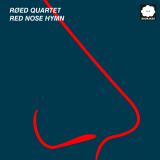
The debut album from brothers Aksel (sax) and Lyder Røed's (trumpet, flugelhorn) quartet! Already a well established band on the Norwegian jazz scene, featuring Swedish drummer Cornelia Nilsson (Aaron Parks) and double bass player Ola Høyer (Cortex). A modern and innovative jazz quartet with clear links to the golden age of the 60s, nodding to artists such as Ornette Coleman, Tom Harrell and Mark Turner.
il devrait être publié sur 22.05.2026

Helsinki quartet Alder Ego, led by drummer/composer Joonas Leppänen, returns with their new album "III" on 9 April on We Jazz Records. A follow up to their successful 2018 We Jazz album, "III" finds Leppänen and his bandmates extracting more depth and punch out of their tenor sax + trumpet + double bass + drums setup, which echoes the greats in the game, such as Ornette Coleman, yet adds a readily identifiable edge to it all. Leppänen's writing is evolving, becoming more and more of a signature of the band and sounding delightfully angular yet easily flowing. On "III", Alder Ego features Leppänen on drums, Jarno Tikka (of OK:KO) on tenor sax, Tomi Nikku (of Bowman Trio) on trumpet and the new addition Nathan Francis on bass.
Kicking off with a key track introducing the band's deep sound, "Love And Maladies", "III" moves through a sonic landscape which is constantly surprising yet identifiable as Alder Ego guided by Leppänen's musical vision at all times. This is true even during moments when the composer himself steps aside, namely in the Tikka–Nikku duo cut "Impermanence" and Nathan Davis's highly memorable solo outing "Nathan's World".
The album's many highlights include singles "November Ghost" and "I Saw It In a Dream", plus the stunning closing track "Ephemeral", featuring Natalia Castrillon on harp.
Alder Ego "III" is available on We Jazz Records on as orange and black vinyl editions, digitally, plus as a bundle bringing together "III" and the band's 2018 album "II".
Commandez maintenant et nous commanderons l'article pour vous chez notre fournisseur.

Bellbird hat seinen Namen und seine musikalische Inspiration von dem Vogel, der für einen der lautesten und markantesten Rufe im Tierreich bekannt ist. Die Band beschäftigt sich mit Themen wie der Verbundenheit zwischen Musikern, Genres und der Natur. Ihr zweites Album und erstes für Constellation, The Call, ist direkt vom Weißglockenvogel inspiriert, dessen extremer, unverwechselbarer Ruf analysiert und direkt in den explosiv schönen Titeltrack des Albums eingewoben wurde. Das in Montréal ansässige Quartett bestehend aus Claire Devlin (Tenorsaxophon), Allison Burik (Altsaxophon, Bassklarinette), Eli Davidovici (Bass) und Mili Hong (Schlagzeug) begann während der Pandemie bei Park-Jams zusammen zu spielen, inspiriert von der Jazz- und Free-Improvisationsszene, die sich um das Café Résonance gebildet hatte. Aber die vier Montrealer Neuzuzügler fanden erst nach einer Einladung zum Ottawa Jazz Festival 2021 als Bellbird zusammen und haben seitdem ihre Harmonie und ihren gemeinsamen Sound durch jahrelanges Touren und Zusammenspiel verfeinert. Das Quartett geht über sein gefeiertes, 2023 selbst veröffentlichtes Debütalbum ,Root in Tandem" hinaus und setzt auf einen stark kollaborativen Kompositionsprozess. Nachdem sie zuvor die Kompositionsaufgaben aufgeteilt hatten, entstanden die acht Songs auf The Call aus musikalischen Workshops und Improvisationsspielen, wobei sie sich auf Gedichte und Gespräche stützten, die sie während ihrer Aufenthalte außerhalb der Stadt ausgetauscht hatten. Das Ergebnis ist ein kraftvolles, stimmiges Statement, das ihre jazzzentrierte Instrumentierung mit Einflüssen aus Rock, Fusion und Folk verbindet, von Mingus und Eric Dolphy bis hin zu Ornette Colemans Prime Time und Indie-Rock. Ein wesentliches Merkmal ihres Sounds ist, wie sie die üblichen Rollen ihrer Instrumente umkehren, wobei die Blasinstrumente rhythmische Muster und unterstützende Texturen einsetzen, während Akustikbass und Schlagzeug die Form bestimmen. Dieser Ansatz ist ein Mikrokosmos der egalitären Ethik der Band: Sie agieren als echtes Kollektiv, ohne ihre individuellen Stimmen zu opfern. Das Album schafft einen Ausgleich zwischen kraftvollen Kompositionen wie dem Titelsong ,The Call" und Momenten, in denen die Band das Tempo drosselt, um sich der thematischen Einfachheit hinzugeben, wie in ,Soft Animal" und ,Phthalo Green". Im Gegensatz zu ihrem Debütalbum, das in der Stadt erarbeitet, aber auf dem Land aufgenommen wurde, wurde ,The Call" im legendären Hotel2Tango in Montréal von der Toningenieurin Sylvaine Arnaud aufgenommen, die die rohe Energie der Live-Auftritte der Band einfängt. Die Produktion verzichtet weitgehend auf eine traditionelle Ästhetik und setzt stattdessen auf kraftvolle Drums und einfallsreiche analoge Bearbeitung, die die viszerale Wirkung der Musik unterstreichen. Obwohl die Musik oft melodisch reichhaltig und zugänglich ist, scheut sich die Band auch nicht vor ,hässlichen" Klängen und nutzt Multiphonics, gestrichenen Bass und metallische Texturen, um eine Klangpalette zu schaffen, die ebenso eindringlich und naturalistisch wie explosiv ist. Das Album ist sozial und politisch engagiert und ein Beweis für die tiefgründige Musik, die nicht von einem einzelnen Leader, sondern von einem zutiefst einfühlsamen Quartett geschaffen wurde, das als Einheit zuhört, reagiert und kreiert. The Call vermittelt die Gefühle der Band zur Klimakrise und zur globalen Solidarität, wobei einer der zentralen Titel des Albums, ,Blowing on Embers", ausdrücklich einem freien Palästina gewidmet ist. The Call ist ein entscheidender Schritt nach vorne, ein einheitlicher Aufschrei einer Band, die ihre kraftvolle kollektive Stimme voll und ganz gefunden hat.
il devrait être publié sur 06.02.2026

Remastered using pure analogue components only, from the master tapes through to the cutting head.
Ornette Coleman, who died in June 2015 from cardiac arrest, must be counted as one of the most influential musicians in the jazz genre. His importance does not only lie in his ground-breaking recordings in the late Fifties and early Sixties, but lies more significantly in the educational effect of his work – in the fact that he always went beyond himself to the very end.
Just a little more than a month after his ground-breaking release "Free Jazz", Coleman recorded the present album, in which he perhaps distanced himself somewhat from the conceptual idea, but still guided his quartet to ever more richness of detail and creativity. "Ornette!" was the first recording with bass-player Scott LaFaro and Coleman, and the difference in approach between LaFaro and Charlie Haden is noticeable from the very first note of "W.R.U.". His playing is more direct and agile, and one can hear how he drives Coleman and Don Cherry actively onwards and more aggressively than Haden’s warm, languid phrasing.
The tracks, with titles that are taken from the works of Sigmund Freud, are all gems and serve as a wonderful starting point for the musicians’ improvisations. By now, Coleman felt himself comfortable in lengthy pieces, and neither he nor his fellow musicians had trouble in filling out time, never once lacking for new ideas. Ed Blackwell deserves a special mention – he shows himself here at his very best. "Ornette!" is a superb release and an absolute must for all fans of Coleman and creative, improvised music in general.
il devrait être publié sur 10.10.2025

Der Kornettist Don Cherry erlangte ab 1958 als Mitglied der revolutionären Bands von Ornette Coleman weltweite Bekanntheit in der Free-Jazz-Szene. Als eigenständiger Bandleader präsentierte sich Cherry
jedoch erst 1965 auf seinem Blue-Note-Debütalbum “Complete Communion”. Mit einem aus Free-Jazzerprobten Musikern bestehenden Quartett lotete der Kornettist zwei suitenähnliche Kompositionen aus, die
sich jeweils über eine ganze Plattenseite erstreckten und seinen Mitspielern reichlich Raum gaben, sich
ebenfalls solistisch einzubringen.
il devrait être publié sur 05.09.2025

"Change of the Century" is the second album recorded by Ornette Coleman's quartet featuring Don Cherry on trumpet, Charlie Haden on bass, and Billy Higgins on drums and is considered one of the essential recordings of the avant-garde jazz movement. Ornette Coleman was a revolutionary figure in jazz, known for his innovative approach to improvisation and composition. He pioneered the "free jazz" movement, which broke away from traditional jazz structures and harmonic conventions.
His music often emphasized collective improvisation and thematic development over chord changes. The album's title reflects the spirit of innovation and change that Coleman brought to the jazz world with a significant departure from the bebop and hard bop styles dominant at the time, paving the way for new directions in jazz expression. "Change of the Century" remains a timeless and influential recording that continues to inspire musicians across genres and stands as a testament to Ornette Coleman's Visionary approach to jazz: an essential listening for anyone interested in exploring the outer reaches of improvisation and creativity in jazz.
il devrait être publié sur 10.07.2025

Discover the deeply personal work of Japanese saxophonist Hidefumi Toki through his 1975 masterpiece, "Toki". Accompanied by a quartet featuring Kazumi Watanabe on guitar, Nobuyoshi Ino on bass, and Steve Jackson on drums, Toki's expressive alto and soprano saxophone fill the space with gentle, raspy tones. The album's laidback and mellow atmosphere, highlighted by original compositions like "Darkness" and "Lullaby For The Girl," as well as soulful renditions of classics such as "When Sunny Gets Blue" and Ornette Coleman's "Blues," creates a captivating listening experience.
Recorded May 17, 1975 at AOI Studio, Tokyo.
il devrait être publié sur 31.01.2025

Beginning in the 60"s, the small chamber group ensemble became increasingly important in the advancement of jazz, enabling horn players including Sonny Rollins, Joe Henderson, and Ornette Coleman to seek uncharted sonic territories and achieve new levels of freedom without the support of chordal instruments. With a mature, cohesive ensemble sound, the young trio juxtaposes tranquility and space with energy and tenacity across nine original compositions showcasing their stylistic breadth. From the swinging waltz "December" with a melodic contour reminiscent of a jazz standard, the soothing folk-influenced simplicity of "Vent", the intimate lyrical interplay between bass and clarinet in "Duo", to the heavy, propulsive power of the title track, the trio demonstrates fearlessness, listening, and spontaneity in a raw and personal recording that puts each of their distinctive voices in the spotlight. Christian Holm-Svendsen, currently resides in New York, studying for a master of music at Manhattan School of Music. In Denmark he played with, among others, The Danish Radio Big Band, Copenhagen Jazz Orchestra, Odense Jazz Orchestra, Jesper Zeuthen, and Regnfang. Daniel Sommer is an award-winning artist and sought-after drummer on the international jazz scene. Known for crossing the borders of different musical landscapes with a distinctive musical approach, Sommer currently performs with Karmen Roivassepp Quartet, Foyn/Hess/AC/Sommer and recently released the trio album "From Within" with Arild Andersen and Rob Luft on April Records. Mariusz Prasniewski is a Polish double bass player, residing in Copenhagen. A part of the Danish and European jazz scene for more than a decade, the bassist has worked with musicians like Tomasz Dabrowski, Anders Mogensen, and Gilad Hekselman.
il devrait être publié sur 26.07.2024

Gambian kora virtuoso Dawda Jobarteh and Danish master drummer Stefan Pasborg join forces to release their exhilarating live album, "Live In Turku"Turku". A captivating fusion of traditional West African sounds and contemporary improvisation. Jobarteh was born and raised in Brikama, Gambia into a musical legacy - his uncle and grandfather before him are recognized as great masters of the kora. Initially learning calabash and all other kinds of percussion at the feet of his uncle, it wasn t until Dawda s travels to Denmark that he picked up the 2121-stringed kora. He s since gone on to tour worldwide with the famous Pierre Dorge & New Jungle Orchestra and release five albums under his own name to rave reviews from leading magazines such as Songlines. Stefan Pasborg, godson and protege of famous Danish drummer Alex Riel, is a world class drummer with a deep understanding of African music few western musicians possess, evidenced by his many collaborations with the likes of Morocco s Majid Bekkas and their joint project Magic Spirit Quartet, as well as Danish trio Ibrahim Electric. Drawing on their rich musical backgrounds and extensive experience, Jobarteh and Pasborg deliver an electrifying performance that transcends borders and genres. Recorded during a mesmerizing live set at a festival in Turku, Finland in April of 2023, the album captures the essence of their collaborative spirit and explorative energy. A followup to their landmark 2016 release "DUO"", at the heart of "Live In lies a deep connection between two extraordinary musicians. Jobarteh brings his soul soul-stirring melodies and innovative approach to the traditional instrument - going electric and drawing from the explosive energy of Jimi Hendrix in jangling improvisations soaked in psychedelic futurism. Meanwhile, Pasborg, renowned for his dynamic drumming style and eclectic musical palette sits somewhere between Art Blakey, Mitch Mitchell and John Bonham, providing a rhythmic foundation that propels the music to new heights. The album"s repertoire spans a diverse range of influences, from traditional West African rhythms to contemporary jazz and beyond. Tracks such as " first recorded in 1979 by a band of Ornette Coleman alumni, pay homage to the Jazz s origins in African music, while originals like "Communication of a Kind" showcase the duo"s improvisational prowess and boundless creativity.
il devrait être publié sur 28.06.2024
il devrait être publié sur 10.11.2023

Ein ungewöhnliches Album und einzigartiger Einblick in die Arbeitsweise des 'Free -Jazz'-Pioniers in den frühen 70er Jahren. Aufgenommen in seinem großen Loft in der Innenstadt von New York, tobt eine Musikform bei dem Colemann sowohl Trompete als auch Saxophon spielt. Sein Quartett mit dem zweiten Saxophonisten Dewey Redman sowie den langjährigen Kollegen Ed Blackwell und Charlie Haden erweist sich als perfekte Ergänzung zu diesem legendären Set. Die erste Vinyl-Neuauflage seit fast 20 Jahren nutzt eine neue 24/96-Übertragung des ursprünglichen Produktionsmasters.
il devrait être publié sur 22.09.2023

The West Indian-born alto saxophonist Joe Harriott was one of the most convincing boppers outside of the USA, though by the end of the 1950s he was exploring freer musical pastures, and the quintet with which he undertook the exploration was an outgrowth of the hard bop band with which he'd made a name on the British scene.
Often in the past the group's music, in which trumpet and flugelhorn player Shake Keane figured alongside Harriott in the front line, has been compared with that of the early Ornette Coleman quartets, but here it's far more interactive, a fact borne out most obviously by the lack of soloists. Here on Free Form (1961) is where the rhythm of that indigenously West Indian form is extraordinarily maintained in the midst of characteristic group exchanges.
il devrait être publié sur 01.09.2023

• This is an unusual album in the catalogue of Ornette Coleman, and one that passes by most critics. It is however a unique insight into the ‘free jazz’ pioneer’s way of working in the early 70s. Recorded at his large loft space in downtown New York which inspired a whole scene of experimental musicians who were locked out of playing established venues.
• The music is a romp showing Ornette playing trumpet as well as saxophone. His quartet which featured second saxophonist Dewey Redman alongside long term cohorts Ed Blackwell and Charlie Haden prove to be the perfect foil for this legendary set.
• This is the first vinyl reissue in nearly 20 years and utilises a fresh 24/96 transfer from the original production master.
il devrait être publié sur 25.08.2023

Don Cherry, Dewey Redman, Charlie Haden und Ed Blackwell verbündeten sich ursprünglich, um das Werk ihres Mentors Ornette Coleman zu würdigen, aber das Repertoire ihres Quartetts Old and New Dreams entwickelte sich bald zu einem Projekt von viel größerer Tragweite, das auch die musikalischen Erfahrungen einbezog, die die Spieler auf ihren Reisen rund um die Welt gemacht hatten. Neben einzigartigen Versionen von Ornettes ”Lonely Woman” und ”Open or Close” umfasst dieses einflussreiche, heute als Klassiker geltende Album von afrikanischer Musik inspirierte Stücke von Cherry und Blackwell, Redmans rätselhaftes ”Orbit of La-Ba” und Hadens impressionistisches ”Song for the Whales”. Das Album wurde im August 1979 in Oslo aufgenommen und von Manfred Eicher produziert. Die Vinyl-Neuauflage der Luminessence Serie enthält einen neuen Begleittext, der historischen Kontext und Hintergrundinformationen liefert.
Commandez maintenant et nous commanderons l'article pour vous chez notre fournisseur.

The album Trinkets And Things by pianist Joanne Brackeen and guitarist Ryo Kawasaki was recorded in 1978. Brackeen performed with jazz giants Chick Corea, Freddie McCoy, Ornette Coleman, Joe Henderson and later formed her own trio and quartet. Kawasaki was a Japanese jazz fusion guitarist and helped develop the guitar synthesizer in collaboration with Roland and Korp. The album features duets, while the song “Trinkets And Things” shows Brackeen using her piano skills and Kawasaki supports with guitar solos.
Trinkets and Things is available as a limited edition of 500 individually numbered copies on turquoise vinyl.
il devrait être publié sur 24.02.2023

Cornetist Don Cherry first rose to prominence as part of the revolutionary Ornette Coleman Quartet that turned the jazz world on its ear in 1959 when it arrived at the Five Spot Café in NYC. Though Cherry co-led the album The Avant-Garde with John Coltrane in 1961, it wasn’t until he signed with Blue Note in 1965 that he began his career as a leader with a run of fiery albums including Complete Communion, Symphony for Improvisers, and 1966’s Where Is Brooklyn? This last session was a highly interactive quartet date that featured Pharoah Sanders on tenor saxophone and piccolo, Henry Grimes on bass, and Ed Blackwell on drums. This Blue Note Classic Vinyl Edition is all-analog, mastered by Kevin Gray from the original master tapes, and pressed on 180g vinyl at Optimal. from Coleman's playful lyricism.
Moreover, the rhythm team of Ed Blackwell on drums and Henry Grimes on bass provides a scintillating underpinning for the music that is worth listening to all on its own. Sanders' mix of Coltrane's yearning long notes, Ayler's ghostly, fluttering wail, Coleman's fast, bumpy phrasing and his own manic bagpipe screams certainly separates the faint-hearted from the stayers on the opening Awake Nu. But the conversation between Sanders and Cherry is light, lyrical and engaging on The Thing, and the saxophonist even gets into a stubborn, Sonny Rollins-like repeating Latin vamp on There Is the Bomb. An unflinchingly quirky classic. (THE GUARDIAN)
il devrait être publié sur 10.02.2023
Note price increase and cat number change from last time around. In 1968, Don Cherry had already established himself as one of the leading voices of the avant-garde. Having pioneered free jazz as a member of Ornette Coleman's classic quartet, and with a high profile collaboration with John Coltrane under his belt, the globetrotting jazz trumpeter settled in Sweden with his partner Moki and her daughter Neneh. There, he assembled a group of Swedish musicians and led a series of weekly workshops at the ABF, or Workers' Educational Association, from February to April of 1968, with lessons on extended forms of improvisation including breathing, drones, Turkish rhythms, overtones, silence, natural voices, and Indian scales. That summer, saxophonist and recording engineer Göran Freese who later recorded Don's classic Organic Music Society and Eternal Now LPs invited Don, members of his two working bands, and a Turkish drummer to his summer house in Kummelnäs, just outside of Stockholm, for a series of rehearsals and jam sessions that put the prior months' workshops into practice. Long relegated to the status of a mysterious footnote in Don's sessionography, tapes from this session, as well as one professionally mixed tape intended for release, were recently found in the vaults of the Swedish Jazz Archive, and the lost Summer House Sessions are finally available over fifty years after they were recorded. On July 20, the musicians gathered at Freese's summer house included Bernt Rosengren (tenor saxophone, flutes, clarinet), Tommy Koverhult (tenor saxophone, flutes), Leif Wennerström (drums), and Torbjörn Hultcrantz (bass) from Don's Swedish group; Jacques Thollot (drums) and Kent Carter (bass) from his newly formed international band New York Total Music Company; Bülent Ates (hand drum, drums), who was visiting from Turkey; and Don (pocket trumpet, flutes, percussion) himself. Lacking a common language, the players used music as their common means of communication. In this way, these frenetic and freewheeling sessions anticipate Don's turn to more explicitly pan-ethnic expression, preceding his epochal Eternal Rhythm dates by four months. The octet, comprising musicians from America, France, Sweden, and Turkey, was a perfect vehicle for Don's budding pursuit of "collage music," a concept inspired in part by the shortwave radio on which Don listened to sounds from around the world. Using the collage metaphor, Don eliminated solos and the introduction of tunes, transforming a wealth of melodies, sounds, and rhythms into poetic suites of different moods and changing forms. The Summer House Sessions ensemble joyously layers manifold cultural idioms, traversing the airy peaks and serene valleys of Cherry's earthly vision. In the Swedish Jazz Archive quite a few other recordings from the same day were to be found. Some of the highlights are heard as bonus material on the CD edition of this album. The octet is augmented by producer and saxophone player Gunnar Lindqvist, who led the Swedish free jazz orchestra G.L. Unit on the album Orangutang, and drummer Sune Spångberg, who recorded with Albert Ayler in 1962. The bonus CD also includes a track without Cherry featuring Jacques Thollot joined by five Swedes including Lindqvist, Tommy Koverhult, Sune Spångberg, and others. With liner notes by Magnus Nygren and album art featuring a cover painting by Moki Cherry: Untitled, ca. 1967-68. Track list: 1. Summer House Sessions 2. Summer House Sessions.
il devrait être publié sur 02.09.2022

Jazz iconoclast Albert Ayler took the experimental leanings of contemporaries like John Coltrane and Ornette Coleman as a starting point and then blasted them to stratospheric extremes, creating some of the most polarizing and brilliant music of the 20th Century. In particular, 1964 was a pivotal – and well documented – year in the free jazz artist’s career. After returning to New York, Ayler assembled a brilliant group with Sunny Murray on drums and Gary Peacock on bass, recording Spiritual Unity, Ayler’s first record for the legendary ESP-Disk’ label, that summer.
Soon after that session, Ayler took his trio to Europe where they were joined by cornetist Don Cherry for a tour of The Netherlands, Sweden, and Denmark. The Hilversum Session is a live radio session recorded on November 9th, 1964. At that point the quartet was months into its European tour and the interplay is extraordinary. On classic Ayler compositions like “Spirits” and “Ghosts” the band absolutely rip, with a kind of intuition and connectivity rarely heard, creating some of the most untethered and undeniably powerful music in the history of free jazz. Our Swimmer is pleased to present the first official vinyl reissue of The Hilversum Session in over thirty years.
il devrait être publié sur 26.08.2022

"Of the records Ayler made during 1964, the LP New York Eye and Ear Control...is probably the most important link between the epoch-making collective improvisation Free Jazz by the Ornette Coleman double quartet, and John Coltrane's Ascension. Apart from that, it is—in my opinion—one of Ayler's very best recordings. New York Eye and Ear Control owes a large part of its success to the contrasting temperaments of the three musicians used by Albert Ayler in addition to his trio, namely, trumpeter Don Cherry, trombonist Roswell Rudd and alto saxophonist John Tchicai. Don Cherry improvises in broad melodic lines or places sharply accented staccato passages. Roswell Rudd interposes fragmentary flourishes in the highest register, or growl sounds and glissandos in the manner of the old tailgate trombonists. John Tchicai presents the polarity of a slightly 'cool,' linear style and offers motivic linkage by insistently repeating melodic patterns. All three inspire Albert Ayler to a breadth of expression which is too often missing in his improvisations with smaller groups. There is less limitation to his sound-span playing, more contrast, more punch and rhythmic accentuation, and with quick response Ayler takes motives from Cherry, Rudd and Tchicai, transforms them
into his own musical idiom, and in turn gives a new direction to the flow of ideas." - Free Jazz by Ekkehard Jost
"The music is fiery but with enough colorful moments to hold one's interest throughout." - Scott Yanow, All Music Guide
"...a valuable window into the music's early history as well as what might have happened outside record dates, more than one is usually privy to." - Clifford Allen, AllAboutJazz
Commandez maintenant et nous commanderons l'article pour vous chez notre fournisseur.

"The Shape Of Jazz To Come" - Ornette Coleman (as); Don Cherry (crt); Charlie Haden (b); Billy Higgins (dr)
It was John Lewis, pianist of the Modern Jazz Quartet, who brought Ornette Coleman to the renowned Atlantic label, having heard him play in Los Angeles. »Ornette Coleman is doing the only really new thing in jazz …« he reportedly said. The present initial Atlantic album was released just in time to coincide with the New York debut of the Coleman Quartet in November 1959. Lewis was sure that Coleman would open up new paths for jazz, and his opinion is reflected in the title of the album – "The Shape Of Jazz To Come". After the rather worn-out hard bop routine of the past years, this music was like a breath of fresh air. The fast numbers ("Eventuality", "Chronology") remind one of wildly hyped-up bebop. Other numbers ("Congeniality", "Focus On Sanity") juggle with catchy, almost folk like short motifs. This album contains two of Coleman’s most beautiful compositions: "Peace" and "Lonely Woman", which was later given lyrics and often heard in its vocal version. The Mulligan-Baker Quartet provided the model for the pianoless quartet – and when the band swings along once in a while with a moderato tempo, it is truly reminiscent of cool jazz. Be that as it may, the two wind instrumentalists just love the frenetic 'cry' and the intentionally 'imprecise' interplay. Clearly defined stanzas or traditional harmonic forms were not for them. The jazz musicologist Peter N. Wilson wrote: »A record, which is not unjustifiably so entitled« about this LP which was given 5 stars by the magazine Rolling Stone.
This Speakers Corner LP was remastered using pure analogue components only, from the master tapes through to the cutting head. More information under pure-analogue
All royalties and mechanical rights have been paid.
Recording: May 1959 at Radio Recorders, Hollywood, CA, by Bones Howe
Production: Nesuhi Ertegun
il devrait être publié sur 19.07.2021

Helsinki quartet Alder Ego, led by drummer/composer Joonas Leppänen, returns with their new album "III" on 9 April on We Jazz Records. A follow up to their successful 2018 We Jazz album, "III" finds Leppänen and his bandmates extracting more depth and punch out of their tenor sax + trumpet + double bass + drums setup, which echoes the greats in the game, such as Ornette Coleman, yet adds a readily identifiable edge to it all. Leppänen's writing is evolving, becoming more and more of a signature of the band and sounding delightfully angular yet easily flowing. On "III", Alder Ego features Leppänen on drums, Jarno Tikka (of OK:KO) on tenor sax, Tomi Nikku (of Bowman Trio) on trumpet and the new addition Nathan Francis on bass.
Kicking off with a key track introducing the band's deep sound, "Love And Maladies", "III" moves through a sonic landscape which is constantly surprising yet identifiable as Alder Ego guided by Leppänen's musical vision at all times. This is true even during moments when the composer himself steps aside, namely in the Tikka–Nikku duo cut "Impermanence" and Nathan Davis's highly memorable solo outing "Nathan's World".
The album's many highlights include singles "November Ghost" and "I Saw It In a Dream", plus the stunning closing track "Ephemeral", featuring Natalia Castrillon on harp.
Alder Ego "III" is available on We Jazz Records on as orange and black vinyl editions, digitally, plus as a bundle bringing together "III" and the band's 2018 album "II".
il devrait être publié sur 09.04.2021

Beyond the striking photography of the cover artwork, a cursory glance at this LP may appear misleading. One could be forgiven in thinking that what they had discovered was of a more obvious British provenance, but on closer inspection the truth is revealed… London in fact refers to London, Canada, an artistic hotbed that famously spawned the highly influential insurgent noise ensemble, 'The Nihilist Spam Band'. Less celebrated yet equally remarkable was the improvisational powerhouse 'The London Experimental Jazz Quartet', a short lived group led by the forward thinking saxophonist Eric Stach.
Their debut album, Invisible Roots is an overlooked jewel from the Canadian jazz scene. Inspired by the revolutionary artists from the New York free-jazz movement, (namely Ornette Coleman, Archie Sheep and Cecil Taylor), and fuelled by the exciting possibilities afforded by a completely free approach to music, Invisible Roots is an album of potent spontaneous composition, exhibiting both fiery unharnessed blowing alongside lyrical streams of consciousness. In recent years, the album has achieved notoriety in certain record collecting circles mainly due to the track Destroy The Nihilist Picnic, an infectious piece of vamping avant-funk. Despite the commanding presence of this track, it would be misguided to judge the merits of the album on this piece alone, for Invisible Roots is a much deeper and more complex musical statement. This is confirmed by the Iberian-jazz sketch, Spain Is For Old Ladies, the spiritual introspection of Jazz Widows Waltz or the ferocious yet soulful Eric's Madness, a track which wouldn't be out of place on an ESP-Disk or BYG Actuel album. Behold, a rare piece of fire music from the Canadian Free-Jazz underground.
First LP reissue of rare 1974 Canadian Free Jazz album.
Featuring the Avant-Funk classic 'Destroy The Nihilist Picnic'
Includes liner notes and rare photos.
Tip-on sleeve
il devrait être publié sur 29.01.2021
