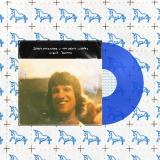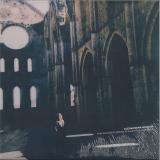
Following her debut album, I’ll Look for You in Others (Past Inside the Present), earlier this year, Patricia Wolf joins Spain’s Balmat label with See-Through, her second album. See Through finds the Portland, Oregon musician and field recordist continuing to develop her signature style of ambient, balancing radiant soundscaping with a carefully expressive sensibility. But the new album is also marked by an important difference. Where I’ll Look for You in Others was largely written in response to the death of a loved one, See-Through represents a kind of rebirth.
“After a long period of grief, I had been hoping to find my way to a place of lightness, peace, playfulness, curiosity, and sensuality again,” Wolf says. “What I was surprised and pleased to find is that for the most part, I had.”
She wrote and recorded many of the album’s songs quickly, in preparation for an August 2021 broadcast on the online radio platform 9128 Live. Excited for the opportunity to play live after more than a year of the pandemic, Wolf decided to write all new material for the event, working with a lean setup of Octatrack, Roland Synth Plus 10, Make Noise 0-Coast, and Novation Summit. (In fact, Wolf was the first sound designer invited to create patches for the Summit.) She also picked up an acoustic guitar that her brother had loaned her. “I decided to take the surrealist approach of ‘pure psychic automatism’ to see what poured out of me,” she recalls. “Woodland Encounter,” “Under a Glass Bell,” “The Grotto,” “The Mechanical Age,” “The Flaneur,” and “Psychic Sweeping” are all products of those sessions; the through line holding them together is their exploratory spirit and clarity
of vision.
Other songs, like “A Conversation With My Innocence,” “Recalibration,” and “Psychic Sweeping,” wrestle with the traumas of the preceding year. Though they may linger on the heaviness of loss, Wolf says, “What I discovered is that a stronger archetype had grown inside me to steer my emotions and thoughts to a better place.” Likewise, “Wistfulness” and “Upward Swimming Fish”—her first experiments with VST synthesizers—balance the bittersweet embrace of melancholy with the freedom to choose happiness.
“Pacific Coast Highway,” the album’s lone song with drums, might at first seem like an outlier. But it also signals Wolf’s interest in finding a fusion between the introspection of ambient and the togetherness of beat-oriented music. “Experiencing loss and isolation is what drove me into gentler territories of sound,” she says, “but I want to start making more beat-oriented music. After an extended period of loss and isolation, I’m ready to experience more joyous and social things.”
Listeners with keen ears might recognize the album’s closing song, “Springtime in Croatia”: A different mix of the song originally appeared on the 2021 digital compilation secondnature & friends Vol. II, from the Seattle label secondnature. This marks its first appearance on vinyl, however, and its spiritual home is undoubtedly here, at the close of See-Through. As the bookending answer to the opening “Woodland Encounter”—another song in which field recordings play a crucial role—it closes the circle of an album that is itself keyed to the steadily turning cycles of life.
Search:others in conversation
- A1: Kim English - Treat Me Right (David Morales Club Mix)
- A2: Sandy B - Feel Like Singing (Adelphi Music Factory Remix)
- B1: Byron Stingily - Get Up Everybody (Darius Syrossian Remix)
- B2: Byron Stingily - Get Up Everybody (Parade Mix)
- C1: Pj - Can Ya Tell Me (Gerd Janson Piano Megamix)
- C2: Pj - Can Ya Tell Me (Gerd Janson Bonus Beat)
- C3: Pj - Can Ya Tell Me (Pierre’s Phat Dub)
- D1: Wonderboy - Jerk It (Sorley Street Mix)
- D2: Wonderboy - Jerk It (Felix Da Housecat Original Nooworld Underground Mix)
- E1: Innervision Ft Melonie Daniels - Don’t You Ever Give Up (Ian Friday Libation Vox)
- E2: Innervision Ft Melonie Daniels - Don’t You Ever Give Up (Ricanstruction Vocal)
- F1: Kim English - Learn 2 Luv (Ralf Gum Remix)
- F2: Kim English - Learn 2 Luv (Mood Ii Swing Club Mix)
- G1: Deep Creed - The Anthem (Monki Remix)
- G2: Deep Creed - The Anthem (Armand Van Helden Original Circle Mix)
- H1: Kim English - It Makes A Difference (Danny Howard Remix)
- H2: Danny Krivit & Kyle Smith Present Kim English - It Makes A Difference (Dub)
Black Vinyl[33,57 €]
Nervous Records, the iconic label synonymous with the rise of house from the streets of New York City, will mark 30 years in the music industry by releasing the celebratory compilation LP ‘Nervous Records: 30 Years’ on October 1st (Part 1) and October 15th (Part 2).
Featuring original mixes of the label’s biggest tracks, plus remixes by some of its most celebrated acts, ‘Nervous Records: 30 Years’ is both a celebration of the past and of the future. Featuring a who’s who of electronic dance music, the long player sees names including Louie Vega, David Morales Darius Syrossian, Tensnake, Monki, Franky Rizardo, Danny Howard and more take on iconic Nervous cuts: ‘You Make Me Feel Mighty Real’, ‘Treat Me Right’, ‘Future Groove’, ‘Feel Like Singing’, ‘Get Up Everybody’, ‘Break You’, ‘Hot’, ‘End This Hate’, ‘Unspeakable Joy’, ‘Can Ya Tell Me’, ‘Jerk It’, ‘The Anthem’, ‘It Makes A Difference’, ‘Learn 2 Luv’ and ‘Don’t You Ever Give Up’.
The album marks one of the most enduring, extraordinary legacies to grace America’s illustrious music history, not just in electronica but far beyond. Founded in 1991 by Michael and his father Sam Weiss, and recognizable immediately by its distinctive character logo, the label grew rapidly, in no small part due to Michael Weiss’ practically unmatched passion for discovering new music.
“Louie Vega and Kenny Dope woke me at 4am on Tuesday night, Wednesday morning from their studio telling me they had something really different that I needed to hear,” Michael recollects. “I asked if they could play it over the phone. They said if I wanted to hear it I had to come to the studio. So of course I got myself up, got dressed and went there. That “really different track” ended up being ‘The Nervous Track’, a tune that became our signature release and was also highly instrumental in the emergency of London’s ‘Broken Beat’ movement.”
The label’s willingness to take chances on fresh sounds and innovative concepts rising up from the melting pot sidewalks of NYC ensured a body of work that has become a living musical history of the city. House cuts ‘Unspeakable Joy’ and ‘Nitelife’ (Kim English), ‘Get Up (Everybody)’ (Byron Stingily) and ‘Feel Like Singing’ (Sandy B) bump up against hip-hop anthems like ‘Who Got Da Props’ (Black Moon) and “Bucktown” (Smif-n-Wessun) and reggae cut ‘Take It Easy’ (Mad Lion); soulful flows from Mood II Swing (Kim English ‘Learn 2 Luv’, Loni Clark “Rushing”), Armand Van Helden (‘The Anthem’) and Nuyorican Soul (‘Mind Fluid’) sit alongside seminal techno singles like Winx’ ‘Don’t Laugh’. The young artists and producers who joined the Nervous Records’ family have gone on to become some of the most hallowed and celebrated dance acts of all time: Louie Vega, Kenny Dope, David Morales, Tony Humphries, Roger Sanchez, Armand Van Helden, Kerri Chandler, Kim English, Byron Stingily, Josh Wink, to name just a handful.
“We did a release with Josh Wink under his Winx alias entitled ‘Nervous Build-Up’,” Michael said. “It did well and it was obvious how talented Josh was. Subsequent to that release I was pretty persistent in asking him to continue to play me his new demos. During one phone conversation he said, “Mike I’m gonna play you something over the phone but don’t laugh when you hear it.” That demo ended up being ‘Don’t Laugh’, which became one of our biggest international hits and still to this day is one of America’s earliest and most impactful techno hits.”
As much a celebration of the label’s future as it is of their past, Nervous Records: 30 Years is but a marker in the imprints’ history, a clear sign of where they’ve been and also where they’re going. With 30 years behind them, the label’s determination to unearth new raw diamonds in the rough is as unwavering as ever.
“I’ve always been one to look at what others are doing (the industry at large) and think, “ok, are they doing this specific thing for a reason, or doing it because everyone else is doing the same thing” and make my decision based on that,” says Nervous Records’ General Manager Andrew Salsano. “In an age where data metrics and analytics reign supreme, I remain steadfast that they should be complementary to your decision and not the sole indicator to make one. So many songs today are written with 15 second hooks in mind for social media, and while there’s nothing wrong with that business model you will always be chasing the wave instead of carving out your own path and identity.
“My primary focus for the sound of the label has and will continue to revolve around signing good songs and music that has the ability to react at the street level first. The best results come from artists that are firstly given a bit of local love that grows into a global impact. Fresh ideas that express child-like curiosity and artists showing vulnerability in their music are also something I look for, artists and producers that are not making music with certain markets in mind, but rather their own style and signature that is unique but able to straddle the fine line of underground and overground.”
Still as raw, as underground and as finely tuned to the dance floor as they ever have been, perhaps the secret to the success - and the longevity - of Nervous Records has something to do with that hard, dogged, no-holds-barred NYC edge that runs through the veins of the label. With the next generation of producers rising from the clubs of New York, one thing is certain; Nervous Records will be there to find them, nurture them and bring them to the world at large, over the next decade and beyond.
- Prelude
- Bitter Water
- There Beneath
- In The Blue Hours Of Morning
- Exeunt
- Caesar
- This Will End
- Pale White Horse
- Where Is Your Rider
- Soldier, Poet, King
- Dear Wormwood
- Danse Macabre
- Thus Always To Tyrants
TEN YEAR ANNIVERSARY[33,57 €]
Dear Wormwood acts as a volume II to Through the Deep, Dark Valley. While Through the Deep, Dark Valley is about the protagonist's past, Dear Wormwood is about the character's future. The duo explains, "This album is a collection of letters, all written by a single protagonist and addressed to a single recipient, a conversation to which the listener is an observer as a relationship gone wrong reaches its breaking point - the words and music are at times affectionate and bittersweet, at others resigned and resolute."
- 1: Hometown 200
- 2: Our Lonely Hearts
- 3: Beautiful Day
- 4: Easy Feeling
- 5: Local Girl Builds A Rocket
- 6: Show Me Around
- 7: Clever (In The Eyes Of Others)
- 8: Conversations In The Dark
- 9: The Changes
- 10: Martin Amiss
- 11: The Final Joy Ride
Written in the Scottish Highlands, recorded on the West Coast in Largs and pressed on vinyl in East Lothian. Rapture Party was mixed and mastered by Jason Shaw and Fuzz Face Studios and is released by Last Night From Glasgow. ; The Joshua Hotel are an indie- pop trio from Inverness led by producer Joshua Mackenzie with Louis Slorach on guitar/ drones and Joshua Gilbert on drums/ percussion. Single Easy Feeling is released on Friday 21 March.
- Fabulist
- Just Don't Know (How To Be You)
- October
- Vera
- Doubt It's Gonna Change
- You
- Bo's New Haircut
- I'm Not Sad
- Yes It's True
- Weird Feeling
- Done With You
- Rather Not Stay
- When You Said Goodbye
Comprising of sisters Eva and Grace Tedeschi, The Cords are the brightest new indiepop band from Scotland and this is theri debut. They started playing drums when they were little kids and later found that they liked 80s and 90s indie music more than their peers did, and so formed a band, just the two of them, with Grace on drums and Eva on guitar - and the songs started to flow. With only a cassette and a flexi single released so far (both of which sold out in a matter of hours), Eva and Grace honed their skills by playing a whole series of gigs with some of the biggest names in Scottish pop. Their first show was with The Vaselines, and since then they have played with Camera Obscura, Belle and Sebastian, BMX Bandits and others, while also sharing stages with the new generation of indiepop stars: the Umbrellas, Chime School, Lightheaded. Like all great pop bands, The Cords have taken familiar ingredients and created something utterly fresh. Older indie fans will hear echoes of The Shop Assistants, The Primitives, Tiger Trap and Talulah Gosh, but they will hear something else too: a yearning, dreamy melodic power that takes the songs into darker, stranger places. Younger pop fans won't care about these old reference points: what they will hear is the sound of two young women doing something utterly exciting: playing loud guitar and loud drums, taking analogue instruments and hitting them hard in the service of immediate and infectious pop tunes, and not giving a second thought about the digital world that wants to own everything we do. The Cords sound free: they remind us that pop music, played right, is expressive, liberating, joyful and deeply personal. First single `Fabulist' is a sweet and catchy pop song that races along, so headlong and hooky that, on first listen, you could miss the fact that it's a wholehearted take-down of people who lie for a living. And the album is a fun rollercoaster ride from that point onwards, with the real stars of this record being Eva's sinuous guitar and silky vocals, and Grace's clattering, expressive sing-song drums. It's the sound of two sisters having an intense musical conversation with each other, pushing each other on to greater heights, exhilarated by the set of perfect pop songs they have magicked up. DIGIPAK CD, LP on BABY BLUE VINYL.
Furthering the passionate exploration of cinema that has guided her two previous LPs - 2017’s ‘Fassbinder Wunderkammer’ and 2020’s ‘I Should Have Been a Gardener’ - the Milanese guitarist/composer, Alessandra Novaga, returns to Die Schachtel with ‘The Artistic Image Is Always a Miracle’, two sides off shimmering, tense compositions – culminating as one of her most creatively ambitious and conceptually rich outings to date – freely inspired by the life and work of the Russian director Andrej Tarkovsky and the music of Johann Sebastian Bach.
Classically trained at the Musik Akademie in Basel, Switzerland, over the last decade Alessandra Novaga has emerged as one of the leading figures within northern Italy’s thriving new, experimental, and improvised music scene, rendering striking solo efforts, in addition to collaborations with Loren Connors, Stefano Pilia, Elliott Sharp, Nicola Ratti, Paula Matthusen, Sandro Mussida, Kid Millions, Travis Just, Francesco Gagliardi, and others. Remarkably ambitious and forward thinking, her approach to the guitar embarks upon a relentless deconstruction and rethinking of her instrument’s unique properties through distinct applications of structure, resonance, space, and tone, creating in a deeply personal and emotive music, seeking narrative and meaning within the abstractions of sound.
In 2017, with the LP, ‘Fassbinder Wunderkammer’, issued by Setola Di Maiale, Novaga embarked upon the exploration of her love of film. Having begun with Rainer Werner Fassbinder, this was followed in 2020 by Die Schachtel’s release of ‘I Should Have Been a Gardener’, a deeply intimate mediation on the life and work of Derek Jarman. Rather than focusing on a fixed point of inspiration or a single film to work from, these pieces achieve a form of abstract portraiture, distilling elements drawn from these filmmaker’s life and work into ambient networks of texture and tonality. ‘The Artistic Image Is Always a Miracle”’ freely inspired by the Russian director Andrej Tarkovsky and the music of Johann Sebastian Bach, finds Novaga radically expanding her sonic palette within this approach.
The seeds of ‘The Artistic Image Is Always a Miracle’ can be traced to a conversation that Novaga had with Alan Licht (contained in the highly regarded Common Tones: Selected interviews with artists and musicians 1995–2020, Blank Forms, 2021), relating to the connections between music and cinema, which led her to consider Andrej Tarkovsky’s use of Bach's music within a symbiotic framework: how the music illuminates the imagism of the films, and the film illuminates new dimensions of the music. Slowly developing over the subsequent years, the resulting album comprises six individual works, some of which draw directly upon pieces of Bach’s music that Tarkovsky used in his films – specifically 'Erbarme dich, Mein Gott', 'Das alte Jahr vergangen ist', and 'Ich ruf zu dir, Herr Jesu Christ' - while others draw upon the sensibilities and moods evoked in the imagination by the director’s films.
As a point of departure and illumination into the process and spirit that underscored the creation of the album, Novaga points toward a passage in Tarkovsky’s "Sculpting in Time”:
“Art is born and takes hold wherever there is a timeless and insatiable longing for the spiritual, for the ideal: that longing which draws people to art. Modern art has taken a wrong turn in abandoning the search for the meaning of existence in order to affirm the value of the individual for its own sake. What purports to be art begins to look like an eccentric occupation for suspect characters who maintain that any personalized action is of intrinsic value simply as a display of self-will. But in artistic creation the personality does not assert itself, it serves another, higher and communal idea.”
‘The Artistic Image Is Always a Miracle’ can be understood as a realisation of the collectivism of which Tarkovsky speaks, in the service of something far beyond the expression of self. Encountering Novaga moving into fairly uncharted waters, three of the album’s pieces incorporate the human voice we encounter the voices of others: that of the poet Arsenij Tarkovsky, the director’s father; a singer from Bach’s ‘Erbarme dich, Mein Gott’, capturing a broadcast in an underground parking lot, and Novaga’s own, rendering the melody from Bach’s “Ich ruf zu dir, Herr Jesu Christ”. Roughly alternating between solo excursions on guitar and bristling electroacoustic pieces, over the course of the album’s two sides Novaga weaves one of her most abstract and ambitious bodies of recordings to date, shifting between the complex tonal mediations generated by the six strings of her instrument, and phycological densities activated by the expanded pallet of sonority made possible by the tactics and approaches of musique concrète.
An immersive, deeply engaging meeting of beauty and melancholy within a labyrinth of voices and ideas, ‘The Artistic Image Is Always a Miracle’ transfigures the life and work of Andrej Tarkovski – one of the greatest auteurs in the history of cinema – into a singular, experimental statement of collective truth. Belonging to recent, ambitious stream of contemporary new music releases on Die Schachtel that’s already included Novaga’s ‘I Should Have Been a Gardener’, Stefano Pilia’s ‘Spiralis Aurea’, Jim O'Rourke & Giovanni Di Domenico’ ‘Immanent In Nervous Activity’, Claudio Rocchetti’s ‘Labirinto Verticale’, and Damāvand’s ‘As Long As You Come To My Garden’, among others, ‘The Artistic Image Is Always a Miracle’ is available on as a limited edition of 300 dark turquoise vinyl LPs released on June 21, 2024. The LP, designed by Bruno Stucchi / dinamomilano, comes with an 8-pages insert illuminated by Alessandra’s text as well as the lovely and intense photographs of Matilde Piazzi.
- Osmium 0
- Osmium 1
- Osmium 2
- Osmium 3
- Osmium 4
- Osmium 5
- Osmium 6
- Osmium 7
Limited edition white vinyl (800 copies) The self-styled ritualistic electro-mechanical ensemble OSMIUM is a veritable supergroup. Made up of Oscar-winning composer and instrumentalist Hildur Gudnadóttir, veteran engineer and producer James Ginzburg, Senyawa's idiosyncratic vocalist Rully Shabara and Grammy-winning sound designer / producer Sam Slater, while each member brings along a laundry list of accolades, the project is far greater than the sum of its parts. Alloying burnished electroacoustic soundscapes with dense, metallic drones, barbed rhythms and buckled, bio-mechanical vocalizations, OSMIUM's eagerly awaited debut album doesn't try to cast a rigid future. Rather, it tempers a viscous flow of unorthodox speculations that smolders through the distant past, blazing a trail all the way to the frontier of fate. Absorbed by questions about the relationship between humans and technology, tradition and progression, the individual and the group, OSMIUM channel their experience and expertise into a set of forward-thinking sonic interrogations that skewer established cultural preconceptions. And although genre is acknowledged - the album draws from folk, doom metal, 20th century minimalism, industrial music and extreme noise - there's never a sense that it's riveted firmly in place. Widely known for her soundtrack work (including `Joker' and `Chernobyl') Gudnadóttir plays the halldorophone, a unique cello-like electroacoustic instrument designed by Halldór Ulfarsson that allows the performer to harness unstable feedback loops. Taking his cues from this process, Slater (who has worked alongside Jóhann Jóhannsson, Ben Frost and others) generates rhythms using a self-oscillating drum he designed with KOMA Elektronik and Subtext boss and Emptyset member Ginzburg responds in kind, producing booming tambura-like sonorities from a device he developed himself based on the monocord, an ancient single- stringed resonator. OSMIUM synchronize the three unique instruments using a custom system of robotics to generate basic rhythms that underpin their improvisations and experiments, and Shabara's alien tones supply the band with their conceptual fulcrum. The vocalist is one of South Asia's most recognizable underground artists, and the sounds he's able to create using exhaustively rehearsed extended techniques are so distinctive that he's been studied by scientists back home in Indonesia. Never weighed down by needless sound design or modish ornamentation, it's music that feels authentically experimental; OSMIUM have figured out an awkward symmetry between their discrete approaches, concentrating their gaze on the outcome rather than the process. The result is a work of science fiction that's driven by interaction, conversation and sensation.
German trio Cloud Management approached Digital-Sting in late 2023 and started a conversation concerning a loose configuration of improvisations, studio experiments and rehearsal jam recordings. The timing was particularly serendipitous with Feel Free Hi Fi fresh off a West Coast USA tour with Exotic Gardens where we had spent several long drives along the California coast listening to Cloud Managements prior records on Altin Village. The second of which included collaborations with Exotic Gardens. This release " Unfinished Business" inhabits much of the musical history and influences foundational to the Digital Sting sound and ethos making the link up an obvious one. I don't want to be overly predictable in the comparison to the great body of work created by German legends like Moebius, Roedelius, Plank and others but it is there. Also present are heavy doses of dub wandering not too far from the furthest out zones created by African Head Charge or Dub Syndicate. Some creeping psychedelic unease in the way of Industrial Records also sits in the mix. Comparisons aside, Cloud Managements embrace of collaboration and jammy experimentalism create a sound that is unique and a bit rare in the contemporary dub and electronic music continuum where perceptions of genre restrictions can guide a bit too much. The two side long continuous tracks documented in this release lock in and groove as much as they wander, drift and break apart in subtle shifting ways making for special repeat listening where something new is always waiting.
- Don't Like You Anymore
- Consistency
- No More
- How Long Will It Take
- Here When You're Ready
- Reasons To Stay
- The Lament
- Don't Let Go
- Talk To Me Nice
- Having A Time
- Win Feat. Clerel
TRANSPARENT 7 inch VINYL[14,08 €]
Two Times Juno awards listed and 2 times Polaris price listed, Canadian Soul Star Tanika Charles unleash the new album "Reason To Stay that drops on May 16 via independent soul label Record Kicks. Reasons To Stay is Tanika Charles' fourth full-length album, and her most introspective to date. Where her songs have typically touched on romantic love and heartache, the core love and loss of this record is family focused. It has taken years for Tanika to be able to publicly reflect on the childhood trauma and family breakup that occurred during her teens. The majority of the album was composed by Tanika with the tight knit team of Scott McCannell (Lydia Persaud, Henry Nozuka), Kyla Charter (Aysanabee) and Chino de Villa (Jessie Reyez). Kelly Finnigan of the Monophonics joined in to mix the bulk of the project and apply some trademark analogue grit to Tanika's sheen. Guests include Quebec-based Soulful singer/songwriter Clerel on the last track "Win", as well as Toronto soul artists Aphrose and Claire Davis providing additional vocals. "I love this album. I love singing these songs. I love that it's made me step outside of my comfort zone. It's forced me to face the root causes of my own insecurities that I carry to this day. Why am I striving so hard to seek validation, and why take it so personally when it doesn't come? That distortion has prevented me from celebrating my own successes at times. This album is me trying to change that." "I love the conversations that have begun with these songs. It's about childhood trauma, but it's not a victim story. I'm doing well, despite the baggage I carry. I want others to be able to carry theirs too." In the last few years, Canadian Soul/R&B powerhouse Tanika Charles has transformed from an emerging solo artist to a commanding performer and bandleader, cementing her status as a staple in the Canadian soul scene. Her previous studio albums - "Soul Run" (2017), "The Gumption" (2019), and "Papillon De Nuit" (2022) - have propelled her to international acclaim, earning her two JUNO nominations, two Polaris Prize listings, and a growing global fanbase. Extensive touring across North America and Europe has further solidified her reputation, with standout performances at festivals such as Trans Musicales in France, Fusion Festival in Germany, Mostly Funk & Soul Festival and Jazz Festival in the UK, Holy Groove Festival in Switzerland, and Canarias Jazz Festival in Spain. She has also shared the stage Estelle, Mayer Hawthorne, Haitus Kayote, Lauryn Hill, Bedouin Soundclash and Macy Gray. Tanika's meteoric rise and undeniable artistry have been widely championed by outlets such as KCRW, KEXP, BBC6 Music, Exclaim!, CBC Music, Uncut Mag, PopMatters, Albumism .. further solidifying her position as a global soul sensation.
- Ishi
- Many
- Tonbo
- Horo Horo
- Mushi Dance
- Spells
- Nami
- Wakaranai
- Dottsu
- Kodama
- Tent
- Metallic Gold
- Omajinai
- Ghost
Taba voices a subtle yet surprising shift for the Japanese musician and producer Satomimagae. Observing and absorbing the fleeting scenes and sounds of life flowing outside of her home studio, Taba unfolds as a series of vignettes that document the personal and the universal. Satomi sings beyond herself in an orbit of souls and systems known and unknown, seen and unseen, in the present and in the strange flux of memory, leaving linear songwriting to rest for circuitous stories expanded and expansive in tone and texture. Following the logic of taba, a Japanese term for a bunch, bundle or grouping together of different things, the album is assembled as a loose collection of short stories. Shapeshifting into something like a poet-narrator, Satomi casts her writer's eye to the often perplexing shapes that form from quotidian events and exchanges defining our increasingly alienated age. Where Satomi's last full-length, 2021's Hanazono, bloomed from the lush soil of a private inner sphere, the bird's eye of Taba searches to place the artist_somewhere, somehow_within a wider, wilder world. Collaborations with other artists and musicians close to Satomi's universe further elevate the album's sweeping sonics. Synthesizer lines from Norio, who also helps define the album's visual identity through photo and video, enliven the tender ballad "Kodama." The bell-like Rhodes piano ringing in and around Satomi's guitar on "Dottsu" is played by Akhira Sano, who created the cover art for her 2021 Colloid EP. Yuya Shito's clarinet was the missing puzzle piece that completed "Spells," and it was also Yuya who mixed Taba with an ear for its organic textures and elegantly frayed edges, giving utterance to a distinctly different energy than Satomi's earlier expressions. The tonal and rhythmic play that lay the foundation of these songs also animates a colorful palette of melodic gestures, noisy resonances and pointed moments captured by Satomi's close-at-hand recorder. While Taba is still carried by the innate intimacy that has defined Satomi's music to date, these songs channel her newly spacious and inquisitive songwriting approach, unlocking unusual layers in the process. Some are subsumed in the speculative poetics of sound design, while others peer through the window of bedroom pop. Gathering imagistic reflections, tracing vast ideations and quietly lingering in humble moments, Taba connects vivid lines between the individual and the collective, the constructed and the cosmic, the articulated and the felt. Satomi's sonic tales gain an eloquent coherence by the simple fact of existing in conversation, humming a harmony of parts that buzzes with the tangled circuitry of a life in motion. Taba is the fifth album from Japanese musician, songwriter and dream traveler Satomimagae, following her 2021 album Hanazono and the 2023 reissue of her debut album Awa, both for RVNG Intl. On Taba, Satomimagae leaves linear songwriting to rest for circuitous stories expanded and expansive in tone and texture, unfolding as a series of vignettes that document both the personal and the universal. Some of the songs on Taba feature intimate moments captured on Satomi's hand recorder, poetic moments of sound design animated by tonal and rhythmic bedroom pop foundations. As with Hanazono, Taba's album artwork features a wooden block print by Satomi's sister, the artist Natsumi Magae.
'In de verte, dit uitzicht’ is Abel Ghekiere's second album. It is a celebration of beauty and sudden bursts of euphoria and melancholy, hidden in the distinctive soft and fragile sound of Ghekiere's music. Much more personal than on his debut record, he calls out to the world.
Working with voice samples and field recordings, voice and improvisation take centre stage. Sounds from outside are subtly interwoven with instruments, while conversations and memories act as a thread running through the compositions. The music flows into the room, bringing with it remembered places and voices.
The music was recorded very nomadically, in different places, with different people. Most of the parts were written and played by Abel Ghekiere himself but with guest contributions from Vitja Pauwels, Nicolas Rombauts, Leo Adamov, & Jan de Vroede, among others, the record breaks open into a soft sound palette.
Kneading dough is tricky – you should know how it’s supposed to feel. If you try too hard you could make it worse. It’s a beautiful practice – creation with a gentle touch, to work at something so it can be left alone. “If it’s too drawn out it’s awful. It’s easy to give too much.” Dance in the mirror. Contemplate your veiny hands. Who do they remind you of?
You begin by mixing flour and water. “What happens when your people die? Why’d they move the rock to the other side of Ulster Park?” Eliza Niemi asks two seemingly unrelated questions in a rising melody with guitar accompaniment, like fingers playing spider up to the nape of your neck. Gentle pressure. Strands of gluten form to bind the mix. A new question lingers in the binding. When she admits “but I don’t know how to tell if I’m feeling it or not,” that question surfaces through the text. It is reiterated throughout the album. When I’m working with dough I think the same thing to myself.
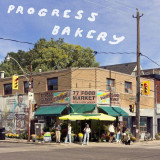
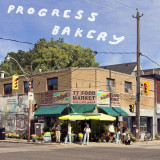
On Progress Bakery, her second album as a solo artist, Eliza knows to leave some questions alone – to let juxtaposition and tension be the proof. It doesn’t have to be hard. The feelings and revelations they provoke rise in the heat. The smell is sweet. Crispy on the outside and soft all the way through. She playfully slip-slides through words and sounds and images, delighting in surprise, skimming ideas like stones cast across clear water, touching down briefly with uncommon grace.
The question provoked between those opening lines resurfaces in the strands between songs – “Do U FM” is fully formed and beautifully layered, while “Novelist Sad Face” is a short, acapella rendering of gentle curiosity. What is holding these ideas together? Some songs demand more, seem to carry a whole load – eventually the skipping stone will halt to sink and resume its idle duty – while others drift in and out of focus, the way thoughts and dreams become interwoven before the mind is sunk into true sleep.
Music and words don’t always have to interact. Where she decides to keep them apart gives a new contour to where and how she puts them together. The kind of thing you’re supposed to take for granted with songs and their singers comes alive in Eliza’s hands – the little miracle of mixing, kneading, stretching, and stopping.
So often on Progress Bakery, Eliza teases out truth and meaning by asking questions. “Do I wanna be crying?” “Do you want me good or do you want me bad?” “Do I need an eye test?” “I’m writing songs in my head while you’re going over stuff with me — is that cruel??” In “Pocky” Eliza ends with a question that feels to me like the actual biography, succinct and revealing:
I don’t wanna be made to see
I just wanna ask “what’s that?”
Grace that ought to be rare, but in its care and precision is offered humbly, with great generosity, and without announcing itself. Eliza’s simple, miraculous music is given further form and shape by a group of collaborators – invaluable guest musicians Jeremy Ray, Evan Cartwright, Steven McPhail, Kenny Boothby, Ed Squires, Carolina Chauffe, Dorothea Paas, Louie Short, and Avalon Tassonyi. Together with Louie Short, who recorded, mixed, and produced the album along with Jeremy Ray and Lukas Cheung, Eliza has cultivated a richness in sound and texture that prods and provokes the ticklish ear. Barely audible guitar tinkering, a brief lo-fi field recording of trumpets, the harmonic clicking of a looped synthesizer, a flourish of reeds, a child’s conversation, each uncanny sound perfectly placed, rippling out under a soft breeze.
Lay in bed alone at night and ask aloud to the stillness,
“What were you doing at the Albuquerque Airport?
What were you doing there??”
And hear your question answered by a dream of swelling, undulating cellos. Try to grasp at the melody and structure. It’s not an answer (if there could be one), but it moves deeper, closer to the weird layer of fleeting moments and disconnected images, barely perceptible at its core. Wait for the dream reel to click into place.
Eliza took me for a ride in Nicole (her beloved Dodge Grand Caravan) and told me she’d been thinking of the album as an embodiment of transition – and I think every transition, known or unknown, carries the weight of new meaning, skittering off the surface tension of life as you know it, creating ripples, sometimes bouncing off and sometimes breaking through. There is a trick you can use to tell if a dough is glutinous enough. You’re supposed to stretch it out as thin as you can without breaking it and hold it up to the light. If you can see through, even if it renders the world murky and uncertain, you should leave it alone. I love this trick. It’s one that Eliza seems to know intuitively: work gently and ask questions and don’t always expect answers, and when you can, take a glimpse at something new, and then leave.
- A1: Do U Fm
- A2: Novelist Sad Face
- A3: Green Box
- A4: Dusty
- A5: The Linda Song
- A6: Dm Bf
- B1: I Tried
- B2: Melodies Like Mark
- B3: Wildcat
- B4: How U Remind Me
- B5: Pocky
- B6: Bon Tempiii
- B7: Pt Basement
- B8: Alberqurque Ii
- B9: Mary's
Yellow Coloured Vinyl[29,37 €]
Kneading dough is tricky – you should know how it’s supposed to feel. If you try too hard you could make it worse. It’s a beautiful practice – creation with a gentle touch, to work at something so it can be left alone. “If it’s too drawn out it’s awful. It’s easy to give too much.” Dance in the mirror. Contemplate your veiny hands. Who do they remind you of?
You begin by mixing flour and water. “What happens when your people die? Why’d they move the rock to the other side of Ulster Park?” Eliza Niemi asks two seemingly unrelated questions in a rising melody with guitar accompaniment, like fingers playing spider up to the nape of your neck. Gentle pressure. Strands of gluten form to bind the mix. A new question lingers in the binding. When she admits “but I don’t know how to tell if I’m feeling it or not,” that question surfaces through the text. It is reiterated throughout the album. When I’m working with dough I think the same thing to myself.
On Progress Bakery, her second album as a solo artist, Eliza knows to leave some questions alone – to let juxtaposition and tension be the proof. It doesn’t have to be hard. The feelings and revelations they provoke rise in the heat. The smell is sweet. Crispy on the outside and soft all the way through. She playfully slip-slides through words and sounds and images, delighting in surprise, skimming ideas like stones cast across clear water, touching down briefly with uncommon grace.
The question provoked between those opening lines resurfaces in the strands between songs – “Do U FM” is fully formed and beautifully layered, while “Novelist Sad Face” is a short, acapella rendering of gentle curiosity. What is holding these ideas together? Some songs demand more, seem to carry a whole load – eventually the skipping stone will halt to sink and resume its idle duty – while others drift in and out of focus, the way thoughts and dreams become interwoven before the mind is sunk into true sleep.
Music and words don’t always have to interact. Where she decides to keep them apart gives a new contour to where and how she puts them together. The kind of thing you’re supposed to take for granted with songs and their singers comes alive in Eliza’s hands – the little miracle of mixing, kneading, stretching, and stopping.
So often on Progress Bakery, Eliza teases out truth and meaning by asking questions. “Do I wanna be crying?” “Do you want me good or do you want me bad?” “Do I need an eye test?” “I’m writing songs in my head while you’re going over stuff with me — is that cruel??” In “Pocky” Eliza ends with a question that feels to me like the actual biography, succinct and revealing:
I don’t wanna be made to see
I just wanna ask “what’s that?”
Grace that ought to be rare, but in its care and precision is offered humbly, with great generosity, and without announcing itself. Eliza’s simple, miraculous music is given further form and shape by a group of collaborators – invaluable guest musicians Jeremy Ray, Evan Cartwright, Steven McPhail, Kenny Boothby, Ed Squires, Carolina Chauffe, Dorothea Paas, Louie Short, and Avalon Tassonyi. Together with Louie Short, who recorded, mixed, and produced the album along with Jeremy Ray and Lukas Cheung, Eliza has cultivated a richness in sound and texture that prods and provokes the ticklish ear. Barely audible guitar tinkering, a brief lo-fi field recording of trumpets, the harmonic clicking of a looped synthesizer, a flourish of reeds, a child’s conversation, each uncanny sound perfectly placed, rippling out under a soft breeze.
Lay in bed alone at night and ask aloud to the stillness,
“What were you doing at the Albuquerque Airport?
What were you doing there??”
And hear your question answered by a dream of swelling, undulating cellos. Try to grasp at the melody and structure. It’s not an answer (if there could be one), but it moves deeper, closer to the weird layer of fleeting moments and disconnected images, barely perceptible at its core. Wait for the dream reel to click into place.
Eliza took me for a ride in Nicole (her beloved Dodge Grand Caravan) and told me she’d been thinking of the album as an embodiment of transition – and I think every transition, known or unknown, carries the weight of new meaning, skittering off the surface tension of life as you know it, creating ripples, sometimes bouncing off and sometimes breaking through. There is a trick you can use to tell if a dough is glutinous enough. You’re supposed to stretch it out as thin as you can without breaking it and hold it up to the light. If you can see through, even if it renders the world murky and uncertain, you should leave it alone. I love this trick. It’s one that Eliza seems to know intuitively: work gently and ask questions and don’t always expect answers, and when you can, take a glimpse at something new, and then leave.
Two Times Juno awards listed and 2 times Polaris price listed, Canadian Soul Star Tanika Charles unleash the new album "Reason To Stay that drops on May 16 via independent soul label Record Kicks. Reasons To Stay is Tanika Charles' fourth full-length album, and her most introspective to date. Where her songs have typically touched on romantic love and heartache, the core love and loss of this record is family focused. It has taken years for Tanika to be able to publicly reflect on the childhood trauma and family breakup that occurred during her teens. The majority of the album was composed by Tanika with the tight knit team of Scott McCannell (Lydia Persaud, Henry Nozuka), Kyla Charter (Aysanabee) and Chino de Villa (Jessie Reyez). Kelly Finnigan of the Monophonics joined in to mix the bulk of the project and apply some trademark analogue grit to Tanika's sheen. Guests include Quebec-based Soulful singer/songwriter Clerel on the last track "Win", as well as Toronto soul artists Aphrose and Claire Davis providing additional vocals. "I love this album. I love singing these songs. I love that it's made me step outside of my comfort zone. It's forced me to face the root causes of my own insecurities that I carry to this day. Why am I striving so hard to seek validation, and why take it so personally when it doesn't come? That distortion has prevented me from celebrating my own successes at times. This album is me trying to change that." "I love the conversations that have begun with these songs. It's about childhood trauma, but it's not a victim story. I'm doing well, despite the baggage I carry. I want others to be able to carry theirs too." In the last few years, Canadian Soul/R&B powerhouse Tanika Charles has transformed from an emerging solo artist to a commanding performer and bandleader, cementing her status as a staple in the Canadian soul scene. Her previous studio albums - "Soul Run" (2017), "The Gumption" (2019), and "Papillon De Nuit" (2022) - have propelled her to international acclaim, earning her two JUNO nominations, two Polaris Prize listings, and a growing global fanbase. Extensive touring across North America and Europe has further solidified her reputation, with standout performances at festivals such as Trans Musicales in France, Fusion Festival in Germany, Mostly Funk & Soul Festival and Jazz Festival in the UK, Holy Groove Festival in Switzerland, and Canarias Jazz Festival in Spain. She has also shared the stage Estelle, Mayer Hawthorne, Haitus Kayote, Lauryn Hill, Bedouin Soundclash and Macy Gray. Tanika's meteoric rise and undeniable artistry have been widely championed by outlets such as KCRW, KEXP, BBC6 Music, Exclaim!, CBC Music, Uncut Mag, PopMatters, Albumism .. further solidifying her position as a global soul sensation.
- A1: Do U Fm
- A2: Novelist Sad Face
- A3: Green Box
- A4: Dusty
- A5: The Linda Song
- A6: Dm Bf
- B1: I Tried
- B2: Melodies Like Mark
- B3: Wildcat
- B4: How U Remind Me
- B5: Pocky
- B6: Bon Tempiii
- B7: Pt Basement
- B8: Alberqurque Ii
- B9: Mary's
Kneading dough is tricky – you should know how it’s supposed to feel. If you try too hard you could make it worse. It’s a beautiful practice – creation with a gentle touch, to work at something so it can be left alone. “If it’s too drawn out it’s awful. It’s easy to give too much.” Dance in the mirror. Contemplate your veiny hands. Who do they remind you of?
You begin by mixing flour and water. “What happens when your people die? Why’d they move the rock to the other side of Ulster Park?” Eliza Niemi asks two seemingly unrelated questions in a rising melody with guitar accompaniment, like fingers playing spider up to the nape of your neck. Gentle pressure. Strands of gluten form to bind the mix. A new question lingers in the binding. When she admits “but I don’t know how to tell if I’m feeling it or not,” that question surfaces through the text. It is reiterated throughout the album. When I’m working with dough I think the same thing to myself.
On Progress Bakery, her second album as a solo artist, Eliza knows to leave some questions alone – to let juxtaposition and tension be the proof. It doesn’t have to be hard. The feelings and revelations they provoke rise in the heat. The smell is sweet. Crispy on the outside and soft all the way through. She playfully slip-slides through words and sounds and images, delighting in surprise, skimming ideas like stones cast across clear water, touching down briefly with uncommon grace.
The question provoked between those opening lines resurfaces in the strands between songs – “Do U FM” is fully formed and beautifully layered, while “Novelist Sad Face” is a short, acapella rendering of gentle curiosity. What is holding these ideas together? Some songs demand more, seem to carry a whole load – eventually the skipping stone will halt to sink and resume its idle duty – while others drift in and out of focus, the way thoughts and dreams become interwoven before the mind is sunk into true sleep.
Music and words don’t always have to interact. Where she decides to keep them apart gives a new contour to where and how she puts them together. The kind of thing you’re supposed to take for granted with songs and their singers comes alive in Eliza’s hands – the little miracle of mixing, kneading, stretching, and stopping.
So often on Progress Bakery, Eliza teases out truth and meaning by asking questions. “Do I wanna be crying?” “Do you want me good or do you want me bad?” “Do I need an eye test?” “I’m writing songs in my head while you’re going over stuff with me — is that cruel??” In “Pocky” Eliza ends with a question that feels to me like the actual biography, succinct and revealing:
I don’t wanna be made to see
I just wanna ask “what’s that?”
Grace that ought to be rare, but in its care and precision is offered humbly, with great generosity, and without announcing itself. Eliza’s simple, miraculous music is given further form and shape by a group of collaborators – invaluable guest musicians Jeremy Ray, Evan Cartwright, Steven McPhail, Kenny Boothby, Ed Squires, Carolina Chauffe, Dorothea Paas, Louie Short, and Avalon Tassonyi. Together with Louie Short, who recorded, mixed, and produced the album along with Jeremy Ray and Lukas Cheung, Eliza has cultivated a richness in sound and texture that prods and provokes the ticklish ear. Barely audible guitar tinkering, a brief lo-fi field recording of trumpets, the harmonic clicking of a looped synthesizer, a flourish of reeds, a child’s conversation, each uncanny sound perfectly placed, rippling out under a soft breeze.
Lay in bed alone at night and ask aloud to the stillness,
“What were you doing at the Albuquerque Airport?
What were you doing there??”
And hear your question answered by a dream of swelling, undulating cellos. Try to grasp at the melody and structure. It’s not an answer (if there could be one), but it moves deeper, closer to the weird layer of fleeting moments and disconnected images, barely perceptible at its core. Wait for the dream reel to click into place.
Eliza took me for a ride in Nicole (her beloved Dodge Grand Caravan) and told me she’d been thinking of the album as an embodiment of transition – and I think every transition, known or unknown, carries the weight of new meaning, skittering off the surface tension of life as you know it, creating ripples, sometimes bouncing off and sometimes breaking through. There is a trick you can use to tell if a dough is glutinous enough. You’re supposed to stretch it out as thin as you can without breaking it and hold it up to the light. If you can see through, even if it renders the world murky and uncertain, you should leave it alone. I love this trick. It’s one that Eliza seems to know intuitively: work gently and ask questions and don’t always expect answers, and when you can, take a glimpse at something new, and then leave.
“My introduction to “noise” came from a record shop in Lake Worth, Florida ran by a musician named Kenny 5. Kenny had left Detroit sometime in the mid nineties and had begun selling used records and CD’s from the downtown strip of this tiny southern Florida city in a humble shop sandwiched between a deli and a dog grooming business. Kenny previously was on labels like Amphetamine Reptile and timeSTEREO, and the records and videotapes that would be on repeat at his shop were a vast sonic expanse that spoke to the eclecticism of his experience as a touring musician participating and adjacent to American noise culture through the early to late 90’s. In 1998, I was eleven years old and I would order a pizza with him and watch VHS tapes of Japanese noise and deathmatch bootlegs, as well as any other sonic and subcultural rarities that far outstripped my age to comprehend (notably the RRR “Journey Into Pain” compilation and various Vanilla Tapes videos). This widecast net of information formed an introduction to a reality that did not fall deaf on me, but it took many years later for me to reorient the specific freedoms of what this dense and cathartic sound culture had imparted on my life and would continue onward to.
What does this have to do with this selection of choice recordings from the Secret Boyfriend catalog for the enmossed label? For the uninitiated, Secret Boyfriend is the long running moniker of Ryan Martin, North Carolina musician and label proprietor of the Hot Releases imprint. For over a decade from this writing I have watched Secret Boyfriend, and Hot Releases by extension as a curatorial and archival effort, embodying the multiplanal capacity that noise loosely functions from as an umbrella ideology and formalist avenue for sound creation. For anecdotal purposes, from (before) 2006 until roughly 2023 the East Coast of the United States showcased a vibrant network of eclectic regional festivals that saw wide swaths of artists addressing and negotiating the notion of what qualified “noise” from a conceptual and ideological perspective. Some festivals honed in on particularities in aesthetics and tropes, and others had a kind of “catch-all” implementation that allowed for a salvation of the sort of alienated and singular artistry that was amassing throughout these territories. While clear guidelines had been set from regional predecessors as to how noise with a capital “N” should maneuver, Secret Boyfriend is emblematic in the spirit of fluidity that was either implicitly coupled to the notion of the genre, or grew to evolve towards or devolve from.
Within Secret Boyfriend performances, I have seen and admired a mirroring from a ravenous appreciator of this culture at large back towards itself. Typical of a Secret Boyfriend set is an interchangeable narrative arc wherein blistering feedback laden scrap metal improvisations are forayed into naive ambient or “pop” songs, or skipping CDs, or mixer feedback play, or delayed Roland 707 drum workouts all at once and in a unique hegemony. Secret Boyfriend's stylistic mastery of each endeavor is at once an homage to a history of loving listening and enacting, while a brave step into the realm of actualizing the unique fluidity of his own practice. In performance and the action of network engagement, Secret Boyfriend operates a survey of that which he sought to hear and that which he cultivates around his work. His operations are mirrors, and the project (alongside his other peers) is a reflection on the ethos of his time.
Conversely his recording practice narrows in on these moments and allows for a different kind of intimacy or alienation for the non live listener. This record of selected “pop songs” (let's call them that) is particularly poignant at a time when the culture Martin mirrors is at a strange crossroads with itself. The aforementioned festival networks necessarily change and shift. The onlookers become the artists, the artists find new horizons, and the spaces for these cycles fade into locales of a distant memory. It seems, from my perspective, that audiences currently yearn for a more bottlenecked experience, searching for some ontologically vetted manifestation of an idea, of a sound and less for an experience that functions in opposition to our collective banalities. This makes sense in the face of general global catastrophism that plagues us. We need certainty of what something is somewhere, don’t we? Noise as an idea has expanded and contracted to so many iterations of itself it is hard to tell what it even is, and it is particularly difficult to identify in the absence of solid network activations a moment to reflect on its own complexities and nuances. In the face of so much change, I argue that the language of noise culture at large has on one hand become increasingly didactic and predictable, and laughably inclusive and non linear on the other. Probably has always been this way, but now we are in the midst of a moment of extreme access and indexicality, which somehow cauterizes expansion and naivety and chance.
This record highlights the Secret Boyfriend that obscures didacticism by highlighting output that opens up for more challenging catharsis and emotive signal processing. It provides an entry to the materialism of a cultural field full of ecstatic complexity and beautiful inconsistency. In these muted moments Secret Boyfriend has given us over his career we have an argument for evolving languages that further challenge our notions of what is supposed to happen and how it is supposed to be presented. In his more song oriented expansiveness, we can punctuate the ability to think in new modalities. Listening to these recordings reminds me of the polarity of sitting in the record store as a kid and understanding that His Name Is Alive is on 4AD and (gasp!) timeSTEREO. This trite early impression that nothing is really as different as our imaginations might want them to be, and that we can do whatever we want mostly within the creative realms we work through is an important filter to look through Secret Boyfriend as a project and a vessel. If we can achieve abandon and vulnerability through our artistic endeavors, then we have a sound model for, maybe, new potentialities. If that’s too much projection, or just complete liberal bullshit, I am fine with that. Secret Boyfriend's oeuvre at best offers us moments of reprieve to ponder these complexities, or at least a moment to zone out on a drive through North Carolina Highway 54.
You have one pocket of life that you must do whatever you want to inside of. Secret Boyfriend does it affectionately, in a variety of forms, and always with deep sentimentality. These recordings are a wonderful set of songs to begin further investigation from. Thank you Ryan for allowing as many avenues as possible to continue a broad cultural exchange and conversation that intersect and refract while being the kind of artist that is brave enough to not phone in the effort.”
- Nick Klein , May 2024
- 1: Libertude
- 2: 100-99 (Ft. Goldlink)
- 3: Memo Of Hate
- 4: Downtown Fred
- 5: Old Man
- 6: Home Again
- 7: I Got You
- 8: Darlin
- 9: 5. Thoughtful Distress (Ft. Matt Helders & Steve Stevens)
- 1: Fast Kitten
- 2: Caught By Night
- 3: I'd Never Leave
- 4: Dead Air
- 5: One Chance
- 6: Never Stop
- 7: False Alarm
- 8: 13. Remember (Ft. Rainsford)
- 9: 818
- 10: 19. Alright Tomorrow (Ft. Rainsford)
Orange splatter[28,57 €]
Pop/rock singer, songwriter, and guitarist Albert Hammond Jr. is the lead & rhythm guitarist and songwriting member of the GRAMMY® and BRIT Awards-winning band The Strokes. He has released 4 solo albums to date, most recently the acclaimed “Francis Trouble” in 2018 which spawned the radio single “Far Away Truths”. In the 4 years, since then, The Strokes released their US Top 10 charting GRAMMY® nominated rock record “The New Abnormal” and toured the world extensively. Albert also began the songwriting process for his 5th solo album “Melodies on Hiatus”, a 19-track album, crafted in a most experimental style. Albert teamed up with his writing partner, Canadian songwriter, and poet Simon Wilcox (whom he never met during the process) and had lengthy conversations via the telephone; Simon would jot down notes from Albert’s stream of consciousness, and draft the lyrics on her typewriter, and drop them into his letterbox! Albert then added the lyrics to the melodies he had already crafted. The songwriting process became a long distant “anonymous love affair of ideas & lyrics.” The album covers themes of childhood, surviving adolescence, adulthood, vulnerability, fame, relationship with self and others, and is Albert’s “deconstructed broken down ego reaction” to “Francis Trouble.” The album also features songs with GoldLink, Matt Helders (of the Arctic Monkeys), Steve Stevens and Rainsford, and was mixed by Tony Hoffer (known for his work with Beck, Air, M83, The Kooks, Fitz and the Tantrums, Metric, Chromeo, etc.) and mastered by Dave Cooley at Elysian Masters (Paramore, Spoon, Tame Impala, Jimmy Eat World, Peanut Butter Wolfe).
- Funky Country - Jesters Iii
- Wanderin' Soul - Gary Atkinson
- Big Country Blues - Shirl Milete
- Northeast Texas Women - Willis Allan Ramsey
- Want You - Tony Joe White
- Crack Up In Las Cruces - Michael Murphey
- Love And Little Joe - Lee Conway
- I'd Rather Be (Blind, Crippled And Crazy) - O.v. Wright
- Long Line Rider - Bobby Darin
- Misfit - Joe South
- A Little Less Conversation - Mac Davis
- Catman - Sherman Hayes
What is Country Soul? This brief period hapened in Country Music(1968/1973) history when Cowpokes gave a try to LSD and pot, and so transformed their own music into something less formatted, opened to many others influences has funk and Soul or Psychadelism. Drum n" Bass are groovy and the Cow-Boy is cooking!
“Music is my forever cove,” writes Portland, Oregon’s Luke Wyland of the ideas that give shape to Kuma Cove, his latest album under his own name. Though named after a real place on the Oregon coast, Kuma Cove casts its gaze far beyond the sightseer’s line of vision. Recorded live in the studio and blurring obvious lines between computer-based composition and electro-acoustic instrumentation, it is an album about flow, borders, transitory states, and shelter. Composed of discontinuous ripples and repetitions (“I’m forever searching for a better descriptor than looping, which feels too simple and flattened by overuse,” Wyland says), shaped into richly emotive arcs, and informed by his experience as a person who stutters, it is also an album about identity, self-expression, and the energies that sluice through and across what we perceive as linear time—like floodwaters seeking an exit, like streams running into the sea.
Artist’s Statement:
I made this record while spending significant time in the woods by the Sandy River in Corbett, Oregon,
where I've had my studio for the last five years. It is a diary of spontaneous live recordings edited to highlight the moments of clarity that emerge from long-form improvisations. These compositions express a slowing internal rhythm. An unwinding. A somatic recalibration as I enter middle age. A newly empowered vulnerability.
Here are the internalized cadences of my stutter, flowing freely from my fingers. The musicality of my disfluency is revealed in its frictions, elongations, and foreshortenings. Disruptions in linear time, where the bubbling cadences of my stutter find unexpected pathways, reveal the elasticity of the present moment. This is my idiosyncratic language, shaped and inspired by my disability. Subliminally mirroring internal processes, neural firings, cognitive entanglements...
The title, Kuma Cove, refers to a beloved cove on the coast of Oregon my wife and I return to yearly. There has always been something so magnetic about coves. The way they cradle one from the overwhelming enormity of the ocean beyond, muting a primordial fear. I experience these improvisations as ecosystems I'm able to inhabit for stretches of time, embodying the particular rhythms and sensorial textures within each. Music is my forever cove. Everything you hear is created live in Ableton on a setup I've been honing for 15 years. I celebrate MIDI and computer music as an extension of self and strive to make it as expressive as any analog instrument. I was a visual artist for the first half of my life and quickly adapted those skills to composing and producing on a computer. The transition felt natural within the landscape of DAW's interfaces, especially as a synesthete. Ableton and its community of Max creators continue to surprise me with its expansiveness.
I'm forever searching for a better descriptor than looping, which feels too simple and flattened by overuse. I envision sonic loops as tangled masses of time, three-dimensional knots spinning on tilted axes, or overlapping wreaths refracting out a myriad of colors. My practice is continually refocusing my ear to what is revealed in the repetitions, searching for the fingerprint of each. I find it incredible how technology lets us manipulate time like this. Nothing on this record is quantized or locked to a universal bpm. Experiencing numerous tempos at once feels important. Recordings as mirrors. Freedom from expected (conversational) flow as we hold time for each other.
-Luke Wyland, August 2024
Artist Bio:
Luke Wyland is an interdisciplinary artist, composer, and performer based in Portland, OR (USA). Wyland has been releasing critically acclaimed records for the past 20 years in the groups AU and Methods Body, as LWW, and under his own name, working with such labels as New Amsterdam, Beacon Sound, Balmat, The Leaf Label, and Aagoo Records. As a person who stutters, Wyland’s approach to music is informed by his idiosyncratic relationship with language. Wyland believes deeply in the cathartic power of live performance as a means for collective healing. Through an interdisciplinary art practice that focuses on improvisation, somatic embodiment, bespoke tuning systems, the cadences of disfluent speech, and time manipulation technologies, he’s collaborated with choreographers, high-school choirs, filmmakers, sound designers, and renowned musicians such as John Niekrasz, Holland Andrews, Colin Stetson, and Abraham Gomez-Delgado. He’s also the co-creator of the “It’s A Fucking Miracle” dance class with Tahni Holt.
Wyland has toured nationally and internationally and performed at the Whitney Museum, Ecstatic Music Festival, Issue Project Room, PICA’s Time-Based Arts Festival, End of the Road Festival, and Les Nuits Botanique, among others.
Peni Candra Rini (she/her), the Indonesian composer and performer whose musical practice encompasses a wide range of traditional and experimental Javanese styles, announces her new album Wulansih (July 12, 2024) via New Amsterdam Records. Kronos Quartet's David Harrington, a frequent collaborator of Rini, recently called her “one of the world's greatest singers”, and on Wulansih she places her voice in conversation with a wide array of experimental and traditional musicians, including Andy McGraw, Lester St. Louis, Shahzad Ismaily, John Priestley, Curt Sydnor, and many others. Produced by Ismaily at New York's Figure 8 Recording, Wulansih creates a world all its own.
The 8 songs on Wulansih exert a deep sense of spiritual calm and act as, in Rini’s words, “a reminder that you are still human, listening to expressions of other humans.” Her music is deeply inspired by the poetry of Rumi and Hafez, Wayang Kulit (Indonesian shadow play), and Serat, the tradition of Sufi thought in Central Javanese court poetry. Rini says that Wulansih aims to “express my inner feelings, my soul, to provide inspiration to younger Indonesian composers, and to introduce Indonesian new compositions to new global audiences.”
Wulansih is a small encyclopedia of Indonesian music. Rini explains: “The album mixes a wide range of materials, including traditional Javanese gamelan singing, Balinese chant, stringband music of the 1960s, and intercultural improvisations, bringing them all together through my contemporary compositional approach. We created experimental ensembles, and even experimental instruments and tunings to create an album that, whatever you think of it, sounds like nothing else.”
Rini’s lyrics are poems, strongly inspired by Javanese Sufism, with a deep emphasis on love and the inner self. Estu explores the idea of “love as a sacrifice; it takes a commitment to put one’s heart in the right place. It requires the seriousness of an artist,” while Warahsih explores how “always through understanding and sincerity, teaching Love to those who study the ways of life, through the ages.”
The music on Wulansih transforms these poems of love and compassion into open and lush sonic spaces that are crafted using synthesizers, traditional Indonesian instruments, Rini’s wide vocal range, guitars, and Ismaily’s production.
Expected late October/early November
Scott Gilmore’s Volume 01, an Analog Synth Gem, Makes Its Vinyl Debut - Pressed at 45RPM for maximum fidelity.
Recorded on a vintage Tascam 388, the LP version of Gilmore’s alluring, easy-going instrumental electronic record arrives in the physical world via In Sheep’s Clothing Hi-Fi Records.
Los Angeles, CA — When the Los Angeles electronic musician and multi-instrumentalist Scott Gilmore recalls the creation of the songs on Volume 01, he describes specific moments of spontaneous inspiration. “I remember sitting at the tape deck, watching the leaves outside the window as they flittered in the sunlight—a moment of stillness that became intertwined with the melody I was recording,” Gilmore recalls, speaking of the track “Song For Cate.”
This sense of simplicity and presence is at the heart of Volume 01, which was recorded entirely on a Tascam 388 using a carefully curated selection of instruments.
Volume 01, an intimate, instinctual album that mixes lo-fi digital rhythms, strummed guitar, and melodic synth layers, is a collection of songs that captures Gilmore’s magnetic fluidity and the spontaneity of his process. Initially released digitally and as a limited edition cassette, Volume 01 is set to be issued on vinyl for the first time by In Sheep’s Clothing Hi-Fi.
The Tascam 388 is a classic mid-1980s analog machine that combines an 8-track reel-to-reel tape recorder with a built-in mixing console. Volume 01 exudes the kind of hazy, nostalgic warmth that only such recorders can provide. For the nine-song album, Gilmore harnessed analog synths including the Arp Odyssey, Yamaha CS-01, Korg DW-8000, Hohner Pianet T, Roland TR 606, and Roland SH 101, as well as bamboo alto saxophone, clarinet, electric guitar, and electric bass.
The album is awash in brief, propellant pieces. At just over four minutes, the relatively epic “Horizon Line” is driven by a three-note snare pattern, a two-note cymbal tap, with a humble bass-line serving as the rudder; Gilmore’s improvised keyboard runs move with an intuitive, conversational glee. The pensive "Shade" sounds like it could be a Penguin Cafe Orchestra demo. Closing track “D. Hareem” runs on a wobbly time signature but with an insistent, determined rhythm that belies genre descriptives. “I prefer to not know what I’m making as I compose,” Gilmore says. “It’s when I can’t clearly define what the music is that it’s then something that I want to put out into the world.”
In hindsight, Volume 01 was a portent. After its 2016 cassette release, Gilmore connected with International Feel, the Balearic imprint run by Marc Barrot, to release the sublime Subtle Vertigo. In 2019, Gilmore’s music caught the attention of Marc Hollander, the experimental composer and founding member of Aksak Maboul, which led to a signing with the Belgian label Crammed Discs. That deal enabled the creation of Gilmore’s solo album Two Roomed Motel and Doctor Fluorescent, a retro-futuristic, Vocoder-heavy 2020 collaboration with Eddie Ruscha V, a.k.a. Secret Circuit). Across these projects, Gilmore’s work has been mentioned in the same sentences as Stereolab, Arthur Russell, Woo, Air, R. Stevie Moore, and others, all of whom have combined synths and non-synths to memorable effect.
With the upcoming vinyl release, Volume 01 will set into wax an enduring set of works, offering listeners the chance to experience analog artistry in its most authentic, tangible form. In Sheep’s Clothing Records is honored to bring Gilmore’s work to vinyl.
Cool Calm Pete has been featured in the past with MF Doom, RJD2, El-P, Morcheeba, Sharon Jones & The Dap-Kings, Aesop Rock, and others. More recently with Kool Keith, Real Bad Man, Heems, and Lee Scott.
Lost (Director’s Cut) kicks off Petes return with some new projects on deck.
Sometimes it takes time for something to establish its proper place in culture, and the modern-day discourse never fails to rush to label an album to be a classic or a flop. Then there are albums like Cool Calm Pete’s “LOST.” Adored by its dedicated fan base upon its original release in 2005 on Embedded Records and Definitive Jux, this record has continued to garner attention over the years from those who are familiar with it. While word-of-mouth alone may not have been sufficient to propel the album to mainstream success, its enduring popularity two decades later is a testament to its well-deserved recognition as an indie rap cult classic. The Korean-American emcee born as Pete Chung wasn’t asking to be a pioneer but having been raised in Queens NY during the golden era of hip hop, rhyming better than his peers just naturally became his identity. Throughout his debut album, his slow-paced, conversational flow fit like a glove to the self-produced “working class” beats that color most of the album. His education in fine arts as a painter and his day-job with a then-burgeoning lifestyle brand called Supreme sometimes took precedence in his professional life, but his dedication to the craft as a hip hop artist was evident, and fans took notice. The album hasn’t been re-released since its initial 2005 drop. and vinyl copies haven’t sold on the collectors’ market for less than $100 in years. With its first official re-release, the laws of supply-and-demand will surely alter that market, and chances are that with more ears to hear the album, those original pressings will only become hotter. In the meantime, the new “LOST (Director’s Cut)” has been re-mastered and extended for release on Cool Calm Pete’s own label Bubble Wife Records, with never-before-heard cuts led by a remix of the title track by Blockhead. Find it.
"One of the best bands to come out of NYC since who gives a shit." -CVLT Nation. When you enter White Hills' lair in Brooklyn, the duo's insatiable desire for music and art is immediately palpable. Crates of vinyl from floor to ceiling line the long hallway. Guitars appear at every angle, one lying across a sofa in obvious mid-play with others in cases tucked beside amplifiers into every conceivable corner. Synthesizers and cables cover the purple satin bed while gouache paintings in various stages of progress strewn the floor. Album covers, movie posters, books, paintings, prints and souvenirs of subversive culture occupy the remaining wall space. A sanctuary of adoration, creation and imagination, it's also the nerve center of their record label Heads on Fire Industries and the site where the final mixes of their latest album Beyond This Fiction took shape. For nearly two decades, White Hills have been blowing minds with their sonic alchemy: a unique mix of neo-psychedelia, art rock, and post-punk- at once original and recognizable. Their cult reputation emblazoned in celluloid following their performance in Jim Jarmusch's sultry vampire romance Only Lovers Left Alive, the duo has toured vigorously since their inception. With a vast catalogue that astounds and a relentless punk ethos, time seems to energize the duo, making them increasingly daring and prolific. "Music creates a bliss beyond sex and drugs," professes one-woman rhythm section Ego Sensation. "We'll never stop making music. It's the highest high to be had in life." Founding member Dave W, whose signature other-worldly guitar sorcery defines the White Hills sound, grabs his Les Paul to record a melody lingering in his head from last night's dream before it escapes. Outside, the sound of passing sirens, honking horns and bits of conversation remind you that you're in the middle of New York, a city so flush with rock legacy and artistic innovation it would take lifetimes to drink it all in. A voice from outside shouts, "This shit is going for 3! These people got to be out of their fucking minds!" Dave shakes his head and laughs, "There's no place I'd rather be." Committed to a vocation marked by extremes, doubt, struggle and moments of ecstasy, Dave and Ego continue this torrid affair with music bearing their latest fruit Beyond This Fiction. Inspired by the ideas of Joseph Campbell, the writer/philosopher known for the book The Power of Myth, the album explores the idea of "riding between opposites"- forging one's own path unrestrained by the dualistic constraints of society. It's a cry to all the seers among us- call us outsiders or rebels- who feel smothered by convention and see nonconformity as the gateway into divine mystery. Recorded with Martin Bisi, known for his iconic NYC sound developed through his work with no-wave titans Sonic Youth, Swans and Lydia Lunch, Beyond This Fiction sees Dave W (guitar/vocals/synths) and Ego Sensation (drums/bass/vocals) orchestrating their distinct guitar heavy meditations into songs with a stronger focus on vocals than previous albums. Opener "Throw It Up In The Air" and closer "Beyond This Fiction" both have a lush quality that flirts with shoegaze. "Killing Crimson", a song that takes inspiration from Killing Joke and King Crimson, has a driving beat and a catchy hook that begs for a sing-a-long. "The Awakening" plunges into the meditative ambient abyss the band is well known for, featuring the unique voice of frequent collaborator poet Dan McGuire to deliver the meaning behind Beyond This Fiction. The album harnesses the seductive accessibility of 2015's Walks For Motorists while evoking the tempestuous soul of the band's seminal 2011 H-p1. Notorious shapeshifters, White Hills make Beyond This Fiction a familiar surprise. Back in the lair, Dave draws eyes on his hands in preparation for the day's video shoot. Ego reaches in the closet pulling out the red velvet jacket she wears on the cover of Beyond This Fiction where she stands in a NYC alley holding a glowing orb. "That's the portal- the gateway into the mystery. The music will take you there.".
Having established himself as one of the most energetic and exciting Jazz musicians within the already thriving worldwide scene, New Zealand born, London based Drummer & Producer Myele Manzanza has made a major impact upon the global music landscape.
A founding member of Electric Wire Hustle, Myele has released five solo albums, and racked up tours and collaborations with Jordan Rakei, Theo Parrish, Miguel Atwood-Ferguson, Recloose and Amp Fiddler amongst others . Myele has developed a strong live presence in his new London base; his quartet has shared stages with the likes of Hiatus Kaiyote, The Bad Plus, Alfa Mist, and drawing packed houses to top venues such as The Jazz Café and Ronnie Scott’s. Last year, the first two instalments of his 'Crisis & Opportunity’ record series saw him garner praise from Mary Anne Hobbs, Cerys Matthews, Jamie Cullum, Huey Morgan, The Guardian, Complex, Jazz FM, Lefto, Worldwide FM, Jazzwise and more.
Following the release of his last offering, a chance conversation between Myele and a young Barista at a local coffee shop occurred - their topic (centred around the trials and tribulations of following your musical passions) sent Myele down a spiralling path of internal reflection, spawning a new lease of creative energy and examination of new ways to approach his craft. The third addition to the heralded series, ‘Crisis & Opportunity Vol.3 - Unfold’ sees Myele change his approach from drummer / improviser, altering his sonic output to a more electronic dance music output, opting for a more producer / beatmaker focussed role. Sharing production duties with Lewis Moody (Zeitgeist Freedom Energy Exchange) and taking a more producer / beatmaker focussed role. His initial instinct was to create music that could be played in a club, but also incorporate elements music of the Jazz and technical musicianship he’s renown for.
Articulating his thoughts on the record’s genesis, Myele explains: ‘‘As the process developed, I was also drawing a lot of inspiration from vocal driven soul, RnB and songwriter-driven music to a point where I had lit a new creative fire. Reconsidering the direction of the album, I was left with the creative question “What broader ranges of emotion might my music be able to access, and what kinds of art could be made possible if I were to open up my music to hold space for singers and for stories?”
First single ‘Silencing The Sun’ features the vocal talents of fast-rising fellow Kiwi artist Wallace, whose spectral tones glide gracefully over the pulsating rhythm section and twinkling keys. On second single ’Therapy’ UK Soul royalty Omar weaves his trademark magic over a solid 4/4 beat, soulful key stabs and lush synths, bottling lightning into dancefloor alchemy. Final single ‘Unfold’ sees Rachel Fraser deliver a delicate and introspective vocal performance over stripped back instrumentation as cold, angular electronics juxtapose the warmth of piano keys and sweeping strings. With a wealth of additional incredible talent (such as China Moses and Rosie Frater Taylor) enlisted to further compliment the record’s grainy synth textures, emotive chord changes, driving low end sonics and expressive percussion, the scene is set for a beautiful, shifting and engaging listening experience.
- Throw It Up In The Air
- Clear As Day
- Killing Crimson
- Fiend
- Closer
- The Awakening
- Beyond This Fiction
CLOUDY SEA BLUE VINYL[28,53 €]
"One of the best bands to come out of NYC since who gives a shit." -CVLT Nation. When you enter White Hills' lair in Brooklyn, the duo's insatiable desire for music and art is immediately palpable. Crates of vinyl from floor to ceiling line the long hallway. Guitars appear at every angle, one lying across a sofa in obvious mid-play with others in cases tucked beside amplifiers into every conceivable corner. Synthesizers and cables cover the purple satin bed while gouache paintings in various stages of progress strewn the floor. Album covers, movie posters, books, paintings, prints and souvenirs of subversive culture occupy the remaining wall space. A sanctuary of adoration, creation and imagination, it's also the nerve center of their record label Heads on Fire Industries and the site where the final mixes of their latest album Beyond This Fiction took shape. For nearly two decades, White Hills have been blowing minds with their sonic alchemy: a unique mix of neo-psychedelia, art rock, and post-punk- at once original and recognizable. Their cult reputation emblazoned in celluloid following their performance in Jim Jarmusch's sultry vampire romance Only Lovers Left Alive, the duo has toured vigorously since their inception. With a vast catalogue that astounds and a relentless punk ethos, time seems to energize the duo, making them increasingly daring and prolific. "Music creates a bliss beyond sex and drugs," professes one-woman rhythm section Ego Sensation. "We'll never stop making music. It's the highest high to be had in life." Founding member Dave W, whose signature other-worldly guitar sorcery defines the White Hills sound, grabs his Les Paul to record a melody lingering in his head from last night's dream before it escapes. Outside, the sound of passing sirens, honking horns and bits of conversation remind you that you're in the middle of New York, a city so flush with rock legacy and artistic innovation it would take lifetimes to drink it all in. A voice from outside shouts, "This shit is going for 3! These people got to be out of their fucking minds!" Dave shakes his head and laughs, "There's no place I'd rather be." Committed to a vocation marked by extremes, doubt, struggle and moments of ecstasy, Dave and Ego continue this torrid affair with music bearing their latest fruit Beyond This Fiction. Inspired by the ideas of Joseph Campbell, the writer/philosopher known for the book The Power of Myth, the album explores the idea of "riding between opposites"- forging one's own path unrestrained by the dualistic constraints of society. It's a cry to all the seers among us- call us outsiders or rebels- who feel smothered by convention and see nonconformity as the gateway into divine mystery. Recorded with Martin Bisi, known for his iconic NYC sound developed through his work with no-wave titans Sonic Youth, Swans and Lydia Lunch, Beyond This Fiction sees Dave W (guitar/vocals/synths) and Ego Sensation (drums/bass/vocals) orchestrating their distinct guitar heavy meditations into songs with a stronger focus on vocals than previous albums. Opener "Throw It Up In The Air" and closer "Beyond This Fiction" both have a lush quality that flirts with shoegaze. "Killing Crimson", a song that takes inspiration from Killing Joke and King Crimson, has a driving beat and a catchy hook that begs for a sing-a-long. "The Awakening" plunges into the meditative ambient abyss the band is well known for, featuring the unique voice of frequent collaborator poet Dan McGuire to deliver the meaning behind Beyond This Fiction. The album harnesses the seductive accessibility of 2015's Walks For Motorists while evoking the tempestuous soul of the band's seminal 2011 H-p1. Notorious shapeshifters, White Hills make Beyond This Fiction a familiar surprise. Back in the lair, Dave draws eyes on his hands in preparation for the day's video shoot. Ego reaches in the closet pulling out the red velvet jacket she wears on the cover of Beyond This Fiction where she stands in a NYC alley holding a glowing orb. "That's the portal- the gateway into the mystery. The music will take you there.".
My Back Was A Bridge For You To Cross, ANOHNI"s sixth studio album, expresses a world view by shape-shifting through a broad range of subject matter. Through a personal lens, ANOHNI addresses loss of loved ones, inequality, alienation, acceptance, cruelty, ecocide, devastation wrought by Abrahamic theologies, Future Feminism, and the possibility that we might yet transform our ways of thinking, our spiritual ideas, our societal structures, and our relationships with the rest of nature. On her first full album since 2016"s HOPELESSNESS, she explains the creative process was painstaking, yet also inspired, joyful, and intimate, a renewal and a renaming of her response to the world as she sees it. "Some of these songs respond to global and environmental concerns first voiced in popular music over 50 years ago." ANOHNI"s approach since her last record has shifted from someone tasked with challenging global denial, to an artist seeking to support others on the front lines. "I learned with HOPELESSNESS that I can provide a soundtrack that might fortify people in their work, in their activism, in their dreaming and decision-making. I can sing of an awareness that makes others feel less alone, people for whom the frank articulation of these frightening times is not a source of discomfort but a cause for identification and relief. On "It Must Change," ANOHNI soulfully describes systems in collapse with a note of compassion for humanity: "The truth is I always thought you were beautiful in your own way // That"s why this is so sad." ANOHNI"s voice is sensual and smoothed, selectively reaching to the edges of what it can contain. "We"re not getting out of here // No one"s getting out of here // This is our world," she murmurs. A portrait of legendary human rights activist Marsha P. Johnson taken by Alvin Baltrop features on the cover, reflecting a 25-year relationship with the memory of Johnson that ANOHNI has held space for in the presentation of her own work. Elsewhere, the album artwork states "IT"S TIME TO FEEL WHAT"S REALLY HAPPENING". In some ways it feels as if she is reaching across her life"s expression, and has found a moment of unique composure, wearing her long exploration of disarming intensity, with the maturity of a painter carefully choosing her colors. "I want the work to be useful, to help others move through these conversations we are now facing, to move with dignity and resilience through this bitter dawning."
very dope.
With this EP an attempt is made at documenting the vibrant action happening during the late 1970s and early 1980s in the Pioneer Valley area of Western Massachusetts, US. The story is richer than the snapshot we present here, and a more detailed account is to be found in the accompanying book that can be purchased separately.
The Five Colleges in Hampshire County congregated a vast student population that inevitably interacted with the towns in the area. Bars, music and record stores, live music and a lot of experimentation and free thinking. Hampshire College, especially, promoted new approaches to teaching, subjects that might be considered radical by some even today, although a more favourable context would now surely exist for openly debating such topics as American Indians, Kayak Design, Black Oral Tradition, Food Management, etc. And the music? The immediate "punk effect" motivated the creation of numerous bands, many short lived, others evolving into New Wave / Power Pop territory, eventually crossing into Post-Punk experimentation. What is captured in "Noho EP" is a more electronic disposition, favoured by the existence of EMS gear and other equipment at Hampshire College and University of Massachusetts. We chose to focus on a group of musicians who, for a time, played together in different combinations under the loose umbrella of the Tekno Tunes label and the structure around it.
These musicians come from very different backgrounds and the nucleus portrayed here consisted of Christopher Vine, Elliott Sharp, James Whittemore and Nicholas Brown.
Of the several line-up changes The Scientific Americans went through, it was actually only the duo of Chris Vine and Jim Whittemore who recorded "Among Bodge Watt". Never before released, it is a companion piece to their track "El Salvador" available on the 1981 ROIR tape-album "Load & Go!". The Sci Ams were founders of the Tekno Tunes label and also created the Tekno Tours "concert promotion agency", under which name they exposed local audiences to bands such as The Stranglers, The Slits, Pylon, Pere Ubu, The Psychedelic Furs, The Bush Tetras, Steel Pulse, etc. Their own sound kept progressing but at its best there's a solid dub undercurrent, pretty obvious in "Among Bodge Watt".
Human Error was born out of a collective jam by Chris Vine, Elliott Sharp, Jim Whittemore and Nick Brown. Elliott Sharp had moved to Northampton in August of 1978 and naturally became involved in the local music scene, hooking up first with Whittemore at a hi-fi audio store where he worked at the time. Basement jams followed stimulating conversations, and other musicians joined the sessions. "Clandestinator" sounds gorgeously loose, an effortless groove coming from a quasi-dub set-up. Nothing here seems calculated, the music just flows, contagious and irregular as the handclaps in the mix.
The Higher Primates later evolved into a "proper" band but started as Nick Brown's solo project. The Primates only ever released a (now sought-after) 7" single in 1980 (on the Tekno Tunes label, precisely). Both tracks on "Noho EP" were recorded the following year and never released until now. "Auto Music in the Disco Dub Style" is self-explanatory, with a steady, mid-tempo TR808 beat running through, supporting synth squelches, echoes and reverbs, a fat bassline, dissonant melodic lines and odd vocal snippets. Kind of a DJ tool when the concept was barely in place. The more uptempo "Teresa Variations" adds a Fender Jazz bass and Selmer sax to the electronics. It actually sounds more "Disco", even with the robotic, unintelligible vocals. On top of this, the vibe is sealed by the overall Radiophonic Workshop analogue strangeness applied to a dance beat.
- A1: Conway Kasey - Gassed
- A2: Ron Trent - Star Strut
- B1: Vick Lavender - Daylight
- B2: Dj Punch - Make My Body Shake
- C1: Timmy Registford - Tuna (Instrumental)
- C2: Vick Lavender - Mjs Revenge
- C3: Joe Claussell - A Deeper Grace (Lp Version Edit)
- D1: Jovonn - Latin Deep
- D2: Dj Punch - Afro Traxx
- D3: Mark Francis - Love U More
- D4: Conway Kasey - A Comino Espiritual
BANGER MAKE MY BODY SHAKE MAKE THE SPEAKERS SHAKE
It was two and a half years ago when a conversation took place between Sal Carmona and Dj Producer Jovonn Armstrong; talks of which planted a seed in Sal Carmona's ear, which years later would manifest what was once a dream into a reality. No stranger, nor a newcomer in the world of dance music, Sal's experience in the club scene goes way back to the days when his sisters, to whom he credits for helping shape the person he is today, took him to Dave Mancuso's The Loft. An experience that he recalls being nothing short of magical. It was a spiritual encounter that immediately took over thus steering him towards the direction of clubs such as The Paradise Garage, Bentley's, Underground, Red Parrot, Latin Quarters, Roseland, Studio 54, just to name a few. Years later, Sal decided to take on the role, of which he became quite successful at, of promoting his own events in New York City; throwing regular parties at venues such as Park Circle & USA roller skating rinks, Red Parrot, The Palladium, The Copacabana and many others, soon becoming one of the premier go to promoters in NYC. Taking a long and well-deserved hiatus from the club scene, in 2012 Sal decided to make his return back to what he loves. It was around this time that he began thinking what it would be like to venture into creating his very own record label. Envisioning his first release being a bona fide House Music Album, one that would include some of his favorite producers. Not one to let dreams drift into the ether, while recollecting on that conversation with Jovan way back, Sal set out to make that vision manifest into a reality and thus emerged this dope compilation titled Banger "Make My Body Shake" "Make the Speakers Shake"
A great idea which brings together an interesting mix that includes highly sought out and respected veteran producers in the scene, such as Timmy Regisford, Ron Trent, Dj Jovonn, and Joe Claussell. Alongside with up and coming DJ producers who are garnering their own adulation of fans, in the likes of Vick Lavender, Mark Francis, Conway Kasey, and DJ Punch. With valuable directional contributions from friend Joe Claussell, this, to say the least, has become far more than just a seriously dope compilation that consists of a unique coming together of serious dance music. More than the aforementioned, Sal Carmona has manifested a dream into a game changing music scripture that is one of a kind, especially in this day and age where it seems where things are thrown together hoping for something to stick. On the contrary, this is well planned and thought out dopeness at A higher level consisting of all new house music that hasn't been brought together like this in a very long time and probably not for a while afterwards.
Isaiah Collier & The Chosen Few return with a new musical journey, "The Almighty". The first quartet offering since 2021's Cosmic Transition.
Collier's compositions and lyrics focus on using music to communicate deeper principles that are part of everyday. Isaiah showcases these principles through sounds that evolve within the titles: Love, Compassion, & Perspective. These principles once taken fully in are arranged to deliver the message that there is a Divine energy connecting through us all and is seen within all things. The album opens up with LOVE, featuring the legendary Chicago vocalist Dee Alexander channeling her energy to deliver the message of love to the human family. With lyrics written by Collier specific to Alexander's qualities as a maternal figure to him and other musicians, the message remains strong within the music throughout the album. Searching deeper to share more sincerely through our interactions with others, is the albums objective. Collier & The Chosen Few showcase those Principle with Musicianship and an unyielding commitment to put their all into each breath of this episodic journey. The album features the legendary Saxophonist Ari Brown, who has mentored Isaiah for over a decade in their native Chicago. The conversation between student and master evolves on the song "Compassion". Collier's steps into the vocalist roll on the infectious, Perspective (Peace & Love) which serves as Collier's acknowledgement of Pharoah Sanders for his musical contributions, that features percussive sounds that connect the ancestors of the diaspora. Throughout "The Almighty" the group explores elements heard on 2021’s Cosmic Transitions and 2022’s Beyond by I AM (Isaiah Collier and Michael Shekwoaga Ode), and streamline the sound with laser focus in this incarnation.
Cookin’ is the first of four albums derived from the Miles Davis Quintet’s fabled extended recording session on Octobre 26, 1956; the concept being that the band
would document its vast live-performance catalogue in a studio environment, rather than preparing all new tracks for its upcoming long-player. The bounty of material in the band’s live sets –
as well as the overwhelming conviction in the quintet’s studio sides – would produce the lion’s share of the Cookin’, Relaxin’, Workin’ and Steamin’ albums.
As these recordings demonstrate, there is an undeniable telepathic cohesion that allows this band – consisting of Miles Davis (trumpet), John Coltrane (tenor saxophone), Red Garland (piano),
Paul Chambers (bass) and Philly Joe Jones (drums) – to work so efficiently both on the stage and the studio. This same unifying force is also undoubtedly responsible for the extrasensory dimensions
scattered throughout these recordings. The immediate yet somewhat understated ability of each musician to react with ingenuity and precision is expressed in the consistency and singularity of each
solo as it is maintained from one musician to the next without the slightest deviation. « Blues by Five » reveals the exceptional symmetry between Davis and Coltrane that allows them to complete each others’ thoughts musically.
Cookin’ features the pairing of « Tune Up / When the Lights Are Low » which is, without a doubt, a highlight no only of this mammoth session, but also the entire tenure of Miles Davis mid-‘50’s quintet.
All the éléments converge upon this fundamentally swinging medley. Davis’s pure-toned soloes and the conversational banter that occurs with Coltrane, and later Garland during
« When the Lights Are Low », resound as some of these musicians’ finest moments.
- 1: Fairy Tale Lullaby (J. Martyn)
- 2: Sandy Grey (R. Fredericks)
- 3: London Conversation (J. Martyn, J. Sundell)
- 4: Ballad Of An Elder Woman (J. Martyn)
- 5: Cocain (Traditional Arranged By J. Martyn)
- 6: Run Honey Run (J. Martyn)
- 7: Back To Stay (J. Martyn)
- 8: Rolling Home (J. Martyn)
- 9: Who’s Grown Up Now (J. Martyn)
- 10: Golden Girl (J. Martyn)
- 11: This Time (J. Martyn)
- 12: Don’t Think Twice (B. Dylan)
John’s debut album was recorded at Tony Pyke’s home studio in Dryburgh Road, Putney in glorious mono and then mastered at Pye Studios, Marble Arch, London for the princely sum of £158. Recording and mastering was completed by 9 August and London Conversation was released when John was just nineteen in October 1967. Theo Johnson took the role of producer under the supervision of Chris Blackwell and the cover photograph of John perched amongst chimney pots was taken on the roof of Blackwell’s apartment. Talking to Music Week magazine in 2007 John recalled that he recorded the whole album in one afternoon in a two-track studio on Putney High Street.
The album is in the folk tradition and contains some excellent lyrics and jazzy instrumentation including the sitar and flute in Rolling Home. As a result it won praise and the instrumentation distinguished John from his contemporaries in the folk scene. Back To Stay is a beautiful love song with a sad and dreamy melody, a sign of things to come.
John took up guitar whilst at school and although he was only nineteen he was already acknowledged locally as an accomplished guitarist. He was influenced by two people in particular, amongst others, that he knew. “Les Brown, who is completely unknown and has never recorded…he plays a kind of American Doc Watson guitar very very well. Lovely voice. Also a friend of mine called Paul Wheeler who is featured on the second album.”
My Back Was A Bridge For You To Cross, ANOHNI"s sixth studio album, expresses a world view by shape-shifting through a broad range of subject matter. Through a personal lens, ANOHNI addresses loss of loved ones, inequality, alienation, acceptance, cruelty, ecocide, devastation wrought by Abrahamic theologies, Future Feminism, and the possibility that we might yet transform our ways of thinking, our spiritual ideas, our societal structures, and our relationships with the rest of nature. On her first full album since 2016"s HOPELESSNESS, she explains the creative process was painstaking, yet also inspired, joyful, and intimate, a renewal and a renaming of her response to the world as she sees it. "Some of these songs respond to global and environmental concerns first voiced in popular music over 50 years ago." ANOHNI"s approach since her last record has shifted from someone tasked with challenging global denial, to an artist seeking to support others on the front lines. "I learned with HOPELESSNESS that I can provide a soundtrack that might fortify people in their work, in their activism, in their dreaming and decision-making. I can sing of an awareness that makes others feel less alone, people for whom the frank articulation of these frightening times is not a source of discomfort but a cause for identification and relief. On "It Must Change," ANOHNI soulfully describes systems in collapse with a note of compassion for humanity: "The truth is I always thought you were beautiful in your own way // That"s why this is so sad." ANOHNI"s voice is sensual and smoothed, selectively reaching to the edges of what it can contain. "We"re not getting out of here // No one"s getting out of here // This is our world," she murmurs. A portrait of legendary human rights activist Marsha P. Johnson taken by Alvin Baltrop features on the cover, reflecting a 25-year relationship with the memory of Johnson that ANOHNI has held space for in the presentation of her own work. Elsewhere, the album artwork states "IT"S TIME TO FEEL WHAT"S REALLY HAPPENING". In some ways it feels as if she is reaching across her life"s expression, and has found a moment of unique composure, wearing her long exploration of disarming intensity, with the maturity of a painter carefully choosing her colors. "I want the work to be useful, to help others move through these conversations we are now facing, to move with dignity and resilience through this bitter dawning."
- A1: Sincerity Commercial
- A2: Our Funeral
- A3: Pet Rock
- A4: I Hate My Best Friends
- A5: I Killed Your Dog
- A6: All The Days You Remember
- A7: 5 To 8 Hours A Day (W Wwa G)
- B1: Sometimes
- B2: R(Emote)
- B3: Uncertainty Principle
- B4: Oh Wow, A Bird!
- B5: Knead Bee
- B6: Monsoon Of Regret
- B7: Clumsy
- B8: What's That Song?
- B9: New Year's Unresolution
Multi-instrumentalist, composer, performer and curator L’Rain (Taja Cheek) returns with her third album I Killed Your Dog. Over-writing themes of grief and identity that informed her previous work, I Killed Your Dog considers what it means to hurt the people you love the most. Multi-layered in subject and form, L’Rain’s sonic explorations interrogate instead how multiplicities of emotion and experience intersect with identity. The experimental and the hyper-commercial; the expectation and the reality; the hope and the despair. “I’m envisioning a world of contradictions, as always,” Cheek explains. “Sensual, maybe even sexy, but terrifying, and strange.” Written amidst heartbreaks from the perspective of an earned maturity, I Killed Your Dog takes the sonic world laid out by L’Rain in 2021’s album Fatigue on a compelling new trajectory. Described by Cheek as an “anti-break-up” record, I Killed Your Dog takes the universal pop theme of love as its starting point – bold, bratty and even a touch diabolical – and inspects it through the form of a conversation with her younger self, untangling her relationship with femininity and the formal musical conventions that others have come to expect of her. Alongside long-time collaborators Andrew Lappin and Ben Chapoteau-Katz, Cheek has developed L’Rain into a shape-shifting entity that blurs the distinction between band and individual
Fixed Abode labelhead Rainy Miller met Space Afrika through regular nights he runs at Salford’s The White Hotel, a hub for leftfield electronic music. What started out as an idea for a collaborative EP between Rainy and Space Afrika turned into a longer form project, with features from Mica Levi, Coby Sey, Richie Culver, Voice Actor and Iceboy Violet, amongst others. ‘A Grisaille Wedding’ is an immersive experience that fills the space these artists have come to dwell in during their creative journeys. It not only pushes the boundaries of music but also bridges regional dialects within the conversation of contemporary electronic music. Rainy Miller: “‘A Grisaille Wedding’ is a project based in the personification of the semi-fictitious world that Space Afrika have come to build over the years. Using musique concrete and British soundscapes, I wanted to fuse the sonic with both noise and the contemporary.” Space Afrika: “The record’s title figuratively describes the marriage of two similarly motivated perspectives, each affected by a common backdrop and familiar ground tread amongst the scrimmage of urban sprawl, sombre, a boisterous landscape and clouds of uncertainty.” Rainy Miller’s 2022 solo album was included in 6 Music’s Albums Of The Year and Crack Magazine’s Best Albums Of 2022. Following the LP release, Rainy Miller and Space Afrika will be announcing joint UK and EU live shows taking place at the start of 2024. For fans of Actress, Dean Blunt, Lee Gamble, Loraine James
Circular patterns morphing through time, loop and ritual form the fabric of Proserpine, the latest work by Leeds-based musician, Teresa Winter. Recorded from a summer to a winter through 2021 and 2022, Proserpine is Winter's most cohesive, focused music to date: confidently revelling in space, fixating on isolated sounds and giving way to satisfying, swirling waves of vocal and electronic buzz. Proserpine is Teresa Winter's debut recording for Glasgow-based label, Night School.
On Proserpine, musical patterns revolve and intersect with each other, transmogrifying the music's narrative. Over-arching themes emerge: continual change, elusiveness. Insubstantiality emerges into concrete reality in the form of recognisable field recordings: the purring of a pet cat, the hum of a live cable. The loops and patterns are sometimes just out of sight, the click and whirl on Child Of Nature is the backdrop to hymnal vocalisations by Winter, who intones spell-like text in conversation with herself. On opener Circles, Winter's vocal is pre-linguistic, detached syllables falling into flowing streams, before Plume's field recordings seem to juxtapose nocturnal and diurnal wildlife. "You said I was a Flower Of The Mountain" sings Winter, as James Joyce's Molly Bloom does but the carpe diem desire in Ulysses is dissipated here, spread out by gauzy, droning organs. Here desire is blown up and out, changed into something undefinable but no less powerful.
Change is at the heart of the album. The Roman goddess Proserpine, herself a reimagined version of the earlier Greek goddess Persephone, is always between: between summer and winter, the land of the living and the underworld, constantly emerging into new states of being. It's a fitting metaphor for Winter's work. Like an Apple feels like it soundtracks this in-between state, long, trailing reverb smudging synth keys and Winter's achingly beautiful vocal performance. The effect is stirring but flitting in and out of perception, sometimes Winter's presence feels of this world, of musical instruments and practises and at others it feels like the music is about to phase into a different plane, a different universe.
While Proserpine references the myths and cults of the classical, pre-Christian era, Winter's restless preoccupation with the mechanics of religion informs the album in other ways. Ritual is present through out, either in the mantra-like vocalisations or even the private rituals we are invited to witness: on Fireworks the listener eave drops into the protagonist's private bonfire. On the stunning Lamento, layers of Choral vocal interlock in celestial patterns that recall catholic mass: it's an overt effect that simulates the ecstasy of religious fervour and also reminds the listener of the use of vocal that runs through Proserpine. Winter's vocals often echo with the euphoria of obliteration, of disintegrating in an awful bliss. It's an effect achieved with finality by the closer New Water as the piece begins with voice before burning up in the atmosphere of elegiac violins and enveloping undertows of whirring synth patterns and ghostly pads. Proserpine is forever turning, changing, always elusive and quietly revelatory.
Nick Leon, Swimful, DJ Znobia. One of the first artists from outside of Africa to sign to Hakuna Kulala, WULFFLUW XCIV brings his borderless productions to the label's ongoing Whitelabel series following a slew of dancefloor agitations from T5UMT5UMU, Menzi & Scratchclart, and others. "Toxica EP" builds on the mutant fusion of 2020's acclaimed "Ngoma Injection", stripping back the woozy psychedelia and chromium ambience and replacing it with pure soundsystem pressure. 'Take a Ride' bends acid techno machinery around rubbery East African rhythms, anchoring block party hedonism with a 4/4 bump that wouldn't be out of place in Kreuzberg and vocal shakes straight from São Paulo. But this isn't a mindless mashup of aesthetics, its a conversation with the world's fringe agitators, using stylistic and rhythmic strokes to highlight commonality, not exclusivity. Hakuna Kulala's own Chrisman appears on 'Tetemeka', and the two producers adapt the syrupy tarraxinha inversions the Congolese engineer perfected on last year's "Makila" full-length. Low, resonant gqom atmospheres underpin the entire track, but WULFFLUW XCIV's squeaky toy synths prevent it from slipping into darkness. Elsewhere 'Kluck' distorts the timeline completely, wedging flute-led Latin American tribal sounds into a riddim vs. trap superstructure, and 'Exp' sublimes speed dembow into delirious trance and minimal techno vapors. The boundaries between dance subgenres are slowly dissolving, and WULFFLUW XCIV's digital-era intermixture sounds like the cyberpunk carnival we're all desperately in need of
'soft like steel’ is documenting a personal process; one of understanding, cleansing, re-learning and ultimate re-birth into a version of myself with renewed perceptions, ideas, and an openness to the new. LVRA represents an idealised version of myself - one that I feel like I can almost touch, but in reality is difficult to achieve. It follows my journey in understanding how my morality, principles and opinions have been shaped by the world and people around me - sometimes for the better, and sometimes for the worse. This on-going conversation with myself is a conversation that I hope other people have with themselves too; stepping through the mystical doors of perception, coming into a this unknown universe with me, is choosing the hard way - it is choosing to destroy the comforts of what is familiar, to seek new experiences that allow for greater empathy and understanding of the world and others. Only then do I believe the world can be a more accepting place for all kinds of individuality and differences, and I hope people find safety and acceptance in the music.
A collection of structured piano improvisations and their surrounding sonic environments, an album in four parts: Songs From a Distant Summer | From November For Snow | Together Recorded between 2011-2013, the album was never intended to be a direct response to the seasons. The coincidence of the recordings having been made at points within the seasons was only pointed out at a later date by a friend. Alongside wishing to avoid any parallels or associations being drawn with Vivaldi’s masterpiece, the title - “The Seasons Are Not Four” - a line from a poem by Syrian poet Adonis , appeared to fit perfectly - recognising our relationship to time but also alluding to the impossibility of truly categorising it. Due to label arrangements and complications the majority of these recordings have remained unreleased for a decade. One notable exception being the piece “I Promise”, that went on to amass in excess of 24 million streams - an unfathomable prospect for a piano-less pianist recording a reunion between himself and a piano at a point of not having played one for several months. The Seasons Are Not Four serves as a sonic record of real-time responses to the character of a piano, to transient states of being and to disparate, fleeting moments in time - some will hear Summer in Winter, others- Autumn in Spring; distant conversation beyond the sounds of a hesitant human shuffling fingers against wooden keys, the ticking of a grandfather clock or the song of birds outside masking passing traffic. - ‘The Seasons Are Not Four, a week is not seven days, a year is more than it is, and less’ Adonis
- A1: Hallelujah Junction - 1St Movement - John Adams
- A2: M.a.y. In The Backyard - Ryuichi Sakamoto
- A3: J’adore Venise - Loredana Bertè
- A4: Paris Latino - Bandolero
- B1: Sonatine Bureaucratique - Frank Glazer
- B2: “Zion Hört Die Wächter Singen” - Alessio Bax
- B3: Lady Lady Lady - Giorgio Moroder & Joe Esposito
- C1: Une Barque Sur L’océan - André Laplante
- C2: Futile Devices (Doveman Remix) - Sufjan Stevens
- C3: Germination - Ryuichi Sakamoto
- C4: Words - F.r. David
- C5: È La Vita - Marco Armani
- D1: Mystery Of Love - Sufjan Stevens
- D2: Radio Varsavia - Franco Battiato
- D3: Love My Way - The Psychedelic Furs
- D4: Le Jardin Féerique - Valéria Szervánszky & Ronald Cavaye
- D5: Visions Of Gideon - Sufjan Stevens
Call Me By Your Name, the film by Luca Guadagnino, is a sensual and transcendent tale of first love, based on the acclaimed novel by André Aciman.
Summer of 1983, Northern Italy. An American Italian is enamored by an American student who comes to study and live with his family. Together they share an unforgettable summer full of music, food, and romance that will forever change them.
The film received widespread critical acclaim, particularly for Chalamet, Hammer and Stuhlbarg's performances, Guadagnino's direction, and the screenplay. Call Me By Your Name won a variety of awards, including an Academy Award, BAFTA, GLAAD and the 23rd Critics' Choice Award amongst others. Sufjan Stevens' song "Mystery of Love" was also nominated for the Academy Award for Best Original Song.
Luca Guadagnino wanted the film's music to be connected to Elio, a young pianist who likes to transcribe and adapt pieces to get close to Oliver. The music is used to reflect the time, the characters' family, level of education and "the kind of canon they would be a part of."
Guadagnino found himself resonating with Sufjan Stevens' lyricism through his work and initially asked Stevens to record an original song. Eventually, Stevens contributed three songs to the soundtrack: "Visions of Gideon", which was used at the end of the film, "Mystery of Love," which was featured in the film's first trailer, and a new rendition of "Futile Devices" with piano. Stevens penned the songs by using the script, the book, and the conversations with the director about the characters. It marks Sufjan Stevens' first soundtrack for a feature film.
Call Me By Your Name is available as a limited edition of 15.000 copies on "Velvet Purple" coloured vinyl. The 2LP is housed in a deluxe gatefold sleeve with rainbow laminate finish and includes printed innersleeves, an insert with movie stills, and a poster.
- A1: Hallelujah Junction - 1St Movement - John Adams
- A2: M.a.y. In The Backyard - Ryuichi Sakamoto
- A3: J’adore Venise - Loredana Bertè
- A4: Paris Latino - Bandolero
- B1: Sonatine Bureaucratique - Frank Glazer
- B2: “Zion Hört Die Wächter Singen” - Alessio Bax
- B3: Lady Lady Lady - Giorgio Moroder & Joe Esposito
- C1: Une Barque Sur L’océan - André Laplante
- C2: Futile Devices (Doveman Remix) - Sufjan Stevens
- C3: Germination - Ryuichi Sakamoto
- C4: Words - F.r. David
- C5: È La Vita - Marco Armani
- D1: Mystery Of Love - Sufjan Stevens
- D2: Radio Varsavia - Franco Battiato
- D3: Love My Way - The Psychedelic Furs
- D4: Le Jardin Féerique - Valéria Szervánszky & Ronald Cavaye
- D5: Visions Of Gideon - Sufjan Stevens
Call Me By Your Name, the film by Luca Guadagnino, is a sensual and transcendent tale of first love, based on the acclaimed novel by André Aciman.
Summer of 1983, Northern Italy. An American Italian is enamored by an American student who comes to study and live with his family. Together they share an unforgettable summer full of music, food, and romance that will forever change them.
The film received widespread critical acclaim, particularly for Chalamet, Hammer and Stuhlbarg's performances, Guadagnino's direction, and the screenplay. Call Me By Your Name won a variety of awards, including an Academy Award, BAFTA, GLAAD and the 23rd Critics' Choice Award amongst others. Sufjan Stevens' song "Mystery of Love" was also nominated for the Academy Award for Best Original Song.
Luca Guadagnino wanted the film's music to be connected to Elio, a young pianist who likes to transcribe and adapt pieces to get close to Oliver. The music is used to reflect the time, the characters' family, level of education and "the kind of canon they would be a part of."
Guadagnino found himself resonating with Sufjan Stevens' lyricism through his work and initially asked Stevens to record an original song. Eventually, Stevens contributed three songs to the soundtrack: "Visions of Gideon", which was used at the end of the film, "Mystery of Love," which was featured in the film's first trailer, and a new rendition of "Futile Devices" with piano. Stevens penned the songs by using the script, the book, and the conversations with the director about the characters. It marks Sufjan Stevens' first soundtrack for a feature film.
Call Me By Your Name is available as a limited edition of 15.000 copies on "Velvet Purple" coloured vinyl. The 2LP is housed in a deluxe gatefold sleeve with rainbow laminate finish and includes printed innersleeves, an insert with movie stills, and a poster.