
В наличии на складе
Есть у нас в наличии и готов к отправке
12,56 €
Есть у нас в наличии и готов к отправке

LP vinyl only release + 4 page liner notes (comes with hype sticker)
The percussive new age soundtracks of '80s and early '90s Japanese TV, anime and manga built alternative worlds and pushed boundaries in the process.
When Japanese composer Yas-Kaz left Tokyo for Bali in the mid 1970s he had little idea of how influential his trip would become. In studying the storied art of gamelan, the jazz and avant-garde percussionist opened a door to a world of sound and rhythm left behind by the West. The music he and his contemporaries made would become known as new age. It also happened to soundtrack the golden era of anime.
Awash with money and with the prerogative to entertain the burgeoning middle classes, anime in the 1980s experienced a creative and commercial boom. Not constricted by generic expectations, production houses such as the now renowned Studio Ghibli were able to experiment liberally with both form and content. And with it came the space for composers to be similarly adventurous.
TV, Anime & Manga New Age Soundtracks 1984-1993 charts this moment across eight tracks spanning classics of the genre and previously unknown rarities. The collection brings together music that found kinship in electronic and acoustic instrumentation, often combining spiritual or environmental themes with percussive, varied and highly refined syncopations of non-Western musical traditions.
Among them is ‘Kaneda’ by Geinoh Yamashirogumi, the shape-shifting group of self-styled musicians, anthropologists and computer scientists that masterminded the soundtrack to game-changing dystopian anime Akira - and with whom the sound, tuning and breakneck speed of Balinese gamelan has become indelibly entwined.
Reflecting the desires of the era to reach beyond Japan’s borders, many of the soundtracks featured were commissioned for narratives set in distant lands or alternative worlds. There’s violinist and composer Norihiro Tsuru’s ‘Farsighted Person’, written for The Heroic Legend of Arslān, set in ancient Persia; Yas-Kaz’s own ‘Hei (Theme of Shikioni)’, for period sci-fi manga & anime series Peacock King - Spirit Warrior; and two tracks - Tassili N’Ajjer and Fiesta Del Fuego - from Yoichiro Yoshikawa’s soundtrack to NHK’s proto-Planet Earth series The Miracle Planet.
Such was the variety and quality of the music produced, if there is a guiding principle to the tracks collected here it is a sense of escapism and adventure that came with the confluence of modern electronic instruments and a fascination with percussive traditions.
Elsewhere, pioneering children’s TV composer Chumei Watanabe’s ‘Fushigi Song’ (performed by a vocal group Korogi ‘72) offers a trippy and infectious groove with sonic similarities to Don Cherry’s ‘Brown Rice’; little-known jazz-funk library group Columbia Orchestra showcase the best of Tokyo’s session musicians on ‘Hearts Beats - Theme for Andrew Glasgow’; before lawyer-turned-composer Kan Ogasawara closes out the compilation with a dramatic flourish on ‘Gishin Anki’.
Following on from Time Capsule’s acclaimed deep-dive into the world of manga & anime synth-pop in 2022, this vinyl only collection is set to broaden and diversify an understanding of how soundtracks shaped the sound of new age music in Japan for a generation.
Curators: Kay Suzuki, Rintaro Sekizuka (Vinyl Delivery Service)
Artwork: Tu-yang
Есть у нас в наличии и готов к отправке

Unspecified Enemies, the project led by Louis Digital (Numbers, Counterattack, Arcola) present their debut album Romance in the Age of Adaptive Feedback.
Written and produced by Louis Digital, the album incorporates fragments of music data generated by long-time collaborator CiM (Ann Aimee, Delsin). Describing the title track, Louis Digital states:
“It’s the microelectronic sound of a city playing strange light games with itself, evoking bitcrushed desires and floating images, an urban phantasy stored on the broken circuits of an Ensoniq ASR-10.”
The origins of Romance in the Age of Adaptive Feedback trace back to 2006, when Louis Digital launched Diamond Sea, a series of events at London’s ICA that introduced the Unspecified Enemies project and a label called City of Quartz. The vision was to merge the hi-tech electronic textures of contemporary R&B with the sampling and sequencing techniques of pioneers like Anthony Shakir and Soundhack. However, the music was lost in time, and City of Quartz never released a single record.
Yet, the story took an unexpected turn. At one of these events, Spencer from Numbers received a CD containing early recordings. Years later, Numbers encouraged Louis Digital to reconstruct the lost music for an album. The result is a work resurrected from the past and reimagined for the future—retrieved in fragments from a broken Iomega Jazz SCSI Drive.
Expanding on the album’s themes, Louis Digital reflects:
“By the late ’90s the cinematic image of Los Angeles and the sound of Detroit techno had crystallised a new style of living in time and space. In 1997 Mike Davis — the political activist, urbanist, writer and historian of Los Angeles — suggested that it all had “something to do with a microelectronic aesthetic of very transient and decaying states”. It was a romantic vision — one where the city’s glass surfaces reflected a musical desire for futurity not yet dominated by data-driven corporate life. These were strange days to live through. This album evokes the embers of this fibre-optic moment, when urban revolution in an age of digital reification still felt possible.”
The album features full sleeve artwork and a poster designed by Ben Drury. In support of the release, an NTS show titled Romance and Reification will explore the cinematic and electronic music influences behind the album.
Есть у нас в наличии и готов к отправке

Crush of Souls is the musical endeavour of Charles Rowell (Crocodiles, Flowers of Evil, Issue). One foot in early Industrial and the other in 80’s Synth-Pop, Crush Of Souls hold the whip and demand that you submit your soul.
Returning once again to Catacomb Soul studios where he had recently finished recording “(A)Void Love”, Charles Rowell mapped out the next chapter for Crush of Souls, limitations were set in place while new faces appeared to lend a fresh coat of black magic to the album.
The album is a love letter to Paris; all of its beauty and decay. “Lézire” which is a slang mixture of the French words for Lizard and Desire provides a sinister title to an album full of hard hitting, romantic songs.
Harry Howard (These Immortal Souls) provides his signature snarl and profound lyrics to the haunting ballad “You Rose Up”. Long time sax player Stanislas de Miscault colors the dark corners of the record with his unhinged personality and one half of new look COS, Stevan Dinet bangs both the martial beats and the Fairlight sample pads.
An album cover full of chains and S&M can provide enough of an explanation as to the new direction of Crush of Souls. Cronenberg’s “Crash”, David Lynch’s “Lost Highway”, Psychic TV and Sisters Of Mercy are constantly mentioned.
Есть у нас в наличии и готов к отправке
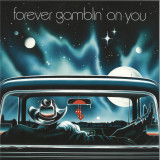
A full tank of gas, the gentle glow from the radio dial, & stretches of open highway await, Forever Gamblin’ On You meanders through miles of soulful AOR, funky folk, & dusty soft rock obscurities. A follow up to Sky Dust Drifter, this compilation was gleaned from American private press oddities & rarities of the 70s & 80s, all of which are seeing their first official reissues on this album. A celebration of love, rebirth, and exploration radiating like the warmth of a loved one from the passenger seat.
Featuring “Feeling The Fire”, a jazzy, AOR grooving declaration of love and desire taken from the sole release from The Mad Brother. The compilations’ title track “Forever Gamblin On You” by Petroc And Pals, features an echo-laden folk rock recollection of hard feelings delivered with swelling guitar in a mournful soft psychedelia. Angie Pepper’s “Miss You Too Much” dwells on a past love, rolling along with an effortlessly cool rhythm section, while Roy McComas croons of his manifested “angel of love” on the swirling psych folk rocker “Girl Of My Dreams”.
Forever Gamblin’ On You unfolds as a hopeful yet equally melancholic collection of nomadic anthems, primed for a memorable journey along the back roads of familiar American landscapes.
Есть у нас в наличии и готов к отправке

A Consummate Fusion of Wit, Humor, Satire, Honesty, and Chaos: Warren Zevon’s Excitable Boy Captures Dark Elements of American Culture with Uncanny Insight
• Sourced from the Original Analog Tapes for Definitive Sound: Mobile Fidelity’s Numbered-Edition 180g 45RPM 2LP Set and Hybrid SACD Play with Explosive Dynamics and Airy Openness
• Jackson Browne-Produced Album Includes “Werewolves of London,” “Lawyers, Guns, and Money,” and “Roland the Headless Thompson Gunner”
Excitable Boy established Warren Zevon as rock’s gonzo figurehead — or, as Jackson Browne aptly called him, “the first and foremost proponent of song noir.” A supreme collision of over-caffeinated energy, acerbic wit, dark humor, irreverent reporting, bittersweet romance, swept-under-the-rug truth, and illicit desire sent up with booze, pills, and therapist confessions, the breakthrough album zeroes in on frightening aspects of American culture with an incisiveness that’s even sharper today than upon the effort’s release in 1978. Its hard-boiled narratives owe to a tradition established by Raymond Chandler, continued by Hunter S. Thompson, and carried into the 21st century by Breaking Bad and Better Call Saul creator Vince Gilligan. And the music has never sounded so excitable. Sourced from the original analog master tapes, Mobile Fidelity’s numbered-edition 180g 45RPM 2LP set and hybrid SACD elevate the best-selling album of Zevon’s career to audiophile status.
Co-produced by Browne and Waddy Wachtel — and featuring contributions by members of Fleetwood Mac plus Linda Rondstadt, J.D. Souther, and Browne — the platinum-certified record now plays with a verve and explosivity that match its subject matter. Listeners will experience wide separation between the instruments; full-range dynamics; sterling transparency that draws a through- line to the original sessions at the Sound Factory; and a presence that enhances the body and tenor of Zevon’s vocals. Like the hairy creatures in “Werewolves of London” and the ghosts wandering the corridors of Excitable Boy, Zevon’s legacy still runs amok via the grooves of his finest studio work. Draw blood, indeed.
Закажите сейчас, и мы закажем товар для вас у нашего поставщика.

In 1991, Chris Whitley made his debut with the beautiful album Living with the Law, which immediately showcased his brilliant songwriting and unique guitar playing. Blending blues, roots and folk, the debut was positively received by critics and aficionados of these more traditional genres. Growing up, Whitley listened to Southern radio, which played artists such as Muddy Waters, Howlin' Wolf, Bob Dylan and Jimi Hendrix. His career started by playing with artists like Arto Lindsay and Michael Beinhorn. Interestingly, Whitley lived in Belgium for a short time in the 1980s, where he started his career playing guitar for 2 Belgen and Nacht und Nebel. In the 1990s, he started his solo career at Kingsway Studio in New Orleans, owned by none other than Daniel Lanois. The result was an album characterized by the use of traditional instruments such as the slide guitar and banjo. All of this is accompanied by his splendidly timbred voice and honest lyrics exploring themes such as freedom, desire and human struggle. Sadly Chris Whitley passed away in 2005, but his influence on contemporary songwriters and blues artists remains strong. a_Living with the Law is available as a 35th anniversary edition of 1000 individually numbered copies on gold coloured vinyl and includes an insert.
он должен быть опубликован на 30.01.2026
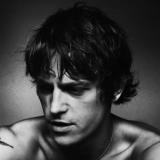
DEADLETTER frontman Zac Lawrence’s latest solo venture hones in on the songwriter’s love of the contemporary folk scene of the 60s. Though not necessarily a conventional “Folk” sound, the acoustic guitar led songs intertwine the singer’s passion for lyricism and literacy with heart-string tugging melodies and arrangements. With the first single from this project expected in the summer of 2025, he brings a new band together made up of Misty Miller on vocal duties, Blossom Caldarone (English Teacher) on Cello, and Nathan Pigott (also of DEADLETTER) on clarinet. Antithetical to what we know from him as the frontman of the aforementioned, expect laid back, fingerpicked numbers that take you anywhere from Hamburg’s most gruesome hotel, to him imagining himself as a fifty something looking back on a life that he didn’t live in the way that was intended.
он должен быть опубликован на 03.10.2025

Stereogum: »Here’s a cool new musical project that feels both out-there and extremely mundane. In 2022, the great Colorado experimentalist M. Sage teamed up with Lieven Martens (Dolphins into the Future) under the name Sage Martens. Their album, »Riding Fences«, was an ambient classical exercise designed to explore the idea of ›Western‹ music. They’re back this year with another conceptual offering (...)«
»Chamber Music for Lawn Mowers« is the second album by Sage Martens. This time, Matthew Sage (RVNG, Fuubutsushi) and Lieven Martens (Edições CN, Dolphins into the Future) sing the lawn.
Did you know a clean-cut lawn is a desire we inherited from the British?
Yes, the British dumped this pleasure into our collective consciousness. Those humorless Victorians who enjoyed having their black pudding on the lawn. They came to this uninspired impression while mis-looking at Italian paintings. Yes indeed, while gazing at these paintings they mistook green lanes for green lawns. Thus it became hip. Every stuffed truffle commanded his gardener to cut the grass.
As a result, this Victorian lust for sterile gardens with pretty green lawns nudged our world into water spillage and pesticide clouds. This new priority produced exhaust clouds and prudish monocultural landscapes. Just by looking at Italian paintings.
As with most of Western history, the practice was exported to America and then turbocharged. By shearing clear the prolific brush of pastures, prairies, forests and glens, biodiversity becomes an aesthetic casualty with long-suffering ecological ripples. An inherited practice narrows the bandwidth of experience.
And so, the childhood habit of humming along in key to the drone of a gas-powered mower while trimming a suburban lawn extrapolates into something expanded — an unanswered question about the harmonics of landscape practices.
M. Sage: Bb clarinet, alto saxophone, sine wave, lawn mowing, processing L. Martens: computer, analog synthesis, digital processing With W. Van Gils: lawn mowing
он должен быть опубликован на 27.05.2025

Few albums evoke a sense of place as vividly as Desire!, the third offering from Friend of a Friend. The duo—Claire Molek and Jason Savsani—craft music that feels cinematic and immersive, threading themes of yearning, transformation, and resilience through a palette of lush synths, tactile rhythms, and haunting vocals. Recorded in a sprawling Victorian mansion in rural Illinois, with a history steeped in spiritualism and the paranormal, Desire! not only embodies the environment where it was created but also reflects the duo’s evolution as musicians and sonic architects.
Producer Jordan Lawler (M83), who also worked with the duo on FACILITIES, played a pivotal role in shaping the album’s sound. His approach seamlessly integrates analog and electronic elements, from shimmering synth pads to deep, tactile rhythms. The result is a record that feels both vast and grounded, inviting careful listening to its intricate details.
With Desire!, Friend of a Friend captures their evolution as musicians and storytellers, offering a record that lingers in the spaces between tension and beauty. The result is an immersive and deliberate work, one that showcases their musical innovation and their ability to create a vivid, otherworldly sense of place—haunting and cinematic, like stepping into a film where every sound carries a story.
The band has been named an artist to watch by Rolling Stone, an “American visionary” group by Mesmerized, an “indie rock band taking the scene by storm" by Wonderland Magazine, a "cultural phenomenon" by Extravafrench, "sonic visionaries" by Plastic Magazine, "the next huge thing in indie rock" by Each Measure, and "seamlessly intriguing" by Obscure Sound.
он должен быть опубликован на 25.04.2025

"Le retour à la raison" is an ablum by Teho Teardo"s originally released in 2015. An album that brings together the music written for three Man Ray films. Not a traditional musical accompaniment but a kind of appointment in space with Man Ray. In space, music responds to only one law: truth. Here the relationship between the music and the films is perhaps the most intimate ever achieved by the composer and it is significant that it takes place with silent films in which the director cannot be present. The silent film directors are all dead, missing for decades, and must be intercepted in the cosmos, through the dreams, desires and emotional legacy of their works, like stars shining with their own light. The music is a constellation in a mysterious and seductive world and documents the experience of encountering Man Ray"s art. The project, recorded between March 2014 and May 2015 in Teardo"s Rome studio, mixed and mastered by Boris Wilsdorf at the Anderebaustelle studio in Berlin, was initially conceived for live performance. Presented at Villa Manin, the Maxxi in Rome and the Museo Nazionale del Cinema in Turin, as well as the International Arts Festival in Galway, the album also features Joachim Arbeit (Einsturzende Neubauten), Joe Lally (Fugazi) and David Coulter. The three films by Man Ray that inspired Teardo are "La Retour à la Raison" (1923), "Emak Bakia" (1926) and "L"etoile de Mer" (1928) were also screened during the concerts that followed the album release.
он должен быть опубликован на 25.10.2024

Short Attention Records makes a welcome return here with a new drop of wax that fits the label head into its roots in deep techno sound worlds. This one takes the form of a various artists' EP crafted with an intake feel for cosy floors and who better to kick off in that vibe than the revered Lawrence whose 'Hawser' is a groovy and melodious track. Next, New Jersey don Joey Anderson sets a slow and deep tone with 'Human Kind' which has moody vocals, and Japanese artist Takuya Matsumoto follows with 'Three Flowers', a more potent and driving cut with a fine acid bassline. Rounding off the EP is 'Desired Spring' by R/K, a loop-driven deep house gem designed for both listening and dancing.
Закажите сейчас, и мы закажем товар для вас у нашего поставщика.

Compassion combines ethereal pop with ‘80s synth textures, and slacker-rock charm. It's got a bit of Matthew E. White, chilled out BC Camplight and Conor Oberst.
The inviting and perceptive songs on Rui Gabriel’s debut LP Compassion all tackle growing up. It’s about how the older you get, your priorities shift, friendships evolve, and responsibilities become inescapable. For Gabriel, the Indiana-based, Venezuela-born artist and co-founder of the acclaimed band Lawn, the changes in his own life inspired him to write a solo full-length that sounds like nothing the indie rock journeyman has done before. Across 10 vibrant tracks that combine ethereal pop with slacker-rock and piano-driven dance music, it’s a galvanizing showcase of personal growth and the grace you give yourself to push forward.
Work on Compassion started in 2018 when Gabriel was living in New Orleans. “I was living a pretty teenage life in many ways,” says Gabriel. “I worked at a pizza restaurant and would just go to shows or parties. I wasn’t doing anything other than music. I didn't have many responsibilities.” The songs he was working on at the time—tracks that didn’t fit Lawn but Gabriel still liked—initially went unfinished. But as Gabriel’s life changed, so did his songwriting and his desire to see his ideas through. “When I was writing lyrics, I was settling down with my partner and about to become a dad,” says Gabriel. “I was making choices about my life that contradicted the existence I had before. I had a different set of priorities.”
The songs on Compassion deal with youthful carelessness ("Dreamy Boys") and coming face-to-face with newfound responsibilities ("Change Your Mind"). It's consistently a biting, observant look at getting older thanks to Gabriel's unique perspective as a South American immigrant who's lived across the United States for the past 13 years. “When you are Hispanic, English isn't your first language, and you're in a music scene with a bunch of white people, you're going to stand out a little bit,” he says. On “Church of Nashville,” “Hey, Leonard Cohen is singing poems by the gentrified alley” he humorously aims at scene pretension and industry gatekeepers.
Compared to Gabriel’s work with Lawn, where he writes frenetic post-punk songs and yells, for Compassion he explores more straightforward pop sensibilities and showcases his singing voice. “I wanted to do a solo record to prove to myself that I could sing,” says Gabriel. Take the meditative, piano-based lead single “Target,” which is inspired by Dido and finds Gabriel gorgeously harmonizing with singer Kate Teague. He reaches similar infectiousness on the sunny rocker “Summertime Tiger,” which guests Stef Chura. Co-produced by Gabriel and Nicholas Corson (The Convenience, Video Age), Compassion is consistently warm, generous, colorful, and adventurous.
“Compassion is a record about change,” says Gabriel. “It's a coming-of-age record but for somebody who's coming of age into their thirties.”
он должен быть опубликован на 21.06.2024

Black[25,63 €]
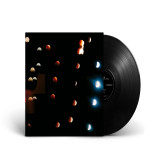
Atmosphere and gravity lean into each other. They are simultaneously expansive, and anchoring. They hold us, and lend a sense of perspective. They provide a stability and a knowingness which is essential in the absolute, and yet we can't help but find ourselves gazing upward, outward and reaching towards that which sits outside those things and ways we know. Selene is a record about that this lingering desire for that which sits beyond. It is work that seeks new perspectives snatched from familiar vistas, and it meditates on that sense of anchor and perspective. The work is also a speculative hymn to the visions of the celestial zones that spill ever outward. These visions, once merely what we could perceive with the naked eye are now so much more. Our minds eye is fed in equal parts by radio telecopy, filmic dreams and fiction renders of a place most of us will never know first-hand. This recording ties into a linage that reaches back, while stretching forward. It is just one story of so many, told across places, across cultures, across generations. It sits in the in-between of before and after, and in that moment invites us to situate ourselves and lean into it.
он должен быть опубликован на 31.05.2024
Colored[29,37 €]
Atmosphere and gravity lean into each other. They are simultaneously expansive, and anchoring. They hold us, and lend a sense of perspective. They provide a stability and a knowingness which is essential in the absolute, and yet we can't help but find ourselves gazing upward, outward and reaching towards that which sits outside those things and ways we know. Selene is a record about that this lingering desire for that which sits beyond. It is work that seeks new perspectives snatched from familiar vistas, and it meditates on that sense of anchor and perspective. The work is also a speculative hymn to the visions of the celestial zones that spill ever outward. These visions, once merely what we could perceive with the naked eye are now so much more. Our minds eye is fed in equal parts by radio telecopy, filmic dreams and fiction renders of a place most of us will never know first-hand. This recording ties into a linage that reaches back, while stretching forward. It is just one story of so many, told across places, across cultures, across generations. It sits in the in-between of before and after, and in that moment invites us to situate ourselves and lean into it.
он должен быть опубликован на 31.05.2024

People's only work in 1971 featuring Outkast's organist Yusuke Hoguchi and guitarist Kimio Mizutani, Adams's Hideaki Takebe, and percussionist Larry Sunaga. Produced by Naoki Tachikawa, it was created with the concept of Buddha + Rock.
It is full of unique psychedelia sounds, such as the sutra chanting "Nam-myoho-renge-kyo" backed by a fuzz guitar, the sound of monk's geta, bells, wooden fish, sitar, etc.
Although it uses a lot of sound effects reminiscent of Buddhism, it doesn't feel like a religious idea, and the work is overall easy to listen to.
In recent years, this album has been highly desired by DJs as a breakbeat material and as a spiritual record.
он должен быть опубликован на 17.05.2024

Best OF[52,31 €]
Rediscover the original New World soundtrack for the first time on vinyl! Over 80 minutes to relive the adventures of Dressrosa, Punk Hazard, etc.... Fully Licensed.
Luffy, a mischievous boy, dreams of becoming the king of the pirates by finding the "One Piece", a fabulous and mysterious treasure. But, inadvertently, Luffy one day swallowed a "magical devil fruit" that turned him into a rubber man. Since then, he is able to contort his elastic body in all directions, but he has lost the ability to swim, the height for a pirate! Over the course of ever more incredible adventures and chance encounters, Luffy will gradually compose his crew and multiply friendships with the peoples he discovers, while facing formidable enemies.
Kohei Tanaka worked on the composition and arrangement of this album.
он должен быть опубликован на 19.01.2024

Following a four-year hiatus, Jamie has returned with his 6th album and most poignant and heartfelt work to date Chronicling the earliest years of fatherhood and a newfound creative energy, Little Weaknesses is a record that embraces brightness and brims with optimism for the future. Little Weaknesses is Jamie's return to music after a four-year break that saw the birth of his son in 2020."Originally, I had intended to take six months off when he came along. And then the pandemic hit, and I had what felt like three years off," he says. The time away instilled him with a desire to re-wire his creative process, following a period of immense career highs that included performances at Wembley Stadium and Croke Park, and tours with Ed Sheeran and James Blunt. Fatherhood brought a new sense of direction and meant any music he left his young family to play, perform or promote had to fulfil him completely. "Having that time settled me into a style of music that I wanted to make that I wasn't making," he shares. "Now, I would say this record is not that far away from the others, but it does feel much more cohesive. I remember listening to some playlists, like Lost In The Woods or Fresh Folk, and just thinking:'Oh, this is where I should be sitting. This is the music I love. This is the music I get the most out of.'It's all quite simple, but it's all quite beautiful. And there's proper lyrical content, something going on that makes me think about things. Those are the songs I wanted to write." Little Weaknesses is 14 tracks of concise, emotive, painterly beauty. It's a record that sees Jamie wholeheartedly embrace collaboration, working alongside a close- knit group of artists and friends, including multi- genre violinist Isabella Baker who arranged strings for six songs and songwriters Simon Aldred (aka Cherry Ghost) and Jack McManus. The entire album was crafted in Jamie's music room in his family residence in Manchester and recorded by producercollaborator Tim Ross at his home studio in Twickenham.
он должен быть опубликован на 31.10.2023

2024 will be the 50th Anniversary of Radio Birdman. To celebrate that milestone, Citadel is pleased to announce the recutting / repressing of all their albums. Radios Appear was Radio Birdman's first full length album. Recorded piecemeal over 1976 and early 1977, on weekends and nights when their home base (Trafalgar Studios Sydney) had no paying customers, it was finally released on the Trafalgar label, created specifically to release their records. In addition to mail order, the album was literally distributed by hand and out of the back of cars. The band thus wrote the Australian handbook on DIY independent music. It was hailed as a breakthrough album in Australian music, a turning point after the scene's early and mid seventies stagnation. Radios Appear was given a 5 star review in Rolling Stone, and the album gave the band a needed boost to depart Sydney as a national touring entity, while still maintaining their renegade status
он должен быть опубликован на 14.07.2023

Like a winding system of trails and paths cutting through a digital forest-scape, M. Sage's Paradise Crick is shaped by time. Full of wonder and charm, designed patiently and from a rich, curious mulch of synthesized and acoustic sound, the versatile American artist and magic realist's new suite of music is an imaginary destination and a pastoral fantasy that envisions the natural and fabricated worlds as one. Matthew Sage is a musician, intermedia artist, recording engineer and producer, publisher, teacher, partner, and parent. Assembling a sprawling and idiosyncratic catalog of experimental studio music between Colorado and Chicago since the early 2010s, recent highlights include The Wind of Things (Geographic North, 2021), an ensemble-recorded expression of bow-splashed nostalgia, and the four seasonal albums of Fuubutsushi, the improvisatory ambient jazz quartet he formed with friends from afar in 2020. Sage renders projects with nuanced velocity and a completist sensibility _ when it's finished, it's done _ which is what makes Paradise Crick, his debut for RVNG Intl., a compelling outlier. Sage first staked his tent in Crick's conceptual campground five years ago from his home studio in Chicago (he's since returned to Colorado, home to the mountains and prairies often personified in his work). He had just read Richard Brautigan's Trout Fishing in America, a kaleidoscopic reflection of pastoral America's shifting identity by way of magical fishing sojourns. Inspired by that feeling, of getting lost but finding oneself in through the outdoors, he amassed over seventy demos documenting a fictional soundtrack for camping. Pull up to this park, and the sign might read, "Welcome to Paradise Crick. Fire Danger Is Low." The sequence, pruned down to thirteen tracks, courses the dewy mornings, afternoon hikes, and firelit nights of a weekend expedition. While Sage is not a filmmaker, he views the method of making this album as a similar form of world-building via structure, narrative, formal elements, and editorial refinement. Contrasted with his collaborative craft, here he is a sole auteur reclined in total autonomy, able to improvise scenes and implement special effects at will. A parallel precedent for such unchecked imagination in the M. Sage canon is A Singular Continent, his 2014 album that tilted its compass to a faraway land. Where Continent built its world layering samples as composition, Paradise Crick deploys a balance of accessible song structures with experimental instrumentation and sound design. Speckled with harmonica, autoharp, chimes, penny whistle, voice, hand percussion, and other mysteries, Crick's texture is treated as a sensorial adventure; the swamps gurgle, the lakes glisten, and the valleys breathe in robust HD. The rhythms are loose and buoyant, bursting with a few `kick and snare' moments shaped by Sage's lifelong love for drumming and headphone prone electronic music. Crick bumps more than most anything he's done before; crackling static pulses and lush vibrations reveal an intrinsic groove, a hidden beat map. In the landscapes of Paradise Crick, science and magic co-exist, 5k boulders and midi frogs share the frame with real-life memories of Midwest camping trips and the desire to feel extra human in a digitized space. Sage strived for "nature in the holodeck" but couldn't help leaving fingerprints in the simulation, and it's these traces of spirit and character that give Paradise Crick its strange allure. The album's bubbling sense of play, melody, and timbre takes cues from left-field electronic lineage; synth pioneers like Tomita and Raymond Scott up through the more expressive pop tendencies of Woo, Stereolab and the Cocteau Twins, and into contemporary composers like Sam Prekop. The album's vocabulary is uncomplicated; the gestures are sweet and inviting, intended to lull the listener. As much as Sage continues to be an experimentalist by nature in his work, with Paradise Crick, he spins a narrative. Not necessarily a concept album, but rather an invitation to take off for a weekend. That's the modus operandi down here in the Crick, we stretch out. M. Sage's Paradise Crick will be released May 26, 2023 in LP, CD, and digital editions. A portion of the proceeds from this release will benefit Earthjustice, the premier nonprofit public interest environmental law organization.
он должен быть опубликован на 26.05.2023

As we journey on with part two of the States of Bliss project. Opening we have a reminiscent moment with “NY”. A snapshot of early BJC which was remixed for 2014’s cult classic “Selected Compiled By Fred P”. Then we move on to a more ambient affair of the trance inducing “Awakening Desire” an example of celestial electronica at its finest. Closing part two is the trippy jazz fusion house sound Private Society has been spearheading for a of couple of years now, “High Fusion” is a none stop ride into galactic ascension that has been moving festivals from the UK to India. Fred P continues to go deeper into his sound defining a rare characteristic propelling the artist forward via lawed frequencies garnering a cult following world wide!!!
Закажите сейчас, и мы закажем товар для вас у нашего поставщика.

With its name indicative of the music's boundary-testing diversity and Southwestern inspiration, On the Border finds the Eagles leaving everything on the table and embracing a harder edge that takes the band out of more relaxed territory and establishes it as a group that knows how – and wants – to rock. Glenn Frey, Don Henley, new member Don Felder, and company immediately announce their intent on the defiant album-opening hit "Already Gone" and never look back, crafting a gem of a record that from start to finish is arguably their most consistent and balanced effort.
Limited to 10,000 numbered copies, pressed on dead-quiet MoFi SuperVinyl at RTI, and mastered from the original analogue master tapes, Mobile Fidelity's ultra-hi-fi UltraDisc One-Step 180g 45RPM 2LP collector's edition pays tribute to the record's significance and enhances the experience for generations to come. Playing with reference sonics that elevate an effort revered by audiophiles, it provides a lively, dynamic, transparent, and intimate view of a release whose contemporary importance continues to grow. The opportunity to zero in on the particulars of the Eagles' golden harmonies, distinct vocal timbres, and cohesive interplay has never been better.
Visually, the premium packaging and gorgeous presentation of the UD1S On the Border pressing befit its select status. Housed in a deluxe box, it features special foil-stamped jackets and faithful-to-the-original graphics that illuminate the splendor of the recording. No expense has been spared. From every angle, this UD1S reissue exists as a curatorial artefact meant to be preserved, touched, and examined. It is made for discerning listeners that prize sound quality and production, and who desire to fully immerse themselves in the art – and everything involved with the album, from the iconic Navajo cover painting to the meticulous finishes.
And with On the Border, there's plenty to take in and soak up. Declared by famed critic Robert Christgau as "the Eagles' best album," the 1974 set claims a rich backstory. Initially recorded amid tumultuous sessions with producer Glyn Johns in London shortly after the release of the group's sophomore Desperado set, On the Border took a new turn after the band elected to scrap most of the prior work, return to its native California, and team with producer Bill Szymczyk to give the material less of a smooth, polished sheen and more toughness. Szymczyk also afforded the Eagles more input and freedom in the arrangements, and suggested adding another guitarist to play on "Good Day in Hell." Felder got the call, and so won over the Eagles with his skills, he quickly became the fifth member of the band.
While the late-arriving Felder only plays on one other album cut, "Already Gone," his mates more than prove their muster on the remainder of a double-platinum affair that established the Eagles as a force whose range transcended the calmer country-leaning style it perfected on their first two LPs. Primarily written by Jackson Browne and shelved during the Desperado sessions due to its higher-energy nature, the throttle-twisting "James Dean" ricochets with barbed riffs and rebellious swagger. Listen without limits to how Szymczyk's raw production stamps the song with a leather-and-jeans cool befitting its protagonist. Similarly rugged, the slide-guitar-fueled "Good Day in Hell" boasts its own mean streak. And the funk-laced, boot-stomping title track cautions "don't you tell me 'bout your law and order." Throughout On the Border, the Eagles are in no mood to mess around.
Not that the band skirts sentimental territory. On one of the era's finest covers, the Eagles nail the bittersweet feelings and bring high-definition detail to the vivid scenery of Tom Waits' "Ol' '55," a song the group makes its own. The rustic ballad "My Man" serves as a tribute to the recently deceased Gram Parsons, with singer-guitarist Bernie Leadon taking the lead on the microphone as he pours his heart out to his former Flying Burrito Brothers mate. And when it comes to romance, is it possible to top "Best of My Love"? Graced with Henley's honey-dipped vocals, refined wordless group harmonies, brushed drums, and the gentle strum of acoustic guitars, the Johns-produced cut soared to Number One and set the stage for what would soon be the Eagles' reality: global dominance.
More About Mobile Fidelity UltraDisc One-Step and Why It Is Superior
Instead of utilizing the industry-standard three-step lacquer process, Mobile Fidelity Sound Lab's new UltraDisc One-Step (UD1S) uses only one step, bypassing two processes of generational loss. While three-step processing is designed for optimum yield and efficiency, UD1S is created for the ultimate in sound quality. Just as Mobile Fidelity pioneered the UHQR (Ultra High-Quality Record) with JVC in the 1980s, UD1S again represents another state-of-the-art advance in the record-manufacturing process. MFSL engineers begin with the original master recordings, painstakingly transfer them to DSD 256, and meticulously cut a set of lacquers. These lacquers are used to create a very fragile, pristine UD1S stamper called a "convert." Delicate "converts" are then formed into the actual record stampers, producing a final product that literally and figuratively brings you closer to the music. By skipping the additional steps of pulling another positive and an additional negative, as done in the three-step process used in standard pressings, UD1S produces a final LP with the lowest noise floor possible today. The removal of the additional two steps of generational loss in the plating process reveals tremendous amounts of extra musical detail and dynamics, which are otherwise lost due to the standard copying process. The exclusive nature of these very limited pressings guarantees that every UD1S pressing serves as an immaculate replica of the lacquer sourced directly from the original master recording. Every conceivable aspect of vinyl production is optimized to produce the most perfect record album available today.
он должен быть опубликован на 30.12.2022

LIMITED PRESSING OF 2000
A SIDE
(Sabaody/Fishman Island/Punk Hazard) :
- To the New World!!
- Rebirth! The Straw Hat Pirates
- Jinbei Strait
- Surgeon of Death
- Master's Scornful Laughter
- Enemies Appear
- Spirit Of Guru
-The Weak Power Strengthens!
- A Man's Battle
B SIDE
(Dressrosa)
- I Think Of The Past
- Go Go! The Straw Hat Pirates!!
- Country of Love, Passion & Toys, Dressrosa
- Frenzy! Colosseum
- Donquixote Doflamingo
- Trafalgar Law
- Admiral "Fujitora"
- Violet's Dance of Passion
- Love Cannot Be Stopped
- Fight in the Colosseum
- Fierce Battle in the Colosseum
C SIDE
(Dressrosa/Zou)
- Revolutionary Army's Chief of Staff, Sabo
- Gear Fourth
- Ballad of Sadness
- Approaching! Birdcage Encirclement
- Doflamingo ~Overwhelming Force~
- The Thousand Year Island, Zou
- Garuchu~!!
- The Mink Tribe's Battle
- The Samurai and Mink Tribe's Bond
- Dressrosa's Hidden Secrets
- Brook ~Healing Violin~
- Eyecatch ~New World Version~
D SIDE
(3D2Y/Heart of Gold)
- To the Origin of Ace!
- Main Title ~ Teachings of Rayleigh
- Things We Desired
- World VS Luffy: Final Battle
- Destroyer of the World! World
- Loneliness, Solitude
- Gathering of the Straw Hat Pirates! Towards Battle
- Releasing the Trap
- Straw Hat Pirates VS Mad Treasure
- Luffy, to Victory
- Escape from Bonbori-sama
- Next Time Preview ~We Go! Version
он должен быть опубликован на 25.11.2022

Jan Anderzén and his partners celebrate the transcendental power of ecstatic music. Alas Rattoisaa Virtaa is the first Kemialliset Ystävät album in four years. It is the result of chance enhancing online collaboration methods, desire to get lost in the sound archives and the high art of meticulous editing. The album title is from visions of rivers running down from Heart of Darkness to the City of Joyful Noise. If contemporary music is a high speed train passing by then KY's music would be an orgy of light under a railway bridge.
A band member Lars Mattila experiences the music of Alas Rattoisaa Virtaa in spatial terms:
"There are worlds accessed only through our auditory system. I hear a Wunderkammer of freestanding sound objects. Rhythms like sequences of seemingly random stuff laid out on the forest floor: a pair of thrones, a Henry Moore sculpture, a watermelon, two thrones, a Moore sculpture, a melon... I trust the path to go on even if I can't see behind the hill. There's motion, wether it be drunk driving or super human rapid eye movement. The sheer amount of detail makes it impossible to take everything in at once. One's perception and shifting focus reshape the experience on each listen. I remember my visit to Cappella Palatina in Palermo where Normann architecture, Arabic arches and Byzantine dome form a harmonious whole. Various cultural and spiritual influences are recognized as equals. The sense of space also brings to mind the end scene of The Lawnmower Man when the dude is trying to escape the virtual world."
он должен быть опубликован на 21.10.2022

What Are People For? make the perfect kind of dystopic dance music for our times. Born from a collaboration between artist Anna McCarthy and musician/producer Manuela Rzytki, the band could be the illicit lovechild of Tom Tom Club and Throbbing Gristle, displaying the ideal balance of hip shaking vibes and dark provocative content.
On their collaborative debut, McCarthy and Rzytki share songwriting duties. The album was produced by Rzytki herself. They are joined by Paulina Nolte on backing vocals and Tom Wu on drums, while Keith Tenniswood mastered the record.
The whole project stems from a publication and exhibition by McCarthy laying the foundations for the content and lyrics of the album, which is humorous, poetic and political. As a lyricist, McCarthy uses her storytelling ability to explore anxieties and desires, digging into free surreal word associations reminiscent of Su Tissues’ tongue in cheek experiments with Suburban Lawns, but also explosive and gripping like a Kae Tempest rap.
Rzytki’s precise sonic palette and talent at penning structured bangers perfectly complement McCarthy’s playful and subversive language manipulations. Rzytki's beats are rooted in old school Hiphop loop principles and an authentic love for the analog. Her use of an array of synthesizers and other "real" instruments adds to WAPF's depth, soul and sincerity.
The album opens with a joyful anthem, full of energy and melodic hooks. The audience is confronted with the quintessential titular question What Are People For? and told that they are just a mere disposable commodity. Throughout the album, lyrical themes revolve around underground aspects of society, violence, political ideologies, sexuality and mysticism. The content is deep but the album is as danceable as it is biting.
73, with its drum machine hysteria and hypnotic synth basses is a a text collage written on the 73 bus through London, consisting of situations and conversation snippets encountered along the way. Drones indulges in the narrator’s paranoia as they feel they are being watched by cigarette machines, whilst the haunting choir is half spoken, half sung, ending on the orgasmic chanting of the word “mummy”. Nursery Rhyme brings more soothing incantations. There is definitely an affinity for fairytales, albeit adult ones and especially the anarchistic ones such as The Moomins, who were a consistent influence on the band. The artwork for the record, created by McCarthy, is a beautiful children's book-style painting of the group in a forest, seemingly about to engage in a magical encounter to which we are invited.
WAPF? have absorbed and digested a variety of influences. Trip hop, Punk and Techno are rubbing shoulders on Party Time. 1977 was coined “Summer of Hate” in the UK and unsurprisingly in WAPF?’s Summer of War, ethereal singing alternates with a powerful marching Garage/Grime chorus reminiscent of street protests and UK culture.
Mz. Lazy starts like an invitation to meditation and references Gertrude Stein’s book Ida in which she develops the idea that publicity is a new religion and people are now famous for being famous. Repressed anger explodes into violence and freedom at the end of the song as our heroine eventually grabs an axe to destroy her oppressors.
Fantasize, on its part, is raw, sexual and liberating while the closing track Bring Back the Dirt is a welcome hymn into a world that is becoming more and more sanitised.
While exploring deep subject matters throughout their album, WAPF? manage to remain satirical, exciting and funny. Each and everyone of their songs have a cathartic quality.
The visual identity of the band is intrinsic to their appeal. Live, they are eccentric, wild and unapologetic, wearing see-through costumes, bright miniskirts and intricate headpieces while delivering their songs with sharp intensity. Their performances radiate queer sexiness and transcend B52's thrift store aesthetics, creating a space for collective dreaming.
WAPF? is a rare combination of contemporary punk energy, irresistible groove, absurdist dry humour and astounding depth of field. They have the mighty power to create a party with their music and soon you will find yourself lifting your arms as if controlled by an external force, to chant: WAPF? WAPF? WAPF?
– Marie Merlet (Malphino, Little Trouble Girls, London)
он должен быть опубликован на 21.10.2022

Vinyl LP[23,49 €]
As the sun sets on a quaint East Nashville house, a young man bares a piece of his soul. Facing the camera, sporting a silky suit jacket/shirt/slacks/fingerless gloves ensemble that announces "singer" before he's even opened his mouth, Lee Tracy Johnson settles onto his stage, the front yard. He sways to the dirge-like drum machine pulse of a synth-soaked slow jam, extends his arms as if gaining his balance, and croons in affecting, fragile earnest, "I need your love… oh baby…"
Dogs in the yard next door begin barking. A mysterious cardboard robot figure, beamed in from galaxies unknown and affixed to a tree, is less vocal. Lee doesn't acknowledge either's presence. He's busy feeling it, arms and hands gesticulating. His voice rises in falsetto over the now-quiet dogs, over the ambient noise from the street that seeps into the handheld camcorder's microphone, over the recording of his own voice played back from a boombox off-camera. After six minutes the single, continuous shot ends. In this intimate creative universe there are no re-takes. There are many more music videos to shoot, and as Lee later puts it, "The first time you do it is actually the best. Because you can never get that again. You expressing yourself from within."
"I Need Your Love" dates from a lost heyday. From some time in the '80s or early '90s, when Lee Tracy (as he was known in performance) and his music partner/producer/manager Isaac Manning committed hours upon hours of their sonic and visual ideas to tape. Embracing drum machines and synthesizers – electronics that made their personal futurism palpable – they recorded exclusively at home, live in a room into a simple cassette deck. Soul, funk, electro and new wave informed their songs, yet Lee and Isaac eschewed the confinement of conventional categories and genres, preferring to let experimentation guide them.
"Anytime somebody put out a new record they had the same instruments or the same sound," explains Isaac. "So I basically wanted to find something that's really gonna stand out away from all of the rest of 'em." Their ethos meant that every idea they came up with was at least worth trying: echoed out half-rapped exhortations over frantic techno-style beats, gospel synth soul, modal electro-funk, oddball pop reinterpretations, emo AOR balladry, nods to Prince and the Fat Boys, or arrangements that might collapse mid-song into a mess of arcade game-ish blips before rallying to reach the finish line. All of it conjoined by consistent tape hiss, and most vitally, Lee's chameleonic voice, which managed to wildly shape shift and still evoke something sincere – whether toggling between falsetto and tenor exalting Jesus's return, or punctuating a melismatic romantic adlib with a succinct, "We all know how it feels to be alone."
"People think we went to a studio," says Isaac derisively. "We never went to no studio. We didn't have the money to go to no studio! We did this stuff at home. I shot videos in my front yard with whatever we could to get things together." Sometimes Isaac would just put on an instrumental record, be it "Planet Rock" or "Don't Cry For Me Argentina" (from Evita), press "record," and let Lee improvise over it, yielding peculiar love songs, would-be patriotic anthems, or Elvis Presley or Marilyn Monroe tributes. Technical limitations and a lack of professional polish never dissuaded them. They believed they were onto something.
"That struggle," Isaac says, "made that sound sound good to me."
In the parlance of modern music criticism Lee and Isaac's dizzying DIY efforts would inevitably be described as "outsider." But "outsider" carries the burden of untold additional layers of meaning if you're Black and from the South, creating on a budget, and trying to get someone, anyone within the country music capital of the world to take your vision seriously. "What category should we put it in?" Isaac asks rhetorically. "I don't know. All I know is feeling. I ain't gonna name it nothing. It's music. If it grabs your soul and touch your heart that's what it basically is supposed to do."
=
Born in 1963, the baby boy of nine siblings, Lee Tracy spent his earliest years living amidst the shotgun houses on Nashville's south side. "We was poor, man!" he says, recalling the outhouse his family used for a bathroom and the blocks of ice they kept in the kitchen to chill perishables. "But I actually don't think I really realized I was in poverty until I got grown and started thinking about it." Lee's mom worked at the Holiday Inn; his dad did whatever he had to do, from selling fruit from a horse drawn cart to bootlegging. "We didn't have much," Lee continues, "but my mother and my father got us the things we needed, the clothes on our back." By the end of the decade with the city's urban renewal programs razing entire neighborhoods to accommodate construction of the Interstate, the family moved to Edgehill Projects. Lee remembers music and art as a constant source of inspiration for he and his brothers and sisters – especially after seeing the Jackson 5 perform on Ed Sullivan. "As a small child I just knew that was what I wanted to do."
His older brother Don began musically mentoring him, introducing Lee to a variety of instruments and sounds. "He would never play one particular type of music, like R&B," says Lee. "I was surrounded by jazz, hard rock and roll, easy listening, gospel, reggae, country music; I mean I was a sponge absorbing all of that." Lee taught himself to play drums by beating on cardboard boxes, gaining a rep around the way for his timekeeping, and his singing voice. Emulating his favorites, Earth Wind & Fire and Cameo, he formed groups with other kids with era-evocative band names like Concept and TNT Connection, and emerged as the leader of disciplined rehearsals. "I made them practice," says Lee. "We practiced and practiced and practiced. Because I wanted that perfection." By high school the most accomplished of these bands would take top prize in a prominent local talent show. It was a big moment for Lee, and he felt ready to take things to the next level. But his band-mates had other ideas.
"I don't know what happened," he says, still miffed at the memory. "It must have blew they mind after we won and people started showing notice, because it's like everybody quit! I was like, where the hell did everybody go?" Lee had always made a point of interrogating prospective musicians about their intentions before joining his groups: were they really serious or just looking for a way to pick up girls? Now he understood even more the importance of finding a collaborator just as committed to the music as he was.
=
Isaac Manning had spent much of his life immersed in music and the arts – singing in the church choir with his family on Nashville's north side, writing, painting, dancing, and working various gigs within the entertainment industry. After serving in the armed forces, in the early '70s he ran The Teenage Place, a music and performance venue that catered to the local youth. But he was forced out of town when word of one of his recreational routines created a stir beyond the safe haven of his bohemian circles.
"I was growing marijuana," Isaac explains. "It wasn't no business, I was smoking it myself… I would put marijuana in scrambled eggs, cornbread and stuff." His weed use originated as a form of self-medication to combat severe tooth pain. But when he began sharing it with some of the other young people he hung out with, some of who just so happened to be the kids of Nashville politicians, the cops came calling. "When I got busted," he remembers, "they were talking about how they were gonna get rid of me because they didn't want me saying nothing about they children because of the politics and stuff. So I got my family, took two raggedy cars, and left Nashville and went to Vegas."
Out in the desert, Isaac happened to meet Chubby Checker of "The Twist" fame while the singer was gigging at The Flamingo. Impressed by Isaac's zeal, Checker invited him to go on the road with him as his tour manager/roadie/valet. The experience gave Isaac a window into a part of the entertainment world he'd never encountered – a glimpse of what a true pop act's audience looked like. "Chubby Checker, none of his shows were played for Black folks," he remembers. "All his gigs were done at high-class white people areas." Returning home after a few years with Chubby, Isaac was properly motivated to make it in Music City. He began writing songs and scouting around Nashville for local talent anywhere he could find it with an expressed goal: "Find someone who can deliver your songs the way you want 'em delivered and make people feel what you want them to feel."
One day while walking through Edgehill Projects Isaac heard someone playing the drums in a way that made him stop and take notice. "The music was so tight, just the drums made me feel like, oh I'm-a find this person," he recalls. "So I circled through the projects until I found who it was.
"That's how I met him – Lee Tracy. When I found him and he started singing and stuff, I said, ohhh, this is somebody different."
=
Theirs was a true complementary partnership: young Lee possessed the raw talent, the older Isaac the belief. "He's really the only one besides my brother and my family that really seen the potential in me," says Lee. "He made me see that I could do it."
Isaac long being a night owl, his house also made for a fertile collaborative environment – a space where there always seemed to be a new piece of his visual art on display: paintings, illustrations, and dolls and figures (including an enigmatic cardboard robot). Lee and Issac would hang out together and talk, listen to music, conjure ideas, and smoke the herb Isaac had resumed growing in his yard. "It got to where I could trust him, he could trust me," Isaac says of their bond. They also worked together for hours on drawings, spreading larges rolls of paper on the walls and sketching faces with abstract patterns and imagery: alien-like beings, tri-horned horse heads, inverted Janus-like characters where one visage blurred into the other.
Soon it became apparent that they didn't need other collaborators; self-sufficiency was the natural way forward. At Isaac's behest Lee, already fed up with dealing with band musicians, began playing around with a poly-sonic Yamaha keyboard at the local music store. "It had everything on it – trumpet, bass, drums, organ," remembers Lee. "And that's when I started recording my own stuff."
The technology afforded Lee the flexibility and independence he craved, setting him on a path other bedroom musicians and producers around the world were simultaneously following through the '80s into the early '90s. Saving up money from day jobs, he eventually supplemented the Yamaha Isaac had gotten him with Roland and Casio drum machines and a Moog. Lee was living in an apartment in Hillside at that point caring for his dad, who'd been partially paralyzed since early in life. In the evenings up in his second floor room, the music put him in a zone where he could tune out everything and lose himself in his ideas.
"Oh I loved it," he recalls. "I would really experiment with the instruments and use a lot of different sound effects. I was looking for something nobody else had. I wanted something totally different. And once I found the sound I was looking for, I would just smoke me a good joint and just let it go, hit the record button." More potent a creative stimulant than even Isaac's weed was the holistic flow and spontaneity of recording. Between sessions at Isaac's place and Lee's apartment, their volume of output quickly ballooned.
"We was always recording," says Lee. "That's why we have so much music. Even when I went to Isaac's and we start creating, I get home, my mind is racing, I gotta start creating, creating, creating. I remember there were times when I took a 90-minute tape from front to back and just filled it up."
"We never practiced," says Isaac. "See, that was just so odd about the whole thing. I could relate to him, and tell him about the songs I had ideas for and everything and stuff. And then he would bring it back or whatever, and we'd get together and put it down." Once the taskmaster hell bent on rehearsing, Lee had flipped a full 180. Perfection was no longer an aspiration, but the enemy of inspiration.
"I seen where practicing and practicing got me," says Lee. "A lot of musicians you get to playing and they gotta stop, they have to analyze the music. But while you analyzing you losing a lot of the greatness of what you creating. Stop analyzing what you play, just play! And it'll all take shape."
=
"I hope you understood the beginning of the record because this was invented from a dream I had today… (You tell me, I'll tell you, we'll figure it out together)" – Lee Tracy and Isaac Manning, "Hope You Understand"
Lee lets loose a maniacal cackle when he acknowledges that the material that he and Isaac recorded was by anyone's estimation pretty out there. It's the same laugh that commences "Hope You Understand" – a chaotic transmission that encapsulates the duality at the heart of their music: a stated desire to reach people and a compulsion to go as leftfield as they saw fit.
"We just did it," says Lee. "We cut the music on and cut loose. I don't sit around and write. I do it by listening, get a feeling, play the music, and the lyrics and stuff just come out of me."
The approach proved adaptable to interpreting other artists' material. While recording a cover of Whitney Houston's pop ballad "Saving All My Love For You," Lee played Whitney's version in his headphones as he laid down his own vocals – partially following the lyrics, partially using them as a departure point. The end result is barely recognizable compared with the original, Lee and Isaac having switched up the time signature and reinvented the melody along the way towards morphing a slick mainstream radio standard into something that sounds solely their own.
"I really used that song to get me started," says Lee. "Then I said, well I need something else, something is missing. Something just came over me. That's when I came up with 'Is It What You Want.'"
The song would become the centerpiece of Lee and Isaac's repertoire. Pushed along by a percolating metronomic Rhythm King style beat somewhere between a military march and a samba, "Is It What You Want" finds Lee pleading the sincerity of his commitment to a potential love interest embellished by vocal tics and hiccups subtlely reminiscent of his childhood hero MJ. Absent chord changes, only synth riffs gliding in and out like apparitions, the song achieves a lingering lo-fi power that leaves you feeling like it's still playing, somewhere, even after the fade out.
"I don't know, it's like a real spiritual song," Lee reflects. "But it's not just spiritual. To me the more I listen to it it's like about everything that you do in your everyday life, period. Is it what you want? Do you want a car or you don't want a car? Do you want Jesus or do you want the Devil? It's basically asking you the question. Can't nobody answer the question but you yourself."
In 1989 Lee won a lawsuit stemming from injuries sustained from a fight he'd gotten into. He took part of the settlement money and with Isaac pressed up "Saving All My Love For You" b/w "Is It What You Want" as a 45 single. Isaac christened the label One Chance Records. "Because that's all we wanted," he says with a laugh, "one chance."
Isaac sent the record out to radio stations and major labels, hoping for it to make enough noise to get picked up nationally. But the response he and Lee were hoping for never materialized. According to Isaac the closest the single got to getting played on the radio is when a disk jock from a local station made a highly unusual announcement on air: "The dude said on the radio, 107.5 – 'We are not gonna play 'Is It What You Want.' We cracked up! Wow, that's deep.
"It was a whole racist thing that was going on," he reflects. "So we just looked over and kept on going. That was it. That was about the way it goes… If you were Black and you were living in Nashville and stuff, that's the way you got treated." Isaac already knew as much from all the times he'd brought he and Lee's tapes (even their cache of country music tunes) over to Music Row to try to drum up interest to no avail.
"Isaac, he really worked his ass off," says Lee. "He probably been to every record place down on Music Row." Nashville's famed recording and music business corridor wasn't but a few blocks from where Lee grew up. Close enough, he remembers, for him to ride his bike along its back alleys and stumble upon the occasional random treasure, like a discarded box of harmonicas. Getting in through the front door, however, still felt a world away.
"I just don't think at the time our music fell into a category for them," he concedes. "It was before its time."
=
Lee stopped making music some time in the latter part of the '90s, around the time his mom passed away and life became increasingly tough to manage. "When my mother died I had a nervous breakdown," he says, "So I shut down for a long time. I was in such a sadness frame of mind. That's why nobody seen me. I had just disappeared off the map." He fell out of touch with Isaac, and in an indication of just how bad things had gotten for him, lost track of all the recordings they'd made together. Music became a distant memory.
Fortunately, Isaac kept the faith. In a self-published collection of his poetry – paeans to some of his favorite entertainment and public figures entitled Friends and Dick Clark – he'd written that he believed "music has a life of its own." But his prescience and presence of mind were truly manifested in the fact that he kept an archive of he and Lee's work. As perfectly imperfect as "Is It What You Want" now sounds in a post-Personal Space world, Lee and Isaac's lone official release was in fact just a taste. The bulk of the Is It What You Want album is culled from the pair's essentially unheard home recordings – complete songs, half-realized experiments, Isaac's blue monologues and pronouncements et al – compiled, mixed and programmed in the loose and impulsive creative spirit of their regular get-togethers from decades ago. The rest of us, it seems, may have finally caught up to them.
On the prospect of at long last reaching a wider audience, Isaac says simply, "I been trying for a long time, it feels good." Ever the survivor, he adds, "The only way I know how to make it to the top is to keep climbing. If one leg break on the ladder, hey, you gotta fix it and keep on going… That's where I be at. I'll kill death to make it out there."
For Lee it all feels akin to a personal resurrection: "It's like I was in a tomb and the tomb was opened and I'm back… Man, it feels so great. I feel like I'm gonna jump out of my skin." Success at this stage of his life, he realizes, probably means something different than what it did back when he was singing and dancing in Isaac's front yard. "What I really mean by 'making it,'" he explains isn't just the music being heard but, "the story being told."
Occasionally Lee will pull up "Is It What You Want" on YouTube on his phone, put on his headphones, and listen. He remembers the first time he heard his recorded voice. How surreal it was, how he thought to himself, "Is that really me?" What would he say to that younger version of himself now?
"I would probably tell myself, hang in there, don't give up. Keep striving for the goal. And everything will work out."
Despite what's printed on the record label, sometimes you do get more than one chance.
Закажите сейчас, и мы закажем товар для вас у нашего поставщика.

Cassette[11,72 €]
As the sun sets on a quaint East Nashville house, a young man bares a piece of his soul. Facing the camera, sporting a silky suit jacket/shirt/slacks/fingerless gloves ensemble that announces "singer" before he's even opened his mouth, Lee Tracy Johnson settles onto his stage, the front yard. He sways to the dirge-like drum machine pulse of a synth-soaked slow jam, extends his arms as if gaining his balance, and croons in affecting, fragile earnest, "I need your love… oh baby…"
Dogs in the yard next door begin barking. A mysterious cardboard robot figure, beamed in from galaxies unknown and affixed to a tree, is less vocal. Lee doesn't acknowledge either's presence. He's busy feeling it, arms and hands gesticulating. His voice rises in falsetto over the now-quiet dogs, over the ambient noise from the street that seeps into the handheld camcorder's microphone, over the recording of his own voice played back from a boombox off-camera. After six minutes the single, continuous shot ends. In this intimate creative universe there are no re-takes. There are many more music videos to shoot, and as Lee later puts it, "The first time you do it is actually the best. Because you can never get that again. You expressing yourself from within."
"I Need Your Love" dates from a lost heyday. From some time in the '80s or early '90s, when Lee Tracy (as he was known in performance) and his music partner/producer/manager Isaac Manning committed hours upon hours of their sonic and visual ideas to tape. Embracing drum machines and synthesizers – electronics that made their personal futurism palpable – they recorded exclusively at home, live in a room into a simple cassette deck. Soul, funk, electro and new wave informed their songs, yet Lee and Isaac eschewed the confinement of conventional categories and genres, preferring to let experimentation guide them.
"Anytime somebody put out a new record they had the same instruments or the same sound," explains Isaac. "So I basically wanted to find something that's really gonna stand out away from all of the rest of 'em." Their ethos meant that every idea they came up with was at least worth trying: echoed out half-rapped exhortations over frantic techno-style beats, gospel synth soul, modal electro-funk, oddball pop reinterpretations, emo AOR balladry, nods to Prince and the Fat Boys, or arrangements that might collapse mid-song into a mess of arcade game-ish blips before rallying to reach the finish line. All of it conjoined by consistent tape hiss, and most vitally, Lee's chameleonic voice, which managed to wildly shape shift and still evoke something sincere – whether toggling between falsetto and tenor exalting Jesus's return, or punctuating a melismatic romantic adlib with a succinct, "We all know how it feels to be alone."
"People think we went to a studio," says Isaac derisively. "We never went to no studio. We didn't have the money to go to no studio! We did this stuff at home. I shot videos in my front yard with whatever we could to get things together." Sometimes Isaac would just put on an instrumental record, be it "Planet Rock" or "Don't Cry For Me Argentina" (from Evita), press "record," and let Lee improvise over it, yielding peculiar love songs, would-be patriotic anthems, or Elvis Presley or Marilyn Monroe tributes. Technical limitations and a lack of professional polish never dissuaded them. They believed they were onto something.
"That struggle," Isaac says, "made that sound sound good to me."
In the parlance of modern music criticism Lee and Isaac's dizzying DIY efforts would inevitably be described as "outsider." But "outsider" carries the burden of untold additional layers of meaning if you're Black and from the South, creating on a budget, and trying to get someone, anyone within the country music capital of the world to take your vision seriously. "What category should we put it in?" Isaac asks rhetorically. "I don't know. All I know is feeling. I ain't gonna name it nothing. It's music. If it grabs your soul and touch your heart that's what it basically is supposed to do."
=
Born in 1963, the baby boy of nine siblings, Lee Tracy spent his earliest years living amidst the shotgun houses on Nashville's south side. "We was poor, man!" he says, recalling the outhouse his family used for a bathroom and the blocks of ice they kept in the kitchen to chill perishables. "But I actually don't think I really realized I was in poverty until I got grown and started thinking about it." Lee's mom worked at the Holiday Inn; his dad did whatever he had to do, from selling fruit from a horse drawn cart to bootlegging. "We didn't have much," Lee continues, "but my mother and my father got us the things we needed, the clothes on our back." By the end of the decade with the city's urban renewal programs razing entire neighborhoods to accommodate construction of the Interstate, the family moved to Edgehill Projects. Lee remembers music and art as a constant source of inspiration for he and his brothers and sisters – especially after seeing the Jackson 5 perform on Ed Sullivan. "As a small child I just knew that was what I wanted to do."
His older brother Don began musically mentoring him, introducing Lee to a variety of instruments and sounds. "He would never play one particular type of music, like R&B," says Lee. "I was surrounded by jazz, hard rock and roll, easy listening, gospel, reggae, country music; I mean I was a sponge absorbing all of that." Lee taught himself to play drums by beating on cardboard boxes, gaining a rep around the way for his timekeeping, and his singing voice. Emulating his favorites, Earth Wind & Fire and Cameo, he formed groups with other kids with era-evocative band names like Concept and TNT Connection, and emerged as the leader of disciplined rehearsals. "I made them practice," says Lee. "We practiced and practiced and practiced. Because I wanted that perfection." By high school the most accomplished of these bands would take top prize in a prominent local talent show. It was a big moment for Lee, and he felt ready to take things to the next level. But his band-mates had other ideas.
"I don't know what happened," he says, still miffed at the memory. "It must have blew they mind after we won and people started showing notice, because it's like everybody quit! I was like, where the hell did everybody go?" Lee had always made a point of interrogating prospective musicians about their intentions before joining his groups: were they really serious or just looking for a way to pick up girls? Now he understood even more the importance of finding a collaborator just as committed to the music as he was.
=
Isaac Manning had spent much of his life immersed in music and the arts – singing in the church choir with his family on Nashville's north side, writing, painting, dancing, and working various gigs within the entertainment industry. After serving in the armed forces, in the early '70s he ran The Teenage Place, a music and performance venue that catered to the local youth. But he was forced out of town when word of one of his recreational routines created a stir beyond the safe haven of his bohemian circles.
"I was growing marijuana," Isaac explains. "It wasn't no business, I was smoking it myself… I would put marijuana in scrambled eggs, cornbread and stuff." His weed use originated as a form of self-medication to combat severe tooth pain. But when he began sharing it with some of the other young people he hung out with, some of who just so happened to be the kids of Nashville politicians, the cops came calling. "When I got busted," he remembers, "they were talking about how they were gonna get rid of me because they didn't want me saying nothing about they children because of the politics and stuff. So I got my family, took two raggedy cars, and left Nashville and went to Vegas."
Out in the desert, Isaac happened to meet Chubby Checker of "The Twist" fame while the singer was gigging at The Flamingo. Impressed by Isaac's zeal, Checker invited him to go on the road with him as his tour manager/roadie/valet. The experience gave Isaac a window into a part of the entertainment world he'd never encountered – a glimpse of what a true pop act's audience looked like. "Chubby Checker, none of his shows were played for Black folks," he remembers. "All his gigs were done at high-class white people areas." Returning home after a few years with Chubby, Isaac was properly motivated to make it in Music City. He began writing songs and scouting around Nashville for local talent anywhere he could find it with an expressed goal: "Find someone who can deliver your songs the way you want 'em delivered and make people feel what you want them to feel."
One day while walking through Edgehill Projects Isaac heard someone playing the drums in a way that made him stop and take notice. "The music was so tight, just the drums made me feel like, oh I'm-a find this person," he recalls. "So I circled through the projects until I found who it was.
"That's how I met him – Lee Tracy. When I found him and he started singing and stuff, I said, ohhh, this is somebody different."
=
Theirs was a true complementary partnership: young Lee possessed the raw talent, the older Isaac the belief. "He's really the only one besides my brother and my family that really seen the potential in me," says Lee. "He made me see that I could do it."
Isaac long being a night owl, his house also made for a fertile collaborative environment – a space where there always seemed to be a new piece of his visual art on display: paintings, illustrations, and dolls and figures (including an enigmatic cardboard robot). Lee and Issac would hang out together and talk, listen to music, conjure ideas, and smoke the herb Isaac had resumed growing in his yard. "It got to where I could trust him, he could trust me," Isaac says of their bond. They also worked together for hours on drawings, spreading larges rolls of paper on the walls and sketching faces with abstract patterns and imagery: alien-like beings, tri-horned horse heads, inverted Janus-like characters where one visage blurred into the other.
Soon it became apparent that they didn't need other collaborators; self-sufficiency was the natural way forward. At Isaac's behest Lee, already fed up with dealing with band musicians, began playing around with a poly-sonic Yamaha keyboard at the local music store. "It had everything on it – trumpet, bass, drums, organ," remembers Lee. "And that's when I started recording my own stuff."
The technology afforded Lee the flexibility and independence he craved, setting him on a path other bedroom musicians and producers around the world were simultaneously following through the '80s into the early '90s. Saving up money from day jobs, he eventually supplemented the Yamaha Isaac had gotten him with Roland and Casio drum machines and a Moog. Lee was living in an apartment in Hillside at that point caring for his dad, who'd been partially paralyzed since early in life. In the evenings up in his second floor room, the music put him in a zone where he could tune out everything and lose himself in his ideas.
"Oh I loved it," he recalls. "I would really experiment with the instruments and use a lot of different sound effects. I was looking for something nobody else had. I wanted something totally different. And once I found the sound I was looking for, I would just smoke me a good joint and just let it go, hit the record button." More potent a creative stimulant than even Isaac's weed was the holistic flow and spontaneity of recording. Between sessions at Isaac's place and Lee's apartment, their volume of output quickly ballooned.
"We was always recording," says Lee. "That's why we have so much music. Even when I went to Isaac's and we start creating, I get home, my mind is racing, I gotta start creating, creating, creating. I remember there were times when I took a 90-minute tape from front to back and just filled it up."
"We never practiced," says Isaac. "See, that was just so odd about the whole thing. I could relate to him, and tell him about the songs I had ideas for and everything and stuff. And then he would bring it back or whatever, and we'd get together and put it down." Once the taskmaster hell bent on rehearsing, Lee had flipped a full 180. Perfection was no longer an aspiration, but the enemy of inspiration.
"I seen where practicing and practicing got me," says Lee. "A lot of musicians you get to playing and they gotta stop, they have to analyze the music. But while you analyzing you losing a lot of the greatness of what you creating. Stop analyzing what you play, just play! And it'll all take shape."
=
"I hope you understood the beginning of the record because this was invented from a dream I had today… (You tell me, I'll tell you, we'll figure it out together)" – Lee Tracy and Isaac Manning, "Hope You Understand"
Lee lets loose a maniacal cackle when he acknowledges that the material that he and Isaac recorded was by anyone's estimation pretty out there. It's the same laugh that commences "Hope You Understand" – a chaotic transmission that encapsulates the duality at the heart of their music: a stated desire to reach people and a compulsion to go as leftfield as they saw fit.
"We just did it," says Lee. "We cut the music on and cut loose. I don't sit around and write. I do it by listening, get a feeling, play the music, and the lyrics and stuff just come out of me."
The approach proved adaptable to interpreting other artists' material. While recording a cover of Whitney Houston's pop ballad "Saving All My Love For You," Lee played Whitney's version in his headphones as he laid down his own vocals – partially following the lyrics, partially using them as a departure point. The end result is barely recognizable compared with the original, Lee and Isaac having switched up the time signature and reinvented the melody along the way towards morphing a slick mainstream radio standard into something that sounds solely their own.
"I really used that song to get me started," says Lee. "Then I said, well I need something else, something is missing. Something just came over me. That's when I came up with 'Is It What You Want.'"
The song would become the centerpiece of Lee and Isaac's repertoire. Pushed along by a percolating metronomic Rhythm King style beat somewhere between a military march and a samba, "Is It What You Want" finds Lee pleading the sincerity of his commitment to a potential love interest embellished by vocal tics and hiccups subtlely reminiscent of his childhood hero MJ. Absent chord changes, only synth riffs gliding in and out like apparitions, the song achieves a lingering lo-fi power that leaves you feeling like it's still playing, somewhere, even after the fade out.
"I don't know, it's like a real spiritual song," Lee reflects. "But it's not just spiritual. To me the more I listen to it it's like about everything that you do in your everyday life, period. Is it what you want? Do you want a car or you don't want a car? Do you want Jesus or do you want the Devil? It's basically asking you the question. Can't nobody answer the question but you yourself."
In 1989 Lee won a lawsuit stemming from injuries sustained from a fight he'd gotten into. He took part of the settlement money and with Isaac pressed up "Saving All My Love For You" b/w "Is It What You Want" as a 45 single. Isaac christened the label One Chance Records. "Because that's all we wanted," he says with a laugh, "one chance."
Isaac sent the record out to radio stations and major labels, hoping for it to make enough noise to get picked up nationally. But the response he and Lee were hoping for never materialized. According to Isaac the closest the single got to getting played on the radio is when a disk jock from a local station made a highly unusual announcement on air: "The dude said on the radio, 107.5 – 'We are not gonna play 'Is It What You Want.' We cracked up! Wow, that's deep.
"It was a whole racist thing that was going on," he reflects. "So we just looked over and kept on going. That was it. That was about the way it goes… If you were Black and you were living in Nashville and stuff, that's the way you got treated." Isaac already knew as much from all the times he'd brought he and Lee's tapes (even their cache of country music tunes) over to Music Row to try to drum up interest to no avail.
"Isaac, he really worked his ass off," says Lee. "He probably been to every record place down on Music Row." Nashville's famed recording and music business corridor wasn't but a few blocks from where Lee grew up. Close enough, he remembers, for him to ride his bike along its back alleys and stumble upon the occasional random treasure, like a discarded box of harmonicas. Getting in through the front door, however, still felt a world away.
"I just don't think at the time our music fell into a category for them," he concedes. "It was before its time."
=
Lee stopped making music some time in the latter part of the '90s, around the time his mom passed away and life became increasingly tough to manage. "When my mother died I had a nervous breakdown," he says, "So I shut down for a long time. I was in such a sadness frame of mind. That's why nobody seen me. I had just disappeared off the map." He fell out of touch with Isaac, and in an indication of just how bad things had gotten for him, lost track of all the recordings they'd made together. Music became a distant memory.
Fortunately, Isaac kept the faith. In a self-published collection of his poetry – paeans to some of his favorite entertainment and public figures entitled Friends and Dick Clark – he'd written that he believed "music has a life of its own." But his prescience and presence of mind were truly manifested in the fact that he kept an archive of he and Lee's work. As perfectly imperfect as "Is It What You Want" now sounds in a post-Personal Space world, Lee and Isaac's lone official release was in fact just a taste. The bulk of the Is It What You Want album is culled from the pair's essentially unheard home recordings – complete songs, half-realized experiments, Isaac's blue monologues and pronouncements et al – compiled, mixed and programmed in the loose and impulsive creative spirit of their regular get-togethers from decades ago. The rest of us, it seems, may have finally caught up to them.
On the prospect of at long last reaching a wider audience, Isaac says simply, "I been trying for a long time, it feels good." Ever the survivor, he adds, "The only way I know how to make it to the top is to keep climbing. If one leg break on the ladder, hey, you gotta fix it and keep on going… That's where I be at. I'll kill death to make it out there."
For Lee it all feels akin to a personal resurrection: "It's like I was in a tomb and the tomb was opened and I'm back… Man, it feels so great. I feel like I'm gonna jump out of my skin." Success at this stage of his life, he realizes, probably means something different than what it did back when he was singing and dancing in Isaac's front yard. "What I really mean by 'making it,'" he explains isn't just the music being heard but, "the story being told."
Occasionally Lee will pull up "Is It What You Want" on YouTube on his phone, put on his headphones, and listen. He remembers the first time he heard his recorded voice. How surreal it was, how he thought to himself, "Is that really me?" What would he say to that younger version of himself now?
"I would probably tell myself, hang in there, don't give up. Keep striving for the goal. And everything will work out."
Despite what's printed on the record label, sometimes you do get more than one chance.
Закажите сейчас, и мы закажем товар для вас у нашего поставщика.

Solo bedroom-pop project of Michael Ramos (Flowertown, April Magazine, Hectorine). Mostly recorded between last Christmas and New Year's during a window of isolation at home, “Hey There Flower” preserves Tony Jay’s prowess at making beautifully eerie lo-fi pop; like a hazy memory where your favorite Sixties girl-group melody is perpetually slowed down. Without a band to practice with, Tony Jay recorded the music alone, but recruited a slew of friends to remotely record backing vocals: Karina Gill (Cindy), Griffin Jones (Galore), Kati Mashikian (Mister Baby), Alexis Harper (Al Harper), & Hannah Lew (Cold Beat). "Hey There Flower", the most recent release from the prolific and mysterious Tony Jay delivers real melodies -- both lacey with vocal harmonies and dusty with layered guitars -- as fans have come to expect. This release also carries forward and elaborates on Tony Jay's tradition of songs that express a kind of naked honesty about things we all know -- love and loneliness and all that -- while communicating at the same time a wry edge of skepticism, so that the songs are like coins spinning on edge before landing heads, tails, or lost under the couch. Tony Jay brings us into a nostalgia where we recognize moods from music of the past -- Marc Boland definitely comes to mind, as well as Velvet Underground of the Nico era, and Tony Jay even covers Francoise Hardy on this collection -- but the songs create a three dimensional space with what feels like a thousand layers so that instead of being thrown back in time, it's like stepping into a little world with its own laws of nature, of which the listener gets just a few hints. - Karina Gill, Cindy/Flowertown. “Hey There Flower” is introduced by thudding snare beats eliciting reverb-stained tattered noisy guitar scrapes, to weave abrasive shimmery emotive vibrations, imbued with shattered nostalgic dreams, lit by brittle yet dazzling forsaken keyboard flows, over submerged and distorted male vocal’s whispery deluge of obsessive longing, lonely melancholy, and dark desire to exude a hazy gritty concoction of awkward sadness and brooding unrest.” White Light // White Heat // “What Tony sketches are concise commentaries on love, loneliness and a few things in between. His mode of expression is sparse, intense, and captivating. The arrangements are invariably lo-fi and slow tempo, blanketed with a fuzzy hiss. And it only took one listen to decide that it is a very special album. It has a '60s feel, albeit washed in an eerie slowcore machine. An ace example is "September Skies", which could be the 1965 'last dance' at the prom for the introverted students.” - When You Motor Away
он должен быть опубликован на 10.06.2022

Lucrecia Dalt’s debut film score to ‘The Seed’, a sci-fi horror
film directed by Sam Walker on Shudder.
Pressed on black vinyl and housed in a deluxe spined sleeve
with printed insert with digital download card included.
“The score is heavily based on pulses that I made from tape
loops from my Copicat tape delay, using various pieces of
metal to create the sound of the horror parts by bowing them
alongside digital synths and the Korg Monologue.” - Lucrecia
Dalt
“I wanted to play with the feeling of multiple paces in it, a
voice pulse that keeps us grounded in the subjectivities of
the women who are losing their sanity, a synth line that
places us in the sci-fi side of the film,” she explains.
‘The Seed’’s release follows the Colombian artist’s
collaboration with Aaron Dilloway, Lucy & Aaron, her
acclaimed 2020 album ‘No era sólida’ (RVNG Intl), a site
specific performance for the Mies van der Rohe Pavilion in
Barcelona, plus sound installations for CTM Festival and
Medellín’s Museum of Modern Art. Often seeking inspiration
in the worlds of fiction, poetry, geology and desire,
excavating nuanced references to untangle and respond to
in her music, Dalt’s debut score is incredible stand-alone
piece of work.
In ‘The Seed’, lifelong friends Deidre (Lucy Martin / Vikings),
Heather (Sophie Vavasseur / Resident Evil: Apocalypse) and
Charlotte (Chelsea Edge / I Hate Suzie) travel to the Mojave
Desert for some time away, with the upcoming meteor
shower as the perfect social media backdrop. But what starts
out as a girls’ getaway descends into a battle for survival with
the arrival of an invasive alien force whose air of mystery
soon proves to be alluring and irresistible to them.
он должен быть опубликован на 20.05.2022

At the tender age of twenty-five, while he was working part-time at an Italian restaurant in Tokyo's Kamata district, Kazuki Tomokawa released his debut record, fittingly titled Finally, His First Album. While he had already penned hundreds of songs, including his first single "Try Saying You're Alive!," written on a long train ride past fields and rice paddies, it was this recording that introduced Japan to one of its most unique musicians of the postwar era. Each track, as record label exec Kiichi Takahara writes in the LP's liner notes (here translated for the first time), is not a song but a "flesh-and-blood human being," birthed by the singer-songwriter and the raw, guttural cries that would become a hallmark of his incomparable sound. 1970s Japan was a time and place marked by a profound desire for authenticity amidst the onset of television and media saturation. Tomokawa arrived on the scene as a musician with "the personality of a hydrogen bomb," to borrow a phrase from his frequent collaborator Toshi Ishizuka. In an unwieldy interview included here, members of the notorious leftist band Zun? Keisatsu (Brain Police) put it bluntly: here was a man surrounded by the "disingenuous," the "wishy-washy," and the "superficial," who was delivering "real life, unvarnished." These songs are lullabies for the lost, staring not into the void but-as the fourth track declares-from inside it. Finally, His First Album is the first of three Tomokawa records to be reissued by Blank Forms Editions in conjunction with the US release of Tomokawa's memoir, Try Saying You're Alive!, the first-ever English translation of his writing. This debut captures the self-assured trademarks that Tomokawa would hone over the course of decades. Multiple tracks are performed in his native Akita dialect, a distinct and highly regional vernacular of northern Japan seldom heard outside the prefecture-and even more rarely heard in music. Tomokawa's lyrics locate profound interiority in the rituals of everyday life, and are sung against sparse folk arrangements of tender, lilting chords-a prelude to the rock and electronic stylings to come in later years. A self-proclaimed "living corpse," Tomokawa wallows, whispers, shouts, and cries, yet still, through his existential doubt, asks to be heard.
он должен быть опубликован на 13.05.2022

The Effect Of Heavy Music: Rock Music And Revolution In 70s Zimbabwe. Eye Q’s music has never been collated and issued outside of its country of origin. Now, as part of the Now-Again Reserve series, their rare singles and even rarer album are presented in full. Just as the hippie era came to an end in America, a second 60s was beginning: in what is now Zimbabwe, young people created a rock and roll counterculture that drew inspiration from hippie ideals and the sounds of Hendrix and Deep Purple. The kids in the scene called their music “heavy,” because they could feel its impact, and it resonated from Zambia to Nigeria. At its peak in the mid-70s, the heavy rock scene united tens of thousands of young progressives of all racial and social backgrounds. The country was called Rhodesia then, one of the last bastions of White rule in Africa, and heavy rockers defied segregation laws and secret police to make a stand for democratic change. Eye Q is one of the greatest bands of the scene: their rock stands on par with the early Zamrock of WITCH and Ngozi Family. Please The Nation encapsulated Eye Q’s desire to forge forth, in a new, free country, and this set collates their 7” singles, ultra-rare album and songs from master tape and presents their music for the first time outside of Zimbabwe. In the accompanying oversized booklet, a trio of authors collaborate to tell the Eye Q story, and to investigate the genesis of the heavy rock scene under Ian Smith’s racist, oppressive government, and its dissipation after Zimbabwe’s liberation. The set also includes a download card for WAV files for all vinyl tracks, as well as bonus tracks.
Закажите сейчас, и мы закажем товар для вас у нашего поставщика.

The Hill District were a group of working musicians assembled by bassist Walter “Sonny” Hughes who following one afternoon rehearsal session together the very same evening recorded their only ever 45 outing the somewhat elusive and now sort after amongst group harmony collectors “Your Scared Of Falling In Love”. The other group members were Sonny’s brother Richard Hughes (Lead Guitar), Anthony Law (Keyboards), William M. Standard Jr (Piano), Mark Smith (Drums) and Daniel S. Lee Jr (Lead Vocals). The groups name was taken from a grouping of African American neighbourhoods in the city of Pittsburgh P.A. locally referred to as ‘The Hill’. The recording session was held under the direction of record producer and song writer James Richard Calloway (A.K.A) Rich Calloway. Calloway would go on to release “Your Scared Of Falling In Love” on his own ‘C-Way Records’ label featuring a instrumental version on the flipside. Rich Calloway hailed from Uniontown P.A. with Uniontown being known affectionately by the local black community as ‘Oniontown’ the name which Calloway adopted for his publishing company. Unfortunately for the Hill District the final mastering of their song left something be desired (a scenario we’ve now rectified with our release) and as a result local Pittsburgh Disc jockeys refused to plug their song leaving their one and only 45 outing to fade into obscurity with the group members going their own separate ways to continue their careers as session musicians with other ensembles. Producer and lyricist Rich Calloway also continued with his own C-way Productions company later composing both sides of The Cleveland Ohio group ‘The Entertains’1975 outing for Steel Town records “Love Will Turn It Around/Why Couldn’t I Believe Them”. Calloway was no stranger to Cleveland having been earlier employed by Way Out Records owner Lester Johnson to compose the lyrics to Jesse Fisher’s “Your Not Loving A Beginner”, the songs arrangement’s being originally laid down by members of the Way Out group The Soul Notes, William Bell (A.K.A Bill Spoon), John Washington and Ricki Dannison under the working title of “I’ve Been Waiting For Your Love”. Prior to the Hill’s District release Rich Calloway had penned and released a 45 single on another local Pittsburgh artist Richie Merrett. The 1973 outing You’ll Always Have Yesterday Standing By” b/w “I Gave It Up” (C-Way 103). Merritt a professional singer who performed with several groups including The Electron’s on their 1968 outing “Turn On Your Lovelight (Shock 209) recorded his first solo outing on the Nashville Deltron label “Can I Get A Rebate/It’s Never Too Late” which he later released again on his own R.A.M label followed by two early 90’s outings, the modern soul favourite’s “Where Did I Go Wrong” and “You Got Problems”. Richie still performs today doing one off shows in between his solo performances aboard 7 Day Cruise ships travelling between Los Angeles and Sant Cabos, Mexico. “You’ll Always Have Yesterday Standing By” was later produced by Walt Maddox under the shortened title of “Yesterday’s Standing By” on his own group ‘These Gents’.
Therefore Soul Junction brings you two 70’s soul/Lowrider in demanders back to back for your delectation.
он должен быть опубликован на 11.04.2022

Nonesuch Records releases Ghost Song, the label debut of singer/songwriter Cécile McLorin Salvant. Ghost Song features a diverse mix of seven originals and five interpretations on the themes of ghosts, nostalgia, and yearning. Salvant says, “It’s unlike anything I’ve done before – it’s getting closer to reflecting my personality as an eclectic curator. I’m embracing my weirdness!” Cécile McLorin Salvant plays at Cadogan Hall on November 16 as part of the EFG London Jazz Festival, four shows at SFJAZZ in February, and two nights featuring the music of Ghost Song at Jazz at Lincoln Center in May. Salvant says of the title track, out now, “What if the love has gone, the love has left you and you have the emotions around that, and you’re still going through them, still engaging with the ghost of that love?” She continues, “Some songs are so painful to come out but this one came out pretty quickly. I’ve had some loss the last couple of years: my grandmother, the drummer in my band Lawrence Leathers.”
Ghost Song opens and ends with a sean-nós (traditional Irish unaccompanied vocal style) performance by Salvant, recorded in a church. On track one, she transitions into Kate Bush’s 1978 classic ‘Wuthering Heights’. Salvant says of the song, “Wuthering Heights is a book that really struck me to my core as I was making this album, during the pandemic. And the best interpretation of the novel is Kate Bush’s song.” She continues, “It’s the most classic ghost story. I decided I wanted to do an album called Ghost Song, and I knew that one had to be on it. Then I had the idea to mix it in with the sean-nós ‘Cúirt Bhaile Nua’, which binds it to the traditional ‘Unquiet Grave’, the last track on the album. The ghost is not haunting me; now I am haunting the ghost. They parallel each other so well and they’re such different time periods. I wanted the album to be a circle, with the sean-nós reference at the beginning and at the end. So it is the first track but it’s also the last track and it’s also the middle track, which is how I listen to music, walking around my neighborhood, on a plane, travelling somewhere, putting stuff on repeat.” “All the songs on the album kind of mirror each other. I tried to create this strange symmetry. So as you go in from both ends, the songs are sort of matched together,” Salvant says. “‘I Lost my Mind’ is the center of the Russian doll. I wrote that in the middle of the pandemic. There were nights when I wanted to just scream. It was this deeper part of me saying, ‘It’s OK if this sounds completely crazy, OK to just go with the completely crazy thing and not worry if people think you have lost your mind for doing it.’
“The bands also mirror each other from top to bottom. In terms of the instrumentation, everything,” Salvant explains. “That’s why the songs are there in that relationship: they match each other, they’re like fraternal twins, or one is the evil twin of the other. I, as the living, am visited by the ghost, and then I go visit the ghost in turn. I am haunting the ghost and annoying the ghost, which is saying, ‘Get out of here and go live.’” Of the sonic variety on Ghost Song, Salvant says, “Texture is a big part of how I sing, having multiple textures in one song. It’s almost a compulsion. I can’t allow myself to stay in one texture. The instrumentation creates that but the recording process as well. It’s something I like, even when I’m eating. You want the creamy and chewy and crunchy at the same time. Warm and cold.”
Cécile McLorin Salvant, a 2020 MacArthur Fellow and three-time Grammy Award winner, is a singer and composer bringing historical perspective, a renewed sense of drama, and an enlightened musical understanding to both jazz standards and her own original compositions. Classically trained, steeped in jazz, blues, and folk, and drawing from musical theater and vaudeville, Salvant embraces a wide-ranging repertoire that broadens the possibilities for live performance. Salvant’s performances range from spare duets for voice and piano to instrumental trios to orchestral ensembles. Her unreleased work Ogresse is an ambitious long-form song cycle based on oral fairy tales from the nineteenth century that explores the nature of freedom and desire in a racialized, patriarchal world. Salvant studied at the Université Pierre Mendès-France. She has performed at national and international venues and festivals such as the Newport Jazz Festival, the Monterey Jazz Festival, the Village Vanguard, and the Kennedy Center. Salvant is also a visual artist.
он должен быть опубликован на 04.03.2022

Закажите сейчас, и мы закажем товар для вас у нашего поставщика.
Back in 2016, five years ago, London based darkwave duo The Agnes Circle released their first and so far only full-length album on Avant!.
Some Vague Desire became some kind of an instant classic amongst the dark hearts passionate about this sound and both editions on CD and LP sold out real quick. After all, their recipe made of equal shares of English post-punk and French coldwave was just perfect.
While the band seemed to go on some sort of hiatus a few months later, the demand for their debut album stayed constant all these years, proving how good the record still is today.
Therefore we’re very pleased to announce that Some Vague Desire will be back in stock starting April 9. New edition on Grey Vinyl LP limited to 300 worldwide.
If you missed this the first time round, this is your chance. No sleep.
Закажите сейчас, и мы закажем товар для вас у нашего поставщика.

In 2018, Sean Worsey, a successful lawyer in California, began to receive some rather surprising emails. These were not from prospective clients, or about current cases he was working on, but rather queries from record collectors. They wanted more details about a pair of obscure, largely forgotten records he’d made in the mid 1980s as part of a virtually unknown band called Passion Theatre. To say he was surprised is an understatement. “People from around the world were emailing, calling and messaging us about the music, particularly a track called ‘Vacation Day’,” he says. “Our records were rare and gaining in value, mainly because there were not many manufactured at the time. By 2019, several individuals in the music industry had emailed me about licensing tracks.”
We eventually agreed with Sean to include ‘Vacation Day’, on Charles Bals’ second compilation, Retour Au Club Meduse. Impressed with the quality of the compilation Sean approached us again to discuss whether we would be interested in reissuing both of his old EP’s in full, an idea he’d been considering for a few months already. We jumped at the idea of course and have spent the last few months putting the reissue project together. The original studio tapes were long gone but a friend of Sean’s had some mint vinyl copies which we had shipped over from California to use as the master source, restored and mastered superbly by Technology Works in London. The striking original artwork from the two EP’s has been faithfully reworked into a gatefold double vinyl LP by designer Asger Behncke Jacobsen and features extensive interview/sleeve notes by Matt Anniss.
In the words of Sean Worsey - “One of the nicest things about the renewed interest in our music is that we can now enjoy it for what it is – back then we were a bit too worried about succeeding.”
Закажите сейчас, и мы закажем товар для вас у нашего поставщика.

Producer extraordinaire John Morales returns to BBE Music, celebrating the life and work of R&B / soul legend Teena Marie with a double album full of brand new remixes, lovingly crafted from the original studio tapes, entitled ‘Love Songs & Funky Beats’. “Teena is somewhat underrated, and people don't really know much about her.” Says Morales. “I set out to immerse people in her music and represent what she really did. That meant for me a dive into more than her R&B hits, to dig into her ballads and dance cuts. People know she was talented. I don't really think they really knew the depth of her abilities, her complete confidence to take it upon herself to do everything – singing, producing, arranging, songwriting. Teena Marie was the total package.” John Morales had the pleasure of mixing many of Teena Marie’s original records over the years, so it felt natural to dig into the archives and select his favourite cuts to rework, extend and subtly update in his own distinctive style. While by no means a definitive collection of Lady Tee’s expansive musical catalogue, ‘Love Songs & Funky Beats’ represents a fitting tribute to a multifaceted and important voice in popular music, by one of the most storied mix engineers and remixers of our age. Jumping into the music industry deep end in 1979 with a three-year mentorship from Berry Gordy & Rick James at Motown, Teena Marie then spent seven fertile years with Epic, which yielded her greatest commercial successes (including the classic album 'Starchild'). After founding an independent label ‘Sarai’, Marie took a ten-year hiatus which ended in 2004 in a deal with hip hop label Cash Money Records; a less unlikely partnership than some might assume, given that Teena was one of the first ‘mainstream’ artists to perform a rap verse, on 1981’s ‘Square Biz’. Teena Marie Brockert forged a unique path through the industry, an artist in-charge of her own destiny, influencing (and heavily sampled by) both the hip hop and R&B sounds of the 90’s and early 2000’s. Her 1982 lawsuit against Motown records resulted in "The Brockert Initiative", which has benefitted literally thousands of other artists by making it illegal for record companies to ‘shelve’ artists by keeping them under contract without releasing their material. She continued to tour regularly and deliver commercially successful, expertly sculpted music, right up until her untimely passing in 2010.
Закажите сейчас, и мы закажем товар для вас у нашего поставщика.

The 20th anniversary year of Dial Records couldn’t have been more exciting for us so far! After the extraordinary well-received release of Soela’s debut-album Genuine Silk and steady excitement around our ongoing series of digital anniversary compilations, we are more than thrilled to announce the second album release of this our very special year: XDB - Inspiron. As a longtime companion and true inspiration throughout the label’s twenty-year history, Kosta Athanassiadis aka XDB enriched our lives with his brilliant productions in the form of countless 12”s and legendary remixes. His long-overdue full-length debut album Inspiron in hand, we find ourselves unpacking the most beautiful jubilee present we could have ever imagined. For almost three decades now Kosta Athanassiadis aka XDB has been involved in the constantly changing world of dance music. His curiosity and dedication to electronic music spiral deep into the depth of House Music and Techno and where ever he appears he generously shares his unique knowledge in this field with equally dedicated crowds. Whether you follow his bloggish “Tracks I do really LOVE”, a collection of club essentials and a library of taste, or you witness one of his remarkable DJ sets from Panorama Bar to Freerotation Festival - XDB will elevate you to one of those unforgettably magical music moments. In 1993 Kosta Athanassiadis started his DJ career in the medieval hometown of Goettingen. To find what he was really looking for, namely, the newest and most exciting new records he frequently had to leave this picturesque city, that is most popular for inventing the traditional Baumkuchen pastry, but has not been on the maps of music connoisseurs necessarily. Frequent trips to visit records stores and clubs around Germany built a network of likely minded people. Some of his favorite and most thought after record labels of the time like the Chicago imprint Relief, or UK's Mosaic, are still fundamental to his very specific musical taste. By the turn of the century, XDB hosted a series of nights at Goettingen's Eletroosho, where he invited Dial’s own Lawrence and Carsten Jost in 2002- the beginning of a still ongoing friendship. He had established himself as a sought after and internationally active DJ and started his fist endeavors into music production as well. Later on XDB founded his own Label Metrolux and released on iconic labels like Sistrum and Wave to be followed by countless remixes for legends like Aaron Carl, Norm Talley and Patrice Scott. An extraordinary stream of gravity connects both, his productions and DJ sets. Once breaking through a seemingly transparent surface, one get’s lost in the beauty and depth of forms and figures. There’s barely DJs and producers who keep searching for this hidden formula in such a microscopically detailed way to pass a lifetime in House Music and Techno on to the world. XDB's Inspiron embraces this unique approach, filters and develops inspirations in an entirely delicate way, and magically emphasizes the desires of the most dedicated listeners and dancers.
Закажите сейчас, и мы закажем товар для вас у нашего поставщика.

For the last 20 years London-based author and party organiser Tim Lawrence has dedicated himself to excavating the history of New York City party culture and bringing some of the most powerful aspects of that culture to London's dance scene, from where it has ricocheted around the world. Having conducted the first set of major interviews with David Mancuso, Lawrence started to put on Loft-style Lucky Cloud Sound System parties with David and friends in London in June 2003. In early 2004 he published Love Saves the Day: A History of American Dance Music Culture, 1970-79, which tracked the influence of the Loft on the wider New York DJ, dance and disco scene. In 2009 his biography of the iconic musician Arthur Russell became the first book to map the wider downtown music scene. These beautifully written and politically insightful histories have educated, inspired and celebrated the previously overlooked foundations of contemporary dance music.
Lawrence's most recent publication, Life & Death On The New York Dancefloor, 1980 - 1983, published in late 2016, shines a light on 'one of the most dynamic and creative periods in the history of New York City'. Falling between the more regularly celebrated sounds of disco, house and techno, the period produced a uniquely hybrid series of sounds that never acquired a settled name. This led them to be largely ignored by historians and even DJs, yet the power of the period's music and the scenes it birthed, Lawrence argues, remains undeniable. Met with a rapturous response, Life and Death On The New York Dance Floor saw Lawrence on the road for most of the next year as he spread the word about the characters, the records, the clubs and the bands that shaped the post-Disco, post-Punk, and burgeoning Hip Hop landscapes of New York City during the early 1980s—a period when freedom still ruled.
This, the first of a 2-part sonic tribute to the 1980 - 1983 era as well as a musical companion piece to Life & Death On The New York Dance Floor sees recognised musicians (David Byrne of Talking Heads) nestle up alongside the belatedly recognised (Arthur Russell's Dinosaur L and Loose Joints, and Suicide's Alan Vega) and the downright obscure (Gray, 2 Teens Kill 4 and Tuxedomoon). An indication of what's to follow, Dinosaur L's original album version of 'Go Bang' has been dramatically overshadowed by the definitive François Kevorkian remix yet received regular play by David Mancuso and remains an enthralling experimental Arthur Russell jam.
Lovingly curated across 2 slabs of vinyl, the album introduces listeners to a stunning array of sounds, styles, vibes and feelings that encapsulate this most fertile and forward-thinking era, when music, fashion, sound system innovations, leaps in music technology, a DIY attitude and a freedom from corporate politics combined with extraordinary expressivity. All music contained within this album has been hand-picked and programmed by Tim Lawrence. It represents a selective yet rich introduction to one of the most extraordinary periods in New York City's epic musical history.
This is the first release on Reappearing Records, a label led by Tim Lawrence and distributed worldwide by Above Board distribution. Licensing courtesy of Tracksuit Music. Mastering by Optimum Mastering, Bristol UK. Artwork & design courtesy of Atelier Superplus. 2018.
Закажите сейчас, и мы закажем товар для вас у нашего поставщика.
