
Сделать предзаказ
Этот продукт еще не вышел. Ты можешь сделать предзаказ, как только он появится на складе, продукт будет подготовлен к пересылке.
13,03 €
Этот продукт еще не вышел. Ты можешь сделать предзаказ, как только он появится на складе, продукт будет подготовлен к пересылке.

ATA00BS will be released in a Number Stamped Edition, with Full Cover Art made by Pepe and will be Sealed / Shrinkwrapped.
'Keep it simple' 103636;"Reissue- Tracklist A1. Unknown A2. Pain Is Full B1. Damaged Memory B2. Damaged Memory ( Iori Remix ) Shortinfo: Roberto Bosco has selected Kiny's music to better prepare his first 12, consisting of four tracks, named 'Damaged Memory'.The track Unknown (A1) leads off the dance of the release on Last Drop Records imprint. It's a proper exploration in an unknown sonic territory to most of the people, and also a difficult element to make out for those who are novice to the visonary component in the musical poetic of Kiny. The track starts with rounds of recurring sirens, almost deafening, framed by dark and ghostly noises. Something not easily identifiable, ambiguous and unknown, as the title itself says, is perceptible in its sound. All this helps to shape a bad presage that fades away into the mystery. On the same side we find Pain Is Full (A2) that, according to the producer, was born in a moment of pain which can be overcome only by fighting. In fact, the track is characterized by a more combative and insistent tone, made up by the sound of snare and tom entering since the start and determining an atmosphere of contrast able to shake the listener until the end. Shouts of encouragement suggest an initiation rite in which there is struggle for survival. The titletrack, Damaged Memory (B1) has more quiet register with less ghostly vocals, perceived at times, unlike the previous tracks. The sounds have a vanished effect, such as when you create a halo on a white sheet with the dust of a pencil just sharpened. You will hear a sort of democracy among the sounds held together by the voice, a metaphor of a damaged memory, as the title itself recite, that always makes the same process till the end: it commences by recalling but then forgets. Last, is the version of the producer Iori, Damaged Memory (B2), on the same side.
он должен быть опубликован на 02.10.2026

Ismael Pinkler lives in Buenos Aires. Belly Dance Services head Nick Hanzo in Vienna. Turns out the exact midpoint between the two is somewhere in open ocean. So they abandoned the plan to meet on Earth at all, and met on planet 126 in outer space.
It turned out to be a strange, hospitable little world — spinning at its own pulse, 126 beats per minute, changing landscape every few kilometers, as if it couldn't decide what kind of planet it wanted to be either. Ismael and Nick wandered it together, letting each new terrain talk them into a different song, until ten tracks had quietly assembled themselves. What they brought back drifts somewhere between shoegaze, techno, ambient, trippy tribal house and pop — grounded and gravitational, emotional and mental, to put it in terms Earthlings might understand.
Now, speaking seriously: Ismael and Nick built Planet 126 by passing sounds and ideas back and forth across the ocean, night after night, for eight months. The entire process — composition, vocal recording, production and mixing — took just eight months, a dream scenario for any electronic musician. The collaboration stayed positive, proactive and fresh throughout, letting the project move forward effortlessly. All tracks were written and produced by both musicians together; Nick wrote the lyrics and recorded the vocals, Ismael handled the mix. No samples, no references — just two people building a world from scratch.
Planet 126 also marks a milestone for Belly Dance Services: the label's 30th release, and likely its last. BDS began with BDS001, a vinyl EP by label founders Hanzo & Yaman, and has been solely helmed by Nick Hanzo for the past five years. Now it comes full circle — laid to rest with a big bang: a double vinyl gatefold album co-produced by Ismael Pinkler and label head Nick Hanzo.
он должен быть опубликован на 05.10.2026
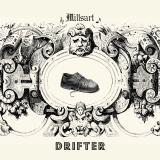
Axis Expressionist Series
A collection of vinyl and limited digital releases, curated by Millsart, an alias of Jeff Mills, of his most eclectic and transcendent compositions that derive from his Every Dog Has Its Day project as well as new unreleased works. Vernacular creations that fall off from the "other side" of the Electronic Music tree, this project is designed for the experienced Techno music listeners, and its goal is to reflect upon the pure artistry of the craft of storytelling. A realization between music and life. Whereas "dancing" is the goal of Dance Music, the goal of this music is about "reflecting on the complexity and simplification of life".Soundtracks for people in their evolutionary process.
This release 'Drifter' is about 'Hype'.
Hype
An animal that prowls on the vulnerable - it excites those who might be looking the other way or with their eyes and minds wide shut.
What is life without hype?
As a transitional tool, hype can be most effective especially when impulse reactions are at play. Something of a psychological currency, there is a lot to gain by giving people what they want - the rush that comes with taking part in a process of making something bigger, more successful and more preferred. Even if there is nothing there.
What's wrong with getting exciting about something?
There are only a few rare masterclass cases that have lasted a lifetime.
As Andy Warhol proclaimed that "everyone will be World famous for 15 minutes" rings darkly true in an era when each one of us can be the talent scout, artist, critic, audience.......and then a revisionist, hoping to bring hype back again by reminding people how great the first round felt.
We are all free to use our attention and time anyway we please. This is the freedom we have, right?
In most cases, we wake up and at some point, the question of justification becomes a debate between those who found unconditional solace and those who re-discovered the subject of substance and "kicked the tires".
Should I care if others like or dislike something?
For some, the hype of something never ends. It hardens and becomes part of a foundation like a cement podium. Something to be stood on to speak over all dissenting voices.
он должен быть опубликован на 09.10.2026

LIMITED PRESS ACT FAST
Ever-evolving Amsterdam duo ANOTR continue their forward momentum with the release of their highly anticipated third studio album, ‘Withness’, out via their own imprint No Art. Rooted firmly in dance music, ‘Withness’ sees the pair refine their sound into their most dance-floor focused and cohesive project to date.
Born during their global tour, ‘Withness’ was shaped in real time: written, tested and refined on dancefloors across the world. Following the expansive, genre-blurring approach of their 2025 LP ‘On A Trip’, the duo felt a pull back toward the club - not as a limitation, but as a unifying space. “We really wanted to have a wide variety of songs that we can play out and create moments,” they explain. “Every track needed to make sense wherever people come together to dance.”
That intention sits at the heart of ‘Withness’. A title that reimagines the idea of “witnessing” into something more active and collective. ‘Withness’ is an album about experiencing life with others. It’s about the moments you share, the people who shape them, and the energy that becomes real only when you’re fully present. The album captures the collective high of friendship. Whether in a packed club, at a festival, or in a living room with friends, the album is designed to soundtrack moments of connection.
“The memories you make with people, they’re the witness of those moments. Withness is about being in it together.” - ANOTR
Sonically, the album marks a clear evolution. Drawing from their early club roots while building on the songwriting confidence developed on their previous records, classic drum machines and 909 samples sit alongside warm, 80s-tinged textures, layered vocals and modern production techniques, creating a sound that feels both nostalgic and forward-thinking.
A key part of the process was spontaneity. The duo embraced a free-flowing, collaborative studio environment, often working with a rotating cast of contributors. Their now-signature “open mic” approach encouraged anyone in the room to experiment with melodies, lyrics and vocal ideas. This energy translates directly into the album’s standout moments. From the euphoric pull of ‘Withness’ to the groove-led ‘Do It With Ya’, the uplifting ‘Paradise’, each track is built to live beyond a single setting.
The LP comes at a timely moment, as their single ‘Talk To You ft. 54 Ultra’ has become the biggest global breakout dance single this year. Sitting firmly in Spotify’s Global Top 200, it has surpassed 175 million streams, and is currently No. 21 in the UK Singles Chart. Spotify have tipped it in their much-coveted global ‘Sound Of The Summer 2026’ list and other highlights include peaking at No. 7 in Shazam’s Global Chart, No.1 on Beatport Top 100 and gaining over 600M UGC views so far.
он должен быть опубликован на 09.10.2026

Beneath the sleek, confident guitar line that powers “Overdrive,” the lead single of All Over You, another guitar marks the time more impatiently, as if the groove its locked into is the timebomb- tightness of a pre-hookup heartbeat. Its energy isn’t nervous — after all, it’s hard to be nervous with Will Schwartz cooing come-ons like “I just wanna get you in the bed / Light you up like a cigarette” in your ear — but it is urgent. Excited. Titillated.
That’s the word that best describes the prospect of a new Imperial Teen record: titillating. They come out every five or six years, each new album acting as, to quote Roddy Bottum, “an episodic piece of where we are now, where the world is now, who we have become, and the geography of our collective consciousness.” There is considerable distance between Imperial Teen, its members — Bottum (guitars, keyboards, vocals), Schwartz (vocals, guitars, keyboards), Jone Stebbins (bass, vocals), and Lynn Truell (drums, vocals) — having made lives for themselves in different cities, but the collective consciousness that exists between them makes distance and time seem immaterial to the listener.
Time, especially time together, is not immaterial to Imperial Teen: it is precious. “For the last few records,” Stebbins explains, “the process has been similar. We live great distances away from each other, so initially, we get together to collaborate, write, and create. When we have enough material, we reconvene to record. Both scenarios, creating and recording, take multiple trips, sometimes with big lapses of time in between due to our various schedules.” Bottum concurs: “The biggest challenge in writing and recording is the distance between us, but the longing and desire and the ultimate coming together becomes more potent as a result.”
All Over You is a triumph of maximized moments together, four people bringing the force of their personalities to bear on years of built-up ideas. Title track “All Over You,” initially built over the computer, gained its charming sneer in the studio, where Stebbins’ buoyant, fuzzed out bassline added bounce to the song’s punchy, sloganeering lyrics, a perfect set-up for Truell to drive the song home, screaming the last line of the chorus, “We’ve got nothing to do,” like a rallying cry for a generation that’s been given nothing and told to deny themselves everything. “In my head,” Truell says, “I just went back to punk, to that feeling of prowling around looking for anything to do and being so mad about how boring everything is that you just have to yell.” The track had an attitude, it had an unexpected texture thanks to Truell’s playing improvised percussion, but her scream is what took it to the next level, transforming it into a signature Imperial Teen song.
One of Imperial Teen’s less magical concerns on All Over You is the effect capitalism has on the creation of art. This expresses itself in the headspinning rush of music industry success and disappointment that plays out in “Hands All Up,” and also in Imperial Teen’s sound. All Over You features the band’s most expansive, textured palette to date, and much of it’s steeped in — bubblegum music and boy/girl harmonies, electro beats and grungy distortion, power pop mall anthems and kiss-off lyricism — has been dismissed, at one point or another, as a fad. Time, of course, has proven otherwise, and All Over You makes a case for Imperial Teen as four of that time’s architects, inheriting, preserving, and pushing the boundaries of what pop music can be from one song to the next.
“We want to make people dance and think and feel,” says Schwartz. In all of those ambitions, All Over You crushes, brought to life by four musicians who found each other in the clubs of San Francisco over three decades ago and have remained family ever since. It is less a return from hiatus than a broadcast from the sonic utopia Imperial Teen has long ruled over, where the music is bratty and sexy and the parties don’t stop until everyone’s found euphoria. A raveup for mind, body, and soul, best enjoyed in a dark room packed with as many sweaty bodies as possible
он должен быть опубликован на 09.10.2026
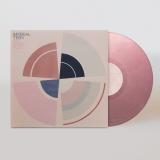
Black Vinyl[22,48 €]
Beneath the sleek, confident guitar line that powers “Overdrive,” the lead single of All Over You, another guitar marks the time more impatiently, as if the groove its locked into is the timebomb- tightness of a pre-hookup heartbeat. Its energy isn’t nervous — after all, it’s hard to be nervous with Will Schwartz cooing come-ons like “I just wanna get you in the bed / Light you up like a cigarette” in your ear — but it is urgent. Excited. Titillated.
That’s the word that best describes the prospect of a new Imperial Teen record: titillating. They come out every five or six years, each new album acting as, to quote Roddy Bottum, “an episodic piece of where we are now, where the world is now, who we have become, and the geography of our collective consciousness.” There is considerable distance between Imperial Teen, its members — Bottum (guitars, keyboards, vocals), Schwartz (vocals, guitars, keyboards), Jone Stebbins (bass, vocals), and Lynn Truell (drums, vocals) — having made lives for themselves in different cities, but the collective consciousness that exists between them makes distance and time seem immaterial to the listener.
Time, especially time together, is not immaterial to Imperial Teen: it is precious. “For the last few records,” Stebbins explains, “the process has been similar. We live great distances away from each other, so initially, we get together to collaborate, write, and create. When we have enough material, we reconvene to record. Both scenarios, creating and recording, take multiple trips, sometimes with big lapses of time in between due to our various schedules.” Bottum concurs: “The biggest challenge in writing and recording is the distance between us, but the longing and desire and the ultimate coming together becomes more potent as a result.”
All Over You is a triumph of maximized moments together, four people bringing the force of their personalities to bear on years of built-up ideas. Title track “All Over You,” initially built over the computer, gained its charming sneer in the studio, where Stebbins’ buoyant, fuzzed out bassline added bounce to the song’s punchy, sloganeering lyrics, a perfect set-up for Truell to drive the song home, screaming the last line of the chorus, “We’ve got nothing to do,” like a rallying cry for a generation that’s been given nothing and told to deny themselves everything. “In my head,” Truell says, “I just went back to punk, to that feeling of prowling around looking for anything to do and being so mad about how boring everything is that you just have to yell.” The track had an attitude, it had an unexpected texture thanks to Truell’s playing improvised percussion, but her scream is what took it to the next level, transforming it into a signature Imperial Teen song.
One of Imperial Teen’s less magical concerns on All Over You is the effect capitalism has on the creation of art. This expresses itself in the headspinning rush of music industry success and disappointment that plays out in “Hands All Up,” and also in Imperial Teen’s sound. All Over You features the band’s most expansive, textured palette to date, and much of it’s steeped in — bubblegum music and boy/girl harmonies, electro beats and grungy distortion, power pop mall anthems and kiss-off lyricism — has been dismissed, at one point or another, as a fad. Time, of course, has proven otherwise, and All Over You makes a case for Imperial Teen as four of that time’s architects, inheriting, preserving, and pushing the boundaries of what pop music can be from one song to the next.
“We want to make people dance and think and feel,” says Schwartz. In all of those ambitions, All Over You crushes, brought to life by four musicians who found each other in the clubs of San Francisco over three decades ago and have remained family ever since. It is less a return from hiatus than a broadcast from the sonic utopia Imperial Teen has long ruled over, where the music is bratty and sexy and the parties don’t stop until everyone’s found euphoria. A raveup for mind, body, and soul, best enjoyed in a dark room packed with as many sweaty bodies as possible
он должен быть опубликован на 09.10.2026

On her first Harmony Index album, multi-instrumentalist and producer Nico Leibman spotlights the feelings that are most difficult to express, bringing out the friction between her dreamy hooks and harsher sonics. Written almost like a DJ set, the album shifts intentionally between piano-led trip-hop, lounge, dream pop, 2-step and breakbeat house, not languishing in nostalgia but defining a language that's rooted in desire, surrender and forward motion.
Until now, Leibman has been best known as a touring musician, working alongside artists like Jessica Pratt and Ana Roxanne, while slowly putting together new solo material in-between frequent tours. The album was written in bursts over the course of five long years and provided Leibman with a much-needed outlet - a chance for her to lock into her personal musical preoccupations, like Janet Jackson's 'The Velvet Rope', Everything but the Girl's 'Walking Wounded' and Prefab Sprout's 'Jordan: The Comeback'.
It's this era of pop - when nascent technology collided at force with skillful, soulful songwriting - that provides the album's backbone, fleshed out by Leibman's potent meditations on a spectrum of experiences in Los Angeles. And as the record was evolving, Leibman let long night drives crack her creative world open. Embracing the city's notoriously cinematic romantic side, she used the car as a "little chamber of limerence," in her own words, enabling her fantasies and acting as a test system for each song. "If it wasn't hitting in the car," she says. "It wasn't going to be on the record, period."
This sense of motion is evident almost immediately on 'Recognize', when Leibman's breathy words are carried into the night by choppy, uptempo breaks and resonant pads. So even when she simply coos over chugging guitars and bass on the first half of 'Enough', the drop into a low-slung breakbeat is implied. "Another digression, a break in this tension," she sings. "Was I foolish to believe that this was never your intention?" Leibman's tales of disillusionment are imbued with power, buoyed by her pitch-perfect production, with additional help from co-producer Cesar Maria.
On 'Don't Pretend', she sings softly and soulfully over decelerated Timbaland-inspired beats and a dubwise bassline, aided by additional production from Purelink. And 'If' marks the point where she lets go, infusing her euphoria with melancholy as her voice soars alongside the album's most infectious piano riff. Fittingly, the album concludes with 'Trust', a song about surrendering to the possibilities of love that works as a potent metaphor for the album's evolution. Over the course of five years, Leibman learned to let people in, finally trusting the process. "It's also a fantasy of what it would feel like to finally be in love again," she laughs, accepting that it's still just a fantasy. But it's this hope in unfulfilled longing that gives the album its unique character, defining a bold, unguarded voice in LA's experimental pop landscape.
он должен быть опубликован на 09.10.2026
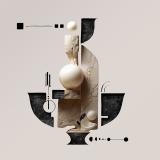
David Norland is an Emmy-nominated English composer, known for his scores for drama and documentary, alongside his experimental choral and electronic music. Bringing stories to life through sound, he received critical acclaim for his debut solo album ‘Glam Tear Stain’ (2019) and is set to release follow-up album ‘La Source’ in June 2026 via Denovali Records.
Relocated back to his London home after many years in Los Angeles, and free from years of drug and alcohol problems, recent commissions for two choral works allowed Norland to return to the innocent origin of his musical world, and his experience as a parent prompted a lot of outward reflection. What kind of world are we leaving to our children?
Inspired by his score to the forthcoming silent black and white film ‘Carousel’ (2026), Norland found other music emerging that refused to be ignored. The film’s director opened the door to an entirely free scoring process – no temp music, no expectation, no guidelines, just pure intuitive expression. ‘La Source’ draws on this experience, alongside his childhood as a touring chorister, the honkytonk upright piano in the north-east London bedroom of his early 20s, his early recording experiments with a TASCAM 4-track cassette recorder, and his intense preoccupation with bells, flutes, stone architecture, and mysticism.
From the haunting, choral beauty of ‘E-Car Soul’ to the breezy album title track, Norland blends minimalist classical structures with electronics. A unified tapestry of blended voices, harmonies and textures, ‘La Source’ is a deeply emotional and melancholic journey for Norland. “In the end, I’m looking to find meaning through the music, like when I was a kid singing in choirs. But I get the most sense of meaning through transcendent experiences, rather than anything intellectual or dogmatic. I have to feel it, not think it. I’m trying to make work that’s luminous, wondrous, shimmering and strange, so I can keep having those experiences,” says Norland.
On his inspiration for the album, Norland adds, “I love making patterns in things and finding patterns. That’s why minimalism was so enticing to me, the patterns are so explicit. I love word play and anagrams. The big sadness coming through as I was making the record is this clarity over the future of my kids. Everything else is a complete distraction. This incredible nurturing planet and its ecosystem are being rapidly destroyed, and the forces destroying it are relentless and punitive. And they seem to be fine with consigning our children to live in an ever-more-hostile wasteland. You can’t pretend that’s not coming, if you do I think you’re lying to yourself. And perhaps eventually it will be the fact that people love their kids that will stir wider fear and action. It’s hard to think of anything more connected to the idea of spirit.” The result is the reflective, ecstatic, mystical and sad world of ‘La Source.’
Norland’s screen work includes the award-winning documentary Anvil! The Story Of Anvil (2008), directed by Sacha Gervasi, and since 2010, he has composed much of the music for US broadcasting giant ABC’s primetime news documentaries. His work for ABC is broadcast in the US and around the world on a daily basis.
In 2012, he was the music supervisor for Hitchcock (2012) featuring Anthony Hopkins, Helen Mirren & Scarlett Johansson and in 2017, he teamed up once again with Gervasi for the score to November Criminals starring Chloe Moretz and Ansel Elgort. The following year, he composed the score for the Emmy-nominated HBO film My Dinner With Herve, starring Peter Dinklage and Jamie Dornan.
Norland will be performing the score of Carousel later this year, and the score itself will be a forthcoming release on Denovali. 2026 will also see the release of documentary All Permits Secured, a valentine to the history of EDM, featuring Norland’s score.
он должен быть опубликован на 16.10.2026

Tenuous Links welcomes Torino’s very own VIOLA to the label with his new ‘Wrinkles’ EP. As the label owner of Reflue Records, VIOLA first caught my attention with his debut full-length release, a body of work that showcased a deep, rugged sound and a clear technical prowess shaped by his surroundings rugged coastlines and industrial landscapes of Torino in northern Italy. After speaking with Cristiano for over a year, it felt like a natural progression to bring his music to Tenuous Links. “The music I write almost always functions as a visceral soundtrack to whatever environment surrounds and infects me while I'm creating. Deeply rooted in the architectural contrasts of the places I’ve inhabited.”
‘Wrinkles’ is VIOLA’s second full-length body of work, yet the years of graft and dedication behind it are immediately apparent. Across three original tracks and a remix from London’s Jay Duncan, the EP delivers pure grit and crunch, inhabiting large, cavernous atmospheres grounded by pummelling bass, dynamic drums and intricate rhythmic detail.
The title track ‘Wrinkles’ is an ode to club spaces and the scene that revolves around them. Its broken rhythm channels the dancefloors of Cristiano’s formative years, spent partying in abandoned bunkers and warehouses in and around Torino. VIOLA explains: “Crafting such a raw, gritty bassline felt like an absolute necessity during the writing process, retracing memories of long nights spent dancing in silence.” The track’s cavernous atmosphere mirrors those pitch-black, unlit spaces, drawing us deeper and deeper into the abyss, with only brief glimmers of light offering reprieve from its relentless, all-enveloping bassline.
‘Mon Tom’ draws heavily from VIOLA’s hometown and his complicated relationship with Torino ,a city where tranquillity and beauty sit alongside heavy industry. The calm of the coastline is violently interrupted by vast steelworks and plumes of black smoke, leaving an imposing industrial mark on both the landscape and its people. The track reflects these contrasts. Metallic yet fluid, it moves at a faster pace, built around a driving 4/4 rhythm designed to suspend the listener while skittering percussion creates an increasingly uneasy sense of movement. It’s a meeting point between the beauty and brutality of the environment that inspired it.
‘P Maggiore’ was written between 2019 and 2020 while VIOLA was living in Rome’s chaotic Porta Maggiore district. Surrounded day and night by the grinding noise of trains, screeching tram brakes and beaten metal, he translated those raw auditory memories directly into high-pressure sound design. Yet, in contrast to the intensity of his surroundings, VIOLA deliberately pulls back the tempo.
Rounding off the EP is a skeletal remix of ‘Wrinkles’ from London’s Jay Duncan. She strips the original back into a techy, rolling cut, retaining its atmosphere and darkness while introducing a lighter touch of minimal-esque sound design. The result is a subtly transformed take on the title track that provides a fitting conclusion to the EP.
‘Wrinkles’ EP is a record shaped by place, by architecture, industry, memory and the physical spaces that leave their mark on us. From Torino’s industrial coastline to the chaos of Rome and the darkness of abandoned club spaces, VIOLA turns his surroundings into sound. Coming to vinyl and digital October 16th of October.
он должен быть опубликован на 16.10.2026
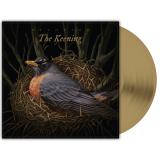
Richly progressive folk-informed heavy post-rock and a sick burn to boot. - The Obelisk Rebecca Vernon (SubRosa), the driving creative force behind THE KEENING returns with her second album, Devotion. The new album sees Vernon and company releasing one of the year's most evocative albums; a truly compelling mix of slow burning, ethereal post-rock, folk, goth, and soaring doom. For Vernon, the writing process for Devotion took place in two starkly different environments. It ranged from the contemplative solitude of a friend’s cabin in a deserted Idaho ski resort, to the hectic reality of a 55+ senior living community in Spokane, Washington, where she was staying with her father. This shift resulted in an explosive album with a subtle duality that resonates throughout its most poignant moments. Take the lead single, "A Little Bit of Blood," for example. Quiet, acoustic guitar strums give way for Vernon's haunting vocals, before the backing instrumentation explodes into a soaring chorus reminding the listener that sometimes the best paths taken are the most difficult. "You drew a little bit of blood to show me Just a little bit of blood to make me see It took a little bit of blood to wake me Just a little wound in the night to free me" In a 2024 interview with Decibel Magazine, Vernon discussed the drastic shift in heavy music's themes in recent years, highlighting a willingness to convey raw emotion: "Metal is beginning to share more vulnerable things, more confessional things. Metal has almost become a safe place to talk about those things. People are being open with their struggles. Twenty years ago, they wouldn't have." Devotion lays these emotional confessions bare and showcases a truly bright burn. Devotion was recorded in April 2022, again at Hallowed Halls in Portland, with Billy Anderson and Nathan Carson featured in their same roles as heard on Little Bird. Once again, Vernon showcases her writing prowess, having a heavy hand on all the instrumentation for Devotion; Vernon played drums, guitar, piano, organ, and hammered dulcimer, and provided most of the vocals on both albums, with a few guest vocalists added to the mix.
он должен быть опубликован на 16.10.2026

2026 Repress
Donato Basile AKA DJ Plant Texture always wants his music to tell a story, and with his debut EP on Tresor Records, entitled Life, he’s now trying to tell the biggest story there is. According to the artist, “Life is about the fear of growing up”; both the anxiety itself and acknowledging and moving past it.
This narrative seems to have struck a chord with those who have heard the track, “People want to reflect themselves in the music; something personal. Lots of people have been in touch after hearing it; I guess they feel something melancholic in it. Personally, I imagine the track is like the life of a person; going from being born through childhood and youth and onwards, so perhaps they hear this?”
Having used an MPC since the early 2000s, Basile feels an intuitive connection to the hardware he uses, and so the creative process is very spontaneous: “I know where everything is so the music is made immediately. I make everything in the first ten minutes; after that if it’s not right then I just abandon it and start something else.” This immediacy, and familiarity with his equipment is apparent on the A-side, where Basile’s previous life as a drummer comes to the fore and tracks like Cycles and Ripetivo display his native understanding of groove but also how to stir things up - the three A-side tracks find classic techno rhythms seemingly falling apart only to snap back into place even stronger. The B-side finds Donato exploring more of his melodic side with WTT and the aforementioned title track showing Plant Texture’s love of breakbeat and classic techno.
The three digital bonus tracks continue this exploration of melody and syncopated beats - The EXP Days echos the wistful feeling of Life, as Basile meditates on the times spent at EXP, his record shop in Bari, which functioned as a meeting place for electronic producers in the area.
он должен быть опубликован на 23.10.2026
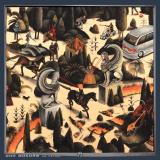
For over 25 years, David Madson (aka Odd Nosdam) has been stationed away from the light of the mainstream, diligently working the nightshift. Every so often, we awake to find another of his bleary and beautiful missives slung into the waking world – albums whose assemblages of sampled grooves, atmospheres and voices are unified by a hallucinatory sense of melody, like disparate visions strung together through ribbons of sleep-talk. From his earliest days as a member of the seminal group cLOUDDEAD, through his remixes for artists such as Boards of Canada and Black Moth Super Rainbow, Nosdam has been reporting back from his rounds upon the perimeters of culture and consciousness, forging a musical language all of his own.
On Patrol is the second Odd Nosdam LP to be released on The Notwist’s imprint Alien Transistor – following on from the 2019 album Mirrors – and continues a collaborative history that begun with a 2008 remix of The Notwist song, “Sleep”. It’s a love letter to the vinyl format, produced with the aim of optimizing for a single LP. This objective permeated every aspect of the album’s production, from the duration of each side through to the vinyl mastering (Jessica Thompson) and lacquer-cutting (Dubplates & Mastering, Berlin). As we've come to expect, the album is built almost entirely from found sounds, many of which were taken from obscure and second-hand vinyl gathered during Nosdam’s ceaseless crate-digging escapades. Other sources include field recordings made in 2022 at the Catalonia summer home of artist Salvador Dalí, which are baked into the swirling sci-fi glide of “Here to Know (Adéu Mix)”, and a sumptuous clunking bass line courtesy of Organi’s Mike Walti, which runs like an infinite highway through the fuzzy, sunbaked sprawl of “Deepsimple”.
Odd Nosdam’s work has always swept the entire atmospheric spectrum, from rhythmic vigour to levitational beauty. On Patrol is perhaps his finest assimilation of these extremes. “Sgt. Pepsi” is the perfect case in point: a formidable slow groove capsizes into vinyl crackle after a mere minute, before the song resurrects itself through sweeping strings and vocal harmonies, sliding against each other like the overlain romantic denouements to a dozen Hollywood films from the 1940s. Elsewhere, “Get You In (Belong Mix)” drapes shoegaze guitar over a trundling funk backbeat, straddling the physical world and the outer realms, while hushed voices point toward the song's implied themes of cultural cliques, critical consensus and the plight of the eternal outsider: “Sure, I can get you in... these people are my friends, I’m one of them - I belong.”
This is music that both endures and disappears. Odd Nosdam has always wielded a strange relationship with time, scrambling association with any specific era, weaving together numerous tempos simultaneously. There is no master clock. Each track could happily hold up as an infinite loop, yet Nosdam clearly favours the potency of the gone-too-soon, applying the fadeout just as hypnosis starts to crest. Indeed, the songs are both the product of meticulous long-term construction and spontaneity. While the foundations of On Patrol have come together over several years, the recording process involved channeling vibes through a vintage Roland Space Echo and bouncing song fragments back and forth from hard disk to cassette 8-track, gifting a phased permanence to creative decisions made on the fly – a hat-tip to the production processes of Nosdam's longtime hero, Lee ‘Scratch’ Perry. Like a recurring dream, On Patrol appeals to both the plains of momentary ephemera and the long-established backchannels of the unconscious, equal parts revelation and deja vu.
Text by Jack Chuter
Artwork by Ian Ferguson
он должен быть опубликован на 23.10.2026
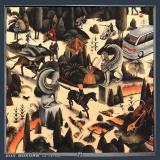
For over 25 years, David Madson (aka Odd Nosdam) has been stationed away from the light of the mainstream, diligently working the nightshift. Every so often, we awake to find another of his bleary and beautiful missives slung into the waking world – albums whose assemblages of sampled grooves, atmospheres and voices are unified by a hallucinatory sense of melody, like disparate visions strung together through ribbons of sleep-talk. From his earliest days as a member of the seminal group cLOUDDEAD, through his remixes for artists such as Boards of Canada and Black Moth Super Rainbow, Nosdam has been reporting back from his rounds upon the perimeters of culture and consciousness, forging a musical language all of his own.
On Patrol is the second Odd Nosdam LP to be released on The Notwist’s imprint Alien Transistor – following on from the 2019 album Mirrors – and continues a collaborative history that begun with a 2008 remix of The Notwist song, “Sleep”. It’s a love letter to the vinyl format, produced with the aim of optimizing for a single LP. This objective permeated every aspect of the album’s production, from the duration of each side through to the vinyl mastering (Jessica Thompson) and lacquer-cutting (Dubplates & Mastering, Berlin). As we've come to expect, the album is built almost entirely from found sounds, many of which were taken from obscure and second-hand vinyl gathered during Nosdam’s ceaseless crate-digging escapades. Other sources include field recordings made in 2022 at the Catalonia summer home of artist Salvador Dalí, which are baked into the swirling sci-fi glide of “Here to Know (Adéu Mix)”, and a sumptuous clunking bass line courtesy of Organi’s Mike Walti, which runs like an infinite highway through the fuzzy, sunbaked sprawl of “Deepsimple”.
Odd Nosdam’s work has always swept the entire atmospheric spectrum, from rhythmic vigour to levitational beauty. On Patrol is perhaps his finest assimilation of these extremes. “Sgt. Pepsi” is the perfect case in point: a formidable slow groove capsizes into vinyl crackle after a mere minute, before the song resurrects itself through sweeping strings and vocal harmonies, sliding against each other like the overlain romantic denouements to a dozen Hollywood films from the 1940s. Elsewhere, “Get You In (Belong Mix)” drapes shoegaze guitar over a trundling funk backbeat, straddling the physical world and the outer realms, while hushed voices point toward the song's implied themes of cultural cliques, critical consensus and the plight of the eternal outsider: “Sure, I can get you in... these people are my friends, I’m one of them - I belong.”
This is music that both endures and disappears. Odd Nosdam has always wielded a strange relationship with time, scrambling association with any specific era, weaving together numerous tempos simultaneously. There is no master clock. Each track could happily hold up as an infinite loop, yet Nosdam clearly favours the potency of the gone-too-soon, applying the fadeout just as hypnosis starts to crest. Indeed, the songs are both the product of meticulous long-term construction and spontaneity. While the foundations of On Patrol have come together over several years, the recording process involved channeling vibes through a vintage Roland Space Echo and bouncing song fragments back and forth from hard disk to cassette 8-track, gifting a phased permanence to creative decisions made on the fly – a hat-tip to the production processes of Nosdam's longtime hero, Lee ‘Scratch’ Perry. Like a recurring dream, On Patrol appeals to both the plains of momentary ephemera and the long-established backchannels of the unconscious, equal parts revelation and deja vu.
Text by Jack Chuter
Artwork by Ian Ferguson
он должен быть опубликован на 23.10.2026
‘Unfindable Ring', out October 23 on Bayonet Records, is an adventurer’s epic. The arc of the journey, like any good Spirited Away or Neverending Story, lands its wide-traveled protagonist right back at home before bedtime. Grumpy, like many great hero tricksters before him, has always been a project of juxtaposition: upbeat radio-ready hits whose buoyant, goofy hooks belie the dark thoughts they describe. Much of this, Schmitt acknowledges, owes its due to the matter-of-fact morbidity of the trans experience in America. It’s from these experiences—personal, romantic, political, and existential—that the tale of ‘Unfindable Ring’ unfolds.
Ambition and play have always defined the Grumpy sound. Late last year, the Fader praised their “demented, hooky” EP, “Piebald,” whose innovative fuzz-pop confections earned them coverage in NPR and the New York Times. Stereogum heralded them as “wonderfully weird,” and Paste designated them “the best of what’s next.”” Through boisterous collaborations with the likes of Sidney Gish and Claire Rousay, they’ve effortlessly ingratiated themselves with the titans of DIY, and, more recently, Schmitt has become an unlikely favored collaborator of chart-topping country giant Zach Bryan, who named his new record––which prominently features Schmitt’s harmonies–– conspicuously, ‘With Heaven On Top.’
In Grumpy, Heaven Schmitt is joined by Anya Good, Ellie Long (Kid Lake), Austin Arnold, Diego Clare (D.A. Crimson), and Lane Rodgers, who each contribute to every step of the process—engineering and recording, mixing, drafting artwork, producing, and making music videos. A kind of interdisciplinary thieves’ guild, the project, while once Schmitt’s solo eponym, is a labor of communal love.
“We are living these happy lives, and there are people we come across who don’t know us at all who want us to die,” Schmitt, explains. Often the visibility of the joy itself is what prompts the vitriol––“I’m so happy I could die,” Schmitt belts over and over on the chorus (a familiar figure of speech, sure, but one which, upon any scrutiny, shows Schmitt’s hand in the macabre.) A middle finger to fate, Good started asking, “What are you going to do with your One Beautiful Life?” Grumpy is going to keep playing, touring, searching, finding.
он должен быть опубликован на 23.10.2026
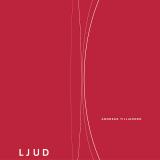
Andreas Tilliander released »Ljud« in 2001 as the first full-length album under his real name. The year before, the Swedish producer’s »Cliphop« album under his Mokira moniker had established him in the world of adventurous electronic music and the clicks’n’cuts scene. »Ljud« was just as minimalistic, warm, and playful as its predecessor while also notably inspired by house music. It is a timeless record based on happy accidents, playful loops, and lively spontaneity. For its 25th anniversary, Keplar presents a vinyl reissue with adjusted artwork by graphic designer Marc Hohmann and updated mastering by the artist himself.
Tilliander laid the foundation for his two first albums when he got rid of most of his music gear in 1998 after meeting Joel Brindefalk, who was already releasing music on the legendary Börft label. Brindefalk was using a computer as his main instrument and introduced Tilliander to the audio editing suite Sonic Foundry Sound Forge. »What he did with that software is what made me sell most of the hardware except my Nord Modular and a Korg MS-20.« The former synthesizer played an integral role while Tilliander made the tracks for »Ljud,« working primarily in the modular studio environment Jeskola Buzz.
»Ljud« came together in an intuitive process. »It’s still how I work 25 years later: I first make loops, create bits and pieces, and build up my own sound library as a foundation,« Tilliander explains. The Nord Modular and Buzz, which allowed him to swap samples and produce new sounds out of pre-existing ones, provided him with material for loops that formed the basis of the ten tracks. »I would start with a few elements, add more into the mix, then take them out again—arranging the pieces in real time while recording.« The casualness and vivacity of this improvisational approach becomes tangible throughout »Ljud.«
»Ljud« was released on Achim Szepanski’s Mille Plateaux, which had published the seminal »Clicks+Cuts« compilation in 2000. »I was part of that scene and I liked the digital aesthetic of the label,« says Tilliander »Coming from a very analogue setup, working with computer music and this kind of minimalism was very inspiring.« When preparing »Ljud« for the Keplar reissue, he ran the music through an analogue outboard and noticed he was still happy with the way it sounded. »It brought back fond memories. I hope the same is true for people who heard it back then, and that everyone who discovers it now will enjoy it, too!«
он должен быть опубликован на 20.11.2026
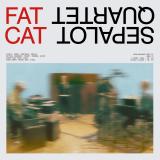
FatCat was recorded in a single session-live, with all four musicians together in the same place. What you hear on the record isn't a polished production, but a one-of-a-kind recording of four people playing at the same time in the same room.
This is not a nostalgic gesture. It's a stance. As music is increasingly understood as the output of a prompt, the question of what actually makes music becomes urgent again. Not flawless, efficient production, but the imperfect moment and its context. Not the result, but the process in which four people listen to each other, react to each other, misjudge, and find one another. This fallibility - the hesitation before an entrance, the slight pull in the timing, the glance between musicians that signals a turn - is not a weakness but the substance itself. It cannot be synthesized, because it isn't a data point but a lived relationship: between the instruments, between the people, between their shared history and what emerges new in this one take. The album is thus also a statement on the question of where, in the age of generative music, authorship and art can still be located: not in the result alone, but in the shared risk taken in creating it.
"The question was always: how do I bring my work as a producer and beatmaker onto the stage? How can something that usually happens alone behind closed studio doors become a live experience?" With the album FatCat, Sepalot pursues this question to its logical conclusion: what began as a live performance now becomes the recording itself - the studio becomes a stage for a day, and the stage becomes the definitive version of the album.
The love for electronic music remains, the raw pressure of hip hop is still palpable - and yet everything on FatCat sounds like a fresh start, captured in the very breath in which it was played.
On stage as in the studio, the four characters fit together like a puzzle. Sepalot's signature as producer and mastermind is unmistakable. On drums, Fabian Füss, longtime partner behind the kit and the voice that makes Sepalot's radio hit "Rainbows" so unforgettable. On bass, Robin Jermer. On trumpet, Matthias Lindermayr, multiple award-winning jazz virtuoso with his own albums on Enja Records. And then there's Sepalot himself, who turns it all into more than just the sum of its parts.
The eclectic beats, the pulsing bass, Sepalot's passion for atmospheric sound design - all of it remains, now joined by an element of jazz and captured in its most immediate, unpolished form. The album shows what four people in one room are capable of: a sound born of shared experience, and precisely for that reason, unique.
он должен быть опубликован на 27.11.2026
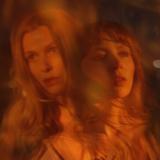
Truths and secrets often reveal themselves at night, under the freedom of shadowy darkness, away from prying eyes. In creating Given to the Night, sisters Valentine and Clementine Nixon have crafted a world that drifts through the in-between: between dream and reality, between day and night and the undefined, and ultimately a world that embraces the discomfort of being untethered. A process that follows simplicity and intuition rather than pre-determined narratives. “We recorded songs as they appeared, which sometimes felt like catching light. Before we realised it we had a record”, the duo explain.
While making the record Valentine and Clementine gently pushed away from the world- deleted social media, retreated into the trees of their native New Zealand - and only invited a couple of people in during the recording process. From that space, the album came together in an eerily easeful way.
There is a dream-like drift and sonic timelessness to the the record, as reflected in its nocturnal title, which can be read in two ways:
“Being taken by, or being inclined towards nighttime, preferring its blurry cloak of shadows to the harsh light of day; or giving oneself up to night, in sacrifice, letting go of fear and melting into the darkness.”
Written during a time of personal transition there was “a sense of finding the light in the shadow” they add. Guitar lines float, synth lines entwine, tapes hiss and vocals stream creating a kaleidoscopic montage of transient memories and emotions. A spectrum of feelings arise - isolation and joy, insomnia and manic highs, confusion and fleeting clarity, grief and healings. In the record, these feelings all merge and fade into one another in a nonlinear manner, as life tends to do; creating something deeply human that simultaneously gestures towards the transcendental.
он должен быть опубликован на 27.11.2026

There’s no direct English translation for the word “hiraeth”. In the Welsh language, it describes a form of longing for an intangible something, somewhere or someone that no longer exists. Sofie Birch and Antonina Nowacka draw on the concept to guide their second collaborative album, a suite of vulnerable, open-hearted improvisations and reflections that attempt to grasp an image of the past that’s chimeric, dissolving almost as soon as it materializes. The duo’s process follows the same distant beacon; unlike Languoria, their critically acclaimed debut, Hiraeth is, at heart, an acoustic record, informed by in-person improvisations with voices and string instruments that gesture to an era before computers, AI and DAWs. It’s just as lush, but Hiraeth is warmer and more muted than its predecessor.
Nowacka and Birch conceived the album in the wake of a slew of collaborative live concerts, spurred on by serendipitous improvisations and an interest in paring down their setup. Unsound arranged a retreat in Sokołowsko, an idyllic village nestled in the verdant hills of Southern Poland, close to the Czech border. Sokołowsko surrounds a large ruined sanatorium that’s rumored to have inspired Thomas Mann’s 1924 novel The Magic Mountain, and has long been a magnet for artists. The two took the opportunity to rethink their approach completely, arriving with just a guitar, a zither and a portable Nagra reel-to-reel machine. Recording directly to tape, they sketched out ideas with just their voices and instruments, reflecting their surroundings without being distracted or mediated by modern technology.
“We wanted to get away from screens as much as possible,” says Birch, “to bring to the world something vulnerable and honest. Without advance preparation, every day we went out into the open air, finding places to sit, during sunset or the midday sun. We discovered new tunings on our instruments, picked up a melody, and started the machine, playing over
and over till we got a take.” In the autumn, they met again in a Copenhagen studio, sparingly and carefully layering old synths and organs to add more depth without muddying the mix.
Both Nowacka and Birch sing throughout, their voices threading the acoustic instruments and tangling with each other, almost becoming one. But it’s the environment of Sokołowsko, “the birds and the light, even the wind playing against the harps,” that’s woven into the music’s lining. Affected by time spent meditating and in nature, as well as the fact that Birch was pregnant whilst recording, the album feels alive and remarkably present. Even the sound quality of the tape machine gives Hiraeth a tactile, organic quality, as Nowacka puts it, “like being in a warm bath.”
They still have the raw recordings from Sokołowsko on old reels, physical souvenirs of their time spent making music in a “habitat for intuitive songs, a little ecosystem, alive and spirited.” The outmoded gear and remote setting helped the duo disengage from the modern world for a few moments and imagine an existence that’s been lost to time and nominal progress. With digital technology receding into the background, Nowacka and Birch had space to make “intuitive connections with frequencies and people,” as Birch explains. Hiraeth is a testament not to nostalgia, but to the power of kinship.
Есть у нас в наличии и готов к отправке

The free folk/jazz sound of modern Los Angeles. Featuring a heavy bunch of musicians and vocalists including Moor Mother.
"Fearlessly Accessing the Divine Spirit From Here on Out" is the vinyl debut from pianist, composer, and producer Diego Gaeta. He has previously released projects as Club Diego and with the trio Human Error Club (whose members Mekala Session and Jesse Justice helped produce this record). He has quickly become a fixture in a number of Los Angeles musical environments, working with Lionmilk, The Pan Afrikan Peoples Arkestra, Carlos Niño, Black Nile among others. This album is a synthesis of these many LA environments, and carries chamber, jazz, ambient, and folk influences, ultimately giving it an uncategorizable feel similar to works by Arthur Verocai or David Axelrod.
Gaeta recorded the initial ideas for the album by himself after experiencing a burst of creativity during the lockdown of 2020, in the aftermath of a season of protests in Los Angeles, on a piano at his home in El Sereno. "I was constantly not in tune with myself, always awaiting outrage and tragedy in a very unstable world. However, hitting the streets in support of various ongoing pandemic community actions felt necessary and it marked a point in time that ushered in large societal changes. The weight of that era made me feel allergic to making art at the time. All of these ideas came after that period, expressing my reflections subconsciously. I remember that the ideas came in a short amount of time, and then they developed."
Once he had created the tracks as Ableton sessions, he realized the gravity and context of how he was processing his ideas so he, as he puts it, "felt like taking them outside the hands of midi and into the hands of friends." Gaeta was able to assemble his dream band, which ended up being a 9-piece ensemble, or a nonet. "I felt that at some point I was channeling the geometrical balance of that nonet...it's almost as if I had a sextet and then the three of the sextet that's not the rhythm section were doubled. It's a really dense sextet, that's how I see it."
The recording process began the following summer in June 2021 as the musicians were all adjusting to the newfound dynamic of getting tested for COVID, waiting a few days, and then meeting up to record. "We were eating Indian food, some of us were smoking, it was a nice memory, but I felt a little stressed, because I was the bandleader, and I felt the emotional weight of my music."
The title track and single, featuring vocals by Jimetta Rose, begins with a speech by Gaeta delivered when playing with Black Nile in 2019 at the Levitt Amphitheatre in MacArthur park. Gaeta provides the following account: "Even though it was in 2019, socio-political tensions and issues were at the forefront for me at that time. I wrote a speech that was intended to be critical of the US but it ended up becoming a collage inspired by different women that had messages of freedom that spoke to me the most. I quoted Nina Simone and Georgia Anne Muldrow, it wasn't something that I read but something that she said "kicking it with consciousness and style" that phrase stuck with me, so I used it in that speech. Although critical, the speech had a positive feeling to it, and it was hopeful. I gave that speech while fireworks were going off."
Moor Mother & Zeroh are found on their respective tracks, Memory Screen & Eccolo - both delivering a distinct, commanding vocal performance. Low Leaf colors the track Soft Spot with harp, a beautiful ballad nestled in the center of the album. Other players include Gregory Uhlmann on guitar, Jon Kaye on violin, Devin Daniels on alto saxophone, Caleb Buchanan on bass, Dante Luna on vibraphone, Patrick Behnke on viola, Bryan Baker on tenor saxophone/flute, and Mekala Session on drums.
"I’d like for us tonight to embody a freedom oriented life. Freedom isn’t just a dream, it’s a place we must all arrive at together, as one by one the people of the Earth help each other to be Free of power, hate, and insecurities. Let’s kick it with consciousness and style. Can y’all dig that? YEAH. I can too. So now we’d like to present to you a spiritual transmission I like to call: 'Fearlessly Accessing the Divine Spirit of Freedom From Here On Out.' YEAH" - Diego Gaeta
Есть у нас в наличии и готов к отправке

Inweys is the new project from Scottish musicians Conal Blake (Feedback Moves, Domestic Exile, Infant Tree) and Murray Collier (Dip Friso, Grim Lusk, Real Landscape). Their debut self-titled 12’ was recorded in the summer of 2024 at La Chunky Studios in Glasgow.
They asked Fielding Hope of Counterflows Festival to write a short summary of the record:
“Inweys debut release arrives as four pieces of broken body music. Lurking, barely human fragments brought into the present. Using a short drum-machine improvisation as core material, the pieces are formed from a processes of mining and re-mining for small details, with each fragment zoomed in on and turned into new pieces. There’s a transformation taking place, but one that doesn’t obscure the materiality of the recording tapes as sticky, corrosive matter. On skewed and stretched fabric they enact their palimpsestic play, sketching and altering the grid with itchy technologies. What their edits and improvisations don’t say they let space say the rest, with vacuum aerated frames for bass to diffuse and beats to wriggle. More King Tubby than Cage, more Mantronix than Reich: minimalism with molten tips.
Both Conal and Murray’s past work has embraced malleable and iterative technologies; music whose feeliness figures itself out in space in a messy precomposed/improvised dialectic. This is the sort of thing most “new music” experimentalists (or anyone who spends most of their time obsessively manipulating tapes in expensive studios) often can’t achieve; a liveness, birthed from learning in situated play. Like the lore of Phuture’s Acid Trax, a poverty of material is at the heart of this, rendering the work with an abortive conviction: a corpse waking to consciousness becomes amphibious. Instead of the composer we have a relation, two people navigating the awkward spooling between the two reels of tape. Inweys is scots for “inwards”, and in their working process this is what they do. But the result is circular motion. Until the tape runs out, all in ways move out.”
Есть у нас в наличии и готов к отправке

This is not a Ben Vida, Booker Stardrum, and Will Epstein record; it’s a Play Time record. That’s a subtle but important distinction, for a couple reasons. One, the sound of Magic Object—a polymetric blend of improv and pulse minimalism for saxophone, drums, and Moog—doesn’t really sound anything like any of their many other ensembles or respective solo projects. And two, it was only while making Magic Object, their debut album, that Play Time realized they were a band at all.
Let’s back up. The roots of the trio date to 2020-21, when Will and then Booker moved to the Hudson Valley, where Ben was already living. The three got into the habit of playing together at Ben’s house, and they soon realized that their hang sessions felt fundamentally different from making music in some falling-down studio in Bushwick. Where those experiences were rushed and cramped, a new sense of time and space now suggested itself. Where once they rat-raced the music, now they relaxed into it.
Early gigs yielded similar revelations. A booking at Tubby’s, the beloved Kingston venue, evolved into a kind of residency. Tubby’s is a small space, fitting around 100 people, with a bar in the front room and a stage in the back. Play Time decided that they didn’t want to play on the stage; they wanted to play in front, among the people in the bar. Rather than hogging the spotlight and overpowering the other voices in the room, they blended with the energy of their surroundings and emerged as a sort of minimalist-jazz-krautrock bar band.
Gradually, they discovered a newfound “elasticity”—Ben’s word—that reshaped the music from inside. “It’s this communal thing,” he says. “It’s vibes. And it’s embedded in the community up here, which feels really vital and nourishing.” They were jamming, but it wasn’t just a free-for-all; they found themselves listening to each other in new ways. “Ben and Booker joke that they’re always playing in different time signatures,” Will says. “We’re all going forward with our own ideas, but we’re open to each others’ as well, and they’re all sort of dancing together.”
“We all have our painterly solo projects,” Will says—where, Booker adds, “we do a lot of studio arranging and thinking and composition that takes shape over a period of time.” Play Time, on the other hand, is all about being in the moment. That spontaneity was key to the process of recording the album. They booked two days in their friend Joey’s studio, a converted wooden barn. “It’s just a live room,” Booker says. “There’s no separation or anything. So we’re all in the space together and it’s got this beautiful, woody sound, and that’s very much the sound of the record.” For two days, they just jammed, for seven or eight hours each day. When it was over, they went through, edited down the portions they liked, and added very judicious overdubs designed to enhance the original recordings without fundamentally altering them, staying true to the spirit of the sessions.
The result is something like a snapshot and a mission statement all rolled into one. “You’re hearing us discover the voice of the band in real time,” Ben says. “We finished those sessions and we were like, ‘Oh, that’s what our band sounds like now.’”
Now, with Magic Object, the rest of us get to find out too.
—
Balmat is a label with a cloudy outline. Jointly shepherded by Albert Salinas and Philip Sherburne, two friends living in Cardedeu, Catalonia, and on the Balearic island of Menorca, Balmat grew out of Lapsus Radio, a weekly show born almost ten years ago. Balmat’s mission is simple: to foster new ideas, expand upon personal obsessions, and put enveloping sounds out into the world.
“Balmat” means “empty” or “void” in Catalan. But quite apart from any negative connotations, we prefer to think of it in terms of possibility: a space waiting to be filled.
Есть у нас в наличии и готов к отправке
First published in 1978 by Cetra, in this work Antonio Infantino continues to express his ritualistic and shamanic relationship with the musical traditions of Southern Italy. The recordings focus on the mystery of death and the sacraments, the light of the spirit and the divine that descends and conquers souls. The phenomenon of Tarantism is still strong, the power of dance as a symbol of transformation and revolt, a therapeutic process of final healing. Folk music celebrates a deep sense of community, the memory of a peasant world that no longer exists but is still alive in the collective memory. Behind the tight and insistent rhythm of the percussion, the voices of the people, the colours of the squares and the scratchy string arrangements always emerge. The magical sound of the bagpipes is lost in the alleys of the villages. Infantino sings of minor cultures, the poor and oppressed classes, who share joys and sorrows, dance and music as secular forms of liberation.
Этот продукт еще не вышел. Ты можешь сделать предзаказ, как только он появится на складе, продукт будет подготовлен к пересылке.

Following Parnell March’s Back Bar Grooves EP in February and November’s release of the Dust Tears (lead song from Sarah/Shaun’s debut) remixes, Edinburgh’s Hobbes Music label returns with a second EP of dream pop from husband-and-wife duo Sarah/Shaun (pronounced simply Sarah Shaun), alias Sarah and Shaun McLachlan (pronounced McLochlun), who wooed hearts and wowed critics with debut EP ‘It’s True What They Say?’ last year.
‘It’s True What They Say?’ attracted fans across the board: Artist Of The Week in The Scotsman, rapturous reviews from The Skinny and Tokyo's Ban Ban Ton Ton blog, BBC 6Music airplay courtesy of Nemone (Mary Anne Hobbs' Morning Show), more radio play from Radio Scotland's Roddy Hart & Vic Galloway, plus Simone Butler (Primal Scream) and Jim Sclavunos (Bad Seeds) via their respective Soho Radio shows, not forgetting ringing endorsements from the likes of David Holmes, Youth, Kevin Bales (Spiritualized), Brent Rademaker (Beachwood Sparks) and Julian Corrie (Franz Ferdinand).
They played gigs supporting Glasgow's huge Glasvegas, at festivals (Kendall Calling, Dunbar Music, Hidden Door), plus a slew of venues across the Scottish capital, ending the year with a trio of shows supporting Glaswegian 80s pop legends The Bluebells at Aberdeen’s Tunnels, Dunfermline’s PJ Molloys and Edinburgh’s Liquid Rooms, while The List magazine tipped them among their Ones To Watch For 2025, with journalist Fiona Shepherd suggesting they were “blending the starry-eyed pop of Sonny & Cher with the electronic experimentation of Chris & Cosey.”
Very much the companion piece to the debut EP but arriving a full twelve months later, Someone’s Ghost is emblematic of the duo’s desire not to rush things or release anything half-baked.
“I’ve always wanted to create the perfect pop record and I do really feel that we’ve achieved that with this one,” says Shaun. And he’s clearly not the only person who thinks so.
REVIEWS, FEEDBACK ETC:
"I LOVE that! Dreamy dreamy pop." ROY MOLLOY (Marvellous Crane/Alex Cameron) on BLAST RADIO, Sydney
“the Scottish music scene’s cream of the cool... buzzy drum beats, high, distant chimes, and heavenly electronics…. very ethereal.” THE SKINNY
"Listening to Sarah/Shaun is like eavesdropping on a noir dreampop, long-distance phone call between them both, across two separate sonic locations. On this stunning 4-song EP, Sarah’s voice, effortlessly mesmerising, draws you into these big beautiful and haunting passages of perfect dream-pop. All beautifully produced in a multi-layered-scape of low-fi analogue textures, epic cinematic crescendos, intense electro-pulse grooves and warped psycho-pop guitar riffs. Within the songs lurk a sense of unresolved emotions, longing and pathos. There are shades of classic Lee Hazelwood & Nancy Sinatra but also Post-Punk Electronica and Beach House. But what a unique sound they’ve created of their own. I love it" DAVID MCCLUSKEY (The Bluebells)
"Absolutely beautiful" SEAN JOHNSTON (A Love From Outer Space)
"Lovely stuff here! Total quality." MARTYN 'MASH' HENDERSON
"Ooooh. Everything the last record promised is here. Well done" GEORGE T aka George Demure (Accident Machine)
"Vince clark Era Depeche Mode in places" KEVIN BALES (Spiritualized)
"Sounds cool. Well done" PETE KEMBER (Sonic Boom, Spacemen 3)
"Glorious, it (Debbie Harry) grabs hold of you and doesn't let go." IAIN DAWSON aka RAVECHILD (Everyone Wants To Play The Hits Podcast)
SOMEONE’S GHOST
Born out of an incredibly anxious, stressful time, the songwriting process for these recordings has been something of a personal tonic for Shaun…
“There was a period when I was having nightmares,” he reveals. “Apparently I was saying there was someone in the room, I was talking to that person and Sarah was seeing all this while I was still asleep.
So, I was thinking that this was my ghost. I started writing songs because I was going through something and I was dealing with something and writing songs was a comfort. My ghost was a comfort, whether it was real or not. The idea of it was a comfort.”
“I firmly believe that everyone has someone who watches over them but all of the songs are essentially about being there for someone,” he says. “Everybody needs someone but also everyone needs to stay real and keep what you have, keep it close, never let it go. If you don’t have it, continue to tell people you’re there for them. It’s about loving and hoping people will be good to you in return.”
While Shaun took the songwriting lead on Filter Of Love and EP closer The Sound Which Stresses The Sound Of My Ears, Debbie Harry was originally instrumentally conceived by producer Jaguar Eyes, alias Ali Chisholm, later lyrically completed by Shaun, and the EP’s lead track, Anhedonia, and one of its stand-outs (much like Starbed on the debut) was conceived by Sarah, as a result of experiencing a bit of a spiritual epiphany of her own.
“When I first heard the word Anhedonia, I didn't know what it meant but when I found out I thought about it quite a bit. How sad it would be to have no enjoyment in anything,” she explains. “This song is really about my own personal beliefs. When I have been down, that's one of the things that helps me the most. It talks about trying to make amends but realising, for some things, you can't. But I think with any kind of faith comes hope… which is always a good thing.”
A record about hope, truth, honesty, a belief in something bigger than oneself… and all set to a soundtrack that wouldn’t feel out of place in a David Lynch or Eighties feature film. What more could anyone ask for, really?
There’s equally a desire to offer something universal and positive to anyone who tunes in. The labels for the 12” edition reveal the dual mantras “Who just wants to survive?” and “It’s about time to live a little”, with both messages also engraved in each record’s run-out grooves. T-shirts accompanying debut EP It’s True What They Say? bore the slogan “Kill Them With Kindness” - leading caps intentional. Shaun carries the acronym KTWK everywhere he plays, as a reminder: it’s stitched into his guitar strap. And this particular wee pebble has already caused a few ripples: people have been approaching him at gigs to acknowledge their appreciation and respect for it.
"We feel we have made an honest, open, colourful, body of work,” say the duo. “We hope to go out and play the songs with the guys (our band) and then potentially make more records. We are taking things as they come. Everything has been organic so far, after all. We are looking forward to whatever this brings."
Есть у нас в наличии и готов к отправке

Cassette[16,77 €]
Nicaraguan-American artist Dagmar Zuniga makes music that feels both intimate and expansive: songs drift like disrupted signals, carried by harmony, tape hiss, and a strong sense of touch. Her debut solo album in filth your mystery is kingdom / far smile peasant in yellow music — written and recorded in New York, Norway, and Athens, Georgia over a period of five years on her longtime companion, the Tascam 424 — was uploaded to Bandcamp and YouTube in January 2025, quickly garnering over two hundred thousand views and the attention of artists such as Mount Eerie, who invited her to tour with them that summer. This year, what was once a jewel of tapped-in algorithms and message boards will meet the world at large, with in filth arriving digitally on March 4, and physically on April 10, via AD 93.
in filth is an atmospheric, devotional collage where one voice multiplies into a chorus of selves, sometimes delicate, sometimes severe; an effect created by Zuniga’s masterful layering of texture and complex harmonies. Synths glitter out like spears of sunlight from beneath clouds of moody, time-distorted guitars, and songs spin about themselves like tightly-wound music boxes, making use of a kind of hypnotic repetition, before melting apart into their components or slipping into the following track.
Zuniga began recording to tape as a teenager, drawn to the physicality of the medium — how a tape recording is fragile, mutable, and alive. Though her ethereal sound may draw easy comparisons to other female pioneers of psychedelic folk, she is influenced just as much by the darker sounds of Syd Barrett and The Fall. Like Barrett, Zuniga is a painter, and she is interested not only in recording music but in creating a full, self-contained artistic universe: she creates her own artwork, merchandise, music videos, and bootleg tapes of new and unfinished music that she exclusively sells at live shows (“If something is not material, it does not exist,” she insists). Her world has not gone unvisited, garnering her a monthly show on NTS Radio ‘World of Pain’, as well as a forthcoming appearance at Rewire Festival in April 2026.
Though Zuniga’s work explores themes of solitude and suffering, the suffering in her songs is not borrowed or displayed; it is held, then opened outward through empathy — an exacting practice of attention that insists on shared ground. Solitude, in her work, is not withdrawal but a starting point for connection. Likewise, over time, her recording process has become increasingly communal, with in filth featuring musicians Hayes Hoey, Austyn Wohlers (Tomato Flower), and Zach Phillips (Fievel Is Glauque). Newer recordings widen the circle even more. For Zuniga, collaboration is a way to “find a place between worlds,” echoing Badiou’s idea of love as a vision refracted through the prism of difference. Meaning emerges there — in the space between voices, between artist and listener. “I hope my music helps people work through difficult experiences,” she says. “The same way it helps me.”
Есть у нас в наличии и готов к отправке

The next chapter in Axis Expressionist Series. A collection of vinyl and limited digital releases, curated by Millsart, an alias of Jeff Mills, of his most eclectic and transcendent compositions that derive from his Every Dog Has Its Day project as well as new unreleased works.
Vernacular creations that fall off from the "other side" of the Electronic Music tree, this project is designed for the experienced Techno music listeners, and its goal is to reflect upon the pure artistry of the craft of storytelling. A realization between music and life. Whereas "dancing" is the goal of Dance Music, the goal of this music is about "reflecting on the complexity and simplification of life". Soundtracks for people in their evolutionary process.
Есть у нас в наличии и готов к отправке
As Nathan Fake rises from the nocturnal subterranea and rave catharsis of his previous records, on Evaporator, he resurfaces into the domain of daylight, bringing a tangible sense of air rushing against your face, of big skies, and endless landscapes. The idea of pop accessibility that trickled into 2023’s Crystal Vision is refracted here through the prism of sweeping ambient, deep electronica, and trance uplift. Evaporator is Fake’s idea of “airy daytime music”, with each track a different barometer reading across the album’s varying atmospheres, which range from vibrant sunbursts, bracing rainscapes, and fine mists of clement melodics. “It’s not overtly confrontational electronic club music,” states Fake. “It’s quite pleasant, it’s accessible. As I was progressing through making the tracklist, I called it a daytime album. It doesn’t feel like an afterparty album.” For the past decade Fake has been gingerly introducing collaborations with heroes and friends alike into his lone, idiosyncratic working process. Border Community alumni Dextro AKA Ewan Mackenzie transmutes his ferocious drumming for Pigs Pigs Pigs Pigs Pigs Pigs Pigs into the blurred choral thump of ‘Baltasound’. ‘Orbiting Meadows’, meanwhile, is his second collaboration with Clark, an eerily idyllic duet where microtonal 18EDO piano clangs slowly twirl around wailing pads. Evaporator marks the junction point of old technology and ever fresh creativity for Nathan. The trusty “dinosaur” age software, particularly Cubase VST5, that has powered two decades of music is rarely updated. “I used to sort of feel a bit ashamed of using such old software, and then I kind of had an epiphany – that’s just how I work”, comments Fake. “That’s just how I play. I’m very fond of these old tools, and I get the most joy out of them, but now I’ve incorporated new technology too.” When an artist accumulates so much synergy with their instrument, music making becomes instinctual. By Fake’s account, much of Evaporator just fell into place. The album title arrived randomly in his head (“it felt completely perfect. Airy.”), ideas looped and developed until things locked into place and just felt right. ‘The Ice House’ is a fleeting glimpse of the sonic world he taps into in this creative state, its glassy FM synths built around a counterpoint between rough-hewn crystalline arpeggios and sparse yet gravitas-bearing bass. “That riff I just wrote out on the keyboard, I just played it forever and ever and ever. The original track ended up being really short. Here you go, and it’s gone!” These unplanned channellings of sound call forth records from Fake’s past while he looks ahead, perhaps getting at the very essence of his musicianship. The opener ‘Aiwa’ (“the breeziest,” he muses) reminds of the introspection that characterised Providence, excited by the fire and grit of Steam Days’ textural experiments, its chunky slams and clatters surging into a flood of harmonic buzzing as they reach out for old wisdom. ‘Hypercube’ stampedes in a similar chronological confluence, infusing an incessant synth line reminiscent of the golden age of rave with the crackling, ecstatic energy of modern festival anthems. Like the vaporisation of liquid to particles, everything that Evaporator presents has a mutant desire to be amorphous. Sounds rarely settle; the irradiated garage beat of ‘Bialystok’ is pitched downwards to driving, rebounding effect, while ‘You’ll Find a Way’ warps static into shivering energy, cinematic synth strings building anticipation into a gradual gush of chords. This translates into a more expansive stereo field than Fake has explored before. ‘Slow Yamaha’ saves the wildest, most kinetic transformations for last with a cornucopia of crispy melodies and fried drums; a sibilance of cymbals on the left, a susurrus of shakers on the right, and kaleidoscopic lasers pulsing and fizzing all around. Evaporation culminating in pure excited atoms. In a world where music has increasingly become background content, making albums remains lifeblood for Fake: “It makes me realise how long; twenty years is ages! It’s weird to see how much the world has changed. Release day back then you did fuck all, now you spend all day on socials. When I grew up the people who made the electronic music I was into were quite mysterious, and the artwork was very abstract. There was a massive distance between you and that music, and that was a key part of it, really. Now it helps to be an extrovert, and I'm just not, but the album marks the first time my face has graced the cover art. I’ve never wanted to do this before, I'm very shy, and generally I don’t like being seen,” he professes. “But, twenty years in, I supposed I could try something new. I'm very lucky that I'm somehow surviving in this world, where the media world favours extroverts and interesting looking people. It’s not my world but somehow I’m still in it.” Evaporator continues to prove Nathan’s necessary presence, with some of his most engaging, varied, and magical music yet.
Есть у нас в наличии и готов к отправке
At the core of the creative process behind “HPC” and “Bor3d” lies meta-irony, a quality that permeates much of today’s digital content landscape.
Both tracks are a deliberate attempt to push the sound toward a barely perceptible absurdity and ironic unseriousness in their interpretation of well-familiar styles of dance club music. It is a play with form, expectation, and recognizability — balancing sincerity with sarcastic exaggeration.
Okay
Okay is built around interruption. Voices, fragments of dialogue, yawns, irritation — people seem to step inside the track uninvited. Someone is bored, someone is annoyed, someone tries to stop the flow entirely. Just like in real life, the process is constantly disrupted. The track reflects the experience of being surrounded by opinions, noise, and skepticism — especially the kind that will never be convinced, no matter what you do. “Okay” becomes a quiet, ironic response to this pressure: not agreement, not approval, but endurance. The track continues anyway.
Tripatura
Tripatura is a fictional creature — a warped echo of cryptid mythology. In this narrative, Tripatura doesn’t simply exist, it hunts. Once it finds you, it drags you into an endless trip with no exit point. Time stretches, perception blurs, and the track itself becomes the trap. Its prolonged, unresolved ending mirrors the experience of being stuck inside a loop that refuses closure. Tripatura doesn’t rush. It lingers, slowly pulling you deeper, until the trip no longer feels temporary.
Есть у нас в наличии и готов к отправке

Arizona-based producer Kareem Ali returns with Renewal, his second EP on the French label Noire & Blanche, a luminous blend of deep house, jazz, and Afrofuturism that captures both personal and collective transformation. Praised by Rolling Stone, Pitchfork, and Boiler Room for his visionary sound, Ali continues to expand the language of modern electronic music with a project rooted in emotion, movement, and hope.
Across five tracks, Feel Everything All At Once, On My Heart, Procession, Wake Up My People, and Want, Kareem Ali invites listeners to experience the full spectrum of feeling. Opening with the warm, jazz-infused pulse of Feel Everything All At Once, the EP unfolds into the hypnotic rhythms of Procession and the heartfelt refrain of On My Heart. The soaring horns and urgent groove of Wake Up My People capture the project’s spirit of resilience, before closing on Want, a meditative reflection on desire and renewal.
Drawing inspiration from Sun Ra, Miles Davis, and Underground Resistance, Kareem Ali continues his pursuit of what he calls Future Black Music — a sound that merges the spiritual depth of jazz with the cosmic potential of electronic music. With Renewal, he offers not just an EP, but a vision: music as liberation, rebirth, and awakening.
Есть у нас в наличии и готов к отправке

The new album by the collective that for
over 25 years has been among the most
representative names of the Italian dance
and electronic scene worldwide.
“BLOOOM”, this is the title of the new release,
will be available in all traditional stores and
on digital platforms starting January 16.
Set against the soundscapes that have become
the Planet Funk trademark, the lyrics by Dan
Black attempt to give voice to a fragile and
contradictory condition of our time: an
intensified sensitivity that, instead of
turning into openness and connection, often
becomes emotional overload. A generation
constantly overwhelmed by excessive stimuli,
relentless information, anxieties, and fears,
called upon to find its way in a world thaoffers neither pauses nor silence. In this paradox, sensitivity is no longer just a natural gift, but
a daily effort: staying open and receptive without being overwhelmed, trying to preserve a human and
vulnerable gaze in order, despite everything, to fully appreciate life and the present moment.
The single’s artwork—like that of the album—curated by Nationhood, visually conveys this tension: the
distant sirens of a city that amplifies feelings of disorientation and loneliness even when we are
surrounded by thousands of people.
“BLOOOM”, preceded by the single “FEEL EVERYTHING”, arrives at the end of an intense, creative year
full of music, which saw Alex Neri (DJ, keyboards, synthesizers), Marco Baroni (keyboards, piano,
programming), Dan Black (vocals and guitar), and Alex Uhlmann (vocals and guitar) engaged between
studio work, collaborations, and live performances in Italy and abroad. A journey that today
transforms into new energy, into an even more open vision oriented toward the future.
Exactly one year ago, PLANET FUNK released “Nights in White Satin”, a single that reached the top
positions of the radio charts and launched a season rich in concerts and DJ sets in Italy and around
the world. The subsequent “I Get a Rush”, the collaboration with Alfa and Manu Chao on the remix of
their hit “A me mi piace”, and the track “È Naturale” together with Francesca Michielin, confirmed
Planet Funk’s ability to renew themselves and engage with different musical worlds while always
remaining true to their own identity.
Throughout this journey, music has inevitably intertwined with life. The memory of Sergio Della Monica
and Domenico “Gigi” Canu, pillars and founding souls of the PLANET FUNK project, is a living part of
this new chapter. Their vision, creative spirit, and way of understanding music continue to be a
constant guide, a deep root from which new ideas and new directions can grow.
“BLOOOM” is also this: a personal and artistic blossoming that, starting from the legacy left by
Sergio and Gigi, transforms into a living process of growth, metamorphosis, and discovery. An album
that does not look back with nostalgia, but forward with awareness, momentum, and a desire for
renewal.
Founded in 1999, for over 25 years PLANET FUNK have represented one of the most important, solid, and
influential realities in the international electronic music scene. Born from the meeting of Souled
Out! (Domenico “GG” Canu and Sergio Della Monica) and Kamasutra (Marco Baroni and Alex Neri), and
following their debut with “Non Zero Sumness” in 2002 (a gold record and a turning point for the
band), PLANET FUNK have managed to reinvent themselves over time while maintaining a unique sonic
identity. This has led them to collaborate with internationally renowned artists, deliver iconic
performances around the world, create soundtracks and international advertising campaigns, and
continue to demonstrate constant creative vitality
Есть у нас в наличии и готов к отправке
2025 REPRESS ON TRANSPARENT GREEN VINYL
Compiled by Philip King “And then came the rise of synth pop : blokes with dodgy haircuts hunched over keyboard-operated machines stuffed with wires and do-it-yourself tone oscillators making sounds like a brood of geese passing gas in a wind tunnel. Whoopee! This is the way the ‘70s ended : not with a blood-curdling bang bang but with a cheap, synthesized, emasculating whimper.” NICK KENT, NME. All The Young Droids: Junkshop Synth Pop 1978-1985 is a new compilation that charts the underbelly of the epoch-defining sound of the synthesiser in 80s popular music. Compiled by Philip King (previously seen compiling All The Young Droogs, Glitterbest and Boobs - The Junkshop Glam Discotheque), the music here connects the dots between DIY synth enthusiasts grappling with new, cheap synthesisers at the tail-end of punk and wannabe, jobbing songwriters enthral to the new music pioneered by Gary Numan, Depeche Mode and Daniel Miller’s Mute Records. Featuring rare tracks of auto-didactic progressive pop music, proto-techno punk, shoot-for-the-stars-land-in-the-gutter chart flops and heralded, underground synth classics, School Daze paints a picture of beautiful failure. Complete with extensive sleeve notes written by King and never before seen imagery, all 24 tracks were remastered by RPM in-house engineer Simon Murphy, many from vinyl copies due to lost master tapes. The story told on All The Young Droids is one of the dawning opportunity presented by both the emergence to the market of cheaper analog synthesisers and the distribution networks plus indie labels that exploded with the advent of punk music in 1976. While the music that sprouted out all over the globe in the wake of these factors was decried as fake, plastic, a refutation of punk’s guitar-led revolution, it’s telling that much of the music on All The Young Droids.. was created in bedrooms, ramshackle studios and home-made set ups with often borrowed equipment. In the era of record labels jumping to capitalise on the success of The Sex Pistols, The Clash (both on major labels, of course) these artists struggled to stand out from a new gold-rush with next to no budget or PR team. With radio and labels desperate for the new Yazoo, what resulted was a testament to necessity being the mother of invention. At the time, the synthesiser was the music of the future, a shiny new machine that could paint like an orchestra with a single finger and a 4-track. In the hands of Manchester avant-pranksters Gerry & The Holograms it’s a pulsing, sardonic weapon.. the only instrument on the Messthetics classic lampooning of New Wave fashion. In Hamburg, a 16 year old Andreas Dorau used it to write and record (with his female classmates on vocals) a global smash in Fred Vom Jupiter (later licensed to Mute Records). The hard-to-find English version (Fred From Jupiter, natch) is included here. Many artists with alreadystoried careers caught the bug and recorded synthesiser-fuelled peons to space, computers, the future and, of course, love-interests. Harry Kakoulli, late of Squeeze, recorded a solo album in 1979 that included the incredible power-synth-pop smash-that-never-smashed I’m On A Rocket. Similarly, Ian North of Neo and American Power Pop stalwarts Milk ’n’ Cookies bought a Korg MS20 and used a tape machine to record We’re Not Lonely, an absolute lost-classic of minimal synth pop. We’re Not Lonely also features on the Junkshop Synth Pop sampler 7” twinned with John Howard unreleased track You Will See, released April 12th 2025. There are plenty of compilation debuts in evidence. Sole Sister were a mysterious trio who were featured on the Scaling Triangles compilation of female-fronted, queer-adjacent post-punk / underground music that also featured The Petticoats. Selwin Image were from San Francisco and featured members of the recently defunct power pop/punk group The Pushups. Their stupidly catchy The Unknown fizzes with New Wave energy - think XTC to Sparks but remains unreleased until now. Dream Unit’s A Drop In The Ocean is an early synth wave cut, positively teaming with Joy Division instrumentation, previously only released on a long-forgotten and super rare, self-released EP. Incandescent Luminaire’s Famous Names belies an archetypal struggle of a small-town trying to make it in a cruel industry but is a thrilling New Romantic-Synth Wave cross over with a OMD gloominess that’s a joy to hear. Feminist Minimal Wave track I Am A Time Bomb by performance artist Peta Lilly and Michael Chance is a revelation destined for new found cult status. It was released on 7” and lost until now. The flipside to the subterranean, never-made-it synth pop mentioned above are the ambitious, even fruity attempts at success that have a perennial elegance to their confidence. New Jersey-ite Billy London (real name Ed Barth) tried to cash in on the synth boom with Woman, released by a major label, a lurching new wave track built on the Louie Louie rhythm and a wonderfully camp Lou Reedstyle sleazy vocal before exploding in the synthesised chorus. The song bombed but with a chorus like this, you have to wonder why? Ex-Glitter Band member John Springate’s My Life is truly epic, with doomed chord progressions and massive sounding drums turning into at least 3 different songs in the course of the track. Before you wonder what’s going on the song resolves with a glorious return to the main refrain. The dry-ice-dressed dance floor is well catered for too. Design’s Premonition and Vision’s Lucifer’s Friend are stone-cold minimal synth bangers, well loved but given a new lease of life here. The Warlord’s The Ultimate Warlord was released in 1978, a homespun proto Hi NRG banger that was later re-recorded by The Immortals in Canada who had a club hit with it. One-man- band Disco Volante’s No Motion was re-issued by Synth wave label Medical in 2012 but makes its first vinyl compilation appearance here. Close your eyes and you can imagine what Lawrence of Felt would have sounded like with some cheap Korgs a little earlier in his career. Gibraltar-based trio The Microbes imagined a computer programming people to dance - how prescient - and ended up with a propulsive, robo-funk track with splendid rubbery bass playing over a tectonic drum machine. Previously picked up by Belgian label Stroom TV, Dee Jay Bert & Eagle’s heavily Euro-accented I Am Your Master demands the listener to “come to paradise!” In a frankly terrifying manner. All The Young Droids is the first compilation to peel away from the narrative that dour, Minimal Synth and Cold Wave were the only musical children of the first rush of synth pop. Philip King and School Daze Records describe a much more complicated world: along with the austere, Brutalist children of Daniel Miller (who produced Alan Burnham’s Bowie-Low-influenced Science Fiction here) was a plethora of desperate cash-ins, accidental mainstream hits, ambitious pop dramas and major label punts that went nowhere. Crucially, the compilation blurs the line between junk and treasure. What if the two things are interchangeable. What if it’s all science fiction?
Есть у нас в наличии и готов к отправке

Over the past decade, East London artist Kojey Radical has cemented himself as one of the most creative and unique voices in British music. His debut album Reason to Smile (2022) was released to critical acclaim, and saw him emerge as one of the defining voices in UK culture. Now, the 32-year-old readies to release his second album Don’t Look Down.
“I wanted to make this album more personal and more honest,” he says, “we have to be able to accept that the messenger has flaws and all.
16-tracks long, Don’t Look Down, set for release on 19th September 2025, is a musically rich and deeply introspective reflection on the shifting tides, lows and joys that have passed through his life since his emergence into the public eye.
Sonically, the album provides the most experimental and eclectic music of his career, with influences ranging from golden age Hip Hop to disco, grime to Indie, Jazz to Ska. Together, these strings combine to give a pertinent insight into Kojey’s inner world, and a timestamp documenting the feelings, emotions and experiences that arise when many reach the milestone of their 30s.
“When you’re younger, certain ages seem so grown,” he says, “you feel like you’re supposed to have your life together and all figured out by 30. Then especially when you're in the spotlight you feel extra pressure to have it figured out because so many people are looking towards you.”
Don’t Look Down follows debut album Reason to Smile (2022). A critical success, it landed at No.11 on the UK Album Charts and was nominated for the Mercury Prize as well as two MOBO Awards. In the following year came a nomination for Best New Artist at 2023 BRIT Awards and Best Contemporary Song at the Ivor Novello Awards. He toured across the UK, as well as hitting the festival circuit.
This sense of growth was not limited to music. Kojey was tapped by the British Fashion Council to host the 2023 and 2024 editions of The Fashion Awards as his stock in music and wider culture continued to rise.
The album he says, is a reflection of “the experiences I’ve had over the past few years. That shaped the direction I took going forward. It’s given me the opportunity to tell new stories from newer perspectives. It was liberating, and it was very necessary to keep me in love with the process and to keep making music.”
The result is his most innovative album yet, a project where a sense of profound personal interrogation and introspection dance in union with the rich musical tapestry. Don’t Look Down is a story of purpose lost and then found, of what happens in the aftermath of achieving your childhood dreams, and the ranging flux of emotions that rise to the surface once the music stop
Есть у нас в наличии и готов к отправке

From the heart of Tamanrasset in South Algeria, Imarhan transcend Tuareg tradition, weaving hypnotic synths into desert blues. The result is a timeless work—deeply respectful of their roots, yet alive with a stirring sense of modernity.
ESSAM is the band’s fourth album, recorded with the same core lineup, but marks a significant shift in their sound and approach. Musically, it marks a departure from the rocky, bluesy, psychedelic Tuareg guitar-driven sound influenced by Tinariwen’s heritage — moving toward something more open, modern, and exploratory.
For the first time, their long-time sound engineer Maxime Kosinetz stepped in as producer. He travelled to Tamanrasset with Emile Papandreou (of the French duo UTO), a multi-instrumentalist who introduced electronic elements by sampling live instruments and reprocessing them in real time with a modular synthesizer — subtly reshaping the band's sonic identity.
The album was recorded mostly live, in one big room at Aboogi Studio — the band’s own rehearsal and recording space in Tamanrasset. The studio, a converted concert hall, has become a kind of cultural hub for the local youth. Friends dropped by during the sessions to contribute handclaps, vocals, and just be part of the energy. It’s a space where people gather, hang out, play dominoes, smoke chicha — a rare communal spot in a city that doesn’t offer many for young people, somewhat like a youth and community center.
This context — the creative shift, the live recording process, the atmosphere around Aboogi — might be interesting threads to explore in the conversation.
Есть у нас в наличии и готов к отправке

Black Vinyl[28,36 €]
“I've always dreamed of making an album where I could bring together artists I deeply admire, curating voices, energies, and sensibilities that have inspired me,” says Brussels-born producer and multidisciplinary artist ShunGu of his new record, Faith in the Unknown. “It took time, and it grew into something very human, rooted in trust, patience, and creative risk. These songs are conversations, not just between me and the artists, but between worlds, eras, and ways of feeling.”
That spirit of dialogue and discovery is what defines Faith in the Unknown. Emerging from years of steady, meticulous work in the underground, the album is both a bold statement of identity and an invitation into Shungu’s world. Across 14 tracks, each a self-contained vignette, ShunGu guides the listener through shifting moods and perspectives- moments of intimacy, defiance, reflection and release, coalescing into a much larger story.
His distinct touch threads through the surefire cast of collaborators - Pink Siifu, Liv.e, Fly Anakin, Chester Watson, Fatima, Maxo, Navy Blue, Dreamcastmoe, Ruqqiyah, Zekeultra and Goya Gumbani — each track unfolding as a new dimension in the same universe.
ShunGu has long been a boundary-pusher, known for weaving jazz-inflected samples, skilfully constructed textures, and MPC-driven grooves into production that feels timeless yet untethered. With Faith in the Unknown he pushes further still: a project as much about collective energy as it is about personal vision. It’s a leap into uncertainty, carried by trust in the process and the people involved.
From the lo-fi beat tapes that first won him a cult following, to collaborations that span the globe, Shungu has forged a body of work rooted in exploration and community. Faith in the Unknown crystallises those qualities into his most ambitious statement yet; a record that doesn’t just blur boundaries between genres, but asks what happens when vulnerability and experimentation are treated as shared ground.
The result is a record that trades in subtlety. Each artistic contribution adds its own shade to the larger mosaic, pulling the listener deeper into an expanding narrative. If Faith in the Unknown has a message, it’s that art can thrive in uncertainty - that in the spaces where trust, risk, and vulnerability intersect, something entirely new can emerge.
Есть у нас в наличии и готов к отправке

Cassette[16,39 €]
“I've always dreamed of making an album where I could bring together artists I deeply admire, curating voices, energies, and sensibilities that have inspired me,” says Brussels-born producer and multidisciplinary artist ShunGu of his new record, Faith in the Unknown. “It took time, and it grew into something very human, rooted in trust, patience, and creative risk. These songs are conversations, not just between me and the artists, but between worlds, eras, and ways of feeling.”
That spirit of dialogue and discovery is what defines Faith in the Unknown. Emerging from years of steady, meticulous work in the underground, the album is both a bold statement of identity and an invitation into Shungu’s world. Across 14 tracks, each a self-contained vignette, ShunGu guides the listener through shifting moods and perspectives- moments of intimacy, defiance, reflection and release, coalescing into a much larger story.
His distinct touch threads through the surefire cast of collaborators - Pink Siifu, Liv.e, Fly Anakin, Chester Watson, Fatima, Maxo, Navy Blue, Dreamcastmoe, Ruqqiyah, Zekeultra and Goya Gumbani — each track unfolding as a new dimension in the same universe.
ShunGu has long been a boundary-pusher, known for weaving jazz-inflected samples, skilfully constructed textures, and MPC-driven grooves into production that feels timeless yet untethered. With Faith in the Unknown he pushes further still: a project as much about collective energy as it is about personal vision. It’s a leap into uncertainty, carried by trust in the process and the people involved.
From the lo-fi beat tapes that first won him a cult following, to collaborations that span the globe, Shungu has forged a body of work rooted in exploration and community. Faith in the Unknown crystallises those qualities into his most ambitious statement yet; a record that doesn’t just blur boundaries between genres, but asks what happens when vulnerability and experimentation are treated as shared ground.
The result is a record that trades in subtlety. Each artistic contribution adds its own shade to the larger mosaic, pulling the listener deeper into an expanding narrative. If Faith in the Unknown has a message, it’s that art can thrive in uncertainty - that in the spaces where trust, risk, and vulnerability intersect, something entirely new can emerge.
Есть у нас в наличии и готов к отправке

Vibe Ride is the sixth release of Adam Rudolph's Hu Vibrational project and marks his 60th release as a leader or co-leader. Comes with insert and download code.
“With every record, the goal is to explore new creative territory,” explains Rudolph. Vibe Ride continues a deeper exploration of a trance-like groove and a conceptual framework known as Sonic Mandala. This album marks the most complete realization of that idea, partly due to the group's experience touring beforehand. That time on the road helped to refine ideas and strengthen musical chemistry. The recording process unfolded organically—likely due to the long-standing collaboration within ensembles like Go: Organic Orchestra and Moving Pictures, where the musicians have developed a deep familiarity with the shared musical language.
Sonic Mandala refers to a musical approach distinct from traditional linear structures of theme and development. Found in cultures across the globe, it may represent one of the oldest forms of musical expression—predating written history by tens of thousands of years. Today, it is most vividly preserved in the music of the Ituri Forest peoples (Aka, Baka, Ba Benzele, Mbuti), whose sound traditions revolve in cyclical, orbit-like patterns. Vibe Ride seeks to bring that ancient sense of circularity into a contemporary—and perhaps even futuristic—context.
The ensemble of Vibe Ride—Alexis Marcelo, Jerome Harris, Harris Eisenstadt, Neel Murgai, Tim Kieper, and Tripp Dudley—brings exceptional creativity and skill to the project. While grounded in the sonic languages of today, their performance channels an ancient vibrational lineage, connecting with ancestral sound makers who were attuned to the rhythms of the sun, moon, stars, and seasons. Human beings have always been deeply responsive to natural cycles.
Like a mandala, where the circle reveals itself as a spiral—always returning, but never to the exact same point—the Sonic Mandala musical experience spirals through motion. Refined signal patterns emerge through overtone-rich instrumentation. The groove becomes a threshold, shifting the listener from passive observation into active, even transcendent, participation. With open ears and an open mind, the sound spirals inward—toward a primal center—and outward into the cosmos. When this elevated state is shared among participants, it creates what mystics describe as resonance.
Vibe Ride thrives on the distinctive sonic voices of its players, interwoven with care and nuance into the compositions. Hu Vibrational merges elements of world music, electronica, and improvised jazz into something both funky and spiritual, intense and soothing.
Using signature techniques of organic orchestration, layered arrangement, and electronic processing, the compositions are sculpted from percussion, electronics, and ethereal textures. Rhythmic foundations drawn from diverse traditions serve not as endpoints, but as building blocks. As the saying goes, “Orchestration is the key.” In shaping the sound, the aim was to discover fresh ways of balancing structure and sonic color. As Don Cherry once said: “The swing is in the sound.”
The audiophile LP was carefully recorded, mixed, and mastered by James Dellatacoma—longtime engineer for both Bill Laswell and Rudolph—at Laswell’s Orange Studio.
“This crew artfully blends together to create a seamless tapestry of rhythm… the end results are mesmerizing. Hu Vibrational is all about communing with the groove spirits and creating worlds where earthy rhythms and other-worldly sounds are one.”
— Dan Bilawsky, All Music Guide
“You can be sure that when Adam Rudolph and an ensemble of breathtaking drummers get together mystical and wonderful things will happen.”
— Raul da Gama,
“A stunning effort, enjoyable and grows with repeated listening.”
— Stefan Wood, Freejazzcollective
Есть у нас в наличии и готов к отправке
'Find a Way' is the new album from Manchester-based pianist, composer, and producer Matt Wilde, released via his own imprint Hello World Records. The album serves as a reminder that creativity should be accessible and the importance of opening yourself to the unexpected as you 'Find a Way' through all endeavours. Digging into improvisation and jazz harmony on the LP, he crafts a sound that bridges jazz, hip hop, and electronic music, adding: "The creative act is not a matter of waiting for the perfect conditions, but of moving gently, insistently, through the imperfect".
Focus and title track "Find a Way" encapsulates this journey of process. Humans are known for adaptation and response when they face challenges, seeking solutions towards a better world. "Find a Way" leans into our instinctive reaction to improvise and reshape, taking the listener on an unexpected journey. The opening loop could as easily feel at home as part of an electronic soundscape, developing into a clock-like effect from the drums. This keeps time, allowing a duet between keys and trumpet to unfold, symbolising the individual, imperfect and non-linear paths we all carve out day to day.
The album was funded by Arts Council England and created in close collaboration with trumpeter and composer Aaron Wood, with the pair recording in Aaron's rural DIY studio in Huddersfield. Through improvising upright piano, Rhodes and trumpet over intricately programmed beats, the duo captured the spontaneity that makes jazz feel alive, but with the forward-facing touch of Ableton live production. "I actually had live drums recorded for this project and then deleted all of them and instead programmed intricate drums on Ableton live myself to create the kinds of drum sounds I could hear in my head," Matt adds, explaining the onerous process that truly made 'Find a Way' a labour of love.
Matt Wilde discovered jazz through an unconventional journey, and 'Find a Way' is an introspective map of this musical development. Starting out as a self-taught beatmaker, growing up Matt made tracks for friends in the grime scene before falling in love with jazz through the sample-heavy works of Madlib, J Dilla, and Pete Rock. Hints of this influence can be found on "Windup", driven by a deeper bass and a glitchy intensity not commonly associated with jazz. There are also nods to the weekly DJ residencies Matt had in his late teens, establishing a love for club music at iconic Manchester venues like Sankeys. "It's Ok, Feel it" incorporates pitched-up kicks and crisp, papery snares that pay tribute to UK dance culture and the foundation of connection in this world.
Guided by values of accessibility and creativity, Matt has become a key voice in the UK's boundary-pushing jazz and beats scene. His debut album 'Hello World' alongside EPs and single releases, have been championed by the likes of BBC Radio 1, Jamie Cullum and Soweto Kinch (BBC Radio 2), 'Round Midnight (BBC Radio 3), and across BBC 6Music, Jazz FM and Worldwide FM. He has performed headline shows at Band on the Wall (Manchester) and The Lower Third (London) and showcased his music at Brick Lane Jazz Festival and London's iconic Jazz Café.
A proud Mancunian with Polish roots, Matt's values-driven approach reflects his passion for community and empowering others through the arts. Matt founded the UK's first youth-led charity and is a trustee of Manchester music charity Brighter Sound. Driven by these values of equality and inclusion, Hello World Records strives to champion grassroots music with a backbone of fairness built into the business model. The imprint is named after Matt's debut album, released via Band on the Wall Recordings; simultaneously championing the music scene and global musical footprint of Manchester and highlighting the importance of artists reminding people: Hello World, I've made it. I'm still here.
- Martha Cleary, Glow Artists
Есть у нас в наличии и готов к отправке

Following up a string of releases on labels such as Mana, Sun Ark, Orange Milk Records and Abyss, Other People are honoured to present the new album Fobia by Argentinian musician and sound artist aylu, real name Ailin Grad. Inspired in part of Grad's many collaborative projects over the last few years, Fobia sees her collecting and rearranging the music and sounds fostered within these to create an intimate, spiritually charged album that turns personal struggle into collective resistance and resilience. What initially started as a way for Grad to process her own experiences with agora- and claustrophobia, and an attempt to navigate feelings of shame and a perceived demand to keep these feelings bottled up and hidden from the world, she began to realise how mental health struggles are not isolated incidents but part of broader systems of collective suffering and injustice. “It took a long time for me to discover that my issues were part of a system that produces these kinds of symptoms and that it takes a lot of courage to find a way around them. I have the feeling that more and more people suffer from these kind of things in some way or another, and what was at first taught as something you should be silent about and keep private, I discovered that the more you talk about it and share it with people you trust, the more you realise that it’s part of something much bigger.” This tension and constant pull between fear and joy, light and dark, is present throughout the album. From the strained breathing featured in opening track Yodo echoing the suffocating feeling from claustrophobia interspersed with the lighter textures of Obelisco Elysium and Prospero offering up a sense of relief, to the almost cacophonous, immersive soundscapes of El Sol Mal, mirroring the complex, often contradictory emotions when navigating mental health challenges. Fobia invites listeners to move through pain with honesty, finding strength in shared experiences.
Есть у нас в наличии и готов к отправке

Romain has been a key innovator in the Hong Kong & Asian music scene for the past 18 years in various different facets, building bridges between cultures and erasing borders through music. He has since taken a step into the world of production and his music has been played by some of the biggest acts in the game such as DJ Harvey, The Black Madonna, Gerd Janson, Horse Meat Disco, Skatebärd, Lauer, Tornado Wallace, Lipelis, Orpheu The Wizard, Kamma & Masalo and many more. Here his musical production story continues with his latest collection of works coming via the esteemed Tokyo imprint, Sound Of Vast.
Leading the release is title-cut ‘Musique De Maison’, a five-minute excursion through organic percussion grooves, snaking elongated bass tones, intricately intertwined vintage-leaning synth melodies and an overall cosmic disco aesthetic that reflects Romain’s borderless, cross-cultural sound. ‘Tonal Spices’ follows and ups the energy levels with a sturdy rhythm section, squelchy acid licks, murky bass stabs, Indian vocals and cinematic strings ebbing and flowing throughout.
Monkey Timers take on ‘Musique De Maison’ next with their interpretation extracting the core essence of the original and reshaping it into a dynamically unfurling rework, fusing fragments of the original with expansive delays, heavy reverberations and modulating synth work. The ‘Psych-O-Delic (Live Mix)’ then concludes the release with off-kilter drums running in combination with, as the name would suggest, tripped-out melodies, processed spoken word and warbling synth licks — a nod to Romain’s playful, surrealist edge.
JP
東京とアムステルダムを股にかけながら、The People In FogやRed Pig Flower、GǼG (Monkey Timers & Keita Sano) 等のリリースを手掛け、オルタナティヴなディスコ/ハウス・レーベルとして存在感を放つSound Of Vast。その最新作は、Romain FXの12インチ!
フランスで生まれ香港/台湾/アメリカで育ったRomain FXはプロデューサーとしてのデビュー以降、自身が主宰するFauve Recordsや禁 JIN、Black Jukebox等で、イタロ・ディスコやプロト・ハウス、アジア産音源等を現代的に昇華したサウンドを展開。特に2024年にSound Metaphors Recordsの傘下から発表したイタロ・ディスコ金字塔"Spacer Woman"のカヴァーは、DJ HarveyやOrpheu the Wizardらのアーリープレイによってディガーたちに衝撃をもたらすと同時に、Romain FXの評価を確固たるものとした。
本作には、溌剌としたシンセの掛け合いにラテン・パーカッションが並走しドリーミーなクライマックスに向かうプロト・ハウス"Musique De Maison"、アフロ/コズミック影響下の初期プログレッシヴ・ハウスが現代のピークタイムとシンクロした"Tonal Spices"、バイレファンキやエレクトロ・ファンクの化合物がバッドトリップ直前まで交錯する"Psych-O-Delic (Live Mix)"といった3つのオリジナル曲を収録。更に今回は、ユニットGǼGとしての怪作を経てPanorama BarをはじめとしたEUツアーを敢行した日本人デュオ、Monkey Timersによる"Musique De Maison"のリミックスも搭載。Droid作品を彷彿とさせるFX処理やグルーヴ脱構築の技法により、本EPにダークな一面を持たせた。
本作に収録されたいずれの楽曲も、Romain FXが辿ってきた陽性のエネルギー溢れる遍歴と練磨されたスタジオ・スキル、現代のダンスフロアのムードが交差しオリジナリティの獲得を目指す、インパクト溢れる仕上がりとなった。近頃はライヴアクトとしても成長を遂げるRomain FXが如何にクラウドを熱狂に陥れているか、想像に難くないであろう。
Есть у нас в наличии и готов к отправке
Japan’s SUDO return to Drumcode with ‘We Are Free’, following their landmark 2024 debut ‘Real World’ Last summer brothers Isao and Takashi aka SUDO gifted Drumcode one of the most inspiring releases we’ve heard in recent times with ‘Real World’. Inspired by Underworld’s incendiary ‘Rez’, the EP was the sound of two producers pouring all their passion and shared musical history into a work that’ll be remembered for years to come.
The release peaked at no.1 on Beatport’s Release Charts and saw a follow up collaboration with Bart Skils ‘Nexus’ out later that year on Drumcode. ‘We Are Free’ continues SUDO’s emotion-led and timeless approach to techno, crafting a four-tracker inspired by the concepts of “freedom, divinity, memory and transition”. The title track genre-hops between electro-edged techno, silky ambient textures and breakbeats. Isao says: “We wanted to express in a powerful and explosive way one of our purposes on the dancefloor – a time of celebration, and freedom from restrictions.”
‘Elysium’ is a transcendental slice of techno that juxtaposes tough industrial rhythms with a stunning break that was inspired by a children’s choir Isao heard one day at Berlin Cathedral. “It took a long time to producer with many patterns until we were satisfied,” Isao shares.
“It was a real process of immersing oneself in the hypnotic groove and finding divinity.” Initially inspired by watching Bart Skils play a NYE 2025 set in Argentina, ‘Lost in Paradise’ is led by a delicate Latin vocal and crisp sun-dappled beats, before stepping up the pace in the second half. “As the production progressed, we were led to a wonderful result with the track’s vocal, a tribute to one of our biggest influences – the untouched nature of Ibiza and the vibes of the light and beautiful people that flow there.” The EP winds down with ‘Horizon’, a simultaneously beautiful yet bittersweet hymn that signals the end of the party.
Есть у нас в наличии и готов к отправке
