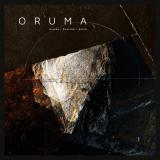
Skyline Systems emerges from Australia with Escape Vector — four deeply elegant cuts rooted in the classic deep Detroit influenced sound. Stripped-back and refined, the producer crafts machine-driven landscapes where analog synths and drum machines intertwine with a hypnotic, subtly futuristic groove.
Warm, fluid basslines, shimmering metallic chords and a steady pulse invite both introspection and late-night dancefloor drift. Minimal yet immersive, Escape Vector distills the essence of Detroit’s deep house and electro heritage while adding a contemporary sense of space and precision.
Four tracks built for careful listening — and for getting lost under low lights.
Limited vinyl pressing coming soon via Baldo's Physical Education.
Suche:physical education
- 1
Loz Goddard steps into new sonic territory on his Physical Education debut—delivering four machine-driven cuts rooted in analog hardware sounds, with high-energy rhythms and dancefloor intent. Leaving behind the sample-heavy textures and live instrumentation of previous releases, this EP leans more into synthesizers and drum machines, channelling the pulse of classic club gear with plenty of added bounce. Subtle nods to the sounds and moods of 90s and early 2000s video games add a nostalgic digital sheen—balancing playfulness, drive and warmth in equal measure.
Four forward-thinking jams from a seasoned producer.
Limited vinyl pressing coming soon on Baldo’s Physical Education label.
Laars presents Ghost Hunter, a four-track, club-focused EP blending funky, acid textures, and melodic house-trance influences. Drawing from 90s dancefloor language while maintaining a playful and contemporary edge, it moves through heavy drum work, hypnotic melodies and tight basslines. While each track carries its own mood — from darker, hypnotic tension to more emotional, break-inflected moments — the release holds together as a cohesive late-night journey.
B From E presents Surreal, a new EP on Baldo's Physical Education. The release brings a groovy club sound, mixing tech house rhythms with funky and electric elements. Across the record, B From E plays with tight drums, warm basslines and catchy synths designed for the dancefloor. Alongside the more energetic tracks, the EP also explores deeper and more spacious moments, adding a dreamy and atmospheric side to the release. Surreal moves between groove-driven club energy and deep, spacy moods, creating a balanced and versatile EP.
2026 Repress
Physical Education is proud to have Len Lewis back. This time with the reissue of his early 2000s Joy / Skip Up release. A hard to find record released back in the day in a small run press coming out again right in time for summer.
A side's Joy is a beautiful cut of deep tech house with lovely strings and swinging toms signature of the Swag Records affiliate. While the B side includes 2 versions of Skip Up, both are a perfect hybrid between modern deep house and breaks characteristic from that era.
Four years after Algorhythms EP, the journey continues. This new vinyl EP from Tim Jackiw Manifests a high-energy fusion of fast-paced rhythms, melodic textures, and deep acid grooves—crafted for the dancefloor, designed for the underground. A relentless pulse of movement and emotion, pushing forward while staying true to the roots. Limited pressing. Just pure analogue energy. Coming soon on Baldo's Physical Education label.
Argentinian artist and Calypso’s Dreams label hear Richer guides a tour of integration and transformation with his new release The Globalization. The four tracker enticed summer early with the opener Tropicana and makes her stay with Catch the Rhythm’s playful yet spacious grooves.
Side B continues the tour from bass to house, stopping for catchy layered classic house drums in Bring That Bass and closing with modern electro synths in The Global House.
Lee Renacre’s Phat Girl EP was originally released in 1996, boasting four seriously groovy techno cuts emblematic of those times. It is Lee’s first solo release and it came out on his own Format Records, which was started the same year. While back then you could probably buy it as a white label from the back of his car, you can now finally get it as a reissue.
Physical Education is Baldo’s new label, coming in strong with this as the first release, and one of the many upcoming must have tech house/techno classics.
Wrapped in Latex, in Berlin, Alone is the latest EP coming from Pletnev. Its four tracks trigger a dooming introspective look in an increasingly isolated, digital world, while simultaneously providing an extraterrestrial escape route.
DJ Support: Laurent Garnier, Danny Krivit, Chrissy T, Mousse T, Lenny Fontana, Danism & Train, Mr V, Quentin Harris, Natasha Kitty Kat, Eric Kupper DJ Pope, Danism + Train, Saison, Sean McCabe
Physical Education make their debut on SoSure Music with the ‘Sweet Talk EP'. Now based in Barcelona and Prague, Physical Education is the brainchild of Luke Scheybeler and David Philips. The duo’s production alias is synonymous with a soulful, jazzy, sample-heavy sound, meticulously crafted at their studio in the Pyrenees mountains. With a musical history than spans almost thirty years, Physical Education are producing music with a strong focus on musicianship and hardware-based production. Title track ’Sweet Talk’ is a smooth and superbly produced slice of jazz-influenced deep house while ‘Work On That Soon’, ‘Oscar’ and ‘Dreamsville’ (a vinyl only exclusive) are also included here and fully compliment this release to complete a standout debut EP.
Vinyl Only
Ode To 97's fourth Departure Lounge release. Primed dance floor bombs guaranteeing peak physical health with repeated play.
October Drift embark on their second album campaign after the acclaimed ‘Forever Whatever’ LP and ‘Naked’ EP in 2020. Their most successful single to date ‘Airborne Panic Attack’ was released late 2021. I Don’t Belong Anywhere, is a taut, visceral record, a step forward for the band into an even more powerful, brutal sound following their highly acclaimed debut album forever Whatever 2018. Far less introspective than their debut, I Don’t Belong Anywhere is October Drift’s totem for bringing all of us together again. “A feeling of not belonging is something everyone feels or has felt,” explains Kiran. I Don’t Belong Anywhere features previously released singles including dark grungy‘Insects’, “a coming-of-age song, about feeling life pull you in different directions”, and the biting reflection on the harsh backdrop of 21st Century living airborne Panic Attack’. The album is about connection and one that’s truly from the heart, rich with added layers of meaning it finds the band poised to explode across 2022 with their most thoughtful and exciting record yet.
Cyan. A moniker for one of the ‘90s standout musical exponents: Bryan Zentz.
A firm favourite in vintage house circles, Physical Education will soon welcome him to the fold. They’ll be re-issuing tracks from his discography to create Selections, a Cyan release for today’s scene.
Iodine and I Hear Voices come from Zentz’s debut 1994 EP: Peacekeeper. Blissfully futuristic, we’re taken down a proverbial wormhole thanks to rolling acid pulses and glitchy synth lines.
On the B side, I Hear Voices receives a modern re-working before proceedings finish on Strata 2, a track taken from the American’s 1995 release: Starkness.
MOVE TRAX, label forged from Tokyo's event series MOVE ムーブ that since 2022 has consistently showcased in Asia pivotal figures in electronic music scene such as Alex Neri, Fantastic Man, Massimiliano Pagliara, Liquid Earth, Chloé Caillet, Bradley Zero, Secretsundaze, Giammarco Orsini, Gonno, Known Artist, proudly unveils its inaugural release: TOKYO LIPSTICK. This sonic odyssey is crafted by the label's Italian-born, Tokyo-resident founder, Al Jones, who masterfully synthesizes the sun-drenched euphoria of '90s Mediterranean sounds with the kaleidoscopic dynamism of his Japanese sojourn. From the futuristic synthscapes reminiscent of classic video games to the pulsating vocal tapestry of Shibuya Scramble Crossing, the world's most vibrant intersection, Al Jones distills disparate influences into a cohesive and compelling narrative. Supporting this seminal debut are remixes from Berlin-based UK artist Running Hot, renowned for his distinctive contributions to esteemed labels such as Love On The Rocks (LOTR), Certain Music Records, and Permanent Vacation. Complementing this, rising Japanese talent Paperkraft, hailing from Osaka, brings a fresh perspective, building significant momentum from the Land of the Rising Sun with releases on Physical Education and HOMAGE Records with his tracks remixed by Aldonna and Aiden Francis.
- A1: Gwaing Reverie
- A2: Lucelle Sista Of The Soil
- A3: Mantis Praise
- A4: Amaseh Amen
- A5: For Peter & Ruth
- A6: Terug Blik
- A7: Threnody For The Khoisan
- A8: Ambient Khoi
- B1: Mcinci Song I
- B2: Morenga
- B3: Evidence Of Things Unseen
- B4: Lockdown Duet Milano-Cape Town
- B5: Roesdorp Requiem
- B6: The Ascension Of Milford Graves
Garth Erasmus is an artist and musician based in Cape Town, South Africa. 'Threnody for the KhoiSan' is his first album under his own name. Since 1985 his artistic interests have broadened to include music-making, designing and making his own instruments based on indigenous KhoiSan knowledge. From 1999 to 2012 he was a member of the South African First Nation activist group Khoi Khonnexion. In the past couple of years Garth Erasmus has also been a pivotal part of various international performance pieces and exhibition projects which brought him regularly to Europe. Most of these activities were developed and performed in collaboration with the Hamburg based band Kante and his band Khoi Khonnexion. In April 2024 Garth Erasmus will be part of the group exhibtion 'Oscillations' at Akademie der Künste, Berlin.
His works in music are predominantly characterized by a restless quest for alternative forms of expression and materials including self build instruments, field recordings or various electronic music devices.
In this context the music on 'Threnody for the KhoiSan' takes on a primal and metaphorical meaning. Rather than a formal, physical initiation, this process is more spiritually inclined, yet it is a spirituality which is consistently put into action.. “Ever since I was an art student I have experimented with alternative materials to release me from the Western education values I received. When I started to make these instruments in the 1980s, my intention was to create art objects but when I discovered the sound they made, it unlocked a door that transported me deeper in my quest in the realization that I was on the right path.
In fact all instruments which appear on 'Threnody for the KhoiSan' are products of a process of discovery starting from square one. All this is based and founded on the beauty of simplicity and minimalism as symbolized by the single string Khoisan musical bow and arrow as trance musical instrument. In this sense it soon became manisfest for Garth Erasmus to combine the bow instruments with various electronic instruments. Besides developing his own unique language in music he also shared an expressed interested in experimental sound aesthecis, Avantgarde composition and Free Jazz. However, his non - academic approach towards sound and music was always fueled by the desire for a reconnection to the land and to the idegenious knowledge of the KhoiSan, whose struggle for First Nation status continues.
Song for Morenga
This song is dedicated to a guerilla leader, named Jacob Morenga, who was the leader of the nama/herero anti-german uprisings that occured between 1904 and 1907.
Amaseh Amen
This is a classic mouthbow piece that conjures the spiritual nature of Khoisan cultural praxis.
Gwaing Reverie
It was composed as a personal gift to the other members of newly formed electro-acoustic trio „Gwaing". „Gwaing" is an ancient Khoisan place name, meaning the mouth of the river.
Mcinci Song
A typical meditation on the traditional Mcinci flute. This flute was originally played by shepherds and was made of reed.
The Ascension of Milford Graves
This piece attends to capture the risen spirit of the legendary African American drummer Milford Graves. It was composed soon after his death in 2021.
Song for The Sisters of the Soil
A live improvisation dedicated to Lucelle and Melissa (The Sisters of the Soil) on the occasion of visiting them at their residence, known as „Oppieyaart" on the Cape Flats. On 10 September 2022 there is an online event with them at Kunsthaus Hamburg.
For Talia Hoit from Colorado, who has been classically trained to play the piano since the age of five, her early musical education has definitely paid off. Now she writes original songs, performs on vocals and keyboards, and composes orchestra scores for symphonic metal. For many years, she has also had a passion for writing songs outside of any formal band situation, and is now working with talented producers and musicians to bring her most personal and intimate songs to life to share with the world. For five years, Talia was the keyboardist and a songwriter for the band AnaDies. Presently she is the lead singer, orchestrator and co-songwriter in the symphonic metal band Beyond Forgiveness and the keyboardist for the metal band Ob Nixilis. As a solo artist, she recorded two original home studio albums for personal purposes, Fate’s Too Small (2007) and A Little Longer (2012), which had a limited physical CD release only, mostly just for friends and family. Back in 2019, she recorded the single Angel (produced by Jarek Musil), which just recently received a new master, and after the experience of working with a professional producer she decided to pursue her solo project, to professionally produce and commercially release as many of the personal songs she had written over the years as possible. In 2023, she released two more singles: Abandon and Whispers in the Storm. Her extensive experience in the music industry and understanding of classical music are quite audibly reflected in these works, which show a high level of quality and expertise. Talia’s music is definitely a treat for symphonic metal fans and heavy music lovers, showing influences of bands such as Within Temptation, Nightwish, Evanescence, and Visions Of Atlantis.
- A1: String Quartet No. 5 I
- A2: String Quartet No. 5 Ii
- A3: String Quartet No. 5 Iii
- A4: String Quartet No. 5 Iv
- A5: String Quartet No. 5 V
- B1: String Quartet No. 4 (Buczak) I
- B2: String Quartet No. 4 (Buczak) Ii
- B3: String Quartet No. 4 (Buczak) Iii
- C1: String Quartet No. 2 (Company) I
- C2: String Quartet No. 2 (Company) Ii
- C3: String Quartet No. 2 (Company) Iii
- C4: String Quartet No. 2 (Company) Iv
- D1: String Quartet No. 3 (Mishima) 1957 – Award Montage
- D2: String Quartet No. 3 (Mishima) November 25 – Ichigaya
- D3: String Quartet No. 3 (Mishima) 1934 – Grandmother And Kimitake
- D4: String Quartet No. 3 (Mishima) 1962 – Body Building
- D5: String Quartet No. 3 (Mishima) Blood Oath
- D6: String Quartet No. 3 (Mishima) Mishima/Closing
When Kronos plays a piece, they become fellow composers, true collaborators. Without them, we wouldn’t have the kind of string quartet playing that we find around us today. There are two kinds of string quartet playing: the ‘Before Kronos’ and the ‘After Kronos’.” – Philip Glass
‘Kronos Quartet has broken the boundaries of what string quartets can do.’ – New York Times
Nonesuch releases Kronos Quartet’s acclaimed album Kronos Quartet Performs Philip Glass on vinyl for the first time to coincide with Kronos Quartet: Five Decades, a year-long celebration marking the quartet’s 50th anniversary. Originally released in 1995, the album features David Harrington (violin), John Sherba, (violin), Hank Dutt (viola) and Joan Jeanrenaud (cello) performing Quartet No. 2 (Company) (1983), No. 3 (Mishima) (1985), No. 4 (Buczak) (1990), and No. 5 (1991), the first piece Glass wrote especially for Kronos. Recorded at Skywalker Sound in California, the album was produced by Judith Sherman, Kurt Munkacsi and Philip Glass. The cover art features Francesco Clemente’s painting The Four Corners (1985). At the time of the album’s release, the New York Times said, ‘It contains some of Glass's best music since Koyaanisqatsi. His ear for sumptuous string sonorities is undeniable,’ while the Washington Post called it ‘An ideal combination of composer and performers.’ It was a top 10 hit on Billboard’s Top Classical Albums, and spent 12 weeks on Billboard’s Classical chart.
In his original liner note, critic Mark Swed wrote, ‘Glass’ string quartets may contain his most intimate music. They are works through which a very public composer, perhaps the most important opera reformer of our age and a longstanding collaborator in large-scale music theater, holds up a mirror to himself and his way of composing. “In an odd way,” Glass explains, “string quartets have always functioned like that for composers. I don’t really know why, but it’s almost impossible to get away from it. It’s the way composers of the past have thought and that’s no less true for me. It’s almost as if we say we’re going to write a string quartet, we take a deep breath, and we wade in to try to write the most serious, significant piece that we can.” Glass says that as he sat down to write String Quartet No. 5, he had discovered that perhaps not taking a serious tone might be the most serious way to deal with it. “I was thinking that I had really gone beyond the need to write a serious string quartet and that I could write a quartet that is about musicality, which in a certain way is the most serious subject.”’
Glass’ first numbered quartet was written in 1966; however, he did not return to the string quartet medium until 1983, when he provided incidental music for a dramatization of Samuel Beckett’s prose poem, Company. During those 17 years, Glass had formed an ensemble and developed his style in a series of increasingly elaborate pieces for it. String Quartet No. 3 is also adapted to dramatic music, this time from his score to the 1985 Paul Schrader film, Mishima. It was with the music of Mishima that Kronos became associated with Glass, recording the string quartet sections of the soundtrack and subsequently working extensively with the composer on all five of his numbered quartets. Kronos also gave the first concert performances of Company and Mishima. String Quartet No. 4 was composed in remembrance of the artist Brian Buczak, who died of AIDS in 1988.
As Kronos’ anniversary season continues with further concerts around the world, Nonesuch will reissue Black Angels on vinyl on February 16. First released in 1990, the award-winning album includes George Crumb’s title piece, which inspired David Harrington to found the quartet. Called ‘an unusually elevated and searing Vietnam War protest’ by the New York Times, it sets a dark, powerful tone for this collection, which addresses the political/physical/spiritual consequences of war. Also featured are works by Charles Ives, István Márta, Thomas Tallis, and Dmitri Shostakovich. ‘Stylishly packaged, intelligently programmed, superbly recorded and brilliantly performed,’ proclaimed Gramophone. ‘In short, very much the sort of disc we’ve come to expect from the talented and imaginative Kronos Quartet.’ The Evening Standard included it among its ‘100 Definitive Classical Albums of the 20th Century’.
Born in Baltimore, Maryland, in 1937, Philip Glass is a graduate of the University of Chicago and the Juilliard School. By 1974, he had created a large collection of music for The Philip Glass Ensemble. The period culminated in the landmark opera, Einstein on the Beach. Since Einstein, Glass’s repertoire has grown to include music for opera, dance, theatre, orchestra, and film. His scores have received Academy Award nominations (including Kundun and The Hours, as well as Notes on a Scandal) and a Golden Globe (The Truman Show). Recent works include his memoir, Words Without Music, his first Piano Sonata, opera Circus Days and Nights, and Symphony No. 14. Glass received the Praemium Imperiale in 2012, the US National Medal of the Arts from President Barack Obama in 2016, and 41st Kennedy Center Honors in 2018.
Nonesuch’s relationship with Glass began in 1985, with the release of the score for Paul Schrader’s Mishima featuring Kronos Quartet. Over the years other Glass works on Nonesuch have included Einstein on the Beach (1993), Kronos Quartet Performs Philip Glass (1995), Music in Twelve Parts (1996), Glass Box (2008), as well as the soundtracks for Powaqqatsi (1988), Kundun (1997), Koyaanisqatsi (1998), and The Hours (2002), amongst others.
For 50 years, San Francisco’s Kronos Quartet – David Harrington (violin), John Sherba (violin), Hank Dutt (viola), and Paul Wiancko (cello) – has challenged and reimagined what a string quartet can be. Founded at a time when the form was largely centred on long-established, Western European traditions, Kronos has been at the forefront of revolutionizing the string quartet into a living art form that responds to the people and issues of our time. In the process, Kronos has become one of the most celebrated and influential groups of our era, performing thousands of concerts worldwide, releasing more than 70 recordings of extraordinary breadth and creativity, and collaborating with many of the world’s most accomplished composers and performers. Through its nonprofit organization, Kronos Performing Arts Association, Kronos has commissioned more than 1,000 works and arrangements for string quartet – including the Kronos Fifty for the Future library of free, educational repertoire. Kronos has received more than 40 awards, including three Grammy Awards and the Polar Music, Avery Fisher, and Edison Klassiek Oeuvre Prizes.
Kronos is prolific and wide-ranging on recordings. The ensemble’s expansive discography on Nonesuch includes three Grammy-winning albums: Terry Riley’s Sun Rings (2019), Landfall with Laurie Anderson (2018), and Alban Berg’s Lyric Suite featuring soprano Dawn Upshaw (2003); the 40th-anniversary boxed set Kronos Explorer Series; Nuevo (2002), a Grammy- and Latin Grammy–nominated celebration of Mexican culture; Pieces of Africa (1992), a showcase of African-born composers that simultaneously topped Billboard’s Classical and World Music charts; and Folk Songs (2017), Nonesuch’s 50th album with Kronos, which featured Sam Amidon, Olivia Chaney, Rhiannon Giddens, and Natalie Merchant singing traditional folk songs.

The first release from JAZ & BERTIE (John Zahl & Albert Pearson) is here on Wax for your enjoyment!
With play time already from New York, Amsterdam and Ibiza, showcased by the likes of DJ Harvey, this is record has got the grooves that make people move.
In addition to these stupendous original tracks, we are excited to provide you with 2 tremendous remixes! One from Danilo Braca and another from some brand new cool cats on the block going by Physical Education and even a DJ tool to build your own take!
There is even the original Demo on B3, the track that started it all!
Fenne was born in London and moved to Dorset as a toddler,
where she grew up in the picturesque English countryside. She
was a ‘free range kid’, as she calls it, after her parents took her
out of school for a period at the age of seven. Over the following
year, they taught her while the family travelled Europe in a livein bus. Even after she returned to traditional school at 9, her
home education never ended, extending to music. Her mother
gifted Fenne with her old record collection, through which she
discovered her love for T-Rex and the Velvet Underground and
Nico. Soon after she fell for the strange genius of PJ Harvey
and came to worship Nick Drake, Joni Mitchell and the richly
crafted worlds of Feist, which inspired Fenne to pick up a guitar.
Fenne’s debut album, ‘On Hold’, has been highly sought after
and out of print since 2018. A tender collection of expressive,
open-hearted songs, the album was Fenne’s first foray into
songwriting, written during her teenage years. Writing her own
songs was initially a ‘therapy exercise’ for Fenne, who is
normally reserved when it comes to talking about her feelings.
The album, self-released in 2018, organically found a large
audience online, which grew after she opened for Lucy Dacus
and Andy Shauf’s North American tours last spring. Surrounding
‘On Hold’s release, The Line of Best Fit deemed Fenne “a new
and extraordinary voice capable of wringing profound and
resonant moments out of loss.”
In Fenne’s words, “To have this record physically re-released is
a big deal for me and the person I was when I made it. A lot’s
changed since then but these songs and what they’ve given me
will remain dependable reminders of beginnings and endings
that shaped me as a teenager. For an album whose title is half
‘hold’, it makes sense that now whoever wants to can finally do
that again.”
- A1: Flag Day/The Mother Stone
- A2: I Want To Love You
- B1: The Great I Am
- B2: Lullabbey
- B3: No Where's Where Nothing's Died (A Marvelous Pain) (A Marvelous Pain)
- B4: Thanks For Staying
- C1: Little Planet Pig
- C2: You're So Wonderful
- C3: I Dig Your Dog
- C4: Katya
- B1: All I Am In You/The Big Worm
- B2: No Where's Where Nothing's Died
- B3: Licking The Days
- B4: For The Longest Time
- B5: The Hodge-Podge Porridge Poke
"I think most of it takes place in dreams," Caleb Landry Jones says of his debut solo album, The Mother Stone. "I'm talking more about dreams than I am about what's happened in the physical realm. Or I'm talking about both, and you're not sure what's what." Caleb Landry Jones was born in Garland, Texas in 1989 and comes from a long line of fiddle players. Three, maybe four generations back, on his mother's side. His grandfather wrote jingles for commercials, his mother was a singer-songwriter who taught piano lessons in the house, and his father was a contractor who did a lot of work for the Dallas music-equipment retailer Brook Mays and knew a guy if you needed a bass or a banjo. But Jones is not sure if you can hear any of this in his music and he does not play the fiddle. Jones has been writing and recording music since age 16, around the same time he started acting professionally. Played in a band called Robert Jones for a minute, lost his guitar player to higher education, moved into his own place, and broke up with somebody, at which point the songs really started coming hard and fast. "I started playing guitar and playing more keys," he says, "and then started writing record after record after record after record, because I didn't know what to do with myself. It was a good way of healing. And it felt like as soon as I started doing it, it felt like it needed to happen all the time." In the ensuing years he'd spend a lot of time carrying unrecorded songs around in his head like goldfish in a bag, waiting for a chance to record them in marathon sessions in his parents' barn. "You gotta play the songs every day, or every two or three days, to keep `em," he says. "Otherwise I forget them." Sometimes the ideas fuse together, one chapter to the next; this is how songs grow into seven-plus-minute epics like the ones on The Mother Stone. His back catalog is around seven hundred songs deep_ a whole discography of full albums, most of them unheard outside the barn, at least for now.
Counterweight started at the end of 2015 as a party-series in Munich (Rote Sonne). It was about pushing the style of techno we stand for and which we couldn’t find easily in our city. During this journey we’ve learnt a lot about what somehow sadly has to be called a business and we met many artists and people involved in the Techno Scene. We even made friends throughout the years and that’s one of the nicest things after all.
The first V.A. release on Counterweight is an installment with some excellent artists we met during this time, we love their music as much as we love them as a person. Four years ago we couldn’t even imagine we would release a record with some of our favourites artists … Now, check this out. Heavy Kick-Drums, destructive basslines, distorted hi-hats, mesmerising melodies and…lots of passion.
- A1: White Blindness
- A2: Appledore Fayre
- A3: Voyager
- B1: Lady Lovibonde/Goodwin Pavane
- B2: Lionel Mettle
- C1: Fanhare
- C2: I Was A Scientist (1892)
- C3: Did I Dream Pts. 1-4
- D1: The Terror Of Melton
- D2: The Ballade Of Layser Manne
- D3: Chromium Dioxide And The Crazy Data
- D4: Hanfare
- D5: Cold Blows The Whistle, Lonely Night
What kind of band would choose a double vinyl, gatefold LP for their first release The Hare and Hoofe. Their eponymous first release consists of two discs. Disc One rounds up their 'hits' so far - 2018's smash hit White Blindness, the space gregorian
chant that is Voyager, and the pastoral tale of Appledore Fayre. The second consists of their rock opera, The Terror of Melton. Time-travelling scientists. Giant laser-eyed robots. A rock opera to end all rock operas...
Pitched somewhere between The Who, The Stooges, ELO, Sparks, Pink Floyd, Voivod, Pete Townshend, Brainiac, Bowie and Judas Priest, The Terror of Melton is a headspinning,
ambitious journey. In turns stomping, tear-jerking, full-on rocking and dreamlike, it will transport you. Prog Magazine's Dom Lawson described it as 'absurdly entertaining and deliciously weird... An unmissable trip for fans of the fuzzy and farout'.
2018 saw the band recording a BBC6Music Marc Riley session before even releasing a physical record. In addition, they've had plays on Stuart Maconie's Freak Zone. The band have also gained a monstrously good live reputation, playing an instantly
legendary set at Hastings' Beatwave festival, as well as headlining Tannerfest, Pitch Fest, playing with Focus and The Fierce and The Dead, and the John Snow Society's annual celebration of the eminent epidemiologist.
Some describe them as 'educational psych', others prefer 'polytechnic beat', still more as 'a seventies garage band'. There's certainly primeval drums, fuzz bass, lashings of guitar and synth noises from another planet.
Formed from a gang of friends from Folkestone, Hoofe members have played in groups including The Heliocentrics, The Priscillas, Ye Nuns, Jail Cell Recipes, The Frank Sidebottom Oh Blimey Big Band, Chalet and Hyperglo.
Bergsonist is the moniker of Moroccon born and NYC based Selwa Abd. 'Solyaris' follows the self-released '' and a prolific slew of releases for labels such as Styles upon Styles, Borft, and Angoisse amongst others. For Selwa her uncompromising & otherworldly, hypno technoid creations aim to capture a given moment in time, contextualising her often direct, hugely affective, & unpolished approach to production.
Selwa describes 'Solyaris' as 'an ode to the present broken education system that allowed me to sustain my dreams in NewYork', explaining, 'As an immigrant from Morrocco, I felt always fearful of the future, pressured to succeed at school. The only way I was able to channel all that anxiety was through music'.
There's a undeniable physicality to Bergsonist's work, and the idea of expunging anxiousness into her music is felt from the oft as 'Solyaris' strides into vision with it's quickening roaring pulse and scrambled explorative electronic probes. This sense of anxiety eases as layers of rhythm build - heads begin to turn down and lush minimalist swathes eventually envelope bodies in calm unity, Anxiety diverted.
'Conflict in Yeman' opens with a gambit of off-kilter percussive experiments & electronics, conveying a sense of determined urgency. Things grow more & more intricate & immediate as we progress - layers of disruption weave around a reoccurring 140BPM shuffle, anchoring Selwa's constant explorative concrete diversions.
'Former Alien who has been naturalized by a U.S Citizen' brings things down a notch - skittering drums linger below a truly haunting whispered melody, occasionally broken down by collapsed rewinds and thunderously raw in the red beat grit - to dizzying effect. Whereas previously 'Solyaris' had taken its cues from Drexciyan Detroit Electro 'Former Alien...' stands closer to a Fantastic Damage era EL-P instrumental rather than anything aimed at the floor.
The EP rolls out with 'Fidel Gastro', a structured & focused piece of Machine Funk & end of days drop cues, conjuring an effective mix of both euphoria & imminent dread.
Bergsonist cuts a unique figure for electronic music in 2018 as someone explicitly exploring the relationship between head & body music. Although undeniably more than oft aimed at the dancefloor, Selwa's work also holds an equal respect and understanding of the head & heart. From her politically loaded Track titles, to her ideologically aligned guise of 'Bergsonist', to most significantly - her music's ability to elicit a spectrum of finely tuned emotional responses within the confines of each track
Blood Debts' is the compulsive debut album from Years Of Denial, the alter-face of London-based French musician/producer and DJ, Jerome Tcherneyan.
Though his formulative Marseille youth was spent exploring the darkest corners of post-punk, New Wave, not to mention Public Enemy and the inspirational Mille Plateaux and Basic Channel labels, Tcherneyan, already an extremely capable drummer, quickly extended his sonic palate toward and beyond the bass-heavy electronic isolationism, insistent beats and drone experimentation that's still very much prevalent in his work today.
One should not either pass over his integral contribution to the much-lauded, though stolidly underground "ghost-rock" unit, Piano Magic, which engineered sublime collaborations with Brendan Perry (Dead Can Dance), Simon Raymonde (Cocteau Twins/This Mortal Coil) and Alan Sparhawk (Low). Tcherneyan, always prolific, can also lay claim to impressive collusions with Bonjo Iyabinghi Noah (African Head Charge), Damo Suzuki (Can), 70's psych folk legend, Mark Fry to name but a few.
In 2005, Jerome founded and promoted the infamous 'Flesh' parties; guests including Andy Stott /Claro Intelecto/Edit-Select/James Ruskin/Kirk Degiorgio/Mark Broom/Oliver Ho/Sigha/Steve Bicknell and many more. These nights served as an invaluable education in Techno and Dubmixology; marathon sets played deep into the sunrise.
Skip forward a decade and the DJ bug is even deeper embedded, with Tcherneyan sharing the booth with, amongst many others, Orphx/Phase Fatale/Joefarr and London Modular Alliance.
Tcherneyan's muse and foil on 'Blood Debts,' his first for Oliver Ho's splendid and already essential new Death & Leisure imprint, is Maya Petrovna, an entrancing London-based vocalist, film composer and performance/physical theatre artist, whose voice perfectly evokes Billie Holliday, Diamanda Galas and all stations between.
There's a black neon heart at the centre of 'Blood Debts,' a fetishtic ritual of contorted flesh and altered states; a feverish, infectious paradox of primitivism and modernity. Years of Denial is the ghost in the machine.
- 1