
Reservar23.02.2024
debe ser publicado en 23.02.2024
28,53 €
debe ser publicado en 23.02.2024

Ten years ago, Anderson .Paak didn't just release an album; he staged a full-scale takeover of the soul and hip-hop landscape. Released on January 15, 2016, Malibu served as the definitive arrival of an artist who had spent years grinding in the underground before a star-making turn on Dr. Dre’s Compton. While his previous work hinted at his potential, Malibu was the moment the world met the "Cheeky Andy" persona in full—a virtuosic drummer, a raspy-voiced crooner, and a sharp-witted rapper all rolled into one. The album is a sprawling, sun-drenched journey through the Southern California coast, blending 1970s funk, church-reared gospel, and gritty boom-bap into something that feels both nostalgic and entirely futuristic. With a heavyweight production lineup including 9th Wonder, Madlib, Kaytranada, and Hi-Tek, the record maintains a warm, analog texture that was a breath of fresh air in an increasingly digital era. It’s an album that breathes, full of intentional imperfections and the kind of "in-the-pocket" groove that can only come from a seasoned live performer. Beyond the infectious, dance-floor-ready energy of tracks like "Am I Wrong" and "Come Down," the album is a deeply autobiographical masterwork. .Paak uses the 65-minute runtime to unpack his life story with startling clarity, touching on his mother’s gambling addiction, his father’s incarceration, and his own brushes with homelessness with a sense of resilience that never feels heavy-handed. He weaves these heavy themes through a lens of triumph, grounded by vintage surfing documentary samples that give the project its cinematic, coastal atmosphere. It’s a celebratory record born out of struggle, anchored by his impeccable technicality on the drums and a guest list—featuring ScHoolboy Q, Rapsody, and The Game—that feels hand-picked to complement his specific brand of West Coast swagger. A decade later, Malibu stands as a modern classic and the blueprint for the soulful revivalism that would eventually lead .Paak to global superstardom and Grammy-winning heights. It remains a testament to the idea that the most profound music often comes from the most personal places, proving ten years on that the best way to move forward is to stay rooted in the groove.
Haga su pedido ahora y le encargaremos el artículo en nuestro proveedor.

Ten years ago, Anderson .Paak didn't just release an album; he staged a full-scale takeover of the soul and hip-hop landscape. Released on January 15, 2016, Malibu served as the definitive arrival of an artist who had spent years grinding in the underground before a star-making turn on Dr. Dre’s Compton. While his previous work hinted at his potential, Malibu was the moment the world met the "Cheeky Andy" persona in full—a virtuosic drummer, a raspy-voiced crooner, and a sharp-witted rapper all rolled into one. The album is a sprawling, sun-drenched journey through the Southern California coast, blending 1970s funk, church-reared gospel, and gritty boom-bap into something that feels both nostalgic and entirely futuristic. With a heavyweight production lineup including 9th Wonder, Madlib, Kaytranada, and Hi-Tek, the record maintains a warm, analog texture that was a breath of fresh air in an increasingly digital era. It’s an album that breathes, full of intentional imperfections and the kind of "in-the-pocket" groove that can only come from a seasoned live performer. Beyond the infectious, dance-floor-ready energy of tracks like "Am I Wrong" and "Come Down," the album is a deeply autobiographical masterwork. .Paak uses the 65-minute runtime to unpack his life story with startling clarity, touching on his mother’s gambling addiction, his father’s incarceration, and his own brushes with homelessness with a sense of resilience that never feels heavy-handed. He weaves these heavy themes through a lens of triumph, grounded by vintage surfing documentary samples that give the project its cinematic, coastal atmosphere. It’s a celebratory record born out of struggle, anchored by his impeccable technicality on the drums and a guest list—featuring ScHoolboy Q, Rapsody, and The Game—that feels hand-picked to complement his specific brand of West Coast swagger. A decade later, Malibu stands as a modern classic and the blueprint for the soulful revivalism that would eventually lead .Paak to global superstardom and Grammy-winning heights. It remains a testament to the idea that the most profound music often comes from the most personal places, proving ten years on that the best way to move forward is to stay rooted in the groove.
Haga su pedido ahora y le encargaremos el artículo en nuestro proveedor.

Ten years ago, Anderson .Paak didn't just release an album; he staged a full-scale takeover of the soul and hip-hop landscape. Released on January 15, 2016, Malibu served as the definitive arrival of an artist who had spent years grinding in the underground before a star-making turn on Dr. Dre’s Compton. While his previous work hinted at his potential, Malibu was the moment the world met the "Cheeky Andy" persona in full—a virtuosic drummer, a raspy-voiced crooner, and a sharp-witted rapper all rolled into one. The album is a sprawling, sun-drenched journey through the Southern California coast, blending 1970s funk, church-reared gospel, and gritty boom-bap into something that feels both nostalgic and entirely futuristic. With a heavyweight production lineup including 9th Wonder, Madlib, Kaytranada, and Hi-Tek, the record maintains a warm, analog texture that was a breath of fresh air in an increasingly digital era. It’s an album that breathes, full of intentional imperfections and the kind of "in-the-pocket" groove that can only come from a seasoned live performer. Beyond the infectious, dance-floor-ready energy of tracks like "Am I Wrong" and "Come Down," the album is a deeply autobiographical masterwork. .Paak uses the 65-minute runtime to unpack his life story with startling clarity, touching on his mother’s gambling addiction, his father’s incarceration, and his own brushes with homelessness with a sense of resilience that never feels heavy-handed. He weaves these heavy themes through a lens of triumph, grounded by vintage surfing documentary samples that give the project its cinematic, coastal atmosphere. It’s a celebratory record born out of struggle, anchored by his impeccable technicality on the drums and a guest list—featuring ScHoolboy Q, Rapsody, and The Game—that feels hand-picked to complement his specific brand of West Coast swagger. A decade later, Malibu stands as a modern classic and the blueprint for the soulful revivalism that would eventually lead .Paak to global superstardom and Grammy-winning heights. It remains a testament to the idea that the most profound music often comes from the most personal places, proving ten years on that the best way to move forward is to stay rooted in the groove.
Haga su pedido ahora y le encargaremos el artículo en nuestro proveedor.

LIMITED EDITION (500 COPIES) 20TH ANNIVERSARY REMASTER, AVAILABLE ON VINYL (2LP) FOR THE FIRST TIME IN ALMOST TWO DECADES. HOUSED IN GORGEOUS GLOSSY GATEFOLD SLEEVE AND PRESSED ON RED & ORANGE VINYL TO COMPLIMENT THE ARTWORK
City Calls Revolution is our second full-length album, created as we absorbed the new wave revival and math rock movements that emerged in the early to mid-2000s, while simultaneously reconstructing elements of classic progressive rock, hard rock, and experimental music in our own way.
The album strongly reflects the attitude we cultivated as a live band—deeply influenced by the American and Japanese bands we shared stages with at the time—and embodies the punk spirit that shaped us.
Recorded and mixed in March 2005 at Headgear Studio in Brooklyn, New York, by Paul Mahajan (known for his work with Yeah Yeah Yeahs, TV on the Radio, and others), the album was originally released in May of the same year on both LP and CD by Beta-lactam Ring Records, then based in Portland, Oregon. Long out of print, it now returns two decades later as a newly remastered edition to be released by Riot Season Records in the UK.
In 2026, GREEN MILK FROM THE PLANET ORANGE celebrates its 25th anniversary—and also marks 10 years since Damo joined as our current bassist. It is a joy and an honor to have this album, filled with songs we still play live today, reissued in such a milestone year.
Starting January 2026, we will bring this LP on tour across 27 shows in 11 European countries, including the UK. We look forward to seeing all of you at the venues.
/// 2026 Winter European Tour ///
debe ser publicado en 20.02.2026

Robin Pecknold brings light to the bleakest of winters with Fleet Foxes' 'A Very Lonely Solstice,' a 13-track career spanning collection recorded in December 2020, at Brooklyn, NY's St. Ann & the Holy Trinity Church. Now being released for the first time on vinyl, CD and digital formats, 'A Very Lonely Solstice' captures a poignant moment in time. The recording was originally broadcasted as a live-stream event on the winter solstice of 2020, just days after New York declared a state of emergency tightening restrictions again in response to increasing COVID-19 cases. Pecknold describes the set as "me by myself on the longest night of the year... honoring the loneliness of 2020 with a nylon string and some songs new and old." Fans worldwide tuned in while quarantined at home, finding solace and a sense of community in a period of extreme isolation. Much of 'A Very Lonely Solstice' showcases a solo focus on Pecknold who offers up acoustic arrangements of fan-favorite songs spanning Fleet Foxes' catalog. Selections cover all four of the band's studio albums, including their 2008 self-titled debut album ("Tiger Mountain Peasant Song") to 2011's Helplessness Blues ("Blue Spotted Tail") and 2017's Crack-Up ("If You Need To, Keep Time On Me"), all the way to their latest release, Shore. Resistance Revival Chorus joins Pecknold on Shore tracks "Wading In Waist-High Water" and "Can I Believe You." Also featured: a cover of Nina Simone's "In The Morning" and a rearrangement of the traditional "Silver Dagger."
debe ser publicado en 30.01.2026

Conceptualized and written during the chaotic fall months of 2020, Hiss Golden Messenger’s O Come All Ye Faithful recorded shortly after the widely hailed Quietly Blowing It is a meditation on grace, loss, hope, and community. Explains songwriter M.C. Taylor, “Big, brash holiday music the type that we hear in big box stores in the middle of December has never resonated with me, and this past year it felt absolutely dissonant. I wanted to make a seasonal record that felt more in step with the way that I, and so many others, experience this time of year: quiet, contemplative, searching, and bittersweet.” Contributors to O Come All Ye Faithful include many members of Hiss Golden Messenger’s extended family, as well as special guests like GRAMMY Award winner Aoife O’Donovan, Nathaniel Rateliff, Erin Rae, and Buddy Miller. The tracklist includes new tunes written by Taylor, classic hymns, and renditions of songs by Spiritualized, Creedence Clearwater Revival, and Woody Guthrie, all arranged in the inimitable Hiss Golden Messenger style. Adorned with a beautifully spare design created by celebrated artist Cody Hudson. The deluxe vinyl version of O Come All Ye Faithful includes an additional collection of remixes by Revelators, Taylor’s spiritual jazz and dub-influenced project with Cameron Ralston.
Haga su pedido ahora y le encargaremos el artículo en nuestro proveedor.

Ian Moore, Johnny Moeller, and Jesse Dayton-three of Texas' fiercest fretmen-join forces at last as Texas Headhunters, a band born from deep roots, old friendships, and a shared reverence for the raw, swaggering spirit of Texas blues. Their self-titled debut isn't a nostalgia trip. It's a declaration.
Cut over five days at Willie Nelson's Pedernales Studio, 'Texas Headhunters' deals 12 tracks of grit, groove, and gut-level truth. No smoke, no mirrors-just seasoned musicians in a room, plugged in and turned up. The chemistry is real. The result is mind blowing. Clifford Antone looms large in the story of Texas Headhunters-the spiritual godfather of the project, and the man who first recognized the fire in each of its members. All three-Johnny, Jesse, and Ian-were among the last generation of young guns taken under his wing.
Texas Headhunters isn't just a summit of three badasses with guitars. It's a reclamation. A statement. A reminder that Texas blues, in all its grit and glory, still matters. It's not retro-it's revival. And it's not a tribute-it's a shot across the bow.
Format: Standard Jacket with printed sleeve with lyrics. Pressed on Opaque Red Vinyl.
debe ser publicado en 29.08.2025

Stirring, snaking riffs, set closer to Josh Homme’s sun-bleached Joshua Tree compound, than the English Channel-lashed grin-and-bear-it character of Cleethorpes, sound the return of Lincolnshire teen-trio, Revivalry as they get set for 2025. Rushing and rattling into 2025, targeting fresh terrain as last year’s land grab of main stage festival and support slots becomes yesterday’s news, most recent single "Lost"'s three-and-a-half minutes of abandon pushes at the door of another sunny season of big shows and wild memories. School was out in 2024 as the teenagers took off from their hometown to first tackle the festival fields of Kendal Calling last summer, becoming the youngest ever band to play the Main Stage, having been hand-picked by bookers who spotted them mid-flow at one of their earliest shows. With trailblazing single, The Town, accompanying them on their way as thousands of new music-hungry gig goers caught the band on stages of increasing scale, their online listeners kept pace. Touring from sweaty venues to major outdoor support slots, their impressive run included a first, major Manchester headline, playing at Deaf Institute as the year met it’s festive close. Delving into record collections and distinct individual tastes, the three members of Revivalry refer with comfort to Rage Against The Machine and Bring Me The Horizon, as easily as fellow documentarians of youth, Arctic Monkeys or Supergrass, when discussing their beyond-years writing.
debe ser publicado en 20.06.2025

Vol 1[28,99 €]
Googling “paradise house”, the first results to pop up are an endless list of European b&b’s with whitewashed lime façades, all of them promising “…an unmatched travel experience a few steps from the sea”. Next, a little further down, are the institutional websites of a few select semi-luxury retirement homes (no photos shown, but lots of stock images of smiling nurses with reassuring looks). To find the “paradise house” we’re after, we have to scroll even further down. Much further down.
It feels like yesterday, and at the same time it seems like a million years ago. The Eighties had just ended, and it was still unclear what to expect from the Nineties. Mobile phones that were not the size of a briefcase and did not cost as much as a car? A frightening economic crisis? The guitar-rock revival?! Certainly, the best place to observe that moment of transition was the dancefloor. Truly epochal transformations were happening there. From America, within a short distance one from the other, two revolutionary new musical styles had arrived: the first one sounded a bit like an “on a budget” version of the best Seventies disco-music – Philly sound made with a set of piano-bar keyboards! – the other was even more sparse, futuristic and extraterrestrial. It was a music with a quite distinct “physical” component, which at the same time, to be fully grasped, seemed to call for the knotty theories of certain French post-modern philosophers: Gilles Deleuze, Félix Guattari, Paul Virilio... Both those genres – we would learn shortly after – were born in the black communities of Chicago and Detroit, although listening to those vinyl 12” (often wrapped in generic white covers, and with little indication in the label) you could not easily guess whether behind them there was a black boy from somewhere in the Usa, or a girl from Berlin, or a pale kid from a Cornish coastal town.
Quickly, similar sounds began to show up from all corners of Europe. A thousand variations of the same intuition: leaner, less lean, happier, slightly less intoxicated, more broken, slower, faster, much faster... Boom! From the dancefloors – the London ones at least, whose chronicles we eagerly read every month in the pages of The Face and i-D – came tales of a new generation of clubbers who had completely stopped “dressing up” to go dancing; of hot tempered hooligans bursting into tears and hugging everyone under the strobe lights as the notes of Strings of Life rose up through the fumes of dry ice (certain “smiling” pills were also involved, sure). At this point, however, we must move on to Switzerland.
In Switzerland, in the quiet and diligent town of Lugano, between the 1980s and 1990s there was a club called “Morandi”. Its hot night was on Wednesdays, when the audience also came from Milan, Como, Varese and Zurich. Legend goes that, one night, none less than Prince and Sheila E were spotted hiding among the sofas, on a day-off of the Italian dates of the Nude Tour… The Wednesday resident and superstar was an Italian dj with an exotic name: Don Carlos. The soundtrack he devised was a mixture of Chicago, Detroit, the most progressive R&B and certain forgotten classics of old disco music: practically, what the Paradise Garage in New York might have sounded like had it not closed in 1987. In between, Don Carlos also managed to squeeze in some tracks he had worked on in his studio on Lago Maggiore. One in particular: a track that was rather slow compared to the BPM in fashion at the time, but which was a perfect bridge between house and R&B. The title was Alone: Don Carlos would explain years later that it had to be intended both in the English meaning of “by itself” and like the Italian word meaning “halo”. That wasn’t the only double entendre about the song, anyway. Its own very deep nature was, indeed, double. On the one hand, Alone was built around an angelic keyboard pattern and a romantic piano riff that took you straight to heaven; on the other, it showcased enough electronic squelches (plus a sax part that sounded like it had been dissolved by acid rain) to pigeonhole the tune into the “junk modernity” section, aka the hallmark of all the most innovative sounds of the time: music that sounded like it was hand-crafted from the scraps of glittering overground pop.
No one knows who was the first to call it “paradise house”, nor when it happened. Alternative definitions on the same topic one happened to hear included “ambient house”, “dream house”, “Mediterranean progressive”… but of course none were as good (and alluring) as “paradise house”. What is certain is that such inclination for sounds that were in equal measure angelic and neurotic, romantic and unaffective, quickly became the trademark of the second generation of Italian house. Music that seemed shyly equidistant from all the rhythmic and electronic revolutions that had happened up to that moment (“Music perfectly adept at going nowhere slowly” as noted by English journalist Craig McLean in a legendary field report for Blah Blah Blah magazine). Music that to a inattentive ear might have sounded as anonymous as a snapshot of a random group of passers-by at 10AM in the centre of any major city, but perfectly described the (slow) awakening in the real world after the universal love binge of the so-called Second Summer of Love.
For a brief but unforgettable season, in Italy “paradise house” was the official soundtrack of interminable weekends spent inside the car, darting from one club to another, cutting the peninsula from North to centre, from East to West coast in pursuit of the latest after-hours disco, trading kilometres per hour with beats per minute: practically, a new New Year’s Eve every Friday and Saturday night. This too was no small transformation, as well as a shock for an adult Italy that was encountering for the first time – thanks to its sons and daughters – the wild side of industrial modernity. The clubbers of the so-called “fuoriorario” scene were the balls gone mad in the pinball machine most feared by newspapers, magazines and TV pundits. What they did each and every weekend, apart from going crazy to the sound of the current white labels, was linking distant geographical points and non-places (thank you Marc Augé!) – old dance halls, farmhouses and business centres – transformed for one night into house music heaven. As Marco D’Eramo wrote in his 1995 essay on Chicago, Il maiale e il grattacielo: “Four-wheeled capitalism distorts our age-old image of the city, it allows the suburbs to be connected to each other, whereas before they were connected only by the centre (…) It makes possible a metropolitan area without a metropolis, without a city centre, without downtown. The periphery is no longer a periphery of any centre, but is self-centred”.
“Paradise house” perfectly understood all of this and turned it into a sort of cyber-blues that didn’t even need words, and unexpectedly brought back a drop of melancholic (post?)-humanity within a world that by then – as we would wholly realise in the decades to come – was fully inhuman and heartless. A world where we were all alone, and surrounded by a sinister yellowish halo, like a neon at the end of its life cycle. But, for one night at least, happy."
Haga su pedido ahora y le encargaremos el artículo en nuestro proveedor.

Vol 2[28,99 €]
Volume 1 of this expertly curated project of 90s Italian House - put together by Don Carlos.
If Paradise was half as nice… by Fabio De Luca.
Googling “paradise house”, the first results to pop up are an endless list of European b&b’s with whitewashed lime façades, all of them promising “…an unmatched travel experience a few steps from the sea”. Next, a little further down, are the institutional websites of a few select semi-luxury retirement homes (no photos shown, but lots of stock images of smiling nurses with reassuring looks). To find the “paradise house” we’re after, we have to scroll even further down. Much further down.
It feels like yesterday, and at the same time it seems like a million years ago. The Eighties had just ended, and it was still unclear what to expect from the Nineties. Mobile phones that were not the size of a briefcase and did not cost as much as a car? A frightening economic crisis? The guitar-rock revival?! Certainly, the best place to observe that moment of transition was the dancefloor. Truly epochal transformations were happening there. From America, within a short distance one from the other, two revolutionary new musical styles had arrived: the first one sounded a bit like an “on a budget” version of the best Seventies disco-music – Philly sound made with a set of piano-bar keyboards! – the other was even more sparse, futuristic and extraterrestrial. It was a music with a quite distinct “physical” component, which at the same time, to be fully grasped, seemed to call for the knotty theories of certain French post-modern philosophers: Gilles Deleuze, Félix Guattari, Paul Virilio... Both those genres – we would learn shortly after – were born in the black communities of Chicago and Detroit, although listening to those vinyl 12” (often wrapped in generic white covers, and with little indication in the label) you could not easily guess whether behind them there was a black boy from somewhere in the Usa, or a girl from Berlin, or a pale kid from a Cornish coastal town.
Quickly, similar sounds began to show up from all corners of Europe. A thousand variations of the same intuition: leaner, less lean, happier, slightly less intoxicated, more broken, slower, faster, much faster... Boom! From the dancefloors – the London ones at least, whose chronicles we eagerly read every month in the pages of The Face and i-D – came tales of a new generation of clubbers who had completely stopped “dressing up” to go dancing; of hot tempered hooligans bursting into tears and hugging everyone under the strobe lights as the notes of Strings of Life rose up through the fumes of dry ice (certain “smiling” pills were also involved, sure). At this point, however, we must move on to Switzerland.
In Switzerland, in the quiet and diligent town of Lugano, between the 1980s and 1990s there was a club called “Morandi”. Its hot night was on Wednesdays, when the audience also came from Milan, Como, Varese and Zurich. Legend goes that, one night, none less than Prince and Sheila E were spotted hiding among the sofas, on a day-off of the Italian dates of the Nude Tour… The Wednesday resident and superstar was an Italian dj with an exotic name: Don Carlos. The soundtrack he devised was a mixture of Chicago, Detroit, the most progressive R&B and certain forgotten classics of old disco music: practically, what the Paradise Garage in New York might have sounded like had it not closed in 1987. In between, Don Carlos also managed to squeeze in some tracks he had worked on in his studio on Lago Maggiore. One in particular: a track that was rather slow compared to the BPM in fashion at the time, but which was a perfect bridge between house and R&B. The title was Alone: Don Carlos would explain years later that it had to be intended both in the English meaning of “by itself” and like the Italian word meaning “halo”. That wasn’t the only double entendre about the song, anyway. Its own very deep nature was, indeed, double. On the one hand, Alone was built around an angelic keyboard pattern and a romantic piano riff that took you straight to heaven; on the other, it showcased enough electronic squelches (plus a sax part that sounded like it had been dissolved by acid rain) to pigeonhole the tune into the “junk modernity” section, aka the hallmark of all the most innovative sounds of the time: music that sounded like it was hand-crafted from the scraps of glittering overground pop.
No one knows who was the first to call it “paradise house”, nor when it happened. Alternative definitions on the same topic one happened to hear included “ambient house”, “dream house”, “Mediterranean progressive”… but of course none were as good (and alluring) as “paradise house”. What is certain is that such inclination for sounds that were in equal measure angelic and neurotic, romantic and unaffective, quickly became the trademark of the second generation of Italian house. Music that seemed shyly equidistant from all the rhythmic and electronic revolutions that had happened up to that moment (“Music perfectly adept at going nowhere slowly” as noted by English journalist Craig McLean in a legendary field report for Blah Blah Blah magazine). Music that to a inattentive ear might have sounded as anonymous as a snapshot of a random group of passers-by at 10AM in the centre of any major city, but perfectly described the (slow) awakening in the real world after the universal love binge of the so-called Second Summer of Love.
For a brief but unforgettable season, in Italy “paradise house” was the official soundtrack of interminable weekends spent inside the car, darting from one club to another, cutting the peninsula from North to centre, from East to West coast in pursuit of the latest after-hours disco, trading kilometres per hour with beats per minute: practically, a new New Year’s Eve every Friday and Saturday night. This too was no small transformation, as well as a shock for an adult Italy that was encountering for the first time – thanks to its sons and daughters – the wild side of industrial modernity. The clubbers of the so-called “fuoriorario” scene were the balls gone mad in the pinball machine most feared by newspapers, magazines and TV pundits. What they did each and every weekend, apart from going crazy to the sound of the current white labels, was linking distant geographical points and non-places (thank you Marc Augé!) – old dance halls, farmhouses and business centres – transformed for one night into house music heaven. As Marco D’Eramo wrote in his 1995 essay on Chicago, Il maiale e il grattacielo: “Four-wheeled capitalism distorts our age-old image of the city, it allows the suburbs to be connected to each other, whereas before they were connected only by the centre (…) It makes possible a metropolitan area without a metropolis, without a city centre, without downtown. The periphery is no longer a periphery of any centre, but is self-centred”.
“Paradise house” perfectly understood all of this and turned it into a sort of cyber-blues that didn’t even need words, and unexpectedly brought back a drop of melancholic (post?)-humanity within a world that by then – as we would wholly realise in the decades to come – was fully inhuman and heartless. A world where we were all alone, and surrounded by a sinister yellowish halo, like a neon at the end of its life cycle. But, for one night at least, happy.
Haga su pedido ahora y le encargaremos el artículo en nuestro proveedor.

Die Revolution lebt auf ihrem neuesten Album "La France des Maudits" neu auf - SETH ist die Hymne derer, die sich aus den Ruinen erheben, der Unnachgiebigen, der ewigen Rebellen. Dieses Black-Metal-Revival bietet eine Erzählung von unerbittlicher Wut, die den Geist des Aufstands, der Befreiung und des Trotzes gegen die sakrale Unterdrückung beschwört. Mit Titeln wie "Paris des Maléfices" und "Et Que Vive le Diable!" weben sie einen dunklen Klangteppich, der ihre einzigartige Nische im atmosphärischen Black Metal zeigt. Hymnen des Widerstands, die die Schreie einer neuen Zeit widerspiegeln, die nicht bereit ist, vor dem göttlichen Verfall zu knien.
debe ser publicado en 19.07.2024

Die Revolution lebt auf ihrem neuesten Album "La France des Maudits" neu auf - SETH ist die Hymne derer, die sich aus den Ruinen erheben, der Unnachgiebigen, der ewigen Rebellen. Dieses Black-Metal-Revival bietet eine Erzählung von unerbittlicher Wut, die den Geist des Aufstands, der Befreiung und des Trotzes gegen die sakrale Unterdrückung beschwört. Mit Titeln wie "Paris des Maléfices" und "Et Que Vive le Diable!" weben sie einen dunklen Klangteppich, der ihre einzigartige Nische im atmosphärischen Black Metal zeigt. Hymnen des Widerstands, die die Schreie einer neuen Zeit widerspiegeln, die nicht bereit ist, vor dem göttlichen Verfall zu knien.
debe ser publicado en 19.07.2024

When Eastward was first announced back in 2018, it was heralded for its pixelated prowess and quirky sense of style. In the three years leading up to its release, the hype train continued to gather steam as more and more was unveiled. Upon launch, it became clear that Eastward was about so much more than just style. It had substance, too. A modern celebration of early '90s video games, Pixpil's Eastward delivers a poignant yet hopeful post-apocalyptic story set in a delightfully dark world. It's a story of tribulation and triumph for a small indie studio and offers a thought-provoking exploration of societal constructs whilst also providing some warm-hearted and good-humoured fun. Eastward's iconic art style is complemented perfectly by its incredible original soundtrack composed by Joel Corelitz. In celebration of Eastward's recently launched and highly anticipated Octopia DLC, Black Screen Records and Lost In Cult Records have teamed up to bring you an exclusive opportunity to secure a series of beautiful Eastward OST items.
debe ser publicado en 24.05.2024

When Eastward was first announced back in 2018, it was heralded for its pixelated prowess and quirky sense of style. In the three years leading up to its release, the hype train continued to gather steam as more and more was unveiled. Upon launch, it became clear that Eastward was about so much more than just style. It had substance, too. A modern celebration of early '90s video games, Pixpil's Eastward delivers a poignant yet hopeful post-apocalyptic story set in a delightfully dark world. It's a story of tribulation and triumph for a small indie studio and offers a thought-provoking exploration of societal constructs whilst also providing some warm-hearted and good-humoured fun. Eastward's iconic art style is complemented perfectly by its incredible original soundtrack composed by Joel Corelitz. In celebration of Eastward's recently launched and highly anticipated Octopia DLC, Black Screen Records and Lost In Cult Records have teamed up to bring you an exclusive opportunity to secure a series of beautiful Eastward OST items.
debe ser publicado en 24.05.2024

In den letzten zehn Jahren haben CARNATION das Revival des Death Metal der alten Schule angeführt. Sie haben seelenerschütternde Riffs und trampelnde Blastbeats mit einigen der bedrohlichsten Growls der neuen Welle zurückgebracht. Während die belgische Band die altehrwürdigen Traditionen des Genres immer hochgehalten hat, klingt sie auch nie veraltet, sondern dringt mit "Cursed Mortality" in tiefere, dunklere und experimentellere Gewässer vor. Der Titeltrack watet in bedrohlichen Synthie-Klängen und sogar cleanen Vocals. Dieses Album ist nicht einfach ein Revival - Es ist ein mutiger Schritt in die Zukunft. Für Fans von (frühen) ENTOMBED, BLOODBATH, GATECREEPER, SKELETAL REMAINS, GRAVE.
debe ser publicado en 03.11.2023

In den letzten zehn Jahren haben CARNATION das Revival des Death Metal der alten Schule angeführt. Sie haben seelenerschütternde Riffs und trampelnde Blastbeats mit einigen der bedrohlichsten Growls der neuen Welle zurückgebracht. Während die belgische Band die altehrwürdigen Traditionen des Genres immer hochgehalten hat, klingt sie auch nie veraltet, sondern dringt mit "Cursed Mortality" in tiefere, dunklere und experimentellere Gewässer vor. Der Titeltrack watet in bedrohlichen Synthie-Klängen und sogar cleanen Vocals. Dieses Album ist nicht einfach ein Revival - Es ist ein mutiger Schritt in die Zukunft. Für Fans von (frühen) ENTOMBED, BLOODBATH, GATECREEPER, SKELETAL REMAINS, GRAVE.
debe ser publicado en 03.11.2023
Kai Rodriguez makes his debut outing on Hot Creations, delivering his two-track ‘The Thrill’ EP.
With his late-2021 Hottrax debut ‘Underground’, DJ/producer Kai Rodriguez gave the house scene a first glimpse of what’s to come with the 25-year-old UK talent’s breakthrough release remaining in heavy rotation for head honcho Jamie Jones across the Ibiza season and beyond. Having since featured on bubbling US imprint Revival New York, he steps things up a level as he reveals his first material of 2023 and his Hot Creations debut with ‘The Thrill’.
Lead track ‘The Thrill’ harnesses the iconic vocal known across the globe but switches things up, contrasting the vibrant tones with murky low-ends and metallic percussion for a no-nonsense cut main for main rooms, while ‘Sum’ Bout’ takes a drum-driven path as skippy hats and warped snippets ebb and flow amongst the mix for more peak time material.
Haga su pedido ahora y le encargaremos el artículo en nuestro proveedor.
Welcome to the Parish. Come, gather round dear lambs, as today’s sermon is about to begin. Crypt of the Wizard proudly presents the highly anticipated debut LP from pastoral proto-metal power trio Parish, available to pre-order on vinyl now. The two years since the release of their EP God's Right Hand have proved to be no fallow period for the band, who used the time to write and hone the 10 songs laid out on their self-titled debut. They returned to the majestic Holy Mountain to record the album. Making use of the studio's bumper crop of vintage equipment, Parish were able to unearth a sound that draws on the roots of heavy metal. The band's lyrics continue to revel in notions of the pastoral. Themes concerning the works of witches and the changing of the seasons are explored with economic and elegant storytelling. Songs of villagers besieged by strange travellers and poor wretches locked away in gaol conjure up a feeling of uncanny dread. Elsewhere, other songs suggest a sacerdotal attitude towards the earth and those who walk it. Parish stir up sweet memories of those subtle moments of perfection found deep in the discographies of heavy metal’s historic luminaries. Their sound reaches into places previously ventured by the likes of Wishbone Ash, Pagan Altar and Budgie, as well as folk revivalists Fairport Convention - a less obvious resource for heaviness, but a fine repository for musical depth. With any luck, Parish will in time join the aforementioned bands whose records will be played on repeat, locked in the unchangeable hearts of those unbothered by novelty and changes in musical fashions. Now our sermon has come to a close, peace be with you, and go forth in glory.
debe ser publicado en 10.01.2023

Robin Pecknold brings light to the bleakest of winters with Fleet Foxes' 'A Very Lonely Solstice,' a 13-track career spanning collection recorded in December 2020, at Brooklyn, NY's St. Ann & the Holy Trinity Church. Now being released for the first time on vinyl, CD and digital formats, 'A Very Lonely Solstice' captures a poignant moment in time. The recording was originally broadcasted as a live-stream event on the winter solstice of 2020, just days after New York declared a state of emergency tightening restrictions again in response to increasing COVID-19 cases. Pecknold describes the set as "me by myself on the longest night of the year... honoring the loneliness of 2020 with a nylon string and some songs new and old." Fans worldwide tuned in while quarantined at home, finding solace and a sense of community in a period of extreme isolation. Much of 'A Very Lonely Solstice' showcases a solo focus on Pecknold who offers up acoustic arrangements of fan-favorite songs spanning Fleet Foxes' catalog. Selections cover all four of the band's studio albums, including their 2008 self-titled debut album ("Tiger Mountain Peasant Song") to 2011's Helplessness Blues ("Blue Spotted Tail") and 2017's Crack-Up ("If You Need To, Keep Time On Me"), all the way to their latest release, Shore. Resistance Revival Chorus joins Pecknold on Shore tracks "Wading In Waist-High Water" and "Can I Believe You." Also featured: a cover of Nina Simone's "In The Morning" and a rearrangement of the traditional "Silver Dagger."
debe ser publicado en 01.07.2022
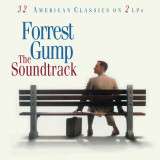
Double black vinyl LP format of the 1994 OST from one of the all time classic films. Features 32 songs including Elvis Presley, Aretha Franklin, The Four Tops, Bob Dylan, The Beach Boys, The Mamas & Papas, Simon & Garfunkel, The Byrds, Lynyrd Skynyrd, The Supremes, Willie Nelson, Joan Baez and more. Marketing activity.
debe ser publicado en 13.05.2022

A masterful mix of timeless American soul with vintage 1970s African samples in a most rewarding way – musical traveler Eamon teams with production duo Likeminds for No Matter The Season, his second album for Now-Again. “I’ve been singing since I was a tike, promoters used to call me ‘the boy wonder’, but with this record it felt new, almost like I was singing every note as if my life depended on it,” says Eamon from his home in Southern California, a far cry from his native Staten Island, New York City. But you wouldn’t know his birthplace from the way he sings, especially on No Matter The Season, where Eamon put a new spin on vintage samples from the Now-Again catalog, crafting beats from various African rhythms such as Amanaz’s Zamrock, the Hygrades Nigerian funk, and Ayalew Mesfin’s Ethiopian tezetas. Shortly after the release of his last Now-Again project, Captive Thoughts, he began working with the production duo on two original compositions that appear on No Matter The Season. But as time went on, he came upon the idea of completing the album by sending the duo samples from the Now-Again catalog to work with. Which were expanded upon with a multitude of live instruments. “There was something special about combing through the African records at Now-Again,” Eamon reflects. “I had never heard the variety of funk and soul that existed in places like Lagos and Addis Ababa, it was like a history lesson in Rhythm & Blues. I was hearing the godfathers of the movement here in the US. I wanted to pay my respect to that lineage. Since singing in my father’s doo-wop group as a kid, I’ve always used music from the past to create and express something new in the present. But to be able to do that across continents and get back to the roots…that was really impactful for me.” Likeminds, helmed by Chris Soper and Jesse Singer, two East Coast transplants to LA who are as comfortable chopping up samples on an MPC as they are playing classic instruments, using vintage microphones, or recording to tape, offer up what could be described as a West Coast spin on the revivalist soul sound championed by Daptone Records. “For sure, the album is soaked in an old school feel, but to still tap into the depths of my soul today is always the end goal,” Eamon states. All but two tracks are based on Now-Again samples, using the classic rhythms as accompaniment to showcase Eamon’s emotional singing style that is still as honest and raw as when he was a 16, singing about heartbreak. The end result, No Matter the Season, is a celebration of the musical relationship between Africa and America and the thrilling soul music that relationship has spawned since the 60s and 70s. “My hope is people know that I’m not leaving anything on the table in this chapter of my career,” Eamon reflects. “Only thing I can do is pour my heart out on every single line. Even though I’m writing and screaming to the heavens about my joy, my pain, my love…these are songs for everyone, everywhere, anytime. You’re gonna walk away feeling something. This is why I titled the album No Matter The Season.”
Haga su pedido ahora y le encargaremos el artículo en nuestro proveedor.

Nine Eleven Records’ sole motto is to spread out the word that broken beat and jazz are not dead.
For the first release of the “4 seasons” project, Autumn is in the spotlight. Imagine falling leaves creating an explosion of colors, the first frost of the year warmed by a ray of sunshine… This EP proposes a journey of a thousand shades into the universe of the label Nine Eleven: breaks, soul, and groove shaping an evolutive and captivating story. For this adventure, we surrounded ourselves with talented artists such as LBTQ, Sofatalk, Kaidi Tatham, and Footshooter. Together, we have created an anthem for this autumn season as a revival more than a fall.
If you embrace this experience, you will feel the energy of the earth’s continual evolution through your veins. All you need is to sit back and relax.
Haga su pedido ahora y le encargaremos el artículo en nuestro proveedor.

Soundway Records presents the debut EP from Amsterdam based The Mauskovic Dance Band - a potent, modern blend of Afro-Caribbean rhythms and space disco, destined for bustling dancefloors.
.
The Mauskovic Dance Band is the brainchild of the Amsterdam-based producer and musician, Nicola Mauskovic. A seasoned drummer, he finds himself constantly in demand - as part of Turkish psychedelic outfit Altin Gün, a recent tour with the revival of Zambian legends W.I.T.C.H., and a worldwide tour with psych-pop artist Jacco Gardner, with whom he then went on to form the dance-oriented duo Bruxas (released on Dekmantel). Throughout this hectic schedule Nic still found time to begin studio experiments that would eventually lead to several 7' singles, released on Swiss label Bongo Joe Records in 2017 under the name The Mauskovic Dance Band'.
Haga su pedido ahora y le encargaremos el artículo en nuestro proveedor.

Fall of 2016 sees Midnight Magic ready to enchant us once more with the much-anticipated birth of their 2nd studio album, the wondrously eclectic Free From Your Spell. Going back to their roots in Los Angeles, Morgan Wiley, and Tiffany Roth, alongside the rest of the boogie nonet, have prepared a refined feast of genre-bending songs. The ever so diverse moods of Free From Your Spell make it a seductive journey. With each song mixed seamlessly into the next, the record coalesces into one long disco odyssey, reminiscing Giorgio Moroder and Donna Summer's concept albums "Four Seasons of Love" and "A Love Trilogy". Moods, genres, and styles intertwine like an aural kaleidoscope, the album electrifying with its striking harmony. Whilst exuberantly borrowing from past decades, Free From Your Spell more than holds its own as a self-assured, innovative body of work. Midnight Magic's Free From Your Spell is an offer one can't refuse. An attractive deal in the form of disco escapism, traveling through its various shades, emotions, and incarnations, a comprehensive revival of the genre for modern ears. It's Studio 54, It's Moroder,Amanda Lear, Gino Soccio, and Grace Jones. It's a whole palette of 1980's R'n'B and cosmic funk. Despite all the music references of past eras Free From Your Spell is very much a current album, a mature demonstration of genuine skills in songwriting, a multi-instrumental banquet of sounds, a coherent collection of ambitious dance tracks and a beautiful celebration of eclecticism. Add to this some of Tiffany Roth's most memorable vocals to date and you arrive at one of the year's most exciting releases. There is a strong reason for both "midnight" and "magic" in the name of the band after all.
Haga su pedido ahora y le encargaremos el artículo en nuestro proveedor.
