Fast metallic virtuoso pop punk from Santa Barbara, RKL takes their sarcasm very seriously. On Rock N"Roll Nightmare, RKL delivers an album of irreverent songs, blaming every track on society! Originally released in 1987 this album by the legendary band RKL is now available again, limited to 500 copies on green/orange a-side/b-side.
Buscar:rich kids
Ghosts of Princes in Towers is the only studio album by British band Rich Kids, founded in 1977 by Glen Matlock (ex Sex Pistols) and Midge Ure (Ultravox) and Rusty Egan released in August 1978 and produced by ex-Bowie guitarist Mick Ronson. Exclusive for RSD 2023, the original album will be newly remastered. Release overseen by Rich Kids Rusty Egan. Tracklisting: Side A - Strange One, Hung on You, Ghosts of Princes in Towers, Cheap Emotions, Marching Men, Side B - Put You in the Picture, Young Girls, Bullet-Proof Lover, Rich Kids, Lovers and Fools, Burning Sounds
Analog Fingerprints Vol. 0 is a compilation bringing together the early 2000s works of Marco Passarani under his Analog Fingerprints alias, collecting key tracks originally released on Rome’s Plasmek and Pigna labels.
For Numbers, the story starts long before the label itself. In their formative years, digging in Glasgow’s Rubadub, Passarani’s records felt like dispatches from a future city. Releases on his own Nature Records and on labels such as Generator and Interr-Ference Communications were mind blowing: rooted in Detroit techno, Chicago house and electro, yet pushing somewhere new. Much like fellow travellers Autechre, who would remix him in 2001, Passarani’s music balanced machine funk with restless experimentation.
Information was scarce, and you would hear these records first on the dancefloor or at listening stations in shops like Rubadub. Print fanzines like Ear and early web outposts such as Forcefield offered only fragments. But there was a palpable axis forming between Detroit techno and a new European wave of record labels including Skam, Rephlex, Clone, Viewlexx and Nature itself. It was the sound that defined Saturday nights at Rubadub’s ‘69’ parties in Paisley, just outside of Glasgow.
Passarani’s records, in particular, were instrumental in bringing together the future Numbers co-founders. Richard had already booked him pre-Numbers; meanwhile Calum (Spencer) and Jack (Jackmaster), then 16/17 year olds working alternate Saturdays in Rubadub, were so enamoured with the Roman sound that they travelled to Rome for the Bitz Festival in 2003 to seek out Passarani and Lory D at their source.
The first Analog Fingerprints release landed as a 12” on Plasmek in 2001, following the fractured, IDM-leaning 6 Katun material. For Passarani, the project marked a recalibration. A DJ first and foremost, he had moved into production via early computer setups, from a Commodore Amiga through primitive PC audio, Cubase and Logic, later experimenting with Ableton. The IDM scene had offered a playground for trial and error, but there was always a tension between abstraction and the dancefloor. Analog Fingerprints became the bridge: still intelligent, but with more dance than distance. After years of broken beats and complex arrangements, he wanted directness without surrendering identity.
Working closely with Francesco de Bellis and Mario Pierro in the Pigneto district, the trio formed Pigna as a vehicle for reclaiming a more accessible dance sound, deliberately steering away from the minimal wave beginning to dominate Europe. Sessions were fast, instinctive, often stretching late into the night with friends dropping by. It was a studio as social space, production as collective energy.
“In that constant search for balance, Analog Fingerprints was my way of expressing something closer to the classic dance floor. The track 'Tribute' - a tribute to my favourite early Detroit techno track of all time, 'First Bass' by Separate Minds - came after I realised I had almost lost my connection with the dance floor. The simplest step was to take inspiration from early Chicago and Detroit and twist it in our Roman ‘Pigna’ way. My goal was to create more accessible dancefloor tracks by mixing my unconscious Italo roots with my teenage love for that early US sound, ensuring the result was as far as possible from the minimal sound that was starting to dominate everywhere.” - Marco Passarani
Technically, the Analog Fingerprints tracks span a transitional era: Roland TR-909, SH-101 and Alpha Juno hardware met early software experiments. A Novation Drumstation rack stood in for the unattainable TR-808, syncing with TB-303 and TR-606. Yet the true secret weapon was Jeskola Buzz, a tracker-style modular environment that allowed step-by-step parameter control and strange melodic constructions, later exported into the audio sequencer. Even the lead on ‘Tribute’ came from an early PPG Wave-style plugin. It was hybrid thinking at a moment when digital tools still felt unstable but full of possibility for technologists like Passarani.
Behind the music sat Finalfrontier, a loose Roman collective orbiting Nature and Plasmek. Distribution and production were intertwined; importing obscure records into Italy built connections with like-minded outsiders across Europe and the US. Expensive phone bills and fax machines forged an “electronix network” that linked Rome to Clone, Viewlexx, Skam, Rephlex, Rubadub and Detroit’s Underground Resistance. There was a shared sense of survival and resistance, of operating against commercial systems.
Passarani recalls “The first time I found a sheet of paper inside an Underground Resistance 12” with info about upcoming releases... and a huge picture of Spock on the back. Imagine that: you love the music, you love Star Trek, and there’s someone on the other side of the ocean sharing those same values and sounds. It was the perfect match. We even gave our original company the suffix ‘Finalfrontier’: that says it all.”
Feedback in that era arrived physically: distributor faxes, conversations with visiting DJs, the experience of playing abroad and meeting kids who had connected with the records. Glasgow became a key node in a scattered outlier network. Passarani personally brought the first two Nature releases to Fat Cat in London, playing them in-store. Shortly after, a fax arrived from Rubadub in Glasgow requesting copies.
“I still remember that phone buzz and the fax paper slowly sliding out, with someone I didn’t know saying they wanted 75 copies of Nature 001. Or like the time we got a fax from the Rephlex crew just saying, “Hello Nature Records, Keep up the good work.” That was how we knew the message was getting through. It was a fantastic feeling; just one piece of thermal fax paper as an analog notification - the mood for the entire week would change.” - Passarani
The connection to Glasgow has since stretched across generations. As Passarani reflects, links often fracture as scenes renew themselves, but in Glasgow something different happened. New and old mixed seamlessly. There was a visible trust in what came before, and a willingness to carry it forward rather than discard it. Observed from Rome, it was deeply encouraging.
Analog Fingerprints Vol. 0 captures that moment of exchange: Rome to Glasgow, Detroit to Europe, experiment to dancefloor. It documents an artist recalibrating his sound and a network of scenes discovering one another in real time, connected by vinyl, faxes and shared intent.
,In the Grace Of Your Love" kam ursprünglich 2011 raus und war ein Neustart für The Rapture und eine willkommene Rückkehr zu DFA, dem Label, das ihnen zu ihrem sofort erfolgreichen Debüt ,Echoes" verholfen hatte. Der Schwung und Erfolg dieser Jahre führte zu einer Achterbahnfahrt mit einem großen Label, die sie wieder da landete, wo sie angefangen hatten - mit Narben, aber jetzt frei, die Grenzen der Erwartungen zu sprengen. Begleitet wurden sie dabei vom verstorbenen, großartigen Philippe Zdar, einer Hälfte des französischen Dance-Duos Cassius und Produzent von Künstlern wie Phoenix und den Beastie Boys. Zdars Begeisterung und technisches Können sind schon in den ersten 30 Sekunden des Albums zu hören: ,Sail Away" ist The Rapture in voller Pracht und Strahlkraft, ein fünfminütiger Ausatem mit Disco-Drums. Natürlich gibt es auch jede Menge Futter für die Dance-Kids - ,How Deep Is Your Love" rockt immer noch die Tanzflächen der New Yorker Bars, ,Miss You" ist ein unwiderstehlicher kleiner Streich in Moll -, aber insgesamt herrscht das Gefühl vor, dass man langsamer wird, Bilanz zieht und an den richtigen statt an den falschen Orten nach Sinn und Liebe sucht. Daher auch das Finale: ,It Takes Time To Be a Man", ein charmant ehrlicher, von Klavierklängen untermalter Song über Verantwortung übernehmen und anderen helfen. Er klingt wie nichts anderes im Repertoire von The Rapture und rundet es dennoch perfekt ab. Der Abspann läuft, die Zeit vergeht, Platten bedeuten immer noch alles.
- A1: Hurts And Noises
- A2: Wake Up
- A3: I Don't Wanna Be A Rich
- A4: Terrorist Bad Heart
- A5: Provocate
- A6: Lucifer Sam (Pink Floyd)
- B1: Happy!?
- B2: So Lazy
- B3: I Feel Down
- B4: Stupido
- B5: Guilty
- B6: Caroline Says (Loo Reed)
UILTY RAZORS, BONA FIDE PUNKS.
Writings on the topic that go off in all directions, mind-numbing lectures given by academics, and testimonies, most of them heavily doctored, from those who “lived through that era”: so many people today fantasize about the early days of punk in our country… This blessed moment when no one had yet thought of flaunting a ridiculous green mohawk, taking Sid Vicious as a hero, or – even worse – making the so-called alternative scene both festive and boorish. There was no such thing in 1976 or 1977, when it wasn’t easy to get hold of the first 45s by the Pistols or the Clash. Few people were aware of what was happening on the fringes of the fringes at the time. Malcolm McLaren was virtually unknown, and having short hair made you seem strange. Who knew then that rock music, which had taken a very bad turn since the early 1970s, would once again become an essential element of liberation? That, thanks to short and fast songs, it would once again rediscover that primitive, social side that was so hated by older generations? Who knew that, besides a few loners who read the music press (it was even better if they read it in English) and frequented the right record stores? Many of these formed bands, because it was impossible to do otherwise. We quickly went from listening to the Velvet Underground to trying to play the Stooges’ intros. It’s a somewhat collective story, even though there weren’t many people to start it.
The Guilty Razors were among those who took part in this initial upheaval in Paris. They were far from being the worst. They had something special and even released a single that was well above the national average. They also had enough songs to fill an album, the one you’re holding. In everyone’s opinion, they were definitely not among the punk impostors that followed in their wake. They were, at least, genuine and credible.
Guilty Razors, Parisian punk band (1975-1978). To understand something about their somewhat linear but very energetic sound, we might need to talk about the context in which it was born and, more broadly, recall the boredom (a theme that would become capital in punk songs) coupled with the desire to blow everything off, which were the basis for the formation of bands playing a rejuvenated rock music ; about the passion for a few records by the Kinks or the early Who, by the Stooges, by the Velvet mostly, which set you apart from the crowd.
And of course, we should remember this new wave, which was promoted by a few articles in the specialized press and some cutting-edge record stores, coming from New York or London, whose small but powerful influence could be felt in Paris and in a handful of isolated places in the provinces, lulled to sleep by so many appalling things, from Tangerine Dream to President Giscard d’Estaing...
In 1975-76, French music was, as almost always, in a sorry state ; it was still dominated by Johnny Hallyday and Sylvie Vartan. Local rock music was also rather bleak, apart from Bijou and Little Bob who tried to revive this small scene with poorly sound-engineered gigs played to almost no one.
In the working class suburbs at the time, it was mainly hard rock music played to 11 that helped people forget about their gruelling shifts at the factory. Here and there, on the outskirts of major cities, you still could find a few rockers with sideburns wearing black armbands since the death of Gene Vincent, but it wasn’t a proper mass movement, just a source of real danger to anyone they came across who wasn't like them. In August 1976, a festival unlike any other took place in Mont-de-Marsan – the First European Punk Festival as the poster said – with almost as many people on stage as in the audience. Yet, on that day, a quasi historical event happened, when, under the blazing afternoon sun, a band of unknowns called The Damned made an unprecedented noise in the arena, reminiscent of the chaotic Stooges in their early adolescence. They were the first genuine punk band to perform in our country: from then on, anything was possible, almost anything seemed permissible.
It makes sense that the four+1 members of Guilty Razors, who initially amplified acoustic guitars with crappy tape recorder microphones, would adopt punk music (pronounced paink in French) naturally and instinctively, since it combines liberating noise with speed of execution and – crucially – a very healthy sense of rebellion (the protesters of May 1968 proclaimed, and it was even a slogan, that they weren’t against old people, but against what had made them grow old. In the mid-1970s, it seemed normal and obvious that old people should now ALSO be targeted!!!).
At the time, the desire to fight back, and break down authority and apathy, was either red or black, often taking the form of leafleting, tumultuous general assemblies in the schoolyard, and massive or shabby demonstrations, most of the time overflowing with an exciting vitality that sometimes turned into fights with the riot police. Indeed, soon after the end of the Vietnam War and following Pinochet’s coup in Chile, all over France, Trotskyist and anarcho-libertarian fervour was firmly entrenched among parts of the educated youth population, who were equally rebellious and troublemakers whenever they had the chance. It should also be noted that when the single "Anarchy in the UK" was first heard, even though not many of us had access to it, both the title and its explosive sound immediately resonated with some of those troublemakers crying out for ANARCHY!!! Meanwhile, the left-wing majority still equated punks with reckless young neo-Nazis. Of course, the widely circulated photos in the mainstream press of Siouxsie Sioux with her swastikas didn’t necessarily help to win over the theorists of the Great Revolution. It took Joe Strummer to introduce The Clash as an anti-racist, anti-fascist and anti-ignorance band for the rejection of old-school revolutionaries to fade a little.
The Lycée Jean-Baptiste Say at Porte d’Auteuil, despite being located in the very posh and very exclusive 16th arrondissement of Paris, didn’t escape these "committed" upheavals, which doubled as the perfect outlet for the less timid members of this generation.
“Back then, politics were fun,” says Tristam Nada, who studied there and went on to become Guilty Razors’ frontman. “Jean-Baptiste was the leftist high-school in the neighbourhood. When the far right guys from the GUD came down there, the Communist League guys from elsewhere helped us fight them off.”
Anything that could challenge authority was fair game and of course, strikes for just about any reason would lead to increasingly frequent truancy (with a definitive farewell to education that would soon follow). Tristam Nada spent his 10th and 11th unfinished grades with José Perez, who had come from Spain, where his father, a janitor, had been sentenced to death by Franco. “José steered my tastes towards solid acts such as The Who. Like most teenagers, I had previously absorbed just about everything that came my way, from Yes to Led Zeppelin to Genesis. I was exploring… And then one day, he told me that he and his brother Carlos wanted to start a rock band.” The Perez brothers already played guitar. “Of course, they were Spanish!”, jokes their singer. “Then, somewhat reluctantly, José took up the bass and we were soon joined by Jano – who called himself Jano Homicid – who took up the rhythm guitar.” Several drummers would later join this core of not easily intimidated young guys who didn’t let adversity get the better of them.
The first rehearsals of the newly named Guilty Razors took place in the bedroom of a Perez aunt. There, the three rookies tried to cover a few standards, songs that often were an integral part of their lives. During a first, short gig, in front of a bewildered audience of tough old-school rockers, they launched into a clunky version of the Velvet Underground's “Heroin”. Challenge or recklessness? A bit of both, probably… And then, step by step, their limited repertoire expanded as they decided to write their own songs, sung in a not always very accurate or academic English, but who cared about proper grammar or the right vocabulary, since what truly mattered was to make the words sound as good as possible while playing very, very fast music? And spitting out those words in a language that left no doubt as to what it conveyed mattered as well.
Trying their hand a the kind of rock music disliked by most of the neighbourhood, making noise, being fiercely provocative: they still belonged to a tiny clique who, at this very moment, had chosen to impose this difference. And there were very few places in France or elsewhere, where one could witness the first stirrings of something that wasn’t a trend yet, let alone a movement.
In the provinces, in late 1976 or early 1977, there couldn’t be more than thirty record stores that were a bit more discerning than average, where you could hear this new kind of short-haired rock music called “punk”. The old clientele, who previously had no problem coming in to buy the latest McCartney or Aerosmith LP, now felt a little less comfortable there…
In Paris, these enlightened places were quite rare and often located nex to what would become the Forum des Halles, a big shopping mall. Between three aging sex workers, a couple of second-hand clothes shops, sellers of hippie paraphernalia and small fashion designers, the good word was loudly spread in two pioneering places – propagators of what was still only a new underground movement. Historically, the first one was the Open Market, a kind of poorly, but tastefully stocked cave. Speakers blasted out the sound of sixties garage bands from the Nuggets compilation (a crucial reference for José Perez) or the badly dressed English kids of Eddie and the Hot Rods. This black-painted den was opened a few years earlier by Marc Zermati, a character who wasn’t always in a sunny disposition, but always quite radical in his (good) choices and his opinions. He founded the independent label Skydog and was one of the promoters of the Mont-de-Marsan punk festivals. Not far from there was Harry Cover, another store more in tune with the new New York scene, which was amply covered in the house fanzine, Rock News (even though it was in it that the photos of the Sex Pistols were first published in France).
It was a favorite hang-out of the Perez brothers and Tristam Nada, as the latter explained. “It’s at Harry Cover’s that we first heard the Pistols and Clash’s 45s, and after that, we decided to start writing our first songs. If they could do it, so could we!”
The sonic shocks that were “Anarchy in the UK”, “White Riot” or the Buzzcocks’s EP, “Spiral Scratch” – which Guilty Razors' sound is reminiscent of – were soon to be amplified by an unparalleled visual shock. In April 1977, right after the release of their first LP, The Clash performed at the Palais des Glaces in Paris, during a punk night organised by Marc Zermati. For many who were there, it was the gig of a lifetime…
Of course, Guilty Razors and Tristam were in the audience: “That concert was fabulous… We Parisian punks were almost all dressed in black and white, with white shirts, skinny leather ties, bikers jackets or light jackets, etc. The Clash, on the other hand, wore colourful clothes. Well, the next day, at the Gibus, you’d spot everyone who had been at this concert, but they weren’t wearing anything black, they were all wearing colours.”
It makes sense to mention the Gibus club, as Guilty Razors often played there (sometimes in front of a hostile audience). It was also the only place in Paris that regularly scheduled new Parisian or Anglo-Saxon acts, such as Generation X, Siouxsie and the Banshees, the Slits, and Johnny Thunders who would become a kind of messed-up mascot for the venue. A little later, in 1978, the Rose Bonbon – formerly the Nashville – also attracted nightly owls in search of electric thrills… In 1977, the iconic but not necessarily excellent Asphalt Jungle often played at the Gibus, sometimes sharing the bill with Metal Urbain, the only band whose aura would later transcend the French borders (“I saw them as the French Sex Pistols,” said Geoff Travis, head of their British label Rough Trade). Already established in this small scene, Metal Urbain helped the young and restless Guilty Razors who had just arrived. Guitarist for Metal Urbain Hermann Schwartz remembers it: “They were younger than us, we were a bit like their mentors even if it’s too strong a word… At least they were credible. We thought they were good, and they had good songs which reminded of the Buzzcocks that I liked a lot. But at some point, they started hanging out with the Hells Angels. That’s when we stopped following them.”
The break-up was mutual, since, Guilty Razors, for their part, were shocked when they saw a fringe element of the audience at Metal Urbain concerts who repeatedly shouted “Sieg Heil” and gave Nazi salutes. These provocations, even still minor (the bulk of the skinhead crowd would later make their presence felt during concerts), weren’t really to the liking of the Perez brothers, whose anti-fascist convictions were firmly rooted. Some things are non-negotiable.
A few months earlier (in July 1978), Guilty Razors had nevertheless opened very successfully for Metal Urbain at the Bus Palladium, a more traditonally old-school rock night-club. But, as was sometimes the case back then, the night turned into a mass brawl when suburban rockers came to “beat up punks”.
Back then, Parisian nights weren’t always sweet and serene.
So, after opening as best as they could for The Jam (their sound having been ruined by the PA system), our local heroes were – once again – met outside by a horde of greasers out to get them. “Thankfully,” says Tristam, “we were with our roadies, motorless bikers who acted as a protective barrier. We were chased in the neighbouring streets and the whole thing ended in front of a bar, with the owner coming out with a rifle…”
Although Tristam and the Perez brothers narrowly escaped various, potentially bloody, incidents, they weren’t completely innocent of wrongdoing either. They still find amusing their mugging of two strangers in the street for example (“We were broke and we simply wanted to buy tickets for the Heartbreakers concert that night,” says Tristam). It so happened that their victims were two key figures in the rock business at the time: radio presenter Alain Manneval and music publisher Philippe Constantin. They filed a complaint and sought monetary compensation, but somehow the band’s manager, the skilful but very controversial Alexis, managed to get the complaint withdrawn and Guilty Razors ended up signing with Constantin with a substantial advance.
They also signed with Polydor and the label released in 1978 their only three-track 45, featuring “I Don't Wanna be A Rich”, “Hurts and Noises” and “Provocate” (songs that exuded perpetual rebellion and an unquenchable desire for “class” confrontation). It was a very good record, but due to a lack of promotion (radio stations didn’t play French artists singing in English), it didn’t sell very well. Only 800 copies were allegedly sold and the rest of the stock was pulped… Initially, the three tracks were to be included on a LP that never came to be, since they were dropped by Polydor (“Let’s say we sometimes caused a ruckus in their offices!” laughs Tristam.) In order to perfect the long-awaited LP, the band recorded demos of other tracks. There was a cover of Pink Floyd's “Lucifer Sam” from the Syd Barrett era – proof of an enduring love for the sixties’ greats –, “Wake Up” a hangover tale and “Bad Heart” about the Baader-Meinhof gang, whose actions had a profound impact on the era and on a generation seeking extreme dissent... On the album you’re now discovering, you can also hear five previously unreleased tracks recorded a bit later during an extended and freezing stay in Madrid, in a makeshift studio with the invaluable help of a drummer also acting as sound engineer. He was both an enthusiastic old hippie and a proper whizz at sound engineering. Here too, certain influences from the fifties and sixties (Link Wray, the Troggs) are more than obvious in the band’s music.
Shortly after a final stormy and rather barbaric (on the audience’s side) “Punk night” at the Olympia in June 1978, Tristam left the band ; his bandmates continued without him for a short while.
But like most pioneering punk bands of the era, Guilty Razors eventually split up for good after three years (besides once in Spain, they’d only played in Paris). The reason for ceasing business activities were more or less the same for everyone: there were no venues outside one’s small circuit to play this kind of rock music, which was still frightening, unknown, or of little interest to most people. The chances of recording an LP were virtually null, since major labels were only signing unoriginal but reassuring sub-Téléphone clones, and the smaller ones were only interested in progressive rock or French chanson for youth clubs. And what about self-production? No one in our small safety-pinned world had thought about it yet. There wasn’t enough money to embark on that sort of venture anyway.
So yes, the early days of punk in France were truly No Future!
The album delivers masterful arrangements, inventive rhythms, rich harmonies, and a perfect balance of flute and saxophone interplay. Funk, Jazz, Gospel, Afro, and traditional elements all merge seamlessly into something unique and timeless.
Joshua Sithole (1947–1999) was a self-taught multi-instrumentalist and vocalist from South Africa who first started busking with the Kwela kids in 1959 and then went solo in 1978. He became popular in the 80’s, performing widely in Durban and Cape Town.
Originally released in 1975, this overlooked masterpiece is now reissued for the first time by Voom Voom Records — the first 500 copies include a poster of Vladimir Tretchikoff's painting, "The Pennywhistlers" which captures the beauty of Joshua's playing.
“Joshua Sithole, Errol Dyers, and Jonathan Butler come from some of the most influential and esteemed musical families in South Africa. You cannot write about Jazz in Cape Town and not mention some of these families and their contributions to the art form.” — Fanie Jason (Music Photographer - Cape Town)
"South African spiritual funk gem. slick guitar, banks of horns" - Chris Albertyn (Matsuli Records)
"Dynamic South African funk. An album that will make you want to dance from start to finish" - Franck Descollonges (Heavenly Sweetness)
Appart … long time ne see on vinyl... And again a superb album, trippy and thin... very rich of many influences and ambiances... From Klez to jazz... Breakbeat Fanfare for everyone ! This is a real high level musician from the underground since years ! Don't miss !!
- A1: The Meditation Singers - Let Them Talk
- A2: Charlie Brown - The Whole World Is Watching
- A3: Martha Bass - Since I've Been Born Again
- A4: The Williams Singers - So Good To Be Alive
- A5: The Faithful Wonders - Ol' John (Behold Thy Mother)
- A6: The Salem Travelers - Crying Pity And A Shame
- B1: The East St Louis Gospelettes - Soon I Will Be Done
- B2: Power And Light Choral Ensemble - Stand Up America, Don't Be Afraid
- B3: The Masonic Wonders - Just To Behold His Face
- B4: The Majestic Choir & The Soul Stirrers - Why Am I Treated So Bad
- B5: The Jordan Singers - My Life Will Be Sweeter
- B6: Lucy Rodgers - I'm Fighting For My Rights
- C1: The East St Louis Gospelettes - I'll Take Care Of You
- C2: The Williams Singers - Don't Give Up
- C3: The Soul Stirrers - Don’t You Worry
- C4: The Meditation Singers - I've Done Wrong
- C5: The Jordan Singers - Lord Have Mercy
- C6: The Kindly Shepherds - Lend Me Your Hand
- C7: The Violinaires - Groovin' With Jesus
- D1: Cleo Jackson Randle - Life In Heaven Is Free
- D2: The Violinaires - Mother’s Last Prayer
- D3: The Inspirational Singers - Bless Me
- D4: The Bells Of Joy - Give An Account At The Judgement
- D5: Stevie Hawkins - Same Old Bag
- D6: The Soul Stirrers - Striving
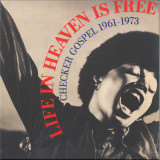
Gospel melts into Soul in this dazzling collection of sides originally released by the Chess subsidiary.
Devised by the same team supporting the likes of Muddy Waters and Etta James at Chess, the vintage of Checker Gospel celebrated here is distinguished by its expertly raw, rugged, live feel — thumping bass and pounding drums, bluesy guitar and horns — and its keen engagement with contemporary realities and politics, with an underlying, unwavering commitment to the Civil Rights movement. Not forgetting its sheer, startling, richly diverse soulfulness.
Key architects of the Chicago Sound and Motown are amongst the scores of contributors: Charles Stepney, Gene Barge, Eddie Kendricks, and Leonard Caston Jr. are in the house… Morris Jennings, drummer on Curtis’ Superfly and Terry Callier’s What Color Is Love… Louis Satterfield from The Pharaohs and Earth Wind & Fire… Ramsey Lewis’ guitarist Byron Gregory… Phil Upchurch… Laura Lee…
Producer Monk Higgins joined Checker in 1967, bringing his experience of R&B and Gospel hit-making for the labels One-derful and Satellite, together with a loyal cohort of musicians. A protege of Willie Dixon, engineer Malcolm Chisholm set up the Ter Mar studio as if preparing for a live gig, carefully teasing measures of bleed into the microphones. With Ralph Bass from King Records running A&R, they knew exactly what they were after. ‘I’m using horns and an R&B sound in gospel recordings,’ said Bass. ‘We have no charts. All the musicians are given the chord changes. I want the cats to think when we’re cutting. I want spontaneity, and that’s what we’re getting.’ And: ‘There is more to gospel than just finding solace in the church. This follows the same message of Martin King, who was fighting for a new way of life. Kids are tired of hearing Jesus Give Us Help. They want a positive message.’
Focussed on the late sixties and early seventies, the twenty-five recordings here are all killer no filler, but try these four, random entry points: the heavy funk ostinato of the Violinaires’ Groovin’ With Jesus, working itself up into a post-James-Brown brass frenzy, sure to knock your socks off; Cleo Jackson Randle’s title track, for those who like their Gospel straight-up and hard-core; Eddie Kendricks’ achingly timely choral call-to-arms, Stand Up America, Don’t Be Afraid; the East St Louis Gospelettes’ heart-stopping, fathoms-deep rendition of Bobby Bland’s I’ll Take Care Of You.
A beautiful gatefold sleeve; a full-colour booklet with excellent notes by Robert Marovich; top-notch sound. Another knockout selection by Greg Belson and David Hill.
A shoo-in for soul compilation of the year.
Repress.
Just one week after the outbreak of the First Intifada in 1987, Riad Awwad brought his sisters Hanan, Alia and Nariman together in their living room and began recording The Intifada album on equipment he had made himself. One of these was co-written with their friend, the acclaimed Palestinian writer Mahmoud Darwish. Riad printed 3000 copies of the cassettes which he began distributing in the Old City of Jerusalem and across the West Bank. The Israeli Army immediately confiscated all the copies they could find, the vast majority of which remain in the military archives to this day. Riad was arrested, interrogated and detained for several months. Straight after his release, he formed a band, Palestinian Union, and put out a new album. He then founded a school, offering kids in the West Bank an alternative musical education, teaching them how to create their own electronic equipment. In 2005, Riad was tragically killed in a car accident. His legacy lives on through his family, his timeless music and his powerful story, which continues to inspire to this day.
Over several years, Mo’min Swaitat has amassed an archive of rare tapes and vinyl from Palestine and beyond. Many of these were acquired from a former record label in his hometown of Jenin, in the north of the West Bank. The Majazz Project is a research project and record label borne out of the archive, focused around sampling, remixing and reissuing vintage Palestinian and Arabic cassettes and LPs, shedding new light on the richness and diversity of Arabic musical heritage.
- Punkrock Lebensberatungstermin
- Der Demagogische Wandel
- Kiezblock (Feat. Chris Kotze)
- Wenn Ich Mal Groß Bin
- Auf Der Suche
- Weißt Du Noch
- Plattensammlung
- Swipe Leben
- Streit Mit Dings Gpt
- Wassereis
White Vinyl[22,48 €]
ULI SAILOR -> File under: Punkrock am KlavierNach über 30 Jahren auf Bühnen zwischen Punkkeller und Festivalhauptbühne bringt Uli Sailor nun sein erstes Piano Solo-Album heraus. ,Besser Anders" ist das Ergebnis von zwei Jahren intensiver Arbeit - zehn Songs voller Energie, Melancholie und Haltung. Produziert wurde das Album halb in Berlin von Thies Neu, halb in Köln von Tobias Röger (Wohlstandskinder, Udo Lindenberg, Slime).Musikalisch schlägt Uli eine Brücke zwischen Indie-Rock und Punk, bleibt dabei aber weit entfernt von weichgespültem Pop. Klavier, Cello und Gesang treffen auf kantige Arrangements und Texte, die irgendwo zwischen Tagtraum und Knochenfabrik liegen - poetisch, wütend, reflektiert. Themen wie Gentrifizierung, digitale Entfremdung und die unerschütterliche Liebe zum Punk ziehen sich durchs ganze Werk.,Besser Anders" ist ein Album gegen die Austauschbarkeit. Kein KI-Produkt, keine Routine - sondern Handarbeit, Schweiß und Herzblut. Uli zeigt, dass Punkrock auch mit Klaviertasten funktionieren kann, solange man das richtige Maß an Wut, Humor und Zärtlichkeit mitbringt.Patrick Reerink (GUTS PIE EARSHOT) sorgt auf dem Album für die Cello-Parts. ,Kiezblock" entsteht gemeinsam mit Chris Kotze (KOTZREIZ), unterstützt von Totze Trippi (BEATSTEAKS) am Bass und einem Chor von Freund*innen - unter anderem Dead End Kids, Berlin Blackouts, Von.Orten und Töff Malstroem. In ,Der demagogische Wandel" greift Guido Donot (DONOTS) zur Gitarre und setzt ein Solo, das hängen bleibt. Das macht ,Besser Anders" zu mehr als einem einsamen Solo-Projekt, sondern ein kollektives Statement mit Haltung.Mittel-Version (2600 Zeichen)Sommer 2025: In einem Berliner Proberaum sitzt ein Mensch und macht das, was er am liebsten tut - Musik. Dieser Mensch heißt Uli Breitbach, besser bekannt als Uli Sailor. Seit über 30 Jahren ist er kreativer Arbeiter, mal euphorisch, mal verzweifelt, und nach zwei Jahren intensiver Arbeit erscheint nun sein erstes Solo-Album: ,Besser Anders".Was wie eine klassische Musikerbiografie klingt, steht im Kontrast zur Gegenwart. Während Künstliche Intelligenz längst komplette Bands ersetzt, bleibt Uli Sailors Musik das Gegenteil davon: handgemacht, ehrlich, mit hörbarem Herzblut. Uli geht auf die 50 zu und bringt sein Debüt erst jetzt heraus - nach Jahrzehnten als Teil verschiedenster Bands wie den Skatepunks D-SAILORS, den Indierockern TUSQ und der legendären Deutschpunkband TERRORGRUPPE.Nach deren Ende wagte Uli ein ungewöhnliches Experiment: Punksongs seiner Jugend auf dem Klavier - unterstützt von Cello. Was zunächst abwegig klang, traf einen Nerv. Seine Konzerte führten ihn in kleine Clubs ebenso wie auf große Bühnen - vom Sisyphos über Rock am Ring bis zur Volksbühne. Egal ob Punkkneipe oder Festival: Uli Sailor funktioniert überall.2024 folgte die EP ,Für immer jung", fünf eigene Songs zwischen Wut und Sentimentalität, die von Kritikern durchweg gelobt wurden. Jetzt also das Album. ,Besser Anders", das am 27. Februar 2026 erscheint - zehn Songs, produziert zur Hälfte von Thies Neu (SHIRLEY HOLMES, DYSE, DEAD END KIDS) in Berlin und von Tobias Röger (WOHLSTANDSKINDER, SLIME, UDO LINDENBERG) in Köln.Musikalisch wagt Uli den Schritt vom Piano-Punkrock hin zu einem Mix aus Indie und Punk, ohne dabei seine Haltung zu verlieren. ,Sellout?", mögen manche rufen. ,Hört doch erst einmal rein", wäre die passende Antwort. Denn ,Besser Anders" ist weit entfernt von weichgespültem Befindlichkeits-Pop. Die Texte bewegen sich zwischen Tagtraum und Knochenfabrik, kraftvoll, poetisch und differenziert. Uli Sailor benennt Missstände, bleibt aber empathisch, reflektiert und wirkt nie platt. Es ist ein vielseitiges, eigenständiges Album mit Songs über Gentrifizierung, digitale Abhängigkeit, verblühende Liebe und die unerschütterliche Kraft des Punk.Patrick Reerink von GUTS PIE EARSHOT steuerte die Cello-Parts bei. Mit Chris Kotze (KOTZREIZ) entstand eine gemeinsam geschriebene Anti-Gentrifizierungshymne, unterstützt von Totze Trippi (BEATSTEAKS) am Bass und einem Backgroundchor, der sich gewaschen hat: Mitglieder von Berlin Blackouts, Dead End Kids, Von.Orten und Töff Malstroem. Bei ,Der demagogische Wandel" wiederum griff Guido Donot (DONOTS) zur Gitarre und setzte ein Solo, das man so schnell nicht vergisst. ,Besser Anders" ist damit weit mehr als ein Solo-Album - es ist ein Gemeinschaftswerk mit Haltung.Vielleicht wird Uli Sailor keine Millionen Klicks erzielen. Aber das ist gut so. Dieses Album ist kein Algorithmusprodukt, sondern das Ergebnis ehrlicher Handarbeit, Leidenschaft und einer großen Liebe zur Musik. Punkrock bleibt hier der rote Faden - anders, besser, echt.
- A1: I'm 9 Today (2019 Remaster)
- A2: Smell Memory (2019 Remaster)
- B1: There Is A Number Of Small Things (2019 Remaster)
- B2: Random Summer (2019 Remaster)
- B3: Asleep On A Train (2019 Remaster)
- C1: Awake On A Train (2019 Remaster)
- C2: The Ballað Of The Broken Birdie Records (2019 Remaster)
- C3: The Ballað Of The Broken String (2019 Remaster)
- D1: Sunday Night Just Keeps On Rolling (2019 Remaster)
- D2: Slow Bicycle (2019 Remaster)
- E1: The Ballað Of The Broken Birdie Records (Ruxpin Remix Ii)
- E2: Smell Memory (Bix Remix)
- E3: There Is A Number Of Small Things & The Ballað Of The Broken Birdie Records (Μ-Ziq Straight Mix)
- E4: The Ballað Of The Broken Birdie Records (Biogen Mix)
- F1: Smell Memory Kronos Quartet
- F2: Random Summer Hauschka
- F3: The Ballað Of The Broken String Sóley
In 1999, on December 23 to be precise, the electronic music landscape changed forever. On that day, the now legendary Icelandic band múm released their debut album “Yesterday Was Dramatic – Today Is OK”. The thing is though, back in the day, hardly anybody realized. It was Christmas after all, people were busy with potentially more important things and didn’t pay attention to some kids selling records on Reykjavík’s high street. Little did those shoppers know.
Thankfully, those 10 tracks weren’t overlooked for long. On the contrary: the album went on to become one of the most influential building blocks of what back then was called electronica and today is considered an art form playing a crucial and important role in shaping and defining the rich electronic music culture of the 21st century. Now, 20 years after the record dropped onto planet Earth, Morr Music is re-issuing the remastered album with its original artwork, adding newly commissioned re-works: A note-for-note representation of “Smell Memory“ by Kronos Quartet (with additional drums by múm’s Samuli Kosminen), a gentle reinterpretation of “Random Summer” by acclaimed pianist and composer Hauschka and an otherworldly new version of “Ballad Of The Broken String” recorded by label mate Sóley. Additionally, four remixes produced in the early 2000s are made available for the first time ever on vinyl here.
In 1999, electronic music was in full bloom. The dance floors were thriving worldwide.Yet the concept of using electronic sounds in acoustic-based productions (or vice versa) was still in its infancy. Many producers were trying, most of them failed. The results felt often forced, fabricated, unimaginative, random and forgettable. New ideas require new mindsets after all. With “Yesterday Was Dramatic – Today Is OK”, múm established a new approach in music production. Instead of setting a fixed agenda and working with a distinct hierarchy for their sonic palette, Gyða Valtýsdóttir, Kristín Anna Valtýsdóttir, Gunnar Örn Tynes and Örvar Smárason let each instrument and sound source be true to itself, creating an ever-evolving universe of sonic bliss. Listening to the album in 2019 still makes every music lover’s heart jump. Combining Drill-and-Bass-inspired beat-chopping, future-informed DSP-programming, ethereal vocal work, indie rock’s boominess, folk music’s soulful brittleness and a lofty feeling for melody and arrangement, the album is a rare example of musical transcendence and remains impossible to categorize.
Many of the ideas formulated and recorded for the album quickly became an integral part of the canonical self-conception musicians around the world were and still are aspiring to. How these ideas really came about, though, is not known – the dynamics, the struggles, the qualms, the sudden realization of having achieved something which might actually stick. Maybe that is a good thing. Örvar Smárason remembers that most of the album “was recorded in a tiny, sweaty room in the summer of 1999 with carpenters banging nails around us, but sometimes we put on headphones so we couldn’t hear them.” It is a good thing they did. As is often the case with classics, all one can do is listen closely and let the magic sink in – again and again.
RYOZO BAND’s New Single “QUIET FOG / FUGITIVE” Coming to 7-Inch Vinyl!
Following their previous release Pleasure and a remix by French beatmaker Lex (de Kalhex) that drew attention from multiple directions, RYOZO BAND
kicks off 2026 with a two track single available on streaming and 7-inch vinyl.
The lead track, “Quiet Fog,” is a mid tempo piece highlighted by a powerful horn ensemble, with an awe-inspiring saxophone solo that steals the spotlight.
It’s a track that showcases the band’s evolving groove and ensemble maturity.
Released simultaneously with the 7-inch, “Fugitive” is a cover of a hidden gem by Jamaica’s legendary ska band The Skatalites.
While paying homage to the original, RYOZO BAND reimagines it with their signature energy and dynamism, delivering an uptempo arrangement full of drive
and vitality. The result is an energetic yet sophisticated sound that promises to ignite live audiences.
RYOZO BAND is led by Ryozo Obayashi (SANABAGUN.), joined by an all star lineup: drummer Masaaki Nagata (Zainichi Funk), saxophonist Takehide
“KIDS” Hashimoto (Zainichi Funk), guitarist Tetsuta Otachi (SAHAS), keyboardist Yusei Takahashi (Setagaya Trio, Terumasa Hino Quintet), percussionist
Ryotaro Miyasaka (Yuta Orisaka Ensemble), and trumpeter Kyotaro Hori (ACO, TAMTAM). Each member brings a highly acclaimed background, blending
their influences into an ensemble rich in depth and vitality, modernizing ska and jazz elements with a contemporary twist.
A release brimming with passion and love for music—perfect for ushering in 2026. This single is proof that RYOZO BAND is evolving to the next stage.
- A1: I Love To Roll
- A2: Payback
- A3: Colours
- A4: Star War
- A5: The Clash
- A6: My Demonic Side
- B1: The Kids Are Right
- B2: Ex-Files
- B3: Heaven 2.9
- B4: Too Tough To Make Some Friends
- B5: Painkiller
- B6: Bigger W/A Trigger
Backyard Babies wurde 1987 in Nässjö gegründet und kann mit Fug und Recht als Schwedens einflussreichste Glam-Punk-Band bezeichnet werden. Zwischen 1994 und 2019 veröffentlichten sie acht Studioalben, darunter 2001 das Album "Making Enemies Is Good".
2001 kannten sich die Backyard Babies bereits mit Verstärkern und Mikrofonen aus, aber so richtig in Fahrt kamen sie erst mit der Veröffentlichung von "Making Enemies Is Good". Mit "Brand New Hate", "Heaven 2.9" und "The Clash" gewann das Album der einflussreichen schwedischen Glam-Punk-Hardrocker ihren ersten schwedischen Grammy. Zur Unterstützung des Albums gingen sie mit Motörhead auf Tour, was angesichts der Energie absolut perfekt passte.
- Mighty Idy #1
- Bad Attitude
- Baby Boom
- Out Of Our Tree
- From Home
- Shirt Loop (Not Recorded For Sire Lp)
- Boy From Nowhere (Not Recorded For Sire Lp)
- When I Get Off (Not Recorded For Sire Lp)/Destroyer
- He's Waitin' (Not Recorded For Sire Lp)
- Do Not Enter
- I Don't Know When To Stop (Not Recorded For Sire Lp)
- Mighty Idy #2
*13 ripping songs totalling 33 minutes from the original 20-song 65 minute master reel tapes, recorded in early February 1978 for producers Flo & Eddie, the night before DMZ (the raw-assed pre-Lyres outfit that never made it!) spent 3 days trapped by a blizzard recording their Sire album. **4 page insert with info, pics and Rick Coraccio's ultra-detailed journal on how it all went down! ***LP includes DOWNLOAD CODE Kapital Ink zine: "In the annals of R&R history, as far as local American rock'n'roll scenes go, Boston is hardly ever looked upon in the same shining light as, say, NY, Detroit, San Francisco or even Austin or Seattle. Unlike those other towns, there's never even been a definitive book about the scene. Maybe it's because Boston is a perennial hard-luck place (just witness the Red Sox) with a serious New York inferiority complex hanging over its head. Boston is ignored by the industry at large, despite the fact that the city has spawned countless heavyweights in both a commercial (Aerosmith, Boston, the Cars) and aesthetic (Modern Lovers, Real Kids, Mission Of Burma) (Crypt editor note: and DMZ!! and LYRES!!) sense. Boston was the first US city to directly reflect the influence of the Velvet Underground, as epitomized by the Modern Lovers, who've proven to be almost as influential in their own right. Fast forward to the days of hardcore, and Boston was one of the pre-eminent strongholds of shave-head mania, shoring up its rep as an angry, intolerant New England outpost. Naturally the town has produced more than its share of local legends: Willie Alexander (who actually was in the Velvet Underground, albeit when the band was on its Lou Reed-less last legs); Jonathan Richman (geekus supremus no small thing considering the subsequent indie hordes, to whom he's a savior); and most of all, the great Real Kids, (Crypt editor note: and DMZ!! and LYRES!!) who could've been the equivalent of the MC5, Stooges or Flamin' Groovies in the annals of American rock if it hadn't been for a series of bad breaks but let's not get into that because it'll only reinforce Boston's eternal self-pitying plight. The fact is, the scene in Boston was more or less built by a string of bands who are so organically-interconnected that it seems like an act of God."
- Silk Chiffon (Feat. Phoebe Bridgers)
- What I Want
- Runner's High
- Home By Now
- Kind Of Girl
- Handle Me
- No Idea
- Solid
- Anything But Me
- Loose Garment
- Shooting Star
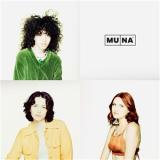
MUNA sind magisch. Welche andere Band hätte das verlorene Jahr 2021 mit Pailletten und Pompoms geprägt - und dich dabei ganz nebenbei zum Singen bringen können (und vielleicht sogar zu glauben), dass "Life's so fun, life's so fun" ist? All das während der vielleicht unruhigsten Phase deines Lebens? "Silk Chiffon", der Instant-Hit von MUNA mit Labelchefin Phoebe Bridgers, schlug wie ein doppelter Regenbogen in den grauen Himmel der anderthalbjährigen Pandemie ein. Pitchfork nannte es einen "Strudel von Schmetterlingen im Bauch", NPR einen "Queerwurm", der US-Rolling Stone "eine der süßesten Melodien des Jahres, die die Art von purer Pop-Seligkeit ausstrahlt, die so viele Bands anstreben, aber fast nie richtig hinbekommen." Für MUNAs Gitarristin und Produzentin Naomi McPherson war es ein "song for kids to have their first gay kiss to." Und so blühten mehrere Tausend verrückte Twitter- und TikTok-Memes auf. Seit Beginn ihrer Karriere haben MUNA den Schmerz als Fundament der Sehnsucht, als Zentrum der radikalen Wahrheit, als Teil des Erwachsenwerdens und als inhärenten Faktor der Erfahrung von Marginalität betrachtet - die Bandmitglieder gehören Queer- und Minderheitengemeinschaften an und spielen ihre Songs vor allem für diese. Gavin, McPherson und Josette Maskin - die Gitarristin von MUNA - verbindet eine bald zehnjährige Freundschaft. Sie begannen im College an der USC zusammen Musik zu machen und veröffentlichten 2017 mit der Single "I Know a Place" einen frühen Hit als eine aufgestaute Beschwörung zur LGBTQ-Zuflucht und Transzendenz. Jetzt, in ihren späten Zwanzigern, ist das Trio so etwas wie eine Familie geworden. Sie verbrachten einen Großteil der frühen Pandemie als eine Gruppe, die füreinander und für MUNA da war, selbst als sie sich über nix in Bezug auf Zukunft sicher sein konnten. Sie wurden von ihrem vorigen Label RCA gedroppt und es gab nur wenig Einkommen, kein Adrenalin, mit dem sie arbeiten konnten, keine Live-Shows mit Publikum, das sie an den Beistand erinnerte, den ihre Songs bieten können. "Muna", das selbstbetitelte dritte Album der Band, ist mehr als eine Rückkehr. Die Zeit der Unsicherheit und des offenen Hinterfragens der Band hat alles weggebrannt und ein Meisterwerk von einem Album hinterlassen - die kraftvolle, bewusste, dimensionale Leistung einer Band, die niemandem außer sich selbst etwas beweisen muss. Der Synth auf "What I Want" funkelt wie eine ROBYN-Tanzflächenhymne; "Anything But Me", das im 12/8-Takt galoppiert, erinnert an SHANIA TWAIN im Neonlicht der Achtziger; "Kind of Girl" mit seinem aufsteigenden, klagenden THE CHICKS-Refrain bittet darum, mit deinen besten Freund*innen bei maximaler Lautstärke gesungen zu werden. MUNA arbeiteten mit dem Quellcode des Pop, der das Herz berührt - das Album ist voller Sehnsucht und Offenbarung und hart erkämpfter Freiheit.
Young Gun Silver Fox are the captains of AM Waves, setting sail towards an isle where melodies soak the shoreline and grooves sway like palm trees. Their route traces a natural progression fromWest End Coast, an album that cast Andy Platts (Young Gun) and Shawn Lee (Silver Fox) as musical virtuosos of SoCal-infused pop. AM Waves does more than duplicate the perfection of West End Coast. It improves it.
Recorded at The Shop in London and Roffey Hall in the English countryside, AM Waves burnishes the blend between the duo's modern aesthetic and their sumptuously crafted homage to '70s-styled pop, rock, and soul. "This music hits a certain spot for me personally that nothing else quite does," says Shawn, who produced the album amidst his projects for Saint Etienne, Shawn Lee's Ping Pong Orchestra, and several other acts. "It's real high-caliber music. It's easy and breezy to listen to but it's really hard to make. Every aspect is A game."
The A game behind AM Waves fuels 43 minutes of Young Gun Silver Fox in peak form. "AM Waves is much more instinctive," says Andy, whose penchant for writing irresistible hooks and melodies also shapes his role as lead singer and lyricist/composer for the band Mamas Gun. "It's more vivid. You can see the clarity to the colors of AM Waves whereas West End Coast is slightly more impressionist, as it were."
Originally issued as a single in September 2017, "Midnight in Richmond" is the anchor of AM Waves. "I hit one chord, which I'd never played before, and the song sort of wrote itself," notes Shawn. "It was intuitive. In many ways, the primary function of what I'm doing is trying to find that chord that opens a door and takes you someplace else. Those chords have magic." Andy embellishes the song's appeal by nimbly juxtaposing wistful emotions with a sun-kissed melody, his voice evoking richly drawn memories. The qualities that make "Midnight in Richmond" an instant classic abound throughout the album.
"Lenny" and "Take It or Leave It" spotlight Andy's versatility as a songwriter. The former was inspired by a dream he had where Lenny Kravitz owned a bar. "It was surreal," he says. "He was polishing the glasses and just serving me hit after hit." Like swimming through moonshine, Andy languorously savors every syllable in the song. "Take It or Leave It" is pure pop bliss. "That was one of those songs that fell out in half an hour," he says. "I had everything and it was done." Shawn adds, "It's such a perfect song in itself. When I listen to it, it's like you've created a record that already existed."
Young Gun Silver Fox introduce a five-piece horn section on "Underdog" that literally trumpets the song's protagonist. Shawn affectionately dubbed them the "Seaweed Horns" in honor of the Seawind Horns, an LA-based unit that recorded with powerhouses like Michael Jackson,Rufus & Chaka Khan,and Earth, Wind & Fire during the late-'70s. Andy explains, "The horns grab another hue of the west coast sound, which is the starting point, but it's also maybe the point where we're injecting a little bit more of ourselves and some outside colors into the familiar west coast palette."
A bounty of treasures course through AM Waves' ebb and flow. "Mojo Rising," which the duo penned with Rob Johnson, is a veritable retreat to paradise. "Sky-bound, heaven sent / Way above the clouds watching shootingstars descend," Andy sings, mirroring the music's celestial undertones. Sensuality contours the notes on "Just a Man," a song that basks in the allure of a woman who leaves "footprints on the water" while "Love Guarantee" is festooned with the Seaweed Horns. "I wanted to bring more of that R&B slickness into the mix," Shawn notes about the latter track. "We hadn't done a tune with that sort of groove." Similar to his work on "Underdog," Nichol Thomson's intricate horn arrangement on "LoveGuarantee"exemplifies another distinction between AM Waves and its predecessor.
"Caroline" occupies a special place on AM Waves, beyond spawning the album title. It tells the story of Radio Caroline, a pirate radio station that broadcast from an offshore vessel during the '60s and '70s. "They played the music that kids wanted to hear, whether it was the old stuff or cutting edge stuff," says Andy. "'Caroline' is about Radio Caroline's eventual capture." Complementing Andy Platts' deft wordplay, which draws parallels between radio airwaves and the station's literal home on the ocean, Shawn Lee layers nearly a dozen different parts on "Caroline," showcasing the vastness of his musicality. "I loved that track as soon as I heard it," Andy continues. "It's a beautiful fusion of me and Shawn."
The Seaweed Horns joinYoung Gun Silver Foxas they detour to the dance floor on "Kingston Boogie." Shawn explains the track's genesis, "I was thinking, what have we not done yet We definitely should get an AOR disco thing happening. I quite like disco. The beat is so metronomic that it allows you to be really sophisticated on top. 'Kingston Boogie' just laid itself out. I call it 'midnight disco.'" With a nod to "Lenny," Andy Platts sets "Kingston Boogie" back at Lenny's Bar, this time revealing a detail or two about its mysterious proprietor as he pours sweet wine and moonshine.
In a sense, AM Waves ends with the beginning. Even before there was Young Gun Silver Fox, there was "Lolita," the first song Andy Platts and Shawn Lee wrote together and a crowd-pleasing staple of the duo's live sets. The tale of a femme fatale who harbors a secret was recorded for West End Coast but instead furnished the B-side to "Long Way Back" as well as a bonus track on the North American edition of the album. Despite the song's checkered trajectory, its infectious chorus sparked the brighter, more buoyant orientation of AM Waves.
Like the moon pulling the tide, Young Gun Silver Fox are a magnet for good songs. "We're both so obsessed and constantly interested in music-making," says Andy. "We're both thinking about it all the time. When you know you have an accomplice with you that's the same as you, it's very liberating. Suddenly, worlds of color start to appear." Indeed, AM Waves is elemental in its power to induce pleasure. Dive right in.
Christian John Wikane
(New York City / February 2018)
- A1: That Summer Feeling
- A2: This Kind Of Music
- A3: The Neighbors
- A4: Somebody To Hold Me
- A5: Those Conga Drums
- B1: Stop This Car
- B2: Not Yet Three
- B3: Give Paris One More Chance
- B4: You're The One For Me
- B5: When I'm Walking
Jonathan Sings! is the fourth album by American rock band Jonathan Richman and the Modern Lovers, and was released in 1983. Richman emerges as an incurable romantic on Jonathan Sings!, an infectiously sunny effort which stands among his finest LPs. Recorded after a long layoff with a new Modern Lovers lineup, Richman sounds thoroughly recharge, even extolling the simple virtues of "This Kind of Music"; among his other enthusiasms are kids; "Not Yet Three" and travel; "Give Paris One More Chance", but his primary focus here is romance, "You're the One for Me," "That Summer Feeling" and "Someone to Hold Me" are positively joyous. NME ranked it at number 19 in their "Albums of the Year" list for 1984. Jonathan Sings! is available as a limited edition of 1000 individually numbered copies on purple coloured vinyl.
Einatmen. Ausatmen. Einatmen. Ausrasten! Mit ihrer neuen Platte "The Power of Now" heben THE DEAD END KIDS die Messlatte für energiegeladenen Punkrock auf ein neues Level. Unbändig, mitreisend und voller Entschlossenheit nehmen Caro, Charlie und Fatima ihre Hörer*innen mit auf eine wilde Achterbahnfahrt durch den Zeitgeist. Egal ob Millennials in der Krise, Z-Promis im Trash TV, missglückte Datingversuche im Fitnessstudio, dem Empfinden, sich aus einer gescheiterten Beziehung nicht lösen zu können oder der Abschied eines geliebten Menschen, die vielseitigen Kids finden für jedes Gefühl und jeden Moment die richtigen Worte und die passende Tonlage, um die jeweilige Stimmung, zu unterstreichen. Jeder Song gleicht einer Explosion aus dynamischen Gitarrenriffs, treibenden Schlagzeugrhythmen und Texten, die von den Dramen und Triumphen des Alltags erzählen. Und seien wir ehrlich: keine Punkband hat so schöne Gitarrensoli wie das Trio Infernale.âÇ¿Aufgenommen wurde "The Power of Now" von Thies Neu und Rodrigo Gonzalez in der Tonbrauerei in Berlin, das Mastering hat Andi Jung übernommen.
- Church Of Glitzerpower
- Millennial Crisis
- Angriff Der Yogi-Ritter
- So Viel Frust
- Z-Promis
- Abriss
- Wieder
- Hdgdl <
- Sport Ist Mord
- Du Und Ich
- Gv
- Friede, Freude, Eierkuchen
- Lichtfresser
- Hanami
- Sei Mit Euch!
White Vinyl[23,11 €]
Einatmen. Ausatmen. Einatmen. Ausrasten! Mit ihrer neuen Platte "The Power of Now" heben THE DEAD END KIDS die Messlatte für energiegeladenen Punkrock auf ein neues Level. Unbändig, mitreisend und voller Entschlossenheit nehmen Caro, Charlie und Fatima ihre Hörer*innen mit auf eine wilde Achterbahnfahrt durch den Zeitgeist. Egal ob Millennials in der Krise, Z-Promis im Trash TV, missglückte Datingversuche im Fitnessstudio, dem Empfinden, sich aus einer gescheiterten Beziehung nicht lösen zu können oder der Abschied eines geliebten Menschen, die vielseitigen Kids finden für jedes Gefühl und jeden Moment die richtigen Worte und die passende Tonlage, um die jeweilige Stimmung, zu unterstreichen. Jeder Song gleicht einer Explosion aus dynamischen Gitarrenriffs, treibenden Schlagzeugrhythmen und Texten, die von den Dramen und Triumphen des Alltags erzählen. Und seien wir ehrlich: keine Punkband hat so schöne Gitarrensoli wie das Trio Infernale.âÇ¿Aufgenommen wurde "The Power of Now" von Thies Neu und Rodrigo Gonzalez in der Tonbrauerei in Berlin, das Mastering hat Andi Jung übernommen.
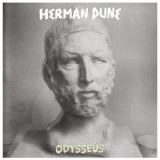
- La Brume (Odysseus Intro)
- Odysseús
- Tune Out
- 4: Sneakers On The Telephone Line
- Buffoon Of Love (Feat. Mayon)
- Into The Darkness Indeed
- Grenache (Odysseús Interlude)
- 369: (The Sun Gon' Shine)
- Head Against The Wall (Feat. Odessa)
- A River Keeps Running (When A Good Man Dies)
- Moonlight On Gaffey Street
- Viduy (Confession)
Nach 25 Jahren Herman Dune und 15 Alben freut sich BB*ISLAND, Odysseús zu präsentieren, eine neue Sammlung von Songs, die den Hörer auf eine Reise durch das turbulente Leben von David Ivar mitnimmt, eine Reise voller Sehnsucht, Schmerz, Liebe, Tod, Glaube und Erlösung. Es ist das erste Mal, dass Herman Dune mit einem externen Produzenten, David Garza, zusammenarbeitet. Das Set-up besteht fast ausschließlich aus akustischen Instrumenten, die live mit der Band in einem Raum aufgenommen wurden. Es ist Folk-Musik im typischen Stil von Herman Dune mit Anklängen an Americana, Country, jüdische und hispanische Traditionen, aber mit einer ganz neuen Wendung in Sound und Arrangements, vor allem im Vergleich zu seiner letzten rein akustischen Trilogie The Portable Herman Dune. David Herman Dune über die Produktion: "...David Garza getroffen zu haben war reiner Zufall. Ich mühte mich gerade mit einem Geigenarrangement für einen der Songs ab, als er sich in einem überfüllten Café in der Innenstadt von San Pedro an meinen Tisch setzte und mich fragte, woran ich gerade arbeitete. David, ein mit einem Grammy ausgezeichneter Produzent und Musiker, hatte mit Fiona Apple, Iron & Wine, John C. Reilly und den Milk Carton Kids gearbeitet und mit einigen meiner musikalischen Helden wie Lucinda Williams und Townes Van Zandt gespielt. Wir verstanden uns auf Anhieb, und er bot mir an, meine Songs zu produzieren. Wir begannen, die Stücke jeden Abend bei mir zu Hause zu spielen, und einmal pro Woche in einem französischen Restaurant namens Le Compagnon. David kannte die besten Musiker in L.A. - Leute wie Sebastian Steinberg am Kontrabass (Fiona Apple), Richard Edson (Schlagzeuger von Sonic Youth, Schauspieler in Jim Jarmuschs Stranger Than Paradise und Spike Lees Do The Right Thing), Odessa (violin, Edward Sharpe and the Magnetic Zeros) und Paul J. Cartwright (violin, Olivia Rodrigo). Als wir uns bereit fühlten, versammelten wir alle in meinem Haus für drei Tage Live-Sessions. Es war ein chaotischer, schöner Prozess, bei dem alle in einem Raum zusammen spielten, keine Kopfhörer, keine Overdubs - nur rohe, echte Musik. Aufgenommen und gemischt wurden die Sessions von Chris Sorem (ebenso Grammy-prämiert für seine Arbeit mit den mit den LA-Legenden Los Lobos). Chris brachte eine Wagenladung alter Mikrofone mit und konzentrierte sich auf "Raummikrofone" - djene, die die Atmosphäre des Raums einfangen. Er sagte, dies sei eine Technik, die auf Alben wie Buena Vista Social Club verwendet wurde, und es erzeugte eine Magie im Raum, die spürbar war. Sogar die traurigsten Lieder wurden lebendig mit so viel Freude, Energie und Elektrizität. Die Aufnahmen waren ungefiltert, organisch und hatten Seele. Als wir mit dem Abmischen begannen, waren wir alle vom Ergebnis erstaunt, wir hörten einen Moment in der Zeit, der sich gleichsam zeitlos anfühlte"
First things first - you don’t need me to tell you about the significance of Australia in the history of punk. I mean, what am I, Jon Savage? Google it yourself, FFS. Instead, let’s just agree that the speedy, feral racket thrown together by the likes of The Saints, Radio Birdman and The Scientists in the mid-late ‘70s is AT LEAST as deliriously entertaining as anything concocted by their UK/US counterparts, sowing the seeds for seemingly endless garage-inflected noisemakers in the land down under. No one likes using words like ‘tradition’ or ‘heritage’ here - the punk rock clusterbomb is far too messy for any of that business - but also emerging from Australian rock’s primordial soup is the addictive sneer of Stiff Richards. Like their predecessors, the band are a gleefully wracked mess of full throttle energy and barrelling power chords, with songs like ‘Kids Out On The Grass’ and ‘Point of You’ proving at least the equal of ‘(I’m) Stranded’ or ‘Aloha Steve And Danno’. Nine tracks in less than 30 minutes, all winners and all determined to leave you flipping over couches and smashing your TV set. And let’s face it, you may as well; there’s nothing good on. It all builds towards frantic closer ‘Fill In The Blanks’, which rattles around your speakers like the UK Subs trying to play Ed Kuepper riffs at the centre of an earthquake, before grinding to a halt as a voice says, “That’s the one.” Does it sound self-satisfied? Hey, it’s got good reason to - this is the best no-frills garage rock party since Gino & The Goons’ ‘Do The Get Around’, and the only appropriate response is to declare yourself betrothed to Stiff Richards because you can’t imagine your life without ‘em. Don’t believe me? Sort out your ears and get ‘State Of Mind’ in ‘em. Rock’n’roll as it’s supposed to be played.
WRWTFWW Records is very excited to announce the first ever release of the highly-sought after original soundtrack from 1987 cult horror movie Dolls by multi-instrumentalist, composer, producer, music man extraordinaire Fuzzbee Morse. The limited-edition LP is a miracle of lostthen-found VHS era film scores and is housed in a heavyweight 350gsm sleeve with a bloody cutout sticker and exclusive composer notes.
Directed by Stuart Gordon (Re-Animator, From Beyond, Robot Jox...) and released by Charles Band’s infamous Empire Pictures (which later morphed into Full Moon Productions), Dolls is 80s campy VHS horror in all its glory, a fan-favorite with all the attributes needed for a frightening popcorn night, including one hell of a soundtrack with a very welcomed heavy dose of menacing synths, thunderous orchestrations, and quirky interludes.
The haunting score comes from master Fuzzbee Morse who composed it in Richard Band’s garage with a Yamaha QX-1 sequencer, an arsenal of vintage synthesizers, and a wide array of instruments. The result is a must-have (and never released before!) soundtrack that blends horror tropes with influences ranging from Igor Stravinsky’s The Rite of Spring to Bernard Herrmann, Frank Zappa, Beethoven, Charles Ives and Eleanor Rigby!
Dolls follows the WRWTFWW release of Fuzzbee Morse’s Ghoulies II (1988) as well as 3 other soundtracks from the Empire Pictures vaults: Richard Band’s Ghoulies (1985), TerrorVision (1986), and Troll (1986). All still available – complete the collection now!
Points of interests
- For fans of soundtracks, horror, cult, synth, ambient, classical, 80s, VHS, Charles Band, Full Moon Productions, Stuart Gordon, John Carpenter, b-movies, sci-fi, Gremlins, toys, evil toys, Toys R Us, the good old days, toys you can play with at 33rpm, Christmas presents.
- First ever release for the soundtrack of cult horror movie Dolls (1987), with cut out sticker and composer notes.
- A1: Color Me Blu - Fields Of Laughter
- A2: Apple - Love Melody In E Minor
- A3: Tribal Sinfonia - Do You Want Me
- A4: Harve And Charee - New Me
- B1: Kwartet Frits Kaatee - Easy Evil
- B2: Ernie Scott Trio - Souled Out
- B3: Bunker Hill - Dionysis
- B4: San Diego - Sands Of Malibu
- C1: Synod - Sheryl Song Is Gonna Do My Dancing
- C2: Whiz Kids - Long Time Gone
- C3: Ross Miller - I Can Love Her Anyway
- C4: Thunderbolt The Wondercolt - Ragged Edge
- C5: Eyrle Oliver - Lovely Lady
- D1: Lisa Richards - A Day In The Life Of A Fool
- D2: Joe Bozzi Quintet - Masquerade
- D3: George Melvin Quintet - It ´S Good Not To Forget
Watch out! You are holding the 125th (one-hundred-and-twenty fifth!) album on Tramp Records in your hands! We are honored to celebrate this impressive anniversary with the tenth volume in the Praise Poems series. This time, too, we go on a journey to discover previously unheard regions of jazz, folk and AOR from the 1970s and 80s.
Praise Poems Vol.10 presents sixteen (almost) forgotten rare groove gems, all released between the years 1970 and 1984. One of the many highlights is the opening track: "Fields of Laughter" by Color Me Blu - originally released on an acetate only of which two copies exist worldwide. But there is much, much more to discover. This brandnew volume features a wide range of genres, from AOR (Whiz Kids, Ross Miller, and another previously unreleased track by Harve & Charee) to Latin-Rock a'la Santana (Color Me Blue, Tribal Sinfonia, and Apple) to Soul-Jazz (Ernie Lewis Trio, Joe Bozzi Quintet or Dutch saxophonist Frits Kaatee). Right at the end, one track in particular stands out: the wonderful "It's Good Not To Forget" by George Melvin and his quintet - a fabulously dreamy, thoughtful instrumental piece in the style of Ramsey Lewis with catchy tune potential.
Not many compilation series make it to a tenth edition. And if they do, then you often notice that the quality of the songs goes in the opposite direction to the increasing number of series: namely decreasing. Not so with Praise Poems Vol. 10, which the creators prove in an impressive new way. They have found tracks that were originally either a) pressed by the musicians themselves in very small editions or b) released by small, regional labels. It is understandable that neither the musicians nor these small labels had the necessary knowledge or budget to market their albums or singles professionally. The majority of the bands therefore did not manage to reach a large audience - although they certainly had the potential for the big stage.
"Praise Poems 10 - A journey into soulful jazz and funk from the 1970s" makes these almost 50-year-old treasures accessible to a new audience. We hope that you enjoy discovering your personal favorite song(s) and we are already looking forward to many more releases!
The Gentle Spring are a new group, formed by Michael Hiscock, Emilie Guillaumot and Jérémie Orsel. Michael has an illustrious pop history, having been a founder member of The Field Mice, possibly the most beloved band on Sarah Records in the 1990s. And with The Gentle Spring, it seems that history is repeating itself…
When Michael and his friend Bobby Wratten formed The Field Mice, the two of them very quickly created a set of songs whose emotional honesty, raw guitars and perfect pop melodies pierced the hearts of a generation of indiepop fans, kids who were unmoved by the posturing of mainstream indie, and who didn’t want to spend time in fields dancing at 24-hour raves. The Field Mice were the band who defined the meaning and the spirit of Sarah Records. Defiantly in love with pop, defiantly un-macho, defiantly…sensitive. And now, remarkably, Michael has done it again. With his new musical partner Emilie, The Gentle Spring have created a fresh new iteration of indiepop music. Once again, the songs are unafraid of raw emotions, brutally honest and is still in love with big pop melodies.
They are still….sensitive. But life is seen through a different lens now. There is wisdom, there is experience, and there is the ability to look back at the world with a mixture of regret and joy. These are very adult songs, and the arrangements reflect this. Rich acoustic guitars and Emilie’s haunting keyboard have replaced hectic drum machines and urgent distortion. And there is a third element to this music. Jérémie Orsel’s sophisticated guitar adds textures and melodies that give these songs a real depth, while maintaining an enigmatic distance, never quite overwhelming the vocal line. So things are clearer now.
But feelings are just as strong. The pain of unrequited love that made Field Mice songs so poignant hasn’t gone away. In some ways, the thought of roads not taken is more profound when experienced in retrospect. I Can’t Have You As A Friend entertains this notion, still moved by the allure of a different life, but shuddering with fear at what might have happened. Also still haunted by the past, The Girl Who Ran Away conjures up the ghost of a previous failed relationship, which threatens to undermine happiness in the present. In Severed Hearts, sung by Emilie, there is the stark recognition that some endings really are final: sometimes there can be no reconciliations. But the song cleverly moves on from this: it acknowledges that, even after the worst emotional loss, you have to pick yourself, you will move on. It’s sophisticated and it’s mature – but it will still break your heart. Sugartown is another song that plays this trick on you. It insists that there will always be lightness and shade. It warns you against complacency, but does it so kindly that you feel like you’ve been embraced. When Michael’s and Emilie’s vocals combine in the final chorus, telling us that we don’t live in Sugartown, you know they are right – and yet the sweetness of the singing makes you feel that – just for a moment – you do.the band perform as a trio and have already found a keen audience in France, where they are based. During a short tour of the UK in January, to coincide with this release, British audiences will get their first opportunities to see The Gentle Spring play these new songs live
2024 Repress
Transparent Blue Vinyl
Little Dragon - die bahnbrechende schwedische Band um die rätselhafte Sängerin Yukimi Nagano, den Multiinstrumentalisten Håkan Wirenstarnd und Fredrik Wallin an Keyboard und Bass und Erik Bodin an Schlagzeug und Perkussion - kehren mit ihrem sechsten Studioalbum „New Me, Same Us“ zurück.
Für eine Band, die stolz darauf ist, abseits gängiger Hörgewohnheiten zu stehen und die sich mit aller Entschlossenheit dafür einsetzt, die Dinge zu ihren eigenen Bedingungen zu verwirklichen, haben sie bislang nicht gerade wenig Anerkennung im Mainstream bekommen. Mit dem Grammy für ihr Album „Nabuma Rubberband“ im Jahr 2014 nominiert, gelten Little Dragon seit langem als eine der gefragtesten Gruppen für Kollaborationen. Im Laufe der Jahre ist eine beneidenswerte Liste an Künstlerinnen und Künstlern zusammengekommen, mit denen sie zusammengearbeitet haben, darunter bspw. BADBADNOTGOOD, Gorillaz, SBTRKT, Flying Lotus, Flume, Kaytranada, Big Boi, De La Soul, DJ Shadow, Tinashe, Mac Miller, Future, Raphael Saadiq oder Faith Evans. Ihre berühmt-berüchtigte Live-Performance hat eine mittlerweile zehnjährige Tourneekarriere nach sich gezogen, in dessen Verlauf sie kürzlich gemeinsam mit Flying Lotus als Co-Headliner eine Show im Hollywood Bowl in Los Angeles gespielt haben, sowie auf einigen der weltweit angesehensten Festivals wie Coachella, Glastonbury, Bestival, Lollapalooza, Melt!, Dour, Sónar und dem Festival von Tyler, The Creator, „Camp Flog Gnaw“, aufgetreten sind.
Vollkommen alleine und ohne Unterstützung von außen im langjährigen und selbstgebauten Heim-Studio in Göteborg produziert und aufgenommen, repräsentiert „New Me, Same Us“ ein weiteres Kapitel in der kontinuierlichen Entwicklung von Little Dragon. Mit ihrem einzigartigen Stil finden sie eine neue Richtung von gemächlichem, unkonventionellem R'n'B, Pop und Elektronik und klingen damit so verjüngt und energiegeladen wie eh und je. Die Platte zeugt auch von einer reflektierenden Stimmung, mit Yukimis unverwechselbarer Stimme, die von Übergängen im Leben, Sehnsüchten und Abschieden sinniert.
- A1: Queen & David Bowie - Under Pressure
- D5: Sheena Easton - For Your Eyes Only
- D6: Odyssey - Going Back To My Roots (Single Version)
- D7: Earth Wind & Fire - Let's Groove
- D8: Imagination - Body Talk
- E1: Duran Duran - Girls On Film
- E2: Spandau Ballet - Chant No 1 (I Don't Need This Pressure On) (I Don't Need This Pressure On)
- E3: Haircut 100 - Favourite Shirts (Boy Meets Girl) (Boy Meets Girl)
- E4: Abc - Tears Are Not Enough
- E5: Phil Lynott - Yellow Pearl
- E6: Landscape - Einstein A Go-Go
- E7: Orchestral Manoeuvres In The Dark - Souvenir
- E8: The Passions - I'm In Love With A German Film Star
- F1: Adam & The Ants - Prince Charming
- F2: Altered Images - Happy Birthday
- F3: Toyah - It's A Mystery
- F4: Tom Tom Club - Wordy Rappinghood (Single Version)
- F5: Bucks Fizz - Making Your Mind Up
- F6: Shakin' Stevens - This Ole House
- F7: Smokey Robinson - Being With You (Single Version)
- F8: Michael Jackson - One Day In Your Life
- A2: The Police - Every Little Thing She Does Is Magic
- A3: Blondie - Rapture
- A4: Olivia Newton John - Physical
- B2: Visage - Fade To Grey
- B3: Soft Cell - Tainted Love
- B4: Japan - Quiet Life
- B5: Duran Duran - Planet Earth
- B6: The Human League - Don't You Want Me
- B7: Kim Wilde - Kids In America
- B8: Adam & The Ant - Stand & Deliver
- C1: John Lennon - Woman
- C2: Roxy Music - Jealous Guy
- C3: Hazel O'connor - Will You?
- C4: Kim Carnes - Bette Davis Eyes (Radio Edit)
- C5: Reo Speedwagon - Keep On Loving You
- C6: The Who - You Better You Bet (Edit)
- C7: Electric Light Orchestra - Hold On Tight
- D1: The Specials - Ghost Town
- D2: The Jam - That's Entertainment
- D3: Ub40 - One In Ten
- D4: Madness - It Must Be Love
- A5: Lionel Richie & Diana Ross - Endless Love
- A6: Pretenders - I Go To Sleep
- A7: Abba - One Of Us
- B1: Ultravox - Vienna
NOW Music is proud to present the newest addition to the ‘Yearbook’ series: NOW – Yearbook 1981. NOW – Yearbook 1981; a celebration of the eclectic and creative brilliance of the year in pop. 4 CDs of 85 tracks that defined the charts in 1981. Available on a 4CD special edition which is housed in ‘hard-back book’ packaging, including a 28-page booklet with a summary of the year, a track-by-track guide, a quiz, and original singles artwork, and as a standard 4-CD package. A limited edition 3LP set pressed in translucent red vinyl, limited to 3,000 units and a 4CD set
'We're excited to be able to bring you the latest wonderful album from Chester's boycalledcrow, after a series of superb releases for labels such as Mortality Tables, Waxing Crescent Records and Subexotic Records, including the wonderful Kullu from earlier this year.
Knott's music doesn't sit easily in any pre-existing genres, being at once strange and experimental, yet melodic and somehow comforting. His music is intimate and evocative, deeply personal, and manages to be both bucolic and yet totally 21st century, like Kraftwerk's robots dreaming of sheep.
The songs and sounds on “eyetrees” are inspired by a rich family life and the wonderful times spent with his wife and kids, both at home and out in nature.'
Knott said of the album and its inspirations:
“We enjoy spending time in the woods with our young children, creating stories about the "eye tree”. This tree, with thousands of eyes, watches over us and cares for us like family. We make fox medicine and cherish these blissful moments. The music reflects these times, seen through the colors of an old, fuzzy reel—orange, red, and yellow with blurred edges, like an old photo scorched by the sun.
I feel a deep spiritual connection to the countryside; the hands of Arcadia cradle me when I feel sad. Some of the album was created during times of sadness when I felt death was close and the lines between worlds were blurred. This feeling—that anything can happen and that life is delicate and can be taken away in a flash—permeates the music.
The song titles are stories and memories of my family, filled with hazy pinks, yellows, reds, and oranges.
Wonky acoustic guitar, broken electronics, and a warm, otherworldly space."
- A1: Pommesgabel 2 58
- A2: Laser Ninja 3 18
- A3: Der Haarige Kobold With Saltatio Morits 3 37
- A4: He-Sa-Mu-Ko-Mi-Ri-Pom 3 47
- A5: Flugsaurier 4 06
- A6: Super Monster-Auto 3 48
- B1: Bang Bang With Kinders 3 15
- B2: Luna - Unser Hund 3 24
- B3: Rettung In Sicht 4 05
- B4: Trolltanz-Alarm 3 12
- B5: Der Zweiköpfige Polizist 2 55
- B6: Der Freundschafts-Song With Jennifer Haben 3 07
HEAVYSAURUS, das ist endlich echter Metal für die ganze Familie. Vier Dinos und der Drache erobern Deutschland - und 2024 wird der Siegeszug der fünf rockenden Urzeitwesen weitergehen, denn am 2. Februar 2024 veröffentlichen HEAVYSAURUS ihr neues Album "Pommesgabel". Mainstream-Rockhymnen und harte Metal-Riffs machen das Album zu einem ganz besonderen Erlebnis, außerdem beweist sich Mr. Heavysaurus einmal mehr als der ultimative Frontmann für die Kids und greift Themen wie Mobbing, Ängste, Umwelt und das Miteinander auf, um daraus bestärkende Botschaften zu machen. "Pommesgabel" ist das dritte Album der fünf panzerhautdicken Jurassic-Freunde, die mit ihren Geschichten ein Publikum von 3- bis 11-Jährigen für sich begeistern. Aber was hat es nun eigentlich mit dem Albumtitel auf sich? Na klar, es handelt sich um das Erkennungszeichen aller Rock- und Metal-Fans. Zeigefinger und kleiner Finger ausgestreckt, Hand nach oben gereckt - so wussten Dinos schon vor 150 Millionen Jahren, dass sie auf dem richtigen Konzert gelandet sind.Das dritte Studioalbum der Metal-Dinos gibt es neben der klassischen CD und dem digitalen Produkt auch als 12" & 180g Vinyl - natürlich nur in echtem Dino-Grün (farbige Vinyl) - ein Muss für jeden Heavysaurus Fan.
- A1: Princess Aya Sarah – O Wina Tienge
- A2: Meta & Feza – Mivé Temoin
- B1: The African House Party Project Feat. Splash, Patricia Majalisa & Dalom Kids – P-Coq
- B2: V-Mash – Naughty Boy
- B3: Di Groovy Girls – Ririmi Rotsombela
- B4: Tshala Muana – Djepué
- C1: Lady Isa – Djambo
- C2: Pembey Sheiro – Sala Ni Toto
- C3: Princesse Mansia M’bila – Ngoma Mansia
- D1: Samba Mapangala And Orchestra Virunga – Mashariki
- D2: International Zaistars & Nene Tshaku – Je T’aime Au Pluriel
- D3: M.d. Shirinda & Gaza Sisters – Mabazi
- D4: “Bwaluka” Founders Band – Kimbera
Strut introduces a pioneering new compilation 'A Dancefloor In Ndola,' curated by revered East African DJ, Kampire. This release marks an evolution in Strut's approach to compilations, showcasing emerging DJ talent from across the world and embracing an innovative approach to musical discovery from the next wave of selectors. Forging her reputation through memorable sets for the Nyege Nyege Festival in Uganda over the last decade, Kampire now tours worldwide and is celebrated for her brilliantly curated sets spanning the full range of African music styles from the ‘70s and ‘80s to the present day.
Although born in Kenya to Ugandan parents, Kampire spent her formative years in Ndola, Zambia. ‘A Dancefloor In Ndola’ is inspired by artists and songs that formed part of her soundtrack during that time. “It is important for me to continually reference Africa’s own musical history,” she explains. “At 17, I didn’t pick up on my Dad’s music but now I love and collect those records. I’m constantly referencing them in my music sets today. I love that feeling of shared nostalgia where people recognise a song they haven’t heard in a long time. It is a touchstone for me when I’m playing.”
The compilation flows through different East African and South African genres from Congolese rumba and soukous to 1980s township bubblegum and the rich guitar-led sounds of Zambian kalindula. “There are styles of music on the compilation which are often considered unsophisticated from rural areas. I and other contemporary African artists and DJs draw inspiration from them; it is part of what makes us ourselves.” Kampire also shines the spotlight on many incredible women in African music from the ‘80s, including Congolese legends like Pembey Sheiro, Feza Shamamba and Princesse Mansia M’bila to V-Mash and Di Groovy Girls from South Africa.
‘A Dancefloor In Ndola’ is released on 2LP and CD and features exclusive new edits by Kampire alongside personal liner notes tracing her links to the music. Cover artwork montage is by Canon Rumanzi and vinyl restoration / mastering by The Carvery
Debut compilation by one of East Africa’s leading new generation DJs, Kampire.
Mix of African classics and rarities spanning 1970s – 1990s from Congolese soukous, South African bubblegum and Zambian kalindula.
Shining the spotlight on women in African music Pembey Sheiro, Feza Shamamba and Princesse Mandisa M’bila.
Exclusive cover artwork collage by Canon Rumanzi.
Worldwide DJ dates supporting release during Summer and Autumn 2024.
Sad days for the kids, but great days for the Skins! Oi! made in Leipzig! THE SPARTANICS, nach Demo, LP, 10" und diversen Sampler-Beiträgen mit ihrem zweiten Komplett-Album. Das Trio kommt zwar aus Connewitz, klingt aber angenehm britisch nach 70`s Lower Class Streetpunk mit smartem Beat, eingängigen Melodien und geschmeidig-scharfem Gitarren-Sound. Schön trocken-schnörkellos, puristisch unterwegs. Mit leichter Sohle und harter Botschaft: ,Shut up, work hard and make money for the rich!" 10 Songs mit englischem Text, grobe Richtung: Knackige Melange aus SPARRER, NEWTON NEUROTICS, EVIL CONDUCT und den LURKERS. Farbiges Marbled Vinyl, kommt mit CD-Version UND DLC!
Hannah Mohan’s new album is a first in more ways than one. Time Is a Walnut is the first solo release from the Western Massachusetts singer and songwriter, after nearly a decade fronting indie-pop band And the Kids. The album also comes amid the longest stretch Mohan has spent in one place since she left home at 16 to hop freight trains and hitchhike across North America.
Making music has been at the center of Mohan’s life ever since, even as other circumstances have changed—sometimes radically. A long-term relationship crumbled in 2019. Then the pandemic arrived, bringing an end to her band. After writing a batch of new songs taking stock of her situation, Mohan asked Alex Toth of Rubblebucket and Tōth to produce them, the latest installment of a longtime friendship and occasional creative collaboration.
Although Time Is a Walnut is a breakup album, don’t go in expecting tearjerkers. Mohan draws from a richer palette here, with themes of messy eroticism on the sultry “Soaked,” altered consciousness on the buzzy rocker “Heaven and Drugs,"" and navigating personal hells with Lady Lamb on “Hell.” Throughout, the songs showcase Mohan’s powerful voice, prismatic melodicism and distinctive lyrical sensibility as she processes major events in her life.
Nachpressung jetzt in klassisch schwarzem Vinyl! "Sad days for the kids, but great days for the Skins!" Oi! made in Leipzig! THE SPARTANICS, nach Demo, LP, 10" und diversen Sampler-Beiträgen mit ihrem zweiten Komplett-Album. Das Trio kommt zwar aus Connewitz, klingt aber angenehm britisch nach 70`s Lower Class Streetpunk mit smartem Beat, eingängigen Melodien und geschmeidig-scharfem Gitarren-Sound. Schön trocken-schnörkellos, puristisch unterwegs. Mit leichter Sohle und harter Botschaft: "Shut up, work hard and make money for the rich!" DON'T! 10 Songs mit englischem Text, grobe Richtung: Knackige Melange aus SPARRER, NEWTON NEUROTICS, EVIL CONDUCT und den LURKERS.
Strawberry Wind, produced by Richard Swift (Nathaniel Rateliff and The Night Sweats, Foxygen, The Shins) not only delivers on a promise to create an honest album for kids and parents but it represents what Baylin calls the “beautiful divide,” of juggling family life with her creative life, a difficult task by any measure. “The divide in me is easy to feel because I invest 100% of myself into my family and often the creative gets put to the side,” she explained, “so when I decided to begin writing for this album it just poured out of me.” Now singer / songwriter Jessie Baylin shares that creative outpouring on her debut children’s album, ‘Strawberry Wind’. Throughout the album, Baylin doesn’t hold back on telling it like it is. Weaving through lyrical themes of dream life, supermoons and summertime vibes are some gentle doses of reality. “I don’t want to lie to my kids. Life is hard sometimes and you need to find a way to deal with it... there will always be things in life you can’t control. But, you can dream of a better world and make your own refuge,” says Baylin, who is mom to 4-year-old Violet and is expecting her second child with her husband. Baylin, who’s released four critically-acclaimed albums over the years, says the seed was planted for this album after recording a cover of Harry Nilsson’s He Needs Me from the kids’ film Popeye. “The song has a childlike sense, but the message is very deep. It’s magical, it’s dark, and it hit all the right notes. I wanted to do an album that feels like that” she says. “Since becoming a mother, I found myself being around the house a lot and I started gravitating to these wonderful albums I remembered from my own childhood - The Beatles, Harry Nilsson’s The Point!, John Lennon, Roger Miller’s Robin Hood and Carole King’s Really Rosie." The magic of those iconic 1970s records she mentions is that they’re all grounded in solid songwriting and were never dumbed down for the audience. “Those records felt very honest and that was my mission here. I also wanted it to feel magical and remind people of the child inside of all of us that is filled with a sense of wonder and pure joy and hope.”
The music from LES TONTONS FLINGUEURS (aka Crooks in Clover aka Monsieur Gangster) is as instantaneously recognizable as the James Bond theme thanks to a short and recurring melodic motif that can still stick in the heads of 21th century kids. Monothematism is a word used by musicologists to refer to the use of stylistic variations based on a single musical theme as can be heard in the Tontons : on the banjo, during the nose punch sequences, played jazz, blues, gloria or Hully Gally style. Though the Tontons music may on first listen sound nothing different than a straightforward yet catchy soundtrack, it turns out to be a real exercise in style. When reading Michel Magne's autobiography " L'amour de vivre " it clearly appears that mixing folk music and sound experiments was a mindful artistic choice. In the movie, Antoine Delafoy (Claude Rich) who is engaged to Patricia (the Mexican's daughter) is merely a Michel Magne caricature. He embodies a contemporary music composer in search of the " absolute anti-chord " by using a water tap. " We don't really know what it is but it's amusing ". In reality and despite his classical musical education, Michel Magne has indeed had a venture into avant-garde music, going as far as organizing an infrasounds concert at the Salle Gaveau venue (Paris) on July 15th, 1954. Infrasonic frequencies which quickly made the audience run for the toilets. On December 3rd,² 1956 his low-frequency sounds contributed to an " empirique " show at the Théâtre des Trois Baudets (Paris) with Alexandro Jodorowsky, Jean Michel Rankovitch and Tinguely. At the same time he wrote music on words by Françoise Sagan for Mouloudji. Again with this desire to cross the boundaries of musical genres. He recorded in 1959 an album of " musiques tachistes " from which a show with dances was staged by Michel Descombey. His taste for provocation and avant-garde did not prevent Michel Magne from composing and arranging popular music. He hence wrote the music for six Georges Lautner movies including the famous Tontons Flingueurs in 1963.Being part of the avant-garde long-haired world what could Michel Magne think of Michel Audiard ? A most kind character who had nevertheless been burned by supporters of the " nouvelle vague " including journalist Henry Chapier who described Les Tontons Flingueurs as being " chansonnier " cinema (in Combat 1963), meant for disenchanted quinquagenarians. Audiard had responded to Truffaut, another of his dispisers : " Dad's movies filled theaters, son's movies empty them. We should have been warned : with its seaside sounding name the Nouvelle Vague (new wave) drove millions of viewers out on the countryside ". In between melodic effectiveness and daring arrangements and tonality, Michel Magne's work is worth being listened to with fresh ears, cleared of clichés !
With $10 Cowboy, Charley Crockett didn’t set out to make a themed record. He had released a concept album in 2022, the critically acclaimed Man From Waco, propelling Crockett to new heights and establishing him as one of the leaders of a sparkling revival of traditional country and folk music. For the follow up album, Crockett wrote freely, over a two-month period, as he wound his way across the United States on the back of a tour bus. The resulting songs—raw, personal, vivid portraits of a country in transition—ended up being connected after all. “This material is written at truck stops, it’s written at casinos, it’s written in the alleys behind the venues, it’s written in my truck parked up on South Congress in Austin,” explains Crockett. “A ramblin’ man like me, a genuine transient, is in a pretty damn good position to have something to say about America.” As the album unfolds, you begin to understand that a $10 Cowboy is anyone who has hustled to get by, who didn’t fit in, who has slept on other people’s couches, or the street, who has fallen down, gotten up, and ventured from home chasing a paying gig, or a new start. “Being out on the road gives you a first-hand experience of how different kinds of Americans see themselves as going through some kind of great struggle,” Crockett says. “The roughneck working the oil and natural gas fields in West Texas. The single mother raising kids by herself. The young man working a street corner because he thinks it's his only option. I would be dishonest if I said I couldn’t see the thread. Each of ‘em feel invisible. I am struck by the battles they are fighting internally, and the ways they have been entrapped by what America says they are.” The album was recorded at Arlyn Studios in Austin, produced by Crockett and his long-time collaborator Billy Horton. It was recorded live to tape, with anywhere from 6-12 musicians and backup singers on each track, giving the songs the feel of a live performance. It’s a sound Crockett has been after for years. “Reason I cut it on tape is because when you got the right people in the room, and the great players rise to the occasion when that red light is on and the tape is rolling, you get the magic of a great performance.” It's exactly what he achieved with $10 Cowboy. Regular bandmates Fox, Nathan Fleming, and Mayo Valdez are joined by some of the genre’s most talented players—Rich Brotherton, Kevin Smith, Dave LeRoy Biller, T. Jarrod Bonta and others, including a string quartet. Lauren Cervantes and Angela Miller sing on the album. While the musicianship and accompaniment are exquisite, they are also subtle, placed joyously, yet judiciously across the album. No, Crockett didn’t set out to write a themed record. Or, through his studied eye, to find America. But with $10 Cowboy, he might have done both.
1961, Port Richmond, Staten Island, NYC: Five kids stumble into a community center, sent by their parents to keep them off the streets and out of trouble. A lifelong friendship is formed over their shared love of doo-wop. The kids start learning harmony and the next thing they know they're cutting records. The group begins to gain steam as they take their act to the packed clubs around New York City. But history has other plans for the boys. First, The Beatles invade America, making doo-wop yesterday's news. Then, the United States invades Vietnam and two of the five boys are sent off to the jungle. Reintroducing: The Splendids. 61 years after their initial formation, the group has reconvened to cut two truly breathtaking records. With three of the five surviving original members weaving together heartfelt harmonies, the group has regenerated themselves and enlisted the help of multi-platinum soul singer Eamon to sing lead. Eamon is no stranger to doo-wop, as he got his start in the music business touring the Northeast as a young boy with a group his father Walter formed in the 90's. With this father and son reunion on these two tracks, the listener is taken back to a time when walking down the street you might come across a gang of youth singing their hearts out on a street corner, serenading the city with their souls. The Splendids hired Los Angeles based producer and multi-instrumentalist Dan Ubick to produce the records and conjure up the retro rhythm and blues sounds of the 1960's. Frequent Eamon collaborator the Oklahoman Benj Heard was then brought on to mix and produce the vocals. Both Ubick and Heard's sonic fingerprints add texture and groove to the groups legacy on 'Cry Baby Cry' and 'Blame My Heart'. Generations have come together from coast-to-coast to take back what history took from them. Enjoy the sweet, sweet sounds of true soul. Enjoy The Splendids.
Back in Your Life was released in 1979 under the Jonathan Richman & The Modern Lovers moniker, but only half the album featured the backup band. The other half of the album features Richman as a solo artist. The Modern Lovers were formed by Richman and included Leroy Radcliffe on guitar, Asa Brebner on bass and Denotra ‘D’ Sharpe on drums. Occasionally, they were joined by Richman’s friend and The Real Kids’ band leader John Felice.
Back in Your Life is available on black vinyl.
- A1: Chasing Shadows - Deep Purple
- A2: One Way Glass - Manfred Mann Chapter Three
- A3: Hold Onto Your Mind - Andwella
- A4: Hot Pants - Alan Parker & Alan Hawkshaw
- A5: Do It - Pink Fairies
- B1: Tomorrow Night - Atomic Rooster
- B2: Taken All The Good Things - Stray
- B3: Out Demons Out - Edgar Broughton Band
- B4: For Mad Men Only - May Blitz
- B5: Back Street Luv - Curved Air
- C1: Ejection - Hawkwind
- C2: Meat Pies ’Ave Come But Band's Not ’Ere Yet - Stackwaddy
- C3: Lovely Lady Rock - James Hogg
- C4: Third World - Paladin
- C5: Taking Some Time On – Barclay James Harvest
- D1: Ricochet - Jonesy
- D2: Led Balloon - Steve Gray
- D3: Big Boobs Boogie - Slowload
- D4: Freelance Fiend - Leaf Hound
- D5: Confunktion - Dave Richmond
“Incident At a Free Festival” is a tribute to the mid-afternoon slots at Deeply Vale, Bickershaw, Krumlin, Weeley, and Plumpton – early 70s festivals that don’t get the column inches afforded the Isle of Wight or Glastonbury Fayre, but which would have been rites of passage for thousands of kids. Bands lower down the bill would have been charged with waking up the gentle hippies and appealing to both the greasy bikers and the girls in knee-high boots who wanted to wiggle their hips. And the best way to do that was with volume, riffs and percussion.
Compiled by the venerated Bob Stanley and Pete Wiggs of Saint Etienne, this is the heavier side of the early 70s they summarised on the acclaimed “English Weather” collection. There’s an air of menace and illicit thrills among tracks by Andwella, Stack Waddy and Leaf Hound (whose “Growers of Mushroom” album is worth well over £1,000). Bigger names include the rabble-rousing Edgar Broughton Band and kings of the festival freakout, Hawkwind. They are represented by their rare version of ‘Ejection’
For every mystical Tyrannosaurus Rex performance there was something like Atomic Rooster’s Tomorrow Night or Curved Air’s Back Street Luv to capture the spirit of the day and stir the loins of festival goers; the tracks on “Incident At a Free Festival” were inspired by both Chicago’s percussive wig-outs and the Pink Fairies’ anarchic spirit. The sounds were heavy and frequently funky, with a definite scent of danger. Their message was clear and simple: clap your hands, stamp your feet, hold on to your mind.
So, put on your wellies in your living room, drop the needle and enjoy...