DJ Support: Garnier, Opolopo, Worldwide FM, Marcia Carr, Bill Brewster, Timeout Moscow, Craig Smith, Delfonic, Tony Nwachukwu, Marcel Dettmann, DJ Rocca, Shuya Okino, Borrowed Identity, Titonton Duvante, Alex Attias, Rainer Truby, Sol Power All-Stars, Kyri R2, Robert Luis, Severino Panzetta, Lars Behrenroth, Kassian, Alkalino, Getdown Edits, Moodymanc, Gerd, Lea Lisa, Young Pulse, Mark de Clive-Lowe, Mark Grusane, Alex Barck….
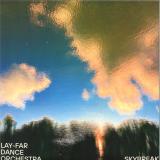
International dance music heavyweight, producer and DJ Alexander Lay-Far returns with a powerful new chapter - Lay-Far Dance Orchestra (LFDO) - a fully-fledged live band project that reconnects him with his jazz-funk and fusion DNA while pushing dance music forward with unmistakable groove, musicianship and emotional weight. Formed in early 2024, LFDO is no nostalgia exercise. With Lay-Far at the helm as bassist, bandleader, composer, arranger and sound engineer, the orchestra has already been turning heads with explosive live performances, reinventing classic Lay-Far cuts, and now unveil their first album “Skybreak” with all new and original material written and produced by Lay-Far together with his bandmates and star guests, including Lipelis, Antoha MC and Seven Davis Jr. This work shows the departure from the predominantly electronic sound of Lay-Far's previous solo albums in favour of live instrumentation recorded to analogue tape and effortlessly bridging the gap between Jazz, Library Music, Disco-Funk, House, Broken Beat and Drum’n’Bass. “Skybreak” is dynamic, passionate, spiritual, cinematic, playful, heartfelt, life-affirming, dreamy and deeply romantic. Ultimately, there’s something profoundly romantic in recording and releasing such music in this day and age!
“Take Flight (Part 1)” is opening the album with style. It takes us on a beautifully orchestrated journey, blending the sensuality of Library Music with high-octane Jazz-Funk and raw b-boy breaks, propelled by breathtaking flute and Rhodes solos of Timur Nekrasov and Maxim Glonti. This aural symbiosis of “beauty and the beats” will become more and more prominent as the album unfolds.
It’s time for “Aquarius Love” created with the inimitable artist and vocalist Seven Davis Jr. (Secret Angels, Ninja Tune). In this composition cinematic soul and heavy jazz meet the restless energy of live drum & bass with deep and heartfelt vocals - timeless sound combined with a timeless message about love and life!
Next is “Head In The Clouds” - a theme for an imaginary rom-com, an ode to all the dreamers - sweet, light, naive and heartwarming. Space-Disco-Funk at its best!
“Where You From” is a fiery Soulful House number with heavy Afro-Latin influences recorded in collaboration with Lipelis. It’s full of Sun, joy and passion. Its irresistible rhythm is emphasised by funky octave bass, wah-wah guitar, catchy piano riffs, guitar solo by Lipelis and seemingly light conscious message delivered by Lay-Far and Maryag. Summer is here!
Now the album takes an unexpected twist in the form of “The Harp of Boom” which at first glance appears to be a classic-sounding Boom-Bap banger. Yes, It’s loud, raw, and gritty, yet it gradually evolves into something delicately-touching and deeply-soulful thanks to a memorable flute melody and lush string arrangement. Definitely recorded with tongue in cheek.
Next is “Feel The Moment” a remarkable collaboration with one of the most recognisable and distinctive Russian artists, singer, trumpeter and cultural icon Antoha MC. It’s a feel-good song, hopeful, life-affirming and bittersweet. A stylish excursion into Brit-Funk and Soviet Jazz-Fusion sound, drawing inspiration from the likes of Atmosfear, Light Of The World or Soviet Jazz bands like Allegro and Arsenal, but reimagining the influences through the modern West London broken beat lens.
The spectacular music journey continuous with “Take Flight (Part 2)” - it’s all about the deep infectious jazz-funk groove, heavy beats, rolling percussion and the glory of the soloing instruments - saxophone and flute by Timur Nekrasov, demonstrating the wide range of emotions from thoughtful and lyrical to restless and borderline vicious. One for freestyle dancing!
As the album draws to an end a vibrant musical triptych “Soul Constant” awaits, mixing together the deep and sensual mood of spiritual jazz with heavy syncopated drum’n’bass rhythms by Michail Fotchenkov, lush orchestration, expressive saxophone solos and the ending which can simply be described as “aural bliss”. It’s breath-taking!
A pleasant bonus is the exclusive version of “Where You From” by Lipelis himself, who is taking it into dub territories, further enhancing the rhythm section and enriching the song with his trademark playful synth flourishes and dreamy guitar solos for maximum effect (and appeal).
The album “Skybreak” by Lay-Far Dance Orchestra is the work of real artistry and craftsmanship with timeless sound that’s not only deeply-rooted but also forward-thinking.
Поиск:roman jazz project
Все
- A1: I Need A Break
- A2: Little Claws
- A3: Kill The Lie
- A4: Set In Motion
- A5: Wrong Shape
- B1: Don’t Gotta Think About U
- B2: No Regular No Chance
- B3: Everything’s Under Control (Feat. Pink Siifu)
- B4: Really Really Right
LA-based producer Real Bad Man and LA musician Genevieve Artadi announce their new collaborative album Everything Is Under Control, out October 3rd via the producer’s own Real Bad Man Records. Alongside the announcement, the duo are sharing two new singles from the forthcoming album, “Don’t Gotta Think About U” and “Little Claws”. The former is an electro pop banger that propels Artadi’s intoxicating vocals to the forefront and arrives with an accompanying visual. With Everything Is Under Control, Real Bad Man is proving his versatility as a producer, crafting intricate and lively electronic-forward foundations for an old friend in Genevieve to explore an eclectic, funky approach to her vocals.
Speaking about the single, Artadi says, "'Don’t Gotta Think About U' is about a person celebrating the explosion of her most recent unhealthy romantic relationship. Her spitefulness and delusion of freedom indicate she’s still inside the pattern she hasn’t yet realized she keeps signing herself up for. The sound is melancholic pop, the thread that has always tied Adam and me together despite our musical differences."
"I love juxtaposing dense drums and a very pretty voice," Real Bad Man says of collaborating with Artadi. "That’s what 'Don’t Wanna Think About U' is. We’re also trying to make something catchy at the same time, that’s what I’ve always been drawn to musically is blending genres and moods and get them to work together. As well as pulling Genevieve away from what she does with Knower and her solo stuff.
Real Bad Man’s collaboration with Artadi is a radical shift in approach for the producer, whose previous full-length projects this year were rooted in the distinct strain of underground hip-hop that he’s amassed an extensive catalog in. Everything Is Under Control marks an entirely different, and unpredictable, sonic approach for the duo, embracing experimentation and synth-led electronica that’s reminiscent of Artadi’s work as part with Pollyn (her former band with Adam/Real Bad Man) as well as current duo KNOWER with Louis Cole. Real Bad Man’s latest project extends his prolific run of collaborations this year, embarking in a new genre and sound entirely after releasing full-length projects with ZelooperZ (Dear Psilocybin), Boldly James (Conversational Pieces) and Willie The Kid (Midnight) in the first half of 2025.
Known for her complex, yet playful writing style, Genevieve Artadi has made a name for herself through four solo albums that stretch the gambit of jazz, dream pop and dance music. The last three albums were released on iconic label Brainfeeder Records and the fourth (Another Leaf) was made as part of her being a composer-in-residence with Sweden’s Norrbotten Big Band. She’s also been an accomplished collaborator with her bands Expensive Magnets, Pollyn and KNOWER, and performing and recording with the likes of Thundercat and Snarky Puppy.
Check out “Don’t Gotta Think About U” and “Little Claws” above, see below for more details on Everything Is Under Control and stay tuned for more from Real Bad Man coming soon.
- A1: Les Masques - Il Faut Tenir (1969)
- A2: Isabelle Aubret - Casa Forte (1971)
- A3: Christianne Legrand - Hlm Et Ciné Roman (1972)
- A4: Jean Constantin - Pas Tant D'chichi Ponpon (1972)
- A5: Billy Nencioli & Baden Powell - Si Rien Ne Va (1969)
- B1-: Marpessa Dawn - Le Petit Cuica (1963)
- B2: Jean-Pierre Sabar - Vai Vai (1974)
- B3: Sophia Loren - De Jour En Jour (1963)
- B4: Isabelle - Jusqu’à La Tombée Du Jour (1969)
- B5: Sylvia Fels - Corto Maltesse (1974)
- C1: Frank Gérard - Comme Une Samba (1972)
- C2: Ann Sorel - La Poupée Des Favellas (1971)
- C3: Charles Level - Un Enfant Café Au Lait (1971)
- C4: Andrea Parisy - Les Mains Qui Font Du Bien (1970)
- C5: Audrey Arno - Quand Jean-Paul Rentrera (1969)
- C6: Aldo Frank - T’as Vu Ce Printemps (1970)
- D1: Christianne Legrand - Cent Mille Poissons Dans Ton Filet (1972)
- D2: Clarinha - Lemenja (1970)
- D3: Hit Parade Des Enfants - Aquarela (1976)
- D4: Jean-Pierre Lang - Tendresse (1965)
- D5: Magalie Noël - Une Énorme Samba (1970)
- D6: Françoise Legrand - La Lune
Ever since the late 1950s bossa-nova revolution, Brazil’s influence on French music has been undeniable. Pierre Barouh, Georges Moustaki and a vast array of lesser known artists, all made the Musica Popular Brasileira (MPB) an axis of promotion at the service of a cool and metaphysical, modern and mixed Brazilian lifestyle. Some were seduced by the poetic languors of the bossa, some were looking for fun, and others just loved the American hybridization of jazz-bossa, jazz-samba.
What is bossa nova? One of its creators, Joao Gilberto said: "Its style, cadence, everything is samba. At the very start, we didn't call it bossa nova, we sang a little samba made up of a single note - Samba de uma nota so .... The discussion around the origins of bossa nova is therefore useless”. It is nevertheless useful to remember that these magnificent Brazilian songs, which the guitarist describes as samba, were shifted and balanced around improbable chords. "I like things that lean, the in-betweens that limp with grace," said Pierre Barrouh, quoting Jean Cocteau.
With emotion, arrangements for violin and supple guitar licks, bossa nova rapidly changed. A transformation that can be heard in the Tchic, tchic, French Bossa Nova 1963-1974 compilation, the result of a cultural reappropriation, which traveled through the United States and supplemented itself in France.
A musical revolution that has remained significant, bossa nova was born in Rio. From 1956 to 1961, Brazil lived through its golden years. In five years, the country had invented its modernist style. Elected president in 1956, Juscelino Kubitschek de Oliveira, an elegant man with a broad forehead, brandished a promising slogan: "Fifty years of progress in five years". He quickly got to work. Not worried about increasing debt, he launched the project for a new federal capital, Brasilia, designed by the communist architect Oscar Niemeyer. Volkswagen opened state-of-the-art factories and created the “fusquinha”, the Beetle. In Rio, the Vespa made its first appearance. The Arpoador Surf Club crew run into the “girl” from Ipanema, Helô Pinheiro - the tanned garota ("chick"), between a flower and mermaid, who at 17 walked by the Veloso bar, where the fiery author and composer, Tom Jobim and Vinicius de Moraes, were getting drunk on whiskey. From then on, bossa symbolized cool.
In 1958, Joao Gilberto recorded Chega de Saudade, which the directors of Philips denied, calling it "music for fagots". The marketing director, who believed in it, secretly pressed 3000 78-inch vinyls and distributed them at schools around Rio, creating a tidal wave.
American jazzmen then took over. In particular, trumpeter Dizzy Gillespie and guitarist Charlie Byrd. In November 1962, the Brazilian Ministry of Foreign Affairs funded a "Bossa-Nova" concert at Carnegie Hall in New York, inviting the genre’s pioneers. Unprepared, the show soon turned to disaster. But the troupe was invited to the White House by Jackie Kennedy. The first lady loved "the new beat" and in particular Maria Ninguem, a song by Carlos Lyra, later covered by Brigitte Bardot.
In Brazil, the 1964 military coup quickly ended this euphoria. The destructive atmosphere that ensued pushed many Brazilian musicians to leave, if not to exile. Thus, Tom Jobim, Sergio Mendes and Joao Gilberto arrived to the United States. In New York, Joao Gilberto met saxophonist Stan Getz. At the time, he was married to the Bahianese Astrud Weinert Gilberto, who had a German father. She had never sung before, but she knew how to speak English. Getz therefore asked her to replace her husband on The Girl From Ipanema. The Getz/Gilberto record with Tom Jobim on piano, was released in March 1964. Phil Ramone, the "pope of pop" was in charge of sound.
Bossa nova arrived in Paris through the classic “guitar-voice” channel (Pierre Barouh, Baden Powell, Moustaki…) But France loved jazz and Paris had already welcomed its American contributors. All these good people were to pass through Saint-Germain-des-Prés. The cabaret l'Escale became the Mecca of Latin American sound where one could find Pierre Barrouh and his friends, such as the Camara Trio, samba-jazz aces, whose only record was published by the Saravah label. With a band strangely called Les Masques (a band that included Nicole Croisille and Pierre Vassiliu, among others), the Camara Trio recorded an interesting Brazilian Sound, including the track Il faut tenir which is present on this tasty compilation of rarities.
Other enlightened musicians can also be found on the compilation, such as Jean-Pierre Sabar (songwriter for Hardy, Auffray, Leforestier ...) and the French pop rock organist Balthazar. In 1975, Sabar recorded Aurinkoinen Musiikkimatka on a Finnish label, which featured the crazy Vai, Vai, included on this record. We are now following the footsteps of Brazilian electronic musicians such as Sergio Mendes, Eumir Deodato or Marcos Valle who created funk and disco sounds on their keyboards and synthesizers. A style that influenced Véronique Sanson when she wrote Jusqu’à la Tombée de la nuit in 1969 for Isabelle de Funès, the niece of Louis and a great friend of Michel Berger - Sanson did end up singing this track on her 1992 Sans Regret record.
The pinnacle of exoticism and travel, Sylvia Fels’ Corto Maltese includes bongos, sea mist and ocean sounds. The title was taken from Jacky Chalard’s concept album written in 1974, Je suis vivant, mais j’ai peur (I am alive, but I am scared), based on Gilbert Deflez’s science fiction novel.
However, bossa nova extended the scope of popularity. "In the 1970s, I was a fan of Sergio Mendes, Getz / Gilberto. I fell in love with this music that I knew because I had been an orchestral singer, " explained Isabelle Aubret, who in 1971 delivered a composite record of covers by the very funky Jorge Ben, Orfeu Negro, Tom Jobim, Vinicius de Morais and Jean Ferrat. "I recorded this album for Meys Records in Paris, far from Brazil, with wonderful musicians, François Raubert, Roland Vincent, Alain Goraguer...". The latter wrote the arrangements for Casa Forte, a very percussive title borrowed from Edu Lobo, one of the initiators of the bossa who spent time in California. "Jazz and bossa came together and produced very rhythmic music. I love singing, it allows me to dream, to have fun, to feel a high on stage, and these songs brought me joy, made me swing, my singing felt like a dance.”
The world tours of French singers and their desire for the tropics, often brought them to Rio with its hills, forests, caipirinhas and tanned bodies. There are surprises though, like this Iemenja (Iemenja is the goddess of the sea in the Afro-Brazilian candomblé religion). Not unlike the composer and musician Jean-Pierre Lang, based in Sao Paulo, Claire Chevalier taught Brazil to Brazil. In 1970, the singer and painter published a 45-inch vinyl, Mon mari et mes amants (My husband and my lovers), under the improbable pseudonym of Clarinha (little Claire). She was then living in Rio, with her husband, Joël Leibovitz, who founded a band called Azimuth, and who owned a record label specialized in "sambas enredos" songs for samba school parades.
For its B side, she asked Pierre Perret to come up with lyrics for a song composed by Carlos Imperial: "Oh goddess of the sea, o goddess Iemenja, I bring a white rose to adorn your long hair ..." . "Perret came to see us, and we had fun, remembers Joël Leibovitz. We wrote Lemenja for fun, we recorded it at the Havaí studio, behind the Central do Brasil the central station. Erlon Chaves, the arranger who worked with Elis Regina, joined us" adding his share of Afro-Brazilian percussions and funky brass to the mix.
There is a common misunderstanding in Franco-Brazilian history: that bossa, admittedly hedonistic, is perceived as funny, even though the poets who wrote the texts are often philosophizing on the human condition. Its French interpreters pull it towards a carnival inspired universe, far removed from its fundamental essence. Thus, Jean Constantin covered the famous Samba da minha terra, an ode to the art of samba written by the classic Bahian composer Dorival Caymmi, renaming it with the enticing title of Pas tant de tchi tchi pompon: "On your pier there is no tchi tchi / when you arch your back, you know everything is alright ”(lyrics by Gérard Calvi). This expedited bossa aims for the absurd, but retains a certain elegance.
Indeed, Jean Constantin was not an idiot, the rather large man had a huge mustache and liked fantasy, (Les pantoufles à papa, Le pacha, inspired by cha-cha-cha-cha, salsa and jazz) but he was also the lyricist of Mon manège à moi interpreted by Edith Piaf, the composer of Mon Truc en plume by Zizi Jeanmaire and the soundtrack of François Truffaut’s 400 Blows. Le Poulpe, published in 1970, from which this bossa is extract, was arranged by Jean-Claude Vannier, an accomplice of Serge Gainsbourg’s Melody Nelson. In short: "There is enough of samba / By looking at the parasol / Because my poor cabeza / Is going to die in the sun".
Even the American actress Marpessa Down, who was at the heart of the bossa nova revolution with her role as Euridyce in Marcel Camus’ film Orfeu Negro, winner of the 1959 Cannes Palme d'or, fed the clichée with Je voudrais parler au petit cuica - "Tell me how you manage to always make people want to dance / It's true, I must admit that I cannot resist your magic" - in consequence, once can hear the cuica, a little drum inherited from the Bantu.
But bossa nova had many angles. Societal, of course, pushing actresses who were symbols of women's liberation like Brigitte Bardot, Jeanne Moreau, or Sophia Loren to engage in the exercise of accelerated bossa. In February of 1963, Sophia Loren made a record in French in Rome, Je ne t'aime plus, featuring the song De jour en jour, a bossa written by two Italians, Armando Trovajoli and Tino Fornai, which was released a little later by Barclay. Bossa accompanied the 1960s, a decade of moral liberation. Ann Sorel, who interpreted La Poupée des favellas, caused a sensation with L’amour à plusieurs, a provocative song written by Frédéric Bottom and Jean-Claude Vannier. As for the actress Andrea Parisy, she displayed her bourgeois cheekiness in Marcel Carné's Les Tricheurs before interpreting Les mains qui font du bien. And Magalie Noël, the friend of Boris Vian, who sung Johnny fais-moi mal, was hired to sing Une énorme Samba, composed by Alain Goraguer (arranger to Gainsbourg, Bobby Lapointe and Jean Ferrat) with lyrics by Frédéric Botton.
But in the end, of what wood is bossa nova made of? The answer is given by Christianne Legrand, daughter of Raymond the conductor, and sister to Michel the composer: "With me, with jà" - jà means "immediately" in Portuguese. In 1972, the singer, an expert in vocal jazz and a member of the Double Six, published Le Brésil de Christianne Legrand. Two songs included on the Tchic Tchic compilation that demonstrate how bossa, jazz, funk, rock, etc. work like a swiss army knife: the music is used to denounce broken systems, or miracles, HLM et ciné roman, Cent mille poissons dans ton filet, two songs from the O Cafona soundtrack, a successful telenovela broadcast, at the time in black and white, on TV Globo. The first was adapted in French by the fighter and friend of the Legrand tribe, Agnès Varda. The second is content with a play on words, jostling them into a summer fun.
Véronique Mortaigne
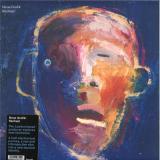
Neue Grafik has steadily built a strong reputation in recent years with releases on esteemed labels such as Rhythm Section, 22a, CoOp Presents, and Wolf Music. His sound is a distinctive fusion of jazz, house, and hip hop, infused with his African heritage, Parisian background, and a deep appreciation for London genres like broken beat and grime.
Neue Grafik first made a lasting impression on the community at Total Refreshment Centre (TRC)—the heart of London’s thriving jazz scene—during a spontaneous after-hours jam. Since then, there has been collaborations with notable artists including Nubya Garcia, Emma-Jean Thackray, Brother Portrait, Lord Apex and Allysha Joy.
The new album, ”Rachael”, is set for release on January 30th 2026. It stands as Neue Grafik's most ambitious project to date. Developed over the past year, the album explores themes inspired by the character of Rachael from the movie Blade Runner, representing the journey of love in all means, intimate, raw, tough, organic and honest offering a rich, emotional journey that balances lightness with depth—an introspective dive into the artist's evolving musical identity.
Hell Yeah have been busy making musical connections and reaching out to like-minded beatmakers once again. This time, it is Pier Paolo Polcari aka Polcari, a founding member of cult Italian band Almamegretta, who steps up with the magnificent new album I Will Try To Imitate The Birds. The eight-track record also features Adriano Viterbini, another Italian music icon and guitarist with the revered Bud Spencer Blues Explosion and I Hate My Village as well as Ubjk, San Ignacio and Sergio Dileo.
Label head Marco first got in touch with Polcari after he remixed Italian cultural hero Sergio Messina's cover of 'Fly Away' back in 2021. The pair began sharing music, discussing their favourite records and, eventually, the natural next step was to work towards the album now served up here.
The multi-talented Polcari is a master of downtempo sounds and as well as several solo projects that fuse trip hop, folk, dub and world music, he made a global mark as part of Almamegretta. The revered Naples band formed in the late 80s and has worked with greats like Massive Attack and Adrian Sherwood across more than 15 albums and are currently on a special 30th anniversary tour. Also playing on the album are Adriano Viterbini, a composer and member of blues-rock outfit Bud Spencer Blues Explosion, San Ignacio who is a downtempo and cumbia innovator behind the much sought-after albums like La Identidad Es Una Trampa and Sergio Dileo, sax player in the much-loved Naples band Nu Genea as well as being a busy jazz collaborator.
Opener 'Jardino' Feat. San Ignacio sets a laidback vibe from the off with gently breaking drums topped with whimsical melodies. 'Vita Nova' is cavernous dub with more lush instrumentals, xylophones and wispy synth motifs making for a world escape and 'Mundo' (Feat. Ubjk) has an air of Eastern melody with delicate pads and glowing keys floating above the pillowy drums. 'The Birds' (Feat. Adriano Viterbini) has fluttering harp strings that bring real beauty to a downtempo groove packed with vocoder vocals, synth smears and organic percussion.
'Orcos Ou Fadas' carries on with a rich blend of strings and percussion, shuffling rhythms and curious moods, 'Raifuki' lurches on moody drums and introverted melodies and 'Ligea' Feat. Sergio Dileo brings some romantic Latin rhythms and seductive clarinet while 'Superluna' completes the odyssey with more wavy dub and magnificent collages of melody and percussion.
I Will Try To Imitate The Birds will lift you off your feet and carry you away to a lush world of cathartic, sun-kissed musical pleasure.
Unspecified Enemies, the project led by Louis Digital (Numbers, Counterattack, Arcola) present their debut album Romance in the Age of Adaptive Feedback.
Written and produced by Louis Digital, the album incorporates fragments of music data generated by long-time collaborator CiM (Ann Aimee, Delsin). Describing the title track, Louis Digital states:
“It’s the microelectronic sound of a city playing strange light games with itself, evoking bitcrushed desires and floating images, an urban phantasy stored on the broken circuits of an Ensoniq ASR-10.”
The origins of Romance in the Age of Adaptive Feedback trace back to 2006, when Louis Digital launched Diamond Sea, a series of events at London’s ICA that introduced the Unspecified Enemies project and a label called City of Quartz. The vision was to merge the hi-tech electronic textures of contemporary R&B with the sampling and sequencing techniques of pioneers like Anthony Shakir and Soundhack. However, the music was lost in time, and City of Quartz never released a single record.
Yet, the story took an unexpected turn. At one of these events, Spencer from Numbers received a CD containing early recordings. Years later, Numbers encouraged Louis Digital to reconstruct the lost music for an album. The result is a work resurrected from the past and reimagined for the future—retrieved in fragments from a broken Iomega Jazz SCSI Drive.
Expanding on the album’s themes, Louis Digital reflects:
“By the late ’90s the cinematic image of Los Angeles and the sound of Detroit techno had crystallised a new style of living in time and space. In 1997 Mike Davis — the political activist, urbanist, writer and historian of Los Angeles — suggested that it all had “something to do with a microelectronic aesthetic of very transient and decaying states”. It was a romantic vision — one where the city’s glass surfaces reflected a musical desire for futurity not yet dominated by data-driven corporate life. These were strange days to live through. This album evokes the embers of this fibre-optic moment, when urban revolution in an age of digital reification still felt possible.”
The album features full sleeve artwork and a poster designed by Ben Drury. In support of the release, an NTS show titled Romance and Reification will explore the cinematic and electronic music influences behind the album.
Ring the alarm - multi-instrumentalist Jimi Jules scheduled for the album „+“ in 2022, executive produced by Innervisions label boss Dixon. The album features the most sought after and requested tracks of the last month including „My City's On Fire“, revolutionary „Der Aufstand“, dancefloor romance „Burning“ and „Clinomania“ featuring Joy Tyson, and fabulous Lily Allen / Elton John drummer Nathan Curran. The artwork concept is developed and designed by iconic graphic artist Trevor Jackson, whose multi-disciplinary works formed the graphical identities of design, music, fashion, and art by the likes of Soulwax, HFD / Comme des Garcons or Apple Music. Jimi Jules’ second album signifies his return to future-focussed album concepts. A welcomed novelty and venture. Exploring themes such as free thoughts and togetherness after a period of interpersonal absence. Better Together Forever.
A unique character in the electronic music scene, Jimi Jules is a multi-instrumentalist and school-trained musician with much more to offer than the standard four-to-floor sound. Jimi plays nearly everything from drums to trumpet and sings almost all the vocals himself. The talent probably lies in his roots, as many of his family members are known for their playing in jazz bands and classical ensembles. Most recently awarded a silver disk marking 200,000 copies of the 2020 track “Pushin On” in the UK, Jimi Jules also commenced a new collaborative partnership with Berlin-based booking agency, Temporary Secretary, earlier this year.
As the new era is underway for Innervisions, Jimi Jules “+” takes center stage of the label’s fundamental core - artist first, label second. For Jimi Jules especially, this new project represents the beginning of a whole new platform and innovative space for collaborations and symbiosis of mixed media.
2025 Repress on clear orange Vinyl!
As the tenth candle flickers atop the torta alla panna, Archeo Recordings play the Uno reverse card, breaking with tradition to give us a gift in celebration of its birthday: the first in a series of exquisite EPs on which the label's favourite contemporaries pay homage to past masters. Each re-polished gem is plucked either directly from the beatific back catalogue of the fine Florentine label or is at least Archeo-adjacent, perhaps a sign of future wonders to come. Like a musical version of Janus, who can be found at the heart of Bertoldo di Giovanni's frieze in the Medici villa, Archeo Recordings will continue to look forwards and backwards to provide sublime sounds for us all.
Pepe Maina officially joined the Archeo family in 2019 with the much-needed reissue of his 1979 masterpiece Scerizza (AR015), but his astounding music has been a constant companion to label head Manu for much longer. An inter-dimensional, multi-instrumental maverick, Maina weaves the frayed edges of prog rock, new age, organic jazz and global minimalism into a shimmering tapestry all of his own. The results are spread across fifty years and almost as many albums, largely self-released and always absolutely untarnished by commercial concerns.
Based in a small village in the hills of Brianza, just north of Milan, Maina translates the beauty of his surroundings into transformative tone poems, and the folkloric fusion of "The Infinite", originally released on his 2014 CD Tales From The Hill, is the perfect example of his practice. It opens with a recitation of Giacomo Leopardi's 1825s poem "L'Infinito" by famed Italian actor Vittorio Gassman. A leading figure in the romantic movement, Leopardi explores the idea of time and space within the natural world, and the peace that comes with an appreciation of the immensity of eternity. Manu, longtime digger and now a burgeoning producer, expands upon the original with tribal percussion, chirping electronics and a spheric bassline, folding Maina's elegant strings and gossamer pads into a new arrangement suited for a slow dance under the stars.
Unless you had a well-trained ear tuned to Italy's avant-jazz scene, chances are your first encounter with innovative flautist Roberto Aglieri came via the 2017 Archeo reissue of hisalmost untraceable LP Ragapadani (AR011). It's a true testament to Manu's digging credentials that he snatched this masterpiece out of the esoteric atmosphere and brought it attention it so richly deserved. A delicate union of digital synthesis and versatile flute - be it soft and silvery or
brilliant and clear - the 1987 album was a shapeshifting masterpiece, replaying scenes from Virgil, Verdi, Visconti and Pasolini with a neon glow. Quintessentially Italian, but uncanny and previously unimagined - Penthouse and Portico perhaps. Powered by a percolating prototechno sequence, cascading keys, hallucinogenic vocal snippets and a variety of tonal timbres from Roberto's reed, "Danza N. 1" long deserved the praise reserved for Jean-Luc Ponty's pinnacle, so many thanks to Manu for our collective introduction. The tall task of reinterpreting this particular paragon falls to Perugian polymath Daniele Tomassini AKA Feel Fly, whose peerless skills as both producer and musician have delighted DJs and dancers alike. Hot on the heels of his diverse and definitive remixes of Tony Esposito for AR027, Daniele delivers a radical rework of "Danza N. 1" perfect for both day rave sunshine and full moon party alike. Enhanced by snapping breaks and a rattling kick, the bassline gurgle emerges as a progressive powerhouse, laying the foundation for the trilling flute and circular keys to cast a psychedelic spell. As the slow-Goa revival picks up pace, this one is way ahead of the pack.
Archeo take us all the way back to the start of its story here - well almost. Though it bore the stamp AR001 (2015), this Radio Band reissue actually hit shelves months after Tony Esposito's "Je-Na' / Pagaia"; a false start perhaps but a true classic all the same. Radio Band were a group of DJs from Florence who all sailed the airways of Radio Fantasy in 1984 and whose one and only release was this super groovy slice of Italo-boogie. Following the example of Milanese DJs Band of Jocks but far surpassing their formulaic funk fizzle, Radio Band employed an intergalactic bassline, cosmic keys and that undeniably Italian style of rapping to deliver a sophisticated party-starter which even found its way to disco deity Ron Hardy. Back to the here and now, and if you've found yourself pumping an ecstatic fist to a supercharged Italian epic of late, chances are its from the mind of the mysterious Radiomarc. Operating on the ascendent Popcorn Groove imprint, this shadowy figure steers his country's lost classics into peaktime territories, finding a sweet spot between late Italo-disco, early Italo-house and contemporary cool. Pushing the tempo with a club-ready 4/4, setting the sequencer to stun and supplementing the original melodies with a series of synth riffs, the mystery producer send this one into orbit. Radio Band - Radio Rap - Radiomarc, the circle is complete.
Few have done more to develop cross-cultural musical exchange than Futuro Antico. A collaborative venture from musician, archeologist and ethnomusicologist Walter Maioli, keyboardist and tonal theoretician Riccardo Sinigaglia and multi-disciplinary artist and composer Gabin Dabiré, Futuro Antico formed in Milan in 1979, combining ancient international folkloric traditions with otherworldly electronics. The result is an arresting melange of Mediterranean, African and Asian instrumentation, mimicked by esoteric synth tones and hypnotic minimalism, which the group perfected on their acclaimed 1990 LP Dai Primitivi All'Elettronica. The meditative and transportive "Pan Tuning" belongs to their largely overlooked 2005 CD only release Intonazioni Archetipe, and has been amongst Manu's most loved tracks from the first moment he heard it. Who else is better placed to reshape this evocative opus into an immersive, transcendental dance floor journey than label favourites Mushrooms Project? The duo sows the original elements into a sprawling fifteen minute fusion of séance and science, at times propulsive with a ritualist rhythm of tuned percussion and crunching drum machine at others drifting off into ethereal ambience. Mushrooms Project continue to push the boundaries of the Afro-cosmic style, and this remix marks a new zenith.
"...too G to take a knee, still I gave you all of me.”
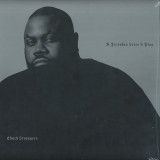
A pivotal force in the early ‘10s NYC rap revival, now LA-based rapper and producer Chuck Strangers steps into the limelight on new solo LP A Forsaken Lover’s Plea.
The album sounds markedly lush, candid rhymes bolstered by a slew of guest producers—including The Alchemist, Animoss and Strangers himself. Chuck’s own production feels current without ditching its previous homeliness, a seamless compliment to his honest, lived-in raps.
A Forsaken Lover’s Plea is laced with guest verses from a collection of fellow New York rap torchbearers, from Pro Era comrade Joey Bada$$ & Flatbush Zombies' Erick the Architect to Queens’ own Remy Banks.
Strangers’ tangled romance with hip-hop is the crux of the project—the culmination of a decade’s unwavering dedication to his craft, with its lofty highs, inevitable lows, and rough lessons of humility, patience, and process.
It’s Chuck’s most comprehensive solo project since Consumers Park, his 2018 debut, and follows The Boys & Girls EP, released May 2023.
A Forsaken Lover’s Plea is available on heavyweight green vinyl, silver tape and CD.
- A1: Tadaaki Misago & Tokyo Cuban Boys – Sakura Sakura 7 32
- A2: Minoru Muraoka – Muraiki 3 55
- A3: Count Buffalo & The Jazz Rock Band – Mago-Uta 3 43
- A4: Kiyoshi Sugimoto Quartet – D-51 6 05
- B1: Toshiyuki Miyama & The New Herd– Adult's Day 9 25
- B2: Soul Media – Breeze 4 33
- B3: ジョージ・大塚カルテット– Sea View 5 03
- C1: Hozan Yamamoto, Masahiko Togashi, Yosuke Yamashita – Breath Prologue 5 08
- C2: Jiro Inagaki & Soul Media – Do It! 7 25
- C3: Hiroshi Suzuki – Romance 5 56
- C4: Masahiko Sato – Tochi Mo Kurumi Mo Fukiotose 3 01
- D1: Masahiko Togashi – Fourth Expression 6 45
- D2: Takeshi Inomata & Sound Limited – Mustache (Live) 8 50
- D3: Takeo Moriyama – Watarase 6 40
repressed !
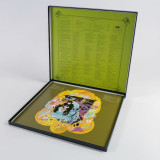
● Essential 14 track collection of "WaJazz" music selected and compiled by renowned Japanese jazz expert Yusuke Ogawa, owner of the Universounds record store in Tokyo.
● Gatefold 180g heavy double vinyl LP. Comes with extensive track-by-track liner notes by Yusuke Ogawa.
● All tracks licensed by Nippon Columbia, Tokyo, Japan.
● Mastering and lacquer cut by Jukka Sarapää at Timmion Cutting Lab, Helsinki, Finland.
---
Universounds, HMV Record Shop and 180g team up for an exceptional release: from blazing hard bop to free jazz, to introspective saxophone solos and massive big band sounds, renowned Japanese jazz expert Yusuke Ogawa presents an essential 14 track collection of "WaJazz" music taken from the Nippon Columbia vaults. Featuring Jiro Inagaki, Minoru Muraoka, Hiroshi Suzuki, Hozan Yamamoto, Count Buffalo, Takeshi Inomata, and much more!
"Japanese jazz has been recognized and celebrated by music lovers worldwide for decades. The origins of this trend may be traced back to the rare groove movement that flourished in the 1990s, but its current deep and wide popularity seems to be connected to the fact that Japanese people have been reevaluating their own jazz since the mid-2000s, locally referred to as WaJazz ("Wa" meaning Japan but also theShōwa emperor period, from 1926 to 1989). Since the beginning of the 2000s, there has been a growing trend to move away from the DJ-focused perspective and to appreciate jazz with a deeper understanding. Nowadays, there is more and more interest in the background and roots in which jazz has developed in Japan, with Japanese jazz as a whole now considered as its own distinctive genre.
Of course, even if we speak about "WaJazz" as one genre, there is a truly wide variety of styles within it. However, when Japanese musicians play, there is something uniquely Japanese flowing through that creates a kind of synergy. It may be the melody, the rhythm, or even something deeper, like an inexpressible flicker. I would be happy if some of its charms and secrets emerge from the fourteen tracks included in this collection." (Yusuke Ogawa)
Yusuke Ogawa has been running the Universounds store in Tokyo since 2001, specializing in jazz and second-hand, rare, and collector records. He is also a reissue supervisor, label manager, DJ, and music writer. Known for his vast musical knowledge, eye for detail, and archival skills, Ogawa has worked on more than 250 reissues and compilations – including the highly praised Deep Jazz Reality and Project Re:Vinyl series. He is the co-author of the Wa-Jazz Disc Guide and the Independent Black Jazz of America books.
There are two versions of the vinyl - classic black and triple-color limited Indie Shop edition.
Both have special insert inside with the bands bio and photos.
Generacja JAZZ is a project showing a fragment of the new wave of Polish jazz, treading its own path, creating, touring and jamming across Europe. Borders don't exist - especially musical - the new generation is engaging with nightclubs, festivals and playlists. The time has now come to show its broader perspective. We created a project which involves a handful of groups that have already racked up debut albums and festival wins, as they set out on their musical odyssey. The groups also have other things in common, like their passion, originality and, for the needs of the project, age - all the artists during the recording of this album were under 30 years old. This is the new generation - the Jazz Generation.
For the Jazz Generation record we invited five bands who had already released debut albums: Immortal Onion, Klawo, Rejoin, Twoosty Mayonez and USO 9001. We also reserved two spots on the compilation for the winners of our open call competition, whereby on the basis of the jury's choice (jury: Monika Borzym, Paulina Przybysz, Envee, Wojtek Mazolewski i Marcin Groh Grośkiewicz) we met the winning bands: Kosmos and quietet.
The sleeve artist is Kornelia Nowak, who won our open call for young designers and graphic artists. Here once again we could rely on the opinion of a prestigious jury comprised of: Beata Śliwińska Barrakuz, Bovska, Maciej Animisiewasz Grochot, Grzegorz Forin Piwnicki i Marcin Groh Grośkiewicz.
Generacja JAZZ LP is also a start of the new imprint - U JAZZ ME, which will be focused on jazz from Poland.
And here are the bands from the album:
1. Immortal Onion - A band from the Tri-City playing a broad spectrum of instrumental music.
Band members: Wojtek Warmijak (percussion), Tomir Śpiołek (piano, synths), Ziemowit Klimek (Upright Bass, synths).
The band Immortal Onion has already established itself as one of the most interesting projects of the new wave of Polish jazz, and is consistently being labelled as such abroad. After two well received albums ("Ocelot of Salvation" (2017) and"XD Experience Design" (2020) U Know Me Records) they released their third album "Screens" in 2022, which was recorded with the well known Tri-City composer and saxophonist - Michał Jan Ciesielski.
The inspiration behind the band's formation were such artists as: Esbjörn Svensson, Hiromi Uehara, Tigran Hamasyan and Tosin Abasi.
The group's guiding principle from the very beginning was the fusion of often disparate musical styles, which bore "post instrumental aggressive gay pop". Despite the stylistic discrepancies, between which they swim, the group has forged its own identifiable language, characterised by complicated rhythmical structures, energetic riffs and trance beats with lyrical melodies.
The trio has performed its original material at many venues and festivals around Europe and Asia.
2. Klawo - seven adventurous adventurers from Gdańsk, who were brought together by their love for music, halvah and throwing Frisbee. Their self-named début album, released in 2022 on the local label Coastline Northern Cuts, is an amalgam of the inspirations of each of the team members and played backwards contains tips on how to reach the Kashubian pyramids. After a win at the international competition Jazz in the Park, held in Cluj-Napoca in Romania, the band began work on their second album. Meanwhile, they were also travelling the length and breadth of Poland on a mission to infect people with the idea of Baltic Funk.
3. Kosmos is a Łódż based jazz quintet. It was formed in 2020 by Pianist Stanisław Szmigero, Saxophonist Iwo Tylman and Trumpeter Jan Ostalski. However, it wasn't until 2022 that Kosmos found its true form when Kamil Gużniczak (Upright bass) and Kacper Kuta (Percussion) joined the line-up.
Their compositions are influenced by Polish yass bands, electronic music and hip-hop. Kosmos music is a mix of lyricism, space, intensity and elements of experiment.
The band members are all eccentric characters possessing different means of musical expression - looking at them, one could even argue they are a group of oddballs. Despite this, for reasons unbeknownst to themselves, the members of Kosmos complement each other on stage and form a unified artistic vision of the world around them.
Kosmos officially released their début single "Ja" in June 2023. They regularly play concerts across Poland and recently were selected as distinguished artists at JAZZiNSPIRACJE (JAZZiNSPIRATION) - a competition held during the 13th Lublin Jazz Festival.
4. Quietet (formed at the beginning of 2023) is the result of meetings between five talented musicians with a deep passion for musical creation. Its sound is a unique blend of Jazz and classical music with a hint of hard rock. The band is inspired by the Scandinavian approach to making music, which brings a characteristic atmosphere and melodies to their work. Their music captivates listeners with its originality, refined improvisations and flawless technique. Both classical and modern musical trends feed their inspiration when creating passionate and emotional compositions.
Their works are full of sound experimentation, which equally surprise and expose new musical horizons. Through their compositions, "Quietet" aims to share their emotions evoked during performances, creating a musical journey that affects and inspires.
5. Connecting jazz with electronic music in fresh interpretations, six young musicians make up the group Rejoin. The group re-formed in 2020 after a four-year break, playing their debut concert at Lotos Jazz Festival Bielska Zadymka Jazzowa. The musicians in Rejoin have performed alongside such artists as: Urszula Dudziak, Krystyna Prońko, Marcin Masecki, Szczyl, Kuba Więcek and Paulina Przybysz.
Most of the members of Rejoin are students from the Katowice Music Academy, where they also develop their own projects. Rejoin was a recipient of the Fabryki Norblin Music Masterclass Foundation scholarship.
6. Twoosty Mayonez is something your grandad would listen to with his younger sister. The non-standard approach to jazz alongside a pursuit of strange sounds, culminated in the conceptual album entitled "Carmin". The material was created by Bartosz Wolerta (percussion) and Dominik Kaniewski (bass guitar/synths). "Triceradiplodocus" tells the story of a mechanical dinosaur that lives on the yet undiscovered planet Carmin.
The album began to take shape duringJanuary 2019.
It has been recorded live by Matt Bordin ad Inside Outside
Studio, in Veneto, Italy. The choice of this method is due to the
desire to avoid the use of any post-production tool, to
maintain a natural sound and a hard impact on the listener.
"Robox" is made of nine instrumental songs characterized with
A furious post-punk full of violent and high impact riffs.
The artwork has been realized by Lacy Faery: nine monstrous
creatures, everyone of which portrays a song.
The cover art is the final portrait: the representation of
Dante's infernal journey, here embodied by the Robox, who
goes through the nine circles of Hell and faces the ancestral
traumas that affect the human psyche during its
trasformative path.
On Oct. 14th "Hard Pop" - first official single, published along
with a video - has been released.
The video has been realized by Mauro Romanzi in the ''lounge''
room of the Astro Club in Fontanafredda.
In few days the video reached more than 10k views on Youtube.
A red suite, a robot mask, violent riffs and
furious post-punk: this is Robox.
Francesco “Cesco” Cescato – Bass
Carlo Veneziano (One Dimensional Man, Orfaust, Julinko) – Guitar
Franz Valente (Il Teatro Degli Orrori, Buñuel, Snare Drum Exorcism) – Drums The Robox project was born out of the idea of making music that points towards future and innovation. This music wants to escape
from the monotony and from general music trends of the music industry.
The band uses the sound as a carrier for the lightning of the senses, to give a strong emotional shake to whoever listens to it.
After a long period made of musical experiences and geographical
distance, the Robox project starts to take shape in 2016.
During this period the songs start to sound defined, also because of
the practice coming from the first live shows.
Cesco, struck by a vision, since the first gigs starts to go on stage with a specific outfit: a bright red suite and a golden mask, evoking the image of a robotic man, the Robox: a superhero that fights the eternal struggle between instinct and reason.
MASKxSOUL is the new international project, featuring the baritone Alexander Korenkov (of Mariinsky Theatre, Theatre du Chatelet, and JFK Center fame, who performed with Vladimir Yurovsky, Valery Gergiev and Anton Batagov) and introducing the voice and music of Tatiana Selivanova (Vanilla Quartz), backed up by Jason Kohnen (The Kilimanjaro Darkjazz Ensemble, The Lovecraft Sextet, Mansur) and Dimitry El-Demerdashi (Mansur). One might say that MASKxSOUL blends dark-jazz, tsar punk, and Eastern folklore with the setting of the romantic landscapes inspired by the Russian classical tradition. MASKxSOUL presents a new vision of a perennial classic, namely, Eugene Onegin by Alexander Pushkin, a romantic novel in verse that has served generations of artists across the globe as inspiration, with a debut single dedicated to Pushkin's 222nd anniversary on June 6th 2022. The complete eight track MASKxSOUL debut album "Onegin" is available now through Denovali.
Do you believe in spring? Simon Wangen (cello) and Philipp Sutter (piano) pose this question as the title for their new project. Whereas Bill Evans made a demand in 1981, the two Cologne-based musicians believe that in times of uncertainty, crisis, and environmental destruction, it is ok to set a questin mark here. But politics and world events aside: Do you believe in spring? Of course! It's never too late to start something new, get creative, and test your own limits. Simon Wangen is a classically trained cellist, Philipp Sutter a trained jazz pianist. Their different musical roots merge on this instrumental album into a lively mix of neoclassical, new jazz, and Cinéma Nordique. Ten pieces come across as sometimes dark, sometimes wild, sometimes delicate, always focusing on the dialogue between the two instruments that harmonize so well. The subtle use of electronic effects constantly opens up new perspectives and builds a bridge to contemporary sound aesthetics. Cello and piano—this combination has been established for centuries, but can still add new facets today. Do you believe in spring? begins stormily and turbulently, oscillating between romantic, sad, and beautiful moments, and leads from a rather dark beginning to the final and eponymous piece in C major, which leaves the listener with a glimmer of hope. Do you believe in spring? From October 24, 2025!
Do you believe in spring? Simon Wangen (Cello) und Philipp Sutter (Klavier) werfen den Titel für ihr neues Projekt als Frage in den Raum. Wo Bill Evans 1981 eine Forderung formulierte, sind die beiden Kölner Musiker der Ansicht, in Zeiten der Unsicherheit, der Krisen und Umweltzerstörung durchaus ein Fragezeichen setzen zu können. Aber abgesehen von Politik und Weltgeschehen: Do you believe in spring? Natürlich! Es ist nie zu spät, etwas Neues zu beginnen, kreativ zu werden und die eigenen Grenzen zu testen. Simon Wangen ist klassisch ausgebildeter Cellist, Philipp Sutter studierter Jazzpianist. Die unterschiedlichen musikalischen Wurzeln verschmelzen auf diesem Instrumentalalbum zu einer lebendigen Mischung aus Neoklassik, New Jazz und Cinéma Nordique. Zehn Stücke kommen mal düster, mal wild, mal zart daher, stets die Zwiesprache der beiden so gut harmonierenden Instrumente im Fokus. Der dezente Einsatz elektronischer Effekte öffnet immer wieder neue Perspektiven und schlägt eine Brücke zur zeitgenössischen Klangästhetik. Cello und Klavier - diese Besetzung ist seit Jahrhunderten etabliert, aber kann auch aktuell immer wieder neue Facetten hinzubekommen. Do you believe in spring? beginnt stürmisch und aufgewühlt, changiert zwischen romantisch - traurig - schönen Momenten und führt von einem eher düsteren Beginn hin zum letzten und namensgebenden Stück in C-Dur, das die Zuhörenden mit einem Hoffnungsschimmer entlässt. Do you believe in spring? Ab 24.10.2025!
The perfect accompaniment to that deep fall feeling, Frank Maston's beloved 2025 single finally gets its long overdue vinyl release! As our friends New Commute articulated beautifully, "Foreign Affairs" drifts through London fog and Paris shimmer, its avant-lounge glow wrapping each melody in a wistful ache. On B-side "Liaison," ghostly strings and a solitary piano paint a deserted twilight shoreline, Pacôme Henry's distinct 16mm cinematography hovering nearby." We've pressed just 500 of these gorgeous records so, be quick, Maston always flies.
Originally written for a film Maston was scoring in 2024, he decided to keep it aside for himself. And, well, us all. The song has a vibe Maston has previously flirted with; he wanted to dive in...all the way: "The arrangement is huge, definitely the biggest I've written, and it merited live musicians playing together. Also another experiment, to do it with all live musicians playing my arrangements. I wanted to make something that you'd want to put on when you bring a date back to your place. It's on the edge of sappy but that's sort of the point. I decided to give myself an unlimited budget - just spend whatever was necessary to get the right musicians and record it the best way possible."
It's this dedication to sonic perfection which Maston is rightly lauded for. We couldn't not put this on a cute wee 7" when we heard it.
The A side, "Foreign Affairs", is a brilliant, Bacharach-esque romp with a bit of that unapologetically romantic Morricone angle. Says Frank: "I was trying to synthesize that sort of jazzy/sexy/classy/romantic mature sound, where the edginess is in these surprising chord changes and subtle arrangement cues."
A wonderful complement, the flipside "Liaison", evokes Martin Denny, but Eden's Island was in Frank's head, too. He wanted to take a deep dive into that exotica sound - a genre he'd referenced a bit but never fully committed to - so the piece is lavished with those big sighing strings and a pretty lush arrangement. Happily, it all sounds super rich. Also, "Umiliani is always a reference for this sort of thing (Il Corpo etc.), That almost mechanical arrangement of things moving together and a simple melody over it (something I nicked from Ennio)".
The two songs were recorded in Paris and London in the summer of 2024. Aside from the rhythm section and piano, there's vibraphone, a full string section, trombones and alto and concert flutes. "Liaison" boasts strings, vibraphone, a female choir and tenor sax. Maston played piano and acoustic guitar but that's it (as opposed to playing basically everything on Tulips). His friend Oscar Sholto Robertson played drums and percussion whilst Maston mainstay Elie Ghersinu (formerly of L'Eclair) played bass.
The theme for a lot of Maston's titles is that they have two meanings. So "Foreign Affairs" is both a reference to him living abroad and the idea of constant cultural diplomacy and then there's this sexy/cheeky interpretation of foreign affairs in a literal way - "an affair abroad, ooh la la!". The artwork for this 7" single has Roman campaign flags, referencing the foreign affairs in sort of a sassy way. There's a violence implied. But then if you look from a bit of a distance it looks like a bouquet of flowers. So Frank thought it went with the spirit of the title. Also, he's used a lot of roman motifs now so he kept that theme going, even with the terracotta cover.
This is a vitally important project for our Frank. He explains why, here: "For whatever reason, these songs really resonated with me. I feel like they are either the end of a stylistic era for me or the beginning of a new one. They're sonically the culmination of what I'd been working towards and trying to get better at since I started. If I heard this when I was making Tulips I would have said "YES! *This* is what I want to be doing!". So that's the essence of it. It's a statement and the intended reaction is "This is really good, but why now?". Like the edge to it is the context of someone making this sort of thing in 2025, which I think is a huge strength. The real heads will get it. My music always has like a 2-3 year latency until people really catch onto it, and these ones will have a nice payoff I think."
We couldn't put it better ourselves. So we haven't.
- A1: Neon Gods
- A2: The Romantic Ghost Ft Plumm
- A3: Temperature’s Rising Ft Nathaniel Short
- A4: Silent City Ft James Atashroo
- A5: S.w.a.l.k Ft Scarlett Fae
- B1: Spell Over Me
- B2: Locked Down Ft Bes Bluma
- B3: Natural Light Ft Franz Von & Jeff Darko
- B4: Sunrise Sunset Ft Scarlett Fae
- B5: Nino Ft James Atashroo
Yarni's "Anemoia" blends disco, soul, jazz-funk, hip-hop, and trip-hop across ten collaborative tracks, arriving with an unexpected bonus record due to a pressing plant mix-up that transformed a costly mistake into a collector's item. When the pressing plant accidentally pressed the full run using a rejected master, Yarni included both the louder original test pressing and the final audiophile version rather than waste the pressing.
The project has garnered significant BBC Radio support, with Craig Charles, Stuart Maconie, Romesh Ranganathan and Huey Morgan championing tracks as essential listening. Exploring the Greek concept of nostalgia for a time never known, the self-taught multi-instrumentalist collaborates with ten musicians and vocalists, weaving genres into a thoroughly modern tapestry.
Standout collaborations include the orchestral jazz-funk opener "Neon Gods," epic "S.W.A.L.K" featuring Scarlett Fae, hip-hop fusion "Natural Light" with Franz Von and Jeff Darko, and the Afrobeat-influenced closer "Nino." Rather than a retro tribute, Yarni crafts a forward-thinking collection that reimagines classic genres through a contemporary lens, bridging past and present with fearless experimentation.
The bonus record features slight distortion and louder mastering from the original test pressing that wasn't quite right - offering fans both the intended audiophile experience and this alternate version with added character. Each package includes a personal letter explaining this happy accident, making it essential for collectors seeking authentic independent music experiences.
- A1: Concierto De Aranjuez
- A2: Will O’ The Wisp
- B1: The Pan Piper
- B2: Saeta
- B3: Solea
Miles Davis' Final Collaboration with Arranger Gil Evans Yields Watershed Innovations: Flamenco-Themed Sketches of Spain Spins Graceful Webs of Sound and Emotion Mobile Fidelity's UltraDisc One-Step 180g 33RPM LP Set Brings Out the Record's Full Spectrum of Color: 65th Anniversary Edition Pressed at Fidelity Record Pressing and Strictly Limited to 5,000 Numbered Copies 1/4" / 15 IPS analogue master to DSD 64 to analogue console to lathe Miles Davis and Gil Evans bridged styles and collaborated on high-concept projects three different times during their celebrated careers. For their final act, they created Sketches of Spain, a peak moment in each luminary's legacy.
The transformative album weds Spanish themes, lush orchestrations, romantic timbres, and Davis' lyrical methods in a tender ceremony that resonates more than six decades after its original release. Part of Mobile Fidelity's Miles Davis restoration series, this 1960 landmark has been afforded the ultimate white-gloves treatment for its 65th anniversary. Sourced from the original master tapes, strictly limited to 5,000 numbered copies, and pressed at Fidelity Record Pressing, this UltraDisc One-Step 33RPM 180g LP set dramatically expands the soundstages and eradicates a dryness that many critics found inhibitive to the record's enjoyment. You can now hear the full-range responsiveness of the woodwinds, strings, and percussion, all of which come alive with superior definition and detail.
The beautiful presentation of this UD1S set befits the record's historical importance. Housed in a deluxe slipcase, it features a special foil-stamped jacket and faithful-to-the-original graphics that illuminate the splendor of the 1960 LP. This reissue is made for discerning listeners who desire to fully immerse themselves with the album. And who wouldn't want to go deep with Sketches of Spain? Whether it is the somber mood piece "Concierto de Aranjuez," renowned for Davis' flugelhorn performance, or the folktale-based "Solea," Sketches of Spain transfixes with playing, ideas, and innovations exclusive to this incomparable effort. It's one reason why Mobile Fidelity's engineers took all available measures to insert listeners into the space originally occupied by Davis, bassist Paul Chambers, drummer Jimmy Cobb, percussionist Elvin Jones, and an 18-piece orchestra. The results are as breathtaking as the music.
Multi-note motifs, brief improvisational solos, fanfare sweeps, and contrapuntal exchanges inform flamenco-spiced pieces. Davis' famous Harmon-muted trumpet is complemented by an assortment of bassoons and French horns. Heard together, they create pleasing contrasts and sounds (pp, mf, ppp) that get to what resides at the heart of Sketches of Spain: color. Seldom, if ever, did Davis ever so expressively and liberally paint with color. And in Evans, he has a likewise-minded partner to help draw out tones, shades, layers, and textures. What they achieved continues to draw praise from the global music community in the 21st century. Ranked #358 on Rolling Stone's 500 Greatest Albums of All Time, deemed "a work of unparalleled grace and lyricism" by noted scribe J.D. Considine, bestowed a five-star review from DownBeat, and noted by Q to have taken "jazz in a new direction," the Grammy Award-winning effort has never been better.Miles Davis' Final Collaboration with Arranger Gil Evans Yields Watershed Innovations: Flamenco-Themed Sketches of Spain Spins Graceful Webs of Sound and Emotion Mobile Fidelity's UltraDisc One-Step 180g 33RPM LP Set Brings Out the Record's Full Spectrum of Color: 65th Anniversary Edition Pressed at Fidelity Record Pressing and Strictly Limited to 5,000 Numbered Copies 1/4" / 15 IPS analogue master to DSD 64 to analogue console to lathe Miles Davis and Gil Evans bridged styles and collaborated on high-concept projects three different times during their celebrated careers.
For their final act, they created Sketches of Spain, a peak moment in each luminary's legacy. The transformative album weds Spanish themes, lush orchestrations, romantic timbres, and Davis' lyrical methods in a tender ceremony that resonates more than six decades after its original release. Part of Mobile Fidelity's Miles Davis restoration series, this 1960 landmark has been afforded the ultimate white-gloves treatment for its 65th anniversary. Sourced from the original master tapes, strictly limited to 5,000 numbered copies, and pressed at Fidelity Record Pressing, this UltraDisc One-Step 33RPM 180g LP set dramatically expands the soundstages and eradicates a dryness that many critics found inhibitive to the record's enjoyment. You can now hear the full-range responsiveness of the woodwinds, strings, and percussion, all of which come alive with superior definition and detail. The beautiful presentation of this UD1S set befits the record's historical importance. Housed in a deluxe slipcase, it features a special foil-stamped jacket and faithful-to-the-original graphics that illuminate the splendor of the 1960 LP.
This reissue is made for discerning listeners who desire to fully immerse themselves with the album. And who wouldn't want to go deep with Sketches of Spain? Whether it is the somber mood piece "Concierto de Aranjuez," renowned for Davis' flugelhorn performance, or the folktale-based "Solea," Sketches of Spain transfixes with playing, ideas, and innovations exclusive to this incomparable effort. It's one reason why Mobile Fidelity's engineers took all available measures to insert listeners into the space originally occupied by Davis, bassist Paul Chambers, drummer Jimmy Cobb, percussionist Elvin Jones, and an 18-piece orchestra. The results are as breathtaking as the music. Multi-note motifs, brief improvisational solos, fanfare sweeps, and contrapuntal exchanges inform flamenco-spiced pieces. Davis' famous Harmon-muted trumpet is complemented by an assortment of bassoons and French horns. Heard together, they create pleasing contrasts and sounds (pp, mf, ppp) that get to what resides at the heart of Sketches of Spain: color. Seldom, if ever, did Davis ever so expressively and liberally paint with color. And in Evans, he has a likewise-minded partner to help draw out tones, shades, layers, and textures. What they achieved continues to draw praise from the global music community in the 21st century. Ranked #358 on Rolling Stone's 500 Greatest Albums of All Time, deemed "a work of unparalleled grace and lyricism" by noted scribe J.D. Considine, bestowed a five-star review from DownBeat, and noted by Q to have taken "jazz in a new direction," the Grammy Award-winning effort has never been better.
On the latest Soul Quest adventure, the imprint places the journey in the hands of Italian producer Flying Moth, who serves up an enriching palette of groove-laden cuts that are sure to chime along to bright days and sun-kissed evenings.
Flying Moth is the latest alias from producer Niccolò Terranova, who has already demonstrated his jazz-laden dance music chops through the Justnique project and others. Flying Moth is presented as the artist’s most personal project to date, with the ‘Oh Oh’ EP out on Apparel Music highlighting his ability to deliver highly danceable and beautifully presented soulful dance music that lives and breathes heartfelt moments and emotions.
Channelling a myriad of genres and eras, Flying Moth’s music is about catering to new kinds of experiences through displays of enriching musicality and deeply profound compositions. ‘Tides’ is the next step in Flying Moth’s journey, and it feels right at home amongst the sunny vistas and dancefloors of Soul Quest. The EPs opener, ‘Take you higher’ which was made alongside Renato Patriarca is a groover of the highest order. Allowing plenty of time to embed listeners deep within the mix, the first breakdown emerges with a delightful lead melodic line that embraces the chords. The further this track unravels, the more magic is presented—the flute solo is a notable example of this. ‘Bobby’s here’ shares connotations similar to the previous number, albeit with some subtle differences. The chords swirl and dance, with arpeggios adding cascades of melody alongside the hypnotic rhythm section. The track is one of diving deep through the layers in order to deliver a joyous forward momentum - one which feels like it will never cease.
‘Please, keep drinking with me’ begins with a typically upbeat feel. A semi-skippy drumming pattern provides the basis for an overflow of melodic brilliance to come forth, with the track retaining a powerful forward momentum through the mid-range. Inspired, breathy vocals and a one-of-a-kind key solo at the track’s halfway mark add personality and variance. ‘Always Groove in you’, a joint affair alongside Gondii, and this number wastes no time in getting going. A stripped-back yet varied groove weaves around a deep-set bass sequence, but the show that happens up top is a sight to behold - a continual shift between inspired key work and vocal snippets mean that the track never stands still, only evolves and grows. Wrapping things up is Toronto Hustle and Sean Roman providing their twist on ‘Please, keep drinking with me’, and as a remix, it adds an enormity of flavours in the form of sparkling keys, powerful bass notes, and infectious breakdowns.
‘Tides’ might only be Flying Moth’s second EP, but it is a sign of an exciting discography to come. For now, this EP contains all the ingredients to get dancefloors and living rooms moving. Filled to the brim with creativity, thought, and delicateness, ‘Tides’ has an infectious musicality to it - and, perhaps most importantly, a big heart. Time to revel in its emotive brilliance …
WOW. Daniel O'Sullivan's transcendent new album, Eros, is one of the greatest things we've ever heard. A simply stunning song cycle of hypnotic, experimental contemporary chamber music composed for a 14-piece ensemble. Combining minimalism, complex syncopation, detailed acoustic textures, weird intervals and samurai precision, this record will elegantly blow your mind. When Daniel first sent us this, he pitched it as “Liquid Swords meets Michael Nyman”. Trust us, he wasn't wrong. A "unique hybrid orchestral music", it presents a confluence of Daniel's longstanding fixations; indeed, there's elements of Nyman, Antonio Carlos Jobim, Magma, Aaron Copland and RZA. But this is wholly O'Sullivan's. Originally commissioned for the Sonoton Music Library in Munich, Eros now receives a deluxe vinyl release courtesy of Be With Records, bringing this meticulously crafted work to a wider audience. Limited to just 500 copies for the world, these are gonna fly.
An English composer and multi-instrumentalist, Daniel O'Sullivan’s career has been marked by versatility and innovation. In addition to his work with Sonoton, he has composed extensively for the legendary KPM music library, contributing to its storied legacy of production music. As a deep virtuoso and collaborator, O'Sullivan has also played in a number of influential projects, including Ulver, Sunn O))), This Is Not This Heat, Grumbling Fur and Miracle (with Steve Moore), leaving an indelible mark on the contemporary experimental music landscape.
O’Sullivan’s first foray into classically informed chamber music, Eros is a culmination of his long-standing fixations and expansive musical influences. The album features arrangements that are as detailed as they are emotionally resonant, showcasing his unparalleled ear for intervals and mastery of counterpoint. The music brims with complex rhythmic syncopation and a sensitivity to texture and space, resulting in a soundscape that is both intoxicating and dauntingly precise.
Recorded June 2023 and February 2024, in Brussels, London and Carmarthenshire, Wales, Eros features members of Echo Collective (Neil Leiter and Margaret Hermant), Thighpaulsandra (from seminal post-industrial band Coil), and jazz pioneer Oren Marshall. Daniel's sonic weapons of choice, in his own inimitable words, were "Big Bad Drum, Pee Anne Oh, Low End Brass, Willowy Winds & Samurai Strings." You get the picture. As a cyclical suite, this is a record that really needs to be heard in its entitreity, from start to finish, to truly appreciate the genius at work here.
A jaw-dropping statement of intent, the minimalist "Golden Verses" sets the tone with its complex cue which has your neck snapping right when it feels like it needs to. Listen and you'll understand. A syncopated tangle of sharp strings, crunchy bass, drums percussion and bright piano and mallets vie for position with French horn and woodwind melody in the most compelling and unexpected ways. Quite simply, it's one of the finest album openers I've ever heard. It's followed by the atmospheric rippling minimalism of "Lyre Lyre", a gorgeous gem with shimmering chimes, bright melody, human percussion and syncopated pizzicato strings. It kinda comes on like a less-abstract Boards Of Canada, bursting with typical wonderment. The piano and string-drenched "Dolorous Stroke" effortlessly builds its warm, pastoral orchestration with flowing piano arpeggio, steadfast drums, expressive string quartet, rich low brass, woodwind and lyrical flute. Just sublime.
The insistent frenetic propulsion of "Plain Paper" is utterly beguiling, featuring a determined string motif, urgent drums and percussion, driving low brass and breathless, energetic flute. The haunting, interweaving string arpeggios that propel "Grapes Draped" presents a claustrophobic minimalism for chaos and darkness, with growling low woodwind and brass, spiky harpsichord, skittering flutes and tight drums. Up next, "Xanix Annum" is a stately minimalist waltz with expressive lyrical string quartet and delicate woodwind, anchored by drums and percussion. "Painting Rose" is a bouncy stop-start track with angular syncopated strings and a piano pulse underneath bright harpsichord and flutes. "Rotunda Garden" presents ethereal textural minimalism for landscapes and reflection with flowing string arpeggios, warm, low woodwind drones, floating choir and cymbal swells. Closing out this extraordinary side of music, the glowing, flowing minimalism of "Flowry Orb" features urgent organ, piano and woodwind arpeggios, half-time drums with shimmering cymbals, a soaring, beautiful violin solo and hypnotic vocal chant.
Side 2 opens with "Theia Mania" a determinedly off-kilter, angular track featuring low wind, brass and drum stomp in dialogue with lively string trio, woodwind and solo horn. The light, airy minimalism of "Painting Percy" is built around an interplay of rhythmic motifs for piano, low brass, bassoon, fluttering flutes, urgent strings, drums and percussion whilst "For Archetypes" is a delicate, gently syncopated chamber cue for nostalgia, nature, reflection and moments of calm, with steady piano motif, intimate woodwind and French horn, and warm, graceful strings. The urgent Ars Memoriae is a propulsive march for progress, processes and industry, underpinned by driving tuba, with determined strings, resolute drums, and vivid, expressive flute, clarinet and French horn.
The syncopated energetic minimalism of "Mirrored Seven" presents layers of melodic and cyclical piano, drums, low brass, harp, flute and strings. "Pure Ornament" follows, a slowly evolving chamber cue with flowing clarinet, string and harp arpeggio, plodding tuba and percussion, fluttering flute and graceful, lyrical solos. Stunning! Up next, "Brave Boy" moves from its tender, warm, lullaby-like intro with lyrical flute, clarinet and strings before opening into a playful backend driven by a bouncy tuba riff and syncopated piano, woodwind, string trio, and drums and percussion. Rounding out this astonishing piece, "Waxen Waned" is a warm, pastoral chamber cue with light lyrical woodwind, tender French horn and subtly pulsing string trio.
The album's title is a reference to Plato’s conception of Eros, which is more than romantic or physical desire. It is a dynamic and creative force that drives individuals to seek perfection whether in art, relationships, philosophy or the pursuit of truth. Wholly appropriate, here, we think. When asked what his influences were in making this astounding record, he answered thusly: "Non-musical: Householding, Pythagoras, Goethe, Grail romances, Hermeticism, Doctrine of Signatures (Parcelsus, Bohme, Pliny), Eric Rohmer, John Stezaker, Yasujiro Ozu. Musical: Duke Ellington (late suites), Smile-era Brian, early RZA, Wagner (Parsifal Overture), Magma, Mancini, Axelrod, YMO, Hildegard, Nyman, Penguin Cafe Orchestra, Jobim (Stone Flower), Alessandro Alessandroni, Tavener, Moondog, Orthodox Music, Secular Music." That's some pretty deep shit. Makes you want to dive in, no?
Mastering for this vinyl edition was overseen by Be With regular Simon Francis, and it was cut by the esteemed Cicely Balston at Abbey Road Studios to be pressed in the Netherlands by Record Industry. Truly, Eros is a work of extraordinary depth and sophistication. It invites listeners to immerse themselves in its intricate layers, to lose themselves in its hypnotic rhythms, and to marvel at the precision of its execution. With this release, O’Sullivan reaffirms his position as one of the most inventive and uncompromising voices in contemporary music. Do. Not. Sleep.
- Don't Like You Anymore
- Consistency
- No More
- How Long Will It Take
- Here When You're Ready
- Reasons To Stay
- The Lament
- Don't Let Go
- Talk To Me Nice
- Having A Time
- Win Feat. Clerel
TRANSPARENT 7 inch VINYL[14,08 €]
Two Times Juno awards listed and 2 times Polaris price listed, Canadian Soul Star Tanika Charles unleash the new album "Reason To Stay that drops on May 16 via independent soul label Record Kicks. Reasons To Stay is Tanika Charles' fourth full-length album, and her most introspective to date. Where her songs have typically touched on romantic love and heartache, the core love and loss of this record is family focused. It has taken years for Tanika to be able to publicly reflect on the childhood trauma and family breakup that occurred during her teens. The majority of the album was composed by Tanika with the tight knit team of Scott McCannell (Lydia Persaud, Henry Nozuka), Kyla Charter (Aysanabee) and Chino de Villa (Jessie Reyez). Kelly Finnigan of the Monophonics joined in to mix the bulk of the project and apply some trademark analogue grit to Tanika's sheen. Guests include Quebec-based Soulful singer/songwriter Clerel on the last track "Win", as well as Toronto soul artists Aphrose and Claire Davis providing additional vocals. "I love this album. I love singing these songs. I love that it's made me step outside of my comfort zone. It's forced me to face the root causes of my own insecurities that I carry to this day. Why am I striving so hard to seek validation, and why take it so personally when it doesn't come? That distortion has prevented me from celebrating my own successes at times. This album is me trying to change that." "I love the conversations that have begun with these songs. It's about childhood trauma, but it's not a victim story. I'm doing well, despite the baggage I carry. I want others to be able to carry theirs too." In the last few years, Canadian Soul/R&B powerhouse Tanika Charles has transformed from an emerging solo artist to a commanding performer and bandleader, cementing her status as a staple in the Canadian soul scene. Her previous studio albums - "Soul Run" (2017), "The Gumption" (2019), and "Papillon De Nuit" (2022) - have propelled her to international acclaim, earning her two JUNO nominations, two Polaris Prize listings, and a growing global fanbase. Extensive touring across North America and Europe has further solidified her reputation, with standout performances at festivals such as Trans Musicales in France, Fusion Festival in Germany, Mostly Funk & Soul Festival and Jazz Festival in the UK, Holy Groove Festival in Switzerland, and Canarias Jazz Festival in Spain. She has also shared the stage Estelle, Mayer Hawthorne, Haitus Kayote, Lauryn Hill, Bedouin Soundclash and Macy Gray. Tanika's meteoric rise and undeniable artistry have been widely championed by outlets such as KCRW, KEXP, BBC6 Music, Exclaim!, CBC Music, Uncut Mag, PopMatters, Albumism .. further solidifying her position as a global soul sensation.
The Italian 80s avant garde / anarcho scene is explored in this limited 12” release presenting Nengue and their previously unreleased cover version of the new wave classic Los Ninos Del Parque and the electro pop wave African Beat.
The tumultuous political climate of the 1960s through 1980s inspired Italian artists to craft an introspective, psychological musical landscape. As civil unrest, violent demonstrations, and political murders became commonplace, Italy's centres of intellect vibrated with activist energy. This atmosphere gave birth to a unique, mechanized sound that blended electronic elements with a raw, discordant aesthetic, reflecting the chaotic spirit of the times.
Through vintage forms of social networking and music sharing, a community led process steered the scene, publishing zines and records that grasped alternative concepts of music and lifestyle.
Nengue, were similar to many of these lo-fi, retro-future electronic music pioneers. Based in Rome, their music / art backgrounds flowed with anti-art, extreme noise, futurism, industrial, experimental, martial, folk, free jazz and exotica.
With a couple of releases as a duo, as was often the case, they appeared in numerous other projects and the music was a mixture of their individual backgrounds.
Extraordinarily, only appearing on a couple of obscure cassette compilations, indicative of the time, the quality of Nengue’s productions stands testament. Originally approached to reissue their Cosmic meets Kraftwerk inspired African Beat, a wonderful yet simple electronic idiom, layers of electronica rising, each element an addition flow, vocals the release’s waves.
However, the discovery of their cover of Los Ninos Del Parque – describing it as ‘powerful anarchic nonsense’ – is rightfully now the primary focus.
Acting as some Brutalist interpretation, its sharp electronics and industrial vocals, propel you to a brick-strewn squat party and a place in anarcho folklore.
These are matched with a remix / remake by Berlin’s Bionda e Lupo. Presenting a ‘Neumisch’, Sneaker’s exacting studio mastery and Sano’s additional vocals are a blessing – a new duo version – dynamic and wonderfully special.
To complete, the powerful dub of African Beat closes. Stepping out of his time as one half of Romanian duo Khidja (DFA / Hivern Discs), Andrei Rusu builds on his recent solo releases / remixes for Malka Tuti with a fantastic, bottom heavy version, perfectly building with expertise, an EP for the basements of today that was made in the dark times of the past.
TRANSPARENT 12 inch VINYL[22,27 €]
Two Times Juno awards listed and 2 times Polaris price listed, Canadian Soul Star Tanika Charles unleash the new album "Reason To Stay that drops on May 16 via independent soul label Record Kicks. Reasons To Stay is Tanika Charles' fourth full-length album, and her most introspective to date. Where her songs have typically touched on romantic love and heartache, the core love and loss of this record is family focused. It has taken years for Tanika to be able to publicly reflect on the childhood trauma and family breakup that occurred during her teens. The majority of the album was composed by Tanika with the tight knit team of Scott McCannell (Lydia Persaud, Henry Nozuka), Kyla Charter (Aysanabee) and Chino de Villa (Jessie Reyez). Kelly Finnigan of the Monophonics joined in to mix the bulk of the project and apply some trademark analogue grit to Tanika's sheen. Guests include Quebec-based Soulful singer/songwriter Clerel on the last track "Win", as well as Toronto soul artists Aphrose and Claire Davis providing additional vocals. "I love this album. I love singing these songs. I love that it's made me step outside of my comfort zone. It's forced me to face the root causes of my own insecurities that I carry to this day. Why am I striving so hard to seek validation, and why take it so personally when it doesn't come? That distortion has prevented me from celebrating my own successes at times. This album is me trying to change that." "I love the conversations that have begun with these songs. It's about childhood trauma, but it's not a victim story. I'm doing well, despite the baggage I carry. I want others to be able to carry theirs too." In the last few years, Canadian Soul/R&B powerhouse Tanika Charles has transformed from an emerging solo artist to a commanding performer and bandleader, cementing her status as a staple in the Canadian soul scene. Her previous studio albums - "Soul Run" (2017), "The Gumption" (2019), and "Papillon De Nuit" (2022) - have propelled her to international acclaim, earning her two JUNO nominations, two Polaris Prize listings, and a growing global fanbase. Extensive touring across North America and Europe has further solidified her reputation, with standout performances at festivals such as Trans Musicales in France, Fusion Festival in Germany, Mostly Funk & Soul Festival and Jazz Festival in the UK, Holy Groove Festival in Switzerland, and Canarias Jazz Festival in Spain. She has also shared the stage Estelle, Mayer Hawthorne, Haitus Kayote, Lauryn Hill, Bedouin Soundclash and Macy Gray. Tanika's meteoric rise and undeniable artistry have been widely championed by outlets such as KCRW, KEXP, BBC6 Music, Exclaim!, CBC Music, Uncut Mag, PopMatters, Albumism .. further solidifying her position as a global soul sensation.
- A1: Progetto Tribale - The Sweep
- A2: Onirico - Echo Giomini
- A3: Open Spaces - Artist In Wonderland
- B1: Alex Neri – The Wizard (Hot Funky Version)
- B2: M C.j. Feat. Sima - To Yourself Be Free - Instrumental Mix Energy Prod
- B3: Mato Grosso - Titanic Expande
- C1: Dreamatic - I Can Feel It (Part 1)
- C2: Carol Bailey - Understand Me Free Your Mind (Dream Piano Remix)
- C3: The True Underground Sound Of Rome - Secret Doctrine
- D1: Don Carlos - Boy
- D2: Lazy Bird – Jazzy Doll (Odyssey Dub)
Vol 2[28,99 €]
Volume 1 of this expertly curated project of 90s Italian House - put together by Don Carlos.
If Paradise was half as nice… by Fabio De Luca.
Googling “paradise house”, the first results to pop up are an endless list of European b&b’s with whitewashed lime façades, all of them promising “…an unmatched travel experience a few steps from the sea”. Next, a little further down, are the institutional websites of a few select semi-luxury retirement homes (no photos shown, but lots of stock images of smiling nurses with reassuring looks). To find the “paradise house” we’re after, we have to scroll even further down. Much further down.
It feels like yesterday, and at the same time it seems like a million years ago. The Eighties had just ended, and it was still unclear what to expect from the Nineties. Mobile phones that were not the size of a briefcase and did not cost as much as a car? A frightening economic crisis? The guitar-rock revival?! Certainly, the best place to observe that moment of transition was the dancefloor. Truly epochal transformations were happening there. From America, within a short distance one from the other, two revolutionary new musical styles had arrived: the first one sounded a bit like an “on a budget” version of the best Seventies disco-music – Philly sound made with a set of piano-bar keyboards! – the other was even more sparse, futuristic and extraterrestrial. It was a music with a quite distinct “physical” component, which at the same time, to be fully grasped, seemed to call for the knotty theories of certain French post-modern philosophers: Gilles Deleuze, Félix Guattari, Paul Virilio... Both those genres – we would learn shortly after – were born in the black communities of Chicago and Detroit, although listening to those vinyl 12” (often wrapped in generic white covers, and with little indication in the label) you could not easily guess whether behind them there was a black boy from somewhere in the Usa, or a girl from Berlin, or a pale kid from a Cornish coastal town.
Quickly, similar sounds began to show up from all corners of Europe. A thousand variations of the same intuition: leaner, less lean, happier, slightly less intoxicated, more broken, slower, faster, much faster... Boom! From the dancefloors – the London ones at least, whose chronicles we eagerly read every month in the pages of The Face and i-D – came tales of a new generation of clubbers who had completely stopped “dressing up” to go dancing; of hot tempered hooligans bursting into tears and hugging everyone under the strobe lights as the notes of Strings of Life rose up through the fumes of dry ice (certain “smiling” pills were also involved, sure). At this point, however, we must move on to Switzerland.
In Switzerland, in the quiet and diligent town of Lugano, between the 1980s and 1990s there was a club called “Morandi”. Its hot night was on Wednesdays, when the audience also came from Milan, Como, Varese and Zurich. Legend goes that, one night, none less than Prince and Sheila E were spotted hiding among the sofas, on a day-off of the Italian dates of the Nude Tour… The Wednesday resident and superstar was an Italian dj with an exotic name: Don Carlos. The soundtrack he devised was a mixture of Chicago, Detroit, the most progressive R&B and certain forgotten classics of old disco music: practically, what the Paradise Garage in New York might have sounded like had it not closed in 1987. In between, Don Carlos also managed to squeeze in some tracks he had worked on in his studio on Lago Maggiore. One in particular: a track that was rather slow compared to the BPM in fashion at the time, but which was a perfect bridge between house and R&B. The title was Alone: Don Carlos would explain years later that it had to be intended both in the English meaning of “by itself” and like the Italian word meaning “halo”. That wasn’t the only double entendre about the song, anyway. Its own very deep nature was, indeed, double. On the one hand, Alone was built around an angelic keyboard pattern and a romantic piano riff that took you straight to heaven; on the other, it showcased enough electronic squelches (plus a sax part that sounded like it had been dissolved by acid rain) to pigeonhole the tune into the “junk modernity” section, aka the hallmark of all the most innovative sounds of the time: music that sounded like it was hand-crafted from the scraps of glittering overground pop.
No one knows who was the first to call it “paradise house”, nor when it happened. Alternative definitions on the same topic one happened to hear included “ambient house”, “dream house”, “Mediterranean progressive”… but of course none were as good (and alluring) as “paradise house”. What is certain is that such inclination for sounds that were in equal measure angelic and neurotic, romantic and unaffective, quickly became the trademark of the second generation of Italian house. Music that seemed shyly equidistant from all the rhythmic and electronic revolutions that had happened up to that moment (“Music perfectly adept at going nowhere slowly” as noted by English journalist Craig McLean in a legendary field report for Blah Blah Blah magazine). Music that to a inattentive ear might have sounded as anonymous as a snapshot of a random group of passers-by at 10AM in the centre of any major city, but perfectly described the (slow) awakening in the real world after the universal love binge of the so-called Second Summer of Love.
For a brief but unforgettable season, in Italy “paradise house” was the official soundtrack of interminable weekends spent inside the car, darting from one club to another, cutting the peninsula from North to centre, from East to West coast in pursuit of the latest after-hours disco, trading kilometres per hour with beats per minute: practically, a new New Year’s Eve every Friday and Saturday night. This too was no small transformation, as well as a shock for an adult Italy that was encountering for the first time – thanks to its sons and daughters – the wild side of industrial modernity. The clubbers of the so-called “fuoriorario” scene were the balls gone mad in the pinball machine most feared by newspapers, magazines and TV pundits. What they did each and every weekend, apart from going crazy to the sound of the current white labels, was linking distant geographical points and non-places (thank you Marc Augé!) – old dance halls, farmhouses and business centres – transformed for one night into house music heaven. As Marco D’Eramo wrote in his 1995 essay on Chicago, Il maiale e il grattacielo: “Four-wheeled capitalism distorts our age-old image of the city, it allows the suburbs to be connected to each other, whereas before they were connected only by the centre (…) It makes possible a metropolitan area without a metropolis, without a city centre, without downtown. The periphery is no longer a periphery of any centre, but is self-centred”.
“Paradise house” perfectly understood all of this and turned it into a sort of cyber-blues that didn’t even need words, and unexpectedly brought back a drop of melancholic (post?)-humanity within a world that by then – as we would wholly realise in the decades to come – was fully inhuman and heartless. A world where we were all alone, and surrounded by a sinister yellowish halo, like a neon at the end of its life cycle. But, for one night at least, happy.
- Vintage Collection
- La Flare
- Deep Ain't It
- Sooth Sayings
- Mollyamory
- Over The Phone
- Candyman
- Supanatural
- Brick That Broke The Window
- Space Blue
- Buttaflies & Brownies
Hailing from the West side of St. Louis, Missouri, Mikahl Anthony’s sonic roots spread far across the global Alt-Soul / Hip-Hop scene. A highly soughtafter multidisciplinary artist (who has collaborated with the likes of Mick Jenkins, Chance The Rapper, Joey Purp, Smino and more), as well as being a founding member of Chicago’s THEMpeople collective, he now prepares to unveil his masterful full-length debut Muse via R&S Records.
Accompanied by several beautiful, self-directed film pieces, Muse is a record with storytelling at its core. Interspersed with commentary from a range of sources telling their stories to Mikhal, whilst collaboratively analysing their personal experiences, it speaks a candid and honest narrative, which reinforce the heartfelt lyrics within. With the project’s name anchored around a dual meaning acronym (1. Ms. Using sensual energy and 2. Making use of seclusion every day). The record is an audio version of docufilm, that creatively interprets the idea of self-therapy, an internal/interpersonal reflection of life experiences that serendipitously connect to Mikahl’s personal romantic relationships. Mikahl explains: ‘I wanted to use a unique style of songwriting, arrangement and filming with the intention of soundtracking my self-development/maturation process’.
On the project’s lasting impression on the listener, Mikahl elaborates ’The exploration of inner truth and vulnerability is key to the future of good music. I want this project to act as symbolism that highlights the mantra that honest approaches and authenticity still has the most value. I also want people to see how important the use of community is when you can connect them to your subject matter...I'd like my audience to observe and engage in their own self-reflections, approaches by way of listening or interacting with the story.’
Drifting to an elevated state of consciousness, Muse is a deeply intoxicating and engrossing listening experience from front to back. From the sliding, kaleidoscopic shadows of opening track ‘La Flare’, via the trepidation-laced atmosphere of ‘Polyamorous’ and the hazy, reverb drenched saxophone notes of LP closer ‘Eddie Kane’ - Mikahl channels moments of joy and pain, infused with spirit enriching instrumentation and gritty textures.
Visual stimuli play an integral role within Mikahl’s music. His songs represent transparency and openness dipped in funk. Layers of soft velvety vocals emerge from jazz harmonies, trap rhythms, and social commentary sourced from voiceovers/excerpts. His creations are the musical representation of documentary films. His art is imagery embodied.
Senking and DYL team up again after first collaborating for a track on 2020’s »Uniformity Of Nature« EP that also featured different solo productions by the two producers. »Diving Saucer Attack« is the first full-length record by the German artist and his Romanian collaborator, released through the Berlin-based Karaoke Kalk label, home to the former’s work for more than a quarter of a century. The six pieces, two of which were produced individually, both showcase the duo’s shared interests for dub-heavy, adventurous electronic music while also emphasising the productive friction generated by the subtle differences between their respective approaches.
Cluj-Napoca-based DYL, real name Eduard Costea, cites his colleague Jens Massel’s work and especially his »Ping« EP—released in 1999 through Karaoke Kalk—as a crucial point of reference for his own development. »He’s one of the producers who inspired me to start making music,« he says. Massel was already familiar with his partner’s eclectic productions when he was approached by him with the idea of collaborating for a piece in 2020. They didn’t stop there, as Massel explains »It went very well and ever since we’ve been sending each sounds and tracks.« As their first joint album, »Diving Saucer Attack« documents the multi-faceted results of this on-going process.
The album opens with a track in true Senking style. Throbbing bass frequencies, haunting synth melodies and carefully placed rhythmic elements form a slow, but driving groove. Before DYL’s »a7r380R« introduces the listener to his anthemic take on IDM, the collaborative second track »2024« showcases how well their respective philosophies complement one another: the two create a detailed soundscape in which an intricate interplay of percussive elements and melodies can unfold. The title track transforms rattling drums and growling bass sounds into a laid-back, spooky trip-hop tune with a live-jazz feel, while »Astral Project« sees the duo venture into the uncanny regions of dub techno. »Not Just Numbers« closes on an even more sombre note—a fitting closing statement to an album full of twists and turns.
»Diving Saucer Attack« is a special album on more than the musical level. Massel released his first records under different guises such as Fumble, Kandis, and Senking through Karaoke Kalk between 1997 and 2001, after which he focused on his work as Senking, putting out a string of iconic albums through raster-noton, among others. 23 years after his last Senking LP for Karaoke Kalk, 2001’s »Silencer,« his return is as non-nostalgic as you’d expect it from such a forward-thinking producer: together with DYL, he continues to explore the possibilities and outer limits of electronic music in an intergenerational dialogue.
The Guardian wrote “the Canadian songwriter has one of the all-time great singing voices in popular music, an intensely romantic Chet Baker-ish instrument that seems to float with piercing direction, like a paper aeroplane thrown hard through mist.” With Uncut describing his songcraft “as delicate and lovely as a rare orchid” and Record Collector praising the album’s “sublime alien balladry” such are the accolades that have accrued throughout Chenaux’s unique and consummately uncompromising solo music for well over a decade now. Delights Of My Life opens a new chapter for the singer/guitarist and formally introduces the Eric Chenaux Trio, with Toronto-based musicians Ryan Driver on Wurlitzer organ and Phillipe Melanson on electronic percussion. Driver is a longtime collaborator, appearing on several of Chenaux’s solo albums (even embedded into the very title of the 2010 masterpiece Warm Weather With Ryan Driver). Melanson has a long list of involvements that include Bernice, Joseph Shabason, and U.S Girls, and a recent release with his Impossible Burger project on Chenaux’s own experimental label Rat-drifting, but this marks the first fulsome involvement between the two as players on a recording. In many ways Delights Of My Life also picks up right where Chenaux’s previous album left off, in its subversions of a classic, timeless jazz-inflected balladry, while the interplay of the trio formation indeed unfurls many new delights. Recording together at Chenaux’s spartan home studio in rural France, Driver’s harmonically warped organ and Melanson’s electroacoustic sampling and percussion hold time in newfound ways. Where previously Chenaux relied on a freeze/sustain pedal and minimalist rhythmic triggers to generate both pulse and chordal foundations, Melanson now paints timekeeping with expressive and intricate colourations, through live deployments of fluid sampled percussion (including orchestral timbres like timpani, kettle drums, and woodblock) that blur the boundaries between acoustic and electronic. Driver also ramps up his role in the song arrangements (prefigured in his support playing on Say Laura), teasing out chords and melodic filigree on Wurlitzer that percolate more prominently with Chenaux’s signature fried guitar solos and succulent singing. Both trio members add dulcet backing vocals, most notably on the 10-minute tour-de-force of fuzzed and ring-modulated swing “This Ain’t Life” that opens the record. All seven songs on the album groove and sway, simmer and sparkle, like nothing in the inestimable Chenaux discography to date. Chenaux’s tunes have the uncanny ability to sound like jazz standards; songs you feel you’ve heard before, though certainly never quite like this. Yet these are of course all originals, compositionally and interpretively, bent through an inimitable avant/out-music lens. Delights Of My Life conveys warm familiarity, shot through with the exuberantly experimental subversion and playful, even mischievous, iconoclasm that continues to mark Chenaux as defiantly, virtuosically, and genially one-of-kind
Following the release of Eric Chenaux's last album Say Laura (2022), The Guardian wrote "the Canadian songwriter has one of the all-time great singing voices in popular music, an intensely romantic Chet Baker-ish instrument that seems to float with piercing direction, like a paper aeroplane thrown hard through mist." With Uncut describing his songcraft "as delicate and lovely as a rare orchid" and Record Collector praising the album's "sublime alien balladry" such are the accolades that have accrued throughout Chenaux's unique and consummately uncompromising solo music for well over a decade now. Delights Of My Life opens a new chapter for the singer/guitarist and formally introduces the Eric Chenaux Trio, with Toronto-based musicians Ryan Driver on Wurlitzer organ and Phillipe Melanson on electronic percussion. Driver is a longtime collaborator, appearing on several of Chenaux's solo albums (even embedded into the very title of the 2010 masterpiece Warm Weather With Ryan Driver). Melanson has a long list of involvements that include Bernice, Joseph Shabason, and U.S Girls, and a recent release with his Impossible Burger project on Chenaux's own experimental label Rat-drifting, but this marks the first fulsome involvement between the two as players on a recording. In many ways Delights Of My Life also picks up right where Chenaux's previous album left off, in its subversions of a classic, timeless jazz-inflected balladry, while the interplay of the trio formation indeed unfurls many new delights. Recording together at Chenaux's spartan home studio in rural France, Driver's harmonically warped organ and Melanson's electroacoustic sampling and percussion hold time in newfound ways. Where previously Chenaux relied on a freeze/sustain pedal and minimalist rhythmic triggers to generate both pulse and chordal foundations, Melanson now paints timekeeping with expressive and intricate colourations, through live deployments of fluid sampled percussion (including orchestral timbres like timpani, kettle drums, and woodblock) that blur the boundaries between acoustic and electronic. Driver also ramps up his role in the song arrangements (prefigured in his support playing on Say Laura), teasing out chords and melodic filigree on Wurlitzer that percolate more prominently with Chenaux's signature fried guitar solos and succulent singing. Both trio members add dulcet backing vocals, most notably on the 10-minute tour-de-force of fuzzed and ring-modulated swing "This Ain't Life" that opens the record. All seven songs on the album groove and sway, simmer and sparkle, like nothing in the inestimable Chenaux discography to date. Chenaux's tunes have the uncanny ability to sound like jazz standards; songs you feel you've heard before, though certainly never quite like this. Yet these are of course all originals, compositionally and interpretively, bent through an inimitable avant/out-music lens. Delights Of My Life conveys warm familiarity, shot through with the exuberantly experimental subversion and playful, even mischievous, iconoclasm that continues to mark Chenaux as defiantly, virtuosically, and genially one-of-kind.
repress !
Following acclaimed singles from Powell, Blood Music, Shit & Shine and Prostitutes, the next release from Diagonal is a landmark. It marks both the London label's first full-length album release, and the return of abrasive and furiously funky hip-hop deconstructionists Death Comet Crew, one of the most quietly influential underground acts to emerge from the creative melting pot of 1980s New York.
Ghost Among The Crew documents the group's return to studio operations for the first time since the 80s, as well as their first ever full-length studio album. It's a remarkable trip: a consolidation of their early feral disassemblies of hip-hop and electro, but also broader in scope, chewing up and spitting out fragments of soul, jazz fusion, punk and industrial music.
Death Comet Crew were founded in New York City in 1983 by Stuart Argabright, a founder member of post-punk/industrial mavericks Ike Yard and the mind behind Dominatrix and later Black Rain. Their sound, then as now, was a singular proposition: urban in mood, exploratory, often compellingly danceable, yet confrontational. It emerged from the interweaving talents of the group's varied members: guitarist Michael Diekmann (of Ike Yard), bassist Shinichi Shimokawa (later of Black Rain) and Nick Taylor aka DJ High Priest, frequently joined by the late, great hip hop artist and graffiti writer Rammellzee. Having recorded two studio EPs - 1985's At The Marble Bar (featuring Rammellzee) and its follow-up Mystic Eyes - the group disbanded barely a year after forming. They left behind a reputation for their incendiary live performances, several recordings from which were gathered on crucial 2004 compilation This Is Riphop.
The musical climate that first birthed Death Comet Crew was one of fertile cross-pollination of styles. In the late 1970s and early 1980s, the seeds of modern day urban musics - hip hop, punk and post-punk, no wave - were taking root in the streets of recession-struck New York City. Argabright recalls dancing at the downtown Mudd Club around 1980 to a bold mixture of styles, with DJs cutting from synth-pop and post-punk to funk, soul and early hip-hop: Bowie and James Brown next to Run DMC, Ultravox and Gary Numan. Indeed, the names of his New York contemporaries operating around the same time - the likes of Liquid Liquid, Run DMC, Afrika Bambaataa, Arthur Russell, ESG, Swans, Sonic Youth, Bill Laswell and more - have since been inscribed in modern music history.
With previous projects Dominatrix and Ike Yard having recently become inactive, in 1984 Argabright formed Death Comet Crew as a means of exploring new sonic avenues. He'd been experimenting with tape, recording and procesing the sounds of his surrounding environment and dialogue from films and TV. Joined by Shimokawa, Diekmann and Taylor, and using drum machines, turntables, spidery guitar and bass, the group assembled a scrambled collage of rhythms and sampled voices. Their live performances were, in Argabright's words, "aurally violent, sharp-edged, downright lacerating", hacking gleefully away at hip hop and electro's rhythmic frameworks. Rammellzee joined the group to vocal 1985 debut EP At The Marble Bar; his MC turn on highlight 'Exterior Street' is all the more remarkable for having been entirely freestyled in the studio. When Death Comet Crew reformed in 2003 for a string of live shows, he continued as an active member of the group, touring and working with them during the recording of Ghost Among The Crew, until he sadly passed away in 2010.
After reforming, Death Comet Crew began writing and recording new material. Now, following on from their just-released Galacticoast 12" through Citinite, Ghost Among The Crew - its title a homage to Rammellzee - hones the group's abrasive early experimentations while tripping into bold and astrally minded new territory. Alongside the core quartet of Argabright, Diekmann, Shimokawa and Taylor are new voices, including Rapscallion (a friend of Rammellzee's), Jessica 6/Hercules & Love Affair singer Nomi Ruiz, and Carolyn 'Honeychild' Coleman. Its eight tracks are steeped in the impulsive spirit of electric Miles and the deep space romances of Sun Ra, and possessed of an enigmatic yet undeniable pop edge. But equally they're pricked with urban paranoia and dread, traits that have long been hallmarks of Argabright's musical projects.
'Me Czar Of The Magyars' opens the album in a twist of tension like the turning of a ratchet. Its taut electroid shudder is paired with machine gunned cymbal hits and a voice telling of "wormwood and opium dens" - the sound of being teleported from everyday city streets into the astral plane, where every sensory input is heightened and the promise of danger or pleasure lurks unseen around every corner. Later, Coleman's lyrics pay tribute to Rammellzee on the sci-fi funk of 'Deep Space Woman'. 'Let The Clubs Ring' melts lounge bar organs and frazzled guitar into freakishly unstable shapes, while 'Drag Racing' matches its title, rocketing along frantically atop clattering drums. 'Moons On Titan's Seas' is halfway interlude pause for rest, like an exotic cocktail in a bar orbiting some as-yet-undiscovered new world. These varied strands are somehow all summarised in album closer 'Ignition Spark', which sets Ruiz's vocals alongside Taylor's and Argabright's. The zone the trio inhabit in this final track exists in perpetual push-pull between contemplation, memory, intrigue and violence, a decisive opening of a new chapter in Death Comet Crew's history.
As with all Diagonal releases, the initial vinyl pressing will be packaged in unique, specially designed artwork.
- A1: Wear Your Love Like Heaven
- A2: Mad John's Escape
- A3: Skip-A-Long Sam
- A4: Sun
- A5: There Was A Time
- B1: Oh Gosh
- B2: Little Boy In Corduroy
- B3: Under The Greenwood Tree" (Words By William Shakespeare, Music By Leitch)
- B4: The Land Of Doesn't Have To Be
- B5: Someone Singing
- C1: The Enchanted Gypsy
- C2: Voyage Into The Golden Screen
- C3: Isle Of Islay
- C4: The Mandolin Man And His Secret
- C5: Lay Of The Last Tinker
- D1: The Tinker And The Crab
- D2: Widow With A Shawl (A Portrait)
- D3: The Lullaby Of Spring
- D4: The Magpie
- D5: Starfish-On-The-Toast
- D6: Epistle To Derrol
Donovan’s Original
A Gift From a Flower to a Garden made for a few firsts: the first double LP of Donovan’s
career, one of the first box sets in pop and, most importantly for Donovan himself; the first
pop album for the children of tomorrow.
He resolved to make A Gift From a Flower to a Garden an album of two halves. The first,
Wear Your Love Like Heaven, was intended for his own generation as they started to think
about the kind of world they wanted to leave behind. The second, For Little Ones, was for
the children they had or would have in the years to come. The result was a kaleidoscopic
folk-jazz suite on the power of love, imbued with all the romance and mystery of an Arthur
Rackham illustration for an ancient English fairy tale. The songs, remarkably adventurous
given Donovan was a globally famous singer at his commercial height, combined the
influences he had amassed so far.
There is something about A Gift From a Flower to a Garden that could never be repeated,
though. It is such an innocent evocation of the childlike imagination, so redolent of its time,
yet set apart from it too. All these years later, the peaceful qualities of this pioneering,
enchanting, deeply unusual album feel more valuable than ever.
The state51 Box Set
With authenticity core to the project, The state51 Conspiracy engaged one of the UK’s
leading experts in box set design, Daniel Mason at Something Else, to painstakingly recreate
the box, records and accompanying ephemera. The first challenge was to find the deep blue
leatherette paper the original box set was covered in; a problem since it was no longer in
production. “I knew people who had stacks of it, gathering dust on top shelves, so I bought it
up wherever I could find it,” says Mason. Then came the reproduction of 12 loose leaf lyric
sheets on fine art watercolour paper, each of them featuring a watermark and a fairytale-like
illustration by Donovan’s artist friends Sheena McCall and Mick Taylor. Where, though, to
find the same paper stock? “I found out that it was made at a paper mill in North Wales
called Abbey Mills. Unfortunately the mill dissolved in the early 70s and very little of the
paper remained. However enough paper remained to allow us to produce the numbered
certificate also signed by Donovan that sits within the box.”
Then to the iconic cover image. Donovan and Jimi Hendrix’s personal photographer Karl
Ferris, used infra-red film to achieve the psychedelic effect on the cover, but the original
negatives couldn’t be found. Mason then used digital technology to ramp up the colour levels
on a reproduction from an original copy of the album while allowing it to remain a little bit
faded, as it would be after half a century. The same labour of love and care has gone into
producing all elements of the box; from the rebuilding of the famous front cover font to the
hand-numbered and signed certificate; letterpress printed on the original paper stock of the
1968 UK release lyric sheets.
To cap it all off the original mono master tapes were waiting safely in the EMI Donovan
Archive and transferred from tape to digital by Abbey Road Studios where new lacquers
were cut, ensuring Donovan's favoured mono version of the album would be presented both
physically (and digitally for the very first time) in striking audiophile quality. The final touch to
There are two versions of the vinyl - classic black and triple-color limited Indie Shop edition.
Both have special insert inside with the bands bio and photos.
Generacja JAZZ is a project showing a fragment of the new wave of Polish jazz, treading its own path, creating, touring and jamming across Europe. Borders don't exist - especially musical - the new generation is engaging with nightclubs, festivals and playlists. The time has now come to show its broader perspective. We created a project which involves a handful of groups that have already racked up debut albums and festival wins, as they set out on their musical odyssey. The groups also have other things in common, like their passion, originality and, for the needs of the project, age - all the artists during the recording of this album were under 30 years old. This is the new generation - the Jazz Generation.
For the Jazz Generation record we invited five bands who had already released debut albums: Immortal Onion, Klawo, Rejoin, Twoosty Mayonez and USO 9001. We also reserved two spots on the compilation for the winners of our open call competition, whereby on the basis of the jury's choice (jury: Monika Borzym, Paulina Przybysz, Envee, Wojtek Mazolewski i Marcin Groh Grośkiewicz) we met the winning bands: Kosmos and quietet.
The sleeve artist is Kornelia Nowak, who won our open call for young designers and graphic artists. Here once again we could rely on the opinion of a prestigious jury comprised of: Beata Śliwińska Barrakuz, Bovska, Maciej Animisiewasz Grochot, Grzegorz Forin Piwnicki i Marcin Groh Grośkiewicz.
Generacja JAZZ LP is also a start of the new imprint - U JAZZ ME, which will be focused on jazz from Poland.
And here are the bands from the album:
1. Immortal Onion - A band from the Tri-City playing a broad spectrum of instrumental music.
Band members: Wojtek Warmijak (percussion), Tomir Śpiołek (piano, synths), Ziemowit Klimek (Upright Bass, synths).
The band Immortal Onion has already established itself as one of the most interesting projects of the new wave of Polish jazz, and is consistently being labelled as such abroad. After two well received albums ("Ocelot of Salvation" (2017) and"XD Experience Design" (2020) U Know Me Records) they released their third album "Screens" in 2022, which was recorded with the well known Tri-City composer and saxophonist - Michał Jan Ciesielski.
The inspiration behind the band's formation were such artists as: Esbjörn Svensson, Hiromi Uehara, Tigran Hamasyan and Tosin Abasi.
The group's guiding principle from the very beginning was the fusion of often disparate musical styles, which bore "post instrumental aggressive gay pop". Despite the stylistic discrepancies, between which they swim, the group has forged its own identifiable language, characterised by complicated rhythmical structures, energetic riffs and trance beats with lyrical melodies.
The trio has performed its original material at many venues and festivals around Europe and Asia.
2. Klawo - seven adventurous adventurers from Gdańsk, who were brought together by their love for music, halvah and throwing Frisbee. Their self-named début album, released in 2022 on the local label Coastline Northern Cuts, is an amalgam of the inspirations of each of the team members and played backwards contains tips on how to reach the Kashubian pyramids. After a win at the international competition Jazz in the Park, held in Cluj-Napoca in Romania, the band began work on their second album. Meanwhile, they were also travelling the length and breadth of Poland on a mission to infect people with the idea of Baltic Funk.
3. Kosmos is a Łódż based jazz quintet. It was formed in 2020 by Pianist Stanisław Szmigero, Saxophonist Iwo Tylman and Trumpeter Jan Ostalski. However, it wasn't until 2022 that Kosmos found its true form when Kamil Gużniczak (Upright bass) and Kacper Kuta (Percussion) joined the line-up.
Their compositions are influenced by Polish yass bands, electronic music and hip-hop. Kosmos music is a mix of lyricism, space, intensity and elements of experiment.
The band members are all eccentric characters possessing different means of musical expression - looking at them, one could even argue they are a group of oddballs. Despite this, for reasons unbeknownst to themselves, the members of Kosmos complement each other on stage and form a unified artistic vision of the world around them.
Kosmos officially released their début single "Ja" in June 2023. They regularly play concerts across Poland and recently were selected as distinguished artists at JAZZiNSPIRACJE (JAZZiNSPIRATION) - a competition held during the 13th Lublin Jazz Festival.
4. Quietet (formed at the beginning of 2023) is the result of meetings between five talented musicians with a deep passion for musical creation. Its sound is a unique blend of Jazz and classical music with a hint of hard rock. The band is inspired by the Scandinavian approach to making music, which brings a characteristic atmosphere and melodies to their work. Their music captivates listeners with its originality, refined improvisations and flawless technique. Both classical and modern musical trends feed their inspiration when creating passionate and emotional compositions.
Their works are full of sound experimentation, which equally surprise and expose new musical horizons. Through their compositions, "Quietet" aims to share their emotions evoked during performances, creating a musical journey that affects and inspires.
5. Connecting jazz with electronic music in fresh interpretations, six young musicians make up the group Rejoin. The group re-formed in 2020 after a four-year break, playing their debut concert at Lotos Jazz Festival Bielska Zadymka Jazzowa. The musicians in Rejoin have performed alongside such artists as: Urszula Dudziak, Krystyna Prońko, Marcin Masecki, Szczyl, Kuba Więcek and Paulina Przybysz.
Most of the members of Rejoin are students from the Katowice Music Academy, where they also develop their own projects. Rejoin was a recipient of the Fabryki Norblin Music Masterclass Foundation scholarship.
6. Twoosty Mayonez is something your grandad would listen to with his younger sister. The non-standard approach to jazz alongside a pursuit of strange sounds, culminated in the conceptual album entitled "Carmin". The material was created by Bartosz Wolerta (percussion) and Dominik Kaniewski (bass guitar/synths). "Triceradiplodocus" tells the story of a mechanical dinosaur that lives on the yet undiscovered planet Carmin.
For 20 years, Pierrick Pedron has been recognised by his peers and the media as one of the virtuosos of the alto saxophone and a beacon of the French jazz scene, attested by his multiple awards in 2021, including Artist of the Year, by Victoires du Jazz, Jazz Magazine, Jazz News, and other publications organizations This collaboration with Cuban pianist Gonzalo Rubalcaba was born out of a conversation between Pierrick Pedron and arranger Daniel Yvinec about longterm large ensemble projects that were in the early stages of planning, and that in the meantime, they should imagine an intimate saxophone/piano duo project. To approach the pianist Gonzalo Rubalcaba is to approach a legend. He is one of those immense jazz pianists whom nothing and nobody can resist. Inspired by both the Afro- Cuban and Western traditions, a gifted keyboardist and counterpoint player, he soon attracted international attention and began a fruitful collaboration with the legendary Blue Note label, with which he has recorded some fifteen albums. The result is record composed of great moments of bravura where the lines fly over the written scores with obvious mastery, touching on romantic, contemporary, and sometimes even noisy music. In this "art of the duo" session, Pierrick and Gonzalo challenge each other, provoke each other, test each other, have fun surprising each other, and even try to outdo each other. Pierrick Pedron: alto saxophone
After her album with producer High John on MPM in 2019 and collaborations with agajon, Àbáse, KUOKO, Cap Kendricks and Move 78, soul singer douniah returns with her debut solo project!
douniah imparts her debut solo project "A Lot, Not Too Much" to an unexpecting audience. Thoughtfully, the singer-songwriter invites us to embark on our own saviour. The collection of songs is steeped in artistic and emotional integrity. Production was ledand executed by Dhanya Langer, one half of band project Modha, and producer of JujuRogers' 2019 album "40 Acres N Sum Mula". Written amid the pandemic, this piece is aneffort of immense proportions - experimenting with her sound in time, wading through spirals of arduous personal challenges. 'A first impression of how my journey sounds.'Agadir-born and Hamburg-raised, douniah engages in the practice of interpreting herspirit, impressively, in German, Darija and English. We find here, a body of work that threads together the tenets of free-form poetry and romanticism, backdropped by neo-experimental jazz tendencies. In euphony, a worldly array of instruments act insymbiosis to carry us through "A Lot, Not Too Much". douniah's voice is one to fall into; her message is enunciated with every word, delivered delicately with an inventory ofriffs and ranged tone. The utilisation of choppy, note-like, freestyles bridges the EP's strong singles, into a rhapsodic whole.
Belgian jazz veterans W.E.R.F. records and JazzLab are celebrating their 30th anniversary together with three unique creation projects for which they are joining forces. One of them is with percussionist Chris Joris, a veteran of Belgian jazz who is releasing a haunting new project.
Until the Darkness Fades' immediately says something about Chris Joris' career path, in which the musical and the personal invariably overlap. This percussionist has written one of the most colorful chapters of Belgian jazz. For many years he was active within various genres, but is now mostly praised as the percussionist who constantly demolished boundaries. Not only between all those oppressive genre boxes - pop, experiment, theater, world music, jazz - but also between complete worlds.
Chris Joris was playing "world jazz" long before there was that term, and he signed on for some hot-blooded jazz classics, with "Out Of The Night" perhaps the best-known example. That album was originally released in 2003, was then unavailable for years, but is back on shelves in 2023 and on vinyl for the first time. And rightfully so. Joris also eagerly seized the prospect of a new tour and a brand new album for a musical self-portrait. With "Until the Darkness Fades," he highlights different aspects of his musical identity, both expected and unexpected.
Joris composed new material, but also keeps a prominent place for free improvisation. It will be a tantalizing dichotomy full of hybrid sounds, with familiar and less familiar sounds, between romanticism and uninhibited adventure. He explores these in the presence of notable associates on violin and cello. In this way, he combines earthy percussion with the freedom of jazz and the elegance of chamber music. Discover this story of a Belgian master who is far from finished.
- A1: Kutiman - Badawee
- A2: El Khat - Ya Raiyat (Radio Trip Edit)
- A3: Boom Pam - Uniton
- A4: Baharat - The Egyptian
- A5: Les Dynamites - Pop Oud #2
- B1: Sababa 5 & Shiran Tzfira - Manginat Mahapeha (Feat. Matan Caspi)
- B2: Sababa 5 (Feat. Yurika) - Nasnusa
- B3: Sababa 5 - Baksheesh
- B4: Sababa 5 - Rosenzweig
- C1: Eje Eje - Saved From The Jazz
- C2: Yossi Fine & Ben Aylon - Peres
- C3: Yuz - Galgalit
- C4: Baharat - Parsley Disco
- C5: Romano - Six
- D1: Buttering Trio - Little Goat (Iza Ktana)
- D2: Koy Kardeşler - Shürük
- D3: Şatellites - Deli Deli
- D4: Cherry Bandora - Esý
Batov Records “Middle Eastern Grooves’ 7” series have become staples in the sets of DJs looking to broaden their sets to incorporate psychedelic and Middle Eastern sounds alongside the familiar funk, jazz, and soul catalogue. In the process, the series has enjoyed support across BBC 6 Radio Music, from Gilles Peterson to Gideon Coe, and made waves around the world, from Radio Nova and FIP in France, across the Atlantic to KEXP and Music Is My Sanctuary,
and laid the seeds for debut albums from series staples, Sababa 5 and Şatellites.
The compilation opens with the desert funk sound of "Badawee" by the iconic producer and multi-instrumentalist, Kutiman, followed by the instrumental edit of "Ya Raiyat" by Tel Aviv digging pioneers Radio Trip. Other highlights include the deranged & spooky synths of “The Egyptian” by Baharat, a prime example of the label's core sound, the
psychedelic Middle Eastern groove bomb "Deli Deli" by Şatellites, and “Nasnusa”, Sababa 5’s acclaimed collaboration with Japanese vocalist Yurika Hanashima.
Batov Records is thrilled to announce the release of ‘Middle Eastern Grooves’, a double gatefold LP compilation of standout tracks from the label’s highly successful series of 7” singles released
under the same name, hand selected by label co-founder DJ Kobayashi. Spanning from 2015 to the present day, the compilation features a mix of classic favourites, new releases, and neverbefore-heard gems from some of the most talented emerging artists.
The compilation also includes some exclusive tracks, released here for the first time. Following their recent collaborative EP, Sababa 5 back the newly discovered vocalist Shiran Tzfira with a simple but
effective combo of synths and percussion on the haunting “Manginat Mahepeha”.
Şatellites band leader Itamar Kluger contributes “Saved From The Jazz” from his new psychedelic funk project Eje Eje - watch out for the drums on this!
And finally, underground belly dancing princess turned Mediterranean psych chanteuse, Cherry Bandora, contributes the hypnotic “Esý”.
This first volume of highlights from the Middle Eastern Grooves 7" series offers a comprehensive look at the evolution of the label's sound and its place in the wider musical context. From surf rock
to Mediterranean psych, this collection showcases the diverse and captivating sounds of the Middle East and its influence on modern music. The compilation will be available on double gatefold vinyl and for digital download and streaming from 19th May, 2023.
When he isn’t managing Batov Records, DJ Kobayashi can be found digging for grooves and melodies that stand out from the norm, and sharing them at the likes of Brilliant Corners, Spiritland, and his biweekly show on Soho Radio. His vast collection spans funk and beats from across the globe, and reflects, of course, a particular
predilection for Middle Eastern grooves. His refined tastes have created a great demand for his selections, leading to him playing alongside the likes of Islandman, Balkan Beat Box, The Apples, and Baba Zula.
- A1: Hanif Reads Toni (Feat. Hanif)
- A2: Sun, I Rise (Feat. Angélica Garcia)
- A3: Mezzanine Tippin' (Feat. Teller Bank$, Alfred.)
- A4: Run, Run, Run
- A5: Live! From The Kitchen Table (Feat. Ghais Guevara)
- B1: Tyler, Forever
- B2: Dedicated To Tar Feather (Feat. Anjimile)
- B3: The Story So Far (Interlude)
- B4: The Story So Far (Feat. Seline Haze)
- B5: Beloved! Paradise! Jazz!? (Feat. Ms. Jaylin Brown)
Recycled Col. LP
McKinley Dixon calls the late Toni Morrison the greatest rapper of all time; and the way he tackles topics like survival, violence, and religion within the expansive landscape of the Black experience, evokes her novels. It is from the title of Morrison‘s Beloved trilogy where he finds the title of his new album with City Slang Records: Beloved! Paradise! Jazz!? Musically his household was defined by “artists whose first name was Mary,” including Mary J. Blige and gospel duo Mary Mary. Discovering Outkast was formative for Dixon, deepening his love for hip-hop while he also grew curious about the more theatrical rock of groups of the day, bands like My Chemical Romance and Panic! At The Disco that his Maryland friends introduced him to. “Those groups also helped me with my sense of longing, since their music reflected a sense of longing,” he says. Eventually he channelled these competing influences into a debut EP he released in 2013. With time, his music became his primary means of self-expression, whether discussing Blackness or his own relationship with healing. Across his next releases, his style evolved and his confidence grew, especially when it came to live instrumentation. His 2021 debut album For My Mama and Anyone Who Look Like Her was a game changer, as Dixon set his sights on heartache and grief. “I was making these really dense and chaotic songs, stuffing whatever thought I had into five and a half minutes,” Dixon says of that project. Beloved! Paradise! Jazz?! is an attempt at channeling different impulses. Sometimes rough and other times delicate, this record is a journey into is a journey into the psyche of McKinley Dixon, with all of the of the attendant peaks and valleys.
Drop a needle on Psyché's debut album and you'll see visions, or rather Mediterranean visions, be they of waves of heat shimmering above dunes of sand, or of women dancing around a bonfire on a rocky plain, or of bushy cliffs overlooking emerald-green and turquoise sea. The name Psyché is of course ancient Greek for 'soul' or 'mind', signifying the band's love of psychedelic funk, but also the wide range of Mediterranean influences – from Southern Europe to the Balkan Peninsula, and from Anatolia to the Maghreb – that provide an endless source of inspiration for their hypnotic sound and minimalist style.
Psyché members Marcello Giannini (Guru, Nu Genea, Slivovitz), Andrea De Fazio (Parbleu, Nu Genea, Funkin Machine) and Paolo Petrella (Nu Genea) have been active in the Naples music scene for almost two decades, most notably during the first wave of the new Neapolitan Power movement (Slivovitz, Revenaz Quartet). Over the years they have often crossed paths and collaborated on side projects in various genres (math-rock duo Arduo and, more recently, synth-pop duo Fratelli Malibu), before working together as the rhythm section of Nu Genea's live band. Following their first tour with Nu Genea in 2018, they started Psyché with the intent of exploring more minimalist styles and making music with just a few elements.
A unique combination of psychedelia, groove and improvisation, the music of Psyché goes back to the roots of our future; it evokes visions of a mythical past, blending centuries-old music traditions and mixing them with modern genres. Like a warm Mediterranean breeze, it travels across lands, seas and eras, distilling essential rhythms and cosmic pulsations.
The album's opener "Kuma" (titled after the first ancient Greek colony on the Italian mainland, now an archeological site near Naples) is like a vibrant, magical wave. With its deliberately simple harmony and sharp guitar riffs, it travels across the Mediterranean from Italy to North Africa, first lapping gently on Greek and Turkish shores – with some compositional elements reminiscent of Italian pop legend Lucio Battisti – and then speeding up and landing on the driving, syncopated rhythms of afrobeat. While listening to it your eyes fill with images of small white houses shining in the sun, of fig trees heavy with fruit, of spice bazaars and colourful medinas, and you can almost feel the desert wind blowing in your hair.
The journey continues with two examples of Psyché's bold and elegant approach to contemporary afrobeat and cumbia fusion: "Cumbia Mahàre" and "Amma". The former combines minimal synths and exhilarating rhythmic patterns of drums, percussion, guitar and bass, drawing us into the movements of an imaginary ritual dance (the term mahàre was used in Southern Italian dialects to indicate witches). Next is the cinematic and mysterious ambiance of "Angizia" (a snake goddess worshipped by the Marsi in ancient Italy), another fascinating mixture of different sonic traditions and cultures where hip-hop/funk drums are blended with Maghreb influences, Balkan echoes, and hypnotic, Theremin-like synths that have sort of a sci-fi movie quality to them.
The title track "Psyché", with its uptempo afro-rhythms, ethereal vocalizations and refined percussion, is almost a manifesto of the band's style and confirms the freshness of their minimalism, which is not afraid of taking in the sun of lands confined between the sea and the desert. The following "Manea" (named after the Roman-Etruscan goddess of the dead) is an afro-funk number with smooth and introspective dreamy jazz touches, and with an arrangement dominated by a guitar that, dripping notes like drops of water, creates a delicate, cinematic sound. Next, we come to "Hekate" (the Greek goddess of magic, witchcraft and crossroads), a track that fuses psychedelia, spacious Latin guitars and a fast, tight groove. The album comes to a close with the exquisite melodic ballad "Kelebek", which seamlessly combines hip-hop drums and dreamy guitars, and whose warm, flowing sonorities and evocative atmospheres conjure the image of a butterfly (which is what kelebek means, in Turkish) floating over the Mediterranean and, from there, the world.
After a creative break of more than 10 years finally the comeback: In line with the long-awaited new album called "An Excellent Spiritual Serviceman" a limited colored vinyl reissue of the classic Contemporary Noise Ensemble debut record "Pig Inside The Genleman" from 2006.
"Jazz music without jazz, film music without movie but something splendid instead! Despite the band's name suggesting noisy music for the chosen ones, Contemporary Noise Ensemble appears to be a revelation for everyone. Beautiful, hard, romantic piano tunes in the dialogue with brass section. Simple and extraordinary emotional compositions leading to the climax which makes the flesh creeps while listening. Hair bristle on the heads of those who remember the musical past of the The Contemporary Noise Ensemble members..."
"The Contemporary Noise Ensemble impresses with maturity and class. There's elegance as well as punk energy. The compositions are unbelievably spacious but on the other hand all fulfilled with instruments - from the superb rhythm combo to the greatly equipped brass section. The roots of the most of The Contemporary Noise Ensemble musicians reach harder music, sometimes even heavy metal what bears excellent interest. The compositions are vigorous and expressive. The name of the band must be remembered because it undoubtedly is Polish export commodity."
"There’s no doubt that the Contemporary Noise Ensemble is one of the most fascinating musical projects from Poland which catches the attention of both pure jazz fans and people who are interested in experimental instrumental music in general. For fans of Cinematic Orchestra & jazz influenced film sounds."
French electronic pionner, ADN’ Ckrystall, became a legend in the Minimal-Synth scene when his first album
« Jazz’Mad » (from 1982) was rediscovered and re-edited via the two biggest labels in the genre : Minimal Wave (circa 2005) and Dark Entries (circa 2012). Following this new interest, a bunch of unreleased materials reappeared and went out mostly directly through Erick (ADN)’s control, under compilations, coffrets (V.O.D.) or albums that never had the chance to come out before... But one piece was still missing, the album just following « Jazz’Mad » called « Frankraut » and here comes the story... During the covid year of 2021, Erick finally found the tapes forgotten somewhere at his parents house since 1984. After relistening to it he decided to bring them back to life. « Frankraut was a project born from the reflexion about the concept of marrying (and not the opposite) the romantico-poetico side : naive melodies flirting with research and experimentations in the electronic music « à la française » like illustration, « bilbliothèque sonore » (library) or music for film... and the « cold », mechanic, motorik, hypnotic, psychedelic free explosive and creative side of the Krautrock. »
Summer 2022, during the Braille Satelite festival (Lithuania) Sacha (label boss) and Erick met and became friends. Few weeks later Erick was sending the demos of Frankraut on a burned CD (‘à l’ancienne’) by the post to Sacha. This is how ‘the 40 years old never released before project’ is finally coming out has a mini-LP on the 10inch format on Macadam Mambo !
Future Jazzers, notorious experimentalists and outfield eccentrics stumble onto the dancefloor. In the 90s. In the UK.
From an electronic music perspective, the period 1992 to 1996 in the UK that this compilation celebrates, was one of dizzying sonic diversification.
It was also a particularly turbulent time in the UK, not only politically and economically, but also culturally too. Economic catastrophe in ‘92 was followed by widespread poverty, a cost of living crisis and countless political scandals. Meanwhile, John Major’s Tory government pandered to its political base via unpleasant, authoritarian legislation that seemingly sought to crush rave culture, alternative lifestyles, and traveller communities. The UK was not so much a ‘Happy Land’ – to quote the name of this compilation – as an angry and divided one. Sounds familiar, doesn’t it?
Throughout, the music created by producers based across these Isles remained uniquely British, speeding up a process begun in the late 1980s through the emergence of street soul, bleep & bass and breakbeat hardcore – musical styles whose roots in multicultural inner-city communities made them distinctly different from the Black American sounds that had inspired their creators. It was here, rather than in the indie pubs of Camden, that real musical revolutions were taking place.
This deep diving selection brings together some truly adventurous and original electronic music from this period, much of it very hard to find. Major label outings connect with white label oddities with ease. Perhaps it could even be argued that many of these unearthed gems fit more easily into DJ sets in 2023 than they ever did at the time. The off-kilter swing of Richard D James’ obscure and highly sought after Strider B outing, ‘Bradley’s Robot’ is joined by further rare cuts from Cabaret Voltaire and the Black Dog, and artists as diverse as Ultramarine, Herbert, Fretless AZM, and Radioactive Lamb, amongst others.
This collection has been lovingly selected, compiled and mastered for maximum sonic playback. This very special release boasts sublime pastoral themed artwork, as well as informative and passionate liner notes by celebrated music scribe Matt Anniss (‘Join The Future’).
- 1: The Rocks And The Water
- 2: Wild Theme
- 3: Freeway Flyer
- 4: Boomtown (Variation Louis' Favourite)
- 5: The Way It Always Starts
- 6: The Rocks And The Thunder (I)
- 7: The Ceilidh And The Northern Lights
- 8: The Mist Covered Mountains
- 9: The Ceilidh: Louis' Favourite, Billy's Tune
- 10: Whistle Theme
- 11: Smooching
- 12: Stargazer
- 13: The Rocks And The Thunder (Ii)
- 14: Going Home (Theme Of The Local Hero)
Mastered from the original master tapes and pressed at RTI on dead-quiet 180g vinyl, Mobile Fidelity's numbered-edition 180g LP of Local Hero gives the beloved effort audiophile-grade sound on a par with the reference-quality sonics afforded Dire Straits' Mobile Fidelity reissues. In each arrangement, Knopfler's methodical guitar lines emerge with supreme transparency and multi-hued textural detail. The intricate notes, finger-picked passages, and cosmopolitan lines come across as if they're transmitted just feet away from you in real time.
Ditto the diverse accompaniment, including the Celtic-themed effects, supplemental jazz accents, and folk inflections. The keys to the nearly 44-minute effort's success and continuity relate not only to Knoplfer's laidback style and low-key approach, but his ear for uncanny melody and blues traces. Woven acoustically and electrically, his tapestries benefit from the newfound airiness, openness, and balance that live on this reissue. No matter the instrument or treatment, the music arrives with pinpoint imaging and vibrant liveliness. Close your eyes, and the Mobile Fidelity version of Local Hero projects movies in your head.
For instance, take the closing "Going Home," a cherished instrumental whose proud spirit resonates with English football fans and features saxophone playing by the late, great Michael Brecker. Heard before every Newcastle United F.C. home game, it has become an anthem on both sides of the Atlantic. Or, look to "The Ceilidh: Louis' Favorite Billy's Tune" on which Scottish-flavored vibes and dance tempos conjure a festive jig until a transition gives the number a more subdued, romantic feel. Then, the pattern repeats. Seeking to expand beyond the parameters of Dire Straits, Knoplfer taps into a global economy of structures and sounds, and takes anyone with a sense of adventure along for the ride.
Not that his hallmark six-string is absent from the proceedings. It frames the lovely tin-pan whistle motif of the aptly titled "Whistle Theme," acts as a beacon for the elegant, vibraphone-kissed "Smooching," and pushes forward the jovial, top-down momentum of "Freeway Flyer," among other highlights. Knopfler also receives assistance from session pros Mike Mainieri, Steve Jordan, and Terry Williams, as well as vocalist Gerry Rafferty on the set's sole vocal tune, "That's the Way It Always Starts."