How about you forget for a moment all the things you thought you knew about Saroos, okay? First of all, let’s forget about all the other projects these guys are part of. Why? Because thinking of The Notwist, Driftmachine, Lali Puna, Tvii Son, to name “only” half a dozen things, might be misleading in this case. What’s more, please make sure to forget the fact that they’re mostly filed under “instrumental,” “post-rock dub,” or “kraut-flavored indie-tronica,” you know, all that. And most importantly, let’s forget that they’re a closed, three-minded system: a fixed and fully committed entity of three. No more!
Known to reinvent themselves in less drastic ways, Christoph Brandner, Max Punktezahl and Florian Zimmer, have opened the floodgates to COLLABORATION – making things open, porous, different, new, in many ways, on their quietly explosive latest album “Turtle Roll”.
Announced by 2021 singles “Tin & Glass” feat. Ronald Lippok and aptly titled “Frequency Change” feat. Leila Gharib aka Sequoyah Tiger, the sixth full-length sees the Berlin threesome add another handful of vocal guests along the way – thus turning into shape-shifting full bands and/or temp quartets, perfectly at home in about as many genres as there are tracks on the LP.
Kicked off by the motoric B-funk (Berlin represent) of the Lippok-assisted “Tin & Glass,” complete with retro-futuristic effects, spoken declarations, and non-terrestrial vibes, it might not be Daft Punk playing at their house, but a byobv (vibe) house party of musical minds isn’t too far off, actually! Once again as much a mixtape as an album, the mood, vibe, and color changes with every new collaborative tune: From ethereally soothing and dreamy (“The Mind Knows” feat. Solent from Canada) to clap-driven and wildly hypnotic (that pounding “Mutazione,” featuring vocals and rhymes courtesy of Eva Geist from Italy) and almost radio-ready (“current, bass-heavy alternative indie hits only!”), when that stadium-sized oomph of “Frequency Change” feat. Sequoyah Tiger arrives around halfway in.
Elsewhere, Japanese guest Kiki Hitomi (WaqWaq Kingdom) adds exotic ecstasy to the hypothermic beatscapes of “The Sign,” while Ukrainian vocalist Lucy Zoria pushes poetic layers over “Southern Blue”’s wonky foundation that hardens and finds more direction with each round the beat clock takes – until it’s impossible to escape that undertow. “My baby makes it better,” sings Caleb Dailey on the faithful and still-loving “Being with You,” a sepia, softly churning look back by the US songsmith, a sweetly shimmering ode to a relationship.
Speaking of foursomes, there’s four instrumental tracks scattered throughout the new LP – ranging from a painting in crystal clear colors of night (“Organ of Recall”) to the highly dramatic sonic tapestry of “Thicket” (actually feat. vocals as well). Before the perfect goodbye of slow-moving album closer “Here Before,” “Passed Out” sounds like Odd Nosdam finding his feet after blacking out on a German carnival.
Titled after a surf maneuver that allows you to break through the crests on the way out, Saroos have skipped the obvious waves with “Turtle Roll” – creating their own kind of sonic “Hang Ten” by adding 7 new voices to the mix.
Search:saroos
- 1
Deliberately breaking all the rules Mr. Hornby once famously outlined regarding the creation of homemade (tape) compilations, Saroos’ members indeed had the term “mixtape” on their minds while working on their latest full-length – albeit in the hip-hop sense: a sonic snack box, interconnected shots from the hip, something that just came together and immediately felt right.
Whereas hip-hop folks nowadays often use the vacuous term “project” in order to steer clear of the ontological debate caused by the almost synonymous use of album/mixtape, Florian Zimmer, Christoph Brandner, and Max Punktezahl, otherwise busy with The Notwist, Driftmachine & Lali Puna, stick to the classics: their new 16-track project “OLU” (Off Label Use) is, officially, still an album. But it’s wild and vibrant like a mixtape, interwoven like its cover: a seamless burst of ideas, impulsively combined to form a split-screen snapshot of recent moments and momentums.
Re-appropriating the term “Off Label Use” – which actually means: using prescription drugs in ways that aren’t mentioned on the instruction leaflet – in their own “off-label” way, Saroos never sounded more loose-limbed and elastic. Whereas the trio’s earlier releases were rather conceptual and homogenous, “OLU” indeed has a more loose, spur-of-the-moment feel, a spontaneous force at its core. Checking the weighty sci-fi inspirations at the door, they use that Bomb Shelter-type of freedom to reinvent themselves at every turn, chasing sounds that happened to emerge in the group’s triangular energy field.
Kicking it off “with a killer, to grab attention” (Hornby/Cusack, after all), the massive reverb-stumblin’ adjustment between beats and bass of opening track “Quarantaine” cross-fades smoothly into “Humdrum Rolloff,” an early hint at the group’s off-label practices: the underwater creepers floating around here were really voices (mostly). From majestically built oriental sound-pieces (“Looney Suite Serenade”), synth-based “End House Mario” and a triptych of speaker-boxxxing gas lamp experimentations entitled “Cord Burn 1-3,” Saroos have rarely sounded this playful and unrestricted: there’s a new energy at work that welds all the different sonic playing fields together to create one continuous 40 minute mix.
For the B-side descent, “Tatsu Jam,” at less than 4 minutes still the longest cut, billows over the kind of sizzling hi-hats you’d expect to hear on real trap tapes from Hotlanta. A prelude to a bunch of quicker-paced instrumentals (“Scratch Pets”, “24h Love Gumbo”) and ambient sun showers, until the next “Plateau” (Mo’Wax vibes!) brings the beats to the fore once again (“Tomorrow’s Kudos”), and the ultimate “Whirligig” sounds like a mix of Oktoberfest 2020 and Johnston’s “Casper The Friendly Ghost” coming apart at the seams.
Whatever you wanna call it – album, LP, mixtape, project, who cares? –, it’s definitely a double A-side tour-de-force.
- A1: The Blue Rondos - Little Baby
- A2: The Cryin' Shames - Please Stay
- A3: John Leyton - Johnny Remember Me
- A4: The Outlaws - Crazy Drums
- A5: Chick Lewis - North Wind
- A6: The Blue Men - Valley Of The Saroos
- B1: Jason Eddie And The Centremen - Singing The Blues
- B2: The Moontrekkers - Night Of The Vampire
- B3: Mike Berry & The Outlaws - Tribute To Buddy Holly
- B4: The Sound Offs - The Angry Dessert
- B5: Glenda Collins - It's Hard To Believe It
- B6: The Blue Men - The Bublight
A trip through the productions of pioneering genius Joe Meek. Here we have a mix of hits that have appeared on comps before and real out-there obscurities. Designed to be highly listenable. Never a dull moment amongst these songs that cover subjects close to Joes' heart such as vampires, love (and the lack of it), death, outer space, the human soul, Buddy Holly, and more. Artists featured are The Blue Rondos, The Blue Men, Jason Eddie and the Centremen, The Sound Offs, The Moontrekkers, Johnny Leyton, The Cryin' Shames, Mike Berry, The Outlaws, Chick Lewis, Glenda Collins and even Joe himself warbling out a tune. One time very small pressing so please don't sleep.
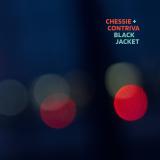
“Black Jacket” is a love letter between two bands separated by continents but united by mutual admiration. Contriva, of Berlin, and Chessie of Washington, DC, first came together in 2001 when sharing a stage, sparking a deep connection over their respective takes on textural, emotive, and mostly instrumental music that merges post-rock, ambient, and experimental elements into unique visions. Fast forward two decades and many trips to their respective studios and we now have “Black Jacket”, a double LP of musical alchemy that builds upon the expressionistic, idiosyncratic sounds of these two groups. A new classic that proves far greater than the sum of its parts.
Begun in the mid 1990's, Washington DC's Chessie is Stephen Gardner (also of noisy shoegaze pioneers, Lorelei) and Ben Bailes, whose various LP's for Slumberland's Dropbeat imprint and Plug Research pair abstract electronics and melancholy post-rock in search of the sounds and feelings of railways and train travel.
Berlin's Contriva, (Monika Enterprises, Lok Musik, and Morr Music) features Masha Qrella (known for her solo works for Morr Music), Max Punktezahl (also of Munich indie legends the Notwist and Berlin's Jersey and Saroos), Hannes Lehmann and Rike Schuberty. For over a decade beginning in the mid-1990's, Contriva crafted compelling instrumentals, grafting experimental textures onto beautiful and complex indie songs.
Together, the six of them have created “Black Jacket.”
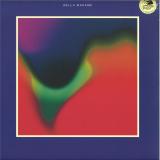
Roughly two years after the release of their initial statement of intent, debut single “Toutpartout PT2” with its hypnotic ripples, Andi Haberl and Florian Zimmer aka Bella Wakame have successfully channeled the magic of a 2024 live recording (captured at Berlin’s Donau115 & Silent Green) into their first proper studio offering. You can hear inspirations ranging from Bitchin Bajas, Jeremiah Chiu to Groupshow (Jelinek, Leichtmann, Pekler), the hypnotic, intricate battle between form and freedom (the fun of momentary formlessness) continues to unfold over the course of 10 new tracks, featuring album guest Indra Dunis (Peaking Lights). Their first single "Shadows of Nambei" was very much inspired by the wonderful band Spirit Fest and their song "Nambei".
You can either shorten the reins, or you can loosen them – and give things more slack. With Bella Wakame, it’s definitely the latter. Constantly challenging each other, they’re tapping a whole new energy. Tons of different energies.
Based on the impulsive, propulsive interplay between drums/sensory percussion (Andi Haberl) and modular synthesizer (Florian Zimmer), the frenzied, free-form results take listeners into completely new dimensions – sonic worlds that don’t really sound anything like their other musical outlets (The Notwist, SUN, Saroos, Driftmachine etc.).
Whereas most bands tend to notoriously overthink names/monikers, these guys obviously only care about the ecstatic push-and-pull that occurs once their instruments meet and overlap: it’s wildly explosive textures with a booming heart. Moving restlessly between motorik club, electro-acoustic jazz experiments, ambient excursions, and fast-paced instrumental anthems that seem to explode at the seams, one can immediately tell how much they enjoy the newfound freedom, the turbulent encounters born on the spur of the moment.
It’s all about a quick-paced exchange of friendly blows, a chasing of tails into ever-new musical terrains. Relying on just enough form for that wildness to blossom within, their just-in-time dashes continually unfold, refold, return, grow bigger – and leave you startled.
The first and most independent of all independent producers, Joe Meek needs little introduction. He was the first to chart in both the UK and the USA with an independently produced song -which was actually recorded in his home’s kitchen- when The Tornados' Telstar took the world in 1962. Meek was, of course, one of the most in vogue producers of the first half of the 1960s, providing the soundtrack to the evolution of UK Rock’n'Roll to Swinging London, scoring hits with actors like John Leyton (Johnny Remember Me), showmen like Screaming Lord Sutch and bands like The Outlaws and The Tornados. He also produced a wide stream of R&B and freakbeat 45s that are nowadays hardly sought after by the collectors with the biggest bank accounts.
Joe Meek experimented with all kinds of recording techniques in his home studio, his tricks and gimmicks won his productions chart placement and critical and public acclaim, but none of his projects was so advanced and way out as the avantgarde experimentation showed in his I Hear a New World electronic symphony from 1960. Aided by The Blue Men formed by Rod Freeman (group leader, guitar, vocals), Ken Harvey (tenor sax, vocals), Roger Fiola (Hawaiian Guitar), Chris White (guitar), Doug Collins (bass), Dave Golding (drums) -also known as Rodd-Ken and The Cavaliers- who provided a tight base to his electronically produced sounds, Meek came up with what he envisioned as the soundtrack of the future, the sounds he envisioned were to be heard in outer space. It was too way out for its time, certainly. To the point that of all the opus, only four tracks saw the light of day on a 7" EP released on Triumph, Meeks very own label. It wouldn’t be until 1991 that the whole recordings from the I Hear a New World sessions would see the light of day on a CD issued by the RPM label.
Wah Wah offers a new reissue of this now classic early electronics masterpiece, housed in a beautiful front-laminated back-flapped sleeve and offered as a limited 400 copies only black vinyl version and an ultra-limited 100 copies only transparent purple vinyl. Get yours before they fly!
RIYL : Delia Derbyshire and The BBC Radiophonic Workshop, Louis and Bebe Barron’s soundtrack to Forbidden Planet, Raymond Scott, Tom Dissevelt & Kid Baltan, Morton Subotnick…
The first and most independent of all independent producers, Joe Meek needs little introduction. He was the first to chart in both the UK and the USA with an independently produced song -which was actually recorded in his home’s kitchen- when The Tornados' Telstar took the world in 1962. Meek was, of course, one of the most in vogue producers of the first half of the 1960s, providing the soundtrack to the evolution of UK Rock’n'Roll to Swinging London, scoring hits with actors like John Leyton (Johnny Remember Me), showmen like Screaming Lord Sutch and bands like The Outlaws and The Tornados. He also produced a wide stream of R&B and freakbeat 45s that are nowadays hardly sought after by the collectors with the biggest bank accounts.
Joe Meek experimented with all kinds of recording techniques in his home studio, his tricks and gimmicks won his productions chart placement and critical and public acclaim, but none of his projects was so advanced and way out as the avantgarde experimentation showed in his I Hear a New World electronic symphony from 1960. Aided by The Blue Men formed by Rod Freeman (group leader, guitar, vocals), Ken Harvey (tenor sax, vocals), Roger Fiola (Hawaiian Guitar), Chris White (guitar), Doug Collins (bass), Dave Golding (drums) -also known as Rodd-Ken and The Cavaliers- who provided a tight base to his electronically produced sounds, Meek came up with what he envisioned as the soundtrack of the future, the sounds he envisioned were to be heard in outer space. It was too way out for its time, certainly. To the point that of all the opus, only four tracks saw the light of day on a 7" EP released on Triumph, Meeks very own label. It wouldn’t be until 1991 that the whole recordings from the I Hear a New World sessions would see the light of day on a CD issued by the RPM label.
Wah Wah offers a new reissue of this now classic early electronics masterpiece, housed in a beautiful front-laminated back-flapped sleeve and offered as a limited 400 copies only black vinyl version and an ultra-limited 100 copies only transparent purple vinyl. Get yours before they fly!
RIYL : Delia Derbyshire and The BBC Radiophonic Workshop, Louis and Bebe Barron’s soundtrack to Forbidden Planet, Raymond Scott, Tom Dissevelt & Kid Baltan, Morton Subotnick…
Creating a composition means making decisions. During times in which you virtually have all sounds that have ever been recorded at your availability, composers must choose between infinite possibilities. The duo Ellicist does not perceive this contemporary ocean of possibilities as too much choice, they are swimming in it. Ellicist are weaving thick textures from the most diverse tones and rhythms. Their tracks are placing synthetic buzzing, the croaking of frogs, low frequency billowing and humming, flutes, the droning of flies, and the whole spectrum of the digital creation of sound next to one another. This intensity of sensations is not supposed to overstrain the listener, it invites them to follow a process. This music does not have a strict structure; instead, it is breathing openness at every moment. Ellicist are incessantly oscillating between abstraction and elements of pop music. Melodies are being hinted at, and sounds are being piled up, at times tirelessly. Fragments of etheric choirs or field recordings are unfolding their associative power. The melodious Ink is a track full of touching intimacy and is in constant motion until it eventually pauses to create a silent ocean of sound. Passage People is permeated by a groove of throbbing synths. The tapestries of sound of Ponds & Graves, on the other hand, are creating the foundation for expressive percussions. Ihnen Steg is almost a dub track. During the opener Hennepin and its follower Lilei sounds of palpable corporeity are being combined with ones that are hardly tangible. Point Defects has a incredible spatiality. At one point you might believe that you are able to precisely localize the sounds in an imaginary system of coordinates. And then the whole systemization crumbles. It is an astonishing production: you can almost taste the sounds. Biographical Notes: Ellicist are Thomas Chousos & Florian Zimmer. Chousos studied composition in Greece before moving to Berlin, where he is working as a producer and sound engineer under the moniker Tadklimp. Florian Zimmer has been playing with several groups. Besides Ellicist he is a member of Saroos and Driftmachine.
Alien Ensemble's trombone man Mathias Goetz caused quite a splash when he released his eponymous debut LP under his Le Millipede moniker back in 2015: The multi-instrumentalist's initial offering was clearly something else, impossible to grasp, a musical vessel beyond genre, beyond style or era, seemingly beyond space and time even, a vessel that carried an almost cosmic kind of song-craft - music with no fixed stamp of origin, though it did somehow feel like an Alien Transistor release. Followed by remix album Mirror Mirror, which comprised reworks by 1115, Protein, LeRoy, Olaf Opal, and Saroos, to name a few, it's now time for album #2: The Sun Has No Money.Let's face it: There's nothing as majestic as the sun. At least not in our world. If it runs out of juice one day, it's game over: The End. Light's out. For everyone. At that point, it wouldn't even matter if you're rich or poor. We're all equal under the sun. Same level. And yeah, this might not be major news, but then again... we're talking about the sun. The sun! Guess it's about time to acknowledge its power and superiority, right In fact, you can feel it on your bicycle: pedaling at night, when it's on duty in other hemispheres, and you're working hard at the dynamo, sweating, you can actually feel how powerful it is. In the end you get off the bike all recharged, a tune on your lips - and somehow feeling like a miniature version of the sun yourself. And whenever you feel like that, that's exactly the right moment to grab a melodica and get to work.Following an initial warm-up round sans electricity, this new album soon begins to glow: Mathias Goetz aka Le Millipede doesn't need pedals, he boosts circulation by single-handedly* playing tons and tons of different instruments - it actually feels like thousands, easily. And thus begins a show that has countless levels to it: There are various sonic illusions... and yet Le Millipede doesn't hide anything: He's also willing to show the inner workings, the actual recording process and everything else. In short: he goes meta. Makes songs about making songs. That's right: why not use all these beautiful means to address the issue of money It's not the sun that casts shadows, all it does is recharge, fuel: growth & thriving, that's the sun's area of responsibility. And yet there came a man whose plan was simple: steal the fruit from your garden, only to sell it right back to you, for money. We can hear the sea gulls crying in the distance, as somebody is throwing breadcrumbs up into the wind that carries their voices...It's not the sun that casts shadows - all it does is radiate light. And yet there came a time when someone blocked those rays of light. Now if you're some kind of Diogenes, you'll simply say, Move at least a little out of the sun.' But if you're a teacher, you'll maybe light up your pipe and use that to lighten up. What matters is that the percussion parts, in this case, resemble some serious musique concréte. The sun doesn't know shadows - all it knows, is itself. And yet somebody entered the picture and built an entire city. A city full of streets, so that houses can cast shadows into these avenues. Plus, there's music in the streets, music originally written inside the walls of said houses.One of those streets is known as the Tin Pan Alley: a place that got its name from a music writer who compared the sound of so many pianos to the banging of tin pans. That sound: that's one side of the road that is this album. Some of these melodies appear to be shadows of earlier tunes, dating back to, say, 1898 or even before that, melodies that were first registered in the Tin Pan Alley publishers' offices back in 1912 or 1917. We actually get to see this Alley at that point in time. We see the ropes, the workings. How things come together, the actual act of creation. Suddenly, we can hear the shadows!
Okay, so one side of this street is America. The US of A. The opposite side: Russia. And smack dab in the middle: Europe. A pothole in the center. All the back-and-forth that occurs between these two poles ultimately depends on the movement of the sun. Night and day, taking turns, commuting in and out of sight. We get to meet Prokofiew's and Scriabin's ghost, among other spirits, reframed and published by Le Millipede's own imaginary label imprint on the historic Tin Pan Alley. Indeed there are moments on this album when Le Millipede seems to be playing Scriabin's clavier a` lumie`res (tastiera per luce), when his performance seems to be based on synesthesia, a wild cross-pollination of colors and sounds. In case you didn't know this: In the States, Prokofiew goes by the name Brian Wilson, and Scriabin's also known as Sun Ra - yet another guy who's usually broke, but gets to spend a lot of time out in the sun. Together, these assorted protagonists ask the people of the Antilles for Mutabor dance-tokens and send postcards to Moondog in Germany, right back into the darkness. On the postcards you can see people dancing the Biguine...Firing foreign fossil fuels from all pipes (Brennelementsteuer!), Le Millipede controls the very center of this hustle and bustle: going as far as to employ some southern Chopped & Screwed styles, he's 100% current and zeitgeisty! Houston, we've got a problem: there's some kind of myriapod, centi- or millipede on the loose! Well, give me another sip of lean, sizzurp, dirty Sprite, and on goes the journey in the Pullman coach. Let's follow the sun! Keep on moving, keep things motorik! Here comes the Trans-Eureka-Express. Cherish the backpacking days! A piercing rhapsody of sound (bohrende Rhapsodie), we'll remember them fondly! And thus things move on, the sun, the days, the earth: rise, set, action, round and round... onwards eternally. The sun: the biggest loop known to mankind. As if it was some kind of sonic Rube Goldberg contraption, time seems to be stretching out while listening to that hmmm. After all: time is a lot (a lot!) more than just money. And yeah, the sun is the real big shot on (or rather: above) Planet Earth. Le Millipede's live line-up also includes Markus & Micha Acher (The Notwist etc.), Nico Sierig (Joasihno), and Manuela Rzytki (G. Rag & die Landlergschwister, Kamerakino etc.).
*sole exception: Evi Keglmaier (Zwirbeldirn, Hochzeitskapelle) plays the viola. Words/sun worship: Pico Be
For their Summer Of Seven tracks Iso68 have, as usual, recorded many live instruments. We hear drums, guitar, keys, and brass, mixed into two tight tracks which unfold their addiction not at first glance. But after several plays the two pieces by Florian Zimmer (who also plays with the bands Saroos and Jersey) and Thomas Leboeg (member of Hamburgs Popband Kante) become essential beauties.
- 1