
In Stock
Disponibile in Stock e pronto per la spedizione
Last In: 5 months ago
11,35 €
Disponibile in Stock e pronto per la spedizione

Art thou ready Straight fire coming from Total Science, Phaction and Fokuz Recordings stalwarts Malaky, Satl and Silence Groove. On the A side long time drum & bass veterans Total Science flip Phaction's ''Stratos'', released early 2015 into a hypnotic, soulful groove with a bopping bassline, delayed piano cuts and vocals.
Next up are Fokuz Recordings regulars Malaky, Satl & Silence Groove. Already making a name for themselves individually they now team up on ''Skyfall'' delivering an infectious, heartfelt slice of soulful drum & bass. Good vibes all around but then again, would you expect anything different from us We think not, go and cop that!
Ordina ora e ordineremo l'articolo per te presso il nostro fornitore.

In The Land of Silence is the first full length album by experimental artist Ireen Amnes. The founder of the London based collective Under My Feet. debuts on Sonic Groove with an immaterial journey contemplating suffering, liberation, the importance of affection and unity. This ambient album reveals a hidden connection between these human emotions. From anger and rejection, to love and unity, the sounds explored by the artist represent a recent journey within. Recollections of distant memories are expressed with nostalgic sounds; by contrast, darker tracks are symbolic of those moments when it is more dif ficult to accept reality for what it is. Ireen expresses in this album that there wouldn’t be any joy without suffering.
Sounds created out of emotions that cannot be spoken. Beats that pulse out of gestures that can no longer be performed. Tones that screech out of bodies that can no longer be human. Echoes of all unspoken words reverb into the wounds of time; that constant ebb and flow of existence; that relentless stomping of exchanges. The slur of life is now noise – she collects its torn pieces with her bare hands and holds them close to her pounding flesh. She now sways in and out of consciousness, transported by nothing but his will to life, his ecstatic memory, his murmured love that now forms this soundtrack to her life.
Disponibile in Stock e pronto per la spedizione
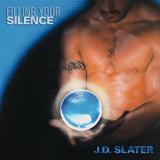
Dark Entries is Filling Your Silence with the help of J.D. Slater. Legendary actor, director, and composer J.D. Slater is sometimes known as “the Lou Reed of gay porn.” Slater cut his teeth in the New York punk scene, even opening for the Talking Heads and Blondie at CBGB with his project Frenzy. A true polymath of the erotic, he co-founded Raging Stallion Studios with Chris Ward in 1999, which has remained a prolific outlet in the world of gay pornography. Having spent years in front of and behind the camera, 1999’s Filling Your Silence was his debut as maestro. This album collects the soundtracks from the first two Raging Stallion films - Sexpack One and Sexpack Two - to bring us nine tracks of sleazy beats and trance-like moments of pure ecstasy. Album opener “Seduction” begins with the iconic synthetic pan flute, one of the defining sounds of the 1990s, before pulling us along with its wild grooves.
Halfway through its nine-and-a-half- minute course, it breaks down to bust out a jazzy electric piano vamp. “Running with Scissors” ups the tempo with some crunchy breakbeats to undergird its portamento-laced lead synth. Elsewhere, like on “Mercy” and “Mercy (2nd Movement),” we see Slater embracing a bleep-adjacent sound close to early Nightmares on Wax or 808 State. Filling Your Silence’s endless grooves pursue that oceanic feeling. This record comes with a one-sided insert that includes archival Raging Stallion press materials. In the words of the Bay Area Reporter, Filling Your Silence is “quite possibly the best music for sex ever written.” A bold claim, but we can’t help but agree.
dovrebbe essere pubblicato su 16.10.2026
Compiled onto one vinyl album for the first time, Landlocked (Numbers, 2026) presents Hallucinator’s 1999 debut album originally released under Mark Ernestus and Moritz von Oswald’s label Chain Reaction. Writing much surrounding the culture of what would be later considered ‘Dub Techno’ and its’ primary distribution center, Hard Wax, leads one down roads of shifting primary sources and decades old overheard smoke break recollections. Maybe brevity primes the listener to the paralinguistic to approach the sound on its terms; focusing on how things are uttered and not what.
This theory will remain unconfirmed. Hallucinator original press release left us with three or so gestures to consider over the years since:
“A new act on CHAIN REACTION”s distinct productional thesis. HALLUCINATOR are 3 people from he UK/London and this their first release ever- that’s all what the artists want to let us know…. This record is dedidacted to the memory of Stephen Lawrence!”
The first gesture is one of personnel. Since ’99, we’ve gotten to learn a bit more about the artists behind the Hallucinator project. All London-based, all writers, composers, and sound-designers— Anna Piva, Edward George, Trevor Mathison. These three seem to flow between parameters as aesthetic tactic and tacit structure to the work itself. For example, other collaborative shapes have come from this lineup including Flow Motion (Piva, George and Mathison) as well as the now defunct Black Audio Film Collective of which George and Mathison are founding members.
The second gesture is in the second line of the previous press release, “distinct productional thesis.” Much of Landlocked’s affect and sequencing seems to suggest an emotional study of entropy at the level of sediment. Rhythms play with space and capacity through polyvalence. The production chose subtractive vertigo, often switching and bringing back in elements that vanished from the track 6 minutes ago. Dubbing out so much of a track, one begins to associate sound akin to memories held in the experience of running your hand across a concrete block as a child. Felt (re)memberance in lieu of narrative tale. Using textures that flicker between colour and percussion, Hallucinator’s 12-tracker of loudspeaker perception music might be a mediation on the psychic wake of the Cold War. Intermittent strata of ambience and groove convects an active margin rifting event underneath a scorched geology of power in Western Europe. Again, this is all grapevine hearsay.
But it’s silence that voices the third gesture. The album’s sparse application of the written word touches on the ennui paradox of being landlocked on an island. Stuck. Trapped in the psychosis of occidental hypercentricism. A looping silence of Black British tragedy: “to the memory of Stephen Lawrence”. 18 year-old Lawrence was stabbed to death at a bus stop in southeast London by six white men in 1993. The rift of grief and implicit reiteration of modern subordination left by this hate act went legally silent for almost two decades until Lawrence’s killers were ultimately sentenced to virtually life in jail in 2012. Only six years removed at the time of Hallucinator’s initial invocation of rememory, the mind-numbing accretion of what Black Studies Professor Denise Ferreira da Silva might call “unpayable debt”, finds demonic ground across Landlocked, forming an aural sense of what continues to be refused.
The album ventures through spaces of overactive non-happenings: ‘Red Angel’’s factory floor dub flashes between smokestack and jungle visions, or the halfway mark’s stilted breath of ‘Dusk’ lending its mood to the sort of sedated dreams built from daily life under colony rule for instance. That linked rhythm links us back to our linked fates across Black and Brown folk is real, thus the syncopated signals through this work behave on the level of transnational radiotelegraphy, sounding out its windswept tension of a body negotiating a meat-grinder schema of linear production and wage for others to know that unspeakable thing can be broadcast in every drum tongue.
As the silence continues to reverb, we return to the sort of meaning-making that cannot be told but felt. Soothing to some, disturbing to others. Landlocked, a Rorschach test for a crumbled empire.
dovrebbe essere pubblicato su 19.10.2026

After a few years of silence, the London-based label resurfaces from the depths of the underground with a new split EP, the fifth in the series, merging nu-skool breaks and futuristic electro from the like of two firmly established talents.
The Brussels-based artist and founder of ZwaarteKracht Records - Arsonist Recorder.With standout releases on Diffuse Reality, 20:20 Vision and Specimen he takes control of the A-side to deliver two finely crafted electro gems. Spanish producer Sigma_ALgebra, co-founder of Tensor Norm and already featured on Science Cult, Elektrodos Recordings, Anti Gravity Device, Digital Distortions or Urban Connections is slamming the Side B with two experimental yet powerful electro assaults, unmistakably stamped.
Ranging from dancefloor-oriented electro to industrial breakbeats and lo-fi textures, this fifth chapter offers a deep dive into raw, hammering rhythms and pulsating grooves crafted for sweat-drenched, late-night sessions.
Disponibile in Stock e pronto per la spedizione
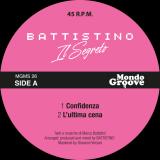
BATTISTINO, the artistic alias of Marco Battistini, is an Italian musician, songwriter, producer and DJ. His project is rooted in the meeting point between Italo Disco, French Electro, late-’70s Disco Music and Italian pop culture, reinterpreted through a contemporary vision that avoids nostalgia in favor of a distinctive sonic identity. His main influences include the aesthetic vision of Daft Punk, the musical freedom of Daniele Baldelli’s Cosmic Sound, the international disco movement of the late 1970s, and the golden era of Italian Italo Disco, with a special admiration for Righeira. His productions combine driving synth grooves, pulsating basslines and immediate melodies. Gritty electronic drums, saturated synthesizers and subtle harmonic distortion deliberately break away from the polished sound traditionally associated with classic Italo Disco. The result is a more physical and textured sonic palette that preserves the melodic elegance at the heart of the project. BATTISTINO’s visual identity follows the same philosophy. Elegant, reserved and almost bureaucratic, he prefers to remain behind the scenes rather than at the center of attention. More than a performer, he acts as the curator of a sonic archive, where every track represents a fragment of a larger story.
“Il Segreto” is the opening chapter of a conceptual trilogy inspired by an affair that was never revealed, set on the Italian Riviera in the early 1980s. Rather than telling the story itself, the project explores what remains: silence, forgotten details, invisible traces and memories suspended in time. Music, visual design and imagery all become chapters of the same narrative. Every release is a new file, every track a recovered document, every production another fragment of a story that will never be fully disclosed. BATTISTINO doesn’t tell stories. He preserves them. And, from time to time, he allows part of them to surface.
The 12″ includes a N.O.I.A. Remix!
dovrebbe essere pubblicato su 30.10.2026
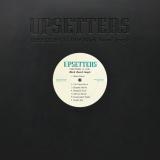
One of the most influential dub albums ever made. The remixing techniques used – radically new for 1973 – helped transform the role of the producer and the engineer to that of creative artists in their own right.
First released in Jamaica in December 1972, Upsetters 14 Dub Black Board Jungle is widely regarded as one of the first full-length dub albums and a true landmark in reggae history. Produced by the visionary Jamaican innovator Lee “Scratch” Perry, it marks the decisive moment when dub evolved from incidental B-sides into a fully realized long-playing art form. At a time when Jamaican sound system culture was flourishing, producers were beginning to strip down popular reggae tracks into instrumental “versions,” emphasizing the bass and drums for sound system deejays to toast over while adding echo and reverb effects to make things more interesting and dynamic. While King Tubby, who was in charge of mixing the tracks, was pioneering the technical foundations of dub, Perry expanded the approach by adding the hypnotic and psychedelic sound effects that made this record so rich in ideas, rendering the album more conceptually bold.
The album reworked previously released rhythm tracks by the Upsetters, which were recorded between 1970 and 1972, shortly before Perry opened his own studio – the legendary Black Ark Studio in Kingston. Their tight, groove-driven playing provided a solid backbone for these radical studio manipulations. Using the mixing desk as an instrument, tracks were deconstructed in real time – dropping vocals in and out, isolating drumbeats, pushing bass lines to the front of the mix, and sending fragments of sound spiraling into space through the heavy use of a spring reverb and tape delay effect units. Silence became as important as sound, and the interplay of rhythm and echo created a hypnotic, immersive listening experience.
Upsetters 14 Dub Black Board Jungle established dub as a genre defined by creative studio intervention. It demonstrated that the remix itself could be the main attraction, influencing generations of reggae producers and resonating far beyond into the techniques and aesthetics of post-punk, electronic music, hip-hop, and ambient sound design. By transforming the studio into a creative laboratory and elevating the “version” to an art form, this foundational album reshaped not only Jamaican music, but the whole of modern music production culture.
dovrebbe essere pubblicato su 20.11.2026

For the 62nd release on Memoria Recordings, Romanian producer Plusculaar delivers a hypnotic collection of deep, groove-driven electronic cuts that move far beyond simple club conventions. Known for a sound shaped by minimal grooves, shuffled rhythms, and immersive atmospheres, Plusculaar builds sonic journeys that reward patient listening and intuitive mixing.
Across this EP, he bridges subtle breaks, micro-textural interplay, and low-end propulsion to craft tracks that are equally at home in intimate underground settings as they are in late-night room explorations. Each piece unfolds with surgical precision, unhurried, detailed, and rich in rhythmic nuance.
MEM062 is for selectors who appreciate depth and restraint, where every beat and silence matters. A refined toolset for DJs and listeners alike who chase emotion through movement and groove.
Disponibile in Stock e pronto per la spedizione

Five years after their radiant debut Ufo Bar, Italian cinematic funksters Banda Maje are back with Costa Sud to take us deeper into their land of ‘Salifornia’—a Southern province of sun-drenched coastlines and decaying buildings where dreams of exotic escapism sprout and bloom.
Once again, behind the eight tracks in the album—and behind the wheel of the fiery red Alfasud on the cover—is composer and keyboardist Peppe Maiellano. He has meticulously tailored each piece to his virtuoso partners in crime: a 'family' of exuberant musicians spread between Salerno and Naples, all bound by deep-rooted ties to the region and a shared belief in the grit of independent artistry.
The Costa Sud (South Coast) imagined by Banda Maje is a shimmering ribbon of sun-baked asphalt stretched between the sea and the ancient pine forests of the Gulf of Salerno. It is a land of enchanting but wounded places, where the grace of Ancient Greek civilization sits in a restless silence alongside the scars of rampant building and neglect. “But if truth is beauty and beauty is truth,” Maiellano explains, inverting Keats’s famous line, “with the right eyes, you can find beauty and poetry even under a layer of moral and material filth."
Conceived and recorded entirely in the South, the album nevertheless looks beyond the horizon. While Neapolitan funk and golden-age Italian soundtracks remain the double helix of the band's DNA, this album welcomes new influences from across the ocean, weaving Italy, Brazil, Africa, and contemporary sounds into its unique vision of the 'global South.'
Side A is an immersion into Salifornian territory and its myths: from the carefree instrumental disco-funk of the title track, which sublimates local contradictions into enveloping cinematic atmospheres, to the mellow groove of “Baia”—a fusion of Neapolitan funk, afrobeat, and disco that pays homage to Salerno’s famous beach, squeezed between millennia-old sea rocks and mountains of shipping containers. The band’s heartfelt sense of belonging shines in their fresh soul-disco version of “Mo…” (a 1981 cult classic by Neapolitan legend Peppino di Capri) featuring Maiellano’s own vocals, while the reimagining of Tonico 70's “Jet Lag” celebrates a fraternal partnership with the Salerno-based rapper/producer, charting a musical itinerary that unites Brazil, the States, and Salifornia through evocative grooves, sharp synths, and Gianfranco Campagnoli’s exquisite trumpet.
On Side B, the sound becomes even more eclectic with the samba-funk warmth of “Samba Maje”, where Mediterranean melodies and lush vocal harmonies marry jazz-funk arrangements and disco-inflected Brazilian rhythms. The next track, “Africana”, is dedicated to a legendary dolce vita nightclub on the Amalfi Coast (and its founder Luca Milano); here, a rhythmic mantra incorporating tribal African elements blends with synths that evoke RAI television themes of the late 70s. The journey concludes under the sign of the silver screen: the disco-funk elegance of “Black Glamour Girl” (from the early-80s road-trip comedy In viaggio con papà), a tribute to the compositional genius of Piero Piccioni, and “Lovebossa”—an easy-listening homage to the "Cine Bossa" atmospheres that characterized so many Italian soundtracks of the 60s and 70s, finally carrying the listener ‘ncopp’ ‘e nuvole (above the clouds—which is basically Salifornian for "somewhere over the rainbow").
Available on LP and Digital from 15 May 2026.
Disponibile in Stock e pronto per la spedizione
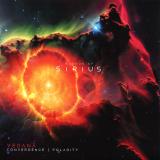
Sounds of Sirius Music presents SOSNZ012 – Vedanā – Convergence / Polarity
All forces move in pairs. Light and shadow. Push and pull. Signal and silence.
Frequencies bend toward each other, magnetic fields collapsing into a single point of awareness. Tension becomes motion. Duality becomes flow.
New Zealand-based artist Vedanā leads the A-side with two original cuts, channeling a deep, hypnotic energy that moves between restraint and release. Each track reveals a different side of the same spectrum, balancing introspection with forward momentum.
On the B-side, label founder Herman Saiz delivers a reinterpretation rooted in his signature groove, bridging Chilean and New Zealand influences with a refined, driving touch. Romanian producer RQZ adds his own perspective, reshaping the original into a textured and immersive journey.
Convergence / Polarity captures the space where opposites meet — not as contradictions, but as essential counterparts in constant motion.
Disponibile in Stock e pronto per la spedizione

KKYV09 is a four-track EP by Helsinki-based producer and DJ Valeria Croft, exploring a refined intersection of house and minimal shaped by funky rhythms, rolling grooves, and detailed, tactile sound design. Alongside three original cuts, the release features a remix by Romanian DJ and producer Lumieux. The EP opens with Measured By The Silence, a hypnotic, groove-led track that defines Valeria Croft's sound through subtle progression and layered detail. Floating within a vibrating minimal house framework, the track delivers warm, positive dancefloor energy across its eight-minute journey. Lumieux's remix flips the mood, pushing the arrangement into a tighter, more driving house direction while carefully reworking elements of the original into a fresh, high-impact version. On the B-side, Flex Your Body leans into an old-school minimal feel, enhanced by sensual vocal sampling and a darker, late-night atmosphere. The EP closes with Night Shift Funk, a deep, immersive track that pulses with nocturnal energy, unfolding slowly and methodically as textures stack and tension builds. Together, the tracks form a cohesive, dancefloor-focused release designed for extended DJ sets and late-night sessions.
Disponibile in Stock e pronto per la spedizione
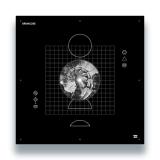
Drumcode returns with its flagship A-Sides series, led by a huge new Adam Beyer single that highlights the 20-track compilation.
If you want a snapshot of techno in any given year, look no further than Drumcode’s annual A-Sides compilation. The release broadly charts the evolution of the genre, while giving a platform to standout demo’s Adam Beyer has received across the course of the year with many emerging artists finding their music on Drumcode for the first time. Case in point – Wehbba, Charles D and Raxon who all debuted on the label via a track on the A-Sides series and have gone on to become regular contributors to Beyer’s influential labels.
This year’s compilation features an exciting mix of established heavy-hitters, alongside a slew of new faces set to make their mark on the genre. ‘We Don’t Say Please’ – is emblematic of Adam Beyer’s sound in 2025 – fresh, experimental and thriving on cross-genre pollinations, as elements of bass music, rap and techno collide, underpinned by a distinctive UK vocal. The results are inspiring.
Elsewhere, the 20-track compilation brims with highlights. HI-LO’s ‘NYC to Amsterdam’ has inflections of New York house fused with driving techno elements. Nicole Moudaber returns to DC in cahoots with the rising ZLATA for the super-charged ‘Report to the Dancefloor’. Oscar L & Charles D mint a new collaborative partnership with the immersive, spacey cut ‘Lift Me Up’. LUSU continue their red-hot run following the recent ‘Move 2 the Groove’ EP, and craft a straight-up mind-mashing single ‘LIKE THIS’. Mark Reeve is in trademark strong form with hypnotic ‘My Mind’, which comes to life via a massive synth led. The fantastic Kaufmann shares her ‘People are Strange’, a nod to a classic vox, re-contextualised for a modern techno audience.
As is tradition, a troupe of ascendant producers land on Drumcode for the first time. They include Uruguay’s Enzo Monza, who delivers the crisp ‘Late Night’ – a favourite of Beyer’s; Mattia Saviola, whose ‘Parallel Dimension’ is a powerful cut with fantastic sound design; Romanian artist Tao Andra, who shares the celestial ‘Unity’; and long-time industry stalwart AdamK, who makes a richly deserved Drumcode debut in partnership with Vikthor feat. MC Stretch on the stunning ‘Silence + The Sound’.
Disponibile in Stock e pronto per la spedizione
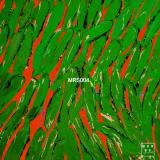
Color Vinyl[11,98 €]
Outstanding monimal grooves! In Spanish, Salida means “exit”, but in this EP, it becomes a metaphor for emergence. Not a way out, but a way through. From beneath layered emotions and dormant states, a new force begins to pulse. Textures rise from the underlayer. Grooves fracture silence. Each track is a signal of rebirth, slow, deep, inevitable. The artwork reflects this moment. From cracks of vivid red, new life pushes forward in green. It’s not escape. It’s transformation. This is Salida, the first breath of something real.
Disponibile in Stock e pronto per la spedizione
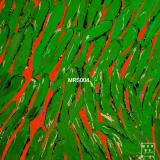
Black Vinyl[11,72 €]
Outstanding monimal grooves! In Spanish, Salida means “exit”, but in this EP, it becomes a metaphor for emergence. Not a way out, but a way through. From beneath layered emotions and dormant states, a new force begins to pulse. Textures rise from the underlayer. Grooves fracture silence. Each track is a signal of rebirth, slow, deep, inevitable. The artwork reflects this moment. From cracks of vivid red, new life pushes forward in green. It’s not escape. It’s transformation. This is Salida, the first breath of something real.
Disponibile in Stock e pronto per la spedizione

Gap Mangione's monumentally influential Diana In The Autumn Wind. AKA BEWITH200LP. And, without question, Be With's White Whale.
They said it could never be done. And with good reason.
We've spent the past 12 years trying to license this legendary 1968 recording from Gap and, after much work, it's finally here. Remarkably, this is the first ever vinyl reissue of Gap Mangione's Diana In The Autumn Wind, produced with the full and extensive participation of Gap. An exceedingly rare album, it's been coveted by funk, soul, jazz and hip-hop sample fiends for decades.
It's unarguably *the* most sought after album for J Dilla / Madlib sample collectors. It has also been brilliantly sampled by A Tribe Called Quest, Large Professor, Ghostface Killah, Kendrick Lamar and Talib Kweli.
But this record is so much more than a sample-spotters curio. It's solid gold throughout. Bursting with killer funky-jazz grooves and tracks adorned with warm electric piano, the release is notable for featuring some extremely significant players at the very outset of their careers; Tony Levin, at 21, whose superb playing on both acoustic and electric bass was the harmonic mainstay of the trio and Steve Gadd, at 23, one of the greatest drummers of his generation.
With acceptable copies of this holy grail changing hands for $400, to call this reissue "much-needed" underplays just how vital it is. Gap's story is told in his words alongside rare photos across a sumptuously designed 2-page insert and, to augment this deluxe edition further, its all wrapped up in a beautiful, no-expense-spared luxury tip-on sleeve, as per the original hens-teeth release. And, while we're talking packaging, just take a look at that cover - a work of art in and of itself.
The tracks are short but complex, with that extraordinary rhythm section backing the beautiful piano, organ and electric piano work of Gap. It's like the best ever library funk breaks record you never heard - but all your favourite golden age rap producers were all over it, long ago. It's a stunning blend of the vibrant, driving music of the Gap Mangione Trio coupled with the sensitive composition and superb orchestration of Gap's legendary brother, Chuck Mangione, who helmed an amalgam of seemingly disparate elements – rock, big band jazz, solo improvisation and "classical" music - into a spectacularly cohesive whole that has aged wonderfully well. As Gap himself notes in the liners, "with this group I was able to explore and add new and exciting elements from rock, Brazilian and then-current pop music."
Opener "Boy With Toys" triumphantly swaggers out the gate, all big band horns, flutes and dextrous organ work. The synthesis of everything going on is nothing short of stunning. When one wise YouTube commentator called this tune "old school superhero music", Gap agreed. Rap luminaries did, too, amongst them Talib Kweli, who rapped over DJ Scratch's chopped up intro for "Shock Body" on his Quality album back in 2002.
You've barely recovered from that incredibly affecting opener when you get hit over the head with the exquisite title-track. And now you see how two of the greatest beats of all time emerged from one single track produced nearly 50 years earlier. Unforgettably utilised by Dilla for Slum Village's heartbreakingly good "Fall In Love" and then Madlib for his "Official" beat for Dilla to rap over, on the Jaylib record. Regardless of the records it went on to spawn, this is just a staggering tune in its own right. Be beguiled by the flutes and the flutter tonguing, the counter-melody from the trombones, the soprano sax solo. All of it. Simply beautiful.
The questing organ and horn workout "Long Hair Soulful" deserves a lot more attention, overshadowed somewhat by the opening two monsters but no less fantastic. It swings, it grooves and Gadd and Levin truly cook. Up next, Gap's wonderfully percussive, mellifluously piano-heavy cover of "Yesterday" by some fellas called The Beatles. It's a subtly arresting gem. "The XIth Commandment" is damn fine, with thick, gorgeous electric piano and snappy drum work underpinning chaotic soundtracky horns. To close out the side, "St. Thomas" showcases the "fourth" member of the Gap Mangione Trio, conga drummer Dhui Mandingo. Having performed with the Trio since 1965, Dhui‘s African-based and jazz-latin-influenced style amazed listeners and its way to hear why.
Opening the B-Side, standard "You're Nobody Till Somebody Loves You" breezes along in the late-night jazz club fashion before things get super deep with the outstanding and - up to now - un-sampled "Pond With Swans". It's simply heavenly, and how its moody, melancholic intro has yet to be pilfered is anybody's guess. It oscillates between gentle, sombre movements and bombastic grooves, equally hypnotic and joyous. The rendition of "You Are My Sunshine" is yet another showcase for Gap's virtuoso playing and Gadd's mastery of the pocket. Indeed Gadd's drumming on "Free Again" is nothing short of neck-SNAPPING! Ghostface took it for not one but two "Iron's Theme" tracks across his seminal Supreme Clientele. It's got that Galt MacDermot "Coffee Cold" feel. Suuuuuper cool. The frantic "Dream On Little Dreamer" hurtles along and must've surely had the whole room absolutely swinging from the chandeliers back in Rochester in the late 60s. The album closes with the magnificent Graduate Medley, featuring memorable renditions of "Scarborough Fair", "The Sounds of Silence" and "Mrs. Robinson". The warm electric piano lines of the former were sampled by The Ummah (Dilla again!) for Tribe's "Pad & Pen" from their reappraised final album, The Love Movement, as well as by Large Professor on his much-loved "The LP (For My People)".
Under the watchful eye - and extremely attentive ears - of Gap Mangione himself, the audio for Diana In The Autumn Wind has been carefully remastered by Be With regular Simon Francis, with a few much needed tweaks here and there, according to the artist's wishes. At the prestigious Abbey Road Studios, Cicely Balston's expert skills have made sure nothing is lost in the cut whilst the records have been pressed to the highest possible standard at the always stellar Record Industry in Holland. The artwork restoration has taken place here at Be With HQ and has that drop-dead gorgeous cover artwork popping like new. Buy on sight!
Disponibile in Stock e pronto per la spedizione
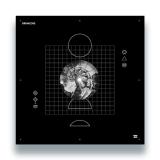
Drumcode returns with its flagship A-Sides series, led by a huge new Adam Beyer single that highlights the 20-track compilation.
If you want a snapshot of techno in any given year, look no further than Drumcode’s annual A-Sides compilation. The release broadly charts the evolution of the genre, while giving a platform to standout demo’s Adam Beyer has received across the course of the year with many emerging artists finding their music on Drumcode for the first time. Case in point – Wehbba, Charles D and Raxon who all debuted on the label via a track on the A-Sides series and have gone on to become regular contributors to Beyer’s influential labels.
This year’s compilation features an exciting mix of established heavy-hitters, alongside a slew of new faces set to make their mark on the genre. ‘We Don’t Say Please’ – is emblematic of Adam Beyer’s sound in 2025 – fresh, experimental and thriving on cross-genre pollinations, as elements of bass music, rap and techno collide, underpinned by a distinctive UK vocal. The results are inspiring.
Elsewhere, the 20-track compilation brims with highlights. HI-LO’s ‘NYC to Amsterdam’ has inflections of New York house fused with driving techno elements. Nicole Moudaber returns to DC in cahoots with the rising ZLATA for the super-charged ‘Report to the Dancefloor’. Oscar L & Charles D mint a new collaborative partnership with the immersive, spacey cut ‘Lift Me Up’. LUSU continue their red-hot run following the recent ‘Move 2 the Groove’ EP, and craft a straight-up mind-mashing single ‘LIKE THIS’. Mark Reeve is in trademark strong form with hypnotic ‘My Mind’, which comes to life via a massive synth led. The fantastic Kaufmann shares her ‘People are Strange’, a nod to a classic vox, re-contextualised for a modern techno audience.
As is tradition, a troupe of ascendant producers land on Drumcode for the first time. They include Uruguay’s Enzo Monza, who delivers the crisp ‘Late Night’ – a favourite of Beyer’s; Mattia Saviola, whose ‘Parallel Dimension’ is a powerful cut with fantastic sound design; Romanian artist Tao Andra, who shares the celestial ‘Unity’; and long-time industry stalwart AdamK, who makes a richly deserved Drumcode debut in partnership with Vikthor feat. MC Stretch on the stunning ‘Silence + The Sound’.
Disponibile in Stock e pronto per la spedizione
Costas Music returns with its third release after a period of silence, delivering a timeless club-oriented EP from label head Costas, with remixes by Baldo and Youandewan.
It's Me Again sets the tone with rolling 90s-influenced drums, groovy basslines and subtle acid touches, driven by a raw dancefloor energy and atmospheric pads in the breakdowns. Barcelona’s Baldo steps in with a powerful remix, reshaping the track into a peak-time club weapon.
On the flip, Waterphone dives into hypnotic territory with evolving textures and stripped-back grooves built for late-night floors. UK underground favourite Youandewan delivers a distinctive reinterpretation, injecting his signature trippy swing and deep rhythmic flow.
Closing the EP, Drako drifts into cinematic soundscapes and immersive atmospheres, offering a deep and reflective ending to the record.
Deep, acid-tinged underground house with strong 90s influences — crafted for modern dancefloors.
Disponibile in Stock e pronto per la spedizione

Tom Misch’s long-awaited sophomore album Full Circle finds the London-based artist, songwriter, and producer at his most personal and honest. Exploring the moments that have shaped him over the last four years: family, friendships, nature, and celebrates the work of finding his way back to himself. Made during his time spent between London, Cornwall, Portugal, and Nashville with a focus on classic songwriting, honing a collection of eleven timeless songs including the previously released singles ‘Old Man’ and ‘Red Moon’. While Full Circle contends with some of quieter moments of the last four years, it remains optimistic and effortlessly listenable, anchored by unadorned vocals and a warm, analogue sound. And the beauty of Full Circle lies in the universality of its lyrics, inviting listeners to inhabit Tom’s world or trace their own path within it. Full Circle stands as both a reflection of his journey and a statement of ongoing evolution.
Disponibile in Stock e pronto per la spedizione
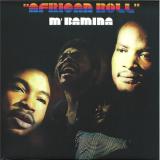
Gatefold Sleeve
M’Bamina – African Roll (1975)
The story of an album born between Africa, Italy, and the nightclub culture of the 1970s
In the heart of 1970s Italy — a country undergoing profound social change and a music scene just beginning to open itself to distant sounds and cultures — an extraordinary, almost improbable story took shape. It is the story of a group of young African musicians who found their way to Europe, of a Turin nightclub that became a crossroads for communities and experimenters, and of an album which, released in small numbers and largely unnoticed at the time, is now considered a rare jewel of Afro-fusion.
The band called themselves M’Bamina — an ensemble of musicians from Congo, Cameroon, and Benin, who arrived in Italy in the early Seventies. Settling between northern Italy and the Pavia area, they began performing in small clubs and community events, bringing with them a vibrant rhythmic heritage: African polyrhythms, call-and-response vocals, funk-infused bass lines, and Caribbean or Afro-Latin colours absorbed along their musical journeys. Their raw, contagious energy on stage quickly drew attention.
Meanwhile, in Turin, another story was unfolding. There was a venue becoming almost legendary: Voom Voom, one of the city’s liveliest nightclubs, run by Ivo Lunardi. The club attracted an eclectic crowd — students, artists, foreigners, night owls — and Lunardi quickly understood that the dancefloor wasn’t just a place for music, but a melting pot for a new kind of cultural energy. Out of this vibrant atmosphere came his idea: to turn the club’s name into a small independent record label, Voom Voom Music, capable of capturing the spirit of those years and giving voice to unconventional projects.
When Lunardi heard M’Bamina, he immediately sensed that this was the sound he had been searching for: fresh, different from anything circulating in Italy at the time, and capable of blending African tradition with funk and European sensibility. He brought them into the studio.
Production was handled by Lunardi along with Christian Carbaza Michel, while the engineering was entrusted to Danilo Pennone, a young sound technician with a sharp, intuitive ear.
The recording sessions — held in Turin in 1975 — produced a remarkably warm and direct sound. The music feels almost live: grooves rooted in African tradition, but open to funk-rock structures and modern arrangements. It is a natural fusion, never forced. Tracks move between tribal rhythms, funk basslines, light electric guitars, congas and Afro-Latin percussion, with call-and-response vocals and melodies that echo both Congolese tradition and the lineage of Latin jazz. Not by chance, one of the album’s most striking tracks, Watchiwara, reinterprets a Latin standard through M’Bamina’s own rhythmic language.
The album was titled African Roll — a name that was already a statement of intention. It is African music that “rolls,” that moves, adapts, transforms within a new geographic and cultural setting. It is not strictly Afrobeat, nor Congolese rumba, nor Western funk: it is a spontaneous, hybrid blend, shaped more by lived experience than by any calculated aesthetic program.
When African Roll was released, the world around it barely noticed. Distribution was limited, and 1970s Italy had yet to develop a cultural framework for receiving such music. The national music press rarely paid attention to African or “world” productions. The album slipped into silence — though the band’s own story did not.
M’Bamina continued performing across Europe and Africa, even sharing a stage in Cameroon with none other than Manu Dibango. By the late Seventies, they moved to Paris, signed with Fiesta/Decca, and recorded a second LP, Experimental (1978). Meanwhile, the peculiar record they had made in Turin began to resurface quietly among vinyl collectors, Afro-funk enthusiasts, and DJs hunting for forgotten grooves.
That is when the album’s fate began to shift.
Over the decades, African Roll emerged as an almost unique document: a snapshot of an intercultural Italy before the word “intercultural” even existed, a fragment of migrant history, a spontaneous experiment in musical fusion born far from major industry circuits but rich in authenticity. Original copies began commanding high prices on the collector’s market, and the album became recognized as one of the hidden classics of European Afro-fusion from the 1970s.
Today, more than fifty years later, this reissue finally restores visibility and dignity to a project that deserves to be heard, studied, and celebrated. It is not simply an album: it is the testimony of a rare cultural encounter, born in an Italy unaware of how fertile such exchanges would one day become.
It is the story of a visionary producer, an extraordinary band, and a fleeting moment in which music, migration, and nightlife came together to create something genuinely new.
African Roll is — now more than ever — the sound of a bridge: between continents, between eras, between cultures. A record that, after rolling far and wide, has finally come home.
Disponibile in Stock e pronto per la spedizione

Beyond Structures by Giomini is an exploration of form and perception within deep house. Across four tracks, he distills the genre to its essential elements: rhythm, texture, and atmosphere. The result is a set of pieces that move between motion and stillness; grooves that evolve organically, and silence that holds meaning. Every tone is deliberate, every pause intentional.
This is music not made for distraction but for immersion; a deep listening experience that invites reflection through movement. Beyond Structures seeks the point where architecture dissolves into feeling, and the dancefloor becomes a meditative space.
Disponibile in Stock e pronto per la spedizione
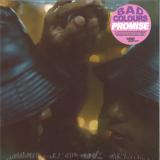
PROMISE is the latest album from Brooklyn-based producer Ibe Soliman, aka Bad Colours. Known for his blend of house, proto-techno, rap, and soul, Bad Colours delivers a dynamic, emotionally resonant record. Driven by hypnotic rhythms and personal storytelling, PROMISE explores themes of vulnerability, desire, and transformation. It's a versatile album designed for both dancefloors and introspective listening.
PROMISE is the fourth LP from Bad Colours on Bastard Jazz, following 2024's collaborative album with Cor.ece, Been Here Before. Soliman's career spans over a decade—DJing alongside artists like James Murphy, Mark Ronson, and Q-Tip, and producing for Kendrick Lamar, Faith Evans, Keyshia Cole, and Rick Ross. His work has received support from KCRW, KEXP (including multiple Midnight in a Perfect World mixes), and CBC Radio 3, and has charted on both the NACC Top Electronic and Top 200 charts. Bad Colours has been featured in press outlets like NYLON, Nonderland, Resident Advisor, Electronic Groove, and Fusicology. His music has appeared in Netflix's Escape from Spiderhead, Hulu's Woke, Disney's Chang Can Dunk, Showtime's American Gigolo, Valorant's Rising Stars, and more.
Disponibile in Stock e pronto per la spedizione

Default Mode by Raleigh & Takenaga continues the newly established X series – Harmony’s platform for new voices and limitless exploration. Hailing from Prague, the duo embodies the next wave of adventurous sound design and musical talent from the imprint’s home town.
Incentive Program opens the EP’s A side with a drifting, trance-tinged flow wrapped in sweeping pitch movements and fractured vocals. The track sets a shadowy, almost sinister atmosphere, pulling all witnesses into its slow-burn gravity. It’s a steady build, tipping the floor over the edge. Stiff Envelope pulls you into its depths as it continues to build tension with resonating synth hits that quiver over a powerful trance foundation. With a few moments of silence that let its unsettling atmosphere settle across the stereo field before swinging back in at full force, this one is tailor-made for big systems.
B side’s Ground Floor carries on with metallic swells and shimmers that ring underneath the surface as the tension built on the A side bursts, settling into a grounding four-on-the-floor moment and leaving just enough time to breathe before Raleigh stirs up a concoction of devious vocals, snappy percussion, and a seductive bassline that lifts the mood tastefully. Takenaga wraps up the record with Head Count, a razor-sharp blend of crisp percussive cuts and stuttered crumbles that are seeking the perfect pitch all the way, climbing up and down. Heads are counted on a lively groove that radiates playful momentum and commands the dance floor to get in formation, keeping a tight rhythmic focus. Infused with the pulse of UK club culture, this track delivers a fresh and forward-thinking sound perfect for adventurous turntables.
Disponibile in Stock e pronto per la spedizione

Step into the emotional landscapes of Saudade’s new EP Expensive Noise, a multi-textured journey where analog machines speak louder than words. Each track captures a different state of mind, blending depth and groove with raw, honest sound design. The EP opens with “Expensive Noise” — direct, grounded, and hypnotic. No detours, no hesitation — just raw analog power locking into a loop with magnetic tension. The groove builds steadily, shifting your state of mind as the rhythm takes hold. “Anyway” brings a dreamy, bittersweet touch. Exclusive to vinyl, this extended version unfolds like a teenage memory you never shared — warm, nostalgic, somewhere between electro and pop, glowing softly from within. “Colored Life” dives into detailed minimal deep house territory. Rounded and generous, its sound design sculpts soft clouds of melodies against crisp, syncopated snares — floating between dream and presence, like a cushion made of rhythm and light. “Porte de la Villette 45” echoes the EP’s birthplace — a raw area near the Parisian périphérique, where engines roar, people hustle, and concrete weighs heavy. Yet within this urban friction stands Studio Villette 45 — a funky, soulful shelter where the machines find their groove. The record closes on “Cœur” (heart in French) — a stripped-down, heartfelt outro. Just a Prophet 5 pad, no tricks. A moment of vulnerability, stillness, and truth — as if the music had finally dropped its armor. Between analog heat and emotional honesty, Expensive Noise is Saudade at his most sincere — building bridges between power and softness, body and soul, sound and silence.
Disponibile in Stock e pronto per la spedizione

Bristol-based producer Zobol lands on Brooklyn imprint Melodize with Killing Culture – a bold, four-track statement that fuses electro, breaks, and electronica into something raw, physical, and emotionally charged. Known as one half of the label Distorted Sensory Perception – a platform showcasing honest, forward-thinking electronic music – and as curator of the UK underground event series d3pth_p3rc3pti0n, Zobol brings a fiercely independent, hands-on ethos to his productions.
Built entirely on hardware – including the Korg MS20, Roland JX-3P, Prophet Rev2, Acidlab Drumatix, Behringer TD-3, Elektron Octatrack, Soundcraft Signature MTK12 console, and finished in Ableton Live – the EP captures a live-wire energy that feels both urgent and immersive.
The EP opens with “Uprising”, a track that sets a hopeful tone with flickers of brightness woven through its punchy rhythms – like the first sparks of something much bigger. Extrawelt reshapes the track with warm bass and swirling atmospheres, lending a more introspective, drifting character. Known for their decade-spanning contribution to electronic music – from their iconic debut on Border Community to defining live performances worldwide – the German duo once again deliver with a remix steeped in depth and analog soul.
The B-side turns heavier. “Weapon of Mass Distraction” unfolds from a looping synth fragment, slowly ramping into a tense, bass-driven groove that hits like controlled bursts of energy – Relentless, exacting & distractingly armoured with acidity. Closing track “Oppression” dives deeper into emotional terrain: the weight of distorted low-end channels the presence of authoritarian force, while fragile melodic elements flicker like voices struggling to be heard – eventually weakening, fading, and falling into silence.
“As shattered cultures bleed beneath a technocratic sky, the silenced cries of Palestine, Sudan, Yemen and other forgotten lands echo a world where humanity’s dawn is cruelly denied; a stark testament to faltering global systems, demanding urgent change before the irreversible erosion of our shared future.”
Disponibile in Stock e pronto per la spedizione
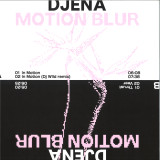
After years of silence dedicated to side projects, DJENA makes a triumphant return with his solo EP, In Motion. A testament to his passion for eclecticism, this release seamlessly bridges house and breakbeat, enriched by a stunning remix from the legendary French producer DJ W!LD.
The journey begins with the title track, In Motion, a hypnotic breakbeat composition where deep pads intertwine with tribal vocal elements, evoking raw emotion and sonic depth. This track is designed to captivate both the ears and the heart. DJ W!LD then takes the reins, transforming In Motion into an irresistible dancefloor anthem. His remix injects a house-driven groove, elevating the track into an emotive yet club-ready masterpiece.
Flipping to the B-side, Thrust propels listeners into a deep tech-driven rhythm, gradually intensifying into a peak-time energy surge. Rounded arps, subtle vocal textures, and celestial pads craft an immersive, ethereal adventure—blurring the lines between introspection and movement.
Closing out the EP, Veer is a sublime after-hours gem. Its bouncy bassline and tech-house rhythm are complemented by atmospheric pads and haunting vocals, leading the listener into a space where both mind and soul find fulfillment
In Motion EP is a refined sonic exploration, balancing depth and energy in perfect harmony. DJENA’s return marks a powerful statement—one that will undoubtedly resonate on dancefloors and beyond.
Order now. Collecting orders for repress.

The album’s title deftly gestures to the sheer vastness of astronomical dimensions, while simultaneously capturing the musical breadth within, where the eight planets are imagined as the eight notes of an octave. The work draws inspiration not only from earlier compositions —most notably Gustav Holst’s The Planets—but also from the rich astronomical and cultural contexts surrounding these celestial bodies. Here, the focus transcends direct citation of melodic motifs, instead embracing an intriguing conceptual approach on a meta level, unfolding in a series of vividly contrasting soundscapes. These contrasts shape a sweeping sonic journey, one that fully embraces the album format with both arms, inviting the listener to venture into realms both strange and wondrous, feeling the immensity of the interstellar space that lies between them. Contrast, after all, is the brushstroke that enriches our world.
Embarking on an auditory voyage, "Astral Guide" establishes the sonic framework that propels us into the boundless expanses of the cosmos. Its ethereal tones evoke the vastness of space, crafting a mood ripe for exploration within the realms of sci-fi. The subsequent tracks unfold like constellations, weaving a rich tapestry of sound that seamlessly marries cinematic soundscapes with pulsating, club-oriented rhythms. This album invites listeners to traverse its immersive landscapes, whether nestled in the comfort of home or dancing under the starlit sky, each note a guide through the transcendent experience of a nocturnal journey.
"Solar Flares" draws its inspiration from the awe-inspiring expanse of solar phenomena, capturing the majestic power of the sun as it reaches into the cosmos. This track resonates with the idea that energy, while vital, can also be a force of destruction when unleashed with overwhelming intensity. The composition beautifully mirrors the sun’s duality, where brilliance and devastation coexist, inviting listeners to reflect on the delicate balance between creation and annihilation. Through its rich textures and dynamic shifts, "Solar Flares" serves as both a homage to the celestial and a poignant reminder of nature's formidable power.
"Mercury – The Winged Messenger" embodies a meticulously crafted soundscape where artistry meets astronomy. The tempo of 173.6 BPM, derived from precise astronomical data, propels the composition into a vibrant realm that resonates with cosmic energy. Synthwave sound design intertwines seamlessly with the fluid rhythms of Drum’n’Bass, imbuing the piece with an uplifting dynamism that evokes the ethereal grace of Mercury itself. In this sonic exploration, listeners are invited to ascend on wings of sound, navigating the celestial tapestry of the universe with each invigorating beat.
"Venus, The Bringer of Peace" strikes a decidedly cozy note, presenting a poignant contrast to the more tempestuous themes often found in cosmic narratives. This composition evokes a nostalgic vision of an optimistic era, one in which humanity transcended borders and embraced the infinite possibilities of space exploration, where no destination felt too distant. The dense, languid atmosphere envelops the listener, creating a tangible sense of serenity that unfolds gradually, allowing for a meditative journey through sound. Each note serves as an invitation to linger in this tranquil embrace, reflecting on the harmonious potential of our collective aspirations and the beauty of connection in a vast universe.
The central theme of „Gaia, The Bringer of Life“ —originally not part of the planetary cycle— is the profound enabler of life on Earth. The arrangement delicately mirrors the slow, tentative unfolding of this potential, marked by an initially sparse orchestration that gradually builds in momentum. This progression crescendos, embodying the explosive dynamism of the Cambrian burst of life, ultimately culminating in a euphoric fanfare—a triumphant, celebratory flourish echoing life’s victorious emergence.
"Blue Moon" unfolds as a contemplative reverie on the tranquil clarity of a night sky, now seldom glimpsed in its natural purity, unclouded by the relentless haze of urban light. The listener is drawn into the vast embrace of the star-strewn firmament, a journey that sways between euphoric awe at nature’s sublime beauty and a profound melancholy for its fragile and imperiled state. Musically, this duality finds expression in the delicate interplay of modal mixtures, while an ever-shifting triplet groove, poised at the intersection of Outrun and melodic house, lends a pulse that is both nostalgic and forward-looking—echoing the beauty and transience of a world on the brink.
Rather than replicating the original composition of „Mars, The Bringer of War“, this interpretation seeks to evoke its profound, foreboding atmosphere. Cyberpunk emerges here as an ideal genre, channeling the dark, relentless march synonymous with Mars, the ancient god of war. The piece reverberates with intensity, as distorted vocalizations rise, embodying the anguish and visceral torment that shadow war’s violent crescendo. This auditory descent into conflict captures the relentless pulse of warfare, where sound itself becomes an embodiment of suffering and fury.
Majestically, "Jupiter, the Bringer of Jollity" emerges on the celestial stage, sweeping away the somber tones with its radiant vigor. Drawing inspiration from the triumphant strains of the original, and borrowing a melodic motif in the refrain, the piece expresses joy and buoyancy through a shift to a major key and the lilting sway of a danceable 12/8 meter. Spirited and exuberant, it leaps boldly from major to minor and back again, playfully shifting time signatures to capture a mood of unbridled festivity and jollity.
Here, a more conciliatory concept is chosen than in the original inspiration. „Saturn“ aligns with the number six, being the sixth planet from the Sun and bearing the iconic hexagonal pattern at its northern pole. What, then, could be more fitting than to render this piece in a 6/8 time signature? The arrangement unfolds with a multifaceted richness, mirroring the countless stones and ice fragments that form the foundations of Saturn’s majestic rings.
„Uranus“ adopts the theme of a light-footed, dancing instrumentation, giving the impression of perpetual motion, never quite settling. This musical choice harmonizes with the planet’s own orbit, as it spins with breathtaking velocity, teetering and swaying, seemingly unable to attain rest or stability.
The chill and vastness of the cosmos find expression in „Neptune, The Mystic“. At its core, an electronic soundscape envelops a classical arrangement, its unreachability intensified by an ethereal, otherworldly choir. Hovering at the outermost boundaries of the solar system, where warmth is but a distant memory, the composition lingers in a slow, contemplative tempo, evoking a realm where space for speculation stretches wide and silence reigns supreme.
Though Pluto may have lost its planetary status, and its companion Charon never achieved one, this shift in classification subtly aligns with the cosmic scale invoked here—one that mirrors the musical tradition of an eight-note sequence. Fittingly, the album closes with „Kuiper Belt“, a composition emblematic of the turbulence and vitality of countless smaller
celestial bodies that, though diminutive, find their rightful place within the vast architecture of the solar system.
They say nature is the greatest composer, shaping the universe with a symphony of chaos and order, beauty and danger. It is this duality that fuels the artistic vision of Edictum—a producer who, armed with a doctorate in chemistry, delves as deeply into the mysteries of molecules as he does into the depths of sound. In the tension between the vastness of the cosmos and the microscopic processes that dictate life’s rhythm, Edictum creates sonic landscapes that dissolve the boundaries between science and art.
His music is a story of contrasts—a sonic tale where the raw forces of nature clash with the intricate structures of human culture. Opposites intertwine to form a harmonious whole: the primal rhythms of the earth meet the celestial melodies of the cosmos, the rigid laws of physics blend with the boundless freedom of art. Edictum explores these polarities with meticulous devotion, each composition an expedition into uncharted soundscapes—a quest to give voice to the unfathomable.
With over 20 years immersed in the realms of electronic music, Edictum has honed a keen sense for rhythm and movement. His driving beats compel both body and mind into a hypnotic flow. Yet beyond the pulse of dance lies a complex framework of conceptual thought. Today, his creative focus revolves around holistic album projects—self-contained worlds with overarching narratives that embrace contrast and complexity. Each track stands alone as a fragment of the whole, but together, they weave a cohesive tapestry, much like the chapters of a novel that guide the listener on an emotional and sonic journey.
Edictum’s distinctive musical signature has earned him international recognition. With over 150 releases, many on prestigious platforms like the iconic *NewRetroWave* label, and collaborations with artists such as Jan Johnston, Azumi Inoue, Powernerd, and Turbo Knight, he has solidified his place in the global electronic music scene. His latest work, *A Cosmic Scale*, marks his seventh vinyl album and is released under his own label, *Echoes of Expanse*. The label’s name is no coincidence—it captures the essence of his art: echoes of infinity, the vibrations of the universe distilled into a singular sonic experience that carries the listener ever further into the boundless expanse of sound and space.
Disponibile in Stock e pronto per la spedizione

Four consistently brilliant tracks that once again raise the bar for both Pamela records and Justin Robertson. Killer bass lines, punk funk grooves, frantic ska rhythms and pulsing percussion to rip up any floors. A must have EP for the lovers of all things chug.
DJ Feedback:
Luke Unabomber - 'Cup of silence ' is f**king ace !!!!!! Off ghosts too is also very standout. Excellent.
Disponibile in Stock e pronto per la spedizione

Issued on his crescive Afroterraneo imprint, Kiko Navarro reunites with longtime collaborator and friend, Latin-Grammy award winning vocalist Buika, for new single ‘El Silencio’.
First meeting back in 1997 on their native island of Mallorca, Navarro and Buika most recently worked together for the heart-rending Latin House song ‘Lo Siento’, one of the highlights of Navarro’s 2017 album ‘Everything Happens For a Reason’, as well the 2006’s ‘Soñando Contigo’ on Pacha Recordings, which remains an enduring classic.
Originally written in 2010 but never released at that time, ‘El Silencio’ comes complete with a brand new club version, for which Buika has recorded fresh vocals. When the pair returned to the studio in September 2023, it was as if they’d never been apart. “It was like the time didn’t really pass” says Kiko. “We have this connection that doesn’t go anywhere. We know each other so well, and we know what we want. Working with her has brought me many good things, and I’m so excited to share the new music we’ve made together with the World.”
‘El Silencio’ (‘The Silence’) is a slinky, mid tempo groover with subtle jazz-funk touches, accompanying a universal song about love. “It’s about a couple who have loved each other through hard times, and a desire to be together still. There’s a message of hope here, saying ‘let’s try’. No drama, no anger, just love” says Kiko.
Disponibile in Stock e pronto per la spedizione

Mouche (real name Tim Karmouche) returns to Australian label Research Records with another full-length of imaginary soundtracks, instrumentals and sun-kissed digital jazz. Active on the Melbourne scene in projects such as Crepes/The Murlocs/Swazi Gold/Dreamin' Wild, Tim's first album Live From The Bubble arrived back in 2020 as an ode to his aptly named studio space - The Bubble.
Lake Songs builds on those same atmospheres, showcasing the inward-looking craft of his one-man band. Cicada field recordings and light keys open proceedings, reflecting the warmer side of 80s new age, though before long we're introduced to a variety of stylistic shifts incorporating elements of cosmic funk, lounge and library-style compositions. There are traces of Steve Hiett, Max Groove or even the recently re-discovered Ronald Langestraat, though the strength of Mouche's talent for harmony shines through on its own level.
Shifting between moods yet reflecting an overarching sense of positivity, listening through the ten tracks gives off a real sense of place, though time is somewhat irrelevant. The warm climate and sandy beaches of Australia seem eternally embodied in 'Juice' or 'Crystal Water'. Perhaps where Live From The Bubble was dedicated to the very studio that birthed it, Lake Songs is dedicated to the vast land that surrounds it.
Disponibile in Stock e pronto per la spedizione

Four Flies Records is proud to present its brand new imprint Edizioni Della Notte, which expands the label's musical range. The sound of Edizioni Della Notte is a sound of twilight atmospheres and moonlit nights, traversing genres from disco-funk to soft rock, jazz-fusion and city pop. It's the music that creeps out of smoky nightclubs and car cassette radios, breaking the silence of empty streets and offering an escape from metropolitan reality into cosmic-exotic dreamlands.
Quite fittingly, the first official release on Edizioni Della Notte is called By Night. It's the debut EP of Scerida, a solo project of musician and singer-songwriter Daniela Resconi, and a perfect match for the sound that the new imprint intends to represent.
Its four tracks explore the idea of night as a time of ecstasy and torment, as a land of freedom and imagination but also of delusion, as an accomplice, a friend and an enemy described through feelings and mental states that range from expectation and euphoria to disillusionment and resignation.
Resconi, who hails from Brescia, northern Italy, formerly released music under the moniker Cara and as part of the duo The Loud Vice. Her new alias Scerida, which combines the French term chérie with the Spanish word querida, signals both a revolution and an evolution. "Scerida is a dive into the exotic side of my imagination, into mischevious thoughts, into a crazy night where I lost and found myself again," she explains. "She is still me, Daniela, but she keeps her eyes wide open on this restless, troubled world to write songs that try to ward off the horror vacui of everyday life."
By Night celebrates the dark hours as magical and mesmerizing, even when mysterious or dangerous. It evokes images and scenarios cinematically – a taxi passing by and fading into the distance, ice-cold Martinis during a party, whirlwinds of emotion, psychedelic sunrises and neon sunsets – through a stream of consciousness filled with noir-inflected pop, lo-fi vibes, slow hypnotic rhythms, suspended grooves and swelling atmospheres.
Disponibile in Stock e pronto per la spedizione

(warehouse find)
With an extensive legacy and a list of alter egos longer than your arm, Martin Damm aka Biochip C achieves a delicate balancing act on this 11 year old record, a handful of extras copies of which were recently unearthed in what can only be described as a highly fortunate 'warehouse find'. He pulls off a delicate balancing act here, letting the abrasive, industrial punk rock side of his music off the leash to frolic unhindered, while never losing sight of the needs of dancefloor and its needs across the six tracks. Highlights? Well, the title track's speedy electrofunk is highly addictive, 'Eraser' has a driving, chunky techno edge that fans of Force Inc will love, while the double dub speed grooves of 'Knobgine' and 'Liquid Silence' are forces of nature in themselves.
Disponibile in Stock e pronto per la spedizione

The Minneapolis-raised DJ/Producer’s second album following 2014’s ‘Monoliths’ lands on Radio Slave’s Rekids imprint in November.
Although based in Berlin for several years, Dustin Zahn has continued to exert influence over the fertile but steadfastly underground Minneapolis techno scene as part of the Intellephunk collective whilst cultivating a worldwide rep via releases for Blueprint, Token and his own Enemy Records. The ‘Gain of Function’ LP sees Zahn channelling the groove-fuelled techno of the late ’90s and early ’00s and shaping eight powerful but funky contemporary techno tracks that display the decades of experience under his belt.
Forged from a series of live jams with two drum machines and two synths, the album is a refined collection of raw, purist techno brilliance. Across the A-side ‘Tell Me About Paradise’ brings shimmering staccato chops under bright and airy percussion before ‘Tangie Groove’ picks up the pace with floating pads, vocal slices, and a rumbling bassline. On ‘Lucid Dreams’, scattered percussion plays with hypnotic synth licks, while ‘Smoking in Silence’ sees off-kilter leads dancing between emotive vocals and evolving drum loops.
Opening the second disc is the deep and shuffling ‘Crimson Cheeks’, with trance-inducing samples nestled between sharp drum hits and rolling synthesis, and ‘Days Like These’ takes a darker turn as twinkling arps and droning pads carry the track. ‘Shark Rodeo’ featuring Jeremy Black mangles samples into a dense rolling affair, before closing number ‘Next Level Looseness’ drops the 4/4 pattern for a raucous club track, combining oddball sound sources and unruly production techniques for a trippy finish to the album.
Since the late ’90s, Zahn’s hypnotic and driving techno has consistently caught the ears of top DJs and labels worldwide, with anyone catching his marathon sets at the likes of Berghain exposed to expansive sets. In addition to his techno-heavy catalogue and DJing prowess, Zahn has lent production and engineering skills to bands and singers, recently working with Poliça and on Carm’s Pitchfork approved eponymous album. Beyond this, his vital work with Intellephunk includes the nearly two decades long running Communion after-hours events, cementing his invaluable contributions to the scene.
Disponibile in Stock e pronto per la spedizione

Jason Dungan (aka Blue Lake) and Johan Carøe find beauty in the rhythms
and repetitions of domestic life for collaborative album, 'Routine' - out September 25
Copenhagen-based multi-instrumentalists Jason Dungan and Johan Carøe didn't set out to make an album. Instead, as the title 'Routine' suggests, they found their way there through a process of habitual making and listening, developing an intuitive musical language to reflect the dreamlike meanderings and creative play of life's quiet moments. 'Routine' blends pop orientated sounds, Avant-garde minimalism, folk and new age with the emotive depth of film-score.
Their meeting was not entirely coincidental. Previously in bands such as Squares and Triangles, Jason Dungan has since recorded multiple albums under the moniker Blue Lake, including the lauded 'Sun Arcs', pursuing his passion for self-built percussion and multi-string instruments. Johan Carøe meanwhile is a composer whose film soundtrack work has seen him collaborate with Angelo Badalamenti, Arp, and Sofie Birch, at whose Andersabo residency (curated by Dungan) the pair first met, resulting in the highly praised album 'Repair Techniques' written by Birch and Carøe.
'Routine' emerged organically over many years against the backdrop of great personal change. As Carøe said goodbye to his father and welcomed his first child, the pair sent each other fragments of melodies and patterns, working up responses when time allowed to assemble a sonic palette that combined acoustic instrumentation of zither, clarinet, cello, saxophone (among others) with the textures of tape, drum machine and Yamaha DX7 synth. Inspired by the vulnerability and DIY ethos of Arthur Russell's home recordings, the vision of labels like Disques de Crepescule, and the art pop, experimentation inherent to late '70s and early '80s recordings from NYC and Japan alike, Dungan and Carøe conjured new forms for their folk, leftfield pop and avant garde influences from the low-lit living rooms of Copenhagen and rural Sweden. "I'm very interested in the ways in which music and art emerge from our wider experiences as people, workers, parents and in the daydreaming activity of making music," Dungan explains of a process which allowed the duo's individual styles to drift apart and merge together seamlessly. "I think the process was definitely capturing moments in time, but over a long time," Carøe adds. "It was a bit like improvisation, but with time stretched."
The music floats with grace and humility, remaining sophisticated yet acutely introverted.
Whether on 'Clouds', where soft layers of zither and clarinet are moved along by a featherlight bass riff and the hypnotic clip-clop of the primitive groovebox, or the gentle grandeur of cello rising and falling through 'Routine 1', the album reveals itself over 10 instrumental tracks, evoking the ineffable calm that descends when the light changes and the world turns inwards. The act of time passing became a key creative ingredient to the evolution of the album, enriched with the exciting challenge to transform their passing rounds of home recordings via a slow release musical dialogue. Jason found creative moments in the twilight hours to lay down zither, melodica, acoustic guitar to name but few, while Johan utilising "line-in and headphones" would manipulate, stretch and pitch Jason's melodic pathways during newly born naptimes.
Carøe rhythmically plucks and slides the stringed cello instrument, leaving palpable foundations on 'Hymn' and 'Chords', in a treated, stylistic approach akin to Mabe Fratti, while 'Silence' draws to a close with a gospel touch. Dungan's harp-motion zither flourishes reveal more classical connotations on 'Reunion' with inspiration of Bedroom Community's Nico Muhly as organs rise with Moogs, culminating with a climatic choral outro from friend, mezzo-soprano Anna Caroline Olesen.
'Routine' then is their first collaboration, an album of deep and sincere reflection with inviting overtones that gesture with unrushed authenticity. A document of a new-found friendship that opens a window into the most personal of spaces, where the daily practices of music and life exist side-by-side to wondrous effect.
dovrebbe essere pubblicato su 25.09.2026
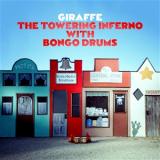
,Giraffe" ist das neue Gemeinschaftsprojekt von Dave Harrington (Darkside), Robert Walter (The Greyboy Allstars), Spencer Zahn und Kosta Galanopoulos (Rio Kosta). Ihr Debütalbum ,The Towering Inferno With Bongo Drums" vereint spacige Psychedelia, jazzinspiriertes Zusammenspiel und freie Improvisation zu einem fließenden, experimentellen Hörerlebnis. Das Album wurde an einem einzigen Tag bei 64 Sound in Los Angeles aufgenommen und fängt vier versierte Musiker ein, die sich in einem instinktiven Groove vereinen.
dovrebbe essere pubblicato su 21.08.2026

The recordings on Volume II were captured in Copenhagen, Denmark on January 18, 2020. Guided as much by human instinct as by musical intention, the ensemble moved through the evening with a shared sensitivity…listening, responding, and trusting the moment as it unfolded. Though Morten McCoy admits to having felt quite ill that evening, nothing in the music suggests restraint. Instead, what remains is a vivid, playful exchange, where McCoy and Johannes Wamberg carry both Part I and Part II as a flowing conversation, speaking through sound rather than words.
Part I begins abruptly, almost throwing the listener back in time to the exact moment the improvisation was born. Jonathan Bremer steps to the forefront, providing a solid, melodic bassline as Kristoffer and Eliel, perfectly in sync, lay down a steady foundation for whichever voice chooses to rise above the rhythm.
This is also one of the few I Am An Instrument recordings to feature two guitarists. Johannes Wamberg leads the way, shaping the harmonic direction, while Steven Jess Borth II adds subtle rhythmic textures through muted palm work, deepening the groove without ever stepping into the foreground.
Part II unfolds with Morten McCoy on his Moog One, delivering a beautiful, expansive solo. Using a carefully chosen patch, the sound pulses through the rhythm, moving with the groove rather than above it, riding the beat like a wave through the ocean.
Shaped by trust, presence, and collective improvisation, Volume II captures a group deeply attuned to one another, allowing intuition and momentum to guide the unfolding form.
——
Volume III was recorded in Copenhagen on March 5, 2020. Little did anyone know that only days later, the world would be placed on pause for years. Captured just before that moment of global stillness, this session carries a heightened sense of presence, a final gathering before silence reshaped everything. Recorded in a space more commonly associated with a club atmosphere, the music draws on a different kind of energy and immediacy. With Eliel Lazo unable to attend, the group invited Victor Dybbroe of Girls In Airports to join on percussion, subtly reshaping the ensemble while preserving its core spirit. Part I opens with Steven Jess Borth II calling out on tenor saxophone, answered by Morten McCoy on Wurlitzer electric piano. The piece gradually unfolds into a meditative groove, patient and expansive, carrying the listener through an eight-minute journey of layered rhythm and restraint.
Part II begins with Jonathan Bremer on stand up bass, slowly joined by the rest of the ensemble as each voice enters with intention. Midway through, an unexpected vocal melody from Borth emerges, drenched in reverb and delay, later reappearing as a melodic line on the tenor saxophone.
Part III is led by Morten McCoy on Wurlitzer electric piano. His signature melodic language sets the direction, guiding the ensemble while leaving ample space for the music to breathe and evolve through collective improvisation. Reprise returns to the closing moments of Part II, its title reflecting its origin. The familiar groove reappears, transformed into a distinctly Jamaican-influenced rhythm, over which Borth delivers a final tenor saxophone solo, bringing the conversation to rest.
Any questions about any of these products feel free to get in touch and we'll help you out!
a a1. Part I [Vol.2]
[b] a2. Part II [Vol.2]
[c] a3. Part I [Vol.3]
[d] b1. Part II [Vol.3]
[e] b2. Part III [Vol.3]
[f] b3. Reprise [Vol.3]
Ordina ora e ordineremo l'articolo per te presso il nostro fornitore.

Double Transparent Marbled LP[35,92 €]
Double Transparent Red LP[35,92 €]
Double Black LP[35,92 €]
Jon Schaffer's Sons of Liberty - Thought Crimes (Volumes 1 & 2) is a bold new mix that fuses the raw essence of the "Brush-fires of the Mind" LP (2009) and the "Spirit of the Times" EP (2011), breathing fresh life into a message that has proven eerily prophetic in an era of escalating world challenges. " Thought Crimes (Volumes 1 & 2) " is out now on all streaming platforms, inviting listeners everywhere, old or new, to discover its urgency. For collectors, a special physical rollout will arrive via The Circle Music on July 4, 2026 , marking the 250th anniversary of the signing of the Declaration of Independence. At its core, Sons of Liberty's music exposed the machinations of a fraudulent financial system and the insidious creep of authoritarianism, serving as a stark warning to humanity. Today, with those shadows cast longer than ever, this music stands as a timeless testament to truth, unfiltered and unapologetic.
What sets Sons of Liberty - Thought Crimes (Volumes 1 & 2) apart is its transcendence of partisan divides. This is not an echo chamber of political agendas; it's a universal wake- up call, championing freedom as the bedrock of peace and prosperity for every person on the planet. In a world fractured by division, Schaffer's lyrics rally for pro-freedom/pro-humanity ideals: anti-authoritarian, non-partisan, and rooted in the unyielding principles of liberty. It's a reminder that true empowerment comes from questioning and resisting systems that promote aggression and erode our shared dignity, fostering unity through principles of liberty, individual sovereignty, and collective resilience. Elevating the original material to new heights, this release features thunderous, newly recorded drums by longtime friend Mark Prator , whose precision and groove has powered classics from Iced Earth ( The Dark Saga , Something Wicked This Way Comes ), Demons & Wizards (Self- Titled Debut), and Jon Schaffer's Purgatory (EP 2018).
Paired with a cutting- edge modern mix by Jim Morris , the result is a sonic powerhouse that has matured like a fine wine - delivering an intensity and honesty that's all too rare in today's pop culture landscape. In an age where ideas can be silenced, this stands as the most censored and cancelled heavy metal music in history. It begs the question: Why? Are thought crimes an inevitable reality in a world that fears unbridled truth? Dive in, reflect, and educate yourself-- because freedom isn't a spectator sport; it is difficult, it requires action, and it's the only path to a better world for all of us
dovrebbe essere pubblicato su 17.07.2026

Double Transparent Blue LP[35,92 €]
Double Transparent Red LP[35,92 €]
Double Black LP[35,92 €]
Jon Schaffer's Sons of Liberty - Thought Crimes (Volumes 1 & 2) is a bold new mix that fuses the raw essence of the "Brush-fires of the Mind" LP (2009) and the "Spirit of the Times" EP (2011), breathing fresh life into a message that has proven eerily prophetic in an era of escalating world challenges. " Thought Crimes (Volumes 1 & 2) " is out now on all streaming platforms, inviting listeners everywhere, old or new, to discover its urgency. For collectors, a special physical rollout will arrive via The Circle Music on July 4, 2026 , marking the 250th anniversary of the signing of the Declaration of Independence. At its core, Sons of Liberty's music exposed the machinations of a fraudulent financial system and the insidious creep of authoritarianism, serving as a stark warning to humanity. Today, with those shadows cast longer than ever, this music stands as a timeless testament to truth, unfiltered and unapologetic.
What sets Sons of Liberty - Thought Crimes (Volumes 1 & 2) apart is its transcendence of partisan divides. This is not an echo chamber of political agendas; it's a universal wake- up call, championing freedom as the bedrock of peace and prosperity for every person on the planet. In a world fractured by division, Schaffer's lyrics rally for pro-freedom/pro-humanity ideals: anti-authoritarian, non-partisan, and rooted in the unyielding principles of liberty. It's a reminder that true empowerment comes from questioning and resisting systems that promote aggression and erode our shared dignity, fostering unity through principles of liberty, individual sovereignty, and collective resilience. Elevating the original material to new heights, this release features thunderous, newly recorded drums by longtime friend Mark Prator , whose precision and groove has powered classics from Iced Earth ( The Dark Saga , Something Wicked This Way Comes ), Demons & Wizards (Self- Titled Debut), and Jon Schaffer's Purgatory (EP 2018).
Paired with a cutting- edge modern mix by Jim Morris , the result is a sonic powerhouse that has matured like a fine wine - delivering an intensity and honesty that's all too rare in today's pop culture landscape. In an age where ideas can be silenced, this stands as the most censored and cancelled heavy metal music in history. It begs the question: Why? Are thought crimes an inevitable reality in a world that fears unbridled truth? Dive in, reflect, and educate yourself-- because freedom isn't a spectator sport; it is difficult, it requires action, and it's the only path to a better world for all of us
dovrebbe essere pubblicato su 17.07.2026

Double Transparent Blue LP[35,92 €]
Double Transparent Marbled LP[35,92 €]
Double Black LP[35,92 €]
Jon Schaffer's Sons of Liberty - Thought Crimes (Volumes 1 & 2) is a bold new mix that fuses the raw essence of the "Brush-fires of the Mind" LP (2009) and the "Spirit of the Times" EP (2011), breathing fresh life into a message that has proven eerily prophetic in an era of escalating world challenges. " Thought Crimes (Volumes 1 & 2) " is out now on all streaming platforms, inviting listeners everywhere, old or new, to discover its urgency. For collectors, a special physical rollout will arrive via The Circle Music on July 4, 2026 , marking the 250th anniversary of the signing of the Declaration of Independence. At its core, Sons of Liberty's music exposed the machinations of a fraudulent financial system and the insidious creep of authoritarianism, serving as a stark warning to humanity. Today, with those shadows cast longer than ever, this music stands as a timeless testament to truth, unfiltered and unapologetic.
What sets Sons of Liberty - Thought Crimes (Volumes 1 & 2) apart is its transcendence of partisan divides. This is not an echo chamber of political agendas; it's a universal wake- up call, championing freedom as the bedrock of peace and prosperity for every person on the planet. In a world fractured by division, Schaffer's lyrics rally for pro-freedom/pro-humanity ideals: anti-authoritarian, non-partisan, and rooted in the unyielding principles of liberty. It's a reminder that true empowerment comes from questioning and resisting systems that promote aggression and erode our shared dignity, fostering unity through principles of liberty, individual sovereignty, and collective resilience. Elevating the original material to new heights, this release features thunderous, newly recorded drums by longtime friend Mark Prator , whose precision and groove has powered classics from Iced Earth ( The Dark Saga , Something Wicked This Way Comes ), Demons & Wizards (Self- Titled Debut), and Jon Schaffer's Purgatory (EP 2018).
Paired with a cutting- edge modern mix by Jim Morris , the result is a sonic powerhouse that has matured like a fine wine - delivering an intensity and honesty that's all too rare in today's pop culture landscape. In an age where ideas can be silenced, this stands as the most censored and cancelled heavy metal music in history. It begs the question: Why? Are thought crimes an inevitable reality in a world that fears unbridled truth? Dive in, reflect, and educate yourself-- because freedom isn't a spectator sport; it is difficult, it requires action, and it's the only path to a better world for all of us
dovrebbe essere pubblicato su 17.07.2026

Double Transparent Blue LP[35,92 €]
Double Transparent Marbled LP[35,92 €]
Double Transparent Red LP[35,92 €]
Jon Schaffer's Sons of Liberty - Thought Crimes (Volumes 1 & 2) is a bold new mix that fuses the raw essence of the "Brush-fires of the Mind" LP (2009) and the "Spirit of the Times" EP (2011), breathing fresh life into a message that has proven eerily prophetic in an era of escalating world challenges. " Thought Crimes (Volumes 1 & 2) " is out now on all streaming platforms, inviting listeners everywhere, old or new, to discover its urgency. For collectors, a special physical rollout will arrive via The Circle Music on July 4, 2026 , marking the 250th anniversary of the signing of the Declaration of Independence. At its core, Sons of Liberty's music exposed the machinations of a fraudulent financial system and the insidious creep of authoritarianism, serving as a stark warning to humanity. Today, with those shadows cast longer than ever, this music stands as a timeless testament to truth, unfiltered and unapologetic.
What sets Sons of Liberty - Thought Crimes (Volumes 1 & 2) apart is its transcendence of partisan divides. This is not an echo chamber of political agendas; it's a universal wake- up call, championing freedom as the bedrock of peace and prosperity for every person on the planet. In a world fractured by division, Schaffer's lyrics rally for pro-freedom/pro-humanity ideals: anti-authoritarian, non-partisan, and rooted in the unyielding principles of liberty. It's a reminder that true empowerment comes from questioning and resisting systems that promote aggression and erode our shared dignity, fostering unity through principles of liberty, individual sovereignty, and collective resilience. Elevating the original material to new heights, this release features thunderous, newly recorded drums by longtime friend Mark Prator , whose precision and groove has powered classics from Iced Earth ( The Dark Saga , Something Wicked This Way Comes ), Demons & Wizards (Self- Titled Debut), and Jon Schaffer's Purgatory (EP 2018).
Paired with a cutting- edge modern mix by Jim Morris , the result is a sonic powerhouse that has matured like a fine wine - delivering an intensity and honesty that's all too rare in today's pop culture landscape. In an age where ideas can be silenced, this stands as the most censored and cancelled heavy metal music in history. It begs the question: Why? Are thought crimes an inevitable reality in a world that fears unbridled truth? Dive in, reflect, and educate yourself-- because freedom isn't a spectator sport; it is difficult, it requires action, and it's the only path to a better world for all of us
dovrebbe essere pubblicato su 17.07.2026
