2025 Repress
The reissue of SOCIAL LOVER's sophomore effort on TUGBOAT EDITIONS, after the previous sell outs of this & "FEEL MY LOVE". This edition gets a slight update with the dub/instrumental version as the B side. The A SIDE is a dubby bubbly cover of EVELYN "CHAMPAGNE" KING classic "LOVE COME DOWN".
Search:social lovers
Social Lovers return to the dance-floor with a stunning white label release of "Lover's Flame / The Light" on Hobo Camp to close out 2018, following up their ltd 7" "Can't Get Enough". "Lover's Flame" is a mixture of street funk and freestyle, evoking classic 80s NYC synth feels, accompanied by Doherty's playful vocals. "The Light" channels soulful garage house feels, and keeps the vibe sensual, spiritual, and heavy. A true dance 12" with an additional 'Instrumental' version of the A side, and 'Keypella' of the B side, DJs are already banging these tracks out on systems worldwide.
Led by head-producer Matty P, and the sultry voice of Megan Doherty, Social Lovers are a collaborative group that sprung up from the desert of Phoenix, Arizona and soon to spread to both coasts. Now with their core members sharing home-bases in both New York City and Los Angeles, their smooth sound is best defined as 'street funk with a splash of class'.
- A1: Is This What You Like - Terra
- A2: The Tribe - The Fred Bloggs Band
- A3: Morning Light - Smythe And Rucker
- A4: Zig Zag - David Chalmers
- A5: High Again - Shades Of Rayne
- B1: Animal Talk - Dana Alberts
- B2: Child Of Nature - The Key Of Creek
- B3: Child Of Earth - Chuck Robinson
- B4: Silvery Waterfalls - Luellen Reese
- B5: The Lost Road - Doria
2026 Repress
A further exercise in musical curation, Child Of Nature is our latest sonic confluence of self-released tracks from the loners, hippies and outsiders of the 70s and early 80s. A collection of privately pressed music, able to breathe and be created free from the constraints of heavy handed commercialism, yielding a pure vision of artistic expression. Child Of Nature features ten songs of brooding soft rock and psychedelic folk steeped in melancholia. Some ache for better times or past lovers, while others seek spiritual fulfilment or social progress.
A compilation to evoke the raw and unobstructed, to summon the occult, to fundamentally conjure a vivid portrait of our untamed natural environment. Recorded on the north coast of California, Luellen Reese’s ethereal “Silvery Waterfalls” drifts and swirls with electric guitar as her unearthly vocals transcend across a seven minute opus, fit for the golden age of labels like 4AD or Dedicated. “The flowers are dancing just for you …”, Reggie Russell croons over glistening Key Of Creek’s title track “Child Of Nature”, evoking a utopian world of natural harmony free from the present day realities of industrial decay.
Tap into your inner primal being, to embrace wholeheartedly, with frivolity and without reserve, your own child of nature.
Wally Badarou is a synth pioneer and musical polymath. But rarely does he sing over his sumptuous tracks. The 6 songs that comprise new record Simple Things finally realise Wally's vision for select backing tracks from his beloved Colors Of Silence.
The tracks were originally developed back in 2001 for the release of the original CD; here, Wally has “simply" added overdubs and vocals to their mastered mixes with some discerning edits. Simply put, Simple Things is another slice of simply stunning Wally Badarou genius.
Simple Things has been decades in the making. Indeed, Wally struggled not only with the idea of singing these wonderful songs himself but singing them in English and writing his own lyrics, while wrestling with the sensational backing tracks, which themselves seemed to have taken on a life of their own.
As Wally explained to us: "In addition to the instrumental artist I have been known as, so far, there has always been a singer who simply was not sure he was, up until now. Even though “Back To Scales Tonight”, my very first album, was, indeed, a song album."
Opener "It Couldn't Be You" embellishes the uptempo groove of soca-funk gem "The Lights Of Kinshasa". As Wally explained to us, it's about “a simple love story somewhere, one rainy night, under the lights of Kinshasa. A woman, a man, online dating, quite usual in our times. Then they meet, almost missing each other." The guide vocal Wally had laid for Colors Of Silence - with an organ sound - seemed striving for words in Linguala, a Congolese language he could not speak. Therefore the decision to do it himself was not an easy one, for it had to be in English to fit his singing. We think it turned out pretty good!
"You Can't Hide Always" vocalises Wally's deep concerns set to the propulsive "Smiles By The Millions": "Populism, ostracism, radicalism, ethics and values all turned upside down worldwide, are they all inevitably exacerbated by our social networks? It could all melt down one day, like a house of cards in the ocean of fake news and false prophecies”. Wally wanted to keep the track as bare as possible but, inevitably, the backing vocals and the synth-brass arrive ultimately to present a welcome 70s flavour, with no snare-drum added.
The bright and breezy "We'll Make It Again" adds vocals to "Where Were We", a tropical, reggae-tinged bounce through the islands. Here's Waly: "Where were we when we last said: "I love you"? Simple words to express something quite common, but never quite simple to deal with. A simple song about the resilience of the broken hearts.” The reggae came from it being conceived when Wally was scoring for “Third World Cop”, a 1999 Jamaican action movie.
"Walk Straight Ahead" provides Wally's gorgeous, contemplative and idiosyncratic vocals to the deep serenity of Colors Of Silence highlight, "Amber Whispers". It's a gliding, divine, mini melodic masterpiece. It'll make you swoon in its extreme beauty. As Wally describes, "it started as just whispers, sweet amber whispers. Then the colour turned darker, as darker skies seemed to fall upon us while the whole world keeps on walking ahead, straight ahead, regardless of the blatant warnings, feeling much too comfortable in conformity. Initially, the verses were to be spoken only. I realised they could be sung all the while, without overshadowing the ethereal atmosphere." Amen.
The serene, celestial "Painting My Life Blue" presents the vocal version of "Days To Wonder". Says Wally, "how does it feel when your second half is gone after decades of riding life together? Past the temporary loss of your bearings, you come to realise you've been blind to the essential, and suddenly you can see...For this most intimate song of mine, I had tried to come up with a melody on top of the existing backing track, long before realising the melody was in the keyboard part already. It just needed to be properly mixed with it."
The profoundly emotional "Just Two Lovers" works up the formerly-too-brief and glorious "Crystal Falls" into a much fuller masterpiece and features acoustic guitar sparkle before fully glistening with some gentle head-nod percussion. Waly explains further: "Dear little green men, please tell me, what is it about us that makes you want to come and visit us so often (contrary to Fermi's assertion)? And here is the reply I believe I heard them sing: "You've got the key you've been searching for: Love”. I reverted to the initial backing track I had made around 1985, which already bore the melody, and which I added acoustic guitars to, before singing it." An astounding closer.
A synth specialist, there can be few artists more under-appreciated given their vast influence than Wally Badarou. His solo work practically defined the sound of the Balearic DJs of the 1980s, and thus the more sophisticated sound of dance culture thereafter. He was one of the Compass Point All Stars (with Sly and Robbie, Barry Reynolds, Mikey Chung and Uziah "Sticky" Thompson), the in-house recording team of Compass Point Studios responsible for a series of albums in the 1980s recorded by Grace Jones, Tom Tom Club, Mick Jagger, Black Uhuru, Gwen Guthrie, Jimmy Cliff and Gregory Isaacs. Badarou's keyboard playing could also be heard on albums by Robert Palmer, Marianne Faithfull, Herbie Hancock, M (Pop Muzik), Talking Heads, Manu Dibango and Miriam Makeba. He also produced Fela Kuti. Phew!
When we asked Wally about the significance of this collection's title, he explained: "These are "Simple things” that everyday’s life seems to build upon. The simplest are the harder to describe, but when satisfactorily described i.e. with simple words, they are the more genuine and authentic to express and share. I’ve immersed myself in other classic song lyrics, something I hardly did before, just to appreciate the genius behind the simple words they were made of, and had a great time studying how powerful they were in expressing complex ideas such as love."
Recording was twofold: first, most of the backing tracks were recorded in 2001, in Wally's studio in Normandy, mostly using hardware synths and Yamaha digital consoles. Then, he fine-tuned the melodies and wrote the lyrics in late 2023, then added some overdubs and sang them all during summer 2024. States Wally, "Digital Performer was and remains the DAW I’ve been using throughout, ever since the 80s."
Wally's sophisticated synth textures and expressive keyboard runs are so full of character, so full of life, that this work of art transcends any easy genre categorisation. Meticulously remastered and cut by both Simon Francis and Cicely Balston respectively, it has been pressed to the highest possibly quality at Record Industry in Holland. Sometimes, the simple things are the most extraordinary.
- Hotel California
- New Kid In Town
- Life In The Fast Lane
- Wasted Time
- Wasted Time (Reprise)
- Victim Of Love
- Pretty Maids All In A Row
- Try And Love Again
- The Last Resort
The moment the instantly recognizable intertwined guitar passage on the title track to the Eagles' Hotel California begins, the record's genius becomes obvious all over again. Ranked the 118th Greatest Album of All Time by Rolling Stone, certified by RIAA as the third best-selling LP in history, and considered the foundation on which the Golden State's mid-‘70s music scene was built, the 1976 landmark is a music staple immune to shifts in trends, eras, and styles. Fearlessly addressing the chaos and consequences of American life, its songs remain strikingly prescient and gain creedence with each passing day.
Mastered from the original analogue master tapes, pressed on MoFi SuperVinyl, and limited to 17,500 numbered copies, Mobile Fidelity's UltraDisc One-Step 180g 45RPM 2LP vinyl box set ensures you will want to permanently check into and never leave this particular Hotel California. Up to the herculean task of standing head and shoulders above all prior reissues, this collectible edition plays with extreme clarity, organic richness, tube-like warmth, massive dynamics, and microscopic levels of detail. You'll be able to practically smell the colitas and feel the breeze in your hair. Songs come across with an epic sweep and feature immersive, front-to-back soundstages that allow the music unprecedented air, roominess, and separation. As for the noise floor? It's basically as invisible as the spirits that waft in the corridors of the unforgettable title song.
Aesthetically, the premium packaging and presentation of the UD1S Hotel California pressing befit its esteemed status. Housed in a deluxe box, it features gorgeous foil-stamped jackets and faithful-to-the-original graphics that illuminate the splendour of the recording. From every angle, this UD1S reissue exists as a curatorial artefact meant to be preserved, touched, and examined. It is made for discerning listeners that prize sound quality and production, and who desire to fully immerse themselves in the art – and everything involved with the album, from the renowned cover art to the meticulous finishes.
Indeed, the opportunity to zero in on all the particulars of the 26-million-selling Eagles record dubbed "a legitimate rock masterpiece" by vaunted Los Angeles Times scribe Robert Hilburn has never been better. A global phenomenon that marked the band debut of guitarist-singer Joe Walsh, Hotel California continues to resonate and connect with listeners of all generations taken by its narrative depth, stark directness, picturesque melodies, daring majesty, and ardent emotionalism. Adorned with a breathtaking exterior photograph of the Beverly Hills Hotel that serves as the simultaneously haunting and alluring cover art, and rounded out by a rear-cover shot of the Lido Hotel lobby that reinforces a notion that teeters between permanence and transience, Hotel California is brilliantly tied to a specific place that functions as a universally understood metaphor for the American Dream.
Confronting the darker undercurrents and oft-ignored constructs attached to that romantic notion, the record's songs revolve around a host of shared themes: excess, mobility, stability, illusion, fame, destruction, and idealism included. Notably, Hotel California appeared at a crucial junction in American history: During the country's bicentennial and amid escalating controversies related to the Vietnam War, energy crisis, and governmental corruption. That the Eagles manage to channel such cultural, social, and economical matters into a cohesive, stately, big-picture statement is alone a stupendous feat. That the album's reach, boldness, vitality, accessibility, and understated intensity have never waned make it a marvel.
Reflecting on Hotel California 40 years after its original release, and indirectly explaining its enduring appeal and increasing relevance, singer-songwriter Don Henley confirmed the record pertains to the "loss of innocence, the cost of naiveté...the difficulties of balancing loving relationships and work, trying to square the conflicting relationship between business and art; the corruption in politics, the fading away of the Sixties dream of ‘peace, love and understanding.'"
It can be argued that Henley and company squarely hit on and drove home those ideas in the surreal title track, chart-topping "Life in the Fast Lane," and grand "The Last Resort" alone. But that would miss the forest for the trees. Experienced as an unbroken whole, complete with the pristinely shot imagery and physical grooves, Hotel California unfolds like a geography-conscious saga by James Michener and plays like colour-saturated movie shot on 70mm film by Martin Scorsese. It's about our collective and individual decisions – and the shape of our past, present, and future. And, just like that conjured by our imaginations, Hotel California continues to take on a life of its own.
More About Mobile Fidelity UltraDisc One-Step and Why It Is Superior
Mobile Fidelity Sound Lab's UltraDisc One-Step (UD1S) technique bypasses generational losses inherent to the traditional three-step plating process by removing two steps: the production of father and mother plates, which are created to yield numerous stampers from each lacquer that is cut. For UD1S plating, stampers (also called "converts") are made directly from the lacquers. Since each lacquer yields only one stamper, multiple lacquers need to be cut. Mobile Fidelity's UD1S process produces a final LP with the lowest-possible noise floor. The removal of two steps of the plating process also reveals musical details and dynamics that would otherwise be lost due to the standard multi-step process. With UD1S, every aspect of vinyl production is optimized to produce the best-sounding vinyl album available today.
MoFi SuperVinyl
Developed by NEOTECH and RTI, MoFi SuperVinyl is the most exacting-to-specification vinyl compound ever devised. Analogue lovers have never seen (or heard) anything like it. Extraordinarily expensive and extremely painstaking to produce, the special proprietary compound addresses two specific areas of improvement: noise floor reduction and enhanced groove definition. The vinyl composition features a new carbonless dye (hold the disc up to the light and see) and produces the world's quietest surfaces. This high-definition formula also allows for the creation of cleaner grooves that are indistinguishable from the original lacquer. MoFi SuperVinyl provides the closest approximation of what the label's engineers hear in the mastering lab.
Talla 2XLC is celebrating his forthcoming birthday with the annual
spectacular Technoclub event along with faithful friends such as DJ
Dag, Woody van Eyden, Andreas_Kraemer, Sven Wittekind, Ulli
Brenner ,LXD and Bluefire amongst others. While during his career
has faced many obstacles and unfortunate situations, he manage to
stay ahead of his game by gaining the respect and admiration of his
fans and DJ colleagues. His career is a bright example of an artist
that fight against all odds and work ultra-hard to be always at the top
of download shops charts with his single releases and at the top of
the physical sales charts with his long lasting Mixed CD compilation
Technoclub that in 2023 celebrates its 25th year anniversary. Well
known for his ability to provide brilliant remakes of huge trance
classics on his label Technoclub Retro while on That’s Trance service
original solo tracks or collaborations with brilliant singers such as
Christina Novelli and fellow DJs like Ronski Speed or Ralphie B. Last
year he established his psy-trance label Dreamscape with remixes
by his psy-trance alter ego Zyrus 7. Talla 2XLC is not just a pioneer
in techno and trance music scene but also a frequently booked DJ
performing on the most iconic festivals and club events such as Nature One, Mayday, Airbeat One and many more as he knows excellently to entertain his crowds with memorable DJ sets . Talla 2XLC embraces social media with active accounts in the most of them with hundreds of followers.
During the pandemic lockdowns he conquered twitch with
his very successful live DJ sets receiving donations and support from
his global fan base. What is more Talla 2XLC is taking part in wide
variety of documentaries narrating his contribution in the development and growth of electronic music culture. He is co-founder of MOMEM - Museum Of Modern Electronic Music in Frankfurt that any electronic music follower should visit to learn about the history of our culture.
For his 2023 Birthday he has a huge surprise to all his vinyl lovers.
He is going to release his BDay Bash EP that will include two massive
tracks already released digitally under his techno moniker RRAW on
Technoclub Pure. The two massive mainstage techno friendly anthems Wonderful Dayz and The Promised Land. Both tracks have been fans favorites and have been road-tested extensively by Talla 2XLC and many other well-known artists worldwide. Banging mainstage techno basslines, slamming kicks, haunting dark moody atmospheres, acid touches and strong euphoric breakdowns followed by massive hands in the air dark climaxes, turn both tracks into must have for any vinyl lover who wishes to embrace Talla 2XLC techno moniker RRAW. Wish Talla 2XLC happy birthday by purchasing his Bday Bash EP with hi latest techno alias RRAW out on ZYX Music.
Reissue of Elizio De Buzios's "Tamanquiro". Remastered and pressed on 45 RPM!
Sitting a good 90-minute drive away from Rio de Janeiro’s crowded beaches and packed tourist hot-spots, Campo Grande is not a neighbourhood that attracts travellers from around the World. Traditionally it is home to the city’s lower middle-class, whose aspirations of moving up the social ladder were played out in a suburb that has always been solidly working-class.
Campo Grande is home to Elizio De Buzios, a Brazilian musician who started playing music in the late 1970s and early 1980s. De Buzios began as a drummer, before learning to play guitar and starting to compose and sing his own music. When he turned 18, De Buzios joined a local band formed by some of his friends and other like-minded local musicians: Sol da Terra. The band mostly played samba in neighbourhood bars and small venues around Camp Grande, but De Buzios was interested in more than just samba. While he naturally admired great samba composers such as Cartola and Beth Carvalho, his musical pass went far beyond Brazil’s national music. He also loved MPB and bossa-nova and at home he listed to Joäo Bosco, Milton Nascimento, Luis Melodia, Tom Jobim, and many bossa-nova singers.
In 1980 De Buzios was noticed by a local representative of international major label Polygram, who gave him the opportunity to record two songs. He was excited, so started searching for inspiration for the songs he would eventually lay down. He found that inspiration close to home while passing a neighbourhood shop which made and sold clogs. After noticing a display of then fashionable Portuguese clogs outside the store, De Buzios popped inside to talk to the owner. It turned out that he was a tamanqueiro – as clog-makers are traditionally called in his native Portugal – and was as passionate about music as he was about the footwear he made. Thus inspired, De Buzios returned home to work more on the lyrics and music.
The next day, he headed into the studio to record the song, with Vale Ribeiro, who later went on to produce tracks for Marcos Valle, behind the desk. With Ribeiro’s assistance, De Buzios managed to record two songs in one day: ‘Tamanqueiro’ and ‘Sou Um Louco’, a ballad with English lyrics blended into the mostly Portuguese text. From the start, it was clear that ‘Tamanqueiro’ would be the single’s A-side. Incredibly catchy and funky, with some subtle disco elements, the song remained distinctively Brazilian thanks to the use of the cuíca. Listening back all these years on, De Buzios’ lyrics seem almost spontaneous, carry the track forward, and make it almost impossible not to sing along. Its infectiousness and funkiness made it an instant hit with the first few people to hear it.
When it was released, responses to the song were enthusiastic, even if it never became the Brazil-wide smash it should have been. It resonated well in the local clubs and on the radio, but unfortunately the marketing was handled by an inexperienced Polygram employee who failed to adequately promote the track. As a result, the record sank without trace and De Buzios’ dreams of stardom evaporated. Having just started a family, he realized he could not live off the uncertainty of being a musician. Instead, he got a job at city hall as a civil servant, a role he continued until his retirement a few years ago. ‘Tamanqueiro’ and ‘Sou Um Louco’ remain the only two songs he ever recorded.
In the early 2000s, with the rise of diggers’ culture, ‘Tamanqueiro’ slowly surfaced again. It became a sought after, hard to find seven-inch single, finding its way onto the airwaves once more and into the ears of a new generation of listeners. Some started appreciating the song so much that it was referred to as the “best-Jorge-Ben-song-Jorge-Ben-never-recorded”. And they are right: ‘Tamanqueiro’ does have that Jorge Ben-straight-forwardness. It’s a completely honest song that’s almost impossible not to fall in love with. Thanks to this remastered reissue on Rush Hour, De Buzios may now get the props his sole record so richly deserves.
Now for the good news: De Buzios is still singing in local bars and clubs in and around Campo Grande. He is surprised, but also incredibly proud, that the record he had almost forgotten about is appreciated so much by a group of music lovers he didn’t even know existed. But above all, he is happy that more than 40 years after the recording session, the record lives on – not only on this re-release, but also in his weekend sets in the bars of Campo Grande.
- A1: Monsters
- A2: Alien Point Of View
- A3: Cardinal Newman
- A4: Fat Cow
- A5: Nothing To Hide
- A6: People Like You
- A7: Regress For You
- A8: Christian Lovers
- A9: Exorcism
- B1: Bathroom Sluts
- B2: Pie On A Ledge
- B3: Push, Push, Push
- B4: Alice's Song
- B5: Praise The Lord
- B6: My Mommy's Chest
- B7: Slave
- B8: Poets (Early Version)
- B9: Pretty Vacant
- C1: Miscarriage
- C2: Scandinavian Dilemma
- C3: Poets
- C4: Confession
- C5: She Works For Safeway
- C6: Bible Stories
- D2: Green Tile Floor
- D3: Bathroom Sluts (Demo)
- D4: Waterpiss
- D5: Baby Face
- D6: Berlin Red Head
- C7: Dyptheria
- D1: Castration
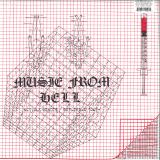
Nervous Gender’s legendary synthpunk LP Music From Hell burbles up from infernal depths to resurface on Dark Entries. Confrontational, unhinged, and unabashedly queer, Music from Hell is an unholy grail for fans of the strangest underbellies of post-punk, minimal synth, and early industrial music, and is presented here newly remastered and on expanded double LP.
Nervous Gender (de)formed in LA in 1978 at the hands of Phranc, Gerardo Velaquez, Edward Stapleton, and Michael Ochoa. Phranc, the androgynous embodiment of the band’s name, left in 1980. Following her departure, a wide cast of LA freaks would find themselves drawn into the band’s orbit, including Alice Bag of the Bags, Paul Roessler of the Screamers, the Germs’ Don Bolles, and an 8-year old drummer named Sven Pfeiffer. In 1980, Nervous Gender appeared on the seminal Live at Target compilation alongside Factrix, uns, and Flipper. With the band’s notoriety cemented, Music from Hell followed in 1981 on Subterranean Records (as no LA label would touch this material).
Side A, dubbed “Martyr Complex”, presents a more punk-forward sound with live drum salvos and slabs of aggressive synth. These twitchy, unsettling shockers ooze with the kind of snotty misanthropy that will endear them to fans of the Screamers or Crass.
Side B, known as “Beelzebub Youth”, is a live performance the band labeled "an electronic bruto-canto dissertation on the banality of spiritual transcendence." Mutant melodies cede way to synthesized clangs, whirs, bleeps, manipulated tapes, and howls of despair.
In addition to all the material from the original LP, we’re treated to a full disc of the band’s demos, the material from the Live at Target compilation, and early live recordings. Included are unrecognizable covers of Carly Simon and Lou Reed, and the Sex Pistols that are so despairingly skewed they fall into the void. This reissue of Music From Hell includes a 36 page lyric booklet, foldout poster, and gatefold sleeve with photos, flyers, and news-clippings designed by Eloise Leigh. Tackling taboo issues like sexual kinks, mental illness, drug use, and childhood molestation, Music From Hell is still surprising – even shocking - over 40 years after the album’s release. Nervous Gender stand as one of the most genuinely anti-establishment outfits in underground music, a colossal fuck you to social norms from religious strictures to gender essentialism.
- Maxambe
- Lekomfere
- Xikweletib
- Chibuku
- Mhamazala
- Ntwanano
Born at the turning point between apartheid and democratic South Africa, the Xitsonga bubblegum-disco duo Chibuku embodies the energy of a time of change,as Nelson Mandela was released from prison and kwaito began to emerge. Althoughthey did not achieve the fame of figures such as Paul Ndlovu or Penny Penny, their only album Maxambe (1992) is now considered a precious time capsule, a raw disco treasure rediscovered by lovers of forgotten music. Behind the project is Dr Joe Shirimani, a guitarist, singer, composer and producer of genius from Tzaneen and Soshanguve, recognised as one of the major architects of South African disco and bubblegum. Long overlooked, Maxambe nevertheless bears witnessto an era and a social perspective: migration ("Lekomfere"), debt and economics ("Xikweleti"), and family relationships ("Mhamazala"). The music is festive in appearance, but deeply rooted in the reality of its time. Released on Tusk/Diamond Music, an iconic label of the 1980s and 1990s bought out by Gallo Record Company, Chibuku is now emerging as a diamond rediscovered from the archives of South African disco. Its name, borrowed from a millet beer popular in several southern African countries, sums up the spirit of the group: popular, sincere and deeply rooted in local culture.
Based on a Motown classic that also served as the debut song for a world-famous kids group, the long-awaited ending theme is finally getting a single release!
From the soundtrack of director Shinichiro Ueda's One Cut of the Dead, the indie film that became a social phenomenon upon its 2018 release, grossing over 3.1 billion yen, this gem of a track is now available on vinyl. While retaining the melody of the original song written by Berry Gordy Jr., Kensun Lovers (Nobuhiro Suzuki and Shoma Ito) added Japanese lyrics and a new arrangement, with actress Mayumi Yamamoto on vocals. The theme song "Keep Rolling" quickly won the support of discerning international listeners, reaching No. 1 on Spotify's "Japan Viral Chart" the week after the film's release.
On the B-side, two versions of the film's main theme "zombeat" are included, featuring hard-hitting guitar work brimming with respect for the original Zombie series.
The Tribulizations are a Brighton UK-based reggae vocal harmony duo living the rockers life style! They pay homage to UK style lovers’ rock and spiritual roots reggae. Music with a message! Fronted by Frankie Dread & Tara Gold.
‘Melody Babylon’ features tracks like “Freedom Fighter,” “Fade Away,” and “One Step Forward,” each reflecting Frankie Dread and Tara Gold’s roots in reggae and commitment to addressing both personal and societal themes through their music.
When asked, Frankie replied to World A Reggae: “Melody Babylon expresses our concern with negative messages in modern day music. The album portrays conscious lyrics with positive vibes.”
Motel d'amour - A Lost Electro-Funk Gem from the NDW Era Resurfaces
When we first collaborated with Collage member Markus Kammann on the EP project "Mit den Puppen tanzen" at the end of last year, we never imagined what would follow: Kammann approached us with a completely unreleased full-length album by his former band. Upon receiving the first three preview tracks, we were floored. One of them was "Nachtcafé" - a track that kicks off with a funky bassline layered over the punchy rhythm of a Roland TR-808. Add shimmering synths and Katrin A. Kunze's sharp, distinctive vocals, and we instantly knew we were hearing something special.
For a label dedicated to rediscovering lost treasures, this was exactly what we'd been searching for. The next two tracks - "Rendezvous" and "Casanova" - were just as compelling. When Kammann sent us the full album, we realized we were holding an electro-funk grail from the late golden days of the German Neue Deutsche Welle (NDW). We were listening to "Motel d'amour".
"Motel d'amour" is a concept album, offering a sharp, vibrant perspective from a confident, intelligent, and radiant young woman eager to experience nightlife, love, and music. Kunze's lyrics paint vivid scenes of flirtation ("Nachtcafé", "Rendezvous"), encounters with men ("Casanova"), the pulse of nightlife ("Die Nacht ist noch jung"), love ("Rotes Licht für rote Liebe"), one-night stands ("Motel d'amour"), and more. Rarely has a German album from that era captured emotional nuance and social dynamics so insightfully. Without veering into the overly personal, Kunze's direct, daring lyrical style was groundbreaking at the time - and remains refreshingly bold today.
While German listeners will fully appreciate the lyrical depth, the music speaks volumes on its own. Kunze's words are masterfully complemented by the production of Markus Kammann and Jürgen Grah. As heard on the in-demand "Mit den Puppen tanzen", their creativity seemed boundless. Each track is tightly composed, catchy, and full of character. While many German bands at the time leaned into rock, Kammann drew from the deep grooves of Earth, Wind & Fire, The Isley Brothers, Brothers Johnson, The Commodores, and the electro-futurism of Afrika Bambaataa's "Planet Rock" and "Looking for the Perfect Beat". The result: tracks with unmistakable electro-funk flair, powered by the classic 808 drum sound.
Though primarily rooted in funk and electro, the album retains flashes of NDW aesthetics - "Wir haben getanzt heut' Nacht" being a prime example. The instrumentation is a dream list for vintage gear lovers: Yamaha keyboards, Roland Juno-60, vocoder, Micromoog, Hohner D6 Clavinet, Fender bass, and a Telecaster guitar all feature prominently.
Recorded in 1985 at the high-profile Delta Studio by Richard Rossbach, the album attracted interest from Polydor. However, the label proposed using the compositions for a solo project with singer Inga Humpe (of Neonbabies), who was already signed to their roster. This would have required replacing Kunze as the vocalist, an idea the group firmly rejected. As a result, "Motel d'amour" was shelved, and Kammann, Grah, and Kunze moved on to form Cold End.
The album cover features a rare archival photo of Katrin A. Kunze - rediscovered by Kammann and now finally seeing the light of day, 40 years later.
We believe Motel d'amour deserves recognition alongside cult German classics like P!OFF?, 1. Futurologischer Congress' "Wer spricht?", Ami Marie's "Verrückt nach Glück", the funkier cuts of Cosa Rosa, or Piet Klocke's groove classic "Heute ist nicht sonst". It's a record that fits into adventurous DJ sets but also rewards a full, start-to-finish listen.
A note on audio quality: Sadly, the original master tapes were lost. The tracks were restored from a vintage TDK cassette. Thanks to modern digital tools, we were able to remaster them to a high standard - but in some songs light distortions remain. We appreciate your understanding and hope you enjoy this lost and undiscovered gem.
Motel d'amour - A Lost Electro-Funk Gem from the NDW Era Resurfaces
When we first collaborated with Collage member Markus Kammann on the EP project "Mit den Puppen tanzen" at the end of last year, we never imagined what would follow: Kammann approached us with a completely unreleased full-length album by his former band. Upon receiving the first three preview tracks, we were floored. One of them was "Nachtcafé" - a track that kicks off with a funky bassline layered over the punchy rhythm of a Roland TR-808. Add shimmering synths and Katrin A. Kunze's sharp, distinctive vocals, and we instantly knew we were hearing something special.
For a label dedicated to rediscovering lost treasures, this was exactly what we'd been searching for. The next two tracks - "Rendezvous" and "Casanova" - were just as compelling. When Kammann sent us the full album, we realized we were holding an electro-funk grail from the late golden days of the German Neue Deutsche Welle (NDW). We were listening to "Motel d'amour".
"Motel d'amour" is a concept album, offering a sharp, vibrant perspective from a confident, intelligent, and radiant young woman eager to experience nightlife, love, and music. Kunze's lyrics paint vivid scenes of flirtation ("Nachtcafé", "Rendezvous"), encounters with men ("Casanova"), the pulse of nightlife ("Die Nacht ist noch jung"), love ("Rotes Licht für rote Liebe"), one-night stands ("Motel d'amour"), and more. Rarely has a German album from that era captured emotional nuance and social dynamics so insightfully. Without veering into the overly personal, Kunze's direct, daring lyrical style was groundbreaking at the time - and remains refreshingly bold today.
While German listeners will fully appreciate the lyrical depth, the music speaks volumes on its own. Kunze's words are masterfully complemented by the production of Markus Kammann and Jürgen Grah. As heard on the in-demand "Mit den Puppen tanzen", their creativity seemed boundless. Each track is tightly composed, catchy, and full of character. While many German bands at the time leaned into rock, Kammann drew from the deep grooves of Earth, Wind & Fire, The Isley Brothers, Brothers Johnson, The Commodores, and the electro-futurism of Afrika Bambaataa's "Planet Rock" and "Looking for the Perfect Beat". The result: tracks with unmistakable electro-funk flair, powered by the classic 808 drum sound.
Though primarily rooted in funk and electro, the album retains flashes of NDW aesthetics - "Wir haben getanzt heut' Nacht" being a prime example. The instrumentation is a dream list for vintage gear lovers: Yamaha keyboards, Roland Juno-60, vocoder, Micromoog, Hohner D6 Clavinet, Fender bass, and a Telecaster guitar all feature prominently.
Recorded in 1985 at the high-profile Delta Studio by Richard Rossbach, the album attracted interest from Polydor. However, the label proposed using the compositions for a solo project with singer Inga Humpe (of Neonbabies), who was already signed to their roster. This would have required replacing Kunze as the vocalist, an idea the group firmly rejected. As a result, "Motel d'amour" was shelved, and Kammann, Grah, and Kunze moved on to form Cold End.
The album cover features a rare archival photo of Katrin A. Kunze - rediscovered by Kammann and now finally seeing the light of day, 40 years later.
We believe Motel d'amour deserves recognition alongside cult German classics like P!OFF?, 1. Futurologischer Congress' "Wer spricht?", Ami Marie's "Verrückt nach Glück", the funkier cuts of Cosa Rosa, or Piet Klocke's groove classic "Heute ist nicht sonst". It's a record that fits into adventurous DJ sets but also rewards a full, start-to-finish listen.
A note on audio quality: Sadly, the original master tapes were lost. The tracks were restored from a vintage TDK cassette. Thanks to modern digital tools, we were able to remaster them to a high standard - but in some songs light distortions remain. We appreciate your understanding and hope you enjoy this lost and undiscovered gem.
Mysticisms is delighted to present the music from one of the inspirations for the whole Dubplate series, the lesser known, but admired Digi Dub label. Hailing from the late 80s / early 90s South-East London squat scene, the music of label head Lee Berwick and cohorts was unlike any other at the time. Not simply a retake on digital dub emanating from Jamaica, Digi Dub mixed the heritage of reggae with the alternative-culture of Britain to forge a unique version.
Inspired by punk and the early electronics of the likes of A Certain Ratio, Cabaret Voltaire and Throbbing Gristle, Berwick came to music production later, after first quitting a career as a computer programmer to travel through Asia, returning after several years just as electronic “computer music” was gaining a fundamental new lease in 1988. A regular at Jah Shaka gigs over the burgeoning rave scene of the time, he steadily built a studio centered around the Akai Sampler.
Based, at the time, in South-East London, it’s lack of underground “Tube” lines and challenging transport links, helped create its own social and music eco-system. Squatted houses, shops, clubs and parties all thrived around the triangle of Bermondsey, New Cross and Camberwell. After meeting Kenny Diezel and the Mutoid Waste Company, he started to formulate his “dubby electronic sound” by literally play live to thousands of wide-eyed Ravers at Mutoid Waste parties.
Recording as Launch DAT, the first tracks with Kenny formed, soon joined by Harry and Nick, the trio progressed from building a sound system to L.S. Diezel being created. Friends since their teens Harry and Nik progressed from playing in bands, jamming Sly and Robbie dubs to moving from the countryside of the Home Counties to urban Peckham and into the orbit of Mutoid Waste and the squat and party scene.
Progressing to include Atari S1000HD, Akai S3200XL, Alesis Sequencer and Roland 303, the sound expanded but the raw spirit remained. The early recordings with Berwick, in the beautiful “Lovers style” that is For The Love Of and its stripped-back instrumental “Stepper” dub accompaniment in Bad Boys, as well as an early take on take on the merging of digital dub and hip hop in Skunk Funk, all capture the essence of that London period.
However, the inclusion of the seminal Suicidal Dub, that appeared as the title to their debut album and was recorded on a bus a few years later after Mutoid had relocated to Rimini, Italy, offers a glimpse to the future. Heralded as a proto-dubstep classic it has long been sought after and its inclusion makes for the essential.
Mutate The Mystery.
- A1: Searchin' Ft. Jem Cooke
- A2: Falling Down - Totally Enormous Estinct Dinosaurs & A-Trak
- B1: Y Don't U
- C1: Alive Ft. Bloom Twins
- C2: R U Dreaming? Ft. Mathew Jonson
- D1: So Low Ft. Zoe Kypri
- D2: La Hija De Juan Simon Ft. Mëstiza
- E1: Warrior Dance Ft. Jojo Abot
- F1: Sunrise Generation Ft. Fink
- F2: Force Ft. Jojo Abot
Audio alchemist Damian Lazarus continues to redefine the boundaries of electronic music with his fifth studio album, ‘Magickal’.
Renowned for his unparalleled ability to craft transformative sonic journeys, Damian Lazarus is a master of rhythm, melody, and vibration—a true pioneer among his generation’s visionary artists. Damian’s broad depth of experience encompasses a variety of disciplines: tastemaker, selector, label owner, A&R and a Grammy-nominated artist in his own right - each informed by his unique ear for sound. He is chief wizard of the hugely influential and culture-defining Crosstown Rebels label, a globally renowned DJ with a penchant for exotic outdoor locations and a highly regarded recording artist with four albums and a plethora of solo cuts, collaborations and remixes in his sprawling discography.
With his fifth album, ‘Magickal’, Damian steps into his next evolutionary phase, combining his newly found sobriety with a more mature outlook while still pushing boundaries and creating unforgettable moments. At the root of it all is the magical power of togetherness and human connection that only music can facilitate. Driven by this core ethos, Damian continues on his mission to share his heartfelt music, taking the dance floor into unexplored realms of experience, facilitating moments of transcendence, bliss and pure, unadulterated magic.
Damian Lazarus, the avant-garde architect of spiritually nourishing sounds, is joined by a stellar lineup of collaborators on his latest excursion. It’s imaginative and mystical, rhythmically captivating and daring in its own way, as is typical of Damian’s approach. Taking consideration of his past, the album references his previous work to create a tapestry of compositions that tap into the energy of key moments from his discography. Drawing on his existing catalogue creates cohesive through lines and thematically serves as a continuation of previous stories. November’s single, ‘Sunrise Generation’, for instance, works as a companion to ‘Vermillion’, which was recorded by Damian with his band The Ancient Moons and vocalist Moses Sumney back in 2015. ‘Sunrise Generation’, featuring the beautiful vocals of Fink, was Damian’s first major release since his Grammy-nominated 2021 collaboration ‘Don’t Be Afraid’ with Diplo and Jungle, and continues to take inspiration from global gatherings at solstice and those moments of collective awe at sunrise.
Indeed, the album’s themes of mental elevation and psychedelic sonic journeys are evident throughout. Damian channels this energy through tracks like the soulful ‘So Low’, featuring the incredible Zoe Kypri, and the luminous ‘Searchin’, with Jem Cooke, whose collaboration with Damian dates back to ‘Flourish’ (2020) and lead single ‘Into The Sun’. Uplifting is the operative word here, as Damian aims straight for our hearts and inner selves, stripping away the layers to take us on a trip inwards, and out into the ether all at once. There’s a clear nod to Damian’s appreciation of amapiano when he teams up with Ghanaian interdisciplinary healer Jojo Abot on ‘Warrior Dance’. Old friend and inspirer Mathew Jonson brings his virtuoso touch to ‘Are You Dreaming?’, while TEED and A-Trak form an awesome alliance for ‘Falling Down’ with its heartrending vocals. ‘Alive’ features the Bloom Twins, and also additional production from acclaimed producer Mark Ralph, who incidentally worked on Damian’s debut album ‘Smoke The Monster Out’ in 2009 and forms another throughline to the past. ‘Alive’ blends pop sensibilities and song structure with Damian’s inimitable sound - and could become one of Damian’s biggest moments to date. ‘La Hija De Juan Simon’ delves into the Latin energy synonymous with vibrancy and self-expression as Damian teams up with acclaimed Spanish flamenco-influenced duo Mëstiza. On a solo tip, he rolls out with the eight-minute-plus soulful funk flex ‘Why Don’t U’.
In a suitably aligned instance of serendipity, the arrival of ‘Magickal’ comes at a pivotal period in Damian’s life, just as it has been with previous album concepts. Albums made and released during big shifts in his life speak to the correlation between growth, personal evolution, creativity, catharsis and sharing that process musically. The last album ‘Flourish’, for instance, was recorded and released in the space of a few months during the first summer of the global pandemic. As a result, there’s a kind of vulnerability in the music, a subtle story that’s being told with emotional touchpoints that will be relevant to anyone listening. The universal human experience and spectrum of emotions are things almost everyone can relate to. With the enhanced clarity of his sobriety, Damian’s compositions embody the uplifting nature of simply being alive, connected and unified in our love for music and one another.
Day Zero, Damian’s iconic annual festival, is intrinsically linked to ‘Magickal’. It’s the setting for his imagination when producing the music, it’s the launchpad for each year’s kaleidoscopic adventures around the world, and this year’s edition will be the backdrop to the release of ‘Magickal’. As the pinnacle of Damian’s annual experiences, Day Zero marks a vital milestone for his artistry, an extension of his inner realm, carefully curated and created for his global family of lovers and dancers to revel in the awe-inspiring beauty of Mother Nature. Central to the ethos of Day Zero is its sustainability practices and deep consideration for the locality within which it is held. Connections with local elders embolden its depth, cultivating a strongly aligned purpose with the ritual, customs and energy of the land and its people.
‘Magickal’ will be released in the same week as Day Zero, tying the two projects together in a neat dovetail. 12 years since it started, Day Zero continues to play a significant role in the music Damian makes, curates and plays. For him, it’s the epitome of his vision: a stunning natural setting, the very best party people from around the world, an unparalleled lineup of friends and family, high production values, eco-centric policies and music from another dimension. With these interdimensional transmissions, Damian channels his inner alchemist, which, in turn, permeates into the vibrational framework of ‘Magickal’.
Never one to adhere to convention, Damian has opted for a disruptive album release. ‘Magickal’ is to be kept under wraps and then announced and released on Crosstown Rebels on 8th January 2025, bypassing the modern trend of prolonged single drops and ‘tombstone’ album releases. ‘Magickal’ is the embodiment of Damian and his intentional, against-the-grain approach and reinforces the album as a complete artistic statement, offering listeners the full cohesive experience from the very beginning. This is a return to the album as the pinnacle moment and not the afterthought. Singles, edits and remixes will follow the ‘Magickal album’ release, and, of course, there will be a world tour to promote the album (including Glastonbury and Coachella) and a chance to present the album in exciting, innovative and unique ways.
Forever dreaming, a sincere student of magic, new and old, social sorcerer, lover of nature and master of musical wizardry, Damian Lazarus is a potent force. With ‘Magickal’, he reaffirms his place as one of electronic music’s most influential figures, taking listeners on a profound journey into sound, spirit, and connection.
Franco Rosso’s epic cinematic opus of reggae social commentary, Babylon, landed in November of 1980. Moving through the film’s opening frames of grey dreary London, two spars – Blue and Ronnie – run with unrestrained anticipation to link with their Ital Lion Sound System brethren. Simultaneously the rest of the crew does what sound crews have done from time: Load them boxes up in the van and trod with vigor to the dance.
But that bassline…The soundtrack notes that carry the celluloid movements of the film’s opening scenes…That bassline…Upside down…Jazzy…Dubby…A bassline like no other reggae bassline the Ital Counselor has ever heard. The hook that got me deep into UK roots music from the band that is my number one inspiration.
If there is bassline that represents the core imperative of Ital Counselor Records, it would have to be Aswad’s Hey Jah Children. It seemed therefore only fitting to bring its absolutely resplendent glory to a new generation. Lovers of sounds and blues, it is time for the dread ital lion sound to once again rise to meet the day. So it is with the deepest of gratitude and respect to the legacy of Aswad (RIP Drummie Zeb) and Franco Rosso, that we present a deeper than deep next cut…Christened here…the Ital Lion Serenade.
In line with all IC releases, we have enlisted top tier session musicians and studio men. Long time IC collaborator, Inyaki BDF, is at the center of the action as the musical maestro. Hopping on the BDF sonic lorry are Aratz Diez on Trombone and James Zugasti on the dub mixes. This crew bring the original composition up-to-date with a heady dubwise weight. Syndrums ricochet while Inyaki’s bassline rumbles teetering as it does somewhere between a modern dubstep warble and its core roots-wise influence in Tony Gad’s original playing.
Diez’s trombone playing comes across like an x-ray of the Aswad Horn Section and keeps intact the jazzy abstraction of the original. In turn, Inyaki goes full 70s synth on the psychedelic dubwise of the B-side’s Operation Swamp 81. UK history buffs better you know the reference in that title and its thematic echoing significance from the UK depicted in Rosso’s film and carried on in remembrance on this here hotter than hot 12”.
A warning: the Zugasti dub cuts are devasting to speaker boxes.
The impact, influence, and importance of Run-D.M.C.'s self-titled debut – the album that invented hardcore hip-hop and bridged rap, rock, and funk in then-unparalleled ways – cannot be measured. The first full-length record released by Profile Records, the 1984 set permanently changed the sound of music, broadcast streetwise wisdom to every corner of the country, and made the notion of a one-man band a distinct reality. Bolstered by an incendiary blend of staccato deliveries, stark beats, aggressive exchanges, evocative hooks, and socially conscious messages, Run-D.M.C. still hits listeners in the jaw with the same intensity it did nearly 40 years ago when it could be heard booming from ghetto blasters carried around city blocks nationwide.
Sourced from the original master tapes, pressed on MoFi SuperVinyl, and strictly limited to 3,000 numbered copies, Mobile Fidelity's 180g SuperVinyl 33RPM LP is the definitive-sounding version of the groundbreaking work cited by Rolling Stone as the 378th Greatest Album of All Time. This reissue also represents the first time this gold-certified effort has been presented in audiophile quality. Benefitting from the ultra-low noise floor, superb groove definition, and dead-quiet surfaces of SuperVinyl, Run-D.M.C. now plays with a clarity, immediacy, punchiness, and directness worthy of the artistry, urgency, and intellect of the trio's material.
The brilliance of Russell Simmons and Larry Smith's production comes into view as if the music is being broadcast on a giant system in a small club — only more focused, lively, and unlimited. Free of dynamic constraints and fatiguing harshness, this LP invites you to turn up the volume and experience the raw, rough, invigorating songs that changed the look, sound, and feel of hip-hop overnight. Think the trio’s sparse framework of drum machines, tag-team rhymes, keyboard accents, and turntable scratches is stuck in the mid-80s? Spin MoFi’s SuperVinyl LP and gain new appreciation for the music, messages, and production on display on Run-D.M.C.
Recorded in the wake of two successful and pioneering singles, both included on the album, Run-D.M.C. effectively took a sheet of coarse-grit sandpaper to the polish, sheen, and linear presentation of all the hip-hop that preceded it. Stripped to bare-bones foundations, the songs grab your attention and shake you by the collar with a combination of industrial-leaning rhythms, staggered deliveries, dance drama, and hard, minimalist percussion. Then there are the lyrics.
The LP broadcasts a smart mix of boots-on-the-ground reports, uplifting advice, and then-nascent b-boy culture. In one fell swoop, its narratives and music rendered the scene’s proclivity toward glamor and softness passé. Run-D.M.C.’s tough, cool-minded fashion sense showed the trio walked its talk and gave fans — particularly those living in long-ignored urban areas — heroes which with they could identify. Kangol hats, black jeans, leather jackets, Adidas sneaks, and gold chains were the new currency.
In every regard, Run-D.M.C. signifies the birth of modern hip-hop. Never more obviously than on the groundbreaking “Rock Box,” where rap and rock were first fused. As the first hip-hop video to receive regular rotation on MTV, the track eviscerated racial and social boundaries, awakened musicians and listeners to new possibilities, and redefined both popular music and, ultimately, popular culture. As the Roots’ Questlove has stated, it “ knocked down many obstacles, enabling hip-hop to become the new gospel."
Such teaching includes the real-world scripture of “Hard Times,” utopian hopefulness of “Wake Up,” and observational truths of “It’s Like That.” Released as the group’s debut single well before its eponymous album, the latter tune established themes and outlooks Run-D.M.C. would embrace during its career. Namely, the keen awareness of various prejudices, economic ills, and disruptive violence as well as the knowledge that education, self-motivation, and hard work were the ways to escape disadvantages and disillusionment.
Inspired and inspirational, the song reflects the spirit and shrewdness that courses throughout Run-D.M.C. That includes a detailed account of the trio’s not-so secret weapon (“Jam-Master Jay”), purpose statement (“Hollis Crew (Krush-Groove 2)”), and a revolutionary hybrid autobiographical narrative-dis track (“Sucker M.C.’s (Krush-Groove 1)”) widely regarded as one of the best hip-hop songs ever created. The same can be said for every moment on Run-D.M.C.
MoFi SuperVinyl
Developed by NEOTECH and RTI, MoFi SuperVinyl is the most exacting-to-specification vinyl compound ever devised. Analog lovers have never seen (or heard) anything like it. Extraordinarily expensive and extremely painstaking to produce, the special proprietary compound addresses two specific areas of improvement: noise floor reduction and enhanced groove definition. The vinyl composition features a new carbonless dye (hold the disc up to the light and see) and produces the world's quietest surfaces. This high-definition formula also allows for the creation of cleaner grooves that are virtually indistinguishable from the original lacquer. MoFi SuperVinyl provides the closest approximation of what the label's engineers hear in the mastering lab.
Eleventh album consisting of eleven songs, Pink Air, by Elysian Fields, cult New York band led by Jennifer Charles and Oren Bloedow, was released in September 2018. Recorded in the mountains around Woodstock, Pink Air was finalized in Thomas Bartlett's studio (The National, Sufjan Stevens) in Manhattan. A single rock wave unites the tracks with its cavernous reverberation, as if shrouded in the darkness of a night club or pinned to the shadow of a modern nightmare. Pink Air is a post-apocalyptic rock'n roll getaway. The album tackles themes as varied as the ecological threat, the regime of a potential narcissist dictator, white supremacy, censorship, the erasure of history, the social drama of families ... as well as meditations on time, friendship, loss, death. Despite the biting tone, the words never sound too heavy, lightened by many touches of humor. Jennifer Charles's vocals are at their highest, infusing each song with its legendary languid charisma, in a lyrical breath whose spellbinding power has remained intact. By portraying the landscape of the present day with her precise, often caustic lyrics, Jennifer sets her special veil on the intimate, the spiritual, brushing her characters, friends and lovers, in a pure novelist style. All against a background of fear of our time, of its social and political drifts. With Elysian Fields, the angelic singer and her acolytes have always been carried by the highest currents of the sky. For Pink Air, they fold their wings, land on the ground, and roam the scorched lands of America, animated by the rock'n roll spirit of the animal. The feathers turned into so many spiky hairs
Sect have a lot on their minds. With the release of their brand new single, New Low and the promise of Plagues Upon Plagues, the follow up full-length to 2019’s Blood of the Beasts, Sect explore the intersection of issues which have cascaded over us for the last five years, the “plagues” of the title referring to the literal pandemic, and the metaphorical plague of the political state and the rise of fascism.
Comprised of an international cast of stellar musicians, who cut their teeth in a formative moment of political, cynical, antagonistic extremes, Sect unites Scott Crouse (Earth Crisis, Tooth & Claw) & Jimmy Chang (Undying, Catharsis) - guitars, Steve Hart (Day of Suffering, Mania For Conquest) - bass, Andy Hurley (Fall Out Boy, Racetraitor) - drums and Chris Colohan (Cursed, Unwell) - vocals. They released No Cure For Death in 2017 and Blood of the Beasts in 2019.
Plagues Upon Plagues opens with the bereft waves of “No Uncertain Terms”, a side of the band we haven’t seen before. Vocalist Chris Colohan describes this album as “a funeral rather than a trial”, the activism of previous releases fading to sorrow and grief.
Lead single New Low follows with the advent of marching drums, a funereal procession for the world we hoped to build. There’s frantic horror on the album too, with the track “Drowning in Sorrows” taking a look at the ways in which we numb ourselves as a society. “#ForeverHome” is a bitterly angry track about how people used animals for both narcissistic virtue signalling and one-way comfort in the pandemic, and abandoned them en masse just as selfishly when social life came back. Speaking to their straight-edge principles and how that continues to feed into their songwriting, Chris says, “the only kind of straight edge songs I’m interested in writing are dynamic ones that address human realities that you don’t have to be straight edge to engage with.”
On Plagues Upon Plagues, Sect pierce through the veil of complacency, forcing listeners to confront uncomfortable truths about the fragility of our world. The band wields their sonic arsenal like a prophetic warning and with raw vocals and uncompromising lyrics, they confront the harsh realities of existence in these tumultuous times. As society teeters on the brink of chaos, Sect's cold hard statement resonates with an urgency that cannot be ignored.
R'n'Cs is the contraction of "Rem and the Courbarians". made up of Rem (drums - Vox) and the Courbarians brothers, Saïd (Guitar - Vox) and Gui (Bass Guitar - Vox). they were formed in the Orléans region at the dawn of the second millennium, combining Punk / Hard Core with overdriven Garage Punk'n'Roll. giving birth to a Rock'n'Roll speed all their own! The years go by. but the cadence remains the same. they are and remain definitively addicted to feedback and BPMs. Their Rock'n'Roll remains fast and furious. You'd think the teats they feasted on from an early age were loaded with nitroglycerine! And these R'n'R aficionados never tire of it! Class, delicacy and refinement have nothing to do with it. even if some music lovers will enjoy it! Their music isn't a poem, it's an ode to sex, drugs and rock'n'roll. all at breakneck speed! Hang on to the handlebars, because no one escapes this infernal spiral that grabs you and sends you straight to the devil's entrails! They became a national benchmark for speed rock'n'roll. and were repeatedly asked to play with bands such as Nashville Pussy, Supersuckers, Discharge, GBH, Unseen, Guitar Wolf, New Bomb Turks, The Cellophane Suckers, The Butchers, Burning Heads, Etc.. Over the years, R'n'Cs has always been backed, produced and supported by labels such as 442ème Rue, Beast Records, Guerilla Vinyl and of course Trauma Social. Their 7th Opus "Flytrap in the Murderhouse" released on Beast Records / Fly House Records (Trauma Social for the CD) saw the light of day in Spring 2024 and still remains in the tradition of Zeke, Peter Pan Speedrock, Mötorhead. This incendiary bomb will not differ from previous productions. Still in sweat, flames and Rock'n'Roll!!!! Hell Yeah!
- 1: Freda Payne - Band Of Gold (Single Mix)
- 2: Chairmen Of The Board - Give Me Just A Little More Time
- 3: Flaming Ember - Westbound #9
- 4: Silent Majority - Frightened Girl
- 5: Chairmen Of The Board - You've Got Me Dangling On A String
- 6: Honey Cone - Girls It Ain't Easy
- 7: Chairmen Of The Board - Pay To The Piper
- 1: Chairmen Of The Board - Everything's Tuesday
- 2: Freda Payne - Unhooked Generation
- 3: Glass House - Crumbs Off The Table
- 4: Chairmen Of The Board - All We Need Is Understanding
- 5: Freda Payne - Deeper And Deeper
- 6: 100 Proof Aged In Soul - Somebody's Been Sleeping
- 7: Honey Cone - Want Ads
- 1: Freda Payne - Bring The Boys Home
- 2: Barrino Brothers - I Shall Not Be Moved
- 3: 8Th Day - You've Got To Crawl (Before You Walk)
- 4: Lucifer - Don't You (Think The Times A-Comin')
- 5: Honey Cone - Sunday Morning People
- 6: Glass House – I Surrendered
- 1: Freda Payne - You Brought The Joy
- 2: General Johnson - I'm In Love Darling
- 3: Chairmen Of The Board - Working On A Building Of Love
- 4: Honey Cone - Stick Up
- 7: 8Th Day – Eeny-Meeny-Miny Mo
- 1: Holland-Dozier Featuring Lamont Dozier - Why Can't We Be Lovers
- 2: Chairmen Of The Board - Elmo James
- 3: Silent Majority - Something New About You
- 4: Barrino Brothers - Try It, You'll Like It
- 5: Danny Woods - Let Me Ride
- 6: Glass House - Thanks I Needed That
- 7: Laura Lee - Crumbs Off The Table
- 1: Warlock - You've Been My Rock
- 2: Laura Lee - Woman's Love Rights
- 3: Holland-Dozier Ft Brain Holland - Don't Leave Me Starvin’ For Your Love
- 4: The Politicians - Free Your Mind
- 5: Harrison Kennedy - Sunday Morning People
- 6: Satisfaction Unlimited - Let's Change The Subject
- 7: 100 Proof Aged In Soul - Nothing Sweeter Than Love
- 1: Eloise Laws - Love Factory
- 2: Freda Payne - We've Got To Find A Way Back To Love
- 3: Brian Holland - I'm So Glad Pt.1
- 4: Honey Cone - If I Can’t Fly
- 5: Tyrone Edwards - Can't Get Enough Of You
- 6: Chairmen Of The Board - Skin I'm In
- 7: New York Port Authority - I Got It Pt. 1
- 1: Chairmen Of The Board - Finders Keepers
- 2: Hi-Lites - That’s Love
- 3: Freda Payne - Two Wrongs Don't Make A Right
- 4: Holland-Dozier Featuring Lamont Dozier - New Breed Kinda Woman
- 5: 8Th Day - She's Not Just Another Woman (Single Mix)
- 5: Eloise Laws - Put A Little Love Into It (When You Do It)
- 6: Melvin Davis - You Made Me Over
- 7: Honey Cone Featuring Sharon Cash – Somebody Is Always Messing Up A Good Thing
- 6: Flaming Ember - Gotta Get Away
Holland, Dozier and Holland are arguably the greatest songwriters ever. More prolific than Lennon and McCartney, they shaped “the Sound of Young America” and propelled the Motown sound in the mid-1960s into a creative stratosphere unmatched by any other independent music label. Their trademark catchy teenage love songs were delivered energetically by previously unknown Detroit groups like The Supremes, the Four Tops, Martha & the Vandellas & Marvin Gaye. Although synonymous with Berry Gordy’s Motown, it was their departure from Motown after a stand-off strike in 1967 and a brutal legal battle that led them to run their own group of labels, Invictus, Hot Wax and Music Merchant. This compilation is a definitive look at this period in history, exploring how H-D-H, under a new guise ‘The Creative Corporation’, drove the next generation of soul music in a myriad of different ways, towards funk, underground disco and jazz. Featuring 55 tracks, this collection documents HDH’s creativity and growth over this seminal 8 year period. During this time the trio developed new artists to rival Motown’s success such as Chairman Of The Board, Freda Payne, Honey Cone, Glass House, Flaming Ember, 8th Day, Laura Lee & Eloise Laws. The collection is complete with a detailed depiction of this period in history by award winning author Stuart Cosgrove who wrote the Soul Trilogy, a series of books on soul music and social change - Detroit 67: the Year That Changed Soul, Memphis 68: The Tragedy of Southern Soul which won the Penderyn Prize, as Music Book of the Year in 2018, and Harlem 69: the Future of Soul. Stuart’s notes detail the relationship with Motown in the final days, the immediate fall out after the trio left Motown and the creation of the new labels Hot Wax, Invictus & Music Merchant
Marry Waterson – an essential part of the fabric of folk history in England – and Adrian Crowley– one of Ireland’s most acclaimed talents – collaborate for the first time on ‘Cuckoo Storm,’ a distinctive and powerfully lyrical album of 11 original songs produced with Jim Barr (Portishead).
The ‘Cuckoo Storm’ might never have been, were it not for a social media post Crowley wrote on a wintery late-night walk in a quiet neighbourhood of Dublin during lockdown. Struck by Waterson’s previous album ‘Death Had Quicker Wings Than Love’ (co-written with David A Jaycock), he wanted to mark the moment and pressed ‘send’ into the ether with no way of knowing what would follow. Drawn to his voice and seeing a kindred spirit in his poetic lyrics, Waterson was touched by his message and responded by asking if he would be interested in working together. His answer was a resounding ‘yes.’
‘Cuckoo Storm’ is a deeply compelling album. A serendipitous collaboration that has resulted in a collection of 11 beautifully crafted songs, sung by two voices that are a powerful match. Waterson’s brilliantly distinctive voice is underpinned by Crowley’s rich baritone and together it’s an intoxicating mix.
Joining Marry Waterson (vocals) and Adrian Crowley (vocals, piano, electric guitar, mellotron, harmonium, music box clarinet, marxophone, synth) on Cuckoo Storm are Jim Barr (Portishead) bass, lap-steel guitar;Pete Judge (Get The Blessing) trumpet, flugelhorn; Jake McMurchie (Get The Blessing) sax; James Gow, cello; Seán Mac Erlaine bass clarinet; Lisa Dowdall viola d’amore and Rob Pemberton on drums.
Marry Waterson – an essential part of the fabric of folk history in England – and Adrian Crowley– one of Ireland’s most acclaimed talents – collaborate for the first time on ‘Cuckoo Storm,’ a distinctive and powerfully lyrical album of 11 original songs produced with Jim Barr (Portishead).
The ‘Cuckoo Storm’ might never have been, were it not for a social media post Crowley wrote on a wintery late-night walk in a quiet neighbourhood of Dublin during lockdown. Struck by Waterson’s previous album ‘Death Had Quicker Wings Than Love’ (co-written with David A Jaycock), he wanted to mark the moment and pressed ‘send’ into the ether with no way of knowing what would follow. Drawn to his voice and seeing a kindred spirit in his poetic lyrics, Waterson was touched by his message and responded by asking if he would be interested in working together. His answer was a resounding ‘yes.’
‘Cuckoo Storm’ is a deeply compelling album. A serendipitous collaboration that has resulted in a collection of 11 beautifully crafted songs, sung by two voices that are a powerful match. Waterson’s brilliantly distinctive voice is underpinned by Crowley’s rich baritone and together it’s an intoxicating mix.
Joining Marry Waterson (vocals) and Adrian Crowley (vocals, piano, electric guitar, mellotron, harmonium, music box clarinet, marxophone, synth) on Cuckoo Storm are Jim Barr (Portishead) bass, lap-steel guitar;Pete Judge (Get The Blessing) trumpet, flugelhorn; Jake McMurchie (Get The Blessing) sax; James Gow, cello; Seán Mac Erlaine bass clarinet; Lisa Dowdall viola d’amore and Rob Pemberton on drums.
Bella Brown & the Jealous Lovers Unveil "Soul Clap" LP: A Fusion of Retro Soul/Funk and Modern Grooves
Los Angeles-based retro soul/funk sensation Bella Brown & the Jealous Lovers are set to ignite the music scene with their highly anticipated LP, "Soul Clap." Born from the creative genius of Grammy Award-winning vocalist/songwriter Carol Hatchett, Bella Brown emerges as a diva with a fiery stage presence, drawing inspiration from the likes of Tina Turner and Sharon Jones, and channeling the empowered female leads of 70s Blaxploitation films. Led by producer/bassist/songwriter Daniel Pearson, The Jealous Lovers assemble an impressive ensemble of A-list musicians, boasting pedigrees that include names like Mick Jagger, Elton John, Whitney Houston, Prince, and Stevie Wonder. This musical collective is on a relentless quest to redefine the boundaries of music, infusing soul and funk with elements of jazz, rock, and Afro-Caribbean influences.
The essence of "Soul Clap" is derived from the cultural phenomena it is named after—a shared and improvised rhythm-making by a collective. The LP, spanning 40 minutes of pure musical bliss, invites the audience to immerse themselves in the groove and discover their individual truths in the music.
The title track, "Soul Clap," and the infectious "Living Proof" serve as funky dance bangers, echoing the spirit of Bohannan and The Tramps. These tracks, punctuated with jazzy improvisations and soulful horn arrangements, are simple yet joyful expressions of shared humanity and self-love.
"Coming For You" is Bella's audacious response to the soul/funk classic Apache, boldly announcing her and The Jealous Lovers' arrival on the modern soul landscape. "I Found You" takes a northern soul love song approach, reminiscent of Gloria Jones with a touch of modern influence, giving it a distinct Amy Winehouse feel.
Bella Brown seamlessly weaves social commentary into her art. "Bang Bang Bang," an uptempo, funky Motown groove, cleverly uses Curtis Mayfield's sense of sarcasm to reflect on American gun culture. "Lady Time" takes a driving afrobeat groove, employing brassy horns and reggae-like echoes to address the issue of homelessness.
However, the album is not without its lighthearted moments. "Fast As Lightning" celebrates a cleaner future by imagining Jimi Hendrix joining Ike and Tina Turner's band to create a classic Chuck Berry car song. "There Is Love" blends horns, strings, and vocals reminiscent of The Stylistics over a Chi-Lites style rhythm section, to create a lush message of support to those among us that may find the world a bit overwhelming at moments. Finally, "What Will You Leave Behind," is a revamped version of the group's sold-out vinyl 45 release. This track serves as a powerful call to action for a better future, delivered over a straight-up Motown groove with a funky Sly Stone finish.
Bella Brown & the Jealous Lovers have crafted an album that transcends genres, embracing the roots of soul and funk while pushing musical boundaries.
"Soul Clap" is a celebration of individual truths, shared experiences, and the timeless power of music.
Rated 5/5 in UK Music Republic Magazine
- Trying To Catch A Fly
- La Grabuge (Pop Theme)
- Agent No. 1
- Opetanie Five
- Saved From Oblivion
- Tajemnica Enigmy
- W Instyucie
- W Pustiny I W Puszczy
- The Dziekanka Student's Hostel (Part Ii)
- Landscapes
- Losy (Mid-Beat Theme)
- Third Part Of The Night Czolownica
- Diabel
- La Grabuge 2 (Orch Pop Theme)
- Rosa Rosa (With Arp Life)
- Bossa Nova (Feat Ewa Wanat)
- The Dziekanka Student's Hostel (Part I)
- Lapanka
- La Grabuge 3 (Orchestral Theme)
- Losy 2 (Mid-Guitar Theme)
- Trying To Catch A Fly (Reprise)
- Wszystko Na Sprzedaz Taniec
Twenty-two rare and unreleased vintage tracks from the secret vaults of one of the most enigmatic composers in 60s/70s/80s European cinema. Originally recorded in the best studios in Poland, Italy and France for experimental film, political allegories, lost television shows, sound libraries and radio – these tracks have been hidden behind the Iron Curtain on lost master tapes and film reels until now! »Secret Enigma«, the first ever dedicated anthology of this great composer’s work, is now back in print.
Originally released exactly 30 years ag In artistic cinema Andrzej Korzyński’s unique experiments with jazz, pop, rock, orchestral and electronic music make his name synonymous with the most praised (Andrzej Wajda) and the most provocative (Andrzej Żuławski) Polish filmmakers (counting many more in between). As an early patron of the Polish New Wave and a key exponent of the development of conceptual Polish pop music his expansive portfolio has remained commercially unreleased and untravelled (like many of the original socialist era Polish made films) and has yet to find its deserved place next to the work of Ennio Morricone, François de Roubaix and John Barry. Now enhanced by a renewed interest in vintage art house film and a subculture of open minded music collectors many Easter European artists, such as Krzysztof Komeda (Poland), Zdeněk Liška (Czechoslovakia) and now Andrzej Korzynski,have finally begun to earn their place alongside their Central European peers.
For lovers of film music and experimental pop this debut anthology and appraisal of Andrzej Korzyński.
- A1: Humanity – Cedric Myton
- A2: Tonight – Keith &Tex
- A3: Baltimore – Winston Mcanuff & Johnny Osbourne
- B1: Down The Street – Keith &Tex
- B2: Truth&Right – Johnny Osbourne
- B3: Fire Burn – Kiddus I
- B4: Touch Me – Steve Newland
- C1: Africa - Derajah
- C2: Days Chasing Days – Cedric Myton
- C3: Stop That Train – Keith &Tex
- D1: Sun Is Setting In The Sea – Winston Mcanuff
- D2: Come Away Jah Jahchildren - Kush Mcanuff
- D3: Groovy Situation – Keith Rowe
Red Vinyl[36,35 €]
Often dubbed reggae's answer to the Buena Vista Social Club, the notorious Jamaican collective prove that they are still on top of their game with a new album, which journalist David Katz already declaring it was "their best one yet".
In addition to the usual cast of Inna de Yard legends, this new album features the pristine vocals of '70s icon Johnny Osbourne and '60s memorable duo Keith & Tex. Thirteen songs of pure emotions, exceptional musicality and authenticity gathered on a riveting album which promises to be a firm favourite amongst reggae lovers and general music fans alike.
- A1: Humanity – Cedric Myton
- A2: Tonight – Keith &Tex
- A3: Baltimore – Winston Mcanuff & Johnny Osbourne
- B1: Down The Street – Keith &Tex
- B2: Truth&Right – Johnny Osbourne
- B3: Fire Burn – Kiddus I
- B4: Touch Me – Steve Newland
- C1: Africa - Derajah
- C2: Days Chasing Days – Cedric Myton
- C3: Stop That Train – Keith &Tex
- D1: Sun Is Setting In The Sea – Winston Mcanuff
- D2: Come Away Jah Jahchildren - Kush Mcanuff
- D3: Groovy Situation – Keith Rowe
Black Vinyl[36,35 €]
Often dubbed reggae's answer to the Buena Vista Social Club, the notorious Jamaican collective prove that they are still on top of their game with a new album, which journalist David Katz already declaring it was "their best one yet".
In addition to the usual cast of Inna de Yard legends, this new album features the pristine vocals of '70s icon Johnny Osbourne and '60s memorable duo Keith & Tex. Thirteen songs of pure emotions, exceptional musicality and authenticity gathered on a riveting album which promises to be a firm favourite amongst reggae lovers and general music fans alike.
Released for the first time in 1983 on the UK label Vista Sound, »Fight Against Corruption« sees Campbell backed by most of The Aggrovators musicians (Sly & Robbie, Earl Chinna Smith, Jackie Mittoo, Winston Wright). The album was produced by Bunny Lee and Campbell itself, who – here - clearly skims some social criticism , but also does not disdain some more lovers tunes.
For fans this is the perfect genesis of a globally acclaimed guitarist and songwriter. A blend of youthful enthusiasm and innocence that never quite resurfaced again in his work, especially as he developed his jazz-folk fusion and became known for both immense skill on the guitar and his activism in support of social causes. Fans know this album as Bruce Cockburn's happy-go-lucky years, before the weight of his success encouraged him to use his songwriting for a purpose, never again having this much whimsy in the studio. The opening number, "Going to the Country," evokes the era's hippie back- to- the- earth movement, and as all good things come back around again, is just as fresh in today's enviro-movements. His hit song "Musical Friends" remains a fan favorite to this day.
Bruce Cockburn has written more than 400 songs on 35 albums over a career spanning 50 years, of which 23 have received gold or platinum certification. He has sold more than nine-million copies worldwide, is a member of the Canadian Songwriter Hall of Fame, and is the winner of 13 Juno Awards from more than 30 nominations. His world-wide hits include "Wondering Where The Lions Are",
"Lovers In a Dangerous Time", "If A Tree Falls" and "If I Had A Rocket Launcher".
'Breakfast in New Orleans Dinner in Timbuktu' is Bruce Cockburn's 1999
album written to encourage his fans to look forward to the new century,
while learning from the past
It contains a travelogue in the album's lyrics, both to familiar places of home and
family as well as social imperatives from visits to developing countries. Through
it all is Cockburn's reflections on the dynamics between men and women and
spiritual mysticism. Musically the album features the vocals of three women who
appear throughout the album. Jonell Mosser sings on two songs, including the hit
single "Last Night of the World"; Margo Timmins of Cowboy Junkies on the sultry
"Mango" and a cover of the Fats Domino nugget "Blueberry Hill", and most
significantly for the album's consistency, Lucinda Williams appears on four tracks.
Her standout track is "Isn't That What Friends Are For", a tender song of friendship
is made more poignant by Williams' ability to convey deep emotion.
Bruce Cockburn has written more than 400 songs on 35 albums over a career
spanning 50 years, of which 23 have received gold or platinum certification. He
has sold more than nine-million copies worldwide, is a member of the Canadian
Songwriter Hall of Fame, and is the winner of 13 Juno Awards from more than 30
nominations. His world-wide hits include "Wondering Where The Lions Are",
"Lovers In a Dangerous Time", "If A Tree Falls" and "If I Had A Rocket Launcher".
LTD edition 300 copies pressed.
Comes in a stunning Picture sleeve
imagine a band that is Sharon Jones meets James Brown while putting a modern twist on 70s soul and funk music.
Whether self composed original tracks or classic covers, Bella Brown & the Jealous Lovers capture an era boldly envisioned!
So settle in and get to know us. Check out our music, join our mailing list to stay current on Bella's adventures and get discounts on merchandise, peruse our Social Media sites to gage Bella's current level of "influencer" status, find us on your favorite Streaming Service, and maybe throw some spare change in the Tip Jar to keep new music coming!
All this and more below! Enjoy!
Fronted by the wonderful Carol Hatchett- She is known as one of Bette Midler's backup Singer/Dancers, the infamous "Harlettes" and has appeared in Bette's Emmy Award-winning "Diva Las Vegas" HBO Special, "The Showgirl Must Go On" HBO Special and numerous music tours worldwide . Carol is also the backing singer for Nick Waterhouse and tours with them regularly.
Hello Young Lovers is the 20th studio album by Sparks and was originally released on 6th February 2005. The album was the most commercially popular Sparks album since the 1970s.
Hello Young Lovers has been newly remastered for this LP reissue, which will be released on heavyweight vinyl.
This album will be launched alongside a comprehensive Marketing campaign, including brand new assets, as well as archival material from the time of the original launch. We have access to the Sparks socials, which we will utilise for boosted posts, ads and organic posts. The release will also be launched alongside a PR campaign, which should secure coverage across digital and print media.
Limited to 200 copies!! hand-numbered
Back with his second release on DEMO TEST, Roy Vision explores the different layers of an original, raw and multidisciplinary house music.
“4” represents 4 variation styles that the producer fell for many years ago. The selected tracks were produced between 2017 and 2019, with dance in his sight, as demonstrated by the success of the track “La Danse Groove” in the eyes of House Dance lovers.
"Nina’s Talk" give off strong and mastered rhythmics; the energy of the tracks sends us directly to New Jersey of the 90’s. “Feelings” stays geographically close since it crawls in underground New York, where jazz and house music met.
“LL Tribute” is a spiritual connection between Chicago and NYC. It’s a hidden tribute to one of the main characters of the underground New York scene, between The Loft and Paradise Garage, where all social and cultural background were blending, dreaming of a passionate freedom.
Joe Tatton, keyboard player with UK/US funk/soul jazz kings The New Mastersounds, releases this new 7 inch single in March 2022 and this time there is a lovely double A-side 7" physical vinyl option. Two tracks that showcase Joe's skills as a pianist and vocalist and confirm his talent for writing quality original compositions.
"Timeline" is Joe's spotlight on today's social media obsessed society delivered in the style of his musical hero Mose Allison. The latter was the legendary Mississippi born/New York based jazz/blues musician and singer whose wry and intelligent lyrics married to amazing original music shone a light on society and the world from the mid-1950s until his death in 2015. Mose was a huge influence on musicians like Georgie Fame, Van Morrison and Ben Sidran and was and still is one of Joe Tatton's favourite musicians of all time. This song is the title track for Joe's debut solo album due for release later this year on Rodina Music.
"Stomp" is a slow bluesy instrumental funk burner that has a New Orleans swagger about it and features Joe's grand piano solo followed by JTQ band member Gareth Lockrane cutting loose on the flute. If you like music by Allen Toussaint, Ramsay Lewis and Herbie Mann, you'll be feeling this one.
Joe Tatton has been a member of The New Mastersounds now for 16 years now and has recorded over a dozen albums and many singles with them playing organ, piano and keyboard. Annually, he tours 8-9 months a year with the band, mainly in the USA but also across Europe and Japan too. Prior to joining The New Mastersounds, Joe held down the keyboard role with UK jazz-funk kings The Haggis Horns appearing on their first two albums "Hot Damn!" and "Keep On Movin". He's also featured on piano/keyboards on the worldwide hit single "Put Your Records On" by Corinne Bailey Rae.
Over the years he has played live sets with Maceo Parker and Fred Wesley as well as Art Neville, George Porter Jr and Zigaboo Modeliste of The Meters. He's always maintained his own trio under his own name as a side project, releasing singles and EPs via ATA Records (UK) and Color Red Music (USA).
A few years ago, he needed to find the time and place to record them. So in 2020, between New Mastersounds gigs, he managed to book a few days at a studio near Nashville USA, "The Rockhouse", run by Grammy winning engineer Kevin Mckendree. He hooked up with a couple of Nashville session musicians, Steve Mackie (double bass - longtime Dolly Parton bassist) and Kenneth Blevins (drums), and put down all his original songs and also a cover of Mose Allison's "Ever since the world ended", the first single released last year
Now comes the second double A-side single and a further taste of what's in store from Joe and the band later this year when the "Timeline" album drops later in the year. However this time, there's a lovely little black vinyl offering for all the record lovers out there. Just a small first pressing which will no doubt sell out very quickly so people need to jump on it super fast. Once they're gone, they're gone.
"Time line / Stomp" double A-Side single by the Joe Tatton Trio. Released worldwide on Rodina Music - March 31st March 31st 2022.
The long awaited follow up to Osaka's Hibushibire 'Freak Out Orgasm!' debut album from 2017 is almost upon us ...
Who are Hibushibire ?
821 (Hani) on bass
Ryu Matsumoto on drums
Changchang on guitar and vocals
It would be fair to say Hibushibire’s 2017 debut album ‘Freak Out Orgasm!’ went down well with fans of psych-rock (call it what you will). So far it’s had three vinyl pressings, two cassette pressings and a CD run back in Japan. It garnered quite a few influential underground (if not mainstream) reviews and seemed to sell through on word of mouth alone - which in these times seems to be the way things are going: thriving social media groups sharing their love of recent purchases and fellow vinyl lovers going out and scooping them up without the need to buy a magazine or read an online review to make their mind up. My favourite review of ‘Freak Out Orgasm!’ came from UK based music blog Dayz Of Purple And Orange as I think he nailed it perfectly...
“Fuck me! I think I've died and gone to psychedelic heaven! If anyone had asked me what I would really want from a freak out, heavy-as-fuck psych band I would have to say I would want the sheer guitar pyrotechnics of Acid Mothers Temple, the hard-as-nails scuzziness of The Heads, the lead heaviness of a fucked-up Blue Cheer and the instrumental dexterity of Hendrix on speed. Guess what, that band exists and they are called HIBUSHIBIRE!"
That, to me, said it all. Nail hit hard.
But let's get onto 'Turn On, Tune In, Freak Out!'
Once again the album is produced by Makoto Kawabata (Acid Mothers Temple, Mainliner) and for me it's the next logical step in the bands sonic development. As with its predecessor, side one consists of three tracks, "Ecstasy Highwaystar / Blow! Blow! Blow! / Overdose, Pussycat! More! More!", (they do like an exclamation mark). Some of these titles will be familiar if you've followed the band's live shows in recent times, and it's pretty much a guitar to the front, full gonzo-style hard-rocking psychedelic freak out from the first blast of Changchang's guitar panning from left to right before the main riff kicks it all off.
Again, as with their debut, side two comprises of just one epic length track. 'Rollercoaster Of The Universe' clocks in at seventeen minutes and is, in my humble opinion, the sound of the band moving onto the next level during its journey. It's a shudderingly beautiful piece, with many hypnotic twists and turns. I can't wait to hear how they play this live.
The band did initially attempt to produce this album by themselves, but got 'brain fever' in the studio and called their old friend Makoto to come down and help them finish it off. As he had no preparation in advance, he knew nothing about how the recording was going in the studio, and moreover there was little time left for adjustments to be made. But his technique of mixing was, as always, both mighty and almost destructive.
Bella Union announce the release of Piroshka’s stunning second album,
‘Love Drips And Gathers’. The album builds on the acclaim of the band’s
2018 debut LP ‘Brickbat’ and the reputations of former members of Lush,
Moose, Elastica and Modern English.
Piroshka emerged in 2018, four individuals with distinct musical identities but
also overlapping histories - a combination that might have unsettled, or even
overwhelmed, some bands. But in their case, the bond only got stronger.
After ‘Brickbat’ explored social and political divisions by way of what MOJO
described as “Forceful, driving garage songs and dream-pop epics,” ‘Love
Drips And Gathers’ follows a more introspective line - the ties that bind us, as
lovers, parents, children, friends - to a suitably subtler, more ethereal sound,
whilst still revelling in energy and drama.
“If ‘Brickbat’ was our Britpop album, then ‘Love Drips And Gathers’ is
shoegaze!” reckons vocalist/guitarist Miki Berenyi, formerly of Lush, a band
that effortlessly bridged the two genres like no other. “It wasn’t intentional; we
just wanted a different focus. I’ve always seen debut albums as capturing a
band’s first moments, when you really have momentum, and then the second
album is the chance for a more thoughtful approach.”
Bassist Mick Conroy (Modern English) agrees. “‘Brickbat’ was a classic first
album; noisy and raucous. On ‘Love Drips And Gathers’, we’ve calmed down
and explored sounds, and space.”
The way ‘Love Drips And Gathers’ changes shape and dynamic is less a
reprise of Nineties Brit indie than a transformation into a more shivery, Euromantic version with glistening electronic filigrees. The opening ‘Hastings’ sets
the tone. Luminous drops of guitar underpin Miki’s becalmed vocal before
drums, bass and a Mellotron add pace while the decorative coda features
their old pal Terry Edwards on flugelhorn.
‘Love Drips And Gathers’ - named after a line in a Dylan Thomas poem - was
inspired by love, family, belonging, memory. Miki and Moose split the eight
lyrics, with some poignant overlaps here too. Miki’s ‘Loveable’ looks to
Moose; Moose’s ‘The Knife-Thrower’s Daughter’ looks to Miki but also their
daughter Stella and his sister Anna; an empathic, touching embrace of the
women in his life.
Staying within the family, Moose eulogises his late mother (the idyllic
childhood seaside trip of ‘Hastings 1973’) and father (the more conflicted
‘Scratching At The Lid’). On ‘V.O.’, Miki pays fond tribute to Vaughan Oliver,
4AD’s legendary in-house art director who died suddenly in December 2019
and who had a particularly close relationship with Lush during their time on
the label (like ‘Brickbat’, ‘Love Drips And Gathers’’ beautiful and enigmatic
artwork is by Vaughan’s former design partner Chris Bigg).
LP pressed on clear vinyl.
Debut solo album from the Black Slate singer originally released in 1979.
Now released on 180 gram vinyl.
‘Red Hot Dub’, originally released in 1979 through West London’s Burning
Sounds label and credited to Elroy Bailey, is a superior dub based collection
that showcases subtle, masterful musicianship rather than electronic pyrotechnics and studio trickery.
The album provides a perfect example of just how far UK reggae had progressed by that time and that the children of the Jamaican diaspora, together
with a multitude of musical accomplices, could now stand shoulder to shoulder
with their Kingston counterparts.
Promotion across social media platforms
Advertising in Riddim, Black Echoes and Record Collector Magazine
- A1: Sookie - Love Beat
- A2: Give It Up
- A3: Disco Madonna
- A4: Lovers Concerto (Vocal)
- A5: Don't Fight The Feeling
- B1: Play Me Desires/I Wanna Love/You Are Loving Me/Burning (Parts 1-4)
- B2: Midnight
- C1: The Mystery With Me
- C2: Don't Think About It
- C3: Choco Date
- C4: Tonight
- D1: Love Somebody (Part 1)
- D2: Your Love (With Venise)
- D3: Let's Keep It Together
Cameroonian Joe Bisso's earliest musical influences didn't come primarily from his homeland, but more from the neighbouring Congo, where the kind of early 60's Congolese Rumba played by the likes of Franco / TP Ok Jazz, and Tabu Ley Rochereau was establishing itself as a musical force in the region.
Alongside this exuberant, swinging, jazz influenced sound, the growing impact of the all conquering US soul titans became inescapable, and sprinkled with a bit of Johnny Halliday & Co's smooth chanson over the top, we get a snapshot of where Jo Bisso and friends post school musical experimentation was headed in the late 60's.
As that decade drew to a close, the single minded Bisso headed off to France to begin his quest for the future, and by 1972 could afford the journey to the US that he'd long dreamed of.
Enrollment at the Berkeley School of Music in Boston soon lead to a new band coming together, and by 1974 the all conquering, multi faceted approach that marks Bisso's musical career, meant he'd written, produced and sung on his debut single for the mighty Decca Records. 'Flying To The Land Of Soul' drew heavily from James Brown's propulsive dancefloor funk, whilst wearing it's African colours loud and proud via 'African Express' chants, and drums front and centre.
At the same time, Bisso and friends had started to immerse themselves in the fast emerging disco sound pulsing outwards from Downtown NYC into the Boston nightclubs, and by the time his debut album 'Dance To It' was released on France's influential Le Disques Esperance in 1976, it was the driving, 4/4 floor power of disco that was to define Bisso's sound on that, and the following two albums.
Whilst Bisso's immersion in Disco was based around it's energy and musicality (rather than any associated hedonism), 'African Disco Experimentals (1974 to 1978)' paints a picture of an artist dedicated to the underground club side of the scene, rather than focused exclusively on the fast emerging pop potential of the sound at the time.
The album's tone is set by 3.20 mins of building, tribal percussion and rolling rhythms of the opener 'Love Beat', a 'strictly dancefloor' approach mirrored in the near 11 mins of 'Love Somebody', building from soulful keys to deep bass funk, extended percussion breaks, joyous squelchy Moog licks, breathy vocals and more (interesting footnote : Bisso is credited as Producer / Writer / Arranger, but 'Recorded by' is attributed to Joe Chiccarelli, better known in recent years for his work with The White Stripes, Shins, and Broken Social Scene.)
Still clocking in at a healthy 6 mins plus, "The Mystery With Me" (1978) makes a nod towards more radio friendly waters with it's hooky, floaty choruses and tight structures (a then 22 year old Arthur Baker is credited as sole writer on Discogs - Bisso himself doesn't seemed convinced by this idea, but that's another story...)
'Let's Keep it Together' (1977) loops the song title over a slower groove, with free form electric guitar licks adding new textures, whilst 'Disco Madonna' (1976) showcases Bisso at his most playful, combining spoken word Hispanic vocals, rattling percussion and more of the always welcome Moog, switching up keys at the end for an unselfconsciously camp finale.
And if anything sums up the ambition of Bisso's work in the field at the time, 'Play Me' (1978) can lay claim to being the magnum opus. It's presented here as a continuous 16 minute extravaganza (as opposed to the 4 parts it came in originally) : lush strings, hypnotic vocal sections, irresistible basslines, crisp drums, the odd Barry White style interjection, disco moans, the occasional nod to a chorus vocal. None of it seeming in much of a hurry to go anywhere in particular, choosing instead to joyfully revel in the expansiveness of the form.
The premise for Quindi Records is simple – to represent music with a universality at its core.
Without adhering to specific genre tropes, the releases are intended to have a meaning and purpose in all kinds of situations – a social soundtrack as much as a stimulating experience,
feeding emotions and the psyche with a sentimental palette of sounds. Lovers’ music, loners’ music, music for friends and family alike.
Woo makes for a perfect choice to meet this loose concept head-on – the music of Clive and Mark Ives straddles disparate worlds and finds its own peculiar balance. On one hand it’s delicate synthesizer music with a minimalist bent, while on the other their joyous, twinkling harmonies have an immediacy that speaks to the soul. You can detect privacy in their craft – the brothers originally recorded their music in relative isolation in London in the 70s, 80s and early 90s. It’s only in recent years their sublime work has enjoyed a wider audience through an extensive run of reissues.
Arcturian Corridor ? presents a rare, previously unreleased piece of music from Woo – the expansive suite of the title track that unfurls across five parts. It’s an enchanting listen that shows a new breadth and depth to the duo – detailed drum programming and a broader palette of synth tones cascading in elegant unison. The name refers to Arcturus, the fourth brighteststar in the night sky. As Woo themselves explain, “The Arcturian Corridor is said to be a channel of light that brings unconditional love and wisdom from Arcturus to Earth.”
In addition to the 20-minute A-side piece, Woo also presents a new version of “Love On Other Planets”, a standout piece from their 1990 album ?Into The Heart of Love? . The fragile subtlety of the original has been embellished here with rich new passages that turn it into a kind of electronica epic, although still marked out with the sensitivity one expects from a Woo record.
Two remixes complete the set, both furthering Quindi’s modus operandi as a genre-agnostic force for cosmically charged music. Dublin’s Wah Wah Wino collective present their Wino Wagon manifestation for a tastefully strange house version of the fifth part of “Arcturian Corridor” that channels the freakiness of Pepe Bradock, the robo-funk of Metro Area and a soupcon of pop nous. British duo Ultramarine maintain the stylistic ambiguity as they channel decades of expressive experimentation between live band dynamics and machine soul on their version of the title track’s second chapter.
Running Back welcomes Blood Shanti! The Falasha Recordings main man and brother of UK's living sound system legend Aba-Shanti delivers four breathtaking versions of Feater's 'Time Millionaire' (taken from the album ‚Socialo Blanco") in proper style. It might sound like an odd pairing, but it's a match made in heaven. Blood Shanti makes it sound as if the song was written for him. Pressed on one 10 in appropriate design and sleeve (watch out for the lion) it sounds as good as any slice of British reggae ever made (horns and piano included). While the 'Main Mix' is everything that lovers rock should be, the three dub versions deconstruct and dismantle the composition more and more as they go along. A modern take with an old-fashioned style of loving.