Soul Development AKA Deka Selector is a DJ and music producer from Barcelona. He started playing vinyl and performing as a DJ in Ibiza from 2002 at Warhol Club, Diosa Discotheque and Tira Pallá Bar, and also played twice at international festivals like Sziget Festival in Budapest.
Nowadays he is focused in music production, composing his own music with rhythm machines and synthesizers. His first release was in 2016 called "Poker Hat", and "Roots" in 2017. Now, under the label Sounds Of Mass Distraction (SOMD) Soul Development is about to release his first vinyl EP in September 2020, "Treballa Dorm Consumeix".
"Treballa dorm consumeix" is the new artwork of "soul development" who, at this time, edits as an EP on vinyl format as also on the current streaming nets. The title disc mentions and actually criticizes, the consume urban society where the majority population in the world live.
The author, Javier Ortega Cejas, pretends to generate consciousness about our fail system where we walk: every day, we awake and go to our job posts to spend a huge part of our daily time to generate incomes to later on, spend and spend in objects, sometimes, not really needed. If so, eat, we need to eat, sometimes we get satisfaction just purchasing and purchasing objects totally superfluous. Do not lie to ourselves, to buy, generates satisfaction, but maybe, at a high cost: our health, physical and mental.
As Dalai Lama said with his own words, that, resumed would be: "occidental man spends its health to get money, later on, spends its money to get again health, and lives the present thinking so much on the future that finally, lives like it wouldn't never die, and dies as it wouldn't never have lived".
Cerca:soul development
Born out of a chance encounter in 2012 that led to a lasting friendship, Rhythm Section Int'l & producer, DJ, label boss, radio host, and record store owner Ruf Dug join forces to present 'The Committee'. Sitting somewhere between fictional band and studio collaboration, the record is the first fully in-house production for Rhythm Section, recorded start to finish at their own South East London studio and featuring vocals from label founder Bradley Zero and label mate FYI Chris's Chris Watson.
Right from the studio's initial creation, Ruf Dug felt inspired by the space's unique musical identity, jumping at the opportunity to create a collaborative record there over a two week studio residency. And between his DJ residencies at Pikes, Gottwood and NTS radio the Manchester-via-Ibiza computer game freak and renowned vinyl digger found the time to meld his wide range of influences. Having been a key driving force behind Be With's Holy Grail reissue of Bô'vel's - Check 4 U , Ruffy has more than earned his stripes as a boss level Street Soul collector, pre-empting the resurgent interest in the genre, which began in the mid 80s and is still a popular sound in Manchester today. This new release draws parallels between the DIY attitude of Street Soul labels like TSR, Intrigue, Jam Today & Elite and the modus operandi of the RS studio.
A wholly synergetic work, the project's title 'The Committee' reflects the collaborative nature of this release, as Ruf Dug states: 'Authorship is a strange concept at the best of times but this genuinely is a group effort and I very much enjoyed feeling like just one piece of a larger entity - the complete opposite to my usual production experience of being all alone in my room for days at a time.' The EP also features additional production from Rhythm Section's own Mali Baden-Powell, who DJ's and produces as Z Lovecraft and comes from a background in Street Soul music, his father was also in legendary UK acid jazz collective D'Influence. In addition, the record features a dynamic range of vocalists: sultry deliveries from Natalie Wildgoose and Sienna Mustafa, a rap from her sister Nadina, and the vocal debuts of FYI Chris's Chris Watson and Bradley Zero. 'I had been joking with Bradley that he needed to be on the record somehow and he did appear, playing an egg shaker at one point, but his singing wasn't in the least bit planned... I got back from lunch, and the next thing you know he just starts singing...So I dragged him reluctantly down the corridor to the studio and that's it- now he's a pop star!'
Also playfully melding digidub, soul, chicago house and acid jazz, the release not only marks a new chapter in the development of the Rhythm Section sound, but also catalogues a crucial turning Point in Ruf Dug's musical development. Still oozing with the cheeky DIY approach that won his own label, RUF KUTZ an army of fans, this latest Collab steps things up and opens a whole new realm of possibilities for one of Manchester's favourite sons.
- 1: The Awakening - Mode For D.d. (4.47)
- 2: Doug Carn - Higher Ground (5.06)
- 3: Calvin Keys - Aunt Lovey (7.22)
- 4: Roland Haynes - Eglise (3.06)
- 5: The Awakening - Slinky (6.0)
- 6: Walter Bishop Jr. - Coral Keys (5.33)
- 7: Rudolph Johnson - Diswa (6.34)
- 8: Henry Franklin - Blue Lights (6.57)
- 9: Kellee Patterson - Maiden Voyage (5.17)
- 10: Chester Thompson - Power House (6.33)
- 11: The Awakening - March On (5.31)
- 12: Walter Bishop Jr. - Soul Village (6.16)
- 13: Rudolph Johnson - The Highest Pleasure (7.36)
This album brings together some of the finest music ever released on Black Jazz Records which in its short four-year history, between 1971 and 1975, released over 20 superlative albums which all successfully blending spiritual jazz, funk and soul jazz of the highest calibre. Similar to other independent jazz labels at the time, including Strata-East Records and Tribe Records, Black Jazz focussed on a number of key artists, most of whom first established their career during this period, and all of whom are featured here. Featuring The Awakening, Doug Carn, Walter Bishop, Chester Thompson, Kellee Patterson and more. Black Jazz Records was founded in Oakland, California, by pianist Gene Russell and percussionist Dick Schory.
The label released twenty albums between 1971 and 1975. Artists who recorded for Black Jazz Records included Cleveland Eaton (bassist for Ramsey Lewis), keyboardists Doug Carn and Chester Thompson, vocalist Kellee Patterson, saxophonist Rudolph Johnson, bassist Henry Franklin, and spiritual fusion group The Awakening. The label was distributed and financed by Ovation Records, based in Chicago. Schory founded Ovation in 1969, shortly after leaving RCA. Schory was a Grammy-nominated percussionist who was also known for his development of the stereo recording techniques including Dynagroove and RCA Victor’s Stereo Action. Schory also pioneered quadrophonic sound, and a number of Black Jazz Records were in quadrophonic and other formats such as ¼” tape and 8-track.
Black Jazz launched in 1971 with Gene Russell’s ‘New Direction’. Russell was the creative force behind the label, acting as producer, engineer and A&R and focussed on developing new solo artists. The most successful of these was Doug Carn, who released four albums featuring his wife, Jean Carn, as vocalist. She later changed her name to Jean Carne and became a successful soul singer signed to Gamble and Huff’s Philadelphia International empire.
Death Is Not The End collaborate with Uzbek label Maqom Soul to deliver an LP counterpart to last year's mixtape of the same title, compiling specially picked & fully licensed individual belters from the ex-soviet studios of Central Asian republics between 1978 and 1989 - incl. Uzbek, Tajik, Kurdish & Uyghur artists pulling traditional folk motifs together with pop & rock and psych elements.
"These recordings do not form a smooth or coherent history. They feel more like a sequence of discoveries made at different moments and in different circumstances. Songs and instrumental pieces that once lived inside specific contexts radio broadcasts, philharmonic programs, touring routes now sit side by side, revealing hidden connections as well as clear fractures between them.
Nasiba Abdullaeva appears here as a voice from the end of an era. Trained within a conservatory system, she worked inside the format of the Soviet pop song while filling it with melodic logic that did not come from Moscow or Leningrad. Her voice is soft and sustained, shaped by Eastern melisma, and it never functions as decoration. Even in tightly structured songs there is a sense of resistance, an effort to preserve a musical language rooted in Uzbek tradition rather than fully adapted to an all Union standard.
The ensemble Sintez, later renamed Navo, represents a different path. Beginning as a student rock group, the band was gradually absorbed into the official VIA system with all its limitations and compromises. Yet it was precisely within those boundaries that Sintez and Navo developed a recognizable sound. Electric guitars and jazz rock harmonies do not overpower the folk material but remain in tension with it. Their recordings feel like negotiations between what the musicians wanted to play and what they were allowed to perform.
The Tajik ensemble Gulshan reflects an institutional approach carried to a high professional level. Formed under television and radio structures, the group treated folk material almost as a written score. Carefully constructed arrangements, close attention to orchestration, and restrained use of pop techniques define their sound. There is less spontaneity here, but a strong sense of discipline and structure, where national melody becomes part of a carefully controlled sonic framework.
Koma Wetan occupies a very different space. Formed in the 1970s, this Kurdish rock group approached poetry and folklore as tools of cultural assertion. Their psychedelic rock never feels like a stylistic borrowing. Instead it functions as a contemporary vessel for language and themes that might otherwise have remained unheard. Even today these recordings sound fragile and stubborn at the same time.
The Uyghur ensemble Yashlik, closely connected to a musical drama theatre, operated somewhere between stage performance and popular music. Their songs are built on folk melodies but shaped for wide audiences. What emerges is a constant attempt to preserve the recognizability of Uyghur musical identity without freezing it in a folkloric frame. Yashlik's music exists in a state of balance between representation and development.
Digging Central Asia does not attempt to establish hierarchies or offer a single wayof listening. Names and dates matter less than the sound itself. Tape noise, abrupt transitions, and unexpected timbres remain part of the material rather than flaws to be corrected. This music existed at the crossroads of multiple routes geographic, cultural, and ideological. Heard today in a new context, it no longer feels peripheral. Instead it stands as a reminder that the history of popular music is far more fragmented, layered, and polyphonic than it is usually allowed to be."
A GOOD FUN record, the new album from Lipphead – aka the collaborative NYC duo consisting of the producer Tony Simon (Blockhead) and Eliot Lipp – will be the group’s 3rd official full- length, having released the first two records via Detroit’s Young Heavy Soul label.
Lipphead’s music occupies the sweet spot between Blockhead’s groovy, sample-based hip- hop and Eliot Lipp’s upbeat electronic funk. The duo have performed live at select festivals throughout North America and are booked to tour this album, 17 dates in the US starting right after release, April 3rd. European/UK festivals are confirmed in the summer and are waiting to be announced.
The internationally renowned NYC producer Tony Simon—aka Blockhead—has released 15 albums over the past 15 years, including four acclaimed records for Ninja Tune and numerous production jobs including notable works with Aesop Rock. He is regarded as one of the modern masters of instrumental hip-hop and has more recently been releasing music on other platforms like Future Archive Recordings and Backwoodz Studios.
Eliot Lipp is an electronic musician based in Brooklyn, New York. His work was picked up by Scott Herren of Prefuse 73 (Warp Records) after Herren heard him working the club circuit. In 2004, Lipp released his first studio album, S/T, with Eastern Developments Music, a label owned by Warp Records. Lipp has also released music with Pretty Lights Music and his own label Old Tacoma Records.
“Our process for this album was very much "Take this, and add to it" . We both made beats and sent them to the other to add things to. Eliot would generally start the arrangement process and then I'd come in and give my two cents. Gotta say, these Lipphead albums generally come together seamlessly . We definitely have a simple flow and method as to how we create things together, even though the "together" part comes at the end.” - Blockhead
“This is definitely the goofiest record so far. I imagine Lipphead did a little too much doomscrolling between ‘From The Back’ and this one, based on all the meme samples sprinkled throughout.
One difference this time around was that we made way more music than what ended up coming out. It was tough to figure out how to fit it all on one LP, we’ll definitely have some leftovers to drop later on.” - Eliot Lipp
- 1: Bayou Sexual
- 2: The Long Way
- 3: Wet My Whistle
- 4: Enter The Ricola Man
- 5: Lightwork
- 6: Guano Be Startin’ Smethin’
- 7: Inbred & Butter
- 8: Candyman
- 9: Felix Navidaddy
- 10: Oh Face Killa
- 11: Mugsy Bogues
- 12: Castlegar
- 13: Virginity
blue vinyl[27,69 €]
A GOOD FUN record, the new album from Lipphead – aka the collaborative NYC duo consisting of the producer Tony Simon (Blockhead) and Eliot Lipp – will be the group’s 3rd official full- length, having released the first two records via Detroit’s Young Heavy Soul label.
Lipphead’s music occupies the sweet spot between Blockhead’s groovy, sample-based hip- hop and Eliot Lipp’s upbeat electronic funk. The duo have performed live at select festivals throughout North America and are booked to tour this album, 17 dates in the US starting right after release, April 3rd. European/UK festivals are confirmed in the summer and are waiting to be announced.
The internationally renowned NYC producer Tony Simon—aka Blockhead—has released 15 albums over the past 15 years, including four acclaimed records for Ninja Tune and numerous production jobs including notable works with Aesop Rock. He is regarded as one of the modern masters of instrumental hip-hop and has more recently been releasing music on other platforms like Future Archive Recordings and Backwoodz Studios.
Eliot Lipp is an electronic musician based in Brooklyn, New York. His work was picked up by Scott Herren of Prefuse 73 (Warp Records) after Herren heard him working the club circuit. In 2004, Lipp released his first studio album, S/T, with Eastern Developments Music, a label owned by Warp Records. Lipp has also released music with Pretty Lights Music and his own label Old Tacoma Records.
“Our process for this album was very much "Take this, and add to it" . We both made beats and sent them to the other to add things to. Eliot would generally start the arrangement process and then I'd come in and give my two cents. Gotta say, these Lipphead albums generally come together seamlessly . We definitely have a simple flow and method as to how we create things together, even though the "together" part comes at the end.” - Blockhead
“This is definitely the goofiest record so far. I imagine Lipphead did a little too much doomscrolling between ‘From The Back’ and this one, based on all the meme samples sprinkled throughout.
One difference this time around was that we made way more music than what ended up coming out. It was tough to figure out how to fit it all on one LP, we’ll definitely have some leftovers to drop later on.” - Eliot Lipp
Calder City Development Corp. returns from Detroit with CCDC008 “Body Remembers EP” by Chicago Skyway, a raw, emotional slice of pure Detroit house energy. This is that unmistakable blend of swing, grit and soul: dusty drum programming, deep basslines and chords that feel both melancholic and hopeful at the same time. It’s music that taps directly into the body – the kind of grooves you feel in your chest before you even realise you’re moving. “Body Remembers EP” fits perfectly into the Calder City Development Corp. universe: deep but direct, underground but timeless. This is finest Detroit house designed for concrete basements, smoky backrooms and all those moments when the lights are low and the crowd is completely locked into the groove.
- A1: Can I Live Feat. Precious Okoyomon 02:36
- A2: M32 Riddim 04:06
- A3: One Exists Or Agrees To Exist 05:00
- A4: Don't Panic Feat. Ms. Carrie Stacks 02:58
- B1: Duppy Know Who Fi Frighten 06:31
- B2: Helicopter Hovers Over My Crown Heights Apartment 05:19
- C1: Exorcise The Language Of Domination Feat. Juliana Huxtable 06:12
- C2: B2B Feat. Suutoo 05:32
- D1: Effects Of Resistance Feat. Khanyisile Mbongwa 06:12
- D2: Black Trans Masculine Experience (Instrumental) 08:55
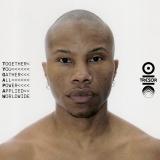
May 2026 marks the arrival of TYGAPAW (aka Dion McKenzie)’s first full-length album on Tresor Records, entitled Together You Gather All Power Applied Worldwide. An acronym of its creator’s name, TYGAPAW’s third studio album is a deeply personal collection of music building worlds where Black queer and trans siblings can thrive, while unifying dancefloors worldwide. A proposition that collective wisdom liberates us from the matrix of domination we live within. The album unfolds as the latest chapter in TYGAPAW’s ongoing techno opera opus, continuing to center the voices of Black women, which surface as layered incantations rather than lyrics - powerful, haunting, sensual, activating.
With the process of creating the album starting in 2023, as TYGAPAW (Dion McKenzie) was in the first year of their transition, the music reflects the intensity of that period, where they were experiencing deplatforming as a response to the shift in their physical appearance: Tracks like ‘M32 Riddim’ and ‘Helicopter hovers over my Crown Heights Apartment’ feature high-paced rhythms intersecting with intense siren-like synths to form demanding compositions echoing a heightened sense of alert. Yet throughout the album, relief comes in the form of TYGAPAW’s vocal features, co-conspirators, and chosen family, whose voices are treated with reverb and echo, a sonic fingerprint that leads back to the pioneers in the legendary studios of TYGAPAW’s native land, Jamaica, an important reminder that the past will always inform the future. It is an album for dancers first and foremost, where joy, defiance, and integration with the natural body coexist, and every drop feels less like a climax than a transformation. Expect a bass that permeates your soul and melodic synthesized sequenced phrases echoing the dancehall eras of TYGAPAW’s youth, reshaped into hypnotic melodies that glow over industrial kicks designed to command attention, reasserting Jamaica's pioneering yet often overlooked contribution to electronic music.
In the opening track, ‘Can I Live’, Precious Okoyomon’s words feel like the beginning of a ritual; setting the intentions for the rest of the proceedings. As McKenzie puts it, their “work is about regeneration, resetting, getting integrated into nature, and about rebirth. That’s the tone I wanted to set at the outset of the album.” Ms Carrie Stacks continues this thread of support in ‘Don’t Panic’ with heavily processed vocals on top of a beat that takes inspiration from another important ingredient in the antidote to the oppression of isolation: Ballroom culture. “ I feel like I found my queerness in Ballroom, that’s why this track is very important to me.”
Echoes of NYC Black queer nightlife scene also permeate in the energetic drums of ‘Exorcise the Language of Domination’, in which Julianna Huxtable’s spoken performance complements the various movements and tones of the music. “My producer brain thought this was the one that Juliana’s vocals would be best suited for. I hinted: ‘what do you think of this one?’ She just went into her notes and picked some passages to go with the first section of the track. From there, it was a year-long process of development. It required time and space for this thing to evolve, but I think it’s one of the most powerful tracks on the album.” London’s SUUTOO contributes the album’s only musical collaboration on ‘B2B’, a track that emerged from sessions in McKenzie’s New York studio where the real objective was to connect and have fun; a time out from the demands of life outside.
The album closes out with a double hit of emotion in the form of ‘Effects of Resistance and Black Trans Masculine Experience’. The former features South African scholar Khanyisile Mbongwa drawing connections that exist between Africa and the Black diaspora, whilst looking to the future and calling for a shared sense of community.
The latter piece, an instrumental version of the piece which featured on the IMMIGRANT E.P. of 2025 is a gentle and deeply affecting end to the record, a place of peace and acceptance. This end-of-cycle tone is mirrored in the sleeve photography, which also ties back to IMMIGRANT by finally revealing what was hidden: a portrait of the artist fully self-actualized; a step towards true inner liberation. TYGAPAW is sonically defiant across this album; bass frequencies feel tactile — less heard than inhabited — infectious lead synth melodies remain with you long after the track ends. An overall sound that leaves asserting an urgent need for connection. From Detroit to New York to Berlin to Jamaica, despite geographic distance, this album reminds us that we remain in solidarity, recognising that meaningful world-building requires collective input and action, both personal and communal, if we are to move toward liberation.
The Éthiopiques series returns! Essential archive recordings from an extremely fruitful period in Ethiopian music.
Before “Swinging Addis” took over the world, there was Moussié Nerses Nalbandian — the Armenian-born composer who shaped modern Ethiopian music. Mentor, arranger, and pioneer, he laid the foundations of Ethio-jazz.
This Éthiopiques volume revives his forgotten legacy, recorded live by Either/ Orchestra First issue ever with new exclusive photos and in depth liner 8-page insert.
“Ethiopian jazzmen are the best musicians that we have seen so far in Africa.
They really are promising handlers of jazz instruments.”
Wilbur De Paris
(1959, after a concert in Addis Ababa)
አዲስ፡ዘመን። *Addis zèmèn* **A new era.**
The time is the mid-1950s and early 1960s, just before "Swinging Addis" bloomed – or rather boomed – onto the scene. Brass instruments are still dominant, but the advent of the electric guitar, and the very first electronic organs, are just around the corner. Rock’n'Roll, R’n’B, Soul and the Twist have not yet barged their way in. Addis Ababa is steeped in the big band atmosphere of the post-war era, with Glenn Miller's *In the* *Mood* as its world-wide theme song, neck and neck with the Latin craze that was in vogue at the same period. Life has become enjoyable once again, with the return of peace after the terrible Italian Fascist invasion of Ethiopia (1935-1941). The redeployment of modern music is part and parcel of the postwar reconstruction. *Addis zèmèn* – a new era – is the watchword of the postwar period, just as it was all across war-torn Europe.
The generation who were the young parents of baby boomers** were the first to enjoy this musical renaissance, before the baby boomers themselves took over and forever super-charged the soundtrack of the final days of imperial reign. Music is Ethiopia's most popular art form, and very often serves as the best barometer for the upsurge of energy that is critical for reconstruction. Whether it be jazz in Saint-Germain-des-Prés or the *zazous* who revolutionised both jazz and French *chanson* after the *Libération*, be it Madrid's post-Franco Movida, or Dada, the Surrealists and *les années folles* that followed World War I, the periods just after mourning and hardship always give rise to brighter and more tuneful tomorrows. Addis Ababa, as the country's capital, and the epicentre of change, was no exception to this vital rule.
**Two generations of Nalbandian musicians**
Nersès Nalbandian belonged to a family of Armenian exiles, who had moved to Ethiopia in the mid-1920s. The uncle Kevork arrived along with the fabled "*Arba Lidjotch*", the** "*40 Kids*", young Armenian orphans and musicians that the Ras Tafari had recruited when he visited Jerusalem in 1924, intending to turn their brass band into the official imperial band. If Kevork Nalbandian was the one who first opened the way of modernism, pushing innovation so far as to invent musical theatre, it was his nephew Nersès who would go on to become, from the 1940s and until his death in 1977, a pivotal figure of modern Ethiopian music and of the heights it. Going all the way back to the 1950s. Nothing less. And it is Nersès who is largely to thank for the brassy colours that so greatly contributed to the international renown of Ethiopian groove. While the younger generations today venture timidly into the genealogy of their country's modern music, often losing their way amidst a distinctly xenophobic historiographical complacency, many survivors of the imperial period are still around to bear witness and pay tribute to the essential role that "Moussié Nersès" played in the rise of Abyssinia's musical modernity.
Given the year of his birth (15 March 1915), no one knows for sure if Nersès Nalbandian was born in Aintab, today Gaziantep (Turkiye/former Ottoman Empire) or on the other side of the border in Alep, Syria... What is certain is that his family, like the entire Armenian community, was amongst the victims of the genocide perpetrated by the Turks. Alep, the place of safety – today in ruins.
Before Nersès then, there was uncle Kevork (1887-1963). For a quarter of a century, he was a whirlwind of activity in music teaching and theatrical innovation. *Guèbrè Mariam le Gondaré* (የጎንደሬ ገብረ ማርያም አጥቶ ማግኘት, 1926 EC=1934) is his most famous creation. This play included "ten Ethiopian songs" — a totally innovative approach. According to his autobiographical notes, preserved by the Nalbandian family, Kevork indicates that he composed some 50 such pieces over the course of his career. This shows just how much he understood, very early on, the critical importance of song as Ethiopia's crowning artistic form. Indeed, for Ethiopian listeners, the most important thing is the lyrics, with all their multifarious mischief, far more than a strong melody, sophisticated arrangements or even an exceptional voice. (This is also why Ethiopians by and large, and beginning with the artists and producers themselves, believed for a long time — and wrongly — that their music could not possibly be exported, and could never win over audiences abroad, who did not speak the country's languages).
Last but not least, one of Kevork's major contributions remains composing Ethiopia's first national anthem – with lyrics by Yoftahé Negussié.
Nersès Nalbandian moved to Ethiopia at the end of the 1930s, at the behest of his ground-breaking uncle. Proficient in many instruments (pretty much everything but the drums), conductor, choir director, composer, arranger, adapter, creator, piano tuner, purveyor of rented pianos,... he was above all an energetic and influential teacher. From 1946 onwards, thanks to Kevork's connexion, Nersès was appointed musical director of the Addis Ababa Municipality Band. In just a few years, Nersès transformed it into the first truly modern ensemble, thanks to the quality of his teaching, his choice of repertoire, and the sophistication of his arrangements. It was this group that would go on to become the orchestra of the Haile Selassie Theatre shortly after its inauguration in 1955, which was a major celebration of the Emperor's jubilee, marking the 25th anniversary of his on-again-off-again reign.
At some point or other in his long career, Nersès Nalbandian had a hand in the creation of just about every institutional band (Municipality Band, Police Orchestra, Imperial Bodyguard Band, Army Band, Yared Music School…), but it was with the Haile Selassie Theatre – today the National Theatre – that his abilities were most on display, up until his death in 1977. To this must be added the development of choral singing in Ethiopia, hitherto unknown, and a sort of secret garden dedicated to the memory of Armenian sacred music, and brought together in two thick, unpublished volumes. Shortly before his death (November 13, 1977), he was appointed to lead the impressive Ethiopian delegation at Festac in Lagos, Nigeria (January-February 1977).
His status as a stateless foreigner regularly excluded him from the most senior positions, in spite of the respect he commanded (and commands to this day) from the musicians of his era. Naturally gifted and largely self-taught, Nerses was tirelessly curious about new musical developments, drawing inspiration from the very first imported records, and especially from listening intensely to the musical programmes broadcast over short-wave radio – BBC *First*. A prolific composer and arranger, he was constantly mindful of formalising and integrating Ethiopian parameters (specific “musical modes”, pentatonic scale, and the dominance of ternary rhythms) into his “modernisation” of the musical culture, rather than trying to over-westernise it. It even seems very probable that *Moussié* Nerses made a decisive contribution to the development of tighter music-teaching methods, in order to revitalise musical education during this period of prodigious cultural ferment. Flying in the face of all the historiographical and musicological evidence, it is taken as sacrosanct dogma that the four musical modes or chords officially recognised today, the *qǝñǝt* or *qiñit* (ቅኝት), are every bit as millennial as Ethiopia itself. It would appear however that some streamlining of these chords actually took place in around 1960. It was only from this time onward that music teaching was structured around these four fundamental musical modes and chords: *Ambassel*, *Bati*, *Tezeta* and *Antchi Hoyé*. A historical and musical “details” that is, apparently, difficult to swallow, especially if that should honour a *foreigner*. Modern Ethiopian music has Nersès to thank for many of its standards and, to this day, it is not unusual for the National Radio to broadcast thunderous oldies that bear unmistakable traces of his outrageously groovy touch.
Right now, right this second and of course right this moment while you listening to it or even while reading this line of text may be witnessed the real royalty of the underground of Thailand - DOTT. Pakarapol, the mastermind behind this release has made his name in concrete actions towards the development of the local and international scene whether it’s to play sweaty basements or grand festivals, releasing quality music or being one of the driving forces behind the record store called “More Rice” which is located in the heart of the capital city - Bangkok. On the title track of the release there has been intensive remix work done by the Uruguay’s own diamond level producer Luis Malon. Luis has brought his view and vision of how things are done and has flawlessly executed this doing so. With this Thai - Uruguayan connection the release is born for our ears and souls to indulge in and of course without any doubt to raise that dust from the floors, roofs or any given surfaces once the low ends of the record starting to give off its vibrations.
Representing the spirit of the underground in Dubai, Shadi Megallaa is a multifaceted music lover whose unwavering passion for music permeates throughout all of his endeavours. A pioneer of Dubai’s electronic music culture, Shadi’s roots lie with the foundations of modern day electronica: all shades of house, techno and beyond. His commitment to preserving and evolving the culture is inherent in his record shop, The Flip Side, which has been intrinsic to the growth and development of music culture in Dubai. As a DJ and producer he draws on a multitude of experience, diverse taste and a refined ear that has instilled the ability to craft compelling productions. On Spirits Of The Deep we find Shadi exploring the deeper side of electronic music, creating layers of vibration designed to immerse the listener in layers of positive vibration.
As prescribed by Shadi himself, we start the traditional way, with Side B (the info side), where ‘Microgravity’ transports us into the cosmos. Soothing sonics envelop a taut low end with crisp percussion and swathes of pad work cultivating an interstellar atmosphere. Subtly shifting layers keep you locked into a groove, as the track maintains its energetic pulse. The synth lines increase with intensity midway through, adding more potency. Across almost nine minutes Shadi takes us on an excursion beyond the stars…
This is followed by ‘G-Dub’, a smooth jazz-inflected piece full of soul nourishing goodness. Intuitive drum programming with a groove-laced low end form the propulsive backbone of this track. The dreamlike melodic elements are almost transcendent in their illuminating impact. With all of its elements combined, ‘G-Dub’ is a glorious foray into the depths of true deep house. Shadi keeps things interesting throughout, adding and subtracting layers to complement the pace. Those hi-hats and intermittent cymbal crashes are especially impactful. A delight.
On the flip we have ‘Pressure’, where Shadi’s UK breaks influence comes through. A characterful vocal sample features throughout the intro before we enter a world of unusual sounds. The beats are, once again, impeccably executed, accompanied by a dubby bassline and an ever-evolving cacophony of squelchy sounds and chirps. Running at just over 9 ½ minutes, ‘Pressure’ sees Shadi flexing his creative muscles with a heady, expansive composition that invites us on a deep musical trip.
Finally, ‘The Poet’ closes out the EP on an emotive tip. The track is dedicated to the Palestinian poet and activist Refaat Alareer, who was killed during an airstrike on Gaza in December 2023. It utilises Refaat’s powerful poem If I Must Die, with the spinetingling words taking centre stage, as Shadi’s beats, bass and bright pads provide the backdrop. A piano-led melody appears in the latter part of the track, amplifying its emotionally-charged atmosphere. A wonderfully imagined homage to a martyr for peace. As the samples state, Let it bring hope…
Amsterdam natives Maarten Smeets and Lars Dales, aka Dam Swindle, unveil their third long-player with the release of a new track, the first to be shared from the upcoming album, ‘Open’ - out on 30 May 2025 via Heist Recordings.
The new album sees the acclaimed duo dive far beyond the deep sonic waters they’re most known for, exploring lower tempos, synthwave, hip-house, and ambient across fourteen tracks. With a gestation period that traces back several years, ‘Open’ is their most intimate and personal body of work thus far, birthed during a time of self-reflection away from touring and personal transformation as individuals.
“We felt the need to tell a very personal story through our music as a translation of our personal development in the past years. We also wanted to make music without a specific goal in mind; We simply wanted to create. By taking away the grid of dance music and any expectations of what a Dam Swindle song should sound like, the creativity started to flow naturally with songs in many different styles and tempos. The result is an album that feels refreshing and uplifting and still very much true to the heart and soul of our sound.” - Dam Swindle, January 2025.
While the trademark Dam Swindle four-to-the-floor beats are still ever-present on tracks like ‘The Present Is Always Perfect’, ‘I Need You’, and ‘Is This Love?’, it’s the gentle waves of synths on opener ‘Home’, the contemplative piano chords of ‘Bloom’ featuring Joep Beving, and the lo-fi ambience of ‘It’s Okay, I Can Wait’ that showcase a melancholic, ethereal sensibility previously uncharted by the duo. Collaborations with vocalists such as NYC’s Haile Supreme on ‘Not Enough’ and Neo-soul singer Faye Meana on ‘Girl’ expertly find room in between the dancefloor and home listening sessions, and a clear standout on the LP is the title cut where message-heavy rapped vocals from UK artist Samson ebb and flow amongst iridescent grooves.
Under the helm of Maarten and Lars’ adept A&R, their Heist imprint has become a beloved home for house heads of both schools old and new, platforming some of dance music’s biggest names from Cinthie to DJ Sneak as well as the musical dawnings of artists such as Kassian and Makèz. The Dam Swindle alias has achieved house music royalty-like status across a storied 15-year career that includes two critically lauded full-lengths, collaborations with the likes of Tom Misch and Kerri Chandler, and a globetrotting touring schedule. This album stands as their most profoundly personal work of art to date, and they can’t wait to share it with you.
A multifaceted artist, who over his career has traversed between singer-songwriter, hit producer, DJ and curator, Ben Westbeech now arrives on Glitterbox Recordings with a fully realised artistic vision on his new album Everything Is Within You.
Encapsulating Ben’s appreciation of the power we all have within us to achieve joy and peace, as conveyed sonically by all the musicians involved, Everything Is Within You came together organically. His first full length solo LP since the acclaimed There’s More To Life Than This on Strictly Rhythm in 2011, Everything Is Within You showcases Ben’s artistic development as a songwriter, curator and producer as he steps into his role as producer and arranger, away from lead vocalist.
“This album is about speaking the truth. The truth from within. Luckily, I have been blessed to come across the paths of other artists that shared the same sentiment over the seas that dwell. These artists all feature heavily on this record. It isn’t about me or you. It’s about everything that is within.” – Ben Westbeech
Spotlighting featured artists such as Dames Brown (recorded by Moodymann in Detroit), RAHH, Karen Harding, DAVIE and Obi Franky, with co-production credits including Honey Dijon, Luke Solomon and Chris Penny, as well as Mousse T., the record was born out of a Glitterbox writing camp in London at Defected’s studios. The collection of records that were made that week became a catalyst for the full album, now arriving on Defected’s Glitterbox Recordings.
An artist with a rich musical history, from the release of his mature debut album Welcome to the Best Years of Your Life for Gilles Peterson’s Brownswood, to his chart-topping club records as Breach, and work as The Vision on Defected, the path to this new album has included periods of sobriety, self-work, spiritual exploration and the integration of a healthier outlook all round. Now based in Ibiza, the omnipresent energy of the magical island has permeated into the music on his new album, as well as the influence of his personal and spiritual growth.
Exploring a range of genres across the LP, from neo soul to house influences, the breadth of Ben’s musical knowledge is demonstrated throughout the eight tracks. From the blissed-out piano grooves of ‘Times Are Changing’, since remixed by house royalty Louie Vega and Josh Milan as Two Soul Fusion, to the uplifting ‘Do Me Right’ and the emotional soundscapes of ‘So Good To Me’, Everything Is Within You puts the emphasis on the guest vocalists. With exquisite live instrumentation and songwriting that give the record an evergreen feeling, this is a timely album that exudes a contagious, positive feeling throughout, something the world needs right now.
2025 Repress
Wide Yonder’ is a truly remarkable album, offering as much depth and soul as it’s predecessor, yet sounding ultimately fresh and different. Above all, the ten tracks show an artist that’s willing to take risks, find in- spiration in new places and move beyond the sound of his previous album. Trentemøller: ‘Of course I didn’t want to make the same record twice. So the album is for me a logic development from ’The Last Resort’’. Instead he just started to collect new ideas, without thinking too much about the direction the music would take him: ‘The only thing I knew was that I’d want the music to sound more organic and analog.’ Compared to the intimate electronic mood pieces of ‘The Last Resort’, the ten tracks on the new album indeed have a more strange, mystic and dramatic vibe, with a lot of dynamics, distorted, driving twang- guitars, real and electronic drums mixed with haunting synths. With ‚Into The Great Wide Yonder‘ Trentemøller is not only exploring new moody and atmospheric universes, but combines his sense for glorious soundscapes with a firm melodic and tonal touch. The original chord progressions and feel for melodies is fundamental to him, and that‘s also the reason why most of the instruments are played by Trentemøller himself on this album. ‚I like the possibility to be surprised that chords and melodies change into something new. The music that I like most lets the themes and sounds come back in different disguises‘. The Danish multi instrumentalist and producer shows an unexpected talent for finding vocalists that fit the mood of his songs. The first single of the album, the beautifully tender ‘Sycamore Feeling’, featuring Marie Fisker, is a typical highlight. In fact, all the vocal tracks are stunning. Trentemøller chose to collaborate with the English artist Fyfe Dangerfield from UK based Guillemots and Danish singers Solveig Sandnes and Josephine Philip from the debuting Danish indie girlduo Darkness Falls. They all manage to add their own sound and flavour to the album, while their voices blend perfectly with Trentemøller’s atmospheric songs. This is an album that keeps growing for a long time, as every track works its way stealthily under your skin. The sound of ‘Into The Great Wide Yonder’ might be one step ahead of his previous work, but we still easily recognize the hand of Trentemøller, in this inspired collection of songs and atmospheres. The sonic richness, sharp contrasts and daring musical colours are vintage Trentemøller. Into The Great Wide Yonder’ might demand more from the listener than ‘The Last Resort’, as it ended up being quite a dramatic album. This album is more noisy, there’s more happening.‘ But getting to know the tracks definitely is a rewarding experience, as the album will keep growing and growing for a long time to come and its safe to say that Anders Trentemøller has managed to create
"CQQL Records is a “sequel” to the timeless production ethos of the 80s and 90s: a time when labels truly invested in production, artist development, and put out releases that still influence today’s generation of producers, djs, dancers, and collectors. We’re continuing the story of boogie, AOR, funk, house, soul, r&b, and more, and further developing the themes we feel are classic and need to live on while making sure that each project fits its own lane and style. We’re fond of analog sounds and gear, releases produced on physical media, and paying homage to djs, collectors, and the musicians themselves: an homage but never a replication."
Introducing "Stop 2 Quit," a captivating new deep, jazzy, and lo-fi house music 12" compilation EP that delves into the art of sonic escape amidst the overwhelming noise of modern life. Featuring a hard-hitting lineup of producers — Darone Sassounian, Jamma D, and Jarren representing Los Angeles, Roche in Portland, and Morris Mobley in Nancy, France — each track serves as a remedy to the relentless barrage of messages and distractions that flood our minds.
- A1: Killer Line (Opening Titles) Feat Adam Evald
- A2: Put Love Into Your Heart Feat Adam Evald & Jimi Tenor
- A3: The Sound Of Love Feat Hard Ton
- A4: Love Myself But I Can’t Make It Love
- B1: Footsteps Feat Alina Royz
- B2: In The Countryside Feat Lena Tronina
- B3: I Can Make My Happiest Life Feat Celebrine & Mutafrukt
- B4: Vacation Song
- B5: Reka Feat Moral Kiosk
- C1: Blue Plastic Bag In The Sea Of Green Feat Mutafrukt
- C2: Wasted Feat Mutafrukt
- C3: Before Music Dies Feat Hard Ton & Mutafrukt
- C4: Absent Ascent Feat Lovvlovver
- D1: Sleeping With Tv On
- D2: Over The Rainbow Feat Celebrine
- D3: Shorespotting Feat Adam Evald
- D4: Lovers (End Credits) Feat Kito Jempere Band
yellow vinyl 180g[23,95 €]
From a club-friendly chrysalid onto deploying his wings as a full fledged pop artist in recent years, Saint Petersburgs Kito Jempere has enjoyed a journey unlike any other and his newest album, Part Time Chaos Part Time Calmness live-documents the chameleonic changes / game-changing paradox experienced this year between his life both as a musician and as a family man.
Better known for his work as a house producer which has earned him accolades from prominent dance music outlets throughout well over a decade of intense work both into and outwith the limelights, Kito has for all that never been focussed on writing solely discoid material, throwing as much effort over the years into multi-faceted parallel ventures, far and apart from strictly dance floor-oriented functionality. Yet, from this partition between various projects and mindsets, this is through a radical shift towards downtempo pop and out of the 4x4 loop that Kito got to fully assert himself as a musician, embracing the rejoicing variety of tone and mood of his tender loves, secret and not. The movie Ive never made but have the soundtrack for, Part Time Chaos Part Time Calmness is the fruit of change as much as change itself. A return to the simple means of his young self, his old trusty guitar from his late teens serving as the backbone to Killer Line and Love Myself But I Cant Make It Love, and the natural development to last years Green Monster, which
initiated these deep tectonic movements in Kitos approach to his art, PTCPTC is an intimate trip down the kaleidoscope of his present life. Joined up by an impressive cast of artists, including Jimi Tenor, Adam Evald and Hard Ton, Kito didnt just bin his old persona, he took it back to where it belongs. From the low-slung emotional folk of the opener, Killer Line, to the eerie flamenco-jazz hybrid Before Music Dies. via the broken soulfulness of Put Love Into Your Heart and anthemic 80s balearic breaks meets coastal synthwave vibe of Sounds of Love, the album pulsates with a refreshingly genre-unbound vision. To the naive, laid-back sonic bokeh of Footsteps,
succeeds the left-of-centre cinematic narrative of In The Countryside, which includes some fun nods to fictional brands taken from Tarantinos imaginarium (Red Apple cigarettes) or other movies like High Fidelity, after Nick Hornbys eponymous novel.
Freed from gridlocked programming and impersonal tropes, PTCPTC showcases a wide array of songs, beats, grooves old and new, some dating back to 2018 and improvised sessions with his 9-people Kito Jempere Band, all of which were finished within the same timeframe and with this all-inclusive momentum in mind. Through the epic synths of Absent Ascent. in revamping the universal classic Over The Rainbow with Celebrine, on the appeasing ballad Shorespotting feat. Evald or in the waves-ready closing cut Lovers, Jempere tells a tale of hard-earned emancipation and life-affirming freedom.
YOIONWAX's 10th anniversary record is already here! This is our second fully printed record with an incredibly cool zoetrope artwork by Alex Mikheev. This time, we're embarking on an amazing journey to unexplored places, and our guide is the very cool and experienced musician Donnie Cosmo.
We start in a tropical forest, and as we walk through the tropics to the starting pad of our ship, Donnie suggests trying Jungle Juice. Moving on, we encounter The Man From Planet X, whose story accompanies us to a small stop as we switch from side A to side B.
Mystical Journey begins as soon as we put the needle on the record on side B. The zoetrope artwork, which is now located on the entire record, can be examined indefinitely, especially when we listen to such a soundtrack. It is at this moment that we break away from the earth and find ourselves in open space, an exciting journey awaits us. Having traveled a long road through stars, planets, galaxies, Donnie suggests Prepare Your Soul, and we prepare our souls for the transition to a new level, because we have come a long way with you, and this record is a great gift for the sixth anniversary of our project, which took place at the end of May.
We are actively working now on the development of the project and are preparing something new, we are sure it will be very cool, and you will like it, so do not miss your chance now to become the owner of a collector's edition, a truly exclusive and legendary record - YOIONWAXOIO!
Olo Yegussa presents its first release with a record that comes from a
distant tribal exploration. Through four long tracks, a mystical
atmosphere arises. Semifull Soft presents us a unique universe tinged
with the spirit’s voice that has enchanted his nights. Composed
between Lyon and Reunion Island, “Tribe Corridor” is a sensitive blend of sounds resonating between bewitching dub, electronica and a radically slow, travelling trance. A universal eclecticism that will
immerse every listener in a world oscillating between sensitivity and
brutality. the Olofones’s kingdom : “The slow and rigorous walk that
embraces all the Olofones through rivers, plateaux and mountains in
search of dreamlike destination. A few beings close off the line, far
behind, it would seem like they are the most talkative and curious.
They are always the ones found at the back. While some are looking at
the horizon and remain far ahead, others have their glance towards the crests . A complementarity that can only be created through time, just like a meticulus plait weaving several souls. A daily ritual gives rhythm to this eternal trip. The first to arrive raises a flame, « la phorie », each place will reveal its particularity, its curve, its elegance. Still in our days, she allows our « Pas Latents » to find back the path in the heart of this wide mountain corridor, with its delicate relief. We can hear on both sides the adjacents forests, their steps and their songs resonating.
Upon their arrival, the recognition is a custom for this brief instant, in
constant development. The Lanterns are the first explorators. They
build a moving background, looking after a neutric zone for the night.
Time metamorphoses. And it is now the moment for « Les Pas Latents
» to share tales and stories taken for their own adventures. Their
voices rise up , the stars shine, the earth trembles of strange
sensations. A common vibration. The souls intertwine, the «
chaosmose » operes. Sometimes the « âmoniale » wave curves and
gets linked around the central heat, luminescence and clarity. A few
words escape from the rhythm and leave slumber and reverie take
control of the spirits.”
The third release of , which will be released on vinyl with the theme of ancient and modern east and west ~ Nihon no Uta ~, is blindness caused by an illness that he had when he was a child, he met Tsugaru shamisen in a poor and difficult life.
Chikuzan Takahashi, a master of the Tsugaru shamisen, has raised Japanese folk songs to the level of art that has been praised around the world. The recorded song is "Iwaki Impromptu".
Several versions are also recorded in the album work, and there are different arrangements only for improvisational songs, but this time Held from 1973 to 2011 at "Maruyama Park Concert Hall" in Kyoto City to coincide with the Gion Festival in Kyoto
It is a sound source when he appeared in "Yoiyoyama Concert". A thick string that tells the beginning, like slamming Overwhelming power that tightens the chest even though it is not a drumstick, like an orchestra that does not seem to be a single performance
Spread of sound, free development of sound. A shamisen player named Chikuzan Takahashi who completely deviated from the frame of so-called standard folk songs It seems that the expression of is involved in the audience at the scene without even seeing it.
Mr. Takeyama describes this song as "a song where you don't know where it started, where it started, and where it ended." It's just an impromptu song, something that you listen to with subtle changes in sound and complex rhythms while making various changes. It is a masterpiece full of dynamism that you can grab until the end.
Bill Laswell, who is active as a world-class bassist, reconstructed the original sound source this time. He has a deep knowledge of ethnic sound sources, and his arrangement is "Mix-translation" instead of "Remix". Is used. While making the best use of Mr. Takeyama's sound source, as the difference in the words shows, it is unique Arrangement with swelling deep bass bass makes you feel as if you are standing on the same live stage and having a session. It is a finish that you can understand his idea of chewing the original and then translating it.
The jacket picture is by Mr. Akira Kasai, a photographer who has taken Mr. Takeyama's picture for a long time. We asked Mr. Takuji Matsubayashi, the author of "Takeyama Takahashi, the sound of the soul," to introduce the work.
Released in 1967, Open marked a bold debut for Brian Auger & The Trinity, featuring the dynamic vocals of Julie Driscoll. Music and its makers were rapidly evolving in ‘67, the UK's Jazz and R&B scenes were being influenced by pop and psychedelia and socially, musicians of many styles found common ground in London’s clubs like The Cromwellian and The Scotch Of St James where the The Beatles, US legends Wilson Pickett and Jimi Hendrix mingled with the capitals jazzers and pop stars, often loudly jamming together in even louder 'Lord Byron' shirts. 'Open' fully embraced this spirit by fusing together those genres and attitudes of the era. From the outset Auger displays his jazz rooted approach on the A side with 'In and Out' and 'Isola Natale' (later covered by one of his American jazz heroes Richard ‘Groove’ Holmes). Both showcase the Trinity's musicianship and Brian's improvisational flair. Auger himself takes on vocal duties on the raucous ‘Black Cat’, a track that became a club hit. Open is marked by its eclecticism; 'Lament for Miss Baker' is a tender, piano ballad influenced by Duke Ellington, reflecting Auger’s jazz and classical influences whilst 'Goodbye Jungle Telegraph' is a wild and crazy percussive freak out. Brian displayed not only his virtuosity but also his surrealist sense of humour with bizarre sound effects, inspired by Spike Milligan's The Goons' radio show interspersed between the tracks.
Julie Driscoll’s arrival on the album’s B side brings a sharp shift in tone. Her smoky, emotive vocals inject a soulful depth, notably on covers of Otis Redding & Carla Thomas hit 'Tramp', Aretha's 'Save Me' and The Staples Singers ‘Why Am I Treated So Bad". With original numbers 'Break It Up' and 'A Kind Of Love In' we hear the Auger / Driscoll pop infused R&B at its very best, whilst the version of Donovan’s 'Season of the Witch' stretches out into a slow-burning epic. In 2025, Open is viewed as a cult classic and testament to a unique period when genre boundaries were fluid and artistic risk-taking was the norm. Brian Auger & The Trinity’s debut captures the adventurous energy of the late 1960s. 58 years later, its importance in the development of British jazz fusion and progressive bands that followed is undeniable, with The Charlatans Tim Burgess recently commenting on Auger's Instagram that The Trinity were a 'huge influence'.
A milestone in electronic music, is finally receiving its well-deserved re-release: Liaisons Dangereuses' legendary self-titled debut album still fascinates today, through its innovative sound and the mystery encompassing it. Since its release in 1981, it has become a classic in electronic music. The 10 electrifying songs produced by Chrislo Haas (DAF) and Beate Bartel (Mania D. / Matador) - reinforced by Krishna Goineau's French and Spanish Speech-Attack-Lyrics - created a unique style. The album - anything other than a Berlin or Düsseldorf 'thing' - was propelled to an international favourite. Songs such as 'Peut Être... Pas' and 'Los Niños Del Parque' played a decisive role in the development of Detroit and Chicago's house sound, as well as various forms of European techno
Gatzara Records presents its second vinyl single.
This record is a tribute to Jackie Mittoo, a key figure in the development of reggae, ska, and rocksteady. Known for his work at Studio One and his role as keyboardist for The Skatalites, Mittoo left a profound mark on Jamaican music with his melodic style and rhythmic approach to the keyboards.
The track is built on a classic reggae foundation produced by Sergio Caño, with a restrained rhythm and simple structure. The focus is on the organ, played by Joan Sobrevals, who carries the main line with a sober, respectful sound clearly influenced by Mittoo's school. Without seeking to imitate, the performance takes characteristic elements of his style — melodic phrasing, spaced chords, marked beats — to shape a coherent piece that remains faithful to the style.
The production maintains a minimalist aesthetic, without overloading, leaving space for each instrument to breathe and fulfil its function. The result is a serene, mid-tempo piece that invites you to listen carefully, without virtuosity, but with a clear intention: to pay tribute to a great musician who defined a sound, an era, a style.
Thank you, Jackie!
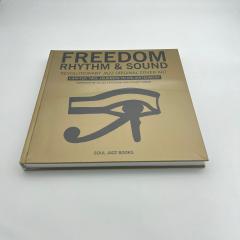
Freedom, Rhythm and Sound showcases the stunning graphic works of independently published jazz record cover designs in the 1960s, 70s, 80s and beyond, from radical jazz musicians such as Sun Ra, John Coltrane, Pharoah Sanders, The Art Ensemble of Chicago and others. This second Freedom, Rhythm and Sound book is a new ‘chapter’, featuring hundreds more unique, rare and beautiful jazz record cover designs.
This book documents the continued development in jazz as African-American artists set out on new journeys to enlightenment, heading out into Europe at the end of the 1960s. The artwork of these (often self-produced) record cover designs during this era reflected their radical agenda, spiritual awareness and singular search for musical and personal freedoms. From raw, DIY aesthetics to lyrical and poetic illustrations, sometimes containing futuristic worlds and ancient landscapes, the designs are always bold, strikingly graphic, and most importantly capture the spirit of the music, giving them a unique beauty. The book also includes sections on African-American poets and writers, Civil Rights and Black Power Movement leaders (Martin Luther King, Malcolm X) and early musical pioneers (Yusef Lateef, Max Roach, Art Blakey and others), all of which helped influence and shape the world of radical and spiritual jazz from the 1960s and onwards to its rebirth today. Since the 1980s, Gilles Peterson has been a pivotal figure in the club scene, renowned for his genre-defying approach to music with jazz at its core. As one of the UK’s most iconic DJs, he has spent over 40 years shaping music trends as a radio presenter, club DJ, producer, and festival curator.
He hosts a flagship show on BBC Radio 6 Music and, in 2016, launched Worldwide FM. He is founder of the Worldwide Festival in the South of France and We Out Here festival in the UK. He runs the label Brownswood Recordings, dedicated to discovering and promoting new talent and bringing fresh voices to the global stage. Stuart Baker founded Soul Jazz Records in 1992. For more than 30 years the record company has released over 500 records covering a genre-defying array of non-mainstream musical worlds – Jazz, Reggae, Punk, Latin, Brazilian, Disco, African, Gospel, Acid House and more.
In 2017, part of Stuart Baker’s jazz record collection (much of which appears in Freedom, Rhythm and Sound) was featured and displayed as part of the Soul of a Nation: Art in the Age of Black Power exhibition at Tate Modern in London, and subsequently at The Broad in Los Angeles (2019) and Brooklyn Museum (2019). Soul Jazz Books launched in 2007, a similarly diverse and critically acclaimed publishing house with graphic art, culture and photography titles that include ‘Voguing and The House Ballroom Scene of New York’, ‘Dancehall – The Rise of Jamaican Dancehall Culture’, ‘Yo! The Early Days of Hip-Hop’, ‘Freedom, Rhythm and Sound – Revolutionary Jazz Cover Art 1965-83’, ‘Punk 45 – The Singles Cover Art of Punk 1976-80’ and others. Reviews of the first Freedom, Rhythm and Sound: “A remarkable book” The New Yorker “If there can be such a thing as a revolutionary coffee table book, Freedom Rhythm & Sound is it―a chance to wallow in the Afrocentric visual language of the non-mainstream black jazz vinyl of this extraordinary fertile and creative period.” Eye “Like the uncompromising music they represent, all the covers broadcast a sense of bold, brazen ideology” Pitchfork “A definitive account of a complex passage of cultural upheaval.” The Independent “For decades, no one was sure how to refer to this extraordinary music.
Calling it ‘fire music’ does justice to its incandescent spirit, still burning from the pages of a book that preserves the memory of a special time.” The Guardian “These sleeves are the original independent legacy to America’s premier art form – Jazz. In terms of African-American cultural expression they are part of a long line of thought that was charged in the 1960s by John Coltrane, Martin Luther King, Ornette Coleman, Malcolm X and others” The Wire “A hefty compendium of radical jazz cover art” Mojo
Available on LP format - comes with Japanese obi-strip.
Jamaica's national treasure. Legendary Jamaican Jazz. Internationally acclaimed guitarist Ernest Ranglin with piano genius Leslie Butler in a dazzling quartet. Recorded in 1965. Ernest Ranglin is a guitar player who represents Jamaica as well as one of the forefront personals who took Jamaican music to the world. As an arranger and a musical director, he contributed with his talent in the development of Jamaican music, including Ska and Reggae, from the origins. Musicians who have started their career at the time, still look up to him as a mentor and pay their respects. The internationally acclaimed guitarist Ernest Ranglin is currently pursuing his career without any musical boundaries at the age of over 80.
---
Musicians:GUITAR: Ernest Ranglin, BASS: Stephen Lauz, DRUMS: Carl Mcleod, PIANO: Leslie Butler.
Produced by K. Khouri.
Recorded at Federal Studio.
A heretical masterpiece with an overwhelming presence in the history of Japanese jazz. Jiro Inagaki was one of the central figures in the development of jazz rock in Japan. Inagaki, who had doubts about the existing jazz music, turned the helm to jazz-rock at once with this album recorded in 1970. From the opening track "The Vamp" to the closing "Head Rock," Inagaki poured all his ideas and passion into this jazz-rock album that leaves no time to exhale.
Jiro Inagaki(Tenor Sax)
Tetsuo Fushimi(Trumpet)
Ryo Kawasaki(Guitar)
Masaru Imada(Organ)
Yasuo Arakawa(Bass)
Sadakazu Tabata(Drums)
- Jiro Inagaki & Soul Media - No Title
A heretical masterpiece with an overwhelming presence in the history of Japanese jazz. Jiro Inagaki was one of the central figures in the development of jazz rock in Japan. Inagaki, who had doubts about the existing jazz music, turned the helm to jazz-rock at once with this album recorded in 1970. From the opening track "The Vamp" to the closing "Head Rock," Inagaki poured all his ideas and passion into this jazz-rock album that leaves no time to exhale.
- A1: Beginning Again
- A2: Bumpin' On Sunset
- B1: Straight Ahead
- B2: Change
- B3: You'll Stay In My Heart
When Straight Ahead hit the shelves in 1974, it marked another bold chapter for Brian Auger’s Oblivion Express. The band—Steve Ferrone on drums, Barry Dean on bass, Jack Mills on guitar, and Lennox Langton on congas— was firing on all cylinders, pushing jazz fusion into fresh, uncharted territory.
Critics took notice, with Billboard praising the album as “excellent in development and inventiveness, ” and it found its way onto multiple charts at once.
The journey begins with “Beginning Again, ” a lively opener built on Langton’s congas and Ferrone’s muscular groove. Auger’s electric piano sparkles here, immediately setting the album’s adventurous tone. Then comes their take on Wes Montgomery’s “Bumpin’ On Sunset. ” Darker in mood and drenched in atmosphere, Auger stretches out into improvisation while still honoring Montgomery’s spirit. The interpretation struck such a chord that, years later, Wes’s widow wrote to Auger to tell him it was her husband’s favorite version of his much-loved tune.
The title track, “Straight Ahead, ” shifts gears into funk, showcasing the group’s ability to slide effortlessly between genres. “Change” pushes further, blending rock’s raw energy with jazz’s improvisational freedom, driven by Auger’s command of the Hammond organ. To close, “You’ll Stay in My Heart” brings the tempo down with a tender, soulful ballad—an intimate ending to an album full of bold explorations.
At the time, reviewers hailed the record as a gem. One called it “a minor masterpiece of incredibly engaging and melodic keyboard-centric jazz-rock fusion. ” Another singled out “Bumpin’ On Sunset” as “the best reason to own this recording.”
Half a century later, Straight Ahead still resonates. It captures that fertile moment in the 1970s when jazz, rock, and funk were colliding, and artists like Auger were busy redrawing the map. To this day, it stands as proof of Auger’s fearless curiosity and his knack for breaking boundaries—music that looked forward then, and still feels ahead of its time now.
- Beginning Again
- Bumpin' On Sunset
- Straight Ahead
- Change
- You'll Stay In My Heart
When Straight Ahead hit the shelves in 1974, it marked another bold chapter for Brian Auger"s Oblivion Express. The band - Steve Ferrone on drums, Barry Dean on bass, Jack Mills on guitar, and Lennox Langton on congas - was firing on all cylinders, pushing jazz fusion into fresh, uncharted territory. Critics took notice, with Billboard praising the album as "excellent in development and inventiveness", and it found its way onto multiple charts at once.
Jackie Mittoo’s ‘Reggae Magic’ is a new collection from the great Jackie Mittoo. The album features a mixture of classic tunes and rarities from the period 1967-74, when Mittoo was at the height of his musical powers. Mittoo’s solo career began after the end of The Skatalites in 1965. He began pushing new musical boundaries, creating a uniquely identifiable organ-led funky reggae sound that owed as much to Booker T and The MGs, Jimmy Smith, Stax and Motown as to the post-ska and emergent rocksteady island rhythms of Kingston, Jamaica. His solo work at the legendary Studio One spanned seven albums and hundreds of singles.
Aside from producer and founder Clement ‘Sir Coxsone’ Dodd, it’s hard to think of anyone more central to the sound and success of Studio One than Mittoo; keyboard player extraordinaire, songwriter, arranger, musician, truly the Keyboard King at Studio One. Jackie Mittoo had been the youngest founding member of The Skatalites (at age 16), probably the most important group in Jamaican music. After they split, he became leader of the three pivotal groups at Studio One – The Soul Brothers, The Soul Vendors and Sound Dimension. He also became musical director for Studio One, helping create countless hits for singers Ken Boothe, Bob Andy, The Wailers, John Holt, Delroy Wilson and more – unforgettable tunes like Alton Ellis’ ‘I’m Still in Love with You’, Marcia Griffiths’ ‘Feel Like Jumping’, The Heptones’ ‘Baby Why’ and others. Between 1965 and 1968, many of the tunes created at Studio One can be attributed to Mittoo – timeless instrumental tracks, recorded either under his own name or those of The Soul Brothers, Soul Vendors and Sound Dimension, that have become the basis for literally 1000s and 1000s of Jamaican songs over many decades, giving the music an unsurpassed longevity.
The endurance of his music was as a direct result of significant developments in Jamaican music in the 1970s, namely the creation of three important new styles: Dub, Deejay and Dancehall. In the early 1970s Mittoo’s instrumental tracks were used as the musical source for a series of classic Studio One dub albums. At the same time Deejays at Studio One, including Dillinger, Prince Jazzbo and Dennis Alcapone, began toasting over these same popular rhythms to create their own new songs. In the mid-70s, a new generation of Studio One singers and deejays, including Sugar Minott, Freddie McGregor, Johnny Osbourne, Michigan & Smiley and others, began once again creating new melodies over these original instrumentals, signalling the birth of a new Jamaican style that became known as ‘dancehall’.
As dancehall swept across the island, rival producers copied these now classic rhythms. These original Jackie Mittoo-driven tunes spread like a virus throughout Jamaican music; be they the instrumental cuts to tunes such as Alton Ellis’ ‘Mad Mad’ , ‘I’m Just A Guy’, Larry Marshall’s ‘Mean Girl’, Slim Smith’s ‘Rougher Yet’, and instrumentals such as Mittoo’s classic ‘Hot Milk’ or ‘One Step Beyond’, The Sound Dimension’s ‘Real Rock’, ‘Heavy Rock’, ‘Full Up’, ‘Drum Song’, ‘Rockfort Rock’ … and the list goes on. These tracks became a constant soundtrack to the island, emitting from the ever-present sound of speaker boxes strung up around dancehalls. This recycling travelled even farther afield; The Sound Dimension’s instrumental ‘Real Rock’, updated by Willie Williams on his classic ‘Armageddon Time’ was in turn covered by The Clash. Lily Allen sampled Mittoo’s debut solo single ‘Free Soul’ for number one hit ‘Smile’; Dawn Penn’s ‘You Don’t Love Me (No, No, No)’, accompanied by The Soul Vendors, was revived by Penn and producers Steely & Cleevie in 1994, since covered by Rihanna, Ghostface Killah, Stephen Marley, Damian Marley and Beyonce. And so it goes; an endless time-leaping, continent-hopping diasporic musical map of the world with all roads essentially leading back to one man – Jackie Mittoo.
Ruben Rada played a pivotal role in the development of Uruguayan music. By blending Afro-Uruguayan traditions with rock, soul, jazz, and funk, he paved a new musical path that began in the 1960s and continues to evolve today. Throughout his career, he has consistently been surrounded by talented musicians who have been integral to his sound. This was especially true with Daniel "Lobito" Lagarde, bassist and founding member of the iconic band Totem in the early 1970s; Ricardo Nolé, keyboardist, arranger, and musical director of Rada's band in Argentina during the 1980s; and Nelson Cedréz, the drummer who has been by Rada's side since the 1990s. In 2016, these three musicians reunited to form Rada's Old Boys, releasing an album of jazz-infused reinterpretations of Rada's songs that earned rave reviews. Now, they return with Manos, a bold new album that reimagines Rada's works from every phase of his career, featuring deeply personal renditions and a special guest appearance from Rada himself on one track.
Soul Media, led by Jiro Inagaki, played a part in the development of jazz rock in Japan. This work, "Memory Lane" recorded in 1980, was the final work under the same name. Inagaki said about this work, "We tried to create this work while predicting the fate of fusion music" and it is true that the sound is completely different from ordinary fusion. The mellow and emotional "Memory Lane" the stormy and refreshing "I Will Give You Samba" and the groovy and edgy "Take My Hand". The sound that was created with his ally Norio Maeda, which looks , is of an extraordinary level of perfection in the songs, arrangements, and performances. It is a masterpiece that is still vivid and fresh when listened to today.
text by Yusuke Ogawa (UNIVERSOUNDS/DEEP JAZZ REALITY)
A heretical masterpiece with an overwhelming presence in the history of Japanese jazz. Jiro Inagaki was one of the central figures in the development of jazz rock in Japan. Inagaki, who had doubts about the existing jazz music, turned the helm to jazz-rock at once with this album recorded in 1970. From the opening track "The Vamp" to the closing "Head Rock," Inagaki poured all his ideas and passion into this jazz-rock album that leaves no time to exhale.
- A1: If You Need Me
- A2: I'm Gonna Love You
- A3: Baby Don't You Weep
- A4: Peacebreaker
- A5: I'm Down To My Last Heartbreak
- A6: R.b. Special (Robert's Monkey Bear)
- B1: I Can't Stop
- B2: I'll Never Be The Same
- B3: Baby Call On Me
- B4: Give Your Lovin' Right Now
- B5: It's Too Late
This album is notable for being Wilson Pickett's debut album and includes his early work before he became widely known for his later hits and marks Pickett's early steps in the music industry, showcasing his raw talent and emotional depth
The album features a mix of R&B and soul, with Pickett's powerful vocals being a standout element: the production of the album is relatively simple and straightforward, focusing on Pickett's vocal performance and the instrumental backing. Pickett went on to become one of the most infuential fgures in soul music, and "It's Too Late" stands as a testament to his early talent and potential. The album is often appreciated by fans and collectors of early R&B and soul music. The album's success helped Pickett paved the way for his future success in the music industry: "It's Too Late" is often cited as an infuential album in the development of soul music, showcasing Pickett's distinctive vocal style and the fusion of R&B and gospel infuences. Also for this reason Pickett's emotive performances and soulful performances on tracks like "If You Need Me" and "It's Too Late" infuenced countless artists in the soul and R&B genres.
Syz launches his new label Vitalizm with VTLZM001, a 4 track sure-shot from its founder of wily club rhythms mutated anew through adventurous construction and intuitive dancefloor nous.
Club rhythms for the soul; a nourishing manifesto for the rave, and for Syz a vital spark through which energy and groove emanate. A prolific producer with a beloved back catalogue, he is no stranger to the sounds that embody the propulsive nature of UK club rhythms. Vitzalizm though is a new venture, his inaugural label founded on the promise of showcasing new and varied developments along the Syz sonic journey. It’s a wide-ranging ethos informed via a complex web of influences that continue to make afresh of club music, while also paying homage to the culture of yesteryears with small vinyl runs and limited lathe-cut dubplate specials.
On VTLZM001, the label’s inaugural release, its founder gets right to it. Down & Twist steps first with an all-round sexy affair, a 2 step mover that swivels deftly on its latin inclinations while updating the early 00’s garage template with fwd> attitude. Next, Bakayadaskunka writhes as a complex beast, busy through the broken beat while its tactile low end purrs and throbs within. Fidget goes faster, a tribal wonderland that pumps giddy yet nimble across its myriad of basslines. The Lizm sees us off, a supple percussive playground which swings playful and loose amongst a livewire of subs, weightless pads and a faint dub echo.
A succinct dancefloor statement of intent from Syz, and an exhilarating beginning for Vitalizm.
Sneaker Social Club welcome a veritable supergroup of bass heavyweights in the form of Legion. Made up of Trends, Boylan, P Jam and D.O.K., this four strong collective first came to light with the We Are Many 12" on Artikal Music in 2021, and now they regroup for another four-strong payload of soundsystem pressure that embraces the darkness in devastating fashion.
The Sister Abigail EP leads with 'Rastaman', an ice-cold half-step drop that summons the spirit of early dubstep in its raw minimalism, eerie atmospherics and snarling low-end wobble. Without an ounce of fat, it's a lean workout of drums and bass that finds catharsis in simplicity without compromising on high definition detail. 'Souls' locks into a jerky groove to set the dance off at acute angles, nudging the textures up a notch without disturbing the spartan mood of the release. 'Sister Abigail' pushes the underlying malevolence of the Legion sound to the forefront with dissonant sheet-metal tones while packing the rhythm section into a tight, vicious formation of gnashing, chrome-plated teeth. 'Play That Vibe' seals the deal on the EP with a hard-thumping, propulsive groove that calls to mind the techy development of dubstep in the 2010s — a taut, tracky throwdown to keep the intensity on a rolling boil.
Drawing on the grounding principles of OG dubstep with a sharp line in crisp, modernist production and a ruthless economy of arrangement on display, Legion prove many cooks can still result in a potent, brutally focused broth.
- Get Shot
- Below The Clouds
- December 26Th (Skit)
- Brooklyn Heights
- Certified (Feat. Coast Contra)
- Cartunes (Skit)
- Hero (Feat. Inspectah Deck)
- Life Music (Feat. Stricklin & Speech Of Arrested Development)
- Below The Clouds (Feat. Blu)
- St. Roberts (Skit)
- Heat Of The Moment (Feat. Pav Bundy)
- Jordan Theory
- Money Problems (Feat. Chè Noir)
- Scarborough (Skit)
- P.p.e
- Outside In (Feat. C-Red & E Smitty)
- Connections
- Plant Based
- December 25Th (Skit)
- All I Want (Feat. Wordsworth)
- Below The Clouds
- Al Dente (Pt.1)
As we saw with their debut release "Breukelen Story", Masta Ace & Marco Polo once again drop a deluxe edition of their sophomore LP "Richmond Hill". This new version includes 4 bonus tracks not previously available on the album—three remixes (one featuring Talib Kweli) and one brand new song from Ace & Marco.
"Richmond Hill", the highly anticipated follow up to Masta Ace and Marco Polo's "Breukelen Story", is inspired by Marco's childhood in the titular neighborhood, a small town in Ontario, just outside of Toronto. Between interstitials about Marco's passion for hip-hop and cartoons, his struggle with addiction, and the support of his parents, Marco Polo and Masta Ace tackle the issues of the day head-on with clarity, the rapper using his decades-worth of rapping experience to slice through the producer's warm soul samples and crisp percussion. A cinematic journey that explores how the past echoes through the present, the album welcomes guest appearances from notable names from all eras of rap history, including Inspectah Deck, Coast Contra, Blu, Che Noir, Speech of Arrested Development, Masta Ace's longtime collaborators Stricklin and Wordsworth, and many more.
s Below The Clouds [Remix] (feat. Talib Kweli)
[u] Get Shot [Marco Polo Remix]
[v] Below The Clouds [Roselle Remix] (feat. Blu)
[s] Below The Clouds [Remix] (feat. Talib Kweli)
[u] Get Shot [Marco Polo Remix]
[v] Below The Clouds [Roselle Remix] (feat. Blu)
COMPUMA's new new album “horizons”now available on vinyl via his own label Something About!
The album “horizons” is a further development of COMPUMA's “horizons EP”, which was released in July 2023 as a digital-only EP on his Bandcamp. The songs are inspired by the scenery and environment of Lake Ezu, Kumamoto, where the artist's roots lie, and by his walks in various places around Japan.
Horizons 1”, in which the undulations of electronic sounds seem to represent a leisurely walk across a clear expanse of sky and lake scenery, and the vocoder voice somewhat reminds us of people's activities, and the piece changes to a more minimalistic play of rhythms and electronic sounds, as if focusing on introspection in the midst of walking. The album also includes “horizons 2,” which changes with exquisite salinity, “horizons 3,” which pays homage to early electronic music, and “horizons 4,” a more stoic minimal electro-dubwise piece that seems to be immersed in the act of walking, The last track on the album, “horizons 5,” is a non-beat ambient track with a hint of the waterfront, as if the artist is gazing at the vast sky, as if the steps of the first half of the album are expanding into a faint memory, and is accompanied by a field recording. The album includes “horizons 5”, a non-beating ambient taste that is covered by field recordings and depicts the atmosphere of a wandering waterfront, and five versions of “horizons” that remind us of the days of “walking”, sometimes immersed in the scenery and walking, sometimes lost in thought, with “horizons interlude” in between, which reminds us of the surface of a bobbing lake, and is a self-titled version of “View 2” from the previous album, “A View”. The album contains seven songs in total, including a self-remix of “View 2” and an electro version of “view 2 electro”, reminiscent of the shimmering surface of a lake.
Personally speaking, this work reminds me somewhat of Kraftwerk's “Autobahn,” which depicted the countryside of West Germany with minimal electronic sounds, and this work also seems to depict a scene of a “walk” with electronic sounds. However, what is different from “Autobahn” is that there is an element in the middle part of the album that seems to go into introspection in the midst of walking, and it is a work that shows various views (including feelings) throughout the album. From a macro perspective, this album is a new response to the recent environmental music revival and generalization of ambient music, which he has introduced as a DJ and record buyer for a long time.
The album was co-produced by hacchi, who also works with Deavid Soul, Urban Volcano Sound, and as a recording/mastering engineer, and mastered by Nakamura Soichiro of Peace Music, a studio that has produced many masterpieces, including Shintaro Sakamoto's solo work. The package artwork is by designer Seiichiro Suzuki. The package artwork is by designer Sei Suzuki. (The package artwork was designed by designer Sei Suzuki.)
******
Compuma is a Tokyo-based log-serving DJ whose extensive knowledge of obscure and left-field music across so many genres and different regions of the world established himself as one of the most respected record buyers in Japan,
a country well known as record collectors’ paradise. While he built his career in record business over decades, he has also been sharing his expertise in music as a DJ just as long. Not only the breath and the depth of where his selection derives are hard to compete, the way he blends them all together is also a state of art. Often intricately layered and collaged, Compuma is capable of sculpting something entirely new with bits and pieces of existing tracks in various forms such as ambient soundscapes to dubbed out club sets. In 2017, his unique ability caught the attention of Berlin Atonal directors and he was invited to play at the festival in Berlin.
He extends his skills into remixing which can be heard on the released from EM Records - “Compuma meets Haku” (2015) and “Bangkok Nights” (2017.) In June 2022, he released his first solo album, A View.
He is also an active member of a DJ trio called Akuma No Numa (which translates to “devil’s swamp”) in which he explores darker and more psychedelic periphery of dance music.
Brooklyn-based musician and producer Eliot Lipp has spent the last two decades crafting a signature sound that fuses hip-hop, synthwave, glitch, and electro. His breakthrough came in 2004 when Prefuse 73 released his debut album on Eastern Developments, a then-subsidiary of Warp Records. Since then, he has built an extensive discography across influential independent labels like Hefty Records, Mush Records, Pretty Lights Music, Young Heavy Souls, and his own Old Tacoma Records. Lipp's music, described by Billboard as "funky and experimental, crunchy and distorted, romantic, thoughtful, and all around playful," blends vintage and modern influences, with Kaltblut Magazine noting his inspiration from "sci-fi soundtracks and '70s and BDs funk" to create "weird, high-definition, melodic beats." His work has been featured by Bandcamp, Magnetic, XLR8R, and major radio stations like BBC Radio 6, KEXP, and KCRW. A seasoned performer, Lipp has toured extensively for over 15 years, playing in cities like New York, Los Angeles, Seattle, and Denver, as well as major festivals such as Electric Forest, Forecastle, and SXSW. With a career rooted in both classic beat-making and forward-thinking electronic production, Eliot Lipp remains a vital force in the independent music scene.
On his first release with Bastard Jazz, veteran Brooklyn producer Eliot Lipp delivers Kona, a bright blend of guitar samples, breakbeats, and his signature Korg MS-20 synth lines, evoking the feeling of kicking back on a beach at sunset. The beat hits hard from the start, but as the track unfolds, it eases into a more laid-back, summery vibe. Lipp's signature fusion of retro synth textures and crisp modern rhythms shines through, capturing an effortless, sun-soaked energy perfect for a night drive or a rooftop party. The B-side, Silver Bass, takes a different approach—starting with live drums, electric bass, and a groovy guitar and piano arrangement before morphing into a futuristic, digitally sequenced version of itself. With dueling saxophone and Moog melodies weaving between organic and electronic elements, the track transforms into a breezy electro jam that feels both nostalgic and forward-thinking, solidifying Lipp's ability to craft timeless, genre-blending sounds.
A new artist appears on the streets of City HC Records, he is Andrey Orenstein
multidisciplinary artist, part of the alternative Rock band ‘Tequilajazz’, with several solo musical incarnations such as: Amor Entrave, for electronic Indie beats with tocuhes of IDM of broken beats, Do you like trains? for Acid House, and 50DIX, dedicated to street beats such as jungle, drum n bass, ghetto house, Juke and Footwork, and the pseudonym he uses for Go Ahead! EP, the new and multifaceted 22nd release from the Valencian label.
IF U WANT 2 is the elegant track that takes us into the bustling avenues of the 2st century megapolis, where the urban rhythms of the dance battles in Chicago, Footwork and Juke, along with brief Jungle passages alternate in a brilliant composition with funk and jazz nuances accompanying tight percussion and distorted kicks at 160 BPM.
Tough and Ghetto House and rugged acid define FOOLZ, second track of the A-side in which the demonic power of the 303 sounds embrace the thick and husky voice that together with infectious laughter set a rhythm as pugnacious as it is playful.
FETTA DI LIMONE, Juke, Footwork and Jungle, a perfect combination of American influences, legacy of Dj Rashad together with the English tradition around bass music, are fused by 50DIX with the unexpected and playful Italian lyrics of Tomasso Girardi, in perfect conjunction with the pianos, ethereal pads and mutant synths, that forge the development of the track. Already anthemic before the first beat sounds.
Juke, IDM, Halftime and abstract broken beats combine for the ultimate dance elixir, in the last track of the vinyl titled ICE FEELS KEEN, reaching 170 BPM in a catharsis of braindance, soul and acid exaltation in a dreamy harmony, where the syncopated notes of Oleg Egorov's bass and the velvety voice of Julia Garnits (Ice Hokku) commune.
Bonus digital track - 50Dix ICE FEELS KEEN (DZA REFLIP). Hypnotic, sharp and minimalistic, DZA's remix transforms the original track into an intimate and evocative experience, in which every sonic element acquires more prominence and presence.
Bonus digital track 2 - Fetta di limone (Kaxtelian remix) Inspired by the classic hardtrance sounds of the 90s, from Valencian dance temples such as Chocolate, Kaxtelian reinterprets the track with distorted drums, catchy melodies and Rave spirit at 165 bpm.
Mastering by Steve Voidloss at Black Monolith Studios in London (UK), except for the Bonus track 2 mastered by Raszia.
Once again, artwork and design by Dani Requeni, giving artistic coherence to the label's aesthetic.
- A1: Where Is My Man (Vocal) / Eartha Kitt
- A2: I Need You (Extended 12” Mix) / Sylvester
- A3: Was That All It Was (12” Version) / Jean Carne
- A4: After The Rainbow (12” Version) / Joanne Daniëls
- B1: Searchin’ (I Gotta Find A Man) (12” Version) / Hazell Dean
- B2: Native Love (Step By Step) (12” Version) / Divine
- B3: He’s A Saint, He’s A Sinner (Extended Version) / Miquel Brown
- B4: Danger For Love (Full Length Version) / Deborah
- C1: Voyage Voyage (Pwl Britmix) / Desireless
- C2: Self Control (Extended Version) / Laura Branigan
- C3: Get Lost Tonight (12” Version) / Fancy
- C4: Brother Louie (Special Long Version) / Modern Talking
- D1: Stop… Bajon (Club Mix) / Tullio De Piscopo
- D2: Dolce Vita (Extended Version) / Ryan Paris
- D3: I’m So Hot For You (Dance Mix) / Bobby “O”
- D4: This Girl’s Back In Town (Extended Vocal Remix) / Raquel Welch
- E1: Paninaro (Italian Remix) / Pet Shop Boys
- E2: Sub-Culture (Remix) / New Order
- E3: Homosapien (Elongated Dancepartydubmix) / Pete Shelley
- F1: The Anvil (Dance Mix) / Visage
- F2: Fantasy (“Short” Album Version) / Hotline
- F3: The Dominatrix Sleeps Tonight (Dominant Mix) / Dominatrix
- F4: Duel (Bitter-Sweet) / Propaganda
- G1: Love On Top Of Love (Killer Kiss) (The Funky Dred Club Mix) / Grace Jones
- H3: Can’t Stop The Music (12” Version) / Village People
- G2: Pink Cadillac (Club Vocal) / Natalie Cole
- G3: Heat It Up (Acid House Remix) / Wee Papa Girl Rappers
- H1: Deep In Vogue (Banjie Realness) / Malcolm Mclaren And The Bootzilla Orchestra
- H2: Pistol In My Pocket (12” Version) / Lana Pellay
Box 1[96,01 €]
4LP set containing 29 original / extended / full-length / 12” versions of Queer club classics – 1980-1989
‘More Sin’ features Pet Shop Boys, Sylvester, Divine, New Order, Eartha Kitt, Grace Jones, Hazell Dean, Desireless and many more.
Highlights include the hard-to-find 12” version of ‘Can’t Stop The Music’ by Village People and the rarely compiled underground club anthems ‘Pistol In My Pocket’ by Lana Pellay and ‘After The Rainbow’ by Joanne Daniëls.
All tracks fully annotated and with a foreword by Ian Wade – author ‘1984: The Year Pop Went Queer’. Following the success of the first ‘Box Of Sin’ in 2023, Demon / Edsel and Disco Discharge are proud to announce the sequel – ‘More Sin: Box of Sin 2’ will be released on 31st January 2025.
Over 4 LPs, ‘More Sin’ presents 29 choice selections from the music you might have heard on Queer dancefloors between 1980 and 1989 – a decade of dance in all its devilish delights. Meticulously researched from the published gay club charts at the time, the LP set encompasses full-length versions of Diva, High Energy, Alternative, Pop, Europop and House classics. Not only were the ‘80s Queer clubs where you were most likely to hear the latest groundbreaking developments in dance music, there was a lot of diversity on offer – on a given night you might hear a legendary soul singer’s new opus right next to some post-punks from Manchester and the latest European pop chart topper.
‘More Sin’ aims to reflect this. On ‘More Sin’, the space-age soulful club sound of Jean Carne rubs up against the widescreen Europop beauty of Desireless and cutting-edge house music from London courtesy of Wee Papa Girl Rappers… and along the way come some of the most important and era-defining artists of the decade – from Sylvester to Siouxsie & The Banshees, from Pet Shop Boys to Divine, from Hazell Dean to Grace Jones. Producing and mixing these classics is like a roll-call of the era’s studio giants – Trevor Horn, Larry Levan, Clivillés & Cole, Ian Levine, John Luongo, Bobby “O”, Martin Rushent and Stock, Aitken & Waterman to name a few. It’s time to give in to sin again.