- 1: A New State Of Grace
- 2: Cancel Culture (Feat. Ill Bill)
- 3: Listen Up
- 4: Ambition Of The Crown (Feat. Millyz)
- 5: It's All Good
- 6: Ain't Been The Same (Feat. Haile Supreme)
- 7: Coka Grillz (Feat. Paul Wall & Ill Bill)
- 8: Crumbled God (Feat. Rasheed Chappell & Termanology)
- 9: The Real Shit (Feat. Oc & Masta Ace)
- 10: Gusto (Feat. Ot The Real & Kxng Crooked)
- 11: World Don't Stop
Buscar:state of grace
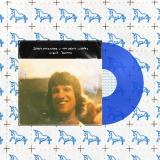
Freestyle's run of reissues continues with the sought-after 1983 UK electro-funk of State of Grace's Touching the Times getting a freshly remastered 12" cut!
State of Grace were a trio formed at the start of the 80s, releasing a handful of singles between 1981 and '84. As SoG's David Inglesfield recalls, "in early 1982 we recorded 4-track demos of 'That's When We'll Be Free', 'Touching the Times' and a third song. When we played them to Mike Collier, who'd released our first single for his Flamingo label, he offered us a contract on the spot and licensed the finished tracks to for release on the PRT label"
Having released 'That's When We'll Be Free' in late 1982, 'Touching the Times' landed on 12" and 7" formats in early summer 1983. "For the demos, we'd used a TR-808 for the drums, and we kept the 808 for the final version of 'That's When We'll Be Free'", Inglesfield continues, "but for the full version of 'Touching the Times' we decided to use a Linn LM-1 for the drums. The keyboard sounds were from a Roland Jupiter 8, Roland SH-2 and Fender Rhodes"
Touching the Times was recorded at The Bridge studio near Putney Bridge, then mixed at The Sound Suite in Camden. "At the time, we were into the Sloane Ranger upper-class English look" says Inglesfield "and for the photo shoot for the original picture sleeve, we wanted an aristocratic type interior, and Broughton Castle in Oxfordshire was selected for this purpose."
The updated centre label image on our reissue shows State of Grace's Adrian & Pat Thomas, and David Inglesfield, in the Camden Mews outside The Sound Suite - located just a short walk from Freestyle's home in Kentish Town.
- A1: State Of Grace
- A2: Red
- A3: Treacherous
- A4: I Knew You Were Trouble
- B1: All Too Well
- B2: 22
- B3: I Almost Do
- B4: We Are Never Evert Getting Back Together
- C1: Stay Stay Stay
- C2: The Last Time (Feat Gary Lightboy Of Snow Patrol)
- C3: Holy Ground
- C4: Sad Beautiful Tragic
- D1: The Lucky One
- D2: Everything Has Changed (Feat Ed Sheeran)
- D3: Starlight
- D4: Begin Again
As Nathan Fake rises from the nocturnal subterranea and rave catharsis of his previous records, on Evaporator, he resurfaces into the domain of daylight, bringing a tangible sense of air rushing against your face, of big skies, and endless landscapes. The idea of pop accessibility that trickled into 2023’s Crystal Vision is refracted here through the prism of sweeping ambient, deep electronica, and trance uplift. Evaporator is Fake’s idea of “airy daytime music”, with each track a different barometer reading across the album’s varying atmospheres, which range from vibrant sunbursts, bracing rainscapes, and fine mists of clement melodics. “It’s not overtly confrontational electronic club music,” states Fake. “It’s quite pleasant, it’s accessible. As I was progressing through making the tracklist, I called it a daytime album. It doesn’t feel like an afterparty album.” For the past decade Fake has been gingerly introducing collaborations with heroes and friends alike into his lone, idiosyncratic working process. Border Community alumni Dextro AKA Ewan Mackenzie transmutes his ferocious drumming for Pigs Pigs Pigs Pigs Pigs Pigs Pigs into the blurred choral thump of ‘Baltasound’. ‘Orbiting Meadows’, meanwhile, is his second collaboration with Clark, an eerily idyllic duet where microtonal 18EDO piano clangs slowly twirl around wailing pads. Evaporator marks the junction point of old technology and ever fresh creativity for Nathan. The trusty “dinosaur” age software, particularly Cubase VST5, that has powered two decades of music is rarely updated. “I used to sort of feel a bit ashamed of using such old software, and then I kind of had an epiphany – that’s just how I work”, comments Fake. “That’s just how I play. I’m very fond of these old tools, and I get the most joy out of them, but now I’ve incorporated new technology too.” When an artist accumulates so much synergy with their instrument, music making becomes instinctual. By Fake’s account, much of Evaporator just fell into place. The album title arrived randomly in his head (“it felt completely perfect. Airy.”), ideas looped and developed until things locked into place and just felt right. ‘The Ice House’ is a fleeting glimpse of the sonic world he taps into in this creative state, its glassy FM synths built around a counterpoint between rough-hewn crystalline arpeggios and sparse yet gravitas-bearing bass. “That riff I just wrote out on the keyboard, I just played it forever and ever and ever. The original track ended up being really short. Here you go, and it’s gone!” These unplanned channellings of sound call forth records from Fake’s past while he looks ahead, perhaps getting at the very essence of his musicianship. The opener ‘Aiwa’ (“the breeziest,” he muses) reminds of the introspection that characterised Providence, excited by the fire and grit of Steam Days’ textural experiments, its chunky slams and clatters surging into a flood of harmonic buzzing as they reach out for old wisdom. ‘Hypercube’ stampedes in a similar chronological confluence, infusing an incessant synth line reminiscent of the golden age of rave with the crackling, ecstatic energy of modern festival anthems. Like the vaporisation of liquid to particles, everything that Evaporator presents has a mutant desire to be amorphous. Sounds rarely settle; the irradiated garage beat of ‘Bialystok’ is pitched downwards to driving, rebounding effect, while ‘You’ll Find a Way’ warps static into shivering energy, cinematic synth strings building anticipation into a gradual gush of chords. This translates into a more expansive stereo field than Fake has explored before. ‘Slow Yamaha’ saves the wildest, most kinetic transformations for last with a cornucopia of crispy melodies and fried drums; a sibilance of cymbals on the left, a susurrus of shakers on the right, and kaleidoscopic lasers pulsing and fizzing all around. Evaporation culminating in pure excited atoms. In a world where music has increasingly become background content, making albums remains lifeblood for Fake: “It makes me realise how long; twenty years is ages! It’s weird to see how much the world has changed. Release day back then you did fuck all, now you spend all day on socials. When I grew up the people who made the electronic music I was into were quite mysterious, and the artwork was very abstract. There was a massive distance between you and that music, and that was a key part of it, really. Now it helps to be an extrovert, and I'm just not, but the album marks the first time my face has graced the cover art. I’ve never wanted to do this before, I'm very shy, and generally I don’t like being seen,” he professes. “But, twenty years in, I supposed I could try something new. I'm very lucky that I'm somehow surviving in this world, where the media world favours extroverts and interesting looking people. It’s not my world but somehow I’m still in it.” Evaporator continues to prove Nathan’s necessary presence, with some of his most engaging, varied, and magical music yet.
'Matsuli Music is proud to announce the first vinyl reissue of Philip Tabane’s Sangoma ("Spiritual Healer") since its 1978 release. Remastered from the original tapes with lacquers cut by Frank Merrit and pressed on 180g heavyweight vinyl at Pallas in Germany, this definitive edition re-asserts the power of one of South Africa’s landmark recordings. Featuring new liner notes by cultural critic Kwanele Sosibo and artwork restoration by Siemon Allen, Sangoma returns in full force through an extended Malombo line-up, fronted by Tabane's spellbinding guitar - ancestral, timeless, and unbound.
'Philip Tabane (1934–2018), the mercurial guitar genius of South African music, forged a sound that was as rooted in the spirit world as it was in daily life. With the Malombo Jazzmen of the 1960s, Tabane disrupted Western notions of “jazz,” bringing the resonant rhythm of cowhide malombo drums into the foreground. While outsiders and the uninitiated often reached for labels like “primitive yet sophisticated,” Tabane and his collaborators named it more truthfully: “music of the spirit.”
'By the time of Sangoma, Tabane stood at a crossroads. Fresh from a period of three years’ touring in the United States where he graced the Newport Jazz Festival, and played alongside Miles Davis, Herbie Hancock, Pharoah Sanders and others, he brushed off comparisons with characteristic self-assurance: “No, I don’t play like Miles. Miles plays like me.” Back home in South Africa, and with a newly signed international distribution deal with WEA Records, he harnessed this momentum into a larger band setting, capturing a rare intensity.
'The result was Sangoma—an album that bridges contradictions: expansive yet intimate, celebratory yet haunted by exile and return. Tracks such as “Sangoma,” “Hi Congo,” and “Keya Bereka” are not simply performances but living testaments, songs that would remain in his repertoire for decades. Unlike the moody, immersive character of much of his work, here Tabane is on the move—urgent, restless, uncontainable. As he announces on the second track, “Maskanta wa tsamaya” (“something that kicks ass”).
More than four decades on, Sangoma is both an historical document and a timeless invocation. From his home in Mamelodi to the world and back again, Tabane’s spiritual healing endures—raw, electric, and unbowed.'
- A1: The Beau Brummels – Turn Around 3:01
- A2: Quicksilver Messenger Service – Joseph’s Coat 4:53
- A3: Moby Grape-Rose Coloured Eyes 4:00
- A4: Skip Spence – Grey / Afro 9:36
- B1: Ron Nagle – 61 Clay 2:37
- B2: Creedence Clearwater Revival – Ramble Tamble 7:12
- B3: Steve Miller Band – Motherless Children 6:02
- B4: Paul Kantner & Grace Slick -When I Was A Boy I Watched The Wolves 4:58
- C1: The Great Society -Free Advice 2:12
- C2: Sopwith Camel – Frantic Desolation 2:17
- C3: Big Brother & The Holding Company – All Is Loneliness 2:19
- C4: Country Joe & The Fish- Section 43 6:45
- C5: Santana -Eternal Caravan Of Reincarnation 4:28
- C6: Sly & The Family Stone – Everyday People 2:23
- D1: Doobie Brothers -Beehive State 2:42
- D2: The Charlatans -Alabama Bound 7:03
- D3: Kak - Lemonade Kid 5:56
- D4: The Grateful Dead -Mountains Of The Moon 4:09
New Jon Savage Compilation release alert! Jon Savage's SF Sike 1966-72 (Double Vinyl) Limited Edition. Heavyweight Luxury Gauge Sleeve-Stock & Inners.
The real sound of San Francisco 1966-72." It was the new gold rush, but with drugs, music and freedom the goal. " (Jon Savage -The Guardian August 2012)
A limited edition double vinyl 18 track album celebrating the great pop music and idealism of that time & featuring Moby Grape, Skip Spence, Ron Nagle, Country Joe & The Fish & much more
Full contextual & track-by-track sleeve notes by Jon Savage. Ephemera & archive material from the period.
- A1: Les Masques - Il Faut Tenir (1969)
- A2: Isabelle Aubret - Casa Forte (1971)
- A3: Christianne Legrand - Hlm Et Ciné Roman (1972)
- A4: Jean Constantin - Pas Tant D'chichi Ponpon (1972)
- A5: Billy Nencioli & Baden Powell - Si Rien Ne Va (1969)
- B1-: Marpessa Dawn - Le Petit Cuica (1963)
- B2: Jean-Pierre Sabar - Vai Vai (1974)
- B3: Sophia Loren - De Jour En Jour (1963)
- B4: Isabelle - Jusqu’à La Tombée Du Jour (1969)
- B5: Sylvia Fels - Corto Maltesse (1974)
- C1: Frank Gérard - Comme Une Samba (1972)
- C2: Ann Sorel - La Poupée Des Favellas (1971)
- C3: Charles Level - Un Enfant Café Au Lait (1971)
- C4: Andrea Parisy - Les Mains Qui Font Du Bien (1970)
- C5: Audrey Arno - Quand Jean-Paul Rentrera (1969)
- C6: Aldo Frank - T’as Vu Ce Printemps (1970)
- D1: Christianne Legrand - Cent Mille Poissons Dans Ton Filet (1972)
- D2: Clarinha - Lemenja (1970)
- D3: Hit Parade Des Enfants - Aquarela (1976)
- D4: Jean-Pierre Lang - Tendresse (1965)
- D5: Magalie Noël - Une Énorme Samba (1970)
- D6: Françoise Legrand - La Lune
Ever since the late 1950s bossa-nova revolution, Brazil’s influence on French music has been undeniable. Pierre Barouh, Georges Moustaki and a vast array of lesser known artists, all made the Musica Popular Brasileira (MPB) an axis of promotion at the service of a cool and metaphysical, modern and mixed Brazilian lifestyle. Some were seduced by the poetic languors of the bossa, some were looking for fun, and others just loved the American hybridization of jazz-bossa, jazz-samba.
What is bossa nova? One of its creators, Joao Gilberto said: "Its style, cadence, everything is samba. At the very start, we didn't call it bossa nova, we sang a little samba made up of a single note - Samba de uma nota so .... The discussion around the origins of bossa nova is therefore useless”. It is nevertheless useful to remember that these magnificent Brazilian songs, which the guitarist describes as samba, were shifted and balanced around improbable chords. "I like things that lean, the in-betweens that limp with grace," said Pierre Barrouh, quoting Jean Cocteau.
With emotion, arrangements for violin and supple guitar licks, bossa nova rapidly changed. A transformation that can be heard in the Tchic, tchic, French Bossa Nova 1963-1974 compilation, the result of a cultural reappropriation, which traveled through the United States and supplemented itself in France.
A musical revolution that has remained significant, bossa nova was born in Rio. From 1956 to 1961, Brazil lived through its golden years. In five years, the country had invented its modernist style. Elected president in 1956, Juscelino Kubitschek de Oliveira, an elegant man with a broad forehead, brandished a promising slogan: "Fifty years of progress in five years". He quickly got to work. Not worried about increasing debt, he launched the project for a new federal capital, Brasilia, designed by the communist architect Oscar Niemeyer. Volkswagen opened state-of-the-art factories and created the “fusquinha”, the Beetle. In Rio, the Vespa made its first appearance. The Arpoador Surf Club crew run into the “girl” from Ipanema, Helô Pinheiro - the tanned garota ("chick"), between a flower and mermaid, who at 17 walked by the Veloso bar, where the fiery author and composer, Tom Jobim and Vinicius de Moraes, were getting drunk on whiskey. From then on, bossa symbolized cool.
In 1958, Joao Gilberto recorded Chega de Saudade, which the directors of Philips denied, calling it "music for fagots". The marketing director, who believed in it, secretly pressed 3000 78-inch vinyls and distributed them at schools around Rio, creating a tidal wave.
American jazzmen then took over. In particular, trumpeter Dizzy Gillespie and guitarist Charlie Byrd. In November 1962, the Brazilian Ministry of Foreign Affairs funded a "Bossa-Nova" concert at Carnegie Hall in New York, inviting the genre’s pioneers. Unprepared, the show soon turned to disaster. But the troupe was invited to the White House by Jackie Kennedy. The first lady loved "the new beat" and in particular Maria Ninguem, a song by Carlos Lyra, later covered by Brigitte Bardot.
In Brazil, the 1964 military coup quickly ended this euphoria. The destructive atmosphere that ensued pushed many Brazilian musicians to leave, if not to exile. Thus, Tom Jobim, Sergio Mendes and Joao Gilberto arrived to the United States. In New York, Joao Gilberto met saxophonist Stan Getz. At the time, he was married to the Bahianese Astrud Weinert Gilberto, who had a German father. She had never sung before, but she knew how to speak English. Getz therefore asked her to replace her husband on The Girl From Ipanema. The Getz/Gilberto record with Tom Jobim on piano, was released in March 1964. Phil Ramone, the "pope of pop" was in charge of sound.
Bossa nova arrived in Paris through the classic “guitar-voice” channel (Pierre Barouh, Baden Powell, Moustaki…) But France loved jazz and Paris had already welcomed its American contributors. All these good people were to pass through Saint-Germain-des-Prés. The cabaret l'Escale became the Mecca of Latin American sound where one could find Pierre Barrouh and his friends, such as the Camara Trio, samba-jazz aces, whose only record was published by the Saravah label. With a band strangely called Les Masques (a band that included Nicole Croisille and Pierre Vassiliu, among others), the Camara Trio recorded an interesting Brazilian Sound, including the track Il faut tenir which is present on this tasty compilation of rarities.
Other enlightened musicians can also be found on the compilation, such as Jean-Pierre Sabar (songwriter for Hardy, Auffray, Leforestier ...) and the French pop rock organist Balthazar. In 1975, Sabar recorded Aurinkoinen Musiikkimatka on a Finnish label, which featured the crazy Vai, Vai, included on this record. We are now following the footsteps of Brazilian electronic musicians such as Sergio Mendes, Eumir Deodato or Marcos Valle who created funk and disco sounds on their keyboards and synthesizers. A style that influenced Véronique Sanson when she wrote Jusqu’à la Tombée de la nuit in 1969 for Isabelle de Funès, the niece of Louis and a great friend of Michel Berger - Sanson did end up singing this track on her 1992 Sans Regret record.
The pinnacle of exoticism and travel, Sylvia Fels’ Corto Maltese includes bongos, sea mist and ocean sounds. The title was taken from Jacky Chalard’s concept album written in 1974, Je suis vivant, mais j’ai peur (I am alive, but I am scared), based on Gilbert Deflez’s science fiction novel.
However, bossa nova extended the scope of popularity. "In the 1970s, I was a fan of Sergio Mendes, Getz / Gilberto. I fell in love with this music that I knew because I had been an orchestral singer, " explained Isabelle Aubret, who in 1971 delivered a composite record of covers by the very funky Jorge Ben, Orfeu Negro, Tom Jobim, Vinicius de Morais and Jean Ferrat. "I recorded this album for Meys Records in Paris, far from Brazil, with wonderful musicians, François Raubert, Roland Vincent, Alain Goraguer...". The latter wrote the arrangements for Casa Forte, a very percussive title borrowed from Edu Lobo, one of the initiators of the bossa who spent time in California. "Jazz and bossa came together and produced very rhythmic music. I love singing, it allows me to dream, to have fun, to feel a high on stage, and these songs brought me joy, made me swing, my singing felt like a dance.”
The world tours of French singers and their desire for the tropics, often brought them to Rio with its hills, forests, caipirinhas and tanned bodies. There are surprises though, like this Iemenja (Iemenja is the goddess of the sea in the Afro-Brazilian candomblé religion). Not unlike the composer and musician Jean-Pierre Lang, based in Sao Paulo, Claire Chevalier taught Brazil to Brazil. In 1970, the singer and painter published a 45-inch vinyl, Mon mari et mes amants (My husband and my lovers), under the improbable pseudonym of Clarinha (little Claire). She was then living in Rio, with her husband, Joël Leibovitz, who founded a band called Azimuth, and who owned a record label specialized in "sambas enredos" songs for samba school parades.
For its B side, she asked Pierre Perret to come up with lyrics for a song composed by Carlos Imperial: "Oh goddess of the sea, o goddess Iemenja, I bring a white rose to adorn your long hair ..." . "Perret came to see us, and we had fun, remembers Joël Leibovitz. We wrote Lemenja for fun, we recorded it at the Havaí studio, behind the Central do Brasil the central station. Erlon Chaves, the arranger who worked with Elis Regina, joined us" adding his share of Afro-Brazilian percussions and funky brass to the mix.
There is a common misunderstanding in Franco-Brazilian history: that bossa, admittedly hedonistic, is perceived as funny, even though the poets who wrote the texts are often philosophizing on the human condition. Its French interpreters pull it towards a carnival inspired universe, far removed from its fundamental essence. Thus, Jean Constantin covered the famous Samba da minha terra, an ode to the art of samba written by the classic Bahian composer Dorival Caymmi, renaming it with the enticing title of Pas tant de tchi tchi pompon: "On your pier there is no tchi tchi / when you arch your back, you know everything is alright ”(lyrics by Gérard Calvi). This expedited bossa aims for the absurd, but retains a certain elegance.
Indeed, Jean Constantin was not an idiot, the rather large man had a huge mustache and liked fantasy, (Les pantoufles à papa, Le pacha, inspired by cha-cha-cha-cha, salsa and jazz) but he was also the lyricist of Mon manège à moi interpreted by Edith Piaf, the composer of Mon Truc en plume by Zizi Jeanmaire and the soundtrack of François Truffaut’s 400 Blows. Le Poulpe, published in 1970, from which this bossa is extract, was arranged by Jean-Claude Vannier, an accomplice of Serge Gainsbourg’s Melody Nelson. In short: "There is enough of samba / By looking at the parasol / Because my poor cabeza / Is going to die in the sun".
Even the American actress Marpessa Down, who was at the heart of the bossa nova revolution with her role as Euridyce in Marcel Camus’ film Orfeu Negro, winner of the 1959 Cannes Palme d'or, fed the clichée with Je voudrais parler au petit cuica - "Tell me how you manage to always make people want to dance / It's true, I must admit that I cannot resist your magic" - in consequence, once can hear the cuica, a little drum inherited from the Bantu.
But bossa nova had many angles. Societal, of course, pushing actresses who were symbols of women's liberation like Brigitte Bardot, Jeanne Moreau, or Sophia Loren to engage in the exercise of accelerated bossa. In February of 1963, Sophia Loren made a record in French in Rome, Je ne t'aime plus, featuring the song De jour en jour, a bossa written by two Italians, Armando Trovajoli and Tino Fornai, which was released a little later by Barclay. Bossa accompanied the 1960s, a decade of moral liberation. Ann Sorel, who interpreted La Poupée des favellas, caused a sensation with L’amour à plusieurs, a provocative song written by Frédéric Bottom and Jean-Claude Vannier. As for the actress Andrea Parisy, she displayed her bourgeois cheekiness in Marcel Carné's Les Tricheurs before interpreting Les mains qui font du bien. And Magalie Noël, the friend of Boris Vian, who sung Johnny fais-moi mal, was hired to sing Une énorme Samba, composed by Alain Goraguer (arranger to Gainsbourg, Bobby Lapointe and Jean Ferrat) with lyrics by Frédéric Botton.
But in the end, of what wood is bossa nova made of? The answer is given by Christianne Legrand, daughter of Raymond the conductor, and sister to Michel the composer: "With me, with jà" - jà means "immediately" in Portuguese. In 1972, the singer, an expert in vocal jazz and a member of the Double Six, published Le Brésil de Christianne Legrand. Two songs included on the Tchic Tchic compilation that demonstrate how bossa, jazz, funk, rock, etc. work like a swiss army knife: the music is used to denounce broken systems, or miracles, HLM et ciné roman, Cent mille poissons dans ton filet, two songs from the O Cafona soundtrack, a successful telenovela broadcast, at the time in black and white, on TV Globo. The first was adapted in French by the fighter and friend of the Legrand tribe, Agnès Varda. The second is content with a play on words, jostling them into a summer fun.
Véronique Mortaigne
- A1: State Of Grace
- A2: Holy Ground
- A3: Red
- A4: The Lucky One
- B1: Mean
- B2: 22
- B3: Mine (Acoustic)
- B4: You Belong With Me
- C1: Sparks Fly
- C2: I Knew You Were Trouble
- C3: All Too Well
- D1: Love Story
- D2: We Are Never Ever Getting Back Together
A decade ago, Taylor Swift was already a world-renowned and dominant force in the pop world. In 2014, she was on a world tour that took in a stop at Tokyo Saitama Arena on June 1st and the recording of it captures the electrifying energy of her sold-out performance during the iconic "Red" world tour. This live album showcases Swift at her early peak and delivering heartfelt ballads and powerful pop anthems with her signature charm and stage presence. Fan favourites resonate with emotion and live energy, while quieter moments like 'All Too Well' highlight her storytelling prowess. The Saitama Arena crowd adds to the magic throughout.
Shall Not Fade welcomes Pugilist for SNF140 "Maternal".
If you don't already know (and love!) Pugilist's prolific output, you need to get to know! The Naarm/Melbourne based DJ, producer and Rinse resident has released on Martyn's 3024, Melbourne's killer Modern Hypnosis, Silent Era's Of Paradise, Samurai, Rupture, ZamZam, J:Kenzo's Artikal, Sub Basics' Temple of Sound, Whities/AD93, Al Wooton's Trule, Banoffee Pies, Best Intentions and now his own buy on sight Ruff Kutz imprint.
'Maternal' is four blissey dubwise house blurring cuts. Embracing, medicinal, lush & corrective. Vibrations for heads and feet.
'Title track 'Maternal' is deep grooving infectious and honeyed house. Hypnotic, pulsating with head-meltingly warm padwork. 'Bona Fide' sees Pugilist team up with UK duo Mystic State. Drums sidestep with jazz swing while graceful piano and an ensemble of pads are topped with an introspective vocal sample dialing for your subconscious. The B1 'Anomaly' is a stepper - FWD charging drums backed with sub low pulses all brought together by trumpet echoes and woozy melodics. Finally comes 'Marigold', a soulful jungle excursion > early hours business, caressed nostalgic percussion, brushed rhythms, fleeting guitar licks and undulating vibes.
Saxophonist, producer and composer Brian Allen Simon explores darker hues, transposing waking and altered states under his studio veil Anenon. On the deeply evocative new album 'Dream Temperature', he shifts electronic processing to the foreground, introducing digitized wind instruments and unworldly atmospherics, not heard since his innovating mid-late 2010s output.
A longtime Los Angeles resident, born and raised, Brian Allen Simon has expressively operated under the moniker Anenon, releasing the highly revered 'Petrol' (2016), 'Tongue' (2018) and the viscerally beautiful 'Moons Melt Milk Light' (2023), in a line of unwavering musical dialogues. While the penultimate album was a deliberate, reductive, entirely acoustic detour that was born out of a want to unplug, 'Dream Temperature' sees Brian primed with a newly discovered wind synthesizer as his central compositional tool, alongside acoustic piano and tenor saxophone. The entirety of the album's electronics are triggered by Brian's lungs, generating otherworldly synths modulated by expressive breath control, channelled through the laptop as the core processing chamber for added textural components and field recordings.
A free floating and heavy emotional resonance marks 'Dream Temperature' from beginning to end, invoking the feeling of waking up, still heavy from a night of half-remembered dreams, and continuing one's day in this state. Simon maps out the album's spatial voice early on the statement title track, a deep, yet compact cut, generated from digital saxophone rasps that whistle by in close proximity, along with haze filled textures and sub bass. There is a sonic oscillation of urban grit and pastoral drift throughout as tracks pass by like introspective thoughts, fueling both a tense and ethereal quality that underpins the album. Interluding solo and part-solo piano improvisations 'Last Sun 1' and '2' are positioned adjacent to the buffering digital soundscapes. Their softer, still processed timbres pierce the melancholic exterior, offering a contrasting tenderness that could echo the grace of Ry?ichi Sakamoto, the spiritualist rigor of ECM's Keith Jarrett and a touch akin to Aphex Twin's piano miniatures. 'Nulle Part 1+2' signals the first appearance of an acoustic wind instrument, as tenor saxophone flourishes are juxtaposed against noisy drones, all shouting at the void, with notes resurfacing like lost digital data.
The album was recorded at home during either sunset or nocturnal hours between September of 2024 and October of 2025, a period in which Brian found himself craving more lengthy and intimate studio time as he searched for more pronounced textural qualities amidst his new sonic ambitions. 'When The Light Appears, Boy' shows further evidence of this deeper universe, revealing a grittier edge as the album's essential blueprint is sonically inked. A sprawling expanse of wind synths rhythmically encircle the listener before a dreamy, ghostly ambience blankets 'Toyama'. The sound is evocative of the productions of post dubstep era luminaries such as Burial or the productions of HTRK's Nigel Yang. More isolating and enveloping than the previous all acoustic record, this is music both disorienting and yet warmly inviting all at once. A sonic diarist at heart, personal field recordings were also taken from Sardinia, Japan, Big Sur and LA which intersect at unexpected moments throughout the album's 31-minute play time.
'Dream Temperature' is a vital coalescence of both Simon's electronic and acoustic practices with repositioned electronics akin to earlier works, both haunting and elegant, yet still profoundly personal. Simon continuously resonates as an experimental outlier treading an enthralling, non-linear musical path. This music resolutely glows with an unknowing aura, like an untapped energy source waiting to be discharged.
- A1: Intro
- A2: The Soundtrack Of Life
- A3: Journey
- A4: World Of Love
- A5: Laurie's Theme
- B1: Emotion Heater
- B2: Dream
- B3: Tiki Mix
- C1: Travel Bug
- C2: Le Tunnel De L'amour
- C3: Stay
- D1: A Close Encounter
- D2: Relaxation Central
- D3: Journey (Reprise)
- D4: Outro
- E1: Space Bubble
- E2: Star
- E3: Sunny Day (Demo)
- F1: Journey (Aphex Twin Care Mix)
- F2: Journey (Gentle Instrumental
WRWTFWW Records is proud to present THE GENTLE PEOPLE - Soundtracks for Living (Expanded Edition), ?the ultimate Lounge/Chill Out classic from 1997, reborn! Available as a limited edition white vinyl 3LP in heavyweight 3-panel gatefold sleeve.
When The Gentle People first glided into the mid-90s on clouds of strings, sugar and sine waves, they sounded like visitors from another, more glamorous planet. Signed to Richard D. James and Grant Wilson-Claridge's cult label Rephlex, this multinational "E-Z-Core" lounge unit took the aesthetics of 50s/60s easy listening and exotica and gently smuggled them into 1990s club culture.
Soundtracks for Living was their defining statement: an album that "takes the lounge scene and runs away with it entirely… blissful and heavenly," as one contemporary review put it. Imagine KLF's Chill Out or Space growing up on French 60/70s pop, bossa nova, soundtracks, vocal harmony groups, library music and easy listening then slipping out for a late-night date with dub, ambient techno and bubble-bath pop. That's Soundtracks for Living: a record that can score cocktail hour, 4am taxi rides, and daydreams in headphones with the same effortless grace.
The Gentle People - Dougee Dimensional, Laurie LeMans, Valentine Carnelian and Honeymink - began in early-90s Brixton, throwing dress-up theme parties before taking their audio-visual universe into the studio. For them, music was "a way of life": soothing to the ear, rich in pop hooks, and pitched somewhere between the playfully idiotic and the hyper-intelligent. Their debut on Rephlex was the single "Journey", later blessed with a shimmering Aphex Twin remix that pushed their sugar-coated sound even further into outer space.
This Expanded Edition of Soundtracks for Living finally gives this glambient lounge-pop milestone the treatment it has always deserved. Spread lovingly across 3LP, it features new mastering from the original sources, allowing every harp glissando, string swell and analog squiggle to float in high-fidelity widescreen. The core album is complemented by a bonus 12" of unreleased and rare material, offering a deeper dive into the Gentle world: alternate takes, lost interludes, and secret soundtrack cues for lives not yet lived.
Crucially, "Journey" appears here in its original version, Gentle Instrumental and the cult Aphex Twin remix, reuniting band and labelmate in one place and underlining the quietly radical nature of the project: this was lounge music that could sit next to braindance, acid and IDM and still steal the scene.
Pressed on limited edition white vinyl, Soundtrack for Living (Expanded Edition) invites long-time fans and new listeners alike to step back into The Gentle People's universe - a place of fondue parties, bubble chairs, star-lit elevators and endlessly rewinding sunsets, where "the pathway to the stars" is never quite out of reach.
In an era that often reduces the 90s to big-room bangers and grunge guitars, Soundtracks for Living remains a quietly subversive reminder that the decade was also about imagination, camp, softness and utopian possibility. As later writers have noted, The Gentle People weren't just a curiosity on a weird label; they became unlikely icons of a whole loungecore moment, gracing TV, compilations and magazine spreads, and proving that tenderness could be as futuristic as any drum machine.
In conjunction with this release, WRWTFWW has also unearthed The Gentle People's Peel Sessions, a 4-track EP from their 1997 BBC on-air performance, available on vinyl for the first time ever !
- A1: A Day In Your Life Ft. Antonina Nowacka
- A2: Jellyfish Light A Big Blue Lie
- A3: Days Ft. Heith
- A4: Slices Of Wind
- A5: Miles Of Silence Ft. Antonina Nowacka
- B1: The Lighthouse Ghost Ft. Martyna Basta Heith
- B2: Airbus 2021
- B3: Music For Airdrop Ft. Renato Grieco
- B4: Please Please Dear Seagull
- B5: Iced-Eye Clown
"Recorded in Naples historic recording studio Auditorium Novecento ‘notes from the air’ is the second Ciro Vitiello full-lenght album, that turns around the ambiguous figure of the seagull, a coastal apparition both ridiculous and divine, foolish and sacred, graceful in flight yet uneasy on land, something that knows more than it shows, carrying both wonder and threat in its gaze.
The album breathes through that tension, the desire to fly and the fear of falling, the suspicion of having already crashed somewhere unseen.
Wind, creaking ropes, invisible currents: these become signals from another uncoding state, reminders that air can be both home and haunting. The record lingers in suspension. Each track feels like a fragment carried by wind, a message blurred, a memory misplaced, something approaching meaning but never arriving.
The record drifts between orchestral gestures and dream-pop/post-rock shadows, guided by Ciro Vitiello’s fascination with shoegaze textures and cinematic atmospheres, and features contributions by Heith, Renato Grieco, Stefano Costanzo, Caraluce and Daniel Kinzelman. Vocal features include Martyna Basta, Heith and Antonina Nowacka, alongside Ciro’s own voice."
- 1: Urn Burial
- 2: The Redness In The West
- 3: The Third Migration
- 4: They Came Like Swallows
- 5: The Living Theater
- 6: The Oceans Are Crying
- 7: Insight
Black Vinyl[30,67 €]
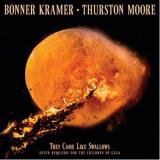
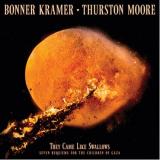
They Came Like Swallows is the first album-length collaboration between Thurston Moore and Kramer (now officially Bonner Kramer), two giants of alternative/ experimental music. The accomplishments and influence of these two artists in the world of independent music cannot be overstated and the result of their artistic union is a startlingly cohesive statement that burns through landscapes of primitive outsider rock, avant-garde composition, progressive ambient and further locales boldly and beautifully unnamable. “Kramer and I reconnected in Miami, Florida, a few years back, many many years after each of us had departed NYC on separate life adventures. It was only a matter of time before Kramer and I started making plans to record together and with his irrepressible due diligence he quickly set up a mobile recording contraption in the pad I was decamped in, the Florida sunshine flowing through the palm leaves, lithe lizards skittering across the windowsills, and we just went for it.
Kramer had the idea to cover a Joy Division tune, a left turn from the improvisations we had been tracking, though wholly in keeping with both our sensibilities of light and dark unifying in transcendent songwriting, both of us devotees of 'the song' as well as 'the freedom.’ What transpired is They Came Like Swallows, a session we immediately felt should exist as a prayer to the war-torn souls of the families of Palestine continually decimated by the brutality of genocide. We agreed beyond words to offer our music as a sonic activism and as a beneficent energy. This album is our duo exchange for human dignity, it is our soul music for any semblance of a peaceful planet.” ~ Thurston Moore “For the first time in our nearly 45 years of friendship, we had identical time windows open to make a record together,” recounts Kramer. After all this time not a moment is wasted as the duo immediately taps into the heightened core of improvisational tension across these seven offerings. Volcanic opener “Urn Burial” notches a similar historic union (John Cale and Terry Riley) to meet the circumstances of the moment, with swirling mists of organ and pounding toms over guitar that thickens the atmosphere with jagged, grimy dissonance.
Solemn strings open the second track, “The Redness In The West,” with Kramer’s cello and viola in dueling bow beneath the high tension drive and sustain of Thurston’s electric guitar, tapping out a Morse code of tension that mounts endlessly into a fog of inevitable war by the end. Moore and Kramer’s sense of experimentalism is in free and full grandeur throughout They Came Like Swallows, though the duo keep a strong and constant sideways eye on melody, composition and architecture, to the ends that any strict lines between song and improvisation are blurred beyond qualification.
As if to punctuate this point, Swallows closes with a nightwork cover of Joy Division’s “Insight,” a doleful coda that breathes out with a solemn inner grace under Thurston’s instantly stylistically recognizable guitar melodies as they weave into he and Kramer’s unison voices. As the lone vocal piece and only traditional ‘song’ form on the album, “Insight” is unique to this set and as a closing statement draws connective lines back to the kind of dynamic, electrified melodicism that wove deep, melancholy patterns into the untamed fire of Sonic Youth’s Sister and Daydream Nation. In the album’s final moments, the two voices repeat the lyric “I’m not afraid anymore” as mantra, underscoring the heavy, unsettled themes and methods that preceded it. Kramer describes the creative process of They Came Like Swallows: “I had composed and recorded a few pieces at my home studio over the course of a couple weeks. Thurston was spending the winter in South Florida, so I flew down and spent a few days recording his guitar parts in his home there. Watching him spontaneously compose his parts was pretty astonishing, to say the least. Once we'd finished working on those pieces, we began improvising and following wherever the music pointed us, and another few pieces were born. We got straight to it, without anything driving us other than the joy of finally working together.
My personal goal was to remain present and catch as many surprises as I could from Thurston's guitar work, and there were plenty during those few days. We had a fucking blast.” Thurston’s contributions here will be readily familiar to any acolytes of his other works, the through-line between his inspired playing, cradled in Kramer’s meticulous, solid arrangements. “If I had to make this record again, I'd do it all exactly the same way,” Kramer says. “It’s like jazz, you don't think about it. You just do it. It was miraculous, and you don't fuck with a miracle.”
They Came Like Swallows is the first album-length collaboration between Thurston Moore and Kramer (now officially Bonner Kramer), two giants of alternative/ experimental music. The accomplishments and influence of these two artists in the world of independent music cannot be overstated and the result of their artistic union is a startlingly cohesive statement that burns through landscapes of primitive outsider rock, avant-garde composition, progressive ambient and further locales boldly and beautifully unnamable. “Kramer and I reconnected in Miami, Florida, a few years back, many many years after each of us had departed NYC on separate life adventures. It was only a matter of time before Kramer and I started making plans to record together and with his irrepressible due diligence he quickly set up a mobile recording contraption in the pad I was decamped in, the Florida sunshine flowing through the palm leaves, lithe lizards skittering across the windowsills, and we just went for it.
Kramer had the idea to cover a Joy Division tune, a left turn from the improvisations we had been tracking, though wholly in keeping with both our sensibilities of light and dark unifying in transcendent songwriting, both of us devotees of 'the song' as well as 'the freedom.’ What transpired is They Came Like Swallows, a session we immediately felt should exist as a prayer to the war-torn souls of the families of Palestine continually decimated by the brutality of genocide. We agreed beyond words to offer our music as a sonic activism and as a beneficent energy. This album is our duo exchange for human dignity, it is our soul music for any semblance of a peaceful planet.” ~ Thurston Moore “For the first time in our nearly 45 years of friendship, we had identical time windows open to make a record together,” recounts Kramer. After all this time not a moment is wasted as the duo immediately taps into the heightened core of improvisational tension across these seven offerings. Volcanic opener “Urn Burial” notches a similar historic union (John Cale and Terry Riley) to meet the circumstances of the moment, with swirling mists of organ and pounding toms over guitar that thickens the atmosphere with jagged, grimy dissonance.
Solemn strings open the second track, “The Redness In The West,” with Kramer’s cello and viola in dueling bow beneath the high tension drive and sustain of Thurston’s electric guitar, tapping out a Morse code of tension that mounts endlessly into a fog of inevitable war by the end. Moore and Kramer’s sense of experimentalism is in free and full grandeur throughout They Came Like Swallows, though the duo keep a strong and constant sideways eye on melody, composition and architecture, to the ends that any strict lines between song and improvisation are blurred beyond qualification.
As if to punctuate this point, Swallows closes with a nightwork cover of Joy Division’s “Insight,” a doleful coda that breathes out with a solemn inner grace under Thurston’s instantly stylistically recognizable guitar melodies as they weave into he and Kramer’s unison voices. As the lone vocal piece and only traditional ‘song’ form on the album, “Insight” is unique to this set and as a closing statement draws connective lines back to the kind of dynamic, electrified melodicism that wove deep, melancholy patterns into the untamed fire of Sonic Youth’s Sister and Daydream Nation. In the album’s final moments, the two voices repeat the lyric “I’m not afraid anymore” as mantra, underscoring the heavy, unsettled themes and methods that preceded it. Kramer describes the creative process of They Came Like Swallows: “I had composed and recorded a few pieces at my home studio over the course of a couple weeks. Thurston was spending the winter in South Florida, so I flew down and spent a few days recording his guitar parts in his home there. Watching him spontaneously compose his parts was pretty astonishing, to say the least. Once we'd finished working on those pieces, we began improvising and following wherever the music pointed us, and another few pieces were born. We got straight to it, without anything driving us other than the joy of finally working together.
My personal goal was to remain present and catch as many surprises as I could from Thurston's guitar work, and there were plenty during those few days. We had a fucking blast.” Thurston’s contributions here will be readily familiar to any acolytes of his other works, the through-line between his inspired playing, cradled in Kramer’s meticulous, solid arrangements. “If I had to make this record again, I'd do it all exactly the same way,” Kramer says. “It’s like jazz, you don't think about it. You just do it. It was miraculous, and you don't fuck with a miracle.”
The second chapter after “neverlost”, “closer” blends samplebased production with classic songwriting – like a sonic mosaic of warmth and groove. Lyrically “hippiesque,” Sepalot explores natural beauty, unity, equality, and self-determination. Guest features shine: Blu delivers sharp lyricism, and Illa J surprises
with soulful vocals on “My Own Way.” For fans of The Avalanches, Caribou, and Madlib – Closer is lush, human, and unforgettable.
Sepalot is one of those rare artists whose sonic palette refuses to be boxed in. His music exists in the fertile space between multi-layered sophistication and playful unpredictability – a quality rooted in his eclectic upbringing. From skate-punk beginnings to soul all-nighters, from obsessive vinyl digging to
deep immersion in hip-hop’s golden era, Sepalot has carried the art of sampling like a badge of honor. His beats are mosaics – meticulously pieced together fragments of sound forming an intricate whole. Beyond the studio, he’s explored these influences as DJ, producer, and live performer, leading the
Sepalot Quartet across Europe’s jazz festivals, and more recently with his experimental band Tikhet alongside Angela Aux
With “closer”, the upcoming second chapter following his 2023 album “neverlost”, Sepalot distills his broad musical world into a sample-based yet song-driven statement. The production feels warm and tactile – think needle-on-vinyl crackle meeting modern songwriting clarity. Lyrically, it’s “hippiesque” in the best
way: themes of natural beauty, unity, democratic awareness, equality, and spiritual introspection weave through the tracklist.
The guest list is just as inspired: legendary wordsmith Blu delivers razor-sharp verses, while Illa J – brother of the late J Dilla – steps away from his signature rap to surprise with soulful vocals on “My Own Way.” Together, they amplify the album’s humanist core, balancing groove-heavy production with
lyrical depth.
Fans of artists like The Avalanches, Caribou, DJ Shadow, or Madlib will find plenty to love here, but Closer carries its own unique fingerprint – a testament to Sepalot’s ability to merge hip-hop grit with songwriting grace. If “Neverlost” was a map, “Closer” is the destination: lush, thoughtful, and deeply human.
Highly recommended for anyone ready to hold hands, open their mind, and let the beat guide them.
UFC is proud to present its tenth release, “Music For A Dreaming Generation”, by R.I.P. Bestia, featuring remixes by Rabbit In The Moon, a mini-album produced between 2022 and 2024, where Analog Hardware and Sampling collide to form “Everything.”
'E.X.P.A.N.S.I.V.E (Ancestral Technologies Mix)' a fusion of Electro and Nu-Skool Breaks under a choral mantle of shamanic psychedelia. 'Music For A Dreaming Generation (Dub Botanical Reaction Mix)' the original version is brutalized and reactivated with the acids of the beloved TD-3, a colliding immersion of frequencies, dreamy pads, and hypnotic melodies filtered through the cherished JP-8080. 'Law 7/2023, of March 28' a humble, reivindicative sonic tribute to animal rights, compressed breaks and charming vocals are guided by a psychedelic melody up to a “Drop” where a monstrous Bassline takes the helm, steering you into an emotionally gravitational State of Dance.
About the remixes, Rabbit in the Moon delivers this legendary Techno-Trance gem 'Music For A Dreaming Generation (Nightowl Mix)' a remix we envision as “a crushing technoid mass” that lifts you up to an epic drop before bringing you back down to the earthly realm.'(Daydream Mix)' in this version, Rabbit in the Moon reimagines the original into a “2-Step Garage” interpretation, a pure Braindance journey, with graceful arrangements fused with epic vocals and mysterious Basslines.
- A1: Micå - Echoes Of Blue 6 21
- A2: Segensklang - Schauer Der Musen 5 18
- A3: Ümit Han - Eines Tages 6 12
- A4: Pass Into Silence - Pale Blue Dot 6 40
- A5: Würden & Schäfer - Analysis Of Variance Iv 5 25
- A6: Richard Ojijo - Verzettelung Live@Filmforum 5 00
- B1: Sebastian Mullaert / Hush - Forever Traces 7 28
- B2: Luis Reich - Distant Ort 6 48
- B3: Morgen Wurde - Wusste Längst Feat Tetsuroh Konishi 5 20
- B4: Dirk Leyers - Regolith 6 56
- B5: Thore Pfeiffer / Niko Tzoukmanis - Impuls 5 52
“Everything flows – nothing remains, there is only an eternal becoming and changing” is a well-known formulation of the river theory of the Greek philosopher Heraclitus, also known as panta rhei (ancient Greek: πάντα ῥεῖ, “everything flows”). This teaching states that everything in the universe is subject to constant change and that nothing stays the same forever. The metaphor of the river illustrates this: You can't step into the same river twice because both the river and you are constantly changing. The water is constantly flowing, but the river stays in one place. Thus, reality is constantly changing, even if sometimes perceived as constant.”
„Same Same but Different.“ Always different – always the same. Chill-Out DJ Heraklit
For the 26th time, the most consistent of all ambient compilations, in a constant flux of static change, is released on Kompakt. Joining good friends from the early days and reliable confidants are some new additions to the non-hierarchical charts of contemplative rapture culture.
Leading the way is Micå, a Japanese electronic musician whose finely chiseled, graceful musical style has made it onto the new collection with two pieces. Also making his debut is Richard Ojijo, a seasoned sound engineer known, among other things, for his long-standing collaboration with the artist Marcel Odenbach and the Cologne-based label Magazine. Oskø aka Max Hytrek, a multi-talented newcomer to Kompakt and the music scene, debuts with his rapturously ecstatic piece "Ar Vag." He's followed by Sebastian Mullaert, appearing for the second time—this time teamed up with Sebastian Lilja aka Hush Forever. After his surprise return last year after a 20 year hiatus, we are delighted that Tetsuo Sakae aka Pass Into Silence is back again this year with one of his distinctive sound gems. As are Dirk Leyers (Closer Musik) and Mikkel Metal. 18 tracks are featured on this CD. "Erlösung" (Redemption) is the title of Segensklang's closing track. A kind of ambient bolero into infinity. Or at least until next year...
And what would Pop Ambient be without the iconic, artistic cover design of Veronika Unland, who once again, in her unmistakable way, says through the digital flower: The eye always listens...
Where music resists becoming personal confession, it creates its own narrative - abstract, precise, and unbound by outside noise. Vibraform by Berlin-based hardware and live artist Peryl provides an analytical yet deeply instinctive view on music. It reflects the duality between flow and restraint, between self-exploration and the healthy act of setting limits. At its core lies a certain nonchalance - a refusal to act on voices and trends while maintaining full commitment to sound itself. Meticulous sound design, unpredictable, morphing basslines and an intentional timeless aesthetic offer a rare window into Peryl's creative state of mind. Even as he tries to sidestep personal narratives, emotions inevitably surface in the music, subtly shaping its character. The result is not a confessional piece of work, but an abstraction that remains universal rather than private, while still carrying a trace of personal truth. Four tracks that are striking a rare balance between novelty, grace and aggressive functionality, including a remix by R?dh?d, offer to find purpose in the act of believing that sooner or later art reveals a logic of its own. ? 2025 The Third Room All tracks written & produced by Dennis Strobel B2 remixed by Mike Bierbach Mastered by Ahmet Sisman Artwork by Daniel Bornmann & Lennard Makosch (STUEDIO.XYZ) Distribution by Clone Pressing by Matter Of Fact
Wally Badarou is a synth pioneer and musical polymath. But rarely does he sing over his sumptuous tracks. The 6 songs that comprise new record Simple Things finally realise Wally's vision for select backing tracks from his beloved Colors Of Silence.
The tracks were originally developed back in 2001 for the release of the original CD; here, Wally has “simply" added overdubs and vocals to their mastered mixes with some discerning edits. Simply put, Simple Things is another slice of simply stunning Wally Badarou genius.
Simple Things has been decades in the making. Indeed, Wally struggled not only with the idea of singing these wonderful songs himself but singing them in English and writing his own lyrics, while wrestling with the sensational backing tracks, which themselves seemed to have taken on a life of their own.
As Wally explained to us: "In addition to the instrumental artist I have been known as, so far, there has always been a singer who simply was not sure he was, up until now. Even though “Back To Scales Tonight”, my very first album, was, indeed, a song album."
Opener "It Couldn't Be You" embellishes the uptempo groove of soca-funk gem "The Lights Of Kinshasa". As Wally explained to us, it's about “a simple love story somewhere, one rainy night, under the lights of Kinshasa. A woman, a man, online dating, quite usual in our times. Then they meet, almost missing each other." The guide vocal Wally had laid for Colors Of Silence - with an organ sound - seemed striving for words in Linguala, a Congolese language he could not speak. Therefore the decision to do it himself was not an easy one, for it had to be in English to fit his singing. We think it turned out pretty good!
"You Can't Hide Always" vocalises Wally's deep concerns set to the propulsive "Smiles By The Millions": "Populism, ostracism, radicalism, ethics and values all turned upside down worldwide, are they all inevitably exacerbated by our social networks? It could all melt down one day, like a house of cards in the ocean of fake news and false prophecies”. Wally wanted to keep the track as bare as possible but, inevitably, the backing vocals and the synth-brass arrive ultimately to present a welcome 70s flavour, with no snare-drum added.
The bright and breezy "We'll Make It Again" adds vocals to "Where Were We", a tropical, reggae-tinged bounce through the islands. Here's Waly: "Where were we when we last said: "I love you"? Simple words to express something quite common, but never quite simple to deal with. A simple song about the resilience of the broken hearts.” The reggae came from it being conceived when Wally was scoring for “Third World Cop”, a 1999 Jamaican action movie.
"Walk Straight Ahead" provides Wally's gorgeous, contemplative and idiosyncratic vocals to the deep serenity of Colors Of Silence highlight, "Amber Whispers". It's a gliding, divine, mini melodic masterpiece. It'll make you swoon in its extreme beauty. As Wally describes, "it started as just whispers, sweet amber whispers. Then the colour turned darker, as darker skies seemed to fall upon us while the whole world keeps on walking ahead, straight ahead, regardless of the blatant warnings, feeling much too comfortable in conformity. Initially, the verses were to be spoken only. I realised they could be sung all the while, without overshadowing the ethereal atmosphere." Amen.
The serene, celestial "Painting My Life Blue" presents the vocal version of "Days To Wonder". Says Wally, "how does it feel when your second half is gone after decades of riding life together? Past the temporary loss of your bearings, you come to realise you've been blind to the essential, and suddenly you can see...For this most intimate song of mine, I had tried to come up with a melody on top of the existing backing track, long before realising the melody was in the keyboard part already. It just needed to be properly mixed with it."
The profoundly emotional "Just Two Lovers" works up the formerly-too-brief and glorious "Crystal Falls" into a much fuller masterpiece and features acoustic guitar sparkle before fully glistening with some gentle head-nod percussion. Waly explains further: "Dear little green men, please tell me, what is it about us that makes you want to come and visit us so often (contrary to Fermi's assertion)? And here is the reply I believe I heard them sing: "You've got the key you've been searching for: Love”. I reverted to the initial backing track I had made around 1985, which already bore the melody, and which I added acoustic guitars to, before singing it." An astounding closer.
A synth specialist, there can be few artists more under-appreciated given their vast influence than Wally Badarou. His solo work practically defined the sound of the Balearic DJs of the 1980s, and thus the more sophisticated sound of dance culture thereafter. He was one of the Compass Point All Stars (with Sly and Robbie, Barry Reynolds, Mikey Chung and Uziah "Sticky" Thompson), the in-house recording team of Compass Point Studios responsible for a series of albums in the 1980s recorded by Grace Jones, Tom Tom Club, Mick Jagger, Black Uhuru, Gwen Guthrie, Jimmy Cliff and Gregory Isaacs. Badarou's keyboard playing could also be heard on albums by Robert Palmer, Marianne Faithfull, Herbie Hancock, M (Pop Muzik), Talking Heads, Manu Dibango and Miriam Makeba. He also produced Fela Kuti. Phew!
When we asked Wally about the significance of this collection's title, he explained: "These are "Simple things” that everyday’s life seems to build upon. The simplest are the harder to describe, but when satisfactorily described i.e. with simple words, they are the more genuine and authentic to express and share. I’ve immersed myself in other classic song lyrics, something I hardly did before, just to appreciate the genius behind the simple words they were made of, and had a great time studying how powerful they were in expressing complex ideas such as love."
Recording was twofold: first, most of the backing tracks were recorded in 2001, in Wally's studio in Normandy, mostly using hardware synths and Yamaha digital consoles. Then, he fine-tuned the melodies and wrote the lyrics in late 2023, then added some overdubs and sang them all during summer 2024. States Wally, "Digital Performer was and remains the DAW I’ve been using throughout, ever since the 80s."
Wally's sophisticated synth textures and expressive keyboard runs are so full of character, so full of life, that this work of art transcends any easy genre categorisation. Meticulously remastered and cut by both Simon Francis and Cicely Balston respectively, it has been pressed to the highest possibly quality at Record Industry in Holland. Sometimes, the simple things are the most extraordinary.
- A1: Brothers In Rhythm - Such A Good Feeling
- A2: Black Box – Ride On Time
- A3: C+C Music Factory - Gonna Make You Sweat (Everybody Dance Now)
- A4: Inner City - Good Life
- A5: Adventures Of Stevie V - Dirty Cash (Money Talks)
- A6: Grace – Not Over Yet
- A7: Billie Ray Martin – Your Loving Arms
- B1: S'express - Theme From S-Express
- B2: Kenny “Dope” Presents The Bucketheads - The Bomb! (These Sounds Fall Into My Mind)
- B3: Nightcrawlers - Push The Feeling On
- B4: Coldcut And Lisa Stansfield - People Hold On (Single Version)
- B5: Bomb The Bass - Beat Dis
- B6: Tony Di Bart - The Real Thing
- B7: Saint Etienne - He's On The Phone
- B8: D Ream – U R The Best Thing
- C1: Snap! - Rhythm Is A Dancer
- C2: Corona – The Rhythm Of The Night
- C3: Real Mccoy - Another Night
- C4: Dr. Alban - It’s My Life
- C5: Haddaway - What Is Love
- C6: K.w.s. - Please Don’t Go
- C7: Cappella - U Got 2 Let The Music
- C8: Opus Iii – It’s A Fine Day
- D1: Deee-Lite – Groove Is In The Heart
- D4: Urban Cookie Collective - The Key, The Secret
- D5: Oceanic - Insanity - Dream Tripper (Old Skool Radio Edit)
- D6: N-Trance – Set You Free
- D7: Felix - Don't You Want Me
- D8: Utah Saints - Something Good
- E1: Yazz & The Plastic Population - The Only Way Is Up
- E2: 49Ers - Touch Me
- E3: Baby D - Let Me Be Your Fantasy
- E4: Rozalla – Everybody’s Free (To Feel Good)
- E5: Strike - U Sure Do
- E6: Jx – Son Of A Gun
- E7: Blue Pearl - Naked In The Rain
- E8: Adamski & Seal - Killer
- F1: Soul Ii Soul, Caron Wheeler - Back To Life (However Do You Want Me)
- F2: Beats International - Dub Be Good To Me
- F3: Freak Power - Turn On, Tune In, Cop Out
- F4: The Prodigy – Charly
- F5: Guru Josh - Infinity
- F6: 808 State - Pacific - 707
- F7: The Beloved - The Sun Rising
- D2: Livin' Joy - Dreamer
- D3: Cece Peniston - Finally
NOW Music proudly presents the next release in our “NOW That’s What I Call An Era” series - Such A Good Feeling: 1988-1995 – a euphoric celebration of a truly transformative time in music.
This stunning 3LP set pressed on blue, white and yellow vinyl showcases 46 essential tracks that soundtracked the dancefloors, charts, and airwaves from the late ’80s through the ’90s — an era when dance culture reshaped the mainstream, soundtracked a generation, and lit up the charts across the UK and beyond
LP1 – Side A opens in style with ‘Such A Good Feeling’ from Brothers In Rhythm, this collection’s inspiring title…followed by Black Box with ‘Ride On Time’ — the best-selling UK single of ’89, and one of dance music’s defining tracks. Massive club classics continue with C+C Music Factory’s ‘Gonna Make You Sweat (Everybody Dance Now)’, house anthems from Inner City with ‘Good Life’, and ‘Dirty Cash (Money Talks)’ from Adventures Of Stevie V, plus dance-pop gems ‘Not Over Yet’ from Grace, and Billie Ray Martin with ‘Your Loving Arms’…Flip the LP over for the pioneering ‘Theme From S-Express’, a chart-topper from 1988, before dancefloor earworms from Kenny “Dope” Presents The Bucketheads with ‘The Bomb! (These Sounds Fall Into My Mind)’, Nightcrawlers with ‘Push The Feeling On’ and ‘People Hold On’ from Coldcut and Lisa Stansfield. The influential ‘Beat Dis’ from Bomb The Bass is up next ahead of Tony Di Bart’s #1 ‘The Real Thing’, Saint Etienne’s sophisticated dance-pop nugget ‘He’s On The Phone’, and LP1’s closer from D:Ream with the Perfecto radio remix of ‘U R The Best Thing’.
LP2 – kicks off with a run of electrifying Eurodance – all massive club anthems. ‘Rhythm Is A Dancer’ from SNAP! leads off; a UK No. 1 and another defining track of the decade – followed by smashes from Corona, Real McCoy, Dr. Alban, Haddaway, KWS and Cappella, before the side closes with the techno-pop of Opus III with ‘It’s A Fine Day’… The party continues on Side B with an irresistible lineup led by Deee-Lite with ‘Groove Is In The Heart’, their brilliant fusion of funk, house and pop that continues to be a massive floor-filler… as is ‘Dreamer’ from Livin’ Joy, a 1995 No. 1 smash, and vocal house classic ‘Finally’ from CeCe Peniston. Urban Cookie Collective scored a huge hit with ‘The Key, The Secret’, which is followed by the rave energy of Oceanic, N-Trance, Felix – and Utah Saints who sign-off LP2 with the epic ‘Something Good’.
Kicking off the final LP, Side A explodes into life with massive feel-good tunes:- Yazz & The Plastic Population’s ‘The Only Way Is Up’ – a 1988 No. 1 and landmark UK house hit ahead of 49ers with ‘Touch Me’ and Baby D with their #1 ‘Let Me Be Your Fantasy’. Another run of floor-fillers from Rozalla with ‘Everybody’s Free (To Feel Good)’, JX with ‘Son Of A Gun’, Blue Pearl’s ‘Naked In The Rain’ and ‘U Sure Do’ from Strike follows and the side closes with the electronic acid house of ‘Killer’ from Adamski that hit the top of the charts and introduced Seal… and over on the final side, the collection moves toward it's close with stunning and enduring tracks of the era – opening with Soul II Soul & Caron Wheeler’s #1 ‘Back To Life (However Do You Want Me)’ blending soul, R&B and club rhythms to perfection, while Beats International’s fusion of dub reggae and house: ‘Dub Be Good To Me’ (another chart-topper) follows with its iconic bassline and leads us into the stylish and smooth ‘Turn On, Tune In, Cop Out’ from Freak Power. The journey through this incredible era is completed with genre pioneers The Prodigy with ‘Charly’, ‘Infinity’ from Guru Josh, and closing with ambient house, ‘Pacific - 707’ from 808 State, and the timeless ‘The Sun Rising’ from The Beloved.
An unforgettable journey through the sounds that defined an era:- NOW That’s What I Call An Era - Such A Good Feeling: 1988-1995 — the definitive celebration of a golden age of dance music.
- A1: Delenz & Zeitstill – Place To Be
- B1: Superpitcher – Dream B
- C1: Patrice Bäumel – Nat
- D1: Sawlin – Der Jasager
- E1: Dc Salas – Escapism
- F1: Tal Fussman – Eyes
- G1: Ken Ishii & Yuada – Split Second
- H1: Marcel Fengler – Aura
- I1: Impérieux – Kala
- J1: Joe Metzenmacher – Da Freak
- K1: Joseph Capriati – Cosmopop
- L1: Matthias Schildger – Distorter
Limited Vinyl Box Set including 6x olive 12” vinyl & download code
Cocoon Recordings presents: Cocoon Compilation V
Back for the summer season, Cocoon Recordings proudly unveils the next chapter in its iconic compilation series. With its 22nd edition, Cocoon Compilation V once again bridges past and future, showcasing the essence of electronic music’s constant evolution. True to the spirit of the label, this handpicked collection delivers a diverse, emotional, and forward-thinking selection that drifts through shimmering currents, pulsating machinery, and moments of pure release.
Delenz & Zeitstill set the tone with “Place To Be”, a smooth and warm opener that invites the listener into a meditative microcosm. What starts as dreamy minimalism steadily unfolds into deep, shimmering depth. A sublime invitation to get lost in sound. Superpitcher takes us further into the mist with “Dream B”, an ethereal and cinematic dreamscape that floats between melancholy and magic. Its stretched textures and hypnotic pacing form a gentle passage into inner space.
The energy intensifies with Patrice Bäumel’s “Nat”, a sophisticated tension-builder with a subtle pulse and haunting atmospheres. Sound waves that breathe, evolve, and subtly command movement. Sawlin switches gears with “Der Jasager”, a deep technoid beast that hits with low-end pressure, modulated percussions, and gritty textures and spooky features. Raw, physical, and unrelenting.
A bright contrast comes from DC Salas and his track “Escapism.” Psychedelic, synth-heavy, and effortlessly groovy, it channels the playful side of electronic storytelling. It channels a trancy 90s flair with its vibrant energy, brilliant use of choir bits, and irresistible vibe that transports you back to a golden era. With Tal Fussman’s “Eyes”, we’re taken into euphoric territory. This stomper is a conversation between piano and strings, rising above crisp grooves, weaving emotion and momentum with finesse.
On the second half of the journey, legendary Ken Ishii teams up with Yuada to deliver “Split Second,” a bold, wild and crazy techno excursion full of mechanical grace and Japanese precision. An ode to organized chaos. Marcel Fengler’s “Aura” follows, powerful and deep, pushing air like an engine through tunnels of tension and light. The blend of rhythm and sentiments is a masterclass in functional elegance and states of mind.
Impérieux brings us “Kala,” a track both twisted and beautiful. Its detuned hypnotic melodies and skewed harmonics are unsettling in the best way while the unconventional rhythms cloak the entire track in a mysterious aura. It creaks and twists toward transcendence, underscored by primordial flute sounds. A fractured lullaby for the club. Joe Metzenmacher injects wildness and attitude into the mix with “Da Freak.” Fuzzy, distorted synths collide with a funky bassline, sharp guitar stabs, and mad bleep effects, bringing the raw groove and dancefloor chaos of a bygone funk era into a futuristic setting.
Joseph Capriati debuts on Cocoon with “Cosmopop” and surprises with an unexpected stylistic shift. Capriati explores a more melodic, emotionally driven sound. Subtle harmonies meet a warm, rolling groove. It’s a bold and personal statement, showing a new side of an artist who continues to evolve beyond expectations. To close, Matthias Schildger offers “Distorter,” a raw and emotional cut that leaves room to breathe while keeping the mind spinning. It begins with beautiful pads, before distorted kicks drop in, yet the track retains a certain tenderness, like the feeling of sitting at a tranquil, untouched nature spot, surrounded by the beauty of the world. A grand finale to a compilation that refuses to settle.
From sunrise moments to peak-time madness, Cocoon Compilation V captures the full spectrum of what dance music can be. Transcendent, visceral and endlessly evolving. This isn’t just a collection of tracks. It’s a curated experience for the body, the mind and the soul.
VA – Memories. Untold is a delicate and emotionally rich compilation from TAMIZDAT, capturing the subtle beauty of deep and tech house with a gentle, melancholic twist. Thoughtfully curated for sunset sessions and introspective moments, this four-track vinyl release drifts between ambient textures, melodic phrasing, and dubby undertones—crafted for open-air environments and graceful transitions.
A1. Joshua Pendergrass – The Leopard (Frederick Ansgar Remix) opens the record with an ambient-infused deep house piece—warm, slow-moving, and deeply involving. It invites the listener into a calm, curious, and emotionally attentive state.
A2. Dubsud – Memories (BarBQ Remix) follows with a more upbeat, melodic character. Playful yet refined, it offers a bright continuation of the journey, carrying momentum without losing its emotional depth.
On the flip, B1. Heward, Kirill Matveev – Your Gentle Breath emerges like a breeze—floaty, nuanced, and ideal for that golden-hour moment. It’s an elegant piece full of space, subtlety, and feeling.
B2. Nj Helder – Gazi closes the release with dubby warmth and light breakbeat elements, a soothing yet rhythmically engaging finale—like the last light fading over a distant horizon.
Featuring label mastermind Kirill Matveev, MixCult regulars Heward, Joshua Pendergrass, BarBQ, and Dubsud, the record is further elevated by South African talent Nj Helder, whose presence brings a soulful character to its closing chapter.
Memories. Untold is evocative, chilled, and designed for those who seek emotional connection through sound—a graceful companion for deep listening and open skies.
TAMIZDAT is a division of MixCult Records
MCRV019 – VA – Phase Drift. Passage is a graceful and emotionally nuanced four-track journey through modern deep tech house. Blending reimagined echoes of early 2000s deep sounds with forward-thinking production, the release moves between moods and textures with surgical control and quiet sophistication. It’s an EP that balances warmth and restraint, melancholy and motion — built for selectors who appreciate finely tuned emotional arcs.
A1. Stephano Franca – Arriving opens with a fluid, introspective piece. Gentle and melancholic, it glides with cinematic poise, drawing listeners into a state of suspended reflection.
A2. Dot – Distance Call introduces a percussive, tribal undercurrent — earthy and grounded, yet full of bounce. It energizes the space while maintaining depth and groove.
Flipping over, B1. Reenday – Last Call (Nicolas Barnes Remix) brings a refined sense of cold elegance. Dubby and atmospheric, it’s a minimalist piece that evokes distance and stillness — a cool breath in the night.
Closing the release, B2. Jeronimo Watson – On The Prowl is a deep tech gem — emotive, seductive, and sharply detailed. With a slow-burning energy, it brings the record to a confident and composed close.
From Brazilian talent Stephano Franca to Dot and Nicolas Barnes, two of the label’s most precise and consistent producers, and rising standout Reenday, a finalist of the ANTS: NEXT GEN Artist Program 2025, this release represents the current essence of MixCult. It is sealed by the distinct touch of Jeronimo Watson, whose Los Angeles–rooted sound closes the circle with style.
Phase Drift. Passage is not just a collection of tracks — it’s a refined toolkit for navigating emotional shifts and dancefloor narratives, framed by elegance and intention.
Limited Edition.
The album’s title deftly gestures to the sheer vastness of astronomical dimensions, while simultaneously capturing the musical breadth within, where the eight planets are imagined as the eight notes of an octave. The work draws inspiration not only from earlier compositions —most notably Gustav Holst’s The Planets—but also from the rich astronomical and cultural contexts surrounding these celestial bodies. Here, the focus transcends direct citation of melodic motifs, instead embracing an intriguing conceptual approach on a meta level, unfolding in a series of vividly contrasting soundscapes. These contrasts shape a sweeping sonic journey, one that fully embraces the album format with both arms, inviting the listener to venture into realms both strange and wondrous, feeling the immensity of the interstellar space that lies between them. Contrast, after all, is the brushstroke that enriches our world.
Embarking on an auditory voyage, "Astral Guide" establishes the sonic framework that propels us into the boundless expanses of the cosmos. Its ethereal tones evoke the vastness of space, crafting a mood ripe for exploration within the realms of sci-fi. The subsequent tracks unfold like constellations, weaving a rich tapestry of sound that seamlessly marries cinematic soundscapes with pulsating, club-oriented rhythms. This album invites listeners to traverse its immersive landscapes, whether nestled in the comfort of home or dancing under the starlit sky, each note a guide through the transcendent experience of a nocturnal journey.
"Solar Flares" draws its inspiration from the awe-inspiring expanse of solar phenomena, capturing the majestic power of the sun as it reaches into the cosmos. This track resonates with the idea that energy, while vital, can also be a force of destruction when unleashed with overwhelming intensity. The composition beautifully mirrors the sun’s duality, where brilliance and devastation coexist, inviting listeners to reflect on the delicate balance between creation and annihilation. Through its rich textures and dynamic shifts, "Solar Flares" serves as both a homage to the celestial and a poignant reminder of nature's formidable power.
"Mercury – The Winged Messenger" embodies a meticulously crafted soundscape where artistry meets astronomy. The tempo of 173.6 BPM, derived from precise astronomical data, propels the composition into a vibrant realm that resonates with cosmic energy. Synthwave sound design intertwines seamlessly with the fluid rhythms of Drum’n’Bass, imbuing the piece with an uplifting dynamism that evokes the ethereal grace of Mercury itself. In this sonic exploration, listeners are invited to ascend on wings of sound, navigating the celestial tapestry of the universe with each invigorating beat.
"Venus, The Bringer of Peace" strikes a decidedly cozy note, presenting a poignant contrast to the more tempestuous themes often found in cosmic narratives. This composition evokes a nostalgic vision of an optimistic era, one in which humanity transcended borders and embraced the infinite possibilities of space exploration, where no destination felt too distant. The dense, languid atmosphere envelops the listener, creating a tangible sense of serenity that unfolds gradually, allowing for a meditative journey through sound. Each note serves as an invitation to linger in this tranquil embrace, reflecting on the harmonious potential of our collective aspirations and the beauty of connection in a vast universe.
The central theme of „Gaia, The Bringer of Life“ —originally not part of the planetary cycle— is the profound enabler of life on Earth. The arrangement delicately mirrors the slow, tentative unfolding of this potential, marked by an initially sparse orchestration that gradually builds in momentum. This progression crescendos, embodying the explosive dynamism of the Cambrian burst of life, ultimately culminating in a euphoric fanfare—a triumphant, celebratory flourish echoing life’s victorious emergence.
"Blue Moon" unfolds as a contemplative reverie on the tranquil clarity of a night sky, now seldom glimpsed in its natural purity, unclouded by the relentless haze of urban light. The listener is drawn into the vast embrace of the star-strewn firmament, a journey that sways between euphoric awe at nature’s sublime beauty and a profound melancholy for its fragile and imperiled state. Musically, this duality finds expression in the delicate interplay of modal mixtures, while an ever-shifting triplet groove, poised at the intersection of Outrun and melodic house, lends a pulse that is both nostalgic and forward-looking—echoing the beauty and transience of a world on the brink.
Rather than replicating the original composition of „Mars, The Bringer of War“, this interpretation seeks to evoke its profound, foreboding atmosphere. Cyberpunk emerges here as an ideal genre, channeling the dark, relentless march synonymous with Mars, the ancient god of war. The piece reverberates with intensity, as distorted vocalizations rise, embodying the anguish and visceral torment that shadow war’s violent crescendo. This auditory descent into conflict captures the relentless pulse of warfare, where sound itself becomes an embodiment of suffering and fury.
Majestically, "Jupiter, the Bringer of Jollity" emerges on the celestial stage, sweeping away the somber tones with its radiant vigor. Drawing inspiration from the triumphant strains of the original, and borrowing a melodic motif in the refrain, the piece expresses joy and buoyancy through a shift to a major key and the lilting sway of a danceable 12/8 meter. Spirited and exuberant, it leaps boldly from major to minor and back again, playfully shifting time signatures to capture a mood of unbridled festivity and jollity.
Here, a more conciliatory concept is chosen than in the original inspiration. „Saturn“ aligns with the number six, being the sixth planet from the Sun and bearing the iconic hexagonal pattern at its northern pole. What, then, could be more fitting than to render this piece in a 6/8 time signature? The arrangement unfolds with a multifaceted richness, mirroring the countless stones and ice fragments that form the foundations of Saturn’s majestic rings.
„Uranus“ adopts the theme of a light-footed, dancing instrumentation, giving the impression of perpetual motion, never quite settling. This musical choice harmonizes with the planet’s own orbit, as it spins with breathtaking velocity, teetering and swaying, seemingly unable to attain rest or stability.
The chill and vastness of the cosmos find expression in „Neptune, The Mystic“. At its core, an electronic soundscape envelops a classical arrangement, its unreachability intensified by an ethereal, otherworldly choir. Hovering at the outermost boundaries of the solar system, where warmth is but a distant memory, the composition lingers in a slow, contemplative tempo, evoking a realm where space for speculation stretches wide and silence reigns supreme.
Though Pluto may have lost its planetary status, and its companion Charon never achieved one, this shift in classification subtly aligns with the cosmic scale invoked here—one that mirrors the musical tradition of an eight-note sequence. Fittingly, the album closes with „Kuiper Belt“, a composition emblematic of the turbulence and vitality of countless smaller
celestial bodies that, though diminutive, find their rightful place within the vast architecture of the solar system.
They say nature is the greatest composer, shaping the universe with a symphony of chaos and order, beauty and danger. It is this duality that fuels the artistic vision of Edictum—a producer who, armed with a doctorate in chemistry, delves as deeply into the mysteries of molecules as he does into the depths of sound. In the tension between the vastness of the cosmos and the microscopic processes that dictate life’s rhythm, Edictum creates sonic landscapes that dissolve the boundaries between science and art.
His music is a story of contrasts—a sonic tale where the raw forces of nature clash with the intricate structures of human culture. Opposites intertwine to form a harmonious whole: the primal rhythms of the earth meet the celestial melodies of the cosmos, the rigid laws of physics blend with the boundless freedom of art. Edictum explores these polarities with meticulous devotion, each composition an expedition into uncharted soundscapes—a quest to give voice to the unfathomable.
With over 20 years immersed in the realms of electronic music, Edictum has honed a keen sense for rhythm and movement. His driving beats compel both body and mind into a hypnotic flow. Yet beyond the pulse of dance lies a complex framework of conceptual thought. Today, his creative focus revolves around holistic album projects—self-contained worlds with overarching narratives that embrace contrast and complexity. Each track stands alone as a fragment of the whole, but together, they weave a cohesive tapestry, much like the chapters of a novel that guide the listener on an emotional and sonic journey.
Edictum’s distinctive musical signature has earned him international recognition. With over 150 releases, many on prestigious platforms like the iconic *NewRetroWave* label, and collaborations with artists such as Jan Johnston, Azumi Inoue, Powernerd, and Turbo Knight, he has solidified his place in the global electronic music scene. His latest work, *A Cosmic Scale*, marks his seventh vinyl album and is released under his own label, *Echoes of Expanse*. The label’s name is no coincidence—it captures the essence of his art: echoes of infinity, the vibrations of the universe distilled into a singular sonic experience that carries the listener ever further into the boundless expanse of sound and space.
Last May, Hard Times captivated us with The Lost D.A.T.S (Part One)—a remarkable collection of unreleased and freshly unearthed gems from the vaults of NYC legend DJ Romain. But the story didn’t end there. To our surprise and delight, Romain had delivered an even larger treasure trove of beats—too many to reveal all at once.
Now, Hard Times is proud to present the next chapter: DJ Romain – The Lost D.A.T.S (Part Two).
"1996-97? Yeah, that’s when New York was still NEW YORK!
That was around the time we really started to get hold of exotic herbs. Copper Haze, hydroponic! The vibes in the studio were always lovely. I had hair at the time! Dread-Locs down to my shoulders... I was still rockin’ the Wallabees, or British Walkers as we called them - representing for Brooklyn and my West Indian roots!
There was no social media, no supervision, nobody all up in our business… It was classic "mind your own business" NYC Vibes! I was DJing at a lot of the hot clubs and THE hottest afterhours in the city. There were nights when I saw Micheal Douglas roll into the afters with Grace Jones - they were there to party and unwind and I was there dropping the dope tracks for the people.
When it was studio time, with my homie Matt Echols...I was probably setting things off with some quality herbage, a big ass bag of Funyuns and my trusty SP-1200, lol. I had picked up some tips and tricks from Todd Terry and by '96-'97 I was a Shaolin with it myself! This was around the time tracks like "Flowers" and "Only Love Can Break Your Heart (Dub)" were tearing up the clubs. I wanted to be able to get my ideas out with no problem, and by then I had a lot of confidence...
Being able to Dj in some of the hottest NY hot spots at the time, I was able to really see what worked and what didn't on the dancefloor. The best House Dancers from around the world and around the Tri-State area would be at my jams. I'm talking Ejoe, Voodoo Ray, maybe kids from the Mop-Top Crew... I was definitely taking note of the kind of rhythms and sounds that would make them go crazy on the dancefloor!
And that's how we went about it - I laid down the rhythms that made it happen in my sets and translated the vibes I was picking up from NYC itself. Matt threw down musically and we were just being as creative and inventive as possible! But we always kept in mind that our job was to make the people on the dancefloor jump!
A lot of the jams from those days got signed to various record labels, we dropped a lot of them on our own label...and some of them ended up in the archives - until now!"
Berlin’s Moses Yoofee Trio have confirmed details of their first new material since their 2023 mini-album, Ocean. ‘WHIP.wav’ will be released digitally on October 18, 2024, and represents the first taster for their debut full-length, MYT, set to be released by Nils Frahm’s LEITER on February 7, 2025. The German group recorded much of the album over ten days in April 2024 at Glaswald Studios, in the countryside outside Stuttgart, before returning to Berlin to polish the results and record two further tracks at LEITER’s Funkhaus studio. Available on vinyl and via all digital platforms, the album was produced by the trio with long-time collaborator and mixing engineer oh.no.ty. ‘WHIP.wav’, the original version of which was previously shared to social media to great response, is a perfect showcase for the band’s unique brand of sophisticated jazz, its laidback summer grooves lit up by Moses’ fluid piano lines, while drummer Noah Fürbringer’s deft rhythms lock in with Roman Klobe-Barangă‘s understated bassline. At just 100 seconds long, it’s also as succinct and straightforward as MYT’s title – and indeed many of its tracks – which reveals a lot about the Moses Yoofee Trio. The new album’s tracks display a remarkable determination to distil their work to its essence, allowing their prodigious talents and graceful versatility to flourish in uncluttered surroundings. Their goals, they state concisely, are “emotions, moments and bangers”, and careful attention was paid to arrangements to ensure nothing superfluous made the cut. Before coming together as a band, all three members were already deeply involved in the music scene, touring, recording, and producing for a wide range of artists and bands. They connected in 2020 when Moses met Roman at Berlin’s Jazz Institute, and it was the latter who suggested they jam with his friend Noah, who was living in southern Germany at the time but frequently visited Berlin. Amid the extended lockdowns of the Covid-19 pandemic, the trio embraced the chance to fully immerse themselves in the creative process. Since then, Moses Yoofee Trio have cultivated an extraordinary reputation for their shows, and this year they won the German Jazz Prize’s prestigious Live Act of The Year award. Recent highlights include a 2,500-capacity Elbjazz Festival booking beside Hamburg’s harbour, a riotous appearance at London’s Jazz Festival, and an intimate gig before 200 people at the German capital’s now redundant Tempelhof Airport on the rooftop of an air traffic control tower. Despite their own work as a trio, all three musicians remain busy elsewhere, with Moses, like Roman, often working with chart-topping Berlin-based Peter Fox, a frontman for reggae/dancehall/hip hop crossover act SEEED, and accompanying him on his extensive solo tours. Noah, meanwhile, plays with another renowned artist, German-American rapper Casper, as well as Sweden’s acclaimed Petter Eldh and German comedian / actor / musician Teddy Teclebrhan.
Ephemera is the debut album by Fergus Jones, the artist formerly known as Perko, an Edinburgh-born, Copenhagen-based producer, DJ, and founder of the FELT record label. The nine-track release is out on Numbers on 18 October 2024.
Ephemera was developed with collaborative energy as the creative priority, produced by Jones alongside an extensive list of like-minded musicians, lyricists and vocalists including Huerco S, James K, Koreless, Birthmark, ELDON and Withdrawn of Bristol’s Cold Light crew, Laila Sakini and Lia T. The album embodies Jones’ inner journey as he ranges further than ever sonically and emotionally, emphasising instinct, intensity, tactility and rapture.
“Heima” was written and produced with Huerco S and James K between Iceland, Copenhagen and the United States’ East Coast. Developed during and named after the same Icelandic artist residency that birthed Perko & Huerco S’ debut collaboration “Prang,” “Heima” is a shimmering piece of fortified trip-pop featuring vocals from James K, appearing here following solo releases for AD 93 and collaborations with Yves Tumor. “Tight Knit” aligns Jones’ graceful production with the raw emotions thundering from the performances of Birthmark, ELDON and Withdrawn of Cold Light, the shadowy Bristolian collective channelling the city’s deep sonic history into an equally rich future.
In his own words, Jones says “This album was made over the last five years in various studio and outdoor locations around the world, reflecting my ongoing emphasis on natural collaboration as a creative ideal. It’s my most personal record yet, written with experimentation and an open attitude as guiding lights.”
The album makes a distinctive impact that reverberates and glows long after its runtime. Analogue audio sculpting, adaptive processes and imaginative approaches to creating sound are at the forefront – whether resulting from an endless exchange of iterative stems with Huerco S, or hydrophone recordings with Koreless. Evocative vocal performances and songwriting combine with weighty sound design, gliding easily between the organic and synthetic to reflect and expand the thin spaces of transcendence in each.
Yes, *that* Al Hirt record. Featuring the godlike "Harlem Hendoo", looped unforgettably by De La Soul for the legendary Buhloone Mind State cut, "Ego Trippin' (Part Two)"!
Al Hirt's infamous Soul In The Horn is inextricably tangled up in crate-digger lore. Originally released in 1967, the album has been in heavy, heavy demand for over 30 years, entirely down to the majestic soul-jazz fire of "Harlem Hendoo". And it's a song so good, so vital, so timeless, that it will always tower above everything else in its proximity. This one track alone is worth the price of admission - even if the cost of entry were $100 or even $1000.
However, it would be an error to dismiss this record as merely a one tracker, loaded as it is with dope samples for adventurous beat makers. Certainly the funkiest Al Hirt record, it definitely lives up to the "soul" in the title. Thanks to composer Paul Griffin and arranger Teacho Wiltshire, Hirt got uncharacteristically free and groovy throughout. It comes on more like an obscure KPM library funk record than the easy listening Al was notorious for.
A Louisiana trumpeter and band leader who made Allen Toussaint’s “Java” famous, Al Hirt was also known for TV themes, Dixieland, Swing and being a minority owner of the New Orleans Saints. Unlike every other Al Hirt record - and despite most "diggers" claiming otherwise - this here gem is genuinely hard to come across "in the wild". Normally, you can't give Al Hirt records away, except this particular one, which raises pulses in the crate digging community to life-threatening levels. For every owner claiming to have found their copy for a dollar, there's scores more claiming to have *never* unearthed one in the field. So, paradoxically, you can consider this the most tricky-to-pull "thrift store record", ever. This is why we're finally making it available for everyone, not just those with endless hours to spend scouring the global goodwills!
Soul In The Horn represented an expressive detour into authentic soul-jazz for Al Hirt. Throughout, we're struck by a fierce, fiery energy that's otherwise absent from his typically easy listening work. Without question, the slinky, magical "Harlem Hendoo" is the standout, here. It's also the reason why the record is so scarce and commands awe among crate diggers, sounding like something from an obscure and deeply revered spiritual jazz record. As is often the case, the true genius of the song is tricky to do justice to; it's like a minor miracle of songwriting and performance that simply swooned down from the heavens on the back of horns, bells and harpsichord. It's one of the sweetest musical compositions ever recorded inside a studio - it's only failing is that it's just too short. Sampled brilliantly by De La Soul, it has also been used by The Roots for "Stay Cool" and Nightmares On Wax for "Damn".
The rest of the record makes for a mighty fine listen. From the opening cover of Booker T. & The MG's "Honey Pot", to the propulsive, ultra-funky "Mess Around", it's nothing but a good time. Given its title, the elegant stepper "Calypsoul" sounds exactly as you'd hope whilst the melancholic, wistful "Long Gone" hurts so good. Truly, this is just dying to be looped up, Al's muted playing capturing a soulful longing only horns can often achieve. The bluesy, slo-mo swing of "Sweetlips" oscillates between cool disaffection and swelling pride whilst the graceful, low-key funky "Girl" closes out the A-Side in the fine style. Ushering in the B-Side, the brief but brilliant strut of "Love Ya' Baby" shines brightly before the skipping funky-jazz of true highlight "Sunday-Goin' To Meetin' Time" demands both your attention and your dancing shoes. The mellifluous piano-funk of bass and horn-drenched "Snap Back" serves as the sumptuous prelude to "Harlem Hendoo"'s main character energy before the irrepressible, upbeat R&B of "Ludwig" closes out this quite remarkable album. An album deserving of a place in every serious record collection.
The audio for Soul In The Horn has been carefully remastered by Be With regular Simon Francis, ensuring it sounds better than ever. Cicely Balston's expert skills have made sure nothing is lost in the cut whilst the records have been pressed to the highest possible standard at Record Industry in Holland. The original sleeve has been restored here at Be With HQ as the finishing touch to this long overdue re-issue. This is after-hours music. Let it speak for itself. Listen. Listen to the soul in Al Hirt's horn.
Repress!
The release of Crosstown Rebels’ SPIRITS compilation is always a bastion moment for the label. The first edition came to prominence in 2017 and we’ve been graced with an annual compilation ever since, showcasing a consistent habit to champion established artists and breakthrough ones alike. Now, Crosstown Rebels’ lauded SPIRITS series will see the light of day once more in June, with the release of SPIRITS V.
NYC-native Layla Benitez leads proceedings with Fides, a progressive-leaning, introspective number that retains an inherent danceability throughout. It kicks off the compilation with a driving energy, one that’s perfectly matched by Trabajar - the Crosstown Rebels debut of recent Hot Creations inductee Mr.Diamond.
A techy-inspired cut, punchy four-four drum patterns create a distinctive late-night feel, as UK-talent Denney soon arrives with Kill The Soundboy. Showcasing the groove-laced house sound with which he’s become best known, the near seven-minute piece is sure to light up many a club setting this year, paving the way for Talk To Me. It’s a collaborative venture between Munich-based artist ASK:ME and El Muerto, with Soulfoot featuring on vocals. Retaining a vintage Detroit style, the fast-paced tempo creates a natural excitement before Romanian-born mainstay GruuvElement’s gifts us the minimal-toned Boom Room.
Building with tribal-like percussion and salsa-inspired instrumentals, it’s a playful excursion into dance music’s outer realms, paving the way for young Peruvian producer Chinonegro with My Moment. Whether it be the pluck of a guitar string or a jazzy trumpet solo, there’s an inherent authenticity to the six-minute piece, as a mid-track breakdown gives way to whispering hats and a rhythmic underlying backbone.
The penultimate offering comes from French-born, London-based regular Maglia, who serves up the enchanting Rayiys. The chirping of birds resides atop an ever-changing bassline, leaving us open and ready for the VA’s closing saga: Thanks Moon, by Spain’s I AM JAS. A heady combination of beautiful lyrical contributions combines with softly moving electronic elements, to leave us in a state of calm, inward reflection. Rounding off proceedings on a note of quietude, it reminds us of the final moments in clubland, transporting our psyche to sunrise, fond memories and everything in between.
Over a period of nineteen years, Damian Lazarus’ Crosstown Rebels has evolved into a world-renowned institution, garnering global audiences thanks to a consistent schedule of quality releases. In years since it’s earliest beginnings, the likes of Maceo Plex, Art Department, Seth Troxler, Ali Love, Mathew Jonson, Pier Bucci, Acid Pauli, Dennis Kurtel, Francesca Lombardo, Glimpse, Aphrohead, Fur Coat and a plethora of other figureheads have all found their home on the label.
The roster is international, showcasing how Crosstown has shaped a truly global scene. Releases are born in different continents by artists who hail from different countries, resulting in a sound that resonates worldwide. Perhaps most pivotal to the label’s success is its musical output: no part is governed by boundary or genre. It’s underpinned by a truly eclectic sound, one that reflects the diversity of Damian’s love for music itself. An album from drum and bass icon DJ Krust here, a maiden LP from Audiojack there… traversing genres has been Damian’s forte for decades - and Crosstown epitomises that as a result.
Hailing from Mexico City, Louie Fesco is as cool as his name states, he is never lame. Louie can make a Tiesto t-shirt cool, just by cutting off the sleeves and wearing it. Mr. Cool has graced many top labels over the last decade and made these labels even cooler, his outing on CV
Could be one of his best and coolest, #truestorybro.
On this crispy 12 inch he delivers a masterclass on party rocking grooves, proper basslines and drummy hooks (not to be confused with dummy hookers).
So to speak- a perfect weapon in your vinyl arsenal (not “Vinyl Arsenal” the amateur football team made up of various aging UK Djs).
On the remix duty, we get some heavy hitters from the ever mysterious Gathaspar. We heard he gets his inspiration from tiny elves that are only found in Munich catacombs. When asked about these tiny elves on Instagram, he leaves you on “seen”. His OP vinyl series are instant hits and collectors items among bearded vinyl nerds, and people who use a lot of bedroom hand lotion. These remixes are monsters- I know, I tested them myself in raves to people and they responded by dancing.
In short, if you are a Dj who likes nasty records to rock parties, this is a must, and if you’re a creepy Discogs shark, this is sure to go up in value.
Why do we even write these write ups?
I’m not sure, and if you are still reading this instead of listening to the 12 inch, I don’t know what else to say to you.
I guess I’ll give you the “ your good enough, your smart enough, and god darn it- people like you” words to get you thru the day.
Sincerely, Jay-the writeup guy.
- 01: 808'S N Trance Gates
- 02: Shalom Aleichem Ft. David Berman
- 03: Minouma Remix
- 04: Lekha Dodi
- 05: The Lock Ft. Muha
- 06: Sol
- 07: Talmuds Ft. Derya Yildrim
- 08: The Noise (Hitbodedut)
- 09: This Song Has A Different Title But It Can't Be Pubished Here Because Of "Reasons"(Questions With Rael)
- 10: Aleichem Shalom
On his second album for Bruk, hoyah חיה continues to take an unflinching look at his Jewish identity while confronted with the heinous actions of the Israeli state. Echoing the name of his Refuge Worldwide radio show, he examines the shared histories of the Jewish diaspora across the Middle East and North Africa — from Morocco to Uzbekistan and everywhere in between. Can I Get A Chayah? is an honest attempt to explore what Judaism could become at a time when the culture faces an existential crisis.
The sonic approach hoyah חיה takes on Can I Get A Chayah? is central to the album's theme, as hard-gated processing on every sound creates a disorienting effect aiming for a kind of 'functional transcendentalism'. From the opening strains of preceding single '808s n Trance Gates' the jagged stop-start intensity of the samples sets a head-spinning tone for the album. The source material comes from across the aforementioned Jewish diaspora, challenging the nationalist idea of the single Jewish state.
Balancing beauty and aggression, hoyah חיה also reaches to a strong cast of collaborators to round out his cultural explorations. Principle among these is the late David German, the US-born guitarist and songwriter behind Silver Jews, whose repeated, bewildered mantras on 'Shalom Aleichem' embody hoyah חיה's own struggles with faith in the face of current horrors. Internationally celebrated Turkish-descent German musician Derya Yıldırım graces 'Talmuds' with her haunting vocal — a tribute to ancient Jewish mysticism that gets passed through the album's unrelenting sonic framework. On 'The Lock' Muha tackles African transcendentalism, while Rael pulls no punches with the questions he poses on the barbed 'This Song Has A Different Title But It Can't Be Published Here Because Of "Reasons"'.
With further prayer recitals on 'Lekha Dodi' and 'The Nose' and videos examining the psychedelic nature of reading the talmud and repetitive prayer movement shuckling, hoyah חיה has taken his research deep into the spirituality of his heritage at a time of crisis for Jewish identity. Naturally, Can I Get A Chayah? is not an easy listening experience, but neither is it a bleak one. There is beauty, mystery, complexity and nuance woven within the stark approach — an intentional, considered statement on a culture much deeper and wider than the barbaric acts of an unrepresentative group of twisted ethno-nationalists.
With Hyperbola, Laima Adelaide frames speed as a condition of softness rather than impact. The fan- tasy of flying through the air with effortless move- ment forms its emotional core, as tracks move fast, yet nothing collides: rhythms skim the surface, tex- tures hover, and motion unfolds through glide inste- ad of strike. Energy is continuous and diffused, pro- ducing propulsion without aggression, momentum without weight.
The hyperbola operates as both image and method. Sounds trace curved trajectories, drawing close only to diverge again, suspended in a state of gentle tension. Elements never resolve into force, they re- main airborne, elastic, and permeable, as if shaped by an invisible geometry. Across the EP, velocity becomes a tool for lightness, revealing an ethereal space where motion is elegant, friction dissolves, and intensity is carried through grace rather than pressure.
Credits:
Mastering by HWA
Artwork and Graphic Design by Enrico Caldini
Distributed by One Eye Witness
Whilst remaining leftfield in spirit, there is a musical vulnerability to the latest iteration of Legss, and a newfound pop sensibility to their writing, which reflects a move to a more accessible sound. There is a security in inaccessibility, and shedding this cloak opens the band up to an earnestness at once exciting and nerve-wracking. Twinned with their signature world-building aesthetic, the new direction is reflected sonically by drummer Louis Grace, who co-produced the album with Balazs Altsach (Ugly, Katy J Pearson, Broadside Hacks) - set to be distributed by The state51 Conspiracy.
On the announcement of their debut album, Unreal, the band say:
“Unreal feels like the work of a lifetime. We can’t believe we’re still here to see it through, but we are and we couldn’t be prouder. The album is about miscommunication and feelings of unreality/the uncanny in everyday life; the tragic and the comic.”
ABOUT LEGSS
Merging intricate guitars, disquieting monologues and a rhythm section both technical and unruly, London’s Legss create a wholly unique sound.
After meeting and forming in London, Legss released their experimental, darkly satirical debut EP Writhing Comedy in 2019, which received heavy airplay on BBC 6 Music. A year later the band’s much-anticipated, genre-bending sophomore EP Doomswayers was released in the shadow of the pandemic, championed by BBC Radio 1’s Jack Saunders and BBC 6 Music’s Steve Lamacq.
After the release of their single ‘Hollywood’, Legss signed to The state51 Conspiracy and released their third EP Fester in 2023, recorded at The Church, which saw critical acclaim from the likes of the Sunday Times, Quietus, Independent, Line of Best Fit, So Young Magazine, DORK, L&Q, and DIY.
In 2024 the band were included by Simon Reynolds in the afterword to a republished edition of Mark Fisher’s seminal Ghosts of My Life (Zero Books).
Legss are Louis Grace (drums, synth), Ned Green (vocals, guitar), Jake Martin (bass) and Max Oliver (guitar)
Seventeen years after its original CD release, the ART BOULEVARD collection returns on vinyl. This edition brings together all the demos and the tracks from their EP, recorded between 1985 and 1987. Creators of a distinctly New-Wave sound with a soft, graceful touch of Psychedelic Pop, they delivered a dark, hypnotic atmosphere shaped by influences such as The Sound and The Teardrop Explodes. Compiled by Fred Ventura for REtroACTive.
Barry Walker Jr. is a pedal steel player and guitarist whose roots in Americana, Country and Folk traditions influence his melding of minimalism, ambient and spiritual music. The Portland-based instrumentalist is also a member of the Rose City Band, known for his gorgeous phrasing and deft interplay with guitarist Ripley Johnson. On Paleo Sol, Walker demonstrates his singular voice as a pedal steel player and composer. Evoking the American western ranges and basins, the album embodies a longer, geologic view of time that patiently marvels at the ripples of change throughout lifetimes and ages. Walker is joined on Paleo Sol by drummer Rob Smith (Rhytion, Pigeons) and bassist and Mouth Painter bandmate Jason Willmon (Fruited Planes). Paleo Sol"s tranquil landscapes glide, built on warm finger-picked guitar figures and pedal steel swells coupled with deft percussion and bass touches by Smith and Willmon respectively. The trio plays with exceptional fluidity either completing each others phrasing or working together to build momentum. Smith notes: "The drums are not keeping time as much as evidencing its elasticity, mixing into the other instruments, changing phase states." Every gesture on the album is rich with intention, moving with grace and playing with timbre and time.
- A1: Night Whisper (Trance - 1992)
- A2: Eliana (Totem - 1985)
- A3: Nomad (Trance - 1992)
- B1: Stefania’s Song (Still Chillin’ - 2005)
- B2: Seducing Hades (Luna - 1994)
- C1: Zone Unknown (Zone Unknown - 1997)
- C2: Silver Desert Cafe (Tongues - 1995)
- C3: Totem (Totem - 1985)
- D1: Dancing Path Chaos (Initiation - 1988)
- D2: Labyrinth (Luna - 1994)
- D3: Shavasana (Still Chillin’ - 2005)
Ground-breaking percussive ambient recordings from Gabrielle Roth & The Mirrors, inducing altered states of consciousness through ecstatic dance. "Selected Works from 1985 to 2005" finally available on Time Capsule
Despite featuring an extraordinary cast of musicians (with credits including Pharoah Sanders, Miles Davis, Sun Ra, Santana and Milton
Nascimento) and selling hundreds of thousands of albums, the music of Gabrielle Roth & The Mirrors remains largely unheard beyond their sphere. Conceived as live, improvised soundtracks to Roth’s transcendental dance workshops, musical acclaim was never on the agenda.Instead, for a passionate dancer and spiritual polyglot like Gabrielle Roth, movement was a means through which to channel a wide spectrum of teaching, from experimental psychology to psychedelic counter-culture. It was from this heady mix that she devised a movement meditation known as 5Rhtyhms, which came to define her life’s work.
As “guide and catalyst”, Roth would dance to inspire the percussion-led instrumentals that would in turn fuel her 5Rhythms workshops, stimulating a secular form of ecstatic dance with roots in Native American shamanic traditions, Afro-Brazilian Candomblé and Yoruba drumming. Using anything from a Sioux pony drum to East African kihembe and Japanese Kabuki drums, Gabrielle’s lawyer-turned-drummer husband Robert Ansell set the foundational rhythms for The Mirrors’ recordings, each of which would then feature a rotating cast of friends and professional musicians.
“The secret of everything we’ve done is that we never told anybody what to play,” Robert shares. “Instead of our albums being a musical vision of one person like me or Gabrielle, they were the musical vision of a whole bunch of people.”At times the recordings have a Middle Eastern flair, at others, West African and spiritual jazz modes come to the fore. Hints of kosmische musik, proto-house and electronic ambience are laced like LSD through the organic rhythmic structures. This was kaleidoscopic ambient music to stir the body and free the mind.
In practice, the task of synthesising these different elements fell to Scott Ansell, Robert’s son and a recording engineer whose credits now include Nile Rogers, Duran Duran, Grace Jones. With meticulous attention to detail he captured and translated the dynamic energy of each drum onto record. Their sessions became legendary, and with access to the best studios in the NYC, The Mirrors sparkled.
Despite being initially overlooked by the burgeoning ‘80s New Age market, which preferred pipes and gongs to The Mirrors’ heavy-grooving drums, Robert Ansell set up Raven Recording to self-release the music, creating a vast sonic archive of sixteen albums over almost forty years. The breadth of Raven’s catalogue is such that curator Pol Valls had to cut an initial selection of sixty-six tracks down to the eleven featured here. What crystallises is a stunning, mind-altering collection which spans, in Pol’s words, “a variety of genres, styles, and vibes within their catalogue, whether it is emotional, esoteric, spiritual, melancholic, hypnotic, dark, or at times a combination of these elements together.”Music for immersive and intimate environments, Gabrielle Roth & The Mirrors were born from the dance. In the hands of the right DJ, at the right time, in the right place, they might just return there.
For his last solo record ‘Through a Room’, Bill Nace shifted his usual saturated guitar sound and added tapes, hurdy gurdy, doughnut pipe, bird calls and the mysterious Japanese taishōgoto. Setting up for the final night of his three day residency at OTO with only the taishōgoto soundchecked, Nace hoped that Parker would arrive with his small soprano as its opposite. “I’ve been interested in state change, you know, playing until there’s a shift in time.” Known for his development of multiphonics to produce a constantly shifting pattern, Evan Parker has evolved an instantly recognizable sound - his work the soprano most distinct. Happily, it was the soprano Evan brought with him and as soon as the two start to play they entwine - taking off in a double helix of keys and reed primed for endless reconfiguration. Space warps under the velocity of playing, the pitch rising unrelentingly. It felt like unending lift off in the room, sheer energy until the last note makes remember your feet have been on the floor the whole time. Total time bending shredding.
–
"They had never played together before. They had never even met each other before this springtime 2024 concert at London’s Café Oto.
Evan Parker, circular breathing maestro of the saxophone, a legend in the universe that is Free Improvisation since the late 1960s and Bill Nace, one of the most intriguing experimental “noise” guitarists of the 1990s/2000s underground scene.
For those of us who have been enamored by the live and documented work of both these gents, this Café Oto duo was a must-hear event. It could have gone anywhere musically and that would have been totally fine. Particularly with Evan having a history of being thrown into a variety of challenging collaborations throughout his career, employing the learned elegance of trust in his own sensitivity to listening, responding, leading, following, sparring, intertwining, dialoguing, creating in the instant and, essentially, dignifying the non-hierarchical grace of chance.
The aesthetics of socialist consideration in Evan Parker’s playing, in his community of expanded and personal technique, for a younger player such as Bill Nace, strikes an exemplary model. This notion of respect would be entirely the reason Nace, when offered a residency at the most critical “new music” room in England, would request to play in duo with Parker.
Bill Nace came to prominence mostly during the apex of experimental music activity in and around Western Massachusetts in the early days of the aughts, with a focus on visual art and free improvisation guitar action. He could be found in the daytime hours, his head hanging down over a notepad, penning fine-tuned illustrations and abstract line drawings, while in the evenings he’d be attending any number of basement noise gigs, many of which he’d be participating in. His guitar style came across as being informed as much as by the physicality of his writing utensils in friction to the page as it was to his hearing and redefining of radical recordings ranging anywhere from the Black Unity Group to Black Flag.
Utilizing various metal files and other small cylindrical objects Bill would allow his guitar and amplifier to be in tandem with the improvisatory movements of his body as the instrument balanced, intentionally and, at times, precariously, upon his lap. The performances came across thrilling and daring and they would be mostly in the context of venues nothing more than a low-ceilinged damp and dank New England basement, a clutch of people hanging onto rusty pipes or sitting up on dilapidated washer/dryer machines, the shards of Bill’s “file guitar” sounds ringing out like the most alive music on Earth.
By the time Bill reached Café Oto in early 2024 he had relocated to Philadelphia all the while releasing a succession of collaborative LPs on his Open Mouth label to present his developing progression of solo and collaborative work. He also would find himself considerably engaged with playing the electric taishōgoto, a keyboard-activated string instrument from Japan which can exist as a one, two, four, five, or six string oblong sound object. Bill’s approach to the taishōgoto would not be too unlike his approach to the traditional electric guitar, though no outboard implements such as files, sticks, and rocks are utilized. The similarity would lie wholly with Bill’s full immersion of high velocity action-playing where, with the taishōgoto, an electric drone beauty occurs. The flurry of sonics and resultant harmonics emanating from the amplifier (which Bill opts to dial into with borderline loud-as fuck volume settings) furthers the meta-mantra properties of the instrument in an astounding display of drone dynamism.
This sound world of Bill’s two-stringed taishōgoto on this Café Oto night worked beautifully with Evan Parker’s improvisatory saxophone conceptions. The duology achieved instant lift off at ground zero only to find it’s eventual finale as if it were organically ordained. Time seemingly morphed from its ancient human construct of control, rendered inconsequential to the torrential transcendence of the room wildly activated by the magic resonance of the multi-directional pan-spatial sonance of the music as if it were some beatific blessing. It was one of those nights where art as a liberating force of spirit gifted the listeners with an offering of exaltation and joy. It was entirely mystical and mind blowing. A night of Total Music."
Thurston Moore, London, 2025
SILVER COLOURED VINYL[31,89 €]
The Inner Sanctum is the 17th studio album by British heavy metal band Saxon, released on March 5th, 2007. It is the first album by the band to feature drummer Nigel Glockler since 1997's Unleash the Beast. New Wave of British Heavy Metal standard bearers Saxon continue to do their legacy proud as they move through their third decade of recording activity. The Inner Sanctum opens with three typical classic Saxon songs: "State of Grace", "Need for Speed", and "Let Me Feel Your Power". The Inner Sanctum is available as a limited edition of 750 individually numbered copies on purple coloured vinyl and includes an insert.
Originally released in 2007, Worlds Collide captures Apocalyptica at their most adventurous, blending their signature cello-driven metal with an array of powerful voices. From the anthemic “I’m Not Jesus” featuring Corey Taylor (Slipknot, Stone Sour) to the chart-topping hit “I Don’t Care” with Adam Gontier (Three Days Grace), the album bridges classical virtuosity and rock intensity like never before. This special 2LP edition on deep purple opaque vinyl lets you experience the full dynamic range of fan favorites including “Grace,” “SOS (Anything But Love),” feat. Cristina Scabbia and the crushing title track — a definitive statement in Apocalyptica’s genre-defying journey.
- 1: Act Of Tenderness
- 2: Power And Posession
- 3: What I Need
- 4: New Romance
- 5: Last Train's Come And Gone
- 6: Operation
- 7: Quit Doing Me Wrong
- 8: Fallen Angel
- 9: Bonsai Garden
- 10: Miracle Of The Rose
- 11: Wandering And Solitude
- 12: A New Love Is Believing
Cindy Lee is the diva alter-ego of singer / guitarist / drag queen Patrick Flegel, the one-time captain of heralded Canadian experimental guitar pop act, Women. In Flegel's working on / as Cindy Lee exclusively over recent years, their songwriting makes a move toward high atmospherics, often achieving a mysterious sweetness rooted equally in beauty and ache.
As Cindy Lee's first long-form statement, Act Of Tenderness makes use of antipodal themes to create a living sound: static with grace, distortion and sugar, all masterfully arranged with crooked nods toward pop classicism. The layered vocal on "Power And Possession" creates a palpable haunt, bringing historical girl-group lament to choir-esque heights. The feedback shriek and industrial grind of "Bonsai Garden" provides near-operatic damage, yet never stumbles into the irrevocably grave. These snowy pieces give the album a decidedly cinematic feel, albeit one bent more towards Eraserhead.
Originally released in a scant private edition in 2015, Superior Viaduct's imprint W.25TH is pleased to give Act Of Tenderness its deserving wide release.