
out of Stock
Order now and we will order the item for you at our supplier.
Last In: 23 months ago
11,56 €
Order now and we will order the item for you at our supplier.

expected to be published on 30.09.2023

Order now and we will order the item for you at our supplier.

Order now and we will order the item for you at our supplier.
Waage has long been an established force in the dub techno community, and he is no stranger to working with Quantal. This outing on the don of dub techno labels features four tracks that strike the signature mix of meditation and dancefloor tool. 'WM13' is a wide-open underwater dub with a slow-motion rhythm, 'W14' has more hunched over drums and plenty of open space littered with delicate FX and textures, then 'W15' glides on silky drum loops that could play for days and never get annoying. The closer is the most serene and sublime of the lot, with lovely smeared chords drawn out across the frictionless drums.
expected to be published on 16.10.2026

The vibrant genre Eurodance originated in the late Eighties in Europe and combines many elements of rap and rich melodic vocals with strong bass rhythms and cutting-edge synthesizers. The 2LP Eurodance Collected compiles the best hits from Eurodance, including Snap! ""Rhythm Is A Dancer"", Technotronic's worldwide smash ""Pump Up The Jam"", catchy sing-a-long self-titled Captain Jack track, Dutch group Vengaboys' ""Boom, Boom, Boom, Boom!!, Belgium's hit-wonder 2 Unlimited's ""No Limit"" plus 22 other guaranteed dancefloor fillers. Eurodance Collected is available as a limited edition of 2000 copies on pink (LP1) and purple (LP2) coloured vinyl and includes an insert.
Eurodance Collected by Various Artists, released 19 April 2024, includes the following tracks: "Mc Sar & The Real McCoy - It's On You", "La Bouche - Be My Lover", "Vengaboys - Boom, Boom, Boom, Boom!!", "2 Brothers On The 4th Floor - Dreams (Will Come Alive)" and more.
This version of Eurodance Collected comes as a 2xLP. This release comes with (a) Insert(s).
The vinyl is pressed as a pink disc. Another vinyl is pressed as a purple disc.
On Stock and ready to ship

We’re proud to present Further Reflexions, the new EP from our young striker Roto, featuring a closing B2 collaboration with Nulek.
Across three forward-thinking solo cuts, Roto explores a trance-driven language infused with techno energy and hypnotic textures. The EP moves through tension, transformation, and emotional intensity, balancing dancefloor functionality with introspective atmospheres.
“Evolution and change are part of life. Evolution comes naturally; change is an unavoidable force. You either allow it to reshape you, or resist until you succumb to it. This is the philosophy behind this EP.” — Roto
The release closes with a collaboration that has already become a signature within the label’s identity. Nulek and Roto unite once again to deliver a dark, stomping B2 cut where the electron analog power meets the raw pulse of bass guitar. Together they shape a dense and immersive sonic landscape and a warning whispered from within: avoid the devil.
On Stock and ready to ship
Ltd pressing, Widespine, black paper inners.
Tectonic Recordings presents Tectonic Sound: Vol. 2, the second instalment of the various artists series curated by label founder Pinch. Following the first Tectonic Sound collection, released in 2025 to mark the twentieth anniversary of the label, the series continues Tectonic’s forward-facing approach; bringing together artists from their wider family and connecting dots across the underground.
Longstanding figures of the UK Bass scene such as J:Kenzo and Roska sit alongside a new gen of artists including Ehua, Manami, Cimm, Denham Audio, Henry Greenleaf and SHXCXCHCXSH. Beatrice M. also returns following the release of their acclaimed debut album Sinking earlier this year, while Jay Carder and Sir Hiss make their first outings as solo artists on the label, after both appearing as collaborators on Sinking.
Pinch says: ““As Tectonic enters its third decade, the spirit and passion behind the music hold true to its roots. I love every single track on this compilation and how it shows off the various corners of the label's sound. Each artist has delivered something truly special!”
Each artist arrives with a distinct sound and history of their own, but across these twelve original tracks there’s a shared understanding of what Tectonic represents. Different strains of the UK bass continuum come together, creating a space where sounds collide, and new forms take shape.
Pinch leads the charge with ‘Hold On!’, an upfront, high-definition 4x4 propulsion tool that pairs rolling momentum with seismic bass pulses. Manami enters with ‘Turning Point’, further solidifying her newer direction, leaning into deep, dubbed-out territory with a sound that feels both vast and exploratory, while remaining heads-down and locked in. Henry Greenleaf steps in with ‘Whist’, an ominous and otherworldly offering, reminiscent of early dubstep productions that fell somewhere between the lines of dark garage, 2-step and grime.
Elsewhere, SHXCXCHCXSH’s ‘NexxxD’ and Sir Hiss’s ‘2TUFF’ form a middle climatic point of pure chaos, with Sir Hiss serving up a raw slab of gnarled grime waveforms and cascading claps. Beatrice M. & Cimm bring things back down with ‘Pad City’, a cool, meandering cut of shuffling house, while Lorem closes the compilation with ‘Console Corners’, exploring the outer rims of sound manipulation and deconstruction before tying it all together.
Since its formation in 2005, Tectonic has been a trailblazing force in electronic music, helping to define and continually redraw the boundaries of dubstep and its surrounding sounds. The compilation arrives in the middle of a serious run for the label. Earlier this year, Tectonic released Beatrice M.’s debut album Sinking, a major moment for the label that was embraced across the electronic music community. Pinch has also continued his long-running creative relationship with legendary grime MC Trim this year, following their joint 2025 EP No Caller ID, with recent single Striker.
Across Tectonic Sound Vol. 2, those different strands of Tectonic’s history and present day meet head-on. The music moves between familiar forms and stranger territory, with rhythms and frequencies refracting across the collection. It’s a record that feels cohesive without being uniform, reflecting a label whose sound has always been defined by forward movement.
expected to be published on 13.11.2026
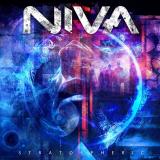
In the realm of Swedish melodic rock from Skövde, few bands command the attention and admiration quite like NIVA. With their signature blend of soaring melodies, powerhouse vocals, and infectious hooks, the band has established themselves as a force to be reckoned. Now, with the release of their highly anticipated 7th full-length album ""Stratospheric,"" NIVA once again proves why they are considered among the elite in the genre.
From the opening chords of the title track, it's clear that ""Stratospheric"" is an album that aims for the stars and reaches new heights of sonic excellence. Led by the Swedish powerhouse vocals of frontman Tony Niva, the album is a tour de force of melodic rock anthems that resonate with passion, energy, and raw emotion.
Throughout ""Stratospheric"" NIVA demonstrates their mastery of the melodic rock genre, effortlessly blending elements of classic rock, melodic rock, and AOR to create a Nordic sound that is uniquely their own. With its larger-than-life production and infectious energy, the album is a testament to the band's evolution and growth as artists, while also paying homage to the rich legacy of melodic rock and AOR that has inspired them along the way.
For fans of NIVA and lovers of melodic rock alike, ""Stratospheric"" is a must-listen experience that promises to transport listeners to new heights of musical ecstasy. With its unforgettable hooks, powerhouse vocals, and electrifying performances, the album is a fitting tribute to the band's enduring legacy and a testament to their status as one of Sweden's most beloved rock acts. So, strap in, turn up the volume, and get ready to embark on a journey to the stars with NIVA's new upcoming release ""Stratospheric"".
- Seventh studio album by the Swedish Melodic Rock group
- Feat. members of Master Massive, Lion’s Share, Wolf, Starchaser
- Produced by Tony Niva & Jan Strandh; mixed & mastered by Thomas Plec Johansson.
For fans of: Niva, Lion’s Share, Treat, Imperium, Eclipse
expected to be published on 13.11.2026

EVPHORIA is not just a record. It’s a trigger.
140 BPM of tension, ascent and release — engineered to push the dancefloor into collective hypnosis.
Balancing power house propulsion, techno pulse and large-scale emotional lift, the track transforms a strangely familiar sensation into something raw, direct and uncompromising. No nostalgia — only forward motion. A rise that refuses to come down.
The original version unfolds as a sustained euphoric surge: driving percussion, insistent hooks and controlled repetition built for peak-time unity.
The edit version distills that energy into a tighter DJ weapon — immediate, sharp, floor-focused.
On the B-side, Inflammable Noise appears in its instrumental form — pure club mechanics, no vocals, no distraction. A stripped version that amplifies tension and turns the track into a true dancefloor weapon. Already tested in demanding environments, it notably detonated a peak-time moment when Chloé Caillet played it at Berghain — a point where the room tipped over.
EVPHORIA moves freely across scenes — from house floors pushing tempo to techno basements and high-intensity dance spaces — built for DJs chasing the rupture point.
Pressed in a strict limited edition.
Vinyl only — no digital release.
Created under the EVPHORIA imprint by Hardrock Striker — dancefloor architect and driving force behind the Skylax universe — this release stands as a physical, autonomous club statement.
Sleeve artwork by H5 (Daft Punk, Air, Étienne de Crécy, Logorama, Kanye West / Adidas), reinforcing EVPHORIA as both a sonic and visual manifesto.
EVPHORIA doesn’t ask permission.
EVPHORIA triggers.
A record for the moment the room tips over.
Strong international support from Richie Hawtin, Arnaud Rebotini (Black Strobe), Kristian Beyer (Âme / Innervisions), Dax J, Ilario Alicante, Chris Fortier, Michel Gaubert, DJ Mag, KEXP Seattle, Byte FM, Tsugi, Waveform Transmitter and many more.
Outstanding reactions included: "This is just perfect... one of the best things I've heard in recent weeks. Supported!" (Club Furies), "Great release! Adding to Waveform Recommended." (Ste Knight), "Excellent work here! Will play on my show." (Fly Radio 104 FM), "Great – will play." (Radio Reverb), "Energetic and ethereal club energy." (CJSW Canada)
On Stock and ready to ship

Vol.2[13,03 €]
Network 23 Recordings proudly unveils its first full digital album release since its revival in partnership with Triple Vision Distribution. It will also release as 3 Vinyl EP's over the course of this year.
Better Than Drugs, the latest album from Crystal Distortion, delivers a high-impact sonic snapshot of both personal upheaval and the turbulent state of the world today. Framed by flashes of media soundbites old and new, the album tackles themes ranging from gentrification in Landlords Hooked On Crack (Breakbeat Version) to the right to protest in Got2StopThem, and the mass manipulation of society in The Chicken Strikes Back.
Launching with a hard-techno surge, the record moves fluidly through a spectrum of tough, mid-tempo rhythms, accented by breakbeats, electro-leaning syncopations, and bass-driven cuts like StepGPT-all while staying firmly rooted in dance-floor intent. Designed for movement and built for impact, Better Than Drugs is a versatile, high-energy release ready to ignite any setting.
Crystal Distortion is a pioneering force in the underground electronic music scene, known for fusing hard-driving techno, breakbeat energy, and improvisational live performance into a signature sound that helped define the European free-party movement. His work blends raw analog textures with relentless rhythmic experimentation, creating high-intensity sets that feel both chaotic and meticulously crafted. As a long-standing member of the Spiral Tribe collective, he has influenced generations of producers and performers, pushing the boundaries of what electronicmusic can be in both form and context.
On Stock and ready to ship

Maman Küsters return to Oráculo Records with “Oniromancia Completa”, a third vinyl release carved from tension and precision. The duo—Gaël Loison and Cyril Pansal— refine their language into something sharper, harder to define: a rigid hybrid of EBM and electro where structure becomes intensity. Furious step-sequenced arpeggios cut through dense low-end pressure, while knife-edged drums lock the body into a mechanical trance. On “Dos Mundos”, Pedro Peñas (UPR) enters the system with vocals that fracture the surface, adding a human pulse to an otherwise relentless machine. Built for dark rooms and uncompromising floors, Oniromancia Completa is not just played —it is deployed. There is no ornament here—only function, force, and control. A decisive strike for both electro and EBM purists.
On Stock and ready to ship

STRIKER TRAXX proudly presents its very first release — STX101: BALLAN “Chantal Grooves EP”.
Born as the new sub-label of SUPREME STRIKER, itself a direct emanation of the Skylax Records universe, STRIKER TRAXX sets the tone for a new era: raw, uncompromising, and forward-thinking. As always, the visual identity is entrusted to the legendary H5’s exclusive artwork (Daft Punk, Air, Logorama), delivering a striking design that transforms each copy into a true collector’s object.
For this inaugural strike, we welcome Asaf Ballan, aka BALLAN, an artist emerging with force from the vibrant beatscape of contemporary electronic music. With Chantal Grooves EP, he delivers a 12-inch packed with five club-weapons that dive deep into the essence of house and tech house, reshaping them with his own relentless, pumpy twist.
The trip opens with “How Should I Start”, a perfect ignition, teasing anticipation while locking you instantly on the groove. “Goddamnit (Club Tool)” follows as a pure machine workout, echoing Kerri Chandler’s house foundations while pushing them into today’s territory. “Members Only Club” exudes exclusive sophistication, a secret-weapon built for late-night dancefloors. On the flip, “Keep the Frequency Clear” hypnotizes with razor-sharp frequencies, proof of BALLAN’s sonic craftsmanship, before “Futuro” launches us headfirst into tomorrow—where innovation collides with the Romanian sunrise aesthetic, infused with a heavier, raw energy.
Influenced by the minimal masters (Zip, Ricardo Villalobos, Raresh) yet unwilling to compromise on drive and power, BALLAN delivers here a record where every track stands as a killer. Chantal Grooves EP is both a homage to the roots of house and tech house, and a manifesto propelling the genre into its next evolution.
STRIKER TRAXX launches with a statement: this imprint is made for DJs and dancers who still believe in vinyl as a sacred object and in the dancefloor as a transformative space. With H5’s exclusive artwork (Daft Punk, Air, Logorama)and Skylax’s uncompromising vision, each release is conceived as a weapon for the underground, and a jewel for the true collectors.
Vinyl only. For devoted believers.
On Stock and ready to ship

After the resounding success of its first edition, the legendary Lagoa club, temple of techno and hard techno in Menin, strikes back with LAGOA TRAX Vol. 2, a second vinyl release that promises to shake dancefloors with four explosive tracks crafted by the club’s emblematic resident DJs: DJ HS, Manu Kenton, Jamie Dill, and Max Walder.
Faithful to the spirit of Lagoa, these four pillars of the club deliver a new collection of powerful productions, raw, energetic, and forged for peak-time moments. Each track embodies the unmistakable sound that has made Lagoa’s nights legendary: relentless rhythms, hypnotic synths, and an intensity that ignites the crowd from the first beat.
Already tested and approved on Lagoa’s iconic dancefloor, these tracks have quickly become essential weapons in the sets of the club’s residents. LAGOA TRAX Vol. 2 is much more than a collector’s item, it’s a pure concentrate of the club’s energy, a sonic tribute to its unique atmosphere, and a must-have for all lovers of techno.
Français
Après le succès retentissant du premier volume, le légendaire club Lagoa, temple de la techno et hard techno à Menin, revient en force avec LAGOA TRAX Vol. 2, un second vinyle explosif qui réunit quatre morceaux inédits signés par les résidents emblématiques du club : DJ HS, Manu Kenton, Jamie Dill et Max Walder.
Fidèles à l’esprit Lagoa, ces quatre figures incontournables livrent ici une série de productions puissantes, taillées pour le dancefloor. Des rythmiques percutantes, des montées hypnotiques et une intensité sans concession : chaque titre capture l’énergie brute et la signature sonore unique qui font la réputation des nuits Lagoa depuis plus de trois décennies.
Déjà testés et approuvés sur le système légendaire du club, ces quatre tracks sont de véritables bombes, prêtes à retourner n’importe quel dancefloor. LAGOA TRAX Vol. 2 s’impose ainsi comme bien plus qu’un simple vinyle : c’est une immersion totale dans l’âme du club, une déclaration d’amour à la techno, et un objet de collection pour tous les passionnés.
On Stock and ready to ship

Interactions is a new vinyl imprint based in Mallorca, emerging from an event series dedicated to connection, collaboration, and the exchange of sound. What began as intimate gatherings with handpicked artists now evolves into a label, extending its ethos from the booth to the studio. With a focus on minimal house aesthetics and a detailed approach, Interactions aims to highlight the subtle edges of groove-driven electronic music through artist exchange and collaboration.
The debut release comes from Veruh, an artist whose refined productions strike a balance between rhythmic detail and emotional restraint. The EP’s title track, Eurivor, is an atmospheric roller built on intricate FX and fleeting vocal snippets — minimal but with character, playful yet anchored by a persistent groove made for the club.
On the remix front, Sepp delivers a peak-time tech-house rework. A defining force in the minimal-tech scene, his version is a tight, rolling burner packed with late-night tension and summer-floor energy.
The B-side shifts into broken-beat territory: Abil Revis & Olab bring emotion to the surface, pushing the vocals forward in a remix made for after-hours sessions, where subtlety, mood, and movement take over. Finally, For·at craft a stomping reinterpretation — minimalist yet forceful, teeming with fractured rhythms and deep pressure.
Eurivor marks a confident first step for Interactions — a label grounded in collaboration, rooted in minimalism, and dedicated to the quiet magic that happens when artists connect.
On Stock and ready to ship

180 G. BLACK VINYL WITH LINER NOTES IN CREOLE, FRENCH, ENGLISH
Originally released in 1979, "Spiritual Sound" lives up to its name, a soaring, triumphant album, six tracks of spirit magic from Guadeloupe.
Telluric, intense, terribly alive, the gwoka drums of Guadeloupe carry the identity of a painful and fervent island. Marked forever by the crime of slavery, Guadeloupe's créolité cherishes the ka drums and their natural environment: the low-pitched boula drum with male goatskin, the high-pitched soloist makè drum with female goatskin, the chacha, ti bwa, triangle, calabash and other percussion instruments that surround them, and the voices - the fiery, proud, timbred, urgent voices of the gwoka.
This album is also a legend for its voices: in his then dazzling youth, singer Lukuber Séjor was one of the first gwoka artists to largely feminize the chorus of répondè, who converse with his text delivered in a straight and powerful voice.
And everything here sets new standards. In 1979, Mizik Filamonik - Spiritual Sound proclaimed a spiritual patriotism of ferocious intensity. The album by Lukuber Séjor - whose spelling alone is a battle - sets out to give Guadeloupe the intangible weapons of self-respect and self-knowledge, through a singular practice of traditional music.
The genesis of gwoka music is less straightforward than one might imagine... The drums performed the servile task of accompanying the work of slaves in the fields and during the “corvées” imposed by the administration, before being freely practiced by the common people after the abolition of 1848. At the heart of the conviviality of the Guadeloupeans furthest from the cities - geographically and socially - the gwoka drums come out for carnival, funeral wakes and neighborhood celebrations, but also during strikes, fits of anger and armed vigils of the riots and revolts that have punctuated the island's history. For generations, governors of the colony and then the prefects of the overseas department of Guadeloupe have been viewing the gwoka as a potential for turbulence and a threat to public order.
But as the Beatlesmania, “chanson engagée” and rock revolutions unfolded in Europe, young people turned to the drums of mizik a vié nèg (“bad negro music”, in Creole), which Guadeloupeans had learned to despise by following the “assimilation” process advocated by the school system and most of the political class. At the end of the sixties, in a Guadeloupe mourning the deadly repression of the May 1967 social movement, they played traditional music, refusing to wrap it up in tourist prettiness and madras folk costumes. Instinctively, they played a rough and contemporary gwoka, led by the incendiary Guy Konkèt. This was the era of decisive 45 rpm records such as Robert Loyson's Kann a la richès, which brought to light the fieriest words of union rallies.
At his home in Sainte-Anne, Lukuber Séjor played with flautist Olivier Vamur and his brother Claude Vamur, who cobbled together a drum kit from tin crockery and became, a few years later, the most influential drummer in Kassav'.
These were the years of the Bumidom program, when young Guadeloupeans were encouraged to emigrate to mainland France. At the age of twenty, Lukuber Séjor embarked on the liner Irpinia, disembarking at Le Havre and taking the train to the Gare Saint-Lazare - the route taken by thousands of young West Indians who went on to study or looked for work, all the while trying to maintain a link with their homeland. In this case, it's at the Antony university residence, where Lukuber played the drum and participated in a thousand gwoka updates and aggiornamentos, while exile reinforced the need for a spiritual link with the native land.
In 1978, Guy Konkèt played at the Salle Wagram, a historic event for West Indian music. After serving as répondè - i.e. backing vocalist - on one of his home-recorded albums, Lukuber joined his live band. Little by little, he became one of the key artists on a circuit parallel to French show business. At a student party in Caen, he met a young woman from Martinique who, at the time, was more motivated by her ambitions as a visual artist than by her vocation as a musician. Her name was Jocelyne Béroard and, a few years before she plunged into the Kassav' adventure and became the greatest West Indian singer of her generation, she designed the cover of Lukuber Séjor's LP.
This ambition was obvious and imposed its will. A more or less regular band was formed, with Roger Raspail, Rudy Mompière and Éric Danquin on ka drums, Claude Vamur on ti bwa, Olivier Vamur and Françoise Lancréot on flutes and Annick Noël on keyboards. Lukuber Séjor is set on wanting to extend the gwoka palette to other instruments, as the jazz-rock revolution opens a thousand new doors. Annick Noël will play a wide range of timbres and textures on electric piano and synthesizer. Another novelty: the répondè are two men and two women, Roger Raspail, Olivier Vamur, Françoise Lancréot and Maryann Mathéus ...
Mizik Filamonik - Spiritual Sound is a self-production in which the singer and leader sank all his savings, allowing him no more than a single day in the studio. The first side is more of a musical manifesto, with the first two tracks, Éritage and Penn é plézi, being instrumentals. The third, Son, forcefully celebrates the need for Guadeloupeans to connect with the gwoka. In fact, Jocelyne Béroard's cover shows a tambouyé in the shadow of a cloudy sky, against which a radiant sun is rising and whose light will soon flood the entire landscape. The silhouette and face of this man strongly evoke the immense Vélo, master of the ka, rejected at the time on the fringes of society.
The second side of the LP is surprising. Formally, three tracks are explicitly linked like the three parts of a triptych. Primyé voyaj evokes the appalling tribulation of Africans deported as slaves to Guadeloupe; dézyèm voyaj speaks of the Bumidom program and the economic, political and social forces driving young Guadeloupeans towards the mirage of prosperity in France; twazyèm voyaj closes the cycle with the emigrants' return from Europe after years away from their island...
This gwoka, obsessed with the need to save Guadeloupe spiritually, appeals far beyond the politicized audience. Mizik Filamonik - Spiritual Sound instantly became a classic, although Lukuber Séjor never really made a career for himself as a musician.
After all, the album was released in 1980, with no promotional resources in France or Guadeloupe - and therefore no concerts. The thirty-two-year-old author, composer and performer made his own third trip back to Guadeloupe. He set up a small woodworking business, which he lost in Hurricane Hugo in 1989. His other activity, teaching in a medical-educational institute, became the core of his professional life. He continued to be an active campaigner - a campaigner for the Creole language, a campaigner for the reawakening of identity, a campaigner for special education, a campaigner for a thousand causes that he ignited with his generous and perceptive enthusiasm, such as the defense of breadfruit fries...
The echoes of his 1979 album have not died down. Of course, the use of Penn é plézi as the theme tune for Radio Guadeloupe's funeral notices from 1980 to 1992 kept him in the collective memory, but he continues to sing and compose sporadically, as with his all-female
vocal group Vwapoulouéka... Still convinced that music is a means of liberating the spirit, he continues the journey of a young man eager to deploy the power of Creole music and language.
Bertrand Dicale
On Stock and ready to ship

The album’s title deftly gestures to the sheer vastness of astronomical dimensions, while simultaneously capturing the musical breadth within, where the eight planets are imagined as the eight notes of an octave. The work draws inspiration not only from earlier compositions —most notably Gustav Holst’s The Planets—but also from the rich astronomical and cultural contexts surrounding these celestial bodies. Here, the focus transcends direct citation of melodic motifs, instead embracing an intriguing conceptual approach on a meta level, unfolding in a series of vividly contrasting soundscapes. These contrasts shape a sweeping sonic journey, one that fully embraces the album format with both arms, inviting the listener to venture into realms both strange and wondrous, feeling the immensity of the interstellar space that lies between them. Contrast, after all, is the brushstroke that enriches our world.
Embarking on an auditory voyage, "Astral Guide" establishes the sonic framework that propels us into the boundless expanses of the cosmos. Its ethereal tones evoke the vastness of space, crafting a mood ripe for exploration within the realms of sci-fi. The subsequent tracks unfold like constellations, weaving a rich tapestry of sound that seamlessly marries cinematic soundscapes with pulsating, club-oriented rhythms. This album invites listeners to traverse its immersive landscapes, whether nestled in the comfort of home or dancing under the starlit sky, each note a guide through the transcendent experience of a nocturnal journey.
"Solar Flares" draws its inspiration from the awe-inspiring expanse of solar phenomena, capturing the majestic power of the sun as it reaches into the cosmos. This track resonates with the idea that energy, while vital, can also be a force of destruction when unleashed with overwhelming intensity. The composition beautifully mirrors the sun’s duality, where brilliance and devastation coexist, inviting listeners to reflect on the delicate balance between creation and annihilation. Through its rich textures and dynamic shifts, "Solar Flares" serves as both a homage to the celestial and a poignant reminder of nature's formidable power.
"Mercury – The Winged Messenger" embodies a meticulously crafted soundscape where artistry meets astronomy. The tempo of 173.6 BPM, derived from precise astronomical data, propels the composition into a vibrant realm that resonates with cosmic energy. Synthwave sound design intertwines seamlessly with the fluid rhythms of Drum’n’Bass, imbuing the piece with an uplifting dynamism that evokes the ethereal grace of Mercury itself. In this sonic exploration, listeners are invited to ascend on wings of sound, navigating the celestial tapestry of the universe with each invigorating beat.
"Venus, The Bringer of Peace" strikes a decidedly cozy note, presenting a poignant contrast to the more tempestuous themes often found in cosmic narratives. This composition evokes a nostalgic vision of an optimistic era, one in which humanity transcended borders and embraced the infinite possibilities of space exploration, where no destination felt too distant. The dense, languid atmosphere envelops the listener, creating a tangible sense of serenity that unfolds gradually, allowing for a meditative journey through sound. Each note serves as an invitation to linger in this tranquil embrace, reflecting on the harmonious potential of our collective aspirations and the beauty of connection in a vast universe.
The central theme of „Gaia, The Bringer of Life“ —originally not part of the planetary cycle— is the profound enabler of life on Earth. The arrangement delicately mirrors the slow, tentative unfolding of this potential, marked by an initially sparse orchestration that gradually builds in momentum. This progression crescendos, embodying the explosive dynamism of the Cambrian burst of life, ultimately culminating in a euphoric fanfare—a triumphant, celebratory flourish echoing life’s victorious emergence.
"Blue Moon" unfolds as a contemplative reverie on the tranquil clarity of a night sky, now seldom glimpsed in its natural purity, unclouded by the relentless haze of urban light. The listener is drawn into the vast embrace of the star-strewn firmament, a journey that sways between euphoric awe at nature’s sublime beauty and a profound melancholy for its fragile and imperiled state. Musically, this duality finds expression in the delicate interplay of modal mixtures, while an ever-shifting triplet groove, poised at the intersection of Outrun and melodic house, lends a pulse that is both nostalgic and forward-looking—echoing the beauty and transience of a world on the brink.
Rather than replicating the original composition of „Mars, The Bringer of War“, this interpretation seeks to evoke its profound, foreboding atmosphere. Cyberpunk emerges here as an ideal genre, channeling the dark, relentless march synonymous with Mars, the ancient god of war. The piece reverberates with intensity, as distorted vocalizations rise, embodying the anguish and visceral torment that shadow war’s violent crescendo. This auditory descent into conflict captures the relentless pulse of warfare, where sound itself becomes an embodiment of suffering and fury.
Majestically, "Jupiter, the Bringer of Jollity" emerges on the celestial stage, sweeping away the somber tones with its radiant vigor. Drawing inspiration from the triumphant strains of the original, and borrowing a melodic motif in the refrain, the piece expresses joy and buoyancy through a shift to a major key and the lilting sway of a danceable 12/8 meter. Spirited and exuberant, it leaps boldly from major to minor and back again, playfully shifting time signatures to capture a mood of unbridled festivity and jollity.
Here, a more conciliatory concept is chosen than in the original inspiration. „Saturn“ aligns with the number six, being the sixth planet from the Sun and bearing the iconic hexagonal pattern at its northern pole. What, then, could be more fitting than to render this piece in a 6/8 time signature? The arrangement unfolds with a multifaceted richness, mirroring the countless stones and ice fragments that form the foundations of Saturn’s majestic rings.
„Uranus“ adopts the theme of a light-footed, dancing instrumentation, giving the impression of perpetual motion, never quite settling. This musical choice harmonizes with the planet’s own orbit, as it spins with breathtaking velocity, teetering and swaying, seemingly unable to attain rest or stability.
The chill and vastness of the cosmos find expression in „Neptune, The Mystic“. At its core, an electronic soundscape envelops a classical arrangement, its unreachability intensified by an ethereal, otherworldly choir. Hovering at the outermost boundaries of the solar system, where warmth is but a distant memory, the composition lingers in a slow, contemplative tempo, evoking a realm where space for speculation stretches wide and silence reigns supreme.
Though Pluto may have lost its planetary status, and its companion Charon never achieved one, this shift in classification subtly aligns with the cosmic scale invoked here—one that mirrors the musical tradition of an eight-note sequence. Fittingly, the album closes with „Kuiper Belt“, a composition emblematic of the turbulence and vitality of countless smaller
celestial bodies that, though diminutive, find their rightful place within the vast architecture of the solar system.
They say nature is the greatest composer, shaping the universe with a symphony of chaos and order, beauty and danger. It is this duality that fuels the artistic vision of Edictum—a producer who, armed with a doctorate in chemistry, delves as deeply into the mysteries of molecules as he does into the depths of sound. In the tension between the vastness of the cosmos and the microscopic processes that dictate life’s rhythm, Edictum creates sonic landscapes that dissolve the boundaries between science and art.
His music is a story of contrasts—a sonic tale where the raw forces of nature clash with the intricate structures of human culture. Opposites intertwine to form a harmonious whole: the primal rhythms of the earth meet the celestial melodies of the cosmos, the rigid laws of physics blend with the boundless freedom of art. Edictum explores these polarities with meticulous devotion, each composition an expedition into uncharted soundscapes—a quest to give voice to the unfathomable.
With over 20 years immersed in the realms of electronic music, Edictum has honed a keen sense for rhythm and movement. His driving beats compel both body and mind into a hypnotic flow. Yet beyond the pulse of dance lies a complex framework of conceptual thought. Today, his creative focus revolves around holistic album projects—self-contained worlds with overarching narratives that embrace contrast and complexity. Each track stands alone as a fragment of the whole, but together, they weave a cohesive tapestry, much like the chapters of a novel that guide the listener on an emotional and sonic journey.
Edictum’s distinctive musical signature has earned him international recognition. With over 150 releases, many on prestigious platforms like the iconic *NewRetroWave* label, and collaborations with artists such as Jan Johnston, Azumi Inoue, Powernerd, and Turbo Knight, he has solidified his place in the global electronic music scene. His latest work, *A Cosmic Scale*, marks his seventh vinyl album and is released under his own label, *Echoes of Expanse*. The label’s name is no coincidence—it captures the essence of his art: echoes of infinity, the vibrations of the universe distilled into a singular sonic experience that carries the listener ever further into the boundless expanse of sound and space.
On Stock and ready to ship

Polish saxophonist, producer and composer Jerzy Mączyński fuses utopian electronics and organic improvisation on sci-fi jazz odyssey, DO 555ps. Building on his 2023 collaboration with Jamal Moss aka Hieroglyphic Being, DO 555ps is Mączyński’s first self-produced album – a tour de force of spacious, galactic sound design that leans into drone, minimalism and the rich history of sci-fi soundtracks for a 10-track suite of astral proportions.
Mączyński’s sound is both maximalist and restrained, sensitive to detail and atmosphere, defying categorisation and swirling in an orbit of its own making.
Set to be released on Eivind Vullum’s Vibrasjon label in Norway, DO 555ps follows the 2023’s TUNE IN, made under Mączyński and Hieroglyphic Being’s Universal Harmonies & Frequencies moniker.
Described by The Quietus as one of the most interesting records of the year (“as bold as it is massive”), TUNE IN laid the foundations for Mączyński to strike out alone on DO 555PS, inspired by Moss’s skewed production and arrangements to striking and unique effect. - Anton Spice
On Stock and ready to ship

On Stock and ready to ship

The colossal Caposile Music strike once more with a heavy hitting house EP. This sought after summertime jam comes from resident and long time family member, Maggio. The flourishing Italian talent enforces the driving force that is After Caposile with three driven and animated grooves for the peak hours of the party. Accompanying him with a stellar remix is acclaimed live performer and producer, Vitess, the Frenchman showcasing his consistent sound, living up to the Caposile ethos with great effect.
This is “Discoline”.
Title track “Discoline” cruises on an irresistible elastic groove, shimmering synths and pads shine bright, breathing life into the rolling structure of the track. This one living and breathing a pure and infectious summer time energy. Packing a serious punch is “Vertigo”, built upon crisp drum arrangements and another dynamite bass line for the heads. If you are looking to go up a gear on the floor then you are in the right place.
On the B side Maggio’s “Outer Space” leads the way. The aptly named track prepares you for lift off with its distinctive chugging, sub heavy bass. Sprinkles of spaced out vocals tease you down a path of curiosity. Vitess rounds off the EP with another recipe for dance floor frenzy in his remix of “Discoline”, playful yet effective frequencies to ignite the flight, an essential for the record bags of many in the coming months.
CPSL005 lands off the back of the “Sound Of Garden” volumes 1 and 2, and with this latest addition to the catalogue it ensures the label and club continue to cement themselves at the forefront of the scene for underground minimal and house, continuing to spread like wildfire. Become part of the Caposile family this summer with some sincere day time action from within their circle.
Order now. Collecting orders for repress.

Having made their back catalog available to a wider public via High Roller Records, Mexican speed and thrash metal force Phantom will release their third full-length assault „Not Midnight Yet“ via the label. Recorded and mixed once again with Héctor “Northen” Ibarra at Nehtron Studios in Guadalajara and mastered by Patrick W. Engel at Temple Of Disharmony in Germany, this new album captures the band at their most technical and dynamic. “I am never fully satisfied with my records and I try to push forward and expand our boundaries with every new material—without changing the soul and core of what Phantom stands for: Old School Heavy Metal,“ explains mastermind J.C. García. „This record puts together very well everything that we are. Because of that, I think this is a juggernaut of an album.” Tracks such as ‘Hordes Of Bats’ deliver relentless speed and riff-driven aggression, while ‘Dracula’s Curse’ and the title track lean into powerful midtempo dynamics and complex structures. ‘The Pale Remains Of Time’ stands out as one of the album’s most ambitious moments, combining melodic vocals, clean guitar interludes and subtle progressive touches. “I try to break the established formula and add more textures and layers while keeping the old school spirit,” J.C. states. “It’s a very personal record and a work I’m very proud of. I think this is the most solid Phantom record to date.” With “Not Midnight Yet”, Phantom sharpen their identity and deliver a powerful, atmospheric statement—proof that the night is far from over.
expected to be published on 24.07.2026
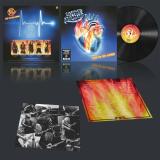
Sacred Leather is a traditional heavy metal band from the heart of Indianapolis, consisting of Dee Wrathchild (vocals), Lynn St. Michaels (lead guitar), Cvon Owens (rhythm guitar), Magnus Legrand (bass) and Don Diamond (drums). Following a privately manufactured live cassette, 2018’s debut album »Ultimate Force« and numerous (digital) singles, the new »Keep The Fire Burning« is the band’s most definite statement yet. Produced by the legendary Arthur Rizk (Eternal Champion, Power Trip), every track on the record is a call to arms. High-octane compositions such as “Spitfire At Night”, “Phantom Highways” or “Malevolent Eyes” show that Sacred Leather are true defenders of the faith. All songs breathe the raw power of classic 80s metal. Bassist Magnus Legrand comments: “Judas Priest has been a massive influence on us - not just aesthetically or stylistically, but in their ability to cover a wide range of sounds while always remaining unmistakably themselves. That balance is something we actively strive for: to explore every facet of heavy metal without ever losing our identity. The same can be said for KISS, Scorpions, and Queensrÿche - bands that can rock, rip, soar, go epic, or strip it down to something tender, all while keeping their signature intact. That versatility, anchored by a strong sense of self, is the standard we hold ourselves to.” According to Magnus Legrand, »Keep The Fire Burning« is a clear progression from the debut album »Ultimate Force«: “It’s sharper in its songwriting, stronger in its musicianship, and more focused in its execution. Where »Ultimate Force« laid the foundation, this record pushes further into those same territories with greater intent and refinement. It builds on what we established before, expanding the scope while tightening the strike. As a whole, »Keep The Fire Burning« is a relentless ride through the heart of traditional heavy metal - familiar in spirit, but undeniably Sacred Leather in execution.“
expected to be published on 17.07.2026

African visions, Middle Eastern mirages, and cosmic pulsations: the map of Giuliano Sorgini’s sonic universe continues to expand, revealing new, uncharted territories.
Set for release on 10 July, the 7-inch Savana Selvaggia brings together two extraordinary, previously unreleased tracks, shedding light on one of the most visionary facets of Sorgini’s library music aesthetic. On Side A, “I misteri del mondo” (The Mysteries of the World) transports us to an imagined, ancestral Africa suspended between endless horizons, elegiac wilderness, and analogue electronics.
On Side B, “Arabian Safari” opens the door to a mystical, Arabic-tinged soundscape where African imagery blends with Middle Eastern influences and kosmische futurism. Driven by a potent mix of electronic drums, hypnotic sequencing, and fiercely inventive synths, it strikes a sonic kinship with the finest European Krautrock.
The dialogue between these two tracks perfectly highlights the composer's artisanal, experimental approach. Here, the Solina, Minimoog, modular circuits, pulsating synth lines, and suspended melodies intertwine to form a fascinating, enigmatic, and deeply personal sonic world—one built entirely by Sorgini in his Cat & Fox Studio in Rome, located a mere stone's throw from the RAI headquarters.
Two forgotten tracks. Two cinematic journeys whose original visuals have been lost to time. Two missing puzzle pieces in the ongoing recovery of the work of a composer who sounds more modern today than ever before. A magnificent sonic transmission from a bygone era that lands with the force of a contemporary revelation.
expected to be published on 10.07.2026

Kitchen Knife Conspiracy emerged in 1998, blending death metal, hardcore, nu-metal, and thrash metal into a volatile concoction labeled ‘stompcore’ early in the band’s career. Forged in the industrial, run-down steel mills of Youngstown, Ohio, the group has laid down brutal riffs and relentless grooves over the course of five full-length albums, one EP, and a live DVD set.
The band has always diversified their sound from album to album: their debut, Sin-Pathetic, leans proudly into death metal and thrash. Their sophomore effort, Handicapitated, bears influence from hardcore, nu-metal, and sludge. Worst Case in Stereo, recorded and produced by Steve Austin of Today is the Day, “stands firmly in the shadow of grind-kings like Obituary,” as reviewed by Cleveland Scene. Their fourth effort, A Friend in Need...Is a Friend to Kill, incorporates a large dose of thrash and grind. Their most recent album, Seven Deadly Sins, is an ambitious concept record dealing with the faults of man, handing
out hardcore beatdowns with hints of black metal throughout. The future is now at hand as Kitchen Knife Conspiracy signs with a new label as diversified and ambitious as their own discography and issue the 25th Anniversary of Handicapitated on a Limited Edition (250 copies) White and Blue Splatter.
Stompcore looks to expand to a wider audience—a Kitchen Knife
Conspiracy is the blunt force weapon ready to deliver the killing strike.
expected to be published on 26.06.2026
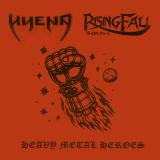
DYING VICTIMS PRODUCTIONS is proud to present Heavy Metal Heroes, a special split EP between Peru’s HYENA and Japan’s RISINGFALL, on CD and 12” vinyl formats. Heavy metal is living a global explosion, driven by underground bands that keep alive the legacy of those Heavy Metal Heroes who created eternal anthems. This titular mini-album brings together two bands separated by a great distance but united in an undying thirst for true metal. From Cajamarca, Peru’s HYENA return after touring worldwide in support of their DYING VICTIMS debut album, About Rock and Roll. Carrying forward the spirit that defined their first record, the Peruvians deliver two brand-new tracks as the first strike from their forthcoming second album. Raw and bloodthirsty, the band bring their turn-of-the-‘80s style to a boil here, more anthemic and charismatic than ever. From Tokyo, Japan’s RISINGFALL continue their ascent with new material following 2022’s DYING VICTIMS debut album Rise or Fall and last year’s self-released EP Dungeon’s Call. After their performance at Germany’s Keep It True Rising Festival, the band has established itself among today’s true torchbearers of heavy metal. Their two brand-new tracks here bring a dazzling display of old-metal values filtered through that uniquely Eastern lens. Heavy Metal Heroes stands as a statement of real underground heavy metal: forged in tradition, carried across continents, and kept alive by those who remain faithful to its sound and spirit. In support of the release, HYENA and RISINGFALL will join forces for a co-headlining triple strike of shows in Tokyo in June
expected to be published on 19.06.2026

DYING VICTIMS PRODUCTIONS is proud to present the much-needed reissue of BAPTHOMET’S BLOOD’s sophomore album, Second Strike, on vinyl LP and - for the first time - CD formats. Originally released in 2008, the Italians definitely continued in the same vein: rough speeding heavy metal hailing the old goods of NWOBHM and 80s speed metal. Beer drinkers and hell raisers though and through, this one is for the backwards leaning blue-collar metal maniacs. 8 tracks + a cover of German heavy metal cult act Tyrant finished of this Second Strike
expected to be published on 19.06.2026

A legendary chapter of hard rock history comes to a thunderous conclusion with The Final Ride, the ultimate live release from Lynch Mob, capturing the band’s final run on stage with uncompromising power, precision and attitude. Available on CD/DVD, Blu-ray and LP, The Final Ride delivers a fully immersive live experience, meticulously recorded, mixed and mastered by Chuck Alkazian at Pearl Sound Studios, ensuring outstanding sonic clarity while preserving the raw intensity and immediacy of a true Lynch Mob performance. The setlist is a powerful career-spanning journey, combining cornerstone Lynch Mob classics with three iconic Dokken-era songs that remain inseparable from George Lynch’s legacy. Explosive performances of “Lightning Strikes Again,” “It’s Not Love,” and “Paris Is Burning” ignite the crowd and serve as a direct bridge between past and present, while Lynch Mob anthems such as “River of Love,” “No Good,” “Hell Child,” “Let the Music Be Your Master,” “Street Fighting Man,” and the timeless closer “Wicked Sensation” showcase the band at full force. At the heart of The Final Ride stands George Lynch, whose unmistakable guitar tone, phrasing and musical authority continue to define generations of hard rock and metal guitarists. He is backed by a formidable lineup featuring Gabriel Colon (vocals), Jaron Gulino (bass) and Jimmy D’Anda (drums), delivering a tight, aggressive and emotionally charged performance worthy of the band’s legacy. The Final Ride is more than a live album—it is a farewell, a celebration and a definitive statement. Captured with premium production values and released across multiple physical formats, it stands as an essential document for fans, collectors and anyone who has followed the enduring impact of George Lynch and Lynch Mob on hard rock history. The final curtain falls—but the fire still burns.
expected to be published on 29.05.2026
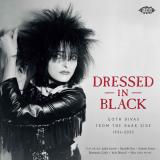
“Dressed In Black” was curated and annotated by Cathi Unsworth, author of the book Season Of The Witch: The Book of Goth – a woman who considers herself fortunate to have had Siouxsie Sioux, Lydia Lunch and Diamanda Galàs for role models while she was growing up. For further illumination in Cathi’s own words, read on.
“The music gathered here is an aural manifestation of turbulent times, made by women possessed of supernatural abilities. The music I fell in love with emerged from the dark end of the 1970s: The Winter of Discontent of 1978-79, when intractable industrial action left the dead unburied and mountains of rubbish in the streets. All the promise of punk came to a brutal end with the deaths of Sid and Nancy in New York; IRA bombs exploded in central London and a seemingly uncatchable ripper roamed West Yorkshire with 13 murders under his belt. Ill omens that augured badly for the events of 3 May 1979, when Margaret Thatcher became our first woman prime minister. Dressed in blue and ready to whip the country to her heel.
“But at night, malcontent youth were united by forces of opposition, whose dissenting voices were aired across the land on John Peel’s Radio 1 show, set to the sound of slasher guitars, swirling fairground keyboards, loping basslines and percussion that recalled the echo of jackhammers or the march of insect feet. Here, punk’s unruly offspring distilled the dissonance of the times into a new kind of music. Flirting with the fetishist and taboo, drawing upon horror and science fiction imagery, they were the outlaw leaders of the greatest style tribe of the decade: the goths. Dressed in black, these kohl-eyed women voiced the alienation of their generation during the decade of the Cold War, the Miners’ Strike, privatisation and AIDS.
“To make sense of the absurd is genius enough. But to then cast the glamour of sublime music around those insights – I come back to my point about supernatural abilities. I hope you will find illumination within. You know the dress code.”
expected to be published on 26.05.2026
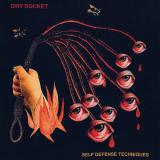
Dry Socket is a politically charged hardcore band from Portland, Oregon, known for blistering performances and emotionally uncompromising songwriting. Rooted in the raw aggression of classic hardcore, their sound channels the urgency of early Ceremony, G.L.O.S.S., and Negative Approach while carving out a distinctly modern, inclusive space within the genre, one where anger, grief, and survival are not just themes, but lived realities.
Their music confronts systems of violence, coercion, and control with unflinching honesty, creating room to be unapologetically furious, vulnerable, and alive at the same time. Every riff lands like a strike; every lyric feels torn from experience rather than abstraction.
Since forming, Dry Socket has toured extensively across the U.S., Europe, and Mexico, sharing stages with Gorilla Biscuits, The Hope Conspiracy, Torso, and more.
Their latest record, Self Defense Techniques, centers on survival under constant pressure. Inspired by the practice of dehorning rhinos to protect them from poachers, removing a vital part of the animal in order to keep it alive, the album examines the compromises people are forced to make to endure a hostile world. Horns are tools for protection, communication, care, and identity. To survive, so many of us are taught to remove our own.
Across the record, Dry Socket interrogates life inside systems that demand silence, obedience, and self-erasure. Songs wrestle with exhaustion, spiritual betrayal, and economic violence, oscillating between fury and grief. Self Defense Techniques isn’t about triumph, it’s about endurance, documenting the cost of staying alive while refusing the lie that softness is weakness or that silence is peace
expected to be published on 24.04.2026

Opaque Pink Version
Bubble Bath for Giants is an ode, a Tribute, a reverence for Oceans, for the Mighty Magnificent Power of Fairies, to the energy that we are all everything, whole, well, but in different sized and shaped vessels at times . . . It is a Celebration of Gentleness and of incredible Force, and Charge . . . These, I sea as the same. The Yang Springs from the Yin and together they ever reflect, dance, and express themselves . . .
Many Bells, Bowls, Ceramics, Chimes, Cymbals, Drums (Bass, Sakara, Surdo, Tom, and many more,) Gongs (Chao, Cup, Indonesian, Sun, and Symphonic,) Keyboards (Metal, Synthesizer, and Wooden,) Percussion, Plant Leaf Bundles and Fronds (Bamboo, Eucalyptus, and Palm,) Ratlles, Shakers, Voice, Whistles, and Sound Design by Carlos Niño.
Featuring:
Luis Pérez Ixoneztli, Bernard Xolotl, Aaron Shaw, Surya Botofasina, Nate Mercereau, Laraaji, Darius Jones, Sheila Govindarajan, Idris Ackamoor, Deantoni Parks, André 3000, Marshall Allen, Sam Gendel, Sibusile Xaba, Mia Doi Todd, Anisia Uzeyman, Saul Williams, Jojo Abot, Jowee Omicil, Aztlan Unearthed
///
Cover Photo by Carlos, from in the Maui Waters
Art Direction, Design and Original Art by Nep Sidhu
Layout Production by Jonny O'Hara
Recorded by Carlos Niño in Topanga, California, and by some of the Artists named above, from their Homes . . .
Mastered by David Allen
///
expected to be published on 20.03.2026

With Hyperbola, Laima Adelaide frames speed as a condition of softness rather than impact. The fan- tasy of flying through the air with effortless move- ment forms its emotional core, as tracks move fast, yet nothing collides: rhythms skim the surface, tex- tures hover, and motion unfolds through glide inste- ad of strike. Energy is continuous and diffused, pro- ducing propulsion without aggression, momentum without weight.
The hyperbola operates as both image and method. Sounds trace curved trajectories, drawing close only to diverge again, suspended in a state of gentle tension. Elements never resolve into force, they re- main airborne, elastic, and permeable, as if shaped by an invisible geometry. Across the EP, velocity becomes a tool for lightness, revealing an ethereal space where motion is elegant, friction dissolves, and intensity is carried through grace rather than pressure.
Credits:
Mastering by HWA
Artwork and Graphic Design by Enrico Caldini
Distributed by One Eye Witness
Order now and we will order the item for you at our supplier.

"Rough and ready blues played with unmitigated intensity…scorching and soulful, joyous and stomping.
—Living Blues
Electrifying and raucous…one of the few authentic links to pure Chicago blues.
—Chicago Tribune
Lil’ Ed & The Blues Imperials are the reigning champions of raucous, slide-stoked Chicago blues. They’ve achieved legendary status with over 40 years of critically acclaimed recordings and raucous foot-stomping gigs on club, theatre and festival stages all over the world. Slideways is a tour-de-force of old-school Chicago blues played with contemporary urgency.
Shows in support begin on street date in Chicago, followed by Milwaukee, Minneapolis, Columbus, Cleveland, Dayton, New York and Syracuse amongst others. Touring will continue throughout Spring and Summer.
Press, radio and social media focus on album and tour dates, pitching stories and reviews to over 1000 print and internet media contacts around the world. Over 1400 radio programmers worldwide will be serviced and solicited for blues specialty show and selected Triple A and Americana rotation airplay. The album is certain to be welcomed with open arms by the blues media.
Slideways is bursting with Lil’ Ed’s rollicking slide-work and rough-hewn vocals on a joyous blend of smoking slide guitar boogies, raw-boned shuffles, and heart-stopping slow blues. As always, The Blues Imperials supply rock-solid, road-tested and gloriously riotous backing."
expected to be published on 27.02.2026

Temple Balls, the high-octane hard rock band from Finland, is back with a brand-new self-titled album. Over the past few years, the band has kept busy both in the studio and on the road, solidifying their reputation as one of the most exciting live acts in the genre. Having opened for legendary acts such as Sonata Arctica, Queen, Deep Purple, and Uriah Heep, Temple Balls have proven they can command any stage—whether it’s a massive festival or an intimate club. Their live shows are explosive, turning skeptics into die-hard fans with their raw energy and undeniable charisma. The journey began with their official debut single, “Hell and Feelin’ Fine,” released in September 2016, which gained heavy rotation on Finnish Radio Rock. Their debut album, recorded in May 2016 at Karma Sound Studios in Thailand, was released on February 24, 2017. Produced by Tobias Lindell (Europe, Mustasch, H.E.A.T.), the album marked the band’s bold entrance into the international rock scene. In the fall of 2017, Temple Balls embarked on a sold-out Finnish tour with Battle Beast, made their live debut in Japan, and completed a five-day tour across Ukraine. Their popularity soared in Japan, where readers of the country’s biggest rock magazine Burrn! voted them the “Second Brightest Hope,” and they were named “Newcomer of the Year” on Masa Ito’s Rock TV. Their sophomore effort, Untamed, released on March 8, 2019, received rave reviews from major music outlets including Soundi and Burrn!. A European tour alongside Sonata Arctica further cemented their reputation as a world-class live band. Their third album, Pyromide, marked their debut with Frontiers Records and was a melodic hard rock tour de force produced by Jona Tee (H.E.A.T.), packed with powerful riffs, massive hooks, and arena-sized choruses. In May 2022, Temple Balls toured Europe with Swedish melodic metal giants H.E.A.T., followed by a busy summer festival season across Finland. The lead single from their fourth album, Strike Like a Cobra, was released in March 2022 to widespread acclaim. That same year, they completed work on their next full-length, Avalanche, released in fall 2023, featuring the single “No Reason,” which dropped globally on June 22. Now, with their new self-titled album, Temple Balls continue the sonic evolution started with Avalanche, delivering an even more personal and refined sound.
expected to be published on 13.02.2026

The complete recordings of the legendary Marc And The Mambas run of three live performances given at The Duke Of York's Theatre in London's West End in 1983. Restored from the original VHS tape recordings made by the late Peter 'Sleazy' Christopherson (Throbbing Gristle, Coil), these remain the only recordings that exist of Marc And The Mambas performing live. Originally released in 2012 on Marc Almond's (Soft Cell) own Strike Force Entertainment label as a CD/DVD set (long sold out), this edition, presented on vinyl for the first time, contains the 17 tracks from the SFE CD release, expanded to include the two bonus DVD-only tracks: 'Près Des Ramparts De Séville' and 'Jacky'. Completely remastered for vinyl by Martin Bowes (The Cage Studios). A combination of the chanson and torch songs which he still sings today, over piano, strings and woodwind-accompanied compositions. "It's quite a spectacle, especially when Almond hits his sweet spot of sinister lyrics, declared pompously over a droned string arrangement... Early signs of the full-on showtune and classical rearrangements that make up Almond's current albums are evident"(Record Collector). Presented on heavyweight double vinyl in a deluxe glossy gatefold sleeve featuring the extensive reminiscence by Marc Almond himself from the 2012 release. Also included is a reproduction of the 16-page programme printed for the three concerts in 1983. The stunning cover painting by Val Denham is exclusive to this release.
expected to be published on 05.12.2025

For his last solo record ‘Through a Room’, Bill Nace shifted his usual saturated guitar sound and added tapes, hurdy gurdy, doughnut pipe, bird calls and the mysterious Japanese taishōgoto. Setting up for the final night of his three day residency at OTO with only the taishōgoto soundchecked, Nace hoped that Parker would arrive with his small soprano as its opposite. “I’ve been interested in state change, you know, playing until there’s a shift in time.” Known for his development of multiphonics to produce a constantly shifting pattern, Evan Parker has evolved an instantly recognizable sound - his work the soprano most distinct. Happily, it was the soprano Evan brought with him and as soon as the two start to play they entwine - taking off in a double helix of keys and reed primed for endless reconfiguration. Space warps under the velocity of playing, the pitch rising unrelentingly. It felt like unending lift off in the room, sheer energy until the last note makes remember your feet have been on the floor the whole time. Total time bending shredding.
–
"They had never played together before. They had never even met each other before this springtime 2024 concert at London’s Café Oto.
Evan Parker, circular breathing maestro of the saxophone, a legend in the universe that is Free Improvisation since the late 1960s and Bill Nace, one of the most intriguing experimental “noise” guitarists of the 1990s/2000s underground scene.
For those of us who have been enamored by the live and documented work of both these gents, this Café Oto duo was a must-hear event. It could have gone anywhere musically and that would have been totally fine. Particularly with Evan having a history of being thrown into a variety of challenging collaborations throughout his career, employing the learned elegance of trust in his own sensitivity to listening, responding, leading, following, sparring, intertwining, dialoguing, creating in the instant and, essentially, dignifying the non-hierarchical grace of chance.
The aesthetics of socialist consideration in Evan Parker’s playing, in his community of expanded and personal technique, for a younger player such as Bill Nace, strikes an exemplary model. This notion of respect would be entirely the reason Nace, when offered a residency at the most critical “new music” room in England, would request to play in duo with Parker.
Bill Nace came to prominence mostly during the apex of experimental music activity in and around Western Massachusetts in the early days of the aughts, with a focus on visual art and free improvisation guitar action. He could be found in the daytime hours, his head hanging down over a notepad, penning fine-tuned illustrations and abstract line drawings, while in the evenings he’d be attending any number of basement noise gigs, many of which he’d be participating in. His guitar style came across as being informed as much as by the physicality of his writing utensils in friction to the page as it was to his hearing and redefining of radical recordings ranging anywhere from the Black Unity Group to Black Flag.
Utilizing various metal files and other small cylindrical objects Bill would allow his guitar and amplifier to be in tandem with the improvisatory movements of his body as the instrument balanced, intentionally and, at times, precariously, upon his lap. The performances came across thrilling and daring and they would be mostly in the context of venues nothing more than a low-ceilinged damp and dank New England basement, a clutch of people hanging onto rusty pipes or sitting up on dilapidated washer/dryer machines, the shards of Bill’s “file guitar” sounds ringing out like the most alive music on Earth.
By the time Bill reached Café Oto in early 2024 he had relocated to Philadelphia all the while releasing a succession of collaborative LPs on his Open Mouth label to present his developing progression of solo and collaborative work. He also would find himself considerably engaged with playing the electric taishōgoto, a keyboard-activated string instrument from Japan which can exist as a one, two, four, five, or six string oblong sound object. Bill’s approach to the taishōgoto would not be too unlike his approach to the traditional electric guitar, though no outboard implements such as files, sticks, and rocks are utilized. The similarity would lie wholly with Bill’s full immersion of high velocity action-playing where, with the taishōgoto, an electric drone beauty occurs. The flurry of sonics and resultant harmonics emanating from the amplifier (which Bill opts to dial into with borderline loud-as fuck volume settings) furthers the meta-mantra properties of the instrument in an astounding display of drone dynamism.
This sound world of Bill’s two-stringed taishōgoto on this Café Oto night worked beautifully with Evan Parker’s improvisatory saxophone conceptions. The duology achieved instant lift off at ground zero only to find it’s eventual finale as if it were organically ordained. Time seemingly morphed from its ancient human construct of control, rendered inconsequential to the torrential transcendence of the room wildly activated by the magic resonance of the multi-directional pan-spatial sonance of the music as if it were some beatific blessing. It was one of those nights where art as a liberating force of spirit gifted the listeners with an offering of exaltation and joy. It was entirely mystical and mind blowing. A night of Total Music."
Thurston Moore, London, 2025
expected to be published on 21.11.2025

Davide & Emily form the duo "The Jackson Pollock", delivering an explosive blend of lo-fi and garage music that creates a sound far greater than the sum of its parts. Emily sounds like a cannon blast when she strikes her 22âÇ3 ride cymbal with full force, while simultaneously cursing the spirit with mermaid-like melodies. Davide alternates between guitar and bass, bringing distorted, bluesy tones to life. "What we do is very energetic, free, and positive, because we want to encourage people to have the courage to do what they truly want - to be themselves and fearless - as human and as animal - while avoiding any kind of schema, external structures, definitions, and imposed references."
expected to be published on 03.10.2025

In the previous episode, the Vibracid technique was discovered as a way to deactivate memories imposed by technocratic elites.
Now, with VIBRACID 2, its real deployment begins: a series of sonic attacks targeting control systems through rave vibrations.
Each track is a weapon. Each producer, a node of resistance. “Vibracid Advent,” the single that launched the assault, opens the mini album with acidic force — delivering the first sonic strike that breaks through imposed control. From the acidic and powerful aggression of Calagad 13 (Spain), through the modular precision and acid techno of C.C.O (Contra Communem Opinionem, Switzerland), to the dark, industrial electro of Mokotron (New Zealand). Atix brings the French 90s rave energy; Wicked Wes, from Florida (USA), builds grooves with bifasic rhythms and glitch textures; and Romphea (Greece) closes with distorted breaks exploring chaos and sonic escape.
Careful sound and mastering, and exceptional design for a limited edition of 150 copies on solid red vinyl.
Order now and we will order the item for you at our supplier.

For the seventh installment of his Hardspace series, Len Faki selects three standout tracks from his personal vault - polishing them up with signature flair for maximum impact.
The A-side features a powerhouse mix of Jimmy Edgar´s Strike. Len Faki brings extra drive and spatial depth to the mix: sizzling hi-hats pan sharply across a tight stereo field, vocal chops flicker in and out, and the groove is stripped, slick, and forceful. A subtle reverb treatment adds atmosphere without compromising punch.
On the B-side, Faki dives into Robert Armani's 1994 album Right to Silence, revisiting two Chicago-style jacking tracks that are nodding to the Dance Mania era.
Up rides on a fierce hi-hat shuffle and a pounding stomp, centered around a bold vocal loop that captures the rough, battle-cry attitude of classic Chicago jack tracks. Faki's edit sharpens the angles and tightens the structure, giving the track even more bite.
Road Tour originally leaned on a harsh, detuned lead synth. Len´s Hardspace version removes the abrasive top line and lets the looping arp take center stage, which subtly shifts in tone and pans across the stereo field. The groove doesn't push forward so much as it sways side to side, creating a warped sense of motion. A pitched-up vocal sample-half command, half tease-injects just the right dose of jack attitude.
HS007 channels the raw, functional energy of vintage Chicago trax through Faki's modern lens - respectful to its roots, but fully tuned for today's sound systems.
Order now and we will order the item for you at our supplier.

Voidless Records debuts with Tectonics, a four-track EP by Barcelona-based producer Cyberdom, where Electro collides with a narrative of collapse and transformation.
What if collapse isn’t the end, but the beginning?
The main theme of the release draws inspiration from the natural forces that shape our planet. Plate tectonics. This cycle of breakdown and reformation becomes a metaphor for social crises, collective uprisings, and personal processes of transformation.
The journey begins with ‘Mariana Trench’, a dense ambient piece evoking a descent into the deepest ocean trench. ‘Collapse’ follows with tight beats and simmering synths building slow-burning tension. The title track ‘Tectonics’ delivers syncopated basslines, robotic patterns, and vocoders that encapsulates the concept of the release. The EP is brought to a close with ‘System Strikers’ a four-on-the-floor weapon driven by heavy kicks, vocoders, and sharp arpeggiated basslines.
This first release lays the foundation for Voidless Records — a forward-thinking imprint rooted in concept, where each work carves its own path, unbound by genre and driven by deeper artistic intent.
Order now and we will order the item for you at our supplier.

Total Maniac ist von Herzen ein DIY-Projekt. Die ersten Songs entstanden im Laufe der Jahre von 2012 bis 2020, als die ersten Aufnahmen gemacht wurden. Alle Aufnahmen fanden im Beisein von Volker statt, der zwar den Prozess beendete, aber 2 Wochen nach der Aufnahme der letzten Phrasen verstarb.
Der Sound unterscheidet sich von den früheren WARHAMMER-Veröffentlichungen, indem er sich von den starken HELLHAMMER-Einflüssen zu einem eigenen, unverwechselbaren Sound entwickelt, aber dennoch seinen Ursprüngen treu bleibt.
Mit einer Coverversion von CRUDE SS und VELLOCET auf der Bonus-EP wird nicht nur die Sympathie, sondern auch der direkte Einfluss der Punk-Szene unterstrichen.
Total Maniac wurde 2022 ebenfalls in DIY-Manier von den verbliebenen WARHAMMER-Mitgliedern und Frederik Aderholz abgemischt und einem professionellen Mastering durch Obscured by Evil unterzogen.
- Rotes Vinyl, Inside out Druck mit Innenbedruckung, Einleger (offset Papier), schwarze polylined-innenhüllen, 180g vinyl
expected to be published on 09.05.2025
