''Stealth' is certainly an apt title for this disarming collection of crypto-New Age. From its opening, one might be forgiven for assuming that what follows is a tableau of digital disruption, and noise in one of its less offensive iterations.
However, Takao instead presents a rich and detailed tapestry of compositions that take New Age affectations, fashioning them into something far grander. There's a penchant for the nai¨ve, the more garish of digital instruments in the vein of James Ferraro - but importantly, Takao steers away from submitting to gestures themselves nai¨ve or garish, opting instead to focus attention to a more nuanced, delicate style.
Indeed, a more intrinsic tradition to posit 'Stealth' as an inheritor of would be the Impressionism of Debussy, or even Satie, with Takao's approach drawing light and composure from his instruments at their most bare and unadorned. Ever so pleasing and atmospheric, 'Stealth' is remarkably affecting in its subtlety.' (Nico Niquo)
Cerca:taka rec
- A1: A Fair Wind
- A2: Saudade
- A3: Eona
- A4: Breakin’ Loose
- A5: Ride’em High
- B1: Chill Me Out
- B2: New York Strut
- 03: The Forest Of My Heart
- B4: Manifestation
"SAUDADE" (originally released September 10, 1982): 180g clear salmon pink vinyl Remastered and cut by Alex Wharton (Abbey Road Studios, London)
Produced by Narada Michael Walden and recorded at THE AUTOMATT in San Francisco, featuring T.M. Stevens on bass and Sheila E. on percussion.
A danceable, relaxed masterpiece where Takanaka’s ultimate resort-guitar sound truly comes alive.
- A1: Ismistik - Cassis
- A2: Acid Junkies Feat The Doctor - Telephone Terror
- B1: China White - No Sell Out
- B2: Greyhawk - Epidemic Future
- B3: Storm - Takaru
- C1: Hexagone Burning - Trash Floor
- C2: Phase Phorce - Complications
- D1: Mike Dearborn - Raw Acid
- D2: Mike Dearborn - Outer Limits (Trance Mixx)
- D2: Planet Gong - Eight Miles High
- E1: Group X - Tranze X
- E2: Edge Of Motion - La Orilla
- F1: Random Xs - Aftermath V1 2
- F2: Miss Djax - Killer Train
Delsin is pleased to announce an extensive compilation series combing through the catalogue of landmark Dutch techno label Djax-Up-Beats. The series, curated by Rush Hour co-founder Christiaan Macdonald, launches with a look at the label's legacy in the development of acid music through the 90s. In total, this first entry in the Djax-Up-Beats 1990-2005 series comprises 20 tracks, presented as a main triple-vinyl album plus two additional 12" EPs. The compilation also features all-new illustrations from Alan Oldham, the Detroit-rooted visual artist who gave Djax-Up-Beats a distinctive visual identity from very early on, and design by Lost Communication. Each volume of the series also features liner notes from music journalist Oli Warwick. Crucially, every track featured on the series has been carefully mastered by Johanz Westerman, bringing the best out of tracks that often had very little post-production treatment before they were originally pressed to wax. Volume 1 - The Acid Trip focuses on an area the label is best known for - acid house and techno. After the pioneering breakthroughs Chicago-based producers made with the Roland TB-303 in the late 1980s, acid music creation was starting to become more widespread when Djax-Up started in late 1990. The rebellious, rave-ready sound was an instant draw for label founder Miss Djax, and so her label ended up reflecting the development of acid as it spread from the Chicago roots across the world. Volume 1 - The Acid Trip looks at the diverse approaches to acid taken by artists on Djax-Up. Tracks on the compilation include an early outing from Ludovic 'St Germain' Navarre and Bjorn Torske's Ismistik alias, as well as Dutch pioneers such as Edge Of Motion, Spasms, Random XS and Acid Junkies, and Chicago heavyweights Mike Dearborn and Gene Hunt. With five more, equally extensive, volumes to come in this series, Djax-Up-Beats 1990-2005 is a thorough exploration of a true totem of techno culture - a renegade label that operated on its own terms and carried surprises and slammers in equal measure.
WRWTFWW Records is very happy to announce the release of Interwoven, the deeply moving collaborative album from Ken-ichiro Isoda and aus (Yasuhiko Fukuzono) — now available on limited edition transparent sea green colored vinyl LP housed in a heavyweight sleeve with selective-varnish 3D print, as well as in digipack CD and digital formats.
Recorded between Hachijo Island and Tokyo, Interwoven distills two visionary voices of Japanese ambient and electronic music into a single breath of feather-light and quietly luminous meditative sound.
Isoda is a revered figure of New-age and environmental music whose work on Oscilation Circuit – Série Réflexion 1 (originally released on famed label Sound Process) has long attained mythic status. He composes, notably with harp and wind instruments, produces contemporary music and video game scores, and crafts his very own brand of ambient music from the volcanic island of Hachijo-jima. Tokyo-based electronic composer and synth master aus is known for tender, melody-driven soundscapes. From the two artists comes a dialogue suspended between land and sea, bridging the generation gap and the physical distance between them.
What began as a series of sketches — impressions of water, islands, and shifting light — gradually evolved into an exchange without explanation, a correspondence of sound that dissolved boundaries. In that anonymity, both artists discovered an uncommon freedom: a place where each could move lightly and intuitively, without expectation. The music drifts with a gentle, intuitive grace: lingering piano, soft cinematic synths, and field recordings that unfold like whispered recollections, while flute and saxophone lines pass through like occasional breezes — a human presence felt as warmth more than form.
Interwoven is music for those who cherish stillness and the delicate beauty of the everyday. It’s music for admirers of Satoshi Ashikawa, Midori Takada, Satsuki Shibano, Hiroshi Yoshimura, Takashi Kokubo, Brian Eno, and all who seek a quiet refuge in sound.
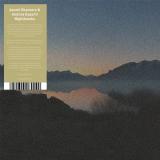
WRWTFWW Records is very happy to announce the release of Nighthawks, the new collaborative album from composer Azumi Okamura and musician / sound designer Andrea Esperti, available on limited edition LP (300 copies worldwide!) cut at 45rpm, and housed in a heavyweight sleeve with inside-out print.
A sublime convergence of Japanese piano poetry and Swiss sonic craftsmanship, Nighthawks brings together Azumi Okamura's intimate, emotionally resonant compositions with Andrea Esperti's refined approach to sound design. Esperti is known for his work alongside ambient legend Takashi Kokubo, and here he extends that sensibility into an intimate and immersive space.
Echoes of dreams from an imaginary world drift through the album: forgotten memories rising gently, only to fade again. The music unfolds like a series of inner scenes - reflective, rich with atmosphere - where minimal piano motifs meet organic textures and subtle electronic detail.
Rooted in the emotional solitude of Edward Hopper's urban landscapes, Nighthawks balances stillness and warmth. Gentle, simple melodies glow softly, wrapped in environmental music that evokes autumn air and walks by the beach.
Resisting excess and spectacle, the record embraces poetic minimalism and emotional clarity. Each piece feels suspended in time, offering quiet moments that linger long after the sound has faded...a drifting, cinematic journey shaped by sensitivity and restraint.
First time reissue of JP free jazz rarity, pre-Seikatsu Kōjyō Iinkai group.
The single album self-released by the quartet Shūdan Sokai in 1977 is one of the most vital documents of mid-seventies Japanese free jazz, documenting Tokyo’s free scene at the precise moment when it began to shift to a handful of tiny venues on the western fringes of the city. In Free Jazz in Japan, Teruto Soejima identifies the extant venue Aketa no Mise in Nishi-Ogikubo as the pioneer of this decamping from the centre: a cramped basement beneath a rice shop, seating just 20 people. Musician-run, operated on a shoestring, these spaces offered a vital site for community, creativity, and a small measure of financial independence — “even though it was in a basement, in spirit it was a loft.”
Among the most active of the new venues was Alone in Hachiōji, nearly an hour from Shinjuku, in a district shaped by universities, lower rents, and a thriving counterculture. Originally opened in 1973 as a jazu kissa, Alone was unusually spacious and equipped with a stage, grand piano, and drum kit. Around 1974, Junji Mori and Yasuhiro Sakakibara began working there, booking free jazz players on weekends and establishing the venue as a crucial hub. Mori recalls early appearances by figures including Kazutoki Umezu, Toshinori Kondo, and others who would define the scene.
In early 1976, Umezu and pianist Yoriyuki Harada — recently returned from New York’s loft jazz environment, where they had played with musicians such as David Murray and William Parker — formed Shūdan Sokai with Mori and drummer Takashi Kikuchi. The name, meaning “mass evacuation,” pointed to their self-chosen exile in Hachiōji. With Alone as their home base, the quartet developed a music characterized by an infectious sense of enjoyment and a willingness to integrate free jazz with elements of song structure. Harada switched between piano and bass; the group experimented with rap-like vocal pieces, jabbering nursery rhymes over bass rhythms.
They returned to Alone on December 24 to record Sono zen’ya (Eve), releasing it on their own Des Chonboo Records, partially funded by advertisements from local businesses printed on the rear cover. The closing “Ballad for Seshiru,” dedicated to Harada’s newborn son, unfolds over a delicate piano melody that moves into emphatic chords as intertwining alto lines rise and spiral.
Alone closed in September 1977, and Shūdan Sokai soon dissolved, later morphing into the expanded Seikatsu Kōjyō Iinkai Orchestra. What remains is a recording rooted in a specific place and moment: a fiercely independent scene sustained by small rooms, close listening, and collective commitment.
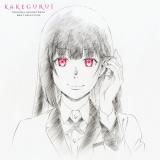
- A1: Kakegurui
- A2: Tagiru
- A3: Hito No Shuen
- A4: Gepita Emi
- A5: Henyou
- A6: Shiro Ka Kuro Ka
- A7: Iki Wo Nomu
- B1: Ri Wo Ronzu
- B2: Koreha Ikaga Shitamonoka
- B3: Tsume Wo Kamu
- B4: Hotobori
- B5: Yuetsu No Waltz
- B6: Takaburu Ru Kokoro
- B7: Tsuyayakana Kyouki
- B8: Hana Hiraku Hebi
- B9: I Wo Furuu Mono
- C1: Sokohakatonai Yuetsu
- C2: Shinobigoto
- C3: Futatsutonai Hana
- C4: Akira Rui Nichijou
- C5: Midarini Hossu
- C6: Kyoso Hiideshitoki
- C7: Shigyaku Shikou
- C8: Seiseito
- D1: Sakayoseru
- D2: Koi No Roshian Ruretto
- D3: Koi No Roshian Ruretto
- D4: Koi No Roshian Ruretto
- D5: Deal With The Devil Tv Size
- D6: Layon-Theline Tv Size
- D7: Layon-Theline : Re-Make A Bet On Soul
Synopsis: Welcome to Hyakkaô Academy, a prestigious institution where gambling rules supreme and determines the students’ social hierarchy. Here, those most skilled at betting accumulate wealth and power, while the losers sink into humiliation and bullying. Yumeko Jabami, a new student as elegant as she is unpredictable, shakes up the established order and quickly becomes someone to watch. Unlike the others, she seeks neither fortune nor status—only the adrenaline of risk excites her… and beware to anyone who thinks they can manipulate her.
Featuring 31 thrilling tracks across 2 LPs, "Notes for Kakegurui" takes you on a wild ride through electrifying instrumentals, stylish remixes, and unforgettable vocal duets like "Koi no Russian Roulette.”
From Wisdom Teeth’s recent compilation nagoyaka na kaze / 和やかな風 (quiet wind)—which cast a spotlight on the Japanese city of Nagoya—emerges “2++”, a new label launched by abentis, who curated the compilation alongside Facta and K-LONE as a central figure in the scene. Conceived as a series introducing facets of Nagoya’s underground electronic music to the world on vinyl, its inaugural release is abentis’ debut album, Dim Grow.
Across the album, intricately designed electronic mallet sounds—created using Ableton Live’s physical-modeling synthesizer—take center stage. Fresh and percussive like marimba or kalimba, yet simultaneously carrying an otherworldly, unreal quality, these tones form the core of the record’s sonic identity. In moments of near-silence, a crystalline resonance poised between glass and metal shimmers with subtle shifts in temperature, giving the album its distinctive texture.
While resonating with the sonic sensibilities of fellow Wisdom Teeth affiliates such as K-LONE, Tristan Arp, and Salamanda, abentis’ uniquely strange palette can be traced back to one of his strongest influences: Haruomi Hosono. In particular, Hosono’s mid-’70s tropical-infused solo albums — Tropical Dandy (1975), Bon Voyage Co. (1976), and Paraiso (1978) — serve as a key reference point. Symbolically reflected in Hosono’s marimba and vocal performance at a 1976 live show in Yokohama Chinatown, the marimba functioned as a central instrument for constructing imagined exotic landscapes inspired by Martin Denny and Hawaiian music.
For abentis—who worked at a local jazz bar before becoming active as a hip-hop beatmaker—the language of “tension chords,” a harmonic vocabulary rooted in jazz and R&B that hovers ambiguously between brightness and darkness, forms a consistent grammar throughout Dim Grow.
Behind the album’s core theme of “mallets + tension chords” lies a broad musical lineage: the harmonic sensibility of Claude Debussy, who anticipated the tensions of jazz; the proto-minimalist spirit of Erik Satie; the marimba-centered structures of Steve Reich; their continuation in Japan through Mkwaju Ensemble (with Midori Takada and production by Joe Hisaishi); and the subsequent branches into post-rock, electronica, and ambient music.
Growing up in Nagoya—an industrial city where creative independence is deeply valued—and being rooted in punk and hip-hop counterculture scenes naturally fostered abentis’ affinity with these predecessors. His practice between genres, combined with an encounter with the highly cross-pollinated musical perspective cultivated around Wisdom Teeth, provided the framework through which his own musical language crystallized. Dim Grow stands as the natural culmination of that journey.
- 2026 repress -
Released under the January full moon, 2025.
Early support from Abstract Division, Albert van Abbe, Brando Lupi, Iori, Lewis Fautzi, Samuli Kemppi, Svreca, Takaaki Itoh, Tommy Four Seven, Atomic Moog, Blazej Malinowski, Cassegrain, D-Leria, Forest on Stasys, Joachim Spieth, Ness and Yuka.
The union of Antwerp synthesist David Edren and Tokyo minimalist Hiroki Takahashi is a fit so natural as to feel preordained. Both traffic in subtle shades of contemplative electronics, marked by patience, space, and poetic restraint. And both have rich histories of curation and collaboration – Edren in the duo Spirit & Form alongside Bent Von Bent, and Takahashi as proprietor of the Kankyō record shop, as well as one fourth of cosmic ambient quartet UNKNOWN ME. Mutual fans of one another’s work, they began sharing stems in the latter half of 2020, which slowly blossomed into a collection of multi-hued compositions inspired by notions of connectivity and impermanence, translated for east and west: Flow | 流れ.
Opener “Dusk Decorum | 黄昏 礼節” maps the mood of what’s to come, elegantly pirouetting and percolating through an expanding vista of looming stars and half-light horizons. Takahashi describes Edren’s arrangements as evoking “a strange feel, something we haven't heard much of before.” The sensation is one of “in-betweenness,” a restless current whispering beneath the beauty, like seasons seen in time-lapse footage: flickering but infinite, transience turned permanent. Takahashi’s signature sculpture garden tones plot spiral patterns over which Edren cascades dazzling pointillist synthesizer coloration. The pieces veer between delicate and dilated, micro and macro, their aperture forever softly in flux.
From the oscillating orchestral lullaby of “Stalactime | 鍾乳石時計” to the sweeping, sparkling dream sequence closer, “Shift Register | シフトレジスタ,” the album achieves the elusive goal of being more than the sum of its parts. This is music of rare air, elevated and amorphous, shimmering just out of reach. Though Edren and Takahashi have yet to cohabitate the same room in person (a fact that should be rectified soon by an astute festival booker), their palettes and poise are perfectly paired, twin fragilities woven into seven radiant and regenerative vibrational states. The cover design of a beatific, beaded leaf rippling on the surface of a hidden pond aptly captures the record’s muted majesty. Takahashi’s quiet pride is justified: “We are very happy with this time-consuming and carefully crafted work.”
- Romance Of The Black Pain Otherwise Falin’ Love With
- Reapers Of The Night
- The Night Wind, The Candle Flame At Dawn
- Bird Cals In The Dusk
- White Awakening
- The Night, Assassin's Night
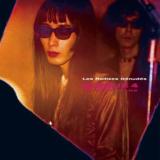
Les Rallizes Dénudés returns with Disque 4 -’76 Studio et Live-, the latest in the ongoing series of official archival releases from the celebrated Japanese underground band.
In 1991, Les Rallizes Dénudés released what would become the only official albums issued during the band’s lifetime: ’67-’69 STUDIO et LIVE, MIZUTANI / Les Rallizes Dénudés, and ’77 LIVE. What no one knew at the time was that Takashi Mizutani was already deep into preparing another record.
Disque 4 reconstructs the track list Mizutani had put together for that fourth album. This includes the single “White Awakening," recorded in 1976 at the studio in Takadanobaba BIG BOX as part of the sessions that would become known among collectors as the “Virgin Demos.” Production and mastering of this archival release were handled once again by Makoto Kubota, assembling the album from the masters left behind by Mizutani, utilizing newly discovered tapes as additional sources.
Prepared by Mizutani using a variety of formats, including U-Matic, open reel, and DAT, the tracks were originally labeled with working titles such as “Disque 4” and “Record No. 4,” indicating that Mizutani intended them for inclusion on a possible fourth album. The recordings were taken primarily from studio sessions that all seemed to have taken place around 1976, which aligns with the claim that Mizutani himself once made that “there exists an album of studio recordings made with the same members as ‘77 LIVE.” His notes also suggest an attempt to sequence the tracks as a vinyl LP, splitting them into A and B sides. It's not hard to imagine that in the era of CDs in the early 1990s, an album on analog LP would have been an extremely difficult sell. Thus, the “Fourth Album” had become another lost piece of the intricate Rallizes myth.
Les Rallizes Dénudés may be notorious for the colossal volume and extended song lengths in their live settings. But this work, centered around studio recordings and condensed onto a single LP record, transcends the common impression of the band’s aggressive flood of noise. Instead, the “lyricism” at its core emerges with striking clarity. And needless to say, this is precisely the charm of the Rallizes that continues to captivate fans worldwide today.
- A1: Kuniyuki Takahashi - Asia
- A2: Brian Eno, Moebius, Roedelius - The Belldog
- A3: Anchorsong - Windmills
- A4: Monde Ufo - Vallee
- B1: Mariah - Sokokara
- B2: Mytron, Zongamin - 08932168
- B3: Liquid Liquid - Scraper
- B4: Five Green Moons - Spider Dub
- C1: Fun Boy Three - Faith, Hope & Charity
- C2: Meat Beat Manifesto - Drop
- C3: African Head Charge - Orderliness, Godliness, Discipline And Dignity
- C4: Cristina - You Rented A Space
- C5: The Cramps - Garbageman
- D1: The Durutti Column - Sketches For Summer
- D2: The Third Bardo - I’m Five Years Ahead Of My Time
- D3: Sordid Sound System - Inanna
- D4: Daniel Avery - Drone Logic
- D5: Spectrum - True Love Will Find You In The End
Two Piers proudly announces the upcoming release of Bridges Towards Open Spaces: Circadian Rhythms 1967–2025.
This new collection brings together a wide range of artists and styles, weaving immersive sonic landscapes that explore a connection between natural cycles and the rhythms within.
Featuring artists such as Brian Eno, Moebius, Roedelius, Meat Beat Manifesto, Fun Boy Three, Daniel Avery, and Spectrum, the compilation moves fluidly between shimmering ambient textures and raw, straight-ahead garage rock.
Bridges Towards Open Spaces: Circadian Rhythms 1967–2025 follows in the footsteps of Two Piers acclaimed previous releases, Night Train: Transcontinental Landscapes 1968–2019 and Music for the Stars: Celestial Music 1960–1979, continuing the label’s exploration of expansive, time-spanning musical journeys.
“I wanted once again to shape a compilation around a time period, this collection is a nod to my days behind the counter of a record shop, the people I met and the styles of music that was played and I was introduced to. Some are from that time, some are of the style/feeling, that I can associate & with the friends I met there; from the early shift to the late shifts as the tempo rose throughout the day and the neons of London started to buzz”
The album will be available on Limited Vinyl and CD in May, arriving just in time for the longer, warmer days and the shifting light of the Seasons Sun.
- A1: Kuniyuki Takahashi - Asia
- A2: Brian Eno, Moebius, Roedelius - The Belldog
- A3: Anchorsong - Windmills
- A4: Monde Ufo - Vallee
- B1: Mariah - Sokokara
- B2: Mytron, Zongamin - 08932168
- B3: Liquid Liquid - Scraper
- B4: Five Green Moons - Spider Dub
- C1: Fun Boy Three - Faith, Hope & Charity
- C2: Meat Beat Manifesto - Drop
- C3: African Head Charge - Orderliness, Godliness, Discipline And Dignity
- C4: Cristina - You Rented A Space
- C5: The Cramps - Garbageman
- D1: The Durutti Column - Sketches For Summer
- D2: The Third Bardo - I’m Five Years Ahead Of My Time
- D3: Sordid Sound System - Inanna
- D4: Daniel Avery - Drone Logic
- D5: Spectrum - True Love Will Find You In The End
Limited Glacier Green[42,23 €]
Two Piers proudly announces the upcoming release of Bridges Towards Open Spaces: Circadian Rhythms 1967–2025.
This new collection brings together a wide range of artists and styles, weaving immersive sonic landscapes that explore a connection between natural cycles and the rhythms within.
Featuring artists such as Brian Eno, Moebius, Roedelius, Meat Beat Manifesto, Fun Boy Three, Daniel Avery, and Spectrum, the compilation moves fluidly between shimmering ambient textures and raw, straight-ahead garage rock.
Bridges Towards Open Spaces: Circadian Rhythms 1967–2025 follows in the footsteps of Two Piers acclaimed previous releases, Night Train: Transcontinental Landscapes 1968–2019 and Music for the Stars: Celestial Music 1960–1979, continuing the label’s exploration of expansive, time-spanning musical journeys.
“I wanted once again to shape a compilation around a time period, this collection is a nod to my days behind the counter of a record shop, the people I met and the styles of music that was played and I was introduced to. Some are from that time, some are of the style/feeling, that I can associate & with the friends I met there; from the early shift to the late shifts as the tempo rose throughout the day and the neons of London started to buzz”
The album will be available on Limited Vinyl and CD in May, arriving just in time for the longer, warmer days and the shifting light of the Seasons Sun.
2026 Repress
Supported by Cio D'Or, Deepbass, Etapp Kyle, Mattias Fridell, Ness, Samuli Kemppi, Svreca, Takaaki Itoh, Unam Zetineb, Exium, Alessio Pili, Antonio de Angelis, Artefakt, Edit/Select, Jonas Kopp, Kwartz, Mod21, Reggy van Oers, Juho Kahilainen, Eric Cloutier, Johanna Knutsson, Tom Bonaty, Arnaud le Texier, Brando Lupi, I/Y, Iori, MTD, Nima Khak, Par Grindvik, SNTS, The Noisemaker, VSK, Attemporal, Casual Violence, Rasmus Hedlund, Sleeparchive, Terence Fixmer, Eastern Renaissance, Victor Martinez and many, many more.
Luigi Tozzi / Deepbass / Claudio Prc - Deep Blue
Swiss-born, Berlin-based artist Stallo makes his anticipated vinyl debut on Casanova Bar Records with Mifepan EP.
After first appearing on the label in 2020 with a contribution to CBB007 a digital VA, he now returns as the main artist on CBR008, delivering two original tracks that define his signature sound.
The EP opens with Bleenthal, a hypnotic journey built on rolling drums and immersive textures. On the flip, "Wavoom" pulsates with a constantly evolving synth, pushing forward with relentless energy.
Elevating the release, Japanese techno legend Takaaki Itoh delivers a raw and powerful remix of Wavoom, while Italian innovator Fabio Florido reinvents Bleenthal with his cutting-edge sound design.
Mifepan EP is a bold statement from Stallo, an immersive exploration of deep grooves and evolving driving textures.
d B2 Bleenthal Reinvented (Fabio Florido remix)
Reinvented (Fabio Florido remix)
DJ Support: Antal, I Cube, Noel Watson, Colleen Cosmo Murphy, Sean Johnston, San Soda, Takaya Nagase, Tina Edwards, Pete Herbert, Kenneth Bager, Severino, Aaron Paar, Felix Joy, Harri Harrigan, Laroye, Telford, Darker Than Wax, Rocky (X Press 2), Shane Johnson, Dan Tyler, Felix Dickinson and many more
Having previously released selected retrospectives focused on the musical output of Ryo Kawasaki and Joan Bibiloni, NuNorthern Soul has now turned its attention to the vast back catalogue of Jasper Van’t Hof’s pioneering electro-acoustic, Afro-fusion collective, Pili Pili.
The band was established in 1984 by Van’t Hof, a Dutch pianist who began his career in Europe’s jazz scene of the late 1960s, as a way of combining his love of jazz-fusion and the music of North-West Africa. Van’t Hof already had a reputation for combining roles in traditional jazz combos with more experimental and abstract projects. These included a spell in violinist Jean-Luc Ponty’s first band, years spent masterminding jazz-rock outfit Jasper Van’t Hof’s Porkpie, the recording of an all- electronic album (1982’s Visitors), and a celebrated collaborative live album with the great Archie Shepp, Mama Rose.
Pili Pili, though, was another step forward for Van’t Hof. Working with percussionists and vocalists from Benin and Mali (including the now legendary Angelique Kidou) and a string of adventurous jazz soloists (saxophonist Tony Lakoto and trumpeter Annie Whitehead included), Van’t Hof’s collective frequently combined live and programmed percussion, electronic and acoustic instrumentation, and the talented improvisor’s own memorable melodies and impactful solos.
NuNorthern Soul’s retrospective focuses on the most productive and celebrated period of Pili Pili’s near three-decade history, showcasing tracks originally recorded and released on studio albums released between 1984 and 2002. The six tracks on show offer an essential glimpse into the musical gold to be found across the Pili Pili catalogue.
In keeping with NuNorthern Soul’s previous retrospectives, the vinyl version of Selected Works 1984-95 comes with extended liner notes telling the remarkable story of this most unusual of cross-cultural collaborations. These feature extensive quotes, reflections and memories from Jasper Van’t Hof and were written by music historian Matt Anniss.
- A1: Ich Weiss Nicht Mehr
- A2: Watashino Shonen
- A3: Paradis Perdu
- A4: Sakuramochi
- B1: Le Soleil Se Leve
- B2: La Jungle En Folie
- B3: Au Clair De La Lune
- B4: Singin In The Rain
- B5: Bird Island
- C1: Alien Go Home
- C2: Tu Te Fous De Moi
- C3: Time Out
- C4: Drole Doiseau
- D1: Time To Party
- D2: Tabac
- D3: Tale Of A Lizard
- D4: Moonman
Evelyne/Masao bring TESTPATTERN to Dark Entries for the label’s first foray into vintage Japanese electronics. Masao Hiruma and Fumio Ichimura’s project Testpattern is known for their release Apres-Midi, a cult slab of synthpop perfection released by Yukihiro Takahashi and Haruomi Hosono’s legendary Yen Records in 1982. While Hiruma and Ichimura parted ways following Apres-Midi, Hiruma’s musical endeavors would continue after meeting French/American model and vocalist Evelyne Bennu in 1984 at a café bar where she would sit and write poetry. Their collaborative efforts as Evelyne/Masao were fruitful, and the duo first performed together in June 1984 on a television program called TOKYO ROCK TV. The album TESTPATTERN comprises seventeen songs recorded in Hiruma’s home studio, which have never been released previously. The Evelyne/Masao duo continues building on the soundworld of Apres-Midi: lush, sophisticated electronics with intricate yet minimalist production. Tracks like “Sakuramochi” and “Bird Island” bear influence from Hosono most clearly, their soaring melodies revealing a subtly ironic redeployment of East Asian musical tropes. But TESTPATTERN is more than homage to Yellow Magic Orchestra. “Tabac” and “Le Soleil Se Leve” display oddball sensibilities closer to Sky Records icons Asmus Tietchens or Cluster. Elsewhere, the project shows affinity for the punkier ethos of continental DIY electronics, like on the quirky “Alien Go Home” and a positively skewed cover of “Singin’ in the Rain.” Bennu’s vocals provide a common thread through these explorations, as she alternates deftly between New Wave deadpan and unhinged chanson singer—check her waxing maximally Francophone on “Au Clair de Lune,” based on an 18th century French song. TESTPATTERN will be available on both double LP as well as CD, and includes a fold-out poster with liner notes with lyrics. This album is dedicated to Masao Hiruma, who passed away in 2011.
Comes with DL card & 2P insert / wrapped in shrink + a sticker
At long last, Takao is back with his long-awaited second album, seven years in the making. His 2018 "Stealth" was (and still is) a much-loved set, mixing elements of ambient and environmental music; with this new release Takao breaks free of the gravitational pull of these earlier influences and strides confidently forward. "The End of the Brim" jettisons some of the more abstract elements of his previous work, embracing a “universal listenability” and a more concrete intensity, with a focus on supple rhythms and strengthened senses of melodic development and harmonic sophistication. This musical growth can be linked with Takao’s admiration of composers Ken Muramatsu and Toshifumi Hinata, who are generally associated with commercial “production music” and easy listening. Another contributing factor is his private study with veteran keyboardist Ichiko Hashimoto of Colored Music. The ten tracks here include three vocal tracks, with three different singers (Yumea Horiike, Cristel Bere, Atsuo Fujimoto of Colored Music) and seven keyboard-led pieces. The vocal pieces are integral parts of the album’s flow, rather than typical “songs” driven by the name and personality of the singer. All of these factors, plus the veteran presence of engineer Hiroshi Haraguchi, known for his work with Haruomi Hosono, who mixed half of the album's tracks, along with the use of excellent old-school synths, aligned with Takao’s forward-looking vision, have combined to give us an album with a unique sense of timelessness. A spotlight illuminating future paths for pop music, available on CD/Vinyl LP/Digital, with English/Japanese lyrics, and liner notes by Yuji Shibasaki.
Composer and arranger of Hiroshi Suzuki's "Romance" and Jiro Inagaki's "Breeze," Hiromasa Suzuki is a musician who had worked extensively in the Japanese entertainment industry, not only in jazz, but also in pops, cinema, television, and animation music production. This album is a pre-fusion/crossover masterpiece produced by Jiro Inagaki and recorded with talented players such as Shuichi Murakami, Akira Okazawa, and Masayoshi Takanaka.
- A1: When I Sing, I Slip Into The Microphone. Into That Void, I Bring Comrade "Prayers", Then, Turning To Face The Outside, Together We Explode. Part I
- B1: When I Sing, I Slip Into The Microphone. Into That Void, I Bring Comrade "Prayers", Then, Turning To Face The Outside, Together We Explode. Part Ii
- C1: When I Sing, I Slip Into The Microphone. Into That Void, I Bring Comrade "Prayers", Then, Turning To Face The Outside, Together We Explode. Part Ii (Continued)
- D1: When I Sing, I Slip Into The Microphone. Into That Void, I Bring Comrade "Prayers", Then, Turning To Face The Outside, Together We Explode. Part Ii (Conclusion)
- D2: When I Sing, I Slip Into The Microphone. Into That Void, I Bring Comrade "Prayers", Then, Turning To Face The Outside, Together We Explode. Part Iii
Among the true Keiji Haino devotees, Nijiumu’s Era of Sad Wings (released on P.S.F. in 1993) has always held a special place in the pantheon. Operating for only a few years in the early 90s and apparently only performing a handful of shows, Nijiumu operated at the opposite end of the dynamic spectrum to Haino’s famed power trio Fushitsusha, dwelling in a hushed, meditative realm of mysterious droning sonorities and free-floating melodies that occasionally erupts into violence. Black Truffle is pleased to announce a new double-LP edition of a lesser-known 1994 Nijiumu recording, When I sing, I slip into the microphone. Into that void, I bring comrade “prayers”, then, turning to face the outside, together we explode. Here, Nijiumu is the trio of Haino, Tetuzi Akiyama and the obscure Takashi Matsuoka, the three performing on a wide variety of string, wind and percussion instruments, as well as electric guitar and bass, and Haino’s unmistakeable voice.
Like on the early solo Haino album that shares the group’s name (released on P.S.F. in 1993), the instrumentation swims in reverb (the use of which Akiyama recalls as ‘a kind of point of the band’), often obscuring the instrumental sources. On the short opening piece, a distant reed instrument arcs long buzzing melodies over a bed of cymbals and gongs, like a psychedelic take on Tibetan music. The epic second part, occupying almost 50 minutes, begins as a splayed, near-formless cloud of electric guitar and bass, shadowed by bowed and plucked strings, the three elements working through twisting atonal shapes. At various points in the recording, we hear what seems to be the sounds of musicians moving between instruments, their shuffling and bumps fitting seamlessly into this radically open music. Eventually, what sounds like electric guitar moves closer to the foreground, fixing on a repeated melodic cell around which hover mysterious clouds of long tones and a sporadic shaker. At the half-hour mark, the music begins to build to a violently emotive climax, Haino’s impassioned vocal cries punctuating a lumbering, bass-heavy murk, contrasted at points by what sounds like a tin whistle. Suddenly, the volume drops to a near-whisper, opening the way for the stunning final moments, which touch on the slow-motion balladry of Haino’s classic Affection, here given an eccentric twist by an occasional woodblock hit. The third piece opens with a hazy trio of rumbling bass, bowed strings and abstracted slide guitar, the latter calling to mind some of Akiyama’s later solo work. Eventually joined by Haino’s voice, its fragile, haunted tone might remind the listener of the man in black’s documented love of the madrigals of the murderous Count Gesualdo, before the recording abruptly breaks off mid-note. In this new edition, the Nijiumu trio recording is supplemented by a piece recorded solo by Haino in 1973, a bracing electronic blowout stretching almost half an hour. Using a homemade electronics setup to unleash a barrage of crunching distortion and shuddering harmonic fuzz, it takes its place in the canon of extreme live electronics next to Robert Ashley’s Wolfman and Walter Marchetti’s Osmanthus fragrans, looking forward to extreme noise years before Merzbow. Taken as a whole, these four sides of music are a stunning document of some of the lesser-known waystations of Haino’s singular creative path.
Japan’s SUDO return to Drumcode with ‘We Are Free’, following their landmark 2024 debut ‘Real World’ Last summer brothers Isao and Takashi aka SUDO gifted Drumcode one of the most inspiring releases we’ve heard in recent times with ‘Real World’. Inspired by Underworld’s incendiary ‘Rez’, the EP was the sound of two producers pouring all their passion and shared musical history into a work that’ll be remembered for years to come.
The release peaked at no.1 on Beatport’s Release Charts and saw a follow up collaboration with Bart Skils ‘Nexus’ out later that year on Drumcode. ‘We Are Free’ continues SUDO’s emotion-led and timeless approach to techno, crafting a four-tracker inspired by the concepts of “freedom, divinity, memory and transition”. The title track genre-hops between electro-edged techno, silky ambient textures and breakbeats. Isao says: “We wanted to express in a powerful and explosive way one of our purposes on the dancefloor – a time of celebration, and freedom from restrictions.”
‘Elysium’ is a transcendental slice of techno that juxtaposes tough industrial rhythms with a stunning break that was inspired by a children’s choir Isao heard one day at Berlin Cathedral. “It took a long time to producer with many patterns until we were satisfied,” Isao shares.
“It was a real process of immersing oneself in the hypnotic groove and finding divinity.” Initially inspired by watching Bart Skils play a NYE 2025 set in Argentina, ‘Lost in Paradise’ is led by a delicate Latin vocal and crisp sun-dappled beats, before stepping up the pace in the second half. “As the production progressed, we were led to a wonderful result with the track’s vocal, a tribute to one of our biggest influences – the untouched nature of Ibiza and the vibes of the light and beautiful people that flow there.” The EP winds down with ‘Horizon’, a simultaneously beautiful yet bittersweet hymn that signals the end of the party.
180g
Repress
Supported by Deepbass, Svreca, Pris, A Sacred Geometry, Amandra, Etapp Kyle, Takaaki Itoh and Abstract Division to name a few.
The Hypnus clergy is proud to present the 6th solo record by Feral. 'Ultraviolet Radiation' throws us head first into a sound that's been brooding for a time and now finally started to blossom, revealing the massive potential of this gifted producer. Those who heard his contribution to our latest Various Adepts record or have managed to catch one of his mind-bending live performances will recognize his uniquely psychedelic deep techno sound.
Marked by an awakened sense of depth, Feral consistently carries a thread of spirituality throughout his work. Embodying the sound of deep techno through his passion for audio engineering, hardware experimentation and fascination for percussive instruments, as well as an affinity for the shamanic becomes apparent when we swirl in tribal timbres and rhythms.
Finding comfort in the solitude of his studio; the sounds of Feral unearth the path of his multidimensional world, transporting the listener to a haunting, yet grounding refuge within.
- A1: Burns & Tubbs - Where Were U In 92?
- A2: ?-Ziq - 4Am
- A3: Arthur Verocai - Caboclo
- A4: Auntie Flo - Green City
- B1: Software - Present Voice
- B2: Point Zero - Coastal
- B3: Nina Simone - Come Ye
- B4: N.y. House'n Authority - Apt. 3B
- C1: Mark Barrott - When Devils Become Gods
- C2: Eric Serra - Protect Life
- C3: Mazzy Star - Fade Into You
- D1: Boards Of Canada - Open The Light
- D2: Aqua Bassino - When The Bird Flies
- D3: Talk Talk - Wealth
- D4: Yukihiro Takahashi - Present
To mark a decade as one of Ibiza's most iconic musical sanctuaries, Hostal La Torre announces 'La Torre Ibiza Volumen Cinco', a new compilation curated by long-standing residents Pete Gooding and Mark Barrott. Released June 27 on CD and double vinyl, the 15-track collection captures the spirit of the venue that has come to define the golden-hour soundtrack ofthe island's west coast.
Since opening in 2015, La Torre has established itself as a bastion of Balearic culture-set high on the cliffs overlooking the sea, where music flows with the sun rather than the clock. The fifth volume in the celebrated La Torre series is a journey through Brazilian soul, ambient electronica, classic deep house, orchestral minimalism, and dusk-lit Detroit techno-an emotional arc designed to mirror the progression of an evening at the venue.
From timeless icons like Nina Simone, Mazzy Star, Talk Talk (with their Spirit of Eden closer "Wealth"), and Boards of Canada, to boundary-pushers like Auntie Flo, Eden Burns, and µ-Ziq (aka Mike Paradinas), Volumen Cinco weaves together deep-rooted classics and leftfield discoveries. Mark Barrott contributes a brand-new exclusive, 'When Devils Become Gods', while the compilation closes on a rare gem from Yellow Magic Orchestra's Yukihiro Takahashi. Also includedis Software's 'Present Voice', a quietly powerful tribute to the late José Padilla, the spiritual architect of Ibiza's sunset sound.
Volumen Cinco is more than just a listening experience-it's a tribute to La Torre's ethos: open-hearted, genre-fluid, rooted in place and time. Each track is carefully sequenced to evoke a feeling, a shift in light, or a shared memory beneath the fading sun.
Over the years, La Torre has welcomed some of the most influential names in Balearic and electronic music, from José Padilla, Alfredo, and Jon Sa Trinxa to DJ Harvey, David Holmes, Lovefingers, Heidi Lawden, Wolf Müller, Don Carlos, and Phil Mison. With each summer season and each release, the venue continues to build a musical legacy that has earned critical acclaim from Resident Advisor, Phonica Records, Juno, and Piccadilly Records, regularly featuring in their year-end lists.
As Test Pressing once wrote, "La Torre is not a party, it's a place of pilgrimage. It feels almost sacred." That spirit resonates deeply in this anniversary compilation-a celebration of music, community, and connection that spans a decade.
La Torre Ibiza Volumen Cinco is dedicated to the artists, friends, collaborators, and guests who've shaped its story so far-and to everyone who continues to gather, listen, and lose track of time as the sun slips beneath the horizon.
2025 repress !
I walked away from the mirror.
It was morning, it was afternoon,
it was night.
Nothing changed,
it was locked in place.
I was born for this.
Shot like a flower in the dance.
***
Early support by: Blawan, Perc, Clouds, James Ruskin, Truss, Pfirter, Chris Liebing, Adam Beyer, Drumcell, He/aT, P.E.A.R.L., Slam, ROD, Lucy, AnD, Gary Beck, Paul Birken, Exium, Ansome, Sawf, Henning Baer, Dustin Zahn, Objekt, Adam X, Rebekah, Norman Nodge, Markus Suckut, Jonas Kopp, Marcel Dettmann, Takaaki Itoh,...
Side A sees Italian brothers Marco and Riccardo Augeri back on Ten Lovers Music as The Robinson with two superb Deep House tracks Vibrasoul and Slow Thinking, both have their usual jazzy edge to them. Onto side AA and we have South African El Payo with Italy’s Stefano De Santis guesting on Rhodes and Solina. Living A Dream is a superb jazzy number for the dancefloor. Takahiro Fuchigami is up next with Southern Breeze, another broken beat masterpiece from Japan’s rising star who has recently had a release on Jazzy Sport. Rounding off side AA is George John from Germany with Anton Mangold on flute, a beautiful track to end our 51st release.
Aiko Takahashi is a Nova Gorica-based musician, a spirit that has released albums on various labels. Just like the line that separates the two cities where Aiko lives, Gorizia and Nova Gorica, divided between two countries yet united as one, Aiko’s music exists on a boundary. A line that separates silence from peculiar, almost imperceptible sounds. Too quiet to be Ambient, too Ambient to be Sound Art.
Two years ago, after a first complete release on IIKKI with "It Could Have Been A Beautiful", Aiko Takahashi comes back with a second complete album, this time, on LAAPS.
"This album is a delicate, meditative collection recorded between March and November 2024 in Aiko's former studio, a secluded spot near the River Isonzo, between Gorizia and Nova Gorica in Slovenia. The Grass Harp was made specifically for LAAPS, who asked Aiko to create a new complete piece of sounds. As always, it was largely recorded using dense layers of manipulated loops that weave in and out of the recordings, shaping them in a singular way through effects pedals, tape decks, and tape loops. The Grass Harp is a meditation on decay and silence, blending warm soundscapes with soft, playful melodies. That’s Aiko’s signature sound."
PHYR003 - REACTIONS VA is the second vinyl release of Pyramidal Decode's imprint.
This Various Artist opens with a dancefloor-oriented track by the label boss himself called Fiammata.
On the A2 we find Overdose, a raw and warm 909 exercise by the Dutch legend Dimi Angelis.
The B side starts with 'Las Cenizas', a proper spanish groove by the Techno-expert Ribe.
Closing the release we have 'Therma', a great hypnotic track crafted by the Japanese pioneer Takaaki Itoh.
The International Archives of Popular Music (AIMP), affiliated with the Ethnographic Museum of Geneva (MEG), is a label and collection dedicated to the preservation of world music. Founded in 1944 by musicologist Constantin Brăiloiu, it gathers over 18,000 recordings, from wax cylinders to digital formats. AIMP releases albums and collaborates with artists such as Midori Takada, exploring the connections between sound archives and contemporary creation. Through these projects, the label preserves and reinterprets musical traditions on a global scale.
WRWTFWW Records is honored to announce the first ever vinyl release of Joe Hisaishi’s original soundtrack for the critically acclaimed and all around classic 1993 Japanese yakuza/crime/thriller movie Sonatine. The legendary album comes in a limited edition housed in a luxurious heavyweight sleeve with selective varnish printing and a special paper obi belt.
The celebrated Sonatine was directed, written and edited by Takeshi Kitano, who also takes center stage as the main protagonist of the thrilling yakuza film. Director, screenwriter, comedian, actor, tv personality and icon, 'Beat' Takeshi is also known for Boiling Point, Hana-Bi, Battle Royale, Johnny Mnemonic, Ghost in the Shell and many many more.
Considered one of the greatest ever, Joe Hisaishi is a composer, musical director, conductor and pianist behind over 100 film scores including Kitano’s A Scene at the Sea, Kikujiro, and Brother, as well as his famed work for director and animator Hayao Miyazaki’s Studio Ghibli masterpieces Castle in the Sky, My Neighbor Totoro, Princess Mononoke and the list goes on. Little known fact: his first ever produced-album is a collaboration with percussionist Midori Takada (Through the Looking Glass): MKWAJU Ensemble’s MKAWJU also released on WRWTFWW Records.
The Sonatine movie score showcases the composer’s more contemplative, minimalistic, and intimate side in a superb and deeply evocative neo-classical and ambient musical journey. The depth and emotional resonance of the compositions make for an exceptional and timeless soundtrack. It is known to be one of Hisaishi’s own favorites.
Sonatine (Original Soundtrack) by Joe Hisaishi follows the release of the soundtrack of Takeshi Kitano’s Violent Cop (1989), as well as music from another groundbreaking Japanese movie, Shin’ya Tsukamoto’s Tokyo Fist (1995). Collect them all on WRWTFWW Records!
The third internatonal release by the legendary Malian singer and guitarist is many fan's favourite. 'The Source' established Ali Farka Touré on the internatonal stage and paved the way for his legendary collaboraton with Ry Cooder on the GRAMMY award winning album 'Talking Timbuktu'.
Available for the frst tme on vinyl, the album has been re-mixed from the original master tapes and includes a previously unreleased track from the same sessions.
The album is presented in a gatefold sleeve containing double 180g vinyl and large format 28 page booklet with lyrics.
'The Source' features Farka Touré's frst recordings with his home town band Group Asco, with vocalist Afel Bocoum and percussionists Hamma Sankare (calabash) and Oumar Touré (congas). Touré's trademark acoustc and electric guitar (as well his njarka violin) playing are highlighted on some of his best loved and most sophistcated compositons.
The father of the desert blues unleashes a set of driving small group performances, intmate love songs, mesmerising guitar solos and two unique duets with the great American bluesman Taj Mahal.
- A1: Vajolet (Feat Lukas Lauermann, Wolfgang Pfistermüller & Flip Philipp)
- A2: Autostrada Del Brennero (Feat Diggory Kenrick)
- A3: Latzfonser Kreuz (Feat Mamadou Diabate & Hamidou Koita)
- A4: Lago Di Garda (Feat Roger Robinson)
- A5: Alfa Romeo 145 (Feat Kwame Yeboah)
- A6: Feltuner Hütte (Feat Osman Murat Ertel)
- A7: Avrupa Köprüsü (Feat Osman Murat Ertel)
- A8: Europabrücke (Feat Susanna Gartmayer)
- B1: Ancient Atoll (Feat Reinhilde Gamper, Martin Mallaun & Flip Philipp)
- B2: Latemar (Feat Reinhilde Gamper & Martin Mallaun)
- B3: Brennerautobahn (Feat Taka Noda)
- B4: Echoes Part I (Feat Flip Philipp)
- B5: Echoes Part Ii (Feat Flip Philipp)
- B6: Transit Tribe (Feat Didi Kern)
- B7: Latemar (Reprise)
12"[23,49 €]
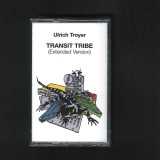
Ulrich Troyer has been producing music now solidly for over twenty years within a largely genre free framework, but whilst navigating forms such as avant-garde, techno, leftfield, field recording, electronica, glitch and ambient it is the aesthetics of dub that guide his creative direction. Not really recognisable in an orthodox form as remixed versions of roots reggae songs but in the way sonics are manipulated with space, the application and layering of delay, reverb and echo that fixes his output well within the scope of what might be called futurist dub.
The nearest comparisons to his new album TRANSIT TRIBE can only be established by a synthesis of some of the more adventurous explorations in modern music such as African Head Charge, Jon Hassell, Pole (Stefan Betke), Bill Laswell or even Miles Davis; featuring a diverse selection of artists and friends not only from Vienna and environs but also from around the world, sounds are not so much fused but allowed to float along the continuous flowing tide of warm waves of bass.
Rather than to allow the names of Ulrich Troyer's collaborators be merely listed in the album credits, what they bring to this joyful affair needs to be outlined, albeit briefly: Co-producer credits go to Osman Murat Ertel from Istanbul, who employed a variation on the old foolproof Nick Lowe method for checking out the impact quality of his own sound productions by playing tracks through his car sound system speakers!
Murat is a member of the electro-psych-folk group Baba Zula where he plays electric saz, oscillators and theremin and played a key part in the creative development of the album. Mamadou Diabate, the balafon master originally from Burkina Faso and now resident in Vienna, has developed his own unique technique of playing solos that replicate the sound of three instruments playing in unison; however the multi-talented Mamadou is engaged here on singing and playing the talking drum. From South Tyrol Reinhilde Gamper is a member of the experimental trio Greifer who are bringing the sound of the zither into the twenty-first century using new playing techniques and electronic gadgets. Susanna Gartmayer is an Austrian composer and bass clarinetist specialising in improv and multimedia sound research. Diggory Kenrick has been engaged with creating new dub fusions and also re-energising classic rocksteady and roots reggae classics, renowned for his interventions on flute. Didi Kern is an electronic dance musician and drummer from Vienna with a focus on free improvised music. Hamidou Koita, a singer and multi-instrumentalist, is from a traditional Griot family in Burkina Faso but now resident in Vienna and a regular musical partner of Mamadou Diabate playing drums and calabash. Austrian Lukas Lauermann is both a studio and live musician playing cello, also working on electronic sound design and writing string arrangements. He has recorded extensively and appeared on stage with both Mark Lanegan and Hans-Joachim Roedelius. Martin Mallaun is a Tyrol-born specialist in both the development of the zither in modern music and also as a researcher in the effects of climate change on the vegetation of Alpine ecosystems. Mystica Tribe is the musical alias of Tokyo-based dub/techno producer Taka (Takafumi) Noda. He collaborated with Vienna's own Vegetable Orchestra on 2020's "Transplants (Mystica Tribe Version)". After studying classical percussion Flip Philipp is now a jazz vibraphone player and member of the Vienna Symphony Orchestra. Wolfgang Pfistermüller is a member of the Vienna Trombone Quartet and the developer of the incredible bass-trombone Aurora with its uniquely warm and resonant sound. Roger Robinson is a renowned British poet, winner of many contemporary poetry prizes and member of the experimental music group King Midas Sound. Kwame Yeboah is a Ghanaian born UK based keyboard wizard who tours regularly with Yusuf / Cat Stevens, Ms. Dynamite and Pat Thomas.
So contained on the album is an astonishing mix of musicians and instruments: sounds of cowbells recorded in the South Tyrolean alps processed by modular synthesizers and heavy analogue bass synths combined with instruments such as zither, bass-zither, electro saz, flute, talking drum, trombone, cello, vibraphone, marimba, djembe, contra-alto clarinet, melodica, Farfisa - all bound together by organic live-drums and dub effects.
Liner notes by Steve Barker
- A1: Are We There Yet (Ft West Felton , Howard Wazeerud-Din Ii, Malik Alston)
- A2: Boom Bap Jazz 7 (Ft Dave Mcmurry , Takashi Iio, Malik Alston)
- A3: We Have Been Assimilated(Malik's Linwood Mix)Ft Malik Alston, Dave Mcmurry & The Black Light Collective
- B1: Vampires (Ft Elmus,Allan Barnes, Cen Dervin, Craig Huckaby)(Malik's Afro Remix)
- B2: Shine(Instrumental)
- B3: The Doctor (Ft Zacland)
- B4: Soul Guitar Love (Ft Gabe Gonzalez & Bubz Fiddler & Malik Alston)
- B5: We Can Make It Through (Ft Doc Link, Laronn Dolley, Malik Alston)
Truth Manifest Records is proud and excited to release Beyond Jazz Volume 2, the second volume in this wonderful, futuristic four-part series!
This stellar vinyl release on Truth Manifest Records is from executive producer Malik Alston, with distribution from Mother Tongue. As we travel to the edge of our senses with Beyond Jazz Volume 2, it is immersed in poetry pulling on the heartstrings of urban reality. This is where live meets a hip-hop foundation, sped up and transformed into a dance jazz Afro-Cuban up-tempo banger, to tell the story of the groove. Put Volume 2 to a funky jazz lick phrase, reminding us that through the struggle, there is victory. Let your spirit shine as you feel the essence of boom bap jazz.
This powerful collection has special new remixes and edits based on Malik’s current radio show, Beyond Jazz
Drumcode stalwart Bart Skils drops two exciting debut collaborations with both SUDO and Drunken Kong, for Japanese techno infused ‘Sakura’ EP.
As a crucial Drumcode Records crew member, Dutch producer Bart Skils is world-revered for his best-selling powerhouse techno releases like ‘Roll The Dice’ and his mesmerising sets. But he likes to pay it forward too, finding and nurturing new talent for Adam Beyer’s label, hence SUDO’s (Japanese brothers Isao & Takashi) hugely successful recent Drumcode debut EP ‘Real World’. Skils collabs with SUDO on ‘Nexus’, and with Drunken Kong (‘Dee’ Singh & DJ Kyoko) on ‘Set It Right’, who are globally respected Tokyo techno maestros, WOMB residents, and Beatport chart regulars, who had their Drumcode debut in 2023 with ‘I Want To See’ EP.
Somewhere between Solid State Survivor, Force Majeure and Danzindan-Pojidon you’ll find Shinichi Omata’s Boku ・ Neko ・ Platanus. Or rather you won’t – throughout his captivating debut from 1984, reissued by chOOn!! in 2022, you’ll hear connections to other music but its unique unbridled will keeps pushing those references out of mind.
Shinichi Omata is a fascinating figure – an unsung hero of early Japanese electronic music who between 1981–84 recorded three albums of incredible DIY techno-pop while studying as a student in Tokyo. At University, Omata worked and collaborated as a sitar player and keyboardist with artists such as Hiroko Yoshihara, Takami, DEA and various members of the LLE music circle, where he developed an expressive fusion of minimal synth and psychedelia.
This selection, lovingly extracted from Omata’s unreleased early recorded output, dating from 1981’s Neo Modernism through to 1983's With My Dog Ricky, demonstrates just how closely he clung to the original abstract ideal of moulding 8-bit bleeps and ungainly drum patterns into lo-fi triumphalism. On paper you wouldn’t give this aesthetic clash a pass were it not for the aural evidence of a unique sensibility, precociously openminded and visionary, charmingly transparent in respect of its influences yet possessed of a need for individuality.
Throughout this kaleidoscopic collection, all the ghost plastic in Omata’s head, Kosmische synthesis, synth-funk squiggles, arcade games and early Ambient is thrown together, reimagined and regarded affectionately – through a glass lightly, so to speak. Beneath the pulsing arpeggiated bleeps, Omata’s compositions show a remarkable economy and poise hinting at European classical influences - like a reimagining of Erik Satie’s piano miniatures that swaps 19th century Parisian boulevards for Tokyo’s 1980s technopolis. The music is sheer skin- puckering delight throughout, a delirious, mesmeric collage of dark disco bubblegum and eccentrically enchanting atmospheres that you cannot quite believe you’ve never heard before.
Available for the first time on vinyl, With My Dog Ricky: The Early Works of Shinichi Omata 1981-1983 is a vivid selection of synth miniatures lovingly extracted from Omata’s unreleased early recorded output.
Produced in cooperation with the artist for chOOn!!.
Mastered for vinyl/digital by Josh Bonati. Artwork by the acclaimed book designer Luke Bird
"Following on from May's "ECHOES Part 1 & 2" this is the second single of three to be released as an introduction to the next album project of Ulrich Troyer - TRANSIT TRIBE - to be released later this year.
This time it's one for the reggae fans and dubheads with contributions from Diggory Kenrick who has been busy over the last few years adding the distinctive sound of his flute to many new reggae productions. He is also an associate of the U.K. reggae label Pressure Sounds that specialises in reviving classic sounds from the roots and dancehall eras of the genre. Also joining the production is Takafumi Noda aka Mystica Tribe, a Japanese producer and musician who has specialised in a new form of dub techno and is known for adding the signature sound of his melodica to productions of dub friends from around the world.
The subject of travel, especially along modern, fast routes has long been subject to fascinate musicians, from the days of Kraftwerk's "Autobahn" and now the whole genre of dub techno seems to be one built for listening on long journeys. The Autostrada Del Brennero / Brennerautobahn is one of the most important motorways in Italy, as it connects the Po Valley with Austria through the Brenner Pass and features many modern bridges and overpasses that are ready built illustrations for the covers of dub techno albums! On this release this major European truck route is celebrated musically by Ulrich Troyer with inputs from Diggory and Taka to create two modern dub classics."
Steve Barker (DJ, Radio Presenter - On the Wire, BBC 1984 – 2023,
now Slack City Radio & reggae/dub columnist and contributor to The Wire)
Credits:
Diggory Kenrick: flute
Taka Noda: melodica
Didi Kern: drums
Ulrich Troyer: analog synthesizers, analog drum-machines, sampler, dub effects
A written by Diggory Kenrick & Ulrich Troyer
B written by Taka Noda & Ulrich Troyer
Recorded by Ulrich Troyer at 4Bit Studio & 4Bit Bungalow, Vienna - except flute recorded by Diggory Kenrick at Holloway Studio, London / melodica recorded by Taka Noda at Mystica Sound Studio, Tokio
Mixed & arranged by Ulrich Troyer at 4Bit Bungalow, Vienna
Produced by Osman Murat Ertel & Ulrich Troyer
Mastering & Lacquer Cut by Kassian Troyer at Dubplates & Mastering, Berlin
Cover Drawing by Ulrich Troyer
Special thanks to Steve Barker, Osman Murat Ertel, Diggory Kenrick, Eva Kelety and Takafumi Noda
Kindly supported by the City of Vienna (MA7 - Kultur), Federal Ministry Republic of Austria (Arts, Culture, Civil Service & Sport), SKE-FONDS (AT) & Amt für Kultur, Bozen (IT)
This is Mulatu Astatke’s protege and Ethiopian saxophonist and composer Jorga Mesfin’s debut album. It’s a long foray into Ethio-jazz that takes this courageous syncretism further by fusing spiritual experimentation with bits from all kinds of situations in Ethiopian music, jazz music, and specifically Ethiopian jazz music that precedes it.
Jorga Mesfin is widely regarded as one of the most talented contemporary musicians and composers in Ethiopia. He started his professional career at the young age of 17 and has since collaborated with numerous renowned artists, including Tsegaye Gebremedhin, Carolyn Beard Withlow, The Last Poets, Vijay Iyer, Wayna Wondossen, Kirk Whalum, Takana Miyamoto, Gizze Reggae band, Dionne Farris, Aster Aweke, Mahmoud Ahmed, and Mulatu Astatke. Additionally, Mesfin was a resident at Astatke's legendary African Jazz Village in Addis Ababa every Thursday.
Jorga Mesfin is the founder of the Ethio-jazz group called Wudasse. He composed the music for the epic Ethiopian film "Teza" directed by Haile Gerima. His work on the film earned him the Best Music Award at the 22nd Carthage Film Festival and Best Composition at the 5th Dubai International Film Festival.
Muzikawi is a record label, music publisher, studio, artist management, and event organizer based in Addis Ababa and Stockholm. With extensive experience in curating and representing artists from all regions, Muzikawi has a deep understanding and appreciation of Ethiopia's culture.