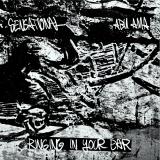
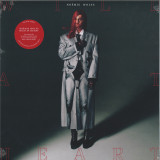
Australia's Dancing in Space crew have thus far kept their vinyl releases to a minimum, reappearing every so often with a fresh batch of their own excellent disco edits. Here they try something different, delivering a typically assured two tracker from one of the most talented and productive scalpel fiends in the business, Chicago scene stalwart Rahaan. A-side 'Allright' is a typical Rahaan rub, with the talented re-editor skilfully rearranging and lightly dubbing out what sounds like a turn-of-the-80s fusion of classic disco, synth-splattered boogie and soaring jazz-funk. On 'My Strategy', he successfully breathes new life into an old Philadelphia International favourite, opting for a largely instrumental extension that subtly pitches the track up, tempo wise, for greater dancefloor pleasure.
Search:the business international
In 1978 a newly formed Augusta, Georgia group Marshall, Donovan and Broomfield chose to record cover versions of two songs previously recorded in 1973 and 1974 respectively by Florida siblings group Cornelius Brothers and Sister Rose. These Eddie Cornelius penned songs “Let me Down Easy” and “Since I Found My Baby” would form both sides of Marshall, Donovan and Broomfield’s first 45 single, released on group founder John Marshall’s own Augusta label. The flipside “Since I Found My Baby” would eventually gain popularity across the pond with aficionados of the UK modern soul scene of the early 1980’s and beyond.
John Marshall began his musical career in a high school group called The Fabulous Gardenias who recorded the doowop ballad “It’s You, You, You” backed with the up-tempo R n B mover “What’s The Matter With Me” released on Tommy Brown’s local Liz label (named after his wife future Motown recording artist, Liz Lands) in 1961.The Fabulous Gardenias featured John Marshall, the late Atlanta alumni Calvin Arnold, “Little” Joe Jones Jr (later of the Tams) and a fourth guy only remembered as Harold. John Marshall later sang with another Atlanta group The Tams of “Hey Girl Don’t Bother Me” fame from 1970 through to 1978.
Later in 1978, John Marshall having relocated to Augusta, GA the previous year was casually emptying the contents of his mailbox outside his home when a car suddenly pulled up. The driver called out “Hey I recognize you, you’re John Marshall you used to be with the Tams!” The driver continued to introduce himself as John Donovan stating that he too was a singer, followed by an impromptu performance, and hey! sure enough he could sing! A later introduction to Charles Broomfield (John Marshall’s next-door neighbour at that time) would lead to the formation of the group Marshall, Donovan, Broomfield with the addition of Mary Marshall and Pat Donavan (the then, two John’s respective wives) as backing vocalists. The previously mentioned group’s first release the John Donovan led “Let Me Down Easy/Since I Found My Baby” was recorded at the now defunct Jam Studio’s in Atlanta. Upon release, the “Let Me Down Easy “side received considerable local radio play but only led to the group performing a handful of local shows. On the strength of the group’s first release a second 45 release followed in 1980 “Let’s Dance/That’s Love” both sides of this 45 were penned by Charlston, South Carolina native, Harold Thomas who John Marshall knew from his time with the Tams, Thomas having once been part of Bill Pinkney &the Original Drifters and later the Tams management teams. This second 45 never gained the same local attention of “Let Me Down Easy” and after three years together the Marshall’s, Donovan’s and Charles Broomfield went their separate ways. John Marshall lost contact altogether with his former group members and left the music business taking up employment at International Paper Mill until his retirement in 2013.
Due to the current resurgence in popularity of “Since I Found My Baby” with copies regularly selling for four figure sums, Soul Junction have reacquainted ourselves with John Marshall to you bring you “Since I Found My Baby” backed with “Let Me Down Easy” with the addition of the excellent and lesser, known stepper “That’ Love” making this an excellent value 45 release.
A pioneering force in African music, Jo Tongo has always been on top of the game. Since the late 60s he has been recording music under his early Jojo L'Explosif moniker. His debut album "Jo Tongo" was released 1976 on Fiesta/Decca and features classic tracks like Jangolo and Piani. Now, after decades of underground influence and global recognition, his second album Sa Discossa (1980) is re-released for the first time. Being an electrifying fusion of African rhythms, disco, makossa, reggae and funk it is reflecting his lifelong journey of musical exploration and cultural storytelling and claims its place as an essential recording in the Afro-disco movement.
Jo Tongo's music is inseparable from his life's story-a journey that spans continents, struggles, and victories. From his early years as a leading African musician before the global rise of Afrobeat, to his deep roots in classical training, and his time performing in France and Germany, his sound is shaped by a rich blend of influences. Having played in bands across Europe, from American military bases in Germany to the jazz and soul circuits of Paris, he absorbed the pulse of multiple musical worlds, creating a sound uniquely his own.
"My music is my life. I never saw it as a way to become a star-I am a simple man," Tongo explains. "I came into music to say something, to tell about life, to share my experiences with the world." His perspective on fame and artistry is deeply rooted in his Cameroonian background. "I wasn't interested in business. I wanted to build something with music, to create a sound that was mine."
But Jo Tongo's music has always carried a deeper message. His work reflects his strong political stance against colonialism, social injustice, and oppression. "I cannot stay silent while my people suffer," he says. "Music is a way to resist, to stand strong, and to remind people of their dignity and their power." Throughout his career, Tongo has used his platform to advocate for African identity and independence. His songs, layered with messages of social consciousness, have continued to resonate with younger generations who recognize the relevance of his words even today.
Sa Discossa is more than just a disco record. It embodies Jo Tongo's philosophy of resistance, identity, and celebration. The title itself is a blend of "disco" and "makossa," reflecting the seamless fusion of African groove and the dancefloor energy that defined the era. Tracks like Bunya, sung in his native language, carry messages of love, gratitude, and resilience-sentiments that remain as relevant today as they were nearly 50 years ago. As Tongo describes it, "Every day, give thanks and praise to your Lord. Every day, show me your love. Every day, let me show you my tender love."
Tongo's musical journey also took him through the world of reggae, inspired by his exposure to American and Caribbean artists. "At first, I didn't like reggae-it was too slow for me," he admits. "But then I heard Bob Marley, and I realized the power in its simplicity. The rhythm, the
message-it was all connected to something bigger." He later found himself embracing reggae as an essential part of his musical DNA. "I realized that my music and reggae shared the same roots. We are all connected, all telling the same story in different ways."
Having spent much of his career performing across Europe, Jo Tongo reflects on his connection with international audiences. "I've played everywhere-from Africa to Germany, from Paris to other cities in France and what I've learned is that music speaks a universal language. You don't need to know the words to feel the message."
Despite taking a step back from the stage in recent years, he remains open to new possibilities. "Music is like a fire-it never truly dies. I have a lot to say, and music is the best way to say it."
For Jo Tongo, music is more than entertainment-it's a language of truth, a testament to history, and a bridge between cultures. The rhythm of Sa Discossa lives on, stronger than ever. With Sa Discossa returning under the African Edge series on The Outer Edge label, Jo Tongo's legacy continues to resonate, proving that real music never fades.
Robert Chini is a Southern California native music producer, multi-instrumentalist and singer-songwriter who began his musical journey as a drummer at the age of five. Although starting out as a drummer, he soon found a passion for the guitar, keyboard, and bass. Robert's talents led him to become a Motown songwriter during the 70s, and to tour/perform with many international recording artists.
He is currently performing as a solo artist as well as with many popular musicians and singers. Robert also operates his family owned business and recording studio (Sound Jar Studio) in North County, San Diego.
On March 26, 2015, a surprising announcement sent shockwaves through the Belgian music scene. Noe?mie Wolfs declared her departure from Hooverphonic, the band she had fronted as the lead singer for over five years. She described it as the end of an incredible chapter in her life and expressed her desire to forge her own musical path, which she did by releasing her critically acclaimed debut album "Hunt You" a year later.
In February 2020, the long-anticipated second solo album by Noe?mie arrived, titled "Lonely Boy's Paradise," brimming with melancholic hues. Taking her time to craft and record this album, Noe?mie delivered a collection of songs that resonated even more deeply with her. At the production helm was Yello Staelens (also known as Yong Yello). With "Lonely Boy's Paradise," her confidence grew, allowing her to embrace risk and unconventional ideas. However, the international lockdown soon threw a spanner in the works, as the society shut down a day after her celebrated sold-out release show at the Ancienne Belgique. Rather than sit by, she therefore retreated to her home studio to work on new music.
Making music from the heart has always been in the DNA of Belgian singer Noémie Wolfs and yet this time it is a tad different as she's gearing up to release her third album, "Wild At Heart," in November. This time around, she joined forces again with her partner in crime, Simon Casier (of Balthazar and Zimmerman), to write and produce the album in their home studio. Despite being in the business for years, the upcoming project also immediately presented a challenge for her because this time she was involved both as a writer, but more importantly as a producer, giving the album an even more personal touch. Everything was done from an emotion or a vision, you notice and hear the love for enchanting arrangements immediately.
The ten tracks on "Wild At Heart" promise a distinct sound, enriched with meticulous attention to detail. The melodies are interwoven with dreamy, melancholic strings and an array of synths, revealing a new facet of Noémie's musical evolution. The new sound of Noémie evolved from a hip-hop-oriented use of samples on her second album "Lonely Boys Paradise" to a more electronic approach, where danceable beats with analog synths join forces with big orchestrated strings to capture the different facets of a love story.
"Strings are actually very hopeful or often form a warm blanket for many people, but can also be very frightening, oppressive, dark, and sad. It might even be my favourite instrument, which is why I definitely wanted to use them on this album. Sometimes you can even hear 42 violins at the same time, with which we wanted to capture the grandeur of Hollywood," she says about including strings.
The upcoming album is not a sonic continuation of her previous albums, but a deliberate exploration of what has always inspired her. "Wild At Heart" tells the story of two lovers who cannot live with each other, but also cannot live without each other. The dramaturgy of the album also reflects itself musically, which is immediately evident with the first single "Lonely Heart". In almost eight minutes, you feel the matchless passion in her music and her voice remains the narrative thread that makes you forget time and space around you for a moment. Noémie Wolfs' new music is therefore the perfect way to take a break from the daily grind and digs deep into all forms of romance.
"Wild At Heart" is Noémie Wolfs' reintroduction and her most personal project so far. For dreamers, lovers, and travelers.
The next release in CUE Music's catalogue sees Butane teaming up once more with Riko Forinson for "Brainstorm" EP alongside Nima Gorji on remix duties. The record definitely adds extra magic to the label's discography, lining up to the previous releases from Elchinsoul, Sascha Dive, Sascha Sonido, Danilo Schneider, Dubphone, Heerd and label head Sven Jaeger, among many many others.
A firm believer that the long hours of studio work keep a musician grounded, Butane boasts an impressive discography, released by some of the most highly regarded labels in the business, such as Crosstown Rebels, Sci+Tec, Hottrax, Fuse Records, Lauter and Get Physical. As a label owner, he's the founder of three influential underground dance music imprints of his own, Alphahouse, Little Helpers and Extrasketch.
Riko Forinson is an Italian artist passionate about the sound of drums and piano which he studied intensively from an early age. After a while of exploring the acoustic dimensions of music, he immersed himself in the world of digital electronica, performing as a DJ at various events and releasing with labels like Orpheus Recordings, Lucidflow, Dushe Label and Bar 25 Music. Nowadays he's an author, composer and producer who loves to play with various techniques while integrating jazz, reggae or classical aspects into his compositions or sets.
In charge of the reinterpretation of the title track, Ibiza-based Nima Gorji is well-known on the international scene, with a career that spans more than three decades. In 1999 he founded Welt Recordings followed by NG Trax and Need For Sound, relentlessly following his passion for electronic music by releasing numerous personal works as well as promoting other artists. His rich discography includes materials published through labels like Sci+Tec, Deeperfect, Fuse London, Bondage Music, Out Of Orbit, Love Letters From Oslo, Indigo Raw, Out Of Orbit, Cocoon, Murmur, Natural Rhythm, Bla Bla Records, ÉTÉ,
- A1: Kim English - Treat Me Right (David Morales Club Mix)
- A2: Sandy B - Feel Like Singing (Adelphi Music Factory Remix)
- B1: Byron Stingily - Get Up Everybody (Darius Syrossian Remix)
- B2: Byron Stingily - Get Up Everybody (Parade Mix)
- C1: Pj - Can Ya Tell Me (Gerd Janson Piano Megamix)
- C2: Pj - Can Ya Tell Me (Gerd Janson Bonus Beat)
- C3: Pj - Can Ya Tell Me (Pierre’s Phat Dub)
- D1: Wonderboy - Jerk It (Sorley Street Mix)
- D2: Wonderboy - Jerk It (Felix Da Housecat Original Nooworld Underground Mix)
- E1: Innervision Ft Melonie Daniels - Don’t You Ever Give Up (Ian Friday Libation Vox)
- E2: Innervision Ft Melonie Daniels - Don’t You Ever Give Up (Ricanstruction Vocal)
- F1: Kim English - Learn 2 Luv (Ralf Gum Remix)
- F2: Kim English - Learn 2 Luv (Mood Ii Swing Club Mix)
- G1: Deep Creed - The Anthem (Monki Remix)
- G2: Deep Creed - The Anthem (Armand Van Helden Original Circle Mix)
- H1: Kim English - It Makes A Difference (Danny Howard Remix)
- H2: Danny Krivit & Kyle Smith Present Kim English - It Makes A Difference (Dub)
Black Vinyl[33,57 €]
Nervous Records, the iconic label synonymous with the rise of house from the streets of New York City, will mark 30 years in the music industry by releasing the celebratory compilation LP ‘Nervous Records: 30 Years’ on October 1st (Part 1) and October 15th (Part 2).
Featuring original mixes of the label’s biggest tracks, plus remixes by some of its most celebrated acts, ‘Nervous Records: 30 Years’ is both a celebration of the past and of the future. Featuring a who’s who of electronic dance music, the long player sees names including Louie Vega, David Morales Darius Syrossian, Tensnake, Monki, Franky Rizardo, Danny Howard and more take on iconic Nervous cuts: ‘You Make Me Feel Mighty Real’, ‘Treat Me Right’, ‘Future Groove’, ‘Feel Like Singing’, ‘Get Up Everybody’, ‘Break You’, ‘Hot’, ‘End This Hate’, ‘Unspeakable Joy’, ‘Can Ya Tell Me’, ‘Jerk It’, ‘The Anthem’, ‘It Makes A Difference’, ‘Learn 2 Luv’ and ‘Don’t You Ever Give Up’.
The album marks one of the most enduring, extraordinary legacies to grace America’s illustrious music history, not just in electronica but far beyond. Founded in 1991 by Michael and his father Sam Weiss, and recognizable immediately by its distinctive character logo, the label grew rapidly, in no small part due to Michael Weiss’ practically unmatched passion for discovering new music.
“Louie Vega and Kenny Dope woke me at 4am on Tuesday night, Wednesday morning from their studio telling me they had something really different that I needed to hear,” Michael recollects. “I asked if they could play it over the phone. They said if I wanted to hear it I had to come to the studio. So of course I got myself up, got dressed and went there. That “really different track” ended up being ‘The Nervous Track’, a tune that became our signature release and was also highly instrumental in the emergency of London’s ‘Broken Beat’ movement.”
The label’s willingness to take chances on fresh sounds and innovative concepts rising up from the melting pot sidewalks of NYC ensured a body of work that has become a living musical history of the city. House cuts ‘Unspeakable Joy’ and ‘Nitelife’ (Kim English), ‘Get Up (Everybody)’ (Byron Stingily) and ‘Feel Like Singing’ (Sandy B) bump up against hip-hop anthems like ‘Who Got Da Props’ (Black Moon) and “Bucktown” (Smif-n-Wessun) and reggae cut ‘Take It Easy’ (Mad Lion); soulful flows from Mood II Swing (Kim English ‘Learn 2 Luv’, Loni Clark “Rushing”), Armand Van Helden (‘The Anthem’) and Nuyorican Soul (‘Mind Fluid’) sit alongside seminal techno singles like Winx’ ‘Don’t Laugh’. The young artists and producers who joined the Nervous Records’ family have gone on to become some of the most hallowed and celebrated dance acts of all time: Louie Vega, Kenny Dope, David Morales, Tony Humphries, Roger Sanchez, Armand Van Helden, Kerri Chandler, Kim English, Byron Stingily, Josh Wink, to name just a handful.
“We did a release with Josh Wink under his Winx alias entitled ‘Nervous Build-Up’,” Michael said. “It did well and it was obvious how talented Josh was. Subsequent to that release I was pretty persistent in asking him to continue to play me his new demos. During one phone conversation he said, “Mike I’m gonna play you something over the phone but don’t laugh when you hear it.” That demo ended up being ‘Don’t Laugh’, which became one of our biggest international hits and still to this day is one of America’s earliest and most impactful techno hits.”
As much a celebration of the label’s future as it is of their past, Nervous Records: 30 Years is but a marker in the imprints’ history, a clear sign of where they’ve been and also where they’re going. With 30 years behind them, the label’s determination to unearth new raw diamonds in the rough is as unwavering as ever.
“I’ve always been one to look at what others are doing (the industry at large) and think, “ok, are they doing this specific thing for a reason, or doing it because everyone else is doing the same thing” and make my decision based on that,” says Nervous Records’ General Manager Andrew Salsano. “In an age where data metrics and analytics reign supreme, I remain steadfast that they should be complementary to your decision and not the sole indicator to make one. So many songs today are written with 15 second hooks in mind for social media, and while there’s nothing wrong with that business model you will always be chasing the wave instead of carving out your own path and identity.
“My primary focus for the sound of the label has and will continue to revolve around signing good songs and music that has the ability to react at the street level first. The best results come from artists that are firstly given a bit of local love that grows into a global impact. Fresh ideas that express child-like curiosity and artists showing vulnerability in their music are also something I look for, artists and producers that are not making music with certain markets in mind, but rather their own style and signature that is unique but able to straddle the fine line of underground and overground.”
Still as raw, as underground and as finely tuned to the dance floor as they ever have been, perhaps the secret to the success - and the longevity - of Nervous Records has something to do with that hard, dogged, no-holds-barred NYC edge that runs through the veins of the label. With the next generation of producers rising from the clubs of New York, one thing is certain; Nervous Records will be there to find them, nurture them and bring them to the world at large, over the next decade and beyond.
Nightime Drama is proud to present a 3 track EP from Yoshihiro Arikawa, featuring a remix by Aubrey. The Tokyo based producer Yoshihiro Arikawa is known for a compound of minimal and 90's ghetto house, releasing a series of critically heralded EPs on Logistic in France, kb and his own label Kodaira Tracks under his alias d'Kawa between 2003 and 2009. After a short hiatus, Arikawa restarted the activities under his real name and has revealed a new aspect of his music on a number of releases from international labels such as AFFIN, Hypnotic Room, Labyrinth, M_Grey, Toffler Sound and Swap. His first release on Nightime Drama comes with a remix from Aubrey who is no stranger to any techno lover's ears. With over 25 years in the industry, he has been involved with some of the biggest names in the business and brings a funky energetic remix to the release.
Detroit sisters The Jones Girls were a hugely popular part of Philadelphia's PIR stable throughout the 1970's and 80's.
They cut numerous sides for the label aided by the incredible production and arrangements of the infamous Gamble and Huff hit machine.
'Night over Egypt' is surely one of their most enduring, evergreen tracks. As popular today with people as it was on it's 1981 release.
A record that truly transcended genre boundaries and touched people from all walks of life and of all taste persuasions, it is a true soul classic. Often imitated yet never bettered! It's no wonder the 12" has always been sought after, sometimes commanding collectors prices on the used vinyl marketplace. The flipside 'Love don't ever say goodbye' is a sultry, Dexter Wansell produced slow-jam that ticks all the right boxes! One for the lovers out there, pure quiet storm business.
This is a fully legit reissue, made in conjunction with Above Board distribution and Sony music, sourced from their vaults using original source material and remastered and repressed to the highest standard for 2018 and featuring all original 1981 PIR label artwork.
Here's your chance to own yet another essential stone cold classic from the archives!
Alistair Colling vs. Tortured Soul featuring Sabina
When You Find Your Love…Hold On 25th Anniversary Mixes
25 years ago, at the turn of the millennium, downtown NYC was spoiled with record stores. In this pre-digital age, vinyl was king for club DJs, and shops such as Downtown 161, Dance Tracks, and Vinyl Mania peppered lower Manhattan, thriving businesses that supported an expanding scene of local and international DJs. Perhaps the largest and most established of these was Satellite Records, an institution of club sounds that also spawned multiple record labels, including the deep-house imprint Central Park Recordings.
At this time, Central Park Recordings and Satellite Records owner Scott Richmond signed a demo in need of a vocal from young British producer Alistair Colling, and enlisted John-Christian Urich to write it, who had just had a massive hit with “I Might Do Something Wrong” the debut Tortured Soul single on Central Park. He in turn brought in Sabina Sciubba of then newly-formed band Brazilian Girls to record the vocal, and with Jon Cutler on remix duties the record was complete. Tortured Soul went on to release numerous deep house classics like “Fall In Love,” “How’s Your Life” and have continued to tour as a groundbreaking live-house act to this day (of which RNT co-founder JKriv was bassist and collaborator for 10 years).
For the 25th anniversary of this turning point release, Razor-N-Tape has rebooted and remastered the original and classic Jon Cutler mixes, which have never been reissued in any format since the original release. RNT also commissioned two new exemplary remixes from DJ Spinna and musclecars, connecting the dots between the deep-house lineage of the past and present. Presented in a gorgeous jacket that calls back to the graphical style of the original Central Park Recordings aesthetic, this 12” is an absolute essential for any lover of soulful club sounds or purveyor of NYC dance music history.
- 01: Two Former Friends (Original)
- 02: Dance Of The Silver Beetles (Original)
- 03: Miniature White Deer (Original)
- 04: All The Goodbyes (You Tried To Defer)
- 05: Regretful Polar Bear (Original)
- 06: Anxious Shadow Puppets (Original)
- 07: Failed Space Walk (Original)
- 08: Devils (Original)
- 09: A Leopard With No Spots (Original)
- 10: Abandoned Boy (Left In Charge Of The Family Business)
- 11: Metal Mosquitos (Original)
- 12: A Cat Left To His Own Devices (Original)
- 13: Well-Heeled Human Driftwood (Original)
- 14: Flamingo With Bandaged Neck (Original)
Chris Menist pares his sound right back for A book of imaginary beings, his fourth Awkward Corners outing with a project of electronic and abstracted global grooves. Experimenting with simple melodies and uncluttered arrangements, as well as taking inspiration from the Borges' short stories alluded to in the title, the project took shape in the early part of 2025, in the shorter days and dark evenings of January.
The initial challenge was to knock a basic track into shape each evening after work, then refine it later. There's a melancholy in the air in late winter, compounded by the creeping threat of national and geopolitical instability. Ulla, Natural Information Society, Jabu, Torso and Dawuna formed some of the background soundtrack as each tune took shape.
The track titles came after sitting with the sounds for a while, giving shape to images of people, creatures and their stories for a book that is yet to be written.
Two former friends sets the tone for the album perfectly as a minimal electronic piece with a slowly simmering synth bassline underpinning the groove whilst the trademark Awkward sound of the Shahi Baaja enters drenched in effects. It's the first demonstration of Chris' unique ability to create a world from apparently very little.
Dance of the silver beetles is completely unique in that we can hear chopped up Illimba samples seemingly playing backwards and forewords sometimes alone, sometimes together in duet with Chris' conga rhythms. Add to that a more conventional Illimba melody and added shaker percussion and you have one of A book of imaginary beings most curious chapters.
Anxious shadow puppets is closer to the Awkward Corners sound from previous albums as electronic pulses move around the arrangement with the urgency that the track title suggests. Chris' percussive roots move to the fore with the congas that tie down the Paradise Bangkok Molam International Band's sound. Here, the bassline is more playful and works together with one of Chris' many African Illimbas.
Fans of Chris' adventures on his Roland 808 will dig A leopard with no spots, although the minimal mood continues to flow through on this track. The lolloping, but hard-hitting rhythm track provides the grounding for strange and twisting feedback-sounding tones to work the soundscape.
Abandoned boy (left in charge of the family business) is Awkward Corners at his atmospheric best. Drift off to the sublime sounds of Chris exploring the Shahi Baaja, whilst a soft, repetitive synth line and abstracted pads give the listener that feeling of meditation and peace.
Flamingo with bandaged neck is A book of imaginary beings' perfect coda and is exclusively Shahi Baaja draped in reverbs and delays. It feels like the resolution and the closing of a book that – as of yet – remains unwritten.
Awkward Corners is Chris Menist, a musician, DJ and writer. It started life as a small project in Islamabad, where Chris was living at the time. Initial recordings were made with local musicians in Pakistan and then subsequently in Thailand. This culminated in the Sweet Decay LP that came out on Finders Keepers' Disposable Music in 2014, and in turn led to a limited tape release on Boomkat/Reel Torque of original compositions and re-edits of Thai 45s the same year. Chris released – Dislocation Songs – his second LP proper with Shapes of Rhythm in May 2020, collaborating on many of the tracks with award-winning performer Sarathy Korwar. The LP was picked up by many radio stations including NTS, Resonance FM, BBC 6 Music, Balamii and many more. It made Tom Ravenscroft's LPs of 2020. Amateur Dramatics, Chris' second LP arrived just a year later in 2021 and was a more ambitious project featuring more jazz-focussed compositions and featuring Tamar Osborn and Kitty Whitelaw. Shortly after that came another pivot with the heavier, dancefloor-friendly EP Somebody Somewhere. Somebody Somewhere is Dancing in a Field brought the House (yes House!) vibes, whilst Hector Plimmer turned in a remix of No Words in the same club mood.
As one of NTS Radio's longest-standing presenters, Chris continues to hold down the Paradise Bangkok show. Playing drums and percussion since he was a kid, Chris is the percussionist for The Paradise Bangkok Molam International Band as well as co-founding the record label of the same name. Chris has curated compilations for labels such as Finders Keepers, Soundway and Dust-To-Digital. He has been featured on the Boiler Room, Vinyl Factory Collections, played at the Four Tet curated Nuits Sonores festival, and has put together an edition of Volumes which featured unreleased Awkward Corners compositions.
[d] 04: All the Goodbyes (You Tried to Defer) [Original]
[j] 10: Abandoned Boy (Left in Charge of the Family Business) [Original]
- A. Jah Minkie - Wickedness
- B. Jah Minkie - Wickedness Dub
Clement "Minkie" Moore's introduction to the music business came via his friend the great deejay U Roy. Back in the mid 1970s, Minkie and U Roy were both living in the Tower Hill area of Kingston, and U Roy was resident deejay on King Tubby's sound system. Minkie followed his friend and the sound, and occasionally U Roy let him hold the mic and deejay on Tubby's set. U Roy encouraged Minkie to take music more seriously, and with that encouragement, his first record "Wickedness" was made. Minkie got a cut of a rhythm from his friend the late Sydney Wilson, and voiced and mixed the rugged deejay tune "Wickedness" at King Tubby's studio. Sydney had earlier voiced this rhythm as a tune called "Why Do I Cry", but alongside "Wickedness", voiced it again with a new vocal called "Time Has Gone". In fact that tune and "Wickedness" share the same dub version. Clement continued to move in the music scene, next recording for Harry J's Jaywax label in 1979 with a tune called "Jah Is Real", as a duo named UNI-TONE along with his friend Denzil. Then in 1980, Clement revisited the great rhythm of "Wickedness", deciding to this time sing rather than deejay on the rhythm. He returned to Harry J studio, adding some choice new instrumental overdubs on the rhythm for this new cut, "Every Time I Do My Thing." In the decades since, astute roots collectors have honed in on this excellent rhythm and its several cuts, not least of all this pair of them by Mr. Clement "Minkie" Moore. It should be noted that in the manner of the day, other associates of Tubby's studio, Prophets Yabby You and Alric Forbes, also utilized this rhythm. Minkie's musical journey continued thru the 1980s, when he linked with American group Lambsbread, writing and performing on their second album which was recorded at Channel 1 in early 1987. In the 1990's Clement returned to self-production on his Allah label, in addition to cutting a 45 for Chinna Smith's High Times label. Nowadays Clement is still going strong, occasionally dropping new music like "Greedy", recorded at Bravo's Small World studio in downtown Kingston.
- A. Clement Moore - Everytime I Do My Thing
- B. Clement Moore - Everytime Dub
Clement "Minkie" Moore's introduction to the music business came via his friend the great deejay U Roy. Back in the mid 1970s, Minkie and U Roy were both living in the Tower Hill area of Kingston, and U Roy was resident deejay on King Tubby's sound system. Minkie followed his friend and the sound, and occasionally U Roy let him hold the mic and deejay on Tubby's set. U Roy encouraged Minkie to take music more seriously, and with that encouragement, his first record "Wickedness" was made. Minkie got a cut of a rhythm from his friend the late Sydney Wilson, and voiced and mixed the rugged deejay tune "Wickedness" at King Tubby's studio. Sydney had earlier voiced this rhythm as a tune called "Why Do I Cry", but alongside "Wickedness", voiced it again with a new vocal called "Time Has Gone". In fact that tune and "Wickedness" share the same dub version. Clement continued to move in the music scene, next recording for Harry J's Jaywax label in 1979 with a tune called "Jah Is Real", as a duo named UNI-TONE along with his friend Denzil. Then in 1980, Clement revisited the great rhythm of "Wickedness", deciding to this time sing rather than deejay on the rhythm. He returned to Harry J studio, adding some choice new instrumental overdubs on the rhythm for this new cut, "Every Time I Do My Thing." In the decades since, astute roots collectors have honed in on this excellent rhythm and its several cuts, not least of all this pair of them by Mr. Clement "Minkie" Moore. It should be noted that in the manner of the day, other associates of Tubby's studio, Prophets Yabby You and Alric Forbes, also utilized this rhythm. Minkie's musical journey continued thru the 1980s, when he linked with American group Lambsbread, writing and performing on their second album which was recorded at Channel 1 in early 1987. In the 1990's Clement returned to self-production on his Allah label, in addition to cutting a 45 for Chinna Smith's High Times label. Nowadays Clement is still going strong, occasionally dropping new music like "Greedy", recorded at Bravo's Small World studio in downtown Kingston.
Born in Antwerp in 1939, Ferre became a true icon in the sixties, adored by youngsters and hippies and hated by the establishment. His successful debut album in 1966, which featured the hits “Ring Ring, I’ve Got to Sing,” “Crucified Jesus,” and “Drunken Sailor,” brought him an international breakthrough with concerts in Paris, London, and Hamburg, leading to a contract with the famous French Barclay label. The next three albums did not equal the initial commercial success — a pressure the music business was happy to put on his shoulders. Still, these three albums, reissued in their original packaging and artwork on vinyl for the very first time, are loaded with hidden gems, combining folk, blues, and psychedelics in Ferre’s original songs.
Grignard sadly succumbed to throat cancer in 1982 at the early age of 43.
- A1: I Warned You
- A2: The New Sheriff
- A3: All Right
- A4: Orphan Blues
- A5: Irene Goodnight
- B1: I’m Alabama Bound
- B2: Have A Whiff On Me
- B3: On My Dying Bed
- B4: Midnight Special
- B5: Smoozy Punky Baby
Born in Antwerp in 1939, Ferre became a true icon in the sixties, adored by youngsters and hippies and hated by the establishment. His successful debut album in 1966, which featured the hits “Ring Ring, I’ve Got to Sing,” “Crucified Jesus,” and “Drunken Sailor,” brought him an international breakthrough with concerts in Paris, London, and Hamburg, and led to a contract with the famous French Barclay label. The next three albums did not equal the initial commercial success — a pressure the music business was happy to put on his shoulders. Still, these three albums, reissued in their original packaging and artwork on vinyl for the very first time, are loaded with hidden gems, combining folk, blues, and psychedelics in Ferre’s original songs.
Grignard sadly succumbed to throat cancer in 1982 at the early age of 43.
Born in Antwerp in 1939, Ferre became a true icon in the sixties, adored by youngsters and hippies and hated by the establishment. His successful debut album in 1966, which featured the hits “Ring Ring, I’ve Got to Sing,” “Crucified Jesus,” and “Drunken Sailor,” brought him an international breakthrough with concerts in Paris, London, and Hamburg, and led to a contract with the famous French Barclay label. The next three albums did not match the initial commercial success — a pressure the music business was happy to put on his shoulders. Still, these three albums, reissued in their original packaging and artwork on vinyl for the very first time, are loaded with hidden gems, combining folk, blues, and psychedelics in Ferre’s original songs.
- A1: Malavoi - Te Traigo Guajira
- A2: Los Caraibes - Donde
- A3: Tropicana - Amor En Chachacha
- A4: Ryco Jazz - Wachi Wara
- A5: Eugene Balthazar - Dap Pignan
- A6: Roger Jaffort - Oye Mi Consejo
- A7: Les Kings - Oriza
- B1: Les Supers Jaguars - Tatalibaba
- B2: Super Combo De Pointe A Pitre - Serrana
- B3: L'ensemble Abricot - Se Quedo Boogaloo
- B4: Henri Guedon - Bilonga
- B5: Les Aiglons - Pensando En Ti
- B6: Los Martiniquenos - Caterate
In Guadeloupe, many people think that jazz and ka music are like a ring and a finger. To some extent, the same could be said about so called Latin music and the music played in the French West Indies.
Both aesthetics were born in the Caribbean and bear so many connections that they can easily be considered cousins. In constant dialogue, there are lots of examples of their fruitful alliance and have been for a while. The English country dance that used to be practiced in European lounges came to be called kadrille in Martinique and contradanza in Cuba. They both featured additional percussion instruments inherited from the transatlantic deportation. Drawing from shared feelings about the same traumatized identity – later to be creolized – it would be hard not to assume that they were meant to inspire each other. The golden age of the orchestras that graced the Pigalle nights during the interwar period further proves the point. As soon as the 1930s, Havana-born Don Barreto naturally mixed danzón and biguine music in a combo based at Melody's Bar. In the following decade, Félix Valvert, a conductor who was born and raised in Basse-Terre in Guadelupe, also worked wonders in Montparnasse with La Coupole, which was an orchestra made up of eclectic musicians. Afro- Caribbean performers of various origins were often hired on rhythm and brass sections in jazz bands, which used to enliven the typical French balls of the capital. In the 1930s and onwards, Rico’s Creole Band was one of them.
Martinican violinist-clarinettist Ernest Léardée, who would become the king of biguine music as well as the main figure of French Uncle Ben's TV commercials (a dark stigma of post-colonial stereotypes), had musicians from the whole Caribbean sphere play at his Bal Blomet – and they all enchanted "ces Zazous-là" (according the words of Léardée's biguine-calypso piece). In les Antilles (French for French West Indies), music history started to speed up in the 1950s, when trade expanded and radio stations grew bigger. The Guadelupean and Martiniquais youth tuned in their old galena radio sets to South American and Caribbean music. As for the women traders, les pacotilleuses, they bought and sold goods across different islands (the "passing of items through various hands" was thought to be most pleasurable) and brought back countless sounds in their luggage. Such was the case of Madame Balthazar, who once returned from Puerto Rico with the first 45rpm and 33rpm to ever enter Martinique.
Out of this adventure was created the famous Martinican label La Maison des Merengues, a music business she opened and undertook with her husband and which proved to be a major landmark. At the end of the 1950s, in Puerto Rico, Marius Cultier competed in the Piano International Contest playing a version of Monk's Round 'Midnight. He won the first prize and this distinction foreshadowed everything that was to come. Cultier, the heretic Monk of jazz, was quickly praised for writing superb melodies, always tinged with a twist that conferred a unique sound to his music. It didn't take long for the gifted self-taught musician to get to play with Los Cubanos, making a name for himself thanks to his impressive maestria on merengues.
The rest is history. Besides, in the late 1950s, Frantz Charles-Denis, born into the upper middle class in Saint-Pierre and better known by his first name Francisco, went back home after working at La Cabane Cubaine – a club located rue Fontaine where he had caught the Latin fever. Francisco's music was therefore heavily marked by his Cuban cousins' influence, which gave the combos he led a specific style and also led to renewal. Things were swinging hard in La Savane, located in the main square in Fort-de-France. He set up the Shango club close by and tested out the biguine lélé there, a new music formula spiced up with Latin rhythms. Soon afterwards, fate had him fly to Puerto Rico and Venezuela.
As for percussionist Henri Guédon (percussions were only a part of his many talents), he was born in Fort-de-France in May 22nd 1944, the day marking the celebration of the abolition of slavery. As an old man, he could remember that in " his father's Teppaz, a lot of hectic 6/8 music was constantly playing...". In the opening lines of his Lettre à Dizzy, a small illustrated collection of writings published by Del Arco, he highlighted the huge impact that cubop had on him as a teenage boy, around 1960. He eventually turned out to be the lider maximo in La Contesta, a big band steeped in Latin jazz. He was also the one who originated the word zouk to describe music which brought the sound of the New York barrio to Paris. It was the culmination of a journey that started in Sainte-Marie: "a mythical place for bélé, the equivalent of Cuban guaguancó". In the early 1960s, the tertiary economy developed to the detriment of agriculture. Yet rural life was where roots music emerged in Martinique and in Guadeloupe.
Record companies played a major part in the process of Latin versions sweeping across the islands – before reaching everywhere else. Producer Célini, boss of the great Aux Ondes label, and Marcel Mavounzy, both the head of Émeraude records - a firm which was founded in 1953 - as well as the brother of famous saxophonist Robert Mavounzy, were big names to bear in mind. Although there were many of them - all of whom are featured on this record - Henri Debs was definitely the major figure in the recording adventure. He proved to be so influential that he even got compared to Berry Gordy. In the mid 1950s, when he acquired his first Teppaz, he worked on his first compositions: a bolero and a chachacha. Then, he became the one man who made people discover Caribbean music, from calypso to merengue. He was among the first ones to rush out to San Juan, Puerto Rico, to buy records and distribute them through a store run by one of his brothers in Fort-de-France. He had members of the Fania All Star come and perform there, which he was madly proud about. He was also the first one to pay attention to Haitian music, such as compas direct and various other rhythms which would soon flood the market. As a result, many of the combos hitting his legendary studio would end up boosted by widespread "Afro-Latin" rhythms. However, he never denied his identity: gwo ka drums were given a major role, although they were instruments which had long been banned from the "official" music spheres. The present selection bears witness to such a creative swarming. Here are fourteen tracks of untimely yet unprecedented cross-fertilization: all types of music rooted in the Creole archipelago have found their way, whatsoever, to the tracklisting. Whether originating from the city or being more rural, they all go back to what Edouard Glissant, in an interview about the place of West Indian music in the Afro-American scope, called "the trace of singing, the one which got erased by slavery." "It is so in jazz, but also in reggae, calypso, biguine, salsa... This trace also manifests through the drums, whether Guadelupean, Dominican, Jamaican or Cuban... None of them being quite the same. They all point to the idea of a trace, seeking it out and connecting to each other through it. This is the hallmark of the African diaspora: its ability to create something new, in relation to itself, out of a trace. It may be the memory of a rhythm, the crafting of a drum, a means of expression which doesn't resort to an old language but to the modalities of it." The opening track features one of the emblematic orchestras of this aesthetic identity, criscrossing many music types from the archipelago. The 1974 Ray Barretto guajira – Ray Barretto was a major New York drummer influenced by Charlie Parker and Chano Pozzo – is magnificently performed by Malavoi, a legendary Fayolais group (i.e from Fort-de-France). Additionally, the compilation ends on a piece by Los Martiniqueños de Francisco. It symbolically closes the circle as it is a genuine potomitan of Martinique culture which also functions as a tireless campaigner for Afro-Caribbean music. Practicing the danmyé rounds (a kind of capoeiria) to the rhythm of the bèlè drum, it delivers a terrific Caterete, a kind of champeta of Afro- Colombian obedience which was originally composed by Colombian Fabián Ramón Veloz Fernández for the group Wgenda Kenya. The icing on the cake is Brazilian Marku Ribas, who found refuge in Martinique in the early 1970s, bringing his singing to the last trance-inducing track. These two "versions" convey the whole tone of a selection composed of rarities and classics of the tropicalized genre, swarming with tonic accents and convoluted rhythms. It is the sort of cocktail that the West Indians never failed to spice up with their own ingredients. For instance, the Los Caraïbes cover of Dónde, a famous Cuban theme composed by producer Ernesto Duarte Brito, has a typical violin and features renowned Martinique singer Joby Valente and his piquant voice.
The track used to be – or so we think – their only existing 45rpm. The meaningful Amor en chachachá by L'Ensemble Tropicana, a band which included Haitian musicians among whom was composer and leader Michel Desgrotte, also recalls how Latin music was pervasive in the tropics in the mid-1960s. They were the ones keeping people dancing at Le Cocoteraie in Guadelupe and La Bananeraie in Martinique. Around the same time, another "foreign" band, Congolese Freddy Mars N'Kounkou's Ryco Jazz, achieved some success on both islands by covering Latin jazz classics – such as their adaptation of Wachi Wara, a "soul sauce" by Dizzy Gillespie and Chano Pozo whose interweaving of strings and percussions can have anyone hit the dancefloor. How can you resist Dap Pinian indeed, a powerful guaguancó by Eugene Balthazar, performed by the Tropicana Orchestra and published by the Martinique-founded La Maison des Merengues? It also acts as a symbol of the maelstrom at work. Going by the name Paco et L'orchestre Cachunga, Roger Jaffory used to play guaguancó too: his Fania-inspired Oye mi consejo is one example of his style. Baila!!!!! Dancing was also one of the Kings' focus points. Oriza is a Puerto Rican bomba and a "classic" originally composed by Nuevayorquino trumpeter Ernie Agosto, which reserves major space for brasses, giving it a special sheen.
Emerging from the New York barrios crucible was also La Perfecta, a Martinique group originating from Trinidad, whose name directly references the totemic Eddie Palmieri figure as well as his own band, also called La Perfecta. Here they borrow Toumbadora from Colombian producer and composer Efraín Lancheros and interpret it by emphasizing percussions, which set fire to the track even more than the wind instruments. The same goes for Martinique's Super Jaguars, who use Tatalibaba – a composition by Cuban guitarist Florencio "Picolo" Santana which was made famous by Celia Cruz & La Sonora Matencera – as a pretext for sending their cadences into a frenzy. In a more typically salsa vein, the Super Combo, a famous Guadelupean orchestra from Pointe-Noire that was formed around the Desplan family and had Roger Plonquitte and Elie Bianay on board, adapt Serana, a theme by Roberto Angleró Pepín, a Puerto Rican composer, singer and musician also known for his song Soy Boricua. Here again, their vision comes close to surpassing the original. In the 1970s, L'Ensemble Abricot provided a handful of tracks of different syles, hence reaching the pinnacle of the art of achieving variety and giving pleasure. They played boleros, biguines, compas direct, guaguancó and even a good old boogaloo - the type they wanted to keep close to their hearts for ever, "pour toujours", as they sang along together in one of their songs. Léon Bertide's Martinican ensemble excelled at the boogaloo which had been composed by Puerto Rican saxophonist Hector Santos for the legendary El Gran Combo.
Three years later, in 1972, Henri Guédon, with the help of Paul Rosine on the vibraphone, tackled the Bilongo made famous by Eddie Palmieri. Such a classic!!!!! And so were the Aiglons, the band from Guadelupe: choosing to execute Pensando en tí, a composition by Dominican Aniceto Batista, on a cooler tempo than the original, they noticeably used a wonderfully (un)tuned keyboard in place of the accordion. On the high-value collectible single – the first one released by Les Aiglons under the Duli Disc label – there is a sticker classifying the track under the generic name "Afro". Now that is what we call a symbol. Jacques Denis

Following his recent EP, The Circle of Life, on Pushmaster Discs, Milan's rising techno star Maike Depas returns with a brand-new release on his renowned The Innovation Studio Records. Titled “Sexy Devil Horse”, it is a powerful 10-track collection, featuring many iconic international artists from the Hard Techno space such as Etruria Beat’s headmaster Luca Agnelli, Dutch-based sensation OGUZ and the “Demon of hard techno” also known as Michael Katana, as well as Southern Italian talents CHRS and Gianni Di Bernardo.
This release marks a pivotal moment in Maike Depas’ journey to become one of the highest rated talents in the Hard Techno scene. It will also be followed by a key paradigm shift his label’s business model in 2025. For this occasion, Maike has lined up an amazing group of artists to celebrate those who have shared his musical vision along the way.
The title is meant to be provocative and captivating, just like its content: catchy and fresh enough to attract ravers and clubbers from around the world. Its artwork was created by the master Luden Works. It features a plastic female figure with an undefined appearance, yet with sensual curves and a powerful surge of energy, like a wave enclosed in a sphere, representing Maike’s and The Innovation Studio Records’ logos.
From the galloping rhythm of “Sexy Devil Horse” and “Hear The Sound” to the groovy and elegant “Ce Soir” there is an immediate feel about the artist’s singular touch and eclecticism. Same goes for the tangible contrasts which make a key element of this release, where the minimalistic mood of “StarKiller” and its maximalist counterpart “Dark Serenade” carry the listener through a full-spectrum emotional rollercoaster.
Hard Techno and Psy Trance vibes go hand in hand with ‘90s Trance and Rave echoes, creating a blend of recognisable and innovative samples that can resonate with many different types of audience and like-minded artists. This aspect is fundamental in the direction Maike and his team have decided to take.
It all comes from afar: starting with a classical musical background – playing the piano at Conservatory level for many years, including Berlin’s own Funkhaus. This theoretical and practical knowledge, mixed with a long-time passion for electronic music, made it easier for Maike to shape and cultivate his authentic sound since a very young age.
As part of its evolution, The Innovation Studio Records will officially open its doors to new talent and renowned artists starting in 2025. The team’s vision is to create an international reference point for quality and innovation, shaping a brand-new artistic movement based on combining the modern vision of our generation with our cultural heritage from the past, thanks to the team that we put together, both in terms of approach and technique.
It'll be a structure built from the ground up, combining the best of analogue technology in a modern workflow with the highest level of music hardware, audio monitoring and studio design. In their view, there are two types of productions: those that stay ‘inside the box’ and those that get into your heart.
The desire to unite instead of dividing, to join forces instead of competing, is the key to Maike’s success and a real drive to turn the studio lights on every single day. Despite playing a lot with dystopic, cyberpunk-like atmospheres throughout his artistic journey, music doesn’t feel like a means to escape reality for Maike. In fact, it’s quite the opposite.
The definition Maike uses the most to describe what The Innovation Studio Records wants to become is “a mysterious display cabinet”: a place where an artists will never know what emotion will arise or what direction will be taken next. Although hard work, professionalism and common inspiration will ultimately still be its main fuel, a true sense of community and empathy will be crucial to shape the future Maike and his team have in mind for it.
In a very romantic way, the idea is to re-create the same atmosphere from the Italian Renaissance masters’ workshops. Places where different artists - with opposite backgrounds and styles - could all mingle and inspire each other, in order to foster the creation of something unique. A collective effort for a greater good.
About MAIKE DEPAS
Young hard techno DJ-producer Maike Depas (born Michelangelo De Pasquale) has seen the future of music and it’s called metaverse: “In the future it will blow up,” he predicts. “And it’s going to revolutionize the way we experience music.” Bowled over by Skrillex and Martin Garrix by the age of eight, and DJing at smaller Milan clubs by the time he was eleven, Depas went on to study composition and piano at the prestigious
Milan Conservatory before learning ‘life- changing” lessons from the best in the business at Catalyst’s 4-week Advanced Sound Design course in Berlin’s Funkhaus . His production gets inspired by huge 90s trance synths as much as pounding hard techno from artists such as Kobosil, In Verruf and Amelie Lens.
2024 marked the launch of MAIKE DEPAS 2.0, a tectonic audio-visual shift that entails a wide array of content from DJ sets livestreamed from Berlin’s Teufelsberg and other dystopic locations around Europe to cyberpunk-inspired outfits designed by Demobaza, a cyberpunk-inspired casual couture brand best known for their sustainable Dune X Demobaza collection. Over the course of a developing metamorphosis from a flesh-and-bone individual to a mysterious CGI character, Depas is another step closer to revolutionize the dance music scene through the metaverse.
- A1: Boxtop . Ike Turner, Carlson Oliver & Tina Turner (Aka Little Ann)
- A2: Hot Legs . Tina Turner & Tom Jones
- A3: Rock & Roll Music . Tina Turner & Chuck Berry
- A4: Rocket Man . Heaven 17
- A5: Ball Of Confusion . The Temptations
- A6: Let's Stay Together . Al Green
- B1: Proud Mary . Ike & Tina Turner
- B2: River Deep, Mountain High . Ike & Tina Turner
- B3: Shame, Shame, Shame . Ike & Tina Turner
- B4: I've Been Loving You Too Long . Ike & Tina Turner
- B5: Get Back . Ike & Tina Turner
- B6: Ain't That A Shame . Ike & Tina Turner
- C1: River Deep, Mountain High . Darlene Love
- C2: I Can't Stand The Rain . Alannah Mules & Jeff Healey
- C3: On Silent Wings . Kip Winger
- C4: Proud Mary . Ross Stevens
- C5: I Don't Wanna Fight . Rose Reiter
- D1: What's Love Got To Do With It . Tiffany
- D2: We Don't Need Another Hero
- D3: (Beyond Thunderdome) . Jane Child
- D4: What You Get Is What You See . Deniece Williams
- D5: Better Be Good To Me . Richard Kendrick
- D6: Private Dancer . Jasy Andrews
One of the most dynamic female soul singers in the history of the music, Tina Turner oozed sexuality from every pore in a performing career that began the moment she stepped on-stage as lead singer of The Ike & Tina Turner Revue in the late '50s.
Her gritty and growling performances beat down doors everywhere, looking back to the double-barrelled attack of gospel fervor and sexual abandon that had originally formed soul back then. After almost fifty years in the music business, Tina Turner has become one of the most commercially successful international female rock stars to date.
- A1: Sam Ruffillo & Fimiani - Mediterranea (Party Mix Extended)
- A2: Tommiboy Feat Dm Disco Band - La Sfinge
- B1: M¥Ss Keta & Kapote - Italomania Intermezzo
- B2: Severino & Giacomo Moras Ft M¥Ss Keta - Maledetto
- B3: Stump Valley Feat Femmina - Non Dire Di No (Extended Version)
- C1: Munk & Kapote - La Musica (Hot Dj Version)
- C2: Fimiani & Angeleri - Sessospaghetti (Extended Version)
- C3: Kapote - Sono Tropical (Extended Version)
- D1: Giovanni Damico - Tropica (Feat Martina)
- D2: Lele Sacchi Feat Elasi - Malamore (Extended Version)
- D3: Daniel Monaco Band - Milly
Toy Tonics ITALOMANIA Vol. 2 is a compilation dedicated to NEW ITALIAN DISCO. (Not Italo Disco.)
13 young contemporary Italian producers made new organic disco, indie dance, avant pop and house tracks with Italian vocals.
Everything on this compilation has been produced in 2023. Fresh dance music by Italian indie electronic star Myss Keta together with DJ Severino (of Horse Meat Disco) and newcomers Sam Ruffillo, Fimiani, Magou, Tommiboy, Daniel Monaco, Giovanni Damico. And new music by artists Stump Valley (from Dekmantel), Munk (Gomma records), Rodion (Slow Motion Records) and DJ legend Lele Sacchi,
The ITALOMANIA compilation was initiated by Toy Tonics boss Kapote. The idea is to show the status of Italian Disco of today. It’s like a „manifesto“!
Kapote invited the most relevant Italian producers to make new tracks with Italian vocals and show different styles of modern Italian disco, dance and house music.
with Italian vocals. All tracks compiled by Kapote aka Mathias Modica aka Munk. Italo-German producer, DJ, keyboarder and head of Toy Tonics and Gomma records.
Italian Disco is not Italo Disco.
While the last years the slightly trashy pop music of the 1980’s called Italo Disco (with English lyrics) had a big revival. But now also the attention for more quality and organic dance music with Italian language is rising. This compilation is about this Italian Disco,
It’s a fact that not just in Italy but also in France and Germany there are now artists singing in Italian or using Italian words and names - even if they are not Italian.
Let’s not forget: The world’s culture of party, dancing, showbizness and pop music would be unimaginable without the heritage and creativity that Italians contributed.
Italy is not just the country of good food, beautiful beaches and high fashion, but it’s also the original country of dance music. Since almost 3000 years, since the ancient roman times the Italians have been making (dance) music culture, creating popular culture and being the maestros in organizing parties.
Also the disco wave of the 1970ies and the Pop music of the 1980ies has been co-created by Italians (and Italo-americans in New York).
The ITALOMANIA artists & tracklist:
M¥SS KETA
The most famous artist on the compilation is singer M¥SS KETA. The Italian press calls her "the Italian Lady Gaga“. M¥SS KETA is an edgy performer that reached the top of the charts with indie pop songs, but is also well rooted in the Milan art, fashion and LGTB scene.
To create a song for Italomania she teamed up with DJ Severino. The Italian part of London’s Horse Meat Disco DJ collective. Probably the world leading queer DJ team. (M¥SS KETA recently was invited to perform Berghain in Berlin).
Sam Ruffillo
Sam Ruffilo has contributed a new (party) version of his song Mediterranea. A organic disco track with lyrics in Neapolitan dialect. Sam Ruffillo is an upcoming Italian DJ and producer and one of the lead artists of Toy Tonics (along with Coeo, Kapote and Cody Currie). He had a few underground hits combining leftfield disco and Lofi House with Italian vocals creating a new genre that is finding lot of fans right now. One of his songs (Chiamami Subito) made it into the rotation of big Italian radio station M20. On Instrgam you can see his DJ sets where hundreds of Italians sing his songs at Toy Tonics parties.
Munk
Toy Tonics head honcho Kapote reworked the Munk song ‚La Musica‘ for this compilation. Munk is the former producer name of Mathias Modica aka Kapote. The creative mind behind Toy Tonics and Gomma records. ‚La Musica‘ is an Italo house song that he originally released 2010 when he was doing his former label Gomma records. Now there is this new version of this catchy dance song with the Italian hookline that became almost iconic when first released.
It made sense to include a new version of this track on ITALOMANIA because its a blueprint of italian disco and sounds so fresh again now.
Giovanni Damico
The south Italian DJ, producer made „Tropica“. The song is a tribute to the music of the Italian discos of south Italy of the 1980ies. A Balearic session that can be great at a beach in the afternoon, but also for dancing in the early morning. Damico is part of the new Italian disco scene releasing his dance tracks on international labels like Lumberjacks in hell and White Rabbit records since 2013.
Kapote
His new song „Sono tropical“ is an ironic Latin pop song based on a classic salsa piano riff and a strong Latin soul bassline. It reminds the big tunes from the 1970ies New York Salsa Scene (Tito Puente, Willie Colon, Fania All Stars). The vocals performed by Kapote are a mix of Italian and Spanish. The girl’s voice is also performed by Kapote. But transferred into a female voice by an AI. All instruments played by Kapote who before starting to get into the DJ and label business used to to study jazz piano. Before starting Toy Tonics Kapote he released 3 albums under his former name Munk and produced records with big names from the electronic music scene like James Murphy of LCD Soundsystem, Peaches, The Rammellzee and three albums of Danish band WhoMadeWho. Mathias/ Kapote also worked with artists like Franz Ferdinand, The Rapture and Asia Argento.
Lele Sacchi
Lele Sacchi is an Italian DJ legend and host of Italy's most important DJ radio show on RAI national radio. He has been djing all around the world playing from Circoloco Ibiza to Avalon LA. He has Besides being on Italian national radio he has been doing shows on NTS Radio or guest on BBC Six. He produced for labels like Soul Clap, !K7, Internasjonal, Nervous, Snatch, Crosstown Rebels, Poker Flat and his own Stolen Goods imprint.
Sacchi teamed up with young vocalist Elasi, a new talent from Milano that is making waves in Italy for a few songs she released in a indie disco style. Their song is an interpretation of late 70’s cult slow disco pop classic ‘Malamore’ by the underdog Enzo Carella. A mix of slow house and playful pop with a slight touch of acid!
Tommiboy
Tommiboy made a nasty, disco rock song called Sfinge. Only 26 years old he is one of the most hyped up Italian disco diggers and collectors. Originally from Rimini, the capital of discos, he is the son of a father who was a regular dancer in Rimini’s clubs of the 1980is and fed his son with all things disco.
Tommiboy started to do parties and compilations under the name Disco Stupenda three years ago. By now he and his parties are a big thing in Italy and has fans all around the country. He also is DJ for fashion brands like Gucci and he is the guy who re-introduced 1980s stars like Pino D’Angio.
Fimiani aka BPlan
The DJ und producer from Napoli is part of the new, vibrant disco scene from Napoli. (NuGenea, Mystik Jungle, Manny Whodamanny )
His collabo with italian 1980ies crooner Angeleri called SessoSpaghetti is a remake of a song originally released in 1983, but never became famous when it came out. The drums on the song are played by Napoli legend Tullio De Piscopo and the guitar by Lucio Battisti guitar player Massimo Luca.
The new version is a ironic summer disco with sexy vocals and Italian fun rapping about beach life, beautiful girls and sex on the beach. Fimiani also does edits of rare italo disco under the name of BPlan
Daniel Monaco
Daniel Monaco is a multi-talented artist, producer, and bass player DJ, bandleader and producer from Napoli - but has been living for many years in Amsterdam where he hosted show on Red Light Radio released on Labels of the likes of Rush Hour and Bordello a Parigi. Is one of the key figures of the scene due to unique fusion of Italo Disco, Proto House, Obscure Disco, and a captivating tropical touch. His latest EPs came out on Slow Rush Hour records and Periodica Records contributed the song ‚Milly‘ for Italomania. Played with a 5 person band.
Stump Valley
The two DJs, producers and vinyl collector are experts in all things Italo Disco and Balearic music. Before joining Toy Tonics they released an album on Dekmantel records. One of the guys (Brain de Palma) is the favorite DJ of Peggy Gou. He is regularly opening the shows of Peggy as a warm up DJ and releases his solo records on Peggy's label Gudu records. For this compilation they made Non dire di no. An old school piano house track with catchy vocals in the finest tradition of the piano house style that Italians invented in the early 1990ies.
- Mary Ann Fisher - Put On My Shoes
- Billy Hambric - Flaming Mamie
- Ernie And Jean Terrell - Love Me Baby So
- Titus Turner - Soulville
- The Ramrods - Soultrain - Part 1
- Johnny Jones - I Find No Fault (In My Baby's Love)
- Joe Haywood - I Cross My Heart (And Hope To Die)
- Lee Moses - Time And Place
- Side B
- Tommy Duncan - Let Me Take You Out
- Tiny Tim Harris - Don't Say
- Jim & Lee - Let Go, Baby
- The Carlettes - Lost Without Your Love
- The Victones - My Baby Changes
- Willie Hightower - Nobody But You
- Three Shades Of Soul - Being In Love
- Lee Moses - I Can't Take No Chances
BOBBY ROBINSON was more than a fixture in hisNew York community, he had been an essential part of its lifeblood for over 60 years. Had he just been the proprietor of the first record store (and reputedly the first black-owned business) on 125th Street, he would have been important enough, but he also had an ear for talent, recording landmark music across four decades, always at home with the music of his neighbourhood, be it doo-wop, R&B, soul or even rap.
He was an entrepreneur involved in over a dozen different labels, sometimes on his own, sometimes with a partner, often with his brother Danny, and he was behind records that became internationally famous by Gladys Knight, King Curtis, Elmore James, Lee Dorsey, Wilbert Harrison and Grandmaster Flash. He made many more that were simply good, and this compilation takes aim at the great work he did as a soul and R&B producer during the 1960s and early 70s. It’s an introduction that shows the quality that he created had depth beyond the headline names.
“Black Magic Man is arguably the pivotal Joe McPhee release. It bridged the span between the regional and the international, bypassing the national altogether. “Recorded in the same sessions that produced Nation Time, Black Magic Man consists of music not chosen for that LP. Like its much-feted sister, technically it falls under the domain of CjR, Craig Johnson’s herculean effort in support of McPhee. An erstwhile painter, Johnson became a self-taught audio engineer, acquiring equipment expressly to document McPhee’s music. In December 1970, five years after Johnson and McPhee had met, they recorded two days of activity —a concert followed by an additional day of recordings—at Vassar College where McPhee was teaching in the Black Studies department. About half of the material was used to make Nation Time. While they had planned to issue a follow-up, the money wasn’t there, so the tapes sat dormant. “Fast-forward five years—Werner X. Uehlinger, a Swiss businessman who worked for Sandoz Pharmaceuticals, contacted Johnson while on a trip to the US, and over dinner with McPhee, they discussed putting out some of the unused tracks from the Nation Time sessions. With this casual encounter in 1975, Hat Hut Records was inaugurated. The new label’s maiden release was Black Magic Man, dubbed Hat Hut A, the first in what would become Hat Hut’s letter series. Along the way, the series would feature seven Joe McPhee records, including the first four in a row.” —John Corbett (excerpt from the liner notes)
One of the greatest, heaviest, and most sought-after guitar records from 1970s West Africa, available on vinyl for the first time in over a decade!!!
Bamako, Mali, 1973: Rail Band, the official orchestra of the Malian state railway, drops their self-titled LP. It’s a relentlessly soulful and hypnotic blend of American funk, jazz horns, and Afro-Cuban music, reflected through centuries-old Mandé tradition and blasted at top volume by some of the continent’s greatest artists.
Led by legendary trumpet and saxman Tidiani Koné and held aloft by the intricate web of Djelimady Tounkara’s rumbling, reverb-soaked guitar, Rail Band’s sprawling compositions embody West African storytelling traditions while exulting in the technology and modernity of a newly independent Mali. Vocalists Salif Keita and Mory Kanté, two heroes of African music who would achieve global fame as soloists, are endlessly emotive, oscillating between silky ballads and funk screams. The band’s sound is filled out by layers of percussion, rolling guitars, and melodic horns filtered through the Caribbean.
Starting in 1970, Rail Band played five nights a week, from 2 pm til the early hours, at the Buffet Hotel de la Gare. Their audience was an international array of businessmen, young partiers, and people of the Bamako night. The band was incredibly versatile, switching genres, rhythms, and styles to meet their crowd. It was a volatile mix, one that would fall apart soon after these recordings were made, with Salif Keita’s departure to start the rival Les Ambassadeurs. Though Rail Band continued in many distinguished forms, the eight songs on this album reveal one of the greatest bands to ever exist, at the height of their creative powers.
On “Duga”, a composition dating back to the 13th century and passed on through oral tradition by the jelis (griots), the Rail Band replace balafon with the interplay of Cheick Tidiane’s speaker-rattling bass and Alfred Coulibaly’s tasteful organ. “Marabayasa,” with its iconic sax intro and Mory Kanté channeling James Brown, is a deep-cut favorite of DJs around the world. Part of a long and regal lineage of Malian guitar orchestras initially tasked with translating the region’s traditional music to modern instrumentation, Rail Band morphed and reenvisioned those traditions with a style and energy that has never been matched.
Escape Music are pleased to announce the release date for long awaited Turkish Delight studio album titled “Volume 1" with 500 limited edition double Vinyl “Side A+B Snowy White colour and side C+D Skull Gold colour” all will be numbered 1-500! ‘Turkish Delights Volume One’ celebrates the absolute joy that Escape Music co-owner Khalil Turk has for the kind of music he loves so much and has spent the last thirty and then some years championing. Indeed, his enthusiasm for a new band or a new song today is no different from when I first met him in the mid ‘80’s. I lost count of the number of phone calls he made to me when I was working for ‘Kerrang!’ magazine, where he would excitedly tell me ‘Dave, you just have to listen to this! It’s brilliant! You’ll love it!’ before playing me something over the phone – new and often obscure - he had picked up on his international record buying trips. Nine and a half times out of ten he’d be right!! Khalil’s quality control has been such that the record label he co-founded with fellow melodic rock enthusiast Barrie Kirtley in 1995 remains reliably and solidly in place all these years later. Escape continues to deliver monthly doses of quality hard rock, melodic rock and AOR to a very devoted following. Khalil had first entered the music business in the early ‘90’s, effectively as a talent scout for the German owned Long Island label. However, after the company folded, Turk felt that, rather than look at opportunities with other labels, he had the enthusiasm and now had rather more knowledge of the inner workings of the music business to put something together himself alongside the equally enthusiastic and astute Kirtley. We’ve seen hundreds of solid album releases from a huge variety of acts (including AXE, Steve Walsh (Kansas), John Elefante (Kansas), Lonerider, Shadowman, Alliance, Pinnacle Point, Mass, Heartland, Grand Illusion, Overland, Last Autumn’s Dream, Punky Meadows, ColdSpell, Chris Ousey, Ozone and Touch, to name just a few) as well as reissues (from Aviator, Sugarcreek, Jon Butcher Axis, Franke And The Knockouts, FM, Tantrum and Surrender, Zon, Hanover Fist etc) ever since. So here we are, over twenty-five years since that first Escape Music album appeared hot off the presses (Heartland’s ‘III’ album in November 1995, if you’re asking) and this collection of songs, personally chosen by Khalil, reiterates that pure joy he still possesses for the music he is utterly immersed by. With material from the pens of Steve Overland (FM), Chris Ousey (Heartland), Steve Morris (Export/Ian Gillan/Heartland), Mick Devine (Seven), Steve Newman (Newman/Compass) and Tommy Denander (Radioactive) there’s also a list of musicians culled from Khalil’s contact book that, quite frankly, is VERY impressive. Just a few names appearing on ‘Turkish Delights’ to throw at you include Ronnie Platt (Kansas), Billy Greer (Streets/Kansas), Billy Sheehan (Talas/David Lee Roth/Mr Big), Gary Pihl (Sammy Hagar/Boston/Alliance), Gene Black (Device), Jeff Pilson (Dokken), Jeff Scott Soto, Chris Childs (Thunder), Mike Slamer (City Boy/ Streets/Seventh Keys/ Steelhouse Lane) Joel Hoekstra (Whitesnake/Joel Hoekstra’s 13), Mark Mangold (American Tears/Touch/ Drive, She Said), Mark Stanway (Magnum), Mat Sinner (Sinner), Marco Mendoza (Thin Lizzy/Whitesnake/Journey), Ricky Phillips (The Babys/Bad English/Styx), Robin Beck, Robin Mc Auley (Grand Prix/MSG), James Christian (House Of Lords) Steve Overland (FM), Jerome Mazza (Pinnacle Point/solo), Terry Brock (Strangeways) and Vince DiCola (‘Transformers’/Thread/Storming Heaven). This is a cast of thousands. Well, it at least appears that way! It’s a very interesting package and, as Khalil would surely say, you’ll love it! - Dave Reynolds / August 2022. Produced by Khalil Turk for Turkish Delight Productions / Mixed and Mastered by Stephen DeAcutis at Sound Spa Studio, New Jersey, USA / *Mixed by Andy Zukerman / *Mastered by Fredrik Folkare / **Mixed and Mastered by Brian J Anthony (Vinyl Only) - Artwork Design by Hugh Syme (Rush/Bad English/Elton John) - Turkish Delights: The Musicians are: Ronnie Platt: Lead vocals (Kansas) / Billy Greer: Lead vocals (Kansas/Seventh Keys/Streets) / Jeff Scott Soto: Lead and backing vocals (Talisman/Yngwie Malmsteen/Trans-Siberian Orchestra) / Robin McAuley: Lead and backing vocals (Michael Schenker Group/Grand Prix/solo artist) / Chris Ousey: Lead vocals and Backing vocals (Heartland/Ousey-Mann/Virginia Wolf/Ozone)/ Jerome Mazza: vocals (Pinnacle Point/Steve Walsh) / James Christian: Lead and backing vocals (House Of Lords)Terry Brock: Lead vocals (Strangeways/Kansas) / Lee Small: Lead and backing vocals (Phenomena/Lionheart/Shy) / Mick Devine: Lead and Backing vocals (Devine Intervention/7/solo artist) / Ronnie Romero: Lead and backing vocals (Rainbow/Michael Schenker Group) / Tony Harnell: Lead vocals and backing vocals (TNT/Westworld/Starbreaker/Morning Wood) / Steve Overland: Lead and backing vocals (Lonerider/FM/Shadowman/solo artist) / Robin Beck: Backing vocals (solo artist) / Matt Sinner: Bass (Primal Fear/Sinner) / Joel Hoekstra: Guitars (Whitesnake/Trans-Siberian Orchestra/13) / Mike Slamer: Guitars (City Boy/Streets/Seventh Key/Steelhouse Lane) / Jeff Pilson: Bass (Foreigner/Dokken) / Gary Pihl: Guitars (Sammy Hagar/Boston) / Steve Morris: Guitars and Keyboards (Heartland/Lonerider/Ian Gillan Band/Shadowman) / Gene Black: Lead Guitars (Tina Turner/Rod Stewart/Device) / Billy Sheehan: Bass (Mr Big/The Flood/Talas) / Tracy Ferrie: Bass (Stryper/Boston) / Ricky Phillips: Bass (Baby’s/Styx/Bad English) / Rocky Newton: Bass (Michael Schenker Group/Lionheart) / Josh Devine: Drums (One Direction/Levara/Devine Intervention) / Takeaki Itoh: Bass (Pinnacle Point) / Jim Kirkpatrick: Slide guitar (FM/The Flood/Bernie Marsden Band) / Chris Childs: Bass (Thunder/Lonerider) / Steve Mann: Keyboards (Michael Schenker Group/Lionheart/Ousey/Mann) / Vince DiCola: Keyboards (Rocky4/Staying Alive/Transformers/Storming Heaven/Thread) / Mark Mangold: Keyboards (Touch/American Tears/Drive She Said) / Alessandro Del Vecchio: Keyboards (Revolution Saints/Edge Of Forever/Hardline) / Stevie D: Lead guitar / Marco Mendoza: Bass (Whitesnake/Thin Lizzy/Journey) / Jimmy Nicholas: B3 (Faith Hill/Kenny Loggins/Van Zant/Jim Peterik/Juice Newton) / Tommy Denander: Guitars and keyboards (Radioactive/Steve Walsh/Robert Hart)) / Brain J Anthony: Bass (Steve Walsh/Lonerider/Robert Heart/Robbie LeBlanc) / Brian Tichy: Drums (Whitesnake/Dead Daisies/ Foreigner) / Mark Stanway: Keyboards (Magnum/Grand Slam) / Robin Beck: Backing vocals (solo artist) / Nikolo Kotzev: Lead guitars (Brazen Abbot/Robin Gibb) / Fredrik Folkare: Guitars (Unleashed/Heartwind) / Mikael Rosengren: Keyboards (Heartwind) / Steve Newman: Guitars/keys/backing vocals (Newman/Compass) / Eric Ragno: Keyboards (Baby’s/Joe LynnTurner) / Fredrik Bergh: Keyboards (Talk Of Town/BloodBound) - CD Track listing: Intro; Live Again; Crazy Days; Bad Enough; Never Will Forget; Harder They Fall; Get Out Of Here; Believe; Hangman Blues; State Of Mind; Belly Of The Beast*; Holy Water; Sweet Serenity; Take It Away; Bad To Good. Vinyl Track listing: Intro; Live Again; Crazy Days; Bad Enough; Never Will Forget; Harder They Fall; Get Out Of Here; Believe; Hangman Blues; State Of Mind; Belly Of The Beast*; Holy Water; Sweet Serenity; Take It Away; Bad To Good; The Year 2000; Frozen Rose
- A1: Euphoria 1 49
- A2: Soft Hallucinations 2 00
- A3: Sky Move 2 40
- A4: Destroyed Dreams 2 06
- A5: Horror Trip 1 39
- A6: Floating Illusions 2 23
- A7: Lost Chance 1 46
- A8: The Morning After 3 15
- A9: Random Thoughts 1 12
- B1: Heroin 2 44
- B2: Night Trip 2 54
- B3: Day Trip 1 21
- B4: Dealer's Corner 3 23
- B5: Sad And Hopeless 1 53
- B6: Riding Pegasus 3 32
- B7: Hopeless Chaos 2 15
- B8: Goin' Mad 2 06
Sven Torstenson's notorious Drugs is a loopdigga's fever dream, bursting with breaks for days and featuring possibly the most iconic cover of all library music's cult classics. First released in 1980, it's now a hyper-rare and seriously sought-after electronic album full of experimental soundscapes and samples just waiting to be flipped. It's both terrifying and terrifyingly good. So much so, it's been brilliantly sampled by Kendrick Lamar and Chance The Rapper.
The sleeve describes Drugs as containing "the newest dimensions of electronic sounds. Dramatic underscores for all problems of today's life and society, at the border between reality and delusion." That's pretty spot-on. The fast moving "Euphoria" is an incredible, unignorable opener. It's loaded with disorientating effects and really needs to be heard to be believed. It's followed by the gorgeous "Soft Hallucinations", containing quiet, meditative and beautiful sounds - as the title suggests. One listen and you'll want to live in the warm embrace of this beatless, harmonic gem. Sinister squelchy synth stabs don't distract from the sheer beauty of the track's main (gentle) thrust. They only serve to elevate its trippy magic.
Next up, "Sky Move"'s agitated and repetitive rhythm makes it an intense listen but with a broad melody that will appeal to many. "Destroyed Dreams" utilises a muffled church organ and it sounds heavenly to begin with but it gradually invites increasingly distorted elements. Yes, you've had trips like this, we're pretty certain. Mental! Talking of bad trips, never have they sounded so good as "Horror Trip"; this fractured drama-synth just needs some some dusty beats to hold it up - get involved.
"Floating Illusions" almost sounds like a beatless Spiritualized bomb from the early-mid 90s; melodic, synthy, church organ-drenched. The mournful, dramatic "Lost Chance" pulses along on a bed of acidy synths whilst "The Morning After" is the sonic equivalent of the extreme fear and doom experienced in the aftermath of the previous night's carnage. Whilst somewhat uncomfortable listening, again, it's pretty compelling thanks to the myriad effects being expertly utilised. Fascinating. The sprawling, fragmented "Random Thoughts" is described as containing "confused melody phrases" - yeah, pretty much sums this one up.
The B-Side is ushered in by "Heroin" and it's as sketchy as you might think, all mysterious minor chords with a dominating - but not overbearing - bass refrain. Next up, the dream-like synthy fanfare of "Night Trip" climaxes after a few minutes of dramatic, ecclesiastical sounds whilst "Day Trip" layers its melody over a repetitive rhythmic base.
Next up, one of the *REAL* highlights makes itself known. Absolutely not to be missed, "Dealer's Corner" is all shifting tenors from quiet to hectic and back around again. The hectic parts are like a totally synthed-out-the-eyeballs jazz-funk collective wigging out with the latest electronic toys from 1980. This one totally SMOKES.
The dramatic "Sad And Hopeless" is appositely replete with dissonant, minor church-organ chords whilst "Riding Pegasus" uses a creepy ostinato bass melody to create irrational bleepy menace that's ripe for sampling. The penultimate track, "Hopeless Chaos" is another disorientating trip, a bleepy confection of sounds and phrases whilst closer "Goin' Mad" is all electronic percussion with an unpleasant rhthymic feel and irritating melody. Music to annoy your partner with!
Established in Munich in 1965 by Gerard and Rotheide Narholz, Sonoton introduced library music to Germany. Initially intended to cater to the country's new TV market, the library also provided an avenue for Gerhard Narholz's astonishing musical prolificacy, and soon became a haven for a wide range of European composers and musicians. In 1969, Sonoton struck a deal with the British label Berry Music for international publishing rights, exposing its catalog to a worldwide audience; when Berry was bought out by EMI in 1973, Sonoton transitioned into a full-fledged international label, with successes in the library and commercial fields and many innovations to its credit. Now a worldwide operation with hundreds of producers and composers under its employ, Sonoton nonetheless remains an independently run business still helmed by its founders - a remarkable achievement in an era when nearly every other major library has been absorbed by a multinational conglomerate.
The audio for Drugs has been remastered by Be With regular Simon Francis, ensuring this release sounds better than ever. Cicely Balston's expert skills have made sure nothing is lost in the cut whilst the original, iconic sleeve has been restored here at Be With HQ as the finishing touch to this long overdue re-issue.
If you were to ask for a defining Habibi Funk track, there are a few that come to mind: from Fadoul’s “Sid Redad,” Dalton’s “Soul Brother” to Ahmed Malek’s “Omar Gatlato.” However, none are as widely connected with us at this point as Hamid Al Shaeri’s “Ayonha.” We heard the track for the first time when we were working on selecting tracks for your first compilation and we instantly loved it. We obviously had heard of Hamid El Shaeri’s music before, but only material from his Al Jeel phase when he was already the full-blown
superstar he is now.
Listening to his releases from the early 1980’s opened a whole new door for us. At the time, Hamid had just left Libya to pursue his career in Egypt via a detour in London, where he recorded his first album. Hamid’s distinct sound of the sound is quintessentially reliant on heavy synths and so it was particularly important to purchase these synths in a timely manner. “Whenever a new one synthesizer would come out, we would have to buy it immediately, otherwise someone else would get their hands on that sound.” London also played an important role for Hamid as a musical epicenter.
He fondly reminisces about the many live shows he attended there, including some of the biggest international musicians like Freddie Mercury and Michael Jackson. After returning to Cairo where he also recorded his following albums, he connected with SLAM! for the
release of his debut, laying the foundation of a collaboration that lasted for 5 albums. Luckily, we were able to connect with Hamid through our friend Youssra El Hawary, whose extensive network has opened many doors for us within the Egyptian music scene. We met Hamid for the first time probably in 2016 at his office / rehearsal studio in the outskirts Cairo. We were expecting a larger-than-life
character in-line with his status as a certified superstar, yet the actual person turned out to be very approachable and super easy to connect with. He liked the idea of an effort to amplify his early works again,
which, when originally released, were far from an economic success.
While he was down to assist with an interview and his blessing for the project he also told us that for any license we needed to speak with the original label SLAM! who released these songs, still held the rights and also remained in business over the decades though they didn’t actively release any new music. Hany Sabet had started SLAM! records in the early 1980s and focused on cassette tape releases, the
format that expedited the success of a new generation of record labels in Egypt. By the mid 1980’s, SLAM! had become one of the most successful and economically dominant record labels in Egypt, with Hamid El Shaeri being just one of their key artists, alongside Mohamed Mounir, Hanan, Hakim, Mustafa Amar and many more. Luckily, Hany Sabet turned out to be a friend of our colleague Malak Makar’s father, which probably helped to warm him to the idea of licen- sing “Ayonha” to this - in the scale of his world - tiny label
from Germany. Eventually “Ayonha” ended up becoming a widely successful release and either Hany or we brought up the idea of a full album dedicated to Hamid El Shaeri’s work on SLAM!.
"Maktoub Aleina” is the first single and will be released January 14th. Following the massive success of "Ayonha,” “Maktoub Aleina” is another mid-tempo groover with a beautiful, synth-forward melody, that brings together a lovely combination of soul, disco and Arabic pop music of the highest order, giving a taste of full album. The second single, “Yekfini Nesma Sotak” will be released January 28th and combines Hamid’s unique formula of soul and pop, held together by a catchy synth melody. “Yekfini Nesma Sotak” picks up the
pace a bit, making the uplifting mood of the track even more powerful. Third single, arriving February 11th, is “Dari Demou’ek,” one of the stand out tracks of Hamid’s early recordings done for SLAM! in the early 1980s. Dominated by a disco infused bassline, the track offers a lot of space of the funky production to shine while Hamid inserts his vocals at all the right moments. A masterpiece of disco touched by Arabic pop music.
Full album arrives February 25th. This release is dedicated to Hany Sabet, the founder of SLAM! and his wife Rosemary Jane Sabet (who
took the photos we used for the cover and the booklet), who sadly passed away during the time it took us to prepare the release.
Vinyl comes with an extensive booklet with an interview with Hamid as well as unseen photos
If you were to ask for a defining Habibi Funk track, there are a few that come to mind: from Fadoul’s “Sid Redad,” Dalton’s “Soul Brother” to Ahmed Malek’s “Omar Gatlato.” However, none are as widely connected with us at this point as Hamid Al Shaeri’s “Ayonha.” We heard the track for the first time when we were working on selecting tracks for your first compilation and we instantly loved it. We obviously had heard of Hamid El Shaeri’s music before, but only material from his Al Jeel phase when he was already the full-blown
superstar he is now.
Listening to his releases from the early 1980’s opened a whole new door for us. At the time, Hamid had just left Libya to pursue his career in Egypt via a detour in London, where he recorded his
first album. Hamid’s distinct sound of the sound is quintessentially reliant on heavy synths and so it was particularly important to purchase these synths in a timely manner. “Whenever a new one synthesizer would come out, we would have to buy it immediately, otherwise someone else would get their hands on that sound.” London also played an important role for Hamid as a musical epicenter.
He fondly reminisces about the many live shows he attended there, including some of the biggest international musicians like Freddie Mercury and Michael Jackson. After returning to Cairo where he also recorded his following albums, he connected with SLAM! for the
release of his debut, laying the foundation of a collaboration that lasted for 5 albums. Luckily, we were able to connect with Hamid through our friend Youssra El Hawary, whose extensive network has opened many doors for us within the Egyptian music scene. We met Hamid for the first time probably in 2016 at his office / rehearsal studio in the outskirts Cairo. We were expecting a larger-than-life
character in-line with his status as a certified superstar, yet the actual person turned out to be very approachable and super easy to connect with. He liked the idea of an effort to amplify his early works again,
which, when originally released, were far from an economic success.
While he was down to assist with an interview and his blessing for the project he also told us that for any license we needed to speak with the original label SLAM! who released these songs, still held the rights and also remained in business over the decades though they didn’t actively release any new music. Hany Sabet had started SLAM! records in the early 1980s and focused on cassette tape releases, the
format that expedited the success of a new generation of record labels in Egypt. By the mid 1980’s, SLAM! had become one of the most successful and economically dominant record labels in Egypt, with Hamid El Shaeri being just one of their key artists, alongside Mohamed Mounir, Hanan, Hakim, Mustafa Amar and many more. Luckily, Hany Sabet turned out to be a friend of our colleague Malak Makar’s father, which probably helped to warm him to the idea of licen- sing “Ayonha” to this - in the scale of his world - tiny label
from Germany. Eventually “Ayonha” ended up becoming a widely successful release and either Hany or we brought up the idea of a full album dedicated to Hamid El Shaeri’s work on SLAM!.
"Maktoub Aleina” is the first single and will be released January 14th. Following the massive success of "Ayonha,” “Maktoub Aleina” is another mid-tempo groover with a beautiful, synth-forward melody, that brings together a lovely combination of soul, disco and Arabic pop music of the highest order, giving a taste of full album. The second single, “Yekfini Nesma Sotak” will be released January 28th and combines Hamid’s unique formula of soul and pop, held together by a catchy synth melody. “Yekfini Nesma Sotak” picks up the
pace a bit, making the uplifting mood of the track even more powerful. Third single, arriving February 11th, is “Dari Demou’ek,” one of the stand out tracks of Hamid’s early recordings done for SLAM! in the early 1980s. Dominated by a disco infused bassline, the track offers a lot of space of the funky production to shine while Hamid inserts his vocals at all the right moments. A masterpiece of disco touched by Arabic pop music.
Full album arrives February 25th. This release is dedicated to Hany Sabet, the founder of SLAM! and his wife Rosemary Jane Sabet (who
took the photos we used for the cover and the booklet), who sadly passed away during the time it took us to prepare the release.
Vinyl comes with an extensive booklet with an interview with Hamid as well as unseen photos
- A1: Universe Of Dreams
- A2: I Wrote A Letter
- A3: Hold On - Slow Down
- A4: Singing Songs
- A5: Back To The Roots
- B1: Never Too Late
- B2: About You
- B3: All In Good Time
- B4: One Man Band
- B5: Slow Motion
- B6: My Diary
- C1: Can’t Stop Myself
- C2: Dance It Up
- C3: I Am I
- C4: Two Is One
- C5: Falling In Love
- D1: The Best Thing I Know
- D2: Please, Stand By Me
- D3: A Woman In Love
- D4: Friends
- D5: No Cross - No Crown
- D6: What A Wonderful World
Black Vinyl[37,77 €]
"Inga Rumpf, the myth, the voice - City Preachers, Frumpy, Atlantis, NDR Big Band and so on... it takes a lot of space and time to name all of Inga Rumpf's musical stations. The list of her international companions, colleagues (and admirers) is long and includes such outstanding names as B. B. King, Udo Lindenberg, Lionel Richie, Tina Turner or Keith Richards, to name just a few! If there is a living legend in the music business in Germany, it is Inga Rumpf!
The new studio album “UNIVERSE OF DREAMS” will be released on earMUSIC this late summer. The album is a gift to all fans, but also to Inga Rumpf herself: the Grande Dame celebrates her 75th anniversary birthday on August 2nd."
Hand the king of re-edits Late Nite Tuff Guy the keys to an unreleased Silk recording from the ‘70s hey days and you’ve got yourself a recipe for greatness. A’s and Bees line up their second heavyweight 12 inch pressing, with two exhilarating edits from LNTG alongside the first ever release of the original recording. As ever 50% of the profits from this release will be donated towards the British Beekeepers Association.
It's rare to crack the vaults on a recording that’s as good as this, that never saw the light of day. Courtesy of ‘70s Philly International wonders Silk, most famed for their soul sensation ‘I Can't Stop (Turning You On)’ that was sampled by LF System for their 8 week strong number 1 release, ‘Somethin' 'Bout The Way’ has all the elements of a smash hit. As catchy as they come, singalong sensibilities and musicianship of the highest order with vocal harmonies to match, it’s genuinely astonishing that this never got released. Who better to tweak this into an all-out disco stomper, than re-edit royalty Late Nite Tuff Guy. His Disco Dub teases in, loops up and adds extra punch to all the elements that make the original such a standout track, before letting loose those joyous vocals. Big room, full body, DJ friendly business this!
On the B side, the original mix gets it’s first ever release, with LNTG providing a shorter edit of his full throttle re-work to round off the package.
Z Lovecraft AKA Rhythm Section International's Mali Baden-Powell, offers up four originals on the Utopia Club Tracks label that showcase the disco/house end of his varied output. 'Exotic Passage' coasts along serenely with gently slapped bongos and warm electric piano, definitely a weapon to have in one's warm up arsenal. 'Release (The Tension)' ups the heat a little with a busier bassline, filters and disco licks, before B-side opener 'Lust In Denial' comes with more jazz-slanted piano riffs and 'People Get Too Deep' closes proceedings with the most spacious and dubby arrangement of the quartet. Musically refreshing and understated but lively enough to move feet onto dancefloors, this is the business.
- A1: All Nighter
- A2: The Motto (With Ava Max)
- A3: 10 35 (With Tate Mcrae)
- A4: The Business
- A5: Chills (La Hills) (La Hills)
- A6: Hot In It (With Charli Xcx)
- B1: Pump It Louder (With Black Eyed Peas)
- B2: Learn 2 Love
- B3: Don't Be Shy (With Karol G)
- B4: I'd Bet (With Freya Ridings)
- B5: Back Around (With Ar/Co)
- B6: Yesterday
GRAMMY® Award-winning, RIAA platinum-certified international icon Tiësto will release his highly anticipated album ‘DRIVE’ on the 21st April, with pre-order set to go live on the 6th March. The album is more than just an “album,” it’s an experience that showcases Tiësto’s unique style. “DRIVE” will take you on the ride of your life; featuring previously released Don’t Be Shy, The Motto, The Business, Hot in It & 10:35, which have all accumulated over 3.5B streams leading into its release.
Tiësto is a GRAMMY® Award-winning, RIAA platinum-certified, international icon. The DJ and producer is the only artist to ever hold the titles of “The Greatest DJ of All Time” courtesy of Mixmag, and “#1 DJ” according to Rolling Stone. From his underground dance floor bangers to his high profile Las Vegas residency and worldwide crossover success, Tiësto created the blueprint that defines what it means to be a superstar in today’s dance music world. With over 36 million albums sold, 10+ billion cumulative streams, and a social platform with an audience now exceeding 30 million fans around the globe, he continues to revolutionize the dance music landscape.
Tiësto’s first single upon signing with Atlantic Records, 2020’s “The Business,” has dominated airplay and charts worldwide since its September 2020 release, hitting #1 at US Dance radio while also garnering over 1.6 billion worldwide streams to date. A top 10 hit in 10 countries, as well as a Top 50 success on Spotify in 31 countries, “The Business” was honored with “Best Dance/Electronic Recording” nomination at the 64th Annual GRAMMY® Awards as well as 15 platinum certifications and eight gold certifications in countries around the world. “Don’t Be Shy” with Karol G followed in 2021, marking Karol G’s first-ever English language song and the first Latin Artist collaboration for Tiësto.
The historic track currently boasts over 867 million streams, over 1.2 million TikTok creates, and video views exceeding 290 million. The third single from Tiësto’s upcoming album on Atlantic Records, “The Motto” with Ava Max, proved another blockbuster, reaching the top 5 on Billboard’s “Dance/Electronic Songs” chart while earning more than 929 million worldwide streams to date. This summer saw “Hot In It” with Charli XCX reach the top 10 on Billboard’s “Hot Dance/Electronic Song” chart, fueled in part by over 200 million views across TikTok and IG Reels, and over 122 million streams to date.
- 1: A Letter To Dub
- 2: Champian Dub
- 3: Up And Down Dub
- 4: A Spliffing Dub
- 5: Crucial Dub
- 6: Dance Inna Dub Style
- 7: Aarafat Version
- 8: No Funny Dub
- 9: Next To Version
- 10: Live Good Dub
At the beginning of the eighties reggae music became increasingly in tune with what was happening in Kingston’s dance halls… probably more so than at any time since the sound system operators had started to make their own shuffle and boogie recordings in the late fifties. The international audience and the critics were too busy looking for a new Bob Marley to appreciate what was happening downtown and failed to acknowledge that this was a return to the real, raw roots of the music. Brash, confident, young record producers who were totally in tune with the youth audience stepped forward and seized the moment…
Oswald ‘Ossie’ Thomas began his apprenticeship in the music business at the age of
fourteen and served his time as a record salesman for Bunny ‘Striker’ Lee and Winston ‘Niney The Observer’ Holness before moving on to Miss Sonia Pottinger’s Tip Top Records.
“I ended up working in three record stores on Orange Street from 1976 to 1981… Yeah man! Me deh ‘pon me bicycle till I buy my motorcycle! Them days records were coming out left, right and centre… every day!” Ossie Thomas.
It was during his time with Miss Pottinger that Ossie began to produce records for
himself and in 1979 Ossie and Phillip Morgan began the Black Solidarity label based deep in the Kingston ghetto on Delamere Avenue. Phillip initially inspired Ossie to start the label and soon Triston Palma, Phillip Frazer and “a youth named Gary Robertson” joined in although Gary later left for Canada.
The Soul Syndicate rehearsed in the Delamere Avenue area and Tony Chin gave Ossie a cut of a rhythm that he used for Triston Palma’s ‘A Class Girl’… the label’s inaugural release. The record was a sizeable success and paved the way for hit after hit after hit on Black Solidarity. Ossie worked with just about everybody who was anybody during this critical period of the music’s development including vocalists Robert Ffrench, Little John, Sugar Minott, Frankie Paul and most notably Triston Palma.
For this release we have compiled some of the version sides to those releases. Dub still being an integral part of the Reggae Sound System Sound. So sit back and listen to what Black Solidarity, one of the most important and often overlooked labels were bringing to the dance, dubwise, back in those heady 1980’s times.
With grateful thanks to: Paul Coote, Nick Hodgson & Hasse Huss
Available on limited-edition orange tiger vinyl. 300 copies only! Be prepared to be blown to shit as the action/adventure GREEN TEAM, Calvin Valentine & Lawz Spoken, join forces once again! Calvin Valentine (Weeds is Awesome, Boy In Jeans) stars as TIGER, a P-38 driving, pot-smoking bat out of hell. Alongside Tiger is international, silent assassin mega-star Lawz Spoken starring as COBRA, a badass with a bad attitude and an even badder chip on his shoulder. Hop in the range with GREEN TEAM as they go on the hunt for the world's finest weed, exotic trucks, remote locations & rarest vhs tapes. Scorned by betrayal from friends, enemies, bad business & heartbreak, the duo is left with no other option but to seek absolute REVENGE. Joining them on the journey are co stars - Illa J (ICE), Milc (WOLF), Nia Joe (FOX) & on-set dj, Celly. Revenge is a disease and Green Team has the cure! Jammed with incredible special effects REVENGE OF THE TIGER is an exhilarating mix of non stop action, bong rips & romantic comedy.
Now available on limited-edition (300 pcs) orange tiger vinyl, REVENGE OF THE TIGER is: "All that and a bag of grass" - Surfer Chick Magazine.
Her name is Yekaterina Petrovna Zamolodchikova, but your dad just calls her “Kaaaatya!” The self-proclaimed “Sweatiest Woman in Show Business,” she is one half of a comic duo on Viceland (“The Trixie and Katya Show”) and on YouTube (“UNHhhh”).
An international soundtrack of experimental, electronic music that you can listen to at the gym. Vampire Fitness is inspired by singers in the 50s, like Connie Francis, who would do multilingual albums.
- A1: Roll Tape
- A2: Gimme Some Sugar
- A3: Daddy's Diddies
- A4: Gotta Dig It To Dig It
- A5: No Credit For This
- A6: Roadtrip
- A7: On Your Face
- B1: That's The Way Of The World
- B2: Imagination
- B3: In The Basement
- B4: Business
- C1: Look B4U Leap
- C2: Around The House
- C3: Funky Sci Fi
- C4: Mini Mugg
- C5: Chicago Independent
- D1: Surround Stereo
- D2: Black Gold
- D3: Denim Groove
- D4: Notes From Dad
- D5: Rubie & Charles
- D6: Greatness
- D7: Step On Step
Black Vinyl[26,26 €]
Chicago-born composer, producer and arranger Charles Stepney is known to some for his work with Earth, Wind & Fire, Deniece Williams, and Ramsey Lewis, or for his work with Chess Records in the 1960s, where he was an essential creative force behind seminal recordings by Rotary Connection, Minnie Riperton, Marlena Shaw, Muddy Waters, Howlin Wolf, Terry Callier, The Dells, The Emotions, and many many more. In the decades since his untimely death in 1976, the presence of his name in liner notes and on vinyl labels has become a seal of quality for record collectors, music historians, and aficionados, while his sound has been used by countless samplers in the hip-hop world including Kanye West, A Tribe Called Quest, The Fugees, MF Doom, and Madlib. But in comparison to the post-mortem renown of his sound, or the music he created and the artists he supported while he was alive, Stepney is a greatly under-appreciated figure... a genius relegated to the shadows.
Before he co-founded the legendary Sunday afternoon event Body & Soul with fellow New York DJs Danny Krivit and Francois Kevorkian in 1996, Joaquin "Joe" Claussell was the driving force behind Instant House, an eclectic production outift who released a series of uplifting deep house records, several of which were spun by David Mancuso at the 90s iteration of his influential Loft parties.
In 1993, Instant House released their deepest single, Lost Horizons, through Jungle Sounds Recordings. The A-side, ‘Lost Horizons (The Mind Travel Saturday Night Sunday Morning Mix)’ is a seventeen-minute and twenty-second sojourn into the vibrant club sounds of early 90s NYC. Driven by a Latin-accented man-machine beat that marches into infinity, it comes backed by two shorter mixes, ‘Lost Horizons’ and ‘Lost Horizons (Percussion Bonus)’. Twenty-nine years later, Isle of Jura presents an official vinyl and digital reissue of this slow-burning deep cut.
The Instant House story begins in the late 80s at Dance Tracks, an East Village record store established by the businessman, DJ, and graphic designer Stan Hatzakis. Patronised by New York trendsetters like Frankie Knuckles and Larry Levan, Dance Tracks was considered one of the world's best underground dance music retailers.
During the winter of 1991, Stan got together with one of his best customers, Tony Confusione, to make music. A wall street guy by day and a keyboardist by night, Tony was also a serious DJ. Not long after their first recording sessions, they invited another Dance Tracks fixture, Joaquin "Joe" Claussell, to join them in Tony’s state-of-the-art home studio in Long Island. He brought a vibrant, percussive edge to the sample-based tracks Stan and Tony were cooking up. Emboldened, the three DJs began recording together as Instant House. That year, they released the Dance Trax EP.
In 1992, after Instant House had dropped two certified classics, 'Over' and 'Awade', for Jungle Sounds Records, Stan exited the group and sold Dance Tracks to Joe and his business partner, Stefan Prescott. Following Stan's departure, Joe and Tony headed into the studio for a special recording session. “I just remember how powerful the connection was while we were making that record,” explains Joe, recalling the creation of ‘Lost Horizons (The Mind Travel Saturday Night Sunday Morning Mix)’. “It was a very spiritual encounter in the studio.”
While laying out the drum patterns, sound effects, and arrangement, Joe explained the vibe to Tony, who played the lush cosmic chords and an effortless keyboard saxophone line over the top. “That was Tony completely feeling himself,” Joe reflects. “He performed majestically.”
After the release of the Lost Horizons 12”, Joe received a phone call from Cisco International Corp. A plane flight later, he was sitting in their label offices in Tokyo, talking to a senior record executive who wanted to introduce Lost Horizons to Japan. “What they were primarily doing at the time was pressing classical records - we’re talking thousand dollar plus classical reissues - and they wanted to license and distribute Lost Horizons,” Joe remembers. Three years later, Joe and Tony released 'Asking Forgiveness', their final 12” as Instant House, before parting ways with full hearts.
In the context of his career as a DJ, remixer, and producer, Joe is known for long songs and compositions. As Lost Horizons illustrates, he’s carried that impulse with him since his foundational days. “When I produce, I don’t believe in the beginning or endpoint of anything,” Joe explains. “I really despise the rules. To me, that’s not true to the art of creation. I just believe there is a flow in creation. When we were making music in the 90s, we were restricted by format, but that record could have gone on forever.”
The 12” is housed in a full sleeve jacket by Bradley Pinkerton based on the original release design.
- A1: Roll Tape
- A2: Gimme Some Sugar
- A3: Daddy's Diddies
- A4: Gotta Dig It To Dig It
- A5: No Credit For This
- A6: Roadtrip
- A7: On Your Face
- B1: That's The Way Of The World
- B2: Imagination
- B3: In The Basement
- B4: Business
- C1: Look B4U Leap
- C2: Around The House
- C3: Funky Sci Fi
- C4: Mini Mugg
- C5: Chicago Independent
- D1: Surround Stereo
- D2: Black Gold
- D3: Denim Groove
- D4: Notes From Dad
- D5: Rubie & Charles
- D6: Greatness
- D7: Step On Step
Black Vinyl[35,92 €]
International Anthem proudly presents Step on Step, a double LP collection of newly unearthed solo home recordings created by enigmatic producer, arranger, and composer Charles Stepney in the basement of his home on the Southside of Chicago during the years before his untimely death in 1976. Stepney’s signature “baroque soul” sound is known to many as it’s heard in his prismatic orchestral arrangements for Rotary Connection, Minnie Riperton, Howlin Wolf, Terry Callier, Earth, Wind & Fire, and many more. His sound has been used by countless samplers in the hip-hop world including Kanye West, The Fugees, and MF Doom. But in comparison to the post-mortem renown of his sound, or the artists he supported while he was alive, Stepney is a greatly underappreciated figure… a genius relegated to the shadows.
Step on Step is Stepney’s eponymous debut album, featuring 23 bare-bones, demo-style home recordings, most of which are Stepney originals that were never again recorded by him or any other artist. Highlights from those original works include “Denim Groove,” which hears Stepney on piano and congas alongside his first instrument (the vibraphone), and “Look B4U Leap,” one of several kinetic lo-fi dance numbers that feature Stepney having fun with an early-gen Moog synthesizer. It also features prototypical, seedling-style demos of Stepney compositions for Earth, Wind & Fire, including “That’s The Way of The World,” “Imagination,” and “On Your Face,” as well as the original version of “Black Gold,” which would eventually be recorded by Rotary Connection (as “I Am The Black Gold of The Sun”).
A collection of home recordings Charles Stepney -- the late composer/producer who worked with Earth Wind & Fire, Deniece Williams, Rotary Connection, Minnie Ripperton, Muddy Waters, Howlin Wolf, Terry Callier, and more, and was sampled by Kanye West, Madlib, MF Doom, A Tribe Called Quest, The Fugees, and more -- called Step On Step is coming out September 9 via International Anthem.
- A1: Roll Tape
- A2: Gimme Some Sugar
- A3: Daddy's Diddies
- A4: Gotta Dig It To Dig It
- A5: No Credit For This
- A6: Roadtrip
- A7: On Your Face
- B1: That's The Way Of The World
- B2: Imagination
- B3: In The Basement
- B4: Business
- C1: Look B4U Leap
- C2: Around The House
- C3: Funky Sci Fi
- C4: Mini Mugg
- C5: Chicago Independent
- D1: Surround Stereo
- D2: Black Gold
- D3: Denim Groove
- D4: Notes From Dad
- D5: Rubie & Charles
- D6: Greatness
- D7: Step On Step
Gold Vinyl[30,46 €]
Chicago-born composer, producer and arranger Charles Stepney is known to some for his work with Earth, Wind & Fire, Deniece Williams, and Ramsey Lewis, or for his work with Chess Records in the 1960s, where he was an essential creative force behind seminal recordings by Rotary Connection, Minnie Riperton, Marlena Shaw, Muddy Waters, Howlin Wolf, Terry Callier, The Dells, The Emotions, and many many more. In the decades since his untimely death in 1976, the presence of his name in liner notes and on vinyl labels has become a seal of quality for record collectors, music historians, and aficionados, while his sound has been used by countless samplers in the hip-hop world including Kanye West, A Tribe Called Quest, The Fugees, MF Doom, and Madlib. But in comparison to the post-mortem renown of his sound, or the music he created and the artists he supported while he was alive, Stepney is a greatly under-appreciated figure... a genius relegated to the shadows.