Cerca:the chosen two

Generi
Tutto
I Am An Instrument - Vol. 2 & 3

The recordings on Volume II were captured in Copenhagen, Denmark on January 18, 2020. Guided as much by human instinct as by musical intention, the ensemble moved through the evening with a shared sensitivity…listening, responding, and trusting the moment as it unfolded. Though Morten McCoy admits to having felt quite ill that evening, nothing in the music suggests restraint. Instead, what remains is a vivid, playful exchange, where McCoy and Johannes Wamberg carry both Part I and Part II as a flowing conversation, speaking through sound rather than words.

Part I begins abruptly, almost throwing the listener back in time to the exact moment the improvisation was born. Jonathan Bremer steps to the forefront, providing a solid, melodic bassline as Kristoffer and Eliel, perfectly in sync, lay down a steady foundation for whichever voice chooses to rise above the rhythm.

This is also one of the few I Am An Instrument recordings to feature two guitarists. Johannes Wamberg leads the way, shaping the harmonic direction, while Steven Jess Borth II adds subtle rhythmic textures through muted palm work, deepening the groove without ever stepping into the foreground.

Part II unfolds with Morten McCoy on his Moog One, delivering a beautiful, expansive solo. Using a carefully chosen patch, the sound pulses through the rhythm, moving with the groove rather than above it, riding the beat like a wave through the ocean.
Shaped by trust, presence, and collective improvisation, Volume II captures a group deeply attuned to one another, allowing intuition and momentum to guide the unfolding form.
——
Volume III was recorded in Copenhagen on March 5, 2020. Little did anyone know that only days later, the world would be placed on pause for years. Captured just before that moment of global stillness, this session carries a heightened sense of presence, a final gathering before silence reshaped everything. Recorded in a space more commonly associated with a club atmosphere, the music draws on a different kind of energy and immediacy. With Eliel Lazo unable to attend, the group invited Victor Dybbroe of Girls In Airports to join on percussion, subtly reshaping the ensemble while preserving its core spirit. Part I opens with Steven Jess Borth II calling out on tenor saxophone, answered by Morten McCoy on Wurlitzer electric piano. The piece gradually unfolds into a meditative groove, patient and expansive, carrying the listener through an eight-minute journey of layered rhythm and restraint.

Part II begins with Jonathan Bremer on stand up bass, slowly joined by the rest of the ensemble as each voice enters with intention. Midway through, an unexpected vocal melody from Borth emerges, drenched in reverb and delay, later reappearing as a melodic line on the tenor saxophone.

Part III is led by Morten McCoy on Wurlitzer electric piano. His signature melodic language sets the direction, guiding the ensemble while leaving ample space for the music to breathe and evolve through collective improvisation. Reprise returns to the closing moments of Part II, its title reflecting its origin. The familiar groove reappears, transformed into a distinctly Jamaican-influenced rhythm, over which Borth delivers a final tenor saxophone solo, bringing the conversation to rest.

Any questions about any of these products feel free to get in touch and we'll help you out!

[a] a1. Part I [Vol.2]
[b] a2. Part II [Vol.2]
[c] a3. Part I [Vol.3]
[d] b1. Part II [Vol.3]
[e] b2. Part III [Vol.3]
[f] b3. Reprise [Vol.3]

pre-ordina ora17.04.2026

dovrebbe essere pubblicato su 17.04.2026

25,63
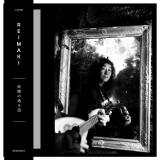
Reimaki - 妖精の通る道 / Yosei no toru michi

妖精の通る道 (The Path Where Fairies Pass) is the debut vinyl release by Reimaki, the duo of Rei Yokoyama (Triggers Flowers, Stakaidan, Lapiz Trio, 新井薬師自警団, and Fujio, Chiko Hige and Rei), and Maki Miura (Tsubamegami, Les Rallizes Dénudés, Shizuka, Fushitsusha, Ohkami No Jikan and Katsurei). The duo has been an understated presence in Tokyo, playing occasional under-the-radar shows and self- releasing a few CD-Rs, but they’ve recently started to break cover, with a recent cassette on UFO Creations, released in support of a late 2024 tour of China. It’s also a welcome reappearance on the scene for both musicians; Miura’s musical history, in particular, is being reevaluated thanks to a recent string of welcome Shizuka reissues.

But the music Reimaki make together is a different thing entirely, much as it shares some psychological and aesthetic interests with both Miura’s and Nokoyama’s other projects. Their sound is split between two main interests – an extension of glacial, deoxygenating psychedelic improvisations, and a deep interest in medieval European music. They’ve also been known to cover compositions by English prog/improv musician Fred Frith. These various elements of the Reimaki aesthetic are all present through 妖精の通る道, from the fragility of the opening “Novel Amor” through to the smeared, hazy textures of the three extended pieces that comprise the album’s flipside.

There’s a beautiful sympathy in these performances, and a generous simplicity, too; you can sense that this music is informed by decades of finding just the right way to say the right thing in the clearest manner possible. Yokoyama and Miura never overstate things; make the statement, play the song, let it hang in the air for a while, and then move on to the next essential expression. The music is unburdened by self- consciousness. Their take on medieval music cuts to the core of melody and melancholy; their psych- improv side is blurred and drifting without ever lapsing into rote generic gestures.

There’s some shared space with other artists who suspend the timeless within the kaleidoscopic possibilities of the psychedelic – Kendra Smith & The Guild of Temporal Adventurers; Emmanuelle Parrenin; Rosina de Peira – and a tangled folksiness that might put listeners in mind of Jan Dukes De Grey, Comus, Current 93, and Tower Recordings. Accompanied by beautiful photography from street photographer Takehiko Nakafuji, who was also personally chosen by Mizutani to document Les Rallizes Dénudés, 妖精の通る道 is a most unique and necessary trip.

pre-ordina ora24.04.2026

dovrebbe essere pubblicato su 24.04.2026

33,82
Braen / Raskovich - Alle Sorgenti Delle Civiltá Vol. 3

“Alle Sorgenti Delle Civiltà Vol. 3 - Africa, Australia, Nuova Zelanda” (1971) is the third and final chapter of a triptych of folk-based sound recordings released by Folkmusic. The album contains a total of fourteen tracks by Braen and Raskovich, i.e. the a formidable multi-instrumentalists Alessandro Alessandroni and Giuliano Sorgini, each grappling with seven different compositions characterised by a tribal mood. Among the grooves of this record, repressed on vinyl for the first time by Musica Per Immagini, it is possible to discern an in-depth study of one of those forms of popular culture referring to a specific geographic area, comprising the types of traditions often handed down orally and concerning knowledge, beliefs, fairy tales, legends, myths, narratives linked to the dimension of the fantastic, customs and traditions, namely music. Festivals and propitiatory rites, fights and dances, magical and sacred representations were all expressions of life whose sound and rhythm contributed to an appropriate description of the environment. Alessandro Alessandroni and Giuliano Sorgini have chosen some of the most significant musical characters that even belong to specific ethnic realities scattered across two distant continents, where the use of some of the typical instruments has favoured the realisation of sonorities of considerable interest.

In Stock

Disponibile in Stock e pronto per la spedizione

23,74
Tom Trago - Ignorance

Tom Trago

Ignorance

12inchMAG243
Magnetron Music
03.02.2026

Two decades into his winding voyage through music, culture and creativity, Tom Trago has become part of the densely woven fabric of the Dutch electronic scene - a producer, DJ, label owner, collaborator, remixer, radio host and DJ's DJ who is renowned not only for his impressive productivity, but also the genuine depth and variety of his work. While it was Trago's distinctive DJ sets that once grabbed headlines - he famously held residencies at renowned Amsterdam institutions Trouw and De School, and for a decade spent much of his time jetting between some of the most renowned clubs in Europe - in recent years Tom has cut down on appearances. Today, he chooses to be far more selective about where (and when) he DJs or performs live, often working with a handful of cherished venues and festivals while ensuring that his travels are sustainable and inspiring. Instead of the grind of touring and hedonistic night-time activity, Trago has chosen to focus on music-making, alongside semi-regular forays into radio broadcasting (NTS, Radio Radio, BBC Radio and EchoBox). He now spends most of his days producing and remixing at his new SR-3 studio in Alkmaar and his seaside home-come-studio in Bergen aan Zee. As part of these lifestyle and career changes, Trago took time to look deeper, not only inside himself, but also for musical inspiration. Tom has always loved, and devoted time to, digging into a wide variety of production styles, using this inspiration to develop a trademark personal production style, but in recent years he has taken it even further. Fuelled by a desire to challenge himself, Tom consistently tries new things in the studio while channeling all he's learned during a career that has moved forwards at breakneck speed. Since making his debut in 2006, Trago has released six critically acclaimed albums (two of which, the eclectic, beat-focused, career-spanning, Patta-released archive dive, 18, and the dancefloor excursion, Trembala, appeared in 2022); extensively worked with Dutch electronic music institutions Rush Hour and Dekmantel; collaborated with countless friends and contemporaries (Charlie Soul Clap, Awanto 3, Maxi Mill, Steffi, San Proper, Seth Troxler, and BokBok included); remixed artists including New Order, Carl Craig, Cassius, Tiga and Erol Alkan, and championed a swathe of fellow Dutch producers via the Voyage Direct label he founded in 2009. In 2025 Tom returns to legendary Dutch label Magnetron Music, home to Fatima Yamaha, DMX Krew, Legowelt, Staygold and many other, to release his Magnus Opus; Ignorance.

In Stock

Disponibile in Stock e pronto per la spedizione

22,27
BELLA - Note To Self EP

Repress.

Fast-rising Dutch DJ/producer BELLA becomes the first new artist signing to Sally C’s Big Saldo’s Chunkers imprint, with the inspiring ‘Note to Self’ EP – her debut production.

Relationships are key for Sally C. Since the inception of Big Saldo’s Chunkers in 2020, she’s released three carefully chosen EPs, all from her own studio. When she met BELLA while playing a festival in Amsterdam during summer 2022, the click was instantaneous, with the pair going on to play an impromptu b2b that day. Vibing both musically and energetically, they kept in touch, with BELLA sending Sally her maiden productions ‘Note To Self’ and ‘Orchestra Spring’. Sally connected so deeply with the tracks that they’d form the backbone of her debut artist EP on Big Saldo’s Chunkers.

One listen to the final EP and it’s not hard to see why Sally wanted to emboss them as Chunkers. Three fresh originals taking in influence from ‘90s house, acid, electro and prog, all with a unique hard-to-pin-down energy that makes them hit with a special swing.

The title track – also the first production made for the EP - sees BELLA lay down a sonic blueprint – both for her own sound and the full body of work. “This set the vibe and guided me through the creative process. I was really trying to make something that felt my own, that was also unique and not something I’ve heard before,” she shares. ‘Note to Self’ is heavy on attitude and bounce, driven by banging old skool drums, a rapid-fire grime-style vocal and a duo of synth lines – one uplifting, the other mining a slick ‘80s sheen, and the results are memorable. An absolute tune that Sally’s delighted to add to the Chunker catalogue.

‘Orchestra Spring’ is the perky sequel, a wicked one-two punch of kaleidoscopic groovy house with lashings of attitude that loves to scribble outside the lines with lots of retro samples and trippy energy. ‘Odd Symphony’ completes the trio, a blazing late-night cut driven by a gurgling acid underbelly, gritty drums and warm chords, giving the EP a brilliant afterglow.

In Stock

Disponibile in Stock e pronto per la spedizione

14,71
Candi Staton - Back To My Roots (LP + 7")

Soul Music legend Candi Staton returns to her down-home Alabama roots on her 32nd album, Back to My Roots. The twelve-track Americana set features an array of Staton-penned originals and some well-chosen covers.

"These songs represent my roots," Staton adds as she reflects on her many trials and triumphs. "Even the new songs on some level represent something I've experienced and that's what real soul music is about." Back to My Roots was produced by Staton with her second eldest son, Marcus Williams, a professional drummer who has toured with the likes of Peabo Bryson, Isaac Hayes, and Tyler Perry. They brought in Mark Nevers of Lambchop fame, who produced three of Staton’s prior Americana albums for Honest Jon’s and Thirty Tigers, to sweeten certain tracks. “Some of the first songs I ever heard were songs like `Peace in the Valley’ and `It’s Gonna Rain,’” says Staton. “The new songs or cover songs are tracks that remind me of that era when I was growing up as a child and evolving as a young woman. That’s why I named the album Back to My Roots because I’m going back to the roots that made me who I am.”

Staton received the Americana Music Association UK’s highest honour, the International Lifetime Achievement Award, at the UK Americana Music Awards ceremony at Hackney Church in London last year for her southern soul work that stretches from her 1969 Muscle Shoals hits to her more recent collaborations with the likes of Americana kings Jason Isbell and John Paul White.
The album opens with a mid-tempo Bonnie Raitt-styled contemporary blues “I Missed the Target Again” that finds Harry Connick Jr.’s longtime guitarist Jonathan DuBose Jr. (aka the Prophesying Guitarist) showing off his skills that set the tone for the song and the album.

Staton’s older sister, Maggie Staton Peebles (who alongside Staton was a member of the Jewel Gospel Trio in the 1950s), joins her for two duets. The first, “It’s Gonna Rain,” features just a drum, steel guitar and vocals. “My mother used to sing that song to us all the time when I was a child,” Staton recalls. “It’s a really soulful kind of song I wanted to revisit.” They then take turns leading Thomas Dorsey 1939 gem “There Will Be Peace in the Valley” that Elvis Presley popularized in the 1950s.

“Hang on in There” is a new, mid-tempo song that has an old school gospel flavour and features vocals from veteran bluesman, Larry McCray.
While in Europe in 2023 for her farewell concert tour that took her to the Glastonbury Festival and Love Supreme, Staton and her British band, PUSH, went into a London studio to record a new version of The Rolling Stones’ 1972 gem, “Shine A Light.” “I love the way that came out,” Staton says. “We put a big choir on it and put our own twist on it.”
From there, Staton revives another Thomas Dorsey classic, “The Lord Will Make a Way Somehow,” with a bluesy vibe. When Al Green started recording gospel in the early 1980s, he re-introduced this song into the culture.

“God’s Gonna Use Me Anyway” is a new mid-tempo blues with subtle Caribbean influences.

The mood takes a turn on “1963.” It’s a poignant, spoken-word reflection on September 15, 1963, when four black girls were killed in the Birmingham Church bombing. “I was in the city that day and I remember the chaos and horror after the bombing,” Staton recalls. “Just thinking of how racism and hatred caused those men to kill those girls was so emotional for me that I could only do it in one take.”

It's a perfect segue into "Reach Down and Touch Heaven," a haunting, plea for divine intervention into the affairs of mankind. "That's straight Baptist," she says. "I used to be a church pianist back in the 1960s. I've never played piano on one of my records before so that's a unique song for me because I’m finally playing on one of my records. The message of that song is about the homeless. It came to me when a homeless person on the street asked me for $5. When God touches your heart to help somebody else that’s heaven to God’s hears. So, when we reach into our purse or wallet to help someone, we’re touching heaven."

Staton offers love as an antidote to hate on the bouncy, Motown-styled, “Love Breakthrough.”

Her publicist brought Aaron Frazer & the Flying Stars of Brooklyn NY’s 2017 cut “My God Has a Telephone” to Staton’s attention. She shifts the track from a retro 1960s groove to more of a 1980s Malaco Records arrangement, a subtle but distinct variation. Staton brought in her longtime friend and STAX Records legend, William Bell (“I Forgot to Be Your Lover” and “Trying to Love Two”), to add raspy seasoning to the track.

The album closes with the wistful, “In God’s Hands We Rest Untroubled,” that was originally written and recorded by the late country star, Lari White, who died in 2017 at the age of 52. “Lari sent me that song to consider at least ten years ago and I always loved it,” Staton says. “The record label didn’t want it on the album or something, so I just held it.”
Staton says, “I grew up hearing a lot of these old songs when they were new songs. I toured with the Jewel Gospel Trio in the 1950s and we got to know people like Mahalia Jackson, Sam Cooke and others who sang these types of songs. So, I’m sort of paying tribute to them and the influence they had on me by refreshing these songs and making new songs in the old style.”’

pre-ordina ora31.07.2026

dovrebbe essere pubblicato su 31.07.2026

29,20
Various - Values

Various

Values

12inchWUVA1
Warm up
12.09.2025

It's time for a new compilation in our house and we have some good music to fill it up. This collection of talent is going to be served in two flavours, the physical one a four cut vinyl EP featuring previously only digital tracks and the second one a ten track selection from our back catalogue featuring some of the best producers in our family.

Asier Morillas ( A4 ) is probably one of the most original sci fi specialists out there and he's been part of our sound since his first steps into production. His track Kynosoura is a perfect example of hi tech jazz.

David Reina is also a science fiction specialist, also featured with a full length work in our catalogue, our pick for this collection is Autoscopy, a mental and complex sonic voyage into the best outer space techno.

From Mod 21 we have selected one of his most played tools, Escalation of Violence, the perfect hypnotic drill to boost your mixes properly.

Vertical Spectrum brings us to hyperspace in BALN006 combining a distorted groove with floating alien bleeps in a sci-fi techno masterpiece.

This four cuts will be pressed on wax, let's talk about the next eight:

From his Idle Ep we have chosen Temudo's Spiritual Song, a merciless floor weapon heavily tested on the best clubs and big stages out there.

Next comes BiiBii by Null Forms approaching a more abstract and sci-fi terrain, maintaining the danceable pulse and well-managed distortion. The result is more mental and synthetic. A kind of controlled chaos.

Axial Rotation from Translate starts with a fast paced groove, heavily bass fuelled with a continuous synth line moving across the basement. All sound elements are constantly mutating and evolving although the mood is linear and loopy.

Eight cut comes from Dutch veteran Dimi Angelis, the third from his
A Journal of Impossible Things EP from 2023. The hypnotic bleep penetrates your mind while the dirty sound of the old drum machine sets the pace for your feet. Special mention to the occasional resonant sweep that appears from time to time creating the required tension.

On the ninth, Ruman's Lizard from Where The Ring Ends LP, mental and hypnotic, perfect for adding tension to a mix, again heavily tested on the best dancefloors extensively.

Closing the release, CONCEPTUAL with Red Sun a magnificent closing anthem, no more words needed here.

With this collection you get a tiny snapshot of the sonic palette of Warm Up Recordings sound. Check our full catalogue to get the proper picture.

In Stock

Disponibile in Stock e pronto per la spedizione

12,56
Sylvain Audinovski - Naruto Symphonic Experience LP 2x12"
 
46

"Three years ago, Jérôme Leclercq and I from Mediatoon Licensing came up with the idea of creating a cinema concert to celebrate the 20th anniversary of Naruto. Why a cinema concert? The music is part of the success of the licence and fans have a particular attachment to the credits and the original soundtracks. The originality of the music by Toshio Masuda, the composer of Naruto, comes from the clever mix of traditional Japanese instruments, such as the Shakuhachi or the Shamisen, with guitar and other pop/rock instruments. So we came up with the idea of bringing this music to the stage with a 50-strong orchestra, accompanied by an original montage of the best moments from the anime. This orchestra is made up of three parts: symphonic instruments, pop/rock instruments and traditional instruments.

To do this, we approached the ODINO orchestra and its conductor Sylvain Audinovski. The ODINO orchestra is one of those capable of mixing musical styles while maintaining a very high level of performance. We have also chosen traditional Japanese instrumentalists to complete the orchestra's core, especially for the show.

The arrangements and musical direction are the fruit of a collaboration between Quentin Benayoun, Sébastien Caviggia and myself. My two accomplices, with whom I formed the group P.U.S.S. in 2007, have a great mastery of rock and orchestral music writing. This mix is essential to keep the promise made to the fans of the series and required several months' work to select the music and write the scores for the whole orchestra.

How do you tell the story of Naruto to fans, but also to those who don't know the anime? That's the real challenge of this unique film-concert. How do you select the best moments in the story of this young ninja apprentice from the vastness of the first 220 episodes? Six months of selection and research enabled me to choose the key images in the narrative, while preserving certain dialectics to match the anime's incredible music.

This original film-concert, lasting almost 2? hours, is a real Rock-Symphonic show paying tribute to the work of Masashi Kashimoto and the music of Toshio Masuda."

In Stock

Disponibile in Stock e pronto per la spedizione

36,93
Various - Spiritual Jazz 18: Behind the Iron Curtain PART 2 2x12"

One of the most politically charged terms of the 20th century, the Iron Curtain was a metaphor for political and cultural division. In a post-war telegram Winston Churchill referred to the fault line that ran through Europe between East and West as "an Iron Curtain is drawn down upon their front. We do not know what is going on behind".


In this two-part album, as far as jazz is concerned, we will showcase, describe and celebrate exactly what was 'going on behind'. We see that music is the power supreme, with the ability to transcend all barriers, be they physical, political or metaphorical.


Our liner notes illustrate the complex and contradictory history of Soviet jazz, and the tracks we've chosen cover the key period of the early 1960s to the 1980s. It was during these dark years of the Cold War that the Soviet Union and its satellite states produced a number of outstanding artists playing in a variety of styles. The impact of modernism, from hard bop and Latin to modal and cool jazz, had found its way through cracks in the curtain. The deeply-felt ancestral strains of traditional European folk music were combined with the exciting new and progressive sounds of the West, and a radical, intoxicating brew was created that no amount of guns, tanks or polonium tea could overcome.


We chronicle the triumph of jazz at a time of extreme geopolitical conflict. What went on behind the Iron Curtain in these countries was once mysterious and unknown to the West, but the perseverance of their artists provided sound and light amid the secretive, dark days of the communist-capitalist standoff. There was no end of life-affirming spiritual jazz behind the Iron Curtain.


"Whether it's by improvisation in the African-American jazz tradition, or by a village kobza player standing on top of a damn hill - he feels connected to the stars."

In Stock

Disponibile in Stock e pronto per la spedizione

28,53
Dan Tyler & Nick The Record - Mr Bongo Edits Volume 3

Good friends and Record Mission co-captains, Dan Tyler (one half of the Idjut Boys) and Nick The Record, take the reins for the third volume of the Mr Bongo Edits 12" series. With previous editions coming courtesy of Danny Krivit and Luke Una, Dan and Nick set their sights on a hand-picked selection of iconic ‘70s Cuban recordings for this three-track cosmic whirlwind. Across the A side, Dan picks out two Juan Pablo Torres tracks, with Nick taking on Grupo Los Yoyi on the B. Tweaking, extending and reworking the recordings with a dose of extra magic they remould the tracks to fit the sounds and structure of today’s dancefloors.

Having formed the Idjut Boys in the early ‘90s, Dan and Conrad McDonnell have crafted a dubbed-out, disco-tinged style that permeates their countless productions, remixes and DJ sets. Speaking of the two tracks Dan has chosen to rework for this EP he mentions, “Having been caught under an avalanche of good music from Mr Bongo, I took it upon myself to extend and add effects to a couple of the fantastic tracks from the Juan Pablo Torres LPs they recently re-issued. Just for disco jockey and barn dance use.”

First, Dan looks to Cuban maestro Juan Pablo Torres’ 1978 album 'Algo Nuevo', taking one of the standout tracks ‘Cacao’ and giving it more space to breathe. Teasing out the scatting vocal line and percussive climax that nods to George Kranz's ’83 electronic disco anthem 'Din Daa Daa', whilst adding more cosmic tripped-out synths and space echoed dubs, Dan builds the tension to fine effect. This track sounds immense on a big club system and the swirling synths felt like they were lifting the ceiling off when we played it at the amazing La Paloma ballroom in Barcelona.

Dan then turns his attention to Torres’ 1977 'Super Son' album, giving the psych-Latin-funk track 'Pastel En Descarga' a dub makeover. Rich in delay and drama, whilst maintaining and extending the breakers funk intro, he juices it up into a punchy, no-nonsense, cosmic-funk delight.

On the B side, Tangent co-founder, long-standing Life Force resident and seasoned rework master, Nick The Record, revisits an edit that he originally constructed in 2009. Clocking in at over double the length of the original cut, Nick’s edit of Grupo Los Yoyi’s 1977 cut 'Paco La Calle', is made with dancers firmly in mind. This secret weapon builds and simmers, with the drums and percussion pushing and pulling before the psychedelic synth lines return in a sweltering fashion. In this new 2025 version, Dan is drafted in to work some brilliant new synth lines into the mix.

In Stock

Disponibile in Stock e pronto per la spedizione

19,54
Herman Kelly & Life - Percussion Explosion!

Source of an all-time 'Breaks and Beats' classic, Mr Bongo reissue Herman Kelly’s timeless 1978 album Percussion Explosion!. Immortalised in hip-hop folklore, when the anthemic 'Dance To The Drummer's Beat’ was featured on the influential Ultimate Breaks & Beats compilation series in 1986.

Percussion Explosion! was the brainchild of drummer, percussionist, producer and arranger, Herman Kelly and his percussive disco-funk group from Miami, 'Life', that featured Aaron McCarthy, Oliver Well, John DeMonica, Michal Cordoza and Travis Biggs. The album houses a collection of disco, funk and Latin-inspired cuts that were destined for greatness. Nestled within the grooves is the B-Boy and B-Girl’s anthem, 'Dance To The Drummer's Beat’, which contains a now legendary break. A cursory glance at Whosampled will show that it has been sampled in over 125+ songs. These include Double Dee & Steinski on their groundbreaking 1985 production 'Lesson 3 (History Of Hip Hop Mix)', as well as by DJ Shadow, N.W.A, Masters At Work, Run D.M.C. and a whole host of heavyweights across hip-hop, dance and pop music.

When the album was released in 1978 it came out on two different labels, Alston Records and Electric Cat. Each label pressed different versions of 'Dance To The Drummer's Beat’, with the former featuring a 4:12 version and the latter a longer 5:09 version that has a different structure, crowd noise at the start and overdubbed percussion.

For this Mr Bongo reissue, we have chosen the classic 4:12 version from the Alston Records release, which would later find its way on to the illustrious Ultimate Breaks & Beats compilation. To make matters even more confusing the Alston version art on the back cover also states the track length as 5:09, whilst the centre label lists it correctly as 4:12.

Aside from the much celebrated 'Dance To The Drummer's Beat’, the album includes a range of other fantastic overlooked cuts. From the percussive soul stepper 'Share Your Love', to the beautiful Latin-flavoured 'A Refreshing Love' or the party disco-funk groover 'Who's The Funky D.J.?'.

This wonderful and inspirational record features an important piece of hip-hop heritage and deserves a place in every collection.

In Stock

Disponibile in Stock e pronto per la spedizione

28,99
Oren Ambarchi & Eric Thielemans - Kind Regards LP

The record captures an expansive performance in Poitiers, France in November 2023. First working together in an unpredictable trio with minimalist legend and eccentric extraordinaire Charlemagne Palestine, Ambarchi and Thielemans quickly established a remarkable musical chemistry that led to an ongoing series of duo concerts, including the performance documented on their LP Double Consciousness (Matière Mémorie, 2023).

Kind Regards finds the duo refining their shared language while continuing to take risks, allowing the music’s gravitational pull to lead them from meditative calm to unexpectedly expressive passages of melodic invention and rhythmic drive.

Recorded in sparkling fidelity and carefully mixed by Ambarchi’s longtime collaborator Joe Talia, the LP contains a single unbroken performance, stretching out for over 45 minutes. Guitar and drums weave together into a symbiotic whole that nevertheless affords us ample opportunity to marvel at the highly personal approaches these two musicians have developed to their chosen instruments through decades of diverse collaboration and prolific performance. The set begins with Thielemans’ hypnotic tom patterns, around which Ambarchi’s wavering, shimmering guitar tones—achieved with the help of the rotating speaker of a Leslie cabinet—flurry and swirl. Thielemans’ drums play subtle tricks with time and perception, adding and dropping beats within repeated patterns to create an effect at once rhythmically insistent and liquified. Growing at first into a rapidly pulsing texture of brushed drums and flickering harmonics, the music builds momentum into an irregular groove over which Ambarchi’s guitar is transformed into haunting, monumental electric organ chords, strikingly recalling the Wurlitzer work of Alice Coltrane, before settling into a section of gentle portamento melody embedded into the tactile clicks and clangs of Thielemans’ percussion.

When Thielemans adopts a more traditional jazz approach to the kit in some of the set’s second half, the results are stunning, demonstrating a feel for shifting accents and sensibility to the touch of the stick on the drum or cymbal that recalls greats like Jack DeJohnette or Billy Hart (one of Thielemans’ mentors). And when Ambarchi turns up the heat, he does so in an unexpected and delightful way, letting loose a swarm of jittering delayed tones straight out of Henry Kaiser’s classic It’s a Wonderful Life, with a more active use of the guitar’s fretboard than his usual approach to the instrument allows. As the performance draws to a close after a climactic episode of distorted harmonic groans and crashing cymbals that manages to be at once thunderous and carefully attuned to detail, it is clearer than ever that, for these two serial collaborators, this is a very special pairing.

Kind Regards shows us the kind of magic that can happen when two masters who have dedicated decades to reimagining their instruments simply begin to play, following the music wherever it goes.

In Stock

Disponibile in Stock e pronto per la spedizione

22,65
LES CYCLADES - GLIKA LP

Les Cyclades

GLIKA LP

12inchHISC003
HI SCORES
15.05.2024

(comes with a poster) The Klein blue horizon, gliding seagulls, a ferry purring between two languid islands, dotted with ultra-white villages and ancient ruins... These idyllic visions run through Glika, the ultimate musical project of Les Cyclades. An exciting electronic odyssey from West to East, from Belgian effervescence to Greek mysticism.


In 2020, confined to the neighborhoods of Yser and Mystère in Brussels, Alex and Ludo dream of Greek islands, of scorching sun on their skin, of salty baths, chilled ouzo and braised octopus. But everywhere, time stands still. Must one necessarily move to travel? To levitate? In the absence of Elsewhere, the Franco-Canadian duo will compose the imaginary soundtrack to their escape.


Glika (which means "sweet" in Greek) perfectly synthesizes the musical influences of Les Cyclades: a cosmic saxophone inherited from Alex’s dub and free jazz past, an architect-pastry chef-botanist from Normandy, and Ludo’s "Balearic" tracks, a musician-performer-wine lover who frequented his first raves in 1995 in Houston, Texas.


From a hedonistic encounter on a friendly terrace in the 19th arrondissement of Paris to their chosen exile in Brussels, these hypersensitive jacks-of-all-trades first danced and mixed records. Before creating their own phantasmagorical sonic territories, where cinema and poetry meet more or less human voices, brass instruments, synthesizers and analogue drum machines.


A searing fragment of Greek filmmaker Theo Angelopoulos's "Eternity and a Day" preludes Glika. Then, on Yser Mystère - the names of the two stations on tram 51 that physically linked Alex and Ludo's psyches during the lockdown - Alex's astral sax balances out the industrial mechanics of a locomotive, against a backdrop of urban soundscapes.


And then a rising bpm dominates Alocasia, with its deep and sensual light foot. So sunny. From one track to another, there are interludes influenced by Xenakis, Vangelis and Jean-Michel Jarre. Seminal heroes of the Cyclades... But soon, the duo unleash hostilities at the helm of Epigone, their meta-techno anthem. "I know", "You know", echoes Alex.


Laughs of friends, "mouth noises," and "bizarre rhythms" still dominate Parc Fou, while DRAM eyes the minimalist techno of Detroit. So dear to Ludo's heart... And what about PAME, that post-modern Greek epic.Or Glossa, a timeless track that finishes with a fascinating - because diffracted - elegance, this multi-sensory journey through Les Cyclades. Let's close our eyes. Silencio! Hay Banda!


By Eléonore Colin, journalist (and friend!!)

In Stock

Disponibile in Stock e pronto per la spedizione

17,86
Bawrut vs Lele Sacchi - B2B2

For the second release of the Back to Back series of Stolen Goods goes for two stables of the scene: label manager and old school pillar of the Italian scene Lele Sacchi and Italo Spanish beat master Bawrut.
After B2B1 saw the funky deep sound of Rogue D feat Joe Le Groove and the raw house grooves of Ruff Stuff got played by Laurent Garnier on his show and by peeps like Jamie Jones and Oliver Dollar in their sets and chosen by Beatport in most of their weekend picks here we are ready for two bangers for clubbing prime time! Bawrut's fame goes a long way back to in the best of Europe's crossover of electronic dancefloor music and indie and urban flavours. An album on Ransome Note, hits for Life & Death, Correspondant and tracks supported by Dixon, Jennifer Cardini, Ricardo Villalobos Sven Bath and playing B2B with Kink and Skream in festival and clubs like Sonar, Nuits Sonores, Fabric, Sub Club, Nitsa, etc. and now this massive hands in the hair, goosebumps in the back monster of retro future rave piece of music!
Lele Sacchi is known to have an ear for bangers having been behind the decks all over the world for nearly 30 years, so whenever and with various aliases he turns into producer is quite normal to find his music out on labels like Snatch, Soul Clap, Nervous, Internasjonal, Crosstown Rebels, Pokerflat, Rebirth and more and more classic underground dance stables. This time he keeps his know funkier deep groove but adds a kille stab in the breakdown to represent a vein of peaktime monster attitude.
Again a message 'From Clubbers to Clubbers' as we love to say here at Stolen Goods records.

In Stock

Disponibile in Stock e pronto per la spedizione

15,55
Various - Mr Bongo Edits Volume 2 - Luke Una

É Soul Cultura captain, originator of Manchester’s legendary Electric Chair and definitive people’s champion, Luke Una taps into a lifetime’s worth of musical discovery for the second volume in our Mr Bongo Edits series. A cosmic coming together that sees two of Luke’s secret weapons, re-edited and re-contextualised by the man himself to provide optimal dancefloor euphoria.

A stalwart of the underground for nearly 40 years, Luke has become an appointed leader of the late night disenfranchised, with an unquestionable ability to pick records that make minds tick. Not least through his two É Soul Cultura compilations released on Mr Bongo over the past two years.

A taste that traverses genres as much as it does emotions and decades, who better to give an insight into the tracks he has chosen to edit, than the man himself. “I've been an avid collector of afro-beat house, techno and underground black heart disco since before the basement soul days of Electric Chair 30 years ago. Both these bombs were very much holy grail finds, plucked from the last four decades of digging in random crates of dusty vinyl all over the world.”

First up, Thandi Zulu & The Young Five’s interpretation of Pure Energy’s early ‘80s disco power play – ‘Love Game’. With a distinctive South African synth bass and killer keys combo, Luke explains the original has this “bonkers alchemy of heavy machine soul, uptempo rawness and a majestic disco evangelism”, making it ripe for a re-edit.

On the B side, Lionel Pillay’s Jazz dancer ‘Plum’. “The original was a relentless 18-minute raw jam”, Luke states, “which despite its late ‘70s South African origin kinda reminded me of a 1986 Chicago piano House record”.

“These edits strip the tracks back and rebuild them, giving them more sonic weight with that looped up drum jacking militancy from the days of Chicago, combined with a boosted sense of transcendental, psychedelic, cosmic disco. They have always had such an explosive reaction on so many dancefloors including the heavier electronic club, so it felt only right to reshare them”.

In Stock

Disponibile in Stock e pronto per la spedizione

18,07
Vhinz - Belvedere

Vhinz

Belvedere

12inchCLV009LP
Citizen Records
24.07.2023

A new artist on the Citizen Records / Clivage Music roster, Vhinz is a musician based in Brussels. After taking his time to break onto the electronic scene, he’s now ready to share Belvédère, his debut, dreamlike album, confidently intense, sweeping between cinematic songs and soaring, epic electronic sounds.

Vincent Honca is Belgian, with Armenian roots and a love of keyboards: the mini synth he used to play as a child, the classical piano of his years of training at the Académie de Musique, the Yamaha synth of his teenage years... During the noughties of his adolescence, electronic music was omnipresent in his life as he listened to and admired Daft Punk, Moby, Vitalic, Air and The Chemical Brothers. He also went out dancing, a lot, in the nightclubs and parties of Brussels and the vicinity, and soon his love of computers, technology and synthesisers led to him producing his own music. “I wanted to create beautiful textures with synths,” he says. “I wanted to have fun and discover the possibilities. As part of the internet generation, I taught myself everything I know through reading magazines and checking the forums.”

Vincent went on to become a computer programmer and decided to make music in as much of his spare time as possible. His first productions came out in 2015, including “Drastical”, one of three deep house dancefloor-orientated tracks recorded with none other than Kris Menace. “At the time I was really searching for my musical identity,” explains Vincent, and progressively his music started to lean towards another of his passions – films and film music. “I’ve listened to soundtracks a lot since I was a teenager, and they’ve been a big influence, in particular the music for Heat by Elliot Goldenthal, Gladiator (Hans Zimmer), Saving Private Ryan (John Williams), The Last Temptation of Christ (Peter Gabriel), The Virgin Suicides (Air) and Leon (Eric Serra).” Coincidentally, Vincent has already worked on two independent Belgian films by director Christophe Karabache, UltravoKal and Vortex, both collaborations with Michel Duprez.

Now Vincent has chosen the name Vhinz, bringing together his expertise with machines and computers, his passion and enthusiasm for the electronic sounds of his adolescence and his adoration of cinema’s powerful, impactful soundtracks. Vhinz’s first track is thus called “Aether”, a track brimming with character and confidence, with sung-spoken vocals that sweeps the listener up in bewitching synthetic themes and drums like an off- kilter heartbeat. The track perfectly encapsulates the Vhinz sound, and Citizen Records – the only label he sent it to – immediately loved it and were ready to release a 12” with more. “Then Covid and the lockdown happened, and everything came to a complete halt,” remembers Vhinz. During those long two years without anything being released, the project continued its gestation and has now grown in a mini-album of eight coherent, fascinating tracks. “I really wanted a strong concept for everything, and so was born this album that I’ve called Belvédère. I imagined myself on a belvedere with a panoramic view of the world, channelling all the emotions it elicited in me into music.”

Belvédère is a dreamlike debut album, confidently intense, sweeping between cinematic songs and soaring, epic electronic sounds. It’s a place for Vhinz to showcase his dreams, talk, sing and invite others too: Margot Ferro sings on “Le Passage” and “Envole-moi”, and Michael Meers lends his vocals to “Evolution”. “My album tells a story, with the tracks in chronological order. There are both times of hope and darker periods of my life, with sadness and love,” meaning that listeners are invited to experience a suite of different emotions and be swept along by the author’s musical daydreams. Musically, the album falls somewhere between Moby, Vitalic, Air and Serge Gainsbourg, with a density and atmosphere that are completely Vhinz. “With Belvédère I was looking for beauty, but also something darker, dirtier, more organic. The album is the culmination of that.”

In Stock

Disponibile in Stock e pronto per la spedizione

19,71
Deeplomat & Dublatov - Dream Dome LP

Finally, our debut album is out. It is based on a well-calibrated selection of tracks chosen from intense live performances since our project's inception in 2018.

Dream Dome is a small window in our studio that looks out into the sky - a symbol of the musical vision of two opposites whose style and DAWless music-making skills have created 13 tracks, carefully calibrated by us on the dance floor.

Dream Dome is a blend of musical styles closest to leftfield house and techno. It is characterized by warm analog timbres, polyrhythmic structures, and the self-expression of our individuals.

Dream Dome is available on limited 180g vinyl with 8 tracks + download code for full extended 13 tracks.

Made in Valencia with love.

In Stock

Disponibile in Stock e pronto per la spedizione

13,40
Various - House Of Riviera Vol.2 (2x12")

Following up on the success of House Of Riviera released in 2019, Mona Musique releases House Of Riviera Volume 2 curated by label head Nick V, a compilation that pays homage to forgotten gems of the classic Italian House scene, circa 1991-1994. 9 tracks from the artists and record labels that were central to this seminal era of House music, including two never released cuts from Ricky Montanari, Davide Ruberto and Ivan Iacobucci.

In the early 1990s, Italy hosted one of the most prolific scenes in the burgeoning world of House music. Whilst the majority of Europe was only just beginning to digest the arrival of this new musical genre born in the US, Italian clubs, DJs and labels were hot on the heels of their counterparts in the already established scenes of New York and London. The clubs of the Adriatic coast, also known as the Italian Riviera, were full every weekend, hosting the major US and UK Djs of the time, but also seasoned resident DJs that had been honing their trade since the early 80s. By the early 90s, Italian House music was regularly exported around the world with labels such as UMM, MBG, Flying, Palmares, DFC, Oversky, Zippy, D:Vision, Irma - and its sublabels Antima and Calypso, releasing tracks inspired by the original New York House and Garage sound, but with a very different, unique and emotional take. This was the specific aesthetic that was to become the House sound of the Riviera, the soundtrack to the golden era of Italian House music.

With all releases between 1992 and 1994, House Of Riviera Vol. 2 unites a selection of 9 tracks that encapsulates the atmosphere, the energy and creativity that reigned during that era. Including 2 previously unreleased tracks from Ricky Montanari and Davide Ruberto, and Ivan Iacobucci, both in the vaults since 1992, the compilation spans the different shades of the genre : from classic deep vocal house by Ricky Montanari and Sound Set, to the more dubbier late night dance floor cuts by Workin’ Happily and Night Communication, with Mental Detector and More Heavy Soul bringing some well chosen disco samples to their contributions, without forgetting the characteristic deep Italian dream house style by Green Baize. Artists featured are iconic producers and DJs from the day : Ricky Montanari & Davide Ruberto, Alex Neri & Marco Baroni, Ivan Iacobucci, Workin’ Happily and More Heavy Soul.

In Stock

Disponibile in Stock e pronto per la spedizione

23,49
Don Carlos - PARADISE HOUSE VOL. 2 LP 2x12"

Among those who have written the history of the Italian House is certainly Carlo Troja, aka Don Carlos. In 1991 Irma Records released her first single Alone which immediately became a cult record for DJs across the Channel and especially American DJs. Its particular soft and ambient sounds defined a genre that was then called Paradise House.

And it is precisely from this genre and from this Dj that Irma Records began the celebrations of its thirtieth anniversary a few years ago by
proposing a selection of its catalog chosen by Don Carlos, trying to dig among some of the pearls of the genre but above all among some
songs that featured in his evenings but were less popular at the time of their release.

This compilation had a great response and it was decided to make a volume 2, always selected by Don Carlos. Also this compilation, like the first one, consists of two compact discs and a vinyl version this time with a selection of only 8 of the 20 tracks contained in the CD and Digital version.

All the tracks on the double vinyl have been re-edited by Don Carlos for the occasion. The double cd is in a limited numbered edition.
Among the artists and producers included are: Don Carlos, Lust Unlimited, Subsonic Posse, T.M.V. (Marco Trani, Moz-Art and Maurizio
Verbeni), The Sweatbox Orchestra, Aritmya, Deep Aural Penetration, Be Noir, Love Nation, More Heavy Soul, Outdance, F.I.T.Z. and many
others

In Stock

Disponibile in Stock e pronto per la spedizione

26,01
Alan Vega - Invasion b/w Murder One

One of Alan Vega’s greatest talents was his ability to bring the past and the future together • into a suspended place of timelessness. His groundbreaking duo Suicide was often seen as future primitivism and most of his musical output has exemplified this blending of the primordial human condition and visionary thinking. With Invasion b/w Murder One, the next release from the now infamous Vega Vault following 2021’s Mutator, we see this innate power in full effect.

The two tracks “Invasion” and “Murder One” were recorded two decades apart from one another in New York City. “Invasion” was recorded toward the end of the 2012-2015 studio sessions for the posthumous album IT and was one of his last recordings, while “Murder One” was recorded in 1997-1998, (after the Mutator sessions) and is part of a cluster of material that was recorded but never mixed prior to the sessions for his album 2007, released in 1999. Pairing these two songs together as a release illustrates the timelessness of the 30 plus years of unreleased material that he deemed the Vega Vault.

This release continues the collaboration of Mutator’s mixing and producing team, Liz Lamere and Jared Artaud. Liz provides a bridge to the past, having performed throughout the recording process of “Murder One” and “Invasion” while Jared opens a bridge to the future having been chosen by Alan himself to carry the torch and ensure the vision stays intact. Alan trusted no one more than Liz and Jared, and gave his blessing and encouragement to continue releasing material from the Vault. As Alan stated in the song “Vision” from IT, “If you destroy the vision, you will suffer the whirlwind.”

In Stock

Disponibile in Stock e pronto per la spedizione

13,03
Colin Potter - It Was

Colin Potter

It Was

12inchPLA042
Platform 23
06.09.2021

Platform 23 is delighted to present music from Colin Potter with It Was, a collection of tracks chosen from his 1989 cassettes Recent History Volumes 1 & 2.

After a burst of activity, mainly on his ICR label, from 1980 - 82, the tapes were the first released music in seven years and highlighted the intervening period.

While much of his earlier recordings have now been reissued by Dark Entries, Deep Distance and Sacred Summits, It Was covers the period where Potter recordings were limited while working as an engineer at his IC Studio, and pre-date his work with Nurse With Wound.

The ambience and guitar of The French Polisher leads to Diary Of A Nobody, an embodiment of Potter, sequencers and guitar against submerged, metallic percussion rising. Dense, claustrophobia follows in Solidarity At Wujeck Colliery towards the guitar refrains of Persistence.

Side two starts with Green Fields, where plucked guitars are surrounded and consumed by arpeggios. Propulsion without percussion, the layers of arps shift and redefine before the scatter of Saw with reversed synths and guitar acting as counterbalance. Nine Months, a possible centerpiece, has an autumnal atmosphere; crashing cymbals and ambulant guitar, leading to the closing Ships That Pass In The Night, a hazy drift of slowly sequenced synths & primitive voice samples.

In Stock

Disponibile in Stock e pronto per la spedizione

19,12
Bryan Ferry - Boys And Girls LP

Bryan Ferry

Boys And Girls LP

12inchBFLP06
UMC
30.07.2021

Boys And Girls released in June 1985 is the sixth solo outing from English singer and songwriter Bryan Ferry it would be both a critical and a commercial smash. A No’1 album in the UK certified Platinum selling over 300,000 copies with two top 40 singles “Slave to Love” one of Ferry’s most popular solo hits and “Don’t Stop the Dance” in the US it would go on to sell over half a million copies certified Gold. An album rich with musical aristocracy The guitar solo at the end of “Slave to Love” featured Neil Hubbard and the album featured other famous guitarists such as the Dire Straits guitarist Mark Knopfler, Pink Floyd’s guitarist David Gilmour, Chic guitarist Nile Rodgers and Bryan Adams’ guitarist Keith Scott. Lovingly Re-Mastered from the original tapes by Frank Arkwright at Abbey Road Studios. London. Featuring artwork that has been faithfully restored to reflect its original first press “Boys and Girls” is presented on 180g heavy weight vinyl and is one of those classic albums that would not look out of place in any record collection.

In Stock

Disponibile in Stock e pronto per la spedizione

25,17
Guilty Razors - Complete Recordings 1977 - 1978

UILTY RAZORS, BONA FIDE PUNKS.


Writings on the topic that go off in all directions, mind-numbing lectures given by academics, and testimonies, most of them heavily doctored, from those who “lived through that era”: so many people today fantasize about the early days of punk in our country… This blessed moment when no one had yet thought of flaunting a ridiculous green mohawk, taking Sid Vicious as a hero, or – even worse – making the so-called alternative scene both festive and boorish. There was no such thing in 1976 or 1977, when it wasn’t easy to get hold of the first 45s by the Pistols or the Clash. Few people were aware of what was happening on the fringes of the fringes at the time. Malcolm McLaren was virtually unknown, and having short hair made you seem strange. Who knew then that rock music, which had taken a very bad turn since the early 1970s, would once again become an essential element of liberation? That, thanks to short and fast songs, it would once again rediscover that primitive, social side that was so hated by older generations? Who knew that, besides a few loners who read the music press (it was even better if they read it in English) and frequented the right record stores? Many of these formed bands, because it was impossible to do otherwise. We quickly went from listening to the Velvet Underground to trying to play the Stooges’ intros. It’s a somewhat collective story, even though there weren’t many people to start it.
The Guilty Razors were among those who took part in this initial upheaval in Paris. They were far from being the worst. They had something special and even released a single that was well above the national average. They also had enough songs to fill an album, the one you’re holding. In everyone’s opinion, they were definitely not among the punk impostors that followed in their wake. They were, at least, genuine and credible.

Guilty Razors, Parisian punk band (1975-1978). To understand something about their somewhat linear but very energetic sound, we might need to talk about the context in which it was born and, more broadly, recall the boredom (a theme that would become capital in punk songs) coupled with the desire to blow everything off, which were the basis for the formation of bands playing a rejuvenated rock music ; about the passion for a few records by the Kinks or the early Who, by the Stooges, by the Velvet mostly, which set you apart from the crowd.
And of course, we should remember this new wave, which was promoted by a few articles in the specialized press and some cutting-edge record stores, coming from New York or London, whose small but powerful influence could be felt in Paris and in a handful of isolated places in the provinces, lulled to sleep by so many appalling things, from Tangerine Dream to President Giscard d’Estaing...
In 1975-76, French music was, as almost always, in a sorry state ; it was still dominated by Johnny Hallyday and Sylvie Vartan. Local rock music was also rather bleak, apart from Bijou and Little Bob who tried to revive this small scene with poorly sound-engineered gigs played to almost no one.
In the working class suburbs at the time, it was mainly hard rock music played to 11 that helped people forget about their gruelling shifts at the factory. Here and there, on the outskirts of major cities, you still could find a few rockers with sideburns wearing black armbands since the death of Gene Vincent, but it wasn’t a proper mass movement, just a source of real danger to anyone they came across who wasn't like them. In August 1976, a festival unlike any other took place in Mont-de-Marsan – the First European Punk Festival as the poster said – with almost as many people on stage as in the audience. Yet, on that day, a quasi historical event happened, when, under the blazing afternoon sun, a band of unknowns called The Damned made an unprecedented noise in the arena, reminiscent of the chaotic Stooges in their early adolescence. They were the first genuine punk band to perform in our country: from then on, anything was possible, almost anything seemed permissible.

It makes sense that the four+1 members of Guilty Razors, who initially amplified acoustic guitars with crappy tape recorder microphones, would adopt punk music (pronounced paink in French) naturally and instinctively, since it combines liberating noise with speed of execution and – crucially – a very healthy sense of rebellion (the protesters of May 1968 proclaimed, and it was even a slogan, that they weren’t against old people, but against what had made them grow old. In the mid-1970s, it seemed normal and obvious that old people should now ALSO be targeted!!!).
At the time, the desire to fight back, and break down authority and apathy, was either red or black, often taking the form of leafleting, tumultuous general assemblies in the schoolyard, and massive or shabby demonstrations, most of the time overflowing with an exciting vitality that sometimes turned into fights with the riot police. Indeed, soon after the end of the Vietnam War and following Pinochet’s coup in Chile, all over France, Trotskyist and anarcho-libertarian fervour was firmly entrenched among parts of the educated youth population, who were equally rebellious and troublemakers whenever they had the chance. It should also be noted that when the single "Anarchy in the UK" was first heard, even though not many of us had access to it, both the title and its explosive sound immediately resonated with some of those troublemakers crying out for ANARCHY!!! Meanwhile, the left-wing majority still equated punks with reckless young neo-Nazis. Of course, the widely circulated photos in the mainstream press of Siouxsie Sioux with her swastikas didn’t necessarily help to win over the theorists of the Great Revolution. It took Joe Strummer to introduce The Clash as an anti-racist, anti-fascist and anti-ignorance band for the rejection of old-school revolutionaries to fade a little.

The Lycée Jean-Baptiste Say at Porte d’Auteuil, despite being located in the very posh and very exclusive 16th arrondissement of Paris, didn’t escape these "committed" upheavals, which doubled as the perfect outlet for the less timid members of this generation.
“Back then, politics were fun,” says Tristam Nada, who studied there and went on to become Guilty Razors’ frontman. “Jean-Baptiste was the leftist high-school in the neighbourhood. When the far right guys from the GUD came down there, the Communist League guys from elsewhere helped us fight them off.”
Anything that could challenge authority was fair game and of course, strikes for just about any reason would lead to increasingly frequent truancy (with a definitive farewell to education that would soon follow). Tristam Nada spent his 10th and 11th unfinished grades with José Perez, who had come from Spain, where his father, a janitor, had been sentenced to death by Franco. “José steered my tastes towards solid acts such as The Who. Like most teenagers, I had previously absorbed just about everything that came my way, from Yes to Led Zeppelin to Genesis. I was exploring… And then one day, he told me that he and his brother Carlos wanted to start a rock band.” The Perez brothers already played guitar. “Of course, they were Spanish!”, jokes their singer. “Then, somewhat reluctantly, José took up the bass and we were soon joined by Jano – who called himself Jano Homicid – who took up the rhythm guitar.” Several drummers would later join this core of not easily intimidated young guys who didn’t let adversity get the better of them.

The first rehearsals of the newly named Guilty Razors took place in the bedroom of a Perez aunt. There, the three rookies tried to cover a few standards, songs that often were an integral part of their lives. During a first, short gig, in front of a bewildered audience of tough old-school rockers, they launched into a clunky version of the Velvet Underground's “Heroin”. Challenge or recklessness? A bit of both, probably… And then, step by step, their limited repertoire expanded as they decided to write their own songs, sung in a not always very accurate or academic English, but who cared about proper grammar or the right vocabulary, since what truly mattered was to make the words sound as good as possible while playing very, very fast music? And spitting out those words in a language that left no doubt as to what it conveyed mattered as well.
Trying their hand a the kind of rock music disliked by most of the neighbourhood, making noise, being fiercely provocative: they still belonged to a tiny clique who, at this very moment, had chosen to impose this difference. And there were very few places in France or elsewhere, where one could witness the first stirrings of something that wasn’t a trend yet, let alone a movement.

In the provinces, in late 1976 or early 1977, there couldn’t be more than thirty record stores that were a bit more discerning than average, where you could hear this new kind of short-haired rock music called “punk”. The old clientele, who previously had no problem coming in to buy the latest McCartney or Aerosmith LP, now felt a little less comfortable there…
In Paris, these enlightened places were quite rare and often located nex to what would become the Forum des Halles, a big shopping mall. Between three aging sex workers, a couple of second-hand clothes shops, sellers of hippie paraphernalia and small fashion designers, the good word was loudly spread in two pioneering places – propagators of what was still only a new underground movement. Historically, the first one was the Open Market, a kind of poorly, but tastefully stocked cave. Speakers blasted out the sound of sixties garage bands from the Nuggets compilation (a crucial reference for José Perez) or the badly dressed English kids of Eddie and the Hot Rods. This black-painted den was opened a few years earlier by Marc Zermati, a character who wasn’t always in a sunny disposition, but always quite radical in his (good) choices and his opinions. He founded the independent label Skydog and was one of the promoters of the Mont-de-Marsan punk festivals. Not far from there was Harry Cover, another store more in tune with the new New York scene, which was amply covered in the house fanzine, Rock News (even though it was in it that the photos of the Sex Pistols were first published in France).
It was a favorite hang-out of the Perez brothers and Tristam Nada, as the latter explained. “It’s at Harry Cover’s that we first heard the Pistols and Clash’s 45s, and after that, we decided to start writing our first songs. If they could do it, so could we!”
The sonic shocks that were “Anarchy in the UK”, “White Riot” or the Buzzcocks’s EP, “Spiral Scratch” – which Guilty Razors' sound is reminiscent of – were soon to be amplified by an unparalleled visual shock. In April 1977, right after the release of their first LP, The Clash performed at the Palais des Glaces in Paris, during a punk night organised by Marc Zermati. For many who were there, it was the gig of a lifetime…
Of course, Guilty Razors and Tristam were in the audience: “That concert was fabulous… We Parisian punks were almost all dressed in black and white, with white shirts, skinny leather ties, bikers jackets or light jackets, etc. The Clash, on the other hand, wore colourful clothes. Well, the next day, at the Gibus, you’d spot everyone who had been at this concert, but they weren’t wearing anything black, they were all wearing colours.”

It makes sense to mention the Gibus club, as Guilty Razors often played there (sometimes in front of a hostile audience). It was also the only place in Paris that regularly scheduled new Parisian or Anglo-Saxon acts, such as Generation X, Siouxsie and the Banshees, the Slits, and Johnny Thunders who would become a kind of messed-up mascot for the venue. A little later, in 1978, the Rose Bonbon – formerly the Nashville – also attracted nightly owls in search of electric thrills… In 1977, the iconic but not necessarily excellent Asphalt Jungle often played at the Gibus, sometimes sharing the bill with Metal Urbain, the only band whose aura would later transcend the French borders (“I saw them as the French Sex Pistols,” said Geoff Travis, head of their British label Rough Trade). Already established in this small scene, Metal Urbain helped the young and restless Guilty Razors who had just arrived. Guitarist for Metal Urbain Hermann Schwartz remembers it: “They were younger than us, we were a bit like their mentors even if it’s too strong a word… At least they were credible. We thought they were good, and they had good songs which reminded of the Buzzcocks that I liked a lot. But at some point, they started hanging out with the Hells Angels. That’s when we stopped following them.”

The break-up was mutual, since, Guilty Razors, for their part, were shocked when they saw a fringe element of the audience at Metal Urbain concerts who repeatedly shouted “Sieg Heil” and gave Nazi salutes. These provocations, even still minor (the bulk of the skinhead crowd would later make their presence felt during concerts), weren’t really to the liking of the Perez brothers, whose anti-fascist convictions were firmly rooted. Some things are non-negotiable.
A few months earlier (in July 1978), Guilty Razors had nevertheless opened very successfully for Metal Urbain at the Bus Palladium, a more traditonally old-school rock night-club. But, as was sometimes the case back then, the night turned into a mass brawl when suburban rockers came to “beat up punks”.

Back then, Parisian nights weren’t always sweet and serene.

So, after opening as best as they could for The Jam (their sound having been ruined by the PA system), our local heroes were – once again – met outside by a horde of greasers out to get them. “Thankfully,” says Tristam, “we were with our roadies, motorless bikers who acted as a protective barrier. We were chased in the neighbouring streets and the whole thing ended in front of a bar, with the owner coming out with a rifle…”
Although Tristam and the Perez brothers narrowly escaped various, potentially bloody, incidents, they weren’t completely innocent of wrongdoing either. They still find amusing their mugging of two strangers in the street for example (“We were broke and we simply wanted to buy tickets for the Heartbreakers concert that night,” says Tristam). It so happened that their victims were two key figures in the rock business at the time: radio presenter Alain Manneval and music publisher Philippe Constantin. They filed a complaint and sought monetary compensation, but somehow the band’s manager, the skilful but very controversial Alexis, managed to get the complaint withdrawn and Guilty Razors ended up signing with Constantin with a substantial advance.

They also signed with Polydor and the label released in 1978 their only three-track 45, featuring “I Don't Wanna be A Rich”, “Hurts and Noises” and “Provocate” (songs that exuded perpetual rebellion and an unquenchable desire for “class” confrontation). It was a very good record, but due to a lack of promotion (radio stations didn’t play French artists singing in English), it didn’t sell very well. Only 800 copies were allegedly sold and the rest of the stock was pulped… Initially, the three tracks were to be included on a LP that never came to be, since they were dropped by Polydor (“Let’s say we sometimes caused a ruckus in their offices!” laughs Tristam.) In order to perfect the long-awaited LP, the band recorded demos of other tracks. There was a cover of Pink Floyd's “Lucifer Sam” from the Syd Barrett era – proof of an enduring love for the sixties’ greats –, “Wake Up” a hangover tale and “Bad Heart” about the Baader-Meinhof gang, whose actions had a profound impact on the era and on a generation seeking extreme dissent... On the album you’re now discovering, you can also hear five previously unreleased tracks recorded a bit later during an extended and freezing stay in Madrid, in a makeshift studio with the invaluable help of a drummer also acting as sound engineer. He was both an enthusiastic old hippie and a proper whizz at sound engineering. Here too, certain influences from the fifties and sixties (Link Wray, the Troggs) are more than obvious in the band’s music.

Shortly after a final stormy and rather barbaric (on the audience’s side) “Punk night” at the Olympia in June 1978, Tristam left the band ; his bandmates continued without him for a short while.

But like most pioneering punk bands of the era, Guilty Razors eventually split up for good after three years (besides once in Spain, they’d only played in Paris). The reason for ceasing business activities were more or less the same for everyone: there were no venues outside one’s small circuit to play this kind of rock music, which was still frightening, unknown, or of little interest to most people. The chances of recording an LP were virtually null, since major labels were only signing unoriginal but reassuring sub-Téléphone clones, and the smaller ones were only interested in progressive rock or French chanson for youth clubs. And what about self-production? No one in our small safety-pinned world had thought about it yet. There wasn’t enough money to embark on that sort of venture anyway.

So yes, the early days of punk in France were truly No Future!
non in magazzino

Ordina ora e ordineremo l'articolo per te presso il nostro fornitore.

21,43

Last In: 6 days ago
Stephan Eicher - Spielt Noise Boys

2025 Reissue.


Münchenbuchsee, a suburb of Bern, Switzerland. Stephan Eicher is the youngest of three children. His father, a radio and TV repairman, is also a jazz violinist and a sound tinkerer in his spare time. In the family home's converted fallout shelter turned studio, Mr. Eicher experiments with homemade sequencers, tortures handcrafted drum machines, and abuses reel-to-reel tape recorders—all under the fascinated gaze of young Stephan.

The boy quickly develops a musical curiosity, exploring sound through various experiments and wanderings. Alongside his younger brother Martin, Stephan crafts audio plays on a homemade multi-track recorder (essentially several cassette decks hooked together!), which they write, record, add sound effects to, and perform for family and friends. Just a couple of nice kids, really...

Then comes 1972, and Lou Reed's Transformer album changes everything for the Eicher kids. For 13-year-old Stephan, it's a revelation—especially "Vicious", the opening track, which he plays on repeat for months. He convinces his father to buy him an electric guitar. Not stopping there, his father also builds him a tube amp using an old radio.

Then comes adolescence. A rough one. Stephan leaves home at 16 and moves to Zurich. With obvious artistic talent, he persuades his art teacher to help him get into F+F, a radical, alternative art school—despite his young age. Accepted, he starts learning video techniques, determined to become a filmmaker.

At F+F, Stephan organizes Dada-style happenings and concerts with a group of friends known as the Noise Boys. Among them: one of his teachers on bass, Veit Stauffer on drums (who would later found ReR/Recommended Records), his girlfriend Sacha on vocals, and Stephan on guitar. In one of their early performances, they release a remote-controlled mouse covered in dull razor blades into the audience to create panic and chaos. Keeping with this aggressive, confrontational spirit, they once played a concert while wearing headphones blasting Tristan and Isolde, trying to perform their own songs simultaneously—to maximize the cacophony. The goal was always the same: clear the room.

Their “songs,” if you can call them that, followed suit. Take "Hungeriges Afrika", for instance—performed entirely with power drills and some drum feedback.

To make ends meet, Stephan returns to Bern on weekends to work as a waiter at the Spex Club, the city’s main punk venue. On September 16, 1980, during a show by proto-electro group Starter, the police raid the club and arrest everyone. Stephan, who manages to avoid arrest, seizes the opportunity to “borrow” Starter’s gear left behind. He suddenly finds himself in possession of a Roland Promars synth, a Korg MS20, and a gorgeous CR78 drum machine, which he runs through a Big Muff distortion pedal to get that perfect gritty sound.

He then sets out to reinterpret some Noise Boys tracks, reworking them during impromptu sessions recorded on a dictaphone (yes, a dictaphone—now the lo-fi sound makes more sense, doesn’t it?). He ironically titles the resulting cassette "Stephan Eicher spielt Noise Boys" ("Stephan Eicher plays Noise Boys"). This gem features seven tracks, which are the ones reissued here.

Back in Zurich, he visits his friends Andrew Moore and Robert Vogel, who have a DIY cassette duplication setup. They make 25 copies of Stephan Eicher spielt Noise Boys for Stephan and his friends. Robert encourages him to visit Urs Steiger of Off Course Records and play him the tape.

Without much hope, Stephan shows up at Urs’s office. But Urs is instantly hooked and suggests releasing a 7” single. Due to space constraints, they reluctantly drop two of the seven tracks ("Hungeriges Afrika" and "One Second"). As for the musical score featured on the cover—it was randomly chosen and remains a mystery to this day. Calling all music theory nerds!

The 7-inch is pressed in 750 copies and released in the first week of December 1980—a date Stephan remembers well, as it’s the same week John Lennon was killed. Smartly, Urs sends a promo copy to François Murner, Switzerland’s answer to John Peel, who hosts a show on alternative station Sounds. Murner falls in love with the record and starts giving it airtime. To Stephan’s surprise, sales follow—and people actually seem interested in his music.

Even this modest underground success scares Stephan a bit. He stops making music for a year and moves to Bologna, where he works as a programmer at Radio Città, a feminist radio station.

Meanwhile, Stephan’s younger brother Martin, who’s also involved in the punk scene, joins the band Glueams as a singer and guitarist. Glueams, named after the fanzine run by two of its members (drummer Marco Repetto and bassist GT), eventually rebrands as Grauzone. Stephan is invited to their shows to project hacked Super 8 visuals live on stage.

Urs Steiger, now working on a compilation titled Swiss Wave – The Album, asks Grauzone to contribute alongside bands like Liliput, Jack and the Rippers, The Sick, and Ladyshave (Fall 1980).

For the album, Martin tasks Stephan with producing their recording sessions. Under Stephan's artistic direction, two tracks emerge: "Raum" and "Eisbär". During "Eisbär", Martin plays a minimalist bass line borrowed from post-punk band The Feelies (just an open string). Drummer Marco Repetto struggles to keep time. Later that evening, unhappy with the takes, Stephan builds a four-bar drum loop from a ¼-inch tape and uses it instead of the flawed original. He then adds bleepy synths and wind sounds to complete the track’s icy vibe before handing it over to Urs.

The Swiss Wave – The Album compilation is released quietly at first, but things snowball thanks to "Eisbär", which eventually becomes a smash hit—selling over 600,000 singles.

Meanwhile, Stephan plays in a rockabilly band called SMUV (named after Switzerland’s social security agency) and begins producing artists, including the debut album of Starter (1981), which includes a more pop-oriented version of "Minijupe".

By early 1982, Stephan starts spending time with the post-punk girl band Liliput (formerly Kleenex). They’re older than him, and he happily drives them around in his Renault Major, acting as their roadie.

By 1983, Grauzone—signed to the major label EMI, which turned out to be a misstep—is falling apart. Stephan begins to pivot toward a more mainstream pop sound with his debut solo album Les Chansons Bleues.

But that... is already another story.

non in magazzino

Ordina ora e ordineremo l'articolo per te presso il nostro fornitore.

23,11

Last In: 6 days ago
Braen / Raskovich - Alle Sorgenti Delle Civiltá Vol. 3

“Alle Sorgenti Delle Civiltà Vol. 3 - Africa, Australia, Nuova Zelanda” (1971) is the third and final chapter of a triptych of folk-based sound recordings released by Folkmusic. The album contains a total of fourteen tracks by Braen and Raskovich, i.e. the a formidable multi-instrumentalists Alessandro Alessandroni and Giuliano Sorgini, each grappling with seven different compositions characterised by a tribal mood. Among the grooves of this record, repressed on vinyl for the first time by Musica Per Immagini, it is possible to discern an in-depth study of one of those forms of popular culture referring to a specific geographic area, comprising the types of traditions often handed down orally and concerning knowledge, beliefs, fairy tales, legends, myths, narratives linked to the dimension of the fantastic, customs and traditions, namely music. Festivals and propitiatory rites, fights and dances, magical and sacred representations were all expressions of life whose sound and rhythm contributed to an appropriate description of the environment. Alessandro Alessandroni and Giuliano Sorgini have chosen some of the most significant musical characters that even belong to specific ethnic realities scattered across two distant continents, where the use of some of the typical instruments has favoured the realisation of sonorities of considerable interest.

pre-ordina ora

Questo articolo non è stato ancora rilasciato. È possibile pre-ordinare il prodotto ora.

22,65
Maleet - Caridad (7")

Maleet

Caridad (7")

7"-VinylPTF010Y
Push The Fader
09.04.2026

BIG reissue for a BIG record!

Support from Gilles Peterson, Natasha Diggs, Osunlade, Rich Medina, Skratch Bastid, Bobbito Garcia, DJ Koco aka Shimokita, and GUTS ( Heavenly Sweetness ), amongst many others!

This is a landmark release from Maleet, the Northern NJ Producer, originally signed to Kenny "Dope" Gonzalez's ( Masters at Work ) label in the early 2000's

Now fresh off of a feature on the latest TEYMORI ( Amin Payne ) LP, Maleet creates his own blend of Afro-Cuban Orisha based music and Soulful House with vibrant live instrumentation

Synthesizers, Fender Rhodes, Percussion and Horns are the chosen ingredients here, while the thumping drums communicate directly with the Highest energies above! The results are songs that lift your spirit and move your body, simultaneously

Right on time for the season, these songs will be populating dance floors around the globe, through the Summer and beyond

Two dance floor heaters, one direct link to the HIGHEST!

non in magazzino

Ordina ora e ordineremo l'articolo per te presso il nostro fornitore.

19,96

Last In: 2 days ago
Babes Of Enola Grey/artist] - Krieg und Wohlstand

[artist]Babes Of Enola Grey/artist]

Krieg und Wohlstand

12inchCRAVE011
Crave Tapes
03.04.2026

Crave Tapes is thrilled to announce the first vinyl release on the label which will be the second album from Frankfurt's underground post-punk/dark wave band Babes of Enola Grey, Krieg und Wohlstand.
Krieg und Wohlstand sees Babes of Enola Grey follow the path of their 2021 debut, Anfang vom Ende, and take a step further into the realm of melancholic and disillusioned soundscapes. While keeping a certain retro character to the songs, Deborah Vision, Salvador Islero and Fabian van Castorp focus on quite contemporary themes, which some might call the most German obsessions:
War and prosperity.
But this is not the only reference to the band's heritage. Sometimes more, sometimes less, there are musical allusions to various German influences and contributions to (modern) music and music history. While Doppelt Frei is a nod to EBM and bands like DAF or the early Die Krupps and Wie auf Schienen as well as Die Heuschrecken pay homage to German düster punk bands like Fliehende Stürme or EA80, Panik and the title track Krieg und Wohlstand refer to the romantic German art song tradition of the 19th century (not to mention the obvious hint at a certain successful German Schlager in Die Kugeln und das Herz).
This makes Krieg und Wohlstand not only a worthy epigone of the band's debut, but also takes the album and the artistic approach to another level.
Commenting on the chosen format (12" vinyl), the band members said: "It was clear to us that we wanted to release this album on vinyl. When you look atGerman history, war and prosperity have to be seen as two sides of the same medal, or in this case of a record".

pre-ordina ora03.04.2026

dovrebbe essere pubblicato su 03.04.2026

17,61
Original Soundtrack - Youth (La Giovinezza) (2x12")
  • A1: You Got The Love - The Retrosettes Sister Band
  • A2: Onward - Mark Kozelek
  • A3: Third And Seneca - Sun Kil Moon
  • A4: Des Pas Sur La Neige - Préludes (Book 1) - Claude Debussy
  • B1: Cavatina "Figlia, Ti Scuoti" From Virginia (Act I) - Saverio Mercadante
  • B2: À Ma Manière - Maria Letizia Gorga
  • B3: Reality - The Retrosettes Sister Band
  • B4: Can't Rely On You - Paloma Faith
  • C1: Ceiling Gazing - Mark Kozelek
  • C2: Dirty Hair - David Byrne
  • C3: Berceuse - Igor Stravinsky
  • D1: Just (After Song Of Songs) - David Lang / Trio Medieval
  • D2: Simple Song #3 - David Lang / Sumi Jo (Soprano) And Viktoria Mullova (Violin Solo)
  • D3: Mick's Dream - David Lang
  • D4: Wood Symphony - David Lang

Youth (original Italian title La Giovinezza) is a 2015 comedy-drama film written and directed by Paolo Sorrentino, starring Michael Caine and Harvey Keitel. Set in a luxurious Swiss Alps hotel, the story follows two lifelong friends: Fred Ballinger, a retired composer who has turned his back on performance, and Mick Boyle, an aging film director determined to finish what he hopes will be his final screenplay. While navigating the quirks of hotel life and revisiting the milestones of their own pasts, the film explores themes of nostalgia, personal legacy, affection, and mortality.

The soundtrack of Youth is a blend of original score by David Lang, and a selection of other carefully chosen pieces, ranging from classical works to contemporary songs. The centerpiece, “Simple Song #3,” performed by soprano Sumi Jo, captures the film’s themes of beauty, loss, and reflection. Alongside Lang’s compositions, the music features “Can’t Rely on You” by Paloma Faith, the classical piece Debussy’s “Préludes: Des pas sur la neige”, and “Third and Seneca” by Sun Kil Moon, amongst others, creating a rich, genre-spanning soundtrack that blends contemporary, classical, and indie influences.

The soundtrack of Youth is available as a limited edition on transparent vinyl and includes a 4-page booklet with liner notes.

pre-ordina ora27.03.2026

dovrebbe essere pubblicato su 27.03.2026

44,75
Babes Of Enola Grey/artist] - Krieg und Wohlstand

[artist]Babes Of Enola Grey/artist]

Krieg und Wohlstand

12inchCRAVE011C
Crave Tapes
20.03.2026

Crave Tapes is thrilled to announce the first vinyl release on the label which will be the second album from Frankfurt's underground post-punk/dark wave band Babes of Enola Grey, Krieg und Wohlstand.
Krieg und Wohlstand sees Babes of Enola Grey follow the path of their 2021 debut, Anfang vom Ende, and take a step further into the realm of melancholic and disillusioned soundscapes. While keeping a certain retro character to the songs, Deborah Vision, Salvador Islero and Fabian van Castorp focus on quite contemporary themes, which some might call the most German obsessions:
War and prosperity.
But this is not the only reference to the band's heritage. Sometimes more, sometimes less, there are musical allusions to various German influences and contributions to (modern) music and music history. While Doppelt Frei is a nod to EBM and bands like DAF or the early Die Krupps and Wie auf Schienen as well as Die Heuschrecken pay homage to German düster punk bands like Fliehende Stürme or EA80, Panik and the title track Krieg und Wohlstand refer to the romantic German art song tradition of the 19th century (not to mention the obvious hint at a certain successful German Schlager in Die Kugeln und das Herz).
This makes Krieg und Wohlstand not only a worthy epigone of the band's debut, but also takes the album and the artistic approach to another level.
Commenting on the chosen format (12" vinyl), the band members said: "It was clear to us that we wanted to release this album on vinyl. When you look atGerman history, war and prosperity have to be seen as two sides of the same medal, or in this case of a record".

pre-ordina ora20.03.2026

dovrebbe essere pubblicato su 20.03.2026

21,43
Rose Gray - Please Louder LP

Rose Gray

Please Louder LP

12inch8817847
Polydor UK
06.03.2026
  • 1: Damn
  • 2: Free
  • 3: Wet & Wild
  • 4: Just Two
  • 5: Tectonic
  • 6: Party People
  • 7: Angle Of Satisfaction
  • 8: Switch
  • 9: Hackney Wick
  • 10: First
  • 11: Everything Changes (But I Won’t)
  • 12: Louder, Please
disponibile anche

Ltd. Pink Vinyl[24,33 €]

Yellow coloured vinyl[24,79 €]


From its instructive title to its unapologetic sound, 'Louder, Please' is Rose Gray powerfully - but with quintessential, British politeness - backing herself (who she is, what she wants, and the artist she's always had the potential to become). It's a statement of intent reflected in the record's breadth of collaborators, which span legendary pop kingpins Justin Tranter (Lady Gaga, Chappel Roan) and Zhone (Troye Sivan) to underground electronic heroes like Seda Bodega, Uffie and Alex Metric. Throughout 'Louder, Please' pairs home truths with dance hedonism, summoning not just a transformative night out - the new faces and chosen family, ecstatic highs and crushing lows - but also telling Rose Gray's story: a life lived through club music, and always to its fullest.

pre-ordina ora06.03.2026

dovrebbe essere pubblicato su 06.03.2026

28,53
Nick Bike - Yabba Dabba

Nick Bike

Yabba Dabba

12inchCS013
Chosen Spokes
13.02.2026

2026 Repress

Nick Bike hops aboard his groove machine again for another tidy two tracker that does disco differently., The A-side is 'Yabba Dabba', which is an edit of a classic Scandi-pop gem with plenty of the original melodies reworked into a fatter groove with disco claps. It's full of fun but also nice chunky drums and subtle effects that draw out the magic and up the funk. On the flip side is a dub that is a little more airy and light, with a dreamier edge for the zoned-out moments, but also a reverb-drenched vocal. Two effective and charming cuts for grown-up floors and magic moments.

non in magazzino

Ordina ora e ordineremo l'articolo per te presso il nostro fornitore.

13,24

Last In: 7 days ago
MHz - Table Scraps (2x12")
  • 1: Intro
  • 2: Rocket Science
  • 3: Kryptonite
  • 4: Couldn’t Find Another
  • 5: Magnetics
  • 6: The Funnel
  • 7: Absotively Posolutely
  • 8: This Year
  • 9: The Chosen
  • 10: Combustion Spontaneous
  • 11: World Premier
  • 12: Creatively Wise
  • 13: Widespread
  • 14: Holier Than Thou
  • 15: Rain
  • 16: Counseling

Over two decades later, the underground classic that lit the fuse on indie hip-hop’s next era finally gets its vinyl debut. Originally dropped in 2001, Table Scraps is a gritty, no-frills compilation of unreleased tracks and lost sessions from the formative years of MHz, the Columbus, Ohio hip hop crew that helped define an era before the mainstream caught wind of the underground. Recorded between 1997–2001, the album is raw, urgent, and packed with early glimpses of the greatness that would follow.
The core lineup is fully intact and fully in form: Copywrite flexes his unmatched wordplay and delivers two self-produced heaters, “The Funnel” (co-produced) and “Combustion Spontaneous,” proving he’s just as deadly behind the boards. Tage Future brings futuristic cadence and sharp delivery, Jakki Da Motamouth stays unapologetically rugged, and the late Camu Tao is in rare, untamed form, a creative force whose brilliance only grew from here. Holding it all together are beats from RJD2, Mighty Mi, Camu, and Copywrite himself.
Pressed on vinyl for the first time ever, Table Scraps is more than a collection, it’s a time capsule from a crew that helped shape the underground before it had a name.

pre-ordina ora16.01.2026

dovrebbe essere pubblicato su 16.01.2026

33,82
NPVR - 33 34 LP

NPVR

33 34 LP

12inchEMEGO312V
Editions Mego
15.01.2026

NPVR is the avant garde duo made up of the late Peter Rehberg and Nik Void. Editions Mego is proud to present their second and final release. No this is not some kind of Beatles synthetic AI that raises the dead reconstructed recordings but rather a new album made by the humans and their machines.

The initial meeting of Rehberg and Void was in London in 2016 and despite or due to their mutual awkwardness found solace and compatibility in the fact that they both had a similar electronic modular set up, along with matching cases to transport all. The idea to collaborate was an obvious and organic process as a means to connect their individual gear together and observe the outcome. The fruits of these initial experiments, recorded in London, resulted in the playful experimentation of their acclaimed 2017 release 33 33 (eMego 251).

Now in 2024 Editions Mego presents the logically titled follow up, 33 34. These sessions were recorded six months after the initial recordings at Peter’s home in Vienna. This was planned out as a mirror city release to the original London recordings. With Peter having access to his full studio set up this time around we encounter a rich audio landscape which organically folds together a variety of musical genres blurring any distinction between these forms so the resulting music hovers as a new cloud of sound. Any musical form, be it industrial, electro-acoustic, ambient, drone and techno all coexist and melt into the other as the ensuing result unveils a hypnotic swarm of divergent sounds (music). When active there were no lines or contexts with NPVR, either between sound or genre within these recordings or live where NPVR were at home playing at a techno club one night and an avant garde venue the next.

The initial session of these recordings was edited by Rehberg and sent to Void to further develop. Over time the final versions were agreed on and then shelved as other outside projects took over. The awkwardness had been surmounted and the two had become close friends. NPVR performed at a range of venues such as Tresor, Sutton House, Corsica, Blitz, Paris GRM #Focus2, LEV Festival and Rigas Skanumezs Festival. Following Rehberg’s untimely passing Void had difficulty listening back to the sessions but eventually thought it fit to complete and release this album, of which even the artwork (like 33 33, an image from Zurich photographer, Georg Gatsas) had been decided upon prior to Rehberg parting ways.

There is an unmistakable joy to these recordings. One encounters an enthralling exploration of their chosen machines which conveys the excitement of what can be randomly conjured when people speak through such devices. There is no grand statement or argument here, just the sheer thrill of creation and the recorded results of random encounters. The art of collaboration was always a mainstay of Rehberg’s practice from the advent of the MEGO adventure. Rehberg & Bauer was an initial collaboration with former business partner Ramon Bauer. Even at this stage one can hear a relaxed sense of delight in the sheer discovery of sound.

A mix made for the Wire magazine following the release of 33 33 hints at the freedom that comes with endless urge for exploration and discovery. Abstract tracks from Z'EV. Jérôme Noetinger and Jung An Tagen are included alongside British stalwarts The Fall and New Order. There were no lines between pop / academic / underground or mainstream in Rehberg’s world. All of it sat at the same table. It is just matter in the atmosphere, like the diverse exploration found in these recordings that comprise 33 34.

Towards the end of his life Rehberg was obsessing over the immense output of the German ambient musician Pete Namlook. An artist renowned for not only his sprawling catalogue of ambient masterpieces but one who often said his main inspiration was nature. This is apt with regards to the work of NPVR which also aligns with such thought as the intertwining of the two individual artists and their machines results in a natural symbiotic flow, as it happens, just like in the world around us.

non in magazzino

Ordina ora e ordineremo l'articolo per te presso il nostro fornitore.

24,16

Last In: 3 months ago
Various - Stars from Another Sky Pt. 1: Film Songs from the Subcontinent Before the World Was Torn Asunder, 19

"It may surprise some that, after two decades of silent films, when Alam Ara broke the silence in 1931, it and every South Asian talkie that followed was what we in the West think of as a "musical." Music had been integral to the culture's staged drama going back to the Gupta Dynasty — sometime between the 4 th and 6 th Century CE. Since its inception, South Asian cinema drew heavily from Marathi, Parsi, and Bengali musical theatre and silent film screenings were often accompanied by live music to mimic a live staged experience.

When sound films arrived, actors with serious singing skills became the next wave of stars. Songs were performed live while shooting, with musicians hidden off-camera, to the side or sometimes even in trees. Playback singing — the practice of dubbing a real singer's voice over a lip-syncing actor — didn't become standard until the 1940s.

Thus, the biggest stars of the 1930s were also the greatest singers, with some, like Govindrao Tembe and Pankaj Mullick, excelling as both composers and vocalists. None, however, were more beloved than K.L. Saigal, whose emotional, untrained crooning captivated audiences across the subcontinent. Saigal's voice inspired a young Lata Mangeshkar, who vowed to become India's greatest filmi singer to win his heart. Sadly, Saigal grew increasingly addicted to alcohol, unable to perform without it, and passed away at age 42, seven months before the Partition. Lata never married.

This collection features some of the earliest songs from South Asian cinema, sourced from CDs and LPs found in Jackson Heights, Queens, Coney Island Avenue in Brooklyn, Lexington Avenue in Manhattan, and Oak Tree Road in Iselin, New Jersey — areas home to vibrant immigrant communities. South Asian immigration to New York and New Jersey surged after the 1965 Immigration and Nationality Act, which lifted non-European quotas. By the 1990s and 2000s, the region's Indian, Pakistani, and Bangladeshi media outlets flourished, especially in Jackson Heights, where such stores outnumbered the total number of regular record shops throughout the five boroughs.

The nascent period of sound film featured a limited palette of musical styles, predominantly Marathi Bhagveet, like the Ghazal, but with greater flexibility of subject matter and rhythm, and Rabindra Sangeet, the approximately 2,000 songs and poems composed by Bengali Nobel laureate Rabindranath Tagore. But there was some evolution as well, with the success of South Asian cinema's first woman composer, the classically trained Saraswati Devi, and the introduction of Western instruments including the piano and Hawaiian guitar.

While much of the music was dark and brooding, perhaps exemplified best by Devika Rani's interpretation of Saraswati Devi's "Udi Hawa Mein" from 1936's Achhut Kannya (Untouchable Maiden), there were moments of brightness, such as R.C. Boral's "Lachhmi Murat Daras Dikhaye" sung by Kanan Devi in Street Singer, an otherwise thoroughly depressing film from 1938 that cemented Devi's and co-star K.L. Saigal's superstardom.

This selection was chosen to emphasise a range of expressivity, instrumentation and style achieved even within the decade's relatively limited scope, setting the listener up for the relative explosion of possibility in the 1940s, to be covered in the next installment of this series."

non in magazzino

Ordina ora e ordineremo l'articolo per te presso il nostro fornitore.

16,18

Last In: 5 months ago
The Chosen Brothers - March Down Babylon

Stone classic Bullwackies (as excursioned by Rhythm & Sound for Burial Mix), sensationally featuring two unreleased dubs, newly extracted from the master reels. Both are equally unmissable but quite different, with contrasting effects: the second dub adds ninety seconds, including whip-dem spring reverb. Drawn from the Selective Showcase LP, the vocal mix is more open and dubwise than the Sing & Shout LP offering, with less keyboards.
Asked whether it should be mash or march, after some pondering Bullwackies replied: "That's a good question.'

non in magazzino

Ordina ora e ordineremo l'articolo per te presso il nostro fornitore.

15,92

Last In: 6 months ago
Jessica93 - 666 Tours de Periph'

Jessica93

666 Tours de Periph'

12inchBBLP192
Born Bad Records
10.10.2025

Jessica93, prodigal bastard of our glorious french squat scene, relocated on Born Bad : this is no picnic. Geoffroy Laporte, alone against all odds, alternates bass and guitar to build harsh loops with a drum machine spitting pre-Gulf War patterns. That’s where it gets tricky : every musical posse claims him. Grunge, sure, but Jessica doesn’t indulge in necrophilia. His circuit is punk, he doesn’t dress the part though. Cold wave, the atmosphere fits somehow, but the gear does not. The self-confident rock horde saw him playing with hair in his eyes… but he never joined the Party. Metal had something to say but sadly, nobody listened. Maybe it's time to give it a rest and let Jessica93 cook his great misery broth on her own, called « 666 tours de périph’ » (666 laps on the beltway). Witnessing Jessica93 live makes you dread that he'll get up the next morning, drive 200 miles and one nap later kick it again, when it takes us a good week to recover from the bad half of that same evening. Like so many other unknown soldiers during our very own world war of music, he patrols small venues relentlessly.


At the heart of this cultural pentacle painted by french weirdos Bryan's Magic Tears, and Carine Krinator, Jessica93 has built a sound validated by years of chosen vagrancy, birthing bands with joyously stupid monikers, in the humid jungle of small labels. Jessica93's debut album had a track celebrating Omar Little, HBO’s gay bandit from Baltimore. This story begins on the beltway, where Florence Rey, accidental copkiller turned to political icon of the 90’s. Geoffroy offers his brilliant analysis : " C’est la police qui nous tire d’ssus / C’est mon trou d’balle qui leur chie d’ssus « (Police shoots us down / my dripping asshole gets the job done).


A previous album was haunted by bedbugs, this one is essentially about love, a delicious scourge just as hard to eradicate. Two black diamonds peek out of the LP : ’’La colline du crack’’, heartbreak song about the ultimate temptation of violent delights, located on crackhead central in Paris. The brilliant chorus, ‘Take my hand and come with me to Crack Hill’ will put an end to the rumours, almost everything was really false. And Bébé Requin, alternative obituary that’ll make you shiver, where our nice couple states ‘’on kiffe la drogue dure et les ptits chiens’ (‘we love hard drugs and little dogs’). And that is the reason we face the wall of sound jostled by unnecessary shoulder thrusts: those nice fat chunks of charcoal poetry, hidden under light sarcasm.


The rest of the record demonstrates the know-how acquired in loop-by-loop construction of ruins that are pleasant to squat in together. There’s your classic doom delicatessen, with bits of heavy metal inside, crafted with the manic care typical of hard wankers. Arthur Satàn, who produced and mixed the album at home in Bordeaux, helped him get his head out of the reverb safe house. And Jessica93 took the opportunity to switch to the dark side of the language : french at last. Worth the wait ! Sing along : « nique sa mère / nique sa grosse mère » (translate that yourself).

pre-ordina ora10.10.2025

dovrebbe essere pubblicato su 10.10.2025

22,65
Vice Squad - Punk Rockers : The Best of Vice Squad Volume 1
  • 1: If I Knew What I Know Now
  • 2: Out Of Reach
  • 3: Get A Life
  • 4: Resurrection
  • 5: Allergy
  • 6: Sniffing Glue
  • 7: Ordinary Girl
  • 8: The World Is Wrong
  • 9: Citizen
  • 10: Scarred For Life
  • 11: Voice Of The People
  • 12: Punk Police
  • 13: Humane
  • 14: Spitfire
  • 15: Born In A War
  • 16: Last Rockers

Vice Squad are 100% DIY and record everything in their home studio with guitarist/riffmaster Paul Rooney engineering and mixing. There is nothing sloppy here; the whole album is concise and intelligent with lightning-speed diction, passion, and intent. The glorious ‘If I Knew What I Know Now’ and ‘The World Is Wrong’ are examples of Vice Squad’s ability to write instantly catchy, witty songs, and the more gut-wrenching material from their last album, ‘Battle of Britain’, showcases some enormous riffs and a voice that is a million decibels from Beki's untried teen vocals. The album opens with the deliciously effervescent ‘If I Knew What I Know Now’, followed by the sparkling old-school tongue-twister ‘Out of Reach’. Next up is the visceral ‘Get A Life’, an angry anti-suicide note to the desperate, originally the title track from their 1998 comeback album. This is followed by a shimmering version of Vice Squad's old-school classic ‘Resurrection’. While the treatment of the old songs remains true to the original teenage renditions, the upgraded versions pack more of a punch with detuned guitars and growling bass. The tribal tom-toms of ‘Allergy’ underpin just over two minutes of punk protest about the delights of pollution and asthma. Then comes the sublime ‘Sniffing Glue’, a near-perfect punk love song that would be a huge hit if not for its subject matter. ‘Ordinary Girl’ is punk-pop perfection brimming with hook lines and harmonies, warmly mocking the life that could have been chosen instead of the grindstone at the sharp end of the music industry. ‘The World Is Wrong’ is anthemic, joyous, and wonderfully contrary, and one would expect nothing less from a band that has soldiered on and grown through the decades. It’s always great when bands lead by example. In these increasingly tough times where our survival is threatened by the gargantuan greed of a few individuals, it's important to continuously stick two fingers up to the grabbers and spoilers. 'The World Is Wrong' does just that in an impassioned, melodic, and optimistic style. 'Hold your head up, stand your ground, and don't let the bastards grind you down.' Then we roar into the final single Beki wrote with original and now sadly deceased guitarist Dave Bateman, ‘Citizen’, and continue with another teenage opus, the quite brutal ‘Scarred For Life’. ‘Voice of the People’ is a bulldozer of a song, all swagger and ballsy riffs, and the chorus, ‘Freedom of speech is against the law; now we’re all criminals,’ snarls its derision at red-handed red tape. ‘Punk Police’ sneers over a catchy-as-COVID guitar riff, and the lyrics, ‘Regulation cut, you must measure up, down on the street, PR companies, monied families, running the scene,’ call out the hierarchies that now permeate Punk. Baritone guitars add extra darkness to one of the first-ever animal rights songs, ‘Humane’, and I’m struck by how relevant the older songs are. Chocks away, and the awesome ’Spitfire’ takes flight like Motörhead on extra amphetamines. Merlin engines fade into ‘Born In A War’, the second in the triumvirate of conflict-themed songs, an absolute stonker with huge muscular riffs and lyrics that roar pure outrage. Then comes the ominous Last Rockers, with all the angst of the original plus added depth and resonance. Beki: ' "Last Rockers" is a typically depressive adolescent song about nuclear war and being too young to die but too late to live. I believed Punks were the ‘Last Rockers’, the final youth cult before the Apocalypse. I was obsessed with punk, and all I wanted to do was sing in a band and be part of the movement, so I would often romanticise the idea of punk in my lyrics.' The four bonus CD tracks kick off with ‘Coward’, another teen Bateman/Bond composition. ‘No You Don’t’ is just over two minutes of vocal acrobatics over a Dexedrine-driven Devo-esque chord sequence, and the frantically brilliant ‘I Dare To Breathe’ from ‘Battle of Britain’ continues the aural assault. Then the final sombre entreaty of ‘You Can’t Buy Back The Dead’ warns us that ‘Enough’s never enough; absolute power will corrupt; the war machine still rumbles on’ before fading into the future.

pre-ordina ora18.07.2025

dovrebbe essere pubblicato su 18.07.2025

27,27
VICE SQUAD - PUNK ROCKERS: THE BEST OF VICE SQUAD VOL. 1
  • If I Knew What I Know Now
  • Out Of Reach
  • Get A Life
  • Resurrection
  • Allergy
  • Sniffing Glue
  • Ordinary Girl
  • The World Is Wrong
  • Citizen
  • Scarred For Life
  • Voice Of The People
  • Punk Police
disponibile anche

LTD EDITION[25,42 €]


Best of' albums are invariably repackaged collections of old recordings, so Vice Squad's `Punk Rockers' is a breath of fresh air The songs have been lovingly recorded and remastered, keeping all the original fire and adding decades of experience gained from punishing tours and continuous songwriting Beki is the original architect of the songs and the Vice Squad name, and she is the sole surviving member of the original lineup to have continued as a full-time musician Vice Squad are 100% DIY and record everything in their home studio with guitarist/riffmaster Paul Rooney engineering and mixing. There is nothing sloppy here; the whole album is concise and intelligent with lightning-speed diction, passion, and intent. The glorious `If I Knew What I Know Now' and `The World Is Wrong' are examples of Vice Squad's ability to write instantly catchy, witty songs, and the more gut-wrenching material from their last album, `Battle of Britain', showcases some enormous riffs and a voice that is a million decibels from Beki's untried teen vocals. The album opens with the deliciously effervescent `If I Knew What I Know Now', followed by the sparkling old-school tongue-twister `Out of Reach'. Next up is the visceral `Get A Life', an angry anti-suicide note to the desperate, originally the title track from their 1998 comeback album. This is followed by a shimmering version of Vice Squad's old-school classic `Resurrection'. While the treatment of the old songs remains true to the original teenage renditions, the upgraded versions pack more of a punch with detuned guitars and growling bass. The tribal tom-toms of `Allergy' underpin just over two minutes of punk protest about the delights of pollution and asthma. Then comes the sublime `Sniffing Glue', a near-perfect punk love song that would be a huge hit if not for its subject matter. `Ordinary Girl' is punk-pop perfection brimming with hook lines and harmonies, warmly mocking the life that could have been chosen instead of the grindstone at the sharp end of the music industry. `The World Is Wrong' is anthemic, joyous, and wonderfully contrary, and one would expect nothing less from a band that has soldiered on and grown through the decades. It's always great when bands lead by example. In these increasingly tough times where our survival is threatened by the gargantuan greed of a few individuals, it's important to continuously stick two fingers up to the grabbers and spoilers. 'The World Is Wrong' does just that in an impassioned, melodic, and optimistic style. 'Hold your head up, stand your ground, and don't let the bastards grind you down.' Then we roar into the final single Beki wrote with original and now sadly deceased guitarist Dave Bateman, `Citizen', and continue with another teenage opus, the quite brutal `Scarred For Life'. `Voice of the People' is a bulldozer of a song, all swagger and ballsy riffs, and the chorus, `Freedom of speech is against the law; now we're all criminals,' snarls its derision at red-handed red tape. `Punk Police' sneers over a catchy-as-COVID guitar riff, and the lyrics, `Regulation cut, you must measure up, down on the street, PR companies, monied families, running the scene,' call out the hierarchies that now permeate Punk. Baritone guitars add extra darkness to one of the first-ever animal rights songs, `Humane', and I'm struck by how relevant the older songs are. Chocks away, and the awesome 'Spitfire' takes flight like Motörhead on extra amphetamines. Merlin engines fade into `Born In A War', the second in the triumvirate of conflict-themed songs, an absolute stonker with huge muscular riffs and lyrics that roar pure outrage. Then comes the ominous Last Rockers, with all the angst of the original plus added depth and resonance. Beki: ' "Last Rockers" is a typically depressive adolescent song about nuclear war and being too young to die but too late to live. I believed Punks were the `Last Rockers', the final youth cult before the Apocalypse. I was obsessed with punk, and all I wanted to do was sing in a band and be part of the movement, so I would often romanticise the idea of punk in my lyrics.'

pre-ordina ora18.07.2025

dovrebbe essere pubblicato su 18.07.2025

20,55
VICE SQUAD - PUNK ROCKERS: THE BEST OF VICE SQUAD VOL. 1

Best of' albums are invariably repackaged collections of old recordings, so Vice Squad's `Punk Rockers' is a breath of fresh air The songs have been lovingly recorded and remastered, keeping all the original fire and adding decades of experience gained from punishing tours and continuous songwriting Beki is the original architect of the songs and the Vice Squad name, and she is the sole surviving member of the original lineup to have continued as a full-time musician Vice Squad are 100% DIY and record everything in their home studio with guitarist/riffmaster Paul Rooney engineering and mixing. There is nothing sloppy here; the whole album is concise and intelligent with lightning-speed diction, passion, and intent. The glorious `If I Knew What I Know Now' and `The World Is Wrong' are examples of Vice Squad's ability to write instantly catchy, witty songs, and the more gut-wrenching material from their last album, `Battle of Britain', showcases some enormous riffs and a voice that is a million decibels from Beki's untried teen vocals. The album opens with the deliciously effervescent `If I Knew What I Know Now', followed by the sparkling old-school tongue-twister `Out of Reach'. Next up is the visceral `Get A Life', an angry anti-suicide note to the desperate, originally the title track from their 1998 comeback album. This is followed by a shimmering version of Vice Squad's old-school classic `Resurrection'. While the treatment of the old songs remains true to the original teenage renditions, the upgraded versions pack more of a punch with detuned guitars and growling bass. The tribal tom-toms of `Allergy' underpin just over two minutes of punk protest about the delights of pollution and asthma. Then comes the sublime `Sniffing Glue', a near-perfect punk love song that would be a huge hit if not for its subject matter. `Ordinary Girl' is punk-pop perfection brimming with hook lines and harmonies, warmly mocking the life that could have been chosen instead of the grindstone at the sharp end of the music industry. `The World Is Wrong' is anthemic, joyous, and wonderfully contrary, and one would expect nothing less from a band that has soldiered on and grown through the decades. It's always great when bands lead by example. In these increasingly tough times where our survival is threatened by the gargantuan greed of a few individuals, it's important to continuously stick two fingers up to the grabbers and spoilers. 'The World Is Wrong' does just that in an impassioned, melodic, and optimistic style. 'Hold your head up, stand your ground, and don't let the bastards grind you down.' Then we roar into the final single Beki wrote with original and now sadly deceased guitarist Dave Bateman, `Citizen', and continue with another teenage opus, the quite brutal `Scarred For Life'. `Voice of the People' is a bulldozer of a song, all swagger and ballsy riffs, and the chorus, `Freedom of speech is against the law; now we're all criminals,' snarls its derision at red-handed red tape. `Punk Police' sneers over a catchy-as-COVID guitar riff, and the lyrics, `Regulation cut, you must measure up, down on the street, PR companies, monied families, running the scene,' call out the hierarchies that now permeate Punk. Baritone guitars add extra darkness to one of the first-ever animal rights songs, `Humane', and I'm struck by how relevant the older songs are. Chocks away, and the awesome 'Spitfire' takes flight like Motörhead on extra amphetamines. Merlin engines fade into `Born In A War', the second in the triumvirate of conflict-themed songs, an absolute stonker with huge muscular riffs and lyrics that roar pure outrage. Then comes the ominous Last Rockers, with all the angst of the original plus added depth and resonance. Beki: ' "Last Rockers" is a typically depressive adolescent song about nuclear war and being too young to die but too late to live. I believed Punks were the `Last Rockers', the final youth cult before the Apocalypse. I was obsessed with punk, and all I wanted to do was sing in a band and be part of the movement, so I would often romanticise the idea of punk in my lyrics.'

pre-ordina ora18.07.2025

dovrebbe essere pubblicato su 18.07.2025

25,42
Matthias Puech - Cabanes

It has been almost seven years since the release of Alpestres, the impressive debut by Matthias Puech on Hands in the Dark. While that first experience took us on a mystical journey through fascinating fictional landscapes, 'Cabanes' lets its narrative unfold in a confined space: eight pieces each resembling small structures or makeshift shelters that, while enveloping and isolating the listener, remain open to their surroundings. These are not merely interiors; they are handcrafted spaces through which we gain insights into the world. Yet they allow the light from the outside to seep in, reminding us of reality.

According to Puech, each composition has a distinctive two-part story that are both clear and intriguingly interconnected. The first one often revolves around the anecdotal and tangible aspects of instrumental "play," showcasing a technical exploration with his tools, the discovery of sounds in a library, and the serendipitous encounters that inspired them. The second part, however, delves into the more elusive yet profound state of existence that the French artist experienced while engaging with these sounds, reflecting on the moments he listened and re-listened to them, ultimately deeming them worthy life companions. These two narratives, perhaps reshaped over time like distant memories, interact in ways that can either clash or complement each other, creating a lasting impact on the listening experience.

A significant aspect of the compositional process involves distancing oneself from these connections to creation, allowing for the rediscovery of a state of listening that is free from prior emotional influences—what one might call "pure" listening. This method enables the transformation of a sequence of events into a narrative that is independent of its original intent, resulting in a universal object. After spending considerable time with the attached pieces and attempting to induce a form of amnesia to reconstruct an artificial narrative, Matthias Puech has ultimately chosen to relinquish this pursuit. Thus, the album is aptly termed “Cabanes” (“Huts”): fragile structures whose design clearly reflects the intention behind their creation, showcasing all the signs of considerate craftsmanship.

pre-ordina ora20.06.2025

dovrebbe essere pubblicato su 20.06.2025

22,65
Articoli per pagina:
N/ABPM
Vinyl