
In Stock
On Stock and ready to ship
Last In: 9 days ago
13,66 €
On Stock and ready to ship
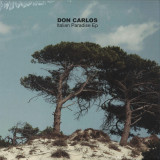
DJ Support: David Morales, Louie Vega, Hector Romero, Dave Lee ZR,Tony Humphries, Kevin Yost, Jimpster, Atjazz, Ron Trent, Dj harvey.
Considered the Master of Italo piano house, Don Carlos is up next on friends Micky More & Andy Tee's label Groove Culture Deep with an EP of Finest Classic Piano house.Features the amazing, warmup Classic House of ‘Italian Paradise Piano’ followed by the Deep heater ‘Soul Emotion' and The Garage Late-night ‘Good Emotion’(Vocal Mix) on the A-side. The flip offers ‘Paranoia’(Piano Edit) and ‘Good Emotion’(Paranoia Mix) both tracks perfectly capture the zeitgeist of house music's golden era of late 80’s early 90’s.
On Stock and ready to ship

Among those who have written the history of the Italian House is certainly Carlo Troja, aka Don Carlos. In 1991 Irma Records released her first single Alone which immediately became a cult record for DJs across the Channel and especially American DJs. Its particular soft and ambient sounds defined a genre that was then called Paradise House.
And it is precisely from this genre and from this Dj that Irma Records began the celebrations of its thirtieth anniversary a few years ago by
proposing a selection of its catalog chosen by Don Carlos, trying to dig among some of the pearls of the genre but above all among some
songs that featured in his evenings but were less popular at the time of their release.
This compilation had a great response and it was decided to make a volume 2, always selected by Don Carlos. Also this compilation, like the first one, consists of two compact discs and a vinyl version this time with a selection of only 8 of the 20 tracks contained in the CD and Digital version.
All the tracks on the double vinyl have been re-edited by Don Carlos for the occasion. The double cd is in a limited numbered edition.
Among the artists and producers included are: Don Carlos, Lust Unlimited, Subsonic Posse, T.M.V. (Marco Trani, Moz-Art and Maurizio
Verbeni), The Sweatbox Orchestra, Aritmya, Deep Aural Penetration, Be Noir, Love Nation, More Heavy Soul, Outdance, F.I.T.Z. and many
others
On Stock and ready to ship
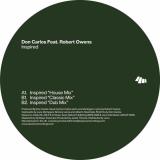
Two seriously high-grade legends come together to mark the 30th anniversary of the cultured Seasons Limited imprint here: Don Carlos is behind one of Balearic house music's most enduring anthems in 'Alone' and Robert Owens has been voicing the genre since the 80s with his signature smoky tones. Here they cook up 'Inspired' in three different forms - there's a deep and soulful House Mix with an electric delivery from Owens, then a chord-laced and warm Classic Mix with a throwback Chicago bassline and finally a Dub Mix that strips everything back to a more breezy late-night sound that sinks you into the groove perfectly.

Carlo Troja, aka Don Carlos, from the Italian province of Varese, has been active as a DJ since the late 1970s. He
debuted as a producer in the late 1980s with the single "Alone" on Calypso Records (IRMA), which immediately became a cult hit on the global Deep House scene. His productions have always fused house rhythms with the sounds of
African-American jazz, sometimes bordering on disco, progressive, and electronic soul.
In 1992, his first album, "Mediterraneo," was released in the United States on IRMA USA, followed in 1993 by his
second, "Aqua," and several hit singles with the Montego Bay project with Stefano Tirone (Stone Inc.), all on IRMA
Records.
He reached the UK charts with Byron Stingley's production of the hit "You Make Me Feel," a remake of the classic
Sylvester song. He has performed in various European and American countries, as well as at the Ministry of Sound
and Turnmills in London.
In 2001, he released his third album, "Music in My Mind," featuring Kim Mazelle, Michelle Weeks, Taka Boom, and
Kevin Bryant.
A new album of re-edits of '90s-style songs, titled Livin' a Dream, was released in 2020, along with two compilation
volumes of Paradise House, both on IRMA Records.
With this new single, he continues to showcase his distinctive Soulful Paradise House sound, rooted in the
Mediterranean sound, as specified in the title.
Order now and we will order the item for you at our supplier.

expected to be published on 30.01.2026

DJ Support: David Morales, David Penn, Kevin Yost, Mark Knight, Michael Gray, CJ Mckintosh, Hector Romero, Marc Cotterell, DJ Meme, Melvo Baptist, Seamus Haji, Dr. Packer, Dj Romain, Angelo Ferreri and many others.
From 1990 to 1994 Irma Records Italy was on a top level with house music. 'Alright Alright' by Centric House was one of the main successful projects of that years. 30 years later Groove Culture bosses Micky More & Andy Tee pay tribute to the pioneers, restoring this amazing track in a modern way but keeping the main beautiful ingredients. On The Flip We have A super team-work made by MM & AT, Don Carlos and Chaka Khan’s Sister Taka Boom, who provides a new version of 'The Music Of Your Mind', here vibes are more disco-house with epic piano chords and fire bass notes, everything melt and arranged smoothly around the powerful vocals of Taka Boom.
Order now and we will order the item for you at our supplier.

Producer extraordinaire and Italo legend Don Carlos, along with cherished London clubland phenomenon Gareth Cooke combined in 1997 to deliver two timeless HOUSE classics on one record that seen copies changing hands for £50 on a one-off label that totally makes sense when you hear them. Now on reissue label, NATSUKASHII, (a Japanese word that means happy nostalgia), you can get these ageless underground classics. Limited to 300 units.
Order now and we will order the item for you at our supplier.

expected to be published on 20.12.2023

Don Carlos, one of the very first italian deejays to wrap his productions up in that Deep House aura that was gripping on european clubnights and fast became the soundrack of sunday after hours with sunglasses on and beautiful dawns in the background. Both Don Carlos tunes sold by the loads on 12”s and LPs but never ever came out on a 7”. I’m quite sure many of you already know Mediterraneo while the Flute House take of Alone is an off-the-radar version played systematically by Tony Humphries for ages.
expected to be published on 14.03.2023

Das Soloalbum des Black Uhuru-Gründungsmitglieds von 1982 im Originalcover als LP neu aufgelegt! Der Longplayer wurde mit den Roots Radics und dem Bläsersatz von Dean Fraser & Nambo Robinson im Channel One Studio von Soldgie und Scientist aufgenommen und abgemischt, als Produzent zeichnete Henry 'Junjo' Lawes verantwortlich.
Order now and we will order the item for you at our supplier.

Originally released in 1994 on Calypso Records / Irma Records in a triple vinyl promo white label version, Don Carlos's album Aqua is the
second album by the Varese-based DJ producer, already then known for his first two singles Alone and Mediterraneo, then both included in
his first album entitled Mediterraneo and released only in Compact Disc format in 1992 for the American market printed and distributed by
IRMA U.S.A., the American subsidiary of IRMA Records Italy.
The same fate will also have the Compact Disc format of the Aqua album, again printed only on the American market.
But the triple vinyl, printed in a limited edition of 500 copies in a white generic envelope, was never reissued and has become a rare record
over the years.
After almost thirty years, after countless requests for reissues, especially in the last few years in which the name and music of Don Carlos
has made a comeback, Irma Records has decided to reissue the vinyl in exactly the same original triple version.
DJ Don Carlos (born Carlo Troja) with his productions in the 90s has become one of the cult producers for DJs around the world.
His track Alone released in 1991 for Calypso was and still is one of the classics of House Music, played by all the major American and British
DJs.
At the time of its publication it was considered an underground song and therefore did not sell very much, but over the years its myth has grown
thanks to its subsequent productions as for example his second single, the EP entitled Mediterraneo, title which it will then inspired his first CD
album printed in the USA with the same title.
Several other singles followed, another album, always printed only in the USA, entitled Aqua, from which a triple promo vinyl was extracted which
today is one of the artist's most requested rarities.
In Italy his third album was released in 2002 entitled The Music In My Mind where Kim Mazelle, Michelle Weeks, Taka Boom and Kevin Bryant
were present as vocal guests. In 2009 a collection of the first two albums released in the USA titled Mediterraneo-Club Favourite Collection '90-
98 and in 2010 his fourth album entitled The Cool Deep which reproduced the sounds closest to his first productions.
Also active as a remixer for Italian and international labels, one of his most important works is the remix of Byron Stingily of the song You Make
Me Feel of which he made a worldwide hit. As a producer he also used other pseudonyms such as Montego Bay, Aquanuts, Sotterranea and
Love 2 Love Orchestra. He has played and plays in different countries such as London, New York, Miami and at various festivals, such as the
Robot and the Stickermule Festival in an evening with Apparat, Derrick May, DJ Koze, Lil 'Louis, Young Marco and Ellen Allien, LTJ Xperience
Order now and we will order the item for you at our supplier.

The absolute Don of Italo piano house, Don Carlos brings his legendary sound to RNT with an EP of classic floor fillers. Don (Carlo Troya) and S-Tone (Stefano Tirone) released two records on Bologna label Calypso in the early 90s under the artist name Montego Bay.
Incredibly, the four tracks on this EP were also produced 30 years ago, then shelved and forgotten about until recently when a connection with RNT inspired to Don dig up their rare vintage! From pumping melodic house jams like Music All Night and Waited So Long, to sampled disco house cuts Keep Dancing the Boogie and Gotta Keep Dancing, this EP is a veritable time capsule, dripping with the swag and sonics of the golden era of 90s club music.
Order now and we will order the item for you at our supplier.

Born Don McCarlos,he processes one of reggae's most distinctive voices.
His vocal mannerisms being instantly recognisable over a tune ,yet he remains one of Jamaica's best kept secrets.
We look back to some of his finest moments that set the tone for his popularity that was to follow in the Dancehall period of Reggae.
He began his musical career in 1973,when alongside Garth Dennis and Derrick Ducky Simpson he formed one of Reggaes foremost groups Black Uhuru.
He then joined Wailing Souls before going solo under his shorter name Don Carlos
We find this set hard to beat as most of his classis are represented here and hope you find some magic as we have unearthing and compiling these lost treasures...Respect
Order now and we will order the item for you at our supplier.

All tracks produced and arranged by DJ Don Carlos, 8 tracks never released on vinyl taken from the album "The Cool Deep".
2 separate vinyls for 2 essentials release...
The Second 12" include A1. Temptations A2. Bora Bora B1. Turquise B2. This House Music...
Big release from the master of Italian Deep House!
Order now and we will order the item for you at our supplier.

All tracks produced and arranged by DJ Don Carlos, 8 tracks never released on vinyl taken from the album "The Cool Deep".
2 separate vinyls for 2 essentials release...
The Second 12" include A1. Temptations A2. Bora Bora B1. Turquise B2. This House Music...
Big release from the master of Italian Deep House!
Order now and we will order the item for you at our supplier.

This item has not yet been released. You can pre-order the product now.

Rastafarianism came to prominence in the late 1960's/ 1970's and had a huge influence on the musical culture in Jamaica. The sentiments of the songs reflected the struggles of life, as reggae music always did but now with an added spiritual/conscious element to the lyrics. By the mid 1970's most, if not all the top flight singers were following the doctrine and growing their har to dreadlocks.
Everything was truly 'Dread'.
At the heart of this musical explosion was again Bunny 'Striker' Lee a man who was always at the heart of the action and many times in his career ahead of the musical game. As Bunny Lee's stable of singers were at this time nearly all Rasta's and with the worldwide acceptance of Bob Marley, in especially the foreign territories, this musical style was the way forward for reggae music in the mid 1970's. The visual focal point of this new turn in reggae music would be a call to all things 'Dread'. Add to the mix Bunny Lee's close working relationship with studio wizard King Tubby, again not a Rasta himself, but someone who could sonically bring what was needed to the table and enable the whole musical chemistry to fall into place.
Heavy rhythms were created to match the heavy and serious lyrics and 'Versions Galore' as they say were coming out fast and furious.
We have compiled a set of conscious tunes that not only match the 'Dread' criteria, but also are just great tunes. The great Jacob Miller's 'Zion Gates', Cornell Campbells 'Two Faced Rasta', Horace Andy's 'It's Gonna Be Dread' alongside Linval Thompson's 'Never Conquer Jah'. Two timeless cuts from the 'The Abyssinians' get a fresh outing by two great singers, firstly Don Carlos' cut to 'Satta Massaganna' and the prince of reggae himself, Dennis Brown works 'Declaration of Rights' in fine style. Johnny Clarke's 'Man like Me' and 'Dem Say Rasta' still sound as fresh today as when they were first laid down and Wayne Jarrett's 'Live On Jah' and Frankie Jones 'Satta and Praise Jah' add to this great selection. All great 'Dread' tunes that were cut or voiced at King Tubby's giving them that extra shine.
So if you are Rasta or not this is a great set of tunes to make you move and also like all of the best things in life, make you think.........
Track 14 WICKED BABYLON - LINVAL THOMPSON
Order now and we will order the item for you at our supplier.

Volume five of the killer Britxotica! series, looking this time at 16 super rare and briliantly bonkers latin and percussive pop cues from the wild British Isles!
HISTORY:
Britxotica! (pronounced 'Britzotica') neatly describes an odd and yet undocumented pre-Beatles British musical scene where famed UK composers as well as unknown singers and bandleaders threw convention on holiday and went wild wild wild! Put together by Jonny Trunk with DJ / tastemaker and Smashing nighclub legend Martin Green, these groundbreaking new compilations shine new light on lost and forgotten corners of British culture and sound.
For this, Part Five of our planned Britxotica! series we head to lively latin tinged dancefloors where Brits could cha cha cha to the KIrchin band, 'Jump In The Line' with Frank Holder and Mambo with Ido or Don. This killer collection of British dance obscurities brings us lively sounds from the rarest UK record bins, including this time an amazing cover version of the legendary loungecore hit 'House Of Bamboo' plus the stunning 'Jonny One Note' by Ted Heath, the track that originally introduced John Craven's Newsround. To sum up, this is another exciting, wild and occasionally bonkers compilation by Jonny Trunk and Martin Green, two of the UKs most wild record collectors. Also, there are men in underpants on the sleeve, What's not to like
Order now and we will order the item for you at our supplier.

Over the years, Phil Mison has become the go-to selector for those looking for Ibiza-themed compilations. None of his previous collections, though, have been quite as personal as Out Of The Blue, a compilation inspired by his first spell behind the decks at the Café Del Mar in 1993 - and the remarkable chain of events leading up to it.
Mison made his first trip to Ibiza in the summer of 1991 and quickly fell in love with the magical music being played by Café Del Mar resident DJ, Jose Padilla. On his return to the UK, Mison began to cultivate his own take on the laidback, open-minded style, recording mix-tapes of Ibiza style chill out' tunes to give to friends.
In November 1992, Mison was hanging out in Tag Records, Soho, when Padilla walked in. He plucked up the courage to speak to the Spaniard because earlier that summer Mison had given one of his friends some tapes to take out to Jose in Ibiza so he wanted to see if he had got them. During the conversation Mison invited him down to his next DJ set at Nicky Holloway's club, the Milk Bar and less than three months later, and clearly impressed by what he'd heard on the tapes, Padilla invited Mison to fill in for him at the Café Del Mar, beginning in April '93.
It's that first trip to DJ in Ibiza - a crazy six-weeks spent dividing his time between spinning records at Café Del Mar, hanging out in Jose Padilla's house in the hills, and meeting some particularly eccentric White Isle residents - that proved the inspiration for Out Of The Blue.
The compilation contains a mixture of records that Mison played in his earliest Ibiza sets, those that remind him of that period, and recent discoveries that boast a similarly warm, loved-up vibe. Mison is at pains to point out that it's not a track-for-track representation of his first sets, but rather a collection inspired by this most momentous of experiences.
As you'd expect from a selector of Phil Mison's standing, Out Of The Blue is an outstanding collection. Some will no doubt hear the influence of his mentor - the man he credits with effectively turning his DJing career around - in the undulating rhythms and new age melodies of Kamasutra's Sugar Step', the meandering synthesizer solos and Spanish language vocals of Congarilla's sublime Sacred Tree', and the lilting flamenco guitars of Gambarra', an unreleased mix from Mison's popular Cantoma project.
Elsewhere, listeners can marvel at the starry ambient bliss of Belgian legend Frank De Wulf's The End', recline to the saucer-eyed fusion jazz of the Christoph Spendel Group, shuffle along to tactile, hard-to-find period deep house from Language, Moodswings and Don Carlos, and marvel at The Cactus Rose Project's ridiculously rare Jelly', a sparkling, disco-era jazz-rock outing partly inspired by the Doobie Brothers' Long Train Running'.
Out Of The Blue may well be a very personal selection of tracks celebrating a moment in time, but it's happily one that we can all enjoy.
Order now and we will order the item for you at our supplier.

Bunny 'Striker' Lee's standing in the Jamaican recording business has remained unassailable for over four decades.Known by many aliases including 'Gorgon'.
The legend of the Gorgon originated in Greek mythology some three thousand years ago and has become a common image in art, literature and in Jamaica...Music.
The name actually derives from the ancient Greek word gorgos which means 'dreadful' ,appropriate when one considers that the avalanche of Gorgon inspired records came as a direct result of the influence of the Rastafarian movement on the Jamaican musical mainstream and the dread locked hair of the Rasta brethren was likened to that of the Gorgon sisters.
''About her shoulders she flung the tasselled aegis, fraught with terror...and therein is the head of the dread monster, the gorgon, dread,awful....'' Homer
Order now and we will order the item for you at our supplier.

* TO CELEBRATE JAMAICA'S 50 YEARS OF INDEPENDANCE 1962-2012 We have put together a set of releases that cover the musical styles that reggae mutated into through it's history, SKA, ROCKSTEADY, ROOTS REGGAE, DUB, DJ STYLE &DANCEHALL.... So Listen Up! and enjoy!Welcome to the Dancehall Sound from Jamaica. The sound that grew out of the dances in Jamaica around the beginning ofthe 1980's.The musical style again slowed
the reggae beat down to give an uncluttered, sparce backdrop, allowing the singers and DJ's more space to express
themselves. Dancehall has never stopped but turned to a digital beat around the mid - 1980's. So Listen Up ! to some early Dancehall classics that set the style for the years that followed....
Order now and we will order the item for you at our supplier.

Wewantsounds is delighted to announce the first-ever international release of the legendary collaboration between Abdullah Ibrahim (Dollar Brand) and Don Cherry, featuring Carlos Ward. Recorded live in 1972 at Jazzhus Montmartre in Copenhagen, this highly sought-after album was originally released exclusively in Japan in 1974 on the cult jazz label Trio Records via its revered Nadja imprint. An essential chapter in the musicians" discographies, the performance masterfully blends jazz with rich South African rhythms and global influences. This long-awaited edition features fully remastered audio, the original Japanese artwork, and a 4-page booklet with new bilingual liner notes (English/French) by Jacques Denis.
expected to be published on 11.09.2026
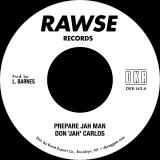
expected to be published on 10.09.2026

Canadian quartet BADBADNOTGOOD take on creating the ultimate late night' selection of tracks from their record collections, set for release on 28th July 2017. The original trio of Matthew Tavares, Alex Sowinski and Chester Hansen formed while studying music at Toronto's Humber College (they've recently added Leland Whitty to the line-up). A shared appreciation of hip hop and instrumental covers of Gucci Mane and Earl Sweatshirt suggested a worldly outlook and reciprocated love from Tyler The Creator and Ghostface Killah, which whom they made 2015's Sour Soul.
This is an international effort: Velly Joonas' Estonian version of 'Feel Like Makin' Love', Kiki Gyan, Admas and Francis Bebey representing Africa (Ghana, Ethiopia and Cameroon respectively), Les Prospection from France, Scots' Boards Of Canada and fellow Canucks River Tiber and Charlotte Day Wilson.
Finally, there's the no-small-matter of the Late Night Tales cover version, in which BADBADNOTGOOD take on Andy Shauf's 'To You' is turned into a mournful delight. while the Queen Of Siam herself, Lydia Lunch, delivers a sexual sermon involving only you, her and Jim Beam.
We were really excited to have the chance to put together a Late Night Tales compilation, it's a great organisation. We decided to use it as a vehicle to show everyone all the amazing music we have gotten to experience by touring and meeting new people. Every track on this comp was either shown to us by an incredible person or made by one of our friends. We also included a little cover of a song by one of our favourite current musicians, Andy Shauf.
These artists, as well as many, many others, have infuenced us to create and kept our deep love of music alive. This mix will keep you company on a quiet night by yourself or with friends. You can check it out on the plane, the bus, a long walk, or any situation where you want a soundtrack for reflection and meditation.' - BADBADNOTGOOD May 2017
Order now and we will order the item for you at our supplier.

Order now and we will order the item for you at our supplier.

Underground Jazz, Street Funk & The Roots Of Rap 1968-79. Soul Jazz Records' new release 'Soul of a Nation: Afro-Centric Visions in the Age of Black Power' is released in conjunction with a major worldwide art exhibition, Soul of A Nation: Art in the The Age of Black Power which takes place at the Tate Modern, London, UK (July-Oct 2017) and The Brooklyn Museum, New York, USA.
The album shows how the ideals of the civil rights movement, black power and black nationalism influenced the evolvement of radical African-American music in the United States of America in the intensely political and revolutionary period at the end of the 1960s following the assassinations of Malcolm X, Martin Luther King and the rise of the Black Panther party.
Featuring groundbreaking artists such as Gil Scott-Heron, Roy Ayers, Don Cherry, Oneness of Juju, Sarah Webster Fabio, Horace Tapscott, Phil Ranelin and many others, Soul of A Nation shows how political themes led to the rise of 'conscious' black music as new afro-centric styles combined the musical radicalism and spirituality of John Coltrane and radical avant-garde jazz music alongside the intense funk and soul of James Brown and Aretha Franklin and the urban poetry and proto-rap of the streets.
The Soul of a Nation exhibition draws on the links between Black art forms - art, music, poetry - and how they came together during the civil rights and black power era as part of the wider black arts movement across the United States.
Iconic African-Amercian revolutionary figures such as Martin Luther King, Malcolm X and Angela Davis, John Coltrane, Muhammad Ali all appear in the radical artworks of Barkley L. Hendricks, Romare Bearden, Norman Lewis, Lorraine O'Grady and Betye Saar.
A selection of original radical jazz record sleeves artworks which appear in Soul Jazz Records' earlier groundbreaking Freedom, Rhythm and Sound - Revolutionary Jazz Original Cover Art book will also be on show at the Tate, London throughout the exhibition. The Freedom, Rhythm and Sound book is also newly back-in-print in conjunction with this major exhibition and the release of the Soul of a Nation album.
Stuart Baker (founder of Soul Jazz Records) will appear on the panel of Jazz for Soul of a Nation: Art in the Age of Black Power discussion at the gallery as part of the show. Soul of a Nation comes with extensive sleeve-notes and exclusive photography in a large 36-page outsize booklet and slipcase. Double gatefold vinyl album edition comes with full colour inners + bonus download code and includes full sleeve-notes/photography.
Order now and we will order the item for you at our supplier.

180g Heavy double vinyl LP with liner notes by Tyran Grillo. Limited Japanese Obi for the first pressing. Original artwork by Russell Mills and photography by Jean-Baptiste Mondino.
The third Time Capsule is a body of dub reinterpretations by celebrated producer Bill Laswell of Ethiopian singer Gigi. Curated by Tokyo record collector, music researcher and seasoned reissue supervisor Ken Hidaka, it is the first time Illuminated Audio is pressed to vinyl after its CD release in 2003.
Ejigayehu Shibabaw was born in 1974 in Chagni, northwestern Ethiopia and by pursuing a career as a singer, went against her father’s strict, traditional gender roles. As Gigi, she embraced the same musical freedom she had strived for in her personal life, incorporating the Ethiopian church, funk, hip-hop, West and South African music into her work. She first settled in Nairobi, then Addis Ababa, where she quickly established herself as one of the city’s leading singers. A move to San Francisco in 1998 led to a long and fruitful creative partnership with bassist and producer Bill Laswell.
Around the same time, Chris Blackwell had stepped away from Island Records to start the art house film company and label Palm Pictures. He took an interest in Gigi and together with Laswell, pulled together an all-star cast of musicians for her self-titled US debut album, including Herbie Hancock, Pharoah Sanders and Wayne Shorter. It won international critical acclaim, not just for its musicianship but for making Gigi a “defining voice for the Ethiopian expatriate community”, as journalist Tyran Grillo praises in his Time Capsule liner notes. From the nation-defining 1896 victory over Italian invaders to the quiet revolutionaries who wear simple shemma garments, Grillo believes the themes in Gigi make it “a shower of sunlight on her homeland for those ignorant of its struggles.”
After its success, Blackwell encouraged them to go back into the studio to rethink the album and Illuminated Audio was born. “Anyone can make a voice sound worldly”, Grillo remarks, “but rare are those who can make one sound inner-worldly.” Gigi was clear with Laswell to give her vocals a minor role “because it’s already been done.” Instead her Amharic verse is fleeting, exhaling through the textures like ghostly fragments; soaring yet muted. Yet the album is still titled under her name, an assertion by Laswell of her central role in the album’s creation. Not only was it a fully endorsed project by Gigi, but she would be present throughout its development, giving feedback on half-finished ideas as Laswell played them back in the studio. “It works perfectly”, she reflected after the album’s release. “We wanted to capture the whole spirit of each track, and Bill’s remixes create a different music language that really puts you in a pleasant place”.
This new vocabulary takes its lead from a technical approach that Laswell had been perfecting during a furtive creative period at the turn of the millennium. Much like his ambient interpretations of Miles Davis (Panthalassa, 1998), Bob Marley (Dreams of Freedom, 1997), and Carlos Santana (Divine Light, 2001), Laswell approached Illuminated Audio by returning to the original multitrack masters. Gigi wasn’t just reworked, but recomposed into an expansive lattice of instruments, submerged in a watery ambience of dub and trance undercurrents.
Sonically, this new language that Gigi refers to, is manifested by the original album’s more understated parts being pushed to the fore. Explaining his contrasting methods, Laswell saw Gigi as being “put together in a way that fits”. Contrastingly, in Illuminated Audio, “a lot of things that I featured in the remix weren’t as audible in the original.” Instrumentation laying near-dormant, deep in the mix, are brought to the fore: the acid rock guitar and Wayne Shorter’s saxophone on ‘Tew Ante Sew’, Graham Haynes’ flugelhorn on ‘Nafekeñ’, Laswell’s bass on ‘Kahn’, the melodica in Mengedegna or the floating synths and talking drums in ‘Gud Fella’.
Brought to his attention by mentor DJ Nori, Hidaka describes Illuminated Audio as a “masterful sonic exploration into ethereal ambience and dub” and made sure this reissue also contained a full remaster to give its “deep musicality” much better dynamics and density in the overall sound. Hidaka admits that Laswell's music “is sometimes so out-there, it is often misunderstood” and, indeed, to dub album non-believers this might seem like a prolific producer imposing himself on another artist’s work; eternally developing rearrangements that never quite get to its destination. But that’s missing its true power and triumph. This is more than the reissue of a remix, but “a wholly unique musical entity”, as Hidaka describes. Illuminated Audio refers to the illuminated manuscripts that comprise the major part of Ethiopian art and its new compositions stand in proud solitude as a rare body of reworks that both informs and enhances their originals.
expected to be published on 05.10.2026

Selva Discos is proud to present its latest release: the EP by the band Discoteca Tropicana. This record features 4 original tracks that celebrate the rhythms that have influenced Brazilian disco music, showcasing the best of this fusion: the swing and tropical flavour that bring sunshine to any dance floor.
The project is the result of a collaboration between Kiko Costato, the enfant terrible of the Brazilian music scene, and Zé Nigro, a producer and multi-instrumentalist who has won two Grammy Awards and has worked with major names in Brazilian and international music such as João Donato, Antonio Carlos & Jocafi and Natasha Diggs.
This EP is based on 4 different themes. For each one, Kiko and Zé Nigro recruited some of Brazil’s finest studio musicians – people who work with Seu Jorge, Céu, Criolo, Metá Metá, Cidadão Instigado and Tulipa Ruiz – as well as pioneering artists from the Brazilian Black music scene, such as the backing vocalists who work with the legendary Gilberto Gil.
“Corpos Celestes” is a more classic “disco diva” track, featuring string arrangements and a grand piano, as if it were the start of the evening, a magical moment straight from the heyday of disco in the United States; “Corpo Treme” is the sweat, the vuco-vuco, a song for that moment when you’ve already let yourself go, a sprint to the frenetic rhythm of the carimbó; “Tobina” is the meeting of Brazil and Africa, from which Brazilian swing is born, an original chant straight from the Congo, with a characteristic African guitar, adapted to Brazilian rhythms, just like the afoxé. Finally, the dancefloor hit “Não Pode Acabar”, a more urban disco track, which works just as well for kicking off a party with the right vibe as for closing a set with the highest energy.
expected to be published on 16.10.2026

More than five decades into one of Brazilian music's most remarkable careers, Joyce Moreno returns with a new collection of songs that reflect the warmth, lyrical sophistication and innovation that have made her one of Brazil's most defining musical voices.
Produced by Joyce Moreno alongside her husband and longtime collaborator Tutty Moreno, the album finds the Rio-born singer, guitarist and composer at her most reflective. Across nine beautifully crafted songs, Joyce pairs intricate guitar work, lyrical intimacy and effortless swing with the musical curiosity that has defined her work for more than half a century.
Invited into the studio by Roberto Menescal at just sixteen years old, Joyce emerged during a transformative period for Brazilian music, releasing her self-titled debut in 1968. She soon established herself as one of Brazil's pioneering female songwriters, writing unapologetically from a woman's perspective at a time when few women were afforded that voice. Her song “Me Disseram” sparked national debate, while later works including “Feminina” cemented her reputation as an artist unafraid to challenge convention.
While some of her politically charged songs were censored during Brazil's military dictatorship, Joyce continued to write with honesty and independence. After studying journalism in the late 1960s, her gift for observation and storytelling became an even more defining feature of her songwriting. Over the following decades she released a succession of acclaimed albums, including the now-classic Feminina and Água e Luz, earning widespread recognition both in Brazil and internationally. Antônio Carlos Jobim would later describe her as "one of the greatest singers", while generations of musicians have drawn inspiration from her fearless artistry and enduring originality.
That same artistic fearlessness remains at the heart of her latest work. The album brings together an exceptional ensemble of Brazilian musicians. Tutty Moreno's expressive drumming underpins Joyce's vocals and guitar throughout, while Jorge Helder's bass, Lula Galvão's guitar and Marcos Nimrichter's warm Fender Rhodes create a sound that is both intimate and expansive. Contributions also come from the legendary Toninho Horta, alongside José Arimatéa, Teco Cardoso, Nailor Proveta, Josué dos Santos and Raphael Sampaio, whose additions add colour and texture without overshadowing Joyce's understated brilliance.
Throughout the album, Joyce balances quiet reflection with effortless rhythmic vitality. “Chovendo na Horta” serves as both a heartfelt dedication and a celebration of Joyce's enduring musical connections, featuring the unmistakable guitar of Toninho Horta. Elsewhere, “Aldeia de Ogum” receives a fresh new arrangement by Nailor Proveta, revisiting one of Joyce's most beloved compositions. Originally released in 1980, the track has enjoyed a remarkable resurgence in recent years, embraced by a new generation of listeners and became an underground favourite among DJs including Floating Points, Four Tet and Danilo Plessow. Now a staple of Joyce's live performances, this reimagined version brings renewed energy to a song that continues to transcend generations.
At seventy-eight, Joyce Moreno continues to write with the same curiosity, generosity and quiet innovation that have defined her career from the very beginning. "For me, it's never too soon to try something new, either in music or in life," she reflects - a philosophy that gives both the album and its title their enduring sense of optimism. This latest album is neither a retrospective nor a reinvention, but the work of an artist who continues to refine her voice with remarkable grace, proving that her most compelling music remains firmly rooted in the present.
Following the album's release, Joyce Moreno will embark on a European tour this November, bringing her celebrated live show to audiences across the UK and Europe. A rare opportunity to experience one of Brazil's most influential and enduring artists in concert, the tour showcases a songwriter whose voice, virtuosity and musical vision remain as compelling today as ever.
expected to be published on 30.10.2026

In the creative Bologna of the 1980s and 1990s, Kinki was the first gay (LGBTQ+) Club in Italy: a visionary space where House music exploded
and the night became a symbol of freedom, identity, and cultural revolution. Through the DJs and charismatic figures who shaped it’s future,
the documentary tells how this small club beneath the Two Towers forever changed the way music and clubbing were experienced.
The documentary, produced by RCO Europe and directed by Lorenzo Miglioli, is available on Amazon Prime and Google Play platforms throughout Europe, the UK, the US, Australia, and South Africa.
The soundtrack, curated by Luca Trevisi (LTJ Xperience), features a selection of 1990s and more recent tracks, ranging from Italo House to
Nu Disco. Most of the tracks are re-edited by LTJ himself.
A double vinyl album packaged in a gatefold sleeve, also containing a 16-page color booklet featuring images of the Kinki crowd.
On Stock and ready to ship
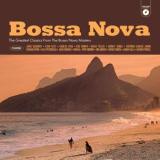
Mit der neuen Ausgabe der Vintage Sounds Vinyl Collection kehrt ein echter musikalischer Schatz zurück - diesmal ganz im Zeichen der Bossa Nova. Diese liebevoll kuratierte Zusammenstellung präsentiert 16 zeitlose Klassiker, die den unverwechselbaren Klang Brasiliens geprägt haben und bis heute weltweit für entspannten Groove und federleichte Eleganz stehen. Auf dem Album versammeln sich die wichtigsten Künstler einer Ära, die Musikgeschichte geschrieben hat: Joao Gilberto, Baden Powell, Silvia Telles, Quincy Jones und natürlich Antônio Carlos Jobim, dessen Kompositionen bis heute als Herzstück des Genres gelten. Freuen Sie sich auf unvergängliche Perlen wie "Chega De Saudade", "Garota De Ipanema", "Desafinado", "Corcovado", "A Felicidade", "Soul Bossa Nova", "O Barquinho" oder "Meditaçao" - alle sorgfältig ausgewählt und auf hochwertigem Vinyl neu erlebbar gemacht.
On Stock and ready to ship

"Cuba Greatest Hits" bringt die Hitze Havannas direkt ins Wohnzimmer und vereint die wichtigsten Klassiker der kubanischen Musik auf einem exklusiven Doppel-Vinyl. Von Son und Mambo bis Bolero und Latin Jazz bietet diese Compilation ein authentisches musikalisches Panorama mit Legenden wie Compay Segundo, Celia Cruz und Beny Moré. Ein atmosphärischer Katalogtitel voller Rhythmus, Lebensfreude und karibischem Flair - ideal für alle, die kubanische Musik lieben.
On Stock and ready to ship

"I think I have never met anybody, with the exception of Brazilian guitarists Baden Powell and Toquinho, as connected to his instrument as Agustín Pereyra Lucena" – Vinicius de Moraes
Far Out continues its exploration into the singular catalogue of Argentine guitarist and songwriter Agustin Pereyra Lucena with a special Record Store Day edition of his most celebrated album Ese Dia Va A Llegar.
Agustín Pereyra Lucena was one of South America’s outstanding guitarists. Hailing from Buenos Aires but obsessed with the music of neighbouring Brazil, Agustin abandoned his architecture studies to pursue music full-time, earning friendship and collaborations with Brazilian music's greatest figures including Vinicius de Moraes, Baden Powell, Toquinho, Dorival Caymmi, Maria Bethania and Chico Buarque.
Originally released in 1975, the album has been better known in some parts of the world as Brasiliana – a title repurposed by Agustín's European record label in the 70s to exoticize the sounds of South America for the continental market. It finds Agustin and band—which includes key collaborators Guillermo Reuter on contrabass, and Carlos Carli on drums and percussion— at their most blissfully laid back. The album features idiosyncratic renditions of classics by Antonio Carlos Jobim, Vinicius de Moraes, João Donato and Agustin’s personal hero and friend Baden Powell, alongside Agustín's own works which ooze with captivating mystical wonder.
The analog warmth of the recording is such that it feels like you’re there in mid-seventies Buenos Aires, on a balmy late night session at Estudios Audión, with a group of phenomenally impressive musicians. The heat generated is offset only by the cool temperament of everyone involved. On the handful of vocal tracks on the album, Agustin’s gentle voice is responded to by the liquid smooth vocals of Laura Hatton, Luis Maria Cosenza and Patricia Scheuer.
Agustin’s unique position in the annals of his continent’s musical history has been lovingly maintained by Agustin’s nephew Jose Luis Pereyra Lucena, who has entrusted Far Out Recordings to preserve and re-release Agustin’s works. The music has been professionally remastered at London’s Metropolis Studios, using multiple copies of well kept original vinyl.
Reissued worldwide for the first time under its original title and cover as Agustin originally intended, Ese Dia Va A Llegar will be presented in a limited edition obi-stripped gatefold replica sleeve.
On Stock and ready to ship

Chapter 2[40,29 €]
Spinnin' Records, one of the most influential dance music labels, celebrates its 25th anniversary with the Chapter 1 compilation featuring a selection of iconic hits that have shaped the global electronic music scene. Since its founding in 1999, Spinnin' has been a trendsetter in electronic dance music (EDM), nurturing superstar artists and groundbreaking tracks across house, future bass, big room, and deep house genres.
This edition of Spinnin' 25 Years...Chapter 1 double vinyl LP collection includes memorable tracks from legends like Martin Garrix with the chart-topping hit “Animals”, "Stumblin' In" by CYRIL, "Secrets" by Tiësto & KSHMR, "Tsunami" by DVBBS & Borgeous, “Bullit” by Watermat, “Toulouse” by Nicky Romero, "Show Me Love" by Sam Feldt and 23 more tracks showcasing the signature sound and major contributions to the label.
Spinnin' 25 Years...Chapter 1 is available as a limited edition on green vinyl. The iconic Spinnin' logo is printed with an uv spot varnish on the gatefold sleeve.
On Stock and ready to ship
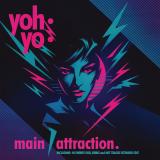
Some tracks don’t age, they just wait for the right dancefloor to hit again.
Originally released in 1985, Main Attraction by Toronto-based duo Yoh-Yo is one of those high-energy sleepers that quietly tore through clubs while never fully crossing into the mainstream canon. Produced by maestro Allan Coelho (Tapps, Click) and driven by the instantly recognizable vocal of Carlos Borges, it’s a pure shot of mid-80s Hi-NRG euphoria. Tight, glossy, and unapologetically emotional.
Fast forward to now, and Vintage Pleasure Boutique digs deep into the archives of Boulevard Records to deliver the ultimate collector’s package, bringing together all six officially released versions from the original 1985–86 pressings across Europe, Canada and Mexico. But this isn’t just a reissue, it’s a full-spectrum reconstruction of a club weapon.
From the Original Version, still hitting with that raw, uplifting drive, to the Sandy St. Alban Version, adding a slightly different vocal flavor for the heads who know, each cut reveals another angle of this underground anthem. The Instrumental and Hi-NRG Dub Version strip things down into pure mixing tools: extended grooves, pulsating basslines and synth hooks that lock dancers into a trance. The Remix pushes things further into peak-time territory, while the real gem for DJs lands on the B-side: the long-sought Hot Tracks Extended Edit by Gregg Denewith — originally exclusive to the US market and finally resurfacing in proper, playable quality. A true secret weapon for selectors who like their sets with a touch of authentic 80s heat.
This release is a love letter to Hi-NRG, to analog excess, and to the global club network that kept these records alive long before algorithms caught up. For fans of neon-lit nostalgia, sweaty dancefloors and that unmistakable Italo-adjacent pulse. Main Attraction is exactly what the name promises. Pure energy. No compromise.
On Stock and ready to ship

"Carlos Santana’s nineteenth studio album Shaman was released in 2002 and debuted at #1 on the Billboard 200. Just like its predecessor Supernatural, Santana invited contemporary artists to collaborate with him across genres including neo-soul, pop, rock, metal, and opera. Artists such as Seal, P.O.D., Chad Kroeger, Dido, Michelle Branch, Macy Gray, Music, Citizen Cope, Alejandro Lerner, Plácido Domingos, and Ozomatli can be heard on the album. Four tracks were released as singles: “The Game Of Love”, “Nothing At All”, “Why Don’t You & I”, and “Feels Like Fire”. Shaman is being reissued for the first time since its original release. A limited edition is available of 2000 individually numbered copies on translucent purple coloured vinyl and includes an insert."
Shaman by Santana, released 3 May 2024, includes the following tracks: "The Game Of Love (ft. Michelle Branch)", "Amoré (Sexo) (ft. Macy Gray)", "Victory Is Won" and more.
This version of Shaman comes as a 2xLP. This release comes with (a) Insert(s).
The vinyl is pressed as a translucent, purple disc. Another vinyl is pressed as a translucent, purple disc.
On Stock and ready to ship

On Stock and ready to ship
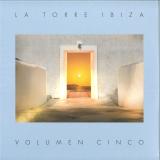
To mark a decade as one of Ibiza's most iconic musical sanctuaries, Hostal La Torre announces 'La Torre Ibiza Volumen Cinco', a new compilation curated by long-standing residents Pete Gooding and Mark Barrott. Released June 27 on CD and double vinyl, the 15-track collection captures the spirit of the venue that has come to define the golden-hour soundtrack ofthe island's west coast.
Since opening in 2015, La Torre has established itself as a bastion of Balearic culture-set high on the cliffs overlooking the sea, where music flows with the sun rather than the clock. The fifth volume in the celebrated La Torre series is a journey through Brazilian soul, ambient electronica, classic deep house, orchestral minimalism, and dusk-lit Detroit techno-an emotional arc designed to mirror the progression of an evening at the venue.
From timeless icons like Nina Simone, Mazzy Star, Talk Talk (with their Spirit of Eden closer "Wealth"), and Boards of Canada, to boundary-pushers like Auntie Flo, Eden Burns, and µ-Ziq (aka Mike Paradinas), Volumen Cinco weaves together deep-rooted classics and leftfield discoveries. Mark Barrott contributes a brand-new exclusive, 'When Devils Become Gods', while the compilation closes on a rare gem from Yellow Magic Orchestra's Yukihiro Takahashi. Also includedis Software's 'Present Voice', a quietly powerful tribute to the late José Padilla, the spiritual architect of Ibiza's sunset sound.
Volumen Cinco is more than just a listening experience-it's a tribute to La Torre's ethos: open-hearted, genre-fluid, rooted in place and time. Each track is carefully sequenced to evoke a feeling, a shift in light, or a shared memory beneath the fading sun.
Over the years, La Torre has welcomed some of the most influential names in Balearic and electronic music, from José Padilla, Alfredo, and Jon Sa Trinxa to DJ Harvey, David Holmes, Lovefingers, Heidi Lawden, Wolf Müller, Don Carlos, and Phil Mison. With each summer season and each release, the venue continues to build a musical legacy that has earned critical acclaim from Resident Advisor, Phonica Records, Juno, and Piccadilly Records, regularly featuring in their year-end lists.
As Test Pressing once wrote, "La Torre is not a party, it's a place of pilgrimage. It feels almost sacred." That spirit resonates deeply in this anniversary compilation-a celebration of music, community, and connection that spans a decade.
La Torre Ibiza Volumen Cinco is dedicated to the artists, friends, collaborators, and guests who've shaped its story so far-and to everyone who continues to gather, listen, and lose track of time as the sun slips beneath the horizon.
On Stock and ready to ship

Red Pig Flower brings you her sensational debut album Practice Love, available on Sound Of Vast from 10th April. Her unique sound sits upon the apex of a three-sided pyramid. With Berlin, Tokyo and Seoul as the base, Red is a third culture kid, greater than the sum of her parts. The centre is filled with her incredible appreciation and knowledge of house and electronic music from every pin drop through history.
So taken with Red Pig Flower’s sound, Honey Dijon invited Red to her Southbank Centre show to play alongside her. Moxie loves her that much, that she invited Red to record a mix and to guest on her NTS show. Alan Fitzpatrick, and Just Her are amongst Red’s growing posse of followers.
Practice Love is a culmination of all of Red Pig Flower’s life experiences, brimming with her positive energy and an outlook on life of pure love. Red has collaborated with like-minded artists at every level: the music, the cover art and video all produced with talented friends, who get Red as the wonderful person she is and understand her vision. Her label partner and good friend, Knock in particular helped make Practice Love the incredible album it is. So intuitive is their musical symbiosis, they made 20 tracks and carefully curated and ordered nine of these, making an album of tracks that stand out on their own, yet flow perfectly as an album. Practice Love will make you feel joyous when you play it. By the end, you will feel like you know Red like a friend.
Practice Love kicks off with I don’t care, it makes you feel good: a dreamy, tribal mantra of a track that does exactly what it says on the tin. Next up is I Love To Dance. Red’s beautiful soft vocal is sweet yet poignant, leaving you in no doubt of her sincerity. Thirdly comes Feel Good Music. Are you getting a feel from the track names yet that this is an album of warmth and positivity? You can imagine this one at a Café Del Mar sunset, where those who get the spirituality of Ibiza come together, in the moment to appreciate the beauty of a sunset and understand that no matter how many you see, each is magical and unique.
The three tracks so far have taken you to twilight. The titular Practice Love takes you by the hand onto the dancefloor. There is a double meaning to ‘Practice Love’- The first is to make love your practice. The second is that you need to practice love to be able to become a practitioner of love. The video, shot by her friend Jelly, features Red Pig Flower in Brick Lane, London, wearing a little piggy mask and offering free hugs. The first passersby ignore her sign, but Red isn’t disheartened, spreading the right message, dancing with joy. Her optimism is rewarded, making peoples day better on a cold English afternoon.
Fifth track Sax and Drugs takes things a little sleazier, the beat is filthy and the synths are sexy. Your body starts to move to this one before your brain even realises. The incredible Declan McDermott joins on saxophone, the funkiest synths and Red’s sultry vocal washing your soul with Laurent Garnier inspired sunlight. On Thisiz House Music, again featuring Declan, Red takes you even further back. About Frankie Knuckles O’Clock, with a portal straight to 2025.
By now, you will agree with me that Practice Love flows so, so well. I Wanna Meet Somebody follows incredibly, continuing the feeling that if you close your eyes, you’re dancing with David Mancuso at the Loft. No Money completes this EP-within-an-album. Perfect vocal samples, valve synth riff and 808 drum patterns showing that producers as good as Red Pig Flower make it sound effortless. The best albums finish memorably and No Genre is one of those perfect finishers. Think Andrew Wetherall’s production on Screamadelica. The lights are up in the club, nobody wants to go home, arms in the air wanting more.
Red Pig Flower explains: Practice Love resonates deeply with me because house music has always been a sanctuary—a place for unity, joy, and self-expression. As a nomad and outsider, club culture and house music became my shelter. The cities I’ve lived in—Seoul, Tokyo, Berlin, and London and more—nurtured me and shaped who I am today. That’s why the cover, by the incredible Carlos Sulpizio features their skylines, and the album is multilingual, representing the diverse influences in my life.
Practice Love is like a meal that has been prepared lovingly. They always taste better. And there’s plenty more to come from Red Pig Flower. How was your appetizer?
On Stock and ready to ship
