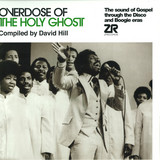
Das vierte Album der Clark Sisters für Westbound-Sublabel Sound Of Gospel ist jenes, das sie fest in den Crossover-Markt gedrängt hat. Während es in Tracks wie 'My Cup Runneth Over' traditionelle Soul-basierte Gospel-Kost gibt, zogen einen die Disco-beeinflussten Juwelen 'My Life Is Complete With Jesus' oder 'Everything Is Gonna Be Alright' auf die Tanzfläche. Die Clark Sisters waren eine der großen Gospelgruppen und auch Teil einer großen Gospel-Dynastie um Mattie Moss Clark und Bill Moss. Geschrieben, produziert und arrangiert von Kernmitglied Elbernita 'Twinkie' Clark, enthält das Album instrumentale Beiträge von Detroiter Soul-Songschreibern wie Melvin Davis und Leroy Emmanuel von den Counts. Obwohl die Clark Sisters eine der meistverkauften Gospelgruppen aller Zeiten sind, ist dies die erste LP-Neuauflage von 'He Gave Me Nothing To Lose' seit seiner Erstveröffentlichung im Jahr 1979.
Cerca:the clark sisters
- 1
- A1: The Clark Sisters - Everything's Gonna Be Alright (Joey Negro Edit)
- A2: Sharon Johnson - A Better Day
- A3: Dan Greer - Love Is The Message (Joey Negro Edit)
- B1: Ricky Womack & Christian Essence - I Need You (Joey Negro Edit)
- B2: Shirley Caesar - Heavenly Father
- C1: Elbernita 'Twinkie' Clark - Awake O Zion
- C2: The Clark Sisters - Overdose Of The Holy Ghost
- C3: Kristle - I'll Go
- D1: The Young Delegation - He Lives
- D2: Rahni Harris & Family Love - He's My Friend
'I Choose You' 3 Winans Brothers Feat. Karen Clark Sheard remixed By Louie Vega is the very reason house music is known around the world as A SPIRITUAL THING! House and Gospel have shared a dance floor from the very start thanks to pioneers like Louie Vega who harness the joy and inspiration of Gospel with the motivational energy of House. Never was this more evident than in the 1st project Louie Vega and 3 Winans Brothers Featuring The Clark Sisters came together for in 2015, DANCE which was a world renowned sensation and the catalyst for 'I Choose You'.
'I Choose You' is the result of a combined 20+Grammy Award Winning artists THE WINANS BROTHERS & KAREN CLARK including our very own Louie Vega's Grammy win bringing forth music that not only stands out but is an undeniably exceptional sound that will undoubtedly reaching past the top of the charts to blaze a path for music that celebrates being thankful for the life we are given! The 3 Winans Brothers, Bebe, Marvin and Carvin, have come together yet again with their love for writing, singing, and performing music with 'I Choose You'. Karen Clark Sheard having laid down new vocals produced by Bebe Winans himself coupled with the additional Winans soulful vocals completely enhance the reaffirming message 'I CHOOSE YOU... the POWER of HIS Love, I could NEVER deny it'.
Louie Vega has once again delivered the ultimate composition and arrangements to complement the beauty that lives in the message of 'I Choose You' and brilliantly elevates the powerful voices of the Winans and Karen Clark Sheard that bring that very deep sentiment of hope and light forward. For music with a message as enlightened as the one in 'I Choose You' Louie enlisted Axel Tosca of Elements of Life band, the Cuban born pianist with an intense passion to bring any keyboard to life who transfers that energy into this exceptional piece. Every single harmony, each key, all seamlessly aligned with in various mixes with engineer Yas Inoue of Vega Records on the boards so that 'I Choose You' can be enjoyed by those looking to fuel packed dance floor or their own individual playlists. The icing on the cake are the new vocals by Karen Clark Sheard, where she is testifying and ad-libbing powerful messages to the world! 'I Choose You' 3 Winans Brothers Feat. Karen Clark Sheard remixed by Louie Vega drop at all vinyl outlets ....AND be on the look out for future performance dates in your country and city.... this message is going world wide!
If this LP exists it is thanks to the vision, energies, work and perseverance of Thomas M. Lopez, aka Meatball Fulton. He is the president and one of the founding members of the ZBS Foundation (ZBS stands for Zero Bullshit), where the audio dramas written by Lopez himself were born. Dramatic programs with stories that blended noir, comedy and science-fiction genres such as Ruby The Galactic Gumshoe or Jack Flanders were produced to critic and public acclaim. It was in Ruby The Galactic Gumshoe that the Android Sisters, who would later have their own spin-off series, first appeared. The characters represent two robotic siblings that Tom Lopez created under big influence from Do Androids Dream of Electric Sheep?, the Philip K. Dick novel that was taken to cinema by Ridley Scott in Blade Runner. The Androids were performed by actresses Ruth Maleczech and Valeria Wasilewski.
The big success of these “cosmic and comic” sci-fi series, as they are described in the ZBS Foundations website, led to the releasing of cassette tapes, CDs, USBs and podcasting of the stories. Along with these, several music albums were also released in different formats. One of them is Songs Of Electric Despair, the first of two released by the Android Sisters. The songs contained are written by Tom Lopez and his long time collaborator experimental musician Tim Clark.
The Android Sisters Songs Of Electronic Despair LP was originally released as a ZBS Foundation cassette and also as a vinyl LP on Vanguard in 1984. It featured 11 compositions (two bonus tracks not on the original LP have been added to the Wah Wah reissue) on which the experimental synthesizer music of Tim Clark finds a perfect counterpoint in the deliciously surrealistic, cosmic social satire of Tom Lopez’s texts, magically performed by the robotic, yet sensual voices of the Android Sisters as performed by Maleczech and Wasilewski. Clark composed and performed the backing tracks on the Synclavier II synthesizer.
The Wah Wah reissue comes with two bonus tracks not on the original 1984 LP, respects the beautiful original album artwork and enhances it with a 4 pages full colour insert with notes and lyrics of the songs.
BARBARELLA MEETS PHILLIP K. DICK!
RIYL : SYNTH POP CYBERPUNK with DEVO’s sense of humor, LOGIC SYSTEM, FRANK CHICKENS or even some 1990s things to come such as LIKE A TIM or ARPANET.
If this LP exists it is thanks to the vision, energies, work and perseverance of Thomas M. Lopez, aka Meatball Fulton. He is the president and one of the founding members of the ZBS Foundation (ZBS stands for Zero Bullshit), where the audio dramas written by Lopez himself were born. Dramatic programs with stories that blended noir, comedy and science-fiction genres such as Ruby The Galactic Gumshoe or Jack Flanders were produced to critic and public acclaim. It was in Ruby The Galactic Gumshoe that the Android Sisters, who would later have their own spin-off series, first appeared. The characters represent two robotic siblings that Tom Lopez created under big influence from Do Androids Dream of Electric Sheep?, the Philip K. Dick novel that was taken to cinema by Ridley Scott in Blade Runner. The Androids were performed by actresses Ruth Maleczech and Valeria Wasilewski.
The big success of these “cosmic and comic” sci-fi series, as they are described in the ZBS Foundations website, led to the releasing of cassette tapes, CDs, USBs and podcasting of the stories. Along with these, several music albums were also released in different formats. One of them is Songs Of Electric Despair, the first of two released by the Android Sisters. The songs contained are written by Tom Lopez and his long time collaborator experimental musician Tim Clark.
The Android Sisters Songs Of Electronic Despair LP was originally released as a ZBS Foundation cassette and also as a vinyl LP on Vanguard in 1984. It featured 11 compositions (two bonus tracks not on the original LP have been added to the Wah Wah reissue) on which the experimental synthesizer music of Tim Clark finds a perfect counterpoint in the deliciously surrealistic, cosmic social satire of Tom Lopez’s texts, magically performed by the robotic, yet sensual voices of the Android Sisters as performed by Maleczech and Wasilewski. Clark composed and performed the backing tracks on the Synclavier II synthesizer.
The Wah Wah reissue comes with two bonus tracks not on the original 1984 LP, respects the beautiful original album artwork and enhances it with a 4 pages full colour insert with notes and lyrics of the songs.
BARBARELLA MEETS PHILLIP K. DICK!
RIYL : SYNTH POP CYBERPUNK with DEVO’s sense of humor, LOGIC SYSTEM, FRANK CHICKENS or even some 1990s things to come such as LIKE A TIM or ARPANET.
GRUPO ÉBANO (Pr. "Grupo EH-ba-no") In the time-honored spirit of excavating gold from the unlikeliest dark corners, we bring you the shiniest of gems which is guaranteed to thrill lovers of classic Brazilian bossa and MPB. This self-titled album by Rio's Grupo Ébano, an all-female gospel vocal group, was originally released on CD only in 1997 on a small independent label and in small quantities. The songs, all originals from the pen of group leader (and backing vocalist to the stars) Gil Miranda, are richly melodic and sophisticated in the mode of all the 60s and 70s Brazilian classics (think Quarteto Em Cy) while their positive spiritual message is more reminiscent of the Clark Sisters if they sang in Portuguese. This first-time reissue, first-time vinyl & digital edition and debut international release will bring many new fresh ears to this lovely and very classy album which will appeal to different generations of Brazilian music lovers, from tastemaking DJs to their parents to even their grandparents.
From acclaimed director James Carney (‘Once’, ‘Sing Street’, ‘Begin Again’, ‘Modern Love’). Album features tracks performed by the film’s actors, including Eve Hewson, Joseph Gordon- Levitt and Oren Kinlan, with additional vocals by Lianne Carr Wyllie, Adam Hunter and Gary Clarke.
Starring Eve Hewson (‘Bad Sisters’, ‘Behind Her Eyes’, ‘The Knick’, ‘Robin Hood’), Oren Kinlan (‘Sunlight’, ‘Taken Down’), Jack Reynor (‘Midsommar’, ‘Sing Street’, ‘Glassland’) and twice Emmy-winner Joseph Gordon-Levitt (‘Create Together’, ‘HitRECord on TV’, ‘The Trial of the Chicago 7’, ‘Lincoln’).
Two tracks submitted for Oscar consideration - ‘Meet In The Middle’ and ‘High Life’.
- A1: 50 Cent– In Da Club
- A2: Justin Timberlake – Cry Me A River
- A3: Sugababes –Hole In The Head
- A4: Will Young – Leave Right Now
- A5: Outkast – Hey Ya!
- A6: Maroon 5 –She Will Be Loved
- A7: Stereophonics – Dakota
- B1: James Blunt– You're Beautiful
- B2: Kelly Clarkson – Since U Been Gone
- B3: Corinne Bailey Rae -Put Your Records On
- B4: Gnarls Barkley - Crazy
- B5: Scissor Sisters - I Don't Feel Like Dancin
- B6: Mika – Grace Kelly
- B7: Amy Winehouse - Back To Black
- B8: Leona Lewis - Bleeding Love
- C1: Take That - Rule The World
- C2: Duffy - Mercy
- C3: Sam Sparro - Black & Gold
- C4: P!Nk - So What
- C5: Coldplay - Viva La Vida
- C6: The Killers - Human
- C7: Pixie Lott - Mama Do (Uh Oh, Uh Oh)
- D1: The Black Eyed Peas - I Gotta Feeling
- D2: La Roux - Bulletproof
- D7: Flo Rida Feat David Guetta - Club Can't Handle Me
- E1: Katy Perry - Firework
- E2: Jessie J - Price Tag
- E3: Jennifer Lopez - On The Floor
- E4: Christina Perri - Jar Of Hearts
- E5: Lana Del Rey - Video Games
- E6: One Direction - What Makes You Beautiful
- E7: David Guetta Feat Sia - Titanium
- F1: Fun Feat. Janelle Monáe - We Are Young
- F2: Carly Rae Jepsen - Call Me Maybe
- F3: Psy - Gangnam Style (강남스타일)
- F4: Florence + The Machine - Spectrum (Say My Name) (Calvin Harris Remix)
- F5: Will I.am* & Britney Spears - Scream & Shout
- F6: Bastille - Pompeii
- F7: Tom Odell - Another Love
- D3: Lady Gaga - Bad Romance
- D4: Jls (3) - The Club Is Alive
- D5: B O.b Feat. Bruno Mars - Nothin' On You
- D6: Ceelo Green - Forget You
- A1: Andraé Crouch & The Disciples - Satisfied
- A2: Shirley Caesar - Jesus Children Of America
- A3: The Meditation Singers - Trouble's Brewin
- B1: The Clark Sisters - You Brought The Sunshine
- B2: Dorothy Norwood - Let Your Feet Down Easy
- B3: Shirley Caesar - Jesus Is Coming
- B4: Swan Silvertones - If You Believe Your God Is Dead
- C1: The Alvin Darling Ensemble - Is There Anybody Here?
- C2: Roscoe Robinson - There's A Creator
- C3: Destiny - Nothing Can Stop Me Now
- C4: The Meditation Singers - Good Old Gospel Music
- C5: Keith Barrow - Everything Is Gonna Be Alright
- D1: Roscoe Robinson - Elijah
- D2: Dyson's Faces - Till I've Got This Feelin' Of Love
- D3: The Violinaires - The Upper Way
- D4: Leomia Boyd And The Gospel Music Makers - Higher In Jesus' Love
- D6: Keith Barrow - The Right Road Now
red vinyl[31,89 €]
Soul Jazz Records’ Holy Church of the Ecstatic Soul: Gospel, Funk and Soul at the Crossroads 1971-83 draws upon the extensive links between black American gospel music and soul music, showing how the sensibilities of gospel artists such as Shirley Caeser, Dorothy Norwood, Andrae Crouch and others crossed over into secular soul music during this period.
The album was first available as a (sold out) ltd.edn. coloured vinyl for RSD23 and is now available as a black double vinyl + download edition and also for the first time on CD.
Many of the most successful soul artists - from Aretha Franklin to Al Green, The Staple Singers to Sam Cooke - all drew upon their upbringing in the church for their musical inspiration. This album discusses how important the links between the black church and soul music were in creating soul music and spotlights some of the many important (and also little-known) gospel artists who walked this line between sacred music and soul, funk and disco in the 1970s and early 1980s.
Holy Church of the Ecstatic Soul shows how sacred gospel music was at home with Stevie Wonder, Blaxploitation-style funk and produced music celebrated both in New York’s underground discos (The Paradise Garage, Studio 54, etc) and later sampled by the likes of Jay-Z, Snoop Dogg and Mary J Bilge.
- A1: Little Drummer Boy
- A2: Have Yourself A Merry Little Christmas
- A3: My Favorite Things
- A4: This Christmas
- B1: The Christmas Song (Chestnuts Roasting On An Open Fire)
- B2: Rudolph The Red-Nosed Reindeer
- B3: When You Wish Upon A Star
- B4: Mary Did You Know
- C1: Do You Hear What I Hear?
- C2: Petit Papa Noel
- C3: The First Noel
- C4: Noche De Paz (Silent Night) (Silent Night)
- D1: Winter Wonderland
- D2: Silent Night
- D3: Oh Holy Night
- D4: Do You Hear What I Hear?
Vor zehn Jahren erschien das soulig-stimmungsvolle Weihnachtsalbum von Mary J. Blige, das mit Klassikern wie “Rudolph The Red-Nosed Reindeer”, “Winter Wonderland” und “Silent Night” inzwischen ein echter Christmas-Klassiker geworden ist. Zum 10 jährigen Jubiläum erscheint es jetzt erstmals auch auf Vinyl mit zwei bisher unveröffentlichten Bonustracks (”O Holy Night” & ”Do You Hear What I Hear? (Solo Version)”.
Die neu erscheinende CD enthält ebenfalls beide Bonustracks. Produziert wurde ”A Mary Christmas” von Mastermind David Foster, der in den letzten Jahrzehnten bereits Stars wie Celine Dion, Whitney Houson, Michael Bublé und viele andere mit einem unnachahmlichen Albumsound versorgte und enthält neben Mary J. Bliges wundervoller Stimme Kollaborationen mit Stars wie Barbra Streisand, Chris Botti, The Clark Sisters, Jesse J and Marc Anthony.
- A1: Andraé Crouch & The Disciples - Satisfied
- A2: Shirley Caesar - Jesus Children Of America
- A3: The Meditation Singers - Trouble's Brewin
- B1: The Clark Sisters - You Brought The Sunshine
- B2: Dorothy Norwood - Let Your Feet Down Easy
- B3: Shirley Caesar - Jesus Is Coming
- B4: Swan Silvertones - If You Believe Your God Is Dead
- C1: The Alvin Darling Ensemble - Is There Anybody Here?
- C2: Roscoe Robinson - There's A Creator
- C3: Destiny - Nothing Can Stop Me Now
- C4: The Meditation Singers - Good Old Gospel Music
- C5: Keith Barrow - Everything Is Gonna Be Alright
- D1: Roscoe Robinson - Elijah
- D2: Dyson's Faces - Till I've Got This Feelin' Of Love
- D3: The Violinaires - The Upper Way
- D4: Leomia Boyd And The Gospel Music Makers - Higher In Jesus' Love
- D6: Keith Barrow - The Right Road Now
black LP[30,21 €]
Soul Jazz Records’ new Holy Church of the Ecstatic Soul: Gospel, Funk and Soul at the Crossroads 1971-83 is a one-off limited-edition heavyweight special-edition coloured vinyl pressing + download code exclusively for Record Store Day 2023.
he album draws upon the extensive links between black American gospel music and soul music, showing how the sensibilities of gospel artists such as Shirley Caesar, Dorothy Norwood, Andraé Crouch and others crossed over into secular soul music during this period.
Holy Church of the Ecstatic Soul shows how sacred gospel music was at home with Stevie Wonder, Blaxploitation-style funk and produced music celebrated both in New York’s underground discos (The Paradise Garage, Studio 54, etc) and later sampled by the likes of Jay-Z, Snoop Dogg and Mary J Blige
This is the first time ever Har Mar's breakout 2nd album is available on vinyl. Just in time for the 20th anniversary of its original release. This is the album that contain electro pop classics such as Power Lunch (feat. Beth Ditto) and EZ Pass. The album features collaborations with members of The Faint and Busy Signals. This LP also contains two vinyl-only bonus tracks, "Brothers and Sisters" and "EZ Pass (Mint Royale Remix.)." The artwork was re-imagined by Project Dimmel, who designed the original cover and layout back in the day, and the jacket cover is embossed for an extra-cool tactile feel! It was remastered for vinyl by Jesse Mangum at The Glow.
The inner sleeve contains new liner notes by Sean Tillmann and a bunch of fun pictures. TRACKLIST: 1. Intro 2. Power Lunch (feat. Beth Ditto) 3. Elephant Walk (feat. Clark Baechle and Tiny E) 4. We Could Be Heavy 5. You Can Feel Me 6. H.A.R.M.A.R. (feat. Beth Ditto) 7. One Dirty Minute (feat. Dirty Preston) 8. No Chorus 9. Let’s Get This Party Kickin’ 10. Freedom Summer 11. Love Jam No. 1 12. EZ Pass 13. Brothers and Sisters 14. EZ Pass (Mint Royale Remix)
- A1: Rock This Mother
- A2: Talk To Me Girl
- A3: You Can Find Me
- A4: Check This Out
- A5: Jesus Going To Clean House
- A6: Hope You Understood
- A7: Is It What You Want
- A8: Love Is Everlasting
- A9: This Is Hip-Hop Art
- A10: Opposite Of Love
- A11: Do You Know What I Mean
- B1: Saving All My Love For You
- B2: Look Out Here I Come
- B3: Girl You Always Talking
- B4: Have A Great Day
- B5: Take My Hand
- B6: I Need Your Love
- B7: Your Town
- B8: Talk Around Town
- B9: Booty Head/Take A Little Walk
- B10: I Love My Mama
- B11: I Never Found Anyone Like You
Vinyl LP[23,49 €]
As the sun sets on a quaint East Nashville house, a young man bares a piece of his soul. Facing the camera, sporting a silky suit jacket/shirt/slacks/fingerless gloves ensemble that announces "singer" before he's even opened his mouth, Lee Tracy Johnson settles onto his stage, the front yard. He sways to the dirge-like drum machine pulse of a synth-soaked slow jam, extends his arms as if gaining his balance, and croons in affecting, fragile earnest, "I need your love… oh baby…"
Dogs in the yard next door begin barking. A mysterious cardboard robot figure, beamed in from galaxies unknown and affixed to a tree, is less vocal. Lee doesn't acknowledge either's presence. He's busy feeling it, arms and hands gesticulating. His voice rises in falsetto over the now-quiet dogs, over the ambient noise from the street that seeps into the handheld camcorder's microphone, over the recording of his own voice played back from a boombox off-camera. After six minutes the single, continuous shot ends. In this intimate creative universe there are no re-takes. There are many more music videos to shoot, and as Lee later puts it, "The first time you do it is actually the best. Because you can never get that again. You expressing yourself from within."
"I Need Your Love" dates from a lost heyday. From some time in the '80s or early '90s, when Lee Tracy (as he was known in performance) and his music partner/producer/manager Isaac Manning committed hours upon hours of their sonic and visual ideas to tape. Embracing drum machines and synthesizers – electronics that made their personal futurism palpable – they recorded exclusively at home, live in a room into a simple cassette deck. Soul, funk, electro and new wave informed their songs, yet Lee and Isaac eschewed the confinement of conventional categories and genres, preferring to let experimentation guide them.
"Anytime somebody put out a new record they had the same instruments or the same sound," explains Isaac. "So I basically wanted to find something that's really gonna stand out away from all of the rest of 'em." Their ethos meant that every idea they came up with was at least worth trying: echoed out half-rapped exhortations over frantic techno-style beats, gospel synth soul, modal electro-funk, oddball pop reinterpretations, emo AOR balladry, nods to Prince and the Fat Boys, or arrangements that might collapse mid-song into a mess of arcade game-ish blips before rallying to reach the finish line. All of it conjoined by consistent tape hiss, and most vitally, Lee's chameleonic voice, which managed to wildly shape shift and still evoke something sincere – whether toggling between falsetto and tenor exalting Jesus's return, or punctuating a melismatic romantic adlib with a succinct, "We all know how it feels to be alone."
"People think we went to a studio," says Isaac derisively. "We never went to no studio. We didn't have the money to go to no studio! We did this stuff at home. I shot videos in my front yard with whatever we could to get things together." Sometimes Isaac would just put on an instrumental record, be it "Planet Rock" or "Don't Cry For Me Argentina" (from Evita), press "record," and let Lee improvise over it, yielding peculiar love songs, would-be patriotic anthems, or Elvis Presley or Marilyn Monroe tributes. Technical limitations and a lack of professional polish never dissuaded them. They believed they were onto something.
"That struggle," Isaac says, "made that sound sound good to me."
In the parlance of modern music criticism Lee and Isaac's dizzying DIY efforts would inevitably be described as "outsider." But "outsider" carries the burden of untold additional layers of meaning if you're Black and from the South, creating on a budget, and trying to get someone, anyone within the country music capital of the world to take your vision seriously. "What category should we put it in?" Isaac asks rhetorically. "I don't know. All I know is feeling. I ain't gonna name it nothing. It's music. If it grabs your soul and touch your heart that's what it basically is supposed to do."
=
Born in 1963, the baby boy of nine siblings, Lee Tracy spent his earliest years living amidst the shotgun houses on Nashville's south side. "We was poor, man!" he says, recalling the outhouse his family used for a bathroom and the blocks of ice they kept in the kitchen to chill perishables. "But I actually don't think I really realized I was in poverty until I got grown and started thinking about it." Lee's mom worked at the Holiday Inn; his dad did whatever he had to do, from selling fruit from a horse drawn cart to bootlegging. "We didn't have much," Lee continues, "but my mother and my father got us the things we needed, the clothes on our back." By the end of the decade with the city's urban renewal programs razing entire neighborhoods to accommodate construction of the Interstate, the family moved to Edgehill Projects. Lee remembers music and art as a constant source of inspiration for he and his brothers and sisters – especially after seeing the Jackson 5 perform on Ed Sullivan. "As a small child I just knew that was what I wanted to do."
His older brother Don began musically mentoring him, introducing Lee to a variety of instruments and sounds. "He would never play one particular type of music, like R&B," says Lee. "I was surrounded by jazz, hard rock and roll, easy listening, gospel, reggae, country music; I mean I was a sponge absorbing all of that." Lee taught himself to play drums by beating on cardboard boxes, gaining a rep around the way for his timekeeping, and his singing voice. Emulating his favorites, Earth Wind & Fire and Cameo, he formed groups with other kids with era-evocative band names like Concept and TNT Connection, and emerged as the leader of disciplined rehearsals. "I made them practice," says Lee. "We practiced and practiced and practiced. Because I wanted that perfection." By high school the most accomplished of these bands would take top prize in a prominent local talent show. It was a big moment for Lee, and he felt ready to take things to the next level. But his band-mates had other ideas.
"I don't know what happened," he says, still miffed at the memory. "It must have blew they mind after we won and people started showing notice, because it's like everybody quit! I was like, where the hell did everybody go?" Lee had always made a point of interrogating prospective musicians about their intentions before joining his groups: were they really serious or just looking for a way to pick up girls? Now he understood even more the importance of finding a collaborator just as committed to the music as he was.
=
Isaac Manning had spent much of his life immersed in music and the arts – singing in the church choir with his family on Nashville's north side, writing, painting, dancing, and working various gigs within the entertainment industry. After serving in the armed forces, in the early '70s he ran The Teenage Place, a music and performance venue that catered to the local youth. But he was forced out of town when word of one of his recreational routines created a stir beyond the safe haven of his bohemian circles.
"I was growing marijuana," Isaac explains. "It wasn't no business, I was smoking it myself… I would put marijuana in scrambled eggs, cornbread and stuff." His weed use originated as a form of self-medication to combat severe tooth pain. But when he began sharing it with some of the other young people he hung out with, some of who just so happened to be the kids of Nashville politicians, the cops came calling. "When I got busted," he remembers, "they were talking about how they were gonna get rid of me because they didn't want me saying nothing about they children because of the politics and stuff. So I got my family, took two raggedy cars, and left Nashville and went to Vegas."
Out in the desert, Isaac happened to meet Chubby Checker of "The Twist" fame while the singer was gigging at The Flamingo. Impressed by Isaac's zeal, Checker invited him to go on the road with him as his tour manager/roadie/valet. The experience gave Isaac a window into a part of the entertainment world he'd never encountered – a glimpse of what a true pop act's audience looked like. "Chubby Checker, none of his shows were played for Black folks," he remembers. "All his gigs were done at high-class white people areas." Returning home after a few years with Chubby, Isaac was properly motivated to make it in Music City. He began writing songs and scouting around Nashville for local talent anywhere he could find it with an expressed goal: "Find someone who can deliver your songs the way you want 'em delivered and make people feel what you want them to feel."
One day while walking through Edgehill Projects Isaac heard someone playing the drums in a way that made him stop and take notice. "The music was so tight, just the drums made me feel like, oh I'm-a find this person," he recalls. "So I circled through the projects until I found who it was.
"That's how I met him – Lee Tracy. When I found him and he started singing and stuff, I said, ohhh, this is somebody different."
=
Theirs was a true complementary partnership: young Lee possessed the raw talent, the older Isaac the belief. "He's really the only one besides my brother and my family that really seen the potential in me," says Lee. "He made me see that I could do it."
Isaac long being a night owl, his house also made for a fertile collaborative environment – a space where there always seemed to be a new piece of his visual art on display: paintings, illustrations, and dolls and figures (including an enigmatic cardboard robot). Lee and Issac would hang out together and talk, listen to music, conjure ideas, and smoke the herb Isaac had resumed growing in his yard. "It got to where I could trust him, he could trust me," Isaac says of their bond. They also worked together for hours on drawings, spreading larges rolls of paper on the walls and sketching faces with abstract patterns and imagery: alien-like beings, tri-horned horse heads, inverted Janus-like characters where one visage blurred into the other.
Soon it became apparent that they didn't need other collaborators; self-sufficiency was the natural way forward. At Isaac's behest Lee, already fed up with dealing with band musicians, began playing around with a poly-sonic Yamaha keyboard at the local music store. "It had everything on it – trumpet, bass, drums, organ," remembers Lee. "And that's when I started recording my own stuff."
The technology afforded Lee the flexibility and independence he craved, setting him on a path other bedroom musicians and producers around the world were simultaneously following through the '80s into the early '90s. Saving up money from day jobs, he eventually supplemented the Yamaha Isaac had gotten him with Roland and Casio drum machines and a Moog. Lee was living in an apartment in Hillside at that point caring for his dad, who'd been partially paralyzed since early in life. In the evenings up in his second floor room, the music put him in a zone where he could tune out everything and lose himself in his ideas.
"Oh I loved it," he recalls. "I would really experiment with the instruments and use a lot of different sound effects. I was looking for something nobody else had. I wanted something totally different. And once I found the sound I was looking for, I would just smoke me a good joint and just let it go, hit the record button." More potent a creative stimulant than even Isaac's weed was the holistic flow and spontaneity of recording. Between sessions at Isaac's place and Lee's apartment, their volume of output quickly ballooned.
"We was always recording," says Lee. "That's why we have so much music. Even when I went to Isaac's and we start creating, I get home, my mind is racing, I gotta start creating, creating, creating. I remember there were times when I took a 90-minute tape from front to back and just filled it up."
"We never practiced," says Isaac. "See, that was just so odd about the whole thing. I could relate to him, and tell him about the songs I had ideas for and everything and stuff. And then he would bring it back or whatever, and we'd get together and put it down." Once the taskmaster hell bent on rehearsing, Lee had flipped a full 180. Perfection was no longer an aspiration, but the enemy of inspiration.
"I seen where practicing and practicing got me," says Lee. "A lot of musicians you get to playing and they gotta stop, they have to analyze the music. But while you analyzing you losing a lot of the greatness of what you creating. Stop analyzing what you play, just play! And it'll all take shape."
=
"I hope you understood the beginning of the record because this was invented from a dream I had today… (You tell me, I'll tell you, we'll figure it out together)" – Lee Tracy and Isaac Manning, "Hope You Understand"
Lee lets loose a maniacal cackle when he acknowledges that the material that he and Isaac recorded was by anyone's estimation pretty out there. It's the same laugh that commences "Hope You Understand" – a chaotic transmission that encapsulates the duality at the heart of their music: a stated desire to reach people and a compulsion to go as leftfield as they saw fit.
"We just did it," says Lee. "We cut the music on and cut loose. I don't sit around and write. I do it by listening, get a feeling, play the music, and the lyrics and stuff just come out of me."
The approach proved adaptable to interpreting other artists' material. While recording a cover of Whitney Houston's pop ballad "Saving All My Love For You," Lee played Whitney's version in his headphones as he laid down his own vocals – partially following the lyrics, partially using them as a departure point. The end result is barely recognizable compared with the original, Lee and Isaac having switched up the time signature and reinvented the melody along the way towards morphing a slick mainstream radio standard into something that sounds solely their own.
"I really used that song to get me started," says Lee. "Then I said, well I need something else, something is missing. Something just came over me. That's when I came up with 'Is It What You Want.'"
The song would become the centerpiece of Lee and Isaac's repertoire. Pushed along by a percolating metronomic Rhythm King style beat somewhere between a military march and a samba, "Is It What You Want" finds Lee pleading the sincerity of his commitment to a potential love interest embellished by vocal tics and hiccups subtlely reminiscent of his childhood hero MJ. Absent chord changes, only synth riffs gliding in and out like apparitions, the song achieves a lingering lo-fi power that leaves you feeling like it's still playing, somewhere, even after the fade out.
"I don't know, it's like a real spiritual song," Lee reflects. "But it's not just spiritual. To me the more I listen to it it's like about everything that you do in your everyday life, period. Is it what you want? Do you want a car or you don't want a car? Do you want Jesus or do you want the Devil? It's basically asking you the question. Can't nobody answer the question but you yourself."
In 1989 Lee won a lawsuit stemming from injuries sustained from a fight he'd gotten into. He took part of the settlement money and with Isaac pressed up "Saving All My Love For You" b/w "Is It What You Want" as a 45 single. Isaac christened the label One Chance Records. "Because that's all we wanted," he says with a laugh, "one chance."
Isaac sent the record out to radio stations and major labels, hoping for it to make enough noise to get picked up nationally. But the response he and Lee were hoping for never materialized. According to Isaac the closest the single got to getting played on the radio is when a disk jock from a local station made a highly unusual announcement on air: "The dude said on the radio, 107.5 – 'We are not gonna play 'Is It What You Want.' We cracked up! Wow, that's deep.
"It was a whole racist thing that was going on," he reflects. "So we just looked over and kept on going. That was it. That was about the way it goes… If you were Black and you were living in Nashville and stuff, that's the way you got treated." Isaac already knew as much from all the times he'd brought he and Lee's tapes (even their cache of country music tunes) over to Music Row to try to drum up interest to no avail.
"Isaac, he really worked his ass off," says Lee. "He probably been to every record place down on Music Row." Nashville's famed recording and music business corridor wasn't but a few blocks from where Lee grew up. Close enough, he remembers, for him to ride his bike along its back alleys and stumble upon the occasional random treasure, like a discarded box of harmonicas. Getting in through the front door, however, still felt a world away.
"I just don't think at the time our music fell into a category for them," he concedes. "It was before its time."
=
Lee stopped making music some time in the latter part of the '90s, around the time his mom passed away and life became increasingly tough to manage. "When my mother died I had a nervous breakdown," he says, "So I shut down for a long time. I was in such a sadness frame of mind. That's why nobody seen me. I had just disappeared off the map." He fell out of touch with Isaac, and in an indication of just how bad things had gotten for him, lost track of all the recordings they'd made together. Music became a distant memory.
Fortunately, Isaac kept the faith. In a self-published collection of his poetry – paeans to some of his favorite entertainment and public figures entitled Friends and Dick Clark – he'd written that he believed "music has a life of its own." But his prescience and presence of mind were truly manifested in the fact that he kept an archive of he and Lee's work. As perfectly imperfect as "Is It What You Want" now sounds in a post-Personal Space world, Lee and Isaac's lone official release was in fact just a taste. The bulk of the Is It What You Want album is culled from the pair's essentially unheard home recordings – complete songs, half-realized experiments, Isaac's blue monologues and pronouncements et al – compiled, mixed and programmed in the loose and impulsive creative spirit of their regular get-togethers from decades ago. The rest of us, it seems, may have finally caught up to them.
On the prospect of at long last reaching a wider audience, Isaac says simply, "I been trying for a long time, it feels good." Ever the survivor, he adds, "The only way I know how to make it to the top is to keep climbing. If one leg break on the ladder, hey, you gotta fix it and keep on going… That's where I be at. I'll kill death to make it out there."
For Lee it all feels akin to a personal resurrection: "It's like I was in a tomb and the tomb was opened and I'm back… Man, it feels so great. I feel like I'm gonna jump out of my skin." Success at this stage of his life, he realizes, probably means something different than what it did back when he was singing and dancing in Isaac's front yard. "What I really mean by 'making it,'" he explains isn't just the music being heard but, "the story being told."
Occasionally Lee will pull up "Is It What You Want" on YouTube on his phone, put on his headphones, and listen. He remembers the first time he heard his recorded voice. How surreal it was, how he thought to himself, "Is that really me?" What would he say to that younger version of himself now?
"I would probably tell myself, hang in there, don't give up. Keep striving for the goal. And everything will work out."
Despite what's printed on the record label, sometimes you do get more than one chance.
- A1: Rock This Mother
- A2: Talk To Me Girl
- A3: You Can Find Me
- A4: Check This Out
- A5: Jesus Going To Clean House
- A6: Hope You Understood
- A7: Is It What You Want
- A8: Love Is Everlasting
- A9: This Is Hip-Hop Art
- A10: Opposite Of Love
- A11: Do You Know What I Mean
- B1: Saving All My Love For You
- B2: Look Out Here I Come
- B3: Girl You Always Talking
- B4: Have A Great Day
- B5: Take My Hand
- B6: I Need Your Love
- B7: Your Town
- B8: Talk Around Town
- B9: Booty Head/Take A Little Walk
- B10: I Love My Mama
- B11: I Never Found Anyone Like You
Cassette[11,72 €]
As the sun sets on a quaint East Nashville house, a young man bares a piece of his soul. Facing the camera, sporting a silky suit jacket/shirt/slacks/fingerless gloves ensemble that announces "singer" before he's even opened his mouth, Lee Tracy Johnson settles onto his stage, the front yard. He sways to the dirge-like drum machine pulse of a synth-soaked slow jam, extends his arms as if gaining his balance, and croons in affecting, fragile earnest, "I need your love… oh baby…"
Dogs in the yard next door begin barking. A mysterious cardboard robot figure, beamed in from galaxies unknown and affixed to a tree, is less vocal. Lee doesn't acknowledge either's presence. He's busy feeling it, arms and hands gesticulating. His voice rises in falsetto over the now-quiet dogs, over the ambient noise from the street that seeps into the handheld camcorder's microphone, over the recording of his own voice played back from a boombox off-camera. After six minutes the single, continuous shot ends. In this intimate creative universe there are no re-takes. There are many more music videos to shoot, and as Lee later puts it, "The first time you do it is actually the best. Because you can never get that again. You expressing yourself from within."
"I Need Your Love" dates from a lost heyday. From some time in the '80s or early '90s, when Lee Tracy (as he was known in performance) and his music partner/producer/manager Isaac Manning committed hours upon hours of their sonic and visual ideas to tape. Embracing drum machines and synthesizers – electronics that made their personal futurism palpable – they recorded exclusively at home, live in a room into a simple cassette deck. Soul, funk, electro and new wave informed their songs, yet Lee and Isaac eschewed the confinement of conventional categories and genres, preferring to let experimentation guide them.
"Anytime somebody put out a new record they had the same instruments or the same sound," explains Isaac. "So I basically wanted to find something that's really gonna stand out away from all of the rest of 'em." Their ethos meant that every idea they came up with was at least worth trying: echoed out half-rapped exhortations over frantic techno-style beats, gospel synth soul, modal electro-funk, oddball pop reinterpretations, emo AOR balladry, nods to Prince and the Fat Boys, or arrangements that might collapse mid-song into a mess of arcade game-ish blips before rallying to reach the finish line. All of it conjoined by consistent tape hiss, and most vitally, Lee's chameleonic voice, which managed to wildly shape shift and still evoke something sincere – whether toggling between falsetto and tenor exalting Jesus's return, or punctuating a melismatic romantic adlib with a succinct, "We all know how it feels to be alone."
"People think we went to a studio," says Isaac derisively. "We never went to no studio. We didn't have the money to go to no studio! We did this stuff at home. I shot videos in my front yard with whatever we could to get things together." Sometimes Isaac would just put on an instrumental record, be it "Planet Rock" or "Don't Cry For Me Argentina" (from Evita), press "record," and let Lee improvise over it, yielding peculiar love songs, would-be patriotic anthems, or Elvis Presley or Marilyn Monroe tributes. Technical limitations and a lack of professional polish never dissuaded them. They believed they were onto something.
"That struggle," Isaac says, "made that sound sound good to me."
In the parlance of modern music criticism Lee and Isaac's dizzying DIY efforts would inevitably be described as "outsider." But "outsider" carries the burden of untold additional layers of meaning if you're Black and from the South, creating on a budget, and trying to get someone, anyone within the country music capital of the world to take your vision seriously. "What category should we put it in?" Isaac asks rhetorically. "I don't know. All I know is feeling. I ain't gonna name it nothing. It's music. If it grabs your soul and touch your heart that's what it basically is supposed to do."
=
Born in 1963, the baby boy of nine siblings, Lee Tracy spent his earliest years living amidst the shotgun houses on Nashville's south side. "We was poor, man!" he says, recalling the outhouse his family used for a bathroom and the blocks of ice they kept in the kitchen to chill perishables. "But I actually don't think I really realized I was in poverty until I got grown and started thinking about it." Lee's mom worked at the Holiday Inn; his dad did whatever he had to do, from selling fruit from a horse drawn cart to bootlegging. "We didn't have much," Lee continues, "but my mother and my father got us the things we needed, the clothes on our back." By the end of the decade with the city's urban renewal programs razing entire neighborhoods to accommodate construction of the Interstate, the family moved to Edgehill Projects. Lee remembers music and art as a constant source of inspiration for he and his brothers and sisters – especially after seeing the Jackson 5 perform on Ed Sullivan. "As a small child I just knew that was what I wanted to do."
His older brother Don began musically mentoring him, introducing Lee to a variety of instruments and sounds. "He would never play one particular type of music, like R&B," says Lee. "I was surrounded by jazz, hard rock and roll, easy listening, gospel, reggae, country music; I mean I was a sponge absorbing all of that." Lee taught himself to play drums by beating on cardboard boxes, gaining a rep around the way for his timekeeping, and his singing voice. Emulating his favorites, Earth Wind & Fire and Cameo, he formed groups with other kids with era-evocative band names like Concept and TNT Connection, and emerged as the leader of disciplined rehearsals. "I made them practice," says Lee. "We practiced and practiced and practiced. Because I wanted that perfection." By high school the most accomplished of these bands would take top prize in a prominent local talent show. It was a big moment for Lee, and he felt ready to take things to the next level. But his band-mates had other ideas.
"I don't know what happened," he says, still miffed at the memory. "It must have blew they mind after we won and people started showing notice, because it's like everybody quit! I was like, where the hell did everybody go?" Lee had always made a point of interrogating prospective musicians about their intentions before joining his groups: were they really serious or just looking for a way to pick up girls? Now he understood even more the importance of finding a collaborator just as committed to the music as he was.
=
Isaac Manning had spent much of his life immersed in music and the arts – singing in the church choir with his family on Nashville's north side, writing, painting, dancing, and working various gigs within the entertainment industry. After serving in the armed forces, in the early '70s he ran The Teenage Place, a music and performance venue that catered to the local youth. But he was forced out of town when word of one of his recreational routines created a stir beyond the safe haven of his bohemian circles.
"I was growing marijuana," Isaac explains. "It wasn't no business, I was smoking it myself… I would put marijuana in scrambled eggs, cornbread and stuff." His weed use originated as a form of self-medication to combat severe tooth pain. But when he began sharing it with some of the other young people he hung out with, some of who just so happened to be the kids of Nashville politicians, the cops came calling. "When I got busted," he remembers, "they were talking about how they were gonna get rid of me because they didn't want me saying nothing about they children because of the politics and stuff. So I got my family, took two raggedy cars, and left Nashville and went to Vegas."
Out in the desert, Isaac happened to meet Chubby Checker of "The Twist" fame while the singer was gigging at The Flamingo. Impressed by Isaac's zeal, Checker invited him to go on the road with him as his tour manager/roadie/valet. The experience gave Isaac a window into a part of the entertainment world he'd never encountered – a glimpse of what a true pop act's audience looked like. "Chubby Checker, none of his shows were played for Black folks," he remembers. "All his gigs were done at high-class white people areas." Returning home after a few years with Chubby, Isaac was properly motivated to make it in Music City. He began writing songs and scouting around Nashville for local talent anywhere he could find it with an expressed goal: "Find someone who can deliver your songs the way you want 'em delivered and make people feel what you want them to feel."
One day while walking through Edgehill Projects Isaac heard someone playing the drums in a way that made him stop and take notice. "The music was so tight, just the drums made me feel like, oh I'm-a find this person," he recalls. "So I circled through the projects until I found who it was.
"That's how I met him – Lee Tracy. When I found him and he started singing and stuff, I said, ohhh, this is somebody different."
=
Theirs was a true complementary partnership: young Lee possessed the raw talent, the older Isaac the belief. "He's really the only one besides my brother and my family that really seen the potential in me," says Lee. "He made me see that I could do it."
Isaac long being a night owl, his house also made for a fertile collaborative environment – a space where there always seemed to be a new piece of his visual art on display: paintings, illustrations, and dolls and figures (including an enigmatic cardboard robot). Lee and Issac would hang out together and talk, listen to music, conjure ideas, and smoke the herb Isaac had resumed growing in his yard. "It got to where I could trust him, he could trust me," Isaac says of their bond. They also worked together for hours on drawings, spreading larges rolls of paper on the walls and sketching faces with abstract patterns and imagery: alien-like beings, tri-horned horse heads, inverted Janus-like characters where one visage blurred into the other.
Soon it became apparent that they didn't need other collaborators; self-sufficiency was the natural way forward. At Isaac's behest Lee, already fed up with dealing with band musicians, began playing around with a poly-sonic Yamaha keyboard at the local music store. "It had everything on it – trumpet, bass, drums, organ," remembers Lee. "And that's when I started recording my own stuff."
The technology afforded Lee the flexibility and independence he craved, setting him on a path other bedroom musicians and producers around the world were simultaneously following through the '80s into the early '90s. Saving up money from day jobs, he eventually supplemented the Yamaha Isaac had gotten him with Roland and Casio drum machines and a Moog. Lee was living in an apartment in Hillside at that point caring for his dad, who'd been partially paralyzed since early in life. In the evenings up in his second floor room, the music put him in a zone where he could tune out everything and lose himself in his ideas.
"Oh I loved it," he recalls. "I would really experiment with the instruments and use a lot of different sound effects. I was looking for something nobody else had. I wanted something totally different. And once I found the sound I was looking for, I would just smoke me a good joint and just let it go, hit the record button." More potent a creative stimulant than even Isaac's weed was the holistic flow and spontaneity of recording. Between sessions at Isaac's place and Lee's apartment, their volume of output quickly ballooned.
"We was always recording," says Lee. "That's why we have so much music. Even when I went to Isaac's and we start creating, I get home, my mind is racing, I gotta start creating, creating, creating. I remember there were times when I took a 90-minute tape from front to back and just filled it up."
"We never practiced," says Isaac. "See, that was just so odd about the whole thing. I could relate to him, and tell him about the songs I had ideas for and everything and stuff. And then he would bring it back or whatever, and we'd get together and put it down." Once the taskmaster hell bent on rehearsing, Lee had flipped a full 180. Perfection was no longer an aspiration, but the enemy of inspiration.
"I seen where practicing and practicing got me," says Lee. "A lot of musicians you get to playing and they gotta stop, they have to analyze the music. But while you analyzing you losing a lot of the greatness of what you creating. Stop analyzing what you play, just play! And it'll all take shape."
=
"I hope you understood the beginning of the record because this was invented from a dream I had today… (You tell me, I'll tell you, we'll figure it out together)" – Lee Tracy and Isaac Manning, "Hope You Understand"
Lee lets loose a maniacal cackle when he acknowledges that the material that he and Isaac recorded was by anyone's estimation pretty out there. It's the same laugh that commences "Hope You Understand" – a chaotic transmission that encapsulates the duality at the heart of their music: a stated desire to reach people and a compulsion to go as leftfield as they saw fit.
"We just did it," says Lee. "We cut the music on and cut loose. I don't sit around and write. I do it by listening, get a feeling, play the music, and the lyrics and stuff just come out of me."
The approach proved adaptable to interpreting other artists' material. While recording a cover of Whitney Houston's pop ballad "Saving All My Love For You," Lee played Whitney's version in his headphones as he laid down his own vocals – partially following the lyrics, partially using them as a departure point. The end result is barely recognizable compared with the original, Lee and Isaac having switched up the time signature and reinvented the melody along the way towards morphing a slick mainstream radio standard into something that sounds solely their own.
"I really used that song to get me started," says Lee. "Then I said, well I need something else, something is missing. Something just came over me. That's when I came up with 'Is It What You Want.'"
The song would become the centerpiece of Lee and Isaac's repertoire. Pushed along by a percolating metronomic Rhythm King style beat somewhere between a military march and a samba, "Is It What You Want" finds Lee pleading the sincerity of his commitment to a potential love interest embellished by vocal tics and hiccups subtlely reminiscent of his childhood hero MJ. Absent chord changes, only synth riffs gliding in and out like apparitions, the song achieves a lingering lo-fi power that leaves you feeling like it's still playing, somewhere, even after the fade out.
"I don't know, it's like a real spiritual song," Lee reflects. "But it's not just spiritual. To me the more I listen to it it's like about everything that you do in your everyday life, period. Is it what you want? Do you want a car or you don't want a car? Do you want Jesus or do you want the Devil? It's basically asking you the question. Can't nobody answer the question but you yourself."
In 1989 Lee won a lawsuit stemming from injuries sustained from a fight he'd gotten into. He took part of the settlement money and with Isaac pressed up "Saving All My Love For You" b/w "Is It What You Want" as a 45 single. Isaac christened the label One Chance Records. "Because that's all we wanted," he says with a laugh, "one chance."
Isaac sent the record out to radio stations and major labels, hoping for it to make enough noise to get picked up nationally. But the response he and Lee were hoping for never materialized. According to Isaac the closest the single got to getting played on the radio is when a disk jock from a local station made a highly unusual announcement on air: "The dude said on the radio, 107.5 – 'We are not gonna play 'Is It What You Want.' We cracked up! Wow, that's deep.
"It was a whole racist thing that was going on," he reflects. "So we just looked over and kept on going. That was it. That was about the way it goes… If you were Black and you were living in Nashville and stuff, that's the way you got treated." Isaac already knew as much from all the times he'd brought he and Lee's tapes (even their cache of country music tunes) over to Music Row to try to drum up interest to no avail.
"Isaac, he really worked his ass off," says Lee. "He probably been to every record place down on Music Row." Nashville's famed recording and music business corridor wasn't but a few blocks from where Lee grew up. Close enough, he remembers, for him to ride his bike along its back alleys and stumble upon the occasional random treasure, like a discarded box of harmonicas. Getting in through the front door, however, still felt a world away.
"I just don't think at the time our music fell into a category for them," he concedes. "It was before its time."
=
Lee stopped making music some time in the latter part of the '90s, around the time his mom passed away and life became increasingly tough to manage. "When my mother died I had a nervous breakdown," he says, "So I shut down for a long time. I was in such a sadness frame of mind. That's why nobody seen me. I had just disappeared off the map." He fell out of touch with Isaac, and in an indication of just how bad things had gotten for him, lost track of all the recordings they'd made together. Music became a distant memory.
Fortunately, Isaac kept the faith. In a self-published collection of his poetry – paeans to some of his favorite entertainment and public figures entitled Friends and Dick Clark – he'd written that he believed "music has a life of its own." But his prescience and presence of mind were truly manifested in the fact that he kept an archive of he and Lee's work. As perfectly imperfect as "Is It What You Want" now sounds in a post-Personal Space world, Lee and Isaac's lone official release was in fact just a taste. The bulk of the Is It What You Want album is culled from the pair's essentially unheard home recordings – complete songs, half-realized experiments, Isaac's blue monologues and pronouncements et al – compiled, mixed and programmed in the loose and impulsive creative spirit of their regular get-togethers from decades ago. The rest of us, it seems, may have finally caught up to them.
On the prospect of at long last reaching a wider audience, Isaac says simply, "I been trying for a long time, it feels good." Ever the survivor, he adds, "The only way I know how to make it to the top is to keep climbing. If one leg break on the ladder, hey, you gotta fix it and keep on going… That's where I be at. I'll kill death to make it out there."
For Lee it all feels akin to a personal resurrection: "It's like I was in a tomb and the tomb was opened and I'm back… Man, it feels so great. I feel like I'm gonna jump out of my skin." Success at this stage of his life, he realizes, probably means something different than what it did back when he was singing and dancing in Isaac's front yard. "What I really mean by 'making it,'" he explains isn't just the music being heard but, "the story being told."
Occasionally Lee will pull up "Is It What You Want" on YouTube on his phone, put on his headphones, and listen. He remembers the first time he heard his recorded voice. How surreal it was, how he thought to himself, "Is that really me?" What would he say to that younger version of himself now?
"I would probably tell myself, hang in there, don't give up. Keep striving for the goal. And everything will work out."
Despite what's printed on the record label, sometimes you do get more than one chance.
One of the greatest gospel disco records of all time from Detroit’s Elbernita "Twinkie" Clark gets its first ever 12 inch pressing courtesy of South Street Disco. Formerly of the Clark Sisters, Elbernita went solo in ’79 and after a debut album she let loose the ’81 follow-up ‘Ye Shall Receive Power’. ‘Awake o Zion’ is the jaw-dropping, gospel disco dancefloor destroyer cut of choice from the album and now rightly receives a full length, 6 minutes of joy, loud and proud, 12 inch pressing. Favoured by the likes of Hunee, Antal, Sadar Bahar and Motor City Drum Ensemble to name only a handful.
On the flip the truly epic, organ-led, body slammer, ‘Power’, sure to convert any naysayers out there. Heavenly goodness for your ears, eyes and mind.
For our 7th release we are delighted to be reissuing a single that has brought us a lot of joy in recent times. We first came to hear Delores Fuller’s beautiful single One More Chance Lord in the same way we have heard a lot of new music over the last year and a half – through a friend’s lockdown recommendation. Ever since, the single has been a staple in our collection and permanently on our turntable.Perfectly transcending the genres of gospel, modern soul and disco. One More Chance Lord kicks it off with a piano riff that’ll be stuck in your head for days, building to a soaring chorus with lyrics that would fit any uplifting category. My Greatest Desire on the flip, is a ballad reflecting Delores’ vocal talents. Stripped back with only the piano for accompaniment. Delores singing about values of life - “not searching for riches, not hungry for fame”. Perhaps inadvertently explaining why this single has never had the prominence it so deserves.
The single was originally released in 1983 on Intro Records, a US based label predominately active throughout the 1980s. After a little diggin’ we reached out to Dwain Jones who duly licensed us the both sides and informed us that the single features a truly amazing arrange of musicians. Stanley Banks; bassist on classics albums such as George Benson’s Breezin’, Jonathan DuBose, guitarist with renowned gospel group The Clark Sisters and not to mention Pee Wee Ellis; James Browns band leader in the late 1960s who’s sax can be found peppered throughout Delores’ album God’s Love.Remastered and now available again on the teal green label of Miles Away. Limited 500 pressing and set for release on 21st May. Get one quick!
Gospel Disco time Again!!!! After the sucess of "The Power of You're Love" we deceded to pull out a couple more of our gospel disco dancefloor favorites. Elbernita "Twinkie" Clark-Terrell ( who was in the the Clark Sisters before going solo) Recorded this beast for the LP Ye Shall Receive Power in 1980-81 for Armen Boladian's Sound Of Gospel Records out of Detroit (A Sub of the mighty Westbound Records). Both tracks featured on the LP only so desperatly need some 45 action. I'm not going to try and sell you this one with tales of its history all you need to do is drop the needle (or press the little play icon)..... Straight up monster dancefloor destructor.
- A1: Revenge Of The Flying Cymballs-Bunny Striker Lee All Stars
- A2: Cool Operator-Delroy Wilson
- A3: The Gorgon-Cornell Campbell
- A4: Ripe Cherry-Dennis Al Capone
- A5: The Beatitude-The Uniques
- A6: You're No Good-Ken Boothe
- B1: Money Money-Horace Andy
- B2: Move Out Of Babylon Rastaman-Johnny Clarke
- B3: Labrish-The Upsetters And The Aggrovators
- B4: Two Faced People-Max Romeo
- B5: It's Reggae Time-Don Lee
- C1: Last Flight To Reggae City-Stranger Cole And Tommy Mc Cook
- C2: Jah Is Guiding Star-Tappa Zukie
- C3: Joyful Locks-U Roy
- C4: The Great Musical Battle-Derrick Morgan
- C5: The Clock-John Holt
- D1: Straight To Jazzbo's Head- I Roy
- D2: Straight To Roy's Head- Prince Jazzbo
- D3: The Killer-Jah Stitch
- D4: Cool Down Your Temper-Linval Thompson
- D5: Lazer Beam- Don Carlos
- D6: Jamaican Roots Dub- King Tubby &The Aggrovators
Bunny 'Striker' Lee's standing in the Jamaican recording business has remained unassailable for over four decades.Known by many aliases including 'Gorgon'.
The legend of the Gorgon originated in Greek mythology some three thousand years ago and has become a common image in art, literature and in Jamaica...Music.
The name actually derives from the ancient Greek word gorgos which means 'dreadful' ,appropriate when one considers that the avalanche of Gorgon inspired records came as a direct result of the influence of the Rastafarian movement on the Jamaican musical mainstream and the dread locked hair of the Rasta brethren was likened to that of the Gorgon sisters.
''About her shoulders she flung the tasselled aegis, fraught with terror...and therein is the head of the dread monster, the gorgon, dread,awful....'' Homer
- 1