Sarah and the Safe Word's "The Book Of Broken Glass" is an existential journey of 13 songs that weave in and out of their signature cabaret-punk mixed with rock arrangements, folky undertones and
sometimes even and late 90's early 2000's nu-metal vibe! This album merges all these styles into one cohesive unit that feels somehow familiar yet wholly unique
quête:the safe word
- A1: This Mortal Coil - Waves Become Wings
- A2: Kid Congo & The Pink Monkey Birds - La Lliarona
- A3: The Black Angels - Science Killer
- A4: Low - (That's How You Sing) Amazing Grace
- B1: Chimes & Bells - The Mole (Trentemøller Remix)
- B2: Velvet Underground & Nico - Venus In Furs
- B3: Vampire Hands - Safe Word
- B4: The Shangri-La's - Walking In The Sand
- C1: M.ward - Poor Boy, Minor Key
- C2: Darkness Falls - Noise On The Line
- C3: Papercuts - Unavailable
- C4: We Fell To Earth - Lights Out
- C5: Thee Oh See's - Ghost In The Trees
- D1: Trentemøller - Blue Hotel
- D2: Nick Cave & Warren Ellis - The Proposition #1
- D3: Eden Ahbez - Full Moon
- D4: Ekko - Rehearsal
- D5: Paul Morley - Lost For Words - Part. 1
Warehouse Find!
FIRST TIME ON VINYL
HALF SPEED MASTERED 180 GRAM VIRGIN VINYL PRESSINGS
INCLUDES COVER ART PRINT
INCLUDES EXCLUSIVE CHRIS ISAAC COVER VERSION
INCLUDES DOWNLOAD CODES FOR THE ORIGINAL MIX AND UNMIXED VERSION IN WAV AND MP3 FORMATS
Trentemøller is the Dane who did. He's been making electronic music of one kind of bent or another for over 15 years, first making his name as part of Trigbag, a live house act that toured extensively. But it's his solo material that has impacted on the dance community - and beyond. 'La Champagne' was a game-changer and his remixes of artists like Sharon Phillips secured his place as an artist with some serious chops. But that's not all he is. You can hear that yearning in his productions and it's evident here, a sort of Protestant northern European melancholy. He is aided on his journey towards the Baltic by some heavy hitters, of course: Velvet Underground, Mazzy Star, This Mortal Coil. But that's not the story, it's not where the plot comes from, it's not where we're going. It's just a little indicator to reassure you we know the way. No. For it's in the dark beauty of Low's tremulous 'Amazing Grace' or even the way that the Shangri-Las' '(Remember) Walkin' In The Sand', surrounded by the similarly inclined, takes on a funereal gait. As we navigate the flatlands of your mind, we're helped along by a generous sprinkling of Anders' fellow Danes, like Darkness Falls (the atmosphere of this mix aptly encapsulated right there), Ekko, Chimes & Bells and the Late Night Tales tradition, Trentemøller's cover of Chris Isaacs' 'Blue Hotel', sung by Marie Fisker and Steen Jørgensen.
Originally released in 2010 this mix has gone on to become a classic, it was never released on vinyl at the time, so due to public demand we have carefully mastered each track and carefully cut at half speed for optimum sonic reproduction.
"After being praised as one of the best releases of 2025 by multiple platforms, the highly praised debut album from Obeka lands on vinyl via YUKU.
The rhythmic dynamics and emotive attitudes of A World No More captures the density of soundsystem culture in Obeka's ancestral roots. YUKU presents the Bermudians debut album capturing a Neo-Colonial dystopia, protest and Afro-Futurism hyperextended through decaying sonic structures of a dark past and its grievances which very much exist today.
Growing into adulthood within the walls of British and European Colonial systems meant the disconnection and lostness in a new country hid me from the world at a young age. Unlike London's vast and culturally engaging migrant communities, the industrial milling town of Stockport introduced a coldness towards people from other countries I experienced in my first year after relocating from Bermuda. I couldn't understand why. Whether cold words thrown towards me or actions upon other people who look like me, it has shown to be a dooming societal virus with no cure. The most comfort was found through what was familiar - drums and rhythmic spirituality of my homeland. It was a safe-haven, a place to empty the anger and confusion. It's been 15 years since relocating and as my sound evolved, it seems classism, racism, oppression and civil control of ethnic peoples has become worse - even now more legalised and normalised. Ogun (a powerful Yoruba deity associated with anger, justice and war) acts as the opening sequence of the record and its symbolism. Using distorted bass frequencies and dissected Regga-Dub immersed in live-sampled ghostly voices of the lost ones. This sonic exercising is also applied in Drillaman - a stampede of industrial framework and metallic instruments wielded over moody Dancehall MC'ing, magnifying two parallel worlds in cocooned evolution. The resurrection of Transatlantic African cultures and identity have never been silenced, rather carried elsewhere through trade routes of enslavement, which was pivotal when composing and completing the album upon returning home to the Caribbean for the first time ever. After reconnecting with my heritage my blurred vision of what's wrong in the world became so clear. Guidance in empty plains seek truth throughout the pain - A statement of finding oneself expressed on the poetic closing track A World No More.
On Fawohodie (A West African Adinkra symbol that represents independence, freedom, and emancipation stamped on the album cover) the motive and atmosphere begins to change. Afro-Caribbean idealism which refers to the philosophical concept that emphasizes the interconnectedness of individuals and the importance of community, often contrasting with Western individualism, begins to take shape in a new universe. We can co-exist. The track framework uses machine-led software forming frequencies we have no control over, then manipulated through decomposing soundscapes, scattered hand-drums and human-made weapons of control - exposing the hidden disparity that's been carried over generations whilst balancing hopeful and musical foundations towards equality and peace. On Pressure and Kuduro! the writing direction attempts to wake people up. Not settling for a composed approach like in past projects, quite the opposite. A call for native sonic awareness, dismantled vocals of protests, eroded percussion using chains, gears and motorised harmonies sculpted in challenging abstract behaviors far outside my comfort zone. A direct abrasiveness and weight I want people to feel, whilst finding hope and solace through enchanting choirs and hypnotic basslines in complete synchrony.
"Purity in sound manifests when you least expect it. The smallest memory or feeling grows from a seed into a sonic language that you, and only you can interpret and release back into the world." "
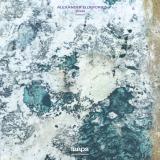
Vivel is Alexander Eldefors’ second release under his own name. Built around eurorack and field recordings, many captured during still moments while traveling to visit family and friends. The album was created during a period of transition. It functions as an anchor in a time of change, representing a sense of home, safety, and stillness.
Alexander Eldefors is a producer, composer, and mixing engineer based in the countryside outside of Stockholm, Sweden. With a background as both a sound engineer and musician, he has spent years recording, mixing and playing in a wide range of bands and solo projects. In 2019, he consciously slowed down and returned to a more intimate and quiet musical expression, leading to the release of his debut album Bergen in 2020 under his own name. Bergen is the Swedish word for mountains and reflects the fact that Alexander grew up in the north of Sweden close to the mountains.
His music is minimalistic, melodic, and embracing, shaped by a deep connection to nature. Natural environments are a constant presence in his work, serving both as inspiration and as a sound source. Alongside this, he is drawn to the raw textures of everyday objects, working with foley sounds and field recordings. His arrangements unfold as organic sound collages, where elements blend freely and imperfections are preserved to maintain a natural, human feel.
Emily Wittbrodt's "Wearing Words" is a cycle of ten instrumentals and songs for harpsichord, cello, drums, clarinet, accordion and tenor. With precision, humor and grace, Wittbrodt translates a baroque sensibility into pop terrain, combining her fascination for language and poetry with her love for unusual instrumentation and classical forms.
- A1: Hurts And Noises
- A2: Wake Up
- A3: I Don't Wanna Be A Rich
- A4: Terrorist Bad Heart
- A5: Provocate
- A6: Lucifer Sam (Pink Floyd)
- B1: Happy!?
- B2: So Lazy
- B3: I Feel Down
- B4: Stupido
- B5: Guilty
- B6: Caroline Says (Loo Reed)
UILTY RAZORS, BONA FIDE PUNKS.
Writings on the topic that go off in all directions, mind-numbing lectures given by academics, and testimonies, most of them heavily doctored, from those who “lived through that era”: so many people today fantasize about the early days of punk in our country… This blessed moment when no one had yet thought of flaunting a ridiculous green mohawk, taking Sid Vicious as a hero, or – even worse – making the so-called alternative scene both festive and boorish. There was no such thing in 1976 or 1977, when it wasn’t easy to get hold of the first 45s by the Pistols or the Clash. Few people were aware of what was happening on the fringes of the fringes at the time. Malcolm McLaren was virtually unknown, and having short hair made you seem strange. Who knew then that rock music, which had taken a very bad turn since the early 1970s, would once again become an essential element of liberation? That, thanks to short and fast songs, it would once again rediscover that primitive, social side that was so hated by older generations? Who knew that, besides a few loners who read the music press (it was even better if they read it in English) and frequented the right record stores? Many of these formed bands, because it was impossible to do otherwise. We quickly went from listening to the Velvet Underground to trying to play the Stooges’ intros. It’s a somewhat collective story, even though there weren’t many people to start it.
The Guilty Razors were among those who took part in this initial upheaval in Paris. They were far from being the worst. They had something special and even released a single that was well above the national average. They also had enough songs to fill an album, the one you’re holding. In everyone’s opinion, they were definitely not among the punk impostors that followed in their wake. They were, at least, genuine and credible.
Guilty Razors, Parisian punk band (1975-1978). To understand something about their somewhat linear but very energetic sound, we might need to talk about the context in which it was born and, more broadly, recall the boredom (a theme that would become capital in punk songs) coupled with the desire to blow everything off, which were the basis for the formation of bands playing a rejuvenated rock music ; about the passion for a few records by the Kinks or the early Who, by the Stooges, by the Velvet mostly, which set you apart from the crowd.
And of course, we should remember this new wave, which was promoted by a few articles in the specialized press and some cutting-edge record stores, coming from New York or London, whose small but powerful influence could be felt in Paris and in a handful of isolated places in the provinces, lulled to sleep by so many appalling things, from Tangerine Dream to President Giscard d’Estaing...
In 1975-76, French music was, as almost always, in a sorry state ; it was still dominated by Johnny Hallyday and Sylvie Vartan. Local rock music was also rather bleak, apart from Bijou and Little Bob who tried to revive this small scene with poorly sound-engineered gigs played to almost no one.
In the working class suburbs at the time, it was mainly hard rock music played to 11 that helped people forget about their gruelling shifts at the factory. Here and there, on the outskirts of major cities, you still could find a few rockers with sideburns wearing black armbands since the death of Gene Vincent, but it wasn’t a proper mass movement, just a source of real danger to anyone they came across who wasn't like them. In August 1976, a festival unlike any other took place in Mont-de-Marsan – the First European Punk Festival as the poster said – with almost as many people on stage as in the audience. Yet, on that day, a quasi historical event happened, when, under the blazing afternoon sun, a band of unknowns called The Damned made an unprecedented noise in the arena, reminiscent of the chaotic Stooges in their early adolescence. They were the first genuine punk band to perform in our country: from then on, anything was possible, almost anything seemed permissible.
It makes sense that the four+1 members of Guilty Razors, who initially amplified acoustic guitars with crappy tape recorder microphones, would adopt punk music (pronounced paink in French) naturally and instinctively, since it combines liberating noise with speed of execution and – crucially – a very healthy sense of rebellion (the protesters of May 1968 proclaimed, and it was even a slogan, that they weren’t against old people, but against what had made them grow old. In the mid-1970s, it seemed normal and obvious that old people should now ALSO be targeted!!!).
At the time, the desire to fight back, and break down authority and apathy, was either red or black, often taking the form of leafleting, tumultuous general assemblies in the schoolyard, and massive or shabby demonstrations, most of the time overflowing with an exciting vitality that sometimes turned into fights with the riot police. Indeed, soon after the end of the Vietnam War and following Pinochet’s coup in Chile, all over France, Trotskyist and anarcho-libertarian fervour was firmly entrenched among parts of the educated youth population, who were equally rebellious and troublemakers whenever they had the chance. It should also be noted that when the single "Anarchy in the UK" was first heard, even though not many of us had access to it, both the title and its explosive sound immediately resonated with some of those troublemakers crying out for ANARCHY!!! Meanwhile, the left-wing majority still equated punks with reckless young neo-Nazis. Of course, the widely circulated photos in the mainstream press of Siouxsie Sioux with her swastikas didn’t necessarily help to win over the theorists of the Great Revolution. It took Joe Strummer to introduce The Clash as an anti-racist, anti-fascist and anti-ignorance band for the rejection of old-school revolutionaries to fade a little.
The Lycée Jean-Baptiste Say at Porte d’Auteuil, despite being located in the very posh and very exclusive 16th arrondissement of Paris, didn’t escape these "committed" upheavals, which doubled as the perfect outlet for the less timid members of this generation.
“Back then, politics were fun,” says Tristam Nada, who studied there and went on to become Guilty Razors’ frontman. “Jean-Baptiste was the leftist high-school in the neighbourhood. When the far right guys from the GUD came down there, the Communist League guys from elsewhere helped us fight them off.”
Anything that could challenge authority was fair game and of course, strikes for just about any reason would lead to increasingly frequent truancy (with a definitive farewell to education that would soon follow). Tristam Nada spent his 10th and 11th unfinished grades with José Perez, who had come from Spain, where his father, a janitor, had been sentenced to death by Franco. “José steered my tastes towards solid acts such as The Who. Like most teenagers, I had previously absorbed just about everything that came my way, from Yes to Led Zeppelin to Genesis. I was exploring… And then one day, he told me that he and his brother Carlos wanted to start a rock band.” The Perez brothers already played guitar. “Of course, they were Spanish!”, jokes their singer. “Then, somewhat reluctantly, José took up the bass and we were soon joined by Jano – who called himself Jano Homicid – who took up the rhythm guitar.” Several drummers would later join this core of not easily intimidated young guys who didn’t let adversity get the better of them.
The first rehearsals of the newly named Guilty Razors took place in the bedroom of a Perez aunt. There, the three rookies tried to cover a few standards, songs that often were an integral part of their lives. During a first, short gig, in front of a bewildered audience of tough old-school rockers, they launched into a clunky version of the Velvet Underground's “Heroin”. Challenge or recklessness? A bit of both, probably… And then, step by step, their limited repertoire expanded as they decided to write their own songs, sung in a not always very accurate or academic English, but who cared about proper grammar or the right vocabulary, since what truly mattered was to make the words sound as good as possible while playing very, very fast music? And spitting out those words in a language that left no doubt as to what it conveyed mattered as well.
Trying their hand a the kind of rock music disliked by most of the neighbourhood, making noise, being fiercely provocative: they still belonged to a tiny clique who, at this very moment, had chosen to impose this difference. And there were very few places in France or elsewhere, where one could witness the first stirrings of something that wasn’t a trend yet, let alone a movement.
In the provinces, in late 1976 or early 1977, there couldn’t be more than thirty record stores that were a bit more discerning than average, where you could hear this new kind of short-haired rock music called “punk”. The old clientele, who previously had no problem coming in to buy the latest McCartney or Aerosmith LP, now felt a little less comfortable there…
In Paris, these enlightened places were quite rare and often located nex to what would become the Forum des Halles, a big shopping mall. Between three aging sex workers, a couple of second-hand clothes shops, sellers of hippie paraphernalia and small fashion designers, the good word was loudly spread in two pioneering places – propagators of what was still only a new underground movement. Historically, the first one was the Open Market, a kind of poorly, but tastefully stocked cave. Speakers blasted out the sound of sixties garage bands from the Nuggets compilation (a crucial reference for José Perez) or the badly dressed English kids of Eddie and the Hot Rods. This black-painted den was opened a few years earlier by Marc Zermati, a character who wasn’t always in a sunny disposition, but always quite radical in his (good) choices and his opinions. He founded the independent label Skydog and was one of the promoters of the Mont-de-Marsan punk festivals. Not far from there was Harry Cover, another store more in tune with the new New York scene, which was amply covered in the house fanzine, Rock News (even though it was in it that the photos of the Sex Pistols were first published in France).
It was a favorite hang-out of the Perez brothers and Tristam Nada, as the latter explained. “It’s at Harry Cover’s that we first heard the Pistols and Clash’s 45s, and after that, we decided to start writing our first songs. If they could do it, so could we!”
The sonic shocks that were “Anarchy in the UK”, “White Riot” or the Buzzcocks’s EP, “Spiral Scratch” – which Guilty Razors' sound is reminiscent of – were soon to be amplified by an unparalleled visual shock. In April 1977, right after the release of their first LP, The Clash performed at the Palais des Glaces in Paris, during a punk night organised by Marc Zermati. For many who were there, it was the gig of a lifetime…
Of course, Guilty Razors and Tristam were in the audience: “That concert was fabulous… We Parisian punks were almost all dressed in black and white, with white shirts, skinny leather ties, bikers jackets or light jackets, etc. The Clash, on the other hand, wore colourful clothes. Well, the next day, at the Gibus, you’d spot everyone who had been at this concert, but they weren’t wearing anything black, they were all wearing colours.”
It makes sense to mention the Gibus club, as Guilty Razors often played there (sometimes in front of a hostile audience). It was also the only place in Paris that regularly scheduled new Parisian or Anglo-Saxon acts, such as Generation X, Siouxsie and the Banshees, the Slits, and Johnny Thunders who would become a kind of messed-up mascot for the venue. A little later, in 1978, the Rose Bonbon – formerly the Nashville – also attracted nightly owls in search of electric thrills… In 1977, the iconic but not necessarily excellent Asphalt Jungle often played at the Gibus, sometimes sharing the bill with Metal Urbain, the only band whose aura would later transcend the French borders (“I saw them as the French Sex Pistols,” said Geoff Travis, head of their British label Rough Trade). Already established in this small scene, Metal Urbain helped the young and restless Guilty Razors who had just arrived. Guitarist for Metal Urbain Hermann Schwartz remembers it: “They were younger than us, we were a bit like their mentors even if it’s too strong a word… At least they were credible. We thought they were good, and they had good songs which reminded of the Buzzcocks that I liked a lot. But at some point, they started hanging out with the Hells Angels. That’s when we stopped following them.”
The break-up was mutual, since, Guilty Razors, for their part, were shocked when they saw a fringe element of the audience at Metal Urbain concerts who repeatedly shouted “Sieg Heil” and gave Nazi salutes. These provocations, even still minor (the bulk of the skinhead crowd would later make their presence felt during concerts), weren’t really to the liking of the Perez brothers, whose anti-fascist convictions were firmly rooted. Some things are non-negotiable.
A few months earlier (in July 1978), Guilty Razors had nevertheless opened very successfully for Metal Urbain at the Bus Palladium, a more traditonally old-school rock night-club. But, as was sometimes the case back then, the night turned into a mass brawl when suburban rockers came to “beat up punks”.
Back then, Parisian nights weren’t always sweet and serene.
So, after opening as best as they could for The Jam (their sound having been ruined by the PA system), our local heroes were – once again – met outside by a horde of greasers out to get them. “Thankfully,” says Tristam, “we were with our roadies, motorless bikers who acted as a protective barrier. We were chased in the neighbouring streets and the whole thing ended in front of a bar, with the owner coming out with a rifle…”
Although Tristam and the Perez brothers narrowly escaped various, potentially bloody, incidents, they weren’t completely innocent of wrongdoing either. They still find amusing their mugging of two strangers in the street for example (“We were broke and we simply wanted to buy tickets for the Heartbreakers concert that night,” says Tristam). It so happened that their victims were two key figures in the rock business at the time: radio presenter Alain Manneval and music publisher Philippe Constantin. They filed a complaint and sought monetary compensation, but somehow the band’s manager, the skilful but very controversial Alexis, managed to get the complaint withdrawn and Guilty Razors ended up signing with Constantin with a substantial advance.
They also signed with Polydor and the label released in 1978 their only three-track 45, featuring “I Don't Wanna be A Rich”, “Hurts and Noises” and “Provocate” (songs that exuded perpetual rebellion and an unquenchable desire for “class” confrontation). It was a very good record, but due to a lack of promotion (radio stations didn’t play French artists singing in English), it didn’t sell very well. Only 800 copies were allegedly sold and the rest of the stock was pulped… Initially, the three tracks were to be included on a LP that never came to be, since they were dropped by Polydor (“Let’s say we sometimes caused a ruckus in their offices!” laughs Tristam.) In order to perfect the long-awaited LP, the band recorded demos of other tracks. There was a cover of Pink Floyd's “Lucifer Sam” from the Syd Barrett era – proof of an enduring love for the sixties’ greats –, “Wake Up” a hangover tale and “Bad Heart” about the Baader-Meinhof gang, whose actions had a profound impact on the era and on a generation seeking extreme dissent... On the album you’re now discovering, you can also hear five previously unreleased tracks recorded a bit later during an extended and freezing stay in Madrid, in a makeshift studio with the invaluable help of a drummer also acting as sound engineer. He was both an enthusiastic old hippie and a proper whizz at sound engineering. Here too, certain influences from the fifties and sixties (Link Wray, the Troggs) are more than obvious in the band’s music.
Shortly after a final stormy and rather barbaric (on the audience’s side) “Punk night” at the Olympia in June 1978, Tristam left the band ; his bandmates continued without him for a short while.
But like most pioneering punk bands of the era, Guilty Razors eventually split up for good after three years (besides once in Spain, they’d only played in Paris). The reason for ceasing business activities were more or less the same for everyone: there were no venues outside one’s small circuit to play this kind of rock music, which was still frightening, unknown, or of little interest to most people. The chances of recording an LP were virtually null, since major labels were only signing unoriginal but reassuring sub-Téléphone clones, and the smaller ones were only interested in progressive rock or French chanson for youth clubs. And what about self-production? No one in our small safety-pinned world had thought about it yet. There wasn’t enough money to embark on that sort of venture anyway.
So yes, the early days of punk in France were truly No Future!

“sitting in the terminal at Barcelona airport, health safety warnings echo through empty architecture. feeling slow, and fast, out of sync with rituals and routines. structure and rhythm disintegrate into micro gestures appearing in random order, a daily psychedelia... amid all of the chaos and distraction in the last few years, it’s only through letting go that I've found solid ground to stand on.”
These are some of the experiences and reflections that gave shape to Slipstream, a hallucinatory mini-album by the artist PVAS and the fourth release on Objekt's label, Kapsela. Slipstream is an aural document of PVAS's interior life, conceived not as a grab-bag of DJ-friendly tracks (although it’s clearly inspired by the club) but as a single, delicately crafted artistic statement. The entire record is shrouded in a flickering haze, worn through by smudged breakbeats and wiry drum machines. “Wetland”, with its swampy percussion and crystalline arps, echoes T++ and Kraftwerk. The radiant incandescence of “Gathering Drift” recalls GAS or Monolake's “Hong Kong.” Sampled breakbeats dip and swerve asymmetrically through “Boba” and “Terminal”. Across the record, textures and voices are reshaped by PVAS's homemade algo-software, UMT, which, in PVAS’ own words, “reconstructs one audio file by sampling another, resulting in output that merges their aesthetic qualities, creating rhythm with non-rhythmic sound files and abusing the stereo field.” But the most striking union of technology and poetic self-exploration comes at the end of the record, in the title track, from words murmured through a classic vocoder:
“when i stop framing myself as a boundaried stone
immovable, and powerful, and heavy
when i stop figuring my deepest space as my own
something which i am solely responsible
i surrender, i surrender”
PVAS is Jordan Juras, a Berlin-based artist who grew up outside of Windsor, Ontario. He has released solo EPs on Isla and xpq?, and is half the duo NUG (3XL, West Mineral Ltd.). In addition to developing music software professionally, he has used his UMT software on records by Lyra Pramuk and Dylan Kerr. Slipstream was recorded from 2022 to 2025.
Written and produced by PVAS
Mixed by TJ Hertz
Mastered by Anne Taegert at D&M
Artwork and design by Brodie Kaman
Tell me something that makes a difference’ demands Gaia Weiss in Tenashee’s debut single. Something that immerses crisp melody into stodgy bass, collides warm dub with icy sound design, all the while slowly expanding like a supernova. ‘Tell me something’ takes the sounds and styles of the past and places them in a gravity-free future, while evoking an ethereal and precise atmosphere.
Gaia Weiss is an actress - not a singer by trade - and summons Charlotte Gainsbourg & Brigitte Bardot to deliver the spoken words as a fractured monologue, guiding us through splintered visions, and detuned chord progressions, in pursuit of the seemingly unattainable; ‘something that can make a difference’.
With this six-chapter journey on the newborn Street Cinema label, Tenashee (DJ Tennis and Ashee, Manfredi Romano and Joseph Ashworth) have crafted and refined - like two artisans from another era - a unique creation: a creature that reconnects electronic music with complexity and richness, fully aware of hyper-contemporaneity, yet capable of resisting surrender to it.
“Blink To Check It’s Real” featuring artist Campbell King - poet and beautiful soul - immediately immerses us in an electronic reality check, with 90s-inspired tweaking and glitching, all woven together with a poem from Campbell that contrasts the dizzying intensity of lust and connection with the comfort of being able to ‘loosen their grip’ and ‘make it safe.’
In ‘I Can See Now,’ Aurelia Ray (the stage name of pop-music-writing powerhouse Caitlin Stubbs) evokes a sense of serenity, pure love, and trust within a refined, spacious piece of minimalist electronica. “Blindsided” is a journey through pure, airy abstraction, a dance floor companion to the glacial trip-hop instrumental “Cold Logic”.
Finally, in “Memories,” the last track in the setlist but actually the first song the duo worked on, conceived and developed five years ago in 2020, the voice of Chinese German artist Mona Yim transports us to a place that is both emotionally introspective and intense, balancing on the edge between desire and reality.
“You should know where I go when I dream,” she states.
Over the course of five years, through exchanges, writing sessions, and fine-tuning in Paris, London, Saint Martin, and Ibiza, the world evolved, but Tenashee’s musical mission remained unchanged. The mini-album reflects the musical backgrounds of its two creators, their unique sensitivity to the present, and their desire to challenge each other with sharp, emotional, yet weightless styles and sounds. It is no longer just DJ Tennis; the successful DJ touring worldwide, organising events, and founding influential labels like Life & Death; nor only Joseph Ashworth with his scientific approach and creativity as a
producer and writer in the competitive world of pop; nor Ashee, with his releases on Circoloco and Aus Music. No, Tenashee is something more.
It is a duet searching for a thread that connects electronic music—past, present, and future—through experimentation, craft, and artistry. The moment has truly arrived for Tenashee to ‘tell us something.’
Despite immense challenges, SOYUZ have delivered a career-defining album in KROK.
“Krok” means “step” in Belarusian - and for Alex Chumak and his band this word comes with a lot of meaning. It’s the title and theme that ran throughout СОЮЗ (SOYUZ)'s fourth album, reflecting the journeys the band has navigated in recent years, having moved to Warsaw due to political unrest in their homeland of Belarus and the outbreak of war in Ukraine. Embracing the uncertainty became both the inspiration and main lyrical theme for Alex Chumak, SOYUZ’ composer and arranger, who also decided to go a step further and change the language in which he writes songs from Russian, which is used as lingua franca in many post-Soviet countries, to his native Belarusian. The result is nine songs about dreams and outer space, ordinary miracles, things very close and very distant at the same time.
In early 2022, Chumak and original members, Mikita Arlou and Anton Nemahai, joined tens of thousands of Belarusians seeking safety abroad. Resettling in Warsaw, the band released Force of the Wind in October 2022, garnering widespread acclaim, a string of major European gigs, and led to Polish musicians Albert Karch and Igor Wiśniewski joining the band.
Deeper and more melancholic than previous works, KROK is quintessentially SOYUZ, laced with hope, dreams and a celebration of life. Given the difficulties with finding rehearsal and recording spaces in Warsaw and the departure of the drummer Anton Nemahai from the band, Chumak explored alternative options. He reached out to friend and fellow musical collaborator, Sessa, about the possibility of recording the new album in his recently finished studio in São Paulo, with Sessa and Biel Basile coming onboard as recording engineers.
At the tail end of 2024, Chumak and SOYUZ’ new drummer, Albert Karch, made the trip to São Paulo to record the first sessions for KROK. Laid down directly to tape, these sessions featured prominent Brazilian musicians Sessa, Biel Basile, and Marcelo Cabral, with a guest vocal feature by Tim Bernardes recorded at a later date. The final touches were then added back in Europe. Lush string and woodwind arrangements written by Chumak and Karch were recorded at the Polish Radio studio in Warsaw, and Rhodes parts were added by Chumak at Sven Wunder’s studio in Stockholm.
Though primarily recorded in Brazil, KROK is not a Brazilian or MPB album. It blends the band’s Eastern European roots with jazz, folk and global influences. The genre of the music is hardly identifiable: there are folk ballads and jazz-driven pop compositions covered in lush and often dissonant string and woodwind arrangements where each note is placed with care and meaning behind it.
The title track was the first song Chumak wrote in Belarusian as an adult, making for a fitting opener and one of the band’s finest tracks. Darker than most of SOYUZ’ songs, the tensions lift and lighten as the track progresses. The cinematic library jazz of 'Voo Livre', with ghostly vocals sung by Ciça Góes and Ina, feels like a modern twist on the Italian library composer Alessandro Alessandroni through its sublime choir and woodwind orchestration. Elsewhere, the heartfelt 'Lingua Do Mundo', composed, written, and sung by Chumak and the incredible Tim Bernardes, features one of the standout string arrangements from Chumak and Karch. 'Cichi Karahod' is an instant SOYUZ classic, almost Pat Metheny-esque as it opens, with the acoustic guitar and bass riff transitioning into jazzy AOR / pop-folk territory. The record closes with 'Smak žyćcia', a gentle, dreamy spoken-word poetry piece in Japanese by singer-songwriter Manami Kakudo.
The five-track ‘Touch The Vibe’ EP is the latest gem in the evergreen treasure trove of music from Australia’s CC:DISCO!. 'Feel It Peak' opens the release with two escapist minutes of slow-burning, gentle synth waves and Spanish guitar before 'Touch The Vibe' then takes off on warm analogue house drums with sugary chords and a classic bassline that bounces along at an infectious pace. Toronto-born DJ, producer and vocalist Jennifer Loveless also returns in fine form, providing heady spoken word vocals that wash over both cuts in an intoxicating fashion.
On the flip, 'Like This' is another absorbing and cinematic synth interlude while 'Me Gusta Is Dead (Period Pain Mix)' brings heavy late-night vibes with its punchy steel drums, fizzing pads and crunchy chords that make for a wild ride. Last but not least is the epic closer 'Yes Papi (Miami Daddy Theme)’, a glorious blend of prog, trance and techno with a 90s throwback feel featuring Loveless’ hushed vocals that showcases CC’s expert command of lower tempo, pumping grooves of the highest calibre.
Fresh off performances at Glastonbury and Love International, plus her debut Essential Mix for BBC Radio 1, it’s safe to say CC:DISCO!’s trajectory as an artist has risen to new heights in 2024. The Lisbon-based DJ, producer, radio host, and curator added a new string to her bow at the end of last year with the launch of her Miami Daddy imprint, which garnered critical acclaim from the likes of Resident Advisor, DJ Mag, and BBC Radio 1.
CC:DISCO! ‘Yes Papi (Miami Daddy Theme)’ and ‘Touch The Vibe’ drop via Miami Daddy on 21st September and 24th October, respectively, with the full EP releasing on 22nd November 2024.
how do we live in times when nothing seems safe, how do we listen to music when rockets and bullets make the air scream, how do we produce music when the building with our studio is simply no longer there?
over the last 2 years, AMAS and KONSTANTIN KOST have been trying to produce a techno EP across the borders of the war in ukraine. KONSTANTIN KOST was never able to leave ukraine for this, while we were able to move freely through europe.
this ambivalence is part of this album, it is part of every note and every line of the poems that can be heard here. we all associate techno with bass-heavy and dancing through the night, but ODESSA is more, it is a journey without being able to travel, an experience without being able to experience, an escape without being able to escape and a life without really being able to live ...
neither AMAS was able to travel to odessa during this time, nor KONSTANTIN KOST to europe, neither was able to experience the other personally. however, the exchange of music and lyrics has built up a relationship to a country at war, as well as to its people, musicians, women and children.
while we were dealing with our everyday problems in germany, the situation in ODESSA became increasingly confusing. the constant fear of being drafted and producing videos and images for the album at the same time were extremely ambivalent moments.
how do you deal with your counterpart in such moments and what do you say to someone in a situation that we can hardly imagine? we often talked about friends simply disappearing and corrupt officials and soldiers embezzling money and in the next sentence it was straight back to the vinyl production. these conversations were very rational and at the same time extremely surreal.
this EP is not meant to be a political EP, it is meant to be a human album and to take away the feeling of powerlessness from the people who were and are involved. this production and its music is a triumph over the destructive and dark side of war, it is meant to show that art is boundless and that people are connected all over the world even in the darkest times.
in the first track RED GLOW our guest TANYA (musician and djane from Odessa) stoically repeats the words LOVE and FEAR, followed by the words: “i meet you with red glow, in your eyes i quickly dissolve!” the track is part of everyday life, everywhere you meet this red glow and yet everything has to flow on and yet people still live and dance ...
in NIGHTCALL we walk through the streets and follow the call of darkness. the words “through the night” are used here repetitively like a percussion. but the highs and lows also give us hope and the belief that we will wake up again tomorrow and start a new day. in the dark there is always light, which must be preserved and found.
OLD KINGS is also the title of the poem we have written, based on the poem OZYMANDIAS by percy bysshe shelley. OLD KINGS determine our times and our political systems, seemingly unteachable old men hold the world in a stranglehold and it seems as if there are an infinite number of them. yet we continue to fight against these people, we cannot and do not want to do otherwise ...
in TALK TO GOD, KONSTANTIN KOST reads from the well-known ukrainian poem “a cloud floating behind the sun” by TARAS SHEVCHENKO, a famous ukrainian poet and writer. he is considered the founder of modern ukrainian literature and, in part, of the ukrainian language. it is about red fields, the fog and its darkness, as well as the sea and the calmness of the heart in nature, the longing for peace and peace with god.
in addition to poetry and music, all photographs and videos are original recordings by KONSTANTIN KOST of his city ODESSA. although we cannot visit each other, we still share strong visual impressions of a city that, in all its beauty and resilience, will hopefully soon be open to the world again. the cover is therefore also a picture of the port of odessa, a place where people and goods from all parts oft he world will soon be able to sail in and out again.
"Rationalizing our place amongst the Stars is a referendum. A mandate in the scale of a space-time continuum, which is a task that might seem infinitely cavernous to most, but a lifelong mandate to others. As nature's allowance of time just isn't favorable to an average human lifespan of a 100 years, this task must be inherited and handed down in the method of an acoustical trust. Rhythm considered as a safe depository.
Neo Tantric Parts is about high premium thought processes about simplicity and oneness. Diagnostic in the way it blends time, rhythm and harmony together as a proposal to consider placement in this moment of time". - Millsart
Footnote translations:
"Rationalizing our place amongst the Stars is a referendum".
The human lineage only diverged from our most recent common ancestor about 5 million years ago; less than half of 1% of that time, and modern Homo sapiens is only between 200,000 and 50,000 years old, depending on your definition. Such vast spans of time are hard for us to comprehend.
"A mandate in the scale of a space-time continuum, which is a task that might seem infinitely cavernous to most,but a lifelong mandate to others".
The singularity had no dimensions and space and so it stands to reason that it had no dimension in time. In other words, there was no time so there was no such thing as "before". By that reasoning, time itself is the same age as the universe, which is about 13.8 billion years
"As nature's allowance of time just isn't favorable to an average human lifespan of a 85 years"
The world average age of death is a few years lower at 68.9 years for men and 73.9 years for women. Within the European Union, these are 77.7 and 83.3 years respectively.
"This task must be inherited and handed down in the method of an acoustical trust. Rhythm considered as a safe depository".
A legal arrangement or understanding by which a person or organization looks after money or property for somebody else until that person is old enough to control it.
Since the release of the highly acclaimed album Mamari (2021), the Muito Kaballa project has continued to develop.
The new album Little Child (2022) starts with a cracker called Inside Outside. The song addresses the hypocrisy and double standards of the European Union when it comes to refugee policy. The group works together with the renowned German/Nigerian musician Ade Bantu and the Angolan guitarist Juresse Amie Tieti Ndombasi and picks up their listeners where they were parked with Mamari. Fat grooves with clearly recognizable Afrobeat influences.
However, the musical journey leads step by step away from the usual sounds of the band. Already the second track Dansez! Dansez! shows that. The sound leads to Angola, Congo and a bit of Mali. The band stacks so many rhythms on top of each other that the word poly appears in a whole new light. It becomes clear that the nine deal intensively with the music that is the source of their inspiration. The gifted guitarist Juresse Amie Tieti Ndombasi puts the icing on the cake with his sound.
Let's continue with No = No. Here at last it becomes clear: Muito Kaballa has escaped from his drawer and is now in free flight, somewhere between jazz, fusion, afrobeat and whatever. But who cares? The sound is convincing, the feet shake to the beat and cannot be calmed down even with great effort and the message "Don't protect your daughter, educate your son" can't be said often enough.
The next song, Memories, reveals completely different sides of the band. While the sound is suddenly much more relaxed and, let's call it jazzy, the lyrics also become much more intimate and poetic. "Keep in mind, it makes you blind, starring in the sun". We don't find out what memories Niklas Mündemann, composer of the song, has in mind here but that shouldn't bother us. We just put on our sunglasses and let ourselves be carried away by the almost epic track, which with its ten minutes of playing time leaves nothing to be desired in terms of diversity. Sophisticated listeners will wonder if Niklas Mündemann listened to a bit of Kamasi Washington while composing. Maybe even a lot? Be that as it may - a special treat in the piece: the trombonist Saskia-Marleen Dahms, who makes a guest appearance on this song, rounds off the sound of the brass section again.
Last but not least, we come to the namesake of the album: the song Little Child builds on the mood of the previous track and rounds off the musical odyssey with a good portion of goosebumps. But the song doesn't just leave its mark on the surface, no, it also gets under your skin. While the melody has considerable catchy tune potential, it is above all the lyrics and the message that grab you here. Niklas Mündemann wrote the song during a phase of mental depression. Above all, psychotherapy helped him to think more positively again and to comfort his own inner child. We've all heard about that child in us. But when was the last time we hugged it? The song Little Child is the perfect accompaniment for this, because when you hear it, you immediately feel hugged, pressed and safe. Another highlight are the incredibly beautiful solos, played by Benjamin Schneider on guitar and Saskia-Marleen Dahms on trombone.
That's the end of the album and, to be perfectly honest, you don't feel left out in the rain, but you do feel left out in a (warm) shower. Time flies when you hear Muito Kaballa's new album and in the end you want more. 4 remixes for the dancefloor are delivered by French producer Kuna Maze, Polish/Angolan duo Lua Preta, French producer La Dame and Brazilian producer Badsista, tipping the remix balance into more female input.
In 1975, under the oppressive air of military dictatorship in Brazil, brothers Lelo and Zé Eduardo Nazario invited bassist Zeca Assumpção to join their musical experiments in a basement under Sao Paulo’s Teodoro Sampaio Street. As teenagers, the trio had already been playing together in Hermeto Pascoal’s Grupo, alongside guitarist Toninho Horta and saxophonist Nivaldo Ornelas, and it was while working together under Hermeto’s direction that the Paulista rhythm section (as they were then known) began to realise their own potential.
With many nightclubs and venues closed in the mid-70s and government censors dictating the output of radio, TV and art galleries, many Brazilian artists fled during the years of dictatorship. But underground, Grupo Um were fusing avant garde ideals with contemporary jazz and Afro Brazilian rhythm; making phenomenally free and expressive music - in stark contrast to the sterile, conservative conditions being imposed above ground.
Just like Hermeto Pascoal’s Viajando Com O Som from the following year, Starting Point was recorded over two days at Vice-Versa Studios, by revered engineer Renato Viola. The studio was one of the best in Sao Paulo and musicians communicated with engineers through cameras and a monitor, allowing the group complete immersion in the process. They also made use of the studio’s hemispherical tiled room, which served as an acoustic reverberation chamber.
The album begins with Zé Eduardo Nazario’s thunderous drum solo on “Porão da Teodoro”, before clearing the clouds with the lone Berimbau which opens “Onze Por Oito”. Built around a hypnotic electric bass line, heady Fender Rhodes improvisations, and more rip-roaring drums, it’s a rapturous, electrifying freak-jam in 11/8.
Like some invertebrate deep-sea curiosity, the free-form “Organica” is made up of Lelo Nazario’s playfully eerie prepared piano, with Zé Eduardo’s percussion flurries darting around Assumpçao’s double bass. The equally non-conformist, percussion-only piece “Jardim Candida” features many of Zé Eduardo’s home-made instruments, including a long saw blade played with vibraphone sticks and violin bow. While working with Hermeto, Zé Eduardo famously built his own all-in-one percussion set-up known as the “Barraca de Percussão” (Percussion Tent) - the first of its kind in Brazil, which he would also use on Hermeto Pascoal’s Viajando Com O Som and throughout his career.
“Suite Orquidea Negra'' (Black Orchid Suite) was written by Lelo Nazario as the score for an imaginary movie - the story of a rare, black orchid which produced a substance meant to cure all diseases, but which had mysteriously disappeared from the laboratory… “As a screenplay it’s not very good” reflects Lelo in jest, “but the music ended up being very interesting, the way its parts are chained to one another carries a little of the mystery I imagined for the movie.”
The album closes with the triumphant “Cortejo dos Reis Negros” (Procession of Black Kings) - a groovy variation on the Maracatu rhythm, with a two-note bassline underpinning piano improvisations, exultant wordless vocals, cuicas, slide-whistles and a very special guest appearance from Zé’s dog Bolinha.
Starting Point was to mark the inception of one of Brazil’s most daring instrumental groups. Their debut now sits in the lofty echelon of otherworldly 70s Brazilian music, alongside the likes of Marcos Resende & Index’s self-titled debut, Cesar Mariano & Cia’s Sao Paulo Brasil, Azymuth’s debut and indeed Hermeto Pascoal’s Viajando Com O Som. But just like all of those titles, which were either shelved or largely ignored at the time, Grupo Um - so radically ahead of their time - struggled to find a label to release their debut album. So Lelo kept the tapes safe in his archives, which is where they sat for almost half a century. Finally, almost fifty years later, this mesmerising piece of history is here, and it was only the beginning...
Grupo Um’s Starting Point will be released by Far Out Recordings, on vinyl LP, with an insert featuring unseen photos and liner notes by the Nazario brothers, as well as a CD on 17th February 2023.
Nous'klaer audio presents Oceanic's debut album Choral Feeling. A rhythmically diverse electronic album full of sonic explorations and beautiful moments, all bound together by a sense of colour. The album touches on the core of what music can be for: a sense of togetherness, finding meaning in moments, a way to cope with loss and soundtracking dreams about a different future. The music on this album reflects that in the most personal way. Each track consists almost entirely of his friends' voices, recorded and transformed into the sounds you'll hear. No, you can But how Just think of anything How can it just be anything Why does it need to be more Because they're afraid of it. They're not afraid of the words Then what are they afraid of The power behind the words How can words have power If you say something, only you, maybe I can hear it. Perhaps someone sitting over near that tree can hear it too. If we say it together, maybe we can reach past that tree and reach that rock. But if us and a million others say them same thing, all at the same time. Then every tree and every rock everywhere will hear us. Trees and rocks don't have ears. No they don't but they do. Why don't they just cover their ears Because then they need to do that every time we use our voice. And use them we did and use them again we shall. They got tired of covering their ears, so they decided to cover our mouths. Won't they hear us now? We're safe here. For how long will we be safe? For now. Perhaps until later. Just try. Read the words like I've written, but do so like the birds in the trees. You are my sunshine A little louder You are my sunshine, my only sunshine, you make me happy When skies are grey You'll never know dear How much I love you Please don't take my sunshine away Beautiful. Shall we go teach the others When will we have enough to free ourselves We'll always have more than they do. We only need to not forget I'll never forget Sing it again. Artwork by Bob Verhoeven. Text by Gregory Markus.
Welcome to Dazion’s Grooveboxxx – a maxi-sized love letter to The Hague’s 80s and 90s club scene crafted with minimal tools and loaded with vibe. It’s no coincidence it arrives on Dekmantel, a label with its own roots in the same Dutch city’s electronic music culture.
Dazion is The Hague’s Cris Kuhlen, previously spotted releasing on Second Circle, Safe Trip and Animals Dancing. He cut his teeth clubbing and working at long-since closed clubs like Eau, described in Kuhlen’s own words as, “clubs with blocks to dance on, lazers, decorations, crazy extravert sic parties.”
In capturing the spirit of Eau and the other formative parties of his youth, Kuhlen limited himself to just one machine to make his longest work to date – the Roland MC-303 Groovebox. While these entry level units from the mid-90s had stripped down functionality in the wider spectrum of studio gear, they contained all the iconic Roland sounds in a Rompler style, giving the user access to everything necessary to make raw, immediate club tracks without requiring an entire studio’s worth of hardware.
The brash gear of choice set the tone for a record of rough, ready and playful jams which end up more sophisticated than you’d expect from such limited means. ‘La DS’ jacks with a freaky, bleep techno intensity, while ‘Kimberly & Nance Backstage Rehearsal’ rides an angular groove tooled to inspire the weirdest dance moves of the night. Every track is named in reference to a particular nightspot, a hazy memory or moment from Kuhlen’s formative raving years.
This is the sound of Dazion having the time of his life. You might well hear a nod to the odd rock totem being given a re-version in irreverent new beat style or some gnarly US acid breaks vibes riding underneath helium rap licks. But for all the cheekiness, the tracks stand up both as nods to halcyon days and relevant workouts for the sweatiest parties in the here and now. As MC Paul T says in dramatic style heralding the intro of Grooveboxxx, “This movement will live on forever.”
- 2: Against Death
- Smashed
- Can't Touch
- Sit
- Lucky
- Safe
- Son Of
- Destiny
- Billions
- Death Of Music
- No Mail
- I.d.o.l
- Yo
- Bawk
- Crack
- Headless
- In So Many
- Ajukaja Me
“Certain albums hit like howling bullets at pivotal moments, tearing open the face of music to reveal hidden sonic muscles and fusing them back into something both strangely familiar and yet entirely unrecognisable. We believe this is one of those records.”
The double album Death of Music delivers 18 crooked vocal pops, some ruthless, others unexpectedly disarming. In some songs, Ajukaja & Mart Avi function like a two-headed saurus swinging its spiky tail to shady pop-house smackers. In others, Ajukaja's serene organ licks descend into subterranean caverns, allowing Avi to float to the surface on their wavelengths and turn his voice into billions of extinct moths, enslaved by the moonlight’s pull. There are songs that face destruction and those that seek to prevent it.
One kykeon rap goes, “If you die before you die, then when you die, you don't die!”. Ajukaja & Mart Avi have embraced this notion to create new music that allows them to thrive in the algorithmic wasteland. 13 years in the making, these 66 minutes are packed with lifetimes of truths you didn’t know you needed to know. They are Ajukaja & Mart Avi – two against death.
Produced by Ajukaja
Words by Mart Avi, Music by Raul Saaremets
Guitar and Bass by Sten Sheripov (Can’t Touch The Earth, Safe)
Sax by Steve Vanoni (I.D.O.L.)
Recorded between 2011—2024
Mastered by The Bastard
Cover Photo by fs
Sleeve by Marke, Mart Avi
Pressed in Tartu, Estonia
Having transitioned between London, Lisbon and back again as a DJ and producer, as well as across the world as the drummer in beloved pop group, Metronomy, Anna Prior remains an essential and independent force in alternative and electronic music culture. The current epicentre of this creativity is undoubtedly Prior’s own label, Beat Palace. Established in 2021, it has showcased the talent and diversity of FLINTA producers carving an esoteric space within alt-pop and electronic music.
Returning to the imprint for the first time since its inception, Anna Prior utilises this vital platform to refine her own craft across the five-track ‘Firefly’ EP, exploring new moods and styles, balancing playfulness with vulnerability, shadow and light. Prior describes ‘Firefly’ as, “a collection of moments - some fleeting and some stubbornly lingering.... Each track came together almost by accident, but now feels to me like they've always belonged together.”
Lead single ‘True For You’ pulsates with soft euphoria, as Prior weaves softly cascading synths with her own earnest declarations, composing a sensual, sophisticated drama about “letting other people's differing truths sit alongside your own” that nonetheless carries a distinct club energy. In contrast, title track ‘Firefly’, written alongside co-producer Matt Karmil, unfolds as a spoken-word piece, investigating memory, “the tricky mirror that reveals more than it conceals”. Throughout, Prior’s inquisitive, native Yorkshire accent anchors a wide-eyed soundscape that gradually, impressively escalates into the cinematic.
Centerpiece track ‘Silence’ turns this approach inside out, escalating the tempo and revealing a DnB-influenced shade of Prior’s work that is certain to surprise and impress, scattering elegant syllables amongst serious soundsystem pressure as Prior navigates the feeling of being ghosted; by friends, lovers and even her own work. ‘No More Drama’ returns to pop, presenting a bold cover of Mary J. Blige’s classic that inverts the original’s unmatched intensity for a more serene, but no less affecting rendition.
Finally, ‘Beside You’ delivers one last, sublime blend of Prior’s songwriting and sequencing instincts, a simple pop incantation that coaxes dancers into a soft trance while concluding with a reminder from Prior that “amid life’s unanswered calls and fleeting highs, there is always space to feel safe and unjudged.” Concluding this sublime EP, Prior finds new ground to settle into her talents.
- A1: Victory Lap
- A2: Someone Else (Feat. Elyesse Mason)
- A3: Think Of Me (Feat. Fractures)
- A4: Strangers (Feat. Raphaella)
- A5: Hoodie
- A6: Hear You Speak (Feat. Tamzene)
- A7: Interlude - Running Out Of Time
- B1: Wait For You (Feat. Sapphire)
- B2: I’ll Be There
- B3: Going Home
- B4: In Your Dreams
- B5: Safe Place (Feat. Raphaella)
- B6: Still Standing (Feat. Jordan Mackampa)
- B7: Touch The Moon
- B8: Interlude - 3 Lives
Bottle Green Vinyl[34,41 €]
Der Spoken-Word-Künstler Dan Whitlam, eine der überzeugendsten neuen Stimmen aus GB, balanciert auf der 14-Track-Odysee "Strangers (Again)", seinem Debütalbum, gefühlvolle, klavierbetonte Momente und gebrochene Beats mit seiner charakteristischen Mischung aus lyrischer Ehrlichkeit und melodischem Feingefühl. So entsteht ein intimer wie auch weitläufiger Sound. Mit Gastfeatures von Raphaella, Tamzene, Saphire & Jordan Akampa fängt die LP die Dualität seiner Arbeit ein, wenn poetisches Geschichtenerzählen mit zukunftsweisender Produktion kontrastiert. Jeder Track reflektiert Verbindung und Distanz und verwebt Momente emotionaler Tiefe und Entspannung. Im Okt./Nov. 2025 startet(e) Whitlam seine bisher größte Headliner-Tour, mit ausverkauften Konzerten in Köln & Berlin, die ein intensives Erlebnis verspricht, wenn Grenzen zwischen Poesie, Soul und zeitgenössischer Musik verschwimmen. Der Londoner feiert Millionen TikTok- & Instagram-Aufrufe und wird von Künstlern wie Fred Again & Arlo Parks sowie Modemarken wie Hermes & YSL unterstützt.
[o] B8. Interlude - 3 Lives [vinyl exclusive]
- A1: Victory Lap
- A2: Someone Else (Feat. Elyesse Mason)
- A3: Think Of Me (Feat. Fractures)
- A4: Strangers (Feat. Raphaella)
- A5: Hoodie
- A6: Hear You Speak (Feat. Tamzene)
- A7: Interlude - Running Out Of Time
- B1: Wait For You (Feat. Sapphire)
- B2: I’ll Be There
- B3: Going Home
- B4: In Your Dreams
- B5: Safe Place (Feat. Raphaella)
- B6: Still Standing (Feat. Jordan Mackampa)
- B7: Touch The Moon
- B8: Interlude - 3 Lives
Black Vinyl[32,14 €]
Der Spoken-Word-Künstler Dan Whitlam, eine der überzeugendsten neuen Stimmen aus GB, balanciert auf der 14-Track-Odysee "Strangers (Again)", seinem Debütalbum, gefühlvolle, klavierbetonte Momente und gebrochene Beats mit seiner charakteristischen Mischung aus lyrischer Ehrlichkeit und melodischem Feingefühl. So entsteht ein intimer wie auch weitläufiger Sound. Mit Gastfeatures von Raphaella, Tamzene, Saphire & Jordan Akampa fängt die LP die Dualität seiner Arbeit ein, wenn poetisches Geschichtenerzählen mit zukunftsweisender Produktion kontrastiert. Jeder Track reflektiert Verbindung und Distanz und verwebt Momente emotionaler Tiefe und Entspannung. Im Okt./Nov. 2025 startet(e) Whitlam seine bisher größte Headliner-Tour, mit ausverkauften Konzerten in Köln & Berlin, die ein intensives Erlebnis verspricht, wenn Grenzen zwischen Poesie, Soul und zeitgenössischer Musik verschwimmen. Der Londoner feiert Millionen TikTok- & Instagram-Aufrufe und wird von Künstlern wie Fred Again & Arlo Parks sowie Modemarken wie Hermes & YSL unterstützt.
o B8. Interlude - 3 Lives [vinyl exclusive]
[o] B8. Interlude - 3 Lives [vinyl exclusive]
- A1: Always You - The Sundowners
- A2: Move With The Dawn - Mark Eric
- A3: She - Tommy James & The Shondells
- A4: A Famous Myth - The Groop
- A5: Dreamin' In The Shade (Down In L.a.) - Brewer & Shipley
- A6: I Don't Think I Know Her - Tee & Cara
- B1: Knock On Wood - Harpers Bizarre
- B2: The Visit (She Was Here) - The Cyrkle
- B3: I See It Now - Fargo
- B4: Summer Sound - Best Of Friends
- B5: A Moment Of Being With You - The Critters
- B6: Blight - The Millennium
- C1: Jill - Gary Lewis & The Playboys
- C2: I Can See Only You – Roger Nichols & The Small Circle Of Friends
- C3: Little Dreams - The New Wave
- C4: My Brother Woody - The Free Design
- C5: Christina's World - Nancy Priddy
- C6: The Ark - Chad & Jeremy
- D1: Creators Of Rain - Smokey & His Sister
- D2: How Can I Stop Loving You - The Eighth Day
- D3: Love Is A Rainy Sunday - Love Generation
- D4: Springtime Meadows - The Sunshine Company
- D5: The Word Is Love - Thomas & Richard Frost
- D6: Prairie Grey - New Colony Six
Peace and love in late 60s America did not come without parallel feelings of fear and confusion about the social situation – specifically about Vietnam. “Safe In My Garden” is the latest Ace compilation in an acclaimed series compiled by Bob Stanley – it’s a companion piece to the much-praised “State Of The Union (The American Dream In Crisis 1967 – 1973)” Ace CDCHD 1533/XXQLP2 057 2018).
The music on “Safe In My Garden” is harmony-laden, beautifully produced soft rock. Sunshine pop, even - a melodic, innovative style of American music that grew in the mid-60s out of the folk and surf scenes, exemplified by the Beach Boys and the Mamas and Papas. You will hear orchestral arrangements, and soft boy-girl vocals. But it wasn’t made in isolation from what was going on in the outside world. There are clouds and minor chords, plenty of melancholy in those harmonies.
“Safe In My Garden” includes songs of escape (Mark Eric’s ‘Move With The Dawn’, the Groop’s ‘A Famous Myth’), loss (the Eighth Day’s ‘How Can I Stop Loving You’, the New Colony Six’s ‘Prairie Grey’), dreamscapes (Tommy James and the Shondells’ ‘She’, Nancy Priddy’s ‘Christina’s World’), rebirth (Smokey and his Sister’s ‘Creators Of Rain’), a simpler world (the Free Design’s ‘My Brother Woody’) and a philosophically sounder future (Chad & Jeremy’s ‘The Ark’, Best of Friends’ ‘Summer Sound’).
It contains some surprisingly dark messages paired with beautiful melodies, as well as songs of hope. Thousands of young musicians in cities, suburbs and small towns across the States from the mid to late 60s spent their mornings hiding from the mailman, dreading the draft. This is the Sound of Young America in the late 60s, keeping its fingers crossed.
- Watch The Water
- The Way Of The World
- Coombe House
- Wash What You Eat
- Like When
- Basic Everyday Life
- Hold Onto I.d
Recorded from late 1996 through early 1997, Hold Onto I.D., The Shadow Ring's fourth album, marks the apogee of the trio's experimental rock epoch - their last record clinging to their factitious bandness before they let all song and structure go awash in sonic malaise for their final run of releases on Swill Radio. The surrealist dreams of City Lights and Put the Music in Its Coffin give way to pseudo-expressionistic lyrics mired in the banality and bleakness of the everyday, set against the backdrop of the Coombe House (as pictured on the album's cover). While Hold Onto I.D. is the group's most overtly autobiographical release to date, Lambkin's lyrics obfuscate his expressionist tendencies filtering them through the codes and languages of officialdom, linking the "inner self" with documents of the state_identification cards, National Insurance numbers, and British passport numbers. Having moved out of their parents' homes and into the top floor of the famed Coombe House, Graham Lambkin and Darren Harris set out to rework material drafted over the previous year, aided by Tim Goss, still safely in residence at the "Valebrook Inn." While the familiar sounds of Harris's deadpan recitation and Lambkin's electric guitar, amateurishly strummed, dominate the album, the emotive interludes of Goss's keyboards populate the record along with of home-cooked tape experiments and dime-store concrète. Originally released on CD and supported by a US tour with friends Scott Foust and Karla Borecky's Idea Fire Company, Hold Onto I.D. is perhaps the band's best-known and most accessible album. (The Shadow Ring's sole representative on a streaming platform, it was once acknowledged by the Guardian as one of "the 101 strangest records on Spotify.") Offered here for the first time on vinyl, Hold Onto I.D. is an essential album for both completists and the uninitiated alike. Throughout their legendary, decade-long run, the Shadow Ring were an enigmatic force on the international musical sub-underground. Before their disbandment in 2002, this shambolic rock outfit, formed by a group of rowdy teenagers in southeast England, left behind a mighty run of eight LPs, a handful of 7"s, and a spate of raucous live shows and cryptic zine appearances on both sides of the Atlantic, all which have bolstered their enduring word-of-mouth mystique. Beginning in 2023 with the first-ever vinyl pressing of the self-released pre-Shadow Ring tape The Cat & Bells Club (1992), Blank Forms Editions has been conducting a systematic retrospective of the storied group. Wax-Work Echoes and Hold Onto I.D. are the latest releases in a multiyear reissue effort that includes several LPs, a comprehensive CD box set, and a nearly five-hundred-page book.
Yowzers is a new album by Chicago composer, improvisor, and musical folklorist Ben LaMar Gay. Yowzers features Gay"s working quartet with Tommaso Moretti (drums, percussion, voice), Matthew Davis (tuba, piano, bells, voice), and Will Faber (guitar, ngoni, bells, voice), as well as guest instrumentalist Rob Frye and a mini-choir. The album recalls the high-minded freedom of Liberation Music Orchestra, the glitched-out electronic webs of Robert Aiki Aubrey Lowe, the unbridled rhythms and sandpaper bellows of Bukka White, and the harmolodic cartoon glory of Arthur Blythe"s Illusions. It"s all there, filtered through an improvisational approach and a lifetime of secrets embodied. For a man who has inhabited and traveled these continents so extensively, it"s safe to call this work true "Americana", despite what that word might mean to the average person in the United States.
- A1: Why Not Nothing?
- A2: Music Is Power
- A3: Break The Night With Colour
- A4: Words Just Get In The Way
- A5: Keys To The World
- A6: Sweet Brother Malcolm
- A7: Cry Til The Morning
- A8: Why Do Lovers?
- A9: Simple Song
- A10: World Keeps Turning
- B1: Keys To The World (Epk Footage)
- B2: Break The Night With Colour (Live)
- B3: Why Not Nothing? (Live)
- B4: Words Just Get In The Way (Live)
- B5: Break The Night With Colour (Video)
Keys To The World, Richard Ashcroft's third solo album, landed in January 2006 and quickly crept like a mile-a-minute vine to number two, whereto it clung for some time. Produced by long-time collaborator Chris Potter, it marks the former Verve frontman's last solo full-length for ten years, before its later supersession by 2016's These People. The LP leans heavy on orchestration, its string arrangements by Julian Kershaw performed by the London Met Orchestra, and electric viola parts from Bruce White sallying over its songwritten entirety. Sonically, Ashcroft dialled down the bombasticity of earlier outings for an analgesic, string-swept sound, dividing the lauds: praised by some for its melodic clarity maturer songwriting, others found it all too safe, though that didn't stop it going Platinum in the UK.
- Yowzers
- The Glorification Of Small Victories
- There, Inside The Morning Glory
- Roller Skates
- For Breezy
- I Am (Bells)
- Promontory
- John, John Henry
- Damn You Cute
- Cumulus
- Touch
- Leave Some For You
Black Vinyl[21,81 €]
Yowzers is a new album by Chicago composer, improvisor, and musical folklorist Ben LaMar Gay. Yowzers features Gay"s working quartet with Tommaso Moretti (drums, percussion, voice), Matthew Davis (tuba, piano, bells, voice), and Will Faber (guitar, ngoni, bells, voice), as well as guest instrumentalist Rob Frye and a mini-choir. The album recalls the high-minded freedom of Liberation Music Orchestra, the glitched-out electronic webs of Robert Aiki Aubrey Lowe, the unbridled rhythms and sandpaper bellows of Bukka White, and the harmolodic cartoon glory of Arthur Blythe"s Illusions. It"s all there, filtered through an improvisational approach and a lifetime of secrets embodied. For a man who has inhabited and traveled these continents so extensively, it"s safe to call this work true "Americana", despite what that word might mean to the average person in the United States.
- Mama Hum
- Crystals Forming
- Hold On
- Bc I Love Ya
- Really Love
- As You Want
- Ribbits
- The Paths We Travel
- Only Time Can
- Circadas
- Safe Place
- Rainbows
((( O ))) is unveiling her highly anticipated fifth studio album, ((( 5 ))), marking the latest milestone in her visionary series of releases. Continuing her tradition of fusing music with the rhythms of the universe, she has introduced the concept of 'MoondropDISABLEDs,' which are individual pieces of audio-visual art released every full moon. These 'MoondropDISABLEDs' are then compiled into an annual collection called 'Sundrops,' released on her birthday. ((( 5 ))) represents the fifth installment in this series, offering a mesmerizing blend of genres and sonic landscapes that reflect ((( O )))'s deep connection with nature and the cosmos. Each track is crafted to resonate with the energies of the lunar cycle during which it was created, offering listeners an otherworldly experience. Looking ahead, ((( O ))) aims to complete a full collection of 12 'Sundrops' by the year 2032, creating an unparalleled anthology of art that spans a decade and encapsulates the cycles of the moon. Her work continues to inspire a global audience with its innovative blend of music, visual art, and spiritual exploration.
In the words of ((( O ))): “Each 'Sundrop' is a reflection of my journey through life, intimately connected with the rhythms of nature. With ((( 5 ))) being my first fully-produced album, I invite listeners to join me in sitting with the moments in between, with the simplicity of instrumentals from sounds that I used from my journeys living in the Philippines, celebrating the beauty and power of our cosmic connection. I needed it to create space versus taking up more space in an already overwhelming world we live in now.
A Chaos Of Flowers is an album that builds on their ferocious 2023 album nature morte. BIG|BRAVE"s music has been described as massive minimalism. Their fusillades of textural distortion and feedback emphasize their music"s frayed edges as much as its all-encompassing weight. The potency of the trio"s work is their singular artistry combining elements of traditional folk techniques and a modern deconstruction of guitar music. Gain, feedback, and amplitude are essential. For A Chaos Of Flowers guitarist/vocalist Robin Wattie drew heavily on the poems of artists whom Wattie found kinship in, their words resonant with experiences of those often sidelined by cultural norms. "I discovered that most poems from folk traditions or in the public domain seem to be by men - to which I could not quite relate. In my search, I rediscovered some of my favorite works and poets," says Wattie. Guitarist Mathieu Ball and drummer Tasy Hudson help Wattie shape poetry into pieces as dense and impenetrable as they are vulnerable. BIG|BRAVE achieve their colossal sound through minimalist approaches, a deft understanding of dynamics and an inventive employment of percussion and distortion. The trio reconceptualize what it is to be heavy or minimal, challenging perceptions with their illumination of painfully overlooked perspectives. Guest guitarist Marisa Anderson lends earthen, blues-inflected atmospheres to the album, where guitarist Tashi Dorji and saxophonist Patrick Shiroishi amplify the squall. Working closely with frequent collaborator and producer/engineer Seth Manchester, the internal tumult of Wattie"s voice rings out in warbles, haunting echoes, and unearthly harmonies across bold immense walls of distortion. BIG|BRAVE have collaborated with metal monsters The Body on a previous Thrill Jockey release, Leaving None But Small Birds, and have toured internationally with bands like SUMAC, Godspeed You! Black Emperor, SUNN O))), and Lingua Ignota. As they continue to ascend in their journey as pioneers in the contemporary metal scene, it"s safe to say that BIG|BRAVE are here to stay.
Narciso has been running parallel to most of his contemporaries, staying close to the main lane but researching in his own distinctive way. He takes pride in "being free from limitations and conventions. To me, music doesn't follow fixed rules; it is a field for experimentation, where any sound can be transformed into something pleasing to the ear". Depending on what one considers "pleasing", this is a pretty challenging set of tracks. The artist never loses the balance, though, mindful of a certain "dance" context in which this music thrives, but it is also that same context that is being constantly twisted and reshaped into other forms. Some of those provide fresh ground for others to follow; some are of such individuality that no one else dares disturbance; some quickly return to a safer way of communication.
"Diferenciado" does communicate, but like words can be changed to sound different and still mean the same, such are music and sound with Narciso. It's not about alienation of the listener nor alienation of the self from the surrounding areas. "I believe music is present in everything around us." And if anyone can say her/his/their music "reflects vision, experience and perception", you know the end result is not often surprising or even that different from previous examples. Well, we stand by "Diferenciado" in its obvious distinctiveness, and if all the blurb so far may read like a nervous justification it's just because of the excitement in helping put this out into the world.
As a founding element of RS Produções, where Nuno Beats, DJ Lima, DJ Nulo and Farucox are also found, Narciso has been contributing to a spiritual and creative atmosphere that permeates the environs of Lisbon where that golden, inspired air has to fight for space with many kinds of instability. The beauty and drama of opening tracks "Ziu Ziu" and "Cabelinho" (this one with mate Farucox) should be able to touch any sensitive soul that appreciates the quirkiness often attached to pure expression. As in "Pipipi" too, for example, where melody and rhythm gently and moodily lead you into a brief but sudden interruption feeling like a change into another state of being. Do not shy away. Narciso steps up as himself, not as representative of whatever or whoever.
- A1: On Being Ft. Felix Gerbelot
- A2: Peace Exists Here
- A3: I Am In A Church In Gravesend Listening To Old Vinyl And Drinking Coffee
- B1: A Sense Of Getting Closer
- B2: Exist Inside This Machine Ft. Aneek Thapar
- C1: My Choices Are Not My Own Ft. Tawiah And May Kaspar
- C2: The Sun In A Box
- D1: True Under Certain Conditions
- D2: When I Am Alone With My Thoughts. I Am Crushed Ft. Aho Ssan
- E1: You Couldn't Love Me Enough And I've Spent My Whole Life Making Up For It Ft. Niels Orens
- E2: My Mind Is Slipping
- F1: Mother Nature Must Have A Different Plan For Me Ft. Tom Vr
- F2: The Missing Piece
- F3: It's Up To You, What You Do In The Void
Powerful works of art have traditionally sprung from some source deep within an artist and, if they strike the right tone, resonate with an audience to leave a lasting mark. But what if that equation were reversed: what if an artist were to draw their inspiration from deep within their audience, and use that to reflect those ideas, emotions, hopes, fears, pains and aspirations back to us?
Over a two year journey, audio-visual artist and electronic innovator Max Cooper has inverted the creative process by collecting hundreds of anonymous quotes, posing deep but open questions such as "What would you like to express which you cannot in everyday life?" and "What is it like to exist inside your head?"
The goal: to understand what it is truly like to be human right now. The result: his new album On Being, to be released in February 2025 with the first single "Sun In A Box" coming this September 4th.
With On Being, Cooper aimed to probe under the synthetic surface of social media to "create a snapshot of our minds these days," as he puts it by asking people to share anonymously what they dare not ever say publicly. The result is an emotionally raw and shockingly honest kaleidoscope of confessions, ranging from suicide contemplations to miserable marriages to simple pure loneliness, contrasting with hundreds of anonymous confessions of love and longing.
"I was interested in the way I interact with people for my writing process, which usually involves a one-way communication of feelings and ideas that I later find out whether they resonate with others or not," says Cooper.
"With this I could start instead with people's thoughts and feelings, what resonates for them, and make my own interpretations of those musically and visually, and then send those back out to everyone. It's more of a collaborative approach to making an album, and more intense."
Grief, hope, regret, joy, hurt and love form the basis for each track, taking Cooper's ever-evolving creative process in a completely new direction - with profoundly intense results.
"Rendering the experience of being is at the core of what I do musically - but I hadn't realised the impact that other people's words on being would have on me until I started reading the database of thoughts," he says.
"It was like finding a secret window into everyone's minds, and discovering amongst the chaos, pleasure and pain, the experiences that we all share at different times of our lives, and overwhelming emotions and connections that call out to be explored."
Despite what we see in the maelstrom of rage in the echo chambers of society ‘On Being’ reveals that humans still have an innate need to trust one another and express communal generosity - more easily done from the safety of an anonymous portal.
"The quotes carried so much weight for me - I interpreted them with my usual musical tools, but as you can hear in the music, everything got more extreme as I dove into the depths of what everyone had to say later in the record," says Cooper.
The result is a unique work of art that demonstrates unequivocally not only the power of using music without words to express emotions, but the power of words to express what seemed to be inexpressible.
On Being will continue to evolve as Cooper gathers more confessions to feed into this ecosystem of emotions and to create a new range of art projects and other accompanying works which hopefully will speak truthfully to humanity today - and of who we are and who we can become.
- A1: Dear John
- A2: Angel Artist Feat Tom Misch
- A3: Ice Water
- A4: Ottolenghi Feat Jordan Rakei
- A5: You Don't Know Feat Rebel Kleff & Kiko Bun
- A6: Still
- A7: It's Coming Home
- A8: Desoleil (Brilliant Corners) Feat Sampha)
- B1: Loose Ends Feat Jorja Smith
- B2: Not Waving, But Drowning
- B3: Krispy
- B4: Sail Away Freestyle
- B5: Looking Back
- B6: Carluccio
- B7: Dear Ben Feat Jean Coyle-Larner
Loyle Carner will release his highly anticipated sophomore record, 'Not Waving, But Drowning' on 19 April via AMF Records.
'Not Waving, But Drowning' follows Loyle's BRIT (Best Male, Best Newcomer) and Mercury Prize nominated, top 20 debut 'Yesterday's Gone'. The bedrock of honest and raw sentimentality that you heard on 'Yesterday's Gone' left an inextinguishable mark on music in general and UK Hip Hop in particular, standing out as an ageless, bulletproof debut.
'Not Waving, But Drowning', Loyle's new album, gives yet more evidence - as if it were needed - of his razor-sharp flow and his unique storytelling ability. Yes, he can rap, but he allies that with the sensitivity of a poet, the observational skills of a novelist, and warmth of your best friend. The album opens with 'Dear Jean', a letter to his mother in which he's telling her that he has found the love of his life, 'a woman from the skies', and he's moving out.
It goes without saying that Loyle's music is hard to categorise, but what is even more impressive is that for someone who grew up listening to Mos Def, Biggie Smalls, Roots Manuva, and Wu Tang Clan, he doesn't sound like any of them. Although he might from time to time give lyrical nods to them, he's no imitator.
Loyle loves cooking. There are two tracks on this album named after chefs. The British-Israeli chef Yotam Ottolenghi, and the now deceased Italian chef Antonio Carluccio. 'Ottolenghi' the first single from the album was featured on the BBC Radio 1 B-list, BBC 6 Music A-list and has already been streamed over 5 million times.
Loyle refers to real life for everything, the title of 'Yesterday's Gone' came from a song of his step father, the title of his new album 'Not Waving, But Drowning' comes from a poem by his grandfather, which in turn came from a Stevie Smith poem. What you hear on the track 'Krispy' is real. He is pouring his heart out to his best friend Rebel Kleff after their relationship went downhill, he invites him on the track to say his piece but he doesn't turn up, so we get a flugel solo instead.
Loyle also has his own personal black consciousness movement. When he refers to his 'fathers' in the track 'Looking Back' he really is referring to two fathers. His biological father, a black man who he knows, but knows very little of, and his step father, a poet and musician who happens to be a white man but died a sudden unexpected death from epilepsy (SUDEP). With no real emotional ties to his biological father, but a deep connection with a deceased step-father, where does a young child turn He succinctly captures many of the great, unspoken, cultural and historical paradoxes of multicultural Britain on 'Looking Back'.
An album like this is hard to find. It is for those who like their Hip Hop to have soul, and their soul to have spirit. This is because it works on so many levels, but it is reflecting the personality of its creator. There are a host of collaborators here, Jorja Smith, Rebel Kleff, Kiko Bun, Kwes, Jordan Rakei, Sampha, Tom Misch and more, but none are overpowering. They blend righteously into place.
Loyle is not bitter with people who have let him down, or a society that lets so many down, but the combination of anger and love he has gives his voice the perfect blend of strength and vulnerability. This might be a coming of age album, but it's also a coming of ageless album. Loyle's 2019 Spring tour - which includes London's Roundhouse - sold out within 20 minutes of being on sale.
Not Waving, But Drowning
A rapper that raps about family is hard to find. The boys in the 'hood' tend not to be that interested in how much a 'brother' loves his mother, or how much he misses his dad, or even how much he misses his best friend. The boys in the 'hood' tend to be obsessed with the size of their cars, girls, bank accounts, and other personal 'possessions'. Loyle Carner's Mercury and BRIT Prize nominated debut 'Yesterday's Gone' (Released 2017), made it clear that he wasn't that kind of rapper. In fact, every time I talk to him about his work we talk about the world, and we tended to confuse ourselves by calling his work rap, poems, or songs, sometimes in the same sentence. They are in truth all of these things.
Here's some poetry.
Honestly I need them.
I hate them but I grieve them
I think I've finally found the reason
Trust
Like the fire needs the air.
I won't burn unless you're there.
'Not Waving, But Drowning', Loyle's forthcoming new album, gives us yet more evidence, (if it were needed), that he still has what rappers call, flow, but he hasn't lost any of his story telling qualities. Yes, the boy can rap, but a rapper with the sensitivity of a true poet, the observational skills of a novelist, and warmth of your best friend. The album opens with 'Dear Jean', a letter to his mother in which he's telling her that he has found the love of his life, (a woman from the skies), and he's moving out. He really loves the woman from the skies, but he still loves his mum, and so he reassures her that there is no competition, and tells her that 'She's not behind me or behind you, but beside we and beside two', his words. Or to put it another way, moving out without moving out. My words.
It goes without saying that Loyle's music is hard to categorise, but what is even more impressive is that for someone who grew up listening to Mos Def, Biggie Smalls, Roots Manuva, and Wu Tang Clan, he doesn't sound like any of them. Although he might from time to time give lyrical nods to them, he's no imitator. He says finding his own voice was something he always found easy. Although young, (in terms of a musical career), he has confidence in his own words and his own voice, and has never been tempted to sound like he's been hanging out in the USA, or rolling in 'Grime' on the mean streets of East London. And so when it comes to the creative process he doesn't simply find a beat to jump on and ride. Beats are important, but they are tenderly layered with samples, keyboards, or live drums, all imaginatively assembled for the laying on of words. Some tracks start with the idea, some with poetry, and some with a verse from a singer or some other melodic inspiration, but there is no formula.
Here's some poetry.
Don't hold any memories of us
Rather hold you everyday until the memories are dust
Yo we only caught the train
Cos you know I hate the bus
A prolific reader, who has dyslexia is hard to find. Add ADHD (Attention deficit hyperactivity disorder) to that and life should become even more difficult. To deal with your difficulties you devise coping strategies, which can differ from person to person. Loyle loves cooking. There are two tracks on this album named after chefs. The British-Israeli chef Ottolenghi, and the now deceased Italian chef Antonio Carluccio. Loyle describes himself as 'weird' because he is happy to read a cookbook as if he was reading a novel or a book of poetry. He has opened a cookery school for young adults not just because he loves food and wants to make more of it, but because it is one of the few things that can focus the ADHD mind. And when it comes to his other love, football, his approach is the same. Focus. He wanted to be a striker he says, up front scoring goals, but found his best position was in midfield because he was able to focus, check options, and see passes ahead of time, providing passes for other players just when they needed them. He says, 'You don't grow out of ADHD, you grow into it.' Loyle is also working with Levi's® on their music project where he is mentoring young musicians over a six month period, culminating at Liverpool Sound City festival.
More poetry.
When the going is tough
I wait till it falls on deaf ears
Hearsay
Without the boundaries of love
He also said, 'Ask most people and they will say that they love their mothers, but most are not going to rap about her'. On his first album Loyle's mum Jean wrote about the 'scribble of a boy' that growing up would take things apart to see how they worked. On this album she speaks with pride about a man who has found his place in the world.
Yes, poetry.
I'm still looking for the answers
Trying to find the right questions
Still waiting for my fathers
But can't break them in to sections
This poetry is serious. Loyle has his own personal black consciousness movement. He told me that he always felt safe at home, and being the darkest one in the family never meant a thing, but then when he had to face the outside world he felt hostility. It shook him up. Now he had to start asking questions, but what were the questions. This is serious. When he refers to his 'fathers' in the verse above taken from the track 'Looking Back' he really is referring to two fathers. His biological father, a black man who he knows, but knows very little of, and his step father, a poet and musician who happens to be a white man but died a sudden unexpected death from epilepsy (SUDEP). So to whom would a young black (or mixed race) kid turn He succinctly captures many of the great, unspoken, cultural and historical paradoxes of multicultural Britain when he says, 'My great grandfather could of owned my other one.' We are a people descended from enslaved people on one hand, and enslavers on the other, something we are still struggling to come to terms with, and this can be apparent in one family. A big book could have told you that, but here we get it in one line on the track, Looking Back.
Loyle refers to real life for everything. The album is peppered with captured moments that he records on his phone. These moments can range from conversations with taxi drivers, to capturing the moment when England scores a goal in the world cup. The title of 'Yesterday's Gone' came from a song of his step father, the title of his new album 'Not Waving but Drowning' comes from a poem by his grandfather, which in turn came from a Stevie Smith poem. What you hear on the track 'Krispy' is real. He is pouring his heart out to his best friend after their relationship went downhill, he invites him on the track to say his piece but he doesn't turn up, so we get a flugel solo instead. Yes people, this is real.
An album like this is hard to find. It is for those who like their Hip Hop to have soul, and their soul to have spirit, this is an album for those who have, (I'm sorry, I'm going to say it), emotional intelligence. This is because it works on so many levels, but it is reflecting the personality of its creator. There are a host of collaborators here, Jorja Smith, Rebel Kleff, Kiko Bun, Jordan Rakei, Sampha, Tom Misch and more, but none are overpowering. They blend righteously into place. Loyle is not bitter with people who have let him down, or the society that has let him down, but the combination of anger and love he has gives his voice the perfect blend of strength and vulnerability. This might be a coming of age album, but it's also a coming of ageless album. His first album worked, and this second album is a continuation of that work. Not creating a form, but being formless, as someone like Bruce Lee once said.
And here's some poetry from mum.
We talked long in to the darkest hours
Until we saw the burnished sky
And our eyes stung
As our words blurred and became thoughts
As we were silenced by the dawn
We clung to each other like sailors in a storm
Dance and drama began for Paulo Alvarado in 1992 when Sabrina Castillo, Bettina Barckhausen, Joam Solo, Xavier Pacheco, and Alfredo Porras invited him to create the music for their choreographic and theatrical productions as an ethereal actor who is not seen but heard; a sound that is not merely an occasion to "musicalize" the stage production; music that does not merely adorn or incidentally accompany the movement and text, but that acts.
This is how he soon had the opportunity to work on the stage production of Sophocles’ OEDIPUS REX (Edipo Rey), the first of several plays for which Alvarado composed music at the request of Luis Tuchán one of the revered theatrical directors from Guatemala. With him, they also worked on Shakespeare’s Macbeth, which carried the subtitle "Asesino del Sueño" (Sleep Murderer). Later, as an example of another area of action, and at the request of Dennis Leder one of Guatemala's leading artists from the past three decades and Ana Asturias who had worked with the Guatemalan Dance Company, he created the music for a dance-installation called, fittingly, "Lederana" mixing both words from their name. Around that time, he also began composing and presenting music for productions by Guatemalan authors, such as the drama by Rubén Nájera, "Sacra Conversación", directed by Joam Solo.
These pieces, contained on Side A of the album, represent only a very brief sample of an era immersed in theatre and other performative projects where more than forty theatrical and choreographic pieces where created in a span of three decades, and consist of his valuable contribution to the soundtrack of dramatic theater and contemporary dance in Guatemala.
Separately, the title piece of this album, ANTIGUA, found on Side B, was designed for the exhibition of
engravings, lithographs, and digital prints by Roberto Godoy, Antigua Estampa de la Vida Mía. It gathers musical extemporizations for the dance we invented at the moment of inaugurating the photographic exhibition by Rocío Villanueva, Los Mutantes de los Apegos; the fifth movement of my String Quartet No. 5 (version for six cellos); Exiliados en Tierra Propia(introduction to my song Púrpura de Vida y Sentimiento); and Las 56 (from the film Después del Fuego), dedicated to the young women wounded and killed on March 8, 2018, in a so-called "safe home" in Guatemala City. This LP unites many of Paulo's most experimental works and serve as a small tribute to his life, trajectory and to all those who, without reservation, dedicated and invested resources in his music catalogued by himself as one of the main ways to celebrate human life: art.
Led by pianist/composer Barbara Fiig, the ensemble is made up of three creative communicators self described as blue sheep " of the jazz world. First stumbling into each other at the music education program at Classical Music Conservatory DKDM, their sound is rooted in collaboration and community, drawing on elements of musical poetry, jazz, folk, Nordic and Classical traditions. Regarding the name Blåly , the trio explains that it is a made up word open to interpretation. Derived from the wordly "", meaning shelter " in Danish, it is reflective of the shared feelings of safety and introspection the trio find in their music making and that they hope to impart onto their audience. Exploring themes of motherhood, new beginnings, mental health, identity, and the cathartic potential of music, the record is built around Fiigs personal approach to the piano. Combining gentle lyrical melodies and colorful melancholic harmony, Blåly perform and interpret each piece with a mature, spacious and textural sound palette, ebbing and flowing between the composed and the improvised in a collective exchange of ideas and energy. Driving drum grooves, hypnotic piano patterns and ethereal timbres from bowed double bass craft a stripped back sound world that is simple, immersive, honest,
WE ARE WINTER'S BLUE AND RADIANT CHILDREN (WAWBARC) is the new quartet of Mat Ball (BIG|BRAVE), Efrim Manuel Menuck (Godspeed You! Black Emperor, Thee Silver Mt. Zion), and Jonathan Downs and Patch (both Ada). On "NO MORE APOCALYPSE FATHER" they present six modal lullabies drenched in seared distortion, slathered across striding electronic pulses. Ball and Menuck began creating music in and for the bleakest moments of Montréal winters: "We're honoring that idea of winter, when you come inside and your house is warm, a place that only exists because of how cold it is outside," says Menuck. They later recruited Downs and Patch to flesh out their initial ideas. Menuck met them in 2015 when recording Ada's final album at Montréal's Hotel2Tango _ where they reconvened to make this record. "NO MORE APOCALYPSE FATHER" is an album about witnessing bleakness from a place of safety. Carrying newfound descriptive depth, thanks to the quartet's open-ended songs freeing him from writing in meter, Menuck likens his lyrics to photorealism. On opener `Rats and Roses' he sings of an unnamed city struck by an unknown cataclysm, but the details are local: specifically, his neighbors inadvertently poisoning birds when tackling a rat infestation. It's backed by blown out synths and guitars reaching a soaring crescendo. "Seeing things from a distance and not being able to intervene happens a lot on the record," Menuck explains. "If you're a feeling and thinking person, that's just part of the human condition. We watch horror unfolding from afar, unable to do anything concrete to change it." A powerless witness, able to describe but not intervene. `Dangling Blanket From A Balcony (White Phosphorous)' references Michael Jackson holding his child over a hotel balcony in 2002_the bizarre media spectacle still lodged in Menuck's psyche. This and the album's closing track also elegize white phosphorous, a technology of war designed to light up battlefields but capable of inflicting horrific burns on those it touches. Illumination and horror in one, here underpinning scenes picturesque and terrifying. "The last song `(Goodnight) White Phosphorous' is deliberately like a lullaby," says Menuck. "Written from the viewpoint of watching white phosphorous falling outside your window." Scorched and tarnished and laden with harrowing imagery, "NO MORE APOCALYPSE FATHER" is also a record bathed in light: the bewilderment of hopeful spirits witnessing despair, watching a blizzard of distress unfold outside from a place of relative shelter and comfort. You could call that emotional ambivalence, maybe numbness. But those words are too passive for the weight of conflicted feeling resonating through the album. "I never know how I feel on an overcast day when the sun is still bright despite the grayness and the light is very flat. The colours become more saturated, and you see a single flower, say a morning glory, whose colour is so vibrant beneath the gray, I don't know if that's a lovely sensation or a terrible sensation. It's both," says Menuck.
Fera’s trajectory sticks out like a sore thumb, you need to invest time, carefully divided between body & mind, to truly take a deep dive into his audacious output. After the acclaimed ‘Stupidamutaforma’ and ‘Corpo Senza Carne’, Fera is back with ‘Psiche Liberata’, an oblique, imperfect and broken record, in other words, exactly the type of magical voyage you want to be on. The mind, finally liberated.
Fera is Andrea De Franco, electronic composer from Southern Italy now residing in Bologna, also known for his work as visual artist/designer and member of the Undicesimacasa collective. His musical cosmos is profound and imaginative, intergalactic atmospheres that condense fragmented IDM, scintillating textures, distorted synthscapes, crunchy technoid rhythms and swirling abstractions that weave gently, sometimes moody and stark, more often celestial and awe-inspiring.
Mixed in Berlin by Steve Scanu ‘Psiche Liberata’ encapsulates Fera’s dense and intricate thought process in contrast with his simple and direct approach to writing and recording that finds its more natural output in his rapturous live sets where a mono signal runs through a few analog pedals transforming instantly into menacing alien grooves and fluid ecstasis.
Like ‘Psiche Liberata’s artwork, hand-drawn by Fera, every detailed miniature leads to a single cell of sound, tracks collide against each other in a psychotic kaleidoscope where every safe space is confronted with subsequent noise, alterations or interruptions. The black terror of ‘Celestial Anacusma’ is followed by the space-jazz banquet of ‘Milk Tears In The Hug Chamber’ doped up cyber Sun Ra extravaganza featuring Laura Agnusdei and Luigi Monteanni (Artetetra) on saxophones and flutes; ‘Silenzio Solare’ sprinkles Mille Plateaux era minimalism all over hallucinations, while ‘Diluvia’ crosses industrial acid with perpetual motion; title track ‘Psiche Liberata’ murmurs mechanically, a downtempo drifter for the wide-eyed 7AM comedown: ‘Simulacrima’ melts Boards Of Canada’s mellow pastoralism with dystopian meta-level dreamland and ‘Riposa’ showcases an overwhelming melancholy executed with elegance in a slo-mo world where the ineffable transcends notions of ambient and becomes a warm embrace.
Created on a Monotribe, MS20 & Volca Sample/fm, ‘Psiche Liberata’s velvet heaviness was achieved by re-amping many of the instruments through a Leslie Rotary Speaker and a reel-to-reel Telefunken. Fera’s sonic tapestry is in constant flux, underlying themes of love longing and affection run through the record but in a turbulent, volcanic, unleashed fashion, almost on the brink of utter noise or complete silence, reminding us that this is an artist like no other amidst the ever changing electronic scene. These are transmissions from the gutter, where the inevitable meets the unattainable and collapses.
"Fera’s tarnished materials are destined for ruin; “Stupida,” full of longing and regret, sounds like an elegy for a fallen world." Pitchfork
"A cut of dark magic that fits like a glove to overcast days, wild winds and lashing rains. Insistent, the treacle-thick bassline oozes out, soaking the space between the melancholic synth lines." Inverted Audio
"The songs on Stupidamutaforma feel hypnotizing...it establishes De Franco as a composer who uses space and time to create a set of rich, immersive works." Bandcamp 'Album Of The Day'
There are two versions of Perennial: the adventurous art-punk modernists, layering British Invasion pop, 60s soul, 90s Dischord post-hardcore, electronic music, and free-jazz, and the live three-piece whose bombastic 20 minute sets have become a “must-see” in the New England music scene. What started in 2015 as an all-encompassing art project has since grown into an honest-to-goodness word-of-mouth phenomenon, with over 300 shows played in the last six years (including shows with Guerilla Toss, Bully, Calvin Johnson, Jon Spencer, Sheer Mag, Teenage Halloween, and Downtown Boys) and multiple pressings of both of their full-length records. Perennial formed the band they always wanted to hear, and when they play, they're the band they always wanted to see. Perennial’s breakthrough 2022 LP, In The Midnight Hour, was their first time working with producer Chris Teti (The World Is A Beautiful Place & I Am No Longer Afraid To Die), a collaboration that garnered rave reviews from BrooklynVegan, Under The Radar, Post-Trash, Pop Matters, NPR Music and more, and marked a new creative benchmark. Feeling inspired, the band once again worked with Teti on 2023’s 7” EP The Leaves Of Autumn Symmetry, which earned more high praise from Stereogum, Paste, Consequence, Alternative Press, and Bandcamp Daily. Their latest release is the adventurous, experimental mod punk LP Art History, available June 7 via Ernest Jenning Record Co. and Safe Suburban Home.
The new album from Lebanese-American musician Solpara, Melancholy Sabotage, marks his full length debut and return to Nicolas Jaar's Other People label. While it was recorded over Covid lockdowns, Jaar had been talking about wanting to back a Solpara full-length since he put out Swing. The album came to life while Solpara was living alone in a Brooklyn loft, collecting unemployment checks and viewing ample free time as the artist residency he'd dreamed of; he'd previously been forced to make music in odd windows between numerous jobs and the unmerciful pace of city life. Free from obligations, he would wake up early to take Arabic lessons online, read Tracey Thorn's autobiography, and skateboard the deserted streets, then come home and design sounds until he had a track that felt like it needed to be released. While this easy going lifestyle was peaceful in many ways, Solpara found more complex inspiration in the emotion that stemmed from participation in Black Lives Matter protests and the 2020 Beirut Port explosion, which rocked all of his extended family members in Lebanon.
Melancholy Sabotage explores the theme of sabotaging melancholy. Echoing sounds from the post-punk, trip-hop, and ambient genres, it is about sabotaging the cycle of melancholy and looking at this process without ignoring the sources that put it into motion. It may be compared to a rattling breaking free from retention, reaching states of dreamy euphoria while simultaneously acknowledging the sources of retention, viewed from above. The sources can be personal, political, or socio-economic. They are to be apprehended post-melancholy, after the sabotaging of the initial cycle of melancholy. In other words, it is about transcending melancholy and understanding where it came from with some distance. It may be beautiful and healthy to feel for a while, but how may one sabotage this cycle when it becomes paralyzing? Ultimately, this album is about feeling melancholy but also resisting it and naming the sources that initiated it.
"Time To Hold Better" points to neglect on both personal and group levels. "This Time Last Year" is a personal time capsule. "We Keep Us Safe" is about solidarity, autonomy, and care witnessed within protest groups. "Melancholy Sabotage" is a sonic exploration of the album concept illustrating anger and sadness, but finally, resistance and liberation from these feelings. "Measures" is a more fluid exploration of the latter after the initial storm has passed. "We Don't Owe" points to bigger bodies inflicting harm on populations that we owe nothing to. "Breaking Points" harkens the times that we may lose focus while pushing to transcend melancholy. "Eviction" is about being pushed out of a space unwillingly while simultaneously being forced to move forward.
Melancholy Sabotage pulls from a range of genres, uniting electronic sounds under the same post-punky glow. It pulls from complex, heavy themes including damage and injustice, presenting Solpara's most moving body of work to date. It highlights the poignance that has always been at the heart of his fluid sound, which caters to dancefloors and avant-garde spaces in equal measure. Working with a mix of dissonant guitars, distorted drum machines, and distant, reverb-washed vocals, Melancholy Sabotage is Solpara's uneasiest outing to date. The record pinpoints the duality at the heart of Solpara's sound, which is as plaintive as it is searing.
Single Vinyl[32,14 €]
The hugo toolbox - A lasting place.
Just as my dad with words unspoken gave the tools to me, I’m passing these down to you.
A place to keep ideas safe, to hold the music, to give you space away from your phone.
Contents:
• 1x Toolbox
• 1x Chess Board with Custom chess pieces (Made by Sunny)
• 1x Incense (Made by Cremate)
• 1x Incense Burner
• 1x hugo car key with keychain
• 1x Pin Badge
• 1x Certificate of authenticity
• 1x Notebook
• 1x hugo Process Book
• 1x Georgetown Flexidisc
• 1x Plastic Flexidisc
• 1x hugo: reimagined (Live at the Royal Albert Hall) Vinyl LP
• 1x hugo Picture Disc Vinyl LP
• 1x Hidden Message
- A1: Goldne Abendsonne, Wie Bist Du So Schön
- A2: Aprilnacht
- A3: Urin Deiner Blüten 1
- A4: Mutter Maria Zwischen Den Himmeln
- A5: Requiem Für Eine Ringelnatter
- A6: Urin Deiner Blüten 2
- B1: Apfelbaum, Kuh Und Backofen
- B2: Nie Kann Ohne Wonne, Deinen Glanz Ich Sehn
- B3: Requiem Für Ein Schwalbennest
- B4: Morgensonne
- B5: Afra Altar Maidbronx
Originally released on tape by SicSic in 2014, Aprilnacht commemorates a decade of music from Brannten Schnüre and marked the spring in a tetralogy of albums about the four seasons when it came out. Back then the Würzburg-based project consisted solely of Christian Schoppik, who later welcomed Katie Rich to take over the vocals. He used to perform as Agnes Beil, but dropped the name when, while making this album realized his music was becoming "much gentler and more fragile". Aprilnacht already captured the particular musical ideas that Schoppik would thoroughly keep exploring, delving deeper and deeper into the use and manipulation of samplers from sources so diverging as to wander between the five continents to post-war German family television and cult cinema. Heir of the ritualistic intensity of Coil, of the intricate sampler assemblies of Ghédalia Tazartès', and of the dusty, dismal old ballads from around the world, Brannten Schnüre manages to make these paths cross in a territory that is as inherent as it is uncanny; sieged by the past and intimate as a hearth. An organic approach to folk, ambient, and sound collage, where ethereal yet thoroughly textured pieces coalesce in enthralling, delicate, and innermost musical rituals.
The album cover paintings reveal the temper: dreary old towns where shadows come to dim the slow passage of crepuscular colors, a soft area of reanimation where wind and light come close and foresee the night of spring. Aprilnacht was inspired by the stories of German philosopher and writer Friedrich Alfred Schmid Noerr, whose work exhaustively examines the conflict between paganism and Christianity, safeguarding myth in a way that Schoppik describes as boldly modern, humorous and unpredictable in its variations of the Germanic folklore motifs. "I wanted to do the same with the music," he states, and the music here could as well be suitable for a night when household deities welcome wandering will-o'-the-wisps, water nymphs, and gyrovagues to discuss Perchta's leadership of The Wild Hunt, but this album is not a folk tale, it's not an elegy to worlds already gone, hidden in years; it's an intersection of routes that open mysteriously before our ears like a congregation of vapors. Aprilnacht is a gathering of voices; "There are too many children, and none of them keeps quiet," reads the last verse of «Requiem für eine Ringelnatter.»
Sensuality drips over the music to celebrate both the voluptuousness and tragic quality of nature; "It's raining on me, urine from your flowers," Schoppik sings in «Urin deiner Blüten» and later on, faced with a snake's erotic features, as if he wanted to be embraced by it: "Your quick, sharp tongue and your warm venom; that's what the pond is missing." Orality is where this profusion of contents thrives. When the voices get closer and condense, the words reveal the saliva employed to pronounce them; we feel the mouth and the tongue, but when breath envelops them in sorrow and softens their edges, they sound distant, diffused in the atmosphere, letting go of the body that held them. These two vocal facets oscillate permanently and interact naturally with the fertile assembly of samplers and instruments that develop throughout the album, which condense and disperse impersonating each other, interweaving to search for a specific syntax. Tangled whisperings of enigmatic phrases, timid voices that stick out to check the scene but hide away quickly, shivering trance chants and monastic ambiances, distant screams and clamors in between chaos and warfare swirl until bursting into subtle songs where even Mother Mary comes forth softly. Soothed by foggy atmospheres and crackling punctuations, these voices shape a vulnerable crowd, an occasion of fragility. Along this swarm of songs thrown into thin air, accordions sound like heavy-breathing lungs; clarinets sigh like curtains shaking; violin solos wander around like bees; Gjallarhorns cries distend like fleeing cattle; glockenspiels evoke remote music boxes and inherited toys; backward emanations emerge like slender waves retreating. On the banks of stretching loops and ember textures is where the songs slowly nest, collecting the words to find their tone.
A poem by Jorge Teillier says, "To talk with the dead you have to choose words that they recognize as easily as their hands recognized the fur of their dogs in the dark. To talk with the dead you have to know how to wait: they are fearful like the first steps of a child. But if we are patient one day they will answer us with a flame that suddenly revives in the fireplace." This may be Brannten Schnüre's main purpose: To find the voice to speak to those of whom we were a vision. Not in mourning, but acknowledging the obscure and volatile nature of spring's regenerative force, searching for the treasure of balance, as evidenced in the lyrics of «Requiem für ein Schwalbennest,» "Its nest was destroyed so many times before it was finished, and despite that, the shallow builds as if it is infatuated." The same idea is here in the words of Schmid Noerr, who made poetry an act of resistance to the horror of Nazism; "Since having seen the ability of a brilliant spirit to die, with a calm mouth that everyone saw, health is true again and we affirm it, even if rivers of blood flow." And as we call for the dusk's kindness, waiting to return home and eat with our kin by the stove, our ears become used to the games of the night. We feel like we're rowing on wetlands, while the "moon musick" keeps us vigilant against the slightest movement of water or sweet moan because eeriness here is imperative for survival. Do not succumb to the insipid howl of death, for nothing may last but mutability. You see, the rock has moved a little during the night; the rest is just wind fleeing from the void.
If the Chateau Marmont could sing. This would be it. Loren Kramar's voice vibrates with the shameless hum of a room after a celebrity exits Ecstatic aspiration. Doubt. Proximity. Desire. The album "Glovemaker" is about the skins we craft to be seen by the world, and Loren reminds us that we are all in drag. All exposed. No matter what gloves we slip on. "I'm a slut for all my dreams", Loren Kramar sings with Patti Smith brashness, "I'm a whore for them, I've got more of them". Loren's lyrics move like tinsel, shimmering bravely, then just as quickly, curling, fragile under the spotlight. Loren has always been obsessed with fame. Not with famous people, but with the electricity that perverts attention - the crushing desire to be truly seen. And all of Loren, and this obsession, is in this album. He grew up in the Valley, forced to hide his Barbies from his father, so the closet was a gorgeous Spanish ranch house on a gilded cul-de-sac crawling with celebrities. Naturally this gay boy wanted to be a child star so his mother secretly shuttled him to tap and jazz and figure skating lessons. "I've got hands and feet to put in the concrete", Loren croons, in "Hollywood Blvd", a song which clangs with brawny bravado. But "Gay Angels" reminds us that Loren's infatuation with stardom is inextricably linked with his queerness and his own desire to live outside of fear. To be famous is to be out. To be known. To be himself. "Glovemaker has become a kind of code for art making itself. A glove as a covering or mask that follows the contours of the life beneath it. As a song and a symbol, this is an album about studying and tracing a life - and then sharing what's there," Loren says. And his desire to share truth feels urgent. To listen to Loren is to understand there is no choice; the songs must tear through the air right now. This very second. "I see myself tearing and splitting and becoming a trampoline", he belts in "No Man," breaking our hearts right alongside his. Part poet, part theatrical diva, Loren loops together the tragedy of breathing on this planet, because like Eartha Kitt or Cat Stevens, Loren is at his core - an incredible story teller. This whole album is a shrine, a mantle atop a blazing fire of life, spread with the memorabilia of Loren; all of the pain and lust dazzling on unabashed view. This is a songwriter's album. Loren's lyrics are all his, and you feel it with every bright, Maraschino-cherry-like word that falls from his lips. "Like a lover, You scream and I shatter, I hit like a hammer" Loren sings. And we get to feel what Loren feels We live in his brain, riding his genre bending emotions, on a wave of modern pop. And the songs lift, they are anthems of belief, "Hollywood Blvd", "I'm a Slut", "Euphemism", "Gay Angels", are all odes to triumphing over the corroding powers of fear and doubt. And on this ride, Loren's voice is the guard rail, ever eager to stretch and transform, belting, talk-singing, multiplying, keeping us safe. "Glovemaker" slaps and soars. The album is an ecstatic overture to love and loneliness, to dreams and promises, to everything Los Angeles dangles. Buckle up. Loren knows how to craft space, how to move us through darkened bars, strobing arenas, beige carpeted bungalows and yellow lit highways. "How do you like LA?" Loren asks. I hope you love it.