Laila’s side was recorded live at A Colourful Storm and Jolly Discs presents Thomas Bush, Princess Diana of Wales and Enchante at Cafe Oto, London on 10th July 2022.
Thomas’s side was recorded live at FELT presents Laila Sakini and Thomas Bush at Ideal Bar, Copenhagen on 2nd March 2023.
Cerca:thomas bush
- 1
- A1: Dream On (Bushwacka Tough Guy Mix) 6 08
- B1: Dream On (Dave Clarke Remix) 5 15
- B2: Dream On (Bushwacka Blunt Mix) 6 50
- C1: Dream On (Single Version) 3 42
- C2: Easy Tiger (Full Version) 4 45
- C3: Easy Tiger (Bertrand Burgalat & As Dragon Version) 4 53
- C4: Dream On (Dave Clarke Acoustic Version) 4 27
- D1: Dream On (Octagon Man Mix) 5 24
- D2: Dream On (Octagon Man Dub) 7 00
- D3: Dream On (Kid 606 Mix) 4 43
- E1: I Feel Loved (Danny Tenaglia Labor Of Love Edit) 7 56
- F1: I Feel Loved (Danny Tenaglia Labor Of Love Dub) 11 52
- G1: I Feel Loved (Umek Mix) 8 12
- H1: I Feel Loved (Thomas Brinkmann Remix) 5 25
- H2: I Feel Loved (Chamber Remix) 6 27
- I1: I Feel Loved (Single Version) 3 33
- I2: Dirt (Single Version) 4 58
- J1: I Feel Loved (Extended Instrumental) 8 24
- J2: I | Feel Loved (Desert After Hours Dub) 7 06
- K1: Freelove (Console Remix) 4 44
- K2: Freelove (Schlammpeitziger Little Rocking Suction Pump Version) 6 50
- K3: Zensation (Atom Stereonerd Remix) 5 27
- L1: Freelove (Bertrand Burgalat Remix) 5 28
- L2: Freelove | (Dj Muggs Remix) 4 26
- M3: Freelove (Josh Wink Vocal Interpretation) 8 46
- N1: Freelove (Deep Dish Freedom Remix) 11 44
- N2: Freelove (Power Productions Remix) 7 54
- O1: Goodnight Lovers 3 50
- O2: When | The Body Speaks (Acoustic Version) 5 57
- P1: The Dead Of The Night (Electronicat Remix) 7 28
- P2: Goodnight Lovers (Isan Falling Leaf Mix) 5 52
- M1: Freelove (Flood Mix) 3 58
- M2: Zensation 6 25
LP + insert with extended liner notes and download code including extra bonus track 'Movements of The Mind'.For his second album on the Belgian leftfield imprint Cortizona, Devin Brahja Waldman gathered a group of insanely gifted and talented musicians to start a new and highly moving musical chapter titled 'Nebulizer'.
From the first moment the pulsating tone of Devin's synth blends with the whispering voices of Earth, Wind and Choir and the menacing bells Naima Karlsson set in motion this record you just know and feel immediately 'Nebulizer' will be a soul-searching journey, soaking you deep into an unknown and very personal musical world.
Devin Brahja Waldman is a New York saxophonist, drummer, synthesizer player and composer who leads the group BRAHJA. He has performed with Patti Smith, William Parker, Nadah El Shazly, Malcolm Mooney, Thurston Moore, Godspeed! You Black Emperor, Charles Hayward, Luke Stewart and Yoshiko Chuma. Waldman is also a member of NYC's Heroes Are Gang Leaders (led by poet Thomas Sayers Ellis and saxophonist James Brandon Lewis), of Sam Shalabi's Land of Kush, and of the Norwegian hardcore group MoE.
In 2022 BRAHJA released the critically acclaimed album 'Watermelancholia' on the Belgian leftfield imprint Cortizona. For his second album on the same Cortizona label, Devin Brahja Waldman gathered a group of insanely gifted and talented musicians to start a new and highly moving musical chapter titled 'Nebulizer'.
Together with Adam Kinner, Georgia Wartel Collins, Earth, Wind and Choir, Luke Stewart, Kenichi Iwasa, Naima Karlsson, Alexis Mercelo, Janice Lowe, Watson and Damon Hankoff, Devin forms a slow-burning fireball unity.
A devotional séance channelling unknown powers proving music is a healing force of the universe.
Rejoicing the Holy Jazz Spirit.
Ready to nebulize the world and bring light out from the darkness. Head cleaning the world in 4 musical parts: Geological Drum, Nebulizer, Bushido and Movements of The Mind. Nebulizer is an elevating meditation on our estrangement of nature.
Interstellar sonic stardust from a mindblowing collective that will leave you flabbergasted.
Be prepared and hear it to believe it.
For fans of: Art Ensemble of Chicago, Archie Shepp, Pharoah Sanders, John & Alice Coltrane, Kamasi Washington, Shabaka Hutchings, SAULT, Ill Considered, Jamie Branche, Angel Bat Dawid, Mackaya Craven, Matana Roberts, Sun Ra and other good music.
Ogu welcomes on board dj producer Kabaret Maker, who gives us an exotic and introspective release. Kabaret Maker performances have always been a classy blend of genres, infected by acid sounds, breakbeats, electronica and world music, and all these influences can be heard in the EP that mark his debut on OGU.
“Bellissima in Dakar”, title track release, is a fantastic journey in a winter ocean where future and past meet as to evoke a new world. Hinted rhythms, ancestral choirs and deep bass lines, to lead us to the track “Il Re della Persia”, modern house vibes with a poetic vocal in Italian describing an ancient route, to be sheltered to get a tea in the desert.
The mix pack is rounded off and enhanced by the remixes of the masters Bushwacka! and Thomas Brinkmann, and the single becomes a jewel for our boutique label.
- 1: Scene 0 - Xyl, Tiz And Ore
- 2: Scene 0 - In The Mouth A Desert
- 3: Scene 0 - Animal Gathering
- 4: Scene 0 - Prospector Left
- 5: Scene 0 - Image Superstition
- 6: Scene 0 - Second Abandoned Highway
- 7: Scene 0 - First Abandoned Highway
- 8: Scene 0 - First Time Realising The Clock Is Absent
- 9: Scene 0 - First Encounter - The Future Is Yellow
- 10: Scene - Good Calamity
- 11: Scene - Tzama As Animal
World of Echo unites with the confounding genius of TRii for a highly limited first time vinyl run of 2020's Music For Desert Reboot tape, first released as TRj on the TRjj Musik label and then again as a second cassette by Mascarpone earlier this year.
As with all the sounds produced within the TRjj/TRii /TRj/TRi universe, strange illusion is part of the process, and this is certainly music that befits such smoke and mirror nomenclature, a kind of gamelan Werkbund re-programmed via the isolationist sounds of DIY home electronics conceived for a film that might or might not actually exist. Consider this time-dilation rug-pulling that's well in touch with its own mythology, so much so that it's hard to think of any obvious contemporaries, but if you've ever enjoyed the minimalist murk of Civlistijavel, the private quarters confessionals of Thomas Bush's first LP or any one of Guy Gormley's projects, you'll not got too far wrong here. Is further clarification required? That perhaps misses the point, though there is a track that features around two-thirds in entitled 'First Time Realizing the Clock Was Absent' that might function as a form of instruction to the listener. Namely, where does the time go? Music For Desert Reboot might not provide the answer, but it certainly knows how to ask the question.
A 90s house staple from Nu Groove pioneer Rhano Burrell as Aphrodisiac, ‘Song Of The Siren’, is rereleased alongside three new edits and remixes from industry tastemakers.
First up on this four-track vinyl package, British underground leader Bushwacka! adds his production expertise to the iconic record, followed by two transformative remixes; the first from Japanese hip-hop DJs Dazzle Drums and the next from Girls of the Internet frontman Tom Kerridge’s electronic project The Gospel of Thomas. Rounding out this must-have collection is Rhano Burrell’s original Mediterranean Mix, ensuring audiences are reintroduced to ‘Song Of The Siren’.
FELT welcomes back Civilistjävel! with »Följd«, the follow-up to last year’s »Brödföda«. 7 tracks further chronicling his melancholic murk, ever drifting towards that faint dub glow. Features a collaboration with Thomas Bush Jolly Discs.
Uncanny are the nocturnal sounds that ebb patiently from Tomas Bodén and his machines. His music continues to uncover equal parts beauty and dread from isolation, a purposeful slow pace guiding those gentle noises through the arctic air surrounding its author. No matter the weather, these expressions as Civilistjävel! continue to find a loving home on Fergus Jones’s FELT imprint.
On »Följd«, he naturally develops on the inclinations found on »Brödföda«. »XIII«’s unsettling warble melts into the dusky spurts of »XIV«. Further on, the dew-glowed ambience of »XV« precedes »XVI«’s dub trudge which casts a hypnotic grey shadow. »XVII«’s wind-swept acid redux then quietly transitions into the stunning introspective drone of »XVIII« before closer »XIX« comes into view, its positive dawn enacted through Thomas Bush’s croons lilting amongst organs, guitars and tempered sound design.
Civilistjävel! continues to emote a great deal with very little, a reliable abstract practitioner that posits »Följd« as an arresting audio tale within his celebrated oeuvre.
Skinshape (aka Will Dorey) releases his ninth studio album titled Another Side Of Skinshape on 27th September via Lewis Recordings. As the album title suggests, Dorey’s latest body of work is somewhat unlike anything in his prior discography. However, there is always a consistent Skinshape thread which pulsates throughout all of his music - a kind of sonic dreamscape which echoes a mystical nostalgia for a sun dappled afternoon.
Taking inspiration from childhood memories, Ethiopian rhythms, and even calls to prayer, Another Side Of Skinshape gained access to the most esoteric corners of Dorey’s mind. Whilst ‘It’s About Time’ and ‘Ananda’ display a slightly more synthesised palette than we typically hear of a Skinshape tune, singles ‘Stornoway’ and ‘Lady Sun’ (which features the hazy soul vocals of West London’s Hollie Cook) replicate the same lifeblood heard on albums Nostalgia, or Craterellus Tubaeformis.
Speaking on the album, Dorey says “Some songs pay homage to the 90s whilst others the 60s and 70s. Yet you may not perceive all of these in the form that they are presented. In any case I hope that the album is enjoyable and will fit casually into the flow of your day.”
Whilst making this album, Dorey experimented with various keyboards and drum machines, which are at times layered over the excellent drumming of Thomas Blunt, who played live onto tape. Blunt is well versed in the Skinshape vernacular, also being part of Dorey’s live band. Indeed, Another Side Of Skinshape is due for release just before a run of UK and US live dates, which will be the first time the band has ever hit the open road.
Dorey is a former member of the band Palace, has played Glastonbury, BBC Maida Vale and Shepherd’s Bush Empire to name a few. Skinshape’s ‘I Didn’t Know’ has streamed over 50 million times. He is proudly from Swanage, Dorest.
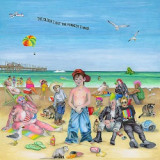
The Older I Get, the Funnier I Was, which follows Thomas’ brilliant 2020 HBO special The Golden One and his Can't Believe You're Happy Here EP released earlier this year, surveys a range of emotion and offers a broad sonic palette, moving between pop punk, electro, and the obvious influence of the singer-songwriters he grew up listening to in early childhood. It conjures the ennui of Bright Eyes alongside the barefaced storytelling of John Prine, the overstuffed lists of Fred Thomas with the lackadaisical humor of Colleen Green, among many others.
Thomas attributes the dexterity of the record to Duterte, who recorded and engineered most of it in addition to serving up plenty of encouragement when Thomas got down on the process. “As a comic, I used to test out new songs during sets to see if the funny bits were hitting, but since I wrote this in isolation I ended up writing lyrics and worrying less about making jokes,” Thomas says. That said, the album’s plenty funny. Stand-out and lead single “Rigamarole” opens with a Thomas-voiced infomercial that recalls his oft-cited lookalike Jim Carrey as the Grinch, before launching into a buoyant pop song about being depressed.
Whitmer Thomas will admit that when he traveled home to small town Gulf Shores, Alabama to record his HBO stand-up special, The Golden One, he expected to be greeted as a returning hero, a conquering king, or at minimum, a guy with a moderately successful career as an entertainer in Los Angeles. “I expected a big welcome home, open arms, but when I went back I realized: nobody fucking knows me. Nobody remembers me,” Thomas says. “In the years I’d been performing that show, I’d been romanticizing my childhood in this mythologized place, but the visit made me see that I’m not really from there anymore.”
The sense of alienation compounded when Thomas recognized how few people in town remembered his mom, to whom The Golden One is dedicated and largely about. Thomas grew up watching her perform with her twin sister at the legendary Flora-Bama Lounge, where he set the special, and still counts her as one of his musical influences. His new album, The Older I Get, the Funnier I Was, isn’t overtly about his mom, her presence is deeply felt throughout. While in Gulf Shores, Thomas discovered dozens of her old recordings, all of which had been wrecked by Katrina, but upon returning to LA, Thomas paid “a fancy place in Hollywood” to fix the tapes and hired Melina Duterte (Jay Som, Bachelor, Routine) to mix them. The two struck up a collaborative friendship, and Thomas had the sound of his mom’s voice back. “I was listening to songs she recorded when she was about my age, just these heartfelt, sweet Americana songs,” he says. “I decided then that I wanted to lose the Ian Curtis voice I always sing with; I wanted to do what came naturally, because my mom always sounded like herself, even when she was singing some cheesy reggae song about, like, Jamaica.”
Thus he went into The Older I Get, the Funnier I Was knowing it was time to retire his darkwave persona, and leaning into his natural, chirpier voice, which he says sounds “like a 12-year-old’s.” It makes sense: much of the album chronicles what Thomas calls “being a kid and feeling like you have no control and overcompensating by being annoying.” “So much of the album is about witnessing drug and alcohol addiction as a kid and seeing what it does to people, but also realizing that there's nothing you can do about it,” Thomas says. It’s familiar territory (see: “Partied to Death”) but the methodology is different this time around; true to its title, The Older I Get, the Funnier I Was isn’t always looking for laughs. Thomas might’ve left his hometown behind, but his kid self is still tagging along, a Peter Pan shadow he can’t untether himself from. The first line he sings on The Older I Get, the Funnier I Was is: “There should be a room at every party where you can just sit and watch a movie.” Find a 12-year-old who wouldn’t say the same.
- A1: Wallpaper For The Soul
- A2: 1,000 Times
- A3: The Other Side
- A4: Separate Ways
- B1: Get Yourself Together
- B2: Happy End
- B3: Fun Fair
- B4: Sould Deep
- B5: Open Book
- C1: The Train
- C2: Don't Look Below
- C3: Memories Of The Past
- C4: Don't Misunderstand
- C5: Silently Walking
- D1: Listen
- D2: Antonelli
- D3: Aftermath
- D4: Strange Thing
- D5: Better Day Will Come
- D6: In My Arms
After the worldwide success of their first album Puzzle (1999), which sold over 200,000 copies and went gold in Japan, Xavier Boyer (vocals, guitars), Pedro Resende (bass), Médéric Gontier (guitars) & Sylvain Marchand (drums) reunited with producer Andy Chase to record the follow-up, Wallpaper for the Soul, in New York City. Starting in November 2001 at Stratosphere Sound, the prolific sessions gave birth to twenty tracks, twelve of which appeared on the original tracklist. The eight outtakes were compiled on the mini albums A Piece of Sunshine (2003) & Extra Pieces of Sunshine (2004). This new vinyl edition will be the first time all these songs appear together.
Almost 20 years on, WFTS is a tour de force of contemporary songwriting with obvious nods to the past somehow revisited in a timeless fashion. Tahiti 80’s second effort can also be seen as an alternative and more sophisticated snapshot of an era often associated with the rebirth of rock (The White Stripes, The Strokes…). This set of songs also established them as stalwarts of the Post French Touch cannon, showcasing both their ability to write catchy songs and their knack for mélanges & experimentation. 1,000 Times or The Train are unique examples of blue-eyed soul augmented with French flair (« Prefab Sprout as produced by Thomas Bangalter » suggested Uncut which listed WFTS in their Top Ten’s albums of 2003). Listen to Don’t Look Below today, and ask yourself who was mixing Destiny’s Child with My Bloody Valentine in 2001? Delicate numbers like Open Book or live favorite Better Days Will Come both demonstrate T80’s songwriting skills and their innate sense of melancholia.
Listening back to WFTS today, one cannot help but think of it as an album recorded in a state-of-the-art fashion. All four members would typically perform together in the same room. Basic takes were printed on a 24-track analog tape machine and then bounced onto a computer for editing. A fine example of this method is the title track itself. Originally written on acoustic guitar, Wallpaper … is the result of three eight minutes synthesizer jams pieced together. The Frenchmen were keen to try out multitude of ideas and had developed a taste for experimentation. The sessions also coincide with a rich outburst of creativity from a band on top of their game after several months of touring around the world.
Another typical WFTS characteristic is Richard Hewson’s orchestration. Veteran string arranger, famous for arranging The Beatles’ The Long And Winding Road or writing RAH Band’s ‘80s classic Clouds Across The Moon Hewson gave the songs a sweeping orchestral touch. Strings, Horns & woodwinds were all performed at the now defunct Olympic Studios in London. Urban Soul Orchestra, a 24-piece ensemble who played on Oasis’ or Spice Girls’ hits can be heard on five songs: the opening trilogy Wallpaper…, 1,000 Times and The Other Side, then on the Northern Soul revival Soul Deep and lastly on the album’s closer Memories Of The Past.
Rouen’s most famous four-piece, now relocated in a house on France’s North West Coast, in the quiet seaside town of Étretat, added more bells & whistles and resumed production on the songs. With one last transatlantic leap during the summer of 2002, the boys flew to Portland, Oregon to attend the mixing sessions held by sound wizard Tony Lash (Elliott Smith, The Dandy Warhols…). Suggested by Sub Pop’s craftsman Eric Matthews, also a guest on trumpet and keyboards, Lash would later become a major collaborator on Tahiti 80’s subsequent albums.
In the meantime, Laurent Fétis, the designer behind Puzzle’s iconic artwork, had started working with artist Elisabeth Arkhipoff on a set of nostalgic photographs transfigured with a soft air-bush technique. Those visuals, like their predecessors, have since become an inseparable companion to Tahiti 80’s music.
Many musical fashions and flavors of the month have come and gone, but twenty years after its release, WFTS still sounds fresh and relevant. And always forward-looking, Tahiti 80 is currently wrapping up the recording of their eighth album, to be released in early 2022.
Pixey grew up in the sleepy but picturesque village Parbold, Lancashire before moving to Liverpool for school and remaining there to this day. Now signed to Chess Club - a label famed for breaking new talent, where recent exciting signings include AlfieTempleman and Phoebe Green, and past successes include Jungle, Wolf Alice and Easy Life - Pixey is making more waves than ever before. ‘Just Move’ drew attention from BBC Radio 1 DJs Jack Saunders (who made Pixey one of his Next Wave artists) and Huw Stephens amongst many other admirers like Radio X’s John Kennedy who added the band to the X-Posure playlist at the station in October. Pixey has also featured as the cover artist of Spotify’s Indie Brandneu (GER) and Peach editorial playlists, and wasamongst the artists named in major annual tips lists, the Dork HYPE List and the NME 100.
New single ‘Electric Dream’ - with its accompanying video by Thomas Davies - combines cavernous drum machines and dreamy pop melodies with a signature dance stomp. Speaking about new single, Pixey explains: “‘Electric Dream’ was originally written as a piano ballad but after finishing the lyrics I felt the song worked as a dance track. I wrote it to make sense ofbeing locked in with nothing to rely on but technology. The verses are all of my anxieties that come with that - like trying to simulate humanity digitally and what kind of a future that would be - but the choruses are about the imperfections of real life that technology and AI can’t give us.”
Debut EP Free To Live In Colour was written, recorded and produced in Pixey’s bedroom in Liverpool - with additional production added by frequent Gorillaz and Jamie T collaborator James Dring - and draws inspiration from genres like hardcore breakbeat and
dream pop. Pixey says: “I wanted a collection of tracks which gave a quick snapshot into me and my brain - where I’m from, where I want to be and what I’m thinking about. I hope people can take something meaningful from it or simply have a dance.”
Pixey first discovered music as a toddler - she remembers not even being able to walk yet but desperate to sing and dance to Queen - before discovering the likes of Kate Bush, Björk, and George Harrison, whose classic songwriting struck a chord with her in her youth. The catalyst for Pixey’s musical coming of age however, was a near fatal viral illness suffered in early 2016 which hospitalised her, she says: “When I thought I was going to die I thought of all the things I wish I’d done and music was the first thing I thought of. As soon as I started recovering I started learning to record and produce.” She taught herself Ableton production software before mastering guitar and eventually drums and bass after her previous (and current) boyfriend(s) left their instruments lying around to prove she could learn it quicker and play it better.
Once able to carve out her own sound, Pixey turned to The Verve, The Prodigy and De La Soul for sonic inspiration, adding: “I particularly like the idea of using samples/making my own riffs sound like samples which was heavily inspired by the De La Soul album 3 Feet High and Rising. Starting out initially though Grimes was a huge catalyst when I realized she wrote, recorded &produced herself.” Her prolific and unusual songwriting style stems from an original riff or beat, with further layers added as she records and produces, and lyrics being added last - the process taking only a day or two.
With Free To Live In Colour and a whole arsenal of further material being readied on her new label home, Chess Club, Pixey is primed for big things in 2021 and beyond.
Very nice compilation on this artists work - on the ever excellent Born Bad imprint!
.
For many decades until quite recently, little was known about music from Burkina Faso (which was formerly known as the Upper Volta). It is still one of the lesser known forms of popular music from West Africa. A few years before the country changed its name to Burkina Faso, thanks to Thomas Sankara's dream of a new society, Voltaic music emerged as some kind of true cultural revolution in the wake of the country's independence in 1960. Remote, poor and isolated, Upper Volta musicians coveted the orchestras and artists from abroad while creating a music of their own, based on rich cultural traditions
Popular music that sprung up from Burkina Faso owed much to the music from neighboring countries like Mali, Ghana, Ivory Coast or Benin, and to the longing for cultural authenticity' conveyed through Guinean music. In capital city Ouagadougou, as well as in Bobo-Dioulasso (Burkina's cultural capital until the 1980s), the first two decades of independence saw the upcoming of such orchestras and artists as Amadou Balaké, Georges Ouedraogo, Volta Jazz, l'Harmonie Voltaïque, Les Imbattables Léopards, Abdoulaye Cissé, Tidiane Coulibaly or Pierre Sandwidi.
Nicknamed the troubadour from the bush', Pierre Sandwidi stands as one of the finest Voltaic artists from the 1970s. He belonged to an unsung elite of Francophone artists such as Francis Bebey, G.G. Vickey, Amédée Pierre, André-Marie Tala, Pierre Tchana or Mamo Lagbema. His entire released output consists of less than ten 7 inches, two LPs and a bunch of cassettes. A man from the provinces, he always favored social engagement and carefully crafted lyrics over instant fame. His words and music challenged General Lamizana's dreary presidency, which ruled the country from 1966 to 1980.
- 1