
pre-order now01 May
expected to be published on 01 May
25,63 €
expected to be published on 01 May

The Second release in a series of 12' records from Scott Ferguson. House Tracks that were recorded in Detroit during the Late 90's early/realy 2000. Previously Unreleaseduntil now.
Available to reorder, subject to availability

The EP in series offering up late 90's early 2000 previsously unreleased deep house tracks from SF
Available to reorder, subject to availability

Pet Shop Boys will also play a four-date residency entitled Inner Sanctum, at London's Royal Opera House on July 20th, 21st, 22nd & 23rd. Staged by designer Es Devlin and choreographer Lynne Page, these will be Pet Shop Boys only UK concerts this year.
Available to reorder, subject to availability

For Louis Johnstone, making music has never been about waiting for the right equipment, the right environment or the right moment. Across more than a decade of work as both Wanda Group and A Large Sheet Of Muscle, the Huddersfield-based musician has built one of British experimental music's most singular bodies of work by embracing whatever happens to be within reach, allowing instinct, improvisation and circumstance to shape the outcome as much as conscious composition.
"'Chinese Benefits' was made over a year ago on an iPhone that had a broken microphone and was on its way out," he explains. "I have made many records after this with clearer sounds. Sharper ideas. That is never the point, though. You work with what you hold in your hands."
Recorded entirely on a failing iPhone 6 that stopped working shortly afterwards, 'Chinese Benefits' isn't a record about damaged technology. It is a record shaped by it. Rather than resisting the limitations of the device, Johnstone allows them to become part of the music itself, where distortion, interference and deteriorating fidelity are inseparable from the recording process.
Across twenty brief but disquieting pieces, corroded spoken word, environmental recordings, abrasive noise and fractured electronics continually emerge and dissolve. Voices drift in and out of range, reverberation stretches everyday sounds beyond recognition, and bursts of white noise interrupt moments of uneasy calm. There are echoes of radio transmissions, field recordings and musique concrète throughout, yet 'Chinese Benefits' never settles comfortably into any one tradition. Instead, it inhabits a space where accident and intention become almost impossible to separate.
That philosophy has long defined Johnstone's work. Through a vast catalogue of self-released recordings on his Umbro G imprint, alongside releases for labels including The Trilogy Tapes, he has consistently favoured immediacy over refinement, embracing imperfection not as an aesthetic but as a practical reality. His recordings are less concerned with perfection than with capturing the conditions in which they were made.
Looking back on 'Chinese Benefits', however, Johnstone's own assessment is characteristically understated.
"Listening back fully, it's quite a nice record actually. Fair enough, I make them and never really listen again TBH. Even better, it was the last Large Sheet Of Muscle record made on that phone with grit and damaged guts."
Like much of his work, 'Chinese Benefits' offers few fixed meanings. Its titles remain cryptic, its voices partially obscured and its structures deliberately unstable. What emerges instead is a deeply personal document of process over perfection, where the limitations of the tools become inseparable from the music they produce, and where the act of making something matters far more than the conditions in which it was made.
expected to be published on 16 Oct

Joe Fujinoki centered the compositions of his latest album Glass Torso round the idea of the fragility of the human body. Fujinoki described the narrative thread of the album as that of “holding the shape of a human body as if it might shatter like glass”. The precariousness of the body, the essence of the body as defined by Fujinoki as the torso, and the object relations between the boundaries of dialectical exercises pack themselves into his creative process.
Fujinoki recorded Glass Torso exclusively with analog synthesizers, stumbling in and out of structural loops to find space for accidental discoveries. The ten pieces of recorded material feel somewhere on the edge of typified form, feeling like a vascular system pumping in and out its undulating liquidities. Maybe this is the hollowed space held together by Fujinoki’s notion of the torso where you hear a microscopic world, dubby and generative. Fujinoki is adept at organizing this realm of subtle sound sources, giving proper considerations of shared tonal space. Seemingly, this handling of the precarity of sonic material elucidates Fujinoki’s mature attention to detail.
Ambient music genre tropes often affirm the listeners vessel for escape and dissociation. It provides an intoxicating allure by respite from an overwhelming exterior reality far outside the listeners controls. Here this space becomes apolitical, or its protest vocabulary softer and subtle. Fujinoki does not aim to tackle hyperobject topics on how to course correct the world, but he does something increasingly rarer to come across. On Glass Torso an alternative space is created not as shelter, but as a meditation on negotiation and compromise. This twenty eight minutes of audio lays down a foundation for imagination, for imagining how to negotiate the fragility of the self. Zoomed out, the implications of his negotiative sonics can be a playground for broader reflections on distributive care and attention.
Fujinoki says he feels “alert” to his physicality and placement in the world amidst vast digital cultures creating impositions on him and his surroundings. On Glass Torso he creates a concretized space on a vinyl record, where the virtual and the tangible antagonize one another that create the spectacle of the listening experience. This spectacle is a soft one, a considered one, and an utmost enjoyable one. Fujinoki juggles opposing forces brilliantly, and formulates an exquisite palette of soft passing music so he can also help the listener with the exquisite burden of their own Glass Torso.”
- Nick Klein, January 2026
expected to be published on 19 Oct

After almost twenty years of releasing music, Sven Tasnadi finds himself circling back to some of the sounds that first drew him into house music. Explorer was written at home following a longer break from producing and after moving out of his studio, a change of setting that coincided with a shift in priorities. "The tracks on this EP came together at home after a longer break from music and after I moved out of my studio," he explains. "Musically they are very deep and minimal, at times almost meditative. They were inspired by a new chapter in my life as well as my never-ending love and connection to artists like Lawrence from Smallville and Frank & Tony from Scissor and Thread."
That sense of returning to something runs through the whole record. For much of Tasnadi's career, producing and DJing were closely connected, with many releases naturally shaped by the club. Things have changed. "DJing is no longer my main focus, so I can dedicate myself to these deep and minimal sounds again, free from pressure or expectations," he says. "In a way, after almost twenty years of releasing music, things have come full circle for me."
"Atlas (Chapter 1)" and "Atlas (Chapter 2)" grew from the same initial idea but followed separate paths during production. Chapter 2 came first, while Chapter 1 emerged later from a variation Tasnadi discovered while the track was still essentially a loop. "I was still looking for the right theme for the original idea when another version suddenly opened up," he recalls. He saved that variation for later so he could stay focused on the first version. When he returned to it, the two had developed distinct enough identities to stand independently. Their shared DNA is still audible in the restrained rhythms, slowly shifting details and the way small changes carry much of the movement.
The title track moves further into dub techno, another longstanding passion for Tasnadi. "Explorer is almost a classic dub techno track," he says. "Subtle movements within a constantly repeating pattern create a particular atmosphere. It feels like the track could just keep going forever." It is a patient approach to repetition that he connects to artists such as Moritz von Oswald and his friend Daniel Stefanik.
"Megasektor", one of the first tracks Tasnadi made at home with a new equipment setup, brings the EP into deep house territory. "To me it's almost classic deep house, or at least how I define deep house for myself." Warm, compact and gently propulsive, it provides a natural closing point for a record that is ultimately less about changing direction than reconnecting with an instinct that has always been there.
Explorer captures Tasnadi at a point where making music has become more personal again. The four tracks come from following ideas for their own sake and from rediscovering the deeper, more minimal sounds that have stayed with him throughout his career.
expected to be published on 23 Oct

For two decades, The Oscillation has occupied its own space within the psychedelic underground, continually reshaping a sound built as much from texture, repetition and atmosphere as it is from conventional songcraft. On 'Interference', released October 30th 2026 via Fuzz Club, Demian Castellanos pushes that approach further than ever, creating what he describes as "a painting of sound rather than music”. It’s an album where noise and melody constantly collide, dissolve and reform into something strangely beautiful: “I wanted it to be accessible but also quite extreme, a sort of beautiful noise. I did my best to push out the parameters whilst trying not to allow it to disintegrate into something with no meaning or focus.” Chasing an elusive balance between accessibility and abstraction, the result is a record that feels simultaneously immediate and disorientating: dense layers of drones, feedback and motorik rhythms give way to unexpected moments of warmth, colour and even uplifting euphoria. Across its runtime, chaos never overwhelms; instead it becomes another instrument, carefully sculpted into hypnotic, immersive compositions. Much of the album emerged through instinct rather than intention. Fragments originally conceived as intros, outros or abandoned ideas gradually eclipsed the songs they belonged to, with tracks revealing themselves organically through a process Castellanos likens to "playing Chinese whispers with musical instruments." Elsewhere, two long-forgotten compositions – ‘Stasis’ and ‘When You Close Your Eyes’ – finally found their place after lying unfinished for almost twenty years. Recorded and mixed by Castellanos at his home studio in the Czech Republic, ‘Interference’ also benefits from a key collaboration with Lorena Quintanilla of Mexican band Lorelle Meets The Obsolete, who provides a transformative presence. Her haunting vocal on ‘La Alusion’ (which she also wrote the lyrics and melody for) became the breakthrough moment that crystallised the album, turning an instrumental sketch into a dreamlike centrepiece and helping shape the final sequence. She also lends her voice to ‘Isolation Freeway’, adding another layer of mystery to an album that continually blurs the line between structure and dissolution. Perhaps most remarkably, ‘Interference’ was created during a period in which Castellanos had largely stopped listening to music altogether: “My hi-fi broke a couple of years ago so I kind of wanted to see what would happen if I didn’t listen to too much music.” Instead of consciously absorbing outside influences, he trusted instinct, memory and experimentation to guide the process. The result is one of The Oscillation's most adventurous and emotionally resonant records to date: a vivid collision of hypnotic repetition, spectral beauty and controlled sonic disruption that confirms Castellanos remains one of modern psychedelia's most singular voices.
expected to be published on 30 Oct

Twenty-five years after its original release, Markus Guentner's debut album In Moll returns in a special anniversary reissue on Black Knoll Editions, reaffirming its place as one of the defining ambient recordings of the early 21st century.
Released in 2001 during the formative years of Kompakt's influential Pop Ambient series, In Moll emerged from a period of rapid transformation in electronic music. New technologies, expanding digital networks, and shifting creative possibilities allowed artists to imagine entirely new sonic worlds. Amid this fertile landscape, Guentner's music stood apart. Combining delicate melodic fragments, slow-moving harmonies, and a remarkable sense of spatial depth, In Moll introduced a distinct artistic voice whose impact can still be felt a quarter-century later.
The album arrived shortly after Guentner's contributions to the inaugural Pop Ambient compilation, including the now-beloved "Regensburg 1," named after his Bavarian hometown. Those early recordings immediately captured the attention of Kompakt founders Michael Mayer and Wolfgang Voigt. Recalling his first encounter with the music, Mayer describes listening to a demo CDR with Voigt while wandering through Cologne late into the night, replaying the tracks for hours. "We knew that we had found something outrageously beautiful and we wanted the whole world to listen."
Across its running time, In Moll unfolds like a series of dreamlike landscapes, inviting the listener into a world that feels both familiar and strangely other. Bells, hisses, distant textures, and slow-moving bass tones drift through vast expanses of atmosphere while luminous synthesizer washes seem to blur the horizon in a fine digital mist. The album's transportive qualities are matched by a remarkable sense of compositional discipline. Every gesture feels deliberate, every texture carefully placed. Balancing warmth and melancholy with restraint, Guentner created a body of work that rewards both close listening and complete surrender.
Reflecting on the album twenty-five years later, Wolfgang Voigt describes Guentner as "one of the first, but also one of the most important ambient artists" associated with Kompakt, calling his music "an integral, timeless part of the long history of pop ambient." Music critic and former Pitchfork Editor-in-Chief Mark Richardson, who reviewed In Moll upon its original release, similarly noted that the album "marked the arrival of an important new voice," and today regards it as "one of the finest ambient releases of the decade."
The album's influence continues to extend far beyond its original audience. For many listeners, In Moll served as an entry point into a new understanding of what ambient music could be. Black Knoll boss Rafael Anton Irisarri first encountered the album shortly after its release in 2001. "It immediately opened a door to a world of music I didn't know existed," he recalls. "At a time when I was still discovering my own creative voice, Markus showed me entirely new possibilities for what electronic music could communicate." Simply put, "The Sight Below would not have existed without In Moll paving the way."
Far from a historical curiosity, In Moll continues to feel strikingly contemporary. What once sounded futuristic now feels timeless, its patient pacing, attention to detail, and sense of wonder remaining entirely intact. The album's enduring power lies not only in its influence, but in the curiosity it continues to inspire, inviting listeners to step inside its world and lose themselves within it.
To mark its twenty-fifth anniversary, Black Knoll Editions presents the most complete edition of In Moll to date. Newly remastered in full analog by Rafael Anton Irisarri, this expanded release pairs the original album with a newly reworked interpretation by Markus Guentner himself, revisiting the material through the lens of twenty-five years of artistic development. The anniversary edition also features a new visual presentation designed by Guentner, offering a visual counterpart to the album's continued evolution. Together, these recordings and visuals celebrate both the enduring legacy of In Moll and its ability to reveal new dimensions twenty-five years later.
This 25th Anniversary Edition on Black Knoll Editions celebrates a recording whose quiet impact has only grown with time, preserving a work that remains as evocative, singular, and essential today as it was in 2001.
expected to be published on 06 Nov

Twenty-five years after its original release, Markus Guentner's debut album In Moll returns in a special anniversary reissue on Black Knoll Editions, reaffirming its place as one of the defining ambient recordings of the early 21st century.
Released in 2001 during the formative years of Kompakt's influential Pop Ambient series, In Moll emerged from a period of rapid transformation in electronic music. New technologies, expanding digital networks, and shifting creative possibilities allowed artists to imagine entirely new sonic worlds. Amid this fertile landscape, Guentner's music stood apart. Combining delicate melodic fragments, slow-moving harmonies, and a remarkable sense of spatial depth, In Moll introduced a distinct artistic voice whose impact can still be felt a quarter-century later.
The album arrived shortly after Guentner's contributions to the inaugural Pop Ambient compilation, including the now-beloved "Regensburg 1," named after his Bavarian hometown. Those early recordings immediately captured the attention of Kompakt founders Michael Mayer and Wolfgang Voigt. Recalling his first encounter with the music, Mayer describes listening to a demo CDR with Voigt while wandering through Cologne late into the night, replaying the tracks for hours. "We knew that we had found something outrageously beautiful and we wanted the whole world to listen."
Across its running time, In Moll unfolds like a series of dreamlike landscapes, inviting the listener into a world that feels both familiar and strangely other. Bells, hisses, distant textures, and slow-moving bass tones drift through vast expanses of atmosphere while luminous synthesizer washes seem to blur the horizon in a fine digital mist. The album's transportive qualities are matched by a remarkable sense of compositional discipline. Every gesture feels deliberate, every texture carefully placed. Balancing warmth and melancholy with restraint, Guentner created a body of work that rewards both close listening and complete surrender.
Reflecting on the album twenty-five years later, Wolfgang Voigt describes Guentner as "one of the first, but also one of the most important ambient artists" associated with Kompakt, calling his music "an integral, timeless part of the long history of pop ambient." Music critic and former Pitchfork Editor-in-Chief Mark Richardson, who reviewed In Moll upon its original release, similarly noted that the album "marked the arrival of an important new voice," and today regards it as "one of the finest ambient releases of the decade."
The album's influence continues to extend far beyond its original audience. For many listeners, In Moll served as an entry point into a new understanding of what ambient music could be. Black Knoll boss Rafael Anton Irisarri first encountered the album shortly after its release in 2001. "It immediately opened a door to a world of music I didn't know existed," he recalls. "At a time when I was still discovering my own creative voice, Markus showed me entirely new possibilities for what electronic music could communicate." Simply put, "The Sight Below would not have existed without In Moll paving the way."
Far from a historical curiosity, In Moll continues to feel strikingly contemporary. What once sounded futuristic now feels timeless, its patient pacing, attention to detail, and sense of wonder remaining entirely intact. The album's enduring power lies not only in its influence, but in the curiosity it continues to inspire, inviting listeners to step inside its world and lose themselves within it.
To mark its twenty-fifth anniversary, Black Knoll Editions presents the most complete edition of In Moll to date. Newly remastered in full analog by Rafael Anton Irisarri, this expanded release pairs the original album with a newly reworked interpretation by Markus Guentner himself, revisiting the material through the lens of twenty-five years of artistic development. The anniversary edition also features a new visual presentation designed by Guentner, offering a visual counterpart to the album's continued evolution. Together, these recordings and visuals celebrate both the enduring legacy of In Moll and its ability to reveal new dimensions twenty-five years later.
This 25th Anniversary Edition on Black Knoll Editions celebrates a recording whose quiet impact has only grown with time, preserving a work that remains as evocative, singular, and essential today as it was in 2001.
expected to be published on 06 Nov

Daybreakers reaches a milestone with DBR010, and it felt right to mark the occasion with something truly special.
Fred Everything is one of those producers whose influence runs deep. From his early releases on 20:20 Vision through to decades of essential records on Lazy Days and beyond, the Montreal based producer has quietly become one of the most respected names in deep house. A producer's producer, a DJ's DJ, and someone whose records seem to reveal a little more with every listen.
The story behind this release starts in Hackney. A few beers at the BBE Store, a conversation about old DAT tapes and eventually enough persuasion to get Fred digging through his archives. What came back was pure gold: three previously unheard tracks recorded between 1998 and 2004, sitting untouched for over twenty years.
There's something special about hearing these recordings now. Made during a period that saw Fred establish himself as one of deep house's leading voices, they capture that unmistakable blend of musicality, groove and craftsmanship that made his records stand out in the first place. This isn't nostalgia or a history lesson. These tracks still sound fresh, still sound relevant, and most importantly, still sound like they belong on a dancefloor.
Three lost gems, finally seeing the light of day.
Deeper than deep house.
Buy or cry.
Ready to ship

25th Anniversary Black Vinyl Repress.
Before he was Caribou, Dan Snaith was a 20-something student in a "crappy" Toronto bedroom, recording music on a beat-up computer that used to strain under the weight of digital recording.
Start Breaking My Heart was Snaith's 2001 debut, originally released under the name Manitoba. Twenty-five years on, it still sounds like an artist finding his voice in real time - rainbow melody, hopscotch percussion, and playground laughter stitched into warm, tactile electronic pop.
Reflecting on the record, Snaith said it was the first time something clicked - he'd been making music since his early teens, but this was when he first felt he understood what he wanted his tracks to be. That moment coincided with the chance encounter that changed everything: he met Kieran Hebden (Four Tet) at a UK festival, who helped Dan get this album released - the start of a career that has spanned a quarter century and many albums since.
expected to be published on 20 Nov
Ruf Kutz reaches release twenty-two with something close to heart...
Mike Kee is a face from the early days - red-lit rooms of the Bodega mushroom squat parties in Sydney. This is a second release for Mike Kee on Ruf Kutz since 'Seeing Crystals' on RK2 in 2010.
Recorded in the rainforests of Bundjalung Country (northern NSW, Australia). Making good use of a Fender Rhodes and a JX-8P synthesiser.
WHITE CLOUD PLACE is a destination that doesn't exist. Glimpsed once on a street sign, filed away in the imagination and allowed to bloom into an imagined geography of warmth and weightlessness.
The music is lush dream house that elicits euphoria out of the speakers and into the body. Mike Kee has been chasing this feeling across his music and here it lands cleanly.
Flip the record and the temperature ratchets up. BANANA MOON is one for the dancers - shuffling congas push the pace while Rhodes chords and those big analog synth strings hold the whole thing aloft.
Where the A-side invites you to float, Banana Moon keeps it pitched up and jazzy.
Ready to ship
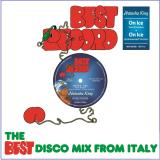
"This majestic Italo-Disco tune, arranged by Pierluigi Giombini, possesses something magical and mysterious. "On Ice" begins with Natasha King's a cappella vocals and a sweet piano melody by the same composer who wrote "Masterpiece" and "I Like Chopin" for Gazebo. A classic Italo-Disco piece from the mid-1980s, which, more than its sales, achieved success in live performances and on TV shows for the grace and charm exuded by the artist, who was also a dance teacher at the time. The elegance and precision of every move are the foundation upon which Natasha builds her technique. The reissue of "On Ice" was never fully embraced by lyricist Natascia ''Nati'' Maimone, straying from her tastes in soul, blues and jazz. It was also overshadowed by her previous hip-hop track, "AM-FM" - released from Best Record in 1983 - which made the artist world-famous at the age of twenty. This reissue in both original versions was also created to allow new generations to relive, at least in part, the great musical era of the 1980s, a period of incredible musical richness combined with a carefree spirit."
Ready to ship

As Nathan Fake rises from the nocturnal subterranea and rave catharsis of his previous records, on Evaporator, he resurfaces into the domain of daylight, bringing a tangible sense of air rushing against your face, of big skies, and endless landscapes. The idea of pop accessibility that trickled into 2023’s Crystal Vision is refracted here through the prism of sweeping ambient, deep electronica, and trance uplift. Evaporator is Fake’s idea of “airy daytime music”, with each track a different barometer reading across the album’s varying atmospheres, which range from vibrant sunbursts, bracing rainscapes, and fine mists of clement melodics. “It’s not overtly confrontational electronic club music,” states Fake. “It’s quite pleasant, it’s accessible. As I was progressing through making the tracklist, I called it a daytime album. It doesn’t feel like an afterparty album.” For the past decade Fake has been gingerly introducing collaborations with heroes and friends alike into his lone, idiosyncratic working process. Border Community alumni Dextro AKA Ewan Mackenzie transmutes his ferocious drumming for Pigs Pigs Pigs Pigs Pigs Pigs Pigs into the blurred choral thump of ‘Baltasound’. ‘Orbiting Meadows’, meanwhile, is his second collaboration with Clark, an eerily idyllic duet where microtonal 18EDO piano clangs slowly twirl around wailing pads. Evaporator marks the junction point of old technology and ever fresh creativity for Nathan. The trusty “dinosaur” age software, particularly Cubase VST5, that has powered two decades of music is rarely updated. “I used to sort of feel a bit ashamed of using such old software, and then I kind of had an epiphany – that’s just how I work”, comments Fake. “That’s just how I play. I’m very fond of these old tools, and I get the most joy out of them, but now I’ve incorporated new technology too.” When an artist accumulates so much synergy with their instrument, music making becomes instinctual. By Fake’s account, much of Evaporator just fell into place. The album title arrived randomly in his head (“it felt completely perfect. Airy.”), ideas looped and developed until things locked into place and just felt right. ‘The Ice House’ is a fleeting glimpse of the sonic world he taps into in this creative state, its glassy FM synths built around a counterpoint between rough-hewn crystalline arpeggios and sparse yet gravitas-bearing bass. “That riff I just wrote out on the keyboard, I just played it forever and ever and ever. The original track ended up being really short. Here you go, and it’s gone!” These unplanned channellings of sound call forth records from Fake’s past while he looks ahead, perhaps getting at the very essence of his musicianship. The opener ‘Aiwa’ (“the breeziest,” he muses) reminds of the introspection that characterised Providence, excited by the fire and grit of Steam Days’ textural experiments, its chunky slams and clatters surging into a flood of harmonic buzzing as they reach out for old wisdom. ‘Hypercube’ stampedes in a similar chronological confluence, infusing an incessant synth line reminiscent of the golden age of rave with the crackling, ecstatic energy of modern festival anthems. Like the vaporisation of liquid to particles, everything that Evaporator presents has a mutant desire to be amorphous. Sounds rarely settle; the irradiated garage beat of ‘Bialystok’ is pitched downwards to driving, rebounding effect, while ‘You’ll Find a Way’ warps static into shivering energy, cinematic synth strings building anticipation into a gradual gush of chords. This translates into a more expansive stereo field than Fake has explored before. ‘Slow Yamaha’ saves the wildest, most kinetic transformations for last with a cornucopia of crispy melodies and fried drums; a sibilance of cymbals on the left, a susurrus of shakers on the right, and kaleidoscopic lasers pulsing and fizzing all around. Evaporation culminating in pure excited atoms. In a world where music has increasingly become background content, making albums remains lifeblood for Fake: “It makes me realise how long; twenty years is ages! It’s weird to see how much the world has changed. Release day back then you did fuck all, now you spend all day on socials. When I grew up the people who made the electronic music I was into were quite mysterious, and the artwork was very abstract. There was a massive distance between you and that music, and that was a key part of it, really. Now it helps to be an extrovert, and I'm just not, but the album marks the first time my face has graced the cover art. I’ve never wanted to do this before, I'm very shy, and generally I don’t like being seen,” he professes. “But, twenty years in, I supposed I could try something new. I'm very lucky that I'm somehow surviving in this world, where the media world favours extroverts and interesting looking people. It’s not my world but somehow I’m still in it.” Evaporator continues to prove Nathan’s necessary presence, with some of his most engaging, varied, and magical music yet.
Ready to ship

“The high priest of country cool” - Rolling Stone
“I like him very much. He’s very special. He’s singing with a voice I never heard before” - Townes Van Zandt
“A conscious, soulful brother” - Horace Andy
“He’s a brother to me - one of the best singer/songwriters I’ve ever met” - Adrian Sherwood
“Unearthed mine of gems from inner Wales - a songbook of ideas - that's Jeb!” - Gilles Peterson
Jeb Loy Nichols is a bonafide Country (Got) Soul legend. The Music Maker presents 21 incredibly deep, grooving and soulful songs from the cream of Jeb's catalogue; from its earliest days to his latest unreleased gems via countless rare and unbelievably good lost-classics. This 2LP set is presented in a gatefold sleeve complete with freshly commissioned artwork courtesy of Jeb himself.
In collecting these uncut, under-heard gems, we hope to do justice to Jeb's jaw-dropping artistic brilliance. A man who, in working with Adrian Sherwood, Dennis Bovell, Dan Penn, Larry Jon Wilson and countless other legendary characters, has crafted some of the most deeply affecting folk, country, soul, funk, blues, dub, reggae, gospel, rap and electronic music, ever heard.
The first music Jeb really felt a connection with was southern soul: "I used to listen to the radio at night and fell in love with Bobby Womack and Al Green, The Staple Singers and Joe Simon – that whole Nashville/Memphis/Muscle Shoals thing.” But Jeb was so much more than a soul boy, Indeed, he "went to bluegrass festivals with my dad and come home and listened to jazz records with my mother.” And, when he was fifteen, he heard his first punk record: "God Save The Queen" by The Sex Pistols. “That and The Ramones completely changed me.” In 1979 he got a scholarship to go to art school in New York: “A great time. Punk was over but hip-hop was starting and I got into that in an obsessive way.”
His first recording, in 1980, was an unreleased rap song called "I’m A Country Boy". If that isn't an insight enough into Jeb's kaleidoscopic path through music, in 1981 he visited friends in London and found himself living in a squat with Adrian Sherwood, Ari Up (from the Slits), and Neneh Cherry. “Adrian put me to work immediately, moving boxes of records all across London. It was Adrian that was and is my biggest influence – in his complete disregard for genre purity.” So, presumably you're getting the picture? A veritable musical magpie with a voracious appetite and unimpeachable taste.
"Mine has always been a meandering career. I've done what I've done, and made the music I've made, due to chance meetings. I'm not particularly ambitious; it's more important to me that I work with friends and like-minded people. I've been a big fan of Be With for years. Everything they release is essential. When they asked about rereleasing "Countrymusicdisco45" I was both pleased and flattered. We began talking about how we'd do it; two years and twenty-one tracks later, here we are. I've always thought of the music I make as Country Music. Music conceived in the country, written in the country, recorded in the country. I left London and moved back to the country so I could live among the trees, the grasses, the animals, those things that don't go to war and get greedy. This compilation is the story of that life. Hand made, lo-fi, ramshackle, stripped down, real deal music. Heartworn and funky. Music made in the kitchen, not in the studio. As the great Skip Mcdonald said, Perfect ain't perfect. It's great to see all these tracks gathered together. It feels like a family reunion. Some older members of the tribe, some newer arrivals."
Opener "countrymusicdisco45" is a song Jeb wrote about how his crew lives, tucked up blissfully in the hills: "House parties full of country folk dancing to disco, reggae, soul, country, hip-hop. All night. I recorded it at home under the influence of Stevie Wonder." It's one of the funkiest records you'll ever hear. "Sometimes Shooting Stars" was recorded in Nashville and mixed by the legendary Dennis Bovell. It's deep, dubby, majestic. A thing of fragile, melodic beauty. The party ramps back up again with the undeniable groove of "Short Cut Home" before the profoundly moving "Disappointment" arrives. One of many songs he's recorded with good buddy Benedic Lamdin (aka Nostalgia 77): "We were going for a Leon Thomas meets Richard Brautigan meets Alice Coltrane kind of thing". We think they nailed it. "Days Are Mighty", like a lot of the tracks on this collection, "started life as a demo, an attempt to get something down while it was fresh. No frills, nothing fancy, just feel." And what feels!
The irrepressibly funky "Don't Dance With Me Tonight" is a deeply moving, slow-mo organ-drenched head-nod-funky country-ballad. Next up, the breezy "You Got It Wrong" was recorded in Wales with some of Jeb's good friends and neighbours, The Westwood All Stars, featuring Clovis Phillips and Will Barnes. Skanking fiddle-flecked gem "Ring The Bells" was the first thing Jeb recorded when he moved to Wales. A combination of all his loves; country, reggae, soul. It's followed by "Let's Make It Up", a truly sumptuous string-drenched emotional groover. "When Did You Stop Loving Me" is another Nashville track, written and recorded during a time Jeb was spending a lot of time with the Muscle Shoals crew, Donnie Fritts, Spooner Oldham, George Soule and Dan Penn: "It shows, I'm sure, their influence." Oh, you bet it does!
The swaggering country-funk of "Just Beginning" should grace many groove-focused DJs' sets whilst "Wintering Of The Year", again made with Clovis, is pastoral, campfire soul. The glacial, gorgeous "Let It Rain" is from an unreleased record Jeb made with the great British jazz bass player Andy Hamill and "We Tell Each Other Who We Are" is freaky country-soul made by a man with a love for strutting, wonky hip-hop stylings. Rounding out the side, "Trip To You" is pure, uncut amphetamine-propelled drum-machine soul.
The spare, beautiful "Dirt" is from an EP Jeb made with Julian Moore in his house in South London: "All first takes, straight to tape." Swoon! "Heaven Right Here" was a very minor league hit in America: "It was produced by the brilliant and much missed Wayne Nunes. It was started in the countryside of Missouri, finished in the countryside of Wales, and recorded in the countryside of Sussex." Double swoon! "If Later Ever Comes" is electronica meets J.J. Cale business whilst "Remember The Season" is truly wonderful and breezy guitar soul. "A Little Love" was made with Wayne Nunes as well, after a night of listening to Studio One and Northern Soul. Bouncy dub closer "Weary Traveller" was written by Bill Monroe, the hero of Jeb's youth: "Monroe's music was heavily influenced by black southern churches; I've tried to keep some of that feral feel." This was the final recording by Jeb's 1990s Country-Dub band, Fellow Travellers.
The name of this compilation comes from a time when Jeb lived in Peckham, south London and he used to DJ and sometimes perform at a local bar: "The owner of the bar, a Jamaican named Count Percy, once asked me what I called my music. I told him I wasn't sure, I guess just pop music. He thought about it for a minute and then said, 'no, more like mom and pop music'. Rather than call me a country singer or a folk singer he always referred to me as The Music Maker."
With the long overdue deluxe overview of his beloved music, we hope to finally shine a light on the unheralded genius of Jeb Loy Nichols. RIYL Larry Jon Wilson, Townes Van Zandt, Bobby Charles, country got soul artists, dub, deep soul, disco, dancing, heartbreak. This deluxe collection, spellbinding from beginning to end, should hopefully go some way to ensuring Jeb reaches an ever bigger, ever more appreciative crowd of followers. Mastering for this special double vinyl edition was overseen by Be With regular Simon Francis and it was cut by the esteemed Cicely Balston at Abbey Road Studios to be pressed in the Netherlands by Record Industry. The artwork has been lovingly put together by The Music Maker, himself, Jeb Loy Nichols. "Be With is the perfect home for this mongrel music. I am forever in their debt." The pleasure is all ours, Jeb.
Ready to ship

Planning For Burial is the solo project of Thom Wasluck, emerging from Wilkes-Barre, Pennsylvania. It’s Closeness, It’s Easy is the long-awaited follow-up to 2017’s Below The House. If Below The House was about returning home, following in the footsteps of one’s father and joining a union, and leaving behind youth’s wild days, It’s Closeness, It’s Easy embraces what comes next—the weight of all years, the quiet shifts, the reckoning with what remains. This record is many things. It captures the slow drift of time, the unnoticed shifts in a loved one—the creeping changes in mental health, the quiet pull of addiction, the kind of grief that settles in the bones rather than announces itself.
At its core, It’s Closeness, It’s Easy is about stepping into middle age and taking stock. It confronts the reality of living with the hand that’s been dealt and searching for meaning in what remains. It speaks to loss—the crushing weight of saying goodbye to a beloved 17-year old cat, the slow-motion grief of watching friends self-destruct, the inescapable passage of time as it bears down on aging parents and the self. But it also reflects the warmth of reconnection, the kind of love that never burns out but instead deepens. The feeling of picking up where things left off, untouched by the years in between.
While written over the course of two years, the recording process reflects a sense of immediacy. Rather than assembling songs piece by piece over time, the album took shape in singular, immersive sessions—less an act of construction, more an unveiling of something already waiting to take shape.
Rooted in a staunch DIY ethos, Wasluck handles every aspect of Planning For Burial project himself—recording the music, designing the artwork, and performing live as a one-man band. He books his own tours, ever and independent creative. This hands-on approach has led Planning For Burial to play hundreds of shows solidifying his place in the underground music scene. A defining moment came in 2018 when he performed at the Meltdown Festival in London, curated by Robert Smith of The Cure.
Ready to ship

BeatsBassDubstepAmbientDrum&BassHouseElectronicaTechno
A gas generator, a hi-fi system, a semi-abandoned house, and 20 hastily printed flyers. That's how, almost without realizing it, Lapsus was born in 2004. Over the course of two decades, we've ridden a rollercoaster of emotions: from soaring epiphanies, convinced that nothing could stop us, to moments of near defeat when we almost threw in the towel. Let's be honestMaking a career out of music is not exactly choosing the easy path. But epic tales aside, today we look back with pride at having created something that, in our humble view, is genuine. To celebrate Lapsus' journey and what lies ahead--and also keeping an eye on what is yet to come--we've gathered some of the artists who have joined us along the way, musicians we consider friends and for whom we have the deepest admiration. In a way, VINT (Catalan for ''twenty'') is like a sonic photo album, a tracklist that tells our story better than we could ourselves, a collection of unreleased music that celebrates the fact that we've made it this far. Leading this outstanding compilation are forward-thinking producers, with contributions from some of the most respected names in cutting-edge electronic music (A-Z): CLARAGUILAR, GAZZI, Kettel, Kode9, Le Motel, Lord Of The Isles, Marina Herlop, naemi, Nueen, Pepe, Plaid, Seph, Simo Cell, Suzanne Ciani, Wordcolour, and u-Ziq. VINT is our way of thanking you for your unwavering support over these 20 years. We hope you enjoy it!
Ready to ship

Late-night jams in their new studio sees Jazzbois return to their beat-tape roots on Still Blunted
Having established themselves as one of the leading live bands in Europe grooving in improvised jazz motifs and hip-hop beats, Budapest trio Jazzbois return with their fourth LP Still Blunted that sees them touch base with their beat-tape roots.
Now situated in the heart of Buda at their new studio above a club, the Hungarian trio of Bencze Molnár (Rhodes/synth), Viktor Sági (bass) and Tamás Czirják (drums) take a more considered approach to Still Blunted and offer a snapshot into the jams, sessions, and shows they have played over the past year. The new album comes after performing at the legendary Montreux Jazz Festival this summer and will be followed by a European tour in October.
Inspired by contemporaries Domi and JD Beck, Kiefer, Nala Sinephro, and the sounds of Radio Juicy, Jazzbois have been more critical of their track selection for the sequel to their Goes Blunt albums. They’ve ripped up their playbook of producing records in a matter of days and took their time to approach the record through reworking their favourite tracks recorded over the past year.
“We’re trying to keep the same formula but there was a lot of thought gone into the process of making an improvised jam sound like a song. It has to be good in the moment, and we chose the ones we felt were expressive and resonated the most with us musically. We focus on our feelings in the moment and have trust in our own taste and music visions.”
The trio’s new studio has offered them the space and time to get the best out of their creativity. “This new spot is a Jazzbois headquarters. It’s above this club, sometimes there's a DJ playing outside on the street – everyday there's something on and lots of people coming and going. We hang out for the whole day and just record anything or edit.”
Jazzbois are a part of the rich, underground jam scene in Budapest, and those improvised-led sessions have fed into Still Blunted. One of their late-night jams turned after-parties produced sketches for tracks they selected for the album.
“It was the end of a wild night celebrating getting the album done. We’re having a jam and we looked around while we were recording and there was twenty people smoking and drinking around us – half of them we didn't even know who they are. It turned into an open after-party where people were coming to ours from the club. It was very spontaneous and unexpectedly, we made five or six new songs we ended up using for the album.”
The ethos of those unplanned, open jams is something they carry through into their live shows, as they never rehearse so their music can develop freely. Their trusted fourth ‘live’ member DomBeats joins them on Still Blunted adding saxophone to some of the psychedelic-tinged beats, such as on singles Shangri La and Chrome. After recently digging back into 70s and 80s jazz, discovering more hip-hop sampled tracks, and absorbing the breaks and high-energy of footwork and juke, these influences come through strong across Still Blunted.
The footwork sound is replicated in the shuffling, busy drums of Shangri La, with the echoing guitar twang reminiscent of a sample you may hear on an MF Doom beat. “Shangri La was a catalyst for the new album. It reflects on our trip to America and SXSW. We played at this venue Shangri La. The Texan air and sun are in that track.”
Chrome takes on a much more furious style of playing that allows for the drums to cascade and flow along with the pulsating, chromatic bass line, with the synths and saxophone spiralling into an engrossing frenzy. The liquidy keys and synths glides over the bass on Flute Thang, creating a 70s jazz-funk vibe that stands out from the rest of the album.
With hundreds of thousands of monthly listeners across Spotify and Apple Music, they have become a playlist staple that has earned them millions of streams since their debut release Jazzbois Goes Blunt in 2019. As more live dates are booked for the Hungarian trio, Jazzbois continue to transform the traditional jazz trio sound into deep, groove-led beats on Still Blunted.
Ready to ship

Moodena & Charles Levine drop ‘Badman’ on Rekids. Radio Slave and Cratebug remix the track, with the EP landing this October.
‘Badman’ sees Moodena & Charles Levine team up on Rekids this October, including remixes from label founder Radio Slave, and Cratebug. The vocal mix of Moodena & Charles Levine’s ‘Badman’ is up first, a high-energy dance track with classic house strings and an infectious bassline, telephone-like samples dialling the keypad, and a big vocal to top it off. Chicagoan edit royalty Cratebug steps up to remix ‘Badman’ first, turning the track into a hypnotic after-hours cut with plenty of dub echo, the original faintly shining through its rolling elements.
On the B-side, Moodena & Charles Levine’s ‘Badman’ is then remixed by Rekids’ own Radio Slave, who in turn transforms the track with a more low-slung vibe, cruising along with tripped-out sonics and traces of the vocals while bringing the dial-up sounds forward. Closing out the EP, there is also a dub which loses the original ‘Badman’ vocal but maintains the classy house heat.
Moodena has been active in the Disco and Nu-Disco scenes for over thirty years, earning accolades via releases on Midnight Riot, Nervous Records, and his own Tropical Disco Records. Following a twenty-year-long friendship, he collaborates with one-half of Soul Clap, Charles Levine, for the first time for the ‘Badman’ EP on Radio Slave’s Rekids. With Soul Clap, Levine influenced the House and Nu-disco scenes through varied tracks on labels like Defected and Crosstown Rebels while releasing tracks from artists like Jkriv, Josh Wink and DJ Rocca on their eponymous Soul Clap Records label.
Ready to ship

Rob Mello and Lil’ Mark return as the Detox Twins after a twenty something year hiatus since their legendary ‘Love Shared’ was released on Music For Freaks in 2000.
Rob carries out his classic 'No Ears' duties with 2 tracks on the A side and Lil' Mark takes up the other 2 on the B side with his familiar stripped mixes. The original ‘In My Soul’ will be released separately on the label very soon.
Promo support from Mark Farina, Ashley Beedle, DJ Heather, Groove Armada, James Zabiela, Matthians Tanzmann, Horse Meat Disco, Roy Davis Jnr, Gene Farris, Harri, Justin Harris, Raoul Swirl People, Oliver Dollar, DJ Jes, Wade Teo, Jovonn, Karlos Sense, Michael Serafini (Gramaphone), Country Gents, Bart Ricardo and Jason Hodges.
Ready to ship

HouseClassicsElectroHip-HopFunkSoul
1999, drei Jahre nach dem Erfolgsalbum "Synkronized", kehrten Jamiroquai, angeführt von Jay Kay und dem Keyboarder Tobby Smith, mit einem Longplayer zurück, das noch mehr Hits wie "Little L", "You Give Me Something" und das geniale "Love Foolosophy" enthielt. Doppel-LP aus schwarzem Vinyl, Cover aufklappbar, bedruckte Innenhüllen. Jamiroquai feiert 2022 sein 30-jähriges Jubiläum!En 1999, trois ans après le raz de marée "Synkronized", Jamiroquai emmené par Jay Kay et le clavier Tobby Smith, reviennent avec un album qui aligne encore les tubes comme «Little L», «You Give Me Something», l'imparable «Love Foolosophy». Double LP vinyle noir, pochette ouvrante, sous pochettes imprimées. Jamiroquai fête ses 30 ans en 2022 !
Ready to ship
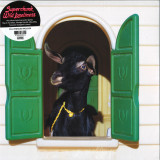
Like every record Superchunk has made over the last thirty-some years, Wild Loneliness is unskippably excellent and infectious. It’s a blend of stripped-down and lush, electric and acoustic, highs and lows, and I love it all. On Wild Loneliness I hear echoes of Come Pick Me Up, Here’s to Shutting Up, and Majesty Shredding. After the (ahem, completely justifiable) anger of What a Time to Be Alive, this new record is less about what we’ve lost in these harrowing times and more about what we have to be thankful for. (I know something about gratitude.
I’ve been a huge Superchunk fan since the 1990s, around the same time I first found my way to poetry, so the fact that I’m writing these words feels like a minor miracle.) On Wild Loneliness, it feels like the band is refocusing on possibility, and possibility is built into the songs themselves, in the sweet surprises tucked inside them. I say all the time that what makes a good poem the “secret ingredient” is surprise. Perhaps the same is
true of songs. Like when the sax comes in on the title track, played by Wye Oak’s Andy Stack, adding a completely new texture to the song. Or when Owen Pallett’s strings come in on “This Night.” But my favorite surprise on Wild Loneliness is when the harmonies of Norman Blake and Raymond McGinley of Teenage Fanclub kick in on “Endless Summer.”
It’s as perfect a pop song as you’ll ever hear sweet, bright, flat-out gorgeous and yet it grapples with the depressing reality of climate change: “Is this the year the leaves don’t lose their color / and hummingbirds, they don’t come back to hover / I don’t mean to be a giant bummer but / I’m not ready / for an endless summer, no / I’m not ready for an endless summer.” I love how the music acts as a kind of counterweight to the lyrics.
Because of COVID, Mac, Laura, Jim, and Jon each recorded separately, but a silver lining is that this method made other long-distance contributions possible, from R.E.M.’s Mike Mills, Sharon Van Etten, Franklin Bruno, and Tracyanne Campbell of Camera Obscura, among others. Some of the songs for the record were written before the pandemic hit, but others, like “Wild Loneliness,” were written from and about isolation.
I’ve been thinking of songs as memory machines. Every time we play a record, we remember when we heard it before, and where we were, and who we were. Music crystallizes memories so well: listening to “Detroit Has a Skyline,” suddenly I’m shout1singing along with it at a show in Detroit twenty years ago; listening to Overflows,” I’m transported back to whisper-singing a slowed-down version of it to my young son, that year it was his most-requested lullaby.
Wild Loneliness is becoming part of my life, part of my memories, too. And it will be part of yours. I can picture people in 20, 50, or 100 years listening to this record and marveling at what these artists created together beauty, possibility, surprise during this alarming (and alarmingly isolated) time. But why wait? Let’s marvel now. - Maggie Smith
Ready to ship

2025 Repress
On his fourth album proper, Now Here No Where, Danish producer Kölsch (aka Rune Reilly Kölsch) is charting new terrain. Fans of his ‘years trilogy’ – 1977, 1983 and 1989, released on Kompakt over the past decade – were privy to a kind of sonic diary, an autobiography, tracking the artist’s early years through three albums of superior, meticulously rendered techno. Calling in collaborators where needed – most notably, the strings of Gregor Schwellenbach – there was still something deeply personal going down, not quite hermetic, but internally focused; the albums proved not only Kölsch’s mastery of his chosen form, but also his capacity to make techno personal, individual, and to trace histories of the self through music. But on Now Here No Where, Kölsch finds his feet firmly planted in the present. Reflecting on his new album, he notes, “It is fascinating to write about memories and feelings that have had years to manifest and develop, but how would I approach current emotions?” It’s a good question: our past coheres through the narratives we build around memories, but the moment we’re in, the newness of the now-ness, is harder to navigate; this story is as yet untold. For Kölsch, this makes Nowhere Now Here “an album about life in the year 2020. A time defined by confusion, misinformation and environmental challenges. It is an emotional interpretation of personal and mental challenges, observations and personal growth.” Kölsch does this with music that effortlessly balances emotional heft with the dancefloor’s brimming desires. It’s a space that Kölsch has navigated for a while now – one of techno’s breakthrough acts, an in-demand DJ across the globe and a prolific and restlessly creative producer, he’s also Kompakt’s biggest-selling act – but Now Here No Where ratchets up the lushness, making for a delirious drift across twelve tracks that are at once perfectly poised and deeply trippy. “Great Escape” is an elegant swoon, an opener that pivots on a sigh and a prayer; then “Shoulder Of Giants” bustles into view, subliminal clatter and an aching violin line giving way to a riff that glows with fluorescence and iridescence. “Remind You” combines an odd ECM jazziness with notes from a twenty-first century torch song; “Sleeper Must Awaken” mines huge buzzing synths and lets them float, in and out of sync, with reduced, ticking beats; “Traumfabrik” (dream factory – there’s a giveaway) is oddly lush, the tones malleable and plastic, morphing across a glitching undertow. There are sad, emotional washes of strings throughout the penultimate “While Waiting For Something To Care About”, while “Romtech User Manual”’s patterns twist and shape in the light. Throughout, Kölsch never keeps his eye off the dancefloor, and you can tell this is his still his home. “The amount of energy and joy I experience every time I perform, has a profound effect on me. It has inspired me so much of late and has become an integral part of my musicality.” “The way we join in expressing our hope for the future every weekend has given me so much,” Kölsch concludes. The club as a temporary autonomous zone, as a space both of freedom and of politics; somehow, that’s all here, Now Here No Where. “Most of all, it is an album about hope.”
Auf seinem vierten Album “Now Here No Where” betritt der dänische Produzent Kölsch (alias Rune Reilly Kölsch) neues Terrain. Seine Trilogie mit den Jahreszahlen 1977, 1983 und 1989, die in den letzten zehn Jahren bei Kompakt erschienen war, hatte seine Fans durch eine Art akustisches Tagebuch, eine Autobiografie geführt, die die frühen Jahre des Künstlers über die Länge von drei großartig produzierten Techno-Alben nachgezeichnet hatte. Wo es nötig war, wurden Kollaborateure hinzugezogen - allen voran für die Streicher, arrangiert von Gregor Schwellenbach -, dennoch zeichnete die Musik immer auch etwas zutiefst Persönliches aus, etwas nicht Hermetisches, auf eine bestimmte Art immer auch nach Innen fokussiert. Die Alben bewiesen nicht nur, wie sehr Kölsch die von ihm gewählte äußere Form beherrscht, sondern auch seine Fähigkeit, Techno zu etwas Persönlichem und Individuellem zu machen und der eigene Geschichte durch Musik näher zu kommen.
Auf “Now Here No Where” steht Kölsch nun mit beiden Beinen fest auf dem Boden der Gegenwart. Mit Blick auf sein neues Album stellt er fest: "Es ist faszinierend, über Erinnerungen und Gefühle zu schreiben, die Zeit hatten, sich zu manifestieren und zu entwickeln, aber wie nähere ich mich meinen aktuellen Emotionen?”. Eine gute Frage: Unsere Vergangenheit wird im Innersten zusammengehalten durch Geschichten, die aus Erinnerungen entstehen, aber der Moment, in dem wir uns befinden, die Neuheit des Neuen, ist schwieriger zu beschreiben; die Geschichte ist noch nicht erzählt. Für Kölsch ist “No Here Now Where” daher "ein Album über das Leben im Jahr 2020. Eine Zeit, die von Verwirrung, Desinformation und ökologischen Herausforderungen geprägt ist. Es geht dabei um die emotionale Interpretation von persönlichen und mentalen Herausforderungen, von Beobachtungen und der eigenen, individuellen Weiterentwicklung".
Kölsch tut dies mit Musik, die mühelos kleine Gefühlsausbrüche mit den großen Sehnsüchten der Tanzfläche in Einklang bringt. Es ist dieser Zwischenraum, in dem sich Kölsch schon seit einiger Zeit bewegt, als weltweit gefragter und gefeierter Live Act, DJ und so unermüdlicher wie kreativer Produzent (nicht umsonst ist Kölsch der “biggest-selling-artist” bei Kompakt), doch “Now Here No Where” treibt all das noch weiter auf die Spitze: ein enormer Sog entsteht, der uns über zwölf Tracks hinweg gefangen hält wie ein perfekt ausbalancierter Trip. Der Opener "Great Escape" ist pure Eleganz, ein Track, der irgendwo zwischen Seufzer und Gebet hin und her schwankt; dann drängt "Shoulder Of Giants" ins Blickfeld, ein unterschwelliges Geklapper, eine wehende Geige, schließlich ein schillernder Riff, der in der Dunkelheit zu leuchten und zu glühen scheint.
"Remind You" kombiniert seltsamen ECM-Jazz mit einem sentimentalen Liebeslied des 21. Jahrhunderts; "Sleeper Must Awaken" schürft im Bergwerk riesiger Synthesizer, mal im Takt, mal aus dem Takt ticken die minimalen Beats; "Traumfabrik" ist ungewöhnlich “lush”, die einzelnen Töne, geschmeidig und modelliert, zerfließen in einem glitzernden Abgrund. Das vorletzte Stück "While Waiting For Something To Care About" wird von traurigen, emotionalen Strings untermalt, während sich die Strukturen von "Romtech User Manual" im Licht drehen und immer wieder neu formieren. Die ganze Zeit über behält Kölsch die Tanzfläche im Auge, und man merkt ihm an, dass sie immer noch sein Zuhause ist: "Die Menge an Energie und Freude, die ich bei jedem Auftritt erlebe, hat eine tiefe Wirkung auf mich. Sie hat mich gerade in letzter Zeit stark inspiriert und ist zu einem integralen Bestandteil meiner Musik geworden.”
"Die Art und Weise, wie wir an jedem Wochenende gemeinsam unsere Hoffnung auf eine bessere Zukunft zum Ausdruck bringen, hat mir viel gegeben", so Kölsch abschließend. Die Vision des Clubs als eine temporäre autonome Zone, als ein Raum von großer Freiheit aber auch von politischen Ideen, das ist irgendwie alles hier drin, Now Here No Where. "Es ist vor allem ein Album über Hoffnung."
Ready to ship
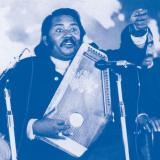
Black Truffle is thrilled to announce a second volume of unheard concert performances from legendary Pakistani kyhal singer Salamat Ali Khan, recorded at Berlin’s Neue Nationalgalerie as part of the MetaMusik festival in 1974. Like the first volume, the immaculate recording by Michael Hönig (of krautrock legends Agitation Free) captures Khan performing a single extended raag in the company of Shaukat Hussein Khan on tabla and Hussein Bux Khan on harmonium. In addition to his stunningly inventive and moving vocal performance, Khan is heard accompanying himself on a specially tuned alpine zither (in place of the traditional swarmandal, an Indian style of zither). The lack of an underlying tanpura drone gives the music its characteristic floating quality, with the three instruments and voice masterfully dancing around one another as they sketch the outlines of this grand, 40-minute Raag Chandrakauns.
If anything, this epic performance of the late-night Raag Chandrakauns is even more seductively spacious and psychedelic than the music heard on the first volume. Obeying the traditional shape of Hindustani classical vocal music performance, a gradual rise in both pitch and rhythmic activity, the music hovers for twenty minutes in a reflective calm, the pulse only gently stated by the tabla while harmonium ornamentation and zither strums float by. In this meditative space, Khan gradually orients us to the contours of the raag, beginning with long notes at the bottom of his register. His improvisation at once builds with a stunningly firm sense of internal logic and seems liberated to explore every melodic and ornamental byway that comes up along the way. By the time we turn to the record’s second side, the music has grown into something far more frenetic, with virtuoso tabla passages at times occupying centre stage between Khan’s increasingly rhythmic melodic variations. Concluding with a sequence of unison tabla and voice passages of breathtaking complexity, the performance is met with rapturous applause. Arriving in a blue-toned variant of the first volume’s sleeve, with acclaimed musicologist Peter Pannke’s liner notes in the original German, Metamusik Festival Berlin ’74 Volume II is not to be missed. Essential listening not just for Hidustanti classic aficionados, but for anyone who needs reminding of the magic of collective music making in the moment.
expected to be published on 09 Oct
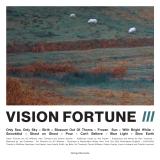
Surprises are nice. Unexpected, delightful - Vision Fortune last released music in 2015, and so odds were off that we’d hear from them again.
But against all odds, Vision Fortune III is coming out on Gringo Records, following the release of their last album ‘Country Music’ on ATP Records.
The trio first agreed to record a new album as somewhat of a dare over a marathon pasta and wine heavy luncheon in Palermo, Sicily. Waking up with sore heads, they realised in mild panic that flight tickets had been purchased, a cottage in rural Wales was booked, and it was too late to pull out.
And so it was - the Fortunes arrived in Machynlleth Wales in Spring of the following year. The rules were simple - takes were live, songs minimal and the fireplace kept roaring.
Drummer Andres Ayerbe’s strict roast lamb dinner cooking schedule resulted in an album less frenetic and agitated than previous work - instead, III explores a softer, more subdued and subtle side of Vision Fortune. Additional overdubs were recorded in New York City and Birmingham, by AC Williams and Alex Townend. III was completed - a new, leaner Vision Fortune. Like a good lamb dinner - more meat, less fat.
Press Quotes for Country Music:
"An impressively brutal record" NME 8/10
"Immersive and introspective musique concréte rippling rippling with dub rhythms, orchestral strings, tolling bells and discordant drones coming close to the alien beauty of Mica Levi's sonically extreme soundtrack work." Uncut 7/10
"Unsettling, strangely cathartic and hook-free (in a good way)." Dazed ("Twenty albums to look out for in 2015")
"Assembling whole scrapyards of sound and turning them into something better than what went before" The Guardian
"Swaddling the senses in soundwaves, Minimal ambient sketches and harsh electronics abound on this fascinating 12-song affair" The FADER
"Basically just one long, connected droney throb. But it's an awesome long droney throb." Brooklyn Vegan
expected to be published on 02 Oct
When Drop Nineteens disbanded in the mid-'90s, singer Greg Ackell decided he would never make music again. He wouldn't noodle around on a guitar in his basement. He wouldn't get a group of friends together just to jam. He was done with music entirely. Following the release of the shoegaze masterpiece Delaware in 1992, and the intricate experimentations on National Coma in 1993, the group disbanded. They shared stages with Radiohead, Hole, Blur, PJ Harvey and Smashing Pumpkins. They went from being teenagers in Boston to mid-twenty-somethings with a few MTV videos, a couple BBC sessions and numerous festival appearances under their belt. So when Drop Nineteens ceased to be, Ackell felt content. He had the rest of his life in front of him to figure out what he wanted to do. Music was a closed chapter.That was until 2021, when a friend from the band's early days got Greg on the phone to suggest making some music together, just to see how it felt. Instead of shutting it down like he had been doing over the years, he decided to entertain the prospect. For the first time in nearly 30 years, he picked up a guitar with intent. He immediately called up Steve Zimmerman, the band's bassist and fellow guitarist, and the two got writing. It felt effortless for Ackell, like he never stopped writing music. "We were off to the races," he says, "But also the question came up: what does a Drop Nineteens song sound like today?" Enter Hard Light, the band's stunning third record. It's the band's proverbial follow up to Delaware, a modern Drop Nineteens record that is completely singular in its sound and vision. The first task making Hard Light was, of course, getting the rest of the band back together. Drop Nineteens is an inherently collaborative project. Ackell writes the lyrics, and he works with band members Steve Zimmerman, Paula Kelley, Motohiro Yasue, and Peter Koeplin to create the sonic world. The record came together over the course of a year, recording at a patchwork of studios all around the country: Boston, Brooklyn, San Francisco, Los Angeles. When Kelley and Ackell first heard their vocals recorded together on the opus album closer "T", the chemistry was undeniable. Making music together felt natural, fluid, exciting.Hard Light is a romantic record in the literary sense. Beauty from longing; longing from beauty. You put the album on and want to be clad in a velvet dress sprawled across a fainting couch. You want to be holding someone's hand while you sit back in the tall grass. The guitars are expansive and expressive as ever. Ackell and Kelley's vocals are cool, crystalline, and luminous. "Gal" comes on like a dream. The vocals pour in when you least expect them, once in the middle, where Ackell delivers one of the strangest (and best) lyrics on the record, "And there were snakes/with cats at the wheel." Hard Light's first single, "Scapa Flow" is triumphant and an excellent example of what a modern day Drop Nineteens song sounds like. The guitars glide cloud-like, floor toms shuffle and rumble in the background, searching. Ackell and Kelley's vocals are as toned as they are bound. Hard Light is every bit the ride that Delaware was, diverse in its sounds, with surprises at every turn. Drop Nineteens have brought clarity and cool in 2023 to the genre they helped create. A portrait of a band 30 years later, as talented and dedicated to their craft as ever. To put it more bluntly, they're at the top of their game.
expected to be published on 04 Sep

When ELEH's debut "Floating Frequencies/Intuitive Synthesis I" was originally released it was praised as a powerful piece of new electronic minimalism. Twenty years later the artist's legacy has grown while ELEH continues to hypnotize new listeners with time stopping music. Critics, fans and neurologists have praised the music of ELEH as aiding attention and focus while seeming to slow time. Eleh's slow change drones are a state of flow hypnotizing listeners into meditative focus.
From the original packaging, "Pure Sound. Pure Volume. Pure Analog. Dedicated To La Monte Young"
ELEH began in 1999 as an exploration of analog synthesis, emphasizing low frequency difference tones and other resonant acoustic phenomena. ELEH highlights the physical presence of sound as it has been inspired by the physical world. There is also something ‘cathedral-like’ and cosmos-inducing in the sound constructed by ELEH.
This audiophile quality presentation of ELEH's debut album was mastered by Tom Eaton at Sounds And Substance and manufactured at Optimal in Germany for the lowest possible noise floor and the highest analog resolution. Packaged using a 5th color metallic shimmer ink on solid black board stock.
"Nuances of sound turn symphonic." New York Times
“ELEH’s sounds move by stealth and are sculpted from the world rather than from ego. Eleh is not a personality; Eleh is an idea about sound. ELEH forces you to contemplate the cosmos and your place in it. “ Gramophone
"ELEH demonstrates how a single amplified gesture delivered just so can reveal the inner workings of an entire cosmos." Tony Herrington/Wire
“Floating Frequencies/Intuitive Synthesis more than lives up to the mythic status that ELEH has ascended to. “ Brainwashed
"ELEH's music electrifies whatever space it engages. With the flip of a switch, it exposes the ways in which all space is, potentially, electric." ~ Frieze
expected to be published on 31 Jul

Huge classic techno history! Echoes originally appeared in 2001 on Kanzleramt, and from the moment it landed, it was clear this was something different. Eleven techno-dub-house tracks, rich in texture and depth, that mapped out a singular vision of Berlin's dancefloor aesthetic at the turn of the millennium. Not a collection of club tools, but a fully realised album statement, one that understood the dancefloor and the living room in equal measure.
Twenty-five years on, Alexander Kowalski reissues Echoes on his own label Cycles Music - remastered, on double vinyl, and presented as it always deserved to be heard. The ten tracks across four sides move through deep, rolling grooves, melodic undertow and the kind of emotional precision that made Kowalski's name in the first place. Echoes are fragments from the past which follow us into the future, the album's original motto reads like it was written for this moment.
Last delivered 14 days ago
available to reorder, subject to availability

2026 Repress
Twenty five years after its initial release, and accompanying the re-release of 'Internal Empire' Tresor Records is proud to present a new cut and pressing (180gm) of Robert Hood's essential 'Master Builder'.
The ongoing importance of this single and its adjacent album is indisputable, essential both to techno and to Tresor. It is a history intertwined.
This work elevates its maker as master, and remain a cherished moment in the Tresor story, sharing an irrefutable singular magic, sounding as present and indispensable as when first created. To understand this work fully is to stand back and celebrate its impact.
Originally released in 1994, 'Internal Empire' marks a point of transition for Robert Hood moving on from his previous collaborations within Underground Resistance. Robert Hood advanced uncovering the power of true minimalism. Deep soul through a simplicity that showed how much could be done with so little. The devastating rhythms of this album forge the unmatched spirit of this sound, influencing generations to come.
"25 years ago, I was faced with the challenge of following up on 'Minimal Nation'. I cancelled all my tour dates for that summer, setup my studio in the living room and began to work on 'Internal Empire'. My intention was to create something distinctively di erent. Looking out my living room window in Detroit watching people go by gave me a new perspective. It made me look at the world within myself. 25 years later I am still discovering.' - Robert Hood
Last delivered 3 months ago
available to reorder, subject to availability

For Record Store Day 2026, Brownswood Recordings mark two decades of boundary-pushing independent music with Twenty Years Deep, a limited-edition 3xLP vinyl compilation celebrating the label’s rich, global catalogue and enduring influence.
Founded in 2006 by broadcaster, DJ, and cultural tastemaker Gilles Peterson, Brownswood has spent the last 20 years championing forward-thinking artists who sit just left of centre: rooted in Afro-diasporic music, but never confined by genre. Twenty Years Deep is a snapshot of that journey: a carefully curated collection spanning the label’s early breakthroughs, cult classics, and defining moments.
Pressed exclusively for Record Store Day on 3 piece coloured vinyl Twenty Years Deep brings together tracks that reflect Brownswood’s long-standing commitment to artistic freedom, musical lineage, and future-facing sounds. From deep jazz explorations and dancefloor mutations to global collaborations and genre-defying hybrids, the compilation captures the connective thread that has defined the label since day one: trust in artists and belief in music that lasts.
Rather than a greatest-hits exercise, Twenty Years Deep functions as an archive and a statement documenting how Brownswood has maintained its own point of view. By following a highly instinctive approach to A&R the label has shaped music culture, introduced new voices, and built a catalogue that continues to resonate well beyond release cycles.
Twenty Years Deep will be available exclusively at participating independent record stores on Record Store Day 2026, pressed as a limited-edition 3 piece vinyl release.
Last delivered 66 days ago
available to reorder, subject to availability

Mr. YT returns!
The cult deep house alias of Yuji Takenouchi was last seen on Brand New Day in 2017, which compiled a series of soft scenes and deepest soulful house for the ambient techno predator R&S and its Apollo, Generations and Global Cuts sub-labels across the mid-to-late 90s. Quietly and confidently some of the most beautiful house music ever made.
So it's a thrill to announce the Universo EP today on Short Span, and to say that he’s still making incredible new dance music in his studio. This is the first Mr. YT record of brand new material in twenty eight years.
The lushness springs forth as delightfully as ever. The inspirations of Detroit chords floating and interacting with a certain kind of Japanese plasticity and futurism. Crystal clear blue skies, sweet perfume and space race optimism, touched with a gentle wistfulness. The four tracks are each as beautiful and intricately deep musically as they are colourful and buoyed by energy. Ready to delight you.
Universo has some new purpose and drive up front, designed and deployed as his most propulsive dance music as Mr. YT. The tempo is taken up, and tracks frequently break out into virtuosic melody that dances across the pieces. Yuji’s talent for composition that hits as hard as it effortlessly glides hasn’t lost its edge in the quarter century plus break. The kick of “Acuario” and “Escorpio” are finely balanced with the influences of jazz and something a little more padded and cosmic. You could mix these into something by Los Hermanos or Ian O’Brien.
The EP bubbles down to a more yearning, sunsetting ambient house on the B side. The instantly recognisable language of classic Mr. YT, a warm and tender place.
Mr. YT has been absent a while, but Yuji’s busy. He’s established a long career as a musician and sound designer within the Japanese videogaming industry, having his hand in games including FromSoftware’s Dark Souls series surely adds something widescreen and sharply emotionally focused to the direction of his dance music. His Missing Project alias also got some shine from the stellar Music From Memory Virtual Dreams II compilation in 2024, which once again pinned down his enduring importance within the ambient techno movement of Japan. He’s also regularly working with Tokyo’s FORM@ Records and regularly self-publishing interesting work and studio versions. And his Missingsoul alias is still some of the most beautiful deep jazz-house committed to wax on Ron Trent’s Future Vision label. Check it all out!
Last delivered 56 days ago
available to reorder, subject to availability
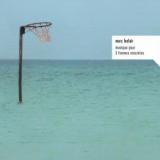
In Sheep’s Clothing announces the long-awaited vinyl pressing of Marc Leclair’s beloved 2005 album Musique pour 3 femmes enceintes. The album will also be available on streaming for the first time via Community Music Group.
For years after Marc Leclair released Musique pour 3 femmes enceintes, he heard from listeners who had lived with the record in an unusually intimate way. Many described how the music became part of the emotional landscape of the months leading to birth. “I never expected that,” Leclair says. “Many women told me they listened to the record throughout their pregnancies. They said it made a real difference, that it helped them. It became more than just a record.”
First issued on CD in the early 2000s, Musique pour 3 femmes enceintes (Music for Three Pregnant Women) now returns in a new edition from In Sheep’s Clothing Hi-Fi, appearing on vinyl for the first time as a double LP. The record is being pressed in Detroit at Archer Record Pressing, the historic plant behind deep-groove classics by Juan Atkins, Kevin Saunderson, Underground Resistance, UR’s Jeff Mills, and J Dilla.
Listeners who know the Montreal-based Leclair through his better-known work as Akufen might be surprised by the tone here. During the same years he was shaping the intricate micro-sampling tracks that made Akufen a cult figure on labels including Perlon, Force Inc. and Trapez, Leclair was quietly developing this far more personal project. The meticulous craftsmanship remained the same, though the focus shifted from the hyper-detailed cut-up rhythms of his dance records toward something slower and more atmospheric. “I always compare my work to a jeweler,” Leclair says. “It’s really very precise. I’m a bit of a detail freak. I can spend hours or days on just one phrase in one song. Everything has to be perfectly put together.”
The project began almost accidentally. A few members of Leclair’s circle became pregnant nearly simultaneously, including one who had long believed she couldn’t conceive. The first track he recorded for the project wasn’t meant to advance a larger concept, he says. “It was meant to highlight the fact that three of my closest friends became pregnant at exactly the same time.”
Leclair was already a father with a three-year-old daughter, so the emotional terrain of early parenthood was familiar. Gradually the idea expanded. “I began thinking, why not make a whole album that celebrates this and also follows the entire pregnancy, the nine months,” he says. The music developed piece by piece, including a track originally commissioned by the Berlin experimental duo Rechenzentrum that would later become the album’s opening movement.
Nearly seven years passed between the first composition and the finished album, and the music mirrors the strange arithmetic of pregnancy itself. What begins as a single idea multiplies outward, sounds layering and branching until the album feels less like a sequence of compositions than a living process unfolding in time. “I work very slowly,” Leclair says. “Everything has to be something I’m completely behind. I never want to rush anything. I want things to come naturally.” Across its 72 minutes, the album blossoms with the patience of a long meditation on time, growth and emergence.
When Musique pour 3 femmes enceintes first appeared via Mutek, it circulated quietly but steadily. Critics who discovered it later recognized its unusual scope. In a 2006 Pitchfork review, Mark Richardson gave the record an 8.1, calling “150e Jour” “an unfailingly gorgeous and tightly sequenced quilt of guitar and piano samples reminiscent of Tangerine Dream,” and describing “85e Jour” as infused with “viscous pop ambient drift, the gauzy synth pads ebbing and flowing with rhythm.” Boomkat described the album as “a majestic opus from a producer that's always promised so much — here delving into a panoramic construction of almost visibly radiant music that works so beautifully through each and every second of its 72 minute lifespan.”
The new In Sheep’s Clothing Hi-Fi edition finally presents the record in the format Leclair long imagined. “I always thought that record deserved a vinyl edition,” he says. Spread across two LPs, the music now has room to unfold at its natural pace. More than twenty years after it first appeared, Musique pour 3 femmes enceintes remains what it was from the start: a carefully shaped meditation on transformation and the quiet miracle of life beginning.
Pre-order now

Blue & White Corona Vinyl[32,35 €]
Schwarzes Vinyl! Doppel-LP im Klappcover. Ursprünglich 2017 rausgebracht und jetzt zum ersten Mal in Europa über Sub Pop erhältlich! Pure Comedy, das dritte Album von Father John Misty, ist eine komplexe, oft sarkastische und ebenso oft berührende Reflexion über die verwirrende Torheit der modernen Menschheit. Father John Misty ist das Projekt von Singer-Songwriter Josh Tillman. Wir könnten viel über Pure Comedy sagen, zum Beispiel, dass es ein mutiges, wichtiges Album in der Tradition amerikanischer Songwriting-Größen wie Harry Nilsson, Randy Newman und Leonard Cohen ist, aber wir denken, es ist am besten, wenn sein Schöpfer es selbst beschreibt. Los geht's, Mr. Tillman: Pure Comedy ist die Geschichte einer Spezies, die mit einem unvollständig entwickelten Gehirn geboren wurde. Die einzige Überlebenschance dieser Spezies, die sich auf einem grausamen, unberechenbaren Felsen wiederfindet, umgeben von anderen Spezies, die in dieser ganzen Sache viel geschickter zu sein scheinen (und für die sie eine Delikatesse sind), besteht darin, sich auf andere, etwas ältere, halb ausgebildete Gehirne zu verlassen. Diese Abhängigkeit bekommt im Laufe der Geschichte verschiedene Namen, wie ,Liebe", ,Kultur", ,Familie" usw. Mit der Zeit und da sich ihre Gehirne als bemerkenswert gut darin erweisen, Bedeutung zu erfinden, wo keine ist, wird die Spezies zum Lieferanten immer bizarrerer und raffinierterer Ironien. Diese Ironien sollen helfen, mit der abscheulichen Verletzlichkeit der Spezies fertig zu werden und zu versuchen, ihre Fantasie mit der Monotonie ihrer Existenz in Einklang zu bringen. So in etwa. Pure Comedy wurde 2016 in den legendären United Studios (Frank Sinatra, Ray Charles, Beck) in Hollywood, Kalifornien, aufgenommen. Produziert wurde es von Father John Misty und Jonathan Wilson, die Tonarbeit übernahm Mistys langjähriger Tontechniker Trevor Spencer und die Orchesterarrangements stammen vom bekannten Komponisten und Kontrabassisten Gavin Bryars (bekannt für seine umfangreichen Soloarbeiten und seine Zusammenarbeit mit Brian Eno, Tom Waits und Derek Bailey). Black Vinyl. Originally released in 2017 & now available for the first time in Europe via Sub Pop! Pure Comedy, Father John Misty's third album, is a complex, often-sardonic, and, equally often, touching meditation on the confounding folly of modern humanity. Father John Misty is the brainchild of singer-songwriter Josh Tillman. While we could say a lot about Pure Comedy including that it is a bold, important album in the tradition of American songwriting greats like Harry Nilsson, Randy Newman, and Leonard Cohen we think it's best to let its creator describe it himself. Take it away, Mr. Tillman: Pure Comedy is the story of a species born with a half-formed brain. The species' only hope for survival, nding itself on a cruel, unpredictable rock surrounded by other species who seem far more adept at this whole thing (and to whom they are delicious), is the reliance on other, slightly older, half-formed brains. This reliance takes on a few different names as their story unfolds, like "love," "culture," "family," etc. Over time, and as their brains prove to be remarkably good at inventing meaning where there is none, the species becomes the purveyor of increasingly bizarre and sophisticated ironies. These ironies are designed to help cope with the species' loathsome vulnerability and to try and reconcile how disproportionate their imagination is to the monotony of their existence. Something like that. Pure Comedy was recorded in 2016 at the legendary United Studios (Frank Sinatra, Ray Charles, Beck) in Hollywood, CA. It was produced by Father John Misty and Jonathan Wilson, with engineering by Misty's longtime sound-person Trevor Spencer and orchestral arrangements by renowned composer/double-bassist Gavin Bryars (known for extensive solo work, and work with Brian Eno, Tom Waits, Derek Bailey).
expected to be published on 15 May
Keith Tippett was just twenty-one when his group recorded the first of these sets for BBC’s Jazz Workshop on May 21st 1969, three months before the recording of his first album, You Are Here – I Am There. Featured on Side One is the three-part “Portishead Suite,” which presents three stylistically different musical portraits of three generations of the Somerset town. The first is comparatively gentle and flowing but the second portrait is more insistent, its 5/4 tempo bringing to mind themes heard on early King Crimson albums. The third portrait has something of the Caribbean in its playful rhythms. “Hail Conquering Hero” can be heard on Side Two, and is described by Tippett as ‘a jazz study of war.’ None of these compositions have ever appeared officially in any form. Also included on Side Two are two tracks from Tippett’s August 1970 session for BBC Top Gear that was advertised as by Keith Tippett & Heavy Friends.
Keith Tippett – piano; Mark Charig – cornet; Nick Evans – trombone; Elton Dean – alto; Gill Lyons – bass; Alan Jackson – drums. Sleevenotes by Duncan Heining
expected to be published on 18 Apr

BCUC – Bantu Continua Uhuru Consciousness – have been channeling the spirit of Soweto for over twenty years. Indigenous funk, hip-hop consciousness, and punk rock energy fused into something utterly original and deeply rooted. Their mantra: Music for the people, by the people, with the people. From humble beginnings rehearsing in a shipping container, a stone's throw from the church where Desmond Tutu organized the escape of the most wanted anti-Apartheid activists, they kept believing in their dream of self-empowerment. Today they command festival stages worldwide: Glastonbury West Holts, Roskilde, Afropunk Brooklyn, WOMAD, Fusion, Sziget, FMM Sines, Beaches Brew, Boomtown, Colours of Ostrava, Couleur Café – to name just a few. In 2023, BCUC were honoured with the prestigious WOMEX Artist Award, an accolade usually reserved for more established artists, in recognition of their fearless work and transcendent live performances.
THE ROAD IS NEVER EASY
The Road Is Never Easy is BCUC's fifth album and their debut on Outhere Records. On this new offering, BCUC take listeners on another Afro-psychedelic journey into the soul of Soweto. It feels like a gospel sermon colliding with a punk concert, "guaranteed to touch untapped corners of your soul" (OkayAfrica). BCUC's music is deeply rooted in history and echoes the voices of the ones who came before. The road was never easy for the people of Soweto who originally came to work in the mines of Egoli, the City of Gold, Johannesburg. When apartheid finally ended after a long struggle, it was hoped that life would improve. But more than 30 years later, many of those initial hopes and dreams are still waiting to be fulfilled. This album is about that struggle. The album contains 10 brand new songs – a record for BCUC, whose previous albums featured an average of 3 songs. It represents the culmination of more than two decades of performing together and building a reputation as a powerful live act. These ten songs encapsulate that same live energy, each one building gradually and drawing you into BCUC's Afro-psychedelic stream of consciousness. It's a seismic tour de force through life in Soweto today. Songs like Amakhandela (Breaking All the Chains) connect history to daily life: "How is this precious metal inflicting so much pain in us," sing BCUC, "this government has been telling us we are free, but we don't benefit from being free." The album also talks about all the hopes and dreams that remain: "I have too many wishes and dreams in my head," BCUC sing in Um duma khanda, "I think I am losing my mind". The album ends with the soothing Matla a rona ke Bophelo, "our strength is life", praising the spirits and thanking the elders for protection. The Road Is Never Easy is about the harsh reality of life in Soweto, where "people always carry heavy loads". BCUC are street poets trying to deal with that burden: sometimes revolutionary, sometimes soothing, but always hopeful and compassionate. "When you are from Soweto you can't retreat nor surrender." (Sebenzela)
RECORDING
The album was largely recorded in Munich, Germany during tour breaks over two sessions, each three days long. It took place in a small studio located in a German WW II bunker converted into rehearsal spaces. The songs were recorded in one take altogether in one room, with only a few overdubs added, mainly backing vocals, by BCUC at Fourways studio in Johannesburg. BCUC have created their own distinctive way of writing, or rather, finding and creating their songs. The recording process is like an improvised live performance. They bring their ideas into a zone where the music, the rhythm and the spirits take over until the song starts to form. In this Afro-psychedelic zone BCUC create their unique poetry that feeds on the dreams still dreamt, the hopes, the fears and the temptations lingering everywhere. BCUC's songs need to breathe and time to build. The right take was the one when the song took over, and just like their live performances, no one knew beforehand where the song would take them. During the recording, BCUC just let it all flow out: inner turmoil, cries of rebellion, but also resilience and a search for healing, love, unity and compassion. You don't have to be from Soweto to feel the deep meaning and impact of this music. In these times of so much hate and division, BCUC are like a campfire for people to gather around.
PRODUCTION & ARTWORK
"BCUC have a unique magic," says Outhere's Jay Rutledge, who produced the album. "It blew our minds. It's like punk and pure gospel at the same time. Their music can make you dance and it can make you cry, all at the same time. And when the song is over, you feel you're not alone in this world anymore. We felt compelled to do this." The album cover is based on a matchbox design, matches being a common household item in South Africa even today. "These were the matches people used to burn government buildings and cars," explain BCUC. Little messages, addresses, or phone numbers used to be scribbled on the back of these boxes; each one a reminder of the strength, resilience, and resistance that once drove the struggle for freedom in Soweto. BCUC keep this flame burning. The Road Is Never Easy is a heavy spiritual road trip, a deep dive into the subconscious of Soweto and a quest for truth, justice and sanity in this crazy world. BCUC tackle the harsh realities of the voiceless, guided by the spirit world of their ancestors. Rather than reinforcing stereotypes of poverty, BCUC's portrayal of Africa is one rich in tradition, rituals and beliefs. "We bring fun and Afro-psychedelic fire from the hood," says vocalist Kgomotso Mokone.
Last delivered 5 months ago
available to reorder, subject to availability
BCUC (Bantu Continua Uhuru Consciousness) have been channeling the spirit of Soweto for over twenty years. Indigenous funk, hip-hop consciousness, and punk rock energy fused into something utterly original and deeply rooted. Their mantra: Music for the people, by the people, with the people. In 2023, BCUC were honoured with the prestigious WOMEX Artist Award, an accolade usually reserved for more established artists, in recognition of their fearless work and transcendent live performances. The Road Is Never Easy is BCUC"s fifth album and their debut on Outhere Records. On this new offering, BCUC take listeners on another Afro-psychedelic journey into the soul of Soweto. It feels like a gospel sermon colliding with a punk concert, "guaranteed to touch untapped corners of your soul" (OkayAfrica).
expected to be published on 03 Apr

For here lies one of the most influential bands in the realm of gothic metal, a group with doom and death metal roots that has flourished for over three decades, boasting thirteen albums that have garnered devoted acclaim. This injustice is now being set right by The Circle Music , beginning with the vinyl release of the classic album "Burning: A Wish", which emerged twenty-four years ago. "Burning: A Wish", released in the twilight of the year 2001, stands as a dark reliquary of dreams lost to the velvet fog of melancholy. To revisit it now, two dozen years later, is to unseal a time capsule of gothic ache, doom- laced longing, and the tormented tenderness that only Lacrimas Profundere could conjure at their creative height. It was a candle-lit corridor between worlds. A slow fall into velvet shadows. A scream muffled by rain.
By the time "Burning: A Wish" was released, Lacrimas Profundere had already begun to evolve from their early death- doom origins, shaping their identity with the sophistication of seasoned mourners. The death growls had receded, replaced by the haunted, baritone croon of Christopher Schmid, whose voice is an echo from a chapel ruined by time. Yet, while the growls faded, the emotional gravitas remained intact, transmuted into melody, into baroque gloom, into something more sorrowfully refined. Produced with lush, theatrical clarity, the album never drowns in its own atmosphere, it breathes with it, moves with it. The soundscape is dominated by somber guitar textures, languid tempos, and subtle orchestral touches. From the very first notes, it is clear that this is music for ruined lovers and moon-drenched graveyards.
This is the hallmark of Lacrimas Profundere 's style: an emotional minimalism that does not explain or elaborate, but merely opens wounds and lets them breathe. That this album has remained, until now, absent from the warm embrace of vinyl is both tragic and oddly poetic. For what format better suits a record such as this than the one that cracks and hisses like an old seance? Vinyl is tactile, intimate. It requires attention, reverence. To place Burning: A Wish on a turntable is to light a candle in the dark.
expected to be published on 13 Mar
'Cuéntame cosas tuyas' is perfect pop with flawless arrangements; it's crossed over into the international soul scene, made its way into playlists by DJs like Gilles Peterson, and was even covered in the early 2000s by La Costa Brava-proof of its appeal among an ever-broader audience. On the B-side you'll find the superb '¡Yeah!', packed with soul and funk flair. Two irresistible tracks that, after years out of print, we're putting back into circulation with the reissue of this essential record-one that's practically impossible to find in its original pressing. Few late-'60s Spanish pop songs have reached the status that 'Cuéntame cosas tuyas' has earned decades after its original 1969 release. The single, put out by Barcelona label Belter, has become one of the most coveted gems for collectors of '60s sounds. 'Cuéntame cosas tuyas' is perfect pop with flawless arrangements-a sure-fire dance-floor killer, right up there with Elia y Elizabeth's 'Alegría' in any imaginary ranking of Spanish-language pop anthems. Although originally from Valencia, Los Ros (formerly Los 4 Ros) built their career in Palma de Mallorca and released nearly twenty singles on Belter. Between 1968 and 1970, their friendly, commercial pop started weaving in bolder elements drawn from soul, funk, and even psychedelia-something you can also hear on the B-side of this very single, featuring the superb '¡Yeah!'
Last delivered 7 months ago
available to reorder, subject to availability
London-via-Accra artist BLACK FONDU shares his seven-track debut EP ‘BLACKFONDUISM’, following the underground momentum of singles ‘im not sleeping’ and the Steve Lamacq BBC 6 Music-premiered ‘holla back girl’. Available on vinyl, and with a self-directed video for ‘#music’, the project marks the first full expression of a voice emerging as one of the UK’s most uncompromising new forces.
‘BLACKFONDUISM’ captures that evolution in its rawest form. The EP came together quickly through instinct and freestyling, recorded between his room in London and a short period in Paris. Each track reflects a world he understood only after living through it. ‘IN D4 CLUB’ channels the exhilaration of acceleration, ‘BOYS’ explores the foundation provided by maternal love, ‘im not sleeping’ confronts denial after more than twenty revisions, ‘C00N V2’ marks a moment of creative rebirth, and ‘BLACK1E’ navigates the tension between self-perception and the world’s gaze. Closing track ‘#music’ distills the entire project into one statement.
Working alone has brought challenges, but he has learned to trust the emotional volatility that fuels the work. “I care so much and would die for this, but I cannot let it kill me. I have to trust myself the same way I trust myself when I make music.”
At 21, BLACK FONDU has carved out a sound that collides hyperpop, noise, rap, punk energy and abstract grime into something instinctive and volatile. Influenced by everything from Rachmaninoff to MF DOOM to Xiu Xiu, he writes, produces and performs every element, including the fractured visuals that accompany his tracks. Praise from BBC 6 Music, Pitchfork, NME, The Quietus, Pigeons & Planes, METAL and Line of Best Fit has positioned him as one of the most intriguing new voices in the UK underground, with explosive live shows across London, the UK and Europe.
With BLACKFONDUISM, he introduces a universe that refuses to sit still. “I wanted this EP to act as an introduction to my worlds. It felt important to put this out so I can do anything after.” He hopes listeners feel alive when they hear it, and jokes that he wants the record to “evolve music, even just a little.”
BLACK FONDU’s sound remains a paradox, abrasive and fragile, chaotic and meticulous, always guided by instinct. Or, as he puts it, “A bit fucked. But alive.”
expected to be published on 09 Feb