James Curd and Osunlade. After years of playing back to back DJ sets and collaborating in the studio, they decided it was time to create something that could represent both the music they make together and the shows they play. Their sound is a natural meeting point between deep house grooves and soulful roots, reflecting both artists’ histories and shared love fortimeless dance music.
The first single from Nomadic’s is “Better Man”. The track was originally signed to Defected Records,but after creative differences about how the release should be presented, the contract was voided. That decision gave James and Osunlade the chance to put the music out exactly as they envisioned, and the song now finds its proper home on Pronto Records. The package includes the original alongside a set of remixes from some of the most exciting names in underground house.
Dutch producer Frits Wentink delivers a remix in his unmistakable style – raw drum programming, warm analogue textures, and the kind of off kilter groove that has made him one of the most respected names in Europe’s house scene. Mr Ho, co-founder of the cult label Klasse Wrecks, adds his own twist with a version that nods to classic rave and electro energy, while keeping things firmly locked for the dancefloor. Finally, LA based duo Too Easy bring a mysterious touch, layering live instrumentation with electronic drive, showing why they’re quickly becoming ones to watch.
With its story of creative independence, heavyweight remixers, and the credibility of two deeplyrespected artists at the helm, “Better Man” is both a club record and a statement of intent for what Nomadic’s represents.
Search:war easy made
Great Day is one of the very best albums on the Music De Wolfe label and certainly one of the most sought after library records, full stop. It's been sampled by such heavyweights as Madlib, LTJ Bukem, El-P and The Alchemist (among many others). You likely already know all this. If you don't, get to know. One listen through and the £350 asking price for a VG copy starts to all make sense...
Originally released in 1972, it's credited to Music De Wolfe legends Simon Haseley (real name Simon Park) and "Peter Reno" (a collaborative alias used by composers Clifford "Cliff" Twemlow and Peter Taylor) Confused? No matter. It's one of the most consistent libraries you'll ever hear, packed with heavy blaxploitation-esque drama-funk break themes.
It opens with the feel-good, breezy piano beat number "Little Big John" before switching up to modern sweeping orchestral with heavy drums on the warm, deeply emotive "Summer Friend". Total highlight "Hammerhead" is as heavy as you'd want, from a track so-titled. It's a driving, imposing, orchestral funk-rock monster, famously used by The High & Mighty for their classic "Dirty Decibels" and, also, it was used as the backing for Beyonce's ace "Woman Like Me".
Up next, "Crimson" is melodic, plaintive and moodily introspective; a soft, oboe-enhanced instrumental of delicate beauty. Again, ace beats and breaks abound. The expansive title track, "Great Day" is melodic and bold; a horn-fuelled, mid-tempo rhythmic workout which builds to rather big end. Rounding out this first side, "Hard Crust" ups the ante with thrilling wah-wah funk-rock, a dramatic, pounding and aggressive thriller. Killer!
Side B opens with the steady, stealthy crime-funk of "Highball" before segueing brilliantly into the Hammond-laced relentless flute-funk of the driving "Bora". The powerful wah-wah wonderful "Hold Back" is haunting orchestral funk-rock, sampled by Madlib, El-P, Rakim, Sean Price and The Alchemist. It's easy to see why. Swaggering and staggering.
The cop show funk of "Silver Thrust" is fast, purposeful and persistent. Is it a cover version of the godlike "Stepping Stones" from Johnny Harris's Movements album? Either way, with up-tempo drums, bongos and flute you're going to be thrusting all night. The dynamic "Convoy" is a brassy, organ-fuelled sports-soundtrack b-boy breaks monster. Super Bowl Soul! Essential. To close out this quite extraordinary set, the insistent "Barracuda" presents dramatic rock feels over a persistent funky flute beat. It was sampled by LTJ Bukem for his classic "Sunrain" from 2000.
The audio for Great Day has been meticulously remastered by Be With regular Simon Francis, ensuring this release sounds better than ever. Cicely Balston's expert skills have made sure nothing is lost in the cut whilst the records have been pressed to the highest possible standard at Record Industry in Holland. The original, iconic sleeve has been restored here at Be With HQ as the finishing touch to this long overdue re-issue.
Finally, finally, FINALLY! After many years of fruitless praying, a true collector grail can finally grace every turntable the world over. Bright And Shining is a miraculous leftfield library classic from the genius mind of Barbara Moore. It's Highly Addictive Happiness Music TM and one of the coolest records to come out of anywhere...ever! With originals almost impossible to find - and, when they do, going for over £300 - you already know how crucial this beautiful reissue is.
Recorded in 1981 for Sylvester Music Company, Bright And Shining is breezy, dreamy and funky in a perfectly smooth jazzy-soul-groove fashion, with Moore's patented celestial male-female vocal harmonies this time benefitting from the addition of Fender Rhodes and pumping bass lines.
As one particularly enthusiastic Discogs user put it: "If Eno is responsible for Music for Airports, Moore is responsible for Music for Holidays." Indeed, this is brilliantly unique, "maximum happiness music". If you miss the sun-dappled soft-psych soul of Koushik, the heavenly vocal arrangements of the great Library Music doyenne Barbara Moore - her depth, richness, sophistication and warmth - will see you just right.
The gigantic title track, "Bright And Shining", gallops out the gate, all sophisticated, jazzy leisure-soul with sax and guitars backing Moore's effortless vocal swag in this relaxed, mid-tempo head-nod strut. Worth the price of admission alone. Up next, the sunny, vibey "Fly Me High" features strolling, "unworded" vocals (aside from the refrain of the title) alongside breezy alto sax and electric guitar. Pastoral and perfect. The slow'n'sultry "Affluence" presents a moody elegance, a classical "downlifting" gem. Another crucial highlight is the breezy "Going On Holiday". It's happy. It's sunny. It's lively. It's cool and happy. Did we say happy? A mid-tempo, romantic sax workout, "Alto Sex"presents smooth jazzy funk before the first side closes out with the soaring, jazzy "Stay With Me". Seriously uplifting.
Side B opens with "Feel Fine", an excellent uptempo and bright jazz groove. Up next, "Canon" is wracked with refinement, a peaceful, smooth vocal harmony over repeating bass making for an elegant, late-night classic. It's followed by the laconic "Smooth And Soft", a laidback, casual sophisticated soul and easy-feeling jazz gem. The jazzy "Real Thing" is another exercise in strolling sophistication, complete with wordless vocal harmonies. The fairly self-explanatory "Voice Over Sax" sounds precisely how you would expect; a relaxed sax number with heavenly vocal support! To close, the carefree "Feeling Free" is a pleasant, light and breezy mid-tempo groove.
The audio for Bright And Shining has been meticulously remastered by Be With regular Simon Francis, ensuring this release sounds better than ever. Cicely Balston's expert skills have made sure nothing is lost in the cut whilst the records have been pressed to the highest possible standard at Record Industry in Holland. The original, iconic sleeve has been restored here at Be With HQ as the finishing touch to this long overdue re-issue. We'll grant the final word to MillionDollars. on discogs from about 10 years ago: "If you listen to the record on a sunny day you feel like going out surfing in a white linen suit with a blunt on your lips, catching a cool breeze."
Wally Badarou is a synth pioneer and musical polymath. But rarely does he sing over his sumptuous tracks. The 6 songs that comprise new record Simple Things finally realise Wally's vision for select backing tracks from his beloved Colors Of Silence.
The tracks were originally developed back in 2001 for the release of the original CD; here, Wally has “simply" added overdubs and vocals to their mastered mixes with some discerning edits. Simply put, Simple Things is another slice of simply stunning Wally Badarou genius.
Simple Things has been decades in the making. Indeed, Wally struggled not only with the idea of singing these wonderful songs himself but singing them in English and writing his own lyrics, while wrestling with the sensational backing tracks, which themselves seemed to have taken on a life of their own.
As Wally explained to us: "In addition to the instrumental artist I have been known as, so far, there has always been a singer who simply was not sure he was, up until now. Even though “Back To Scales Tonight”, my very first album, was, indeed, a song album."
Opener "It Couldn't Be You" embellishes the uptempo groove of soca-funk gem "The Lights Of Kinshasa". As Wally explained to us, it's about “a simple love story somewhere, one rainy night, under the lights of Kinshasa. A woman, a man, online dating, quite usual in our times. Then they meet, almost missing each other." The guide vocal Wally had laid for Colors Of Silence - with an organ sound - seemed striving for words in Linguala, a Congolese language he could not speak. Therefore the decision to do it himself was not an easy one, for it had to be in English to fit his singing. We think it turned out pretty good!
"You Can't Hide Always" vocalises Wally's deep concerns set to the propulsive "Smiles By The Millions": "Populism, ostracism, radicalism, ethics and values all turned upside down worldwide, are they all inevitably exacerbated by our social networks? It could all melt down one day, like a house of cards in the ocean of fake news and false prophecies”. Wally wanted to keep the track as bare as possible but, inevitably, the backing vocals and the synth-brass arrive ultimately to present a welcome 70s flavour, with no snare-drum added.
The bright and breezy "We'll Make It Again" adds vocals to "Where Were We", a tropical, reggae-tinged bounce through the islands. Here's Waly: "Where were we when we last said: "I love you"? Simple words to express something quite common, but never quite simple to deal with. A simple song about the resilience of the broken hearts.” The reggae came from it being conceived when Wally was scoring for “Third World Cop”, a 1999 Jamaican action movie.
"Walk Straight Ahead" provides Wally's gorgeous, contemplative and idiosyncratic vocals to the deep serenity of Colors Of Silence highlight, "Amber Whispers". It's a gliding, divine, mini melodic masterpiece. It'll make you swoon in its extreme beauty. As Wally describes, "it started as just whispers, sweet amber whispers. Then the colour turned darker, as darker skies seemed to fall upon us while the whole world keeps on walking ahead, straight ahead, regardless of the blatant warnings, feeling much too comfortable in conformity. Initially, the verses were to be spoken only. I realised they could be sung all the while, without overshadowing the ethereal atmosphere." Amen.
The serene, celestial "Painting My Life Blue" presents the vocal version of "Days To Wonder". Says Wally, "how does it feel when your second half is gone after decades of riding life together? Past the temporary loss of your bearings, you come to realise you've been blind to the essential, and suddenly you can see...For this most intimate song of mine, I had tried to come up with a melody on top of the existing backing track, long before realising the melody was in the keyboard part already. It just needed to be properly mixed with it."
The profoundly emotional "Just Two Lovers" works up the formerly-too-brief and glorious "Crystal Falls" into a much fuller masterpiece and features acoustic guitar sparkle before fully glistening with some gentle head-nod percussion. Waly explains further: "Dear little green men, please tell me, what is it about us that makes you want to come and visit us so often (contrary to Fermi's assertion)? And here is the reply I believe I heard them sing: "You've got the key you've been searching for: Love”. I reverted to the initial backing track I had made around 1985, which already bore the melody, and which I added acoustic guitars to, before singing it." An astounding closer.
A synth specialist, there can be few artists more under-appreciated given their vast influence than Wally Badarou. His solo work practically defined the sound of the Balearic DJs of the 1980s, and thus the more sophisticated sound of dance culture thereafter. He was one of the Compass Point All Stars (with Sly and Robbie, Barry Reynolds, Mikey Chung and Uziah "Sticky" Thompson), the in-house recording team of Compass Point Studios responsible for a series of albums in the 1980s recorded by Grace Jones, Tom Tom Club, Mick Jagger, Black Uhuru, Gwen Guthrie, Jimmy Cliff and Gregory Isaacs. Badarou's keyboard playing could also be heard on albums by Robert Palmer, Marianne Faithfull, Herbie Hancock, M (Pop Muzik), Talking Heads, Manu Dibango and Miriam Makeba. He also produced Fela Kuti. Phew!
When we asked Wally about the significance of this collection's title, he explained: "These are "Simple things” that everyday’s life seems to build upon. The simplest are the harder to describe, but when satisfactorily described i.e. with simple words, they are the more genuine and authentic to express and share. I’ve immersed myself in other classic song lyrics, something I hardly did before, just to appreciate the genius behind the simple words they were made of, and had a great time studying how powerful they were in expressing complex ideas such as love."
Recording was twofold: first, most of the backing tracks were recorded in 2001, in Wally's studio in Normandy, mostly using hardware synths and Yamaha digital consoles. Then, he fine-tuned the melodies and wrote the lyrics in late 2023, then added some overdubs and sang them all during summer 2024. States Wally, "Digital Performer was and remains the DAW I’ve been using throughout, ever since the 80s."
Wally's sophisticated synth textures and expressive keyboard runs are so full of character, so full of life, that this work of art transcends any easy genre categorisation. Meticulously remastered and cut by both Simon Francis and Cicely Balston respectively, it has been pressed to the highest possibly quality at Record Industry in Holland. Sometimes, the simple things are the most extraordinary.
Unrecognisable” is a story about a city where buildings are used as weapons in a war between the government and the people. The initial chapter, “Eiffel Shard”, was published as an online graphic novel with an interactive soundtrack. It depicts a phone call between Paris Hell and Geneva Heat, two members of the resistance group Unrecognisable. During the call, Paris informs Geneva that a deadly building, The Shard, is now under the authorities’ control. What’s worse — the government also got hold of a secret building transformation plan developed by the resistance. Paris tells Geneva that the Unrecognisables decided to abandon the plan due to the number of civilian casualties it would inevitably cause. A series of intricate explosions would force the building’s glass surface to rip through the surrounding areas, destroying everything in its path and leaving only a pointed metal structure standing: an Eiffel Shard.
The second chapter, “Paris’ Dream”, was performed by Lolina as an improvised gig. Samples from the soundtrack to chapter one accompanied a video showing the protagonist sneaking into The Shard at night. The narrative continues with Paris’ anxiety dream of her time working on the Eiffel Shard project alongside another Unrecognisables member who she fears has betrayed them by handing over their dangerous plan to the government.
The third chapter is now being released as an album of new music. In a declining city, Paris and Geneva are tour guides to be followed at your own risk. Lies and petty crimes, mistrust, betrayal and, inevitably, war are the setting in which they seek to devise a plan for resistance. As members of a secret group, they hide their identities and meet after dark. Under dim lights of city streets and closed-down clubs, it’s hard to tell a dodgy detective from an eager philosophy student, friends are enemies in disguise, and it’s advised to park your car sideways for a fast getaway.
On this concept album, Lolina performs the role of both characters, her own voice often made unrecognisable by pitch-shifts and distortion. It was recorded almost exclusively on a Casio SK-200 sampling keyboard boasting 1.62 seconds total sampling time. No beat preset (total of 20) is left untouched, unchopped or unlooped. Not one of the 49 mini keys is idle. Retains samples when turned off.
- A1: Downpressure Ft. Payoh Soulrebel
- A2: Thank You Ft. Les Steadies
- A3: Warrior’s Eve Ft. Jr Thomas
- A4: Hold On (Discomix) Ft. Chalistars / I Fi
- A5: Crazy Horse Ft. The Dirty Makers
- B1: Man A Chant Ft. Jolly Joseph
- B2: By The Train Ft. Nina Murple
- B3: Easy Come Easy Go Ft. Marcus I
- B4: Deep Wata Ft. Emanuel & The Bionites
- B5: Loaded Gun Ft. Viti Sanchez
We take the same and start again
A winter week at One Buck studio, 4 musicians. Ocman Dread and Ras Salam once again call on Jolly Joseph and Dr Charty to accompany them on guitar, bass, keyboards… The recordings of this session do not suggest the negative temperatures and the frost outside, the riddims are sunny and sound warm. Pinnacle Sound’s 5th album is in the wake of the previous ones, roots that make you smile.
Breath is life
The rest takes place at the Bat Records studio. The Dub Shepherds refine these takes where breath and grain mingle, in search of the authenticity that has made Pinnacle Sound special since its beginnings. With the help of vintage machines and magnetic tapes, the album takes shape and begins to take shape.
Many guests
Another Pinnacle Sound trademark, numerous guests behind the microphone are present on this disc as on the previous ones. We find the essentials: Marcus I and Jolly Joseph, to which are added new voices, like Payoh SoulRebel who opens the album with the unequivocal “Downpressure”: we are here to have a good time! Big news on this album, the presence of female voices! The trio The Steadies delivers the brilliant “Thank You”, and Nina Murple signs the ballad “By The Train”.
You will have understood, Pinnacle Sound unveils a rich and generous new album, 10 tracks from the most kitsch to the most profound, which will leave no one indifferent.
- A1: Begrüßung Und Buntspecht
- A2: Afraid Of Seeing Stars? (Heimische Gefilde Edit)
- A3: Uhu
- A4: Adler (Heimische Gefilde Edit)
- A5: Rote Waldameise
- A6: Klangteppichverleger Wolle (Heimische Gefilde Edit)
- B1: Goldammer
- B2: Die Alpenstrandläufer Von Spiekeroog
- B3: Feldgrille
- B4: Björn Borkenkäfer (Heimische Gefilde Edit)
- B5: Eistaucher
- B6: Der Hecht Im Karpfenteich (Heimische Gefilde Edit)
- C1: Gelbbauchunke
- C2: Die Rotbauchunken Vom Tegernsee (Heimische Gefilde Edit)
- C3: Nachtigall
- C4: Gasthof "Zum Satten Bass" (Heimische Gefilde Edit)
- C5: Rauhhautfledermaus Und Großer Abendsegler
- C6: Der Buchdrucker (Heimische Gefilde Edit)
- D1: Waldkauz
- D2: Harzer Roller (Heimische Gefilde Edit)
- D3: Ein Stelldichein Des Westerwälder Vogelchores
2026 Repress
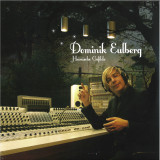
Originally released in 2007 on CD and now re-released on double vinyl. "Heimische Gefilde" was the second full-length release on Traum at that time from Westerwald based DJ, producer and park ranger, Dominik Eulberg. Dominik has since then expended his activities enormously now appearing as a book author with best selling books in the German official bestseller list. He ist he ambassador of the most popular Conservation Union in Germany NABU, he has created a bird quartet and a hand made insect hotel and appears on national German TV regularly next playing in clubs world wide and producing stunning music. "Heimische Gefilde" includes spoken words by the man himself and the release won the price of the German critic awards for music. It is the only compilation that comprises a selection of Dominik Eulberg’s best early works and it is for the first time available on vinyl now.
As Dominik Eulberg says in his own words: „After more than 16 years, "Heimische Gefilde" is finally released on vinyl. At that time it was still a daring experiment to combine music with lustful science communication. Quickly one was thrown into the pot of the "weird eco-techno sound owl". Today, we are increasingly finding that we cannot stop the impending ecocide in a cognitive way. For more than 60 years we have known about the concrete threats to humanity from global warming and species extinction; yet nothing changes. Many alarmist efforts fail miserably, red lists grow longer and longer each year, and global temperatures continue to rise unchecked. It is becoming clearer and clearer that we have to reach out to our fellow human beings in a positive emotional way in order to make a difference, because we only protect what we love. Then sentimental minorities become majorities that change something. Art and culture are low-threshold vectors to make things majority-friendly. They are a fertile and valuable breeding ground to sensitize people outside the eco-bubble and to let their environment become a co-environment again. Today my transdisipilnary work is inseparable. I write books, develop games, lecture, make film, and am a visiting scholar at museums. "Heimische Gefilde" was a valuable cornerstone for my creative work, a very intrinsic work to go my very own way.“
We would also like quote here the description of Forced Exposure done at the time when the album was originally recorded and released to keep the authentic feel: „The influence of nature (bird twitters, owl hoots, flowing water, crunching leaves) and other domestic sounds has made his music easy to identify with. „Heimische Gefilde" means "native habitat," and this release takes the concept of his debut a step further and at the same time is a retrospective of his major hits. Tracks like "Die Rotbauchunken vom Tegernsee" and "Björn Borkenkäfer" are included here in unreleased edits that are even stronger than the originals, and as a bonus, previously vinyl-only
Dear listener,
On behalf of re:discovery records, it is with great excitement that we announce the release of Stryke – The Introspection Trilogy (1994-2022). rd011 features a track that is very close to my heart. My senior year in high school. I was heavily into chill-out music at the time. Labels like FAX, Instinct Ambient, Reflective, Astralwerks, em:t, Silent, Moonshine, Rising High, Warp, Exist Dance, Visible, Eye Q and others were giving me such a wide array of beautiful sounds of more subdued techno and rhythmic ambient music. I was buying every compilation I could at the time that looked remotely different based on the artwork, the unusual artist names or the tracks. I was soaking in everything I could under the chill-out style. That year 1994 I picked up the 2nd edition of Moonshine's 'United State of Ambience 2'.
It has so many good tracks on it. One track that always held a special place in my heart was Stryke's 'Introspection pt.1'. The simple but catchy melody layering. The easy atmosphere made me feel like I was floating in the ocean. The deep 808 bass notes (I hope one day you and I will hear this on an amazing sound system). The amazing strings reach a crescendo nearing the end. This track has so many simple but beautiful sounds on it. It's a great example of what I call sequencer-styled electronic music. At a time when producers layered tracks in more of a sequence then building or placing sounds. In 2021 I was able to get a hold of Greg Chin to see if he was interested in putting the track on my label and letting it breathe freely on its own side alone as the highlight of an EP. Greg was enthusiastic about the opportunity and told me that he always wanted to complete the trilogy he had in mind of a part 2 and 3. The ominous and eerie part 2 adds a terrific tension to the finale of part 3. The last being almost an updated part 1 really concluded the trilogy for me. Both parts melded together on side B pushing near 17 minutes. I want to thank Greg for letting us be a home to complete his journey.
- Tim Humphrey aka TIM aka errorsinspace
Italian Duo Souldynamic have been turning the heat up considerably over the last couple of years. Releasing a steady stream of original track, remixes and their well loved disco reworks they have popped up on some of the most respected labels out there from King Street and Tribe to BBE. Consequently their remixes have adorned the releases of some of the most legendary performers from across the electronic scene including Louie Vega and Dennis Ferrer.
Their latest release the ‘West Side of Afrika’ EP see’s them land on the irrepressible Samosa Records. They are having a glorious couple of years with one sell out chart topping release after another so it’s a well made match.
Comprising four tracks of afro centric house music it’s a wonderfully warm and inviting release if you love your percussive African disco.
Lead track Guinée fuses easy going percussion with an effervescent bassline and a wonderfully expressive vocal. It’s a track which is easy to get lost in, one for those communal loved up dancefloor moments.
Faranah is a more laid back affair again leading off with layers of percussion its swirling dual vocals and brass stabs give it tons of feel-good zest
Over on the flip Bamako is the deepest cut on the release. It’s pounding bassline cuts through the speakers, creating immeasurable straight to the dancefloor energy. Wonderfully succinct playing and a ridiculously hooky vocal top matters off perfectly..
Final track Beyla is the perfect way to see the release out. Energetic brass stabs power the track. Couple those with some brilliant looped up percussion and it’s a track which will fit a variety of situations from the more laid back to the peak time. Indeed the percussive break down midway through is worth buying two copies for.
Another powerful release from the Samosa stable!
UILTY RAZORS, BONA FIDE PUNKS.
Writings on the topic that go off in all directions, mind-numbing lectures given by academics, and testimonies, most of them heavily doctored, from those who “lived through that era”: so many people today fantasize about the early days of punk in our country… This blessed moment when no one had yet thought of flaunting a ridiculous green mohawk, taking Sid Vicious as a hero, or – even worse – making the so-called alternative scene both festive and boorish. There was no such thing in 1976 or 1977, when it wasn’t easy to get hold of the first 45s by the Pistols or the Clash. Few people were aware of what was happening on the fringes of the fringes at the time. Malcolm McLaren was virtually unknown, and having short hair made you seem strange. Who knew then that rock music, which had taken a very bad turn since the early 1970s, would once again become an essential element of liberation? That, thanks to short and fast songs, it would once again rediscover that primitive, social side that was so hated by older generations? Who knew that, besides a few loners who read the music press (it was even better if they read it in English) and frequented the right record stores? Many of these formed bands, because it was impossible to do otherwise. We quickly went from listening to the Velvet Underground to trying to play the Stooges’ intros. It’s a somewhat collective story, even though there weren’t many people to start it.
The Guilty Razors were among those who took part in this initial upheaval in Paris. They were far from being the worst. They had something special and even released a single that was well above the national average. They also had enough songs to fill an album, the one you’re holding. In everyone’s opinion, they were definitely not among the punk impostors that followed in their wake. They were, at least, genuine and credible.
Guilty Razors, Parisian punk band (1975-1978). To understand something about their somewhat linear but very energetic sound, we might need to talk about the context in which it was born and, more broadly, recall the boredom (a theme that would become capital in punk songs) coupled with the desire to blow everything off, which were the basis for the formation of bands playing a rejuvenated rock music ; about the passion for a few records by the Kinks or the early Who, by the Stooges, by the Velvet mostly, which set you apart from the crowd.
And of course, we should remember this new wave, which was promoted by a few articles in the specialized press and some cutting-edge record stores, coming from New York or London, whose small but powerful influence could be felt in Paris and in a handful of isolated places in the provinces, lulled to sleep by so many appalling things, from Tangerine Dream to President Giscard d’Estaing...
In 1975-76, French music was, as almost always, in a sorry state ; it was still dominated by Johnny Hallyday and Sylvie Vartan. Local rock music was also rather bleak, apart from Bijou and Little Bob who tried to revive this small scene with poorly sound-engineered gigs played to almost no one.
In the working class suburbs at the time, it was mainly hard rock music played to 11 that helped people forget about their gruelling shifts at the factory. Here and there, on the outskirts of major cities, you still could find a few rockers with sideburns wearing black armbands since the death of Gene Vincent, but it wasn’t a proper mass movement, just a source of real danger to anyone they came across who wasn't like them. In August 1976, a festival unlike any other took place in Mont-de-Marsan – the First European Punk Festival as the poster said – with almost as many people on stage as in the audience. Yet, on that day, a quasi historical event happened, when, under the blazing afternoon sun, a band of unknowns called The Damned made an unprecedented noise in the arena, reminiscent of the chaotic Stooges in their early adolescence. They were the first genuine punk band to perform in our country: from then on, anything was possible, almost anything seemed permissible.
It makes sense that the four+1 members of Guilty Razors, who initially amplified acoustic guitars with crappy tape recorder microphones, would adopt punk music (pronounced paink in French) naturally and instinctively, since it combines liberating noise with speed of execution and – crucially – a very healthy sense of rebellion (the protesters of May 1968 proclaimed, and it was even a slogan, that they weren’t against old people, but against what had made them grow old. In the mid-1970s, it seemed normal and obvious that old people should now ALSO be targeted!!!).
At the time, the desire to fight back, and break down authority and apathy, was either red or black, often taking the form of leafleting, tumultuous general assemblies in the schoolyard, and massive or shabby demonstrations, most of the time overflowing with an exciting vitality that sometimes turned into fights with the riot police. Indeed, soon after the end of the Vietnam War and following Pinochet’s coup in Chile, all over France, Trotskyist and anarcho-libertarian fervour was firmly entrenched among parts of the educated youth population, who were equally rebellious and troublemakers whenever they had the chance. It should also be noted that when the single "Anarchy in the UK" was first heard, even though not many of us had access to it, both the title and its explosive sound immediately resonated with some of those troublemakers crying out for ANARCHY!!! Meanwhile, the left-wing majority still equated punks with reckless young neo-Nazis. Of course, the widely circulated photos in the mainstream press of Siouxsie Sioux with her swastikas didn’t necessarily help to win over the theorists of the Great Revolution. It took Joe Strummer to introduce The Clash as an anti-racist, anti-fascist and anti-ignorance band for the rejection of old-school revolutionaries to fade a little.
The Lycée Jean-Baptiste Say at Porte d’Auteuil, despite being located in the very posh and very exclusive 16th arrondissement of Paris, didn’t escape these "committed" upheavals, which doubled as the perfect outlet for the less timid members of this generation.
“Back then, politics were fun,” says Tristam Nada, who studied there and went on to become Guilty Razors’ frontman. “Jean-Baptiste was the leftist high-school in the neighbourhood. When the far right guys from the GUD came down there, the Communist League guys from elsewhere helped us fight them off.”
Anything that could challenge authority was fair game and of course, strikes for just about any reason would lead to increasingly frequent truancy (with a definitive farewell to education that would soon follow). Tristam Nada spent his 10th and 11th unfinished grades with José Perez, who had come from Spain, where his father, a janitor, had been sentenced to death by Franco. “José steered my tastes towards solid acts such as The Who. Like most teenagers, I had previously absorbed just about everything that came my way, from Yes to Led Zeppelin to Genesis. I was exploring… And then one day, he told me that he and his brother Carlos wanted to start a rock band.” The Perez brothers already played guitar. “Of course, they were Spanish!”, jokes their singer. “Then, somewhat reluctantly, José took up the bass and we were soon joined by Jano – who called himself Jano Homicid – who took up the rhythm guitar.” Several drummers would later join this core of not easily intimidated young guys who didn’t let adversity get the better of them.
The first rehearsals of the newly named Guilty Razors took place in the bedroom of a Perez aunt. There, the three rookies tried to cover a few standards, songs that often were an integral part of their lives. During a first, short gig, in front of a bewildered audience of tough old-school rockers, they launched into a clunky version of the Velvet Underground's “Heroin”. Challenge or recklessness? A bit of both, probably… And then, step by step, their limited repertoire expanded as they decided to write their own songs, sung in a not always very accurate or academic English, but who cared about proper grammar or the right vocabulary, since what truly mattered was to make the words sound as good as possible while playing very, very fast music? And spitting out those words in a language that left no doubt as to what it conveyed mattered as well.
Trying their hand a the kind of rock music disliked by most of the neighbourhood, making noise, being fiercely provocative: they still belonged to a tiny clique who, at this very moment, had chosen to impose this difference. And there were very few places in France or elsewhere, where one could witness the first stirrings of something that wasn’t a trend yet, let alone a movement.
In the provinces, in late 1976 or early 1977, there couldn’t be more than thirty record stores that were a bit more discerning than average, where you could hear this new kind of short-haired rock music called “punk”. The old clientele, who previously had no problem coming in to buy the latest McCartney or Aerosmith LP, now felt a little less comfortable there…
In Paris, these enlightened places were quite rare and often located nex to what would become the Forum des Halles, a big shopping mall. Between three aging sex workers, a couple of second-hand clothes shops, sellers of hippie paraphernalia and small fashion designers, the good word was loudly spread in two pioneering places – propagators of what was still only a new underground movement. Historically, the first one was the Open Market, a kind of poorly, but tastefully stocked cave. Speakers blasted out the sound of sixties garage bands from the Nuggets compilation (a crucial reference for José Perez) or the badly dressed English kids of Eddie and the Hot Rods. This black-painted den was opened a few years earlier by Marc Zermati, a character who wasn’t always in a sunny disposition, but always quite radical in his (good) choices and his opinions. He founded the independent label Skydog and was one of the promoters of the Mont-de-Marsan punk festivals. Not far from there was Harry Cover, another store more in tune with the new New York scene, which was amply covered in the house fanzine, Rock News (even though it was in it that the photos of the Sex Pistols were first published in France).
It was a favorite hang-out of the Perez brothers and Tristam Nada, as the latter explained. “It’s at Harry Cover’s that we first heard the Pistols and Clash’s 45s, and after that, we decided to start writing our first songs. If they could do it, so could we!”
The sonic shocks that were “Anarchy in the UK”, “White Riot” or the Buzzcocks’s EP, “Spiral Scratch” – which Guilty Razors' sound is reminiscent of – were soon to be amplified by an unparalleled visual shock. In April 1977, right after the release of their first LP, The Clash performed at the Palais des Glaces in Paris, during a punk night organised by Marc Zermati. For many who were there, it was the gig of a lifetime…
Of course, Guilty Razors and Tristam were in the audience: “That concert was fabulous… We Parisian punks were almost all dressed in black and white, with white shirts, skinny leather ties, bikers jackets or light jackets, etc. The Clash, on the other hand, wore colourful clothes. Well, the next day, at the Gibus, you’d spot everyone who had been at this concert, but they weren’t wearing anything black, they were all wearing colours.”
It makes sense to mention the Gibus club, as Guilty Razors often played there (sometimes in front of a hostile audience). It was also the only place in Paris that regularly scheduled new Parisian or Anglo-Saxon acts, such as Generation X, Siouxsie and the Banshees, the Slits, and Johnny Thunders who would become a kind of messed-up mascot for the venue. A little later, in 1978, the Rose Bonbon – formerly the Nashville – also attracted nightly owls in search of electric thrills… In 1977, the iconic but not necessarily excellent Asphalt Jungle often played at the Gibus, sometimes sharing the bill with Metal Urbain, the only band whose aura would later transcend the French borders (“I saw them as the French Sex Pistols,” said Geoff Travis, head of their British label Rough Trade). Already established in this small scene, Metal Urbain helped the young and restless Guilty Razors who had just arrived. Guitarist for Metal Urbain Hermann Schwartz remembers it: “They were younger than us, we were a bit like their mentors even if it’s too strong a word… At least they were credible. We thought they were good, and they had good songs which reminded of the Buzzcocks that I liked a lot. But at some point, they started hanging out with the Hells Angels. That’s when we stopped following them.”
The break-up was mutual, since, Guilty Razors, for their part, were shocked when they saw a fringe element of the audience at Metal Urbain concerts who repeatedly shouted “Sieg Heil” and gave Nazi salutes. These provocations, even still minor (the bulk of the skinhead crowd would later make their presence felt during concerts), weren’t really to the liking of the Perez brothers, whose anti-fascist convictions were firmly rooted. Some things are non-negotiable.
A few months earlier (in July 1978), Guilty Razors had nevertheless opened very successfully for Metal Urbain at the Bus Palladium, a more traditonally old-school rock night-club. But, as was sometimes the case back then, the night turned into a mass brawl when suburban rockers came to “beat up punks”.
Back then, Parisian nights weren’t always sweet and serene.
So, after opening as best as they could for The Jam (their sound having been ruined by the PA system), our local heroes were – once again – met outside by a horde of greasers out to get them. “Thankfully,” says Tristam, “we were with our roadies, motorless bikers who acted as a protective barrier. We were chased in the neighbouring streets and the whole thing ended in front of a bar, with the owner coming out with a rifle…”
Although Tristam and the Perez brothers narrowly escaped various, potentially bloody, incidents, they weren’t completely innocent of wrongdoing either. They still find amusing their mugging of two strangers in the street for example (“We were broke and we simply wanted to buy tickets for the Heartbreakers concert that night,” says Tristam). It so happened that their victims were two key figures in the rock business at the time: radio presenter Alain Manneval and music publisher Philippe Constantin. They filed a complaint and sought monetary compensation, but somehow the band’s manager, the skilful but very controversial Alexis, managed to get the complaint withdrawn and Guilty Razors ended up signing with Constantin with a substantial advance.
They also signed with Polydor and the label released in 1978 their only three-track 45, featuring “I Don't Wanna be A Rich”, “Hurts and Noises” and “Provocate” (songs that exuded perpetual rebellion and an unquenchable desire for “class” confrontation). It was a very good record, but due to a lack of promotion (radio stations didn’t play French artists singing in English), it didn’t sell very well. Only 800 copies were allegedly sold and the rest of the stock was pulped… Initially, the three tracks were to be included on a LP that never came to be, since they were dropped by Polydor (“Let’s say we sometimes caused a ruckus in their offices!” laughs Tristam.) In order to perfect the long-awaited LP, the band recorded demos of other tracks. There was a cover of Pink Floyd's “Lucifer Sam” from the Syd Barrett era – proof of an enduring love for the sixties’ greats –, “Wake Up” a hangover tale and “Bad Heart” about the Baader-Meinhof gang, whose actions had a profound impact on the era and on a generation seeking extreme dissent... On the album you’re now discovering, you can also hear five previously unreleased tracks recorded a bit later during an extended and freezing stay in Madrid, in a makeshift studio with the invaluable help of a drummer also acting as sound engineer. He was both an enthusiastic old hippie and a proper whizz at sound engineering. Here too, certain influences from the fifties and sixties (Link Wray, the Troggs) are more than obvious in the band’s music.
Shortly after a final stormy and rather barbaric (on the audience’s side) “Punk night” at the Olympia in June 1978, Tristam left the band ; his bandmates continued without him for a short while.
But like most pioneering punk bands of the era, Guilty Razors eventually split up for good after three years (besides once in Spain, they’d only played in Paris). The reason for ceasing business activities were more or less the same for everyone: there were no venues outside one’s small circuit to play this kind of rock music, which was still frightening, unknown, or of little interest to most people. The chances of recording an LP were virtually null, since major labels were only signing unoriginal but reassuring sub-Téléphone clones, and the smaller ones were only interested in progressive rock or French chanson for youth clubs. And what about self-production? No one in our small safety-pinned world had thought about it yet. There wasn’t enough money to embark on that sort of venture anyway.
So yes, the early days of punk in France were truly No Future!
Ashley Tindall, AKA Skeptical, returns in peak form with Blimp EP — the fourth release on his Rubi Records imprint — delivering four meticulously crafted cuts of uncompromising drum & bass.
Opening with the title track, Blimp sets the tone with a deep, steppy wobbler that nods subtly to the title track from his second Rubi Records release, Capsize EP. All the signature Skeptical hallmarks are here: hypnotic, pared-back metronomic drums and shimmy-inducing, undulating subs that demand movement. Yet this time there's a noticeable shift — warm, underlying melodic pads bring an unexpected emotional depth. It's not dreamy, but it is more introspective than we're used to, showing another layer to his sonic palette.
So Good flips the script entirely. A dark, cinematic growler, it leans into ghosted vocal fragments and a futuristic film-noir aesthetic. Tense, claustrophobic rhythms and sinister textures create an unsettling atmosphere — tailor-made for those lights-out, pressure-heavy dancefloor moments.
Third comes the undeniable monster of the EP, Technology. Trademark "stink-face" Skeppiness is in full effect from the first bar. Disjointed sci-fi stabs and eerie pads collide with clinical, almost militaristic drum programming, all anchored by a devastatingly weighty bassline. Movement isn't optional — this is pure Skeptical, uncompromising and lethal.
Closing the EP is Bad Generation, a sound system–influenced weapon that finds Skeptical operating at his dubwise best. Fusing minimal D&B with heavyweight, roots-inspired rhythms is no easy task, but here it's executed with effortless authority. It's equally suited to shelling down a rave or getting lost in a deep, eyes-closed session.
Four tracks. Four distinct moods. 100% Skeptical.
Blimp EP confirms once again that his sound continues to evolve — sharper, deeper, and more refined with every release.
Support: Ben UFO, Joy Orbison, Gilles Peterson, dBridge, Break, DLR, Doc Scott, Mefjus, Kasra, Kings of the Rollers, Alix Perez, Jubei, Dub Phizix, Flight, Tasha, Loxy, Lens.
- 01: Just Because You Don&Apos;T Believe That I Want To Dance, Don&Apos;T Mean That I Don&Apos;T Want To
- 02: Psalm 68 (22-35)
- 03: Cyber Feminism Index
- 04: Faithful And True
- 05: Crimes Of The Future
- 06: Rider On The White Horse
- 07: The Royal Arch
- 08: Best Served Cold
- 09: Op1 Dead
- 10: Ai Futurr
XDCVR_ unveils 'I HATE THAT SHIT, I HATE ALL THAT SHIT' a blistering sonic manifesto on the 'performativity of decay'.
In a world saturated with digital perfection, the album emerges as a vital, hand-made act of electronic rebellion.
Framed as a "soundtrack for the end stretch" the record explores the notion that societal decay is not a passive process, but an active performance—a machine chugging along long after its wheels have fallen off.
This is cyborg music for a bifurcated reality: carbon-fiber toughness shielding a core of systemic rot. The sound palette is intentionally raw and imperfect, a direct challenge to the sterile, automated order of what the artist calls the "techno-fascist oligarchy."
Tracks eschew conventional temporality, mirroring the feeling of existing in two concurrent timelines—one hyper-aware of the collapse, the other numbly consuming it.
Drawing a line from the Cold War anxieties of the past to the data-farming dystopia of the present, 'I HATE THAT SHIT…' posits art as the last authentic incubator for societal change. It is, in the artist's words, "a deliberate 'fuck you' to the oppressive order of the status quo. This is not easy listening; it is a contested space, a lit fuse, and a necessary noise for our complicated times."
- A1: Another Thought (02:16)
- A2: A Little Lost (03:18)
- A3: Home Away From Home (05:12)
- A4: Lucky Cloud (02:16)
- B1: This Is How We Walk On The Moon (04:42)
- B2: Hollow Tree (02:30)
- B3: See Through Love (04:46)
- C1: Keeping Up (06:20)
- C2: In The Light Of The Miracle (06:05)
- C3: Lucky Cloud (Return) (03:00)
- C4: Just A Blip (03:42)
- D1: Me For Real (04:55)
- D2: Losing My Taste For The Night Life (04:34)
- D3: My Tiger, My Timing (05:41)
- D4: A Sudden Chill (02:45)
2026 Repress
Another Thought was the first collection of Arthur Russell’s music to be released after his death in 1992. Released in 1993 on Point Music it marked the beginning of nearly 30 years of work to let the world hear the enormous archive of unreleased recordings Arthur left behind. Be With revisits this first compilation for a new gatefold double vinyl version and a triple-fold digipak CD reissue.
Both versions of Be With’s 2021 reissue of Another Thought have been mastered by Simon Francis and the vinyl cut by Pete Norman. The original artwork has been restored and tweaked at Be With HQ for the gatefold sleeve and the triple-fold digipak, with the essential help of Janette Beckman. Each version comes with an insert reproducing the liner notes and lyrics from the original CD release.
Together with Calling Out Of Context, Soul Jazz’s World of Arthur Russell, and much of the ongoing work of Audika, Another Thought is absolutely essential for even the most casual Arthur Russell collection. In fact we’d argue it’s essential for any fan of non-obvious pop music. This is the only place where you can hear some of Arthur’s most recognisable tunes and it’s an album that absolutely deserves to be kept in press.
We’ll assume that by now you’re all at least a little familiar with the story of Arthur Russell, the farm boy from Iowa who moved to 1970s New York. Arthur Russell the genuine musical genius who died just 40 years old, leaving behind a wealth of music that dwarfed the few 12"s and LPs that were released during his short life.
Although Arthur had been working on an album for Rough Trade during his last years, with the label no-longer operating it was Point Music (Philip Glass and Michael Riesman’s label set up together with Philips) who stepped in to help Arthur’s partner Tom Lee start working out exactly what Arthur had left behind.
Tom suggested that Arthur’s friend Mikel Rouse was the right person to make the first catalogue. Working in Tom and Arthur’s apartment he had only two weeks to go through what turned out to be around 800 tapes.
As Tom explained “at the end of each day he would generally wait for me to come home and I would, to the best of my knowledge, name and identify pieces in question from that day’s work. As he worked Mikel compiled about a dozen cassettes that he thought would present the most finished sounding songs for Don/Point to use. As Don listened he would then suggest and ask me and thus we collaborated on the choices.”
Don is Don Christensen, Another Thought’s producer. With a final selection of songs from recordings made between 1982 and 1990, including sessions with some of Arthur’s regular collaborators Peter Zummo, Steven Hall, Mustafa Ahmed, Elodie Lauten, Julius Eastman, Jennifer Warnes and Joyce Bowden, it was then Don’s job to turn these into a finished album.
Another Thought is a little different from the compilations of Arthur’s music that came out since. In our conversations with Steve Knutson (who founded Audika Records and who manages Arthur’s estate together with Tom), he explained that “more than any project released by Arthur during his lifetime or posthumously by Audika, ‘Another Thought’ is the most worked over. The material was significantly edited and rearranged from the original source tapes”.
If the aim was to release a comprehensive exploration of every facet of Arthur’s music, from the most avant-garde of his avant-garde compositions through to the most disco-not-disco of his disco-not-disco tunes then the project was a spectacular failure. But as a coherent album of non-obvious pop music Another Thought is wonderful.
Starting with the sparse voice-and-cello of the title track, A Little Lost adds some guitar along with the sneaking suspicion that we’re listening to something nowhere near as simple as it first sounds. By the time we get to This Is How We Walk On The Moon - it could be the moment you notice the congas, or the percussion that’s been building behind them, or maybe it’s that blast of trumpet and trombone - we realise we’ve gone from splashing around to being completely submerged in the musical world of Arthur Russell.
From here the album heads off on its journey around the sounds of the left-field contemporary classical music of the time, re-directed towards pop ears, with minor detours through the swirling woozy disco of the half-remembered night before on In The Light Of The Miracle and My Tiger, My Timing. Whether it’s just Arthur, his cello and some bleeps on Just A Blip, or whether he has some vocal help as he does on the bounding Keeping Up, this is difficult music made so, so easy. And through it all is Arthur’s voice and cello. Sometimes drowned in distortion and sometimes clear as a bell, but always there somewhere.
A Sudden Chill finally returns us to the calmer waters we started in and this last track closes the album with a melancholy that’s not surprising given how soon after Arthur’s death the album was put together.
Whilst Another Thought holds together with the consistency of a proper album, there’s still no getting away from the fact that this was put together from audio recorded in different ways, in different places, with different people at different times. Those with keen ears will hear traces of tape hiss, the occasional blown-out note and some digital fuzz, all fingerprints of those original recordings as well as of the 1990s digital equipment that was used to piece Another Thought together.
Add to this Arthur’s obvious pleasure in making music from the sort of sounds that can make microphones, speakers and ears uncomfortable, it’s no surprise that Another Thought isn’t glossy and pristine. Don Christensen’s productions have been careful to not scrub up those original recordings so much that they lose their original vibe, understandable given that Arthur wasn’t around as a guide. We’ve applied a similarly light touch with the mastering for these Be With versions, just working to make sure they sound like they should on both the vinyl and the CD.
Despite the Discogs rumours, Another Thought was never originally released as an LP. So when it came to the sleeve for this Be With vinyl version we took the original CD artwork as a starting point to come up with something that looks like it could have been in the record racks back in 1993.
We have to thank Janette Beckman for helping us reproduce her iconic photograph of Arthur in his newspaper boat hat. One of many photographs she took of Arthur, Janette shot this in her New York studio back in 1986 for a short article in the January ’87 issue of The Face Magazine. Those with eagle-eyes will notice we’ve used an ever-so-slightly different shot from the one that appeared in The Face and then again on the original cover of Another Thought. The original has long since been lost so we’ve worked with what is left in Janette’s archives. And we also have to thank Tom Lee for giving us permission to reproduce his liner notes from the original CD booklet, together with Arthur’s lyrics.
- A1: Sous Le Pont
- A2: Belleville Rendez-Vous - Version Française
- A3: Générique D'ouverture
- A4: Cabaret D'ouverture
- A5: Tour De France
- A6: Attila Marcel
- A7: Thème Bruno
- A8: Tout Doux Bruno - Easy, Bruno, Easy
- A9: Belleville Rendez-Vous - Demo
- B1: Thème De La French Mafia
- B2: Bach À La Jazz
- B3: Cabaret Aspirateur
- B4: La Jungle De Belleville
- B5: Barbier "Cieco, Cieco
- B6: Pa Pa Pa Palavas
- B7: Retour De La French Mafia
- B8: Filature
- B9: Poursuite
- B10: Belleville Rendez-Vous Version Anglaise
A true gem of French animated cinema, Sylvain Chomet's Les Triplettes de Belleville (2003) left a lasting impression with its quirky universe, tender humor, and unforgettable musical score.
Composed by Benoît Charest, this cult soundtrack blends retro swing, gypsy jazz, ramshackle brass bands, and cycling rhythms to create a unique atmosphere that is both nostalgic and fiercely modern.
This vinyl edition finally celebrates the soundscape of Belleville as it deserves to be celebrated: unusual percussion instruments made from bicycle parts, mischievous orchestrations, and the playful voice of the cult song “Belleville Rendez-vous,” performed by M - Matthieu Chedid in its French version.
Carefully remastered for analog format, the record captures all the warmth and vitality of this timeless music, a vibrant tribute to the creativity and audacity of the film.
A must-have for lovers of cinema, jazz, and beautiful vinyl editions.
- Bike In L.a
- Driving Down Slow With My 505
- Barcelona (Learning To Love Myself)
- Strangers
- Heartbreak Big Mac
- Passenger
- Souvenir Shop
- Opposite Opinions
- Just Like Ice Cream
- Where Do You Go?
- Jude Bellingham
- It's A Beautiful World (When I'm On My Own)
The Germany-based band Rikas' new album, "Soundtrack For A Movie That Has Not Been Written Yet," promises to be their most cohesive and contemplative project to date
Comprising 11 brisk yet beautiful tracks, the album showcases the band's tight tempos and mellow delivery. "We started this record just to have fun. It's not been that easy, because so much change has happened," guitarist and keyboardist Sascha Scherer reflects. "We've had to learn to adapt... This record is more inward-looking. We were reflecting. " Scherer further explains, "I think a lot of bands have trouble staying still. When you stop touring and moving to a new city each day, you feel lost. I feel like our new album is capturing that feeling of go, go, go." This feeling of inertia contains layers: there's a sense of restlessness, but also brotherhood and camaraderie-- feelings Rikas aim to depict in each of the album's videos. "For our sophomore album, we wanted to create a very homogeneous one," Scherer continues. "Which was not easy to achieve because we have made the experience that throughout all of our records every song differs from each other. We have four songwriters who happen to be also multi-instrumentalists in our band, and that's why we don't have to put much effort into diverse record making. Instead, we had to put pressure on ourselves to make something consistent. But we also didn't want to make every song sound the same. So the concept of the album lays in its topics."The songs for "Soundtrack For A Movie That Has Not Been Written Yet" were written over the past year, adapting and shaping old snippets and ideas, as well as creating songs completely from scratch. "For some reason, when we started writing and listening back to the songs, they all shared a similar feeling of cruising, traveling, being in motion," Scherer says. "This wasn't intentional at first, but felt more and more suiting as we proceeded with the writing. We found we'd enjoy the songs most while driving in our van, looking out the window, seeing the landscapes passing by. This has something very meditating to itself already, amplified even more by a suiting soundtrack. This is the soundtrack we tried to write. The album in its entirety is supposed to feel warm, hugging, like 'being bedded in cotton.'" For the visual content of the album, the band decided to travel to San Remo, northern Italy, to capture some of the late November sun. "In a way, you could say we tried to film the first part of the movie whose soundtrack we had just written," Scherer concludes. "Soundtrack For A Movie That Has Not Been Written Yet" is a testament to Rikas' ability to adapt and reflect on their journey, offering listeners a meditative and immersive experience that captures the essence of being in motion.
- Sunrise, Sunset
- I'll Drive
- Half Of Me
- Vincent
- Half Moon Eyes (Feat. Bonnie Raitt)
- Tumbling Wild
- Dog Ear
- Knuckles (Feat. Bonnie Raitt)
- Let Me Down Easy
- Wide Awake And Dreaming
- Strange Dear (Feat. Begonia)
Die Grammy-gekrönten Songwriter The Bros. Landreth kehren mit ihrem vierten Studioalbum ,Dog Ear" zurück. Die mehrfach mit dem JUNO Award ausgezeichneten liefern ein herzliches und energiegeladenes Album, das die unbestreitbare Energie dieser Band einfängt. Inspiriert von der Freude und Kameradschaft, die sie während zweier lebhafter Jahre auf Tournee nach der Pandemie erlebt haben, begaben sich die Brüder Joey und Dave Landreth zusammen mit ihren engen Mitarbeitern Roman Clarke, Murray Pulver und Ian Phillips ins Studio. ,Dog Ear" wurde in einer inspirierten fünftägigen Session aufgenommen und ist das bisher fröhlichste und hoffnungsvollste Album der Band, das die Melancholie der Vergangenheit hinter sich lässt und Themen wie Familie, Optimismus und emotionale Resilienz erkundet. Das Album enthält elf emotional bewegende Tracks, darunter Beiträge von Bonnie Raitt, die dem fesselnden ,Half Moon Eyes" ihre ikonische Stimme leiht und ,Knuckles" in ein tiefgründiges Duett verwandelt. Die ebenfalls aus Winnipeg stammende Powerfrau Begonia liefert eine faszinierende Performance zum Albumabschluss ,Strange Dear" und verleiht der Erzählung des Albums zusätzliche Tiefe. Im Kern ist Dog Ear eine ehrliche Auseinandersetzung mit der Frage, was es bedeutet, für die Menschen, die man liebt, immer da zu sein - insbesondere aus der Perspektive der Elternschaft. Songs wie das beschwingte ,I'll Drive", geschrieben zusammen mit Jonathan Singleton aus Nashville, verkörpern unbeschwerte Flucht aus dem Alltag, während das zarte ,Half of Me" die tiefen Verbindungen unterstreicht, die Beziehungen ausmachen. Die herausragenden Songs ,Dog Ear" und ,Vincent" bieten fesselnde Betrachtungen über Stabilität, Freundschaft und persönliches Wachstum, präsentiert mit der für die Bros. typischen geschickten Gitarrenarbeit, melodischen Wärme und lyrischen Aufrichtigkeit. Mit internationaler Anerkennung, JUNO Awards, einem Grammy Award (als Songwriter für Bonnie Raitts Grammy-prämierte Americana-Performance von ,Made Up Mind" aus dem Jahr 2023) und Lob von Kritikern wie Rolling Stone, NPR, American Songwriter und vielen anderen festigen The Bros. Landreth ihren Ruf als Meister ihres Fachs. Ihre energiegeladenen Live-Auftritte begeistern das Publikum weltweit, und mit Dog Ear liefern sie ihr bisher stimmigstes und mitreißendstes Statement.
Philipp Priebe, a true romantic in the realm of electronic music, is ready to captivate audiences with his latest masterpiece, “Until The End”.
This album is a vivid canvas painted with Priebe’s signature blend of emotive melodies and pulsating rhythms, promising an experience that ignites both movement and emotion. Renowned for his talent in crafting immersive sonic landscapes that resonate with longing and ardor, Priebe’s forthcoming release on “Paradijs Boogie”, the first offshoot of the esteemed German label Freund der Familie is highly anticipated.
With a decade of musical prowess and a reputation for delivering soul-stirring house music, “Until The End” is poised to take listeners on a captivating journey through the ethereal realms of Priebe’s musical universe.
Philipp Priebe, a true romantic in the realm of electronic music, is ready to captivate audiences with his latest masterpiece, “Until The End”.
This album is a vivid canvas painted with Priebe’s signature blend of emotive melodies and pulsating rhythms, promising an experience that ignites both movement and emotion. Renowned for his talent in crafting immersive sonic landscapes that resonate with longing and ardor, Priebe’s forthcoming release on “Paradijs Boogie”, the first offshoot of the esteemed German label Freund der Familie is highly anticipated.
With a decade of musical prowess and a reputation for delivering soul-stirring house music, “Until The End” is poised to take listeners on a captivating journey through the ethereal realms of Priebe’s musical universe.
Repress!
In the mid-1970s, a force of nature swept across the continental United States, cutting across all strata of race and class, rooting in our minds, our homes, our culture. It wasn’t The Exorcist, Goodbye Yellow Brick Road, or even bell-bottoms, but instead a book called The Secret Life of Plants. The work of occultist/former OSS agent Peter Tompkins and former CIA agent/dowsing enthusiast Christopher Bird, the books shot up the bestseller charts and spread like kudzu across the landscape, becoming a phenomenon. Seemingly overnight, the indoor plant business was in full bloom and photosynthetic eukaryotes of every genus were hanging off walls, lording over bookshelves, and basking on sunny window ledges. The science behind Secret Life was specious: plants can hear our prayers, they’re lie detectors, they’re telepathic, able to predict natural disasters and receive signals from distant galaxies. But that didn’t stop millions from buying and nurturing their new plants.
Perhaps the craziest claim of the book was that plants also dug music. And whether you purchased a snake plant, asparagus fern, peace lily, or what have you from Mother Earth on Melrose Avenue in Los Angeles (or bought a Simmons mattress from Sears), you also took home Plantasia, an album recorded especially for them. Subtitled “warm earth music for plants…and the people that love them,” it was full of bucolic, charming, stoner-friendly, decidedly unscientific tunes enacted on the new-fangled device called the Moog. Plants date back from the dawn of time, but apparently they loved the Moog, never mind that the synthesizer had been on the market for just a few years. Most of all, the plants loved the ditties made by composer Mort Garson.
Few characters in early electronic music can be both fearless pioneers and cheesy trend-chasers, but Garson embraced both extremes, and has been unheralded as a result. When one writer rhetorically asked: “How was Garson’s music so ubiquitous while the man remained so under the radar?” the answer was simple. Well before Brian Eno did it, Garson was making discreet music, both the man and his music as inconspicuous as a Chlorophytumcomosum. Julliard-educated and active as a session player in the post-war era, Garson wrote lounge hits, scored plush arrangements for Doris Day, and garlanded weeping countrypolitan strings around Glen Campbell’s “By the Time I Get to Phoenix.” He could render the Beatles and Simon & Garfunkel alike into easy listening and also dreamed up his own ditties. “An idear” as Garson himself would drawl it out. “I live with it, I walk it, I sing it.”
But as his daughter Day Darmet recalls: “When my dad found the synthesizer, he realized he didn’t want to do pop music anymore.” Garson encountered Robert Moog and his new device at the Audio Engineering Society’s West Coast convention in 1967 and immediately began tinkering with the device. With the Moog, those idears could be transformed. “He constantly had a song he was humming,” Darmet says. “At the table he was constantly tapping.” Which is to say that Mort pulled his melodies out of thin air, just like any household plant would.
The Plantae kingdom grew to its height by 1976, from DC Comics’ mossy superhero Swamp Thing to Stevie Wonder’s own herbal meditation, Journey Through the Secret Life of Plants. Nefarious manifestations of human-plant interaction also abounded, be it the grotesque pods in Invasion of the Body Snatchers or the pothead paranoia of the US Government spraying Mexican marijuana fields with the herbicide paraquat (which led to the rise in homegrown pot by the 1980s). And then there’s the warm, leafy embrace of Plantasia itself.
“My mom had a lot of plants,” Darmet says. “She didn’t believe in organized religion, she believed the earth was the best thing in the whole world. Whatever created us was incredible.” And she also knew when her husband had a good song, shouting from another room when she heard him humming a good idear. Novel as it might seem, Plantasia is simply full of good tunes.
Garson may have given the album away to new plant and bed owners, but a decade later a new generation could hear his music in another surreptitious way. Millions of kids bought The Legend of Zelda for their Nintendo Entertainment System back in 1986 and one distinct 8-bit tune bears more than a passing resemblance to album highlight “Concerto for Philodendron and Pothos.” Garson was never properly credited for it, but he nevertheless subliminally slipped into a new generations’ head, helping kids and plants alike grow.
Hearing Plantasia in the 21st century, it seems less an ode to our photosynthesizing friends by Garson and more an homage to his wife, the one with the green thumb that made everything flower around him. “My dad would be totally pleased to know that people are really interested in this music that had no popularity at the time,” Darmet says of Plantasia’snew renaissance. “He would be fascinated by the fact that people are finally understanding and appreciating this part of his musical career that he got no admiration for back then.” Garson seems to be everywhere again, even if he’s not really noticed, just like a houseplant.
Hot summer rain hits the cracked pavement in uneven rhythms. A neon sign flickers above a café that never seems to close, its warm white light reflected in the wet ground like a fever dream. The air smells of summer and the world hums with an easy tone, as if the city itself is holding its breath. A light flooded film noir-ish scene, that needs a soundtrack like "POOL JAMS", the new album of INIT, the Berlin based duo, that already caused quite a stir with their albums for Hivern Discs and Optimo Music. This time, they bring their latest creations out on R.i.O. - a label, with whom they are deeply associated. Their fourth longplayer is a playful one. One that brings trip hopping feelings. That has r'n'b grace, without catering regular trademarks of the genre. Dub, trance, drone, is all there too. Yet, nothing is present in pure definition. Rather suggested, interwoven, or newly twisted in a songwriting style, that haunts and seduces. On top the voice of Nadia D'Alò dances, steps and hums tempting to the grooves she created with her partner in crime Benedikt Frey. Together they fashioned a record, that, as INIT puts it, is "some kind of old photo from an old dry empty pool that got faded by sunlight ". A dreamy, sunny piece of song art, made for endless smoky LA freeway drives, and other adventures that seek for infinite riddance. You can dream it. You can trance it. You can't escape it, as soon as it rotates in your dream device for sound and vision.
Hailing from the southwest side of Detroit, Michigan, Dusty Rose Gang makes music that sounds like a celebratory summer evening with friends on the beach of the city’s crown jewel, Belle Isle. The band’s feel-good rock & roll rests its laurels alongside many of the city’s musical heavyweights, bringing a swagger and heft present in the best of the MC5 and the Stooges, while balancing the subtle tones and attitude found in prime-era Sabbath, Queen, Jimi Hendrix and the Flower Travellin’ Band. It should be no surprise that the band’s songwriter, Dusty Rose, haunted the same high school halls as the MC5 at Lincoln Park High, as much of the attitude, poise and spirit can be found on the band’s A-One From Day One long player debut for the legendary Riding Easy Records. The songs shimmer and shake, shredding through solo after solo, while packing just enough hazy 70’s influence to make it sound like Dusty Rose Gang has been here all along. This is Detroit rock n’ roll made by lifers for lifers, the no-bullshit real deal that the Motor City has been breathing since before Gene Simmons coined the term “Detroit Rock City." A-One From Day One was produced and recorded by Warren Defever at Free Party Bar, Hamtramck and mastered at Third Man Mastering. Engineered by Cam Frank. The album was recorded with Brett Donlon (bass), J. Rowe (drums, percussion), Kara Meister (backing vocals), and Warren Defever (mellotron, organ). The current line-up of Dusty Rose Gang features Dusty Rose (guitar, vocals), Brett Donlon (bass), Blake Hill (drums) and Josh Budiongan (guitar).
All songs recorded and mixed by Pat Lilley at Nexus Recording Studio in Waukesha
Wisconsin between 1998-1999. Songs 1,2, and 4 originally appeared on Parallel
Chlorophyll Regions (Highwater Records 005) 1998. Song 3 originally appeared on
Akarso/Seven Days of Samsara Split 7" (Ricky Schroeder Fan Club 001) 2000. Songs
5-8 originally appeared on Akarso/Faraquet Split CD (404 Records 002) 1999.
Milwaukee's underground scene of the late 1990s harbored many hidden gems, and
Akarso is certainly one of its finest. Blending elements of post-hardcore, math rock,
screamo, and noise rock, the trio quickly made a name for themselves during their
short yet intense existence. Their chaotic and intricate sound earned them a loyal
following within math and post-hardcore circles, and they toured extensively, leaving
behind a legacy that would influence the Midwest's underground music scene for
years to come. With Leave Quietly: 1997-1999, Akarso's complete recorded catalog has
been unearthed, giving listeners a chance to experience the raw energy and innovative
sound of a band that was well ahead of its time. Released through Expert Work
Records, this LP collects Akarso's recorded output from their brief but impactful run.
Featuring Nathan Lilley on vocals and guitar (who would later gain notoriety with Call
Me Lightning), Joe Wong on drums (now a prolific composer for TV and film and host
of The Trap Set ), and Greg Roteik on bass (of Key of Evil fame), the trio's musical
chemistry is undeniable. Their dynamic interplay and knack for combining dissonance
with technical precision is immediately apparent, and this collection serves as both a
time capsule and sheer example of their musical skills.
The songs feel unpolished in the best possible way, full of jagged guitar riffs, off-kilter
rhythms, and aggressive vocals. It's easy to hear why Akarso garnered attention
during their brief career: their music demanded attention. Tracks from the collection
highlight their ability to balance complex structures with visceral energy, reflecting
their post-hardcore roots while pushing into more experimental territory. At the heart
of Akarso's sound is their seamless blending of math rock's technical precision with
the ferocity of post-hardcore and noise rock. The intricate guitar work of Nathan Lilley,
coupled with the driving rhythms of Joe Wong and the powerful basslines of Greg
Roteik, creates a tense and unpredictable musical experience. Time signatures shift
without warning, dissonant riffs collide with frenetic drumming, and Lilley's vocals
pierce through the chaos with a cathartic and desperate intensity.
It's a challenging, chaotic, and emotionally charged album that captures the intensity
of Akarso's live performances and the raw energy of their songwriting. More than two
decades later, Akarso's music remains as vital and relevant as ever, and this collection
that their legacy will continue to inspire future generations of musici
- The Big Picture
- Method Acting
- False Advertising
- You Will. You? Will. You? Will. You? Will
- Lover I Don't Have To Love
- Bowl Of Oranges
- Don't Know When But A Day Is Gonna Come
- Nothing Gets Crossed Out
- Make War
- Waste Of Paint
- From A Balance Beam
- Laura Laurent
- Let's Not Shit Ourselves (To Love And To Be Loved)
Yellow & Black Vinyl. "The first three are innocent in a way, because we didn't have an audience when we were making them," Oberst says. "But from Lifted on, I was definitely aware of an audience. Lifted was well-received right away, and then everything happened with Wide Awake and Digital Ash." Those two albums came out simultaneously. And their lead singles - "Take It Easy (Love Nothing)," from the austere, remote Digital Ash, and "Lua," from the warm, folky Wide Awake - debuted in the top two slots on the Billboard Hot 100. "First Day of My Life," also from Wide Awake, would later be voted the Number One love song of all time by NPR Music's reader's poll.Bright Eyes had officially broken through. It was a heady, exciting time, but also fraught and tense, both because of the band's careening new fame, and because of the state of the world. When Bright Eyes made their Tonight Show debut in 2006, they chose to perform none of their shiny new hits, instead delivering a searing, harrowing rendition of their caustic anti-Bush anthem, "When The President Talks To God."These days, Oberst is still amusing himself by messing with the extremes Bright Eyes baked into this era's releases, extremes that reflected the polar, with-us-or-against-us, fractious feel of the times. The reworked Digital Ash tracks, originally so clean and elegant, are, on the companion EP, full of "harmonica and mandolins - folky vibes," Oberst says. While the analogue sweetness of the Wide Awake songs have been put through a detached nihilism filter.
- A1: Dear John
- A2: Angel Artist Feat Tom Misch
- A3: Ice Water
- A4: Ottolenghi Feat Jordan Rakei
- A5: You Don't Know Feat Rebel Kleff & Kiko Bun
- A6: Still
- A7: It's Coming Home
- A8: Desoleil (Brilliant Corners) Feat Sampha)
- B1: Loose Ends Feat Jorja Smith
- B2: Not Waving, But Drowning
- B3: Krispy
- B4: Sail Away Freestyle
- B5: Looking Back
- B6: Carluccio
- B7: Dear Ben Feat Jean Coyle-Larner
Loyle Carner will release his highly anticipated sophomore record, 'Not Waving, But Drowning' on 19 April via AMF Records.
'Not Waving, But Drowning' follows Loyle's BRIT (Best Male, Best Newcomer) and Mercury Prize nominated, top 20 debut 'Yesterday's Gone'. The bedrock of honest and raw sentimentality that you heard on 'Yesterday's Gone' left an inextinguishable mark on music in general and UK Hip Hop in particular, standing out as an ageless, bulletproof debut.
'Not Waving, But Drowning', Loyle's new album, gives yet more evidence - as if it were needed - of his razor-sharp flow and his unique storytelling ability. Yes, he can rap, but he allies that with the sensitivity of a poet, the observational skills of a novelist, and warmth of your best friend. The album opens with 'Dear Jean', a letter to his mother in which he's telling her that he has found the love of his life, 'a woman from the skies', and he's moving out.
It goes without saying that Loyle's music is hard to categorise, but what is even more impressive is that for someone who grew up listening to Mos Def, Biggie Smalls, Roots Manuva, and Wu Tang Clan, he doesn't sound like any of them. Although he might from time to time give lyrical nods to them, he's no imitator.
Loyle loves cooking. There are two tracks on this album named after chefs. The British-Israeli chef Yotam Ottolenghi, and the now deceased Italian chef Antonio Carluccio. 'Ottolenghi' the first single from the album was featured on the BBC Radio 1 B-list, BBC 6 Music A-list and has already been streamed over 5 million times.
Loyle refers to real life for everything, the title of 'Yesterday's Gone' came from a song of his step father, the title of his new album 'Not Waving, But Drowning' comes from a poem by his grandfather, which in turn came from a Stevie Smith poem. What you hear on the track 'Krispy' is real. He is pouring his heart out to his best friend Rebel Kleff after their relationship went downhill, he invites him on the track to say his piece but he doesn't turn up, so we get a flugel solo instead.
Loyle also has his own personal black consciousness movement. When he refers to his 'fathers' in the track 'Looking Back' he really is referring to two fathers. His biological father, a black man who he knows, but knows very little of, and his step father, a poet and musician who happens to be a white man but died a sudden unexpected death from epilepsy (SUDEP). With no real emotional ties to his biological father, but a deep connection with a deceased step-father, where does a young child turn He succinctly captures many of the great, unspoken, cultural and historical paradoxes of multicultural Britain on 'Looking Back'.
An album like this is hard to find. It is for those who like their Hip Hop to have soul, and their soul to have spirit. This is because it works on so many levels, but it is reflecting the personality of its creator. There are a host of collaborators here, Jorja Smith, Rebel Kleff, Kiko Bun, Kwes, Jordan Rakei, Sampha, Tom Misch and more, but none are overpowering. They blend righteously into place.
Loyle is not bitter with people who have let him down, or a society that lets so many down, but the combination of anger and love he has gives his voice the perfect blend of strength and vulnerability. This might be a coming of age album, but it's also a coming of ageless album. Loyle's 2019 Spring tour - which includes London's Roundhouse - sold out within 20 minutes of being on sale.
Not Waving, But Drowning
A rapper that raps about family is hard to find. The boys in the 'hood' tend not to be that interested in how much a 'brother' loves his mother, or how much he misses his dad, or even how much he misses his best friend. The boys in the 'hood' tend to be obsessed with the size of their cars, girls, bank accounts, and other personal 'possessions'. Loyle Carner's Mercury and BRIT Prize nominated debut 'Yesterday's Gone' (Released 2017), made it clear that he wasn't that kind of rapper. In fact, every time I talk to him about his work we talk about the world, and we tended to confuse ourselves by calling his work rap, poems, or songs, sometimes in the same sentence. They are in truth all of these things.
Here's some poetry.
Honestly I need them.
I hate them but I grieve them
I think I've finally found the reason
Trust
Like the fire needs the air.
I won't burn unless you're there.
'Not Waving, But Drowning', Loyle's forthcoming new album, gives us yet more evidence, (if it were needed), that he still has what rappers call, flow, but he hasn't lost any of his story telling qualities. Yes, the boy can rap, but a rapper with the sensitivity of a true poet, the observational skills of a novelist, and warmth of your best friend. The album opens with 'Dear Jean', a letter to his mother in which he's telling her that he has found the love of his life, (a woman from the skies), and he's moving out. He really loves the woman from the skies, but he still loves his mum, and so he reassures her that there is no competition, and tells her that 'She's not behind me or behind you, but beside we and beside two', his words. Or to put it another way, moving out without moving out. My words.
It goes without saying that Loyle's music is hard to categorise, but what is even more impressive is that for someone who grew up listening to Mos Def, Biggie Smalls, Roots Manuva, and Wu Tang Clan, he doesn't sound like any of them. Although he might from time to time give lyrical nods to them, he's no imitator. He says finding his own voice was something he always found easy. Although young, (in terms of a musical career), he has confidence in his own words and his own voice, and has never been tempted to sound like he's been hanging out in the USA, or rolling in 'Grime' on the mean streets of East London. And so when it comes to the creative process he doesn't simply find a beat to jump on and ride. Beats are important, but they are tenderly layered with samples, keyboards, or live drums, all imaginatively assembled for the laying on of words. Some tracks start with the idea, some with poetry, and some with a verse from a singer or some other melodic inspiration, but there is no formula.
Here's some poetry.
Don't hold any memories of us
Rather hold you everyday until the memories are dust
Yo we only caught the train
Cos you know I hate the bus
A prolific reader, who has dyslexia is hard to find. Add ADHD (Attention deficit hyperactivity disorder) to that and life should become even more difficult. To deal with your difficulties you devise coping strategies, which can differ from person to person. Loyle loves cooking. There are two tracks on this album named after chefs. The British-Israeli chef Ottolenghi, and the now deceased Italian chef Antonio Carluccio. Loyle describes himself as 'weird' because he is happy to read a cookbook as if he was reading a novel or a book of poetry. He has opened a cookery school for young adults not just because he loves food and wants to make more of it, but because it is one of the few things that can focus the ADHD mind. And when it comes to his other love, football, his approach is the same. Focus. He wanted to be a striker he says, up front scoring goals, but found his best position was in midfield because he was able to focus, check options, and see passes ahead of time, providing passes for other players just when they needed them. He says, 'You don't grow out of ADHD, you grow into it.' Loyle is also working with Levi's® on their music project where he is mentoring young musicians over a six month period, culminating at Liverpool Sound City festival.
More poetry.
When the going is tough
I wait till it falls on deaf ears
Hearsay
Without the boundaries of love
He also said, 'Ask most people and they will say that they love their mothers, but most are not going to rap about her'. On his first album Loyle's mum Jean wrote about the 'scribble of a boy' that growing up would take things apart to see how they worked. On this album she speaks with pride about a man who has found his place in the world.
Yes, poetry.
I'm still looking for the answers
Trying to find the right questions
Still waiting for my fathers
But can't break them in to sections
This poetry is serious. Loyle has his own personal black consciousness movement. He told me that he always felt safe at home, and being the darkest one in the family never meant a thing, but then when he had to face the outside world he felt hostility. It shook him up. Now he had to start asking questions, but what were the questions. This is serious. When he refers to his 'fathers' in the verse above taken from the track 'Looking Back' he really is referring to two fathers. His biological father, a black man who he knows, but knows very little of, and his step father, a poet and musician who happens to be a white man but died a sudden unexpected death from epilepsy (SUDEP). So to whom would a young black (or mixed race) kid turn He succinctly captures many of the great, unspoken, cultural and historical paradoxes of multicultural Britain when he says, 'My great grandfather could of owned my other one.' We are a people descended from enslaved people on one hand, and enslavers on the other, something we are still struggling to come to terms with, and this can be apparent in one family. A big book could have told you that, but here we get it in one line on the track, Looking Back.
Loyle refers to real life for everything. The album is peppered with captured moments that he records on his phone. These moments can range from conversations with taxi drivers, to capturing the moment when England scores a goal in the world cup. The title of 'Yesterday's Gone' came from a song of his step father, the title of his new album 'Not Waving but Drowning' comes from a poem by his grandfather, which in turn came from a Stevie Smith poem. What you hear on the track 'Krispy' is real. He is pouring his heart out to his best friend after their relationship went downhill, he invites him on the track to say his piece but he doesn't turn up, so we get a flugel solo instead. Yes people, this is real.
An album like this is hard to find. It is for those who like their Hip Hop to have soul, and their soul to have spirit, this is an album for those who have, (I'm sorry, I'm going to say it), emotional intelligence. This is because it works on so many levels, but it is reflecting the personality of its creator. There are a host of collaborators here, Jorja Smith, Rebel Kleff, Kiko Bun, Jordan Rakei, Sampha, Tom Misch and more, but none are overpowering. They blend righteously into place. Loyle is not bitter with people who have let him down, or the society that has let him down, but the combination of anger and love he has gives his voice the perfect blend of strength and vulnerability. This might be a coming of age album, but it's also a coming of ageless album. His first album worked, and this second album is a continuation of that work. Not creating a form, but being formless, as someone like Bruce Lee once said.
And here's some poetry from mum.
We talked long in to the darkest hours
Until we saw the burnished sky
And our eyes stung
As our words blurred and became thoughts
As we were silenced by the dawn
We clung to each other like sailors in a storm
- New Horse
- Trade It
- Idaho
- Track
- At It Again
- Channel 2
- Whispers (In The Outfield)
- Falling Apart
- Montana
- Movey
- Idaho (Live)
- Falling Apart (Live)
- Track (Live)
- Trade It (Live)
- Montana (Live)
- Iowa
- At It Again (Again)
Slow Pulp celebrates five years of their breakout debut album Moveys with a deluxe reissue. Available for the first time on gatefold vinyl, the double LP release includes live versions of beloved singles like "Falling Apart" and "Idaho," as well as two reimagined versions of Moveys-era tracks. Full of blistering energy and emotional catharsis, Moveys is a testament to hard-fought personal growth. Since its 2020 release, the band has appeared on late night TV, performed at Lollapalooza, and toured with The Pixies, Alvvays, The Postal Service, and Death Cab For Cutie. Slow Pulp's remarkable full-length debut Moveys is a testament to hard-fought personal growth. In the process of making this record, the Chicago-based indie rock band powered through health challenges, personal upheaval, and a pandemic, all while learning how to be better songwriters and friends. Their made-up word "moveys" is multi-faceted for Slow Pulp. It is an invitation to dance. It is a wink at the cross-country nature of the album's songwriting process, while the bandmates were literally on the move touring, sheltering in place, and going through major life changes. But, mostly, it's an inside joke. Listening to these warm, dynamic and welcoming songs, it's easy to feel like you're a part of it too.
EN: Replacement filter for record washing machine Disco-Antistat Ultrasonic (1360008)
Durable, reusable filter with housing made of high-quality anodised aluminium and glass
Extremely easy to maintain, as the filter can be removed in just a few steps and completely dismantled for cleaning
Easy to use, you can see at a glance when the filter needs cleaning
Suitable for all record washing machines Disco-Antistat Ultrasonic, units with older filters can be converted without any problems.
DE: Ersatzfilter für Schallplattenwaschmaschine Disco-Antistat Ultrasonic (1360008)
Langlebiger, wiederverwendbarer Filter mit Gehäuse aus hochwertigem, eloxiertem Aluminium und Glas
Extrem wartungsfreundlich, da der Filter mit wenigen Handgriffen ausgebaut und zur Reinigung komplett zerlegt werden kann
Einfache Handhabung, auf einen Blick lässt sich erkennen, wann der Filter gereinigt werden muss
Für alle Schallplattenwaschmaschinen Disco-Antistat Ultrasonic geeignet, Geräte mit älteren Filtern können problemlos umgerüstet werden.
- Chaleur Humaine
- Peace Of Mind #2
- Watching The Cars
- Alma
- She's An Easy Rider
- Réparations
- A Long Time
- Voir Le Jour
- A Tiger Has Escaped From The Zoo
- Le Léthé
- Vitalisme
- Au Revoir Ma Chérie
On October 18th, Nicolas Michaux will release his third album, titled Vitalisme. This album consists of twelve recordings made over the years on the Danish island of Samsø and at the Free House, the studio of Capitane Records in Brussels. Much like in his previous album Amour Colère, Michaux navigates between polarities in Vitalisme : dawn and dusk, birth and destruction, hope and cold lucidity, past and future. However, this time it is less about exploring the different poles of human experience and more about bringing them together at a precise point where life unfolds. Armed with impeccable writing in both French and English, Michaux traverses the familiar lands of inspired songwriters, addressing grand themes of timeless poetry as well as the empirical realities of the contemporary world: love, illness, war, wisdom, resurrection; but also climate change and class war
- 1: Peach Blossom Paradise
- 2: Demon Cicadas In The Night
- 3: The Cold Curve
- 4: Saying Yes To Everything
- 5: Lighthouse
- 6: Revisionist Mystery
- 7: The Meander
- 8: The Wheel Of Persuasion
- 9: Another Tomorrow
- 10: Common Exotic
Prairiewolf make easy listening music for an age of fracture. They almost do it in spite of themselves. No one can seriously question the head music bona fides of the members of this Colorado-based trio.
Guitarist Stefan Beck has already assembled a formidable discography of jewel-toned guitar zone-outs under his Golden Brown moniker. And keyboardist and guitarist Jeremy Erwin and bassist Tyler Wilcox have both made their reputations as chroniclers of the vast world of out-music. Erwin helms the indispensable Heat Warps blog, a performance-by-performance archive of Miles Davis’s labyrinthine electric period. And Wilcox has been covering the ragged edges of psychedelia and experimental rock at Aquarium Drunkard and other publications, not to mention his own virtual basement for heads, the great bootleg blog Doom and Gloom from the Tomb.
These guys come by it honestly. And yet, given their backgrounds, Prairiewolf’s self-titled debut last spring was remarkably free of face-melters, brown acid blowouts, and ascendant spiritual jazz odysseys. Instead, they dropped a record of beautiful, elegant, low-key cosmic groovers that sounded like the piped-in background music to a resort hotel on Jupiter. It was an unlikely psychedelia, brocaded with mid-twentieth century sonic threading from the hi-fi era: vintage synthesizers, smears of spaghetti western, luxe tropical details, the faint schmaltz of space age pop. Imagine something like a Harmonia residency in the airport lounge. And yet somehow it all worked brilliantly. Prairiewolf became last summer’s cool-down standard. After a year woodshedding around Colorado’s Front Range region, the Prairiewolf boys have fired up their trusty Korg SR-120 drum machine for another outstanding collection of suborbital exotica. The appropriately titled Deep Time operates in its own chronology, unspooling at its unhurried pace. All its incongruous period and stylistic references—the new age pulses, Hawaiian steel, shaggy hippie rambles, lysergic guitar spirals, and orchestral synthesizer flourishes—float atop the album’s own singular temporality. Deep Time makes its own time.
From the moment Beck folds his slide guitar, origami-like, into a sound resembling the call of gulls on the tranquil album opener, “Peach Blossom Paradise,” there is a sense of departure from everyday life. The shimmering “Lighthouse” has a similar sunbaked nonchalance, like an afternoon passed day-drinking in a seaside bar. That they named their lush, kaleidoscopic downtempo track “The Meander” pretty much says it all. The ranging, propulsive “Saying Yes to Everything” seems like a nod in the direction of Rose City Band’s brand of wookie krautrock. And the motorik noir of “Demon Cicadas in the Night” also goes hard. Beck and Erwin’s intertwined guitar jam on the eerie album standout “The Cold Curve” evolves into something that sounds like primitive computer music. A genteel bassline from Wilcox on another album highlight, “Revisionist Mystery,” sets the stage for a loopy space jazz turn from guest clarinettist Matt Loewen of Rayonism. The title of post-rock cowboy tune “Another Tomorrow” might refer to the alternative future that so many critics heard in the music of Prairiewolf’s first album. Or it might simply refer to the persistence of time, however deep. Either way,
I’m thankful for the way Prairiewolf make each of their tunes a little oasis or sanctuary, each subsisting according to its own crystalline little logic for a few minutes. It is no simple task to filter out the omnipresent anger and anxiety of everyday life these days. But Prairiewolf are out here making it seem easy.
Brent S. Sirota
- A1: Welcome Back
- A2: Just Like You
- A3: Automatic (Feat Panama)
- A4: Northern Lights (Feat David Harks)
- B1: String It Again
- B2: Mirage
- B3: Shadow Of You (Feat David Harks)
- C1: Primordial (Feat Niya Wells)
- C2: Still Not Forgotten
- C3: Take It From Me (Feat Emma Brammer)
- C4: Athena (Feat Anduze)
- D1: Don't Go (Feat Nteibint)
- D2: All For You
- D3: Through The Night (Feat David Harks)
2024 Repress
'Solar Nights' is the long awaited second album from German nu-disco star Tim Bernhardt, aka Satin Jackets. Released on Eskimo Recordings this April, 'Solar Nights' follows on from Bernhardt's critically acclaimed, and Gold certified, debut LP 'Panorama Pacifico' and features 14 tracks of smooth disco and leftfield pop sounds with guest appearances from the likes of Future Classic's Panama, David Harks, Niya Wells, Emma Brammer and Anduze.
The global success of 'Panorama Pacifico' has seen Bernhardt coaxed out from his remote studio in one of Germany's ancient forests to play to fans across the world, from South Korea to Mexico and beyond, experiences that inspired both the album itself and its title, 'Solar Nights'.
"In recent years the world's become smaller, a more inter-connected place. It can be dark and cold here, with snow all around, and the next day I can be playing to people on a beach. Somewhere on the planet it's always daytime or summer, but beyond that day and night just blend into each other these days," Tim explains. "We have daytime discos so you can go and party while the sun is still high in the sky, and you can go and hit the gym at night. Beit day or night, Satin Jackets is your soundtrack."
And what a soundtrack it is, from the first chords of opening 'Welcome Back' it's clear we're in safe hands here, the warm pads, delicate guitars and pianos providing the perfect introduction to the album. Whether it's the slow burning seductive pop of tracks like 'Just Like You', piano led house tracks like 'String It Again', the Balearic haze of 'All For You' or bonafide hits like the Nordic inspired 'Northern Lights' and 'Mirage' that between them have already scored well over 10 million streams across streaming platforms, 'Solar Nights' takes everything we loved from 'Panorama Pacifico' and polishes it to an ultra high sheen.
And in an age when rough and raw production is seen as an easy shorthand for authenticity, Tim's love of über-smooth production has made him an unlikely iconoclast, "I had always been fascinated by how glossy people like Nile Rodgers made their music," he reveals. "It always sounded like the musical equivalent of a fashion magazine's cover. I'd been making more underground music for a while but really wanted to go in totally the other direction and instead create a really smooth, polished sound."
That obsession with sonic fidelity shines through across every track on 'Solar Nights', and the years since his debut was released have been well spent perfecting his craft. "Even in just the last couple of years I've made some big changes in how I produce music. Compared to my debut, everything under the hood has changed here," he explains. "Every day, with every production, I'm learning new things and when I listen to these new tracks, the depth in the mixes, the clarity, I like to think of 'Solar Nights' as Satin Jackets but in 3D."
From wanting to recreate the sound of magazine covers to appearing on them, the past few years has been quite some journey for the still enigmatic producer. The man behind the golden mask may prefer to stay out of sight but 'Solar Nights' reveals him to be fully in control, producing music that reflects the glamour and glitz of 70s Manhattan, artfully updated for the 21st century.
The music of Brigitte Calls Me Baby is equal parts elegant time warp and up-close exploration of our modern-day neuroses. The Chicago-based five-piece emerged in early 2023 and soon scored a breakout hit with “Impressively Average”—a sublimely shimmering anthem, setting the band on a swift rise that’s recently included embarking on a headline tour with sold-out dates across the US. Having opened for The Strokes, Last Dinner Party and Muse, the band has been featured in the Sunday Times “Breaking Act” and NME’s Radar Spotlight series. Now, with their debut LP The Future Is Our Way Out, Brigitte Calls Me Baby share a body of work that ingeniously spans genres and eras, merging the lavish romanticism of mid-century pop with the frenetic energy and spiky intensity of early-millennium indie-rock. Centered on lead singer Wes Leavins’ hypnotically crooning vocal work, the result is a rare convergence of sophistication and style and unabashed sincerity.
- A1: Prayer (From Xabo: Father Boniecki)
- A2: In Between (From Xabo: Father Boniecki)
- A3: Journey (From Xabo: Father Boniecki)
- A4: Trip To Ireland (From I Never Cry)
- A5: The Beach (From I Never Cry)
- A6: The Locker Room (From I Never Cry)
- A7: At The Hospital (From I Never Cry)
- B1: Waiting (From At Home)
- B2: Wildfires (From Truth In Fire)
- B3: Ghosts (From Pradziady)
- B4: Soleil Pâle
- B5: Nora (From Nora)
Writing music for film and theatre has always been a big part of Hania Rani's musical world. It is also a part of the creative process that can be tantalisingly out of reach for listeners, either the project doesn't come to fruition or the music simply isn't available away from the film or play. From early collaborations with friends, to last year's two scores for full length films (xAbo: Father Boniecki directed by Aleksandra Potoczek and I Never Cry directed by Piotr Domalewski') Rani has been involved in many such projects, each representing an important step in her artistic development and life as a composer and artist:
"Composing for motion picture or theatre is for me a very different kind of work than writing for my own projects. Firstly, I need to collaborate with somebody else who sees the world through the lense of their own art and craft. That's why these kinds of encounters can be so exciting - they are a promise of creating something very new, as a result of creative work of so many people from all walks of life. Secondly, I feel that music in film is an invisible character, a missing emotion that creates a special atmosphere and sensation. It doesn't illustrate, it completes the work of art. I think it is an extremely sensitive matter that rejects banal associations and easy solutions. I feel like composing for film works like an exercise for my imagination."
It is the nature of these collaborations though, that sometimes the composers own preferred compositions don't make the final cut. This is where Music for Film and Theatre comes in as it allows Rani to present a selection of her own personal favourite pieces composed for film and plays. Pieces that made it to the final cut and pieces that were rejected by the director or the producer. Bringing the music together as an album offers a chance for Rani to share her music with her listeners on her own terms and a chance for her fans to hear a different side of her art.
"I put them in one place, as a collection of precious objects that were kept for years in a drawer. Some of them were composed a couple years ago, some are the result of recent research. I am very happy to finally be able to present them as a separate project."
Rani is of course grateful to all of the directors who have entrusted her to create music for their projects, but she professes especially warm feelings for the pieces composed for her first 'real' theatre play, Pradziady, directed by Michał Zdunik. The title comes from 'Dziady' a term in Slavic folklore for the spirits of the ancestors and a collection of pre-Christian rites, rituals and customs that were dedicated to them. The essence of these rituals was the 'communion of the living with the dead', namely, the establishment of relationships with the souls of the ancestors. "I felt this story needed extremely dark and fragile music, and at the same time a sound that could express the mixture of the two worlds - the living and the dead. I decided to compose part of the soundtrack with a string quartet but including two cellos, viola and only one violin. We recorded in a little house, completely built from wood, mostly from Finnish pine. I always felt this space has a very special, warm and natural acoustics - especially when it is combined with string instruments. The track composed for this theatre play is called Ghosts but actually didn't finally make it to the performance, although I like it so much that I thought it would perfectly fit
this compilation". Other highlights include the enchanting Soleil Pâle written for a collaboration with director Neels Castillon, and improvising dancers Alt Take, the beautiful melancholy of In Between (from the film score for xAbo: Father Boniecki) and the magical bliss of The Beach (from I Never Cry) and together they create a beautiful offering from an artist whose every note is worth hearing, but for whom the journey is just beginning:
"I am very happy to see that many artists consider my music as the right soundtrack for their works, because film music was always a huge inspiration for any of my compositions. I find there a lot of life and real emotions, but also a feeling of freedom. Freedom from my own thinking patterns and prejudices. I also believe strongly in collaboration between people, I always feel this is the way to create something really new, based on a mixture of different ways of thinking, feeling, expressing."
This then is Hania Rani, Music for Film and Theatre – enjoy!
Audionaut sound adventurer Neil Stringfellow (aka Audio Obscura) makes a welcome return to Subexotic with his many-splendoured mixed media project Acid Field Recordings In Dub. Following years of avid field recording, Neil explains how it came about through a series of epiphanies: "It sort of started after I did a field recording introduction weekend workshop with the legend that is Chris Watson (the BBC wildlife team and ex-Cabaret Voltaire), just in terms of it being very inspirational and meeting like minded people. I've been sound recording for about 12 years now and have a good archive of sounds, and simply enjoy just listening and capturing the world. Since then over the years I've learned to really listen to the everyday soundscapes and as such I no longer walk down the street listening to a personal stereo anymore, the world can often be more exciting than music. A few memories of listening stick out which really helped form this album. I was walking up a hill in Norwich and a street cleaner was coming down pushing his cart, the broom attached to the cart but one end was bouncing up and down in the exact way a snare drum in a Dub reggae record might sound with the dub echo effect.. for a few seconds it was amazing and I stopped and stood still and just savoured the moment but of course did not have a microphone with me. Another time recording the dawn chorus in Lowestoft the chirping birds sounded intense coming from different trees and walking between the trees seemed to make the classic 303 acid squelch sound. part of this is in the middle section of the Babyloniacid track. Another time I was recording in a forest after a storm sitting under thick trees trying to keep the mics dry and the wind blowing the tops of the trees was like a swooshing synth line. I always liked the moments when the soundscapes felt like music and over time had a desire to marry music and field sounds together. Things really came together though when in summer 2022 I had a minor operation and was resting in bed after the operation, high on painkillers feeling quite spaced out. It was in the middle of a heat wave and the nurses had opened the ward windows, it was evening and I could see pink clouds but the sunset was out of view. I'd been listening to the Eno / Harmonia album and after that ended, I put on some Burial. I just lay there watching the clouds and the title Acid Field Recordings In Dub just came into my head... I could hear how the concept should be: made with field recordings, manipulating them and creating ambient soundscapes... dubby beats fractured in places and snatches of the acid 303. This is more or less what I wrote down that day and a few weeks later I started to create it... the process came easy and at first, I thought I'd need to spend some time making new extra field recordings but, to be honest, I has such an archive I pulled most of the sounds from that." Music, electronics & field recording by Neil Stringfellow. Design & mastering by Dan Seville. Test siren on 'Through Nuclear Skies' recorded by Marc Weidenbaum. Melodica on 'Hollowlands' played by Simon McCorry
- 1: Freda Payne - Band Of Gold (Single Mix)
- 2: Chairmen Of The Board - Give Me Just A Little More Time
- 3: Flaming Ember - Westbound #9
- 4: Silent Majority - Frightened Girl
- 5: Chairmen Of The Board - You've Got Me Dangling On A String
- 6: Honey Cone - Girls It Ain't Easy
- 7: Chairmen Of The Board - Pay To The Piper
- 1: Chairmen Of The Board - Everything's Tuesday
- 2: Freda Payne - Unhooked Generation
- 3: Glass House - Crumbs Off The Table
- 4: Chairmen Of The Board - All We Need Is Understanding
- 5: Freda Payne - Deeper And Deeper
- 6: 100 Proof Aged In Soul - Somebody's Been Sleeping
- 7: Honey Cone - Want Ads
- 1: Freda Payne - Bring The Boys Home
- 2: Barrino Brothers - I Shall Not Be Moved
- 3: 8Th Day - You've Got To Crawl (Before You Walk)
- 4: Lucifer - Don't You (Think The Times A-Comin')
- 5: Honey Cone - Sunday Morning People
- 6: Glass House – I Surrendered
- 1: Freda Payne - You Brought The Joy
- 2: General Johnson - I'm In Love Darling
- 3: Chairmen Of The Board - Working On A Building Of Love
- 4: Honey Cone - Stick Up
- 7: 8Th Day – Eeny-Meeny-Miny Mo
- 1: Holland-Dozier Featuring Lamont Dozier - Why Can't We Be Lovers
- 2: Chairmen Of The Board - Elmo James
- 3: Silent Majority - Something New About You
- 4: Barrino Brothers - Try It, You'll Like It
- 5: Danny Woods - Let Me Ride
- 6: Glass House - Thanks I Needed That
- 7: Laura Lee - Crumbs Off The Table
- 1: Warlock - You've Been My Rock
- 2: Laura Lee - Woman's Love Rights
- 3: Holland-Dozier Ft Brain Holland - Don't Leave Me Starvin’ For Your Love
- 4: The Politicians - Free Your Mind
- 5: Harrison Kennedy - Sunday Morning People
- 6: Satisfaction Unlimited - Let's Change The Subject
- 7: 100 Proof Aged In Soul - Nothing Sweeter Than Love
- 1: Eloise Laws - Love Factory
- 2: Freda Payne - We've Got To Find A Way Back To Love
- 3: Brian Holland - I'm So Glad Pt.1
- 4: Honey Cone - If I Can’t Fly
- 5: Tyrone Edwards - Can't Get Enough Of You
- 6: Chairmen Of The Board - Skin I'm In
- 7: New York Port Authority - I Got It Pt. 1
- 1: Chairmen Of The Board - Finders Keepers
- 2: Hi-Lites - That’s Love
- 3: Freda Payne - Two Wrongs Don't Make A Right
- 4: Holland-Dozier Featuring Lamont Dozier - New Breed Kinda Woman
- 5: 8Th Day - She's Not Just Another Woman (Single Mix)
- 5: Eloise Laws - Put A Little Love Into It (When You Do It)
- 6: Melvin Davis - You Made Me Over
- 7: Honey Cone Featuring Sharon Cash – Somebody Is Always Messing Up A Good Thing
- 6: Flaming Ember - Gotta Get Away
Holland, Dozier and Holland are arguably the greatest songwriters ever. More prolific than Lennon and McCartney, they shaped “the Sound of Young America” and propelled the Motown sound in the mid-1960s into a creative stratosphere unmatched by any other independent music label. Their trademark catchy teenage love songs were delivered energetically by previously unknown Detroit groups like The Supremes, the Four Tops, Martha & the Vandellas & Marvin Gaye. Although synonymous with Berry Gordy’s Motown, it was their departure from Motown after a stand-off strike in 1967 and a brutal legal battle that led them to run their own group of labels, Invictus, Hot Wax and Music Merchant. This compilation is a definitive look at this period in history, exploring how H-D-H, under a new guise ‘The Creative Corporation’, drove the next generation of soul music in a myriad of different ways, towards funk, underground disco and jazz. Featuring 55 tracks, this collection documents HDH’s creativity and growth over this seminal 8 year period. During this time the trio developed new artists to rival Motown’s success such as Chairman Of The Board, Freda Payne, Honey Cone, Glass House, Flaming Ember, 8th Day, Laura Lee & Eloise Laws. The collection is complete with a detailed depiction of this period in history by award winning author Stuart Cosgrove who wrote the Soul Trilogy, a series of books on soul music and social change - Detroit 67: the Year That Changed Soul, Memphis 68: The Tragedy of Southern Soul which won the Penderyn Prize, as Music Book of the Year in 2018, and Harlem 69: the Future of Soul. Stuart’s notes detail the relationship with Motown in the final days, the immediate fall out after the trio left Motown and the creation of the new labels Hot Wax, Invictus & Music Merchant
Coloured[29,83 €]
EIGHTEEN AND I LIKE IT… (MISC. COLOURED VINYL))if you survived trips 1-17 with one tiny speck of psychedelic sunshine intact, Brown Acid The 18th Trip will be your coming of age nightmare. Vintage underground '70s hard rock, coming at you from bizarre angles, local scene wasteland America when everybody was out for themselves and the drugs went bleak. The guitars kill, the attitude is twisted, even the sex is headed down the wrong road. Real people, no compromise, pure and potent. Get stoked, take the 18th Trip and know that the artists will get paid for pulverizing your soul! "People… are you ready?, 'cause the music now is getting so heavy"… Back Jack out of St. Louis, Missouri in 1974 launch our trip with "Bridge Waters Dynamite". It's an invocation to rock flashing on Mark Farner whooping up a Grand Funk crowd, then getting to the point quickly with berserk guitar assaults. Heavy riff with power chord stalks beneath as you take their advice… get loose and blow up the past. Smokin' Buku Band dropped my jaw with the audacious track "Hot Love" coming on like some fractured fever dream burlesque of Led Zep moves out of Hollywood in 1980. Swooping elongated vocals above, a total Zep chord move at the end of each verse. Writer/producer Steve Shauger aka Shag Stevens gets a brilliantly messed up sound quality here, the ideal polar opposite of slick. The extended guitar break is an epitome of serendipitously crude virtuosity, simply outrageous! Coming at you from way outta left field is "Moby Shark" by Atlantis, a hilarious and strange Baltimore pre-punk vibed dose of D.I.Y. meets hard rock. Lon Talbot is the mastermind, the flip side of this impossibly rare Mekon Records label single was featured in an obscure 1978 B-movie titled "The Alien Factor". Follow the lyrics closely, when the ominous jaws jaws jaws start coming after you you you… the song's big hook is so preposterously catchy the shark attack feels like good news. Inquiring minds should know that the band formerly known as Atlantis can now be found by searching for the Lon Talbot Group! Tommy Stuart and the Rubberband's "Peeking Through Your Window" from 1970 opens with a spooky organ riff, slips into a gushy fuzz/organ groove akin to "Mustache In Your Face” by Pretty. The singer creates downright creepy vibes, a stalker peeking through the girl's mind like a peeping Tom at the window up to no good. The lyrics evoke a disturbing scenario. Tommy Stuart also made a strange LP titled Hound Dog Man in 1977 and some terrific rare garage singles under the names Magnificent Seven and The Omen & Their Love in the mid '60s. Nothing better than an angry two chord guitar attack with cowbell to set the stage for this rant about getting "Ripped Off" by love. Taken from their rare 1977 LP on Dynamite Records, Chicago Triangle was Marvey Esparza, Dave Guereca, Jose 'Tarr' Perez and Robert Aguilera. They unleash such strong brain-scrubbing wah wah frenzy in the guitar break here that it seems to perversely mock it's own intensity! Like I said, Brown Acid the 18th Trip comes at you from all kinds of uncanny angles. Damnation of Adam Blessing out of Cleveland, Ohio unleashed a stone killer psychedelic hard rock classic "Cookbook" in the late '60s, this track "Nightmare" from 1973 has them cooking again at full power. A different singer, name change to Damnation and then Glory, unleashing a deadly dose of dark progressive heavy rock drama peaking when spooky 'oooo-wa-oooo' background vocals emerge during a bizarre spoken bit. It unfolds like a mini-epic and includes some remarkably brutal guitar and turbulent organ, too. "Swing your sword, all aboard… bid farewell to the dreamer" Dalquist exclaims. Cynical view of human nature, idealism is over, war is coming, it always does. Opens with a cold menacing riff and atmosphere reminiscent of "Synthezoid Heartbreak" by Maya. Mournful despondent vocals ride an insistent churning groove, gnarly guitar break moves into free noise territory. This rare track is from a local various artists benefit album titled Kangaroo Jam issued for the Waco Family Abuse Center in Texas circa 1980. The Pawnbrokers "Realize" is prime proto heavy rock emerging out of psychedelic garage roots in 1968 Fargo, North Dakota. Unusual arrangement, terrific sustain guitar tones like on the first Blue Cheer LP, even a rip on Hendrix "Manic Depression" with unison voice and guitar ascent near the end. They made three 45s and were active from '65 to '69. Hats off to Blake English, Kent Richey, Paul Rogne and Steve Harrison, you nailed it in just a hair over two minutes! As pure and creative as the original psychedelic garage hard rock gets. Parchment Farm from Union, Missouri gigged with the likes of ZZ Top and Foghat back in the day and unleashed the amazing "Songs Of The Dead" in 1971. Primitive riff/chord pattern dosed with some funky prog moves, sky turning black, 'is this heaven or hell' type disoriented confusion… may as well grab your guitar and sing songs to the dead. Robert 'Ace' Williams on bass, Paul Cockrum on guitar, Gary Reed on keys and Micky Waterman on drums, replacing Mike Dulany (R.I.P.) Cool that they use the Blue Cheer misspelling from Vincebus Eruptum for the band name! Ominous organ, thick minimalist fuzz riff, funky psychedelic wah wah flashes and freaky sex combine in one twisted dance titled "Rockin' Chair" by Brothers Of The Ghetto. Out of Chicago in 1975 with some Santana atmospherics and a delicious fuzz wah screamin' guitar break, the groove is highlighted by an off the wall vocal which sounds eerily detached in a subtly sleazy way. Rene Maxwell is the writer of this hard-rock boogie-down hybrid straight out of the twilight zone. It was issued on Ghetto, a subsidiary of the peculiar Kiderian label that released the Creme Soda LP. Now that your head is totally skewered, go Back Jack and play side one again! (Words by Paul Major)
Black[28,15 €]
EIGHTEEN AND I LIKE IT… (MISC. COLOURED VINYL))if you survived trips 1-17 with one tiny speck of psychedelic sunshine intact, Brown Acid The 18th Trip will be your coming of age nightmare. Vintage underground '70s hard rock, coming at you from bizarre angles, local scene wasteland America when everybody was out for themselves and the drugs went bleak. The guitars kill, the attitude is twisted, even the sex is headed down the wrong road. Real people, no compromise, pure and potent. Get stoked, take the 18th Trip and know that the artists will get paid for pulverizing your soul! "People… are you ready?, 'cause the music now is getting so heavy"… Back Jack out of St. Louis, Missouri in 1974 launch our trip with "Bridge Waters Dynamite". It's an invocation to rock flashing on Mark Farner whooping up a Grand Funk crowd, then getting to the point quickly with berserk guitar assaults. Heavy riff with power chord stalks beneath as you take their advice… get loose and blow up the past. Smokin' Buku Band dropped my jaw with the audacious track "Hot Love" coming on like some fractured fever dream burlesque of Led Zep moves out of Hollywood in 1980. Swooping elongated vocals above, a total Zep chord move at the end of each verse. Writer/producer Steve Shauger aka Shag Stevens gets a brilliantly messed up sound quality here, the ideal polar opposite of slick. The extended guitar break is an epitome of serendipitously crude virtuosity, simply outrageous! Coming at you from way outta left field is "Moby Shark" by Atlantis, a hilarious and strange Baltimore pre-punk vibed dose of D.I.Y. meets hard rock. Lon Talbot is the mastermind, the flip side of this impossibly rare Mekon Records label single was featured in an obscure 1978 B-movie titled "The Alien Factor". Follow the lyrics closely, when the ominous jaws jaws jaws start coming after you you you… the song's big hook is so preposterously catchy the shark attack feels like good news. Inquiring minds should know that the band formerly known as Atlantis can now be found by searching for the Lon Talbot Group! Tommy Stuart and the Rubberband's "Peeking Through Your Window" from 1970 opens with a spooky organ riff, slips into a gushy fuzz/organ groove akin to "Mustache In Your Face” by Pretty. The singer creates downright creepy vibes, a stalker peeking through the girl's mind like a peeping Tom at the window up to no good. The lyrics evoke a disturbing scenario. Tommy Stuart also made a strange LP titled Hound Dog Man in 1977 and some terrific rare garage singles under the names Magnificent Seven and The Omen & Their Love in the mid '60s. Nothing better than an angry two chord guitar attack with cowbell to set the stage for this rant about getting "Ripped Off" by love. Taken from their rare 1977 LP on Dynamite Records, Chicago Triangle was Marvey Esparza, Dave Guereca, Jose 'Tarr' Perez and Robert Aguilera. They unleash such strong brain-scrubbing wah wah frenzy in the guitar break here that it seems to perversely mock it's own intensity! Like I said, Brown Acid the 18th Trip comes at you from all kinds of uncanny angles. Damnation of Adam Blessing out of Cleveland, Ohio unleashed a stone killer psychedelic hard rock classic "Cookbook" in the late '60s, this track "Nightmare" from 1973 has them cooking again at full power. A different singer, name change to Damnation and then Glory, unleashing a deadly dose of dark progressive heavy rock drama peaking when spooky 'oooo-wa-oooo' background vocals emerge during a bizarre spoken bit. It unfolds like a mini-epic and includes some remarkably brutal guitar and turbulent organ, too. "Swing your sword, all aboard… bid farewell to the dreamer" Dalquist exclaims. Cynical view of human nature, idealism is over, war is coming, it always does. Opens with a cold menacing riff and atmosphere reminiscent of "Synthezoid Heartbreak" by Maya. Mournful despondent vocals ride an insistent churning groove, gnarly guitar break moves into free noise territory. This rare track is from a local various artists benefit album titled Kangaroo Jam issued for the Waco Family Abuse Center in Texas circa 1980. The Pawnbrokers "Realize" is prime proto heavy rock emerging out of psychedelic garage roots in 1968 Fargo, North Dakota. Unusual arrangement, terrific sustain guitar tones like on the first Blue Cheer LP, even a rip on Hendrix "Manic Depression" with unison voice and guitar ascent near the end. They made three 45s and were active from '65 to '69. Hats off to Blake English, Kent Richey, Paul Rogne and Steve Harrison, you nailed it in just a hair over two minutes! As pure and creative as the original psychedelic garage hard rock gets. Parchment Farm from Union, Missouri gigged with the likes of ZZ Top and Foghat back in the day and unleashed the amazing "Songs Of The Dead" in 1971. Primitive riff/chord pattern dosed with some funky prog moves, sky turning black, 'is this heaven or hell' type disoriented confusion… may as well grab your guitar and sing songs to the dead. Robert 'Ace' Williams on bass, Paul Cockrum on guitar, Gary Reed on keys and Micky Waterman on drums, replacing Mike Dulany (R.I.P.) Cool that they use the Blue Cheer misspelling from Vincebus Eruptum for the band name! Ominous organ, thick minimalist fuzz riff, funky psychedelic wah wah flashes and freaky sex combine in one twisted dance titled "Rockin' Chair" by Brothers Of The Ghetto. Out of Chicago in 1975 with some Santana atmospherics and a delicious fuzz wah screamin' guitar break, the groove is highlighted by an off the wall vocal which sounds eerily detached in a subtly sleazy way. Rene Maxwell is the writer of this hard-rock boogie-down hybrid straight out of the twilight zone. It was issued on Ghetto, a subsidiary of the peculiar Kiderian label that released the Creme Soda LP. Now that your head is totally skewered, go Back Jack and play side one again! (Words by Paul Major)
Whitney Houston’s self-titled debut album has few parallels. Viewed solely through the lens of sales numbers, Whitney Houston is a watershed statement on par with the most commercially successful and culturally dominant LPs ever released. Having sold more than 14 million copies in the U.S. and upwards of 25 million units worldwide, the 1985 LP became the equivalent of the television show or blockbuster film that everyone collectively experiences and discusses. Nearly four decades later, it’s lost none of its appeal or magnetism — and its artistic significance and historical import have only grown.
Sourced from the original master tapes, pressed at RTI on MoFi SuperVinyl, and strictly limited to 4,000 numbered copies, Mobile Fidelity's 180g SuperVinyl LP of Whitney Houston presents the breakthrough in audiophile sound for the first time. The signature traits Houston exhibits on every song — her three-octave range, radiant warmth, personal conviction, impossibly controlled register — come across with exceptional clarity, focus, and presence. Free of artificial ceilings and constricted dynamics, this reissue plays with an openness, airiness, and balance that put the singer’s once-in-a-lifetime instrument and immortal artistry into proper perspective.
It does the same for the songs’ cascading melodies and captivating arrangements. Individually produced by one of four renowned industry veterans — Kashif, Micheal Masser, Jermaine Jackson, and Narada Michael Walden — each composition feels grander, closer, more genuine. A vocal spectacular, Whitney Houston benefits from the high-end characteristics of SuperVinyl, which include a nearly inaudible noise floor, superb groove definition, and dead-quiet surfaces. This is how an album that changed the direction of popular music — opening previously inaccessible doors for Black artists; bringing smooth-singing vocalists back into the mainstream; kickstarting a movement that soon included several “divas” who would command the charts through the early 21st century — should look and sound.
Though Houston’s seemingly effortless performances suggest otherwise, creating the record Rolling Stone ranks as the 257th Greatest Album of All Time wasn’t easy. Nearly 18 months were required to identify songs suitable for a still-unknown singer who did not fit into the conventional frameworks of the mid ‘80s. Confident, powerful, and prodigiously talented, Houston would forge her own parameters with Whitney Houston. In the process, she obliterated the stubborn lines between R&B and pop, Black and white radio. She dared to reimagine who could be a superstar and then went out and defined the role. Recorded for nearly $400,000 and released on Valentine’s Day, the LP exceeded the wildest expectations of those most closely associated with it — save for Houston and her family.
Having made her first public appearance at the age of 11 singing at a Baptist church, Houston understood pressure and knew her way around, inside, and through a song. The invaluable guidance and support she received from her mother, Cissy, an accomplished gospel vocalist who backed Aretha Franklin and Elvis Presley, are on display throughout Whitney Houston. They arrive in the types of authoritativeness, discipline, and diction rare for even most seasoned veterans — and unheard-of for a 21-year-old newcomer. Houston brings a soulful elegance, understated glamour, and in-the-moment rapture to every note. Moving up, down, or staying in the middle of the vocal ladder; channelling softness or sweetness; showing restraint or increasing the volume, she is a marvel of emotionalism, a dynamo who can seamlessly transition from one mood to another within a verse.
Though the 10-track LP largely concerns itself with the ballad tradition, Houston covers the bases, getting into an R&B groove on the fleet “Thinking About You,” turning up the heat on the duet “Take Good Care of My Heart,” and investing the contagious dance-pop confection “How Will I Know” with all the anxiety, hope, energy, and enthusiasm its lyrics demand. Featuring her mom on background vocals and Houston’s pitch-perfect tone, uncanny precision, and skyscraper highs (no AutoTune here, friends), the synth-based anthem propelled Whitney Houston into the stratosphere, the vocalist into regular MTV rotation, and the term “crossover” into popular parlance. The double-platinum single reached No. 1 on the Hot 100, Hot R&B, and Adult Contemporary charts — a trifecta that foreshadowed accomplishments that would ultimately crown Houston as the most-awarded female artist of all time.
Whitney Houston became the first album by a Black female performer to top the Billboard charts. It remained there for 14 non-consecutive weeks en route to claiming the title of the best-selling LP of 1986. It stands as the first debut and first album by a solo female artist to spawn three No. Hits, as well as the first album by a Black female artist to top the year-end charts in Australia and Canada. These are just a handful of the accolades — along with four Grammy nominations — that surround a set that also contains the unforgettable ballad “Saving All My Love,” string-accompanied “Greatest Love of All,” and sensual “You Give Good Love.”
As TIME observed in an article written two years after the album took the world by storm: “This is infectious, can't-sit-down music, and her performance dares the listener not to smile right back.” We’re still smiling.
- Mar Vista - Visions Part 1 Her Eyes Are Closed
- Kennlisch - Kennlisch
- Crystal Eyes - Crystalzed
- Warlus - Girl Like You
- Gerard Alfonsi - Fana Stickle
- Geoffroy - Viking
- Amphyrite - Symphonie Pour 3 Oeufs Brouilles
- Eole - Friendship
- Capucine - Les Elephants
- Rictus - Flashes
- Inscir Transit Express
- Polaris - Polaris
- Joel Boutolleau - Force
- Spotch Forcey - Frustre
- Demon Wizard - Black Witch
- Temple Sun - Voyage Sans Retour
- Chantal Weber - Ballade Aux Chataignes Tombees
- Jean-Claude Zemour - X Kmh
- Rhodes Co - Baoum
- Guidon Edmond Et Clafoutis - Stormy Sunday
"For a long time, I'd come across these discs without really understanding what connected them, apart from a button and that famous logo designed by René Dessirier. Then, with a little more digging, I discovered the "self-production" link. For choirs, schools, folk singers, young pop groups, popular homes and even great composers who engraved unique copies of certain recording sessions...
The French equivalent of the English "Derby Service", the Kiosque d'Orphée, formerly at 7 Rue Grégoire de Tours in the 6th arrondissement, was taken over by Georges Batard in 1967 and moved to 20 Rue des Tournelles in the 4th arrondissement of Paris. The adventure lasted until 1991. Georges Batard was a sound engineer who used a Neumann tube engraver to engrave acetates from the tapes he received, before printing the precious vinyls in the press factories of the day, where he was able to produce very small runs of between 50 and 500 copies.
Of course, there were other structures for releasing his records, such as Voxigrave or, later, FLVM, but none of them had so many records in their catalog. Le Kiosque d'Orphée was neither a label nor a publisher, but a structure that allowed you to press your own vinyl, at a time when it was quite an adventure to get your first 45 rpm or 33 rpm album released!
Georges Batard was described as passionate and conscientious. His son, bassist Didier Batard, wrote of him:
"Georges was passionate about recording and reproducing the stereo sound of his great passion, music. He paid close attention to distortion rates, signal-to-noise ratios, response curves, rise times and other damping factors in audio equipment. He was looking for the exact reproduction of concert hall sound in his living room (with the same sound level, if possible...). In the late '50s/early '60s, he found other sound enthusiasts in AFDERS (Association Française pour le Développement de l'Enregistrement et de la Reproduction Sonores). He became its honorary president. Every Saturday afternoon, its members met to test au- dio equipment. Their opinions were published in the monthly Revue du Son.
All you had to do was send in your tapes and choose the number of record copies you'd like to take home with you, so you could finally share your creations and, in a way, exist. You could opt for a generic sleeve, available in several colors, directly customizable with your name and credits, or you could design your dream sleeve yourself in your living room or at a printer's.
This "Do It Yourself" temple gave birth to some superb pouches. Stencilled, hand-written, illustrated with paintings, drawings, illustrations by friends or girlfriends of the time, photo prints hastily stuck in the middle of a blank, white sleeve, on which the traces of time would leave their imprints, so that collectors and the curious would come and buy them decades later, with the promise of a musical discovery, unfortunately not always fulfilled...
What most of these records have in common is the youth of their songwriters, whether or not they've had a career. Stories of buddies, of getting by and dreams of glory made up this catalog. Most of them were amateur productions, both in terms of the level of the musicians and the quality of the recordings, made on a two-track or, the ultimate luxury, a 4-track in a teenager's bedroom or parents' living room.
It was the beginning of the home studio, thanks to the advent of the Revox portable tape recorder. A bit of a shaky DIY system, but, in return, the luxury of setting no limits: one-sided tracks, no outside censorship, no artistic director, no manager, no Barclay or EMI/Pathé Marconi logos...
When you finally had your own record, you could give it away or sell it to friends, family or after concerts. You could also drop it off at the nearest record shop, with undisguised pride.
It was also a calling card that could be sent to radio stations or music labels, in the hope of launching a career...
Many of the protagonists in this story tried to sign with labels, but in those days, bridges were not so easy to build between one's hometown, or even one's village, and the major or more specialized label that might have released these records. At the time, the advertisements published in the press by the Kiosque d'Orphée opened up the field of possibilities for provincial composers. It was now possible to make their own record, without having to go through the process of signing with a label.
Some of the composers who have gone on to make a career have used this channel to release their first record or parallel projects (Claude Engel, Dominique A, Andy Emler, Michel Deneuve, Claude Mairet, Mick Piellard, Tristan Mu- rail...) and sometimes even single or very limited pressings of work or promotional copies (Bernard Parmegiani, Jef Gilson...).
This album is the conclusion of a long investigation, begun six years ago. It took a long time to find the records, scattered all over the place, in the homes of collectors and sometimes the musicians themselves, and then to listen to them, sometimes painstakingly, to unearth these moments of grace.
From this work, 23 tracks remain, but there are dozens of others that could have been included, so we had to choose, and the choice had to be as universal as possible. This selection is obviously not objective, but I hope you'll like it.
Today's music is raw, touching and powerful. "
Jean-Baptiste Guillot - Born Bad Records
- A1: Armin Van Buuren - Am I Ai? (A State Of Trance Year Mix 2023 Intro)
- A2: Gareth Emery - Missing You (Feat Maria Lynn)
- A3: Above & Beyond - 500
- A4: Armin Van Buuren - Love Is A Drug (Feat Anne Gudrun)
- A5: Dim3Nsion - Stronger Now
- A6: Armin Van Buuren & Matoma - Easy To Love (Feat Teddy Swims - Tanner Wilfong & Assaf Remix)
- A7: Estiva - Via Infinita
- A8: Aname - Escape
- A9: Super8 & Tab & Crowdplusctrl - Incomplete (Feat Jess Ball)
- A10: Miss Monique & Avira - Subterranean (Feat Luna)
- A11: Laura Van Dam - Needing You
- A12: Maor Levi & Magnificence - Let You Go
- A13: Kasia - Universal Nation
- A14: Hel Slowed & Amber Revival - If You Only Knew
- A15: Aname - Anywhere (Road Trippin’) (Road Trippin’)
- A16: Armin Van Buuren - Dayglow (Feat Stuart Crichton)
- B1: Dekkai - Firmament
- B2: Armin Van Buuren - In & Out Of Love (Feat Sharon Den Adel - Innellea Remix)
- B3: Orjan Nilsen - 9910
- B4: Armin Van Buuren - Motive
- B5: Chicane - Saltwater (Feat Moya Brennan - Ilan Bluestone Remix)
- B6: Seven Lions & Above & Beyond - Over Now (Feat Opposite The Other)
- B7: 7 Skies - Tokyo777
- B8: The Blizzard - Kalopsia (Matt Fax Remix)
- B13: Dim3Nsion - Adagio In G Minor
- B14: Giuseppe Ottaviani Vs Alex Sonata & Therio - Tears Of The Kingdom (Feat Tishmal)
- B15: Giuseppe Ottaviani & Ilan Bluestone - Futuro
- B16: Hel Slowed & That Girl - Hold Onto This
- B17: Gareth Emery - Vertigo (Feat Sarah De Warren)
- C1: Ahmed Helmy - Glitch
- C2: Ferry Corsten - Mind Trip
- C3: Cubicore - Bifrost
- C4: Lostep - Burma (Aname Am Remix)
- C5: Armin Van Buuren - Vulnerable (Feat Vanessa Campagna)
- C6: Ahmed Helmy - R4Ve 201
- C7: Achilles & Wintersix - Night Vision
- C8: Fergie - Here Comes That Sound
- C9: Dod - So Much In Love (Armin Van Buuren Remix)
- C10: Ferry Corsten - Yes Man
- C11: Ahmed Helmy & D72 - Analogy
- C12: Ben Gold & Ruben De Ronde - Bliksem
- C13: Bryan Kearney Vs Karney - Compromise
- C14: Achilles, Semblance Smile & Sharon Valerona - Never Lost
- C15: Orjan Nilsen - Xiing (Nilsix Remix)
- C16: Maarten De Jong, Frank Spector & Luca Morris - Minuetto
- C17: Asteroid - Free
- C18: Murzo - Kiss The Night
- C19: Xijaro & Pitch - Invisible (With Adara)
- B9: Luke Bond Vs M6 - Nexus
- C20: Bryan Kearney & Bo Bruce - Shine A Light
- B11: Eelke Kleijn - Time Machine
- C21: Paul Van Dyk & Ciaran Mcauley - Someone Like You
- D1: Paul Van Dyk, Marc Van Linden & Sue Mclaren - Beautiful Life (Shine Ibiza Anthem 2023)
- D2: Miyuki - Love Again Like That (Feat Tara Louise)
- D3: Xijaro & Pitch - Chasing Dreams
- D4: Binary Finary - 1998 (Victor Ruiz Remix)
- D5: Emma Hewitt Vs Roman Messer - Fallen
- D6: Will Rees Vs Asteroid - Exhilarate
- D7: Artento Divini Vs Davey Asprey Presents Adda & Ontune - Divas
- D8: Whiteout - Adsr
- D9: Mhammed El Alami - Healing
- D10: Ciaran Mcauley & Susie Ledge - You’re Never Alone (Uplifting Mix)
- D11: Driftmoon - Feel The Waves
- D12: Allen Watts & Rene Ablaze - On My Way (Feat Cari)
- D13: Xijaro & Pitch - Time (With Cari)
- D14: Trance Wax - Artificial Intelligence
- D15: John O’callaghan - Riverside
- D16: Alex Morph & Amy Wallace - Surrender
- D17: Allen Watts - Set Me Free
- D18: Giuseppe Ottaviani - Angel (Feat Faith - Yelow Remix)
- D19: Aly & Fila Vs Chapter 47 Vs Richard Bedford - Edge Of Tomorrow
- D20: Sneijder Vs Cari - You Take My Breath Away
- D21: Ben Gold - Follow The King (Feat Madelyn Monaghan - David Forbes Remix)
- D22: Solarstone - Solarcoaster (Maarten De Jong Remix)
- D23: Daxson - Who We Are
- D24: Giuseppe Ottaviani - To The Stars (A Dreamstate Anthem) (A Dreamstate Anthem)
- B10: Uufo - Energize
- B12: Armin Van Buuren & Punctual - On & On (Feat Alika)
- D25: Haliene - Reach Across The Sky (Ben Gold Remix)
- E1: Trance Wax - Ascend
- E2: Emma Hewitt Vs Xijaro & Pitch - Everlasting
- E3: Craig Connelly & Christina Novelli - Black Hole (Giuseppe Ottaviani Remix)
- E4: Andrew Rayel - One More Memory
- E5: Craig Connelly - Nathan’s Song
- E6: Armin Van Buuren, Ferry Corsten, Rank 1 & Ruben De Ronde - Destination (A State Of Trance 2024 Anthem)
- E7: Ardi - Mystical
- E8: John Askew - Aces Hi
- E9: Giuseppe Ottaviani - Conscious Mind
- E10: Armin Van Buuren & Just Us - Make It Count
- E11: Bk - Xtc Nation
- E12: Bryan Kearney - Encanta
- E13: Somna & Sarah De Warren - Satellites (Will Atkinson Remix)
- E14: Emma Hewitt Vs Daxson - Warrior
- E15: Craig Connelly & Haliene - Other Side Of The World
- E16: Ram & Cari - What Matters
- E17: Sneijder Vs Nat Conway - Everybody’s Free
- E18: John Askew - Running In The Dark
- F1: Ben Gold - Ultrasonic (Maarten De Jong Remix)
- F2: Armin Van Buuren - Computers Take Over The World (Maddix Remix)
- F3: Will Atkinson - Cosmic Heartbreak
- F4: Armin Van Buuren Vs Xoro - God Is In The Soundwaves (Feat Yola Recoba)
- F5: Armin Van Buuren & Vini Vici - When We Come Alive (Feat Alba)
- F6: Bk - You Are The Master
- F7: David Forbes - Dreamstate
F8 . Liam Melly - Energy
F9 . Armin Van Buuren - Space Case
F10 . The Obsessed - Free Yourself
F11 . Ie Shuuk & B Stylezz - Konje
F12 . Armin Van Buuren - Lose This Feeling (Maddix remix)
F13 . Armin Van Buuren - Lose This Feeling (Dimension remix)
F14 . Armin Van Buuren - AI Vs Humanity (A State Of Trance Year mix 2023 outro)