The high point of Willie Colón's ongoing collaboration with Rubén Blades (and close to a career peak for both artists), Siembra exploded on the salsa scene in 1978 and has never been forgotten by fans. Beginning with a minute of playfully deceptive quasi-disco arrangements, Colón and his band slip into a devastating salsa groove for the opener, "Plástico," on which Blades first criticizes America's throwaway society and then brings all of Latin America together with a call to unity.
Cerca:willie colon
- 1
"The ironically titled Crime Pays was a comment on the success of Colón’s carefully cultivated bad guy image that he sustained until the mid-1970s. The anthology compiles nine key cuts from his first four albums. First time the album is available on vinyl in decades, pressed on 180G black vinyl. All tracks showcase the genius of the Colon/Lavoe partnership in a variety of genres. "
The party goes on! Here, in the second part of the historic Christmas salsa album Asalto Navideño, Willie Colón and vocalist Héctor Lavoe treat us to more of the special sounds that made Volume 1 of the collection one of the most popular Latin music albums of all time. In Volume 2, the team of bandleader/trombonist Willie Colón and inimitable singer Lavoe joins forces again with premier cuatro player Yomo Toro and legendary percussionists Milton Cardona and José Mangual Jr. to cook up New York salsa versions of typical Christmas songs familiar to Puerto Rican audiences of all ages. This típico sound of traditional country music, called música jíbara, is mixed and blended, salsa-style, with a range of other rhythms, starting with Cuban guaguancó and son montuno and African-American jazz.
- A1: It’s Immaterial – Driving Away From Home
- A2: The Woodentops – Why Why Why (Leo Mas & Fabrice Balearic Militant Dub Edit)
- A3: Nitzer Ebb – Join In The Chant (Lies! Instrumental)
- A4: Georgie Red – Help The Man (Help Yourself Alternative Mix)
- B1: Elkin & Nelson – Jibaro (Enrolle)
- B2: Willie Colon - Set Fire To Me (Inferno Dub Edit)
- B3: Funkapolitan – As The Time Goes By
- B4: Dj Alfredo, Cathy Battistessa & Arian 911 – Moral Of The Story (Unreleased)
- C1: Mandy Smith – I Just Can't Wait 'The Cool & Breezy Jazz Version
- C2: Mr Fingers – Mystery Of Love
- C3: Jose Padilla – Still Waters (A Man Called Adam Mix)
- C4: Alfredo – Inspiration
- D1: Atlas – Compassion
- D2: 808 State - Pacific State
- D3: 51 Days - Paper Moon (Edit)
- D4: The Sabres Of Paradise – Smokebelch Ii (Beatless Mix)
2025 Repress
In 2022, Daniele “Shield” Contrini of Rebirth Records proposed Paraíso to the great man himself, a compilation honouring Alfredo’s legacy. After Alfredo’s passing in December 2024, the project was final; with artists rallying to honour his vision and memory.
Before becoming a global clubbing hotspot, Ibiza embodied freedom—a place where sunrises blurred into sunsets and music became a way of life. In the 1950s and '60s, the island drew artists, hippies, and outsiders seeking escape and creative liberty.
In 1976, Alfredo Fiorito, fleeing political repression in Argentina, arrived in Ibiza and stayed. A former music journalist, he soon began DJing at Amnesia, a farmhouse-turned-club where time bent and boundaries dissolved. With eclectic, genre-defying sets, Alfredo blended reggae, flamenco, soul, rock, and early house, crafting a hypnotic energy that captivated a generation.
British DJs like Trevor Fung, Paul Oakenfold and Danny Rampling brought this “Balearic Beat” back home. But Balearic wasn’t a style it was a mindset. As DJ Leo Mas said, it was “a state of mind,” where rhythm, spirit, and psychedelia merged.
Other clubs like KU, Es Paradis, Pacha, and Lola’s amplified the movement. Visual artists such as Yves Uro gave it a striking identity, and DJs like César de Melero, DJ Pippi, and Jon Sa Trinxa carried the sound into a new era. José Padilla’s sunset sessions at Café del Mar birthed chill-out music as breath, not just beat.
But the 1990s brought change. Laws requiring roofs on clubs altered the open-air magic. Commercialisation followed; freedom became luxury, and many pioneers left.
Still, the Balearic spirit lives—raw and untamed. It pulses in hidden parties, intimate venues like Pikes and Hostal La Torre, and sacred places like Benirrás and Las Dalias.
Featuring 16 tracks of classic and true Balearic sound; alongside House & proto-House tracks that Mr Fiorito spun, the album also includes an unreleased Alfredo track and stands as a tribute to the man, the music, and the enduring spirit of true Ibiza.
The 1973 album “El Violento” was the fifth full-length salsa LP led by Julio Ernesto Estrada Rincón, aka Fruko, and the second credited to Fruko Y Sus Tesos. Though it did not contain hits like ‘A la memoria del muerto’ or ‘El Preso’, it’s a collector’s item today in places like the US, Europe and Japan, perhaps precisely because it is obscure yet full to the brim with unrelentingly hard and heavy salsa bangers that never let up from start to finish (hence the title, which translates as “The Violent One”). A mix of originals and interesting covers, the LP is “all killer and no filler”, purposely designed to set the dance floor ablaze. It features Fruko’s two main vocalists that took over from the first pair of Humberto “Huango” Muriel and “Píper Pimienta” Díaz, namely the beloved duo of Álvaro “Joe” Arroyo and Wilson “Saoko” Manyoma. Los Tesos were a talented “wild bunch” who listened to their fearless leader, with Fruko holding down the bottom end on electric bass, Hernán Gutiérrez in the piano chair, the Villegas brothers on hand percussion (Jesús tickling the bongos and Fernando slapping the congas), augmented by Rafael Benítez on timbales and an ace horn section of Freddy Ferrer and Gonzálo Gómez (trombones) and Jorge Gaviria and Salvador Pasos (trumpets). The super aggressive sound comes directly from the South Bronx playbook of Willie Colón. The snarling trombones and soaring trumpet are somewhat sweetened by a nice little Puerto Rican cuatro guitar solo. Sonically lightening the mood somewhat, ‘Nadando’ (‘Swimming’) is a bouncy tune in the ‘Mercy’ genre (basically a hybrid of pop, funky soul, cumbia and salsa, in the style of Nelson y Sus Estrellas), gleefully sung by Joe Arroyo. The beats are complex and ever changing, with a little bit of mozambique, conga, bomba, jala jala and of course salsa thrown in for good measure. The side closes out with a brilliant, uptempo salsa reworking of the venerable ranchera chestnut, ‘Tú, sólo tú’. Side two explodes with the frenetic descarga jam session ‘Salsa na’ ma’—which is exactly that: nothing more than the hottest “sauce” to make the dancers go crazy. Fruko’s tune is dedicated to the Latin community in New York that listens to salsa from everywhere and dances to it so fervently on the weekend. The relentless percussion propels the listener along at breakneck speed as if hurtling down the Bronx Expressway, demonstrating that Fruko y Sus Tesos have mastered the ‘violent’ form of urban salsa that was having its transnational moment in the early 1970s. While “El Violento” may not be as well known as some Fruko records, it certainly deserves a new look and should be assessed on its own merits as a very powerful, confident entry in the historical evolution of Colombian salsa dura.Sleeve
Like sneaking an extra scoop (or two) of ice cream for dessert, what do you do when you know something’s bad for you, but its vice-like nature makes it all the more irresistible? Vega Records explores this conundrum in its latest release, “Can’t Let You Go” by the late, great Loleatta Holloway.
“Can’t Let You Go” is one of the last unreleased recordings Loleatta completed before her passing in 2011. In the main mix, she addresses a relationship she knows she should end but can’t bring herself to leave because the lovin’ is just too good: “I keep coming back time and time again,” she ruminates with raw emotion. “We got to make things better or we got to do whatever to make it right… oh, let’s make it right, ‘cause I can’t let you go.”
For the unfamiliar, Loleatta Holloway, a.k.a. the “Queen of the Night,” is a bona fide disco and soul icon. The singer behind successful singles such as “Hit and Run” and “Love Sensation,” she is one of the most sampled artists from the disco era.
The posthumous single was written and produced by prolific artist Yvonne Turner, whose resume includes production and remix credits for music greats such as Whitney Houston, Willie Colon, and Jeffrey Osborne; as well as mixes for Lenny Kravitz, Lalah Hathaway, Mica Paris, and more. Providing subtle, smooth background vocals for the track, she allows Loleatta’s belting vocals to be the star of the percussive house groover; while Vega Records boss Louie Vega offers a “Roots” mix and emotion-charged “Soul House” mix. Louie Vega also invited his vocalist friends Tawatha Agee (of seminal R&B and soul group Mtume) and Cindy Mizelle (Louie Vega’s longtime collaborator) to add powerful hooks and new background arrangements, enhancing the track with some call and response to Loleatta's adlibs during the vamp. Gene Perez on Bass, Axel Tosca on Fender Rhodes, and Roberto Quintero on percussion. In all, the record is club-ready catharsis made for dancing all your troubles away.
“Loleatta Holloway was one of the most dynamic vocalists of our time,” says Yvonne Turner. “She was blessed with the gift of song and her energy was electric! Loleatta's passion and artistry is on full display as she masterfully interprets a lyric then delivers her signature adlibs, which never disappoint. To describe her in a few words, Loleatta Holloway was the truth... my friend... extraordinary!”
Adds Louie Vega, “Loleatta Holloway has had a huge impact in my life as a DJ, producer, and clubber. She touched me in many ways through my music-making and even style of DJing; to this day, I still play many of her songs and acapellas. This is just our little way of saying thank you so much for what you've done for so many lives with your beautiful voice, you've affected us all!!!”
The record’s cover artwork is a mural of Loleatta Holloway created by Richard Wilson, a London-based artist who takes inspiration from DJs and producers from the house music and disco scene. Last month, Louie traveled to Liverpool, England for the mural’s unveiling.
“New York’s Harlem River Drive is a dividing line, a highway where the rich zip past the poor,” says singer Jimmy Norman. Eddie Palmieri’s Latin-funk band of the same name tackled these hard truths, playing prisons and speaking to the common man. Ultimately, Norman and Palmieri made a powerful socio-political statement that continues to resonate to this day." Pablo Yglesias/Wax Poetics. When initially released in 1971, many critics panned Eddie Palmieri’s album Harlem River Drive. Those critics were wrong. Regardless of critical opinion, the release was not the crossover success Palmieri and Roulette Records had hoped for, at least in the immediate. Over the years the release has developed a following among listeners, DJs, and aficionados of rare-grooves. The record may have been recorded towards the end of the Latin soul era, yet it features that genre's wonderful mix of Puerto Rican soul, Spanish Harlem Latin, and New York funk. Palmieri worked with an incredibly talented crew of Latin and R&B session musicians to create this quintessential New York vibe, a synthesis of funk and Afro-Cuban sounds. Contributors include Victor Venegas from Mongo Santamaria’s band, Palmieri’s brother Charlie, an accomplished musician in his own right, Bruce Fowler who went on to join Frank Zappa’s band, Dick Meza who went on to great things with Tito Puente, Ray Barretto and Celia Cruz, as well as Andy Gonzalez who’s pedigree includes recordings with Barretto, Johnny Pacheco, Willie Colon and even Chico O’Farrill. Also appearing Randy Brecker and one of the all-time greatest of the greats Bernard Purdy. An over-arching theme of Harlem River Drive is the thought that, as Palmieri puts it “The U.S. is richest country, all this immense wealth, side by side with the most intense poverty, racial prejudice; how is that possible?” A question that’s perhaps more even more relevant today than it was in 1971. A question that can be further explored with Get On Down’s reissue of this seminal recording.
- Llego La Banda
- Soul Sauce (Feat. Felipe Fournier)
- Taboga
- La Mucura
- Lluvia Con Nieve
- Mujer Divina
- Salsa Na' Mas
- Bemba Colora (Feat. Chico Raro)
- Ay Que Rico (Feat. José Benjamín)
This isn't your abuela's salsa night - this is CHEO Y LOS CONSENTIDOS DE LA CASA. Funk-forward. Rhythm-obsessed. 100% dance floor approved. Cheo y Los Consentidos de la Casa is a dynamic, funk-infused Latin music project led by Cheo Pardo (of Los Amigos Invisibles). Serving as the house band for a bi-weekly dance night at NYC's Nublu, the group blends salsa, boogaloo, cha-cha-cha, and bolero with psychedelic effects and deep grooves. Their debut live album captures this high-energy fusion, reimagining Latin classics with a modern, electrifying twist that honors tradition while pushing boundaries. Born from a love of vintage Latin soul and the raw energy of NYC's dance floors, Cheo assembled an all-star crew of the city's hottest Latin players to cook up a high-octane blend of salsa, boogaloo, cha-cha-cha, and bolero - all filtered through wah-wah pedals, space echoes, fuzzy guitar solos, and a deep, unshakable groove. The result? A psychedelic, percussive party that's equal parts tradition and funked-out future. Their debut album, recorded live at Nublu, captures the heat, sweat, and sabor of their wildest nights - reimagining classics from Joe Cuba, Willie Colón, Eddie Palmieri, Mon Rivera, and more. Each track is a tribute and a reinvention, breathing new life into the old- school with a cosmic twist, and opening the doors for a whole new generation to feel that sabrosura in their bones.
- A1: Pete Rodriguez – I Like It (I Like It Like That)
- A2: Eddie Palmieri – Café
- A3: Joe Bataan – Gypsy Woman
- A4: Ray Barretto – Acid
- LP1: Side B
- B1: Héctor Lavoe – Mi Gente
- B2: Richie Ray/Bobby Cruz – Aguzate
- B3: Cheo Feliciano – Anacaona
- B4: Celia Cruz/Johnny Pacheco - Quimbara
- C1: Ismael Rivera – Las Caras Lindas
- C2: Willie Colon/Héctor Lavoe – Che Che Colé
- C3: Héctor Lavoe – El Cantante
- C4: Ray Barretto – Indestructible
- C5: Joe Cuba Sextet – El Ratón
- D1: Fania All Stars – Estrellas De Fania
- D2: Willie Colón – La Murga
- D3: Willie Colón/Rubén Blades – Pedro Navaja
This collection features sixteen of the most renowned salsa and Latin soul singles released on Fania Records, and its subsidiaries, between 1964-1978, making it the perfect introduction to the legendary catalog. It celebrates the trailblazing label’s 60th anniversary, and iconic artists Willie Colón, Héctor Lavoe, Rubén Blades, Johnny Pacheco, Celia Cruz and more. Archival images and new liner notes, in English and Spanish, by New York-based music historian Aurora Flores are also included.
Victor Axelrod aka Ticklah's landmark fusion of reggae and salsa, "10th Anniversary" double 7-inch special edition. Originally released on NYCT in 2014, this previously sought-after press featured his long-anticipated reinterpretation of Willie Colón & Hector Lavoe's Nuyorican classic El Dia De Suerte. With countless musical endeavors under his belt, plus founding duties in the Dap-Kings, Antibalas and the Easy Star All-Stars, Ticklah remains a serious force in the studio as exhibited in his methodical deconstruction of these seminal New York City Latin anthems. Reworked entirely from the ground up with a precise and soulful approach to foundation reggae roots and dub, Ticklah's extended take on El Dia De Suerte stretches out into new territory, yet remains faithful to the original's timeless message via Mayra Vega's stunning vocals. Rounding out the package are Ticklah's renditions of Eddie Palmieri's Mi Sonsito and Si Hecho Palante from his 2007 album on Easy Star, already deemed dancefloor essentials by soulful DJs worldwide, remastered and now presented on 7-inch vinyl for the first time. It's arrived, again!
a 01: El Dia De Suerte (Vocal) feat. Mayra Vega
c 03: El Dia De Suerte (Dub) feat. Mayra Vega
- A1: Sam Ruffillo & Fimiani - Mediterranea (Party Mix Extended)
- A2: Tommiboy Feat Dm Disco Band - La Sfinge
- B1: M¥Ss Keta & Kapote - Italomania Intermezzo
- B2: Severino & Giacomo Moras Ft M¥Ss Keta - Maledetto
- B3: Stump Valley Feat Femmina - Non Dire Di No (Extended Version)
- C1: Munk & Kapote - La Musica (Hot Dj Version)
- C2: Fimiani & Angeleri - Sessospaghetti (Extended Version)
- C3: Kapote - Sono Tropical (Extended Version)
- D1: Giovanni Damico - Tropica (Feat Martina)
- D2: Lele Sacchi Feat Elasi - Malamore (Extended Version)
- D3: Daniel Monaco Band - Milly
Toy Tonics ITALOMANIA Vol. 2 is a compilation dedicated to NEW ITALIAN DISCO. (Not Italo Disco.)
13 young contemporary Italian producers made new organic disco, indie dance, avant pop and house tracks with Italian vocals.
Everything on this compilation has been produced in 2023. Fresh dance music by Italian indie electronic star Myss Keta together with DJ Severino (of Horse Meat Disco) and newcomers Sam Ruffillo, Fimiani, Magou, Tommiboy, Daniel Monaco, Giovanni Damico. And new music by artists Stump Valley (from Dekmantel), Munk (Gomma records), Rodion (Slow Motion Records) and DJ legend Lele Sacchi,
The ITALOMANIA compilation was initiated by Toy Tonics boss Kapote. The idea is to show the status of Italian Disco of today. It’s like a „manifesto“!
Kapote invited the most relevant Italian producers to make new tracks with Italian vocals and show different styles of modern Italian disco, dance and house music.
with Italian vocals. All tracks compiled by Kapote aka Mathias Modica aka Munk. Italo-German producer, DJ, keyboarder and head of Toy Tonics and Gomma records.
Italian Disco is not Italo Disco.
While the last years the slightly trashy pop music of the 1980’s called Italo Disco (with English lyrics) had a big revival. But now also the attention for more quality and organic dance music with Italian language is rising. This compilation is about this Italian Disco,
It’s a fact that not just in Italy but also in France and Germany there are now artists singing in Italian or using Italian words and names - even if they are not Italian.
Let’s not forget: The world’s culture of party, dancing, showbizness and pop music would be unimaginable without the heritage and creativity that Italians contributed.
Italy is not just the country of good food, beautiful beaches and high fashion, but it’s also the original country of dance music. Since almost 3000 years, since the ancient roman times the Italians have been making (dance) music culture, creating popular culture and being the maestros in organizing parties.
Also the disco wave of the 1970ies and the Pop music of the 1980ies has been co-created by Italians (and Italo-americans in New York).
The ITALOMANIA artists & tracklist:
M¥SS KETA
The most famous artist on the compilation is singer M¥SS KETA. The Italian press calls her "the Italian Lady Gaga“. M¥SS KETA is an edgy performer that reached the top of the charts with indie pop songs, but is also well rooted in the Milan art, fashion and LGTB scene.
To create a song for Italomania she teamed up with DJ Severino. The Italian part of London’s Horse Meat Disco DJ collective. Probably the world leading queer DJ team. (M¥SS KETA recently was invited to perform Berghain in Berlin).
Sam Ruffillo
Sam Ruffilo has contributed a new (party) version of his song Mediterranea. A organic disco track with lyrics in Neapolitan dialect. Sam Ruffillo is an upcoming Italian DJ and producer and one of the lead artists of Toy Tonics (along with Coeo, Kapote and Cody Currie). He had a few underground hits combining leftfield disco and Lofi House with Italian vocals creating a new genre that is finding lot of fans right now. One of his songs (Chiamami Subito) made it into the rotation of big Italian radio station M20. On Instrgam you can see his DJ sets where hundreds of Italians sing his songs at Toy Tonics parties.
Munk
Toy Tonics head honcho Kapote reworked the Munk song ‚La Musica‘ for this compilation. Munk is the former producer name of Mathias Modica aka Kapote. The creative mind behind Toy Tonics and Gomma records. ‚La Musica‘ is an Italo house song that he originally released 2010 when he was doing his former label Gomma records. Now there is this new version of this catchy dance song with the Italian hookline that became almost iconic when first released.
It made sense to include a new version of this track on ITALOMANIA because its a blueprint of italian disco and sounds so fresh again now.
Giovanni Damico
The south Italian DJ, producer made „Tropica“. The song is a tribute to the music of the Italian discos of south Italy of the 1980ies. A Balearic session that can be great at a beach in the afternoon, but also for dancing in the early morning. Damico is part of the new Italian disco scene releasing his dance tracks on international labels like Lumberjacks in hell and White Rabbit records since 2013.
Kapote
His new song „Sono tropical“ is an ironic Latin pop song based on a classic salsa piano riff and a strong Latin soul bassline. It reminds the big tunes from the 1970ies New York Salsa Scene (Tito Puente, Willie Colon, Fania All Stars). The vocals performed by Kapote are a mix of Italian and Spanish. The girl’s voice is also performed by Kapote. But transferred into a female voice by an AI. All instruments played by Kapote who before starting to get into the DJ and label business used to to study jazz piano. Before starting Toy Tonics Kapote he released 3 albums under his former name Munk and produced records with big names from the electronic music scene like James Murphy of LCD Soundsystem, Peaches, The Rammellzee and three albums of Danish band WhoMadeWho. Mathias/ Kapote also worked with artists like Franz Ferdinand, The Rapture and Asia Argento.
Lele Sacchi
Lele Sacchi is an Italian DJ legend and host of Italy's most important DJ radio show on RAI national radio. He has been djing all around the world playing from Circoloco Ibiza to Avalon LA. He has Besides being on Italian national radio he has been doing shows on NTS Radio or guest on BBC Six. He produced for labels like Soul Clap, !K7, Internasjonal, Nervous, Snatch, Crosstown Rebels, Poker Flat and his own Stolen Goods imprint.
Sacchi teamed up with young vocalist Elasi, a new talent from Milano that is making waves in Italy for a few songs she released in a indie disco style. Their song is an interpretation of late 70’s cult slow disco pop classic ‘Malamore’ by the underdog Enzo Carella. A mix of slow house and playful pop with a slight touch of acid!
Tommiboy
Tommiboy made a nasty, disco rock song called Sfinge. Only 26 years old he is one of the most hyped up Italian disco diggers and collectors. Originally from Rimini, the capital of discos, he is the son of a father who was a regular dancer in Rimini’s clubs of the 1980is and fed his son with all things disco.
Tommiboy started to do parties and compilations under the name Disco Stupenda three years ago. By now he and his parties are a big thing in Italy and has fans all around the country. He also is DJ for fashion brands like Gucci and he is the guy who re-introduced 1980s stars like Pino D’Angio.
Fimiani aka BPlan
The DJ und producer from Napoli is part of the new, vibrant disco scene from Napoli. (NuGenea, Mystik Jungle, Manny Whodamanny )
His collabo with italian 1980ies crooner Angeleri called SessoSpaghetti is a remake of a song originally released in 1983, but never became famous when it came out. The drums on the song are played by Napoli legend Tullio De Piscopo and the guitar by Lucio Battisti guitar player Massimo Luca.
The new version is a ironic summer disco with sexy vocals and Italian fun rapping about beach life, beautiful girls and sex on the beach. Fimiani also does edits of rare italo disco under the name of BPlan
Daniel Monaco
Daniel Monaco is a multi-talented artist, producer, and bass player DJ, bandleader and producer from Napoli - but has been living for many years in Amsterdam where he hosted show on Red Light Radio released on Labels of the likes of Rush Hour and Bordello a Parigi. Is one of the key figures of the scene due to unique fusion of Italo Disco, Proto House, Obscure Disco, and a captivating tropical touch. His latest EPs came out on Slow Rush Hour records and Periodica Records contributed the song ‚Milly‘ for Italomania. Played with a 5 person band.
Stump Valley
The two DJs, producers and vinyl collector are experts in all things Italo Disco and Balearic music. Before joining Toy Tonics they released an album on Dekmantel records. One of the guys (Brain de Palma) is the favorite DJ of Peggy Gou. He is regularly opening the shows of Peggy as a warm up DJ and releases his solo records on Peggy's label Gudu records. For this compilation they made Non dire di no. An old school piano house track with catchy vocals in the finest tradition of the piano house style that Italians invented in the early 1990ies.
Heavy-duty Colombian salsa group The Latin Brothers were formed in 1974 by the Discos Fuentes A&R team as a sibling band of Fruko Y Sus Tesos in order to provide the local market with a trombone-heavy ensemble in the mode of the popular Nuyorican Willie Colón orchestra. The band was led by Julio "Fruko" Estrada on bass, featuring basically the same musicians as Los Tesos, minus the trumpets and highlighting the cutthroat trombone work of Gustavo "La Pantera" García. At the time Fruko's Tesos were going through a transition and his talented former lead vocalist, Píper Pimienta, left to sing lead in The Latin Brothers while Joe Arroyo and Wilson "Saoko" Manyoma took over vocal duties in Los Tesos. "El Picotero" was The Latin Brothers' debut album and remains to this day a favorite of salsa dura fans the world over. The album established The Latin Brothers as a bona fide contender in the crowded field of trombone-centric salsa bands taking over the airwaves and dance floors around Latin America. With this bold and brassy record The Latin Brothers would inspire future Colombian salsa orchestras as well as helping establish Medellín as a center of salsa almost as famous as Cali.
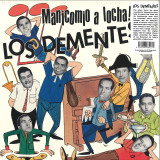
This album marks the debut recording for Venezuela's Velvet label by pianist Ray Pérez and his trombone-led salsa band Los Dementes. Heavy dance numbers and the distinctive vocals of Perucho Torcat make this historic 1967 rarity a sought-after collector's item. Now the LP has been lovingly restored, mastered from the original tapes, with its original artwork intact, preserving the legacy of Los Dementes for today's generation of salsa lovers everywhere. First time reissue. Salsa pianist, vocalist, composer and arranger Ray Pérez, acquired his nickname "Loco" by being a free, independent spirit, an innovator and iconoclast who was initially branded as "crazy" for the freshness and audacity of his sound. Amazingly, he is not that well known in the US, where he spent some time in the late 1960s and salsa was king during the 1970s. Yet he was quite popular in his home country from the beginning, especially amongst the working class of Caracas and Maracaibo, who adopted Cuban music played by New York Puerto Ricans as their own and called it "salsa" years before the term was employed by US labels like Fania as a marketing tool. Pérez is revered in Venezuela, as well as in Mexico and Colombia, and his storied career, which spans seven decades and thousands of concerts, has yielded more than 35 albums recorded by his various bands, including Los Dementes, Los Kenya, and Los Calvos, all of which are collector's items today. At the start of 1967 Pérez debuted Los Dementes, with vocalists Claudio Zerpa and Perucho Torcat backed by an ace band featuring only trombones in the brass section. Titled "¡Alerta mundo! Llegaron los 'The Crazy Men'" the record was released on the small Venezuelan label Prodansa. Soon after, Prodansa folded and Los Dementes were left without representation or much compensation for their efforts, being paid only in records. In the end of February of that year, Pérez returned to Caracas from a stint in Maracaibo in order to finish his first LP with the well-established and larger Velvet label, entitled "Manicomio a locha". In the first quarter of 1967, Velvet unleashed a trilogy of salsa records in order to compete with rival label Palacio and their recent success with Federico y su Combo Latino: "Porfi '67 Salsa & Boogaloo" by Porfi Jiménez y su Orquesta, "Guasancó" by Sexteto Juventud and lastly "Manicomio a locha". The LP begins appropriately with the boisterous title track, written by the band's conguero Carlos "Nené" Quintero, who would become a legend in coming years. Torcat describes a jam session in mental institution and introduces the band, with tasty solos by trombonist Rufo García followed by Ray on piano. Already you can hear something was different about Ray and his "Crazy Men"-a sound as wild and innovative as what was happening in New York with Eddie Palmieri, but with a more unhinged, raw feeling in line with Willie Colón and other younger Nuyorican bands. Next up is an intriguing track sung in a mix of Italian, English, Spanish and Papiamento by Pérez himself, performed in the complicated rhythm of the mozambique, an Afro-Cuban carnival beat developed in the early 1960s. This is followed by the heavy dancer 'Rico guaguancó', penned by Angelito Pérez, which changes from the guaguancó to the mozambique rhythm mid-way through, proving that Los Dementes were "different from the rest" as the lyrics say. 'Puerto Libre', sung by Torcat, is dedicated to the Venezuelan island of Margarita in the Oriente region, and the independent spirit of its working people. The rhythm changes from guaguancó to guajira and back again but remains danceable all the way through. The side closes out with a "3 in 1" medley inspired by the popular formula of the mosaicos of Billo's Caracas Boys, seamlessly knitting together several different tempos, rhythms, moods and compositions. Side two starts strong with the fierce yet satirical 'Corte e' patas', then 'Alma Cumanesa', a typical folk song refashioned as a guaguancó. This is followed by the funky 'Guajira con Boogaloo'. The tune echoes the sound of young Latin New York, pointing out the connection between Cuban and African American soul music. The pace picks up again with 'Fiesta de trombones', a hot descarga and then the album closes with another medley. Though this marks the end of a rather short album, it also signaled the emerging success of Los Dementes and their involvement with the salsa boom in Venezuela, quickly selling out of its initial run of 1000 records and making for a memorable debut on the Velvet label. Now this rare and sought-after LP has been lovingly restored, mastered from the original tapes, with its original artwork intact, preserving the legacy of Los Dementes for today's generation of salsa lovers everywhere.
This highly collectible LP from 1974 is a nonstop salsa dura party album from start to finish, comparable with any of New York's finest like Ray Barretto and Willie Colón from the same era, but with its own unique sound and joyful vibe. Includes the anthems 'Mi Nuevo Ritmo' and 'Alma y Sentimiento/ Soul and Feeling' recorded at different sessions in Colombia and Peru. Presented in its original artwork and pressed on 180g vinyl. The highly collectible LP Alfredo Linares Y Su Salsa Star "Mi Nuevo Ritmo" (1974) is a nonstop salsa dura party album from start to finish, comparable with any of New York's finest like Ray Barretto and Willie Colón from the same era, but with its own unique swinging sound and bright, crisp, joyful vibe. There are plenty of straight up Cuban-roots based salsa tunes, plus some Latin jazz and Latin soul and a bolero. Trumpets, hand claps, loud cowbell, and vigorous vocals all make for a great listen and an even better dance experience. As the track 'La Música Brava' proclaims, "Yo no quiero que pare la música brava!" (I don't want the badass music to stop!). The record is actually a patchwork of different recording sessions made in Peru and Colombia, featuring differing studio sound and musician lineups. Linares had just returned to his adopted home of Medellín from a period spent in Peru and was looking for a record deal. He had brought master tapes with four songs recorded in Lima and was shopping them around in the hopes of securing an album contract. Linares also cut some Colombian sessions which feature Roy "Tayrona" Betancourt as well as Henry Castro and Enrique Fabián. Unfortunately, neither Discos Fuentes nor Sonolux or Codiscos were interested. At that time, vinyl for making records was scarce and over-priced due to the petroleum crisis and hence the labels were reluctant to try out a new artist. "There was nothing to be done. The only company that had vinyl stock was INS. So I did the business with them even though they didn't have a known name in Colombia. The strength of that album made them rather famous." The song 'Mambo Rock' (with 'Estricto Guaguancó' on the B side) came out on a 45rpm record in 1974, and, as Linares recounts it, "two months later the sale was at a very high level. So, partly out of gratitude, I started producing for them. It is from there that my other records and the AfroINS albums came." Unfortunately the master tapes to the LP were lost or destroyed, as with all INS releases, so the best possible vinyl sources and audio restoration has been used for this deluxe reissue.
- 1: The Ballad Of Crowfoot
- 1: 2 Peruvian Dream (Part )
- 1: 3 Charlie
- 1: 4 Broker
- 1: 5I Pity The Country
- 1: 6C Razy Horse
- 1: 7L Ouis Riel
- 1: 8 S Hool Days
- 1: 9 Te Carver
- 1: 0O Canada!
- 1: Down By The Stream (Starlight Maiden)
- 1: 2 Rattling Along The Freight Train (To The Spirit Land)
- 1: 3 Pontiac
- 1: 4 The Pacific
- 1: 5 Nova Scotia
- 1: 6 The Dreamer
- 1: 7 Sonnet 33 And 55 / Friendship Dance
- 1: 8 Wounded Lake
- 1: 9 Métis Red River Song
- 1: 20 Son Of The Sun
- 1: 2 The Lovenant Chain
- 1: 22 Bear And Fish
- The definitive overview of one of Canada's unsung musical heroes - Rare/previously unreleased recordings, photos, and interviews - Lyrics, discography, and filmography - Audio re-mastered by John Baldwin Mastering - Artwork by Christi Belcourt and Alanna Edwards - Liner notes by Kevin Howes (Voluntary In Nature) - Contributions from the Dunn family, Bob Robb, and Alanis Obomsawin (OC) // How did you first experience the poetry, music, and film of Willie Dunn? In a Montreal coffeehouse during the mid-1960s? On a CBC Indian Magazine broadcast with host Johnny Yesno? At a Toronto record store or Native Friendship Centre at the turn of the 1970s? Waiting outside of the Mohawk Nation Longhouse? Maybe in your parent's record collection on the Rez? A White Roots of Peace gathering? Pow wow? The Mariposa Folk Festival? Or was it that Save James Bay Benefit back in '73? On a good friend's stereo? Sitting around a crackling campfire? How about an old NFB film reel or VHS tape in high school? Or while attending Manitou College? A German concert hall in the 1980s? Maybe a direct action protest on the colonial streets of Canada? Busking in Ottawa during the 1990s? College radio? At Willie's celebration of life service in 2013 alongside Alanis Obomsawin and Willy Mitchell? LITA's Grammy-nominated Native North America (Vol. 1) compilation or the very anthology you hold in your hands? There should be no judgment for coming to things when you do. All that's important is remaining open to life-changing messages such as these_ Willie Dunn shared truth through song and celluloid. His original composition, "I Pity the Country," is an unparalleled statement on the greed and hate created by humankind, recorded in 1971 and still unfortunately needed today. "It's like the reason you're supposed to make music," said Kurt Vile about the song to MOJO Magazine in 2015. With "Charlie," Willie was the first to deliver the devastating story of Chanie Wenjack and the Canadian residential school system to the music community, nearly 50 years before the much-celebrated Secret Path, yet ignored outside of Indian Country and the folk festival circuit. Dunn's film technique, featured in 1968's The Ballad of Crowfoot (NFB), predates the "Ken Burns effect" to great effect. Are you catching the drift? Willie Dunn was not only a trailblazing leader in his time, but well ahead of the curve, simply without the PR push and big money backing of major label players. "He was our Leonard Cohen," said singer-songwriter Eric Landry about his musical hero. The only difference is that Willie refused to play the Hollywood showbiz game. In talent, he is Cohen, Dylan, and Cash rolled into one and along with Buffy Sainte-Marie, Floyd Red Crow Westerman, and A. Paul Ortega, brought a new set of perspectives and realities to the folk music tradition. Willie spoke directly to his people and Mother Earth through his creations, not only from experience but by examining his roots and connecting with the world in which he lived. We are humbled to help honor Willie Dunn. May he never be forgotten_ PEACE
Grammy award winner & multi grammy nominated Luisito Quintero grew up with the Latin American and African tradition of percussion. His father is just as much a percussionist as his uncle Carlos Nene Quintero and his cousin Roberto Quintero . He became a member of the Orquesta Simfonica de Venezuela , but soon appeared with ensembles such as Grupo Guaco and El Trabuco
Venezolano and toured with Oscar D'León .
He then moved to New York, where he initially worked with Latin jazz musicians such as Willie Colón , Eddie Palmieri , Tito Puente and Celia Cruz . He then turned to the fusion of jazz, funk, salsa and African music and performed with George Benson , Herbie Hancock , Ravi Coltrane and Toshiko Akiyoshi , but also with pop musicians such as Gloria Estefan and Marc Anthony .
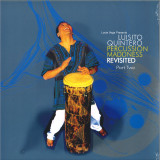
Vega Records are proud to present his new vinyl release “Percussion Maddness Revisited” Part Two. From the Osibisa remake by Luisito Quintero “Music For Gong Gong” to collaborations with the Great Richard Bona, Latin Jazz legend Hilton Ruiz and Salsa Veterans Jose Mangual and Milton Cardona, you can see the caliber of musicians that make up this timeless piece. For the afrohouse heads you have the new track “Yemaya” Featuring Nina Rodriguez remixed by Afrohouse King Manoo. Prepare for the sonic fun with vinyl pressings by Optimal !!
Percussions Maddness Revisited Part Two Double Vinyl Set out soon at a vinyl store near you !!!
- 1