Поиск:youth of roots

Стили
Все
YOUTH OF ROOTS / YOUNG ISRAELITES - Stay By My Side / Strawberry Girl 7"
  • Side A. Stay By My Side
  • Side B. Strawberry Girl

●STAY BY MY SIDE (Youth Of Roots)
This is the title track from Young Israelites' 2021 debut EP, which made them a household name.
Its catchy, pop melody has captured the hearts of reggae fans worldwide, and Youth Of Roots' KON RYU has covered it in Japanese.
It blends seamlessly with the song like a long-time favorite, bringing out the original's charm with a new brilliance.

●STRAWBERRY GIRL (Young Israelites)
A popular song that shines with sweetness in Youth Of Roots' repertoire, which is filled with roots-conscious, message-driven songs.
Young Israelites' English cover, with its melancholic vocals, further enhances the quality of the original.


YOUTH OF ROOTS
A roots rock reggae band formed in Kanagawa in 2016. Their multi-generational sound and spiritual musicality, rooted in their experiences in Jamaica,
define their sound. They've released numerous singles, including their latest album, "LOVE IS THE ANSWER."
They connect with their audiences at live shows, conveying the spirit of "One Family." Their overwhelming sense of unity and sincere message transcends
borders, earning them praise from international fans as "the best reggae band."

[YOUNG ISRAELITES]
A rocksteady/roots reggae band consisting of three members from Israel. Building on a vintage Jamaican sound, their familiar melodies and soulful,
passionate performances have garnered attention from reggae fans worldwide. Since their debut, they've released a string of EPs and full-length albums,
and have expanded their global reach, including airing on the BBC and performing at the world's largest reggae festival, ROTOTOM SUSPLASH.
This new-generation band vividly revives the spirit of rocksteady and roots reggae for the modern era.

Сделать предзаказ06.02.2026

он должен быть опубликован на 06.02.2026

28,99

Последний логин: 2026 г. назад
Jegong - Gomi Kuzu Can LP

Jegong

Gomi Kuzu Can LP

12inchPELVC317
Pelagic Records
27.03.2026

JeGong, known for their immersive, rhythm-driven explorations of Krautrock and experimental sound design, now take an exhilarating leap into brighter, nostalgically stranger territory. `Gomi Kuzu Can` is an electrifying journey through Kraut, Post- and Experimental Rock, delivered with the analog warmth of the '70s. Across eleven meticulously crafted tracks, JeGong embrace their roots while fearlessly expanding into neon-lit, beat-driven worlds where kinetic rhythms meet playful sonic futurism. It is music built for movement, contemplation, and the ecstatic strangeness of possibility. Their approach borrows the endurance and patience of minimalism, but they subvert minimalism's austerity with grit, distortion, and physicality. The result is music that feels alive in motion: constantly shifting, tightening, unfurling, and mutating even when its core pulse remains unbroken. "We wanted to create a `70s sound as the recording foundation - a sonic aesthetic that sets a mood through warm tape saturation. Like a kind of memory box where you can store recollections, for example from childhood, when you would spend hours by yourself watching TV and listening to the radio, often both at the same time." (JeGong) `Gomi Kuzu Can`, is hand-built, lovingly assembled from circuitry, intuition, and raw creative impulse. This tactile quality is precisely what makes the album's danceability so impactful. In blending organic rhythm with retro-electronic brightness, they've created a sound that is both familiar and refreshingly new. In the end, JeGong's sound is less a genre and more a landscape: rugged, hypnotic, austere, and strangely spiritual. It is music built on the bones of rhythm and the electricity of repetition, crafted with the precision of engineers and the instincts of explorers. FOR FANS OF Neu!, Cluster, Tangerine Dream, Swans, Mogwai, Sonic Youth, John Zorn The single colour edition comes as Glass Clear vinyl!

Сделать предзаказ27.03.2026

он должен быть опубликован на 27.03.2026

24,79

Последний логин: 2026 г. назад
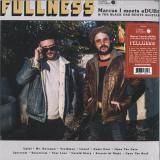
Marcus I meets aDUBta - FULLNESS LP

Marcus I meets aDUBta

FULLNESS LP

12inchFSPT2010
F-Spot Records
18.03.2026

There’s a special kind of feeling when everything falls into place - when the drums bounce easy, the bassline rolls steady, and a bright guitar line cuts through the warmth of tape. That feeling became the heart of the FULLNESS, from Marcus I meets aDUBta. The sound of FULLNESS is built on simple, living elements: real drums, deep bass, a warm sound, and melodies that leave space to breathe. It moves between Early Reggae, Rocksteady, and Roots - sometimes straight and solid, sometimes stretching out into Dub and Echo. With its voice, from singer and lyricist Marcus I, FULLNESS carries the message about gratitude, love, freedom, and the small moments of everyday life. While Marcus’s singing style nods to the great singers, he stays grounded in his own experience, which perfectly complements aDUBta’s production, giving him space to shine. This LP is a complete, warm, balanced, and uplifting experience from start to finish.

FULLNESS grew from a steady musical exchange between Marcus I and aDUBta - two people on different sides of the Alps (Marcus I in France and aDUBta in Germany), finding a shared rhythm. What began in early 2022 with a few Riddims sent back and forth soon turned into a regular flow of songs. Every week brought new ideas, new words, and new melodies. When they finally met in person at aDUBta’s Attic Roots Studio in Bavaria, Germany, it all fell naturally into place. Most of the instruments were played by aDUBta, and the whole LP was mixed live on his Tascam 388, keeping that raw, handmade feel. With several friends helping bring even more color into the music, aDUBta brought in Viti Sanchez to lend his expressive saxophone and horn lines, Michael Salvermoser with his warm trombone tones, and members of the Black Oak Roots Allstars - King HuHa and Jannis Klenke on bass and guitars, along with Morry 'Da Baron' (Dub Inc.) on bass. FULLNESS means the fullness of music, of life, of friendship, of gratitude. It’s what happens when music becomes more than a project - when it turns into a shared space where things just flow.

В наличии на складе

Есть у нас в наличии и готов к отправке

25,42
Santamaria Bros - We Got Latin Soul

Santamaria Brothers are the latest incarnation of a lifelong musical journey rooted in rhythm, rebellion, and reinvention. The children of Peruvian and Ecuadorian immigrants to Australia, brothers Pat and Andrew Santamaria grew up steeped in the sounds and culture of Latin America - a deep inheritance that coloured everything they did, even as they moved through scenes and styles far from home.

In their youth, the brothers sharpened their first musical swords playing in globally touring indie bands. As the rhythm section of cult outfit Lost Valentinos, they had the opportunity to see the world and learn from the best; touring with, working alongside, and releasing music through the likes of Soulwax, Ewan Pearson, and Kitsuné. Taking those experiences home, they dove deep into the rave underground, co-founding of the crucial Sydney-centric techno label, warehouse party collective, and long-running radio show Motorik! In that guise,they helped shape the city’s electronic music scene over the past decade from the booth, the studio, the airwaves, and the street.

Now, after years behind the decks and on both sides of the mixing board, Santamaria Brothers return to their roots - releasing music under the family name for the first time. With We Got Latin Soul, they bring it all together on a 4-track EP of club-ready edits (via Sosilly Records). Reworking four towering figures of Latin soul; Mongo Santamaria, Ray Barretto, Pucho & The Latin Soul Brothers, and Joe Bataan — the brothers inject each cut with tasteful touches of Balearic haze and chugging acid house pressure, honouring the originals while making them sing on today’s dancefloors.

This is Latin soul filtered through a unique blend of antipodean rave culture, crate-digging, and relentless reinvention. It’s joyful, percussive, and made for the club - a full-circle moment from two lifers forever finding new ways to move bodies.

Сделать предзаказ03.04.2026

он должен быть опубликован на 03.04.2026

13,87

Последний логин: 2026 г. назад
Elijah Minnelli - Clams As A Main Meal

Even in these most turbulent of times, dub musician and fatigued onlooker Elijah Minnelli remains an inexplicable stalwart on the lower rungs of the Breadminster County Council.

His latest record ‘Clams As A Main Meal’ continues his astute siphoning of council funds, this time with help from the Breadminster Board of Abstinence. As a further mark of respect, the original head of the Board, Dr. K'houldoux, graces the cover art in his infamous ‘Looming Moon of Desire’ guise.*

As fine a backdrop as any for Minneli’s off-brand dub experiments, and ‘Clams...’ is the truest representation of his varied wheelhouse yet...

We find vocal appearances from dub goliath Dennis Bovell and Welsh-language singer Carwyn Ellis. A pair of tracks which build on 2024’s acclaimed ‘Perpetual Musket’, a collection of folk songs reworked alongside reggae vocalists, released by FatCat Records. It garnered glowing reviews, with nods from The Guardian and The Quietus concluding with prominent appearances on their respective yearly round-up lists.

Elsewhere, the album finds Minnelli in a more experimental mode, all wheezing contraptions and cockeyed bass, creaking with the weight of creation, a satisfying tactility laid seam-side up.

As well as ‘Perpetual Musket’, the new album follows years of sold out 7" singles, handmade and self-released. Online, the tracks have amassed global streams numbering in the millions. His tracks have found play across an eclectic range of radio mixes and dance floors, most notably the likes of Andrew Weatherall, Batu, Optimo and Zakia Sewell (BBC6Music).

It is perhaps worth mentioning that this everbuilding interest in his work is at great odds with the growing suspicions amongst his fellow townsfolk, who see his Breadminster County Council Music Initiative as nothing more than an empty cash-grab.

Further Reading on the Breadminster Board of Abstinence

In the late 70s, Breadminster was awash with the last vestiges of the hippy era. Though the flared silhouette of the lower leg remained, the utopian ideals that had once flowed merrily around the youth's shaded ankles had begun to wane. LSD and free love had led to a sharp spike in population and a generation of children raised by air-headed psychonauts unprepared for the bleary-eyed strictures of parenthood.

Aware of the crisis, the County Council entrusted Dr. Paulinque K'houldoux to spearhead a pushback, and it was his pro-abstinence movement - a mixture of education initiatives and radical renutrition campaigns - that came to impact Breadminster's census deep into the new millennium.

Being a pseudo-archipelago Breadminster has fundamentally limited resources, however deep-seated ties to distant coastal villages meant that oysters were a regular part of the local diet. K'houldoux pinpointed this as a factor in the town's overpopulation, and believed that simply replacing these with clams (a “lesser mollusk”) would help lower the erotic urges of the people. It was his “anti-aphrodesia” movement that first championed the idea of “Clams As A Main Meal,” and the slogan “Consider Abstinence” carried the message yet further.

The Breadminster Board of Abstinence soon became involved in all cultural happenings in the area, with K'houldoux MCing at prominent festivals and performances, sometimes dressed as the “Looming Moon of Desire” - an idea of his relating to the tide, seafood, menstrual cycles, and his privately held celestial predilections.

It was in 1981 that it was revealed Dr. K'houldoux had never fully qualified as a doctor and was seeking exile in Breadminster due to a series of botched bracelet heists in which he had previously been involved. K'houldoux was subsequently extradited to Basingstoke, where he served 3 of a 12-year sentence, owing to the lunar-oriented prisoner health campaigns he helped implement.

It has been a strange twist of bureaucratic fate that the Breadminster Board of Abstinence has never stopped receiving public funding, despite its lack of clear utility. And while its roots are tied to a rose-tinted past, the Board continues to sponsor cultural events and projects to this day.

An extract from: Eugeniq Schooner's article in Sydney Parishioner: “Clams, Breadminster and Countercultural Abstinence Trends” (2008)

Сделать предзаказ17.04.2026

он должен быть опубликован на 17.04.2026

24,16

Последний логин: 3 мес. назад
Jah Version - Gather Round LP

1st Album from the Lisbon Portugal duo Jah version - featuring the amazing vocals of Zacky Man. This is future sounding fine contemporary roots flavoured dub from hard steppe beats to heavy roots one-drop styles - made by Jah Version but mixed by Vibronics in his Dub Cupboard Studio in the UK. Played by OBF, Iration Steppas and all the top Dub Soundsystems around the world.

Сделать предзаказ24.04.2026

он должен быть опубликован на 24.04.2026

16,77

Последний логин: 2026 г. назад
Soul Jazz Records Presents - REBEL ISLAND SOUL – Under The Influence: Reggae, Funk & Soul In Jamaica in the 1970s (2x12")
  • 1: John Holt - You’ll Never Find Another Love Like Mine (3.48)
  • 2: Cornell Campbell - Be Thankful (3.58)
  • 3: Elizabeth Archer & The Equators - Feel Like Making Love (.4)
  • 4: The Chosen Few - People Make The World Go Round (3.22)
  • 5: Dave & Ansel Collins - Single Barrel (3.17)
  • 6: The Now Generation - Shaft (3.19)
  • 7: The Marvels - Some Day We’ll Be Together (3.05)
  • 8: The Darker Shades Of Black - War (2.41)
  • 9: Winston Curtis - Private Number (3.42)
  • 10: Lee Perry & The Upsetters - Bathroom Skank (4.30)
  • 11: Slim Smith - Watch This Sound (2.43)
  • 12: Winston Francis - Sitting In The Park (3.29)
  • 13: The Sensations - If I Don’t Watch Out (2.57)
  • 14: Carl Bert & The Cimarons - Slipping Into Darkness (3.04)
  • 15: The Darker Shades Of Black - Ball Of Confusion (3.10)
  • 16: Jah Youth - Ain’t No Sunshine (2.35)

Sixteen killer 70s reggae funk and soul cuts from the likes of John Holt, Lee Perry, Cornel Campbell, The Cimarons, The Chosen Few and more featuring superb reggae takes on songs by artists including The Jackson 5, William DeVaughn, Diana Ross and The Supremes, War, The Temptations, Roberta Flack, The Stylistics and others!

Well-documented is the influence of American black music on Jamaican styles of the 1960s – from the birth of ska music, when The Skatalites ska-ified the jump-up southern USA rhythm and blues music of Rosco Gordon, Louis Jordan and Fats Domino, through to the creation of rocksteady when Jamaican artists like The Techniques, The Paragons, Alton Ellis and The Melodians turned to the slower rhythms and soulful harmonies of groups such as The Impressions and The Drifters for inspiration. 

Less-well established is that in the 1970s Jamaicans didn’t (shock!) stop listening to American black music styles, with many 70s reggae artists as invested in soul, funk and the proto-disco sounds of Philadelphia, as was the case with rhythm and blues in the previous decade. In the 1970s, while Jamaica promoted its own roots reggae styles around the world, powerhouse USA soul labels such as Motown, Philadelphia International and Stax Records were at the same time all popular on the island.
This interaction between American and Jamaican music was not limited to Jamaica. In Britain, first-generation Caribbean-émigré children in the 1960s and early 70s grew up with an equal love of both soul and reggae, which manifested itself in the home-grown arrival of lovers rock in the mid-1970s.
Soul Jazz Records’ new ‘Reggae Island Soul’ tells this story of how soul and funk-infused reggae in the 1970s united the sounds of Jamaica, USA and the UK into a highly addictive cultural hybrid of styles.

Сделать предзаказ15.05.2026

он должен быть опубликован на 15.05.2026

28,99

Последний логин: 2026 г. назад
Imarhan - Essam LP

Imarhan

Essam LP

12inchSLANG50606LP
CITY SLANG
16.01.2026

From the heart of Tamanrasset in South Algeria, Imarhan transcend Tuareg tradition, weaving hypnotic synths into desert blues. The result is a timeless work—deeply respectful of their roots, yet alive with a stirring sense of modernity.

ESSAM is the band’s fourth album, recorded with the same core lineup, but marks a significant shift in their sound and approach. Musically, it marks a departure from the rocky, bluesy, psychedelic Tuareg guitar-driven sound influenced by Tinariwen’s heritage — moving toward something more open, modern, and exploratory.
For the first time, their long-time sound engineer Maxime Kosinetz stepped in as producer. He travelled to Tamanrasset with Emile Papandreou (of the French duo UTO), a multi-instrumentalist who introduced electronic elements by sampling live instruments and reprocessing them in real time with a modular synthesizer — subtly reshaping the band's sonic identity.
The album was recorded mostly live, in one big room at Aboogi Studio — the band’s own rehearsal and recording space in Tamanrasset. The studio, a converted concert hall, has become a kind of cultural hub for the local youth. Friends dropped by during the sessions to contribute handclaps, vocals, and just be part of the energy. It’s a space where people gather, hang out, play dominoes, smoke chicha — a rare communal spot in a city that doesn’t offer many for young people, somewhat like a youth and community center.
This context — the creative shift, the live recording process, the atmosphere around Aboogi — might be interesting threads to explore in the conversation.

В наличии на складе

Есть у нас в наличии и готов к отправке

27,02
Horace Martin - Sound Boy Style (7")

The legendary Youthman riddim traces back to Glen Brown's 1977 cut 'Wicked Can't Run Away' and took its iconic name after the 1979 Wayne Jarrett classic 'Youth Man'. A decade later, Horace Martin carved his mark with Sound Boy Style, recorded in one take at Gussie Clarke's Music Works with Sly & Robbie in full stride. Known as "The Man With The Biggest Shoes," Martin's career spans over 400 songs, three acclaimed albums and worldwide tours across 24 countries. Blending roots, dancehall and his love for comedy, Martin is a proper champion of Jamaican music and culture.

В наличии на складе

Есть у нас в наличии и готов к отправке

17,86
Various - Rude Boy Scorchers

The Rude Boy moniker has its roots firmly set in the downtown districts of Kingston, Jamaica.
Alongside the regular Ska/Rocksteady sounds coming out of the sound systems, there was an undercurrent theme to some songs that spoke of the struggles of the youth, of their confrontation, arrests and run ins with the establishment.
Some of these songs praised the Rude Boys for their stance and style while other songs were more in contempt with the Rude Boy's attitiudes, comings ,goings and violent behaviour.
For this release we have put together a set of tunes that the Jamaican Rude Boys would have been listening to at the sound systems on the lawns and street corners.
Not only the more obvious Rude Boy tunes like 'Gunmen Coming to Town' , 'Dreader than Dread', 'Moon Hop' but also some of the tunes that made the sound systems rock well into the night.
Hope you enjoy the set,,,,,

В наличии на складе

Есть у нас в наличии и готов к отправке

13,24
Tre Turner - Scottish Piano EP

Tre Turner bounces back on Belters4u with two unashamedly old-school Scottish club cuts alongside two remixes from London prog trance upstarts Close Proximity.

With shared spiritual roots in the West of Scotland early 90s rave scene, Belters4U and Tre Turner realise their adolescent dream in releasing this love letter to a decadent lost reality. Title track ”Scottish Piano” amalgamates a million shared moments on Scottish dance-floors and living room afterparties. On the flip, Ultra-Free samples the vocal hook from the ultimate Scottish old skool rave anthem ”Obsession” by legends ‘Ultra-Sonic.’ Hardcore pianos meet gated synths and thumping solid bass, the sound of many a misspent youth.

Through the haze of smoke and strobes, the Close Proximity Trance Mix recalls the wildest, most ecstatic, face-melting moments from the legendary Metro and Hangar 13 clubs. Close Proximity round things off by taking you further into euphoric dreamland with their ever-evolving Paradise Mix of Ultra-Free.

В наличии на складе

Есть у нас в наличии и готов к отправке

14,24
Matt Wilde - Find a Way LP
  • A1: Yellow Days
  • A2: Find A Way
  • A3: Everyday Words
  • A4: It’s Ok, Feel It
  • A5: Windup
  • B1: Get Along
  • B2: Smile Today
  • B3: Inner Meaning
  • B4: Nostalgia

'Find a Way' is the new album from Manchester-based pianist, composer, and producer Matt Wilde, released via his own imprint Hello World Records. The album serves as a reminder that creativity should be accessible and the importance of opening yourself to the unexpected as you 'Find a Way' through all endeavours. Digging into improvisation and jazz harmony on the LP, he crafts a sound that bridges jazz, hip hop, and electronic music, adding: "The creative act is not a matter of waiting for the perfect conditions, but of moving gently, insistently, through the imperfect".

Focus and title track "Find a Way" encapsulates this journey of process. Humans are known for adaptation and response when they face challenges, seeking solutions towards a better world. "Find a Way" leans into our instinctive reaction to improvise and reshape, taking the listener on an unexpected journey. The opening loop could as easily feel at home as part of an electronic soundscape, developing into a clock-like effect from the drums. This keeps time, allowing a duet between keys and trumpet to unfold, symbolising the individual, imperfect and non-linear paths we all carve out day to day.

The album was funded by Arts Council England and created in close collaboration with trumpeter and composer Aaron Wood, with the pair recording in Aaron's rural DIY studio in Huddersfield. Through improvising upright piano, Rhodes and trumpet over intricately programmed beats, the duo captured the spontaneity that makes jazz feel alive, but with the forward-facing touch of Ableton live production. "I actually had live drums recorded for this project and then deleted all of them and instead programmed intricate drums on Ableton live myself to create the kinds of drum sounds I could hear in my head," Matt adds, explaining the onerous process that truly made 'Find a Way' a labour of love.

Matt Wilde discovered jazz through an unconventional journey, and 'Find a Way' is an introspective map of this musical development. Starting out as a self-taught beatmaker, growing up Matt made tracks for friends in the grime scene before falling in love with jazz through the sample-heavy works of Madlib, J Dilla, and Pete Rock. Hints of this influence can be found on "Windup", driven by a deeper bass and a glitchy intensity not commonly associated with jazz. There are also nods to the weekly DJ residencies Matt had in his late teens, establishing a love for club music at iconic Manchester venues like Sankeys. "It's Ok, Feel it" incorporates pitched-up kicks and crisp, papery snares that pay tribute to UK dance culture and the foundation of connection in this world.

Guided by values of accessibility and creativity, Matt has become a key voice in the UK's boundary-pushing jazz and beats scene. His debut album 'Hello World' alongside EPs and single releases, have been championed by the likes of BBC Radio 1, Jamie Cullum and Soweto Kinch (BBC Radio 2), 'Round Midnight (BBC Radio 3), and across BBC 6Music, Jazz FM and Worldwide FM. He has performed headline shows at Band on the Wall (Manchester) and The Lower Third (London) and showcased his music at Brick Lane Jazz Festival and London's iconic Jazz Café.

A proud Mancunian with Polish roots, Matt's values-driven approach reflects his passion for community and empowering others through the arts. Matt founded the UK's first youth-led charity and is a trustee of Manchester music charity Brighter Sound. Driven by these values of equality and inclusion, Hello World Records strives to champion grassroots music with a backbone of fairness built into the business model. The imprint is named after Matt's debut album, released via Band on the Wall Recordings; simultaneously championing the music scene and global musical footprint of Manchester and highlighting the importance of artists reminding people: Hello World, I've made it. I'm still here.

- Martha Cleary, Glow Artists

В наличии на складе

Есть у нас в наличии и готов к отправке

24,33
Oye Manny - Living Water

Singaporean label Darker Than Wax brings us to Texas with a fresh 12” from Houston-born producer Oye Manny. Following his release on Salon Recordings, Oye Manny has carved out a lane defined by deep rhythms, Latin roots, and pure authenticity, an ethos he continues to distill into sound on his new record Living Water. Drawing on his Colombian roots and keenly focused on what makes dancers move, Manny puts percussion at the forefront on Living Water – from the chord driven house stompers ‘Malta Sip’ and ‘Palmira’ on the A side, to the darker club tones of ‘Visaje’ and the slick musicality of ‘Youthful Expression ‘ on the flip, drums play a starring role. Completing the package is a remix from Singapore-based producer and Darker Than Wax core member Dexter Colt, providing a deeper, Chicago-inspired take on ‘Malta Sip’.

В наличии на складе

Есть у нас в наличии и готов к отправке

12,56
Various - In The Mood...Little John's Romantic Label 1986-1990 LP

Little John is one of the most loved and prolific 80s dancehall artists. He started as a child artist in 1979 and by the mid 1980s had recorded for every major producer. In 1984 at age 14 he already knew the ropes of the business and started to produce 45s on his own Romantic label, which he continued sporadically releasing tunes on up until 1993. For us this is one of the coolest looking labels of the latter 1980s, and has a handful of hard to find killer 45s, mostly obscure and mostly slept on. So naturally we needed to corral these for another all killer no filler compilation. True to his own roots, Little John’s label mostly features fresh youthman artists, though a handful of veterans, like Frankie Paul and Early B who are both featured here, also recorded for him. The ten songs on this comp are our favorites from the label, featuring a selection of killer rhythms spanning the heavy mid 80s style, the proper late 80s digital style, and the more uptempo early 90s style. Hardcore DKR heads take note - this features three cuts on that most hallowed 1987 digi rhythm.

В наличии на складе

Есть у нас в наличии и готов к отправке

27,52
Various - Prince Philip Presents: Dubplates & Raw Rhythm from King Tubby's Studio 1973-1976 LP 2x12"

This compilation is dedicated to the memory of the late great “Prince” Philip Smart - the first apprentice of King Tubby and the first engineer at Tubby’s studio besides Tubby himself. Alongside Tubby, Philip was integral to the innovation that took place at Tubby’s studio in the mid 1970s, where the mixing of new roots reggae revolutionized the sound of Jamaican music and created styles and techniques that are still being echoed today, nearly 50 years later.

Though rarely credited on records in comparison to Tubby, Philip also mixed a lot of the paramount music produced by those close associates of Tubby’s studio such as Bunny Lee, Yabby You, and Augustus Pablo. Philip was closely tied to Pablo due to their childhood friendship and was a partner in his stylistically significant early production works. In the early years of Tubby’s studio, both men were making and cutting custom dubs there for their sound systems before starting to produce their own tunes from scratch, and Philip becoming the second chair engineer.

Several of the songs on this compilation are a selection of the aforementioned work. All of the songs here are sourced from Philip’s personal tape archive, and basically all of these mixes and versions have been scarcely if ever heard, and never released before. This double album comprises a rare and genuine glimpse into the dubplate workings of the inner circle of Tubby’s studio in the mid 1970s, where the prime players and emerging giants of reggae music production and sound system versioned, remixed and voiced rhythms for custom and exclusive cuts. Some of the cuts heard here were formerly exclusive power plays on King Tubby’s own legendary sound system, and unlike some previous issues of such material, these are genuine mixes done at the time. Some other tracks clearly exude the youthful enthusiasm of the participants. In both cases we find this collection of tracks to be truly compelling, so please enjoy this glimpse into such rare air. Rest in power Prince Philip Smart.
-RB/DKR, Summer 2023

В наличии на складе

Есть у нас в наличии и готов к отправке

17,61
Peter Youthman & Naram - Lonely February

RR7005 sees the Parisian raggamuffin deejay-cum-crooner Peter Youthman joins the Red Robin flock with a haunting ballad about love gone wrong and the loneliness that results.

With nods to classic, melancholic love songs of the 80s, Peter sings over a deep, dark Naram riddim that carries the DNA of lo-fi roots anthems from the likes of Wackies.

As you'd hope, there's there's accompanying stripped back version from Naram on the flip. Mixed to tape, and fine tuned by Downbeat Mastering, this is a unique piece of music that will please those with a love for the darker side of rub-a-dub.

В наличии на складе

Есть у нас в наличии и готов к отправке

10,50
DAZION - GROOVEBOXX LP 2x12"

DAZION

GROOVEBOXX LP 2x12"

2x12inchDKMNTL093
Dekmantel Records
28.10.2022

Welcome to Dazion’s Grooveboxxx – a maxi-sized love letter to The Hague’s 80s and 90s club scene crafted with minimal tools and loaded with vibe. It’s no coincidence it arrives on Dekmantel, a label with its own roots in the same Dutch city’s electronic music culture.

Dazion is The Hague’s Cris Kuhlen, previously spotted releasing on Second Circle, Safe Trip and Animals Dancing. He cut his teeth clubbing and working at long-since closed clubs like Eau, described in Kuhlen’s own words as, “clubs with blocks to dance on, lazers, decorations, crazy extravert sic parties.”

In capturing the spirit of Eau and the other formative parties of his youth, Kuhlen limited himself to just one machine to make his longest work to date – the Roland MC-303 Groovebox. While these entry level units from the mid-90s had stripped down functionality in the wider spectrum of studio gear, they contained all the iconic Roland sounds in a Rompler style, giving the user access to everything necessary to make raw, immediate club tracks without requiring an entire studio’s worth of hardware.

The brash gear of choice set the tone for a record of rough, ready and playful jams which end up more sophisticated than you’d expect from such limited means. ‘La DS’ jacks with a freaky, bleep techno intensity, while ‘Kimberly & Nance Backstage Rehearsal’ rides an angular groove tooled to inspire the weirdest dance moves of the night. Every track is named in reference to a particular nightspot, a hazy memory or moment from Kuhlen’s formative raving years.

This is the sound of Dazion having the time of his life. You might well hear a nod to the odd rock totem being given a re-version in irreverent new beat style or some gnarly US acid breaks vibes riding underneath helium rap licks. But for all the cheekiness, the tracks stand up both as nods to halcyon days and relevant workouts for the sweatiest parties in the here and now. As MC Paul T says in dramatic style heralding the intro of Grooveboxxx, “This movement will live on forever.”

В наличии на складе

Есть у нас в наличии и готов к отправке

16,60
Various - Rumba Rules - Original Motion Picture Soundtrack

The official soundtrack of the 2021 'Rumba Rules, New genealogies' documentary movie by Congolese artist Sammy Baloji and Quebec filmmaker David Nadeau-Bernatchez. A deep dive into Kinshasa’s vibrant Rumba scene, including remastered classics by Brigade Sarbati, Werrason, Papa Wemba, Franco & le Tout Puissant O.K. Jazz

Rumba Rules, New genealogies is about contemporary rumba in Kinshasa, but this music has deep historical roots nevertheless. Born in the interstices of the colonial world and thriving during the three decades of the Mobutu era in Zaïre, Congolese rumba has been iconic and popular all over Africa for decades. The roots of Rumba are even deeper, and the many paths it evokes trigger the imagination. The story goes that this music came with the migration of the ‘Kumba’ drum and dance in previous centuries, African slaves having carried it all around the Americas and giving birth to Cuban ’Rumba’, Colombian ‘Kumbia’ and many others. With its varied rhythms, guitars and horns, through LPs and radio stations, Rumba came back to (re)conquer Africa throughout the 20th century, paving the way for new practices. One could say this music is a sort of palimpsest, a memory in itself of Atlantic migrations and histories.

Rumba is nowadays discussed all around the world, igniting many debates among the Congolese diaspora. Being the constant talk of the town sometimes overloads public debate, and many people get tired of this broken record. Thus, over the last decade, enterprising producers have worked hard to promote Kinshasa’s musical diversity and tried to emulate new sounds to reach worldwide attention. But Kin’ locals and urban dwellers will not be fooled : new shoots cannot hide the forest. Despite some difficulties to innovate, despite the pastoralist sermons and the diaspora fighters pushing for concert cancelations, rumba is still at the core of the Congo today. Talented artists such as Fally Ipupa, Ferré Gola, Brigade Sarbati and others are leading the fifth generation, and the religious world has also proven to be a nurturing environment for the cultural and economic dynamism of this music.

Focusing on the music of Brigade Sarbati and his Orchestra, this record offers a deep dive into Kinshasa’s rumba scene. Halfway between professional studios and Zoom H4 field recordings, the rumba herein is about today’s youth: dense, full of energy and breakdowns, insights and name-dropping. The cavacha rhythm, the solo and bass guitar’s playing style, the singing style and numerous dedications all resonate with the history of Rumba. In an era where digital sound is taking over, it is interesting to highlight the instrumental and live performance compositions of this music. Digital technology is indeed used during the recording and mixing phases, but Congolese rumba still relies strongly on instrumental playing. There is all that but also, many other things to hear on this record… It’s time to let it be. A big thanks to Étienne Tron for making it possible: it is on his initiative and through his patience that this album is in your hands today. (David Nadeau-Bernatchez, december 2021)

В наличии на складе

Есть у нас в наличии и готов к отправке

17,23
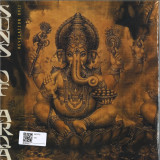
Revelation XVII - Suns Of Arqa EP

Suns of Arqa is a sonic mission created by luminary Michael Wadada, who began in 1979 after receiving higher guidance in Jamaica while working with roots reggae chanter Prince Far-I. It is a prolific traveling music collective that has seen over 200 collaborators, meant to connect people from all cultures and walks of life through a “deeply spiritual vibration that merges cultures, faiths and musical genres”. Wadada combines ancient Hindustani raga systems with Piobaireachd and Nyabinghi roots drumming, creating ritualistic world music infused with dub and reggae.

The lyrics combine both mystical and sensory elements, often including prayer and referencing a higher power but finding root in experiences common to all people- memory, sight, and physical sensation.

Their first album, Revenge of the Mozabites, was a collaboration between Wadada and On-U Sound creator Adrian Sherwood. Following its 1980 release,Peter Gabriel invited them to perform at the first WOMAD festival. Today, the record is regarded by some as a cult classic. Over the years they have played at many major music festivals including Glastonbury, Big Chill, Telerama Dub Festival, and Transmusicales, and released over 40 albums on Virgin, EMI, Interchill Records, Antler Subway, Red Rhino, and their own label, Arka Sound.

Suns of Arqa has had a seminal influence on the World Beat sound, and continued to make appearances at seasonal festivals and sacred ritual spaces all over the world until 2021. Michael Wadada passed away in the midst of planning their U.S. tour for this release. The record is a compilation of some of Wadada’s and Sleepers Record’s favorite old Sun of Arqa tracks, mixed by Youth and Adrian Sherwood, and mastered by Eroc (drummer of Grobshnitt).

Notable collaborating artists include: Guy Called Gerald, UK producers Youth and John Leckie, Greg Hunter, 808 State's Graham Massey, Finley Quaye, Sounds From the Ground, Bryn Jones aka MuslimGauze, Adrian Sherwood, John Cooper-Clarke, The late great Professor Stanley Unwin, Eric Random, New age guru Tim Wheater, Astralasia, Prince Far-I, The Orb's Alex Patterson, Zion Train, and Gaudi.

"And although the Great Spiritual being Michael Wadada has returned to source and his body to earth at our time, his music is alive and will continue to be a great force for higher spiritual realms and raising vibration through occult frequencies...Suns of Arqa will continue to raise the vibration of the hearts and minds of humanity" – Angela aka Angel-Eye (Wadada's wife and bandmate)

В наличии на складе

Есть у нас в наличии и готов к отправке

14,71
Feel Fly - Mediterranean Dreams Part 2

With the two-part EP Mediterranean Dreams, Perugia producer and composer Feel Fly revisits his musical roots and pays tribute to the sounds and ‘sun-kissed nostalgia’ that informed his style.


Mediterranean Dreams Part 1 collected four tracks, and added that Feel Fly touch of emotive chord progressions and layered production onto cosmic disco grooves to powerful dancefloor effect. Now with Mediterranean Dream Part 2, Feel Fly switches the tempo both up and down, to fully demonstrate his affinity for club moments of all shapes and sizes.


Nebula flies out the gate with full intent, recalling classic Detroit techno while pushing the vibe even more wide-screen - it’s driving, melodic dance music that delivers on the fine details as much as it does on the life-affirming, big picture sentiment.


Optical Bells opens in meditative style, not unlike a new dawn in a Tibetan monastery, before each element of the track slowly reveals itself and assumes its place. It’s an arrangement technique that Feel Fly employs masterfully, and gives the impression of a camera lens moving into focus, or a storyteller setting the scene. The revolving chord changes pull you in and while whisking you away, you’re compelled to engage with the moment - like being asked to dance by a mysterious stranger.


The B side kicks off with Luce Eterna Ai Sognatori, still keeping the tempo high while cherry-picking disco house drum patterns and piano synths with a slight Italo flavor to create an irresistible slice of dancefloor dessert. This is a soundtrack for Sognatori, in whose dreams anything is possible.


The EP finishes up with a superb cut of echoey balearic dub in the form of Templum Dub. Putting the drums through its mixing desk paces, Feel Fly reanimates the drum kit with delays, phasers and flangers, and wraps it up in hazy drifting pads that could accompany any moment of contemplation - from that morning espresso to a midnight phone call.


Mediterranean Dreams Part 2 acts as the perfect compliment to its prequel Part 1, and shows a producer at the height of his powers, reimagining his musical roots and composing a love letter to the sounds and stories of his youth.

В наличии на складе

Есть у нас в наличии и готов к отправке

9,20
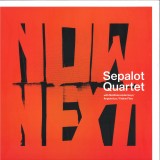
Sepalot - NOWNEXT

Sepalot

NOWNEXT

12inchESK55
Eskapaden
08.06.2020

NOWNEXT is a voyage from the past to the future, from now to then, from what's behind us to what's waiting for us just around the next corner. In musical terms these are the gaps that appear when you drift between genres and take risks. Strolling far from the well travelled Zeitgeist path. The second album by the Sepalot Quartet floats through this timeless space and fills those cracks with a relaxed fusion of Jazz meets Indie meets Electronica, not once denying Sepalots hip hop roots.
This freedom of expression can also be considered a sign of our times, with a generation coming of age without rivalling youth phenomena. Where a jazz show is held in a techno club with no further explaination needed.
With their first release the Quartet still relied on remakes from the established Sepalot dicography, with their current work they laid the foundation for a truly solid form of musical self discovery.
NOWNEXT is enlivened by this spirit and offers a fascinating and confindent blend of varied sounds spanning time and space.
With all this being said, NOWNEXT is truly an up to date album of international format, feeding from the rich experience of its diverse members (Sepalot, Angela Aux, Fabian Füss, Matthias Lindermayr). Memories, associations and a well carved vision are melted into a masterpiece.
NOWNEXT is the latest offering by SEPALOT and his QUARTET and needs to experienced with all senses.

В наличии на складе

Есть у нас в наличии и готов к отправке

16,77
Imarhan - Essam LP

Imarhan

Essam LP

12inchSLANG50606X
CITY SLANG
13.02.2026

From the heart of Tamanrasset in South Algeria, Imarhan transcend Tuareg tradition, weaving hypnotic synths into desert blues. The result is a timeless work—deeply respectful of their roots, yet alive with a stirring sense of modernity.

ESSAM is the band’s fourth album, recorded with the same core lineup, but marks a significant shift in their sound and approach. Musically, it marks a departure from the rocky, bluesy, psychedelic Tuareg guitar-driven sound influenced by Tinariwen’s heritage — moving toward something more open, modern, and exploratory.
For the first time, their long-time sound engineer Maxime Kosinetz stepped in as producer. He travelled to Tamanrasset with Emile Papandreou (of the French duo UTO), a multi-instrumentalist who introduced electronic elements by sampling live instruments and reprocessing them in real time with a modular synthesizer — subtly reshaping the band's sonic identity.
The album was recorded mostly live, in one big room at Aboogi Studio — the band’s own rehearsal and recording space in Tamanrasset. The studio, a converted concert hall, has become a kind of cultural hub for the local youth. Friends dropped by during the sessions to contribute handclaps, vocals, and just be part of the energy. It’s a space where people gather, hang out, play dominoes, smoke chicha — a rare communal spot in a city that doesn’t offer many for young people, somewhat like a youth and community center.
This context — the creative shift, the live recording process, the atmosphere around Aboogi — might be interesting threads to explore in the conversation.

Сделать предзаказ13.02.2026
он должен быть опубликован на 13.02.2026

27,02

Последний логин: 2026 г. назад
Various - Wizzz! French Psychorama Volume 5 (67-75)

The journey through French-speaking pop archives continues with this fifth volume, packed with fuzz, gimmicks, and dissent. Far from the charts, the selected tracks display a great creative freedom, often backed by corrosive humor. Welcome to the surprising, kaleidoscopic, and colorful world of the late sixties and early seventies, Wizzz!
Born in Montauban, Robert Pico stumbled into music by chance when he met René Vaneste, then artistic director at Pathé-Marconi. René brought him to Paris to record his first 45 RPM EP in 1964. A year later, Pierre Perret introduced him to Vogue, where he recorded his second album with Claude Nougaro’s orchestra. Sylvie Vartan then introduced him to RCA, where he recorded four singles, including the astonishing "Chien Fidèle," a track backed by a hair-rising fuzz guitar. Alongside his solo career, he also composed for other artists like Alain Delon (the song was recorded but remains unreleased), Magali Noël, Bourvil, and Georges Guétary. In the Paris of the sixties, he mingled with Mireille Darc, Elsa Martinelli, Marie Laforêt, France Gall, Françoise Hardy, Petula Clark, Régine, Dani, Serge Gainsbourg, Joe Dassin, Franck Fernandel, Charles Level, and Roland Vincent. Despite his efforts and winning a Grand Prix Sacem for his final record, Robert Pico didn’t achieve the expected success in show business and decided to leave Paris and return to the Southwest, where he devoted himself to writing. He is the author of 23 books (including Delon et Compagnie, Jean-Marc Savary Editions 2025, a memoir about his youth and his many encounters). Today, he is relieved to never have become a celebrity and devotes himself to his work with passion.
In 1969, the Franco-Italian movie Erotissimo was released, directed by Gérard Pirès (who later directed Taxi in 1998, written and produced by Luc Besson). This pop comedy features Annie Girardot, Jean Yanne, Francis Blanche, Serge Gainsbourg, Nicole Croisille, Jacques Martin, and Patrick Topaloff. The soundtrack was written by Michel Polnareff and William Sheller, with lyrics by Jean-Lou Dabadie. "La Femme Faux-cils," performed by Annie Girardot. It recounts the feelings of a rich CEO's wife who seeks to develop her sex appeal under the influence of advertisement and magazines. Groovy, sparkling and light, this track, with ITS lush arrangements humorously critiques consumer society and feminine beauty standards.
“Je suis l’Etat” (1967) is the flagship track of the first EP by singer-songwriter Spauv Georges, aka Georges Larriaga, better known as Jim Larriaga (1941-2022). Born into a family of bakers, the young man was initially planning to become a hairdresser when he discovered English-speaking music through Elvis Presley and the Beatles. After this revelation, he decided he would become a songwriter and gave himself five years to succeed. He recorded his first two EP’s independently for RCA under the pseudonym Spauv Georges; meaning “that poor George”, a nickname given to him by the mother of her friend Jean-Pierre Prévotat (future drummer of the Players, Triangle, or Johnny Hallyday). Portraying a depressed and eccentric young man, Spauv Georges created corrosive and amusing songs that didn’t reach a wide audience, despite a TV appearance with Jean-Christophe Averty.
Supported by his loyal friend and fellow songwriter Jean-Max Rivière, Georges Larriaga met the future singer Carlos in the early '70s, then Sylvie Vartan’s assistant. He wrote songs for Carlos, including the popular "La vie est belle," "Y’a des indiens partout," and "La cantine", which went onto become a huge hit in 1972. He also composed for Claude François (“Anne-Marie”, 1971), Charlotte Julian (“Fleur de province”, 1972), helped launch child singer Roméo (who sold 4 million records), and later wrote the hit "Pas besoin d’éducation sexuelle" (1975) for the young Julie Bataille. In 1971, Jim recorded an album for Disc'Az: “L’univers étrange et fou de Jim Larriaga”, which featured pop gems like “La maison de mon père”.
The story of the song "Zoé" began when Pierre Dorsay, artistic director at Vogue Records, asked Swiss singer and musician Pierre Alain to write a song for a new female singer. The inspiration came when he realized that Zoé (the artist's name) was also the name of France's first atomic battery, created in 1948, which consisted of uranium oxide immersed in heavy water! The lyrics reflect a bubbling energy that must be handled with caution, while the instrumentation echoes this atomic theme, notably with the use of a theremin.
Zoé’s career lasted only as long as a single 45 RPM, but it seems Christine Fontane was the vocalist behind this pseudonym, who is known for several EPs, a good "popcorn" album in 1964, and a handful of children’s singles in the '70s. Regardless, the photograph on the cover is of a different girl entirely.
Later, Pierre Alain continued his career, writing songs for himself, Marie Laforêt, Danièle Licari, Alice Dona, Arlette Zola (3rd place in Eurovision 1982), and achieving multiple gold and platinum records in Canada. Also an inventor with several patents, president of the Romande Academy, and head of the French Alliance in Geneva, he now composes atonal music, books, and poetry. Moreover, he is also the host of "Les Mardis de Pierre Alain" at "Le P'tit Music'Hohl" in Geneva.
Filled with oriental choruses and fuzz guitar, "Fou" is from Jacques Da Sylva's only EP released by Vogue in 1967. Despite the quality of this recording, all traces of this singer disappear after this first effort.
Valentin is a baroque pop singer born in Belgium. He is the songwriter and composer of most of the tracks on his three singles released in the late 60s in Canada. A legend says that he reincarnated himself as Jacky Valentin during the 1970s for a rock'n'roll revival career in Belgium, but his older brother sadly debunked this story. Valentin's first two singles were arranged by Claude Rogen, a Parisian session pianist who had come to Canada to promote the song “Mister A Gogo”, a cover of David Bowie’s “Laughing Gnome”, adapted by singer Delphine, his wife at the time. Far from his usual network, Claude Rogen arranged music for Polydor, including the arrangements for “Je suis un vagabond” in 1969, a jerk tune with string arrangements and a furious optimism.
Jacques Malia wrote, composed, and recorded his only 45 EP for Festival in 1966. “Histoire de gitan” is an incredible beat track with bohemian scat that tells the story of a gypsy musician who came to Paris to make it in the Music-Hall, to no avail. The hero of the song and its author probably shared a similar fate, as Jacques Malia faded into anonymity after this remarkable attempt.
Bernard Jamet recorded two EPs for Barclay in the late sixties and co-wrote several songs with Christine Pilzer, Pascal Danel, and prolific songwriters Michel Delancray and Mya Simile. The track “Raison Légale” (1968), his masterpiece, immerses the listener in a courtroom right when a murderer is being judged, with jerk rhythm and free arrangements. A unique, paranoid, judicial, and psychedelic oddity.
Jean-Pierre Lebrot-Millers started his career in show business in 1967 as a singer and songwriter for the Philips label. After three singles, he wrote several songs of a new kind with his friend Pierre Halioche, in the midst of the sexual liberation movement and the democratization of drugs. With provocative lyrics, “Les filles du hasard” and “Barbara au Chapeau Rose” were released on a Philips singles in 1968. The character of Barbara was inspired by a queen of Parisian nightlife during the psychedelic years: model Charlotte Martin, who dated Eric Clapton from 1965 to 1968, then Jimmy Page from 1970 to 1983. Jean-Claude Petit’s arrangements, with a table-filled intro, soul brass, and Hendrixian guitar, emphasize the flamboyance of a hedonistic and sexy character, whose dog is named Junkie because “Junkie est un nom exquis”! The track was recorded live in three takes with a full orchestra.
Upon its release, the record was censored by Europe 1 and RTL due to its references to drug use. Jean-Pierre Lebrot was then banned from the airwaves and later dismissed by his record label. He changed his artist name to Jean-Pierre Millers, while his companion Pierre Halioche became D. Dolby for a new dreamy composition, “Chilla”, which Jean-Pierre produced himself with arrangements by Jean Musy. Once again, the song was immediately censored everywhere. After this setback, he decided to stop singing and started taking on odd jobs to support his Swedish wife and their son until the day he met Jean-Pierre Martin, then production manager at Decca, who had worked with Manu Dibango. Martin offered Jean-Pierre Lebrot-Millers, then employed at Rank Xerox, the position of artistic director at Decca. He accepted and became, a year later, promotion director (radio, press, TV). He worked on Julio Iglesias’s first album for Decca, which became a massive hit and allowed him to meet Claude Carrère. The latter asked him to write new songs and find their performers, much like a “talent scout.” It’s through him that Jean-Pierre discovered Julie Pietri and Corinne Hermès. He composed “Ma Pompadour” for Ringo, Sheila’s husband, and took the microphone again for the syncope hit “Rendez-Vous” in 1982.
That same year, Jean-Pierre Lebrot-Millers tried to release a track for which he had heavily gone into debt: “Si la vie est un cadeau”. Having recorded it in London, he presented it to numerous professionals, all of whom refused to get involved. The same thing happened with Antenne 2 and the Sacem when he proposed the song as France’s entry for Eurovision. He then met Haïm Saban, who was producing cartoon soundtracks and had just launched the Goldorak theme song. Saban, having listened to the song, declared it had the potential to become a hit. He sent Jean-Pierre and Corinne Hermès to meet the CEO of the Luxembourg radio and television network. The latter received them, asked to hear a verse and chorus a cappella in his office, and immediately hired them to represent Luxembourg at Eurovision 1983. They reworked the arrangements and recorded a new version with Haïm Saban as co-producer. The song ended up winning Eurovision 1983, a great comeback for our hero. He continued producing and hung out with the band Nacash in Belgium when a couple came to introduce their daughter for an impromptu audition in a hotel room. The girl sang “Les démons de minuit” while dancing to a radio cassette. Impressed, he had her take singing lessons for a year and composed a song for her (for which he had the melody and title, but no lyrics). This required him to go on the hunt for a lyricist, who ended up being Guy Carlier. They recorded the song, which was initially a ballad, at Bernard Estardy’s CBE studio, and gave the singer a new name: Melody. They showed the song around their industry network without success. Later, Estardy called Jean-Pierre to suggest changing the rhythm and making it pop-rock. Orlando, Dalida’s brother, liked the result and decided to co-produce the track. “Y’a pas que les grands qui rêvent » became a classic hit. The song has since been covered by Juliette Armanet (as a ballad, like the original) and Valentina.

Born into an aristocratic Breton family, Hervé Mettais-Cartier worked as a DJ at Queen Kiss, a nightclub in Poitiers, where he formed the band Les Concentrés with Michel (an actor) and Christian (a radio technician). Together, they created a repertoire of whimsical songs (“Ma bique est morte”, “J’suis un salaud”, “Fils de dégénéré”...) that they performed on stage dressed in white (in homage to “concentrated milk”). They performed at Bliboquet and Olympia in 1968 for the 10th edition of the “Relais de la chanson Française” organized by L’Humanité-Dimanche and Nous les Garçons et les Filles, sponsored by Pepsi Cola. Winners in the author-composer category, alongside Danish singer Dorte, their visibility allowed them to record a 45, and appear on television in Jean-Christophe Averty’s show. The A-side of the disc features Bruno le ravageur, a casatchok dedicated to Bruno Caquatrix, the director of Olympia, nicknamed in the song “Coq Atroce” or “croque-actrices”. The B-side is dedicated to “Fils de dégénéré”, a quirky tribute to Hervé's aristocratic roots, mixing absurdity with sophisticated vocal harmonies.
After Les Concentrés, Hervé Mettais-Cartier formed the duo La Paire et sa Bêtise with his friend Olivier Robert. They performed in Parisian cabarets and toured with Pierre Vassiliu. In the late 1970s, Hervé began a solo career. He recorded two albums for the Motors label in 1978 and 1979, which did not achieve their anticipated success due to lack of promotion. In 1980, he met Bernadette, with whom he started a family and created a “Chansons à voir” (songs to see) show that he performed until his death at the end of 2024.

Publicité comes from the final EP by the Missiles (Ducretet Thomson, 1966), a disc that also includes “La (nouvelle) guerre de cent ans”, featured on Volume 4 of our Wizzz! series. Please refer to the booklet for the story of the band.

“He’s 1.82 meters tall, 28 years old, weighs 135 kg, is black and Belgian”: this is the description of singer Hegesippe on the back of his sole single (Decca, 1967). He appears on the album cover wearing a Greek toga, like a hippie gag – we are at the end of the year 1967. In “Le crédo d’Hegesippe”, this former bodyguard of Antoine and the Charlots plays the delightful card of the thick brute converted to Flower-Power and non-violence, with arrangements by Jean-Daniel Mercier, aka Paul Mille.
“Ethéro-disco” was released on a promotional record for clients of the Maréchal company (Liège, Belgium) for the New Year 1979. Over a funky rhythm, celebrity impersonations (Brigitte Bardot, Jacques Dutronc, Fernandel…) deliver an enigmatic text about pharmaceutical products like ether, bismuth, and aspartate. The track was composed by Dan Sarravah (responsible for Joanna's “Hold-up inusité” featured on Wizzz! Volume 3) and Tony Talado, who was also a singer (one 45 in 1967), songwriter (with over a dozen credits between 1964 and 1985 in various styles from surf music to disco), author (Devenez Végétarien, Dricot Editions, 1985), ad designer, and psychologist.

Décollez-les is on the A-side of Mamlouk's only single, a pseudonym for Marsel Hurten, who is known for his work on several EPs in the late sixties, as well as composing music for Hervé Vilard’s “Capri, c’est fini”, Claude Channes' “La Haine”, Annie Philippe’s “On m’a toujours dit”, and Nancy Holloway’s “Panne de Cœur”.
This strange song, with Afrobeat horns and absurd dialogues between a chef and his kitchen staff, is the result of a collaboration between Marsel Hurten and one of his neighbors, a photographer from Pavillon-sous-Bois (93), where the musician settled after returning from the Algerian War. A music video was shot to promote the record.
Marsel Hurten was born in Tourcoing (59) into a musical family. At a young age, he joined the brass band founded by his grandfather, playing the piston before studying trumpet at the conservatory, as well as teaching himself how to play the guitar. As an orchestra musician, he toured in France, Belgium, Germany, and England. He released a series of solo 45’s between 1965 and 1968 for the DMF and Az labels before stopping recording to focus on working for other artists (Gilles Olivier, Noëlle Cordier…).
“L’amour nu” (Vogue, 1971) is the work of the short-lived Belgian band Mozaïque. The track, written by singer Jacques Albin, closely resembles another of his compositions, “Carré Blanc”, which he recorded in 1969 for Disc’AZ.
Represented by the Lumi Son micro-label based in Marignane (Côte d'Azur), Jean-Marc Garrigues released two 45 RPMs in the late sixties, defending the French jerk sound. The song “Je dis Non” is a short, joyful ode to youth, pop music, and rebellion.
Songwriter and performer Jacques Penuel released three singles. The first one, “Astronef 328” (Fontana, 1969), features a dizzying series of chords punctuated by sound effects, a sci-fi story, and arrangements by Jean-Claude Vannier.

We would like to sincerely thank Pierre Alain, Moon Blaha, Marsel Hurten, Bastien Larriaga, Jean-Pierre Lebrot-Millers, Bernadette Mettais-Cartier, Robert Pico, Olivier Robert, Claude Rogen, Micky Segura.

нет на складе

Закажите сейчас, и мы закажем товар для вас у нашего поставщика.

23,11

Последний логин: 54 дн. назад
Patrick Cool - Wicked Condition (7")
  • A1: Original
  • B1: Dub Version

Another previously unreleased gem from Jah Life's mid 80s sessions at Channel 1 with the Gifted Roots Band, which we return to after a long while. Absolutely killer rhythm with brilliant added melodica, and youthman Patrick Cool at the mic. This rhythm is truly one of our favorite unreleased finds to date. The other cut with Nathan Skyers and this one by Patrick Cool are each backed with different dub mixes.

Сделать предзаказ30.01.2026

он должен быть опубликован на 30.01.2026
10,88

Последний логин: 2026 г. назад

Wayne Jarrett - What's Wrong With The Youths
  • A1: Saturday Night Jamboree
  • A2: My Baby Is Gone
  • A3: In The Ghetto
  • A4: Rockers
  • A5: Thanks And Praise
  • B1: What’s Wrong With The Youths
  • B2: Choice Of My Own
  • B3: Be Sure Of Your Brethren
  • B4: Dreadlocks Postman
  • B5: Live Up

This Wayne Jarrett LP is simply put one of the best LP's of the 1980's, unavailable since its original release 30+ years ago! filled with a killer selection of some of the best and hardest Roots Radics riddims, this is a true start to finish classic album.

Сделать предзаказ26.01.2026
он должен быть опубликован на 26.01.2026

22,48

Последний логин: 2026 г. назад
Soothsayers - Fly Higher LP

Soothsayers

Fly Higher LP

12inchWAHLP035
Wah Wah 45s
24.10.2025
  • Fly Higher
  • Love Is Still The Answer
  • Don't Be Silent
  • Roots
  • Love Will Find A Way
  • Ashim
  • A Piece Of Gold
  • To Be Free
  • Bjp (Big John Price)
  • Nothing We Could Do

Die britischen Afro-Dub-Meister Soothsayers liefern mit "Fly Higher" ihr wohl bestes Werk ihrer drei Jahrzehnte langen Geschichte ab. Ihr mittlerweile 12. Studioalbum spiegelt die Essenz der Band aus Afrobeat, Soul, Jazz und Dub-Grooves wider. Die mitreißenden, eingängigen Melodien kommen durch dreistimmige Harmonien, Bläser-Hooks und hypnotisierende Basslines voll zum Ausdruck. Der Sound ist organisch und warm im originellen Soothsayers Songwriting-Stil, der eine Vielzahl von Einflüssen kombiniert, aber Klischees und Vorhersehbarkeit vermeidet. Featuring u.a. Youthsayers, die jamaikanische Jazzikone Tommy McCook, die britisch-nigerianische Sängerin Lizzy Donsumu, den ehemaligen Fela Kuti-Keyboarder Dele Sosimi und die britische Jazzmusikerin Julia Biel.


[i] BJP (Big John Price) [feat. Youthsayers]

Сделать предзаказ24.10.2025

он должен быть опубликован на 24.10.2025

27,94

Последний логин: 2026 г. назад
CITIZEN - EVERYBODY IS GOING TO HEAVEN LP 2x12"
  • Cement
  • Dive Into My Sun
  • Numb Yourself
  • Heaviside
  • My Favorite Color
  • Weave Me (Into Yr Sin)
  • Stain
  • Ten
  • Yellow Love
  • Ring Of Chain
  • Nail In Your Hand
  • Heaviside (Wisp Version)
  • Cement (Demo)
  • Dive Into My Sun (Demo)
  • Numb Yourself (Demo)
  • Heaviside (Demo)
  • My Favorite Color (Demo)
  • Yellow Love (Demo)
  • Ring Of Chain (Demo)

Cloudy Gold Vinyl. This 10 Year Anniversary Edition features new, gatefold packaging with updated photos, lyrics and liner notes. Disc one incldues the originial album in full and the brand new second disc features rare b-side "Nail In Your Hand," a re-done version of "Heaviside" with artist Wisp performing vocals on the song, and seven never-before heard demo versions of songs from Citizen's second album. Ten years ago, Citizen released Everybody Is Going to Heaven _ a record that marked a bold turning point in their career. Following the breakout success of Youth, the band could have stayed the course. Instead, they doubled down on darker textures, heavier moods, and a fearless sense of experimentation. Released in 2015, Everybody Is Going to Heaven expanded Citizen's sound beyond their emo and post-hardcore roots, weaving in elements of grunge, and alternative rock. Tracks like "Cement" and "Stain" captured a raw, unsettled energy that explored mortality, depression, and identity with an honesty that still resonates today. It wasn't a record built for easy listens _ it was built to last. Now, a decade later, Everybody Is Going to Heaven stands as a defining moment in Citizen's evolution _ a record that challenged both the band and their audience, and helped shape the fearless, genre-blurring artists they've become. As they celebrate its 10th anniversary, Citizen remains a band deeply committed to growth, refusing to be tied to a single sound or era. Everybody Is Going to Heaven didn't just mark where they were; it lit the way for everything that came next.

Сделать предзаказ10.10.2025

он должен быть опубликован на 10.10.2025

32,35

Последний логин: 2026 г. назад
Various - Dolores: Salsa & Guaracha From 70's French West Indies

In Guadeloupe, many people think that jazz and ka music are like a ring and a finger. To some extent, the same could be said about so called Latin music and the music played in the French West Indies.

Both aesthetics were born in the Caribbean and bear so many connections that they can easily be considered cousins. In constant dialogue, there are lots of examples of their fruitful alliance and have been for a while. The English country dance that used to be practiced in European lounges came to be called kadrille in Martinique and contradanza in Cuba. They both featured additional percussion instruments inherited from the transatlantic deportation. Drawing from shared feelings about the same traumatized identity – later to be creolized – it would be hard not to assume that they were meant to inspire each other. The golden age of the orchestras that graced the Pigalle nights during the interwar period further proves the point. As soon as the 1930s, Havana-born Don Barreto naturally mixed danzón and biguine music in a combo based at Melody's Bar. In the following decade, Félix Valvert, a conductor who was born and raised in Basse-Terre in Guadelupe, also worked wonders in Montparnasse with La Coupole, which was an orchestra made up of eclectic musicians. Afro- Caribbean performers of various origins were often hired on rhythm and brass sections in jazz bands, which used to enliven the typical French balls of the capital. In the 1930s and onwards, Rico’s Creole Band was one of them.


Martinican violinist-clarinettist Ernest Léardée, who would become the king of biguine music as well as the main figure of French Uncle Ben's TV commercials (a dark stigma of post-colonial stereotypes), had musicians from the whole Caribbean sphere play at his Bal Blomet – and they all enchanted "ces Zazous-là" (according the words of Léardée's biguine-calypso piece). In les Antilles (French for French West Indies), music history started to speed up in the 1950s, when trade expanded and radio stations grew bigger. The Guadelupean and Martiniquais youth tuned in their old galena radio sets to South American and Caribbean music. As for the women traders, les pacotilleuses, they bought and sold goods across different islands (the "passing of items through various hands" was thought to be most pleasurable) and brought back countless sounds in their luggage. Such was the case of Madame Balthazar, who once returned from Puerto Rico with the first 45rpm and 33rpm to ever enter Martinique.

Out of this adventure was created the famous Martinican label La Maison des Merengues, a music business she opened and undertook with her husband and which proved to be a major landmark. At the end of the 1950s, in Puerto Rico, Marius Cultier competed in the Piano International Contest playing a version of Monk's Round 'Midnight. He won the first prize and this distinction foreshadowed everything that was to come. Cultier, the heretic Monk of jazz, was quickly praised for writing superb melodies, always tinged with a twist that conferred a unique sound to his music. It didn't take long for the gifted self-taught musician to get to play with Los Cubanos, making a name for himself thanks to his impressive maestria on merengues.

The rest is history. Besides, in the late 1950s, Frantz Charles-Denis, born into the upper middle class in Saint-Pierre and better known by his first name Francisco, went back home after working at La Cabane Cubaine – a club located rue Fontaine where he had caught the Latin fever. Francisco's music was therefore heavily marked by his Cuban cousins' influence, which gave the combos he led a specific style and also led to renewal. Things were swinging hard in La Savane, located in the main square in Fort-de-France. He set up the Shango club close by and tested out the biguine lélé there, a new music formula spiced up with Latin rhythms. Soon afterwards, fate had him fly to Puerto Rico and Venezuela.

As for percussionist Henri Guédon (percussions were only a part of his many talents), he was born in Fort-de-France in May 22nd 1944, the day marking the celebration of the abolition of slavery. As an old man, he could remember that in " his father's Teppaz, a lot of hectic 6/8 music was constantly playing...". In the opening lines of his Lettre à Dizzy, a small illustrated collection of writings published by Del Arco, he highlighted the huge impact that cubop had on him as a teenage boy, around 1960. He eventually turned out to be the lider maximo in La Contesta, a big band steeped in Latin jazz. He was also the one who originated the word zouk to describe music which brought the sound of the New York barrio to Paris. It was the culmination of a journey that started in Sainte-Marie: "a mythical place for bélé, the equivalent of Cuban guaguancó". In the early 1960s, the tertiary economy developed to the detriment of agriculture. Yet rural life was where roots music emerged in Martinique and in Guadeloupe.

Record companies played a major part in the process of Latin versions sweeping across the islands – before reaching everywhere else. Producer Célini, boss of the great Aux Ondes label, and Marcel Mavounzy, both the head of Émeraude records - a firm which was founded in 1953 - as well as the brother of famous saxophonist Robert Mavounzy, were big names to bear in mind. Although there were many of them - all of whom are featured on this record - Henri Debs was definitely the major figure in the recording adventure. He proved to be so influential that he even got compared to Berry Gordy. In the mid 1950s, when he acquired his first Teppaz, he worked on his first compositions: a bolero and a chachacha. Then, he became the one man who made people discover Caribbean music, from calypso to merengue. He was among the first ones to rush out to San Juan, Puerto Rico, to buy records and distribute them through a store run by one of his brothers in Fort-de-France. He had members of the Fania All Star come and perform there, which he was madly proud about. He was also the first one to pay attention to Haitian music, such as compas direct and various other rhythms which would soon flood the market. As a result, many of the combos hitting his legendary studio would end up boosted by widespread "Afro-Latin" rhythms. However, he never denied his identity: gwo ka drums were given a major role, although they were instruments which had long been banned from the "official" music spheres. The present selection bears witness to such a creative swarming. Here are fourteen tracks of untimely yet unprecedented cross-fertilization: all types of music rooted in the Creole archipelago have found their way, whatsoever, to the tracklisting. Whether originating from the city or being more rural, they all go back to what Edouard Glissant, in an interview about the place of West Indian music in the Afro-American scope, called "the trace of singing, the one which got erased by slavery." "It is so in jazz, but also in reggae, calypso, biguine, salsa... This trace also manifests through the drums, whether Guadelupean, Dominican, Jamaican or Cuban... None of them being quite the same. They all point to the idea of a trace, seeking it out and connecting to each other through it. This is the hallmark of the African diaspora: its ability to create something new, in relation to itself, out of a trace. It may be the memory of a rhythm, the crafting of a drum, a means of expression which doesn't resort to an old language but to the modalities of it." The opening track features one of the emblematic orchestras of this aesthetic identity, criscrossing many music types from the archipelago. The 1974 Ray Barretto guajira – Ray Barretto was a major New York drummer influenced by Charlie Parker and Chano Pozzo – is magnificently performed by Malavoi, a legendary Fayolais group (i.e from Fort-de-France). Additionally, the compilation ends on a piece by Los Martiniqueños de Francisco. It symbolically closes the circle as it is a genuine potomitan of Martinique culture which also functions as a tireless campaigner for Afro-Caribbean music. Practicing the danmyé rounds (a kind of capoeiria) to the rhythm of the bèlè drum, it delivers a terrific Caterete, a kind of champeta of Afro- Colombian obedience which was originally composed by Colombian Fabián Ramón Veloz Fernández for the group Wgenda Kenya. The icing on the cake is Brazilian Marku Ribas, who found refuge in Martinique in the early 1970s, bringing his singing to the last trance-inducing track. These two "versions" convey the whole tone of a selection composed of rarities and classics of the tropicalized genre, swarming with tonic accents and convoluted rhythms. It is the sort of cocktail that the West Indians never failed to spice up with their own ingredients. For instance, the Los Caraïbes cover of Dónde, a famous Cuban theme composed by producer Ernesto Duarte Brito, has a typical violin and features renowned Martinique singer Joby Valente and his piquant voice.


The track used to be – or so we think – their only existing 45rpm. The meaningful Amor en chachachá by L'Ensemble Tropicana, a band which included Haitian musicians among whom was composer and leader Michel Desgrotte, also recalls how Latin music was pervasive in the tropics in the mid-1960s. They were the ones keeping people dancing at Le Cocoteraie in Guadelupe and La Bananeraie in Martinique. Around the same time, another "foreign" band, Congolese Freddy Mars N'Kounkou's Ryco Jazz, achieved some success on both islands by covering Latin jazz classics – such as their adaptation of Wachi Wara, a "soul sauce" by Dizzy Gillespie and Chano Pozo whose interweaving of strings and percussions can have anyone hit the dancefloor. How can you resist Dap Pinian indeed, a powerful guaguancó by Eugene Balthazar, performed by the Tropicana Orchestra and published by the Martinique-founded La Maison des Merengues? It also acts as a symbol of the maelstrom at work. Going by the name Paco et L'orchestre Cachunga, Roger Jaffory used to play guaguancó too: his Fania-inspired Oye mi consejo is one example of his style. Baila!!!!! Dancing was also one of the Kings' focus points. Oriza is a Puerto Rican bomba and a "classic" originally composed by Nuevayorquino trumpeter Ernie Agosto, which reserves major space for brasses, giving it a special sheen.

Emerging from the New York barrios crucible was also La Perfecta, a Martinique group originating from Trinidad, whose name directly references the totemic Eddie Palmieri figure as well as his own band, also called La Perfecta. Here they borrow Toumbadora from Colombian producer and composer Efraín Lancheros and interpret it by emphasizing percussions, which set fire to the track even more than the wind instruments. The same goes for Martinique's Super Jaguars, who use Tatalibaba – a composition by Cuban guitarist Florencio "Picolo" Santana which was made famous by Celia Cruz & La Sonora Matencera – as a pretext for sending their cadences into a frenzy. In a more typically salsa vein, the Super Combo, a famous Guadelupean orchestra from Pointe-Noire that was formed around the Desplan family and had Roger Plonquitte and Elie Bianay on board, adapt Serana, a theme by Roberto Angleró Pepín, a Puerto Rican composer, singer and musician also known for his song Soy Boricua. Here again, their vision comes close to surpassing the original. In the 1970s, L'Ensemble Abricot provided a handful of tracks of different syles, hence reaching the pinnacle of the art of achieving variety and giving pleasure. They played boleros, biguines, compas direct, guaguancó and even a good old boogaloo - the type they wanted to keep close to their hearts for ever, "pour toujours", as they sang along together in one of their songs. Léon Bertide's Martinican ensemble excelled at the boogaloo which had been composed by Puerto Rican saxophonist Hector Santos for the legendary El Gran Combo.


Three years later, in 1972, Henri Guédon, with the help of Paul Rosine on the vibraphone, tackled the Bilongo made famous by Eddie Palmieri. Such a classic!!!!! And so were the Aiglons, the band from Guadelupe: choosing to execute Pensando en tí, a composition by Dominican Aniceto Batista, on a cooler tempo than the original, they noticeably used a wonderfully (un)tuned keyboard in place of the accordion. On the high-value collectible single – the first one released by Les Aiglons under the Duli Disc label – there is a sticker classifying the track under the generic name "Afro". Now that is what we call a symbol. Jacques Denis

нет на складе

Закажите сейчас, и мы закажем товар для вас у нашего поставщика.

21,43

Последний логин: 7 дн. назад
Horace Andy - Get Wise
  • 1: I Will Forgive You
  • 2: Root Of All Evil
  • 3: Holy Mount Zion
  • 4: Sexy Jean
  • 5: Let The Teardrops Fall
  • 6: I Don’t Want To Be Outside
  • 7: Eighty Percent Badness
  • 8: Get Wise
  • 9: Youth Of Today
  • 10: Feel Good

With his honeyed falsetto, Horace Andy has long been considered one of roots reggae's most inimitable voices. His signature tune, "Skylarking," is one of a handful of songs that can be instantly recognized by even the most casual of reggae fans. Making his debut with producer and mentor Phil Pratt at the age of sixteen, Andy's expressive vocal style is immediately distinctive, bearing the soulful influence of American artists Otis Redding and Smokey Robinson as well as fellow countryman Alton Ellis.

1975's Get Wise collects a series of singles produced by Pratt including versions of hits "Money, Money" ("Root Of All Evil") and "Zion Gate" ("I Don't Want To Be Outside"). Recorded between 1972 and 1974, these sides were captured at legendary studios Channel One, Black Ark, Dynamic Sound and Randy's Studio 17 with house engineers Ernest Hoo Kim, Lee Perry, Carlton Lee and Errol Thompson at the helm.

Originally released on Pratt's Sunshot label, the album doubles as a showcase for The Soul Syndicate Band, a typically ad-hoc session group which featured Sly & Robbie, Aston "Family Man" Barrett and Earl "Chinna" Smith, among others.

Get Wise delivers ten tracks of Andy's finest material and should be in the collection of any aficionado of the classic '70s Kingston sound. Liner notes by JR Gonne.

Сделать предзаказ22.08.2025

он должен быть опубликован на 22.08.2025

26,47

Последний логин: 2026 г. назад
GASTR DEL SOL - UPGRADE & AFTERLIFE LP 2x12"

Way back when, Upgrade & Afterlife was the umpteenth release from the individual and collective forces of David Grubbs (known then for Bastro, The Red Krayola, Codeine, Squirrel Bait) and Jim O"Rourke (known for O"Rourke), whose further history has since numbered at least another umpteen or so essential listens. What is it though, wrapped up in delectable sonic amber here, that defines this Upgrade? To be sure, we hear these young men dashing through the joys of youth-their actual young youth-as well as a version captured in memory and relived with a performative touch. Time remembered as tones, with gravity gained via perceptions. The stuff of memory and sentiment as selective and potentially deceptive in their nature. Who needed "em? As part of its time-traveling function, Upgrade & Afterlife is a return to roots, but not always necessarily Gastr"s. They were more than happy to stand on branches up above other folks in order to see any next thing worth leaping for. In addition to the elder-statesman Conrad, Gastr del Sol drew upon a memorable spectrum of players for the sounds of Upgrade & Afterlife, including Anthony Burr, Steve Braack, Gene Coleman, Mats Gustafsson, Terri Kapsalis, John McEntire, Günter Müller, Jerry Ruthrauff, Ralf Wehowsky and Sue Wolf. When issued, this combination of players, parts and play - packaged in an impressively broad tip-on Stoughton gatefold sleeve emblazoned with Roman Signer"s instantly iconic "Wasserstiefel" image - became the fastest-moving Gastr del Sol record to date. A delightful result, to our way of thinking, of the band"s ability to push at the far boundaries of their music while consolidating upon pleasure points within sounds and songs. Gastr used these polarities to compulsively draw the listener intimately close with sudden injections of g-force and an uncanny interpolation of space.

нет на складе

Закажите сейчас, и мы закажем товар для вас у нашего поставщика.

39,71

Последний логин: 8 мес. назад
Horace Andy - Say Who

Horace Andy

Say Who

12inchKSLP041
Kingston Sounds
20.06.2025

Horace Andy has always commanded a place high on the list of Reggae singers from Jamaica. His distinctive haunting vocal style stands strong on any rhythm,song or style he chooses to cover. Of the singers on that long list, he has managed more so than any other, to crossover to a new generation of listeners due to his individual style, helped also by his collaborations with the likes of Massive Attack. Horace Andy (b. Horace Hinds,1951,Kingston Jamaica) like many otherJamaican singers began his musical career at Coxsonne Dodd's Studio One. So impressed with the youth, Coxsonne decided on a name change for theyoung artist and called him after his top songwriter of the time Bob Andy. So Horace Hinds became Horace Andy. His first tune for Coxsonne 'Something On My Mind' was a slow burner in Jamaica, but his belief in his young protégé paid off when followed later by 'Skylarking' a tune that burst the singer all overthe radio and sound systems of Jamaica. After numerous singles and two albums worth of material, Horace moved on to work with many of the topflight Jamaican producers, among them Keith Hudson, Augustus Pablo and Niney the Observer, but it was his work with producer Bunny Lee in the 70's that he cut most of his hits for and from this stable of work, that we have compiled this set. Some of his late 60's classics were recut in the popular1970's style, working with the rhythm kings themselves, Sly Dunbar andRobbie Shakespeare. They have added some shine to the tracks, 'SomethingOn My Mind' and 'Skylarking' and made them hits all over again. Such wasHorace's delivery to the covers he sang like Delroy Wilson's version of theTams 'Riding For A Fall', the Heptones 'My Guiding Star', John Holts'Man Next Door' and Bill Wither's 'Ain't No Sunshine', that these finetunes were made his own. The roots end of his musical style was covered by
Andy originals such as 'You Are My Angel', 'Zion Gate','Money Money'and the cut which we have taken our edited title, the timeless 'Just SayWho'.A bass heavy cut to Bob Marley's 'Natural Mystic' works so well inthis style also. Another nickname Horace acquired was the affectionate title of Sleepy, as he was always hanging around the yards and studios of Jamaica waiting his turn, sometimes so long he would fall asleep. His enthusiasm to get back in the studio to work some more of his magic, to a catalogue of material that has developed into one of the finest in Jamaica. I hope you will agree, this fine set of 1970's classics will sit alongside.


O B8 | AIN'T NO SUNSHINE

нет на складе

Закажите сейчас, и мы закажем товар для вас у нашего поставщика.

13,40

Последний логин: 6 мес. назад
Dub Trees Ft. Jah Wobble, Youth & Daniel Romar - Celtic Vedic LP 2x12"
  • A1: Return To The River Ganges (Distant Green Shore Dub)
  • A2: Mediolana (Ambrosirus Dub)
  • A3: The Galicians Of Asia Minor
  • B1: Indika Keltika (Fiery Pharoah Mix)
  • B2: Dhaka Corinthia
  • B3: Delfic Tongue (Hercynian Forest Dub)
  • C1: Voyage Of The Pytheas (Pagan Dub)
  • C2: Benares Eternal City (Eryri Dub)
  • C3: Sumerian Odyssey
  • D1: King Of The Faeries (Demnoriax ‘King Of The Lower World’ Dub)
  • D2: Deer Hunter (Aeduan Druid Odyssey Mix)
  • D3: Atmabodha (Ritual Focus Dub)
также имеющийся в продаже

Coloured[32,73 €]


OVERVIEW: DUB TREES is one of Youth’s most revered dub projects, it helped define the Liquid Sound Design sound that fans around the world hold dear. This project is the third in a triptych of albums Youth has made with a specific Celtic / Hindu fusion. Starting out with the classic Celtic Cross ‘Hicksville’ 20 years ago, featuring the mythical Simon Posford (Shpongle) through to ‘East of the River Ganges’ (ft Klaus Shultz / Tangerine Dream amongst many others) in 2004 followed by the last piece of this mystical puzzle ‘Celtic Vedic’ ,released on compact disc only in 2016 , which charts the journey of the Celt from Northern India to Snowdonia. The idea stems from Youth’s firm belief that there is a strong correlation between Celtic and Vedic cultures and their Northern Indian roots. Youth has assembled a host of collaborators to weave their labrynthine magic on ‘Celtic Vedic’: Jah Wobble (PiL) on bass, Matt Black/Coldcut (Ninja Tunes) on warped soundscaping duties, Galician Celtic pipe and flute player Daniel Romar, Bollywood contemporary Indian singer Shridevi Keshavan and Elfic Circle. It features many field recordings made by Youth on his various Indian odysseys and is all harnessed together with cutting-edge electronica that the Liquid Sound Design team pioneered 20 years ago. The team today are still pioneering new directions within ‘Downtempo Electronica Music’ and beats that create 3 dimensional landscapes for the helioscopic imagination to explore and psychoactive maps for the inner astronaut in all of us. ‘Celtic Vedic’ promises unchartered bass annihilation and heliotropic soundscapes, pounding basslines overlayed on 3D holographic beats and wrestles with serpentine melodies and psychedelic textures.

Сделать предзаказ17.06.2025

он должен быть опубликован на 17.06.2025

30,21

Последний логин: 2026 г. назад
Dub Trees Ft. Jah Wobble, Youth & Daniel Romar - Celtic Vedic LP 2x12"

OVERVIEW: DUB TREES is one of Youth’s most revered dub projects, it helped define the Liquid Sound Design sound that fans around the world hold dear. This project is the third in a triptych of albums Youth has made with a specific Celtic / Hindu fusion. Starting out with the classic Celtic Cross ‘Hicksville’ 20 years ago, featuring the mythical Simon Posford (Shpongle) through to ‘East of the River Ganges’ (ft Klaus Shultz / Tangerine Dream amongst many others) in 2004 followed by the last piece of this mystical puzzle ‘Celtic Vedic’ ,released on compact disc only in 2016 , which charts the journey of the Celt from Northern India to Snowdonia. The idea stems from Youth’s firm belief that there is a strong correlation between Celtic and Vedic cultures and their Northern Indian roots. Youth has assembled a host of collaborators to weave their labrynthine magic on ‘Celtic Vedic’: Jah Wobble (PiL) on bass, Matt Black/Coldcut (Ninja Tunes) on warped soundscaping duties, Galician Celtic pipe and flute player Daniel Romar, Bollywood contemporary Indian singer Shridevi Keshavan and Elfic Circle. It features many field recordings made by Youth on his various Indian odysseys and is all harnessed together with cutting-edge electronica that the Liquid Sound Design team pioneered 20 years ago. The team today are still pioneering new directions within ‘Downtempo Electronica Music’ and beats that create 3 dimensional landscapes for the helioscopic imagination to explore and psychoactive maps for the inner astronaut in all of us. ‘Celtic Vedic’ promises unchartered bass annihilation and heliotropic soundscapes, pounding basslines overlayed on 3D holographic beats and wrestles with serpentine melodies and psychedelic textures.

Сделать предзаказ06.06.2025

он должен быть опубликован на 06.06.2025

32,73

Последний логин: 2026 г. назад
Wayne Jarrett - Satta Dread Showcase LP
  • A1: One Day In Your Life
  • A2: One Day Dub
  • A3: Satta Dread
  • A4: Satta Dub
  • A5: Greedy Girl
  • B1: Greedy Girl Dub
  • B2: Judgement Time
  • B4: I Won't Give Up
  • B5: I Won't Give Up Dub

Ten song showcase LP - 5 vocals, 5 dubs. 5 tracks previously unreleased.

New showcase LP collecting a couple long requested classics coupled with a trio of rare and previously unreleased heaters from the early '80s Roots Radics era. This new LP now makes a trio of classic albums along with his "What's Wrong With the Youths" and "Chip In" albums for Jah Life and Junjo Lawes. In a beautiful sleeve with the vibes of the time, designed by the great Seen Studio.

Сделать предзаказ09.05.2025

он должен быть опубликован на 09.05.2025

21,81

Последний логин: 2026 г. назад
LOS TEXAO - EL SONIDO NIEBLA DE LOS TEXAO
  • Stone
  • La Pelea Del Gobernador
  • Pobre Gato
  • Nunca Cambias
  • Nada De Nada
  • Algun Dia
  • Swarlb
  • Sookie Sookie
  • Coge Mi Mano / Gimme Little Sign
  • No Time

Discover the groundbreaking sound of Los Texao, a legendary Peruvian rock band that helped shape the music scene in the 1970s. Born in the culturally rich city of Arequipa, Los Texao's journey to stardom was paved with innovation, passion, and an undeniable connection to their roots. Their music fused the energy of psychedelic rock with Latin American influences, captivating audiences across their native Peru, Los Texao's psychedelic phase was marked by experimentation with new sounds and instruments. This release comprises their complete recordings, including all their singles and also covers of some of the most influential rock bands of the era, most of them previously unavailable on vinyl. Formed in 1969, the band took their name from Arequipa's emblematic flower, the nasturtium, and made an immediate impact with their debut at a local band contest. Soon after, they recorded their first 45 RPM single, which included covers of tracks by Chilean group Los Beat 4. But it was in the early 70s when Los Texao truly found their voice. With a dynamic lineup, including the talented Fernando "Feño" Humbser and Juan Núñez on guitar, Víctor Dibán on vocals and bass, and Edgar "Chito" Manrique on drums, their musical evolution began to take shape. The addition of Julio Torres, a keyboardist and guitarist from the iconic bands Los Beatniks and Los Dig It, further elevated their sound. Los Texao's psychedelic phase was marked by experimentation with new sounds and instruments. They embraced the emerging trend of playing rock in English, despite the language barrier, and incorporated cutting-edge gear. With the help of the legendary Peruvian jazz musician Jaime Delgado Aparicio, they created hypnotic tracks like 'Algún día' and 'Nunca cambias,' capturing the essence of 70s rock with swirling textures and atmospheric vibes. But it wasn't just the melodies that set them apart - their electrifying rhythms and powerful arrangements, like those heard in 'Stone' and 'La pelea del gobernador,' showcased their refined musicianship and intense dedication. Los Texao quickly became a sensation in Peru, performing in cities like Puno, Moquegua, and Arica (Chile), and sharing stages with iconic bands like Los Shain's, Traffic Sound, and Telegraph Avenue. Their infamous hit 'La pelea del gobernador' tells a tale of generational conflict and rebellious youth, captured in a live performance that still resonates with audiences today. The band's wild live shows became the stuff of legend, with fans packing into intimate venues to experience the raw energy of their loud, unapologetic rock. In addition to their 45s, Los Texao also recorded covers of some of the most influential rock bands of the era, including Cream, Steppenwolf, and The Guess Who, showcasing their versatility and love for classic rock. Unfortunately, this session remained lost for years and some of these covers have never been available on vinyl before. Despite their growing success, Los Texao eventually disbanded in 1975 due to personal and professional challenges. But their legacy never faded.

Сделать предзаказ02.05.2025

он должен быть опубликован на 02.05.2025

22,06

Последний логин: 2026 г. назад
BRAIN DAMAGE X EMIKO OTA X MAD PROFESSOR - OïDE OïDE
  • Katsura Otoko
  • Tenome
  • Isogashi
  • Azuki Arai
  • Baku
  • Katsura Otoko Dub
  • Tenome Dub
  • Isogashi Dub
  • Azuki Arai Dub

In a decidedly experimental approach, Brain Damage and Emiko Ota unveil a new vision of dub, reinventing the unexpected. While the sound treatment techniques inherent to the genre remain-evolving mixes, echoes, reverbs, and bass frequencies that are almost palpable-the Anglo-Jamaican roots of the style have indeed been replaced, re-conceptualized, recomposed, and rewritten. The duo seems to engage in a musical dialogue using a novel language, tinged with Japanese spoken word, creating moments of rare intensity, as unpredictable as they are hypnotic. By allowing for controlled improvisation, Brain Damage and Emiko Ota recreate the tracks of their latest album at each performance, oscillating between introspection and exaltation. With post-dub as the pretext, they once again explore, captivate, and surprise. For fans of: Massive Attack, Björk, Lee Scratch Perry... POST-DUB. With 16 soon 17 albums and nearly 900 concerts since 1999, French dub pioneer Brain Damage collaborates with artists like Horace Andy, Big Youth, Groundation and more recently with Mad Professor and Emiko Ota. Alongside his many productions showcasing his incredible vitality and unbridled creativity, the intensity of his live performances has earned him a strong international reputation.

Сделать предзаказ25.04.2025

он должен быть опубликован на 25.04.2025

27,31

Последний логин: 2026 г. назад
Israel Vibration - On The Rock LP 2x12"

ON THE ROCK is a cornerstone of the band formed by WISS, APPLE and SKELLY. Recorded and mixed at Leggo's Studio (Kingston / Jamaica) with the new version of the Roots Radics: Flabba Holt (bass), Dwight Pinkney on guitar, Carl Ayton on drums, Steve Golding on guitar and T-Bird Johnson on piano.

нет на складе

Закажите сейчас, и мы закажем товар для вас у нашего поставщика.

28,53

Последний логин: 11 мес. назад
TAPPER ZUKIE - Black Man LP

2022 Repress

Tapper Zukie's 'Black Man' album originally came out in 1978 as a Jamaican only release on Tapper's' Stars imprint. Long deleted it has become a classic in Mr Zukie's vast cannon of musical biscuits and is well overdue this worldwide release for the first time.
Tapper Zukie (b1956. David Sinclair, Kingston, Jamaica) was raised in the rough and tough West Kingston area of Jamaica, between the districts of Trench Town and Greenwich Farm. Living pretty much on the streets from an early age, the youths including the young Tapper had no choice but to fall into the hands of the Political Parties that controlled various ghetto areas of the town. Music seemed like the only way out of a life of crime and gang culture. A path that Tapper Zukie found by the mid 1970's was establishing himself as a named star on the DJ Roots circuit. Back home in Jamaica he was also getting a name for his production work for other local singers such as Prince Allah and the group Knowledge. To release these productions and his own material in Jamaica, Tapper started up his own label called Stars. It's this label that saw the initial release of this album 'Black Man'. A great collection of Tapper tunes such as his biblical cut 'My God Is Real', 'Revolution' and the tile track of this collection 'Black Man' and some work overs of some of his felloe Jamaican Artists like 'Poor Man Problem' a work over of Johnny Clarke's ' Blood Dunza' and also Mr Clarke's Leggo Violence'. 'Yaga Yaga' re working Horace Andy's and Tapper's big hit 'Natty Dread ah She Want'. 'Gather Them' a reworking of Knowledge's tune of the same name with the help from bands like Jah Wisdom and Delroy Fielding. A great collection of tunes and reworkings that we hope will find a wider audience with this release.
For the CD issue of this release we had added Tapper's 'Liberation Struggle', 'Get Ready', 'Prophesy' and 'Fire Bun' tracks from Tapper Zukie's back catalogue that seem to sit well and follow the theme and meanings of the 'Black Man' album.

нет на складе

Закажите сейчас, и мы закажем товар для вас у нашего поставщика.

13,49

Последний логин: 3 г. назад
KWARP - The Way I Am and The Way You Yawn

Mirae Arts proudly presents The Way I Am and The Way You Yawn, the debut album from Katsunori Sawa under his KWARP alias. This six-track release explores the fleeting nature of youth and the weariness of aging, blending Sawa’s experimental roots with fresh, modular synthesizer-driven soundscapes.
From the forward-driving hi-hats and alien voices of "Frog FM" to the mechanical aggression of "Ultra," the album offers an imaginative auditory journey. Highlights include the playful chaos of "PlayStation" and the metallic rhythms of "Metal Gear."
About Katsunori Sawa: First emerging on the scene in 2008 as EOC with his debut on the UK-based Ai Records, Sawa has steadily built a reputation for innovation and collaboration within the underground music community. He co-founded the influential 10 Label and has paired his talents with an array of respected artists, including Yuji Kondo (as Steven Porter), Martsman (under the moniker Bokeh), and DJ Nobu (Nobusawa). These alliances have birthed releases on prestigious labels like Kynant Records, SNTS, and Token.
Creating his sound in a hidden studio set within a striking Tadao Ando-designed building, Sawa crafts a sonic landscape that fuses rhythmic noise with pulsating bottom-end rave abstractions. His work reached new heights with an album on Opal Tapes, making him the label’s first Japanese artist and firmly establishing his place in the global music conversation. His tracks have even been woven into the sets of electronic stalwarts such as Aphex Twin.
* Artwork by Jesse Osborne-Lanthier

нет на складе

Закажите сейчас, и мы закажем товар для вас у нашего поставщика.

18,91

Последний логин: 12 мес. назад
Sonic Youth - Slaapkamers Met Slagroom

Unfettered by studio time limitations with their own home base of Echo Canyon, SYR 2 shows Sonic Youth chasing the shadows of predecessor SYR 1 and the series' distinct aesthetic: total exploration of freedom and further discovery. While the cover art evokes European contempo classical releases of yore, Sonic Youth distinctively reinvent their own personal output potential the way those kinds of records revolutionized a previously defined genre. Their ethos of utilizing the roots of the Ramones, Television, VU, Stooges, and No Wave to shape their first decade now find the band in later years bullet-pointing fascination in AMM, MEV, improvised music, free jazz and other outer-limit/organic refractions of traditional rock. While Sonic Youth's spontaneous-creation moments had long been showcased in their recordings, Peel Sessions, and live, SYR 2 sums up the band's state in 1997: rolling lots of tape, fine-tuning ideas and presenting great moments of exciting new directions, allowing deep-listener type fans to gain better insight into their sound process. Add to that the alchemy of Jim O'Rourke's gradual entry into the core band which would soon be fully on display for SYR 3, and this series is an X-ray of evolution, dissection and reconstruction.

нет на складе

Закажите сейчас, и мы закажем товар для вас у нашего поставщика.

28,53

Последний логин: 14 мес. назад
Продуктов на странице:
N/ABPM
Vinyl