Die neue LP des kalifornischen Art-Rock-Musikers John Rossiter (Young Jesus) entstand in Zusammenarbeit mit dem New Yorker Rock/Jazz-Bassisten Shahzad Ismaily (Feist, Lou Reed, Arooj Aftab) und unterscheidet sich in seiner spontanen Entstehung fundamental von den ausgetüftelten Vorgängern. Der gemeinsame Nenner bei den Aufnahmen in Shazads Brooklyner Figure 8-Studio waren Improvisation, Rhythmus und Herz. Die Ausstattung erforderte Präsenz und Mut. Es kann düster und seltsam werden, je tiefer man in den Dschungel vordringt. Aber aus den Tiefen dieser inneren Landschaft erwächst die wahrste Musik.
quête:young jesus
Für das neue Young Jesus-Album öffnete Gründungsmitglied John Rossiter den Songwriting-Prozess für Zusammenarbeit und Improvisation. Das Werk entstand über Jahre hinweg nur mit MacBook, GarageBand und SM57-Mikrofon - aus gefundenen Sounds, Zufallsbegegnungen auf der Straße, weißem Rauschen und Songfetzen aus Sprachnotizen. Das Ergebnis ist der Sound eines Künstlers, der neue Orte aufsucht und sich dem Schmerz und der Angst des Lebens stellt. Der aus disparaten Elementen - gefundene Sounds, Gastauftritte von Freunden, diszipliniertes Songwriting - auf spannende, manchmal schockierende Weise etwas Einzig- und Neuartiges kreiert. 'Shepherd Head' ist ein Album der Heilung, der Akzeptanz von Schwäche, der Liebe, der Hoffnung.
Lost Gospel Gem - Exitiment "Rap For Jesus" by Columbus Native Kenneth Jordan Rediscovered Nearly 40 Years Later
Columbus, GA — In the late 1980s, Columbus native Kenneth Jordan was such a powerhouse on the local music scene that talent shows had to rewrite their rules. His voice was so captivating (and his wins so frequent) that some claimed the competitions were rigged.
Jordan, deeply rooted in the city's thriving R&B circuit, eventually turned his creative energy toward faith-based music. Teaming up with several local musicians, he recorded "Excitement (Rap For Jesus)", a gospel-infused rap track that aimed to connect with a younger audience enthralled by the sound of hip-hop. His goal was simple: to give youth something uplifting to rap about and listen to.
In 1985, following a personal health scare and a period of reflection, Jordan transitioned from R&B to gospel music. "I took it as a sign from above that it was time to make a change," he later shared. Though his lyrics found new purpose, his signature soulful style remained unchanged.
Fast forward to December 2022 in Little Rock, Arkansas, where record collector and producer Brian Sears stumbled upon a well-loved copy of "Excitement (Rap For Jesus)" while purchasing over a thousand vinyl records from the trunk of an SUV in a Lowe's parking lot. Struck by the track's energy and message, Sears went into "detective mode" to uncover the story behind the voice—and the man—on the record.
Today, Kenneth Jordan continues to share his gift with his community, leading spirited performances every Sunday at his local church in Columbus. Nearly four decades later, his music and message still resonate with the same joy and conviction that first made him a hometown legend.
JOZEF VAN WISSEM / SQÜRL
ONLY LOVERS LEFT ALIVE O.S.T. LP 2x12"
- A1: Squrl - Streets Of Detroit
- A2: Squrl - Funnel Of Love (Feat Madeline Follin)
- A3: Jozef Van Wissem & Squrl - Sola Gratia (Part 1)
- A4: Jozef Van Wissem & Squrl - The Taste Of Blood
- B1: Squrl - Diamond Star
- B2: Squrl - Please Feel Free To Piss In The Garden
- B3: Squrl - Spooky Action At A Distance
- C1: Jozef Van Wissem & Squrl - Streets Of Tangier
- C2: Jozef Van Wissem - In Templum Dei (Feat Zola Jesus)
- C3: Jozef Van Wissem & Squrl - Sola Gratia (Part 2)
- C4: Jozef Van Wissem - Our Hearts Condemn Us
- D1: Yasmine Hamdan - Hal
- D2: Jozef Van Wissem & Squrl - Only Lovers Left Alive
- D3: Jozef Van Wissem & Squrl - This Is Your Wilderness
Red Vinyl. Jim Jarmusch's crypto-vampire love story film, "Only Lovers Left Alive" won the 2013 Cannes award for best soundtrack. The soundtrack, predominantly by Jozef Van Wissem and SQU"RL, also features Zola Jesus, Yasmin Hamdan and Madeline Follin (of Cults). "Only Lovers Left Alive" which is set against the romantic desolation of Detroit and Tangier, features an underground musician (Adam, played by Tom Hiddleston), who is deeply depressed by the direction of human activities. He reunites with his resilient and enigmatic lover (Eve, played by Tilda Swinton). Their love story has already endured several centuries at least, but their debauched idyll is soon disrupted by her wild and uncontrollable younger sister (Ava, performed by Mia Wasikowska). Can these wise but fragile outsiders continue to survive as the modern world collapses around them?The physical formats of the soundtrack have been out of print for years and the vinyl will cost you a pretty penny on Discogs. Sacred Bones is thrilled to bring this incredible soundtrack back in print on several variants including clear and red splatter vinyl.SQU"RL are: Carter Logan, Jim Jarmusch, and Shane Stoneback. An enthusiastically marginal rock band from New York City who like big drums & broken guitars, cassette recorders, loops, feedback, sad country songs, molten stoner core, chopped & screwed hip-hop, and imaginary movie scores. Jozef Van Wissem is a Dutch minimalist composer and lute player based in Brooklyn.
Let the Good Times Roll (Terlinde Music Shop, St. Paul, MN, 1956)
I Got a New Girl (Informal Recording, Hibbing, MN, 1959)
Jesus Christ (Informal Recording, Minneapolis, MN, 1960)
K.C. Moan (Informal Recording, Madison, WI, 1960)
Remember Me (Informal Recording, East Orange, NJ, 1961)
Railroading On the Great Divide (Gerdes Folk City, NYC, 1961)
Man of Constant Sorrow ('Bob Dylan' Rehearsal, NYC, 1961)
He Was a Friend of Mine ('Bob Dylan' Outtake, NYC, 1961)
Ramblin' Round ('Bob Dylan' Outtake, NYC, 1961)
Story: East Orange, New Jersey (Party, Minneapolis, MN, 1961)
Po' Lazarus (Party, Minneapolis, MN, 1961)
Dink's Song (Party, Minneapolis, MN, 1961)
I Was Young When I Left Home (Party, Minneapolis, MN, 1961)
Cocaine (Party, Minneapolis, MN, 1961)
Talkin' New York (Gerdes Folk City, NYC, 1962)
Corrina, Corrina (Gerdes Folk City, NYC, 1962)
(I Heard That) Lonesome Whistle ('Freewheelin'' Outtake, NYC, 1962)
Rocks and Gravel ('Freewheelin'' Outtake, NYC, 1962)
Let Me Die in My Footsteps (The Finjan, Montreal, 1962)
Tomorrow Is a Long Time (Party, Minneapolis, MN, 1962)
Don't Think Twice, It's All Right (The Gaslight Cafe, NYC, 1962)
The Cuckoo (The Gaslight Cafe, NYC, 1962)
The Ballad of the Gliding Swan (BBC-TV, London, 1962)
John Brown ('Broadside Ballads' Album Version, NYC, 1963)
Dusty Old Fairgrounds (Town Hall, NYC, 1963)
House of the Rising Sun (Informal Recording, NYC, 1963)
Seven Curses ('The Times They Are A-changin'' Outtake, NYC, 1963)
Masters of War ('Freewheelin'' Alternate Take, NYC, 1963)
Girl from the North Country ('Freewheelin'' Alternate Take, NYC, 1963)
Liverpool Gal (Party, Minneapolis, MN, 1963)
Boots of Spanish Leather ('The Times They Are A-changin'' Outtake, NYC, 1963)
Moonshiner ('The Times They Are A-changin'' Outtake, NYC, 1963)
The Lonesome Death of Hattie Carroll (Party, Los Angeles, 1963)
The Times They Are A-changin' (Informal Recording, Los Angeles, 1963)
Who Killed Davey Moore? (Carnegie Hall, NYC, 1963)
Lay Down Your Weary Tune (Carnegie Hall, NYC, 1963)
Blowin' in the Wind (Carnegie Hall, NYC, 1963)
North Country Blues (Carnegie Hall, NYC, 1963)
A Hard Rain's A-gonna Fall (Carnegie Hall, NYC, 1963)
Talkin' World War III Blues (Carnegie Hall, NYC, 1963)
Only a Pawn in Their Game (Carnegie Hall, NYC, 1963)
When the Ship Comes In (Carnegie Hall, NYC, 1963)
- Christmas Time Blues
- Santa Claus Blues
- Christmas In Heaven
- Trim Your Tree
- White Christmas
- My Christmas Baby
- Bring That Cadillac Back
- Gonna Have A Merry Xmas
- Christmas Celebration
- Please Come Home For Christmas
- When Was Jesus Born (Last Month Of The Year)
- All I Want For Christmas
- Cowboy Santa Claus
- Blues For Christmas
- I Want A Present For Christmas
- I Wish You A Merry Christmas
- Happy New Year
Black Vinyl[20,97 €]
Pink vinyl. Get ready to trim your tree with a rollicking mix of mid-century Rhythm & Blues holiday gems. This vinyl is packed with everything from soulful longing to boisterous celebration, featuring legendary artists like Charles Brown's heart-wrenching "Please Come Home for Christmas" and the Dominoes' gorgeous "Christmas in Heaven" with a young Jackie Wilson on vocals. Dive into the bluesy mischief of Jimmy Butler's playful "Trim Your Tree" and the fiery gospel of Marvin Williams' "When Was Jesus Born." From the sweet soul stomp of Big Dee Irwin & Little Eva's "I Wish You a Merry Christmas" to Lightnin' Hopkins' funky "Happy New Year," each track captures a unique holiday spirit. This lively collection is sure to be a December favourite, filled with both cheer and heartbreak, grit and grace_an unforgettable Christmas party on vinyl!
- Christmas Time Blues
- Santa Claus Blues
- Christmas In Heaven
- Trim Your Tree
- White Christmas
- My Christmas Baby
- Bring That Cadillac Back
- Gonna Have A Merry Xmas
- Christmas Celebration
- Please Come Home For Christmas
- When Was Jesus Born (Last Month Of The Year)
- All I Want For Christmas
- Cowboy Santa Claus
- Blues For Christmas
- I Want A Present For Christmas
- I Wish You A Merry Christmas
- Happy New Year
Pink vinyl[23,95 €]
Get ready to trim your tree with a rollicking mix of mid-century Rhythm & Blues holiday gems. This vinyl is packed with everything from soulful longing to boisterous celebration, featuring legendary artists like Charles Brown's heart-wrenching "Please Come Home for Christmas" and the Dominoes' gorgeous "Christmas in Heaven" with a young Jackie Wilson on vocals. Dive into the bluesy mischief of Jimmy Butler's playful "Trim Your Tree" and the fiery gospel of Marvin Williams' "When Was Jesus Born." From the sweet soul stomp of Big Dee Irwin & Little Eva's "I Wish You a Merry Christmas" to Lightnin' Hopkins' funky "Happy New Year," each track captures a unique holiday spirit. This lively collection is sure to be a December favourite, filled with both cheer and heartbreak, grit and grace_an unforgettable Christmas party on vinyl!
- A1: Rihanna– Lift Me Up
- A2: Dbn Gogo, Sino Msolo, Kamo Mphela, Young Stunna And Busiswa– Love & Loyalty (Believe)
- A3: Burna Boy– Alone
- A4: Tems*– No Woman No Cry
- B1: Vivir Quintana And Mare Advertencia*– Árboles Bajo El Mar
- B2: Foudeqush And Ludwig Göransson– Con La Brisa
- B3: Snow Tha Product– La Vida Featuring – E-40
- B4: Stormzy– Interlude
- B5: Fireboy Dml– Coming Back For You
- B6: Tobe Nwigwe And Fat Nwigwe– They Want It, But No
- C1: Adn Maya Colectivo, Pat Boy, Yaalen K'uj, All Mayan Winik–Laayli' Kuxa'ano'one
- C2: Og Dayv– Limoncello Featuring – Future*
- C3: Ckay– Anya Mmiri Featuring – Pinkpantheress
- C4: Bloody Civilian– Wake Up Featuring – Rema
- C5: Alemán– Pantera Featuring – Rema
- D1: Dbn Gogo, Sino Msolo, Kamo Mphela, Young Stunna And Busiswa– Jele
- D2: Blue Rojo– Inframundo
- D3: Calle X Vida And Foudeqush– No Digas Mi Nombre
- D4: Guadalupe De Jesús Chan Poot– Mi Pueblo
- D5: Rihanna– Born Again
- A1: I Warned You
- A2: The New Sheriff
- A3: All Right
- A4: Orphan Blues
- A5: Irene Goodnight
- B1: I’m Alabama Bound
- B2: Have A Whiff On Me
- B3: On My Dying Bed
- B4: Midnight Special
- B5: Smoozy Punky Baby
Born in Antwerp in 1939, Ferre became a true icon in the sixties, adored by youngsters and hippies and hated by the establishment. His successful debut album in 1966, which featured the hits “Ring Ring, I’ve Got to Sing,” “Crucified Jesus,” and “Drunken Sailor,” brought him an international breakthrough with concerts in Paris, London, and Hamburg, and led to a contract with the famous French Barclay label. The next three albums did not equal the initial commercial success — a pressure the music business was happy to put on his shoulders. Still, these three albums, reissued in their original packaging and artwork on vinyl for the very first time, are loaded with hidden gems, combining folk, blues, and psychedelics in Ferre’s original songs.
Grignard sadly succumbed to throat cancer in 1982 at the early age of 43.
Born in Antwerp in 1939, Ferre became a true icon in the sixties, adored by youngsters and hippies and hated by the establishment. His successful debut album in 1966, which featured the hits “Ring Ring, I’ve Got to Sing,” “Crucified Jesus,” and “Drunken Sailor,” brought him an international breakthrough with concerts in Paris, London, and Hamburg, and led to a contract with the famous French Barclay label. The next three albums did not match the initial commercial success — a pressure the music business was happy to put on his shoulders. Still, these three albums, reissued in their original packaging and artwork on vinyl for the very first time, are loaded with hidden gems, combining folk, blues, and psychedelics in Ferre’s original songs.
Born in Antwerp in 1939, Ferre became a true icon in the sixties, adored by youngsters and hippies and hated by the establishment. His successful debut album in 1966, which featured the hits “Ring Ring, I’ve Got to Sing,” “Crucified Jesus,” and “Drunken Sailor,” brought him an international breakthrough with concerts in Paris, London, and Hamburg, leading to a contract with the famous French Barclay label. The next three albums did not equal the initial commercial success — a pressure the music business was happy to put on his shoulders. Still, these three albums, reissued in their original packaging and artwork on vinyl for the very first time, are loaded with hidden gems, combining folk, blues, and psychedelics in Ferre’s original songs.
Grignard sadly succumbed to throat cancer in 1982 at the early age of 43.
- Welcome To The Civilized World
- Alive
- That Jesus
- 5: Gold Pieces
- Levon
- Dime A Dozen
- When You All Were Young
- Song For Sunny
- From Now On
- Anhedonia
- Who Are You?
Orange Vinyl, Special Poster[25,63 €]
Auf ihrem 4.Album "Welcome to the Civilized World" sind Ghostwoman schärfer als je zuvor. Hypnotische Anflüge von Psych-Grunge, verfallendem Americana und zerfetzten Blues-Instrumentalstücken bilden die intuitive Tracklist; Evan Uschenkos dreckige Gitarren und knurrender, lebendiger Gesang und Ille van Dessels ätzende Schlagzeugbeats festigen die Essenz des Albums. Aufgenommen auf alten Instrumenten und einer Bandmaschine, ist die Kraft und das Gefühl der Platte stark - rücksichtslos, unlogisch und frei.
- Raised On Graves
- Strings Of Red
- Clean
- No Good Things
- Alt Vi Kan Ge Ar Upp
- Copper + Dirt
- Through Veils Of Glass And Silica
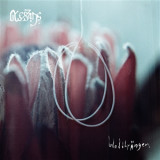
Blodsträngen, the third from Gothenburg's inimitable fourpiece Blessings, begins and ends in the same space: the safety and familiarity of their rehearsal room. In between these moments however, the album knows no boundaries; it rampages through your inner sanctum, upending everything it can, razing everything you hold dear and drawing on the walls whilst panting, drooling and muttering to itself in strange tongues_ Blodsträngen is Blessings fine-tuning their deliberately dissonant sound whilst simultaneously casting their net wide for ever more left-field, experimental influences; a disparate collection of idiosyncrasies that the band somehow manage to pull into something cohesive, captivating and empowering. The band leave the messages and meanings behind their music open to interpretation as a means of sharing this attitude of openness with their audience because, when all is said and done, all that matters is all playing disgustingly loud music together in a room. FOR FANS OF Unsane, Breach, Young Widows, Black Flag, Trap Them, Converge, Old Man Gloom, At The Drive In, Swans, The Jesus Lizard
- Deepmind
- Two Monkeys
- Every Word Said
- Another One Making Clouds
- Hollow Surrounds
- Uncertain
- Watch
- So Long
- In Bed
TURQUOISE VINYL[28,53 €]
Friends since the age of six, most of the album was written and recorded by the pair when they were nineteen. The songs possess all the singular magic of a duo writing and playing together while sounding like a full, sonically charged band. Their debut E.P. track 'Two Monkeys', included here, has a level of shoegazey dirt that will leave many distortion freaks reeling. `Every Word Said' is prog-pop perfection. The title track is as moody as anything by Flying Saucer Attack. 'Another One Making Clouds' evolves over 35 minutes and doesn't stop elevating and surprising. A founding notion of our label was to release recordings made as the musicians' first intended. No `notes' and no re-recording with a `proper' producer in a `real' studio. A noble preference we saw labels like Rough Trade pursuing with The Strokes, The Smiths, The Fall et al.This album is a proud example. And captures something you can't fake. A young band finding an epic, emotional, cinematic sound in their bedroom. Using it in that peculiarly British way to express the wonder, confusion and heartache of being nineteen. Of wanting to be seen and not seen. It's a kind of British `soul' music with ancestors like The Cure, Echo & The Bunnymen, The Jesus & Mary Chain and the original shoegaze bands. Progressive guitar music, channeling deep emotion, a desire to hear something that sounds like how you feel inside. The stuff nobody talks about. Everything Else.
Opaque Red Vinyl! The Supersuckers have been blazing their own debris-strewn path since forming in 1988 in Tucson, Arizona, winning over legions of fans with their special blend of hard rock, punk, and country. Their 1992 debut, Smoke of Hell, is a rip-roaring blur, equal parts Ramones, Motorhead, and middle-finger throwing Johnny Cash.
- A1: Rihanna - Lift Me Up
- A2: Dbn Gogo, Sino Msolo, Kamo Mphela, Young Stunna & Busiswa - Love & Loyalty (Believe) (Believe)
- A3: Burna Boy - Alone
- A4: Tems - No Woman No Cry
- B1: Vivir Quintana & Mare Advertencia - Arboles Bajo El Mar
- B2: Foudeqush & Ludwig Goransson - Con La Brisa
- B3: Snow Tha Product - La Vida (Feat E-40)
- B4: Stormzy - Interlude
- B5: Fireboy Dml - Coming Back For You
- B6: Tobe Nwigwe & Fat Nwigwe - They Want It, But No
- C1: Dn Maya Colectivo Pat Boy, Yaalen K'uj, All Mayan Winik - Laayli' Kuxa'ano'one
- C2: Og Dayv - Limoncello (Feat Future)
- C3: Ckay - Anya Mmiri (Feat Pinkpantheress)
- C4: Bloody Civilian - Wake Up (Feat Rema)
- C5: Aleman - Pantera (Feat Rema)
- D1: Dbn Gogo, Sino Msolo, Kamo Mphela, Young Stunna & Busiswa - Jele
- D2: Blue Rojo - Inframundo
- D3: Calle X Vida & Foudeqush - No Digas Mi Nombre
- D4: Guadalupe De Jesus Chan Poot - Mi Pueblo
- D5: Rihanna - Born Again
BlackIce Vinyl[27,31 €]
- A1: Rihanna - Lift Me Up
- A2: Dbn Gogo, Sino Msolo, Kamo Mphela, Young Stunna & Busiswa - Love & Loyalty (Believe) (Believe)
- A3: Burna Boy - Alone
- A4: Tems - No Woman No Cry
- B1: Vivir Quintana & Mare Advertencia - Arboles Bajo El Mar
- B2: Foudeqush & Ludwig Goransson - Con La Brisa
- B3: Snow Tha Product - La Vida (Feat E-40)
- B4: Stormzy - Interlude
- B5: Fireboy Dml - Coming Back For You
- B6: Tobe Nwigwe & Fat Nwigwe - They Want It, But No
- C1: Dn Maya Colectivo Pat Boy, Yaalen K'uj, All Mayan Winik - Laayli' Kuxa'ano'one
- C2: Og Dayv - Limoncello (Feat Future)
- C3: Ckay - Anya Mmiri (Feat Pinkpantheress)
- C4: Bloody Civilian - Wake Up (Feat Rema)
- C5: Aleman - Pantera (Feat Rema)
- D1: Dbn Gogo, Sino Msolo, Kamo Mphela, Young Stunna & Busiswa - Jele
- D2: Blue Rojo - Inframundo
- D3: Calle X Vida & Foudeqush - No Digas Mi Nombre
- D4: Guadalupe De Jesus Chan Poot - Mi Pueblo
- D5: Rihanna - Born Again
Black Vinyl[26,47 €]
- 1: New Snow
- 2: Crash Course Christmas
- 3: Magnetic Field
- 4: I Do
- 5: First Winter
- 6: Back In Town
- 7: Turtle Neck
- 8: Colibri Heart
- 9: The Day Before The Day
- 10: This Christmas / Next Christmas
The Norwegian indie-pop super-group with members from Making Marks, The Little Hands of Asphalt, Mildfire, Flight Mode and Elva return with a third album of original Christmas songs.
Get into that alternative, Nordic Christmas spirit! Christmas III at its heart is an alt-Christmas album: the songs are firmly rooted in December’s festivities, albeit not usually relying on the season’s traditional reference points. The songs hone in on the more ambivalent sides of Christmas - family, customs and the passing of time - with a keen eye towards the holidays’ most obvious function in countries close to the Artic circle: getting through the cold and dark times to celebrate the winter solstice and the turning of the sun. Drawing from Sufjan Stevens’ epic indie Christmas compendium and Phil Spector’s wall of sound classic A Christmas Gift From You, Christmas III is built on shimmering guitars, snow filled piano lines, gentle strings, springy vocals and dynamic drums - all steadily conducted by Sunturns’ own Sjur Lyseid (Flight Mode, The Little Hands of Asphalt) in the producer’s seat at his Globus studio in Oslo. With 3 songwriters (Ola Innset, Einar Stray & Sjur Lyseid) contributing to Christmas III, there’s an ever shifting sense of reflections. Parenthood and the struggles of the dark Norwegian winter is behind Ola’s track First Winter. “Sometimes I feel bad about bringing children into such a difficult world. Not so much with respect to daylight and the seasons, they’re just going to have to learn how to live with it, but with many other things – like war, poverty, climate change and even just death.” Back In Town might have been inspired by a discussion over whether Thin Lizzy’s “The Boys Are Back In Town” is a Christmas song or not, but it’s written about his youngest daughter Klara, to his elder daughter, about taking holidays with your family in a town you once lived. Einar pulls in Phoenix and Mew by the way of Jesus and Mary Chain on Crash Course Christmas, resulting in a seasick wave of a pop tune. “It’s a song about the guilt of not prioritizing your relationships. It’s been year of rainchecks and Christmas finally gives you some time to reflect. You’ve experienced so much and changed so much as a person that you almost forget your origins. Coming home for Christmas can then be a ritual of finding your way back to what you left behind." Drawing on the knitwear from the film Love, Actually, Turtle Neck, taps into the Backstreet Boys by way of Mac Demarco, with a sneaky reference to the legendary Norwegian Christmas hit En Stjerne Skinner I Natt. Album closer This Christmas / Next Christmas leans in on the hook for the Norwegian Christmas TV show Jul i Blåfjell, a multi-generational seasonal staple (essentially a daily children’s advent calendar kids show). “The song is about your parents ageing and needing your help – possibly really far away - while at the same time having your own children to take care of”. The cover artwork is a homage to Christmas dress codes for Norwegian men. Suits and shirts are a rarity in day to day life, but there are a handful of occasions that require some form of formal attempt at a suit: New Year’s Eve, National Day, weddings & funerals, and Christmas Eve: resulting in various degrees of sartorial elegance on the day (and on this instance, a hot summer’s day stifling the Christmas vibes, with ambiguous apparel instructions ahead of the photoshoot!).
Merry Christmas! Sunturns are Ola Innset – vocals, guitars, banjo. Sjur Lyseid – vocals, guitars. Einar Stray – vocals, keyboards, guitars. Eivind Almhjell – guitars, bass. Simen Herning – guitar. Jørgen Nordby – drums.
- A1: The Springfields - Are We Gonna Be Alright
- A2: Talulah Gosh - Talulah Gosh
- A3: Blueboy - Meet Johnny Rave
- A4: The Flatmates - I Could Be In Heaven
- A5: Primal Scream - Velocity Girl
- A6: The Primitives - Way Behind Me
- A7: The Orchids – I’ve Got A Habit
- A8: Popguns - Waiting For The Winter
- A9: Mccarthy - Should The Bible Be Banned
- B1: The Soup Dragons - Soft As Your Face
- B2: The Darling Buds – Burst
- B3: The Wedding Present – A Million Miles
- B4: 14 Iced Bears – Sure To See
- B5: The Wake - Crush The Flowers
- B6: Even As We Speak - Falling Down The Stairs
- B7: The Pooh Sticks - Indie Pop Ain't Noise Pollution
- B8: Brighter - Does Love Last Forever?
- C1: Heavenly - Over And Over
- C2: Bmx Bandits - I Wanna Fall In Love
- C3: Blake Babies – Look Away
- C4: The Vaselines - Jesus Wants Me For A Sunbeam
- C5: Velocity Girl – Sorry Again
- C6: Milky Wimpshake – Scrabble
- C7: Helen Love - We Love You
- D2: Veronica Falls - Waiting For Something To Happen
- D3: Joanna Gruesome - Do You Really Wanna Know Why Yr Still In Love With Me?
- D4: The Hit Parade - You Didn't Love Me Then
- D5: Allo Darlin' - My Heart Is A Drummer
- D6: The Spook School - Speak When You're Spoken To
- D7: Ribbon Stage – Playing Possum
- D8: The Lost Days - Mess You Made
- D9: The Goon Sax - Boyfriend
- C8: The Pains Of Being Pure At Heart - Young Adult Friction
- D1: Dum Dum Girls - Blank Girl
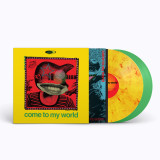
Two-Piers bringt mit "Come To My World" eine kurze Geschichte und Tauchgang in die Welt des Indie-Pop, von seinen bescheidenen Anfängen in den 1980ern bis zu den vielen grossartigen Bands, die heute die Flagge hochhalten.
"Come To My World" beginnt mit coolen Bands wie Talulah Gosh, The Flatmates, Blueboy, Primal Scream, McCarthy, 14 Iced Bears und The Springfields auf bahnbrechenden DIY-Labels wie Sarah Records, The Subway Organization und Creation. Über die einflussreichen C86-Kassettenjahre gelangen wir zu den kommerzielleren Spät-1980er-Sounds von The Primitives, The Soup Dragons und The Darling Buds. Wir navigieren durch die 1990er mit der unterschätzten Brillianz von Heavenly, der florierenden schottischen Szene mit Acts wie BMX Bandits und The Vaselines, bis zum Durchbruch der Indie-Pop-Sounds von Velocity Girl und Blake Babies in den USA. In den 2000ern brachte die US-Szene exzellente Bands wie Dum Dum Girls und The Pains Of Being Pure At Heart hervor, neben Underground-Acts wie Joanna Gruesome, The Spook School und Veronica Falls. Die Zusammenstellung endet mit einem Blick in die glänzende Zukunft des Indie-Pop mit Künstlern wie The Goon Sax, The Lost Days und Ribbon Stage.
Für Indie-Pop-Liebhaber ist diese Underground-Musik seit fast 40 Jahren eine ständige Quelle der Freude. 2LP mit 34 Tracks. 2CD mit 40 Tracks.
- A1: The Springfields - Are We Gonna Be Alright
- A2: Talulah Gosh - Talulah Gosh
- A3: Blueboy - Meet Johnny Rave
- A4: The Flatmates - I Could Be In Heaven
- A5: Primal Scream - Velocity Girl
- A6: The Primitives - Way Behind Me
- A7: The Orchids – I’ve Got A Habit
- A8: Popguns - Waiting For The Winter
- A9: Mccarthy - Should The Bible Be Banned
- B1: The Soup Dragons - Soft As Your Face
- B2: The Darling Buds – Burst
- B3: The Wedding Present – A Million Miles
- B4: 14 Iced Bears – Sure To See
- B5: The Wake - Crush The Flowers
- B6: Even As We Speak - Falling Down The Stairs
- B7: The Pooh Sticks - Indie Pop Ain't Noise Pollution
- B8: Brighter - Does Love Last Forever?
- C1: Heavenly - Over And Over
- C2: Bmx Bandits - I Wanna Fall In Love
- C3: Blake Babies – Look Away
- C4: The Vaselines - Jesus Wants Me For A Sunbeam
- C5: Velocity Girl – Sorry Again
- C6: Milky Wimpshake – Scrabble
- C7: Helen Love - We Love You
- D2: Veronica Falls - Waiting For Something To Happen
- D3: Joanna Gruesome - Do You Really Wanna Know Why Yr Still In Love With Me?
- D4: The Hit Parade - You Didn't Love Me Then
- D5: Allo Darlin' - My Heart Is A Drummer
- D6: The Spook School - Speak When You're Spoken To
- D7: Ribbon Stage – Playing Possum
- D8: The Lost Days - Mess You Made
- D9: The Goon Sax - Boyfriend
- C8: The Pains Of Being Pure At Heart - Young Adult Friction
- D1: Dum Dum Girls - Blank Girl
Black Vinyl[34,41 €]
Two-Piers bringt mit "Come To My World" eine kurze Geschichte und Tauchgang in die Welt des Indie-Pop, von seinen bescheidenen Anfängen in den 1980ern bis zu den vielen grossartigen Bands, die heute die Flagge hochhalten.
"Come To My World" beginnt mit coolen Bands wie Talulah Gosh, The Flatmates, Blueboy, Primal Scream, McCarthy, 14 Iced Bears und The Springfields auf bahnbrechenden DIY-Labels wie Sarah Records, The Subway Organization und Creation. Über die einflussreichen C86-Kassettenjahre gelangen wir zu den kommerzielleren Spät-1980er-Sounds von The Primitives, The Soup Dragons und The Darling Buds. Wir navigieren durch die 1990er mit der unterschätzten Brillianz von Heavenly, der florierenden schottischen Szene mit Acts wie BMX Bandits und The Vaselines, bis zum Durchbruch der Indie-Pop-Sounds von Velocity Girl und Blake Babies in den USA. In den 2000ern brachte die US-Szene exzellente Bands wie Dum Dum Girls und The Pains Of Being Pure At Heart hervor, neben Underground-Acts wie Joanna Gruesome, The Spook School und Veronica Falls. Die Zusammenstellung endet mit einem Blick in die glänzende Zukunft des Indie-Pop mit Künstlern wie The Goon Sax, The Lost Days und Ribbon Stage.
Für Indie-Pop-Liebhaber ist diese Underground-Musik seit fast 40 Jahren eine ständige Quelle der Freude. 2LP mit 34 Tracks. 2CD mit 40 Tracks.
- A1: Jesus Forgive Me, I Am A Thot
- A2: Kenan Vs Kel
- A3: Beta Male Strategies
- A4: Jpegmafia Type Beat
- A5: Grimy Waifu
- A6: Ptsd
- A7: Rap Grow Old & Die X No Child Left Behind
- A8: All My Heroes Are Cornballs
- B1: Bbw
- B2: Prone!
- B3: Lifes Hard, Here's A Song About Sorrel
- B4: Thot Tactics
- B5: Free The Frail (Featuring Helena Deland)
- B6: Post Verified Lifestyle
- B7: Basicbitchteargas
- B8: Dots Freestyle Remix (Featuring Buzzy Lee And Abdu Ali)
- B9: Buttermilk Jesus Type Beat
- B10: Papi I Missed U
All My Heroes Are Cornballs is the third studio album by renowned Baltimore rapper JPEGMafia, released on September 13, 2019, follow-up to the album that really launched his career, Veteran (2018). JPEGMAFIA handled the production, mixing and mastering in his home studio. The album features guest appearances from Abdu Ali, Helena Deland and Buzzy Lee, as well as additional vocals by Refined Sugar, Vegyn and Young Emoji. All My Heroes are cornballs is an avant-garde, experimental hip hop, and punk rap album, and draws influences from experimental pop, glitch hop, ambient, noise and industrial music. It has a smoother and more melodic sound than its predecessor, employing uncommon song structures, extensive sampling, and a variety of vocal techniques such as rapping, screaming and singing. Thematically, the album is personal, introspective, and presented in a stream of consciousness form, touching on the Internet culture, prejudice, political issues and JPEGMafia's newfound fame.
Twenty years ago, mclusky released their third album, The Difference Between Me and You Is That I"m Not On Fire via Too Pure. In the years since, their legend has only grown, proved by their recent sold-out tour dates. Alternative Press described them as "a smash up between the scabrous rock noise of the Jesus Lizard and the jagged rhythms and open spaces of Gang Of Four". Originally produced by the late, great Steve Albini, this reissue has been remastered by his close friend and Shellac bandmate, Bob Weston and is pressed on 180gram black vinyl.
Celebrated Zambian guitarist and bandleader Paul Ngozi’s concept album about the stuggles of those living in Africa’s 1970s townships Includes Oversized 8 Page Booklet That Details Paul Ngozi and The Ngozi Family’s Arc, Including Rare Photographs, Discography And Annotation. The third entry in an era-defining reissue series on Now-Again centered around this Zamrock legend and his band - previous entries include Day Of Judgement and 45,000 Volts
"Zambia’s Zamrock movement that exploded in the 1970s...provided young musicians access to European and American music, and created a unique sound. At its root, Zamrock melded fuzz-toned psychedelia, chugging garage rock and roiling funk with a broad mix of African cadences and beats...enlivening a scene that included bands like Musi-O-Tunya, Amanaz and the Ngozi Family” (New York Times)
Zamrock was a bona-fide rock scene: on the African continent, only Nigeria can claim one so comprehensive, and Nigeria’s was largely catalyzed and funded by subsidiaries of the European major labels. Zamrock was as independent as the newly-named country, formerly known as Northern Rhodesia. Zamrock is starting in its completeness, especially for a scene that emerged, unfurled and disappeared so quickly. From Musi-O-Tunyaís fusion of Fela’s Afro-beat, Hendrix’s rock, South African jazz and traditional Zambian melodies and rhythms to Salty Dog’s acid folk/rock, Zambia’s rock scene contained all of rock’s subgenres. Zamrock was much more than an imitation of American and European rock music: it quickly became a uniquely Zambian movement, befitting of its name. WITCH, Paul Ngozi and Amanaz sound nothing like other rock music from the African continent - or elsewhere.
They grew closer as restrictions dropped away and audiences grew, using the shifts to experiment with their material and reach more expansive and formidable levels. The final product is a landmine of sound, inspired by the raw, sweeping fuzz of the likes of Sonic Youth and The Jesus and Mary Chain. Familiar elements of noughties era guitar shine through, confronted with cutting contemporary angst to create a nostalgic yet intoxicating sound. As the band's confidence grew through their live shows they were liberated, taking all they had learnt in order to begin working on "a lot more cohesive and bigger sounding" project
Randy Rice mixed accoustic singer-songwriter songs with electrifying acid guitar in his marvellous privately pressed double album from 1974.
Offered here in a much needed reissue so you do not have to spend over a grand for an original copy.
Housed in it's original minimalist hand made artwork with the little upgrade twist of silk-screen printing.
· First ever vinyl reissue of ultra rare privately pressed double LP!
· Remastered sound!
· Reproductions of the two original inserts!
· Plus a new one with liner notes by Randy Rice himself sharing his memories of the recording!
I was between the ages of 18 and 20 when I wrote the 22 songs found on To Anyone Who Ever Laughed at Someone Else. They express the thoughts and frustrations, hopes and fears of a young man coming of age in a world that was full of upheaval and transformation. I was a product of that period in America we call the sixties—those years between the assassination of President John F. Kennedy in November 1963 and the resignation of President Richard Nixon in August 1974. In fact, this record was released that same month Nixon resigned. Over the next five years, I toured the country as an acoustic artist performing at clubs, coffeehouses and colleges. During that time, I watched the idealism and social consciousness of the sixties slowly fade away. In its place emerged a cynicism and materialism that still seems to be with us so many years later. More than anything else, I think To Anyone Who Ever Laughed at Someone Else is a time capsule that speaks to us from a past era. A period when, above all other things, we asked questions. We questioned our country, we questioned our faith, we questioned the very purpose of life itself. I am very excited to bring those questions and these songs to a new generation on a new continent. Special thanks to my friends Jordi Segura of Wah Wah Records who took the initiative to release this 50th Anniversary Re-issue of To Anyone Who Ever Laughed at Someone Else and Michel Veenstra Klinkhamer, who introduced us.
A1.Hello
A2. Mr. Dumpty, Before The Fall
A3.The Song
A4.Mrs.Bitch
A5.Students From Marian Catholic High School
A6.Will You Still Love Me When You're Twenty-One
A7.To Anyone Who's Ever Laughed At Someone Else
B1.The Other Day
B2.SPQR Part 1 - I Wish That Fly Would Land So I Could Swat Him
B3.SPQR Part 2 - Sorry
B4.SPQR Part 3 - My Last Question
B5.SPQR Part 4 - Gosh, Darn, Golly Gee, or Those Canadians Can Sure Tell It Like It Is
B6.SPQR Part 5 - All American Girl
B7.SPQR Part 6 - Let Me Grow
C1.For Me, For You
C2.The New Testament, Or A Good Samaritan Will Never Jew You · Matthew: Love Means Never
Having To Say You're Happy
C3.The New Testament, Or A Good Samaritan Will Never Jew You · Mark: Jesus Was A Capricorn, But
Then So Am I
C4.The New Testament, Or A Good Samaritan Will Never Jew You · Luke: Morning Meditation
C5.The New Testament, Or A Good Samaritan Will Never Jew You · John: Mother Mary, Let Me Be
C6.The New Testament, Or A Good Samaritan Will Never Jew You · Fred: Post-Mortem Dirge
D1.Everyday People Revisited
D2.Filler Song
Out Of Here
D5.The Continuing Story Of A Square Peg In A Round Hole Part 3: Footnote To The Preceding Nineteen Songs, And Is It Really Necessary
D6.The Continuing Story Of A Square Peg In A Round Hole Part 4: I Hope I Always See You
Smiling
D7.The Continuing Story Of A Square Peg In A Round Hole Part 5: My Song
D3.The Continuing Story Of A Square Peg In A Round Hole Part 1: The Ballad Of Uthage
D4. The Continuing Story Of A Square Peg In A Round Hole Part 2: I Think It's Time For Me To Get
Die Wiederveröffentlichung eines Klassikers: Deer Ticks Debüt-Meisterwerk War Elephant jetzt erhältlich auf "heavy metal grey" Zweifach-Vinyl mit einer Ätzung auf Seite D und dem Original-Cover-Artwork. Ein bedruckter Einleger liegt bei.
John McCauley III hat das Album im zarten Alter von 21 Jahren geschrieben, arrangiert, eingespielt und aufgenommen. Es ist voll von Liedern, die weiser und nuancierter sind, als man für einen jungen Mann in seinem Alter vermuten könnte. Die Texte sind nachdenklich und warmherzig, ganz im Stil von Johns Singer/Songwriter-Helden wie Townes van Zandt, Neil Young und Richie Valens. Das Album endet mit einer Coverversion des 1962 mit dem GRAMMY? ausgezeichneten Songs des Jahres "What Kind of Fool Am I" von Sammy Davis, Jr.
Ein Debütalbum das sich der Genrekategorisierung entzieht und schon jetzt als Klassiker gilt. Ein Barroom-Rock-Album voller Hooks, das mit der eingängigen Düsternis der 90er Jahre in Seattle ebenso verbunden ist wie mit dem Honky Tonk der späten 80er Jahre in Minneapolis und den 70er Jahren in Austin.
Deer Tick’s debut album, ‘War Elephant’, is back (even though it never went anywhere). It is the same stellar album released in 2007 and then reissued by Partisan in 2008. This version of the album finds us returning to the original 2007 illustrated cover. This cover will become the new standard version of the album across all formats. The music and track listing remains the same.
John McCauley III wrote, arranged, played, and recorded the album at the tender age of 21. The album is full of songs wiser and more nuanced than John should have been able to produce according to natural law. The words are deliberate and heartfelt and follow the lead of singer / songwriter heroes of John’s like Townes van Zandt, Neil Young and Richie Valens.
The album concludes with a cover of the 1962 GRAMMY-winning Song Of The Year, ‘What Kind of Fool Am I’, made famous by Sammy Davis, Jr.
It can safely be said that this debut album is a genre defying classic; it’s a hook filled bar room rock album that is as connected to 90’s Seattle catchy gloom as it is to left-of-the-dial late 80’s Minneapolis and 70’s Austin honky tonk.
140g Heavy Metal Grey (gun metal grey) coloured double LP with an etching on side D, housed in a single sleeve jacket with printed insert.
Original release press included reviews from Pitchfork and The Line of Best Fit plus support from Billboard, Brooklyn Vegan, All Music and American Songwriter.
Step into the captivating world of Melody Fields as they release their transformative albums, "1901" and "1991." With a marbled musical background, these albums are crafted with the precision of a brushstroke by the likes of Pablo Picasso or Gustav Klimt. Each track is carefully composed, drawing inspiration from manic behavior, fixated obsessions, and the pursuit of something greater. Melody Fields explores themes of spirituality, faith, trust, and conviction in various forms, often leading to addiction or madness. During the pandemic, Melody Fields accumulated hours of material, embracing the freedom to experiment with drum machines and synthesizers in one session, and exploring oriental instruments in another. The result is a sonic tapestry that defies conventions and pushes boundaries. The primary album, "1901," can be described as a rock album with psychedelic influences. It features repetitive guitar riffs, distorted soundscapes, and mesmerizing three-part harmony vocals. As they traverse these musical landscapes, Melody Fields is joined by guest musicians from esteemed bands such as Goat and Holy Wave, adding an extra layer of sonic brilliance. The album culminates with the captivating track "Mayday," a haunting composition written by the legendary Klaus Dinger from Neu! In contrast, "1991" is a concept album that evolved from late-night jam sessions, experimental sounds, and danceable music. It presents four remixes, including contributions from Goat and Al Lover, breathing new life into the original composition “Jesus” from “1901”. Notably, "1991" includes the thought-provoking composition "Diary of a Young Man," written by Daniel Treacy from Television Personalities, which invites introspection and reflection. Melody Fields' "1901-1991" presents a sonic journey through time, combining elements of rock, psychedelia, and experimentalism. These albums showcase the band's dedication to musical craftsmanship and their willingness to embrace diverse influences. Prepare to be immersed in their sonic universe, where boundaries are shattered, and creativity knows no limits.
Slaughter Beach, Dog’s new album ‘Crying, Laughing, Waving, Smiling’ finds Jacob Ewald hitting his songwriting stride. A decade into steadily releasing records through Slaughter Beach, Dog and Modern Baseball, Ewald spent hundreds of hours over the past few years to listen purposefully, diving deep into the worlds of Randy Newman, Tom Waits, Neil Young and many other “classic guys” that he hadn’t spent ample time with. Ewald also spent a similar amount of hours meticulously assembling a band fit for these new songs, and I am very happy to report that he found what he was looking for.
The result is ‘Crying, Laughing, Waving, Smiling’ - a timeless record, and Slaughter Beach, Dog’s finest - self produced and capturing Ewald and the band at the height of their powers. Ewald’s eye for detail is on display, ‘Crying, Laughing, Waving, Smiling’ is filled with gorgeous imagery and vivid worlds are built within each song. Out on longtime label home Lame-O Records, this album will bring
longtime Ewald fans, his newfound TikTok audience, and more discerning adult contemporary listeners deeper into the world of Slaughter Beach, Dog.
- Word Games (Live)
- Love The One You’re With (Live)
- Sugar Babe (Live)
- Do For The Other (Live)
- Jesus Gave Love Away For Free (Live)
- 49: Bye-Byes/For What It’s Worth (Live)
- You Don’t Have To Cry (Live)
- The Lee Shore (Live)
- Cherokee (Live)
- Black Queen (Live)
- Know You’ve Got To Run (Live)
- Band Introduction (Live)
- Ecology Song (Live)
- Bluebird Revisited (Live)
- Lean On Me (Live)
Founding member of Buffalo Springfield and folk-rock supergroup Crosby, Stills, Nash & Young, Stills' first solo album, Stephen Stills, earned a gold record, is the only album to feature both Jimi Hendrix and Eric Clapton, and climbed to #3 on the album charts. Stephen Stills’ single "Love the One You're With" became his biggest solo hit, peaking at number 14 on the Billboard Hot 100 and is the first track on this collection. 14 tracks from Stephen Still’s First US Tour, previously unissued and recorded Live at The Berkeley Community Theater in 1971, featuring David Crosby on two songs. In 1971 Stephen Stills embarked on a US tour, opening each show with an intimate acoustic first set, and closing each night with a riveting electric set featuring the Memphis Horns. These historic, previously unreleased recordings took place over two nights at the Berkeley Community Theater, with David Crosby joining him on vocals and guitar for "You Don’t Have To Cry" and "The Lee Shore." These recordings find Stills at peak performance in both vocal delivery and musicianship, effortlessly incorporating alternate instrumentation on his instantly recognizable tracks, including a seamless medley of “49 Bye Byes" and "For What It’s Worth” unexpectedly played on piano. Hand-picked by Stills from his personal archives, this album captures timeless and era defining performances. Fans who were lucky enough to catch his historic debut trek, dubbed “The Memphis Horns Tour,” were treated to the balladeer, the raving troubadour, the acoustic bluesman, the soul driver, and by far the most passionate music maker. Backed by a loyal cast of friends, including his usual steady rhythm section—drummer Dallas Taylor and bassist Calvin “Fuzzy” Samuels—along with keyboardist Paul Harris, guitarist Steve Fromholz, and percussionist Joe Lala, these Northern California shows were one of the most unique and intimate stops on the tour This album, rather than being an artifact from a bygone era, sparkles and stimulates. It cajoles you into thinking, feeling and—most importantly—moving. Stephen Stills Live At Berkeley 1971 is a cornucopia of priceless sound—and all of it bears the distinct and loving fingerprint of Stephen Stills.
- A1: Guillaume De Machaut –C’est Force, Faire (14Th Century)
- A2: Tobias Hume –Touch Me Lightly (Circa 1607)
- A3: Silvestro Di Ganassi –Ricercar Quarto (1542)
- A4: Guillaume De Machaut –Hélas! Et Comment (14Th Century)
- A5: Charles Curtis –Unfinished Song (1998)
- B1: Terry Jennings –Song (1960)
- B2: Morton Feldman –Durations Ii (1960)
- B3: Anton Webern –Drei Kleine Stücke, Op. 11(1914)
- B4: Olivier Messiaen –Louange À L’éternité De Jésus (From Quatuorpour La Fin Du Temps) (1941)
- C1: Richard Maxfield –Perspectives For La Monte Young (1961-62)
- D1: Charles Curtis –Music For Awhile (1999)
- D2: Charles Curtis –Music For “Lester” (2009)
New double-LP edition of a selection from Saltern’s acclaimed collection of recordings surveying the career of renowned, American cellist, Charles Curtis. Selected by Curtis and Tashi Wada from recordings spanning two decades, Performances & Recordings 1999-2018 offers a broad, inclusive view of Curtis’ activities across the diverse worlds of music he inhabits, featuring the music of
- A1: Just Like Honey
- A2: Sometimes Always (Feat Isobel Campbell)
- A3: Black And Blues (Feat Isobel Campbell)
- A4: Amputation
- A5: All Things Pass
- B1: Some Candy Talking
- B2: Head On
- B3: The Living End
- B4: Cracking Up
- C1: Teenage Lust
- C2: I Hate Rock 'N' Roll
- C3: Reverence
- D1: Blues From A Gun
- D2: Far Gone And Out
- D3: Between Planets
- D4: Half Way To Crazy
- D5: In A Hole
red 2x12"[26,85 €]
Recorded at the Hollywood Palladium, Los Angeles in 2018, "Sunset 666" is a new live album from The Jesus and Mary Chain on Fuzz Club. In 1990, a young American band, full of a precise kind of noise and darkness, were special guests on the US tour being undertaken by a group who had noise and darkness, poise and catharsis of their own. The young band: Nine Inch Nails. Those headliners: The Jesus and Mary Chain. Almost thirty years later, an invitation was extended. The resulting tour ended with a run of six shows at LA"s Hollywood Palladium and the seventeen tracks captured on the "Sunset 666" double album were recorded from the desk on two of those nights. Sides A, B and C are from the final show, December 15. Those twelve songs were the full set that night, in sequence, meaning the show began with the here-we-f*cking-go drums of "Just Like Honey" and ended with the ferocious euphoria of an eight-and-a-half minute "Reverence". Side D of the vinyl record is taken from the December 11 show and serves almost as a mini-showcase of the "Automatic" album, featuring versions of "Blues From A Gun", "Between Planets" and "Halfway To Crazy".
- A1: Just Like Honey
- A2: Sometimes Always (Feat Isobel Campbell)
- A3: Black And Blues (Feat Isobel Campbell)
- A4: Amputation
- A5: All Things Pass
- B1: Some Candy Talking
- B2: Head On
- B3: The Living End
- B4: Cracking Up
- C1: Teenage Lust
- C2: I Hate Rock 'N' Roll
- C3: Reverence
- D1: Blues From A Gun
- D2: Far Gone And Out
- D3: Between Planets
- D4: Half Way To Crazy
- D5: In A Hole
black 2x12"[25,17 €]
Recorded at the Hollywood Palladium, Los Angeles in 2018, "Sunset 666" is a new live album from The Jesus and Mary Chain on Fuzz Club. In 1990, a young American band, full of a precise kind of noise and darkness, were special guests on the US tour being undertaken by a group who had noise and darkness, poise and catharsis of their own. The young band: Nine Inch Nails. Those headliners: The Jesus and Mary Chain. Almost thirty years later, an invitation was extended. The resulting tour ended with a run of six shows at LA"s Hollywood Palladium and the seventeen tracks captured on the "Sunset 666" double album were recorded from the desk on two of those nights. Sides A, B and C are from the final show, December 15. Those twelve songs were the full set that night, in sequence, meaning the show began with the here-we-f*cking-go drums of "Just Like Honey" and ended with the ferocious euphoria of an eight-and-a-half minute "Reverence". Side D of the vinyl record is taken from the December 11 show and serves almost as a mini-showcase of the "Automatic" album, featuring versions of "Blues From A Gun", "Between Planets" and "Halfway To Crazy".
- A1: Just Like Honey
- A2: Sometimes Always (Feat. Isobel Campbell)
- A3: Black And Blues (Feat. Isobel Campbell)
- A4: Amputation
- B1: All Things Pass
- B2: Some Candy Talking
- B3: Head On
- B4: The Living End
- B5: Cracking
- C1: Teenage Lust
- C2: I Hate Rock 'N' Roll
- C3: Reverence
- C4: Blues From A Gun
- D1: Far Gone And Out
- D2: Between Planets
- D3: Half Way To Crazy
- D4: In A Hole
Recorded at the Hollywood Palladium, Los Angeles in 2018, ‘Sunset 666’ is a new live album from The Jesus and Mary Chain, due out August 4th 2023 on Fuzz Club. In 1990, a young American band, full of a precise kind of noise and darkness, were special guests on the US tour being undertaken by a group who had noise and darkness, poise and catharsis of their own. The young band: Nine Inch Nails. Those headliners: The Jesus and Mary Chain. Almost thirty years later, an invitation was extended. Would the Reid brothers care to reverse the roles and open for Nine Inch Nails on their own North American tour? Trent Reznor had been a fan of the Mary Chain, and influenced by them since hearing 'Psychocandy', so it felt a good fit and the Reid brothers accepted. The resulting tour ended with a run of six shows at LA’s Hollywood Palladium and the seventeen tracks captured on the ‘Sunset 666’ double album were recorded from the desk on two of those nights. Sides A, B and C are from the final show, December 15. Those twelve songs were the full set that night, in sequence, meaning the show began with the here-we-f*cking-go drums of ‘Just Like Honey’ and ended with the ferocious euphoria of an eight-and-a-half minute ‘Reverence’. Side D of the vinyl record is taken from the December 11 show and serves almost as a mini-showcase of the ‘Automatic’ album, featuring versions of ‘Blues From A Gun’, ‘Between Planets’ and ‘Halfway To Crazy’.
The rawness of The Veils' Nux Vomica can be enjoyed to a degree never heard before, with Ba Da Bing's limited edition pressing of the records with the original mixes by Nick Rainey left intact.
Originally released in 2006, The Veils sophomore album Nux Vomica was praised for its “Herculean intensity” by The Guardian, and called “a heady blast of gothic psychodrama” by The Observer, while Pitchfork praised leader Finn Andrews’ “magnetic, outsize persona.” Long out of print, the vinyl version was resuscitated by Music on Vinyl in 2017 and quickly sold out. Now, The Veils present the definitive version of their most heralded album to date, which dusts off the original mixes by legendary producer Nick Launay (Public Image Limited, The Birthday Party, INXS and Midnight Oil) and offers them to fans here for the first time. Taken from the original two-inch analog tape reels, each song was carefully remastered by Alex Wharton at Abbey Road Studios in London.
Nux Vomica was the first of many creative reinventions for Andrews, who at 22 had already released an album on Rough Trade, moved from New Zealand to London to form a band, then back to New Zealand where he once again started the band anew. The creative progression is clear in Andrews’ incisive lyricism and knack for hell-fire dramatics. From the positively mirthful “Advice for Young Mothers to Be” to the simmering ominousness of “Nux Vomica,” from the ornate spectacle of “Calliope!” to the Grand Guignol of “Jesus for the Jugular”, Nux Vomica is a remarkably accomplished album for a musician so young who was facing the pressures of British musical stardom.
All intentions to release this dark and raw set of recordings were dashed upon submission to Rough Trade for approval, who didn't like the results. They hired mixing engineer Bill Price to adjust the sound and add additional instrumentation. Launey’s mixes were shelved and forgotten about, while the album nonetheless went on to be a critical highpoint for the band and is much loved to this day.
To celebrate the release of The Veils’ massive new double album, …And Out Of The Void Came Love, Ba Da Bing is issuing a limited-to-1200-LPs simultaneous run of Nux Vomica in a form you have never heard it before. The brilliance of Andrews’ talents come through all the more clear in this version, which strips his songs to the core and allows the holes to show. Here’s where the seeds of a lifelong artistic talent really began to first take root.
- A1: Logic System - Unit
- A2: Kraftwerk - Computerwelt (2009 Remastered
- B1: Whodini - Magic's Wand
- B2: Rocker's Revenger - Walking On Sunshine (Feat Donnie Calvin
- C1: Klein & Mbo - Dirty Talk (European Connection
- D1: Liaisons Dangereuses - Los Niños Del Parque
- D2: Yello - Bostich
- E1: The The - Giant
- F1: The Residents - Kaw-Liga
- G1: Clan Of Xymox - Stranger
- G2: A Split - Second - Flesh
- H1: Severed Heads - Dead Eyes Opened
- H2: The Weathermen - Poison!
- I1: New Order - Blue Monday
- J1: Anne Clark - Our Darkness
- J2: 16 Bit - Where Are You?
- K1: Phuture - We Are Phuture
- K2: Model 500 - No Ufo's (Vocal
- L1: Frankie Knuckles Feat Jamie Principle - Your Love
- L2: Quest - Mind Games (Street Mix
- M1: Jasper Van't Hof - Pili Pili
- N1: Guem Et Zaka Percussion - Le Serpent
- N2: Hugh Masekela - Don't Go Lose It Baby
- O1: Sly & Robbie - Make 'Em Move
- Q1: The Ecstasy Club - Jesus Loves The Acid
- R1: Foremost Poets - Reason To Be Dismal?
- S1: Lhasa - The Attic
- S2: A Guy Called Gerald - Voodoo Ray
- T1: M/A/R/R/S - Pump Up The Volume - Usa 12" Mix
- T2: Bobby Konders - Nervous Acid
- U1: Meat Beat Manifesto - Helter Skelter
- V1: Raze - Break 4 Love
- W1: Sueño Latino With Manuel Goettsching Performing E2-E4 - Sueño Latino (Paradise Version
- X1: Off - Electrica Salsa
- O2: Brian Eno - David Byrne - Help Me Somebody
- P1: Primal Scream - Loaded (Andy Weatherall Mix
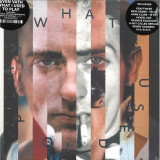
For this uniquely personal retrospective spread over twelve vinyl discs, Sven Väth takes us back to the early days of his DJ career. On What I Used To Play we meet great pioneers of electronic music, gifted percussionists, obscure wave bands, and innovative producers of a bygone 'new electronic' era. Rough beats and irresistible grooves from the identification stage of house, techno, and acid remind us not just how far electronic music has evolved over the past four decades, but how great it was to dance to EBM, techno, and house for the very first time.
If there is one protagonist of the electronic music scene who has remained curious, innovative and at the very cutting edge of music for over four decades, it's Sven Väth. His multi-layered artist albums and Sound of the Season mix compilations have been defining the genre for over two decades, and even today, he is constantly on the lookout for the next top tune to add to the highlights of his next set. At least, that's the case when he's not producing them himself as an artist or remixer. "Actually, it's always been part of my DNA to think ahead," and nothing had been further from his mind than looking back at his past, but when in spring of 2020 the international DJ circuit had to be scaled down to virtually zero, the 'restless traveler' suddenly had time. Time to stop and reflect on "how it actually was back then, at the very beginning of my career..."
"It was a great trip and with every track, beautiful memories came flooding back".
In the London apartment, he had just moved into, Sven has set up a "little music room", where he cocooned himself for several days, "to look way back for the first time and review my musical journey through the eighties, so to speak."
The interim result was six thematically oriented playlists with a grand total of 120 tracks from 'early 80s' to 'Balearic late 80s', together with excursions into afrobeat, European new wave, and EBM sounds and a few epochal techno/house tracks from the USA in between. From these 'Best of Sven Väth's favorites', the project What I Used To Play crystallized. Sven remembers how the Cocoon team reacted to his proposal: "They found the idea of making a compilation out of it MEGA from the beginning and everyone said 'Sven, go for it', but then, of course, the work really started, namely, to clear the rights and to get clean sounding masters of the up to 40-year-old tracks. There was also disappointment, of course. We couldn't clear certain titles because the rights holders in the USA had fallen out with each other or simply disappeared from the scene. In short, it wasn't easy, but now I can safely say we got the most important tracks."
Finally, after two years of research, curation, design, and administrative fine-tuning, the "little retrospective" from 1981 to 1990 is available. The exquisitely packaged, and three-kilo heavy box set is not only physically impressive, WIUTP is also the definitive record of Sven Väth's musical development. On each of the twenty-four sides of vinyl, you can trace track by track, what influenced him during which phase, and how he took off as a DJ from his parents' Queen's Pub straight into the spotlight at Dorian Gray. There and at Vogue (later OMEN), Sven became the style-defining player in the DJ booth that he still is today.
1981 - 1990: Future Sounds of Now
In the early eighties, the crowd in clubs like Vogue and Dorian Gray danced to what nowadays we call 'dance classics' - mainly disco, funk, soul, and chart pop. It was up to a new generation of DJs, including Sven Väth, the youngest protagonist in the Rhine-Main area at the time, to create their own club-ready music mix. Good new tracks and potential floor-fillers were rarities that had to be sought out and found, in order to prove oneself worthy.
Without MP3s, internet streaming, or other digital download possibilities, music didn't just gravitate to the DJ, instead, it had to be tracked down. In well-stocked record stores in Frankfurt and Wiesbaden or even in Amsterdam, London, or New York, Sven and friends sourced the material for countless magical nights. On WIUTP we can follow Sven's very personal journey through this wild, innovative era in which synth-pop, funk, hip-hop, and disco were successively replaced as 'club music' by house, techno, acid, and breakbeat. By the end of the decade, it was clear to see that these once exotic 'fringe' phenomena would soon become 'mass' phenomena.
Early 80s
Dirty Talk by the Italian-American duo Klein & M.B.O. represents the most innovative phase of the Italo-disco genre in the early eighties like no other track. Mario Boncaldo (I) and Tony Carrasco relied entirely on the original synthetic drum and percussion sounds of the Roland TR-808, coupled with the raunchy vocals of Rossana Casale and guitar accents of Davide Piatto. Of course, other tracks from this period were also influential in style, most notably Unit by Logic System, which worked as the perfect soundtrack to the laser lighting system at the legendary Dorian Gray club. With stomping beats and robotic rap interludes, Bostich by Yello also belongs on Sven's eternal playlist - after all, it caught the attention of Afrikaa Bambaataa, who invited the Swiss duo to perform at the Roxy in New York in 1983.
EBM Wave - Mid 80s
From today's point of view, the almost ten-minute-long, downtempo track Giant by Matt Johnson's band project The The, would probably not be considered an obvious club classic. However, a closer (re)listen reveals the rhythmic intricacies of the percussion overdubs by JG Thirlwell (aka Foetus) on Johnson's composition, and it becomes clear why this exceptional piece of music is one of Sven's absolute favorites. Other classics from this phase include Kaw-Liga by the mysterious The Residents, the hypnotic-synthetic Our Darkness by Anne Clark (and David Harrow), and last but not least, the somber, monotonous anthem Where Are You? by 16Bit, one of Sven Väth's projects together with Michael Münzing, Luca Anzilotti from 1986.
US House - Late 80s
You certainly can't talk about Chicago house without mentioning Frankie Knuckles. The resident DJ at the Warehouse not only gave the name to an entire genre, but also produced epochal floor fillers on the Trax label like the timeless Your Love, sung (and moaned) by Jamie Principle. Acid house protagonists Phuture also hail from Chicago, and on We Are Phuture (also released on Trax) we hear the chirping acid sounds of the legendary Roland TB-303 in full effect. Another featured classic is No UFO's by Detroit's Model 500 aka Juan Atkins, who is rightly considered the 'Godfather of Techno' even if the genre-defining track from 1985 still breathes with the spirit of hip-hop and electro from the first breakdance era.
Afrobeat
Le Serpent, by Algerian-born Abdelmadjid Guemguem, is a track that sounds completely different from everything else on WIUTP. Made in 1978, it's a monumental, rousing groove created without bass or synths, just with five congas! Even though Guem sadly passed away in 2021, his immortal, acoustic beats are understood all over the world and will continue to enrich many thousands of DJ sets for years to come. Another classic that not only Sven appreciates beyond measure is Hugh Masekela's Don't Go Lose it, Baby. In addition to being one of the most important jazz pioneers, the trumpeter and freedom fighter from Johannesburg was very experimental, integrating electronic sounds into his music in later years, in a similar vein to Miles Davis and Herbie Hancock. Dutch jazz pianist Jasper van't Hof's afrobeat project Pili Pili has also aged well. The trance-like, almost sixteen-minute-long track of the same name, manages to fill a whole side on the seventh of twelve vinyl discs in the WIUTP box.
UK-US-Euro - Late 80s
Time for a change of scene, in the truest sense of the word, and from a musical perspective, this section is like landing on another planet. First up is Andrew Weatherall's classic remix of Primal Scream's Loaded, featuring the iconic Peter Fonda sample (lifted from the 1966 biker film Wild Angels) that came to personify the mood triggered by the British Second Summer of Love in the late eighties: "We wanna be free to do what we wanna do, and we wanna get loaded...". This period also saw the emergence of M/A/R/R/S whose only single, 1987's Pump Up The Volume, became a club classic with support from DJ legend CJ Mackintosh. In this most eclectic of sections, we also encounter New York house and reggae producer Bobby Konders and his seminal Nervous Acid.
Balearic - Late 80s
Those who know him, know that Sven had already lost his heart to the 'magic island' of Ibiza as a teenager, so with that in mind, the WIUTP project couldn't end without a Balearic chapter. Inspired by Manuel Göttsching's E2-E4, the immortal, eponymously titled Sueño Latino belongs in there without question. Equally popular on the island was, and still is Break 4 Love by Raze, which thinking about it, would also fit perfectly into the house chapter. Last, but not least, there's an overdue reunion with Sven Väth himself, in his role as frontman of the successful Frankfurt trio OFF. Together with Michael Münzing and Luca Anzilotti (later of Snap!) this 'Organization For Fun' created the off-the-wall club hit Electric Salsa in 1986 which incidentally turned into an international chart smash, putting Sven in the enviable position of having to decide between pop stardom and a DJ career. Well, we all know how that decision turned out and the rest, as they say, is history. A not insignificant part of his story is What I Used To Play. Enjoy!
- A1: Rock This Mother
- A2: Talk To Me Girl
- A3: You Can Find Me
- A4: Check This Out
- A5: Jesus Going To Clean House
- A6: Hope You Understood
- A7: Is It What You Want
- A8: Love Is Everlasting
- A9: This Is Hip-Hop Art
- A10: Opposite Of Love
- A11: Do You Know What I Mean
- B1: Saving All My Love For You
- B2: Look Out Here I Come
- B3: Girl You Always Talking
- B4: Have A Great Day
- B5: Take My Hand
- B6: I Need Your Love
- B7: Your Town
- B8: Talk Around Town
- B9: Booty Head/Take A Little Walk
- B10: I Love My Mama
- B11: I Never Found Anyone Like You
Vinyl LP[23,49 €]
As the sun sets on a quaint East Nashville house, a young man bares a piece of his soul. Facing the camera, sporting a silky suit jacket/shirt/slacks/fingerless gloves ensemble that announces "singer" before he's even opened his mouth, Lee Tracy Johnson settles onto his stage, the front yard. He sways to the dirge-like drum machine pulse of a synth-soaked slow jam, extends his arms as if gaining his balance, and croons in affecting, fragile earnest, "I need your love… oh baby…"
Dogs in the yard next door begin barking. A mysterious cardboard robot figure, beamed in from galaxies unknown and affixed to a tree, is less vocal. Lee doesn't acknowledge either's presence. He's busy feeling it, arms and hands gesticulating. His voice rises in falsetto over the now-quiet dogs, over the ambient noise from the street that seeps into the handheld camcorder's microphone, over the recording of his own voice played back from a boombox off-camera. After six minutes the single, continuous shot ends. In this intimate creative universe there are no re-takes. There are many more music videos to shoot, and as Lee later puts it, "The first time you do it is actually the best. Because you can never get that again. You expressing yourself from within."
"I Need Your Love" dates from a lost heyday. From some time in the '80s or early '90s, when Lee Tracy (as he was known in performance) and his music partner/producer/manager Isaac Manning committed hours upon hours of their sonic and visual ideas to tape. Embracing drum machines and synthesizers – electronics that made their personal futurism palpable – they recorded exclusively at home, live in a room into a simple cassette deck. Soul, funk, electro and new wave informed their songs, yet Lee and Isaac eschewed the confinement of conventional categories and genres, preferring to let experimentation guide them.
"Anytime somebody put out a new record they had the same instruments or the same sound," explains Isaac. "So I basically wanted to find something that's really gonna stand out away from all of the rest of 'em." Their ethos meant that every idea they came up with was at least worth trying: echoed out half-rapped exhortations over frantic techno-style beats, gospel synth soul, modal electro-funk, oddball pop reinterpretations, emo AOR balladry, nods to Prince and the Fat Boys, or arrangements that might collapse mid-song into a mess of arcade game-ish blips before rallying to reach the finish line. All of it conjoined by consistent tape hiss, and most vitally, Lee's chameleonic voice, which managed to wildly shape shift and still evoke something sincere – whether toggling between falsetto and tenor exalting Jesus's return, or punctuating a melismatic romantic adlib with a succinct, "We all know how it feels to be alone."
"People think we went to a studio," says Isaac derisively. "We never went to no studio. We didn't have the money to go to no studio! We did this stuff at home. I shot videos in my front yard with whatever we could to get things together." Sometimes Isaac would just put on an instrumental record, be it "Planet Rock" or "Don't Cry For Me Argentina" (from Evita), press "record," and let Lee improvise over it, yielding peculiar love songs, would-be patriotic anthems, or Elvis Presley or Marilyn Monroe tributes. Technical limitations and a lack of professional polish never dissuaded them. They believed they were onto something.
"That struggle," Isaac says, "made that sound sound good to me."
In the parlance of modern music criticism Lee and Isaac's dizzying DIY efforts would inevitably be described as "outsider." But "outsider" carries the burden of untold additional layers of meaning if you're Black and from the South, creating on a budget, and trying to get someone, anyone within the country music capital of the world to take your vision seriously. "What category should we put it in?" Isaac asks rhetorically. "I don't know. All I know is feeling. I ain't gonna name it nothing. It's music. If it grabs your soul and touch your heart that's what it basically is supposed to do."
=
Born in 1963, the baby boy of nine siblings, Lee Tracy spent his earliest years living amidst the shotgun houses on Nashville's south side. "We was poor, man!" he says, recalling the outhouse his family used for a bathroom and the blocks of ice they kept in the kitchen to chill perishables. "But I actually don't think I really realized I was in poverty until I got grown and started thinking about it." Lee's mom worked at the Holiday Inn; his dad did whatever he had to do, from selling fruit from a horse drawn cart to bootlegging. "We didn't have much," Lee continues, "but my mother and my father got us the things we needed, the clothes on our back." By the end of the decade with the city's urban renewal programs razing entire neighborhoods to accommodate construction of the Interstate, the family moved to Edgehill Projects. Lee remembers music and art as a constant source of inspiration for he and his brothers and sisters – especially after seeing the Jackson 5 perform on Ed Sullivan. "As a small child I just knew that was what I wanted to do."
His older brother Don began musically mentoring him, introducing Lee to a variety of instruments and sounds. "He would never play one particular type of music, like R&B," says Lee. "I was surrounded by jazz, hard rock and roll, easy listening, gospel, reggae, country music; I mean I was a sponge absorbing all of that." Lee taught himself to play drums by beating on cardboard boxes, gaining a rep around the way for his timekeeping, and his singing voice. Emulating his favorites, Earth Wind & Fire and Cameo, he formed groups with other kids with era-evocative band names like Concept and TNT Connection, and emerged as the leader of disciplined rehearsals. "I made them practice," says Lee. "We practiced and practiced and practiced. Because I wanted that perfection." By high school the most accomplished of these bands would take top prize in a prominent local talent show. It was a big moment for Lee, and he felt ready to take things to the next level. But his band-mates had other ideas.
"I don't know what happened," he says, still miffed at the memory. "It must have blew they mind after we won and people started showing notice, because it's like everybody quit! I was like, where the hell did everybody go?" Lee had always made a point of interrogating prospective musicians about their intentions before joining his groups: were they really serious or just looking for a way to pick up girls? Now he understood even more the importance of finding a collaborator just as committed to the music as he was.
=
Isaac Manning had spent much of his life immersed in music and the arts – singing in the church choir with his family on Nashville's north side, writing, painting, dancing, and working various gigs within the entertainment industry. After serving in the armed forces, in the early '70s he ran The Teenage Place, a music and performance venue that catered to the local youth. But he was forced out of town when word of one of his recreational routines created a stir beyond the safe haven of his bohemian circles.
"I was growing marijuana," Isaac explains. "It wasn't no business, I was smoking it myself… I would put marijuana in scrambled eggs, cornbread and stuff." His weed use originated as a form of self-medication to combat severe tooth pain. But when he began sharing it with some of the other young people he hung out with, some of who just so happened to be the kids of Nashville politicians, the cops came calling. "When I got busted," he remembers, "they were talking about how they were gonna get rid of me because they didn't want me saying nothing about they children because of the politics and stuff. So I got my family, took two raggedy cars, and left Nashville and went to Vegas."
Out in the desert, Isaac happened to meet Chubby Checker of "The Twist" fame while the singer was gigging at The Flamingo. Impressed by Isaac's zeal, Checker invited him to go on the road with him as his tour manager/roadie/valet. The experience gave Isaac a window into a part of the entertainment world he'd never encountered – a glimpse of what a true pop act's audience looked like. "Chubby Checker, none of his shows were played for Black folks," he remembers. "All his gigs were done at high-class white people areas." Returning home after a few years with Chubby, Isaac was properly motivated to make it in Music City. He began writing songs and scouting around Nashville for local talent anywhere he could find it with an expressed goal: "Find someone who can deliver your songs the way you want 'em delivered and make people feel what you want them to feel."
One day while walking through Edgehill Projects Isaac heard someone playing the drums in a way that made him stop and take notice. "The music was so tight, just the drums made me feel like, oh I'm-a find this person," he recalls. "So I circled through the projects until I found who it was.
"That's how I met him – Lee Tracy. When I found him and he started singing and stuff, I said, ohhh, this is somebody different."
=
Theirs was a true complementary partnership: young Lee possessed the raw talent, the older Isaac the belief. "He's really the only one besides my brother and my family that really seen the potential in me," says Lee. "He made me see that I could do it."
Isaac long being a night owl, his house also made for a fertile collaborative environment – a space where there always seemed to be a new piece of his visual art on display: paintings, illustrations, and dolls and figures (including an enigmatic cardboard robot). Lee and Issac would hang out together and talk, listen to music, conjure ideas, and smoke the herb Isaac had resumed growing in his yard. "It got to where I could trust him, he could trust me," Isaac says of their bond. They also worked together for hours on drawings, spreading larges rolls of paper on the walls and sketching faces with abstract patterns and imagery: alien-like beings, tri-horned horse heads, inverted Janus-like characters where one visage blurred into the other.
Soon it became apparent that they didn't need other collaborators; self-sufficiency was the natural way forward. At Isaac's behest Lee, already fed up with dealing with band musicians, began playing around with a poly-sonic Yamaha keyboard at the local music store. "It had everything on it – trumpet, bass, drums, organ," remembers Lee. "And that's when I started recording my own stuff."
The technology afforded Lee the flexibility and independence he craved, setting him on a path other bedroom musicians and producers around the world were simultaneously following through the '80s into the early '90s. Saving up money from day jobs, he eventually supplemented the Yamaha Isaac had gotten him with Roland and Casio drum machines and a Moog. Lee was living in an apartment in Hillside at that point caring for his dad, who'd been partially paralyzed since early in life. In the evenings up in his second floor room, the music put him in a zone where he could tune out everything and lose himself in his ideas.
"Oh I loved it," he recalls. "I would really experiment with the instruments and use a lot of different sound effects. I was looking for something nobody else had. I wanted something totally different. And once I found the sound I was looking for, I would just smoke me a good joint and just let it go, hit the record button." More potent a creative stimulant than even Isaac's weed was the holistic flow and spontaneity of recording. Between sessions at Isaac's place and Lee's apartment, their volume of output quickly ballooned.
"We was always recording," says Lee. "That's why we have so much music. Even when I went to Isaac's and we start creating, I get home, my mind is racing, I gotta start creating, creating, creating. I remember there were times when I took a 90-minute tape from front to back and just filled it up."
"We never practiced," says Isaac. "See, that was just so odd about the whole thing. I could relate to him, and tell him about the songs I had ideas for and everything and stuff. And then he would bring it back or whatever, and we'd get together and put it down." Once the taskmaster hell bent on rehearsing, Lee had flipped a full 180. Perfection was no longer an aspiration, but the enemy of inspiration.
"I seen where practicing and practicing got me," says Lee. "A lot of musicians you get to playing and they gotta stop, they have to analyze the music. But while you analyzing you losing a lot of the greatness of what you creating. Stop analyzing what you play, just play! And it'll all take shape."
=
"I hope you understood the beginning of the record because this was invented from a dream I had today… (You tell me, I'll tell you, we'll figure it out together)" – Lee Tracy and Isaac Manning, "Hope You Understand"
Lee lets loose a maniacal cackle when he acknowledges that the material that he and Isaac recorded was by anyone's estimation pretty out there. It's the same laugh that commences "Hope You Understand" – a chaotic transmission that encapsulates the duality at the heart of their music: a stated desire to reach people and a compulsion to go as leftfield as they saw fit.
"We just did it," says Lee. "We cut the music on and cut loose. I don't sit around and write. I do it by listening, get a feeling, play the music, and the lyrics and stuff just come out of me."
The approach proved adaptable to interpreting other artists' material. While recording a cover of Whitney Houston's pop ballad "Saving All My Love For You," Lee played Whitney's version in his headphones as he laid down his own vocals – partially following the lyrics, partially using them as a departure point. The end result is barely recognizable compared with the original, Lee and Isaac having switched up the time signature and reinvented the melody along the way towards morphing a slick mainstream radio standard into something that sounds solely their own.
"I really used that song to get me started," says Lee. "Then I said, well I need something else, something is missing. Something just came over me. That's when I came up with 'Is It What You Want.'"
The song would become the centerpiece of Lee and Isaac's repertoire. Pushed along by a percolating metronomic Rhythm King style beat somewhere between a military march and a samba, "Is It What You Want" finds Lee pleading the sincerity of his commitment to a potential love interest embellished by vocal tics and hiccups subtlely reminiscent of his childhood hero MJ. Absent chord changes, only synth riffs gliding in and out like apparitions, the song achieves a lingering lo-fi power that leaves you feeling like it's still playing, somewhere, even after the fade out.
"I don't know, it's like a real spiritual song," Lee reflects. "But it's not just spiritual. To me the more I listen to it it's like about everything that you do in your everyday life, period. Is it what you want? Do you want a car or you don't want a car? Do you want Jesus or do you want the Devil? It's basically asking you the question. Can't nobody answer the question but you yourself."
In 1989 Lee won a lawsuit stemming from injuries sustained from a fight he'd gotten into. He took part of the settlement money and with Isaac pressed up "Saving All My Love For You" b/w "Is It What You Want" as a 45 single. Isaac christened the label One Chance Records. "Because that's all we wanted," he says with a laugh, "one chance."
Isaac sent the record out to radio stations and major labels, hoping for it to make enough noise to get picked up nationally. But the response he and Lee were hoping for never materialized. According to Isaac the closest the single got to getting played on the radio is when a disk jock from a local station made a highly unusual announcement on air: "The dude said on the radio, 107.5 – 'We are not gonna play 'Is It What You Want.' We cracked up! Wow, that's deep.
"It was a whole racist thing that was going on," he reflects. "So we just looked over and kept on going. That was it. That was about the way it goes… If you were Black and you were living in Nashville and stuff, that's the way you got treated." Isaac already knew as much from all the times he'd brought he and Lee's tapes (even their cache of country music tunes) over to Music Row to try to drum up interest to no avail.
"Isaac, he really worked his ass off," says Lee. "He probably been to every record place down on Music Row." Nashville's famed recording and music business corridor wasn't but a few blocks from where Lee grew up. Close enough, he remembers, for him to ride his bike along its back alleys and stumble upon the occasional random treasure, like a discarded box of harmonicas. Getting in through the front door, however, still felt a world away.
"I just don't think at the time our music fell into a category for them," he concedes. "It was before its time."
=
Lee stopped making music some time in the latter part of the '90s, around the time his mom passed away and life became increasingly tough to manage. "When my mother died I had a nervous breakdown," he says, "So I shut down for a long time. I was in such a sadness frame of mind. That's why nobody seen me. I had just disappeared off the map." He fell out of touch with Isaac, and in an indication of just how bad things had gotten for him, lost track of all the recordings they'd made together. Music became a distant memory.
Fortunately, Isaac kept the faith. In a self-published collection of his poetry – paeans to some of his favorite entertainment and public figures entitled Friends and Dick Clark – he'd written that he believed "music has a life of its own." But his prescience and presence of mind were truly manifested in the fact that he kept an archive of he and Lee's work. As perfectly imperfect as "Is It What You Want" now sounds in a post-Personal Space world, Lee and Isaac's lone official release was in fact just a taste. The bulk of the Is It What You Want album is culled from the pair's essentially unheard home recordings – complete songs, half-realized experiments, Isaac's blue monologues and pronouncements et al – compiled, mixed and programmed in the loose and impulsive creative spirit of their regular get-togethers from decades ago. The rest of us, it seems, may have finally caught up to them.
On the prospect of at long last reaching a wider audience, Isaac says simply, "I been trying for a long time, it feels good." Ever the survivor, he adds, "The only way I know how to make it to the top is to keep climbing. If one leg break on the ladder, hey, you gotta fix it and keep on going… That's where I be at. I'll kill death to make it out there."
For Lee it all feels akin to a personal resurrection: "It's like I was in a tomb and the tomb was opened and I'm back… Man, it feels so great. I feel like I'm gonna jump out of my skin." Success at this stage of his life, he realizes, probably means something different than what it did back when he was singing and dancing in Isaac's front yard. "What I really mean by 'making it,'" he explains isn't just the music being heard but, "the story being told."
Occasionally Lee will pull up "Is It What You Want" on YouTube on his phone, put on his headphones, and listen. He remembers the first time he heard his recorded voice. How surreal it was, how he thought to himself, "Is that really me?" What would he say to that younger version of himself now?
"I would probably tell myself, hang in there, don't give up. Keep striving for the goal. And everything will work out."
Despite what's printed on the record label, sometimes you do get more than one chance.