Paul Weller – der „Godfather of Brit-Pop“ ist zurück!
„66“ heißt sein neues und mittlerweile 17. Studioalbum, welches zu seinem 66. Geburtstag erscheint. Das
Cover wurde von Sir Peter Blake gestaltet. Der ehemalige Sänger und Gitarrist von „The Jam“ zeigt auf
dem Album seine reflektierte Seite, mit viel Melancholie und dennoch auch einem positiven Kern. Die
12 Songs auf ”66” wurden im Laufe von drei Jahren in Wellers Black Barn Studio mit einer Reihe von
Gastmusikern (Suggs, Noel Gallagher, Bobby Gillespie, Erland Cooper, Duo White Label, Hannah Peel,
Christophe Vaillant, Say She She, Dr Robert, Richard Hawley, Steve Brooks, Max Beesley) aufgenommen.
Paul Weller wurde bisher mit 4 BRIT – Awards ausgezeichnet, einen für „Outstanding Contribution to
British Music“
Buscar:âsan
Yogisoul returns with his first album in 8 years, a timeless throwback offering & an instant classic that will leave you wondering if you somehow missed this record reminiscent of 90’s West Coast Rap. It’s that blunt rolling record, with deep G-Funk grooves, skits, and raps provided by US-based rapper Woof. A record inspired by the albums Yogisoul grew up listening to. A combination of his imagination of the West Coast California landscape portrayed by 90’s records on Death Row Records, and the real-life experiences of California-based rapper, Woof.
The first track they worked on - “94 Heavy - wastes no time setting a vibe and transporting you back to 1994. It’s an undeniable head nodder, with smooth horns & deep synth bass that will leave no question about the record's low-end power, and a dope drum swing.
Other notable tracks on the record are “Comin Thru”, which is a braggadocious, G-Funk, banger! It contains all the ingredients to classic West Coast Rap albums. A smooth beat for Woof to weave in and out of, talkbox, scratches in the hook, and samples of legendary Los Angeles voices. A track that will make you feel like you should have a forty and a doobie nearby.
The title track, “Let the Dopeness Begin”, the self-titled track on the album is an homage to the West Coast Classics radio station on GTA: San Andreas. A cruise with the windows down & a jam that slaps!
An elaborate, authoritative acoustic re-imagining of Taylor Deupree’s seminal electronic album Stil. (2002), Sti.ll is the result of a multi-year collaboration between Deupree and arranger/producer Joseph Branciforte to bring Deupree’s explorations of extreme repetition and stillness into the world of notated chamber music. Clarinet, vibraphone, cello, double bass, flute, and percussion stand in for the digital loops and granular processing of Deupree’s original, with meticulously notated arrangements preserving the all rhythmic, formal, and textural complexity of these compositions. Transcribed and arranged by Greyfade’s Joseph Branciforte and performed by an ensemble of notable New York creative musicians — Madison Greenstone, Ben Monder, Laura Cocks, Christopher Gross, and Sam Minaie, alongside Branciforte and Deupree themselves — Sti.ll is a landmark recording situated between the electronic and acoustic worlds.
Continuing our exploration of Sao Tomé and Príncipe with DJ Tom B., Les Disques Bongo Joe proudly announces the release of Africa Negra Anthology Vol. 2. We"ve carefully selected and remastered 13 standout tracks for this volume, digitized from studio tapes by their tour manager. The album includes a booklet with updated liner notes and vintage photos of the group.
2024 Repress
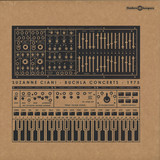
Finders Keepers invite you to witness the incredible first ever Buchla synthesiser concerts/demonstrations providing a distinctive feminine alternative to The Silver Apples Of The Moon if they had ever been presented in phonographic form. This is history in the remaking.
This spring Finders Keepers Records are proud to release an archival project that not only redefines musical history but boasts genuine claim to the overused buzzwords such as pioneering, maverick, experimental, groundbreaking and esoteric, while questioning social politics and the evolution of music technology as we've come to understand it. To describe this records as a game-changer is an understatement. This record represents a musical revolution, a scientific benchmark and a trophy in the cabinet of counter culture creativity. This record is a triumphant yardstick in the synthesiser space race and the untold story of the first woman on the proverbial moon. While pondering the early accolades of this record it's daunting to learn that this record was in fact not a record at all... It was a manifesto and a gateway to a new world, that somehow never quite opened. If the unfamiliar, modernistic, melodic, pulses, tones and harmonics found on this 1975 live presentation/grant application/educational demonstration had been placed in a phonographic context alongside the promoted work of Morton Subotnick, Walter Carlos or Tomita then the name Suzanne Ciani and her influence would have already radically changed the shape, sound and gender of our record collections. Hopefully there is still chance.
In short, Suzanne was a self-imposed twenty-year-old employee of the Buchla modular synthesiser company, San Francisco's neck and neck contender to New York's Moog. Buchla was run by a community of festival freaks and academic acid eaters whose roots in new age lifestyles and the reinvention of art and music replaced the business acumen enjoyed by its likeminded East Coasters. In the eyes of the consumer the creative refusal to adopt rudimentary facets like a piano keyboard controller rendered the Buchla synthesiser the more obscure stubborn sister of the synth marathon, steering these incredible units away from the mainstream into the homes and studios of free music aficionados, art house composers and die-hard revolutionaries. Championed and semi-showcased by composer Morton Subotnick on his albums The Bull and Silver Apples Of The Moon, Buchla's versatility began to open the minds of a new generation, but the high-end design features and no-compromise modus operandi was often confused with incompatibility and, in the pulsating shadow of Moog's marketing, the revolution would not be televised nor patronised. Suzanne Ciani, as one of the very few female composers on the frontline (and also providing the back line) did not lose faith.
These concerts' are the epitome of rare music technology historic documents, performed by a real musician whose skills and academic education in classical composition already outweighed her male synthesiser contemporaries of twice her age. At the very start of her fragile career these recordings are nothing short of sacrificial ode to her mentor and machine, sonic pickets of the revolution and love letters to an absolutely genuine vision of and 'alternative' musical future. In denouncing her own precocious polymathmatic past in a bid to persuade the world to sing from a new hymn sheet, Suzanne Ciani created a bi-product of never before heard music that would render the pigeon holes ambient' and futuristic' utterly inadequate. Providing nothing short of an entirely different feminine take on the experimental records' of Morton Subotnick and proving to a small, judgmental audience and jury the true versatility of one of the most radical and idiosyncratic musical instruments of the 20th century. These recordings have not been heard since then.
The importance of these genuinely lost pieces of electronic musics puzzle almost eclipses the glaring detail of Suzanne's gender as a distinct minority in an almost exclusively male dominated, faceless, coldly scientific landscape. Those familiar with Suzanne's work, a vast vault of previously unpublished non-records', will already know how the creative politics in her art of being' simultaneously reshaped the worlds of synth design, advertising and film composition before anyone had even dropped a stylus in her groove. Needless to say this record, finally commanding the archival format of choice, courtesy of the Ciani and Finders Keepers longstanding unison, was not the last first' with which this hugely important composer would gift society, and the future of a wide range of exciting evolving creative disciplines.
You have found a holy grail of electronic music and a female musical pioneer who was too proactive to take the trophies. With the light of Buchla and Ciani's initial flame Finders Keepers continues to take a torch through the vaults of this lesser-celebrated music legacy shining a beam on these non-records' that evaded the limelight for almost half a century. You can't write history when you are too busy making it. With fresh ink in the bottomless well, let's start at the beginning. Again. You, are invited!
2024 Repress
Dauw welcomes Berlin based musician Midori Hirano to the label with her new album Soniscope. Award winning composer Robot Koch provided a rework of the track Patterns under his recently announced new ambient project Foam and Sand.
With releases on acclaimed labels such as Longform Editions, Sonic Pieces and Alien Transistor, Midori Hirano is no stranger within the field of electro-acoustic piano music. While she is more known for her studio-work, it is often forgotten that she also has a long tradition of writing for films and theatre productions. This forms an important part in her work and a constant inspiration for her autonomous work. Soniscope is no exception in that regard. While working on the film Mizuko (Kira Dane, Katelyn Rebelo, 2019), a still of many little Jizo statutes got her attention and came to be the first steps of her new album.
“I was fascinated by the combination of the image and sound which well emphasized the stillness with a slight of emotion.” (Midori Hirano)
With the Jizo statutes on her mind, Midori Hirano wanted to make an album and started envisioning several personal narratives. Soniscope can be considered as the soundtrack of her own personal stories related to these statues of which Mizuko Jizo was the starting point. With Soniscope, Hirano continues in the same vein as her previous albums in which piano and electronic arrangements hold a central place. However, on this record she specifically explored new possibilities in terms of techniques and instruments.
Midori Hirano is a Japanese musician, composer and producer, born in Kyoto and living in Berlin since 2008. She started learning the piano as a child, and this triggered what was to later see her study classical piano at university. Therefore her productions are based on the use of acoustic instruments such as the piano, strings or guitars, but yet experimental and an eclectic mixture of modern digital sounds with subtle electronic processing and field recordings.
Her first two albums were released on noble records, and her second, “klo:yuri”(2008), saw her further develop of her sound, garnering critical acclaim from various media including TIME magazine , BBC radio and FACT Magazine. Over the following years Midori has performed in venues and festivals as diverse as Club Transmediale, Heroines of Sound Festival, Erased Tapes Sound Gallery, L.E.V. Festival, Boiler Room Berlin, and Wonderfruit Festival.
The nine solo albums and numerous single track releases to date include the works of her other moniker MimiCof, in which she explores the realm of experimental music and detailed rhythmic patterns, combined with an idea of drawing melodic shapes and harmonies. Her recent works have been released by labels such as Sonic Pieces, Daisart, Alien Transistor, raster-media, 7k! Music and Longform Editions.
Besides producing her own works, she composes music for films, video installations and dance performances. The films that have commissioned works by Midori have been screened at Berlin International Film Festival, SXSW Film Festival, International Documentary Film Festival Amsterdam and among others.
Entfesselt" markiert einen Umbruch, eine neue ASENBLUT-Ära.
Jahre der wechselnden Besetzungen und internen Querelen haben ein Ende gefunden, und die Band kennt nur noch eine Richtung: Nach vorne.
"Entfesselt" ist roher, direkter und gewaltiger ausgefallen als jedes vorherige ASENBLUT!
10 Tracks voller purer Energie und Emotionen, die die tiefsten Tiefpunkte reflektieren und die größten Erfolge zelebrieren.
Das Songwriting übernahm Balrogh in enger Zusammenarbeit mit Tetzel, der bei den Songs das Heft in die Hand nahm und alle Texte schrieb.
Es ist kein Zufall, dass die Refrains vieler Songs den Hörer in ihren Bann ziehen und zum Mitsingen und Fäuste schwingen animieren!
Der Sound des Albums ist dieses Mal weitaus aggressiver: Fette Gitarren, mächtige und harsche Growls und donnernde Drums.
Entfesselt" markiert einen Umbruch, eine neue ASENBLUT-Ära.
Jahre der wechselnden Besetzungen und internen Querelen haben ein Ende gefunden, und die Band kennt nur noch eine Richtung: Nach vorne.
"Entfesselt" ist roher, direkter und gewaltiger ausgefallen als jedes vorherige ASENBLUT!
10 Tracks voller purer Energie und Emotionen, die die tiefsten Tiefpunkte reflektieren und die größten Erfolge zelebrieren.
Das Songwriting übernahm Balrogh in enger Zusammenarbeit mit Tetzel, der bei den Songs das Heft in die Hand nahm und alle Texte schrieb.
Es ist kein Zufall, dass die Refrains vieler Songs den Hörer in ihren Bann ziehen und zum Mitsingen und Fäuste schwingen animieren!
Der Sound des Albums ist dieses Mal weitaus aggressiver: Fette Gitarren, mächtige und harsche Growls und donnernde Drums.
Entfesselt" markiert einen Umbruch, eine neue ASENBLUT-Ära.
Jahre der wechselnden Besetzungen und internen Querelen haben ein Ende gefunden, und die Band kennt nur noch eine Richtung: Nach vorne.
"Entfesselt" ist roher, direkter und gewaltiger ausgefallen als jedes vorherige ASENBLUT!
10 Tracks voller purer Energie und Emotionen, die die tiefsten Tiefpunkte reflektieren und die größten Erfolge zelebrieren.
Das Songwriting übernahm Balrogh in enger Zusammenarbeit mit Tetzel, der bei den Songs das Heft in die Hand nahm und alle Texte schrieb.
Es ist kein Zufall, dass die Refrains vieler Songs den Hörer in ihren Bann ziehen und zum Mitsingen und Fäuste schwingen animieren!
Der Sound des Albums ist dieses Mal weitaus aggressiver: Fette Gitarren, mächtige und harsche Growls und donnernde Drums.
Joe Ely präsentiert sein erstes Road-Album Driven to Drive, dreiundzwanzig Alben und mehrere Millionen Meilen nachdem er zum ersten Mal auf die
Reise ging. Die Sammlung von Songs über und inspiriert von motorisierten Reisen wurde von Ely zusammengestellt, der Mitte der 1970er Jahre wie
ein wirbelnder Tornado über die flachen Ebenen des Llano Estacado in Westtexas fegte und eine legendäre Band anführte, die zu sehr Rock für
Country und zu sehr Country für Rock war. Der wilde, offene Honky-Tonk-Roadhouse-Sound der Joe Ely Band bescherte ihrer Heimatstadt Lubbock
den ersten Musikhelden seit Buddy Holly.
Das Projekt setzt sich aus Aufnahmen zusammen, die über mehrere Jahrzehnte hinweg in den Spur Studios, seinem Heimstudio außerhalb von Austin,
gemacht wurden. Unterstützt wird er dabei von den Musikern/Nachbarn Joel Guzman am Akkordeon, dem Keyboarder Bill Guinn, dem Sänger Eddie
Beethoven und dem Geiger Richard Bowden. Letztes Jahr im The Zone in Dripping Springs, Texas, fügte Jeff Plankenhorn seine Gitarre zu drei Stücken
hinzu und der Tontechniker Pat Manske, der Driven to Drive gemastert hat, steuerte das Schlagzeug bei.
Die Bewegung in diesen Liedern wird auf viele Arten erfasst: Autos, sechzehnrädrige Lastwagen, Motorräder, Greyhound-Busse. Es gibt
Pedal-to-the-Metal-Hymnen, die auf einem geraden, zweispurigen schwarzen Asphaltstreifen dahingleiten; ein träges Mäandern auf dem Gulf Blues
Highway; eine Geschichte über die Flucht auf der Interstate; Geschichten darüber, wie man von hier nach dort kommt, und Lieder darüber, wie man
überhaupt nirgendwo hingeht. The Lord of the Highway is calling. Joe Ely möchte Sie auf eine Reise mitnehmen.
Continuing the Mr Bongo Cuban Classics Series, we shine a light on Los Reyes 73 and their sensational debut LP from 1975. The album had multiple different pressings under various titles and artworks, but the music stayed the same and speaks for itself. The group set the bar high with this fiery Afro-Cuban-funk gem, letting loose a vibrant Latin workout combining psych rock trippiness with a heavy dose of deep funk. Elements that fuse to firmly cement this album as a ‘70s Cuban masterpiece and one of our favourites here at Mr Bongo HQ.
Releasing just two albums and a handful of 7-inch singles, the band were a popular and influential group in Cuba at the time. Since then, they have featured on several compilation albums across the 2000s that have helped raise their profile amongst new audiences worldwide.
Produced by the magical Raúl Gómez, the album featured a list of heavyweight Cuban musicians. Directed by Santiago Reyes and Ovidio Guerra, with orchestration from greats including Ricardo Eddy Martinez who also released the much-loved album 'Expreso Ritmico' in 1978 alongside Ignacio Herrera, Mario Valdes and Gilberto García. The album also features the writing prowess of Los Van Van’s Miguel Ángel Rasalps.
Blending traditional Cuban Son aesthetics with funk influences and psychedelic touches, the music housed within showcases a cosmic fusion that stands up on any modern dancefloor. The scintillating opener ‘Grandes Amigos’, the tripped out ‘Adeoey’ and the grooving ‘Un Lamento Hecho Cancion’ are just a handful of examples that exhibit the sheer musical melting pot of this album.
For this reissue, we have chosen to use the artwork from a Mexican version of the album released on Pentagrama Records that features the beautiful bird illustration cover art. The Cuban edition was released on the state-run Areito.
Das in Chicago ansässige Quintett Brigitte Calls Me Baby kündigt sein Debütalbum 'The Future Is Our Way Out' an, das über ATO Records erscheinen soll!
'The Future Is Our Way Out' wurde teilweise im RCA Studio A in Nashville mit dem 9-fachen Grammy-Preisträger Dave Cobb (Jason Isbell, Sturgill Simpson, Chris Stapleton) aufgenommen.
Mit ihren poetischen Meditationen über Sehnsucht, Angst und die Komplexität der Vergänglichkeit ist das Album eine kraftvolle Weiterentwicklung der Debüt-EP 'This House Is Made Of Corners' von Brigitte Calls Me Baby, welche von vielen Seiten gelobt und mit dem Nervenkitzel einer vergangenen Ära beschrieben wurde. Post-Punk Elemente wechseln sich mit tanzbaren Rhythmen und Gitarrenriffs ab, die vor allem zusammen mit der Stimme von Sänger Leavins immer wieder an The Smiths erinnert.
Bei der Wahl des Titels für das Debütalbum landete die Band bei einem Satz, den Leavins als Teenager impulsiv auf ein weißes T-Shirt gekritzelt hatte, und den er im Laufe der Jahre immer wieder aufgriff und schließlich in einen üppigen und filmischen Popsong verwandelte.
Mit 'The Future Is Our Way Out' legen Brigitte Calls Me Baby nun ein Werk vor, das auf geniale Weise Genres und Epochen überspannt und die üppige Romantik des Pop aus der Mitte des Jahrhunderts mit der frenetischen Energie und stacheligen Intensität des Indie-Rocks der frühen Jahrtausendwende verbindet. Im Mittelpunkt steht Leavins' hypnotisch croonender Gesang. Das Ergebnis ist eine seltene Konvergenz von Raffinesse, Stil und unverhohlener Aufrichtigkeit.
POISON RUIN greifen mit der neuen EP "Confrere" einmal mehr in die Dunkelheit!"Confrere" - eine Ode an die heiligen Bande der Freundschaft; eine
Stärke, die durch die endlosen Verrenkungen und Belastungen von Raum und Zeit hindurch Bestand hat.
Mit "Confrere" haben POISON RUIN ihren Sound mit mehr Atmosphäre und spürbarer Dringlichkeit aufgewertet. Nach dem Titeltrack rast Confrere
weiter durch Songs über Kampf, Tod, Verzweiflung, Ungerechtigkeit und Rache. In einem dunklen Zeitalter, in dem die Grundfesten der Menschheit
zu zerbröckeln drohen, glauben POISON RUIN, dass das Einzige, woran man sich vielleicht noch festhalten kann, die Hand eines Freundes ist.
To this day, jazz pianists are influenced by Bill Evans by his use of impressionist harmony, interpretation of traditional jazz repertoire, and his trademark rhythmically independent, “singing” melodic lines. Evans gained his first spotlight when joining Miles Davis’ sextet during the time Kind of Blue was recorded. After leaving the sextet, Evans began his career as bandleader, which he finished in his last trio with Marc Johnson on bass and Joe LaBarbera on drums. This trio recorded The Brilliant in 1980 live at the Keystone Jazzclub, San Francisco, just before Evans’ passing. The Brilliant is available on black vinyl.
It’s hard to overstate the importance of Fanny’s 1970 self-titled debut album. For the first time, a group of women (sisters June and Jean Millington, Alice De Buhr and Nickey Barclay) wrote and sang their own songs, played their own instruments and, perhaps most importantly, rocked just as hard as any male band out there. And, as the first all-female band signed to a major label (Reprise) and with superstar producer Richard Perry at the board, these four women became perhaps L.A.’s biggest “buzz band,” landing repeated bookings at the Whisky-a-Go-Go with a who’s who of rock’s glitterati in attendance. Fanny became the reference point for generations of female rockers to come after them, from Joan Jett to Girlschool to Courtney Love and beyond. They were truly the Godmothers of Chick Rock. The self-titled debut by Fanny is available as a limited edition of 750 individually numbered copies on silver coloured vinyl, housed in a gatefold sleeve.
Recorded as part of the same daydreaming puzzle as Unwishing Well, Still Clouds at Noon brings out the slowcore/sadcore elements that drift through The Reds, Pinks & Purples’ melancholy catalog. Donaldson names '90s hometown San Francisco acts such as American Music Club and the more obscure Timco as pivotal to his guitar playing and development as a songwriter, both of which shine bright here. The slower tempo ballads on Still Clouds… often culminate in heavy fuzz drenched codas and showcase the more abstract poetic side of Donaldson’s lyricism. There’s an inherent pop-sensibility always at work though, with ear-worm melodies appearing over intoxicating circular riffs. Formerly a Bandcamp only digital release, this white vinyl version is remastered and adds two unreleased tracks, one featuring Mark Monnone from Australian pop-legends The Lucksmiths on bass
Special exclusive 7" from Il Sogno Del Marinaio, the avant-rock trio formed by legendary bassist Mike Watt (Minutemen, Firehose, Stooges), cult Italian experimentalist Stefano Pilia (Massimo Volume, In Zaire, Afterhours, Rokia Traore) and drummer Paolo Mongardi (Zeus, Fuzz Orchestra, Fulkanelli). Directly from fratello Mike Watt's words: "the "wing and a prayer" seven inch on _improved sequence_ was a product of the covid19 sitch around xmas of 2020. it was put together remotely, w/me here in san pedro, california, usa while from Italy stefano pilia (in bologna) and paolo mongardi (in imola) brought what they had from italy ... yes, the internet can be used for more than spreading hate and lies - it can also be used to collaborate in the spirit of artistic expression! cazzo, imagine that? il sogno del marinaio had finished work w/their "terzo" album and I thought a good way to rally the band would be to focus on a smaller release that reflected the current sitch we were in - see, the basic tracks of "terzo" were recorded in eleven months earlier here in my pedro town at _casa hanzo_ (stefano pilia and paolo mongardi traveling here by plane) so we had no idea what was ahead of us concerning the challenges of that fucking virus sitch. now the "terzo" album was not finished w/those basic tracks getting recorded, we had spiel (vocals) to add plus other stuff and of course it had to be mixed (tim in wales did a great job w/this - much respect to him!) so those experiences of those early covid19 times got "superimposed" on the music that was created right before it was on us, very trippy. that was a big reason I brought the three tunes of this "wing and a prayer" seven inch to stefano pilia and paolo mongardi - all they had was my bass but I believed they could "take the ball and run w/it" cuz that's how powerful I believe music to be: it can be able to overcome 'pert-near any hell trying to stomp it down. stefano pilia chose "wing and a prayer" to mix, paolo mongardi chose "tantrum" and I got what was left: "hail mary pass" - oh, I got my buddies stephen perkins to help w/percussion and petra haden to help w/singing, violin and mandolin. so one reality reality is w/these three tunes is that no one is actually playing w/each other in real time on this little record! it's all done by trading files via the internet...the starting for all three tunes being was my bass - ain't that a trip? shows how bass can be that springboard or launch pad I've always known it could be when not aiding and abetting a tune after the fact – both these "roles" for bass have been very interesting to me, going back to my early days as a minutemen and writing tunes for d boon and George hurley and by also bringing bass to their stuff
I’ve lost my sense, I’ve lost control, I’ve lost my mind! Yeah, we all know how the song goes, but those words will no doubt end up driving their point home throughout the duration of Bloodstains’ self-titled debut LP. This thoroughly-welcome Euro pressing follows the album’s DIY release earlier in 2024, which is excellent news for UK/mainland fans of early 80s SoCal hardcore who’ve yet to hear it - the whole thing absolutely fkn rips. Feel free to rifle through your Adolescents, Weirdos and (natch) Agent Orange records to see what these guys have been mining, but all you’ll find is a launchpad - Bloodstains inevitably hail from California and they’re clearly au fait with all the above (not to mention a certain compilation), but they manage to inhabit that sound with a personality all of their own. Vocalist Cesar Marin splits his delivery between a sneering bark (like the most withering put-downs you’ve ever heard being delivered via nailgun) and a purposeful, melodic croon… which itself sounds it’s made from sandpaper and vitriol, but there you go. Most importantly, this is a band with SONGS. Eight of ‘em here, to be precise, and you’ll rarely have been so glad to have something turned up so loud it blows holes in your speakers. ‘Stray Bullets’ hangs its mighty chorus on a call-and-response refrain that dares you not to pick a side and bellow along, while instrumental opener ‘The Last Rites’ sets you up perfectly for the seething, volatile bundle of hooks to follow. I’d say the interplay between the band’s string-wielding Espinoza contingent is something to behold as well, but what am I, some kinda nerd? The guitars sound fkn awesome - that’ll do ya. And I don’t wanna spoil the party ahead of time, but just wait til you hear future anthem ‘Public Hanging’. I could go on about this record all day, but ultimately all you need to do is listen to it. Hell, even buy it. And dare I return to a theme, lose your mind.
180g vinyl + Deluxe hard-cardboard sleeve + OBI + resealable outer sleeve
This isn’t just a seminal album. It is an estuary. All the black rivers that would form Brazilian funk/hip-hop flow through it. Led by Paulista pianist Salvador Silva Filho – Dom Salvador – “Som, Sangue, e Raça” from 1971, one year after the explosion of Tim Maia on the scene, catalyzed the bossa nova and jazz background of its leader with the rhythm and blues of its members like saxophonist Oberdã Magalhães, nephew of samba-enredo master Silas de Oliveira and future leader of Banda Black Rio, who since the group Impacto 8 (which had, among others, Robertinho Silva on drums and Raul de Souza on trombone) had already been trying to reconcile MPB with Stevie Wonder and James Brown. Add to all this a mixture of samba, Nordestino accent, and even the black side of the Jovem Guarda represented by the authorial presence of Getúlio Cortes (older brother of Gerson King Combo, our James Brown “cover”) in ‘Hei! Você’. Alongside these elements and the presence of Rubão Sabino (bass), who still called himself ‘Rubens’, drummer Luis Carlos (another member of Black Rio), the record enlists the trumpet and flugelhorn of symphonic musician Darcy in place of the original Barrosinho (yet one more founder of Black Rio), who was traveling during the recording but would end up being a leading force of the band.
The album ‘Som, Sangue e raça’ paves the way for future generations of musicians and producers of the Carioca scene at the beginning of the 1970s. The lyrics that dealt with the question of race and the explosive fusion of samba, soul, jazz, and funk, elaborated by Dom Salvador and his troupe, Abolição, established the bases for the development of new sounds and tendencies in Brazilian music.
Craft Recordings feiert das 15-jährige Jubiläum von Silversteins meistverkauftem vierten Album A Shipwreck in the Sand mit einer Vinyl-Wiederveröffentlichung. Das Konzeptalbum aus dem Jahr 2009 bleibt mit Titeln wie ”Vices” (feat. Liam Cormier von Cancer Bats), ”The End” (feat. Lights) und ”American Dream” ein Favorit in der umfangreichen Diskografie der Band. A Shipwreck in the Sand wird am 28. Juni erscheinen.