Cerca:africa negra

Generi
Tutto
  • 1
ÁFRICA NEGRA - ANTOLOGIA VOL.2 LP 2x12"

Continuing our exploration of São Tomé and Príncipe with DJ Tom B., Les Disques Bongo Joe proudly announces the release of África Negra Anthology Vol. 2. We've carefully selected and remastered 13 standout tracks for this volume, digitized from studio tapes by their tour manager. The album includes a booklet with updated liner notes and vintage photos of the group.

África Negra, established in the early 1970s by Horacio and Emidio Pontes, is São Tomé and Príncipe's most renowned musical group. Their blend of Puxa and Rumba, infused with Leonildo Barros' guitar riffs, Armando Tito's bass lines, and vibrant percussion, gained them recognition beyond the archipelago. This volume offers a glimpse into their musical journey, featuring unreleased sessions from 1979 and 1990, showcasing lead vocalists like João Seria and Sergio Fonseca.

non in magazzino

Ordina ora e ordineremo l'articolo per te presso il nostro fornitore.

24,79

Last In: 19 months ago
AFRICA NEGRA - ANTOLOGIA VOL. 2

Continuing our exploration of Sao Tomé and Príncipe with DJ Tom B., Les Disques Bongo Joe proudly announces the release of Africa Negra Anthology Vol. 2. We"ve carefully selected and remastered 13 standout tracks for this volume, digitized from studio tapes by their tour manager. The album includes a booklet with updated liner notes and vintage photos of the group.

pre-ordina ora02.08.2024

dovrebbe essere pubblicato su 02.08.2024

30,04

Last In: 2026 years ago
ÁFRICA NEGRA - Alia Cu Omali

Mar & Sol presents the new album of the legendary band África Negra,"Alia cu Omali". New songs and some popular classics recorded between Lisbon and S.Tomé.
This album Its a reflection of the old rumba and soukous music that this epic band of São Tomé e Príncipe got us used to. They are an icon and one of the main bands of this island, representing in their music the authenticity and culture of the former Portuguese colony on the equatorial meridian.

It is our mission to expand this culture and here it is the testimony in our series of Luso Afro music which could best represent São Tomé.

non in magazzino

Ordina ora e ordineremo l'articolo per te presso il nostro fornitore.

20,13

Last In: 6 years ago
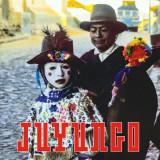
Juyungo - Afro-Indigenous Music From The North-Western Andes LP 2x12"
 
22

‘Since the 16th century, the Ecuadorian province of Esmeraldas has been home to a unique Afro-Indigenous culture originating in the integration of the Indigenous Chachi and Nigua peoples with African Maroon communities. Juyungo documents significant Esmeraldan artists and bands playing the Afro-Ecuadorian folklore of the province, as well as including some older field recordings. Based mostly on the marimba, whose origins lie partly in the African balafon, partly in Indigenous percussion instruments, the music is laced with call and response chants, ambient insect and bird noise, the filigree finger-styles of the Andean guitar tradition and the panpipes of the mountains. This is resonant insider roots music at its headiest — the mystic revelation of Esmeraldas, gully deep and lustral.’
- Francis Gooding, The Wire.


The fifth in our series of LPs compiling classic music from Ecuador. Customary Honest Jons runnings: a beautiful gatefold sleeve; superior pressing, with vivid, intimate sound; full-size, sixteen-page booklet, in colour throughout, with detailed, fascinating, bi-lingual notes, and stunning photographs.

The music is transfixing, magical; not like anything else. From start to finish, this album is continuously, profoundly immersive; a kind of journeying, trippy meditation about slavery and cultural resistance, identity and mix, places and spaces, futures and pasts. It’s inscrutable to net-surfing, algorithms, Shuffle. But for a taste try the insurgent marimba roller Agua Largo, jet-propelled by Rosa Huila’s rapturous blend of African spiritualist and Christian chant. ‘Healing music,’ Zakia called it on Gilles Peterson’s BBC show recently. And the ravishing pasillo Kasilla Shungulla — ‘calm your heart’ in the Quichua language — a duet between the Peruvian master-guitarist Raúl García Zárate and viola da gamba by Juan Luis Restrepo from Medellin, recorded in a baroque church in Buzbanza, Colombia.

pre-ordina ora30.03.2026

dovrebbe essere pubblicato su 30.03.2026

27,31

Last In: 2026 years ago
Various - 2015 – 2025 Les Disques Bongo Joe: 10 Years of Sonic Explorations (2x12")

Ten years, a compilation. It"s not a conclusion, nor a greatest hits. More like a pause, a moment to reflect - a look back to better move forward. Since 2015, Les Disques Bongo Joe have been navigating instinctively, yet with a compass all their own: a love for free-spirited sound, a curiosity for the undefined, and a clear idea of what a label can be - a space for listening, care, and invention. The compilation offers a journey - subjective, fluid, and unapologetic - through ten years of sonic activism. A selection of tracks drawn from the label"s corners and crevices: from early releases to recent ones, from essentials to rarities, from cult reissues to contemporary works that carry the label"s energy forward. The record flows between raw intensity and sonic finesse, between remastered archives and flashes of electronics, between fragile voices and hammered percussion.

In Stock

Disponibile in Stock e pronto per la spedizione

29,20
INÉS GRANJA - REMEMBRANZAS LP

Inés Granja is one of the most important singers and composers of the traditio-nal marimba music of the Colombian South Pacific, with more than 50 years of experience. This musical tradition has been declared an Intangible Cultural He-ritage of Humanity by UNESCO.
REMEMBRANZAS To the rhythm of cununo, bombo, and guasá, and accompanied by the melody of the marimba and choral games, this album is rooted in traditional rhythms such as juga and aguabajo. At the same time, it proposes new sonorities with guitar arrangements and a brass section. It also explores genres such as the Peruvian zamacueca, Cuban son, and salsa; and instruments such as the African kora.

In Stock

Disponibile in Stock e pronto per la spedizione

25,63
Antonio Neves - A Pegada Agora É Essa (The Sway Now)

repressed !

From samba and bossa nova through to baile funk, with carioca expressions of jazz, rock and hip hop in between, the sound of Rio de Janeiro, while continually evolving, has always held an unnameable quality which reflects the magic and mystique of the city itself. Multi-instrumentalist and arranger Antonio Neves is the city’s newest trailblazer: the enfant-terrible of Rio’s music scene, leading a vital and diverse constellation of both emerging and well-known artists advancing the city’s musical legacy.

“It all started one sleepless night, after watching a Quincy Jones documentary”. Inspired by the legendary music magnate, Neves began writing a list of artists residing in Rio de Janeiro “people that I admire, that I consider geniuses of their instruments, who share with me affinities, anxieties and projects.” The list included some of Brazil’s most revered living musicians who Neves has worked with in recent years: Hamilton de Holanda, Leo Gandelman and Dorival Caymmi. Neves also called on some of Brazil's most exciting emerging talents including Alice Cayymii and Ana Frango Eletrico.

A Pegada Agora É Essa (The Sway Now) is Neves’ second album: a vibrant portrait of the current Brazilian music scene. From the regional to universal, popular to erudite, samba to rap, Latin rhythms to jazz, MPB and pop to good old rock'n'roll, Neves walks with fluency and mastery amongst all the musical genres that Brazil has to offer.

“My offer to the musicians was complete freedom to express themselves through the songs I proposed – classics like “Summertime”, “Luz Negra” and “Noite de Temporal”, and compositions of my own – creating a space of authorship for the band and the guests. A space for inventions, purges, delusions, laughter. The idea was to bring the freedom of jazz crossed by Brazilian rhythms, such as the traditionals Partido Alto (A Pegada Agora É Essa) and Jongo (Jongo no Feudo and Luz Negra); rhythms of African-Brazilian religions like Candomblé (Noite de Temporal) and Umbanda (Forte Apache); and a tribute to newest Rio de Janeiro’s contribution to Brazilian music, the Funk Carioca (Simba)”.

Coming from a musical family, Antonio’s father, Eduardo Neves, was a renowned conductor and a professor at Juilliard School of Music and the California Jazz Conservatory. In the bohemian neighbourhood of Lapa, aged 14, Antonio began his career as a drummer, before experimenting with brass. He would soon become a skilled trombonist and arranger achieving the recognition of his teachers and peers. It wasn’t long before he would be playing with some of the biggest names in Brazilian music, such as Hamilton de Holanda, Leo Gandelman, Moreno Veloso, Kassin and Elza Soares.

His debut album as a trombonist was PA7 (2017, Rock It), released at the same time he was travelling the world playing with artists like Moreno Veloso, Kassin and Leo Gandelman, and recording the albums Jobim, Orquestra e Convidados (2017, Biscoito Fino), with Mário Adnet and Paulo Jobim; and Elza Soares Canta e Chora Lupi (2017, Coqueiro Verde Records). More recently, Neves was the arranger for the acclaimed Little Electric Chicken Heart album, by Ana Frango Elétrico, which has been nominated for a Latin Grammy and voted 2019’s ‘Brazilian Music Revelation’ by The Art Critics Association of São Paulo.

In Stock

Disponibile in Stock e pronto per la spedizione

14,71
ARSENIO RODRIGUEZ - COMO SE GOZA EN EL BARRIO (2LP)
  • Dame Un Cachito Pa' Huelé
  • Dundunbanza
  • Como Se Goza En El Barrio
  • Esas No
  • La Gente Del Bronx
  • Mambo En La Cueva
  • Que Negra P'acelerá
  • Blanca Paloma
  • Mami Me Gustó
  • El Dolorcito De Mi China
  • Hay Fuego En El 23
  • Besame Aquí
  • La Fonda De Bienvenido
  • No Quiero
  • Juégame Limpio
  • Pimienta
  • Cambia El Paso
  • Que Me Manda La Niña
  • Pobre Chinito
  • Baila Simón
  • El Reloj De Pastora
  • Sabor De Pachanga
  • Hachero Pa' Un Palo
  • Errante Y Bohemio
  • El Divorcio
  • Papa Upa
  • Lo Que Le Pasó A Luisita
  • No He Visto A Caridad
  • Suéltala
  • Adiós Carmelina
  • Emilio Dolores

The Godfather Of Salsa - HAVANNA & NYC RECORDINGS 1946-1962! Grosso! again presents this compilation from "El Ciego Maravilloso", the authentic godfather of salsa. His early Havana & NYC recordings. The tracks have been remastered and restored and some are available on vinyl after many years. Format and selection designed for DJs, collectors and latin lovers. Ignacio de Loyola Rodríguez Scull aka Arsenio Rodríguez (30 August, 1911, Güira de Macurijes, Matanzas, Cuba - 30 December, 1970, Los Angeles, CA, USA) was a Cuban musician, bandleader and prolific composer who developed the son montuno and other Afro-Cuban-based rhythms. Today he is seen as one of the most important figures in Latin music, with his influence reaching beyond the Spanish speaking world to also include African popular music of the 20th Century, though when he died he was not widely known by the public for his contributions and influence. He is also recognized (along with Israel 'Cachao' López and Dámaso Pérez Prado) as one of the creators of mambo, what Rodríguez himself often referred to as "ritmo diablo". Some of his best-known, and most-often covered recordings from the 1950s and early 1960s are included here, among them "Dame un cachito pa' huele'," "Dundunbanza," "El reloj de pastora," "Cambia El Paso," and "Hay Fuego En El 23."

pre-ordina ora13.01.2026

dovrebbe essere pubblicato su 13.01.2026

37,40

Last In: 2026 years ago
African Fiesta - Roger Izeidi Presents Vita Matata with African Fiesta LP 2x12"
 
24

'The creation of the band African Fiesta, founded in 1963 by three well-known musicians, Nicolas Kasanda, Tabu Ley Rochereau and Roger Izeidi, and the contributions of the VITA label, established by Roger Izeidi, occupy an exciting chapter in the history of Congolese popular music. During the mid-1960s, African Fiesta consistently reached the top of the hit parade. The band, which back in the day positioned itself as a competitor to a current called ‘Fiesta Cubana’, breathed new life into Congolese Rumba, continuing the tradition of the African Jazz school started by Joseph Kabasele.
'The VITA label, with African Fiesta as their sole provider, besides four songs of Eduardo De Veracruz Vinagre et Son Orchestre, ran between May 1963 and early 1966. It created a spectacular legacy and back catalog full of tasteful sentiments and sensual melodies, deeply rooted in the Afro-Latin sound.
'This new compilation offers a few of the classic African Fiesta songs and complements them with an eclectic and original selection, divided into four thematic sides: Showcase, Rumba Lingala, Cha Cha Cha & Bolero. This double LP album comes with a 16-page booklet featuring the history of VITA and African Fiesta, song commentary by Congolese journalist Herman Bangi Bayo, and a written catalog of the VITA label. The heirs of Roger Izeidi kindly gave permission in Kinshasa to release this album of African Fiesta on Planet Ilunga.'

non in magazzino

Ordina ora e ordineremo l'articolo per te presso il nostro fornitore.

37,40

Last In: 3 months ago
KWANZA POSSE - MALI CHANT

KWANZA POSSE

MALI CHANT

12inchUND060
Undiscovered
10.07.2025

Support from: Dino Lenny, Sabo, 1979, Alex Neri, Cioz, Just Her, Lonya, Hyenah, Nhar, Don Diablo, Luke Garcia, Underspreche, Francesco Chiocci, Adriatique

Undiscovered Recordings is a London- and Naples-based independent record label founded in 1994. Showcasing new and exciting production talent, Undiscovered was founded by a crack team of music industry experts, the two Angelos, Doug and Mario, in the midst of the dance music movement of the 1990s.

The Angelos met while working at UMM and Flying Records. Founding Undiscovered allowed them to move
away from the traditional dance music of the time and to highlight lesser-known artists and styles. Angelo
Tardio, in-house A&R, capitalised on his trail-blazing career as a DJ, as the founder of iconic label U.M.M., and his production career as Kwanzaa Posse, where he collaborated with huge talents such as Mano Negra, Manu Chao, King Chango, MC Solaar and Les Negresses Vertes, to name just a few. Doug Osborne, British DJ & Producer and co-founder. Angelo Bernardo brought his years of experience in the music industry to take over the business side of the company, and Mario Nicoletti came on board as a true living musical encyclopaedia and expert. Alberto Faggiana joined in 1998 to contribute his industry know-how to curate the legal and administrative aspects. And so the Undiscovered team was complete.

Undiscovered has since moved with the times, from classic dance genres into Balearic chill-out, all the while
maintaining its goals to showcase emerging producers and artists. After a long hiatus, and following a number of forced changes in the company, Undiscovered are back in full force. Kwanzaa Posse achieved success back in the 90's with such hits as "Wicked Funk", "African Vibrations" and "Musika!", all of which attracted collaborations with remixes by Massive Attack, Jam & Spoon, and Ralph Falcon & Oscar Gaetan - aka Murk Boys. Now the production unit responsible for such seminal tracks is back with a magical new track called 'Mali Chant'.

non in magazzino

Ordina ora e ordineremo l'articolo per te presso il nostro fornitore.

12,39

Last In: 43 days ago
Tesfa Williams - Beyond Today EP

Tesfa Williams celebrates his personal ancestry and the diversity of black electronic music with a name change on his Heist Recordings debut.

First things first. T. Williams is now Tesfa Williams. And although the dot is gone after the T, by taking that away, the artist openend up a whole world of meaning, personal storytelling and recognition of his roots.

“Originally when I started "T.Williams" it felt like my African first name Tesfa wouldn't be welcomed in the scene. Something I've experienced in general from school, college, work etc….. I grew up in a Rastafarian family with Carribean heritage and my parents decided to give me and my siblings African names to connect us to our African ancestry. I now feel like I’m ready to embrace this part of me as an artist and share it with the world.”

Tesfa Williams is an artist with a long history in UK club music. Long before his critically acclaimed debut album in 2024 ‘Raves of future past’, he was knee-deep in the UK grime scene and throughout the years, he has built a strong reputation in UK funky, soulful house and Garage with remixes of Latch for Disclosure and Sam Smith (yes, that track), bumping originals on Strictly Rhythm, Local Action with Julio Bashmore, and much more. On his debut for Heist, we see the artist dig deep into his black roots and deliver an EP that celebrates his eclectic sound with 4 originals full of high notes.

The ’Beyond today’ EP kicks off with ‘Moments Ahead’, a classic filter-house jam with lovely soulful chops and the perfect amount of grit. It’s the type of funky, peak-time house track that will ignite any dancefloor with its irresistible groove. ‘Get it together’ sees the artists layer some classic R&B vocals over an infectious warehouse groove. It’s the kind of track that’ll grab anyone’s attention on a first listen. The breakbeat loop in the background gives the percussion its dry immediacy and the sparse melodic hits and irresistible vocal chops turn this track into an absolute dancefloor monster.

On the flip, the London producer merges his love for soulful house with contemporary electronics on ‘Brighter life’. There’s something deliciously breezy about this song, where the vocals, chord hits, sweeps, and hits deliver a groove that’s laidback and powerful at the same time. The electronic parts of this track are cleverly laid out to contrast the syrupy sweet vocal and underline the class of the artist’s ability to effortlessly blend genres.

The EP closes with ‘Futures’, a bottom-heavy late-night burner much in the style of Dam Swindle’s 2023 Heist outing ‘Soul’s lament’ or the percussive goodness of Alma Negra tracks such as ‘Conversation’. There’s a nice blend of trippy electronics and driving Rhodes hits, which makes this a track perfect for those moments you simply want to go deep, heads-down, and feel the music.

With ‘Beyond Today’, Tesfa Williams has written a piece of music that pays homage to so many of the genres that have influenced him as well as to his black roots. ‘Beyond Today’ is a contemporary club record that oozes positive energy just the way we like it and we can’t wait to play this one out to all of you.

Enjoy the music and get ready to dance!

Lars & Maarten

non in magazzino

Ordina ora e ordineremo l'articolo per te presso il nostro fornitore.

11,72

Last In: 51 days ago
Various - CUMBIA CUMBIA CUMBIA!!! VOL.1 (2x12")
 
24
disponibile anche

Vol. 2[29,37 €]

Vol.3[30,46 €]


A selection of 24 Colombian cumbia bangers for the dance floor from the deep vaults of Discos Fuentes, the most emblematic and best remembered label in the golden age of the genre. An invitation to enjoy and be amazed, above and beyond ethnographic and academic concerns. Double LP. The historical origins of cumbia in Colombia are nebulous and imprecise. The mythology surrounding it suggests an ancient past when Amerindian, African and European musical sounds were mixed together. The main record companies in Colombia such as Discos Fuentes, Discos Tropical, Sonolux, Zeida-Codiscos, Silver, Ondina, Discos Atlantic, Vergara and Curro were created between Barranquilla, Medellín, Cartagena and Bogotá from 1936 to 1954. All of them, without exception, recorded Colombian tropical music that over the years was given different names such as porro, gaita, fandango, paseaito, merecumbé, mapalé, bullerengue or, of course, cumbia. This first volume in the series “Cumbia Cumbia Cumbia!!!” comprises 24 Colombian cumbia bangers for the dance floor from the deep vaults of Discos Fuentes, the most emblematic and best remembered label in the golden age of the genre. This is complemented by a selection of cumbias recorded by the label Discos Tropical, which sold most of its catalog to Discos Fuentes in 1990. Discos Fuentes concentrated on recording cumbias played on the accordion and by orchestras and ensembles. The label produced a prodigious number of albums devoted to cumbias between 1962 and 1979, which served to define ambiguous stereotypes, rooted as much in authenticity and modernity as in demure sensuality and joyful nostalgia. “Cumbia Cumbia Cumbia!!!” combines well-known classics and rarities that are difficult to find in their original formats. An invitation to enjoy and be amazed, above and beyond ethnographic and academic concerns.

non in magazzino

Ordina ora e ordineremo l'articolo per te presso il nostro fornitore.

29,37

Last In: 9 months ago
Oum - Dakchi - Live in Marrakech LP

In 2024, the singer and songwriter Oum is celebrating her fifteen-year career, with a live album, recorded in Marrakech, which plunges back into the magic of her three flagship records, here revisited in a different light. This seventh album, named Dakchi, which means "those things", is the opportunity for this daring off-roader to allow herself a suspended moment for a temporary assessment, a return to her roots. Dakchi is the first best-of live album, in which Oum brings together around ten titles from her repertoire woven throughout three albums with identities as singular as they are filled with a common sap: Soul of Morocco (2013), Zarabi (2015) and Daba (2019). It is the expression of typically Moroccan hybridizations - African, Berber and Andalusian - which irrigate the crossbreeding of Oum. It is also joyful and natural fireworks display of polyrhythms which galvanize her music : the Marrakech signature, playful, sunny, festive. Oum slips three unpublished pieces, including the sublime Arabic cover of the legendary bolero "Lagrimas Negras", "Toda la Gente", an introduction to "Mansit", signed by cuban musician Damian Nueva or the delicate "Intidhar", composed by Yacir Rami.

pre-ordina ora22.03.2024

dovrebbe essere pubblicato su 22.03.2024

46,18

Last In: 2026 years ago
OUM DAKCHI - LIVE IN MARRAKECH LP 2x12"

In 2024, the singer and songwriter Oum is celebrating her fifteen-year career, with a live album, recorded in Marrakech, which plunges back into the magic of her three flagship records, here revisited in a different light. This seventh album, named Dakchi, which means "those things", is the opportunity for this daringoff-roader to allowherself a suspended moment for a temporaryassessment, a return to her roots. Dakchi is the first best-of live album, in which Oum brings together around ten titles from her repertoire woven throughout three albums with identities as singular as they are filled with a common sap: Soul of Morocco (2013), Zarabi (2015) and Daba (2019). It is the expression of typically Moroccan hybridizations - African, Berber and Andalusian - which irrigatethe crossbreeding of Oum.It is also joyful and natural fireworks display of polyrhythms which galvanize her music : the Marrakech signature, playful, sunny,festive. Oum slips three unpublished pieces, including the sublime Arabic cover of the legendary bolero "Lagrimas Negras", "Toda a Gente", an introduction to "Mansit", signed by cuban musician Damian Nueva or the delicate "Intidhar", composed by Yacir Rami.

pre-ordina ora22.03.2024

dovrebbe essere pubblicato su 22.03.2024

39,92

Last In: 2026 years ago
Gecko Turner - Somebody From Badajoz LP

With his new album, Gecko Turner confirms that he is a standout artist in the global groove scene, a must for the outernational sounds aficionados.

Somebody From Badajoz is the fifth studio album in his much lauded discography and his first in seven years, eagerly anticipated by both his fans and himself: "this business of dedicating yourself to music and making songs... it's a long game."

With the release of his first two, remarkable, albums, Guapapasea! (2003) and Chandalismo Ilustrado (2006), Gecko started cultivating what one astute journalist defined as Afro-maduran soul—the "maduran" bit referencing Extremadura, a region in central-western Spain.

Badajoz, Gecko's birthplace, is the biggest city in the area, on the border with Portugal, by the Guadiana River. It is a place that oozes history, where there is constant movement at the border, and people's character is friendly and open-minded with foreign habits.

Gecko's Afro-maduran soul isbuilt on Afro-American music and drenched in Brazilian, African, Latin American and Jamaican sounds. There are also echoes of a youth marked in equal parts by our man's admiration for the Beatles and the flamenco that could be heard everywhere in Badajoz in the seventies. It makes for a singular sound and a musical language of its own—spicy, succulent, full of nuances, but with a very personal flavour.

The album opens with the Nigerian talking drums of Twenty-twenty Vision, (neo) soul in a magical falsetto, carried by a sumptuous orchestral arrangement with a cinematic flavour: "I'd been thinking about doing something called 'Twenty-twenty Vision' for some time, making a play on words with the vision we have of the world after the year 2020 and the medical expression, which, in ophthalmological terms, means 'normal or complete vision.' Beyond that particular song, I think that's the mood of the album: a look at society in the twenties of the 21st century and the feelings and demons it produces."

It's followed by De Balde, a very special song born from a posthumously discovered lyric by the great writer Carlos Lencero, a regular collaborator of Camarón, Pata Negra, and Remedios Amaya, and also from Badajoz. While conceived as a fandango, Gecko has moulded it into his sound in such a seamless way it now seems as if the words could only have been written to be embraced by the percussion, brass, and backing vocals heard on the album. It's the only lyric on Somebody From Badajoz not written by Turner, still it sits rather comfortably with the rest, sharing the same emotivity and sensitivity, as well as the trademark humour and irony.

Other tracks see more protagonism for the rhythm.The beat-driven Ain't No Fun Preachin' to the Choir features Gecko's vocals walking the thin line between singing and talking over a phenomenal afro-disco-funk-infused trailblazer. In Am I Sad? it's impossible to not bob your head to the queen of Papatosina's mongrel rhythm, as close to the banks of the Guadiana river as it is to the shores of the Mississippi. Qué Siesta Tan Buena, He Babeao Y To! is an ode to the snooze in true Afro-Maduran fashion. And in Come And Try, the Caribbean influence is evident—lovers' rock that invites you to dance in good company.

In these songs, and throughout the album, for that matter, the musicians accompanying Gecko, who himself plays many of the instruments as well, shine brightly. All hailing from Extremadura, Javi Mojave (percussion), Álvaro Fdez 'Dr. Robelto' (bass), and Rafa Prieto (guitar) have been carrying him with delicate forcefulness since he started out as a solo artist. At the same time, the wonderful and essential voices of Deborah Ayo, Astrid Jones, Fani Ela Nsue, and Miriam Solís give the album a sunny variety of colours. And there are many more—a sensational group of musicians contributes dazzling harmonic bursts to many of the songs. The palette of sounds is very diverse and rich in textures and nuances, including, for example, the ngoni, bells, and various repurposed kitchen utensils.

The groove is always around, moving between the magical border sound of Everybody Knows Somebody From Badajoz and Little Dose, the silky soul of The Sibariteo Appreciation Society, and the exultant celebration of End Of The World (which surprisingly sees Gecko turning to the occasional use of autotune), a piece that could be used for the final credits of a Monty Python film and, in fact, closes the album.

Gecko Turner has done it again with Somebody From Badajoz, looking to the future without losing sight of the roots. In times of upheaval all over the globe, when people are looking for purity, he delivers a formidable piece of work: risky, optimistic in spite of everything, and with a decidedly bastard sound. Let's rejoice.

non in magazzino

Ordina ora e ordineremo l'articolo per te presso il nostro fornitore.

23,07

Last In: 2 years ago
Gecko Turner - Somebody From Badajoz

With his new album, Gecko Turner confirms that he is a standout artist in the global groove scene, a must for the outernational sounds aficionados.

Somebody From Badajoz is the fifth studio album in his much lauded discography and his first in seven years, eagerly anticipated by both his fans and himself: "this business of dedicating yourself to music and making songs... it's a long game."

With the release of his first two, remarkable, albums, Guapapasea! (2003) and Chandalismo Ilustrado (2006), Gecko started cultivating what one astute journalist defined as Afro-maduran soul—the "maduran" bit referencing Extremadura, a region in central-western Spain.

Badajoz, Gecko's birthplace, is the biggest city in the area, on the border with Portugal, by the Guadiana River. It is a place that oozes history, where there is constant movement at the border, and people's character is friendly and open-minded with foreign habits.

Gecko's Afro-maduran soul isbuilt on Afro-American music and drenched in Brazilian, African, Latin American and Jamaican sounds. There are also echoes of a youth marked in equal parts by our man's admiration for the Beatles and the flamenco that could be heard everywhere in Badajoz in the seventies. It makes for a singular sound and a musical language of its own—spicy, succulent, full of nuances, but with a very personal flavour.

The album opens with the Nigerian talking drums of Twenty-twenty Vision, (neo) soul in a magical falsetto, carried by a sumptuous orchestral arrangement with a cinematic flavour: "I'd been thinking about doing something called 'Twenty-twenty Vision' for some time, making a play on words with the vision we have of the world after the year 2020 and the medical expression, which, in ophthalmological terms, means 'normal or complete vision.' Beyond that particular song, I think that's the mood of the album: a look at society in the twenties of the 21st century and the feelings and demons it produces."

It's followed by De Balde, a very special song born from a posthumously discovered lyric by the great writer Carlos Lencero, a regular collaborator of Camarón, Pata Negra, and Remedios Amaya, and also from Badajoz. While conceived as a fandango, Gecko has moulded it into his sound in such a seamless way it now seems as if the words could only have been written to be embraced by the percussion, brass, and backing vocals heard on the album. It's the only lyric on Somebody From Badajoz not written by Turner, still it sits rather comfortably with the rest, sharing the same emotivity and sensitivity, as well as the trademark humour and irony.

Other tracks see more protagonism for the rhythm.The beat-driven Ain't No Fun Preachin' to the Choir features Gecko's vocals walking the thin line between singing and talking over a phenomenal afro-disco-funk-infused trailblazer. In Am I Sad? it's impossible to not bob your head to the queen of Papatosina's mongrel rhythm, as close to the banks of the Guadiana river as it is to the shores of the Mississippi. Qué Siesta Tan Buena, He Babeao Y To! is an ode to the snooze in true Afro-Maduran fashion. And in Come And Try, the Caribbean influence is evident—lovers' rock that invites you to dance in good company.

In these songs, and throughout the album, for that matter, the musicians accompanying Gecko, who himself plays many of the instruments as well, shine brightly. All hailing from Extremadura, Javi Mojave (percussion), Álvaro Fdez 'Dr. Robelto' (bass), and Rafa Prieto (guitar) have been carrying him with delicate forcefulness since he started out as a solo artist. At the same time, the wonderful and essential voices of Deborah Ayo, Astrid Jones, Fani Ela Nsue, and Miriam Solís give the album a sunny variety of colours. And there are many more—a sensational group of musicians contributes dazzling harmonic bursts to many of the songs. The palette of sounds is very diverse and rich in textures and nuances, including, for example, the ngoni, bells, and various repurposed kitchen utensils.

The groove is always around, moving between the magical border sound of Everybody Knows Somebody From Badajoz and Little Dose, the silky soul of The Sibariteo Appreciation Society, and the exultant celebration of End Of The World (which surprisingly sees Gecko turning to the occasional use of autotune), a piece that could be used for the final credits of a Monty Python film and, in fact, closes the album.

Gecko Turner has done it again with Somebody From Badajoz, looking to the future without losing sight of the roots. In times of upheaval all over the globe, when people are looking for purity, he delivers a formidable piece of work: risky, optimistic in spite of everything, and with a decidedly bastard sound. Let's rejoice.

pre-ordina ora24.02.2023

dovrebbe essere pubblicato su 24.02.2023

25,59

Last In: 2026 years ago
LOS HERMANOS BALLUMBROSIO - HOMENAJE A EL CARMEN

Although Los Hermanos Ballumbrosio are one of the most emblematic groups of Afro-Peruvian music, no single recording has been able to portray the essence of the group... Until now. "Homenaje a El Carmen" ("Homage to El Carmen"), their debut album for Buh Records, sets the record straight: it captures the true spirit of the musical tradition of El Carmen, a city located a few miles to the south of Lima that is home to the largest black community in Peru. Songs based on percussion and zapateo bring back the memories and experiences of a culture that has produced one of the greatest treasures of Peruvian music. "Homage to El Carmen", the third volume of the series "Perspectives on Afro-Peruvian Music", signals the return of the group to the recording studio, and also to the sources of rhythms such as festejo and panalivio, which they interpret with cajón, quijada (jawbone), congas, bongo and batá. The result is a distillation and a testimony of the memories and experiences that portray the cultural universe of El Carmen. We have access to a selection of traditional songs that are heard during the festivities, such as "Guanchivalito", which is played during the Yunza Negra, a ceremony in which a willow tree is cut to bring benefits to the community. "Panalivio " and "Serrana Vieja" are two traditional Christmas carols that are played in the "Hatajo de Negritos" and which reflect the syncretic character of the Afro-Peruvian culture. These songs speak of the difficulties of rural life, but they also serve as a vehicle to demonstrate the Ballumbrosio brother's mastery in the art of zapateo, a dance that is accompanied by violin and bells. The classic "La Esquina de El Carmen" is perhaps the song that best expresses the erotic character of festejo, also known as baile de cintura (waist dance). "Homage to El Carmen" is the highly anticipated return of the Ballumbrosio brothers to the recording studio. They have become indisputable references of Afro-Peruvian music and have displayed their sound and dances around the world. It was time for an album that portrays the essence of the group: a collective spirit, where the tutelary image of Amador Ballumbrosio always shines, and which traces a history from Africa to El Carmen. This album is published in vinyl format in a limited edition of 300 copies. Include 8 full-page booklet with liner notes in Spanish and English. Produced by Manongo Mujica and Daniel Mujica. Cover by Yerko Zlatar.

pre-ordina ora23.12.2022

dovrebbe essere pubblicato su 23.12.2022

34,50

Last In: 2026 years ago
VARIOUS - THE AFROSOUND OF COLOMBIA VOL.3 LP (2x12")
 
26

Third volume in our series of Afro-Latin sounds from the golden period of the seminal Discos Fuentes label in Colombia. An outstanding selection of 26 hard-to find-tracks, many reissued for the first time, covering a wide array of Afro-rooted genres, with an stronger focus on the music's folkloric origins than in previous volumes, comprising recordings by the likes of Michi Sarmiento, Wganda Kenya, The Latin Brothers, Los Corraleros De Majagual, Peregoyo_ It's been a few years, but Vampisoul is back with the next installment of Colombian tropical bangers from the deep vaults of Discos Fuentes. The term Afrosound denotes an always exciting, sometimes surprising soundtrack chronicling the embrace, development, dissemination, and commercialization of the country's rich Afro-Coastal musical heritage over more than four decades. It is the proud sound of African-rooted culture translated, transformed, and transmitted through the commercial enterprise of Discos Fuentes, and this third collection offers an even more diverse and chronologically wide-ranging array of tracks than the previous two volumes, with an even stronger focus on the music's folkloric origins. The unifying factor this time is the same: African roots or influences and the period of experimentation, self-expression, upheaval, rebellion, and rebirth in the industry, nurtured by the label and its stable of musicians, song-writers, producers, and engineers. Although this volume does not list Fruko Y Sus Tesos in the track-by-track credits, the presence of Julio Ernesto Estrada Rincón can be felt throughout, with the first half setting the stage for his artistic birth, schooling and eventual emergence at the label, and the second half featuring bands that he was an integral part of or had a hand in creating, producing, and composing for. And with that said, we dedicate this collection to Fruko: long may he reign as The King of Afrosound. This incredible stream of black gold adorned and enriched the public airways of Cali, Buenaventura, Cartagena, Baranquilla, to become a symbol of pride and part of Colombia's collective identity. It includes an extended booklet with notes by compiler Pablo Yglesias aka DJ Bongohead.

non in magazzino

Ordina ora e ordineremo l'articolo per te presso il nostro fornitore.

42,82

Last In: 3 years ago
Various - Dundunbanza! - Essential Cuban Classics

26 original recordings with comprehensive 12-page booklet
The music of Cuba, including its instruments, performance, and dance, comprises
a large set of unique traditions influenced mostly by West African and European
(especially Spanish) music. Cuban music is among the richest and most
influential regional music in the world.
Cuban music has contributed to the development of a wide variety of genres and
styles around the globe. Examples include the son Cubano, guarachá, danzón,
bolero, rhumba, Afro- Cuban jazz, salsa, and a wide variety of genres in Latin
America. Many of these styles are represented on this outstanding collection,
which presents 26 of Cuban music's greatest hits performed by the most
celebrated Cuban stars.

pre-ordina ora10.06.2022

dovrebbe essere pubblicato su 10.06.2022

24,33

Last In: 2026 years ago
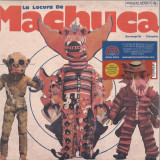
Various - LA LOCURA DE MACHUCA LP 2x12"

La Locura de Machuca is the story of one man’s bizarre odyssey into Colombia’s coastal music underground, and the wild, hypnotic sounds he helped bring up to the surface.

One night in 1975, a successful tax lawyer named Rafael Machuca had his mind blown in Barranquilla’s ‘Plaza de los Musicos’. Overnight he went from a high ranking position in the Columbian revenue authority to visionary production guru of the newly formed record label that bore his name, Discos Machuca, and for the next six years he devoted his life to releasing some of the strangest, most experimental Afro Psychedelia Cumbias ever produced. La Locura de Machuca is the story of one man’s bizarre odyssey into Colombia’s coastal music underground, and the wild, hypnotic sounds he helped bring up to the surface.

The Colombian music industry was thriving in the mid-seventies, but while homegrown bolero and vallenato tunes were doing well on the charts, it was imported African records that were setting crowds on fire at the picos – the sound-systems that fuelled neighbourhood parties – and wherever those records were played there were always a handful of groups who were inspired to plug traditional Cumbia directly into the electric currents coming from across the Atlantic.

It was these obscure bands, who fused Colombian and African rhythms with the swirling organs and psychedelic guitars of underground rock, that fired Machuca’s imagination. While the label made its money releasing popular hits by legends such as Alejandro Durán and Aníbal Velásquez, that money was poured back into a unique run of experimental releases by fringe artists such as La Banda Africana, King Somalie, Conjunto Barbacoa, and Abelardo Carbono, one of the godfathers of Champeta Criolla.

When Machuca couldn’t find groups to realise his particular vision, he simply created them himself. Drawing on a fearsome roster of musicians associated with the label, he assembled bands that lasted only as long as it took to record an album ,and unleashed the results – complete with arrestingly unusual album covers – under a series of different names such as Samba Negra or El Grupo Folclórico. This unorthodox approach led his longtime recording engineer, Eduardo Dávila, to describes Machuca’s productions as the “B-Movies of Colombian music.”

The story of Doctor Machuca and his eccentric exploits tells of one of Colombia’s most atypical and peculiar record companies; a defining pillar of Afro-Caribbean psychedelia. His productions have come to represent the roots of Champeta and set the pedigree standards for Afro and Costeño avant-garde. The seventeen tracks on La Locura de Machuca, harvested from the darkest, strangest corners of the Discos Machuca catalogue, sound like little else recorded before or since.

non in magazzino

Ordina ora e ordineremo l'articolo per te presso il nostro fornitore.

36,09

Last In: 5 years ago
JAMES STEWART FEAT. AYUUNE SULE - ATLANTIC RIVER DRIVE

After his acclaimed debut EP « Cotonou » on Alma Negra’s record label, James Stewart comes back with his new EP Atlantic River Drive for Mawimbi Records, featuring two collaborations with Ghanaian kologo musician Ayuune Sule as well as two remixes from Simbad aka SMBD.

James Stewart met Ghanaian kologo musician Ayuune Sule, after booking several shows of kologo music star King Ayisoba in Lyon. Stewart was quick to witness the bluesy tone of Ayuune’s voice and his kindness as a musician, despite his impressive stature. Quite logically, Stewart invited Sule to record vocals on two of his ongoing demos at Bruno Patchworks’ recording studio (Voilaaa, Mr. President, Da Break), with the idea of making a rather unheard crossover between traditional kologo music and contemporary styles that would both appeal to Ghanaian crowds and a Western audience. Stewart then had a number of his arrangement ideas re-recorded by a talented cast of musicians, resulting in a brilliant mix of acoustic and electronic textures, sounding both vintage and modern.

Nodding to Eddie Palmieri’s landmark record “Harlem River Drive”, “Atlantic River Drive” is a stomping dancefloor track, drawing from the 6/8 feel of kologo music and the energy of contemporary club music. The track can be read as a tribute to the musical cross-pollinations between the African continent and its many diasporas, which Stewart has dedicated a long part of his life to, but also as a more intimate story about his life and family. All words were written by Stewart and then translated by Sule in his native Fra fra language from Northern Ghana.

“Where Are We Going?” is a two-part journey that reminds us that we should care about each other, about our communities while we don’t know what the future is made of. An important and much welcome message to navigate through these troubled, uncertain times. Referencing congolese N’dombolo tracks, the track has two parts and rich arrangements, with its first part going deep with syncopated clarinet hooks and playful percussion parts, and its second part moving to a four-on-the-floor pattern and an entrancing baritone saxophone solo.

The EP also features Worldwide FM and Brownswood maestro Simbad, who delivers two dancefloor-ready reworks of the track “Where Are We Going?” under his SMBD moniker, turning it into a spiritual, dubby journey, as well as an emotional house music track.

non in magazzino

Ordina ora e ordineremo l'articolo per te presso il nostro fornitore.

10,88

Last In: 5 years ago
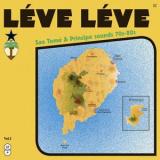
Léve Léve - Sao Tomé & Principe sounds 70s-80s

"The two Portuguese-speaking African islands of Sao Tomé & Principe, located in the Gulf of Guinea, created an unique music called Puxa : a refined mixture of various musical components from both sides of the Atlantic Ocean. A blend of Semba, Merengue, Kompas, Soukouss, Coladeira patterns, often pushing forward with a voodoo-like energy, solid bass lines, delicate melodies and backing harmonies of the rich Sao Tomean melodic traditions. Very first compilation focusing on the golden age of these island’s sounds, the 16 tracks selected will surely set fire on all dance floors !

Léve-Léve is the first ever compilation devoted to music from São Tome and Principe, two small islands situated off the coast of Gabon in central Africa. The album unravels a story of liberation where the music of Africa, Europe and the Americas unify with a carefree spirit personified by a phrase the islanders use all the time: “léve, léve” (“take it easy”). With echoes of Angolan semba and merengue, of Brazilian afoxê, of coladeira from Cape Verde and dance music from the Caribbean, it is a sound fiercely proud of its island heritage, sung in local dialects and using distinctive local rhythms.

On this record you can hear the cultural and social history of São Tome and Principe, and how live music represented its beating heart. Once known as the “Chocolate Islands” (remarkably, these two tiny islands were the largest cocoa producers in the world, though now this title acts as a reminder of its colonial past), through the years leading up to independence from Portugal, music would be a fundamental voice of liberation and conviviality. Os Úntués were one of the first groups to make an impression, releasing a couple of 7 inches in Angola – the litmus test of success for any of the islands’ groups. They united unique rhythms and dances like socopé, puita and dança-congo – borne from the islands’ largely slave-descendant population – with the sound of pop music beamed in on the radio from Europe, even adding in a little bit of soukous and Brazilian instrumentation. Their main rivals were Conjunto Mindelo, who fused São Toméan rhythms with rebita, an Angolan style, to create high energy puxa, a truly original island rhythm.

From the mid-1970s, coinciding with independence from Portugal in 1975, the islands’ groups featured an even stronger African influence and nowhere was that more apparent than with Africa Negra. They would listen to the latest records from Gabon, Zaire and Cameroon, taking inspiration and trying out phrasing from the greats of Central African guitar playing, developing a devoted fan base off the islands, as well as on. A score of other bands would follow a similar musical path, with a few getting their dues overseas in Angola, Cape Verde, Portugal and across Africa.

Os Leonenses (led by the iconic Pedro Lima), Conjunto Sangazuza, Sum Alvarinho and Conjunto Ecuador were just some of the other bands that formed a lively home-grown music scene that lit up the islands’ bars and open-air shows from the 1950s through to the mid-90s. Regardless of class or age, they were responsible for keeping the population entertained come the weekend, with Sunday matinee shows the highlight of the week, the music not stopping from midday until midnight.

As a Portuguese island colony that was for many years populated with slaves brought from Africa, São Tome and Principe has much in common with other Lusophone countries and boasts a richly complex and idiosyncratic musical DNA. Whilst the musical tapestries of Angola and Cape Verde are well known, São Tome and Principe’s secrets were assigned to the islanders themselves. Until now."

non in magazzino

Ordina ora e ordineremo l'articolo per te presso il nostro fornitore.

26,01

Last In: 6 years ago
Various - Digital Kabar Electronic Maloya From La Reunion Since

Formerly clandestine, today manifest, both sacred but also profane, sometimes meditated, very often improvised, the Kabar transpires in the daily Reunion, getting rid with insolence of any label that dares to impose. The Kabar is a fleeting but bubbling manifestation of an identity and a local culture that is still difficult to define. A moment of life and sharing where handcrafted instruments, neighborhood meetings, ritual dances and lyrical demands are mixed. A meeting.

Born from the musical union of maloya and electronic music, Digital Kabar is a compilation at the crossroads of cultures, porous to all sound experiences. It's also the result of a friendship that drives InFiné at Les Electropicales festival, from the fascination of a small team dedicated to the independent musical cause for a musical scene and its diversity.

Digital Kabar features tracks & reworks from Jako Maron, InFiné affiliate Labelle, Alex Barck, Christine Salem, Boogzbrown, Loya, Sheitan Brothers,Ti Fock, Force Indigène, Agnesca, Zong, Psychorigid, J-ZeuS, and Kwalud.

non in magazzino

Ordina ora e ordineremo l'articolo per te presso il nostro fornitore.

17,27

Last In: 6 years ago
Alma Negra - Conversation Ep

Alma Negra are back on Heist! After their much applauded 2017 release with that great Soulphiction remix, they've been rather busy taking over the scene. They started their new label 'Alma Negra records' where they released 3 ep's in quick succession, with new as well as older material that showcases their tropical roots and keen ear for clubby reworks. They launched their live show, doing gigs across Europe with a highlight at one of London's more intimate live venues: the Jazz Café. Their latest outing -making their release count a total of 4 in only 8 months - was on Marcel Vogel's Lumberjacks in Hell and explored the more live / rework side of their project. Now they're back on Heist with 3 new tracks, supported by an Awanto 3 remix. 'Conversation' is a track we wanted to put out on Heist badly, simply because it's a beast of a track. It sits somewhere between a live African drum track, percussive techno and moody Midwest electronics, with pads and strings coming in and out of play while a relentless kick drum keeps the energy on a haunting level. This track is Alma Negra at their filthiest, and it feels like they've taken a next step from last year's dark and heavy Luanda dub, bringing it from an intimate dreamy stage straight into the main room. 'This is the place' shows a different side of the house spectrum with the Alma's love for dreamy deep house. The track flows up and down, with soothing Rhodes chords, arpeggio's and mumbling vocals setting a summery mood that's perfect for your warm up or daytime party. Meanwhile, their third original track 'From the heart' goes even deeper and navigates around a smart vocal loop topped with strings, bleeps, claps and rimshots that just keeps going.

non in magazzino

Ordina ora e ordineremo l'articolo per te presso il nostro fornitore.

8,61

Last In: 5 years ago
Alma Negra - Maloya EP

Alma Negra

Maloya EP

12inchANR002
Alma Negra
09.04.2018

The second of Alma Negra's 12 Rhythms Series is dedicated to the Maloya sound from La Réunion, a tiny island where a
melting pot of cultures is reflected strongly in its music. Maloya's roots go back to the time of slavery, its quick tempo and raw
energy making it not only a popular dance music but also a powerful protest through movement.
On their Maloya EP, the Basel collective pay tribute to the hypnotic rhythms that were feared both by the Catholic Church and the French government for the musical form's subversive part in the rebellion against colonialism.
The release revolves around two contrasting Alma Negra re-workings of Lindigo's Tany Be. The first takes a classic call &
response structure in 12/8 and 6/8 rhythms, adding a driving bass line and guitar licks. A solid 909-kick locks things in step,
along with a sax flourish and FM synths. Their re-imagining of African and Tamil influences for modern dancers is a triumphant
manifestation of the music's origins.
With the main reworking focusing on a rolling dance floor groove, the Dub Mix concentrates on trance-inducing aspect of
Maloya. Using a modular set up to pick apart layers of percussion, it is a dense and heady trip into the spirit world.
The B side focuses on Christine Salem, one of today's stars of the Maloya scene. Without wanting to squeeze the soul from her
deep tones, Kabaré is slowed down a notch, with drums added sparingly. This sensitive treatment gives the track just enough
weight and tension to punch in on todays dance floors without losing the intent of the original.
The source material for this EP has been road tested from the very beginning of Alma Negra's journey. The collective have gone
to great lengths to ensure the original creators are on board with their treatment of their music and are honoured to be given the
chance to distil their own ethos into a record that is bubbling with today's dance floor drive. Their reverent treatment aims to
preserve the power and beauty of the source material, to bring uncovered gems to a new audience.

non in magazzino

Ordina ora e ordineremo l'articolo per te presso il nostro fornitore.

8,70

Last In: 4 years ago
  • 1
Articoli per pagina:
N/ABPM
Vinyl